
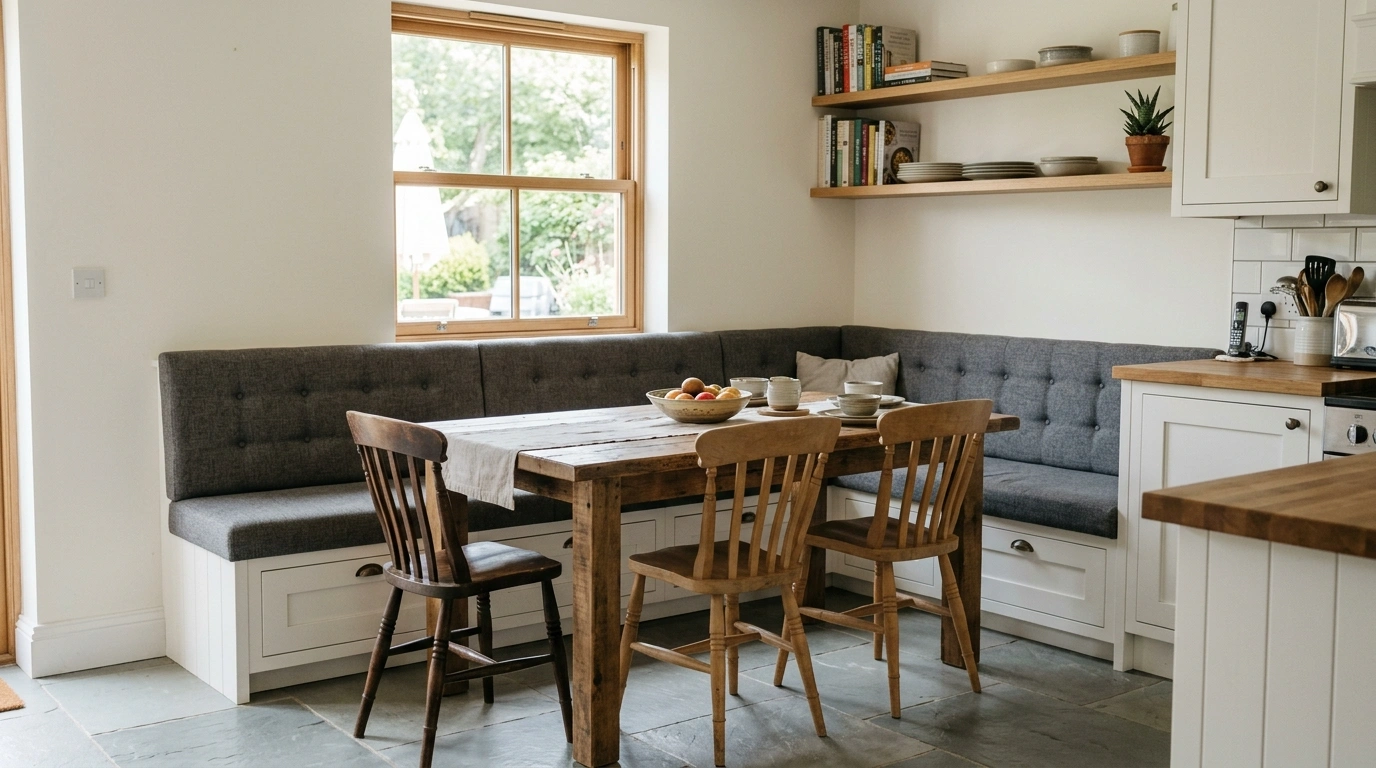
A kitchen banquette has a very specific talent: it can turn the most awkward stretch of wall into the part of the kitchen everyone actually wants to use.
It can also take a perfectly decent walkway and turn it into a daily game of squeezing sideways with a coffee mug. The difference is rarely the cushion itself. It is the entire composition around it.
The best banquette seating in kitchen ideas look convincing because the bench belongs to the room. The table fits it. The window makes sense behind it.
The lighting lands in the right place. The materials repeat elsewhere in the kitchen instead of showing up as random one-off choices. Even the empty floor around the seating has a job.
The Banquette Reality Check
It can also eat the entire walkway.
Banquette Seating in Kitchen Ideas
Cozy Corner Banquette With Rustic Charm
This corner nook proves that awkward spaces are just begging for a custom bench. Crisp white cabinetry meets rich wood accents, creating a dining spot that feels both grounded and airy. The round pedestal table softens the hard edges of the banquette, making the entire setup feel effortlessly inviting.
The real magic happens in the details, from the vintage landscape art to the glass pendant light hanging overhead. Soft grey cushions add comfort without overwhelming the neutral color palette, while a touch of greenery brings life right into the corner. It is a masterclass in making a tight layout look completely intentional.
Keep the styling functional yet charming by layering a few textiles and keeping the tabletop clutter-free. When every element works together, even a small breakfast nook punches way above its weight class in style points.
Sunlit Window Banquette With Warm Oak and Cream Upholstery
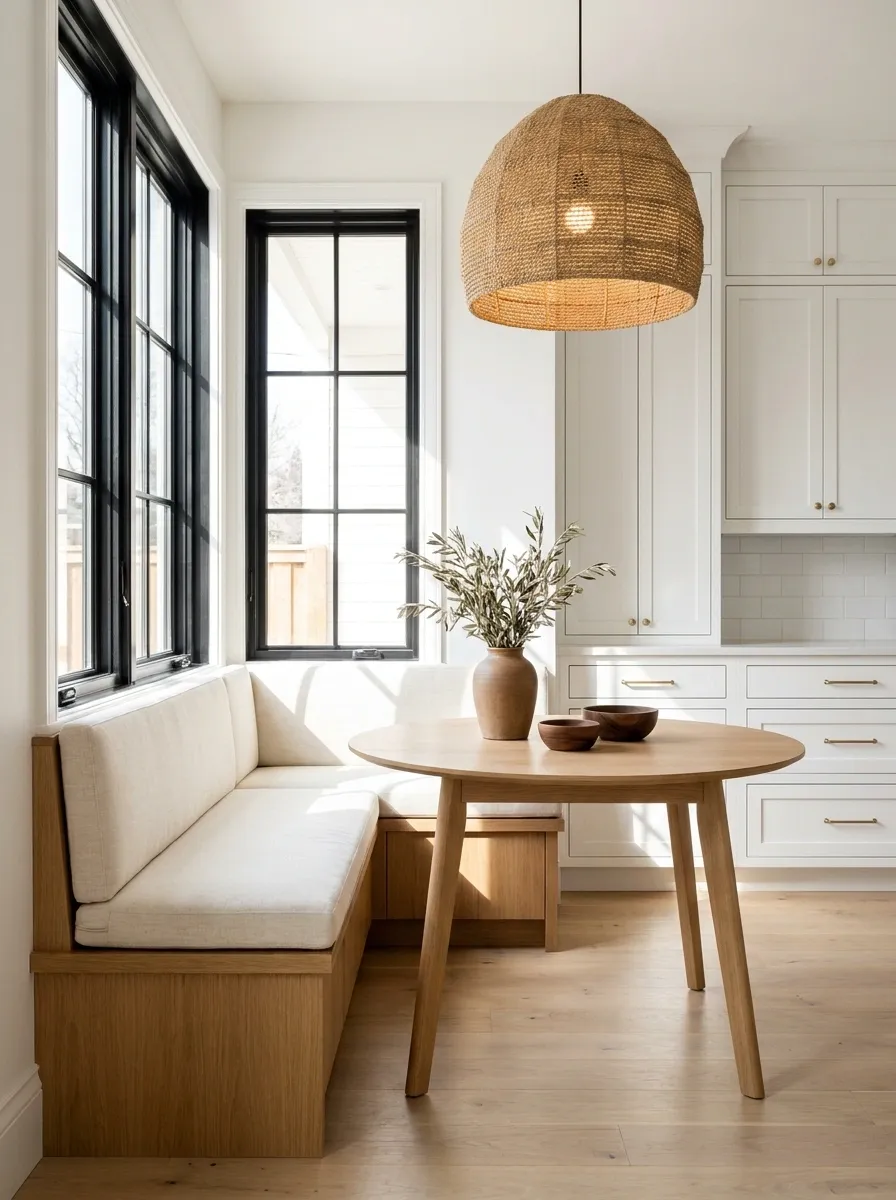
The window does most of the heavy lifting here, while the banquette makes the awkward edge of the kitchen feel deliberate. A warm oak bench base, thick cream cushion, round wood table, and soft pendant give the dining corner a calm, layered look without competing with the daylight.
The important detail is the material balance. White cabinetry keeps the kitchen bright, oak brings warmth, and the cream upholstery bridges the two. Nothing is screaming for attention, which is exactly why the finished composition feels expensive. Keep the tabletop visually light and let the window remain the main focal point.
Vibrant Mustard Banquette With Retro Flair
Who says kitchen seating has to blend into the background? A mustard yellow banquette instantly injects personality into this space, paired with bold red table legs and fresh pink blooms. It is confident, playful, and proves that kitchens can handle a serious dose of color.
The secret to pulling off this vibrant palette is keeping the surrounding architecture clean and simple. Pale stone walls and a minimal pendant light let the bold furniture pieces shine without making the room feel chaotic. Adding a matching armchair expands the seating while maintaining that curated, collected-over-time feel.
Anchor the look with warm lighting and confident decor choices that don’t take themselves too seriously. When you lean into a bold color story, the entire kitchen transforms from a mere cooking space into the absolute heart of the home.
U-Shaped Banquette Nook With a Compact Round Table
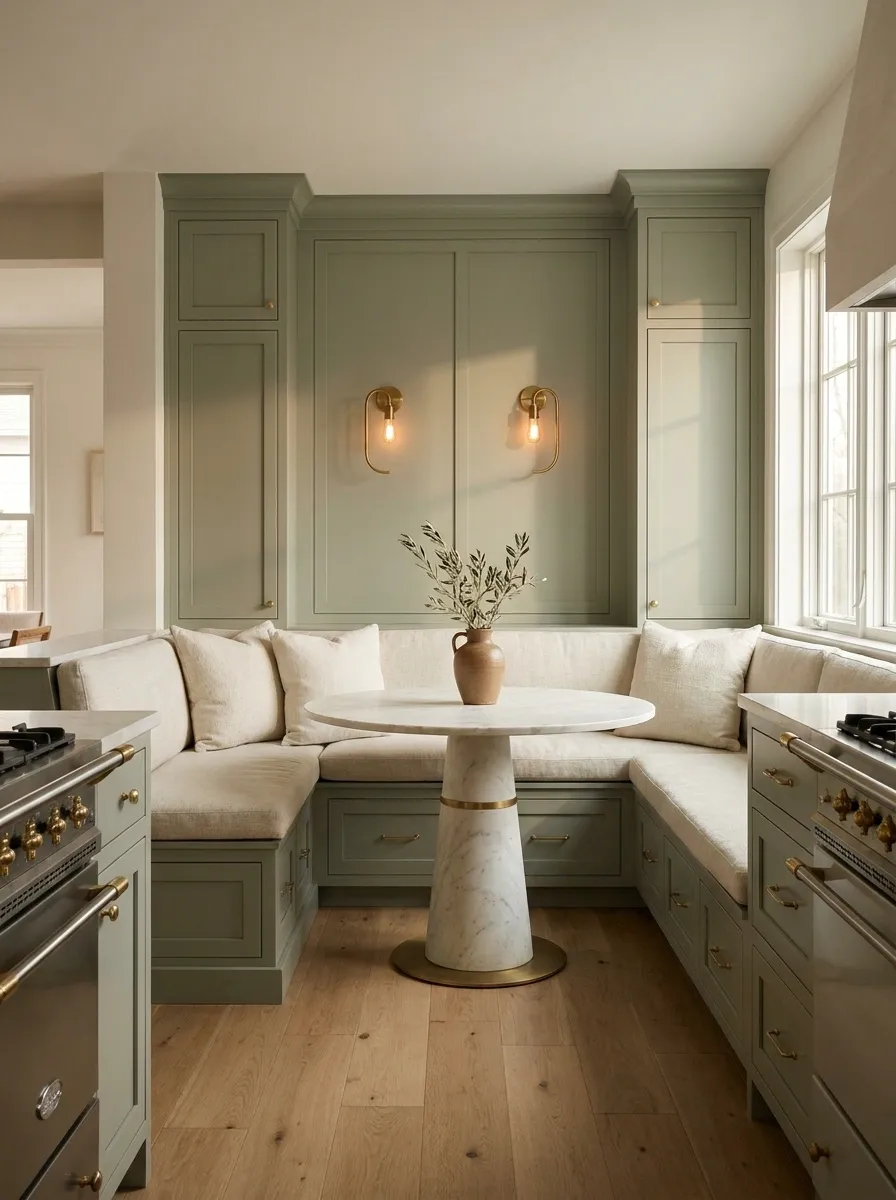
This arrangement turns a corner into a proper little destination. Seating wraps two walls, a round pedestal table sits in the middle, and muted sage cabinetry carries the same soft color story into the rest of the kitchen. The result feels tucked away without looking detached.
The round table earns its place here because there are no corners fighting the curves of the seating or forcing people into awkward positions. A rectangular table would make the nook feel much more crowded. The styling should stay controlled too. Let the architectural shape do the talking instead of covering the seat in seventeen cushions.
Uses the corner instead of leaving dead floor space.
Softens the geometry and keeps circulation easier.
Preserves a relaxed feel instead of filling every inch.
Sun-Drenched Wooden Nook With Soft Blue Accents
Bathing a built-in banquette in natural light is always a winning strategy. Pale wood cabinetry frames the window perfectly, while soft blue cushions add a subtle, calming pop of color. The result is a serene morning spot that feels deeply connected to the outdoors.
Layering pillows of different textures prevents the monochromatic wood-and-white scheme from feeling flat. A slender pedestal table keeps the legroom completely open, ensuring the compact footprint stays functional and comfortable. It is proof that small breakfast nooks don’t need excessive square footage to feel luxurious.
Keep the surrounding decor minimal to let the window view and millwork take center stage. When you balance clean lines with tactile comfort, your kitchen eating area instantly upgrades its design quotient.
Dark Walnut Banquette Against a Light Modern Kitchen
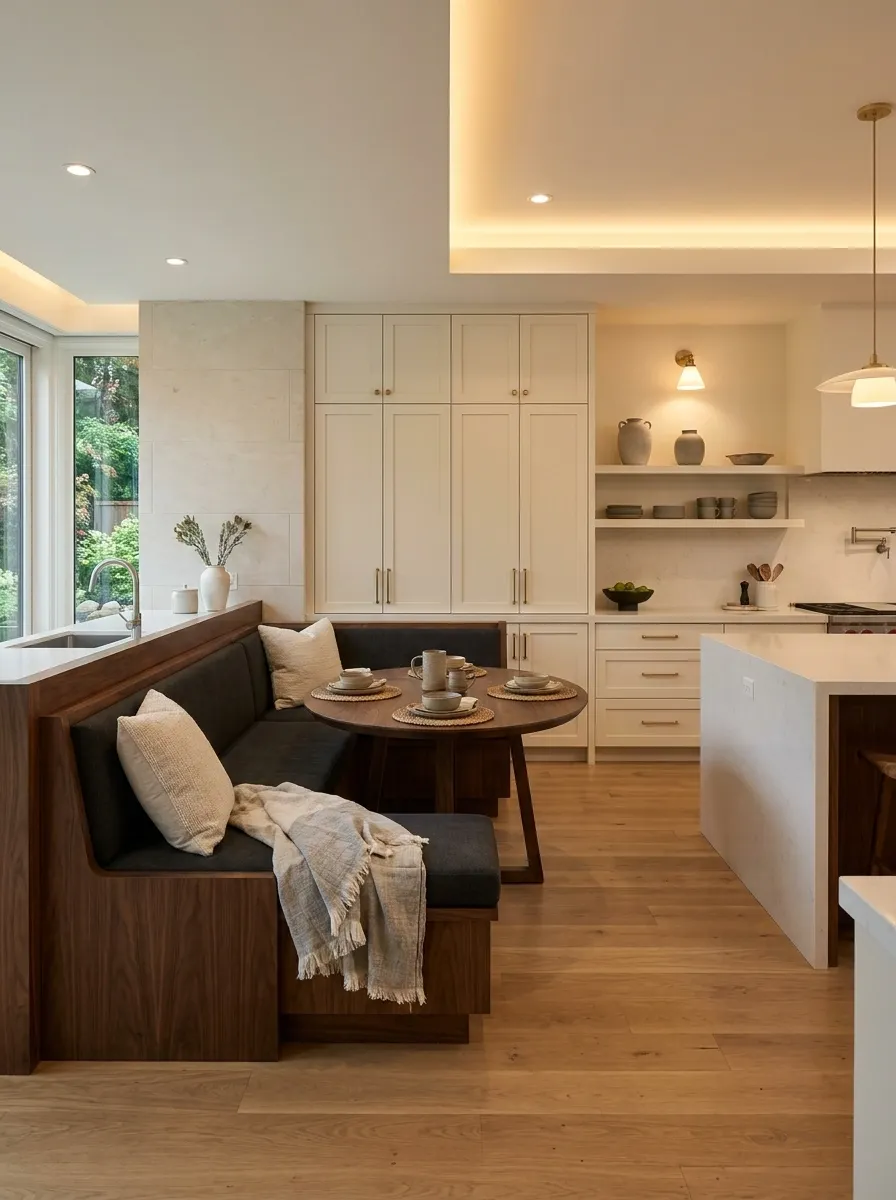
Rich walnut changes the mood completely. Here the built-in banquette becomes the darker architectural anchor against pale stone, light walls, and streamlined cabinetry. Charcoal cushions deepen the seating area without pushing the whole kitchen into gloomy territory.
This composition works because the darker elements are concentrated in one zone rather than scattered everywhere. The wood feels substantial, while the pale kitchen surfaces create enough visual breathing room around it. Keep the lighting warm and simple. Once walnut, dark upholstery, and dramatic lighting all start competing for attention, the kitchen can go from sophisticated to “luxury showroom after closing time” very quickly.
Warm Wood Banquette With Black Accent Chairs
Combining a rich wooden built-in bench with sleek black bentwood chairs creates an instant designer contrast. The round white marble table balances the heavy wood tones, giving the dining zone a sophisticated yet relaxed aesthetic. It bridges traditional millwork with modern styling seamlessly.
Glass-front upper cabinets and dark lower backsplashes tie the dining zone directly into the broader kitchen design. The careful mix of textures—from woven pillows to smooth wood and metal accents—keeps the eye moving across the space without feeling cluttered or overly busy.
Maintain an uncluttered tabletop and let the natural wood grain do the talking. When your banquette is this thoughtfully integrated, the whole kitchen takes on a custom, high-end atmosphere.
Classic White Kitchen With Tufted Dining Banquette
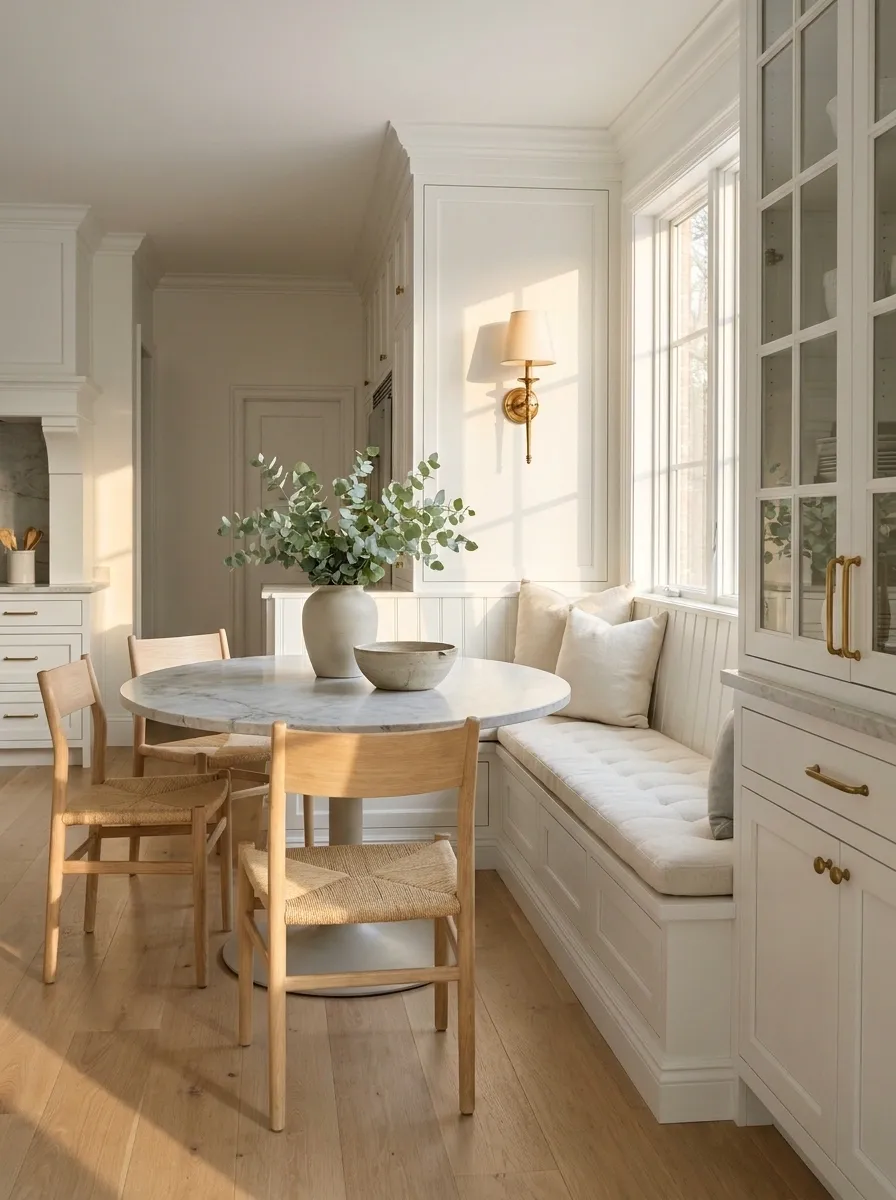
Traditional millwork gives this banquette the feeling of a built-in piece of the house rather than a piece of furniture squeezed into a corner. White cabinetry, paneled seating, a tailored tufted cushion, stone-look tabletop, and warm brass lighting create a classic dining area that still feels fresh.
The tufting adds softness, but the paneling keeps the lower half architectural. That contrast matters. Too much upholstery would make the nook feel like a lounge, while too much hard detailing would make it feel formal and stiff. Keep the table simple enough to let the seat’s craftsmanship remain visible.
Small Apartment Kitchen With a Wall-Hugging Banquette
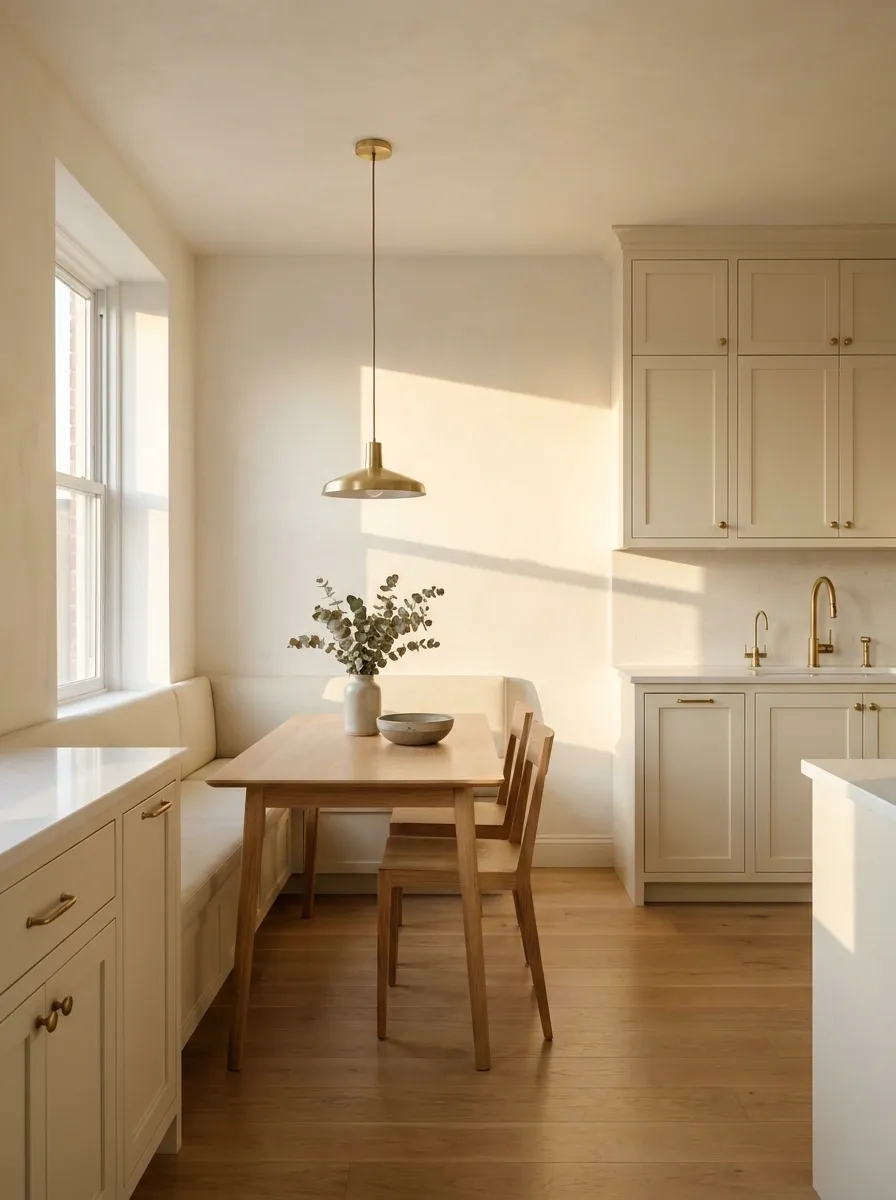
In a compact kitchen, the smartest move is often keeping the seating tight to the wall and letting the center of the room breathe. This version pairs a slim built-in bench with a narrow rectangular table, pale cabinetry, and a restrained lighting fixture. The dining area feels complete without visually swallowing the kitchen.
The bench does not need to be the biggest thing in the room to matter. Its value comes from fitting the available footprint cleanly. Keep the wall treatment simple and choose furniture with a light visual profile. A giant table, bulky chairs, and oversized styling would defeat the whole point. Small kitchens have enough drama without adding furniture to the cast.
Built-In Banquette Beside a Kitchen Island
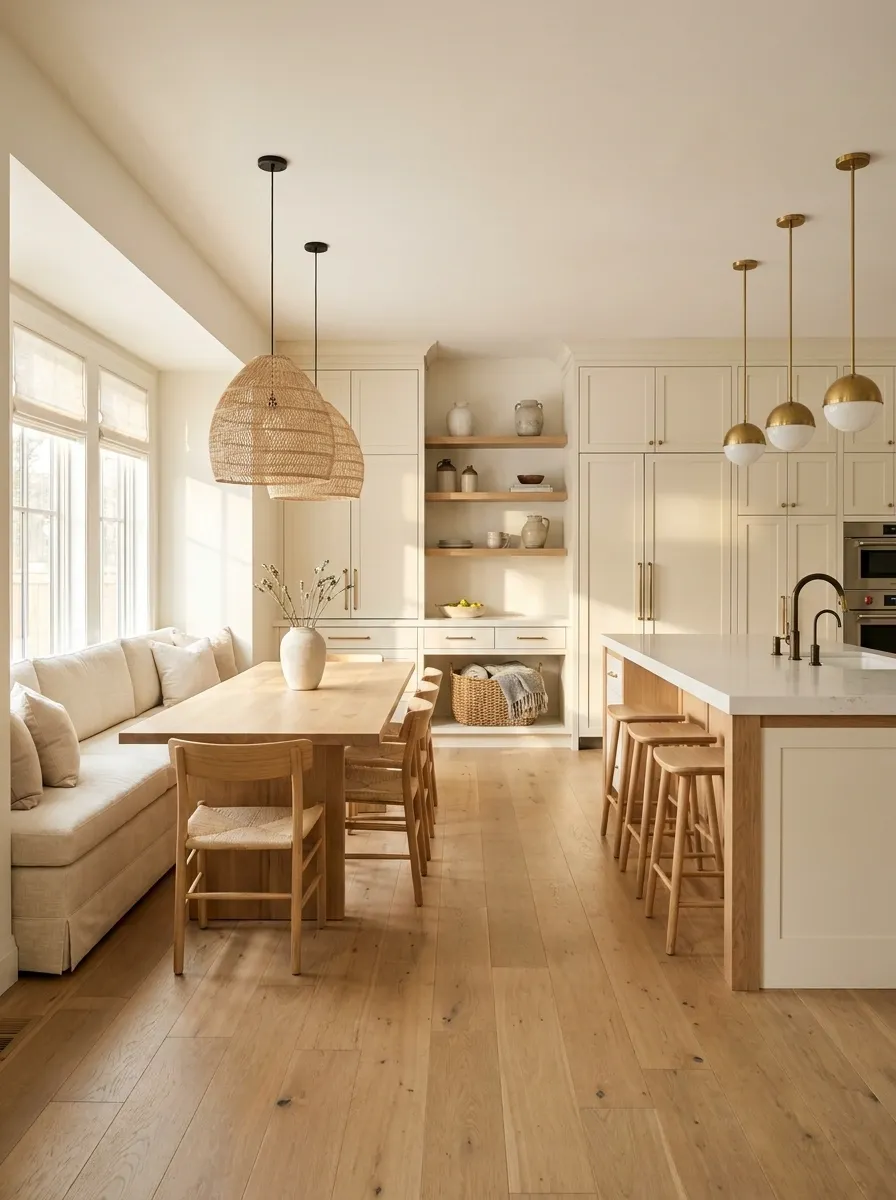
A banquette doesn’t need to live in a tucked-away breakfast corner. In this larger kitchen, the seating sits opposite the island and becomes a second social zone within the open plan. A long upholstered bench, generous wood table, pendant lighting, and warm cabinetry make the dining area feel connected to the working kitchen without blending into it.
The key is visual conversation. Matching the table’s wood tone with details around the island helps the two zones feel related, while the upholstery creates a softer break between them. Keep enough open floor between the banquette and island to preserve the easy movement that makes open kitchens useful in the first place.
Soft Sage Banquette With Natural Stone and Oak
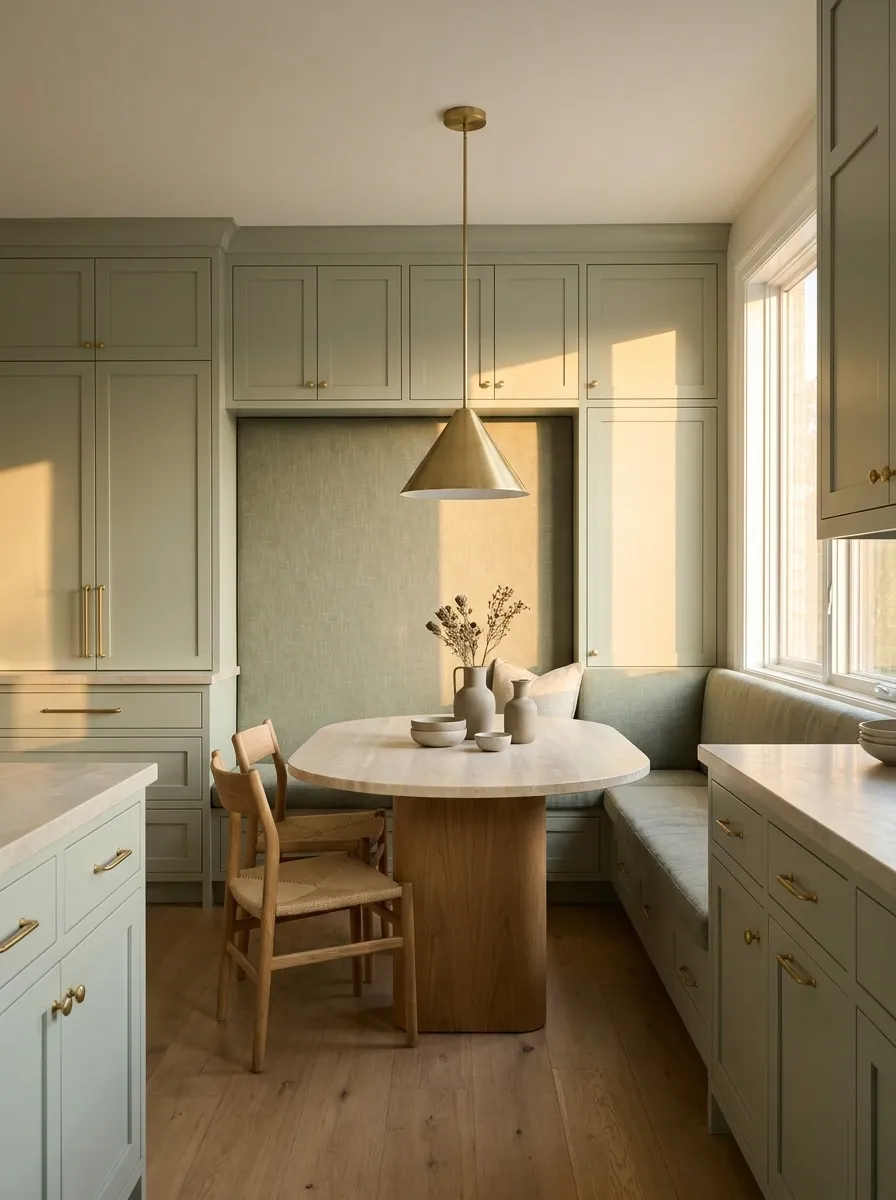
Soft sage cabinetry sets the tone here, with the built-in banquette continuing that color into the dining area. Pale stone, light oak, linen-like upholstery, and restrained brass details keep the kitchen warm rather than overly green. It feels layered without becoming visually busy.
The smartest move is repeating the same few materials instead of introducing a new finish for every surface. Sage provides the color, stone provides visual variation, oak adds warmth, and brass stays in the background. The banquette looks integrated because the palette belongs to the entire kitchen, not just the seating corner.
Curved Banquette With a Pedestal Table in an Open Kitchen
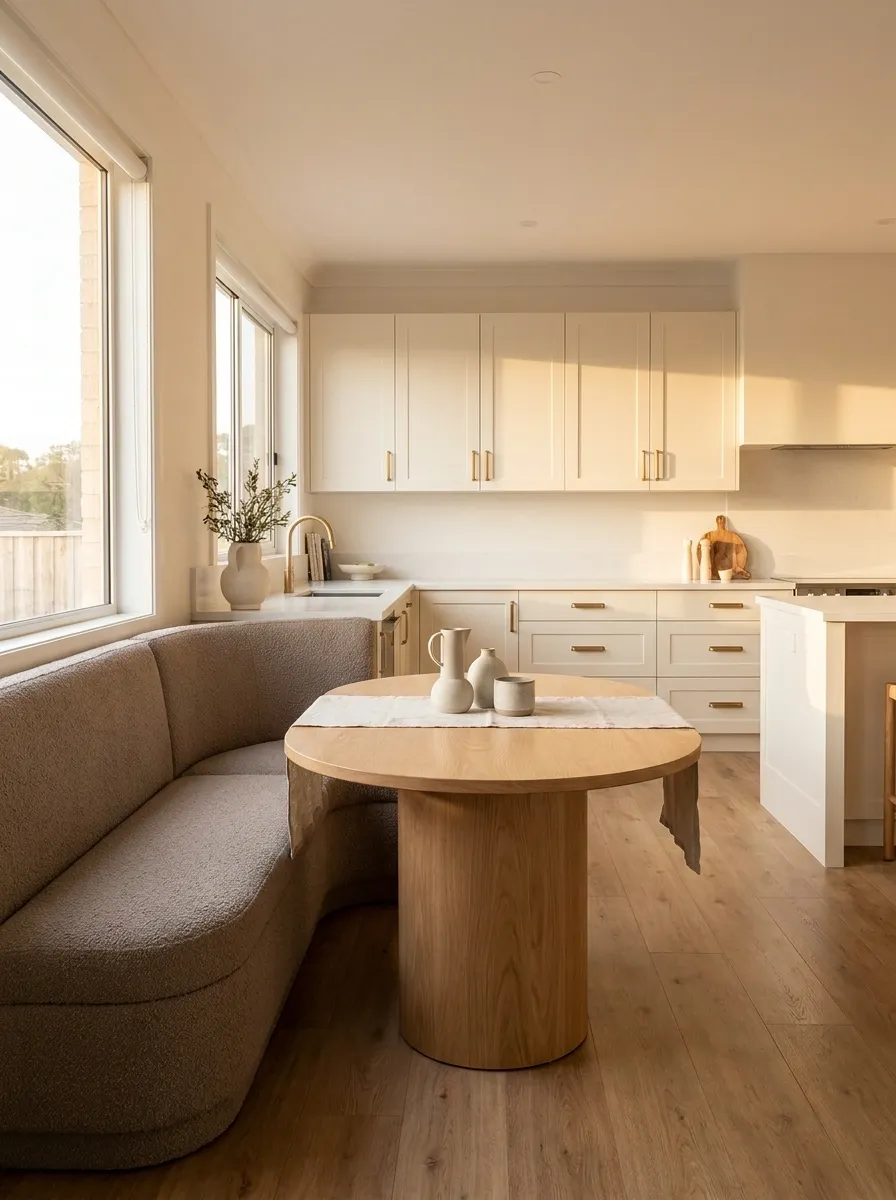
Straight cabinetry usually dominates a kitchen, which makes a curved banquette an especially effective counterpoint. Here, the upholstered seat bends gently around a pedestal table while curved details echo through the rest of the contemporary room. The shape creates a softer dining zone without needing a wall to define it.
The important part is restraint. The curve should feel architectural rather than decorative. A rounded table reinforces the shape, while straight cabinetry behind it provides enough contrast to keep the composition crisp. Keep the surrounding accessories quiet because the geometry already has plenty to say.
Scandinavian Banquette With Pale Wood and Soft Gray Textiles
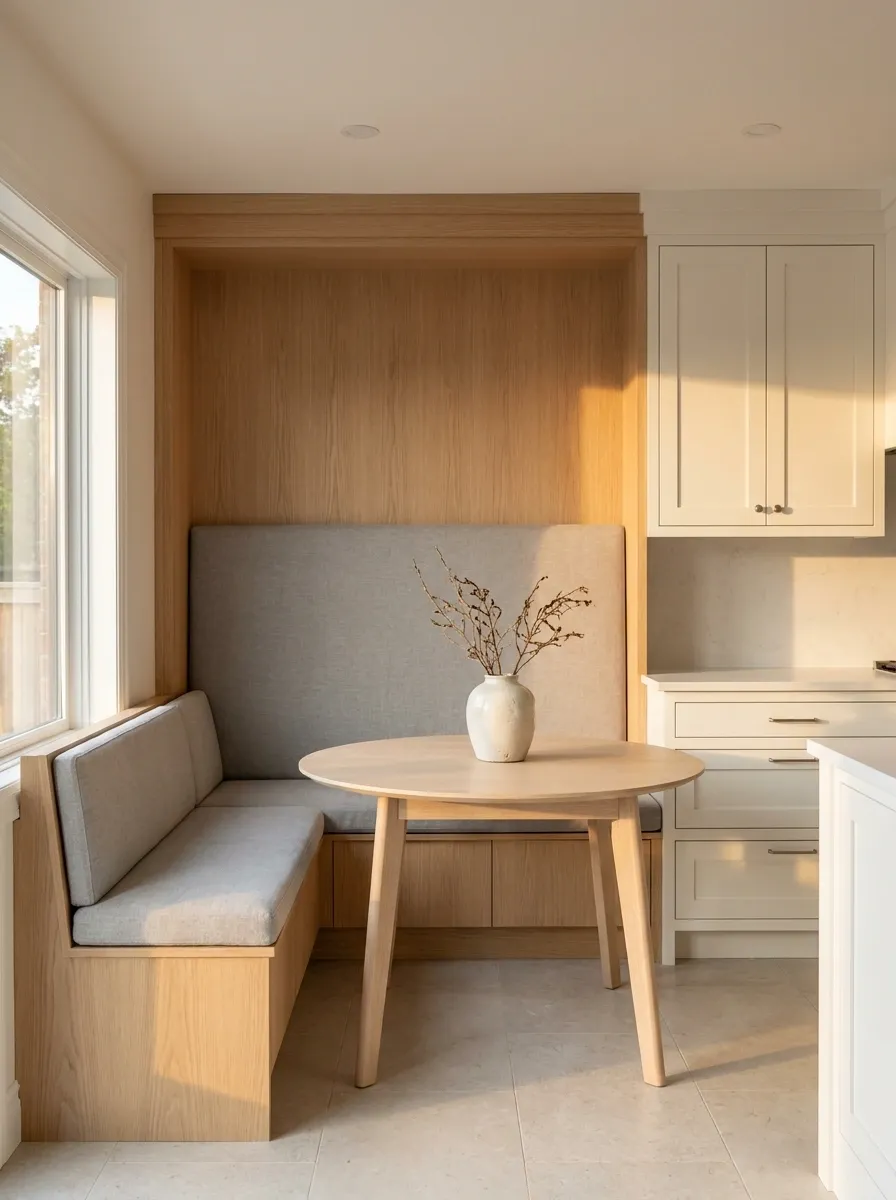
This version strips the kitchen down to a quiet combination of pale oak, warm white cabinetry, soft gray upholstery, and simple lighting. The banquette feels built in without looking heavy, while the compact table keeps the dining area visually light.
What makes the composition interesting is the lack of dramatic contrast. Instead of relying on black accents or loud pattern, it builds depth through subtle shifts in texture and tone. That approach suits kitchens that already receive plenty of daylight. Keep the styling sparse, because the whole appeal is the calm relationship between pale wood, soft fabric, and clean architectural lines.
Moody Green Kitchen With Leather Banquette Seating
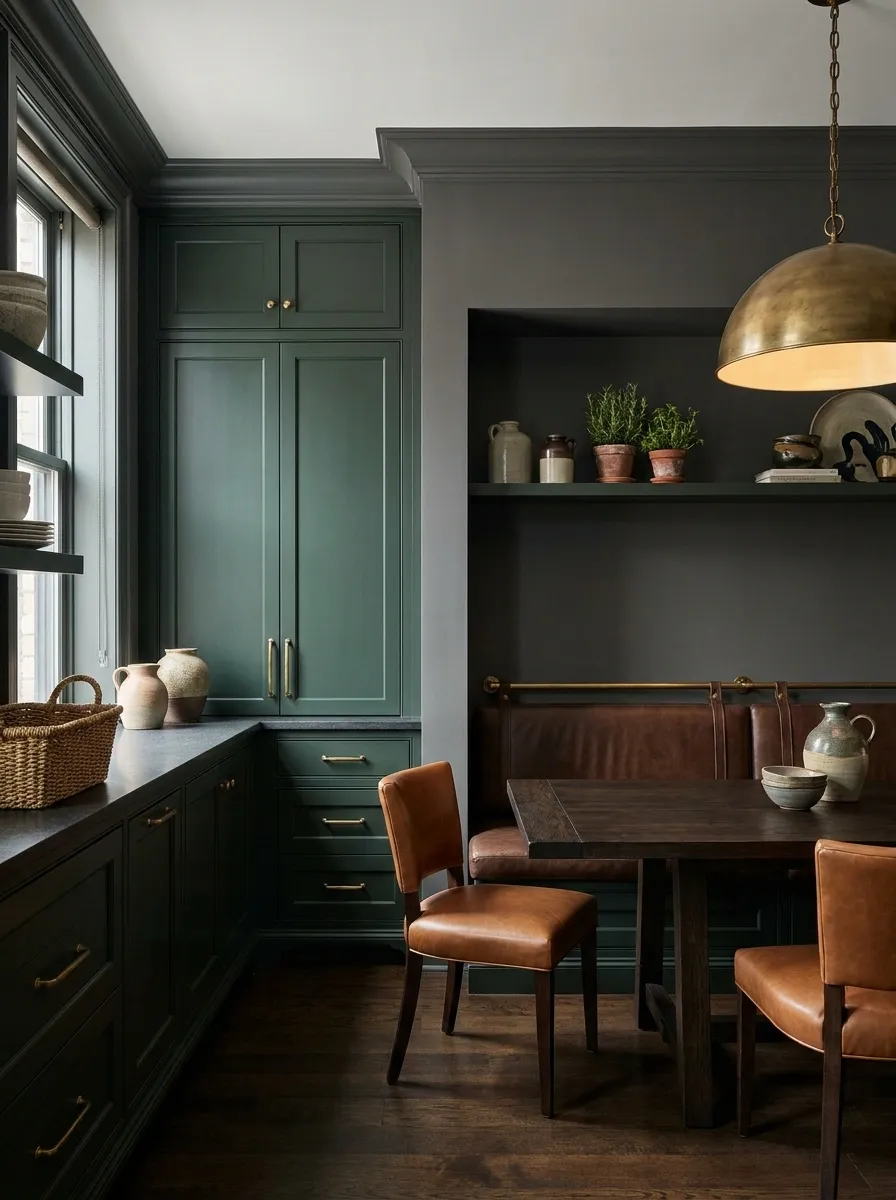
Deep green cabinetry and brown leather give this kitchen a much moodier personality. The banquette sits firmly inside that palette, with a dark wood table, aged-looking brass lighting, and warm illumination pulling the whole dining zone together.
The leather matters because it introduces a slightly sharper texture against the painted cabinetry. Wood keeps the combination from becoming too cool, while warm lighting softens the darker colors after sunset. The trick is concentrating the deeper tones instead of spreading them across every wall and surface. Otherwise the kitchen starts looking less like an intimate dining room and more like it has signed a contract with darkness.
Breakfast Nook Under Open Shelving
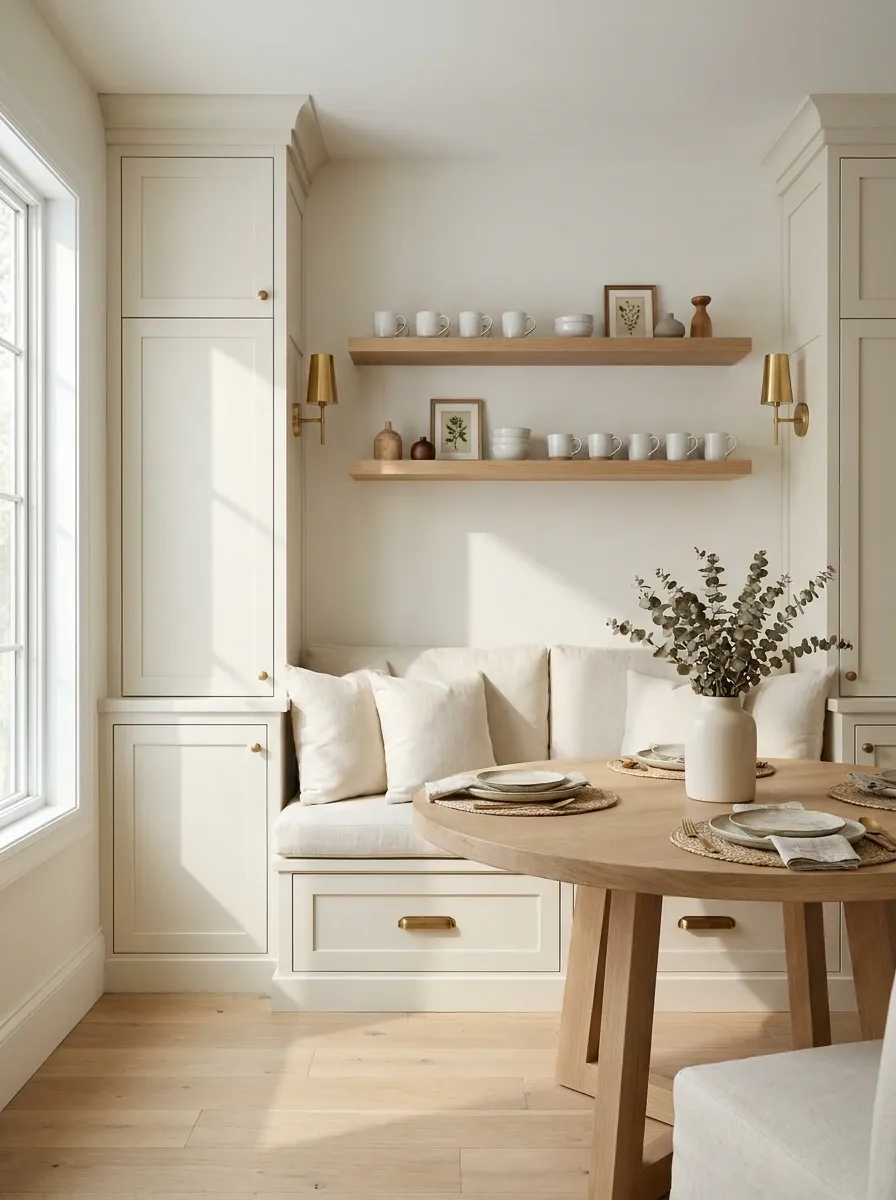
This banquette sits beneath open shelving, turning an otherwise plain kitchen wall into a layered dining composition. The built-in bench stays visually simple, while the shelves introduce everyday dishes, a few framed pieces, and small objects that make the nook feel connected to the rest of the room. An oak table adds warmth against creamy cabinetry.
The vertical arrangement is what makes this concept work. The bench anchors the lower half, the table occupies the middle, and the shelving draws the eye upward. That gives the wall purpose without covering it in decoration. Keep the shelf styling edited. Open shelving has a very short journey from “relaxed” to “cabinetry surrendered to chaos.”
Farmhouse Kitchen With a Reclaimed Wood Banquette
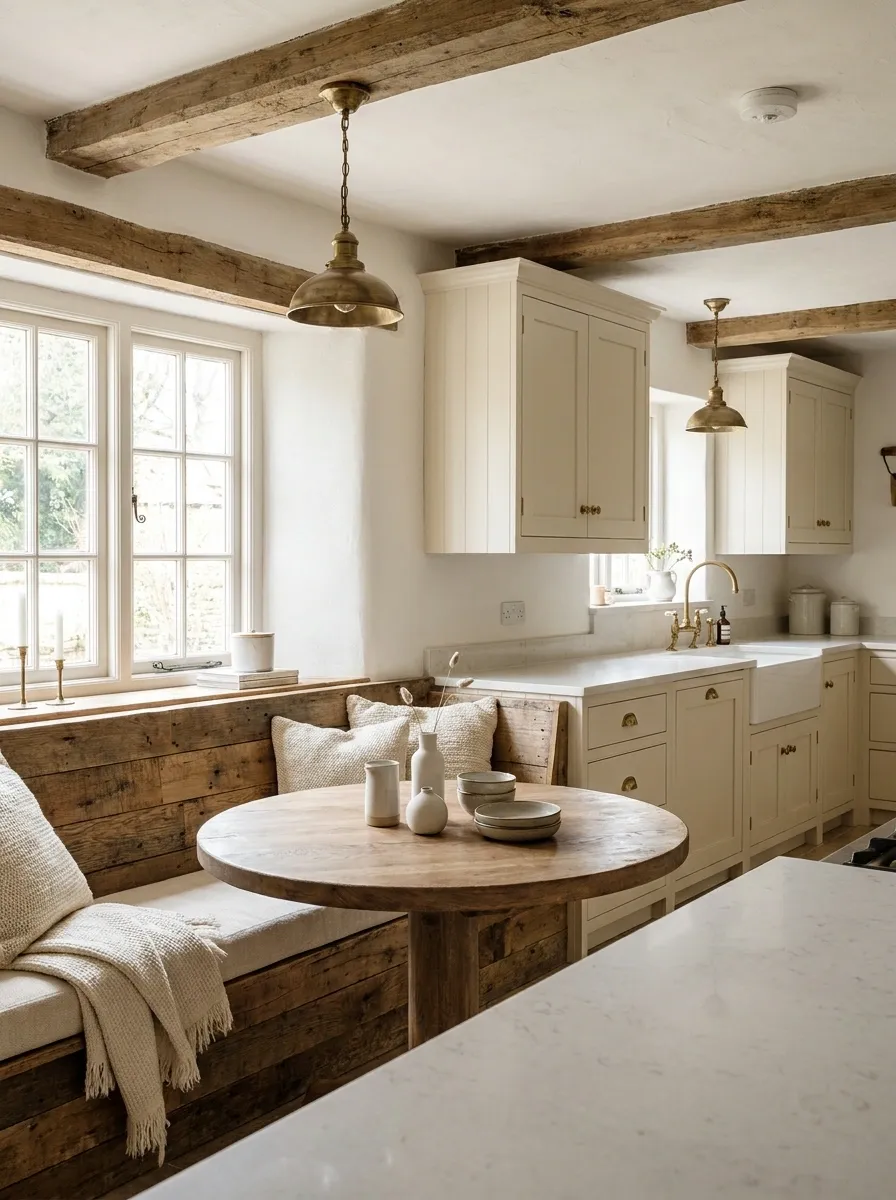
A chunky reclaimed-wood banquette gives this farmhouse kitchen a more relaxed character than a polished upholstered booth would. Painted cabinetry, a simple wood dining table, woven textiles, vintage-inspired lighting, and visible architectural details complete the setting without making it feel themed.
The reclaimed wood is strongest when the rest of the room stays relatively quiet. Its irregular grain becomes the texture that gives the dining area personality. Pairing it with too many rustic finishes would flatten the effect. A little restraint keeps the room looking like a real kitchen that evolved over time rather than a furniture catalog’s idea of “farmhouse.”
Banquette Built Into a Kitchen Bay Window
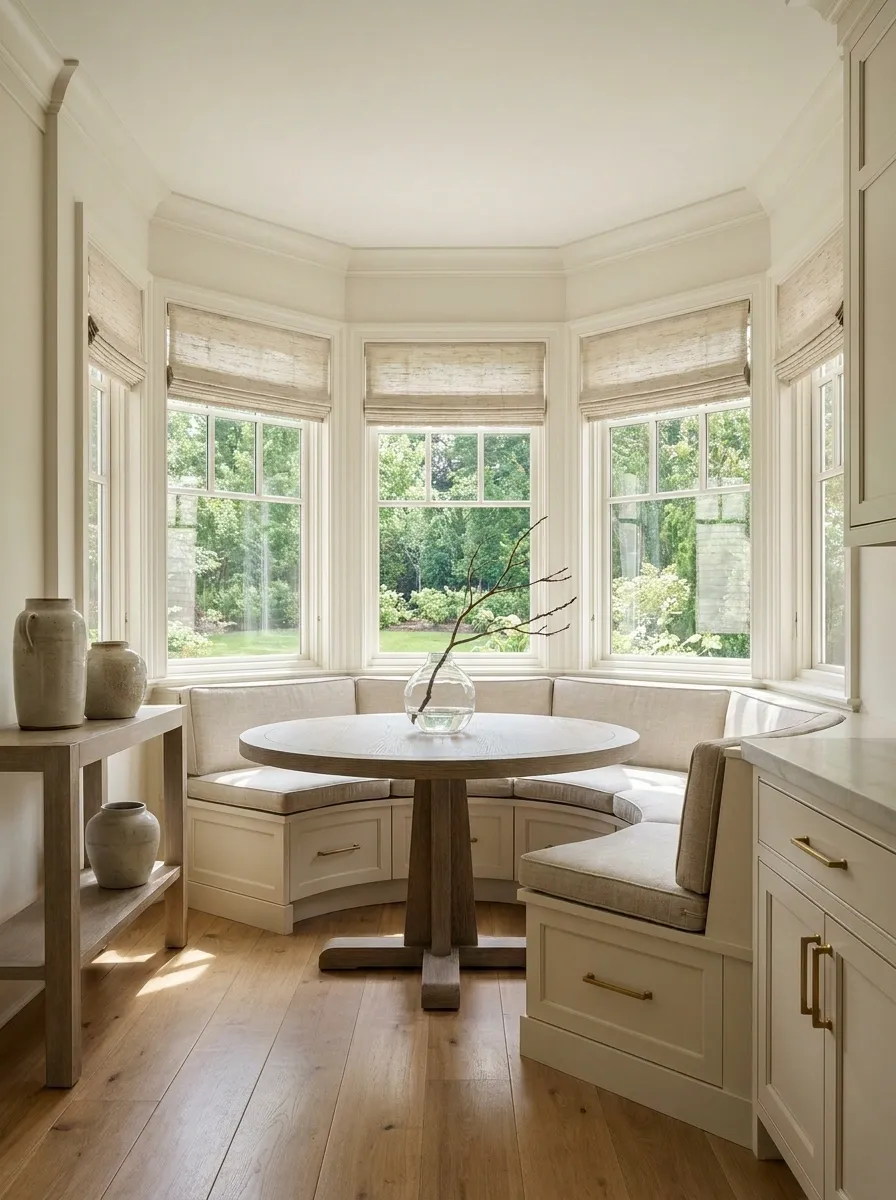
A bay window gives this kitchen an architectural advantage that does not need much decoration. The banquette follows the shape of the window, creating a naturally defined dining nook with a round table, tailored cushions, and plenty of daylight. The rest of the kitchen remains relatively calm so the architecture stays visible.
The important move is fitting the seating to the existing footprint rather than forcing a standard table-and-chair arrangement into the space. The curved or angled window geometry becomes part of the furniture plan. Keep the seat depth sensible and avoid oversized tables. The whole appeal comes from making an unusual architectural pocket feel useful.
Modern Black-and-Oak Banquette With Linear Lighting
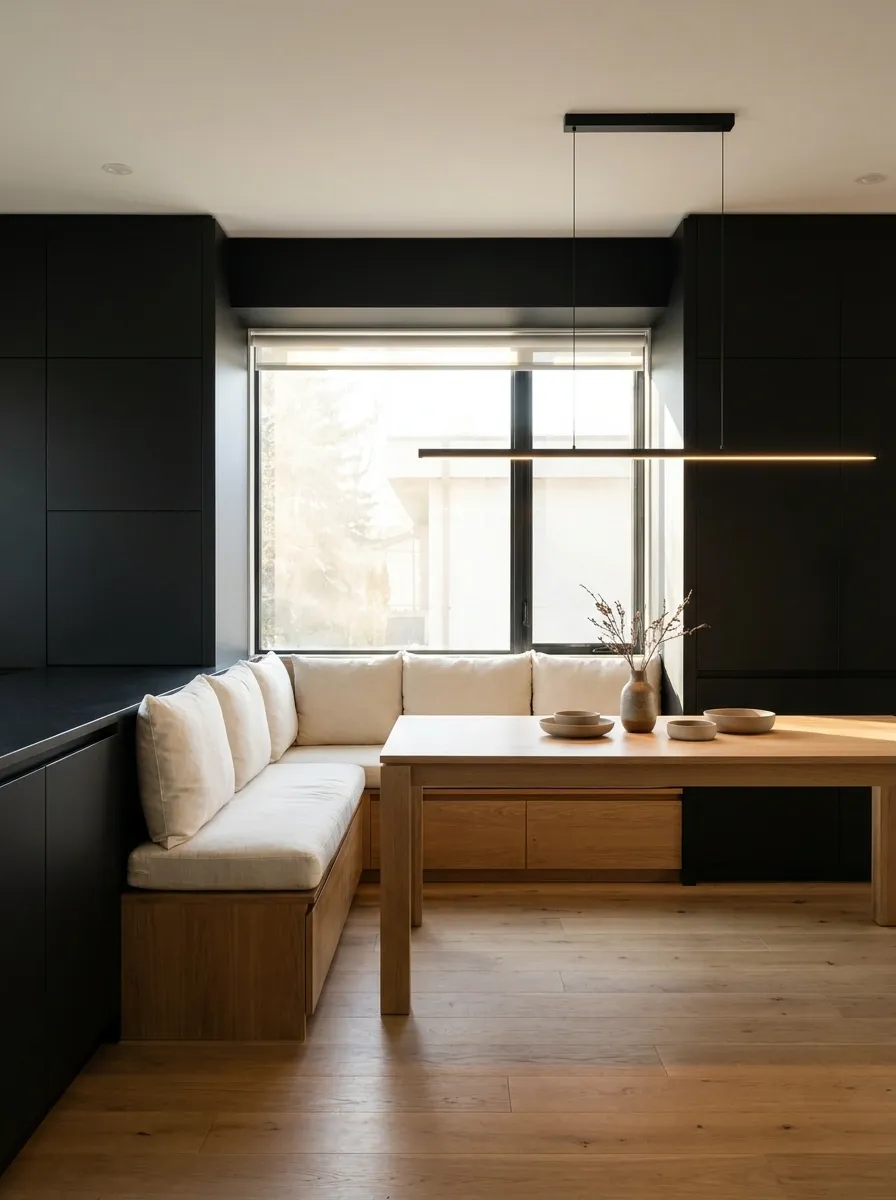
Black cabinetry gives this kitchen a crisp architectural frame, while warm oak keeps the banquette from feeling overly severe. A long rectangular table sits beneath slim linear lighting, creating a strong horizontal composition that echoes the clean cabinetry and large windows.
This design depends on repetition. The long bench, table, lighting, and cabinet lines all move in the same general direction, making the kitchen feel orderly without requiring perfect symmetry. The oak introduces just enough warmth to break the black-and-white severity. Keep decorative objects low and sparse here. The geometry deserves the spotlight.
Repeats the horizontal architecture.
Creates the warm middle layer.
Provides the darker frame.
Cream Banquette With Fluted Oak Detail in a Transitional Kitchen
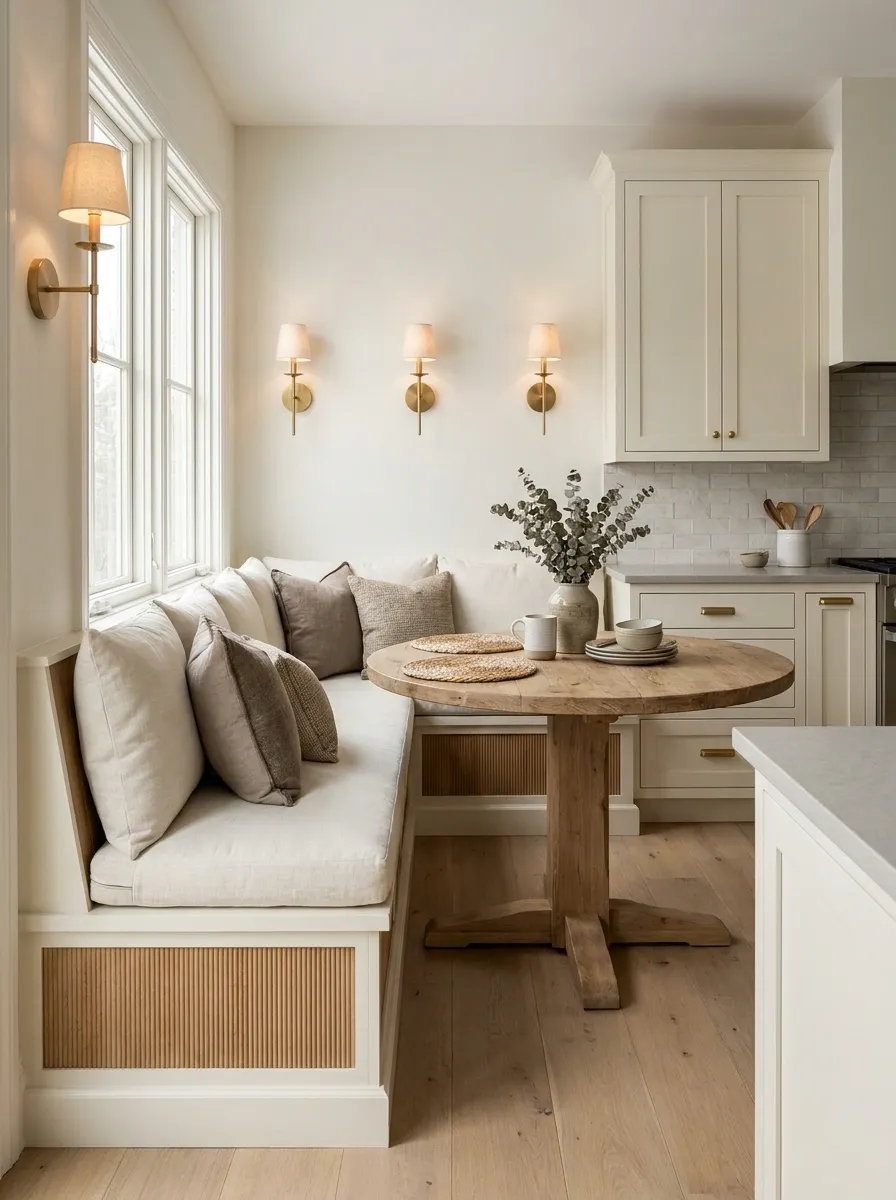
A fluted oak banquette introduces texture without taking the kitchen away from its transitional roots. Cream cushions soften the seating, shaker-style cabinetry supplies familiar structure, and stone surfaces keep everything grounded. Brass lighting provides a small warm accent instead of becoming the entire personality of the room.
The fluted wood works because it occupies a controlled area. It gives the built-in seat a crafted appearance while the simpler cabinetry keeps the overall composition balanced. Repeat the vertical texture sparingly. One strong fluted element feels considered. Fluted everything starts looking less like thoughtful detailing and more like the kitchen discovered a new button in the renovation catalog.
Long Family Banquette Along a Kitchen Wall
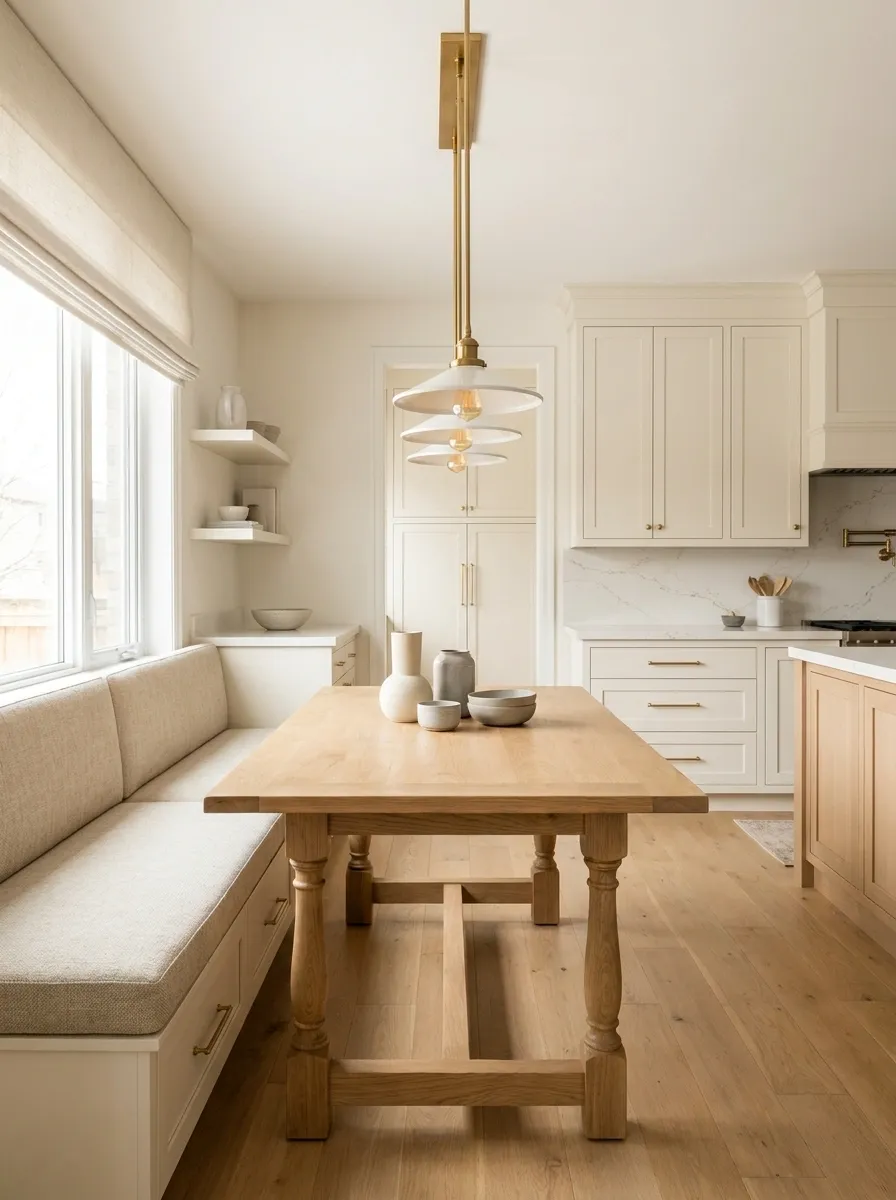
A long built-in banquette turns an unused kitchen wall into a proper dining zone, with a generous rectangular table running almost the full length of the seating. Warm cabinetry, a restrained pendant cluster, and simple upholstery keep the composition substantial without making it feel formal.
Length is the defining feature here. The bench, table, and lighting all reinforce the same horizontal line, so the wall reads as one intentional arrangement rather than several unrelated pieces. This layout makes sense in a larger family kitchen where the seating needs to handle everyday meals, homework, and the occasional mountain of grocery bags. Keep the tabletop visually calm. A long table already has plenty of presence.
Terracotta Banquette in a Warm Mediterranean Kitchen
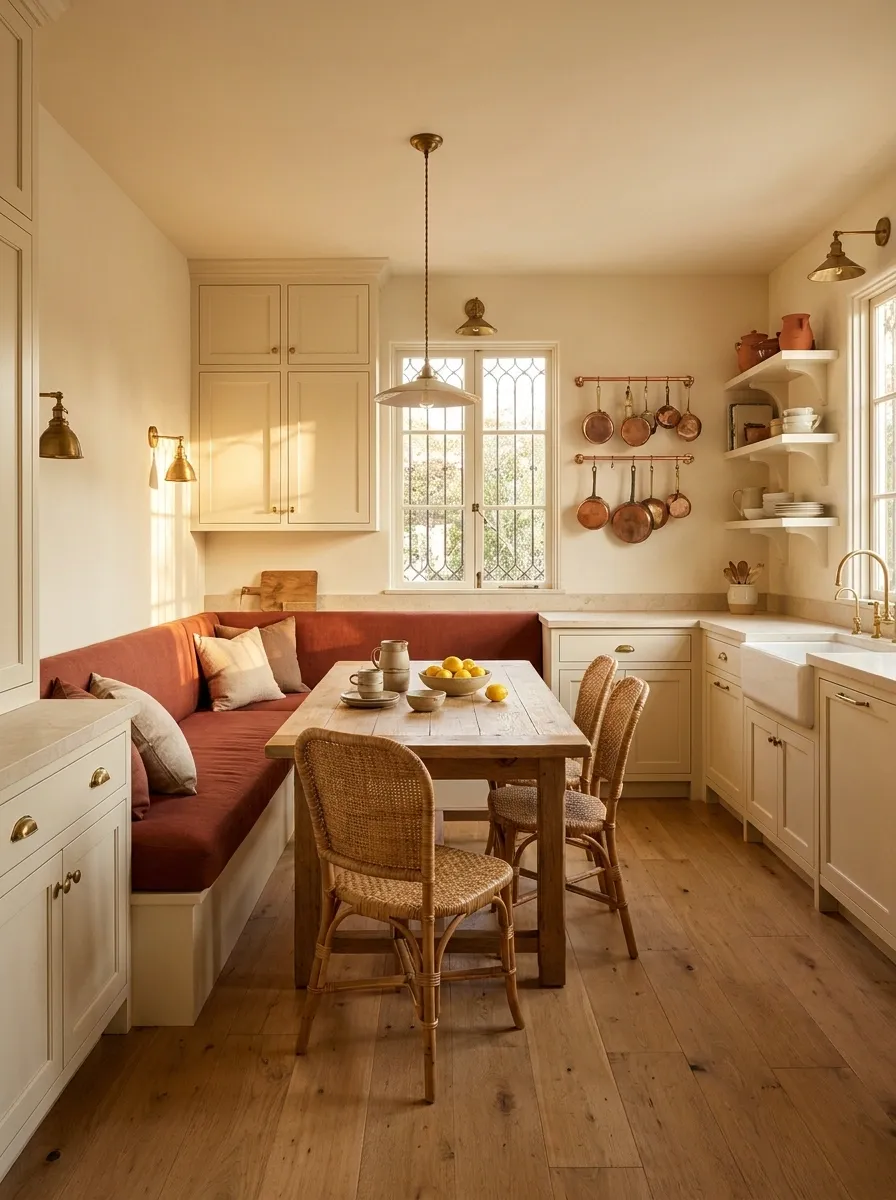
Terracotta upholstery gives this kitchen its strongest hit of color, surrounded by creamy walls, natural wood, pale stone, and aged metal details. The banquette feels warm and relaxed without relying on a pile of decorative accessories to create personality.
The trick is letting terracotta stay concentrated around the seating zone. Creamy surfaces give the color somewhere to breathe, while wood connects it to the rest of the kitchen. The result feels sun-warmed rather than saturated. Keep the surrounding finishes matte and tactile. Glossy surfaces would introduce a completely different conversation and could make the earthy palette feel strangely disconnected.
Minimal Kitchen Nook With Floating Bench Construction
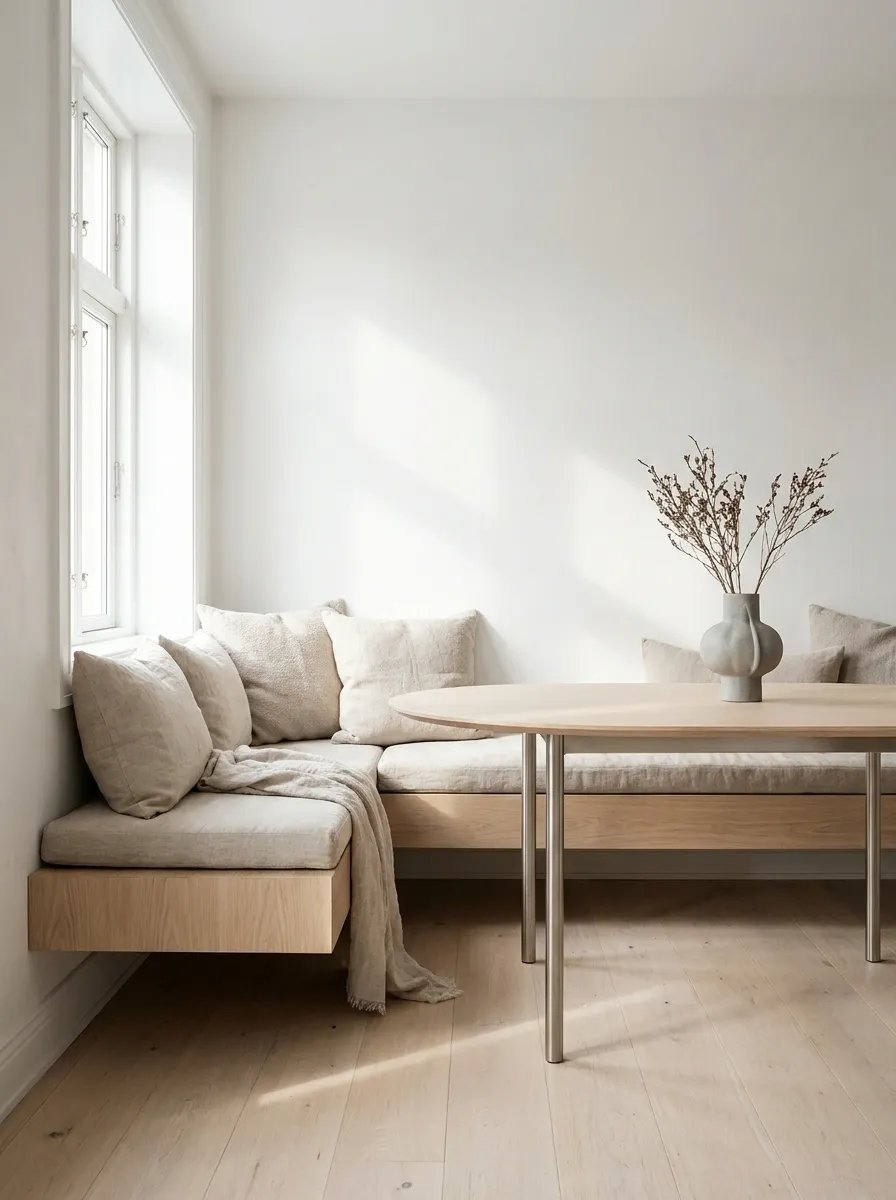
This contemporary nook uses a wall-mounted bench to keep the seating visually light. Pale cabinetry, a slim table, soft neutral upholstery, and a clean architectural backdrop leave more of the floor visible, which makes the entire kitchen feel less crowded.
The floating construction changes the visual weight of the banquette. Instead of reading as a bulky piece of cabinetry, it almost disappears into the wall. That makes the idea especially useful in modern kitchens where every heavy object can make a compact space feel tighter. Keep the lower area clear. Once storage baskets, stools, and random kitchen appliances move underneath it, the floating effect has officially left the chat.
The bench can stay substantial while the area below it remains visually quiet.
Blue Banquette With Patterned Fabric in a Traditional Kitchen
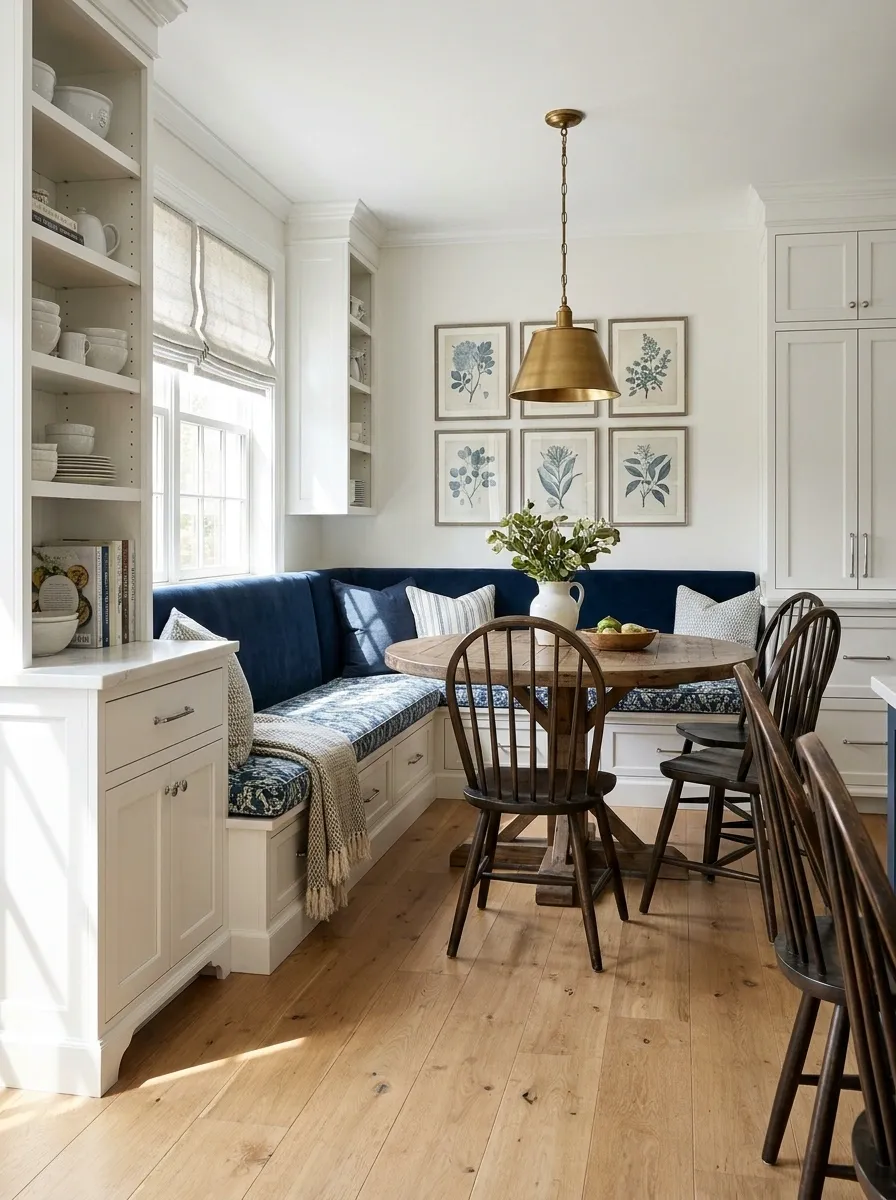
Deep blue upholstery gives this traditional kitchen its focal point, while the surrounding white cabinetry, natural wood table, classic lighting, and framed artwork keep the color from becoming too formal. A patterned cushion introduces movement across the otherwise tailored seating.
Blue works particularly well here because it is strong enough to define the dining zone without overpowering the architecture. The pattern should remain contained to the textiles so the kitchen still feels composed. Let the cabinetry stay simple and allow the artwork to repeat one or two tones from the seating. That small connection makes the entire corner feel planned rather than decorated item by item.
Banquette With Hidden Storage in a Busy Family Kitchen
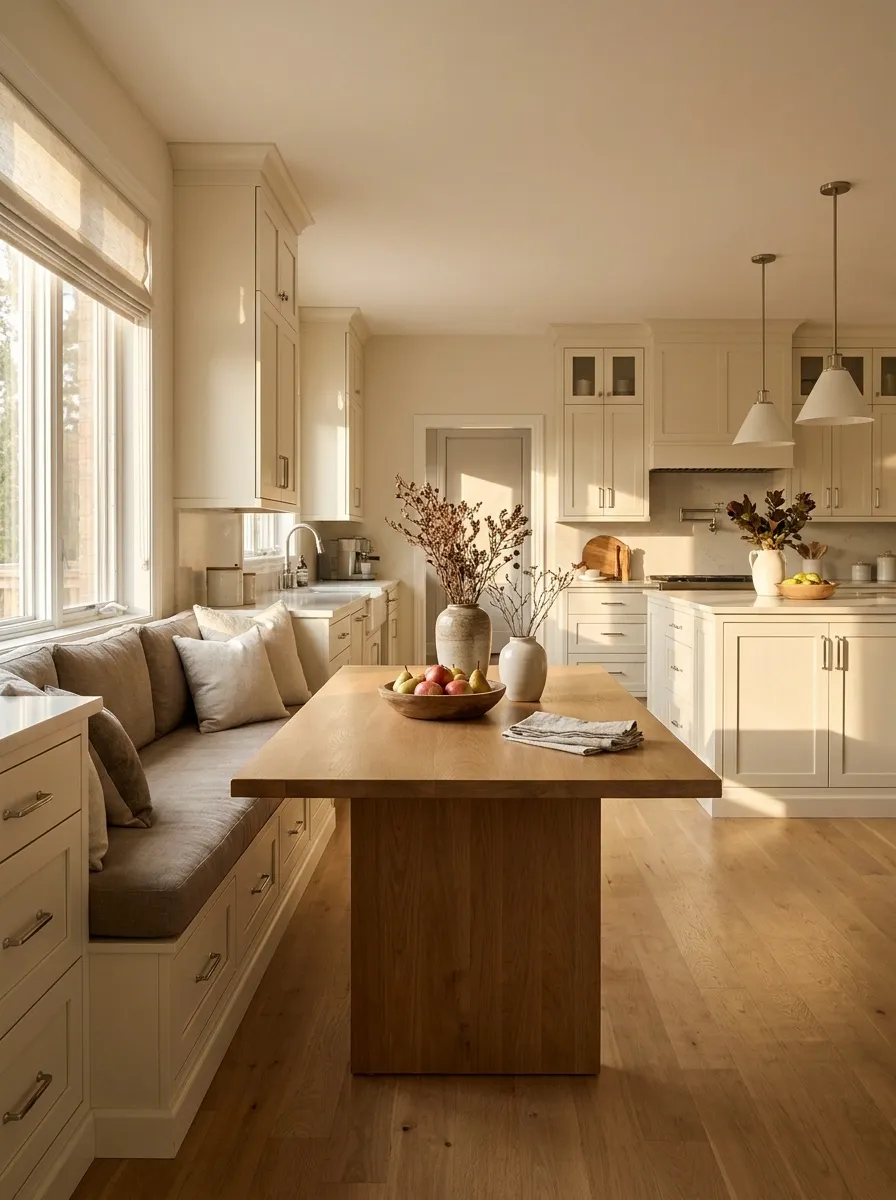
This family-friendly composition makes the banquette do more than provide seating. The built-in base contains concealed storage, while durable-looking upholstery, a practical rectangular table, and surrounding cabinetry create a dining zone designed around everyday use.
The storage works best when nobody can immediately tell it is there. Keeping the base visually consistent with the surrounding cabinetry makes the seating feel architectural rather than like a storage unit wearing a cushion. Use the hidden space for items that actually belong near the dining area, such as table linens, serving pieces, or occasional-use dishes. Every inch of storage does not need to become a personality trait.
Rustic Modern Banquette With Exposed Brick and Soft Linen
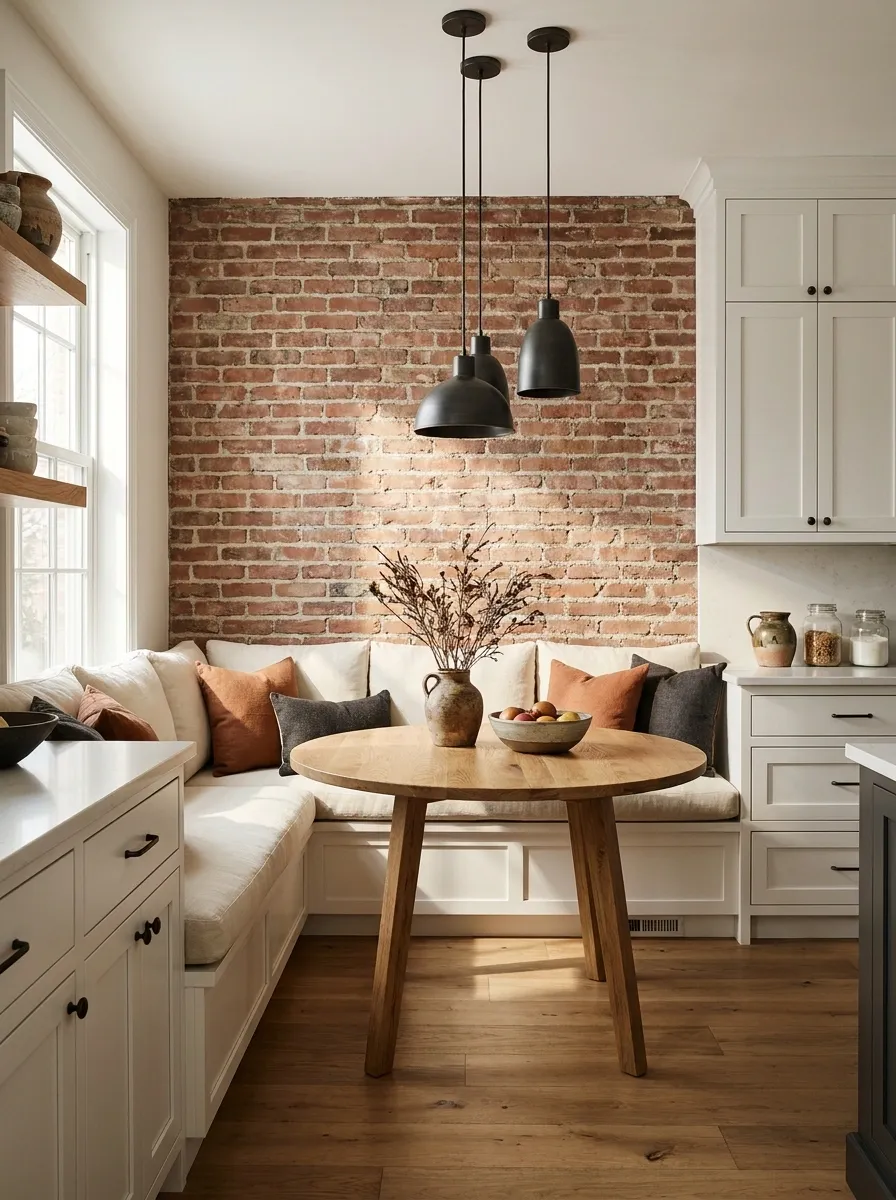
Exposed brick gives this kitchen a strong architectural backdrop, but the banquette keeps the dining corner relaxed with soft linen upholstery and a warm oak table. White cabinetry, dark metal lighting, and a few restrained natural textures connect the rustic wall to the cleaner parts of the room.
The contrast is what makes the composition work. Brick brings roughness, linen brings softness, and oak bridges the two. Nothing needs to match perfectly. In fact, forcing every material into the same rustic language would make the room feel staged. Let the brick remain slightly rough around the edges while the seating and table provide the calmer counterpoint.
Compact L-Shaped Banquette Under a Large Kitchen Window
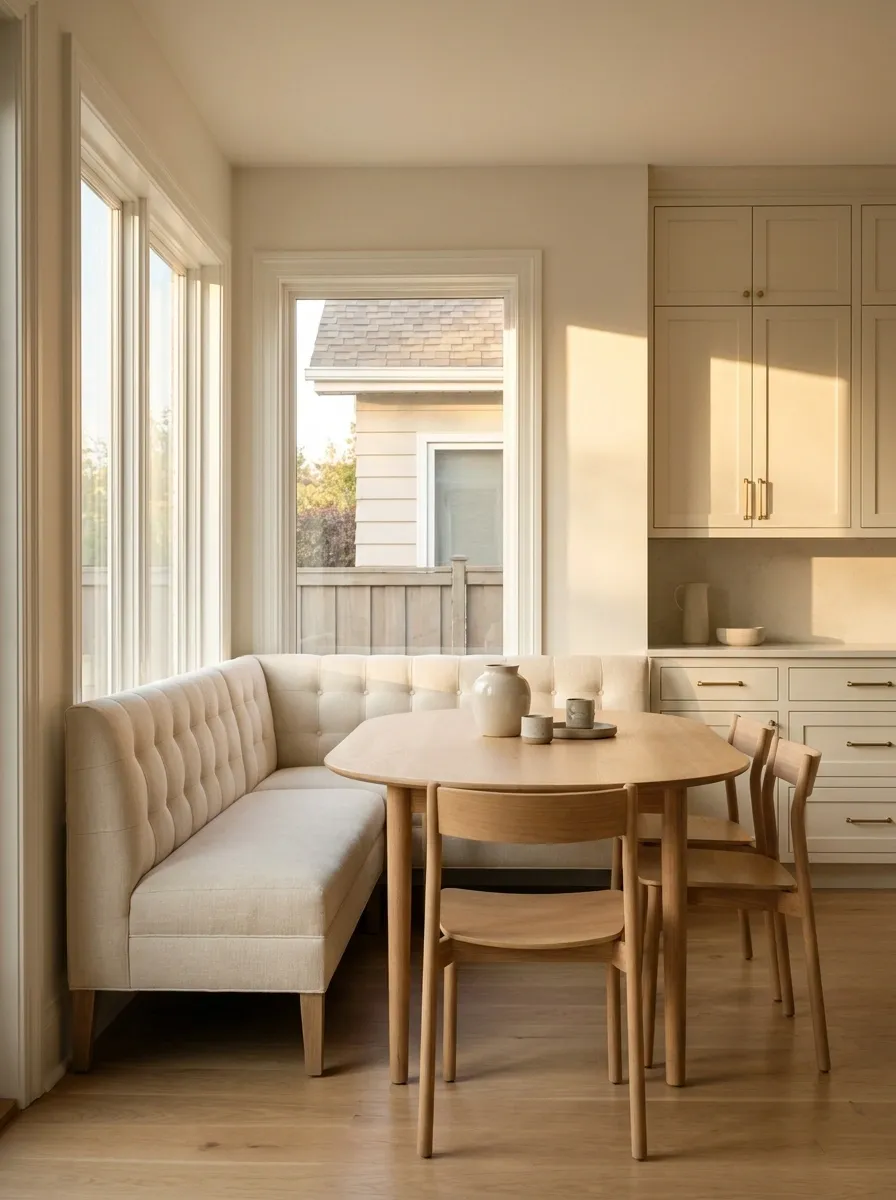
A large window can easily become the feature that leaves the surrounding floor plan feeling strangely unfinished. This compact L-shaped banquette solves that by turning the window wall into a dedicated dining corner. A small oval table, pale cabinetry, and carefully scaled lighting keep the arrangement visually open.
The oval tabletop is especially useful here because it softens the meeting point between the two sides of the bench while leaving fewer awkward corners around the seating. The window remains the brightest part of the composition, and the banquette frames it rather than blocking it. Keep the furniture low and visually quiet. The sunlight has already booked the main character role.
Main light source
Uses the corner
Softens circulation
Black Banquette With Marble Table in a Sophisticated Kitchen
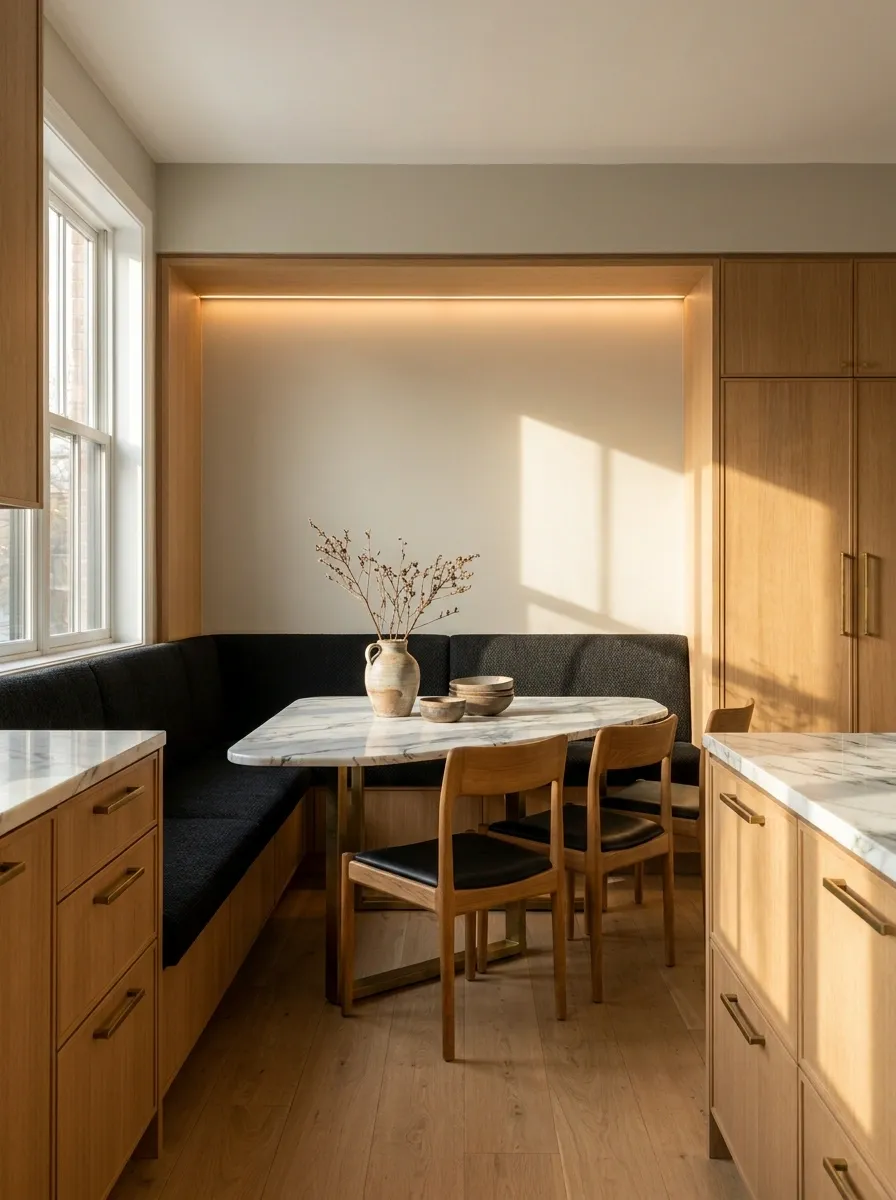
This kitchen takes a more dramatic route, pairing a tailored black banquette with a veined stone table, warm wood cabinetry, and restrained brass accents. The seating feels almost architectural against the lighter stone, while the wood prevents the room from becoming a wall of hard surfaces.
Three elements carry most of the visual weight here: the dark seating, the stone tabletop, and the warm cabinetry. Everything else can stay understated. That hierarchy gives the room a polished appearance without piling on decorative objects. Let the stone have natural variation and keep the lighting warm enough to soften the black upholstery after dark.
Wood-Clad Banquette Nook With Built-In Backrest
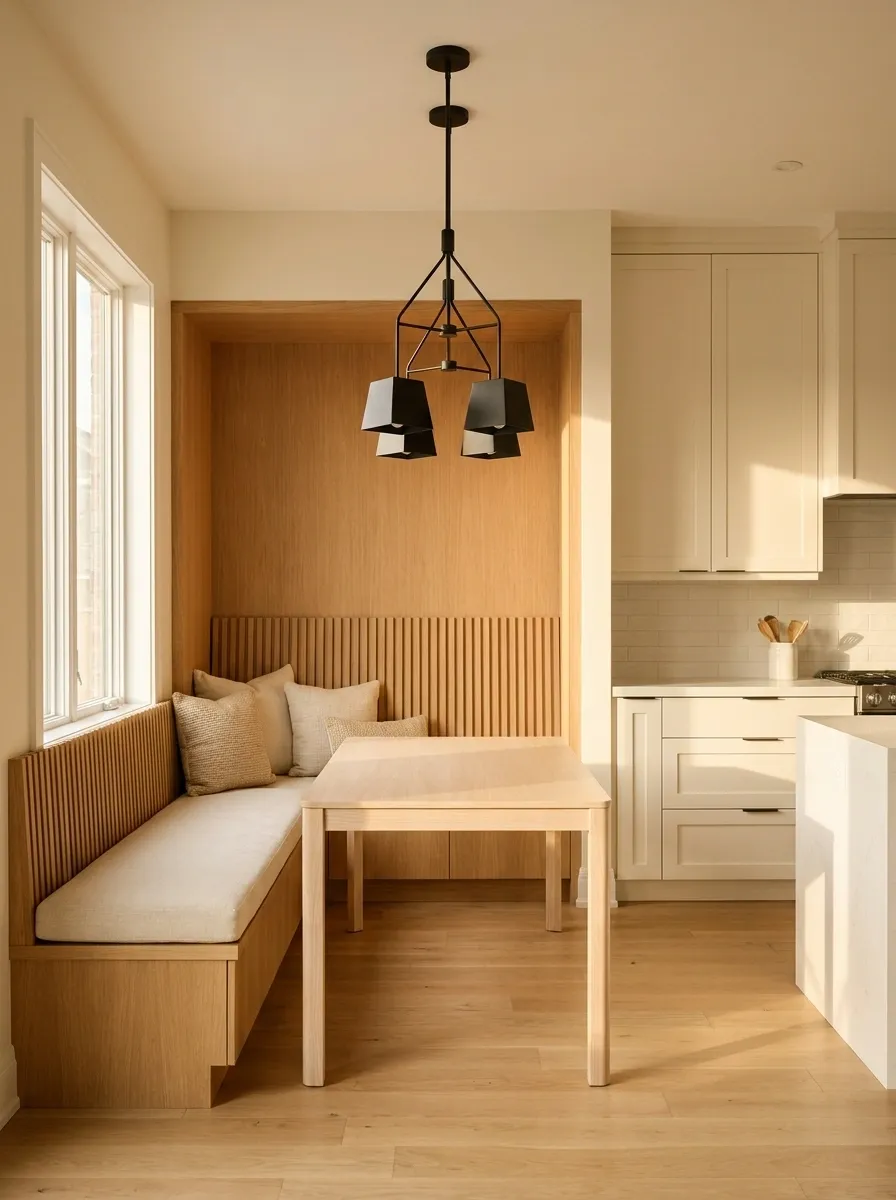
Here the banquette becomes almost a room within the room. Timber continues across the back wall and into the built-in seating, creating a warm enclosure around a simple dining table. A sculptural pendant hangs above while the surrounding kitchen remains deliberately restrained.
The continuous wood treatment is what gives this concept its identity. Instead of treating the bench as furniture placed against a wall, the wall and seating become one visual structure. That distinction makes the nook feel architectural. Use a softer cushion and keep the tabletop simple so the timber does not become visually overwhelming. The goal is a warm enclosure, not an indoor lumber exhibition.
Soft Pink Banquette in a Light Contemporary Kitchen
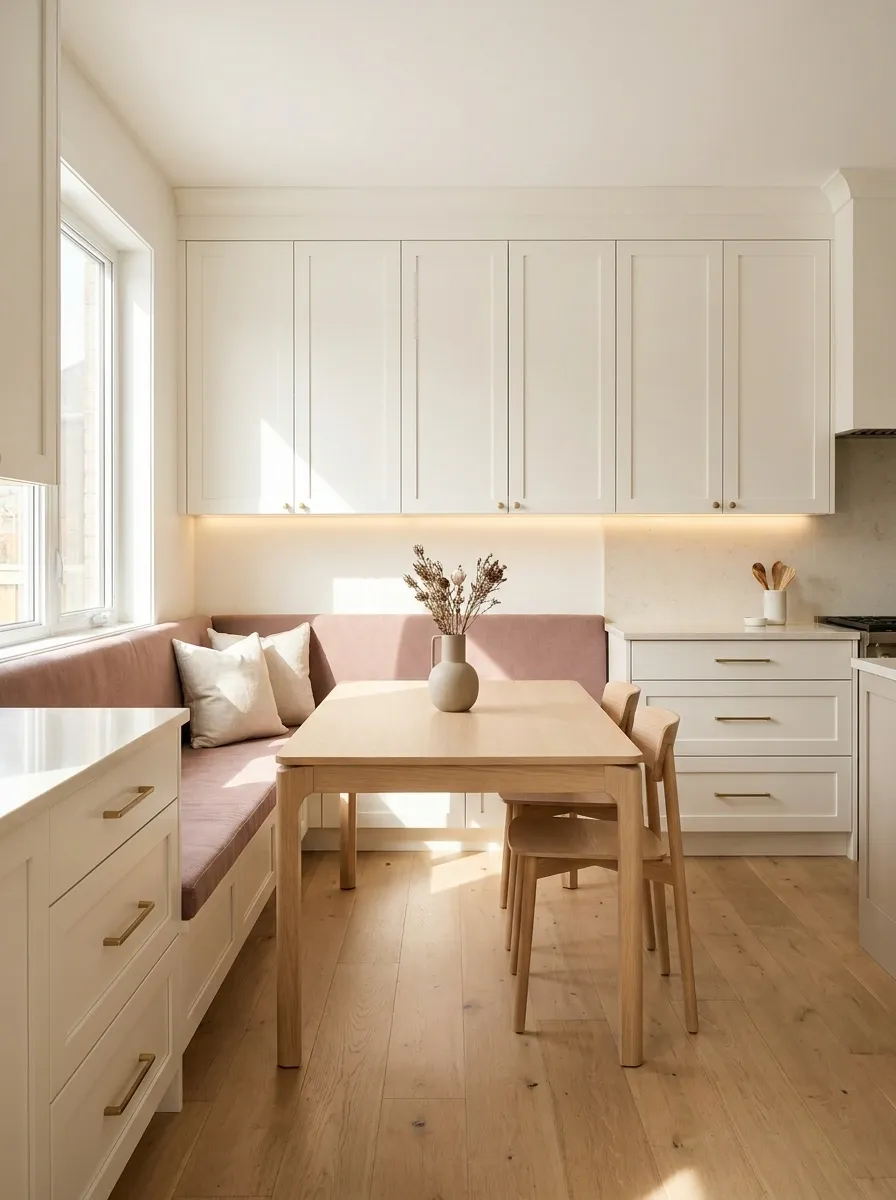
A dusty pink banquette adds a gentle color shift to this otherwise neutral kitchen. Warm white cabinetry, pale wood, creamy stone, and understated lighting create a soft background, while the blush upholstery gives the dining corner an unmistakable focal point without making the kitchen feel overly sweet.
The color works because it is muted rather than candy-bright. Pale wood also helps keep the pink grounded in the room’s natural palette. Repeat the blush only in small supporting details, if at all. The banquette should remain the clear color feature. Once every accessory starts joining the pink committee, the kitchen risks looking less contemporary and more like it has been planning a baby shower.
Banquette and Round Table Beneath a Statement Pendant
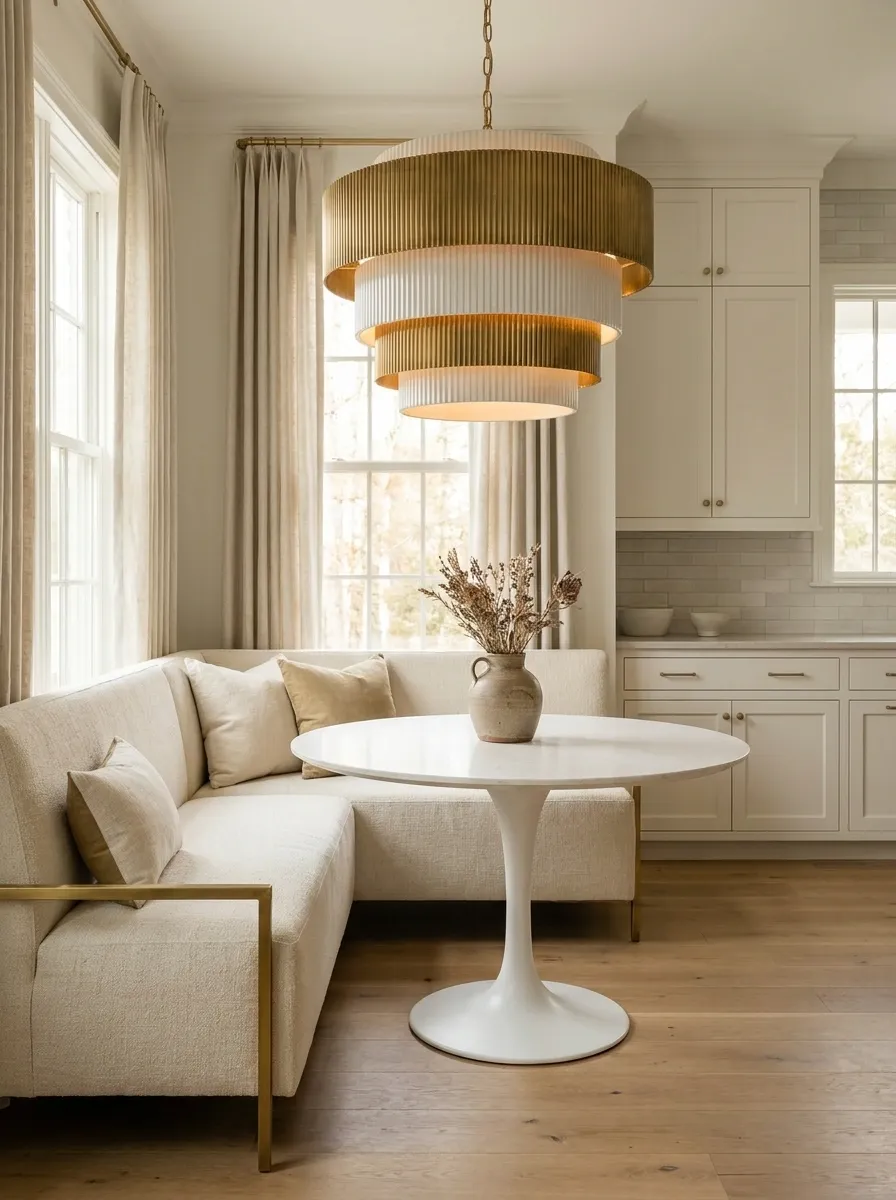
This dining corner is organized around one oversized pendant hanging directly above a round table. The banquette sits beneath it as a quieter base, while warm cabinetry and pale surfaces keep the rest of the kitchen from competing with the lighting.
The pendant works because it establishes a clear vertical axis. Eye level lands on the seating and table, then the lighting pulls the gaze upward without needing a gallery wall, giant artwork, and twelve decorative objects to fill the space. Keep the fixture distinctive but not enormous. A statement light should command attention, not threaten everyone sitting underneath it.
Draws the eye upward
Creates the visual center
Grounds the composition
Vintage-Inspired Kitchen With Diner-Style Banquette Seating
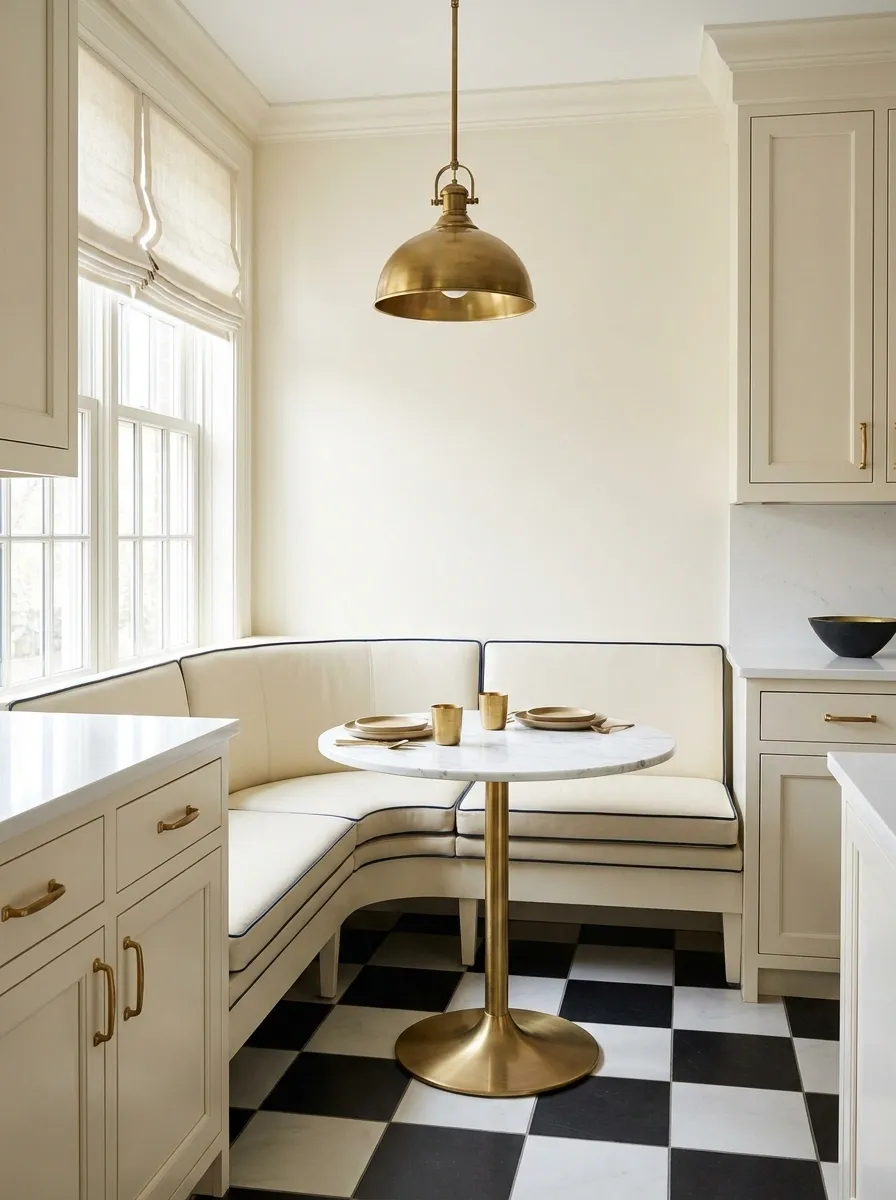
A classic diner influence gives this kitchen a completely different personality. The built-in banquette has tailored piping, a compact round table sits in front of it, and vintage-inspired lighting and flooring establish the period reference. The cabinetry remains refined enough to keep the room from turning into a theme set.
The secret is using a few recognizable details rather than recreating an entire 1950s restaurant. The seat provides the strongest reference, while the lighting and floor reinforce it. Everything else can stay contemporary. That balance makes the room nostalgic without feeling like time travel happened halfway through breakfast.
2. Period-inspired lighting
3. Retro floor reference
4. Contemporary cabinetry
Organic Modern Banquette With Limestone and Light Oak
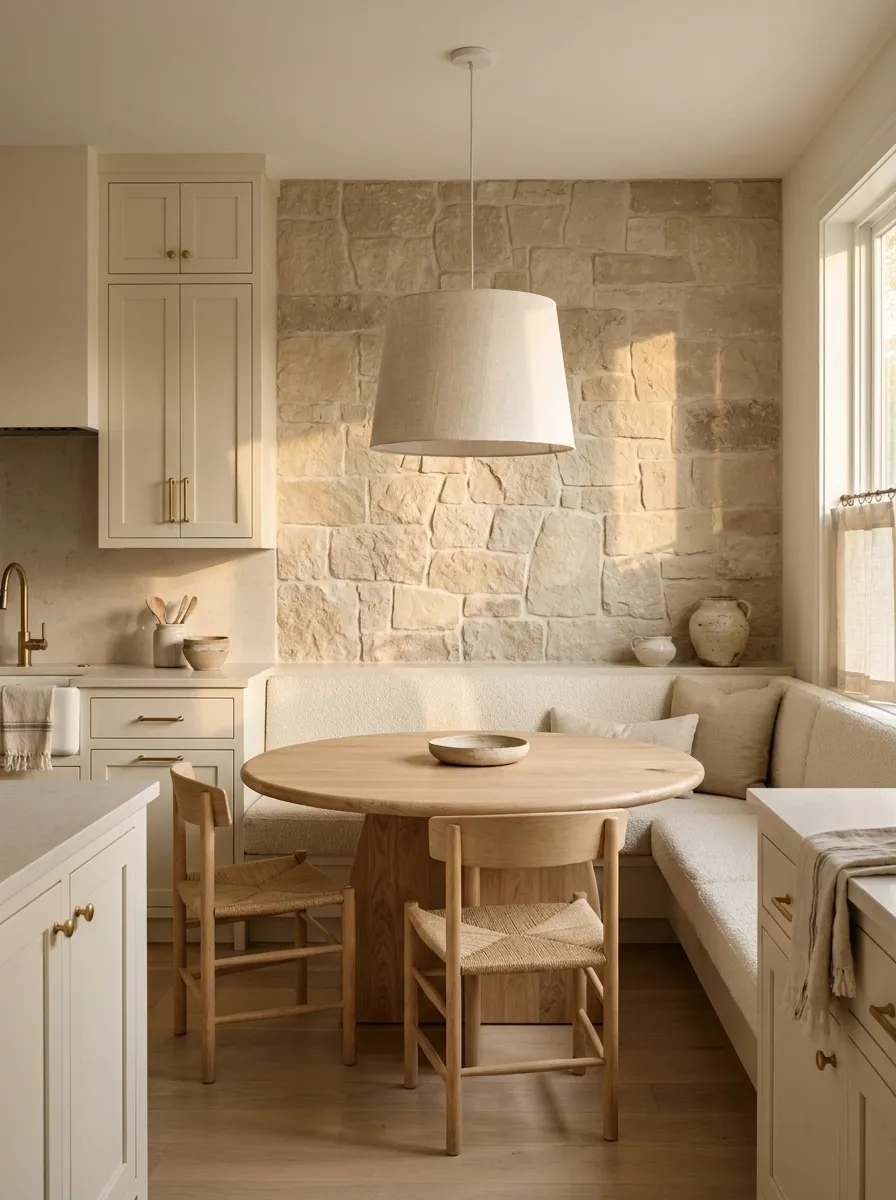
This kitchen relies on natural surfaces rather than bold color. Limestone, pale oak, softly textured upholstery, and gently curved table edges create a banquette area that feels grounded and tactile. The kitchen stays contemporary through clean cabinetry and restrained forms.
The materials are deliberately close in tone, so texture has to carry the visual interest. Rougher stone, visible wood grain, and soft fabric keep the palette from becoming flat. The banquette works because it adds warmth without introducing a new visual language. Keep the accessories sparse and let the surfaces do the decorating. Limestone has already brought enough personality to the room without demanding a supporting cast.
Irregular natural texture
Visible grain and warmth
Soft tactile contrast
Banquette Facing the Garden in an Open Family Kitchen
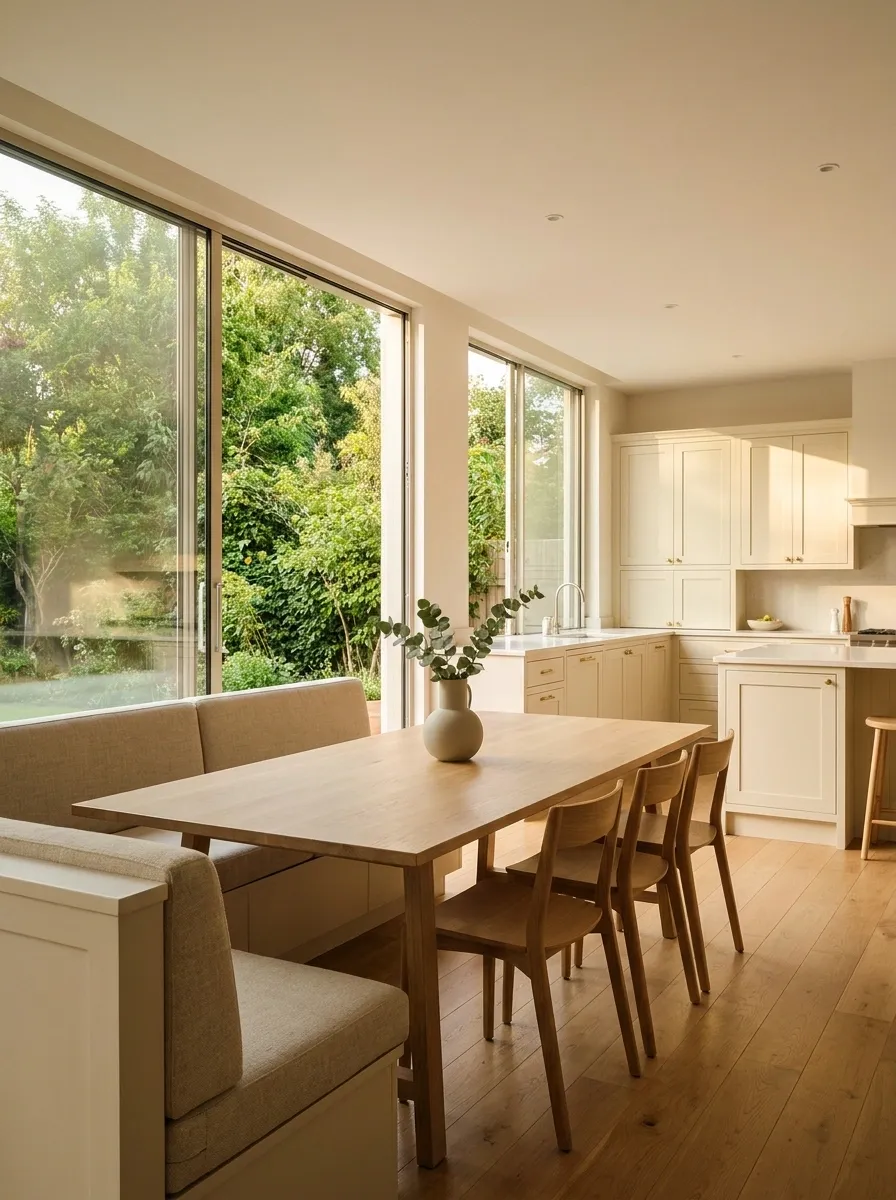
Large glazing changes the entire role of the banquette in this open family kitchen. Instead of looking inward toward cabinets, the dining zone faces the garden, with the view becoming a natural backdrop behind the table. Warm cabinetry, comfortable seating, and a long dining surface make the space feel connected to both the kitchen and outdoors.
The furniture arrangement should support the view rather than compete with it. Keep the banquette low enough to preserve the sightline and avoid tall decorative pieces on the table. The strongest feature here is the relationship between inside and outside. There is no need to decorate over something nature has already handled rather well.
Elegant Bespoke Banquette With Layered Lighting and Millwork
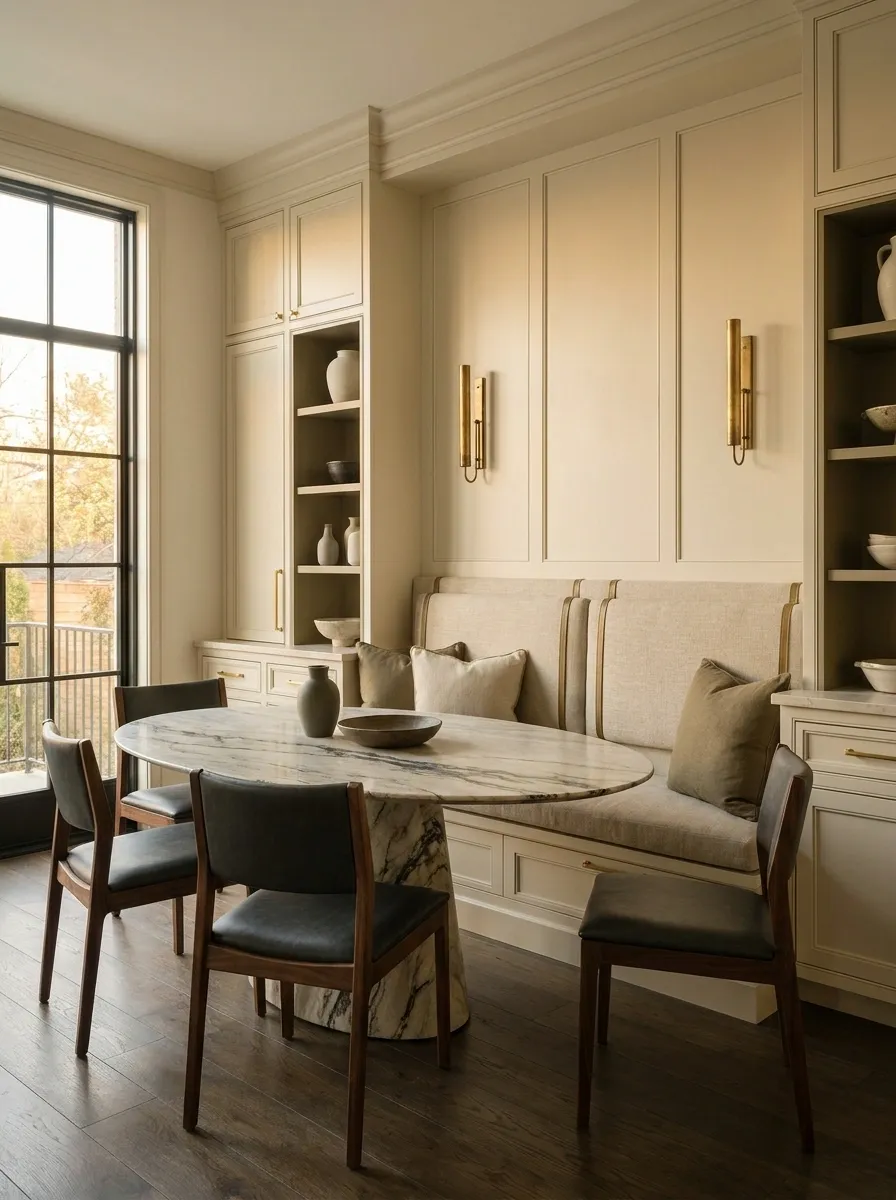
The final concept goes fully bespoke, combining wall paneling, integrated cabinetry, tailored seating, a substantial stone table, and several layers of warm lighting. Rather than making the banquette the only feature, the entire wall becomes a composed architectural statement.
The strongest detail is the hierarchy. Millwork establishes the structure, the banquette defines the seating zone, the table creates the center, and lighting gives the arrangement depth after dark. None of those elements needs to shout. This is where restraint matters most. Expensive-looking kitchens rarely need every surface proving how expensive it is. Let the craftsmanship carry the conversation.
The difference between a banquette that looks good in a photo and one that genuinely improves a kitchen is usually visible in the space around it. The strongest rooms leave enough breathing room for movement, repeat materials in sensible places, and let the architecture influence the seating instead of treating it like an afterthought.
That is why the most useful inspiration here is not one particular bench, cushion, or table. It is the relationship between all of them. A window nook can feel completely different from a long family dining wall, even when both use built-in seating. A dark walnut composition needs a different balance from a pale Scandinavian one. A tiny apartment kitchen needs a different sense of scale from a large open-plan room.
Choose the complete direction first. Then let the individual finishes follow it.