
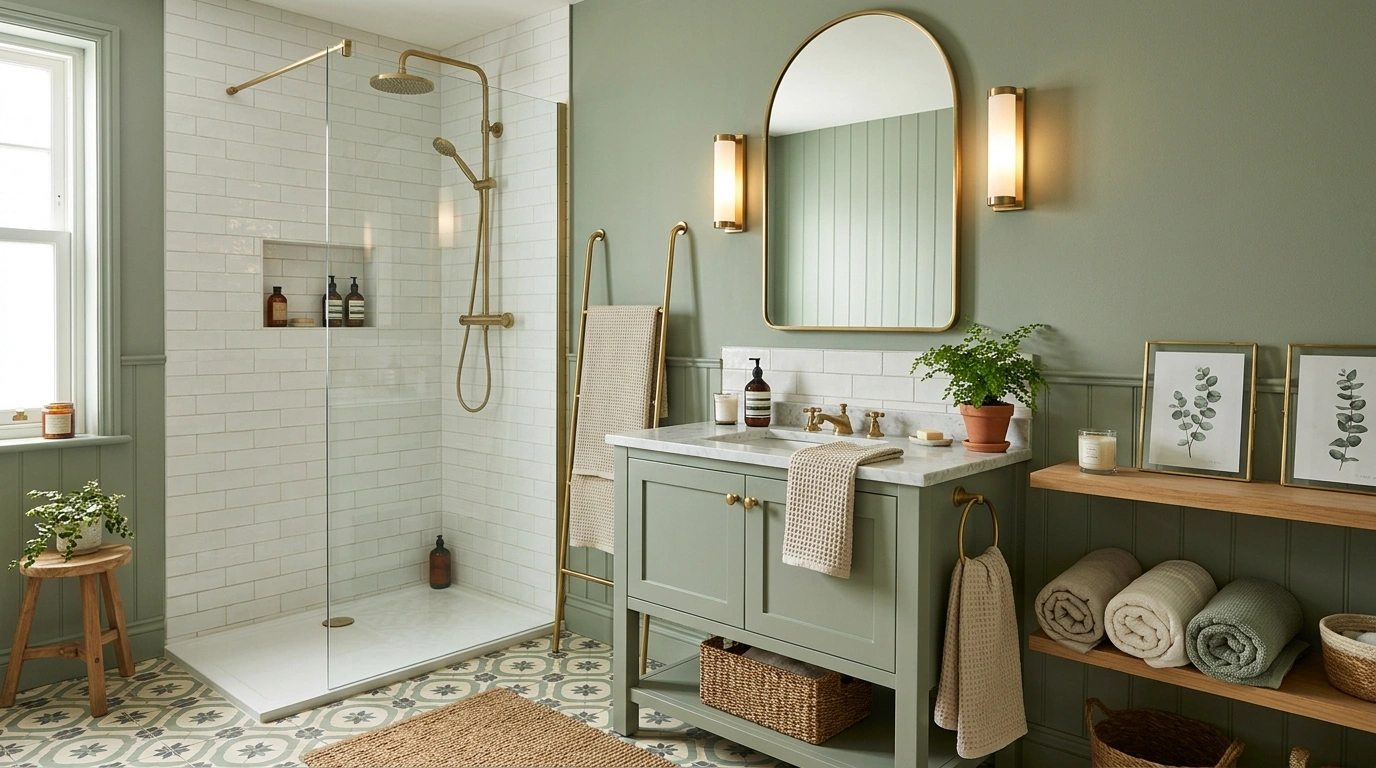
Sage green bathrooms have one very specific problem: the color is beautiful until the room starts looking like someone got emotionally attached to the paint sample.
The difference between a sophisticated sage bathroom and a room drowning in green isn’t the shade itself. It’s what surrounds it.
Warm wood, creamy whites, stone, aged metals, simple tile, and the right amount of empty space can make sage look calm and expensive. Throw five competing greens into the same room and suddenly the bathroom has a personality disorder.
Sage Green Bathroom Ideas
Stack Wooden Shelves Above a Sage Wall
Floating wooden shelves bring an instant layer of warmth when stacked high against a soft sage backdrop. Use the natural grain to anchor the space and break up the expanse of pale green.
Keep the styling functional yet curated by placing rolled white towels and simple glass jars within easy reach. The combination of rich wood and muted green creates an organic balance that feels completely effortless.
Finish the display with small botanical prints framed in black to tie the upper walls together. It is a foolproof way to make compact bathroom storage look like an intentional design feature.
Paint the Vanity Sage and Let the Rest of the Bathroom Stay Light
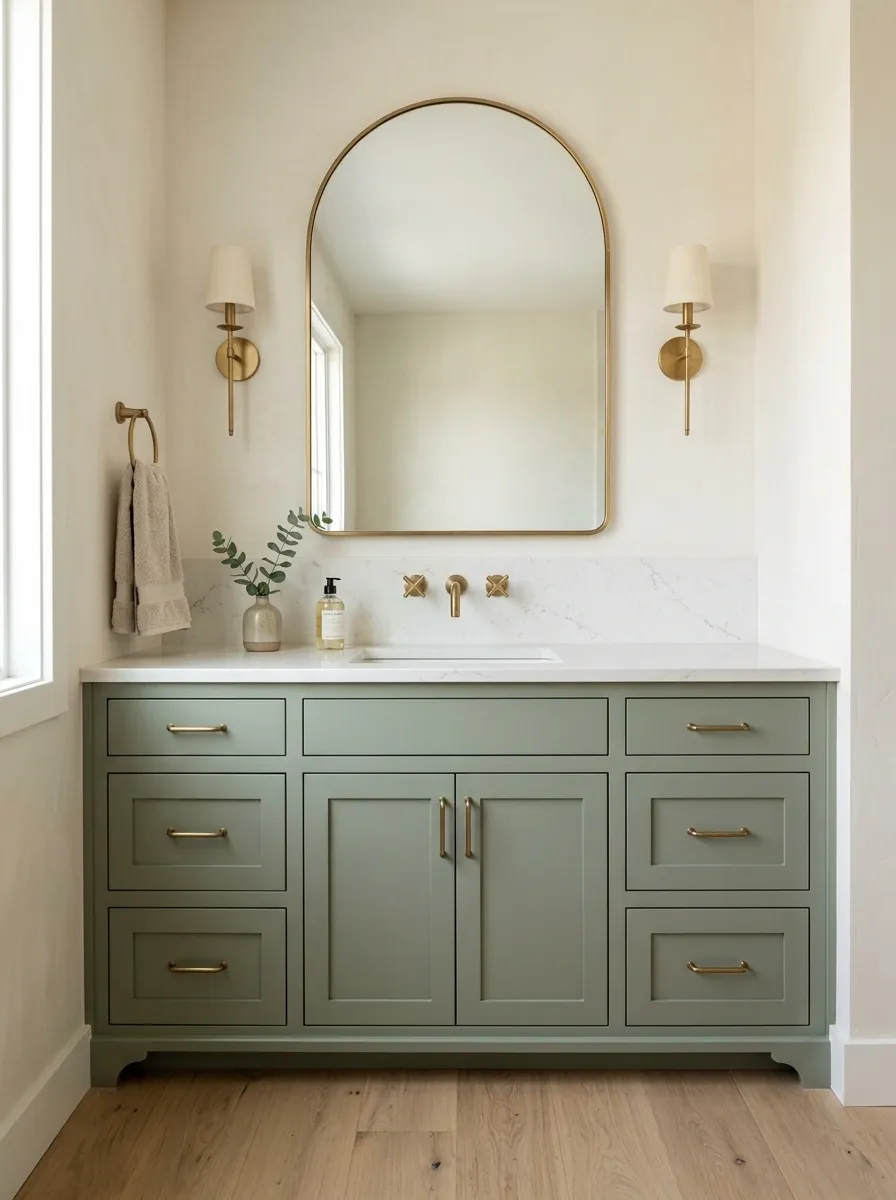
A sage vanity is one of the easiest ways to make a bathroom feel designed without repainting every wall.
Keep the walls warm white or soft cream, then let the cabinetry carry the green. This works particularly well with simple counters because the sage becomes the feature instead of competing with another busy surface.
Choose hardware in one finish and repeat it. Aged brass warms the green, while black creates sharper contrast.
The formula is simple:
- Sage cabinet
- Light countertop
- Warm white walls
- One repeated hardware finish
The vanity gets the attention. Everything else knows its place.
Layer Textured Stone With a Floating Green Vanity
Textured neutral tile creates a stunning backdrop for a modern floating vanity in a rich sage tone. The organic variation in the stone keeps the monochromatic palette from feeling flat or sterile.
Mount sleek gold hardware and matching fixtures to introduce a warm metallic glow against the green cabinetry. Under-cabinet lighting casts a soft, luxurious wash down the wall, enhancing the illusion of space.
Keep the surrounding decor minimal so the textured shower tile and sleek vanity can take center stage. A trio of simple framed artworks completes the look with understated sophistication.
Cover the Walls in Soft Sage and Keep the Trim Creamy White
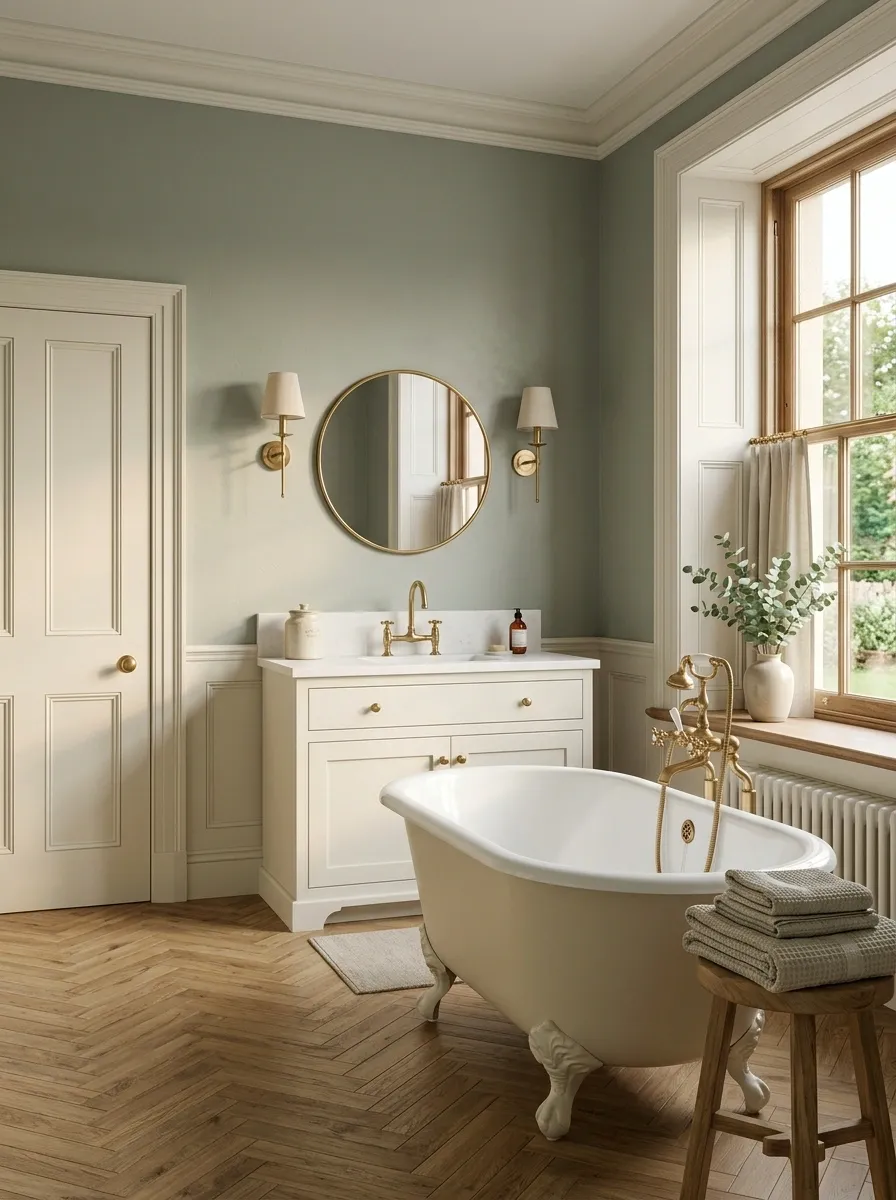
For a bathroom that needs more color, sage walls create a much stronger effect than scattering tiny green accessories around the room.
Use a muted, gray-leaning sage rather than a bright leafy green. Pair it with creamy white trim, doors, ceilings, and fixtures so the wall color looks intentional instead of muddy.
This approach works especially well in older bathrooms where architectural details already give the room some character.
Keep the trim clean and simple. The contrast around windows, doors, and baseboards gives the green a crisp edge.
Pair a Sage Vanity With Classic Brass Accents
A sage green vanity instantly elevates a simple white bathroom without demanding a complete renovation. The muted green tone introduces quiet color while keeping the overall atmosphere light and airy.
Pair the cabinetry with polished brass fixtures and matching wall sconces to bring a touch of timeless warmth to the space. Fresh eucalyptus in a ceramic vase ties the color scheme together naturally.
Keep countertops tidy with a wooden tray and a few glass canisters for everyday essentials. This straightforward combination looks polished, expensive, and entirely put together.
Add Warm Wood to Stop Sage From Feeling Too Sweet
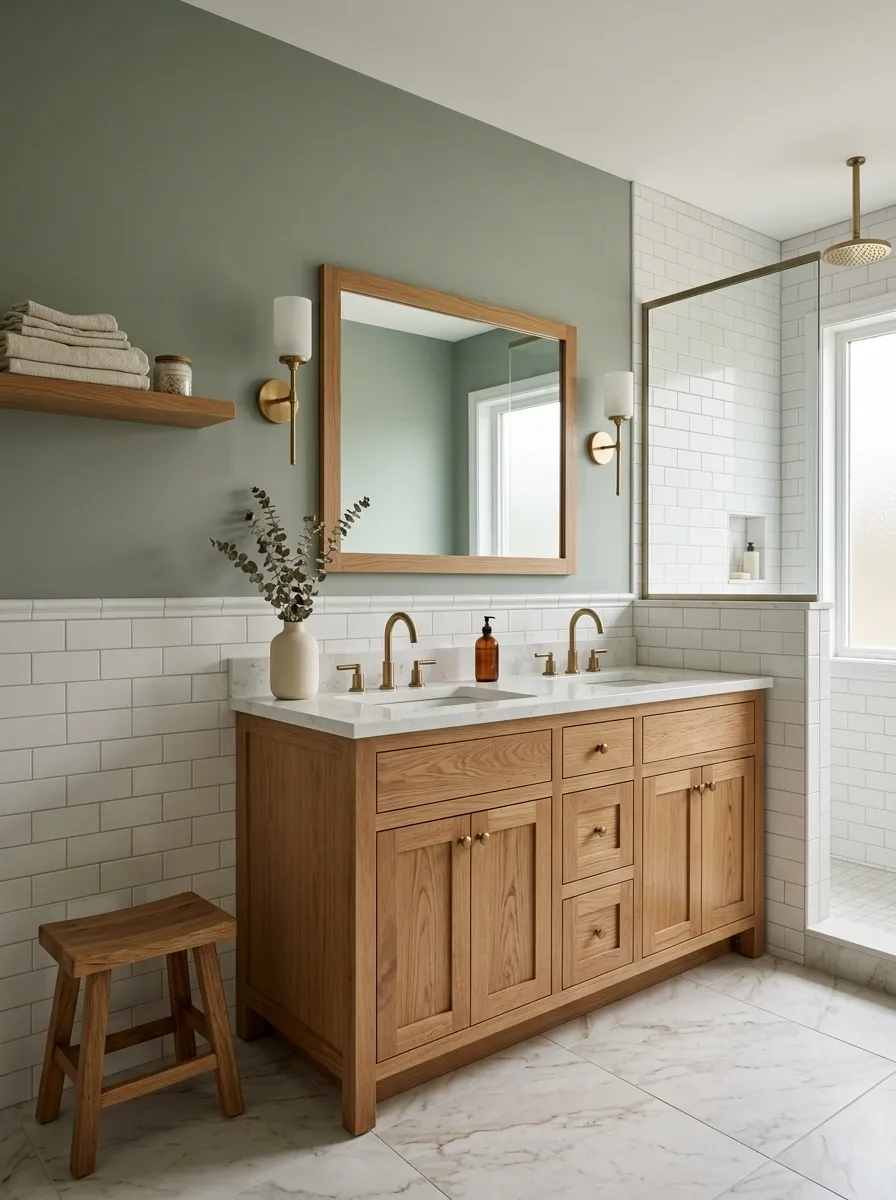
Sage can lean delicate when it’s surrounded by white, so warm wood gives it some backbone.
A wood vanity, stool, floating shelf, or framed mirror introduces a natural brown tone that makes muted green feel richer. This is especially effective in bathrooms where the tile is already white.
Don’t add five different wood tones. One or two matching wood details are enough to create warmth without turning the bathroom into a rustic showroom.
Good pairing: sage + warm oak + cream + simple brass.
That combination has enough texture to feel finished without needing a shelf full of decorative nonsense.
Anchor the Room With Vertical Sage Beadboard
Vertical beadboard painted in a muted sage tone adds instant architectural interest to a simple bathroom. The classic paneling draws the eye upward and gives the walls a tailored, custom finish.
Pair the green woodwork with crisp white upper walls and a classic pedestal sink for a balanced, traditional look. A dark wood toilet seat and a warm neutral runner rug introduce grounding elements.
Keep the wall decor minimal with simple botanical sketches framed in dark wood to complement the vintage feel. The result is a cozy, character-filled space that feels both timeless and deeply personal.
Bring Sage Into a White Bathroom With a Painted Half Wall
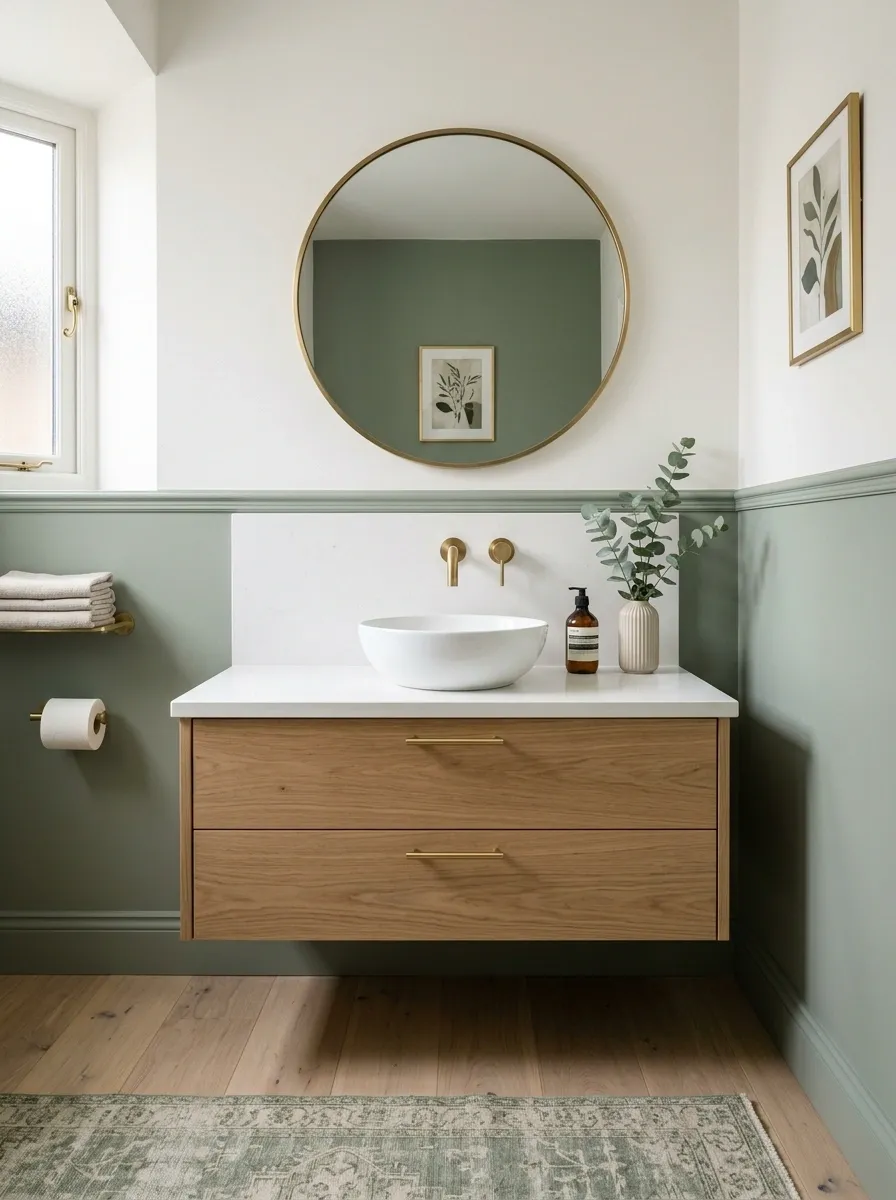
A half-painted wall gives you color without turning the entire bathroom into a green box.
Paint the lower portion sage and keep the upper wall warm white. A narrow trim line can separate the two, or the color can simply stop at a clean horizontal point.
This works particularly well behind a vanity or around a compact powder room.
The visual trick: the horizontal color break gives the eye a clear stopping point. That makes the green feel deliberate rather than unfinished.
Wrap the Walls in Monochromatic Sage Paneling
Drenching the lower beadboard and upper walls in a deep, moody sage creates a cocoon-like atmosphere. Matching the radiator cover to the wall color makes functional elements disappear seamlessly into the design.
Hang framed botanical art featuring sage tones to blend the artwork into the monochrome backdrop. Classic black and white checkerboard floor tiles add a graphic punch that keeps the heavy green from feeling overwhelming.
Incorporate warm brass hardware on the towel rail and toilet roll holder to catch the light. It is a masterclass in moody color drenching that feels both historic and effortlessly chic.
Use a Sage Shower Niche as the Color Moment
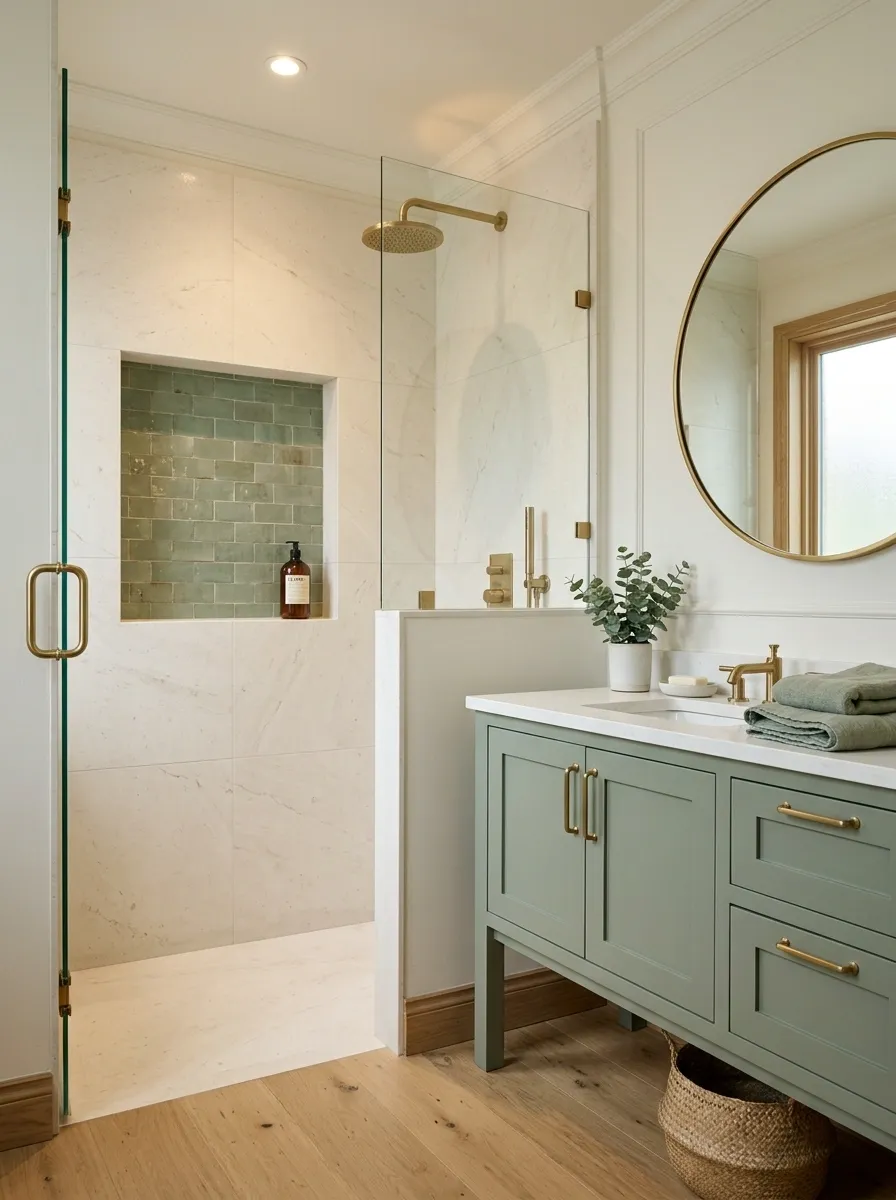
A shower niche is already a natural focal point, so it doesn’t need much help.
Use sage tile inside the niche while keeping the surrounding shower walls neutral. The small burst of green adds personality without requiring a full shower renovation.
Repeat the same sage somewhere outside the shower, such as the vanity or a towel, so the niche doesn’t look like a random green rectangle someone forgot to explain.
Keep the niche styling edited: one bottle grouping, one small plant if the conditions allow it, or simply clean tile. Empty space can look better than six bottles fighting for shelf space.
- Use sage tile inside the niche.
- Keep surrounding shower tile quieter.
- Repeat sage somewhere outside the shower.
- Leave enough empty space to show the tile.
Pair Sage With Cream Instead of Stark White
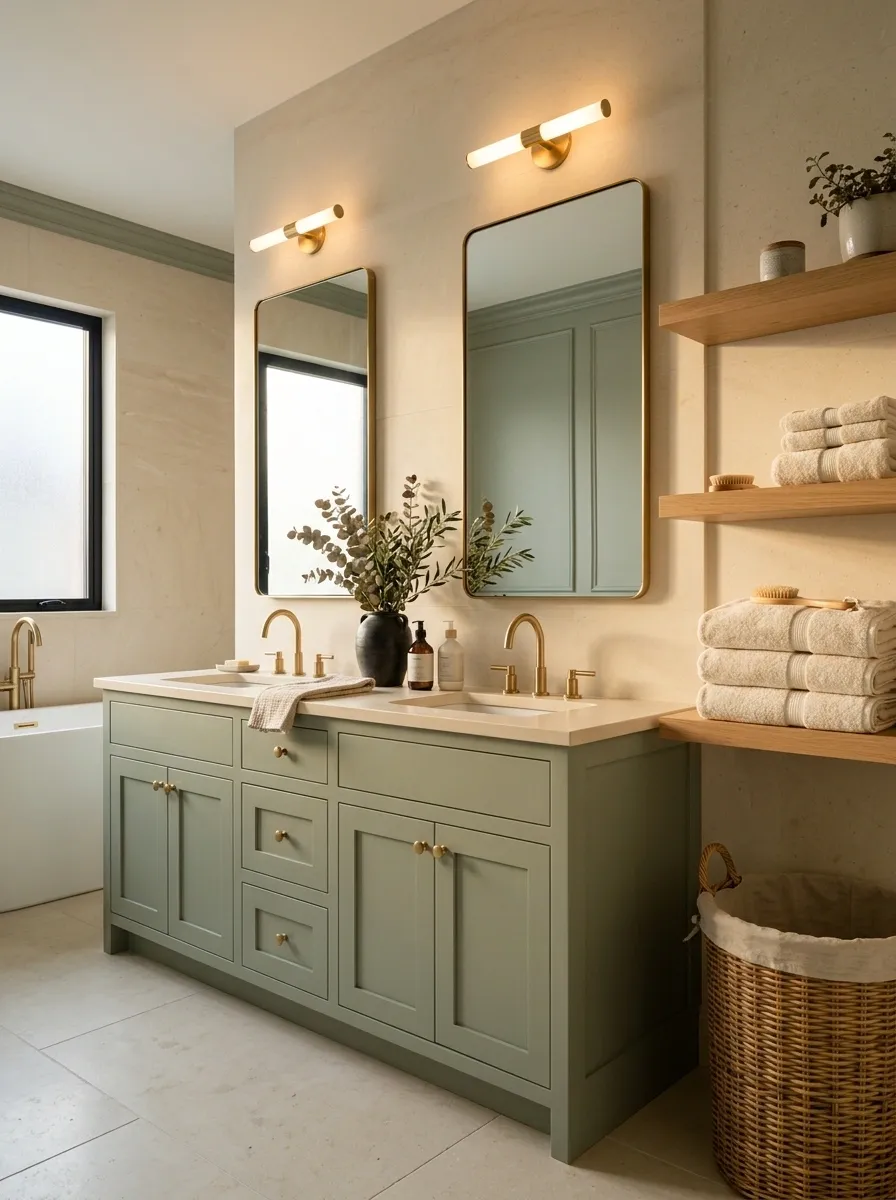
Sage and stark white can look crisp, but cream makes the combination noticeably softer.
Use cream walls, towels, stone, or a warm countertop against sage cabinetry or tile. The warmer neutral brings out the earthy side of the green instead of pushing it toward a cool, clinical look.
This pairing is especially useful in bathrooms with warm lighting.
Choose one cream tone and repeat it instead of mixing bright white, ivory, beige, and cream in every corner. Too many near-whites create a strange little paint-chip convention.
Let White Tile Keep a Sage Bathroom From Feeling Heavy
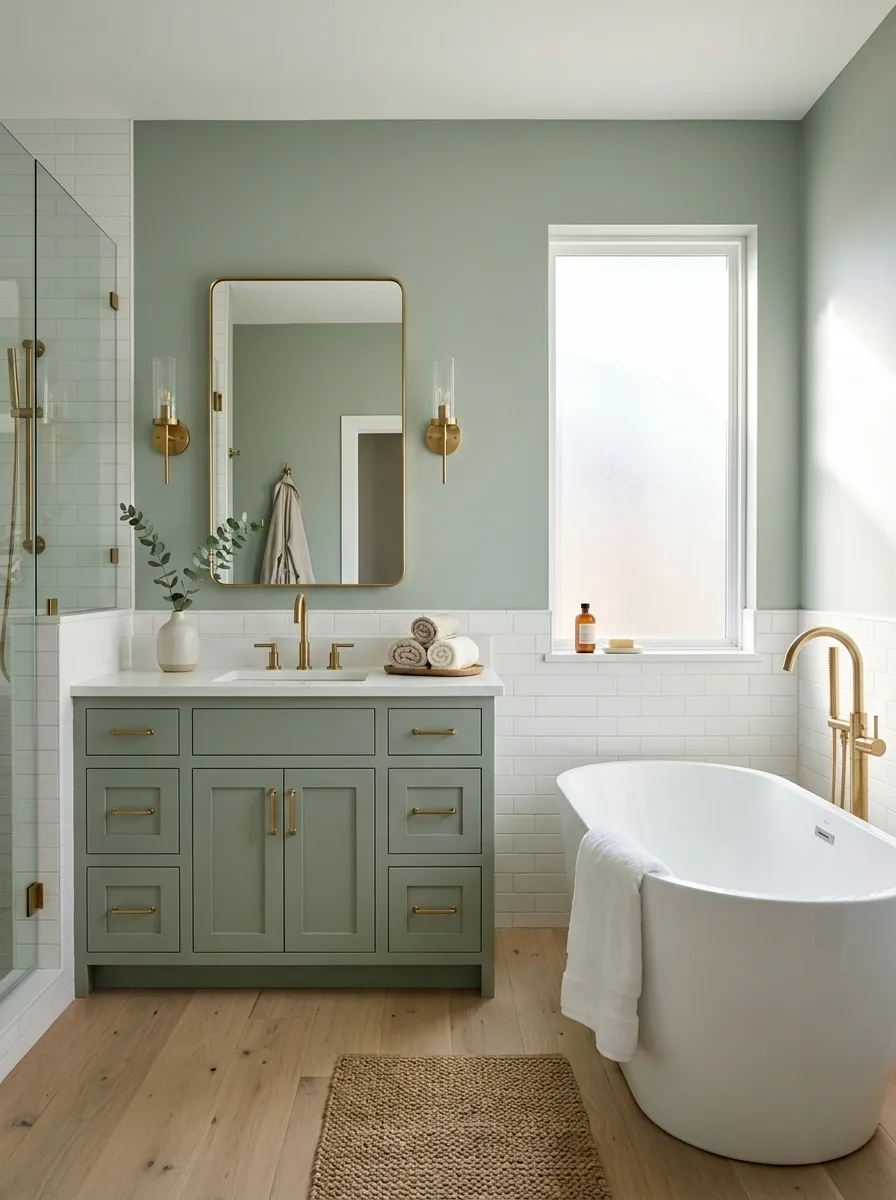
Sage walls already bring plenty of color. White tile gives the room a visual reset.
Use white subway tile around the tub or shower while keeping sage on the painted walls or vanity. The contrast makes both finishes look cleaner, and it keeps a compact bathroom from turning into one giant block of green.
Keep the white tile simple. Glossy white subway tile, narrow grout lines, and a basic layout are enough. Adding another decorative tile just because there’s an empty wall is how a calm scheme quietly becomes visual noise.
Frame a Sage Vanity With a Large Round Mirror
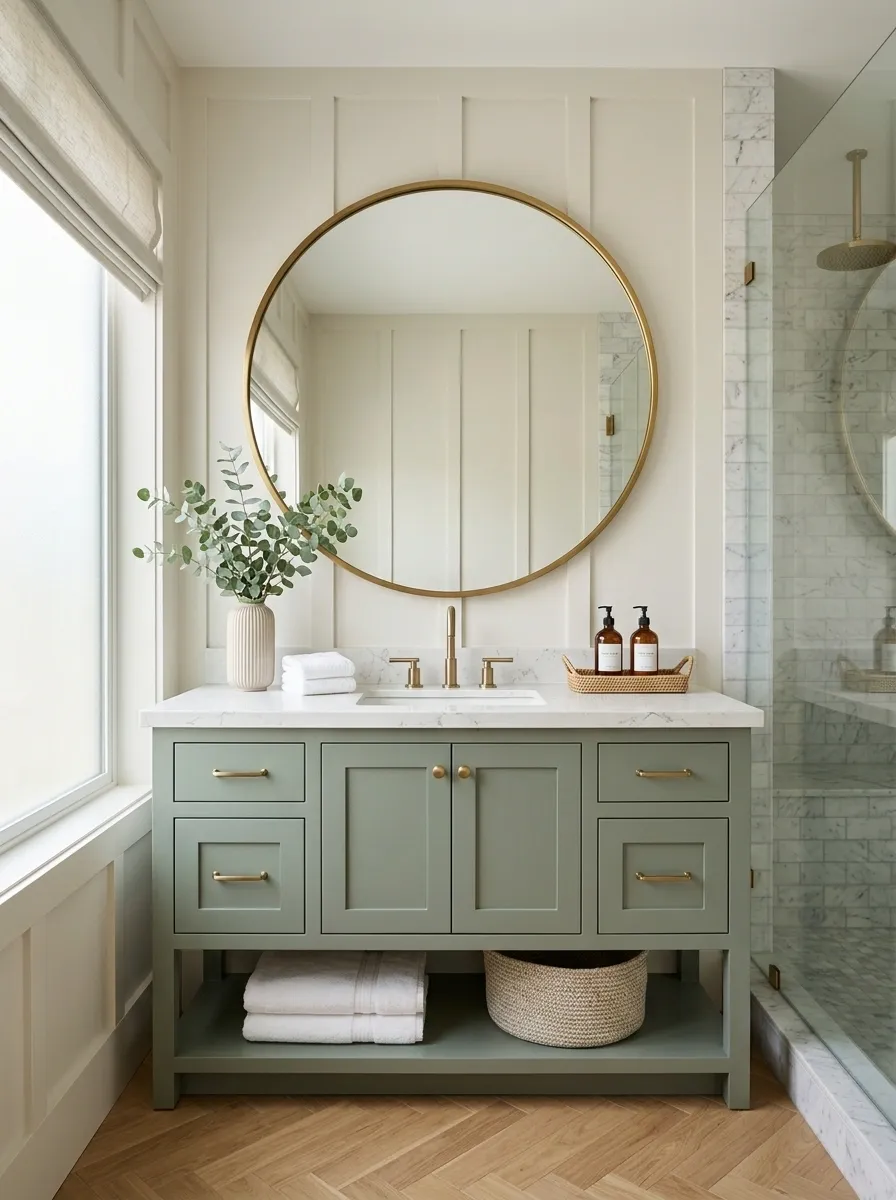
A round mirror softens the hard lines of a vanity, especially when the cabinet is painted sage.
Go larger than the tiny builder-grade mirror that came with the house. A generous round shape makes the vanity zone feel more finished and gives the green cabinet a stronger visual frame.
Use the mirror to introduce warmth or contrast:
- Thin aged brass for a softer look
- Dark wood for a richer look
- Matte black for a sharper look
The mirror doesn’t need decorative flourishes. A clean silhouette does more here than an ornate frame ever will.
A larger round mirror creates a clean visual circle above the rectangular cabinet and keeps the composition from feeling boxy.
Use Aged Brass Instead of Bright Chrome
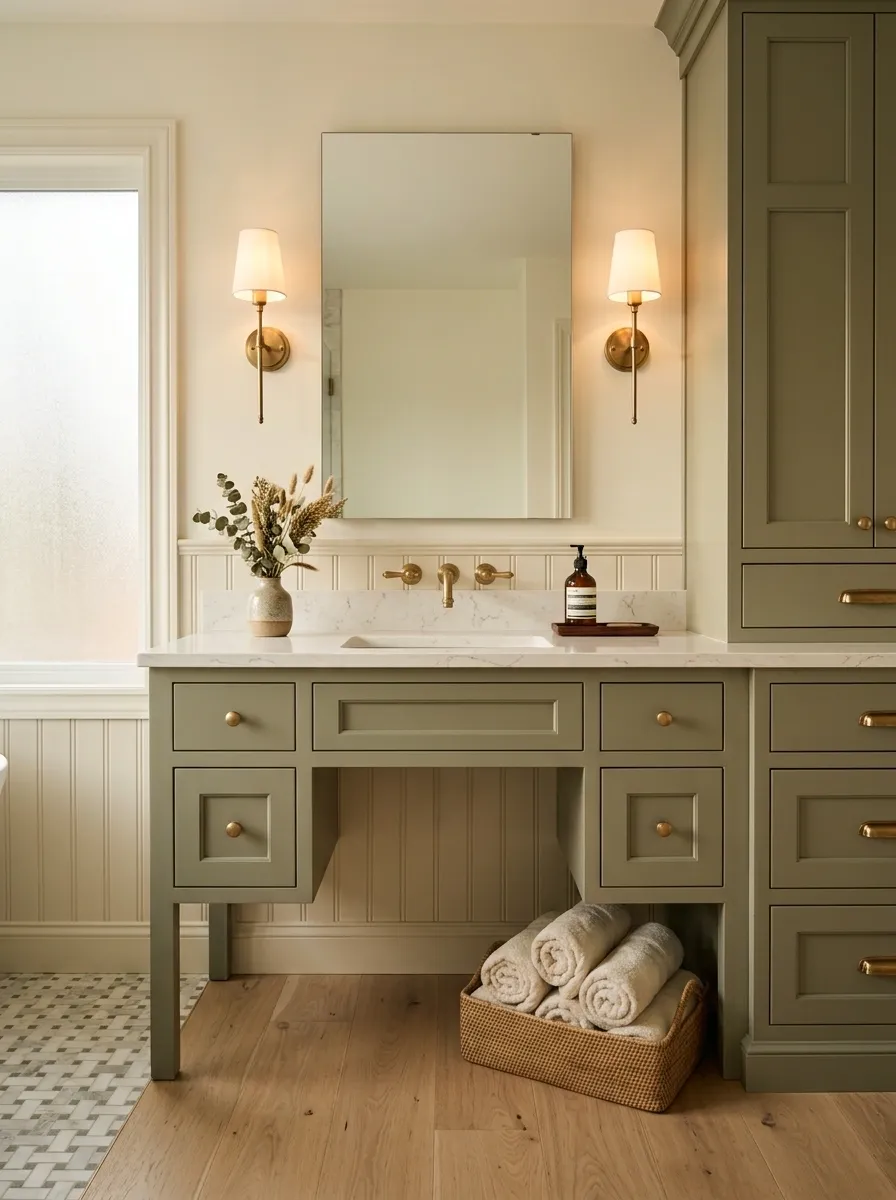
Chrome is clean, but sage often looks better with a warmer metal beside it.
Aged brass brings a slightly softened finish that works beautifully with muted green, cream, stone, and wood. It also hides the visual harshness that shiny chrome can create under bright bathroom lighting.
That doesn’t mean chrome is forbidden by the bathroom police. It simply pushes the design in a crisper direction.
| Choose this | Result |
|---|---|
| Aged brass | Warm, softened, slightly traditional |
| Bright chrome | Crisp, clean, more contemporary |
Pick one direction and repeat it across the faucet, cabinet hardware, lighting, and shower details.
Best alongside cream, wood, stone, and earthy sage.
Works when white tile and modern lines lead the room.
Try Sage Subway Tile in a Classic Bathroom Layout
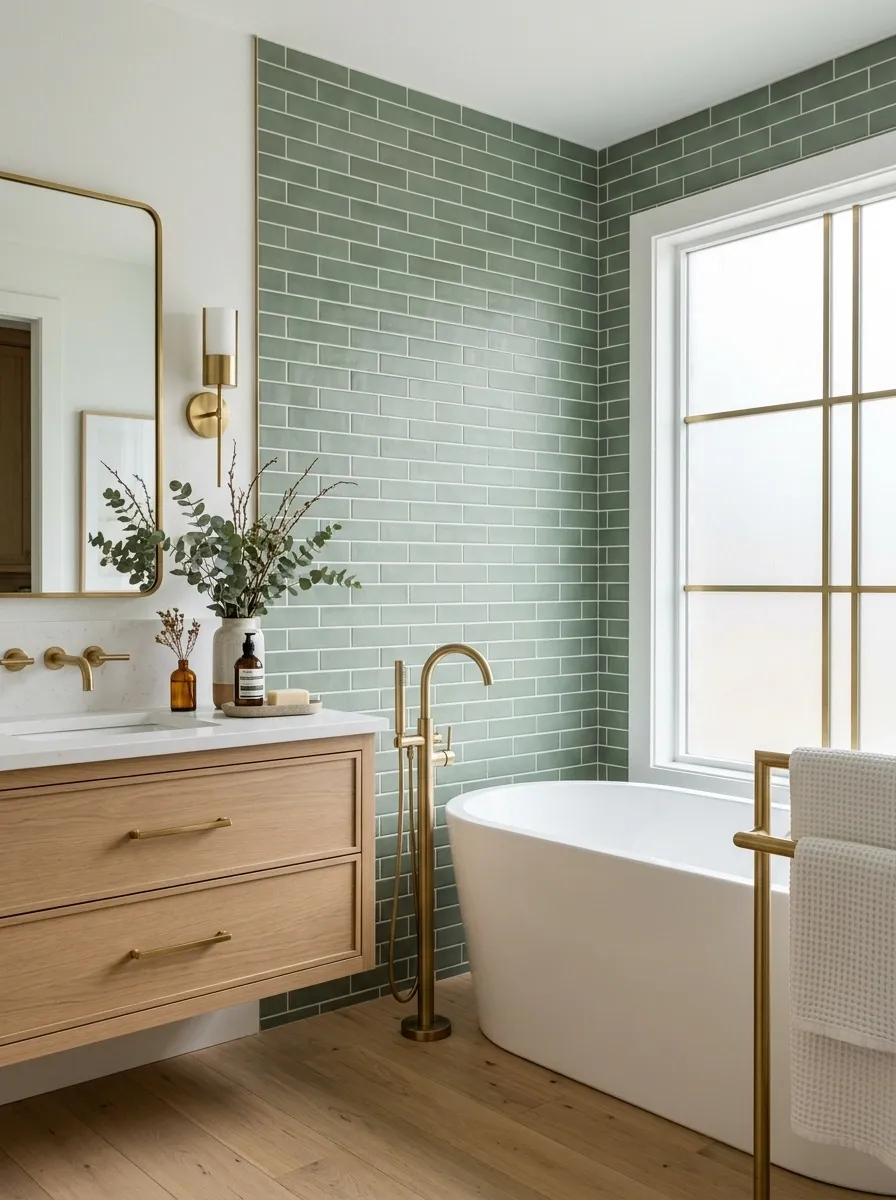
Subway tile gets interesting when the color changes.
A muted sage subway tile around a tub or shower brings pattern through the tile shape without relying on a loud print. Use a traditional horizontal layout, a simple stacked arrangement, or a subtle offset pattern.
The important part is keeping the rest of the room restrained. Once the walls carry both color and grout lines, the vanity, floor, and accessories should stop trying to compete.
Choose a tile with slight tonal variation when the room needs more texture. Perfectly uniform green can look flatter than expected.
Tile can carry the pattern. The rest of the bathroom can take the day off.
Repeat Sage in Only Two or Three Places
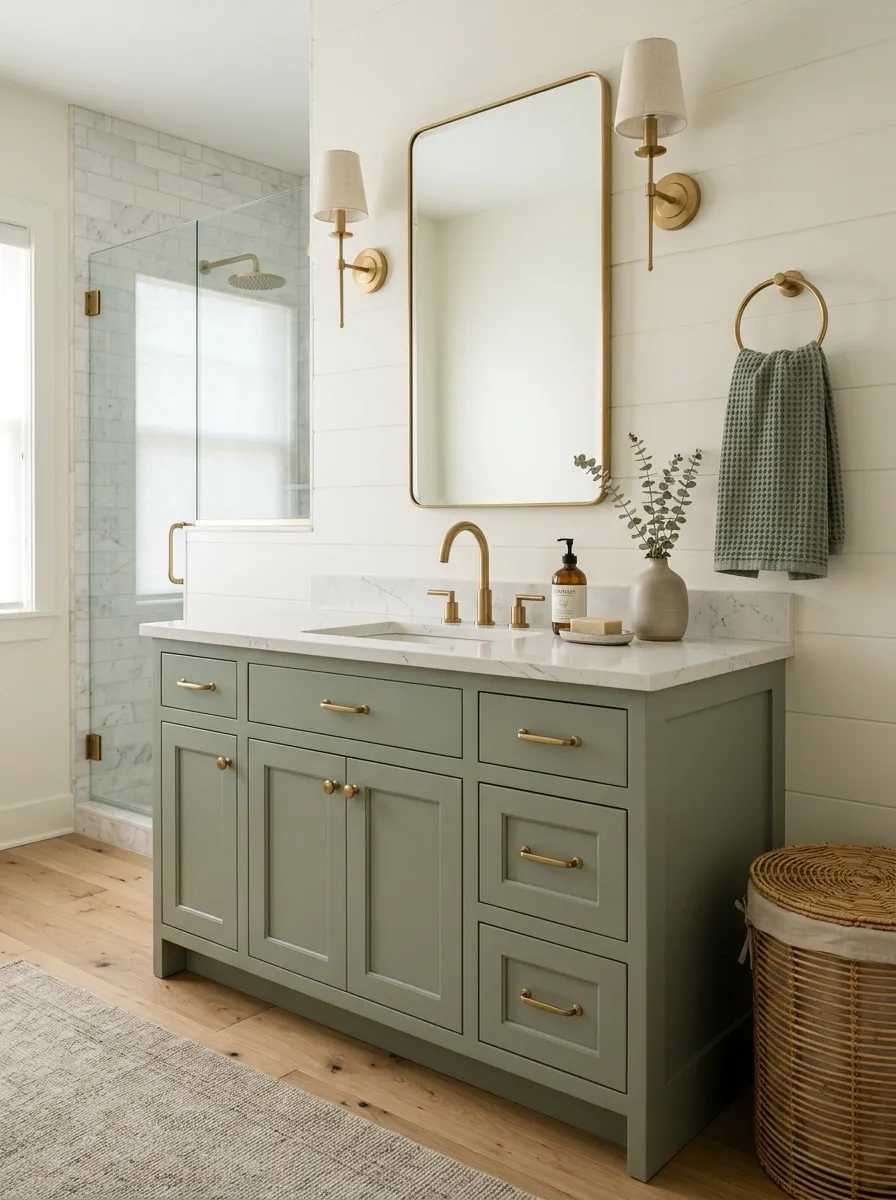
The fastest way to make sage look intentional is to repeat it without plastering it everywhere.
Choose one dominant sage feature, then echo it in two smaller areas. A sage vanity can connect to a towel and a small art-free accessory, while sage tile can repeat in a textile or narrow accent.
Use this placement rule:
- One large sage feature
- One medium repeat
- One tiny repeat
Then stop. Repetition creates cohesion. Saturation creates a theme park.
This is where the eye lands first.
A medium echo connects the room.
A small final echo is enough.
Use Sage With Black Fixtures for a Sharper Bathroom
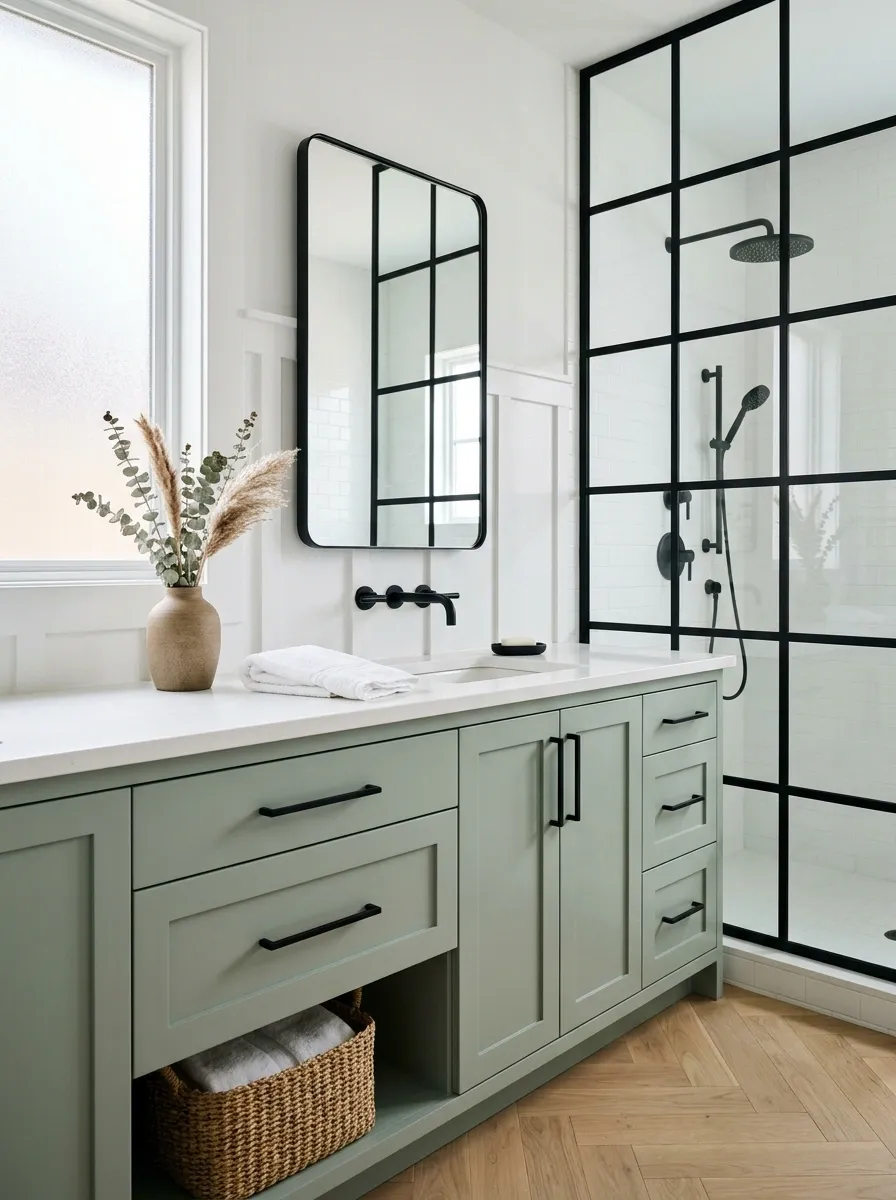
Sage doesn’t always need brass and natural wood. Matte black gives it a completely different personality.
Use black through the faucet, shower frame, cabinet pulls, mirror frame, or lighting. Against soft green, the dark finish creates crisp lines that make the room feel more graphic.
The trick is repeating black in several useful places rather than using one lonely black faucet that looks like it got lost on the way to another bathroom.
Keep the shapes simple. Thin black frames and straightforward hardware work better than overly ornate pieces.
Use Sage Lower Cabinets With Light Upper Walls
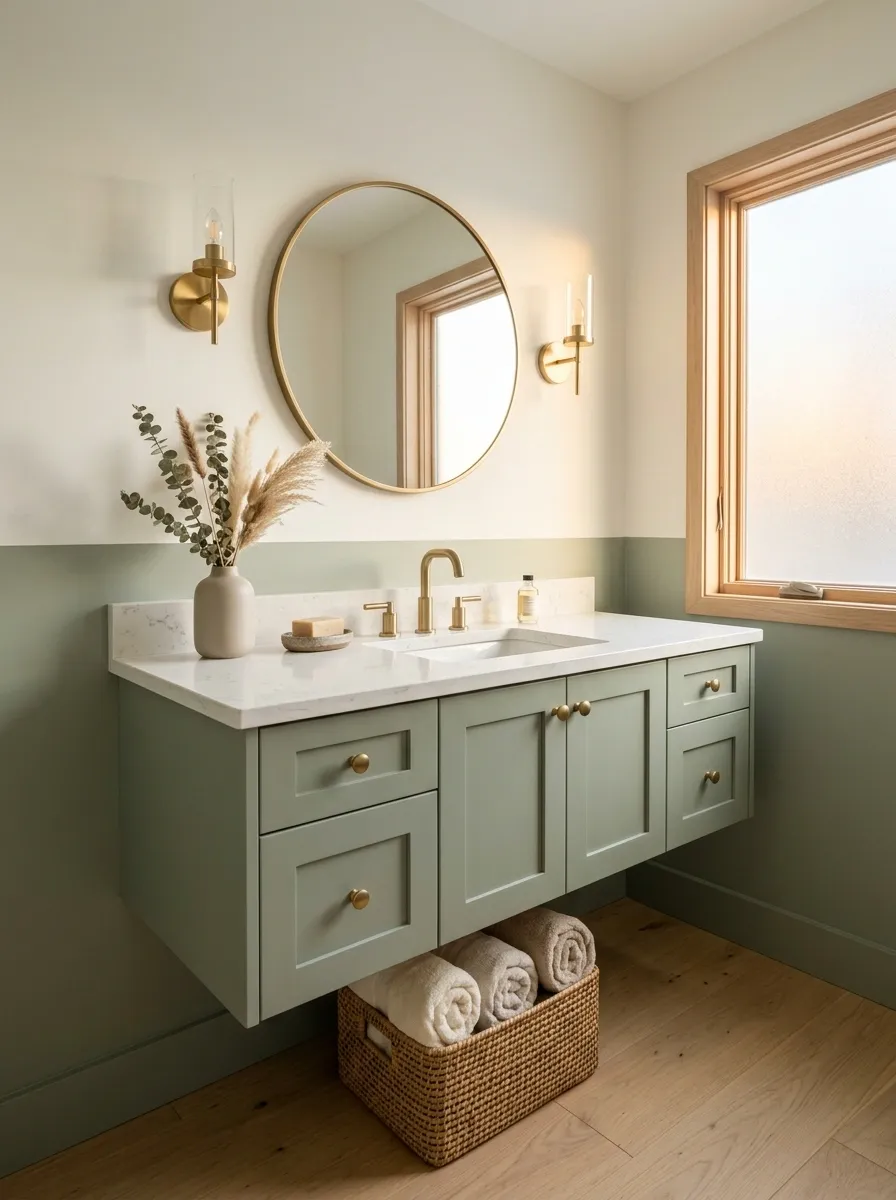
If full green cabinetry feels too heavy, keep the color low.
Paint the lower vanity cabinets sage and leave the wall above them warm white. This creates a grounded color block without visually lowering the whole room.
It also works beautifully with a floating vanity because the open floor underneath creates even more breathing room.
The lower half carries the weight. The upper half stays quiet.
That balance is especially useful in compact bathrooms where every dark or saturated surface has a bigger visual impact.
Add a Sage Bathtub Surround for a Classic Look
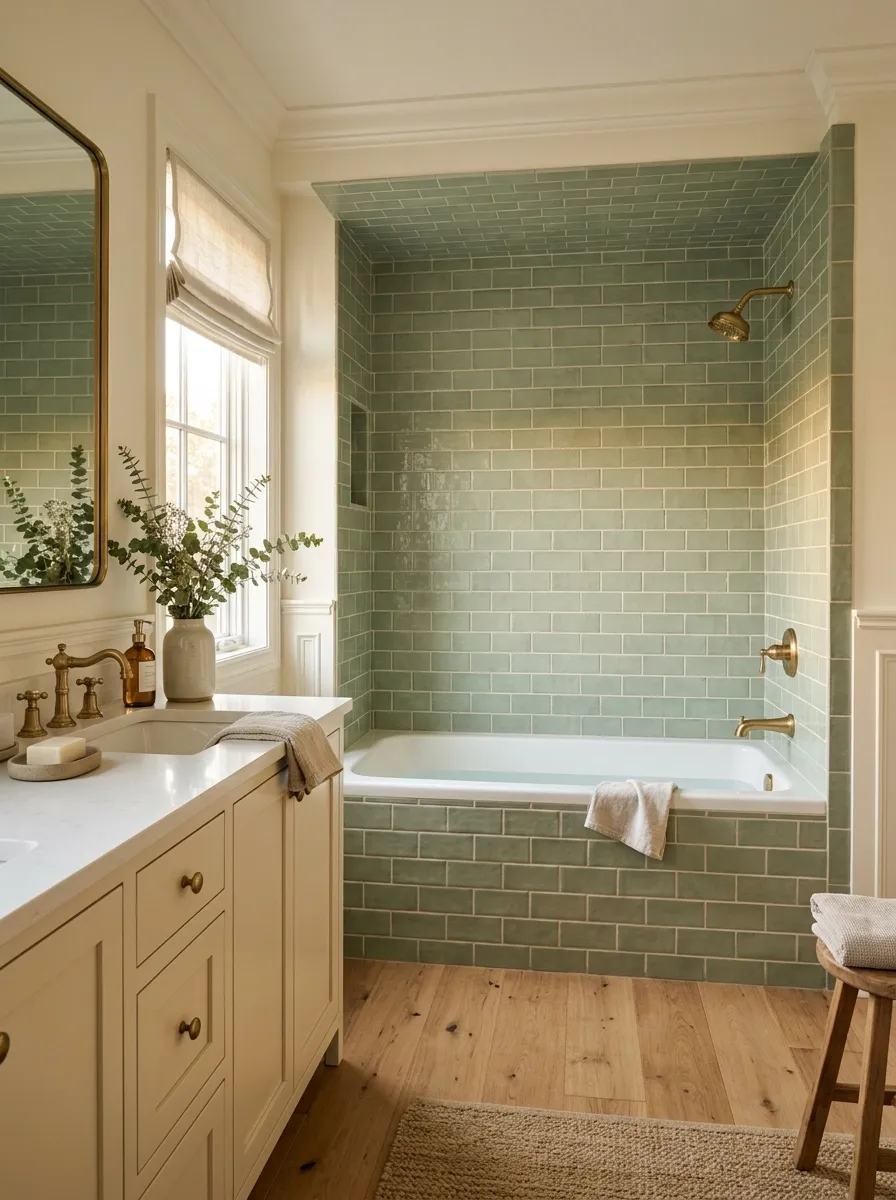
A bathtub surround is an excellent place for sage when the bathroom already has a classic layout.
Use green tile around the tub while keeping the vanity and floor more restrained. A softly colored subway tile can feel traditional, while a handmade-look tile gives the same color a more textured finish.
Don’t pair it with another elaborate backsplash unless the room genuinely has enough space to handle both.
Let the tub wall be the event. The vanity can simply look good beside it.
Mix Different Shades of Sage Instead of Hunting for One Exact Match
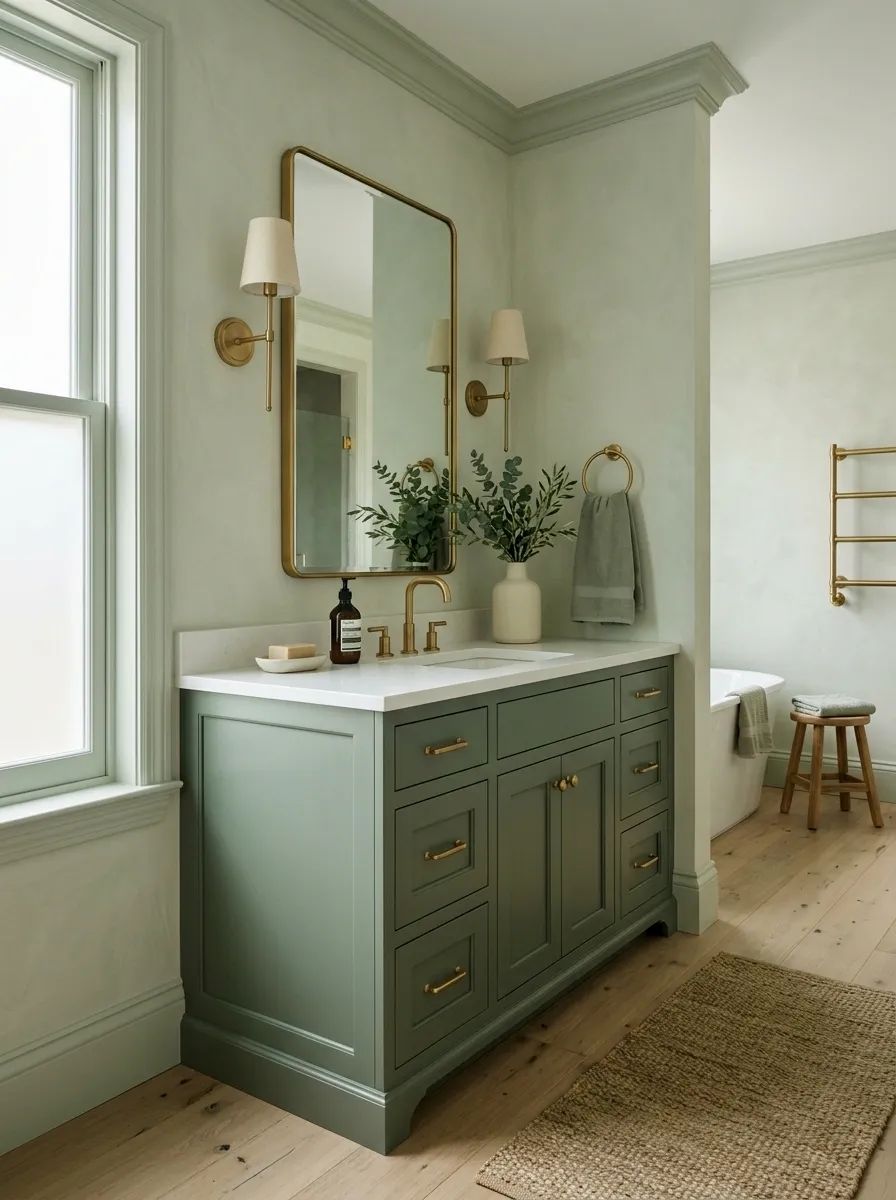
A bathroom can use more than one sage, but the shades need to belong together.
Try a deeper green vanity with a lighter wall shade, or a pale sage tile with slightly darker towels. The difference adds depth without introducing a completely unrelated color.
Think in layers, not duplicates.
The goal isn’t to make every green identical. It’s to make the shades feel like different parts of the same palette.
Bring in Natural Stone for an Earthier Sage Bathroom
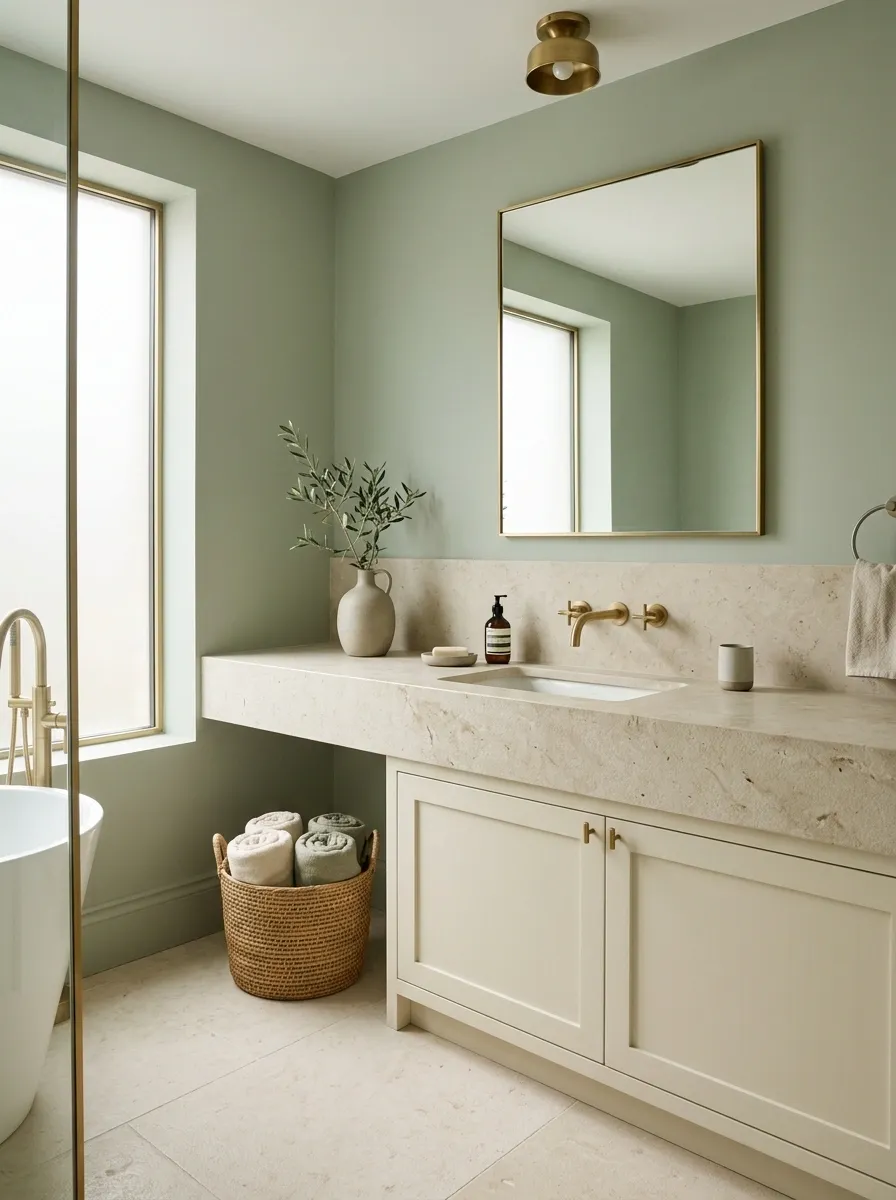
Stone gives sage something important: texture.
Use stone-look flooring, a limestone-inspired counter, or a natural stone accent to make the green feel grounded. Pale stone is particularly useful when the room already contains several soft colors and needs a material with visual weight.
Keep the stone pattern restrained. Heavy veining plus patterned tile plus sage walls is how a peaceful bathroom suddenly starts shouting.
One textured stone surface can carry the entire material story.
Use a Sage Accent Behind the Vanity Mirror
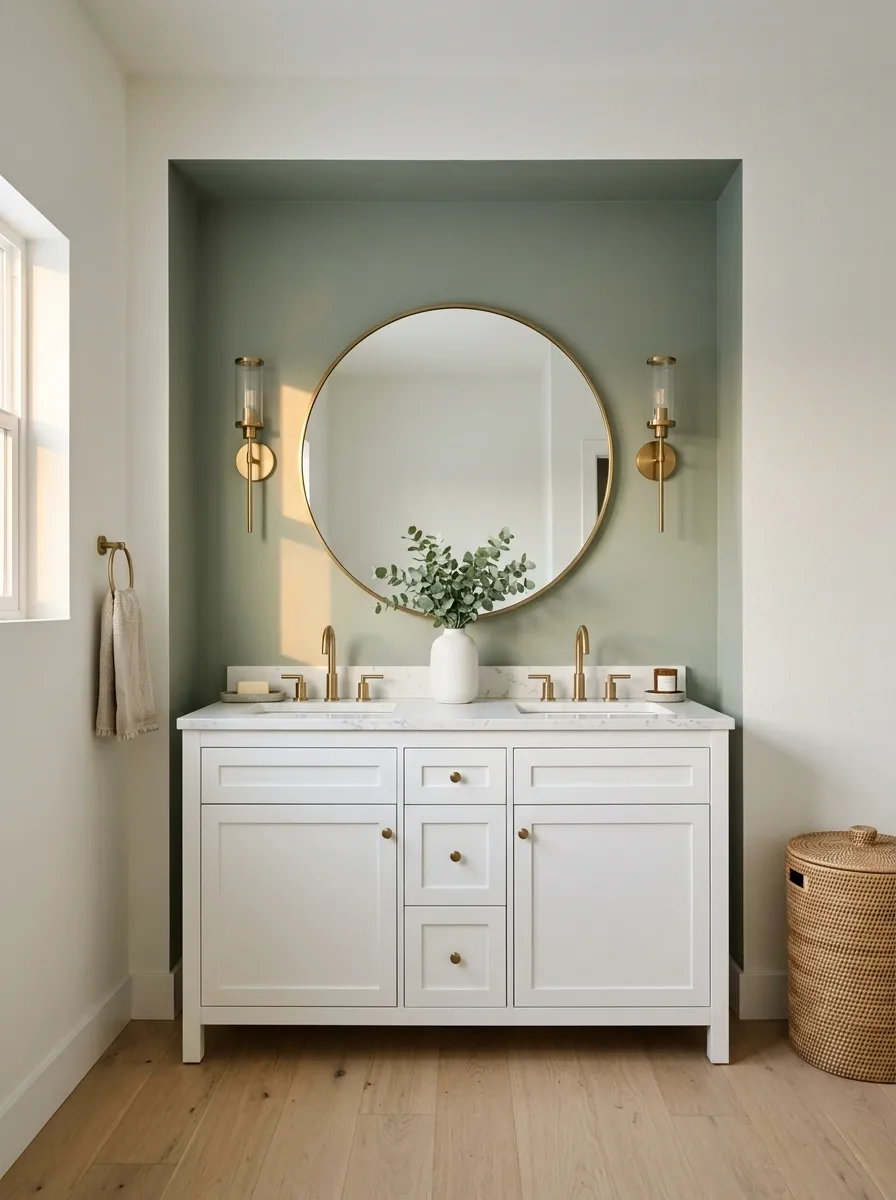
The wall behind the mirror is already a natural focal point, so a sage backdrop gives the vanity much more presence.
Paint the wall sage, use sage tile, or install a narrow vertical treatment behind the mirror. Keep the surrounding walls neutral so the vanity area reads as one deliberate composition.
This is especially useful in a bathroom where the vanity itself is plain white.
Think of the mirror and wall as one visual unit. The green gives the mirror a background instead of leaving it floating awkwardly against a blank wall.
Let White Tile Keep a Sage Bathroom From Feeling Heavy
Sage walls already bring plenty of color. White tile gives the room a visual reset.
Use white subway tile around the tub or shower while keeping sage on the painted walls or vanity. The contrast makes both finishes look cleaner, and it keeps a compact bathroom from turning into one giant block of green.
Keep the white tile simple. Glossy white subway tile, narrow grout lines, and a basic layout are enough. Adding another decorative tile just because there’s an empty wall is how a calm scheme quietly becomes visual noise.
Frame a Sage Vanity With a Large Round Mirror
A round mirror softens the hard lines of a vanity, especially when the cabinet is painted sage.
Go larger than the tiny builder-grade mirror that came with the house. A generous round shape makes the vanity zone feel more finished and gives the green cabinet a stronger visual frame.
Use the mirror to introduce warmth or contrast:
- Thin aged brass for a softer look
- Dark wood for a richer look
- Matte black for a sharper look
The mirror doesn’t need decorative flourishes. A clean silhouette does more here than an ornate frame ever will.
A larger round mirror creates a clean visual circle above the rectangular cabinet and keeps the composition from feeling boxy.
Use Aged Brass Instead of Bright Chrome
Chrome is clean, but sage often looks better with a warmer metal beside it.
Aged brass brings a slightly softened finish that works beautifully with muted green, cream, stone, and wood. It also hides the visual harshness that shiny chrome can create under bright bathroom lighting.
That doesn’t mean chrome is forbidden by the bathroom police. It simply pushes the design in a crisper direction.
| Choose this | Result |
|---|---|
| Aged brass | Warm, softened, slightly traditional |
| Bright chrome | Crisp, clean, more contemporary |
Pick one direction and repeat it across the faucet, cabinet hardware, lighting, and shower details.
Best alongside cream, wood, stone, and earthy sage.
Works when white tile and modern lines lead the room.
Try Sage Subway Tile in a Classic Bathroom Layout
Subway tile gets interesting when the color changes.
A muted sage subway tile around a tub or shower brings pattern through the tile shape without relying on a loud print. Use a traditional horizontal layout, a simple stacked arrangement, or a subtle offset pattern.
The important part is keeping the rest of the room restrained. Once the walls carry both color and grout lines, the vanity, floor, and accessories should stop trying to compete.
Choose a tile with slight tonal variation when the room needs more texture. Perfectly uniform green can look flatter than expected.
Tile can carry the pattern. The rest of the bathroom can take the day off.
Repeat Sage in Only Two or Three Places
The fastest way to make sage look intentional is to repeat it without plastering it everywhere.
Choose one dominant sage feature, then echo it in two smaller areas. A sage vanity can connect to a towel and a small art-free accessory, while sage tile can repeat in a textile or narrow accent.
Use this placement rule:
- One large sage feature
- One medium repeat
- One tiny repeat
Then stop. Repetition creates cohesion. Saturation creates a theme park.
This is where the eye lands first.
A medium echo connects the room.
A small final echo is enough.
Use Sage Textiles When You Don’t Want Permanent Color
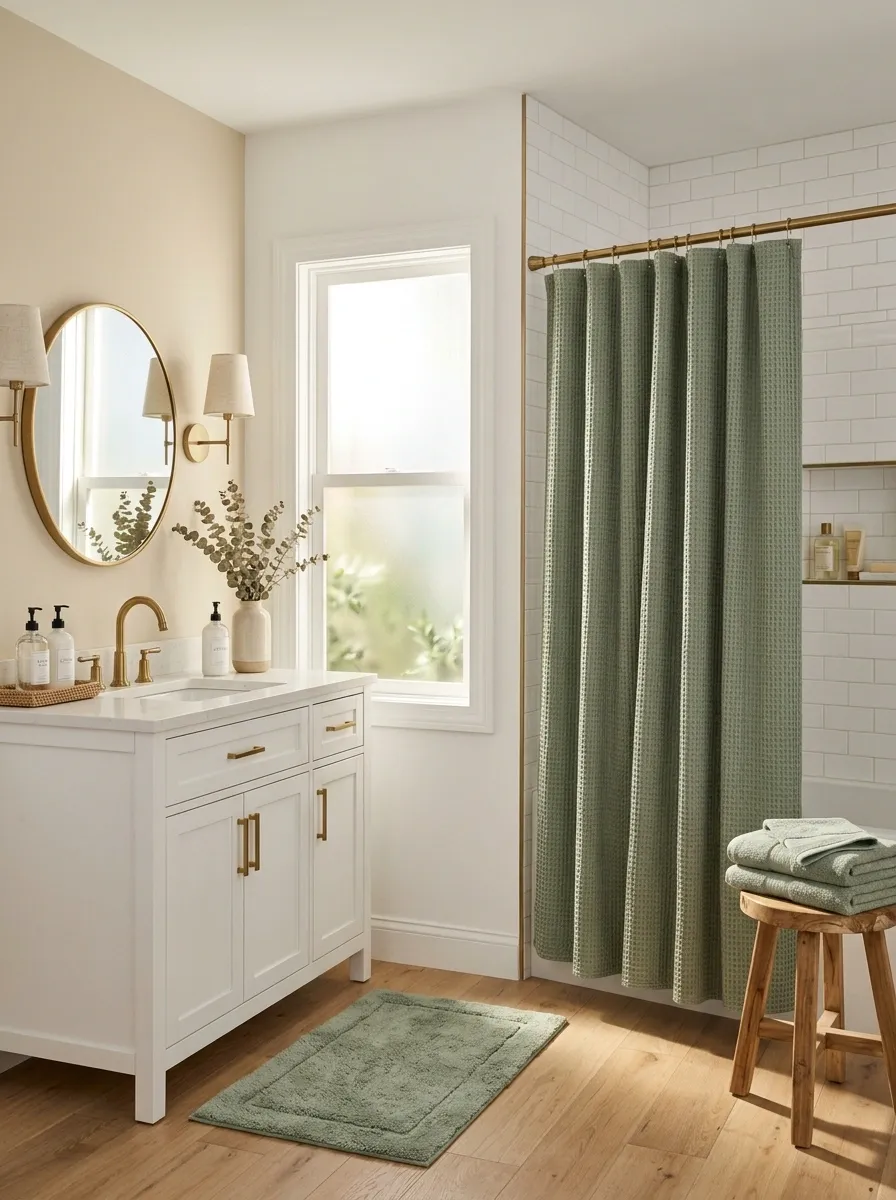
Sometimes the bathroom needs color, not a renovation invoice.
Sage towels, a bath mat, or a shower curtain can shift the room toward green without touching the walls or cabinets. This works especially well when the existing bathroom is mostly white or beige and needs a little personality.
Start with one large textile, then repeat the shade in one smaller piece.
Keep the rest neutral. When every towel, bottle, basket, and soap dispenser turns sage, the room starts looking like a color-coordinated hotel gift set.
Large visual anchor
Useful repeat color
Biggest removable move
✓ Pick one main textile and one smaller repeat. The bathroom doesn’t need a sage-colored identity crisis.
Create a Spa-Like Sage Bathroom With Stone and Linen
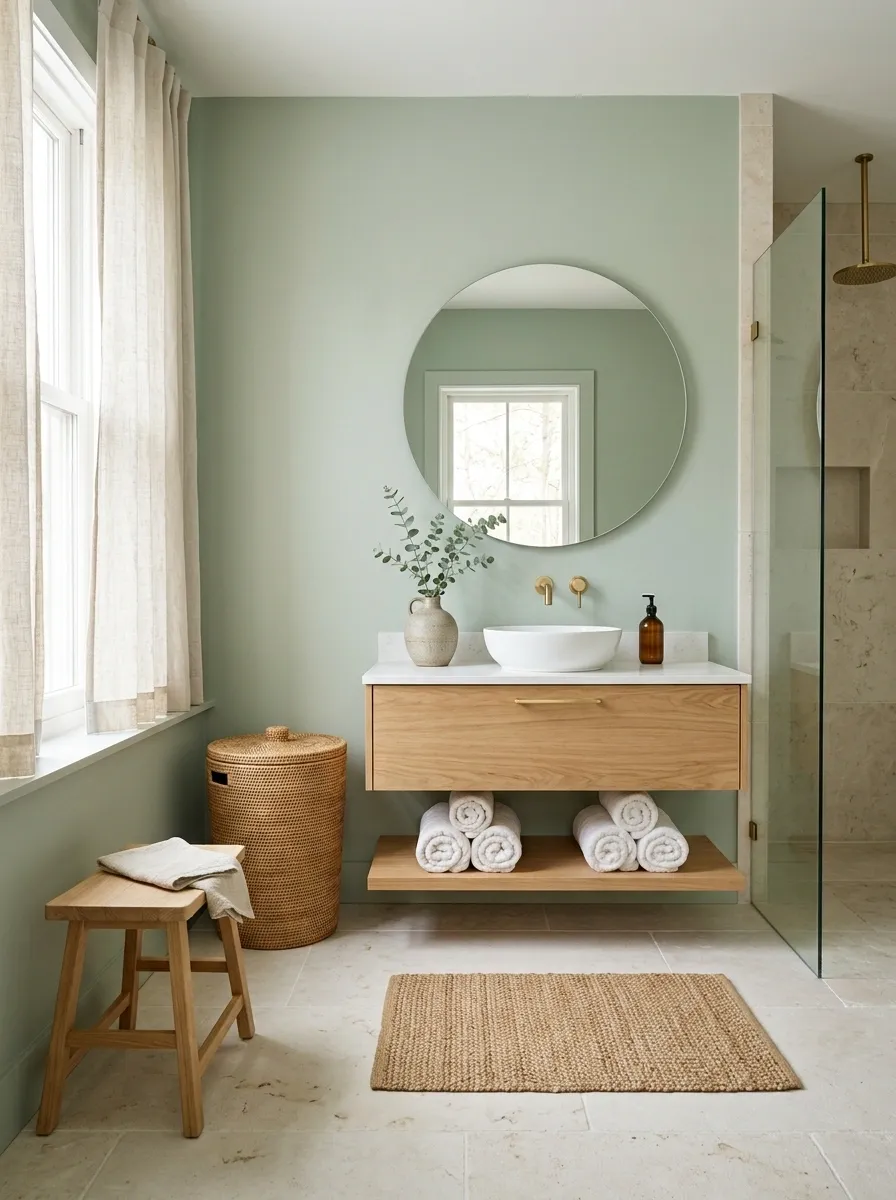
The spa look isn’t created by scattering eucalyptus around the sink and hoping for the best.
Sage works beautifully with pale stone, linen, soft towels, and simple silhouettes. The materials matter more than the number of decorative objects in the room.
Use sage on the walls or vanity, then layer natural textures underneath it. A stone-look floor, linen-style curtain, woven basket, and simple wood accent can make the entire bathroom feel calmer without adding visual clutter.
The formula is simple: soft color, natural texture, almost no fuss.
Keep the Ceiling White for a Cleaner Visual Break
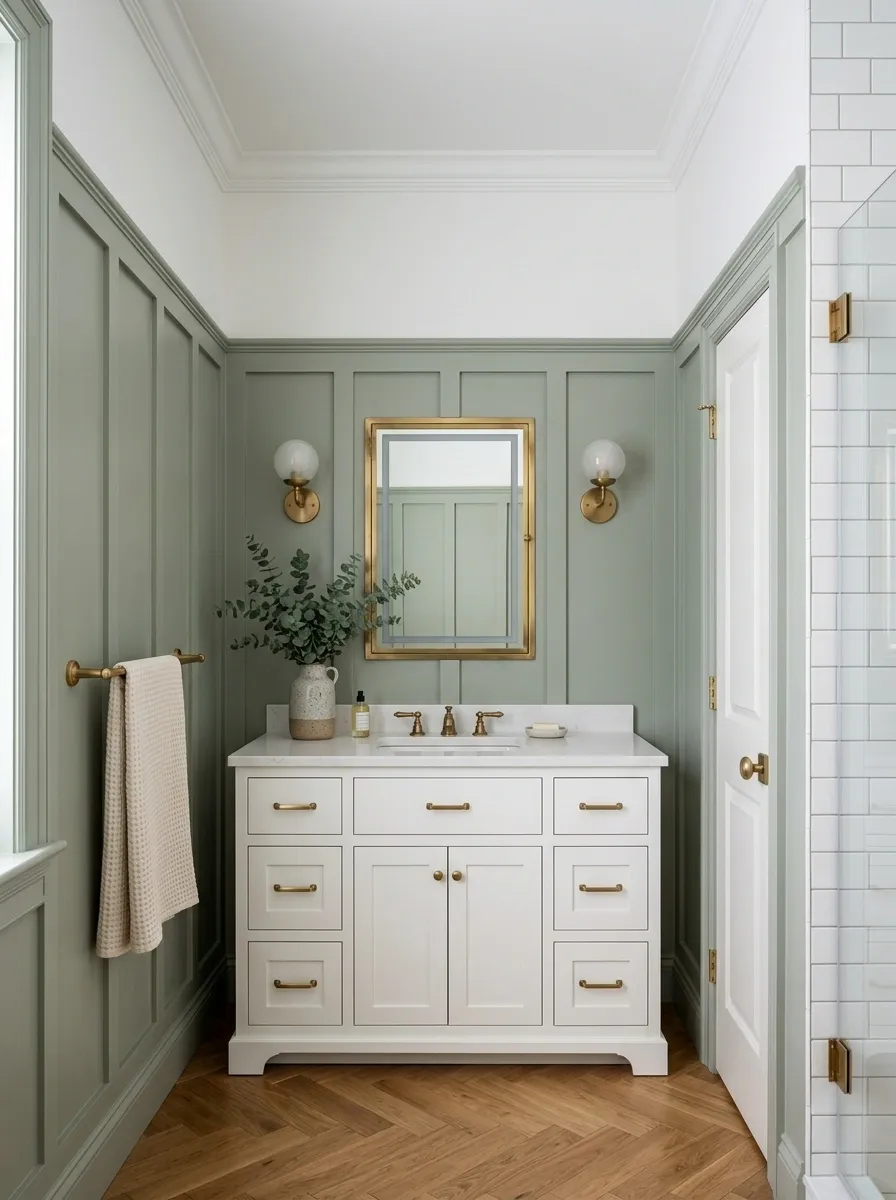
Here’s a tiny decision that makes a bigger difference than it gets credit for: keep the ceiling white.
A white ceiling creates a clean stopping point above sage walls, especially in bathrooms with modest ceiling height. It keeps the color grounded and lets the room feel taller and lighter.
Simple rule: when the walls are doing the color work, give the ceiling a visual break.
This also makes sense when the bathroom already has white trim, white tile, or a white shower. The repeated light tone ties the room together without adding another design trick.
Sometimes the smartest design move is knowing where to stop.
The light ceiling creates a clean visual break and keeps the green from closing in the upper part of the room.
Mix Sage With Terracotta for a Warmer, Earthy Look
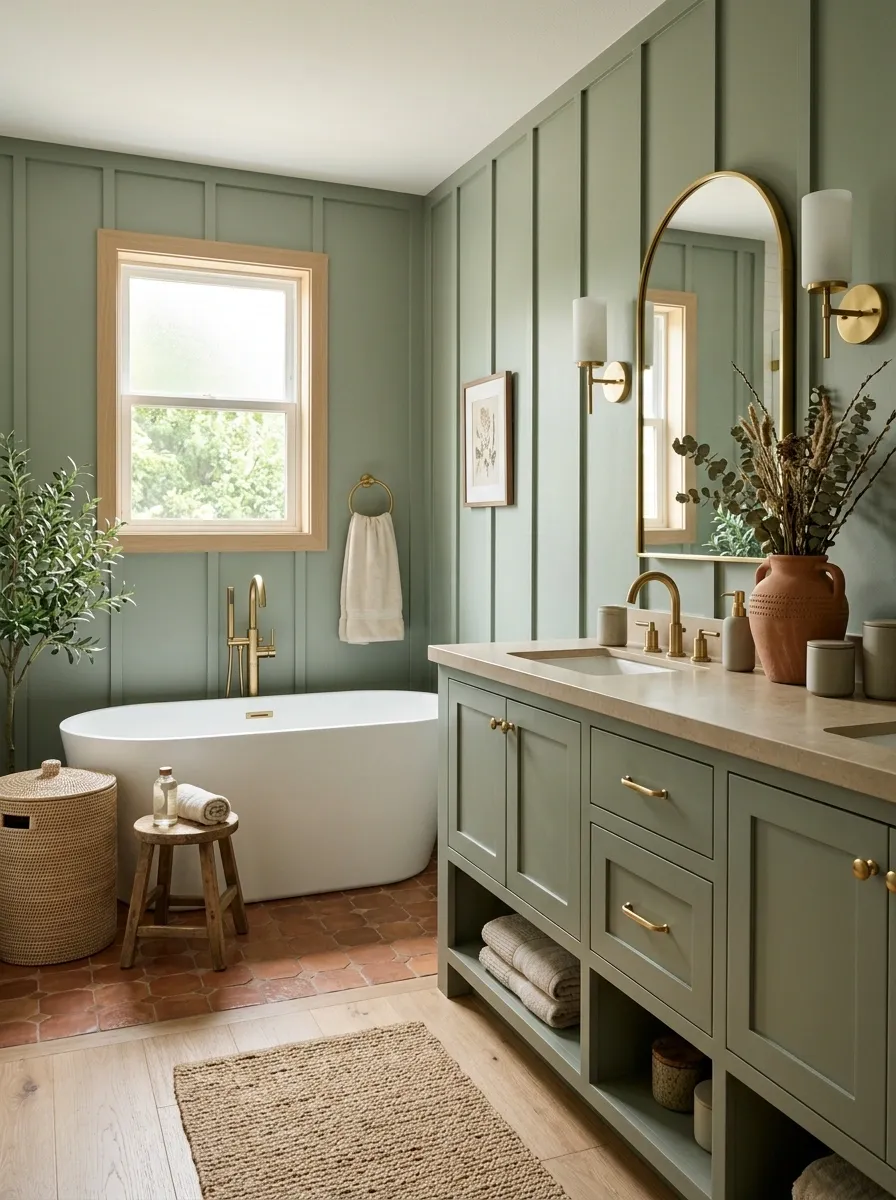
Sage doesn’t have to live in a pale neutral bubble.
Terracotta gives muted green a warmer, slightly more grounded direction. Use it through a small floor detail, ceramic vessel, patterned textile, or warm-toned tile while keeping sage as the dominant color.
The trick is controlling the ratio. Sage should own the room. Terracotta should show up like a deliberate accent, not arrive carrying matching curtains.
Pair both shades with cream, natural wood, or warm stone. The bathroom gets color, contrast, and personality without becoming overly bright.
Finish the Room With Small Sage Details That Repeat the Main Color
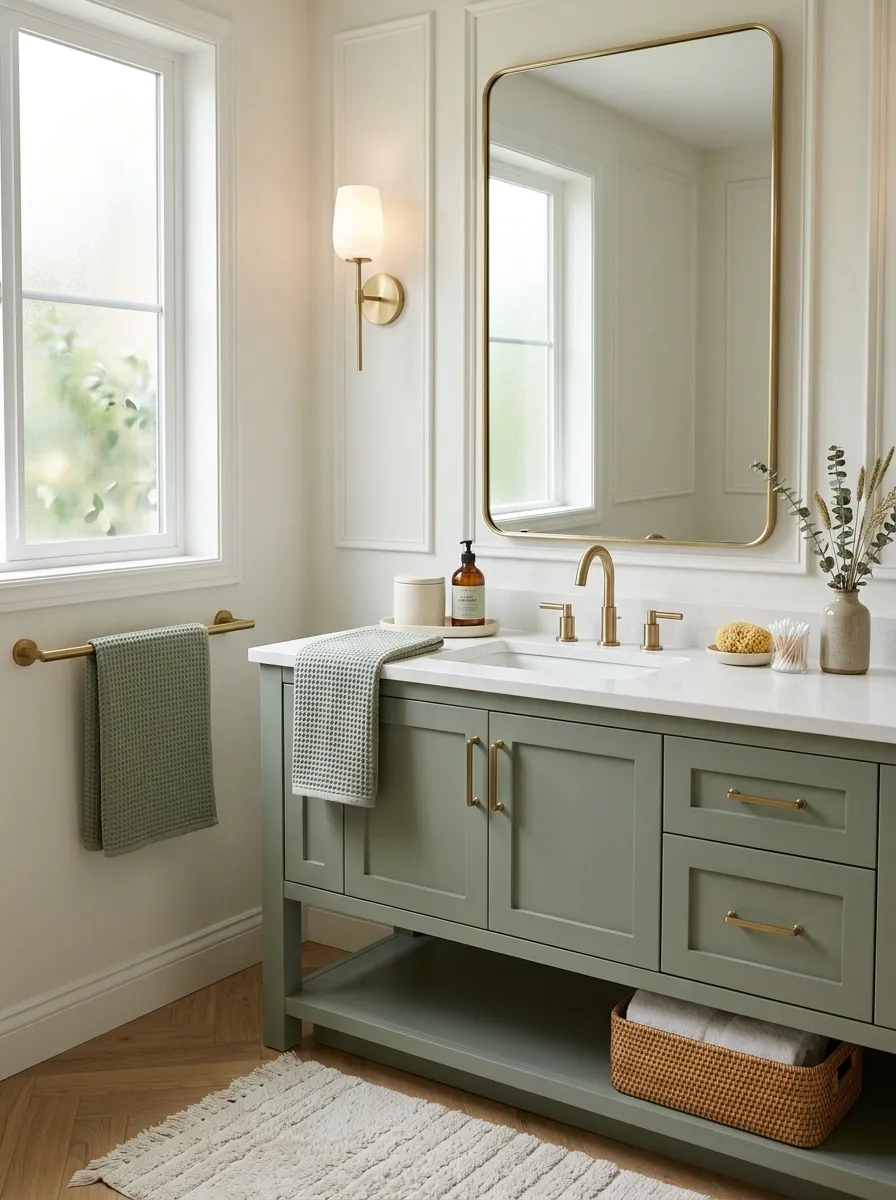
The last layer should make the room feel connected, not decorated to within an inch of its life.
Repeat the main sage shade in small places that already belong in the bathroom: a hand towel, ceramic container, framed mirror detail, bath mat, or subtle pattern. These little echoes pull the larger color feature through the room.
The important word is repeat, not multiply.
A clean final edit looks like this:
- One dominant sage surface
- One medium repeat
- One or two tiny echoes
- Plenty of neutral space around them
Then put the decorative extras down. The bathroom doesn’t need another sage candle to prove a point.
🌿 Cohesion comes from repetition, not from buying every object in the same shade.
The Best-Looking Sage Bathrooms Know When to Stop
Sage works because it’s muted. Don’t ruin that advantage by forcing the color into every corner.
Let the vanity, wall, tile, or textiles carry the main statement, then build around it with cream, warm white, wood, stone, brass, black, or another restrained accent. The strongest sage green bathroom ideas aren’t necessarily the ones with the most green. They’re the ones where every finish has a reason to be there.
And honestly, that’s the secret to making a bathroom look expensive. It isn’t adding more. It’s removing the things that never needed to be there in the first place.