
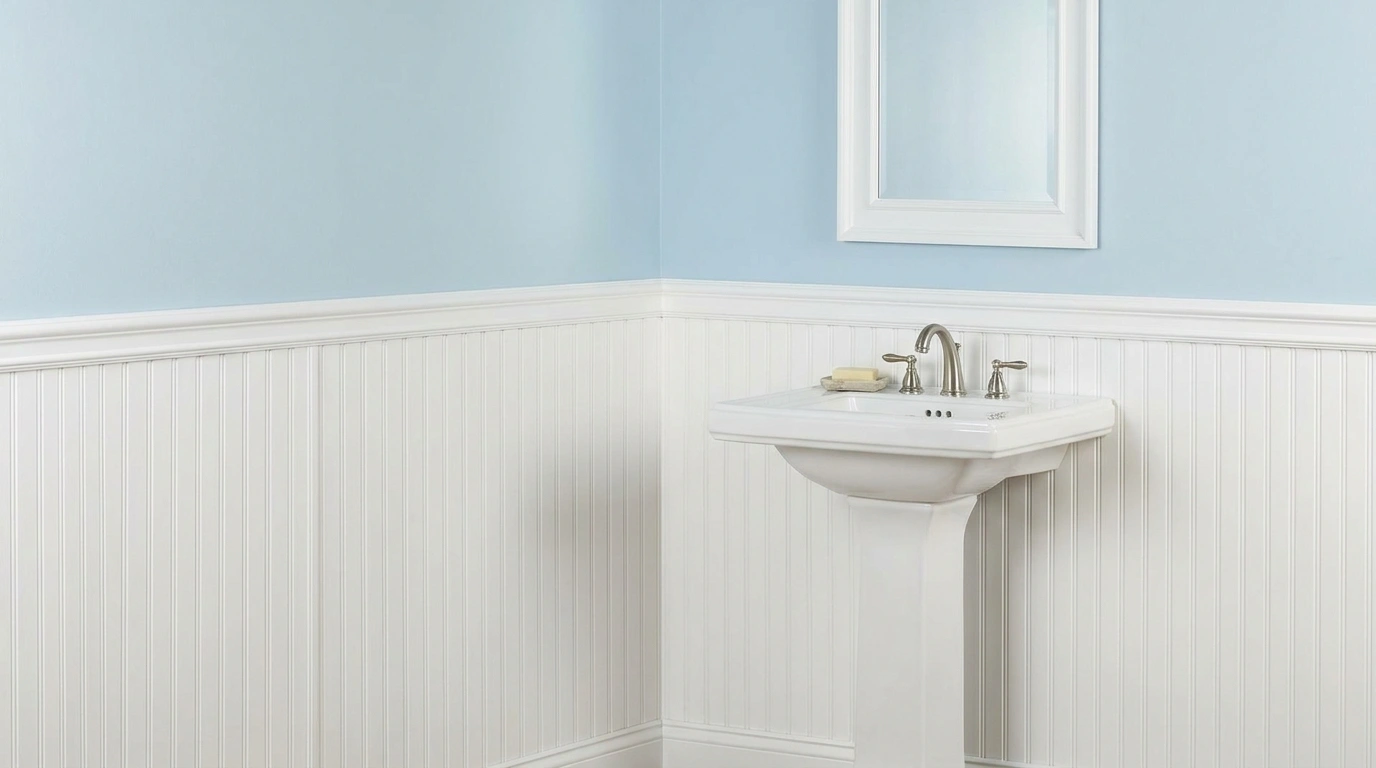
Some walls are technically finished but still look like they are waiting for someone to make a decision. A fresh coat of paint can solve the color problem, but it doesn’t always solve the bigger issue: the room has no architectural rhythm. That is where modern beadboard earns its place.
The trick is avoiding the version that makes a room look like a themed cottage rental from 2008. Modern beadboard can be dark, warm, minimal, architectural, colorful, or almost invisible depending on how it is used. The surrounding materials matter just as much as the panels themselves.
Modern Beadboard Ideas
Earthy Sage Beadboard With Natural Wood and Art
Earthy sage beadboard instantly grounds this wall with subtle architectural character, creating a relaxed backdrop for a row of shaker pegs, natural woven bags, and framed botanical prints. The muted green tone brings an organic softness that keeps the lower half of the room feeling deliberate rather than empty.
The peg rail introduces both function and a charming traditional rhythm, allowing everyday items to double as effortless decor. Delicate brass picture frames and minimalist vessels on the upper ledge add a touch of polish without making the space feel overly curated or stiff.
This is a brilliant way to turn a blank wall into a hardworking focal point. The beadboard provides structure while the paint color keeps the entire vignette feeling calm, grounded, and completely tied together.
Warm Oak Beadboard With Cream Walls and Black Architectural Details
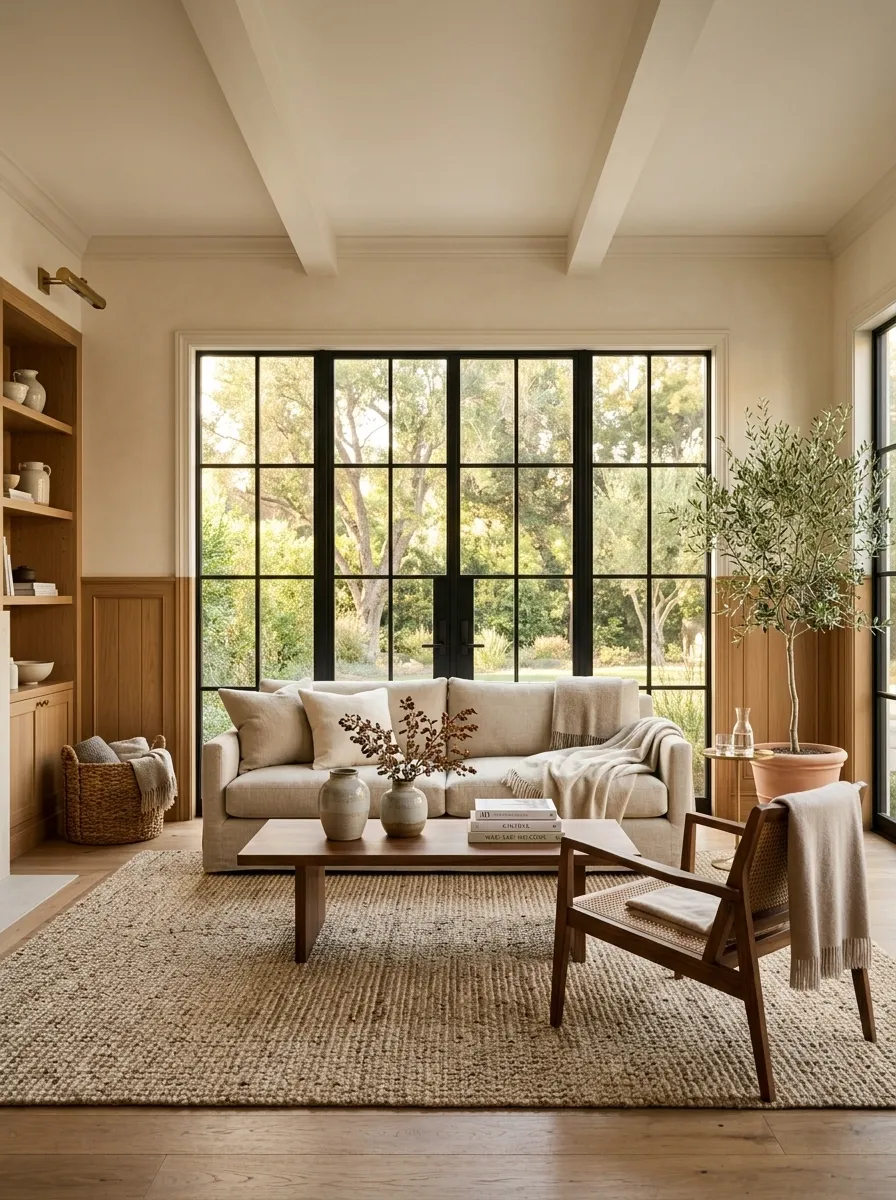
Warm oak beadboard gives this living room an immediate architectural backbone, while creamy plaster walls keep the upper portion of the room light. A low neutral sofa, black-framed windows, walnut accents, and a large textured rug create a balance between warmth and sharper modern lines.
The oak isn’t treated as a decorative afterthought. It runs through the room as a substantial material, giving the walls enough visual weight to stand beside the furniture. Black details then provide definition without turning the space into a black-and-white showroom.
The important part is the restraint. Once warm wood is doing this much work, there is no need to add fifteen more shades of brown because apparently the furniture aisle had feelings too.
architectural warmth
visual breathing room
definition
Deep Charcoal Beadboard With Floral Wallpaper
Deep charcoal beadboard anchors the lower walls of this room, creating a moody and sophisticated base that pairs beautifully with whimsical floral wallpaper above. The rich dark tone provides a strong architectural contrast against the delicate pattern, balancing playfulness with serious design weight.
A matching charcoal door and trim wrap the room in a seamless, enveloping finish, while warm wall sconces and framed prints add cozy residential charm. The vintage-style wooden console table introduces a warm touch of furniture grounding the dark vertical panels below.
This combination proves that mixing traditional wainscoting with patterned walls can feel entirely modern and cohesive. The secret lies in letting the dark beadboard carry the heavy lifting while the wallpaper adds just the right amount of movement.
Soft White Beadboard With Walnut Furniture and Linen Upholstery
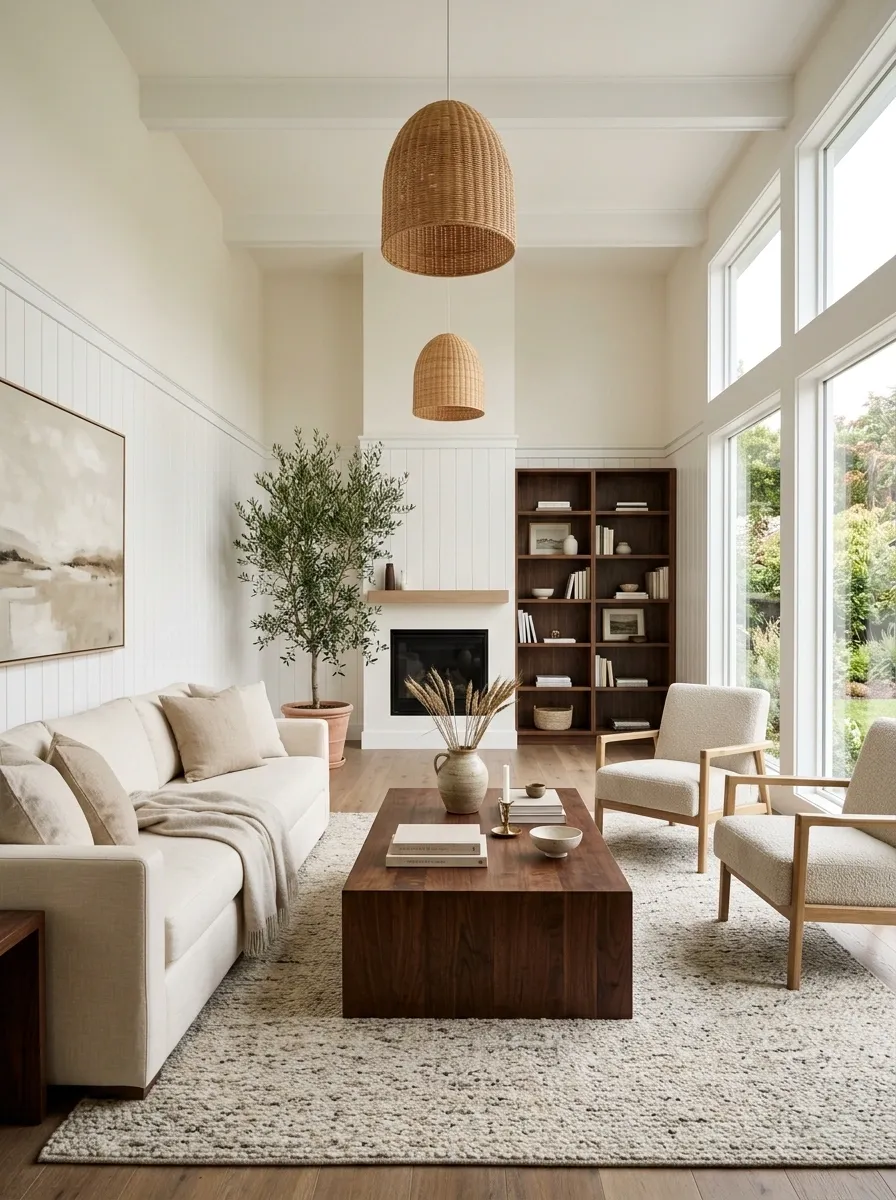
Soft white beadboard covers the lower walls of this relaxed living room, creating subtle texture behind a walnut coffee table, cream sofa, linen accent chairs, and warm woven lighting. The room feels layered without depending on strong colors.
The walnut provides enough contrast against the white paneling to keep the room from becoming flat. Linen and woven materials soften the harder vertical rhythm of the beadboard, while a muted rug grounds everything underneath.
This is the quieter side of modern beadboard. Nothing is fighting for attention, which is surprisingly refreshing in a world where every blank wall apparently needs twelve objects and a motivational quote.
+ walnut + linen + woven texture
Soft Blue Beadboard Ceiling With Classic Chandelier
Soft blue beadboard wraps this ceiling in a wash of gentle color, adding unexpected architectural depth overhead while pairing with matching vertical wall paneling below. The continuous vertical lines draw the eye upward, making the entire space feel taller and far more considered than a standard flat white surface.
A classic multi-armed chandelier with warm alabaster shades hangs centrally, casting a soft, diffused glow across the blue boards. The rich wooden tones of the fixture introduce a handsome mid-century contrast against the cool pastel backdrop.
Looking up has never been more rewarding in a room styled this way. It transforms a forgotten fifth wall into a major design statement without overwhelming the rest of the interior’s quiet palette.
Moody Charcoal Beadboard With Cognac Leather and Warm Lighting
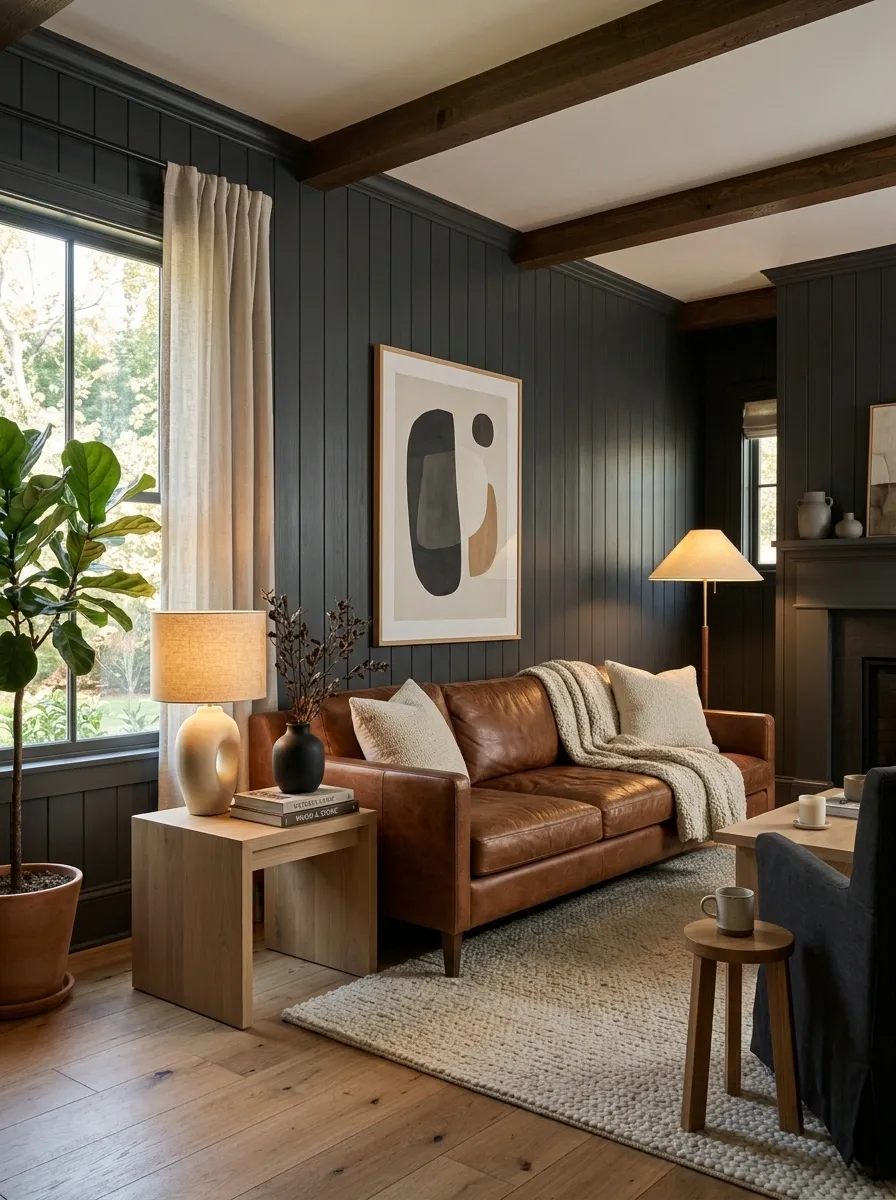
Charcoal beadboard turns this sitting room into a much moodier composition, balanced by a cognac leather sofa, pale oak side table, cream rug, and warm sculptural lighting. The dark walls create a strong shell around the furniture without making the entire room feel heavy.
The leather introduces a rich middle tone between the charcoal wall and pale flooring. Warm lighting then brings out the brown and oak tones after dark, keeping the room from looking flat.
Dark beadboard does not need to mean dark everything. In fact, throwing black furniture onto black walls and hoping for sophistication is how a room ends up looking like a furniture showroom during a power outage.
Classic Neutral Beadboard With Warm Wood and Art
Classic neutral beadboard creates a timeless half-wall foundation in this living space, offering a refined textural backdrop for a styled ledge filled with framed vintage sketches and slender taper candles. The creamy beige tone keeps the atmosphere light, warm, and endlessly versatile.
Rich dark wood flooring provides a grounding contrast to the pale paneling, while a textured traditional rug layers in cozy comfort underneath. The simple styling on the ledge relies on classic symmetry and restrained ornamentation to maintain an uncluttered, sophisticated look.
This approach shows how simple architectural details can completely elevate a standard drywall interior. The beadboard does all the heavy lifting, meaning you can keep your furniture and accessories simple without the room ever feeling unfinished.
Pale Blue Beadboard Kitchen With Natural Oak and Cream Stone
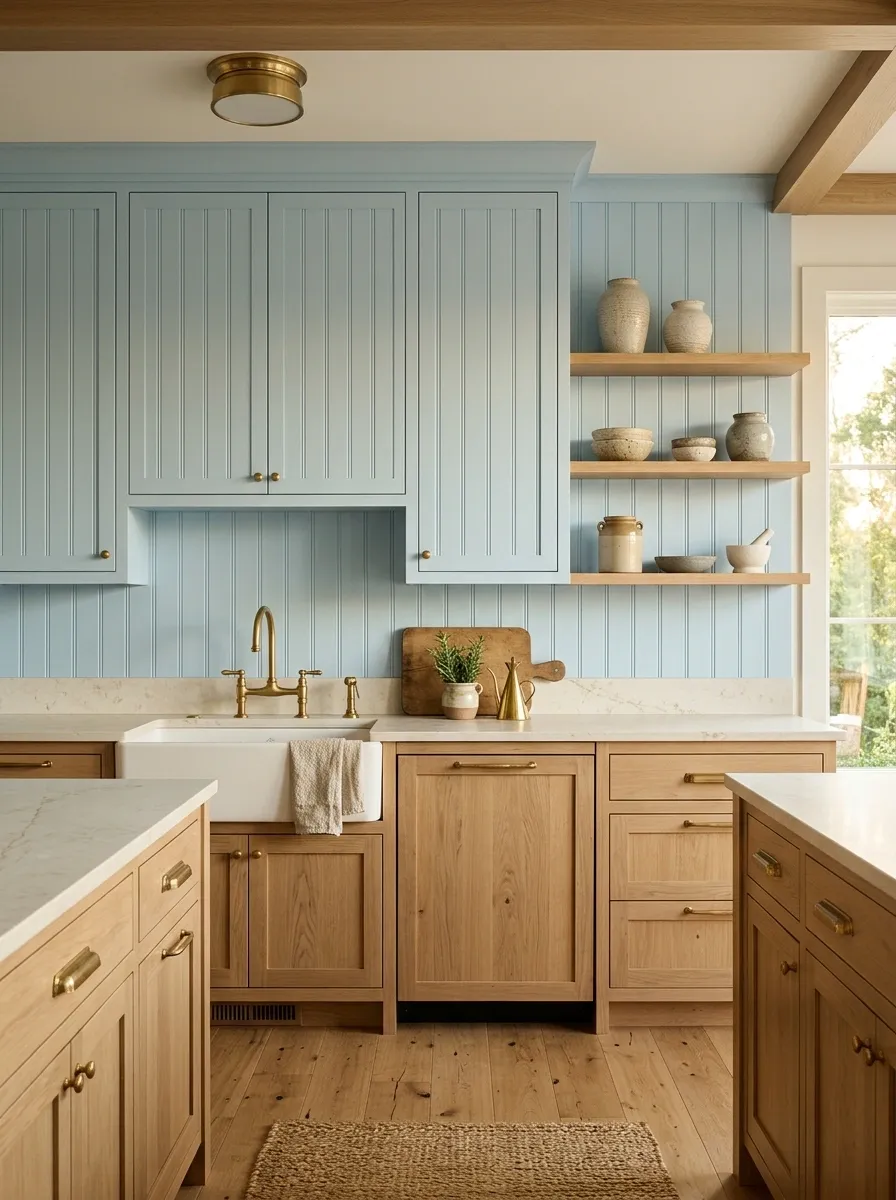
A pale blue beadboard treatment gives this kitchen a soft architectural identity, paired with natural oak cabinetry, creamy stone counters, aged brass hardware, and warm white lighting. The colors are gentle, but the composition still has enough contrast to feel intentional.
The beadboard works particularly well because the oak keeps the blue from becoming sugary. Cream stone bridges the two materials, while brass adds a warm metallic note without turning every surface into a shiny statement.
The result feels collected rather than coordinated within an inch of its life. Matching every single finish would only make the room look like someone bought the entire kitchen from one catalog page.
Dark Green Beadboard Powder Room With Botanical Wallpaper
Dark green beadboard wraps the lower half of this powder room in rich, moody color, perfectly balanced by intricate botanical wallpaper and an arched brass-trimmed mirror. The combination creates an immersive, jewel-box effect that feels both dramatic and deeply inviting.
A marble-topped vanity with an integrated basin and polished brass wall-mounted hardware adds a layer of timeless elegance. Matching green cabinetry on the vanity ties the entire vertical paneling scheme together into one cohesive, high-end design.
Small spaces are the absolute best places to take bold design risks, and this room proves it entirely. The beadboard provides a sturdy, structured base that lets the wild botanical print above feel intentional rather than chaotic.
Floor-to-Ceiling Beadboard Bedroom With Layered Neutrals
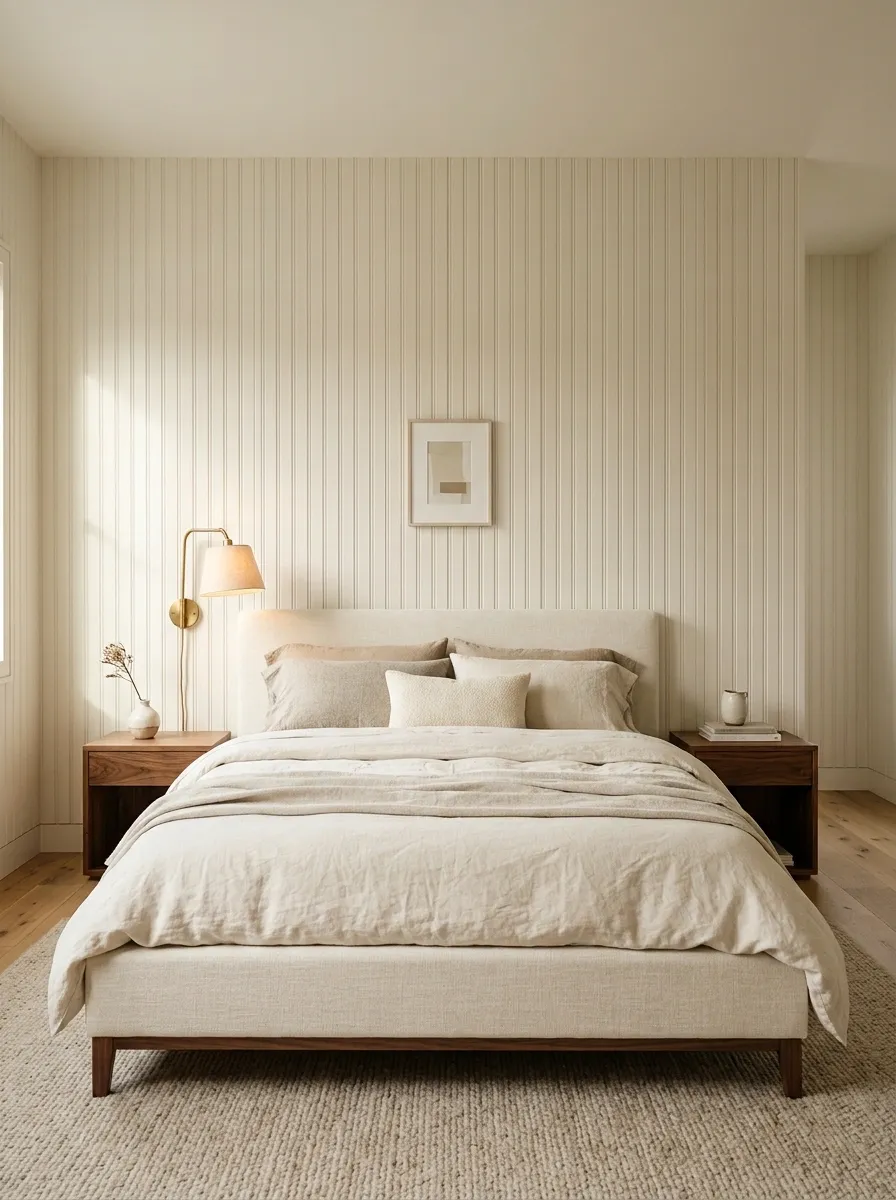
Floor-to-ceiling warm-white beadboard gives this bedroom a strong architectural envelope, while a low upholstered bed, walnut nightstands, textured cream bedding, and a soft beige rug create a layered neutral interior.
Because the paneling continues vertically, the room feels taller and more structured. The low bed keeps the furniture visually grounded rather than competing with the wall treatment.
This works especially well when the room has limited architectural detail. The beadboard supplies rhythm where the original room may have had nothing but drywall and a suspiciously lonely ceiling light.
↓
ceiling
Navy Beadboard Powder Room With White Stone and Brass
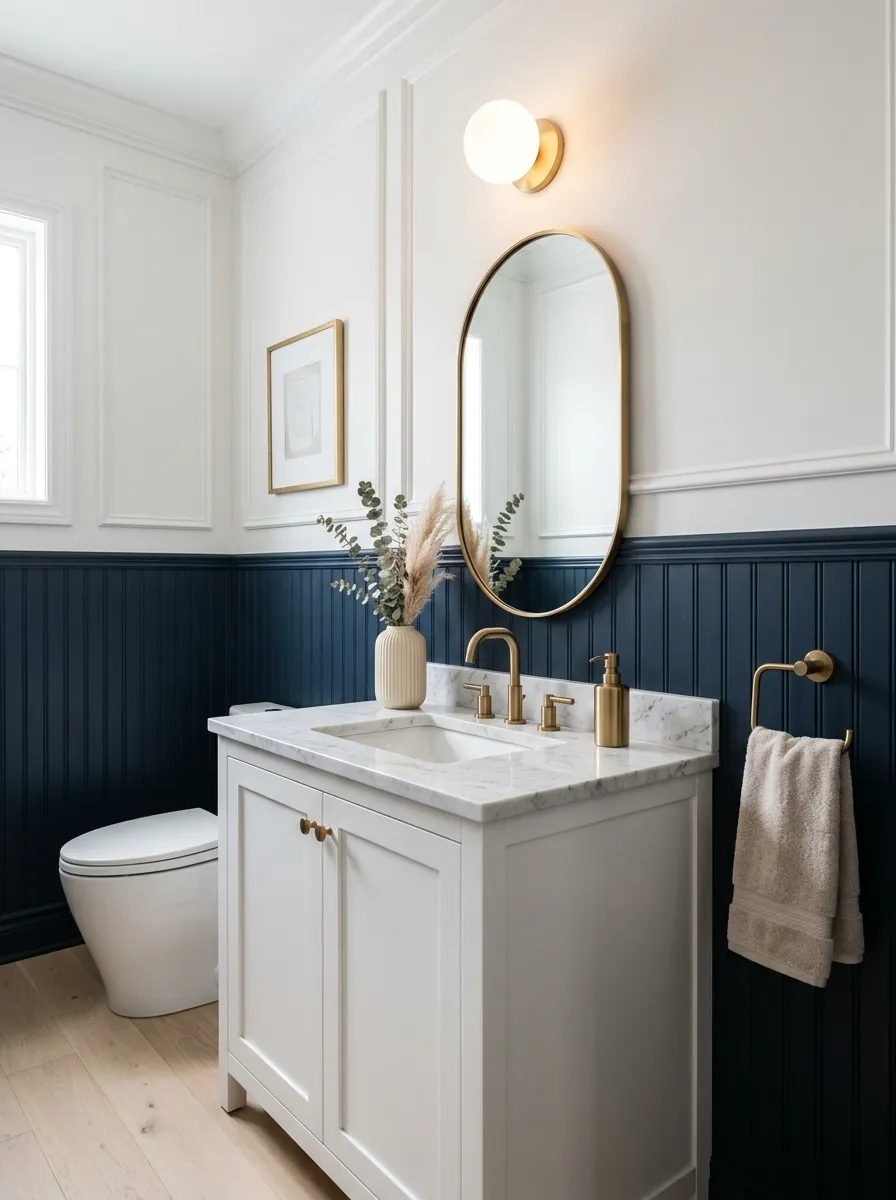
Deep navy beadboard gives this small powder room a dramatic backbone, while a white stone vanity, slim brass mirror, warm globe light, and pale flooring keep the space from becoming visually heavy. The compact room actually helps the darker treatment because there aren’t huge stretches of wall competing with it.
The white stone provides a sharp break against the navy, while the brass adds warmth without turning the room gold from ceiling to floor. One strong mirror shape is enough to bring another layer of interest.
A tiny room can handle personality. It just can’t handle every personality at once. Keep the fixtures simple and let the dark wall do the talking.
Warm Taupe Beadboard Bathroom With Oak Vanity and Micro Mosaic
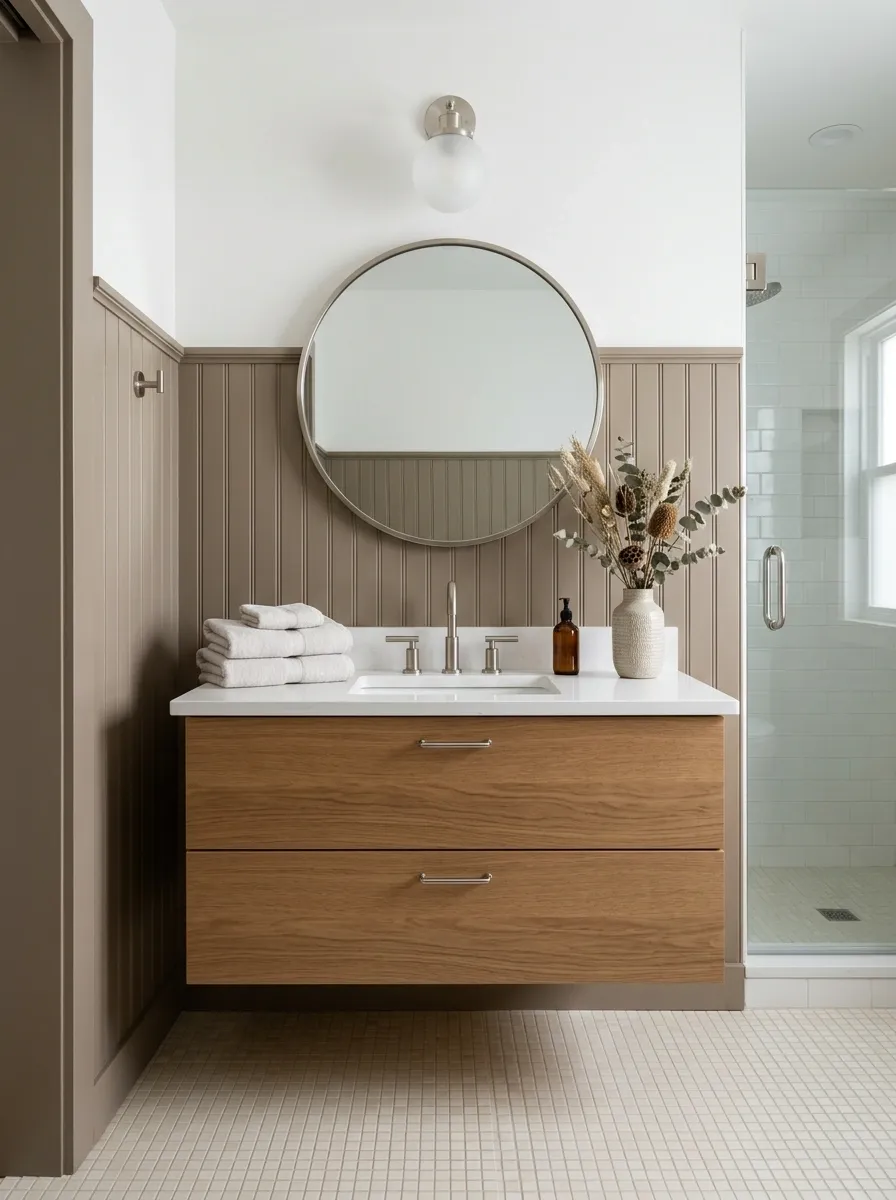
Warm taupe beadboard gives this bathroom a quiet, earthy base, paired with a floating natural-oak vanity, creamy micro-mosaic flooring, brushed nickel fixtures, and soft white towels. The materials stay close in warmth, so the room feels layered without becoming visually restless.
The floating vanity is particularly effective because it leaves a little floor visible underneath. That small gap makes the furniture feel lighter and lets the floor pattern remain part of the overall composition.
The secret here is restraint, although apparently restraint is harder to find than another decorative soap dispenser. Keep the accessories simple and let the combination of taupe, oak, cream, and metal provide the variation.
White Beadboard Coastal-Modern Living Room With Black Accents
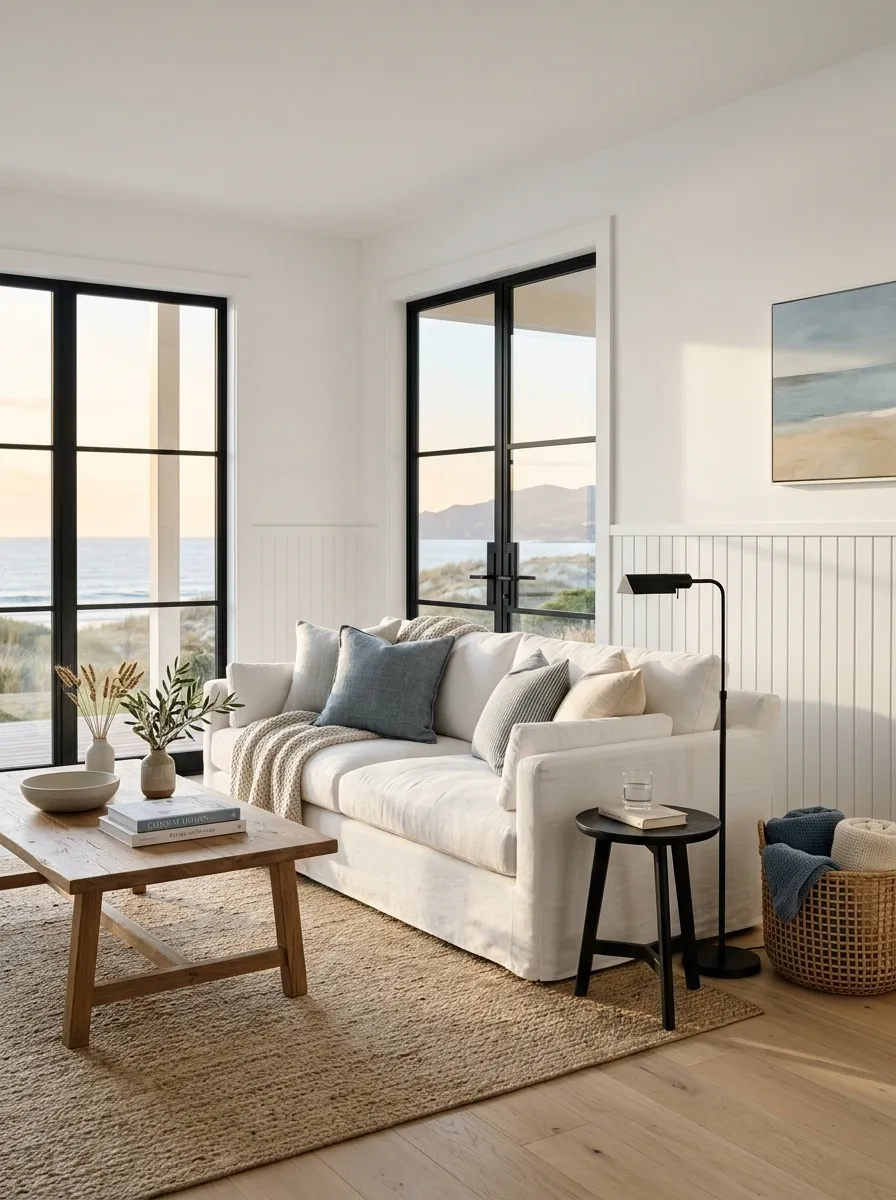
White beadboard gives this living room a clean architectural base, while pale oak flooring, relaxed linen seating, black-framed windows, woven textures, and muted blue-gray accents bring in a softer coastal influence.
There isn’t a ship’s wheel, seashell arrangement, or suspiciously large glass vase filled with rope anywhere in sight. That’s exactly why the room feels contemporary. The coastal character comes from the light palette, natural texture, and easy furniture rather than obvious themed decorations.
Black accents give the pale room enough definition to keep it from becoming washed out. A dark window frame, lamp, or occasional table can do far more than a room full of tiny nautical accessories ever could.
Olive Beadboard Bedroom With a Built-In Reading Nook
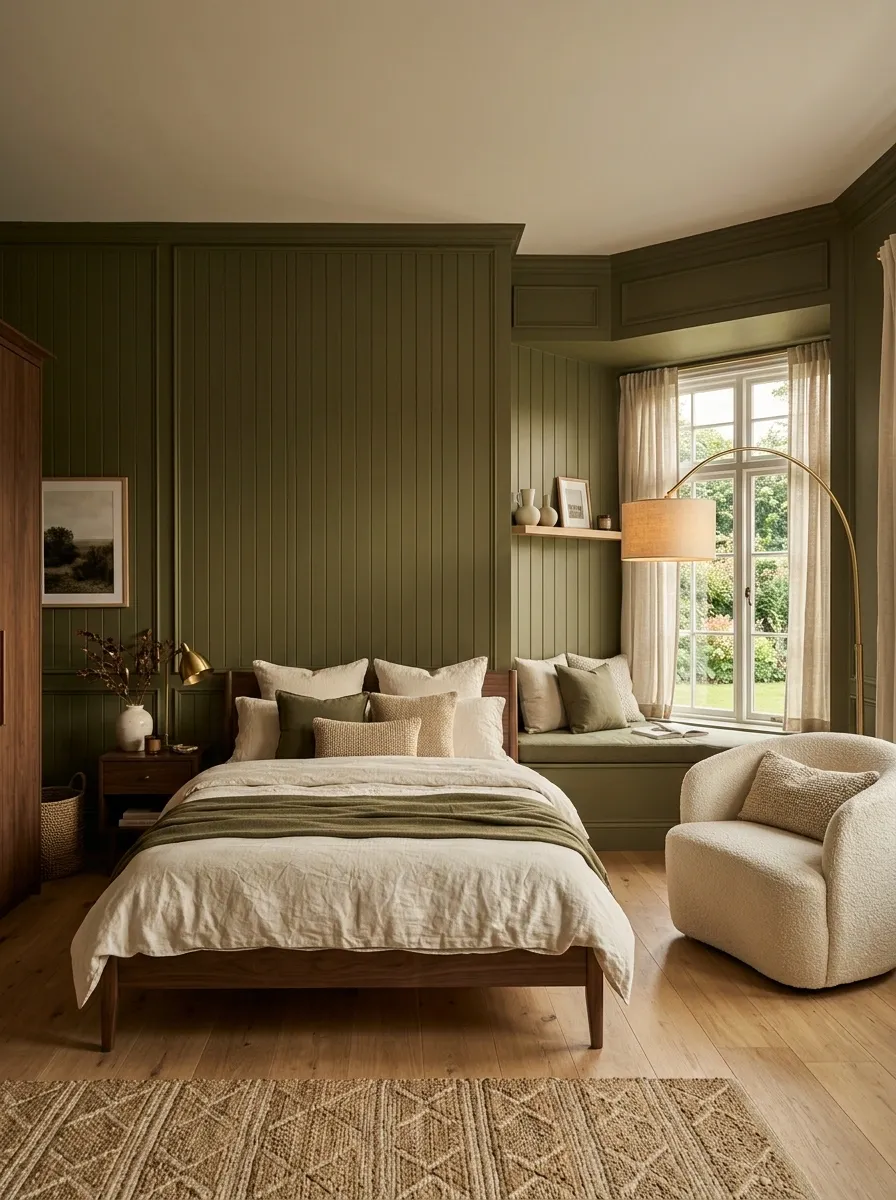
Olive-green beadboard wraps this bedroom in a rich, earthy tone, with a walnut bed, cream bedding, compact reading chair, arched floor lamp, and built-in window seat completing the composition. The result feels layered without becoming heavy.
The room has two clear visual anchors: the bed and the reading nook. They share the same wall color but serve different functions, which keeps the space interesting without introducing a second competing palette.
That curved reading chair matters too. All those vertical beadboard lines benefit from an organic shape nearby. Straight line after straight line after straight line gets a little too obedient.
Stair Landing With Black Beadboard and Warm Oak Treads
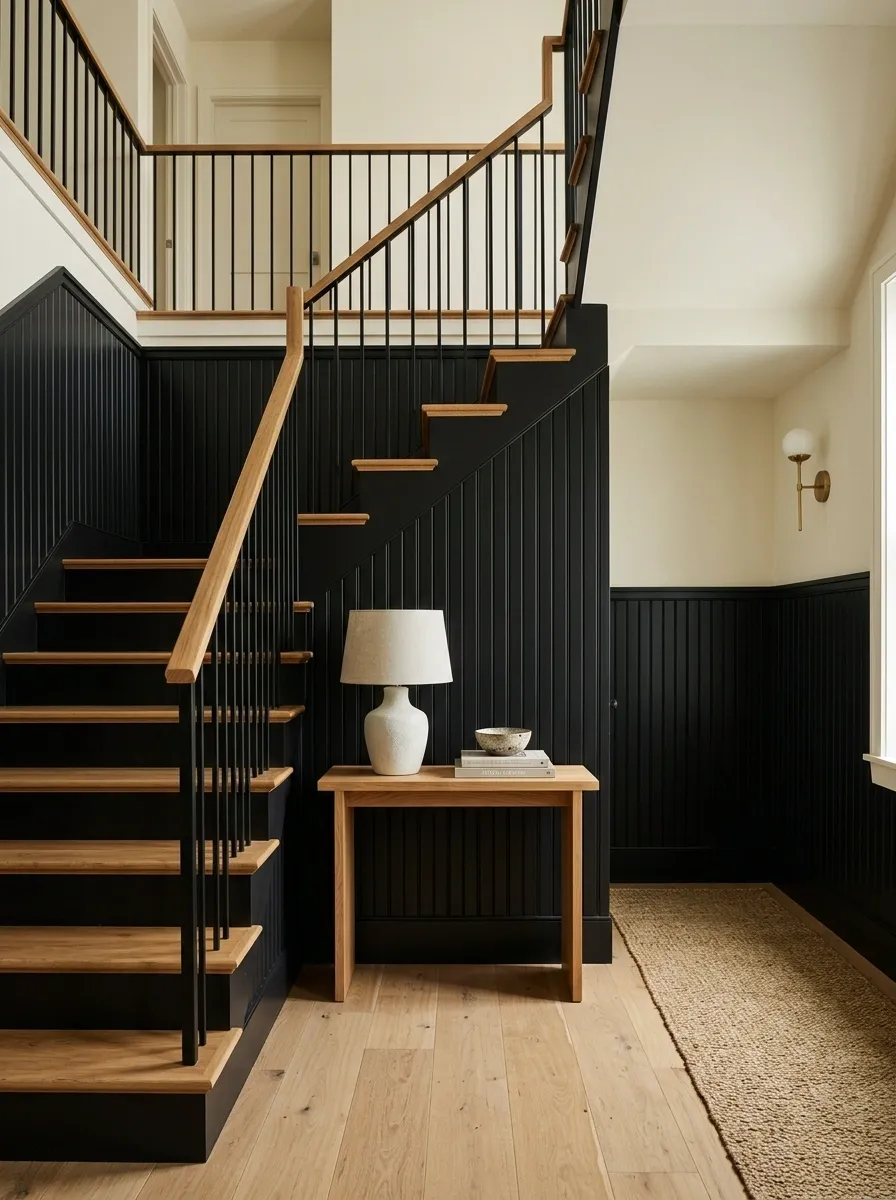
A stair landing becomes a genuine architectural feature with black beadboard climbing along the walls, warm oak stair treads, a simple black railing, and creamy upper walls. A small oak console and sculptural lamp give the landing a purpose beyond being the place where the hallway awkwardly ends.
The contrast between the oak and black paneling makes the staircase feel more substantial. The lighter upper wall then prevents the darker lower zone from becoming one continuous block.
This concept works especially well in homes where the stairs are visible from another room because the materials create a strong visual transition between spaces. A staircase should connect rooms, not look like it was left out of the decorating meeting.
Fireplace Wall With Full-Height Beadboard and Stone Hearth
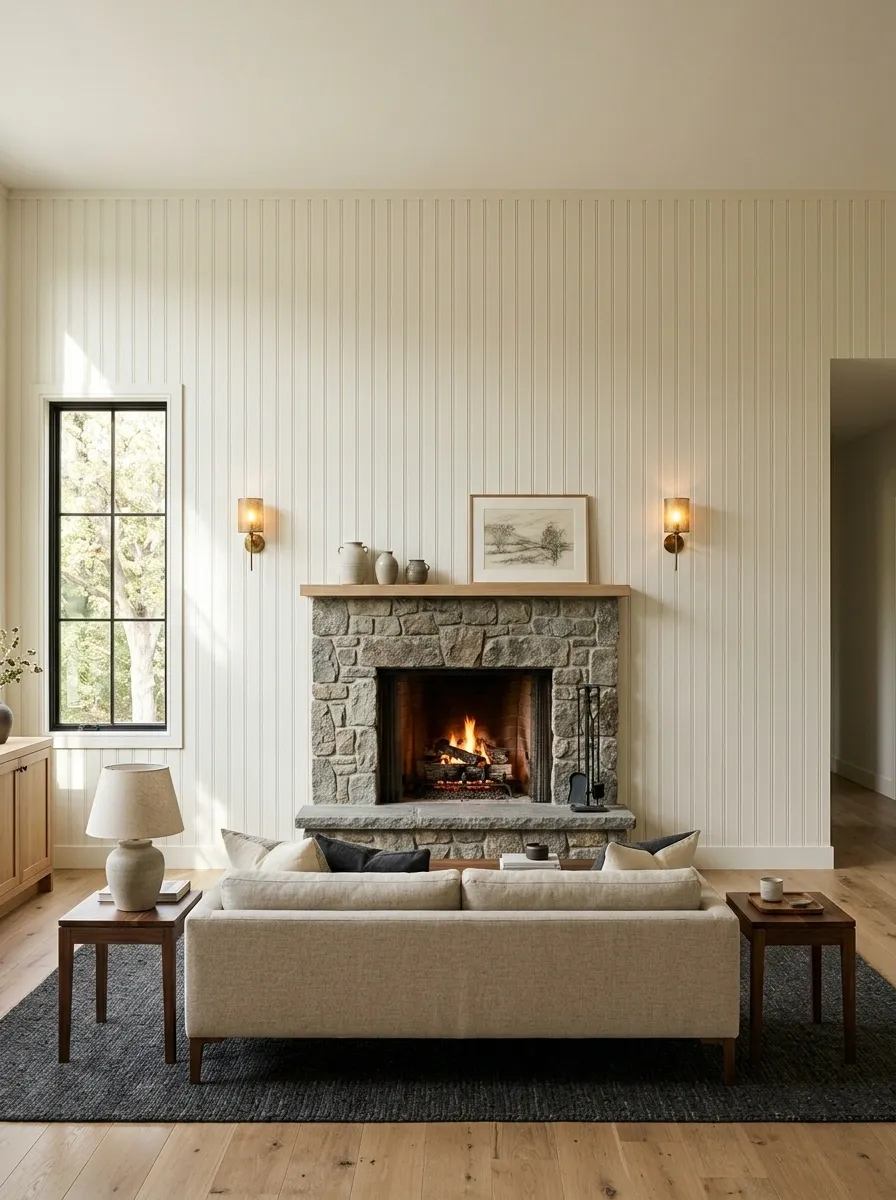
A simple stone fireplace becomes the center of this living room, framed by full-height warm-white beadboard that runs across the entire wall. A low linen sofa, walnut side tables, dark textured rug, and aged brass lighting add enough contrast without competing with the fireplace.
The paneling works because it gives the whole wall one continuous architectural rhythm. The stone hearth interrupts that rhythm in exactly the right place, creating a natural focal point. Keeping the furniture low also leaves more of the beadboard visible.
This is one of those designs where restraint pays off. The fireplace already has a job. There is no need to surround it with twelve decorative objects all screaming for attention like they’re competing for a reality-show finale.
continuous backdrop
hearth
wood
Dining Banquette With Half-Wall Beadboard and Deep Green Upholstery
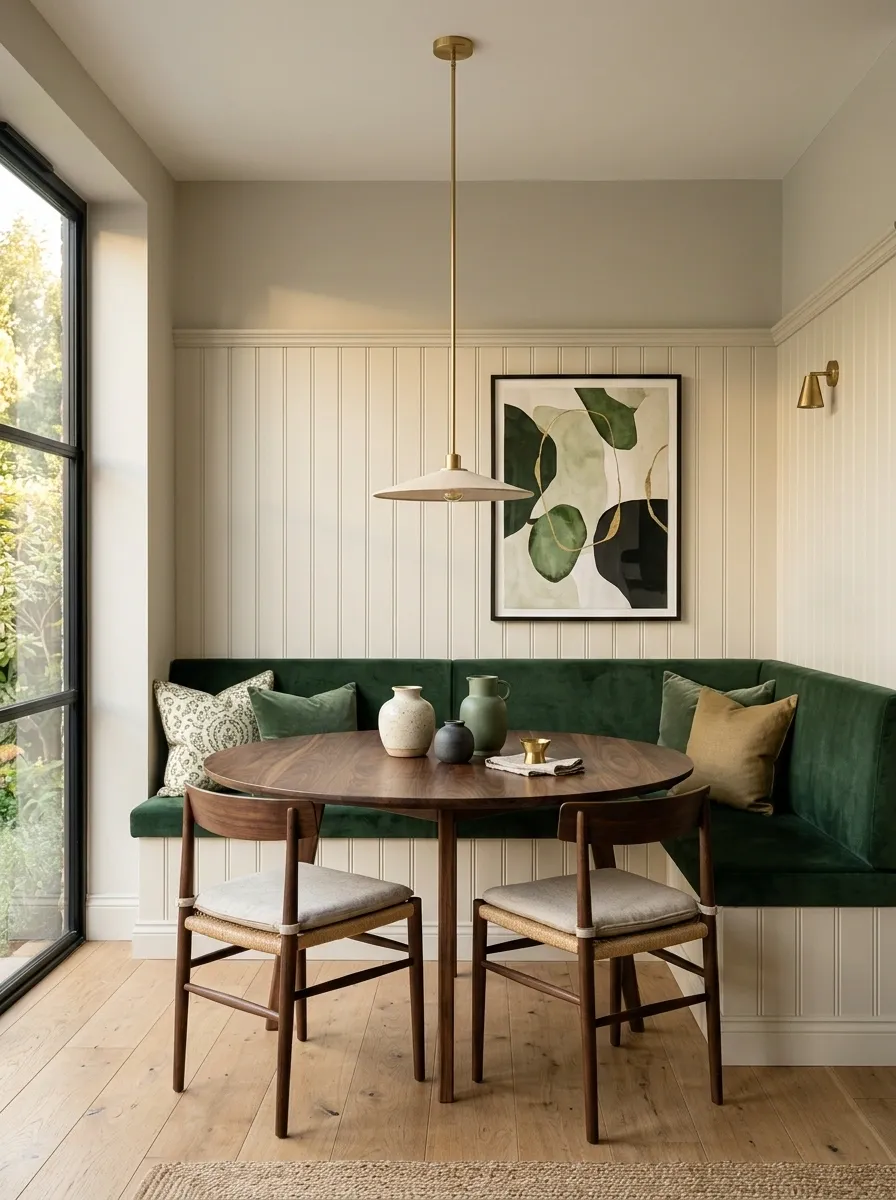
Creamy half-height beadboard gives this dining nook a tailored base, while deep green built-in banquette seating provides the strongest hit of color. A round dark-wood table, slim brass pendant, and oversized artwork finish the composition.
The panel height is important because it visually frames the banquette without disappearing behind it. The green upholstery then sits directly against that pale architectural backdrop, making the seating feel built into the room rather than dropped into it.
A round table keeps the arrangement from becoming too rigid. Between the vertical panel lines, straight bench, and rectangular artwork, there are already enough angles hanging around. The table gets to be the peacemaker.
Kitchen With Beadboard Ceiling, Stone Walls, and Walnut Cabinetry
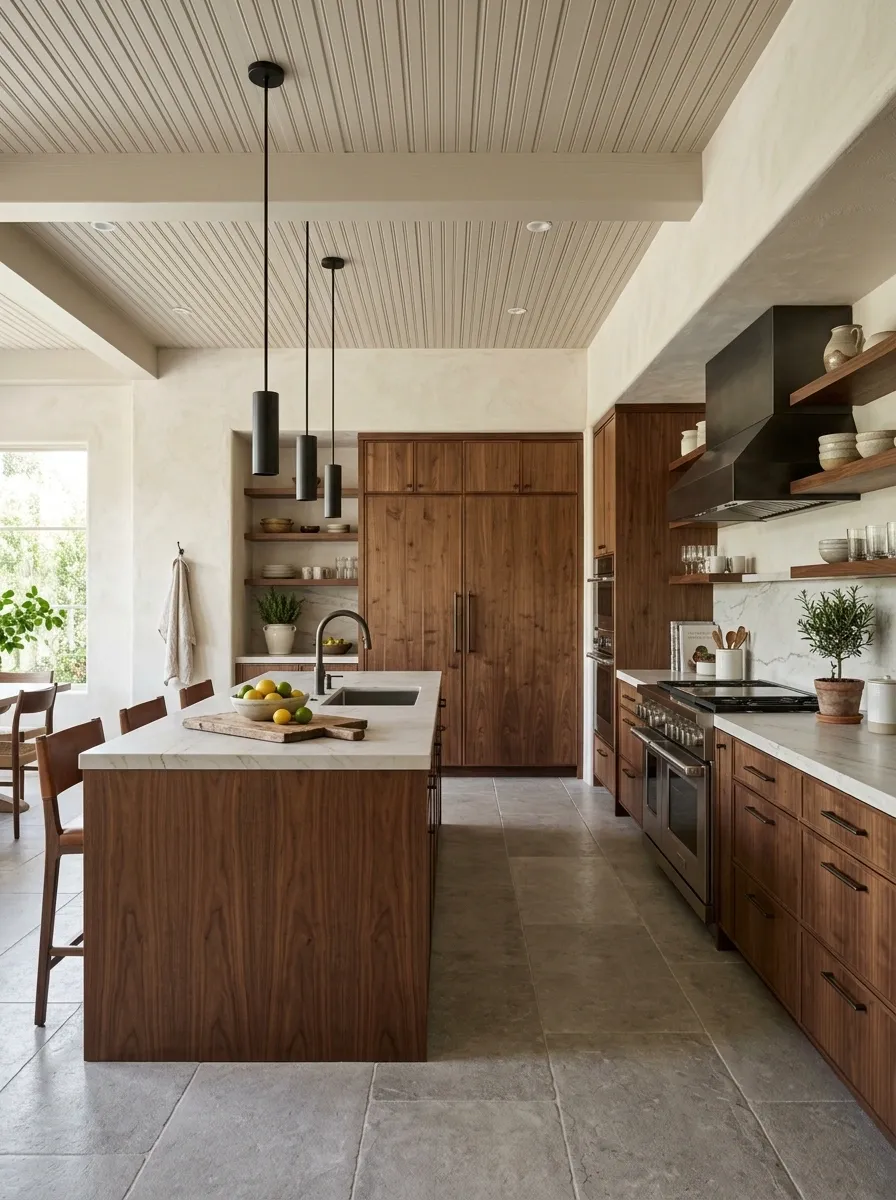
Here, beadboard moves completely off the walls and onto the ceiling. Warm walnut cabinetry, pale stone counters, plaster-toned walls, dark metal lighting, and a softly textured floor create a kitchen where the ceiling provides the unexpected architectural detail.
This placement works because the cabinetry already has enough visual weight. Adding another strongly textured wall treatment would make the room feel busy. The ceiling gives the eye something interesting to discover without competing with the work surfaces.
It also proves beadboard doesn’t have to announce itself at eye level. Sometimes the smarter move is putting the feature somewhere nobody expected. Revolutionary stuff, apparently.
ceiling
Modern Laundry Room With Pale Beadboard and Dusty Blue Cabinetry
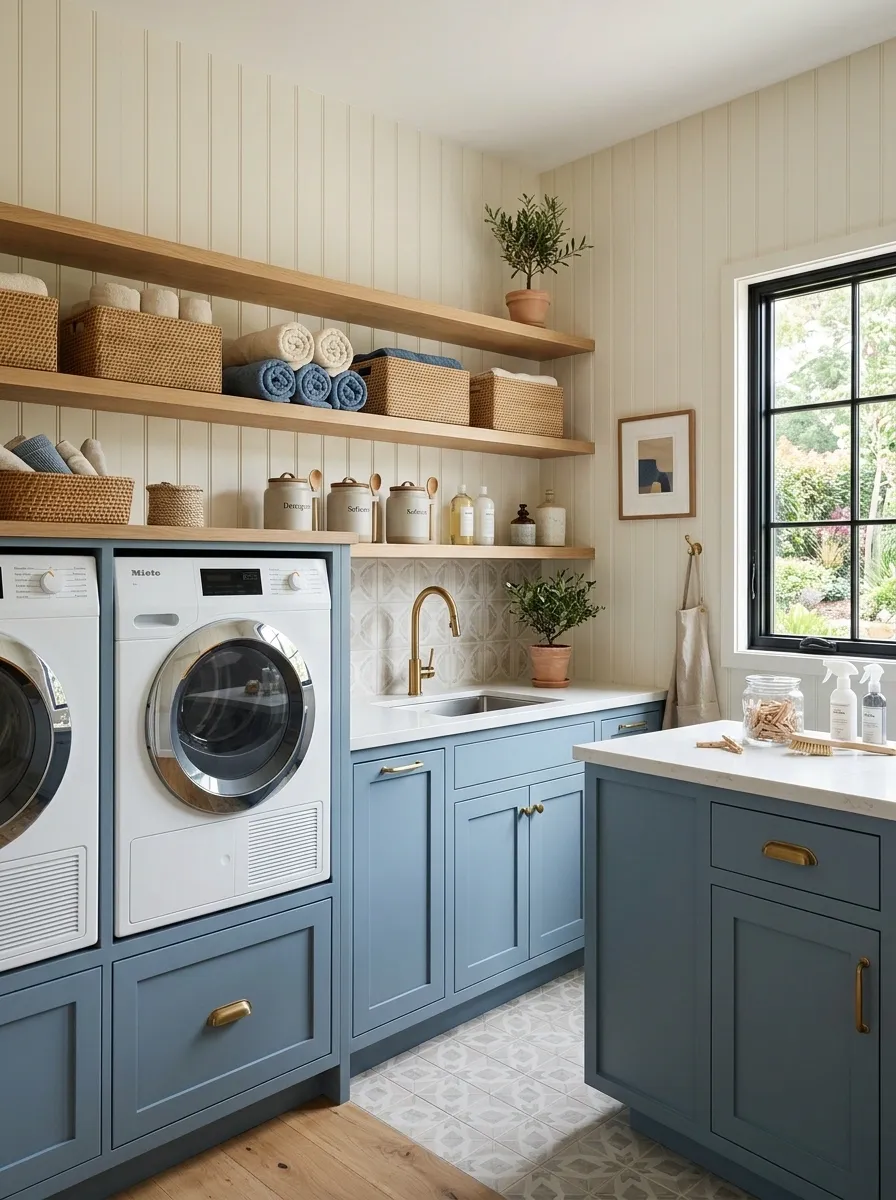
This laundry room pairs pale cream beadboard with dusty blue lower cabinetry, white stone-look counters, natural oak shelving, and a subtle patterned floor. The machines sit neatly within the cabinetry, making the working side of the room feel built-in instead of visually random.
The blue cabinetry gives the room its main color while the beadboard creates texture behind it. Oak shelves soften the painted surfaces and bring in enough natural material to stop the palette from feeling flat.
A laundry room still needs to function like a laundry room. Pretty baskets won’t magically improve workflow, no matter how many staged photos insist otherwise. Sorting, folding, storage, and appliance access should remain easy.
Small Apartment Living Room With Half-Height Beadboard and Built-In Shelving
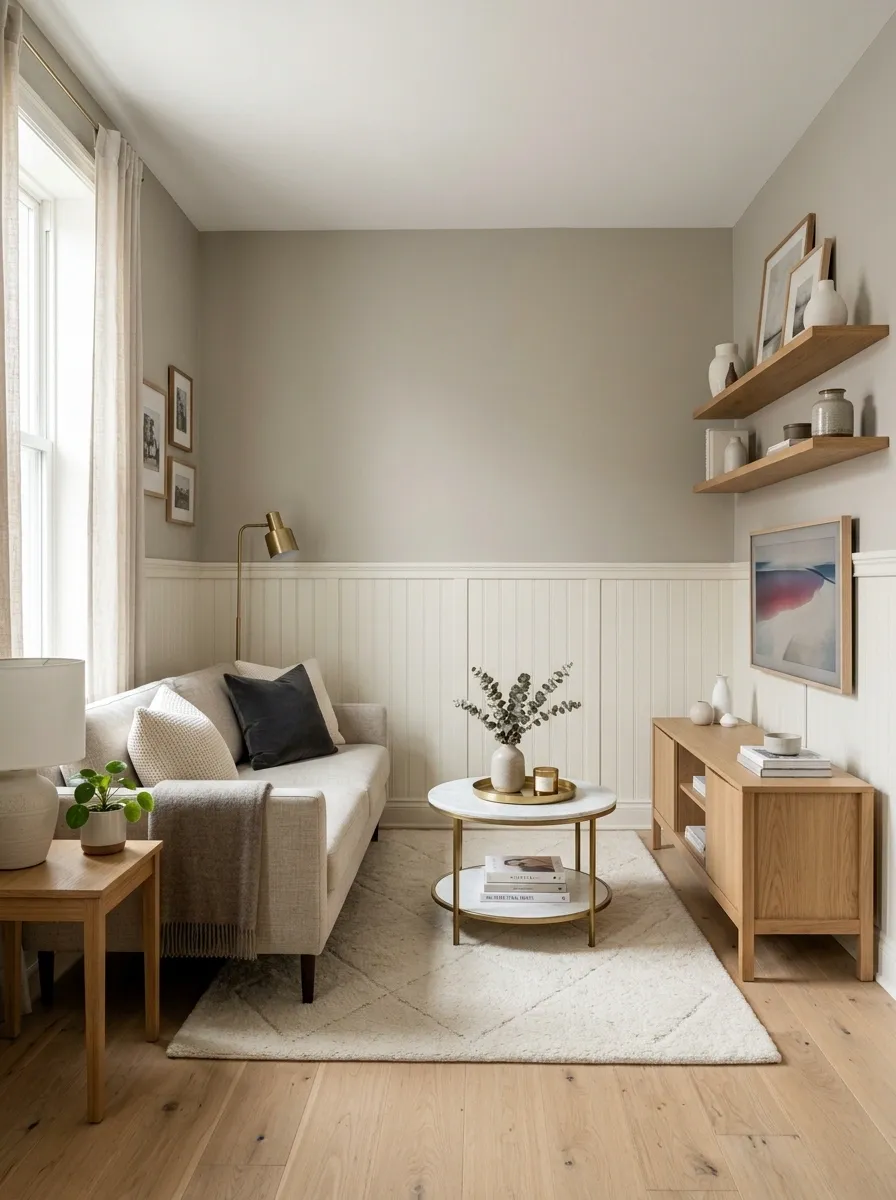
A compact apartment gets structure from ivory half-height beadboard beneath a warm neutral wall color. A slim sofa, wall-mounted shelves, small round coffee table, narrow oak media unit, and soft rug complete the room without consuming every available inch.
The lower wall treatment gives the room a clear visual base while leaving plenty of uninterrupted wall above the furniture. That open upper area matters in a small space because it prevents the room from feeling boxed in.
The furniture also stays deliberately slim. A giant sectional would swallow the room and then demand everyone compliment its courage. Compact proportions make the beadboard feel like part of the architecture rather than another layer of stuff.
structure
furniture
keeps visual air
Modern Nursery With Cream Beadboard and Natural Wood
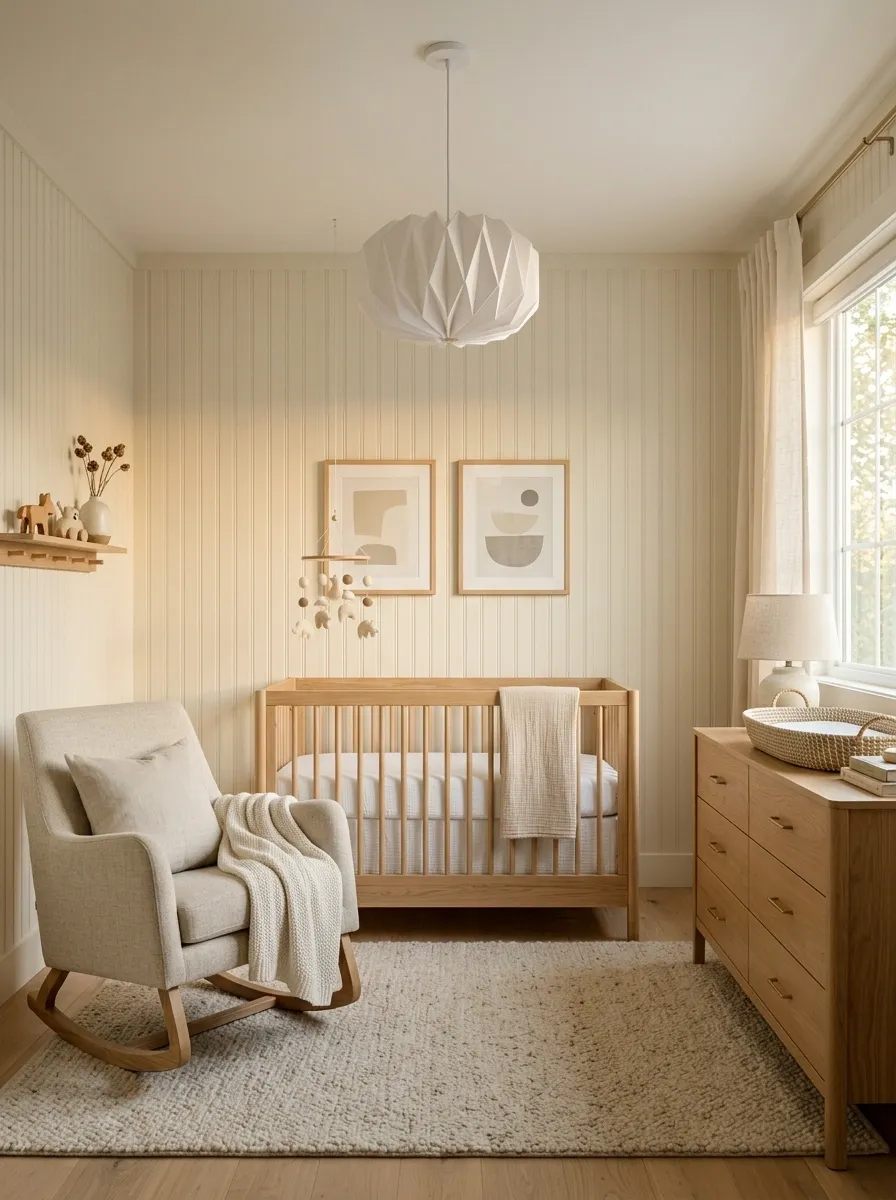
Cream beadboard gives this nursery a calm architectural base, while pale oak furniture keeps the room warm and uncomplicated. A simple crib, matching dresser, upholstered rocking chair, soft rug, paper pendant, and a few understated art pieces complete the scene.
The beadboard adds enough texture that the room doesn’t need a busy wallpaper pattern or a wall covered in tiny decorations. Natural wood also works better here than heavily painted furniture because the grain brings warmth without introducing another strong color.
The whole space feels gentle without becoming aggressively themed. There is no requirement for every object to announce that a baby lives there. The crib already handled that memo.
Home Bar With Espresso Beadboard and Pale Stone Counter
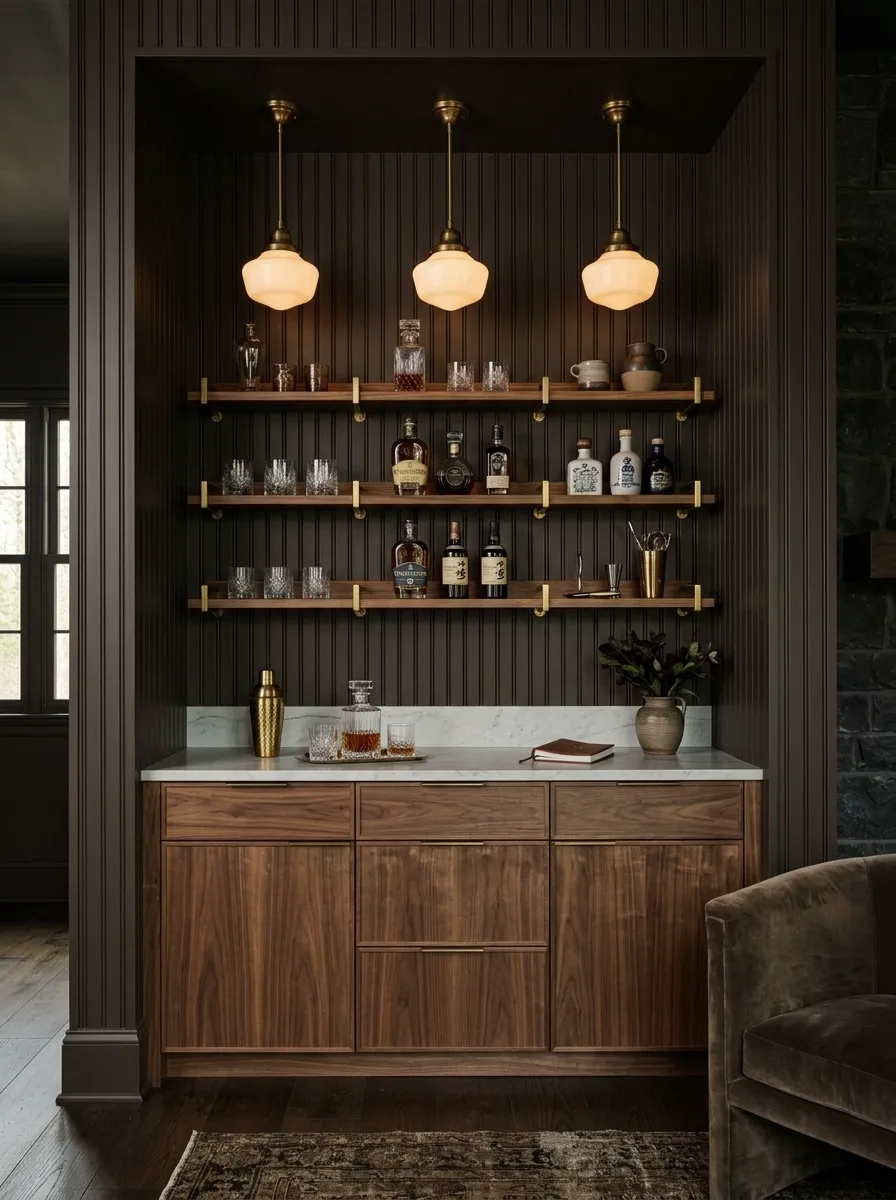
A compact home bar takes on a richer character with espresso-toned beadboard, low walnut cabinetry, a pale stone counter, aged brass shelving, and warm pendant lighting. The dark wall turns the niche into a defined architectural feature instead of making the cabinetry look like a piece of furniture that simply got parked against the wall.
The pale countertop creates the sharpest contrast and gives the eye a horizontal break through all the vertical panel lines. Brass brings another warm note, but it stays limited to the lighting and shelving so the composition doesn’t become metallic overload.
Dark beadboard works especially well in a small dedicated zone because it gives the space a clear identity. Apparently a home bar does not need a neon sign spelling out what it is.
Sunroom With Soft White Beadboard and Woven Furniture
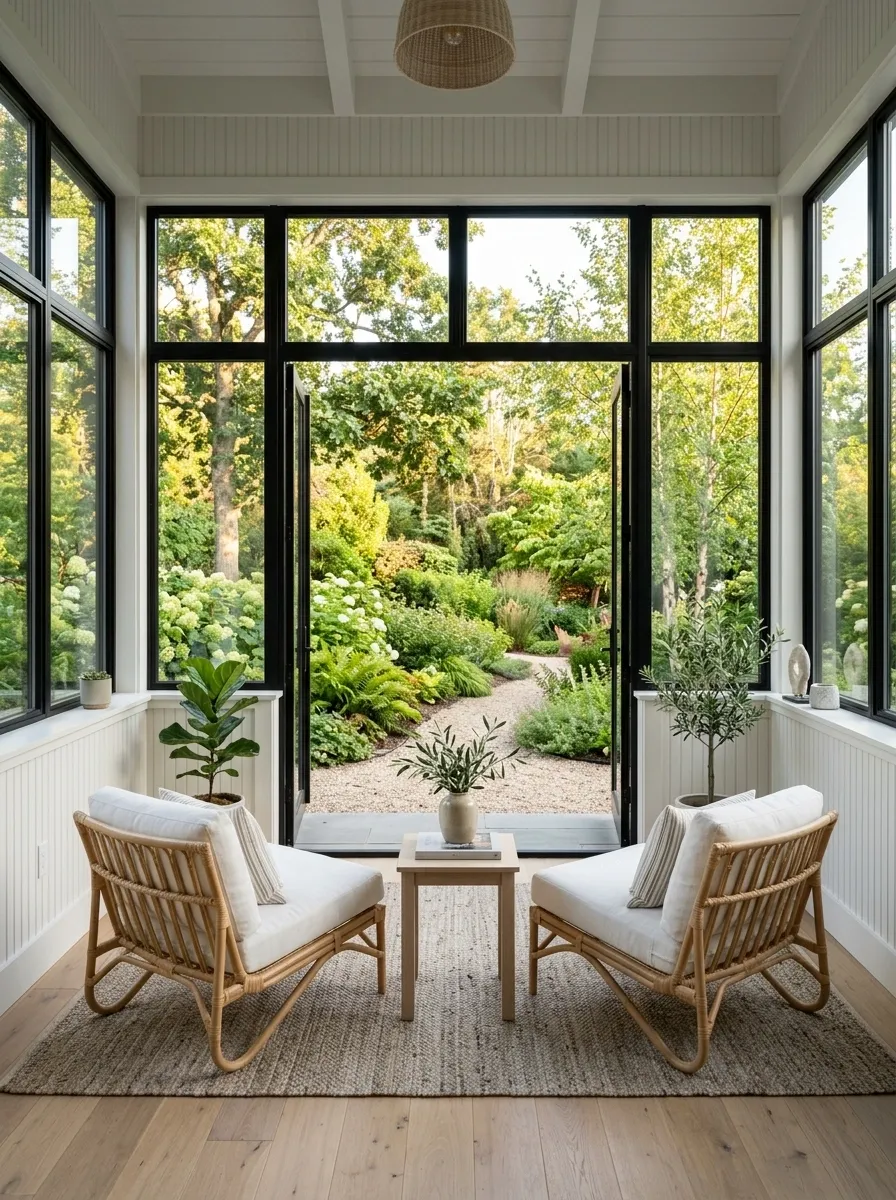
Soft white beadboard wraps this bright sunroom, while natural woven lounge chairs, pale oak tables, linen cushions, a stone-toned rug, and expansive windows keep the room connected to the garden outside. The furniture is low enough that the windows remain the dominant feature.
That matters because beadboard can easily become the loudest thing in a light room. Here, the paneling acts more like a textured frame around the view. The woven furniture brings irregular texture against the repeated vertical lines, while pale oak keeps the palette from becoming too white.
The greenery outside is already doing plenty of decorative work. Bringing an indoor jungle into a room with this much visual activity would be a little unnecessary.
outdoor view
beadboard
textures
Dark Green Beadboard Dining Room With Cream Curtains
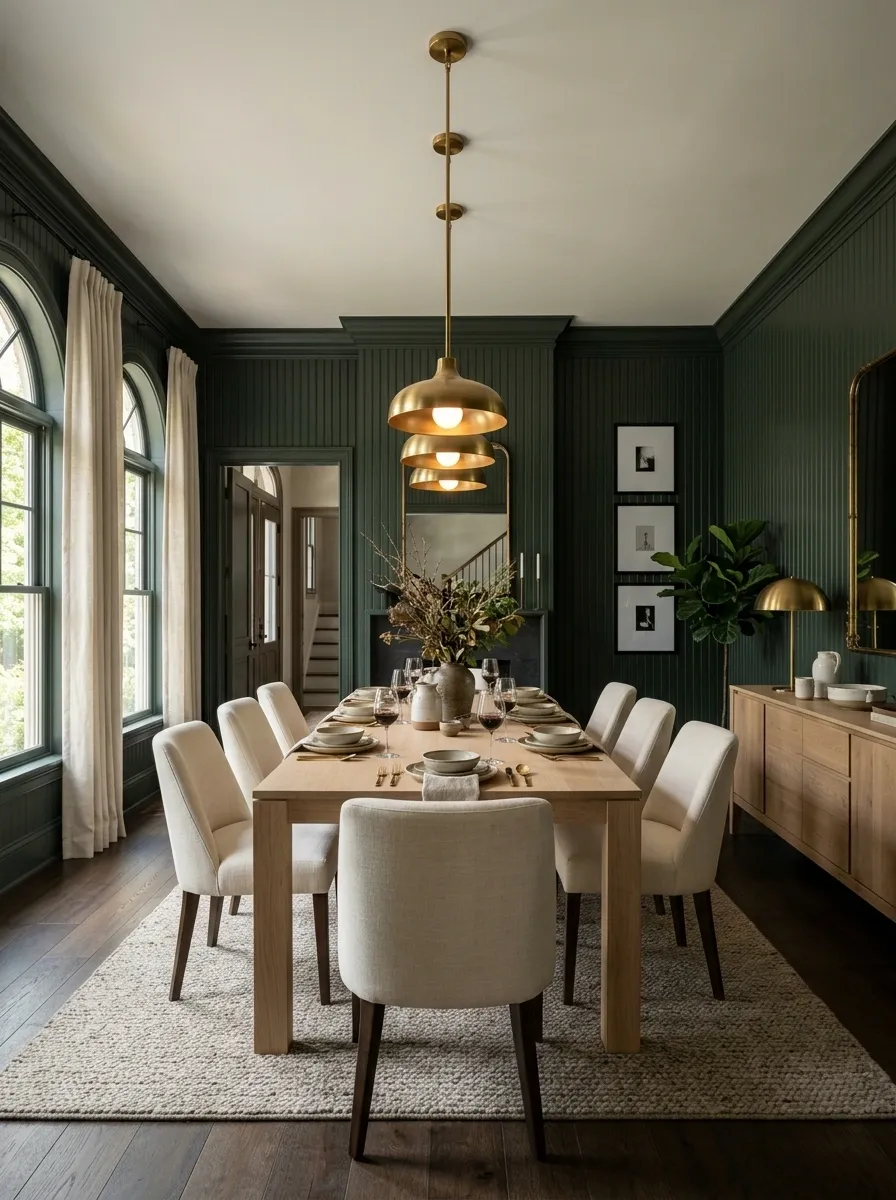
Deep forest-green beadboard surrounds this dining room, creating a rich backdrop for a pale oak dining table, cream upholstered chairs, full-length curtains, black frames, and warm pendant lighting. The ceiling stays soft white, giving the dark walls a deliberate boundary.
The oak table prevents the green from feeling cold, while the cream chairs create enough contrast around the center of the room. Full-length curtains soften the harder lines of the paneling and furniture without introducing another major color.
This is a strong example of using one dark architectural color generously instead of sprinkling dark accents everywhere. The room doesn’t need black on every chair leg, picture frame, and light switch to “tie it together.” Sometimes things can simply behave themselves.
Modern Cottage Bedroom With Mushroom Beadboard and Stone Fireplace
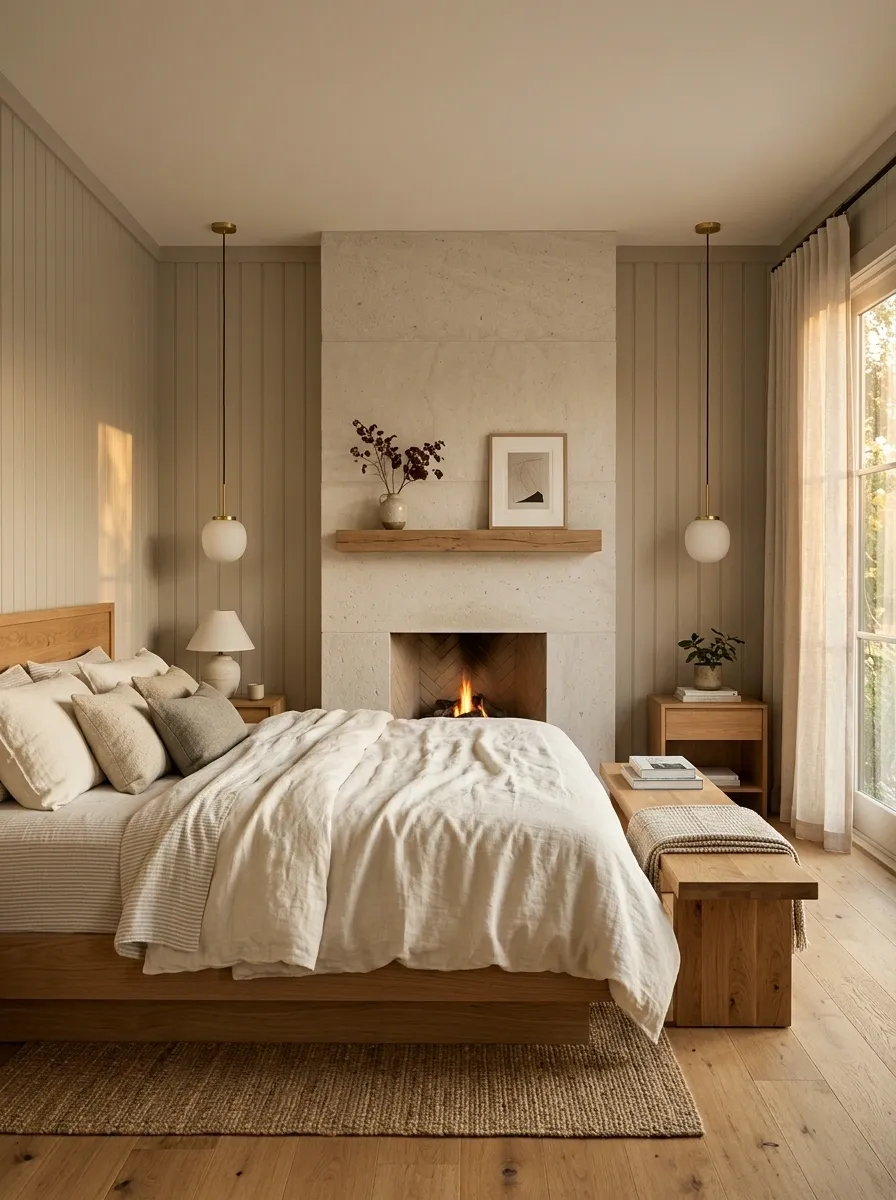
Soft mushroom-colored beadboard gives this bedroom a subtle cottage influence, but the rest of the composition keeps it firmly contemporary. A linen bed, pale stone fireplace, chunky oak bench, warm flooring, and simple pendant lights bring texture without relying on ornate details.
The color of the beadboard is doing something clever here. It has enough depth to separate the wall from the pale textiles, but it stays neutral enough to connect with the stone and wood. That creates a layered room without needing a long list of decorative accessories.
The cottage reference comes from texture and material rather than decoration. No miniature signs, no excessive floral patterns, no furniture with enough distressing to look emotionally exhausted.
Entry Hall With Full-Height Black Beadboard and Pale Oak Console
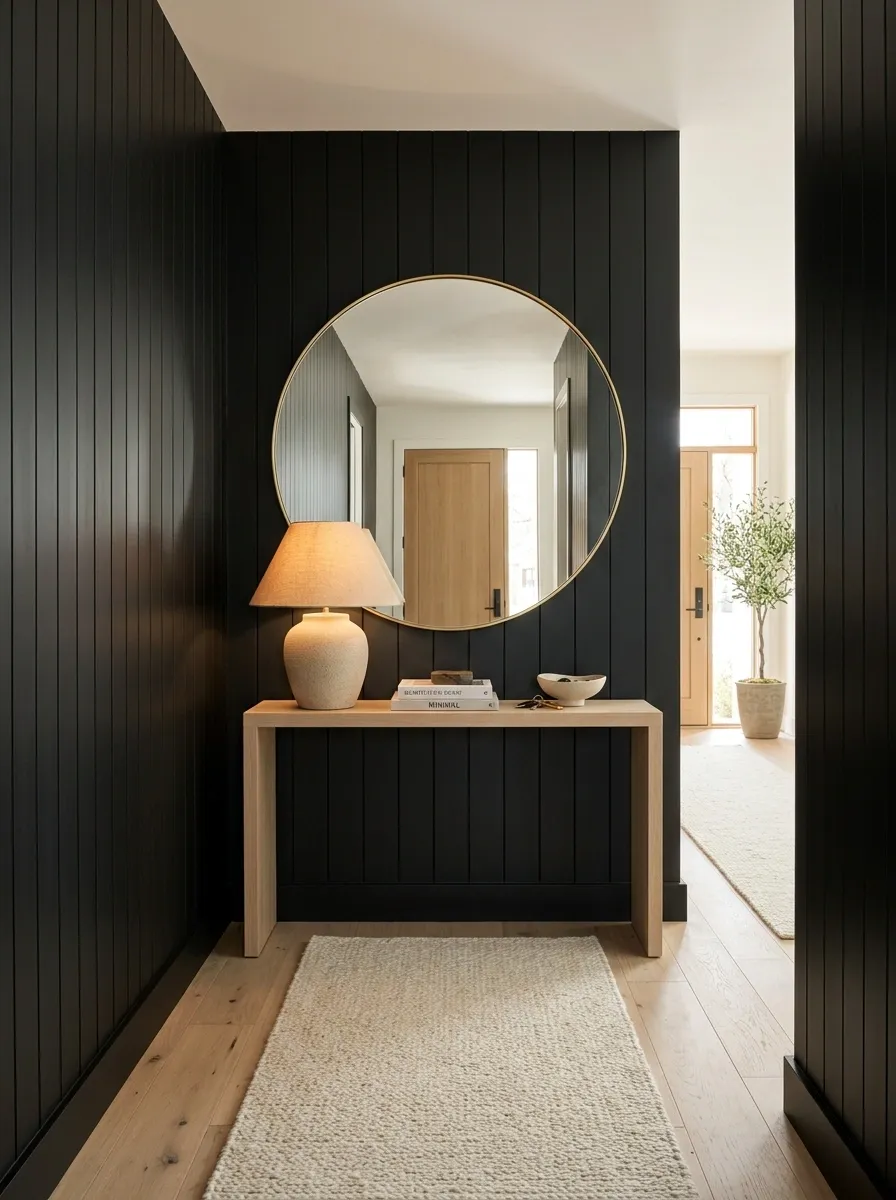
A narrow entry hall gets a dramatic architectural treatment with matte black beadboard running from floor to ceiling. A slim pale-oak console, oversized round mirror, cream runner, and warm sculptural light soften the dark walls without taking away their presence.
The furniture stays intentionally minimal because the wall already provides plenty of visual structure. The pale oak console creates a strong horizontal line against the vertical paneling, while the round mirror breaks up the geometry above it.
Most narrow entries don’t need more furniture. They need better proportions. Adding a chair, basket tower, three stools, and a tiny table would mostly create an obstacle course with decorative aspirations.
oak console
Bathroom Vanity Wall With Muted Green Beadboard and Arched Mirror
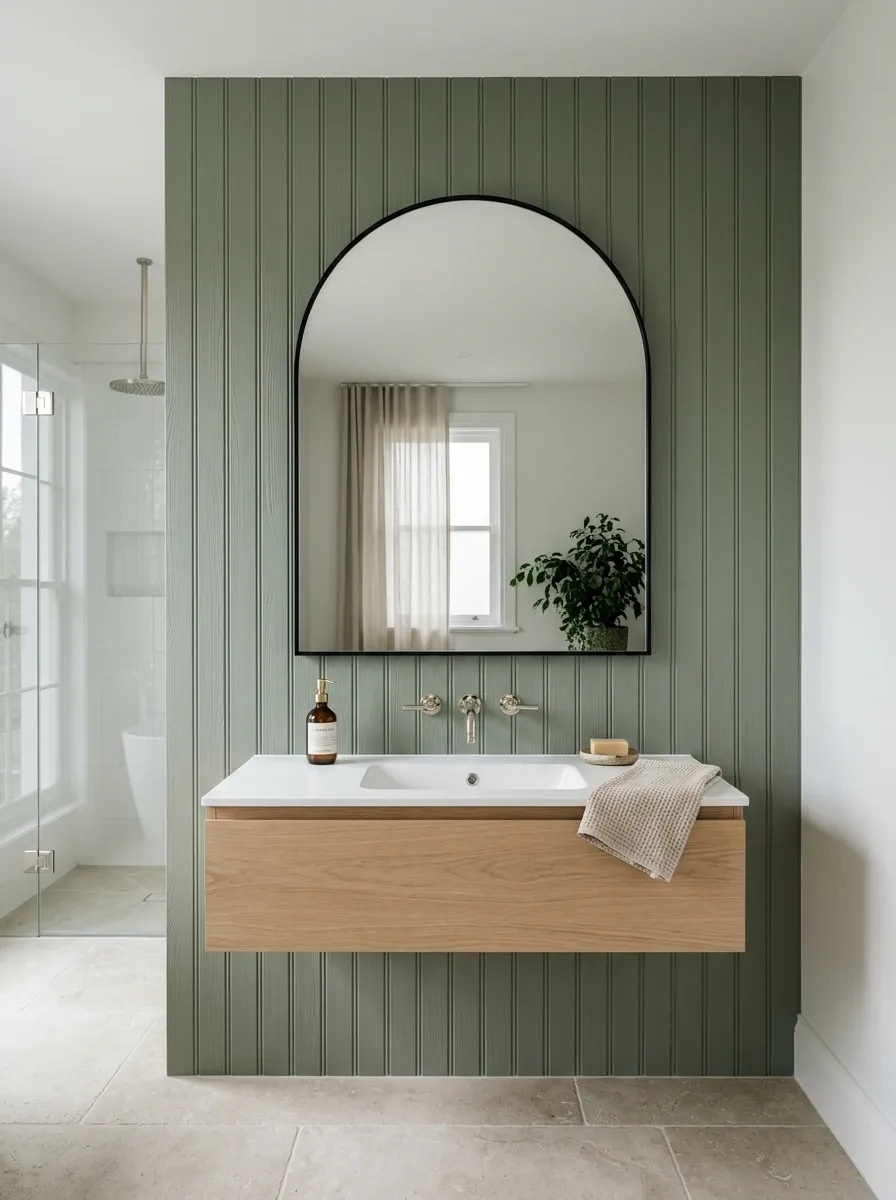
Muted green beadboard creates a calm backdrop for a floating oak vanity, oversized arched mirror, white basin, simple nickel tap, and limestone-toned flooring. The room gets its visual personality from the contrast between the paneling’s strict vertical rhythm and the soft curve of the mirror.
That curved shape is important. Against a wall full of repeated vertical grooves, one rounded element immediately creates tension and balance. The floating vanity also keeps the lower part of the composition visually open.
The rest of the bathroom can stay quiet. Once the wall and mirror are this considered, decorative clutter starts looking like it arrived five minutes late and hasn’t read the room.
Living Room Alcove With Clay Beadboard and Built-In Seating
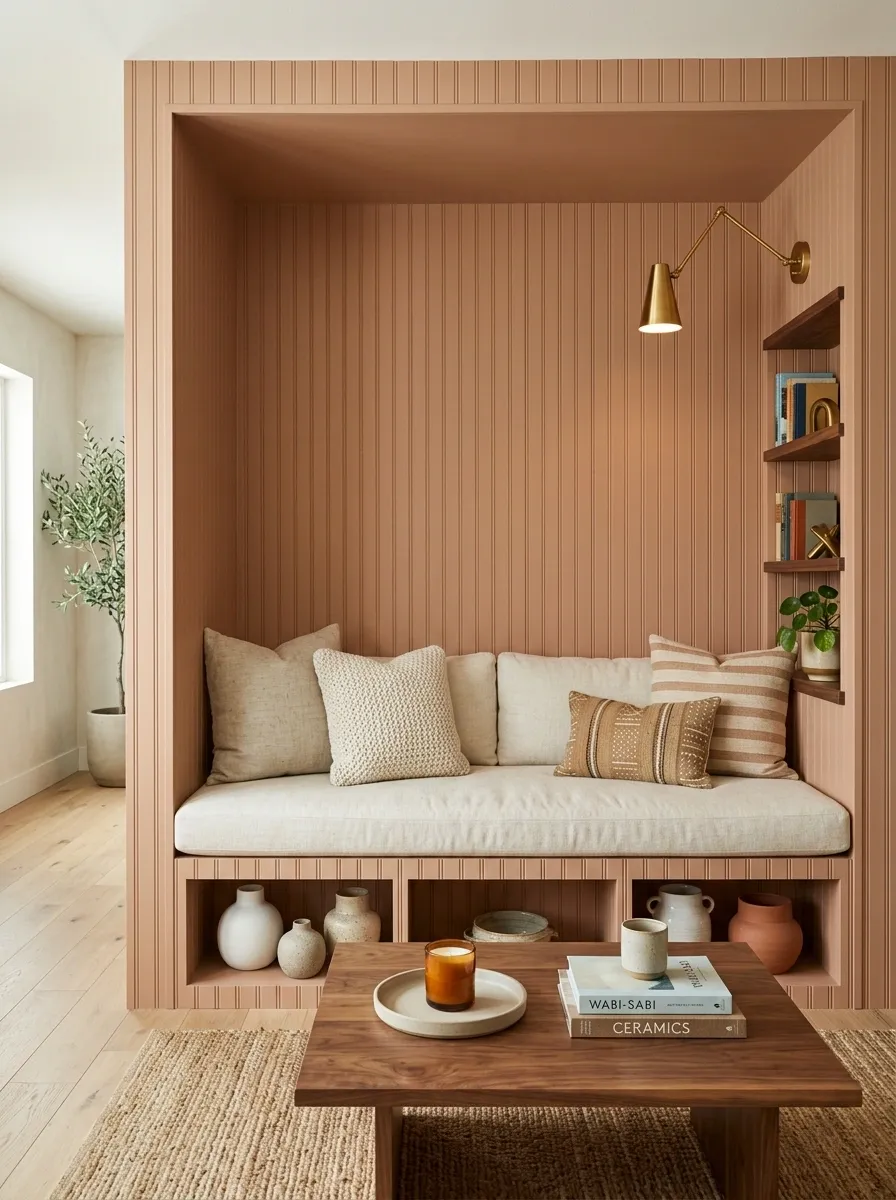
An awkward recessed alcove becomes the feature of the room with soft clay-colored beadboard, a built-in cream bench, loose cushions, low walnut table, integrated shelving, and a warm reading lamp. Instead of disguising the recess, the design makes the architecture impossible to ignore.
The beadboard visually separates the alcove from the main room, while the built-in seating makes the unusual footprint useful. Walnut gives the niche some weight, and the shelving provides storage without protruding into the main circulation area.
This is where beadboard earns its keep as an architectural finish. It isn’t just decorating the awkward corner. It is helping explain why the corner exists.
unused area
Black-and-Cream Home Office With Beadboard Feature Wall
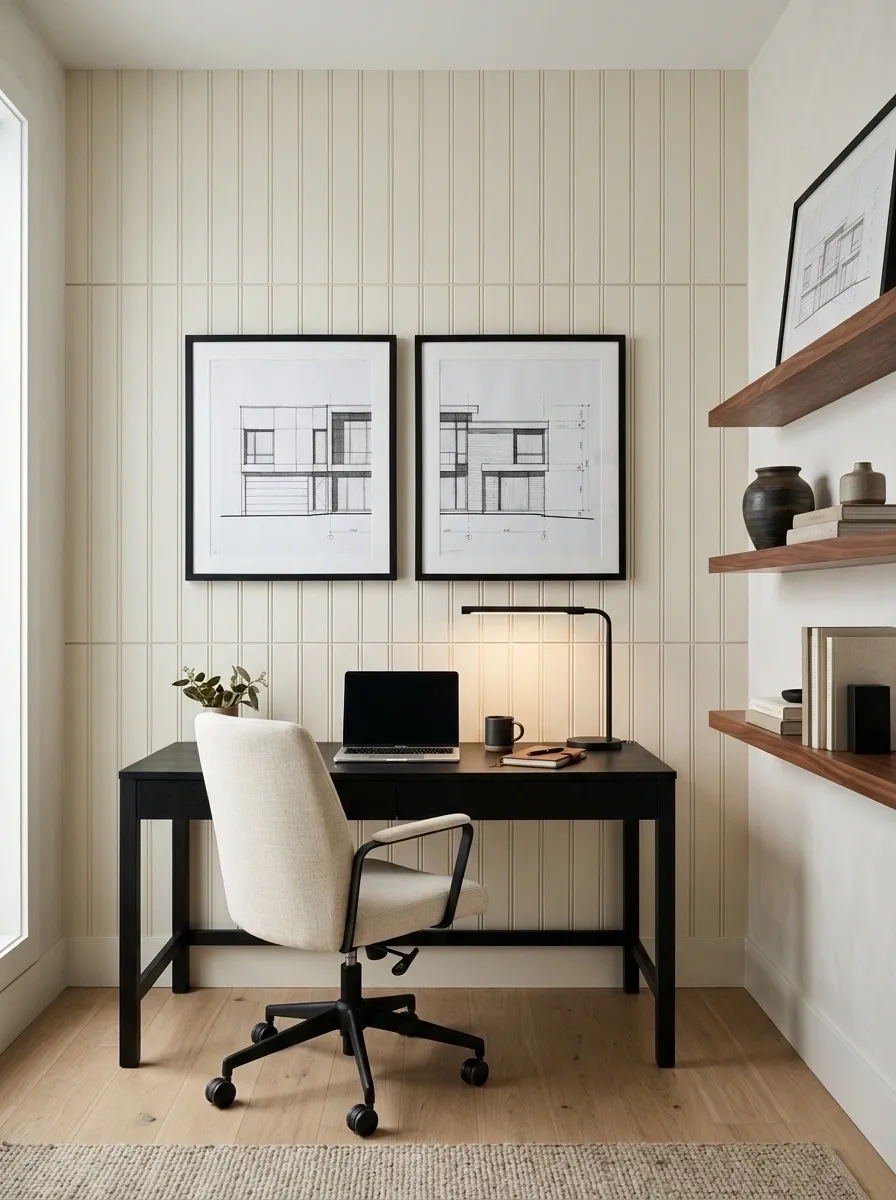
A cream beadboard feature wall anchors this home office behind a simple black desk, walnut shelving, linen task chair, framed architectural prints, and warm directional lighting. The remaining walls stay quiet, allowing one strong surface to define the room.
The black desk creates a clean horizontal interruption against the vertical beadboard, while walnut shelving prevents the black-and-cream palette from feeling too stark. The artwork is restrained and architectural rather than filling the wall with tiny frames.
This approach works because the feature wall actually feels like a feature. Covering the entire office in multiple competing treatments would defeat the point. One strong background is enough to make the desk look intentional instead of simply parked there with a laptop.
feature wall
Warm Modern Hall With Oak Beadboard, Plaster Walls, and Sculptural Lighting
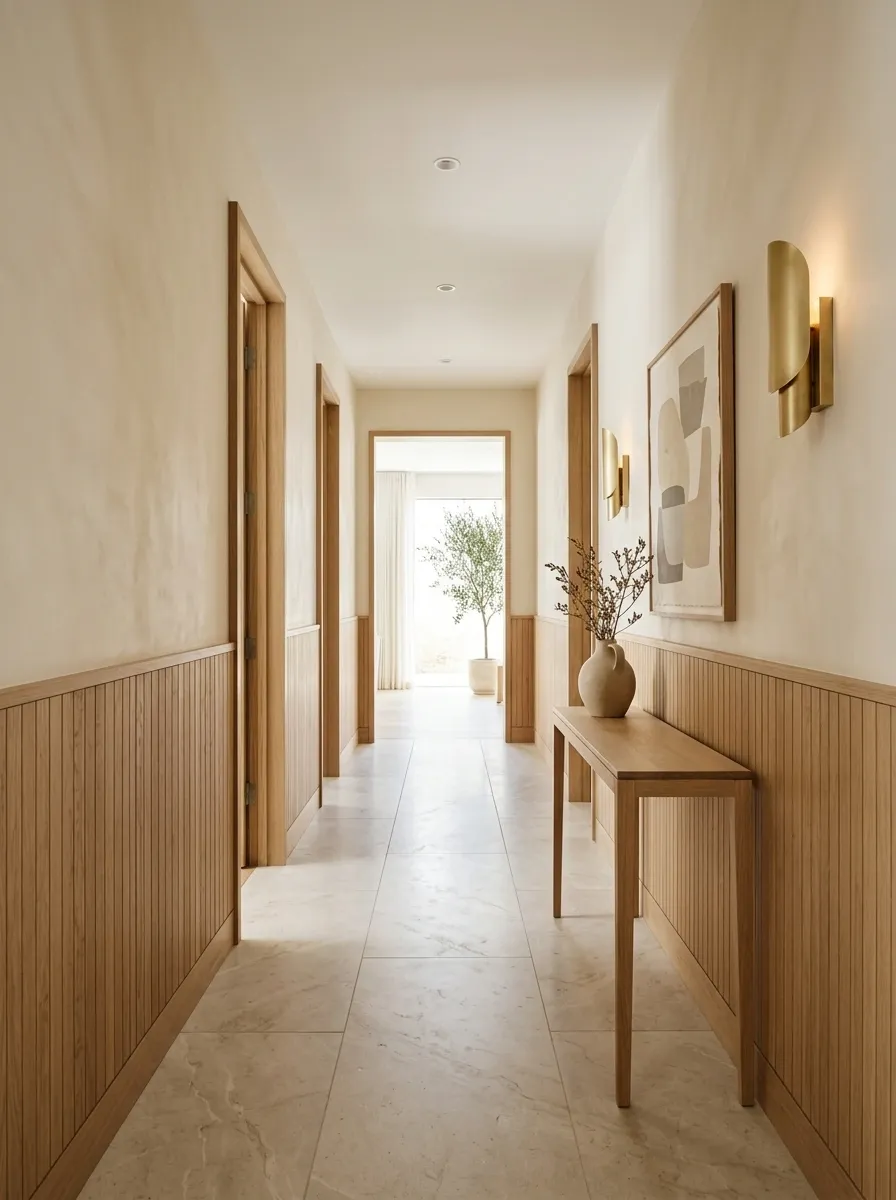
Natural oak beadboard covers the lower portion of a broad hallway, meeting warm plaster walls above. Limestone flooring, a slim console, understated artwork, and sculptural lighting complete the space. The result feels architectural, tactile, and quietly modern.
The material transition is what gives this hallway its character. Limestone creates a grounded base, oak adds natural texture through the middle, and warm plaster keeps the upper wall soft. Nothing needs to match exactly because the materials already share a similar warmth.
The beadboard also feels less decorative in this setting because it visually belongs to the architecture. That’s the sweet spot. The wall should look like it was designed that way, not like someone discovered paneling at a home-improvement store and immediately lost all restraint.
Making Beadboard Look Modern Instead of Merely Familiar
Modern beadboard works best when it has a relationship with the rest of the room. That relationship can come from contrast, repetition, proportion, material, or even an awkward architectural condition.
A dark wall needs something lighter nearby. A pale wall needs enough texture to avoid disappearing. A strong vertical treatment benefits from rounded furniture or horizontal lines. And a small room usually benefits more from thoughtful proportions than from adding more decorative objects.
The common thread through these designs is simple: the paneling has a job.
It defines a zone, gives an empty wall structure, frames furniture, strengthens architecture, or creates a transition between materials.
Once the beadboard starts doing that, the room needs much less decoration to feel finished.
The difference is in what surrounds the panels
Beadboard rarely looks its best in isolation. The strongest rooms give it something to react against.
Warm wood makes painted beadboard feel richer. Stone introduces weight. Linen softens the repeated lines. Black creates definition. Curved mirrors and rounded furniture interrupt the vertical rhythm. Open wall space gives the paneling room to breathe.
That is why changing only the beadboard color can produce a disappointing result. The entire composition needs to change when the wall treatment becomes stronger.
A room isn’t a wall with furniture placed in front of it.
The furniture, architecture, finishes, light, and negative space are all part of the same visual sentence.
And yes, the sentence can end before another decorative basket shows up.
The most convincing looks don’t try too hard
The strongest modern beadboard rooms aren’t necessarily the busiest ones.
They usually have one clear architectural move, a controlled material palette, furniture with sensible proportions, and enough empty space for the important details to register.
That’s what makes the designs feel believable rather than staged.
A dramatic dark wall can work.
A soft neutral room can work.
A colorful alcove can work.
A beadboard ceiling can work.
The real question is whether the treatment has a reason to be there.
When the answer is yes, beadboard stops looking like an accessory and starts looking like part of the architecture.
Save the designs that give the room a direction, not merely another thing to buy. The best reference is the one that still makes sense when the Pinterest scroll is over and the actual room has to function.