
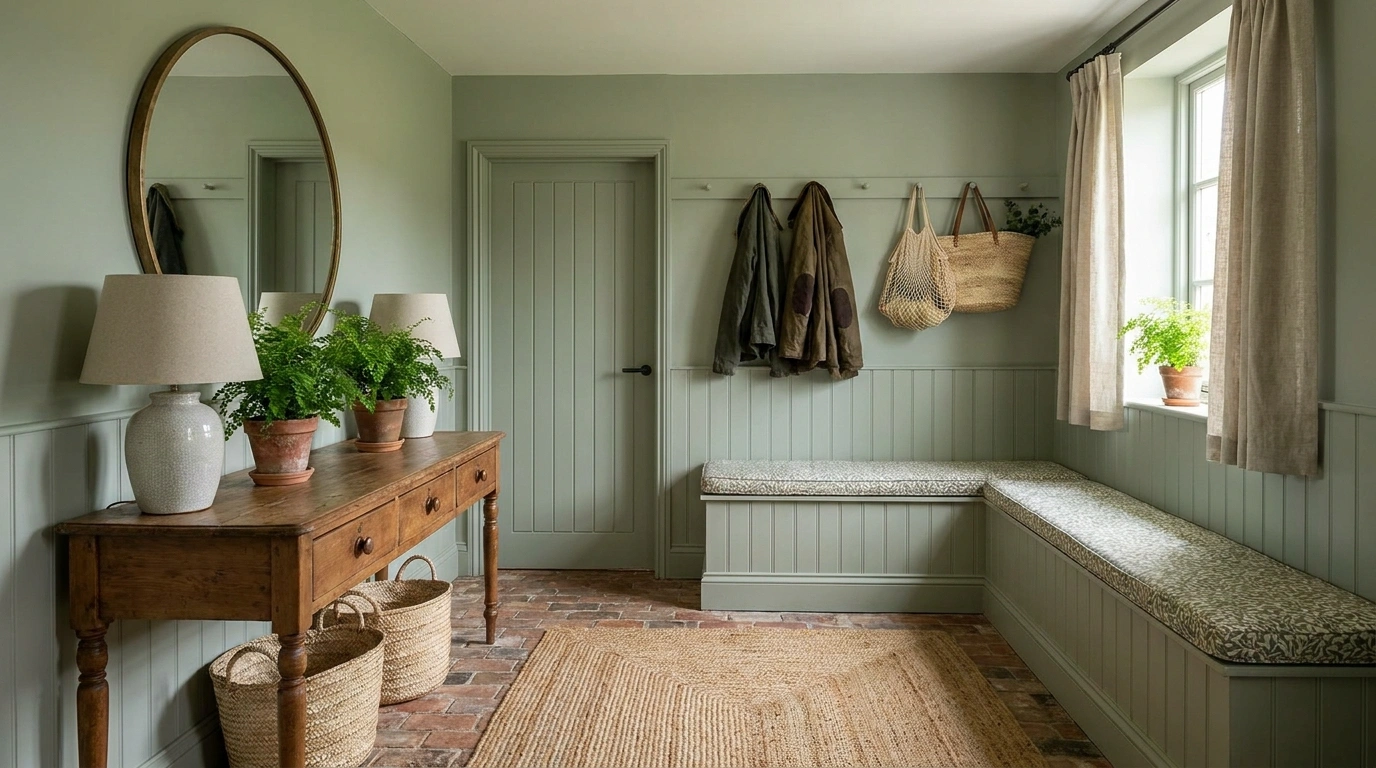
An entryway can have a great wall color and still somehow look like the house forgot to finish loading.
Sage green is especially tricky because it sits somewhere between warm neutral, muted color, and full-on statement shade. Pair it with the wrong wood and it can look washed out.
Add too much black and the room gets unnecessarily serious. Throw in random beige accessories and suddenly the whole thing looks like a waiting room that discovered Pinterest.
The strongest sage green entryway ideas work because the entire composition has a direction. The wall color, flooring, furniture, lighting, artwork, storage, and smaller details all support the same visual idea.
That is what makes a finished entryway worth saving. It isn’t just a sage wall with a console parked underneath it. It is a complete little scene that makes sense from the front door inward.Sage Green Entryway Ideas
Classic Sage Console With Warm Ambient Lighting
This cozy sage green console table creates an immediate sense of warmth with its rich wood top and soft, layered illumination. A classic ceramic table lamp paired with a flickering candle brings an inviting glow to the space.
Natural textures take center stage here, featuring a woven rattan basket holding a soft throw blanket and a potted green plant adding life to the lower shelf. A large round brass mirror above reflects the light, bouncing it gracefully around the room.
The styling is kept balanced with a vase of fresh eucalyptus and a small stack of decorative books. Every element works together to make the entryway feel lived-in, welcoming, and thoughtfully curated.
Soft Sage Entryway With Natural Oak and Cream Upholstery
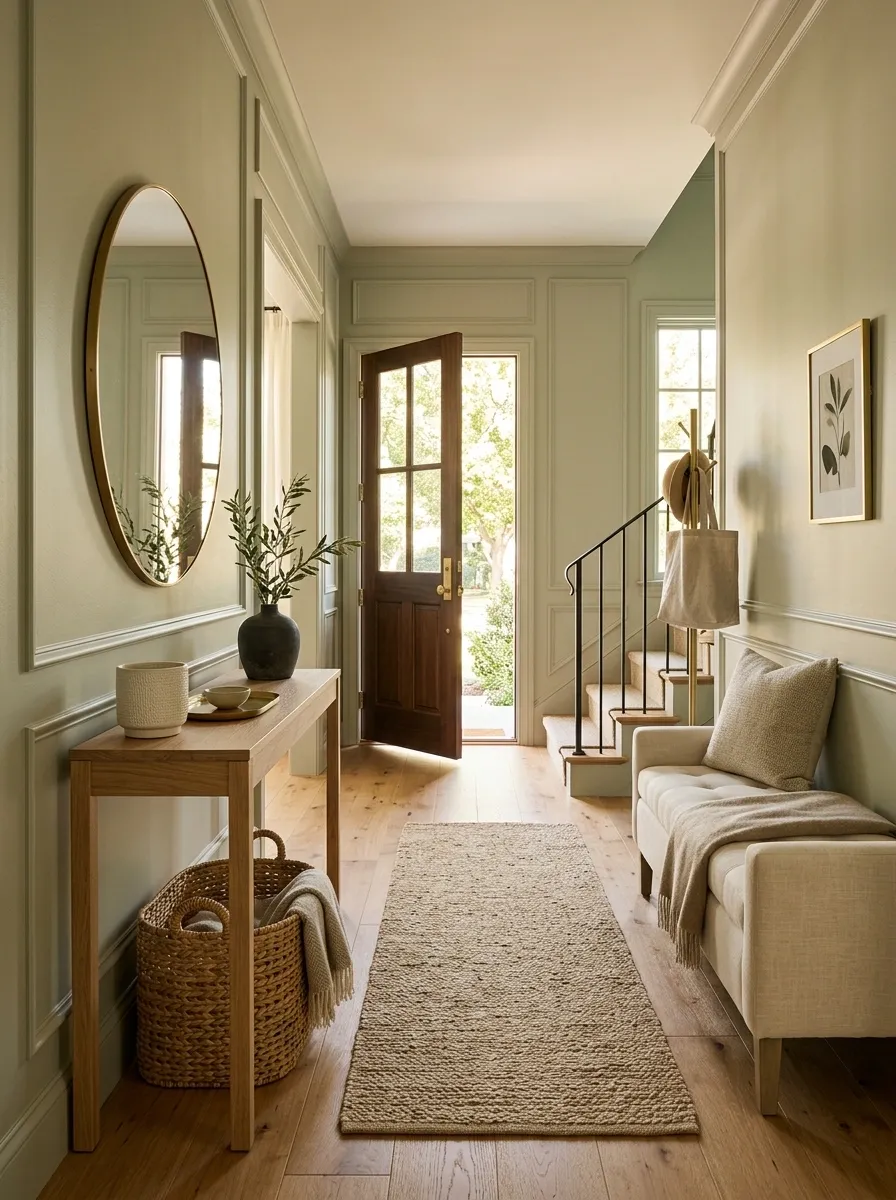
Soft sage walls create an easy foundation for warm oak, cream upholstery, and simple natural textures. This entryway uses a slim oak console, a softly upholstered bench, a large round mirror, and a neutral runner to keep the composition light without making it bland.
The oak gives the green some warmth, while cream upholstery keeps the furniture from feeling visually heavy. A woven basket underneath the console adds practical storage without turning the lower half of the room into a shoe-storage convention.
The proportions matter here. The furniture stays relatively narrow, leaving a comfortable path from the door into the house.
It is calm, warm, and genuinely livable. Basically, the entryway equivalent of having its life together.wall field
warm structure
visual softness
Charming Sage Front Door With Classic White Trim
A muted sage green front door sets a welcoming and serene tone before guests even step inside the house. Flanked by crisp white architectural molding and warm exterior lighting, the entrance feels both grand and inviting.
The vertical glass panels in the door allow soft natural light to filter into the foyer while maintaining privacy. Polished hardware accents the sage paint beautifully without overpowering the clean, classic facade of the home.
Subtle exterior lighting at the base highlights the structural details of the entryway. It is a timeless approach that proves curb appeal starts with a well-chosen hue and balanced proportions.
Deep Sage Foyer With Dark Wood and Aged Brass
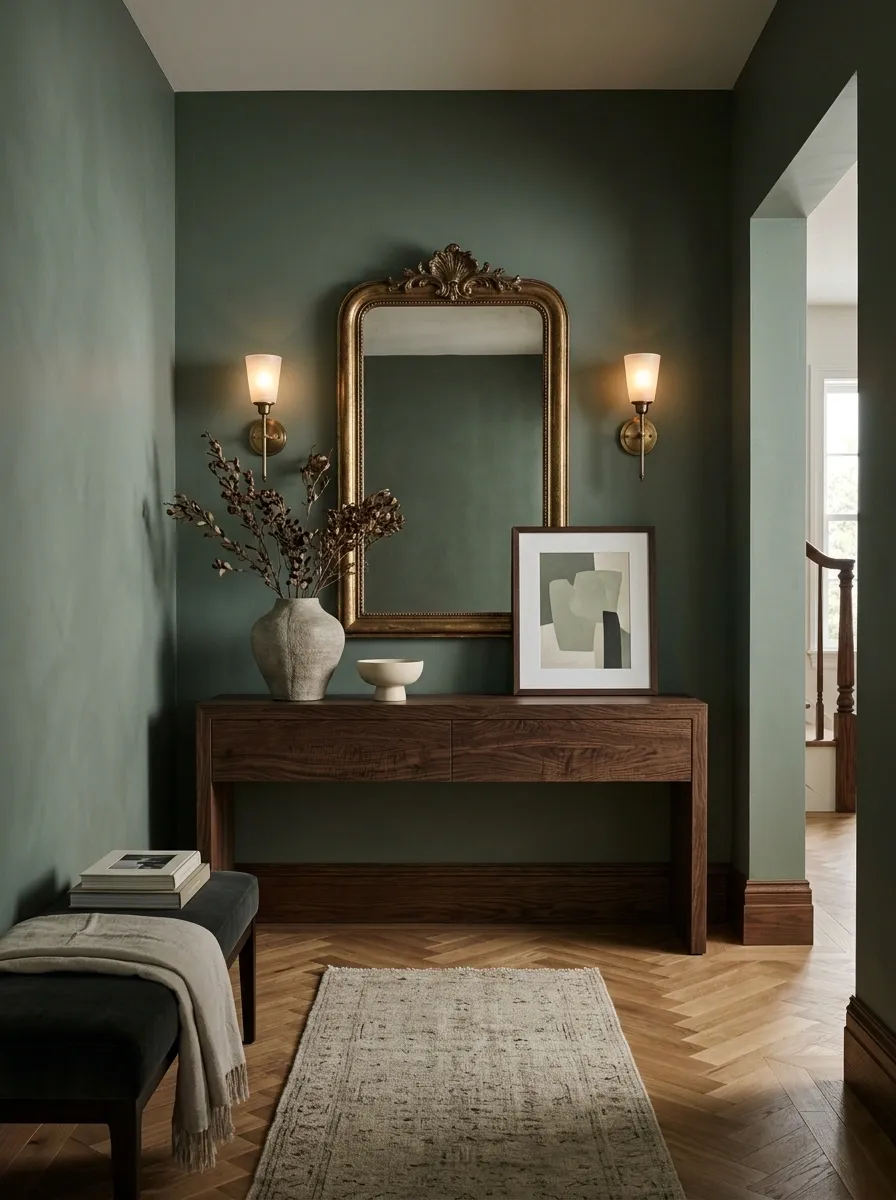
Deep sage changes the entire mood of an entrance. Instead of pairing it with pale woods, this version uses dark walnut, aged brass, warm lighting, and a substantial mirror to create a richer foyer.
A dark wood console anchors the wall, while aged brass sconces add small points of reflected light. The flooring remains lighter than the furniture so the darker palette doesn’t become one continuous block.
Keep the accessories restrained. A ceramic bowl, one substantial vase, and perhaps a framed piece of artwork are enough. The materials already provide plenty of visual interest.
The result feels collected rather than overly polished. It has that slightly moody quality that makes an ordinary Tuesday arrival home feel suspiciously cinematic.Cozy Sage Mudroom Bench With Built-In Shelving
A built-in sage green bench nook transforms a blank hallway wall into a functional and deeply charming drop zone. Soft green vertical paneling creates texture, while a natural wood top on the bench adds organic warmth.
Comfortable neutral pillows and a cozy throw blanket make the seating area look inviting rather than purely utilitarian. Overhead wooden shelving holds decorative greenery and woven baskets, keeping everyday clutter neatly tucked away.
Thoughtful hooks below provide a spot for hats and bags, while a patterned runner rug softens the flooring. This setup maximizes utility without sacrificing a bit of cozy style.
Narrow Sage Hall With Wall-Mounted Storage
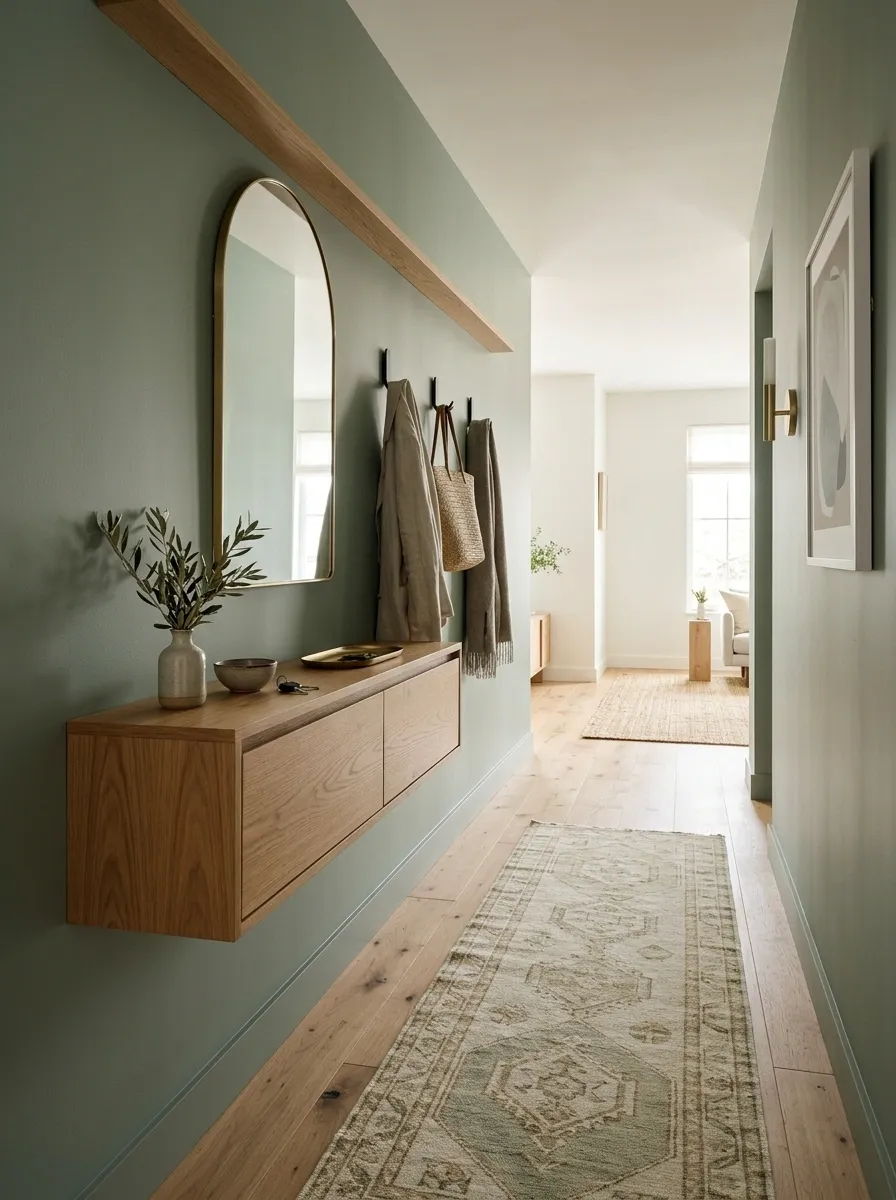
A narrow entrance benefits from furniture that disappears into the architecture. This design uses a sage wall with a slim floating shelf, wall-mounted hooks, a narrow mirror, and shallow closed storage positioned where a full console would steal valuable walking space.
The floor remains mostly open, which makes the passage feel wider. Warm wood on the shelf and storage fronts prevents the green wall from feeling flat, while a small runner adds softness without reducing circulation.
The important decision here is depth. A beautiful console that blocks half the walkway isn’t a design solution. It’s furniture committing a hostile act against the floor plan.
Keep the storage shallow and the visual line clean. In a tight hall, every extra inch matters.storage stays vertical.
circulation stays open.
Elegant Sage Hallway With Paneled Wainscoting
Combining sage green upper walls with crisp white wainscoting gives this hallway a refined, architectural finish. A traditional dark wood console table anchors the space, styled with a classic lamp and fresh floral arrangements.
Framed botanical prints add symmetry and classic charm to the sage backdrop, while an industrial black pendant light draws the eye upward. A vintage-style runner rug bridges the wood flooring with the soft tones on the walls.
The balance of dark wood, crisp white trim, and muted green creates a harmonious flow. It is a polished design that makes a narrow transitional space feel intentional and complete.
Traditional Sage Entryway With Panel Molding and Oak Console
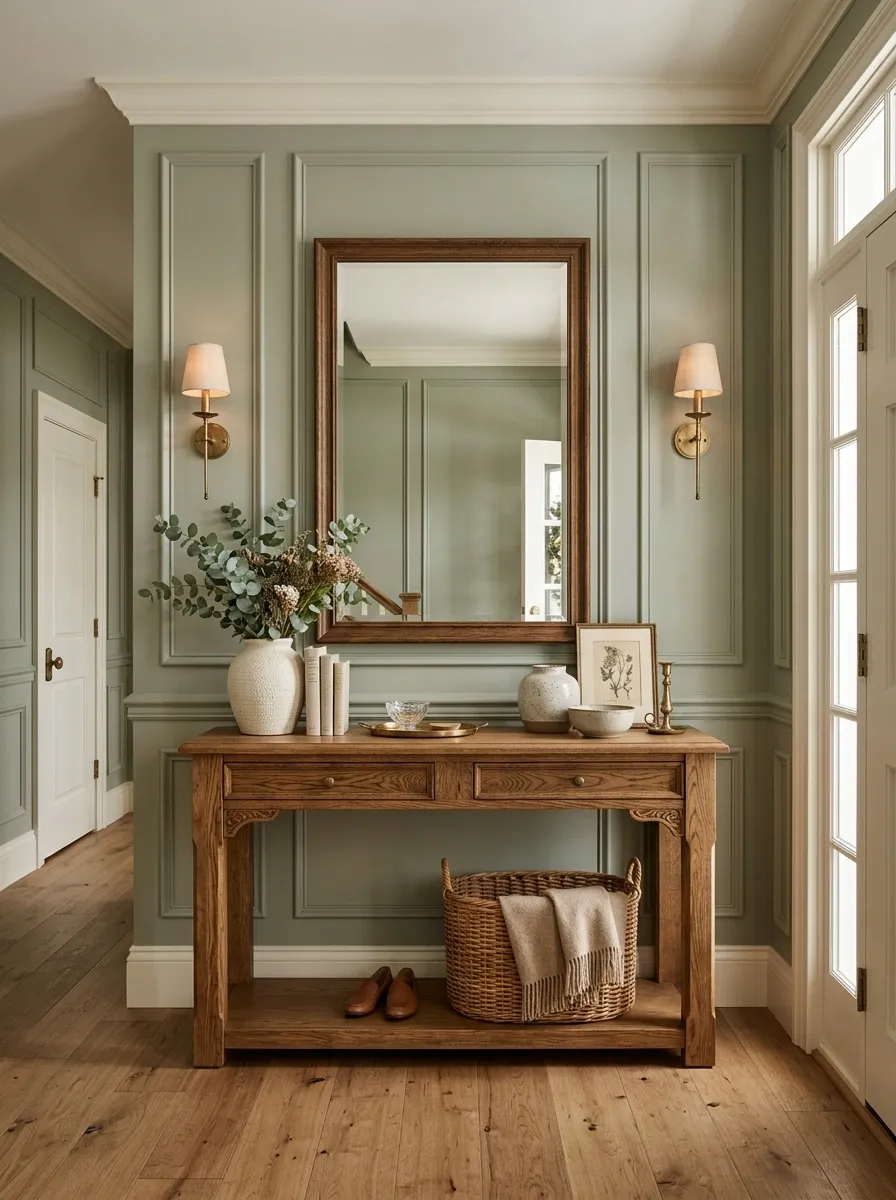
For a more architectural look, sage green works beautifully across paneled walls. The molding gives the color structure, while a traditional oak console adds warmth and weight below.
A large framed mirror sits centrally above the console, flanked by small lamps or wall lights. The floor can remain warm and understated, allowing the paneling to become the defining feature.
The green should remain consistent across the wall rather than being broken into several competing colors. Cream or warm white trim keeps the architectural details crisp.
This design feels established without looking fussy. The paneling does most of the talking, which is useful because the furniture can then behave itself.The wall provides repetition while the console supplies warmth at floor level.
Sophisticated Sage Hallway With Paneled Wainscoting
Combining sage green upper walls with crisp white wainscoting gives this hallway a refined, architectural finish. A traditional dark wood console table anchors the space, styled with a classic lamp and fresh floral arrangements.
Framed botanical prints add symmetry and classic charm to the sage backdrop, while an industrial black pendant light draws the eye upward. A vintage-style runner rug bridges the wood flooring with the soft tones on the walls.
The balance of dark wood, crisp white trim, and muted green creates a harmonious flow. It is a polished design that makes a narrow transitional space feel intentional and complete.
Modern Sage Entry With Black Steel and Pale Stone
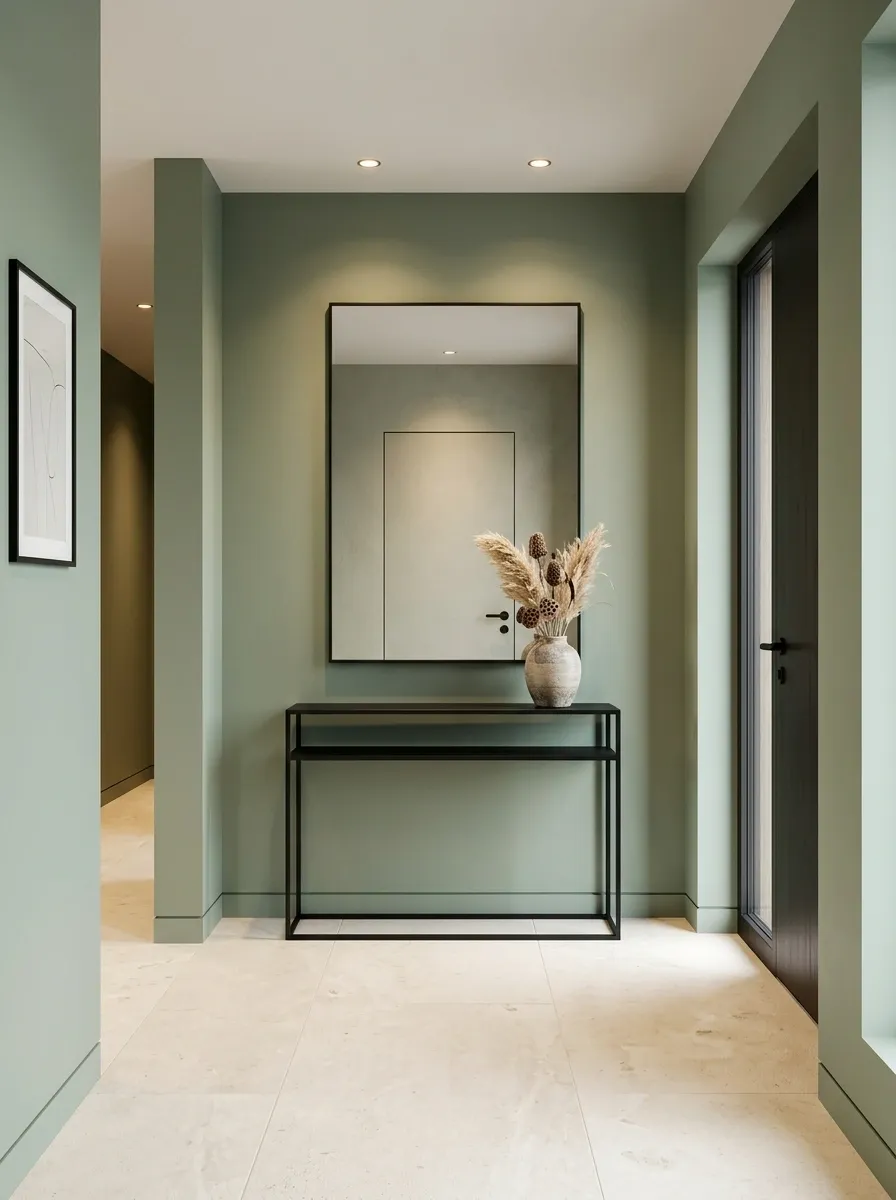
This version strips the entryway down to clean architectural lines. Sage walls meet pale stone flooring, black steel accents, and streamlined furniture with very little decorative clutter.
A slim black console sits against the wall, paired with a large frameless or thin-framed mirror. Black lighting or door hardware repeats the darker accent without spreading it across every surface.
The pale floor is important because it gives the darker elements room to breathe. Warm lighting prevents the stone and black metal from becoming too stark.
This is sage without the cottage associations. Sharper, cleaner, and considerably less interested in floral anything.wall
floor
definition
Small Apartment Entry With Dusty Sage and Curved Furniture
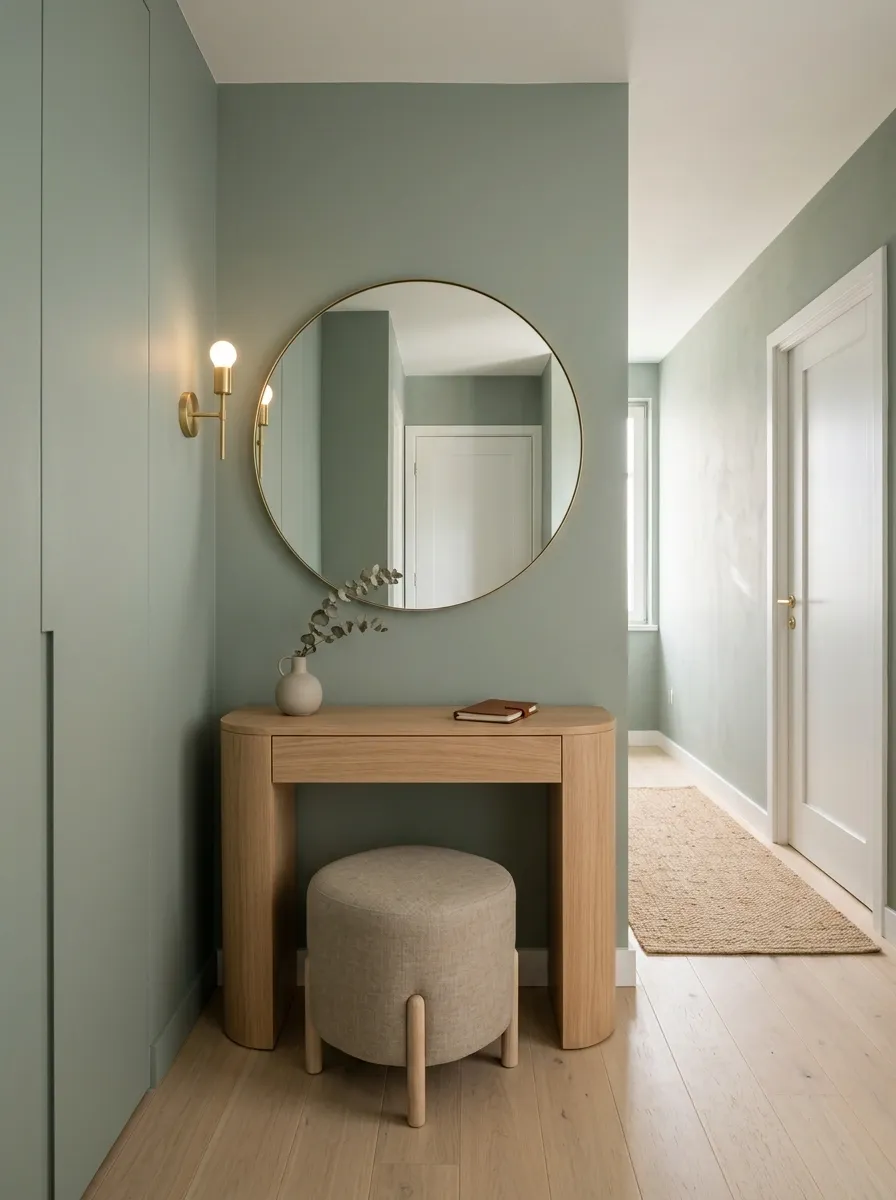
Small apartments benefit from softer shapes because hard rectangular furniture can make a tiny entrance feel even more compressed. This design pairs dusty sage walls with a curved console, rounded mirror, compact upholstered stool, and pale flooring.
The curved furniture creates movement without taking up much visual space. A small wall light replaces a bulky table lamp, and concealed storage keeps the floor clear.
The color palette stays deliberately light, using sage, warm white, pale oak, and muted beige. That lets the curves become the interesting part rather than asking a tiny room to handle five different colors.
The whole setup has a little more personality than a basic hallway table without requiring the square footage of a celebrity foyer.Sage Green Entryway With Checkerboard Stone Flooring
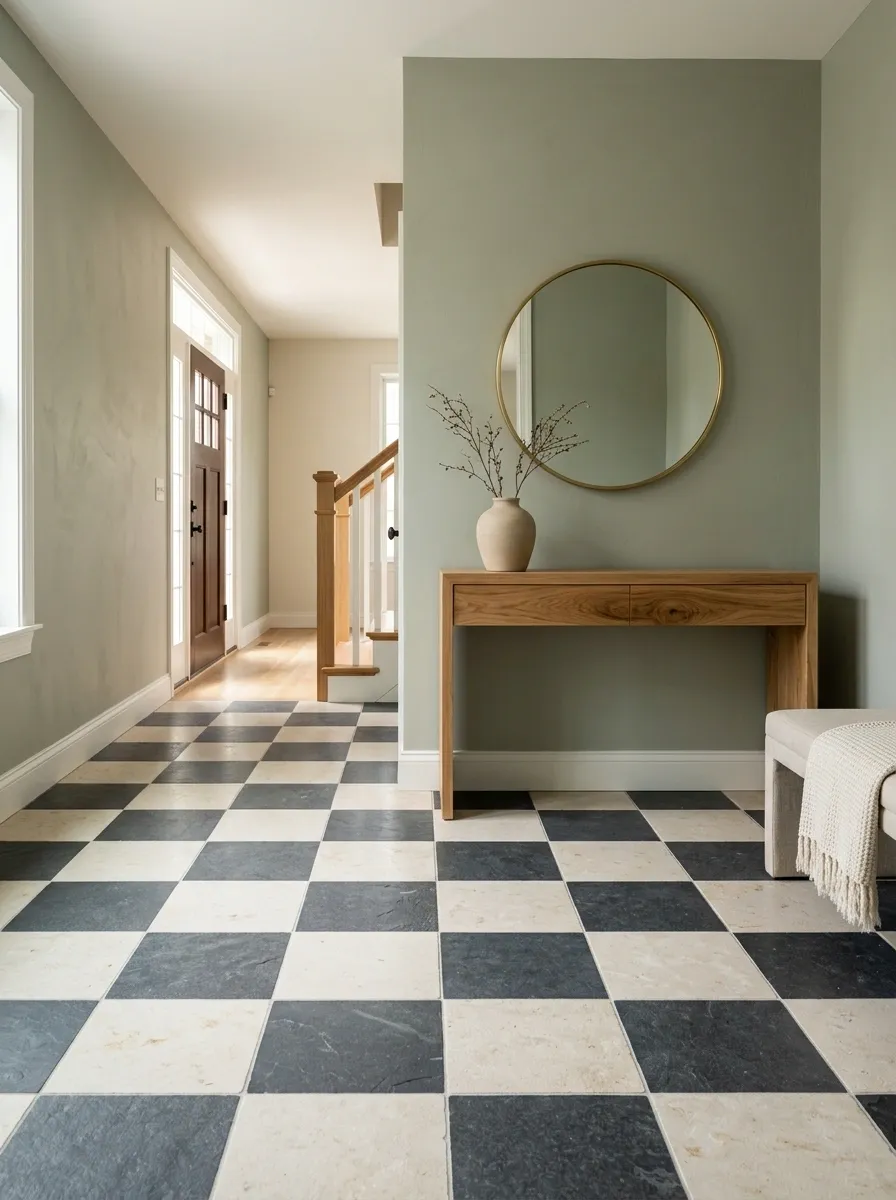
Checkerboard flooring gives sage green an entirely different visual language. Here, muted green walls rise above pale cream and charcoal stone tiles arranged in a simple checkerboard pattern.
The furniture stays restrained, using a narrow wood console and a simple mirror so the floor has enough room to establish its rhythm. Warm wood keeps the black and cream tiles from feeling overly graphic.
The pattern works best when the rest of the room doesn’t compete with it. No elaborate gallery wall. No five decorative trays. No accessory placed at an angle because someone on the internet declared it “styled.”
Let the floor be the personality.Organic Modern Sage Foyer With Travertine and Light Oak
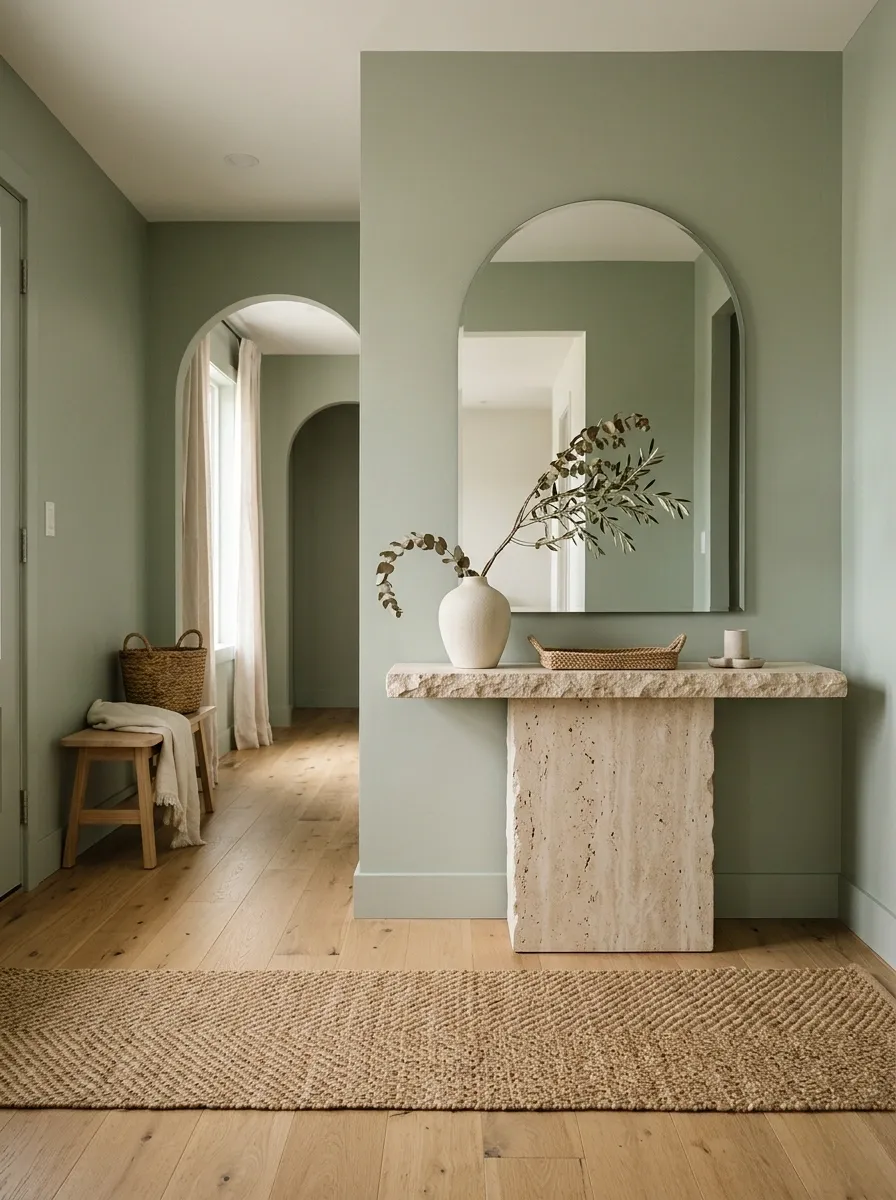
This foyer takes sage into organic modern territory with pale travertine, light oak, rounded furniture, and a restrained collection of natural materials.
A substantial stone console or bench provides a grounding element beneath the green wall, while light oak adds warmth without creating a strong color break. A rounded mirror echoes the softer edges of the furniture, and a textured runner connects the materials across the floor.
The styling is sparse, but not empty. A ceramic vessel, one branch arrangement, and a woven element give the room texture without filling every surface.
The stone should remain visually quiet. Its natural variation is already doing enough work.soft color
quiet texture
warmth
Moody Sage Entry With Charcoal Accents and Walnut
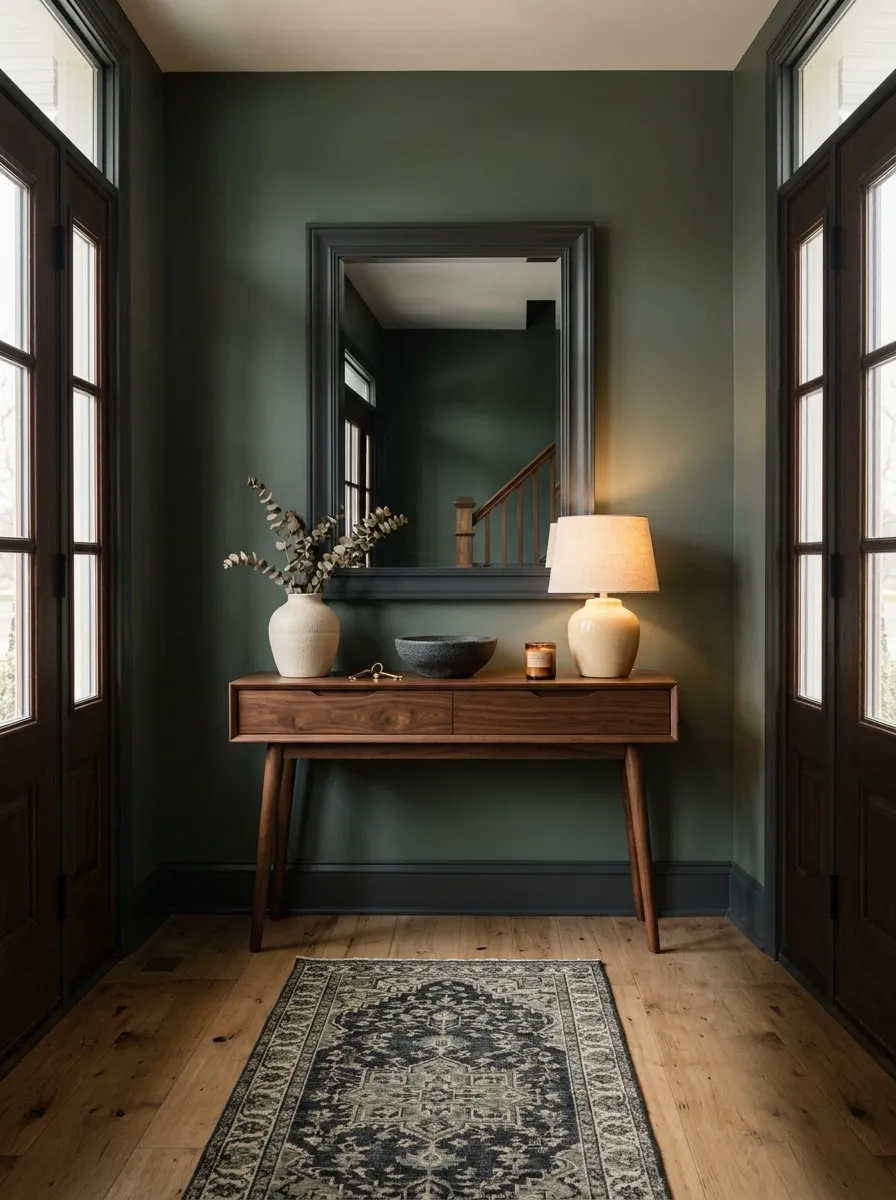
For a darker interpretation, pair a rich sage wall with charcoal details, walnut furniture, and warm cream lighting. The darker palette creates a cocoon-like entrance without relying on black for every contrast.
A walnut console provides the main furniture anchor, while charcoal appears through a runner, mirror frame, or door details. Cream-colored lighting softens the combination and keeps the green from becoming too cold.
The trick is contrast through warmth rather than brightness. Instead of adding white everywhere to rescue the dark palette, use warm wood and warm light to keep the room dimensional.
This is the entryway for anyone who looked at pale sage and thought, “Lovely, but where is the drama?”Sage Entry With Vintage Dresser and Layered Art
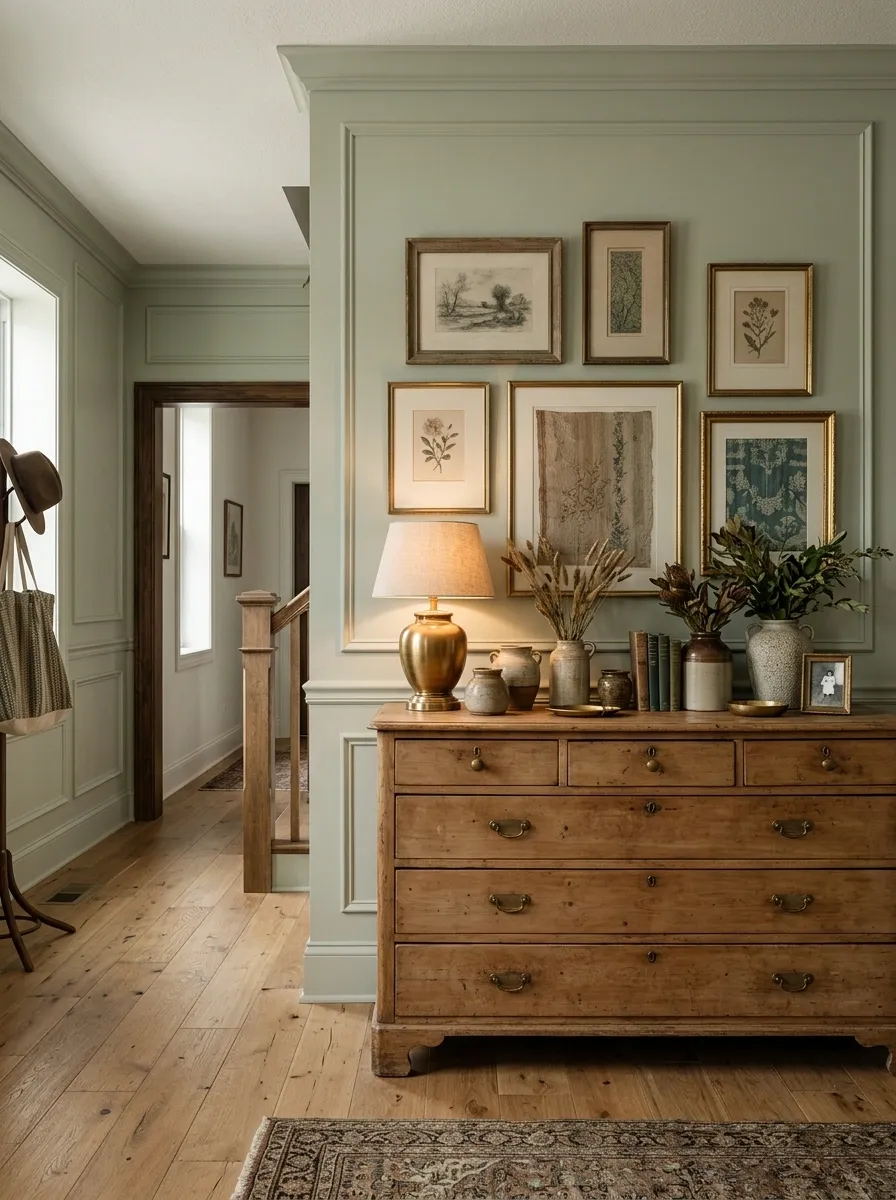
A vintage dresser makes a more interesting entryway anchor than the standard narrow console. This design uses an aged painted or natural wood dresser against a sage wall, with layered artwork, a table lamp, and collected ceramics above it.
The dresser provides generous drawers for practical storage while also giving the room a sense of age. Artwork can overlap slightly rather than sitting in a perfectly symmetrical arrangement, which keeps the composition relaxed.
Muted artwork colors should echo the sage, cream, brown, and faded blue-green palette rather than introducing a completely unrelated color story.
The whole room should look accumulated rather than assembled in one afternoon.
Because apparently the goal is an entryway with a personality, not evidence that someone bought an entire furniture set at 2:17 p.m.Airy Sage Foyer With White Oak and Linen Bench
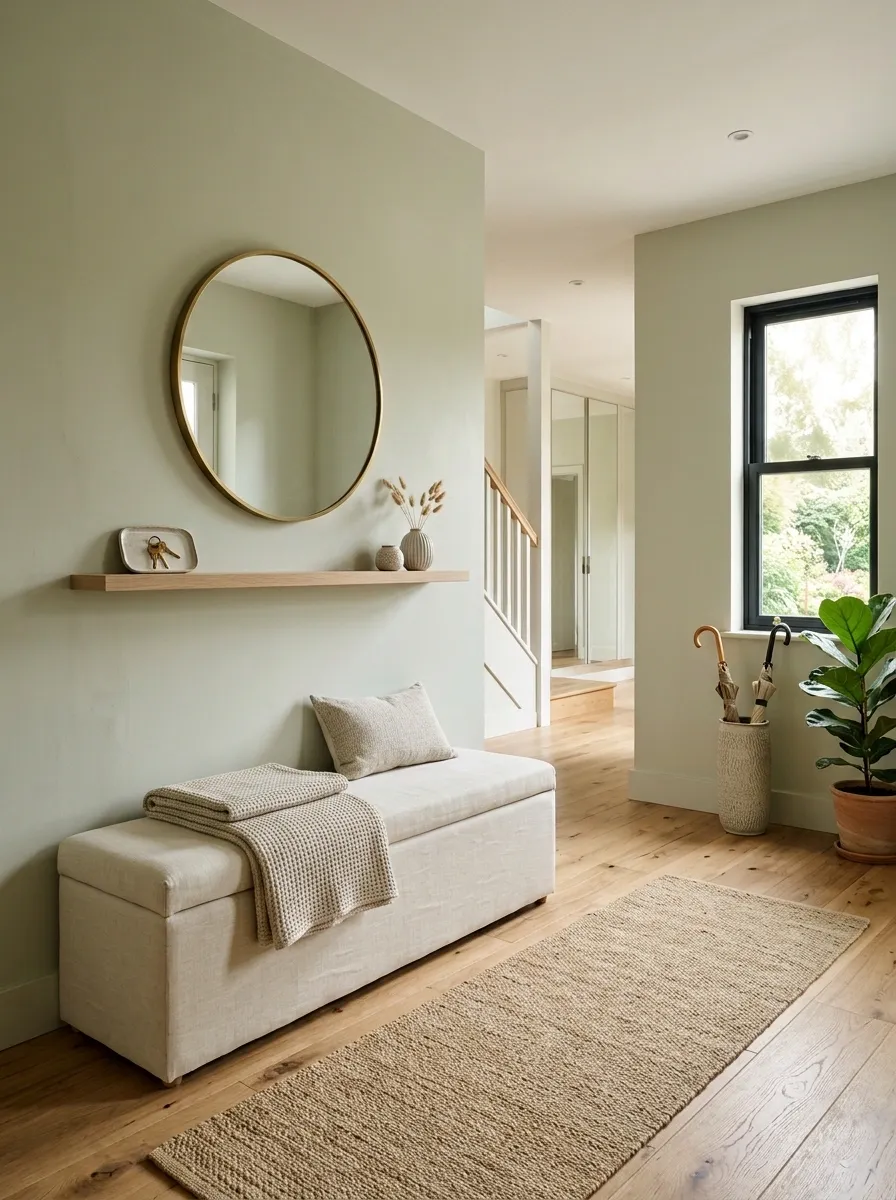
This lighter composition uses pale sage walls, white oak, natural linen, and soft cream finishes to create an entrance that feels open and understated.
A long linen-upholstered bench sits beneath a simple mirror, while a narrow white oak shelf provides a place for keys and small objects. The floor remains pale, and a natural woven runner adds just enough texture to stop the space from becoming visually flat.
The design works particularly well where natural light reaches the entry because the pale materials can reflect that brightness without making the room look stark.
Keep the wood grain visible and the textiles relaxed. Too much polish would remove the easy quality that makes this combination appealing.Sage Entry With Arched Doorway and Built-In Bench
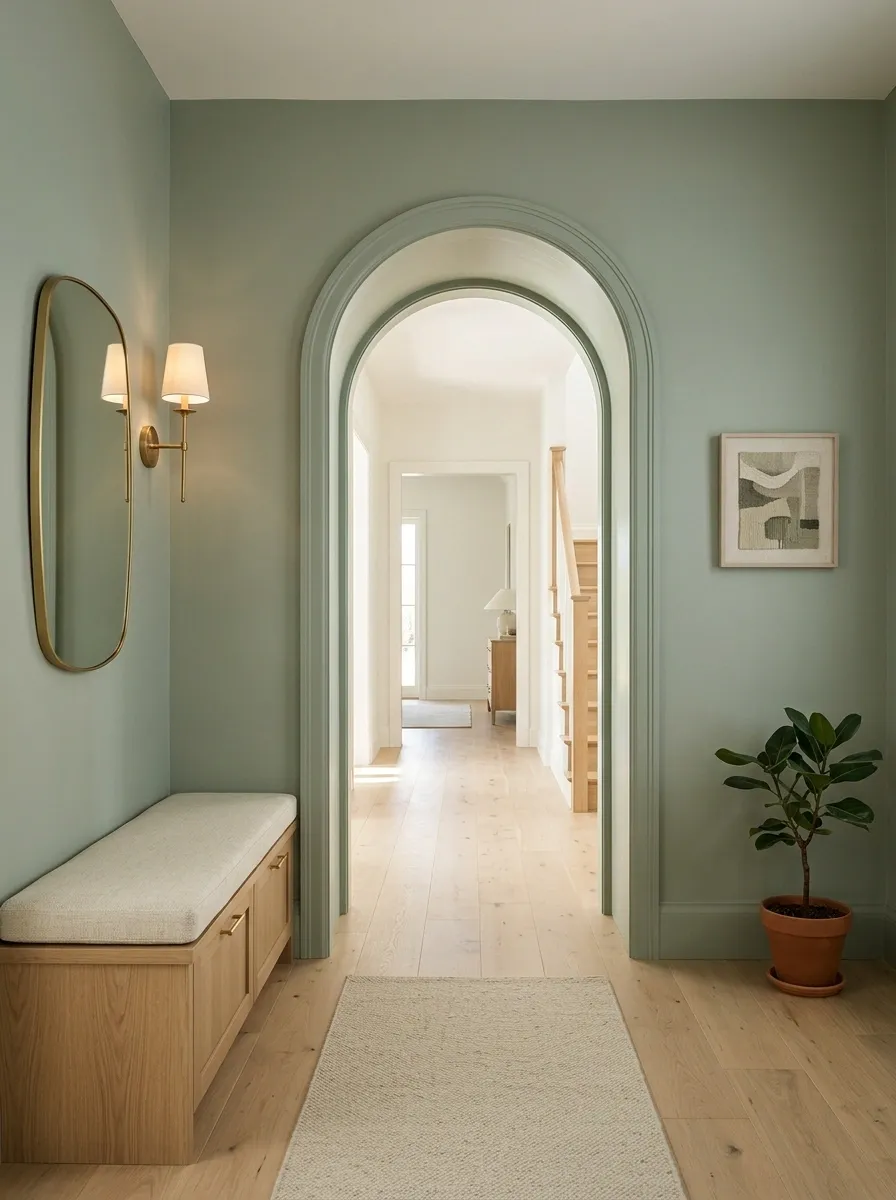
An arched doorway gives this sage entryway its architectural identity. The green continues across the wall surrounding the opening, while a built-in bench follows the lower portion of the same wall.
Warm oak seating, simple cushions, and concealed storage underneath make the bench useful without turning it into a large furniture installation. A rounded mirror or arched artwork can echo the doorway, but the repetition should remain subtle.
The strongest feature is the architecture itself. Everything else should support it.
This is one of those spaces where adding more decoration would actually make the room worse. The arch already understood the assignment.Classic Sage Foyer With Black-and-White Runner
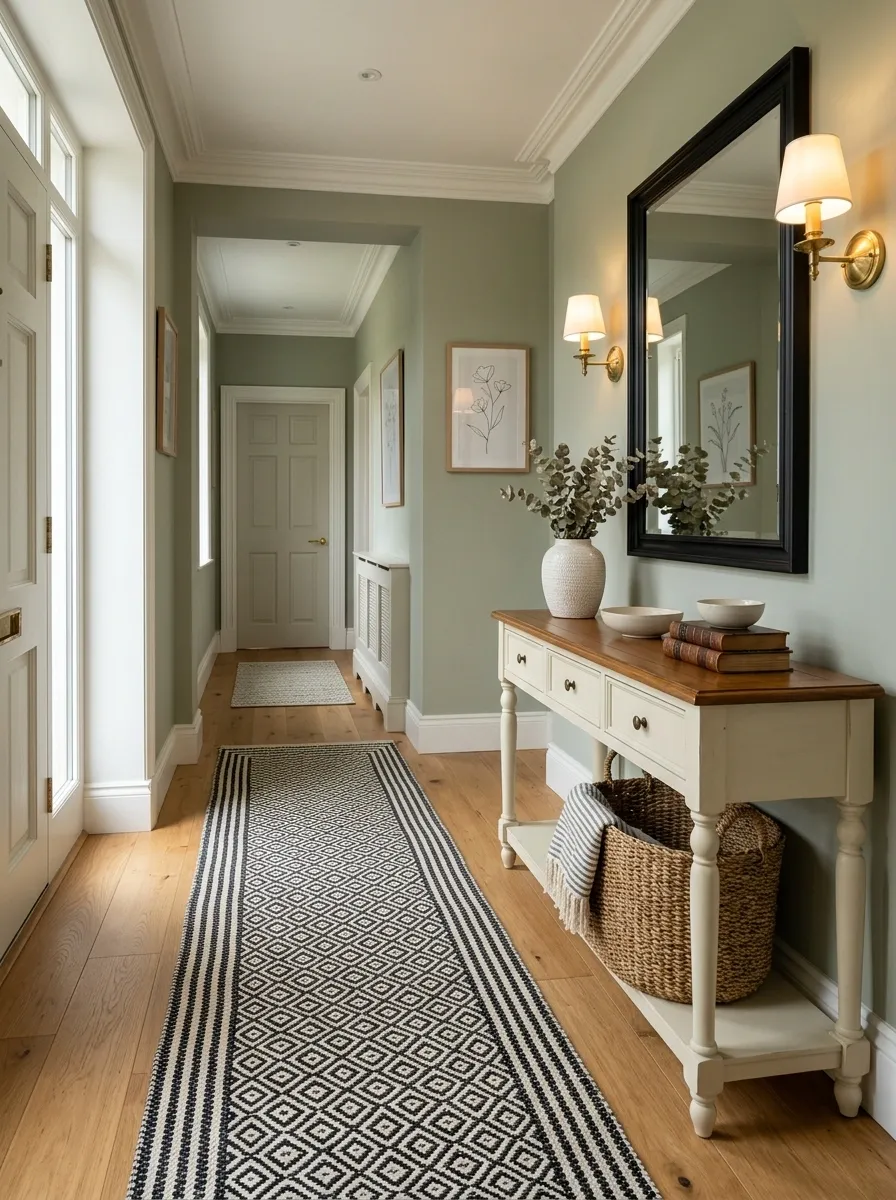
A black-and-white runner gives classic sage walls a sharper edge. The rest of the entryway uses traditional proportions, with a painted console, framed mirror, warm wood accents, and simple lighting.
The runner creates a strong horizontal path through the space, while the green walls provide the larger color field. Black appears in small architectural details or the mirror frame, connecting the pattern below with the furniture above.
The combination feels traditional without becoming overly ornate. Keep the artwork relatively quiet and allow the runner to establish the graphic contrast.
A good hallway runner can do more for a room than twelve tiny decorative objects lined up like they’re waiting for roll call.softens the room.
adds definition.
Sage Entryway With Warm Terracotta and Handmade Texture
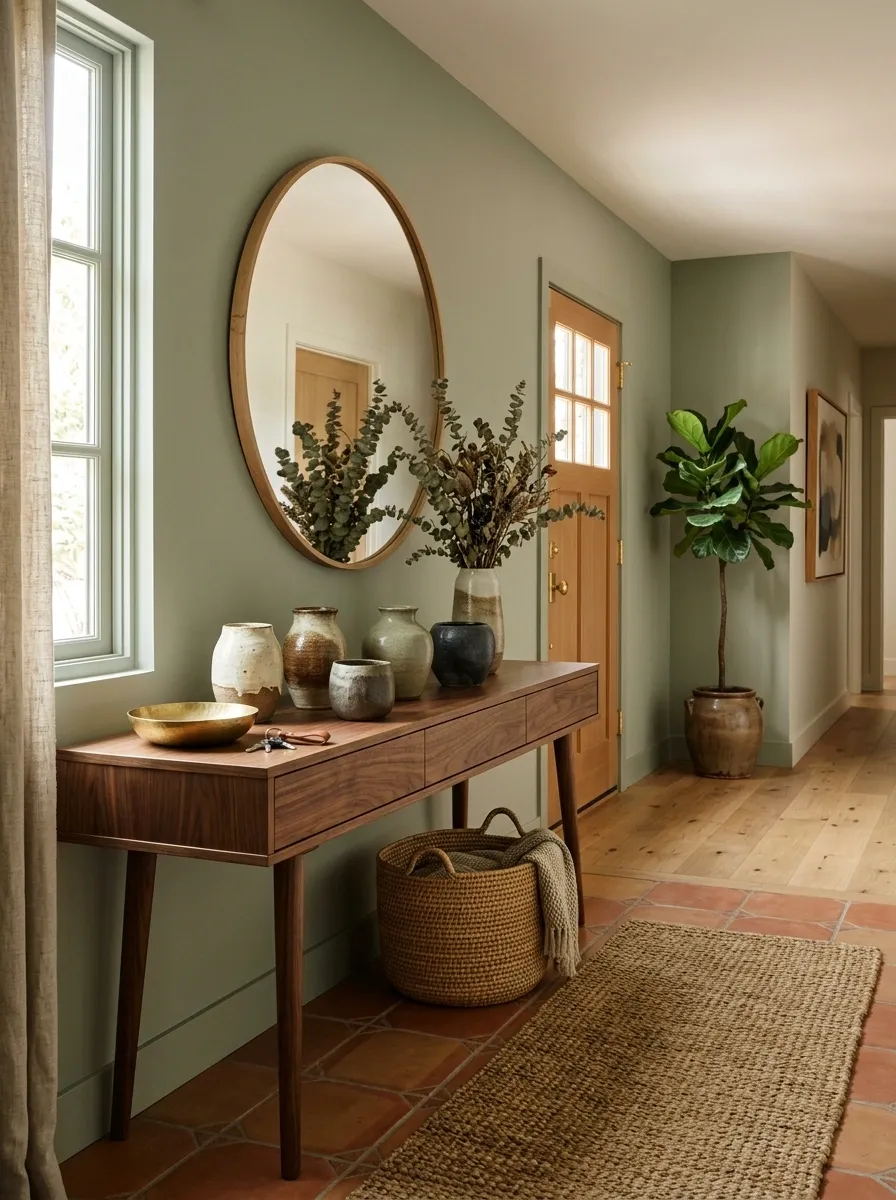
Terracotta brings warmth to sage in a way that feels earthy rather than predictable. This entry combines muted green walls with terracotta floor accents, handmade ceramics, warm wood, and woven materials.
A terracotta-toned runner or tile detail establishes the warm color, while the furniture remains natural oak or walnut. Handmade pottery on the console introduces irregular shapes and slightly imperfect surfaces that keep the composition from feeling too polished.
The color relationship works because sage and terracotta sit in clear contrast while both remain muted. Neither needs to be neon-bright to be noticeable.
The room feels grounded, tactile, and a little collected. Basically, it has enough personality to make the front door feel like an actual entrance rather than a loading zone.cool field
warm contrast
natural bridge
Sage Green Entryway With Fluted Wood Cabinetry
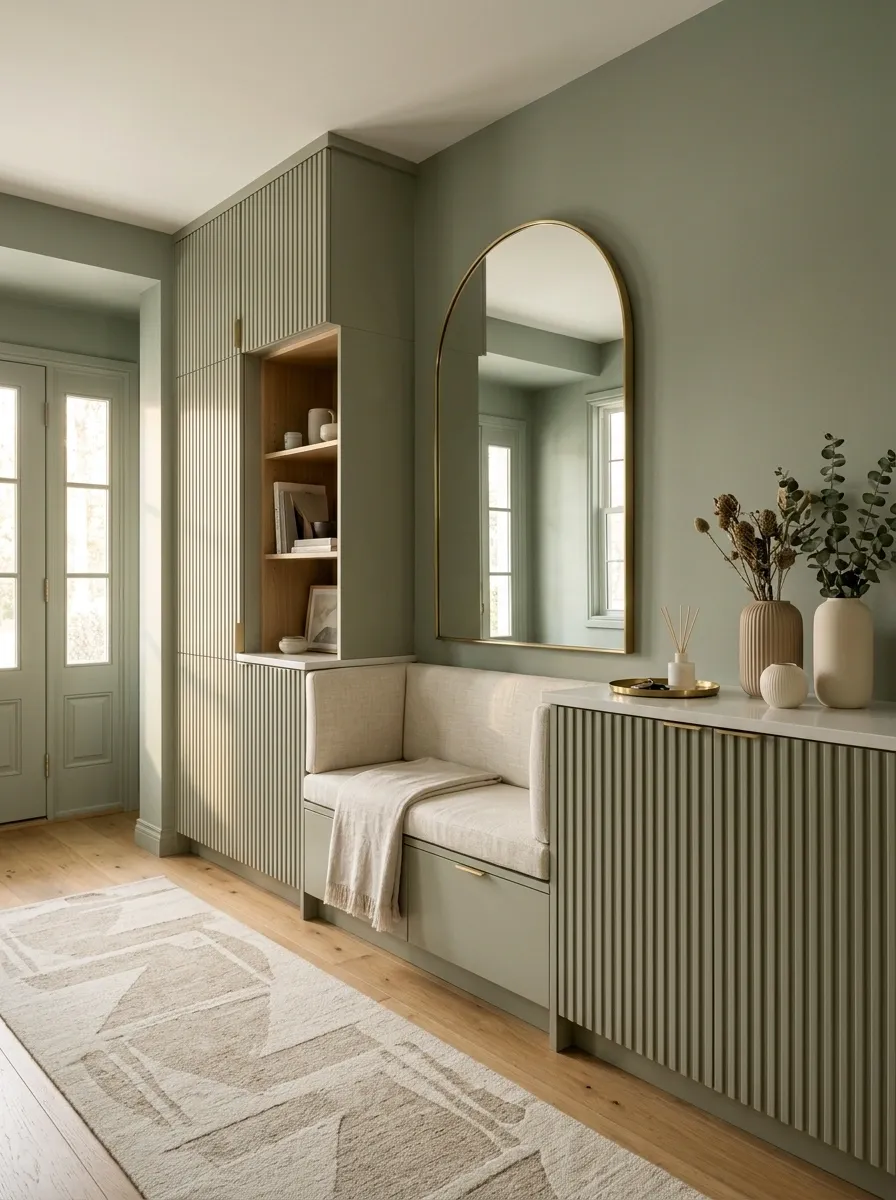
Fluted oak cabinetry gives this sage entryway a tactile modern character without relying on a pile of decorative objects. The walls and tall storage stay within the same muted green family, while vertical wood fluting introduces a completely different texture.
A narrow upholstered seat fits beneath the cabinetry, and a rounded mirror softens the stronger vertical lines. Brushed metal hardware adds a small reflective note, while a simple runner warms the floor.
The composition works because the textures aren’t all competing at the same scale. The wall is broad and quiet, the fluting is repetitive and directional, and the upholstery provides a softer surface.
The cabinetry is allowed to be interesting without making the rest of the room file for attention.Sage wall
Oak fluting
Upholstery
Warm Sage Entry With Burgundy Rug and Walnut Console
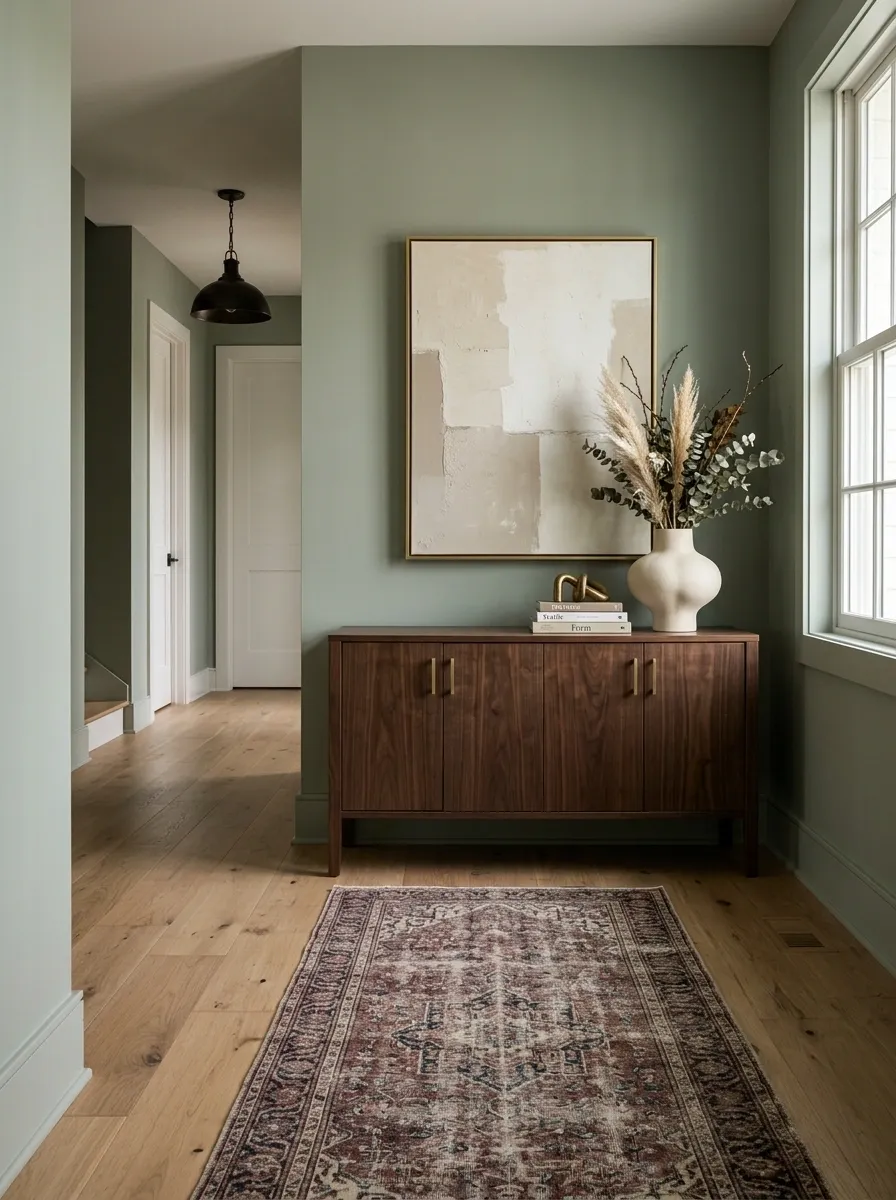
A burgundy runner changes sage from soft and botanical to considerably richer. The palette pairs muted green walls with a dark walnut console, cream accents, warm metal, and a faded burgundy rug that runs through the center of the entry.
The rug becomes the visual bridge between the green walls and deep wood. Rather than introducing burgundy across multiple accessories, keep it concentrated in the textile so the palette stays sophisticated instead of turning into an accidental holiday aisle.
Warm lighting helps the walnut and burgundy read naturally, while cream artwork or upholstery prevents the deeper colors from becoming too heavy.
The beauty here is the contrast. Sage keeps the burgundy from becoming dramatic for drama’s sake, and the burgundy gives sage a little more backbone.Sage Entry Under a Staircase With Hidden Storage
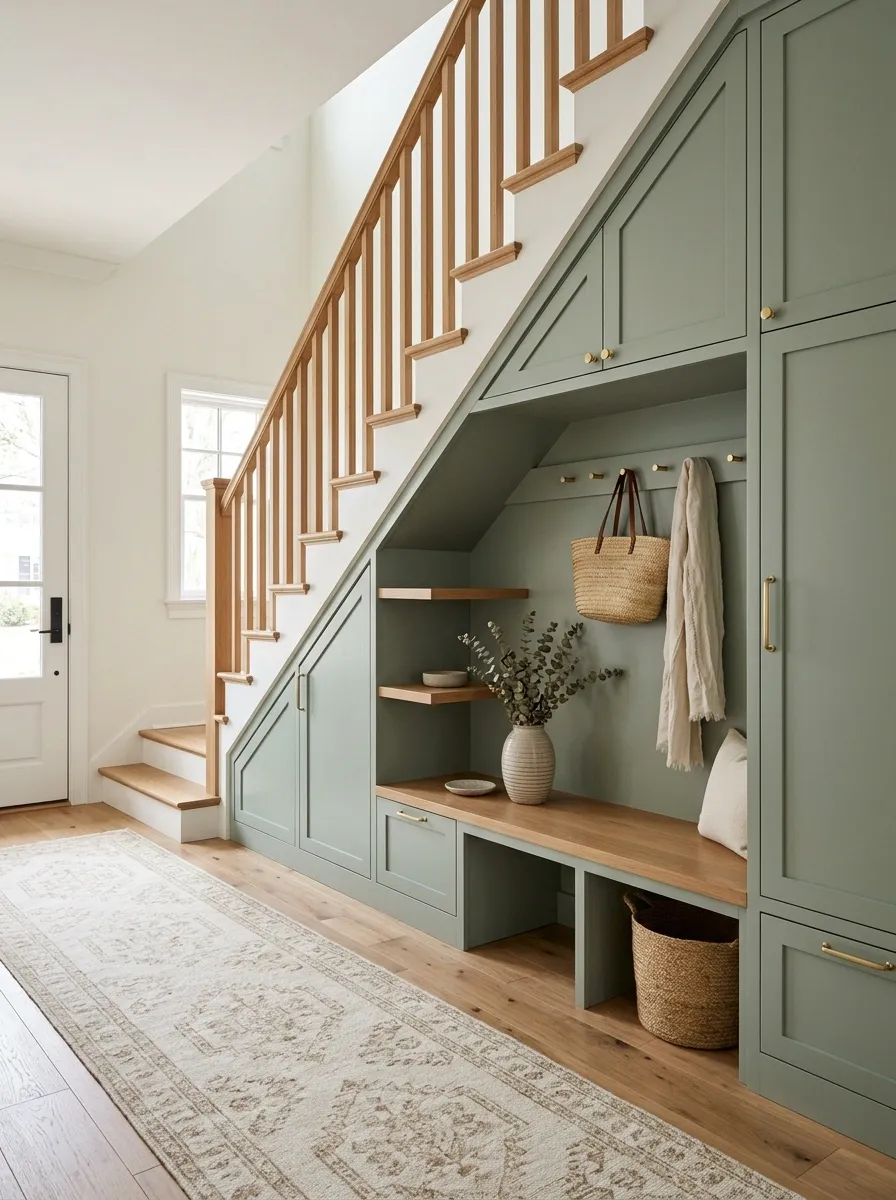
The awkward space beneath a staircase becomes the main feature in this entry rather than an area everyone politely pretends doesn’t exist. Sage cabinetry follows the shape of the stairs, creating concealed storage for shoes, bags, and everyday clutter.
A built-in bench fills the lower section, with open hooks and a small shelf above. Warm oak on the seat and selected shelving breaks up the painted cabinetry and adds a natural counterpoint to the green.
The staircase itself remains visible as part of the composition, so the storage feels architectural rather than like a large cabinet pushed into a random corner.
This is especially clever in homes where the front door opens directly into the stair area. Every strange angle finally gets a job.Coastal-Inspired Sage Entry With Bleached Wood and Woven Details
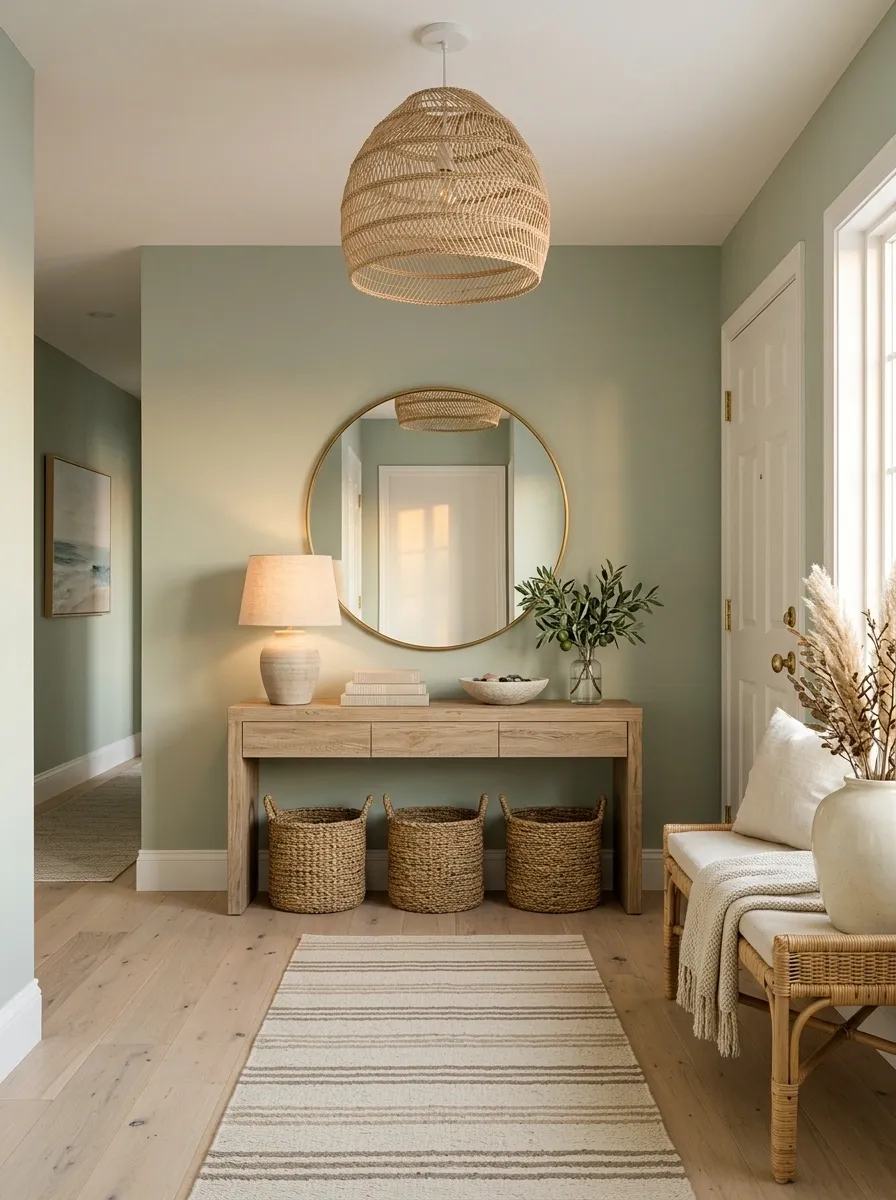
This entryway takes sage in a lighter, coastal direction without covering the room in anchors, seashells, and a sign announcing that the beach is somewhere nearby.
Soft sage walls sit behind bleached wood furniture, woven baskets, a natural fiber pendant, and a simple striped runner in sandy neutrals. The furniture has relaxed proportions, with a bench beneath the console or a low seat placed beside it for practical use.
The palette stays close to sand, pale timber, cream, and muted green, which gives the room a breezy quality while still feeling like an actual home.
Texture is the main character. Woven materials provide enough variation to make the pale palette interesting, while the sage keeps the room from becoming one giant beige rectangle.adds color without visual weight.
keeps the furniture sun-washed.
adds depth without darker contrast.
keep everything connected.
Sage Entryway With Mediterranean Tile and Walnut Furniture
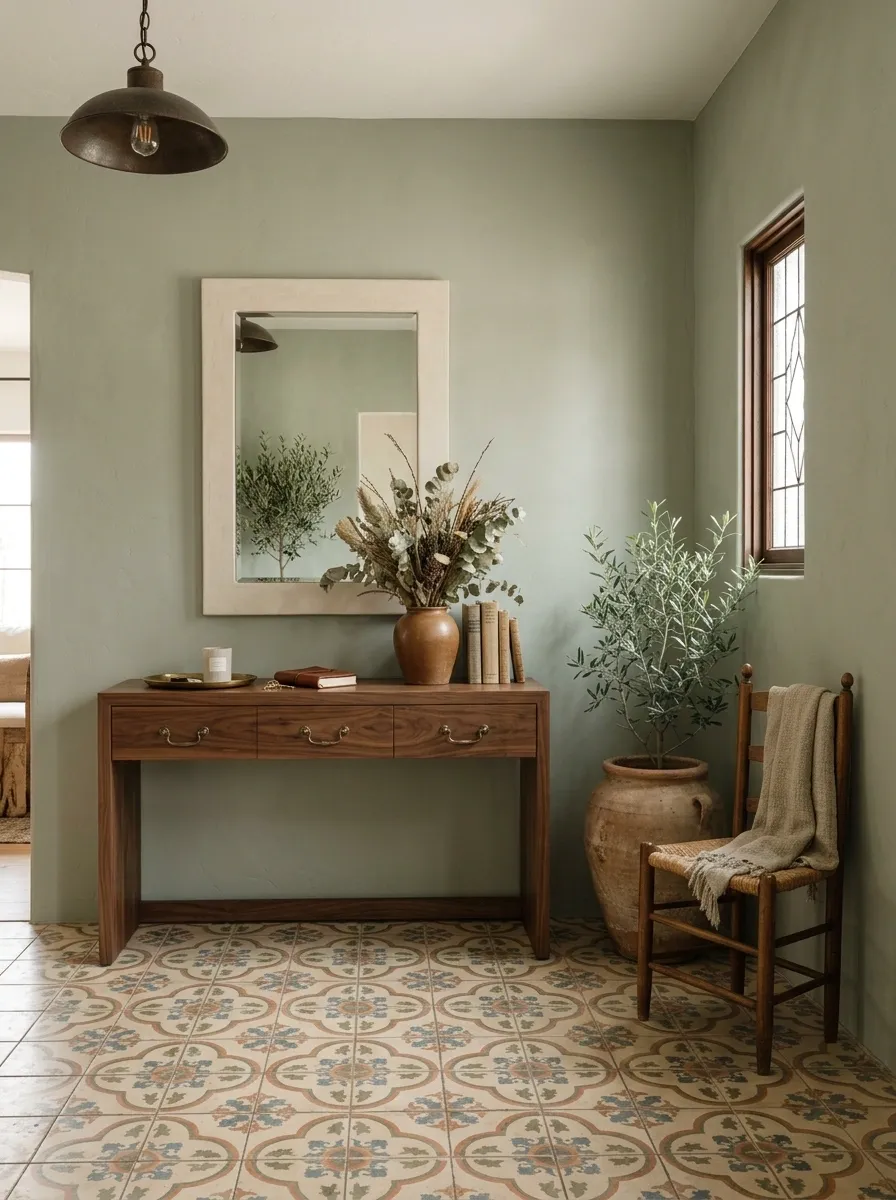
A patterned Mediterranean-inspired floor gives this sage entryway a completely different personality. Muted sage walls rise above decorative tile in warm cream, soft terracotta, and faded green, while a walnut console adds depth and keeps the room from feeling overly rustic.
The wall treatment stays simple because the floor already establishes a strong visual rhythm. A cream plaster-toned mirror, warm ceramic vessel, and soft lighting help bridge the cooler wall color with the warmer floor and furniture.
The important relationship is between old-world pattern and clean furniture. The room feels collected without becoming a museum set.
Let the tile remain imperfect enough to show character. Perfectly matching everything would remove the very quality that makes this style appealing.Compact Sage Mudroom Entry With Closed Shoe Storage
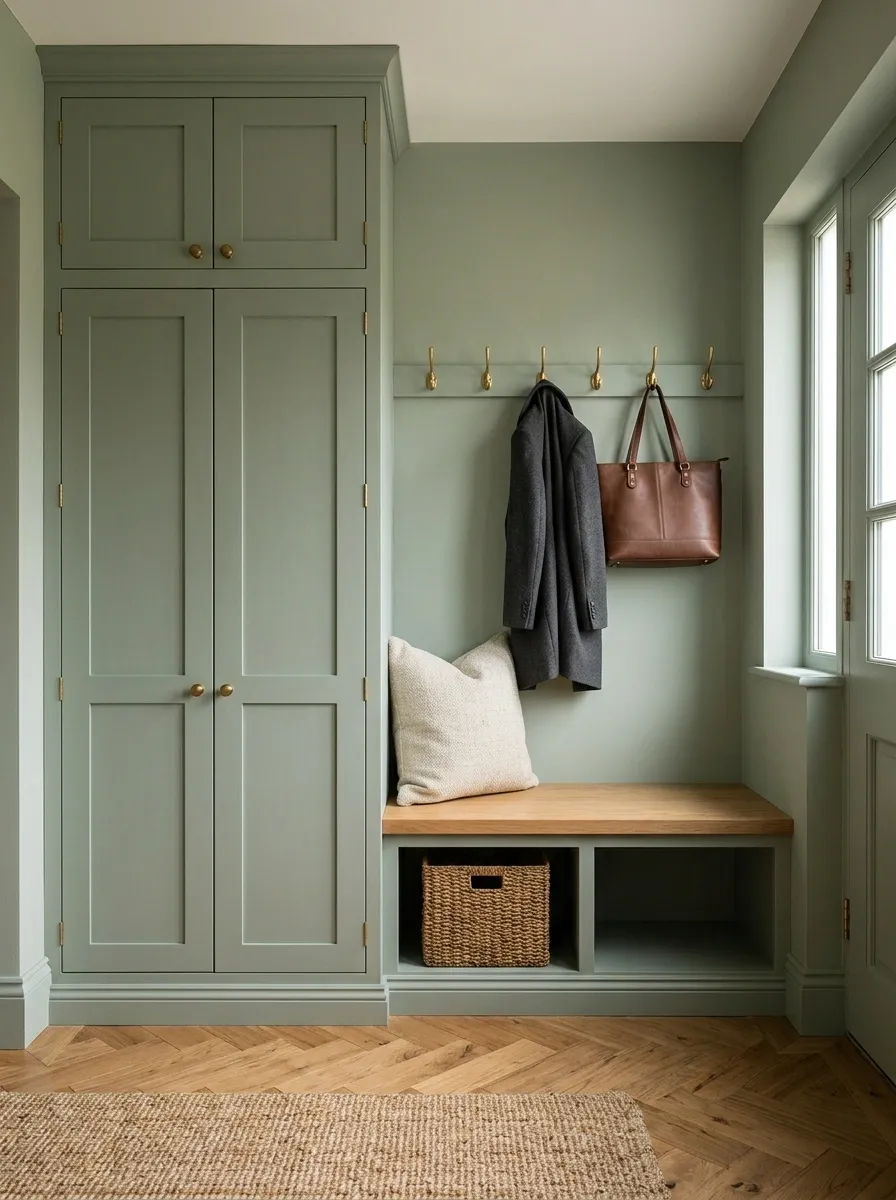
A hardworking entrance can still look composed. This compact sage mudroom uses painted cabinetry, a built-in bench, hooks, closed shoe storage, and durable flooring to give everyday clutter somewhere to go before it takes over the entire house.
The sage cabinetry blends with the wall instead of creating a bulky furniture block, while warm oak on the bench adds enough contrast to define the seating area. A few woven baskets fit into open cubbies for smaller items, but most of the storage stays behind doors.
That distinction matters. Open shelving is lovely until real life arrives with shoes, bags, jackets, and approximately twelve things nobody remembers putting there.
Keep the decorative pieces minimal. This room already has a full-time job.Sage Entryway With Brass Sconces and Pale Marble
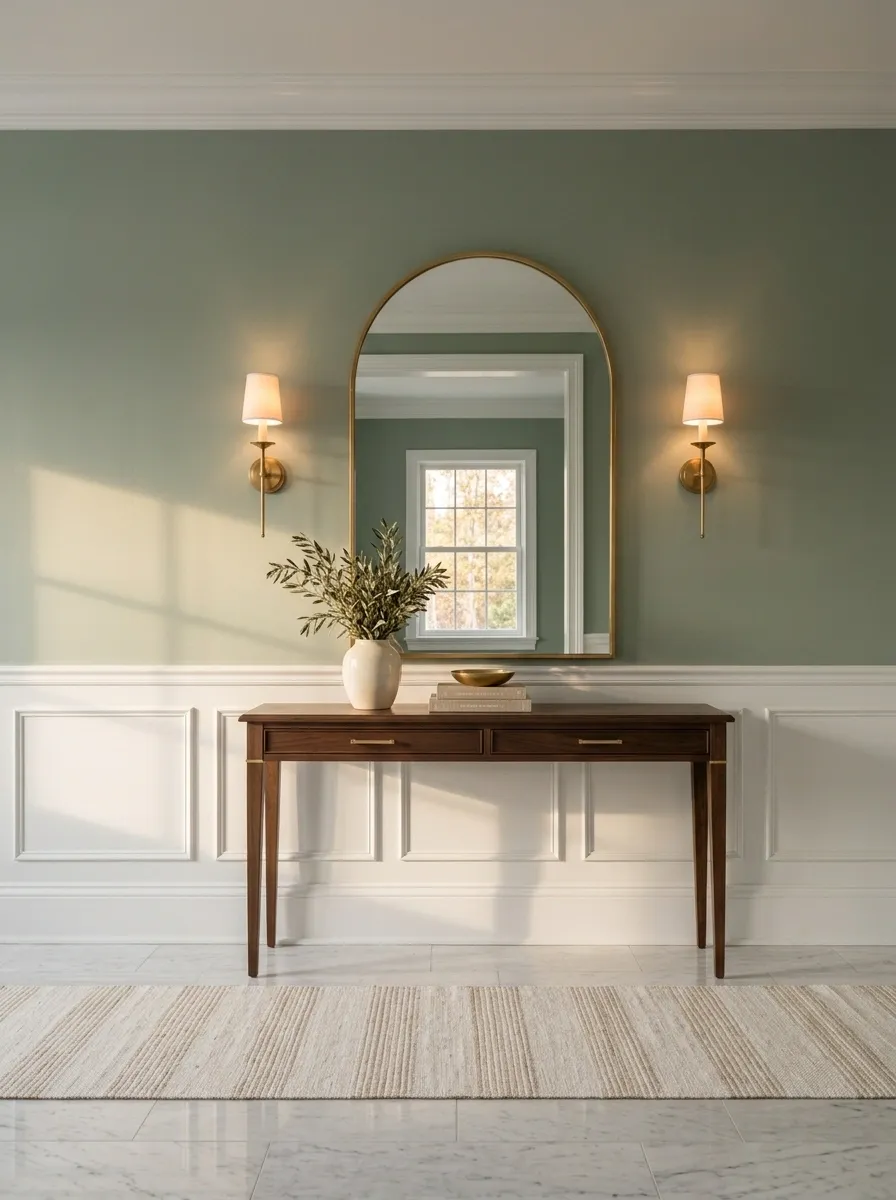
For a more polished foyer, sage walls can sit surprisingly well beside pale marble and warm brass. The stone brings a light reflective surface underfoot, while the green gives the room enough color to stop the marble from feeling overly formal.
A slim classic console sits against the wall, framed by brass sconces and a large mirror with a simple profile. Cream accessories keep the upper half soft, while warm wood somewhere nearby prevents the stone and metal combination from becoming too cool.
The secret is using brass as a concentrated accent rather than a theme. A pair of sconces makes a statement. Brass on the mirror, console, hooks, tray, lamp, vase, and probably the doorknob across town is where things start getting enthusiastic.
This direction suits entryways that already have traditional or transitional architecture.Japandi Sage Entry With Low Oak Console and Paper Lighting
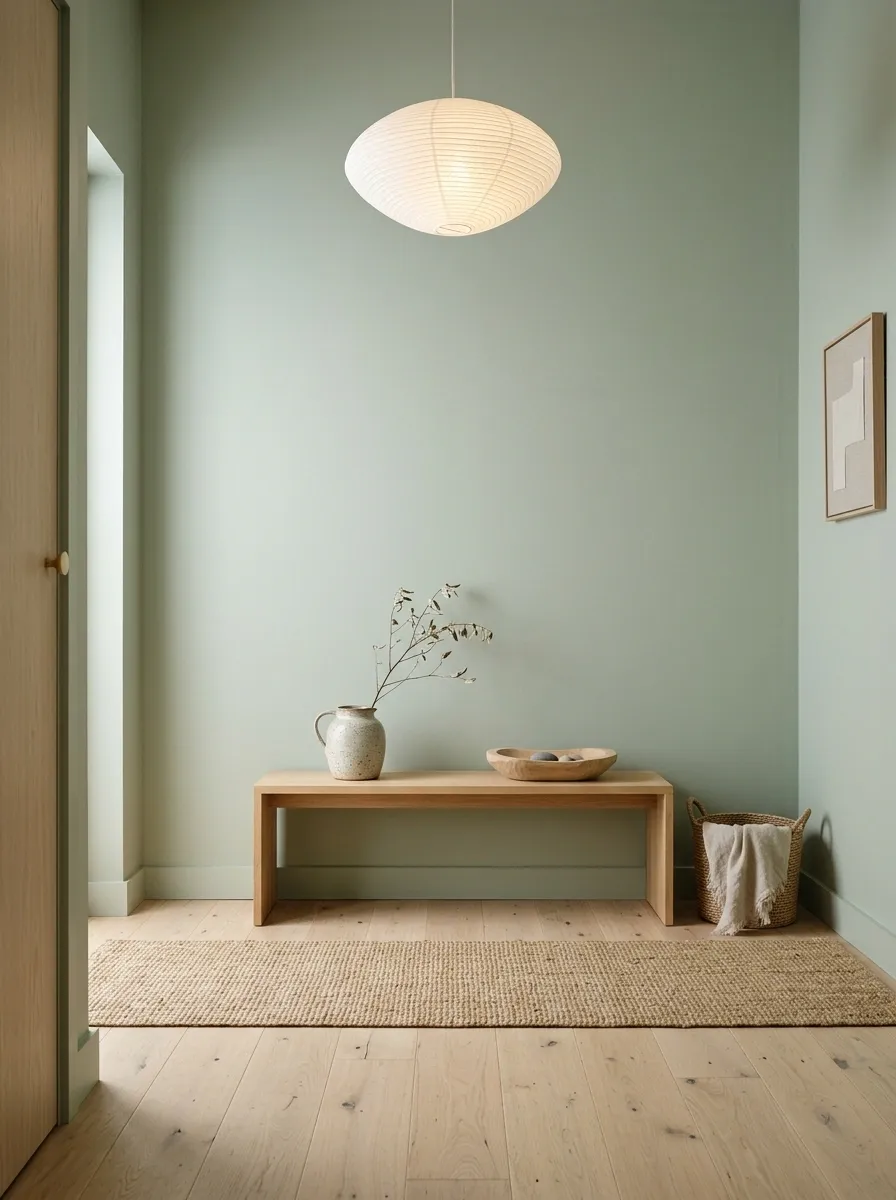
This entryway takes sage in a quieter direction, pairing it with a low oak console, handmade ceramics, pale flooring, and a softly glowing paper pendant. The furniture sits close to the ground, leaving more visual space above and making the entrance feel deliberately calm.
The wall color is muted enough to support the natural materials without competing with them. A simple bowl or ceramic vessel provides function at the console, while a woven mat or understated runner adds texture underfoot.
Nothing is shouting for attention here. That’s exactly why the room works.
The proportions matter more than the number of objects. Keep furniture low, surfaces uncluttered, and the walking area open. The result feels restrained without becoming cold or empty.
Essentially, the entryway has learned to whisper while the rest of the house is still talking.Sage Green Entryway With Black-and-Oak Stair Connection
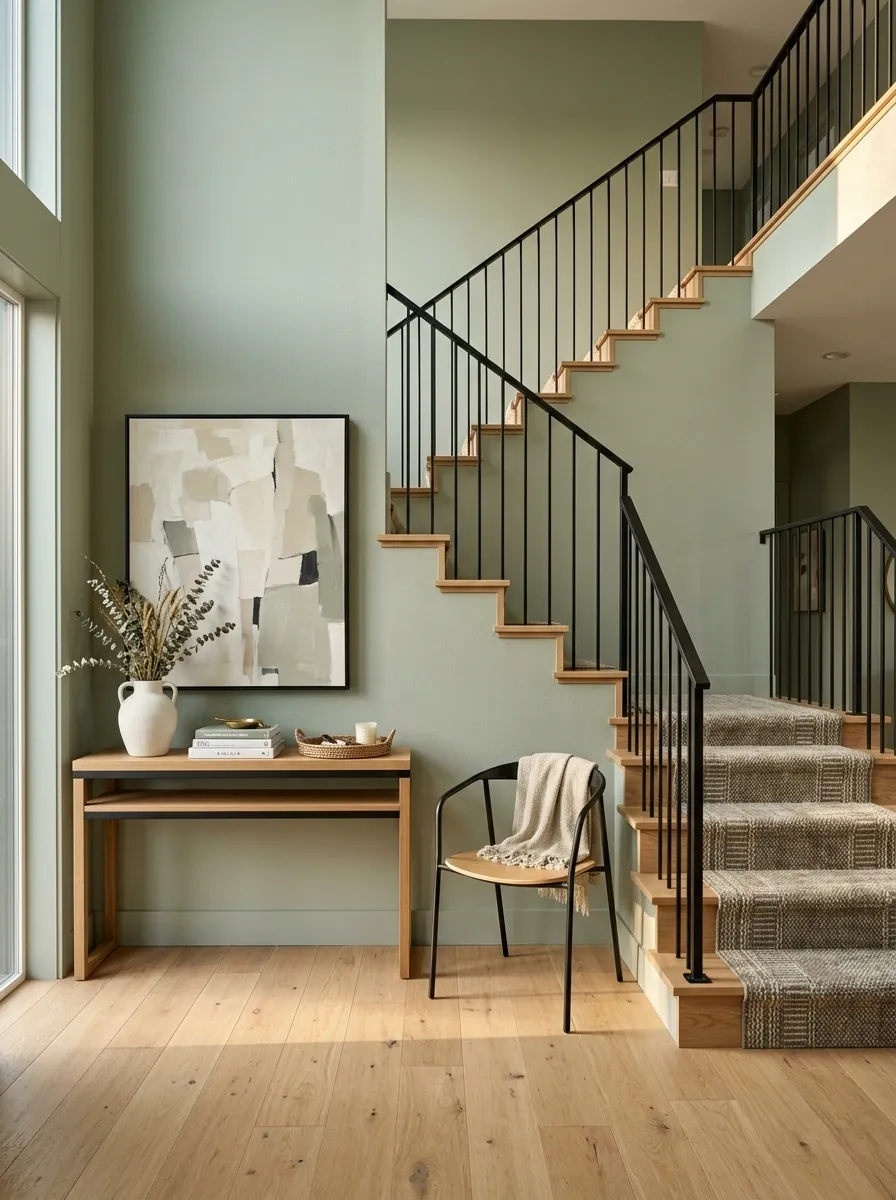
When the front entrance opens directly toward a staircase, the entryway and stair can share one visual language instead of looking like two unrelated areas. Sage walls provide the continuous backdrop, while oak treads or flooring bring warmth through the entire composition.
A slim black stair railing adds definition along the architectural line, while matching black details on a nearby console or lighting fixture quietly repeat the contrast. The rest of the furniture stays simple so the staircase remains part of the visual story.
This works especially well in open-plan homes where the entry is visible from another room. Repeating the wood and darker accents helps the spaces feel connected rather than interrupted.
The staircase doesn’t need to be hidden. It just needs to stop looking like it wandered into the wrong house.from floor level into the staircase, connecting the two areas.
in small architectural touches instead of dominating the room.
Soft Sage Rental Entry With Removable Styling Layers
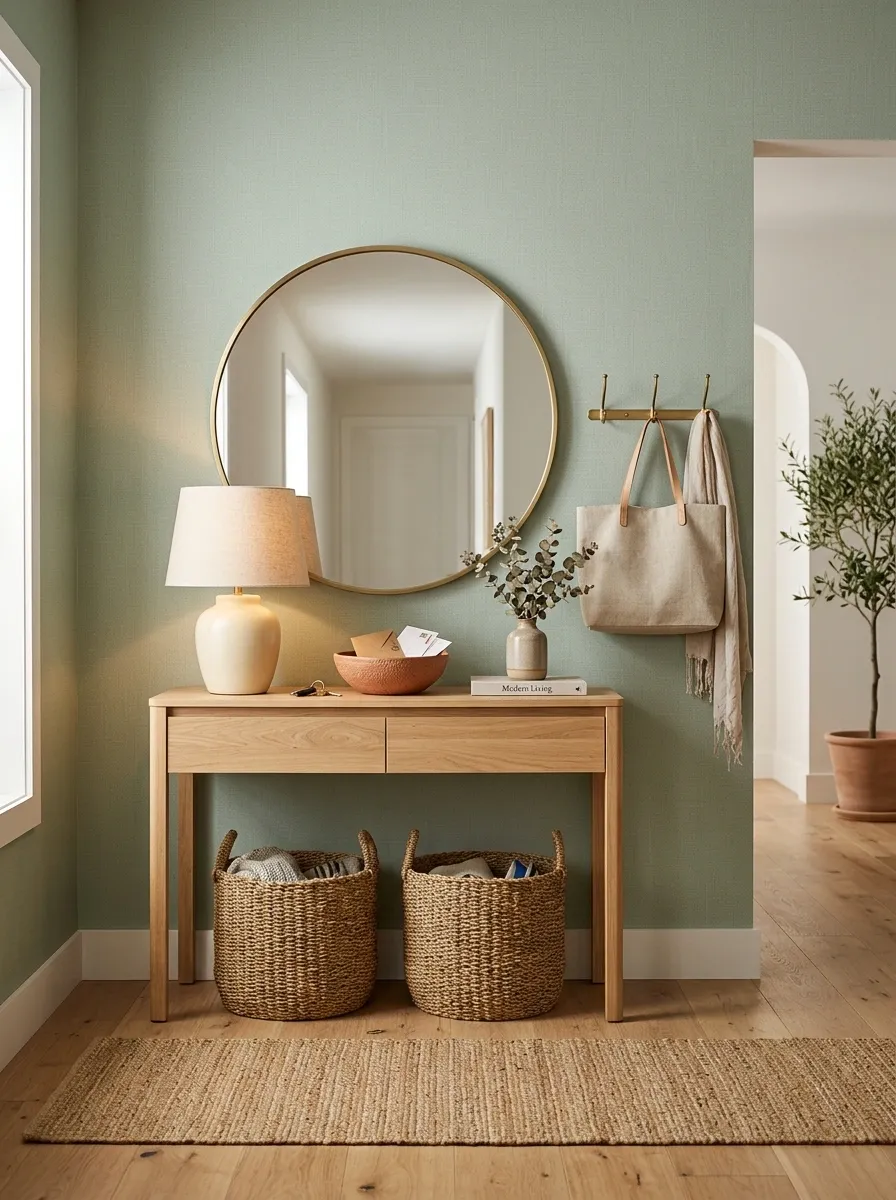
A rental entryway can still have a strong visual identity without drilling into every available wall. This version builds around a soft sage removable wall treatment, a freestanding wood console, a round mirror, a narrow runner, and baskets that can all move to the next home.
The furniture stays substantial enough to look intentional but light enough to rearrange. A removable set of hooks handles everyday bags and coats, while a simple lamp and ceramic bowl keep the console functional.
The palette relies on sage, warm cream, light wood, and natural fibers, so nothing feels overly tied to one architectural style.
The best part is that the design doesn’t scream “rental.” It just looks good. The security deposit can remain blissfully uninvolved.Sage Green Entry With Sculptural Console and Oversized Mirror
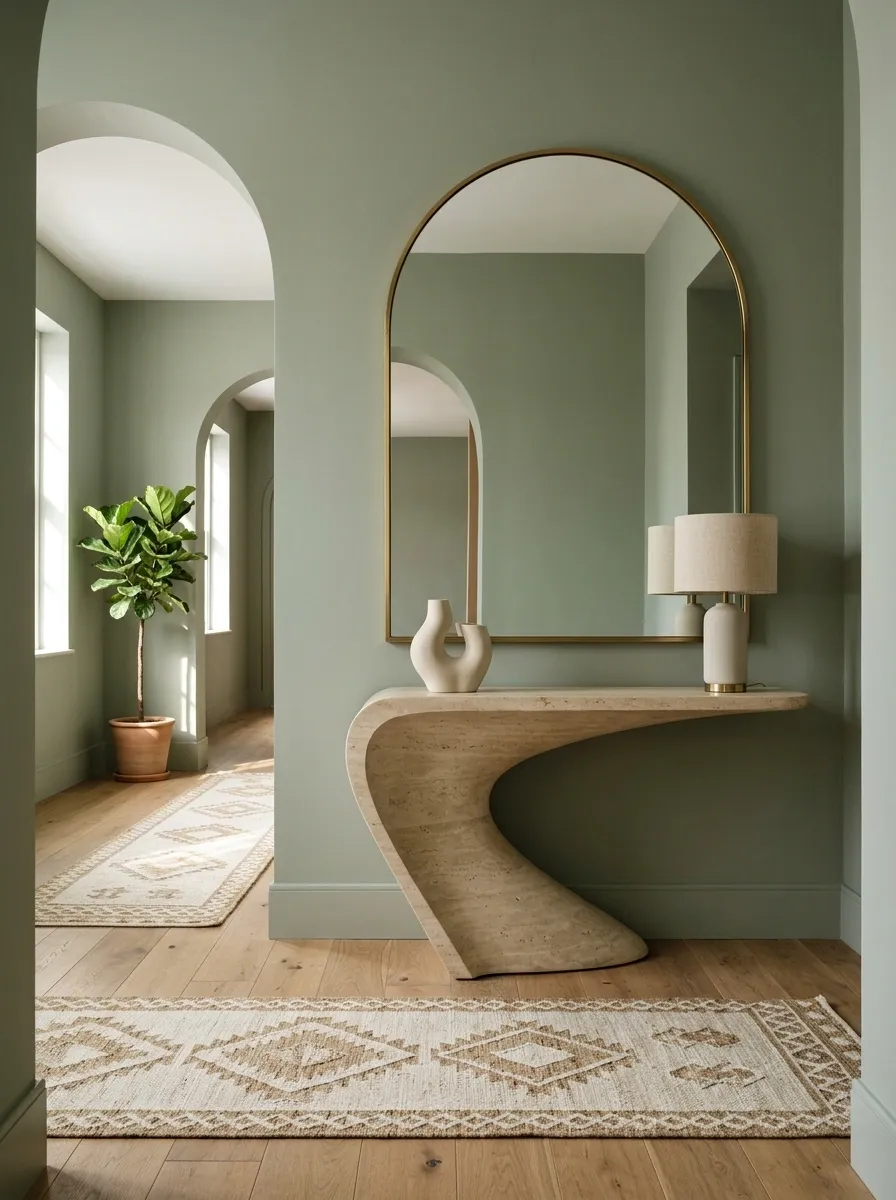
This contemporary foyer is built around shape rather than decoration. A sculptural console with a curved or irregular silhouette sits beneath an oversized rounded mirror, while the sage wall provides a quiet background for both forms.
The floor remains warm and relatively simple. A small ceramic object and one understated lamp are enough to finish the console, while a low runner helps connect the furniture visually to the rest of the entrance.
The oversized mirror isn’t there simply to make the room look larger. Its rounded shape creates a deliberate contrast with the straight architectural lines surrounding it. That relationship gives the entire composition more character.
Keep the accessories sparse. Once the furniture itself has this much personality, adding twelve more “statement pieces” would just create a meeting nobody asked for.English-Inspired Sage Entry With Cream Trim and Checked Fabric
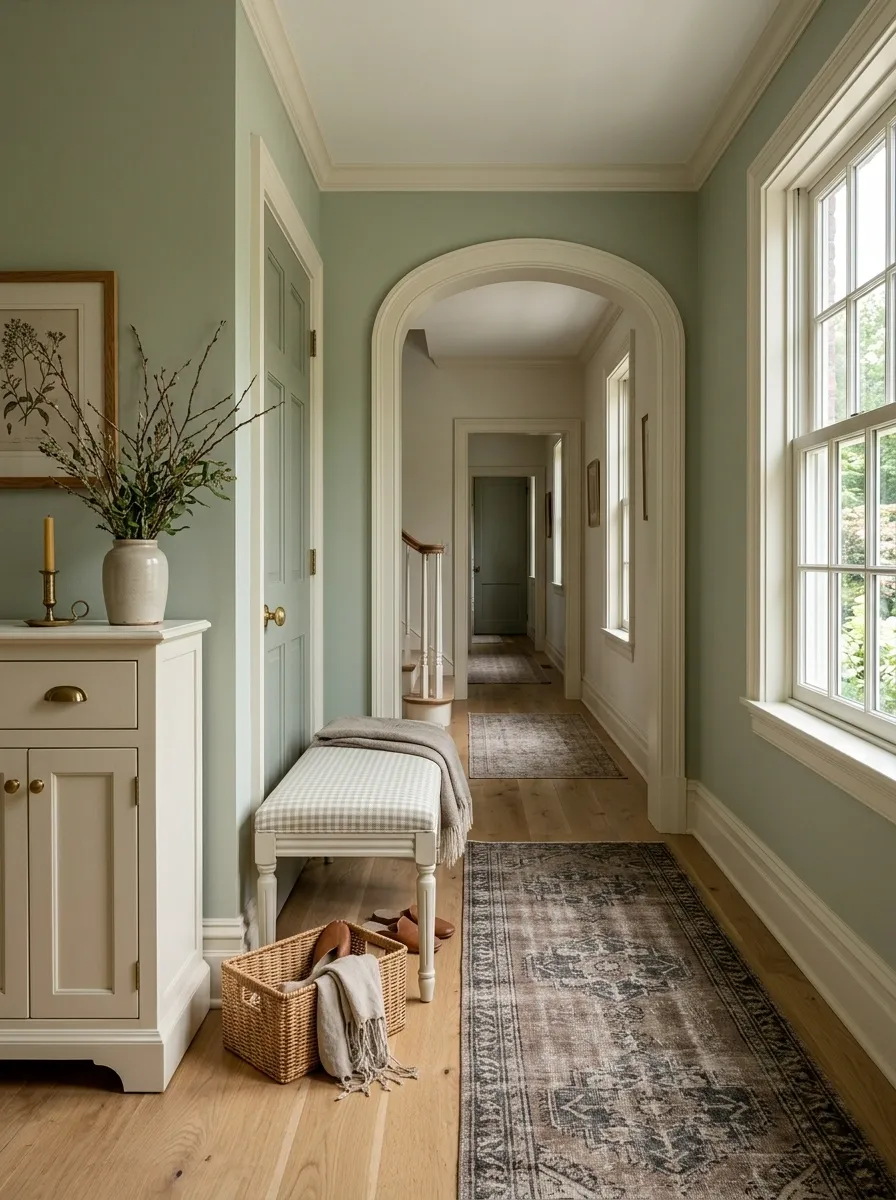
A softer traditional entryway can get plenty of character from a simple combination of sage walls, cream trim, painted cabinetry, checked upholstery, and an old-style runner.
The cream trim keeps the green crisp around doors and architectural edges, while a painted console or cabinet gives the entrance a slightly formal backbone. A checked seat cushion introduces pattern without overpowering the room, and a faded runner adds warmth along the floor.
The palette stays restrained, leaning on sage, cream, muted brown, and a touch of charcoal. That lets the check pattern read as part of the design rather than becoming the theme.
The goal isn’t to make the space look like a historical reenactment. A few traditional details are enough to give it that old-house charm without requiring a portrait of someone’s great-aunt over the coat hooks.Dramatic Sage Entry With Stone, Black Doors, and Pendant Lighting
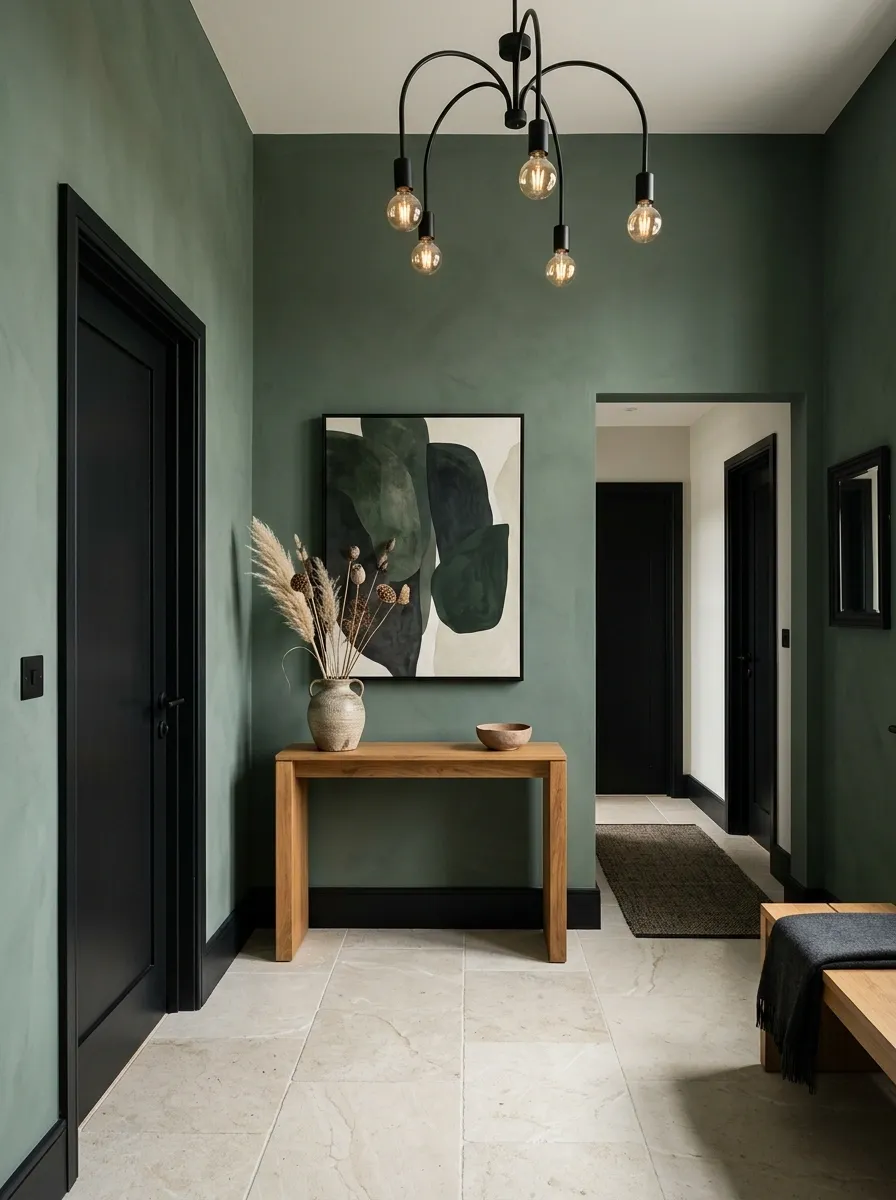
Here, sage takes a much deeper architectural role. Saturated green walls sit against large-format stone flooring and black interior doors, while a sculptural pendant hangs prominently overhead.
The combination creates strong vertical and horizontal contrast. The dark doors give the walls definition, while the pale stone keeps the floor from becoming visually dense. A simple console in warm wood introduces one warmer material between the darker architectural elements.
Lighting is crucial. The pendant creates a visual anchor from above, but additional soft lighting keeps the darker walls readable instead of allowing them to disappear into one large shadow.
This isn’t the timid version of sage. It walks into the foyer first and assumes everyone else can catch up.Collected Sage Entryway With Antique Wood, Woven Seating, and Ceramics
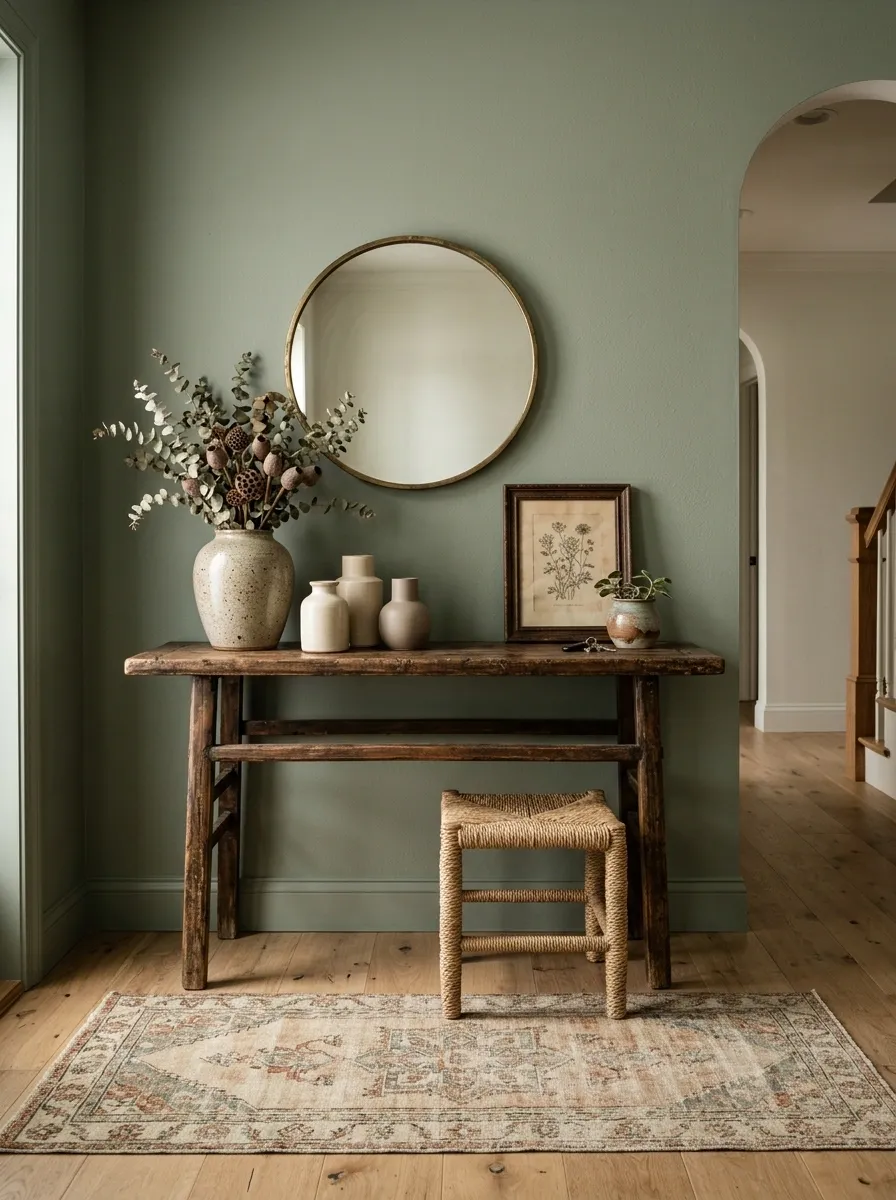
The final concept brings together many of the collection’s warmer qualities, but in a more layered and personal composition. A muted sage wall sits behind an antique wood console, woven seating, handmade ceramics, baskets, framed artwork, and a faded runner.
The furniture has visible age and texture, while the newer accessories remain simple enough to let the older pieces breathe. Cream, muted green, warm brown, and natural fiber tones create a restrained palette despite the number of materials.
The key is hierarchy. The antique wood provides the anchor, the woven seating adds softness, and the ceramics and artwork supply smaller moments of personality. Nothing needs to match perfectly.
That little bit of imperfection is exactly what keeps a collected entryway from looking like a furniture showroom with a history degree.Let the Entryway Look Like It Belongs There
Sage works best when it isn’t treated as the entire personality of the room.
The green can be soft and barely there against oak and linen. It can become dramatic with walnut and charcoal. It can sit behind traditional paneling, disappear into built-in storage, support a gallery wall, or provide the quiet background for one oversized piece of artwork.
That’s the useful part of looking at complete rooms instead of isolated decorating tricks. A paint color never exists by itself once the door closes. It meets the floor, the furniture, the lighting, the staircase, the storage, and every awkward little architectural decision waiting inside the entrance.
So save the designs that make the whole composition click, not just the ones with the prettiest wall color. The right reference is the one that gives the entire entryway somewhere to go.
Pin your favorites now so the best combinations are waiting when the decorating decisions become real.