
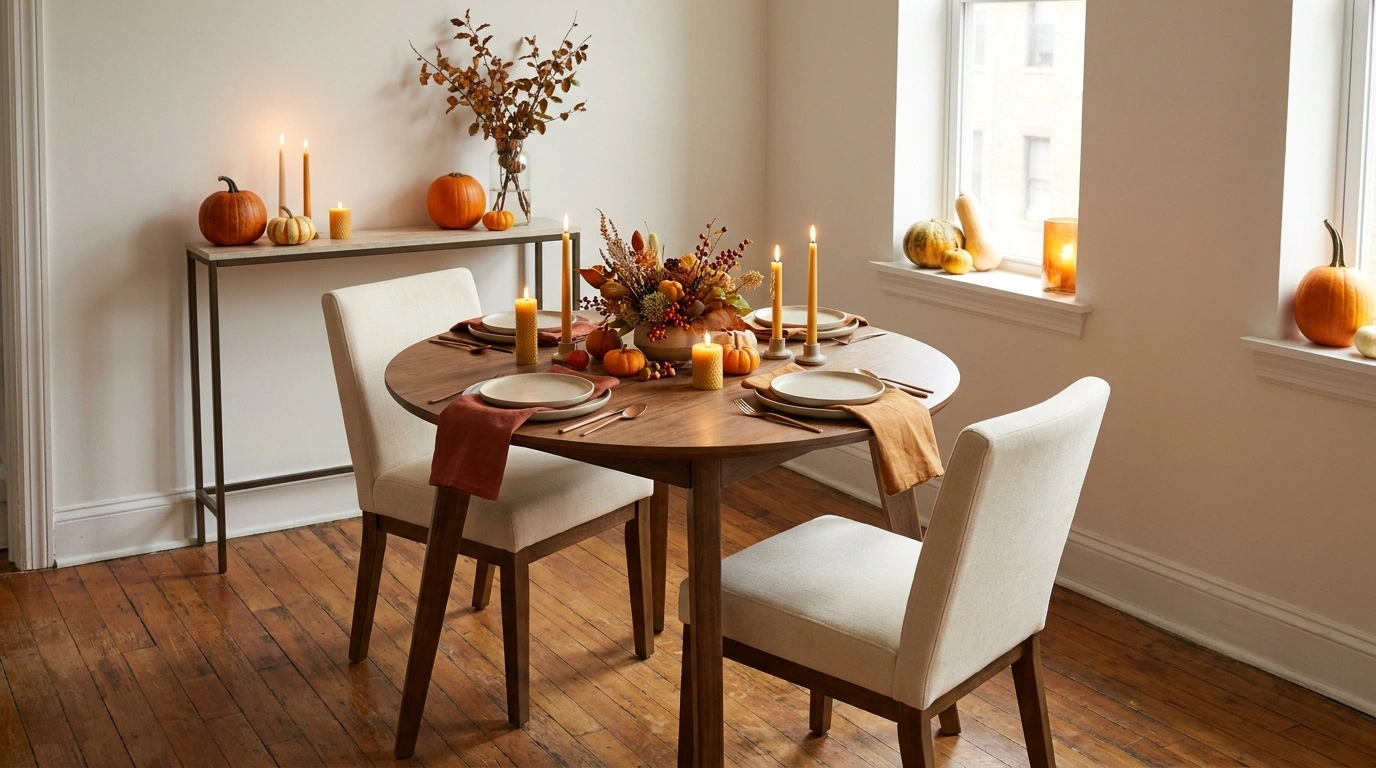
Thanksgiving decorating can go wrong in a remarkably specific way. One pumpkin looks cute, so another joins the party.
Then come the garlands, the wooden signs, the miniature scarecrows, and the decorative hay bales nobody knows what to do with after November. Suddenly, the living room looks like an autumn craft store acquired a mortgage.
The fix isn’t a bigger shopping budget. It’s a clearer design direction. A dining room with warm wood, rust-colored linen, and loose branches can feel more festive than a room covered in seasonal accessories.
A simple entryway can make a stronger first impression than a front porch with so many decorations that guests have to enter sideways.
Fall Thanksgiving Decor Ideas
Organic Modern Thanksgiving Dining Room
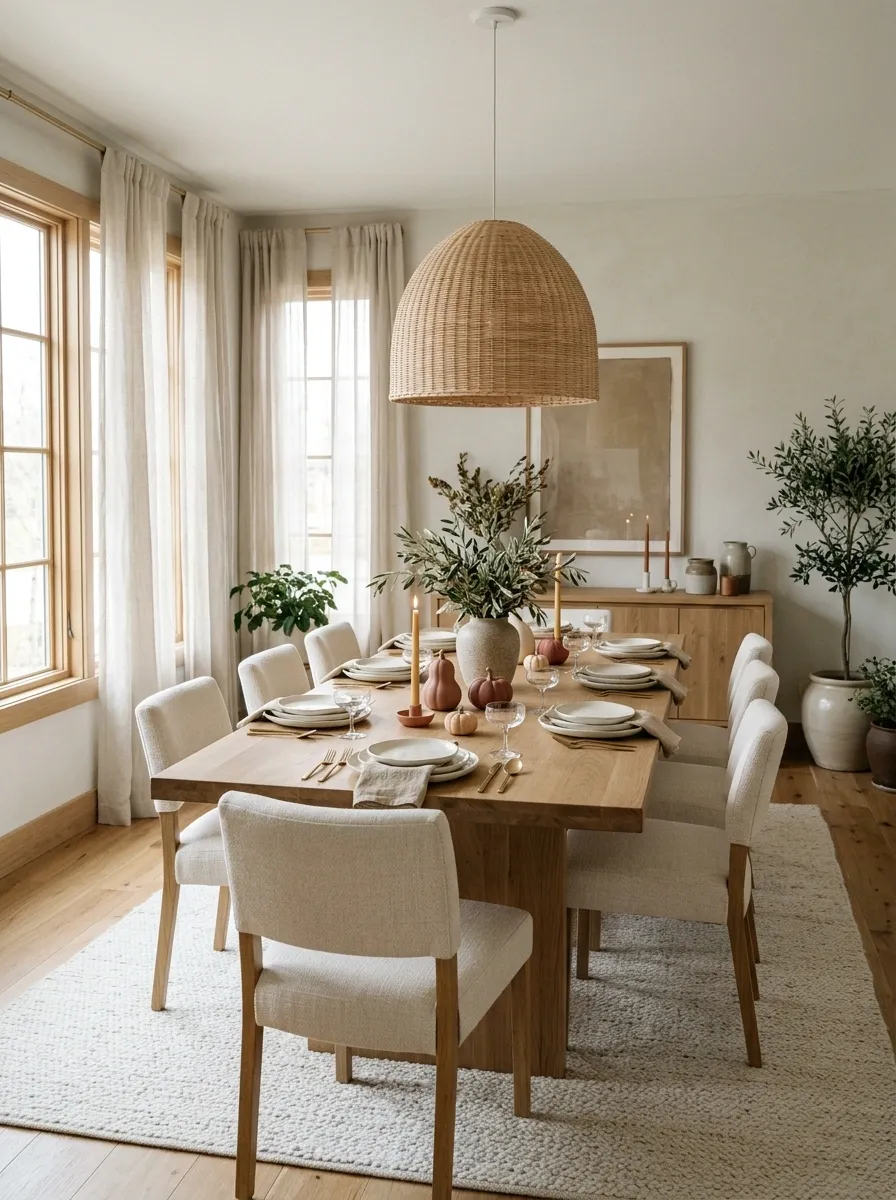
The look: warm wood, quiet neutrals, and autumn color used with restraint.
A solid oak dining table, softly upholstered chairs, and a loose arrangement of olive branches create a Thanksgiving setting that feels special without becoming overly formal. Layer in ivory ceramic plates, natural linen napkins, and a handful of muted terracotta accents. A simple pendant above the table anchors the composition, while daylight from nearby windows keeps the warm materials from feeling heavy.
The trick is letting the wood and greenery do most of the work. A low centerpiece maintains conversation across the table, and the restrained palette gives the room a finished look long after the holiday leftovers disappear. No matching pumpkin army required.
The material and color recipe
The room’s design recipe
Warm linen
Light foundation
Natural oak
Visual warmth
Muted olive
Organic contrast
Soft terracotta
Seasonal accent
Traditional Thanksgiving Table With Rust Linen and Taper Candles
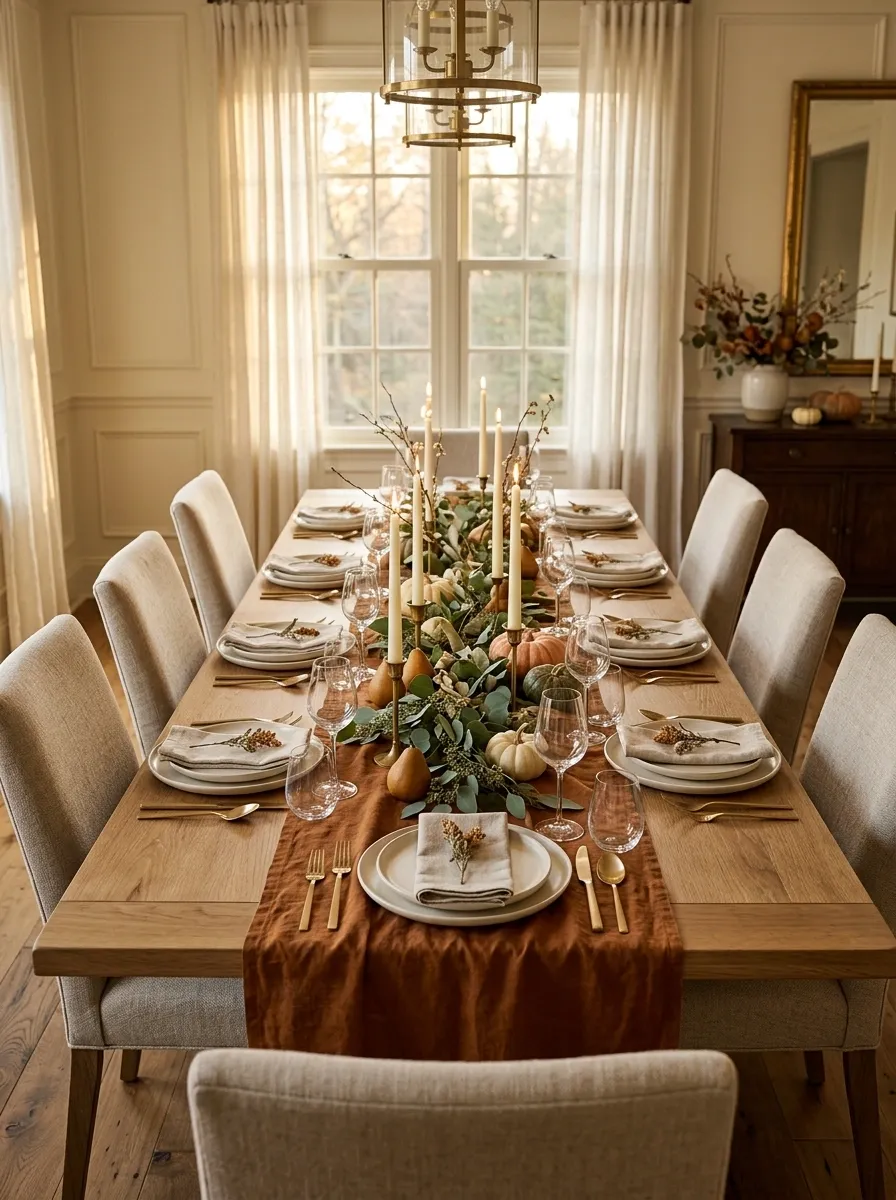
The look: classic Thanksgiving warmth with a little dinner-party polish.
A rust-colored linen runner gives a long wooden table an autumnal foundation, while ivory plates, folded linen napkins, and understated flatware keep the setting from looking overly busy. Place slender taper candles in simple holders along the center, mixing them with low greenery and a few seasonal branches. Small pears or miniature pumpkins can fill occasional gaps without turning the table into a produce stand.
This arrangement works because the table has a clear centerline and the place settings provide visual rhythm. Keep the flowers and candles low enough for guests to see one another. A gorgeous tablescape that forces everyone to conduct dinner around a botanical obstacle course is doing entirely too much.
The anatomy of the tablescape
Build the table from the center out
The layered setting
Moody Thanksgiving Dining Room With Burgundy and Dark Wood
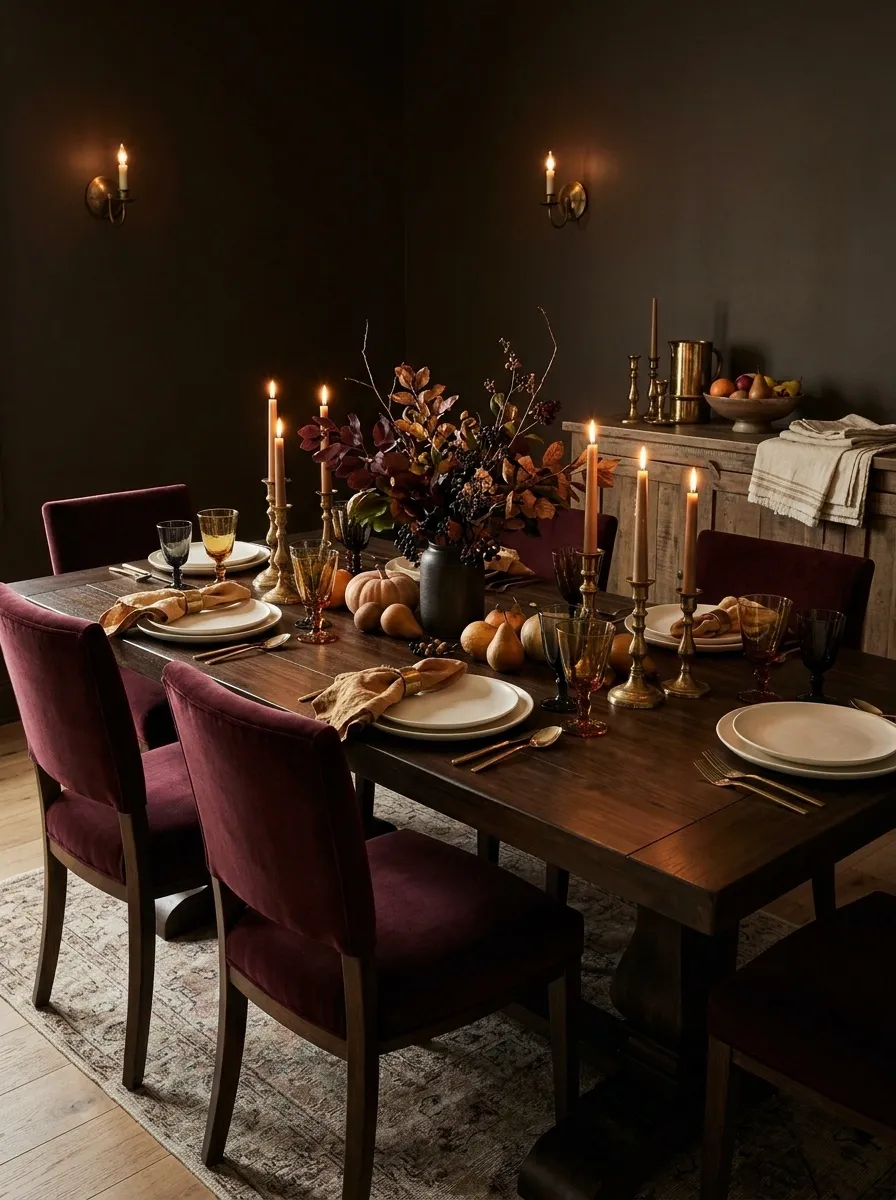
The look: dramatic autumn color, vintage character, and candlelit depth.
Burgundy upholstery, a dark walnut dining table, and warm-toned walls make this Thanksgiving room feel intimate before the candles are even lit. Add aged brass candlesticks, amber glassware, and a loose arrangement of deep foliage. Cream plates provide a useful break from the dark palette, preventing the whole room from becoming one giant shadow with excellent table manners.
The key is distributing dark colors across the entire room rather than concentrating everything on the table. Repeat burgundy in a chair or textile, then introduce lighter surfaces in the plates, curtains, or nearby wall. This look suits rooms with layered lighting and some natural texture. A single harsh overhead bulb will not do this room any favors.
Where the dark tones belong
A darker autumn palette
Drama needs a little breathing room.
Lighting note: Use several warm light sources instead of relying on one bright ceiling fixture.
Cozy Neutral Thanksgiving Living Room
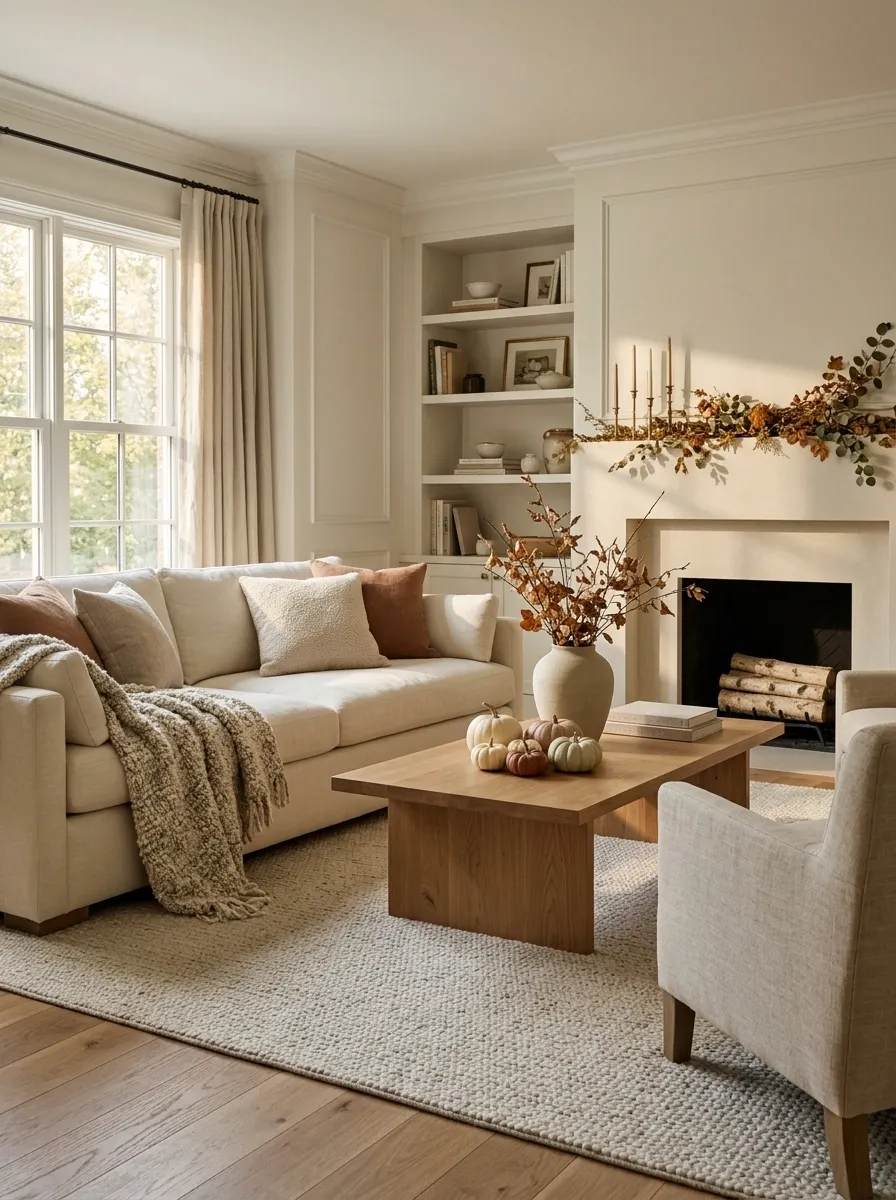
The look: soft layers, natural texture, and autumn details that don’t take over.
A cream sofa, a textured wool or cotton throw, and a pale rug establish a calm backdrop for seasonal decorating. Add a low wooden coffee table, a handmade ceramic vase filled with branches, and a small cluster of cream and rust-colored pumpkins. If there’s a fireplace, let the mantel echo the palette with just a few related details instead of repeating the entire coffee-table arrangement overhead.
The finished room should feel comfortable enough for a long afternoon of conversation, not so precious that nobody dares sit down. Contrast is what keeps neutral spaces interesting: nubby fabric beside smooth ceramics, pale upholstery beside warm wood, and soft foliage against solid furniture. Beige alone isn’t a design plan. Texture is doing the heavy lifting here.
The texture mix
The formula: combine one soft surface, one visibly grained material, one smooth finish, and one organic element. The room gets depth without needing another decorative object in every corner.
Rustic Thanksgiving Kitchen With Open Shelves and Seasonal Produce
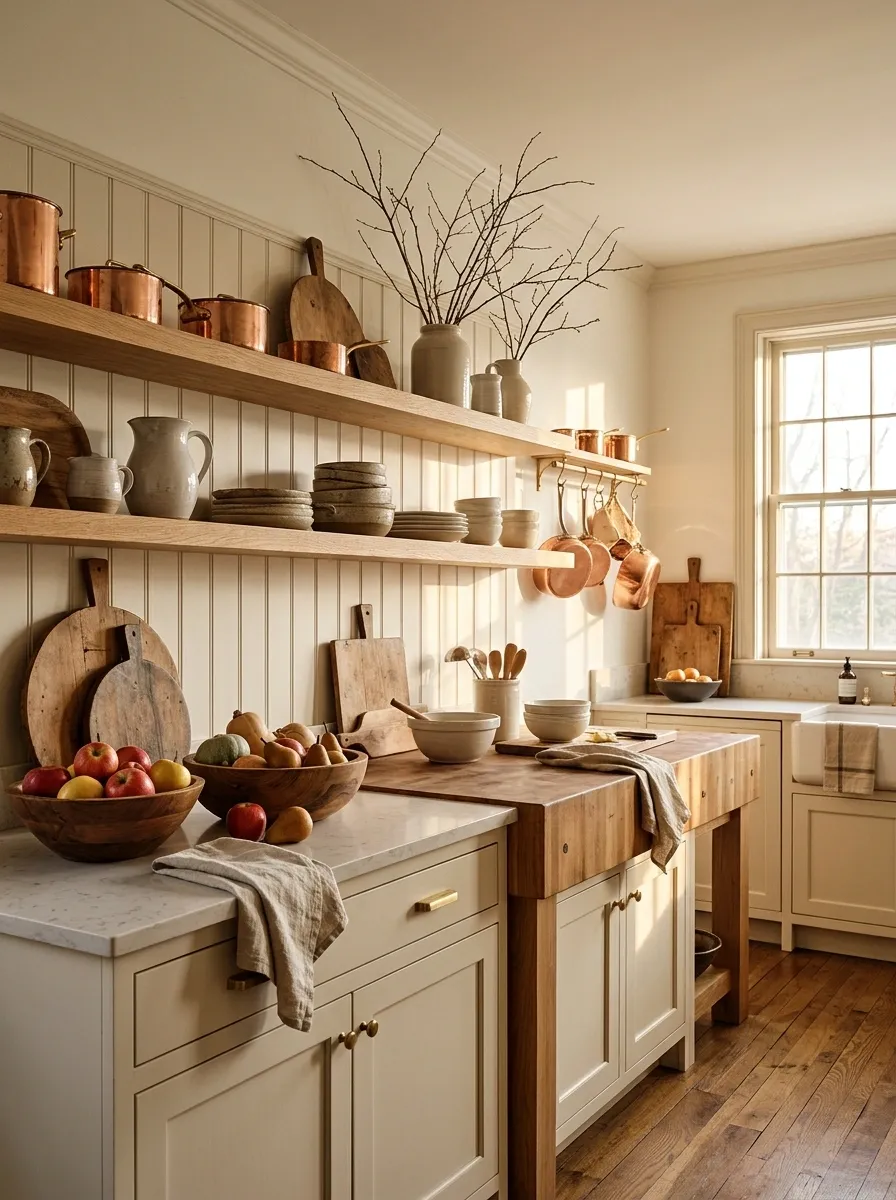
The look: farmhouse warmth that still leaves room to make dinner.
Cream cabinetry, warm wood shelves, and a substantial worktop give this kitchen its rustic foundation. Copper cookware adds a little glow, while wooden bowls filled with apples and pears bring in the harvest theme without relying on novelty decorations. A few ceramic pitchers and loose branches can soften the shelves, while folded tea towels and everyday serving boards make the room feel ready for actual cooking.
Keep the most decorative arrangements away from the busiest preparation zone. Open shelving looks best when dishes and useful objects remain the main event, with seasonal produce supplying the color. The kitchen is still a kitchen, after all. A beautiful countertop that has no room for a cutting board is just a photo set with plumbing.
A kitchen that works as well as it looks
The practical kitchen edit
Three zones. No countertop hostage situation.
Styling rule: Decorate the edges and shelves. Protect the surfaces where the holiday meal actually gets made.
Elegant Thanksgiving Entryway With Natural Branches and Antique Wood
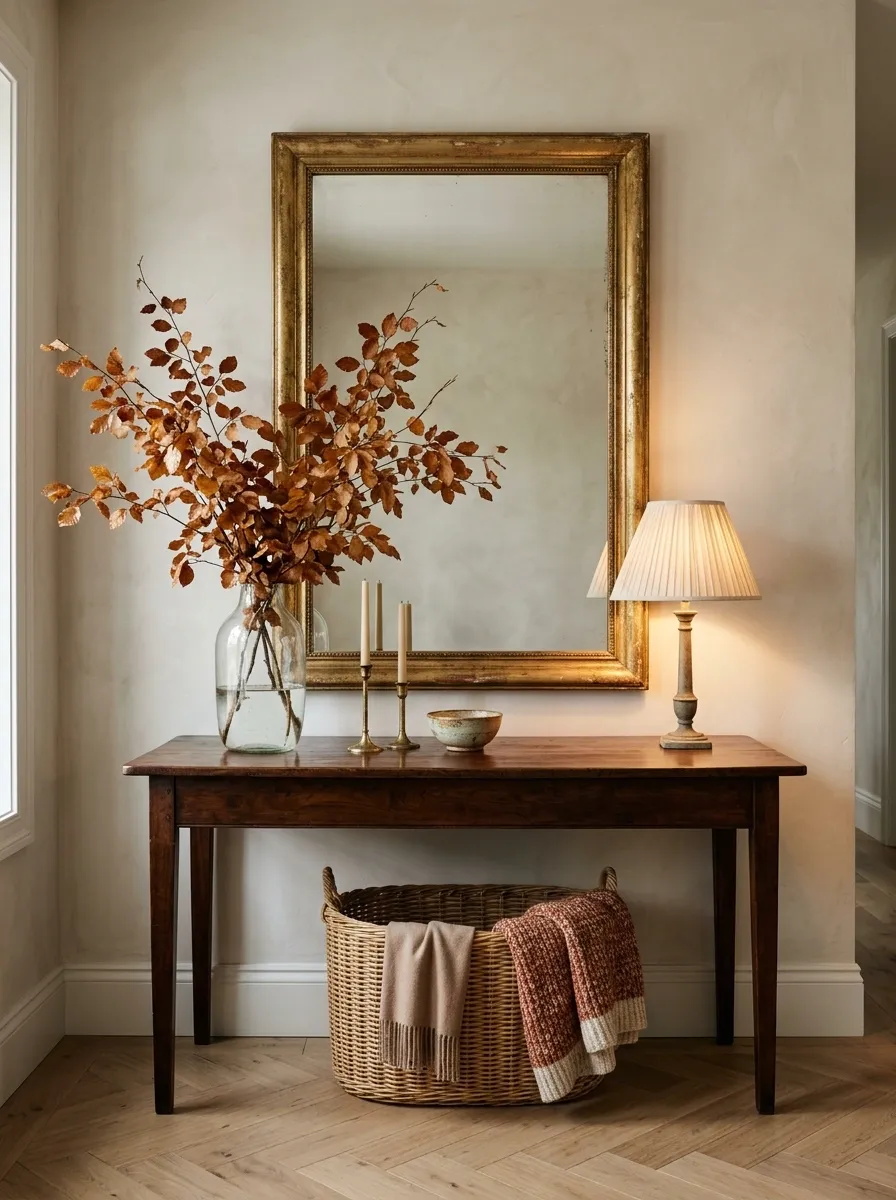
The look: an autumn welcome with vintage character and architectural presence.
An antique wood console, an oversized mirror, and a vase of loose autumn branches create an entryway that feels considered before anyone even reaches the living room. Add a small ceramic bowl for keys, a pair of understated candlesticks, and a woven basket underneath for scarves or extra throws. A warm table lamp provides a welcoming pool of light when daylight fades.
The arrangement works because the taller branches balance the mirror, while the low accessories give the console a usable surface. Keep the doorway and walking path clear, especially in a narrow entrance. The front hall should welcome guests, not make them complete an obstacle course before finding the bathroom.
Get the proportions right
Entryway proportion study
Mirror anchors the wall
Branches create height
Basket grounds the base
Keep one clear vertical feature, one solid horizontal surface, and a low element near the floor. The result feels balanced without filling every inch.
Modern Thanksgiving Fireplace With Sculptural Pumpkins
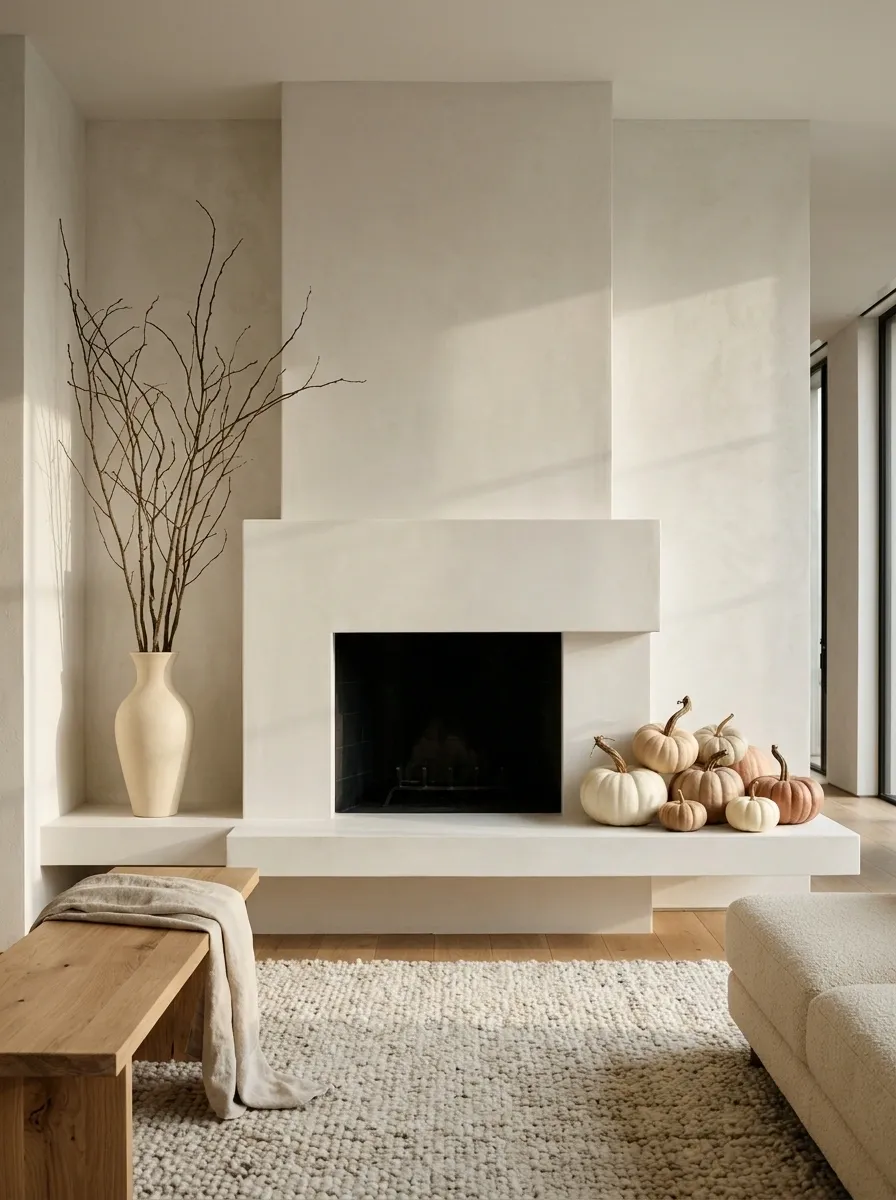
The look: architectural simplicity with a restrained autumn focal point.
A simple plaster fireplace provides a clean backdrop for sculptural cream pumpkins, muted terracotta varieties, and a few organic branches. Place the larger pumpkins near one end of the hearth, then let smaller forms and open space lead the eye across the composition. A low oak bench or a simple lounge chair nearby adds warmth without stealing attention from the fireplace.
This style is all about shape and spacing rather than quantity. Vary the height of the pumpkins, but keep their colors closely related so the arrangement reads as one intentional group. The mantel doesn’t need a garland, framed quote, string lights, and an emotional-support acorn collection. A few well-chosen objects can carry the whole scene.
The balance of an asymmetrical mantel
Composition notes
Let one side do the talking.
Use branches or a taller object to establish height.
Group rounded pumpkins to create visual weight near the hearth.
Vintage Thanksgiving Sideboard With Collected Ceramics
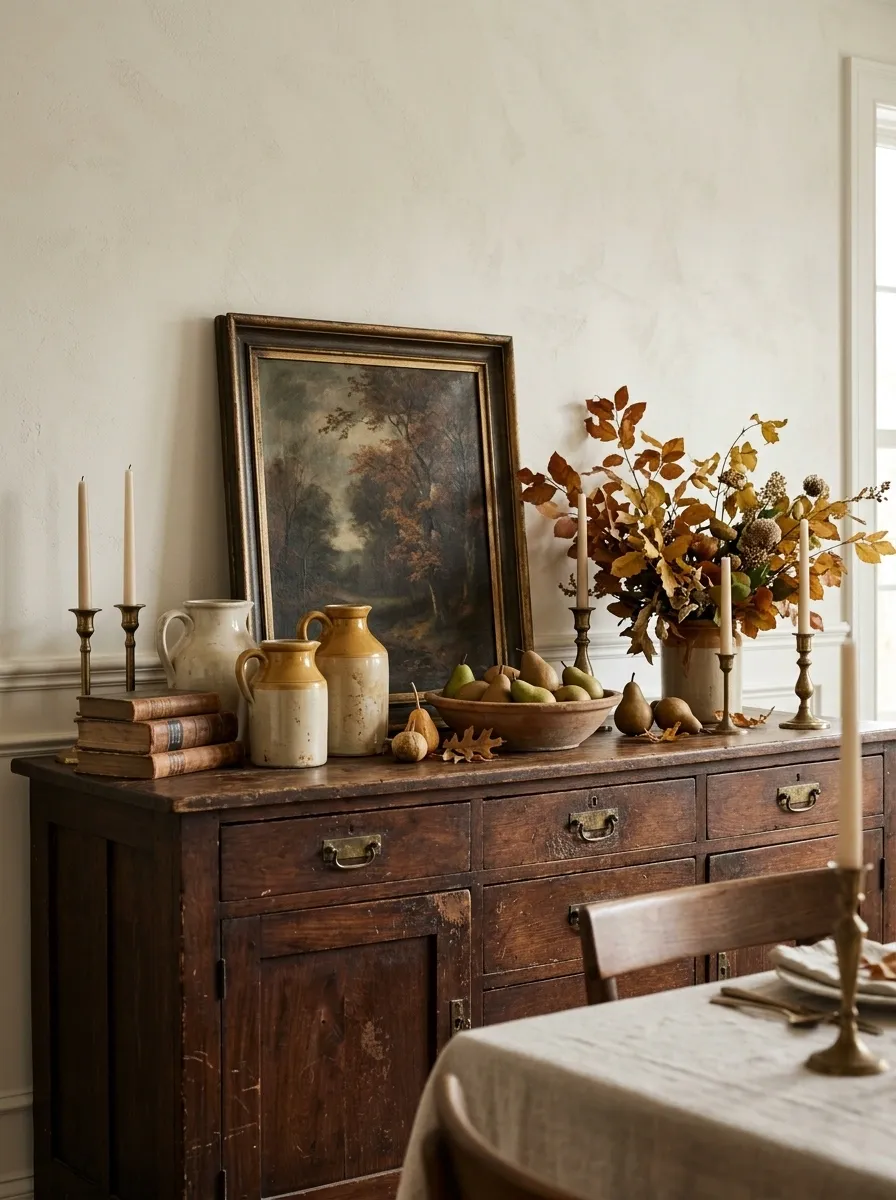
The look: old wood, imperfect objects, and a collected-over-time atmosphere.
A dark vintage sideboard becomes the centerpiece of this dining room with mismatched ceramic pitchers, framed artwork, brass candlesticks, and a small arrangement of autumn foliage. A shallow bowl of pears adds a fresh seasonal detail, while a stack of old books can lift one smaller object to a different height. The pieces don’t need to match. In fact, matching everything would drain much of the charm from the arrangement.
The secret is giving the eye a few clear places to land. Let the artwork establish the backdrop, group smaller objects rather than spacing them like museum exhibits, and leave some of the wooden surface visible. Collected decor should look personal, not as if an entire antique shop was tipped onto the furniture.
An arrangement with different heights
The collected look
Art gives the arrangement a clear visual anchor.
Mix tall vessels with lower bowls and objects.
Leave visible wood between object groups.
Scandinavian Thanksgiving Dining Nook
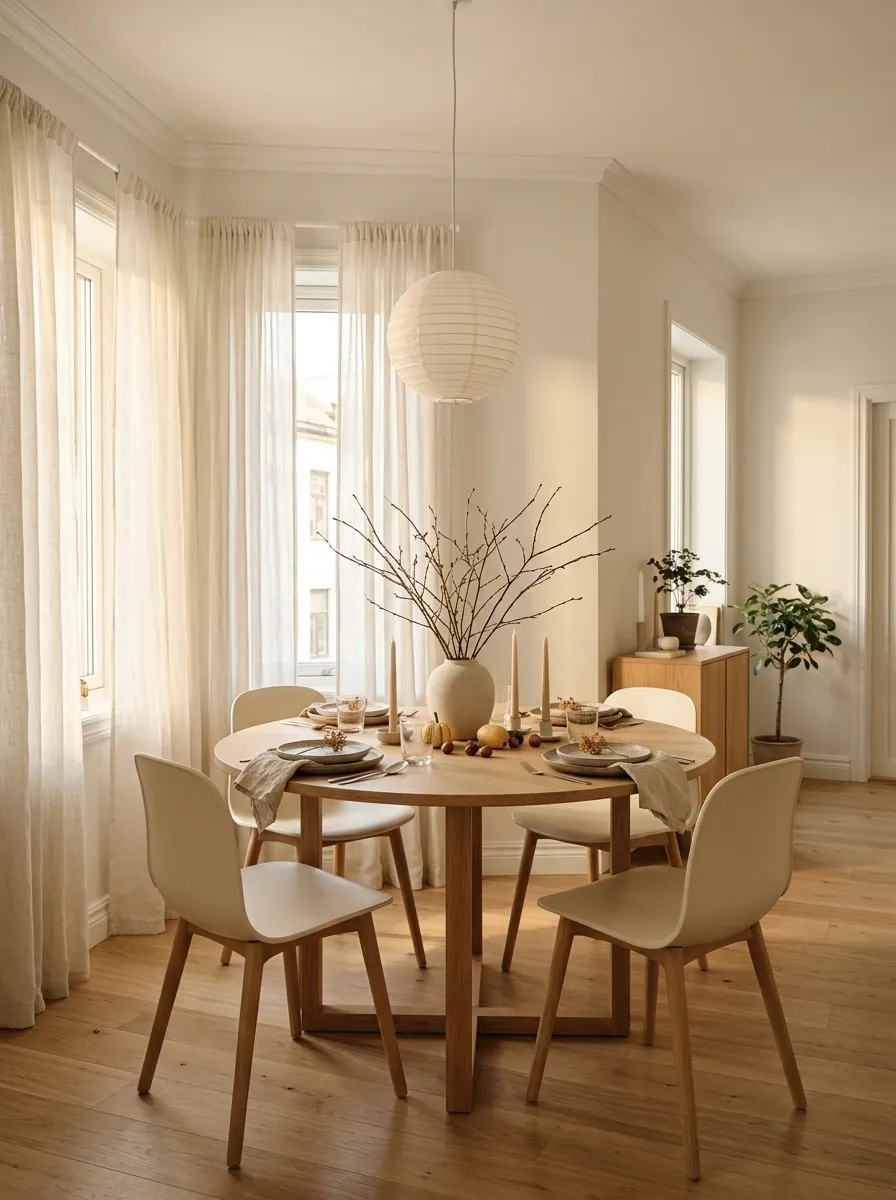
The look: pale timber, uncomplicated shapes, and small-space charm.
A compact dining nook can look every bit as considered as a grand dining room. Start with a round oak pedestal table, streamlined cream chairs, and a simple pendant. A small ceramic vase holding a few branches supplies the seasonal detail, while linen napkins and softly textured cushions add warmth without crowding the arrangement. Pale walls and uncomplicated window treatments help the space feel visually open.
The round table makes movement around the nook easier than bulky furniture with sharp corners, although chair clearance still matters. Keep the centerpiece small enough to leave room for serving dishes and drinks. There is no prize for decorating a tiny table so aggressively that the mashed potatoes need their own reservation.
A small dining nook that leaves room to move
Small-space layout
Let the furniture fit the room.
Keep the route around the table clear.
Before buying: Measure the table, pulled-out chairs, and the path people use to pass through the room. A pretty floor plan that only works when nobody sits down is not a floor plan. It’s fan fiction.
Harvest Thanksgiving Tablescape With Apples, Pears, and Pumpkins
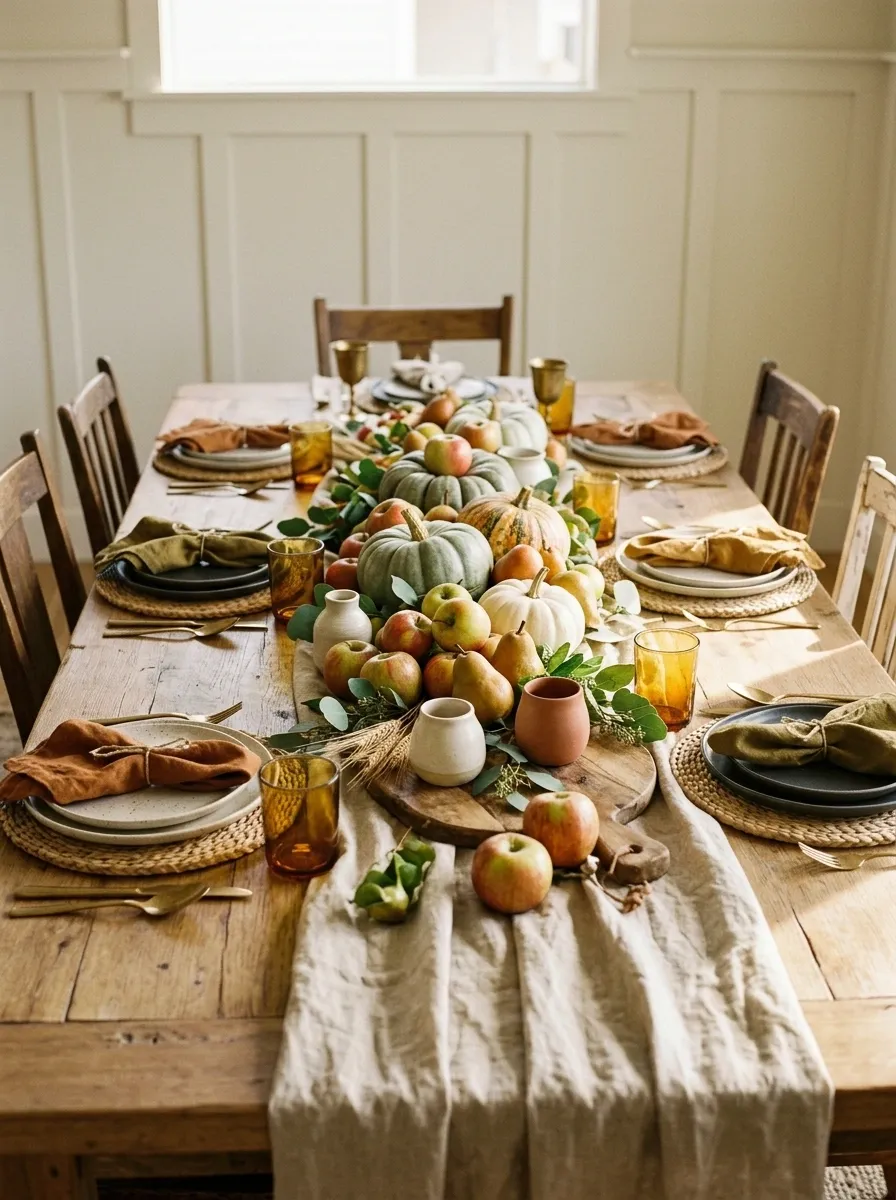
The look: abundant seasonal produce, natural textures, and a table that feels generous.
For a more relaxed harvest-inspired table, use seasonal produce as part of the centerpiece rather than relying entirely on floral arrangements. Scatter apples and pears among small pumpkins, fresh foliage, and a few compact ceramic vessels along a natural linen runner. Wooden serving boards and simple dinnerware connect the arrangement to the table’s grain, while amber glass brings a little extra warmth.
The visual interest comes from variations in shape, size, and color. Keep the produce in loose clusters instead of distributing every piece evenly, which can make the table look like a supermarket display following strict seating instructions. Leave clear spaces around each place setting, and keep food-serving areas separate from the decorative centerpiece.
A harvest palette that feels abundant, not chaotic
Harvest composition
A little abundance. A little restraint.
Adds natural color and varied shapes.
Softens the harder outlines of fruit and pottery.
Keeps plates, serving dishes, and guests from fighting for territory.
Best finishing touch: repeat two or three colors from the produce in the napkins, ceramics, or glassware. The connection makes the whole table feel intentional.
Understated Luxury Thanksgiving Dining Room
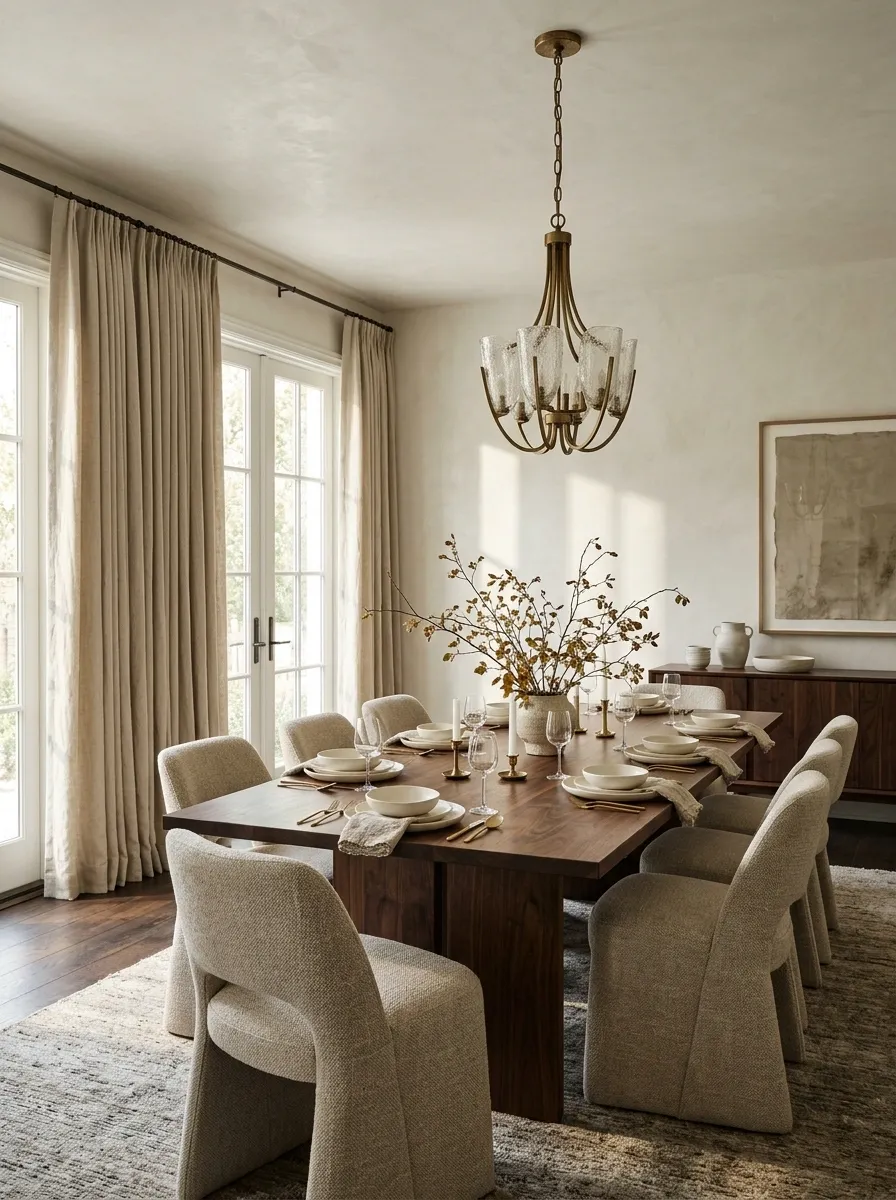
The look: rich materials, restrained styling, and quiet sophistication.
A dark walnut dining table, sculptural upholstered chairs, and softly draped linen create a dining room that feels refined without looking like it’s auditioning for a luxury hotel brochure. Keep the table setting simple with ivory dinnerware, brushed brass flatware, and a low arrangement of autumn branches. A substantial pendant or elegant chandelier gives the dining area a clear focal point, while textured walls and full-length curtains soften the harder surfaces.
The secret is investing visual attention in the furniture and finishes instead of covering them with seasonal accessories. Let the wood grain, upholstery, and lighting carry the room. A few carefully chosen autumn details are enough. Luxury isn’t measured by how many decorative objects can fit on one table before someone loses their water glass.
The hierarchy of a luxury room
What makes the room feel expensive
Materials first. Decorations second.
Cottage Thanksgiving Kitchen With a Breakfast Table
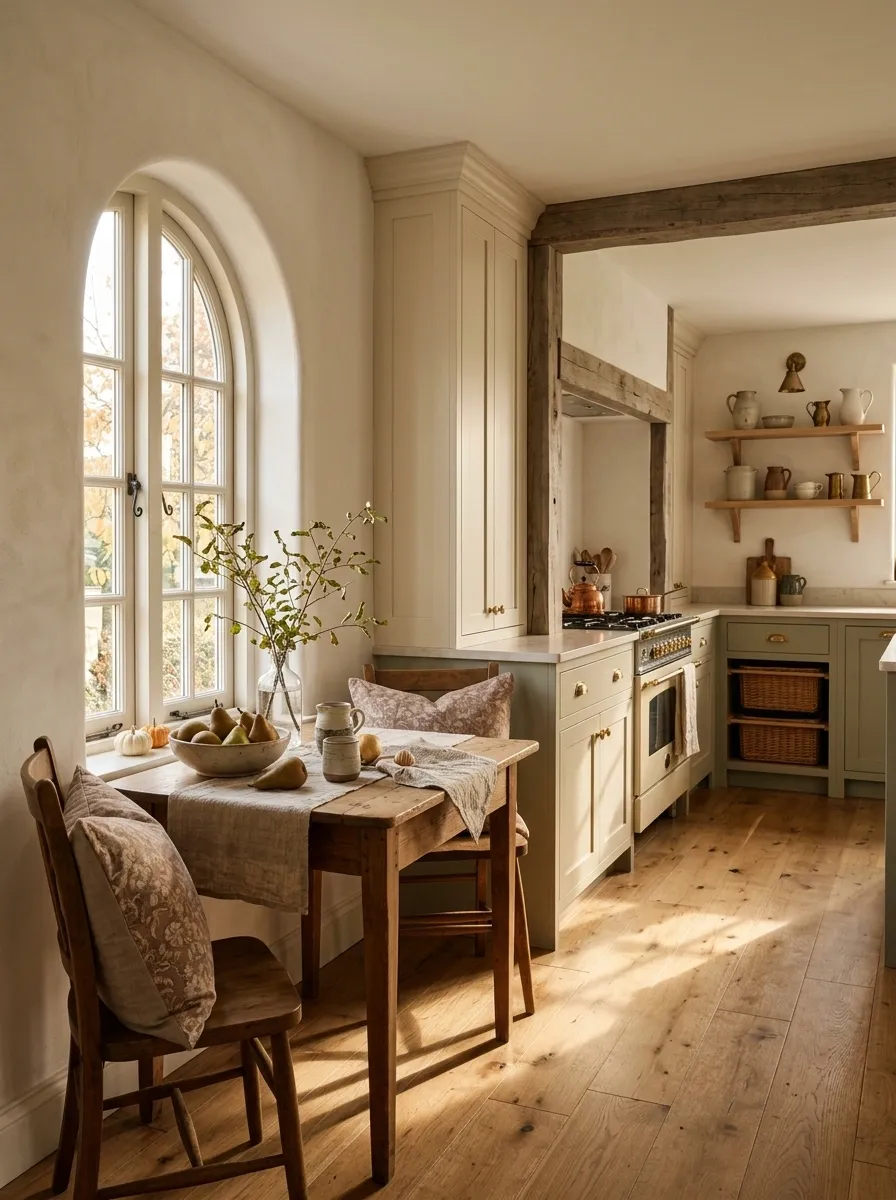
The look: painted cabinetry, country charm, and a breakfast corner that feels genuinely welcoming.
Muted sage or creamy painted cabinets, a compact wooden table, and simple patterned cushions give a cottage kitchen its relaxed character. Add a bowl of pears, handmade pottery, and a small vase of seasonal branches. Woven baskets and traditional hardware bring texture without making the kitchen feel artificially rustic. The breakfast table can sit beside a window, where natural light does most of the decorating.
This concept works particularly well when the kitchen has a little architectural character, such as a shallow alcove, original timber, or an interesting window shape. Keep the table modest enough to preserve movement between the cooking and dining areas. Cottage charm is lovely. Banging into a chair every time someone opens the oven is less charming.
Three connected kitchen zones
The prettiest arrangement still needs to work on Thanksgiving morning.
Keep the route between all three zones open. Holiday cooking already has enough plot twists.
Contemporary Thanksgiving Living Room With Olive and Rust
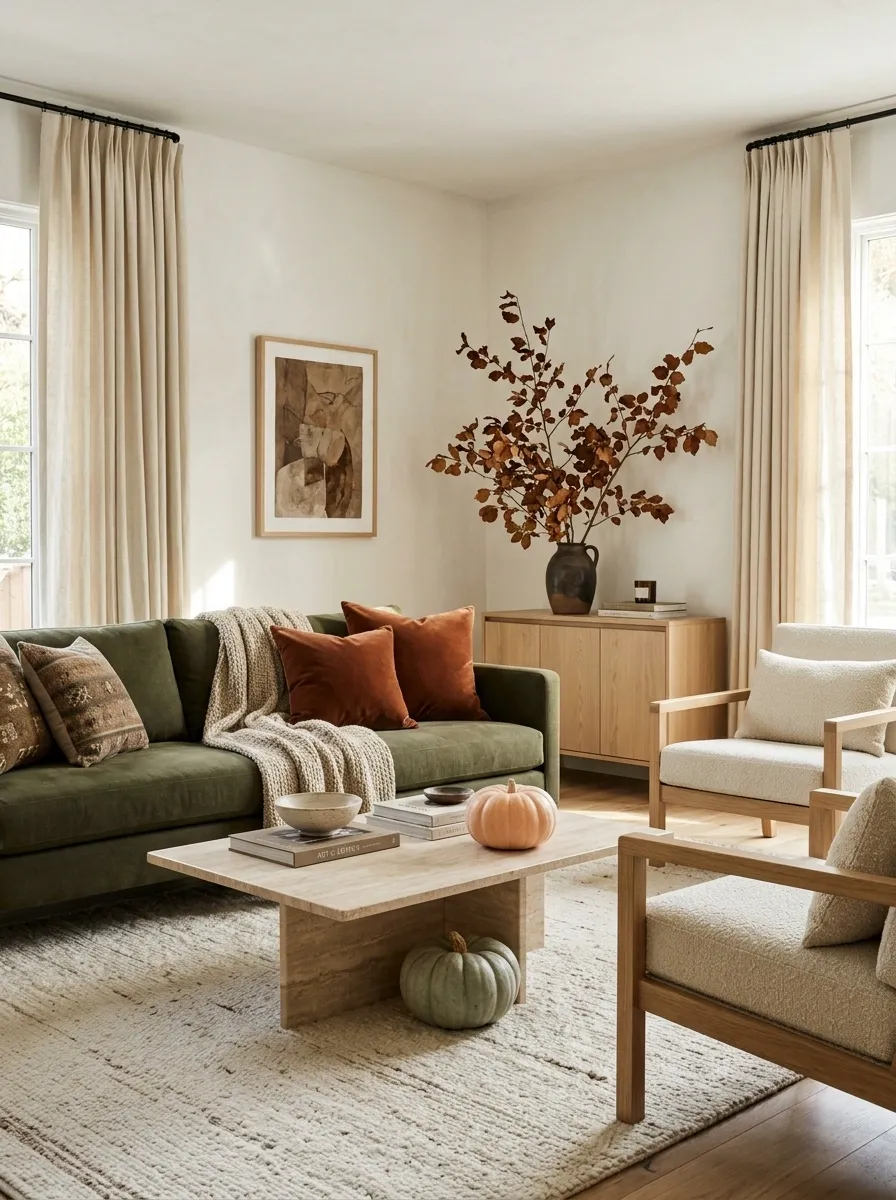
The look: modern furniture, deep botanical green, and just enough autumn warmth.
An olive sofa brings depth to a contemporary living room, especially when paired with a pale rug, a low stone coffee table, and clean-lined wood furniture. Rust-colored cushions introduce seasonal warmth without pushing the room into a full orange takeover. A branch arrangement in a sculptural vase and one or two softly colored pumpkins make the holiday connection feel deliberate rather than temporary.
The strongest version distributes color across the room. Olive becomes the main visual anchor, rust appears in smaller accents, and pale surfaces keep the whole space from feeling heavy. Choose accessories with different textures instead of repeating the same color on every available object. The sofa already made its statement. The cushions don’t need to start a group chat about it.
Distribute color instead of duplicating it
Room color distribution
One anchor. A few echoes.
Where to repeat rust: Pick two or three smaller details across the room, such as a cushion, a vase, and a seasonal accent. The color feels connected without appearing on literally everything.
Farmhouse Thanksgiving Porch With Layered Pumpkins and Lanterns
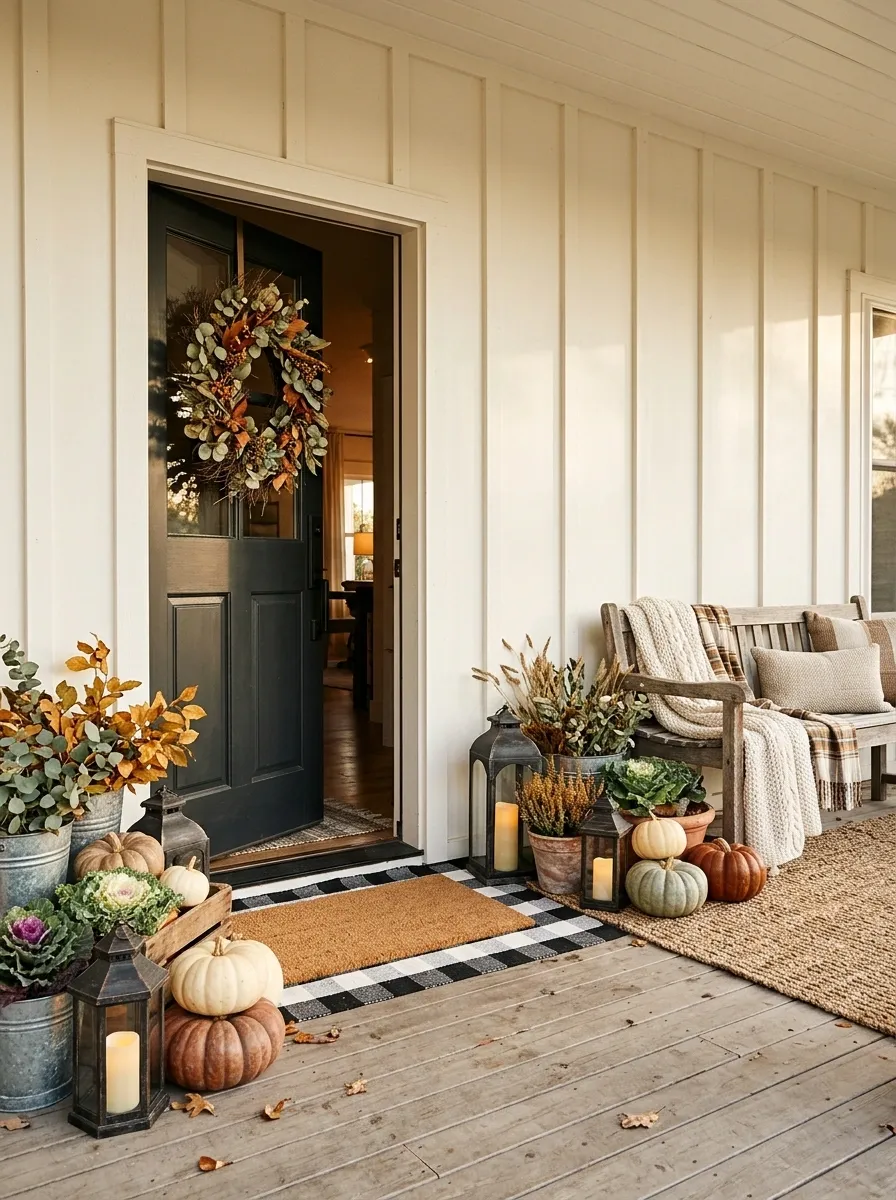
The look: welcoming farmhouse character with an entrance that remains usable.
A covered porch offers space for a fuller autumn arrangement. Pair a wooden bench with layered pumpkins, lanterns, and planters filled with seasonal foliage. A textured outdoor rug can help define the seating area, while a wreath and understated door mat connect the display to the entrance. Choose pumpkins in varying sizes and a mix of muted cream, rust, and natural orange instead of lining up identical specimens like they’re waiting for inspection.
The arrangement should frame the doorway rather than block it. Keep the main walking route open, make sure the door swings freely, and use outdoor-rated lighting and decor that can handle local weather conditions. Lanterns add warmth, but stable battery-powered candles are the sensible option around dry foliage. Nobody needs a surprise fire drill with the Thanksgiving groceries still in the car.
Style the porch without blocking the entrance
Porch layout, simplified
Use pumpkins and planters at the sides of the entrance.
Keep steps, door movement, and the main walkway clear.
Refined Thanksgiving Front Door With Natural Wreaths and Potted Foliage
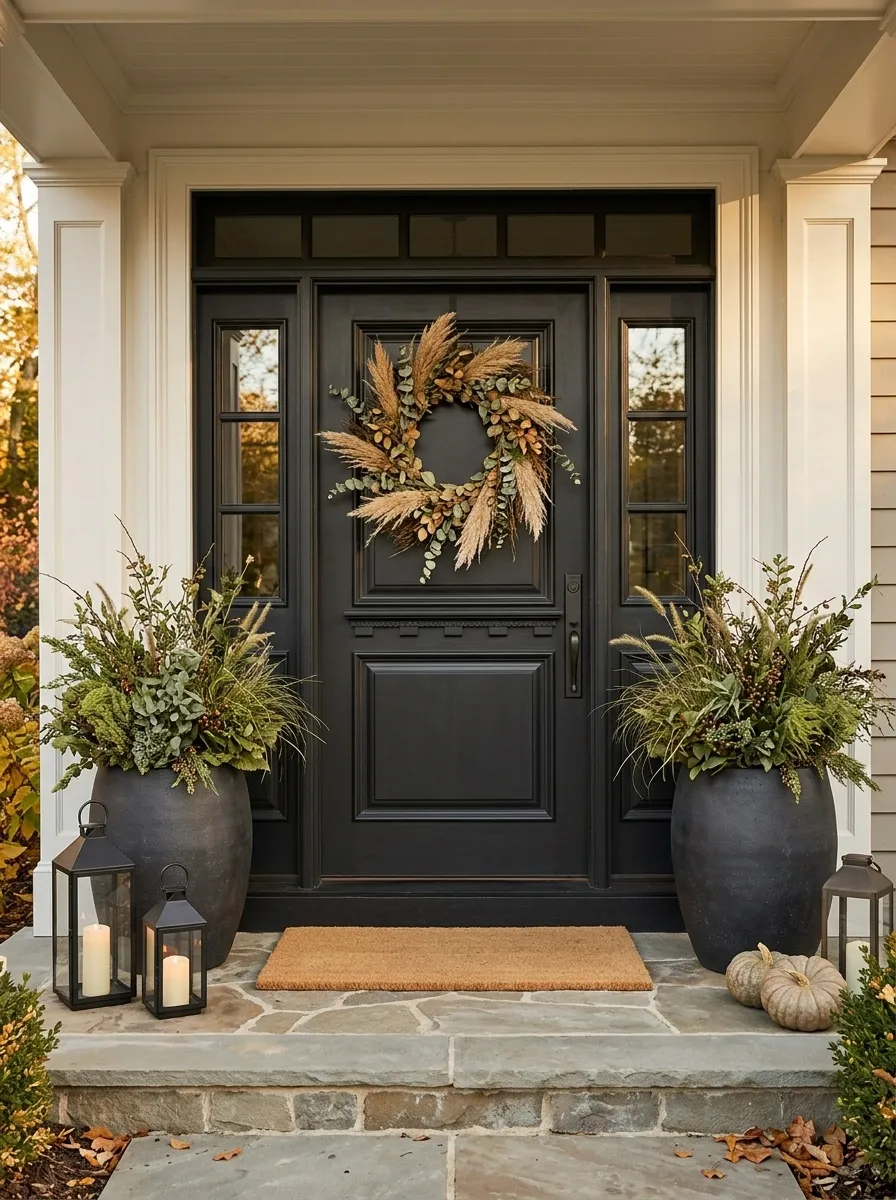
The look: restrained seasonal styling with a strong, symmetrical entrance.
A dark front door makes an excellent backdrop for a natural wreath of foliage, dried grasses, and understated autumn branches. Place two substantial planters on either side of the entrance, using greenery with varied leaf shapes rather than forcing both pots into identical floral arrangements. A simple coir mat and a pair of lanterns complete the setting without competing with the architectural details.
This design relies on proportion more than quantity. The wreath should relate to the door’s size, while the planters need enough visual weight to hold their own beside the entrance. Repeating a few materials and colors creates a coordinated look, but the plants don’t need to be exact twins. The goal is a welcoming doorway, not a botanical version of a synchronized swimming team.
Get the entrance proportions working together
The front-door composition
Choose a size that remains visible without overwhelming the door.
Give the doorway visual weight on both sides. Similar scale matters more than identical plants.
Keep the mat simple and leave enough room for people to enter comfortably.
Small Apartment Thanksgiving Dinner Setup
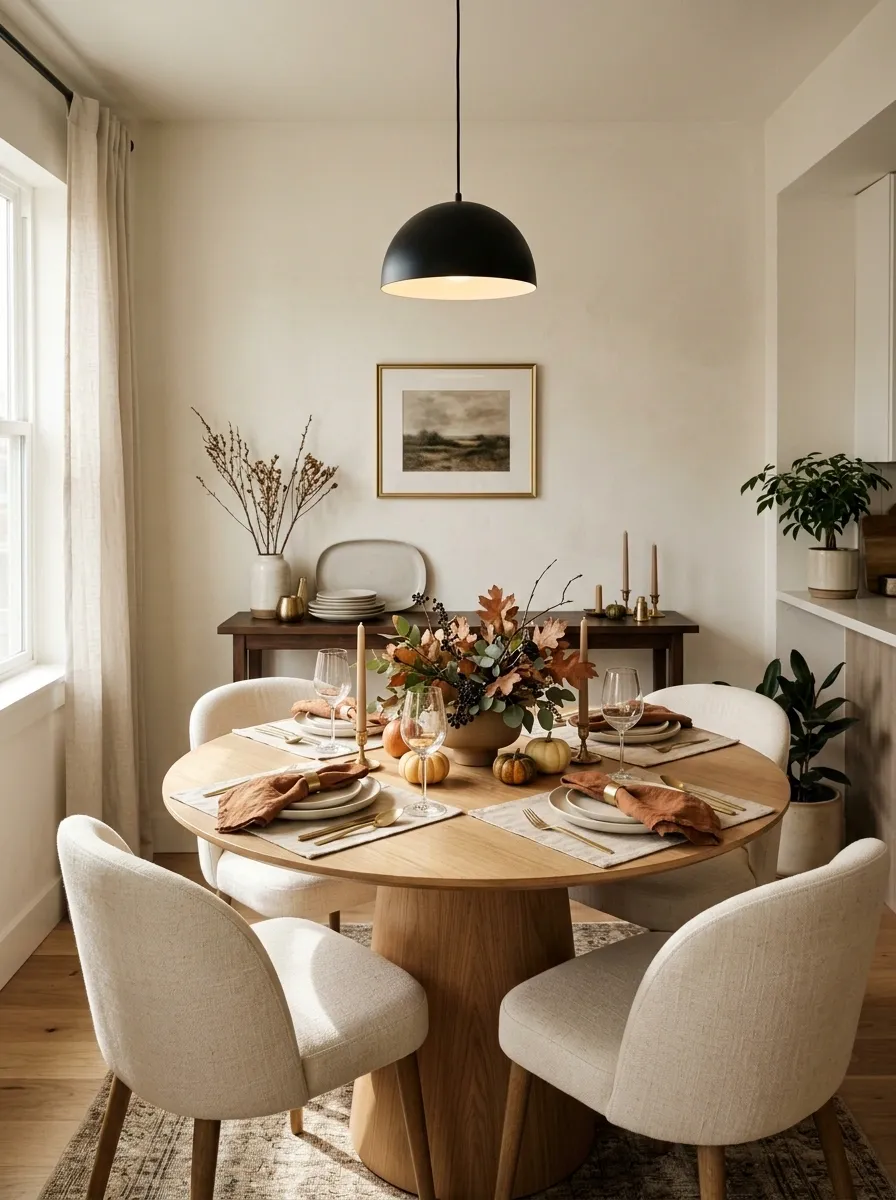
The look: a compact dining area that feels intentional, not squeezed into a spare corner.
A small apartment doesn’t need a full dining room to host a memorable Thanksgiving dinner. A round pedestal table, a few comfortable chairs, and a low arrangement of foliage can create a defined eating area without visually crowding the space. Choose warm wood, cream textiles, and a few rust-colored accents. A narrow console against the wall can double as a serving station, keeping the table free for plates, drinks, and the very serious business of passing the potatoes.
The secret is choosing furniture that fits the room and leaving enough space to pull chairs out. A compact pendant or floor lamp can establish a warmer atmosphere without adding more objects to the tabletop. Every inch doesn’t need a decorative purpose. Sometimes an empty patch of floor is simply an excellent life choice.
Plan the gathering before arranging the decor
Small apartment floor plan
Give every activity a place.
Measure the real room before choosing furniture. The diagram explains the zones, not the exact dimensions. A beautiful setup should still let everyone get up without moving the entire household.
Rustic Outdoor Thanksgiving Table Under Autumn Trees
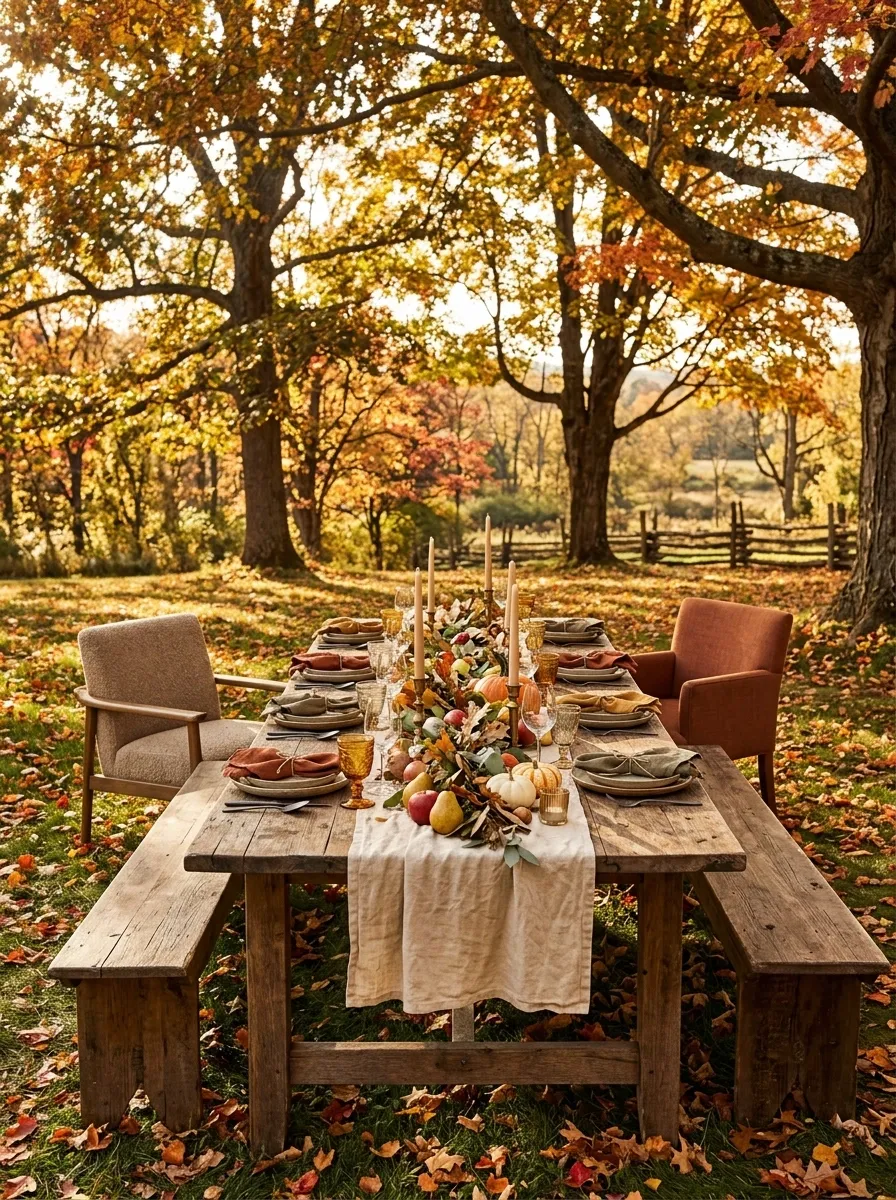
The look: natural timber, relaxed linens, and a gathering surrounded by fall foliage.
A long timber table beneath mature trees makes a memorable setting for an outdoor Thanksgiving gathering. Dress it with natural linen runners, simple ceramic dinnerware, and a loose line of foliage mixed with apples, pears, and small pumpkins. Wooden benches create a relaxed atmosphere, while individual chairs at the ends help the arrangement feel less like a picnic area and more like a planned dinner.
The landscape should remain part of the composition. Use its existing colors as the backdrop instead of introducing a dozen competing shades on the table. Weather matters, though. Secure lightweight linens, keep serving dishes protected, and have an indoor alternative ready if the forecast changes. Autumn leaves make excellent scenery. Rain-soaked mashed potatoes are less of a selling point.
Separate the beautiful setup from the practical planning
The outdoor hosting plan
Build the scene around three things: the view, the table, and the weather.
Use existing trees and foliage as the backdrop.
Secure fabrics and keep the serving area uncluttered.
Plan shelter, food protection, and a quick move indoors.
Before guests arrive: Check the forecast, available shade, stable seating, and safe placement of any candles or outdoor lighting.
Thanksgiving Coffee Table Styling With Books and Seasonal Ceramics
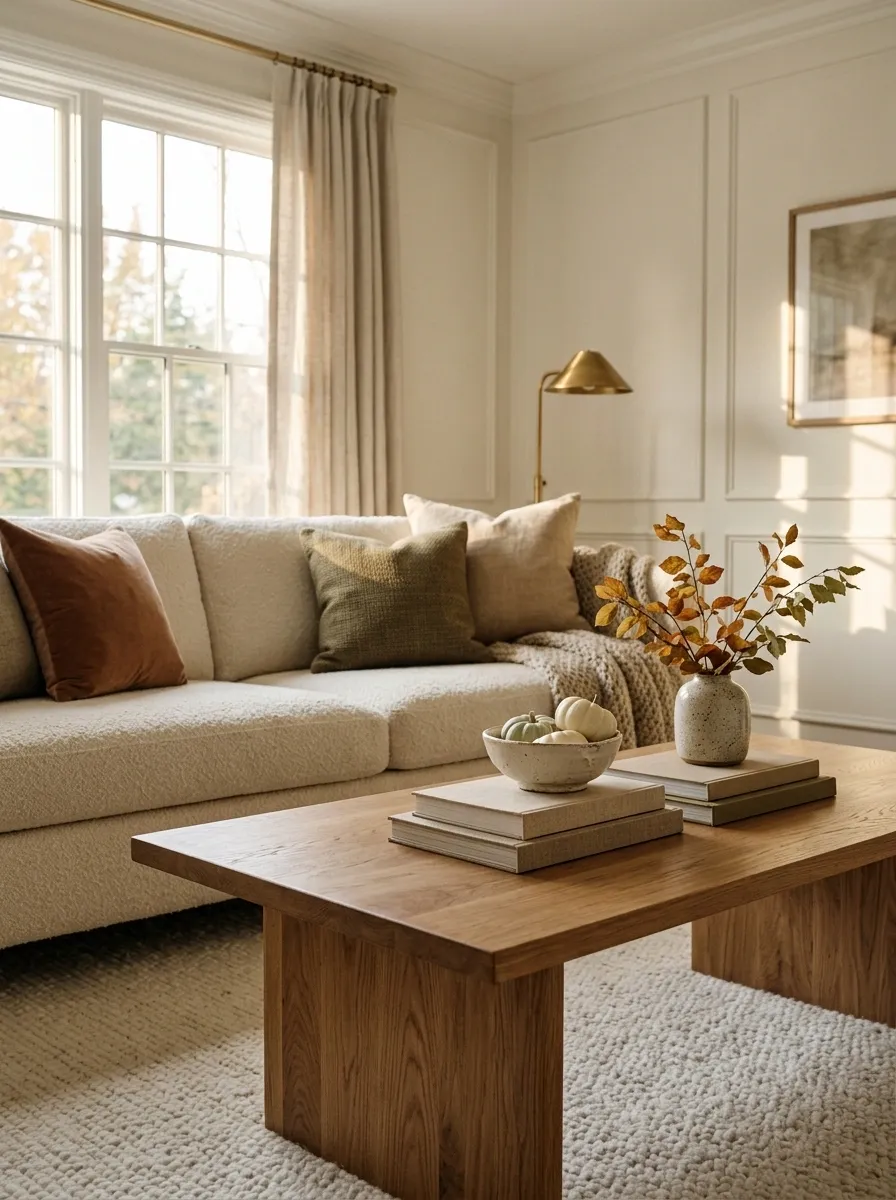
The look: a low, layered arrangement that makes the living room feel ready for company.
A coffee table can bring the autumn palette into the living room without requiring a full seasonal makeover. Start with a small stack of books, add a handmade ceramic bowl, and finish with a few miniature pumpkins or a compact vase of branches. On a wooden table, pale ceramics and muted foliage offer contrast. On a stone table, warmer wood and amber tones can soften the harder surface.
The trick is preserving the table’s actual job. Leave room for drinks, snacks, and the remote control that somehow becomes everyone’s responsibility to find. Keep taller objects toward one side or choose a lower arrangement across the center. Beautiful styling should support the room, not turn the coffee table into an inaccessible museum exhibit.
Make the composition work at seated eye level
The tabletop edit
Style one side. Use the other side.
The practical test: Sit on the sofa. Can everyone see each other, reach a drink, and use the table? If not, reduce the display. The decor can survive having fewer friends.
Minimal Thanksgiving Decor With Cream Pumpkins and Sculptural Branches
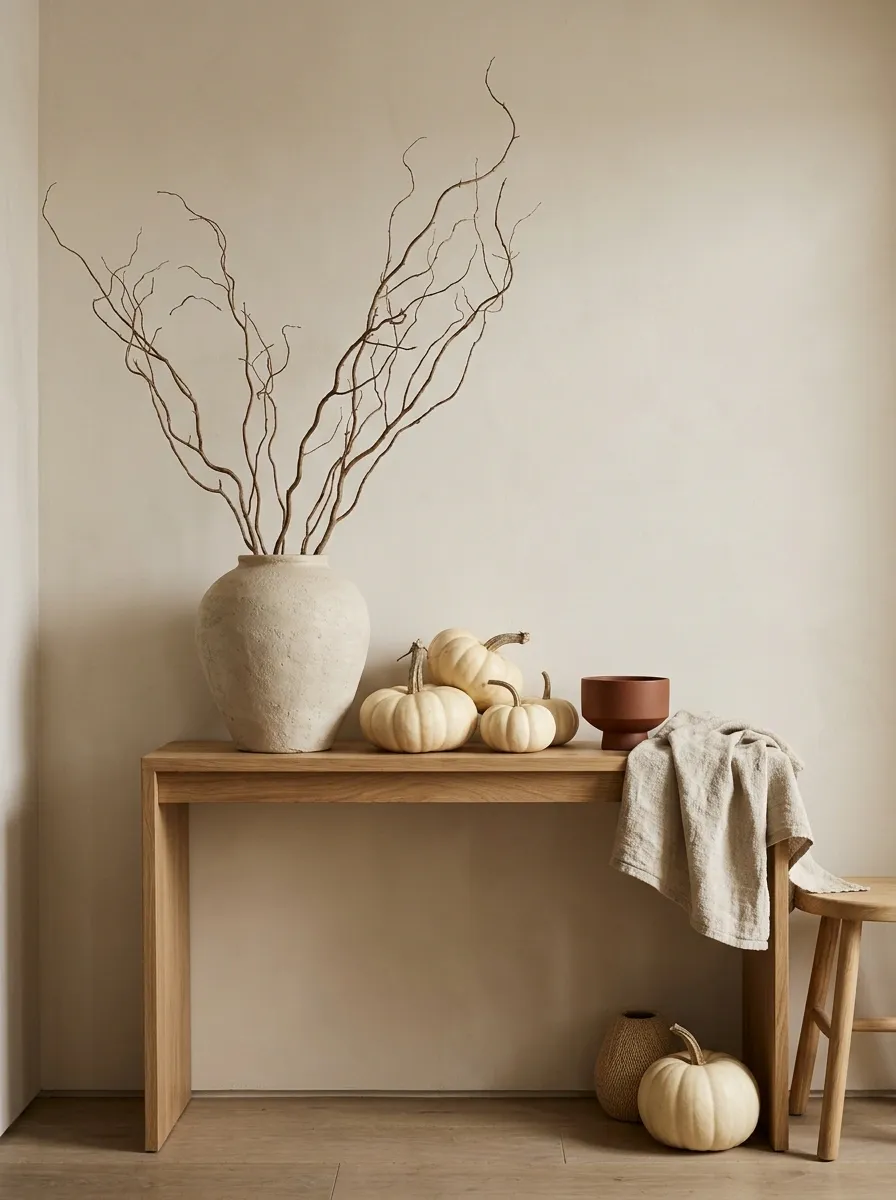
The look: quiet seasonal styling, natural silhouettes, and deliberate negative space.
A minimal Thanksgiving arrangement can make a strong impression with only a few elements. Place several cream pumpkins on a simple wood console, then introduce an oversized ceramic vase with expressive branches. Textured linen, a neutral wall, and natural wood provide enough depth to keep the scene from feeling bare. A single rust-colored object can introduce an autumn accent without disrupting the restraint.
This look depends on choosing pieces with interesting proportions and surfaces. One large branch arrangement often works better than a collection of tiny vases, while pumpkins in slightly different sizes prevent the grouping from appearing too uniform. The empty space is not an unfinished shopping list. It’s part of the composition, and it deserves to stay empty.
Understand focal point and negative space
The minimalist composition
Three elements. Room to breathe.
Use the branch silhouette to draw the eye upward.
Leave visible surface and empty wall around the grouping.
Thanksgiving Mantel With Dried Foliage and Antique Frames
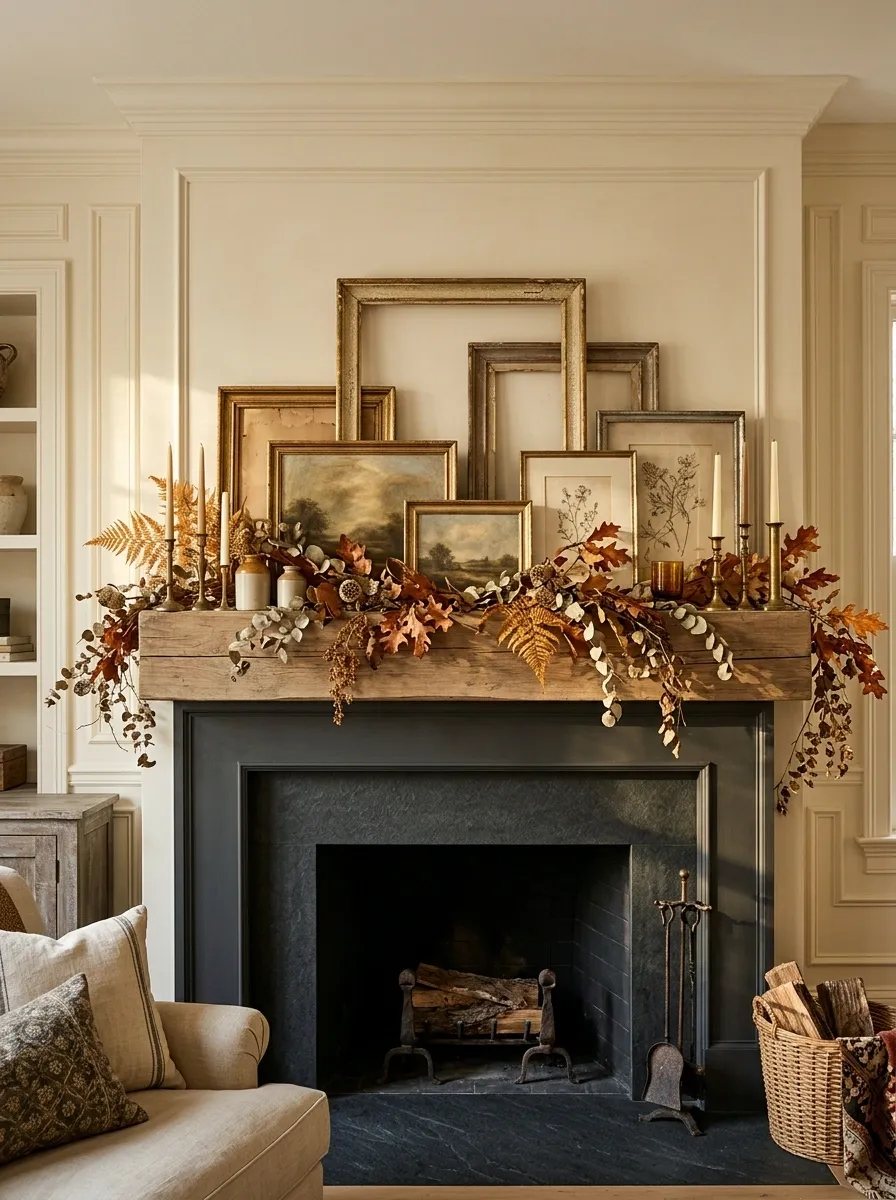
The look: traditional architecture, aged finishes, and a softly layered autumn display.
A traditional mantel becomes the natural focal point with dried foliage, antique-style frames, and candlesticks in mixed heights. Lean framed artwork against the wall, introduce a loose garland of leaves or branches, and keep a few sections of the mantel visible. Warm cream walls, weathered wood, and a darker fireplace surround provide enough contrast to make the arrangement feel rich without requiring bright orange decorations everywhere.
Layering is what gives this composition character. Artwork establishes the backdrop, foliage softens the straight architectural lines, and candlesticks introduce vertical rhythm. Keep the arrangement related in color, but don’t make every object identical. A mantel should look collected and balanced, not as though a store display team has been working overtime.
Build a layered mantel from the wall down
Mantel layering guide
Layer framed art against the wall to establish height.
Add foliage and varied candle heights. Leave some wood visible.
Fireplace safety matters: keep dried foliage, frames, and other flammable decorations outside the clearance zone specified for the fireplace.
Warm Transitional Thanksgiving Dining Room With Soft Green Cabinetry
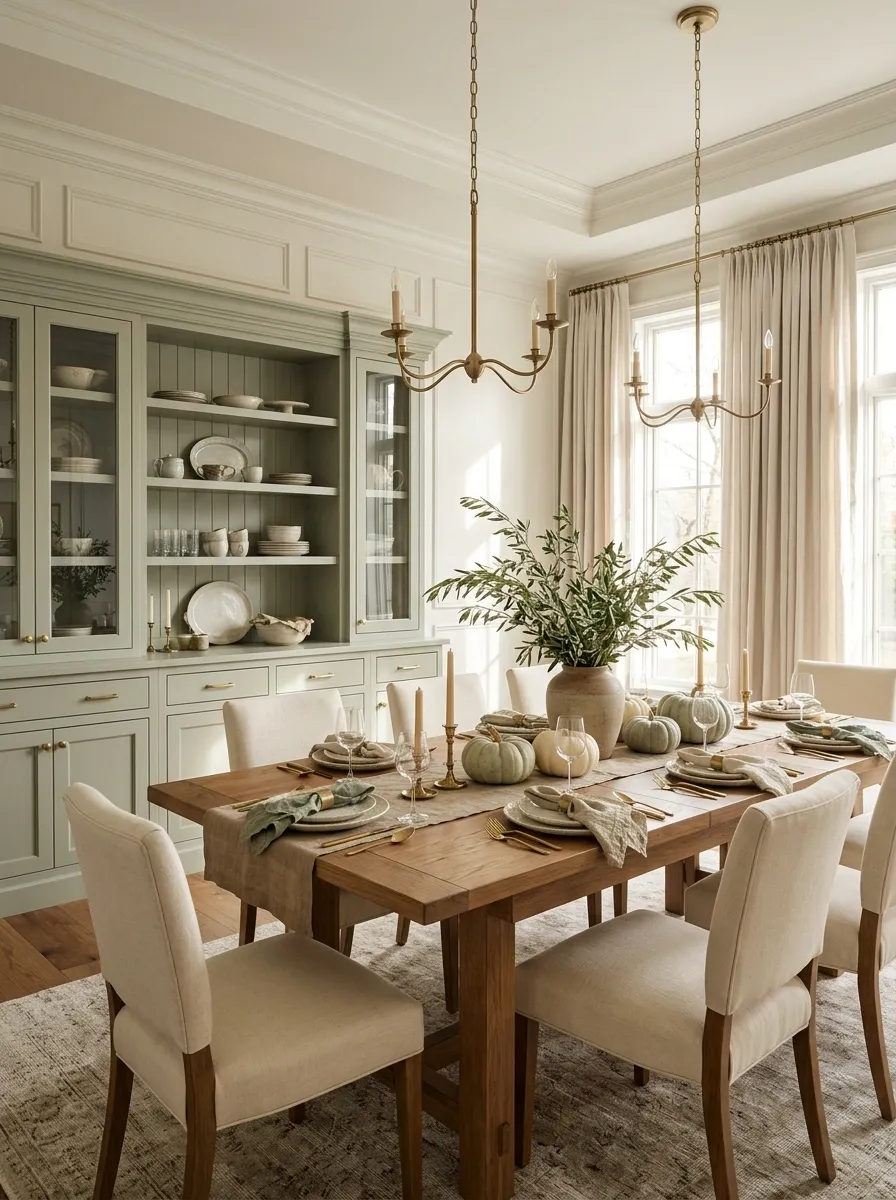
The look: traditional details, muted green cabinetry, and clean modern proportions.
Soft green built-in cabinetry provides a distinctive backdrop for a medium-tone wood dining table and upholstered traditional chairs. Linen curtains, understated brass lighting, and simple pottery soften the more formal furniture. Seasonal styling can stay relatively restrained, with olive branches, a few muted pumpkins, and textured napkins that echo the cabinetry without matching it exactly.
The transitional look works because it mixes familiar shapes with simpler finishes. Traditional chair silhouettes bring character, while the subdued cabinetry and uncluttered tabletop keep the room feeling current. Warm wood prevents the green from reading too cool, and pale textiles lighten the larger furniture pieces. There’s no need to throw every trendy finish into the mix and hope they work things out in therapy.
Coordinate the large finishes before choosing accessories
Finish coordination
Start with the surfaces you can’t easily change.
Thanksgiving Buffet Station With a Vintage Sideboard and Layered Serving Pieces
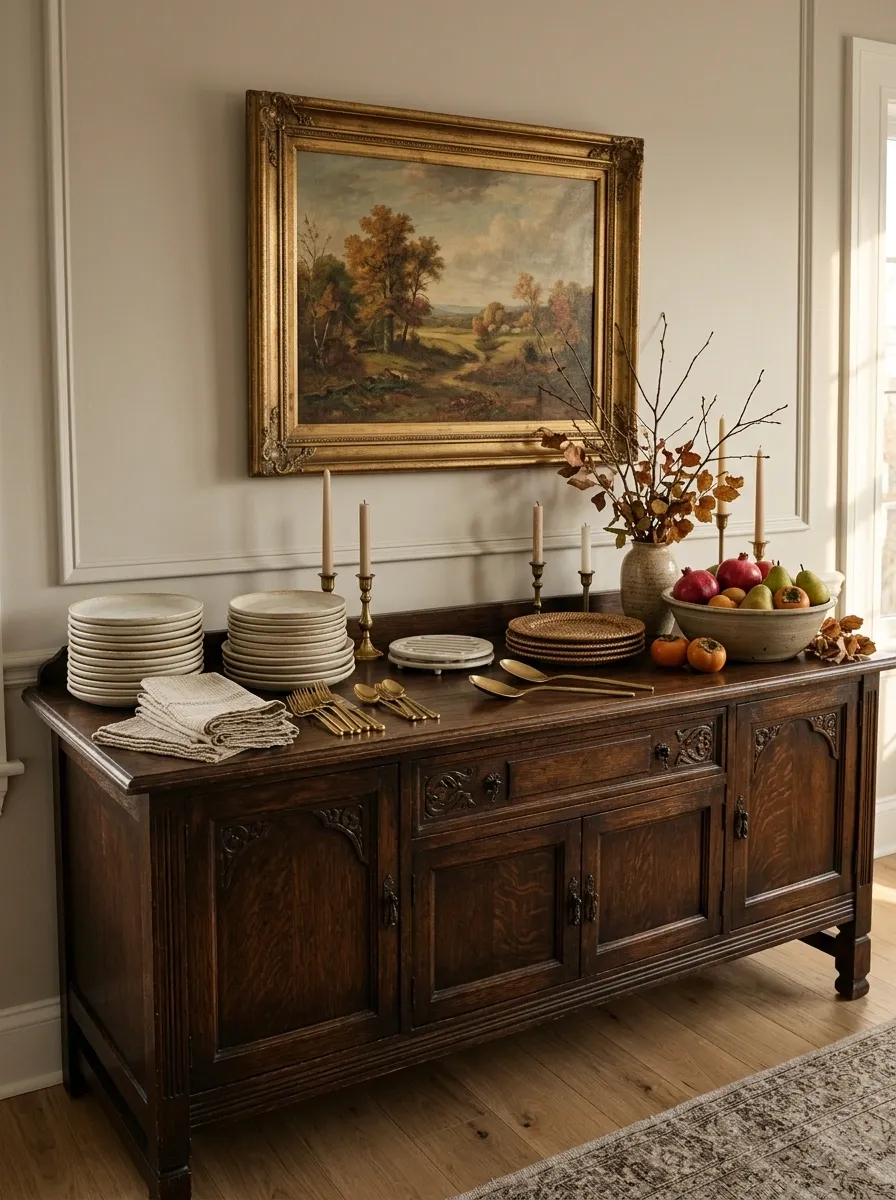
The look: a welcoming serving station with vintage furniture and a genuinely useful layout.
A substantial vintage sideboard can do double duty as a decorative focal point and a practical buffet station. Arrange serving platters and bowls in small groups, keeping plates at one end and cutlery and napkins within easy reach. A few branches, understated candleholders, and a bowl of seasonal fruit add the Thanksgiving atmosphere without taking over the surface. Artwork above the sideboard connects the station to the rest of the dining room.
This setup is especially useful when the main dining table is too small for every dish. Separate the decorative details from the areas guests need to reach, and leave enough room to set down serving spoons and hot dishes safely. The buffet should make dinner easier, not require a traffic coordinator holding a tiny whistle beside the gravy.
Make serving flow intuitive
Buffet layout
Make the next step obvious.
Easy to grab
Space for serving spoons
Keep essentials together
Use the back edge or the space above the sideboard for artwork and a modest branch arrangement. Keep the main serving path open and protect the surface from hot cookware.
Moody Thanksgiving Reading Corner With Plaid and Amber Light
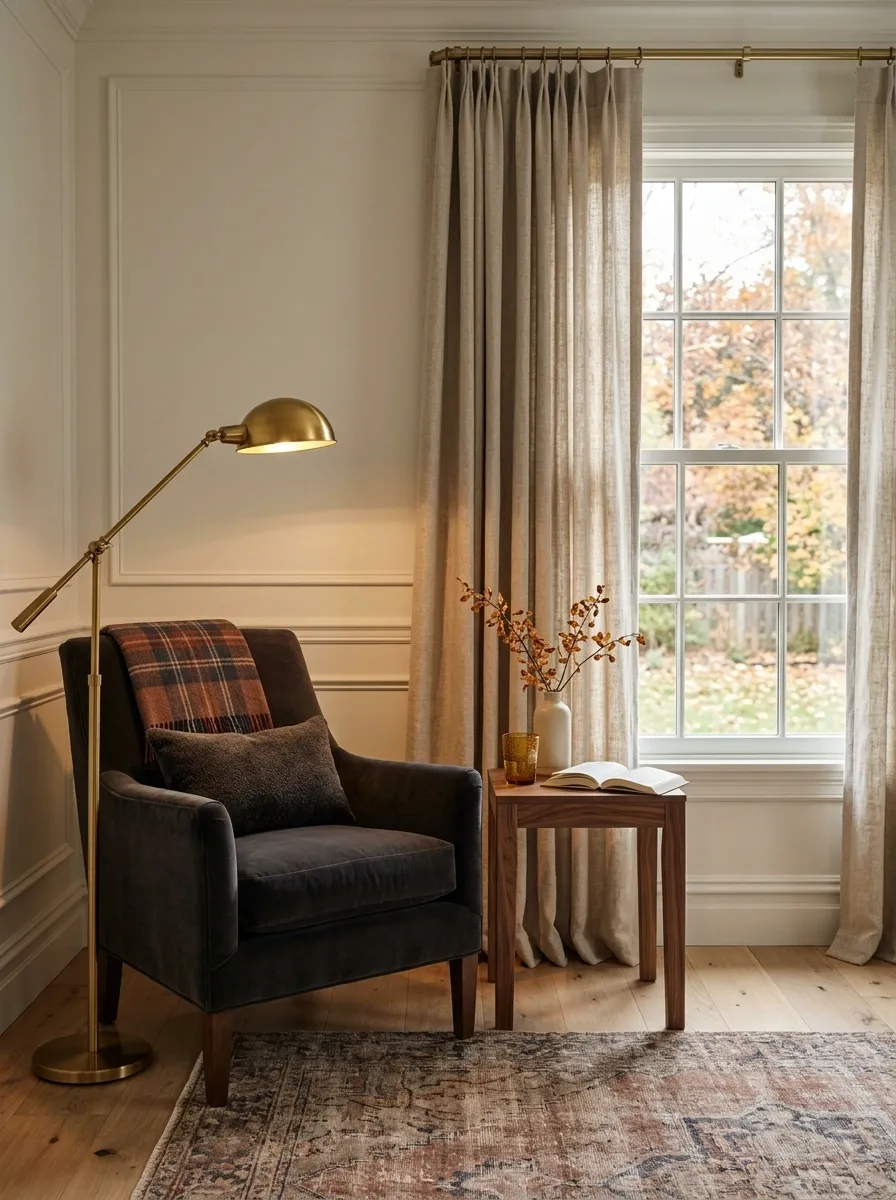
The look: deep colors, traditional pattern, and a quiet corner for escaping the kitchen commotion.
A deep-toned armchair, a muted plaid throw, and a walnut side table create a reading corner with a distinctly autumnal character. An adjustable floor lamp provides useful reading light, while amber glass and a small ceramic vase echo the warmer tones in the fabric. If the corner sits beside a window, a heavier curtain can frame the seating area and add texture without making the entire room feel dark.
The combination works because the materials each bring something different: plaid adds pattern, velvet or textured upholstery adds depth, wood offers warmth, and the lamp creates a focused pool of light. Keep the side table large enough for a mug and a book, but don’t let accessories crowd it. Even introverts deserve somewhere to put their tea.
Layer lighting for both mood and function
The reading-corner lighting plan
Warm atmosphere. Useful light.
Place an adjustable lamp beside or just behind the reading seat.
Use warm secondary lighting elsewhere in the room to soften the contrast.
Styling note: Use plaid and dark upholstery for visual depth, then let amber light pick up the warmer wood tones. Keep the bulb’s brightness suitable for reading, not just atmospheric photography.
Thanksgiving Kitchen Island With a Casual Seasonal Arrangement
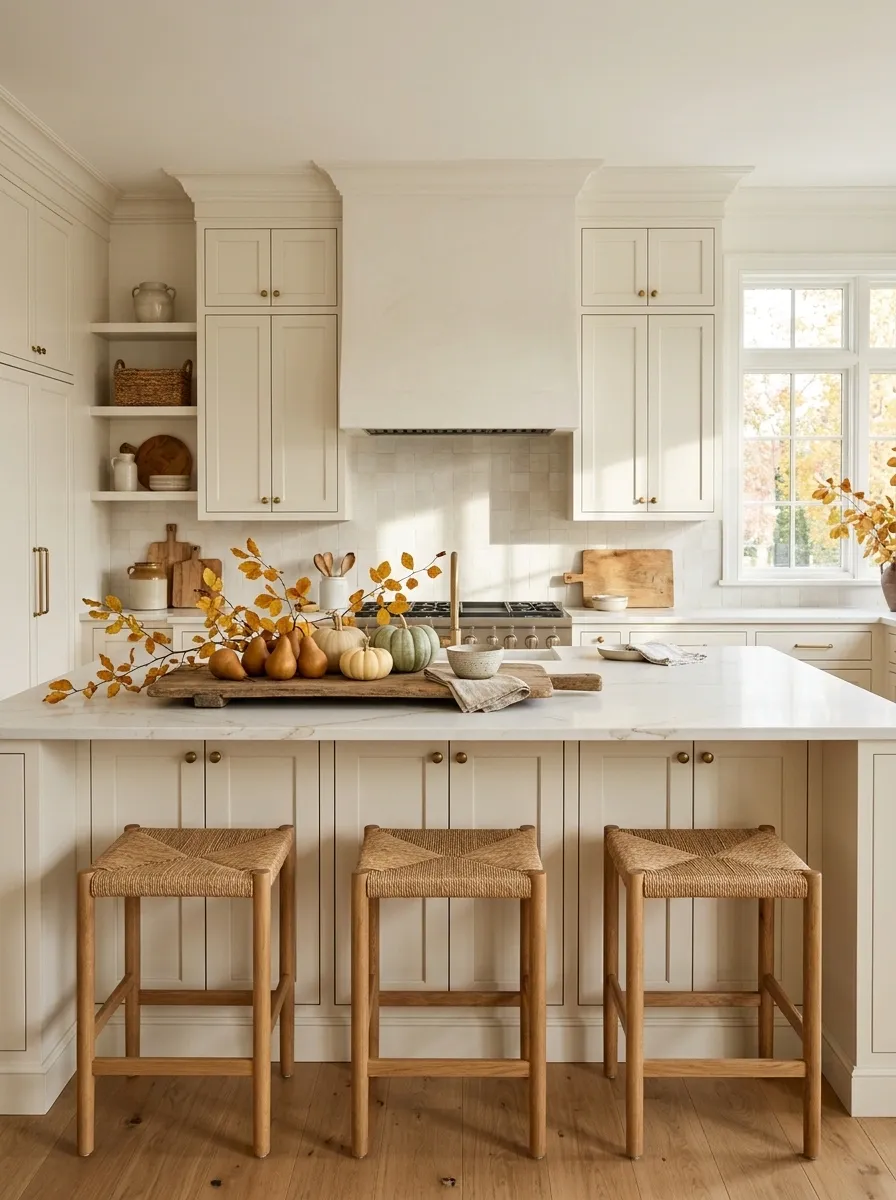
The look: a generous kitchen island with autumn styling that stays out of the way.
A spacious kitchen island can become a subtle Thanksgiving focal point with a low arrangement of pears, small pumpkins, and leafy branches. Add a wooden serving board and a few stools in a finish that relates to the cabinetry. Keep the wider kitchen calm, with matching undertones between the island, counters, and cabinets so the seasonal accents feel integrated rather than dropped into the middle of a different design.
A low centerpiece is especially practical here because the island often needs to serve several roles, from food prep to casual seating and buffet service. Establish a decorative section toward one side, leaving the primary work area clear. If the island is already a busy multitasking machine, it doesn’t need a decorative obstacle course added to its job description.
Separate styling from work space
Kitchen island zones
Decorate the island, not the chopping board.
Measure the usable surface. Leave room for appliance doors, serving dishes, and anyone seated at the island. Keep decor stable and away from heat, food-contact areas, and active preparation zones.
Old World Thanksgiving Dining Room With Stone, Linen, and Weathered Wood
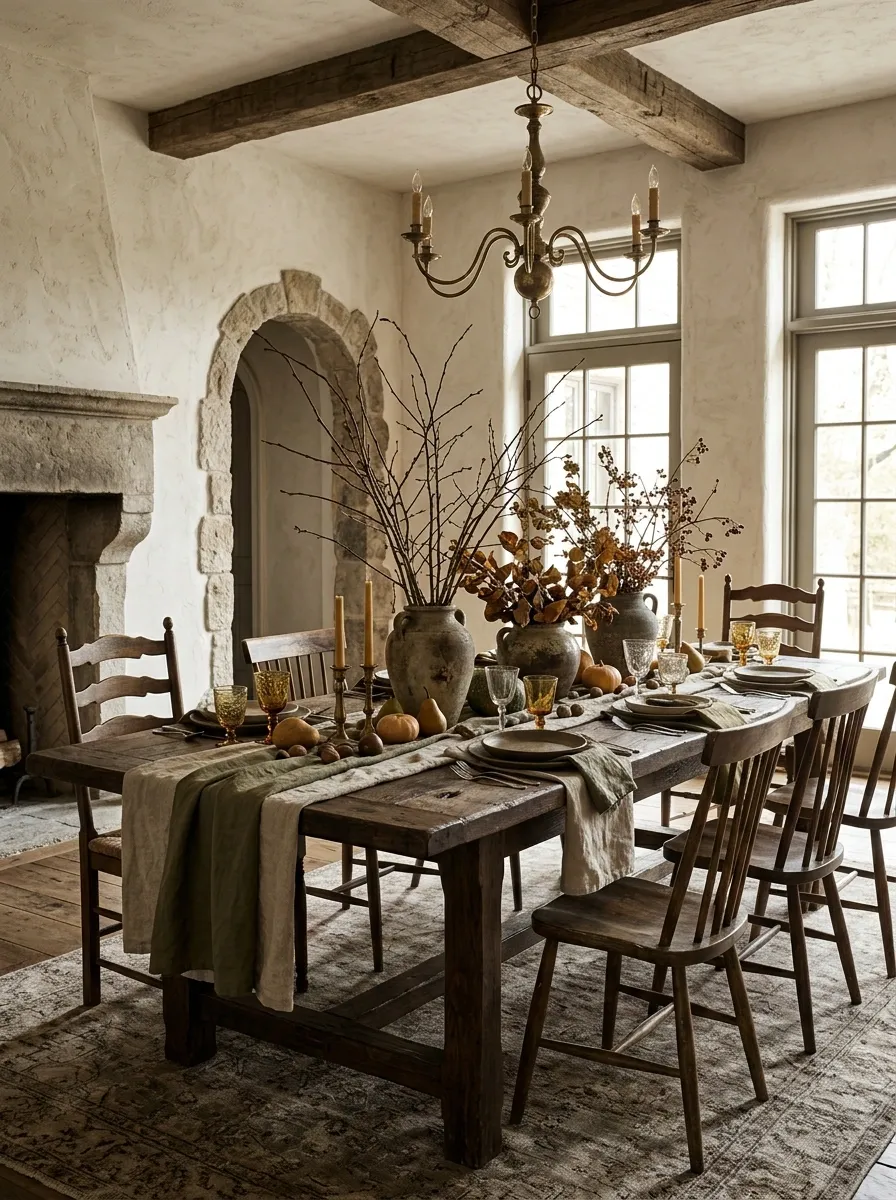
The look: European-inspired character, timeworn materials, and an earthy autumn palette.
A weathered wood dining table, textured plaster walls, and natural linen set the tone for an old-world Thanksgiving room. Antique-style pottery and expressive branches provide the centerpiece, while traditional chairs and warm metal fixtures give the space a sense of history. Choose muted olive, toasted brown, and soft ivory rather than relying on bright orange as the main seasonal color.
The appeal comes from the contrast between imperfect surfaces and softer materials. Rough stone or plaster feels more balanced beside relaxed linen, while the aged wood brings warmth to the whole composition. New furniture can still work here, especially when its finish isn’t overly polished. The room should feel as though its pieces have stories, even if the table hasn’t survived three centuries of family arguments.
Balance rough and soft materials
Old-world material palette
Character comes from contrast.
Keep it believable: Use a few substantial materials and let their natural variation show. Too many shiny, perfectly matched finishes can erase the relaxed character that makes this look special.
Thanksgiving Dessert Table With Layered Cakes and Autumn Fruit
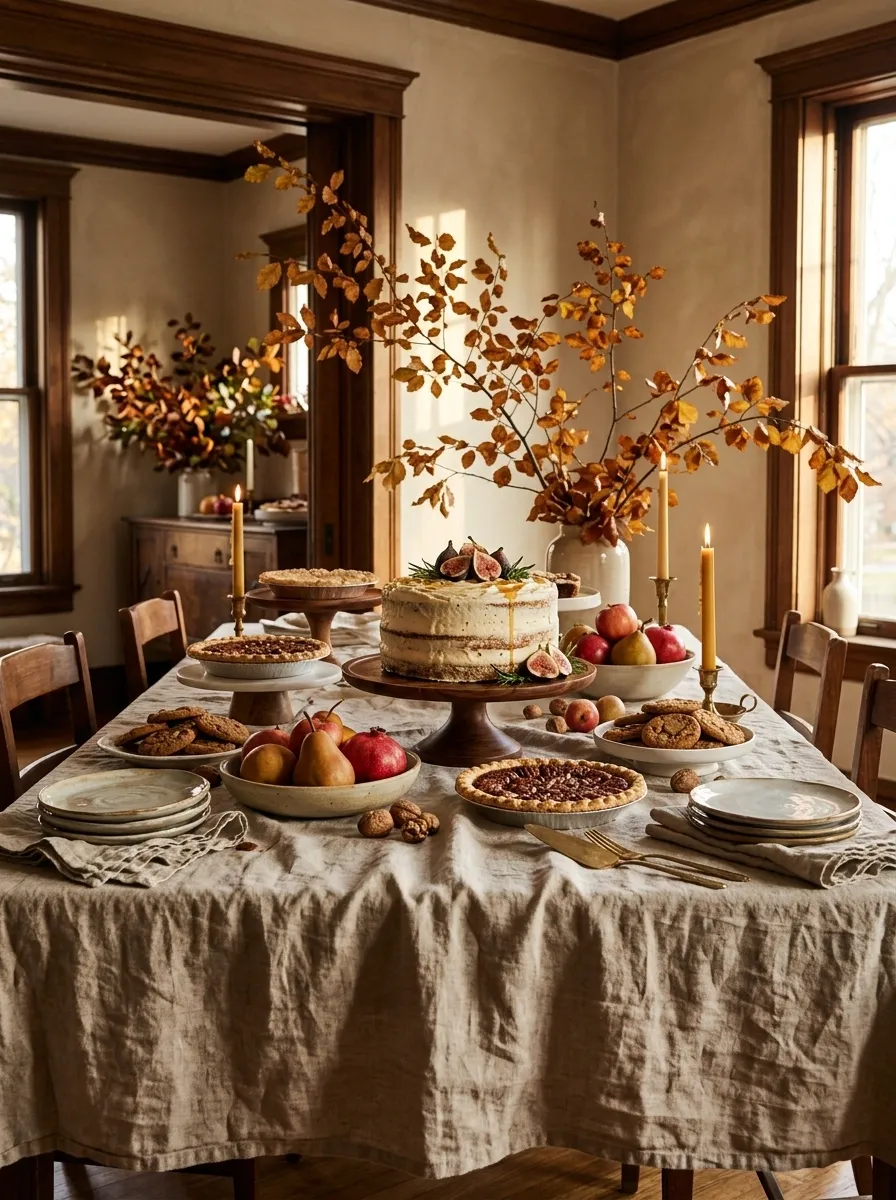
The look: a generous dessert display that makes the sweets look as good as they taste.
A dedicated dessert table gives pies, cakes, cookies, and seasonal fruit their own place without competing with the main dinner setup. Use a linen tablecloth as the foundation, then vary the heights of cake stands, platters, and shallow bowls. Pears, apples, and a few autumn branches tie the display to the season. Warm wood and simple ceramics prevent the arrangement from feeling too formal.
The most effective displays have a clear focal point, usually the main cake or largest pie, with smaller treats arranged around it. Keep serving utensils and dessert plates easy to reach, and leave some open space for guests to set things down. The goal is to make dessert inviting, not to create a pastry obstacle course that requires a map and emotional support.
Build the dessert table around height and access
Dessert table composition
Give the star dessert a little altitude.
Use sturdy stands to make the main dessert visible from across the table.
Leave room for dessert plates, serving tools, and guests reaching for a second slice.
Thanksgiving Decor for a Narrow Hallway With Warm Lighting
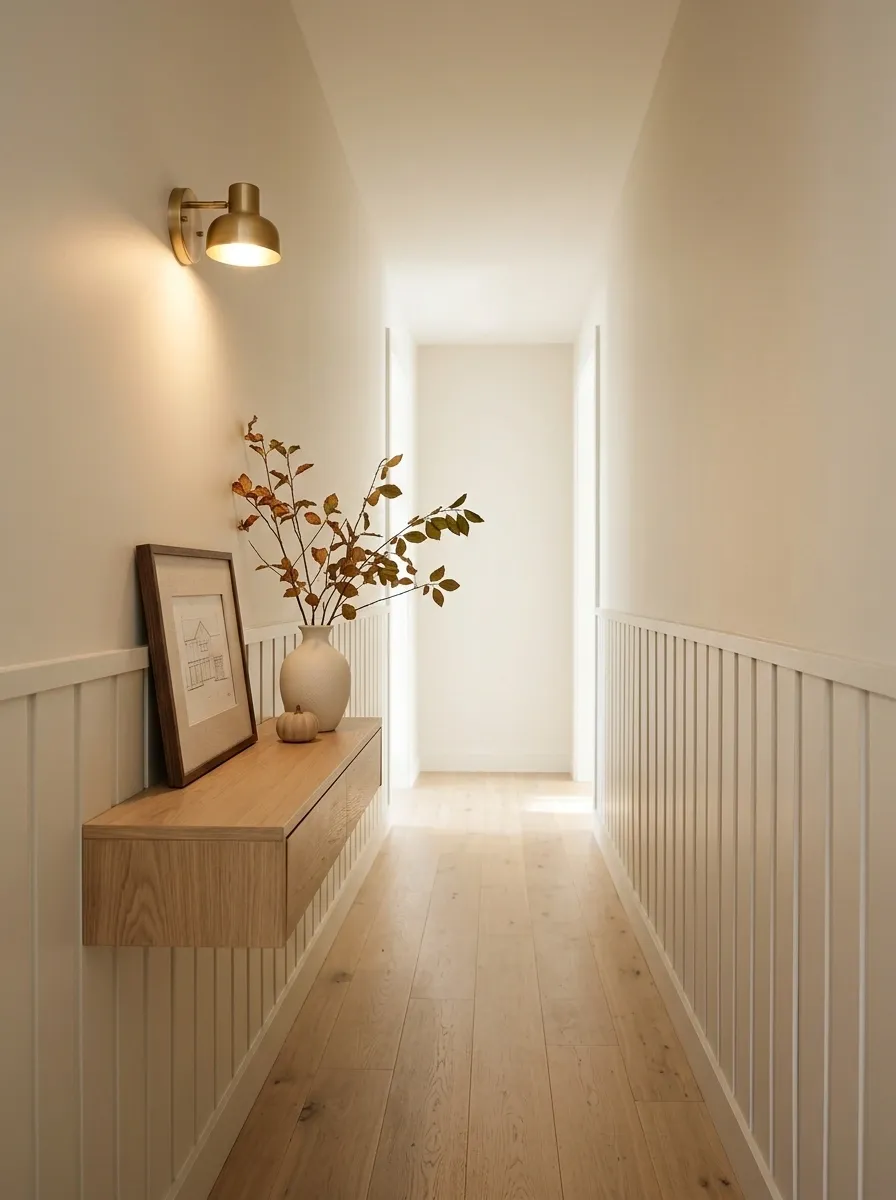
The look: a small seasonal moment that respects the hallway’s limited space.
A narrow hallway doesn’t need a large console or an elaborate arrangement to feel ready for Thanksgiving. A slim wall-mounted shelf or shallow console, framed artwork, and a small ceramic vase with seasonal branches can create an understated display. Warm wall sconces or a table lamp, where space permits, add a welcoming glow. A restrained rust or olive accent connects the hallway to the rest of the home’s autumn palette.
The important design decision is scale. Furniture that projects too far into the walkway can make the entire hall feel cramped, while oversized accessories overwhelm the narrow proportions. Keep the floor clear and position decorations where they won’t be bumped by bags, coats, or passing guests. Hallways are for getting somewhere. They weren’t designed to become seasonal storage facilities with ambitions.
Preserve the walking space
Narrow hallway planning
Keep the floor doing its actual job.
Keep the path clear from end to end.
Before placing furniture: Measure the full route and account for door swings, trim, and anything that projects into the hall. Use wall-mounted styling if a floor-standing piece would compromise movement.
Family-Friendly Thanksgiving Living Room With a Low Seasonal Display
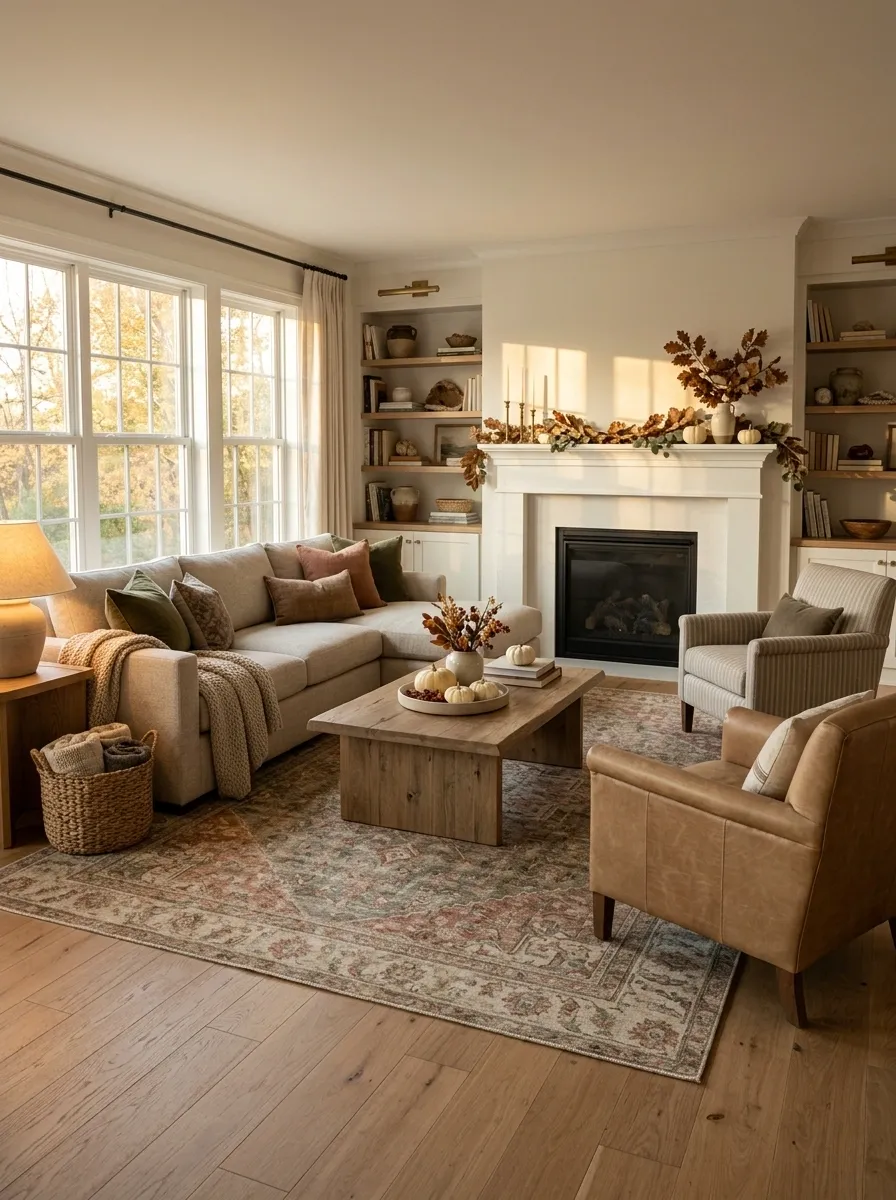
The look: comfortable seating, durable materials, and festive details that can survive a busy gathering.
A family-friendly Thanksgiving living room should feel inviting before anyone notices the decorations. Start with practical upholstery, a durable rug, and a low wooden coffee table. A small arrangement of cream pumpkins and foliage brings in the season, while soft cushions in olive and rust link the display to the surrounding furniture. Keep floor space open for children to play and leave the most fragile accessories on higher, less accessible surfaces.
The goal is not to remove every attractive object from reach. It’s to choose decorations that suit how the room is actually used. Stable arrangements, washable covers, and easy-to-move serving trays make the setup more forgiving during a busy holiday. The room should be ready for family life, not a silent retreat where everyone is terrified of touching the throw pillows.
Choose decor according to how the room is used
The family-room reality check
Style for the people who live there.
Choose upholstery and throws that can handle frequent use and easy cleanup.
Use a compact display that won’t tip easily or obstruct the view across the sofa.
Avoid extra baskets, fragile objects, or decor clusters in high-traffic areas.
Practical can still look polished. The trick is choosing fewer, more useful pieces instead of decorating every surface and hoping for the best.
Candlelit Thanksgiving Dining Room With a Long Natural Centerpiece
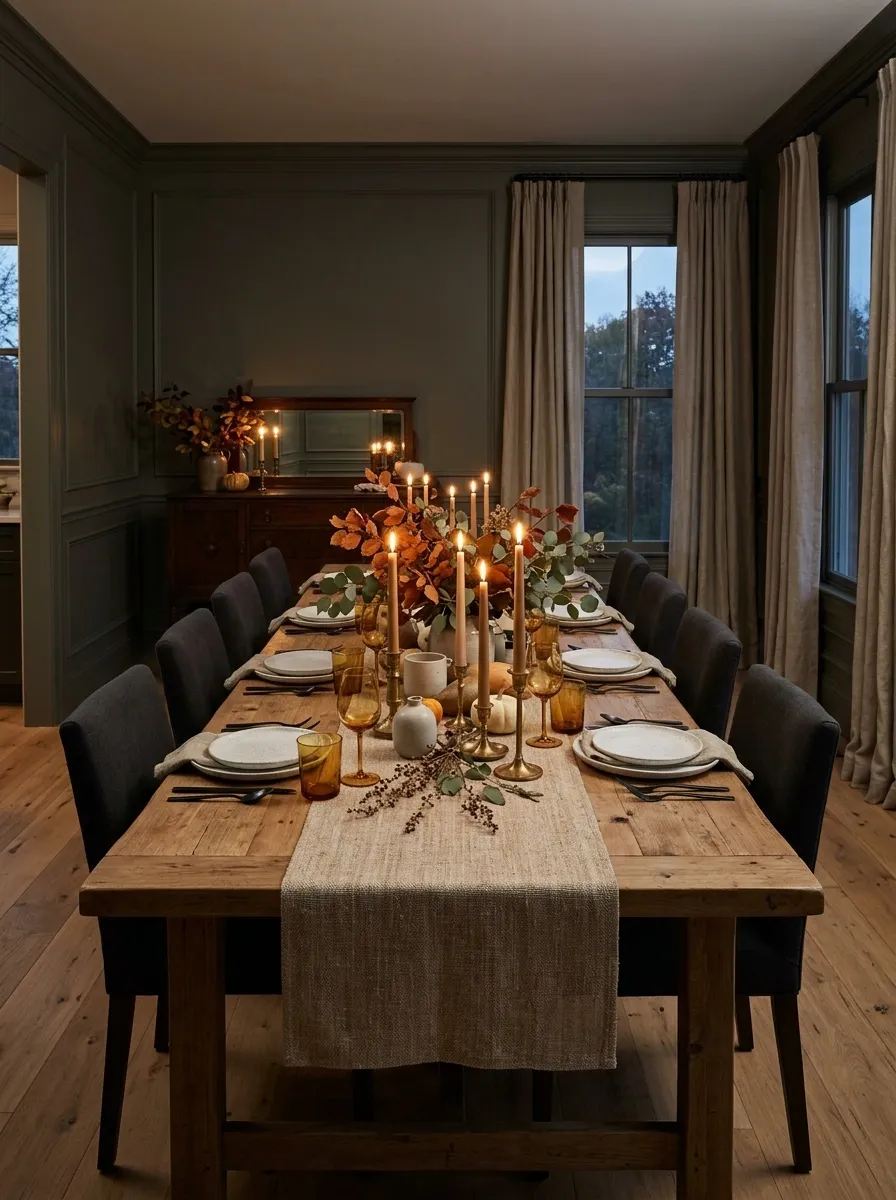
The look: intimate evening dining with natural texture and warm, layered light.
A long wooden dining table, natural linen, and a low centerpiece of autumn foliage make a beautiful starting point for an intimate Thanksgiving dinner. Add taper candles in stable holders and a few understated ceramic vessels, allowing the wood grain and soft fabric to remain visible. Darker accents in the chairs, wall art, or tableware help the candlelight stand out without making the room feel heavy.
The centerpiece should run along the table without becoming a wall between guests. Mix a few low branches with shorter foliage and leave enough space around every plate. Use candleholders that sit firmly on the surface, keep flames away from dried materials, and extinguish candles before leaving the room. The atmosphere should be warm and welcoming, not a live demonstration of why open flames and dried leaves are a terrible couple.
Create candlelight without sacrificing conversation
The evening tablescape
Keep the glow low and the sightlines open.
Use stable holders and keep flames well away from foliage and textiles.
Use short branches and compact vessels so guests can talk across the table.
Make Thanksgiving Feel Like Home, Not a Seasonal Showroom
The most memorable holiday spaces aren’t necessarily the ones with the most decorations. They’re the ones where the details feel connected: a dining table that relates to the room around it, an entryway that welcomes people inside, or a living room that looks inviting enough for someone to kick off their shoes and stay awhile.
Start with the space itself. Notice the wood tones, the natural light, the furniture that needs to stay, and the places where people actually gather. Choose a palette that works with those details, then bring in seasonal colors through linens, foliage, pottery, fruit, and a few carefully placed pumpkins. The goal is not to recreate a photograph down to the last leaf. It’s to borrow the parts that suit your home and make them work together.
And when the decorating starts getting out of hand, remember the rule: the dining table needs room for dinner, the sofa needs room for people, and the hallway needs room for walking. The pumpkins will cope with not being the main character.