
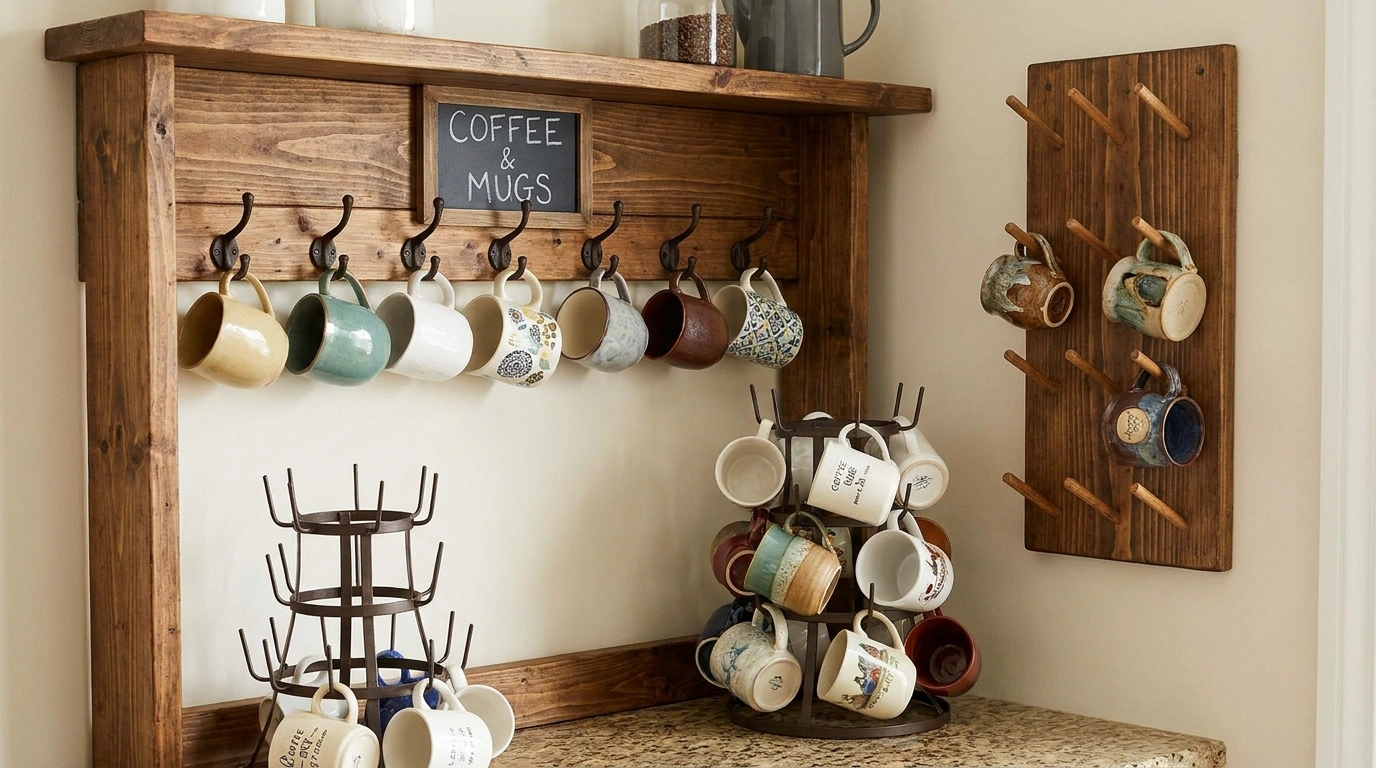
Your favorite mugs shouldn’t take over the counter while the coffee machine sits squeezed between the toaster and yesterday’s mail. Yet a new rack alone rarely fixes that awkward corner.
The cups, brewing equipment, storage, and nearby furniture need to work together, or the whole setup still feels like a collection of things waiting for a home.
The best coffee rack and mug holder ideas start with a complete scene. An oak recess with a slim rail makes sense in a fitted kitchen. A vintage dresser can carry an entire coffee collection in a dining room.
A small cart needs a different arrangement, especially if people pass it on their way to the fridge. Location changes the design as much as the rack itself.
Choose the Coffee Station’s Location Before the Mug Rack
Leave Room to Brew, Pour, and Refill
Set out your actual machine, grinder, and largest mug before choosing shelves. Open the water tank, lift the bean-hopper lid, and remove the drip tray. A station that looks tidy but blocks those movements will become irritating fast.
Match the Display to the Mugs You Actually Use
Wide handles need room on a rail. Handleless cups need a shelf. A mixed collection looks better when the arrangement accepts those differences instead of squeezing everything into matching slots. Keep your daily cups easy to reach and let occasional pieces occupy less convenient positions.
Check Cabinet Doors, Outlets, and Wall Fixings
Look beyond the empty wall. Nearby doors still need to swing, and the machine’s cable needs a sensible route to an appropriate outlet. Choose fixings and rack capacity for your wall and loaded collection. Follow the appliance manufacturer’s clearance guidance when placing equipment beneath shelves or inside cabinetry.
Coffee Rack and Mug Holder Ideas
Warm Oak Coffee Nook With a Full-Width Mug Rail
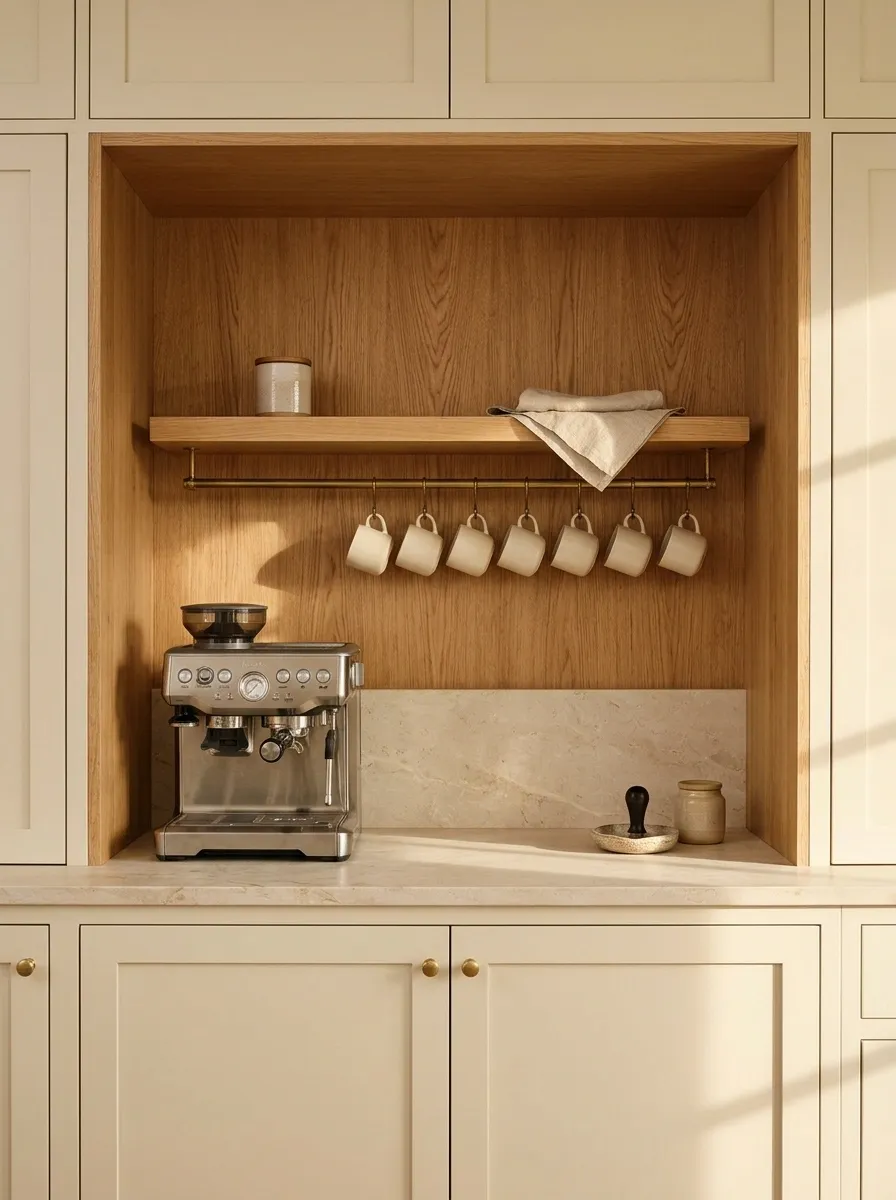
An oak-lined recess gives the coffee station a clear boundary without closing it off. A pale stone counter runs beneath a shallow shelf, while cream mugs hang from a slim rail across the back. Keep the espresso machine to one side and leave a clear patch beside it for pouring and stirring.
The oak does most of the decorating here. A small ceramic canister and folded linen cloth are enough. I’d skip the extra sign or stacked cookbooks, which would compete with the grain and make the recess feel smaller. Matching the nook’s base cupboards to the surrounding kitchen keeps the whole composition connected.
Vintage Pine Dresser With a Collected Mug Display
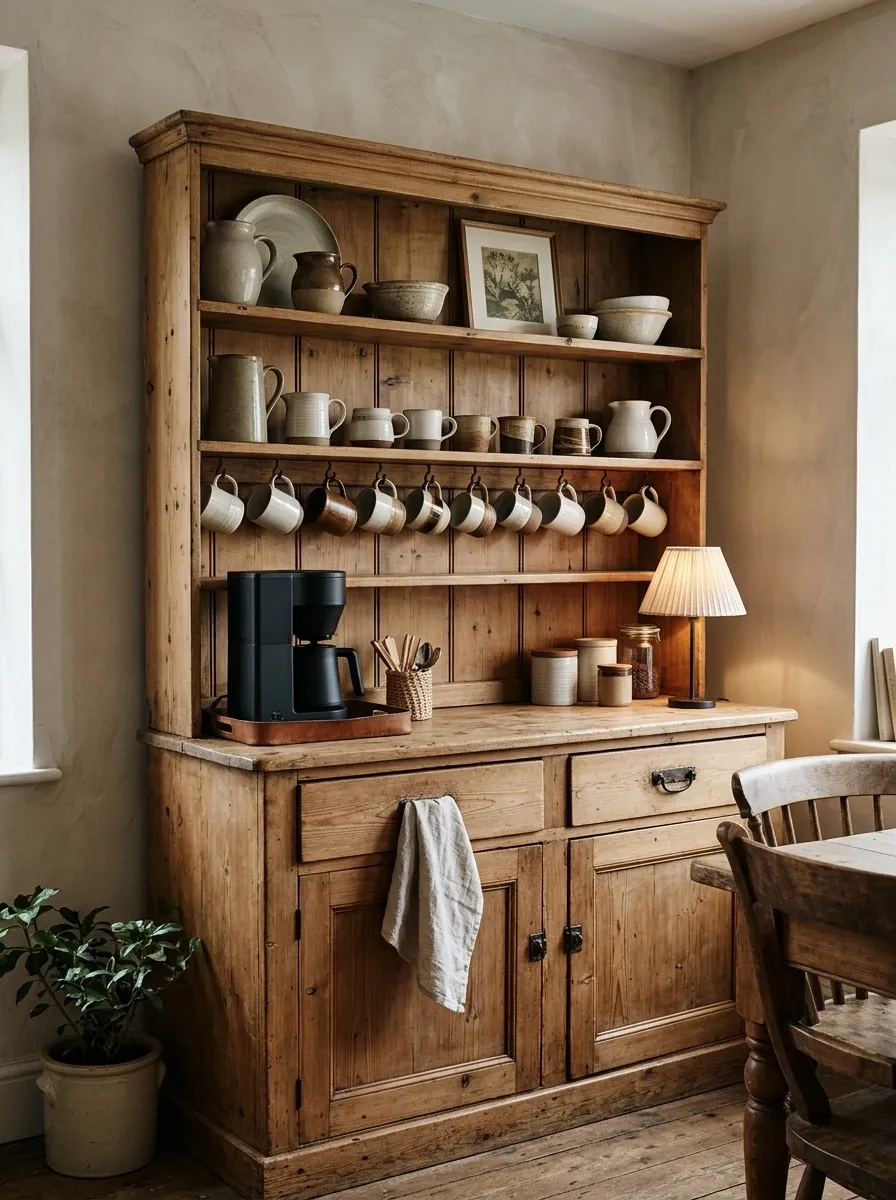
A pine dresser gives mismatched mugs a setting that makes sense. Hang everyday cups beneath the middle shelf, stand a few larger ceramics above them, and use the lower work surface for a compact brewer on a protective tray. Drawers swallow spoons, filters, and the small packets that otherwise gather around the machine.
Place the dresser against a plain dining-room wall with a framed print leaning on its upper shelf. A shaded lamp at one end softens the tall piece after dark. The cups don’t need matching patterns, but repeating a little cream or brown across the collection keeps the display from looking accidental.
Slim Apartment Coffee Cart With a Side-Hanging Mug Bar
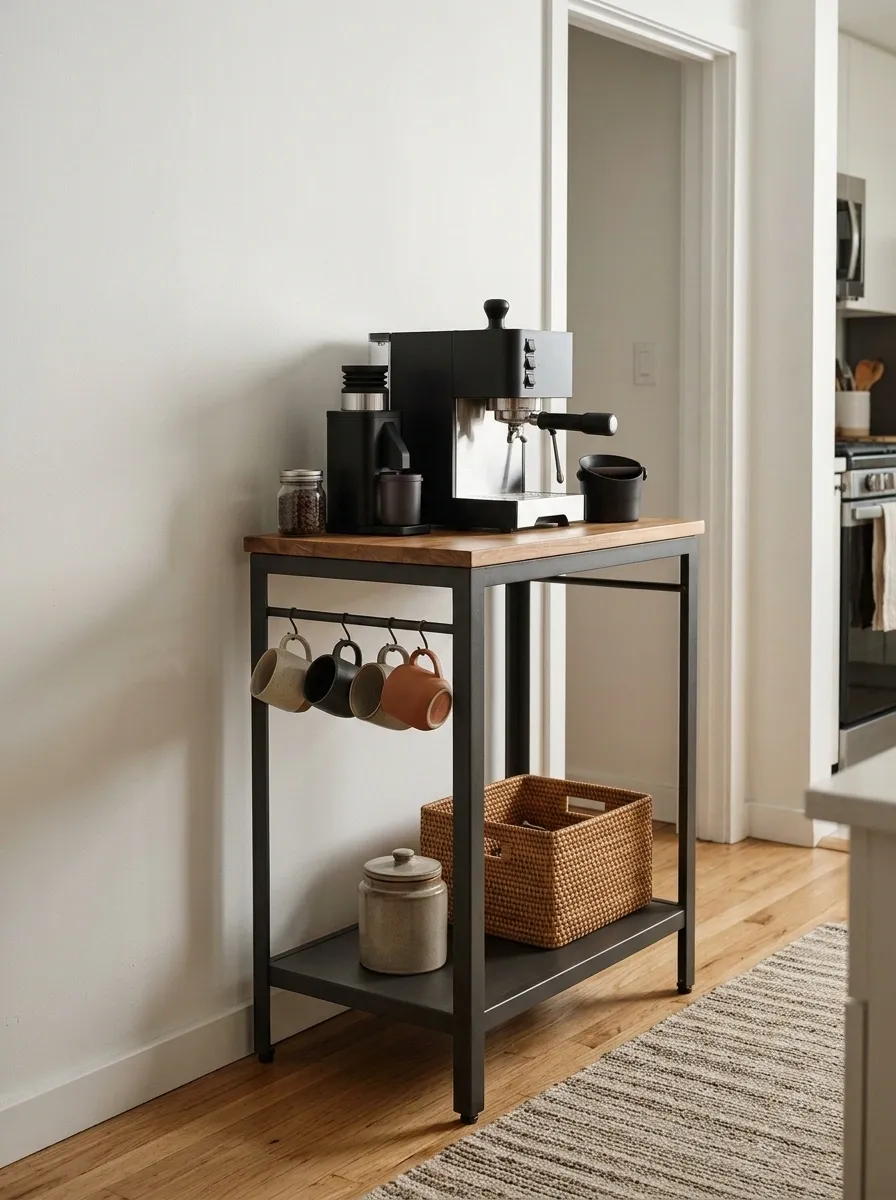
A narrow cart can give an apartment kitchen a proper coffee corner without another fixed cabinet. Choose a timber top with a dark metal frame, tuck the brewer toward the back, and hang mugs from an inward-facing side bar. A lidded container and a basket on the lower shelf keep the upper surface available.
Set the cart beside the kitchen entrance only if it leaves the route comfortably open. The warm top works well against plain white walls and a simple runner. Keep decorations minimal: the different heights of the machine, cups, and storage already give this small scene enough shape.
Arched Plaster Coffee Alcove With Recessed Mug Shelves
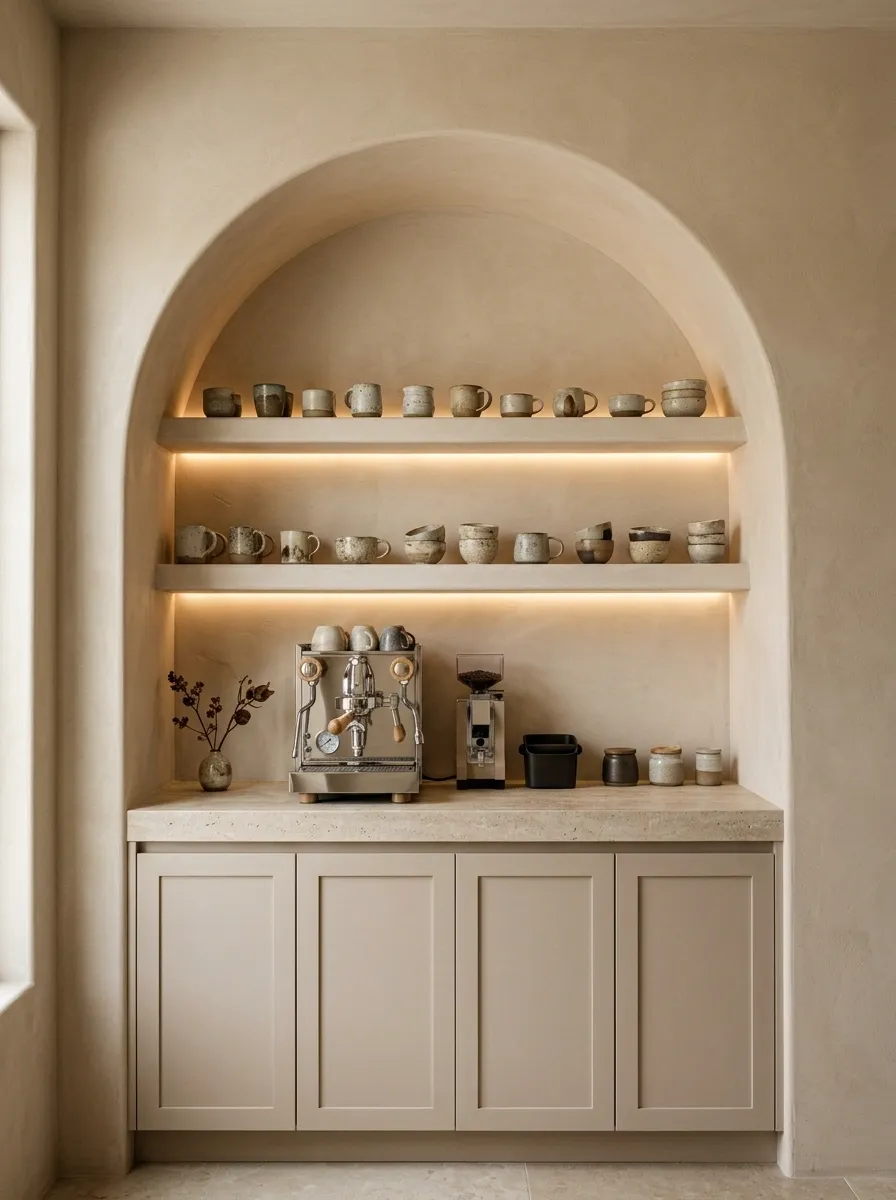
A plaster arch turns a small coffee station into part of the room’s architecture. Inside, a stone counter holds a restrained machine, while shallow recesses along one side display handmade cups. Warm task lighting picks up the uneven glaze and the gentle texture of the plaster.
Keep the lower cabinetry simple and close in color to the wall. That lets the opening carry the design without a second focal point fighting below it. This is a planned joinery project, so settle the equipment position before the niches are built. A handsome arch won’t compensate for a water tank trapped beneath it.
Graphic Pegboard Coffee Wall Above a Colorful Sideboard
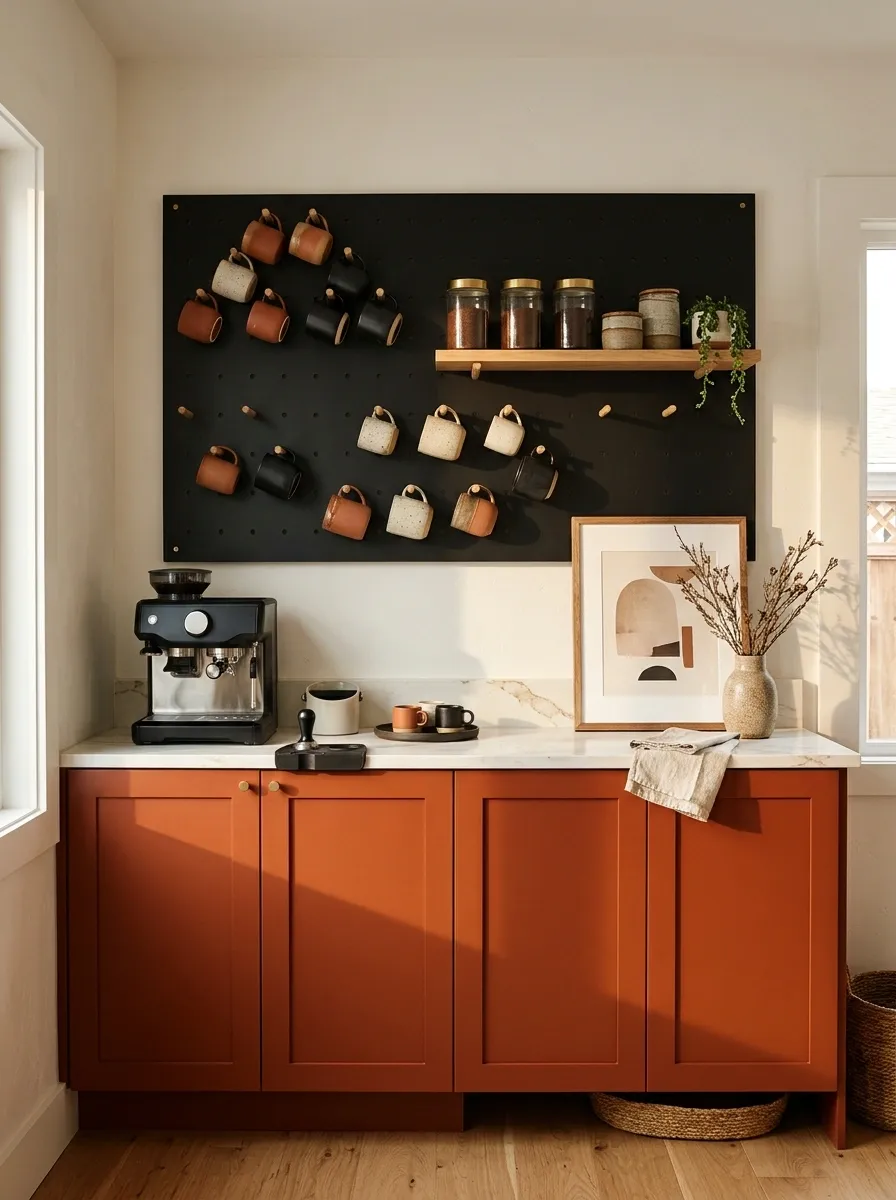
A generous pegboard above a rust-colored sideboard gives the mug collection a loose, graphic rhythm. Arrange cups in small groups, add one narrow shelf for coffee jars, and leave visible board between them. A compact brewer sits below, with a bold print leaning at the opposite end of the worktop.
The sideboard supplies the visual weight, so the board doesn’t need to be covered. I’d repeat the cabinet color in just a few mugs and let the others stay neutral. Use a pegboard system and fittings rated for the intended load, then keep the display flexible enough to change when a new favorite cup arrives.
English Cottage Breakfast Corner With a Cup-and-Saucer Rack
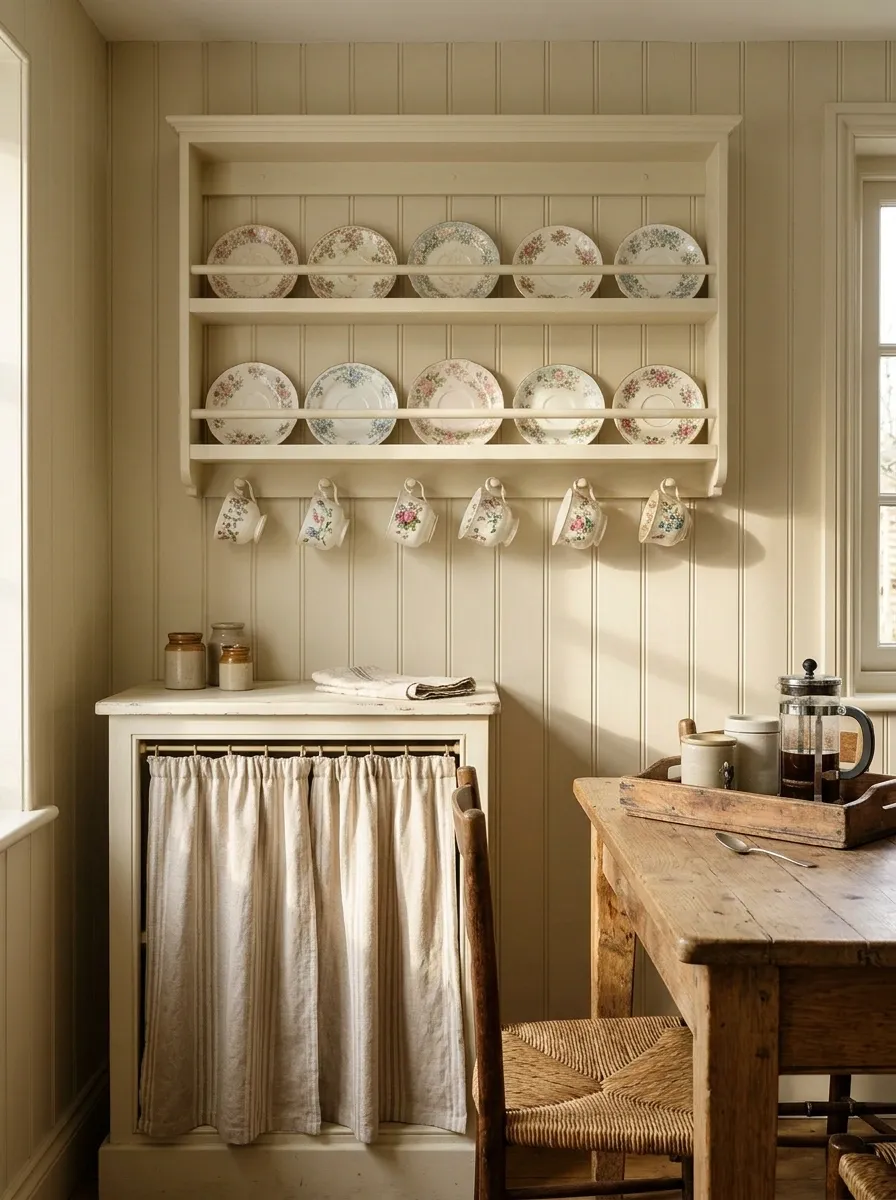
Floral cups, a painted wall rack, and cream beadboard give this breakfast corner its gentle character. Beneath the rack, a small cabinet with a gathered fabric skirt hides coffee supplies. A wooden table sits close enough to make the station feel like part of breakfast, while a washable tray protects the preparation surface.
Keep the rack’s paint close to the wall color so the patterned china stays in focus. A single woven chair seat adds texture without another print. The skirt works best with a simple stripe or plain linen; several competing florals would make the compact scene feel crowded.
Stainless Steel Espresso Bench With an Overhead Cup Shelf
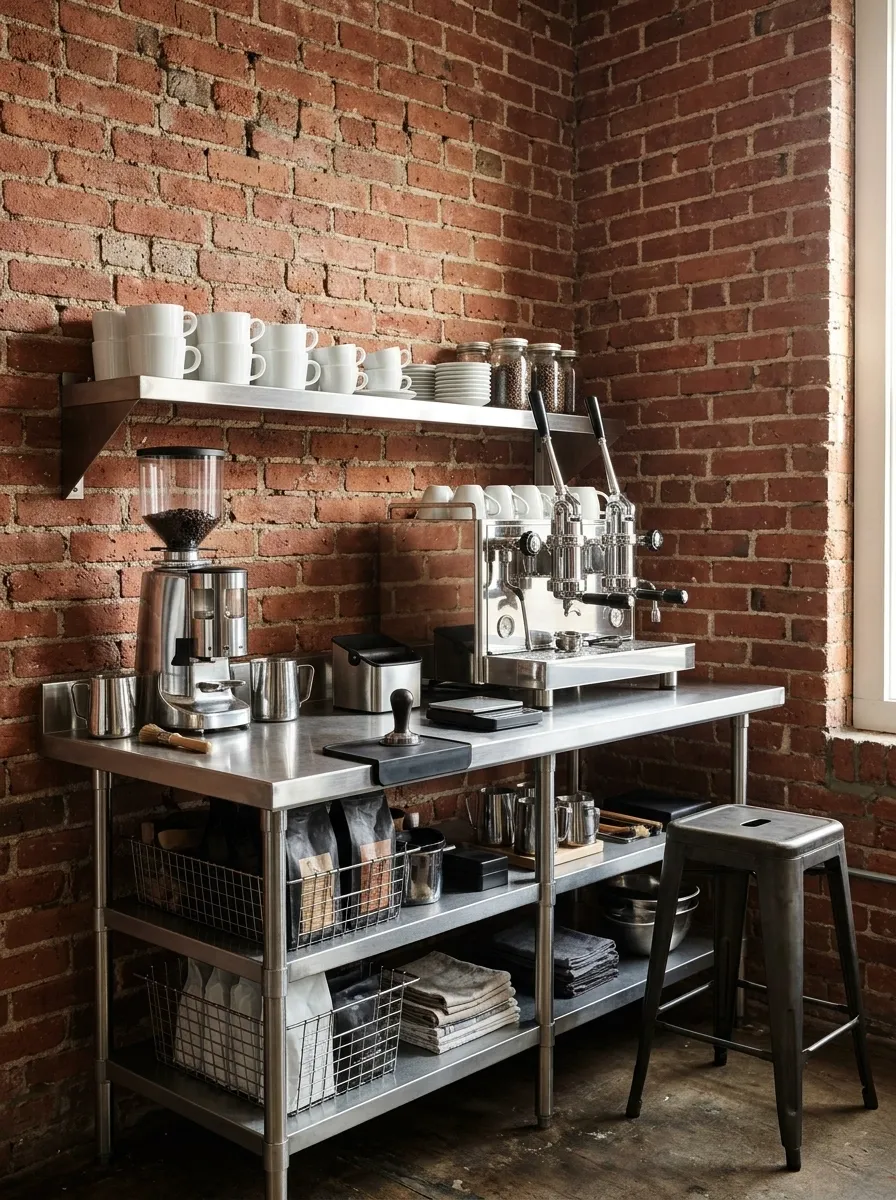
Brushed steel, exposed brick, and thick white café cups give this corner a working espresso-bar character. A freestanding bench holds the grinder beside the machine, with a cup shelf above and practical storage below. A dark stool can sit at the far end, outside the brewing area.
Let the metal surface remain visible instead of covering it with decorative trays. The brick already supplies enough texture, and the equipment brings its own shape. Keep any cup shelf clear of steam outlets and refill points. This look suits someone who wants the brewing process on show and doesn’t mind wiping fingerprints off steel.
Airy Window-Side Coffee Console With a Freestanding Mug Tree
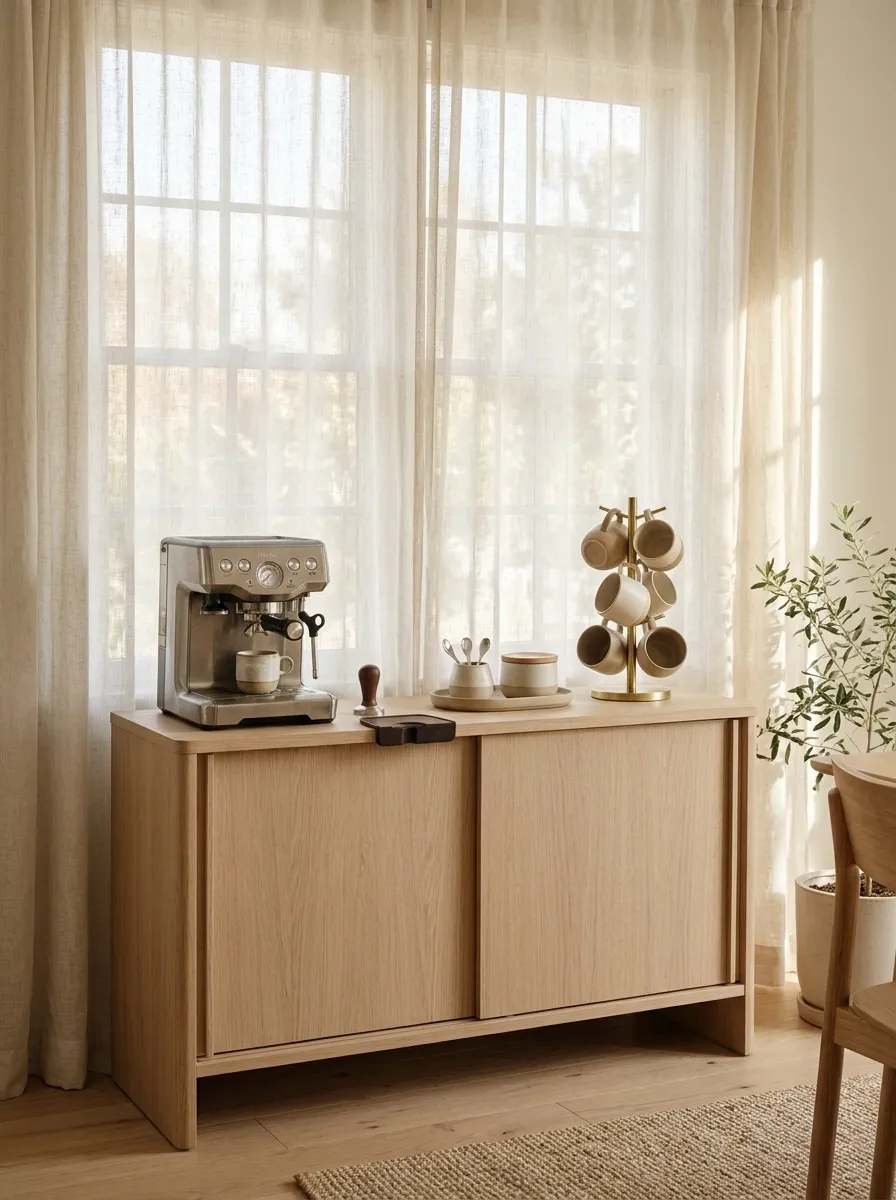
Daylight across pale wood makes a modest console feel like a generous coffee spot. A compact brewer occupies one end, a simple mug tree stands at the other, and a low tray holds the spoon pot and sugar. Linen curtains soften the window without covering the working surface.
Choose mugs in closely related shades so their silhouettes become the decoration. The tree needs breathing room around its branches, not a cluster of jars underneath. I’d use a console with closed storage below, which keeps the bright upper scene calm while still giving filters and spare coffee somewhere useful to go.
Black-and-White Galley Coffee Station With Under-Shelf Hooks
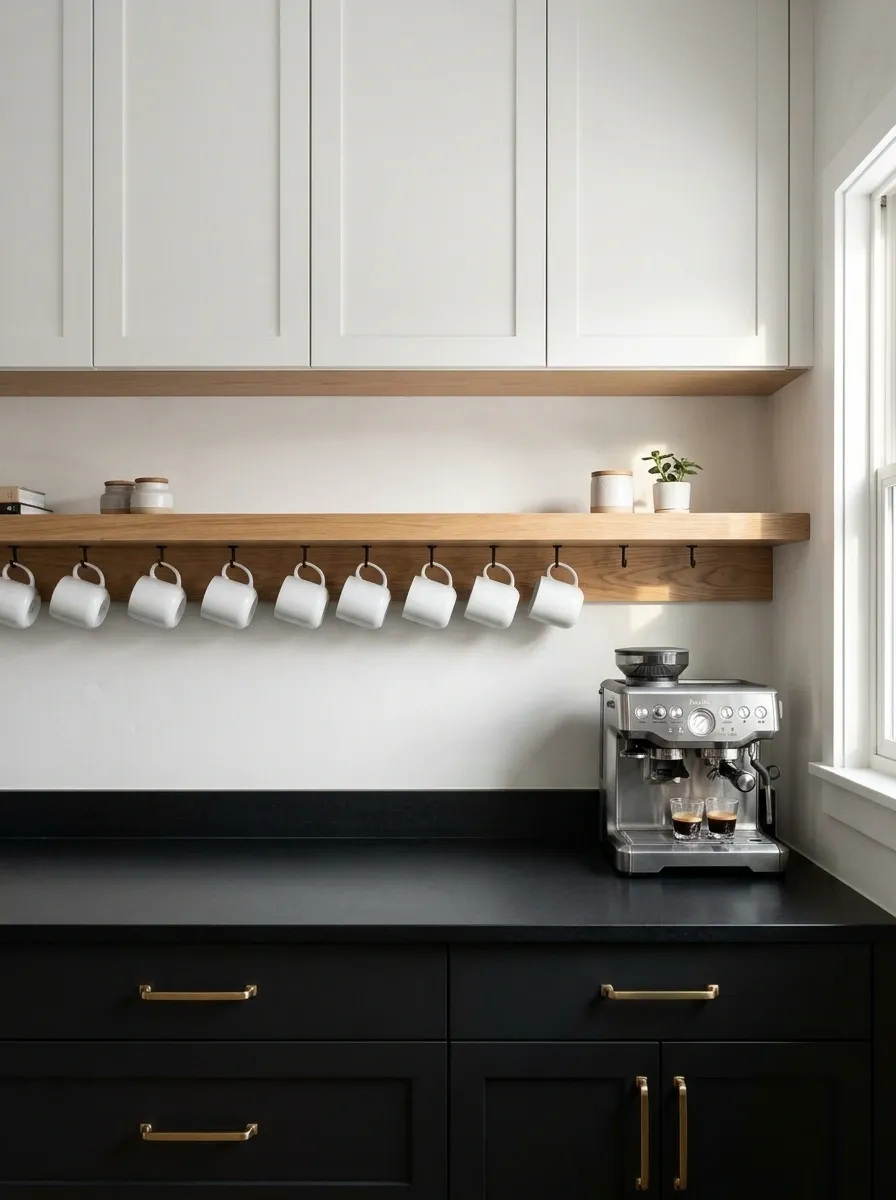
At the quiet end of a galley kitchen, a dark worktop and white cabinetry create a crisp setting for a row of hanging cups. A shallow shelf follows the counter’s length, with hooks beneath and a small brewer tucked toward the end wall. Keep the remaining surface clear for setting down breakfast.
The horizontal line makes the station feel part of the kitchen rather than a separate display squeezed into it. Black hooks give white mugs a sharp outline. Avoid adding deep shelves above this narrow counter; the visual weight and projecting cups can make an already tight workspace feel more enclosed.
Terracotta Coffee Corner With a Built-In Curved Bench
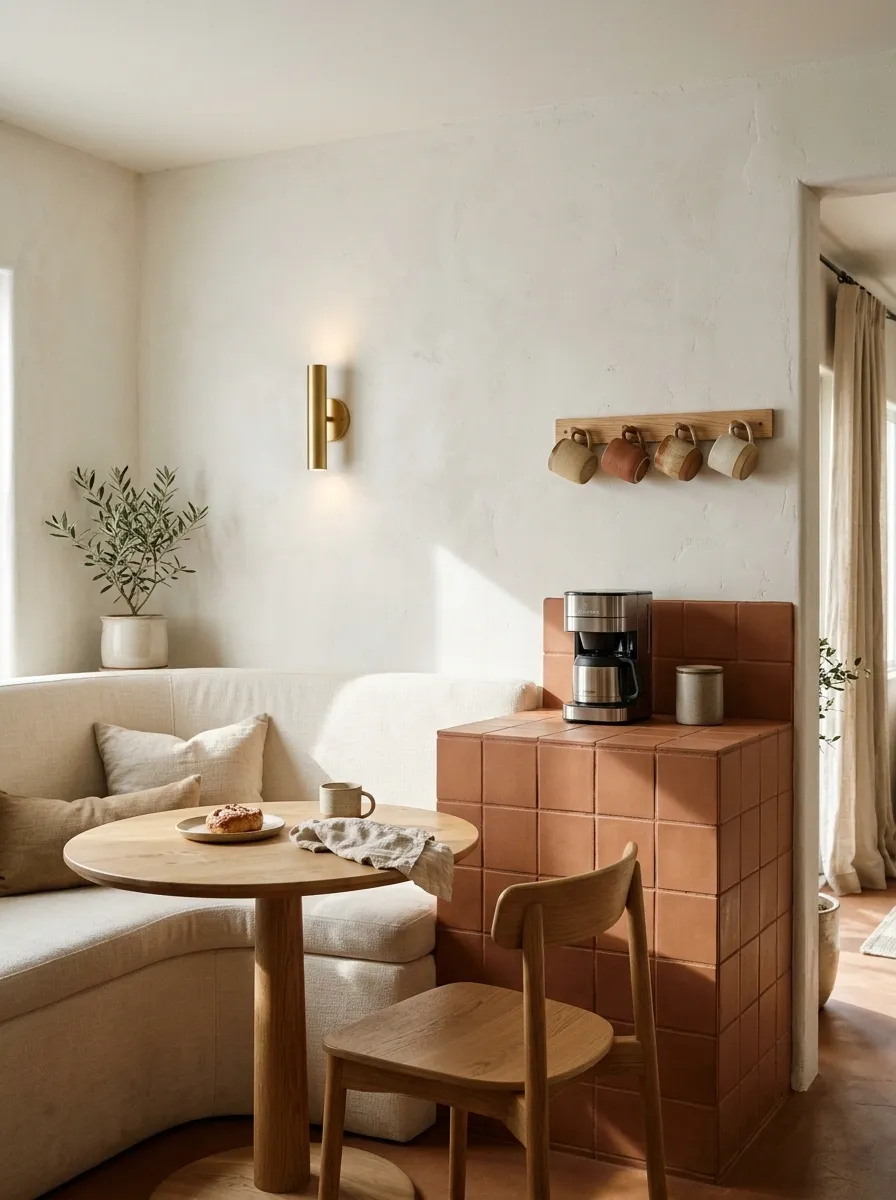
A curved breakfast bench wraps around a small table beside a terracotta-tiled coffee counter. Above the counter, a short timber peg rack holds earthy glazed mugs, while a simple wall light connects the seating and preparation areas. The rounded bench gives the hard tile a softer companion.
Keep the countertop styling low so the corner stays open when viewed across the table. A small brewer and one canister are plenty. The peg rack belongs over the preparation surface, away from anyone leaning back on the bench. Repeat the timber tone in the table rather than adding another strong material.
Rental Kitchen Coffee Tray With a Freestanding Tiered Mug Stand
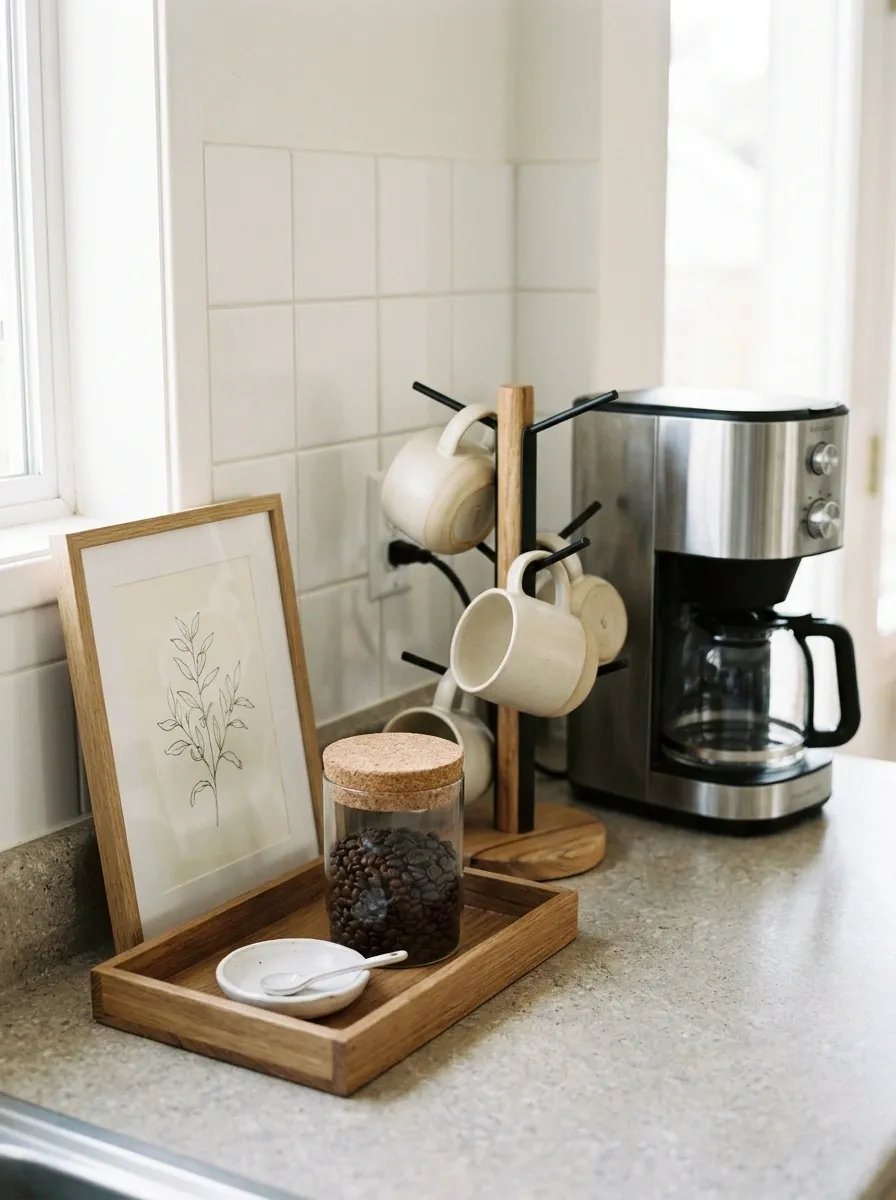
A timber tray and freestanding tiered mug stand can make an ordinary laminate counter feel considered. Position the stand at the back corner, place the brewer beside it, and keep a small spoon dish near the front. A leaning print supplies a backdrop without needing wall fixings.
Use the tray to gather loose supplies, not to force every object onto one crowded rectangle. Cream mugs and a plain storage jar soften busy rental finishes without trying to disguise the entire kitchen. The arrangement should lift away easily for cleaning, with no cups balanced above the route you use to refill the machine.
Glass-Front Dining Hutch With a Coffee Service Shelf
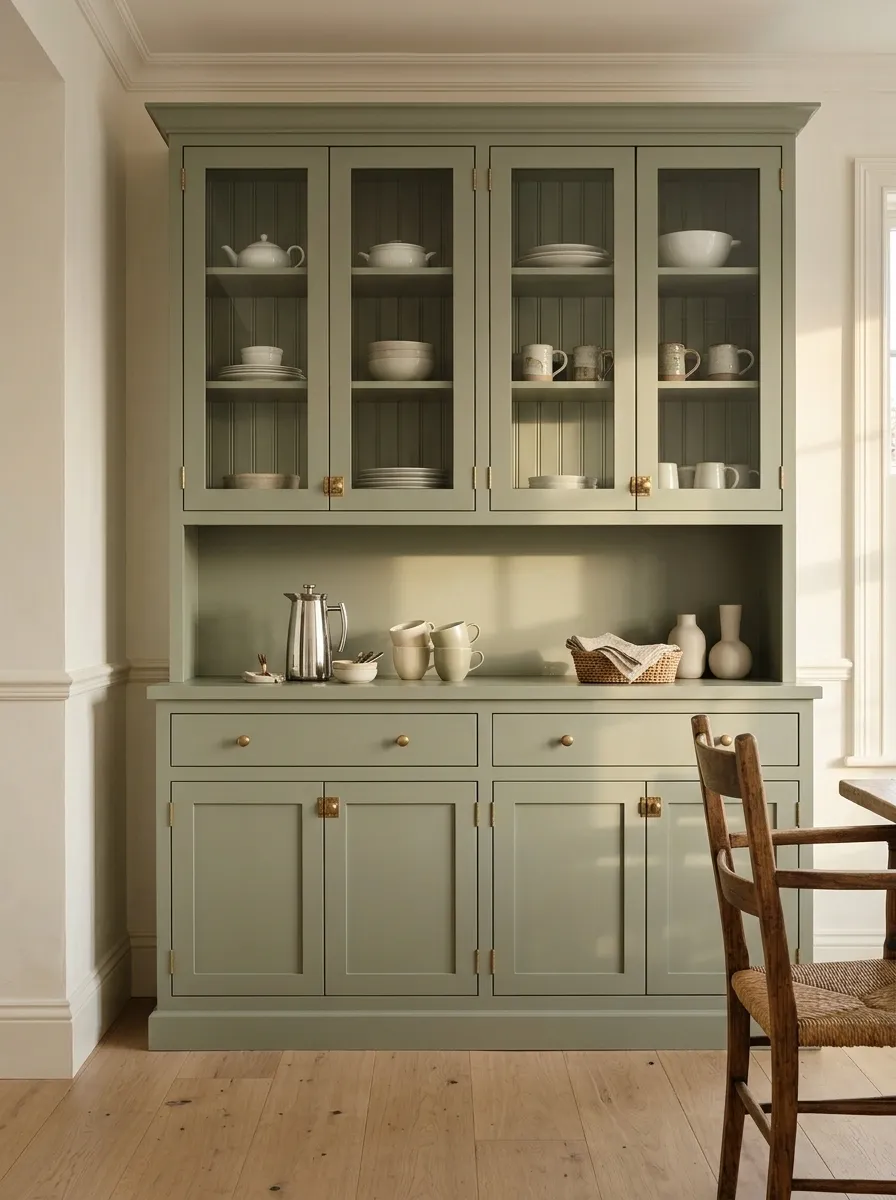
A glass-front hutch makes a cup collection part of the dining room’s furniture. Display china behind the upper doors and use the open serving shelf for a coffee pot, spoon dish, and the cups needed at the table. Lower cupboards hold the less attractive supplies.
A muted painted finish works well beside wooden dining chairs, especially when the cups repeat a color from the room. Keep the serving shelf’s practical limits in mind. If the hutch isn’t suitable for powered brewing equipment, prepare coffee in the kitchen and bring it over in an insulated pot. The finished scene still feels complete.
Coastal Breakfast Station With Woven Cabinet Fronts and a Long Peg Rack
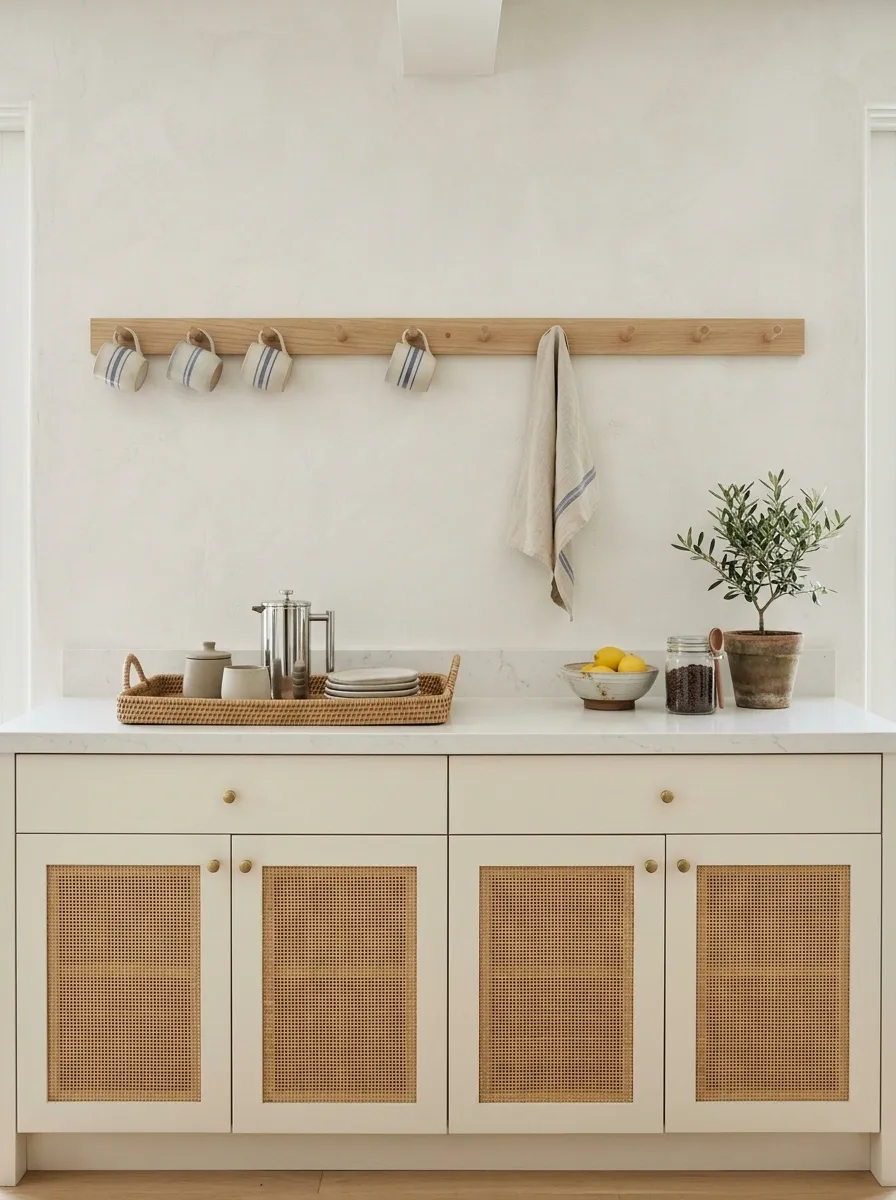
Woven cabinet fronts give this station texture before a single cup goes on display. Above the pale counter, a long timber peg rack holds blue-striped mugs against a chalky wall. Patio doors nearby bring in light, while a broad tray collects the coffee pot and a simple sugar bowl.
Let the woven panels and striped cups do the work. Shell ornaments and nautical signs would make the room feel themed rather than relaxed. The long rack suits a horizontal stretch of wall, but it doesn’t need every peg filled. Open spaces help the different mug shapes read clearly.
Compact Home Office Coffee Credenza With a Small Mug Shelf
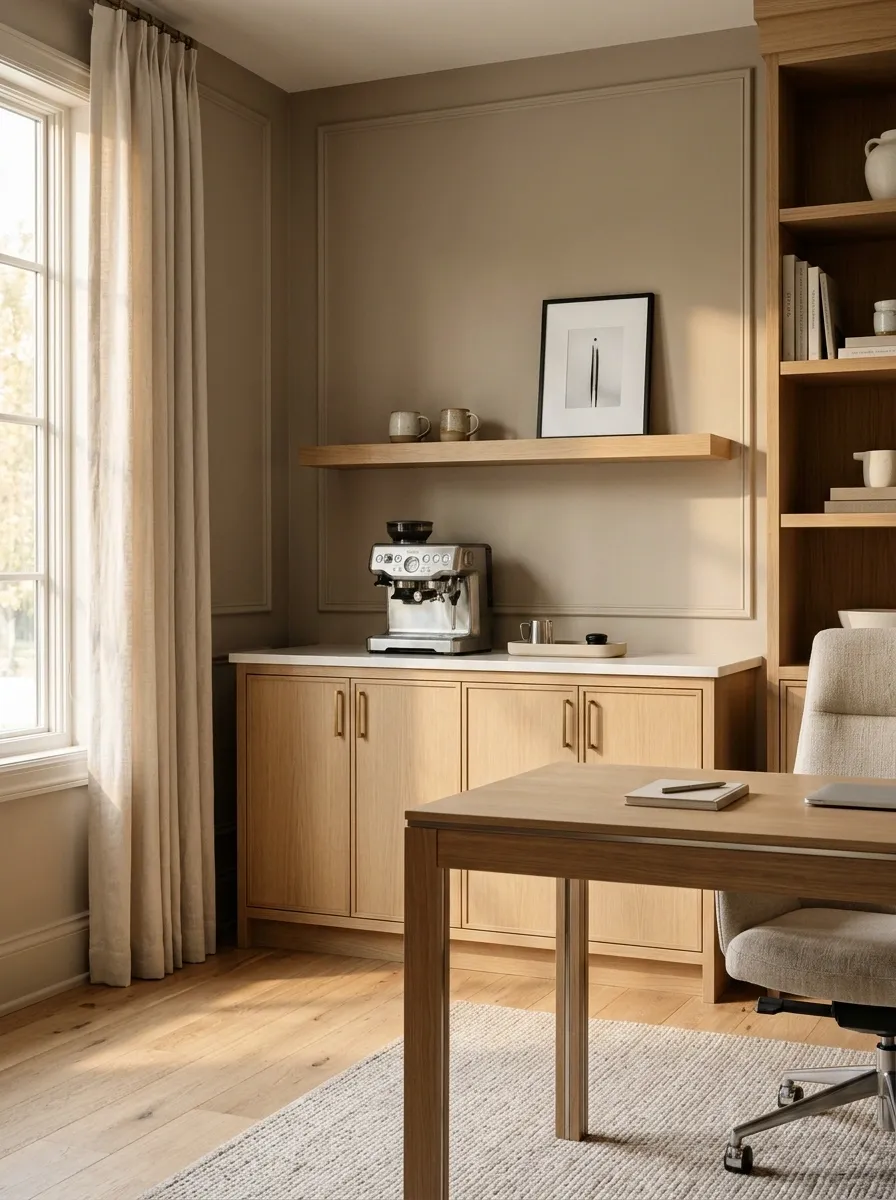
A low credenza behind the desk creates a separate destination for coffee breaks. Its top holds a compact brewer on a washable tray, while a small shelf above carries a few mugs and one framed print. Closed doors keep coffee packets and spare supplies out of the working view.
Match the credenza’s wood tone to a detail already in the office, such as the desk legs or bookcase. That connection makes the station feel planned. Keep papers off this surface entirely. The useful distinction is physical: the desk handles work, and the credenza gives drinks somewhere else to be prepared.
Walk-In Pantry Coffee Run With an End-Panel Mug Rack
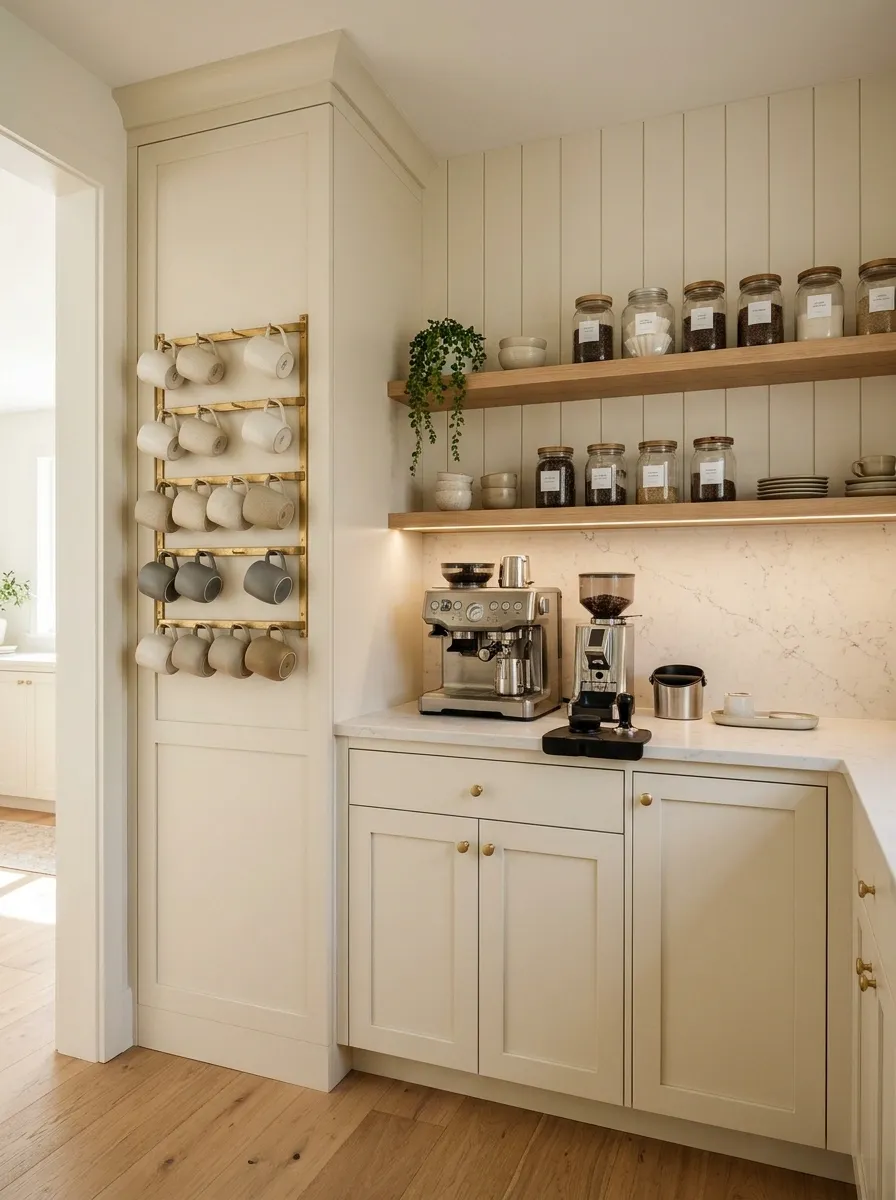
Inside a walk-in pantry, a dedicated counter keeps the coffee routine away from the main kitchen worktop. Shelves of jars run along the wall, while mugs hang on the cabinet’s end panel near the entrance. A light-colored counter and focused task lighting prevent the deeper room from feeling gloomy.
The end rack makes cups easy to find without filling the wall above the machine. Use it only where the cups won’t project into a tight aisle or catch against a door. I’d keep this display to everyday mugs and store the rest in a cupboard; a pantry works best when every movement feels straightforward.
Retro Breakfast Bar With a Chrome Mug Carousel
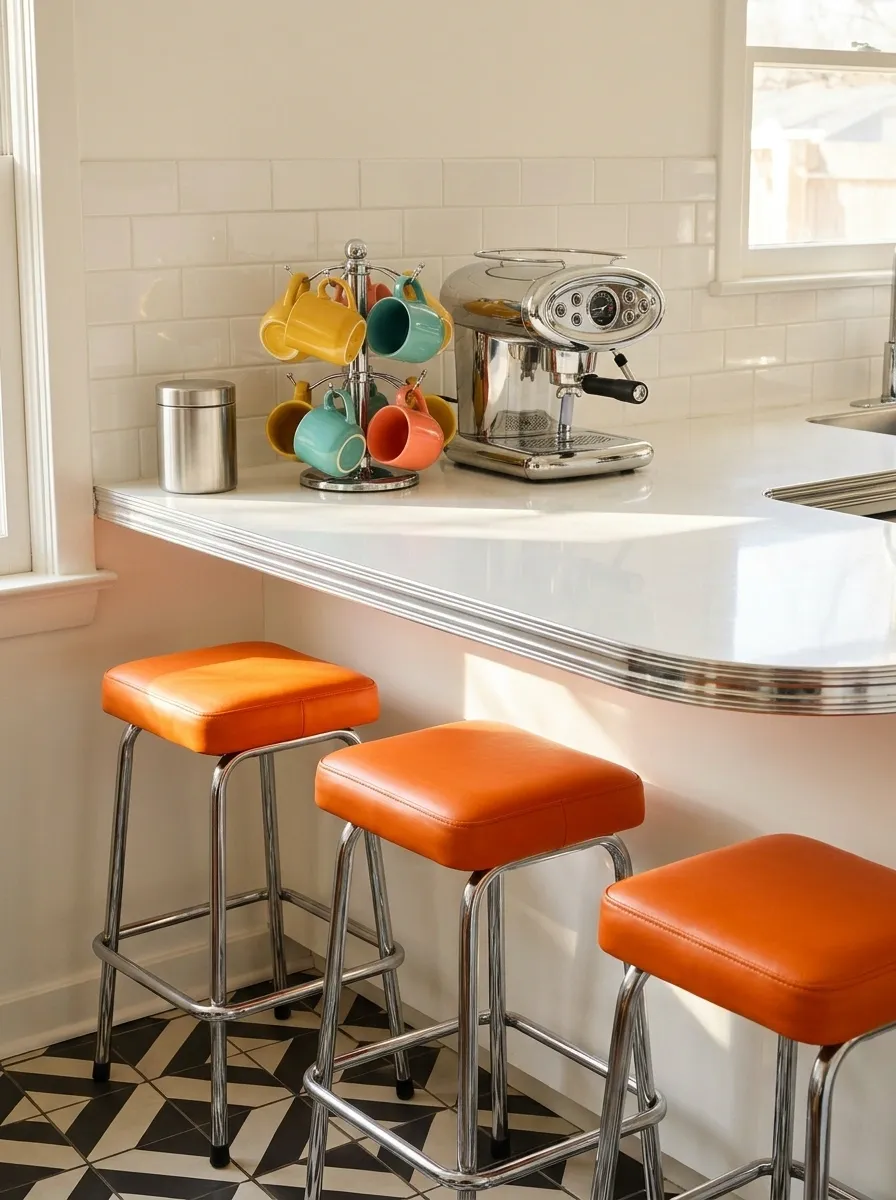
A curved laminate counter, chrome stools, and a rounded coffee machine set up a lively breakfast bar. Colorful ceramic mugs hang on a rotating chrome stand near the serving end, while a plain canister keeps the rest of the counter quiet. The rounded forms tie the equipment to the furniture.
Choose one main color for the stools and let the mugs supply smaller accents. A patterned floor can work here, but the backsplash should stay simple if it does. Position the carousel where it can turn freely without sending handles into the machine or over the edge of the counter.
Quiet Timber Tea-and-Coffee Station With a Low Cup Ledge
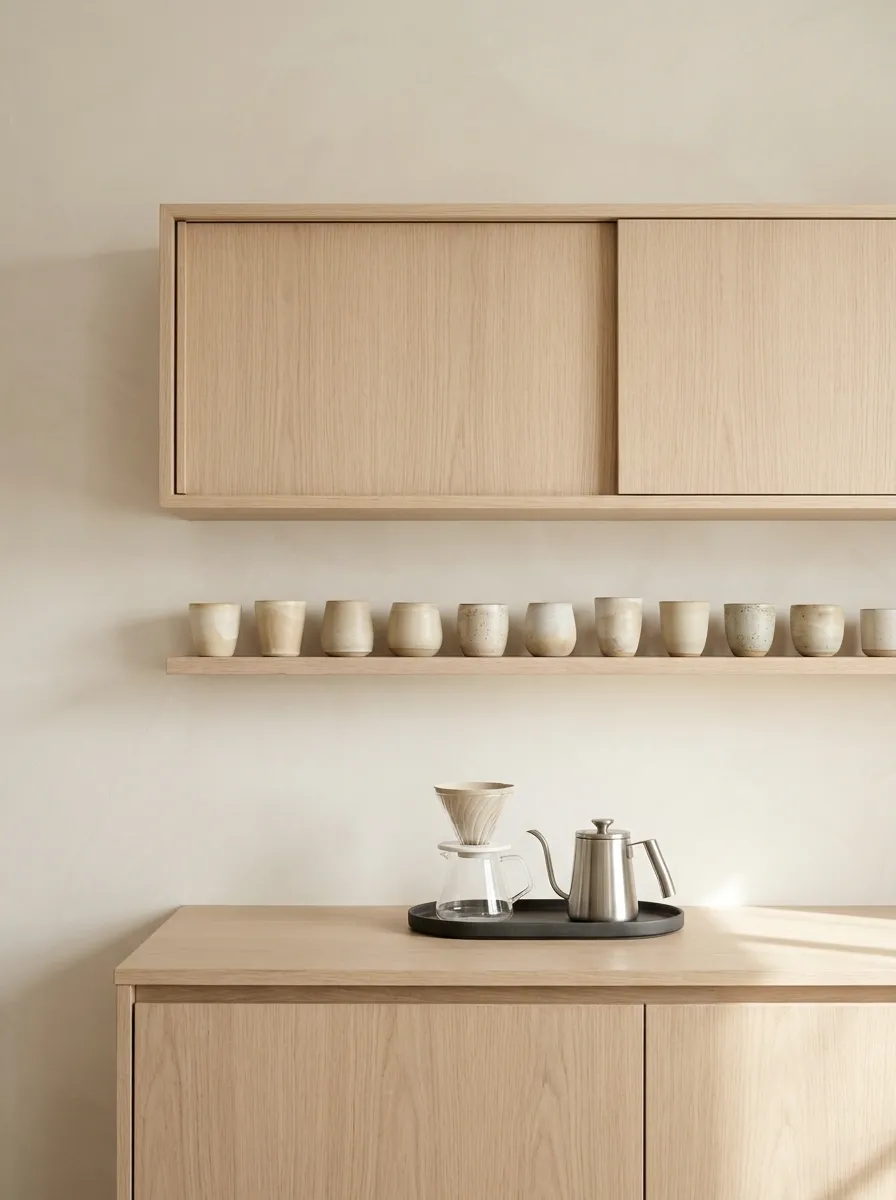
Handleless cups on a low ledge give this station a calm, horizontal rhythm. Beneath them, a timber cabinet holds a manual dripper, kettle, and a small brewing tray. Sliding doors hide spare vessels, while a plain wall lets the grain and ceramic surfaces remain visible.
Keep the ledge for cups alone rather than mixing in decorative objects. Their small differences in shape already give the display character. A single darker tray grounds the pale timber composition. This arrangement suits a mixed tea-and-coffee routine because the shelf supports different vessel types without relying on handles or hooks.
Dining-Room Sideboard With a Sculptural Branch Mug Holder
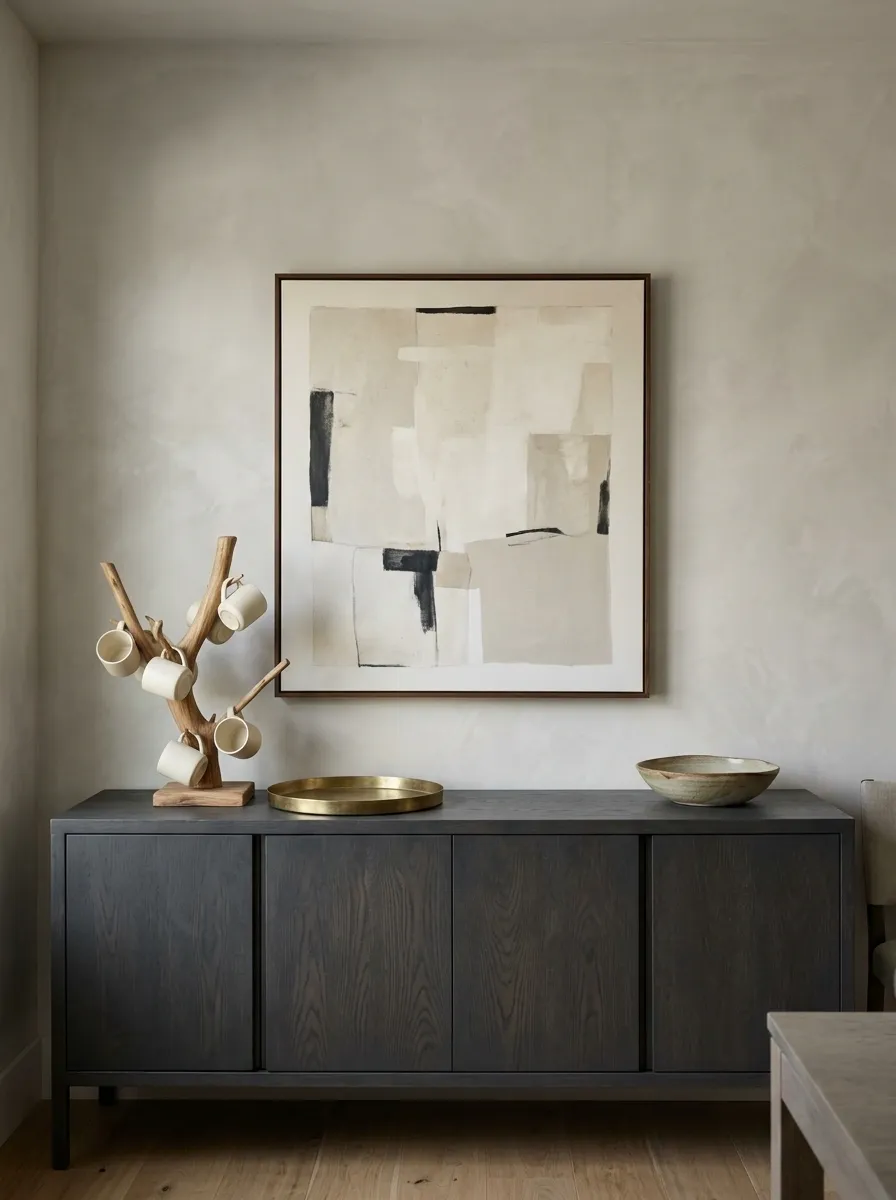
An asymmetric wooden mug holder can act as the focal point above a dark dining-room sideboard. Set it beside a low coffee tray, with restrained artwork on the wall and a shallow bowl at the opposite end. The branching shape brings height without needing a wall rack.
Keep the cup collection small enough to reveal the holder’s structure. Matching every branch with a different bright mug would obscure the shape that makes this arrangement interesting. Cream ceramics against dark wood create a clear outline. Use a purpose-made holder with a stable base rather than adapting an untested decorative branch.
Small Kitchen Return With a Vertical Ladder Mug Rack
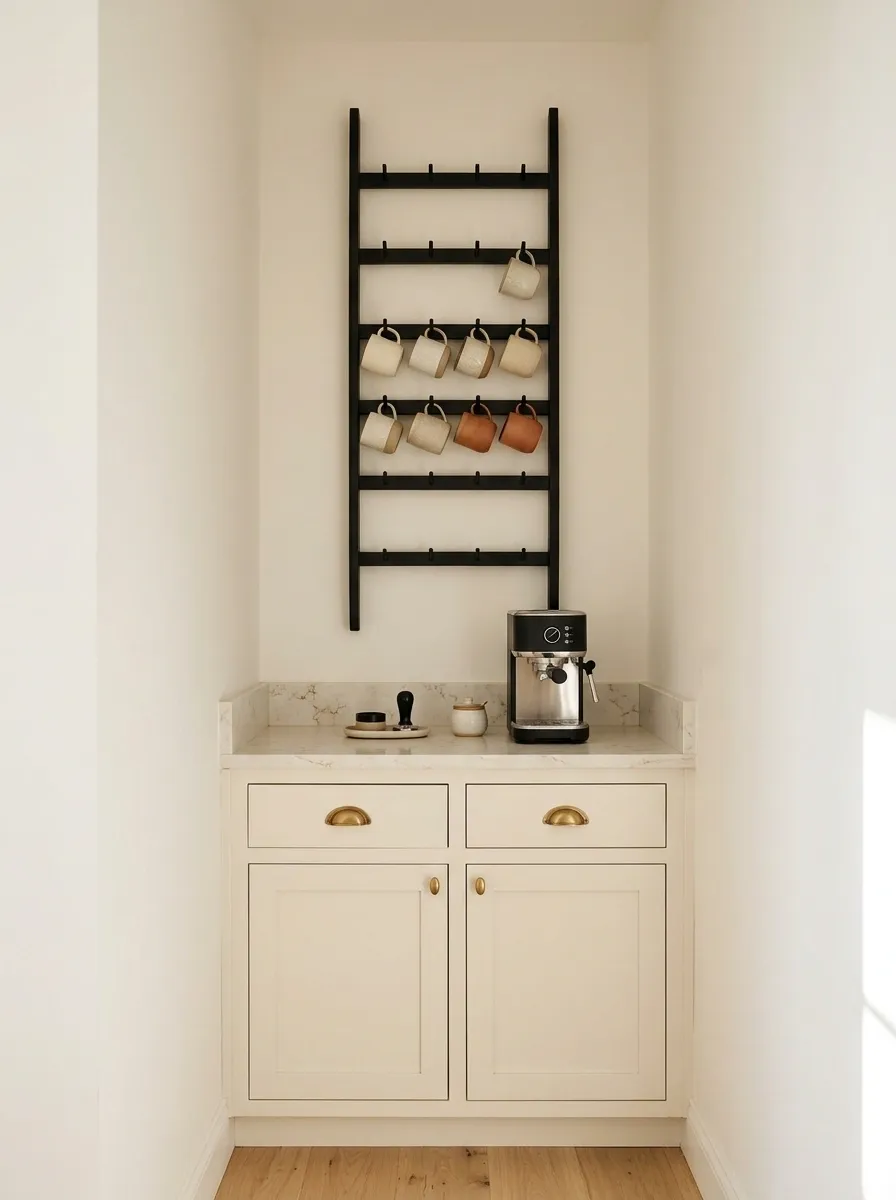
A narrow wall at the end of the kitchen can hold a complete station if the display goes upward. A ladder-style mug rack rises above a compact base cabinet, with a small brewer on top and supplies behind the door. The cabinet gives the tall rack a visual anchor.
Choose a rack finish that repeats nearby hardware, then keep the wall plain. Several patterns would make this slim area feel busier than it is. Put frequently used mugs on the easiest rungs to reach. The upper section can stay partly empty; height is useful without becoming an invitation to overfill the wall.
Split-Level Coffee Bar With a Raised Mug Display Shelf
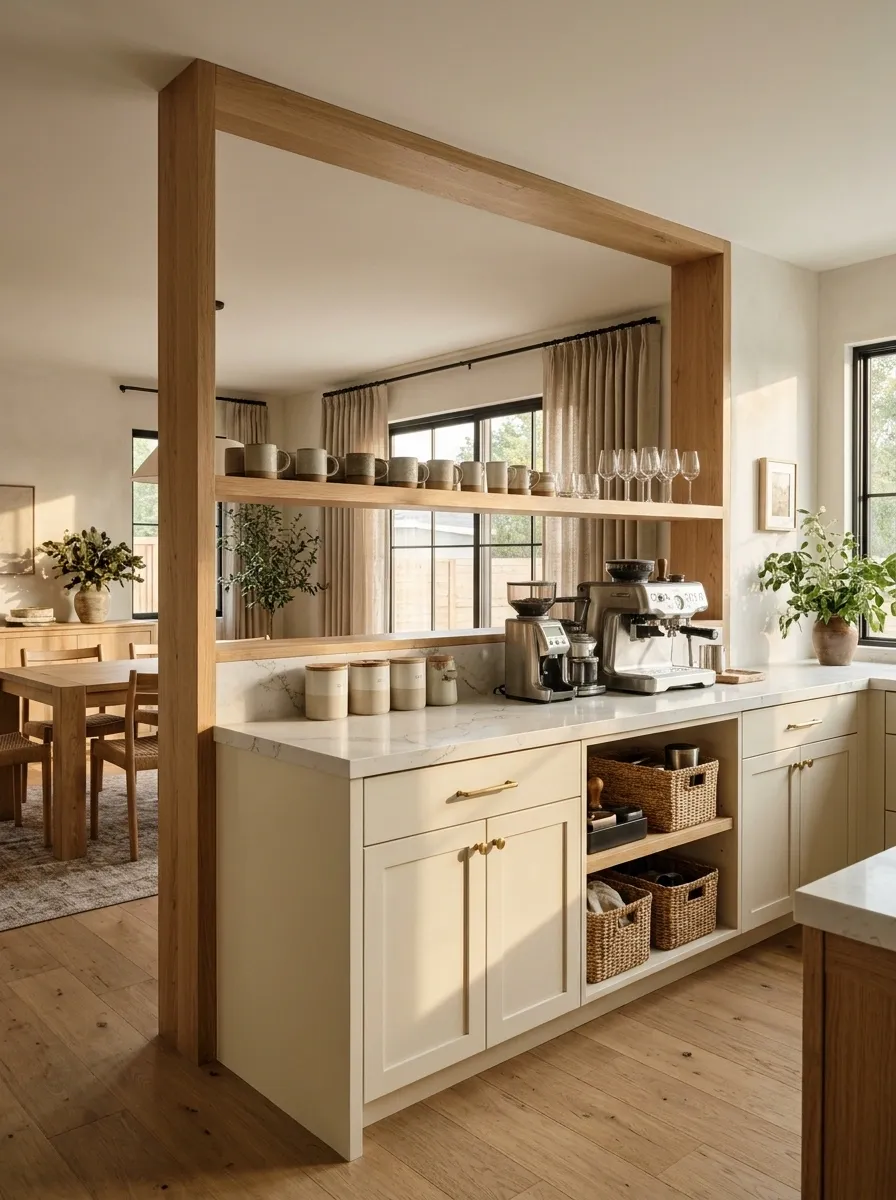
A freestanding divider can serve both the kitchen and dining area when its two faces have different jobs. The lower kitchen side holds brewing equipment and supplies. A raised shelf on the dining side displays cups and creates a clear place for guests to collect their drinks.
Use one continuous timber finish to connect the levels, with a durable preparation surface below. The raised section should frame the equipment without making the room feel blocked off. Keep guest cups within comfortable reach from the dining side so nobody needs to lean across the working machine or its hot-water area.
Country Kitchen Island With an End-Mounted Mug Rail
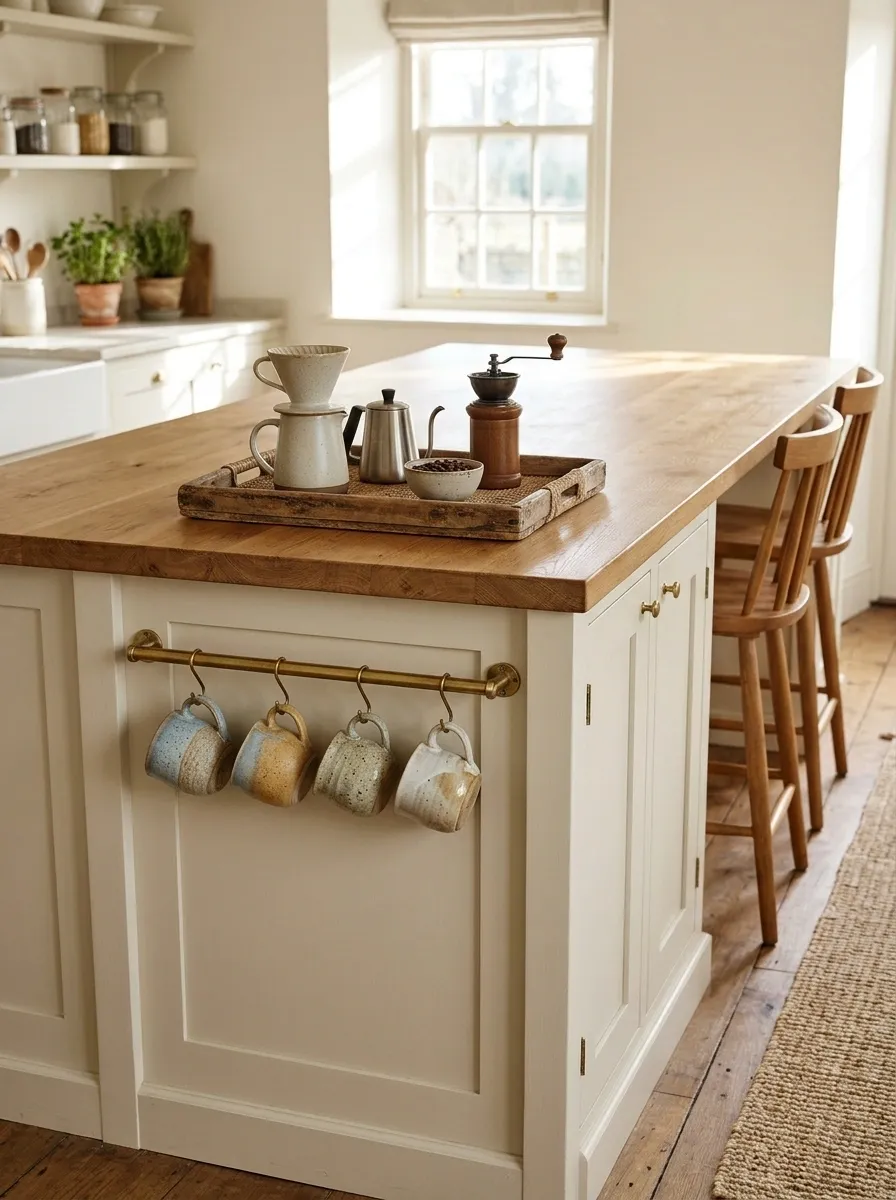
A timber-topped island makes a warm setting for a manual coffee tray. A short mug rail sits on the solid end panel, while stools tuck under the opposite overhang. Painted cabinetry and a ceramic pot keep the scene connected to a country kitchen without adding decorative clutter.
The end panel works only if it’s away from busy passing traffic and seated knees. I’d use a small daily collection here, leaving the rest in a cupboard. Carry over a kettle when needed rather than running a cable across the floor, and protect the timber top from wet cups with a suitable tray.
Baker’s Rack Coffee Station With Hanging Cups and Basket Storage
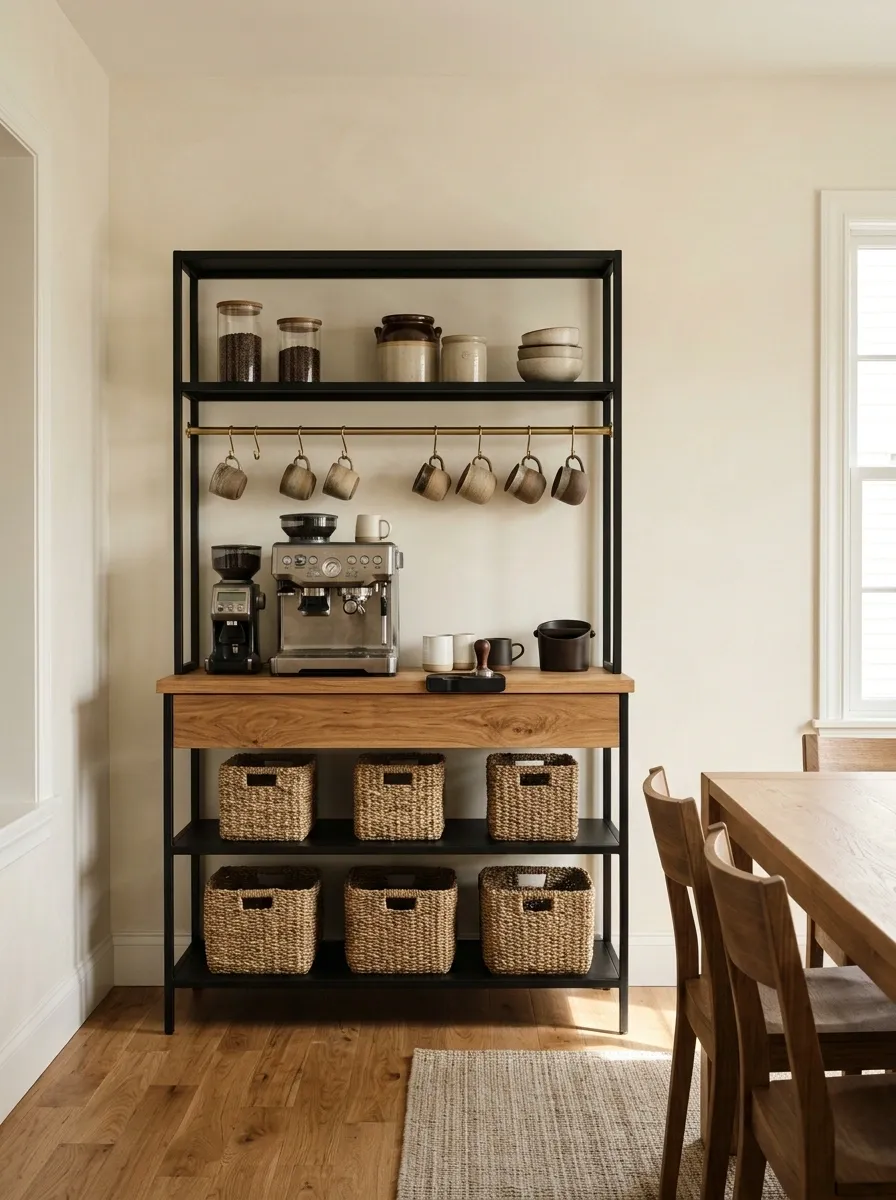
A tall baker’s rack brings a complete coffee station to an unused dining-kitchen wall. Choose one with a solid preparation surface, an overhead cup rail, and shelves below for baskets. A light wall behind the dark frame keeps the structure readable, while a nearby wooden table repeats the warmth of the worktop.
Keep the upper shelves lightly arranged so the rack doesn’t become top-heavy in appearance. Coffee equipment belongs on the stable working surface, with supplies stored below. Matching baskets quiet the loose packaging, but leave ventilation and appliance access clear. The exposed frame should still be visible between the stored objects.
Breakfast Banquette With a Coffee Tower and Pull-Out Mug Drawer
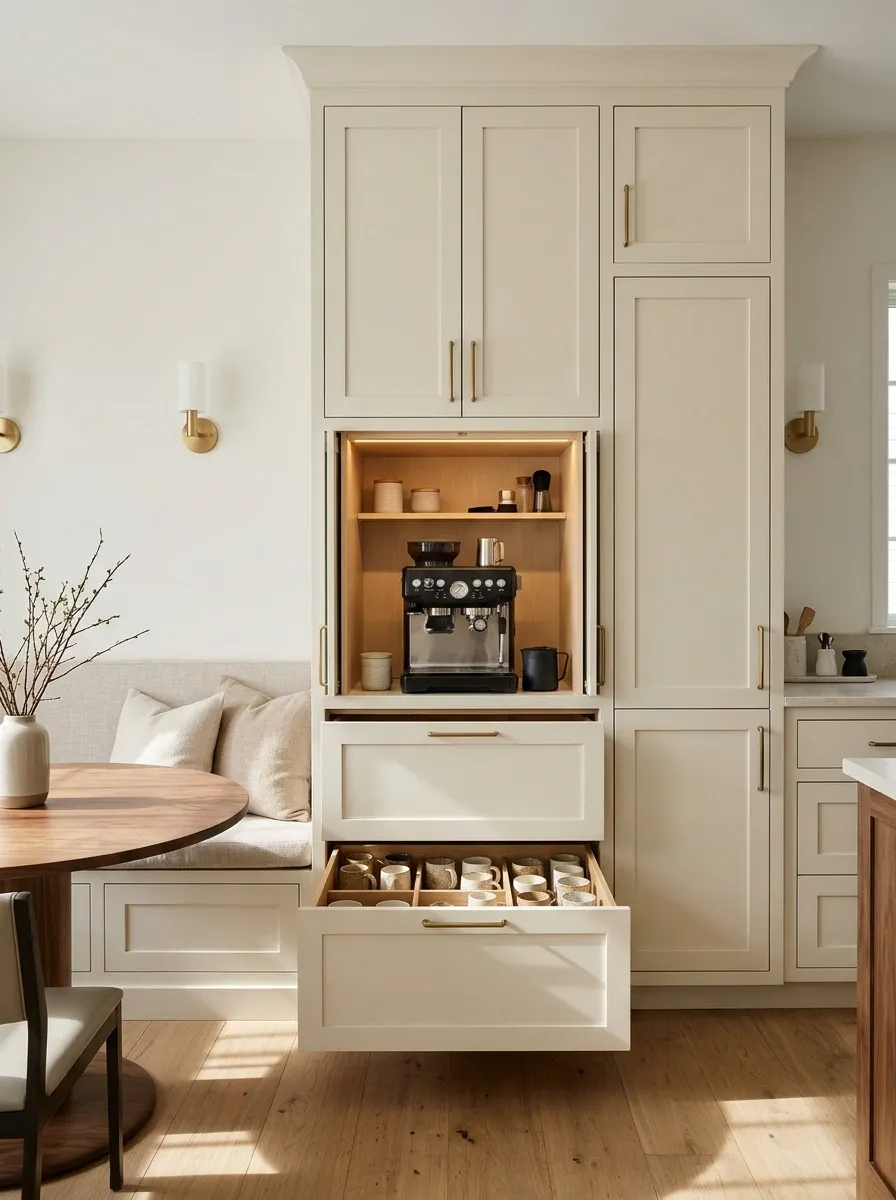
A tall coffee cabinet at the end of a banquette keeps the breakfast table free. The brewing recess sits above a fitted mug drawer, with closed storage overhead. Upholstered seating, a rounded table, and simple wall lighting make the cabinet feel like part of a complete breakfast room.
Repeat the cabinet finish in the bench base to connect the two pieces. Inside the drawer, upright mugs sit between removable dividers, so the collection stays organized without being permanently on display. This is the quietest option in the gallery, especially for patterned or mismatched cups. Confirm the drawer can open fully without hitting the seating.
Choose the Complete Look You’ll Enjoy Using
The strongest coffee rack and mug holder ideas give your cups a place within a working space. Start with the arrangement that fits your room, then borrow its material mix and display style. You don’t need to copy every object to get a cohesive result.
Before buying anything, set your brewer, favorite mugs, and supplies in the proposed spot. Rehearse making a drink, including refilling and cleanup. That simple trial will tell you more than an empty shelf ever could. Keep the parts that make the routine easier and leave enough open space for the coffee itself.