
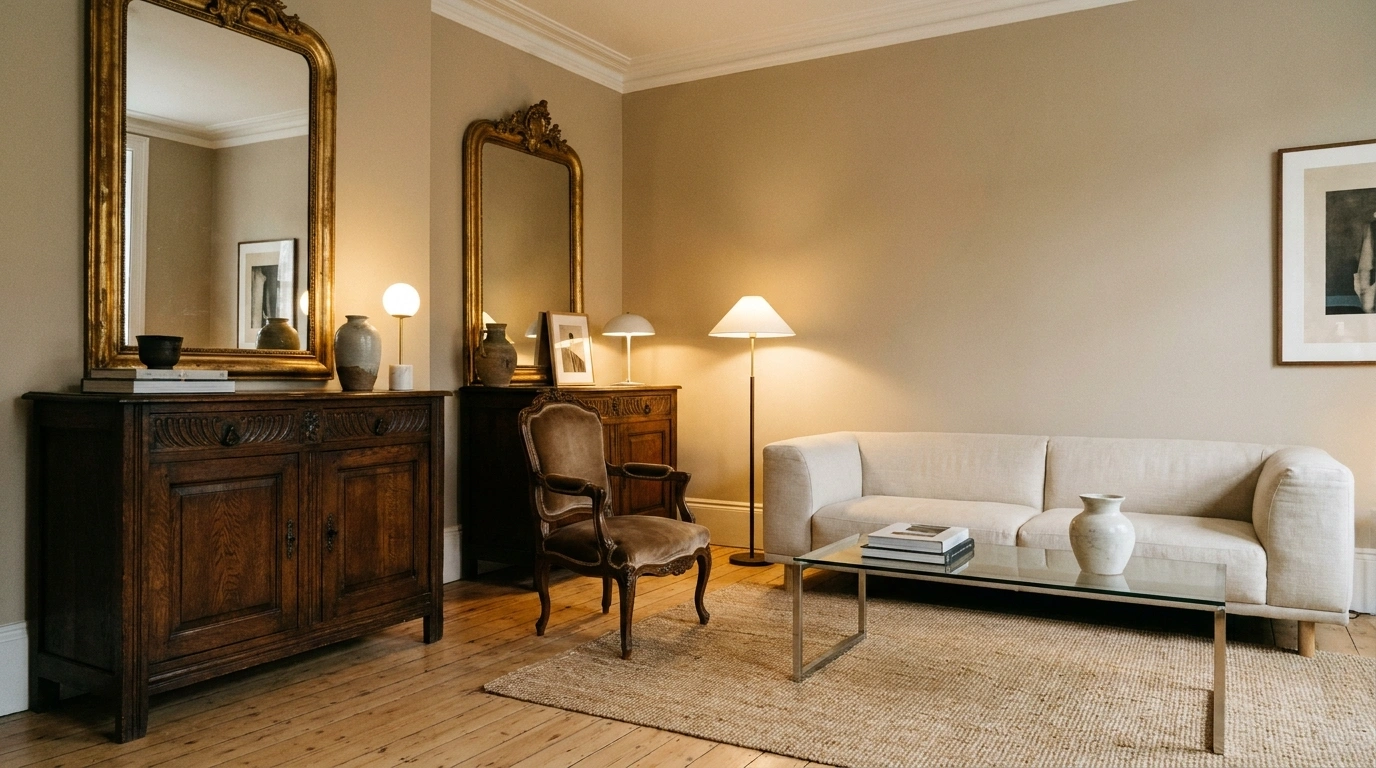
A carved chest beneath a bold contemporary painting can make both pieces more interesting. The chest gains a different context. The painting gets something with weight and history beneath it. Neither has to surrender its personality for the arrangement to work.
That’s where a mixed room becomes enjoyable.
You can keep an inherited cabinet, buy an older chair you genuinely like, and still live comfortably with modern lighting, upholstery, and equipment. The challenge is giving those pieces a relationship instead of arranging two separate decorating schemes on opposite sides of the rug.
Learning how to mix antique furniture with modern decor starts with proportion, use, and a few repeated details. Matching every wood finish isn’t essential. Matching the scale of the furniture to the room is. A useful piece with a clear place usually contributes more than an impressive purchase wedged into the remaining corner.
Let the contrasts stay visible. Then use color, shape, and breathing room to make the room feel like one home.
Give the Different Pieces Something in Common
Compare Visual Weight Before Comparing Age
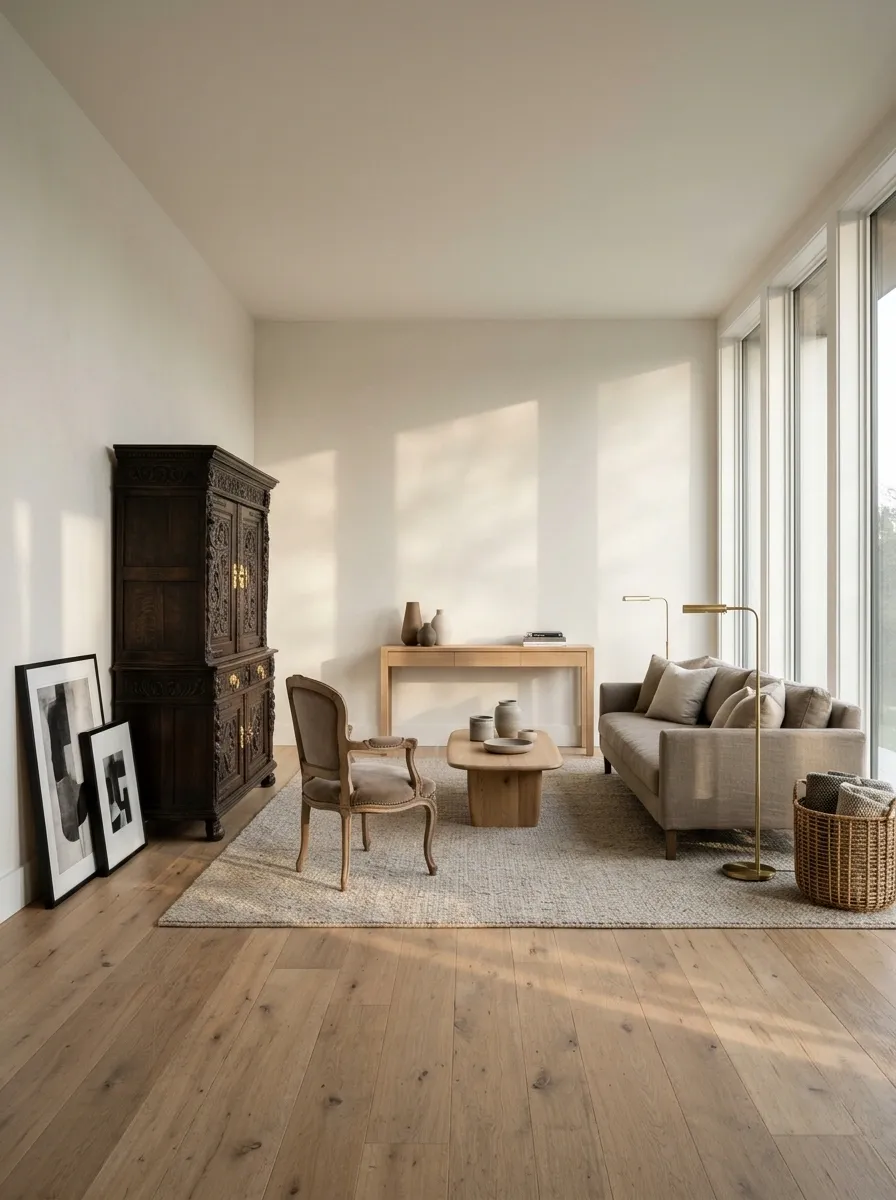
A heavily carved cabinet and a slim contemporary table occupy attention differently, even when their measurements seem similar. Look at the thickness of frames, the amount of visible material, and the complexity of the outline.
Use that information to balance the room. A substantial antique may benefit from quieter furniture nearby. A delicate older chair may sit comfortably with a simple upholstered sofa. The labels don’t decide the arrangement. What matters is how the pieces look together at room scale and how easily the household can use them.
Choose a Few Connections and Let the Differences Remain
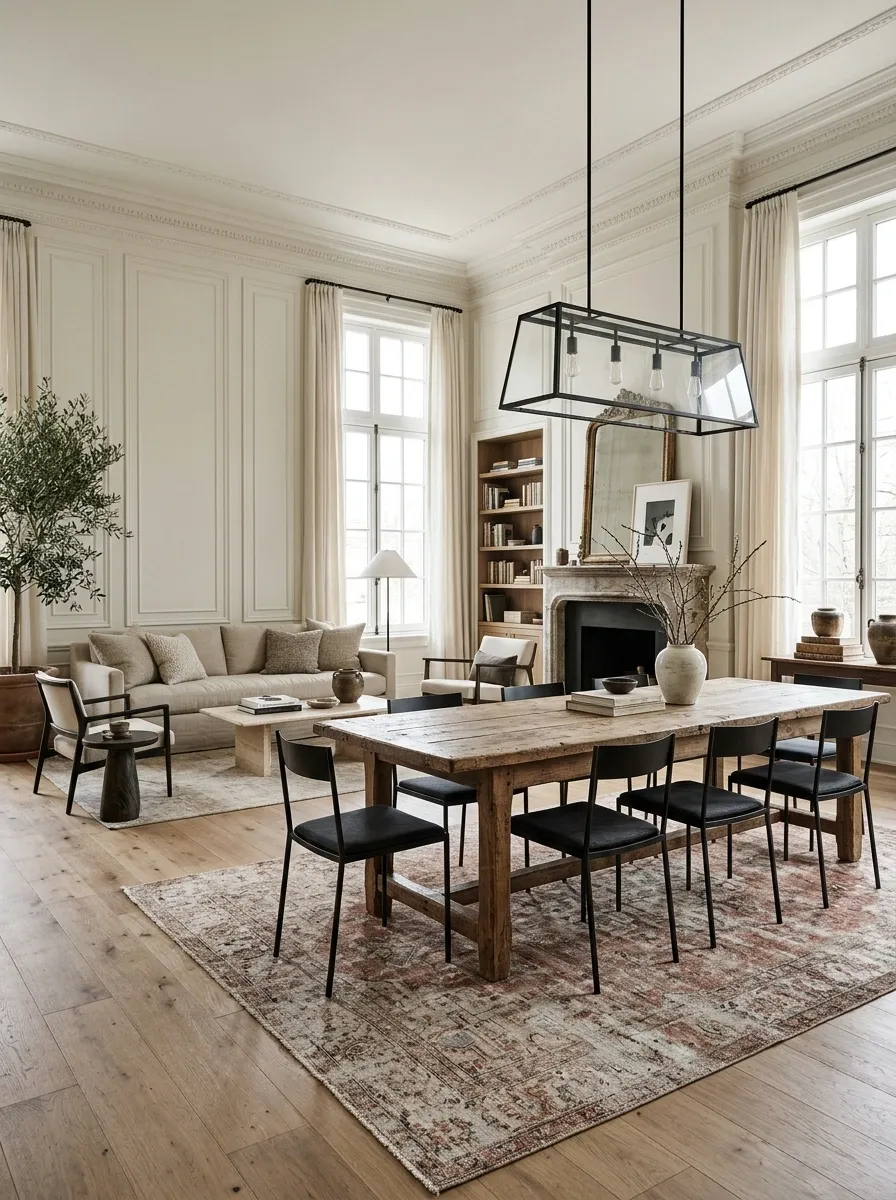
Repeated color, a related curve, or a similar metal finish can connect furniture from different periods. You don’t need all those relationships at once.
Start with one clear connection, then look at the whole room. Too much matching can flatten the contrast you wanted. Too little can leave every object looking separately selected. Keep the useful differences in grain, finish, and shape, while giving the eye a reason to move between them. A room can feel coherent without appearing to have arrived in a single delivery.
Practical Ways to Mix Antique Furniture With Modern Decor
Make One Antique Storage Piece the Room’s Anchor
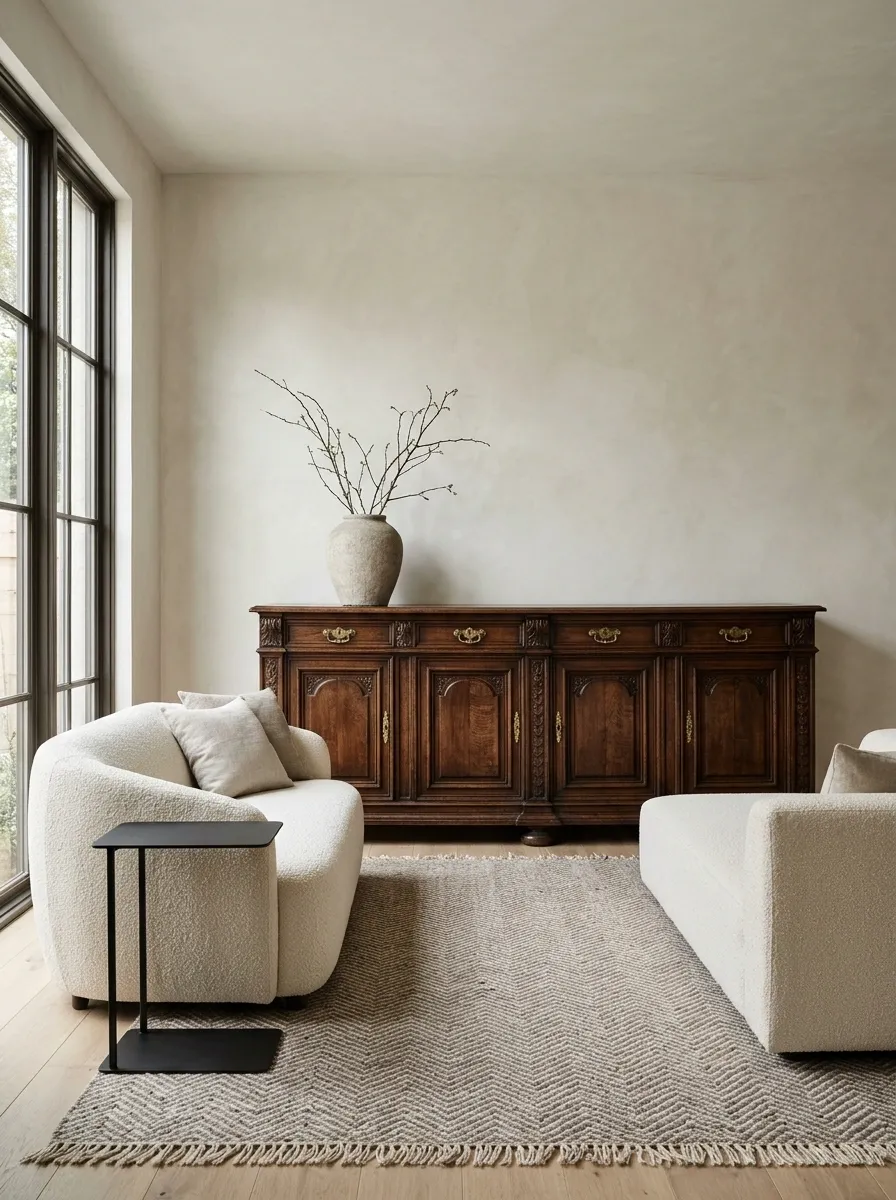
A sound chest or sideboard can provide useful storage and a clear point of character.
Place it where its dimensions suit the room, including opening drawers and doors. Let the shape remain visible rather than covering the top with small objects. Use the storage for belongings that genuinely belong nearby.
Build the surrounding arrangement with quieter pieces so the cabinet has room to register. Check older furniture carefully for condition, stability, and signs of pests before bringing it home. An anchor piece works best when it earns its footprint through both use and appearance.
Useful contents close to where they’re needed.
A workable footprint and appropriate stability.
Enough clear space to appreciate the outline.
Pair a Shaped Antique Chair With a Simpler Sofa
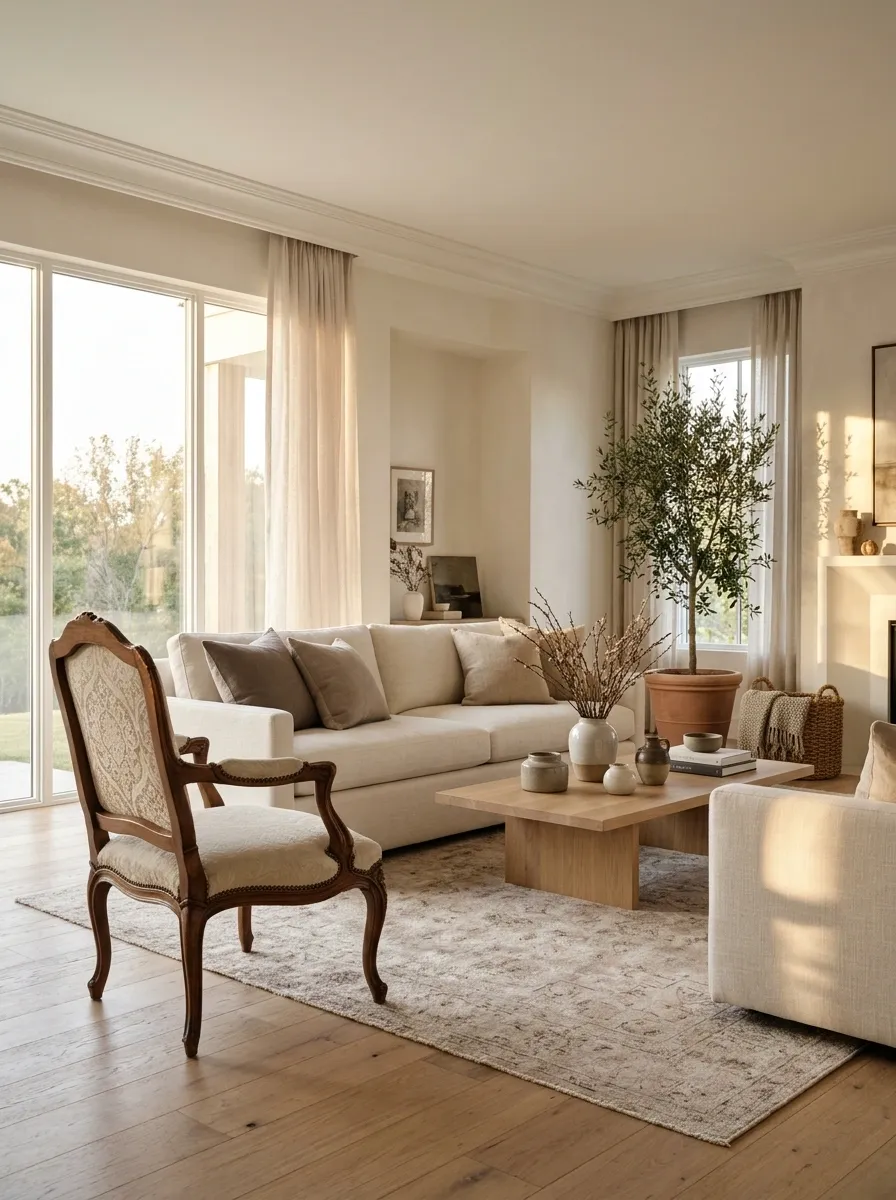
A distinctive chair can bring detail to a contemporary seating area without changing the whole room.
Look for a frame whose scale works beside the sofa. Check comfort and condition carefully, then position it for conversation or another real activity. Keep the route around the group comfortable.
Let the sofa provide a quieter block of upholstery while the chair supplies the more intricate outline. The fabrics can connect through color without matching. This arrangement gives each piece a clear contribution, rather than forcing the older chair to pretend it belongs to the sofa’s original collection.
Compare overall height, usable comfort, and how people face one another. The chair needs to join the room’s activities as well as its appearance.
Put a Contemporary Lamp on an Older Table
A simple lamp can make an antique table feel comfortably part of present-day life.
Choose a base and shade that relate to the table’s proportions. A strong contrast in shape can work well, provided neither piece overwhelms the other. Keep enough clear surface for the table’s practical job.
Check the complete lamp switched on and from the nearby seat. Route the cable discreetly without trapping or damaging it. The pairing succeeds when the light is useful and the table remains visible, rather than becoming an ornate stand for an equally complicated lighting sculpture.
A simple lamp can provide relief above a more detailed base.
Test glare, switch access, cable routing, and the remaining tabletop space.
Hang Bold Modern Art Above an Antique Sideboard
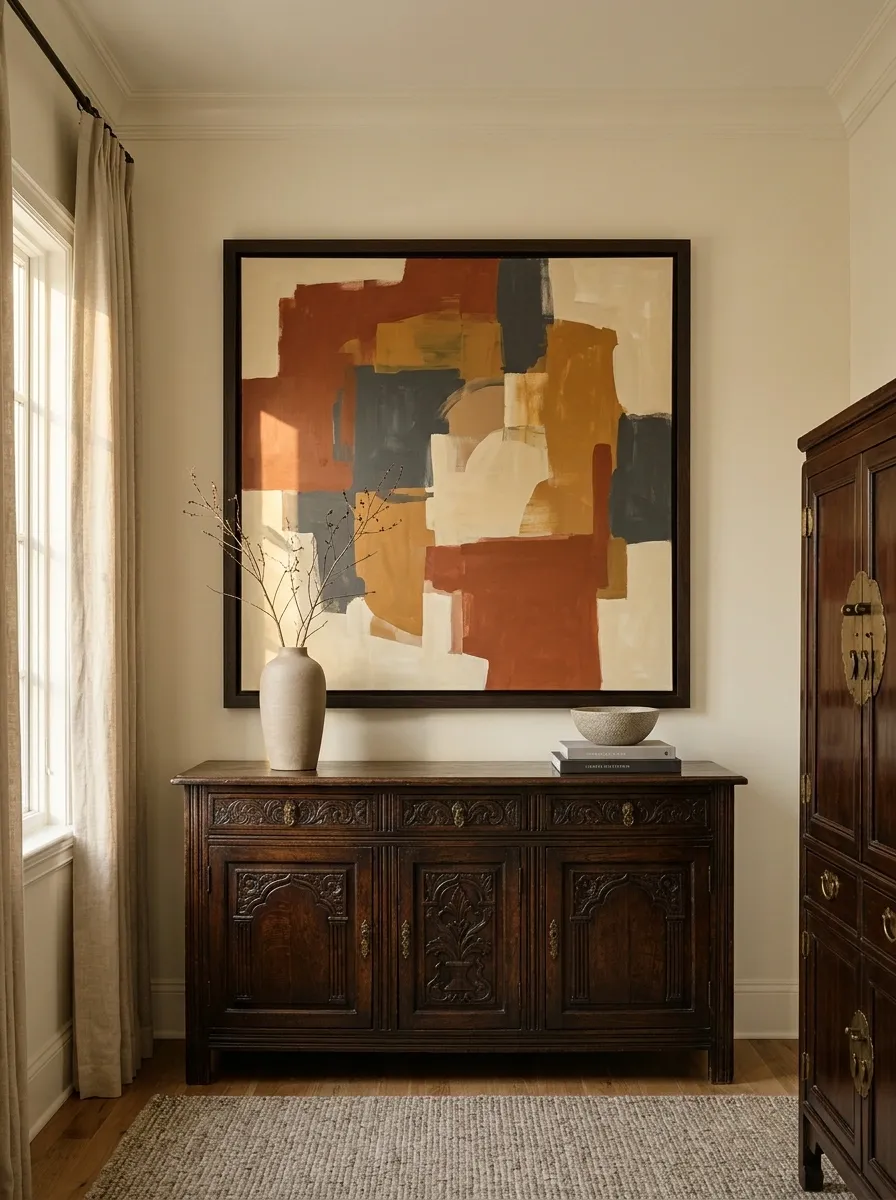
Contemporary artwork can give an older cabinet a different visual setting.
Choose a piece with enough presence for the furniture beneath it. Include the frame and mount when judging the dimensions. Let the artwork’s color connect to another part of the room if the pairing initially feels isolated.
Test the position with a paper outline before hanging. Keep the sideboard display restrained so the art and furniture can each register. You don’t need to fill the gap between them with several smaller objects. The contrast already provides plenty to look at.
Use a paper template with the artwork’s full outside dimensions. Check the pairing from the doorway and the main seat.
Repeat One Color Between the Old and New Pieces
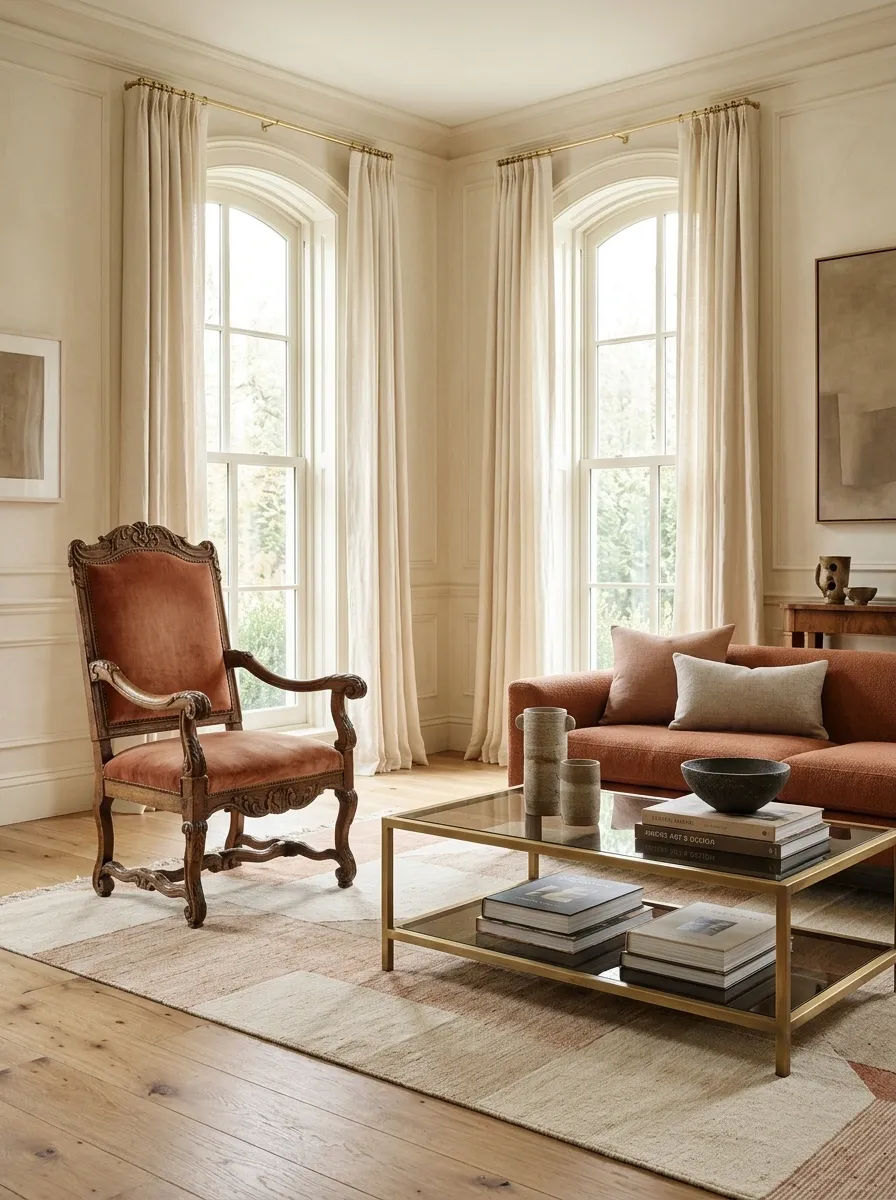
A shared color can connect furniture that differs strongly in shape.
Pull a tone from antique upholstery or an older painted finish into a modern cushion, rug, or artwork. Keep the repetition selective. The pieces need a relationship, not a uniform.
Look at the room from a distance to see whether the color carries between areas. Adjust the smaller items before changing valuable or useful original finishes. This is often a more flexible way to integrate a difficult piece than immediately repainting it because the rest of the room has already chosen a palette.
A useful existing tone in the older piece.
Bring it into a smaller contemporary element.
Check the whole room before adding more.
Mix Wood Finishes With a Clear Plan
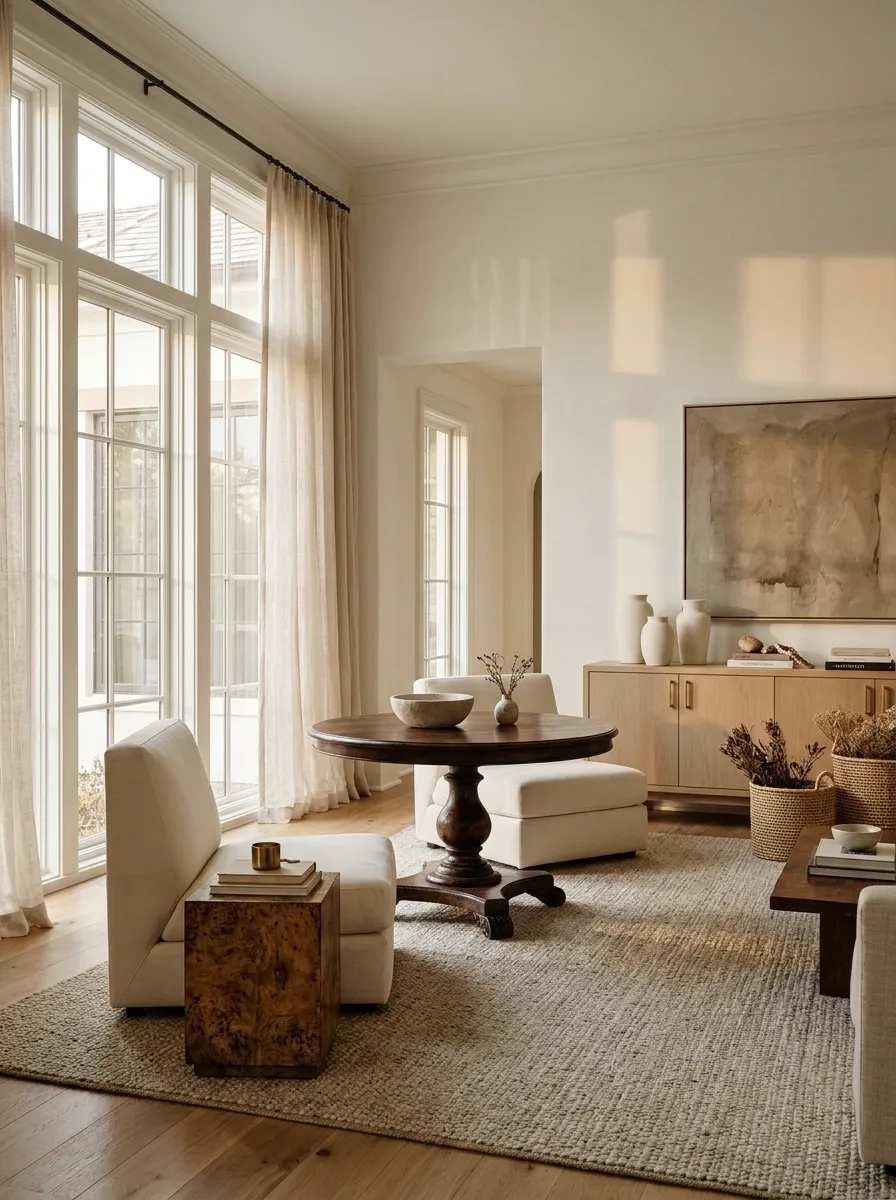
Different wood tones can sit together without pretending to be the same finish.
Look at undertones, grain, and the amount of each wood visible in the room. Give the strongest tone a clear role and repeat another where it helps. A rug or upholstered piece can provide a visual pause between contrasting surfaces.
Avoid buying a near-match simply because it seems safer. Two similar finishes that disagree can look more accidental than a deliberate difference. Compare samples or pieces in the actual room and let the overall arrangement guide the decision.
| Compare | Look for |
|---|---|
| Undertone | How the warmth or coolness relates. |
| Visual amount | Which finish leads and which supports. |
Refresh Upholstery Without Erasing the Frame’s Character
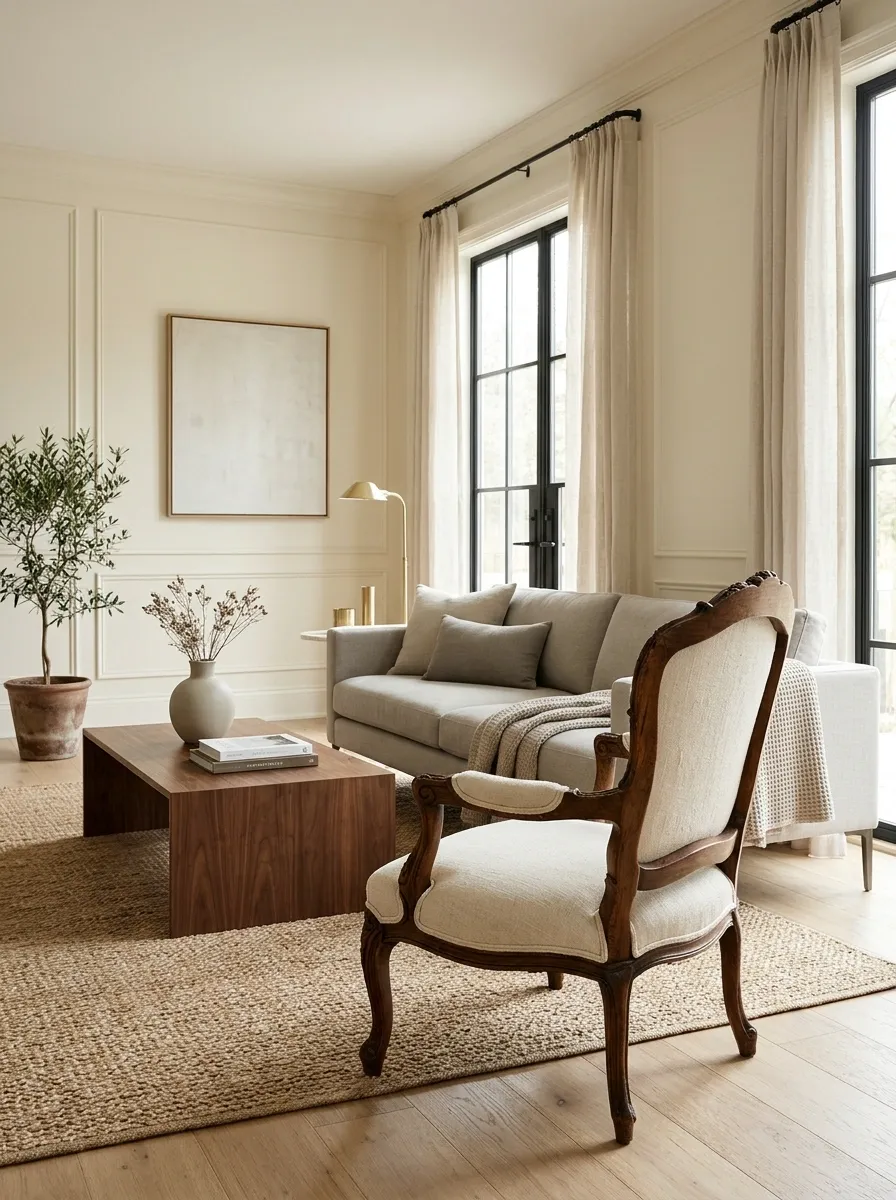
An older chair can gain a new relationship with the room through fabric.
Assess the piece’s condition, significance, and repair needs before changing it. Get appropriate upholstery advice and choose material suited to the intended use. A simpler textile can let a detailed frame remain the focus.
Compare the sample with the existing wood and surrounding furniture. Don’t choose purely from a small swatch under shop lighting. Keep the scope and cost realistic before buying a project piece. The result should give you a comfortable, useful chair whose shape still deserves attention.
Let its detail remain readable.
Choose suitable comfort and durability.
Connect to the surrounding palette.
Keep Patina Where It Contributes to the Piece
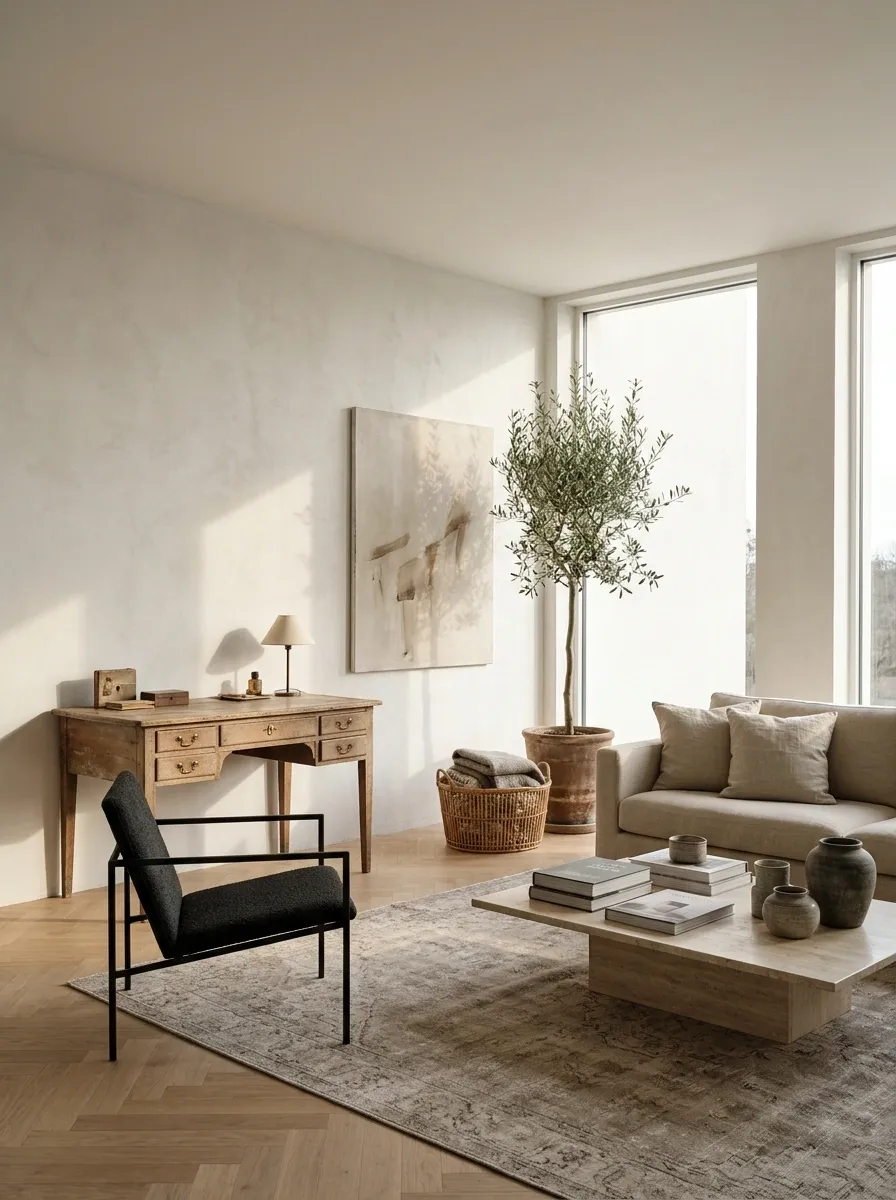
An antique doesn’t have to look newly manufactured to belong in a modern room.
Separate attractive surface character from dirt, instability, or damage. Use care appropriate to the material and finish, and seek suitable advice before altering a potentially significant piece. Aggressive sanding or casual painting can remove more than you intended.
Let the older surface sit beside something cleaner-lined and more contemporary. The difference is part of the appeal. You’re choosing a piece with an existing life, so it can retain evidence of that life while remaining sound, useful, and properly maintained.
Preserve worthwhile finishes where appropriate, while assessing structural faults and deterioration properly. Don’t treat every mark as a refinishing instruction.
Use a Visually Light Coffee Table Beside Heavier Furniture
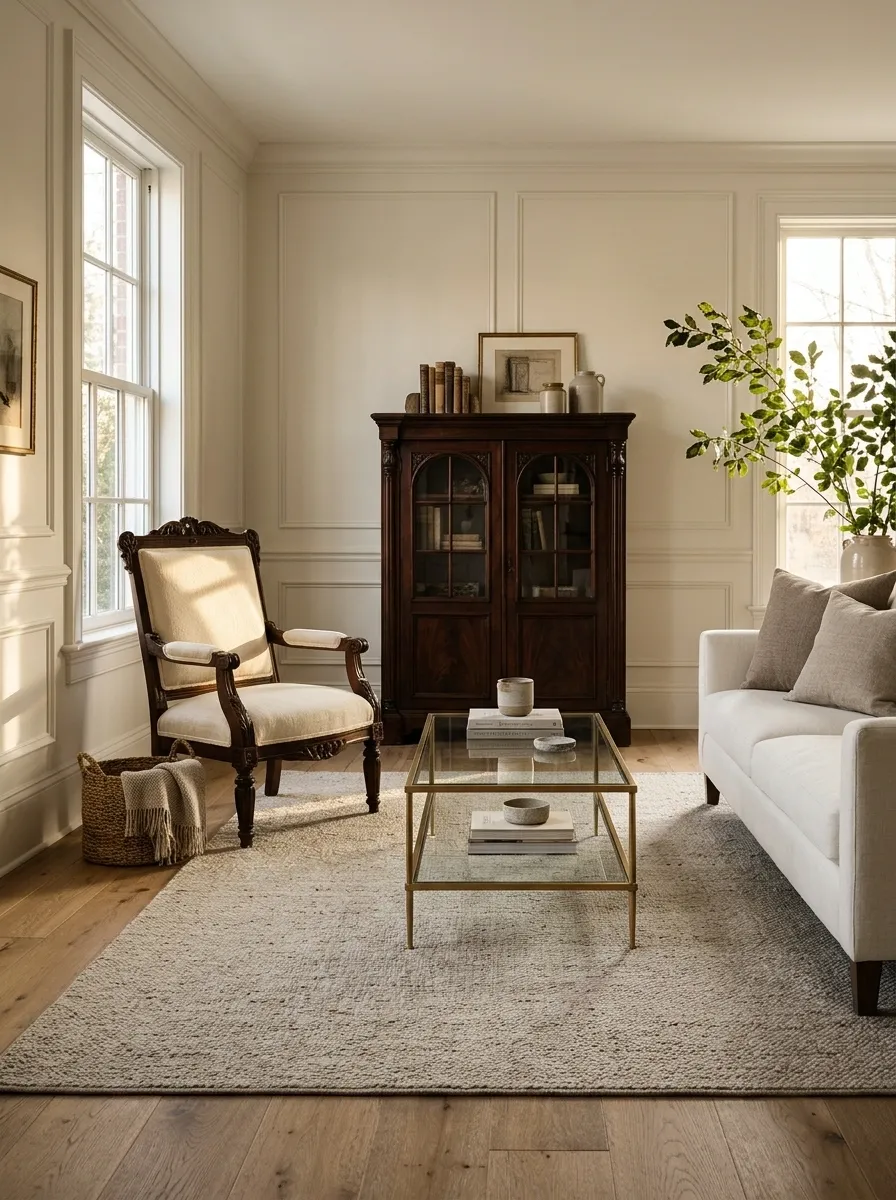
A simple table can give the seating area relief when the surrounding pieces have substantial frames.
Choose a shape and material that suit the room’s use. A glass-topped, open-frame, or otherwise restrained design can leave more of the arrangement visible. Keep stability, reach, and household needs central to the choice.
Test the full footprint before buying. The table should improve movement and everyday use, rather than merely look delicate. A quieter center lets the antique chair or cabinet have presence without making the whole seating group feel equally dense.
Provides shape and substantial material.
Leaves some openness at the center of the group.
Put a Contemporary Rug Beneath Older Furniture
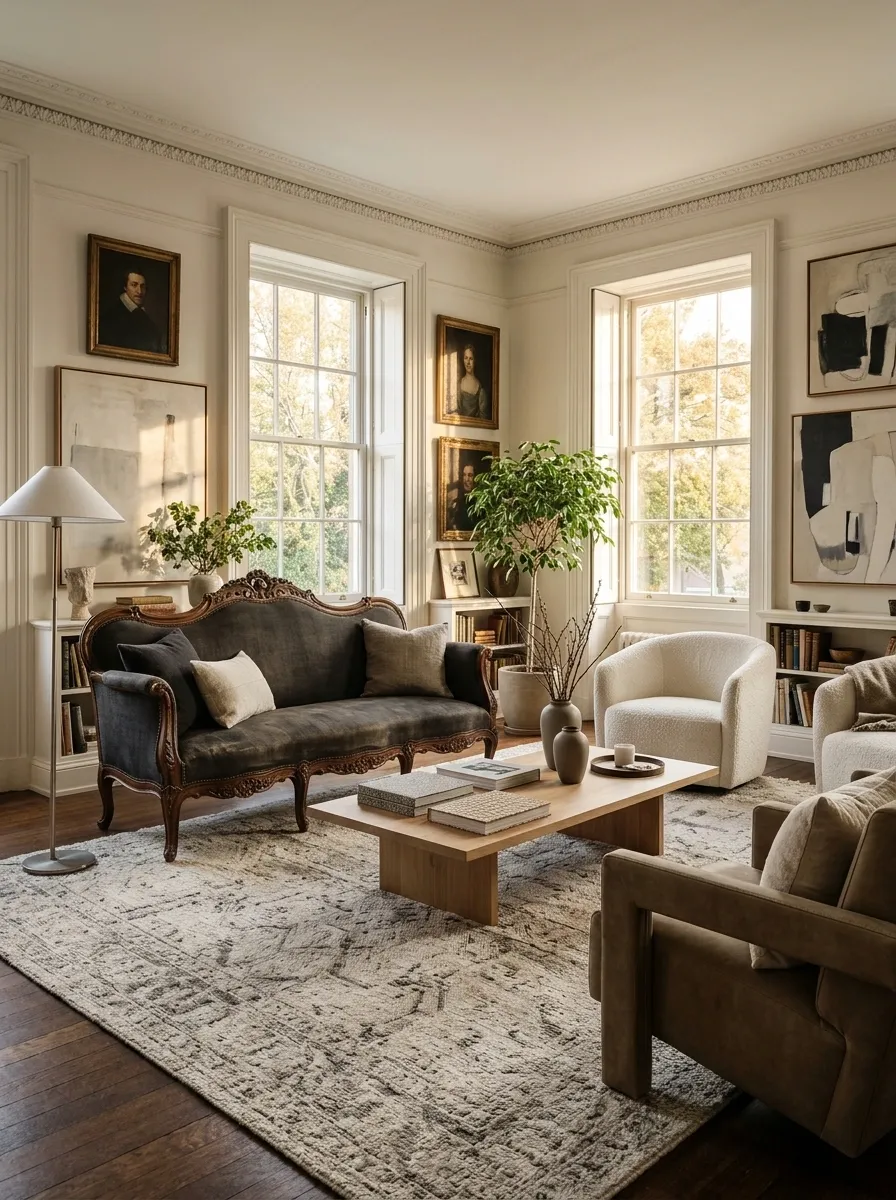
A simpler rug can change the context of antique pieces without altering them.
Choose the size around the furniture arrangement and the pattern around the room’s existing detail. A restrained geometric design or textured plain can provide a clear base beneath carved frames and varied wood.
Position it so the main seating relates to the rug, and use an appropriate pad for the flooring. Keep edges and door movement practical. The rug should connect the group as a whole, rather than become another independent statement competing with the older furniture above it.
Measure the furniture group and its routes first. An attractive rug that sits stranded under the table won’t connect the arrangement.
Let One Half of the Dining Set Be More Contemporary
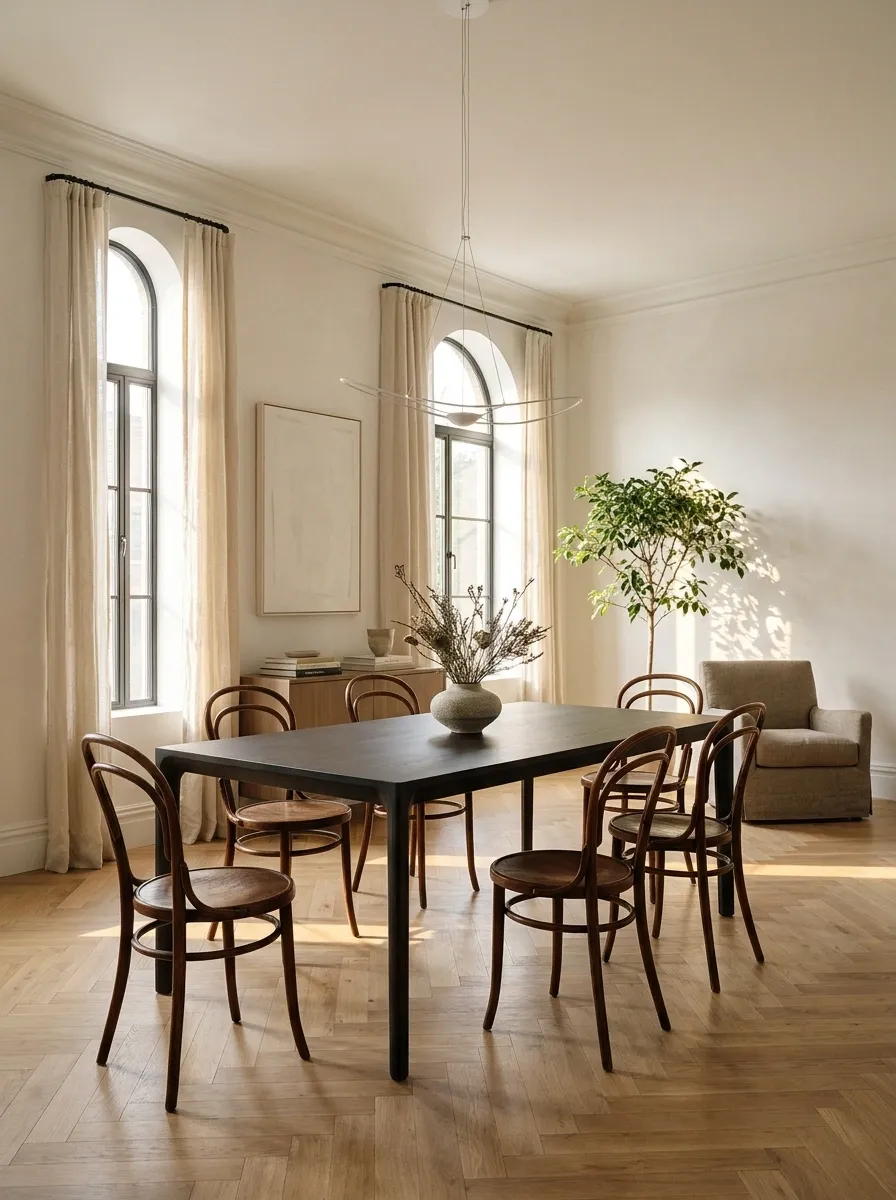
A dining table and chairs don’t need to share the same design language.
Pair a suitable older table with simpler chairs, or give an understated table a set of distinctive older seats. Check height, legroom, chair width, and stability before judging the look. The combination has to work through a meal.
Use one repeated detail to connect the group if needed, such as upholstery color or a related curve. Keep the surrounding room from becoming equally busy. A deliberate contrast at the dining area can provide enough character without requiring a matching sideboard and elaborate centerpiece.
Seat height and table clearance feel comfortable.
Chairs fit around the table without crowding.
People can sit, stand, and pass normally.
Echo a Curve Instead of Matching a Style
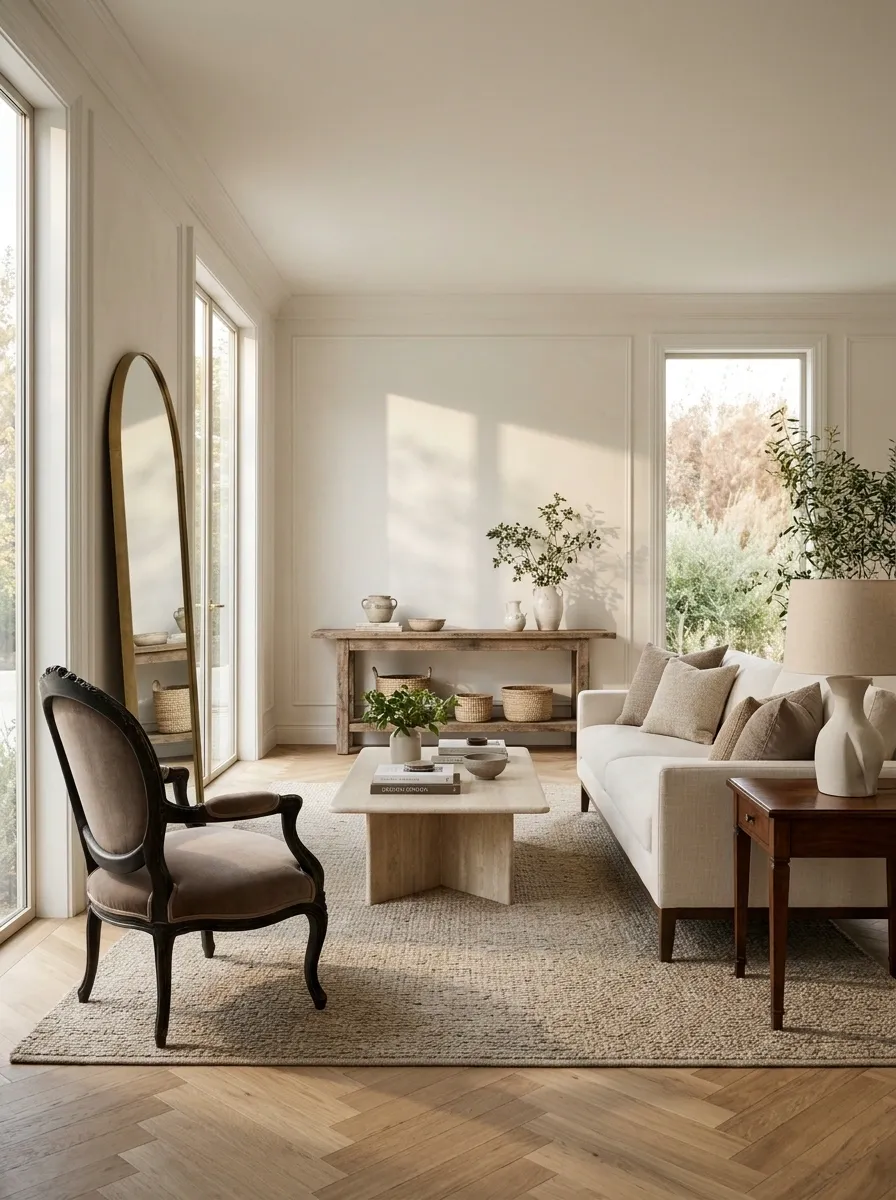
A shared shape can connect pieces whose finishes and ages differ.
Repeat the curve of an antique chair back in a modern mirror, lamp, or table. Keep the relationship subtle enough that the objects retain their individuality. You’re giving the eye a connection rather than building a matching set.
Look at the room’s overall outlines before buying another piece. A few related curves can soften an otherwise angular arrangement. Too many identical shapes can feel forced. Use the connection where it helps two existing pieces sit more comfortably together.
Photograph the room and notice repeated curves, angles, and frame thicknesses. Shape may provide the connection you were trying to achieve through color.
Repeat a Metal Finish in a Few Useful Places
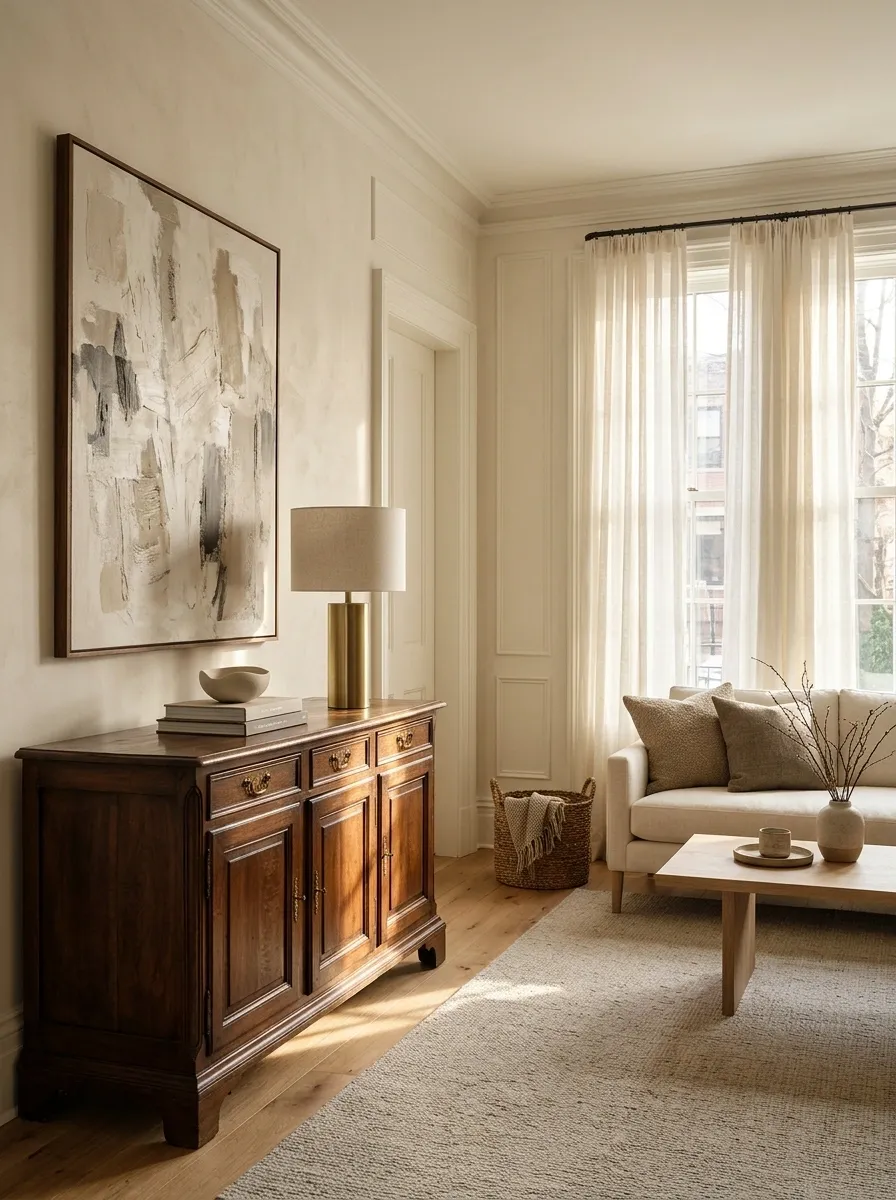
An antique handle or decorative fitting can relate to a contemporary lamp without every metal surface matching.
Choose a finish already worth repeating and bring it into a limited number of useful elements. Compare the undertones and level of shine. Products with similar names can still look quite different together.
Keep fixed fittings in the decision before replacing anything. You don’t need to change sound plumbing because a sideboard has warm-toned handles. A small amount of repetition can give the mixed room continuity while allowing the older piece to retain its original hardware.
Keep worthwhile original hardware.
Repeat a related finish where it serves the room.
Check that the relationship feels clear without becoming uniform.
Use an Antique Mirror Above a Simple Modern Vanity
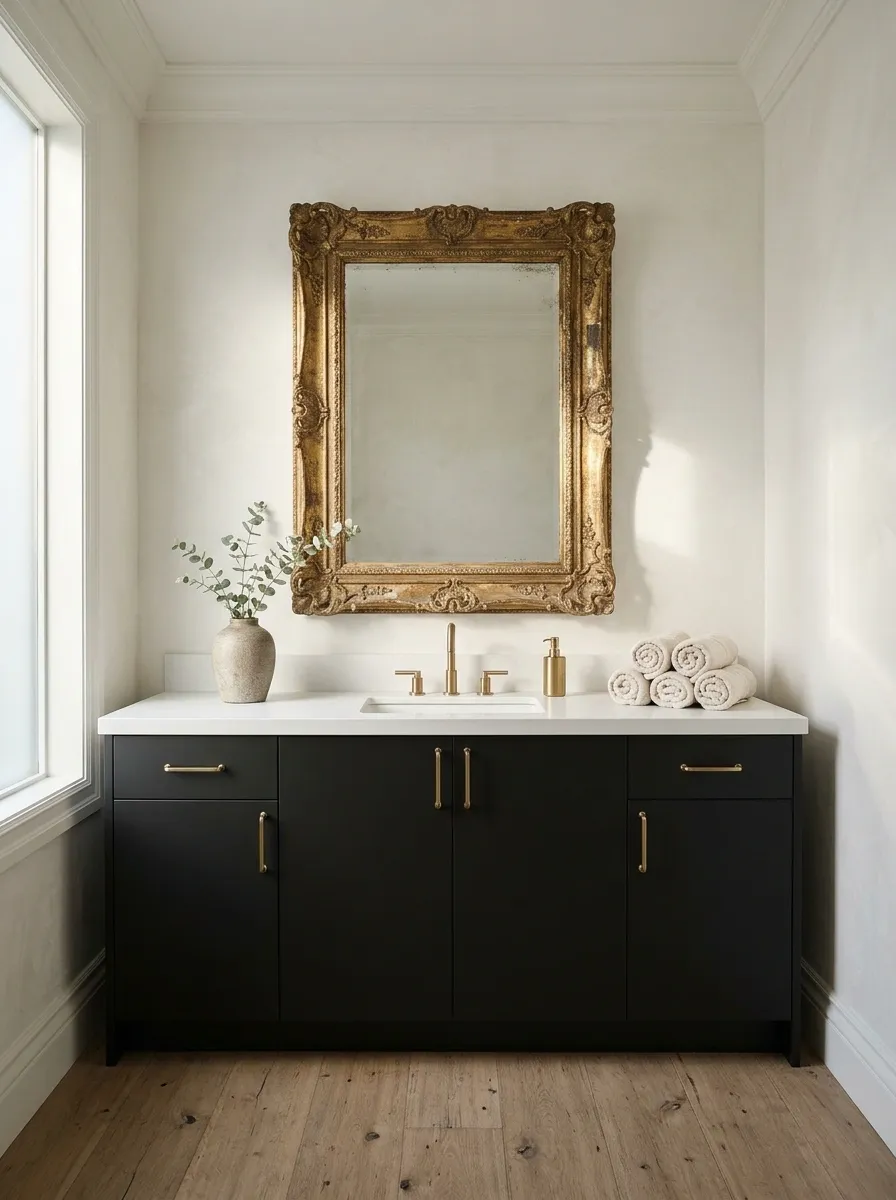
A distinctive frame can provide character in a bathroom with quieter fittings.
Choose a mirror whose dimensions suit the basin area and whose materials and condition are appropriate to the environment. Keep the frame away from unnecessary splashing and preserve useful access around the vanity.
Check the reflection, lighting, and wall support before installation. A simple cabinet beneath can give the mirror a clear setting. Avoid adding elaborate accessories around every edge. The contrast already supplies interest, and the basin still needs room for daily use without turning into a display shelf.
Check the frame material, finish, mounting, and moisture exposure before choosing an older mirror for this location.
Let an Armoire Conceal Modern Equipment When Suitable
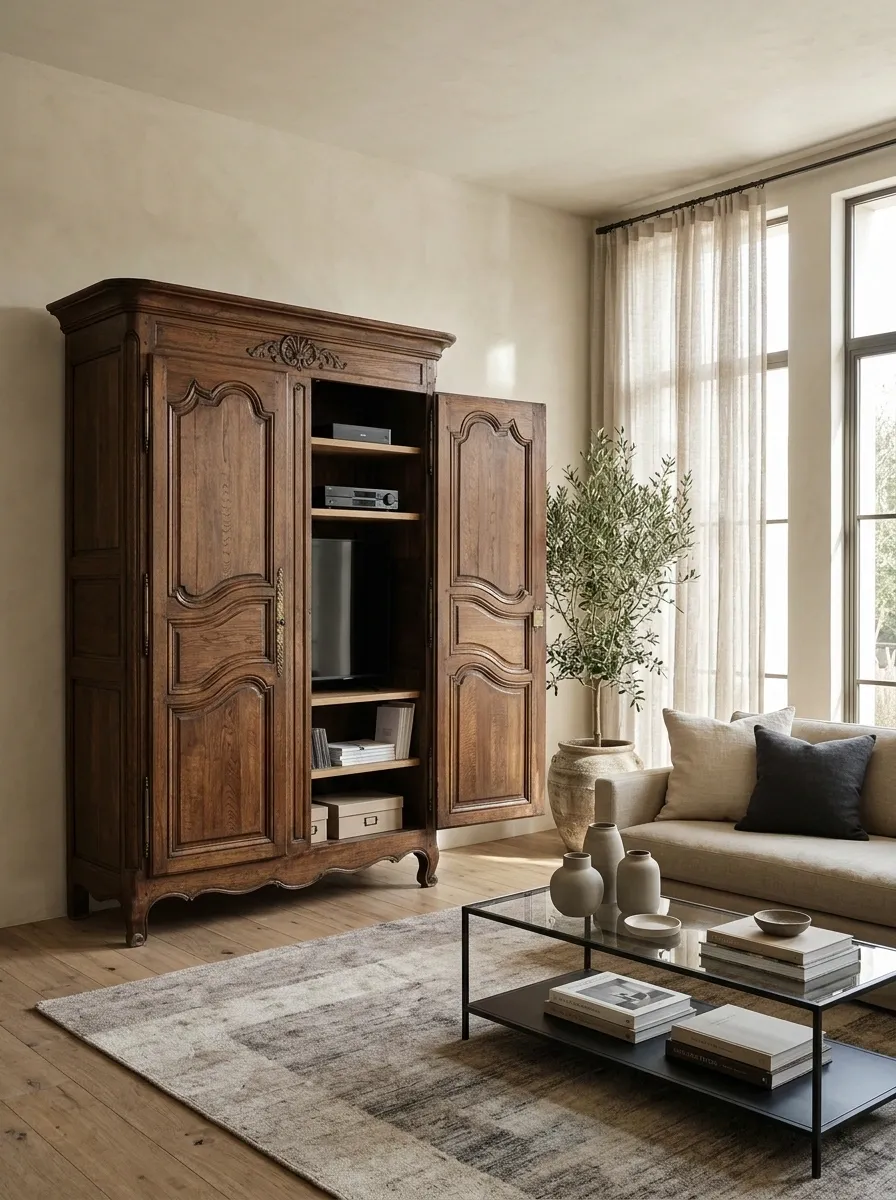
A substantial cabinet can give a room useful storage while reducing visual clutter.
Assess the dimensions and condition, then decide what belongs inside. For electronic equipment, preserve all required ventilation, access, and operating clearances. Don’t assume a closed antique cabinet is suitable for powered devices.
It may work better for equipment stored while not in use, paperwork, or household supplies. Keep alterations and installation appropriate to the piece and task. The useful contrast comes from an older exterior serving present-day needs, without forcing either the cabinet or its contents into an unsuitable arrangement.
Check fit, retrieval, and shelf loads.
Follow ventilation and operation requirements.
Keep changes appropriate to its condition and significance.
Pair a Modern Bed With Older Bedside Storage
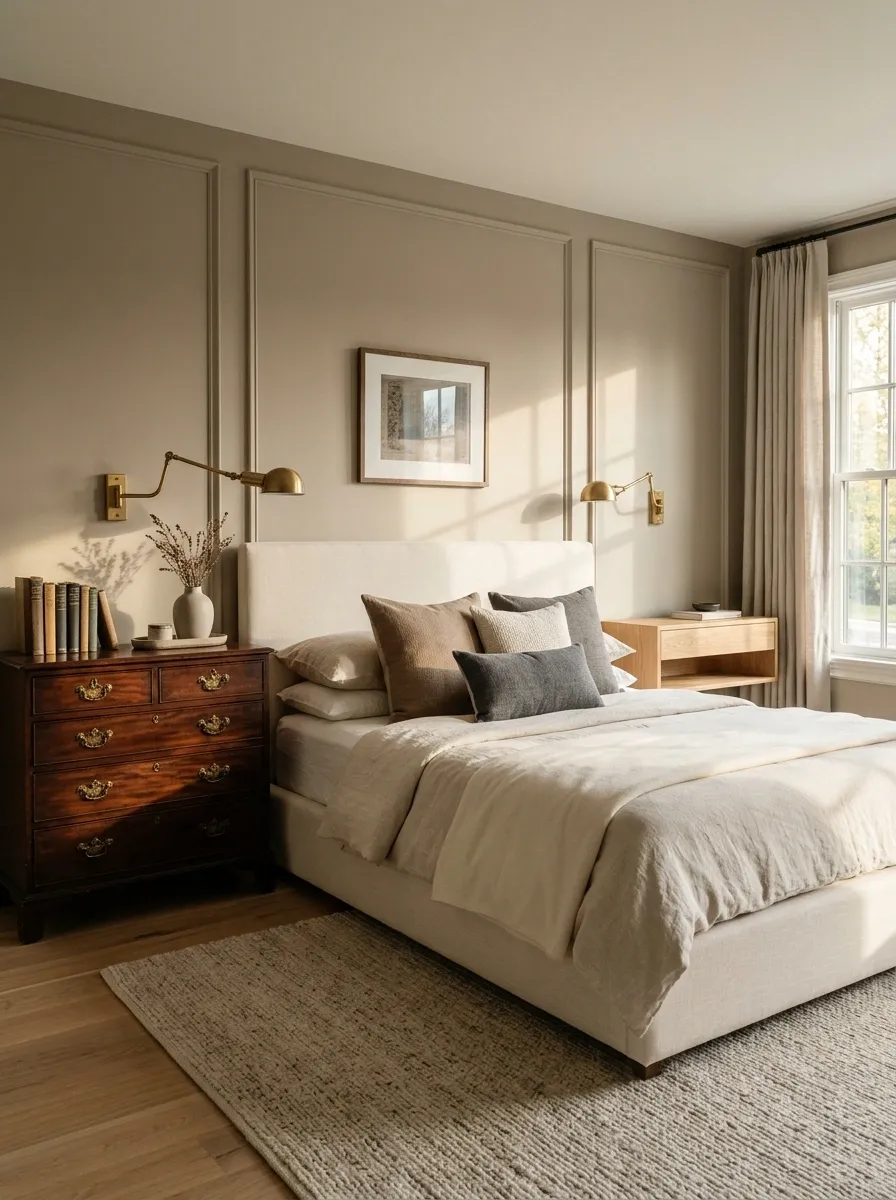
A simple bed can provide a calm setting for a small antique chest or table.
Check the height from the mattress and leave enough room to move around the frame. Give nighttime belongings a stable landing spot and keep the light useful. The pieces don’t have to match exactly on both sides.
Use color or proportion to make different bedside pieces feel related. Keep drawers accessible and the surfaces clear enough to function. This arrangement brings character close to daily life without requiring an entire antique bedroom suite to establish the room’s direction.
Test the surface height, drawer access, reading light, and reach for ordinary belongings. Appearance comes after a comfortable nighttime setup.
Use an Antique Desk Only Where It Supports Comfortable Work
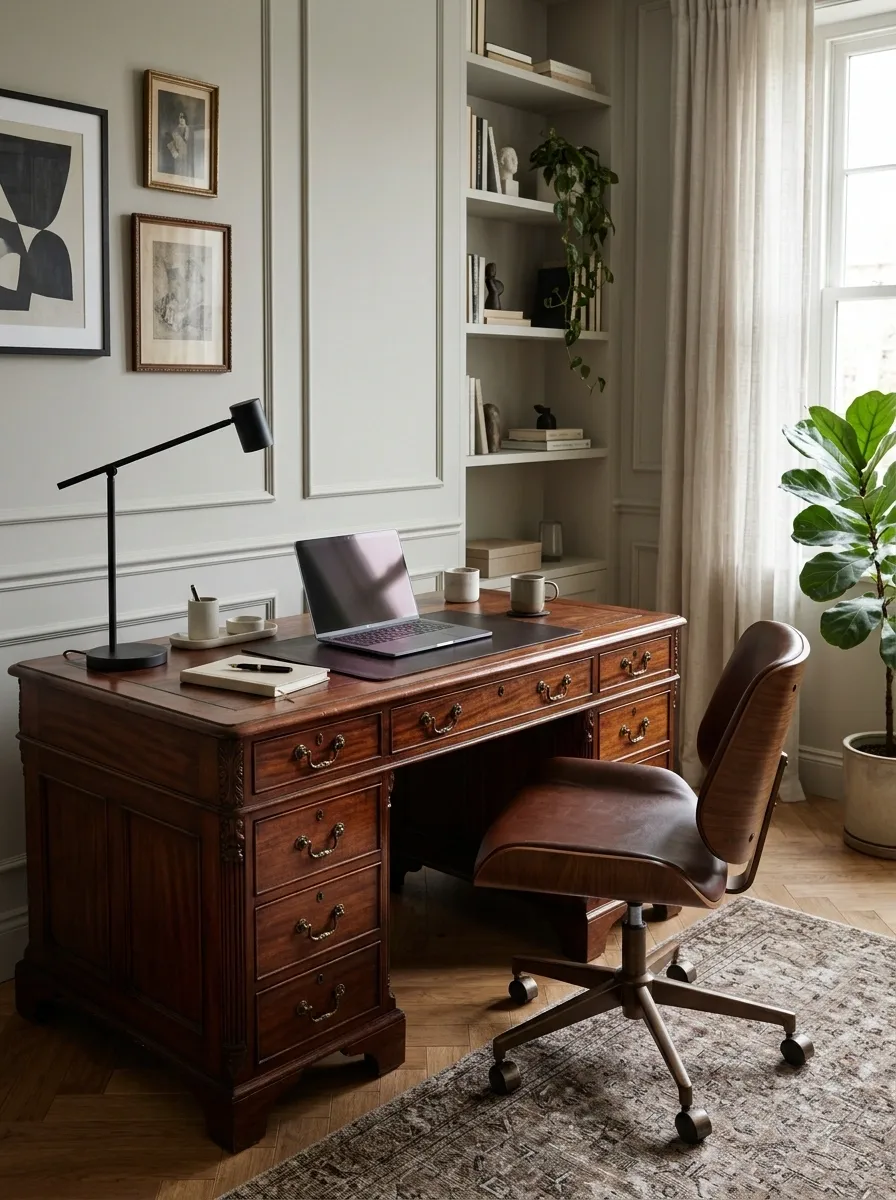
An older desk can sit well with contemporary equipment and a practical chair.
Check the working height, knee space, surface depth, and the tasks you need to do. A charming writing table may suit occasional correspondence but struggle with a full working day and several devices.
Choose the chair for comfort and fit rather than period agreement. Protect the desk’s finish appropriately and route cables without damage. Let the modern equipment remain useful. The room looks more convincing when the desk genuinely serves its job, instead of staging an office nobody can comfortably work in.
Comfortable height, legroom, and chair relationship.
Enough surface for what’s used together.
Protect the finish and avoid damaging cable arrangements.
Put a Narrow Antique Piece in a Clean-Lined Entrance

An entrance can introduce the mix with one useful piece.
Choose a console, small chest, or suitable table that leaves the route comfortable. Check opening drawers and nearby doors before committing. Give keys and everyday belongings a defined place.
Keep the surrounding arrangement restrained. A modern mirror or simple lamp may provide enough contrast without additional decorative furniture. Let the antique’s outline remain visible. The entrance should help people arrive and leave easily, including when they’re carrying bags, rather than make them negotiate around a handsome object that never quite fitted the hall.
| Position | Test |
|---|---|
| Furniture closed | Pass comfortably with ordinary belongings. |
| Storage open | Retrieve contents without blocking essential access. |
Separate Two Elaborate Pieces With Something Quieter
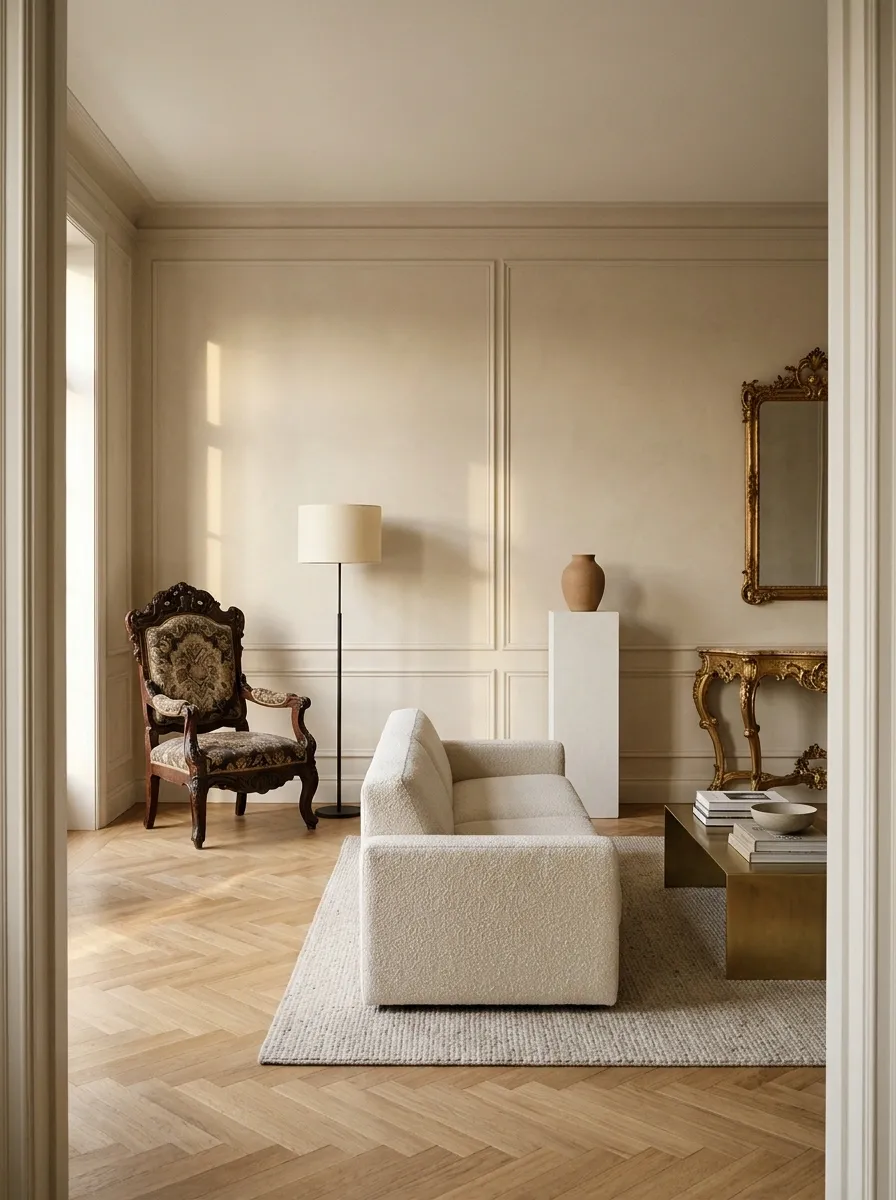
Two heavily detailed antiques placed together can make each harder to appreciate.
Try moving a simpler chair, lamp, or open section of wall between their visual territories. Keep the actual furniture layout practical while adjusting where attention settles. A quieter element gives the eye a pause.
You don’t need to remove every ornate piece from the room. Spread the detail so it feels intentional. Check the composition from the doorway, where the whole arrangement is visible. The goal is to let the stronger objects retain their character without appearing to compete for the same patch of attention.
Carving, pattern, or substantial material.
A simpler surface or clear section.
Another detail with enough room to register.
Display Modern Personal Objects on Older Furniture
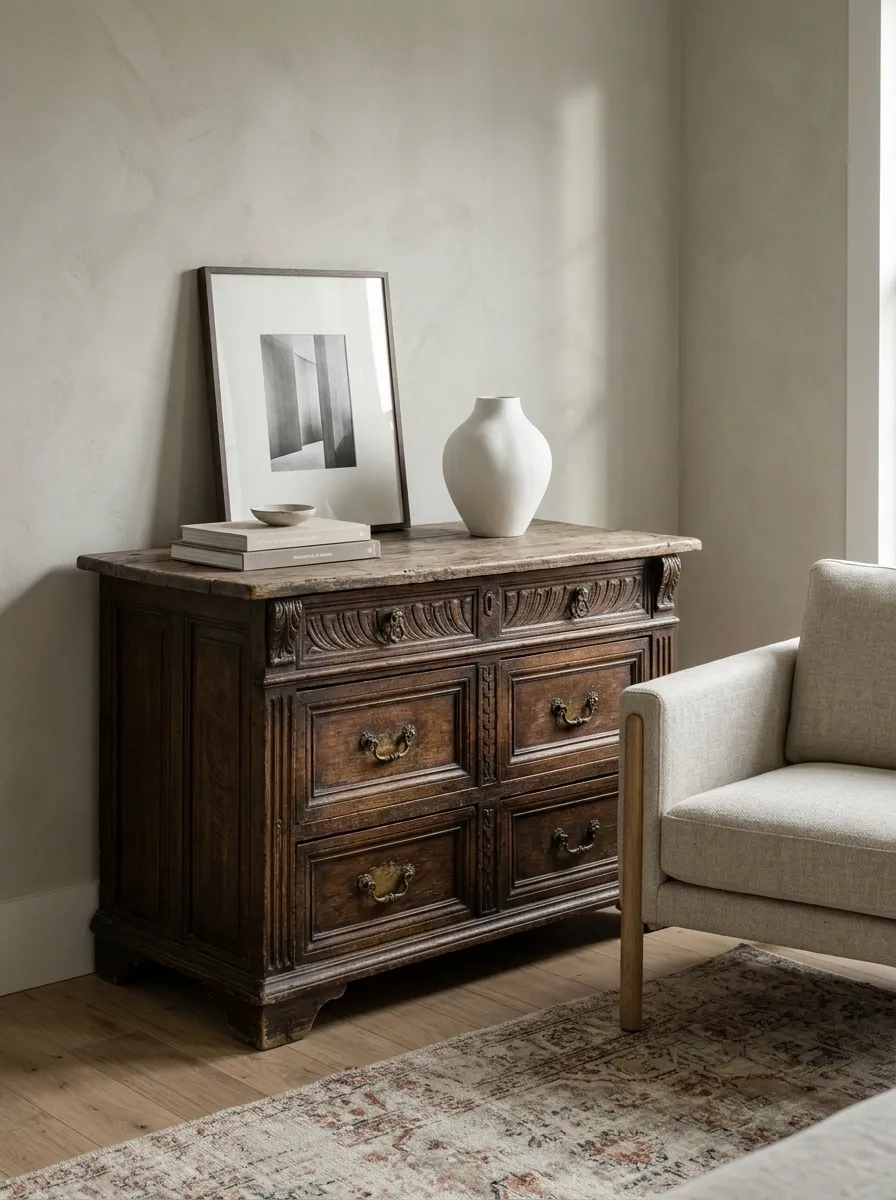
An antique chest doesn’t need an exclusively antique collection on top.
Use it for a photograph, contemporary ceramic, or object you genuinely enjoy. Choose the arrangement by scale and usefulness, then leave some of the furniture’s surface visible. A small group can provide enough connection.
Keep delicate or valuable finishes protected appropriately. Avoid filling the top just because there’s space available. Personal objects help the older piece belong to your home rather than remain a separate historical exhibit. The result should feel lived with, including when the tabletop needs to hold something temporarily.
A personal object can connect through color, shape, or simple placement. It doesn’t need to share the furniture’s age.
Put Contemporary Work in a Suitable Older Frame
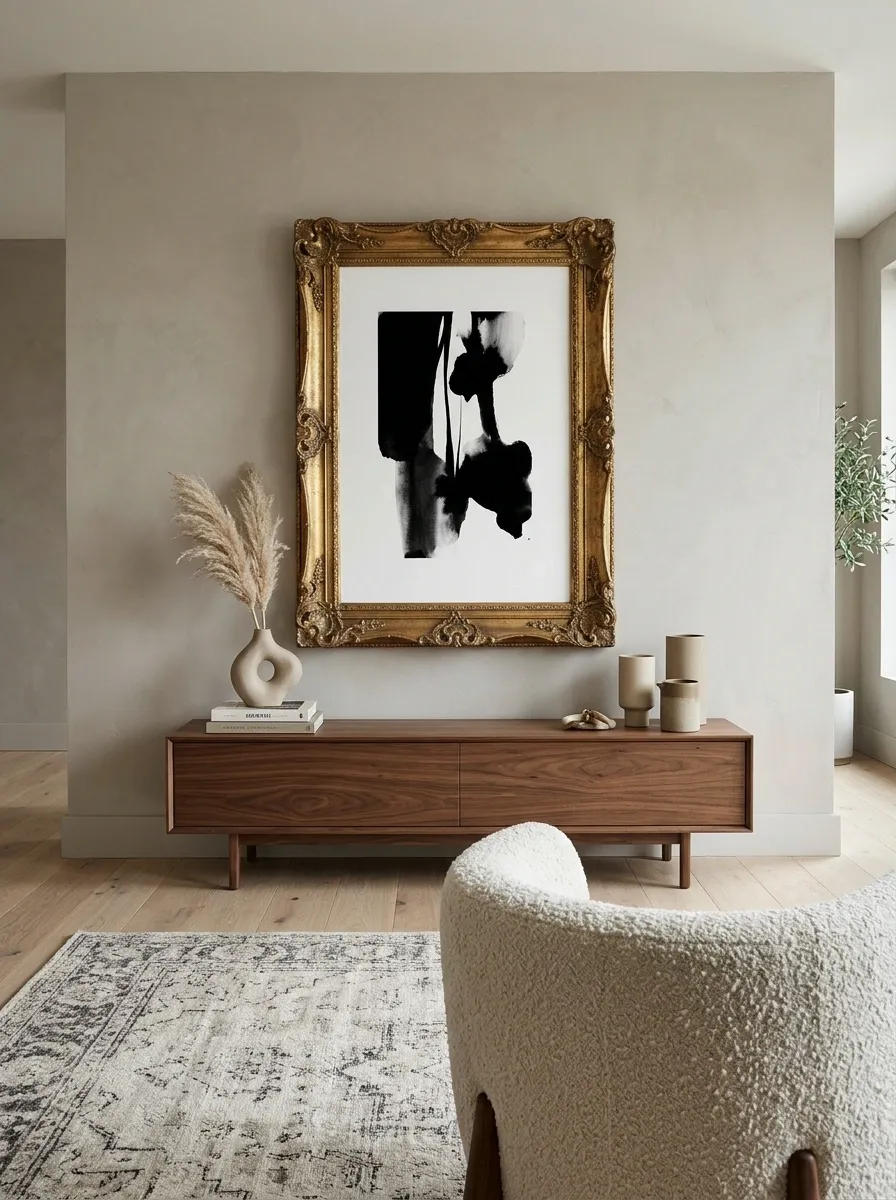
A frame can create a useful contrast around a print, photograph, or other modern work.
Check the fit and condition, including the support and glazing requirements of the artwork. Use appropriate framing advice where needed, especially for valuable or vulnerable pieces. Don’t force the work into an unsuitable old backing simply to use the frame.
Choose the wall position for the complete composition. A detailed frame can sit well against a calmer background. Let the image retain its own character. The pairing works because the two elements offer different things, rather than because one disguises the other.
The image, mount, and frame fit properly.
The framing setup suits the artwork.
The complete piece relates to the wall and furniture.
Give an Older Trunk a Storage Job That Suits It
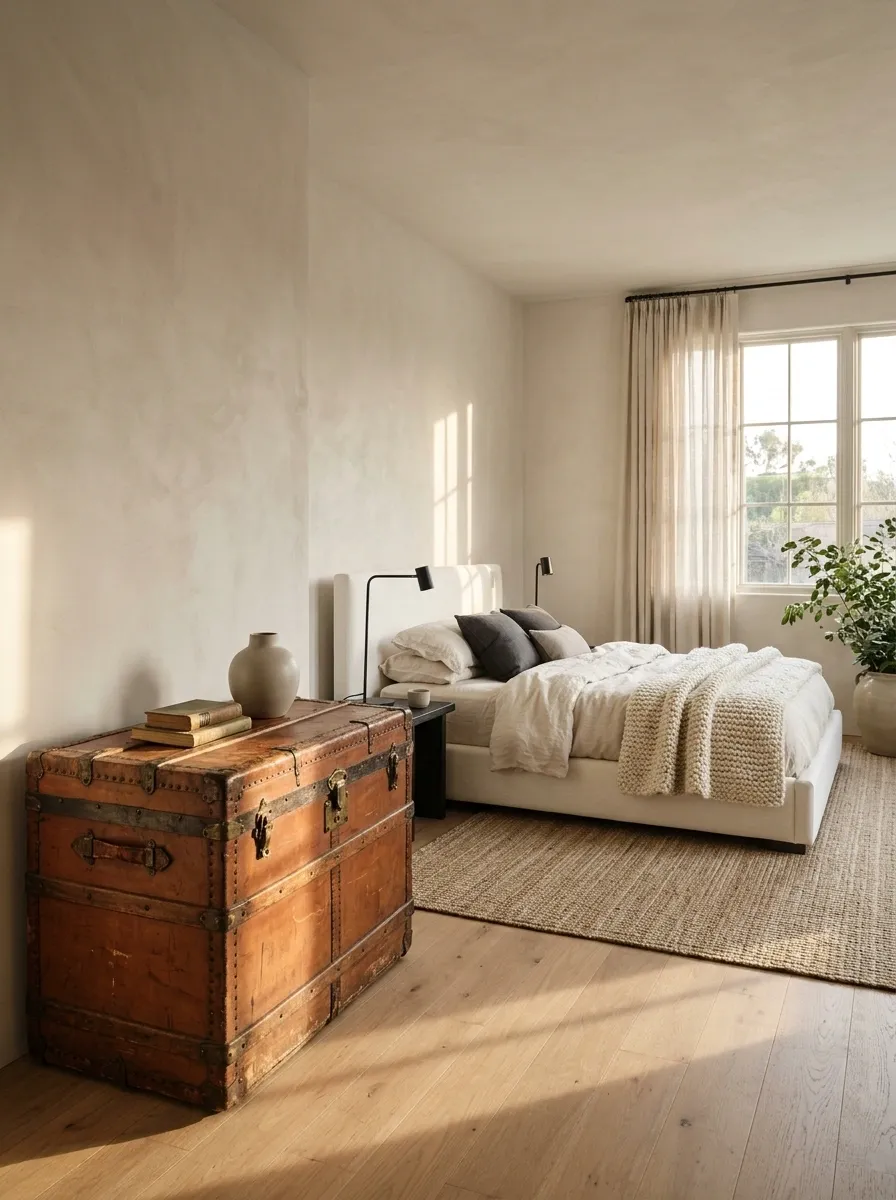
A sound trunk can provide character in a bedroom or sitting area.
Assess its condition, interior, hinges, and suitability for the intended contents. Keep access practical and protect nearby flooring. Don’t assume it should become seating or a table unless it’s appropriate for that use.
Choose a position where the lid can open normally and the piece doesn’t interrupt movement. Let a simpler modern element nearby provide contrast. The trunk earns its place when it solves a real storage need, rather than merely introduces another large object because its hardware looks interesting.
Check condition, safe operation, interior suitability, and access. Age and appearance don’t establish whether an object can support a new use.
Use Simple Curtains Around More Detailed Furniture
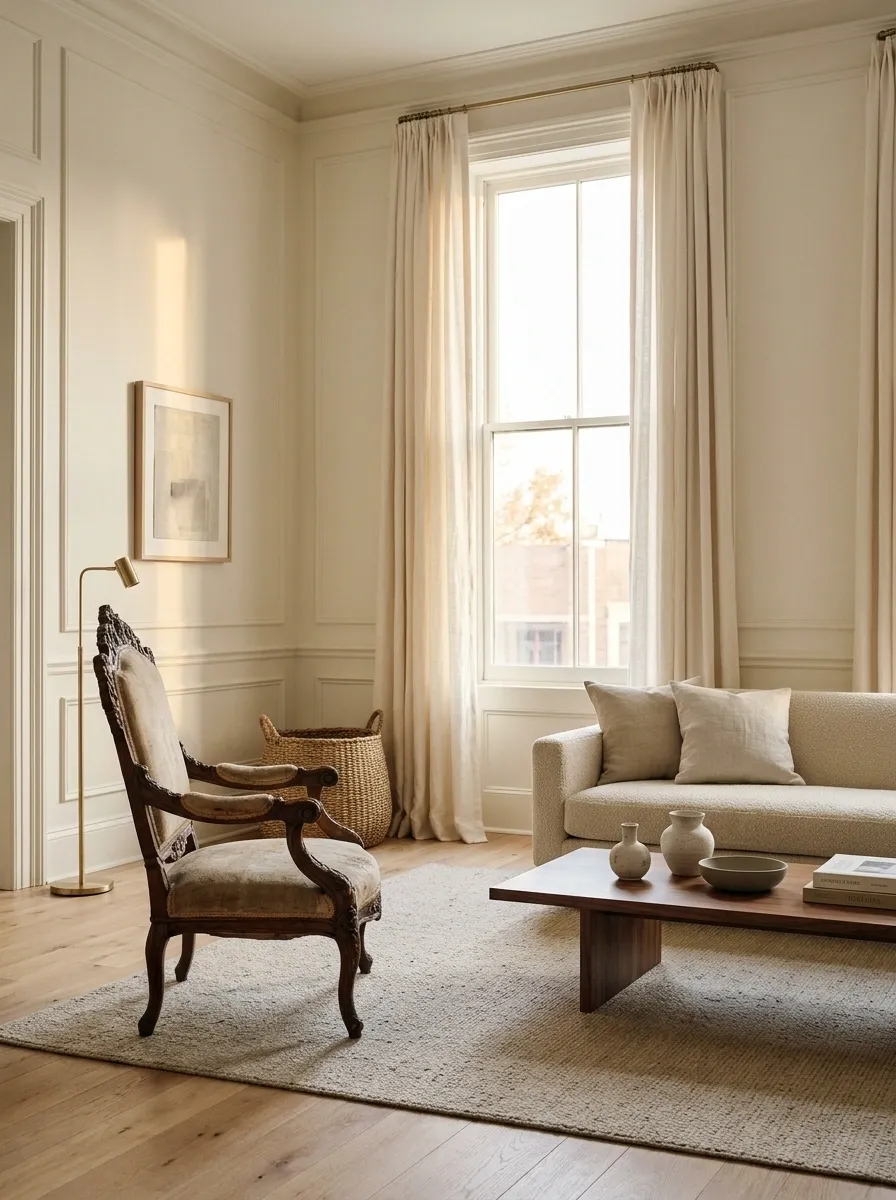
Windows don’t need to repeat all the room’s decorative complexity.
A well-fitted plain curtain can give antique frames and varied wood finishes a calmer setting. Choose the fabric’s color and texture beside the existing furniture, then plan hanging height, coverage, and the finished drop together.
Keep daily operation and required clearances practical. The treatment should open and close without catching on the very furniture it’s meant to complement. A simpler window area can make the mixed room feel more contemporary while letting the older pieces retain their detail and visual weight.
Connect with the larger room palette.
Add softness without unnecessary competition.
Plan the whole treatment and its movement.
Introduce Older Lighting Only After Checking Its Suitability
An older lamp or fixture can bring character to a contemporary room.
Have its condition and electrical suitability assessed appropriately before use. Choose compatible components and installation for the location. Keep the shade or surrounding arrangement simple if the base already has strong detail.
Judge the piece as lighting once it’s ready. Check glare, useful illumination, and its proportions beside the furniture. A distinctive fitting doesn’t need a full room of period companions. It can provide one clear note of age in an otherwise quieter space, with modern reliability doing its essential work in the background.
Assess condition, compatible parts, installation, and useful light before deciding the piece belongs in everyday service.
Keep One Arrangement Deliberately Unmatched
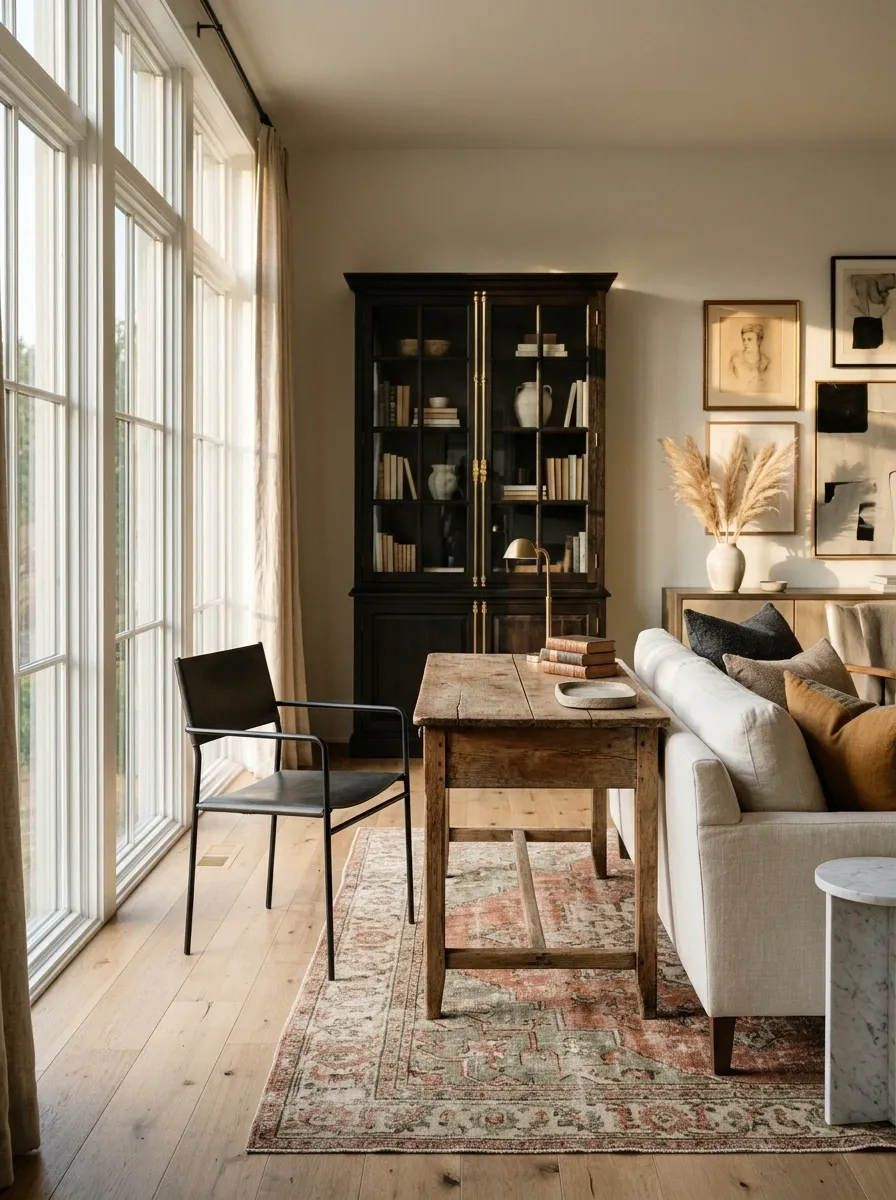
The room doesn’t need every object connected by the same rule.
Once the larger pieces feel balanced, allow a small difference you genuinely enjoy: unlike bedside tables, a contemporary chair at an older desk, or a personal object beside a formal cabinet. Keep the proportions and practical use sound.
Step back before adding another coordinating purchase. Too much effort to match can erase the individuality that made the combination interesting. Let the room contain a few different voices, with enough repeated color, shape, or material to keep the conversation understandable.
The arrangement supports ordinary life.
A few relationships hold the room together.
The pieces retain the qualities you chose them for.
Let the Pieces Keep Their Personalities
Move the antique into a useful position, give it a quieter neighbor, and live with the pairing before buying something else to “finish” it. The room may need less coordination than you expected.
Knowing how to mix antique furniture with modern decor means finding relationships while keeping the differences worth seeing. Check proportion, preserve useful character, and make comfort part of every decision. A room becomes more interesting when its pieces contribute something distinct.
Save your favorite combinations on Pinterest before your next secondhand search. Bring the measurements, then give yourself permission to choose the piece you actually like.