
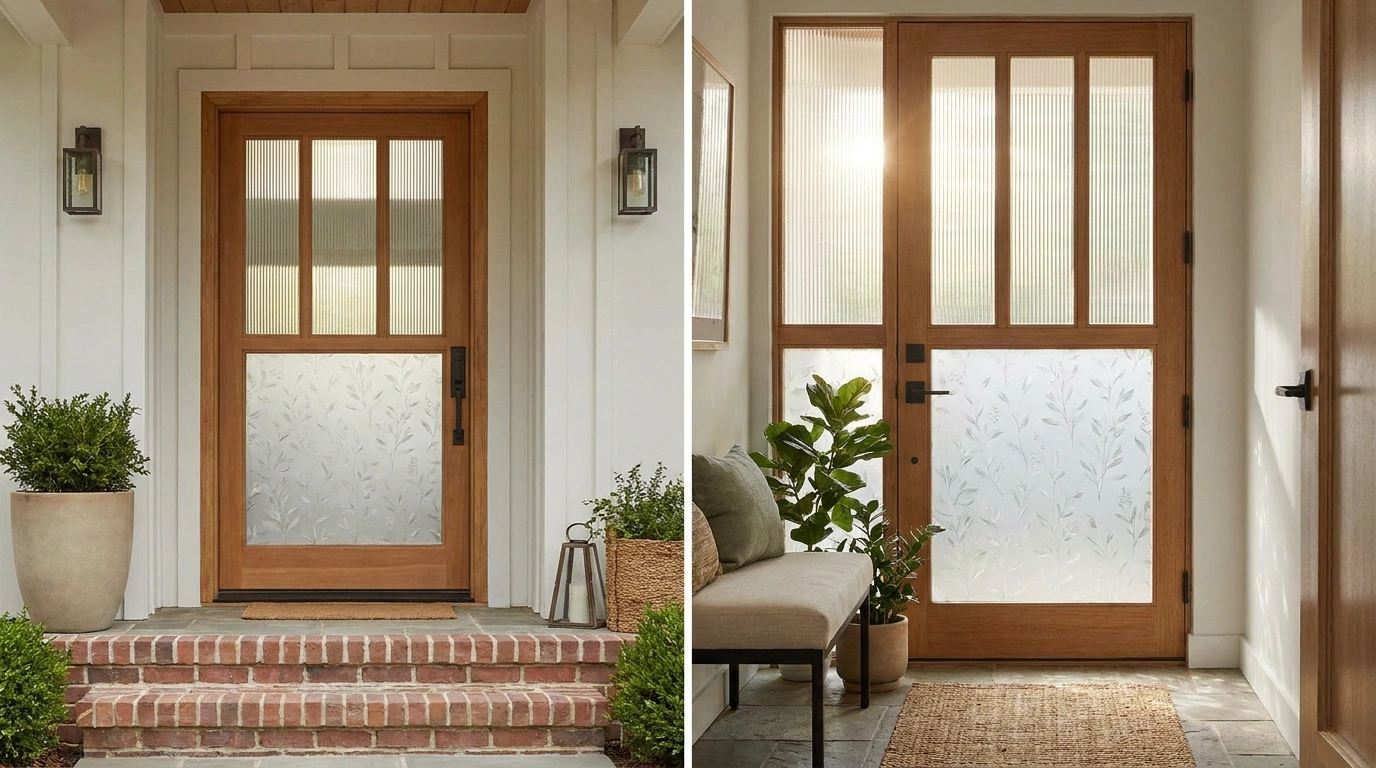
You can love a bright entrance and still prefer that delivery drivers don't get an uninterrupted view of your hallway, coat pile, and regrettable evening loungewear.
Clear front-door glass makes light and sightlines part of the same decision. The most useful solution provides enough obscurity where you need it, keeps the door easy to use, and looks intentional from both sides.
Start by identifying the view you want to interrupt. A decorative pattern that looks wonderfully frosted in a product close-up may still leave exactly the sightline you were hoping to lose.
Define Privacy Before Choosing a Pattern
Check the entrance in daylight and after dark with the interior lights on. Consider the path, doorstep, street, neighboring upper windows, and the positions where people spend time inside.
Reflective and frosted products behave differently. Gila describes its mirror privacy film as a daytime product: when the interior is brighter after dark, people outside can see in. Its frosted film obscures the view rather than preserving a clear view out. Assess the exact product and a sample, rather than transferring claims between finishes.
Verify compatibility with the door glass and follow the manufacturer and door supplier's guidance. Decorative film doesn't automatically add security or change the glazing's safety classification. Keep locks, handles, hinges, weather seals, and the full door movement usable.
Film Treatments Close to the Glass
A Fully Frosted Panel Within a Painted Door
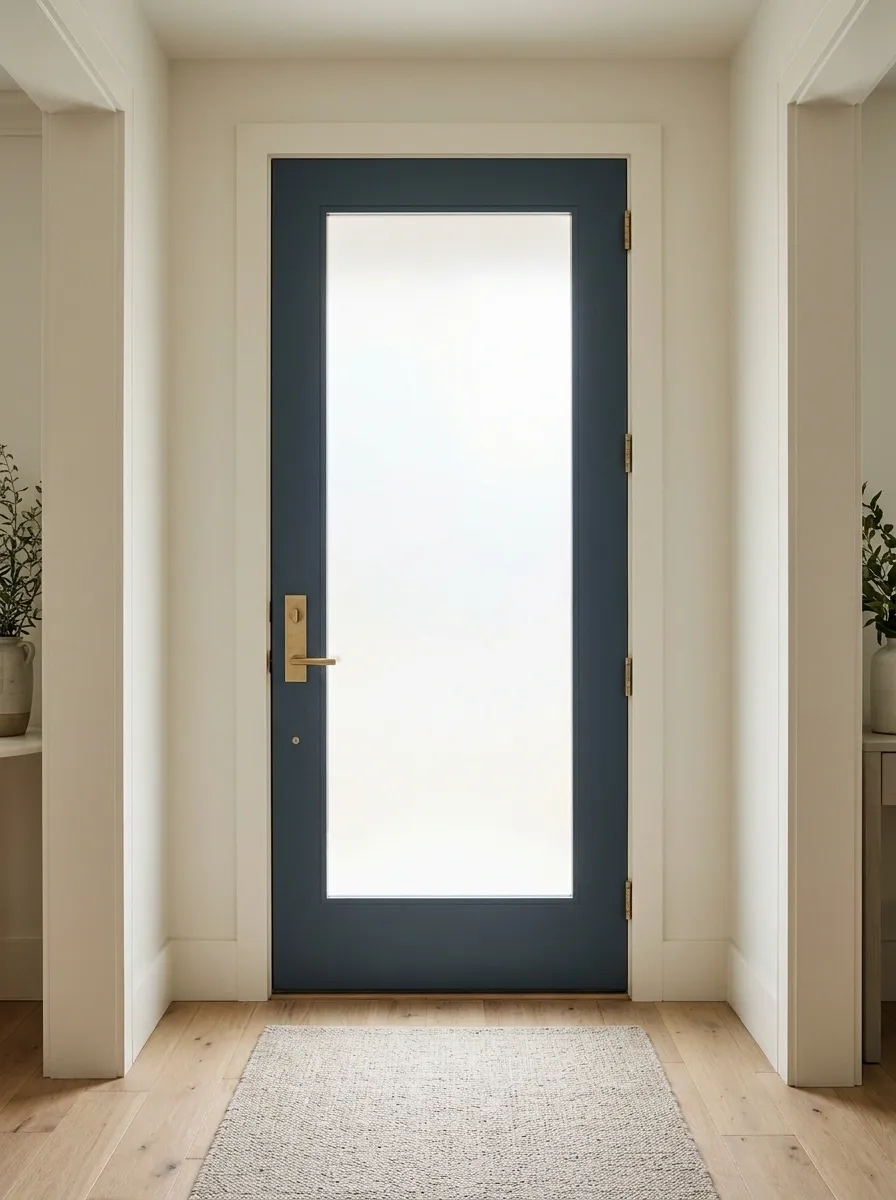
Cover the appropriate glazed panel with a compatible frosted product intended to deliver the obscurity you need. Let the door's painted frame provide the main outline.
A dark green, navy, or warm white door can each work with a pale frosted center. Choose the paint from the house's existing finishes rather than assuming the film needs a completely new palette.
Coverage diagram only. Actual privacy depends on the selected product, uncovered areas, and viewing conditions.
Evaluate the exact product under the entrance's day-and-night lighting conditions.
This is the most visually restrained film direction. The glass becomes a light-transmitting surface rather than a display of shapes, so hardware and the door's proportions remain the main decorative details.
A Frosted Lower Panel With a Clear Upper Section
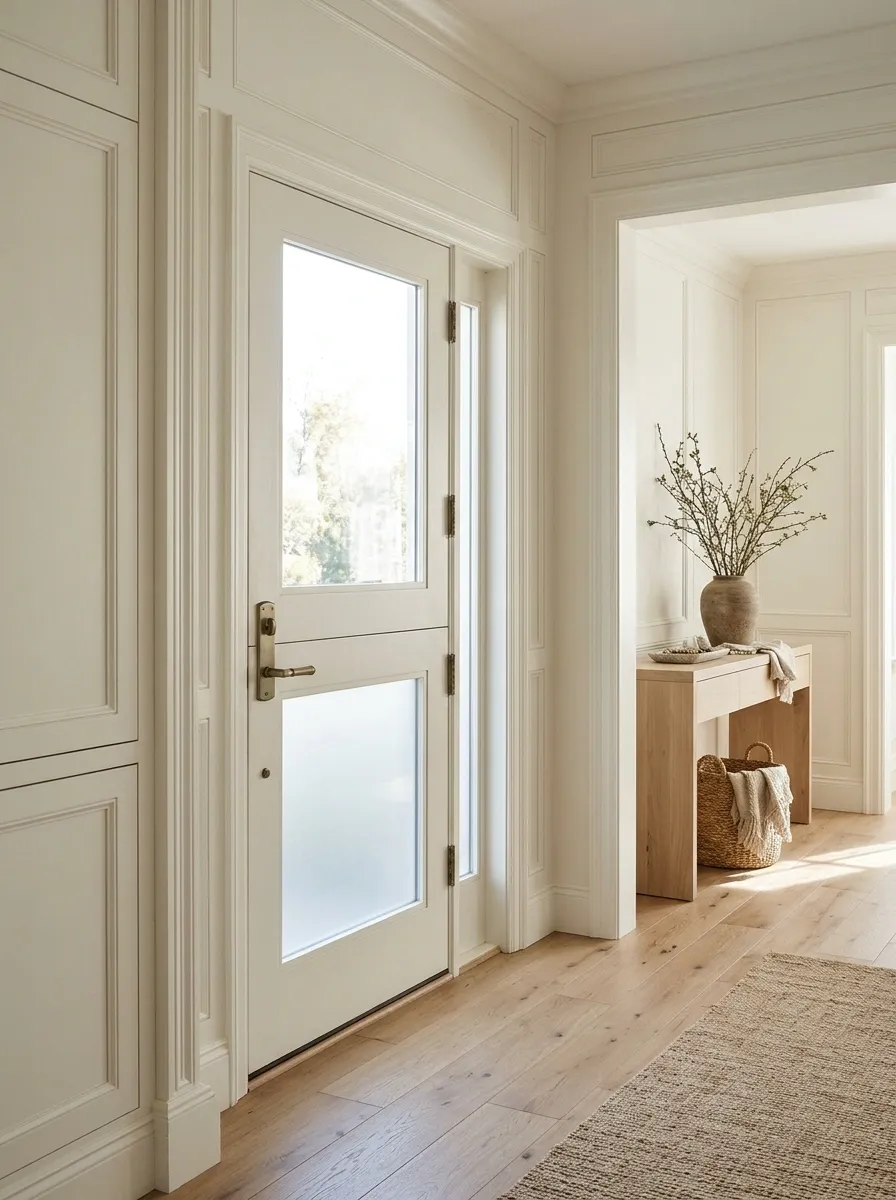
Where the actual sightlines allow it, frost the lower part of a glazed door and leave an upper section clear. The division should relate to the door's rails or another convincing horizontal line.
Coverage diagram only. Actual privacy depends on the selected product, uncovered areas, and viewing conditions.
Use only where the clear upper area does not preserve an unwanted view inside.
This is a partial-privacy arrangement. It won't suit an entrance overlooked from above or a door where the clear section still exposes the interior from the path.
Test the proposed division before applying film, using a suitable temporary mock-up that won't damage the glass. Look from the relevant exterior positions while someone stands inside. The uncovered area should be a deliberate view opening, not an accidental loophole in an otherwise expensive privacy plan.
A Reeded-Look Privacy Film With a Plain Surround
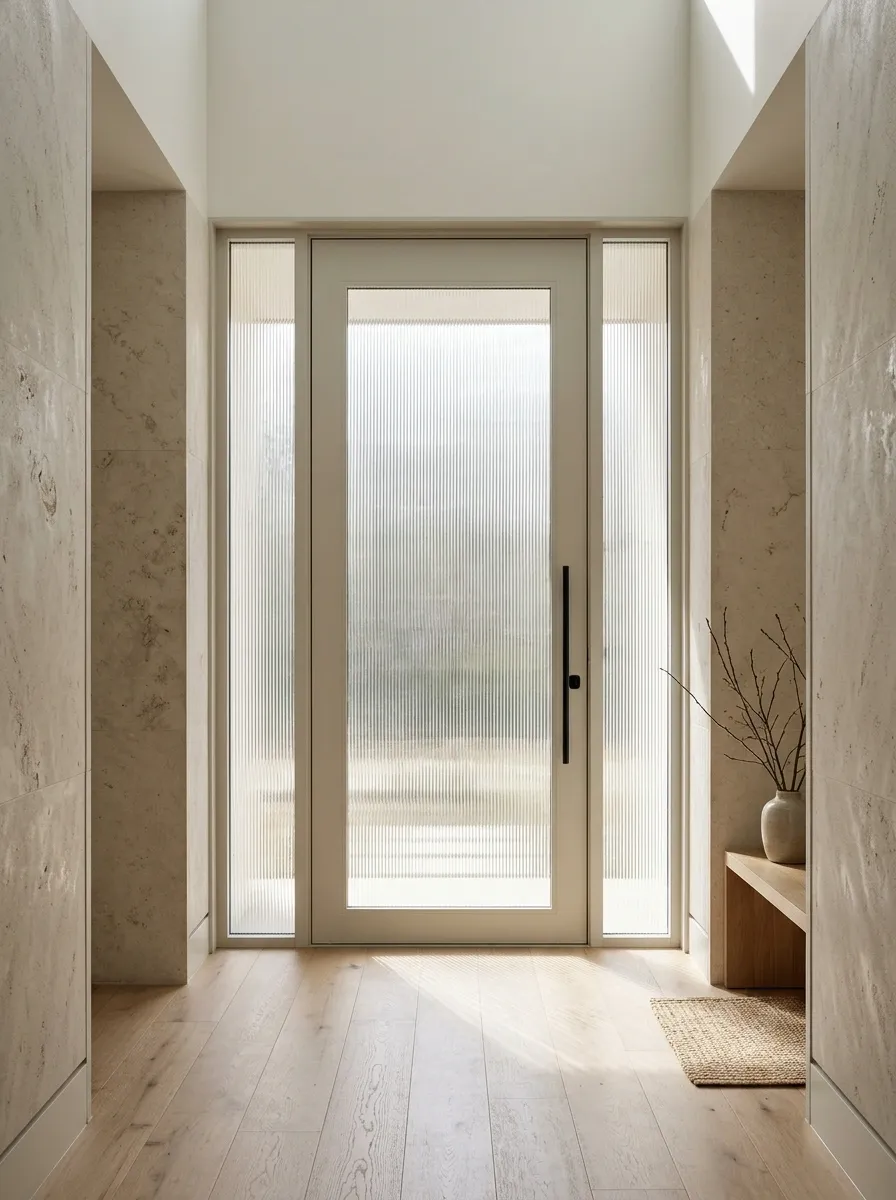
A reeded-look film can introduce fine vertical rhythm while keeping the treatment close to the glazing. Choose a product with suitable privacy performance; the striped appearance alone doesn't establish how much detail remains visible.
Keep the door surround plain and let the vertical pattern be the main decorative feature. A simple dark handle or restrained brass detail is enough alongside it.
Coverage diagram only. Actual privacy depends on the selected product, uncovered areas, and viewing conditions.
What to check in your room
Compare appearance and actual obscurity separately when reviewing samples.
This direction can suit a simple contemporary door or a restrained older frame. Avoid adding another fine stripe in a nearby curtain or runner if both patterns sit in the same view.
A Frosted Geometric Pattern With a Dense Central Field
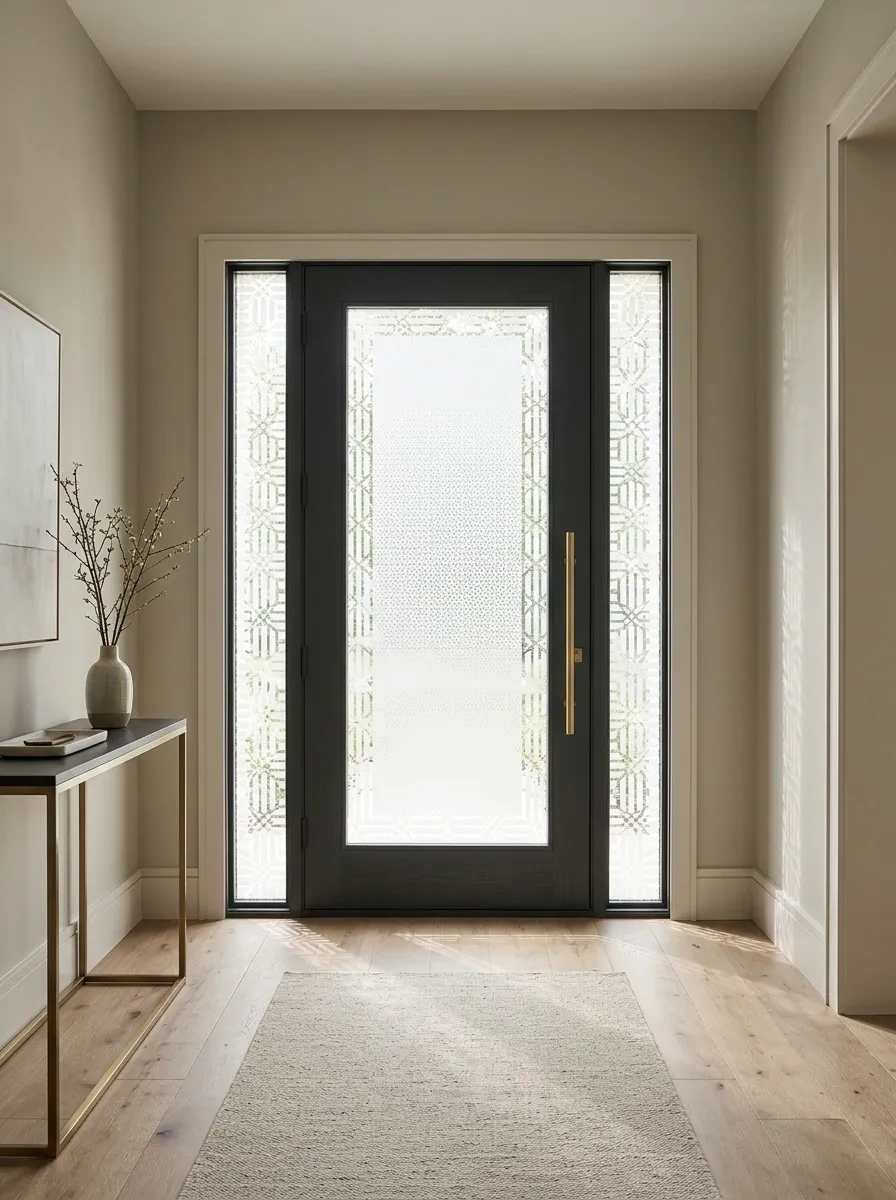
Choose a geometric film whose obscuring field covers the actual privacy-critical view. A pattern can add personality, but large clear shapes may preserve more visibility than the overall frosted impression suggests.
Use the door's existing rails and pane divisions to determine the pattern scale. A small repeated diamond can suit narrow panes; a broad motif may work better on a single glazed panel.
Give the door pattern some space:
- Keep the nearby runner quieter.
- Let the wall paint remain plain.
- Avoid adding another small geometric print immediately beside the glass.
The door can have a pattern without being appointed chief pattern officer for the whole hallway.
Obscuring field
Geometric rhythm
Quiet hall
Review the clear areas at full scale from the relevant outside angles.
Individual Frosted Panels Within an Existing Glazing Grid
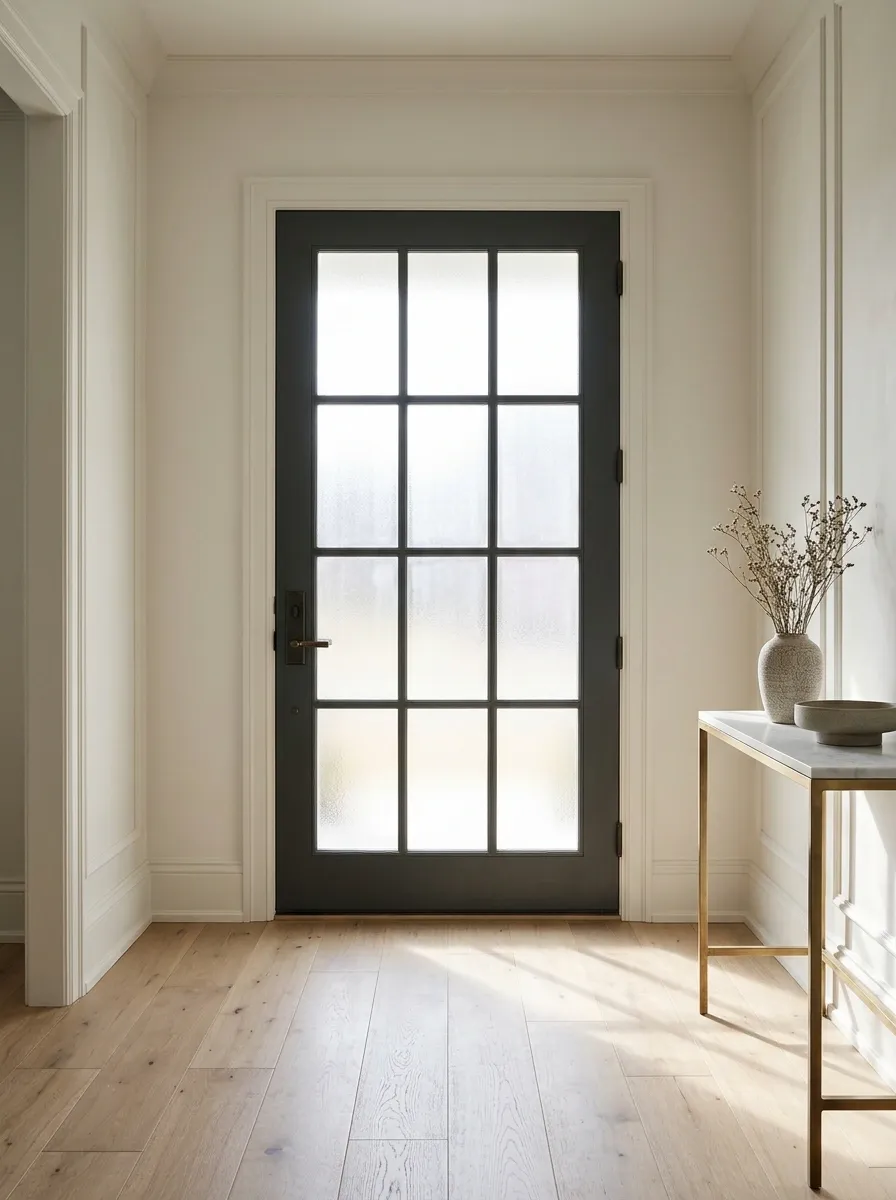
Where the door has several separate glazed panes, treat the panes individually with a suitable frosted product. Keep the existing rails and mullions clear, following the chosen film's installation instructions.
Coverage diagram only. Actual privacy depends on the selected product, uncovered areas, and viewing conditions.
Assess all clear sections rather than judging the overall pale appearance.
The repeated pale panels can make the door feel orderly without adding an unrelated decorative motif. A dark painted frame gives a graphic result; warm white is quieter.
Check that the full pane arrangement provides the privacy required. Leaving one clear pane for convenience can preserve a surprisingly useful view into the house. If an intentionally clear panel belongs in the design, assess it from outside rather than assuming its small size makes it insignificant.
Fabric and Shade Options That Can Change Position
A Plain Door-Mounted Roller Shade
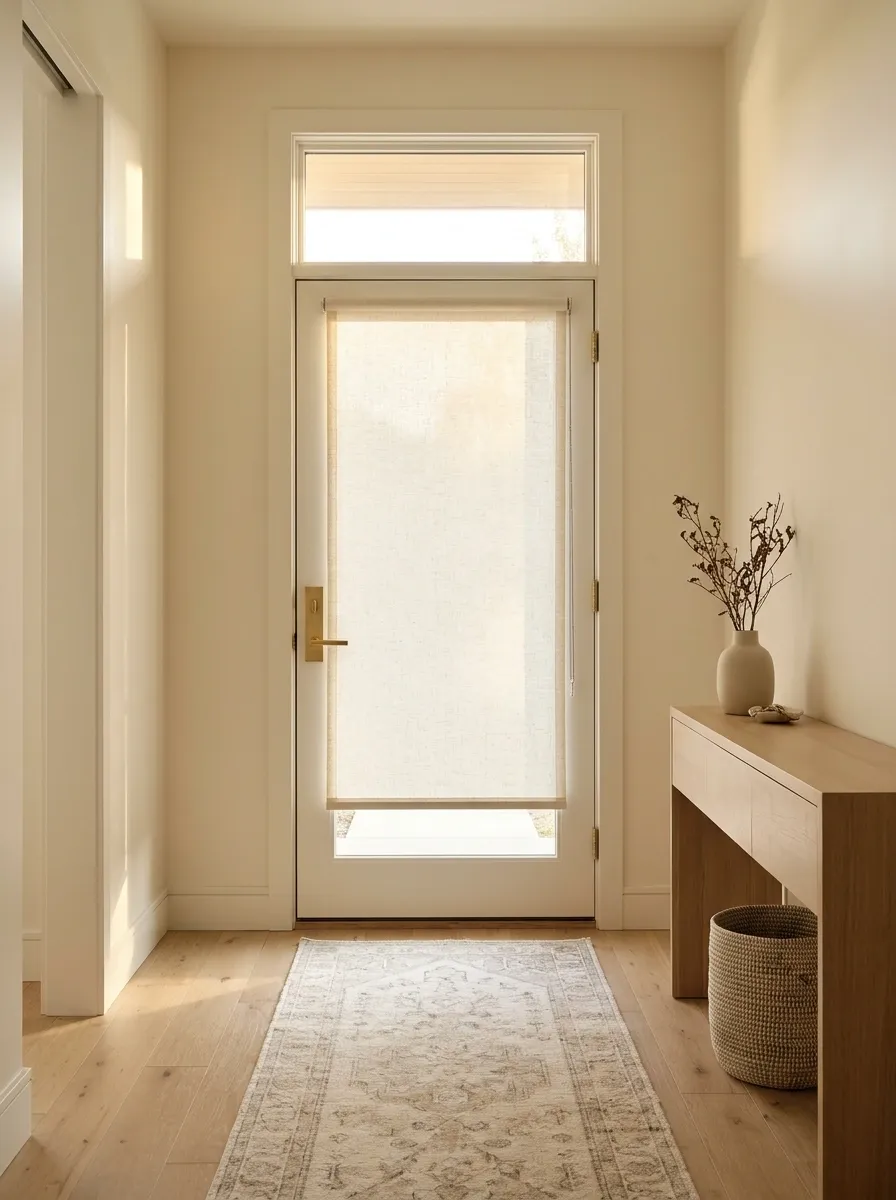
A roller shade designed and installed for the particular door can provide adjustable coverage without a floor-length curtain. Choose a quiet fabric that relates to the hallway wall or runner.
Check the shade's projection with the handle, latch, neighboring wall, and full door swing. The bottom edge and any restraint system must operate as intended.
Coverage diagram only. Actual privacy depends on the selected product, uncovered areas, and viewing conditions.
What to check in your room
Verify compatibility with the door and keep its locks and full movement clear.
A shade adds an action to daily life: you may raise it for light and lower it for privacy. Choose the controls and arrangement for the household, including cordless operation where appropriate, rather than assuming everyone will remember a complicated routine.
A Tailored Roman Shade on a Suitable Glazed Door
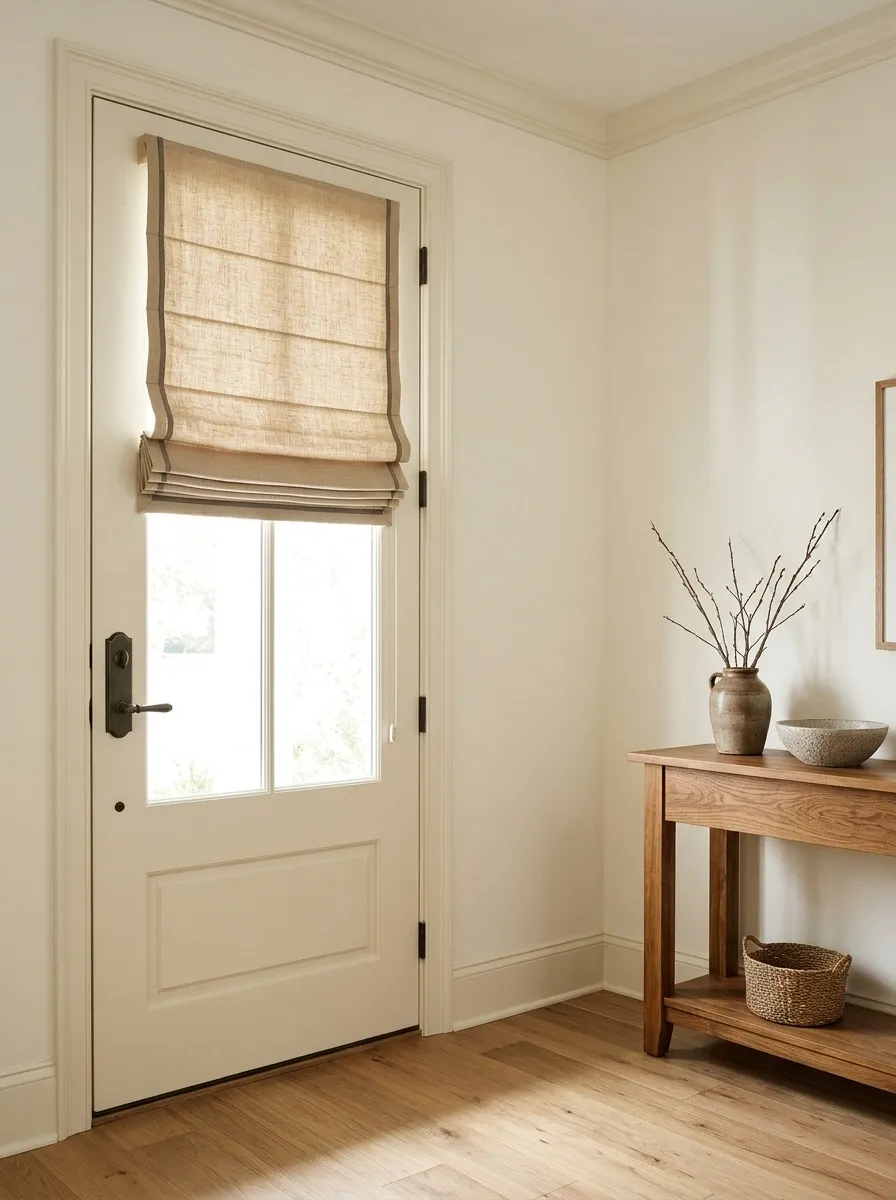
A Roman shade can make a glazed door feel softer and more furnished, where the door and fitting system permit it. Use a plain fabric or restrained border so the folded textile doesn't overwhelm the entrance.
Coverage diagram only. Actual privacy depends on the selected product, uncovered areas, and viewing conditions.
Check the folded stack and all operating positions with the door fully open.
The raised stack needs room too. Check it against door stops, surrounding walls, handles, and any overhead obstruction when the door opens.
A warm flax fabric can work with cream walls and wood furniture. A muted blue shade can give a white entrance a little more color. The shade belongs to a moving object, so its complete open, closed, raised, and lowered positions matter more than a neat front view.
A Gathered Door Curtain Held at Both Ends
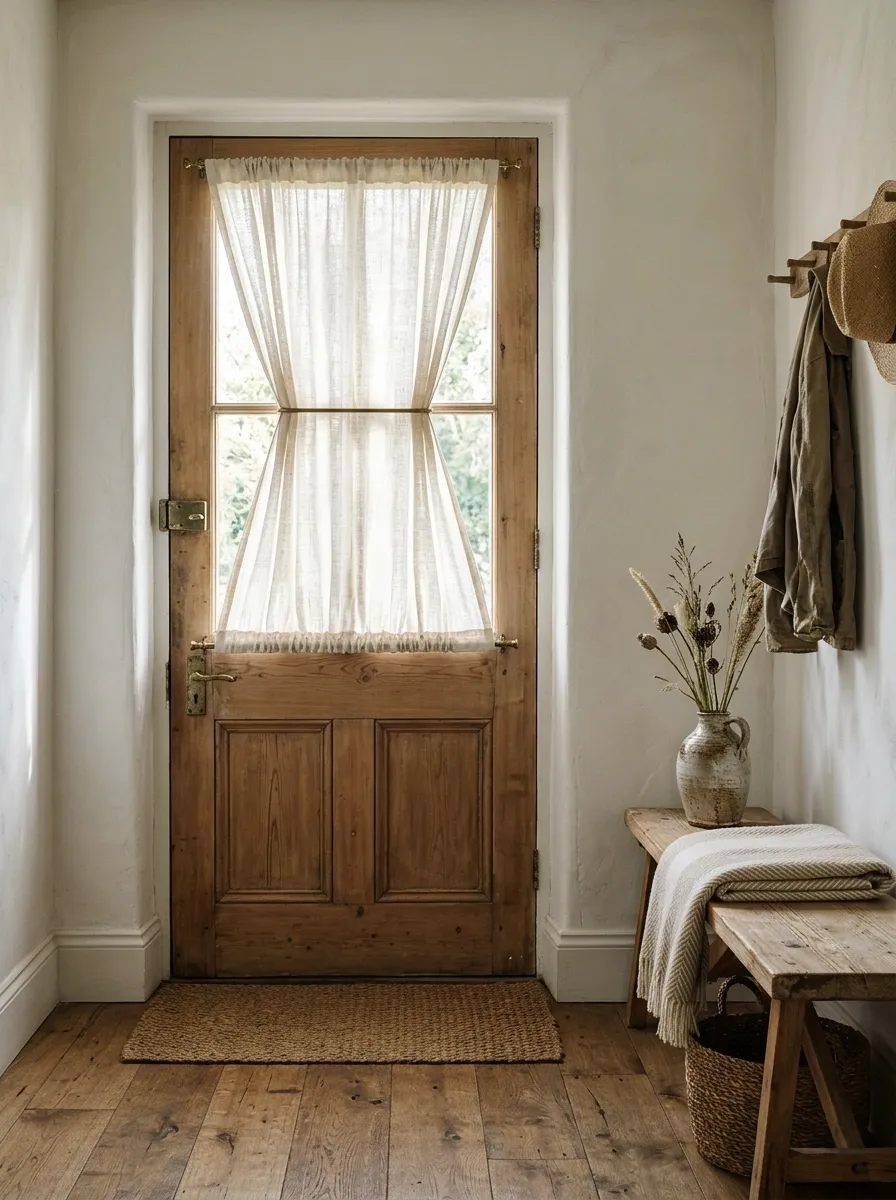
A gathered curtain secured with an appropriate top-and-bottom system can offer a traditional treatment for suitable door glazing. The fabric stays closer to the panel than a loose full-length curtain.
Choose a fabric with the opacity needed for the entrance. A sheer gathered panel may soften the view while leaving more detail visible than expected.
Coverage diagram only. Actual privacy depends on the selected product, uncovered areas, and viewing conditions.
Use compatible fittings and keep fabric clear of hardware, seals, and door movement.
Keep the gathering modest and the surrounding decoration simple. This can feel comfortable in a cottage or older house, without requiring matching ruffles on every nearby textile to establish its credentials.
An Opaque Evening Panel on a Suitable Interior Track
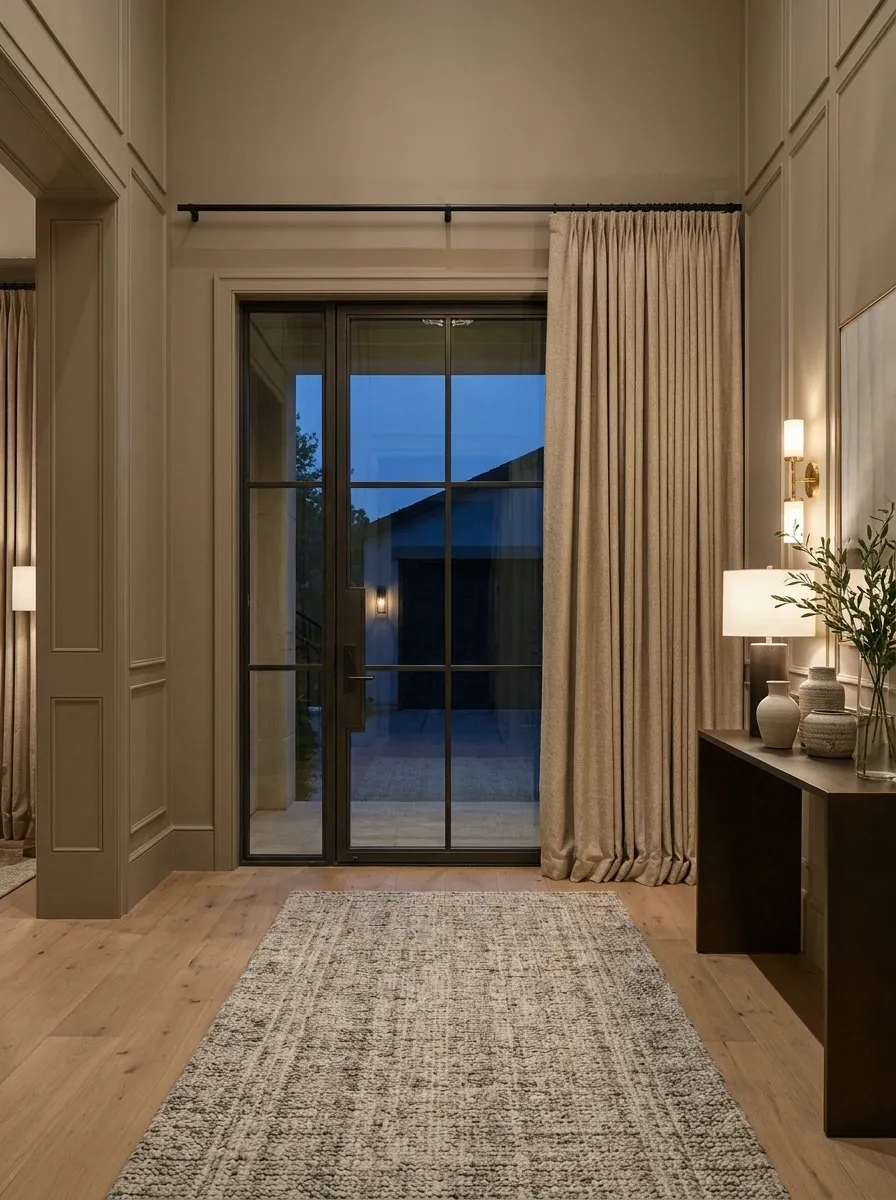
Where the entrance layout safely allows it, a suitable interior curtain arrangement can provide additional evening coverage. It must park fully clear of the doorway and preserve straightforward access and exit.
Plan the hardware, curtain length, and open position carefully. If the curtain interferes with the door, threshold, locks, heating, or required escape route, choose another method.
This approach can suit an entrance with generous adjacent wall space and an existing need for a substantial textile plane. Keep the fabric quiet and tie it visually to the hallway runner or adjoining room. It is unsuitable for many tight entries, and no decorative benefit compensates for having to wrestle through a curtain to open the front door.
Coverage diagram only. Actual privacy depends on the selected product, uncovered areas, and viewing conditions.
What to check in your room
Use only where the complete arrangement preserves safe, easy door use and exit access.
Treat the Adjacent Glass as Part of the Entrance
Matching Frosted Sidelights Beside a Clear Door Panel
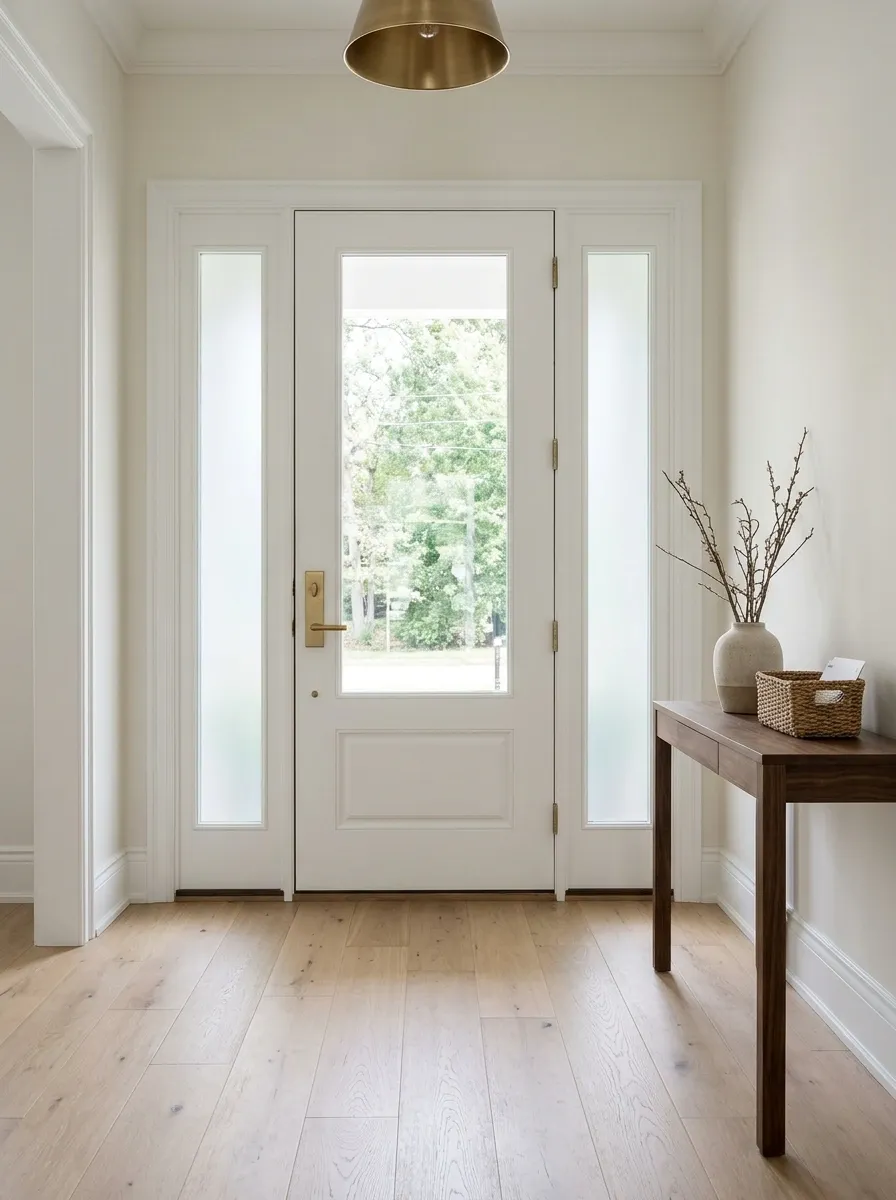
Where the unwanted sightline passes through narrow sidelights, a suitable frosted treatment there may solve the specific problem while the door's central glass stays clear. Assess the whole entrance before deciding.
Keep the sidelight treatment consistent on both sides if there are two, unless the architecture and privacy needs clearly differ. A simple pale finish lets the frame remain the main visual rhythm.
Coverage diagram only. Actual privacy depends on the selected product, uncovered areas, and viewing conditions.
A clear central door panel is appropriate only if it does not retain the unwanted sightline.
This is a targeted solution, not complete entrance privacy. Stand on the path and check the central panel as well. Privacy is determined by what remains visible, not how much film you have successfully applied.
A Frosted Door Panel Beneath a Clear Transom
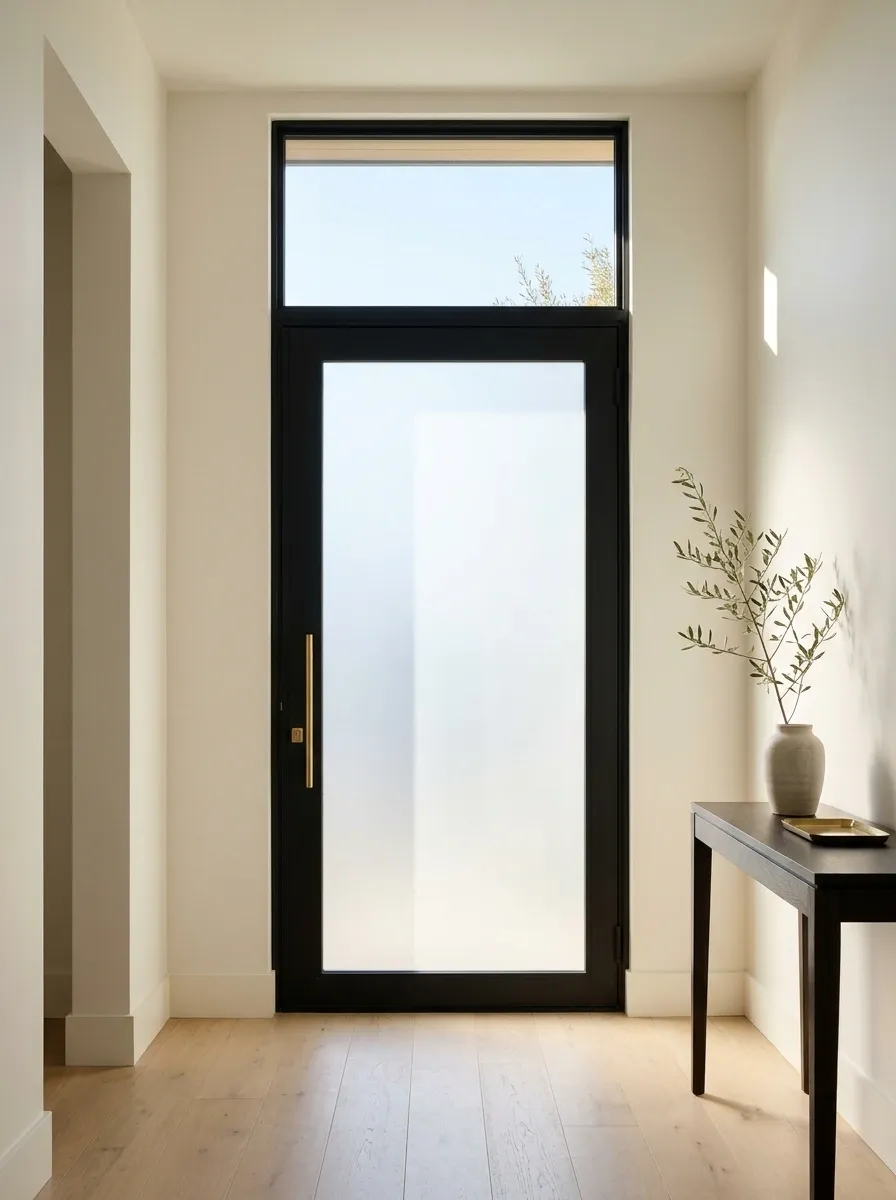
Frost the door glass while leaving a separate upper transom clear where exterior viewing angles make that suitable. The transom can continue admitting a clearer view of light and sky above the main entry panel.
Keep the frame color consistent so the distinction belongs to the glass rather than competing paint bands. A plain hallway wall supports the clean geometry.
Review views from higher neighboring windows and raised ground. An upper opening can still expose the interior in some locations. This arrangement works when the architecture and actual sightlines support it, not because glass above head height has automatically opted out of the privacy discussion.
Coverage diagram only. Actual privacy depends on the selected product, uncovered areas, and viewing conditions.
Check higher exterior viewpoints before keeping the transom clear.
Coordinated Shades on Narrow Sidelights
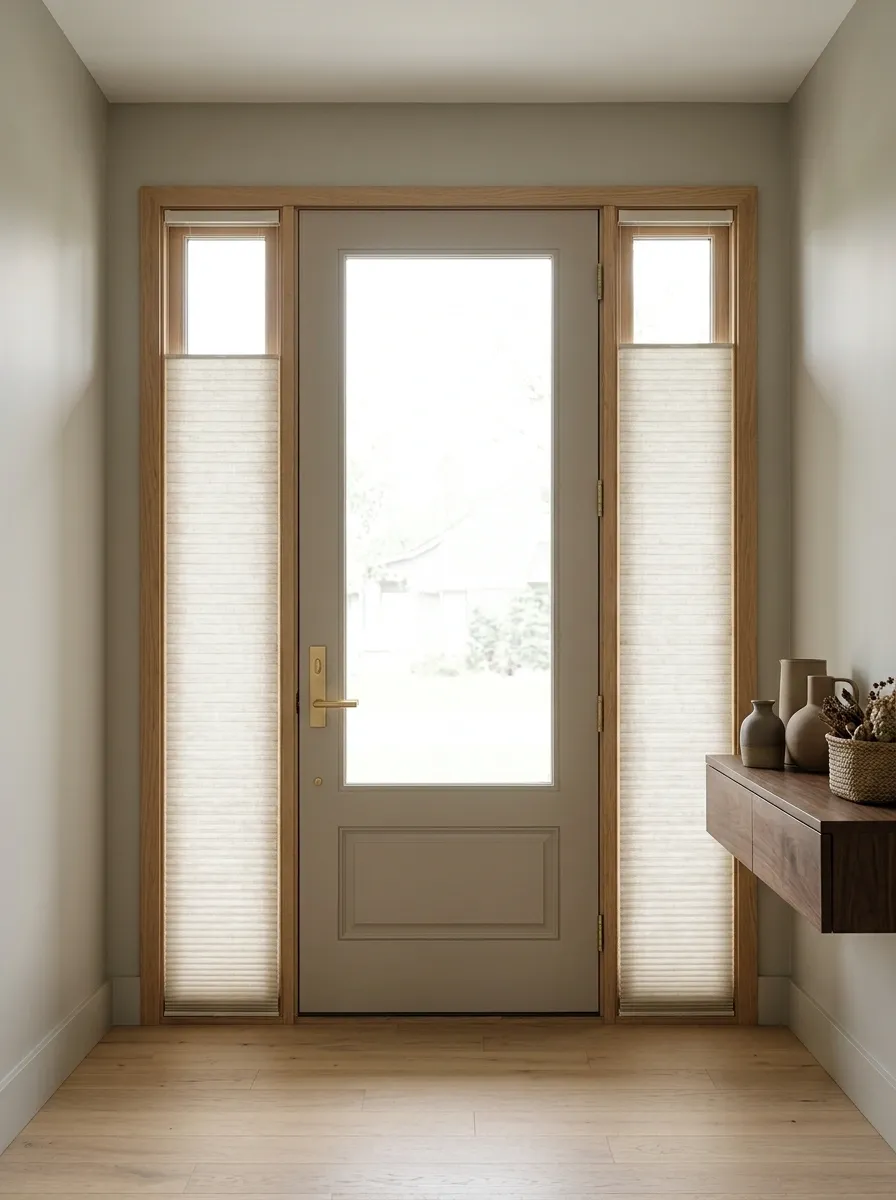
Purpose-designed sidelight shades can provide adjustable coverage beside a glazed door. Choose a simple material and a system appropriate to the narrow openings.
Keep the controls accessible without placing them in the door's path. Check the raised or parked positions, especially where frame space is minimal.
Coverage diagram only. Actual privacy depends on the selected product, uncovered areas, and viewing conditions.
What to check in your room
Choose products that fit the actual sidelights and remain clear of the moving door.
The shades can relate to a door-mounted covering without being identical in every construction detail. Similar color and texture can connect the entrance while allowing each opening to use the hardware it genuinely needs.
More Permanent Architectural Directions
Obscure Replacement Glass Within the Existing Door Design
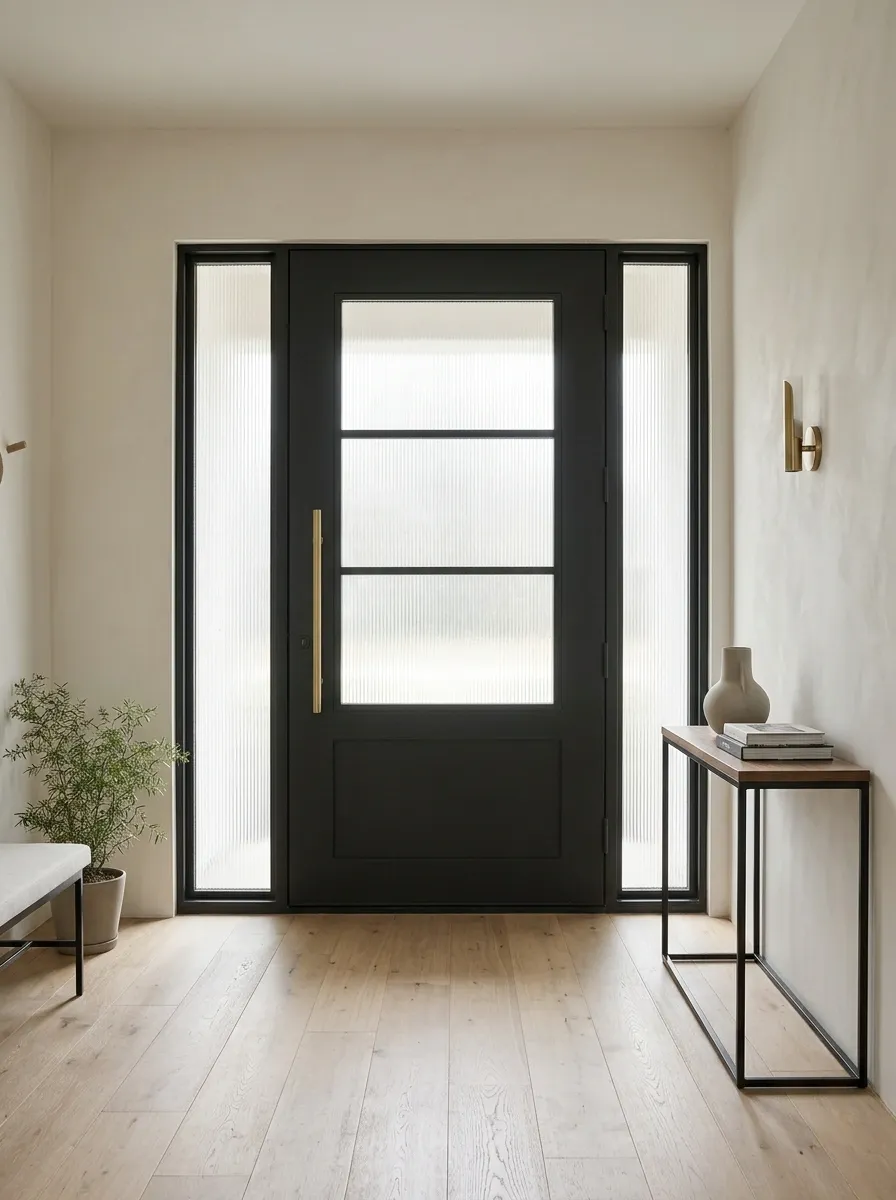
Professionally specified obscure glazing can provide an integrated appearance without an applied textile. Choose the visual texture and required privacy together, with appropriate safety, door-system, and performance requirements handled by the supplier.
Coverage diagram only. Actual privacy depends on the selected product, uncovered areas, and viewing conditions.
Have the glazing selected for the door system and all required performance, not appearance alone.
A restrained obscured surface can suit both a dark contemporary door and a traditional painted frame. Keep nearby furnishings quieter if the glass pattern is strong.
This is a glazing project rather than a casual decorative swap. The existing door may limit what can be fitted, and different obscure patterns reveal different amounts of detail. Review a realistic sample and the full specification before choosing. Permanent isn't another word for automatically more private.
A Thoughtfully Positioned Interior Screen Beyond the Door
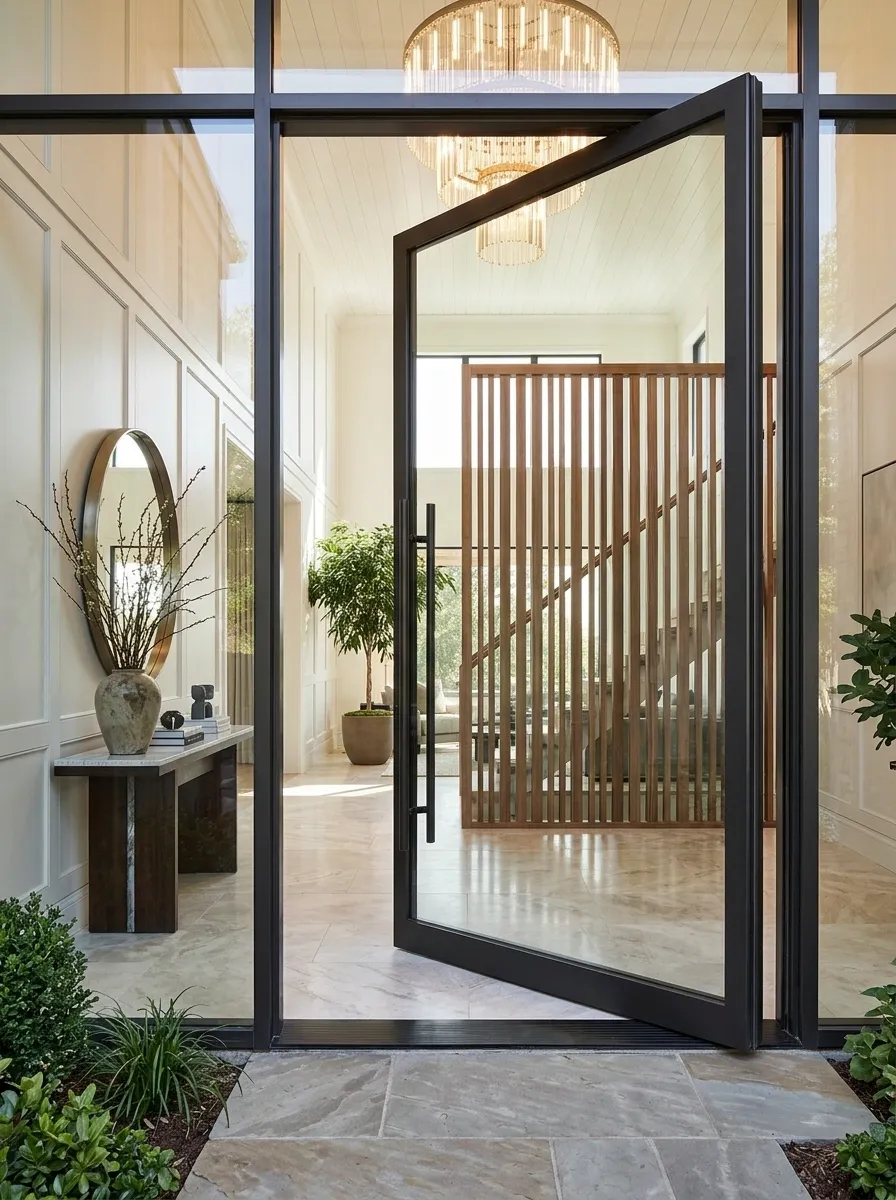
In a generous entrance, an appropriately secured screen or fixed interior partition can interrupt a direct view into the living space while the front-door glass remains clear. Keep circulation, door swing, required access, and exit routes fully usable.
The screen needs to block the relevant sightline from outside. Widely spaced slats may soften the view without providing much actual obscurity, so test the arrangement rather than assuming any partition provides privacy.
Coverage diagram only. Actual privacy depends on the selected product, uncovered areas, and viewing conditions.
Use only where the partition can be safely installed without compromising circulation or exit.
A plain or closely composed surface can feel calmer than another decorative lattice. This is an interior-layout option for suitable space, not something to wedge behind a door in a narrow hall.
Check the Entrance When It Is Lit From Inside
Before you commit, make a full-size mock-up where possible and assess the relevant outside views. Check with interior lights on, not only on a bright afternoon.
If the treatment is adjustable, decide when it will be closed and whether that routine is realistic. A fully frosted panel, a well-chosen shade, or a properly planned partition can each work—but only when it solves the view you actually wanted to interrupt.
Keep the daylight you value and obscure the detail you don't. The entrance can remain welcoming without functioning as a live broadcast of the hall.