
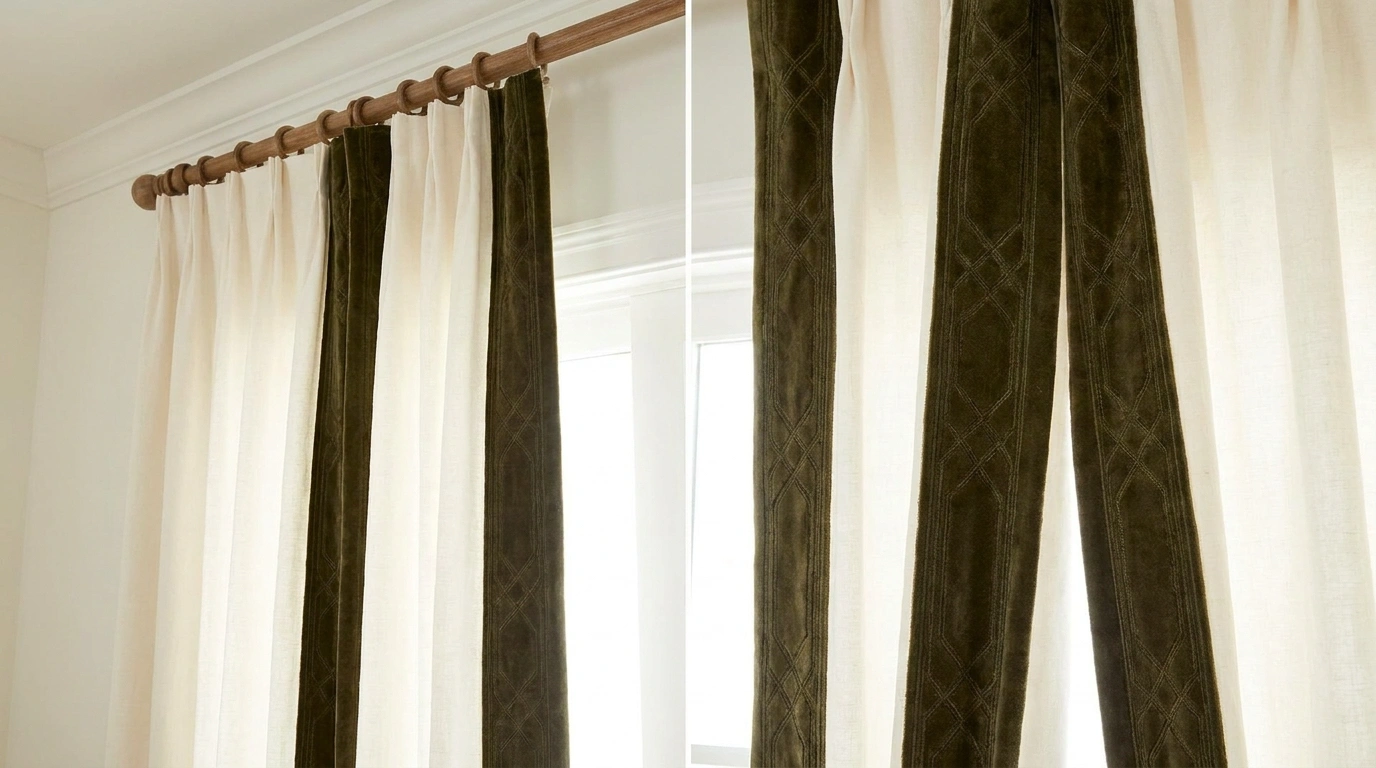
The leading edge is the vertical edge you handle when opening a curtain: the side that faces the center of the window on a pair of panels. It is a small area with an unusually good view of the room.
A trim there can sharpen a plain fabric, soften a severe one, or connect the curtain to furniture you already own. The useful question is how much detail the fabric and room can support.
Choose the Trim With the Curtain Open and Closed
Pin or temporarily position a generous sample along the actual edge. Look at it from the doorway, then open and close the curtain. Some borders disappear into the stack; others become more dominant when the fabric gathers.
Check weight, flexibility, cleaning compatibility, and attachment with a curtain maker or the relevant product instructions. Keep cords, dangling details, and small detachable parts appropriate to the household and follow applicable window-covering safety guidance.
Leading-Edge Details With Distinct Shapes, Materials, and Color Relationships
Black Grosgrain on Ivory Linen Curtains

A flat black grosgrain ribbon can give ivory linen curtains a crisp opening edge. Set the ribbon slightly inside the fabric edge if you want a narrow pale outline beside it.
Black grosgrain inside the ivory edge
Check the fold with the curtain drawn back; appearance sketch only. Approve a physical hanging sample and suitable construction.
The ribbed surface adds detail without the bulk of fringe. A black mirror frame or furniture leg elsewhere can provide enough connection.
Check the ribbon’s stiffness against the linen. The edge should still fold naturally when drawn. A rigid border that makes the panel behave like a folding screen has taken the architectural effect rather too literally.
Wide Ochre Tape With a Fine Blue Piping Line

A broad muted-ochre border with a fine blue line can connect plain cream curtains to a room containing both colors. Let the wide tape carry the main accent and the piping remain a small detail.
Compare the fabrics together under daylight and the room’s lamps. The blue may read darker when confined to a narrow line.
Wide ochre border and fine blue line
Keep the secondary line visibly narrower; appearance sketch only. Approve a physical hanging sample and suitable construction.
Let the border do the detailed work:
- Ochre supplies the broad color band.
- Blue stays a fine line.
- The curtain body remains plain.
More pattern across the panel may blur that hierarchy.
Tonal Linen Tape on Stone-Colored Drapes

A slightly different linen tone can define a curtain edge through texture rather than strong contrast. Choose a tape with enough visible difference to register from the main seat.
This works well when the room already has patterned upholstery or a statement rug. The curtain can feel finished without adding another assertive motif.
Try the sample vertically at the window. Two fabrics that look distinct on a table can appear almost identical when backlit. The useful detail is the one you can appreciate without inspecting the curtain from breathing distance.
The border reads through weave or depth
The fabrics merge completely at normal viewing distance
Red Cord Along Natural Flax Curtains

A restrained red cord can give flax curtains a small, clear accent. Use a suitable decorative cord applied securely to the edge, with the attachment and finish appropriate to the fabric.
The round profile catches light differently from a flat ribbon. Keep the red related to a small artwork or textile if the room needs a connection.
Avoid trailing ends and loose decorative loops. A neat finished edge gives the detail its appeal; a hanging tangle at the hem introduces an entirely different kind of character.
Red cord defines the flax opening edge
Use a suitable secure attachment and neatly finished ends; appearance sketch only. Approve a physical hanging sample and suitable construction.
Green Trellis Tape on Plain Cream Panels

A woven trellis border can introduce pattern while the main curtain stays cream. Choose a repeat large enough to remain readable once the panels gather.
Use the green in relation to the room’s upholstery or an existing rug. The shade need not match perfectly, but its undertone should sit comfortably with the other fabrics.
A broad patterned tape can feel like a substantial design choice. There is no need to add several matching accessories unless the room genuinely benefits from them.
Green trellis border on plain cream
Check a full repeat on a vertical sample; appearance sketch only. Approve a physical hanging sample and suitable construction.
Ivory Fan Fringe on Soft Taupe Curtains
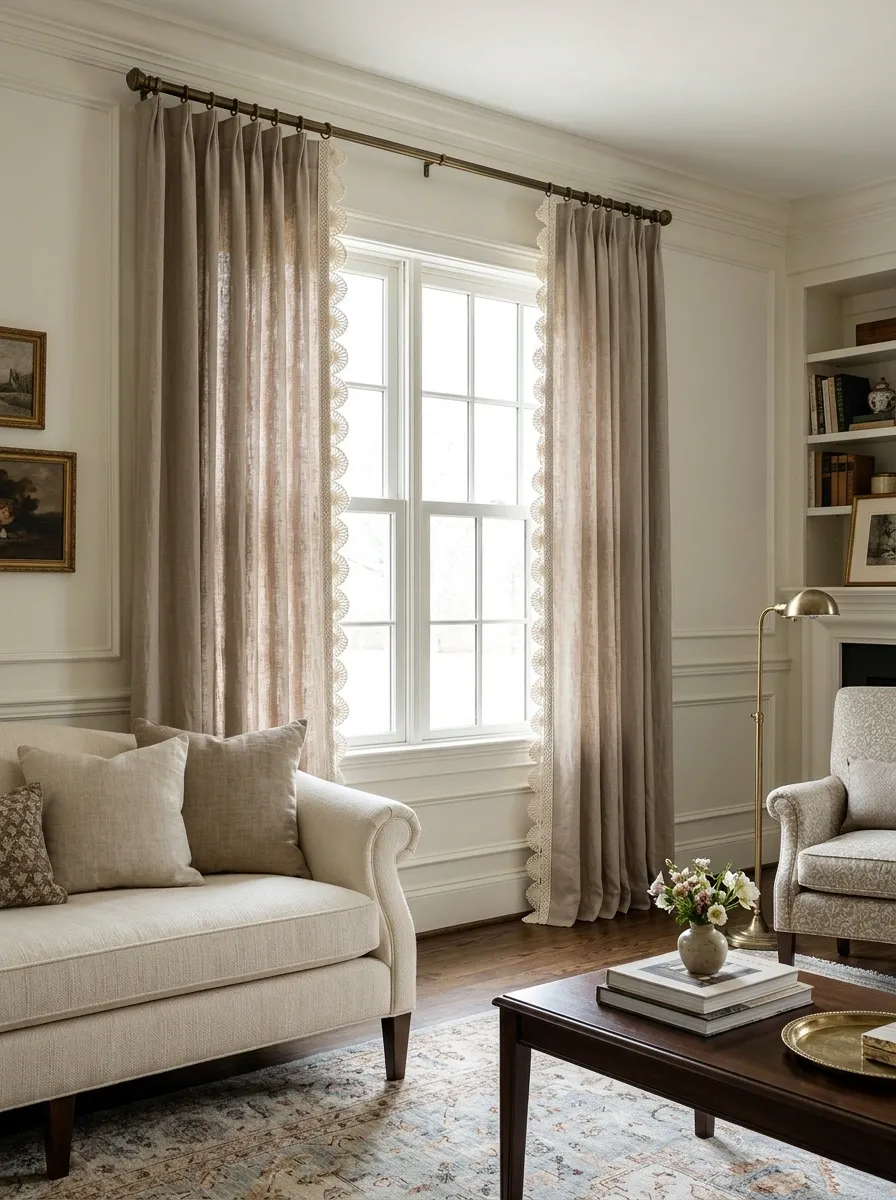
An ivory fan-shaped fringe can soften taupe drapes without introducing another strong color. Choose a scale that suits the curtain’s weight and the room’s viewing distance.
Keep the fringe controlled along the leading edge, with a clean start and finish. Ask how it will be cleaned with the main fabric.
This can suit a traditional room with quieter upholstery. If the chair, rug, and wallpaper already carry elaborate patterns, sample the fringe in the whole setting before deciding the window needs another layer of ornament.
Taupe curtain fabric
Ivory fan fringe
Compatible care method
A sample viewed with the room's existing patterns
Small Saffron Bobbles on Pale Blue Curtains

A short, securely attached bobble trim can make pale blue curtains feel playful. Choose a muted saffron if you want warmth without a very bright contrast.
Short saffron bobbles on pale blue
Confirm the trim is suitable and securely attached for the household; appearance sketch only. Approve a physical hanging sample and suitable construction.
Use it only where the trim, attachment, and position are appropriate for the household, especially around children and pets. Avoid accessible loose cords or detachable small parts.
Keep the curtain heading plain so the edge remains the main detail. The blue and yellow relationship can supply enough personality without adding a competing print across the whole panel.
Navy Tassel Fringe on Oatmeal Drapes

A navy tassel fringe can give oatmeal curtains a more traditional outline. Choose a compact fringe rather than a long hanging detail if you want the effect restrained.
Check how the edge hangs when the curtains are stacked. Dense trims can add weight and bulk that affect the finished fold.
Let navy appear elsewhere in one useful textile or furniture detail if needed. The border can then feel connected rather than like an accessory borrowed from an entirely different window.
Compact navy tassel fringe
Review weight, care, and the stacked curtain profile; appearance sketch only. Approve a physical hanging sample and suitable construction.
A Tan Leather-Look Border on White Drapes

A flexible tan leather-look or suitable coated-fabric band can add a tailored material contrast to plain white curtains. Confirm compatibility with the curtain fabric and intended care method.
Keep the band flat and the attachment neat. The appeal comes from the difference in surface rather than a complicated pattern.
Use the tan in relation to existing upholstery or timber, not as an automatic match. A warm camel chair can provide enough company while the white main fabric keeps the window light.
Drapes and cleans as intended
Remains flexible and tolerates the agreed care method
Rust Wool-Look Braid on Natural Linen

A muted rust braid can give natural linen curtains a warmer, more tactile edge. Choose a braid suitable for the fabric and cleaning requirements rather than judging by color alone.
Keep the texture visible but not bulky enough to distort the folds. A sample at the actual window will reveal more than a small piece laid flat.
This works particularly well in a room with dark timber and plain upholstery. The rust can warm the palette through a narrow vertical detail rather than another large orange surface.
Rust braid against natural linen
Choose weight and cleaning compatibility with the curtain maker; appearance sketch only. Approve a physical hanging sample and suitable construction.
Bronze Metallic Tape on Charcoal Curtains

A subdued bronze tape can define charcoal drapes through reflectivity as well as color. Use a flat trim if you want a restrained line.
View it with the lights used in the evening. A metallic detail can appear much stronger under a nearby lamp than in daylight.
Keep other shiny finishes limited if the room is already dark and reflective. The tape should provide one readable edge, not create a window-sized competition with mirrors, glossy tables, and every polished fitting in the room.
Flat bronze tape on charcoal fabric
Check the reflected effect under the actual room lighting; appearance sketch only. Approve a physical hanging sample and suitable construction.
Two Fine Parallel Lines on Pale Gray Panels

Two narrow ribbons can create a tailored edge with more rhythm than a single broad border. Choose related dark tones or one repeated color.
Keep the spacing consistent and wide enough for the lines to remain separate from the main viewing position. Very fine details can merge at a distance.
Two fine parallel ribbons
Choose consistent spacing that remains visible across the room; appearance sketch only. Approve a physical hanging sample and suitable construction.
Straight lines reveal uneven work.
For a long run or difficult fabric, a curtain maker can help maintain the spacing and attachment. Approve a vertical sample before committing to the full length.
One Bold Leading Edge on an Asymmetrical Window Arrangement

A single strong border can suit a one-sided curtain arrangement where the layout genuinely calls for it. Use the trim along the edge that remains visible when the curtain is parked.
Keep the asymmetry clear in the whole window composition. A broad plain panel and one deliberate edge usually read more convincingly than several competing half-details.
Test the curtain in its open position before choosing the trim width. The border needs a useful visual home during the day, not just a brief appearance when somebody closes the curtains at night.
One visible strong leading edge
Choose the edge around the curtain's usual parked position; appearance sketch only. Approve a physical hanging sample and suitable construction.
A Mint Scalloped Facing on Cream Drapes
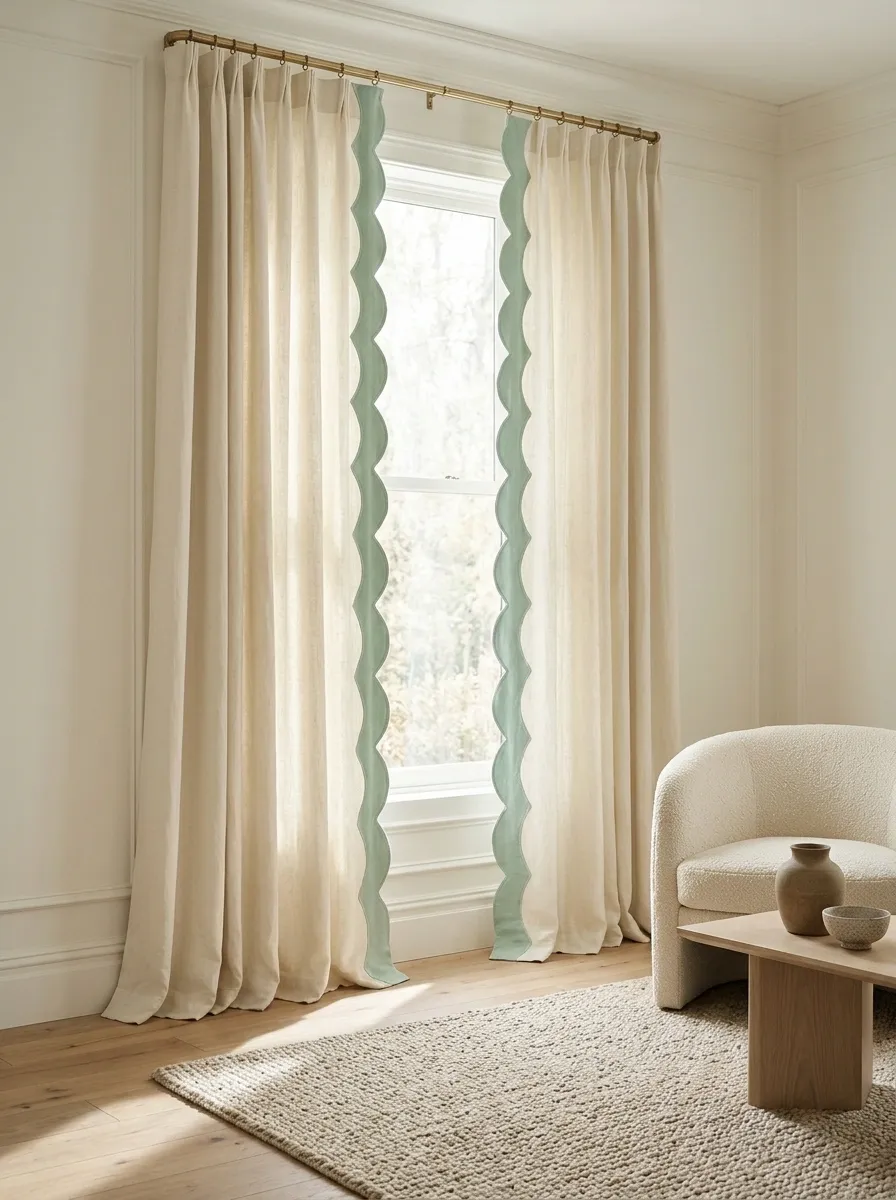
A scalloped mint facing can give cream curtains a clearly shaped edge. Keep the scallops broad enough to read without looking fussy.
Mint scalloped facing
Keep the curve broad and the panel's drape practical; appearance sketch only. Approve a physical hanging sample and suitable construction.
The facing needs a suitable construction so the shape remains neat and the main panel still hangs well. Ask the maker about cleaning and how the edge will behave with the curtain stacked.
Use a quieter heading and simple surrounding textiles. The curved boundary already supplies the decorative gesture. It can be playful without requiring matching scallops on the lampshade, chair, rug, and breakfast toast.
A Pleated Ruffle in the Same Fabric
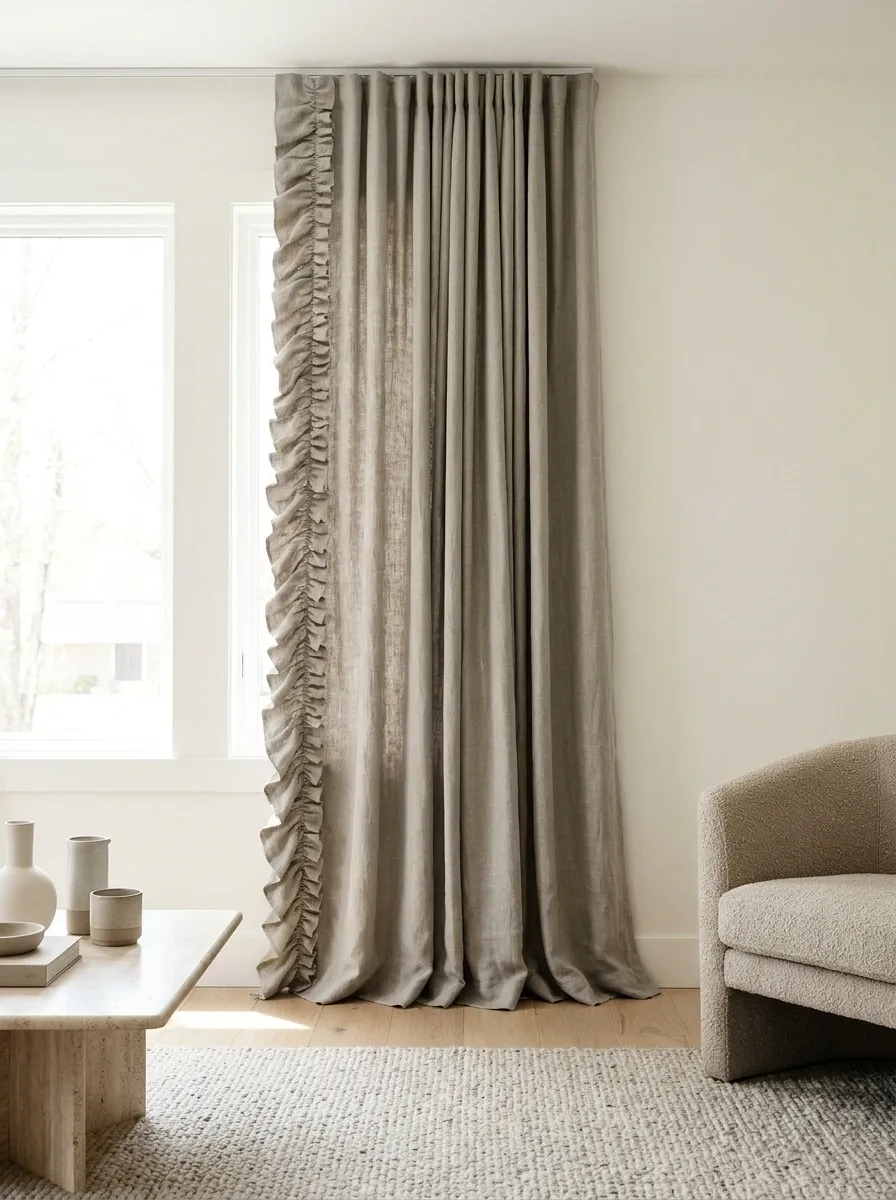
A same-fabric ruffle can make plain curtains feel softer without another color. The interest comes from the fold and shadow along the leading edge.
Choose the fullness and width with the curtain’s overall weight in mind. A heavily gathered ruffle can add considerable bulk when the panel stacks.
This is a useful option when the room’s palette is already settled. Compare a made-up sample rather than a flat strip, because the finished folds are the detail you are choosing.
Same curtain fabric
A sample of the finished pleat
Manageable stacked bulk
A clear suitable cleaning plan
Jade Ribbon on Dusty Rose Curtains

A flat jade ribbon can make dusty rose curtains feel more defined. Choose softened versions of both colors if you want the combination to remain restrained.
Compare the ribbon with the fabric vertically and in the actual room. A green that looks muted on its own can become clearer beside pink.
Keep the border simple so the color relationship remains readable. The room does not need several more green and pink patterns to explain the choice. One existing textile or artwork may provide all the connection required.
Jade ribbon on dusty rose
Sample both colors with the room's fixed finishes; appearance sketch only. Approve a physical hanging sample and suitable construction.
Denim Twill Tape on Unbleached Cotton
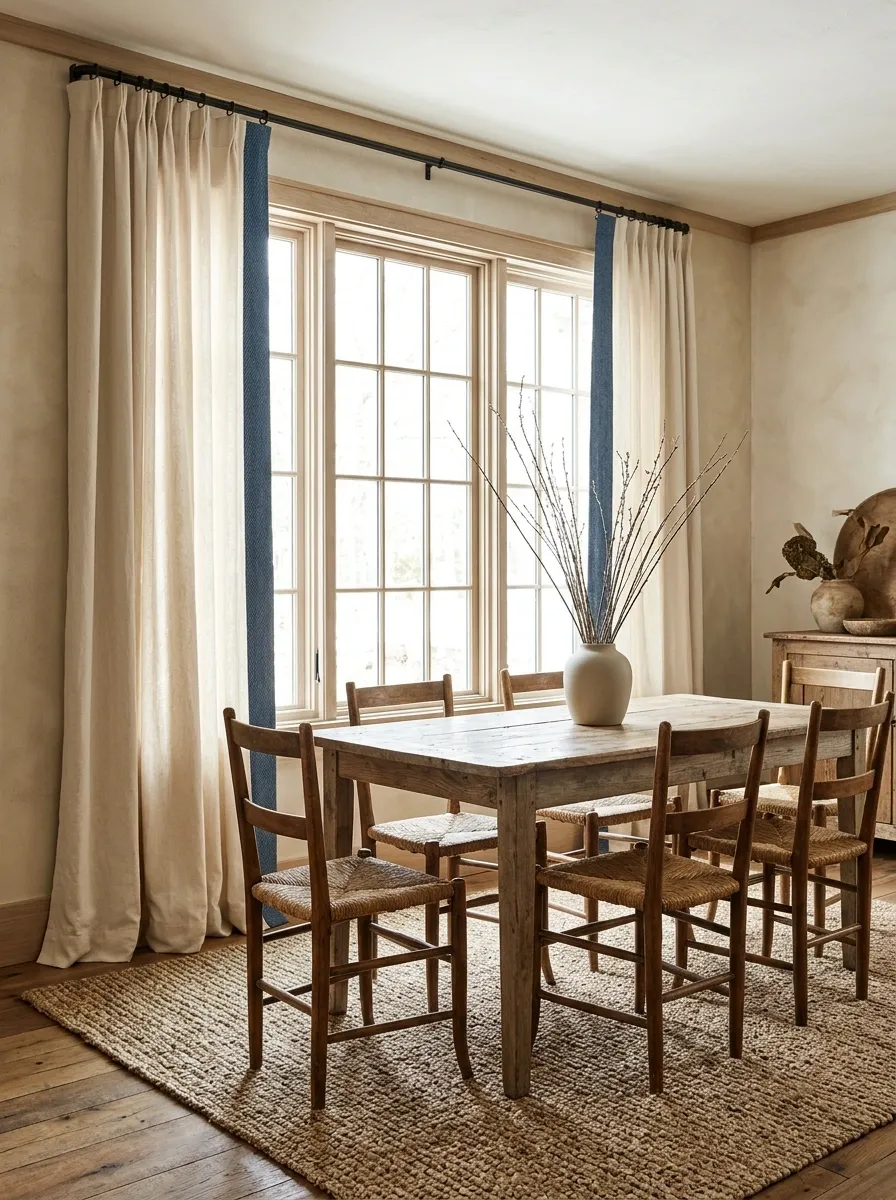
A denim-blue twill tape can give unbleached cotton curtains a practical, relaxed edge. The diagonal weave adds a little texture without an elaborate motif.
Choose tape and fabric with compatible shrinkage and care requirements. Preparation should follow the maker’s or product instructions.
Keep the width generous enough to read from the main seat. This can suit a workroom, kitchen dining area, or casual bedroom where the curtains need character but not ceremony. A simple useful material can be more convincing than an ornamental trim that feels nervous around ordinary life.
Denim-blue twill on unbleached cotton
Check care and shrinkage compatibility before construction; appearance sketch only. Approve a physical hanging sample and suitable construction.
A Contrast Facing Turned Outward on a Plain Panel

A wider facing turned outward can make the edge itself a visible fabric layer. Try a pale curtain with a deeper green or blue facing that remains clear when open.
Plan the finished width and fold with the curtain maker. The construction needs to stay neat through movement, not depend on a temporary styling fold.
Keep the facing plain if the room already has pattern. The visible difference in material and color can provide enough detail without a decorative ribbon added on top.
Designed to remain visible and hang correctly
May move, twist, or disappear during normal use
Green Gingham Tape on Plain Ivory Curtains

A small gingham border can introduce an orderly pattern along an ivory panel. Keep the check readable and compare the tape’s pale ground with the curtain.
Use the green in relation to existing furniture or art. The check does not need to become the room’s governing pattern on every surface.
A broad enough band can make the motif visible when the curtain gathers. Ask for a sample showing the actual width rather than choosing from a photograph of a much wider fabric piece.
Green gingham border
Review the actual band width and background ivory; appearance sketch only. Approve a physical hanging sample and suitable construction.
An Embroidered Vine on Quiet Beige Drapes

An embroidered vine tape can provide a botanical detail on plain beige curtains. Choose a repeat with enough open space for the embroidery to register.
Choose the plain fabric beside the finished embroidery. You should be able to see the raised vine from the main seat; if both textures compete, simplify the curtain body.
Check the embroidery’s durability and care requirements. It should suit how the curtains will be used and cleaned, not simply look appealing in a close-up. The border can be delicate in appearance while still needing a practical construction behind it.
An open embroidered vine border
Let the stitching remain visible against a simpler main weave; appearance sketch only. Approve a physical hanging sample and suitable construction.
A Jute-Look Woven Border on Soft White Linen
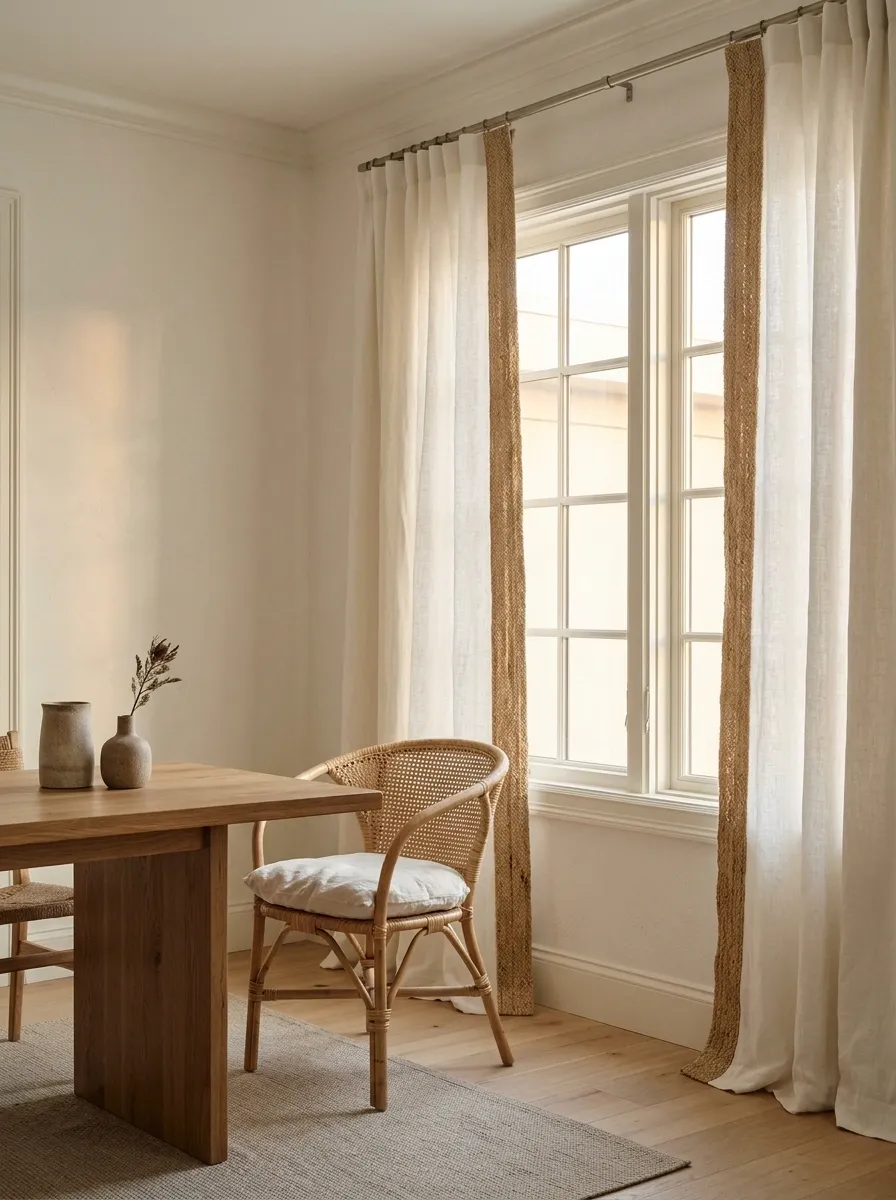
A natural-looking woven border can add an earthy texture to soft white curtains. Choose a flexible trim suited to the curtain’s care requirements; not every coarse-looking material behaves well when draped.
Check that the weave does not snag nearby upholstery or shed excessively. Keep it clear of unsuitable heat or damp.
Use the texture to connect the window to a timber table or woven chair. The relationship can stay material-led, without adding another distinct accent color to the room.
Flexible woven tape
Compatible main fabric
Suitable cleaning method
A sample checked for shedding and snagging
A Border Repeated Once on a Plain Cushion
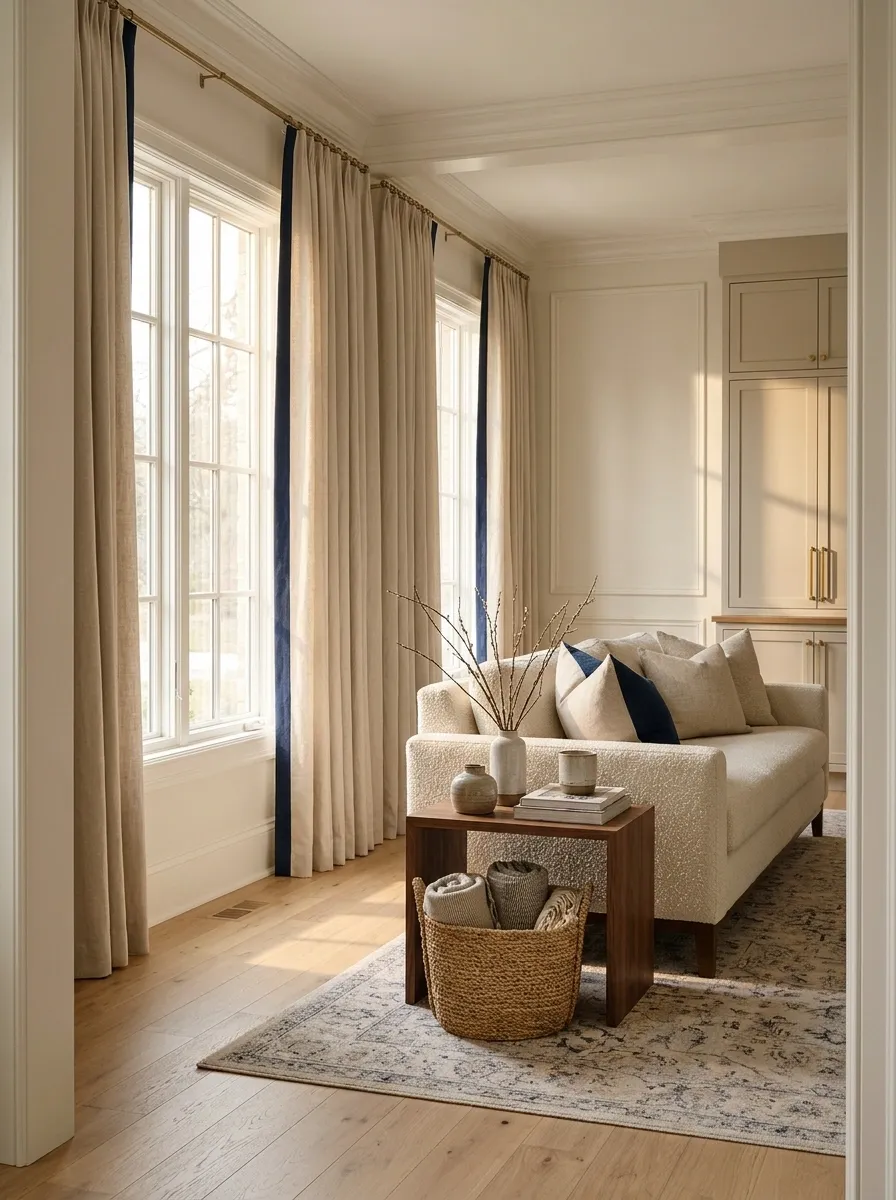
A curtain border can connect to a single cushion edge in the seating area. Use the same trim or a related color, keeping the cushion’s main fabric quieter.
Let the repeated detail be visible from the normal seat and doorway. It should feel like a small relationship across the room rather than a matching set installed by committee.
Choose the curtain detail first if the window is the larger visual element. The cushion can follow its lead without requiring every other textile to join the arrangement.
Curtain edge with one related cushion border
Keep the larger fabric areas quiet so the repeat is visible; appearance sketch only. Approve a physical hanging sample and suitable construction.
A Narrow Border on Short Café Curtains
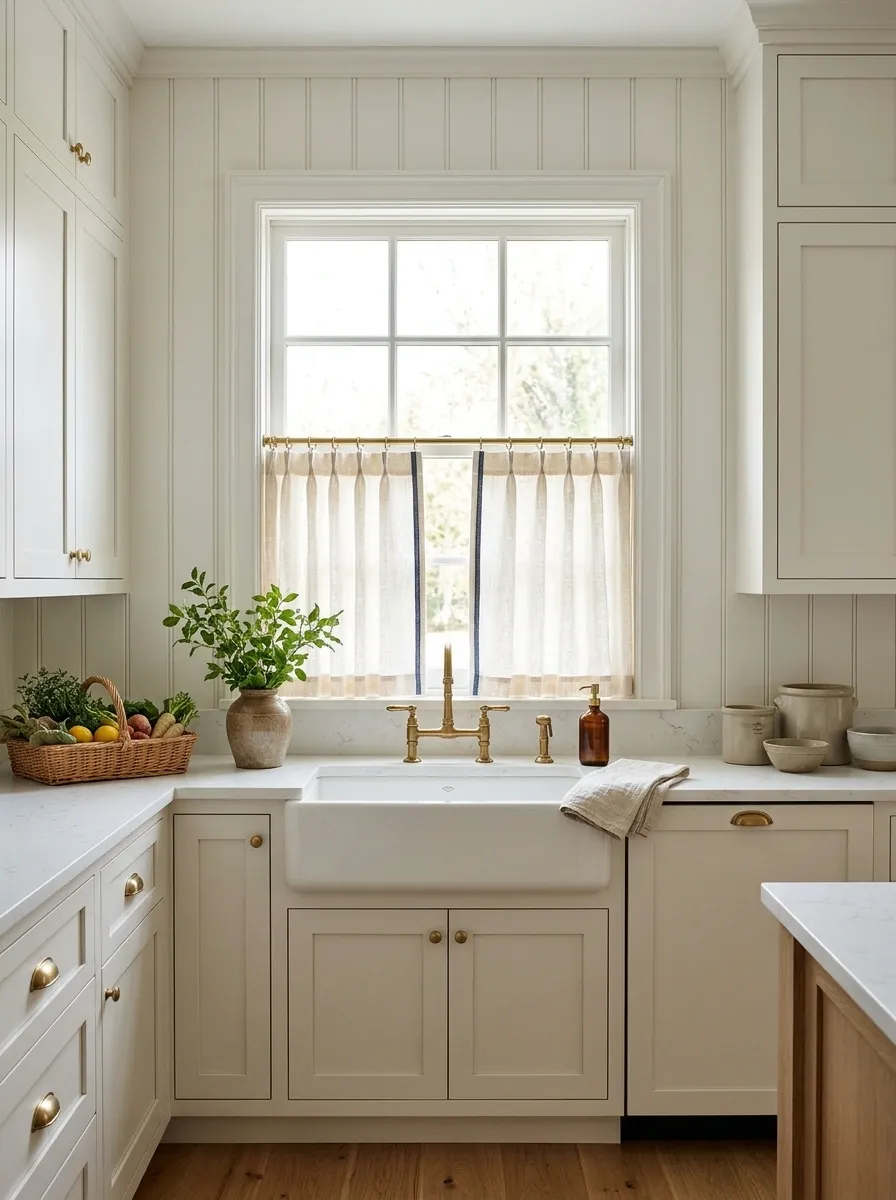
Short café curtains can use a leading-edge border at the central opening, with a simple hem and heading elsewhere. Choose a restrained scale so the trim suits the smaller panel.
Check window operation, privacy, and fabric movement. Keep the treatment clear of cooking heat or other unsuitable conditions in a kitchen location.
Narrow border on short café panels
Preserve window operation and choose fabric suited to the location; appearance sketch only. Approve a physical hanging sample and suitable construction.
Check the smaller treatment in its actual setting:
- The upper glass remains visually open.
- The center border reads at the right scale.
- The window still operates comfortably.
A modest curtain has a practical job. It does not need every available decorative treatment at once.
Approve a Hanging Sample Before the Full Run
Ask to see the trim on the curtain fabric with the proposed fold, width, and attachment. Draw it back, view it in evening light, and check the care plan.
A good edge should still look considered after the curtains have been opened in a hurry. That is a more useful standard than perfection achieved with several pins and nobody allowed near the window.