
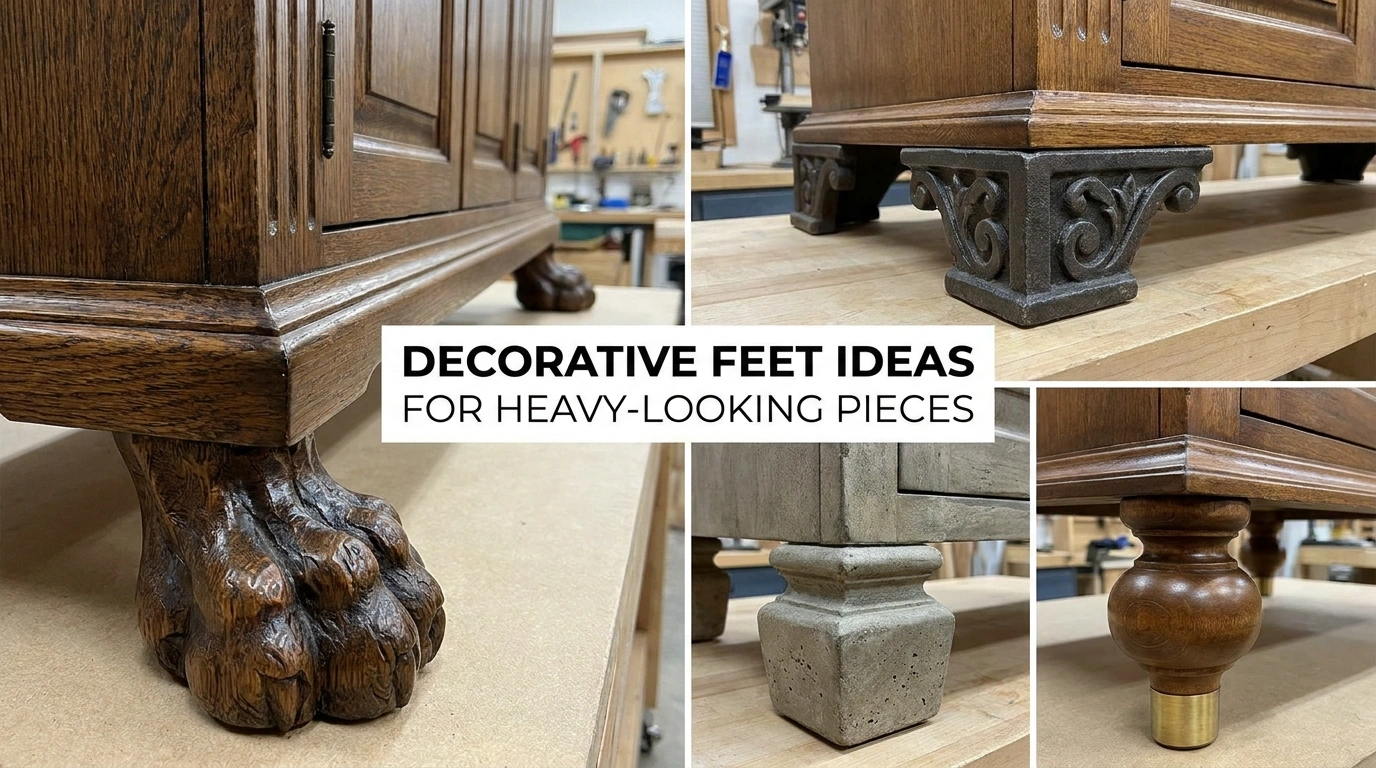
Look at the bottom of a cabinet before deciding the whole thing is too bulky. A heavy-looking base can make a useful piece feel planted in the floor, even when its doors, proportions, and finish are perfectly good.
Different feet can change the silhouette considerably. So can refinishing suitable existing feet or choosing a replacement base designed for the furniture. The gap underneath, the shape at each corner, and the contrast with the floor all contribute to the result.
The most successful change looks like part of the piece. It doesn’t look like a cabinet wearing someone else’s shoes.
Check the Furniture Before Choosing a Foot Shape
These are appearance directions, not interchangeable fitting instructions. Check the furniture maker’s guidance, construction, load, attachment system, required center supports, and finished height. Door alignment, stability, anti-tip arrangements, and seat comfort may be affected by a base change.
Prettypegs’ mounting guidance illustrates why different furniture and leg systems require different fittings and suitable attachment surfaces. It also identifies limitations for sofa beds. A matching bolt or attractive mounting plate alone doesn’t establish that a replacement is appropriate.
Use the relevant manufacturer’s instructions or a qualified furniture professional. Keep all required supports, and don’t alter powered, reclining, folding, or safety-critical furniture mechanisms as a decorative shortcut.
Wood Shapes That Create a Lighter Silhouette
Tapered Oak Feet Under a Plain Painted Cabinet
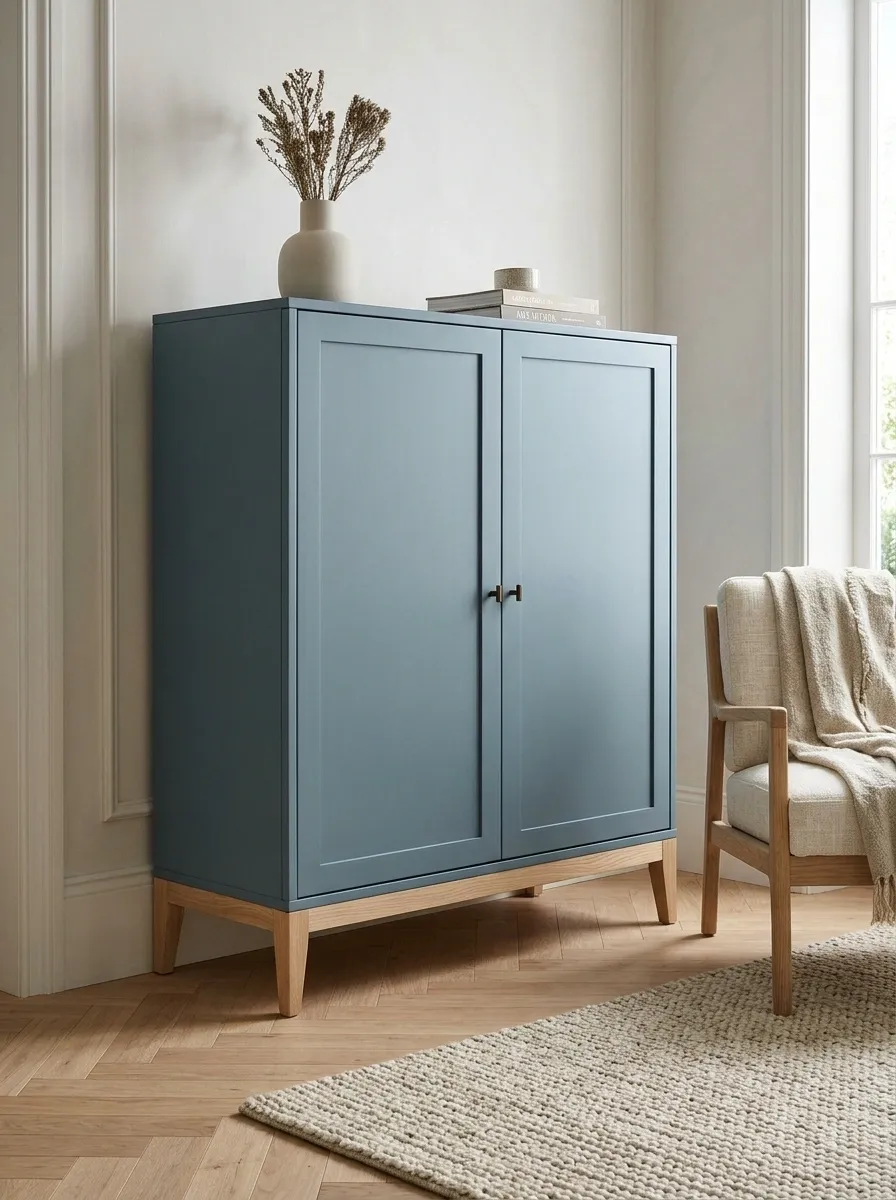
A modest tapered oak foot can make a painted cabinet look more open at the floor. The narrowing shape gives each corner a clear outline while the cabinet remains the dominant volume above.
Use a warm pale wood beside cream, muted blue, or olive cabinet fronts. Keep the handles simpler if the oak grain is noticeable.
Appearance study only. Foot profiles do not establish compatible fittings, support locations, or load capacity.
Choose a compatible foot and support system rather than judging by the silhouette alone.
The exposed wood can relate to a chair or table elsewhere without matching every timber in the room. The aim is a convincing base, not a new matching furniture collection.
Short Bun Feet Under a Bedroom Chest
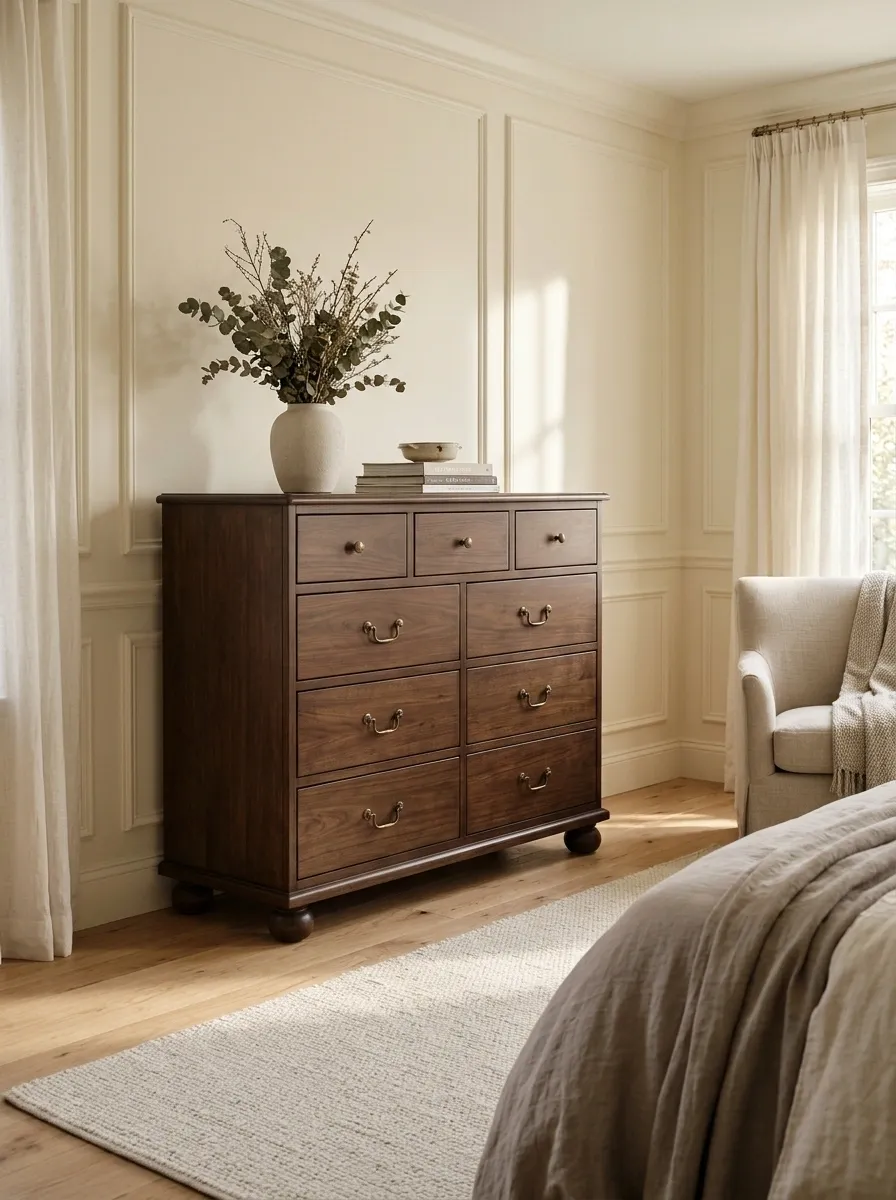
Short bun feet give a chest a rounded lower detail without adding a tall open base. Their flattened shape can suit a substantial traditional cabinet that should remain visually grounded.
Appearance study only. Foot profiles do not establish compatible fittings, support locations, or load capacity.
Keep the scale related to the cabinet's width and existing construction.
Choose a finish close to the chest for a quieter effect, or a clearly darker wood when you want the base outlined. A pale rug can help the curve remain visible against dark flooring.
This is a useful direction when tall slender legs would look unrelated to the furniture. Lightness doesn’t always require more height. A small curved transition between cabinet and floor can improve the silhouette while preserving the piece’s substantial character.
Slender Turned Feet Under a Linen-Covered Bench
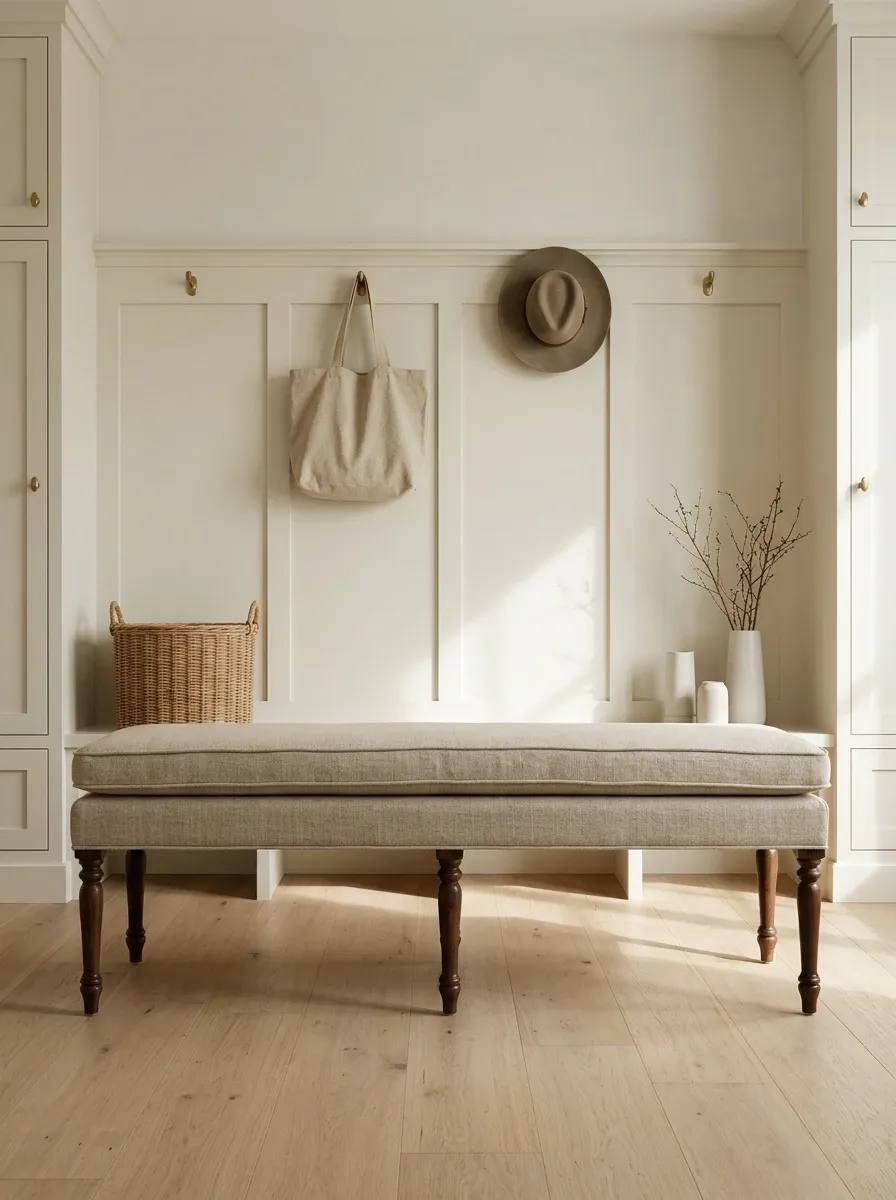
Turned feet can add rhythm beneath a plain upholstered bench. Choose a restrained profile with a few clear changes in diameter rather than elaborate carving on every visible inch.
The linen or flax upholstery supplies the quiet upper surface. The feet bring a smaller decorative detail below, where it can be seen without competing with the seat.
Appearance study only. Foot profiles do not establish compatible fittings, support locations, or load capacity.
Before choosing the detail
Review the finished seat height and the complete support arrangement.
A darker wood can look settled beside pale fabric, while light oak feels softer. Keep nearby furniture simpler if the turned profile is intended to be the bench’s distinctive feature.
Square Peg Feet Under a Broad Media Cabinet
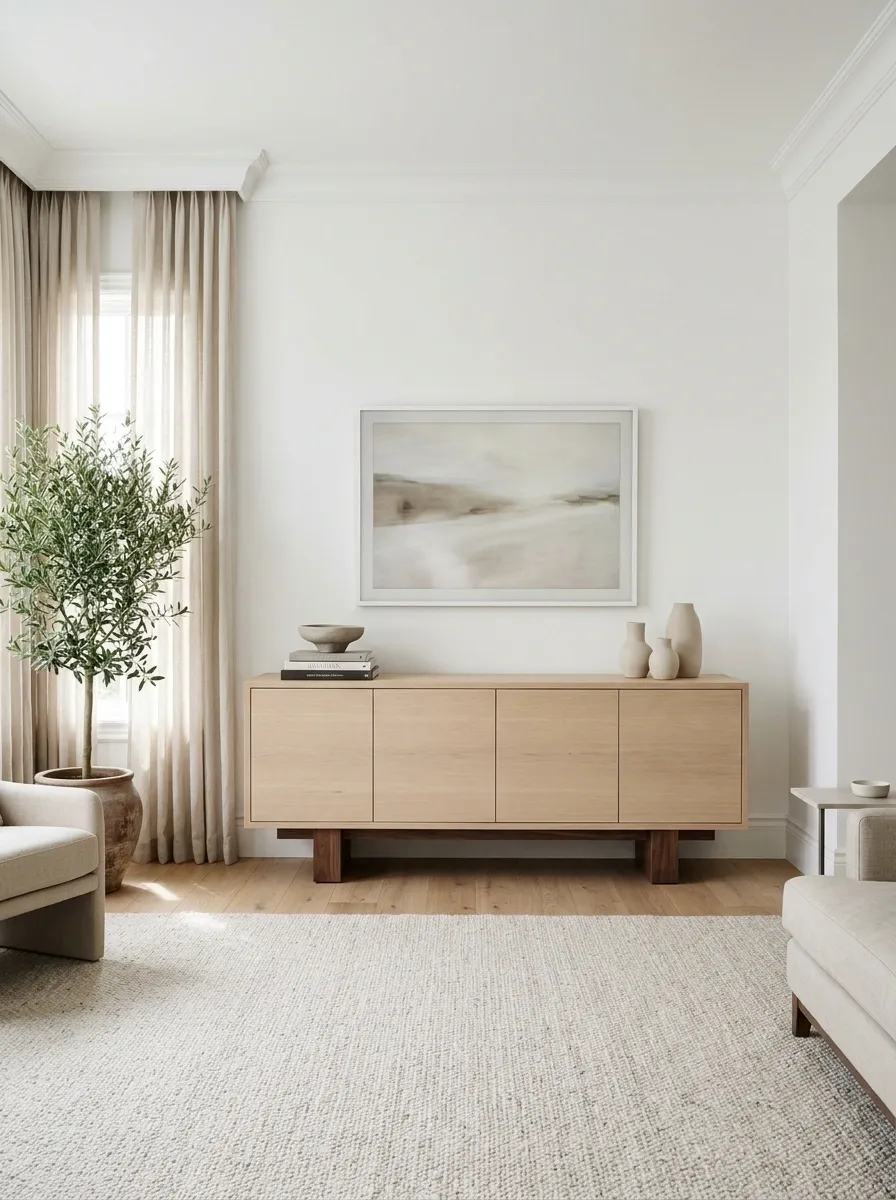
Simple square feet can give a broad media cabinet a clear base without introducing a strong decorative style. Choose a compatible design with proportions that look substantial enough for the furniture.
A painted foot close to the cabinet color keeps the outline quiet. A dark wood version adds definition beneath pale fronts.
Clear the floor line first. Cables, routers, and a row of baskets can obscure the very lightness you’re trying to create. The change works best when the cabinet’s lower outline is clear, not hidden behind the household’s complete technology support department.
Appearance study only. Foot profiles do not establish compatible fittings, support locations, or load capacity.
Preserve all required center supports on a wide piece.
Angled Wood Feet Under a Simple Sofa
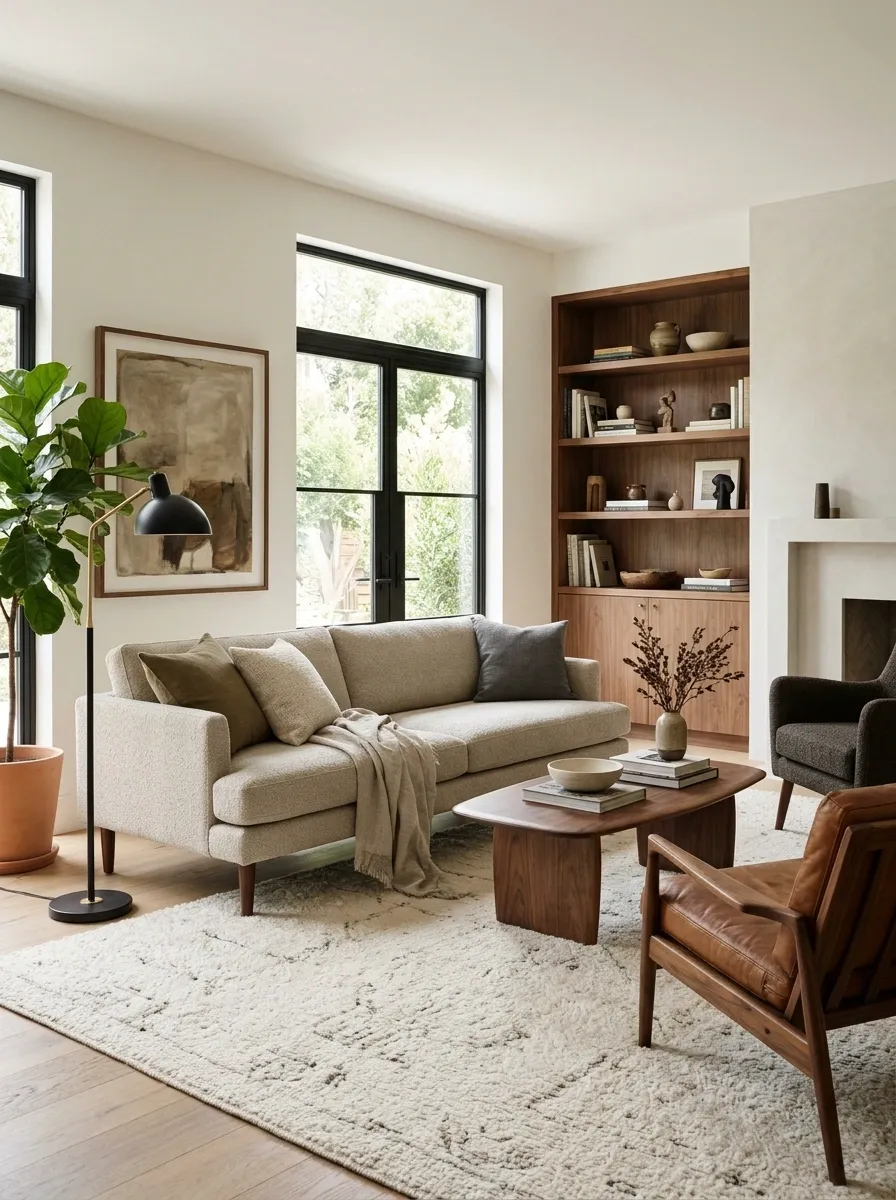
Angled wood feet can give a suitable plain sofa a more midcentury character. Keep the upholstery quiet and let the visible direction of the base supply the detail.
Appearance study only. Foot profiles do not establish compatible fittings, support locations, or load capacity.
Use a system specified for the furniture and its intended angled geometry.
The replacement must be designed for the furniture’s loads and attachment geometry. A decorative angle changes how the foot relates to the frame; it isn’t simply a straight foot rotated until it looks cheerful.
Pair the sofa with a low wood table or a clean-lined lamp. Avoid adding too many other retro shapes unless you want the whole room to follow that direction. A base can suggest an era without requiring the rest of the house to reenact it.
Cylindrical Wood Feet Under a Low Sideboard
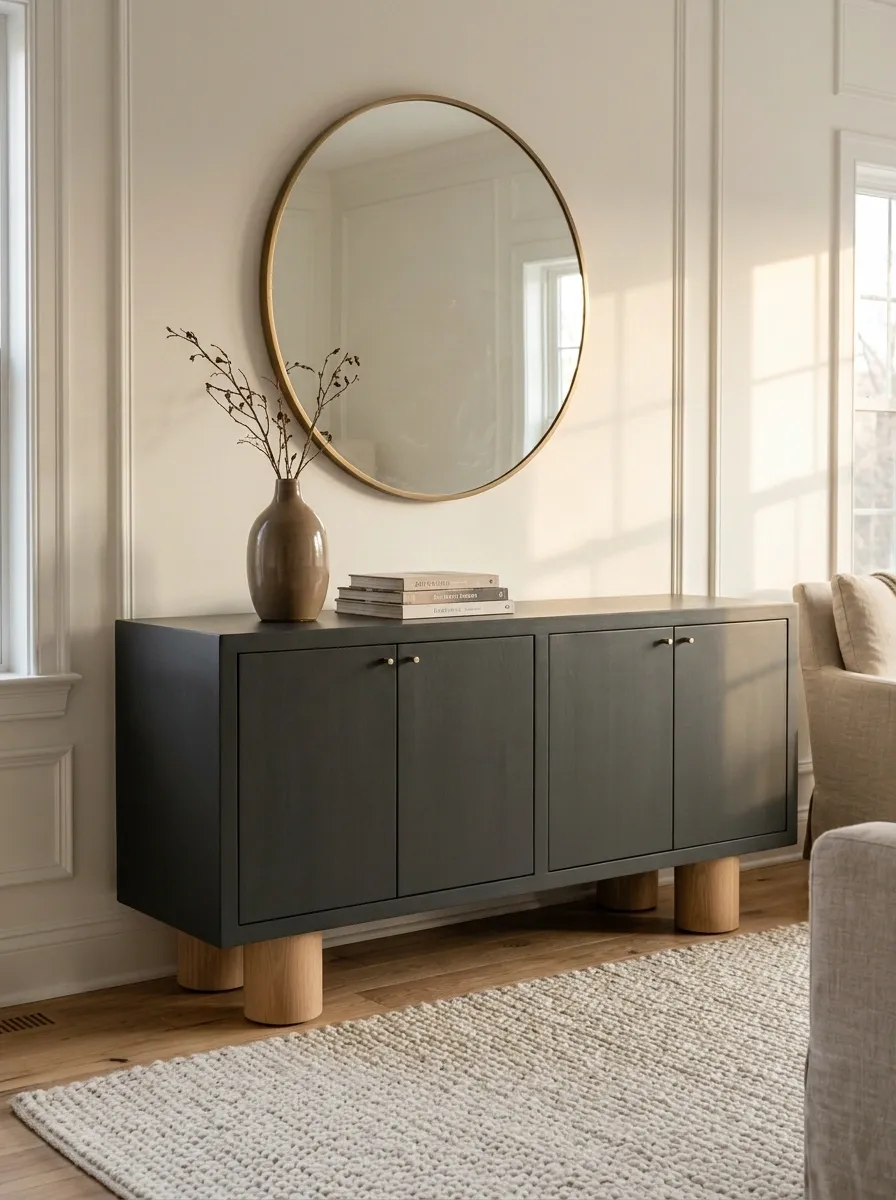
Cylindrical feet give a low sideboard a softer lower outline than square blocks. Use a smooth, simple form when the cabinet already has strong door lines or visible grain.
A pale cylinder beneath a deeper painted cabinet creates clear material contrast. Matching wood tones produce a quieter, more integrated effect.
Appearance study only. Foot profiles do not establish compatible fittings, support locations, or load capacity.
Before choosing the detail
Consider the visible footprint as well as the height of the replacement.
The curves can relate to a round mirror or table nearby, but they don’t need a matching curved object on every wall. Let the cabinet remain a useful piece rather than the starting point for a shape-themed room.
More Decorative Profiles for Plain Pieces
Fluted Cylinder Feet Under a Smooth-Front Cabinet
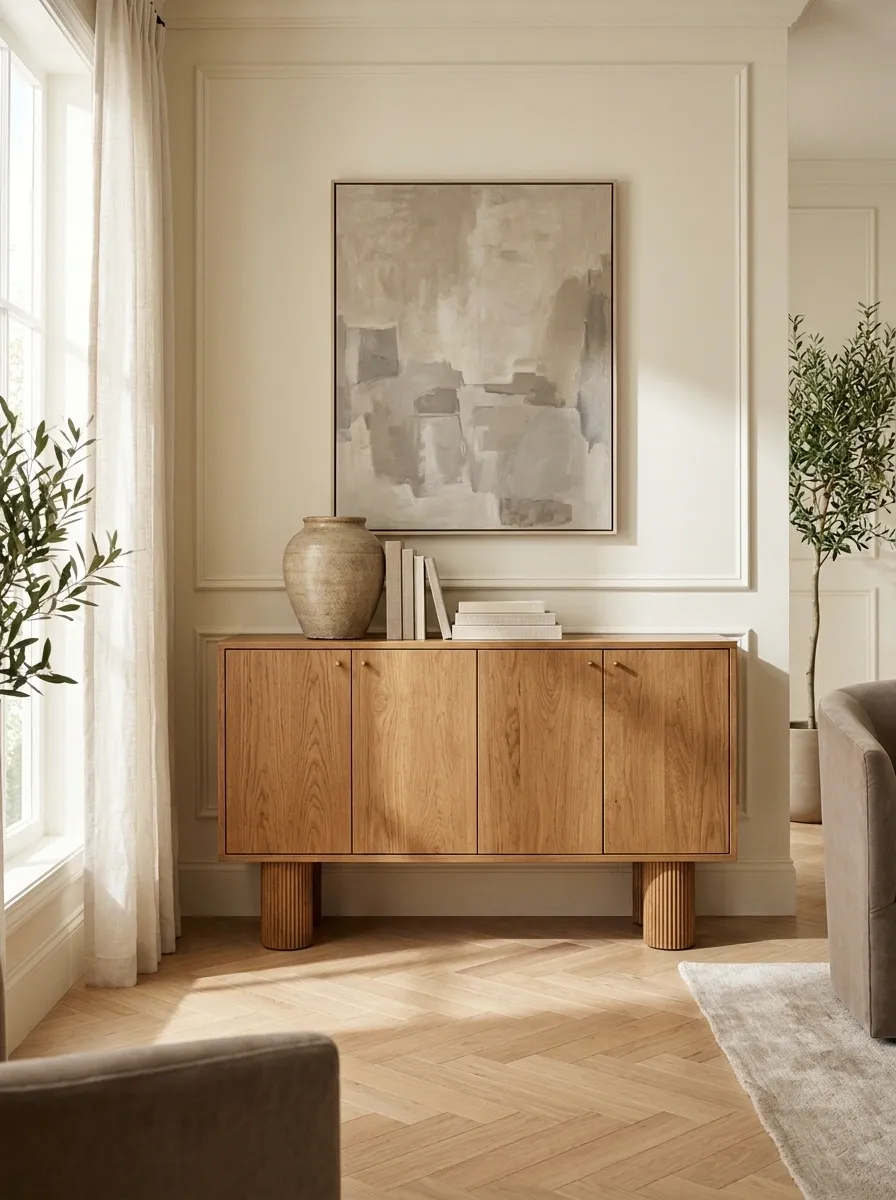
A fluted cylinder can add fine vertical texture beneath a cabinet with smooth doors. Keep the flutes simple and the foot visibly separate from a patterned floor.
Use a wood finish if you want the detail warm and material-led. Paint it close to the cabinet color for a softer shadow effect.
The cabinet’s upper surfaces should stay relatively quiet. Fluted doors above fluted feet can become visually dense, especially on a small piece. Give the carved texture a defined job below the main rectangle, then let the handles and top remain simpler. A little repeated detail is often more convincing than a full demonstration of everything the workshop can produce.
Appearance study only. Foot profiles do not establish compatible fittings, support locations, or load capacity.
Keep the cabinet faces quieter than the carved base detail.
Faceted Feet Under a Plain Upholstered Ottoman
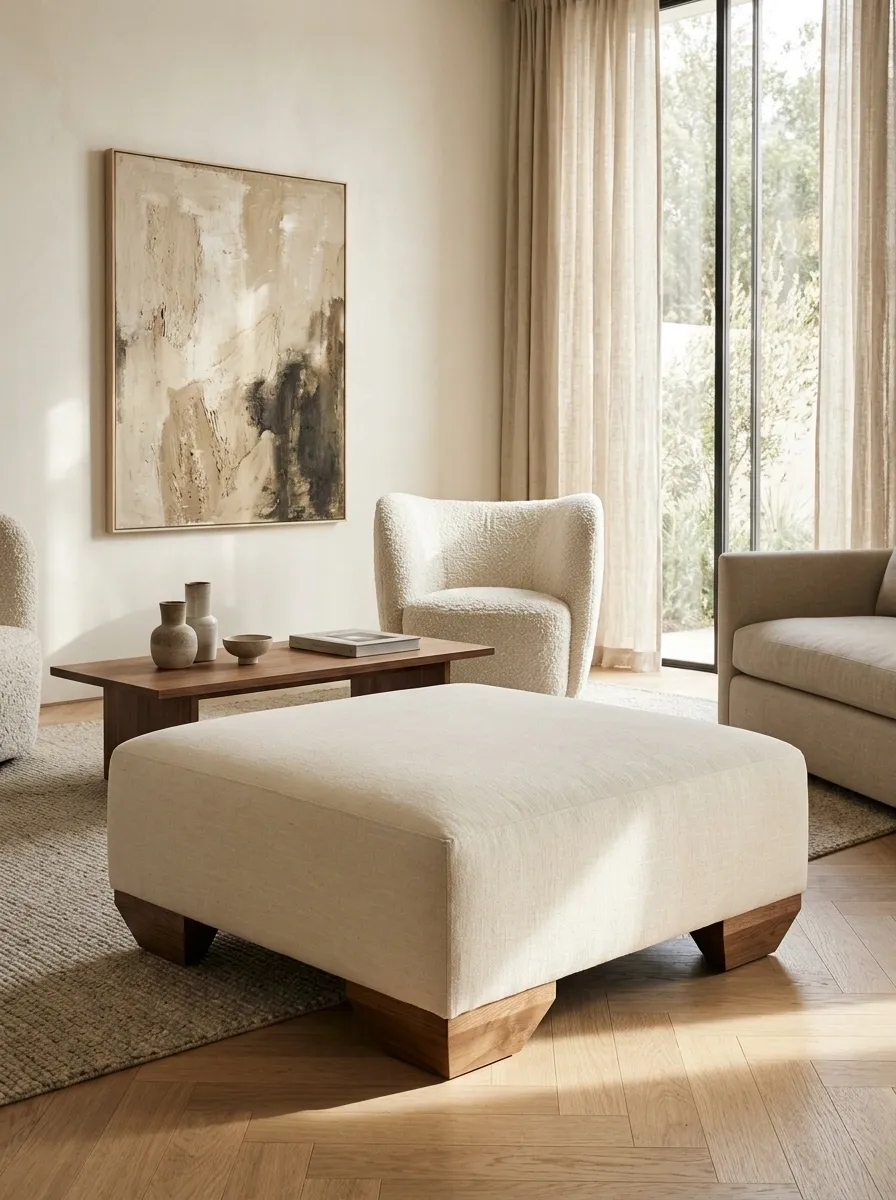
A faceted wood foot can give a plain ottoman a crisp lower detail. The flat angled faces catch light differently from a turned or rounded shape.
Choose a finish that remains visible beside the floor:
- Mid-brown wood beneath cream upholstery for warmth.
- A painted faceted foot for a more graphic note.
Appearance study only. Foot profiles do not establish compatible fittings, support locations, or load capacity.
Keep the upholstery simple enough for the small geometric form to read.
The foot should look proportionate when the ottoman is viewed from a normal seat, not only in a close-up. A very intricate shape may disappear beneath a deep overhang, making a simpler compatible option more useful.
Scalloped Bracket Feet Under a Painted Cupboard
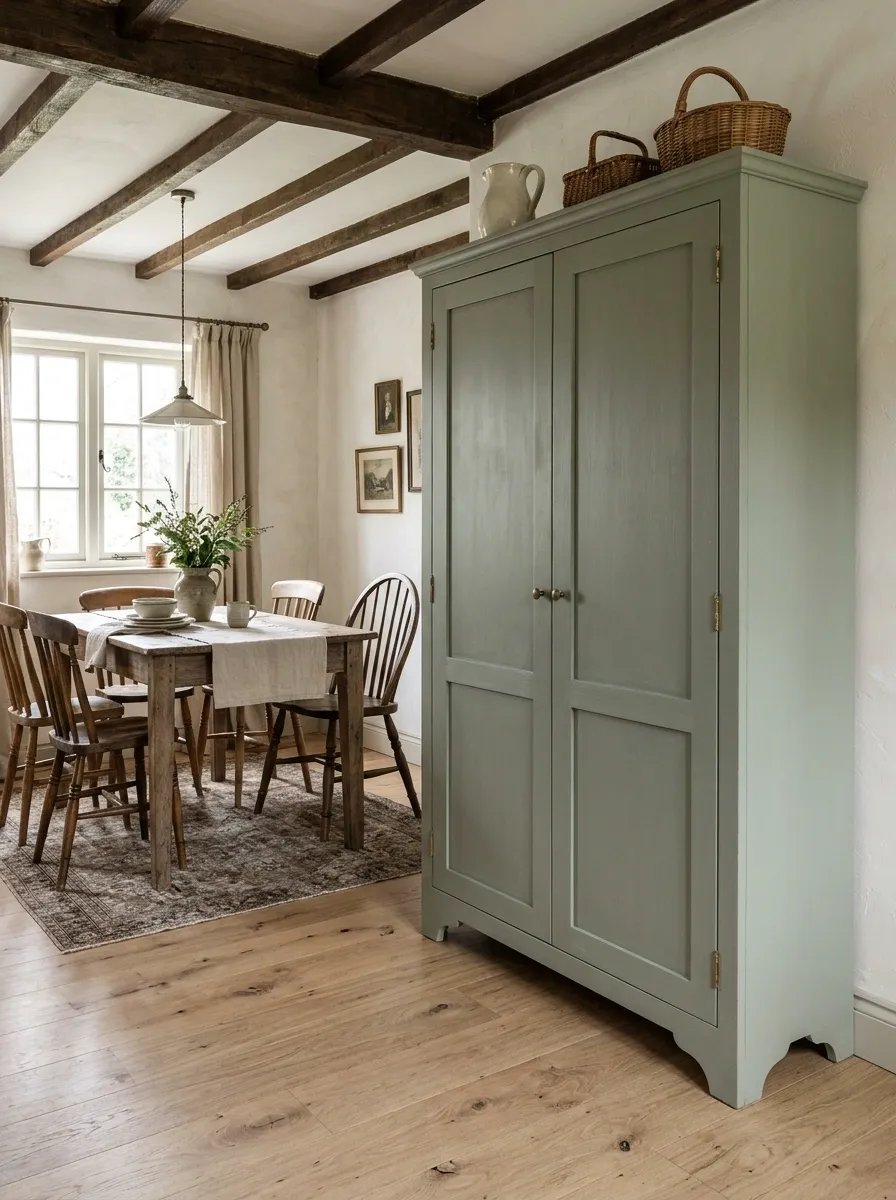
A restrained scalloped bracket profile can soften a plain cupboard’s lower corners. The curve is part of a supporting base arrangement, which needs to be appropriate to the cabinet’s construction.
Appearance study only. Foot profiles do not establish compatible fittings, support locations, or load capacity.
Before choosing the detail
Have the base construction and support assessed for the actual cupboard.
Paint the bracket close to the cupboard color so the shape appears through shadow rather than a strong contrast. Cream, dusty blue, or muted green can each suit the detail.
Keep the cupboard doors uncomplicated. The scallop is enough decorative movement without adding scalloped shelves and a frilled runner directly above it. Use this direction when the piece benefits from a more traditional or cottage-like outline, not simply because curved edges happen to be available.
Stepped Bracket Feet Under a Wide Dresser
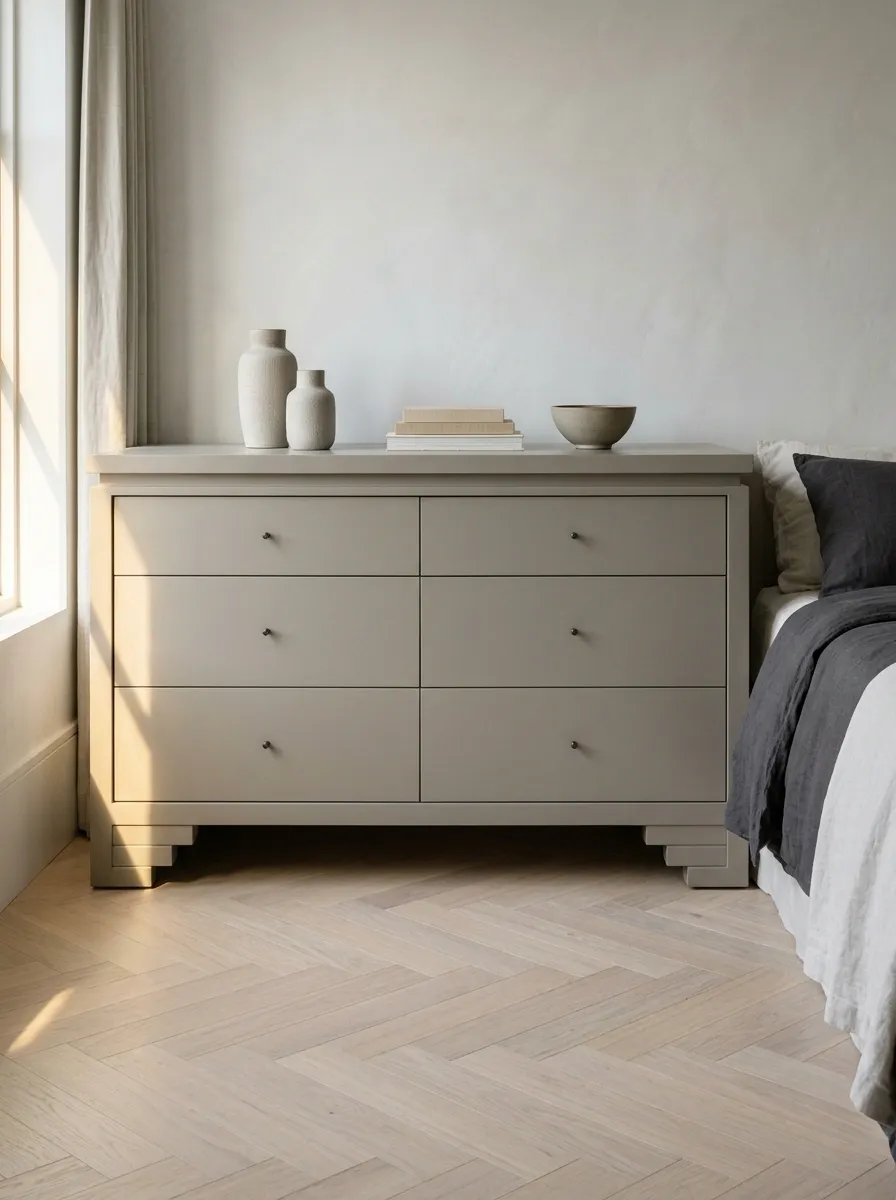
Stepped bracket feet can give a dresser a more architectural lower edge. Their short changes of level create detail without relying on turned profiles.
A painted finish close to the cabinet keeps the effect calm. A dark finish can emphasize the stepped silhouette against a lighter floor.
Appearance study only. Foot profiles do not establish compatible fittings, support locations, or load capacity.
Choose the step scale around the furniture's existing proportions.
This suits a piece with simple drawers and a substantial top. If the dresser already contains several decorative moldings, keep the replacement base restrained so the lower edge doesn’t introduce an unrelated architectural vocabulary.
Rounded Ball Feet Under a Compact Cabinet
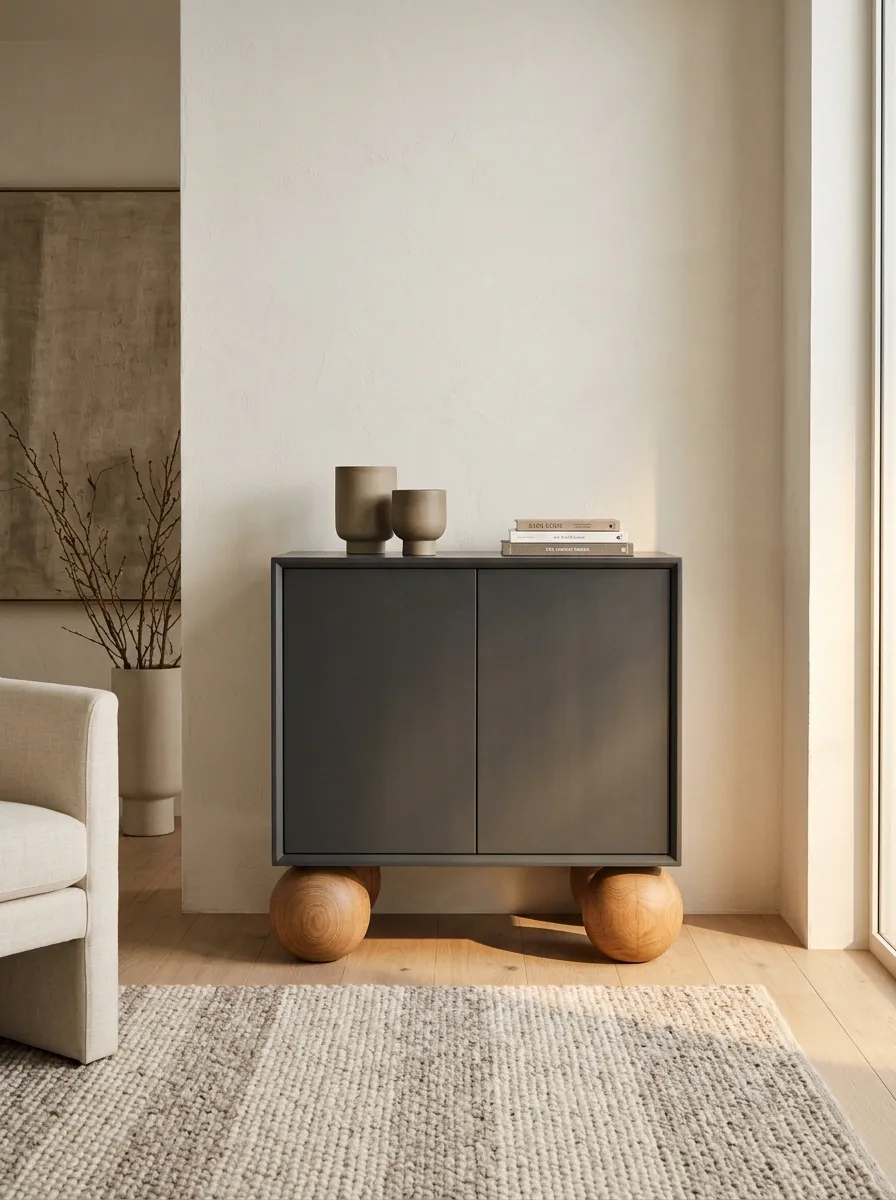
A round ball-shaped foot can give a compact cabinet a playful, sculptural base. Use a compatible design with the appropriate contact and support arrangement; the appearance is not a guide to how a sphere should carry furniture.
Appearance study only. Foot profiles do not establish compatible fittings, support locations, or load capacity.
Use a properly designed compatible foot, not an improvised spherical support.
Keep the cabinet fronts plain so the small repeated rounds remain legible. A deeper cabinet color over lighter feet creates more contrast, while one color throughout feels quieter.
The scale is important. Oversized balls can make the piece deliberately whimsical; smaller ones are subtler. Judge the full cabinet in a room mock-up rather than deciding from an isolated foot photograph, where everything appears charmingly detached from the laws of furniture proportion.
Flattened Disc Feet Under a Low Ottoman
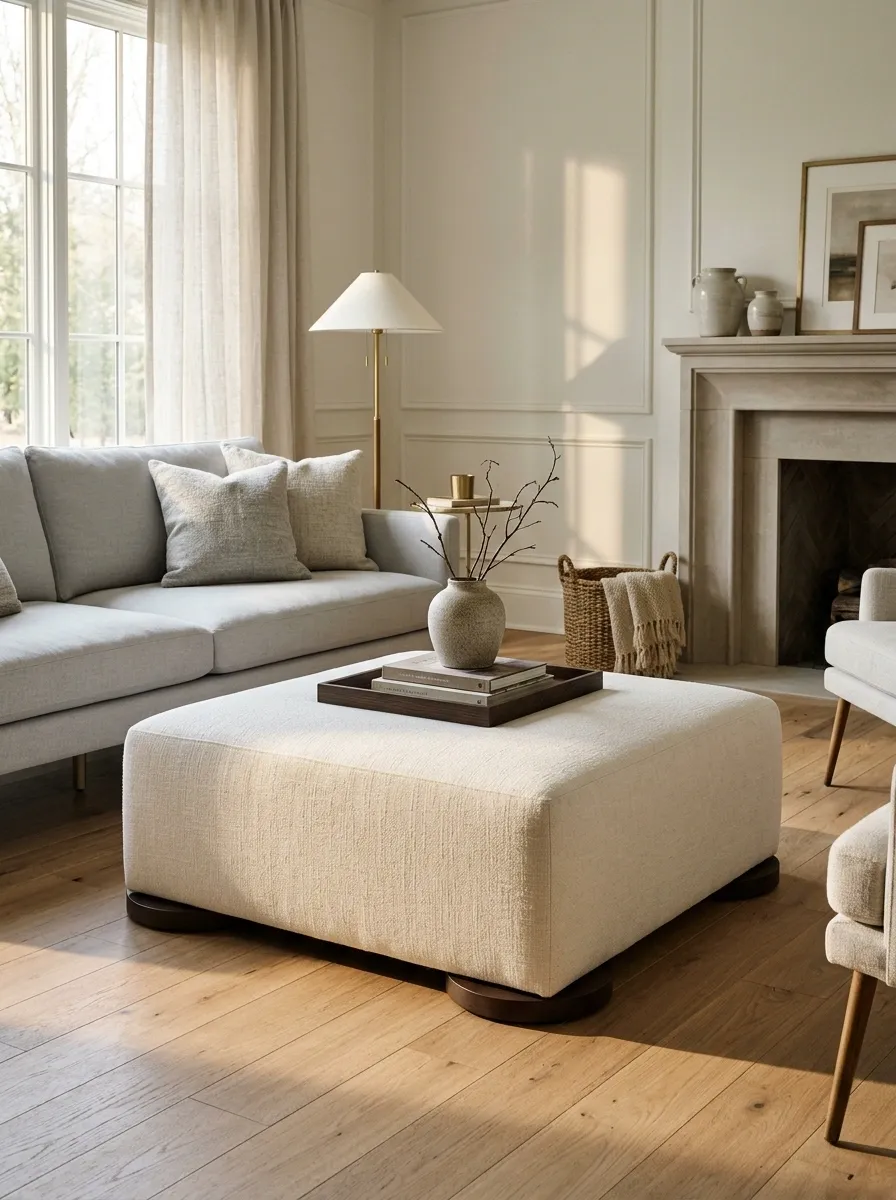
Low disc-shaped feet can provide a clear rounded detail without giving the ottoman a tall legged appearance. Choose a suitable design that remains visible beyond the upholstered base as intended.
A dark disc can outline pale fabric; warm wood can soften a gray or blue ottoman. Keep the other furniture legs simpler if the discs have a conspicuous footprint.
Appearance study only. Foot profiles do not establish compatible fittings, support locations, or load capacity.
Before choosing the detail
Check the complete furniture height and the foot's actual attachment and contact design.
This direction suits a room where a tall open base would feel too delicate. The piece remains grounded, with a cleaner transition to the floor than an indistinct upholstered block.
Metal and Mixed-Material Details
Slim Dark Metal Feet Under a Pale Sideboard
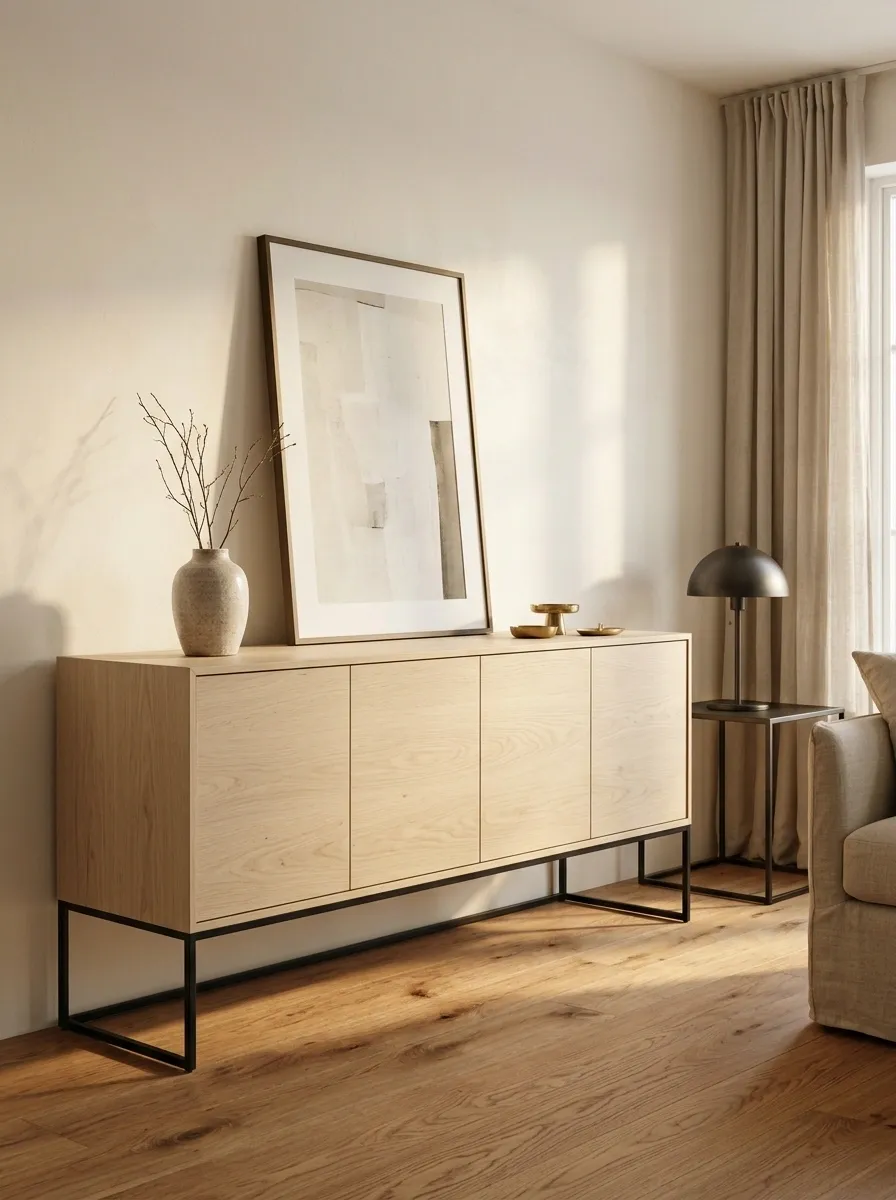
Dark metal feet can give a pale sideboard a crisp outline at floor level. Choose a system designed for the furniture rather than selecting the thinnest-looking option as proof of elegance.
Appearance study only. Foot profiles do not establish compatible fittings, support locations, or load capacity.
Confirm the rated system and all required supports for the complete cabinet.
Keep the cabinet’s handles related in depth or finish, without demanding an exact match. A dark lamp or picture frame elsewhere can connect the base to the room.
The contrast works best when the floor behind the feet is visible. Use fewer objects around the cabinet and keep its top arrangement simple. Visual lightness comes from the complete silhouette, not merely from replacing broad wood supports with narrow dark ones.
Brass-Capped Wood Feet Under a Bedroom Bench
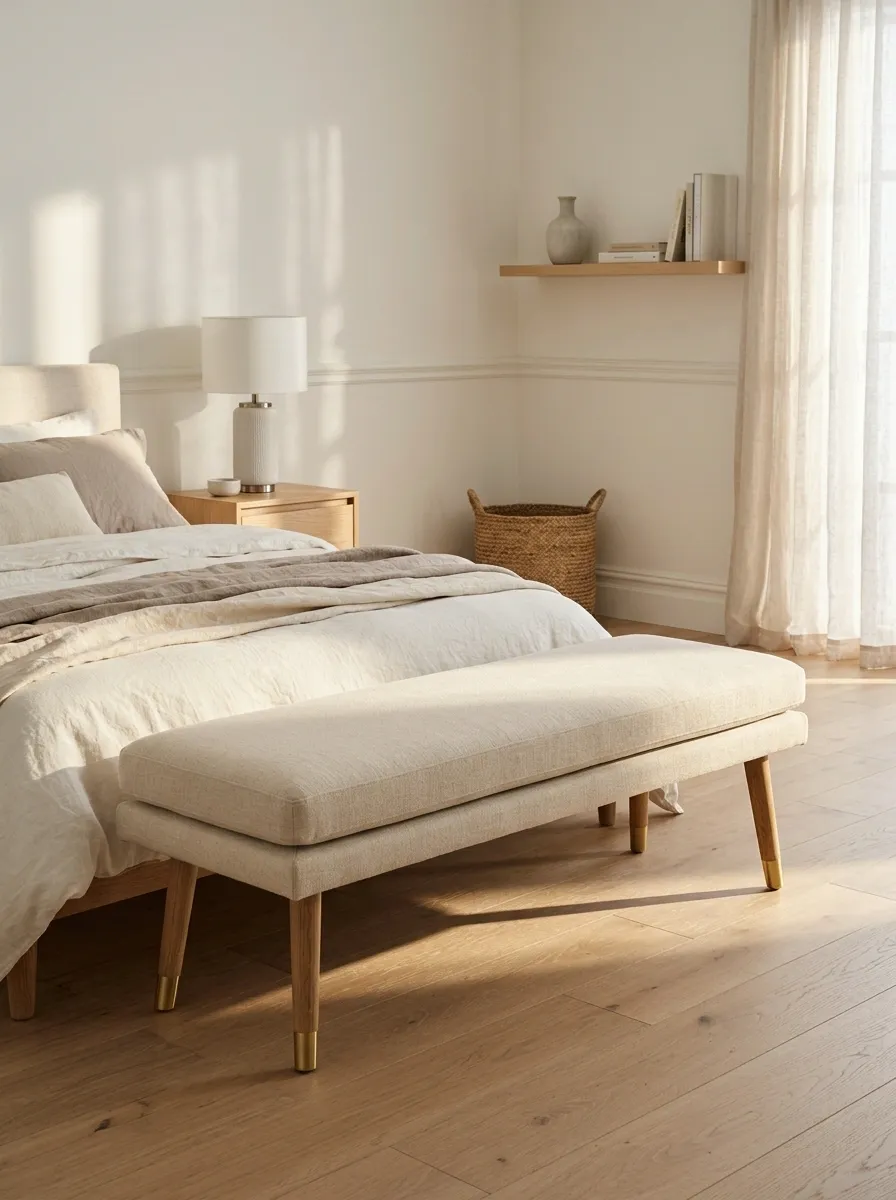
Wood feet with small brass-colored caps can add a restrained metallic detail beneath a plain bedroom bench. Keep the cap short enough to read as an accent rather than an entire shiny leg.
Choose the wood to suit nearby furniture and let the metal relate loosely to a lamp or handle. The finishes don’t need to be identical to look connected.
Appearance study only. Foot profiles do not establish compatible fittings, support locations, or load capacity.
Choose a complete foot designed with the cap, rather than adding a loose cover that changes its contact.
A quiet cushion keeps the mixed-material base visible. If the room already contains several reflective finishes, a plain wood foot may be the calmer choice.
Dark Wood Feet With a Narrow Painted Collar
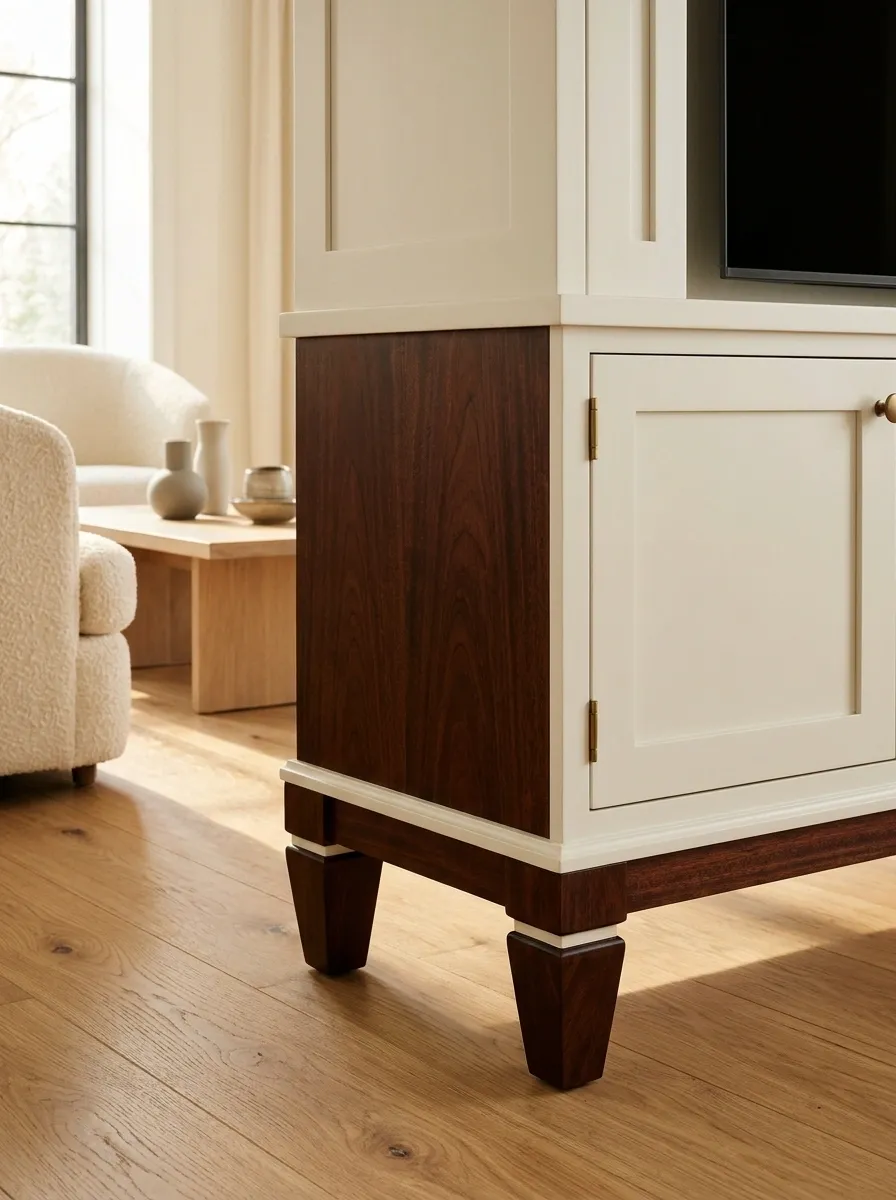
A narrow painted collar near the top of a dark wood foot can connect the base to a painted cabinet. The larger wood area remains visible below.
Use a simple foot profile so the color boundary looks clean. A cream collar beneath cream cabinetry can make the dark foot feel related rather than attached as an afterthought.
Appearance study only. Foot profiles do not establish compatible fittings, support locations, or load capacity.
Keep decorative finishes clear of fittings and contact surfaces as required.
This can be a finish direction for suitable existing feet, avoiding a structural change when the current support system is already right. Test the paint and preparation on the actual material before refinishing visible parts.
Paint Can Change a Base Without Replacing It
Existing Feet Painted Close to the Floor Color
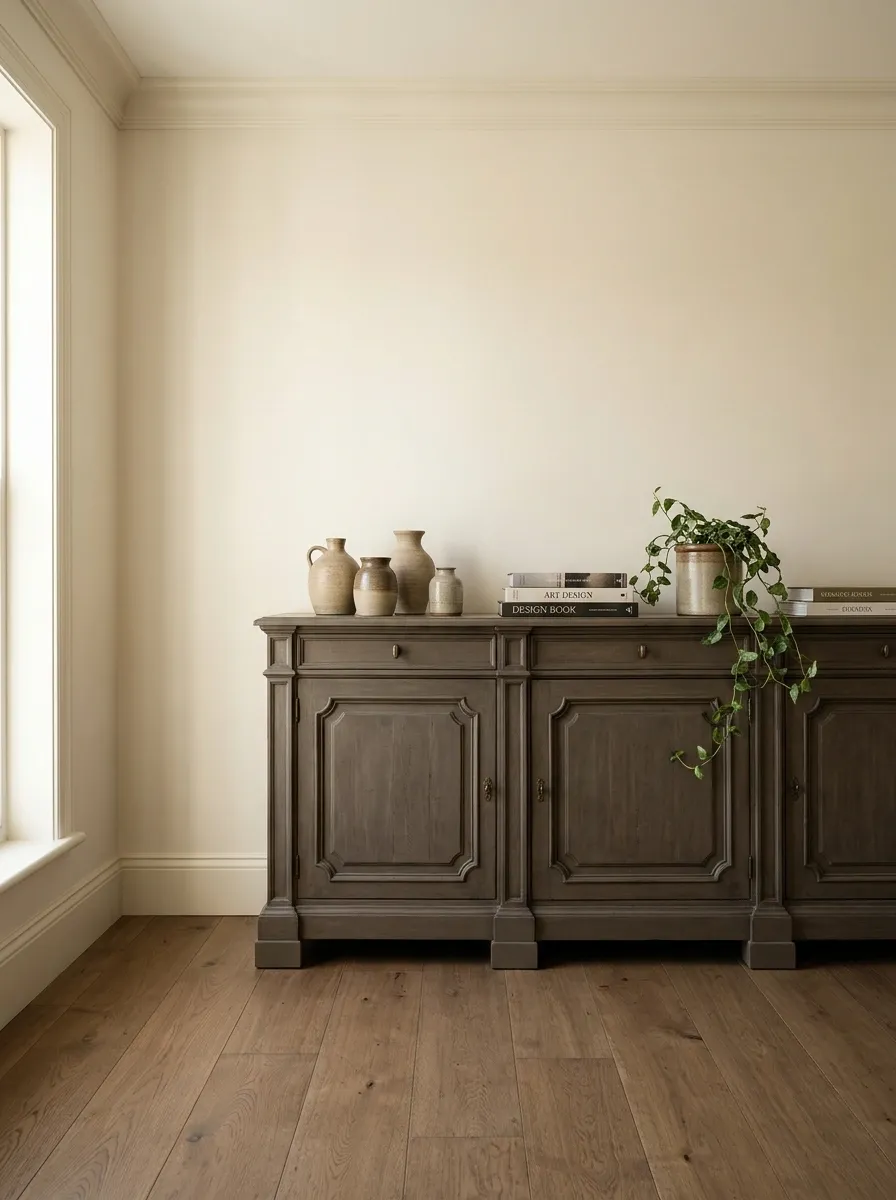
Refinish suitable existing feet in a tone close to the floor when you want them to recede. The cabinet above becomes the clearer shape while the base is less conspicuous.
The effect depends on contrast and light, so test a sample beside the floor rather than using a color name as a match. Dark taupe feet may sit quietly on brown flooring; charcoal may work better on a dark gray surface.
Keep the visible finish neat and compatible with the material. This is a useful option when the foot shape is acceptable and the support system should remain unchanged. Sometimes the base needs a quieter color, not a new engineering challenge.
Appearance study only. Foot profiles do not establish compatible fittings, support locations, or load capacity.
Use the actual floor as the reference and keep all fittings functional.
A Dark Painted Base Under a Light Chest
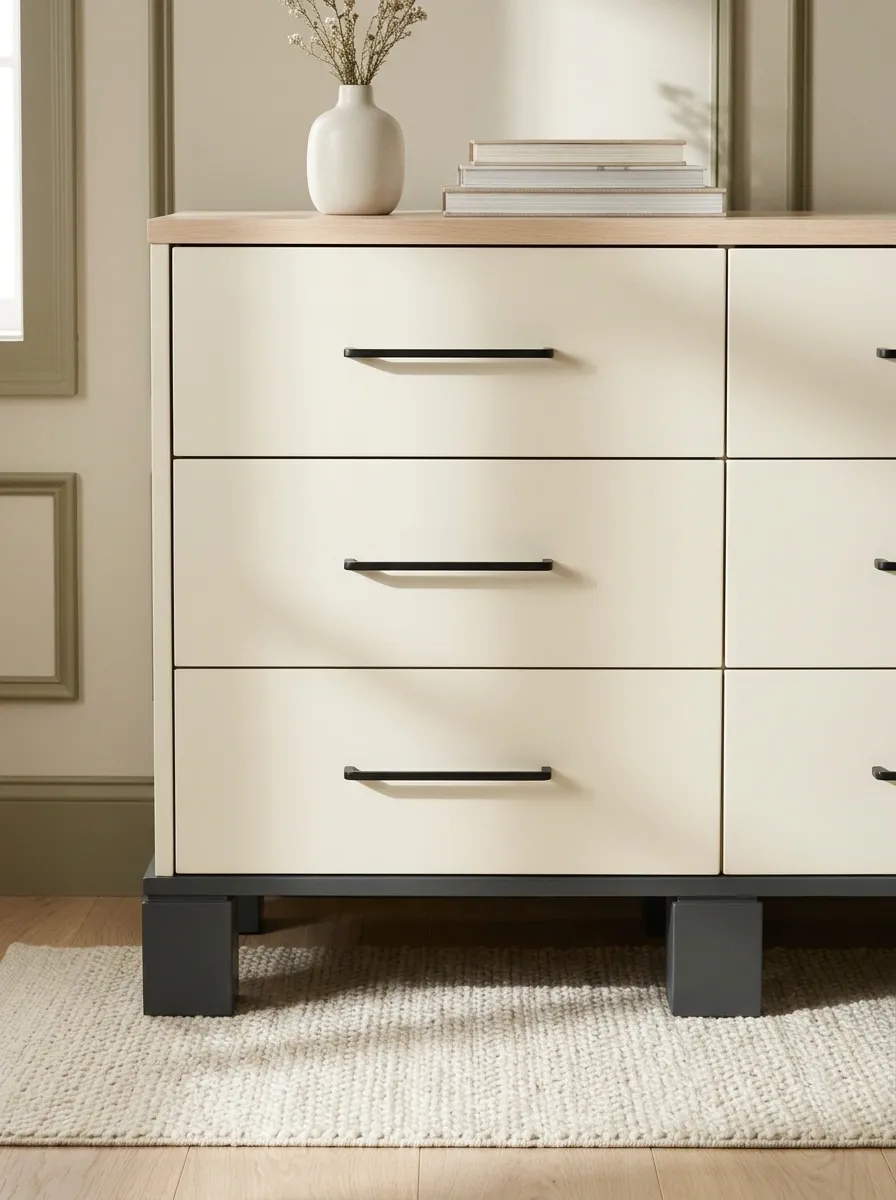
Paint suitable existing feet a clearly darker color than the chest. The contrast gives the lower corners definition without introducing a new material.
Use charcoal, deep olive, or dark brown according to the room’s palette. Keep the handles restrained so the chest doesn’t become a collection of competing outlines.
Appearance study only. Foot profiles do not establish compatible fittings, support locations, or load capacity.
Before choosing the detail
Preserve the support system and use a finish suited to the existing material.
The dark color should look deliberate rather than like an unfinished replacement part.
Repeat it once in the room if necessary, then let the lighter body remain the main surface.
Tonal Green Feet Beneath a Green Cupboard
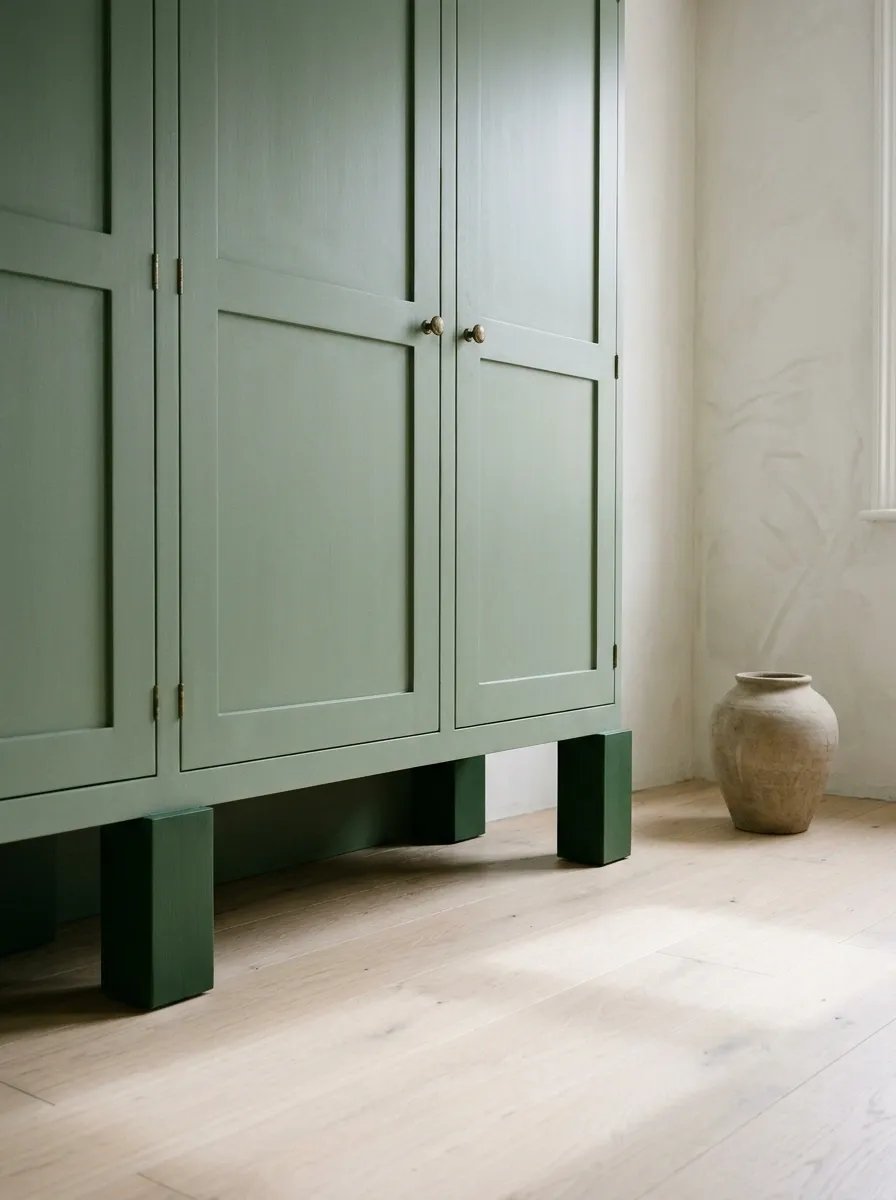
Use a deeper green on suitable existing feet below a lighter green cupboard. The shape becomes more defined while the piece stays within one color family.
Appearance study only. Foot profiles do not establish compatible fittings, support locations, or load capacity.
Review the colors in the shadowed position where the feet will actually sit.
A simple cylinder or square foot works well for the tonal distinction. Keep the surrounding floor and wall quieter so the subtle depth change can be seen.
This can make a plain piece feel more considered without adding another decorative finish to the room. Compare samples in the lower light near the floor, where the deeper green may look almost black. If the distinction disappears completely, choose a slightly clearer difference rather than increasing the decorative detail elsewhere.
Painted Tips on Simple Wood Feet
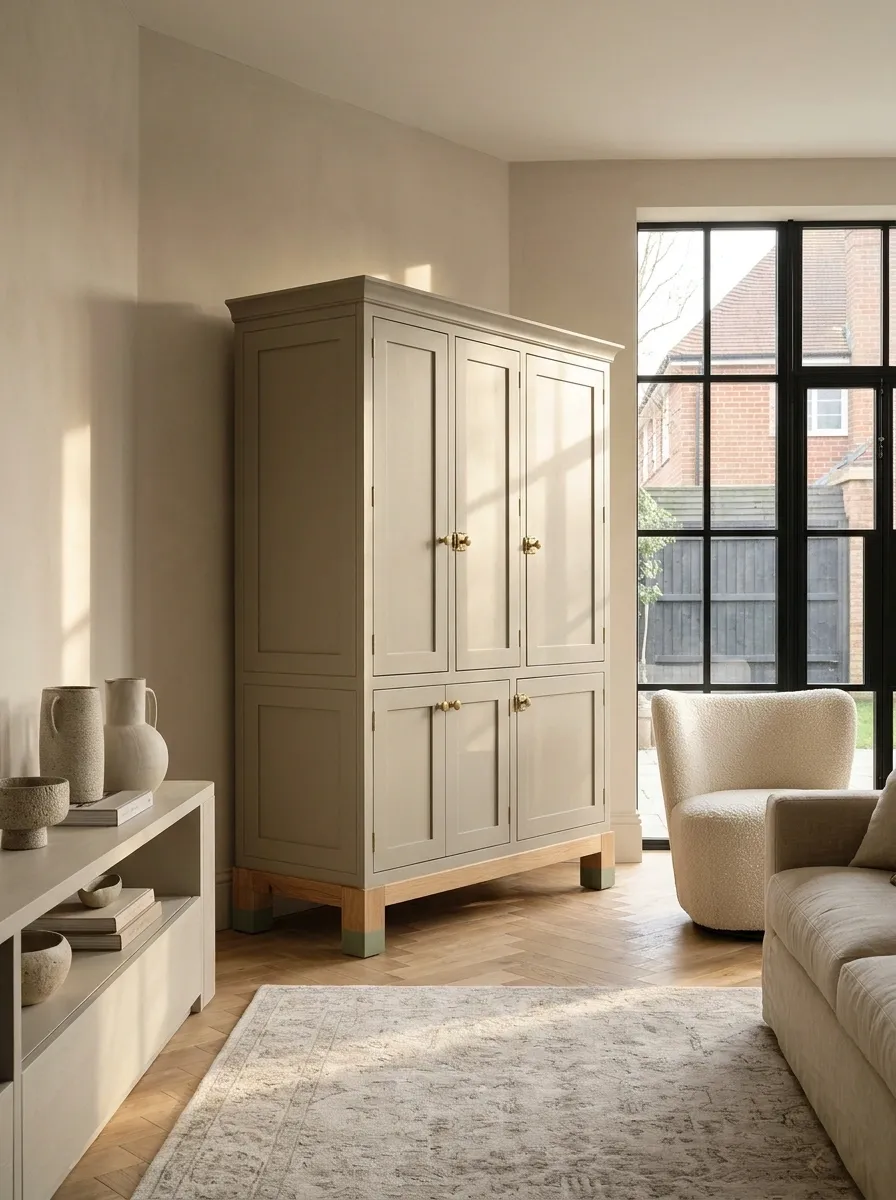
A short painted tip can give otherwise plain wood feet a playful ending. Keep the color block crisp and use a tone already present in the room.
Choose this as a decorative finish on suitable feet, without covering fittings or altering how the foot meets the floor. The actual floor protector and contact arrangement still need to work as intended.
Appearance study only. Foot profiles do not establish compatible fittings, support locations, or load capacity.
Keep the color detail decorative and preserve the proper floor-contact system.
One restrained accent is enough. If the cabinet also has patterned doors, colorful handles, and a strong top, the tips may add one more detail than the piece needs.
Choose the Base Around the Whole Piece
Recessed Dark Feet Below a Pale Cabinet
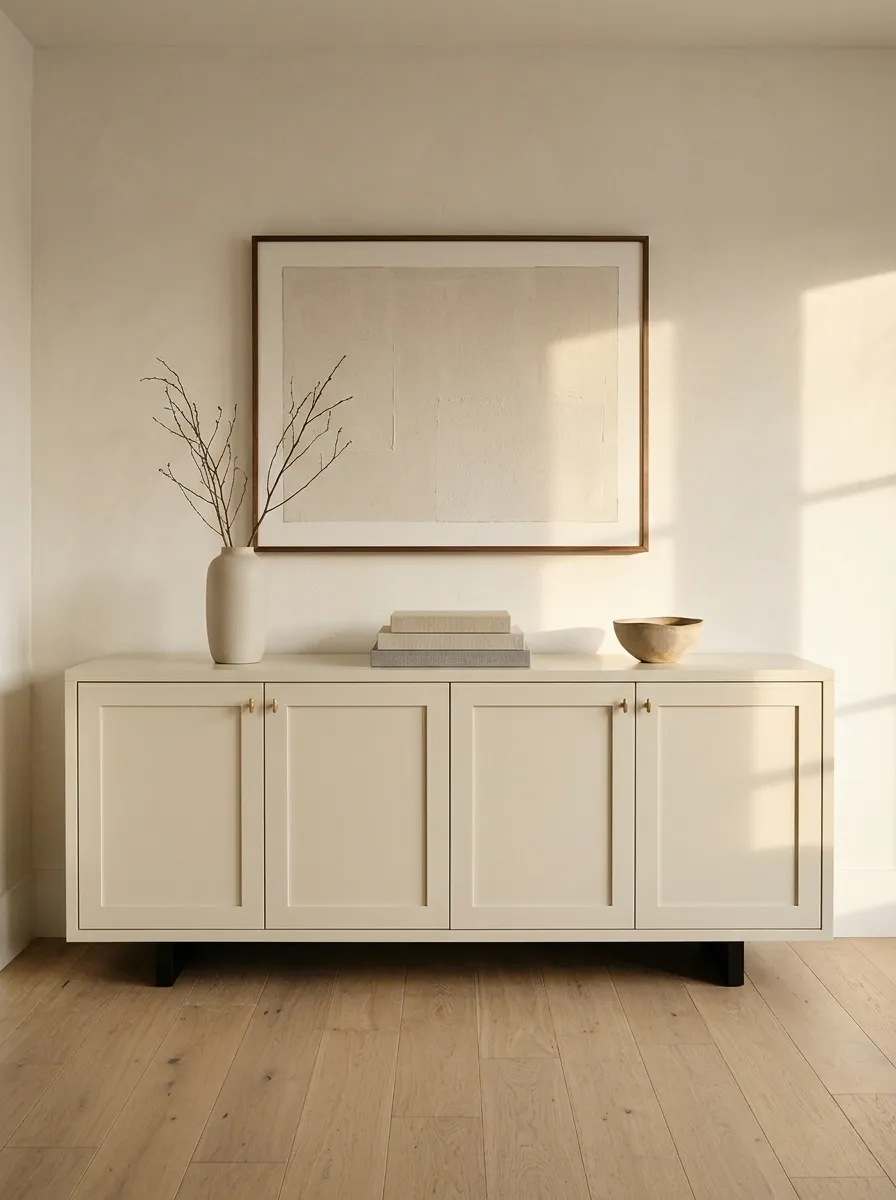
Where the furniture is designed for a recessed support arrangement, dark feet set back from the face can create a quiet shadow beneath the cabinet. The pale body appears as a clearer uninterrupted rectangle.
The support locations must remain appropriate to the construction. This is a look to choose within a suitable system, not an instruction to move the feet inward until the cabinet seems to float.
Keep nearby objects from filling the floor gap. The visual effect relies on a clean shadow line rather than visible decorative shapes. It can suit a room where a more ornate foot would introduce unnecessary detail.
Appearance study only. Foot profiles do not establish compatible fittings, support locations, or load capacity.
Before choosing the detail
Support positions must follow the furniture's approved construction, not appearance alone.
A Painted Open Base Under a Plain Storage Unit
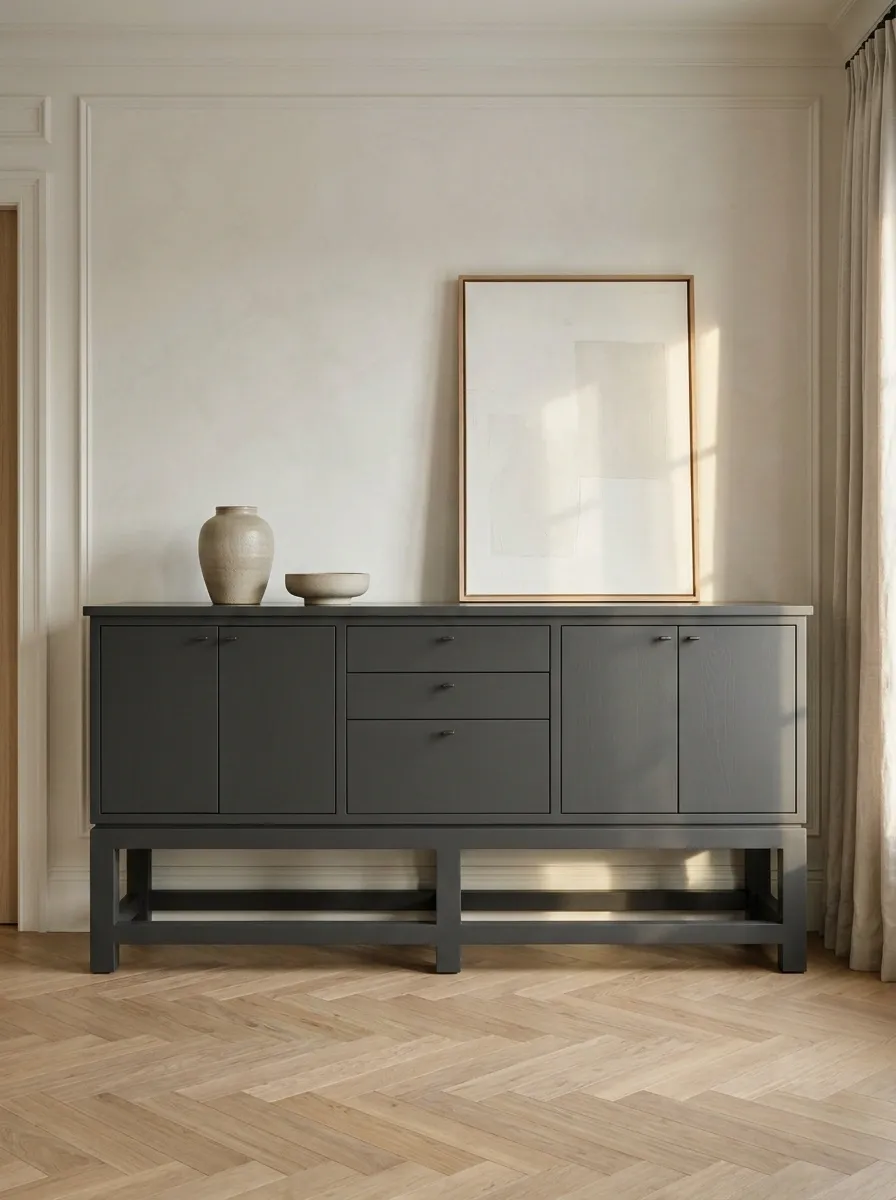
A compatible open base can give a storage unit a stronger relationship to the floor than isolated small feet. Use a simple painted profile that relates to the cabinet above.
Appearance study only. Foot profiles do not establish compatible fittings, support locations, or load capacity.
Have a complete base change assessed for the actual storage unit and use.
The open shape may create visible space beneath while retaining a substantial perimeter. Its construction needs to be designed for the unit and intended loads.
This can be a more coherent direction for a wide, heavy-looking cabinet than tall decorative legs. Choose the broad silhouette first, then keep the smaller hardware and surface accessories quieter.
Matching Foot Shapes on Two Different Bedside Chests
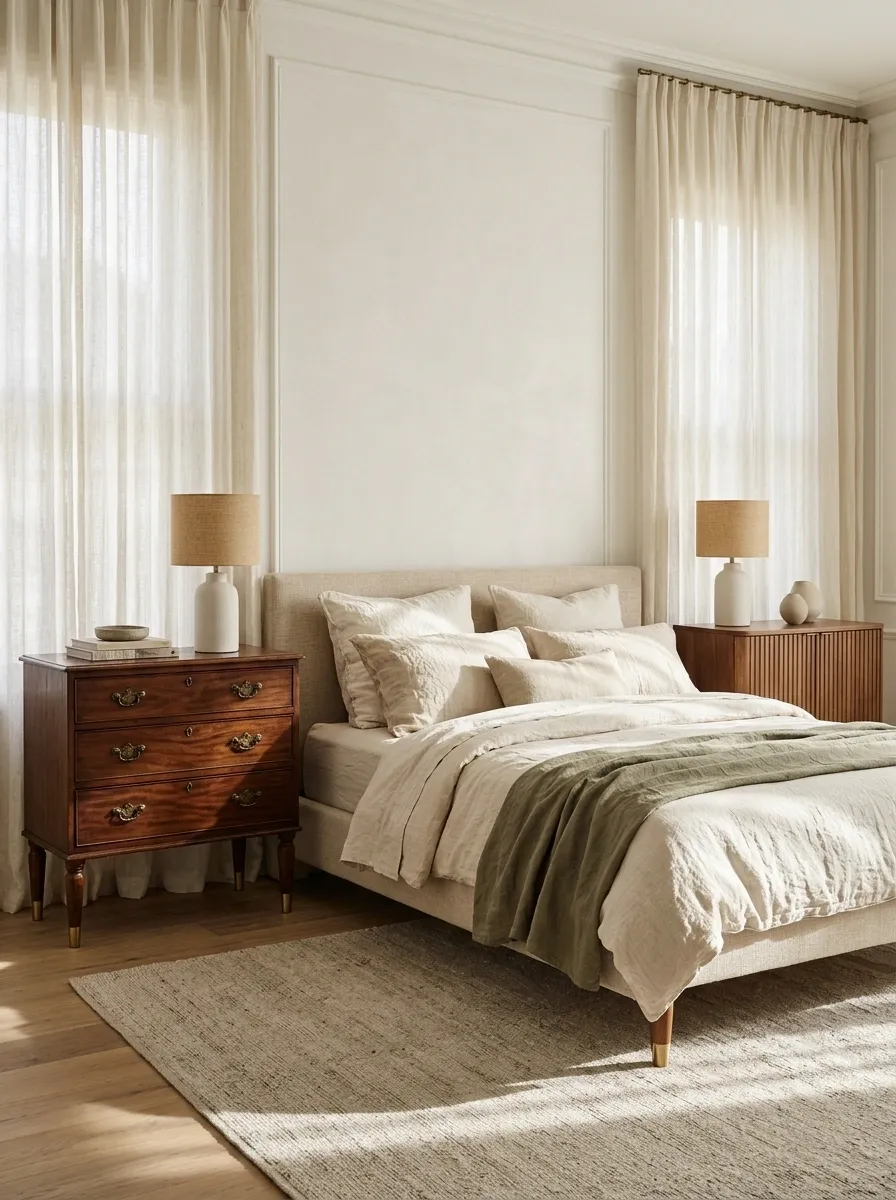
Two nonmatching bedside chests can gain a connection through the same suitable foot profile or existing-base finish, provided each support arrangement remains appropriate. The cabinets don’t need identical doors or drawer layouts.
Use the repeated base detail with a related lamp or bedding color to create a loose pair. Keep the tops usable rather than filling them with matching decorative sets.
The feet should be chosen for each chest independently, even if the final appearance is similar. Matching looks don’t guarantee matching fittings. This is a way to connect two useful pieces, not a reason to force one cabinet’s support system onto another.
Appearance study only. Foot profiles do not establish compatible fittings, support locations, or load capacity.
Assess compatibility for each piece separately even when the visible shapes match.
Exposed Wood Feet Beneath a Tailored Shorter Cover
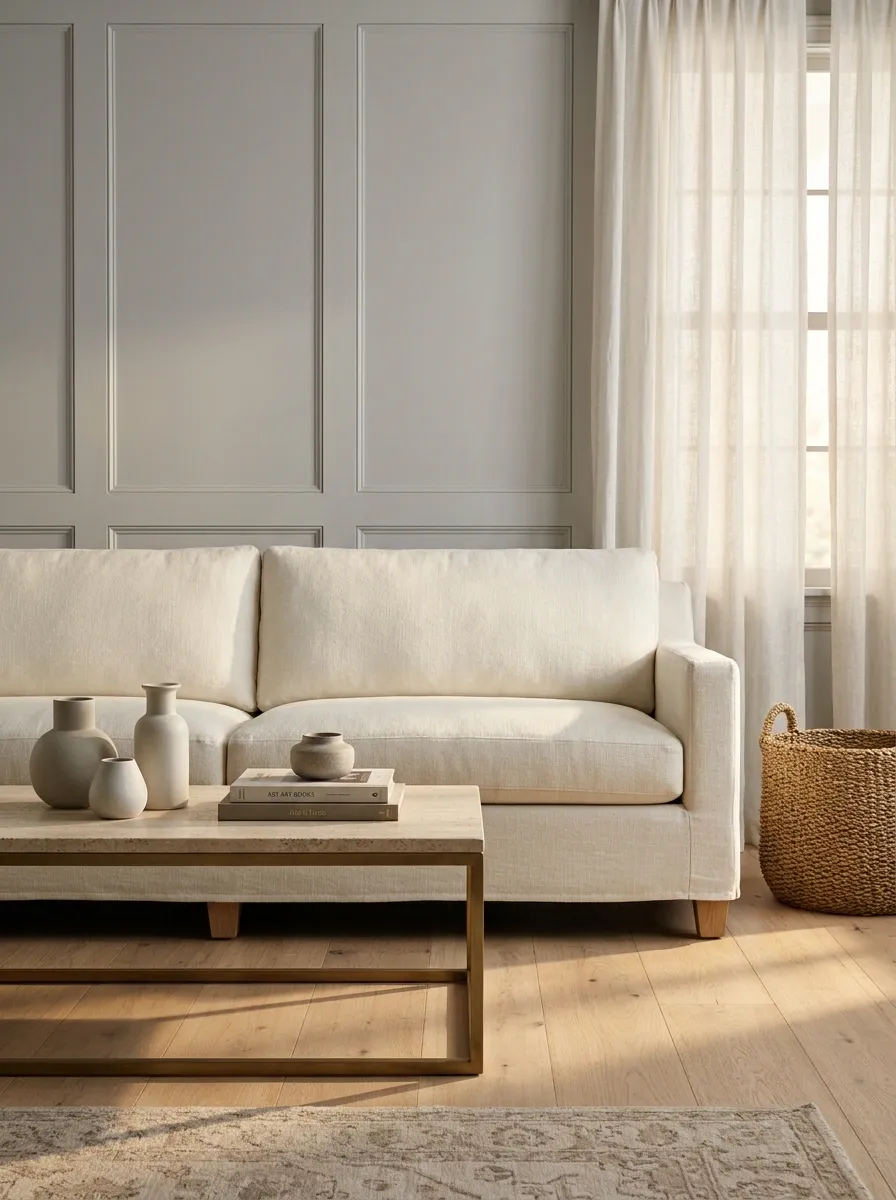
If a sofa or chair already has attractive suitable feet hidden by a cover, a newly tailored cover can reveal them without changing the support system. Keep the hem deliberate and the proportions comfortable.
The exposed wood gives the piece a clearer lower outline, while the fabric remains the main surface. Choose the cover fit around the furniture’s construction and movement.
Appearance study only. Foot profiles do not establish compatible fittings, support locations, or load capacity.
Before choosing the detail
Have the cover made to suit the piece and preserve its normal operation.
This can be the simplest direction when the heaviness comes from fabric reaching the floor rather than the feet themselves. A good existing detail sometimes needs visibility, not replacement.
Judge the Whole Silhouette Before Ordering
Mock up the proposed shape and color beneath a photograph or simple outline of the furniture. Then compare it with the actual floor and the pieces nearby.
Once the appearance feels right, confirm the compatible system, finished dimensions, and safe support with the relevant manufacturer or professional. The goal is a piece that looks lighter and remains good furniture—not a dramatic before-and-after followed by a suspicious wobble.