
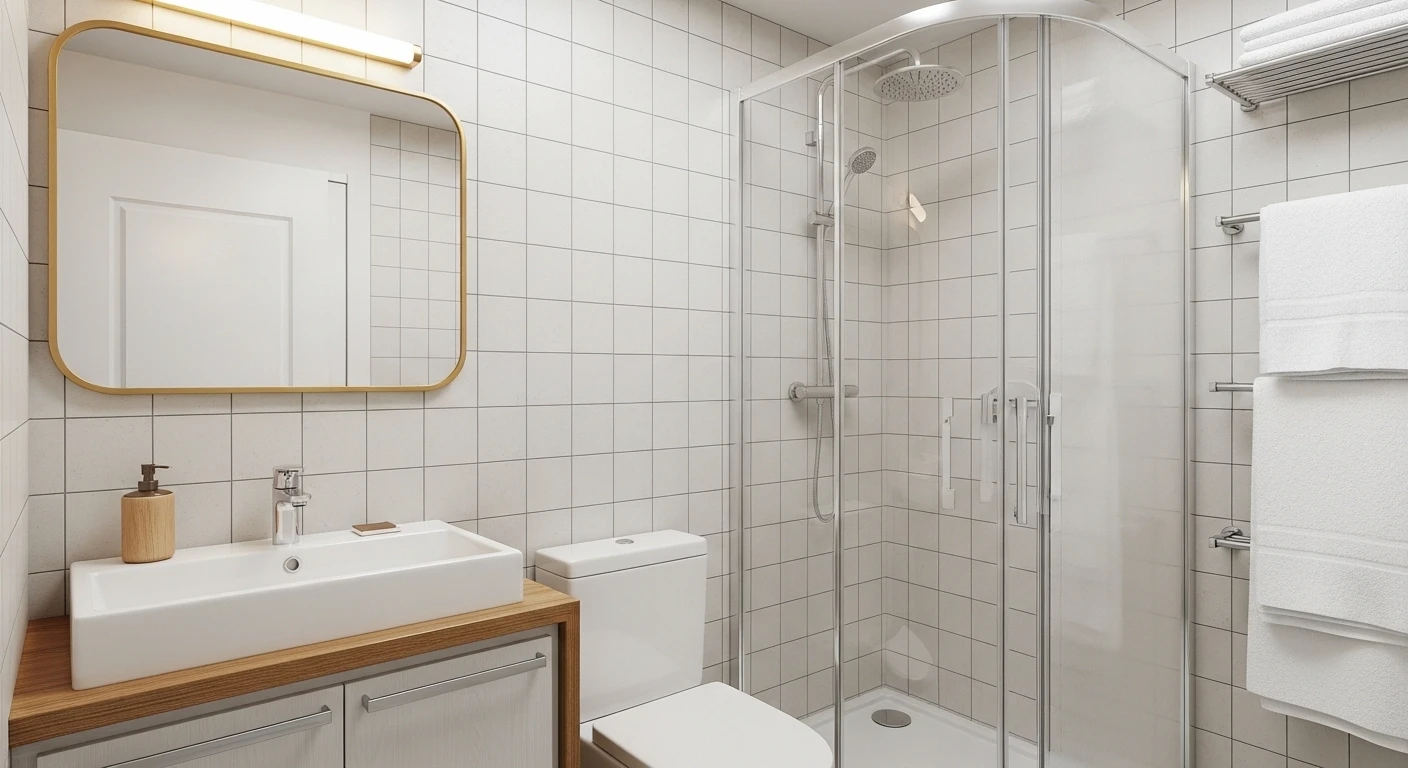
A small bathroom with a bad shower is just a bad bathroom. A small bathroom with a great shower is a room worth being in — regardless of how many square feet it occupies or how many times someone says “oh, it’s cozy” while clearly meaning something else.
The shower is the functional core of the bathroom. Everything else serves it. When the shower is designed well — the right enclosure, the right tile, the right fixtures working together — the entire room reads as considered. When the shower is an afterthought, no amount of good flooring or clever storage will compensate for it.
Small showers are not inferior showers. They’re showers that require more deliberate decisions. Every material is closer to the eye. Every fixture is more visible. Every design choice amplifies. That’s not a disadvantage. That’s a reason to choose well.
Shower Design Studio
A small shower amplifies every decision. Configure the elements below to maximize space and aesthetic cohesion.
Result
Details
Why Small Bathroom Showers Usually Disappoint
The enclosure is almost always the problem. A bulky frame, the wrong glass, a door that swings into the toilet — these are the decisions that make a small shower feel punishing rather than functional. The enclosure choice sets the entire character of the shower zone. Get it wrong and everything else fights an uphill battle. Get it right and the room opens up regardless of its actual dimensions.
The Tile Pattern Rule Nobody Follows
Vertical tile patterns make walls taller. Horizontal tile patterns make walls wider. Herringbone at a forty-five degree angle draws the eye in both directions simultaneously and creates the most visual movement in the smallest footprint. These are not aesthetic preferences — they are perceptual facts. In a small shower where the tile is unavoidably close to the face, the pattern direction matters more than it does in any large bathroom.
One Accent Material Versus Everywhere Material
A shower that uses one bold material throughout — the same tile from floor to ceiling on every wall — reads as intentional and immersive. A shower that uses three different materials trying to be interesting reads as unresolved. In a small shower, restraint of material choice produces more impact than variety. Pick the material that earns its place and let it run.
The Functional Core
Why the shower is the only decision that matters in a small bathroom.
Small Bathroom Shower Ideas
Dark Stone Tile, Matte Black Everything, Backlit Niche:
Tile the shower enclosure and back wall in large-format dark grey stone-effect porcelain with a slightly textured finish. Keep the same tile running up the full height of every wall in the bathroom — shower zone and wet room floor tiles consistent throughout — so the room reads as one continuous envelope. Mount a ceiling-mounted matte black square rain head flush with the ceiling. Install a wall-mounted matte black handheld rail below. Float the entire vanity, toilet cistern cabinet, and mirror in the same matte charcoal finish so every element shares a material family. Mount a pill-shaped mirror with a thin black frame and warm LED backlighting above the vanity. Build a single recessed niche between the toilet cistern cabinet and the shower with warm LED strip lighting underneath — three to four products maximum displayed inside. Under-vanity LED lighting at floor level. Two recessed ceiling downlights above the vanity. The shower has a frameless glass panel on one side — no door, no frame, a wet room configuration that removes every visual barrier from the shower zone.
Teal Herringbone Shower, Walnut Cabinet, Gold Rail:
Tile the shower back wall exclusively in glazed teal herringbone porcelain — full height, floor to ceiling, consistent grout color so the pattern reads as one surface. Every other wall in the bathroom stays white or cream. Install a single frameless glass panel on a brushed gold rail system as the shower enclosure — no door frame, no excess hardware, just the gold rail at top and bottom and a clean glass panel. Mount a brushed gold ceiling rain head. A gold handheld rail on the teal wall. Build a recessed niche in the side wall of the shower in natural stone with gold trim for product storage. Beside the shower, a tall walnut cabinet reaches ceiling height for concealed storage, with a small open illuminated niche at mid-height for display. A wall-hung toilet with a gold flush plate. A wall-mounted tap in gold on white wall with a small floating oak shelf and a round white vessel basin. A gold heated towel rail on the opposite wall. The teal tile is the room's single bold decision. Every other decision exists to support it.
Dark Walls, Marble Shower Panel, Gold Frame, Patterned Floor:
Paint every wall outside the shower zone in a deep charcoal or near-black matte finish. Tile the shower enclosure — back wall and side walls — in large-format white Carrara marble or high-quality marble-effect porcelain with bold grey veining. Frame the shower with a single straight gold profile and a frameless hinged glass door with gold hinge and handle. A ceiling-mounted brushed gold round rain head. The contrast between the dark external walls and the white marble shower interior is the design moment — the shower glows against the dark surround. On the dark wall: a circular mirror in a thin gold frame, a wall-mounted tap in gold, a small wall-hung corner basin in white ceramic, and a narrow black floating shelf styled with a reed diffuser, one framed print, and a trailing plant. A black-and-white geometric encaustic tile on the floor — the pattern runs continuously through the shower and the bathroom floor so the two zones read as connected. A black matte toilet brush, toilet roll holder, and towel hook completing the hardware consistency.
White Subway Tile, Black Frame, Geometric Floor, Windowsill Styling:
Tile the shower and the wet room wall in white subway tile — large format, three by six minimum — with dark grey grout so every tile reads individually. Run the tile from floor to ceiling on every shower surface. Frame the shower enclosure in matte black steel — a single fixed glass panel with a simple black bar handle at the entry point, no door frame beyond the single upright. A matte black ceiling rain head with a wall-mounted black handheld rail. A black recessed niche in the shower wall for products. White subway tile continues on the wall behind the toilet with a black flush plate recessed flush into the tile. A bold geometric encaustic tile on the floor — black and white pattern running continuously through the shower and the bathroom floor. On the windowsill above the toilet, style with two or three objects only: a raw ceramic jug, a small potted plant, and a reed diffuser. A black heated towel rail on the side wall. Keep one natural material visible — a small plant on the windowsill is enough. The black frame against the white subway tile is a combination that earns its reputation by being executed completely rather than partially.
Teal Herringbone, Gold Frame, Oak Shelf, White Vessel Basin:
In a very narrow bathroom where the shower sits at the far end and the toilet and vanity occupy the entry zone, run teal herringbone glazed tile floor to ceiling on the shower back wall only — the far wall that the eye lands on immediately upon entry. Keep all other walls in a warm cream or off-white. Install a gold-framed glass panel on the side of the shower — a single panel on a gold top and bottom rail, no door since the entry to a narrow shower works better without a hinged door competing for floor space. A brushed gold ceiling rain head. A recessed niche in the marble-effect side wall with warm LED underlighting. In the vanity zone at the entry end, float a simple warm oak shelf at counter height — just wide enough for a round white vessel basin. Wall-mount the gold tap on the wall above. A vertical LED light strip running floor to ceiling beside the mirror above the basin — the warm vertical light creates a sense of height in a narrow room. A wall-hung toilet with a gold flush plate. The teal tile at the far end draws the eye through the length of the room, making the bathroom read as deeper than it is. The gold hardware thread from shower fixtures to tap to flush plate to towel hook creates material unity across the entire space.
Slide Into Chic: Ribbed Glass and Vertical Emerald Tiles
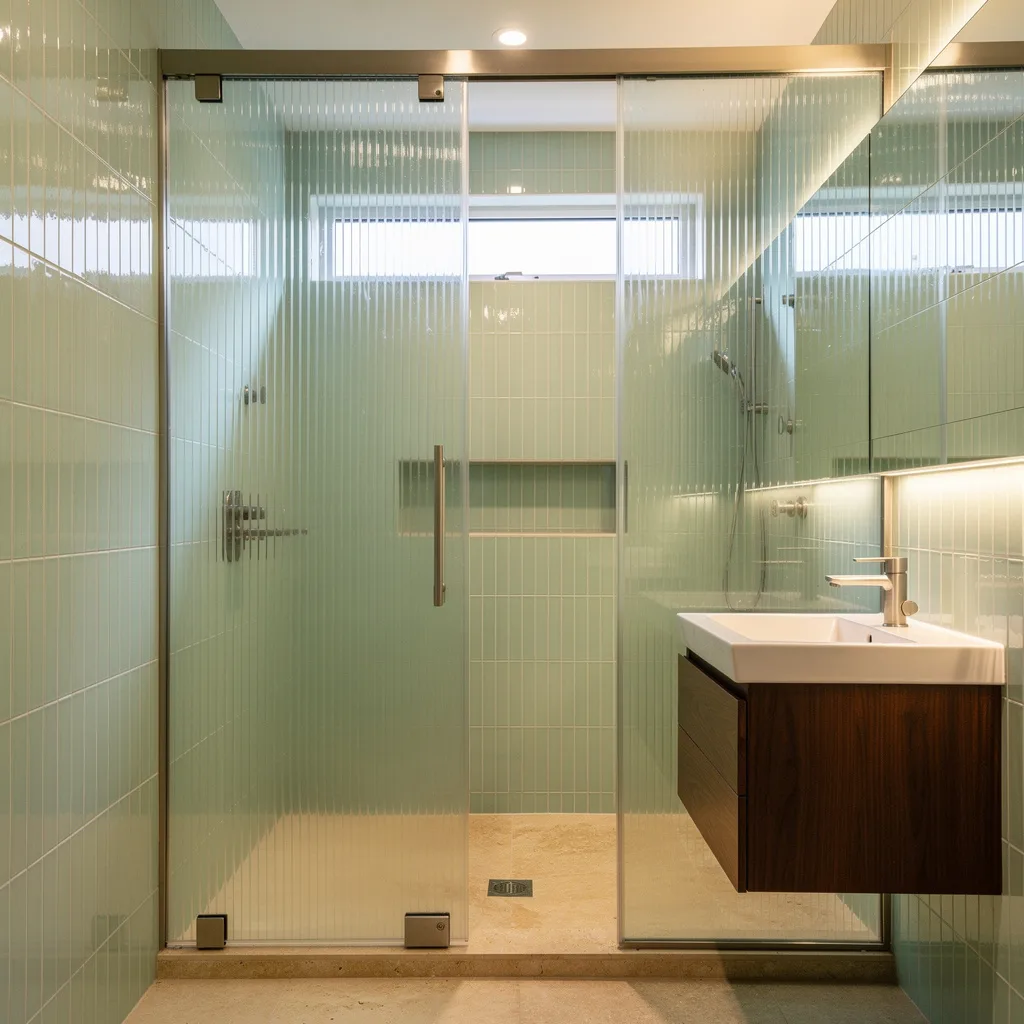
If you’re sick of bathroom doors flapping into your knees, it’s time to install a sliding ribbed glass door—brushed nickel frame only, because anything shinier is basically jewelry for toddlers. Cover your shower walls with vertical minty porcelain to elongate the height (trust science, vertical lines stretch your room), and anchor the look with a warm-toned limestone pan. Float a walnut vanity nearby to bounce natural light, and keep shelving low-key and built-in for maximum flex with minimal mess. The real trick? Use LED pin lights to highlight the ribbed glass—if you’re not lighting your textures, you’re wasting your money.
Sculptural Minimalism: Curved Glass and Microcement Everything
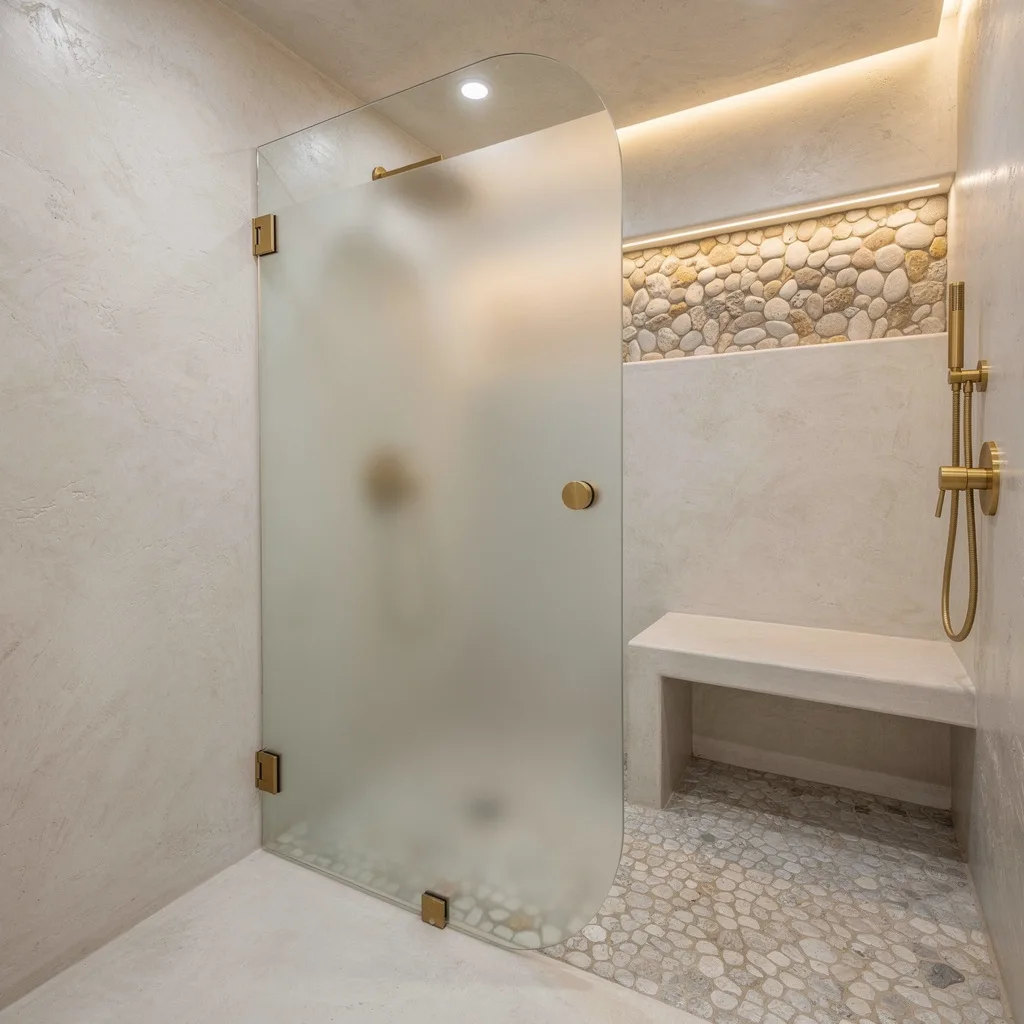
Privacy doesn’t require blackout curtains or weird stickers—just curve a single piece of frosted glass and call it an enclosure. Trowel microcement in off-white all over, keep champagne fixtures for subtle flash, and bring in cove lighting to highlight a recess lined with natural stone pebbles. Swap your basic shower pan for a seamless transition from microcement floor to chaotic pebble mosaic—your feet deserve more than cold tile. Add a microcement bench so you don’t have to squat while shaving. Styling rule: Never let decor stick out past glass edges—curved lines demand discipline, not clutter.
Grow Up: Live Moss Wall With White Ceramic Tiles
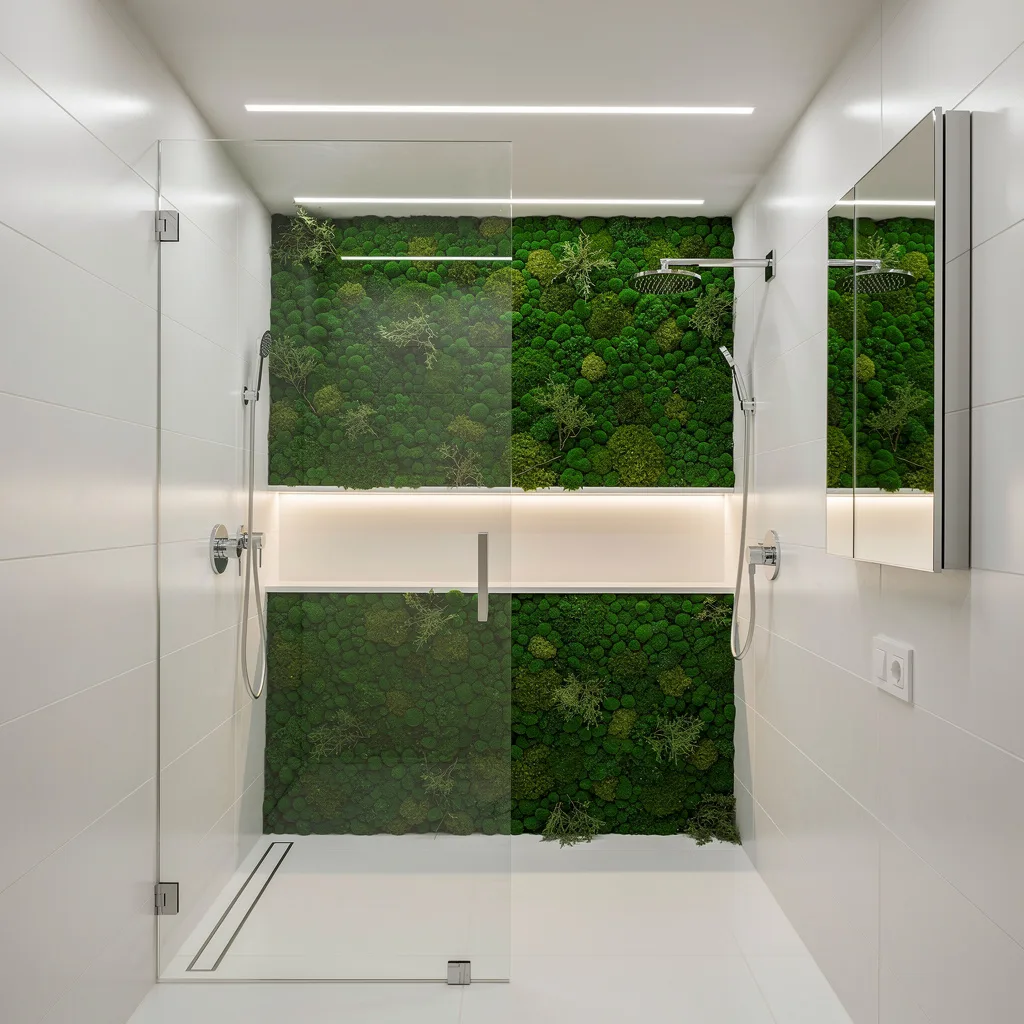
If your bathroom is windowless and sad, slap a live moss wall in your shower and protect it with clear acrylic—nobody needs mud puddles. Go matte white ceramic everywhere else to bounce whatever pitiful light you’ve got (bonus: it hides grime better than glossy). Install recessed rainfall heads and a shelf underlit with LED strips so you’re bathing in ambient glow, not a prison spotlight. Mirror up your medicine cabinet for both function and the illusion of not being in a closet. Rule of thumb: If you bring in greenery, everything else stays crisp and unfussy. Don’t let your shower become a jungle gym.
Corner Flex: Glossy Porcelain and Honey Oak Ceiling
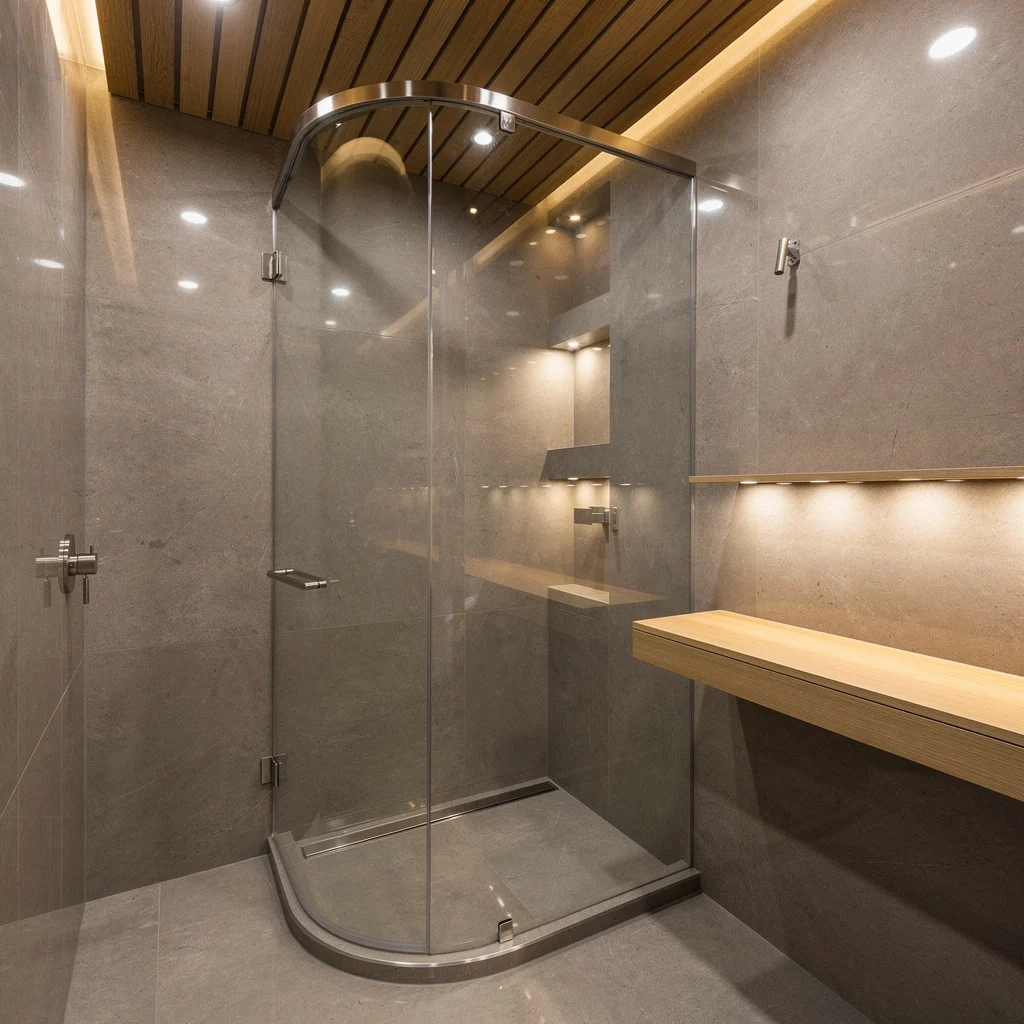
Tiny bathrooms don’t have to be punitive—all you need is a curved glass enclosure in a corner and some high-polished porcelain panels in smoky taupe, because shiny surfaces bounce light and fake space. Warm up the ceiling with honey-toned oak slats and match them with a floating shelf—don’t mix woods unless you like chaos. Install recessed shelving lit by mini LED pucks so your soap looks like jewelry. Channel drains and brushed steel fixtures are non-negotiable; anything else is just hardware store sadness. Always keep your corners as storage zones, not dead space—if it ain’t lit, it’s not living.
Concrete Artistry: Ribbed Partition and Glazed Indigo Tiles
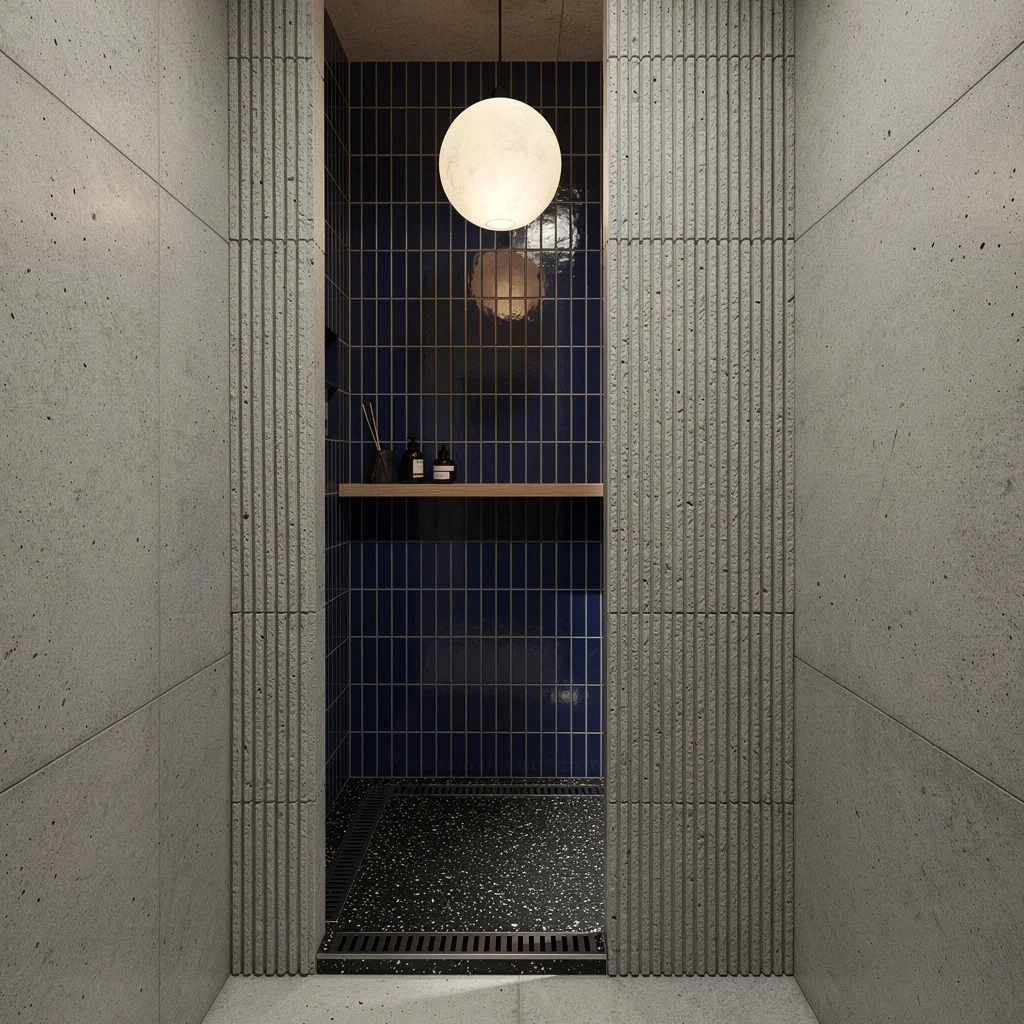
If blandness is your enemy, raise a floor-to-ceiling ribbed concrete partition for a shower—privacy without full enclosure, and more style than any curtain could fake. Splash slim, hand-glazed indigo tiles in the wet zone for artisan vibes, but keep the grout joints fine; chunky grout is a crime. Line your recessed tray with matte black terrazzo and slot drains for drama. Hang a solitary frosted pendant overhead for sculptural edge. Stash essentials on a wood ledge, and stop piling junk on the floor. Pro tip: Never let the concrete partition touch anything glossy; matte finishes double the urban mood and kill glare.
Bronze Glass Alcove: Travertine and LED Strip Magic
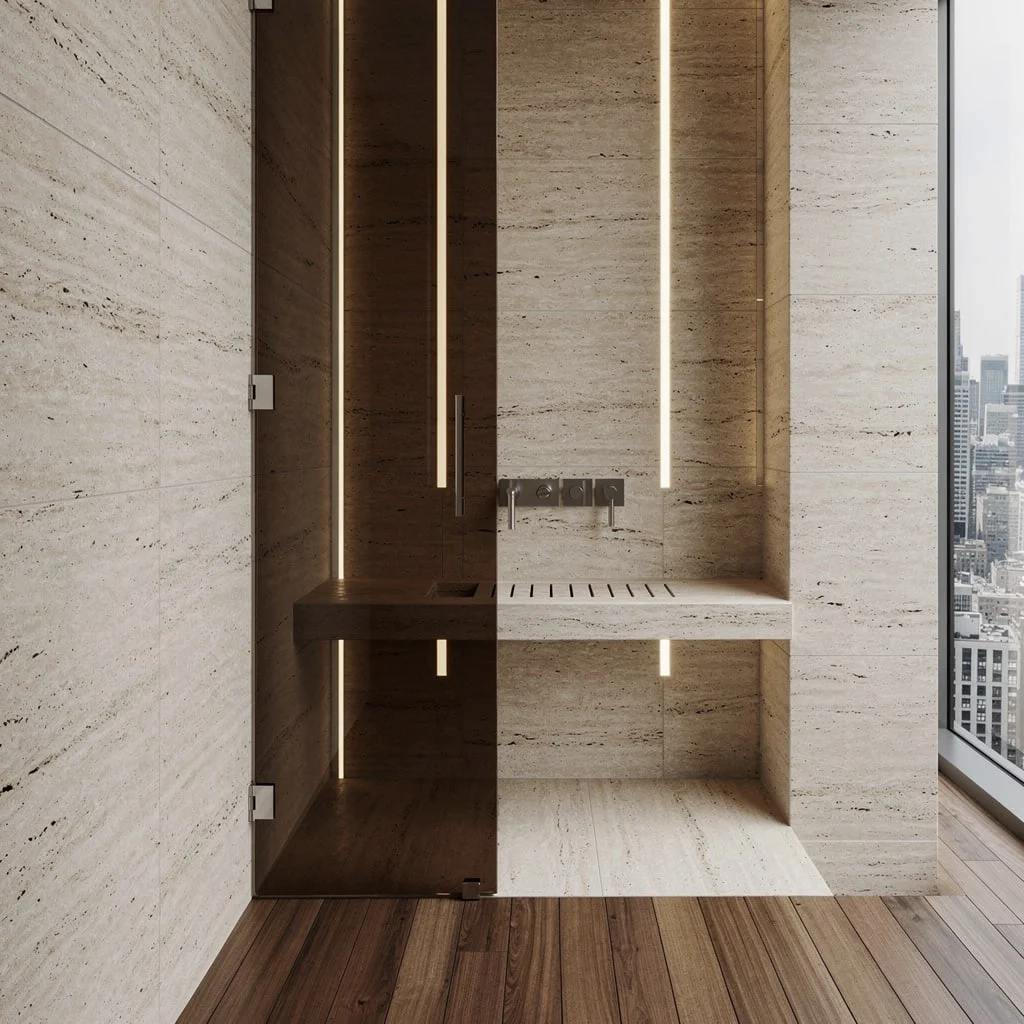
Skip the clear glass cliché and go for deep bronze, especially in city lofts; it’s moody and gives you privacy without feeling like a car showroom. Wrap the shower alcove in rectified travertine with horizontal veins—horizontal lines make your cramped shower look wider, so don’t skip this. Villa-wannabes, install vertical LED strips behind the bronze glass to keep it glowing without face-melting glare. Mount shelving in travertine with integrated drainage to prevent soap swamp. Finish with stainless steel tapware and transition entry floors to narrow hardwood planks. Styling rule: Keep the entry floor distinct—contrasting materials stop your bathroom from looking like a single, sad slab.
Smoked Lexan Futurism: Zellige, Charcoal, and Silver Accents
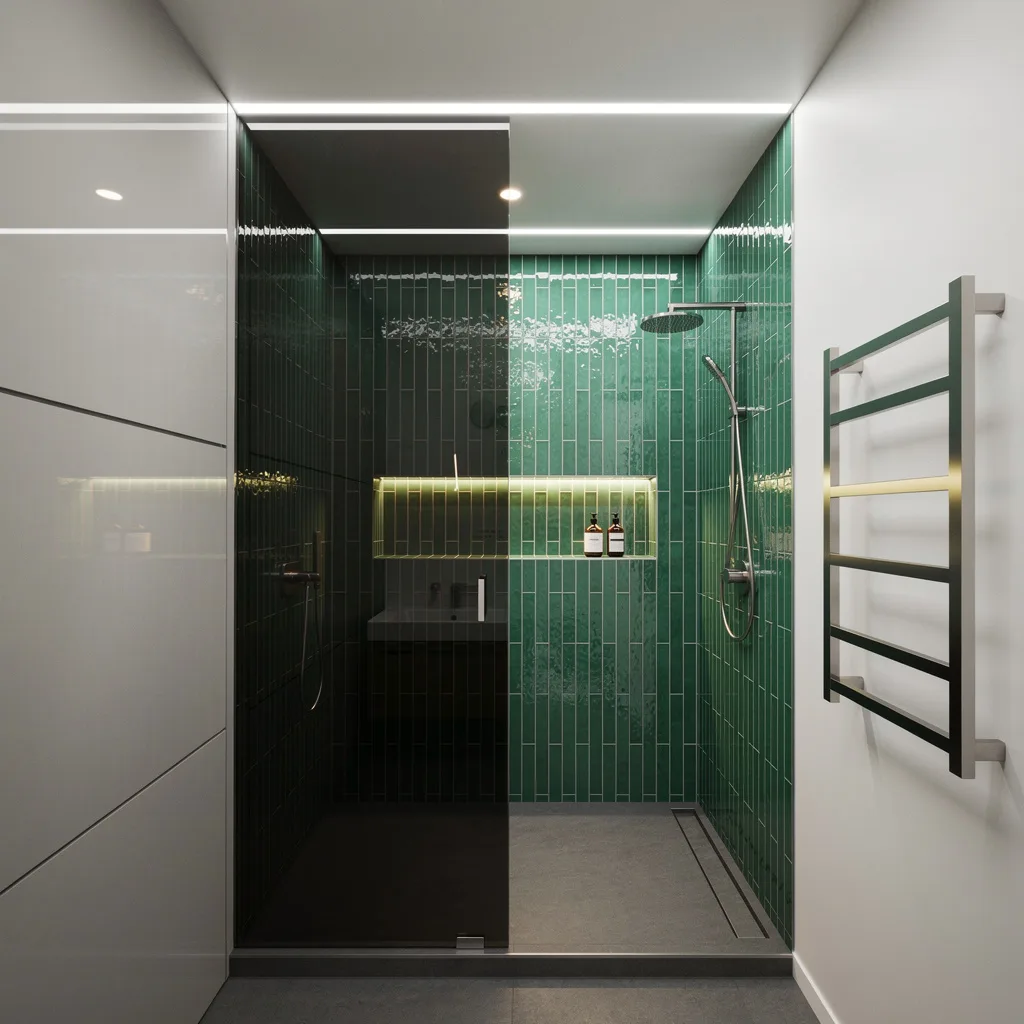
Privacy is easy; smoked lexan wall panels do the job and look like you spent more than you did on your tiny en suite. Lay emerald-green zellige tiles vertically in the shower, and ground the floor with matte charcoal porcelain for extra edge. Mount a slim matte silver towel rail and carve a soap niche backlit with concealed LEDs—if your niche isn’t glowing, are you even renovating? Drop an ultra-flat linear diffused light overhead for glare-free ambiance. Pro tip: Never use mirrored fixtures with smoked panels—keep everything matte or brushed, and your space stays sophisticated, not spaceship tacky.
Blush Terrazzo and Crystalline Glass: Champagne Hardware for the Win
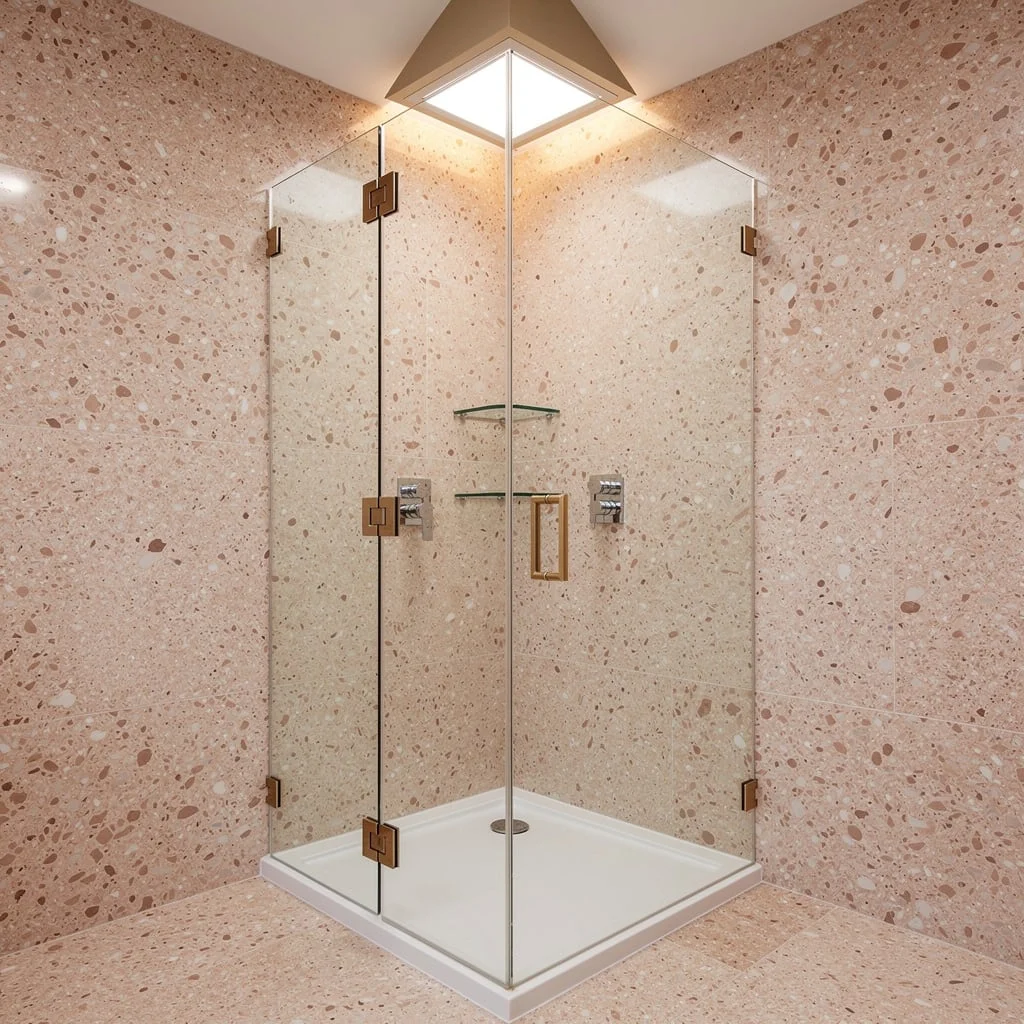
Corner showers don’t have to look apologetic; throw oversized blush terrazzo on your walls for texture and subtle flash. Use an L-shaped frameless crystalline glass enclosure with brushed champagne hinges—hardware matters more than you think, so don’t cheap out. Lay a seamless white resin pan for drainage (ugly drains are crime scenes), hang a pyramid-shaped ceiling light with dimmable daylight LEDs, and float a glass shelf for minimal storage. Mix chrome fixtures with just one brass accent tap; too much brass kills the vibe. Always place your accent tap where it can be seen from the doorway—curated is king.
The Decisions That Apply to Every Small Bathroom Shower
The enclosure style determines everything. A bulky framed enclosure in a small shower takes visual space even when it's open. A frameless panel, a frameless glass wall, or a wet room configuration removes that visual weight entirely. In a small shower, the least hardware that can safely contain the water is always the right answer.
Hardware finish is a whole-room decision, not a shower decision. Whatever finish goes on the shower fixtures — matte black, brushed gold, brushed nickel — needs to appear on every other metal object in the room. A small bathroom with three different metal finishes looks like it was assembled from different renovation projects. One finish, used everywhere, makes the room read as designed.
The niche is not optional. Every shower needs product storage that isn't a bottle sitting on the floor or balanced on a ledge. A recessed niche built into the shower wall holds everything, takes no floor space, and — when lined in a contrasting material or lit from below — becomes a design element rather than a utility fixture.
The floor tile either connects the zones or divides them. Running the same floor tile through the shower and the bathroom floor makes both zones read as part of one room. Using different tiles in each zone creates a visual boundary that makes both zones feel smaller than they are.
The Shower Sets the Tone for Everything Else
A small bathroom organized around a well-designed shower reads as a considered space. The shower is the largest surface area, the functional centerpiece, and the first thing the eye lands on when entering. When it's done well, it gives permission for the rest of the room to be simple — because the shower is doing all the design work that needs doing.
Stop apologizing for the square footage. Design the shower properly. The room takes care of itself from there.