
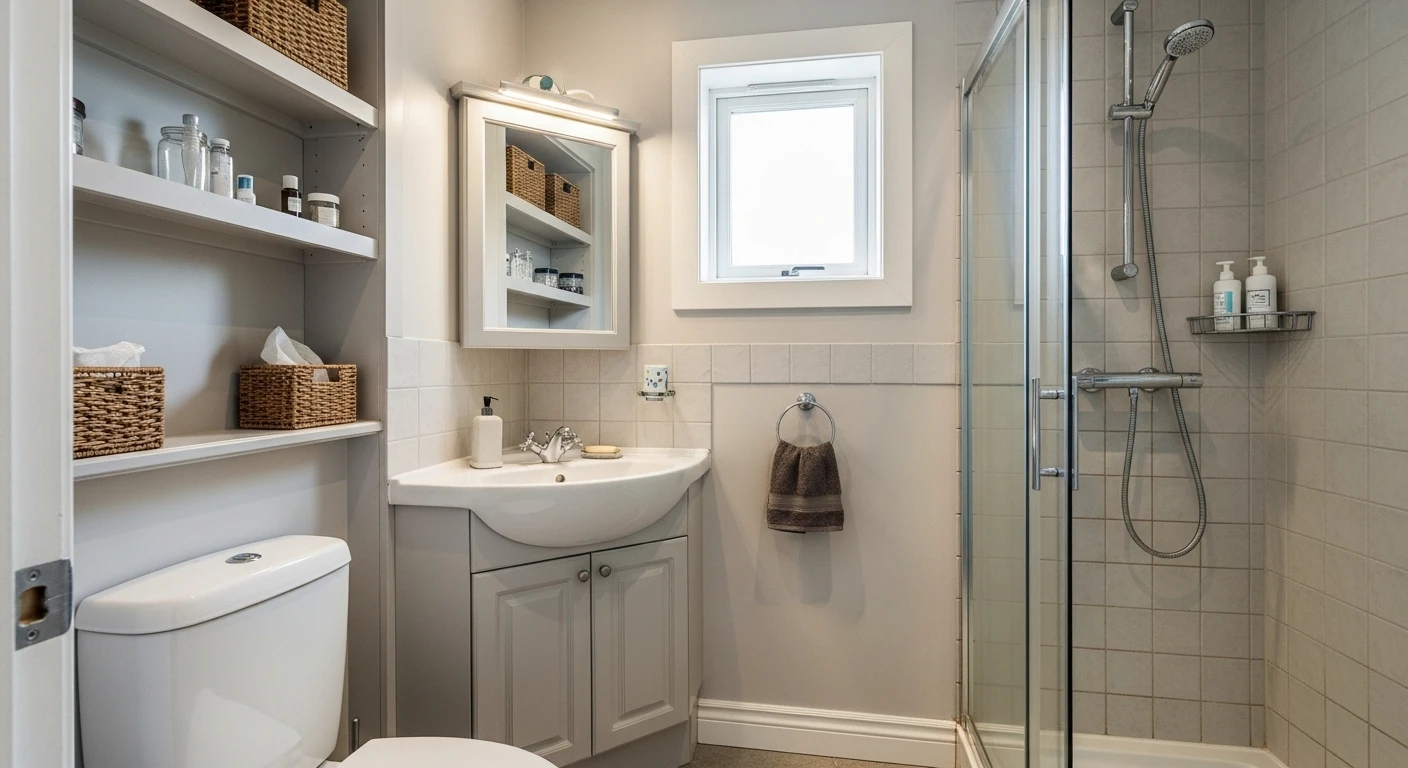
A very small bathroom is not a design problem. It’s a design brief with unusually strict parameters. And unusually strict parameters, handled correctly, produce unusually focused results.
The bathrooms that look worst at this scale are the ones where someone tried to compensate. Too many mirrors to fake space. Too many patterns to add interest. Too many storage solutions fighting each other for wall real estate. The result is a small bathroom that also looks busy, which is the worst possible combination.
The bathrooms that look best are the ones where someone accepted the size completely and then made three or four very deliberate decisions. Material. Color. One focal point. Hardware finish. Everything consistent, everything considered, nothing accidental.
Space Optimizer Pro
A very small bathroom requires unusually strict discipline. Master the parameters to maximize perceived space.
Why Very Small Bathrooms Look Worse Than They Should
The single most common mistake is treating a very small bathroom like a small version of a large bathroom. It isn’t. It’s a different typology that requires different thinking. Large bathrooms benefit from variety — different zones, different materials, different lighting. Very small bathrooms benefit from the opposite. Continuity of material, restraint of color, and the discipline to stop adding things before the room tips from considered into crowded.
The Material Continuity Rule
When the same material runs floor to wall to shower surround without interruption, the eye reads the space as one continuous surface rather than a collection of small surfaces. A very small bathroom tiled in one consistent material reads as larger than the same bathroom tiled in three different materials across the same square footage. This is not a preference. It is a perceptual fact. Use it.
The One Focal Point That Changes Everything
Every very small bathroom needs one moment of deliberate design intention — a tile choice, a color, a fixture detail — and then everything else should recede. Two focal points in a very small bathroom create visual competition that makes the space feel cramped. One focal point makes the room feel designed. This is the most important decision in a very small bathroom renovation and the one most people get wrong by trying to make too many things interesting simultaneously.
The Strict Parameter
Why very small bathrooms fail, and the discipline required to fix them.
Very Small Bathroom Ideas
White Marble Everywhere, Black Steel Frame:
Tile every surface — floor, walls, and shower surround — in large-format white marble-effect porcelain with consistent veining direction throughout. No grout color variation, no border tile, no decorative accent. One material, continuous. Frame the shower enclosure with matte black steel — a barn-door style sliding track system that stays entirely within the footprint and doesn’t require swing clearance. Float a compact white vanity unit with black hardware and an integrated basin. Mount a square backlit LED mirror above. Every accessory — towel ring, toilet roll holder, door handle — in matte black to match the shower frame. The marble does all the visual work. The black steel gives it an edge without competing. The result reads as intentional regardless of the square footage involved.
Terrazzo Shower Wall, Black Frame, Timber Vanity:
Enclose a very narrow shower in a full-height black steel and clear glass frame — the transparency keeps the visual boundary without the physical boundary. Tile the shower walls in speckled terrazzo-look porcelain — warm cream with fine aggregate detail — from floor to ceiling. White square tiles on the remaining walls in a simple grid with dark grout. A compact timber-fronted floating vanity beside the shower with a slim white counter. Two raw timber open shelves above the toilet — keep them styled to one plant, one folded cloth, and one product maximum. Matte black fixtures throughout: tap, shower controls, towel rail, toilet roll holder. A circular backlit mirror on the vanity wall. The black frame system unifies the shower, the vanity hardware, and the accessories into a single material thread that makes the room read as designed rather than assembled from whatever was available.
Oak Slat Feature Wall, Wall-Hung Everything, One Pendant:
Install horizontal oak slat cladding floor to ceiling on the back wall — the wall the toilet faces — as the room’s single focal point. Everything else stays white: walls, ceiling, floor tiles in warm grey. Mount the toilet cistern into the wall so only the pan projects, and use a matte black flush plate recessed flush into the oak slats. Mount a compact wall-hung basin on the side wall — small enough to not dominate the wall but large enough to function properly — with a matte black square-profile tap. A circular black-framed mirror above. A single fluted glass pendant hanging from the ceiling in front of the oak wall for warm task light. A matte black heated towel rail on the opposite wall. One amber glass vase with dried pampas on the narrow shelf above the toilet cistern. Every decision points to the oak wall. Everything else disappears into white.
Pink Scallop Tile, Brass Frame, Arch Mirror:
Choose a scallop-shaped tile in warm terracotta pink and run it from floor level to mid-wall height across every surface. Above the tile line, bright white walls. The contrast line between the two creates a horizontal band that wraps the entire room and makes the space feel wider than it is. A frameless glass shower enclosure with a thin gold brass frame — the warmth of the brass picks up the pink without matching it. A wall-mounted tap in brushed gold directly on the tile above a slim floating shelf with a white vessel basin on top. A small timber lower shelf beneath for a woven basket. An oval pill-shaped mirror in a thin brass frame above. A fluffy cloud-shaped bath mat on the neutral stone floor. White louvred shutters on the window for privacy. Everything warm, everything intentional, and absolutely zero apology for the color — which is precisely why it works.
Patterned Encaustic Floor, Plants, Timber Shelves:
Choose a bold geometric or floral encaustic tile pattern for the floor — warm terracotta, cream, and ochre — and let it be the entire color decision for the room. Everything above floor level goes white: walls, vanity, toilet, ceiling. Mount two floating timber shelves on the wall beside the toilet and treat them as a living display — one large trailing monstera, one framed abstract print, one small ceramic vase, two small product jars with clean labels. A small wood shelf sits across the toilet cistern top. A black metal-framed mirror with an integrated small shelf below for frequently used items. A wall-mounted two-globe light fitting in matte black above the mirror. A woven rattan basket on the floor beside the toilet for storage. The floor tile is doing all the decorative heavy lifting. Every other surface is completely calm. The plants add life without adding clutter because they occupy vertical space rather than counter space.
Go Vertical—Glass, Glow, and Game-Changing Storage
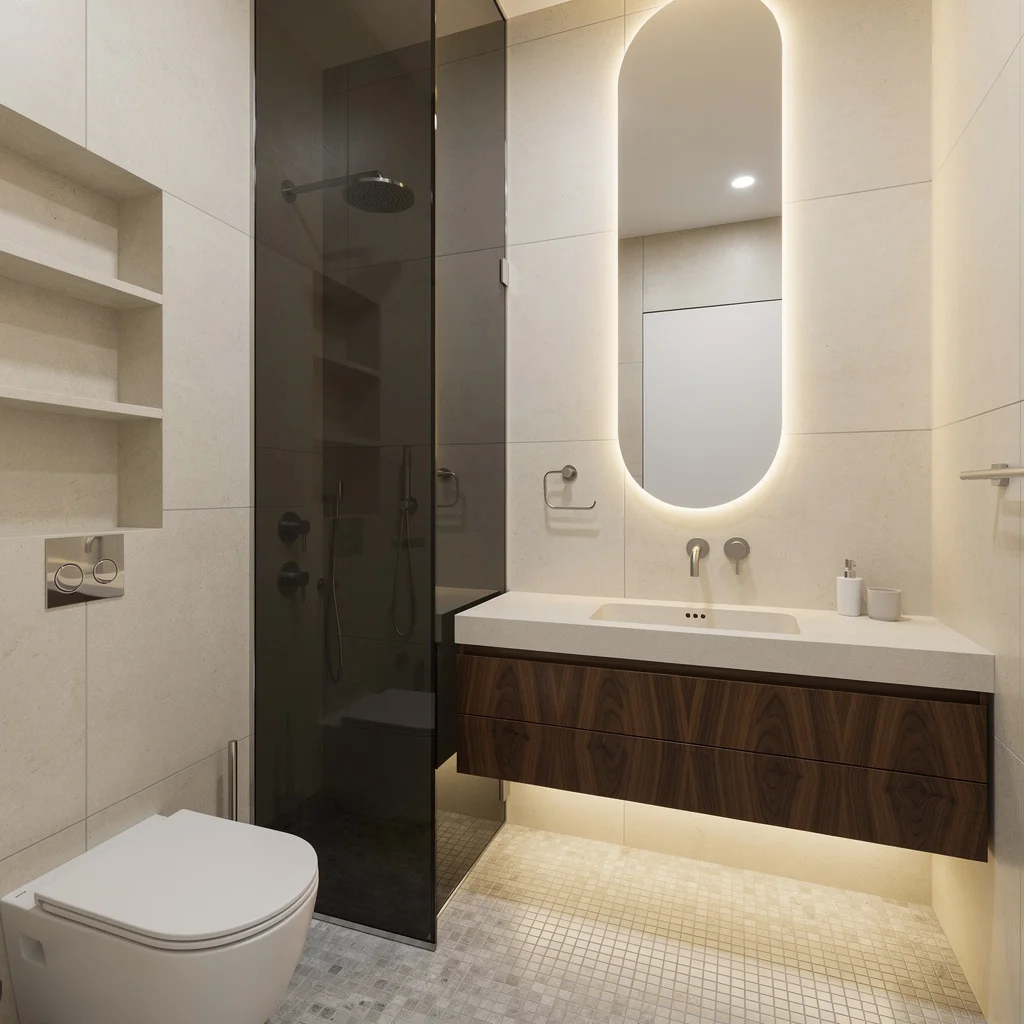
If you crave spa vibes without the spa budget, it’s all about going vertical and using smart materials. Install a floor-to-ceiling smoked glass shower enclosure—don’t whine, it’s insanely easy and amps up the glam. Slap large-format matte ivory porcelain tiles everywhere for seamless, low-maintenance class. Ditch bulky vanities in favor of a bookmatched walnut floating unit, and mount a brushed nickel faucet for that cashmere-soft touch. Flood your walls with recessed shelving. Stretch a backlit mirror all the way to the ceiling and let LED cove lighting do the heavy lifting. Hide your toilet and, for once, opt for micro-mosaic tiles to fake a bigger footprint. Never, ever skimp on chrome accessories—tiny details mean everything in tight spaces. Pro tip: Always run your tile pattern up and over every surface; the more continuous the finish, the bigger your bathroom feels.
Boutique Blue—Glass Walls, Rain Showers, Hotel Flex
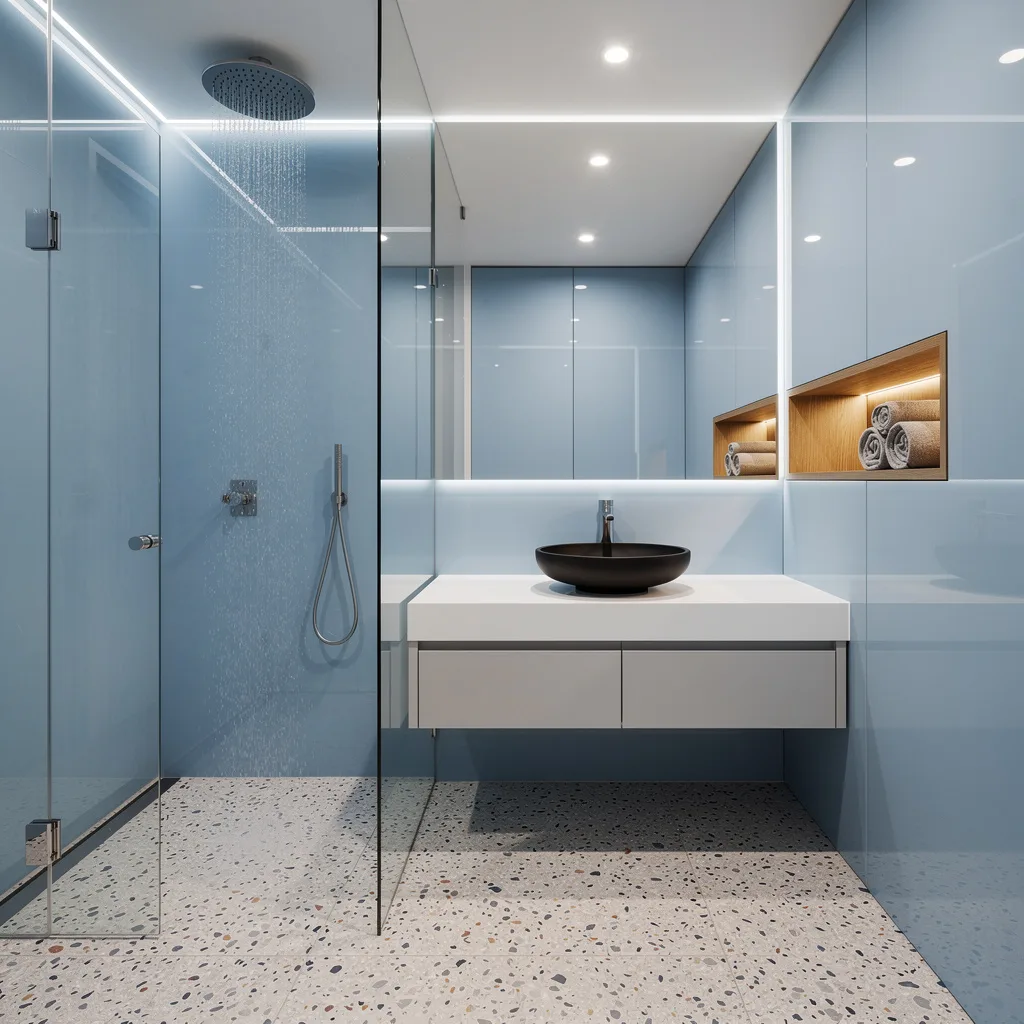
If you want your bathroom to scream ’boutique hotel,’ you need bold glass and punchy colors. Cover your walls with powder-blue back-painted glass panels—stop being scared of color, it won’t bite—and throw up a walk-in shower with a frameless screen. Nail a floating white Corian vanity under a sculptural matte black vessel sink. Sneak in storage drawers for your drama-free morning routine. Park linear LEDs above the sink and shower ceilings to spotlight every texture. Build a flush wall niche with oak shelves (yes, rolled towels only—don’t go rogue). Heat your terrazzo floors because nobody likes cold toes. Pro tip: Position your storage niche in direct view of the shower; it fakes depth and maximizes style.
Solid Statement—Industrial Texture Without Mess
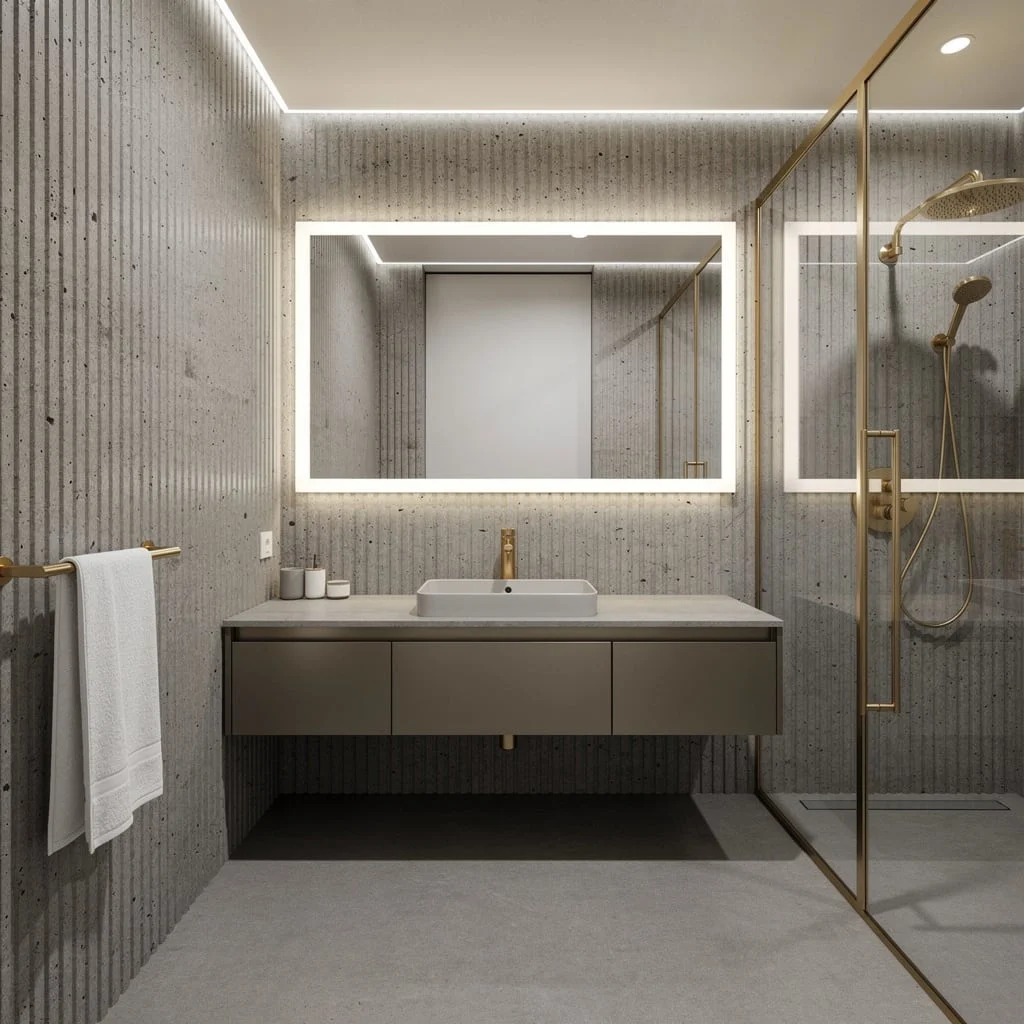
Don’t settle for bland just because your bathroom’s fun-size. Wrap the walls in full-height ribbed concrete panels—texture is your secret weapon. Pour a seamless grey resin floor for that high-end factory loft look—yes, even in a tiny flat. Mount a powder-coated steel vanity with a recessed basin and push-to-open drawers (zero hardware, zero visual clutter). Hang a wall-to-wall mirror with demist tech, and deck your fixtures in thin gold accents. Run ultra-thin LED strips along the ceiling edge to wash your space with even light. Pro tip: Always float your vanity, and keep it slim; the less bulk, the more breathing room you fake.
Jewel-Box Luxury—Green Marble Wall, Glowy Details
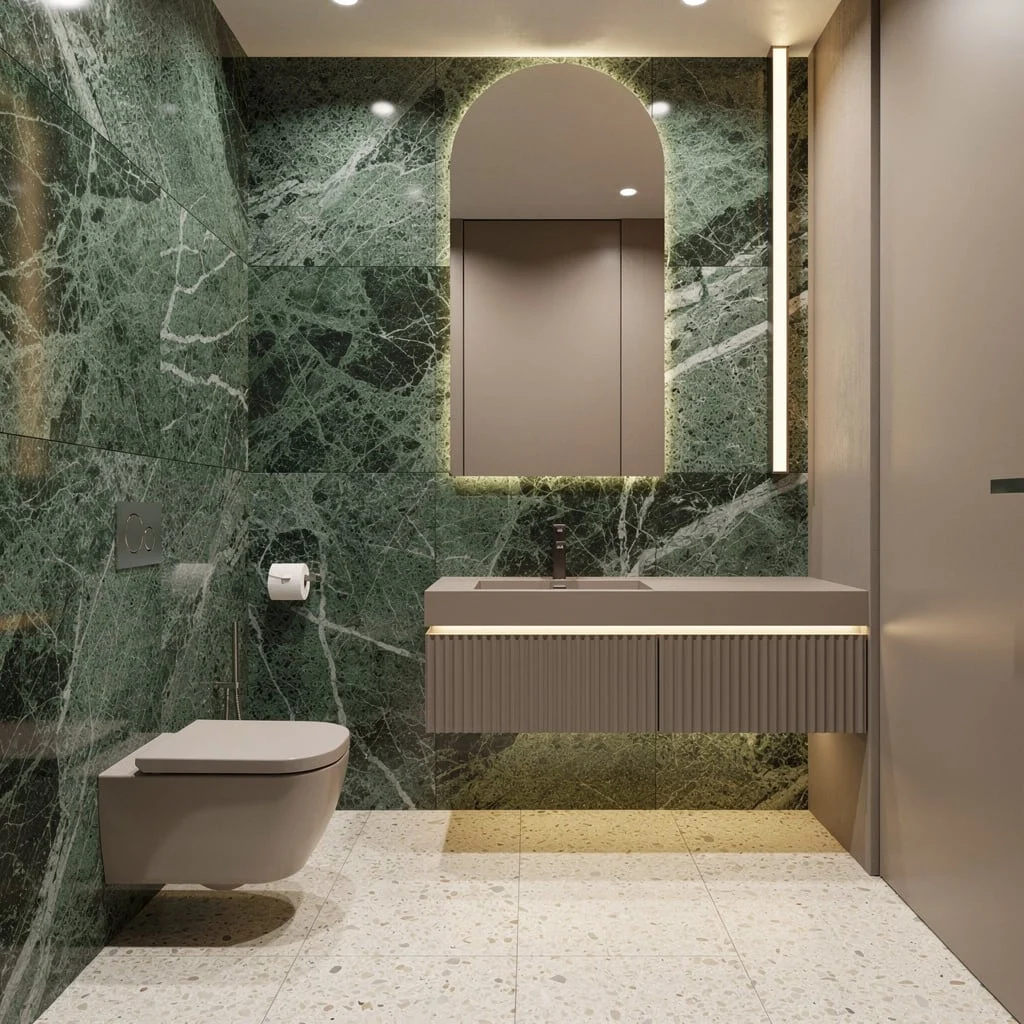
Stop pretending ‘small’ has to mean ‘simple’. Amp your bathroom with a killer green marble feature wall and a matching vanity backsplash—dramatic veining is basically Instagram bait. Lay cream terrazzo slabs on the floor, and use a matte taupe floating vanity with fluted drawers to underline the high-style mood. Hang a compact rimless wall-mounted toilet so you can flaunt all that open floor. Layer lighting: install embedded spotlights and toss a glowing vertical light bar next to an arched mirror. Pro tip: Always run your feature stone or tile to at least half-height behind the sink (never less—don’t wimp out), for max impact.
Graphite Gloss—Tiny Space, Major Glam
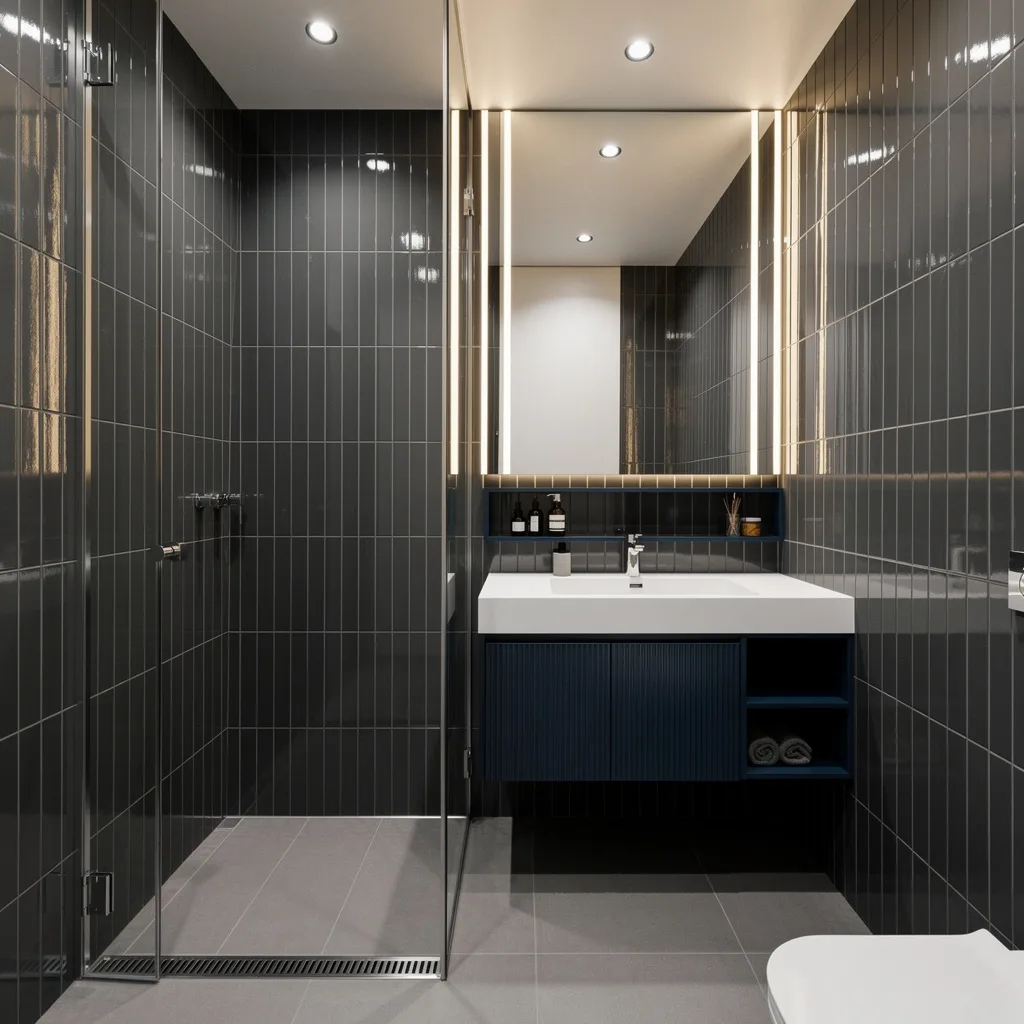
A tiny bathroom can absolutely serve attitude. Cover every inch with vertical gloss lacquered graphite tiles—don’t be scared to go dark, it’s drama done right. Partition your walk-in shower with a transparent sliding glass door and let a linear stainless-steel floor drain quietly disappear. Mount a midnight blue floating vanity with ribbed fronts, top it with a seamless white basin, and build shelf niches into the wall for actual, usable storage. Flank your mirror with vertical strip LEDs and tuck micro-recessed spots in the ceiling for moody, layered lighting. Pro tip: Always install your mirror tall, not wide—vertical lines make every bathroom feel skyscraper-tall.
Urban Edge—Charcoal Panels, Walnut Contrast, Hidden Lighting
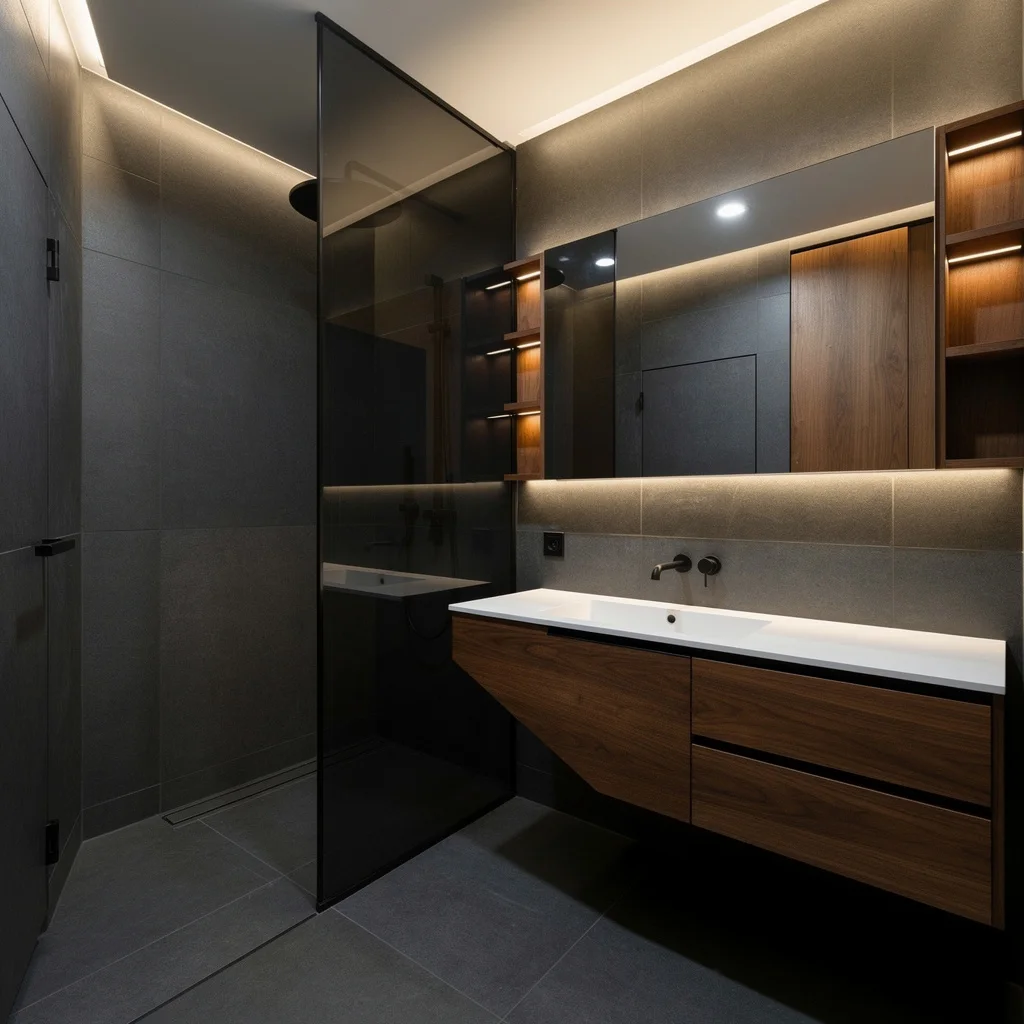
Want that chic hotel powder room without actually booking a room? Wrap your space in matte charcoal porcelain slabs and throw in a flush black-framed shower enclosure. Team a custom asymmetrical walnut floating vanity with a white stone countertop for maximum contrast. Keep drawers invisible, and recess shelving deep for a clean, cosmopolitan feel. Let indirect LED lighting glow from the dropped ceiling perimeter, and mount a slim mirror with built-in shelving for bonus flexibility. Pro tip: Always hide your vanity lighting—if it’s not integrated, you’re leaving style points on the table.
Geometric Magic—Taupe Tiles, Brass, Concrete, Honey Floors
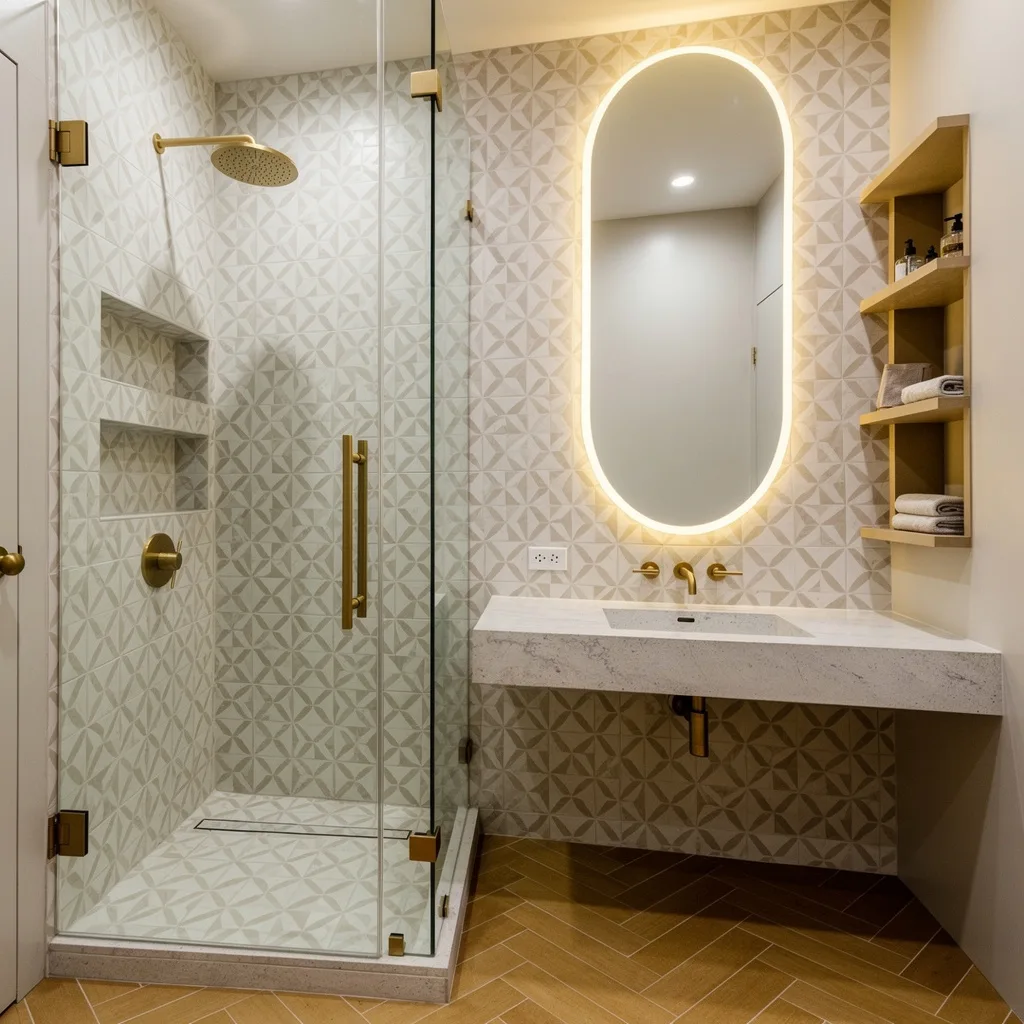
Never underestimate the power of pattern. Cover your walls with off-white and taupe geometric tiles (go wild, it’s a micro bathroom, not a bank lobby), and pair radiant matte brass fixtures for fancy vibes. Install a clear pivoting glass door in your walk-in shower to make the space feel limitless. Dangle a cantilevered hand-polished concrete sink above honey-toned chevron ceramic floors—mixing warm and cool is non-negotiable. Raise an oval backlit mirror to the ceiling for insane light and reflection. Balance discreet cubby niches with stacked open shelving so it looks organized, not chaotic. Pro tip: Always recess your shelves and niches—surface-mounted is for amateurs.
Metal Chill—Powder-Grey Panels, Petrified Wood, Shadow-Lines
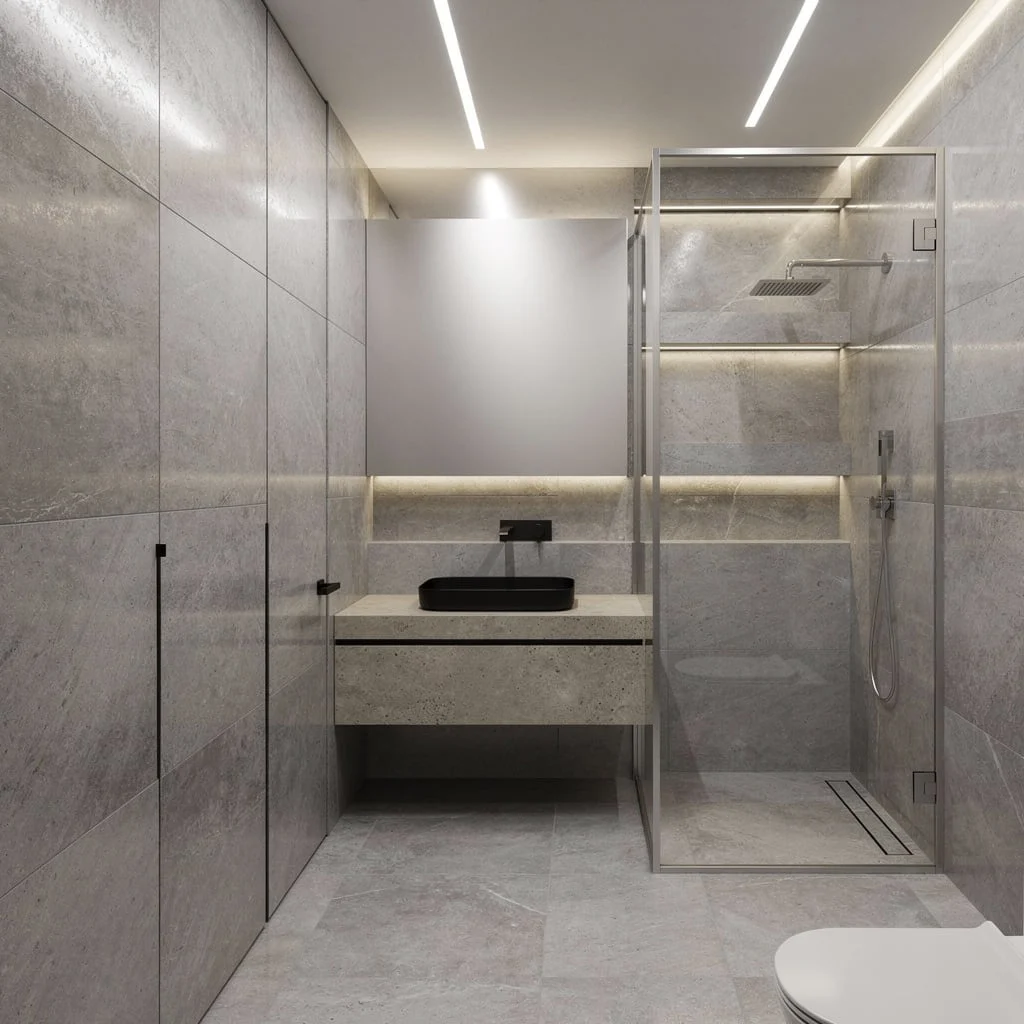
Tiny bathrooms can still go futuristic. Cover your walls in oversized powder-grey metallic ceramic slabs for that subtle shimmer. Hang a sculpted, wall-mounted vanity in matte petrified wood, and drop in an ultra-thin black vessel basin with a matching wall mixer. Hide your walk-in shower behind anodized aluminum and sandblasted glass for true privacy. Install linear LEDs in every ceiling cove and shower niche—diffuse light is your best friend. Integrate shadow-line doors wherever you stash stuff to keep surfaces laser-clean. Pro tip: Always keep your basin dark and your surroundings lighter; the contrast trick makes your sink look epic.
Scandi Micro-Oasis—Glass Panels, Limestone, Beech
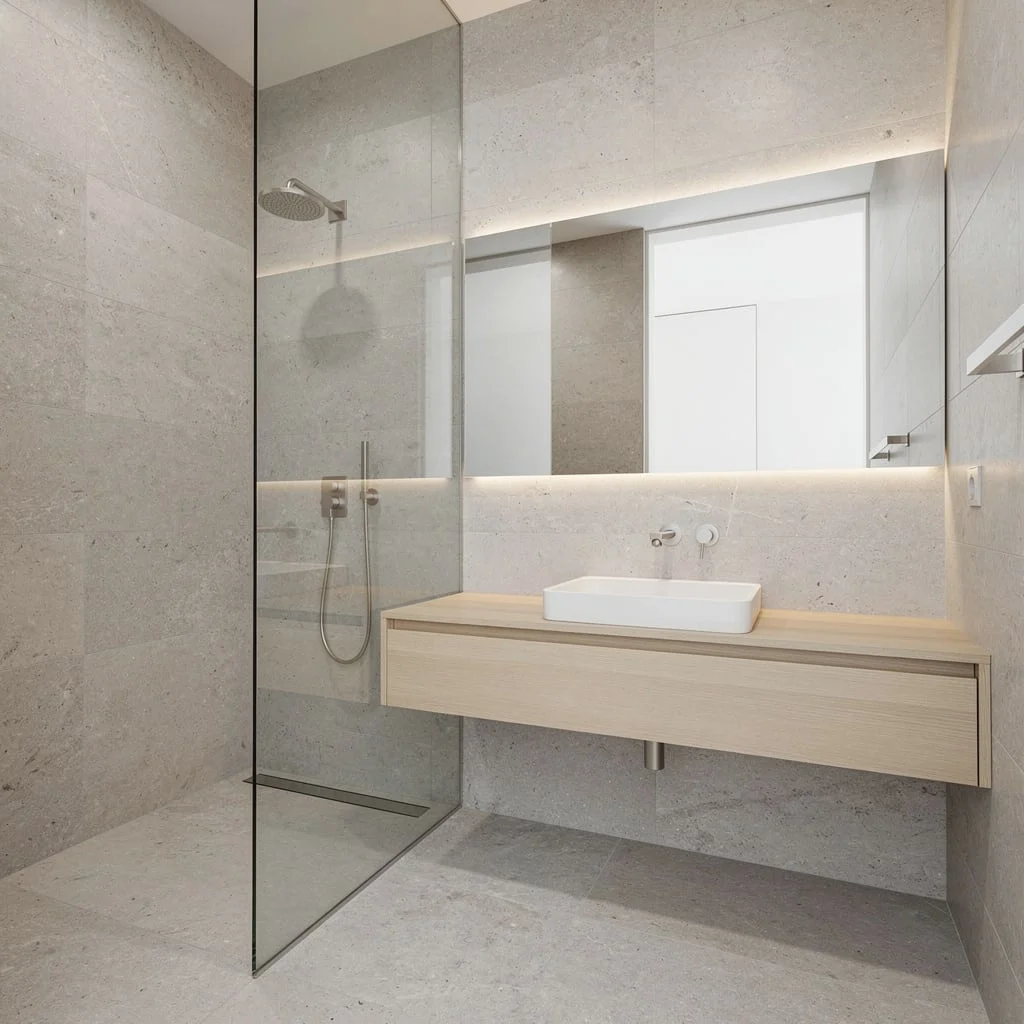
Daylight is the ultimate fixer—if your bathroom doesn’t get enough, fake it. Install extra-clear glass panels between shower and walls to erase boundaries. Cover everything with honed limestone tiles for a soft finish and tactile appeal. Float a slender beech wood vanity with an off-white integrated resin basin and recessed drawer pulls—ditch chunky hardware, you’re not building kitchen cabinets. Boost brightness with a broad anti-fog backlit mirror, and stick to minimalist brushed aluminum fixtures. Pro tip: Always line up your mirror parallel to the longest wall; it multiplies natural and artificial light, making your micro-oasis feel much bigger.
The Three Rules Every Very Small Bathroom Needs
Hardware finish is a commitment, not a choice. Pick one finish — matte black, brushed gold, brushed nickel — and use it on every single metal object in the room. Mixing finishes in a very small bathroom creates visual fragmentation that makes the space feel unresolved. The hardware unifies everything it touches.
Wall-hung is always better than floor-standing in a very small bathroom. A floating vanity, a wall-hung toilet, wall-mounted accessories — anything that reveals floor beneath it makes the floor plane read as continuous and the room as larger. Floor-standing furniture interrupts the floor and visually segments the space.
Open shelving works only with editing. Two plants, one print, and three product bottles on a timber shelf looks styled. The same shelf with twelve products, a scented candle, a hand cream, a reed diffuser, and a spare soap looks cluttered. Very small bathrooms magnify both good and bad styling decisions equally. Edit ruthlessly.
The Size Was Never the Problem
Every bathroom on this list is objectively very small. None of them look like they’re apologizing for it. That’s the result of treating the constraints as design parameters rather than obstacles — of making fewer, more deliberate decisions rather than more decisions hoping something would compensate for the size.
A very small bathroom designed with total intention is more impressive than a large bathroom designed carelessly. The size forces the discipline. The discipline produces the result. That’s not a consolation prize. That’s actually a creative advantage.