
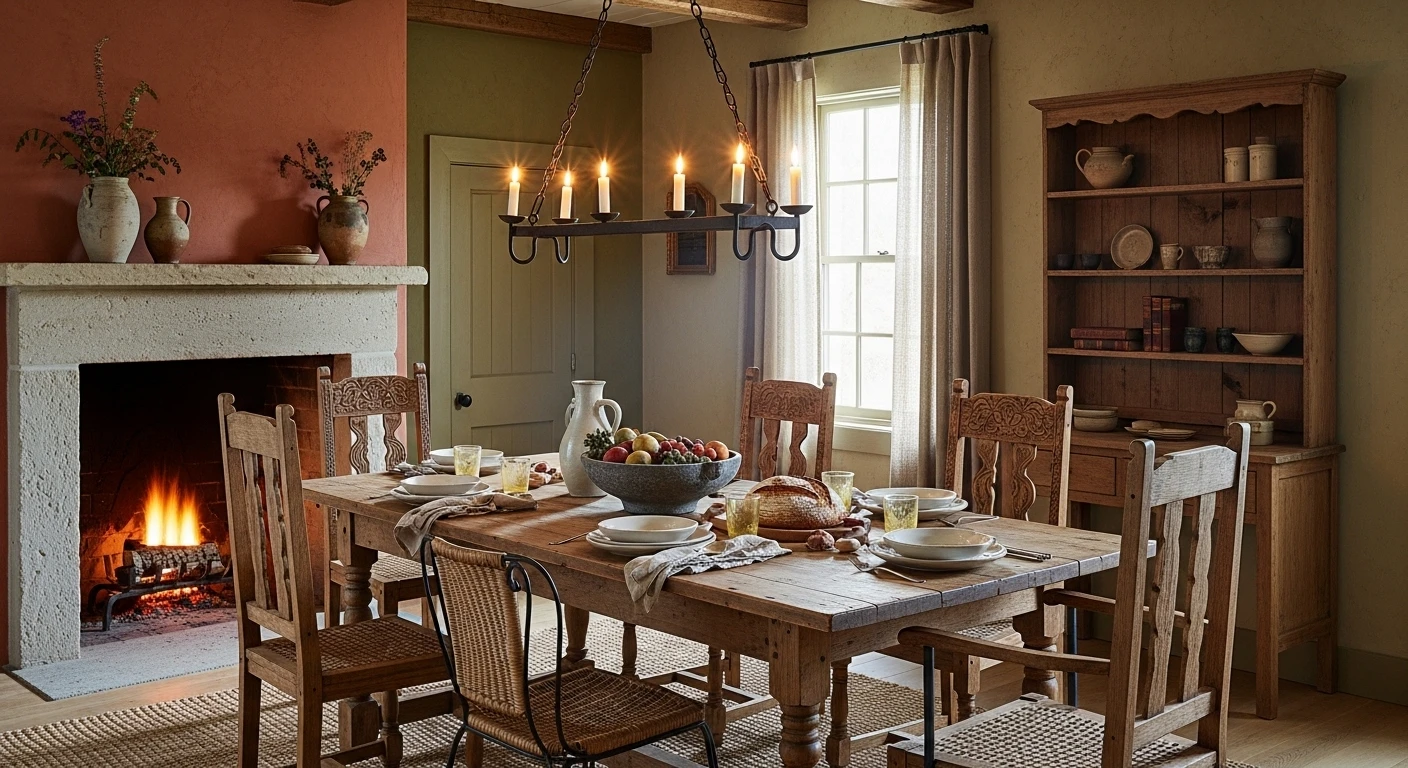
Nobody lingers at a table in a room that feels wrong. They eat, they leave, they reconvene somewhere more comfortable. The dining room is supposed to be the room that makes people stay — the second glass of wine room, the conversation that goes two hours past dessert room. And yet most dining rooms are designed like an obligation rather than an invitation.
Earthy cottage dining rooms get this right because their entire material logic is built around warmth and comfort rather than impressiveness. Natural wood that shows its grain. Chairs that look like they were found rather than purchased. Light that flatters faces instead of illuminating surfaces. Textiles that wrinkle the way real textiles do. The room says come in, sit down, stay as long as you want — and people do.
Why Most Dining Rooms Miss the Point Entirely
The dining room is almost always the most formal room in the house and simultaneously the least used. That correlation is not accidental. Formality creates distance. A room that requires good behavior rather than inviting relaxed company produces exactly the kind of meals nobody looks forward to. The earthy cottage dining room is the antidote — it creates warmth through imperfect materials, mixed patterns, and the suggestion that this room has been used and will be used again, which is the most hospitable thing a room can communicate.
The Table Is the Room’s Most Important Decision
Every other choice — the chairs, the chandelier, the rug, the sideboard — exists in relationship to the table. Get the table wrong and the room never resolves. The right dining table for an earthy cottage room is almost always solid wood, showing its grain, with visible joinery, worn edges, and the evidence of having been somewhere before it arrived in your home. A table that looks like it was bought last month, regardless of how good it looks, will always work against the earthy cottage atmosphere. Age — real or simulated with genuine craft — is the quality that matters most.
Layering Patterns Without Losing Your Mind
Earthy cottage dining rooms handle multiple patterns simultaneously in ways that would look chaotic in other contexts. The key is that patterns share a color family even when they share nothing else. A floral wallpaper in blue and cream, chairs upholstered in a botanical print in the same blue and cream, and an Oriental rug in the same general palette — three patterns, one room, zero conflict. The moment you introduce a pattern from a different color family, the room starts arguing with itself. Stay within the palette and the patterns support rather than compete.
The Invitation to Stay
Why formal dining rooms fail, and how earthy cottage design fixes them.
Earthy Cottage Dining Room Ideas
Painted Pine Table, Rush Chairs, Tole Chandelier, Open Dresser:
Choose a pine farm table with turned legs — left bare or with a linen cloth draped and rumpled rather than pressed — and surround it with rush-seated painted ladder-back chairs in weathered white or aged grey, each one slightly different from the next in the way that furniture is when it arrives across different years from different sources.
A tole chandelier in aged gold above — the kind with botanical or leaf detail rather than a clean geometric form. Behind the table, a painted pine dresser with open upper shelves displaying mismatched cream and transferware ceramics, antique glass bottles, pottery, and the kind of collected chaos that looks curated only because the palette holds it together. Wide pine floorboards throughout, warm and worn.
Sheer white curtains on a simple rod. A vase of white hydrangeas and garden ferns on the table, generously arranged in a white ceramic pitcher rather than a vase. The botanical arrangements on chairs — small bunches in metal cans — are the room’s single most charming detail and cost almost nothing. This room doesn’t look designed. That’s its entire achievement.
Black Windsor Chairs, Oak Table, Geometric Chandelier, Dark Display Cabinet:
Start with shiplap paneling on the feature wall in white — horizontal, not vertical — and keep the rest of the room in warm cream. A solid oak dining table with visible grain and warm golden tone at the center. Black painted Windsor chairs — spindle backs, splayed legs, the shape that has existed for three hundred years for the very good reason that it works — around the table.
Above, an oversized black iron geometric frame chandelier with exposed filament bulbs on chains — modern in structure, warm in light. A large antique-finish round mirror on the wall beside the table. A dark painted display cabinet with glass-fronted upper shelves showing stoneware vessels and cream ceramics.
On the table, two large olive-green antique ceramic urns with foraged branches — the opposite of a florist arrangement, which is exactly the right move. Slim black taper candles on the table. A vintage-style Persian rug in charcoal and muted red beneath. The black chairs against the warm oak table is the room’s central tension — and that tension is what makes the room look considered rather than assembled.
Blue Botanical Wallpaper, Floral Chairs, Round Walnut Table, Brass Chandelier:
Paper every wall from skirting to crown molding in a deep botanical print — indigo and cream, dense with florals and leaves — and do not flinch at any point in the process. Against this, place a round dark walnut pedestal table and upholster the dining chairs in a different botanical print in the same blue and cream palette — large scrolling flowers on white ground, bold enough to hold its own against the wallpaper rather than disappear into it.
Above, a slim brass multi-arm chandelier with bare candle bulbs — the simplicity of the fixture keeps the room from tipping into excess. A warm linen Roman blind on the window. A walnut sideboard against one wall with a large ceramic vessel, an abstract artwork leaning, and a stoneware jar. An aged Oriental rug in terracotta, blue, and cream beneath the table.
The rule this room follows — and it’s the only rule that matters in a room this bold — is that the patterns share a color family so completely that they harmonize rather than fight. The wallpaper and the upholstery are saying the same thing in different registers.
Dark Coffered Ceiling, Teal Walls, Walnut Wainscoting, Glass Bubble Chandelier:
Install deep stained dark oak coffered ceiling beams and panels that give the ceiling architectural weight it will carry for a hundred years. Below the chair rail, dark walnut paneling. Above it, deep teal walls that make every piece of warm wood in the room glow more intensely. A long dark wood dining table of genuine age and character centered in the room.
Upholstered dining chairs in warm cream linen with a thin blue piping detail on the chair back — restrained enough that the room’s other elements can breathe. Above the table, an oversized rectangular chandelier made entirely of clustered glass globes in clear and pale amber — the sculptural presence of the fixture is the room’s single most important conversation piece. A large bold botanical arrangement in cherry blossom — branches, not flowers — in a tall white vase at the center of the table.
An Oriental rug in black, teal, and cream beneath, large enough to extend well past every chair. A decorative sideboard against the wall in dark wood with matching vessels and a large abstract canvas. This room is the earthy cottage dining room operating at its absolute ceiling — where cottage warmth meets genuine architectural drama and neither wins because both are committed.
White Shiplap, Block Print Tablecloth, Painted Dresser, Exposed Beams:
Install white horizontal shiplap on the walls — simple, inexpensive, and immediately more interesting than plain drywall. Leave the ceiling beams exposed in raw reclaimed timber. A simple painted white farmhouse table beneath, dressed for the photograph and for every Tuesday in a block-print cotton tablecloth in sage and cream — the kind of tablecloth that washes without ironing and looks better for it.
White painted spindle chairs around it, each with a different textile thrown over the back — a floral blanket, a botanical quilt, a plain linen throw. On the table, a wicker basket of eucalyptus branches, candles at varying heights, simple mismatched glassware. A large white painted Welsh dresser against the back wall with shelves loaded with cream ironstone, wicker baskets, wooden utensils, stoneware crocks, and the comfortable accumulation of a household that uses its things.
A jute rug beneath, round and fringed. A simple iron chandelier with candle arms above. Patterned wallpaper on one side wall in a small-scale botanical in green and cream. Vintage arched window frames leaning against the wall as decoration. This room works because everything in it looks genuinely used. The surfaces show life. The textiles are imperfect. The dresser is full. That’s not clutter — that’s character, and the difference between the two is whether the objects belong or were placed.
Stone Walls, Who Dis? How to Nail Tranquil Texture
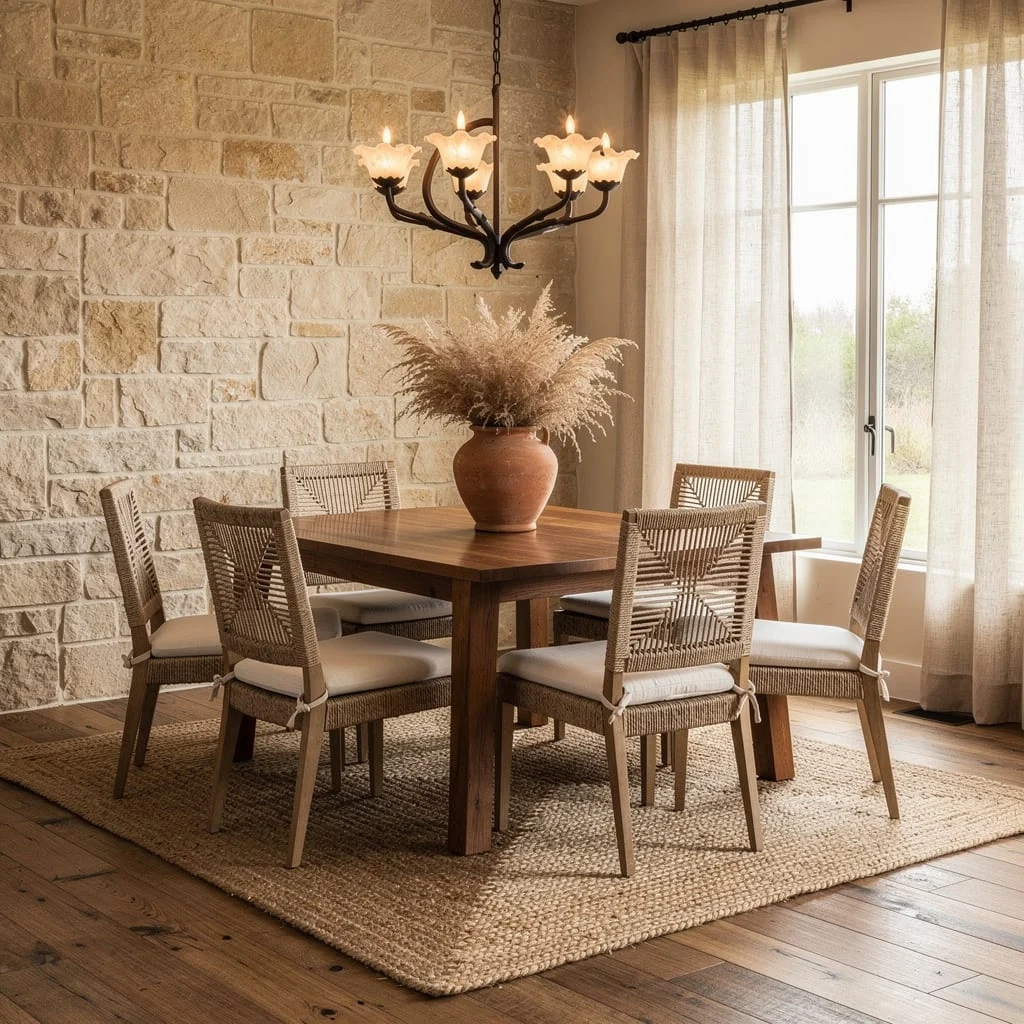
Ditch the sea of lifeless drywalls and go for a textured stone feature wall if you want your dinner parties to actually feel special—not soul-sucking. Put those reclaimed wide-plank oak floors to work, keeping the finish matte so nobody has to squint at high-gloss glare. Plop a solid walnut farm table dead center (yes, walnut, not your last-minute softwood cop-out), then surround it with woven rush chairs for a ‘you tried, but you tried with style’ look. Add a sculptural hand-forged iron chandelier, keeping the glow cozy—no interrogation vibes. Go full pottery nerd with a terracotta vessel as your centerpiece and stuff it with dried grasses. Always anchor with a fat braided jute rug to keep everything adult and grounded. Pro tip: whatever you do, sheer flax curtains should puddle, not flood; curtains that hit just above the floor just scream ‘gave up halfway’.
Lime-Washed Luxury—Because Basic Paint is a Crime
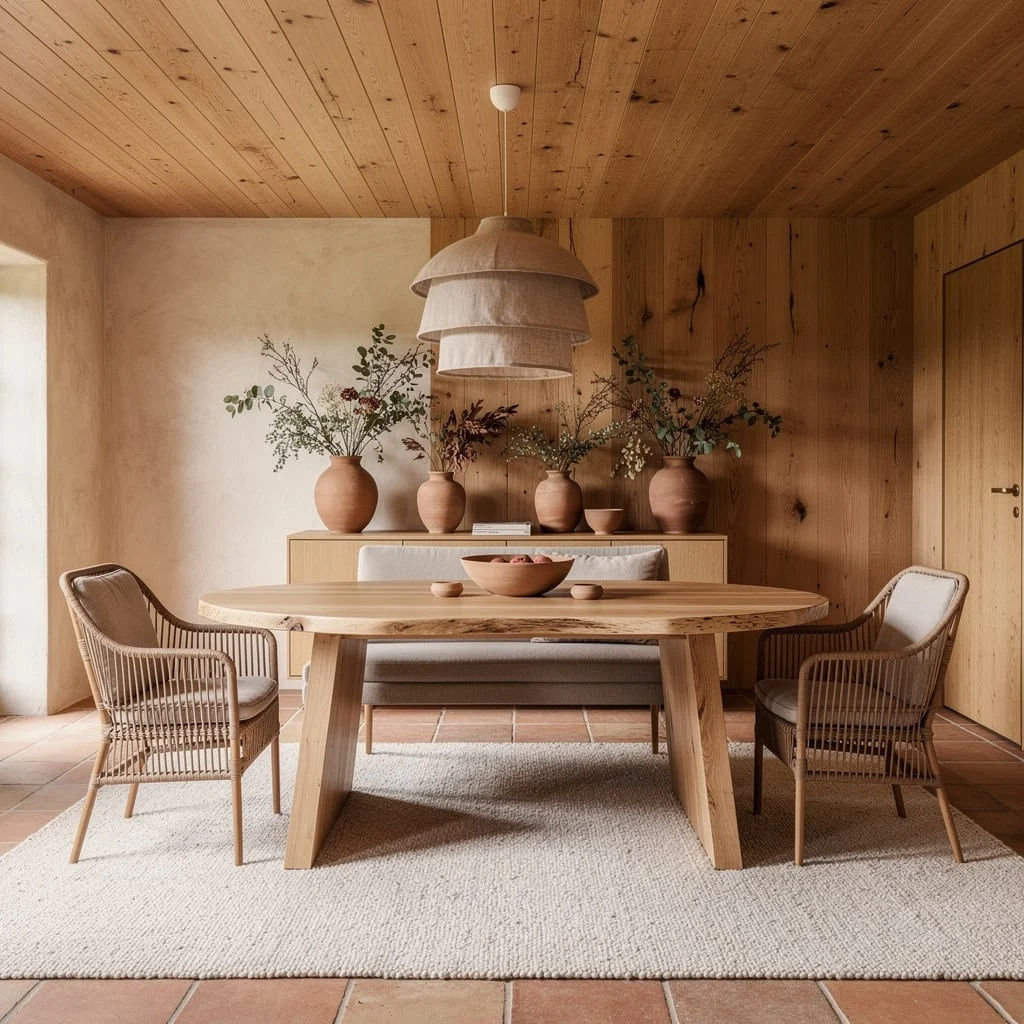
If you’re bored of plain walls, lime-wash them and let honey-hued ashwood panels do the flirting. Go for a live-edge sycamore elliptical dining table—yes, elliptical, because rectangles are for boardrooms, not brunch. Use a bench on one side and rattan-wrapped armchairs on the other. Layer linen pendants crazy low; moody lighting is a must-have, not an afterthought. If your sideboard isn’t rocking clay vases stuffed with foraged greens, what are you even doing? Keep the palette tactile—clay-toned tile floors and a wool bouclé rug for ultimate toe luxury. Pro tip: If your linens don’t wrinkle, you’re probably too uptight. Embrace the rumple.
Go Green (But Not Fake Plants): Sage and Timber Done Right
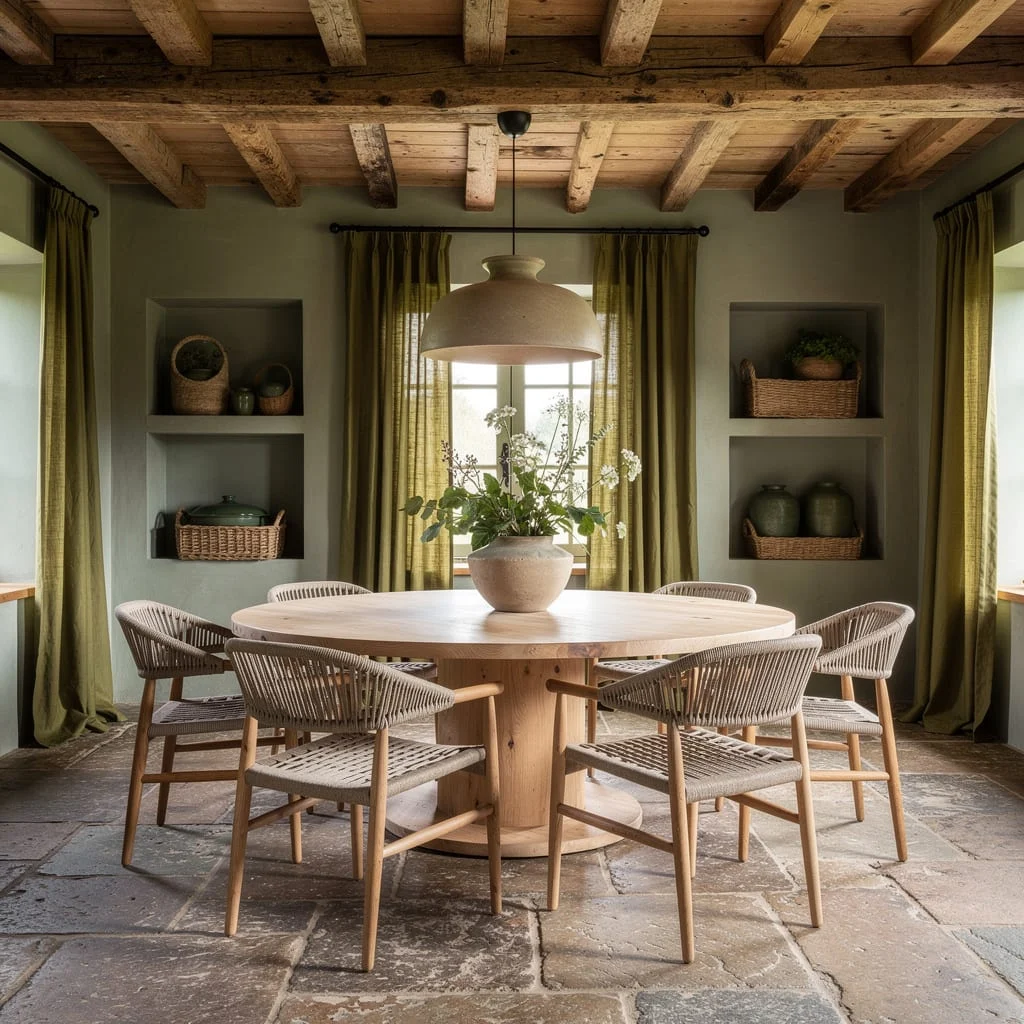
Tired of sterile dining rooms? Drench a wall in muted sage plaster, but—shocker—don’t stop there; that’s just the vibe starter pack. Expose some reclaimed timber beams overhead for nostalgia minus the cottage cheese ceilings. Copy the pros and grab a round raw maple table, pairing it with cord-seated chairs nobody else in your friend group has. Skip shiny chrome; use a muted stoneware pendant for actual ambiance. Flow in raw silk, olive drapes, and tuck moss-green ceramics around for subtle ‘mosscore’ energy. Pro tip: Don’t overfill the space. Give your styling pieces breathing room so your cottage doesn’t become a clutter cave.
Don’t Be a Driftwood Cliché—Layer Textures Like a Pro
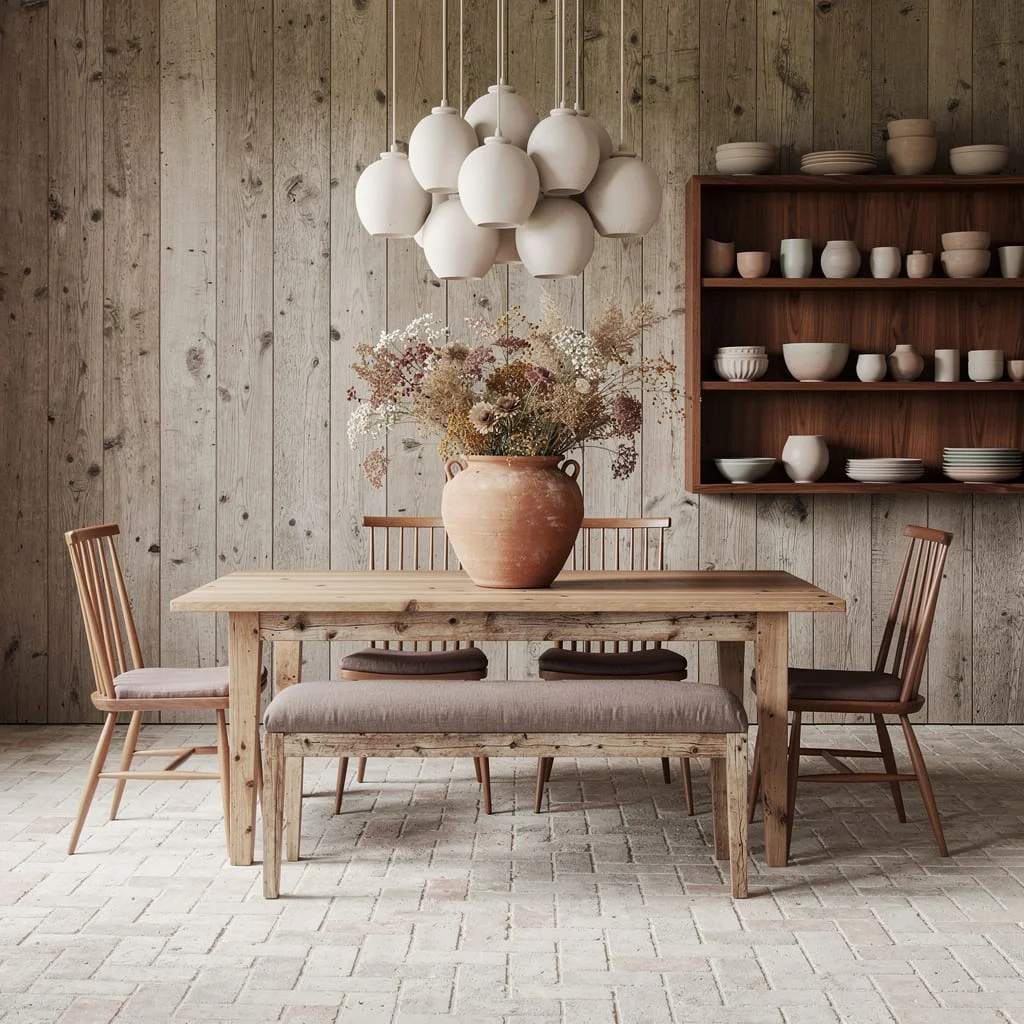
Driftwood-inspired paneled walls set the scene, but don’t fall for the all-grey trap; balance with pale brick herringbone floors for legit visual interest. Score a reclaimed fir timber table—bonus points if it comes pre-weathere—then add spindle-back chairs and a bench cushioned in washable taupe linen (so you don’t spiral every time someone spills). Cluster pendant lights in unglazed porcelain above for instant ‘designer on a budget’ vibes. Go oversize with a terracotta urn stuffed with dried wildflowers because ‘small’ screams rental. Pro tip: Stack open shelves with mostly earth-toned ceramics, but give each piece space; don’t create a thrift store museum.
Sun-Bleached and Boujee: Chill Luxury with Sustainable Feels
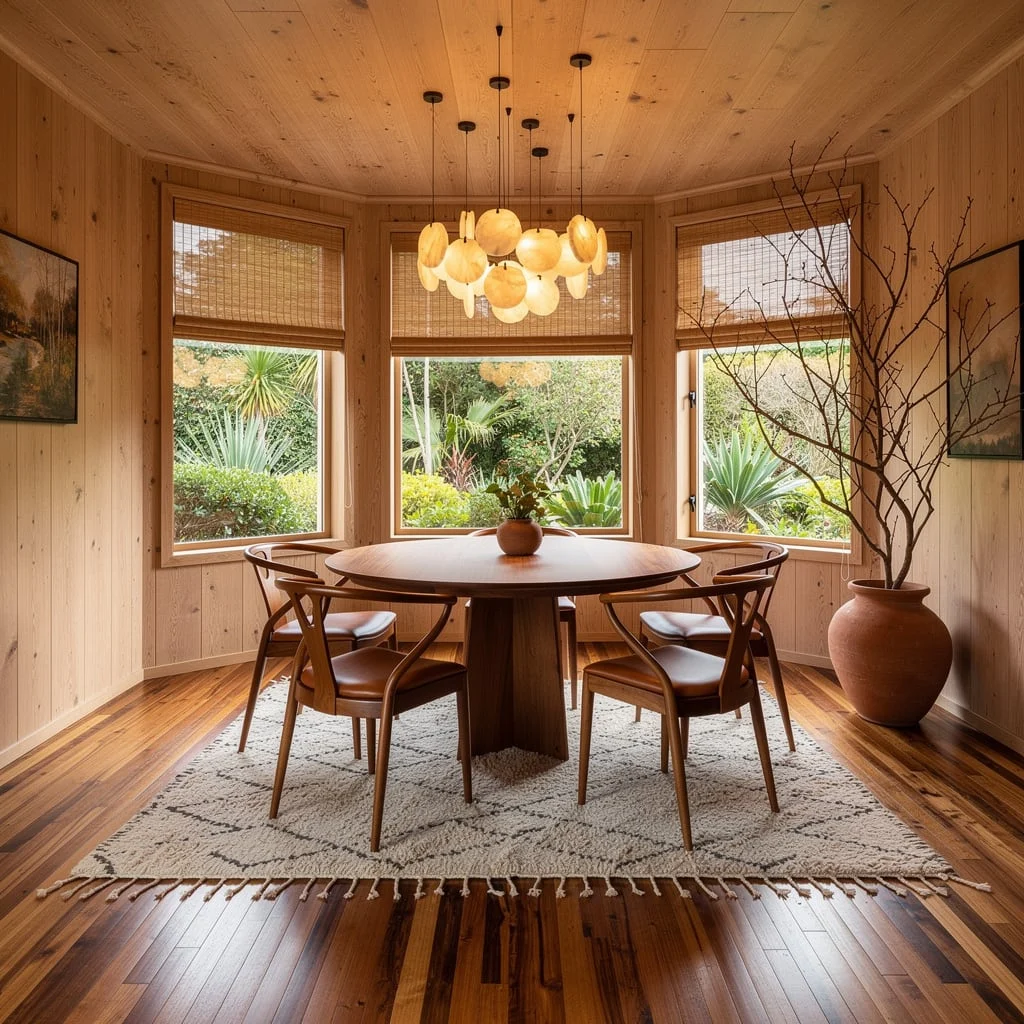
Want that international design magazine vibe at home? Slap up sun-bleached oak walls and invest in mixed-width, oiled bamboo flooring. Don’t even consider particle board—pick a solid chestnut table with curves and saddle leather seats (because plastic just isn’t it). Above, go minimalist with an alabaster disc chandelier; nobody asked for glass teardrops. Throw in a hand-knotted Moroccan wool rug and let woven reed blinds on bay windows softly screen your ‘accidental’ jungle outside. Anchor the center with a chunky clay pot and sun-bleached branches—pure Pinterest, no cringe. Pro tip: A single, massive branch trumps a tiny bouquet every time.
French Cottage, But Make It Earthy: Textural Masterclass
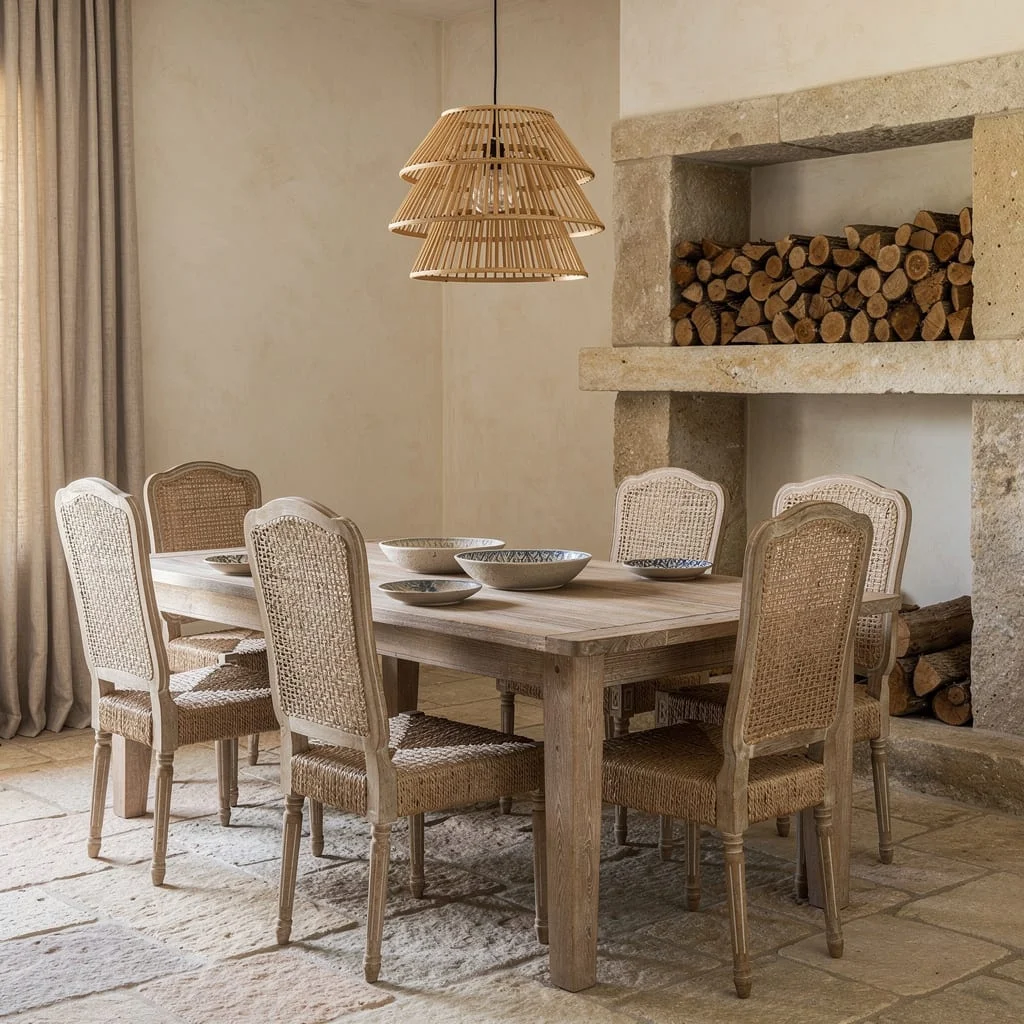
If you want ‘country’ without chicken decals, start with off-white venetian plaster walls and rough sandstone floors. Choose a weathered chestnut table that’s allowed to show its scars and circle it with French country chairs exuding some actual craftsmanship (no lazy high-street knockoffs). Light the scene with a three-tiered bamboo pendant—bonus style, zero grandma vibes. Sweep sand-toned linen curtains way below the window for drama. Feature shelving in limestone? Stack firewood for literal texture, not just cliché. Pro tip: Keep tabletop styling to a minimum; use decorative stoneware platters with confidence, not clutter.
Cocoa and Grey: Ultimate Cozy, Zero Cliché
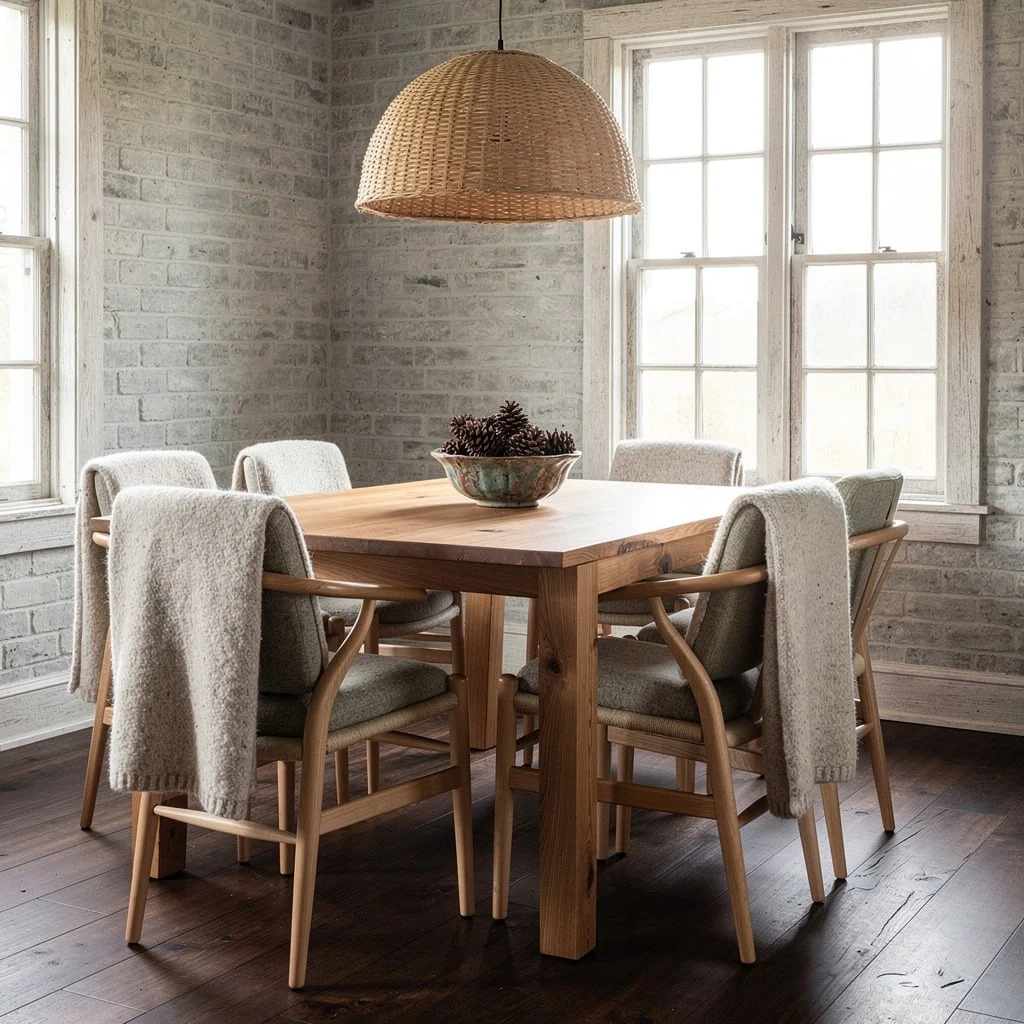
Craving warm, moody energy that doesn’t feel like a basement? Dark cocoa-stained pine floors and pale, lime-washed brick walls are your go-to. Plop down a chunky elm table, surround with hand-turned ash chairs, then toss on wool seat cushions—because comfort isn’t negotiable. Ditch the cheap pendant and splurge on a woven banana fiber dome for soft, flirty light. Wrap chair backs in chunky wool throws and finish with a raku ceramic bowl full of pinecones, not plastic fruit. Pro tip: Place your rug at least halfway under the table, never floating, or you’ll visually shrink the space.
Nook Goals: Travertine and Taupe Without the Snooze
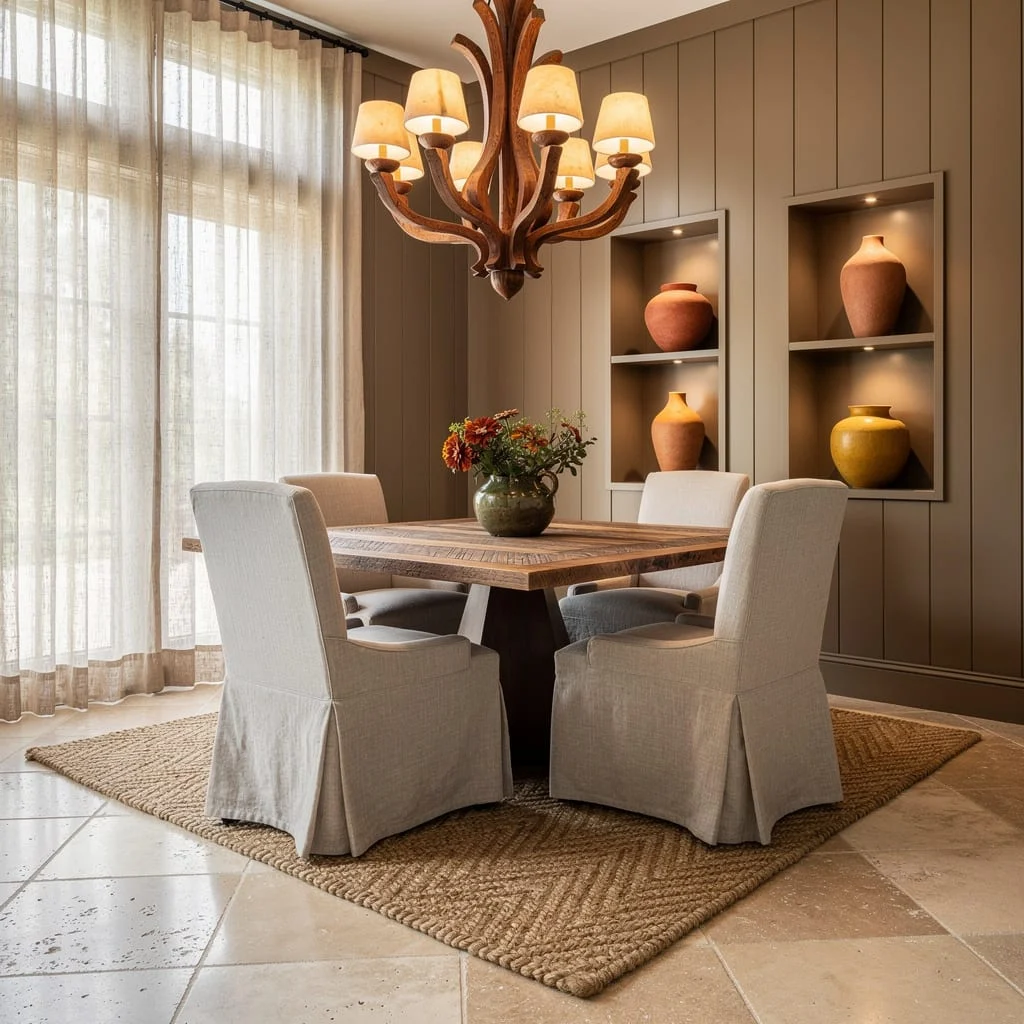
Nothing kills a cozy nook like shiny, cold tile, so pick sanded travertine for that touchable, grounded quality. Vibe up your walls with tongue-and-groove in a smoky taupe. The only table to consider here is tulip-style with a chunk of reclaimed timber on top—don’t you dare settle for glass. Slipcovered chairs in slubby flax keep it chill, not stuffy. Drape a hand-carved walnut chandelier overhead, and fill wall niches with terracotta and ochre pottery—no fake plants needed. Filter light through gauzy, floor-sweeping drapes. Pro tip: Thick, chevron jute rug or bust; anything thinner belongs on a doormat.
Sage Shiplap for the Win: Layered Greens + Cozy Texture
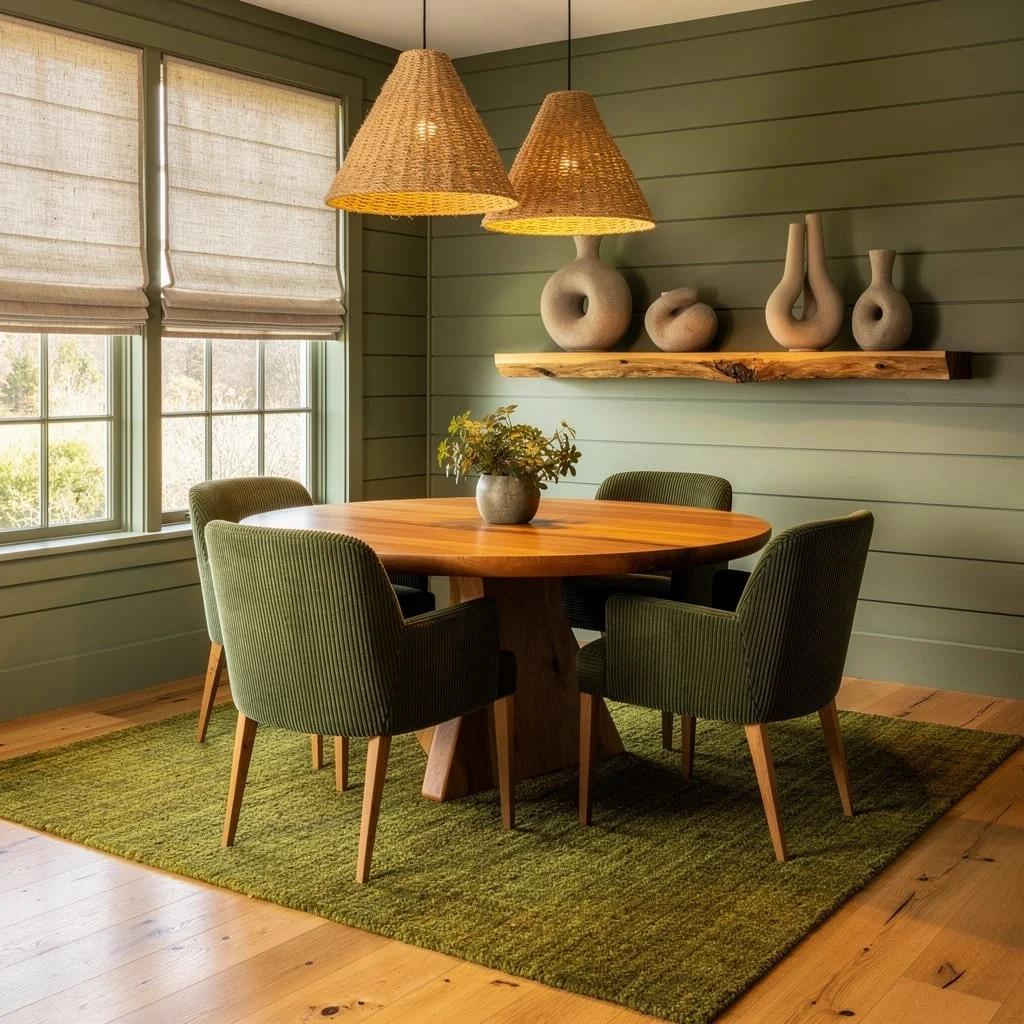
Obsessed with sage green? Wrap those walls in shiplap, go all-in with honey birch floors, then center a hand-lathed butternut table for that ‘found at a secret woodworker’ energy. Use corduroy-upholstered chairs if you want your space to read ‘composed, not chaotic.’ The key: conical raffia pendants paired, not solo, and hang them low for intimate hangs. Style a live-edge cedar shelf with stoneware shapes, not random trinkets. Wool Roman blinds plus a moss-green shaggy rug seal the warmth. Pro tip: Soft window treatments must hit the sill or the floor—never let them awkwardly hover.
Wheat and Terracotta: Modern Earthy is a Whole Mood
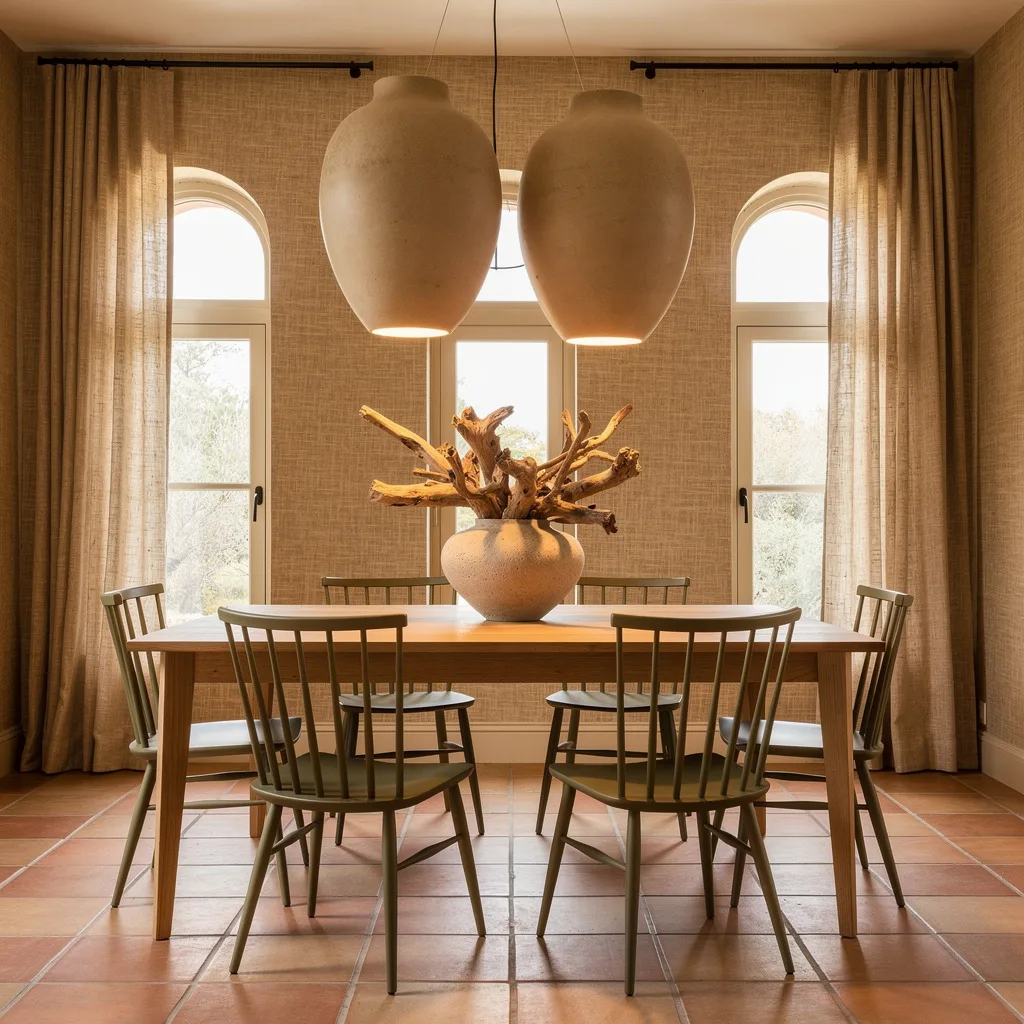
Want earthy to look 2024 and not thrifted from 1994? Go for linen-textured wallpaper in a wheat shade and terra cotta tiles for instant heat. Center a rectangular ash table with real, tapered legs—not techy metal, thank you—and pair with olive-green spindle chairs. Go big with two hand-thrown ceramic pendants at staggered heights for balanced drama. Dress your windows in full-drop flax curtains so the vibe is breezy, never boxy, and drop driftwood art in a sandstone vessel as your sculptural centerpiece. Pro tip: Always stagger pendants over rectangular tables, never twins at the same height—unless you want your guests playing ‘spot the difference.’
The Decisions That Make Earthy Cottage Dining Rooms Work
The centerpiece should look gathered rather than arranged. A loose bunch of garden flowers in a ceramic jug, a basket of eucalyptus, branches from the garden in a stoneware crock — these read as natural abundance. A symmetrical floral arrangement with a bow looks like a hotel dining room.
Candlelight is mandatory. No earthy cottage dining room functions without it. Taper candles in simple holders, pillar candles on the table, candlesticks on the sideboard — the warm flame light changes the room’s atmosphere completely after dark and makes every conversation feel slightly more important.
The rug must be large enough. A dining room rug that doesn’t extend well beyond the chairs when they’re pulled out creates visual fragmentation that reads as the room running out of ideas. If in doubt, go bigger. A generous rug that extends past every pulled-out chair makes the table feel anchored and the room feel finished.
Mismatched chairs are not a mistake. One upholstered armchair at the head of the table, wooden chairs on the sides, and a bench at the far end — this kind of deliberate inconsistency is the visual signature of a room assembled over time rather than purchased in a weekend. It’s not careless. It’s the most considered choice in the room.
The Best Dining Rooms Are the Ones People Don’t Want to Leave
That’s the whole measure of a dining room’s success. Not whether it photographs well, not whether the chandelier is impressive, not whether the tablecloth was ironed. Whether people sit down and forget to check the time. Whether the second bottle of wine gets opened. Whether the conversation is still going when the candles burn low.
Earthy cottage dining rooms achieve this because they feel genuinely welcoming — which is the hardest quality to design for and the easiest to recognize when you walk into a room that has it. The warmth comes from the materials. The comfort comes from the imperfection. The invitation comes from the evidence that this room is actually, genuinely used.