
There’s something quietly insulting about a backyard that’s completely silent. You’ve invested in the furniture, done something about the planting, possibly even addressed the lighting situation — and yet the whole space still feels like it’s missing the thing that would make it genuinely worth sitting in for hours. That thing is almost always water, and the fact that most backyards don’t have any is one of the great undersolved problems in residential outdoor design.
Water features do something to a backyard that no other design element can replicate. The sound alone changes how a space feels — ambient water noise creates a psychological privacy that no fence can provide, filtering out street sounds and neighbor noise in a way that makes even a compact urban garden feel genuinely removed from its surroundings. Add the visual movement, the light reflection, and the natural focal point that any water element creates, and you start to understand why every hotel worth staying at has one somewhere prominent.
The range of options is considerably wider than most people assume, which is why so many backyards end up with either nothing or a generic tiered fountain from a garden centre that looked better on the shelf.
Why Most Backyards Don’t Have Water Features (And Why That’s a Mistake)
The reasons people give for not installing a water feature usually come down to one of three concerns, and all three deserve a more thorough examination than they typically receive.
“It’ll Be Too Much Maintenance” – The maintenance burden of a water feature is almost entirely determined by the type chosen and how well it’s specified. A sealed recirculating system with a quality pump and the right filtration requires less weekly attention than a lawn. A poorly specified natural pond with no liner and inadequate circulation does not. The water feature isn’t the problem — the choice is.
“It Won’t Work in My Space” – Water features scale from a single sculptural bowl fountain that fits on a windowsill to a full koi pond with waterfall. The idea that a backyard is too small or too awkward for any water element is almost always wrong — what’s actually happening is that the owner hasn’t found the format that works for their specific constraints yet.
“I Don’t Know Where to Put It” – A water feature should be positioned where it can be heard from the primary seating area and seen from the most-used vantage point. That’s genuinely the entire brief. Everything else is detail.
What Water Features Actually Do for a Space
Beyond the obvious aesthetic appeal, water features perform a handful of design functions that are worth understanding before choosing a format.
They Create Focal Points Without Competing – A well-placed water feature anchors the eye without dominating the composition the way a large piece of garden art sometimes can. The movement draws attention gently and repeatedly rather than demanding it all at once.
They Add a Sensory Layer That Nothing Else Provides – Gardens are usually experienced visually and occasionally through fragrance. Water adds a continuous acoustic dimension that makes outdoor spaces feel richer and more immersive than their visual appearance alone would suggest.
They Make Spaces Feel Cooler – Both literally and figuratively. Moving water reduces the ambient temperature in its immediate vicinity and creates the kind of atmosphere that makes a garden feel like a retreat rather than just an outdoor room.
The One Question Worth Answering Before Choosing a Format
What do you want the water feature to be — architecture or nature? The answer to that question eliminates most of the options immediately and points clearly toward the ones that will work. Architectural water features — wall fountains, linear rills, geometric reflecting pools, scupper bowls — suit modern, structured garden styles and need clean lines and quality materials to succeed. Naturalistic water features — koi ponds, boulder waterfalls, stone rills — suit informal, planted gardens and improve with age and biological establishment. Trying to split the difference usually produces something that satisfies neither brief.
Backyard Water Features
The Sculptural Stone Fountain:
My first fountain for the garden! it creates so much movement and I love the tranquil sounds.
by u/Aquarius3845 in gardening
A cast stone pedestal fountain with a flame or leaf sculptural element at its crown is one of those water features that occupies very little space and manages, through the quality of its form, to make the surrounding garden look significantly more considered than it would without it. This particular piece sits among low conifers and mixed plantings with the easy confidence of something that was always supposed to be there — which is the quality that separates good garden ornament from mere garden decoration. The sound it produces is gentle and continuous without being loud, the kind of ambient background presence that makes sitting nearby feel actively calming rather than simply pleasant. No elaborate installation, no significant maintenance — just a well-chosen object doing its job with quiet competence.
Backlit Rainfall Water Wall and Tropical Planting:
A floor-to-ceiling rainfall water wall set into a tiled recess with warm amber LED backlighting is the kind of installation that makes guests do a double-take when they step outside, and this execution earns every second of that reaction. Water falls in a continuous sheet from a header pipe concealed at the top of the recess, catching the backlighting as it descends into a large concrete basin below — the illuminated falling water creating a visual effect that changes constantly as the light catches different parts of the flow. Large tropical plants in terracotta and ribbed concrete planters arranged on either side create the kind of lush, enveloping frame that makes the feature feel like the centrepiece of a complete outdoor room rather than a standalone installation.
Triple Geometric Scupper Spouts and Mosaic Wall:
Three stainless steel scupper spouts mounted at graduated heights on a dark mosaic tile feature wall send precise sheets of water into a shallow black trough below with the kind of controlled precision that makes this installation look significantly more expensive than a traditional fountain arrangement ever could. The visual combination of the dark tile backdrop, the silver scupper hardware, and the papyrus grass planted in beds on either side creates a composition that reads as genuinely architectural — this isn’t decoration in a garden, it’s a designed element with the same weight as the rendered walls around it. The sound of three simultaneous water sheets hitting the trough creates an ambient acoustic layer that would make any outdoor conversation feel more private and any afternoon reading session feel more restorative.
Timber Boat Pool:
This installation sits somewhere between a water feature, a lap pool, and a piece of garden sculpture, and its refusal to commit to any single category is the entire point. A full-size wooden dinghy — finished in warm, honey-toned marine timber with visible rivets and all the nautical detail intact — has been converted into a swimming pool, its hull forming the pool walls and its interior fitted with blue glass tile that turns the water a vivid aquamarine. Set on large format stone pavers with sun loungers and a dining table positioned alongside, it functions as a backyard pool while looking like an art installation that someone decided to swim in, which is an extraordinarily difficult combination to achieve and an even more extraordinary one to pull off this convincingly.
Three White Bowl Fountains on Black Granite:
The design intelligence behind this water feature is the decision to multiply a single beautiful object — a wide, shallow white cast concrete bowl with a gentle central bubbling element — into a trio arranged along a raised dark granite plinth, and then to trust that the repetition itself is the composition rather than adding anything further. Three identical bowls in slightly offset sizes on a sleek black platform, framed by clipped boxwood hedge on the front edge and set against a backdrop of mature olive trees with dappled canopy, creates a garden moment that looks like it belongs in an arts foundation courtyard rather than a domestic backyard. The water in each bowl sits almost flush with the rim and overflows in a continuous sheet onto the granite surface below, which runs wet and dark in a way that makes the white bowls read almost luminous by contrast.
Koi Pond With Boulder Waterfall:
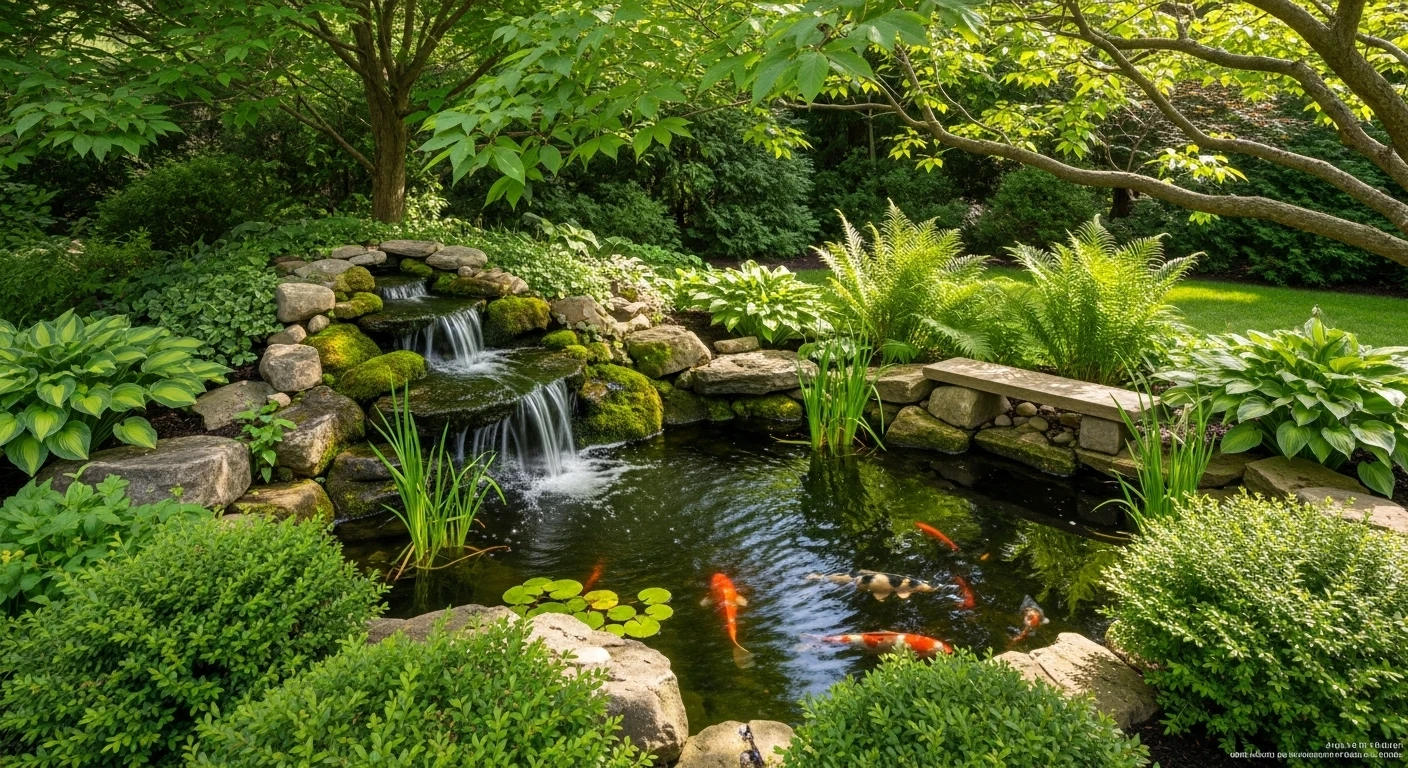
Everything about a well-established koi pond argues for patience as a design strategy, and this one rewards years of patient development with the kind of result that no newly installed feature can produce. A stacked natural boulder waterfall feeds multiple water channels into a pond of generous size, the water running clear enough to reveal bright koi in orange, red, and gold moving beneath the surface alongside lily pads and a single water lotus bloom. The surrounding planting — daylilies, marigolds, ornamental grasses, and mixed flowering perennials — has been allowed to press close to the pond edge in the naturalistic way that makes planted water features feel embedded in a garden rather than placed beside one. The sound of water falling across multiple boulder levels creates the most genuinely natural acoustic of any feature in this list, and on a warm afternoon with fish visible below the surface, it is entirely impossible to walk past without stopping.
Go Full Minimal with Black Granite Reflecting Pools
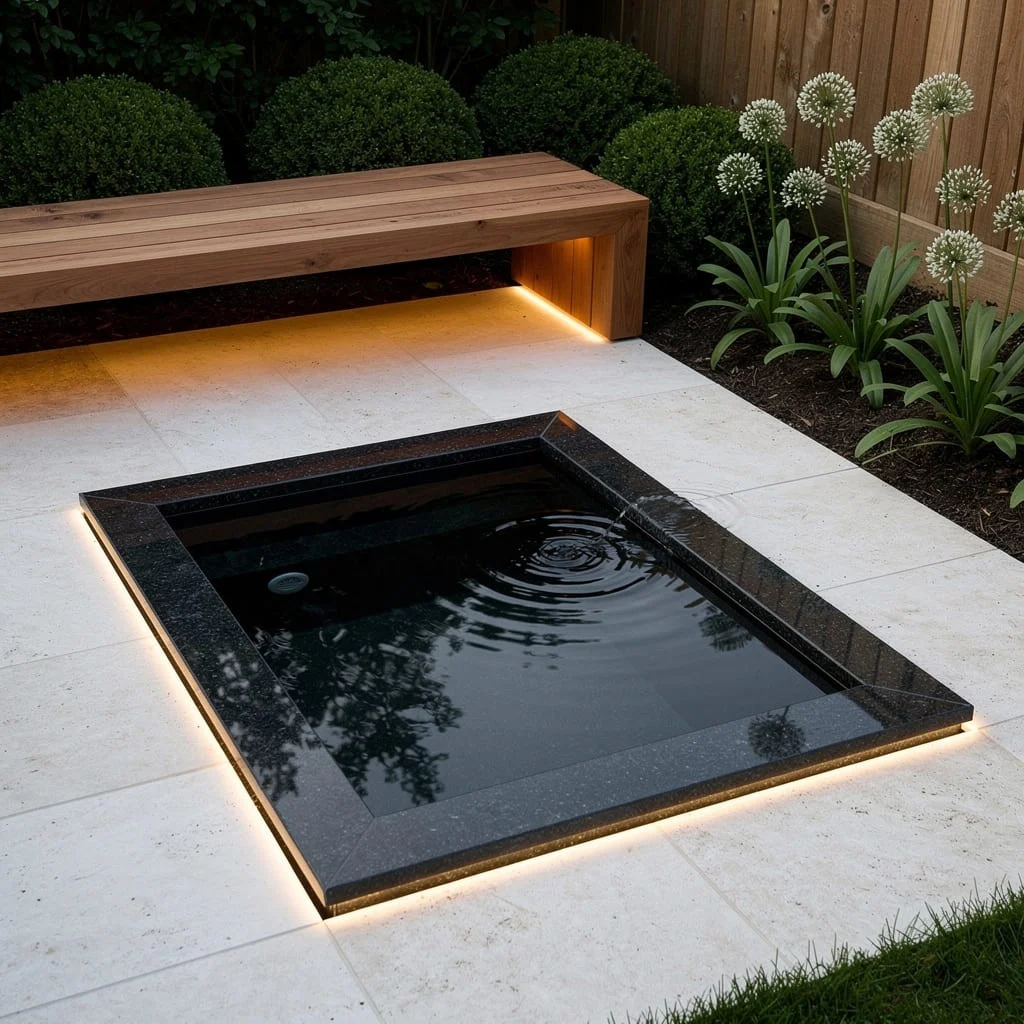
If you crave calm and want your space to look like it belongs in a billionaire’s Instagram reel, go for a sleek black granite reflecting pool that sits flush with pale limestone pavers. Get real—don’t waste time with tacky fountains when you can create a mirror-like vibe. Pair the granite pool with pale limestone for contrast and drop in a cantilevered cedar bench, then plant Japanese boxwoods and white flowering alliums to keep things serene and not jungle-y. Wrap the pool with linear LED uplighting, because mood lighting is the only real luxury. And, pro tip: keep the pool edges subtle—loud edges ruin the chill vibe faster than mismatched patio chairs.
Get Winding with Basalt Rills for Maximum Garden Zen
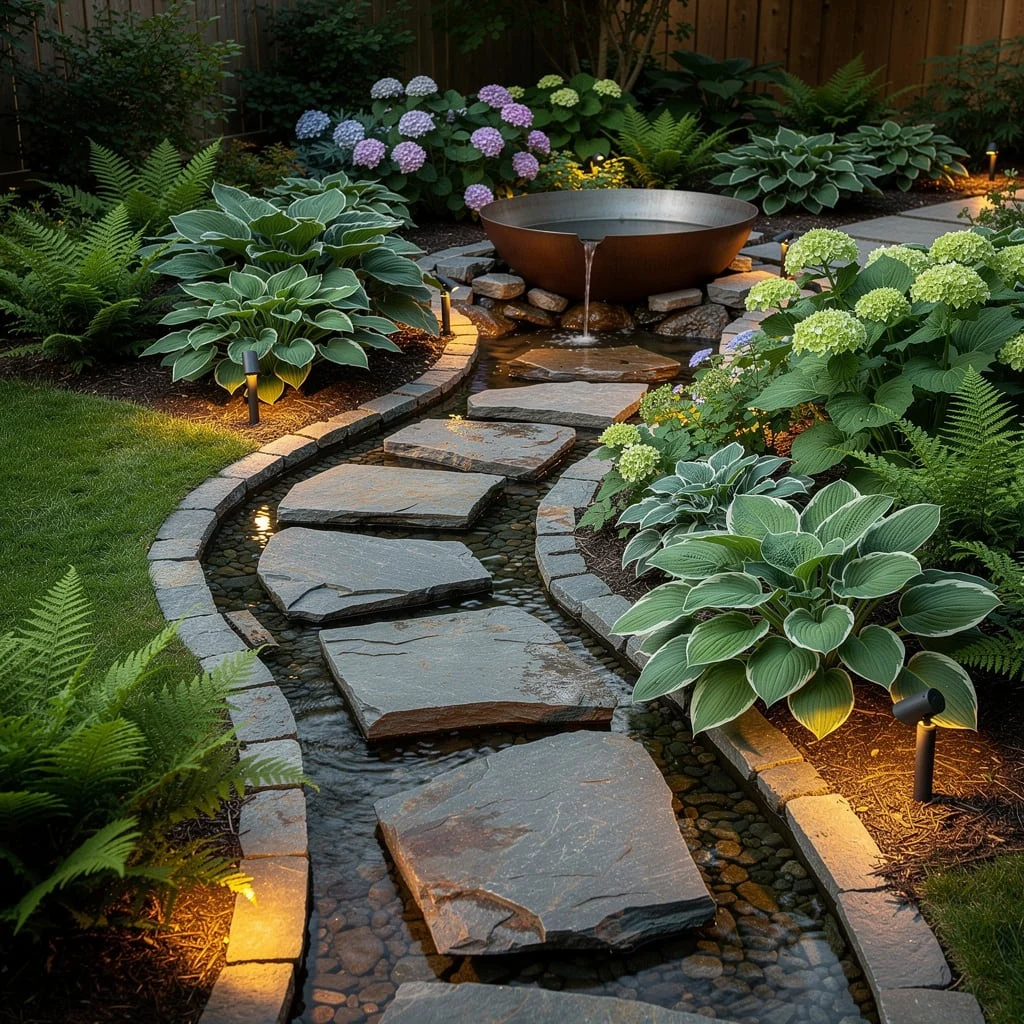
If your secret personality is fairy-tale forest but you hate constant maintenance, say yes to a winding basalt stone rill trickling through beds of ferns, hosta, and mini hydrangeas. Let water glide smoothly for that ASMR-level background noise. Stripe your path with flagstone steppers so you can wander without soaking your socks, and tuck in concealed pathway lighting for drama after dark. Start your rill with a weathered steel water bowl for a punchy focal point—no plastic allowed. Always spotlight the textured stones and plantings, night or day. Pro tip: Don’t let your rill disappear into overgrown chaos; give it crisp edges or risk looking like a swamp.
Make Courtyards Cool with a Plunge Pool That Pops
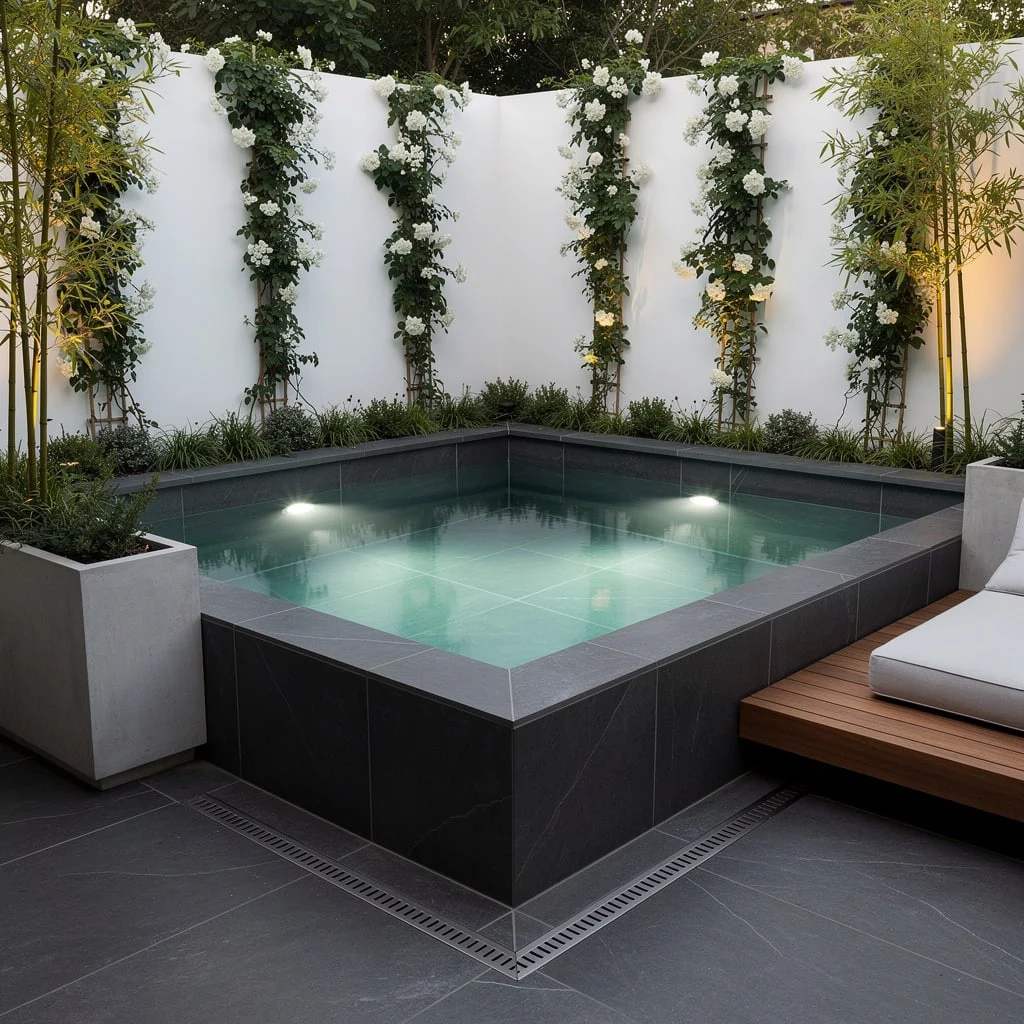
If you’re short on space but big on luxury, anchor your courtyard with a geometric plunge pool clad in charcoal porcelain tiles for max sophistication. Frame it with sheer white rendered privacy walls—boring fences need not apply—and layer in climbing jasmine plus bamboo accents for vertical softness and fragrance. Drop underwater LED spots to get that subtle turquoise glow. Set up perimeter slot drains so your deck stays dry, and echo rectilinear shapes with custom brushed concrete planters. Float a hardwood deck lounge nearby to counterbalance all that cool tile with cozy, rich warmth. Pro tip: Only use vertical plantings where space is tight—horizontal leafy lumps kill the vibe.
Get Curvy With a Natural Stone Pond and Stainless Spillways
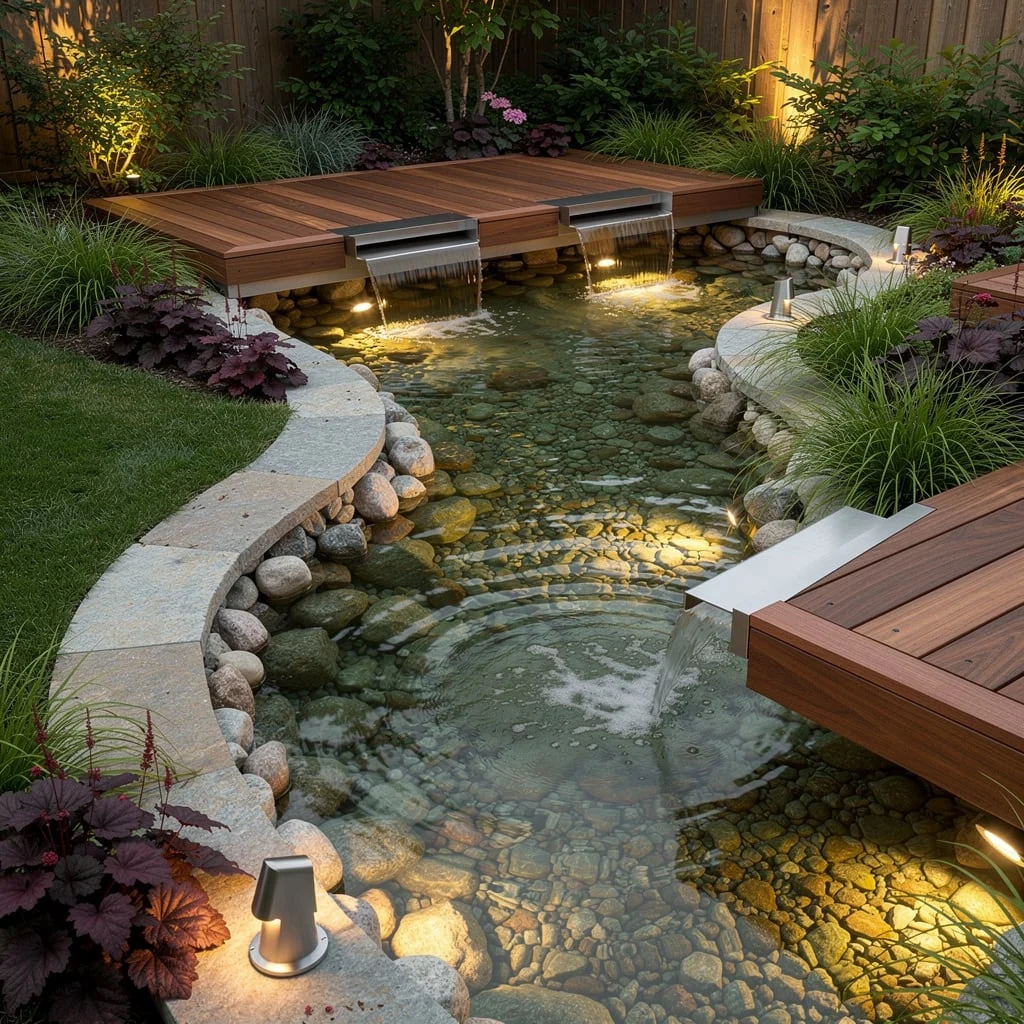
If you want small backyard drama without going full Vegas, build a curved pond edged with tumbled river rocks and feed it gentle cascades via stainless steel spillways. Skip boring mulch and frame with lush fescue grasses and burgundy heuchera for punch. Install ipe platforms above the water for floating-style seating—nobody likes soggy butts. At night, drop in submerged lighting to highlight contours and create those artsy rippled reflections. Stick with a mix of natural stone and fresh modern metal for balanced sophistication. Pro tip: Keep your cascades gentle—overdoing water flow turns your pond into a noisy disaster zone.
Rock Urban Sophistication with a Slate Water Wall
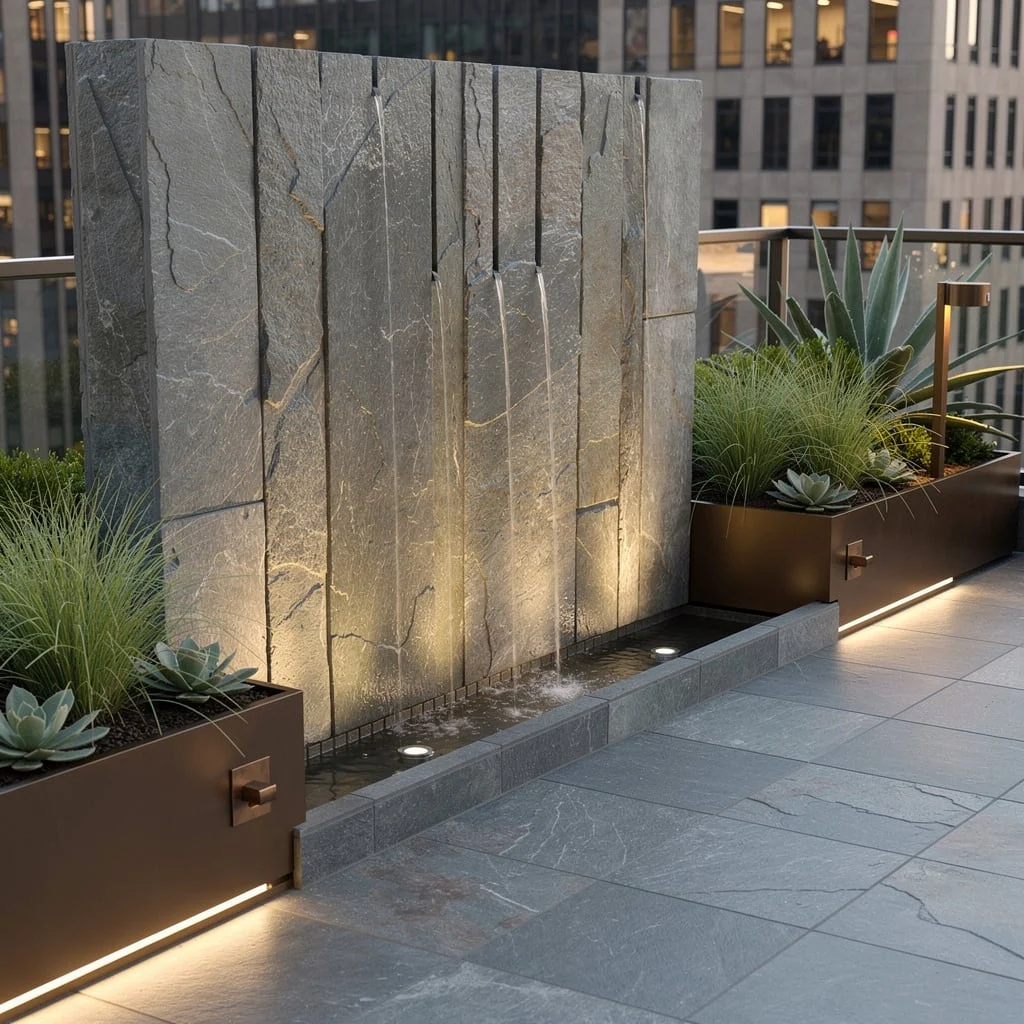
If you’re dying for city vibes that actually feel relaxing, go vertical—install a water wall made from honed slate slabs with streams falling into a slim, linear trough. Use bluestone for the floor so it feels expensive and ignore fake stone options. Mount architectural lighting in the paving to push soft highlights up that slate wall, then box in sculptural planter grasses and succulents for green contrast. Add bronze accents to fixtures for next-level elegance. Don’t underestimate the sound—gentle flow, not Niagara. Pro tip: Never let your water wall get grimy; clean the slate regularly or risk looking like a subway tunnel.
Take It Artsy with Cantilevered Water Channels and Staggered Steel
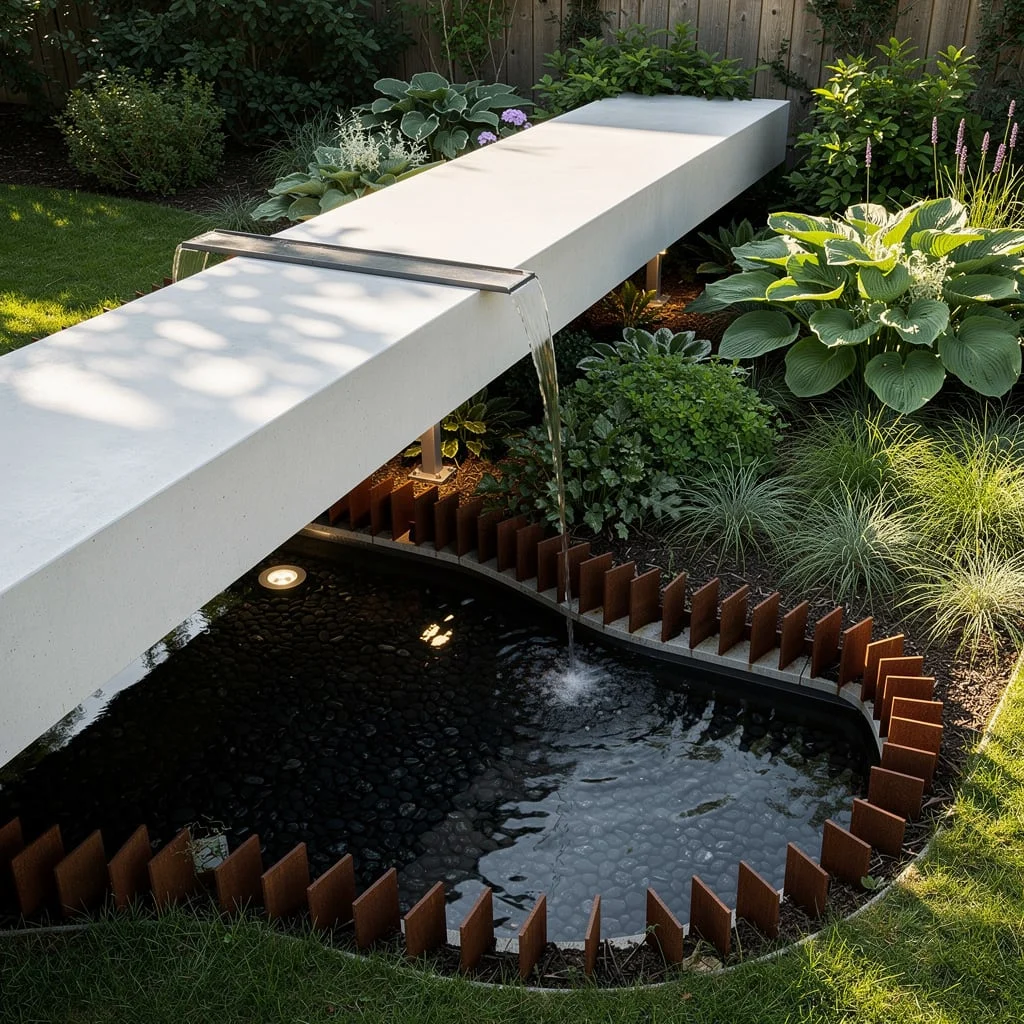
If you’re sick of boring backyard basics, build a cantilevered water channel from smooth white concrete over a sunken garden. Let water spill into an asymmetric pond layered with polished black pebbles because nobody wants a basic round hole. Mark the pond edge with staggered corten steel strips—bye bye, dull borders—and add step lights beneath the channel to throw dramatic shadows. Go dense with hosta and ornamental grasses to soften all that hardware. Pro tip: Always contrast organic plants against sharp materials; going all-in on one type is asking for snooze-worthy results.
Sink Drama Into Your Lawn with an Elliptical Reflecting Pond
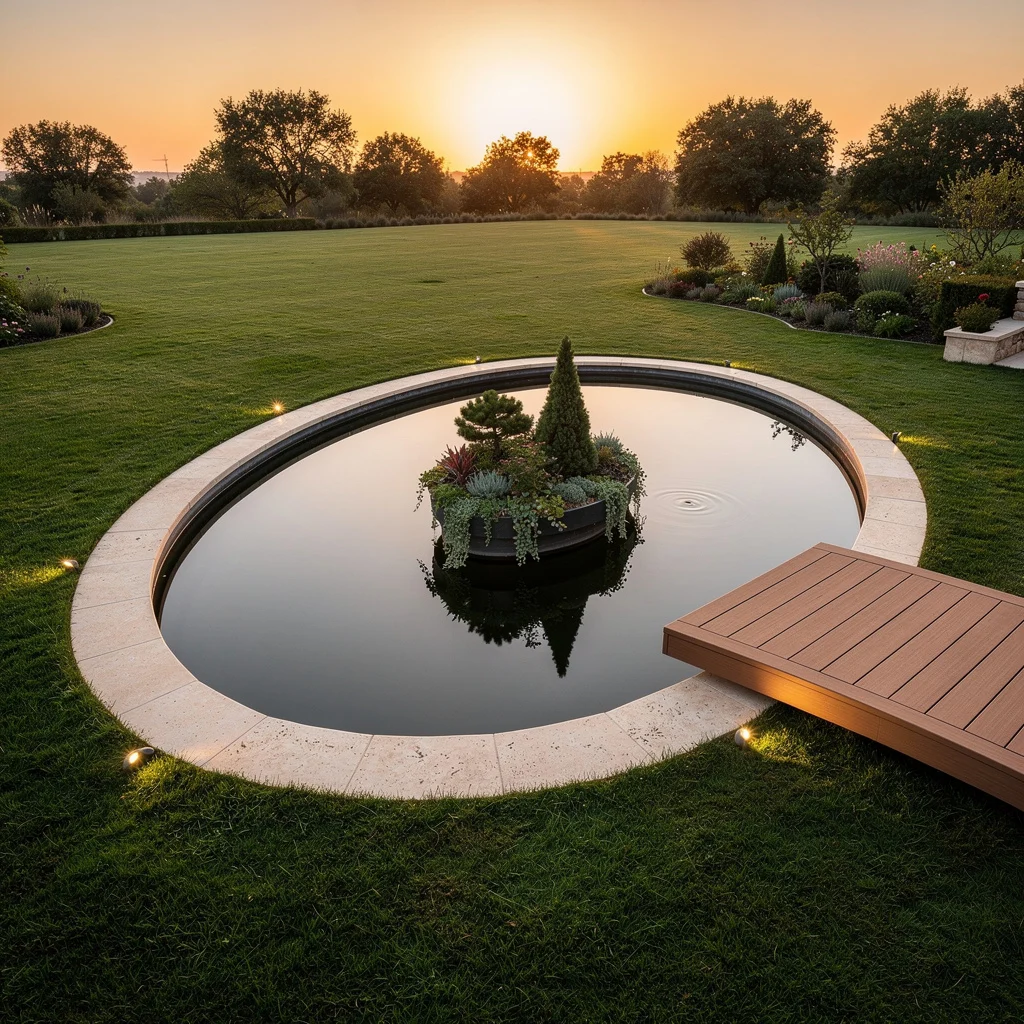
If you want to make your backyard look way more expensive than it is, drop in a sunken elliptical reflecting pond and stick with travertine tiles for the border. Keep the surface glassy-still and float a low island planter with dwarf conifers and trailing groundcovers—real plants, not faux plastics. Use recessed uplights in the grass to create magical glow after sunset, and let a teak boardwalk curve alongside for seating and contemplation. Don’t make the mistake of overfilling with plants—the beauty is in the simplicity and open space. Pro tip: Never let leaves clutter the water; skimming daily is the only way to keep the luxe look.
Max Out Narrow Spaces with Sculptural Slate Water Raceways
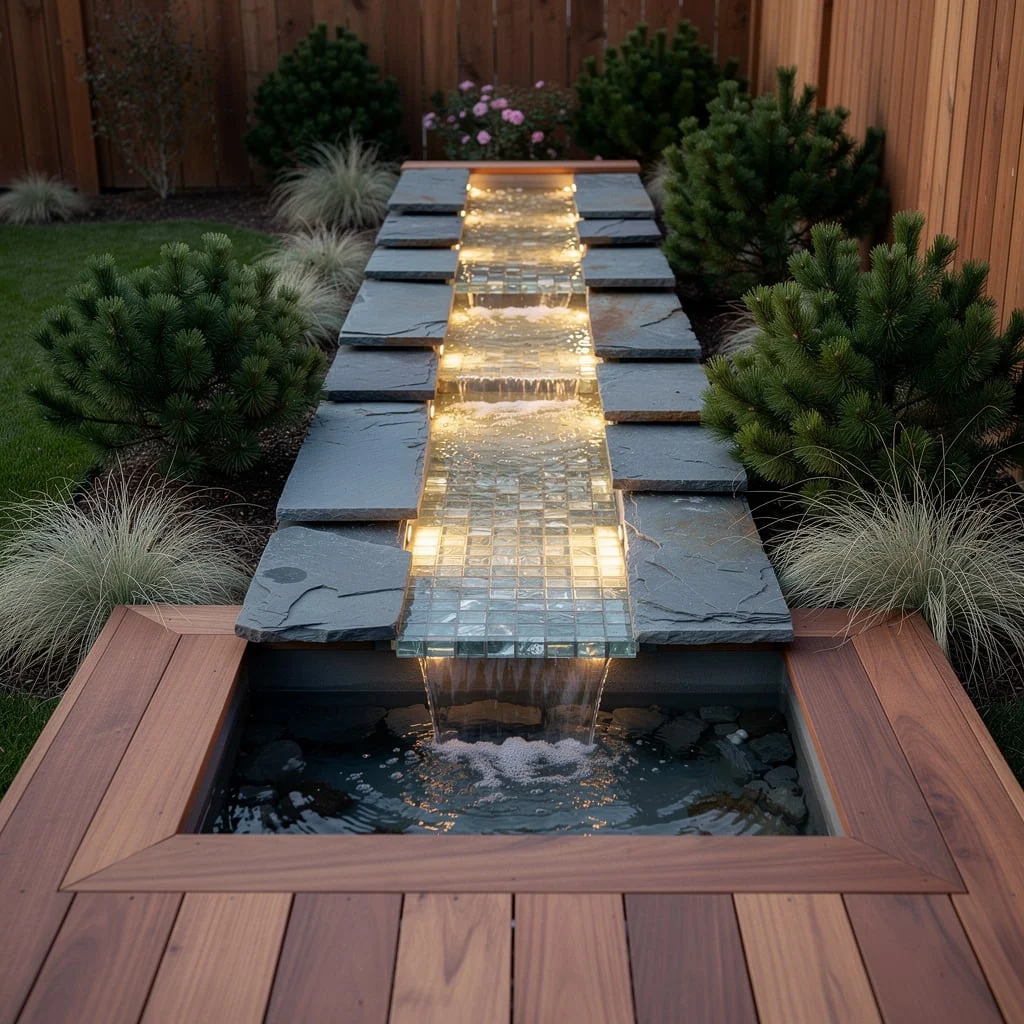
If your backyard’s the size of a shoebox, slap a sculptural slate raceway with a central runnel feeding into a crystalline plunge basin. Embed it in a raised ipe deck for seamless indoor-outdoor transitions (you heard me—turf is for playgrounds). Line the raceway with backlit glass tiles, then run warm LED strips for shimmer and nighttime drama. Frame with low-maintenance evergreens and pale ornamental grasses—skip complicated plants or you’ll hate yourself come summer. Pro tip: Keep the water path tight and structured; messy raceways just scream ‘DIY gone wrong’.
Flex Industrial Luxe with Corten Steel Scupper Pools
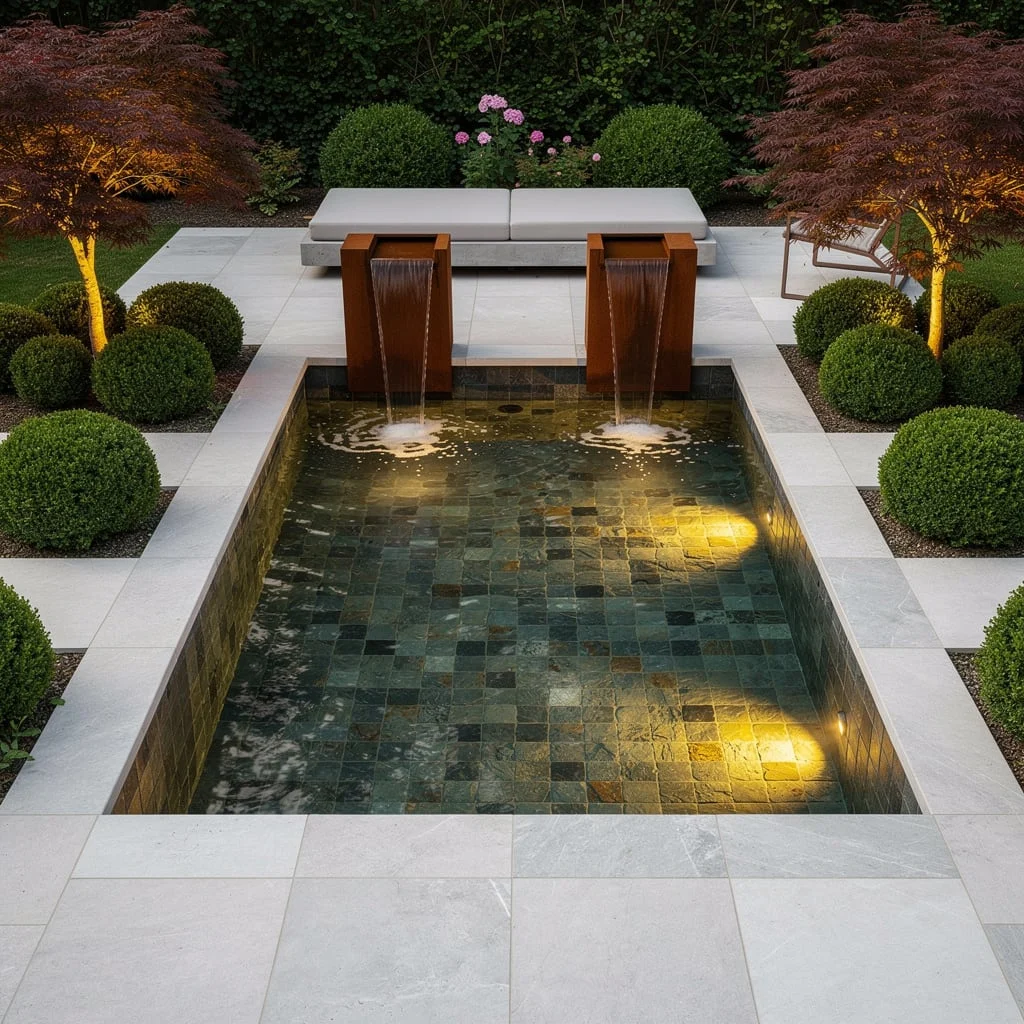
If you want hard-edged style without losing that spa relaxation, go for twin corten steel scupper spillways pouring into a rectangular pool clad in rich slate mosaic. Set the pool flush within a porcelain tile terrace and group boxwood spheres with dwarf red-leaf maples to keep things plush yet grown-up. Drop in underwater lighting for warm golden vibes, and build a floating concrete daybed right next to the pool—because lounging beats standing any day. Don’t let the scupper spree get too loud; keep flow subtle for zen-level tranquility. Pro tip: Never neglect your tile grout; clean lines are everything in luxe spaces.
Channel Timeless Elegance with Bubbling Granite Fountains
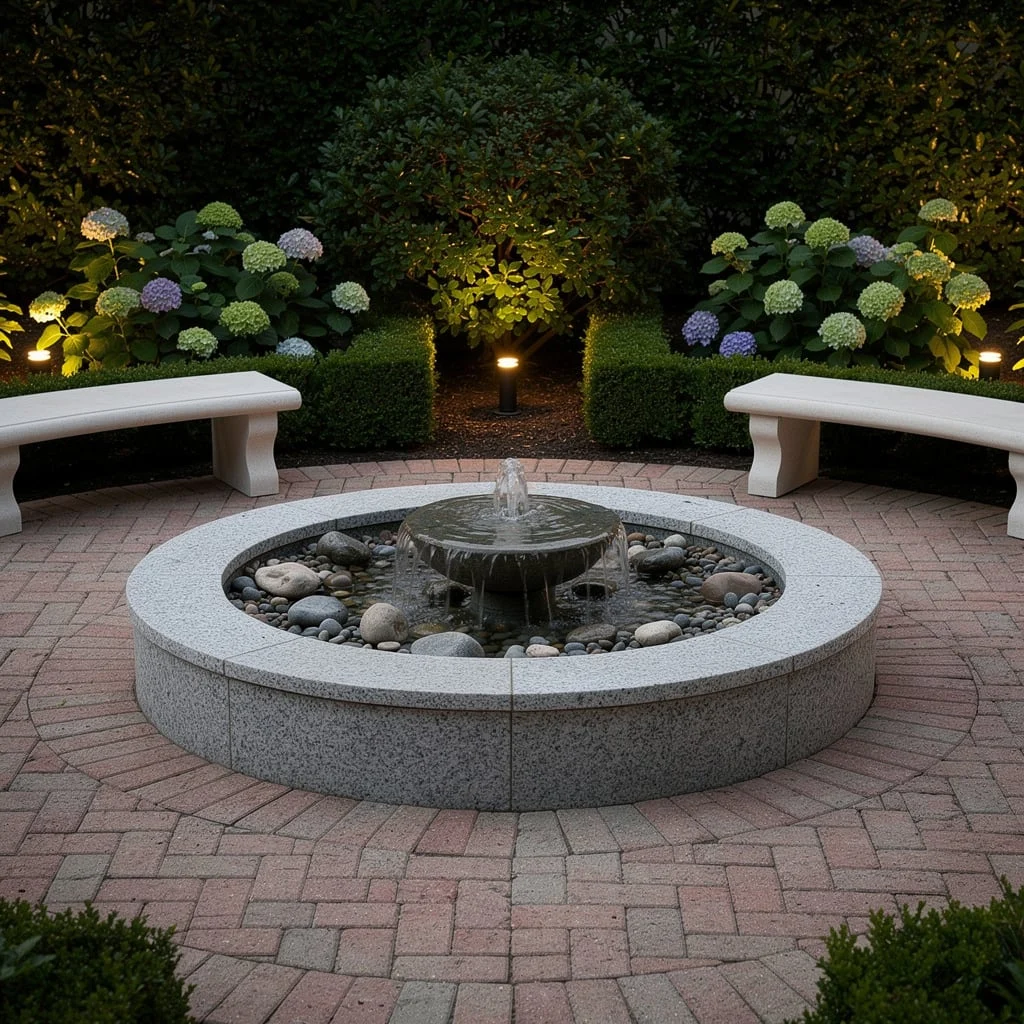
If you’re allergic to tacky garden gnomes but still want a centerpiece, drop a custom circular granite bubbling fountain in a herringbone brick terrace. Surface the basin with smooth river rocks, then get water quietly bubbling for movement without chaos. Accent with concealed architectural lights among box hedges and hydrangeas and stage pale limestone benches nearby for pro-level relaxation. Don’t let hardscape dominate; balance the fountain with lush, clipped greenery. Pro tip: Always hide your lights around plants—visible bulbs are instant style killers in classic gardens.
Keep It Minimalist with L-Shaped Water Rills on Concrete
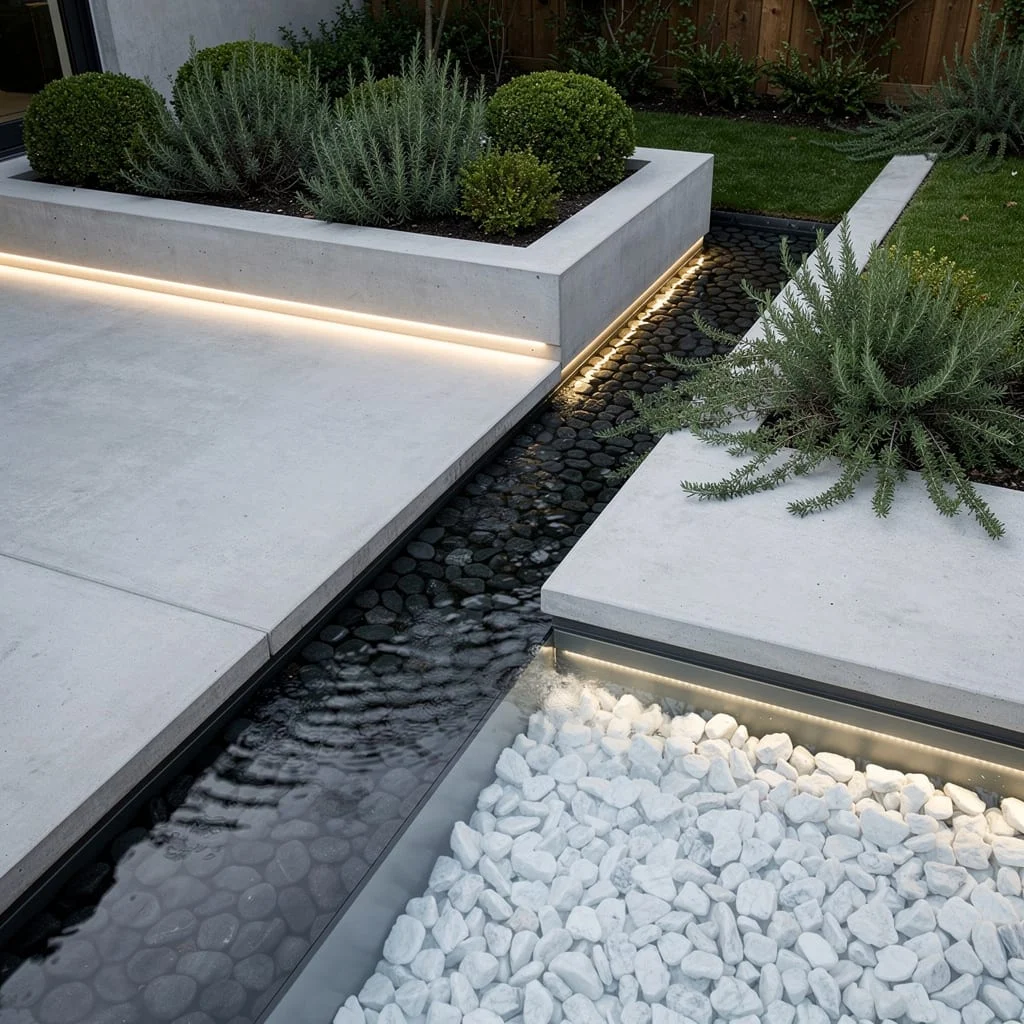
If your goal is ‘clean lines or bust,’ embed an L-shaped water rill in a smooth concrete terrace and stick with dark basalt cobbles for stunning contrast. Show off with raised beds of clipped evergreens and trailing rosemary—no messy vines allowed. End the rill at a shallow reflecting pool with white marble chips for extra pop. Conceal linear LED lighting beneath the terrace edge for a lowkey ambient glow that puts all those solar stake lights to shame. Pro tip: Never let weeds invade the rill; regular grooming keeps the minimalist style intact.
Go Futuristic with Cantilevered Timber and Water Tables
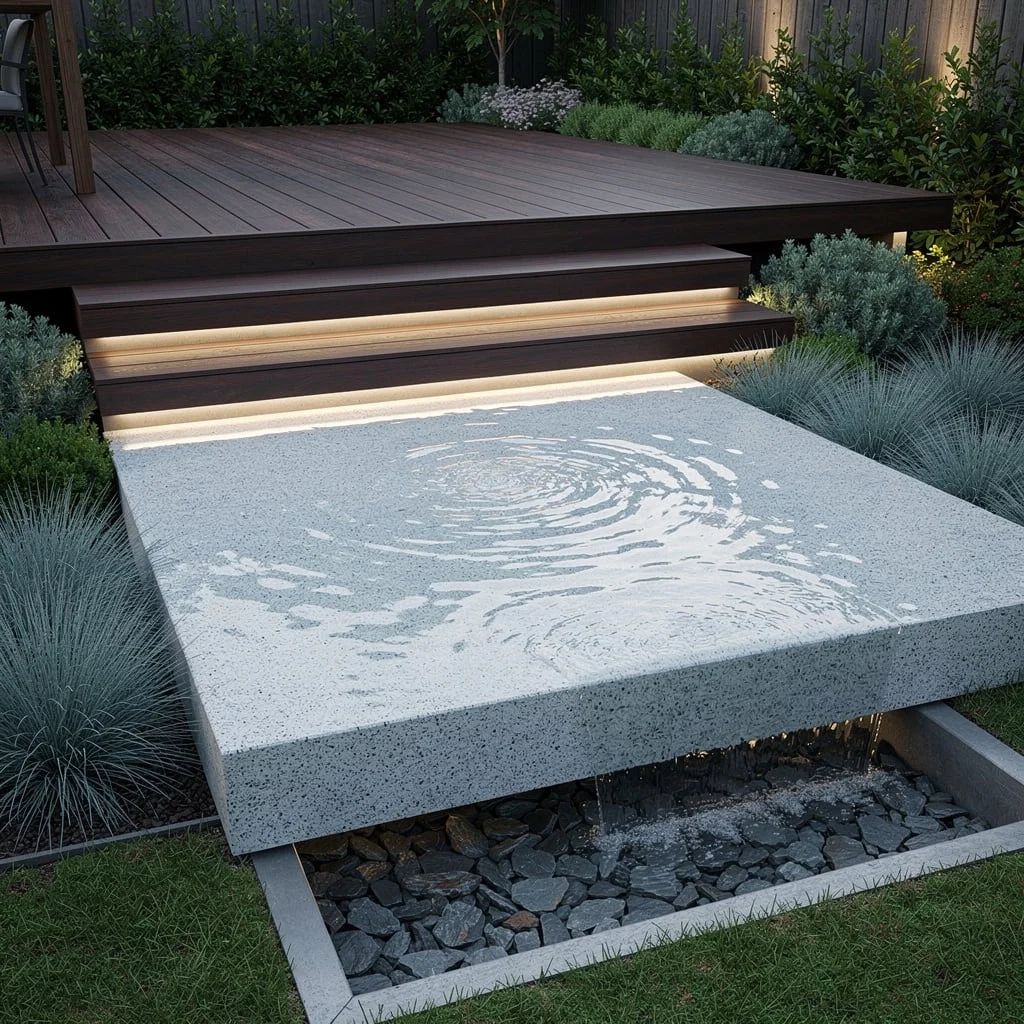
If you’re craving architecture flex, build tiered, cantilevered dark-stained timber platforms stepping down to a shimmering water table made from glass-fiber reinforced concrete. Let water glide seamlessly into a hidden slate-chipped catchbasin and flank the table with easy groundcovers and tufts of blue fescue—don’t overcomplicate. Integrate uplighting in steps for next-level shadow play. Pro tip: Avoid clutter; keep platforms clear and let the geometry do the talking—overdecorating ruins that cutting-edge vibe faster than garden flamingos.
Final Thoughts
A backyard without a water feature is a backyard operating below its potential, and the gap between what most outdoor spaces could be and what they currently are is often smaller than it appears — sometimes it’s a single sculptural bowl fountain, sometimes it’s a full koi pond, and most things worth having fall somewhere between those two points.
The water features here cover the full spectrum from a single cast stone piece that costs less than most garden furniture to a custom architectural wall installation that took a professional team to execute. What they share is the quality of having been chosen deliberately for a specific space rather than selected from a catalogue and installed without thought. Water in a garden is not an accessory — it’s an element. Treat it with the same seriousness as the paving, the planting, and the lighting, and the results will speak for themselves, quite literally.