
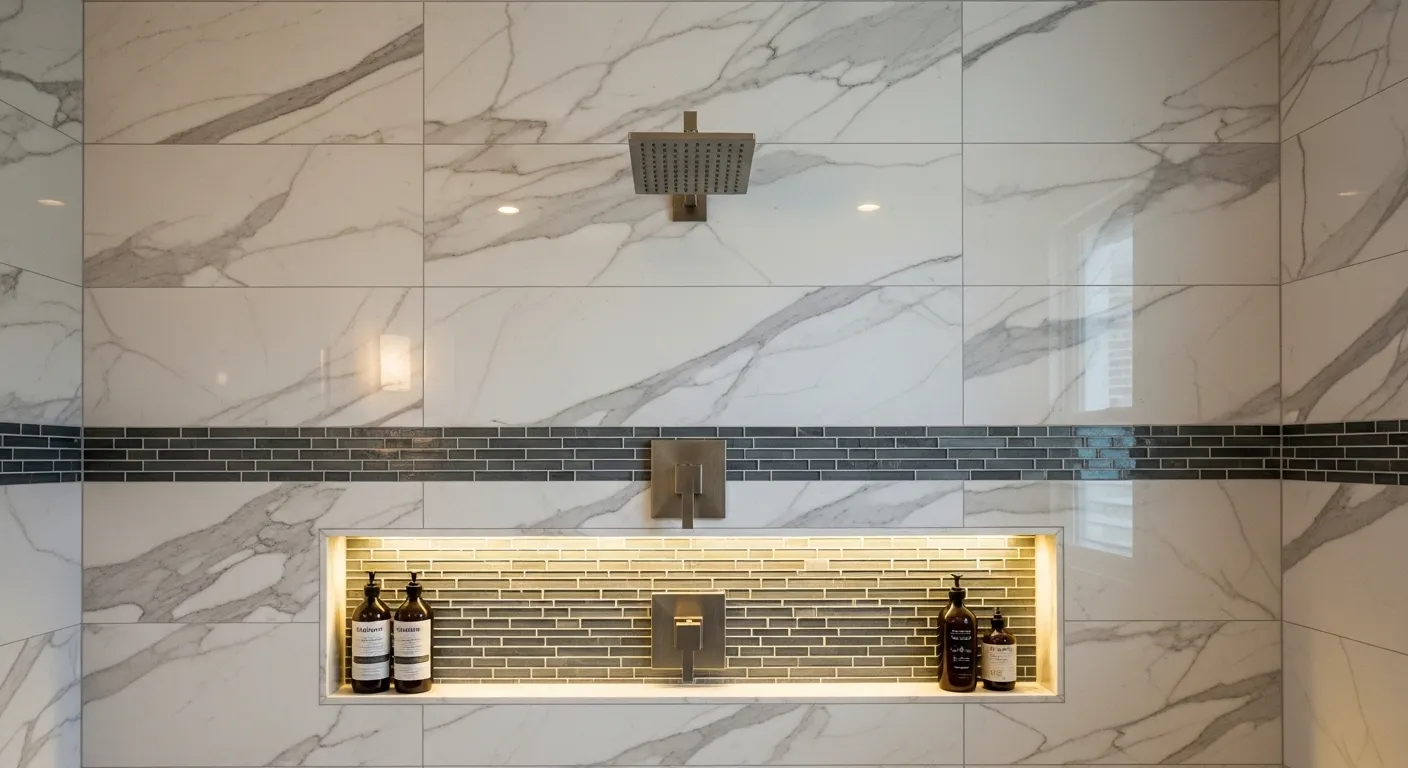
Nobody has ever stood in a beige tiled shower with a builder-grade chrome fixture and thought “this is the best part of my day.” And yet, the average bathroom renovation budget gets spent everywhere except the shower — on vanity lighting that’s slightly better, on a mirror that’s slightly rounder, on towel hooks that cost forty dollars each and contribute nothing to the actual experience of being in the room. The shower, which is where you spend a legitimate chunk of your daily life, gets whatever tile was on special at the home improvement store and a showerhead that was selected entirely on the basis of price.
This is a design crime that goes largely unreported, and it’s about to be corrected.
The shower is the one space in a home where you are completely enclosed by a single material decision — whatever’s on those walls is the entire visual experience for the duration of your morning routine. That makes it simultaneously the highest-stakes tile decision in the house and the one with the most creative freedom, because you’re working with a contained space where bold choices don’t overwhelm, they reward. Dark tiles that would feel oppressive in a living room feel like a spa in a shower. A botanical mural that would be unhinged on a kitchen wall is genuinely transcendent at 7am when steam is rising around it. The rules of restraint that govern the rest of your home basically don’t apply here.
Why Your Current Shower Feels Like a Rental
The problems that make showers look generic aren’t usually about the tiles themselves — they’re about the decisions surrounding them that nobody thought hard enough about.
Grout color is a design decision you’re treating as an afterthought — White grout on dark tiles turns every grout line into a grid that competes with the tile pattern for attention, which is why so many shower renovations feel busier than they should. Tone-on-tone grout — dark grout on dark tiles, warm grout on warm tiles — lets the tile surface read as a material rather than a collection of individual pieces separated by white lines.
You chose the fixture finish last and it shows — Chrome is the default finish because it’s the cheapest, not because it’s the best. Brushed brass, antique bronze, matte black, and unlacquered copper all interact with tile color and texture in ways that chrome simply doesn’t, and the right fixture finish can make a mid-range tile look considerably more expensive than it actually is.
The niche is an afterthought and everyone can tell — A recessed shower niche that wasn’t planned during tiling looks like a hole cut into an existing wall. A niche that was designed as part of the tile layout — with matching or contrasting tile, with lighting if the budget allows — looks like an architectural detail. The difference in execution takes thirty seconds to notice and approximately three years to stop regretting.
What Shower Tile Decisions Are Actually About
Choosing shower tile is less about finding something you like and more about deciding what kind of experience you want to have at 6:30 every morning — and that’s a more interesting brief than most people give it.
Pattern direction changes the perceived proportions of the space — Vertical tile layouts make shower walls feel taller. Herringbone patterns create diagonal movement that makes an enclosure feel larger than its actual dimensions. Running the same tile in different directions on adjacent walls creates a dynamic that flat subway layouts simply cannot match, regardless of how nice the individual tile is.
The ceiling is the most neglected surface in every shower — Bringing wall tile onto the ceiling, or choosing a complementary ceiling treatment, transforms a shower enclosure from a box into a room. Leaving the ceiling white while the walls are dramatically tiled creates a visual lid that visually compresses the space — a ceiling that continues the tile story removes that compression entirely.
Hardware finish sets the temperature of the whole room — Warm metals (brass, bronze, copper) make dark and saturated tile colors feel intentional and luxurious. Cool metals (chrome, nickel, steel) keep light and neutral tiles from feeling clinical. Getting this pairing wrong doesn’t ruin a shower, but getting it right is the detail that makes visitors ask who designed the bathroom.
Shower Tile Ideas That Are Done Apologizing for Having Opinions
The Dark Green Herringbone with Black Frame Glass:
Father in Law flew in to re-tile our bathroom
by u/vladicov in Tile
Dark forest green elongated tiles laid in a herringbone pattern would be a strong enough statement on their own — the diagonal movement, the depth of the color, the way the glaze catches light differently depending on the angle — but the black steel-frame glass enclosure is what pushes this from “nice tile choice” into genuinely architectural territory. Steel-frame shower glass is doing something specific here: it introduces a grid of black lines that echoes the herringbone pattern’s geometry without copying it, creating a visual conversation between the enclosure and the tile that frameless glass simply wouldn’t produce. The polished marble hex floor tile in cream provides the light contrast needed to stop the entire lower half of the bathroom from reading as one dark mass, and the walnut vanity cabinetry with brass pulls outside the enclosure picks up the warmth in the tile’s green tones without competing with the shower’s moment. The sloped ceiling — an architectural constraint that could have been awkward — is handled by letting the tile run with it rather than stopping at a horizontal line, which is the correct call and the reason the whole installation reads as considered rather than cramped.
The Sage Vertical Stack with Brass Fixtures:
There is a version of sage green bathroom tile that looks like a 2019 Instagram trend that hasn’t been updated, and then there’s this — which avoids that fate entirely by making three very specific decisions correctly. The tiles are stacked vertically in a slim format that creates height rather than width, which makes the entire wall feel taller than it physically is. The glaze variation across individual tiles — some slightly lighter, some slightly darker — gives the surface the kind of handmade quality that mass-produced ceramics rarely achieve and that makes the whole wall look considerably more expensive than a uniformly glazed alternative would. The unlacquered brass fixtures are the temperature decision that makes the sage work: warm metal against cool green creates exactly the contrast that chrome against green would flatten, and the round vessel sink in white against the floating walnut cabinet completes a material palette of exactly four things — green, brass, white, and wood — that never exceeds its own edit. The terrazzo floor with its scattered warm-toned chips provides the one surface where additional color is introduced, and it does so in a way that feels discovered rather than coordinated.
The Black Hexagon Double Shower:
Floor-to-ceiling black hexagon tiles in a shower large enough for two rainfall showerheads should, by the logic of most bathroom design advice, feel oppressive and cave-like. It doesn’t, and understanding why is genuinely useful for anyone who wants to go dark in a shower. The hexagon format breaks what would otherwise be a flat black surface into a tessellated pattern that creates micro-shadow at every grout line — the wall becomes textural rather than flat, which is the difference between dark-as-depth and dark-as-absence. The single horizontal LED-lit niche at mid-height is doing enormous compositional work: it interrupts the vertical mass of dark tile with a band of warm light and a moment of green from the small plants inside, providing the eye with a resting point it needs in an otherwise uninterrupted dark field. The antique brass dual showerheads and hardware are warm enough in tone to glow against the dark background rather than disappearing into it, and the matte black vessel sink outside the enclosure on the white vanity counter continues the dark-on-white contrast in a way that makes the shower feel like a deliberate room within a room.
The Teal Herringbone with Antique Brass and Exposed Timber:
What this shower is doing with the combination of glazed teal herringbone tiles, antique brass hardware, and an exposed rough timber ceiling beam is something that sounds like a design mood board exercise but lands as a completely coherent finished space — and the reason it works is that each of the three materials is operating in a different historical register. The tiles are contemporary in format but traditional in color. The brass is aged enough to feel Victorian but mounted in a clean modern configuration. The timber beam is entirely structural and entirely undecorated, which stops the whole thing from tipping into themed territory. The herringbone pattern running continuously across both visible walls creates the kind of immersive material experience that grid patterns can’t produce, because herringbone has directional movement — the eye follows the chevrons rather than counting the lines. The heated brass towel rail outside the enclosure continues the hardware finish conversation into the rest of the bathroom with enough visual weight to feel like part of the design rather than a functional accessory that was added afterward.
The Botanical Mural Jungle Shower:
A shower enclosure where the walls are covered in a deep green botanical mural depicting trees and tropical foliage in varying depths of tone, with a copper pipe-style shower column, pebble mosaic flooring, a live plant in the corner, and recessed ceiling spotlights creating dramatic downward light through the steam — this is either the most committed shower design decision on this list or a useful reminder that the best design outcomes come from people who stopped asking for permission. The mural works because it’s executed at full scale with genuine tonal depth — lighter botanical drawings near the ceiling transitioning to darker, more saturated foliage at the lower walls — which creates a vertical gradient that makes the enclosure feel like standing inside a forest clearing rather than inside a printed box. The pebble mosaic floor with its circular inset pattern is the one element that most designers would have simplified, and the fact that it wasn’t simplified is what makes the whole space feel complete rather than halfway there. The live potted plant in the corner is the detail that either reads as genius or excess depending entirely on whether you can keep it alive, which is the honest caveat for any design element that requires ongoing maintenance to justify its presence.
The Black Marble Slab Rainfall Shower:
A shower clad entirely in bookmatched black marble slabs — the veining of each slab mirroring the one beside it in a pattern that looks geological rather than installed — with an oversized square overhead rainfall head, matte black wall-mounted controls, a wall-mounted side handset, a pebble mosaic floor, and a single backlit niche as the only warm element in an otherwise entirely dark and cool composition, is not a shower that needs justification or context. It needs a good squeegee and about ten minutes of your attention after every use, but it does not need explanation. The bookmatching on the marble slabs is the technical decision that separates a dramatic shower from an extraordinary one: aligning the veining across adjacent slabs so the stone reads as one continuous slab rather than individual tiles requires precise templating and installation care that the result absolutely justifies. The backlit niche with its amber glow is doing precisely what a single warm element should do in a dark, cool composition — it provides the contrast that makes the darkness read as intentional luxury rather than as a room that forgot to install enough light. Everything else defers to the marble, which is the correct hierarchy.
Go Luxe with Honed Marble and Bookmatching
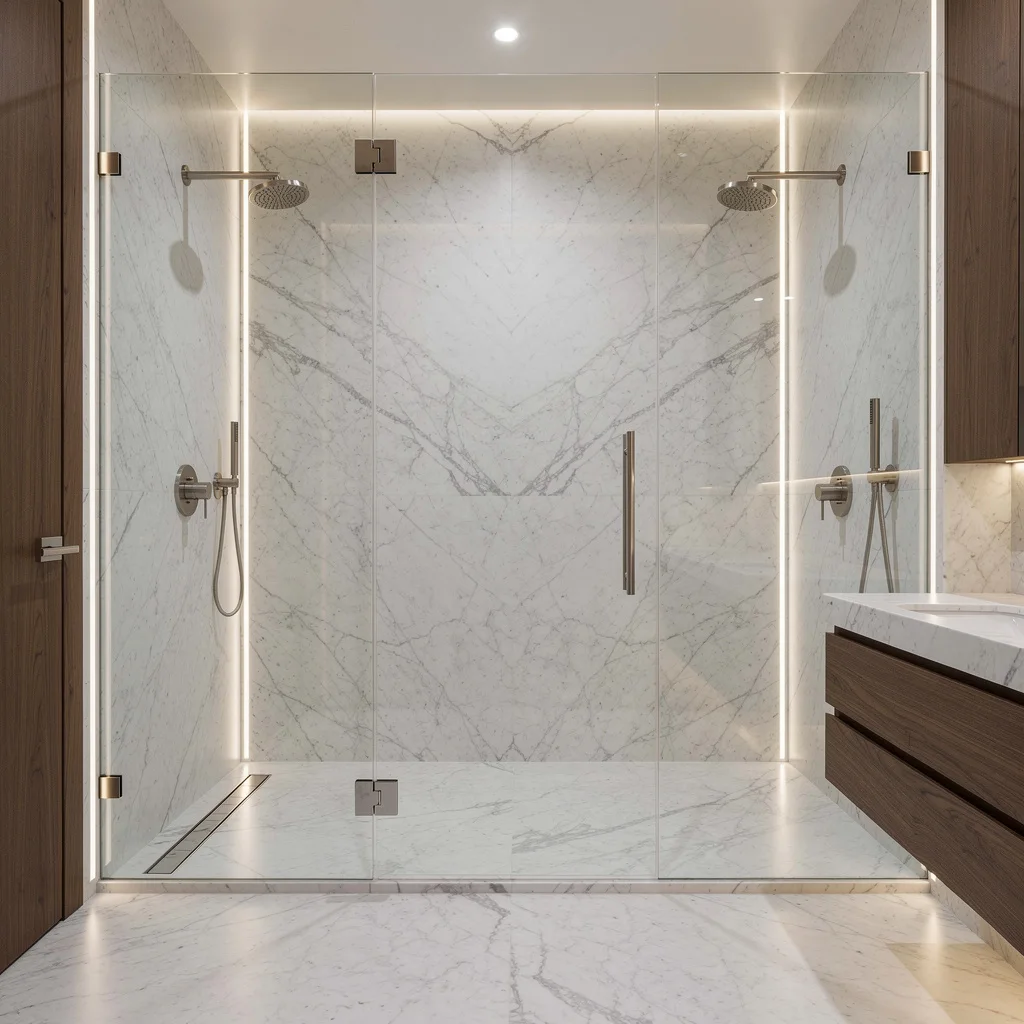
If you’re chasing that James Bond-got-ready-here vibe, slap massive honed marble tiles on your shower walls, focusing on ones with moody grey veining. Run those slabs in a bookmatched pattern so the veins mirror each other and treat your ADHD eyes to some visual calm. Forgo chunky shower frames—install frameless glass so your marble flex stays front and center. Pick brushed nickel hardware to keep things squarely in the now, and use subtle vertical LED strip lighting to make every shower feel like a soft-launch reel. Match the floor to the wall marble—no weak tile contrasts allowed. Balance any risk of coldness by adding floating walnut cabinetry; it cuts the opulence with a hint of warmth and proves you actually thought this through. Pro tip: Don’t skimp on lighting; LEDs hide all the sins and make marble look ten times the price you paid.
Emerald Artisanal Drama: Handmade Hex Tiles
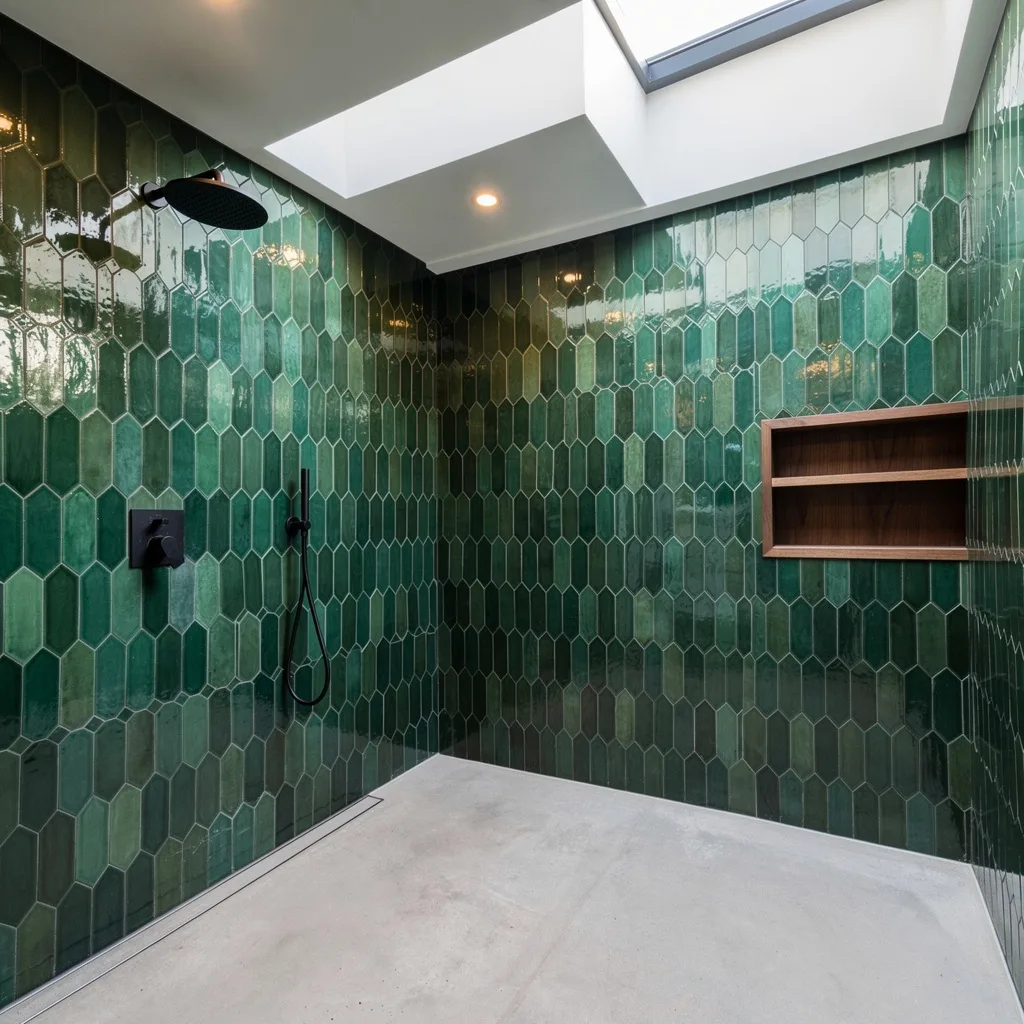
So you want everyone to remember your bathroom after pre-drinks? Emerald glossy tiles are your statement play—pick elongated hex shapes for extra main character energy. Each tile should look slightly imperfect and handmade; that’s the difference between rich and trying-to-look-rich. Let a clerestory window and recessed spotlights bounce on their slick surfaces and don’t be scared to mix a matte black rainfall showerhead—it’s a showstopper, not a funeral. Run matching walnut-trimmed niches for storage (no plastic caddies—ever), and keep the floor light, like pale concrete, to let the color punch through. If you want to get roasted by friends for your glow-up, make sure the trim isn’t one shade of green—variation is key. Rule: Never buy “emerald” tiles in a box set unless you want them flat and sad.
Continuous Travertine, Major Vibes
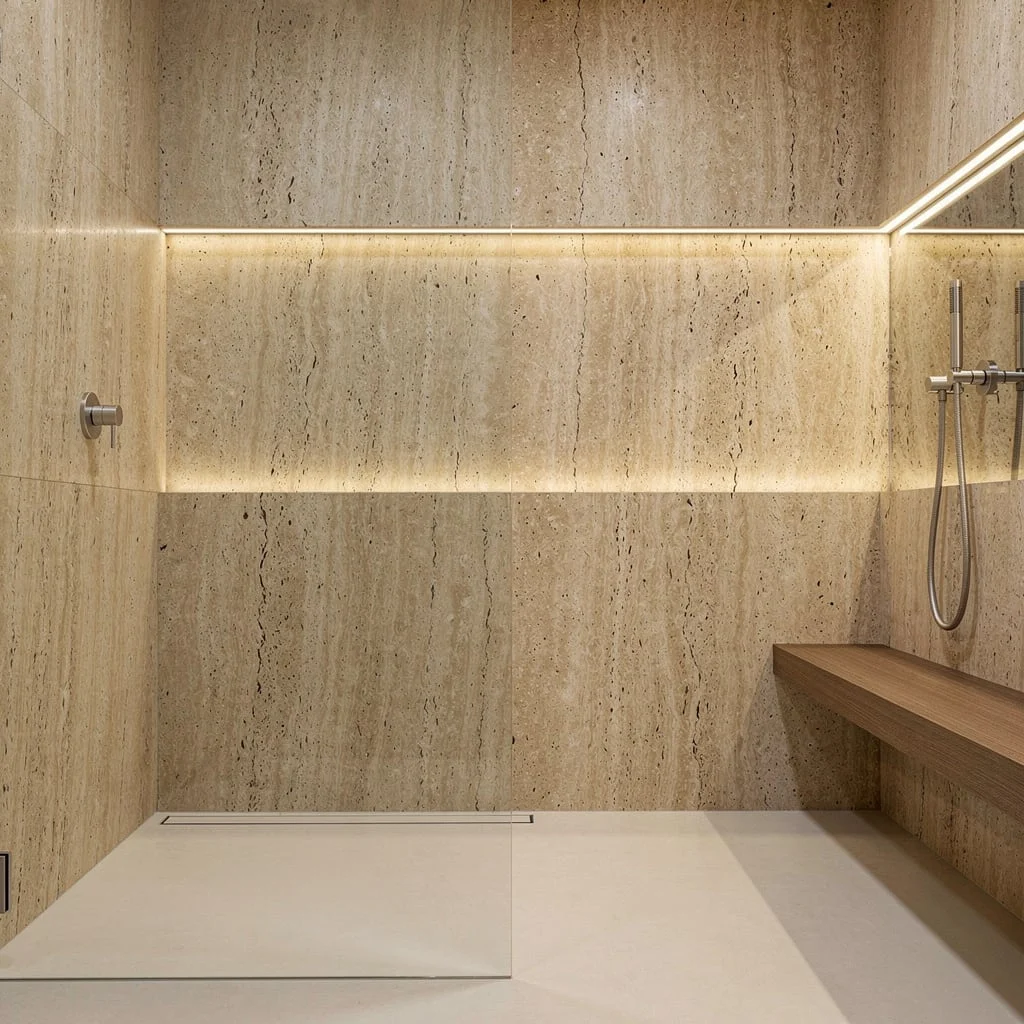
If you want that ‘flew home from Ibiza’ skin glow, embrace natural travertine slabs on your shower walls, installed vertically for height and moneyed European energy. Don’t cut the slabs short—run them floor to ceiling, always. Integrate horizontal LED strips to highlight the stone’s striations, and toss those chrome handles for softer brushed steel. Skip tiled shower curbs and go for glass panels that float—not frame—your look. Team warm-toned travertine with ivory microcement floors to keep things calm; anchor floating oak shelves for minimal storage without ruining the stone drama. Don’t ever use small tiles here—or travertine-effect ceramics; it’s fake news and everyone can tell. Secret sauce: Mood lighting makes the stone look way pricier—never skip the LEDs.
Oversized Terrazzo, Oversized Personality
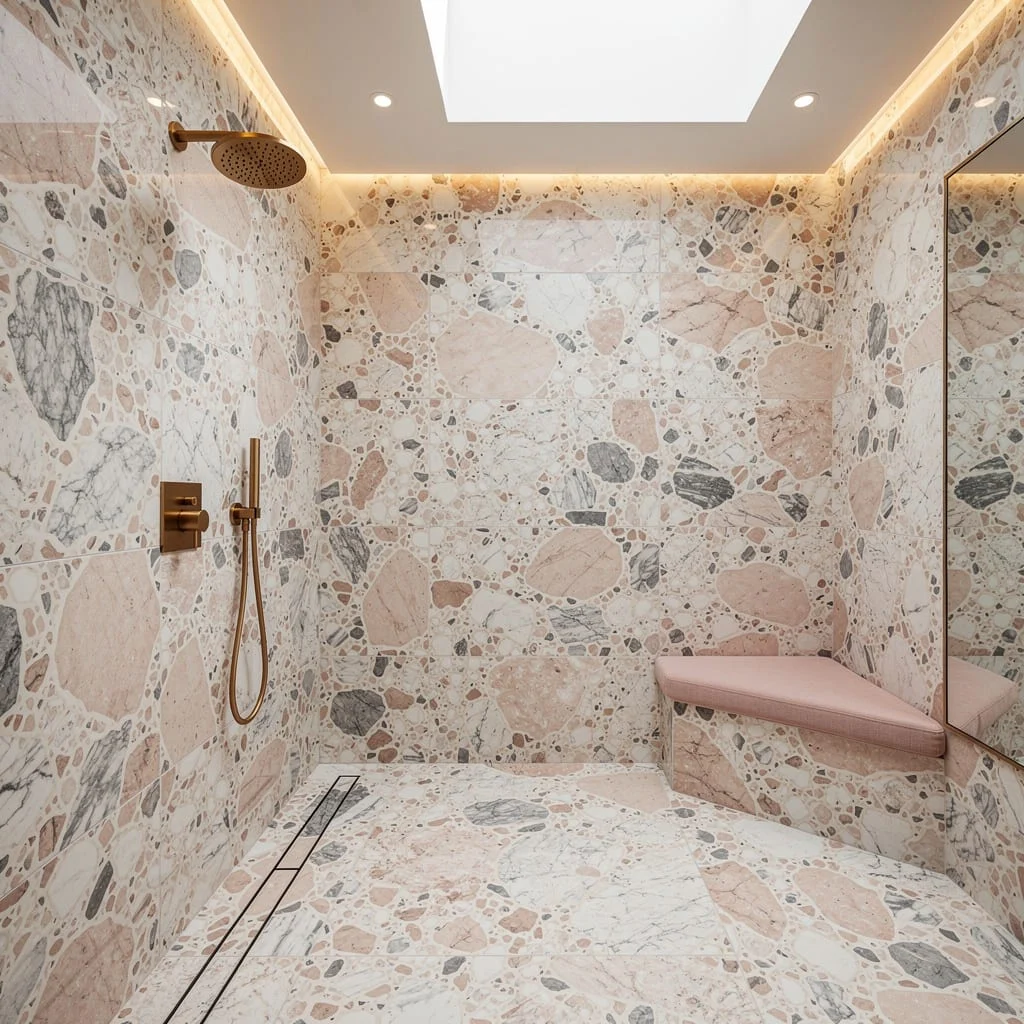
Ready for main-character-on-the-Riviera energy? Oversized terrazzo tiles need to take over your shower walls and floor, with big chunky marble and quartz bits front and center—blush, ivory, and muted grey are the move. Coordinate your walk-in enclosure with hidden diffused lighting from above (skylight, if you’ve got it), because terrazzo is nothing without a party of light. Install matte gold tapware because matchy-matchy is dead, and fold in a built-in bench with blush upholstery for that ‘I sit to shave my legs like a boss’ moment. If you cheap out and buy micro terrazzo, don’t call it this look. Style rule: Use terrazzo on both wall and floor or forget it—consistency is everything.
Blue Limestone Meets Copper: Tech Bro Chic
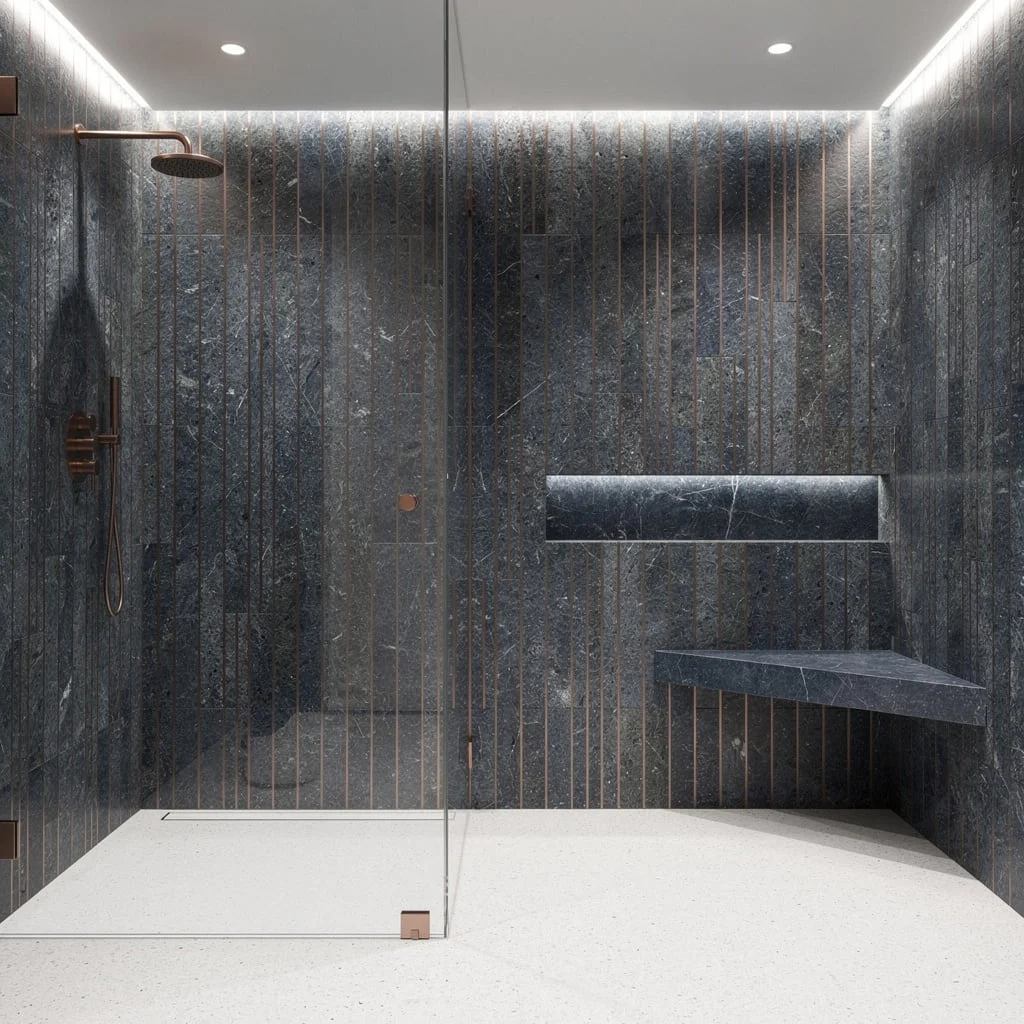
Hungry for a bolder look that screams ‘I know what an architect is’? Stack dark blue limestone vertically on your shower walls and slide skinny copper inlay strips in between. Leathered finish on the stone only—shiny is for kitchens. Install indirect LED lighting along the ceiling to spotlight the texture and copper drama. Don’t install a chunky curb; float those glass panels for an open look. Partner your moody wall tiles with bright polished white terrazzo on the floor for contrast, and hide your shampoo shame on a recessed shelf in matching blue limestone. Do not, under any circumstances, use bronze when copper is the hero here. Design hack: When picking grout color, go tone-on-tone or risk looking like you tiled your dorm bathroom.
Mother-Of-Pearl: Satisfy Your Magpie Impulses
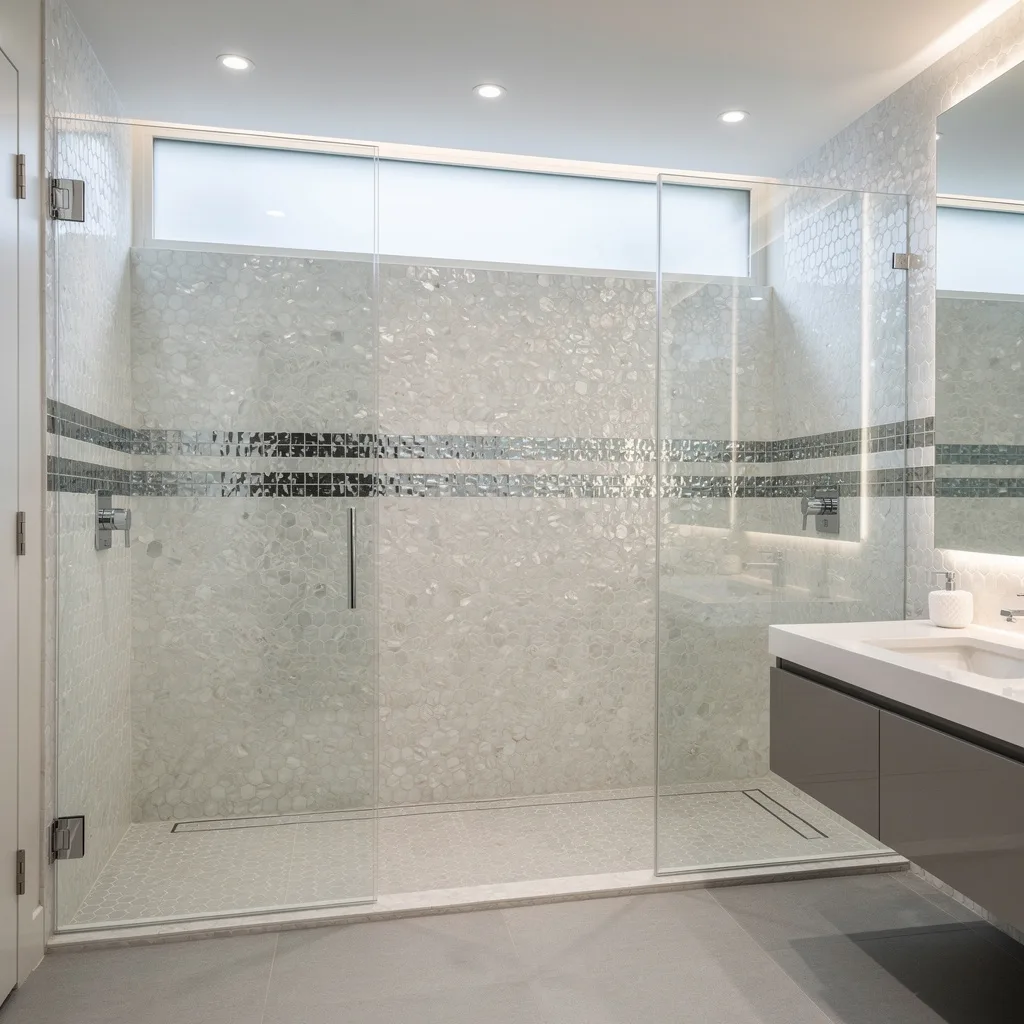
Channel your inner mermaid and layer your shower walls in pearly mother-of-pearl mosaics—make sure some silver glass tiles are in the mix for that A-list shimmer. Minimalist glass panels with polished chrome hardware will keep it clean (plastic hardware is a no from this house), and ceiling LEDs should be dialed up to very bright—go home if you think this look works in the dark. Style the floor in pale, slip-resistant Italian porcelain—no one looks cute after a slip-and-slide. Add a glossy lacquered floating vanity to bounce even more light. Styling edict: Never cover this wall with a shower curtain; it’s a capital offense.
Brutalism for the Stylish: Concrete-Look Porcelain Slabs
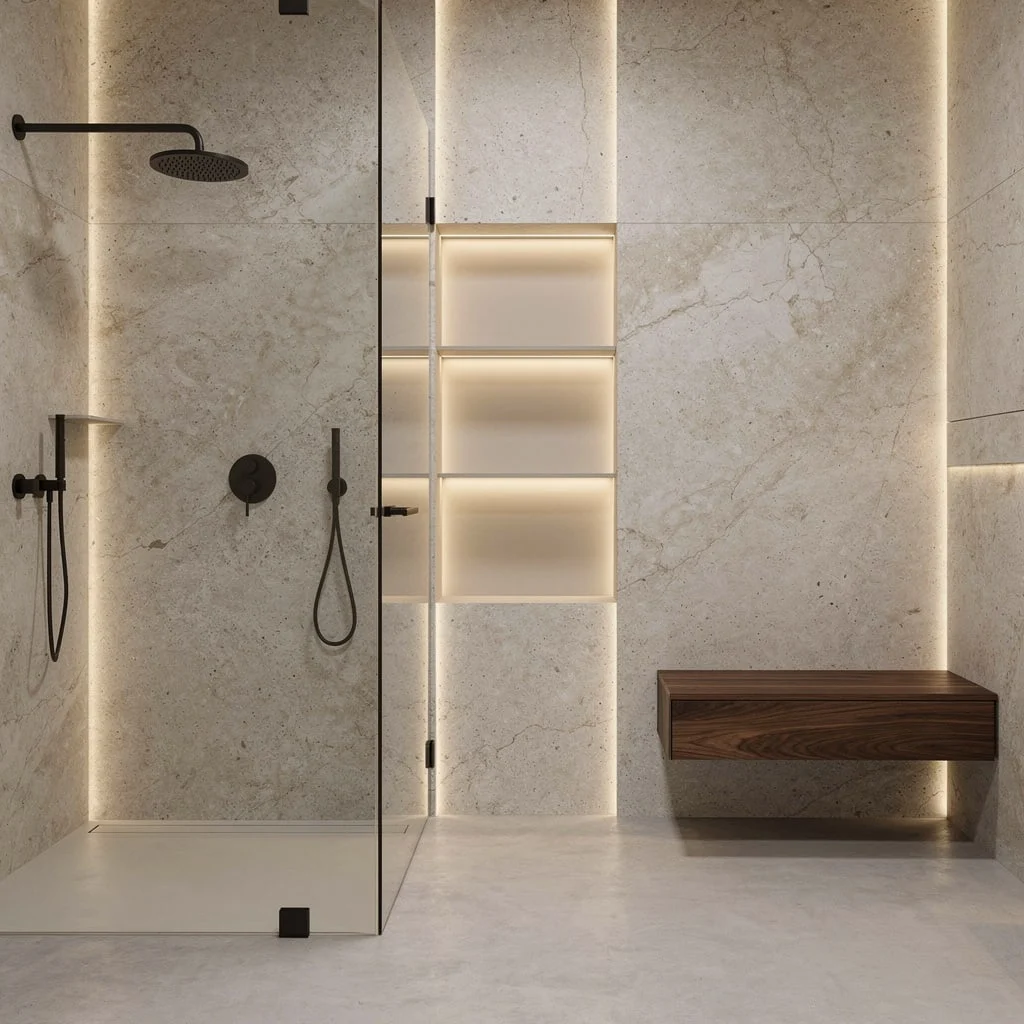
Dreaming of urban sophistication with the right Insta edge? Wrap your shower in seamless concrete-look porcelain slabs, especially in soft taupe tones for that softcore brutalist vibe. Pop in vertical LED strips behind a frosted-glass niche—your shampoo finally gets VIP treatment. Frameless glass keeps everything sharp, while matte black fixtures give your setup some industrial backbone. Extend continuous microcement across the floor, and add a wall-mounted walnut bench for pro-level contrast, never an afterthought. Here’s the only rule: Never combine these porcelain slabs with faux ‘distressed’ accessories; it will ruin your credibility and your Instagram likes.
3D Ceramic Works: Let Your Walls Flex
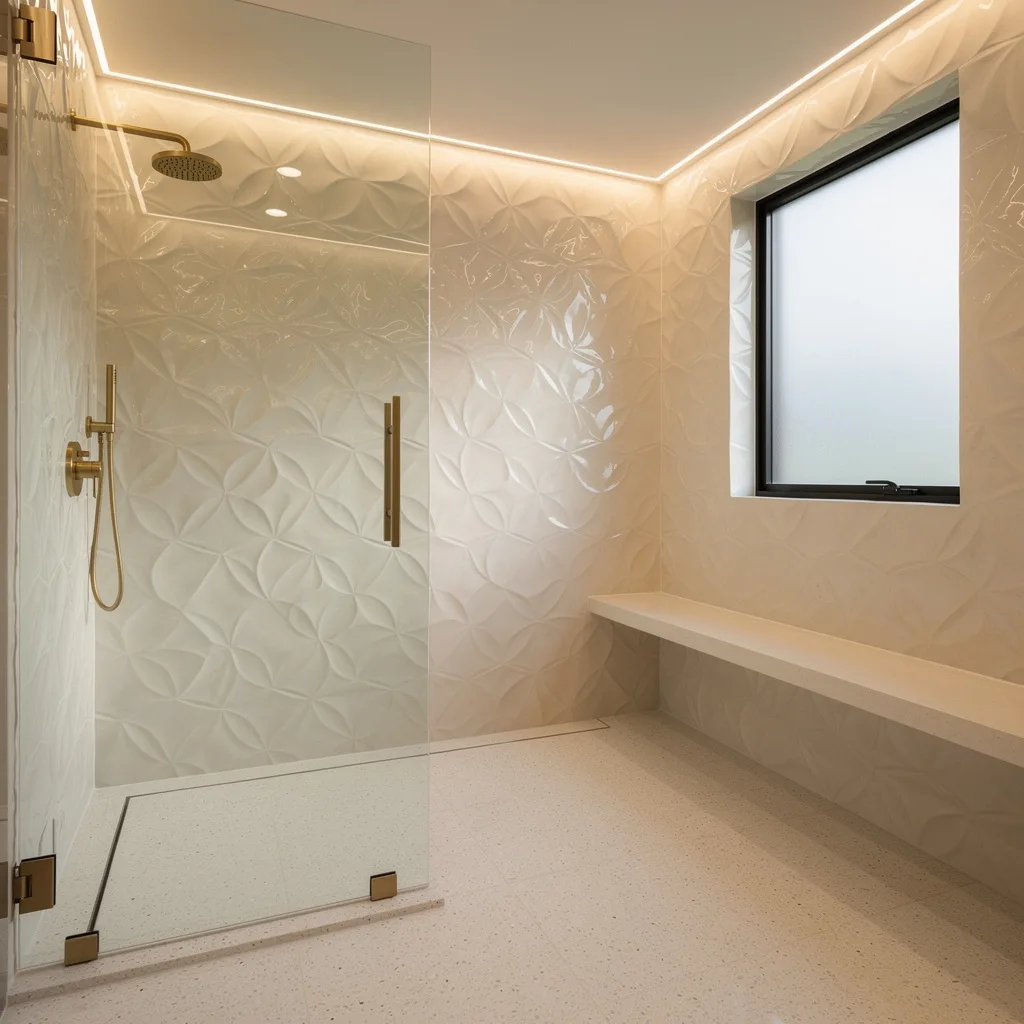
Bored of flat, basic tiles? It’s time for custom three-dimensional glossy ceramic tiles in an interlocking wave pattern all over your shower. Yes, get artsy—flat is for rental apartments. Hide LED strips above the enclosure to cast dramatic shadow play with every shower. Opt for frameless glass doors (always) and use brushed brass taps for an extra dose of grown-up glam. Pale terrazzo floors keep things modern but not sterile, and don’t forget to run a slim functional ledge along the wall—no ugly corner caddies here. Rule to live by: Don’t pair 3D walls with loud patterned floors—let the walls have their Oscar moment.
Midnight Volcanic Stone: Dark Mode On
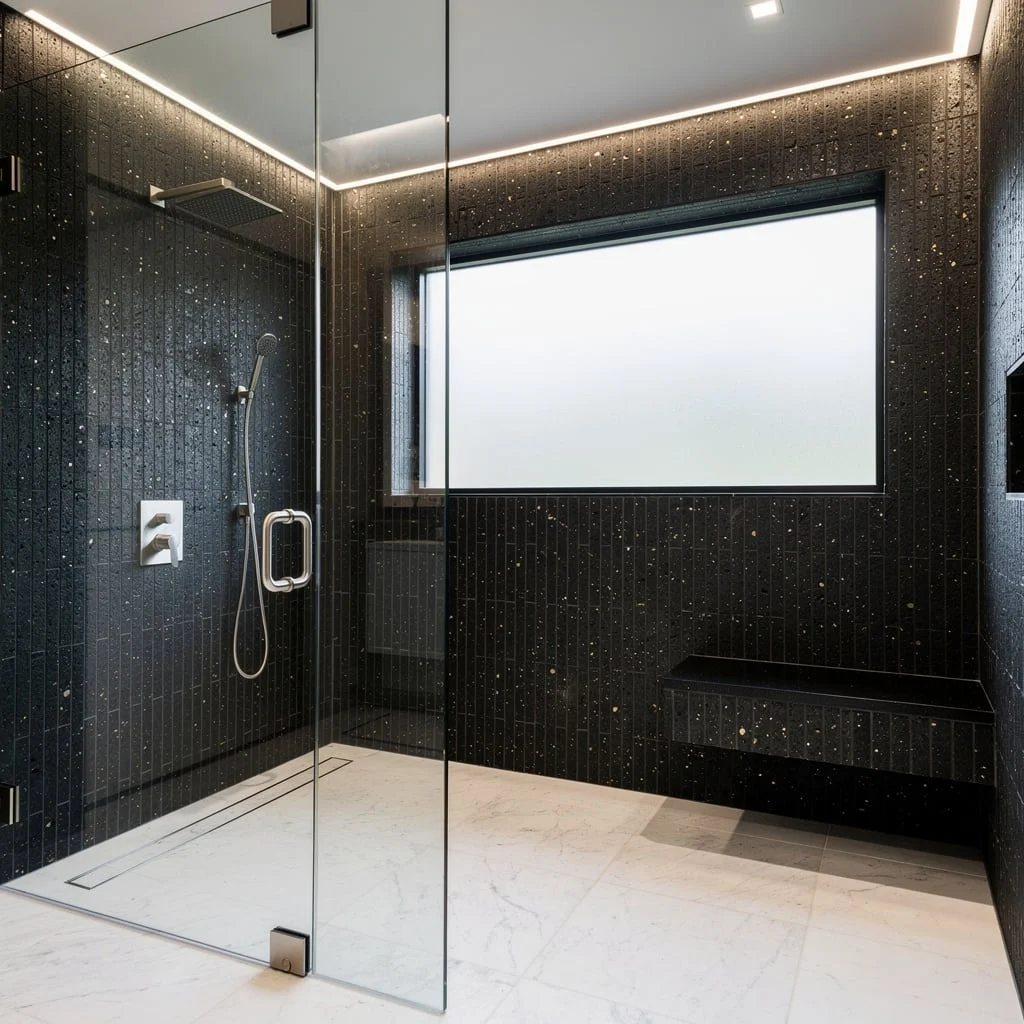
Crying out for max-edgy, moody design? Cover your shower walls with slim, vertically-stacked volcanic stone tiles in true midnight black—bonus points if they’ve got subtle metallic flecks. Install a cove LED for soft glows and set a frosted window to keep it dramatic but not depressing. Stick with frameless glass and pair with matte stainless hardware, not blingy chrome. Go bright and honed for the floor in white marble to keep it graphic. Always include a discreet recessed shelf in black stone for the essentials, not clutter. Hard truth: Don’t skimp on cleaning—dark stone shows water spots. Squeegee after every shower; your future self will thank you.
Blue Onyx Porcelain: Go Big or Go Home
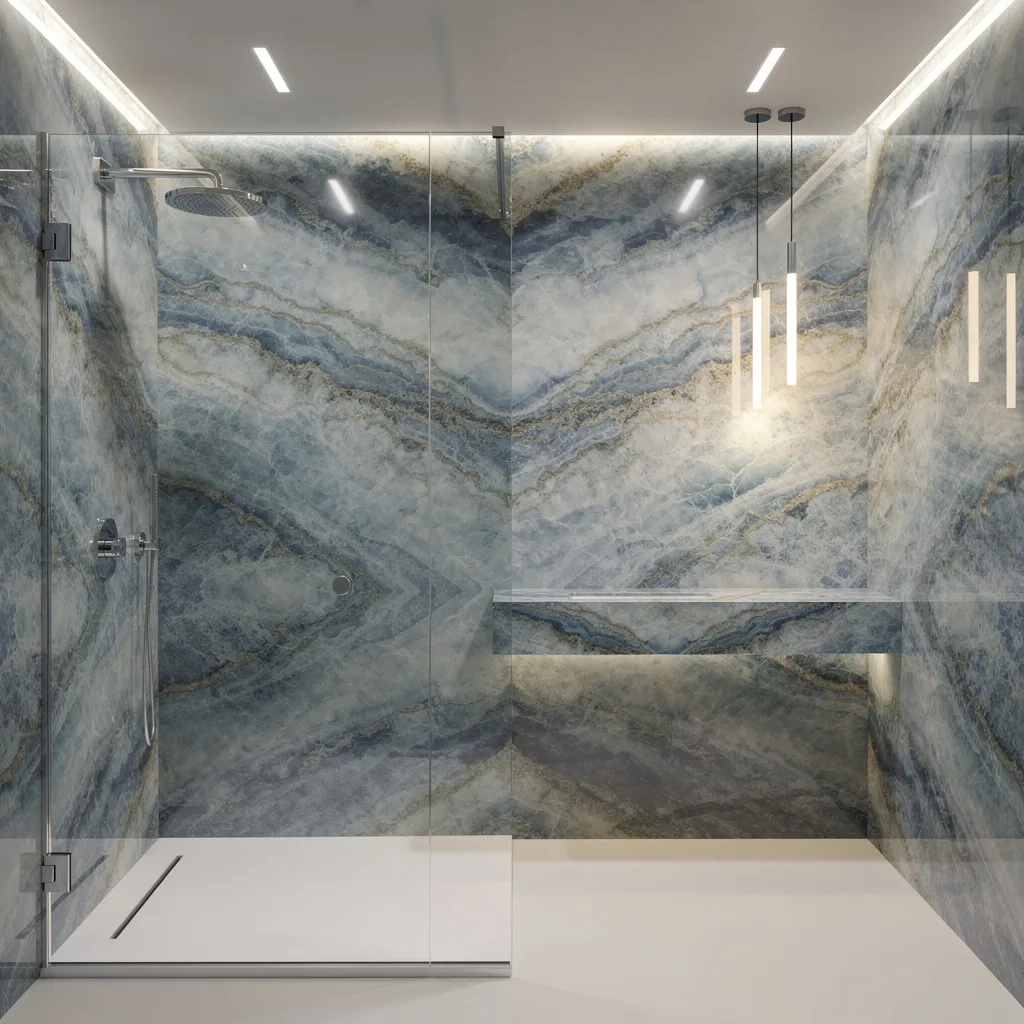
Feeling extra? Go for high-gloss, bookmatched blue onyx porcelain tiles on your shower walls—swirls of blue and gold scream high-fantasy drama. Layer with pendant LED lights and indirect ceiling uplights to give the veining a life of its own. Commit to minimal chrome fixtures and use just a seamless glass enclosure—nothing heavy to break up the view. Finish the floor with simple matte white porcelain; let that wall be the main show. If you need storage, build in a floating shelf in matching blue onyx porcelain—no after-market dollar store solutions. Key styling rule: Only mix one statement pattern at a time; trust, you don’t want to compete with Mother Nature.
Golden Veins and Warm Parquet
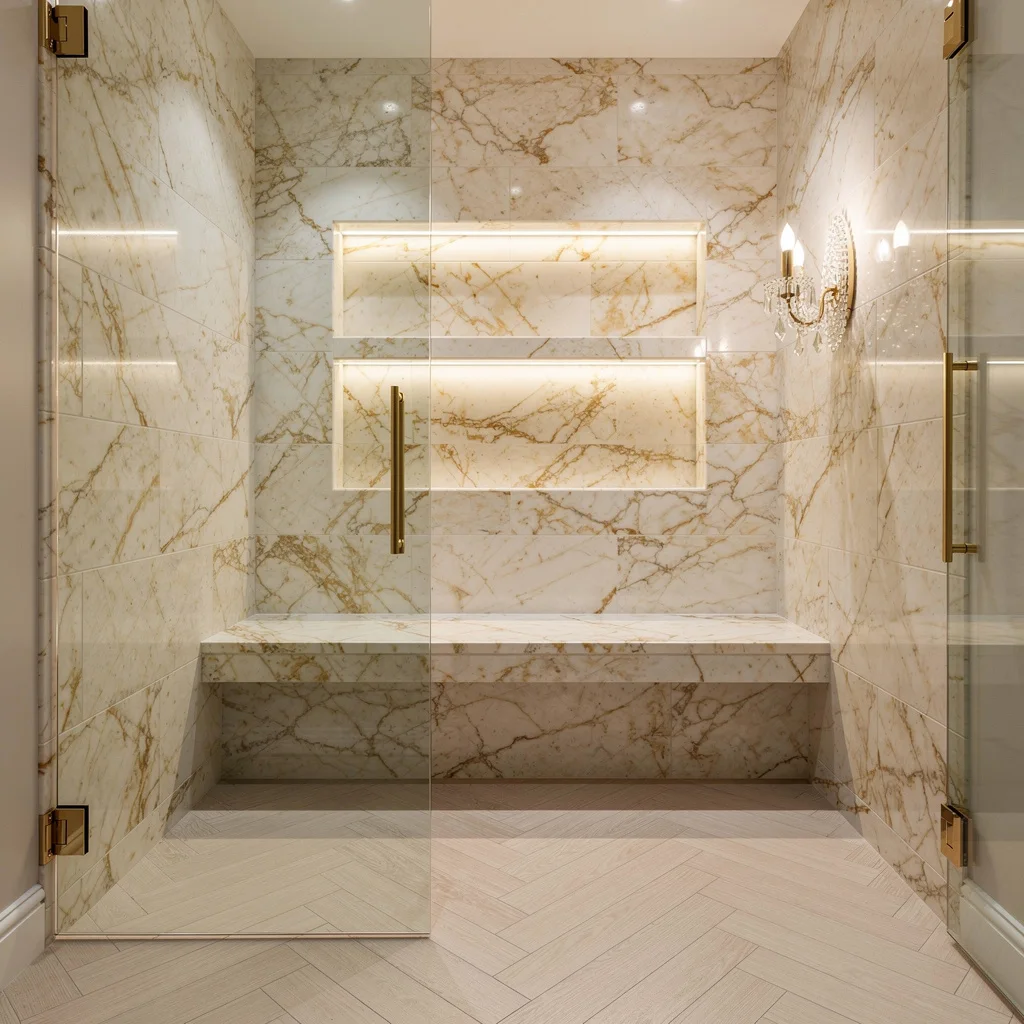
Chasing old-money hotel vibes without the pretension? Install satin-finish Calacatta Gold marble tiles in a staggered offset on your shower walls. Let those gold veins hit just right—randomness rules, so don’t lay them in rows. Fit the niche with full-height recessed lighting, and mount a crystal sconce for soft drama. Channel ‘palazzo chic’ with gold hardware, but never, ever, let acrylic handles in. Run the shower floor in pale herringbone wood parquet (sealed within an inch of its life). Carve out a marble bench—never plastic—since design is about commitment. Rule of thumb: Always light your marble from every angle; shadows are not your friend here.
Final Thoughts
Every shower here made a committed tile decision and then followed through on it without softening the edges with safer choices — no dark tile walls paired with a cautious white subway floor “just in case,” no bold pattern interrupted by a plain wall on the adjacent side “to balance it out.” That commitment is the actual design skill, not the initial choice.
The shower you use every morning shapes the first twenty minutes of your day in ways that are difficult to articulate but very easy to feel. A shower that looks generic produces a generic start. One that looks genuinely designed — where the tile, the hardware, the fixture positions, and the lighting were all chosen to work together — produces something closer to a daily ritual than a daily obligation. That’s not a small distinction, and it’s available to anyone willing to make one strong decision and resist the urge to walk it back.