
Somewhere along the way, garden centers decided that “outdoor decor” meant terracotta-colored plastic pots, solar lights shaped like mushrooms, and shepherd’s hooks holding hanging baskets in the most predictable arrangement imaginable. Drive through any suburb in June and you’ll see the same catalog repeated on every third lawn — the same resin birdbath, the same ornamental grass in the same black plastic container, the same complete absence of anything that suggests the person who lives there has a single original thought about what a garden could be.
Vintage garden design is the antidote to all of that, and not in the way that Pinterest would have you believe — not the curated, artificially distressed, bought-it-new-to-look-old version that costs twice as much as just buying something nice. Real vintage garden character comes from actual old things used with genuine creativity, which costs almost nothing and produces results that no amount of catalog shopping can replicate. A rusty kettle, a weathered ladder, an object that was never meant to live in a garden — placed correctly, these things create the kind of atmosphere that takes decades to manufacture any other way.
The gardens that stop people mid-walk, that make visitors ask for a tour before they’ve even come inside, that look like they’ve been growing and evolving for generations — they’re not expensive. They’re intentional, patient, and completely uninterested in what the garden center is currently featuring near the checkout.
The Rules That Vintage Gardens Ignore on Purpose
Understanding why vintage garden design works requires understanding what it’s actively refusing to do — and the refusals are as instructive as the choices.
Matching is for people who distrust their own taste — Vintage gardens layer galvanized metal against terracotta against weathered timber against aged stone, and the result looks richer than any coordinated set ever could. Visual interest comes from contrast and accumulation over time, not from buying six of the same thing.
New materials age into mediocrity — Modern plastic and resin look their worst after two seasons outdoors. Old metal, timber, and stone look their best after twenty years. Choosing materials that improve with weathering rather than degrade with it is the single most important long-term decision in any garden.
Objects don’t need to justify their original purpose — The most memorable vintage garden moments come from objects doing jobs they were never designed for: containers that weren’t containers, structures repurposed as plant support, functional items retired into decoration. This is where character actually comes from, and you cannot buy it off a shelf.
What Separates a Vintage Garden from Just an Old One
Age alone doesn’t produce a vintage garden — neglect produces an old garden, and those are very different things. The distinction comes down to curation.
Every element needs a reason — A vintage garden accumulates objects with intention, not inertia. The difference between “charmingly aged” and “someone gave up maintaining this” is whether each element was placed with thought or just left where it landed.
Plants and objects in conversation — The best vintage setups treat plants and decorative objects as partners rather than separate categories. When greenery grows through, over, and around an aged object, the whole composition reads as something that happened rather than something arranged, and that distinction is everything.
Scale matters more than quantity — One oversized vintage focal point surrounded by negative space reads as confident and designed. Twenty small vintage objects scattered across a garden reads as a car boot sale. Edit ruthlessly.
6 Vintage Garden Ideas That Make Modern Landscaping Look Like It’s Trying Too Hard
The Yellow Greenhouse Interior:
An old 1920s historical house indoor garden.
by u/Csalz94009 in gardening
Most people who attempt a greenhouse interior this densely planted end up with something that looks like a storage problem rather than a design choice — orchids crammed on benches, ferns spilling over edges, hanging baskets competing for airspace — and the reason this one avoids that fate entirely comes down to the architectural framework doing its job. The yellow-painted timber and glazing structure is bold enough to contain the visual chaos of dozens of species without disappearing behind it, creating a warm golden cast that unifies everything inside regardless of how different the individual plants are. The stone birdbath pedestal centered in the pathway is the anchor that gives the eye somewhere to land amid all that botanical abundance, which is the compositional move that separates a greenhouse someone designed from one that simply filled up over time. Orchids, ferns, and tropical specimens all exist here at different heights — floor level, bench height, hanging — which creates the layered canopy effect that makes the space feel genuinely immersive rather than just full. Styling note: the aged stone floor with its irregular surface is load-bearing for the whole atmosphere — clean concrete or pavers would immediately make this read as commercial rather than personal.
The Weathered Ladder Herb Display:
Taking a timber ladder that has clearly lived a full working life — the kind with genuine wear marks, split grain, and the particular grey-brown color that wood develops after decades of outdoor exposure — and using it as a tiered plant display is the vintage garden move that looks deceptively simple until you try to replicate it with a new ladder and discover it looks like a craft project instead. The mix of galvanized metal buckets and aged terracotta pots at varying sizes creates the accumulated-over-time quality that makes this feel like it’s been here for years rather than assembled on a Sunday afternoon. Herb plantings — rosemary, mint, thyme, and creeping varieties — suit this setup particularly well because they grow informally enough to soften the structure without overwhelming it. The trowels and small hand tools tucked into some of the buckets alongside the plants are the detail that tips this from decorative into genuinely functional, which is the vintage garden philosophy made physical: beautiful things should also be useful, and useful things should also be beautiful. Lean it against stone, brick, or aged timber fence for maximum effect — a fresh white wall would immediately undermine the entire composition.
The Rusty Mailbox Succulent Planter:
An old American-style mailbox, paint long since surrendering to rust in patches that have developed their own abstract beauty, mounted on a weathered timber fence post and overflowing with a carefully composed arrangement of echeverias, aloes, sedums, and trailing succulents — this is the vintage container idea that earns genuine double-takes from anyone who passes it. The rust patina on the mailbox is not a problem to be solved; it’s the entire point, providing warm copper and amber tones that contrast with the cool blue-grey and sage greens of the succulents in a way that no new planter in any color could manufacture. Succulents are the correct plant choice here for reasons beyond aesthetics — they’re drought-tolerant enough to survive the drainage challenges of a repurposed metal container and visually complex enough to reward close inspection in a way that single-variety plantings never do. The garden visible behind — gravel paths, clipped hedges, colorful ground cover — frames this as one intentional element within a considered larger space rather than a random quirky object, which is the context that makes the difference between “charming” and “confusing.” One practical note: drill drainage holes before planting, because succulents tolerate neglect but not wet feet, regardless of how characterful their container is.
The Hanging Kettle Wildflower Planter:
Suspending an old enamel kettle — teal paint mostly gone, rust developing in the honest way that metal develops rust when it’s been outside long enough to mean it — from a corroded iron rod, and filling it with a loose arrangement of pink and white wild daisies and feathery greenery, is the kind of vintage garden idea that photographs beautifully and costs nothing if you already own a defunct kettle, which is a value proposition that very few garden center products can compete with. The size relationship between the small kettle and the abundant wildflowers spilling out of it is what gives the composition its charm — the flowers are almost comically generous relative to the container, which creates the impression that the kettle is overflowing with something it couldn’t contain, a kind of botanical exuberance that suits wildflowers perfectly and would look wrong with structured blooms. Hanging height is the variable that makes or breaks this: too low and it reads as a tripping hazard, too high and the detail is lost — eye level, where the contents of the kettle are visible and the rust texture can be appreciated up close, is the right answer. The soft-focus green background of hedging and foliage behind is doing essential work here, providing a neutral canvas that lets the kettle and flowers read as a composed image rather than a cluttered corner.
The Citrus Arch Mirror Courtyard
An ornate silver cast-iron bistro set positioned against an exposed brick wall, with an oversized decorative mirror in a heavily detailed silver frame mounted behind and a trained citrus tree arching around it heavy with actual fruit — this is the vintage garden setup that requires the most commitment and delivers the most theatrical return, and the theatricality is entirely the point. The mirror is the conceptual move that elevates this from “nice seating area” to “destination within the garden” — it extends the visual depth of what is presumably a relatively shallow space against a wall, reflects the greenery and brick back into the scene, and creates the impression that there’s more garden beyond than actually exists. The citrus arch around the mirror frame is what tips the composition from decorative into genuinely extraordinary: trained fruit trees take years to develop this kind of structure, and that time investment reads as accumulated character in a way that no instant planting solution can replicate. Lavender in terracotta pots, scattered gravel underfoot, and the period-appropriate detailing on every metal element keep the whole setup cohesive rather than eccentric. The lesson: outdoor mirrors work exactly as well as interior mirrors for making spaces feel larger, and the ones in vintage frames look better in a brick garden than they ever did inside a house.
The Stone Wishing Well Water Feature:
A stone wishing well — proper fieldstone construction, circular base, timber pergola top with aged wooden uprights — with a terracotta basin planter overflowing with pink geraniums and cascading white alyssum, a hanging copper bucket dripping water into the basin below, and the whole structure wrapped in climbing vines that have taken years to reach this level of coverage, is the kind of garden focal point that makes every other garden feature feel like it’s still auditioning. The cascading plants from the upper basin are the detail that makes this structure feel alive rather than architectural — without them, it’s a well; with them, it’s a garden moment that photographs from every angle. Water features in gardens earn their maintenance cost by creating ambient sound that changes the atmosphere of the entire surrounding space, and the gentle drip of the hanging bucket here does that job without the mechanical hum that ruins the vintage atmosphere of pump-driven alternatives. The surrounding planting — phlox, hydrangeas, and ground cover roses at the base — integrates the structure into the garden rather than leaving it standing isolated, which is the mistake that makes even beautiful focal points look like they were dropped from above rather than grown in place. Styling note: the ivy coverage on the surrounding walls and pergola took years to develop and cannot be rushed — if you’re building this, plant the climbers the same day you install the structure and accept that the best version of it is five years away.
Build a Rustic Nook That’s Actually Inviting—Not Sad
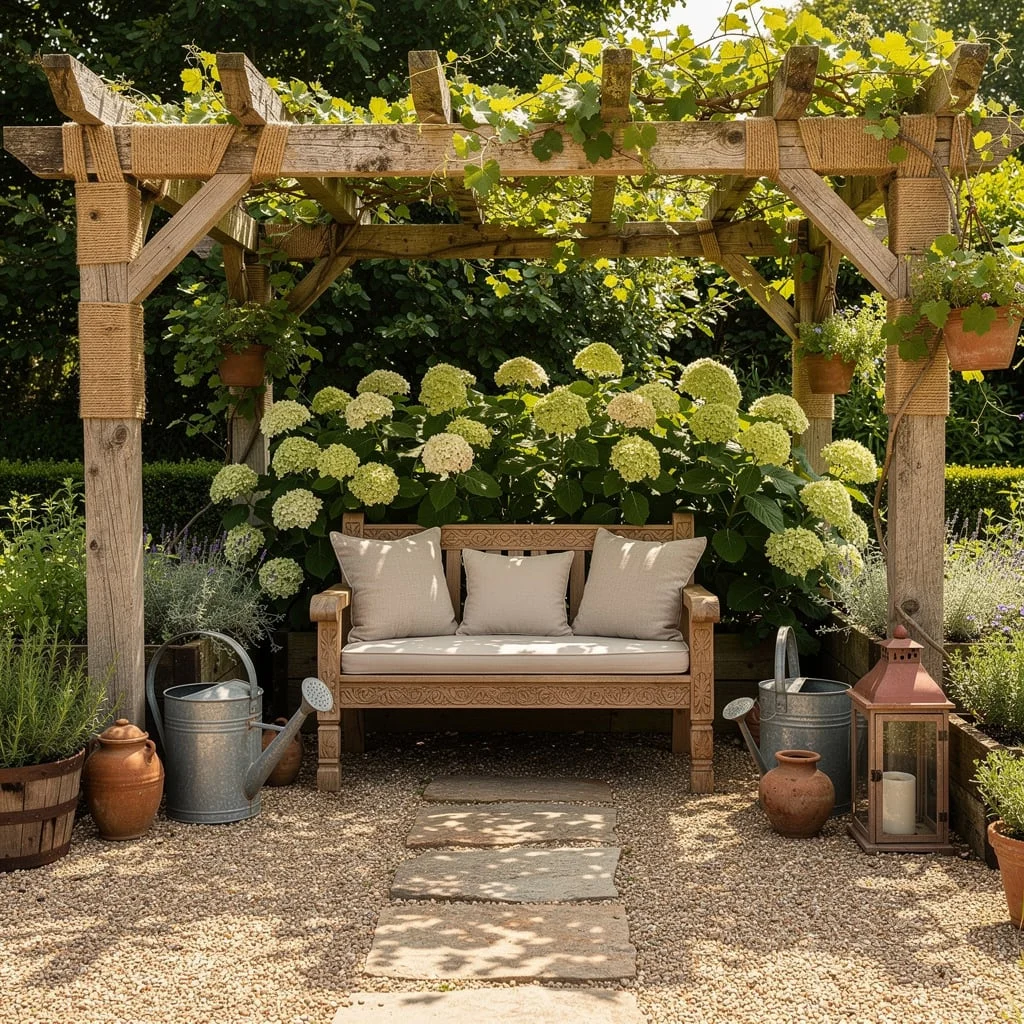
If your dream garden includes more personality and less Pinterest-fail, you need a handcrafted timber pergola dripped in jute rope, weathered beams, and a tangle of grapevines. Drag in a chunky solid oak bench—go big, go carved, and demand plush linen cushions in low-key, earthy tones because torture seating is cancelled. Get heavy-handed with hydrangea bushes and pack decorative galvanized watering cans and wooden planters full of herbs all around. Light the scene with aged terra-cotta lanterns, and lay a flagstone path over pea gravel so it feels intentional, not like you lost the plot. Always stuff your cushions and keep those vines under control—nature, but make it curated.
Dine Like a Woodland King With a Rustic Table Scene
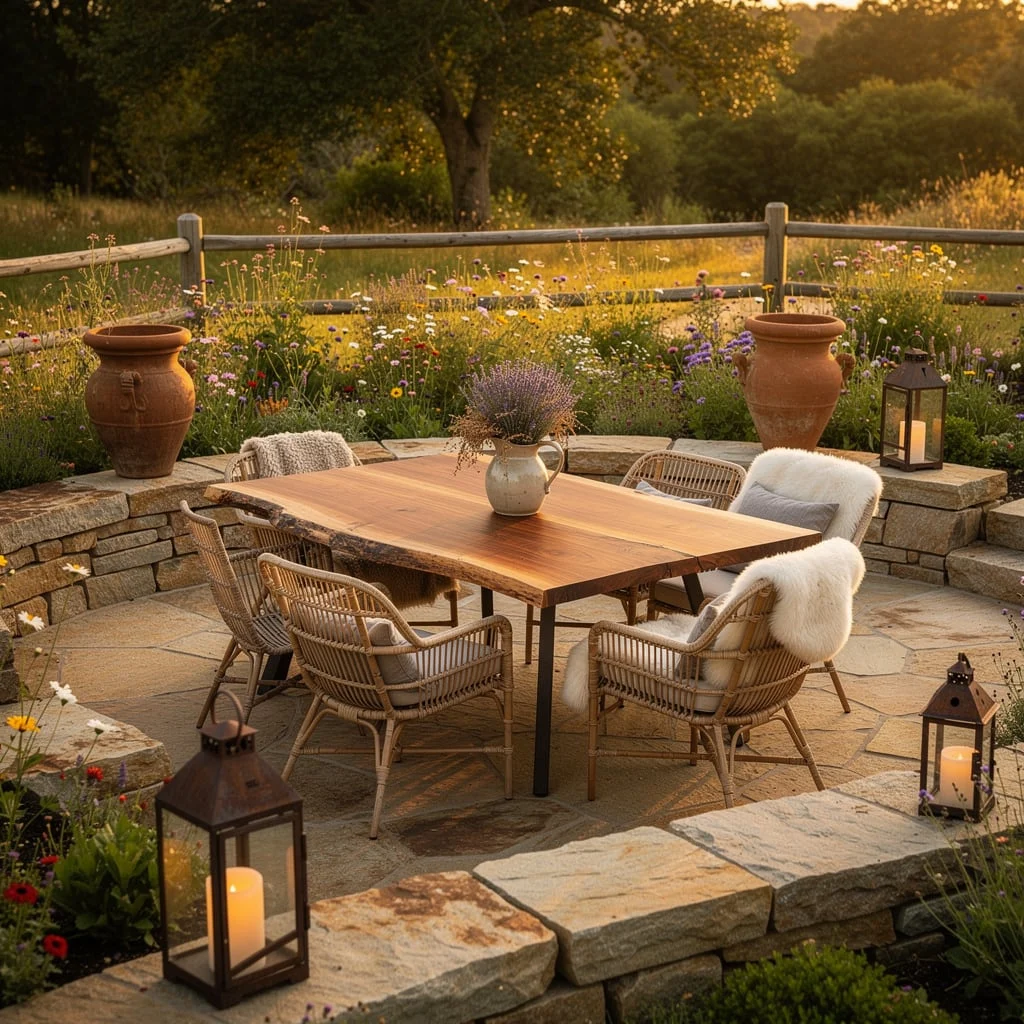
Stop eating outside at that rickety folding table—go for a thicc, live-edge walnut table on a real stone patio. Drop mismatched rattan chairs for messy-cool drama and flex a dried lavender centerpiece in a ceramic pitcher—yes, you’re that effortless. Stack rough limestone for casual borders and smother the area in wildflowers, battered iron lanterns, and comically oversized clay urns. Enclose with a split rail fence and toss sheepskin throws everywhere because rustic doesn’t mean cold. Always avoid matchy-matchy chair sets—this is not a wedding rental catalogue.
Own the Cozy with a Stone Archway Seating Corner
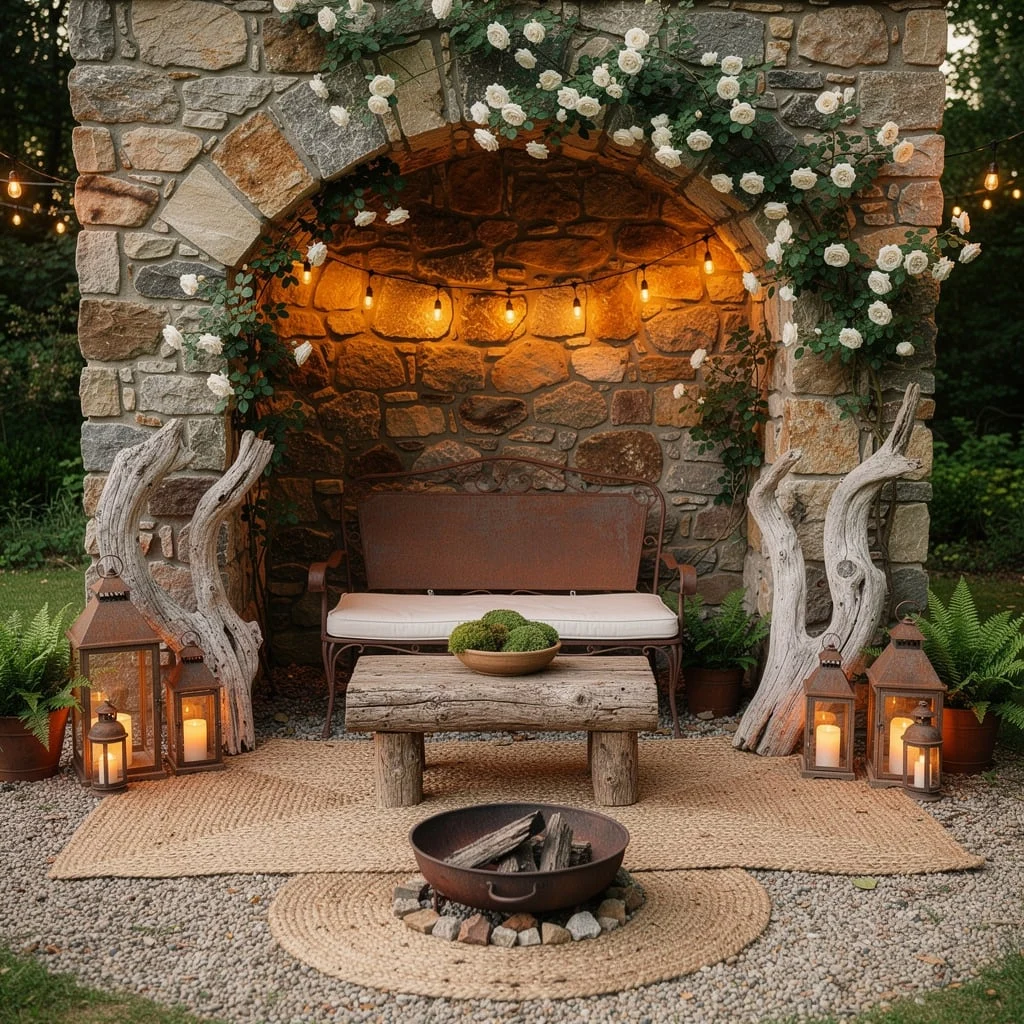
Sick of dainty garden benches? Build a fortress with a fieldstone archway draped in climbing white roses for a micro-vibe palace. Ring up a vintage metal loveseat—bonus points if it shows rust—pair with a log slab for a coffee table, and don’t skip on a bowl of moss (plants count as decor). Toss thick woven jute rugs underfoot and blast a tiny iron fire pit into your gravel circle. Crowd in driftwood sculptures, busted antique lanterns, and fern planters. Always run string lights for drama—if it can’t double as a moody Insta spot, why bother?
Go Vertical with a Barn Door Herb Wall
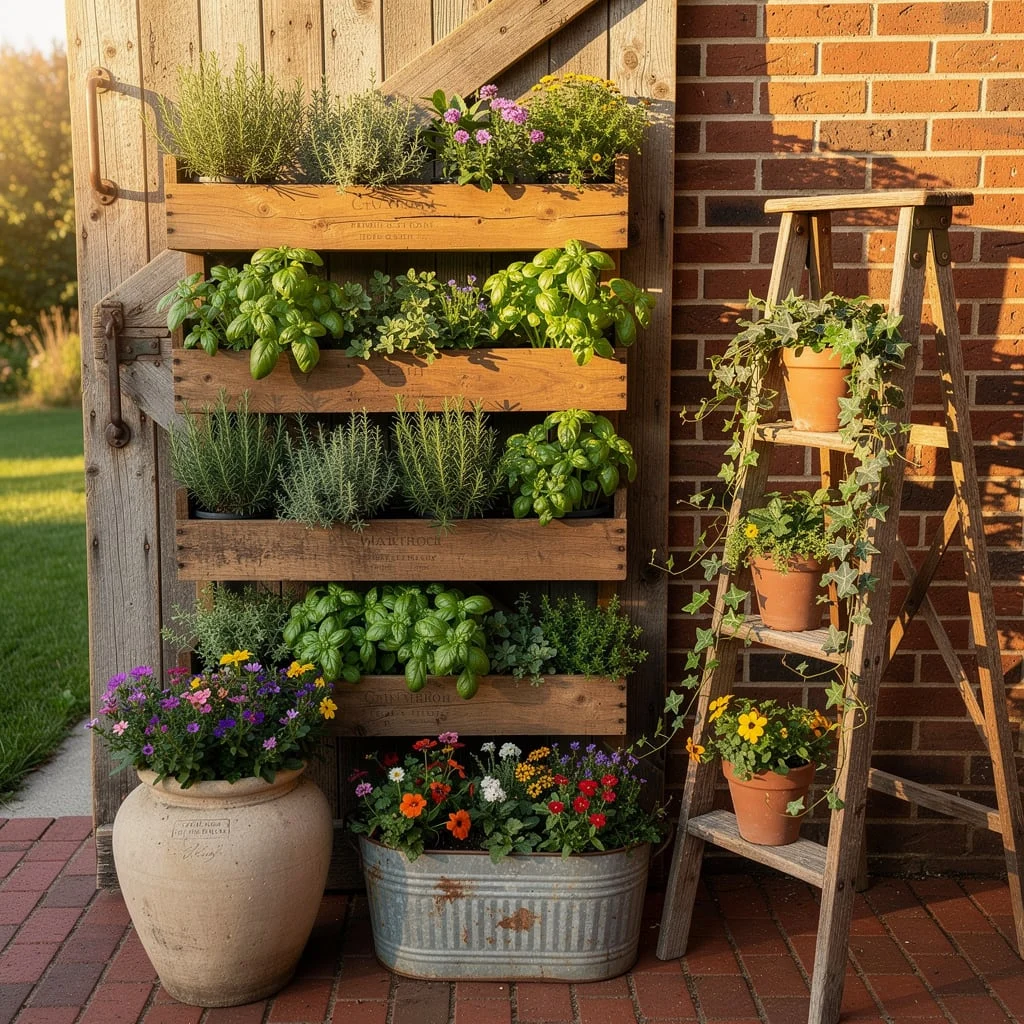
That blank patio wall just called—it wants a rustic upgrade. Jack up a reclaimed barn door as your vertical herb garden and bolt on wooden crates, random and overflowing with basil, thyme, and rosemary like you’re your own farmer’s market. Dump big stoneware crocks and upcycle metal wash tubs at the base, jam-packed with flowers. Drop a gnarly stepladder in—layer with trailing ivy for height and texture. Always mass the best-looking plants at eye level and let the shabbier stuff chill in buckets below. You’re here for charm, not botany awards.
Make Your Entrance Worth the Drama with a Corten Steel Gate
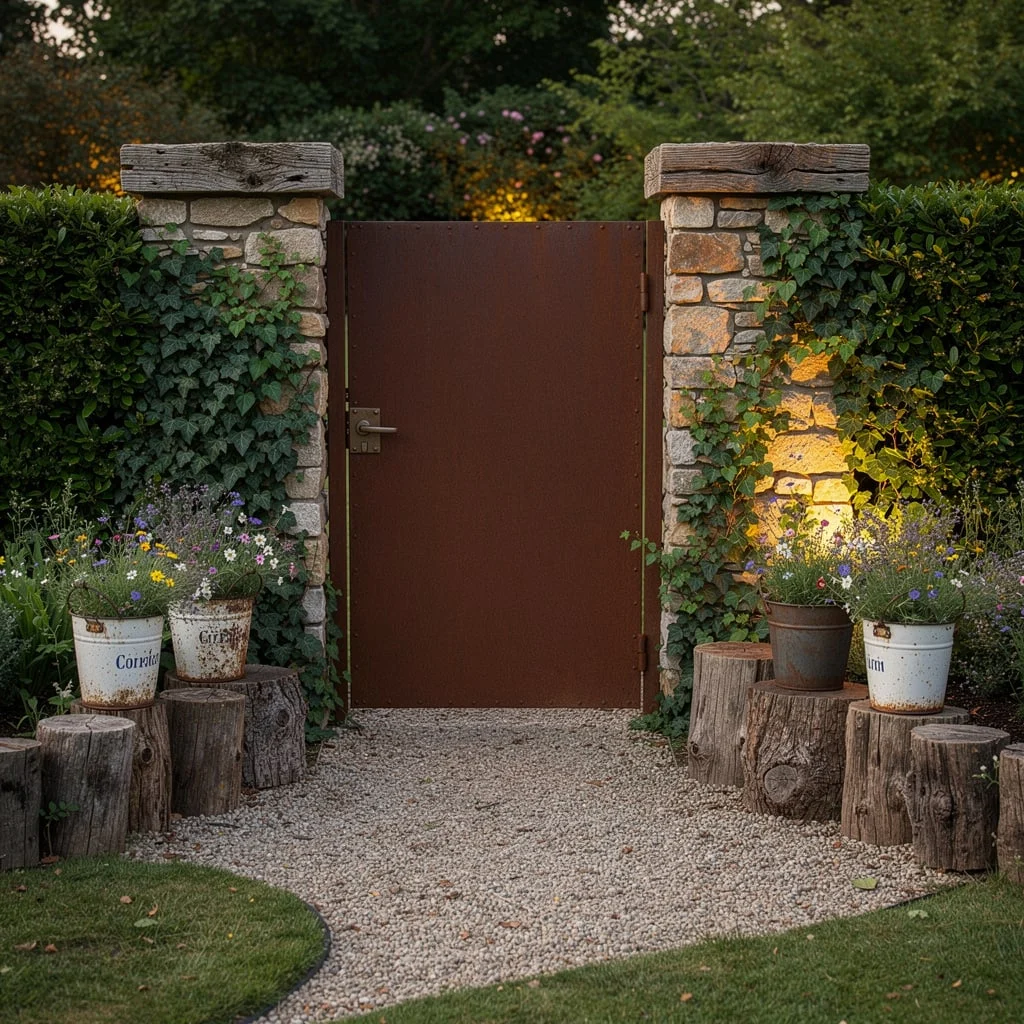
Your garden gate should intimidate the Amazon driver, not just your in-laws. Score a hand-forged Corten steel gate, slam it in a hedge and level it up with rough stone pillars capped with battered wood—and let that Boston ivy go rogue. Lay a curved gravel walk flanked by chunky split logs for a dramatic reveal, pile on antique enamel buckets, and dump wildflowers with abandon. Hide some uplights in the hedge so everything looks lux (or at least moody) after dark. Always position the gate off-center—symmetry is for spreadsheets, not garden entrances.
Get Messy with a Hardcore Potting Corner
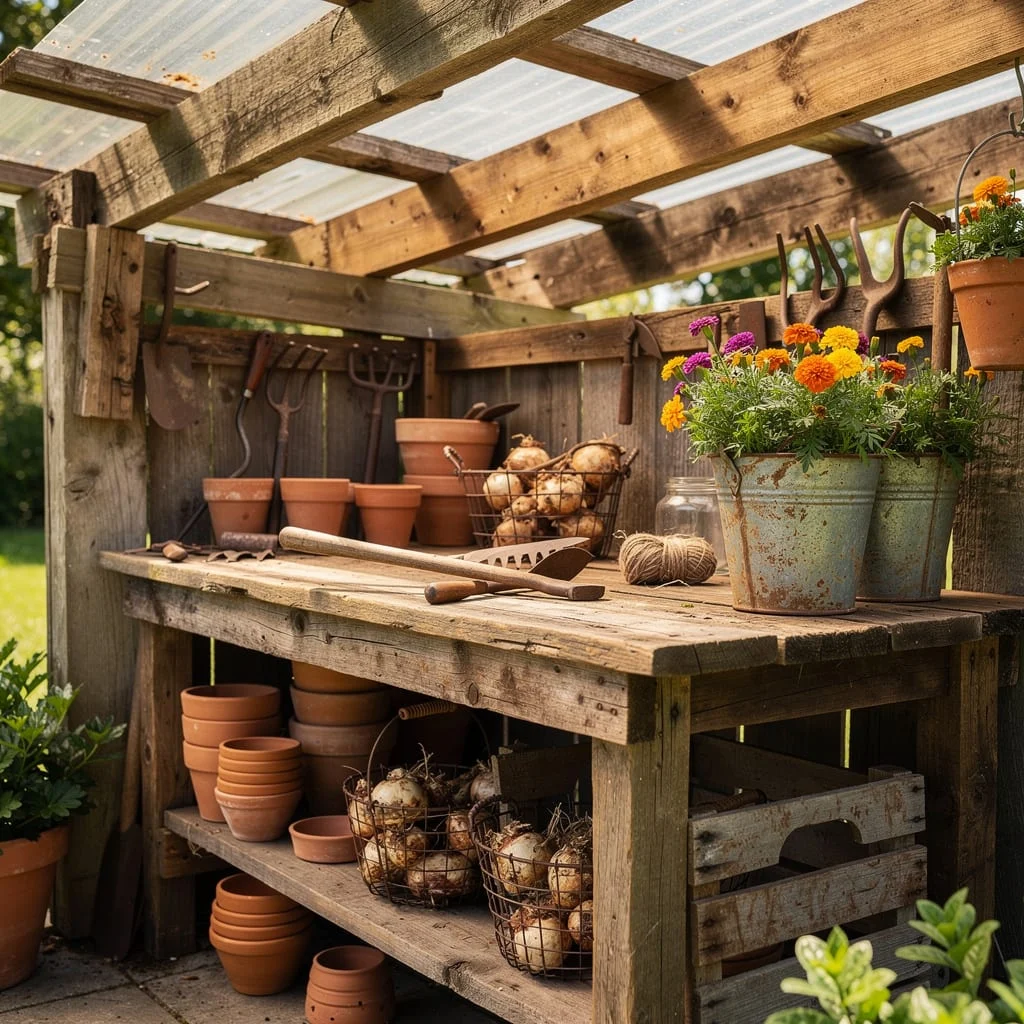
Stop stashing your gardening junk in the garage and claim a chunk of the backyard for your very own rugged potting haven. Slap together a lean-to with salvaged beams and a clear, corrugated roof—because rain is cute only on Instagram. Spread out your soil, bulbs, and twine on a chunky reclaimed timber workbench and let the terracotta pots and vintage metal tools sprawl. Pop marigolds into distressed tin buckets for your color fix and jam more bulbs in wooden crates. Always keep wire baskets handy—for tools or to corral the vegetable seeds you forgot to plant.
Deck Out Your Deck—And Make It Look Intentional
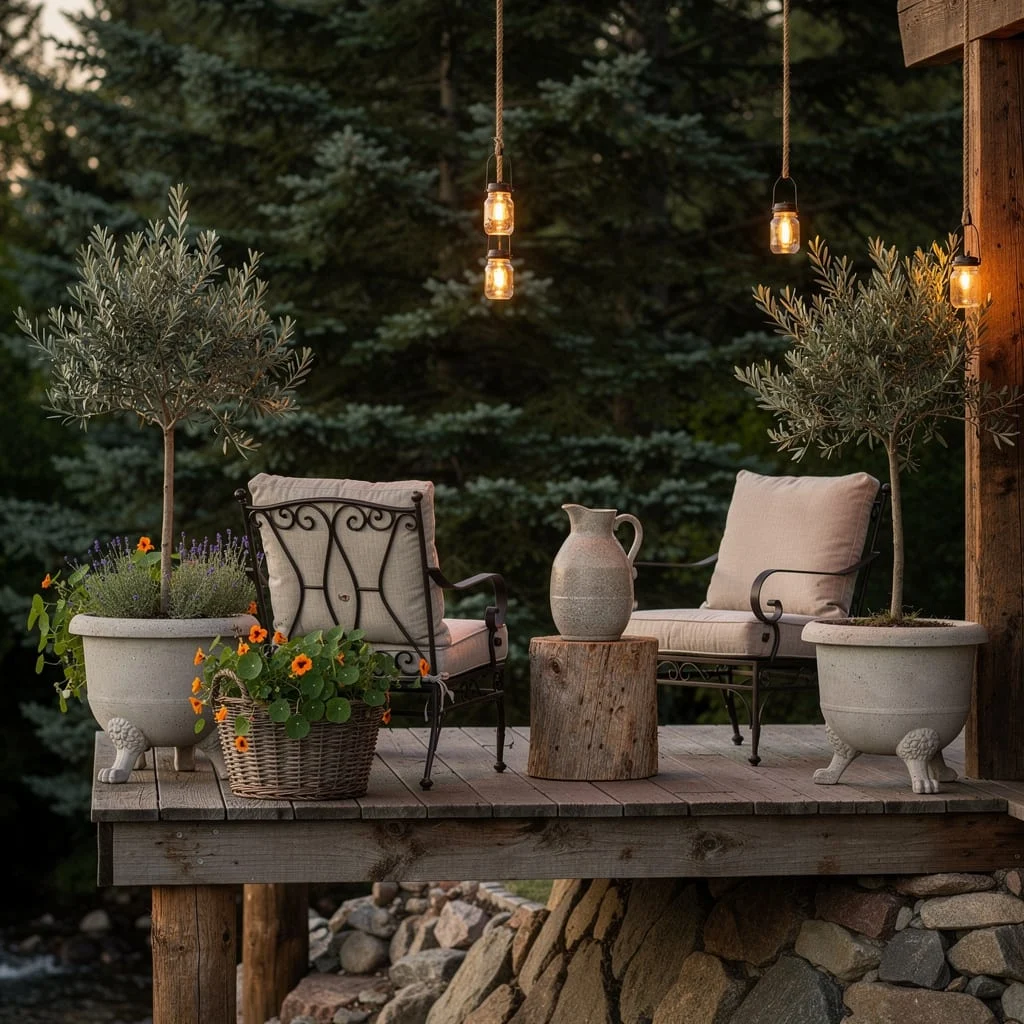
Elevate your garden game with a raised deck built over chunky river stone—no one cares about perfect edges. Ram in some exposed timber posts and drop a crew of iron chairs with thick linen cushions—go on, your butt deserves it. Use a hunk of a log for a side table (bonus: no assembly required), and jam in potted olive trees in concrete tubs and messy, trailing nasturtiums in woven baskets. Hang mason jar lanterns from ropes above for soft light—and never forget: Twilight is when boring gardens hide. Yours? Always looks #cottagecore ready.
Water Feature, But Make It Vintage Farmcore
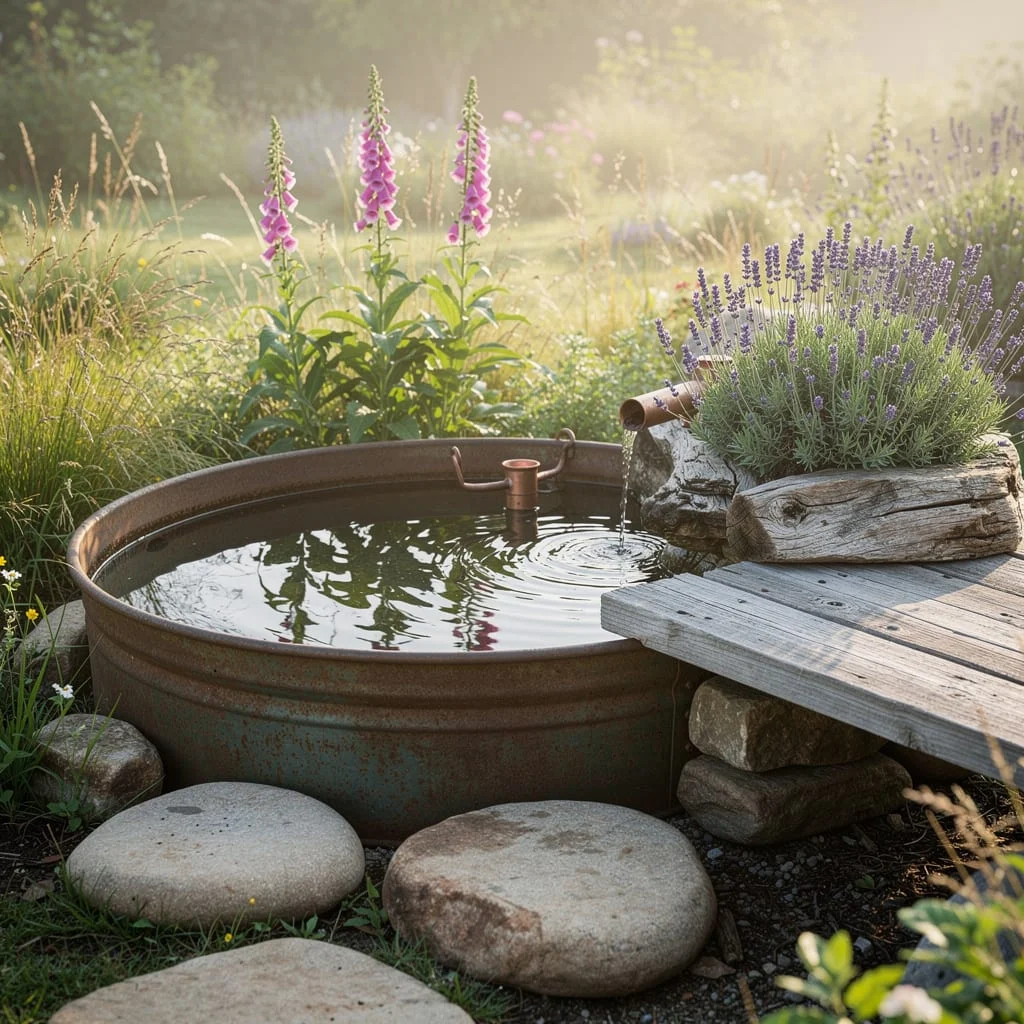
Forget a boring plastic fountain—convert an antique livestock trough into your water feature centerpiece. Surround with rough stacks of fieldstone and let a tiny copper spout splash water gently (ASMR fans, you’re welcome). Crowd it with native grasses, foxgloves, and clumps of lavender spilling from driftwood planters; place oversized, polished river stones for stepping and old planks as a makeshift bridge. Always embrace a little moss and patina—resist the urge to clean. If your shoes don’t accidentally get a little wet, you’re not rustic enough.
Create a Shaded Reading Flex with Trellis Magic
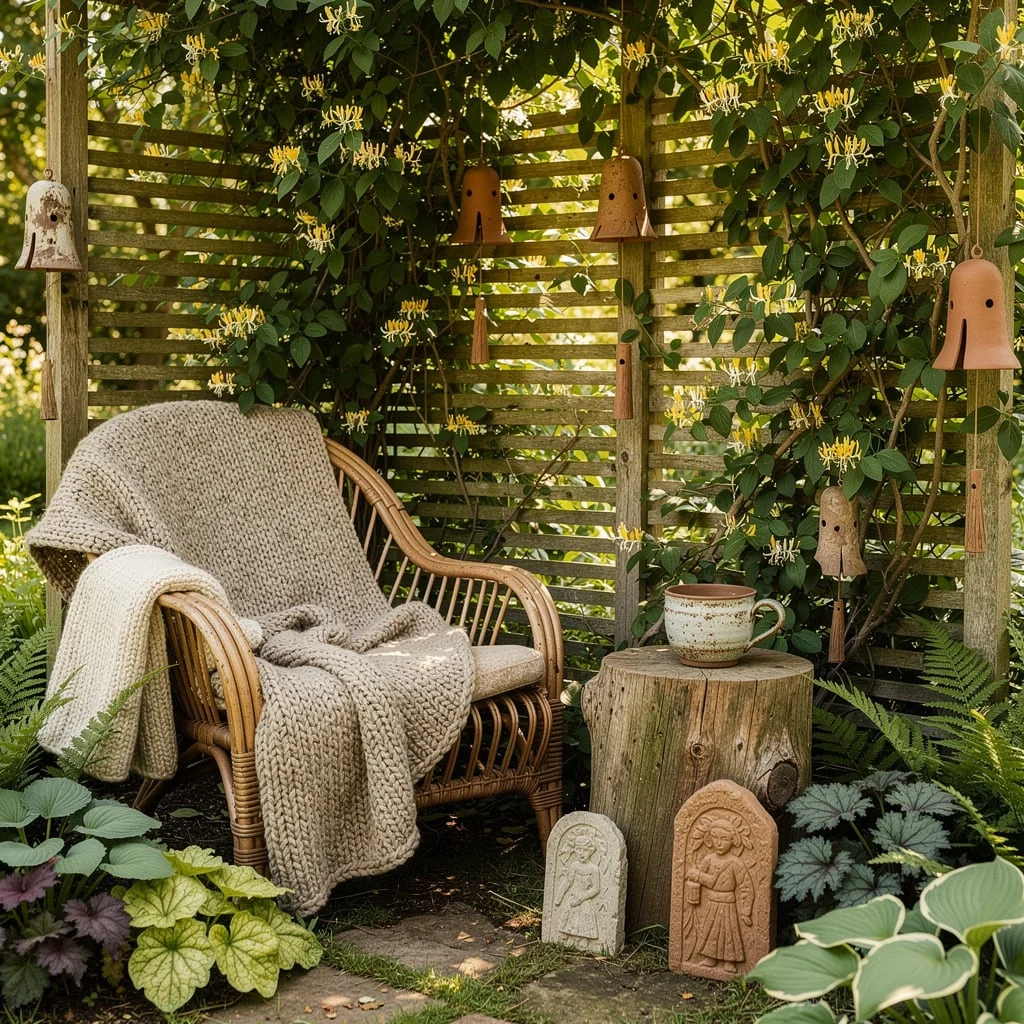
Stop reading inside—build your very own rustic hideout with a battered wood trellis drowning in honeysuckle and grapevine. Drag in an oversized willow armchair, pile on the chunky woven throws, and set a fat tree stump in for your cup. Stuff the area with clay wind bells, stone garden markers, and clusters of all the shade plants (ferns, hostas, heucheras, etc.)—the messier the better. Always tuck in a few wind bells for low-key sound effects: your garden should look AND sound like main character energy.
Rustic Pathways That Slap—Brick, Moss, and Grit
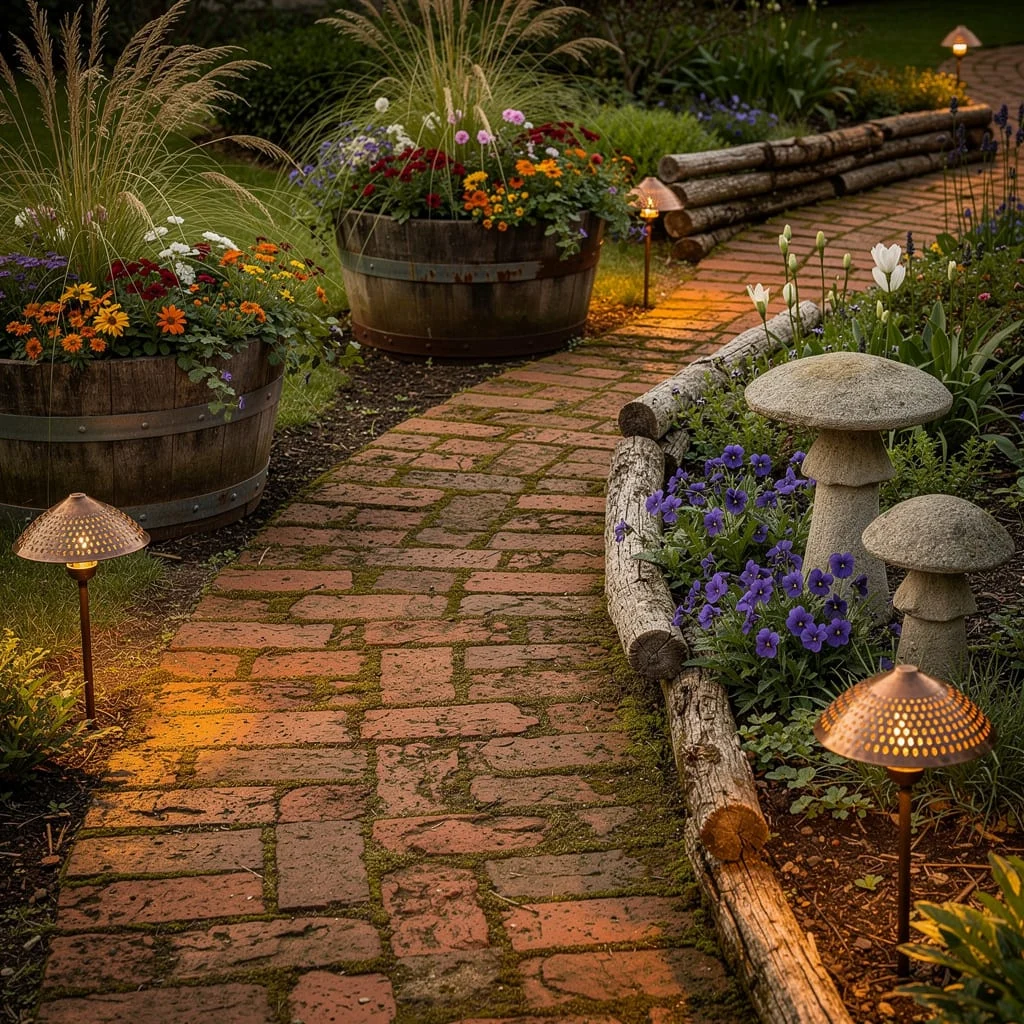
Ditch that sad concrete walk and lay reclaimed red brick pavers with moss creeping through the cracks; then, flank the path with massive barrel planters, spilling out perennials and statement grasses. Run a rough split-log border along the edge and hide stone mushroom sculptures for ‘wait, is this real?’ reactions. Jam low hammered-copper lanterns into the ground for nighttime drama. Always mix up your bricks—uniform rows are for prisons, not gardens. Let nature interrupt your hardscaping for max cottagecore chaos.
Outdoor Kitchen Vibes: Garden Edition
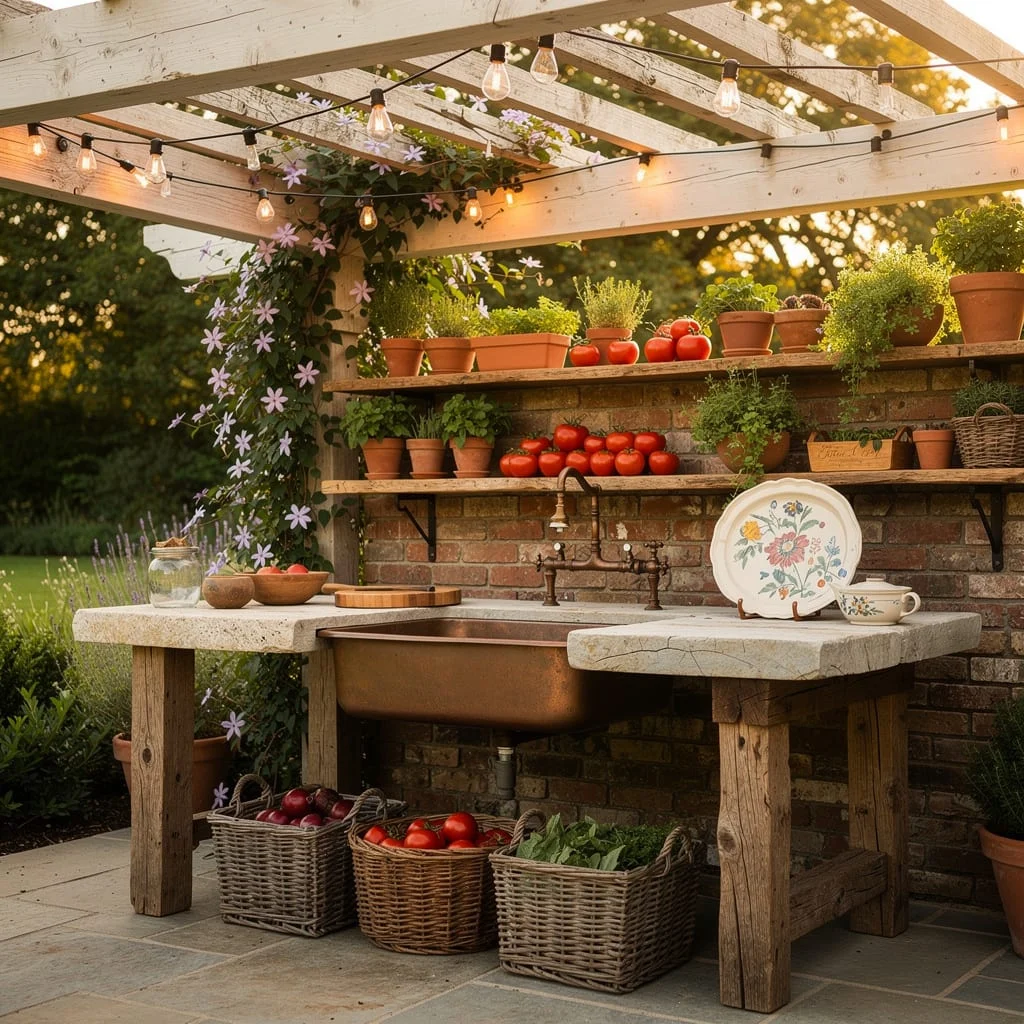
Think you can’t have an outdoor kitchen? Build one under a pale raw timber pergola, let clematis do the climbing, and make the countertop out of stone—plop it on chunky oak beams for ‘found in a barn’ energy. Add a tiny copper sink and stack up terracotta pots of tomatoes and herbs. Roll up a thick wooden prep table, slap on hand-painted ceramic platters, and stash produce in rattan baskets. Drop in some Edison bulbs for light; always keep your baskets under the counter so guests think you’re tidier than you are.
Retreat Like You Actually Take Naps—Pavilion Style
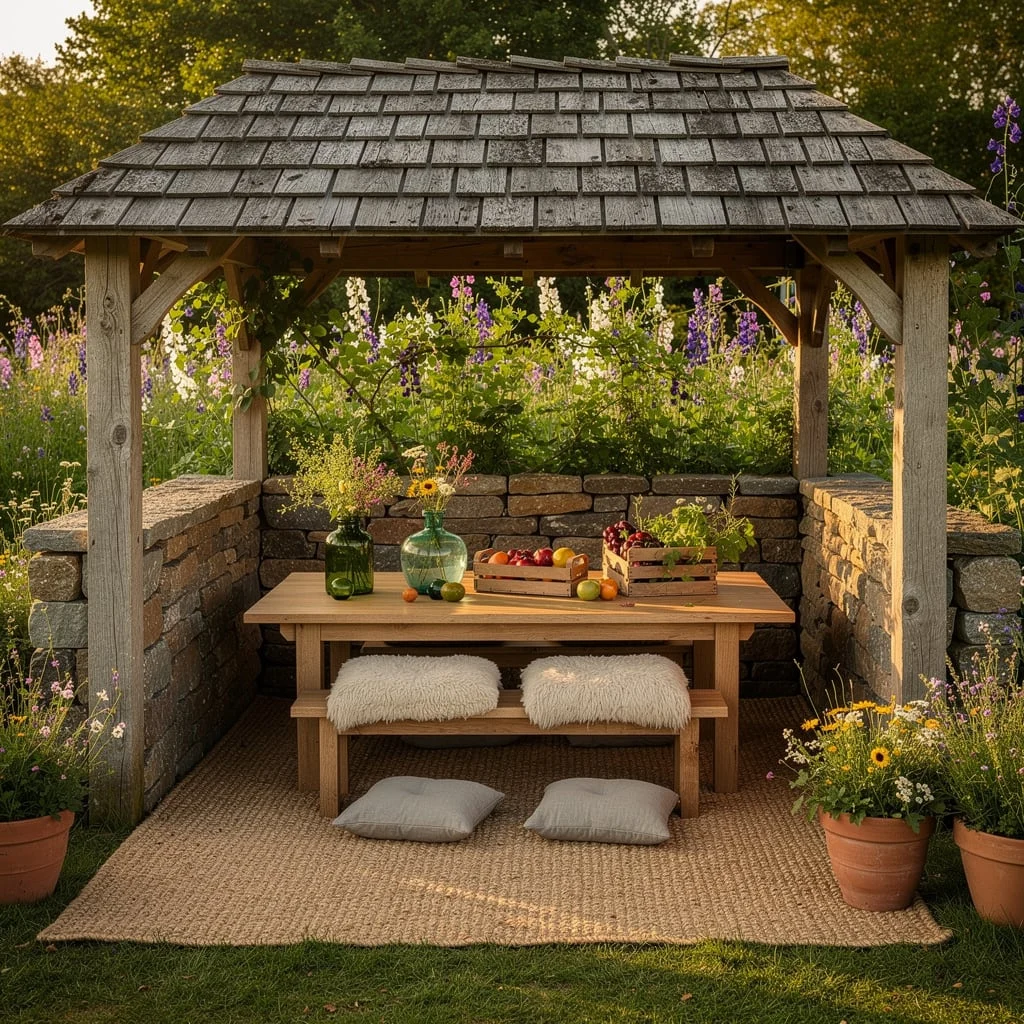
Get your serenity on with a weather-beaten timber pavilion, shook up with gray cedar shakes. Inside, switch the lawn chairs for a chunky low oak banquet table, dump kneeling wool cushions on a fat sisal rug, and serve produce out of crates for a Market Day fantasy. Jam in hand-blown glass vases and raw-clay pots of meadow blooms for the ‘wild but styled’ energy. Wall in the pavilion with stacked stone and climbing sweet peas, because privacy is a vibe. Always use late afternoon sun as your filter—the more its glow exaggerates textures, the better.
Final Thoughts
Vintage garden design rewards the qualities that modern consumer culture actively discourages: patience, accumulation over time, tolerance for imperfection, and the confidence to use something old and worn in a context where new and polished is the default expectation. The gardens in these images didn’t arrive from a catalog. They developed from good decisions made incrementally — a kettle repurposed here, a ladder repositioned there, a mirror mounted somewhere it had no business being until suddenly it was the best decision the garden ever made.
The most useful thing to take from all of this is that the raw material for a vintage garden is usually already in your possession, your shed, your neighbor’s skip, or a car boot sale within reasonable driving distance. The skill isn’t in acquiring the right objects — it’s in recognizing the objects you already have as candidates for something better than their current fate, and giving them a context that shows them off. Start with one container you weren’t expecting to use as a container, plant something generous in it, put it somewhere the light hits it well, and see what happens. The vintage garden begins exactly there.