
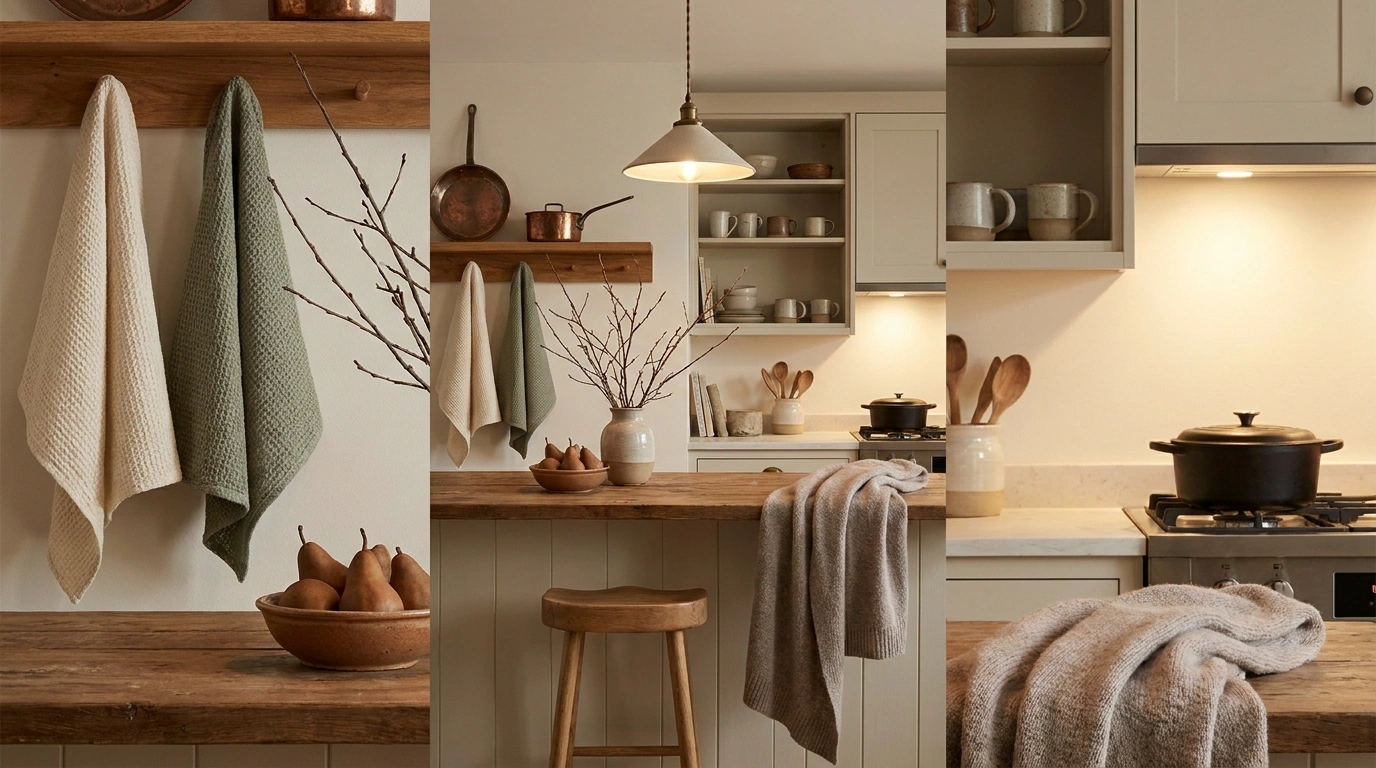
At six in the evening, the kitchen can feel surprisingly unkind. The overhead light is doing everything at once, the counter is crowded, and the lovely breakfast corner currently holds three bags and a parcel.
Winter makes these arrangements harder to ignore.
You do not need snowflake mugs or an entirely new cabinet color to change the room. Useful lighting, warmer materials, better seating, and a few deliberate seasonal details can make the kitchen feel more inviting after sunset.
Work with the kitchen you already have. The season is long enough without adding a renovation schedule.
Make the Evening Version of the Room Work
Look at the kitchen after dark before buying accessories. Check whether work surfaces are visible, seats are usable, and everyday supplies have a sensible place.
Use lighting and electrical products suitable for their location. Keep greenery, textiles, and decorative objects away from cooking heat, appliance ventilation, and splash-prone surfaces.
Winter Layers for Different Kitchen Styles
Build a Warm Coffee Corner With Timber and Cream
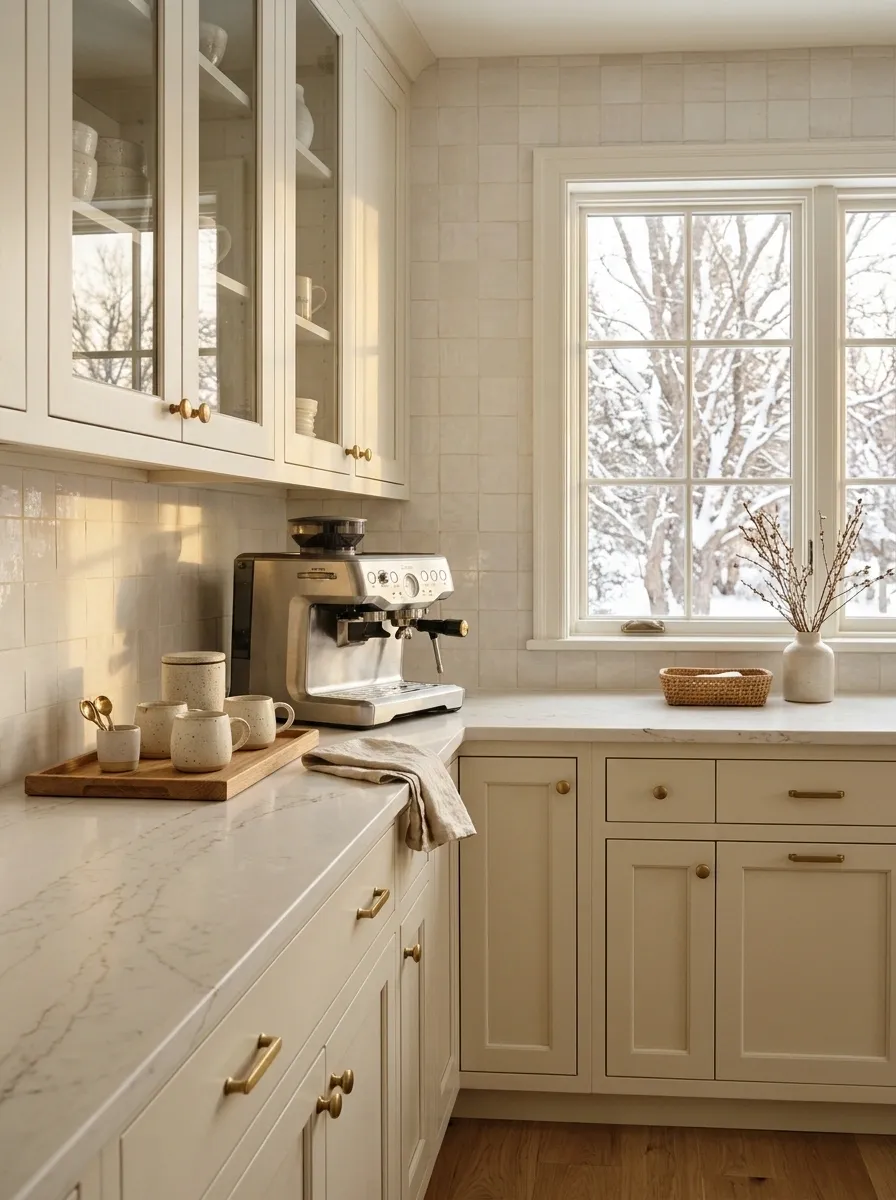
A practical coffee corner can make a kitchen feel more inviting through a timber tray, cream ceramics, and clear space around the appliance.
Keep the supplies you actually use nearby and store extras elsewhere. Follow the appliance’s operating clearances.
The arrangement should work during an ordinary morning. A coffee station requiring you to move several decorative objects before reaching a mug has become a small obstacle course with excellent branding.
THE WORKING COFFEE CORNER
Keep the appliance’s required operating space clear beside the grouped supplies.
Add a Restrained Checked Tablecloth
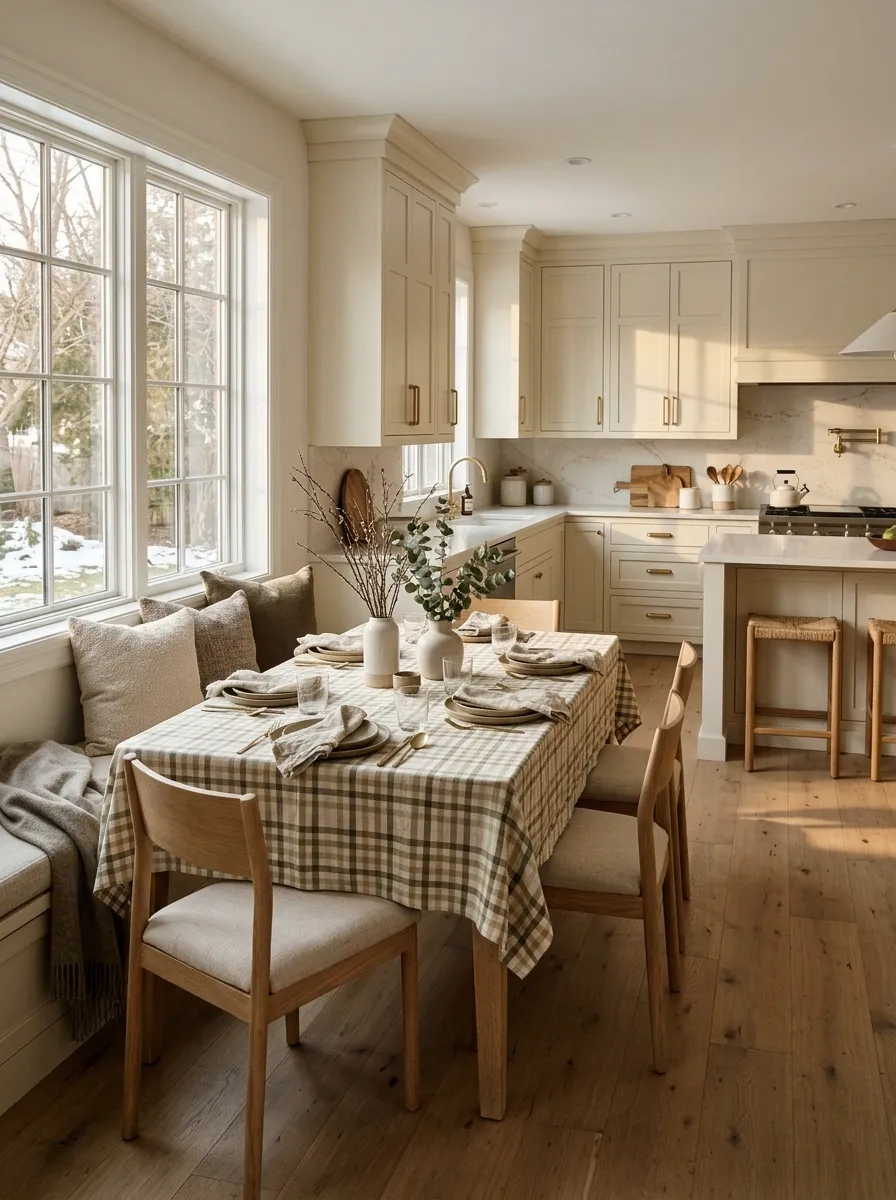
A muted check can bring winter texture to an eating area without changing the cabinets. Choose a scale that works with the table and surrounding patterns.
Keep place settings relatively plain. A cloth in cream, brown, olive, or soft red can relate to existing finishes.
Check care requirements and length around chairs. The tablecloth should support dinner rather than spend the evening being dragged into laps by anyone attempting to sit down.
Keep one pattern in charge: A checked cloth needs quieter napkins, cushions, and nearby window fabric.
Let Deep Green Cabinets Lead the Winter Palette
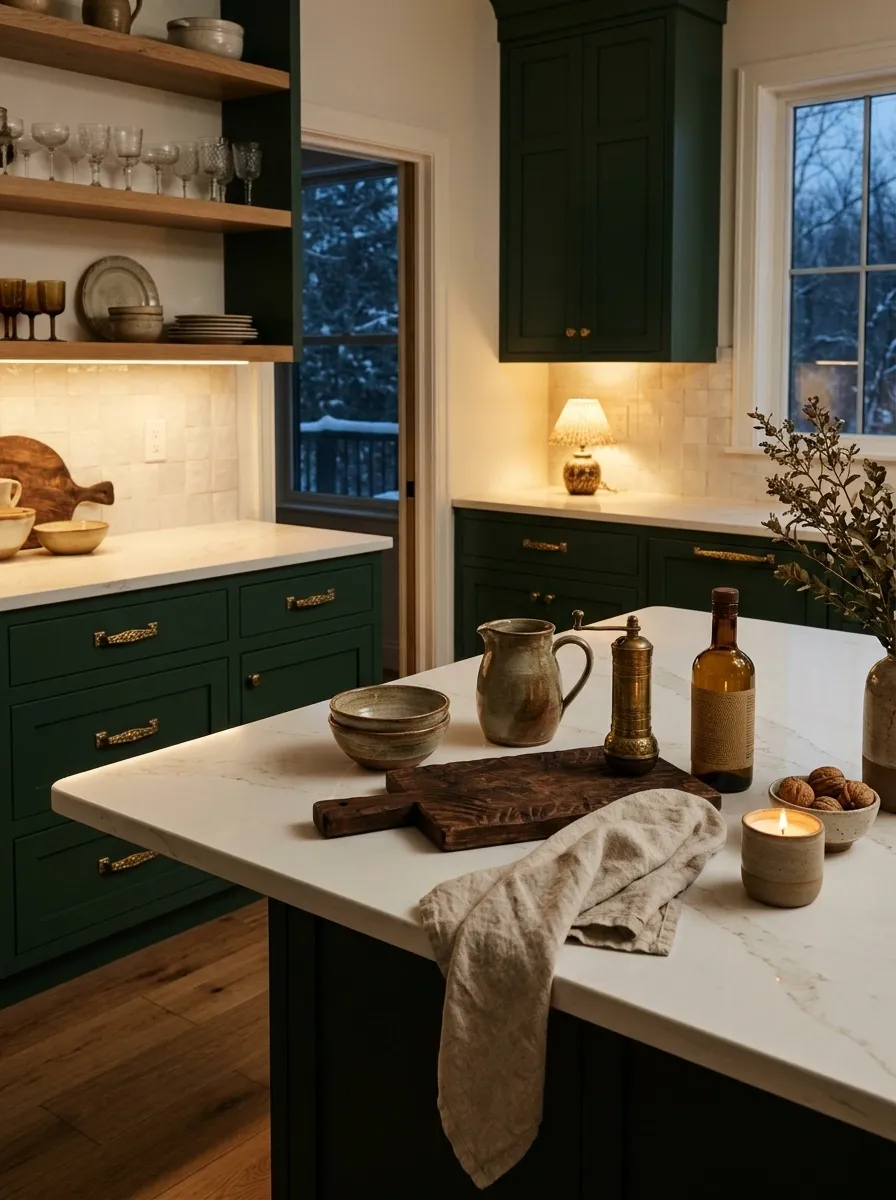
If the kitchen already has green cabinets, connect them to winter through cream ceramics, warm timber, and useful softer lighting.
Keep countertops edited so the color remains visible. You do not need to add more green everywhere.
The cabinet finish can provide the seasonal depth while removable layers supply warmth. This is a way to use what is already there, rather than repainting the kitchen every time the calendar changes.
Give a Tea Station a Burgundy Accent
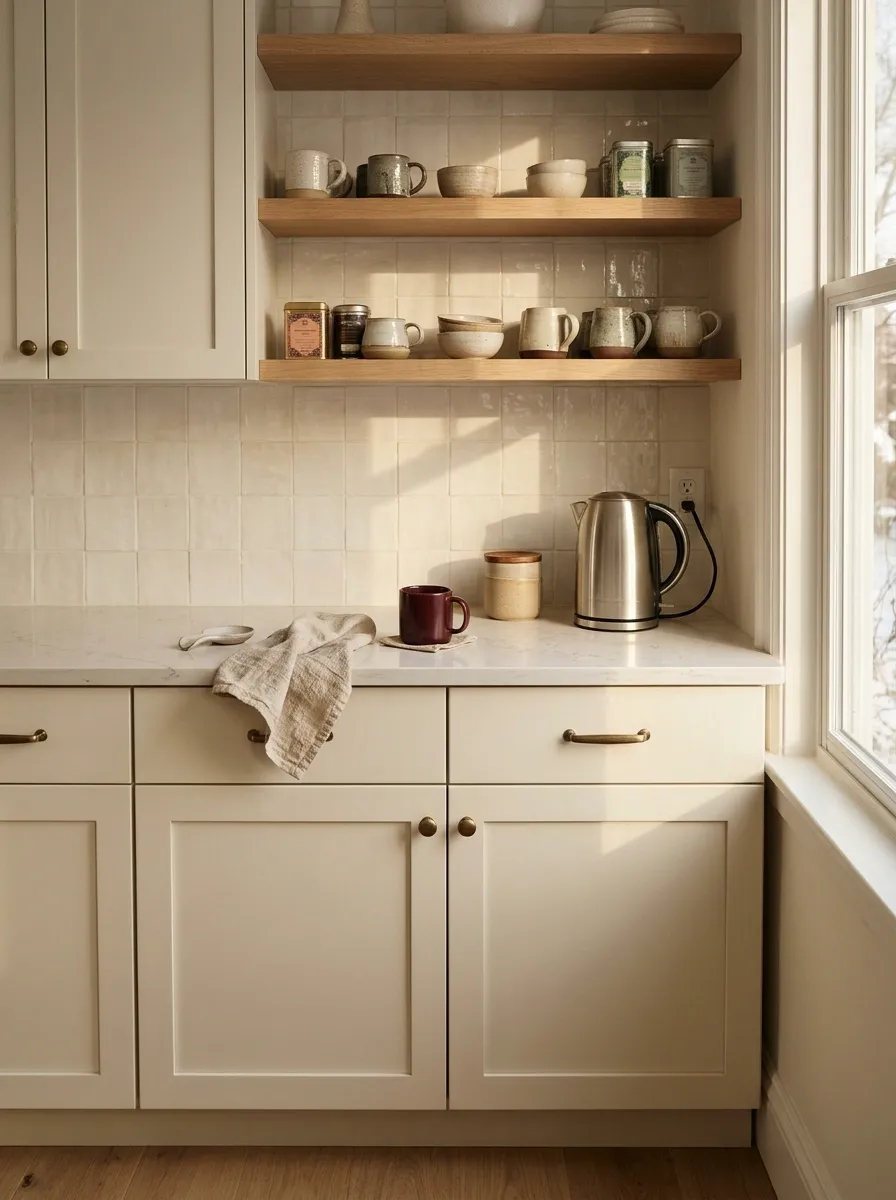
Burgundy or muted red can warm a tea corner without turning the whole room into a seasonal display.
Use the color through one suitable container, textile, or small accessory, then keep the rest practical. Leave room for filling the kettle and setting down a cup.
The tea station does not need a complete matching service if you already have mugs you like. A restrained accent can connect the area without requiring a shopping expedition.
| Main job | Supporting detail |
|---|---|
| Kettle access | Clear surface |
| Everyday tea | Reachable storage |
| Visual warmth | One burgundy accent |
Pair Dark Timber With Restrained Warm Metal
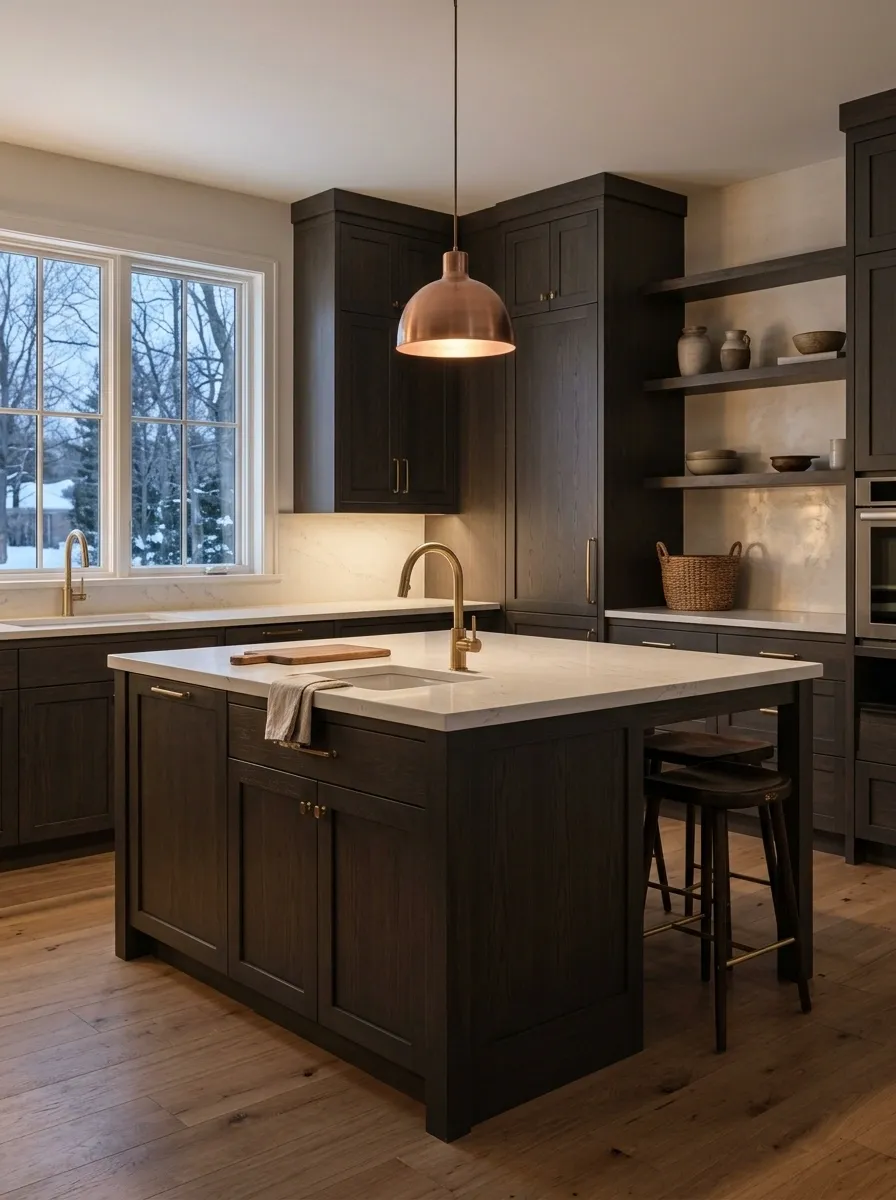
Dark timber can look particularly inviting in winter beside a small amount of brass- or copper-toned detail.
Use existing hardware, a suitable light fitting, or one practical object rather than scattering metallic accessories across the counter.
Check the finish against the timber in evening light. The combination should feel warm and clear, not disappear into a dim collection of shiny objects that becomes difficult to clean around.
Let timber occupy more of the view. Metal provides the smaller highlight.
Make the Breakfast Bench Comfortable Again
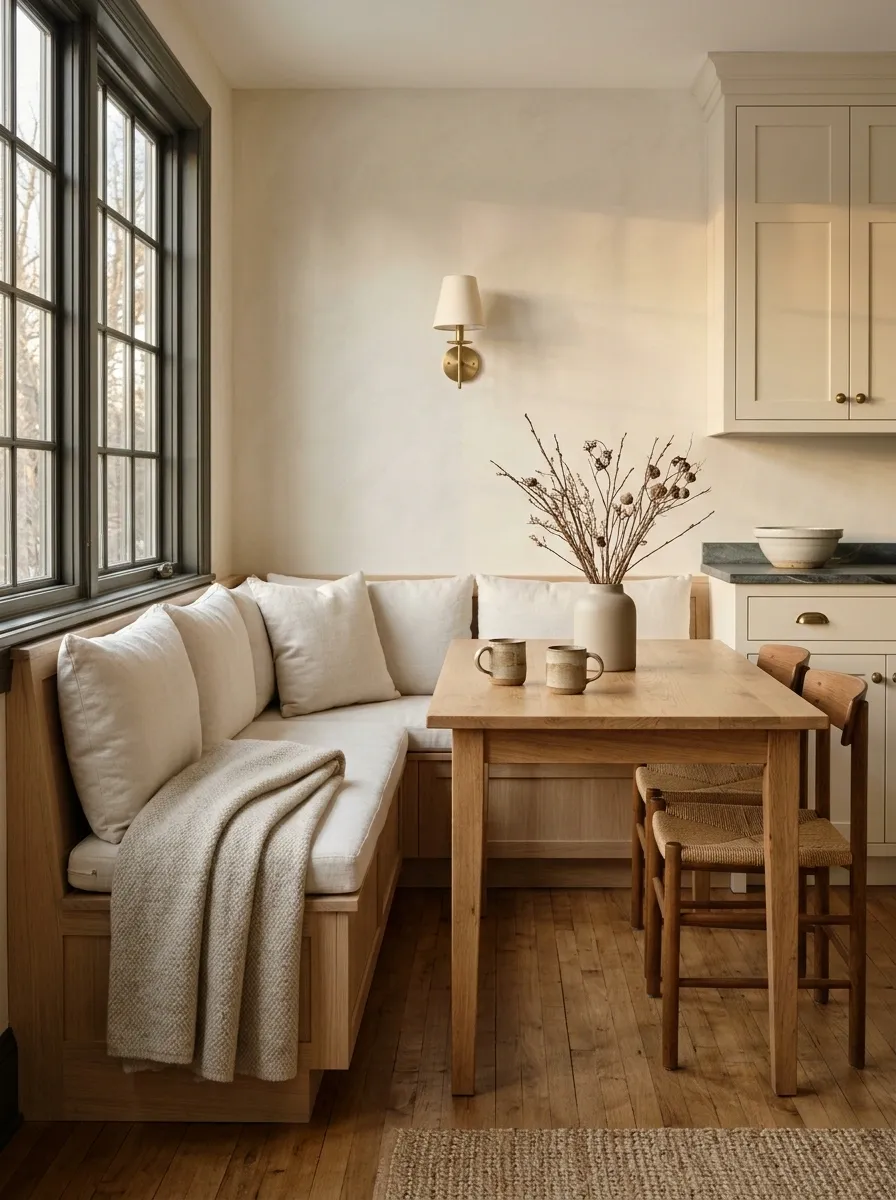
Clear the bench and use suitable removable cushions where they improve seating. Choose fabric and care requirements for a kitchen environment.
Keep the table reachable and leave enough space to sit down properly. A blanket may be useful in a dry, suitable position, but it does not need to live beneath breakfast crumbs.
The eating corner should feel ready for people. A bench occupied by parcels has become a delivery shelf at an inconvenient height.
Before adding fabric: Clear the seat, test the table distance, and check how the area is cleaned.
Keep Winter Greenery Low and Away From Cooking
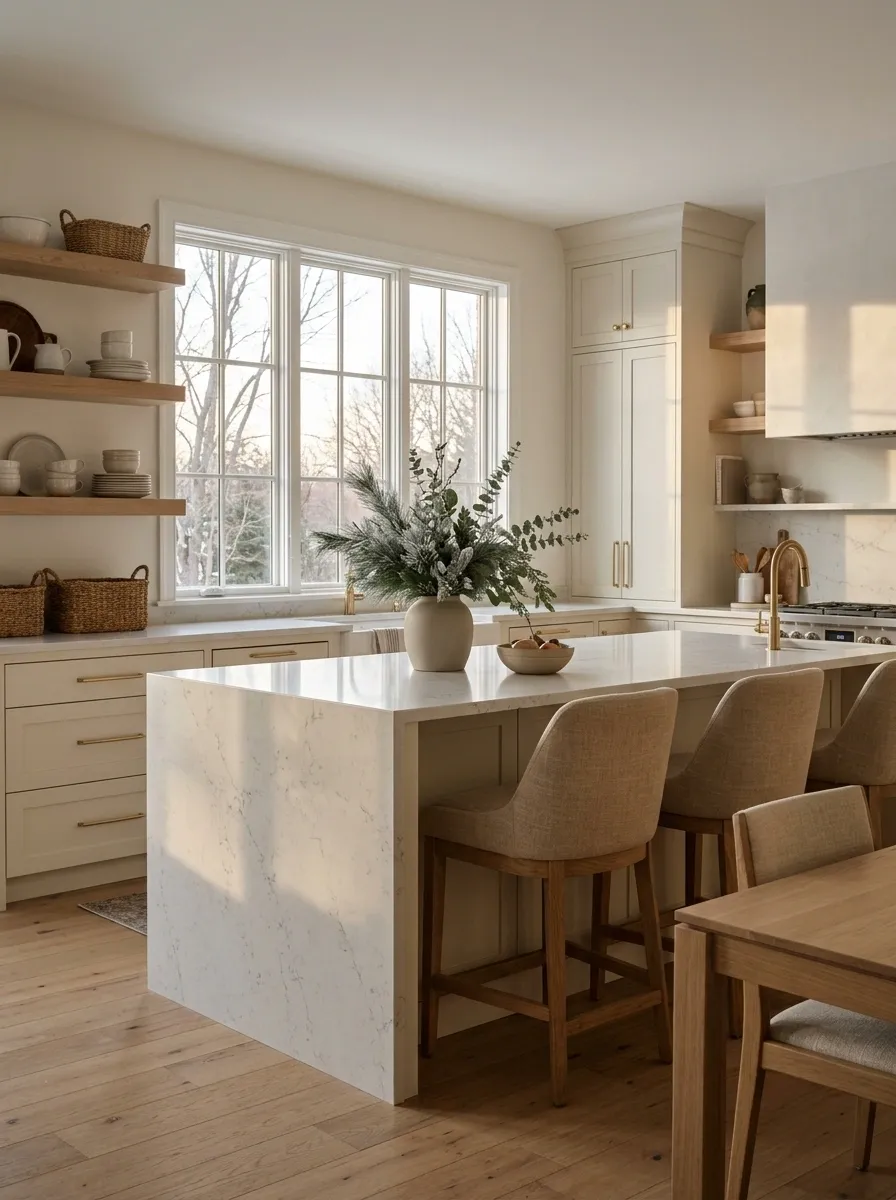
A restrained arrangement near a suitable window or dining area can bring a seasonal note without filling the kitchen.
Choose household-appropriate material and protect surfaces from water. Keep it clear of heat, appliances, ventilation, and food preparation.
Use a lower outline where the view matters. The kitchen can acknowledge the season without a branch leaning into the sink or a decorative arrangement supervising the hob from an unsuitable distance.
Keep cooking, ventilation, and the practical work area separate.
Use Navy and White Ceramics in a Pale Kitchen
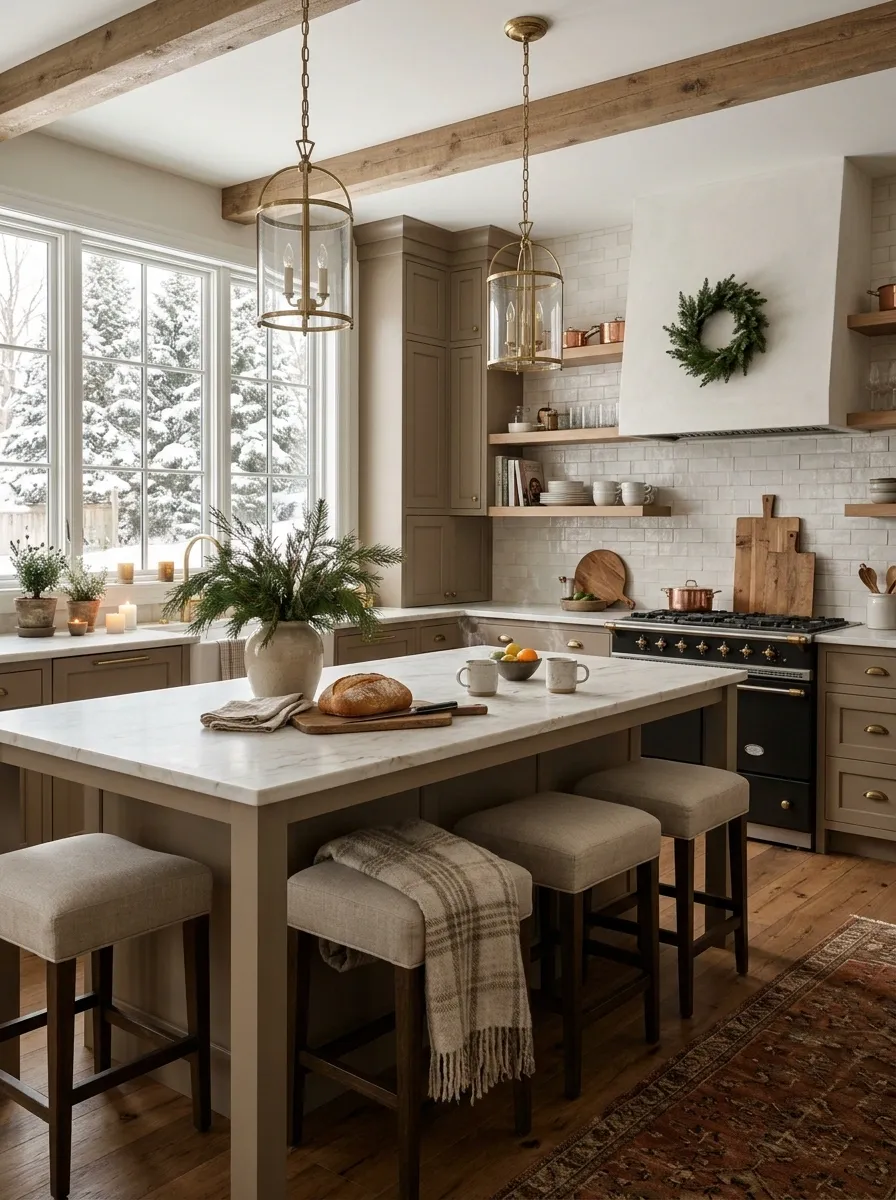
A few navy details can give a pale kitchen depth. White or cream ceramics keep the combination connected to lighter cabinetry.
Choose pieces with a purpose: a utensil pot, serving bowl, or everyday mugs. Keep the quantity manageable.
This can work particularly well with natural wood. The contrast supplies enough interest without asking every towel and storage container to join an identical nautical uniform.
| Keep dominant | Add selectively |
|---|---|
| Pale cabinetry | Navy |
| Clear counters | Useful ceramics |
| Natural materials | A small repeated accent |
Display Copper-Colored Pieces Where They Are Useful
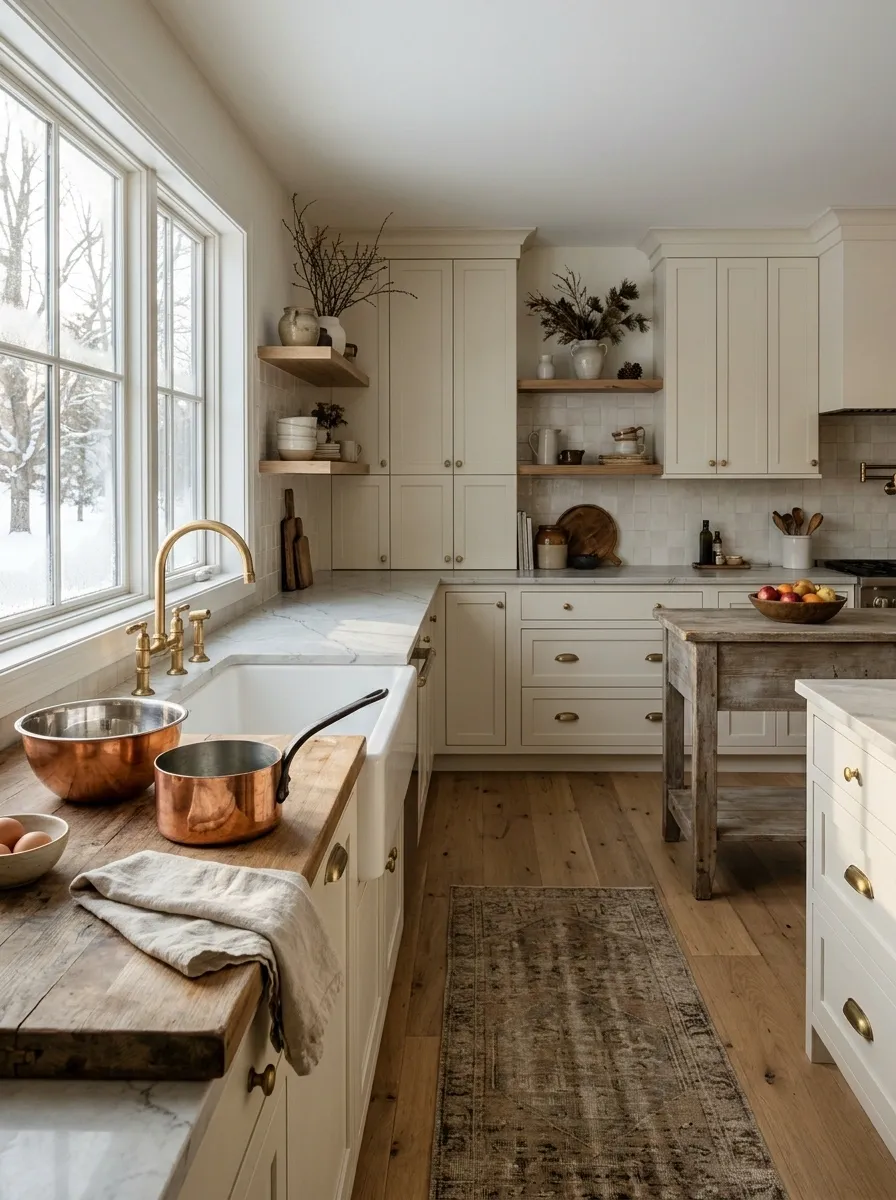
A practical copper-toned bowl or suitable cookware display can bring warmth to a kitchen with plain cabinets.
Choose the location around cleaning and safe access. Heavy items need appropriate support, and decorative pieces do not belong beside active heat simply because the colors look convincing.
Use the metal’s warm tone as one layer within the room. A winter kitchen should not begin resembling an cookware exhibition unless that is genuinely how you want to spend your dusting time.
A smaller highlight reads clearly against a quieter setting.
Use a Plain Winter Runner Where It Is Practical
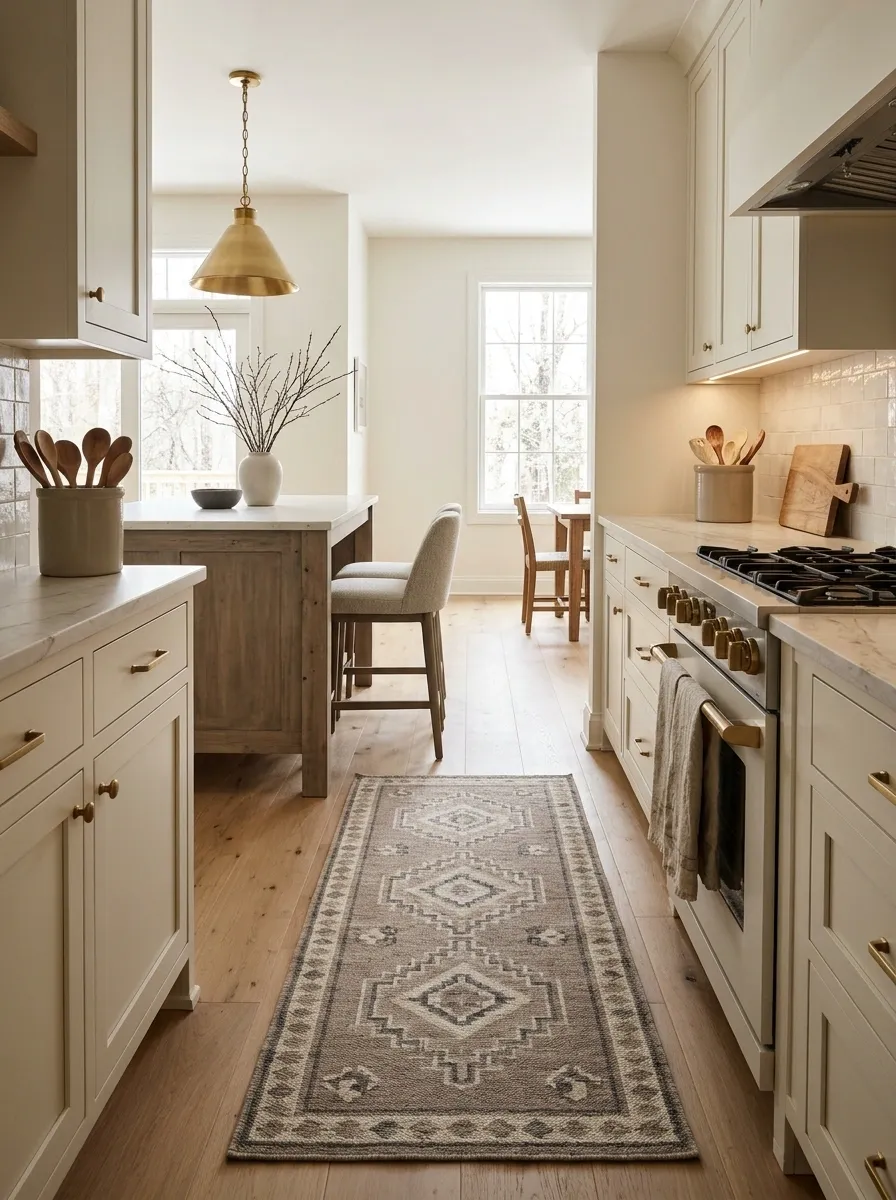
A suitable runner can soften a hard floor and connect the lower cabinets to the eating area.
Choose for secure placement, cleaning, and door clearance. Avoid unsuitable cooking or wet positions and do not cover existing floor problems.
Keep the pattern quiet if the cabinets or tiles are busy. The runner should improve comfort and coherence without creating another object that must be straightened after every trip to the kettle.
Choose by use: Secure edges, realistic cleaning, and a position that stays out of troublesome wet or hot areas.
Style One Timber Shelf With Cream Everyday Pieces
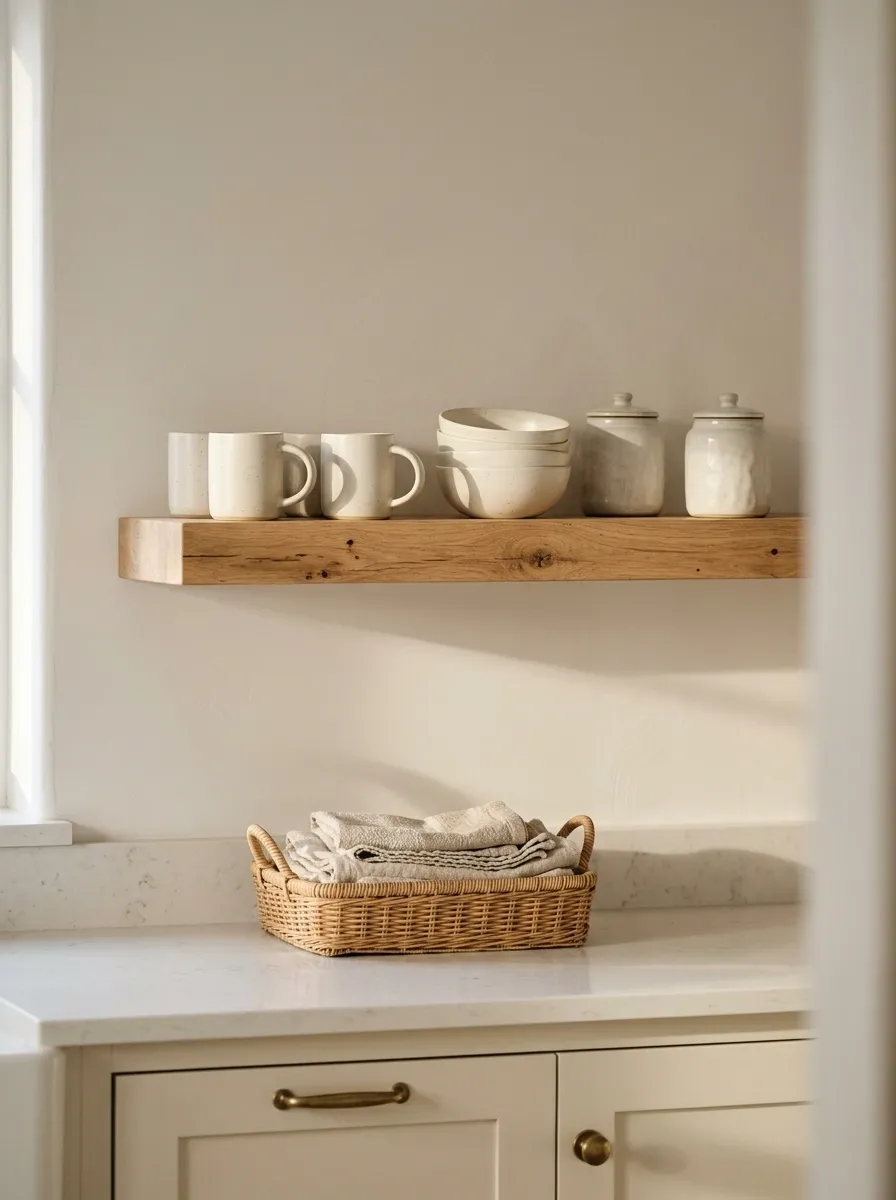
A timber shelf with a few cream mugs, bowls, or jars can give a plain kitchen a warmer layer.
Keep useful items accessible and respect the shelf’s load and installation requirements. Leave enough room to retrieve things without moving a decorative arrangement.
You do not need to expose every dish. One small area can provide the texture while the rest of the storage continues doing its excellent, less photogenic work behind doors.
Different useful shapes, one restrained ceramic palette.
Add Warm Texture to a White-and-Stone Kitchen
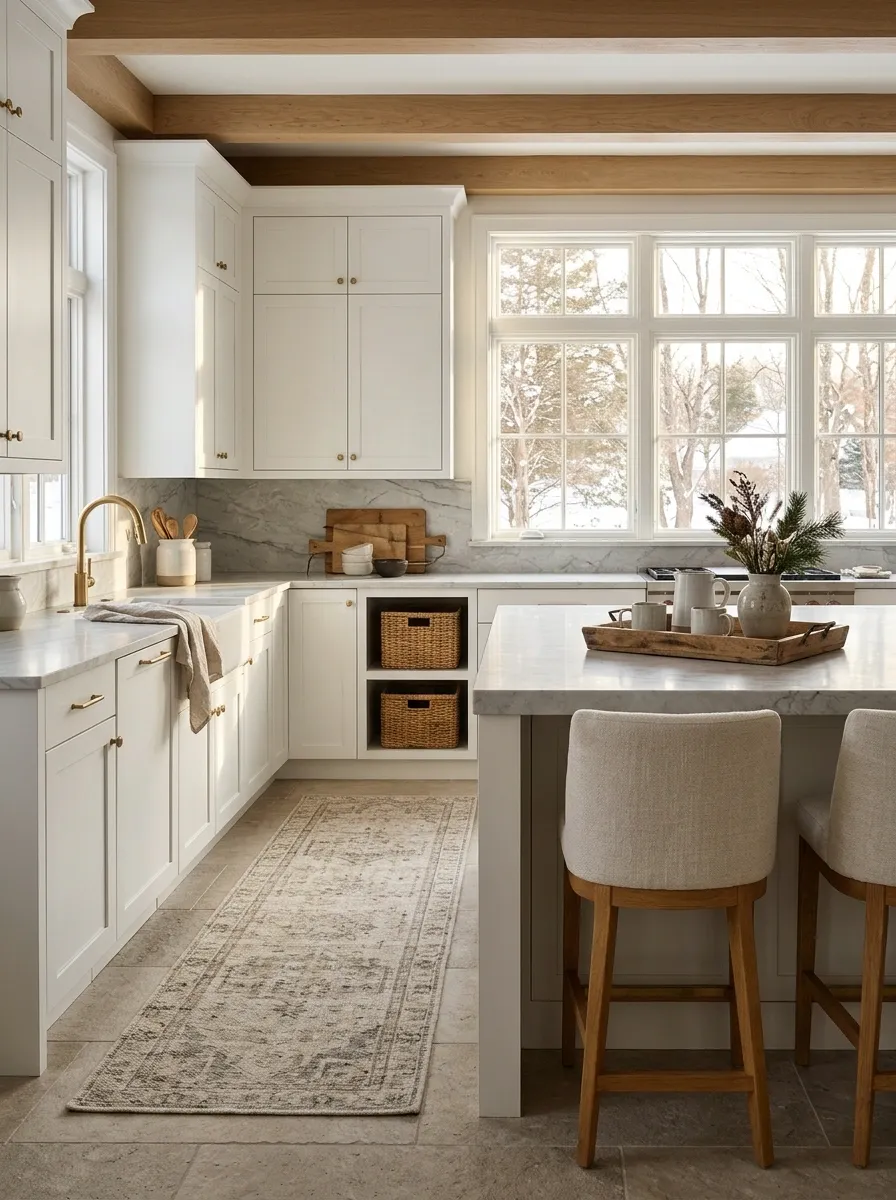
A white kitchen with stone-look surfaces may need a few warmer materials rather than another color.
Try a timber tray, practical woven-texture storage, or suitable fabric at the eating area. Keep wet-zone and cleaning requirements in mind.
The contrast between smooth fixed surfaces and softer removable layers can do the work. You do not need to cover every pale surface to prove the room is allowed to feel comfortable in winter.
| Fixed surfaces | Removable warmth |
|---|---|
| White cabinets | Timber |
| Smooth countertop | Restrained fabric |
| Stone-look floor | A suitable practical runner |
Pair Mushroom Tones With Dark Details
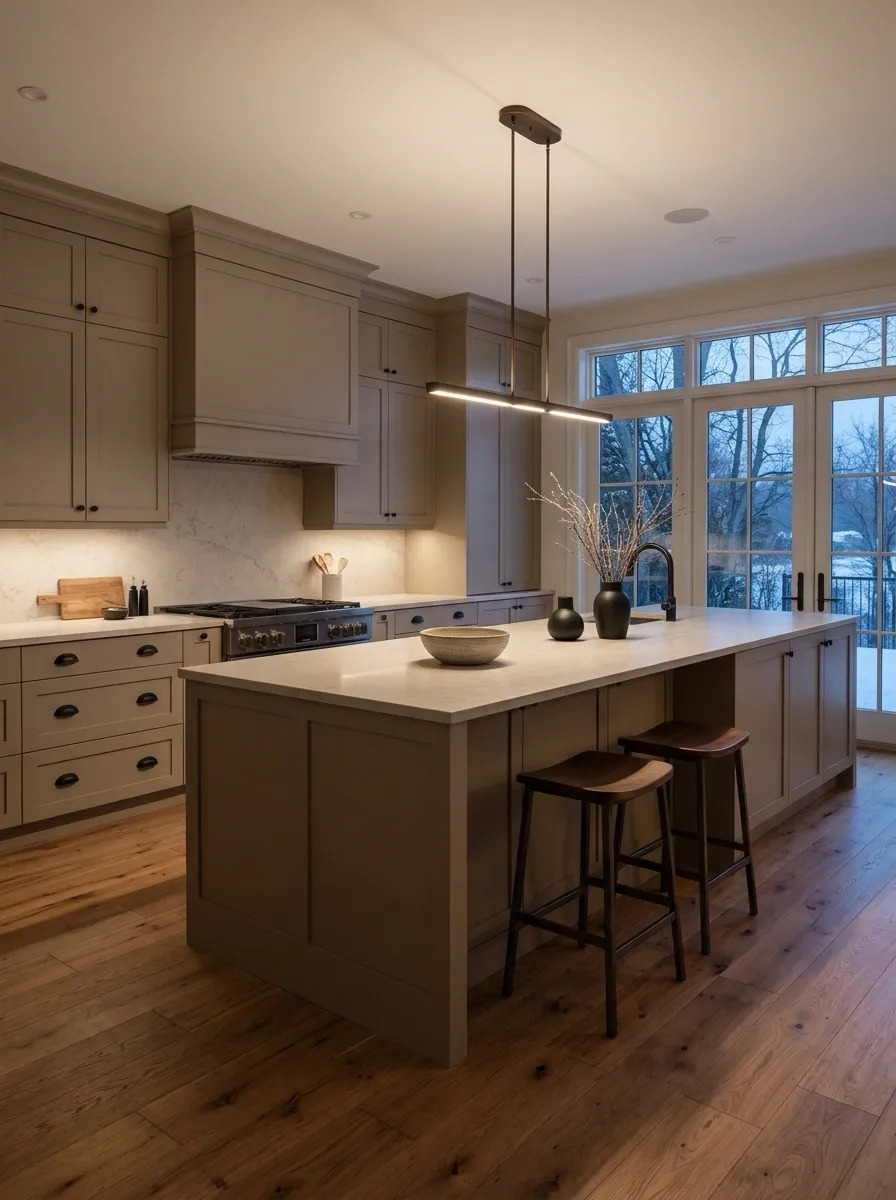
A mushroom or warm taupe kitchen can gain depth through dark hardware, simple ceramics, or a restrained light fitting.
Repeat the dark shade sparingly and keep the undertones of the main neutrals connected. Check the room under evening lighting.
The darker details should give definition. Too many small black accessories can make the counter feel visually spotted rather than thoughtfully layered.
Definition comes from a smaller contrasting element.
Give a Small Kitchen One Useful Rail
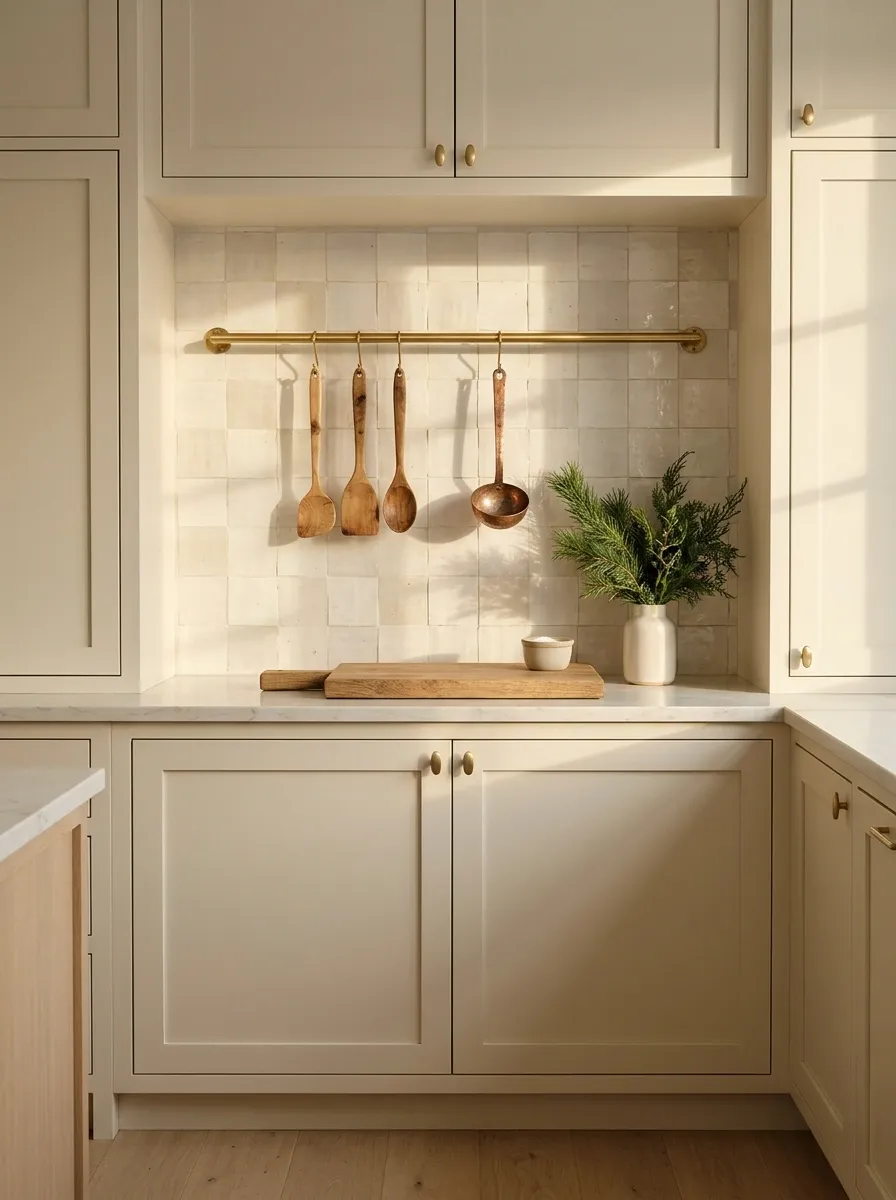
A suitable rail can organize a few light, frequently used items where wall and installation conditions allow it.
Keep the items clear of cooking heat, splashes, and the working route. Choose utensils you actually use rather than treating the rail as a decorative inventory of kitchen equipment.
One purposeful line can make a small kitchen feel more ordered. Filling every hook may simply move the clutter from horizontal storage into a more visible position.
Keep capacity deliberate: Leave some rail space free and store rarely used pieces elsewhere.
Make Glass-Front Cabinets Feel Less Busy
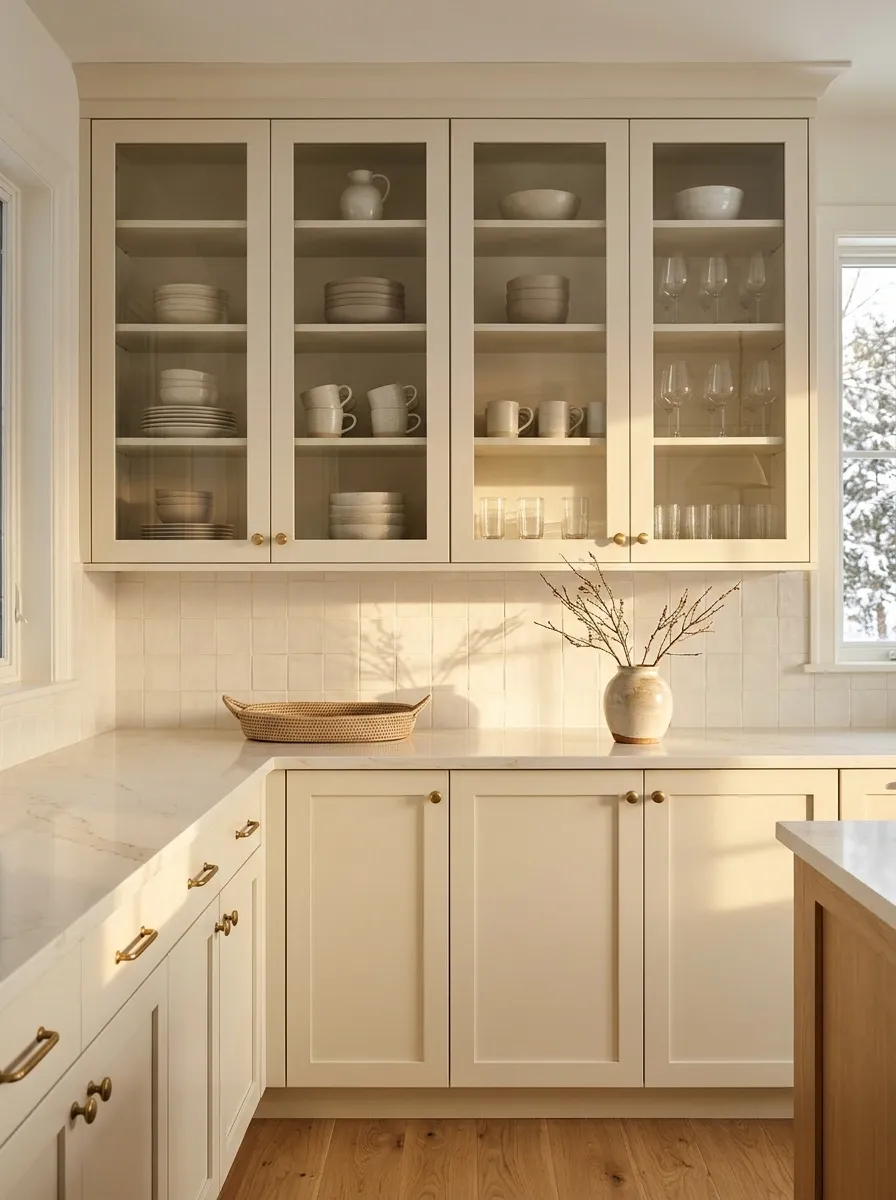
A glass-front cabinet can look warmer and calmer when its contents share a few materials or colors.
Group everyday pieces and move packaging or unrelated extras into closed storage. Leave space between groups so the shelves remain readable.
You do not need to buy new crockery. Start by rearranging what you have. The winter update may be a better composition rather than a purchase, which is disappointing news for the shopping basket but useful for the kitchen.
Edit the contents before replacing them.
Introduce Plum Through a Small Textile Layer
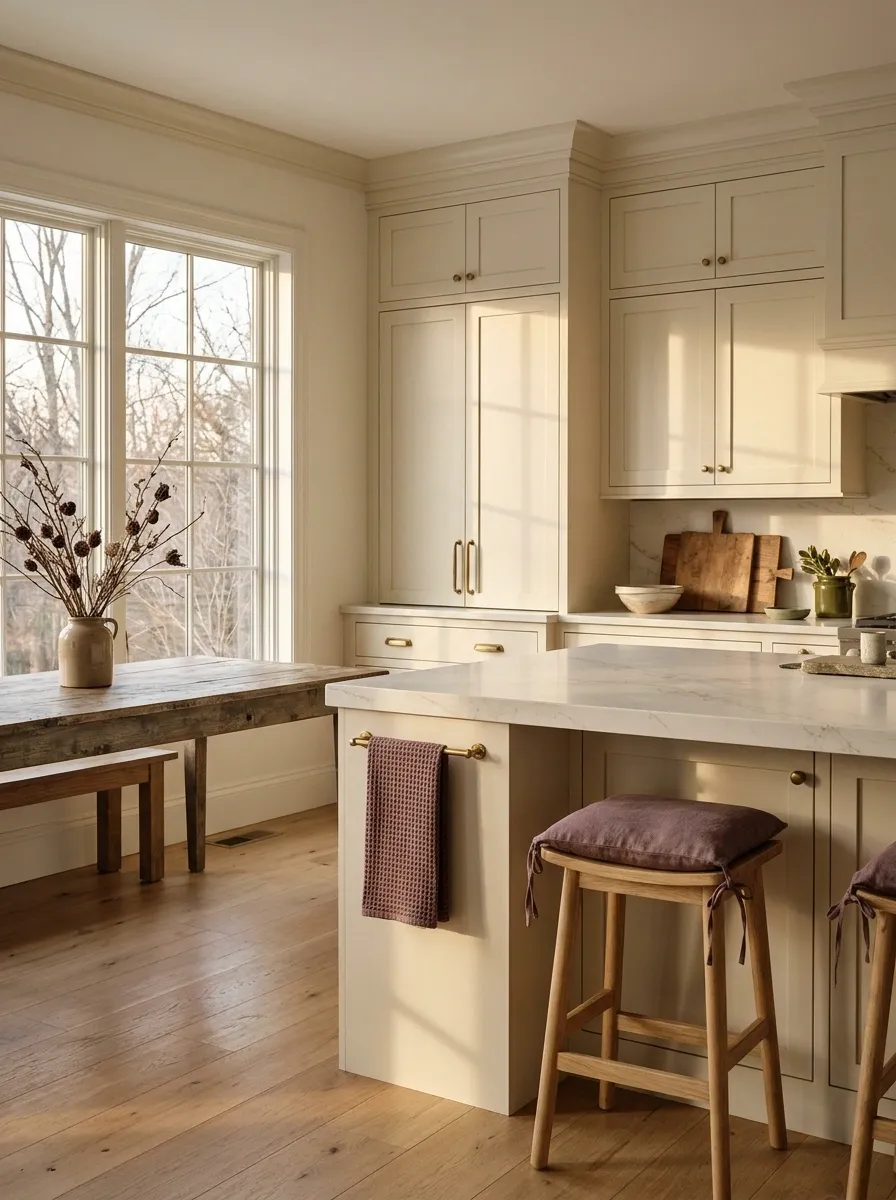
A muted plum towel, seat cushion, or table textile can bring depth to a neutral kitchen.
Use the color where the material suits the task and can be cleaned appropriately. Keep it away from heat and from positions where damp fabric rests against vulnerable finishes.
Plum can work beside warm white, timber, and quieter green tones. One or two useful pieces may be enough; the kitchen does not need to announce a complete new purple era.
| Accent | Suitable role |
|---|---|
| Towel | Practical drying with a proper hanging position |
| Seat cushion | Removable comfort |
| Table textile | A controlled dining-area color |
Combine Olive, Brown, and a Little Rust
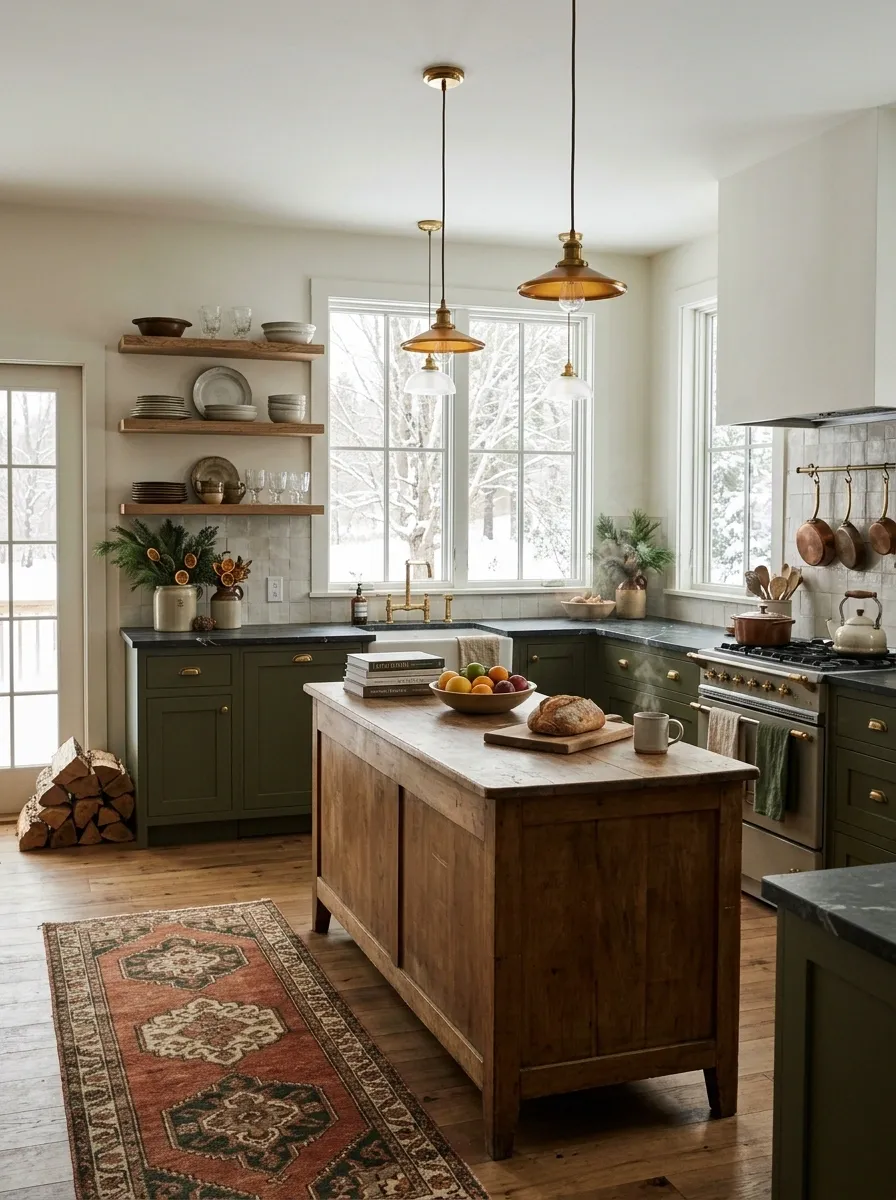
Olive and brown can give a kitchen a grounded winter palette, with rust providing a smaller accent.
Use existing cabinetry, timber, or flooring as the foundation. Add the rust through one practical textile or ceramic piece.
Keep the relationship clear rather than introducing every neighboring earth tone. A warm palette benefits from restraint, especially when brick, wood grain, or patterned floors already contribute plenty of variation.
Let the accent occupy less of the view than the foundation colors.
Warm Up a Dark Kitchen With Natural Oak
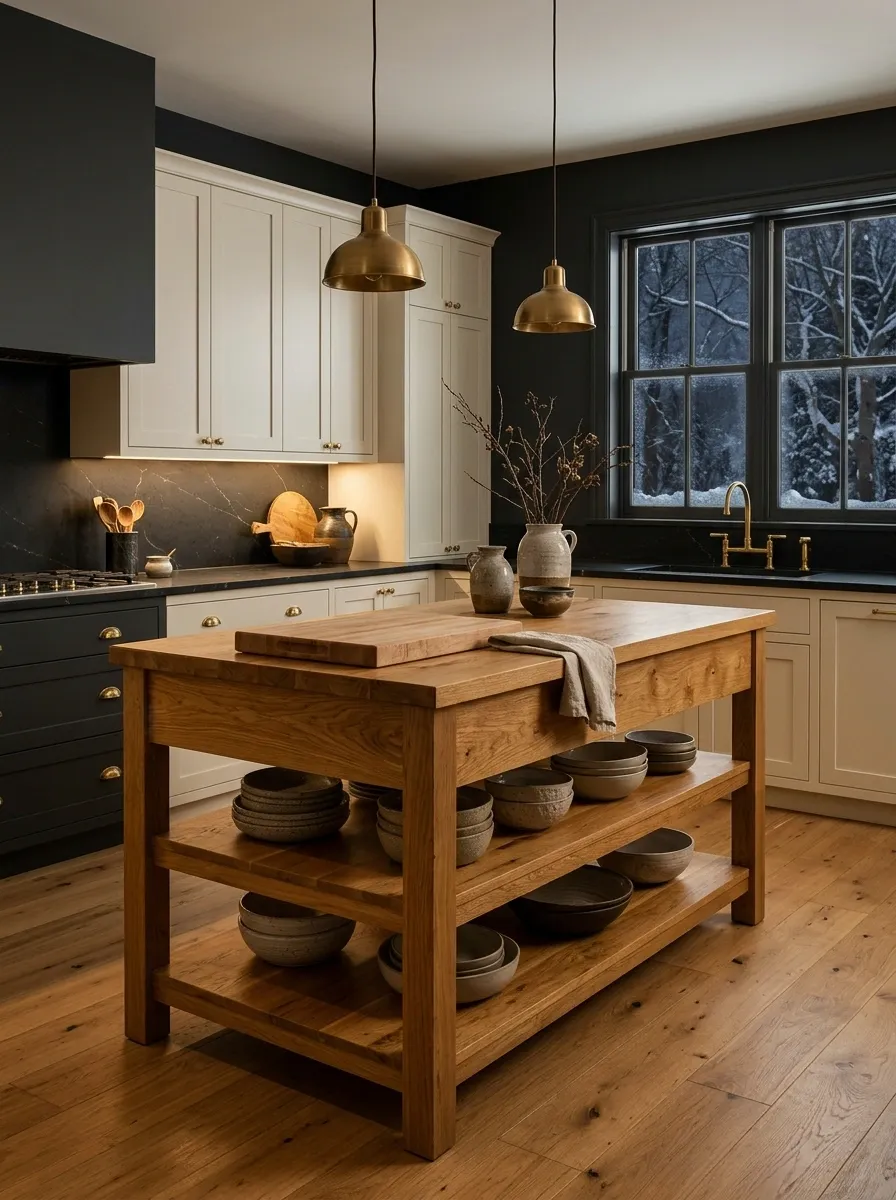
A dark kitchen can feel more welcoming through a suitable oak table, practical board, or freestanding piece.
Choose the timber tone against the existing floor and counter. Keep enough lighting to see the material’s character after dark.
The wood does not need to appear everywhere. One substantial warm surface can register more clearly than several tiny accessories arranged around the perimeter like a nervous committee.
Use a substantial surface: A table, visible furniture piece, or practical board can provide more impact than many small timber objects.
Add Soft Blue to a Warm Gray Kitchen
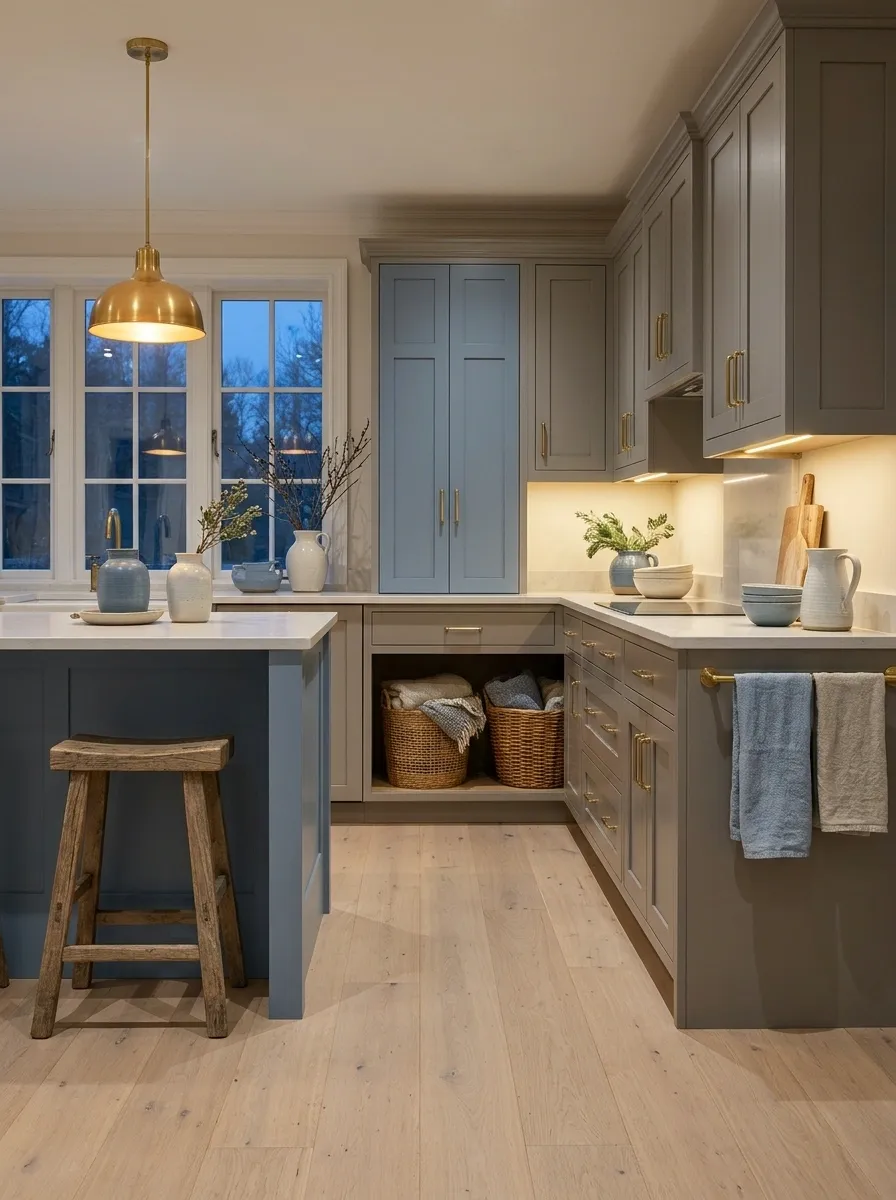
Soft blue can bring a quieter winter direction to warm gray cabinetry. Use a restrained textile or everyday ceramic group and include a little warm wood.
Check the blue against the cabinet undertone. Some grays are much cooler than they first appear.
Keep the combination comfortable in evening light. A palette selected entirely beneath bright showroom lighting can become unexpectedly chilly when the kitchen is actually used after sunset.
Make the Island a Comfortable Evening Gathering Point
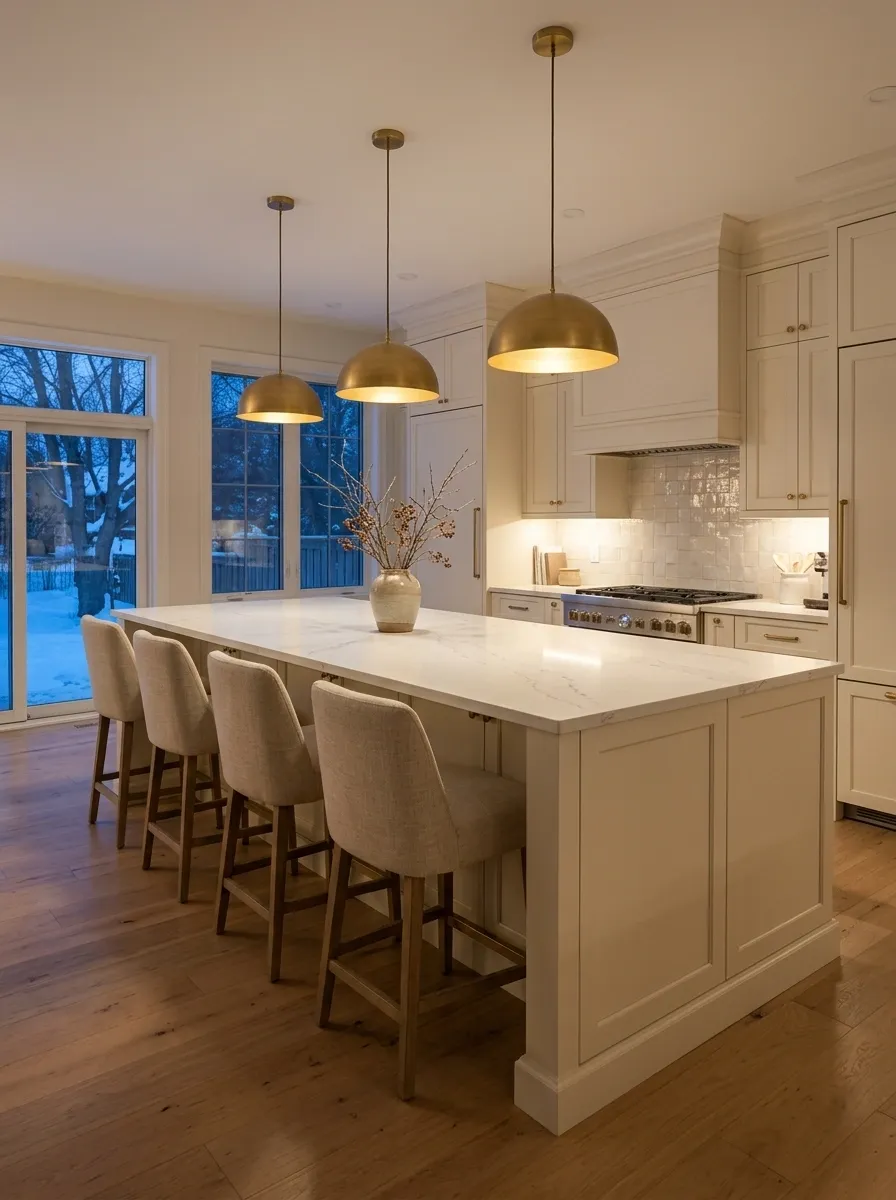
An island can feel more inviting when the seating is comfortable, the surface is clear, and suitable lighting serves the occupied area.
Check stool height, knee space, and the route behind seated people. Use a small centerpiece only where it leaves the surface practical.
The island does not need a large decorative tray permanently occupying the exact space where everyone tries to put down a plate.
| Check seated | Check standing |
|---|---|
| Comfortable foot support | Clear preparation surface |
| Knee space | Usable walkway |
| Useful light | Access to drawers and appliances |
Use a Bowl of Seasonal Fruit as a Useful Accent

A suitable bowl of fruit can provide color without adding another purely decorative object. Choose a size that fits the counter’s actual spare space.
Store and use the fruit appropriately, keeping the arrangement practical rather than maintaining it as an untouchable display.
The bowl can connect warm timber, pale cabinets, or darker surfaces. It is allowed to become emptier through the week. That is evidence of a kitchen being used, rather than a styling failure requiring immediate correction.
Useful color. Keep enough counter space around the bowl to work.
Display a Few Boards Without Blocking the Work Area
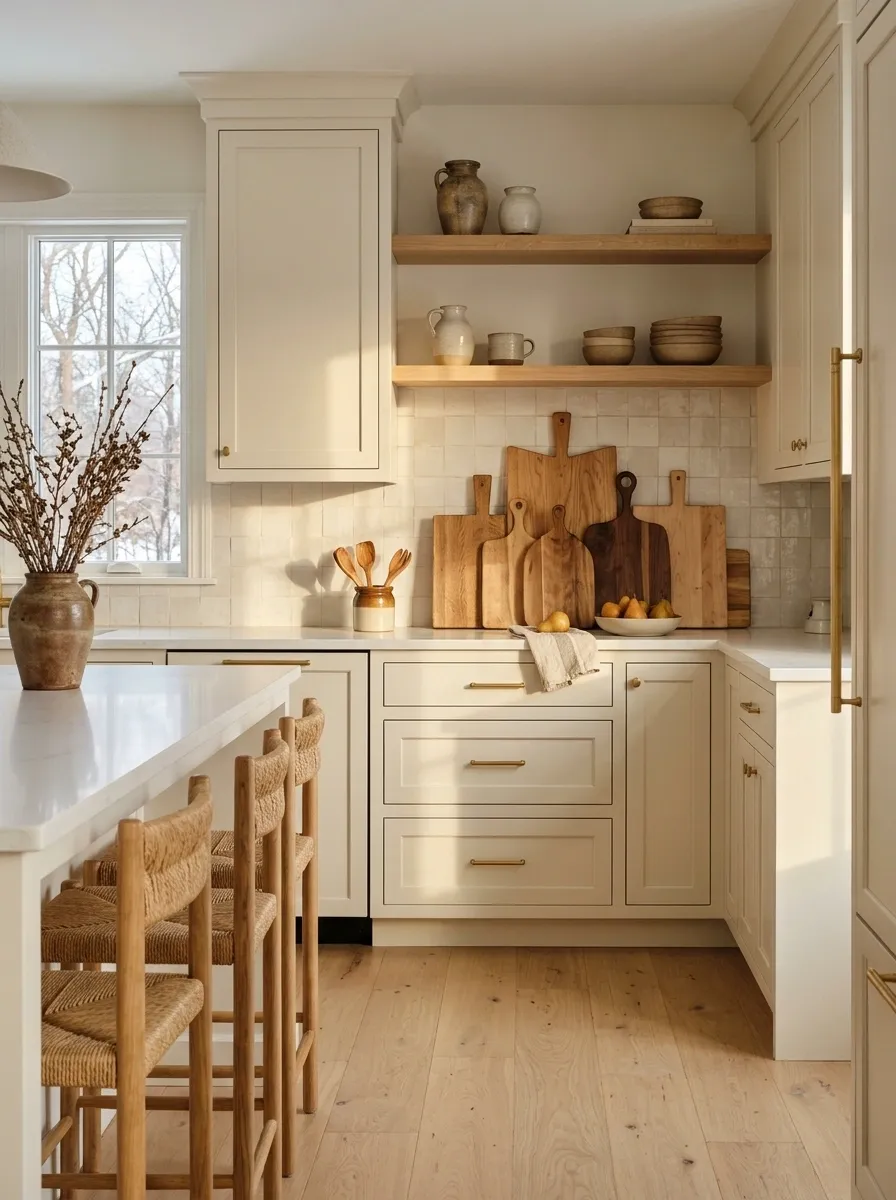
A small group of suitable boards can bring timber texture to a plain kitchen. Keep frequently used ones accessible and stored according to their care needs.
Use a stable arrangement and keep them clear of cooking heat and persistent splashes. Avoid leaning so many pieces together that retrieving one causes the rest to collapse.
The boards should remain kitchen equipment with a visual contribution, rather than a decorative timber collection that requires separate practical boards elsewhere.
Limit the group: Keep the useful boards visible and move duplicates or occasional pieces into suitable storage.
Use Terracotta Tones in a Dry, Practical Location
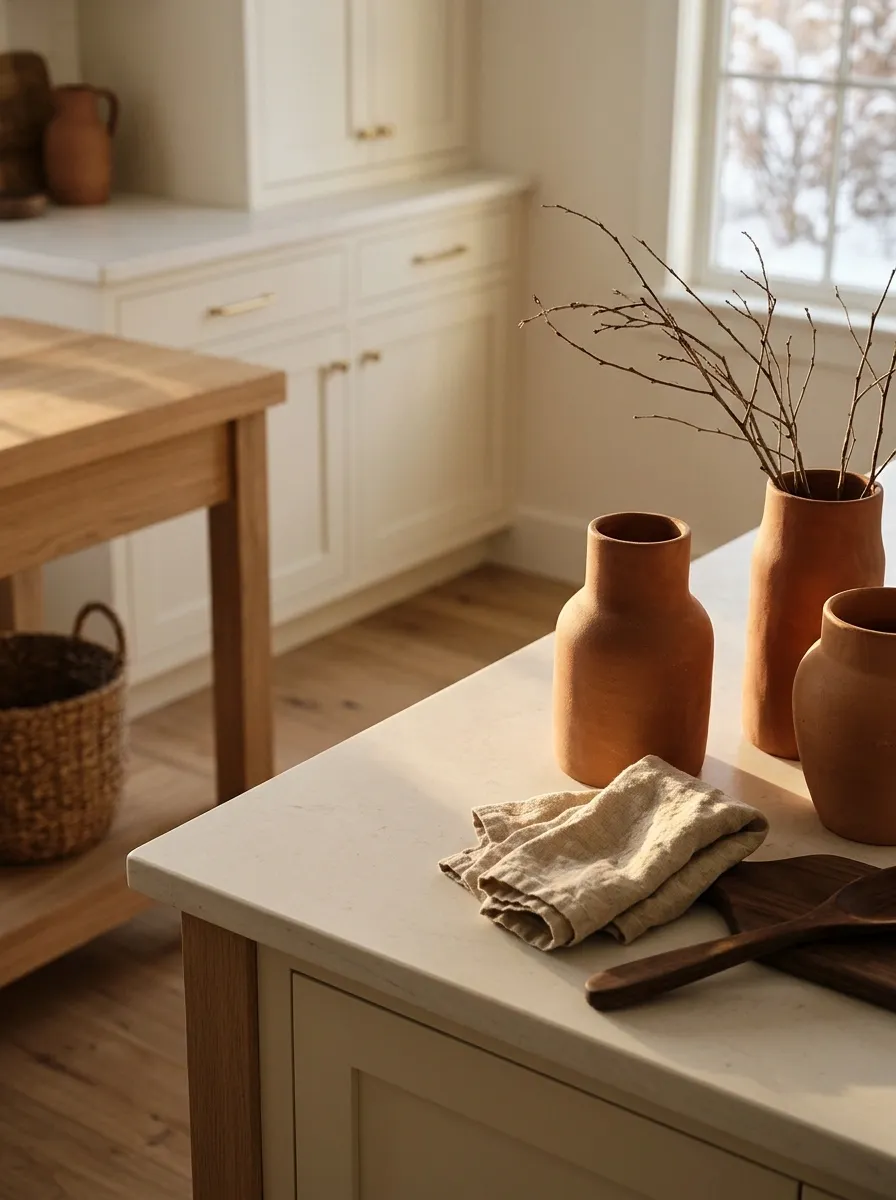
Terracotta-colored ceramics or a suitable container can warm a kitchen with pale walls and wood details.
Choose the location around moisture, cleaning, and food use. Decorative porous materials are not automatically appropriate for every kitchen task.
Keep the shapes simple and the quantity low. The color can contribute warmth without requiring the entire room to impersonate a rustic restaurant that has recently discovered matching pots.
Place warm ceramics where their material suits the actual use.
Keep a Small Herb Area Where the Light Supports It
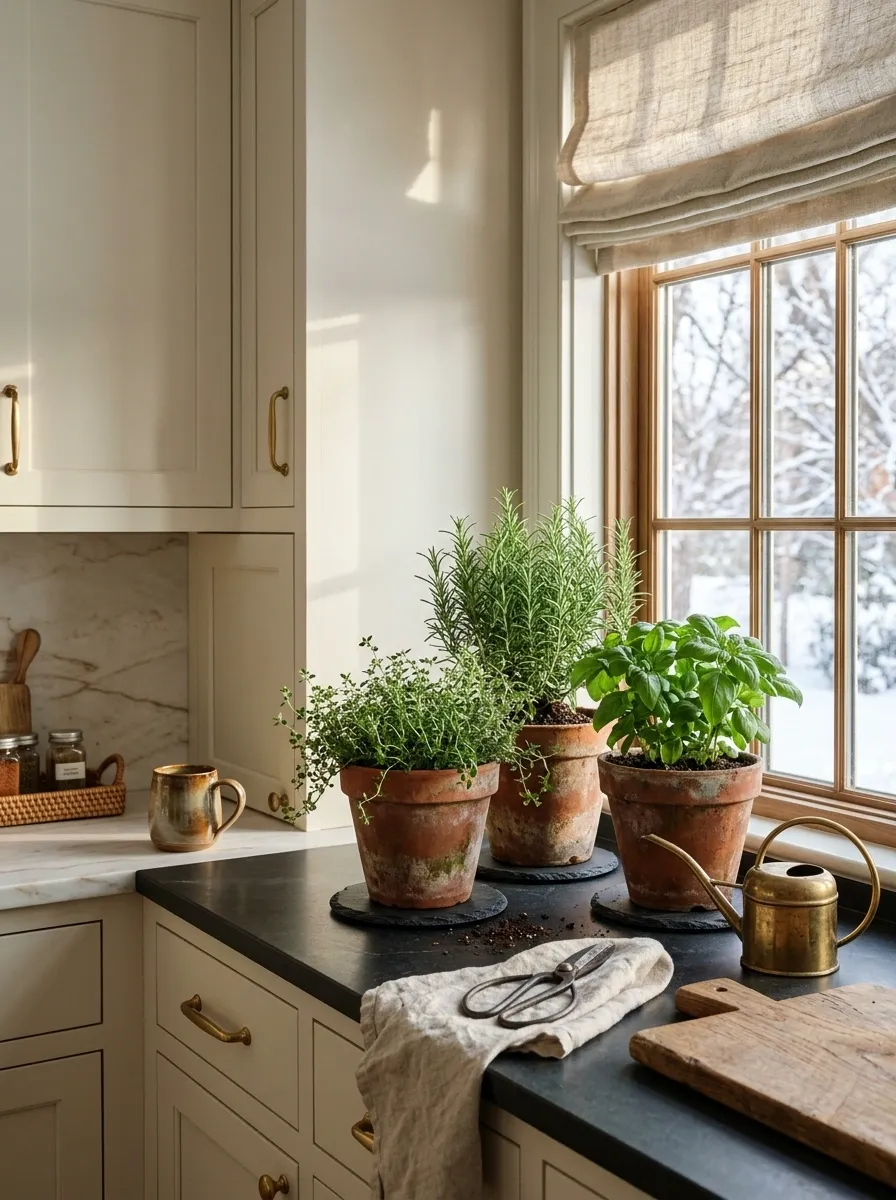
A kitchen herb area can bring life to the room if the plants receive suitable conditions. Choose around the actual light, temperature, and care routine.
Protect the surface beneath pots and keep plants away from unsuitable heat and splash locations. Start with a manageable selection you use.
A kitchen windowsill is not automatically a good growing position. The plant has requirements beyond looking attractive beside a ceramic mug.
| Before choosing herbs | Check |
|---|---|
| Window position | Useful light |
| Container | Drainage and surface protection |
| Location | Heat and drafts |
| Routine | Care you can maintain |
Give a Window Banquette a Lower Centerpiece
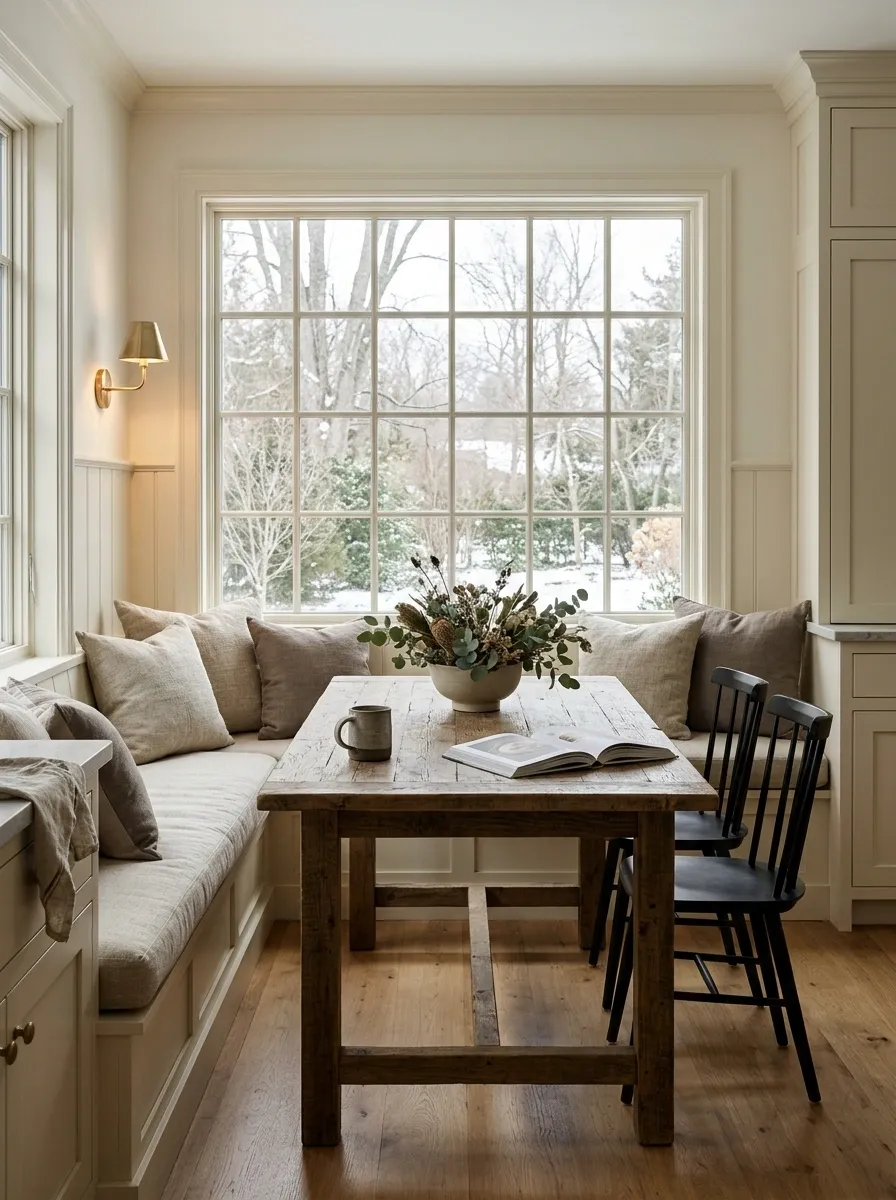
A banquette near a window can feel complete with one low arrangement that leaves the view and conversation clear.
Use material suited to the location and protect the table. Keep dried or fresh decoration away from heat and replace it when its condition declines.
The table should remain usable for meals. A centerpiece that has to be carried elsewhere every evening may be better suited to another surface in the first place.
Make the Kitchen Ready for an Ordinary Winter Meal
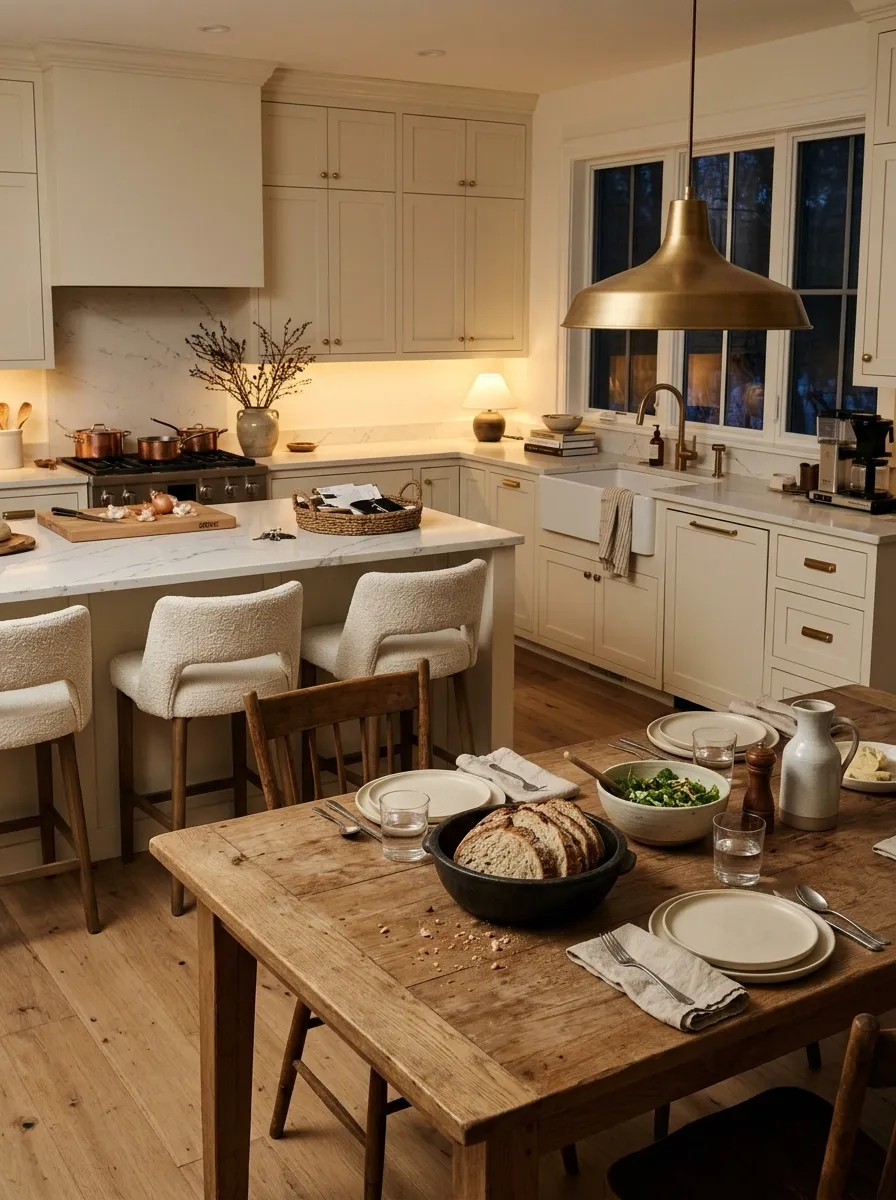
Clear a place to sit, keep the table light useful, and put everyday dining items within reach. This can change the room more than another seasonal accessory.
Choose a simple textile or serving piece only where it improves the routine. Leave enough surface for food.
A winter kitchen should feel available for an unremarkable Tuesday dinner, not exclusively for the carefully arranged meal that appears in a photograph once a year.
Evening test: Sit down, put a plate on the table, reach for what you need, and notice what gets moved out of the way.
Cook Something Before Buying Another Winter Detail
Use the kitchen after dark. Prepare food, sit down, and leave the lamps or task lights on in the arrangement you actually enjoy.
Keep what makes the room easier and more pleasant to use. Remove anything that interferes.
The kitchen can feel warmer through a clear seat, a useful light, and materials you enjoy seeing every day. It does not need a seasonal identity crisis to qualify for winter.