
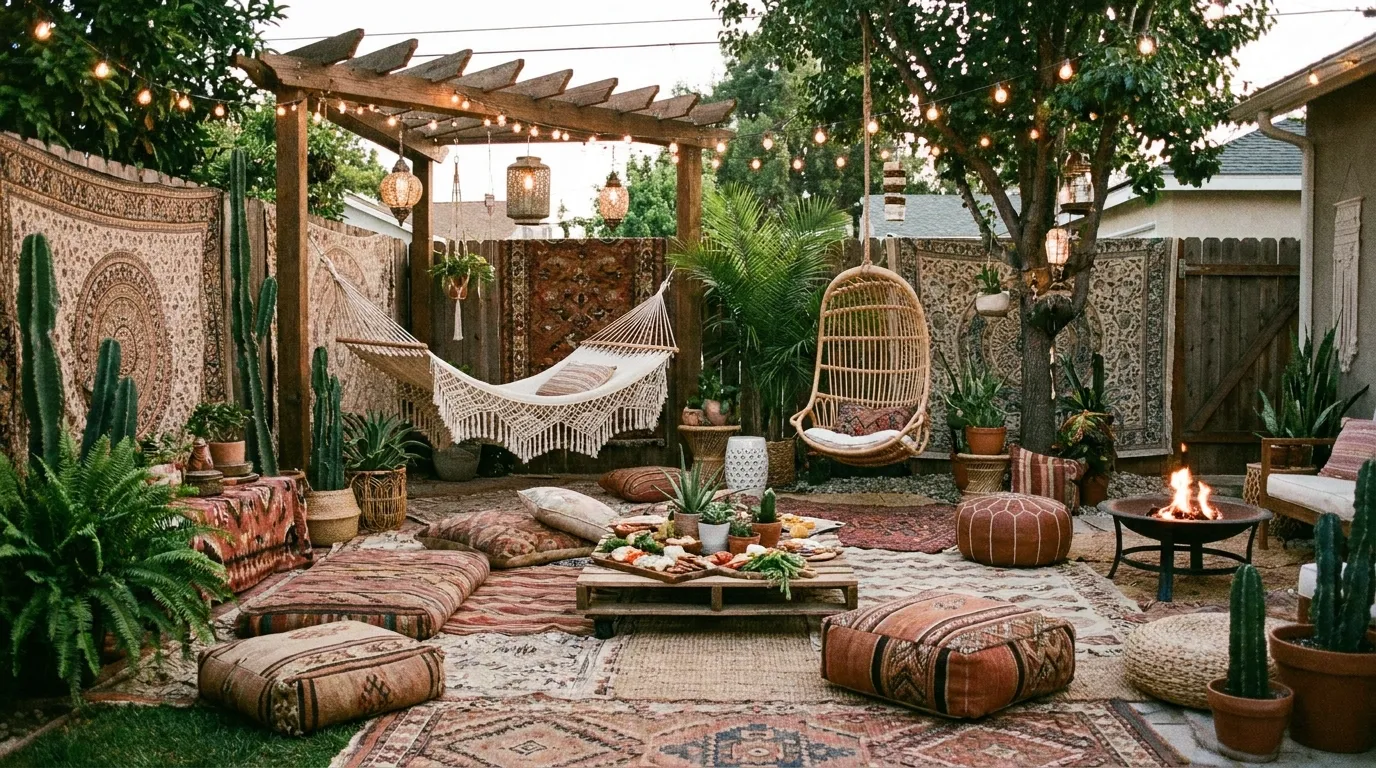
There’s a version of garden decorating that involves terracotta pots, a garden gnome, and a wind chime from a hardware store. Nobody is saying you can’t have those things. But you could also have a garden that looks like someone actually lives in it — someone with opinions, a fabric obsession, and a philosophical relationship with colour.
Hippie garden decor is not about buying a dream catcher and calling it done. It’s about layering things that have meaning and texture and a slight disregard for the idea that gardens should look tidy. The best ones look like they grew this way — like the garden itself decided to become interesting and the owner just didn’t get in the way.
The through line in every idea here is intentional joyfulness. Not chaos. Not clutter. Joyfulness — which is a different thing, and harder to pull off than it looks.
Stop Decorating and Start Inhabiting
Your Garden Isn’t Finished When It’s Planted
Most people think garden decorating means adding objects to an existing space. A statue here. A lantern there. This produces a garden that looks decorated, not inhabited.
Inhabited gardens have a different quality. They show evidence of someone spending time there. A book left on a chair. A rug that has seen rain. A tea cup repurposed as a planter because someone thought it was too pretty to throw away. The decorative objects in a hippie garden should feel discovered, not installed.
Colour Without Strategy Is Just Noise
The visual quality that makes boho gardens work isn’t the amount of colour — it’s the way the colour is distributed. Warm tones in the objects, cool tones in the planting. Saturated accents against muted or natural backgrounds.
A fence painted black and then decorated with a gold mandala. A collection of terracotta pots painted in Aztec patterns. A mosaic stepping stone with teal and amber tiles. In each case the colour has a counterweight — a surface or plant or material that makes the bright thing pop rather than fight everything around it. Colour without a foil is just chaos. Colour with a foil is character.
Texture Is Doing Half the Work
The tactile richness of boho garden spaces is not accidental. Macramé cord, woven rattan, rough timber, smooth river stones, rusted metal, glazed ceramic — none of these read the same way. They catch light differently. They age differently. They contribute different sensory qualities to the space.
The mistake people make is sticking to one texture category. All smooth. All natural timber. All painted. Mix deliberately — one rough surface against one smooth one, one organic form against one geometric one. That friction between materials is what produces the layered quality that hippie gardens do so well.
What Boho Gardens Actually Get Right
They Treat Vertical Space Seriously
The lawn and the path get all the attention. The fence, the wall, the overhead structure — these go untouched. Hippie gardens instinctively understand that vertical surfaces are just as available for planting, hanging, painting, and layering as the ground is.
A fence covered in a painted tropical leaf mural with wall-mounted herb boxes and hanging macramé planters is doing more design work per square metre than an entire lawn with a table on it. Vertical surfaces are free space. Use them.
Found Objects Are Not Cheap — They’re Accurate
An old bicycle used as a planter carrier. A wine bottle tree. A vintage wooden crate display stand. In mainstream design these get dismissed as folksy or budget. In boho gardens they’re not a compromise — they’re accurate to the aesthetic.
Found and repurposed objects introduce history into a space. A bicycle that has clearly been ridden somewhere. A timber crate that has clearly held something. These objects carry a weight that new things don’t have. They make a garden feel like it has a story, not just a style.
Scale Surprises Are the Point
A tiny fairy garden inside a hollow tree stump. A wishing well planter that’s half the height of the fence. Hanging teacups from a branch. The boho garden frequently plays with scale in ways that produce genuine delight — objects that are unexpectedly small or unexpectedly large, placed where you don’t expect them.
This only works when the scale contrast is committed and specific. A slightly larger pot is not a scale surprise. A fully realised miniature world with a pebble path and a tiny door is.
Hippie Garden Decor Ideas
The Sage Green Shed Room
Paint the exterior of a small timber garden shed — or build one from cedar cladding — in a dusty sage green, doors and all. Fit the front with multi-pane French doors that open fully outward. Inside, line one wall with open timber shelving and fill it with books, ceramics, and plants. Lay a Persian-style rug on the floor — a worn, jewel-toned vintage rug, not a new one. Outside the door, place a low daybed with a teal cushion and a scatter of printed cushions in clashing floral patterns. Allow climbing plants — wisteria, jasmine, a rambling rose — to cover the roof and adjacent fence so the structure appears to be growing from the garden rather than sitting in it.
The Macramé Hammock
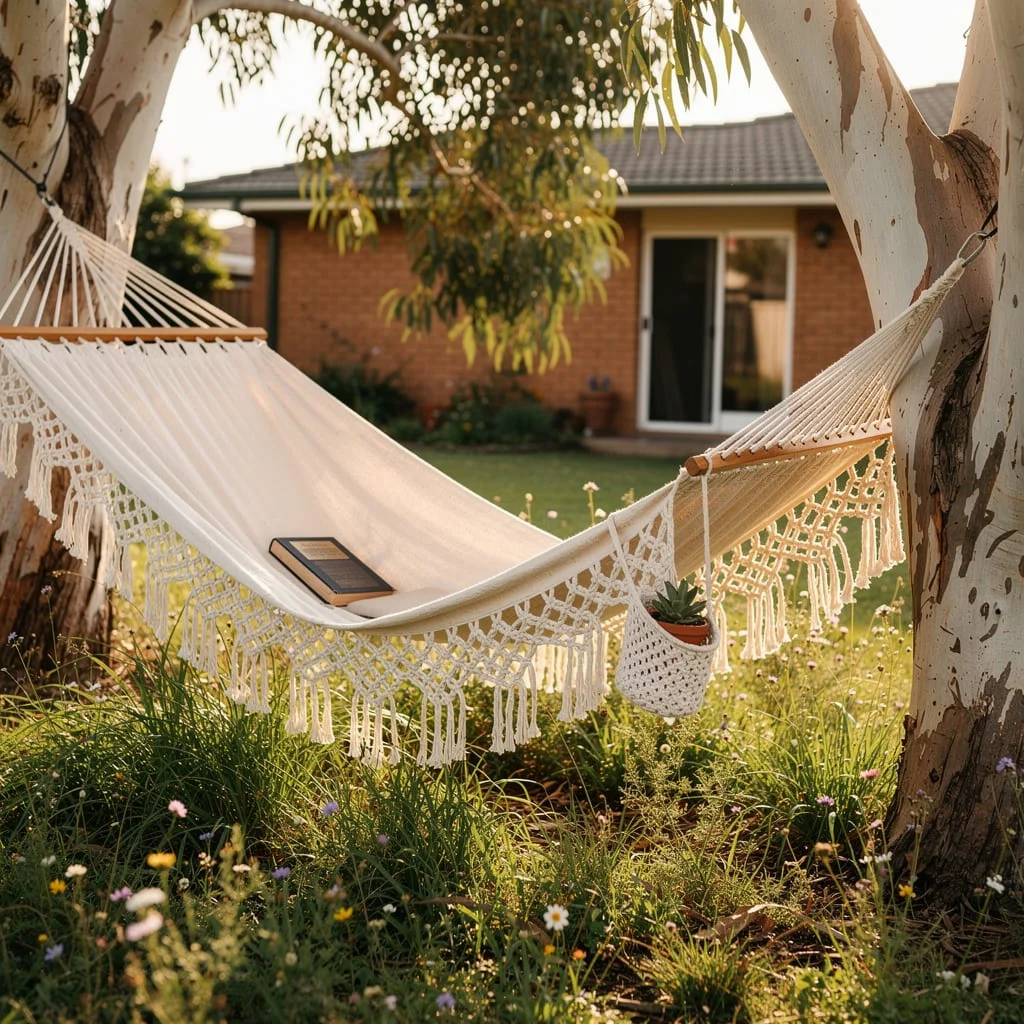
Hang a wide-format cotton rope hammock — the kind with macramé fringed ends and decorative knotwork along the sides — between two eucalyptus or similar smooth-barked trees spaced appropriately. Leave a macramé hanging pocket attached to one side for a small terracotta pot of succulent. Beneath the hammock, allow wildflowers and meadow grasses to grow rather than maintaining lawn — daisies, forget-me-nots, self-seeding annuals.
The combination of the cream macramé, the dappled light through the tree canopy, and the wildflower underplanting is the definition of effortless garden living.
The Bead Curtain Garden Feature
From a pergola beam, garden arch, or strong horizontal branch, hang multiple lengths of decorative beaded string at different heights and densities. Use a mix of bead sizes — small glass or acrylic beads interspersed with larger decorative balls and small tin or bell charms — in a fully saturated rainbow palette. Hang the strings closely enough that they move against each other in the breeze. The effect in afternoon light is coloured shadow and gentle sound — it functions as a privacy screen, a wind feature, and a piece of visual art simultaneously.
The Garden Altar Table
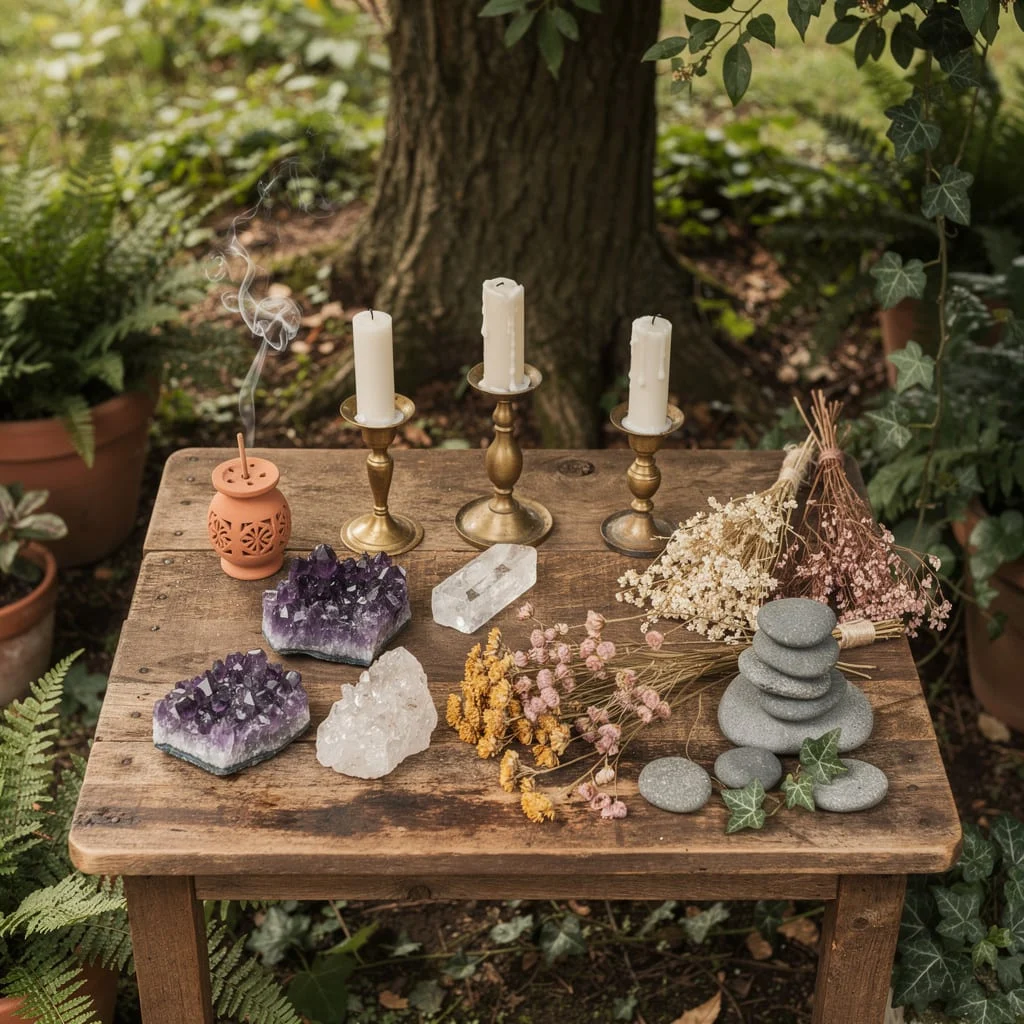
Find or build a small rough-hewn timber side table — reclaimed wood, unfinished, visibly grain-forward. Place it under a tree or in a quiet garden corner. Arrange on the surface: two or three clusters of raw crystals in amethyst and clear quartz, a small terracotta incense holder with a lit incense stick, three brass candlestick holders with white pillar candles, a small tied bundle of dried flowers, and a stack of flat smooth river stones. Do not crowd it. Every object should have breathing room. This is not a table of things — it’s a composition. The garden behind it should be lush and informal so the carefully arranged objects have a wild counterpoint.
The Pallet Cabin Daybed
Build a hut-style frame from timber pallets — four vertical walls at pallet height, a pitched roof using pallet boards laid diagonally and painted in alternating warm colours. Leave the front fully open. Inside, lay two or three pallets flat as a base platform and cover with a thick outdoor mattress in a bold botanical print. Stack cushions in every jewel tone you own — mustard, teal, magenta, emerald — in a mix of sizes and patterns. Hang fabric pennant bunting across the interior roofline in the same colour palette. The structure should look handmade because it is handmade, and it should overflow with softness and colour in a way that makes it look genuinely inviting.
The Mosaic Stepping Stone Path
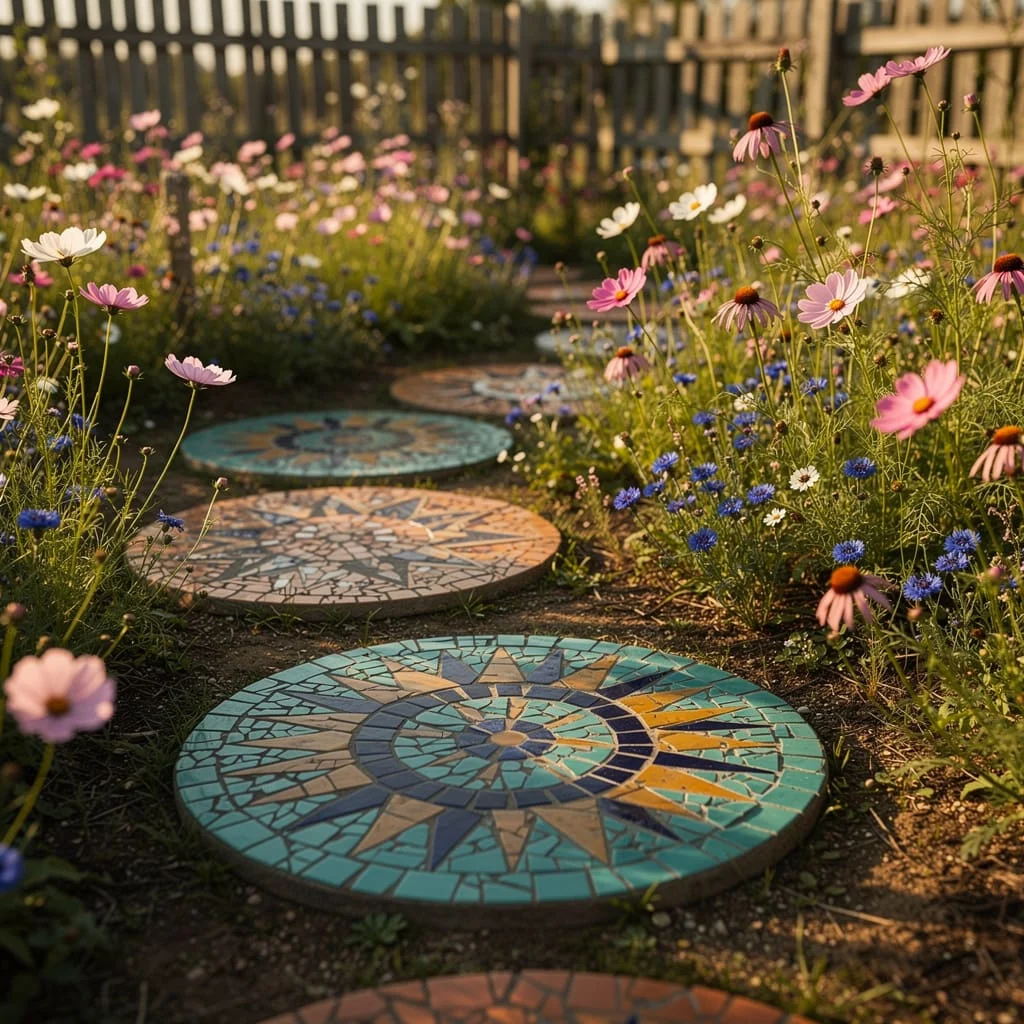
Cast or purchase circular concrete stepping pads approximately 450mm in diameter. Onto each surface, create a mosaic using broken ceramic tiles, glass tesserae, and mirror fragments — the design should be radial, working from a central motif outward. Use a teal, amber, and cobalt palette for coherence across different stones while allowing each design to vary. Set the completed stones into the ground along a garden path, pressing them so they sit flush with the soil. Plant wildflowers thickly between and around the stones — cosmos, cornflowers, echinacea — so the mosaics appear to float in a meadow of colour.
The Teacup Tree Garden
Source six to eight vintage mismatched fine china teacups — op shops and estate sales are the correct starting point, not garden centres. Drill a small drainage hole in each base. Fill with a mix of compact trailing flowers — miniature roses, forget-me-nots, small-flowered lobelias. Tie lengths of satin ribbon — blush pink or cream — through the cup handles and hang from a low tree branch at varying heights so the cups cluster at roughly the same level. The juxtaposition of precious china and living garden plants is the entire point.
The Painted Pot Procession
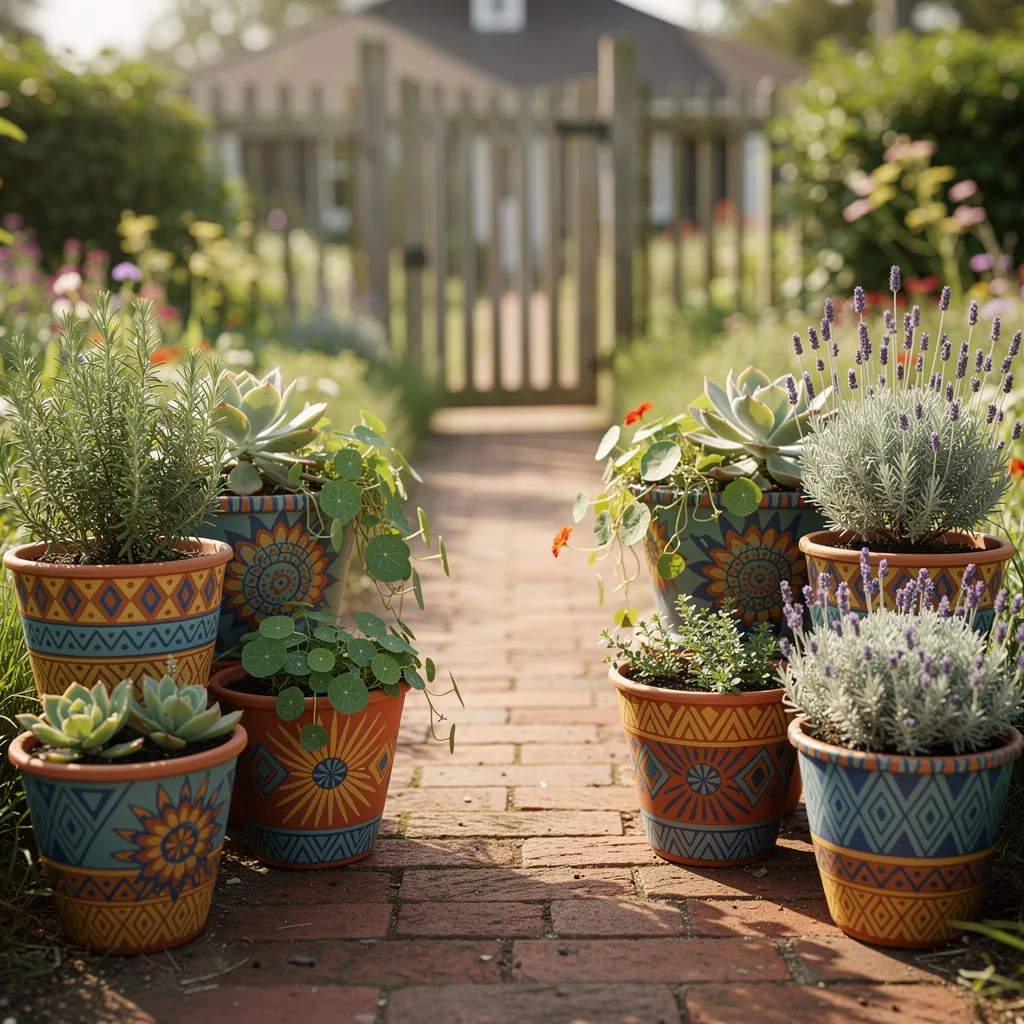
Take standard terracotta pots in three different sizes. Using exterior acrylic paint, apply bold geometric and folk art patterns to each — Aztec diamonds, sunburst radiations, chevron bands in terracotta orange, cobalt blue, and dull gold. Plant each pot with a single species: rosemary in one, a rosette succulent in another, lavender in the largest. Arrange the pots in a loose double row flanking a path or gate entrance, varying heights by placing smaller pots on terracotta saucer stands. Allow the plants to grow beyond the pot rim so the decorative surface is always partially framed by living foliage.
The Macramé Arch Display
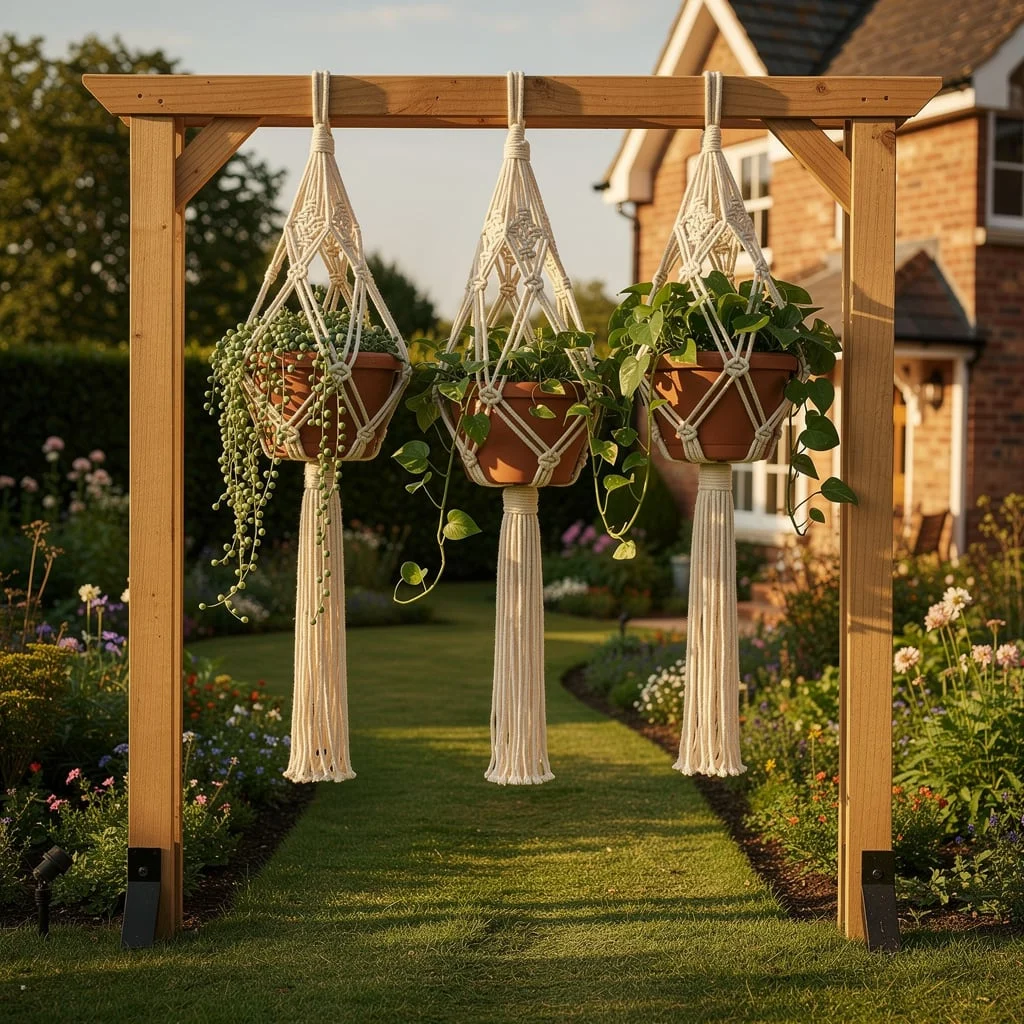
Build or commission a simple flat-topped timber arch — two posts, a single horizontal top beam, no sides — using 90x90mm structural timber in a natural cedar tone. Mount three evenly spaced ceiling hooks along the underside of the top beam. Hang three long-format macramé plant hangers from the hooks — each with a terracotta pot at the hanging point and long knotted fringe below, reaching almost to the ground. Plant each pot with a trailing species: string of pearls, golden pothos, or devil’s ivy.
Position the arch as a garden entry or as a divider between two zones. The clean timber structure and the organic macramé fringe create a contrast between geometry and softness that reads as intentional rather than decorative.
The Woven Basket Fence Gallery
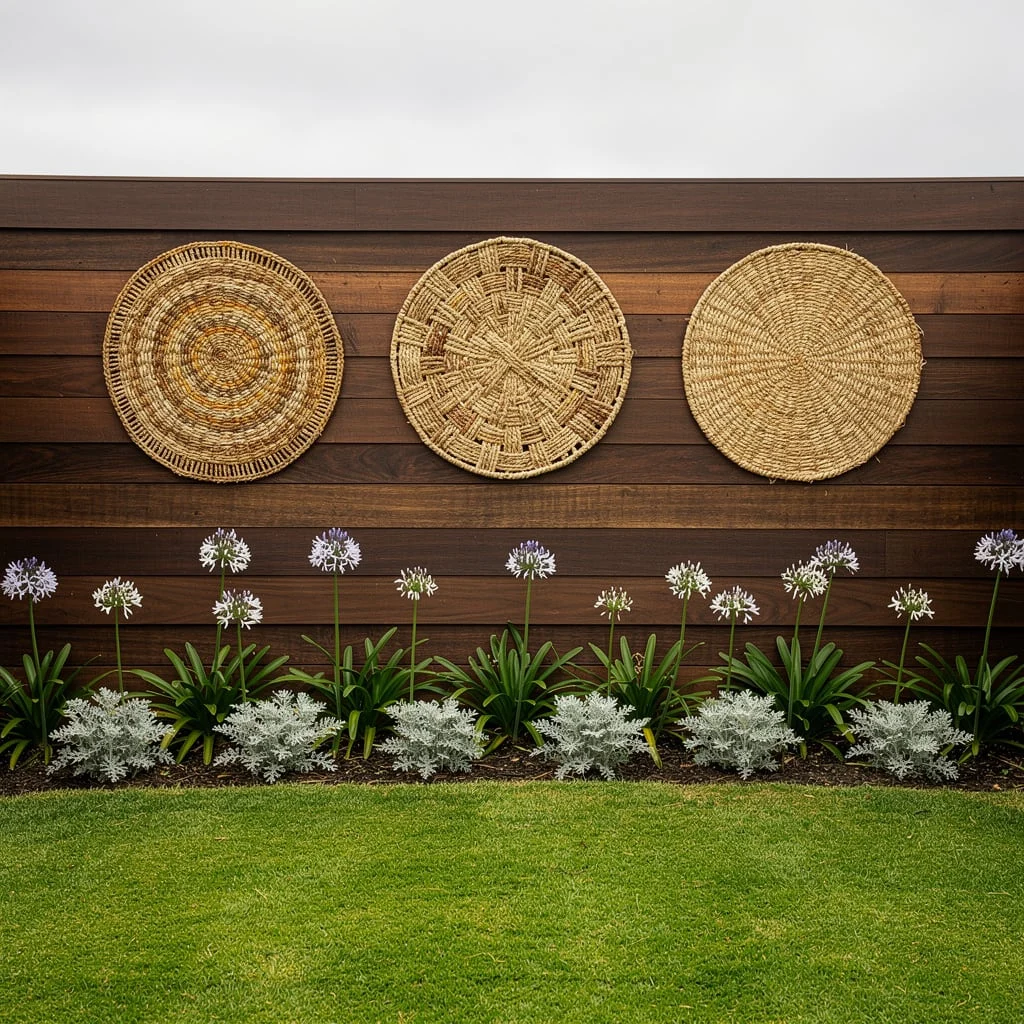
Mount three large circular woven baskets — seagrass or rattan, each a slightly different weave pattern — onto a horizontal-slatted timber fence at even spacing, using heavy-duty picture hooks rated for outdoor use. Centre them on the fence panel at eye height. Below the baskets, maintain a planted border of agapanthus interspersed with dusty miller — the blue-purple flower heads and silver-grey foliage echoing the warm natural tones of the baskets.
The fence should be stained dark — almost espresso — so the warm honey-toned baskets read clearly against it.
The Mosaic Birdbath
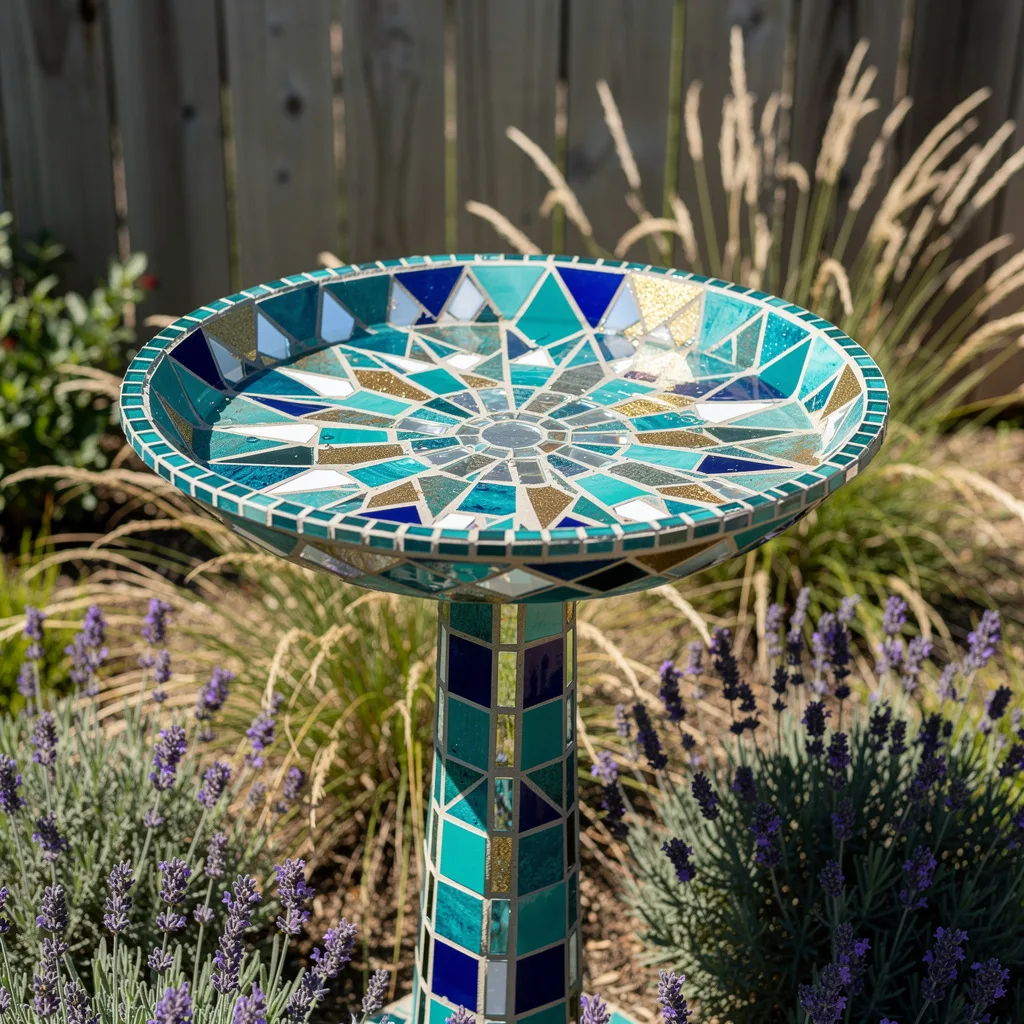
Source a plain concrete pedestal birdbath. Using tile adhesive and unsanded grout, cover the entire outer surface — pedestal and basin — with a mosaic using vitreous glass tiles in teal, cobalt, navy, gold, and mirror white. Design the basin as a starburst or compass rose pattern working from the centre. Tile the pedestal in alternating geometric bands. Once grouted and sealed with exterior tile sealer, position the birdbath in the garden surrounded by lavender and ornamental grasses. Fill the basin with clean water.
The mosaic catches sunlight and casts coloured reflections on surrounding plants. It is simultaneously functional and emphatically not boring.
The Fence Mandala Mural
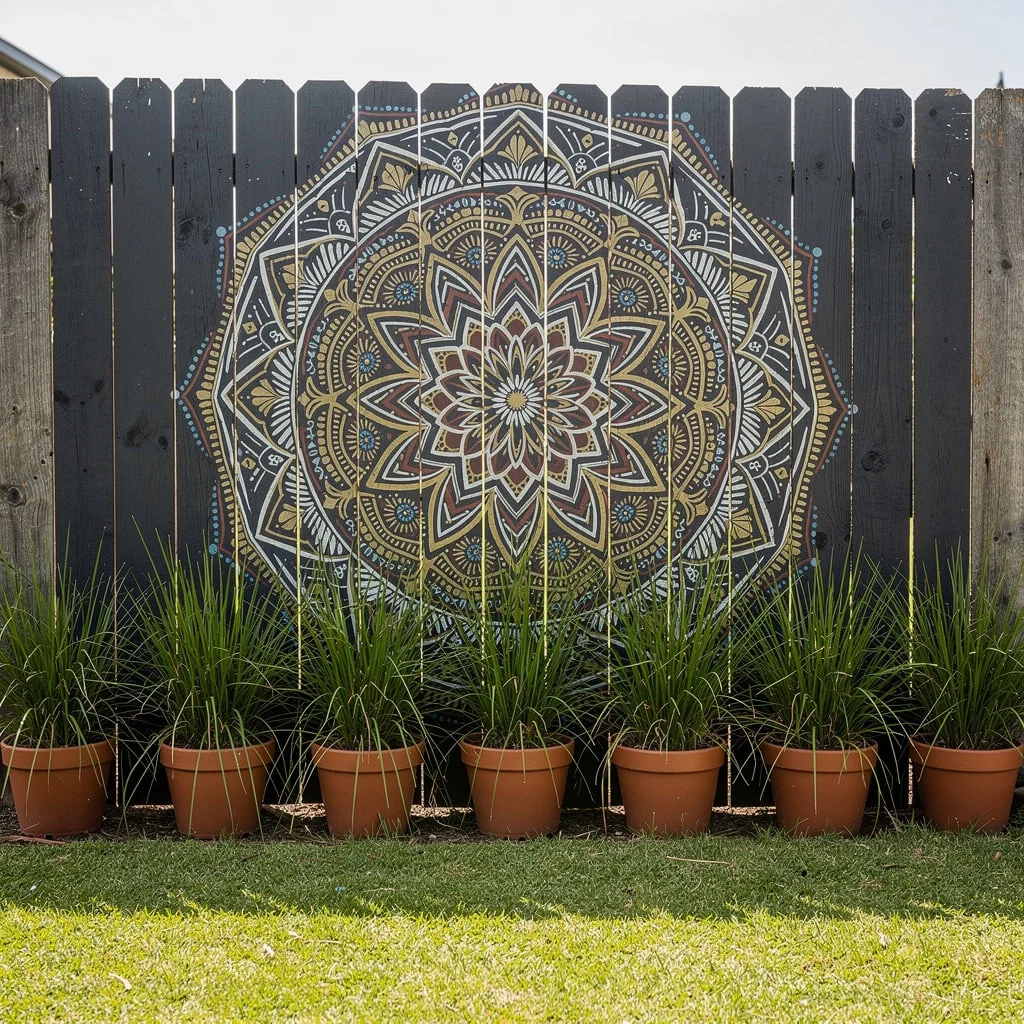
Paint a full section of timber paling fence in flat black exterior paint — two coats, fully covered. Using a chalk line and compass, mark out a large circular mandala design centred on the panel. Paint the design using exterior acrylics in gold, deep burgundy, white, and small accents of teal blue. The mandala should be large — at least 1.5 metres in diameter — so it reads as a statement rather than a decoration. Along the fence base, line up identical terracotta pots of ornamental grass in a single tight row.
The repetition of the pots and the symmetry of the mandala create a composed, intentional backdrop that elevates the entire garden zone.
The Bottle Tree Sculpture
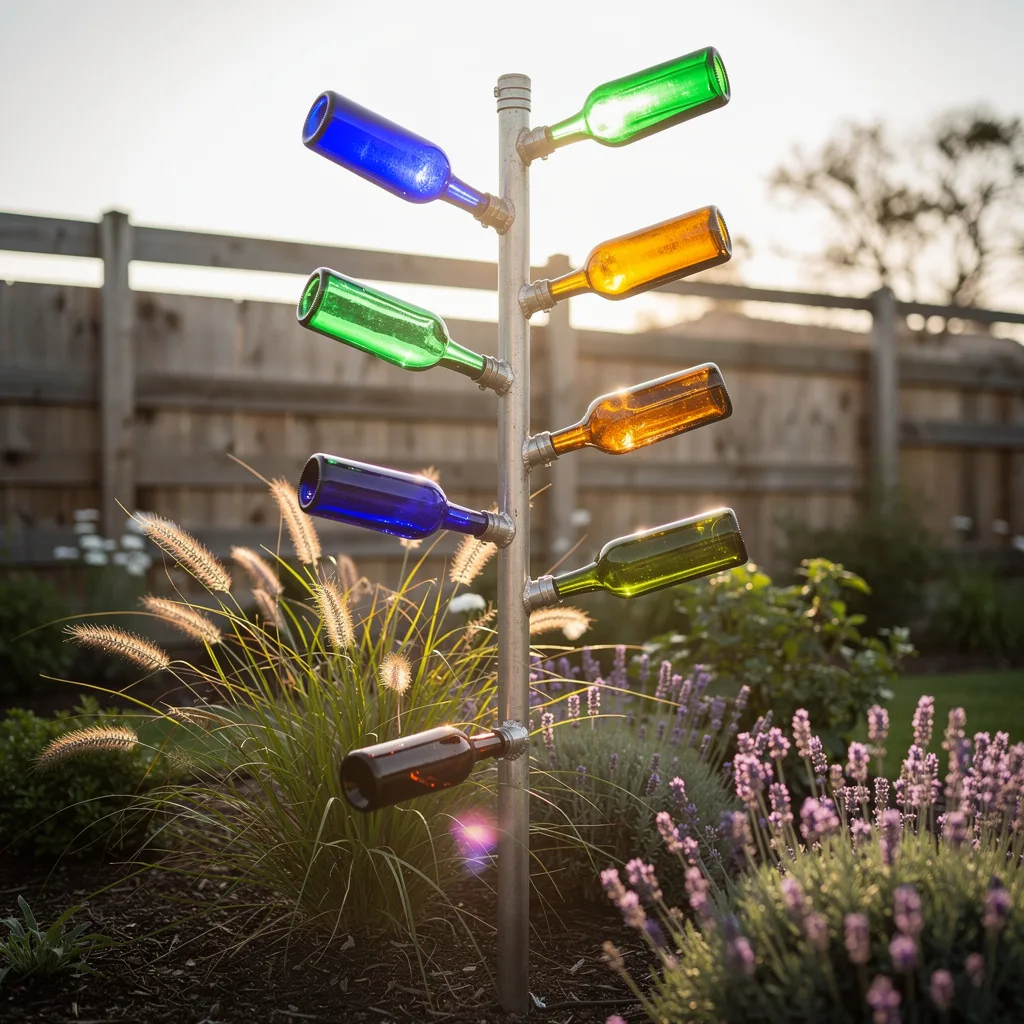
Drive a galvanised steel pipe approximately 1.5 metres into the ground and cement the base for stability. Using T-junction pipe fittings and short lengths of pipe as horizontal arms, create a branching structure — wider at the base, narrowing toward the top. Push wine and spirit bottles neck-first onto each pipe arm — cobalt blue, dark green, amber, and olive. As light passes through the coloured glass, the bottles cast warm coloured shadows on surrounding plants.
Position in a mixed garden border with lavender and ornamental grasses so the structure sits within planting rather than in front of it.
The Wooden Crate Corner Shrine
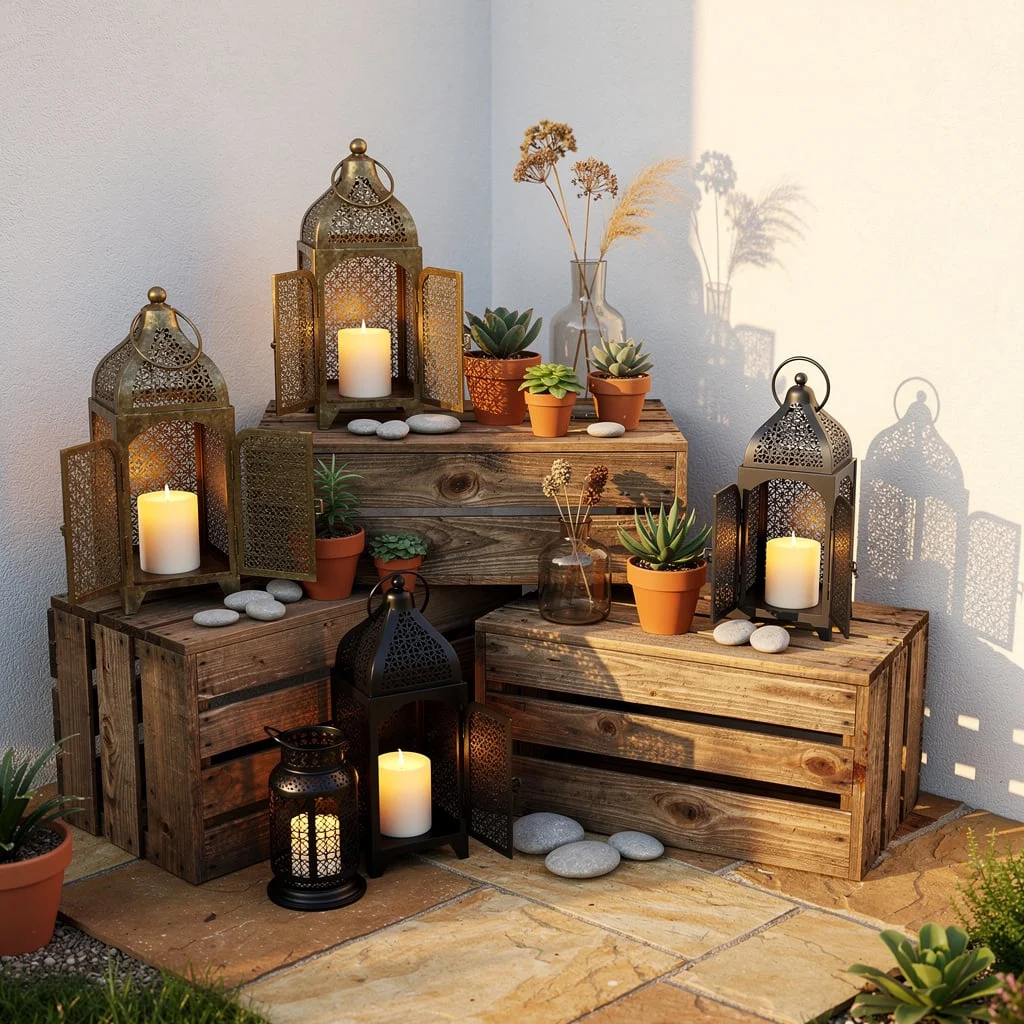
Arrange five or six weathered timber wine crates in a stacked and offset formation in a garden corner — some upright, some on their sides, at varying heights to create a stepped display surface. On the top level, place three Moroccan lanterns in gold and black tones with large pillar candles. On the mid level, arrange small terracotta pots of succulents and aloe. Scatter smooth grey river stones around the base of each lantern as a grounding detail. Add one glass vessel with dried pampas grass stems at the back.
The arrangement should look considered from every angle and cast extraordinary shadow patterns in the evening when the candles are lit.
The Bicycle Planter
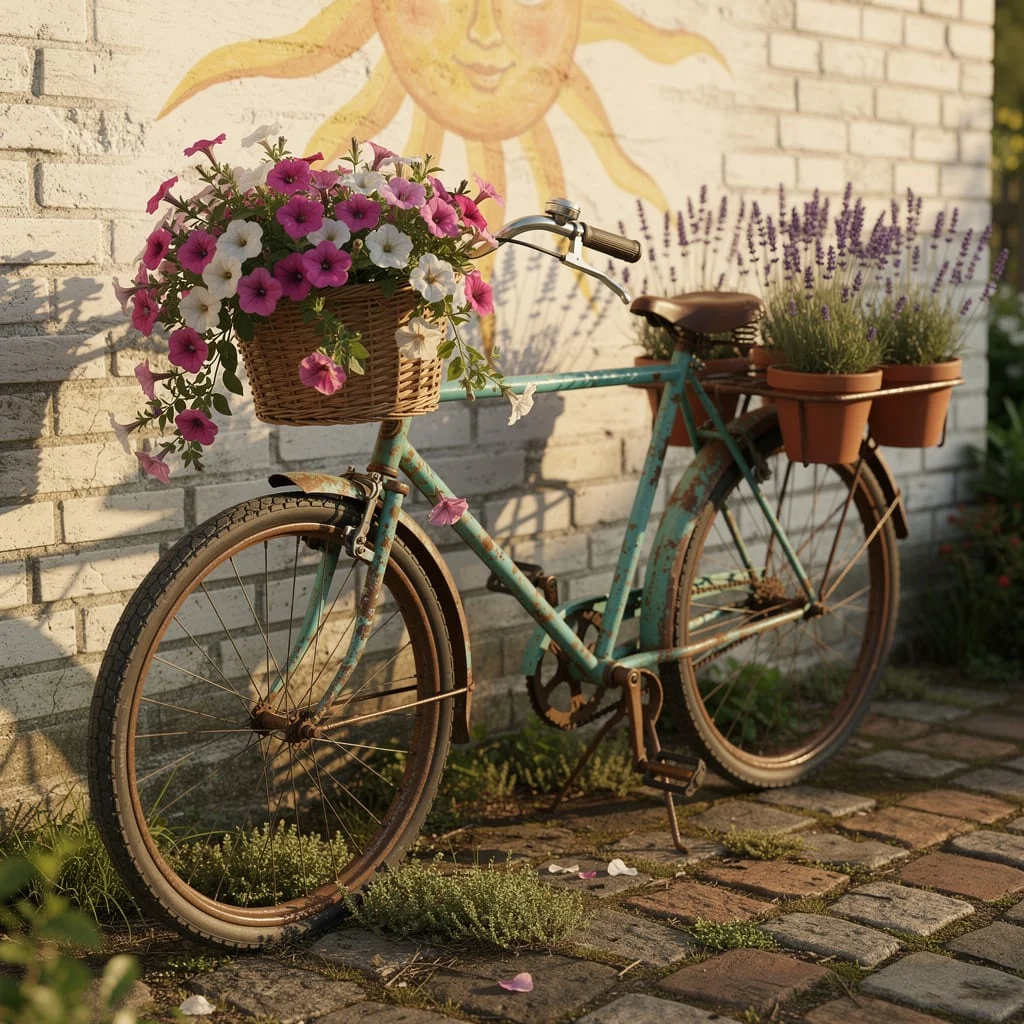
Source a vintage step-through bicycle frame — the kind with a curved top tube, paint flaking, clearly used. Do not strip or repaint it. Attach a wicker front basket and fill with densely planted trailing petunias in pink and white. Affix a rear rack carrier and mount two terracotta pots of lavender side by side. Lean the bicycle against a whitewashed brick wall on which a large sun face or folk art motif has been painted in warm yellow and orange.
The bicycle does not need to be functional. Its job now is to be a beautiful garden object that carries plants and a story simultaneously.
The Botanical Fence with Herb Boxes
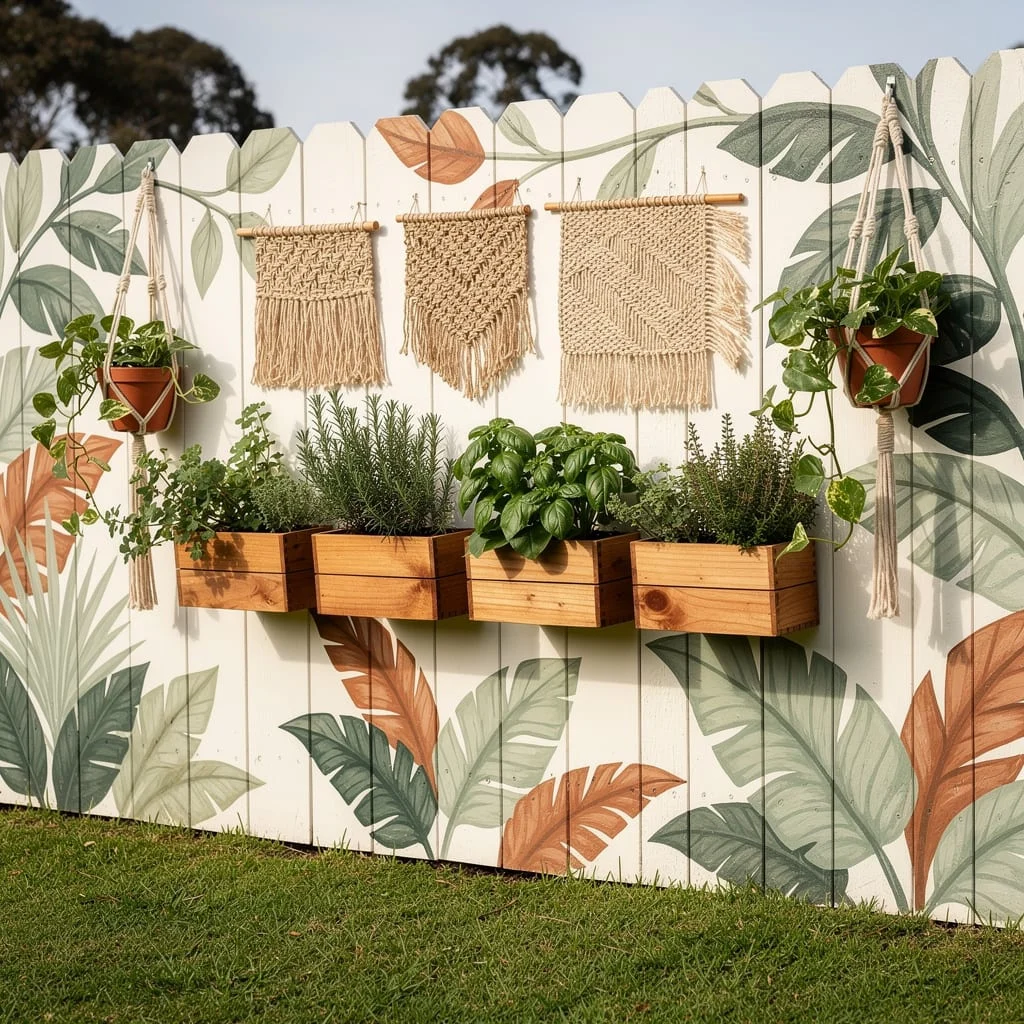
Paint a white picket fence with a large-scale tropical leaf mural — oversized monstera, bird of paradise, and palm fronds in sage green, rust brown, and soft teal, painted directly onto the pickets in a loose illustrative style. Mount four cedar timber wall planter boxes in a horizontal row at mid-fence height, screwed directly into the palings. Fill with culinary herbs — basil, rosemary, thyme, and oregano — planted densely so the boxes overflow. Hang two macramé planters on either side with trailing pothos.
Between the mural, the textiles, and the living herbs, the fence becomes the most interesting surface in the garden.
The Tree Stump Fairy Garden
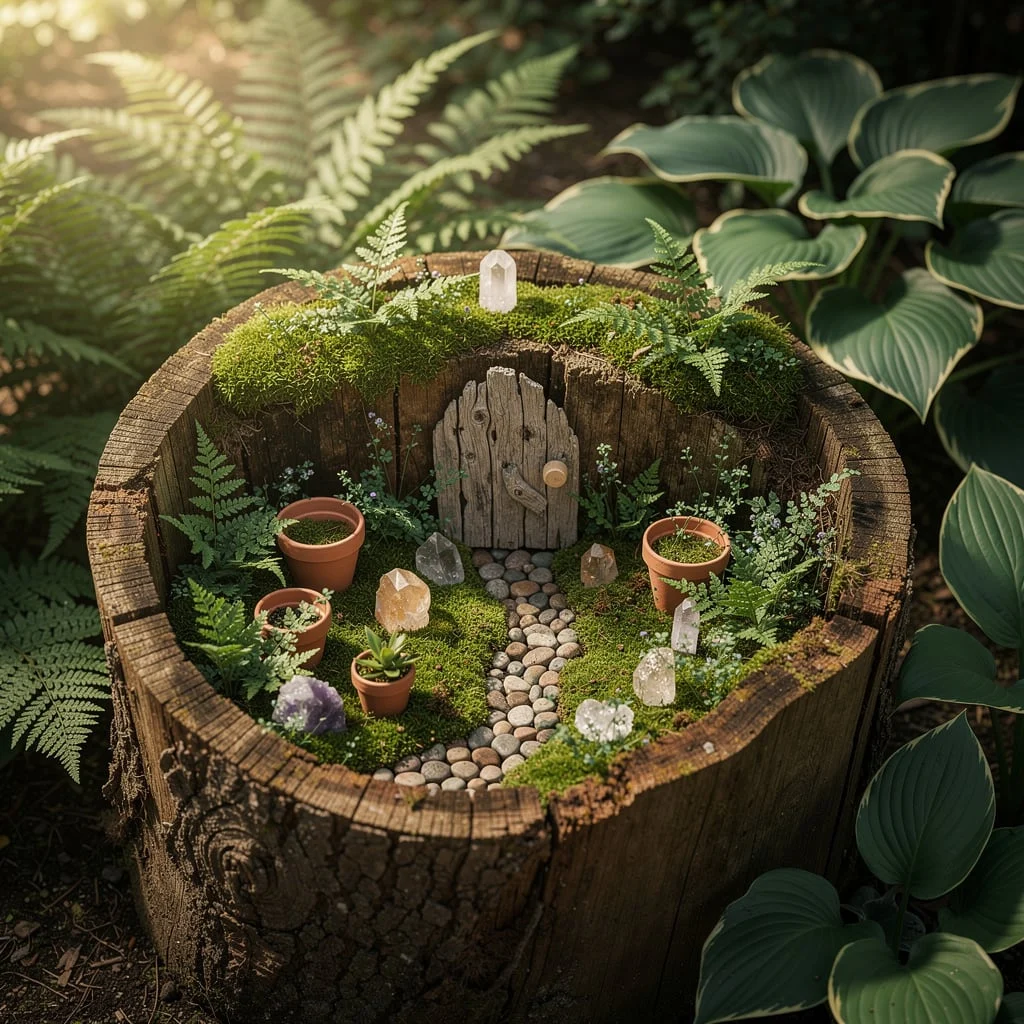
Find a wide, hollow-topped tree stump — or create a circular container from rough timber slab sides and a base. Fill the interior with a rich compost and moss layer. Build a tiny arched doorway from weathered timber offcuts at one edge of the stump interior. Lay a miniature pebble path from the door across the moss floor. Place small terracotta pots of baby ferns and miniature succulents around the interior. Add two or three raw crystal points — clear quartz, amethyst — at varying positions as decorative elements.
Surround the stump exterior with full-size shade planting — hostas, ferns, solomon’s seal — so the miniature world appears discovered rather than installed.
The Stacked Tyre Planters
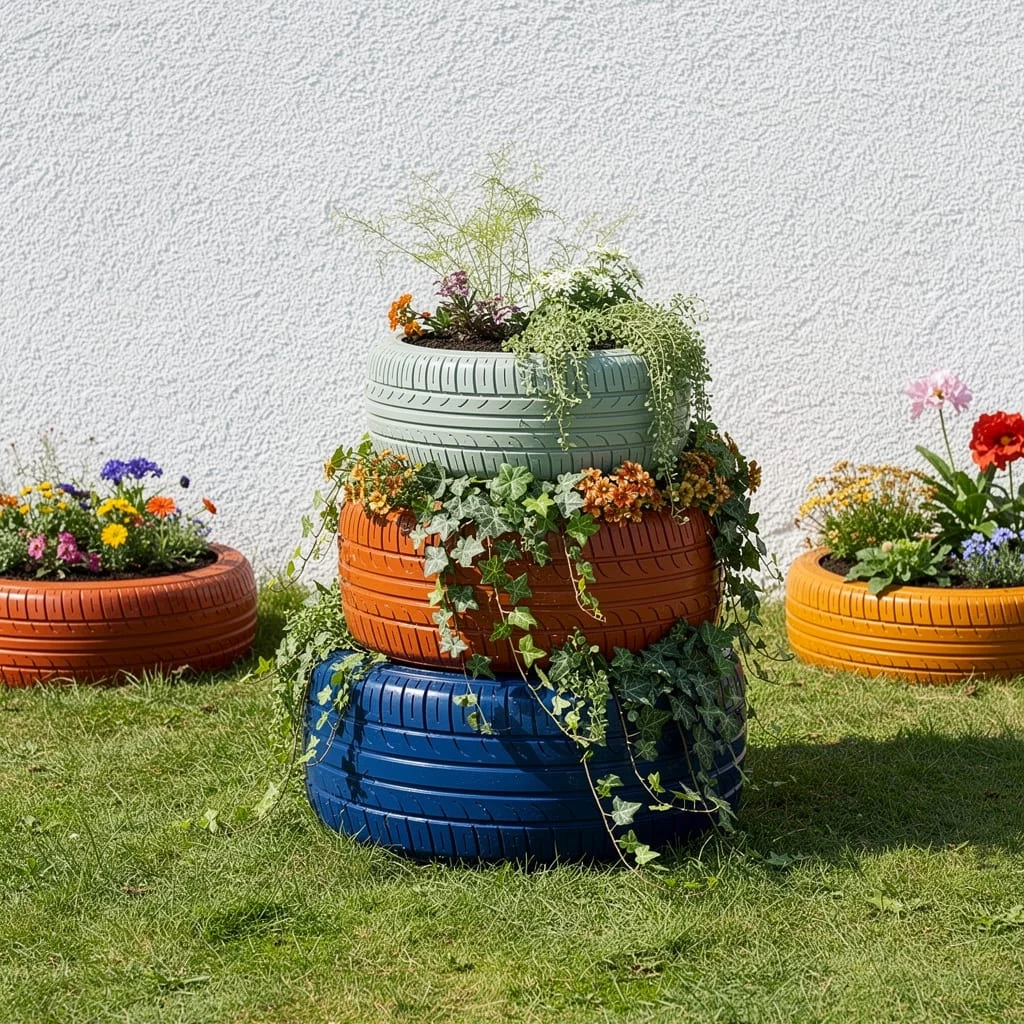
Take three car tyres in descending size and paint them in solid exterior colours — cobalt blue for the largest base tier, burnt orange for the middle, dusty sage green for the top. Stack them centred and offset for stability. Fill each tyre with compost and plant with a different trailing species — ivy in the middle, mixed annuals in the top. Place additional single-tyre planters nearby in amber and terracotta red, each planted with a different bold annual mix.
The sculptural quality of the stacked tower and the deliberate colour palette elevate what would otherwise be a craft project into something with genuine visual presence.
The Wishing Well Planter
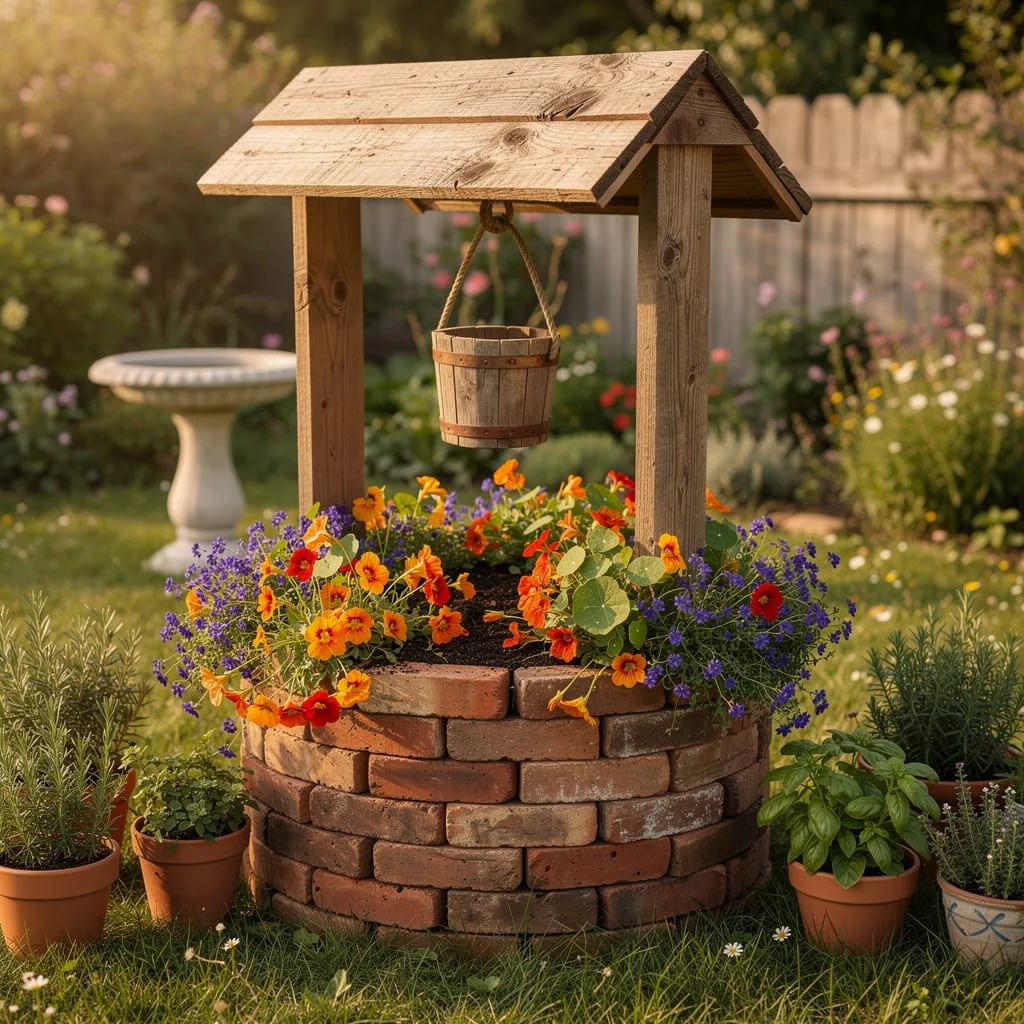
Build a cylindrical planter wall from reclaimed brick — stack in a circle approximately 700mm in diameter and 600mm high using brick mortar, filling the interior with compost. Above it, construct a simple timber well roof structure: two upright posts mortared to the outside of the brick circle, a cross-beam, a small pitched timber roof. Hang a small wooden bucket from the crossbeam on jute rope. Fill the planting cavity with a riot of nasturtiums and lobelia — orange, red, gold, and purple — and allow them to spill over the brick edge. Place additional terracotta pots of herbs around the base.
It is a garden focal point that works because it commits completely to the idea.
The Garden You Actually Want
Every garden in this list was made by someone who stopped waiting for permission.
Permission to use colour. Permission to hang things from trees. Permission to turn a bicycle into a planter or paint a mandala on a fence or build a tiny world inside a tree stump. These are not radical acts. They are just the decision to treat a garden as a space for living and meaning rather than for maintenance and appearances.
The hippie garden philosophy has always been the same: beauty is not about expense or precision. It’s about care. It’s about the evidence of someone paying attention to what they love and letting that show. Your garden is the one outdoor space that belongs entirely to you. Make it look like it.