
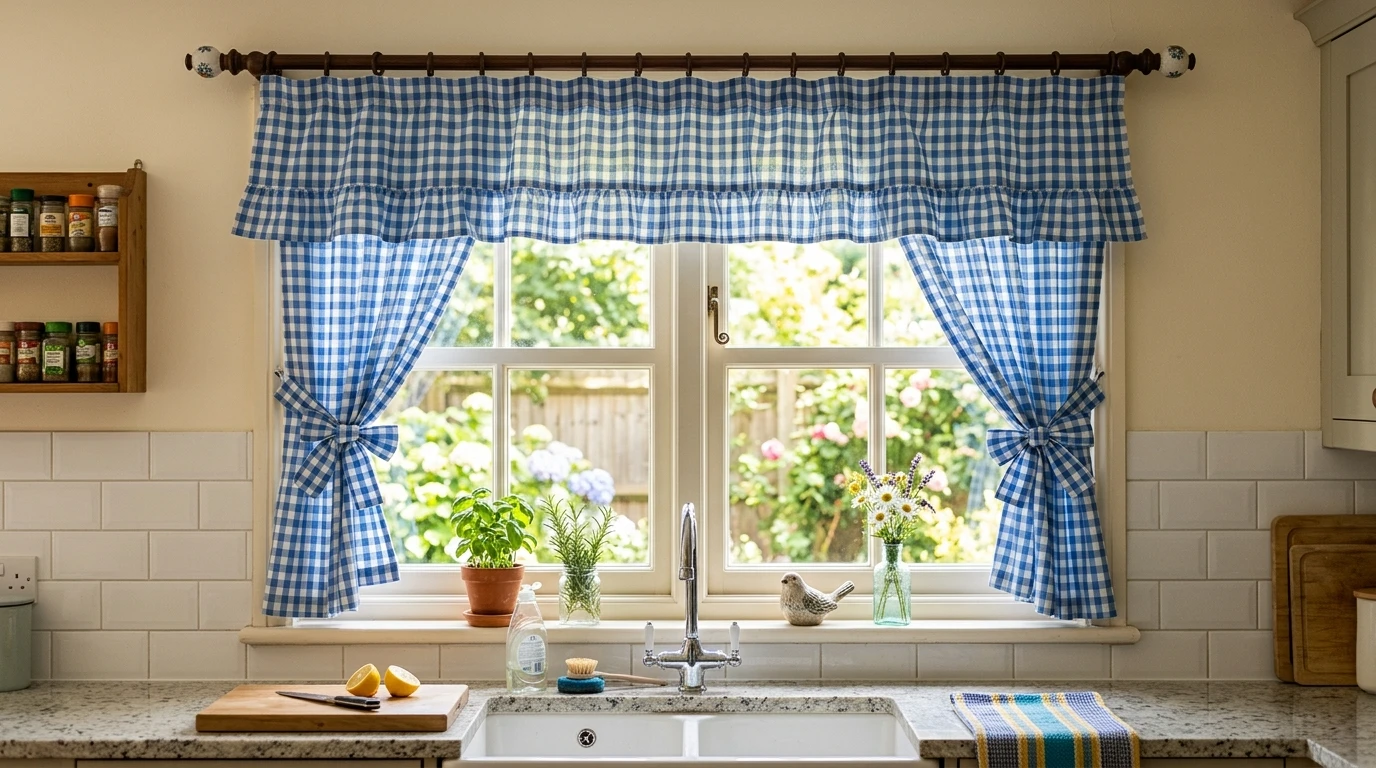
A kitchen curtain is the cheapest, fastest, lowest-stakes design decision in the entire room, and somehow it’s the one most people skip entirely.
Cabinets get years of research. Counters get sample slabs hauled into the kitchen under different lighting. The window gets whatever blind came with the house, or nothing at all. Which is strange, because nothing else in a kitchen changes the mood of the room faster than the fabric framing its only source of daylight.
This isn’t about hiding a window. It’s about treating it like the rest of the room — on purpose, with a material and a length chosen specifically for that wall, not grabbed off a shelf because it was the right size.
Kitchen Curtain Ideas
Ruffled Gingham Café Curtains
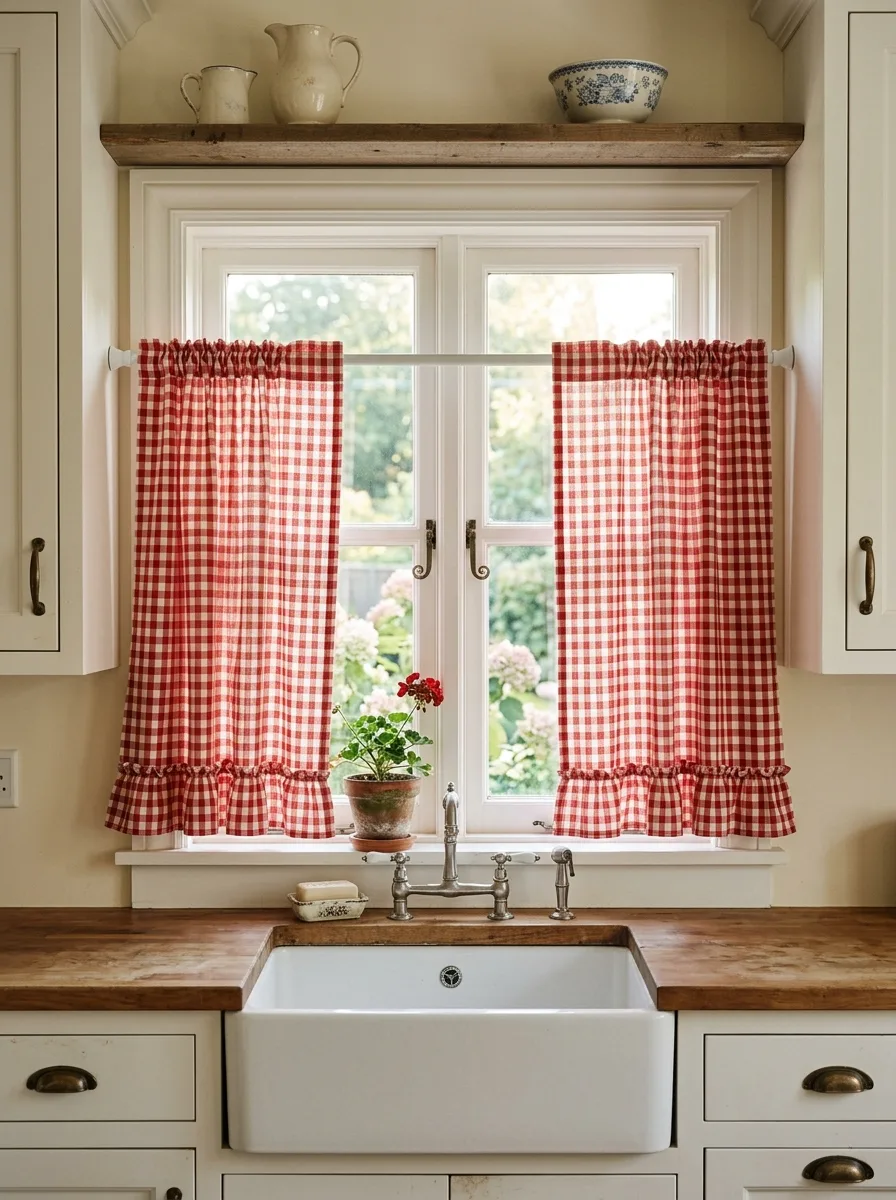
Hang a pair of red-and-white gingham cotton café curtains at sill length, gathered onto a simple rod with a ruffled trim along the bottom hem for softness without tipping into farmhouse cliché.
Choose a mid-scale check, not too small or it reads as a tablecloth from across the room, and let the curtains hang just past the windowsill rather than to the floor — this is a working sink window, not a formal drape.
Pair them with a wood shelf mounted directly above the window frame, styled with a couple of ironstone pitchers and one mismatched bowl, so the gingham has something to play off besides the window trim.
Keep the rod itself simple and white, almost invisible. The curtains are doing the personality work here; the hardware shouldn’t compete.
Tied-Back Sheer Linen Panels
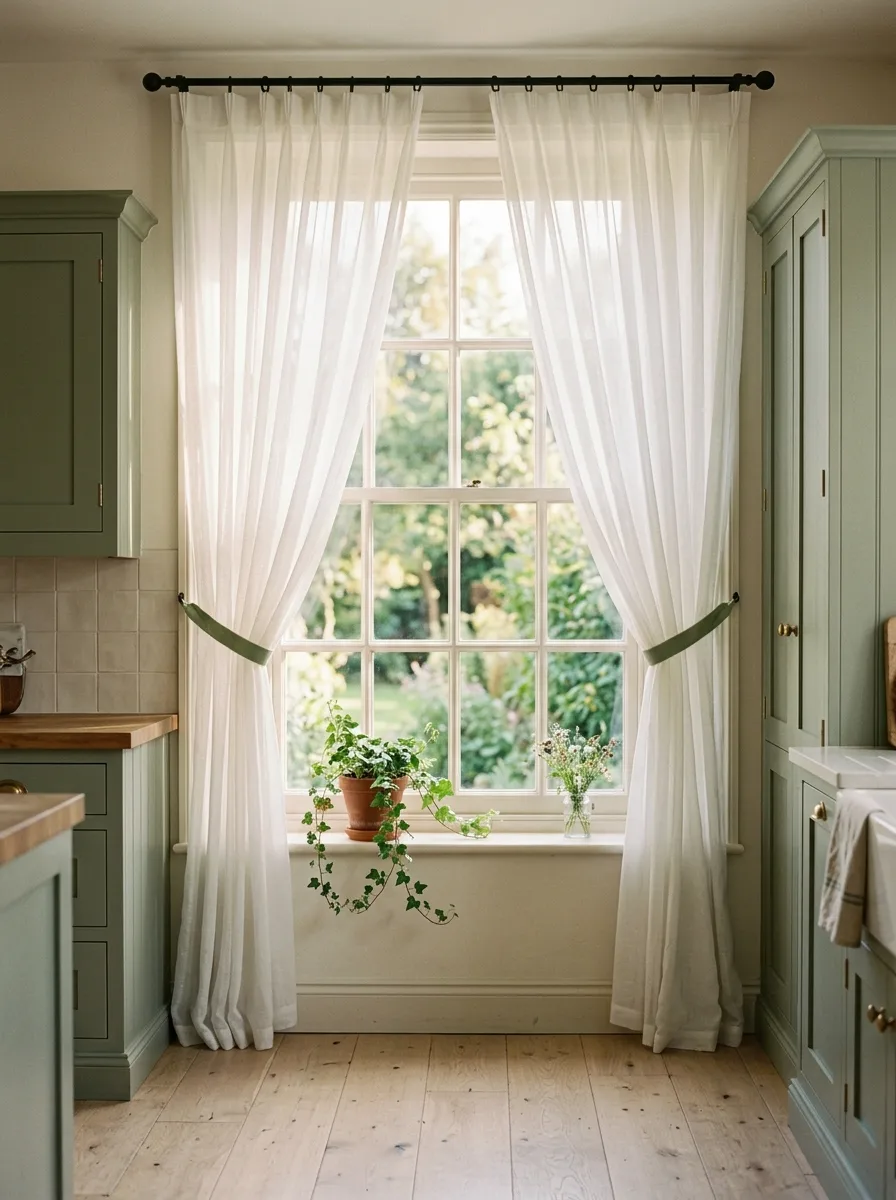
Hang floor-length sheer linen panels from a slim black rod, full and a little loose rather than pressed flat, so the fabric catches light instead of just blocking it.
Tie each panel back at roughly two-thirds height using a fabric tie in a color pulled from your cabinetry, sage, olive, whatever your paint already commits to, rather than a generic tieback hook.
Let the panels pool slightly at the floor instead of hitting it exactly at the hem. A small amount of extra length reads as intentional; a curtain cut exactly to the sill reads as budget-conscious.
Leave the windowsill itself nearly empty, one trailing plant and nothing else. The sheer fabric is already doing the softening work the sill doesn’t need to repeat.
Toile Pinch-Pleat Floor Drapes
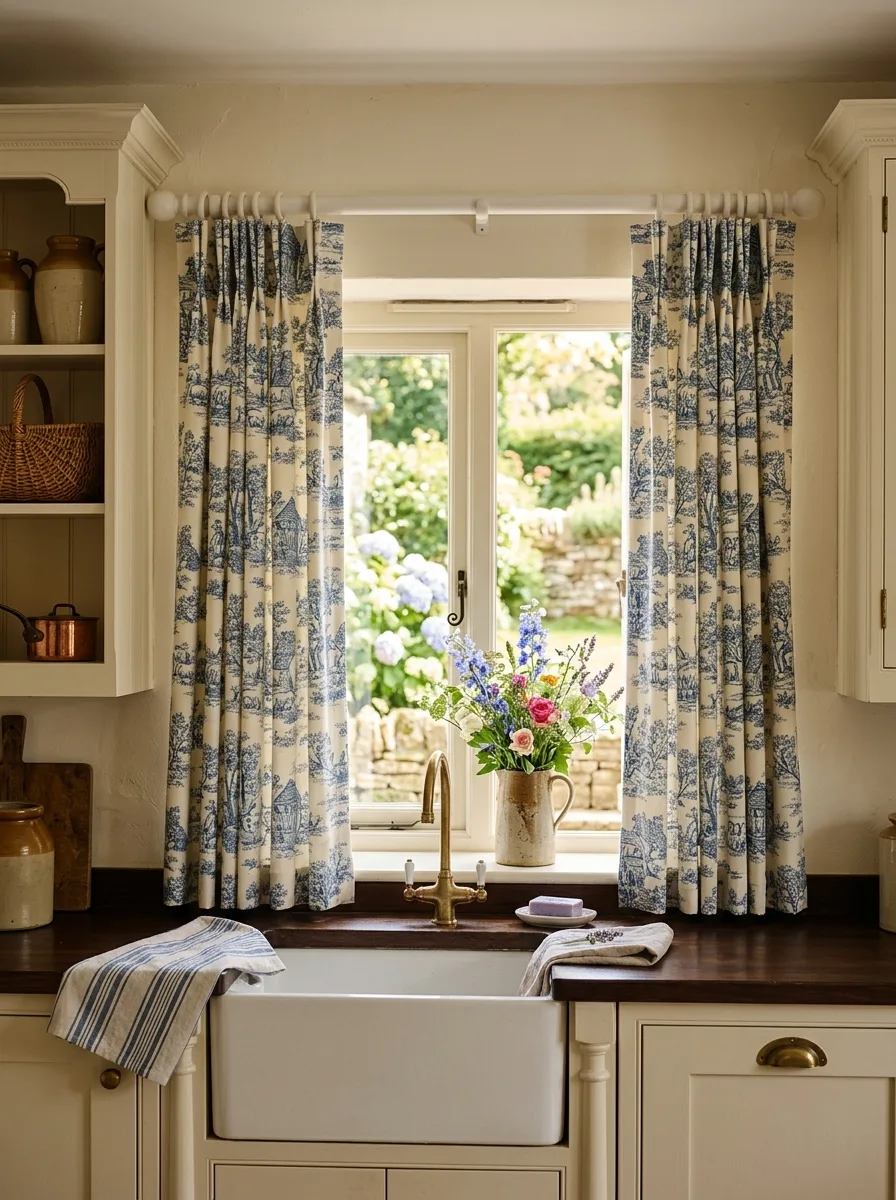
Hang full-length pinch-pleat curtains in a classic blue-and-white toile print, the pleats giving the top of the curtain real structure rather than the loose gather of a café style.
Choose a busy, detailed toile rather than a simple repeat, pastoral scenes, garden urns, anything with enough going on that the print rewards a second look.
Mount the rod high and wide, well outside the window frame on both sides, so the curtains can stack fully open during the day and let maximum light through the actual glass.
Pair with a farmhouse sink and warm wood counter below, plus a jug of fresh flowers on the sill. This is a curtain doing the heavy decorative lifting for an otherwise simple, practical workspace.
Natural Linen Roman Shade
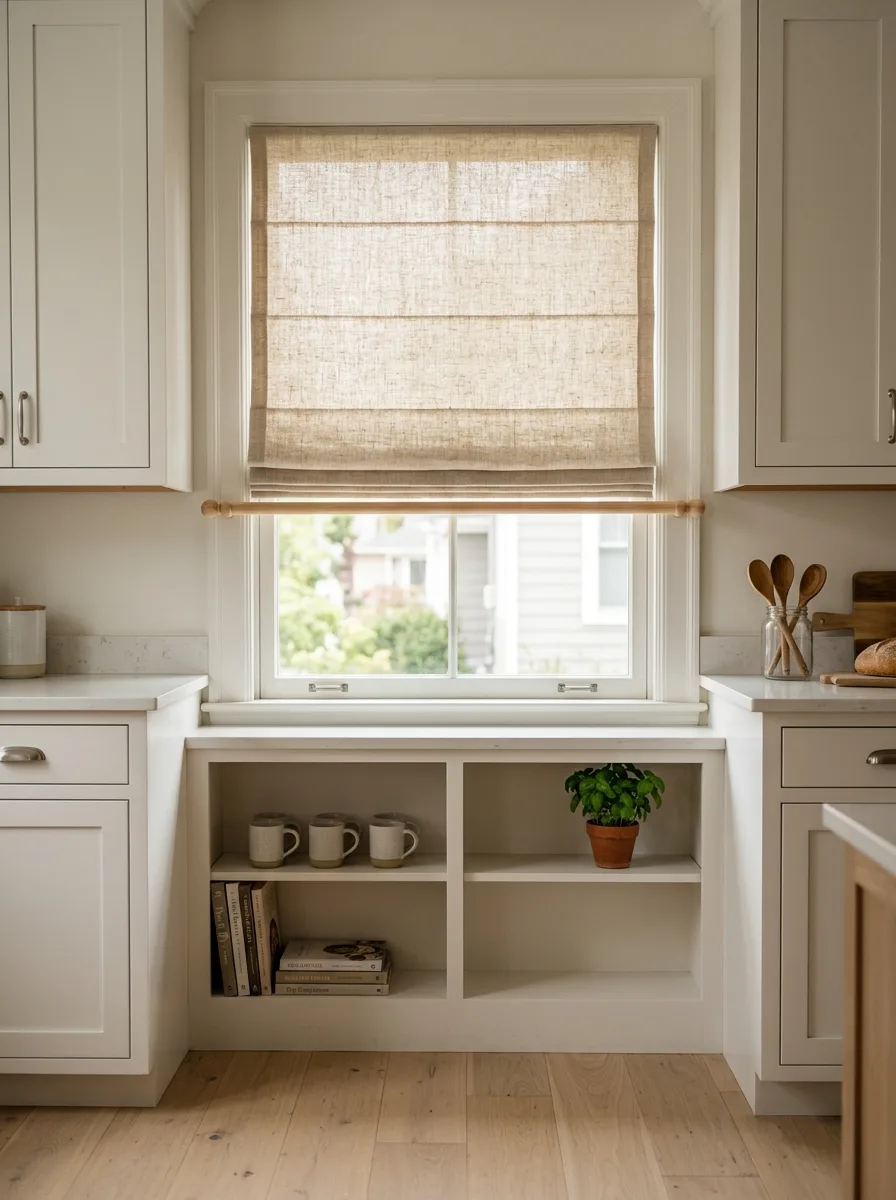
Mount a flat-fold roman shade in undyed, heavily textured linen, letting the visible weave of the fabric be the only pattern in the room.
Add a simple wood dowel at the base of the shade rather than a metal bar, continuing the natural-material theme from the fabric straight through the hardware.
Keep the rest of the window trim and surrounding cabinetry plain and pale, so the linen’s texture is the one thing your eye catches when it lands on this wall.
Skip tiebacks, tassels, or trim entirely. The whole appeal of this shade is restraint, texture instead of pattern, and nothing extra layered on top of it.
Scalloped Striped Café Curtains
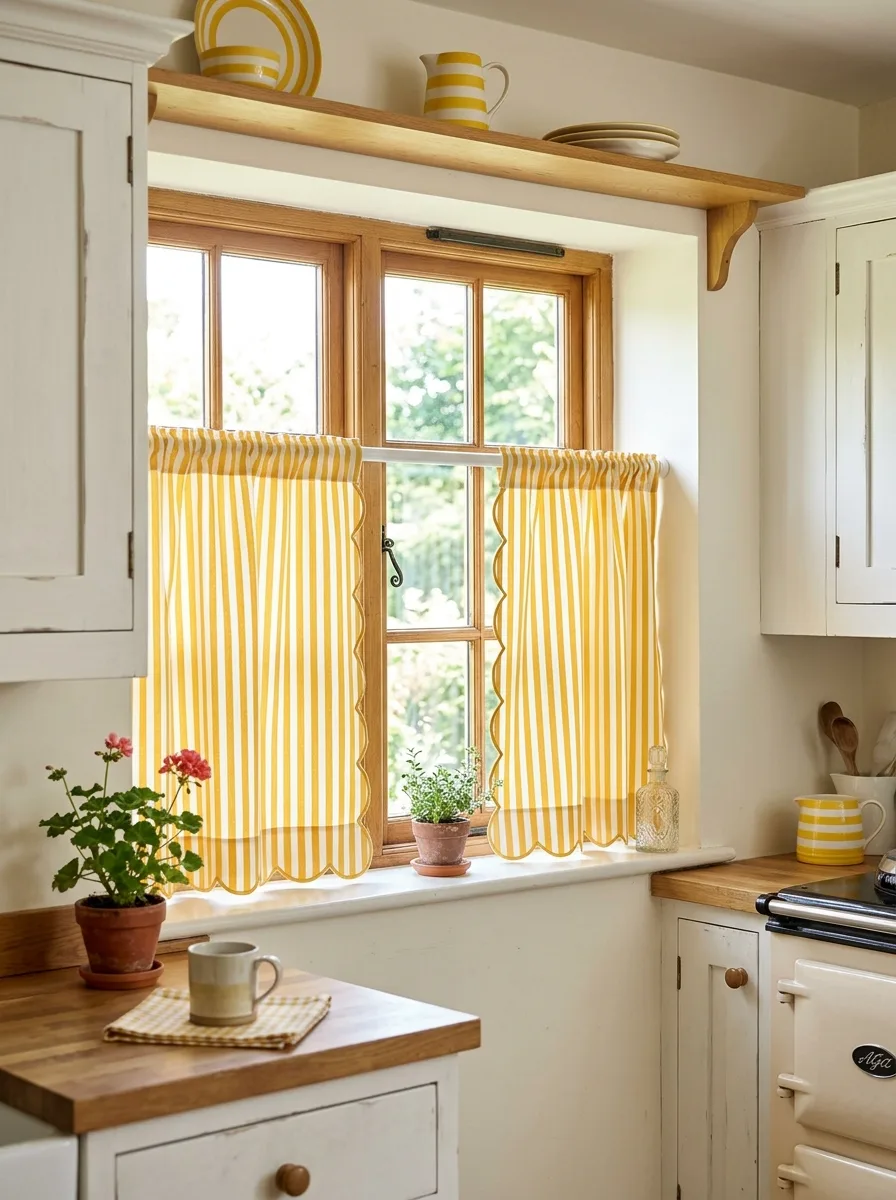
Hang yellow-and-white striped café curtains at sill length, finished with a scalloped edge along the bottom hem for a touch of cottage detail without tipping into precious.
Choose a true vertical stripe rather than a print, evenly spaced and saturated enough to hold its own against a wood window frame and warm wood counters.
Mount a simple wood shelf above the window and style it with matching striped pottery, a jug, a stack of bowls, so the curtain fabric and the open shelf read as one coordinated moment.
Leave the window’s lower sash uncovered if the curtains are short enough to clear it. The point of a café curtain is privacy at counter height with light pouring in above it.
Botanical Print Statement Drapes
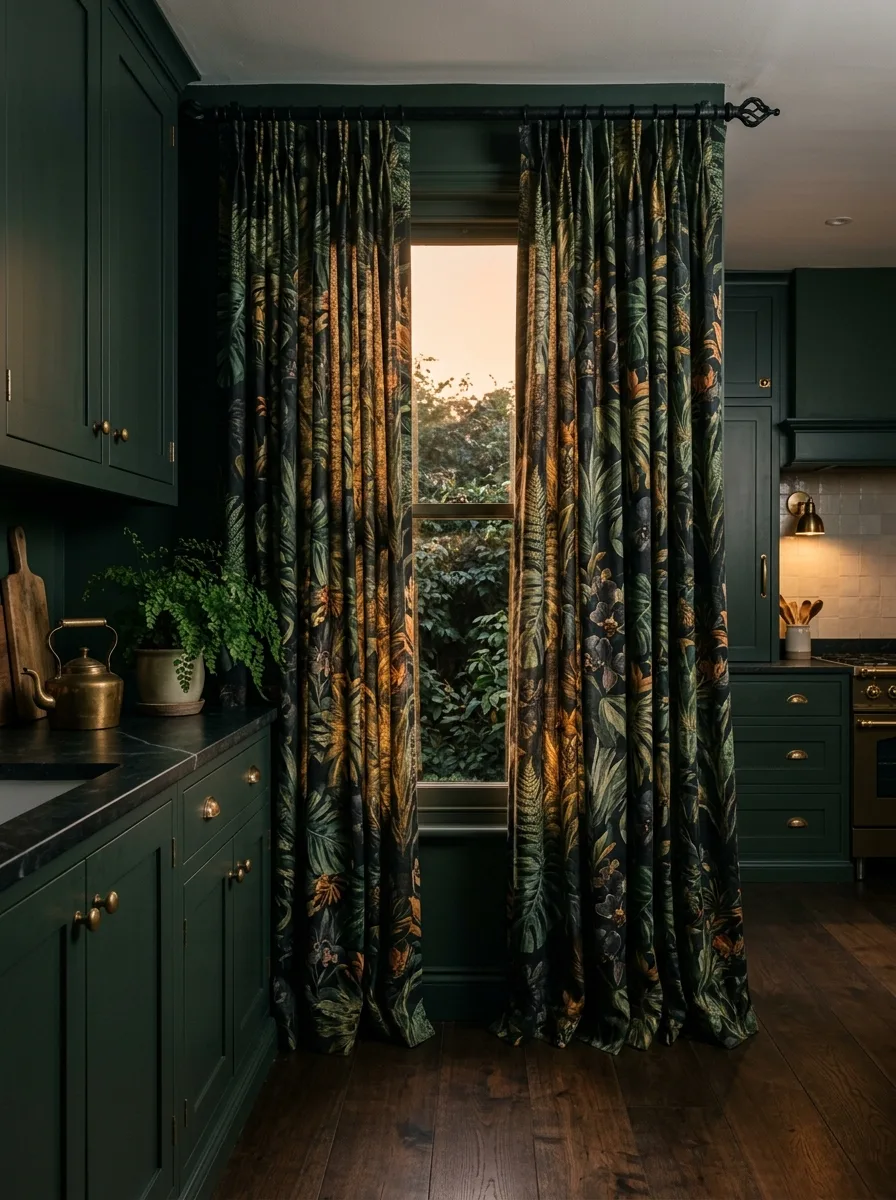
Hang dramatic floor-length curtains in a dense, dark botanical print, jungle leaves and florals rendered in deep greens and golds against a near-black ground, and let them be the loudest thing in the room on purpose.
Pair the print with equally dark, saturated cabinetry in the same family of green, so the curtains don’t fight the walls for attention; they extend them.
Mount the rod on dark hardware with simple finials, keeping the metalwork understated so it doesn’t compete with a print this busy.
Let the curtains hang generously, pooling slightly rather than stopping precisely at the floor. A print this bold needs volume and movement, not a clipped, tidy hem.
Ticking Stripe, Wood Ring Rod
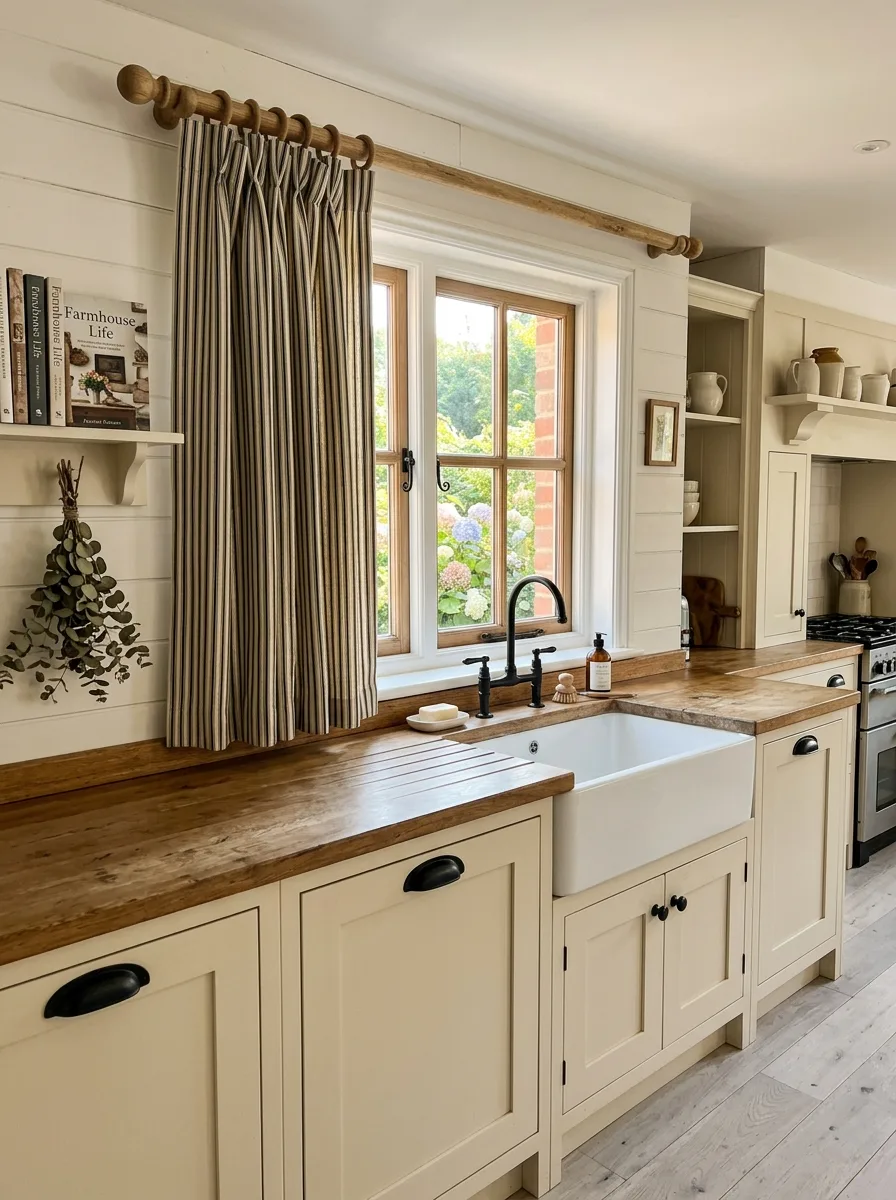
Hang a single panel of classic ticking-stripe fabric, narrow navy or black stripes on natural cotton, from a turned wood rod with oversized wood rings, letting the hardware read as furniture rather than function.
Use just one panel rather than a symmetrical pair if your window is narrow or off-center; an asymmetrical curtain reads as a considered choice, not a budget shortfall.
Pair the stripe with shiplap walls and open wood shelving nearby, holding a small collection of cookbooks and dried botanicals to round out the cottage feel.
Keep the curtain length generous, several inches past the sill, so the panel has real weight and drape rather than hanging stiff and short.
Floor-Length Sage Linen Drapes
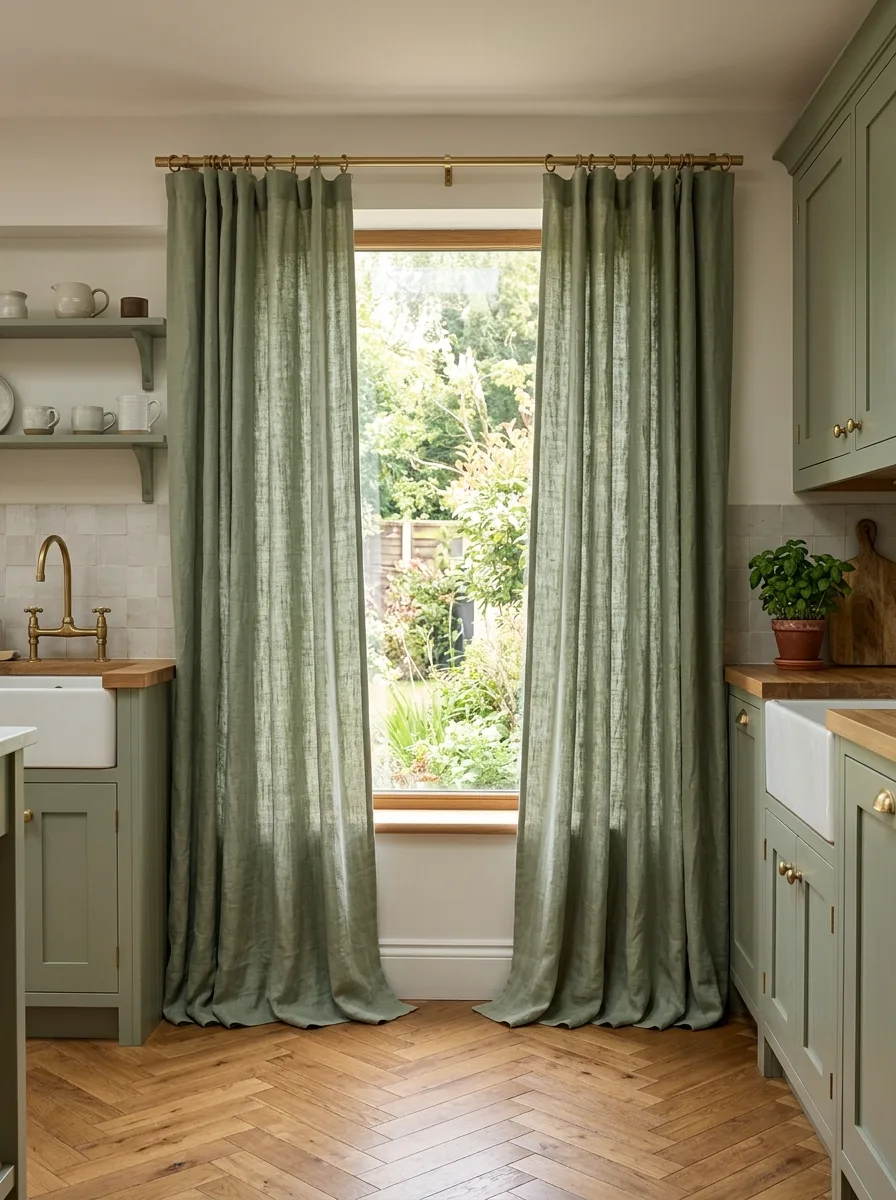
Hang substantial floor-length linen curtains in a muted sage green, heavy enough to pool slightly at the base, from a brass rod with simple rings.
Choose a linen with visible slub and texture rather than a smooth weave, the imperfection in the fabric is what keeps a solid color from reading as flat or cheap.
Pair the curtains with matching sage cabinetry so the fabric and the millwork read as one continuous color story rather than two competing decisions.
Mount the rod high, close to the ceiling line, even if the window itself is shorter. The extra height makes the whole wall feel taller and the curtains feel more like architecture than an accessory.
Nautical Stripe Tieback Drapes
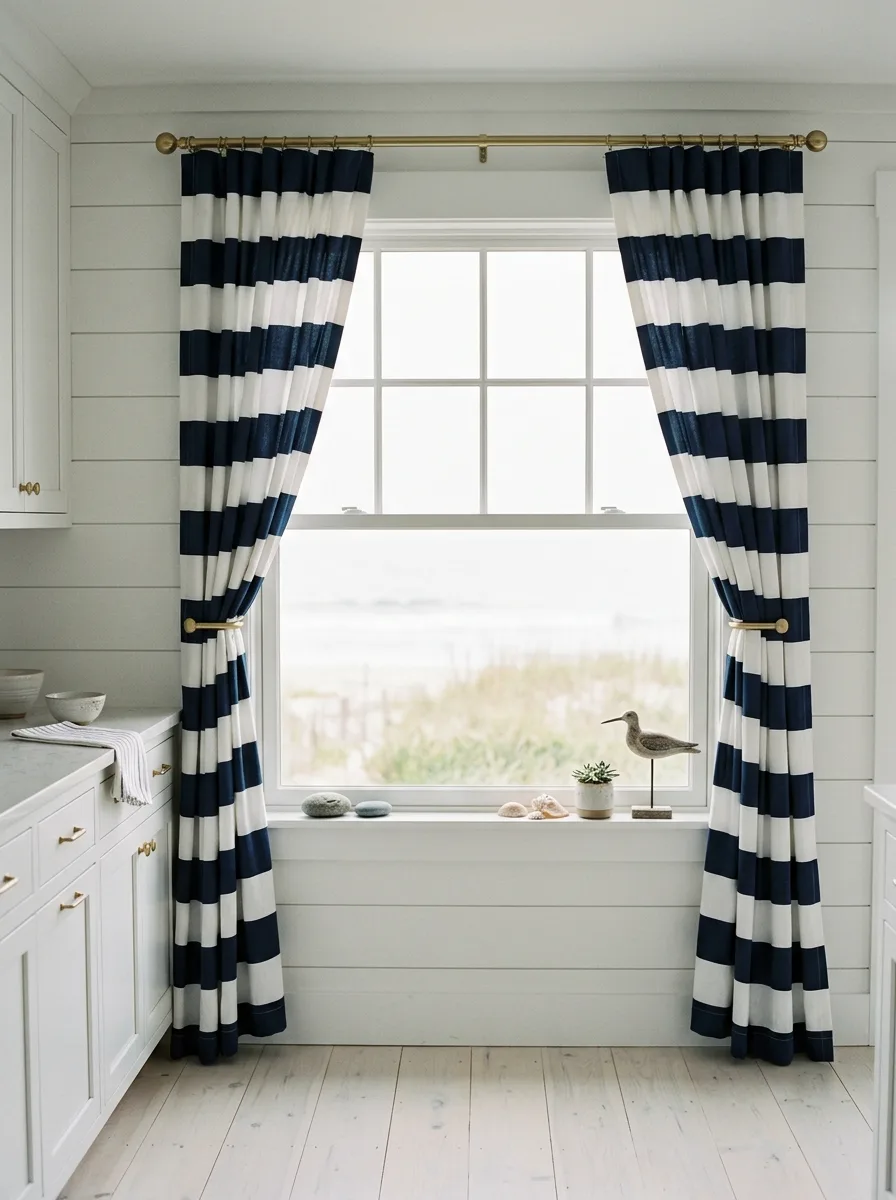
Hang bold navy-and-white horizontal stripe curtains floor to ceiling, mounted on a brass rod, with a brass tieback holding each panel open at roughly the midpoint of the window.
Choose a wide stripe rather than a narrow one, the scale is what gives this look its confidence instead of reading as generic nautical decor.
Pair with white shiplap walls and a few coastal objects on the sill, a piece of driftwood or a single carved bird, kept sparse enough that the stripe stays the focal point.
Let the curtains hang full length even over a shorter window. The drama of floor-to-ceiling stripe is the entire point of this look, and a shorter curtain undersells it.
Pom-Pom Trim Linen Drapes
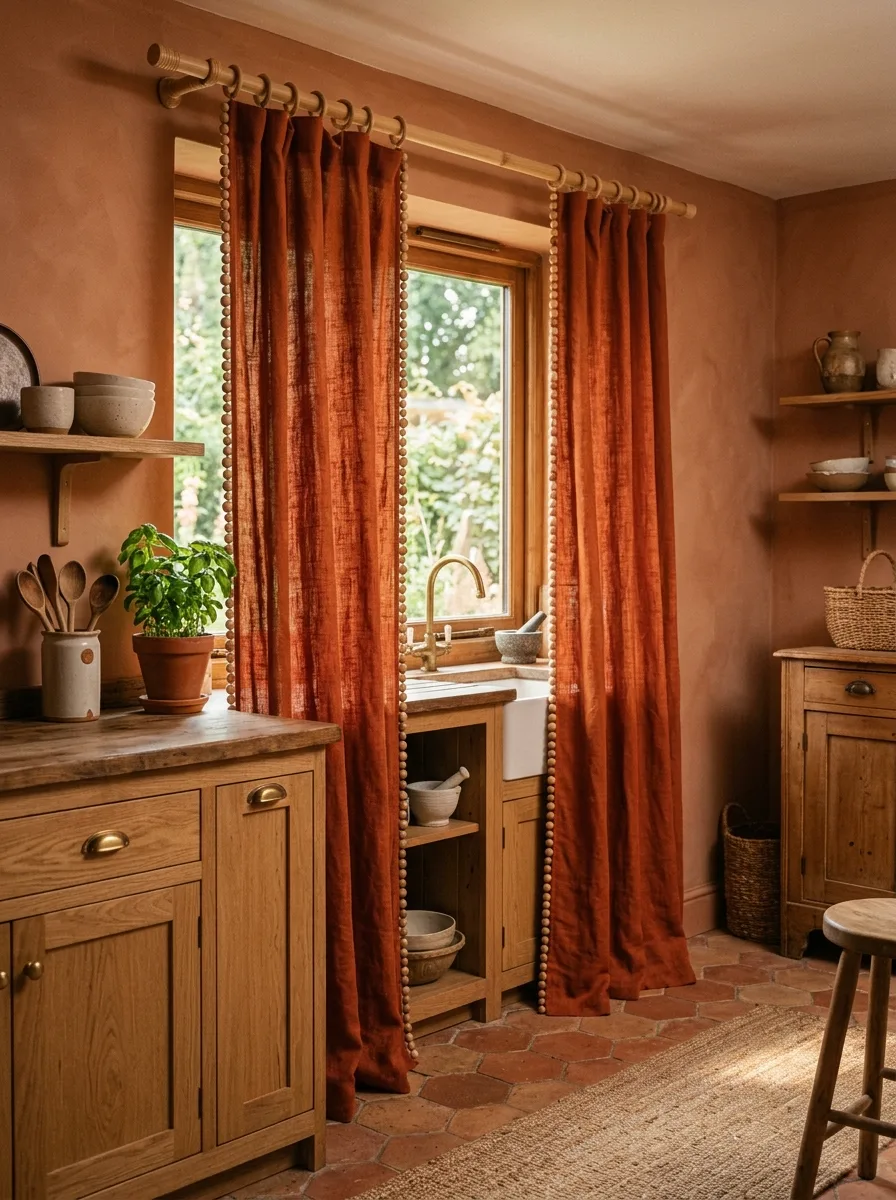
Hang rust-orange linen curtains floor length, finished along both edges with a row of natural pom-pom trim for a handmade, textural detail that a plain hem can’t deliver.
Choose a linen in a warm, saturated rust or terracotta tone that echoes the wall color directly, so the curtain reads as part of the room’s plaster rather than a separate fabric layer.
Mount on a turned wood rod with matching wood rings, keeping every material in the window treatment warm and natural.
Let the curtains hang loose and slightly imperfect rather than perfectly pressed. This look depends on a handmade, lived-in quality, too crisp and the warmth disappears.
Buffalo Check Café Curtains
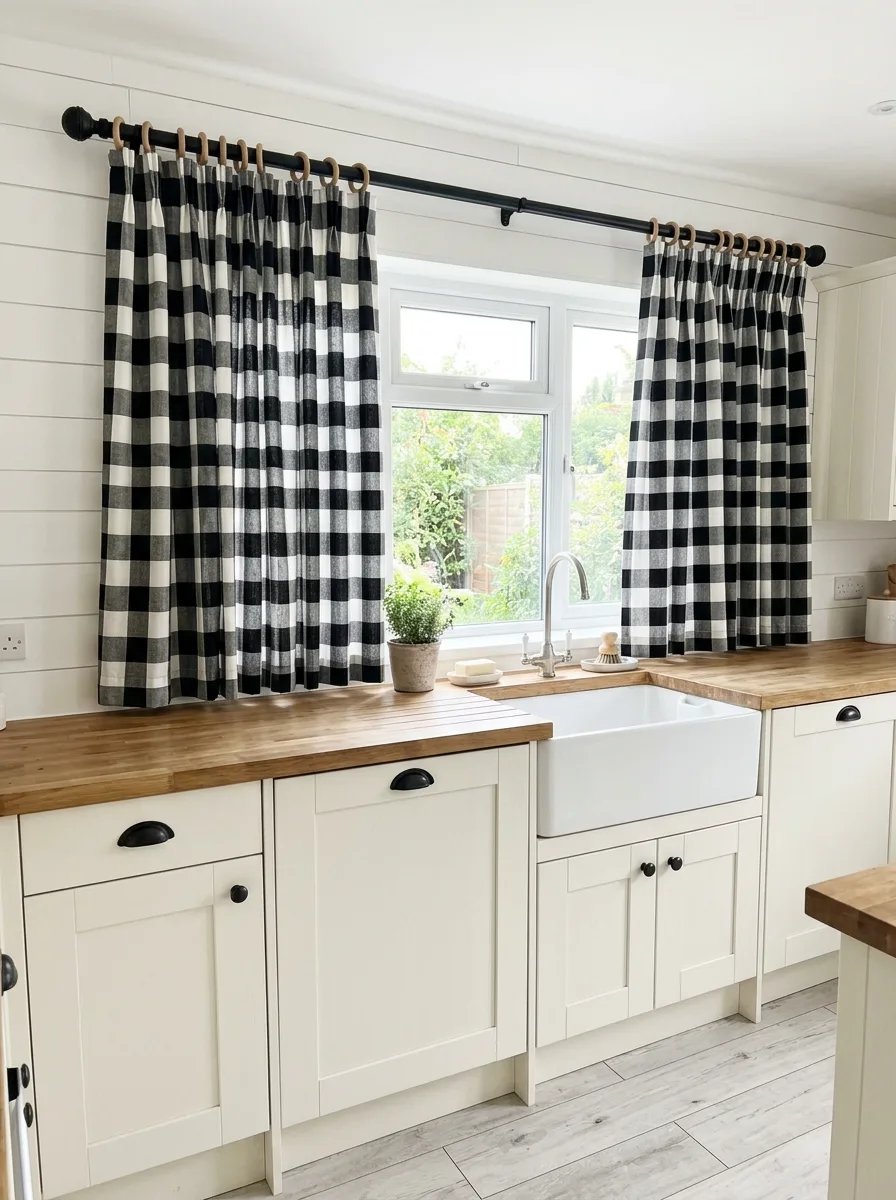
Hang black-and-white buffalo check curtains at café length, mounted with leather curtain rings on a matte black rod for a graphic, farmhouse-meets-modern combination.
Choose a true buffalo check, large and evenly spaced, rather than a smaller plaid, scale is what keeps this print from reading as twee.
Pair the curtains with all-white shiplap and simple black cabinet hardware, so the check has a clean, quiet background to stand out against.
Keep the length right at counter height, no lower. This is a working-window curtain, meant to soften the view without ever getting in the way of the sink below it.
Soft Blue Linen Roman Shade

Mount a relaxed roman shade in a soft, dusty blue linen, letting the fabric fold naturally rather than pressing it into crisp, architectural pleats.
Choose a textured linen with a slightly heathered weave so the blue reads as soft and lived-in instead of flat and synthetic.
Pair the shade with blue cabinetry a shade or two darker, so the window treatment and the millwork read as one tonal family rather than separate decisions.
Keep the windowsill simple, one small plant and a vase of cut branches. The shade is the star of this window; everything else should stay quiet.
Short Striped Café Curtains
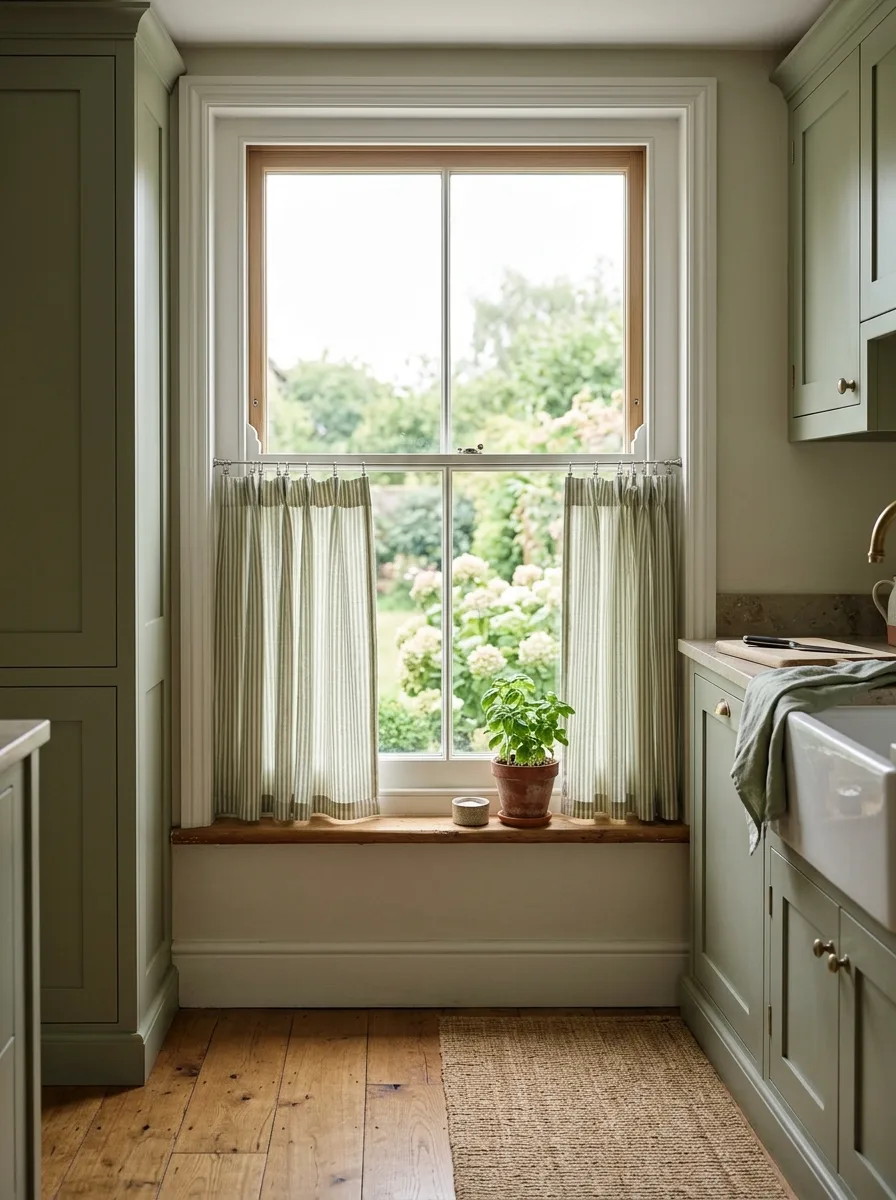
Hang sage-and-cream striped café curtains at a short, just-below-the-upper-sash length, mounted on a slim chrome rod for a clean, simple finish.
Choose a narrow, even stripe in a soft sage tone that matches the surrounding cabinetry closely enough to feel coordinated without matching exactly.
Leave the upper window sash completely bare so daylight pours in unobstructed above the curtain line, which is the entire advantage of a short café length.
Rest a small potted herb directly on the windowsill below. This is the lowest-commitment, highest-payoff curtain on the list, minimal fabric, maximum daylight.
Mustard Velvet Grommet Drapes
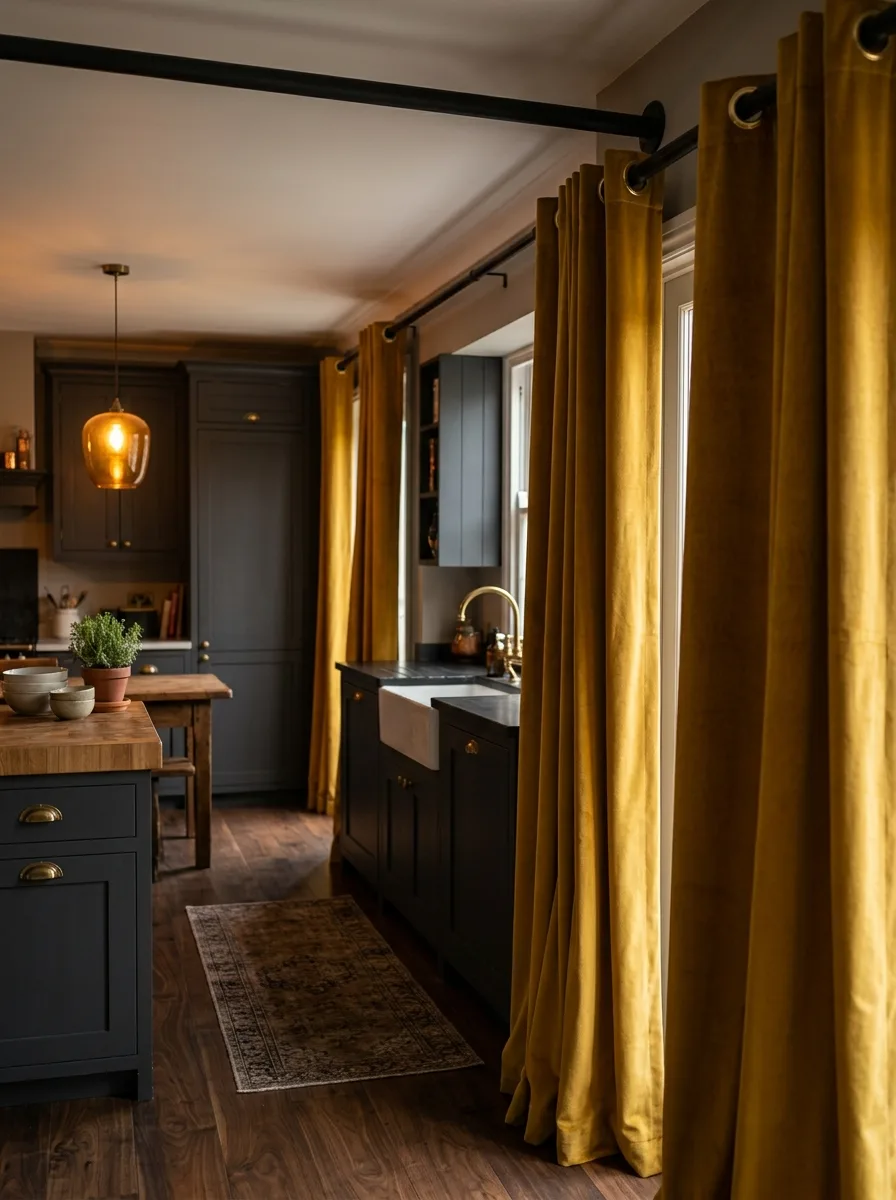
Hang heavy mustard-gold velvet curtains floor to ceiling on a black grommet rod, letting the fabric’s natural sheen catch the light from any nearby pendant or fixture.
Choose a true velvet rather than a velvet-look polyester, the depth of color and the way it shifts in different light is what makes this combination feel luxurious instead of costume-like.
Pair the curtains with dark charcoal or navy cabinetry, so the gold reads as a jewel tone against a moody backdrop rather than a clash.
Let the curtains hang full and heavy, with extra fabric pooling at the floor. Velvet this saturated wants volume, a skimpy panel undersells the entire effect.
Embroidered Floral Sheer Panels
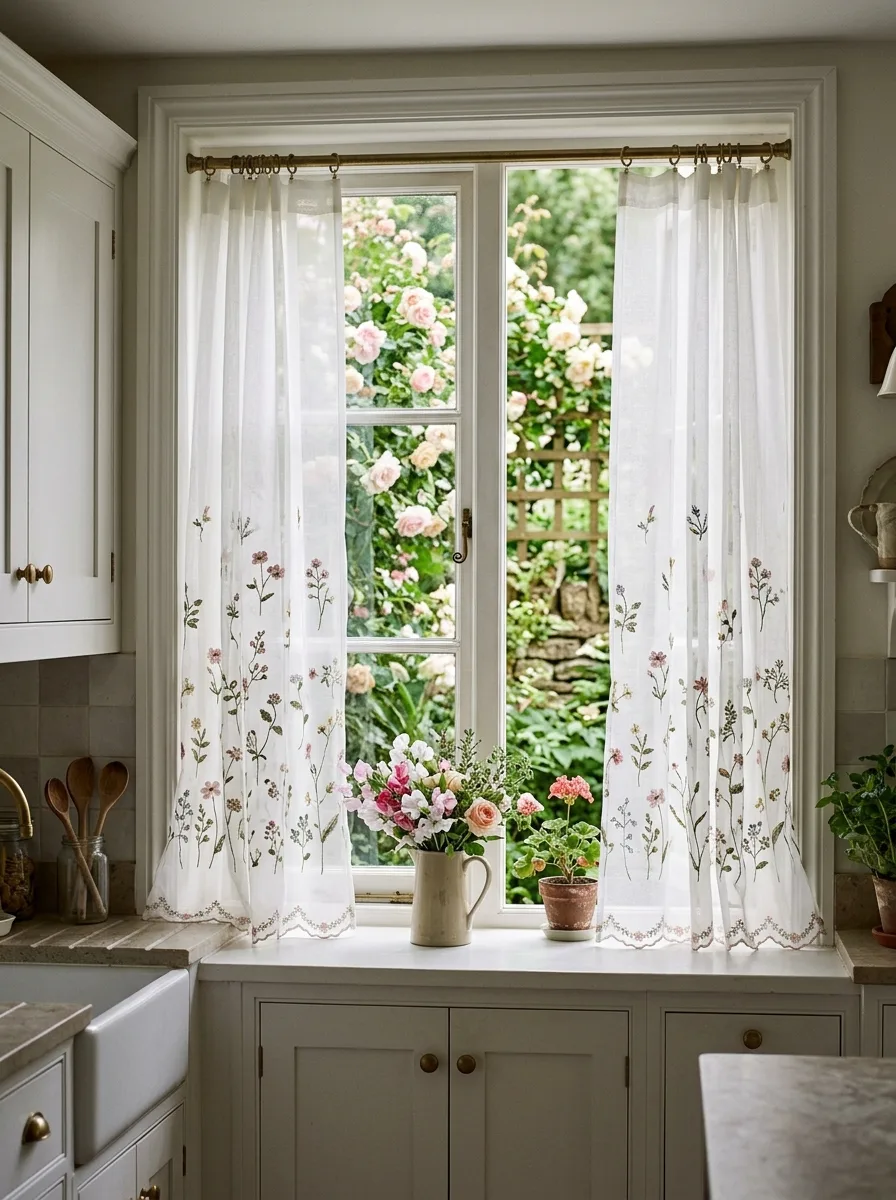
Hang sheer white curtains embroidered with a scattered wildflower motif along the lower half, letting the embroidery do the decorative work while the sheer fabric keeps the room bright.
Choose a curtain where the embroidery is concentrated toward the hem rather than spread evenly throughout, it reads as a garden growing up from the windowsill rather than a busy, all-over print.
Pair with cream cabinetry and a jug of fresh-cut garden flowers on the sill, echoing the embroidered blooms with the real thing.
Mount on a slim brass rod with simple rings, letting the curtains hang loose and full. This look depends on softness, nothing about it should feel structured or stiff.
Vintage Lace Café Curtains
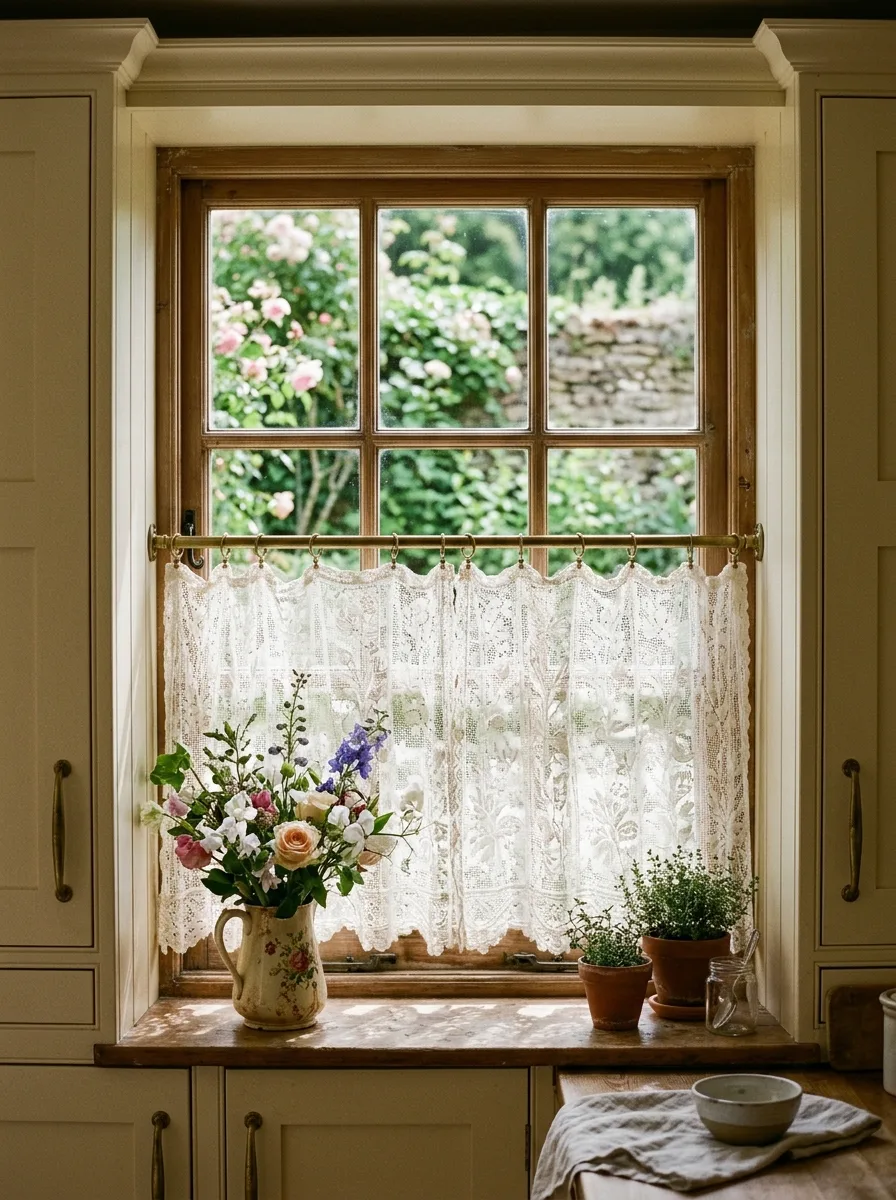
Hang a single panel of vintage-style lace at café length, scalloped along the bottom edge, mounted on a brass rod with rings for an heirloom, sun-through-the-window quality.
Source a lace with a real pattern, florals or scrollwork woven into the fabric itself, rather than a flat eyelet that reads more modern than vintage.
Pair the lace with a worn wood windowsill and a mismatched collection of terracotta pots and a floral pitcher, leaning into the gathered, slightly imperfect feeling of a window that’s collected its objects over years rather than been styled in an afternoon.
Keep the cabinetry simple and pale around it. Lace this detailed needs a quiet frame, not competition from a busy backsplash or bold cabinet color.
Olive Linen Tieback Drapes
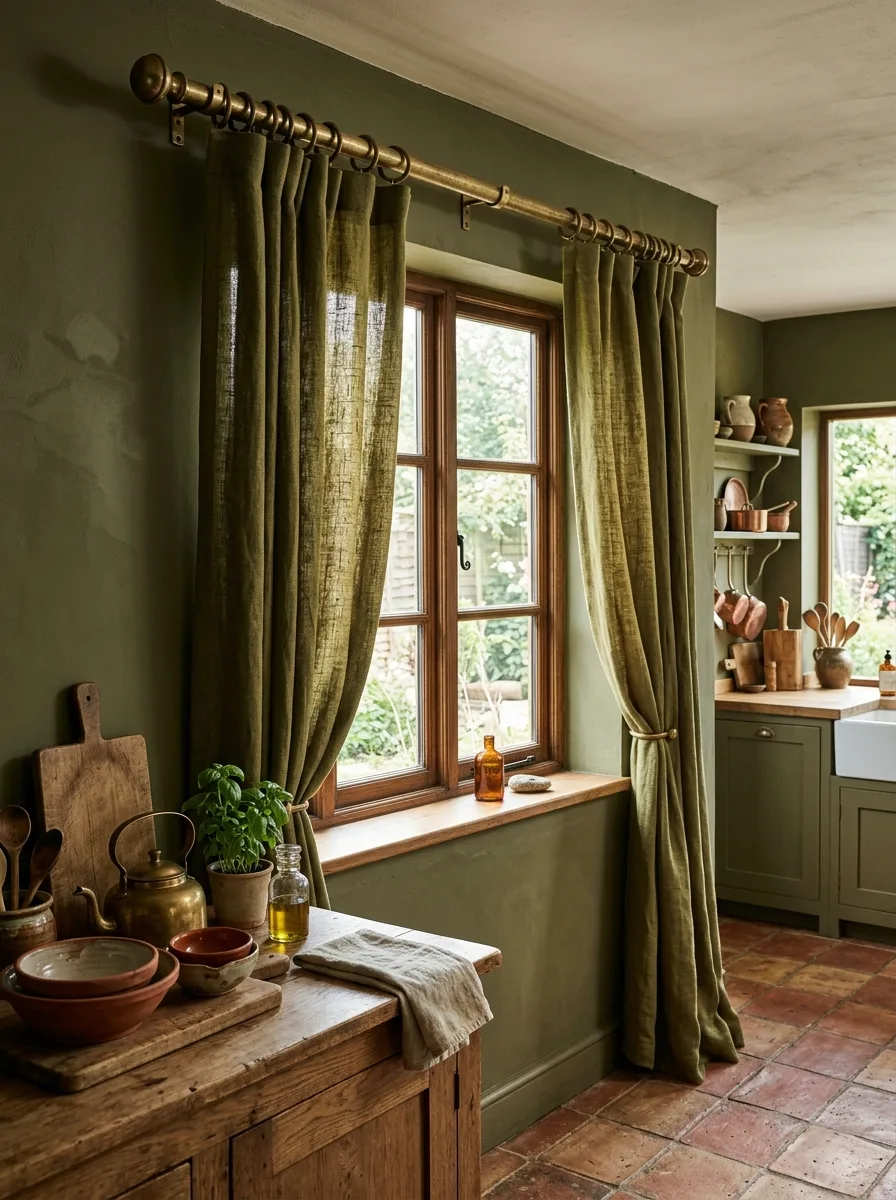
Hang heavy olive-green linen curtains floor length on a brass rod with substantial rings, tying one panel back with a matching fabric tie at roughly waist height.
Choose a linen with real weight and texture, letting it fall in soft, irregular folds rather than pressing it flat, the imperfection is what keeps a deep, saturated color from feeling heavy-handed.
Pair the curtains with matching olive plaster walls and terracotta floor tile, so the whole room reads as one warm, earthy palette rather than a curtain layered onto a different color story.
Let one panel stay tied back permanently for daily light, using the second panel only when full coverage is needed. This is a curtain built for a room people actually cook in.
Ruffled Valance, Blush Curtains
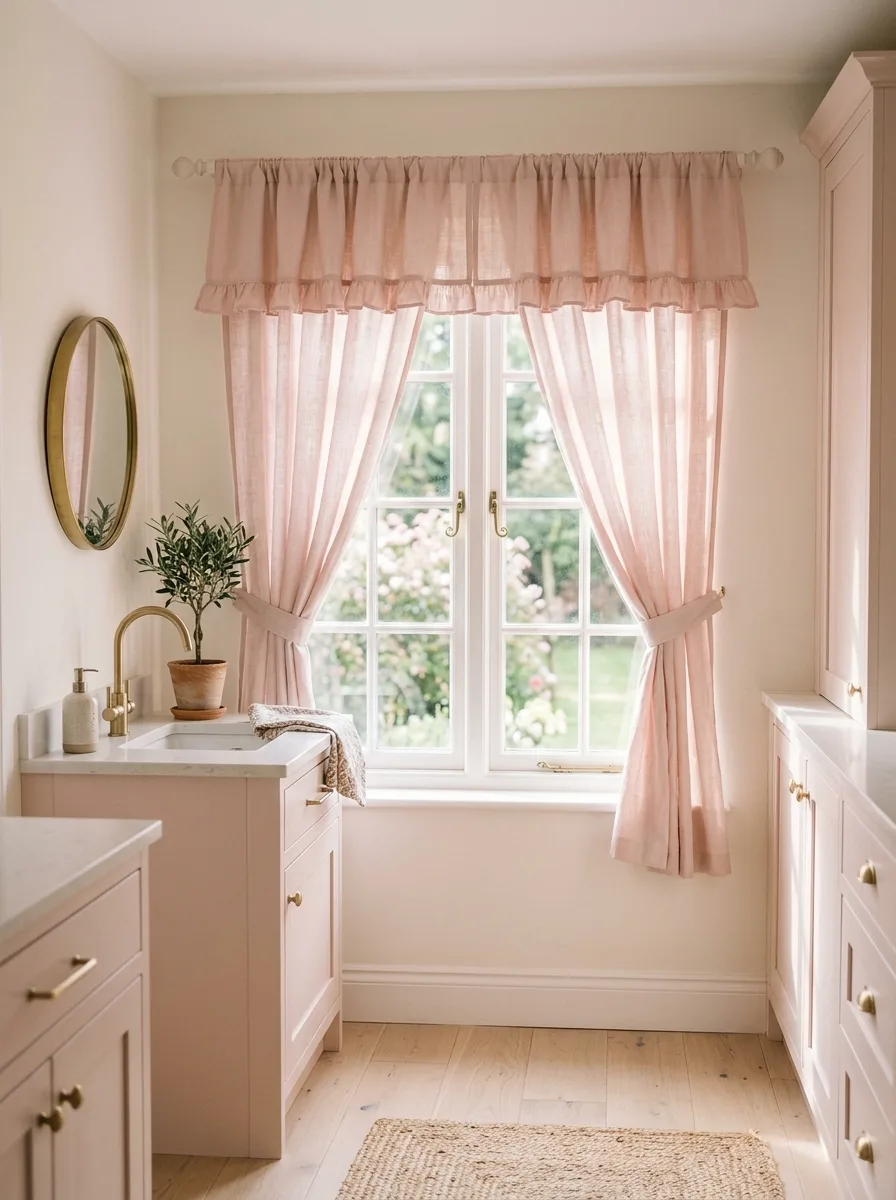
Hang soft blush-pink curtains topped with a separate ruffled valance in the same fabric, mounted on one continuous rod so the two pieces read as a single layered treatment rather than two mismatched parts.
Choose a lightweight linen-cotton blend that holds a gentle ruffle without going stiff or crisp, letting both the valance and the curtain panels move slightly with airflow.
Tie the curtain panels back at the midpoint with a matching fabric tie, echoing the ruffle detail from the valance above.
Pair with blush cabinetry and brass hardware throughout. This is the most maximalist option on the list, and it only works if every other surface in the room agrees to be soft, too.
Black Linen Grommet Drapes
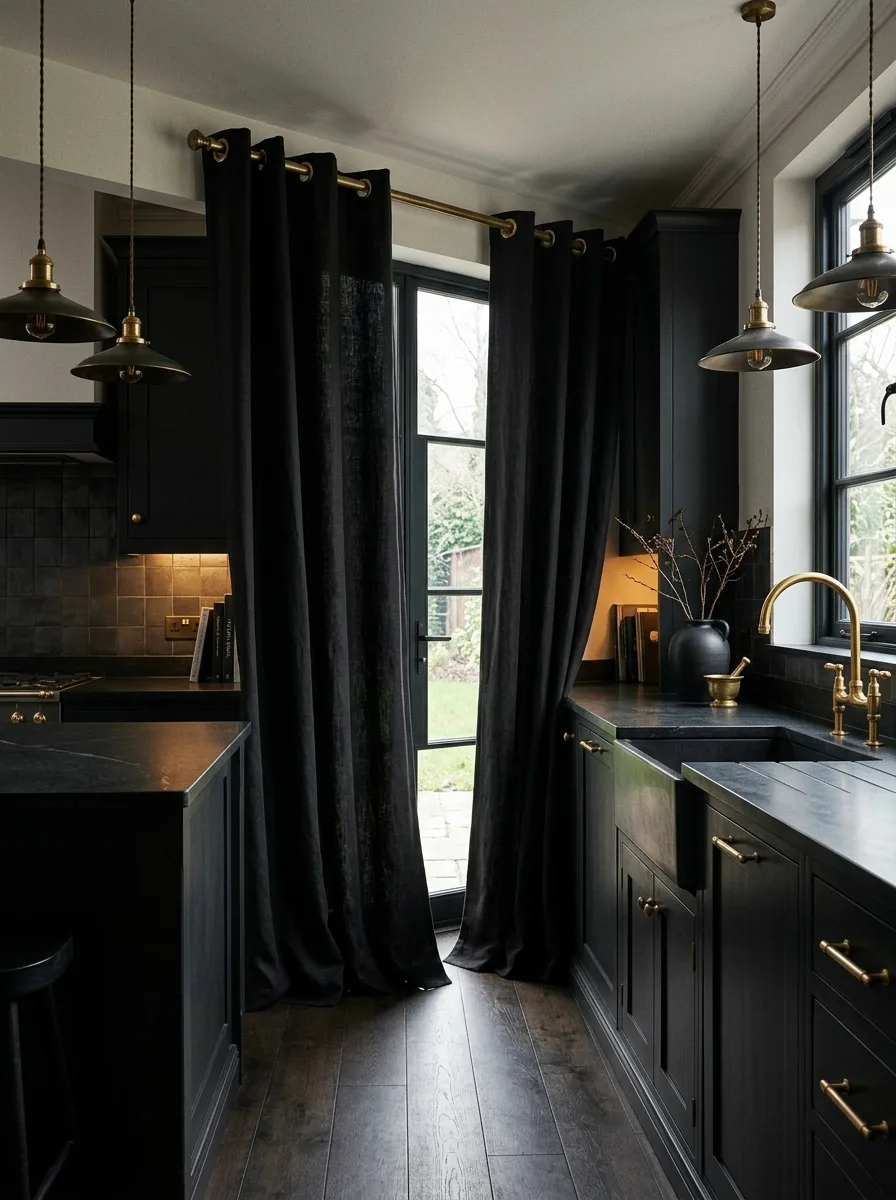
Hang floor-length black linen curtains on a brass grommet rod, letting the metal rings catch the light against all that matte dark fabric.
Choose a linen with subtle texture rather than a flat black-out fabric, even in near-black, the weave should be visible up close so the curtain doesn’t read as a stage backdrop.
Pair with black cabinetry, brass faucet and pendant hardware, and a dark wood floor, so the curtains extend the room’s palette instead of standing apart from it.
Let the curtains hang full length with extra fabric at the floor, framing the window with real weight. This is a kitchen unafraid of the dark, and the curtains are doing their part to commit to it.
Final Thoughts
A kitchen curtain is one of the few design choices in the room that touches nothing structural and changes everything anyway. No demo, no plumber, no six-week lead time on stone, just fabric, a rod, and an afternoon, and the whole window goes from forgotten to finished.
Most kitchens skip this decision entirely, or make it once with whatever came included in a starter-home package, and never revisit it. That’s the real gap between a kitchen that feels decorated and one that just feels functional — somebody actually chose the curtain on purpose.
The right choice has less to do with finding the prettiest fabric and more to do with matching the curtain to the job the window is doing. A sink window needs something short enough to clear the faucet. A floor-to-ceiling window in a moody, dramatic kitchen can carry real weight and drama. Get the length and the proportion right first, and almost any fabric will look intentional.
Of every change on this list of nineteen, this is the cheapest one to actually try. Buy the rod, hem the panel, hang it, and see. If it’s wrong, take it down by dinner.