
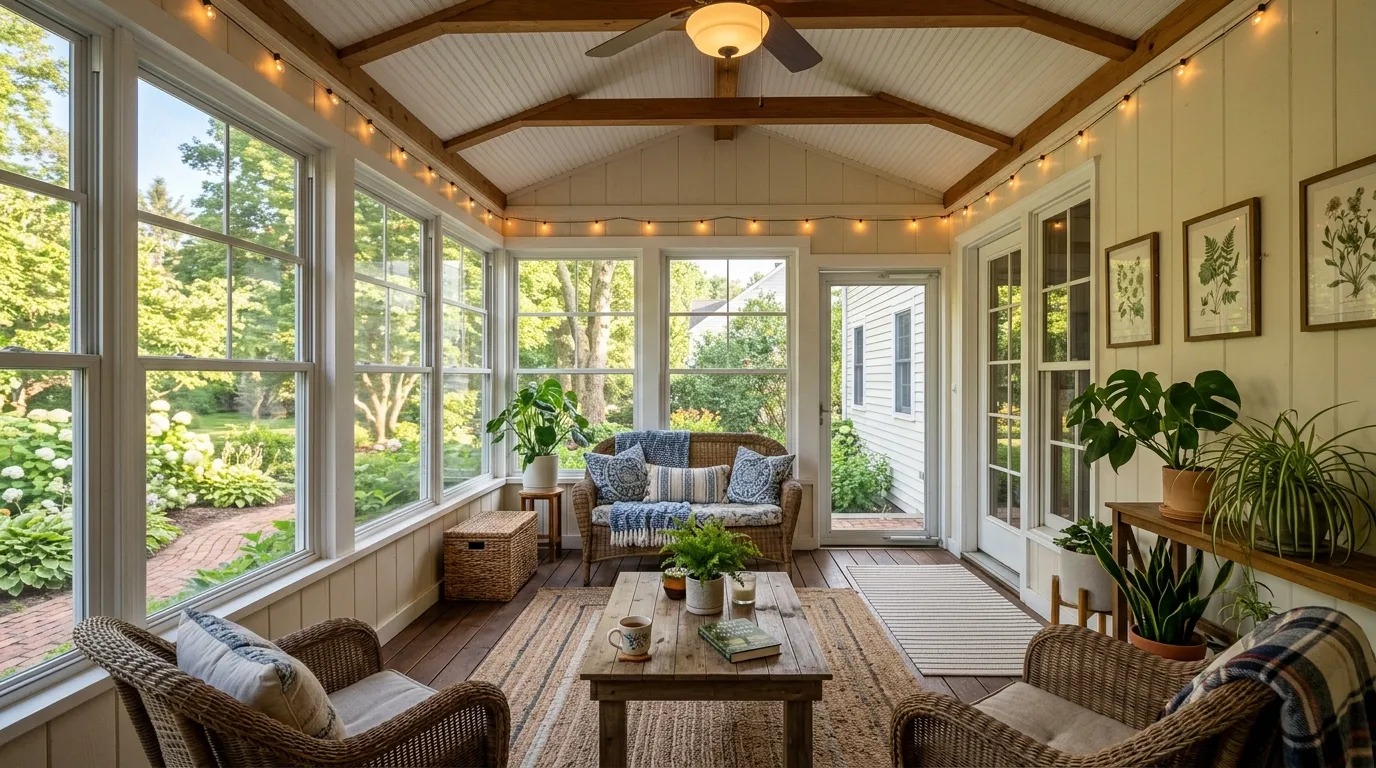
You built a porch. Then you looked at it for one full season and realized it was unusable eight months of the year.
Too cold in October. Too buggy in June. Too exposed in a thunderstorm that rolls in exactly when you sat down with a drink. So you’re closing it in, and now you’re staring at a blank shell wondering what it’s actually for.
Most people treat a closed-in porch like a leftover room. They dump the patio furniture nobody wanted inside and call it done. That’s not a design decision. That’s storage with a view.
A closed-in porch is a room with better light than anything else in your house. Treat it like one.
The Old Porch Is Still In The Room, Whether You Like It Or Not
Glass it in, insulate it, hang curtains — the porch underneath doesn’t disappear. It’s still a room built to be outside, and pretending otherwise is where most of these projects go wrong.
The Bones Were Already Right
Nobody designs a porch with drywall and recessed lighting. They build it with exposed rafters, plank ceilings, stone footings, wood posts — structure that was never meant to be hidden.
Closing the porch in doesn’t obligate you to cover any of that up. The instinct to drywall over it and make the room “match the house” is exactly what flattens a good porch into a mediocre den.
Leave the structure showing wherever you can. The beams, the board-and-batten, the rough stone — that’s not unfinished. That’s the entire reason this room feels different from every other room you own.
The Window-to-Wall Ratio Changes The Job
A porch has more glass than any room you’re used to furnishing. That ratio isn’t a decorating challenge to work around — it’s the actual brief.
Furniture chosen for a normal room, dense and dark and wall-hugging, fights that much glass instead of using it. The room reads heavier than it needs to, and the view loses.
Go lighter than instinct tells you to. Lower profiles, paler woods, furniture that doesn’t need a solid wall behind it to make sense. The glass is doing half the decorating already.
Weatherproofing Is A Style Decision, Not Just A Practical One
Every material choice here has to survive sun, humidity, and temperature swings no interior room deals with — and that constraint actually narrows the room toward a better look, not a worse one.
Rattan, teak, sealed stone, and performance fabric aren’t the compromise option. They’re the materials that happen to photograph best in a room built entirely out of natural light.
Fighting that constraint — hauling in velvet and hardwood that were never meant for this exposure — is how a closed-in porch ends up looking replaced within a few years instead of settled in.
Closed-In Porch Ideas
Vintage Rug Layered Corner
Buy two rugs, not one. A worn, faded vintage-style rug goes down first, then a smaller striped runner layers on top at an angle near the seating.
Fill the corners with mismatched vintage seating — a painted wood bench, a rattan-backed chair, nothing from the same set. Add a large potted palm as the anchor plant, tall enough to brush the ceiling.
Hang a loose gallery wall of small framed art above the seating, unmatched frames included. Skip anything that looks curated. This look works because it looks accumulated.
Vaulted Shiplap Rattan Retreat
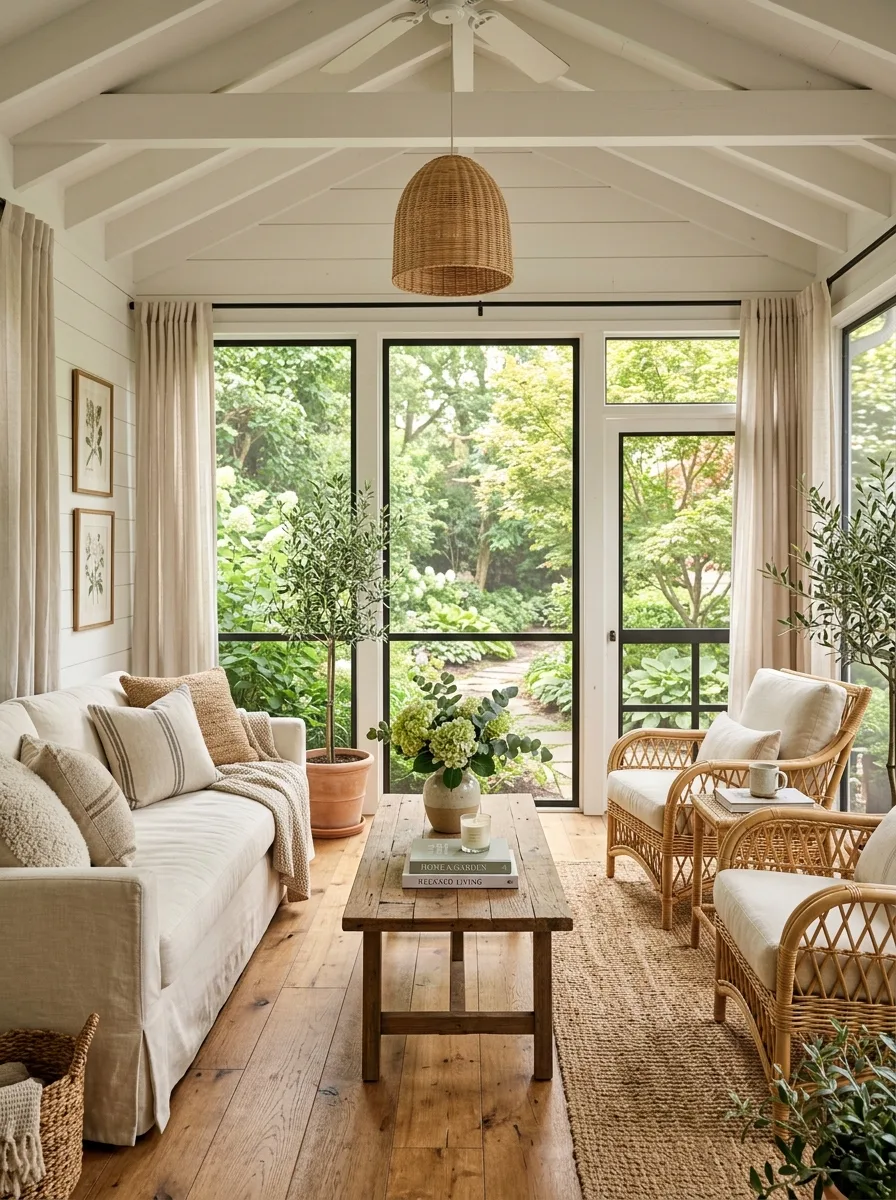
Run white shiplap up a vaulted ceiling and leave the beams a natural wood tone for contrast against all that white.
Hang a woven pendant light at the peak, then dress the windows in floor-to-ceiling linen curtains that pool slightly at the bottom. Full-length curtains make a porch feel finished in a way half curtains never do.
Furnish with rattan-framed chairs and a slipcovered linen sofa, and bring in two potted olive or citrus trees flanking the main window. Keep every fabric in the same neutral family.
Checkerboard Marble Floor Statement
Lay a black-and-white checkerboard floor in large marble or stone-look tile. This is the one move that carries the entire room, so don’t dilute it with a busy rug on top.
Paint the walls and beadboard ceiling the same crisp white as the trim, and keep furniture minimal — one antique chair, a small brass side table, nothing that competes with the floor pattern.
Install a statement ceiling fixture in warm brass or gold. It’s the only other thing in the room allowed to draw attention besides the floor.
Stone Fireplace Window Wall
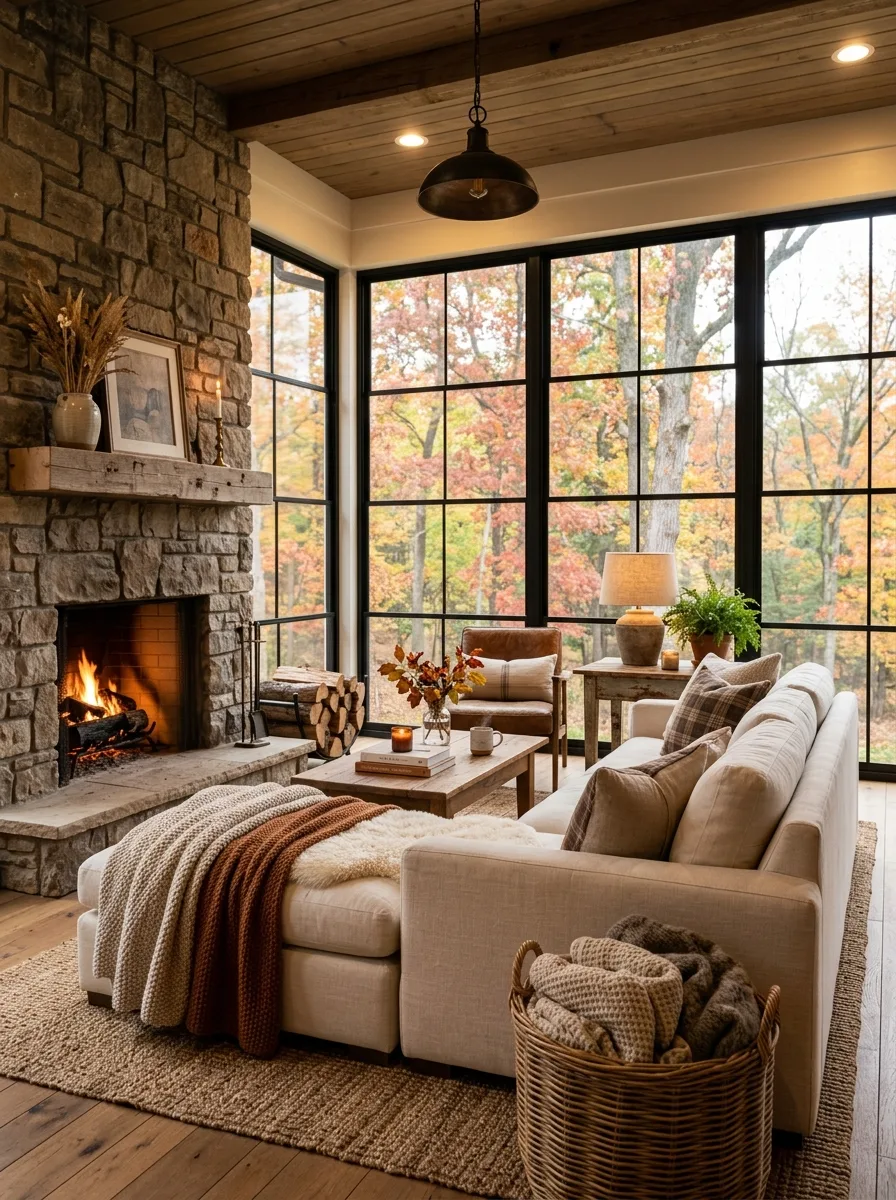
Build a full-height stone fireplace wall on one side, floor to ceiling, and pair it with steel-framed windows running the entire opposite wall.
Choose a deep sectional in a warm neutral, then layer it heavily with mixed throws — cable knit, sheepskin, a plaid blanket draped over the arm. This room lives or dies on textural layering.
Keep the coffee table low and rustic, reclaimed wood over anything polished, and let firelight do most of the evening lighting work.
Moody Black Framed Lake View
Paint the wall paneling and window trim a deep charcoal or near-black, and pair it with a natural wood ceiling left unpainted. The contrast is the whole point.
Choose furniture in light, neutral upholstery — pale grey or off-white — so the dark walls read as a frame rather than swallowing the room whole.
Add one live-edge wood coffee table with a raw, organic shape to soften all the straight black lines. Keep plants minimal and architectural, not lush.
Built-In Bookshelf Reading Nook
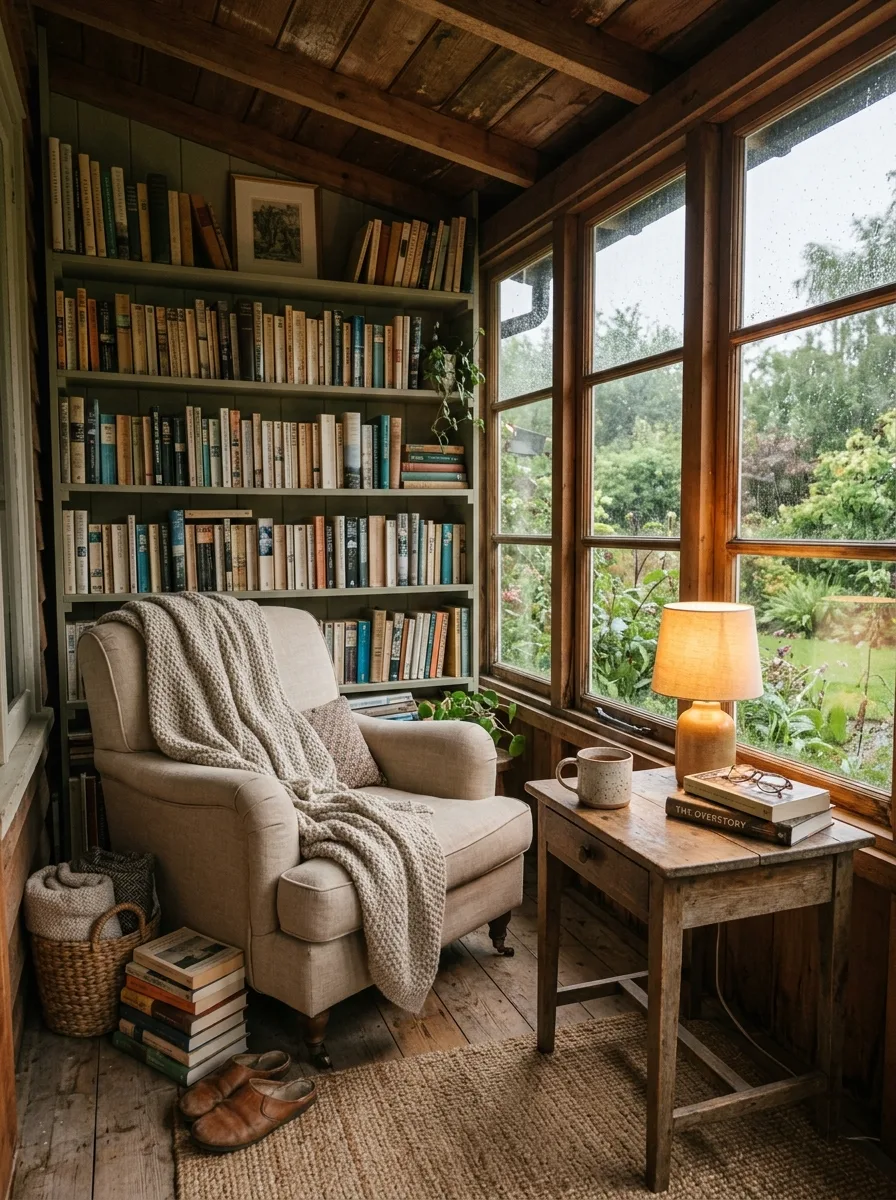
Build floor-to-ceiling shelving into one wall, painted a deep sage or forest green to contrast the wood tones around it, and fill it completely with books, no styling gaps.
Position one deep, oversized armchair in the corner where two window walls meet, angled to catch the most natural light for daytime reading.
Add a small wooden side table with a warm-toned lamp, and drape one heavy knit throw over the chair arm. Slippers left on the floor nearby aren’t clutter here — they’re the point.
Screened Box Addition Structure
If you’re building from scratch, keep the structure simple: a gable roof, black aluminum screen panels, and a poured concrete slab floor that can handle rain blowing in.
Wire it for ceiling fans before the screens go up, not after. Two fans spaced evenly will do more for comfort in a screened room than any furniture choice.
Furnish it exactly like an outdoor dining room, because that’s what it is — a substantial table, all-weather chairs, and a round outdoor rug that won’t hold water.
Cottage Floral Wicker Corner
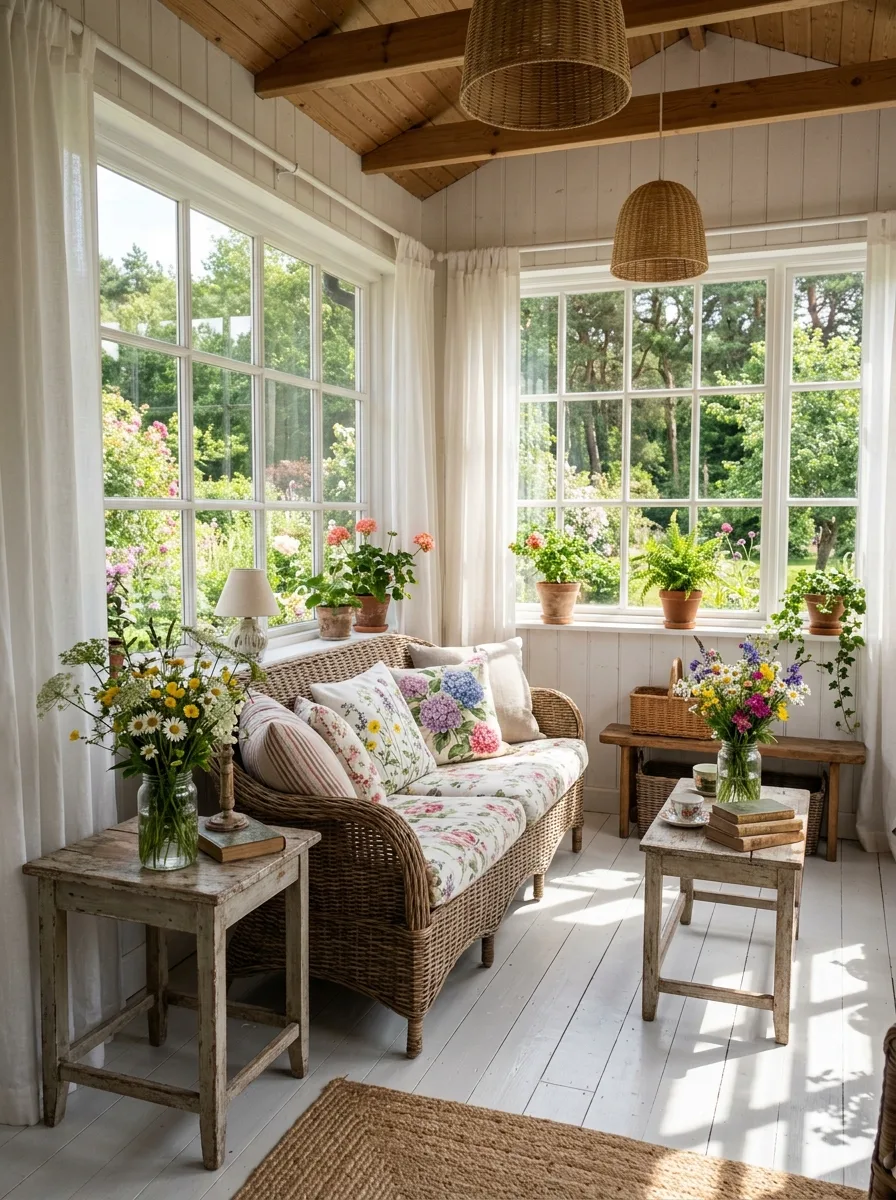
Choose a wicker sofa with a floral cushion in a busy, saturated print — the kind of pattern most rooms couldn’t handle but a cottage porch demands.
Pair it with weathered, distressed wood side tables in different heights, and fill mason jars with wildflowers cut straight from the garden rather than florist bouquets.
Hang plain linen curtains, not patterned ones. The floral cushion is doing the pattern work already. Everything else in the room should stay quiet.
Exposed Beam Screen Dining
Leave the roof structure exposed — real timber rafters and beams, stained rather than painted, so the bones of the room stay visible.
Hang one oversized lantern-style pendant directly over the dining table. It should be substantial enough to anchor the whole room, not a small fixture lost under high beams.
Choose a farmhouse-style table with mismatched ladder-back chairs, and let a single upholstered bench take one side. The mismatch keeps a dining setup from feeling like a showroom.
Sliding Glass Garden Threshold
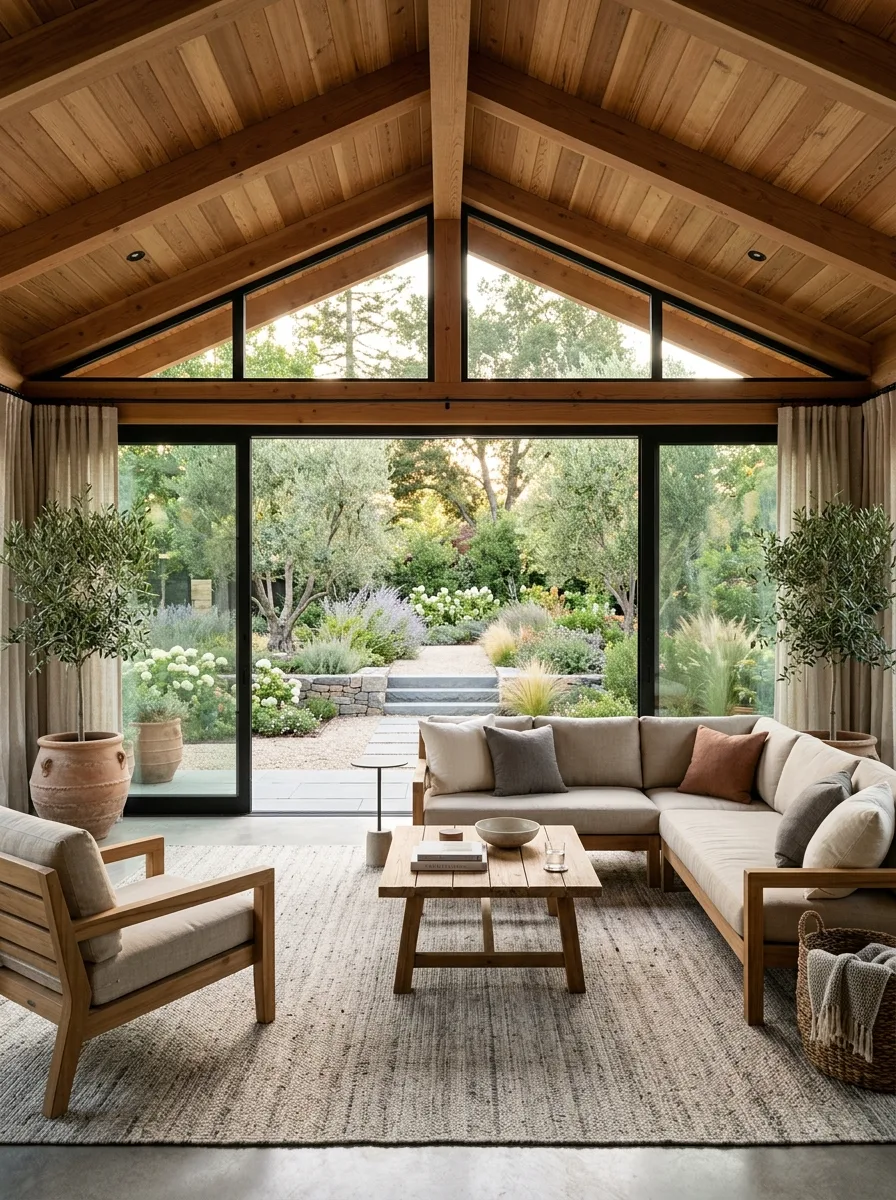
Install a full wall of black-framed sliding glass doors that open completely onto the garden, erasing the line between inside and outside entirely.
Flank the opening with oversized terracotta urns planted with olive trees, positioned to frame the view symmetrically on either side of the doorway.
Furnish with low, deep seating in undyed linen and jute, and keep the coffee table a single chunky slab of raw wood. Nothing should compete with the garden beyond the glass.
Coastal Rattan Sheer Curtains
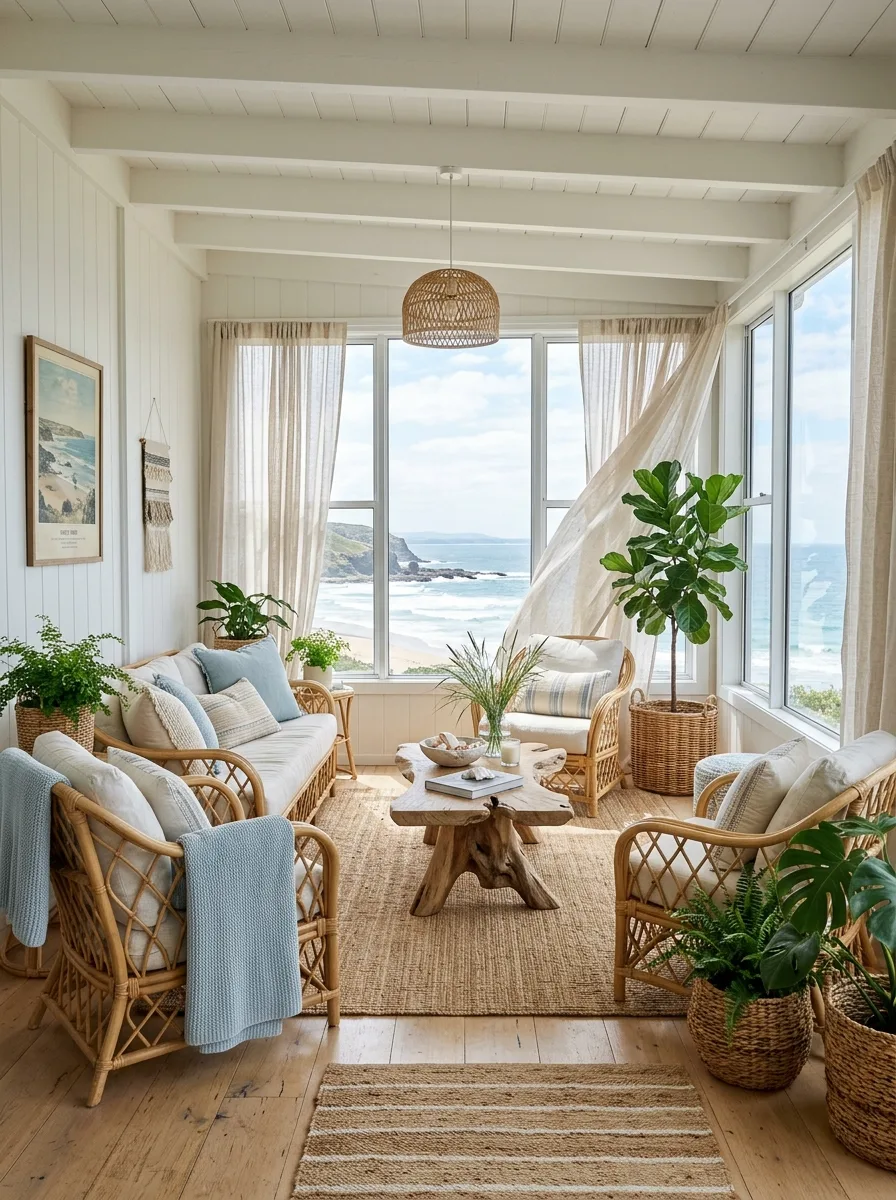
Hang sheer linen curtains at every window and let them move. This only works with an ocean or open view worth framing, so don’t fake it in a suburban backyard.
Furnish entirely in natural rattan — sofa, armchairs, side tables — and keep upholstery in soft blues and off-whites that echo water and sand rather than fighting them.
Anchor the seating with a driftwood or raw-edge coffee table, and let potted fiddle leaf figs and ferns do the greenery work in oversized woven baskets.
Timber Frame Stone Hearth
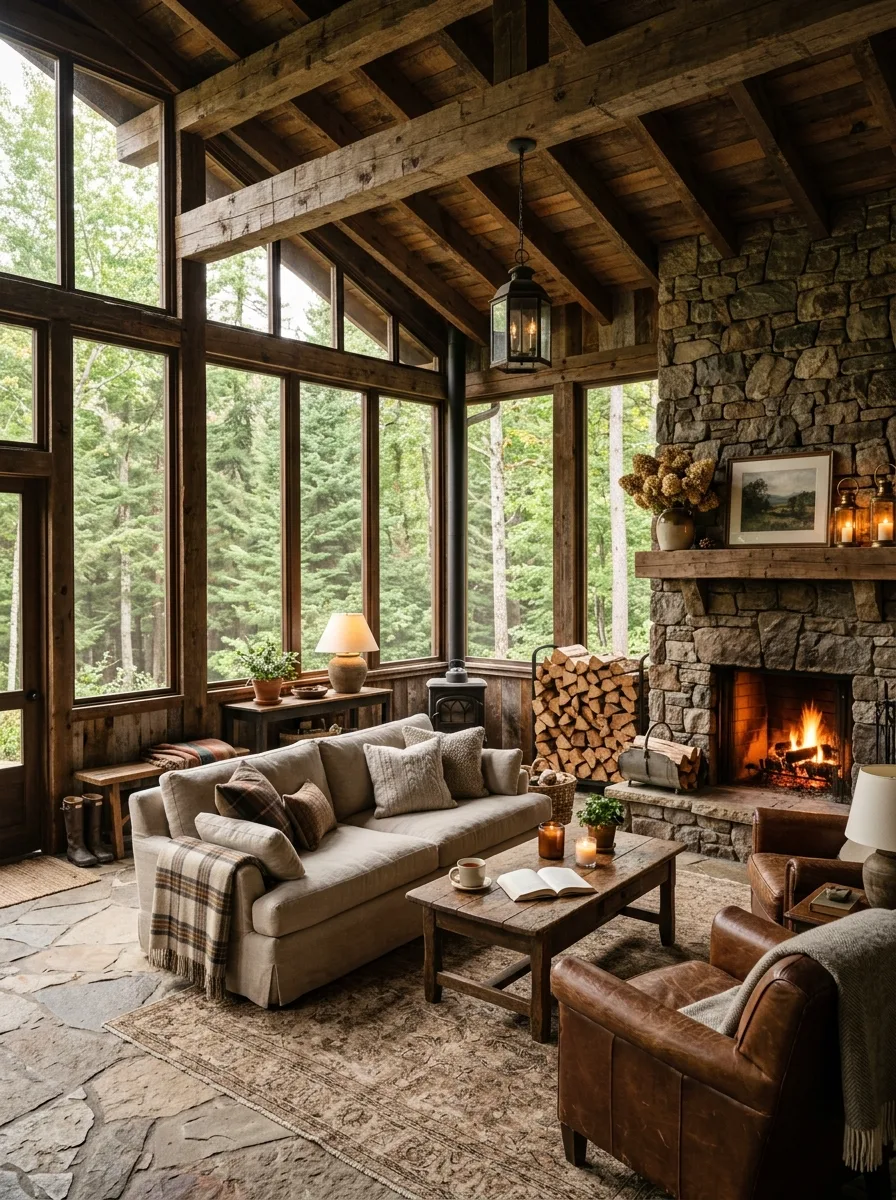
Frame the entire room in raw, exposed timber trusses left unfinished, and build a floor-to-ceiling river-stone fireplace as the visual anchor.
Choose leather seating that can age with the room — a chesterfield-style sofa or worn leather armchair — rather than anything that needs babying.
Light the space with lantern-style fixtures and a single hanging pendant rather than recessed cans. This room wants warm, low light, not bright overhead light.
Woven Pendant Neutral Lounge
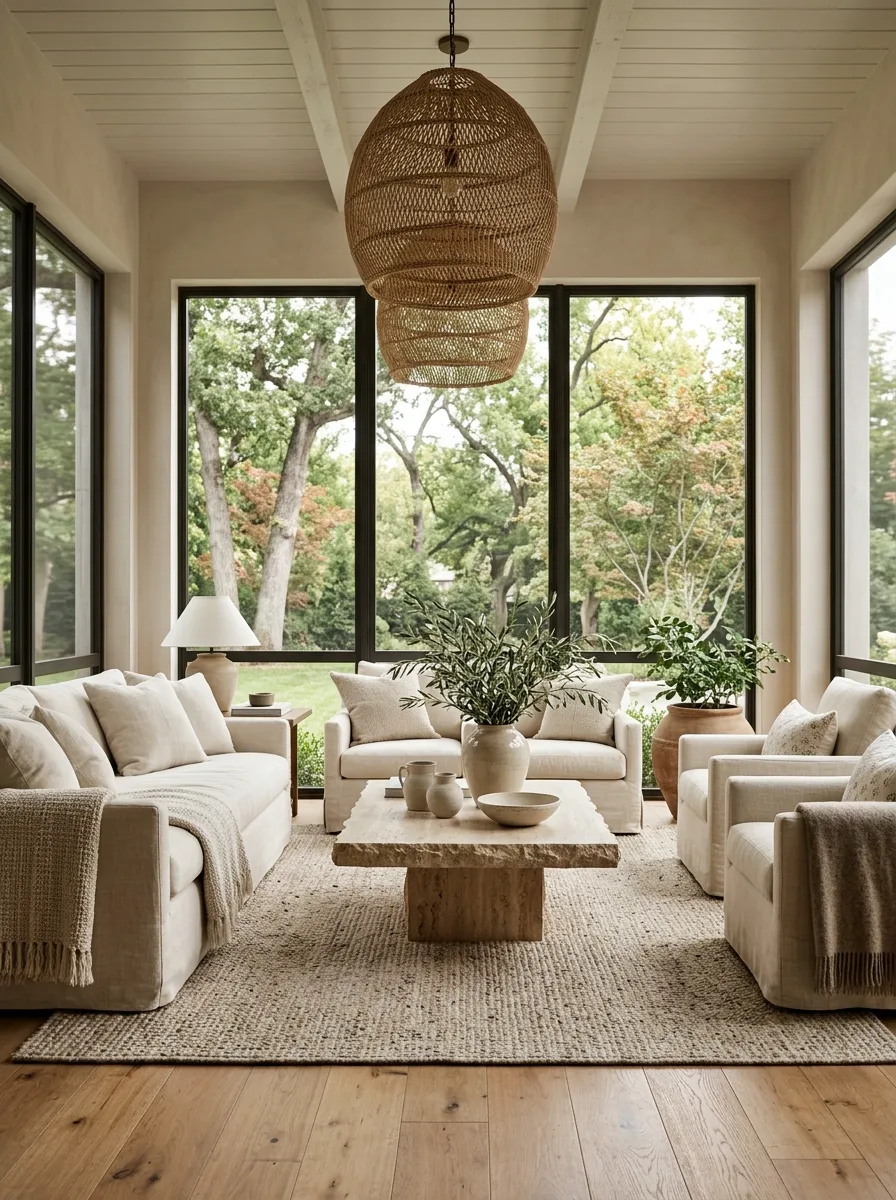
Hang two oversized woven pendant lights side by side over the seating area. Scale is everything here — undersized fixtures will disappear under a vaulted ceiling.
Furnish entirely in one tonal palette, cream and oatmeal and warm beige, so the room reads as calm rather than busy despite having multiple seating pieces.
Anchor the group with a single sculptural travertine coffee table, and add texture through a chunky jute rug rather than through pattern or colour.
Gingham Wicker Garden Door
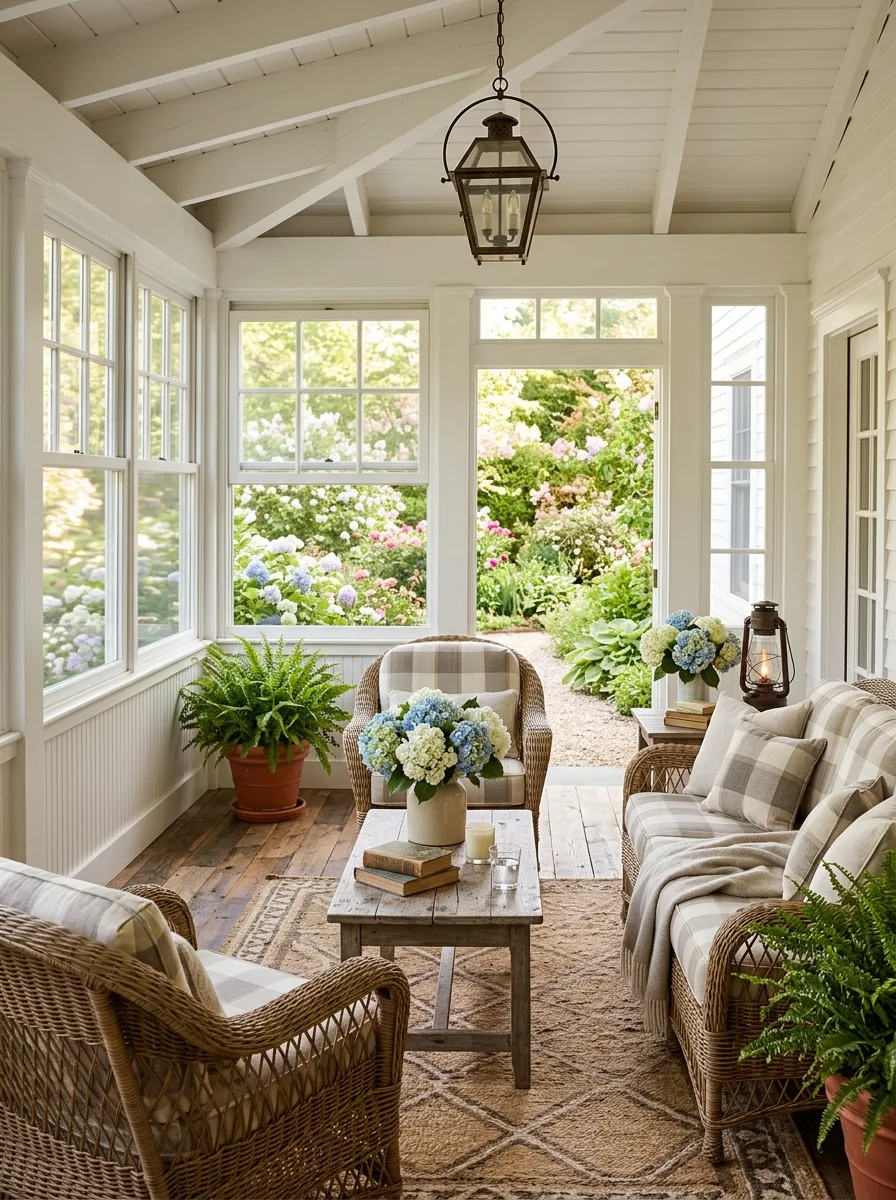
Dress woven wicker furniture in buffalo check or gingham cushions, kept to a soft grey-and-cream combination rather than a bold contrast.
Center a set of French doors on the far wall so they frame a direct view down a garden path, and leave them open whenever weather allows.
Add a weathered wood coffee table and one hanging lantern pendant by the door. Fresh hydrangeas in a simple pitcher do more work here than any other decor choice.
Snowbound Stone Fireplace Retreat
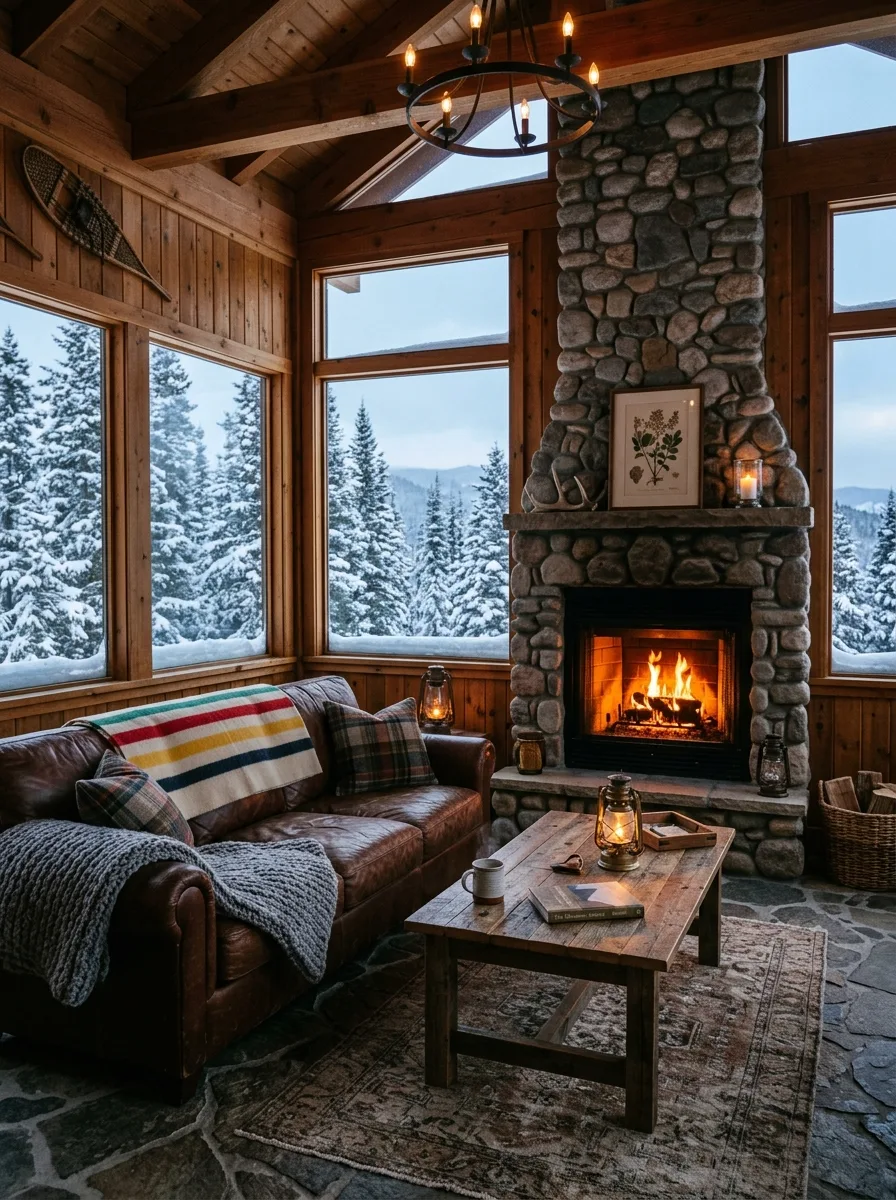
Build a tall stone chimney breast as the room’s spine, and surround it with windows on every other wall so the fireplace becomes the one solid anchor in a room made of glass.
Choose a worn leather sofa in a saddle brown, then pile it with wool blankets in bold stripes and plaid — colour and pattern that read as cabin, not corporate.
Light it with oil lanterns on the mantle and hearth rather than only overhead fixtures. This room is meant to glow, not to be evenly lit.
Vine Covered Glass Conservatory
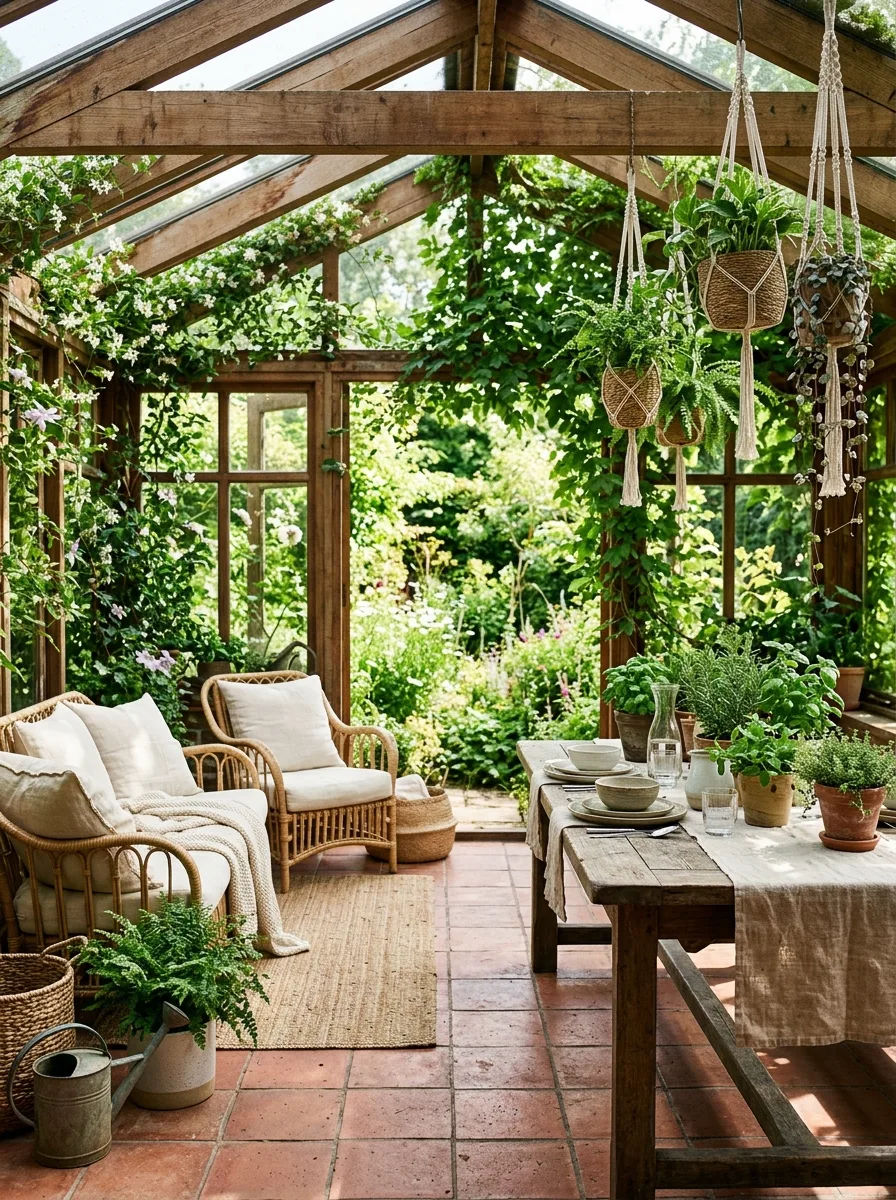
Build or buy a true glass-roofed structure and let climbing vines and flowering plants grow directly up the interior framework. This only works if you commit to the plants fully, not halfway.
Hang macrame plant holders from every available beam, staggered at different heights, and let a long farmhouse table run down the center for dining among the greenery.
Keep the floor terracotta tile and the furniture simple wicker. The plants are the decor. Everything else should stay out of their way.
Skylight Jungle Plant Corner
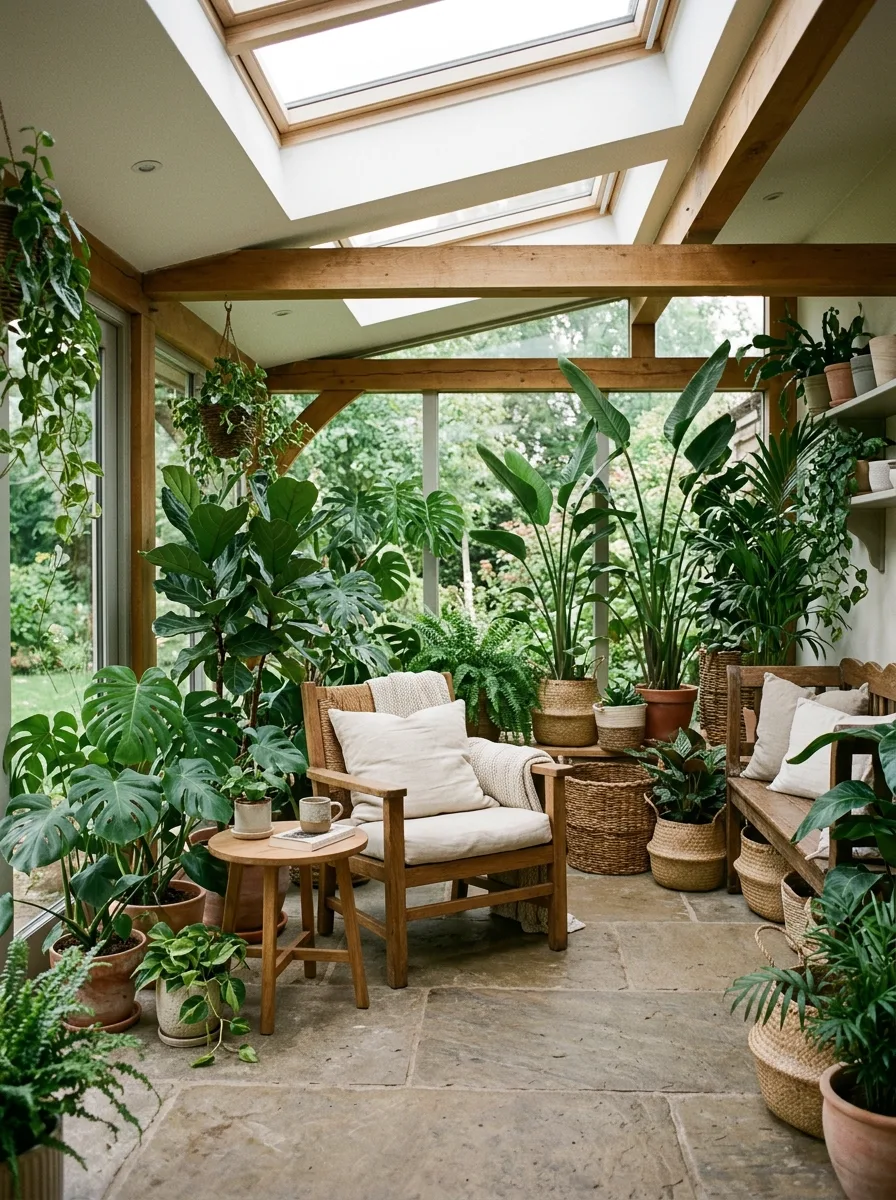
Install a skylight or angled glass roof section to bring light in from above, not just from the sides. This is what lets a plant collection this dense actually survive.
Group plants by height rather than type — tall monstera and bird of paradise at the back, trailing pothos at the edges, low ferns filling the gaps in between.
Add one simple wood chair and a small round side table as the only furniture. In a room this full of plants, the seating should almost disappear.
Two Story Black Window Wall
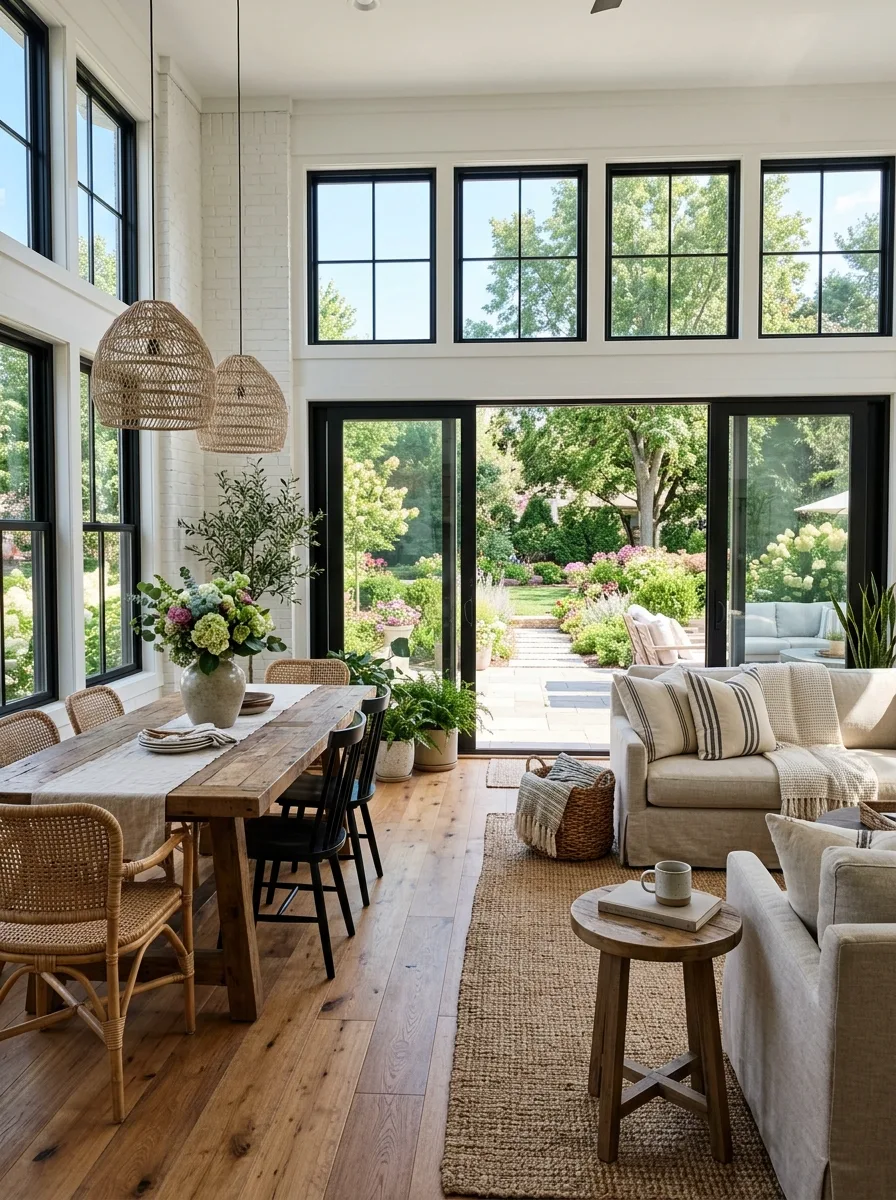
Run black-framed windows floor to ceiling across a full double-height wall, stacking two rows of glass to pull in as much light as the architecture allows.
Furnish underneath with a mix of dining and lounge seating in warm wood tones and cream upholstery, so the furniture grounds the room without competing with all that glass overhead.
Hang two woven pendants at table height rather than trying to light the full double-height space from one fixture. Let the upper windows stay unlit and purely architectural.
Corner Bench Breakfast Nook
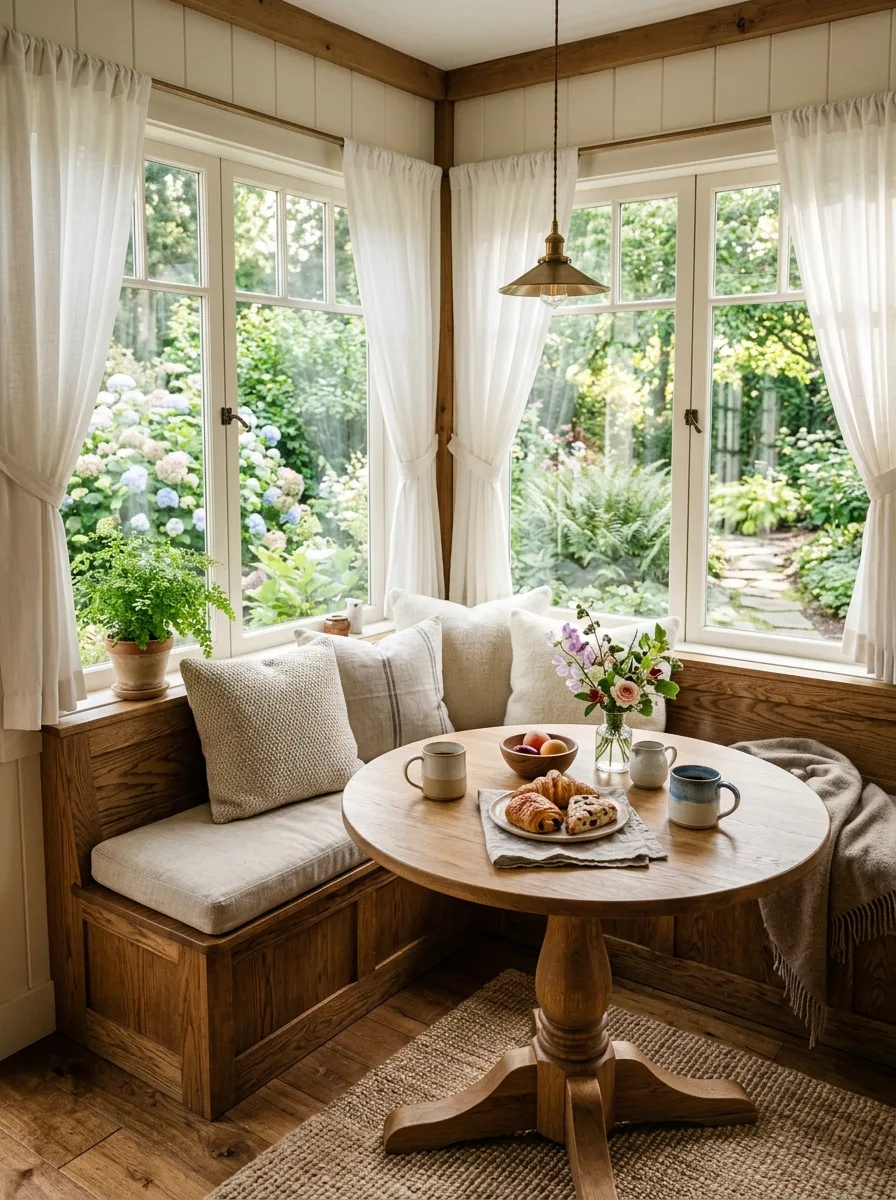
Build an L-shaped bench seat into the corner where two window walls meet, upholstered in a durable neutral fabric with a deep, supportive cushion.
Center a small round pedestal table in front of it, sized for two, and hang a single pendant light low enough to feel intimate rather than institutional.
Dress the windows in sheer white curtains tied back during the day, and keep a folded throw on the bench edge for early mornings when the room hasn’t warmed up yet.
Exposed Truss Great Room
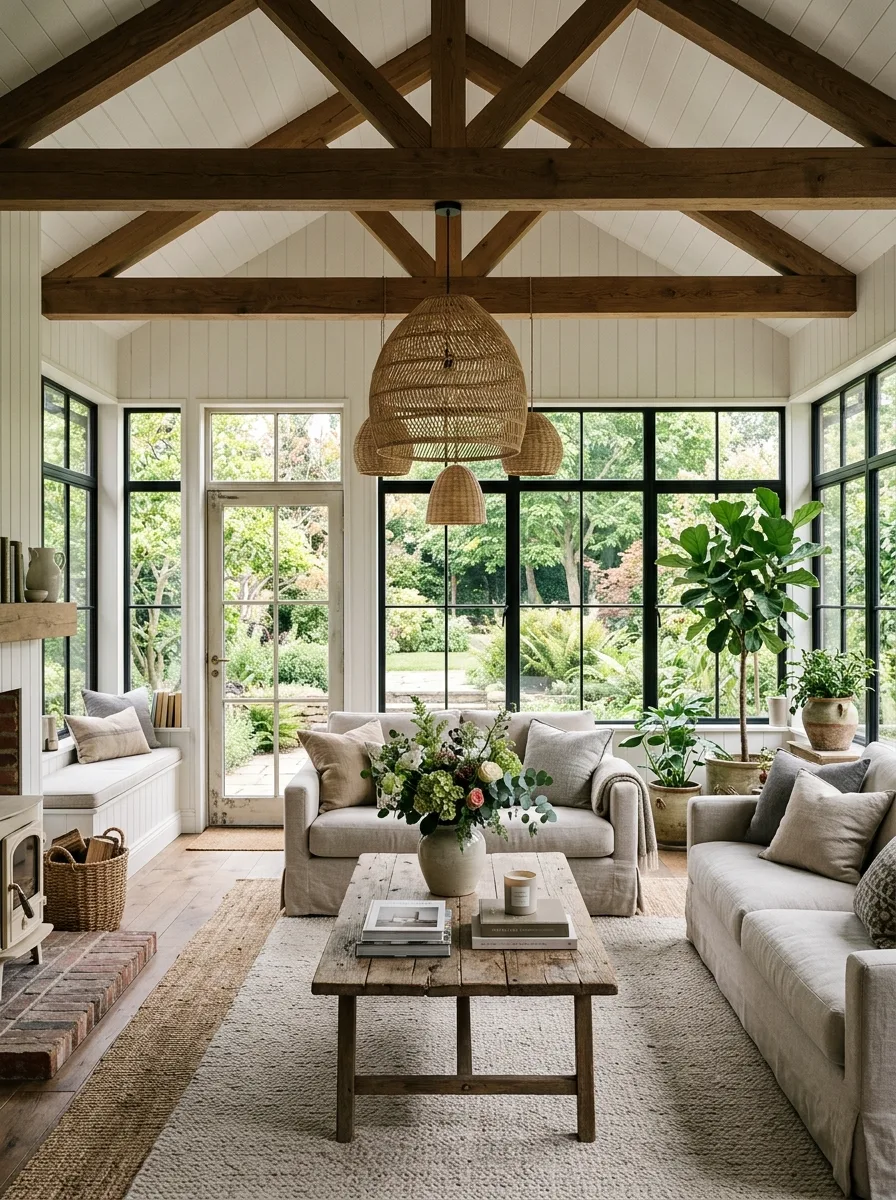
Frame the vaulted ceiling with a full set of crossed wood trusses left raw against white shiplap, so the structure reads as the room’s main architectural feature.
Run black-framed windows and a matching black door across the far wall, and hang woven pendant lights at different drop heights over the seating area rather than centering one large fixture.
Furnish with a pair of slipcovered linen sofas in matching neutral tones, and add a low, reclaimed-wood coffee table in front of a simple wood-burning stove. Keep the rug pale and textural so it doesn’t compete with the beams overhead.
Final Thoughts
Every one of these rooms works for the same reason. Somebody decided what the space was for before they decided what it should look like.
That’s the part most people skip. They pick a colour palette off Pinterest and back into a function, instead of starting with how they’ll actually use the room and letting the design follow.
A closed-in porch is not a spare room that happens to have windows. It’s the one room in your house built entirely around a view you didn’t want weather to keep taking away from you.
Furnish it like you believe that.