
Farmhouse kitchens feel warm and lived-in. Modern kitchens feel clean and considered. Most people assume you have to choose, so they end up with a room that’s neither — beige cabinets, a pendant light from a catalog, nothing that actually commits.
Rustic modern isn’t a compromise between the two. It’s raw material paired with restrained form. A live-edge slab next to a matte black cabinet front. A stone hearth under a sleek steel window wall. The tension is the whole point.
The kitchens that pull this off don’t split the difference evenly. They lean hard into one texture — wood, stone, black steel, plaster — and let one or two modern moves cut against it cleanly.
That’s the entire trick. Commit to the raw material first. Modernize around it, not the other way around.
The Material Does the Talking, Not the Layout
A kitchen island can be shaped like anything. What actually makes a room feel rustic modern is what it’s built out of — and most people get the order of operations backwards.
Pick the Hero Material Before the Floor Plan
Every kitchen on this list has one material doing most of the work — a slab of raw stone, a wall of reclaimed brick, a single boulder carved into an island. Everything else in the room supports that choice instead of competing with it.
Decide that material first. Not the cabinet color, not the layout — the one raw, unapologetic surface the whole room will be built around.
Once that’s locked in, the rest of the decisions get easier. Cabinet tone, hardware finish, even the shape of the island all start answering to that one material instead of fighting each other for attention.
Let New and Old Sit Next to Each Other Unblended
The instinct is to smooth every transition — sand the edges, match the finishes, make old and new blend seamlessly. Rustic modern kitchens do the opposite on purpose.
A butcher-block countertop sits directly against a sleek black induction range. A hand-forged pot rack hangs under a clean drywall ceiling. The contrast isn’t hidden. It’s the design.
Stop trying to make every surface agree with every other surface. Pick two or three finishes that are obviously from different eras or origins, and let them sit next to each other without apology.
Hardware and Fixtures Carry More Weight Than You’d Think
In a kitchen this stripped back, the metal finishes end up doing outsized work. Brass, blackened steel, hammered copper — whichever you pick becomes a repeated note that ties a raw, mismatched room together.
Pick one metal and use it everywhere: faucet, cabinet pulls, light fixtures, range hood. A room with five different metal finishes reads as accidental. A room with one, repeated deliberately, reads as designed.
This is the cheapest, highest-leverage move on this entire list. You can build a rustic modern kitchen around inexpensive cabinets if the hardware is consistent and confident.
Rustic Modern Kitchen Ideas
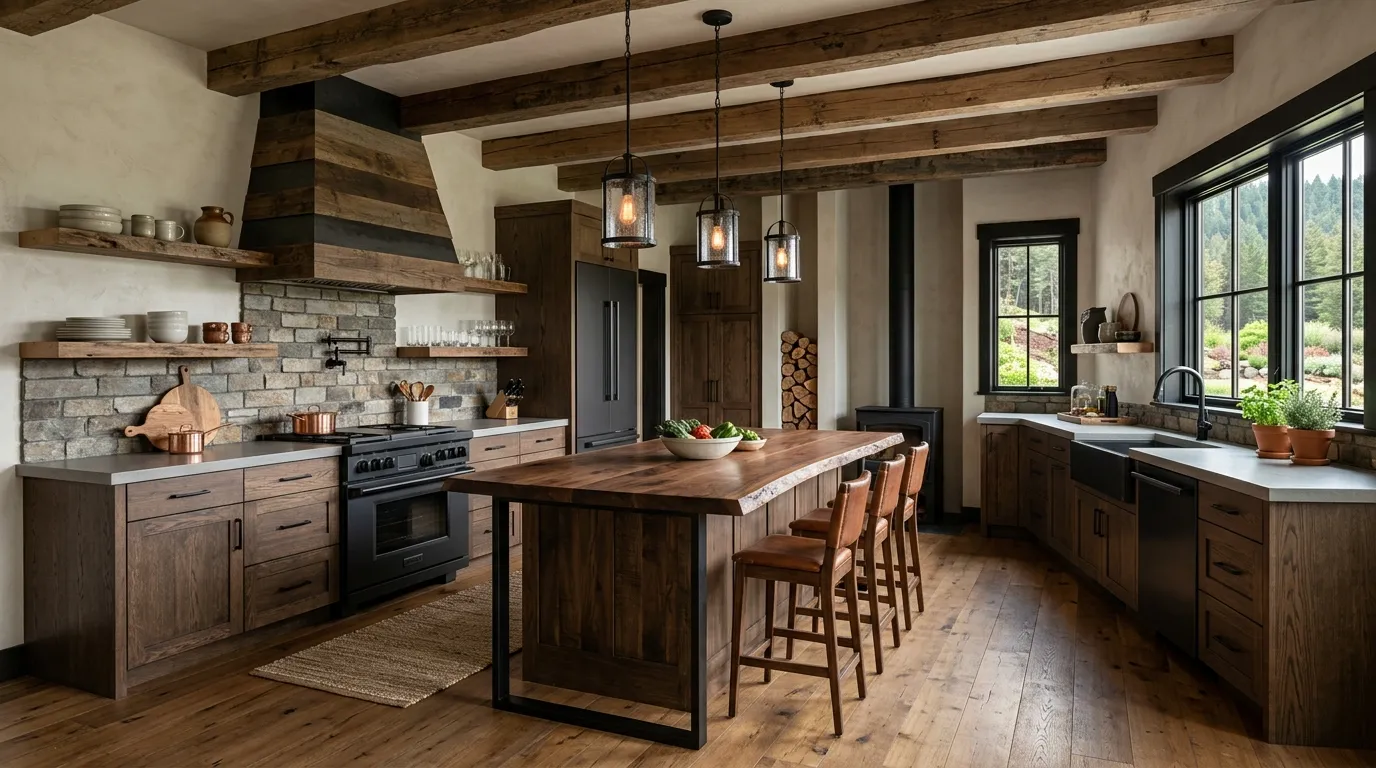
Live-Edge Slab Waterfall Counter
Source a single live-edge wood slab thick enough to wrap the corner as a waterfall counter, keeping the natural bark edge intact rather than trimming it square.
Pair it against matte black cabinetry and a dark charcoal wall, so the warm, irregular wood reads even louder against the flat, uniform black around it.
Hang mismatched vintage lanterns over the slab instead of a matched fixture set, and let a worn Persian-style runner carry the warmth down onto the floor.
Skylight Travertine Island Walnut
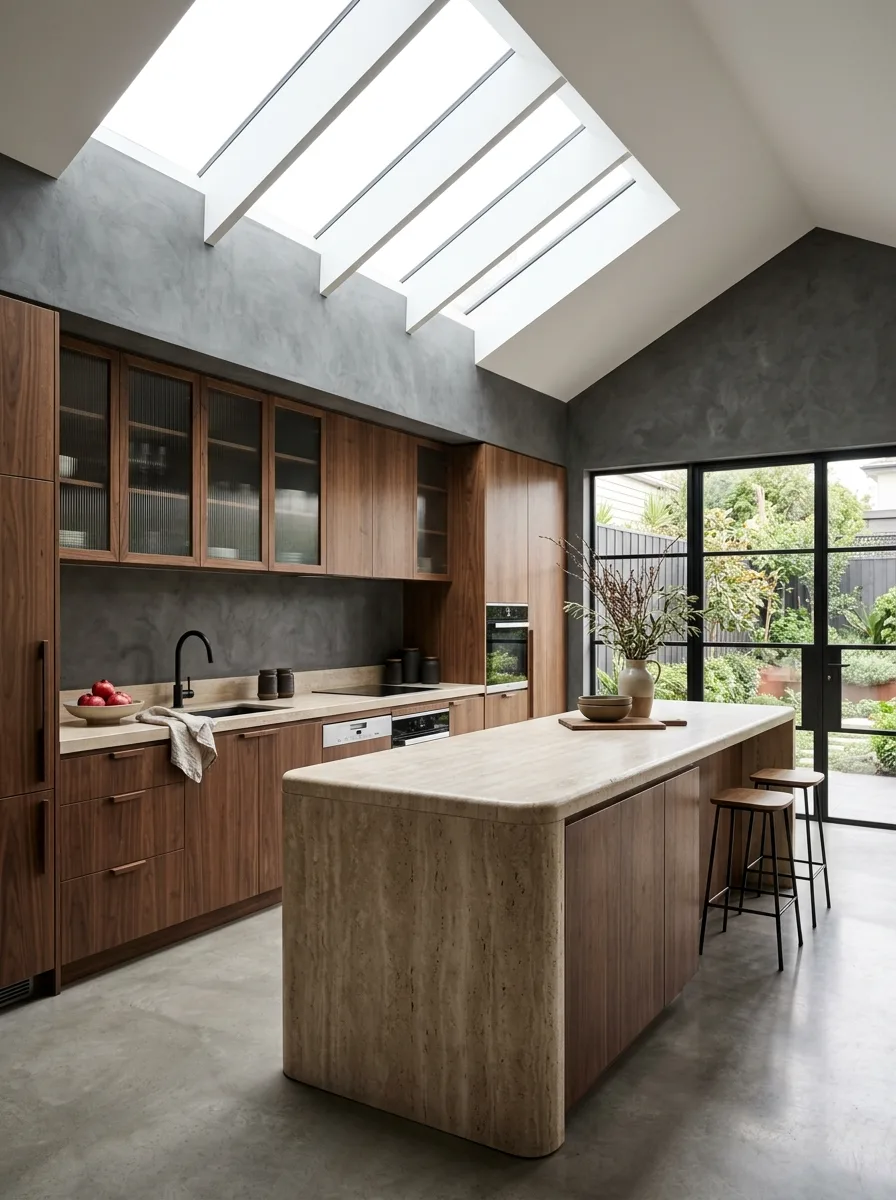
Cut a run of angled skylights directly into a vaulted ceiling above the island, so the room gets top light instead of relying on side windows alone.
Choose rich walnut cabinetry with reeded or fluted glass fronts on the uppers, and pair it with a solid travertine island block left thick and unadorned.
Keep the walls in raw plaster or limewash rather than paint, and finish the floor in sealed concrete so the whole room stays materially honest, not softened by carpet or wood underfoot.
All-Black Cabinetry Brass Hardware
Paint every cabinet, upper and lower, the same matte black — no two-tone breaks, no accent color. Consistency is what makes this look intentional instead of moody for its own sake.
Offset the black with warm reclaimed wood ceiling planks and wide-plank wood flooring, so the room stays warm despite the dark palette.
Finish every pull, faucet, and pendant in the same brass tone, and let a mix of glass-front and open shelving break up the solid black long enough to breathe.
attan Pendant Oak Shaker Kitchen
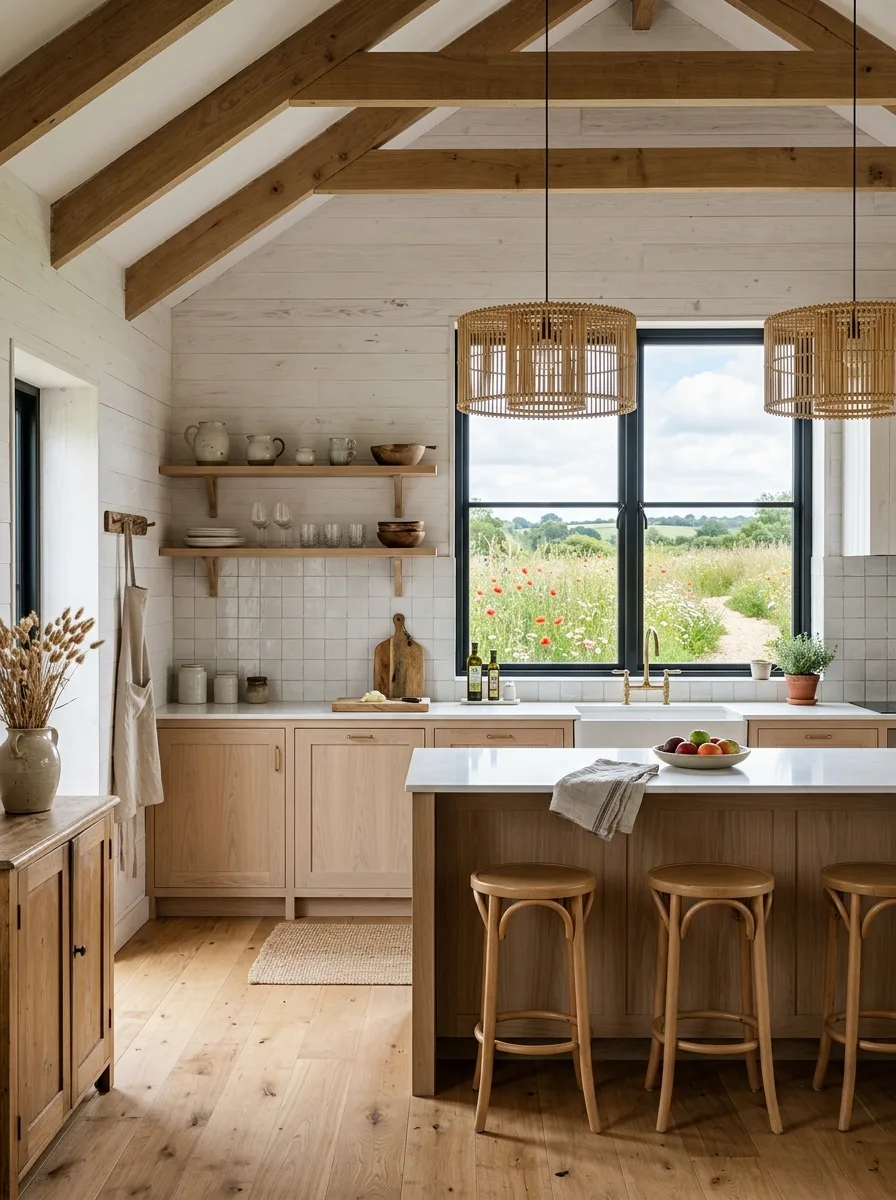
Choose light oak shaker cabinets and pair them with a zellige or handmade tile backsplash in a soft, irregular white — the imperfection in the tile keeps the light wood from feeling too polished.
Leave the ceiling beams exposed and whitewashed, and hang a pair of woven rattan drum pendants over the island for warmth against all that pale wood.
Furnish the island seating in simple bentwood stools, and keep open shelving stocked with mismatched ceramics rather than matched dinnerware sets.
Raw Stone Slab Island
Choose an unpolished, rough-hewn stone slab for the island top, left with its natural jagged edge rather than a fabricated straight line.
Set it inside a full log-cabin shell — round timber walls, a stacked stone fireplace, wide-plank wood flooring — so the island reads as one more found object in a room built of them.
Light it with a single antique lantern-style pendant and a scatter of candles rather than recessed lighting. This room wants firelight, not daylight-balanced bulbs.
Arched Window Tiled Backsplash
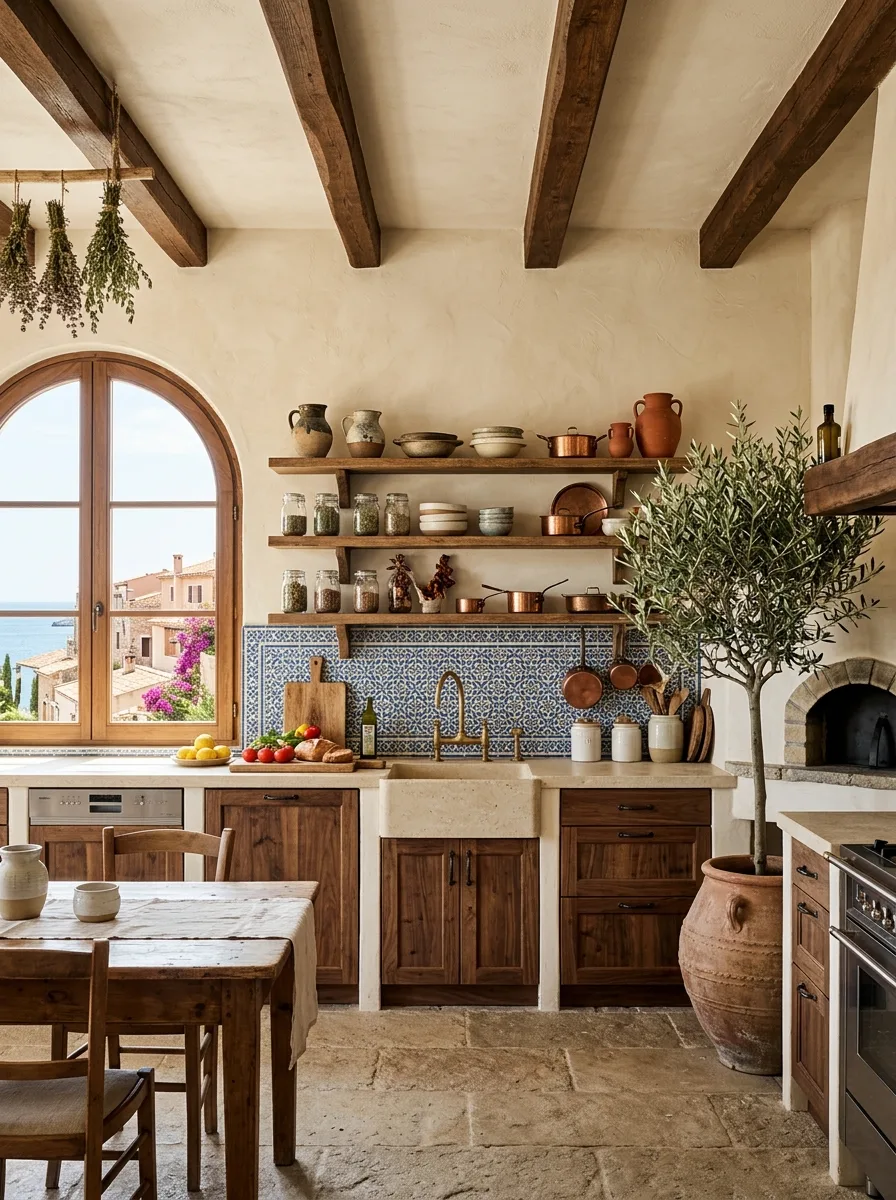
Cut one arched window or door into the kitchen wall and dress it in black metal framing, positioned to catch a view worth framing.
Install a hand-painted patterned tile backsplash in blue and white behind the range only, keeping the rest of the walls in plain limewashed plaster so the tile stays a focal moment, not wallpaper.
Finish with a large terracotta urn planted with an olive tree, and hang dried herbs from the exposed ceiling beams near the window.
Marble Waterfall Island Brass Pendants
Run a bookmatched marble waterfall counter down both ends of the island, and pair it with dark green-black cabinetry that lets the marble veining do the visual work.
Install floor-to-ceiling black-framed windows along one full wall, and leave the ceiling in warm wood planking so the room doesn’t tip fully cold and modern.
Hang two oversized brass dome pendants directly over the island, sized large enough to hold their own against the marble below, and mix wicker and turned-wood stools rather than a matching set.
Concrete Floor Steel Window Barn
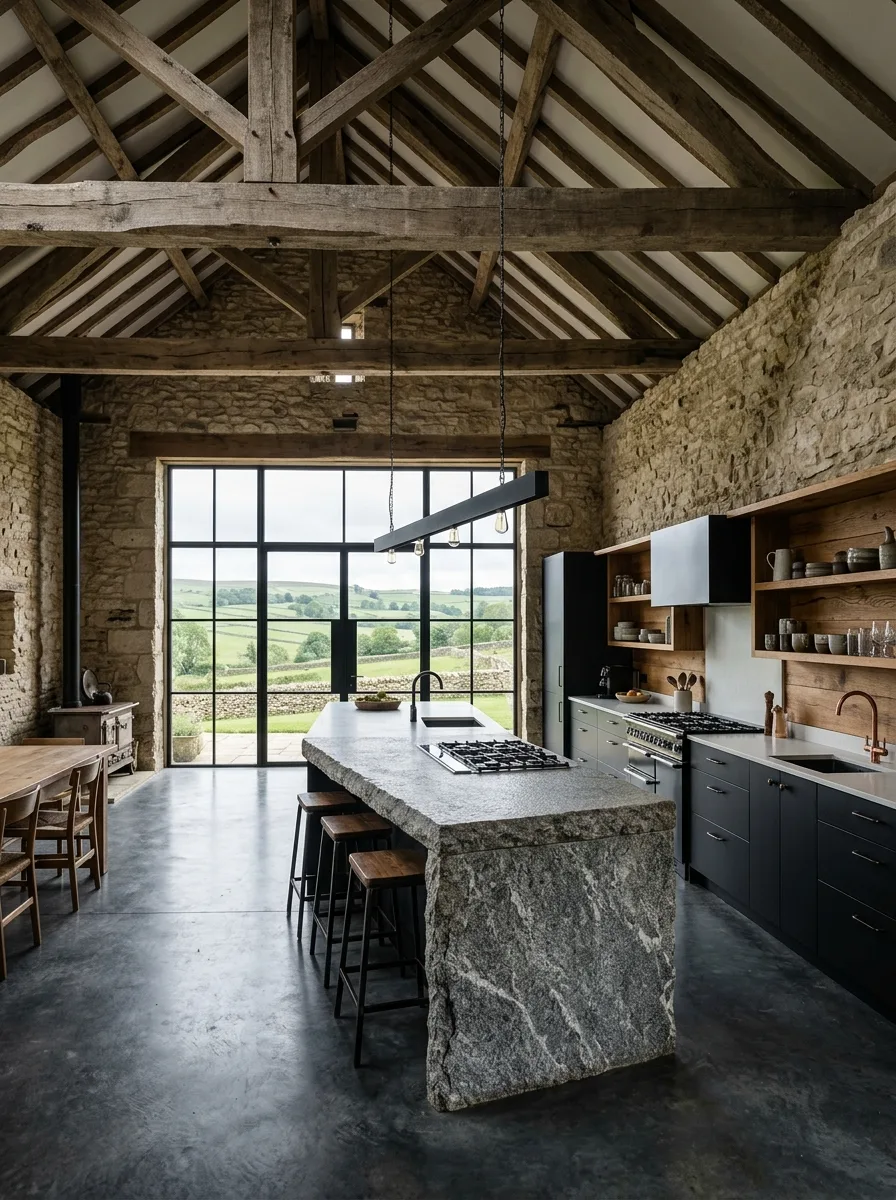
Start with a poured, sealed concrete floor and leave it exposed rather than covering it — this is what keeps a converted barn space reading industrial instead of cozy-cottage.
Keep the original stone walls and timber roof trusses fully exposed, and cut one full black steel-framed opening onto the landscape to anchor the room.
Build the island from a single slab of raw, rough stone on a dark cabinet base, and keep everything else — hardware, lighting, stools — in matte black steel to match the window frame.
Antique Range Snow View Cabin
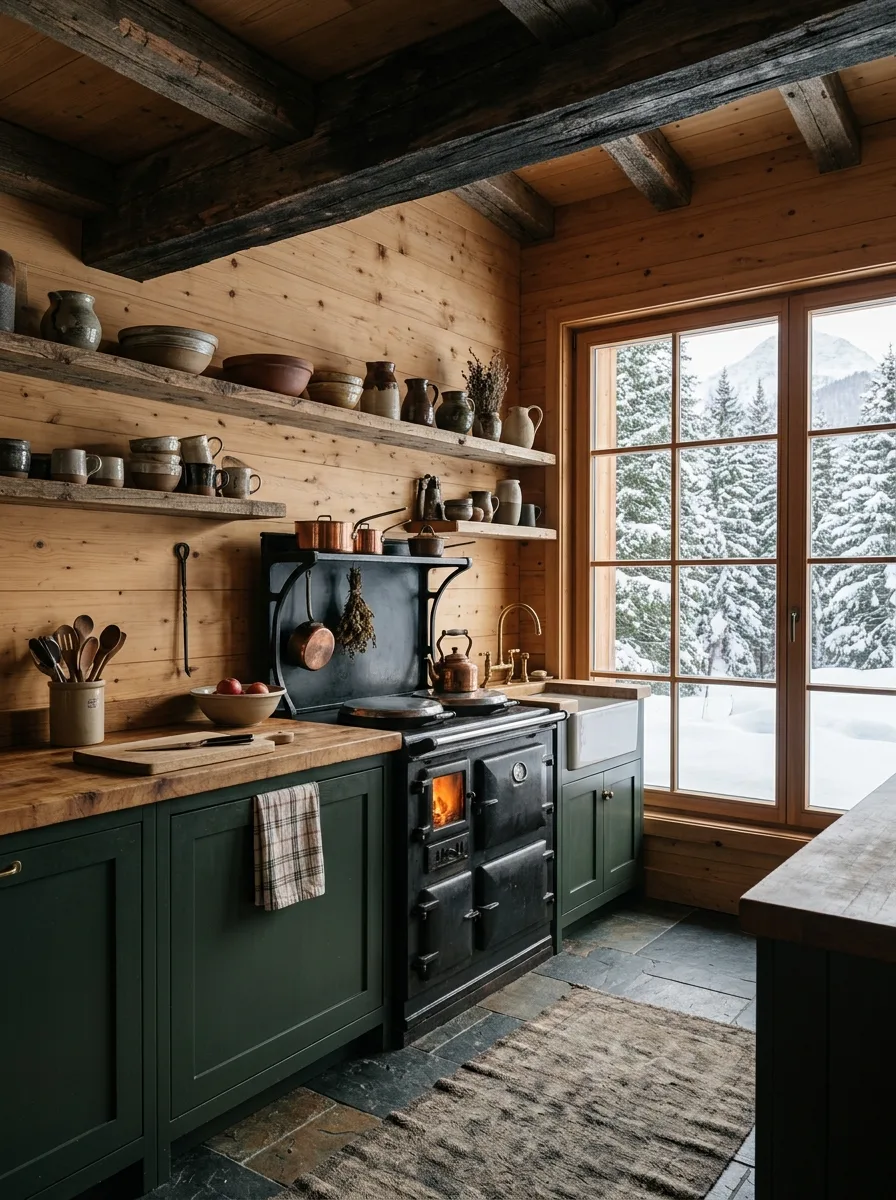
Center the room on a restored antique cast-iron range, left in working black enamel rather than replaced with a modern equivalent.
Pair it with deep forest-green lower cabinets and pale, unfinished wood upper shelving stacked with earthenware crockery in mismatched shapes and glazes.
Install one large multi-pane window facing the view, and let copper pots and dried herb bundles hang directly from the exposed ceiling beams as the only decoration the room needs.
Adobe Walls Terracotta Tile Desert
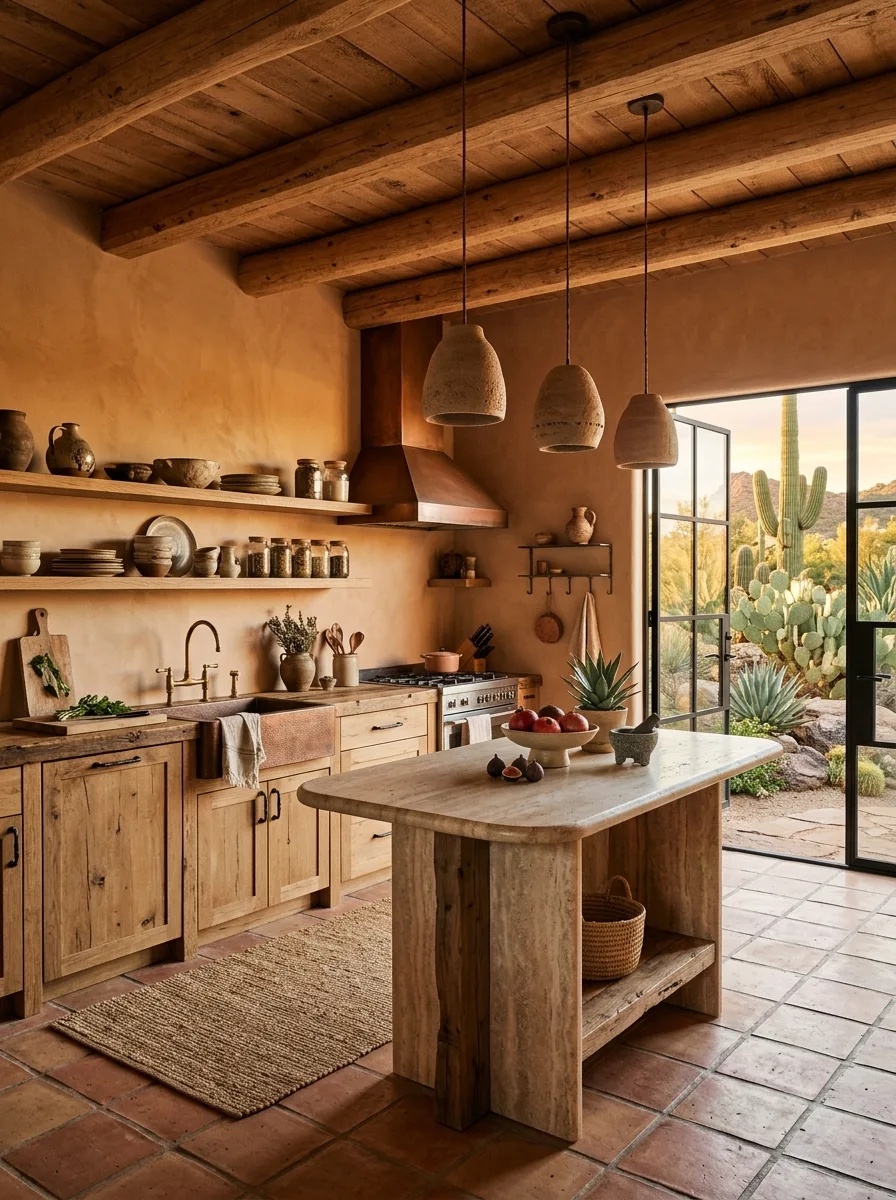
Finish the walls in warm, hand-troweled plaster in a sandy terracotta tone, and lay a matching terracotta tile floor so the whole room reads as one continuous warm material.
Choose pale, unfinished wood cabinetry and open shelving, and let a copper range hood provide the one reflective surface in an otherwise matte room.
Hang three woven pendant lights at staggered heights over a freestanding stone island, and open the room fully to the outside through a black steel-framed door.
Shou Sugi Ban Paper Lanterns
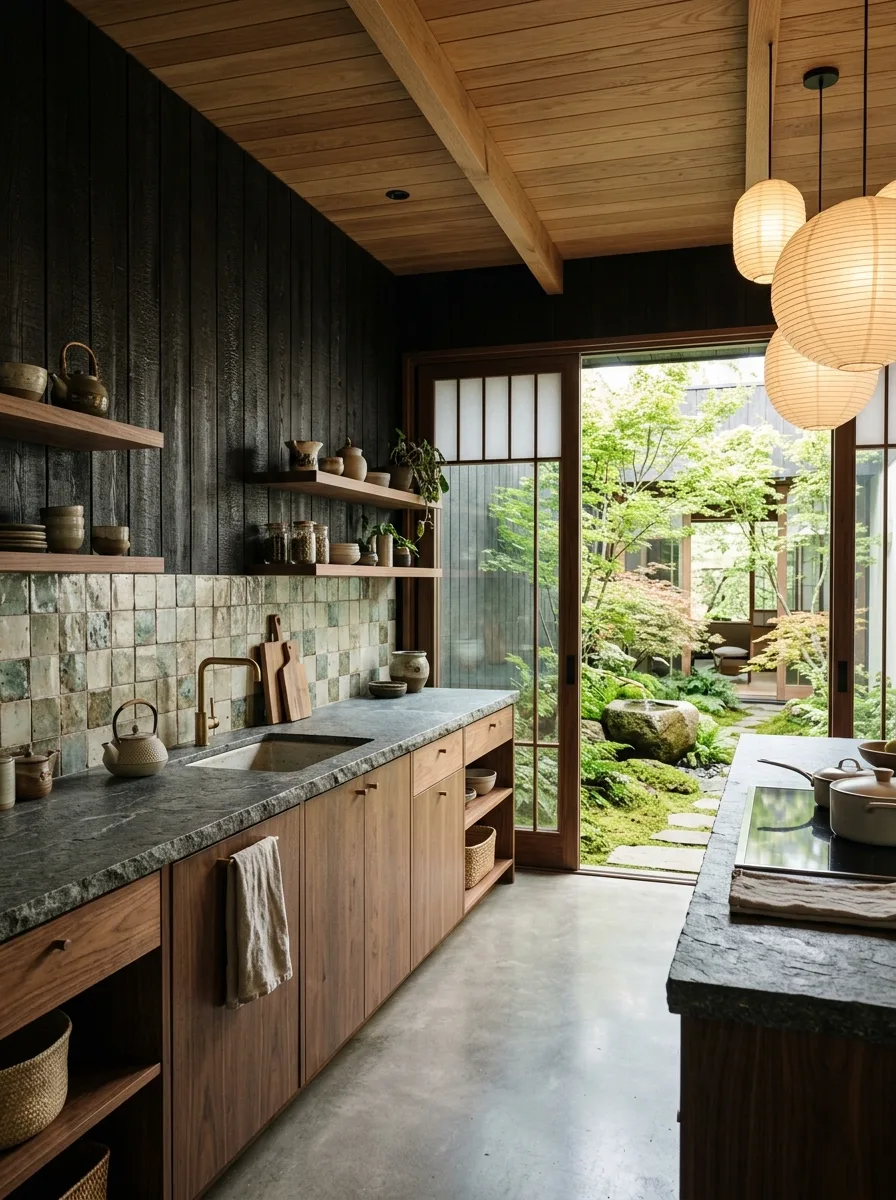
Char and finish the wall paneling in the Japanese shou sugi ban technique for a deep, textured black, and pair it with warm walnut cabinetry left in its natural tone.
Choose a honed stone or soapstone counter in a mottled grey-green, and lay a handmade, irregularly glazed tile backsplash rather than anything uniform.
Hang paper lantern pendants in place of anything metal or glass, and open one full wall to a small enclosed garden so the room borrows its calm from outside.
Hanging Copper Pot Rack
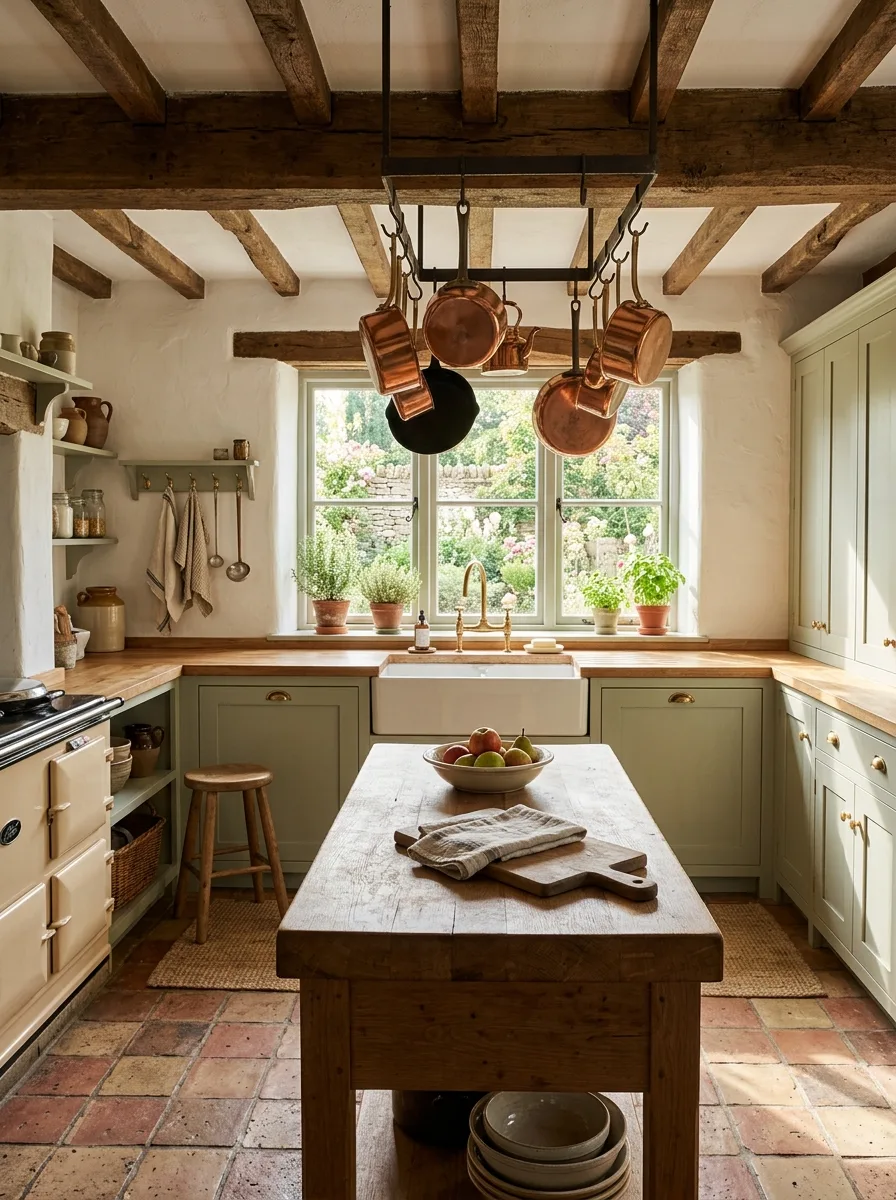
Hang a full copper pot rack from the exposed ceiling beams directly over the island, loaded with cookware rather than left decorative and empty.
Choose sage green cabinetry with a farmhouse apron sink and butcher-block counters, and keep the walls in rough limewashed plaster rather than smooth drywall.
Lay reclaimed terracotta floor tile, and let open shelving stacked with mismatched crockery replace at least one full run of upper cabinets.
Weathered Wood Ocean View
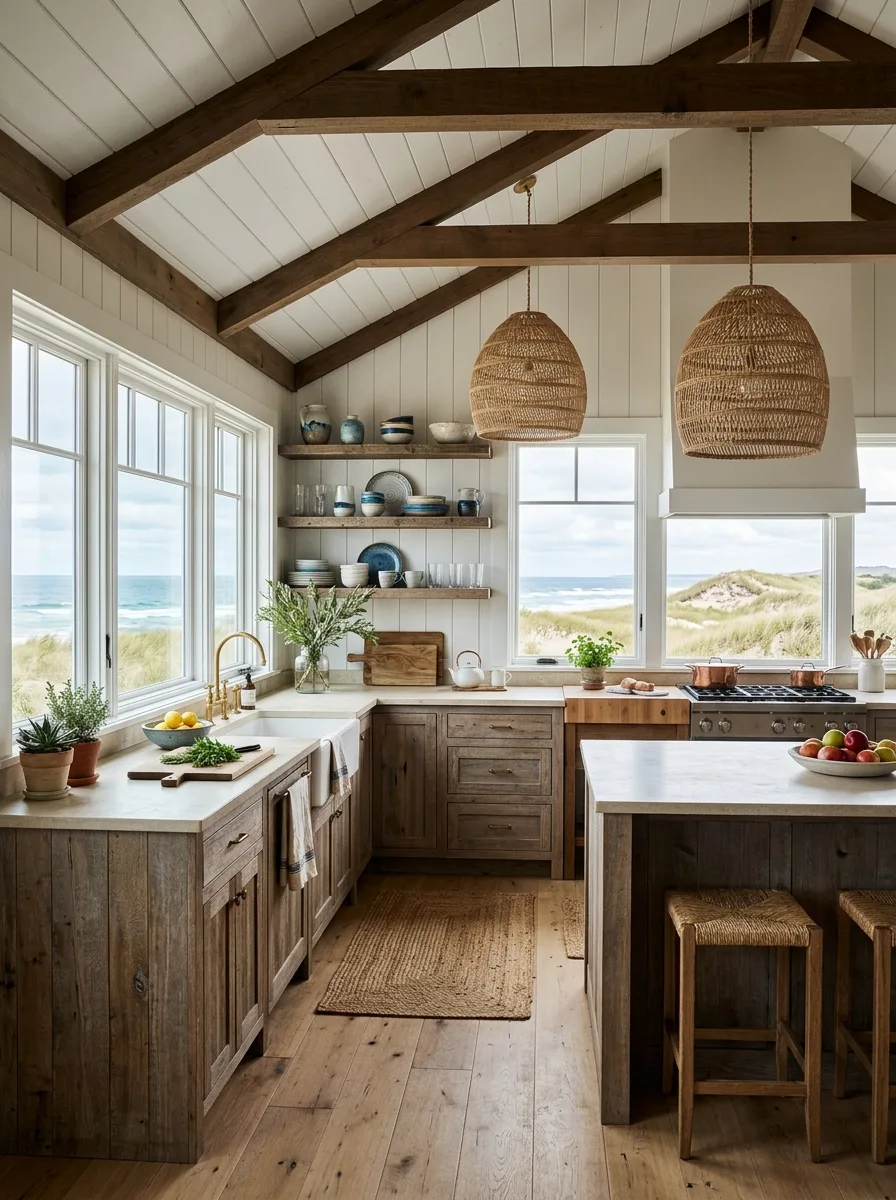
Choose cabinetry in a weathered, driftwood-grey wood tone rather than painted finish, so the material itself carries the coastal feel without leaning on color.
Keep the ceiling beams exposed in a warmer, darker wood for contrast, and hang two oversized woven pendants over the island to soften all the straight lines below.
Position the sink and prep areas to face the view directly, and finish the floor in wide-plank warm oak that ties the cool cabinetry back to something warm.
Black Kitchen Statement Skylight
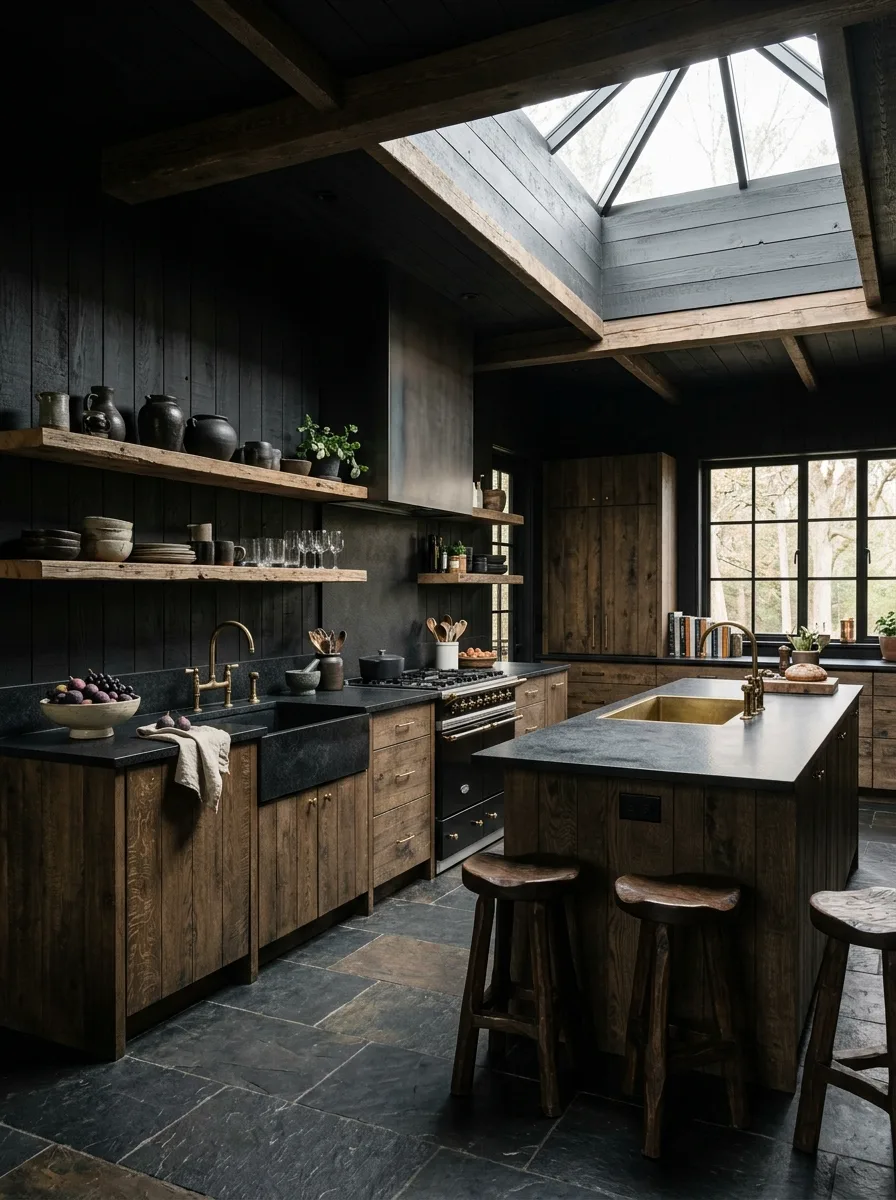
Commit to black on every surface — walls, cabinetry, even the ceiling beams — and let a single large angled skylight be the only source that breaks up all that dark.
Choose a honed black or dark soapstone counter, and finish the island in the same reclaimed wood as the cabinetry so the whole room reads as one continuous material.
Add brass fixtures sparingly — a faucet, a few pulls — as the only warm note in an otherwise monochrome room, and let a bowl of bright fruit do the rest of the color work.
Wine Barrel Island Copper Hood
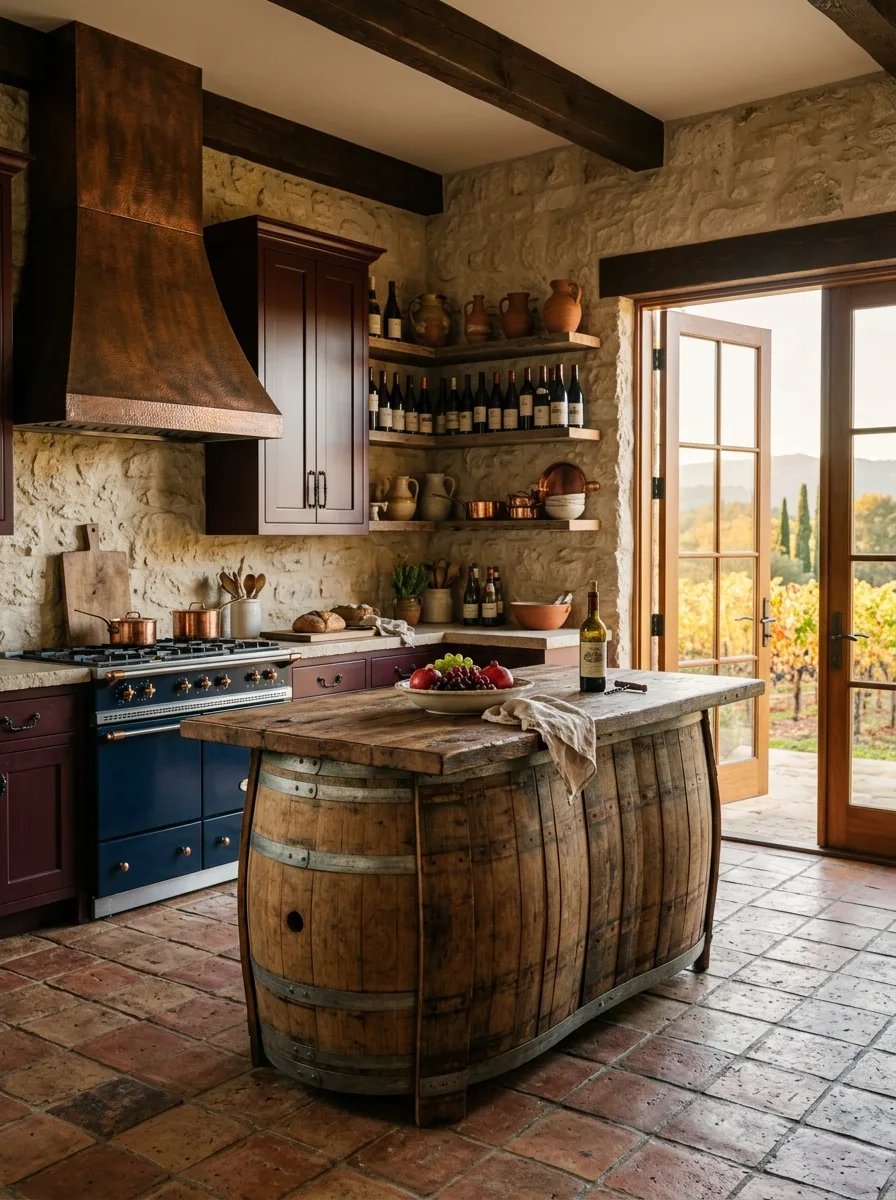
Repurpose a full wine barrel as the base of a kitchen island, topped with a single thick wood plank rather than anything polished or fabricated.
Pair it with deep burgundy lower cabinetry and a hand-hammered copper range hood as the room’s two big material statements.
Keep the walls in exposed natural stone, and let open shelving stocked with wine bottles and pottery do double duty as both storage and decor.
Skylight Roof Brick Wall Nook
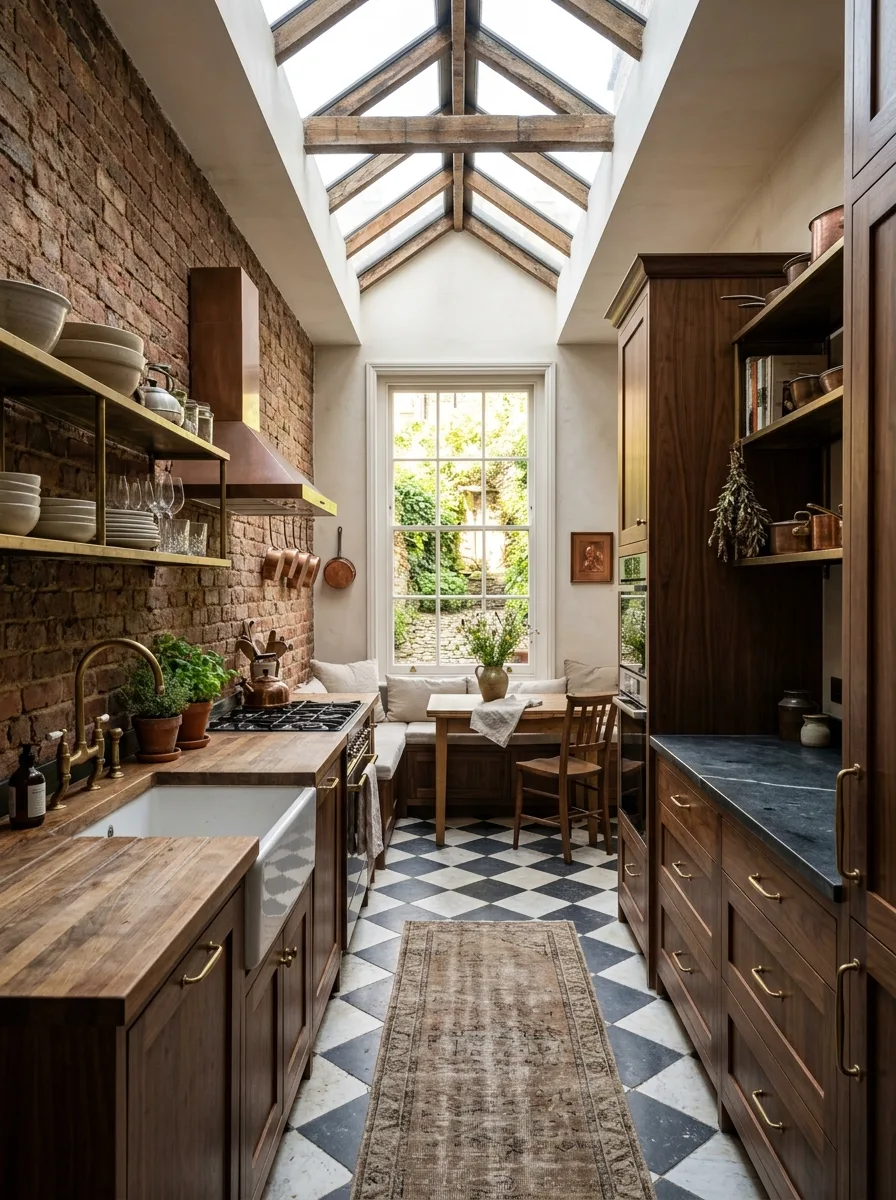
Run a full glass skylight roof down one side of a narrow galley kitchen, and leave the opposite wall in exposed original brick rather than plastering over it.
Choose rich walnut cabinetry with a dark soapstone counter, and build in a small banquette nook at the end of the run for a breakfast table that doesn’t need a separate room.
Lay a black-and-white checkerboard tile floor to tie the light-filled ceiling to the darker cabinetry below, and finish with a worn runner rug down the center aisle.
Cathedral Arch Marble Waterfall
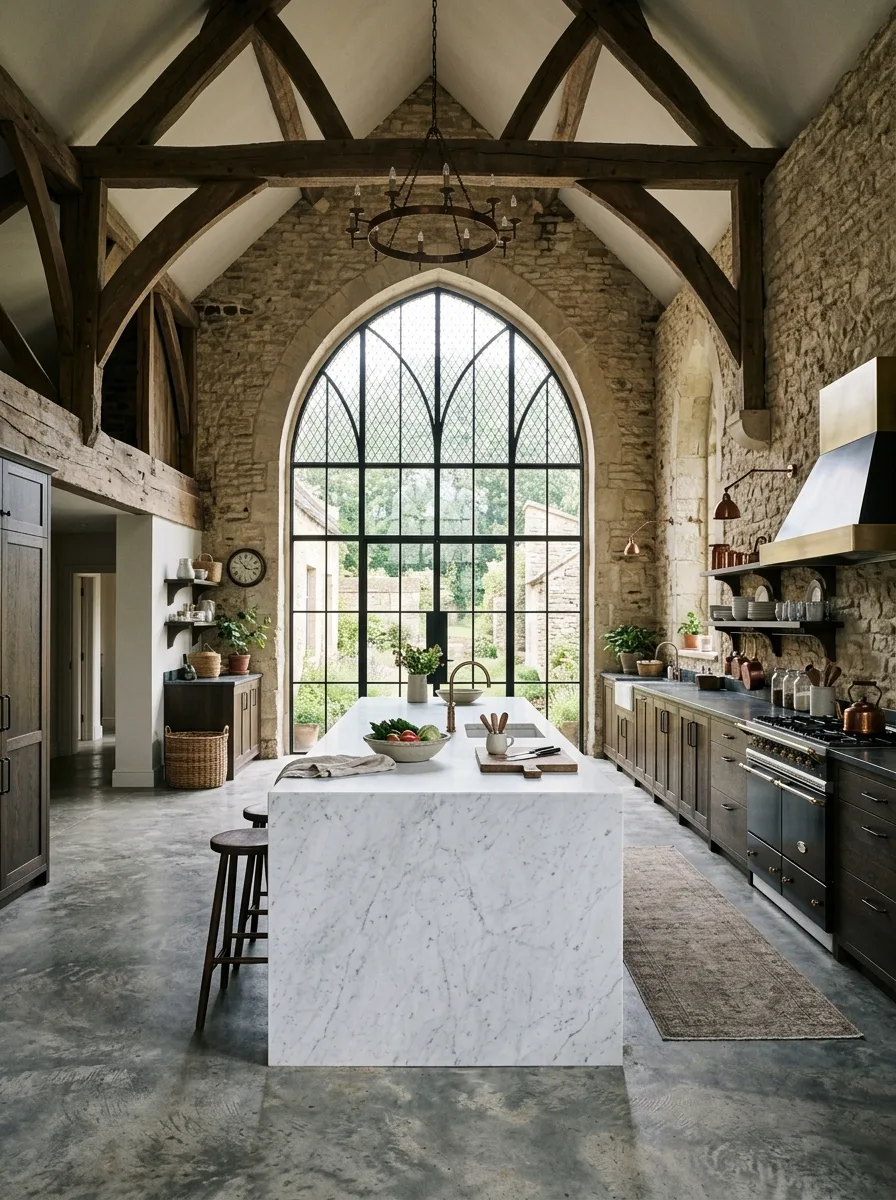
If you’re working with a converted chapel or barn, keep the pointed arch window fully intact and let it anchor the entire room from across the space.
Center a long marble waterfall island beneath it, kept plain and unadorned so the architecture stays the star rather than the countertop.
Finish the floor in sealed, textured concrete, and keep the surrounding cabinetry in dark, weathered wood so nothing competes with the height of the original trusses overhead.
Patterned Tile Farmhouse Table
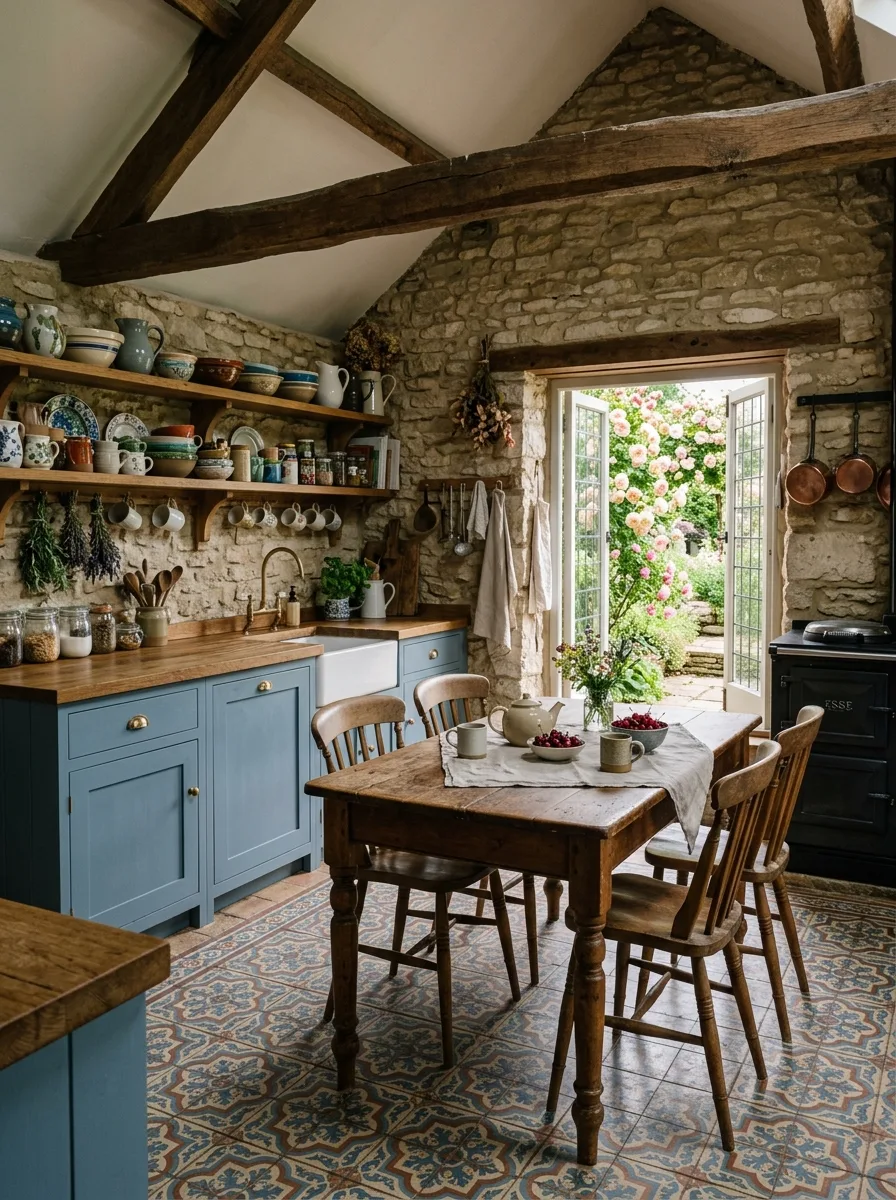
Choose a soft dusty blue for the lower cabinetry, and pair it with a boldly patterned encaustic tile floor that carries most of the room’s personality.
Keep the walls in original exposed stone, and use open shelving rather than upper cabinets to display a full collection of mismatched crockery and jugs.
Center a worn farmhouse table with mismatched wooden chairs in the middle of the room, positioned near a garden door left open whenever the weather allows.
Bamboo Ceiling Tropical Garden
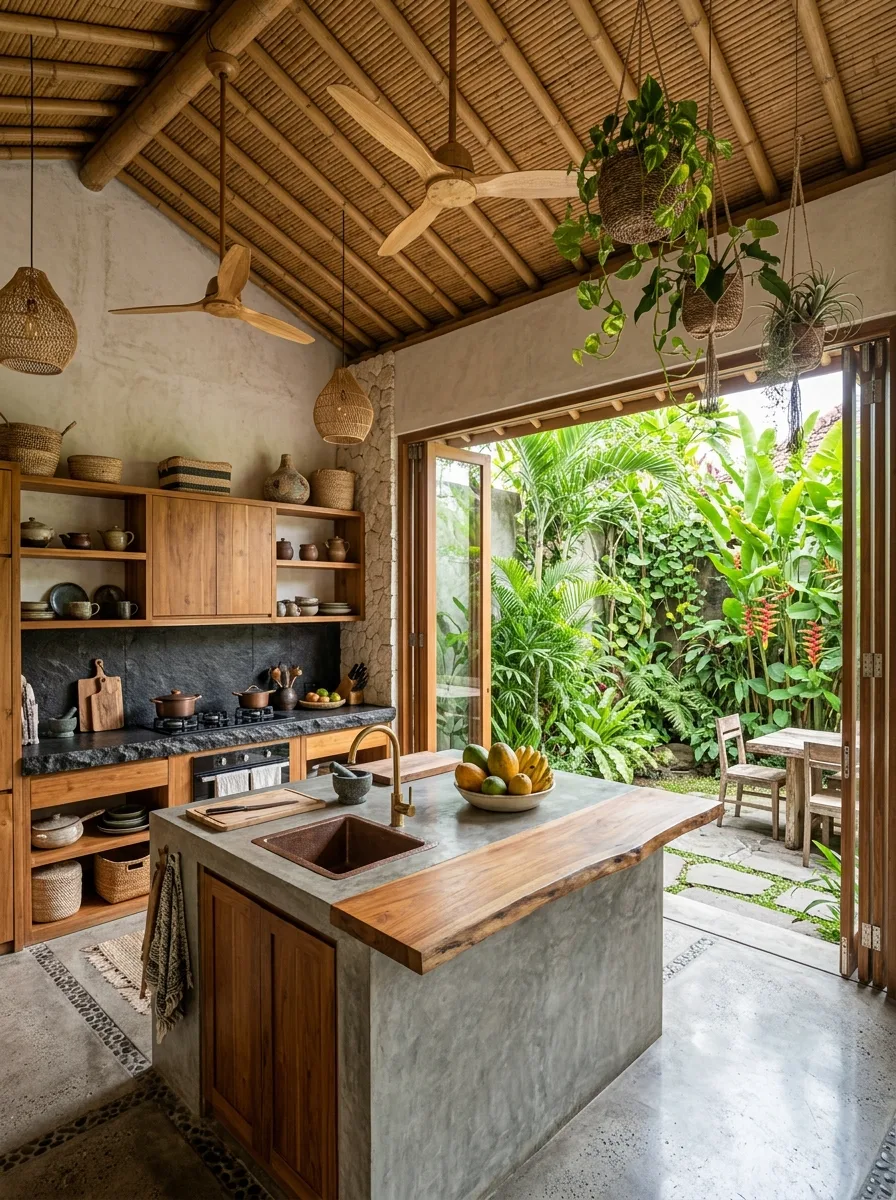
Build the ceiling in exposed bamboo poles rather than standard timber, paired with woven rattan pendant lights and a rattan ceiling fan for movement in the heat.
Choose a concrete waterfall island with a single live-edge wood overhang, and let trailing plants hang directly from the bamboo structure above.
Open one full wall to the garden with folding glass or timber doors, and keep the palette entirely natural — wood, stone, concrete, plant green — with no painted surfaces at all.
Boulder Island Glass Greenhouse
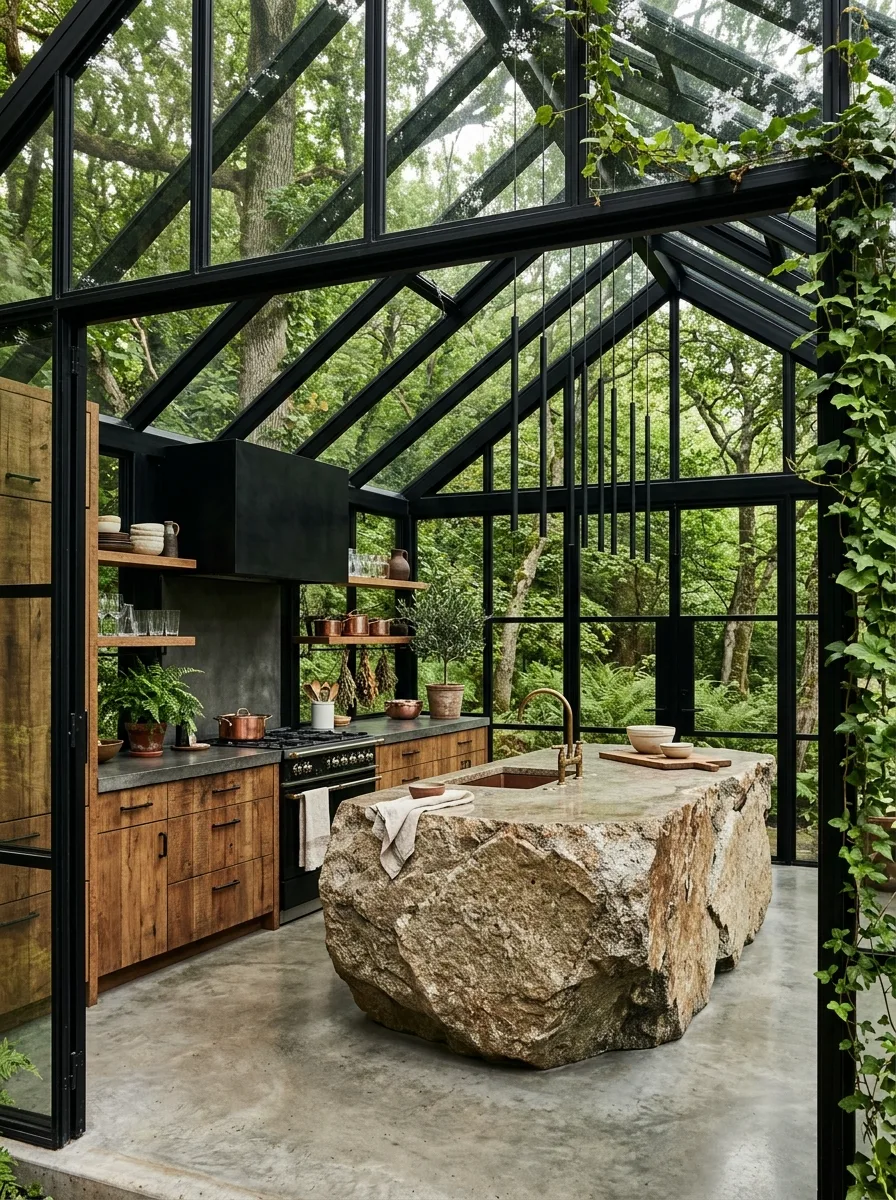
Build the kitchen inside a full black steel-and-glass structure, gabled like a greenhouse, so the surrounding forest becomes the wallpaper on every side.
Center the room on a single massive uncut boulder, hollowed just enough to serve as the island base and sink surround. This is the one material choice the whole room defers to.
Keep cabinetry in simple raw wood along one wall only, and let climbing vines growing up the steel frame do the only decorating the glass walls need.
Final Thoughts
None of these kitchens are trying to look expensive. They’re trying to look inevitable — like the room could only have turned out this way once you knew what material it was built around.
That’s the difference between rustic modern done well and a kitchen that’s just beige with a wood accent wall. One starts with a material decision and builds outward. The other starts with a mood board and hopes it holds together.
Pick your hero material first. Let it be a little rough, a little too honest for a normal kitchen. Then modernize everything around it with restraint instead of decoration.
The room will do the rest of the work on its own.