
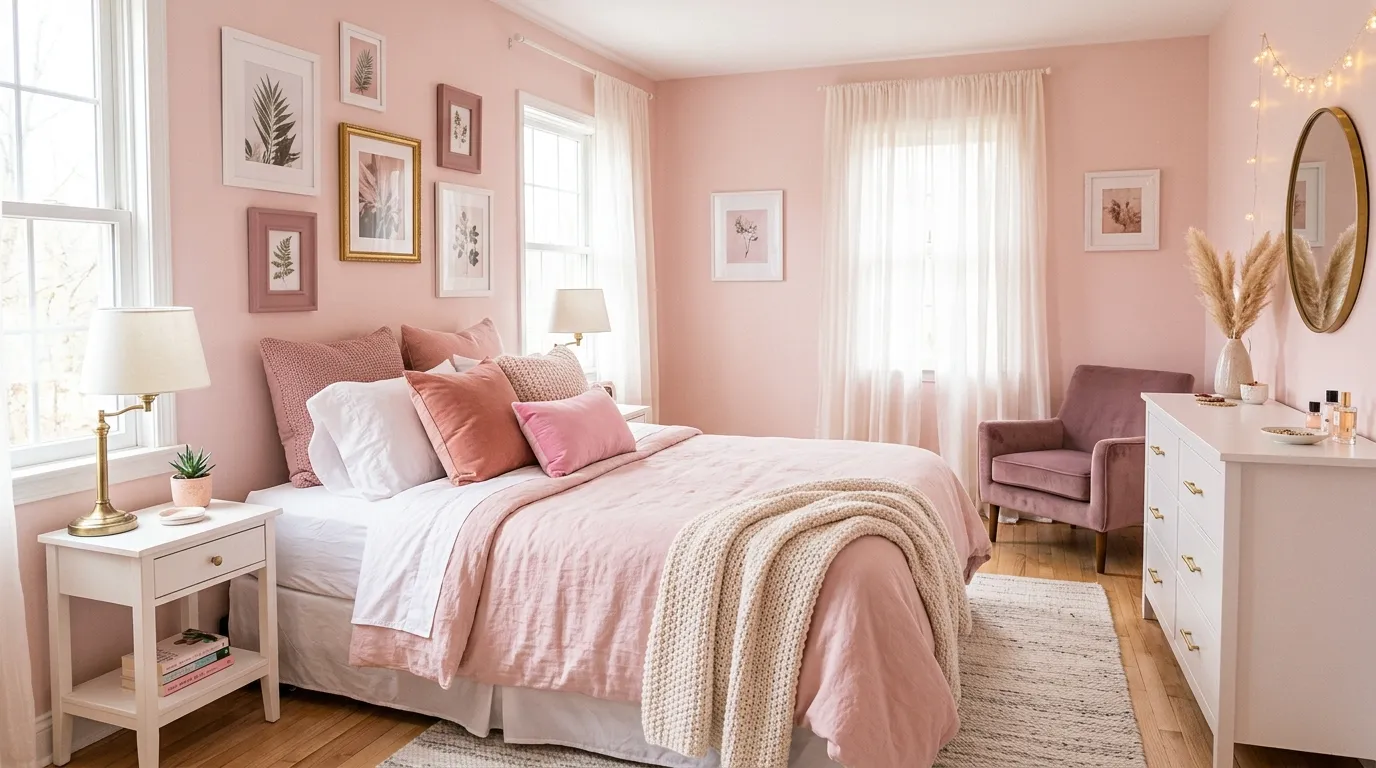
Pink gets blamed for a lot of bad rooms it didn’t actually cause. A room goes wrong and pink takes the fall, when the real issue was one flat shade dumped across every surface with nothing to argue with it.
The rooms that get pink right don’t use less of it. They use it with more intention — one clear undertone, one material that isn’t fabric, one moment of real contrast so the eye has somewhere to land besides more pink.
That’s true whether the room is a nursery, a teenage retreat, or a grown adult’s primary bedroom with a skyline view. The color scales. The instinct to let it do all the work by itself doesn’t.
Pink Fails For One Reason, And It’s Never The Color
Every “too much pink” complaint traces back to the same handful of choices. None of them are actually about pink.
Undertone Determines Everything
Pink isn’t one color. It’s a family that ranges from warm peachy blush to cool bubblegum to deep wine, and mixing undertones within a single room is what makes it feel chaotic rather than considered.
A warm terracotta-pink wall fights a cool baby-pink textile the second they’re in the same sightline. The clash reads as a mistake even when every individual piece is beautiful on its own.
Pick one temperature and hold the whole room to it. Everything from the paint to the throw pillow needs to sit on the same side of that line.
Pink Needs A Foil, Not A Match
A room that’s pink on pink on pink, wall to bedding to rug, starts to feel like a costume rather than a home. Pink needs something else in the room to argue with it — wood, black metal, stone, deep green.
The rooms that read as sophisticated rather than saccharine almost always have one hard, unpink material doing the grounding. A walnut nightstand. A black steel window frame. A slab of travertine.
That single foil does more to make a pink room feel intentional than any amount of styling within the pink itself.
Saturation Is A Dial, Not A Switch
Pink doesn’t have to mean pale. It also doesn’t have to mean magenta walls. The saturation level you choose sets the entire mood of the room, and most people default to whichever intensity they saw last on a moodboard instead of choosing on purpose.
A blush so pale it reads as off-white gives you a calm, grown-up room. A full-saturation wall gives you drama and confidence. Both work. What doesn’t work is landing in the middle without meaning to — a shade too loud to be subtle and too washed out to be bold.
Decide the mood first, then pick the saturation that actually delivers it, instead of letting the paint chip decide for you.
Pink Room Ideas
Starlit Ceiling Princess Alcove
Recess a domed ceiling panel and fit it with tiny embedded lights so it reads as a starry sky directly over the bed, framed by a ring of soft LED trim.
Hang a branch-style chandelier strung with delicate lights below it, and carve out arched display alcoves in the wall for books and small collectibles, lit from within.
Add a hanging egg-style swing chair in the corner as a second seating moment, and let gold accents — wall art, sconces, hardware — carry through so the pink stays polished rather than sugary.
Parisian Balcony Herringbone Floor
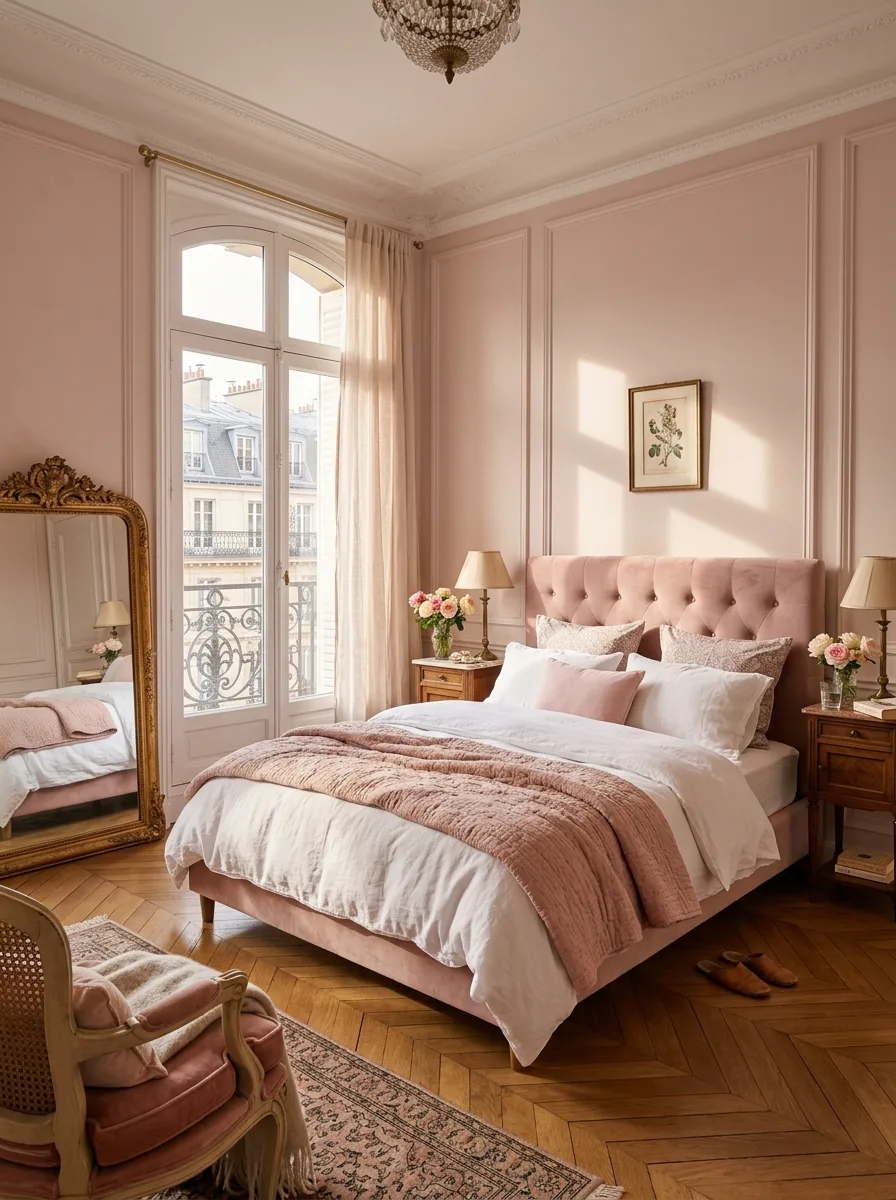
Panel the walls in wainscoting painted a dusty rose, and pair it with a herringbone wood floor left in its natural warm tone for contrast against the color.
Choose a channel-tufted velvet headboard in a slightly deeper pink than the walls, so the two tones read as intentional layering rather than a single flat color.
Lean a full-length gilt mirror against the wall instead of mounting it, and open the room to a Juliet balcony with sheer curtains that let the outside light do most of the room’s brightening.
String-Lit Vanity City View
Frame the window in sheer curtains woven with fairy lights so the city view outside glows softly through fabric rather than sitting exposed.
Build a full vanity wall lined with a bulb-lit mirror, open shelving for florals and candles, and trailing greenery threaded along the top edge for warmth against all the white and blush.
Layer a deep shag rug underfoot and pile the bed with a heavy knit throw. This look depends on texture density — the more soft layers stacked together, the cozier the pink reads.
Terracotta Accent Wall City View
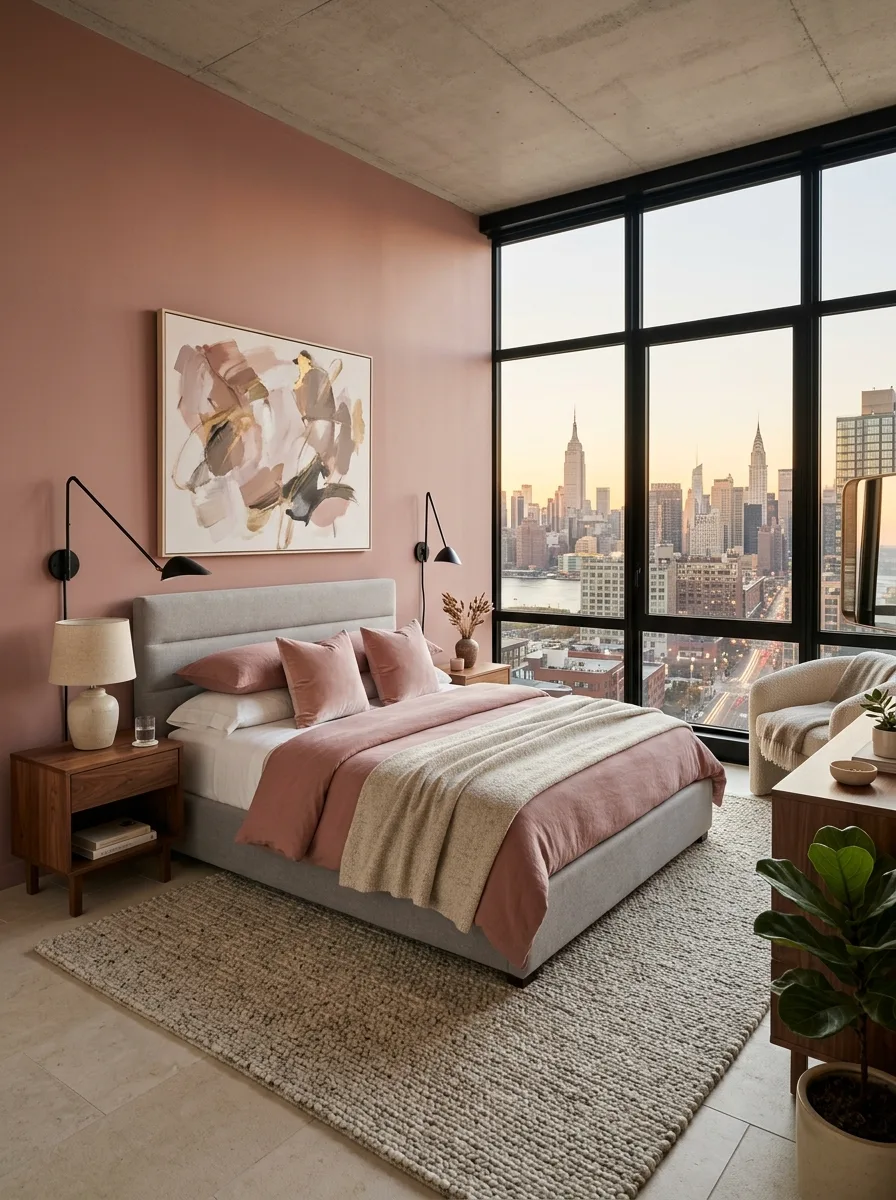
Paint one full wall in a deep, warm terracotta-pink and leave the rest of the room in a neutral concrete-toned ceiling and pale floor, so the color reads as architecture rather than decoration.
Pair it with a grey upholstered headboard rather than a matching pink one — the contrast keeps the wall from tipping the room into monochrome.
Hang black-framed floor-to-ceiling windows opposite the accent wall, and let a single abstract painting in muted pinks and golds bridge the two tones.
Tufted Headboard Crystal Chandelier
Choose a deep button-tufted headboard in a warm greige rather than a saturated pink, and let the color come through entirely in pillows and throws instead.
Hang a crystal chandelier overhead for one unmistakable glam moment, and flank the bed with matching gold table lamps and a pair of mirrored or arched accent mirrors.
Layer in a chunky hand-knit throw in a saturated rose for texture, and keep the surrounding art in soft black-and-white botanicals so the color doesn’t have to fight for attention with anything else on the wall.
Berry Wall Fluted Wood Headboard
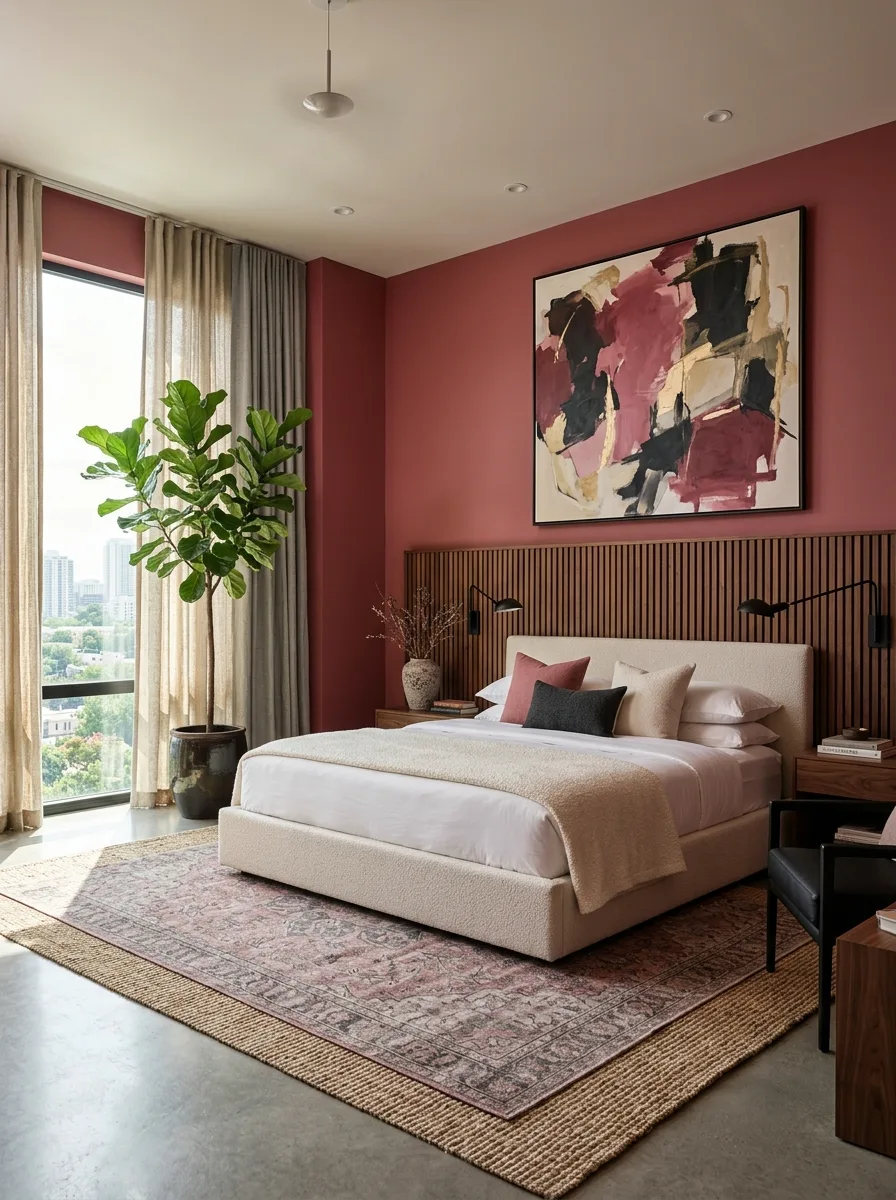
Paint the walls in a deep berry-pink rather than anything pastel, and pair the saturation with a fluted wood headboard panel that adds texture without adding more color.
Choose a boucle upholstered bed in warm cream to break up the wall color, and bring in one oversized fiddle leaf fig as the room’s only green note.
Layer a faded vintage-style rug over jute for pattern, and keep the lighting warm and low with wall-mounted reading lamps rather than an overhead fixture.
Floral Decal Feather Pendant Nook
Apply oversized floral wall decals directly above the bed rather than wallpapering the whole room, so the pattern reads as an accent instead of an enclosure in a small space.
Hang a single feather pendant light as the room’s one dramatic gesture, and stack the daybed with pillows in varied pink tones so the bedding does the color-layering work.
Use closed storage trunks instead of open shelving to keep a small room from feeling cluttered, and let one shaggy pink rug anchor the floor.
Whitewashed Beam Gingham Bedding
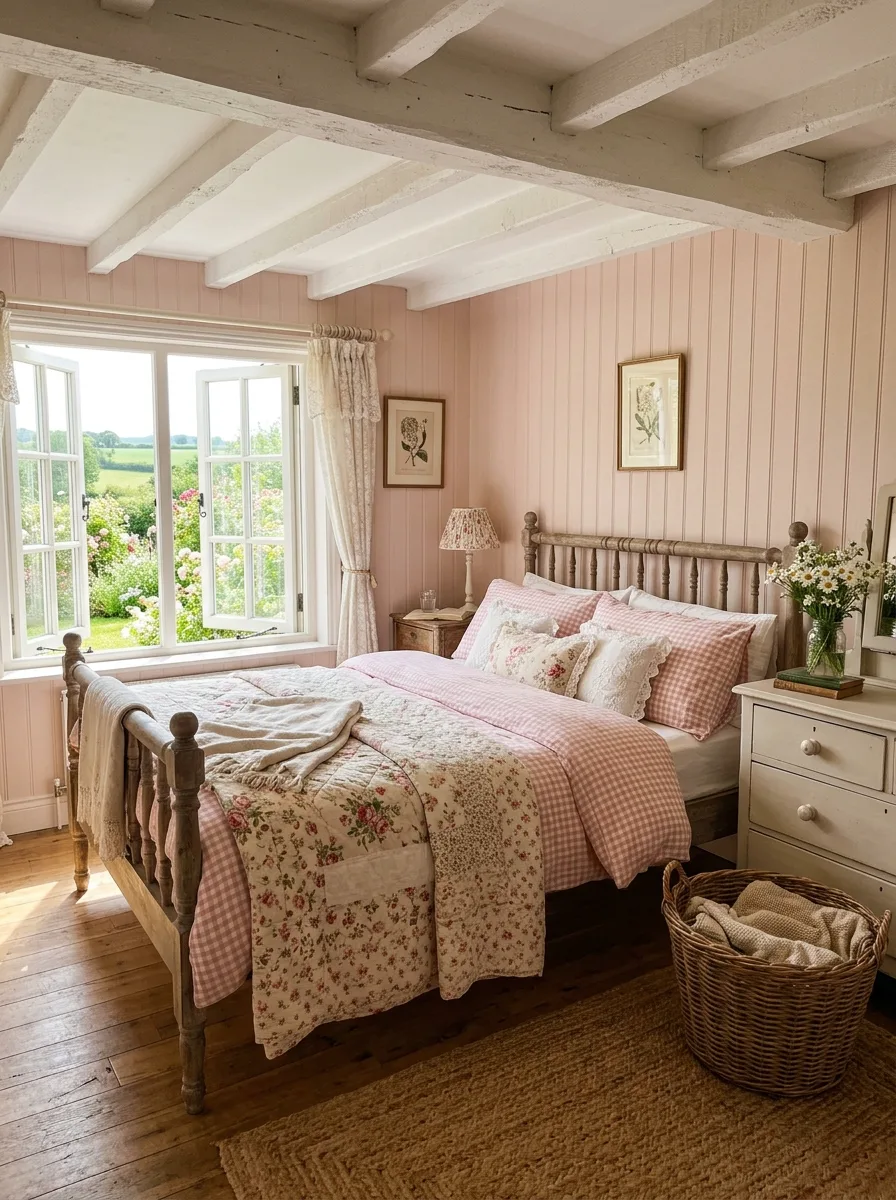
Whitewash the ceiling beams and pair them with vertical shiplap walls painted the softest possible pink, almost a whisper of color rather than a statement.
Dress an antique iron or turned-wood bed frame in gingham check bedding layered under a floral quilt, mixing two patterns in the same tonal family rather than a single print.
Leave the window uncurtained or in sheer linen only, and let a wicker basket at the foot of the bed hold spare throws instead of a closed dresser.
Sunburst Mirror Rattan Swing
Hang an oversized gold sunburst mirror as the room’s single largest statement piece, positioned to catch and bounce light from the window across the room.
Install a hanging rattan swing chair in the opposite corner, cushioned in blush velvet, so the room has a dedicated reading spot beyond the bed.
Layer a faux fur rug over a woven jute one for textural contrast, and keep the walls in a warm neutral so the pink stays confined to soft goods and accents rather than covering every surface.
Beamed Skylight Linen Bedroom
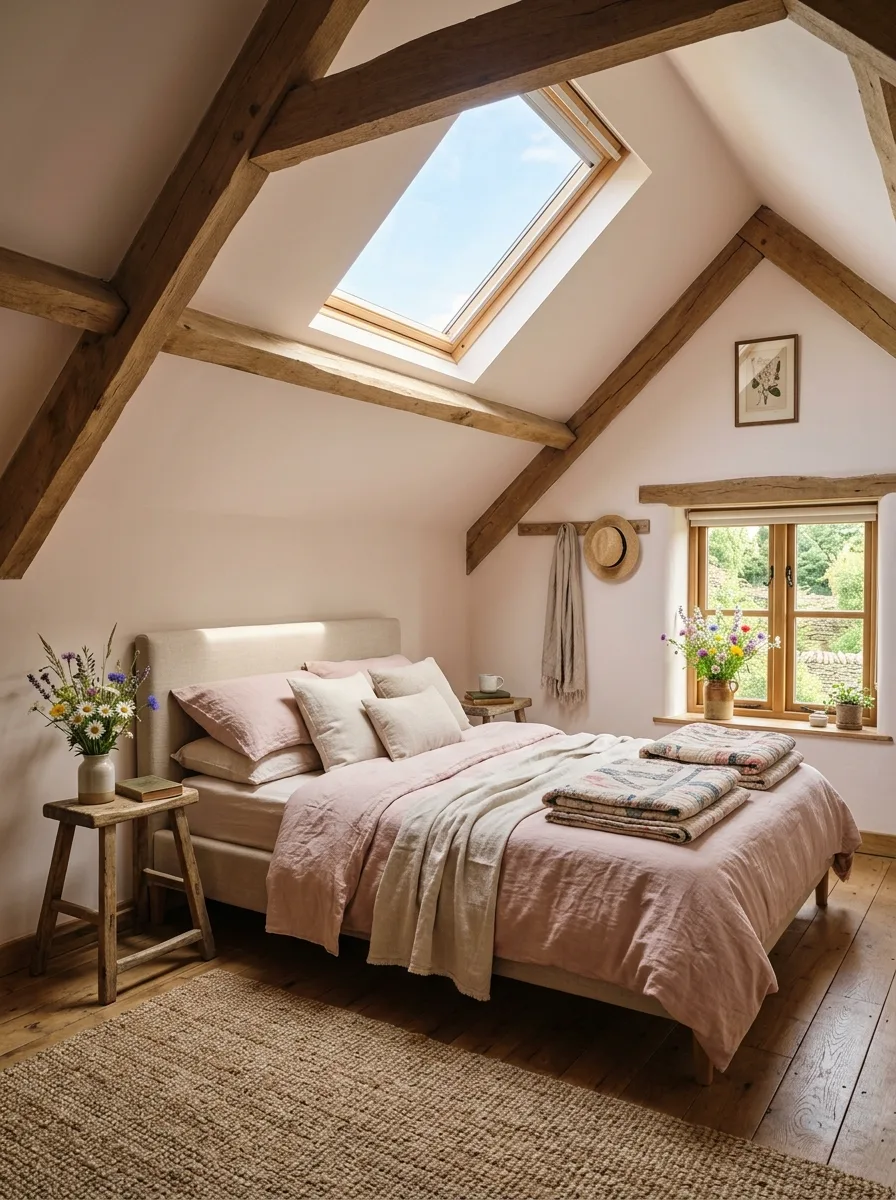
Leave the roof structure fully exposed — rough-hewn beams, a single angled skylight — and let that architecture stay the dominant visual, with pink playing a supporting role only in the linens.
Choose an upholstered headboard in pale oatmeal rather than pink, and bring the color in entirely through a dusty rose duvet layered under white linen.
Finish the floor in a natural jute rug and keep the furniture to one rustic side table. This room proves pink can anchor a rustic space without a single painted wall.
Mauve Velvet Channel Headboard
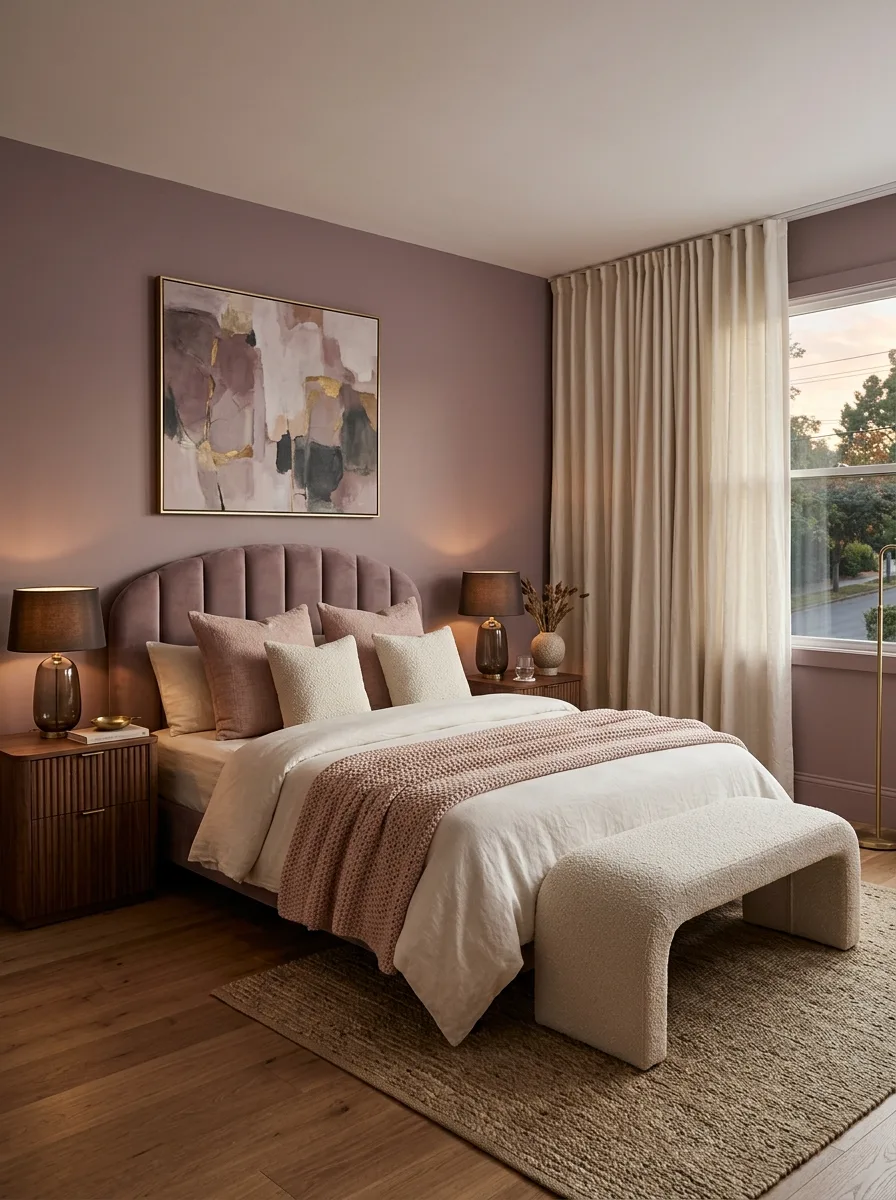
Choose a dusty mauve for both the walls and a matching channel-tufted headboard, letting the tonal closeness create a cocooning, monochrome effect rather than a clash.
Offset it with dark walnut furniture and a boucle bench in cream at the foot of the bed, so texture — not color — provides the contrast this room needs.
Keep the art abstract and metallic-toned, and use warm brass table lamps rather than anything cool-toned to keep the whole palette consistent.
Blush Panel Wall Pendant Sconces
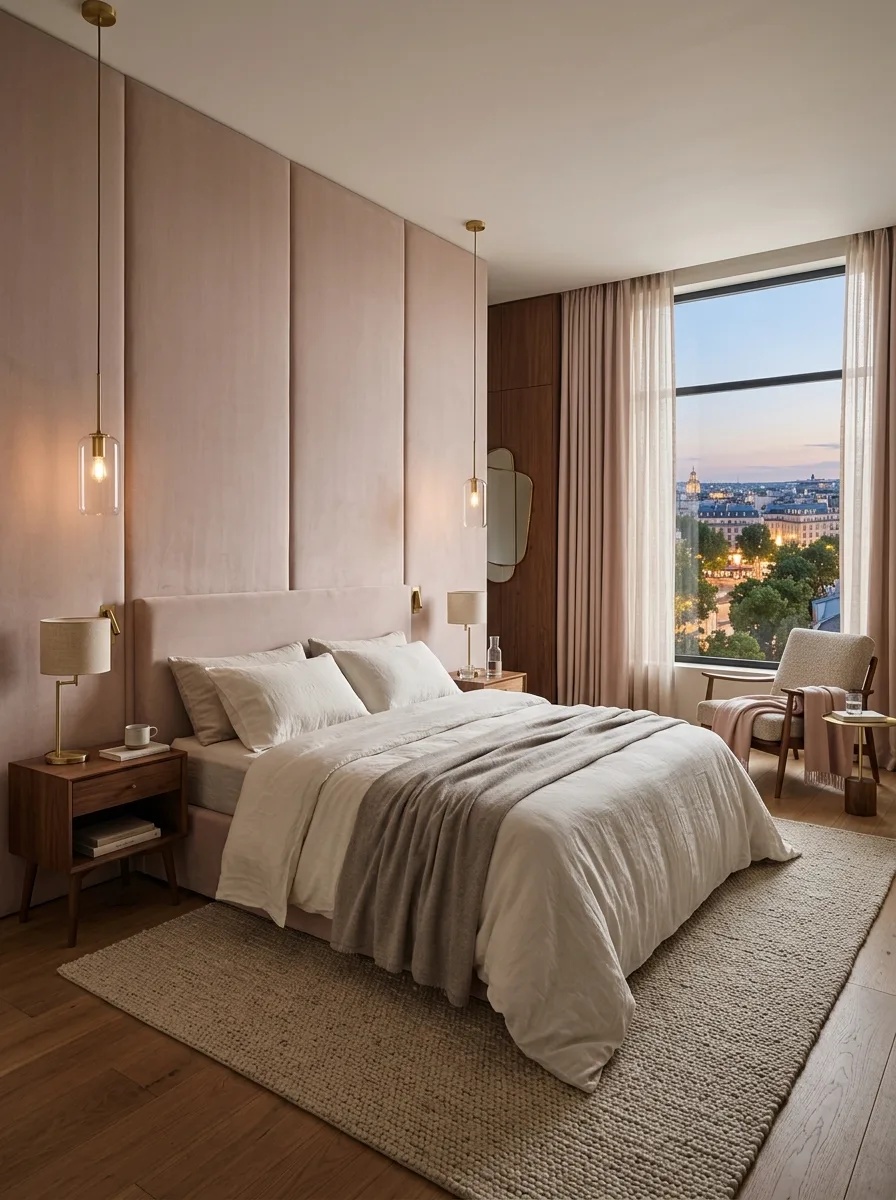
Run vertical wood panels up the headboard wall, painted in a soft blush that reads almost neutral in daylight, and pair them with matching upholstery on the headboard itself.
Hang two glass globe pendants on long cords flanking the bed instead of table lamps, freeing up the nightstands for books and a reading chair in the corner.
Choose warm walnut furniture throughout, and let a woven jute rug ground the room so the softness of the pink panel wall has something textural to sit against.
Carved Headboard Macrame Garden
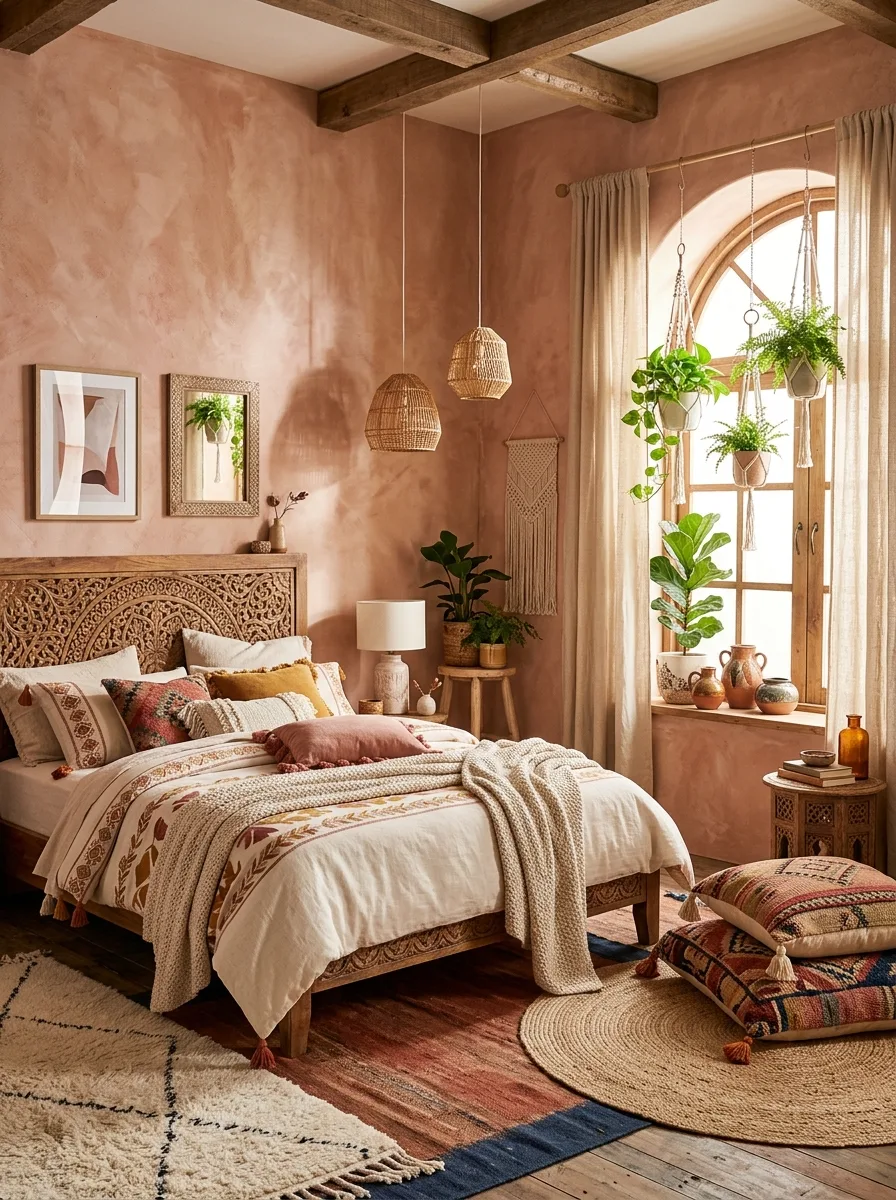
Choose a heavily carved wood headboard as the room’s architectural centerpiece, and let the wall behind it stay in a warm, textured terracotta plaster finish.
Hang woven rattan pendants and layered macrame plant holders from the exposed beams, filling the corners with trailing greenery rather than furniture.
Layer two or three patterned rugs — a shag, a Moroccan, a striped kilim — rather than a single rug, and let mismatched throw pillows in warm rust and gold carry the room’s secondary palette.
Curved Bench Sunset Skyline
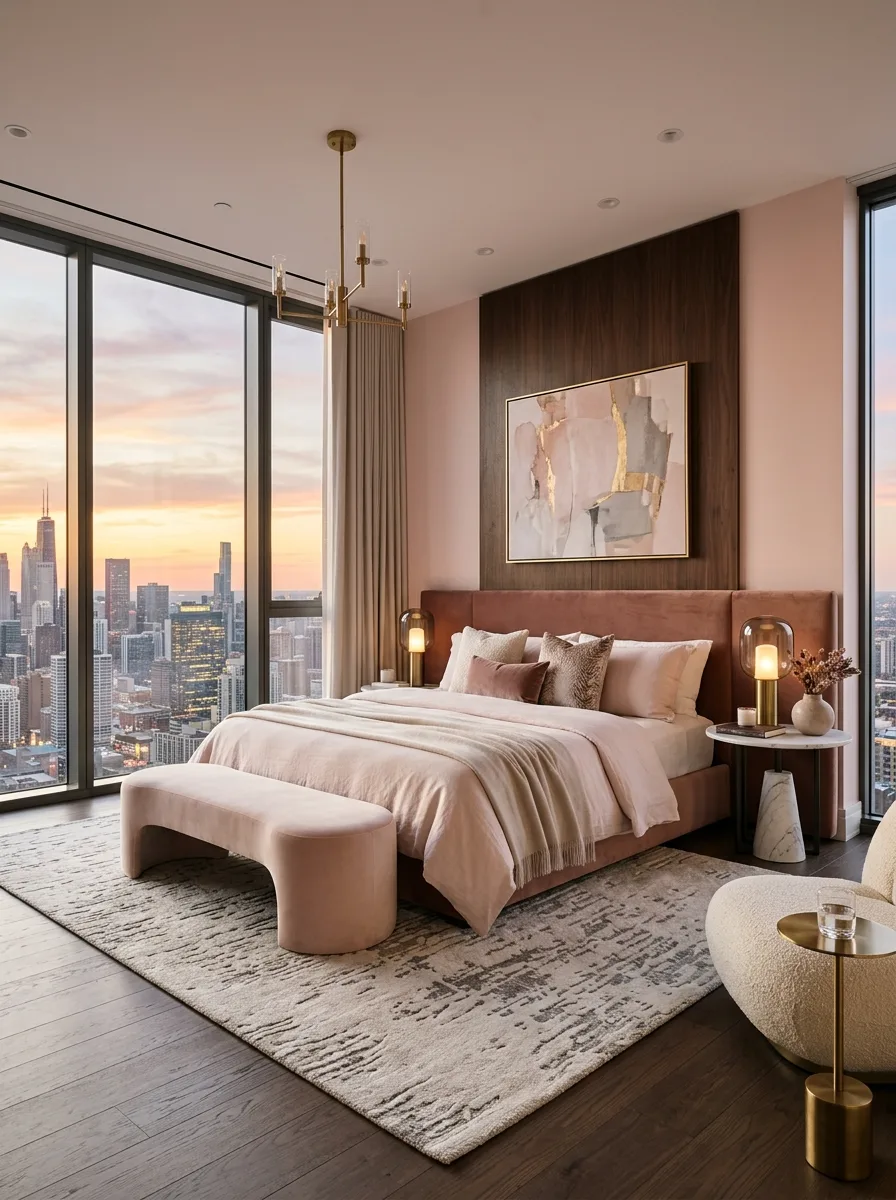
Panel one wall in dark walnut as a headboard backdrop, and let a blush-pink upholstered headboard sit directly against it so the two materials frame each other.
Choose a sculptural curved bench in matching blush velvet at the foot of the bed instead of a traditional rectangular one, letting its shape soften all the room’s straight architectural lines.
Position the bed to face uninterrupted floor-to-ceiling windows, and keep the lighting to warm brass table lamps only, so the skyline outside provides the room’s real drama.
Floral Wallpaper Magenta Headboard
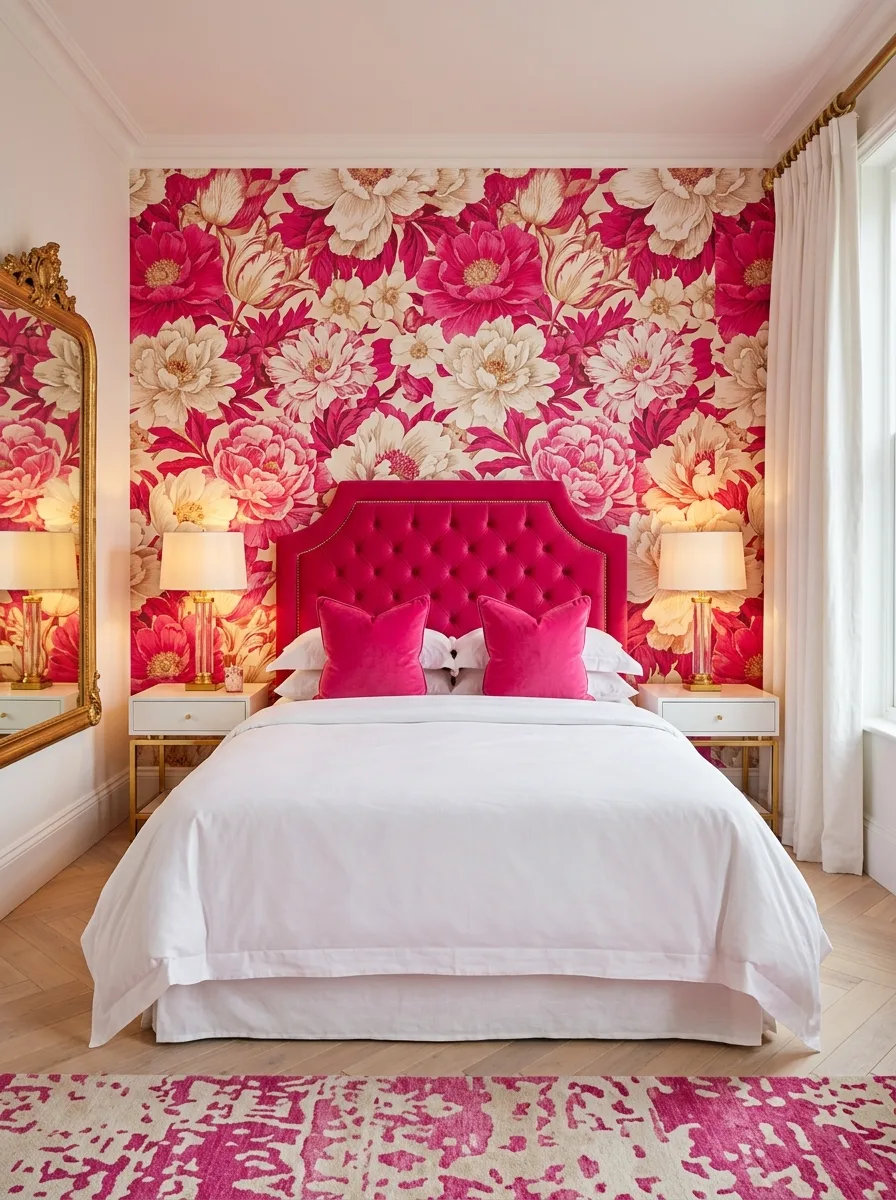
Commit fully to an oversized floral wallpaper in magenta and cream, and let it run the full height of one wall without breaking for art or shelving.
Choose a tufted headboard in the same magenta as the wallpaper’s boldest tone, so the bed reads as an extension of the wall rather than competing with it.
Keep the bedding entirely white to give the eye a place to rest, and let a matching patterned rug on the floor be the only other place the color repeats.
All-White Walls Blush Bedding
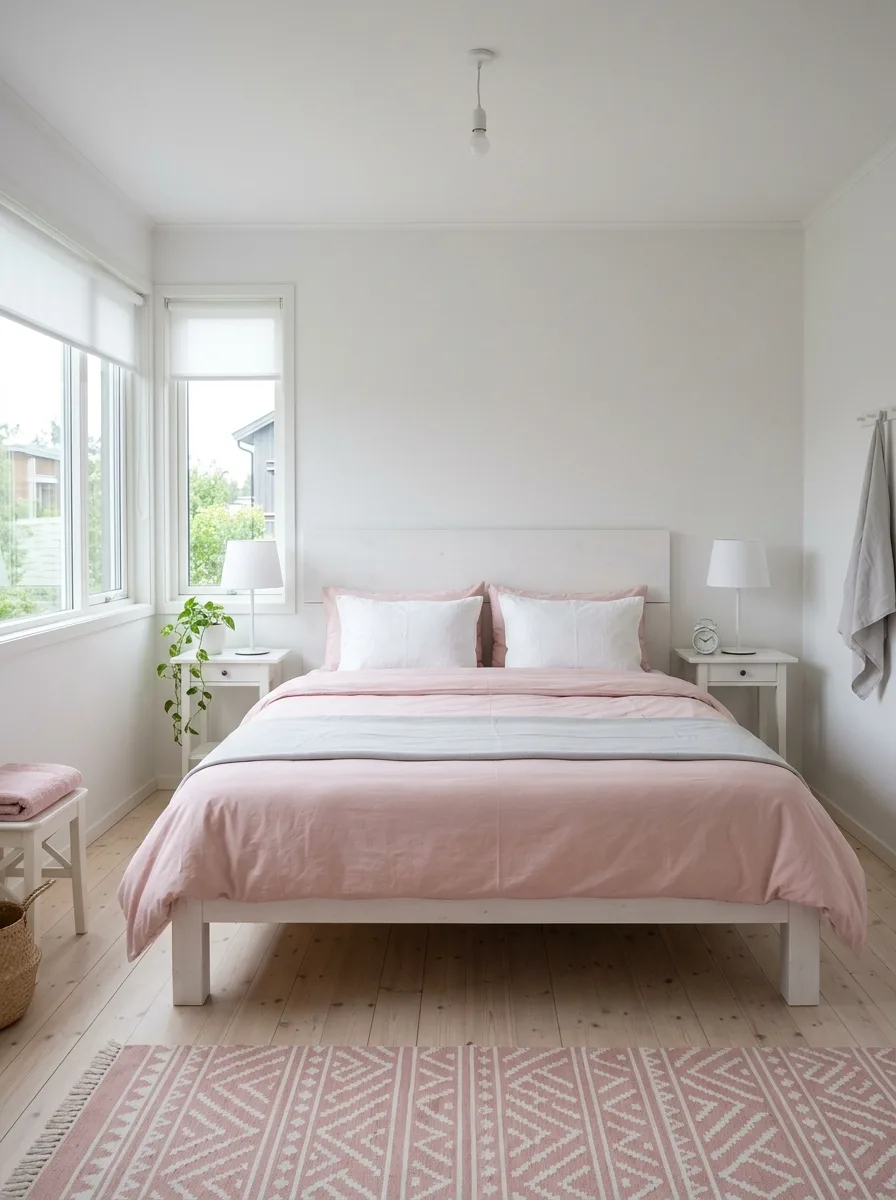
Paint every wall a crisp, clean white and let a soft blush duvet be the only color in the entire room, paired with all-white pillowcases rather than pink ones.
Choose simple white furniture — bed frame, nightstands — so nothing competes with the one colored textile in the space.
Add a single potted trailing plant and a patterned pink-and-white rug underfoot. This is the lowest-commitment way to bring pink into a room without touching a paint can.
Chrome Mirror Mod Geometric Rug
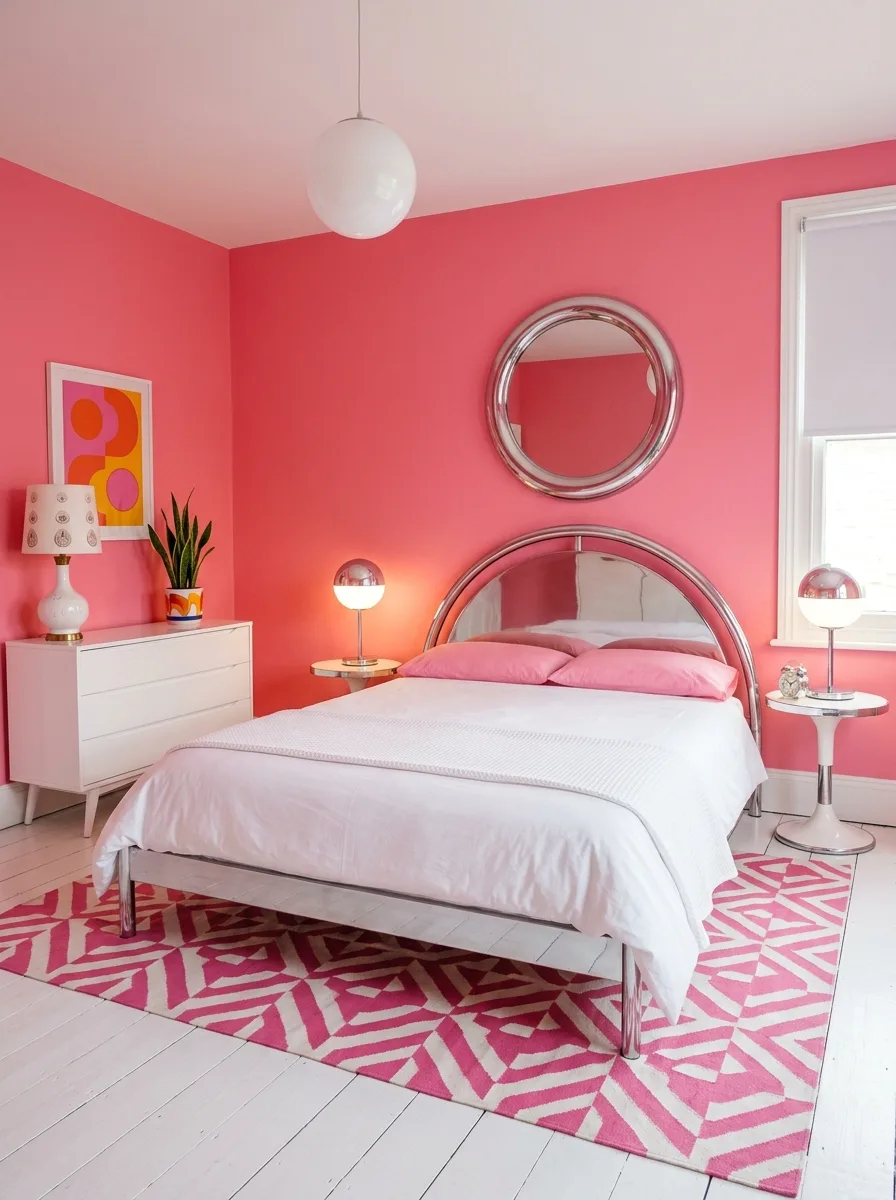
Paint the walls in a bold, saturated coral-pink and pair them with chrome furniture — a round mirror, bulb table lamps, a metal bed frame — for a retro, mod contrast.
Keep the bedding crisp white to let the wall color and chrome accents carry all the visual weight without competing patterns.
Lay a graphic geometric rug in matching pink and white, and hang one piece of bold, colorful pop art rather than anything muted or botanical.
Neon-Lit Black Pink Contrast
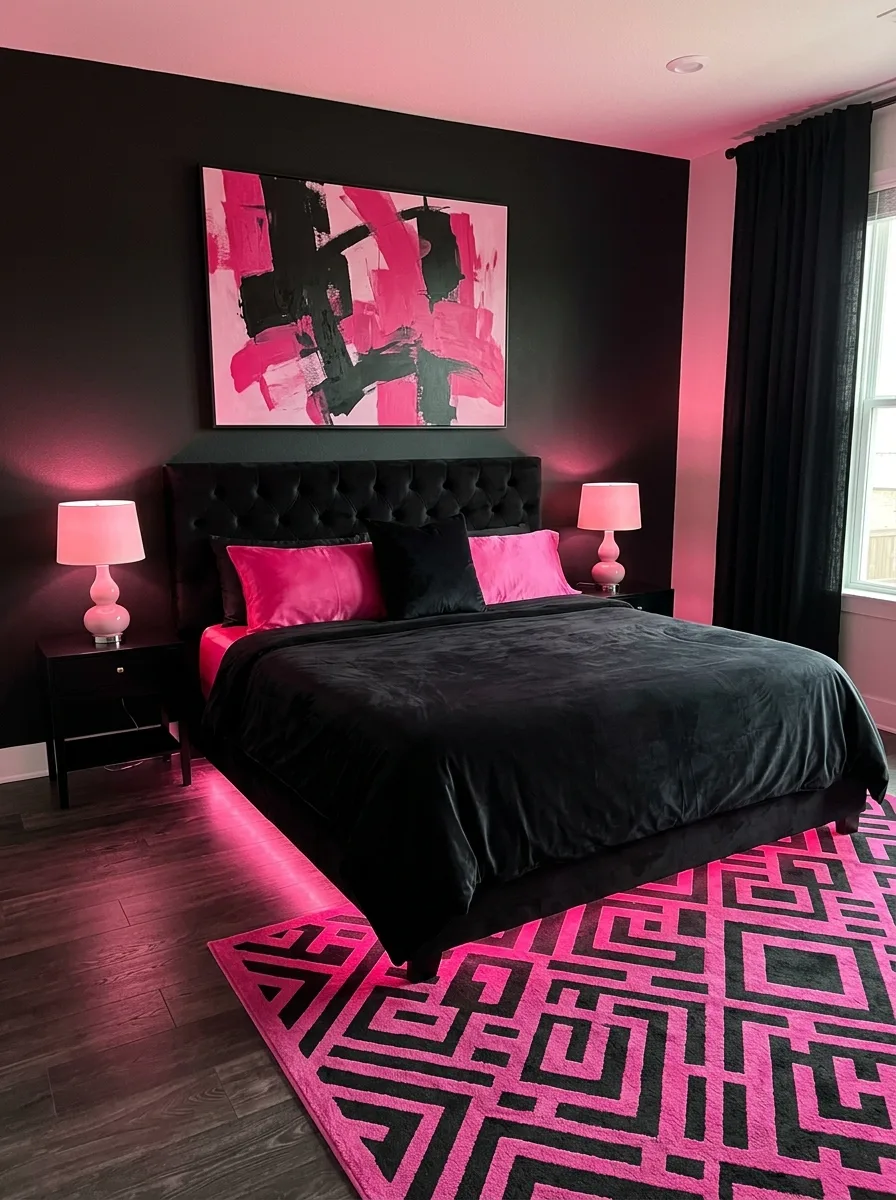
Paint the walls a deep matte black and let hot pink enter entirely through lighting, bedding, and art rather than any painted surface.
Choose a black tufted headboard and layer it with saturated pink pillows and a graphic black-and-pink abstract painting sized to dominate the wall above the bed.
Run pink LED strip lighting along the floor and behind furniture for a glow rather than a direct light source, and lay a bold geometric pink-and-black rug to tie the floor back to the palette.
Sheer Canopy Iron Bed Frame
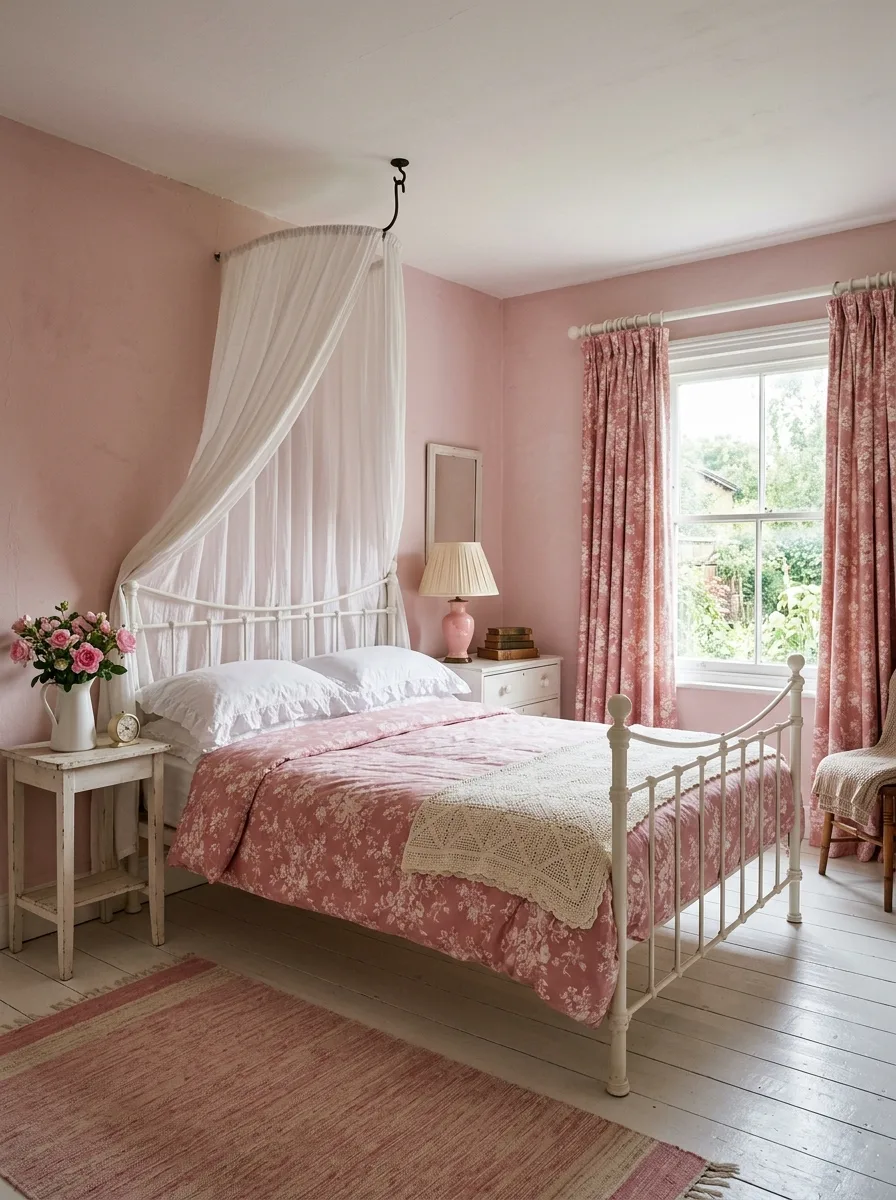
Choose a white iron bed frame and drape a sheer canopy from a single ceiling hook above the headboard, letting the fabric fall loosely rather than framing the bed on all four corners.
Paint the walls the softest blush and pair them with floral curtains in a deeper rose, so the pattern and the wall color stay in the same family without matching exactly.
Furnish sparingly — a single weathered side table, a vintage lamp — and let a faded runner rug down the center of the room be the only pattern beyond the curtains.
Rosewood Velvet Warm Lamplight
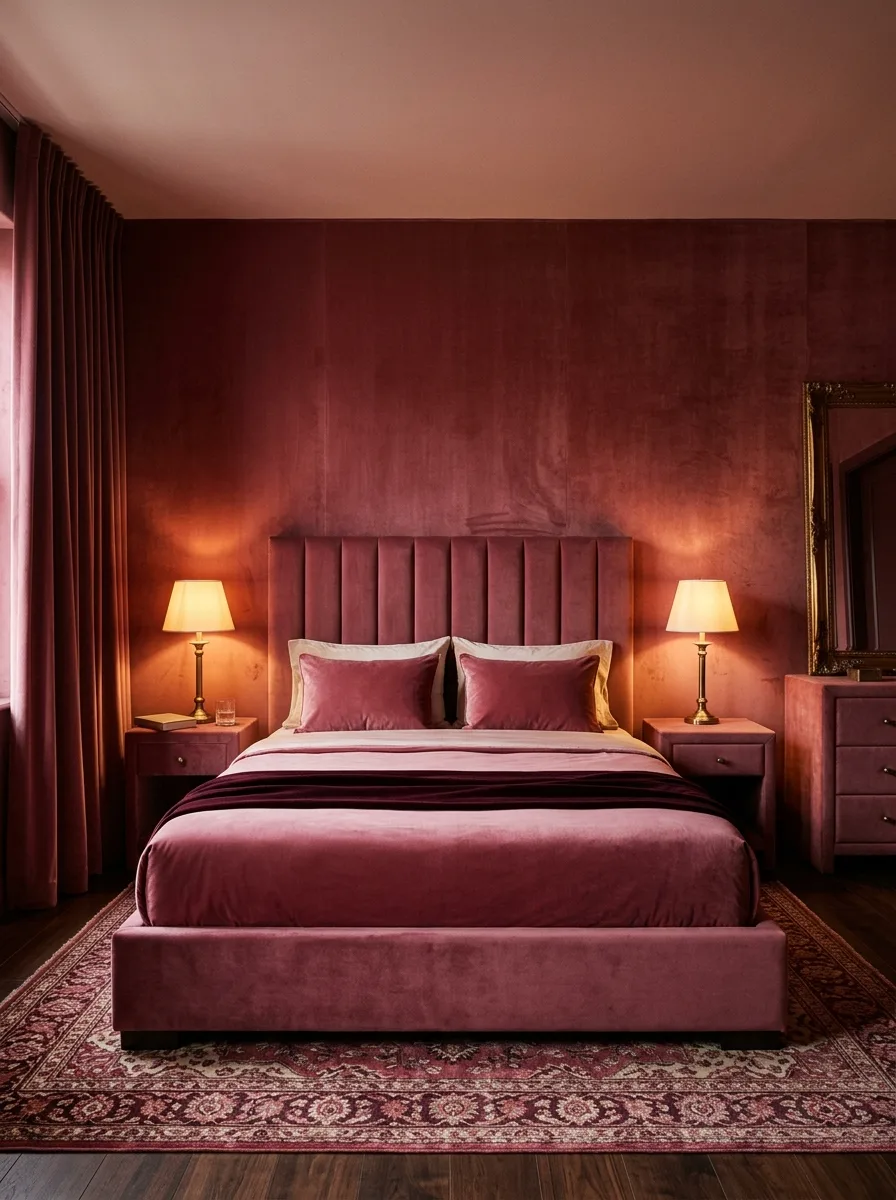
Choose a deep rosewood-pink for both the walls and a channel-tufted velvet headboard, letting the whole room sit in one saturated, moody tone.
Light it entirely with warm table lamps rather than an overhead fixture, so the color reads rich and enveloping rather than flat under bright light.
Add a gilt-framed mirror leaning against the wall and a traditional patterned rug in matching burgundy and rose tones, and skip any cool-toned accents entirely — this room commits to warmth on every surface.
Final Thoughts
The best pink rooms on this list have almost nothing in common on the surface. One is a child’s fantasy bedroom with a starlit ceiling. Another is a moody, monochrome adult retreat lit entirely by lamplight. Both work for the same underlying reason.
Somebody picked a temperature and stayed inside it. Somebody gave the color something to push against — wood, black steel, white walls, chrome. Somebody decided how loud the room should be before they picked up a paint brush.
Pink was never too much on its own. Too much pink is what happens when nobody made those decisions and the color got left to fill the silence by itself.
Decide the mood, pick the undertone, give it a foil. The color will do exactly what you tell it to.