
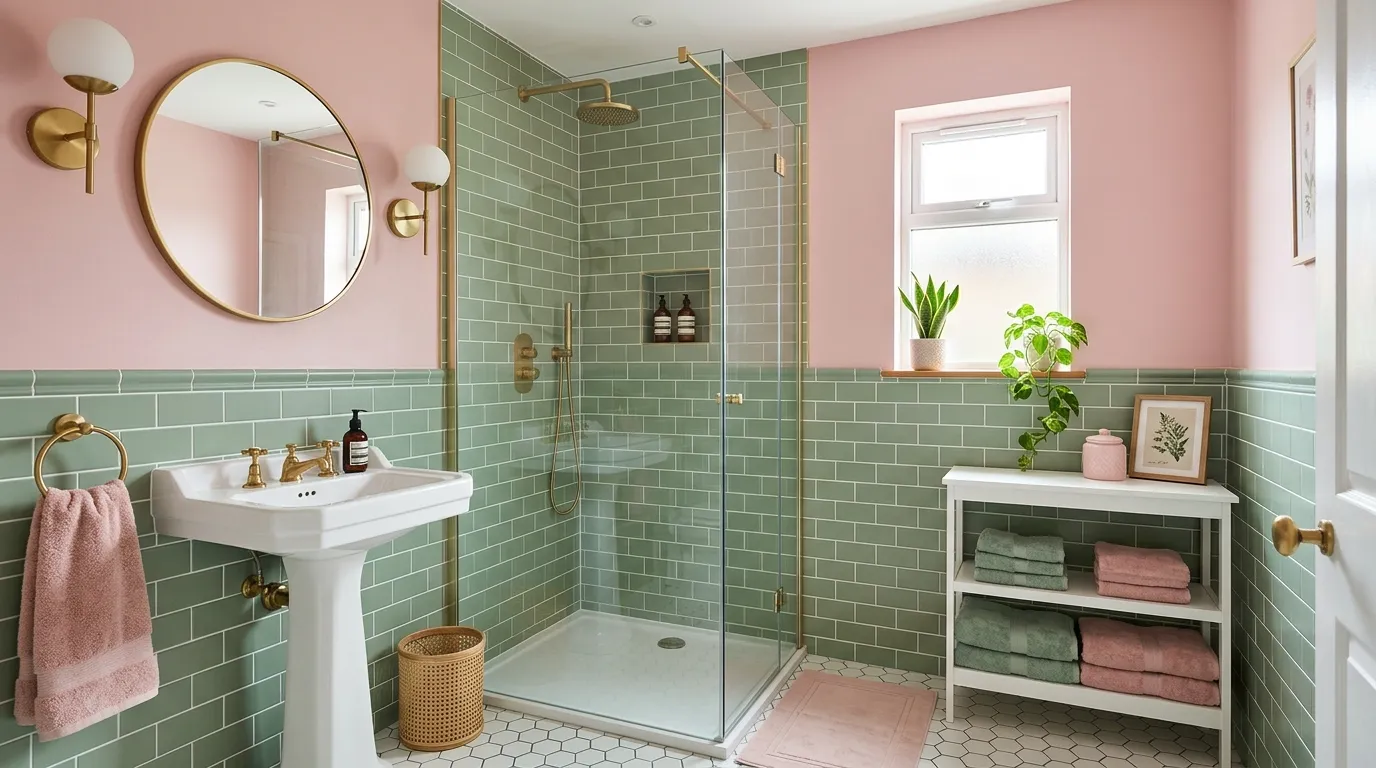
Somewhere along the way, someone decided a bathroom had to commit to one colour. White, maybe grey if you were feeling bold. Pink and green together got filed under “too much.”
That advice was wrong.
Pink and green aren’t fighting for the same job. Pink softens. Green grounds. Put them in the same room and you get warmth with a spine — a bathroom that doesn’t apologise for having a personality.
Pink and Green Bathroom Ideas
Herringbone Two-Tone Tile Wall
Lay two colours of tile in the same herringbone pattern across one wall, letting them meet in a jagged, chevron-style break rather than a clean line. Use glossy green on one portion and matte blush on the other.
Source rectangular metro or brick-format tile in both colours from the same supplier so the dimensions match exactly. A mismatch in tile size will wreck the herringbone alignment where the two colours meet.
Keep the grout colour consistent across both zones — a soft grey-white — so the eye reads it as one continuous pattern, not two separate tiling jobs.
Add a floating wood vanity in a warm, honey-toned finish underneath. It breaks up the tile’s visual density and gives the wall somewhere to land.
Finish with trailing plants against the tile. The organic shapes soften the geometry and stop the chevron from feeling too sharp.
Rosy Wallpaper Sage Wainscot
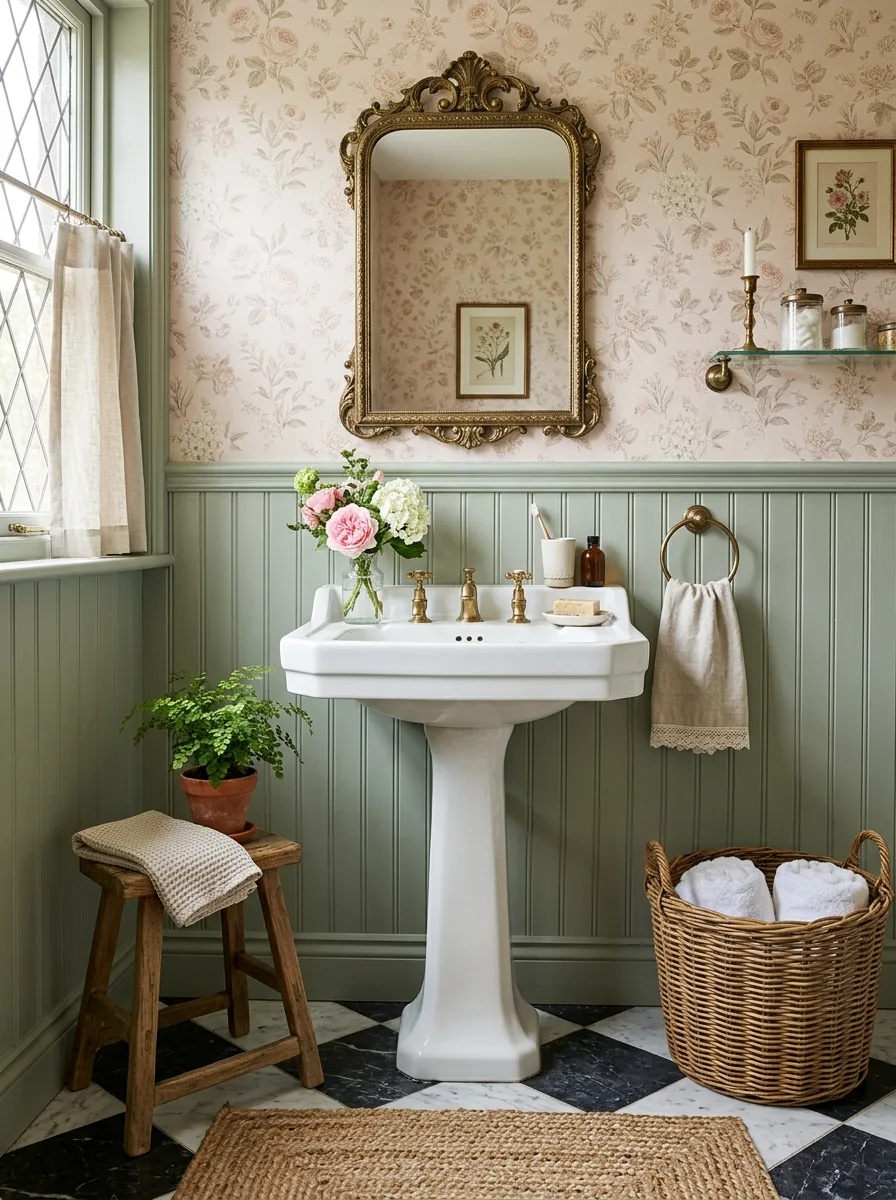
Choose a mid-scale rose or floral wallpaper in dusty pink and cream tones — nothing too busy, since the wainscoting below will already be doing structural work.
Install painted tongue-and-groove panelling in sage green up to chair-rail height, then paper above it. The horizontal break between paper and panel is what makes this combination feel intentional rather than accidental.
Hang an ornate gold-framed mirror at the panel line so it straddles both materials slightly — it ties the two halves of the wall together visually.
Choose a black-and-white checkerboard floor tile instead of anything patterned or coloured. The graphic floor is the one place this room goes bold in a different direction, and it works because everything above it is soft.
Add a plain wooden stool and a woven basket rather than anything upholstered. Rustic, unfussy furniture keeps the florals from tipping into fussy.
Ornate Vintage White Mirror
Hunt for a carved white-painted mirror with a rococo or Baroque-style frame — the kind with floral scrollwork, not a flat modern oval. Secondhand shops and estate sales are the best source; new versions often look too crisp.
Hang it above a simple white sink so the mirror becomes the room’s only ornate object. Everything else nearby should stay plain.
Pair it with a soft sage or eau de nil painted wainscoting rather than tile. The chalky paint finish echoes the carved mirror’s texture better than a glossy surface would.
Add a small corbelled shelf in the same white-painted style just beside the mirror, holding a single framed print and a scent bottle or two — nothing more.
Skip metallics here entirely. This look depends on paint and carved detail, not shine.
Emerald Subway Tile Glam
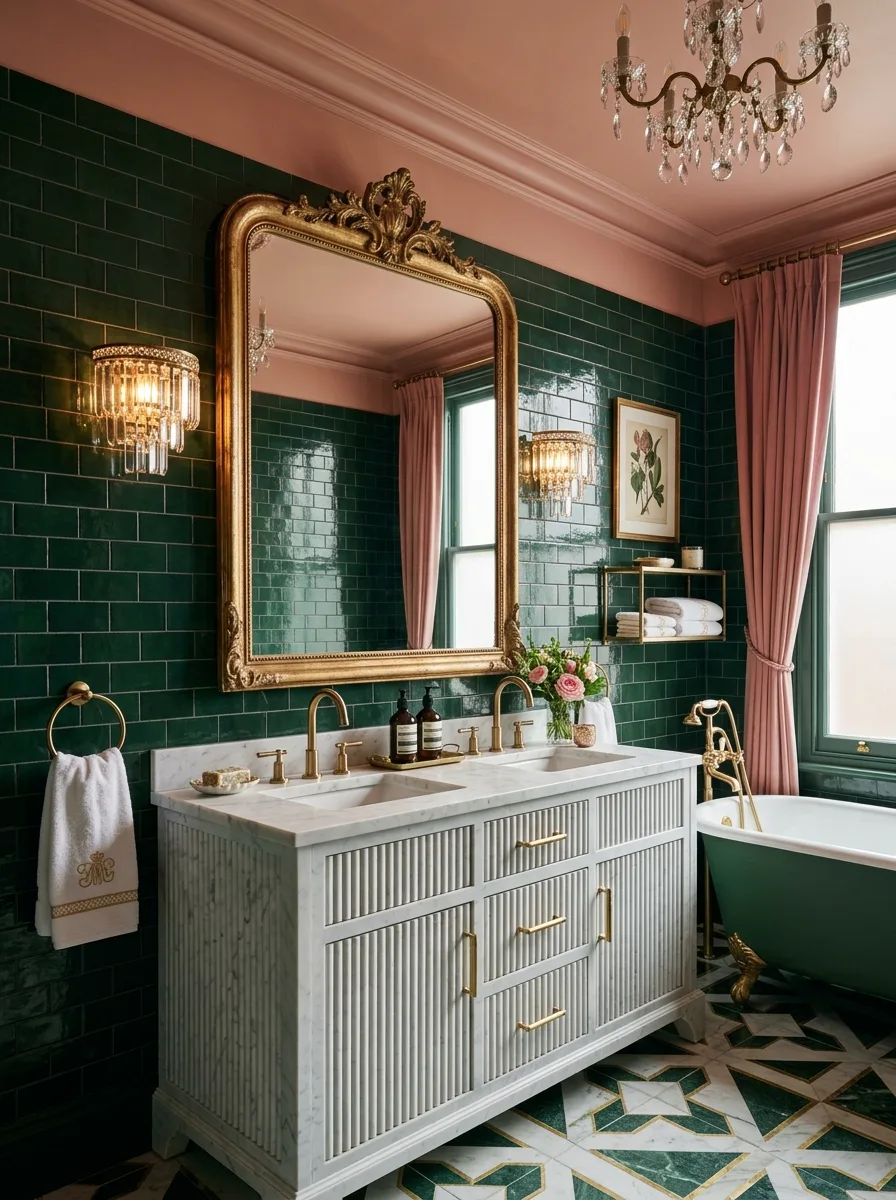
Tile the walls floor-to-ceiling in a deep emerald subway tile with a glossy glazed finish, laid in a classic brick bond. The glossiness matters here — matte green would read heavy instead of jewel-like.
Paint the ceiling a soft dusty pink rather than white. A coloured ceiling is what pushes this from “nice bathroom” into “considered design,” and it’s the cheapest move on this entire list.
Hang a large gold ornate mirror with a rounded top against the tile, sized to command real presence — at least half the width of the vanity below it.
Add crystal wall sconces on either side of the mirror and a small crystal chandelier at the ceiling. This look leans maximalist on purpose; don’t hold back on the lighting.
Finish with a marble floor in a bold black-and-white geometric pattern, and if there’s room for a freestanding tub, paint the exterior a soft rose to match the ceiling.
Painted Vintage Cistern Set
Track down a reproduction high-level or close-coupled toilet with an exposed painted cistern — brands that specialise in heritage bathroom fittings carry these. Have the cistern and matching sink painted in a deep, saturated green rather than left white.
Pair the fittings with brushed brass or aged gold taps and a pull-chain handle if the cistern allows for one. The warm metal against the cold green is what sells the look.
Paint the lower half of the walls in the same green as the fittings, in a full-height tongue-and-groove panel, then switch to a warm dusty pink above the panel line.
Finish the floor in a small-scale patterned tile — star or geometric motifs in muted tones work best against this much saturated colour on the walls.
Keep accessories minimal. One trailing plant, one soap dispenser. The fittings are the statement; don’t compete with them.
Emerald Walls Blush Tub
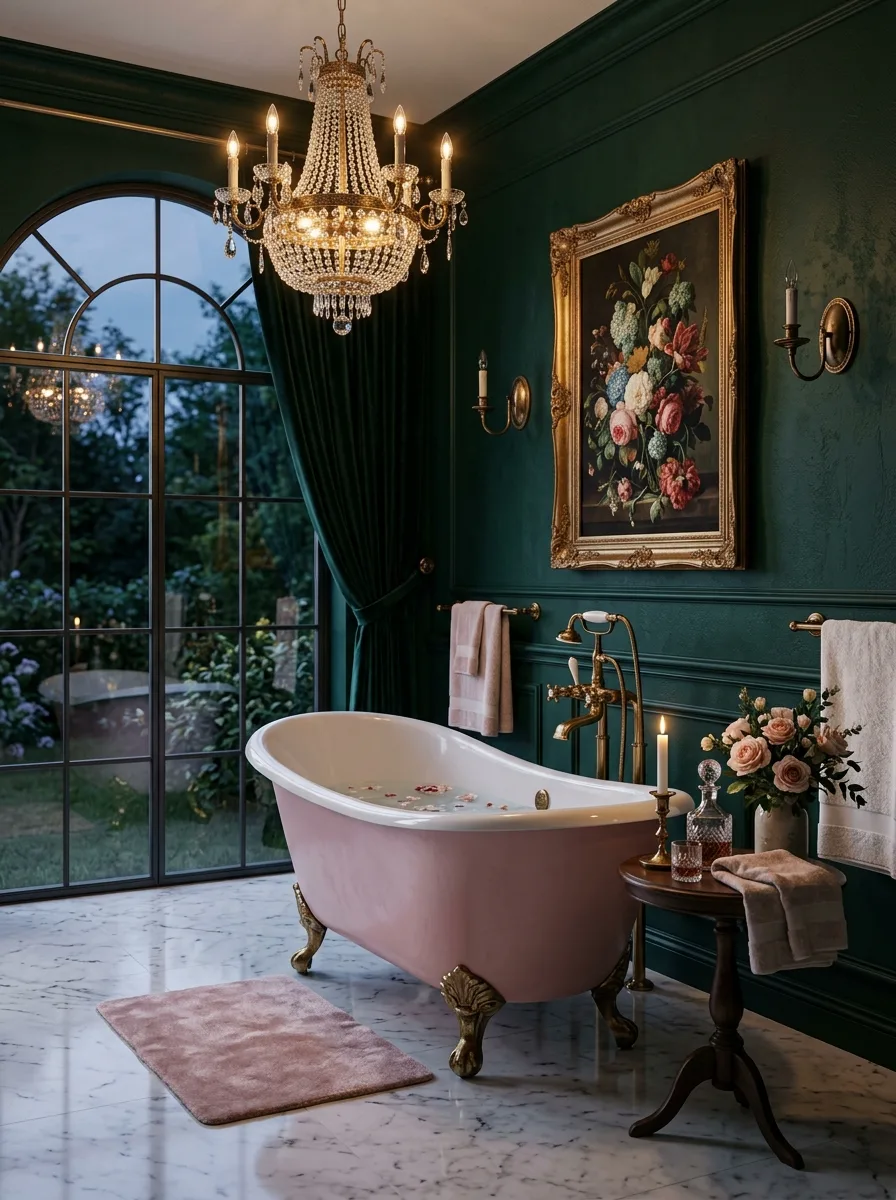
Paint the walls a deep, almost black-green, in a flat or slightly textured finish that reads moody rather than fresh. This is the boldest colour move on the list and it needs full commitment — no accent wall, the whole room.
Choose a freestanding clawfoot tub and have the exterior painted a soft dusty rose, leaving the interior white. The contrast between the dark walls and the pale pink tub is the entire concept.
Hang a crystal chandelier at a scale that feels slightly too large for the room. Oversized lighting is what pushes this into old-world glamour instead of just “dark bathroom.”
Add a large gilt-framed oil painting of flowers on the wall behind the tub, and gold candle sconces flanking it. The gold framing against the dark green is doing as much work as the paint colour.
Finish with a polished marble floor and a plush pink bath mat. Let the floor stay pale — it’s the one surface in this room that needs to reflect light back up.
Botanical Print Gallery Wall
Choose six botanical illustrations in a matching black frame and identical mat width, then hang them in a strict two-by-three grid with even spacing — measure the gaps, don’t eyeball them.
Set the grid against a warm dusty pink wall, above a wainscoting line in the same colour family so the wall reads as one continuous surface rather than two competing zones.
Introduce green through the vanity itself rather than the walls. A deep forest-green cabinet with brass hardware gives the room its anchor colour without touching the wall plane at all.
Add a narrow shelf beneath the grid for a single vase and a small trinket dish — the shelf gives the eye a resting point before it climbs to the artwork.
Keep the mirror simple and round or oval in brass. An ornate mirror here would compete with the grid instead of supporting it.
Antique Oak Washstand Vanity
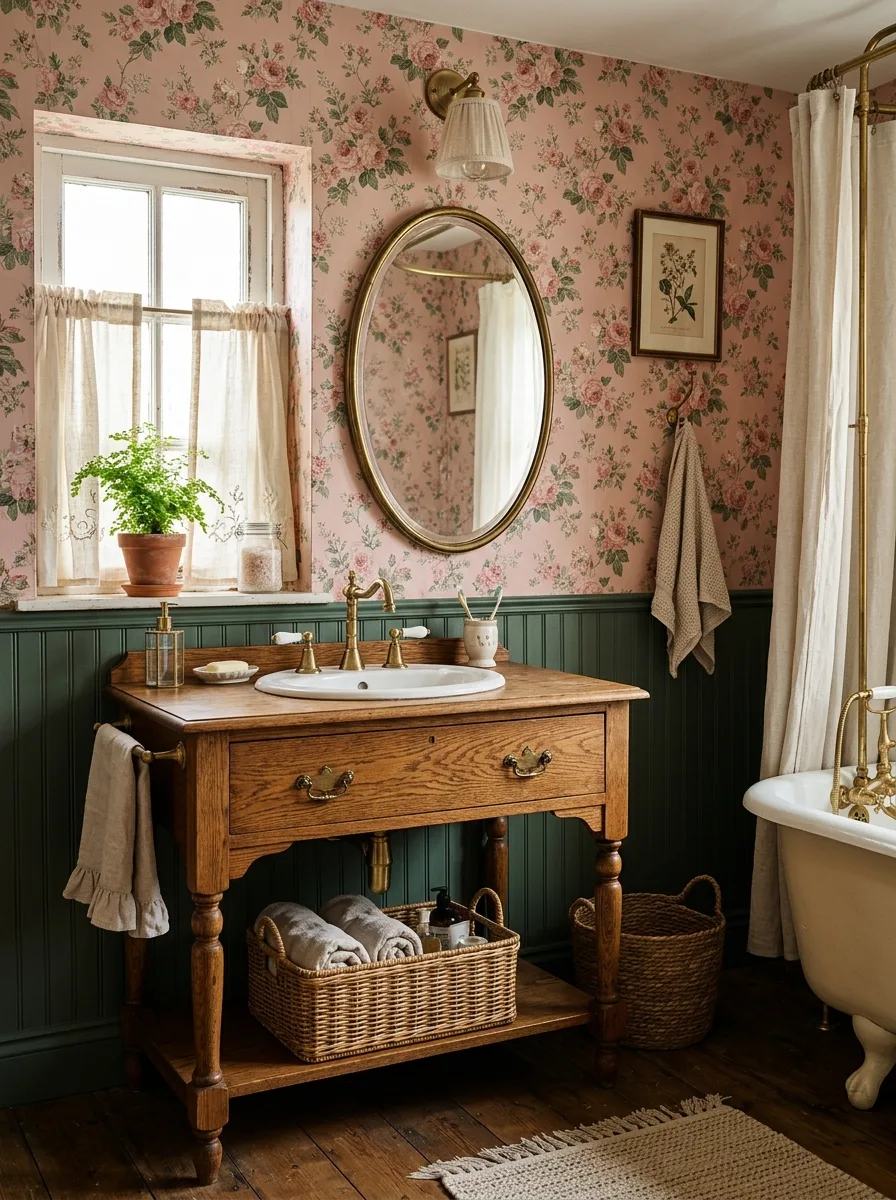
Find a genuine antique oak washstand — the kind with a single drawer and turned legs — and fit it with a simple white inset basin rather than a modern vessel bowl, keeping the proportions period-accurate.
Set it against a dense pink floral wallpaper with a slightly faded, vintage-print quality, and pair it with dark forest-green tongue-and-groove panelling below chair-rail height.
Hang an aged brass oval mirror with visible tarnish directly above, and add a single wall sconce beside it with a fabric or glass shade rather than anything modern.
Choose brass cross-handle taps in an aged, unlacquered finish so they develop more patina over time rather than staying shiny.
Finish with a woven basket of rolled towels tucked beneath the washstand and a ruffled linen hand towel on a hook nearby. Nothing in this room should look new.
Terracotta Zellige Jungle Corner
Source handmade zellige tile in a warm terracotta-pink tone for the upper wall, and a deep bottle green in the same finish for the lower third. Zellige’s irregular glaze is what gives this look its handmade warmth — uniform tile won’t read the same.
Run the tile vertically in narrow brick format rather than horizontally. The vertical lines pull the eye upward and make a small space feel taller.
Hang pendant lights with exposed bulbs directly against the tile rather than mounting a vanity light bar. The industrial fixture keeps the warmth of the tile from tipping into twee.
Layer in plants aggressively — trailing pothos from a shelf, a fern at floor level, something hanging directly above the sink. This look depends on the greenery reading as slightly overgrown, not neatly styled.
Choose a simple wall-hung rectangular sink in white so it disappears against all that tile, and let a small chalkboard or printed sign add the only text in the room.
Chiseled Stone Vessel Sink
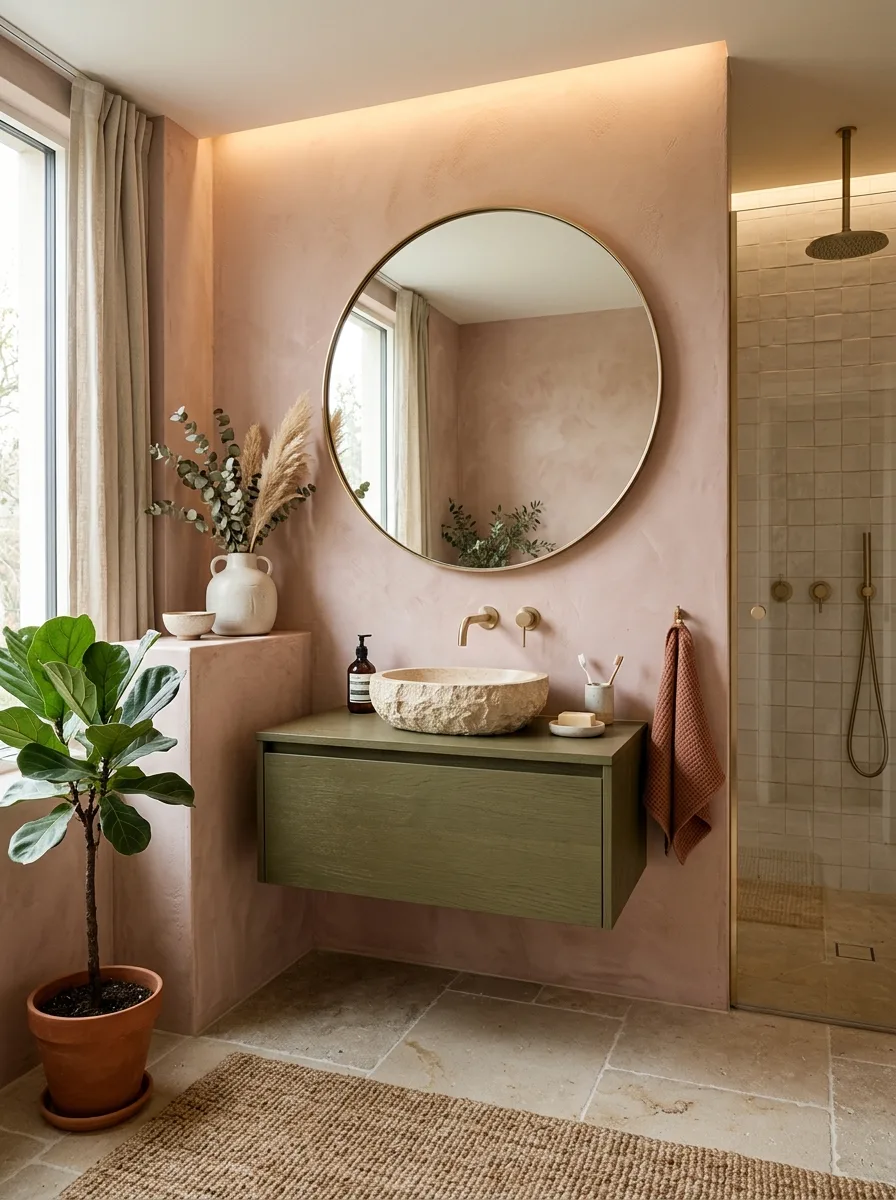
Find a hand-carved stone vessel basin — travertine or a similar honed limestone — with a visibly rough, chiseled exterior rather than a polished one. The texture is the entire point.
Set it on a floating vanity in a muted olive or sage green with a plain rectangular silhouette. Avoid ornate cabinetry here; the stone needs a quiet base to sit on.
Pair with wall-mounted brass or gold taps rather than deck-mounted ones, so the vanity top stays as uncluttered as possible around the sink.
Paint the wall behind it in a warm blush plaster finish — a limewash or Venetian plaster texture reads far richer than flat paint and complements the stone’s irregularity.
Finish with a large-leafed plant in a terracotta pot on the floor nearby, and a woven jute mat underfoot. Every material in this room should feel like it came from the earth.
Floating Vanity Open Shelving
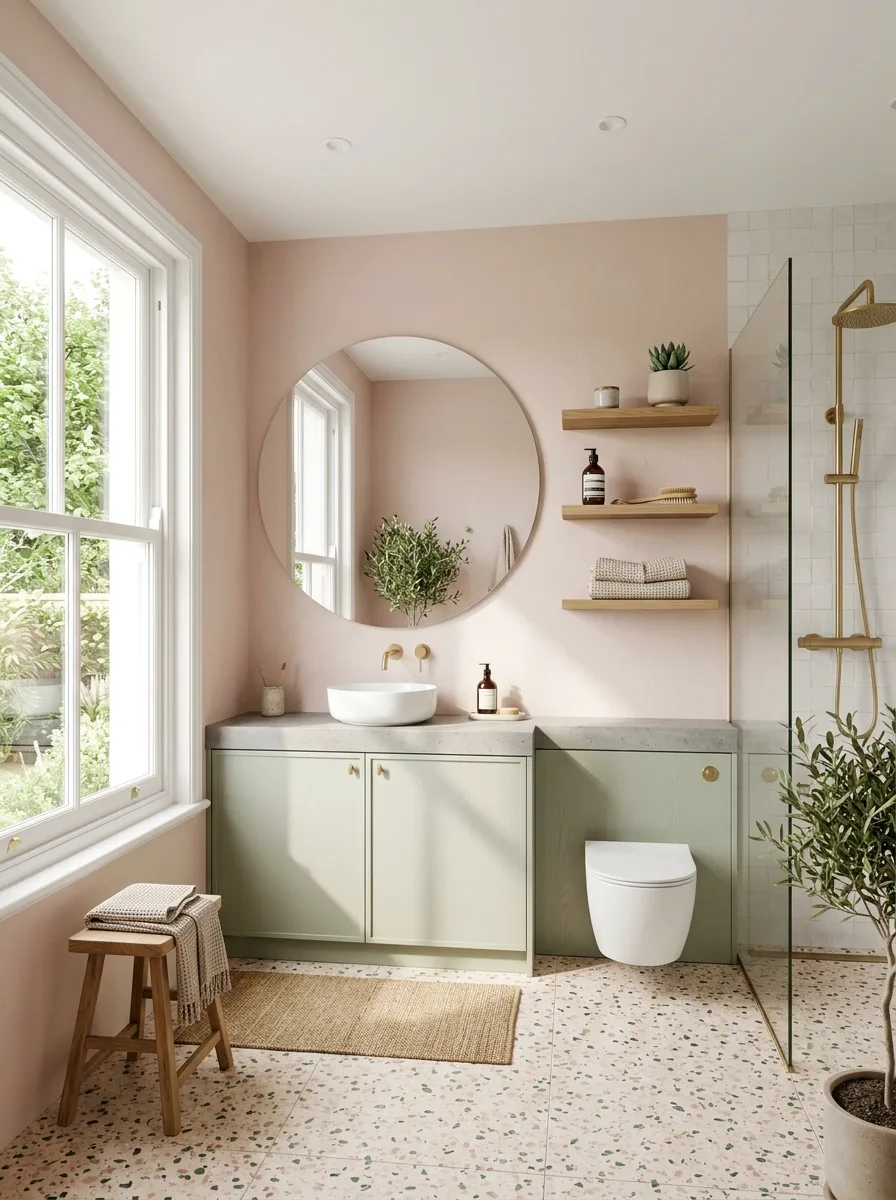
Install a two-part floating vanity — sink cabinet on one side, a slim toilet surround on the other — in a matte sage green with a poured concrete-effect countertop. The continuous countertop across both sections is what makes it read as one considered piece rather than two separate units.
Mount three shallow open shelves in warm oak directly above the vanity instead of a cabinet. Style each shelf with no more than two or three objects — a plant, a bottle, folded towels — so the shelving stays calm.
Paint the wall a warm blush pink and leave it completely bare apart from the shelving. This look depends on negative space; resist the urge to add art.
Choose a large round mirror in a thin frame, sized generously — at least two-thirds the width of the vanity — so it balances the visual weight of the shelves beside it.
Finish the floor in a small-scale terrazzo with pink and green flecks. It quietly repeats both wall colours without introducing a third.
Blush Zellige Wet Room
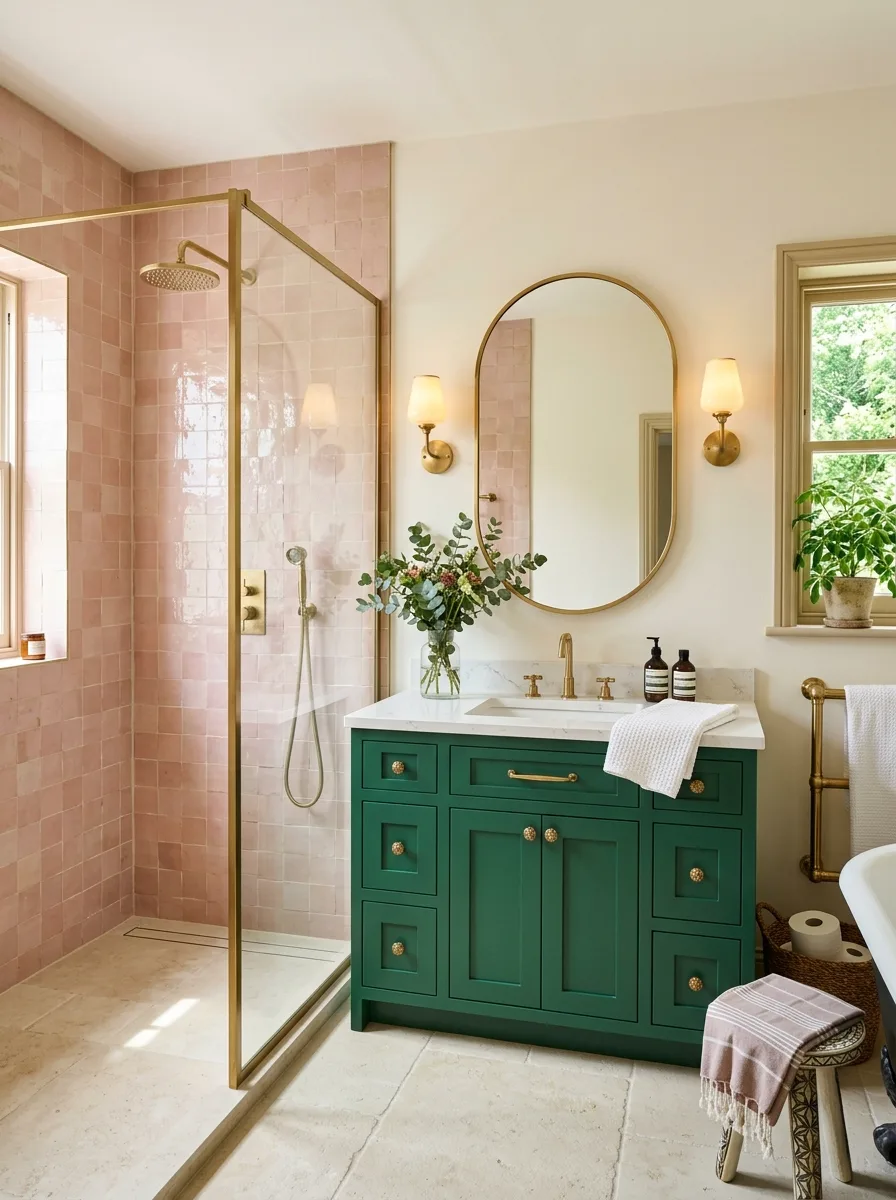
Tile an open, doorless wet-room shower area in handmade blush zellige, running the tile up to full ceiling height on at least one wall. The frameless glass panel — not a full enclosure — is what keeps the small pink tiled area from feeling closed in.
Position a deep forest-green vanity directly outside the wet zone, with brass taps and an oval brass-framed mirror above it. The green vanity gives the eye a strong stopping point after all that pink tile.
Choose a large-format pale stone or limestone-look tile for the rest of the floor, continuing seamlessly from the shower into the main room so there’s no visual break at floor level.
Add brass wall sconces flanking the mirror rather than an overhead light — warm, low lighting suits the handmade tile’s texture better than anything overly bright.
Finish with a heated towel rail in matching brass and a woven stool for towels. Keep accessories to warm neutrals only; the pink and green are already doing the talking.
Petite Floral Print Walls
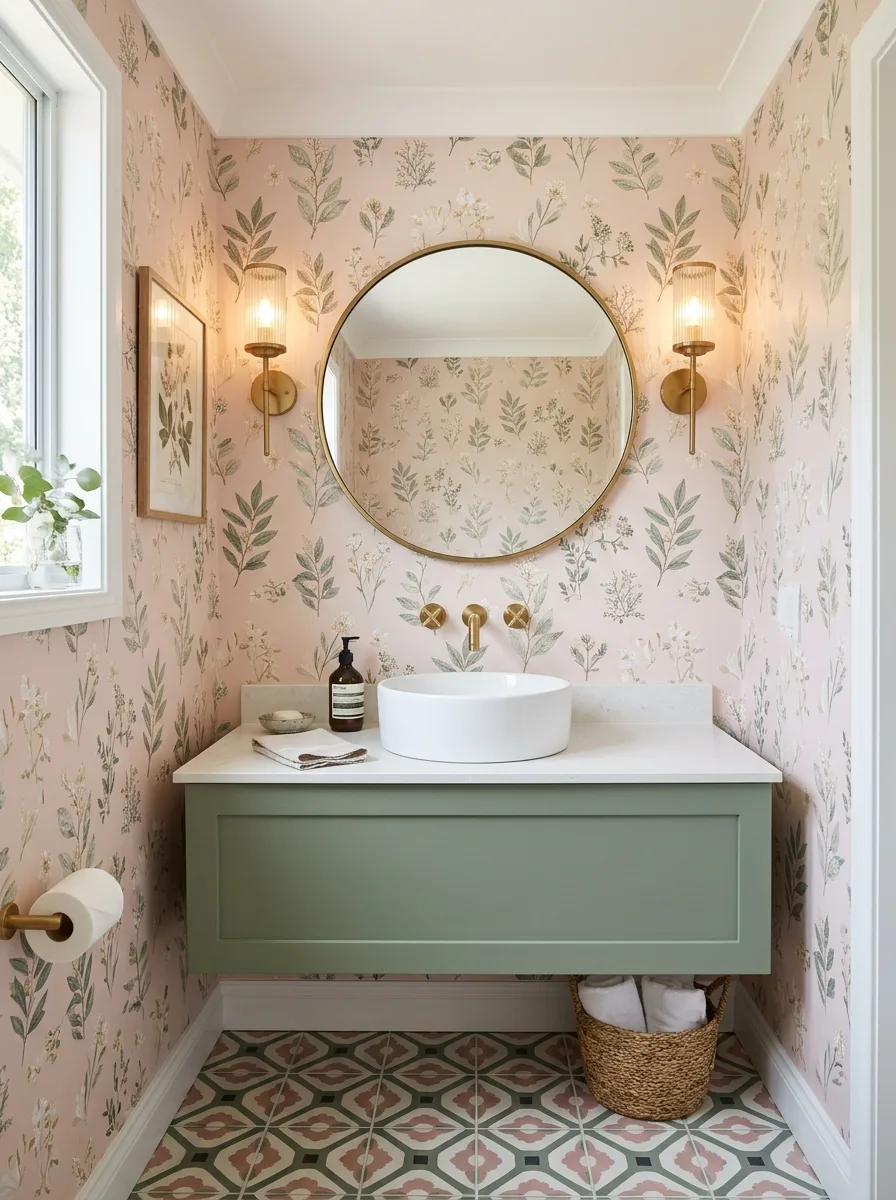
Choose a small-scale, densely repeated floral wallpaper in blush and sage tones — the print should feel almost like fabric, not a statement botanical. Cover every wall, including behind the mirror, so the pattern reads as a full envelope rather than a feature.
Install a floating vanity in matte sage green with a plain slab countertop in white or pale stone. The solid green cabinet is the one flat surface that lets the busy wallpaper breathe.
Choose a round white vessel sink and simple brass wall-mounted taps. Anything more ornate would compete with the wallpaper’s detail.
Add a patterned tile floor in the same pink and green family as the wallpaper, but in a larger, simpler geometric repeat. The floor pattern should feel related to the wallpaper without matching it exactly.
Keep wall decor to one small framed print and a pair of simple brass sconces either side of the mirror. This room has already used its pattern budget on the walls.
Vintage Table-as-Vanity
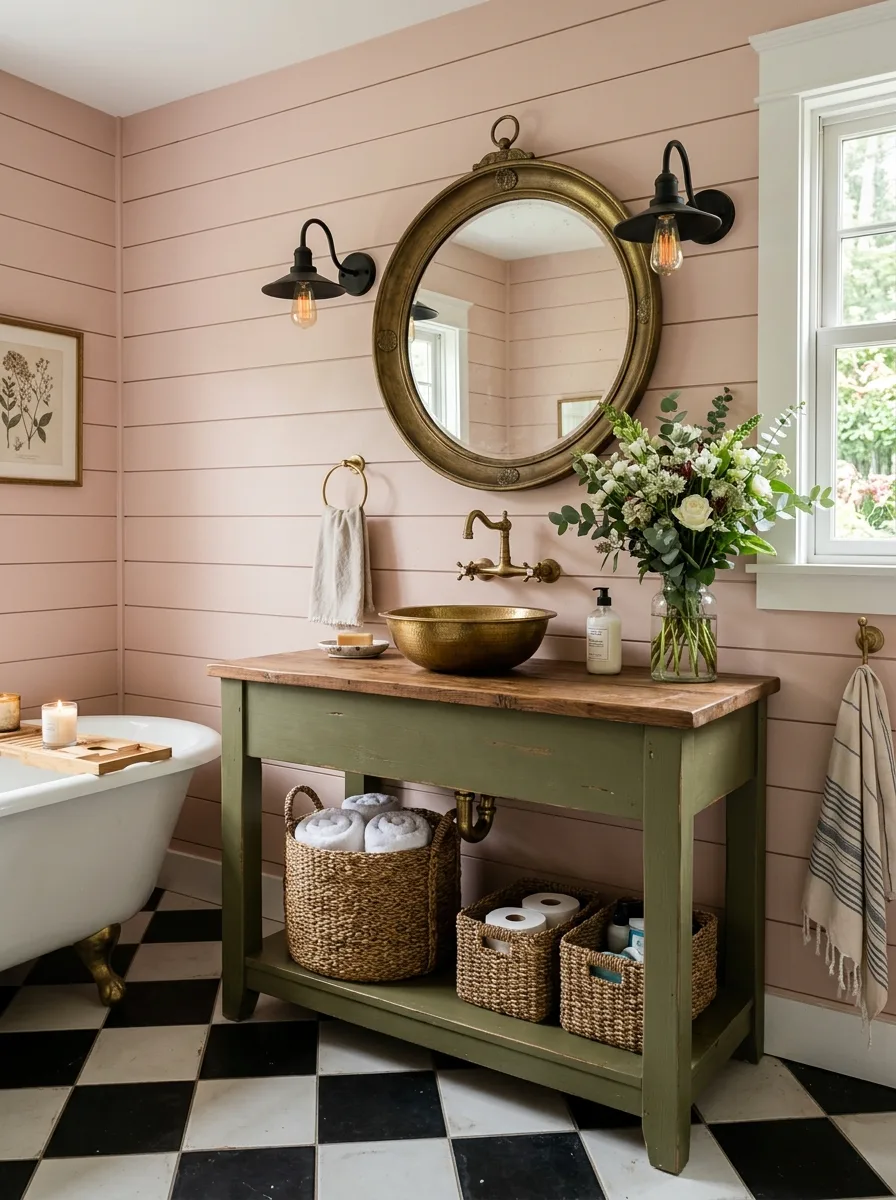
Find an old console or side table with turned or spindle legs — thrift stores and antique markets are the best hunting ground — and convert it into a vanity base by cutting a hole for a vessel basin rather than an inset sink.
Top it with a hammered brass or copper vessel bowl rather than ceramic. The warm metal against the aged wood is what makes this look feel collected rather than purchased as a set.
Paint the table’s base a muted olive green, leaving the wood tabletop natural or lightly waxed. Two-toning the piece this way makes it look like a genuine antique find rather than a flat-pack vanity.
Set it against horizontal shiplap-style panelling painted a warm blush pink, and hang an aged brass oval mirror with visible patina directly above.
Use the open shelf beneath the table for woven baskets holding towels and toiletries — this look depends on storage staying visible and textural, never hidden behind cabinet doors.
Walnut Vanity Emerald Shower
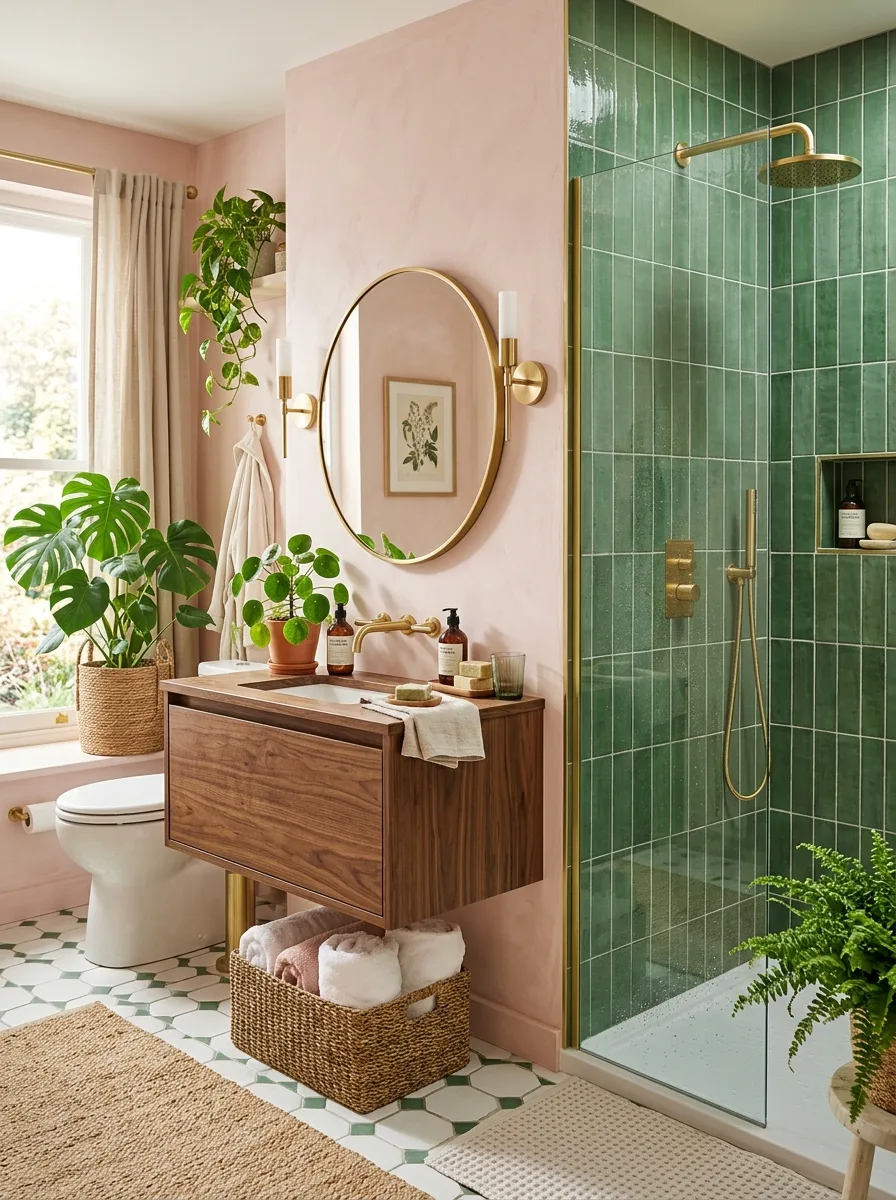
Choose a floating vanity in solid walnut with visible grain, kept completely unpainted. The warm wood tone is doing the work that a green cabinet does in other rooms on this list — pair it with blush pink walls instead of green ones for contrast.
Tile the adjoining shower wall in a glossy emerald green tile, run vertically, and separate it from the vanity area with a simple frameless glass panel rather than a full wall.
Mount a round brass-framed mirror directly above the vanity and flank it with slim brass wall sconces holding single exposed bulbs.
Add generous greenery — a large monstera in a woven basket, a smaller trailing plant on an open shelf — so the room’s actual plants echo the tiled shower’s colour.
Finish the floor in a small octagonal patterned tile in soft green and cream, and add a woven jute runner. The floor pattern is subtle enough to let the wood and tile carry the room.
Slab Marble Statement Wall
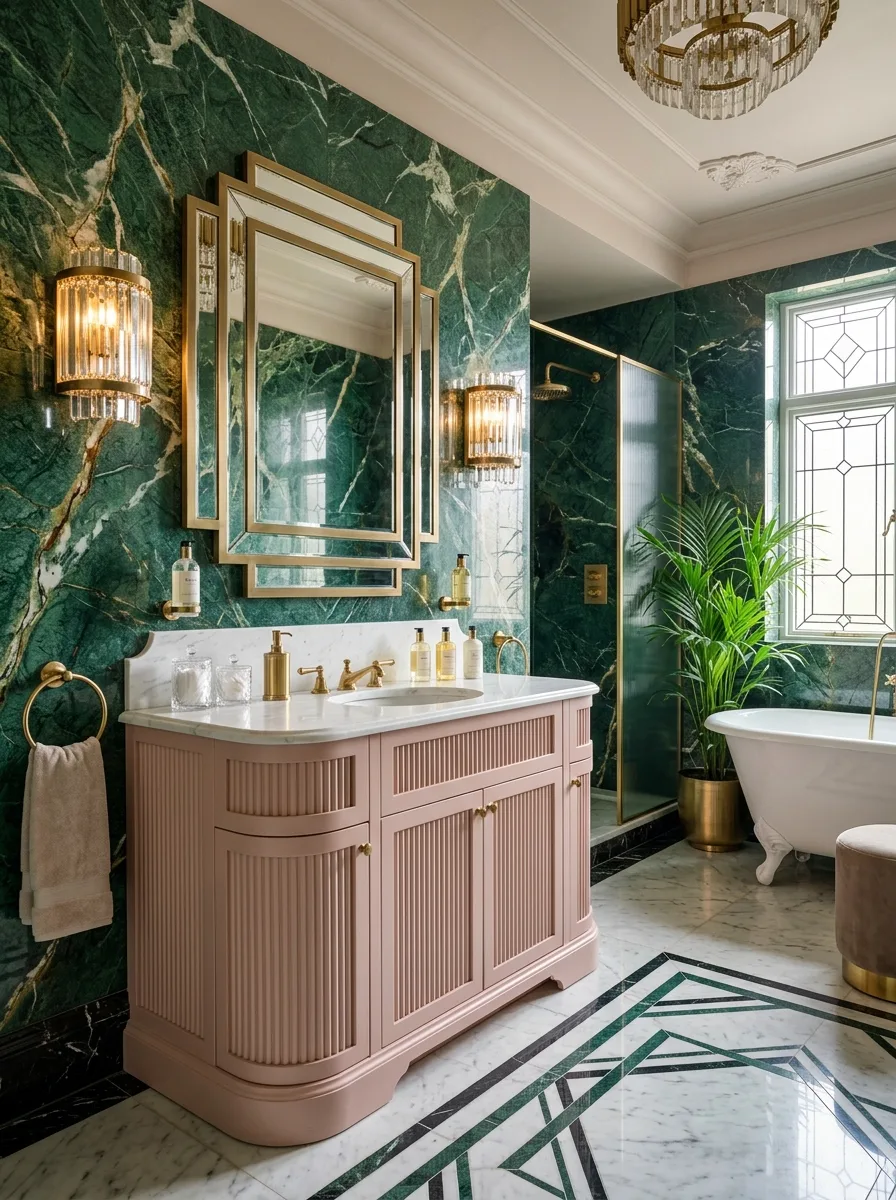
Source a large-format green marble slab with dramatic white veining and install it as a full backsplash wall behind the vanity, extending it up to the ceiling if budget allows. The scale of the slab, not just its colour, is what makes this feel expensive.
Choose a blush pink vanity with a fluted or reeded cabinet front, and pair the marble backsplash with a matching green marble countertop so the two surfaces read as one continuous material story.
Hang an oval mirror in a slim brass frame directly against the slab, positioned so the marble’s veining frames it rather than competing with it.
Add crystal wall sconces on either side in a fluted glass style, and repeat the green-and-white marble on the floor in a geometric inlay pattern rather than a plain slab.
Keep hardware and fixtures in warm brass throughout, and add one large potted palm in a brass planter to soften all that hard, polished surface.
Marble Backsplash Double Vanity
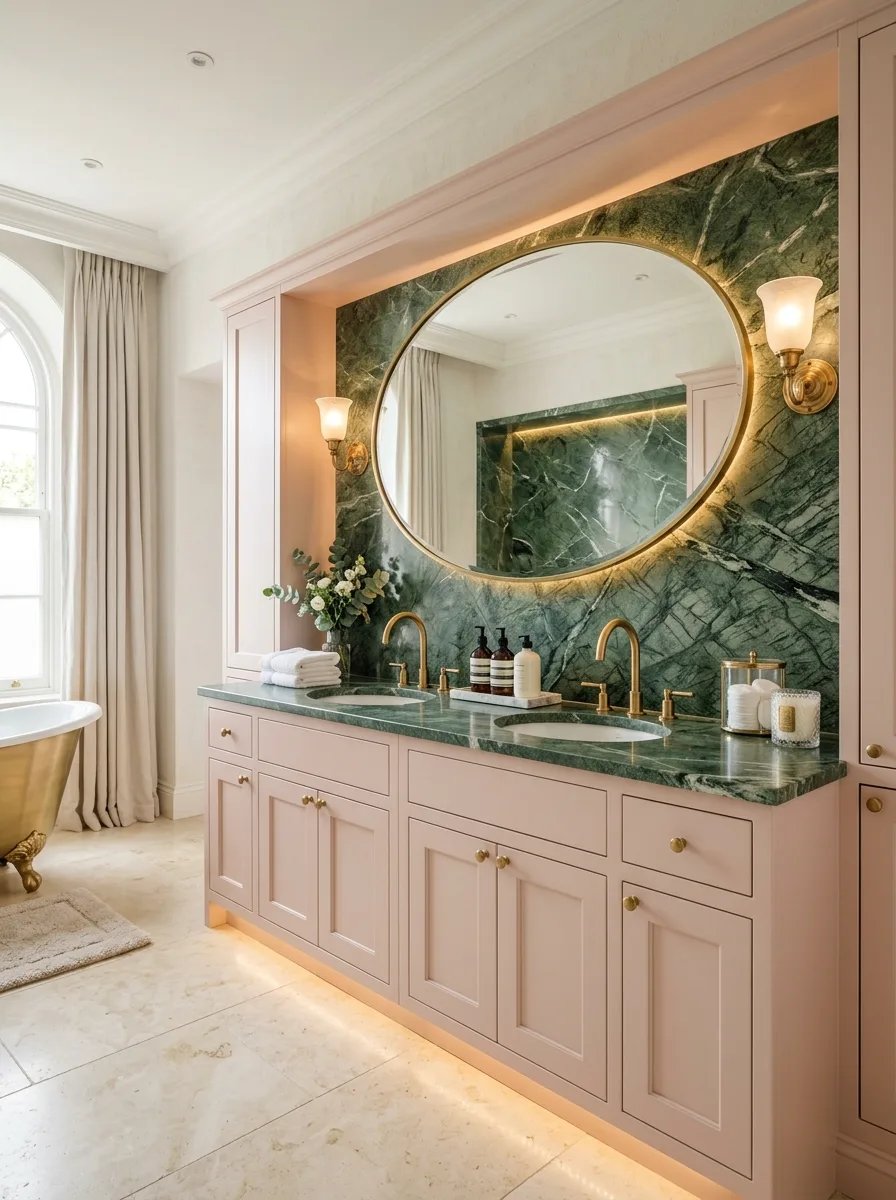
Install a full-height green marble slab behind a double vanity, choosing a stone with heavy, dramatic veining rather than a subtle one — this is a room built around one big material moment.
Pair it with a long blush pink vanity cabinet, painted rather than stained, with simple shaker-style doors and brass cup pulls. The flat pink cabinetry lets the marble stay the focal point.
Choose a single wide oval mirror rather than two separate mirrors above the double sinks, positioned centrally so the marble frames it evenly on both sides.
Add integrated LED lighting beneath the vanity’s toe-kick and behind the mirror for a soft ambient glow, rather than relying only on overhead lighting.
Finish the floor in pale travertine or limestone, and place a freestanding tub with a gold-painted exterior nearby if space allows — the gold tub echoes the brass hardware without introducing a third colour.
Palm Print Wallpaper Niche
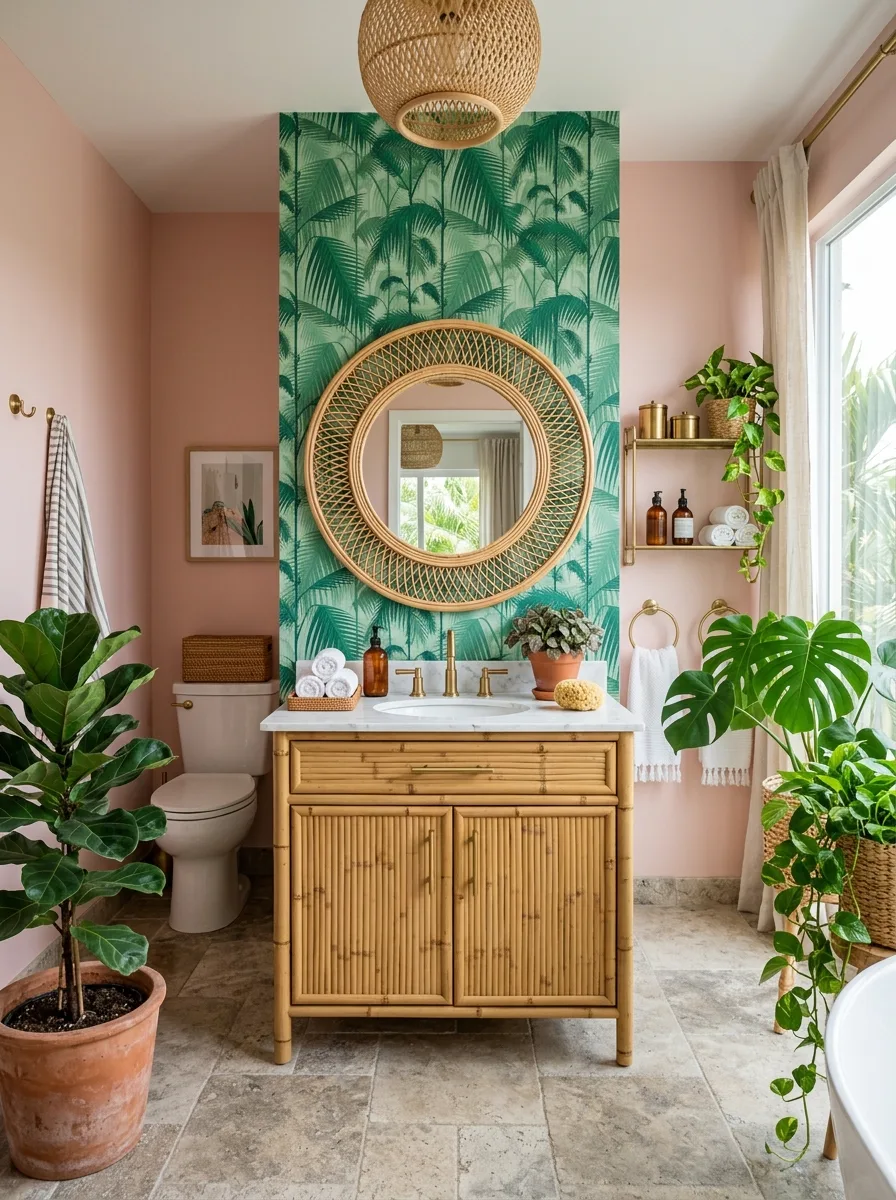
Wallpaper a single recessed wall niche — not the whole room — in a large-scale tropical palm print in shades of green, and leave the surrounding walls a plain warm pink.
Hang a round mirror with a woven rattan frame directly in the centre of the papered niche, sized so a visible border of the palm print shows all the way around it.
Add a rattan pendant light directly above the mirror, and open brass shelving to one side holding rolled towels and amber glass bottles.
Choose a vanity in natural bamboo or rattan cane, keeping the cabinet’s texture consistent with the mirror frame and pendant, so the natural materials tie the whole niche together.
Layer in oversized leafy plants — a monstera, a fiddle-leaf fig — directly in front of the vanity so the real foliage blurs into the printed foliage on the wall behind it.
Fluted Mint Green Vanity
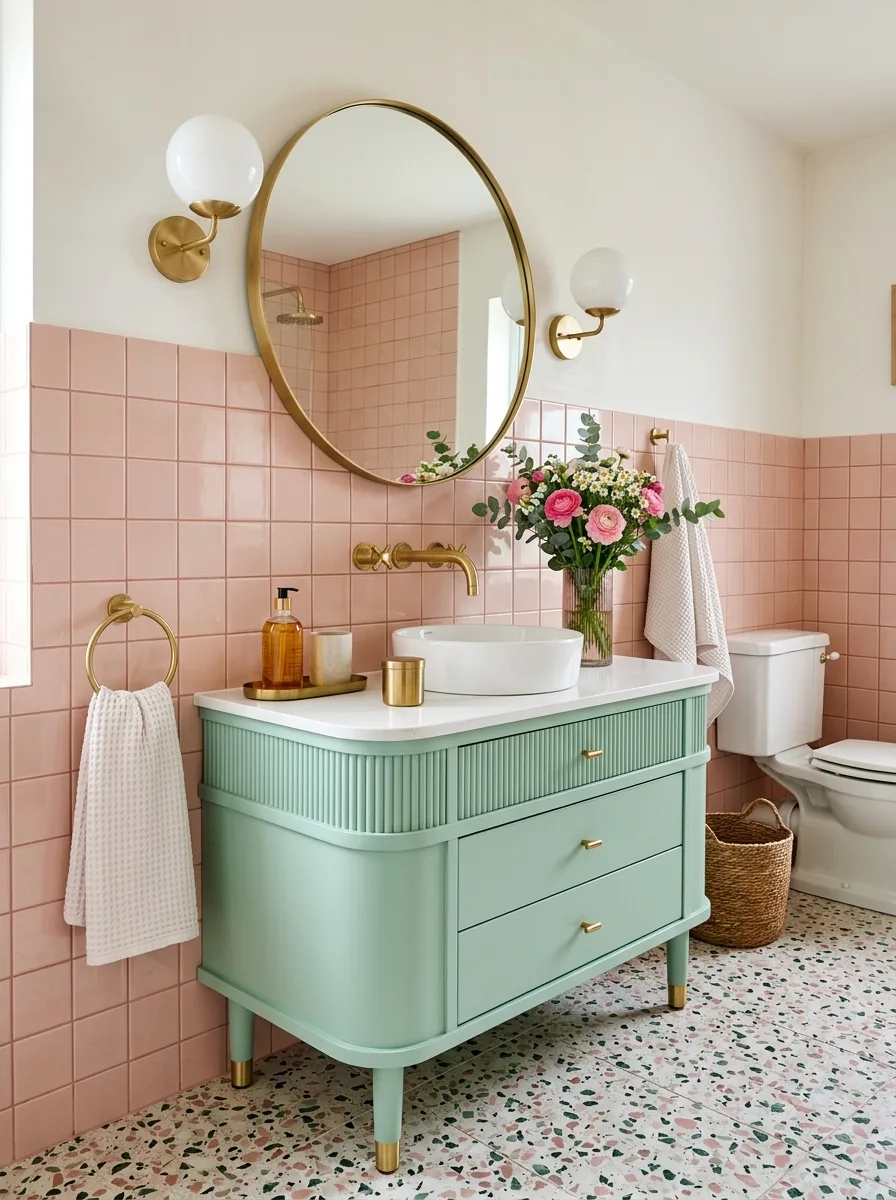
Build or source a vanity with a fluted, rounded-corner front in a soft mint green — the reeded detailing and curved edges are what separate this from a flat modern cabinet.
Set it against walls tiled in small square pink tile, run in a simple grid pattern rather than anything patterned or diagonal, so the vanity’s curves stand out against a flat backdrop.
Choose a round white vessel sink and a single gooseneck brass tap mounted directly to the wall rather than the countertop, keeping the vanity surface as clean as possible.
Hang a large round brass mirror above, sized generously, and add matching brass wall sconces with opaline glass globes on either side.
Finish the floor in a green-and-pink terrazzo, and add one tall vase of fresh flowers on the vanity — this look depends on a little seasonal colour changing on top of the fixed palette.
Warm Stone Vessel Sink
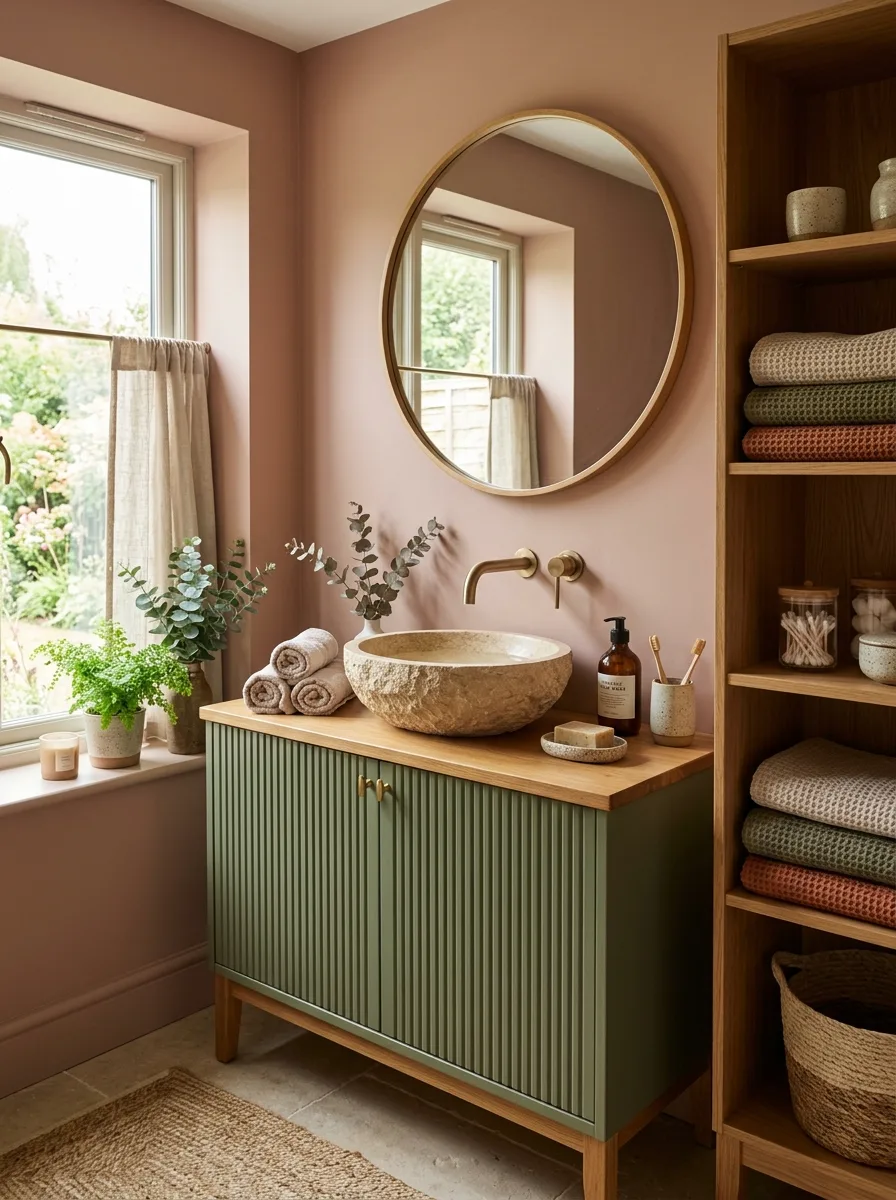
Choose a rounded, naturally textured stone vessel basin in a warm sandy tone, and set it on a low, deep vanity in olive green with reeded cabinet fronts and a natural wood countertop.
Paint the surrounding walls in a warm dusty pink with a soft plaster or limewash finish, and leave them almost entirely bare apart from open wood shelving beside the vanity.
Fill the shelving with folded textured towels in mixed earth tones — rust, sage, oatmeal — rather than matching sets, so the storage itself becomes part of the room’s palette.
Hang a plain round mirror in a slim wood frame directly above the sink, skipping metal entirely so the room stays warm and grounded rather than glossy.
Finish with a stone tile floor and a chunky woven rug, and add potted eucalyptus on the windowsill. This is the most understated room on the list, and its restraint is the whole point.
Final Thoughts
Every room on this list makes the same quiet decision: pick a dominant colour and let the other one support it. That single choice is the difference between a bathroom that feels designed and one that feels like a compromise nobody signed up for.
Notice, too, how rarely these rooms rely on colour alone. Zellige tile, carved stone, aged brass, real wood grain — texture is doing at least as much work as pink or green ever could. Strip the colour out of any of these rooms and you’d still have a well-built space.
That’s the real lesson here, and it has nothing to do with paint charts. Commit to materials that hold up under scrutiny, and the colour becomes the easy part — the finishing move, not the foundation.
Bold colour ages badly in a room built on nothing else. It ages beautifully in a room that was going to look good anyway.