
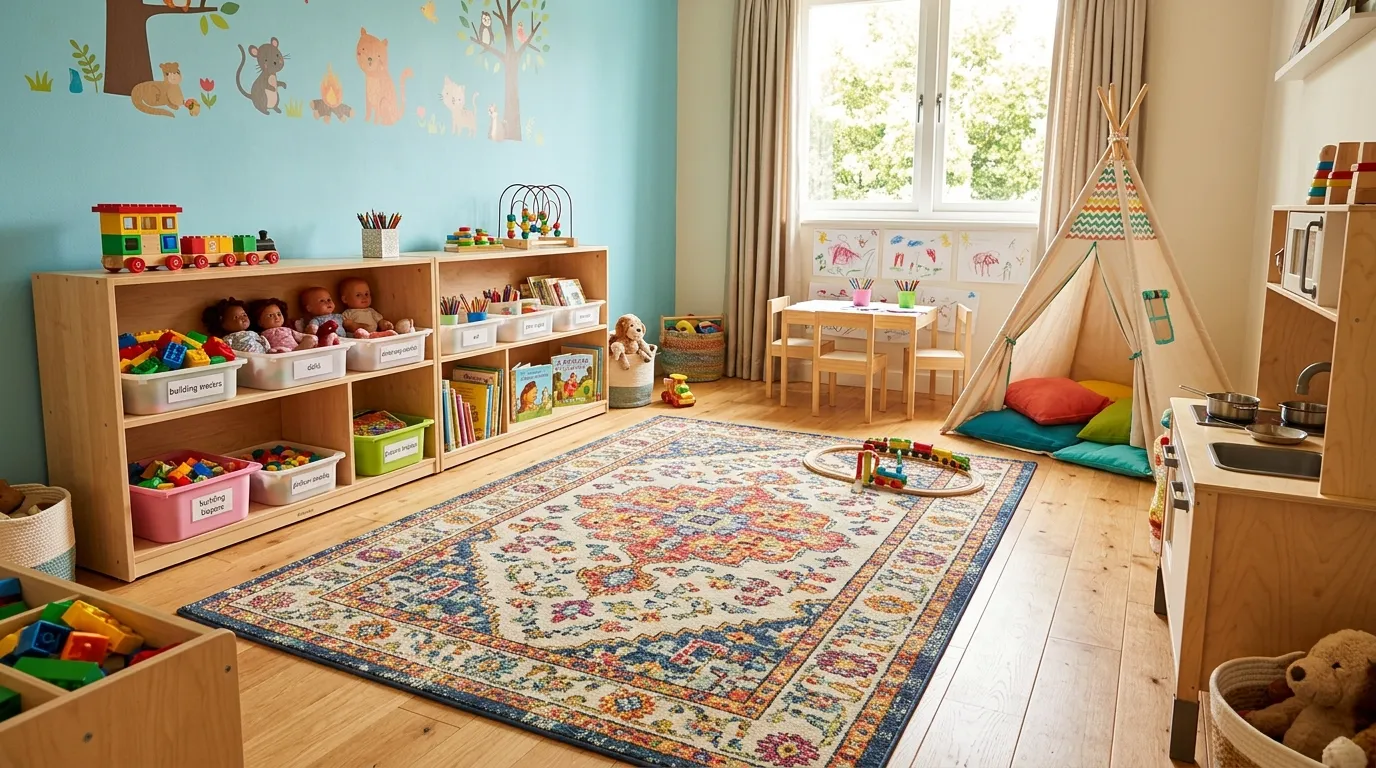
Every playroom starts the same way. A pile of plastic toys, a rug from the same three options everyone else bought, and a vague hope that it’ll all look fine once it’s “organized.”
It won’t. Organization is not a design plan, it’s a maintenance task, and a playroom needs both.
The rooms that actually work as playrooms, not just toy storage with good lighting, made a real decision about what kind of space this was going to be before a single bin got labeled. Some went full theme. Some went full color. A few went so quiet and neutral you’d never guess a five-year-old lived there.
Why Most Playrooms Never Quite Come Together
Storage Gets Solved Before Style Does
Most playrooms start with a trip to buy bins, then furniture gets slotted in around whatever storage system was purchased first. That’s backwards, and it’s why so many playrooms feel like a supply closet with a rug.
Storage absolutely has to work in a room this chaotic, but it works best when it’s designed as part of the room’s whole visual identity — built into arched niches, painted to match a wall, shaped like something a kid would actually want to open.
Buy the vision first, then find storage that fits inside it, not the other way around.
Every Toy Stays Visible All the Time
A room where every single toy is out and visible at all times will always look cluttered, no matter how expensive the furniture is. The brain can’t parse a hundred visible objects as calm, regardless of how tidy each individual bin is.
The rooms in this list that feel the most serene, not just the most colorful, all have closed storage doing real work — cabinets, bins with lids, baskets that hide contents rather than displaying them.
Open shelving is great for a curated handful of favorite toys. It’s a liability for the full volume of what a kid actually owns.
The Room Doesn’t Commit to an Age Range
A playroom stuffed with toddler climbing equipment and a fully accessorized play kitchen for a much older kid rarely feels cohesive, because it’s actually serving two different jobs at once.
Decide roughly what ages this room needs to serve, then build the furniture scale, storage height, and activity zones around that answer. A room built for toddlers should have low, soft surfaces and rounded edges throughout. A room built for older kids can hold real furniture, real hobbies, actual desks.
Rooms that try to do everything for every age usually end up feeling like neither age is fully served.
Playroom Inspiration Ideas
A Full Indoor Jungle Gym With a Rainbow Rug
Install a genuine indoor climbing structure — monkey bars, rope netting, hanging rings — bolted along one full wall, painted in bright primary colors so it reads as a feature rather than gym equipment.
Pair it with a soft foam play couch in a single bold color, positioned right beneath the climbing structure to double as a landing zone, and anchor the floor with a large tufted rug spelling out a phrase in rainbow lettering.
Add a hand-painted rainbow mural on the opposite wall and simple open shelving for books and toys nearby. This is a full-commitment active-play room — the climbing structure is the star, and everything else should support it rather than compete with it.
An Enchanted Forest Reading Nook
Build a curved built-in bench seat wrapped entirely in a faux tree-bark texture, tucked beneath a canopy of artificial leaves and hanging string lights that mimic dappled forest light.
Cover the floor in a deep green faux-grass rug and scatter a few large faux stones as informal seating or steps. A forest mural on the surrounding walls extends the scene beyond what the physical build alone could achieve.
This is an immersive, high-investment build rather than a quick weekend project, but it proves how far a single reading nook can go when every material — texture, lighting, mural — reinforces the same fantasy.
A Montessori-Style Open Shelf Corner
Keep everything at true child height: low open bookshelves with covers facing out, a floor mat for gross motor play, and a scattering of stackable floor cushions in rainbow colors rather than a single large seat.
Install a compact indoor climbing ladder against the wall with a soft folding mat beneath it, and keep decoration to a minimum — a felt rainbow, a wall clock, a couple of educational posters. The room’s openness and low sightlines are the whole point.
This layout works especially well for toddlers just old enough to want independence in choosing their own activities. Resist the urge to add more decoration than this; the restraint is what makes it functional.
A Circus-Tent Ceiling With a Tree Mural
Paint the ceiling in bold sunburst stripes radiating from a central medallion light fixture, so simply looking up feels like standing under a circus big top.
Extend a hand-painted tree mural up one full wall, strung with warm string lights woven through the painted branches, and hang a few stuffed jungle animals — a monkey, a snake — draped over a real rope for texture. A soft foam couch and play kitchen round out the functional side of the room.
The ceiling treatment here is the move worth stealing even in a room with none of the other theme elements — a painted ceiling changes a room’s whole mood far more than people expect.
A Neutral Luxury Playroom With an Indoor Slide
Keep the walls, rug, and furniture in soft neutral tones, then let one indoor wooden slide and climbing structure provide the room’s only real color and texture contrast.
Add a teepee draped in string lights for a designated quiet corner, a round table with boucle chairs for crafts, and a ball pit tucked into an otherwise calm palette. Built-in shelving keeps every toy stored out of sight when not in use.
This is the formula for a playroom that still looks intentional in an otherwise elegant house — commit to a neutral base, then let one or two big play features carry all the personality.
An Arched Rainbow Storage Wall
Build a run of arched wall niches, each painted a different soft pastel — yellow, sage, blue, coral — and fill each one with color-coordinated toys and baskets so the storage itself becomes the room’s main visual feature.
Add a cork board in one central arch for rotating artwork, and a soft bench seat with cushions running beneath the row of niches for reading or sitting. A colorful puzzle-piece foam rug and a simple wood slide keep the floor level just as playful as the wall.
This is one of the most replicable ideas in this whole list — even a single arched niche, painted and stocked with color-matched storage, brings a lot of this effect to an ordinary room.
A Primary-Color Bean Bag Corner
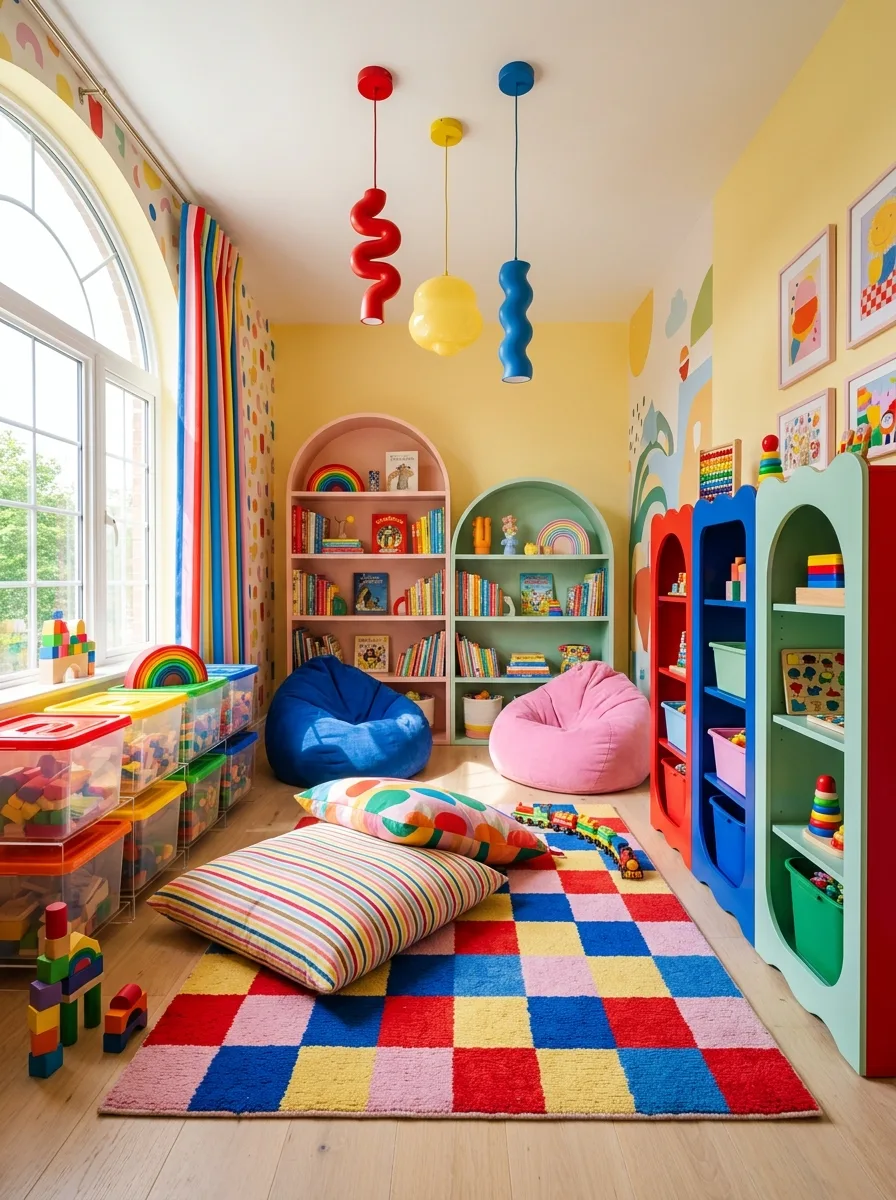
Paint walls a cheerful yellow and pair them with bold primary-colored open shelving units in red, blue, and green, each stocked with toys sorted by color to match its cubby.
Add oversized bean bag chairs in solid pink and blue as the room’s main seating, plus a checkerboard rug in matching primary colors underfoot. Playful ceiling pendants in squiggly, organic shapes finish the room’s slightly retro, candy-colored mood.
This is a strong template for a room that needs to feel energetic without any elaborate theme — just confident color blocking and furniture with real personality.
A Starry Space Station Corner
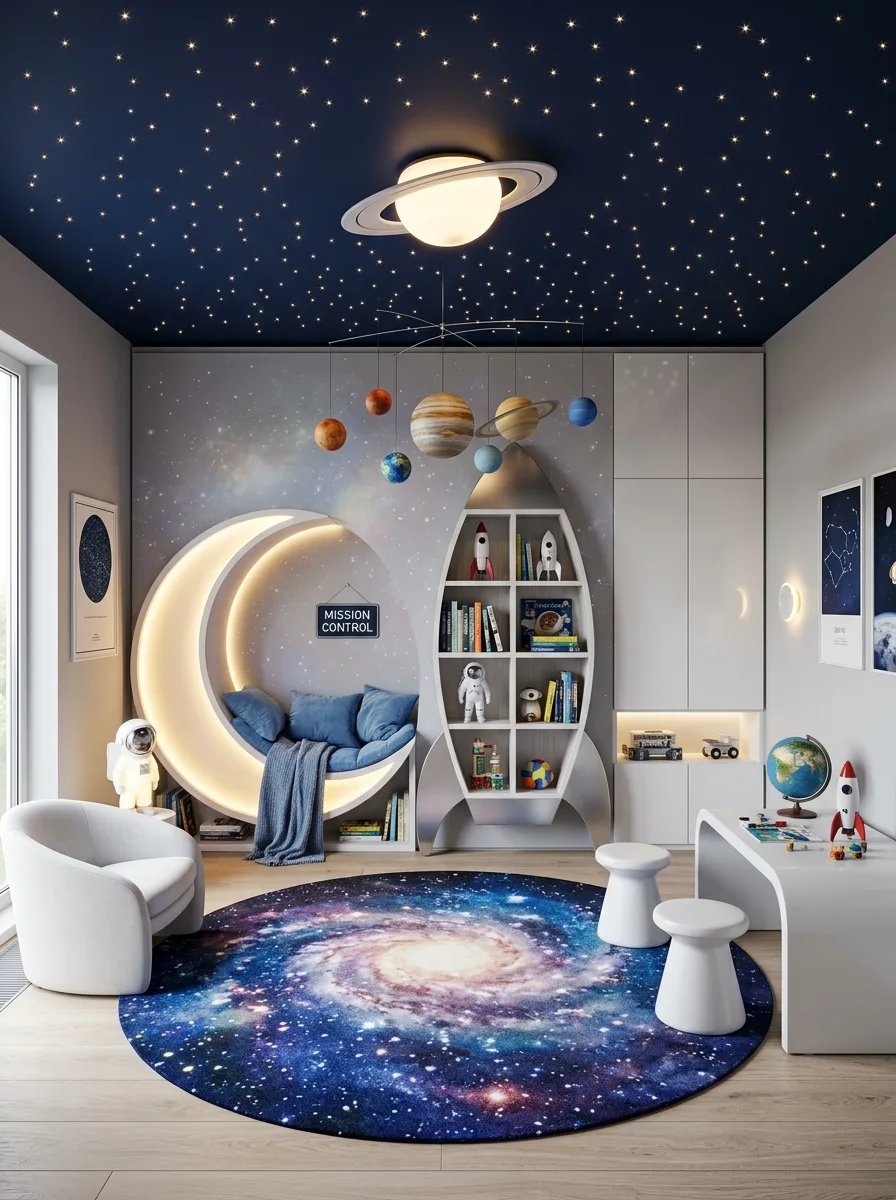
Paint the ceiling a deep navy and add scattered pinpoint lighting to mimic a real night sky, then hang a solar system mobile with accurately scaled, textured planets from the center.
Build a crescent-moon-shaped reading nook with integrated LED lighting along its curved edge, and add a rocket-shaped bookshelf as the room’s other major built piece. A round rug printed with a swirling galaxy pattern ties the whole floor together.
The starry ceiling is the single highest-impact element here and the easiest to recreate without committing to the full built-in furniture — a can of navy paint and a pack of ceiling star decals goes a long way on its own.
A Construction-Themed Build Zone
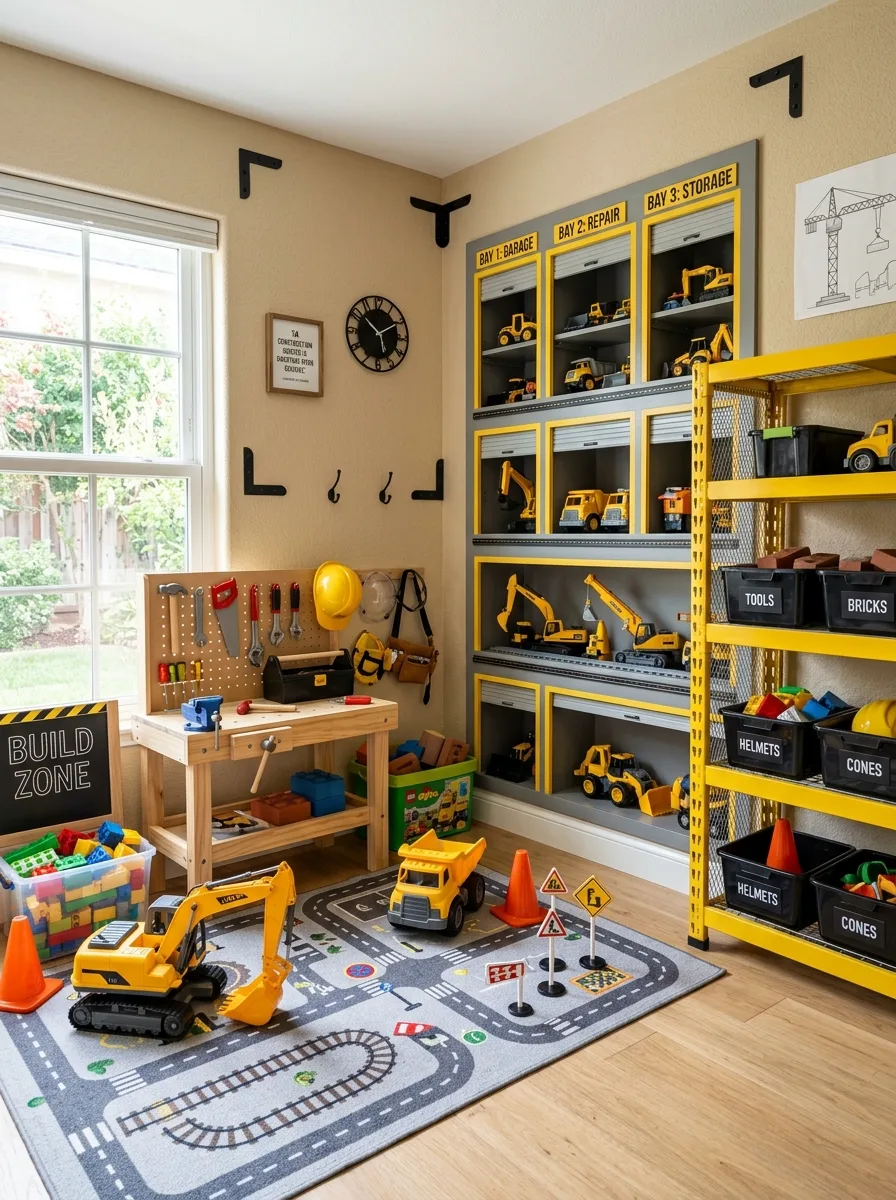
Dedicate one wall to a full construction site: a real workbench with kid-safe tools on a pegboard, industrial metal shelving in yellow and black holding labeled bins of vehicles and building bricks, and a road-printed rug for driving trucks across.
Add a chalkboard sign reading “Build Zone,” diagonal corner brackets painted directly onto the walls to mimic construction signage, and a wall clock in a matching industrial style. Keep the palette to yellow, black, and grey to keep the theme feeling cohesive rather than costume-like.
This is a strong option for a kid deep in a specific obsession — the theme is fully committed, but every individual piece (the workbench, the shelving, the rug) still functions as genuinely useful furniture afterward.
An Actual Working Art Studio
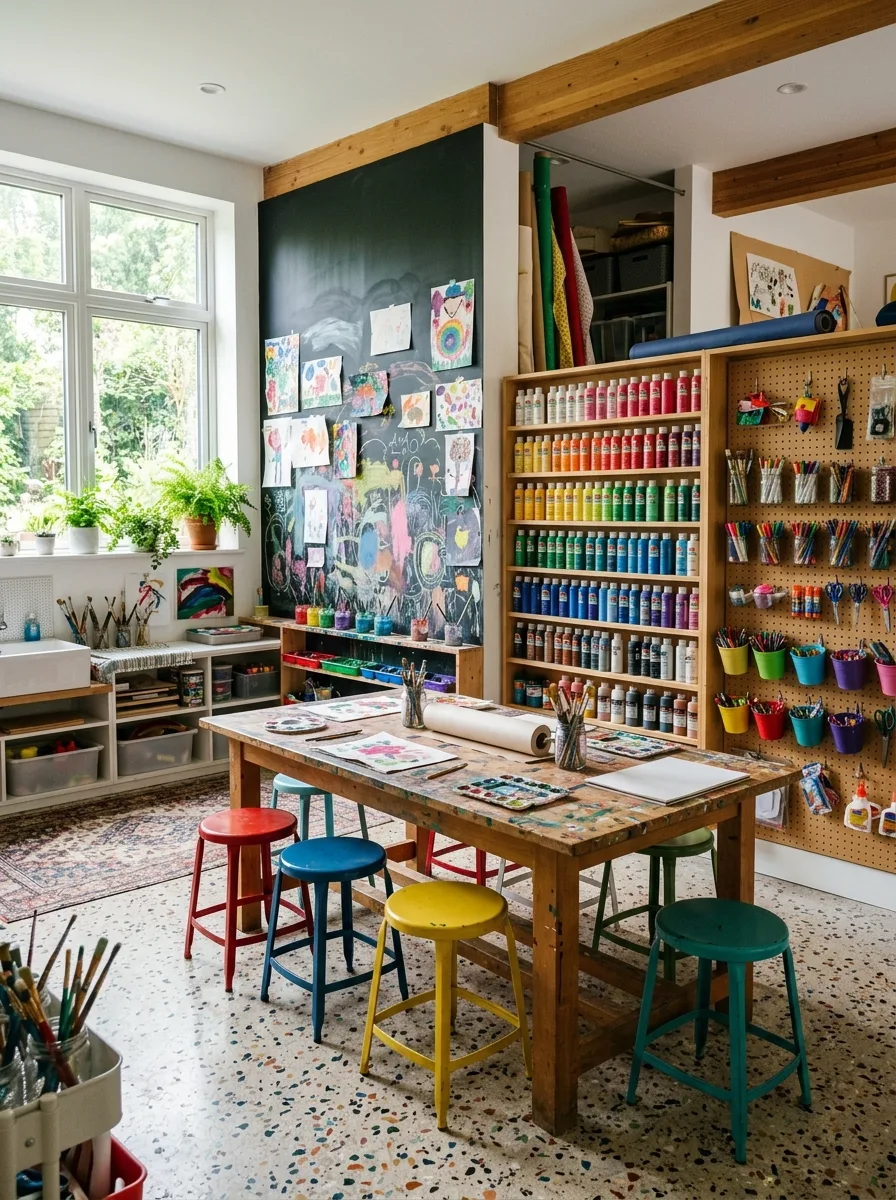
Install a full wall of pegboard and labeled paint storage, organized by color in a rainbow gradient, so supplies double as wall decoration when not in use.
Add a large, real wood work table sized for group projects, paired with mismatched painted stools in bold single colors, and dedicate one full wall to chalkboard paint for constantly rotating, erasable artwork. A durable terrazzo or speckled floor handles spills without anxiety.
This is the room to copy if your kid is a genuine maker rather than a general player — the scale of supply storage here is what separates a real working studio from a craft corner with a few markers in a cup.
A Woodland Tree Bookshelf
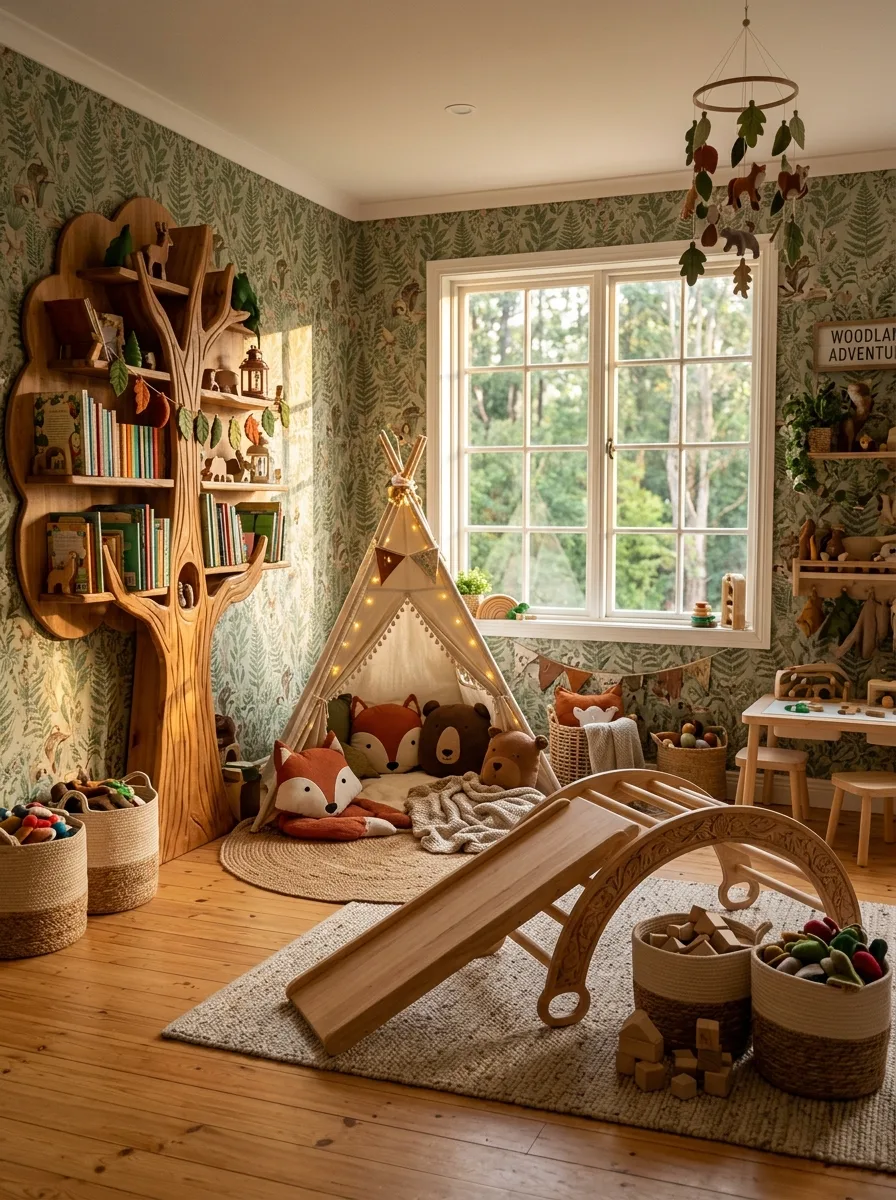
Build or buy a bookshelf carved into the literal shape of a tree, with curved branch-shaped shelves holding books face-out at a child’s eye level.
Wallpaper the surrounding walls in a soft green woodland print with foxes, deer, and pine trees, and add a canvas teepee tucked beside the bookshelf, filled with woodland stuffed animals and a knit blanket. A jute rug and a felt leaf garland overhead finish the scene without overwhelming it.
This theme reads as gentle and timeless rather than trendy, which makes it one of the safer full-theme commitments on this list if you want the room to still feel right in five years.
A Coastal Reading Corner With a Surfboard Shelf
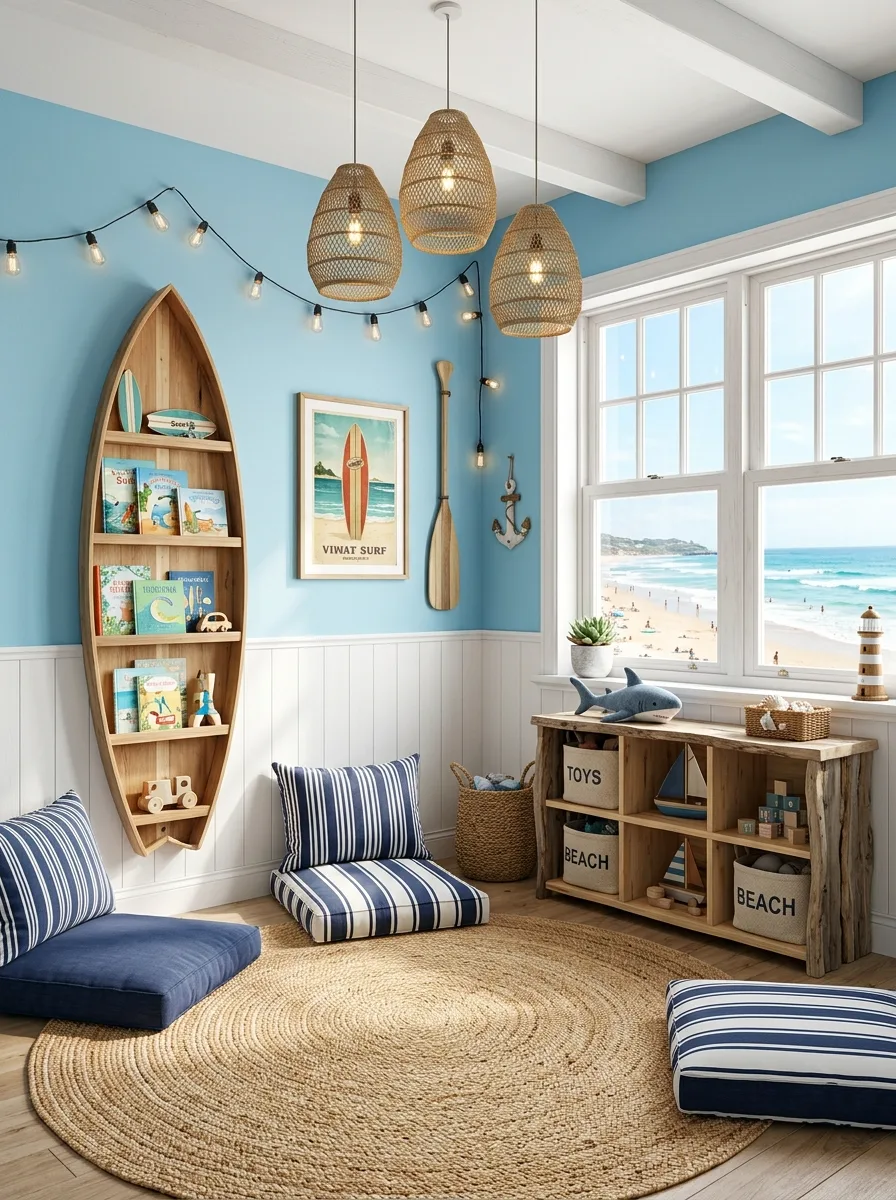
Mount a surfboard-shaped shelving unit vertically on the wall to hold children’s books, paired with a genuine wood paddle and a vintage-style surf poster for the room’s main wall decor.
Choose a soft blue upper wall with white shiplap paneling below, and add woven rattan pendant lights strung with a simple string of café lights for texture overhead. Striped navy and white floor cushions on a round jute rug keep the seating casual and low.
This coastal palette works especially well in a room with genuine natural light or a view, but the surfboard shelf alone is distinctive enough to anchor the theme even in a room without either.
A Campsite Teepee With a Faux Fire Pit
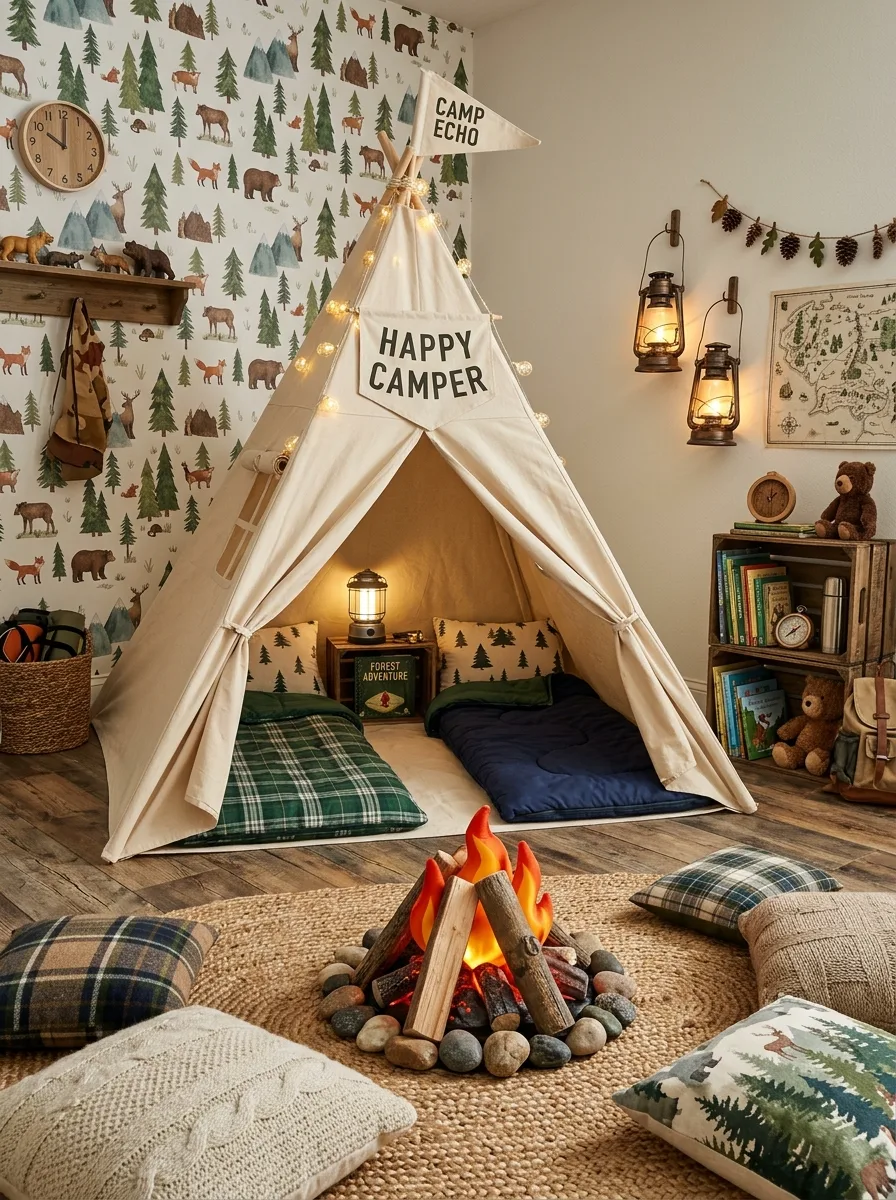
Set a canvas teepee tent on a round jute rug, personalized with a fabric banner reading a camp name, and fill the interior with plaid and solid sleeping bags instead of standard bedding.
Build a faux campfire at the center of the rug using real logs and stones around amber LED lighting for a safe, glowing flame effect, then surround it with a scattering of plaid and cable-knit floor cushions for fireside seating. Woodland-print wallpaper and hanging lantern sconces finish the scene.
This is one of the most atmospheric ideas in the whole list, and it works because every material — the plaid, the lanterns, the faux fire — points toward the same rustic campsite mood without a single mismatched element.
A Black, White, and Yellow Pop-Art Room
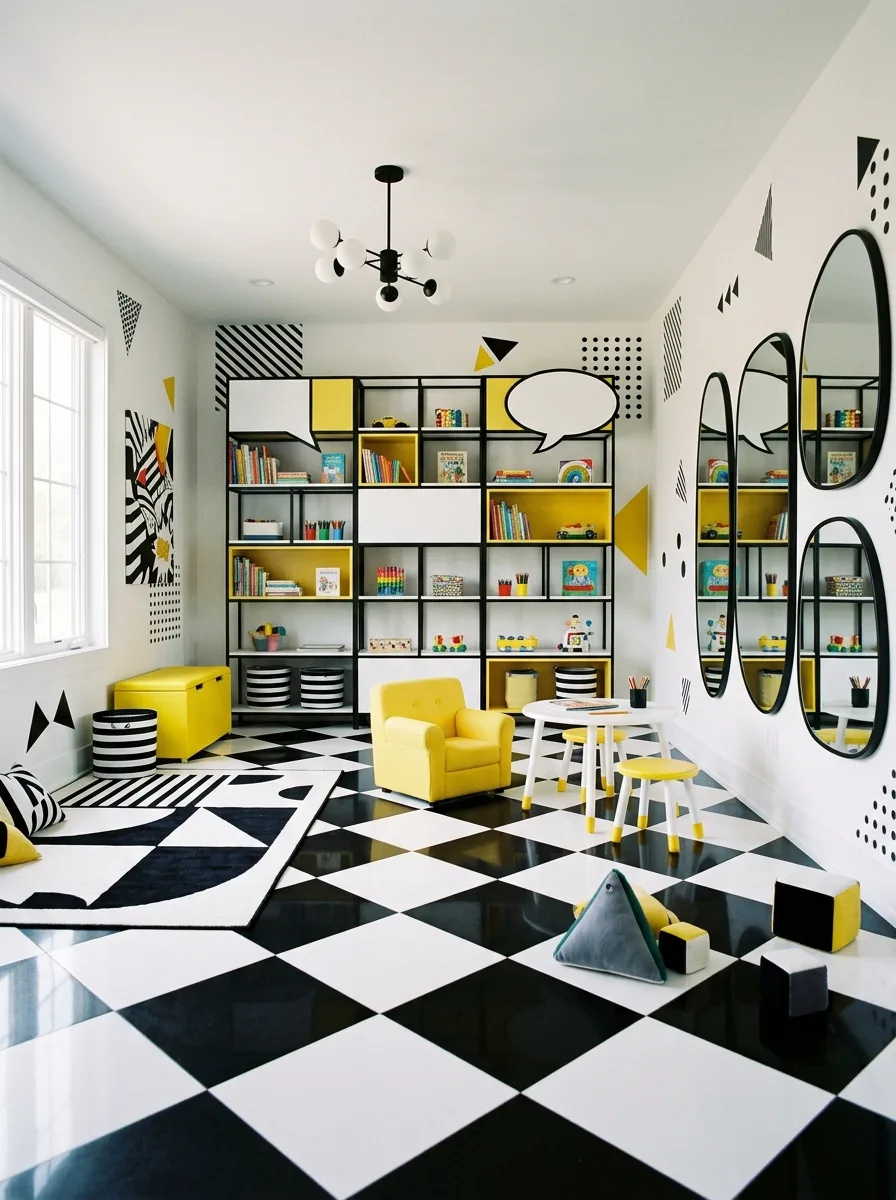
Lay a bold black and white checkerboard floor and pair it with sharp geometric wall decals — triangles, dots, stripes — scattered asymmetrically rather than in a repeating pattern.
Choose one single accent color, a bright yellow, for the room’s furniture: a yellow armchair, a yellow ottoman bench, yellow accents on an otherwise black-and-white storage unit. Round mirrors in black frames and comic-style speech-bubble cutouts on the shelving keep the mood graphic and playful.
This is one of the boldest, most design-forward rooms in the list. The trick to pulling it off is restraint on the color count — black, white, and exactly one accent color, nothing more.
A Medieval Castle Reading Nook
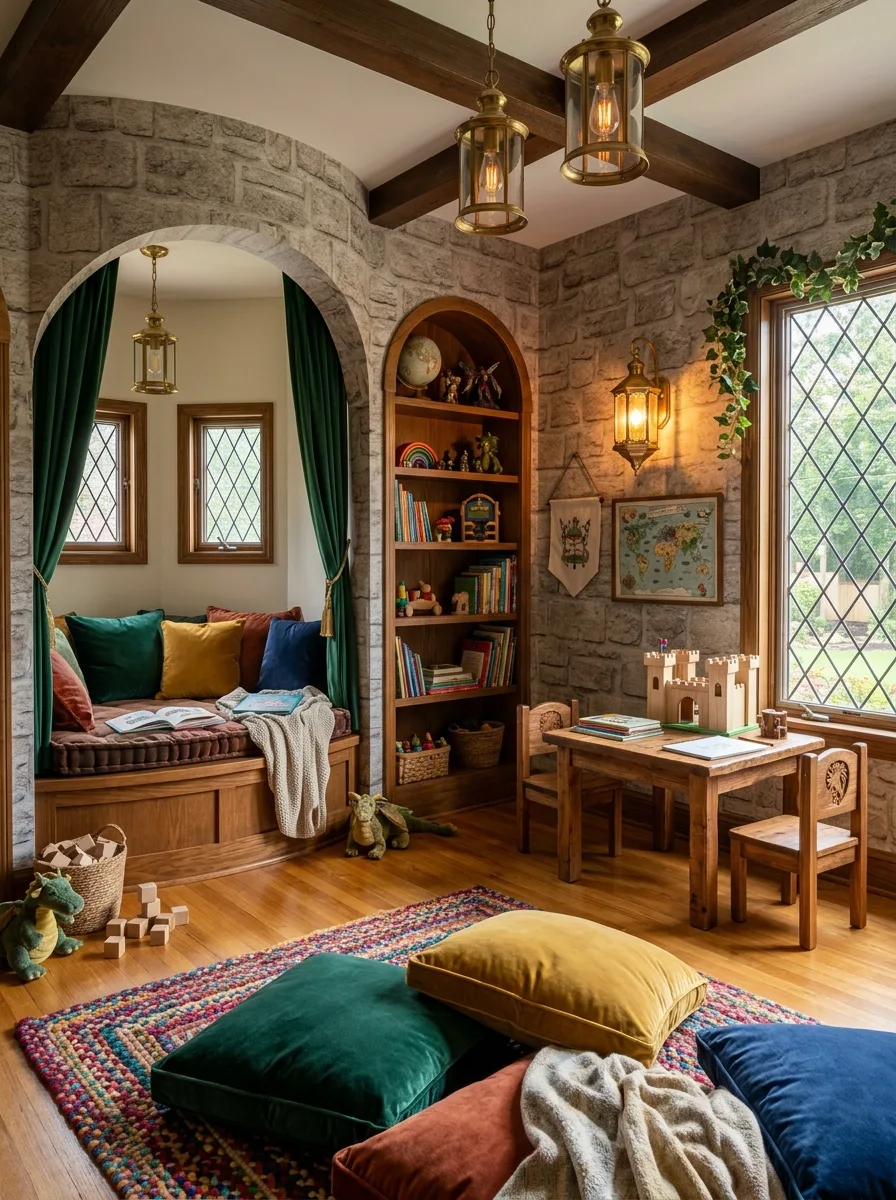
Line the walls in a faux stone texture and build a curved window seat behind a stone archway, dressed in jewel-toned velvet floor cushions in green, gold, red, and blue.
Add an arched wood bookshelf stocked with a globe and a scattering of fantasy figurines, brass lantern-style sconces along the walls, and a leaded-glass-style window for the full medieval effect. A multicolor braided rug and a wooden toy castle on a play table finish the room.
This theme carries real texture and weight that a lot of playroom themes skip entirely — the stone wall treatment alone is worth borrowing even without the rest of the castle elements.
A Tropical Aloha Corner
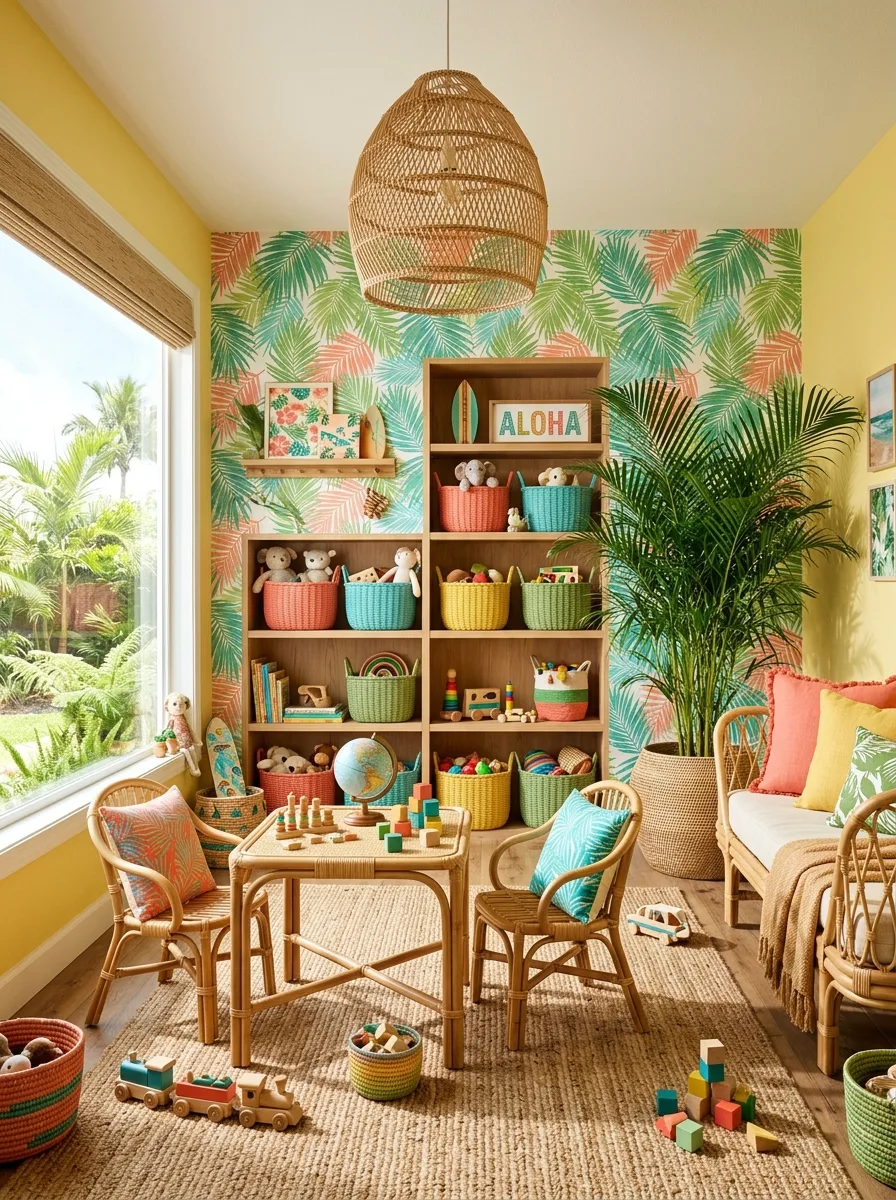
Wallpaper one wall in a bold tropical leaf print in coral, green, and cream, then pair it with warm yellow walls elsewhere in the room to keep the tropical print from overwhelming the space.
Furnish with woven rattan chairs and a matching daybed, cushioned in coral and teal, and stock an arched wood shelving unit with color-coded woven storage baskets. A large woven pendant light and a real potted palm bring the tropical mood into three dimensions rather than leaving it flat on the wallpaper.
This palette works particularly well in a sunny room, where the yellow walls and natural light reinforce the beachy mood the wallpaper is already suggesting.
A Hands-On STEM Exploration Room
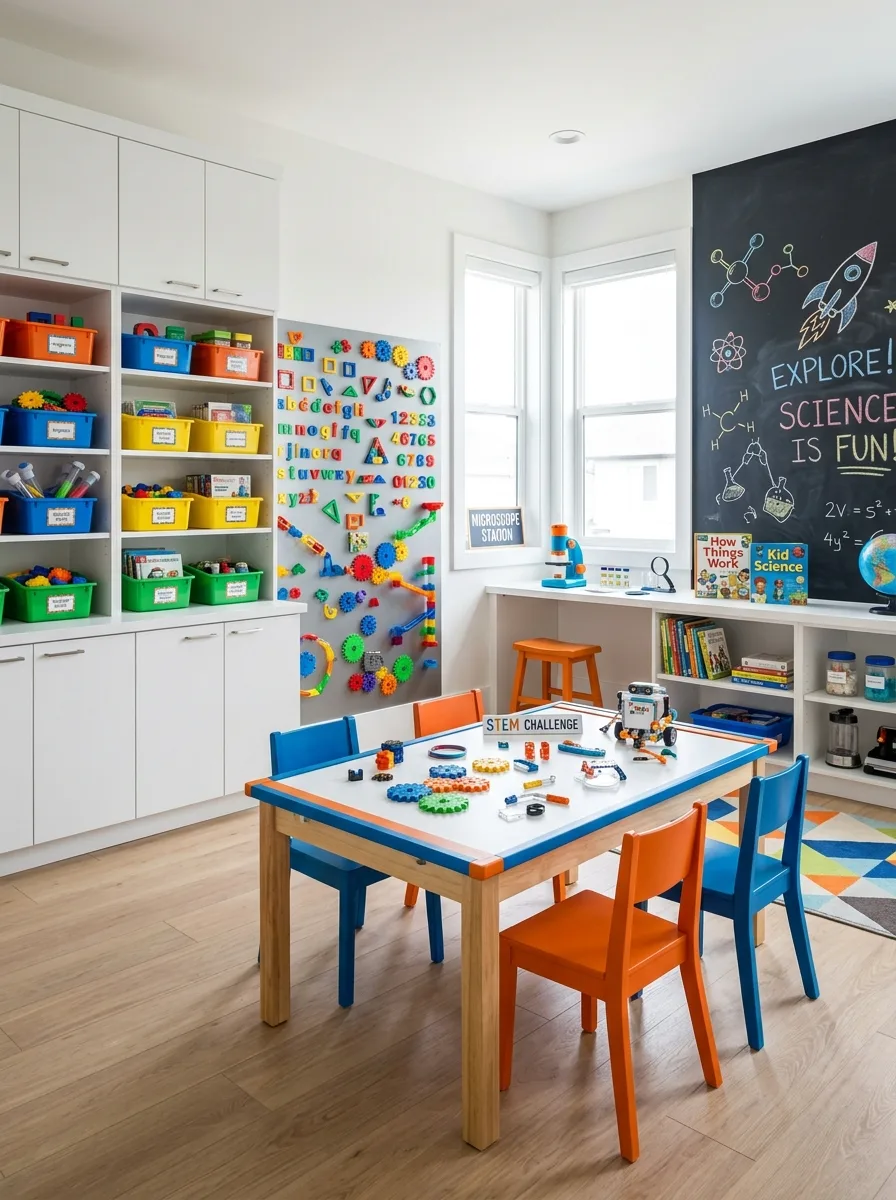
Dedicate a full wall to labeled, color-coded bin storage — organized by activity type rather than toy type — paired with a large magnetic gear wall where kids can build moving mechanisms directly on the vertical surface.
Add a full chalkboard wall for diagrams and equations, a real microscope station, and a sturdy work table in primary colors sized for group projects. Keep the rest of the room simple and white so the activity walls do all the visual work.
This is a strong template for an older kid’s playroom that needs to feel more like a lab than a toy room — the labeled, activity-based storage system is the detail most worth copying regardless of your room’s actual theme.
A Fruit-Print Toddler Playroom
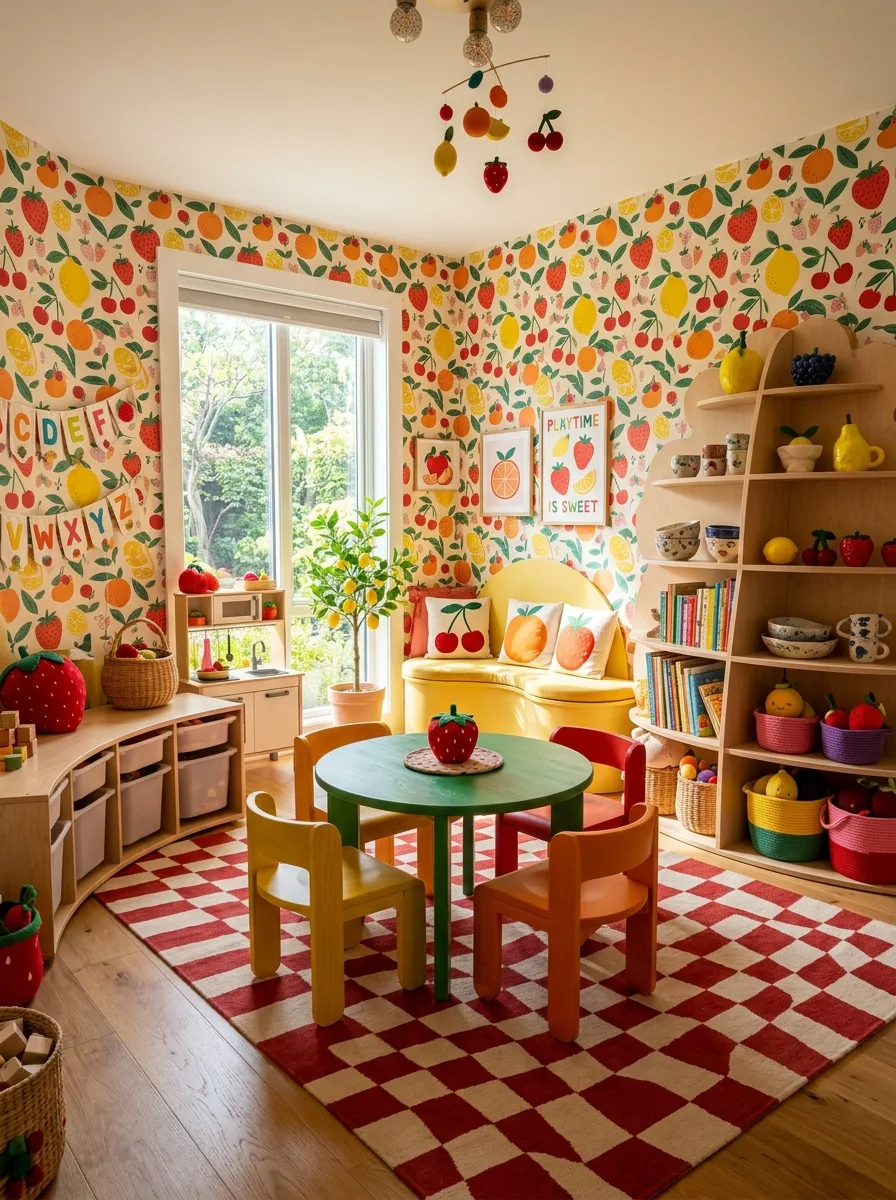
Wallpaper the entire room in a cheerful strawberry, lemon, and cherry print, then pick up the yellow and green from the print in a rounded storage unit and a curved bench seat.
Add a small round table with mismatched primary-colored chairs, a mini play kitchen in matching yellow tones, and a checked red-and-white rug that echoes a picnic blanket. Alphabet and fruit-themed banners strung along the walls finish the room without adding a second competing pattern.
This is one of the most toddler-appropriate rooms in the list — bright, orderly, and built at a scale that a very young child can actually navigate on their own.
A Rainbow Music and Performance Room
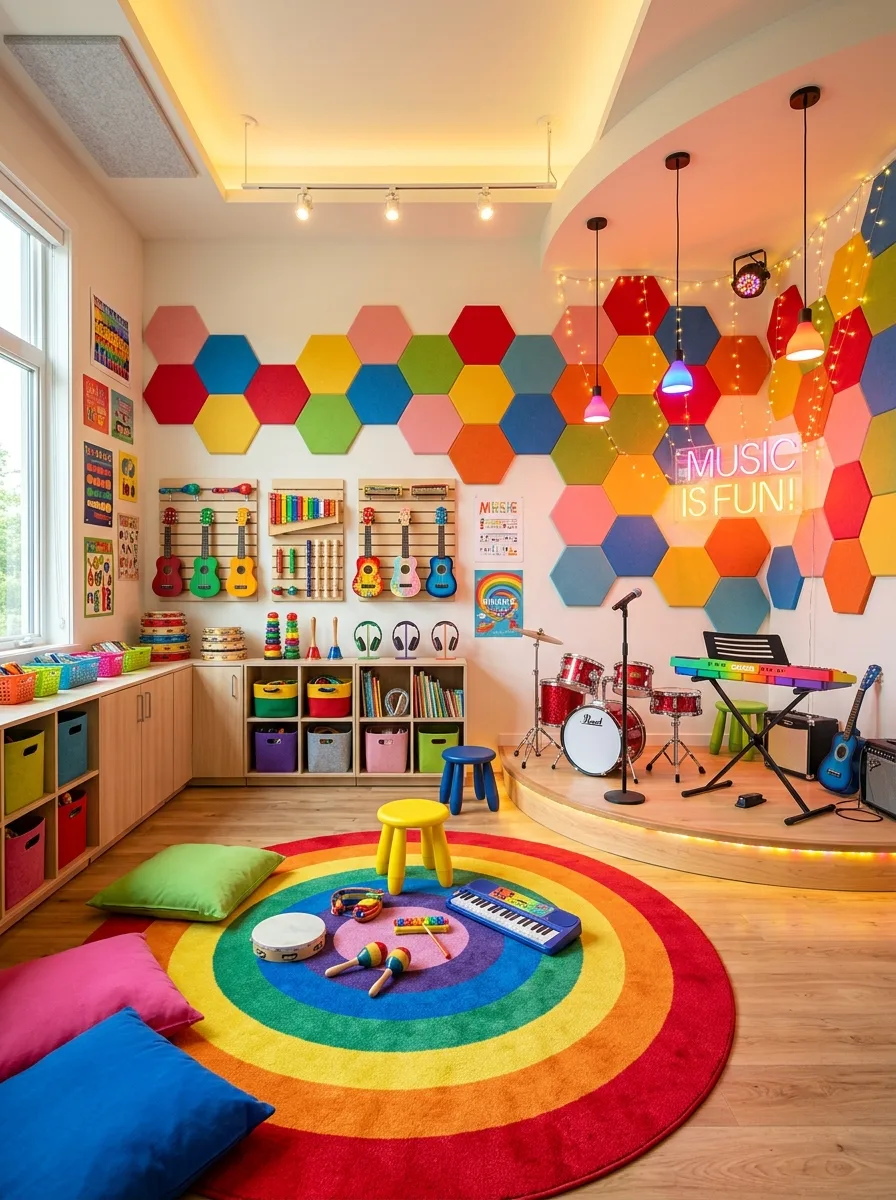
Cover one wall in a mosaic of colorful hexagon acoustic panels, both for visual impact and genuine sound dampening, then dedicate a raised platform stage in the corner for a full kid-sized drum kit, keyboard, and guitars mounted on the wall.
Add a neon sign reading a simple encouraging phrase, string lights woven through the ceiling, and a round rainbow rug at the center of the floor for group sing-alongs. Cubby storage in matching rainbow colors keeps instruments organized along the back wall.
This is the room to copy for a musically inclined kid — the raised stage and acoustic paneling are real functional upgrades, not just decoration, and they make an enormous difference in how the space actually gets used.
A Maximalist Rainbow Room With a Slide
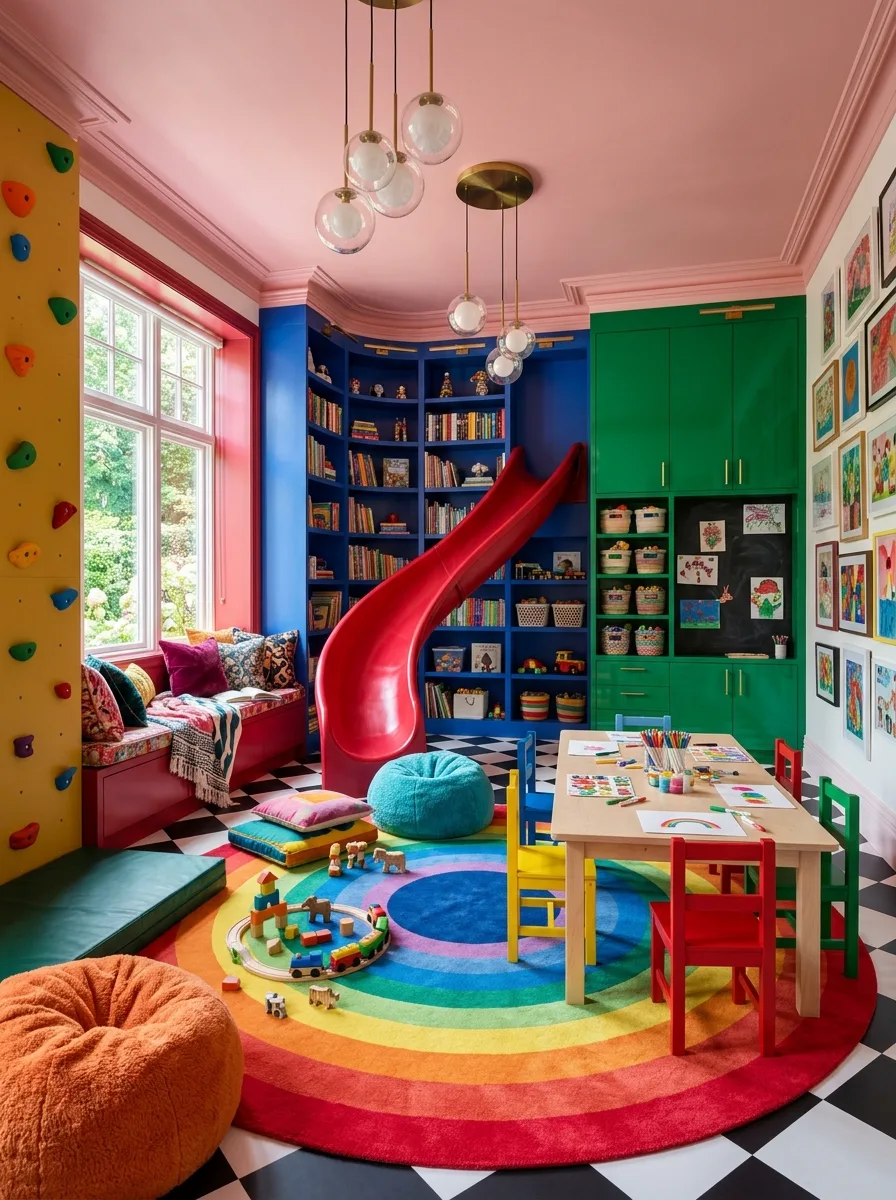
Commit fully to color: a pink ceiling, blue built-in bookshelves, green cabinetry, and a checkerboard black-and-white floor, all in the same room without a single neutral wall to soften it.
Add a bold red slide as the room’s central feature, connecting a climbing wall on one side to a window seat on the other, and anchor the floor with a rainbow target-pattern rug. Bubble-glass pendant lights in brass fixtures keep the lighting a touch more refined than the rest of the room’s playful energy.
This is the least restrained room in the entire list, and it works because every surface commits at full saturation rather than half-measures — a lesson worth remembering if you’re going to go bold at all. Go all the way, or don’t go.
Final Thoughts
The playrooms that actually work, the ones that don’t turn back into a pile of plastic bins within a month, all made a real decision early: what is this room for, and what should it feel like to walk into.
Theme or no theme, color or restraint, the through-line across every one of these rooms is commitment. A half-themed room with one dinosaur poster looks unfinished. A fully committed jungle gym or castle nook looks like a destination.
Storage matters more than most people plan for, and it works best when it’s baked into the room’s identity instead of bolted on as an afterthought once the toys arrive.
Pick a direction, commit to it fully, and let the room actually feel like somewhere a kid wants to be, not just somewhere their stuff gets stored.