
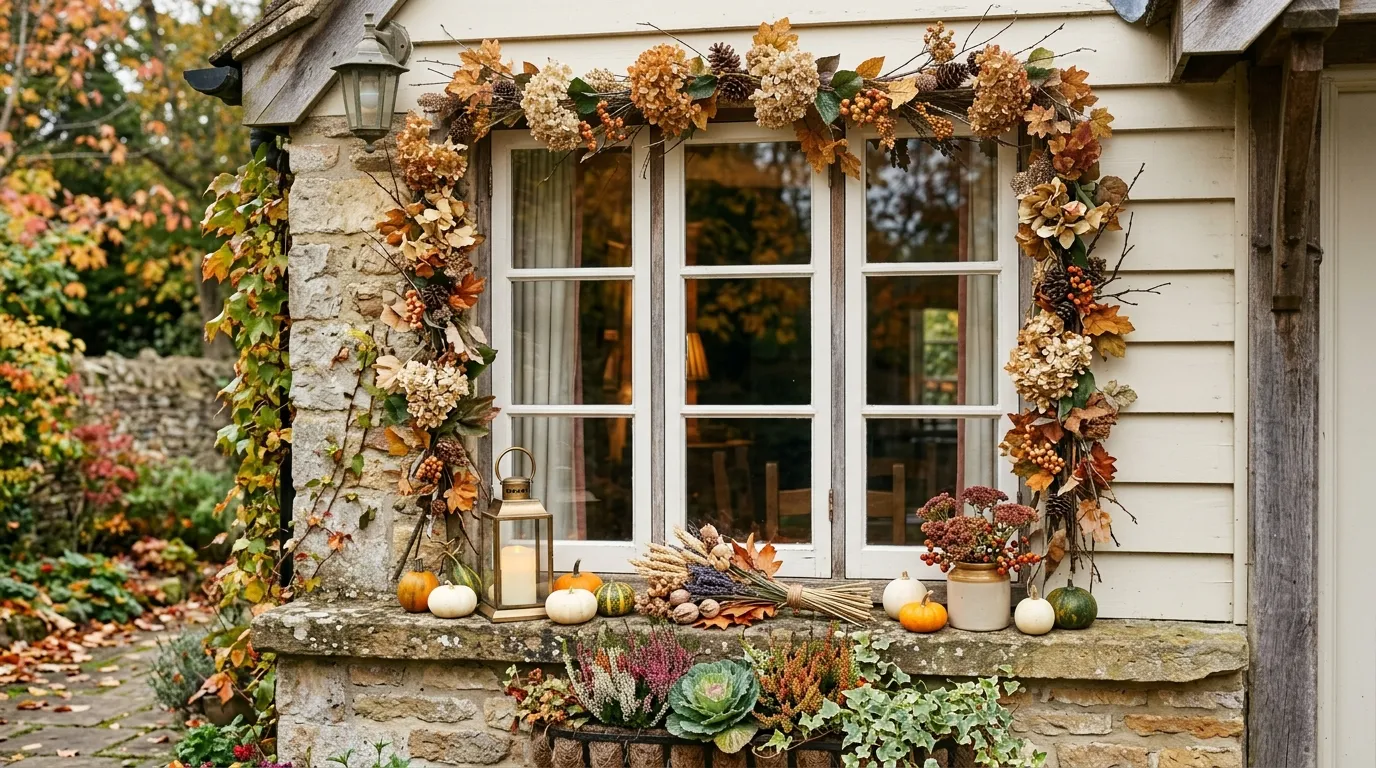
A window can be beautifully decorated and still look unfinished. The problem usually isn’t a lack of seasonal pieces. It’s that the pieces don’t belong to the same visual story.
A pumpkin on the sill, a garland around the frame, and a vase of branches can all look good separately, yet the finished window may still feel scattered. The strongest fall displays are composed as part of the whole room, with the architecture, furniture, colors, textures, and lighting working together.
That’s what makes complete fall window displays more useful than a pile of decorating tips. Instead of deciding what to add piece by piece, start with a finished look. Think about whether you want the room to feel traditional, quiet and Scandinavian, dark and atmospheric, rustic, refined, or something more playful.
Fall Window Display Ideas
Whimsical Umbrella and Leaf Mobile
This playful approach suspends an inverted umbrella from the curtain rod, instantly creating a canopy of vibrant autumn foliage. Rich red, orange, and yellow leaves cascade downward, catching the light against soft white sheers.
The surrounding space remains light and airy, allowing the hanging installation to act as the primary artistic statement. Twig accents at the base anchor the vertical movement, grounding the floating leaves with a touch of organic texture.
Keep the surrounding decor minimal so the whimsical umbrella installation remains the star of the room. The unexpected pairing of everyday objects with seasonal colors brings a delightful, imaginative energy to the window.
Traditional Pumpkin and Antique Brass Bay Window
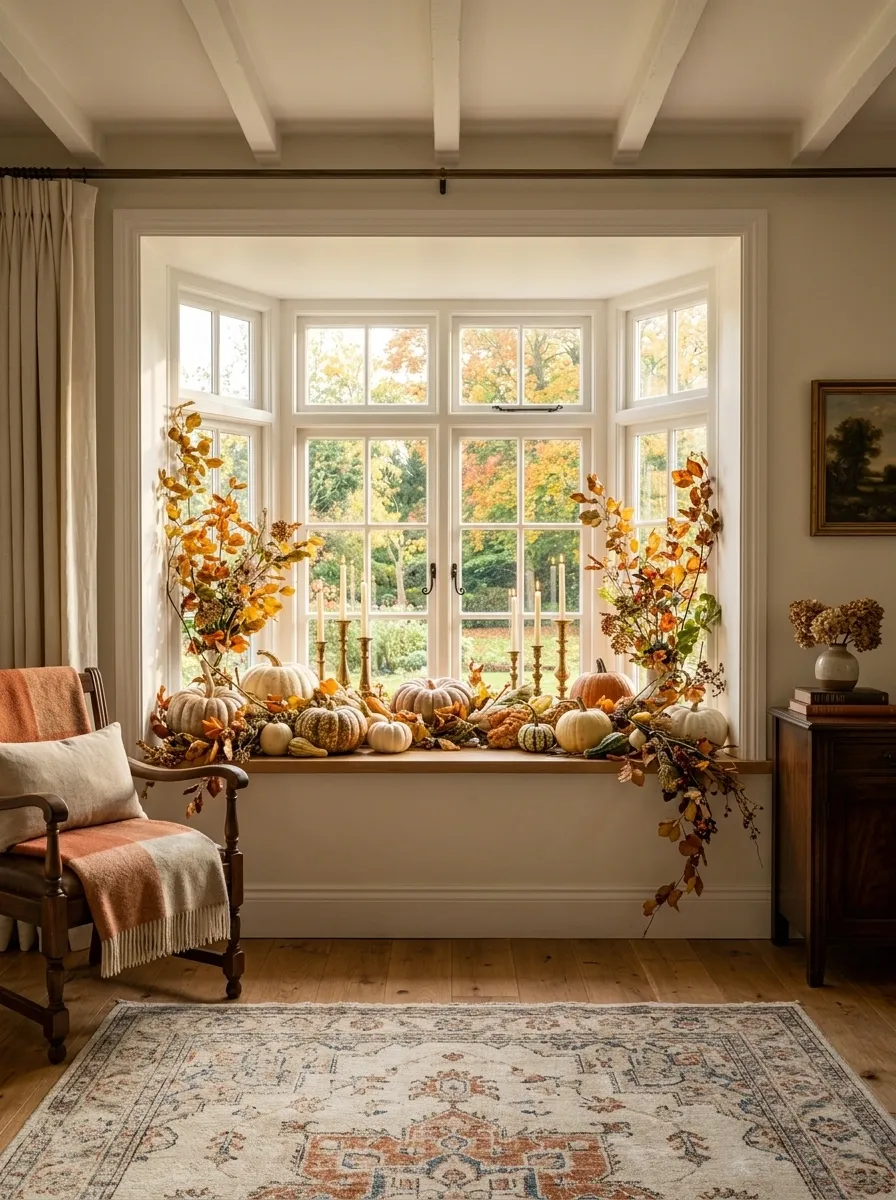
This bay window takes the classic route, but the finished composition feels collected rather than crowded. A mix of cream, muted orange, and weathered pumpkins sits at different heights across the sill, while antique brass candlesticks and a loose autumn garland add vertical movement.
The rest of the room carries the same story through walnut furniture, an aged patterned rug, and soft ivory walls. That connection matters. The display doesn’t feel like a seasonal object dropped into an unrelated room.
Keep the taller pieces toward the outer edges so the center of the window remains visually open. The layered materials give this design its character, while the restrained palette keeps it from becoming overly themed.
Sunlit Floating Leaf Strands
A simple arrangement of suspended autumn leaves transforms a standard window into a dynamic shadow play. Staggered strands of red, orange, and green maple leaves catch the afternoon sun, casting dancing silhouettes across the wooden floorboards.
The rest of the interior stays remarkably understated, relying on natural light and clean window frames to frame the outdoor view. This technique lets the seasonal palette speak entirely for itself without adding unnecessary clutter to the sill.
Space the vertical strands unevenly to mimic the natural fall of leaves from a canopy. The transparent quality of the leaves allows sunlight to filter through, illuminating every rich autumn hue throughout the space.
Twilight Glow With White Pumpkins
As the autumn evening rolls in, a window sill dressed in warm candlelight and pale pumpkins creates an instant sanctuary. Soft white pumpkins sit alongside glowing pillar candles, surrounded by scattered pinecones and dried leaves that capture the fading twilight outside.
The room beyond shares this intimate atmosphere, featuring warm wood tones and soft textiles that enhance the cozy mood. The transition from daylight to candlelight brings an inviting, peaceful energy to the entire evening space.
Cluster the candles at varying heights to maximize the warm glow reflecting against the glass. The restrained palette of ivory and rich brown keeps the arrangement sophisticated while celebrating the quiet beauty of the season.
Soft Country Window With Dried Wheat and Linen
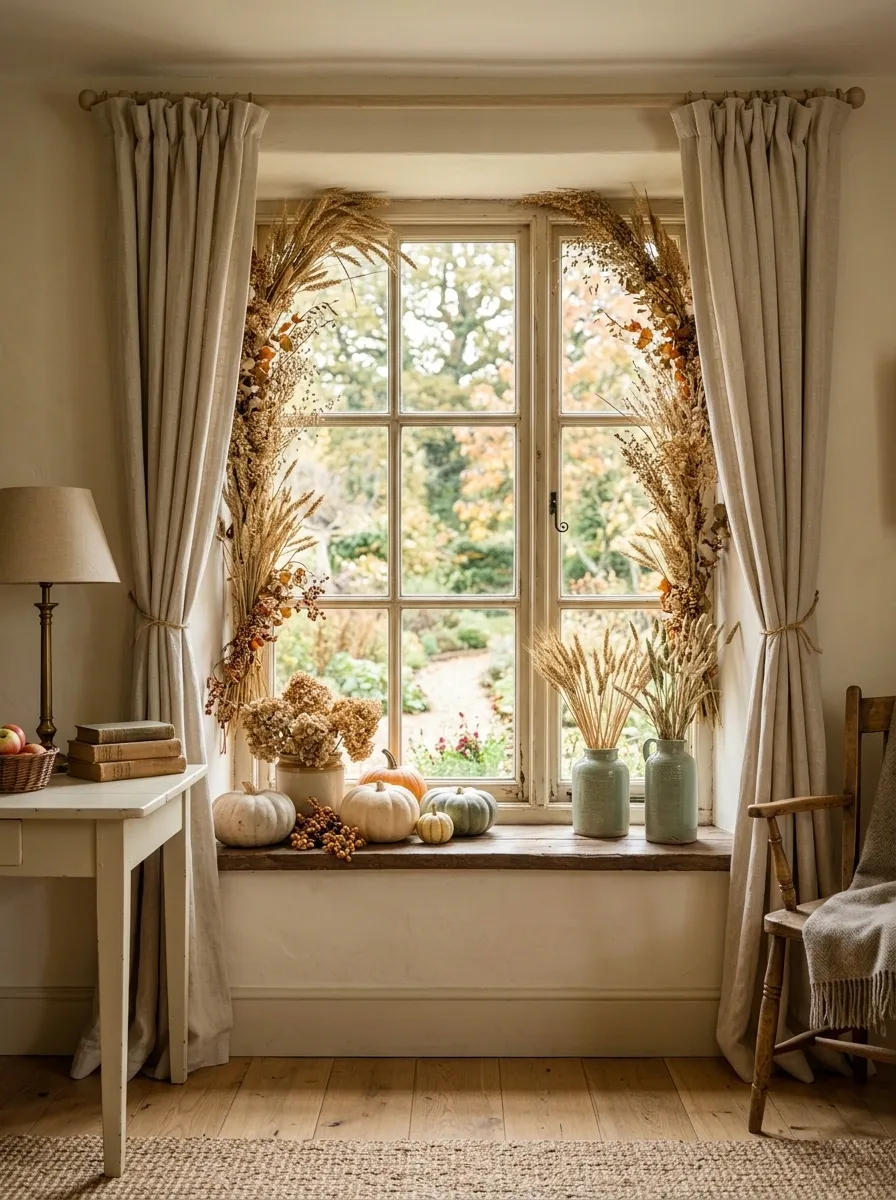
A farmhouse window feels gentler when autumn is expressed through texture rather than bright seasonal color. Loose bundles of dried wheat frame the glass, while oatmeal linen curtains, pale pumpkins, weathered wood, and muted sage create a quiet country composition.
The surrounding room stays simple with a painted table, natural flooring, and handmade-looking ceramics. Nothing competes with the window, so the dried grasses become the main vertical element.
This works because the materials repeat naturally throughout the space. Linen appears again in the seating, wood appears on nearby furniture, and the cream tones bridge the wall and seasonal accents. The result feels warm without becoming visually heavy.
Minimalist Autumn Leaf Dreamcatcher
A singular embroidery hoop becomes a modern frame for a nature-inspired window ornament. A large pressed maple leaf rests in the center, while delicate dangling oak and maple leaves hang below, swaying gently against a backdrop of soft curtains and green foliage.
The surrounding interior embraces clean lines and neutral textures, giving the handcrafted mobile plenty of breathing room. The delicate hanging structure introduces a subtle, artisanal touch that feels completely at home in a curated room.
Hang the piece slightly off-center to create a more organic, collected composition rather than a rigid display. The lightweight structure adds movement and seasonal charm without overwhelming the architecture of the window.
Copper and Evergreen Kitchen Window
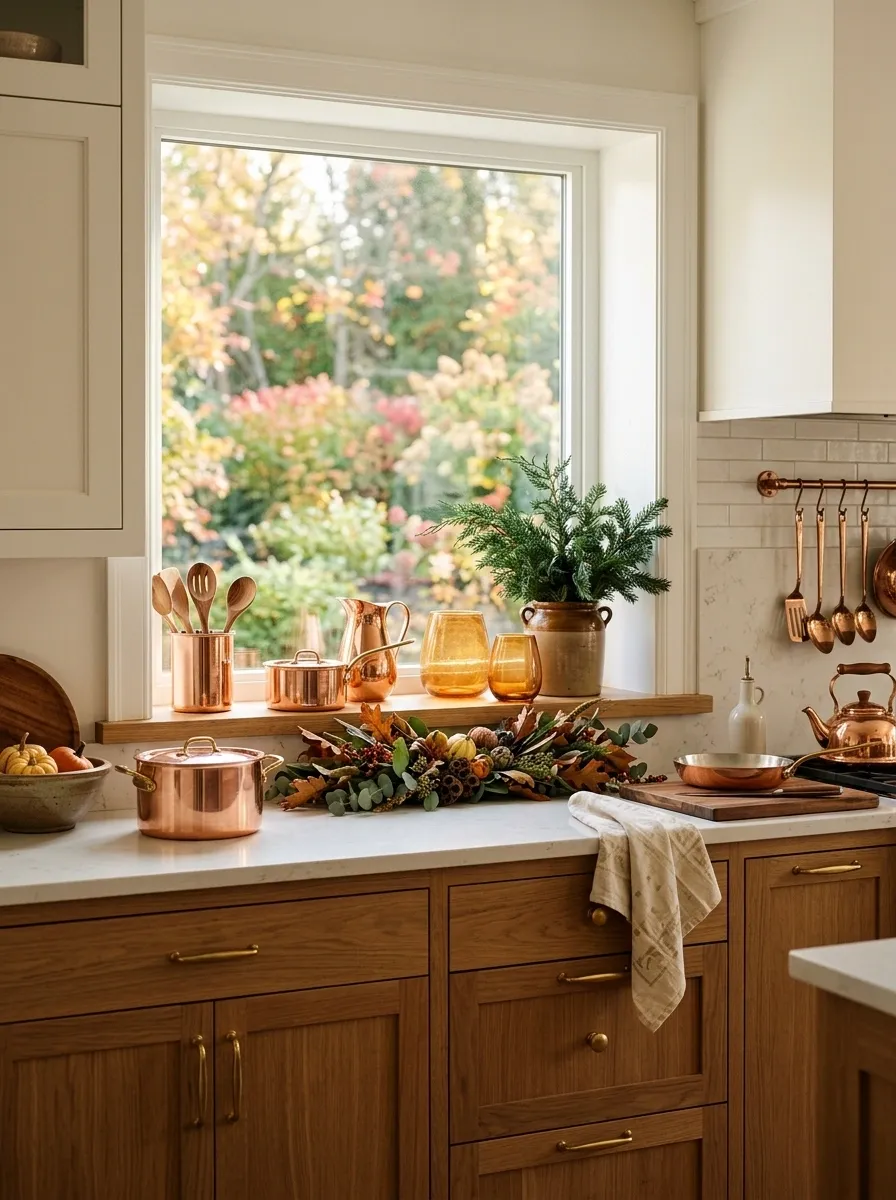
A kitchen window can carry a stronger autumn mood when the styling borrows from the room’s existing materials. Here, copper cookware, amber glass, dark green branches, and a narrow arrangement of seasonal foliage sit against a warm white kitchen with natural oak cabinets.
The window is clearly part of the kitchen rather than a separate display zone. Copper appears on the counter, oak repeats through the cabinetry, and the greenery adds the darker note that balances the lighter finishes.
The composition works particularly well when the sill is deep enough for a few objects but not so deep that it interferes with food preparation. Keep the arrangement compact and let the materials, rather than a large quantity of decor, create the autumn feeling.
Twilight Garland and Glowing Mini Pumpkins
A dense evergreen and pinecone garland traces the length of the window sill, woven with tiny fairy lights and miniature pumpkins. The warm twinkle lights reflect softly against the glass while framing the deep twilight view of changing trees outside.
The interior relies on deep wood finishes and evening shadows to let the illuminated garland stand out as the main focal point. The combination of evergreens and autumn produce bridges the gap between late fall and the coming winter months.
Weave the fairy lights deep within the foliage so the individual bulbs remain hidden, creating an ethereal, glowing effect. This layered approach adds instant warmth and ambiance to any room as the sun sets early.
Black-Framed Window With Sculptural Autumn Branches
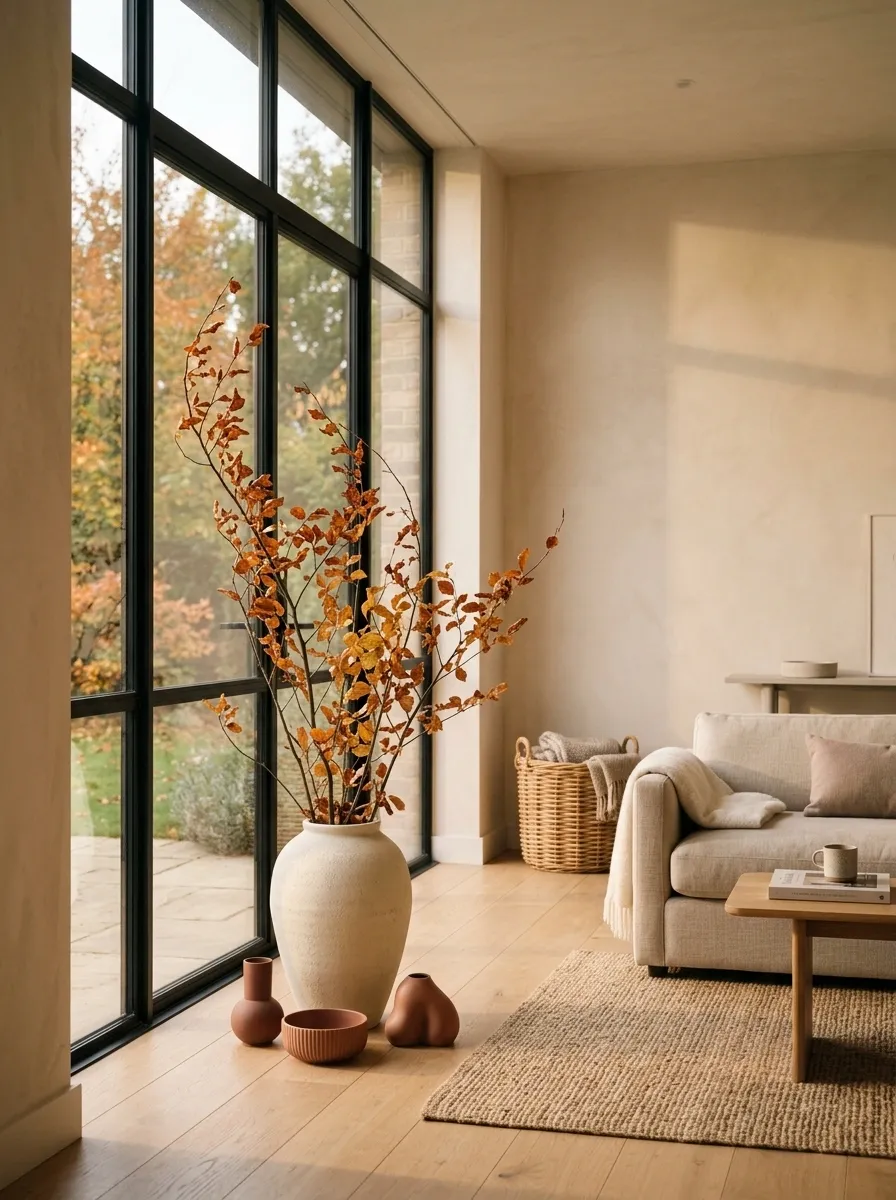
A black-framed window needs very little decoration to make an impact. This version uses oversized sculptural branches in a pale ceramic vessel, with just a few muted rust accents around the base.
The surrounding room is deliberately quiet. Pale plaster walls, low oak furniture, neutral upholstery, and open floor space give the strong window frame enough breathing room. The result feels modern without looking cold.
The branches are the key visual element because they echo the vertical geometry of the window while introducing an organic shape. Keep the supporting decor low and sparse. Too many small objects would weaken the architectural quality that makes this composition memorable.
Vintage Cottage Window With Lace, Apples, and Amber Glass
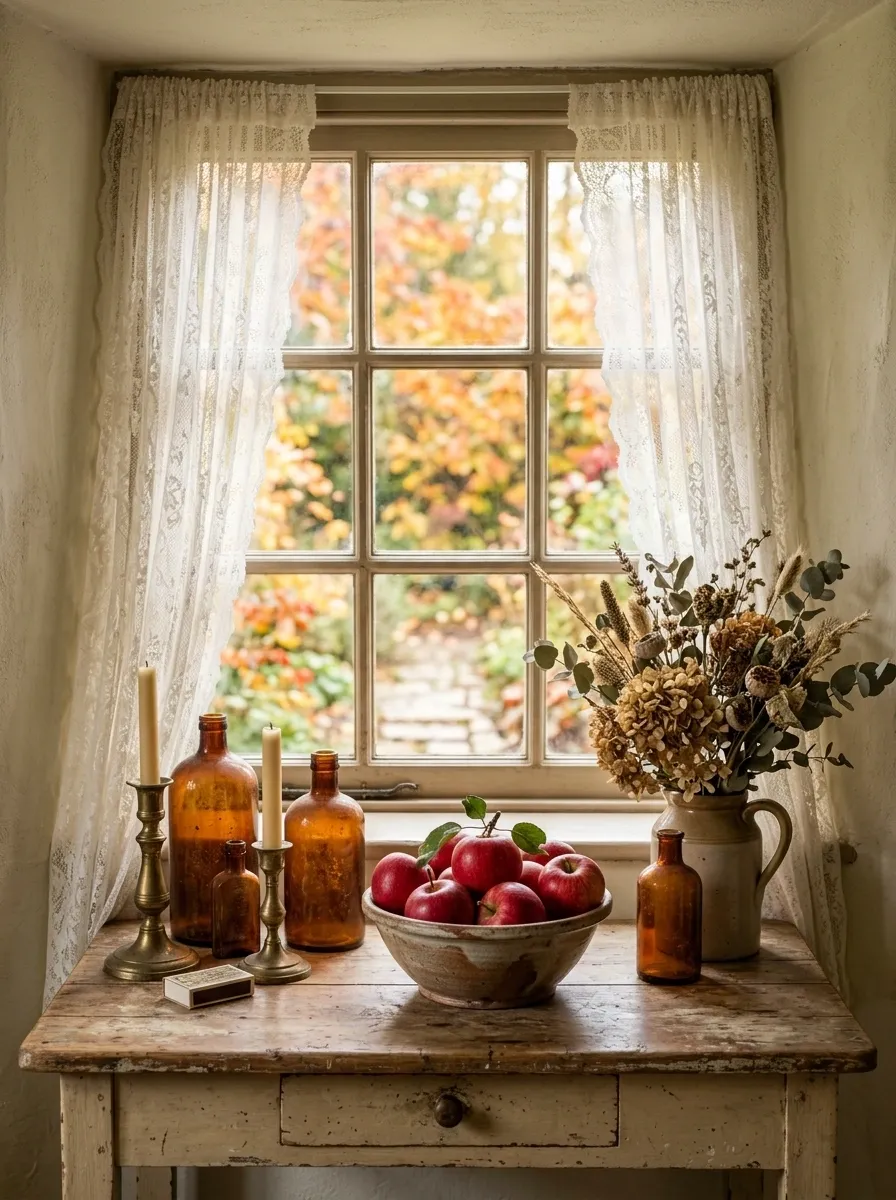
This little cottage window leans into the charm of old-fashioned autumn decorating without making the space feel like a themed set. Delicate lace curtains soften the glass, while amber bottles, red apples, aged candlesticks, and a loose arrangement of dried garden flowers fill the lower part of the composition.
A worn wooden table sits beneath the window, giving the display a natural base. Painted wood, faded brass, and warm cream tones tie the seasonal details into the architecture.
The apples are what keep this arrangement from feeling overly muted. Their color gives the eye a small point of focus without requiring a large amount of orange decor. Let the older pieces look slightly imperfect. That age is part of the visual character.
Minimal White Window With One Large Fall Arrangement
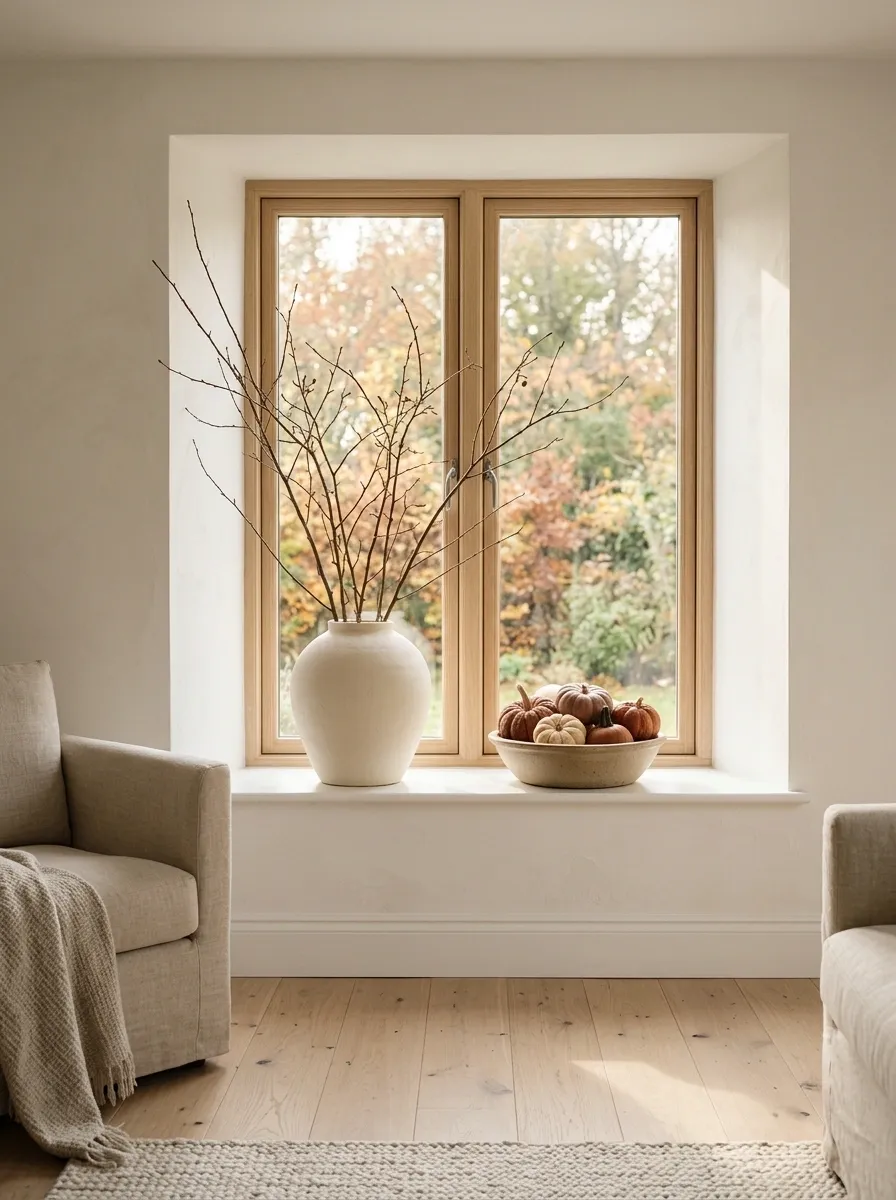
A quiet white room takes a completely different approach. Instead of filling the sill, one oversized ceramic vessel holds sculptural branches, accompanied by a single low bowl of small pumpkins.
The surrounding furniture stays sparse, with pale oak, warm white walls, and simple upholstery creating plenty of negative space. Autumn appears through shape and a restrained rust tone rather than a large collection of seasonal objects.
This composition works because the branches give the window height while the bowl provides a low horizontal counterpoint. Everything else gets out of the way. In a minimalist room, adding more decoration would actually weaken the finished look.
Layered Dining Room Window With Candlelight
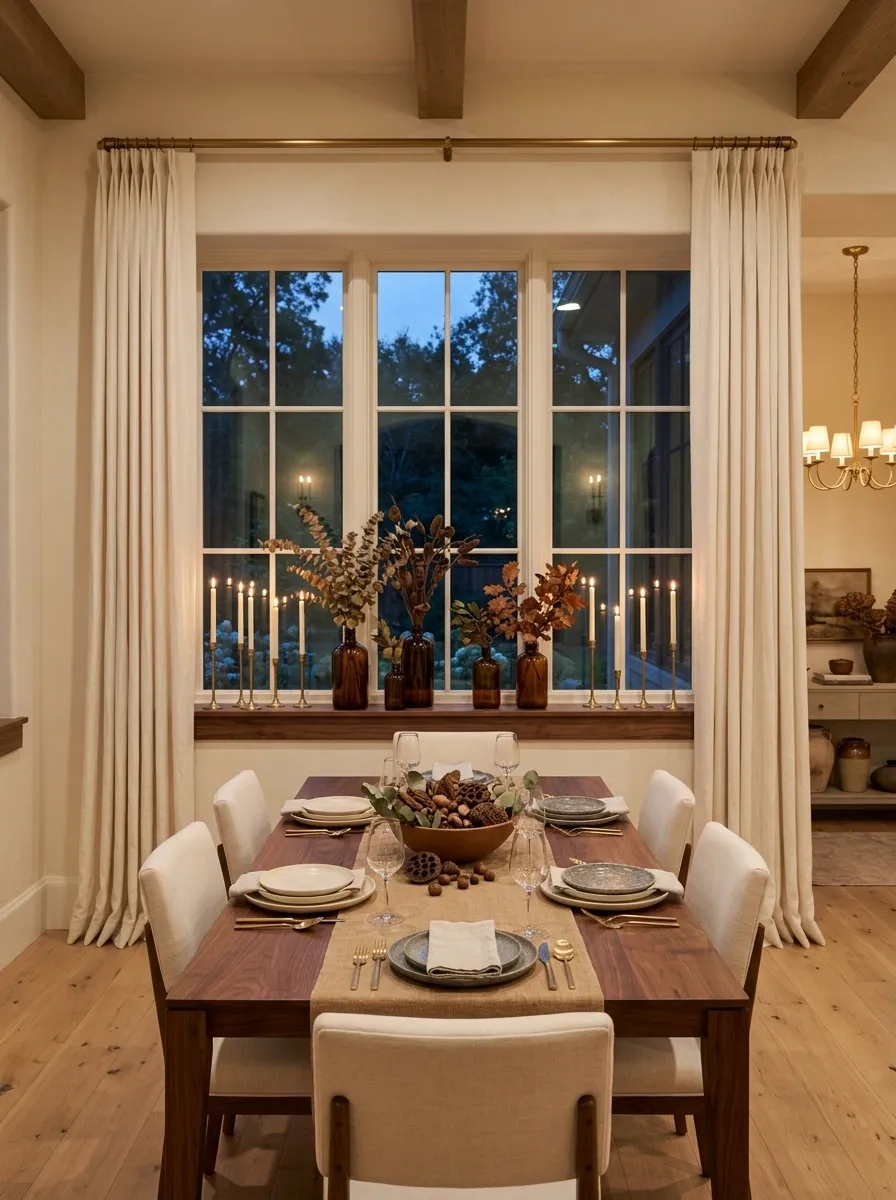
This dining room window is designed to change character after sunset. Softly gathered curtains frame autumn branches, taper candles, and low seasonal foliage, while a long dining table repeats the same warm linen and natural wood tones.
During the day, the arrangement reads as a calm autumn centerpiece. In the evening, the candles add a second layer of visual interest as their reflections appear in the glass.
The lighting is what separates this design from a daytime-only display. Keep the candleholders narrow and the branches high enough to create a silhouette without blocking the view across the table.
Rustic Cabin Window With Plaid and Pinecones
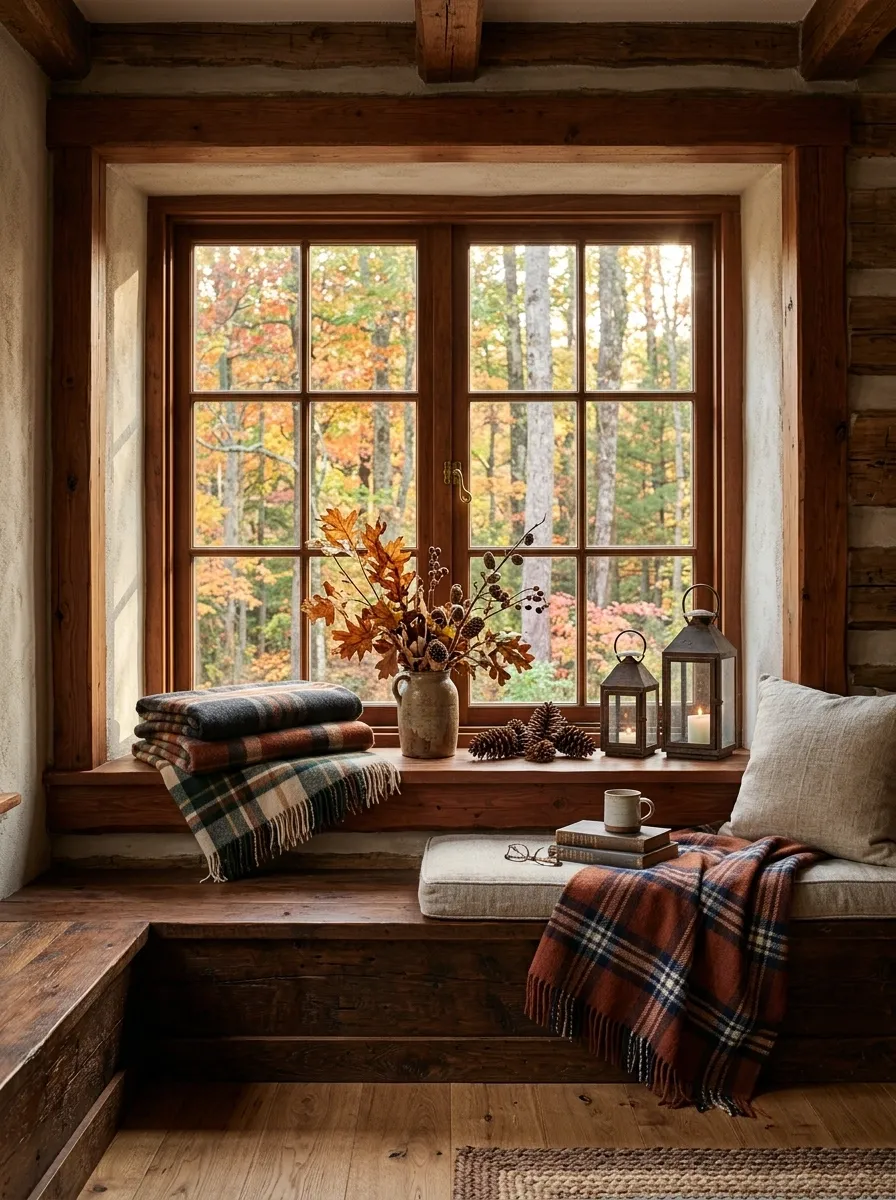
A deep-set cabin window becomes part of a cozy seating arrangement with wool plaid, rough ceramic vessels, pinecones, lanterns, and dried leaves. The seasonal styling spreads naturally onto the bench below rather than stopping abruptly at the sill.
Chestnut wood provides most of the visual warmth, while charcoal, cream, rust, and pine green keep the palette connected to the surrounding landscape. The window feels like part of the architecture rather than a decoration placed in front of it.
The lower bench is especially important here. It gives the eye a grounded horizontal line beneath the tall window and provides a place for the textiles to continue the color story.
architecture
seasonal warmth
outdoor connection
visual relief
Elegant Neutral Window With Cream Pumpkins and Velvet
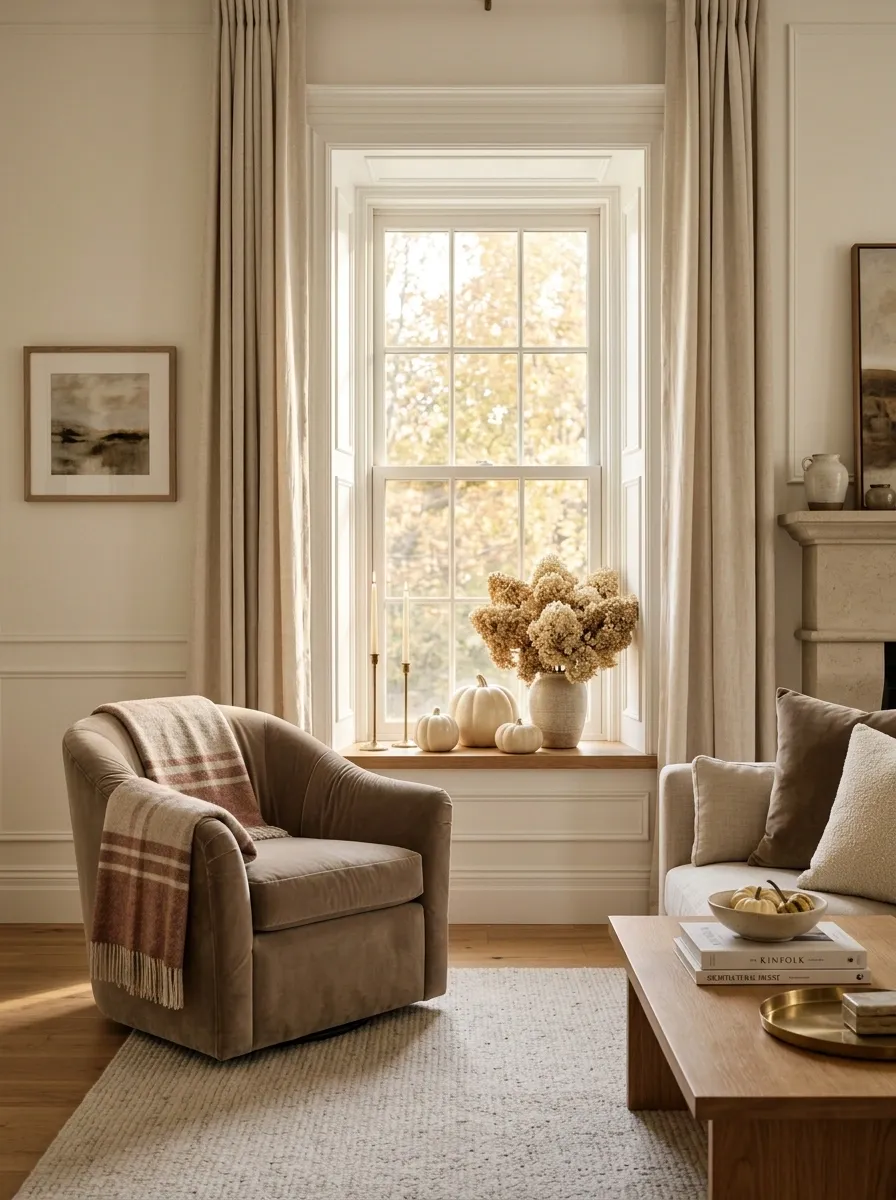
A more refined room can still feel distinctly autumnal without orange becoming the dominant color. This composition uses cream pumpkins, dried hydrangeas, taupe velvet, brushed brass, and warm stone tones around a softly framed window.
The surrounding furniture is substantial enough to give the display a luxurious sense of scale. A velvet chair, pale rug, and warm wood table repeat the same muted palette so the window doesn’t feel like a separate seasonal vignette.
The restraint is deliberate. The seasonal pieces stay within the existing room palette, which makes this design easier to live with for an extended part of the season.
Front Room Window Styled for Street Appeal
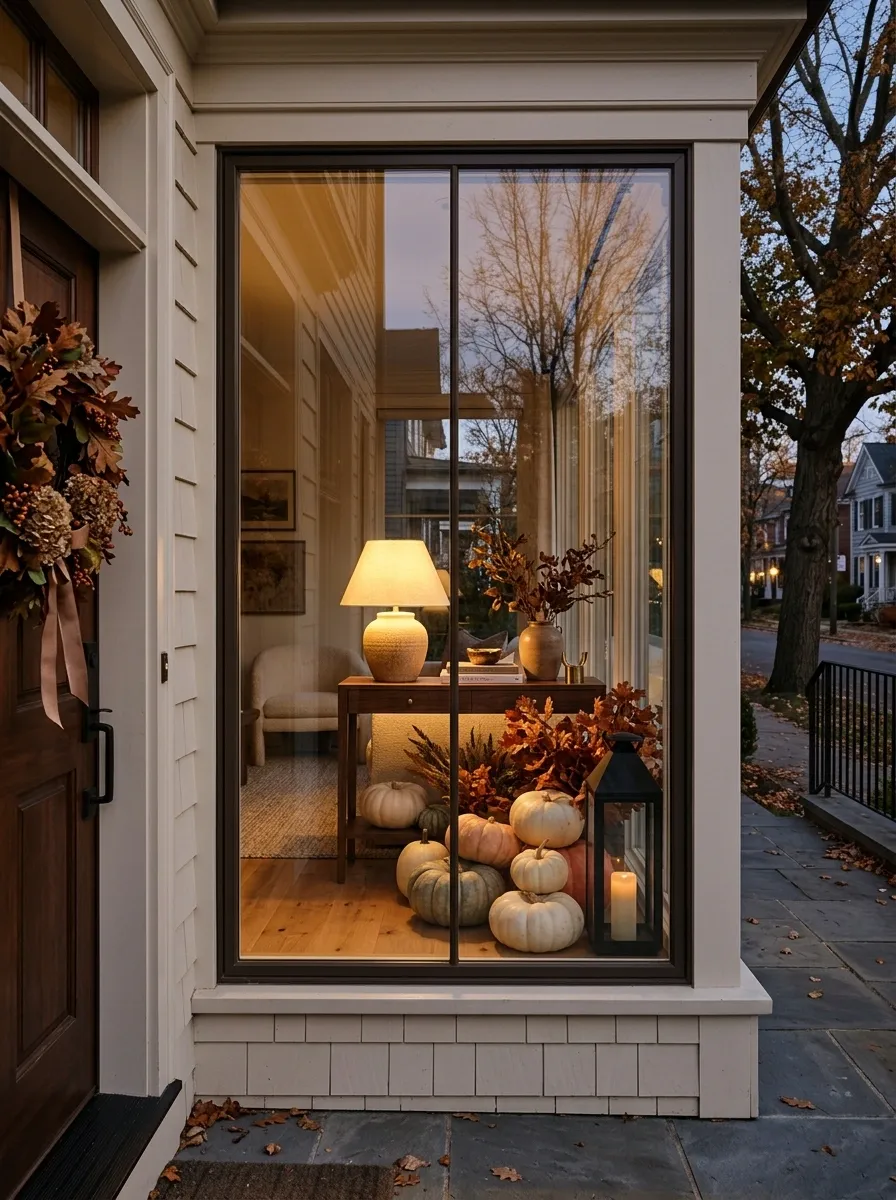
This front-facing window is designed to look just as considered from outside as it does from inside. A few pumpkins sit at different heights near the lower edge, a tall lantern creates a strong vertical shape, and loose foliage fills the spaces between them without covering the glass.
Inside, a narrow console and warm table lamp extend the display into the room. At dusk, the interior lighting becomes part of the composition, making the autumn colors easier to read from the street.
The key is silhouette. Large shapes are easier to recognize through glass than collections of tiny objects, so keep the arrangement simple and let the spacing between pieces do some of the work.
Scandinavian Autumn Window With Oatmeal and Rust
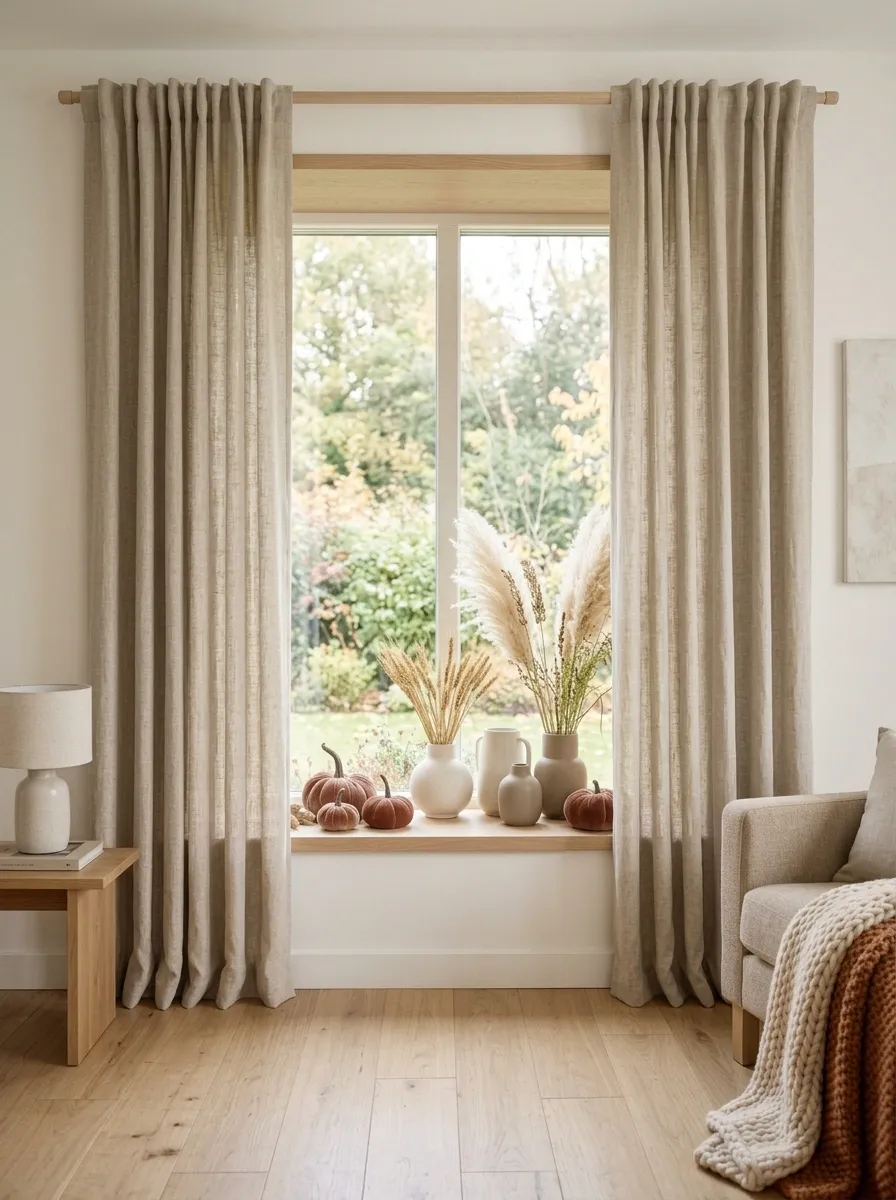
A Scandinavian-inspired window looks strongest when autumn is reduced to a few earthy colors and plenty of breathing room. Oatmeal curtains frame pale oak trim, while handmade ceramics, dried grasses, and muted rust pumpkins create a soft seasonal layer.
The room stays bright with warm white walls and simple furniture. Texture matters more than quantity here. Rough ceramics, woven fabric, natural wood, and dried grasses provide enough variation to keep the restrained palette interesting.
I would avoid glossy ornaments or highly saturated orange. The quiet colors are what make this composition feel connected to Scandinavian interiors rather than conventional fall decorating.
Dramatic Stone Fireplace Window Composition
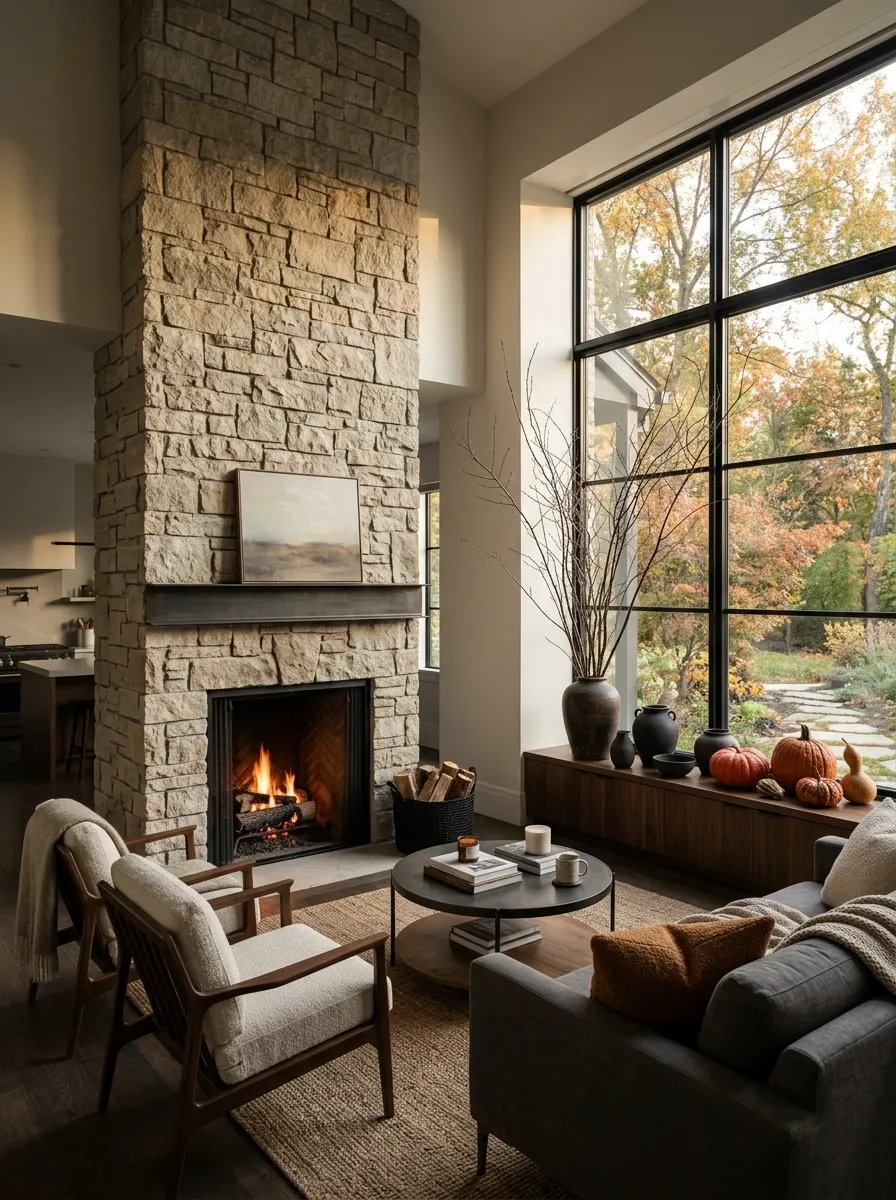
A large window beside a stone fireplace becomes part of a single architectural composition. Tall branches rise beside the glass, dark pottery sits lower down, and a few deep orange pumpkins bring warmth without competing with the stone.
The seating area reinforces the arrangement through charcoal upholstery, dark wood, and warm cream textiles. Instead of treating the fireplace and window as separate focal points, the design uses them as two vertical anchors around the room.
That relationship gives the space much more structure. Keep the furniture low enough that the stone and window remain visible from the main seating position.
Romantic Cottage Window With Soft Floral Layers
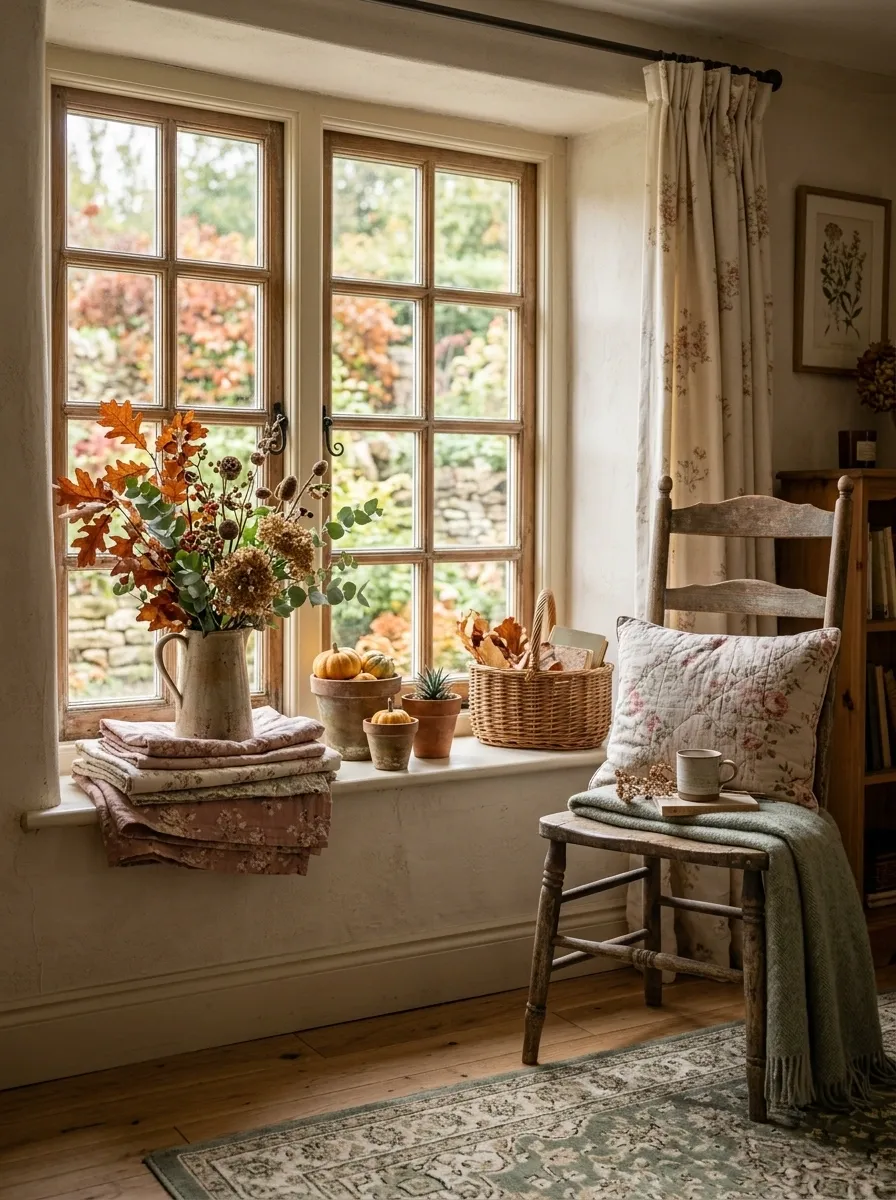
A bright cottage room gets a softer autumn treatment through faded floral textiles, pale terracotta, wicker, ceramic pitchers, and loose seasonal stems around a divided-pane window.
Instead of using strong orange or dark wood, the design stays within cream, dusty rose, faded terracotta, and muted green. A vintage chair sits beside the window, giving the display a reason to extend beyond the sill.
The flowers should look slightly loose and natural rather than tightly arranged. That relaxed shape keeps the room from feeling formal and lets the old-fashioned materials remain the focus.
Modern Black and Terracotta Window Wall
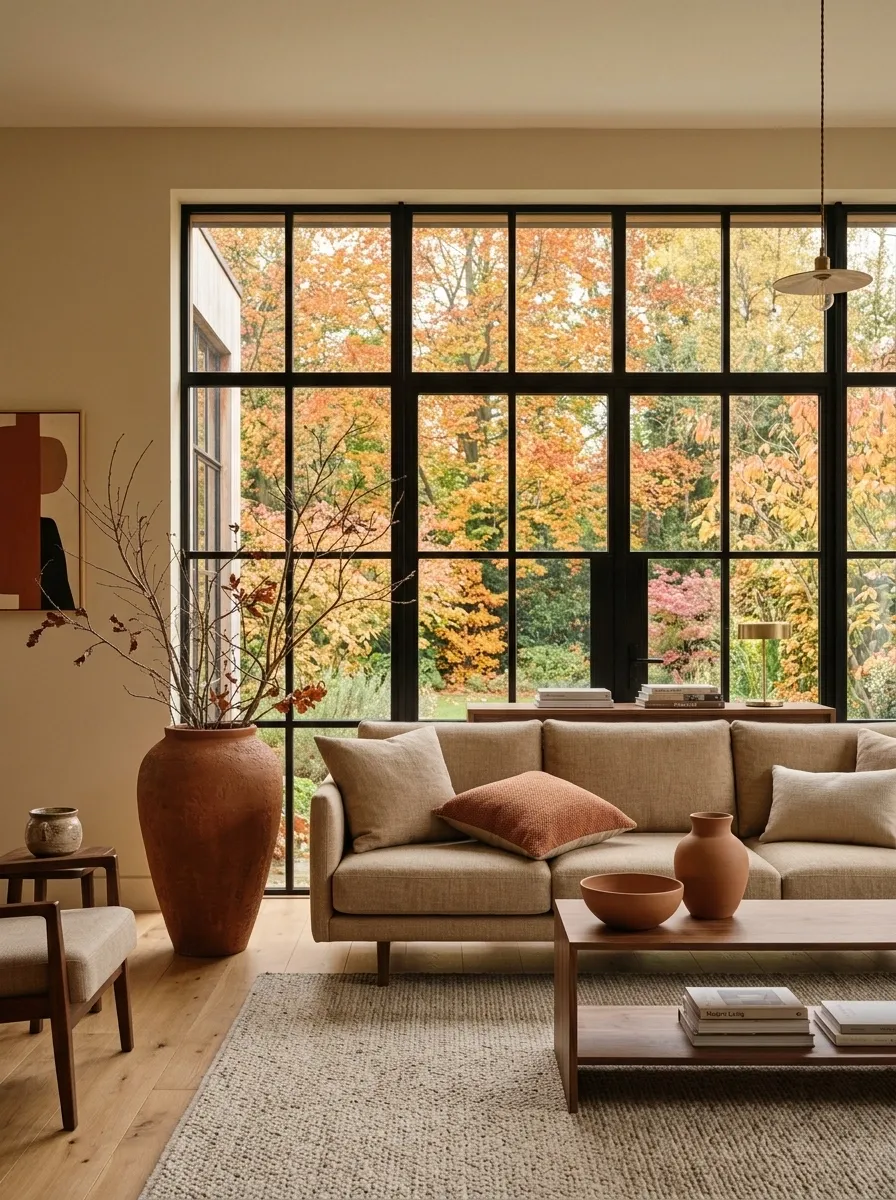
This contemporary composition uses a large black-framed window wall as the architectural backdrop for a handful of terracotta vessels, warm beige upholstery, walnut furniture, and sculptural branches.
The seasonal color is concentrated rather than scattered. A rust-toned ceramic piece sits near the floor, another appears on a console, and the same earthy note returns in a small cushion. That repetition makes the room feel considered.
The window does most of the visual work, so avoid filling every available surface. A few strong forms are more effective than a collection of small fall decorations.
Small Apartment Window With Compact Layered Styling
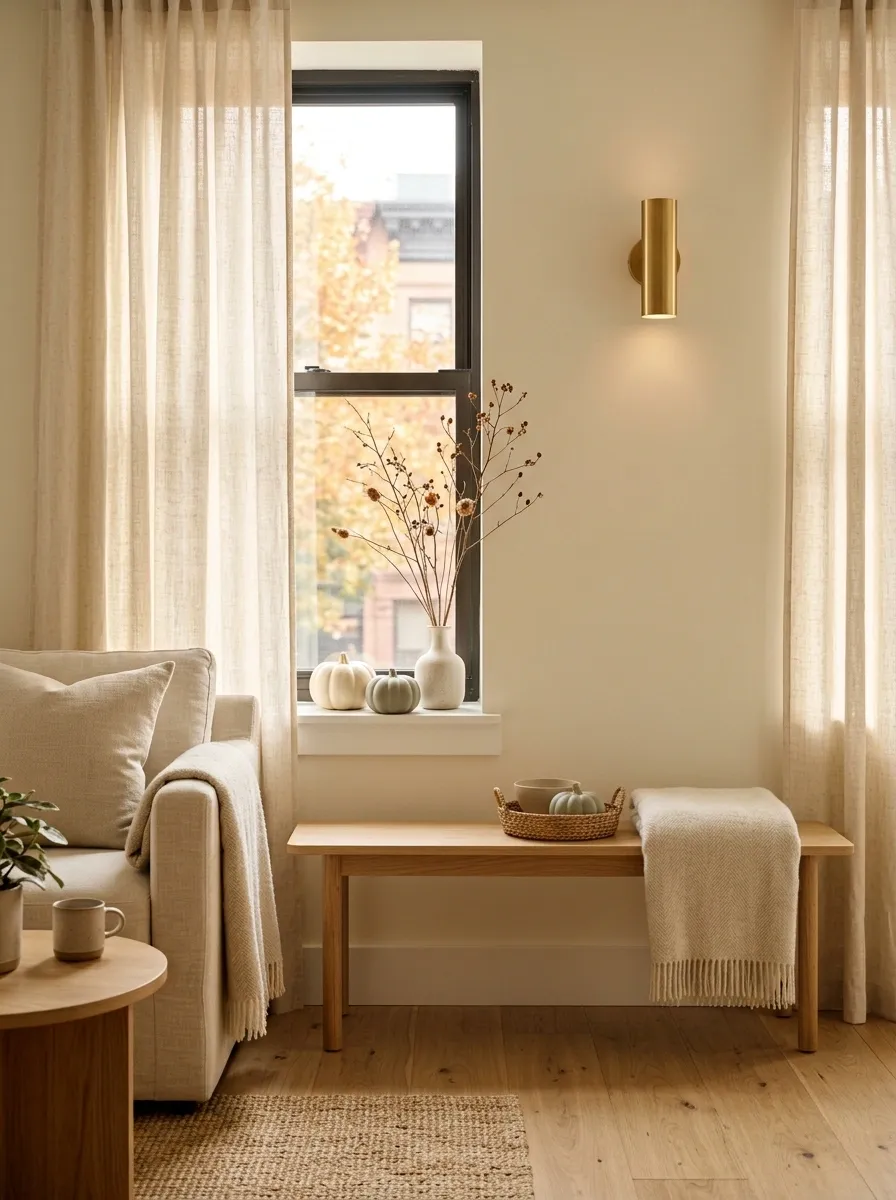
A narrow apartment window can still have a fully developed autumn composition. Here, a slim bench sits beneath the window, two pumpkins provide a low seasonal layer, a small branch arrangement adds height, and linen panels soften the hard edges.
A wall light adds warmth without taking up floor space. The furniture remains narrow enough to preserve circulation, making this arrangement useful in a room where every inch matters.
The design succeeds because the vertical and horizontal elements are tightly controlled. Nothing sticks too far into the walkway, and the window remains visually open.
zone
keeps the footprint narrow
walkway
English Country Window With Tartan and Copper
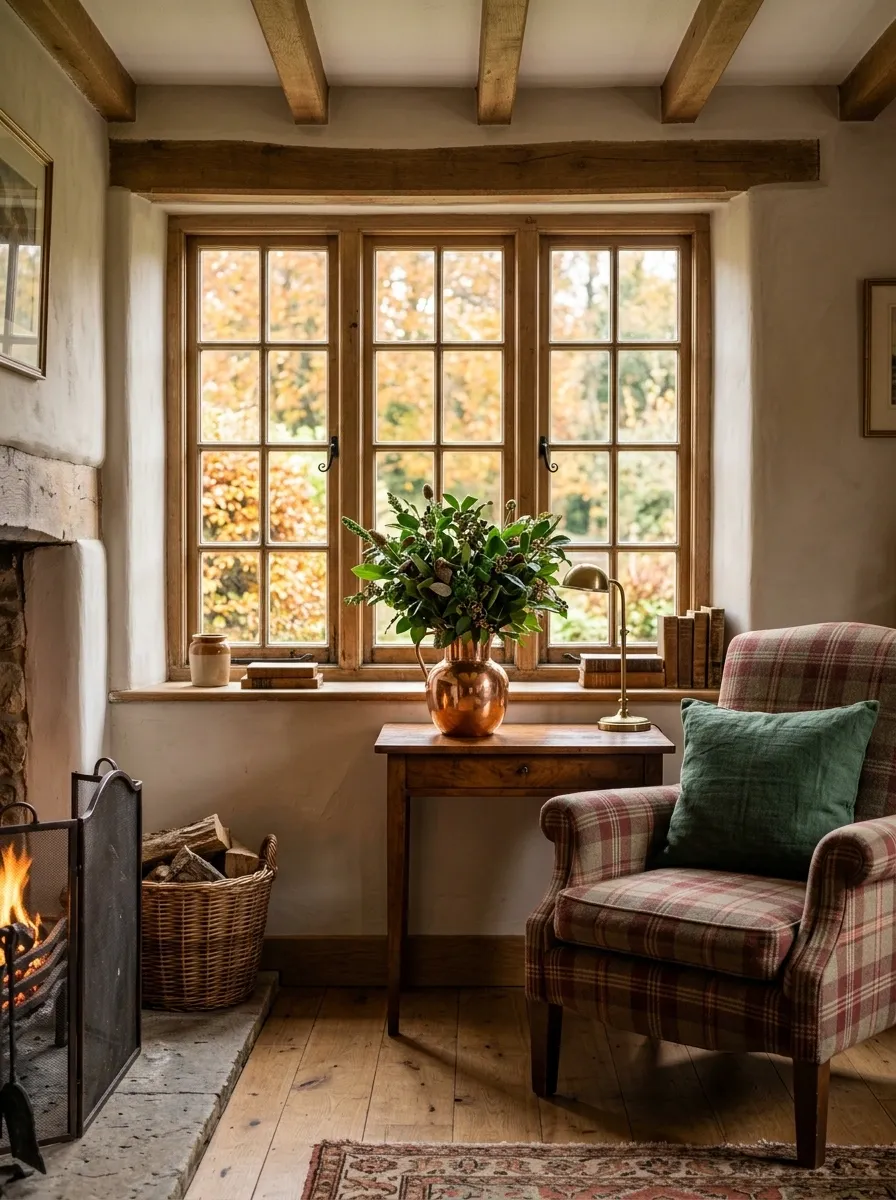
A traditional sitting room gets a rich autumn treatment through a divided-pane window, faded tartan upholstery, copper vessels, dark green foliage, and warm walnut furniture.
The patterns are allowed to be noticeable, but they are tied together through repeated earthy tones. A deep green cushion picks up the foliage, while tobacco brown and muted red connect the tartan to the wood and copper.
This is a design where layering is important. Keep the window arrangement relatively simple because the room already has pattern and texture elsewhere. The goal is to create one strong seasonal composition without adding another competing focal point.
| Tartan | Muted red and tobacco brown |
| Foliage | Repeats the room’s deep green |
| Copper | Adds a warm reflective note |
| Walnut | Provides the darkest visual base |
Harvest Window With Gourds and Dried Corn
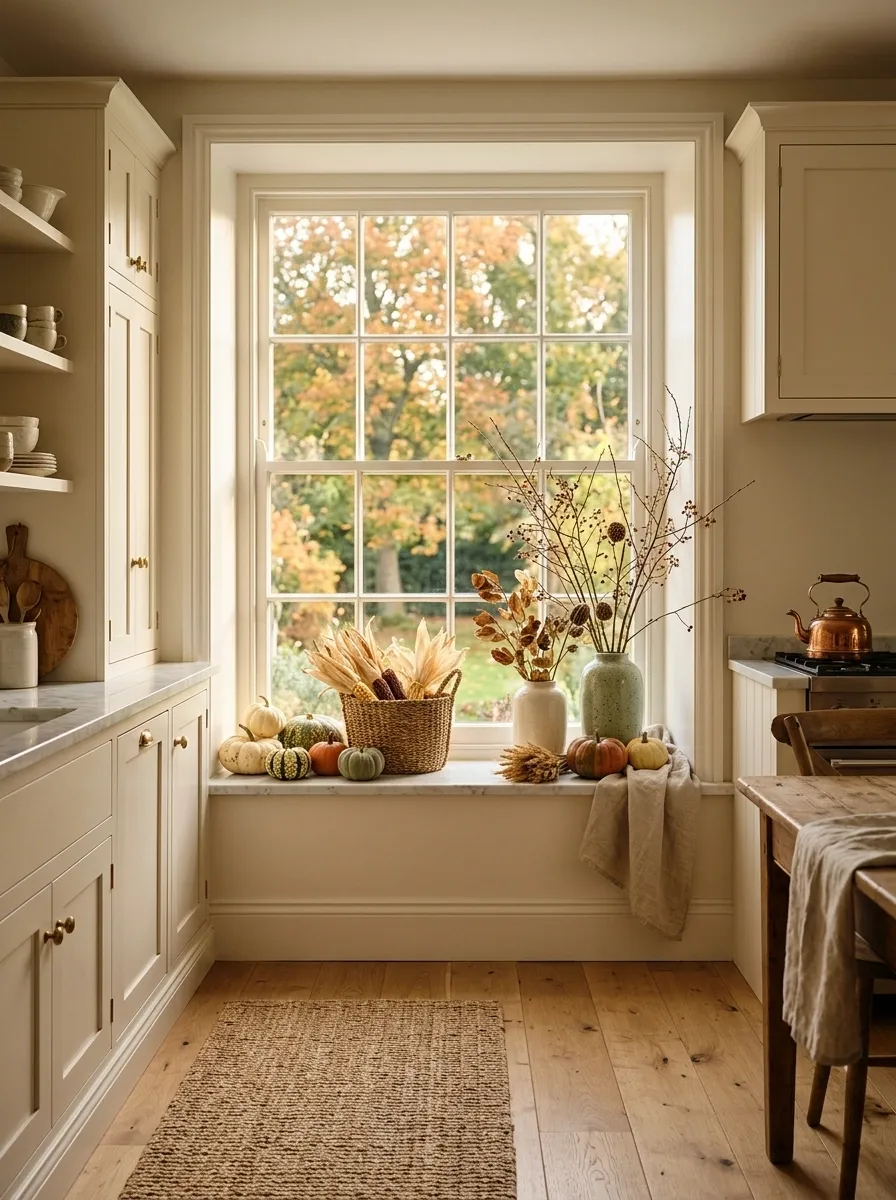
A generous kitchen or breakfast-room window can handle a more abundant autumn display. This version combines unusual gourds, dried corn, loose branches, woven baskets, and natural linen, keeping the colors within straw, cream, muted green, and soft orange.
The abundance feels organized because similar materials are grouped together. Gourds create the low, rounded forms, branches add height, and baskets provide larger blocks of texture.
That separation of shapes keeps the window from becoming a pile of unrelated objects. Leave some glass visible between the clusters so the arrangement still feels airy.
Moody Green Window With Antique Wood
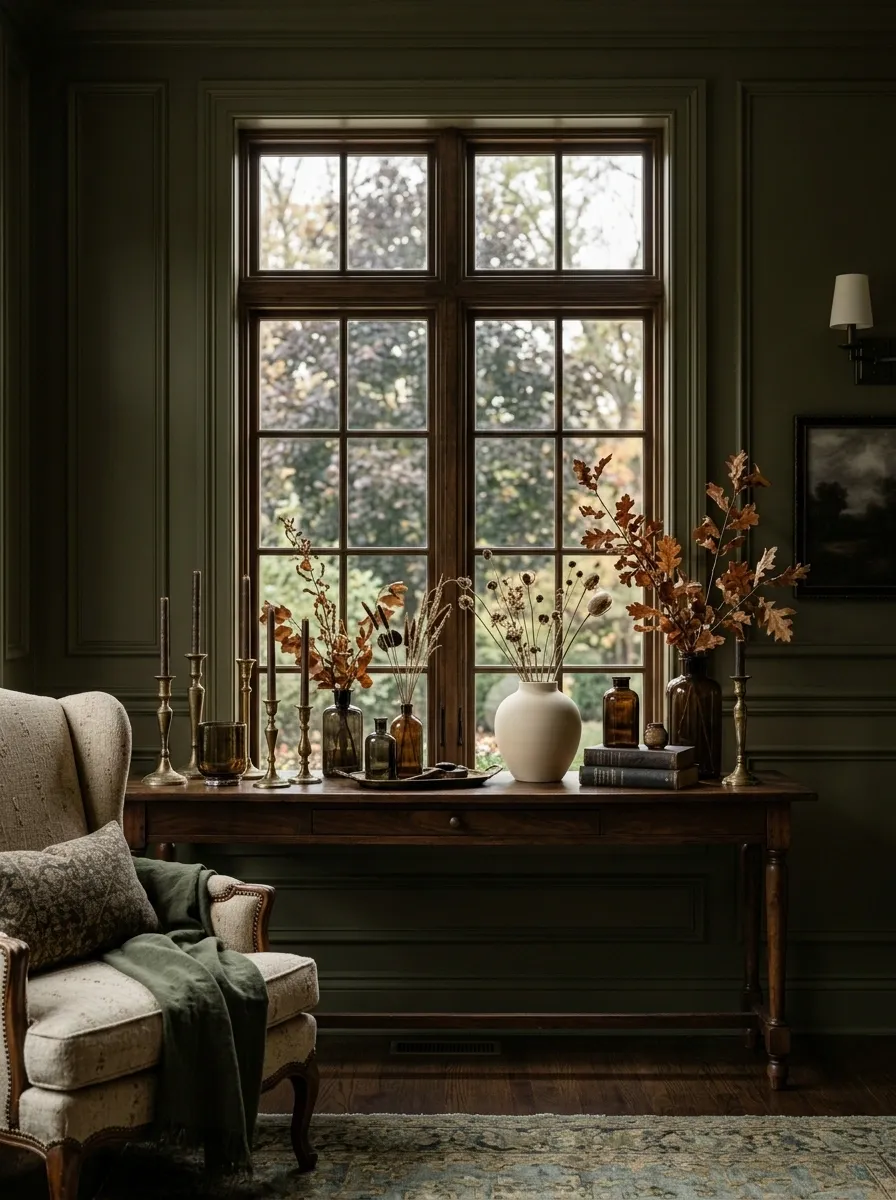
Deep olive walls give this window a completely different autumn character. Antique wood pieces sit beneath the glass, while aged brass, dark amber vessels, and brown foliage add warmth without using much orange.
The room works because the window styling shares the same rich color depth as the walls. A lighter ceramic object provides just enough contrast to prevent the display from disappearing into the darker background.
This is especially effective in a room that already has strong architectural color. Instead of fighting the wall with brighter seasonal decor, the display works within the existing palette.
Sunlit Breakfast Nook With Golden Autumn Tones
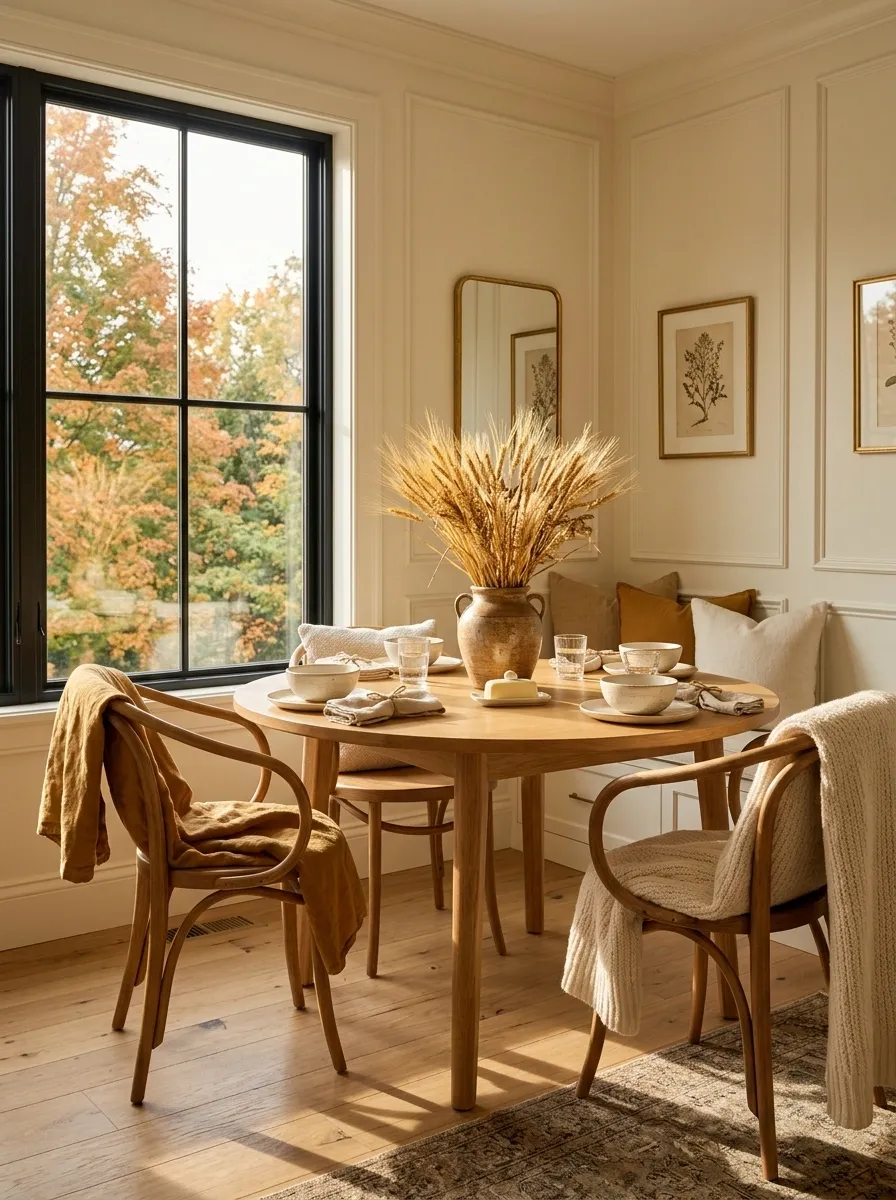
A breakfast nook can take advantage of autumn’s warmer side without becoming visually heavy. Golden wheat, honey-colored oak, warm cream ceramics, and soft ochre textiles sit around a bright window that already provides much of the room’s light.
The seasonal styling follows the natural direction of the sunlight. Nothing dark is placed directly against the brightest part of the glass, so the window remains open and luminous.
This composition is strongest when the wood and textiles are allowed to carry the gold tones. The autumn elements then feel like an extension of the room rather than a separate decoration layer.
Sophisticated Black-and-White Fall Window
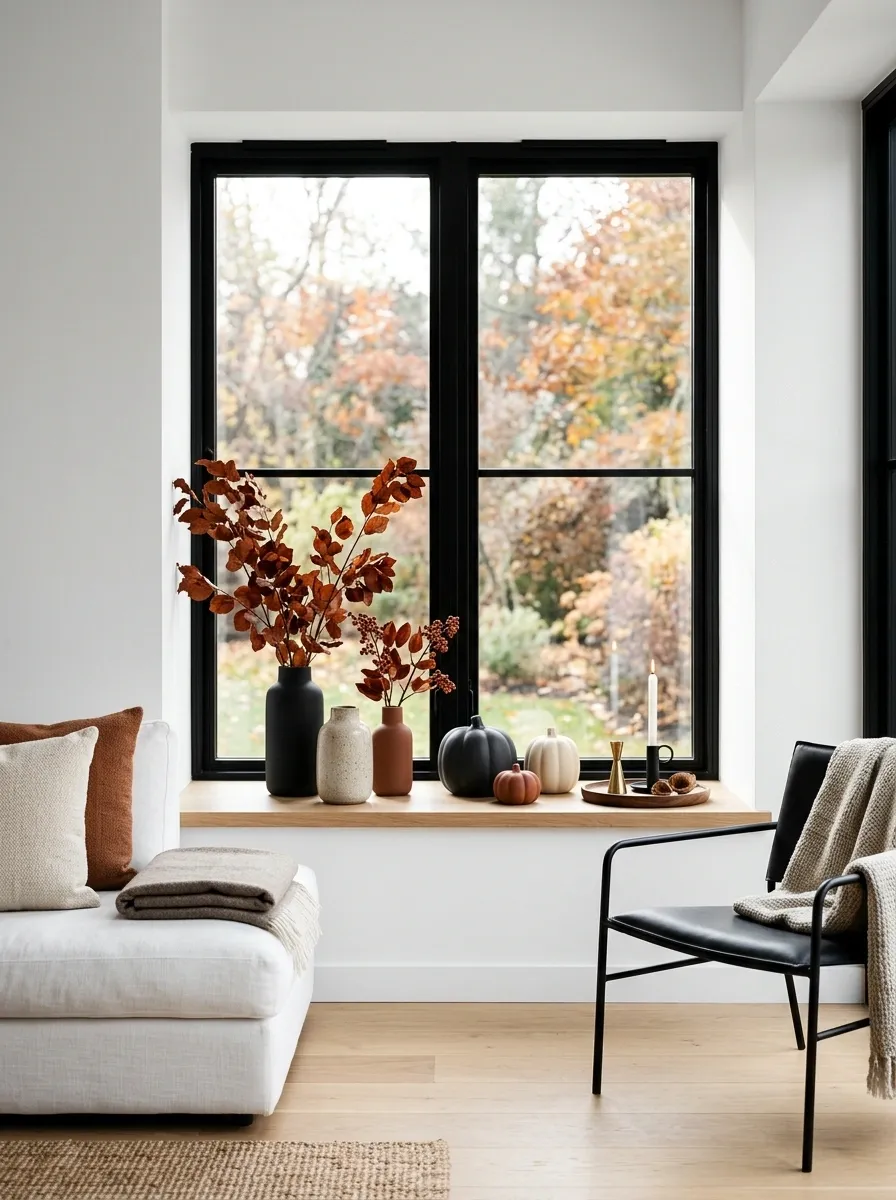
A crisp black-and-white room can take on an autumn mood without losing its clean character. The window remains mostly open, while a few sculptural rust-colored branches, ceramic pumpkins, and walnut accents provide the seasonal layer.
The strong contrast makes every object easy to read. That’s useful for a window display because the arrangement still looks clear from several feet away.
Keep the rust color contained to a few intentional locations. The visual impact comes from the contrast between the architecture and the warmer accents, not from covering the room in autumn color.
Rustic Farmhouse Window With Woven Textures
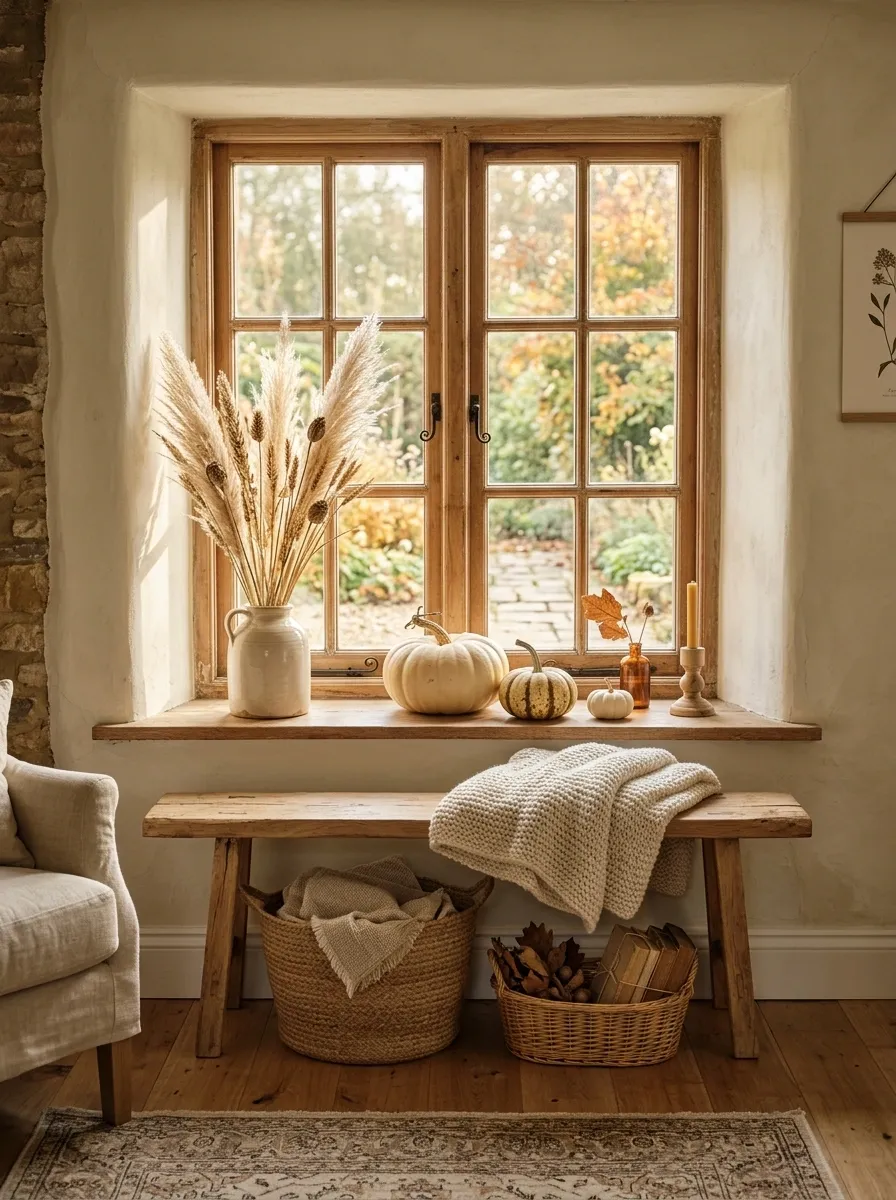
A farmhouse window feels warmer when its autumn styling is built around natural fibers. Woven baskets, chunky linen, unfinished wood, dried grasses, and cream pumpkins create a tactile composition that continues onto the bench beneath the glass.
The colors stay soft, letting texture provide most of the variation. The same wood tone appears in the nearby furniture, while the baskets echo the natural fibers in the room.
There is no need to crowd the sill. A few larger pieces create stronger visual shapes than many small decorations, especially when the surrounding architecture already has rustic character.
Elegant Townhouse Window With Sculptural Florals
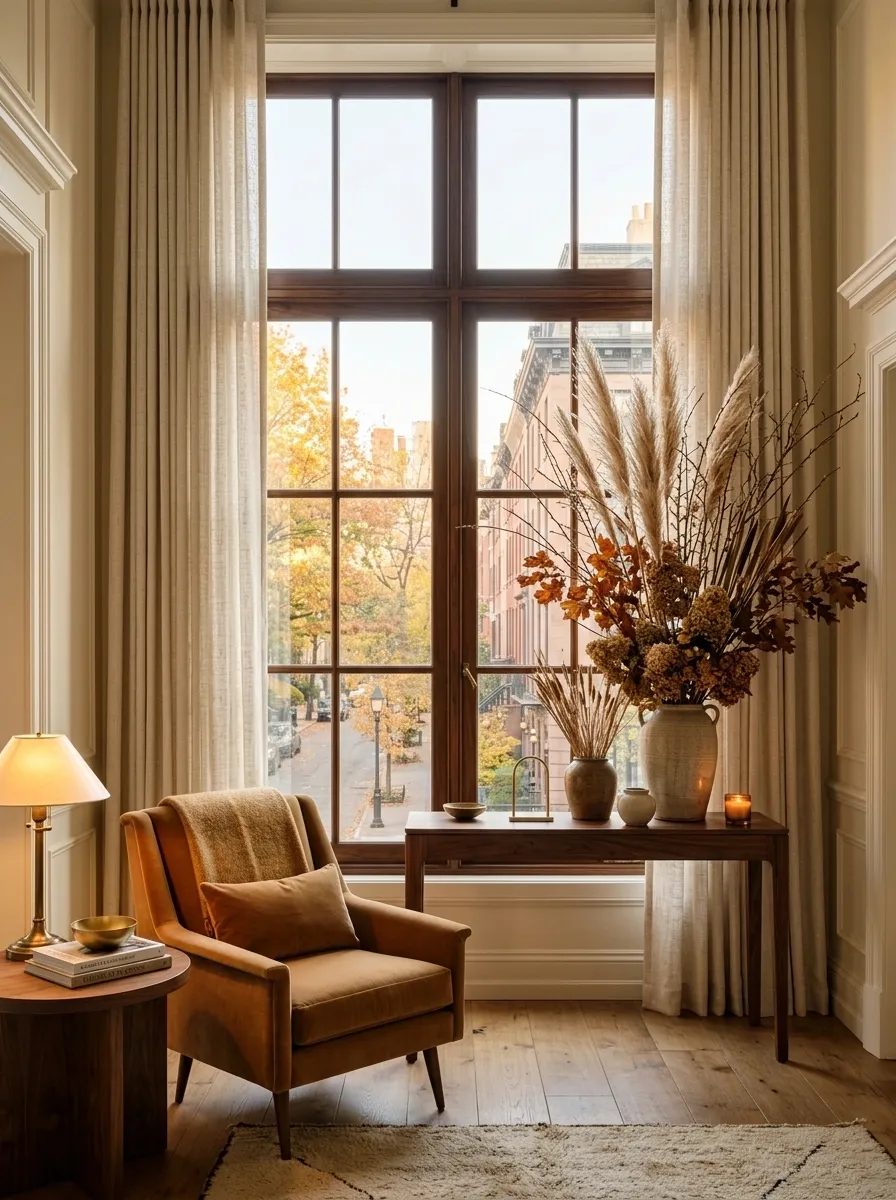
A tall townhouse window deserves a composition that acknowledges its height. Oversized dried stems rise from a narrow console, while antique brass lamps, caramel upholstery, and walnut furniture fill the lower part of the room.
The arrangement is tailored rather than rustic. The floral stems are dramatic, but the supporting objects are quiet and carefully spaced.
The strongest part of this design is the relationship between the vertical window and the tall arrangement. The flowers emphasize the architecture instead of fighting it, making the entire wall feel taller and more deliberate.
architectural height
echoed proportion
Whimsical Family Room Window With Layered Autumn Color
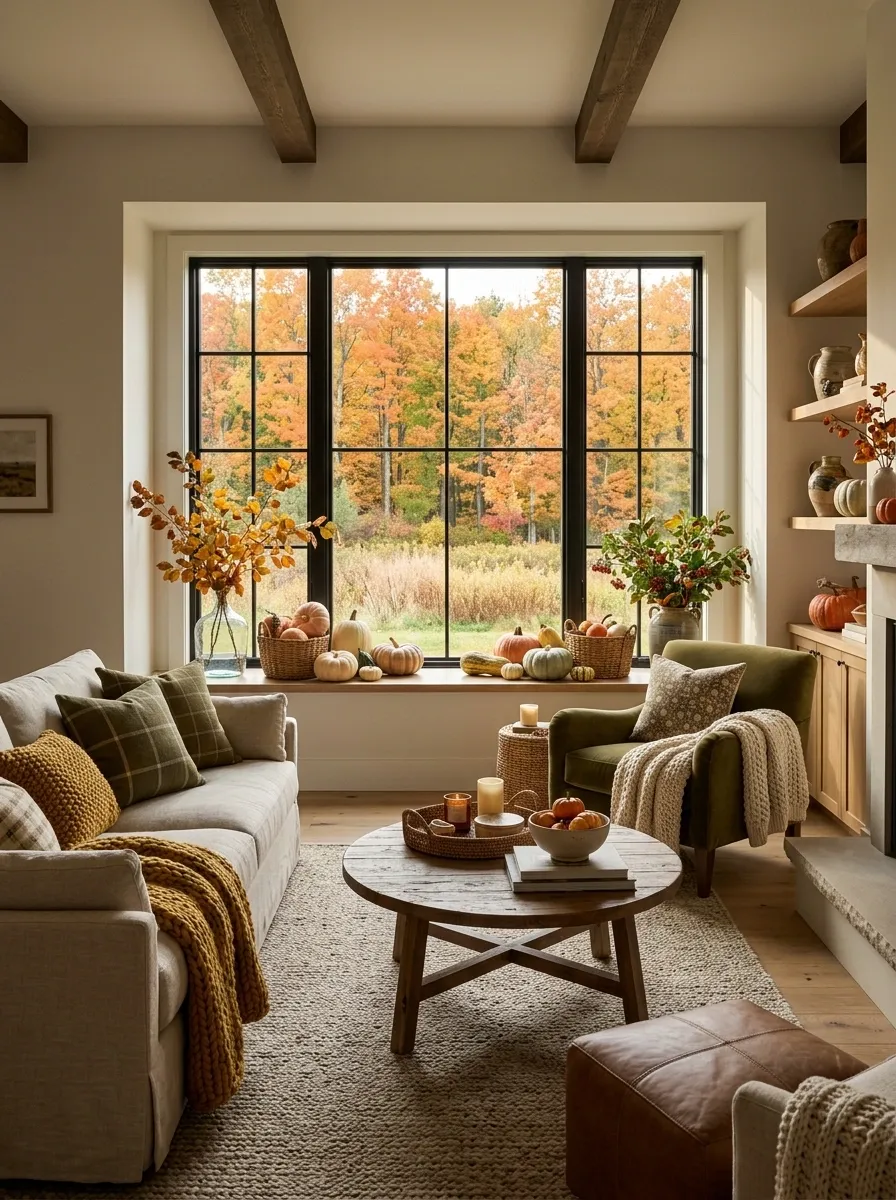
This family room takes a more expressive approach, mixing muted orange, mustard, olive, warm cream, and patterned textiles around a large window. Pumpkins, loose branches, and comfortable seating give the composition plenty of movement.
Unlike the quieter designs earlier in the collection, this one benefits from a little visual abundance. The patterns and colors are repeated across cushions, throws, ceramics, and seasonal objects so the room still feels connected.
The trick is to give each color a job. Olive grounds the palette, mustard warms it, cream provides breathing room, and orange becomes the seasonal focus.
Refined Evening Window With Candlelight and Amber Glass
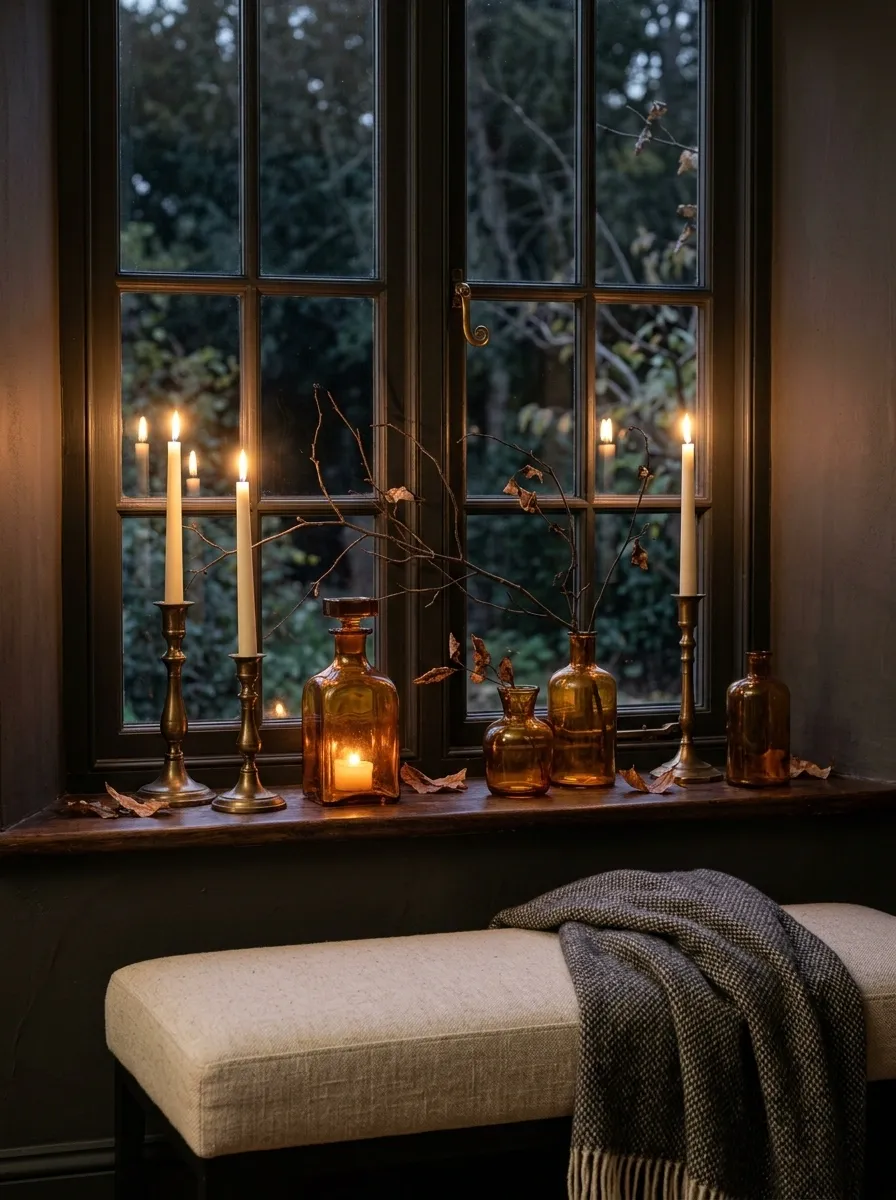
The final design is deliberately atmospheric. Amber glass, taper candles, dark branches, cream textiles, and bronze accents sit against a softly lit room, allowing the window to become a glowing focal point after sunset.
The palette stays controlled so the light remains the star. Dark branches provide contrast against the glass, while amber objects catch and repeat the candlelight.
This works best when the surrounding room is quiet. Too many illuminated objects would flatten the effect and make the window feel busy. A few warm points of light create a much stronger evening composition.
Final Thoughts
A traditional bay window can handle layers, brass, patterned textiles, and richer color. A minimalist room needs much less. A dark room can turn amber glass and candlelight into the main event, while a bright cottage space may look better with dried grasses, faded florals, and soft natural materials.
Start by choosing the finished mood you want to live with. Then work backward through the window, the surrounding furniture, the colors, and the light. That approach usually produces a display that feels more natural, more personal, and much easier to keep looking good throughout the season.