
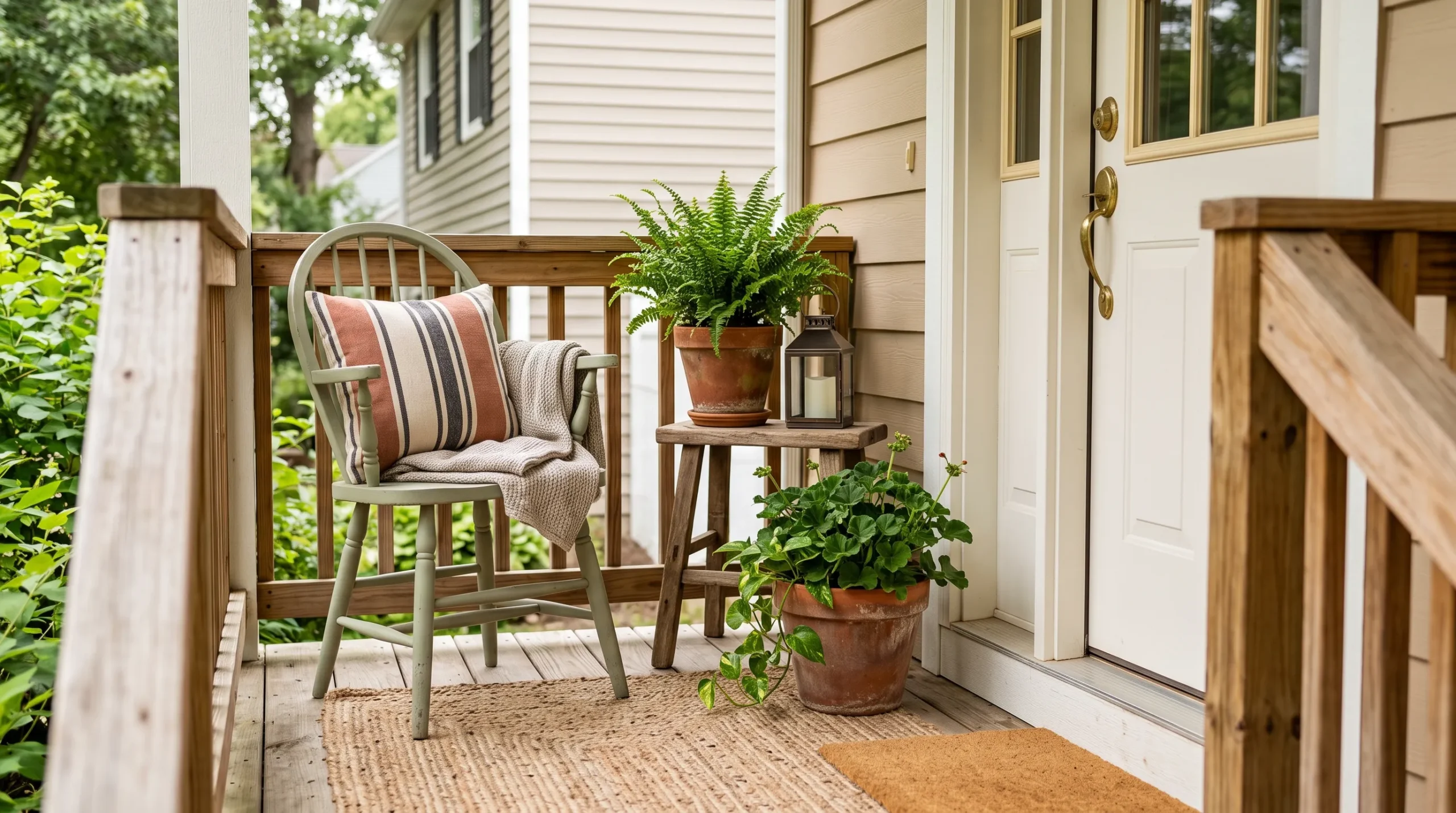
Small porches don’t need more decoration. Most of them need less stuff and better placement.
The problem usually starts with good intentions. You buy a cute planter, then a mat, then a sign, then another pot because the first few pieces still don’t make the entrance feel finished. Suddenly the walking path is cramped, the door is competing with six different focal points, and the porch looks more crowded than before.
The fix is surprisingly simple. Focus on the parts that already matter: the front door, the path to it, the light, the walls, and one useful piece of furniture. Then spend your budget where people actually look. These Small Porch Ideas on a Budget are built around that approach, so you can make a tiny entrance feel deliberate without buying an entire new porch.
A small space gives you very little room for bad decisions. That’s actually an advantage. When every piece earns its place, even a basic porch can look polished.
What Makes a Small Porch Look More Expensive
| What You’re Working With | Skip This | Do This Instead |
|---|---|---|
| Tiny entry | Large furniture | One slim bench or chair |
| Bare front door | Lots of tiny decorations | A bold door color |
| Small floor area | Several scattered pots | One strong planter |
| Limited budget | Replacing everything | Upgrade one visible feature |
| Plain porch wall | More floor decor | Use vertical space |
Small Porch Ideas on a Budget
Create a Cozy Outdoor Living Room
A small porch doesn’t mean you have to skip out on serious comfort. Bringing plush seating outside instantly turns a tiny entryway into an inviting extension of your living space.
Anchor the seating area with a richly textured jute rug to define the zone without taking up visual weight. Layer in woven floor poufs and a comfortable sofa draped in soft neutral pillows to create a relaxing spot that feels completely custom and high-end.
Keep the layout tight against the architectural features to maintain a smooth flow. Natural materials like rattan and stone work together harmoniously to give the entire entryway a warm, grounded finish.
Paint the Door a Color That Does the Decorating for You

A tired front door can make the entire porch feel unfinished, even when everything else is clean.
Paint is one of the few budget changes that can dominate the whole entrance. Choose one deeper color that works with your home’s exterior, then let the door carry the visual weight instead of adding more decorations.
Use a sample board before committing. The color can look completely different in morning light than it does at the store.
Cluster Lanterns for Soft Evening Glow
Relying on a single overhead light can leave a small porch feeling cold and unwelcoming after dark. Grouping lanterns of varying heights directly on your steps creates instant ambiance.
Fill black metal lanterns with natural textures like pinecones or nuts to add rustic charm during the daytime hours. Arrange them clustered naturally alongside fresh evergreen branches and twinkling fairy lights to bring life to unused stair corners.
Keep the arrangement balanced to one side so it doesn’t block foot traffic. This simple trick makes the entrance feel completely styled with minimal effort and maximum warmth.
Use One Oversized Planter Instead of Several Tiny Pots
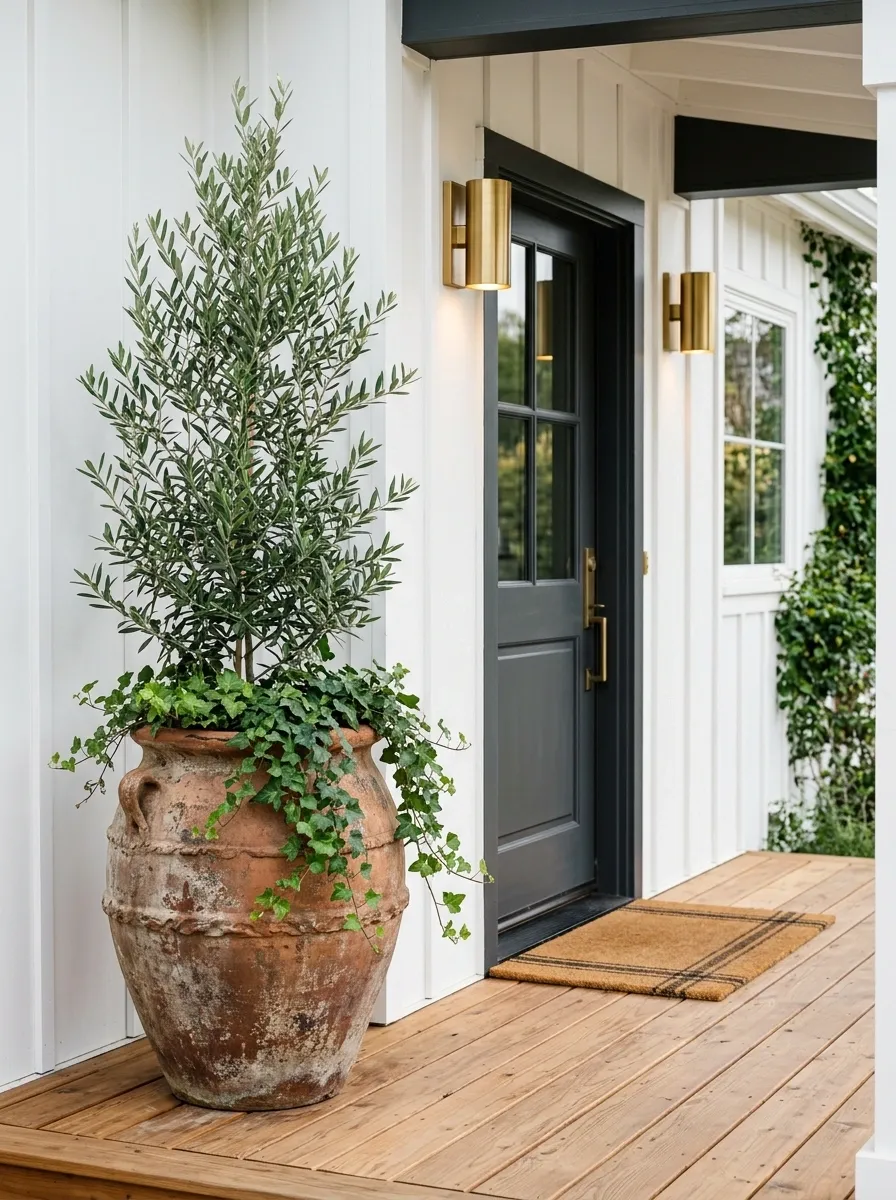
Three tiny pots often look more cluttered than decorated.
Put one larger planter beside the door and give it enough visual weight to anchor the entrance. A simple pot with a tall plant creates height, while a trailing plant softens the edge without using extra floor space.
Best rule: one strong planter beats a row of small containers on a narrow porch.
Keep it close to one side of the door so the walking path stays open.
Build a Slim Seating Spot Into the Smallest Corner
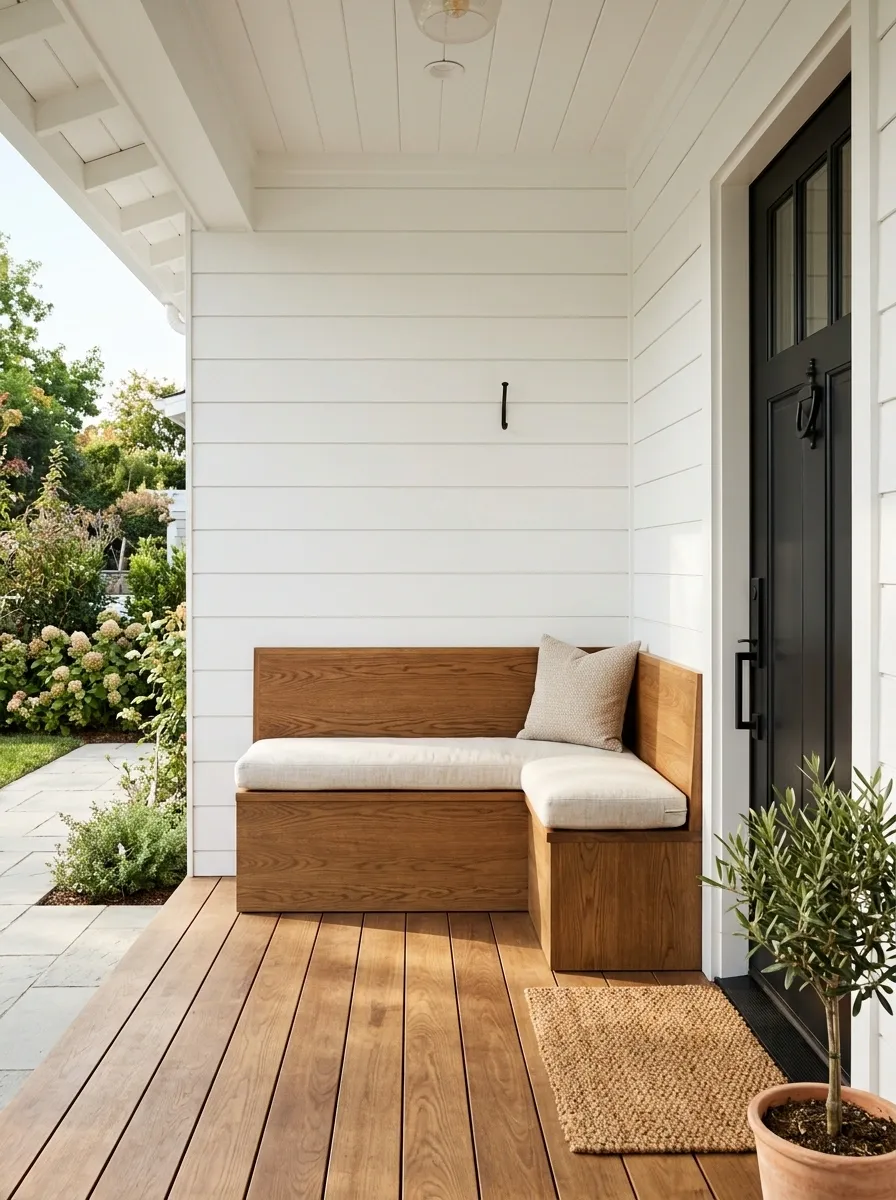
A chair doesn’t need a huge porch. It needs a corner where it won’t interfere with the door.
Look for a narrow bench, compact chair, or small folding seat. Place it perpendicular to the entry path when possible, then leave the rest of the porch visually quiet.
Set it up like this:
- Pick the narrowest usable corner.
- Measure before shopping.
- Keep the door swing completely clear.
- Add one cushion instead of several pillows.
This works best when the seat also gives you a place to set down a bag, package, or morning coffee.
Hang a Simple Basket for Porch-Friendly Storage
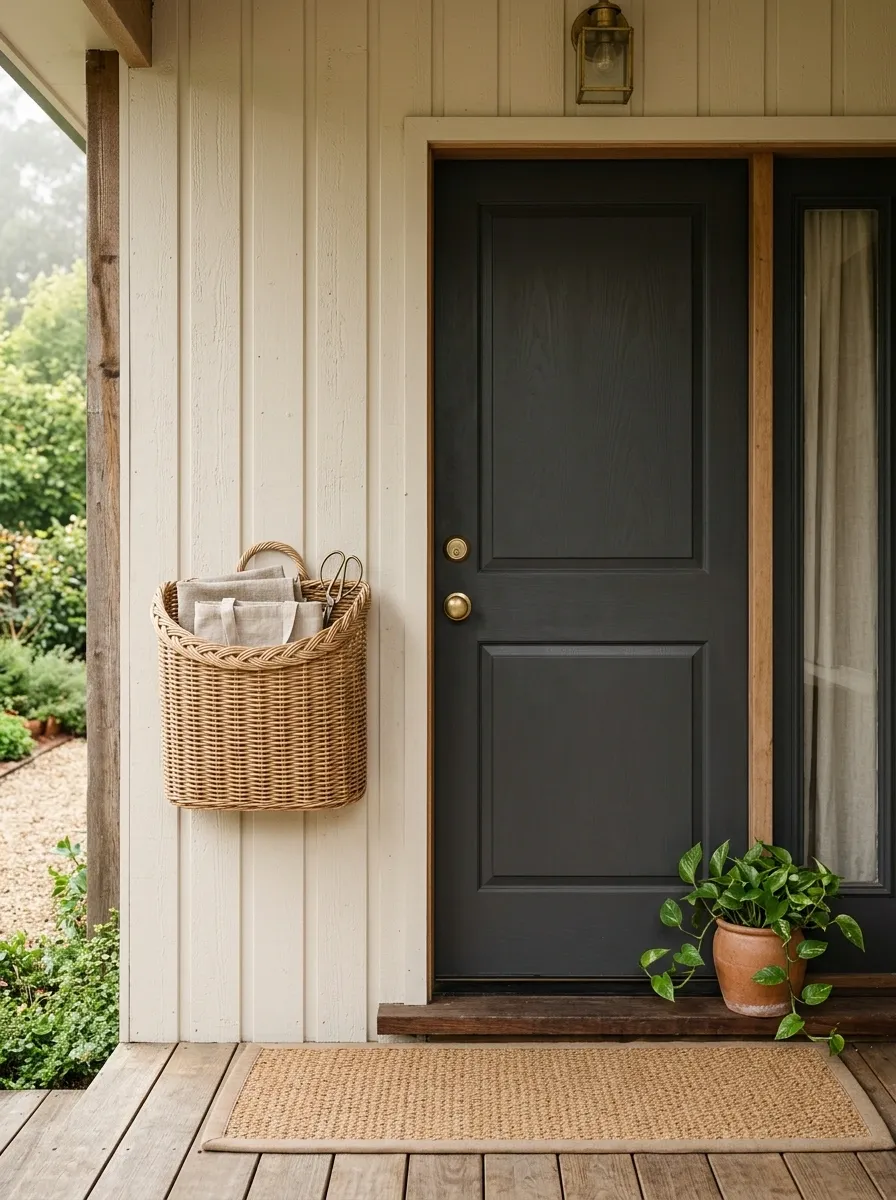
Small porches become messy fast because there isn’t an obvious place for everyday items. A wall-mounted basket solves that without taking up precious floor space.
Use it for gloves, reusable shopping bags, dog-walking supplies, or small gardening tools. Choose a basket with a shape that fits tightly against the wall rather than one that sticks out.
The basket should hold something you actually use. Decorative storage that never gets opened is still clutter, just with a prettier shape.
Frame the Door With Matching Planters
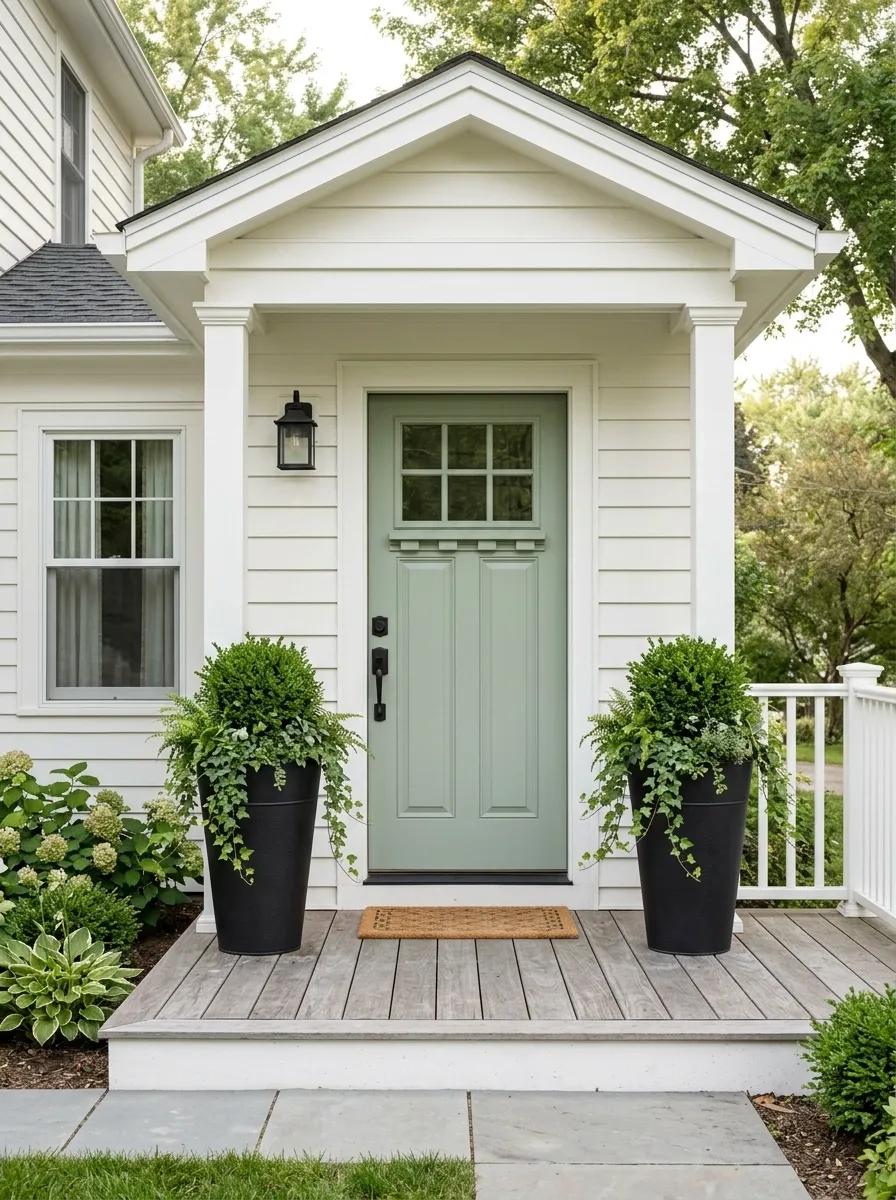
Matching planters create instant structure because they make the front door look like the center of the porch.
You don’t need expensive pots. Two simple containers in the same finish will do more than several unrelated pieces scattered around the entrance.
Keep this setup simple:
Put one on each side only when the porch is wide enough. On an extremely narrow entry, one planter usually looks better than two cramped ones.
Swap the Porch Light Before Buying More Decor
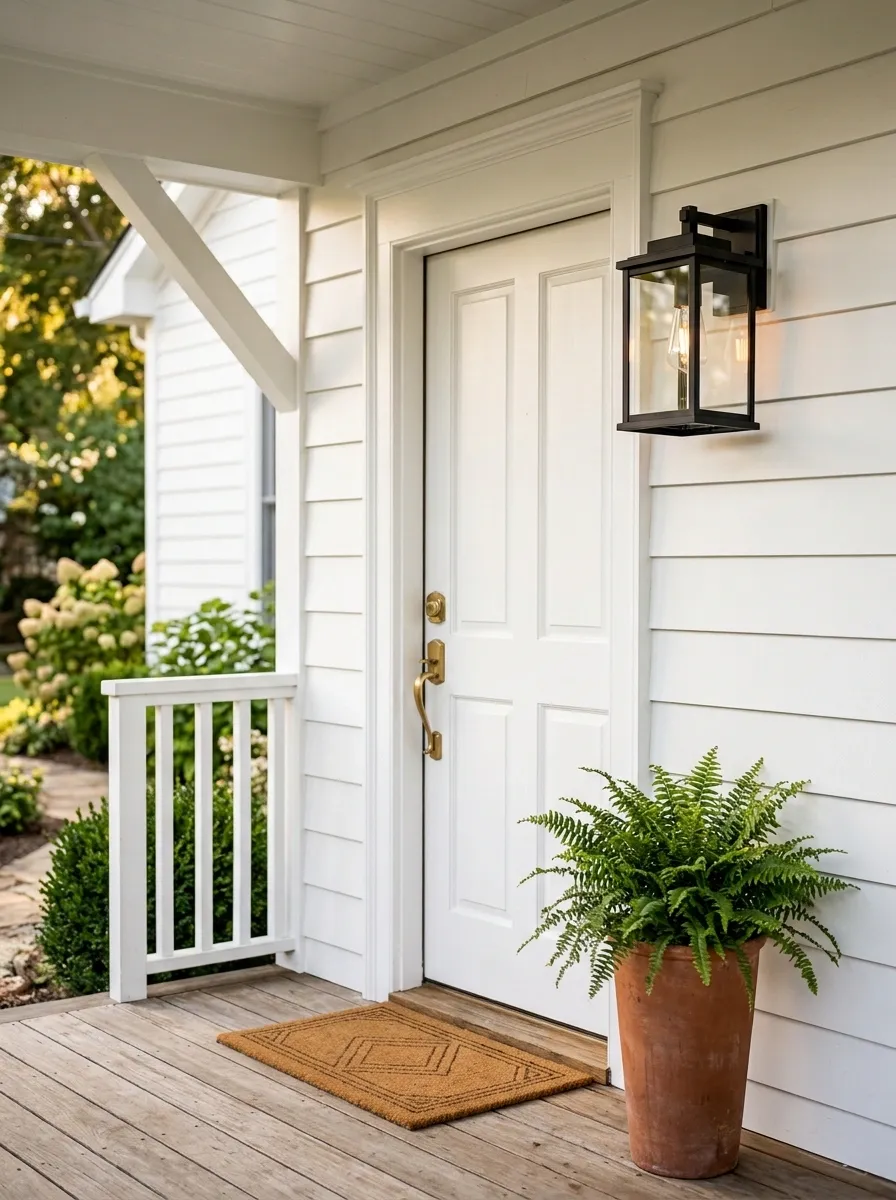
An outdated light fixture can make an otherwise tidy porch feel neglected. That’s why replacing it often beats buying another wreath, sign, or cushion.
Choose a fixture with a simple silhouette that suits the home’s exterior. A clean lantern shape works especially well because it adds detail without taking up floor space.
Check the bulb position and fixture size before installing. A light that’s too large can overwhelm a tiny entry.
Add a Narrow Bench With Hidden Storage
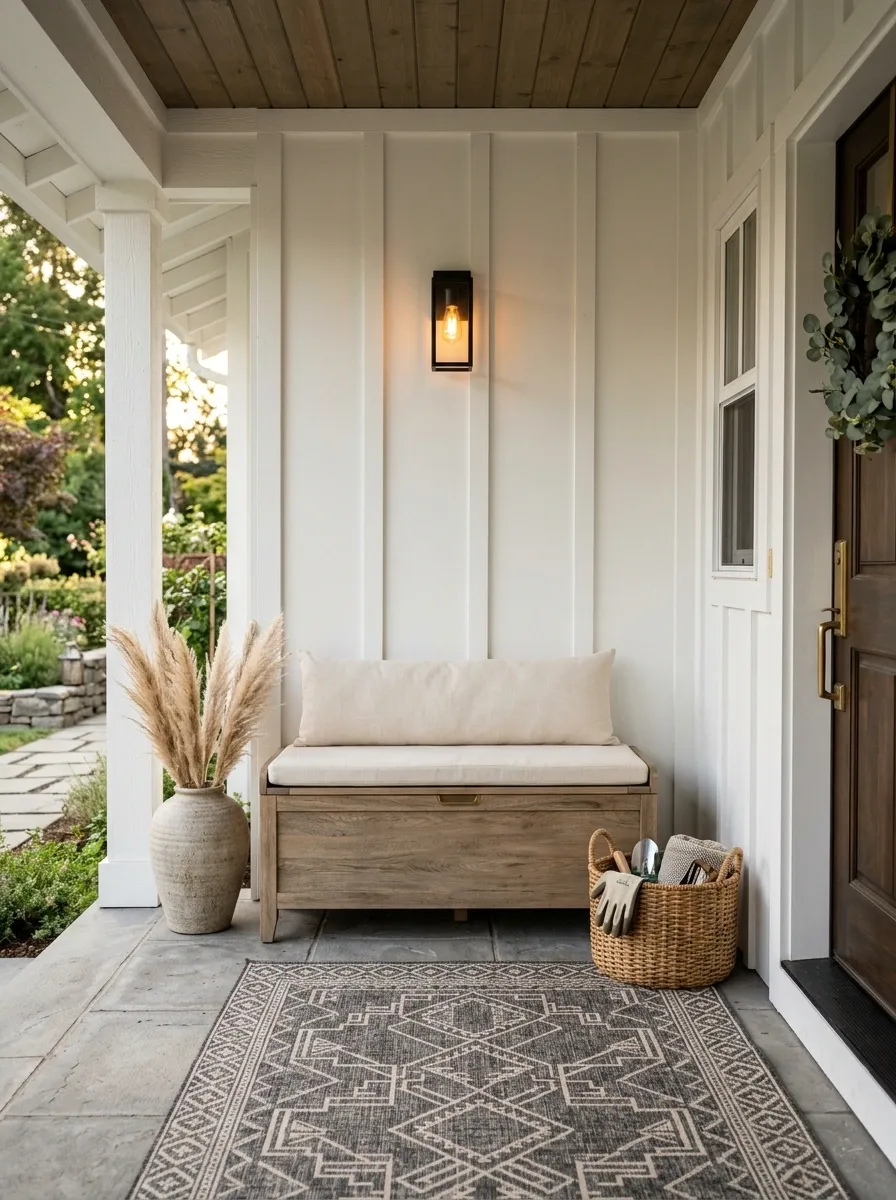
A bench earns its space because it can solve two problems at once.
You get somewhere to sit while putting on shoes, plus a place to hide blankets, outdoor cushions, or small porch supplies. That’s much smarter than filling the same footprint with a purely decorative chair.
Best budget move: Look for a basic bench with an open lower shelf, then use one attractive basket underneath for hidden storage.
Keep the bench close to the wall and choose a narrow profile. You don’t need deep furniture to make the porch useful.
Don’t add a pile of cushions to make it look cozy. One good cushion is enough for most small setups.
Use One Repeated Material to Make Cheap Decor Look Intentional
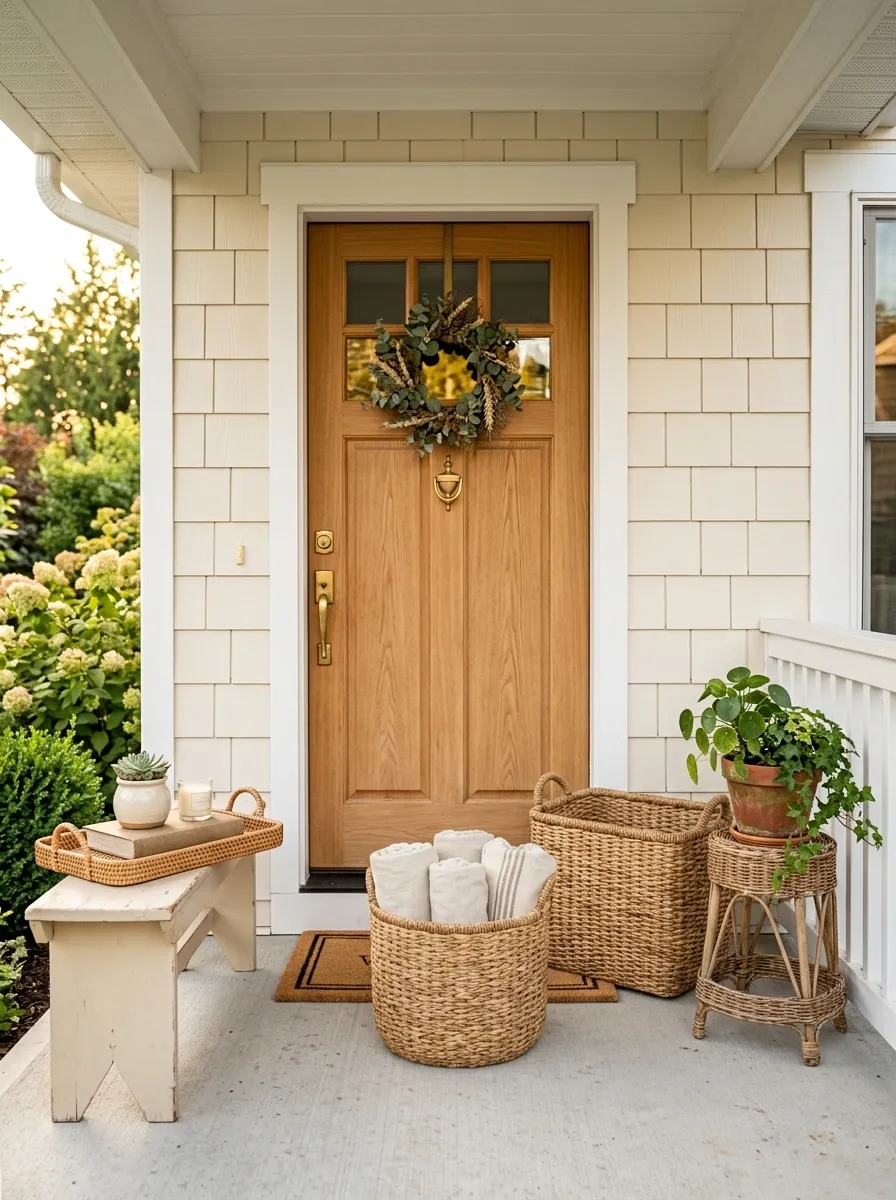
Budget decorating starts looking expensive when the different pieces seem like they belong together.
Pick one material and repeat it two or three times. It could be woven fiber, black metal, terracotta, unfinished wood, or another finish already found on the house.
The repetition doesn’t need to be exact. Matching the material family is enough to make inexpensive pieces feel connected.
Turn an Empty Wall Into a Vertical Plant Display
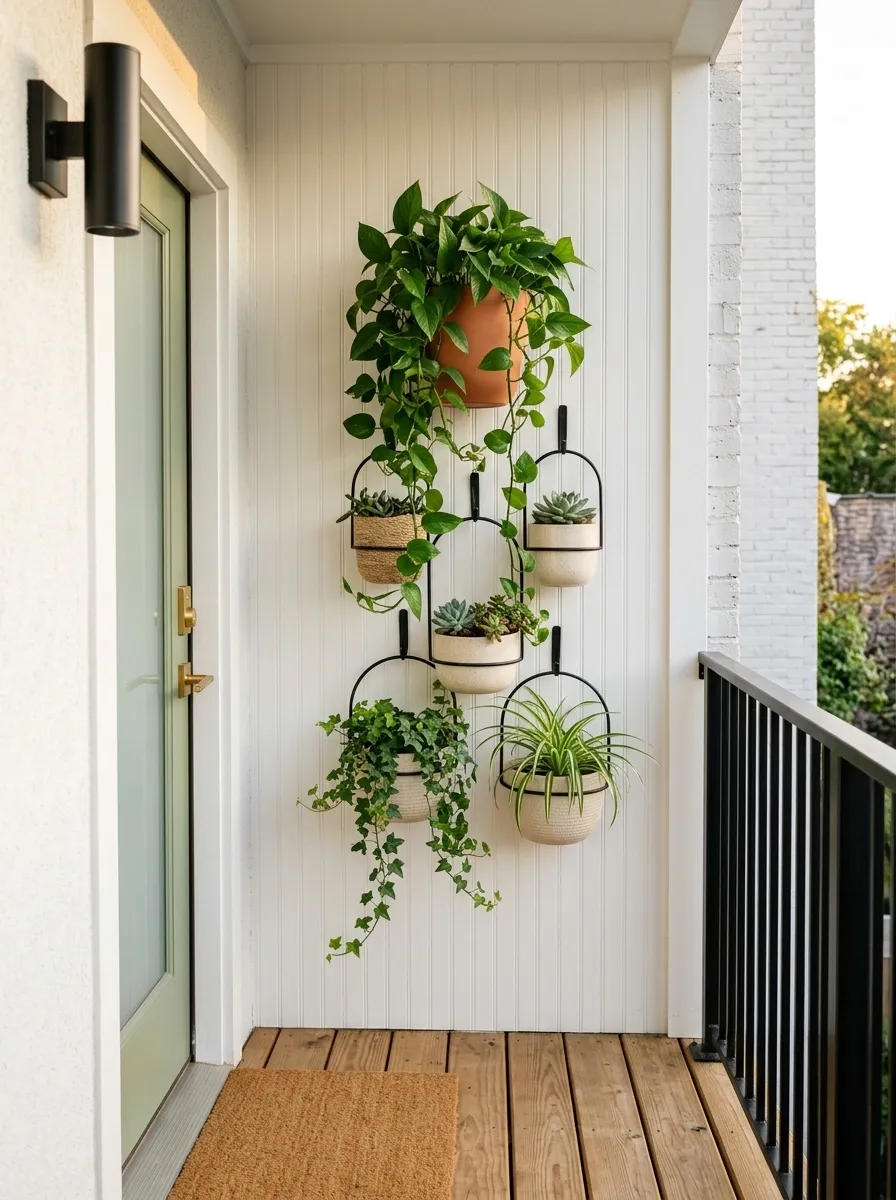
When floor space is tight, stop decorating the floor.
A bare wall beside the entrance can hold a vertical planter, wall-mounted pots, or a simple plant hanger. This pulls the eye upward while leaving the walking area open.
Build the display from top to bottom:
- Start with one taller hanging element.
- Add a smaller planter below or beside it.
- Leave some wall visible.
- Keep the lowest piece safely above the main walking path.
This is especially useful when the porch is too narrow for a planter collection. The wall gives you decorating space you weren’t using.
Choose a Doormat That Fits the Door, Not the Whole Porch
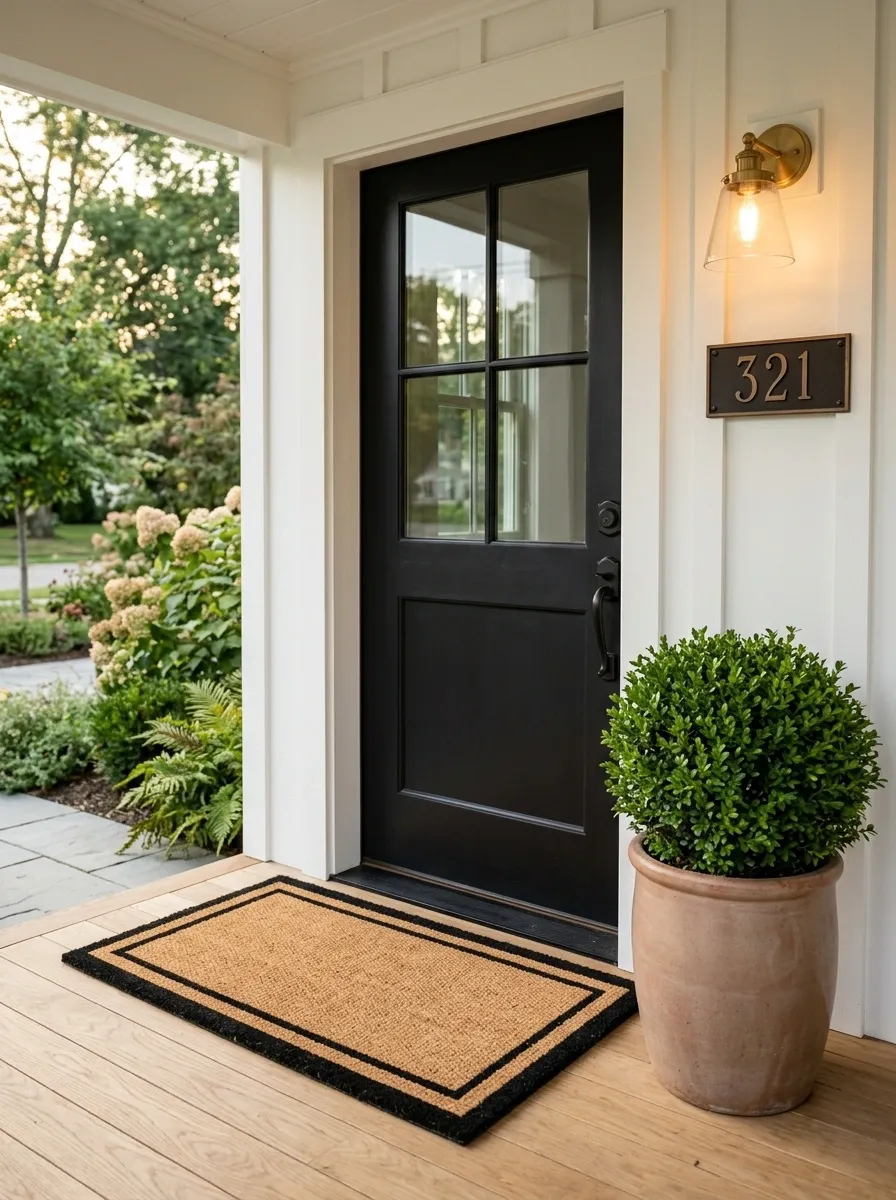
A doormat that’s too small makes even a decent porch look unfinished. The mat should visually connect to the door and feel substantial enough to mark the entrance.
Skip novelty shapes and overly busy patterns. A simple rectangular mat with a clear border gives the doorway more weight without adding visual clutter.
Spend a little more attention on the mat’s proportions than its pattern. A well-sized basic mat beats an expensive one that’s visibly undersized.
Use an Outdoor Curtain Only Where Privacy Is Actually Needed
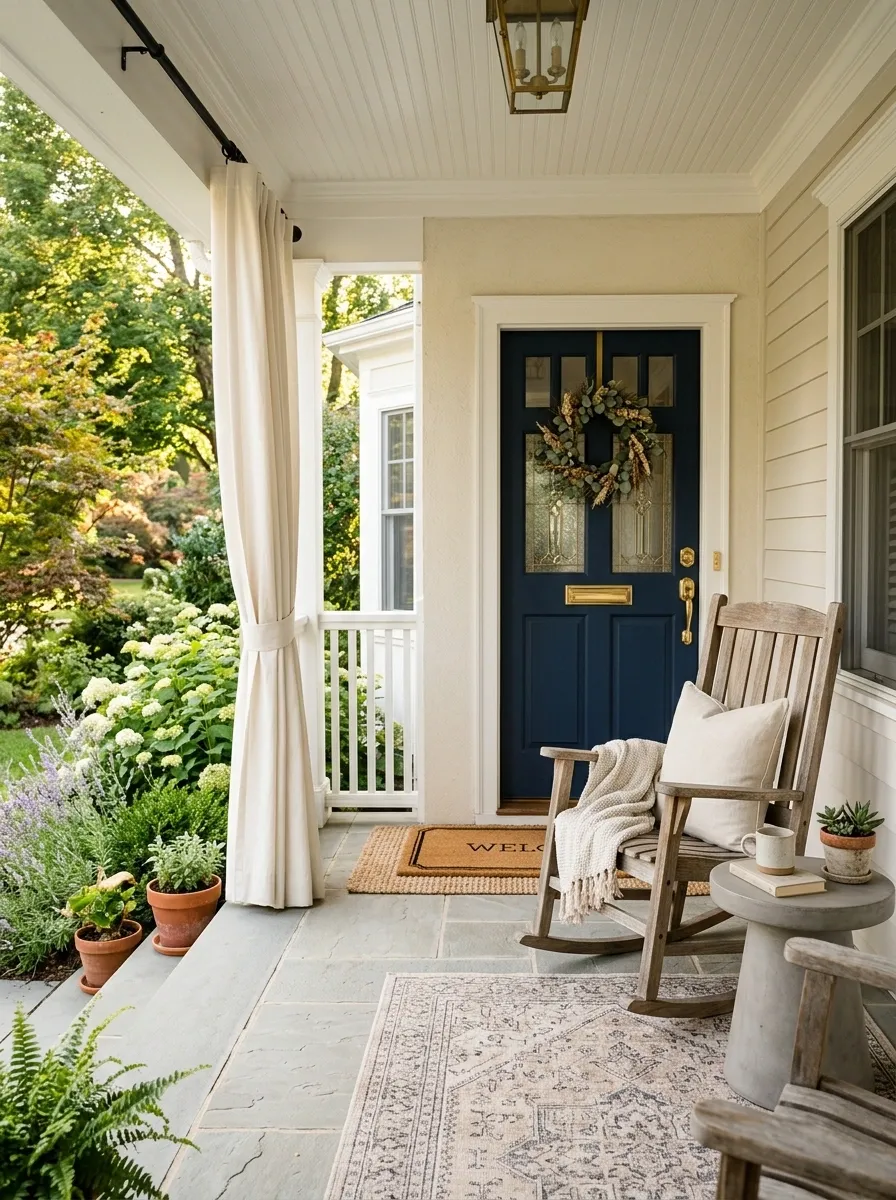
Curtains can make a porch feel softer, but they’re easy to overdo on a small space.
Don’t cover the entire opening just because the option exists. Use one panel on the side that needs privacy or shade, then keep the rest open so the porch still feels connected to the outdoors.
Use them when they solve a real problem:
Privacy: Block a direct sightline from the neighboring walkway.
Shade: Cover the side that gets harsh afternoon sun.
Nothing to solve: Skip the curtain.
Choose an outdoor-ready fabric and make sure the curtain doesn’t interfere with the door, railings, or walkway.
Group Small Decor Into One Strong Focal Point
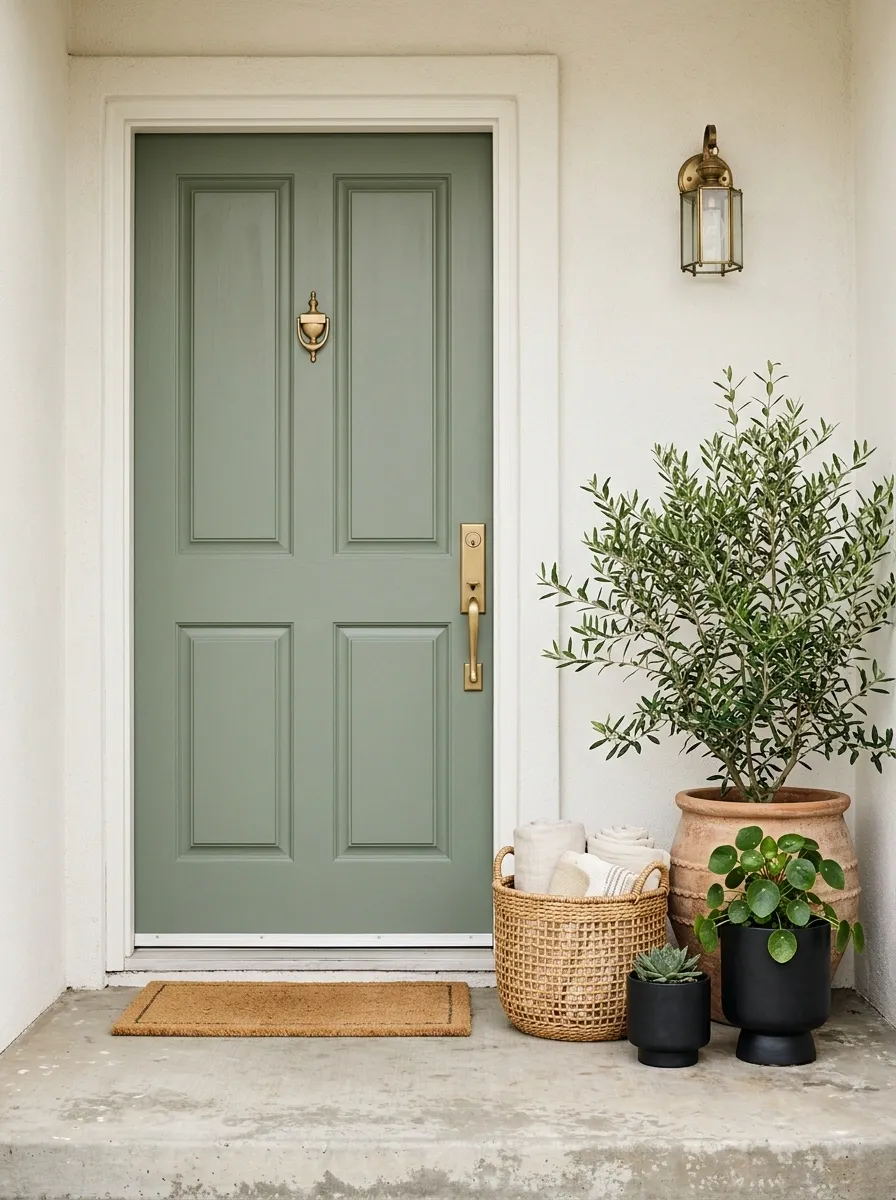
A small porch doesn’t need decorations in every corner. That’s how the space starts looking crowded.
Choose one area to receive most of the attention, usually the door, one corner, or a small seating zone. Build the decoration there and let the surrounding areas stay quiet.
This is the easiest way to use several small accessories without making them look random. Cluster them instead of scattering them.
Add a Folding Bistro Set Instead of Full-Size Furniture
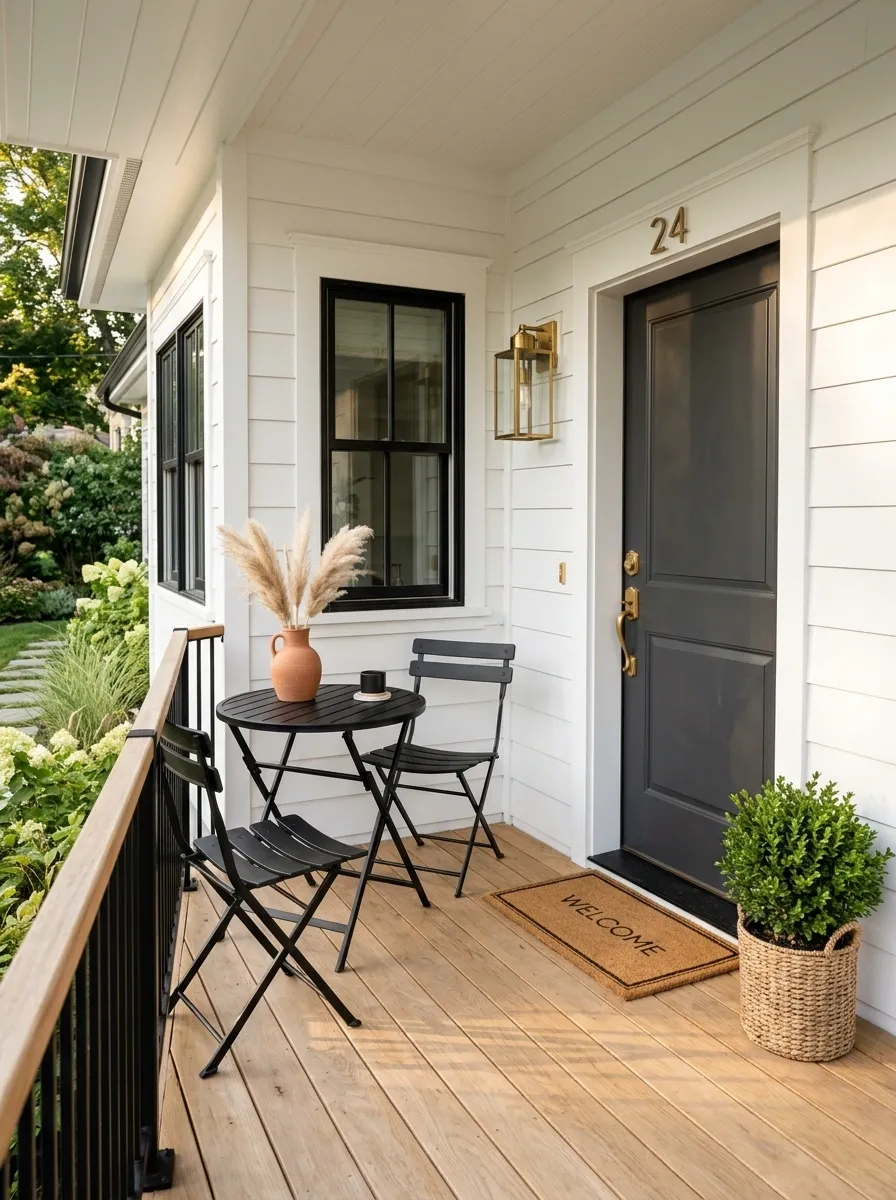
Full-size porch furniture often steals the space you were trying to improve.
A compact folding bistro set gives you a table and two seats while staying easy to move when you need the entry clear. It’s a much better fit for a narrow porch, especially when the furniture can fold flat against a wall.
| Furniture | Space impact | Best use |
|---|---|---|
| Full-size set | High | Wide porch |
| Bistro set | Low | Small seating zone |
| Folding chair | Very low | Flexible occasional seating |
Don’t buy a table just because there’s technically room for one. The porch should still feel easy to enter and leave.
Use Solar Lanterns to Fill Dark Corners Without Wiring
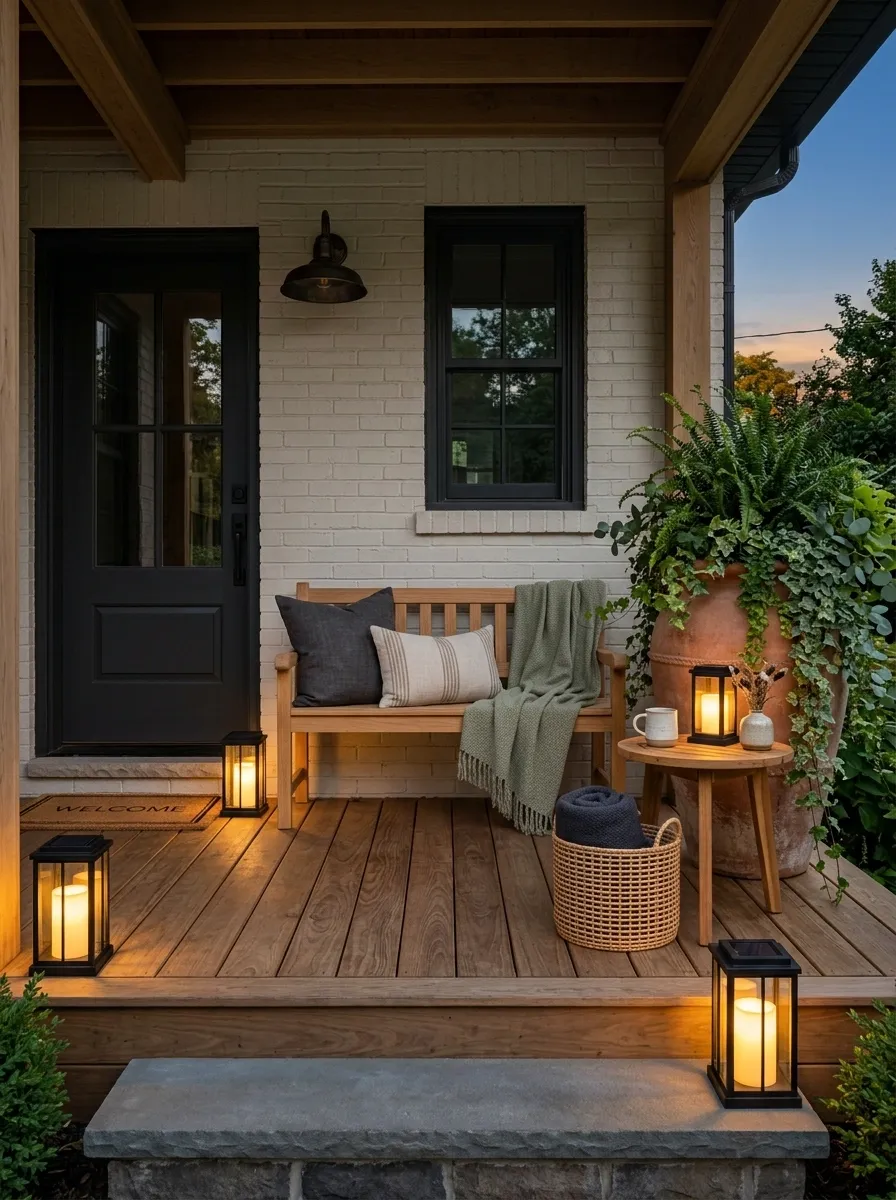
Dark corners can make a small porch feel unfinished after sunset. Solar lanterns give you light without running new wiring or adding a bulky fixture.
Place one low lantern near a planter or beside the seating area. A second light can mark the opposite side if the porch needs it.
Check whether the lantern actually receives enough sunlight during the day. A decorative solar light that barely charges won’t help the porch at night.
Give One Existing Chair a Fresh Outdoor Cushion
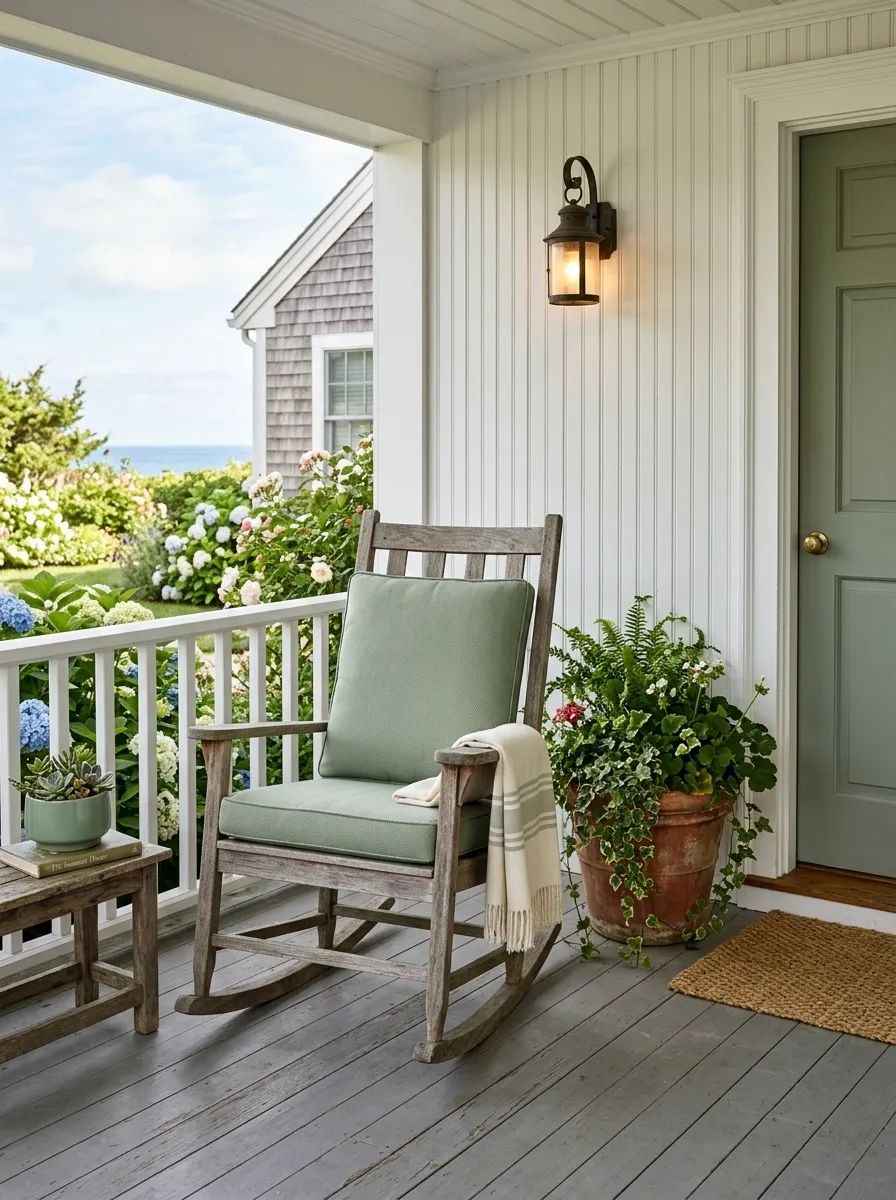
You don’t need new furniture to change a porch chair. A single outdoor cushion can make an old seat feel much more deliberate.
Choose a cushion that repeats a color already visible near the door, rug, or planter. That small connection is enough to make the chair feel like part of the design.
One cushion looks intentional. A chair covered in mismatched pillows usually doesn’t.
Paint or Stain One Small Wood Detail
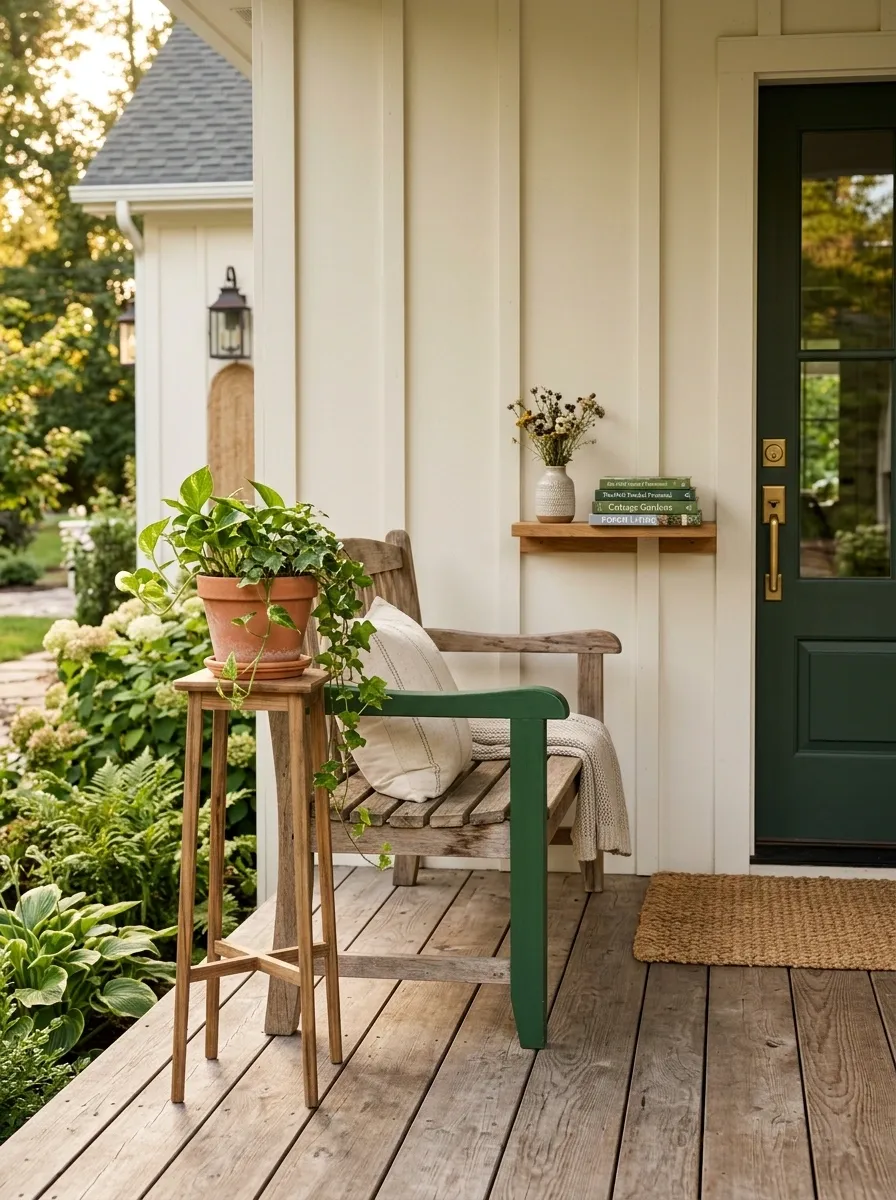
Painting every piece isn’t necessary. One small wood detail can be enough to give the porch a stronger visual connection.
Try the arm of a bench, a plant stand, a narrow shelf, or a small wooden stool. Use the same finish elsewhere if the porch already has painted or stained elements.
A sample patch saves you from committing to a color that looks wrong once it’s outside.
Hide Ugly Porch Clutter in a Covered Storage Basket
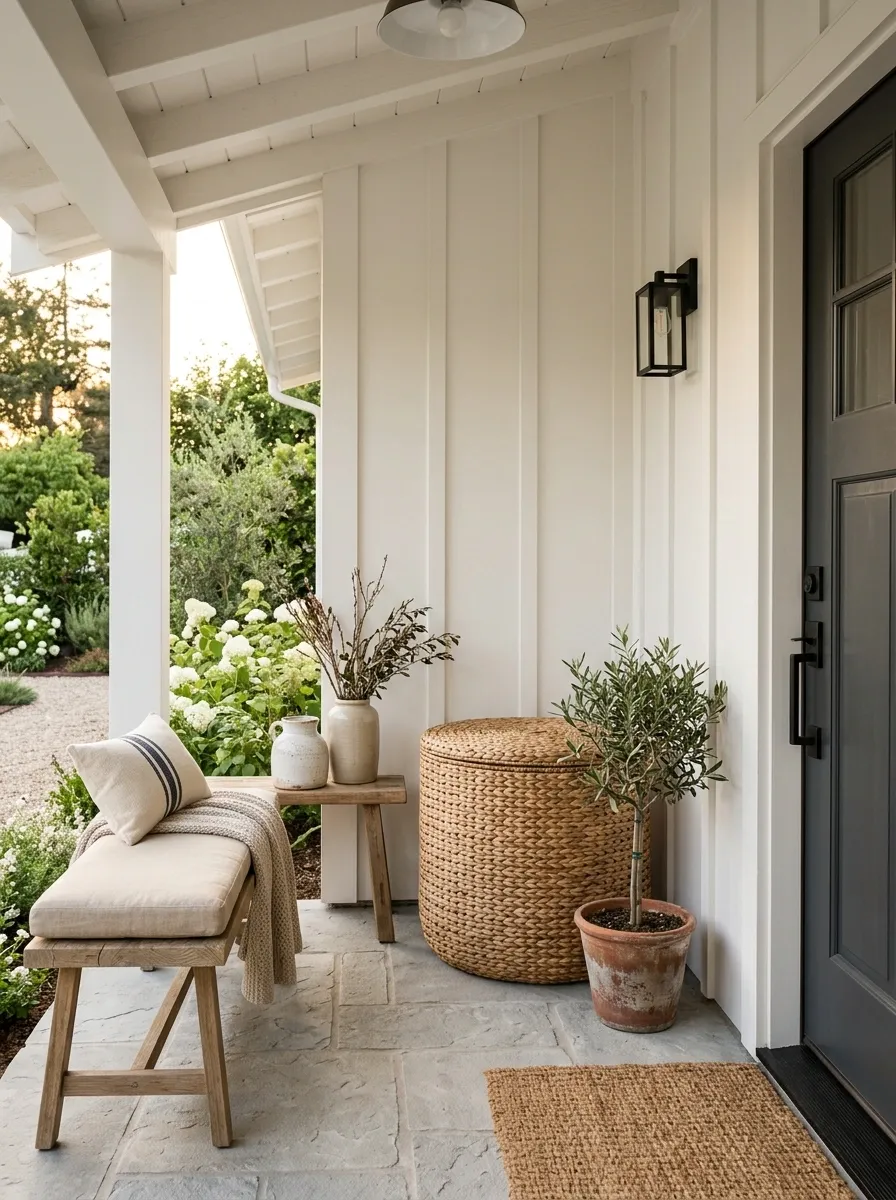
Small practical items don’t need to become part of the porch display.
A covered basket can hide gardening gloves, extra cushions, mail, pet supplies, or seasonal pieces while keeping them within reach. The key is choosing a container that looks like part of the porch rather than a random storage bin.
Good storage: easy to reach, protected from weather, visually simple.
Bad storage: oversized, brightly branded, and blocking the walkway.
Keep the basket tucked against a wall or under a bench. Storage works best when it disappears into the layout.
Hang a Seasonal Wreath With a Simple Door Hook
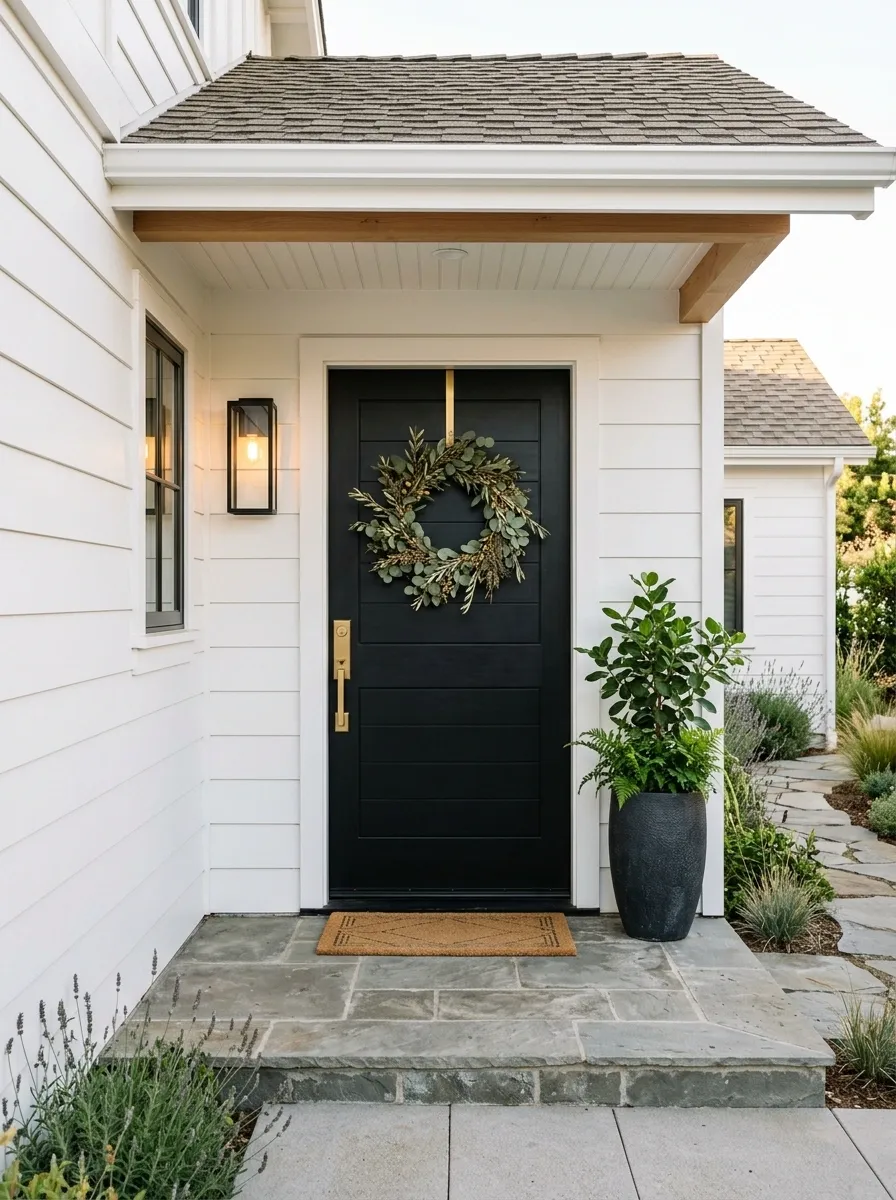
A wreath can give the front door a finished seasonal look without taking up any floor space.
Use a removable over-door hook when possible so you can change the wreath without drilling into the door. Keep the wreath proportional to the door and avoid adding extra signs around it.
Simple setup:
- Center the hook.
- Hang one wreath.
- Step back from the street.
- Remove anything that makes the door feel crowded.
That’s the important part. Porch decor should work from the street as well as from the front step.
Use the Porch Railing as Free Decorating Space
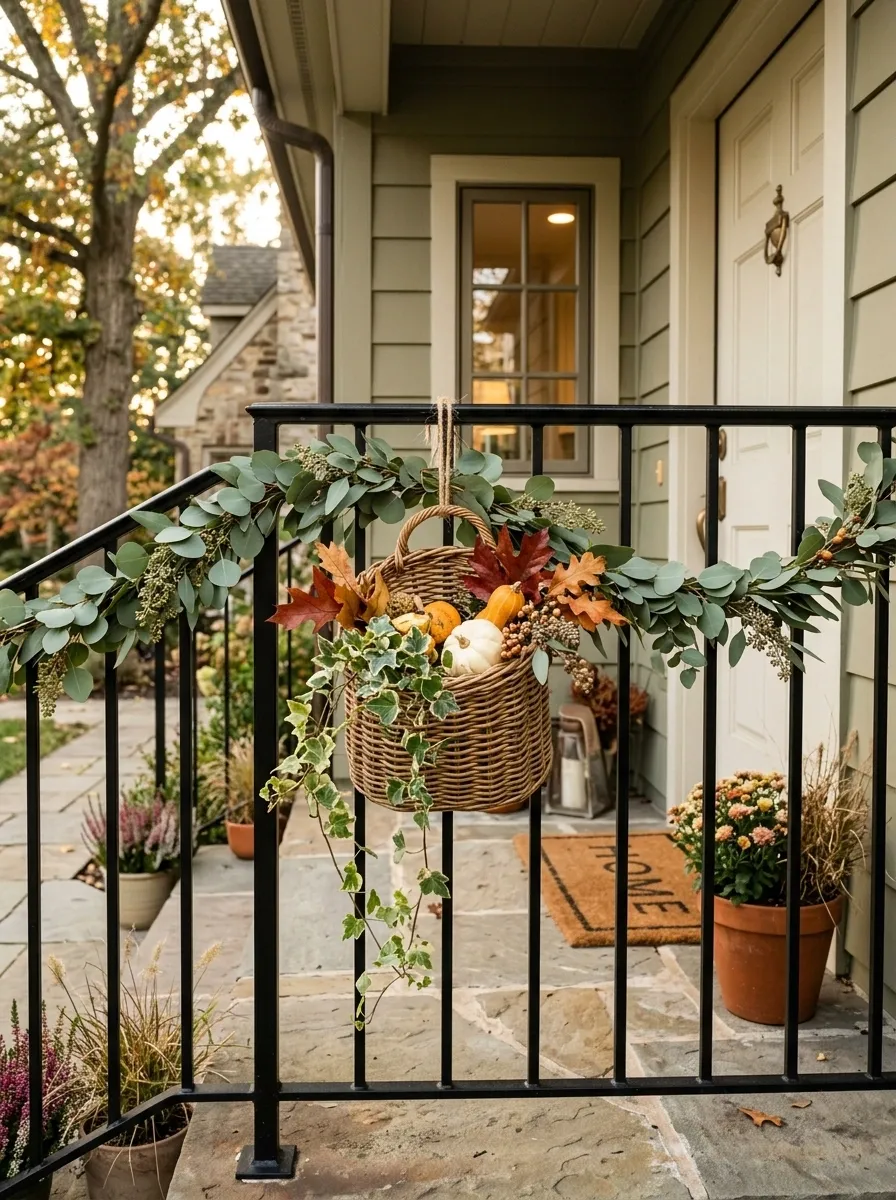
The railing is already there, so use it before buying another piece of furniture.
A narrow garland, hanging planter, basket, or seasonal accent can add detail without consuming the floor. Just keep the attachment secure and make sure the railing remains easy to use.
One or two carefully placed elements will look intentional. Covering every section of the railing will make the porch feel smaller.
Create Height With a Plant Stand or Slim Pedestal
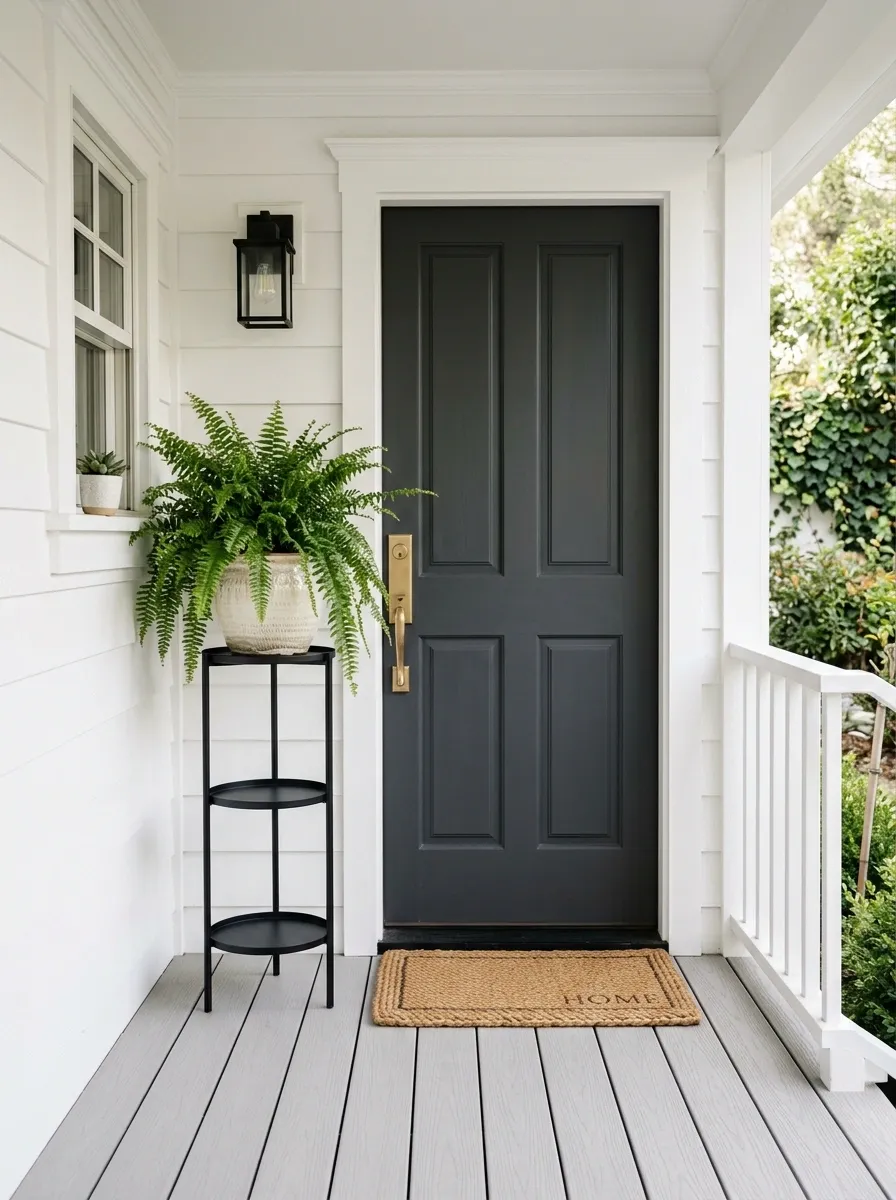
Short plants can disappear beside a door, especially when the porch already has lots of horizontal lines.
A slim plant stand raises one container into the sightline and creates height without taking up much additional floor area. Choose a stand that’s narrow and stable.
Fix the common mistake: Don’t place several short pots at the same height. One elevated plant creates more visual interest than a crowded collection.
Don’t use a tall pedestal directly beside a busy doorway. A little separation keeps the entrance practical.
Add a Small Mirror Only Where It Actually Helps
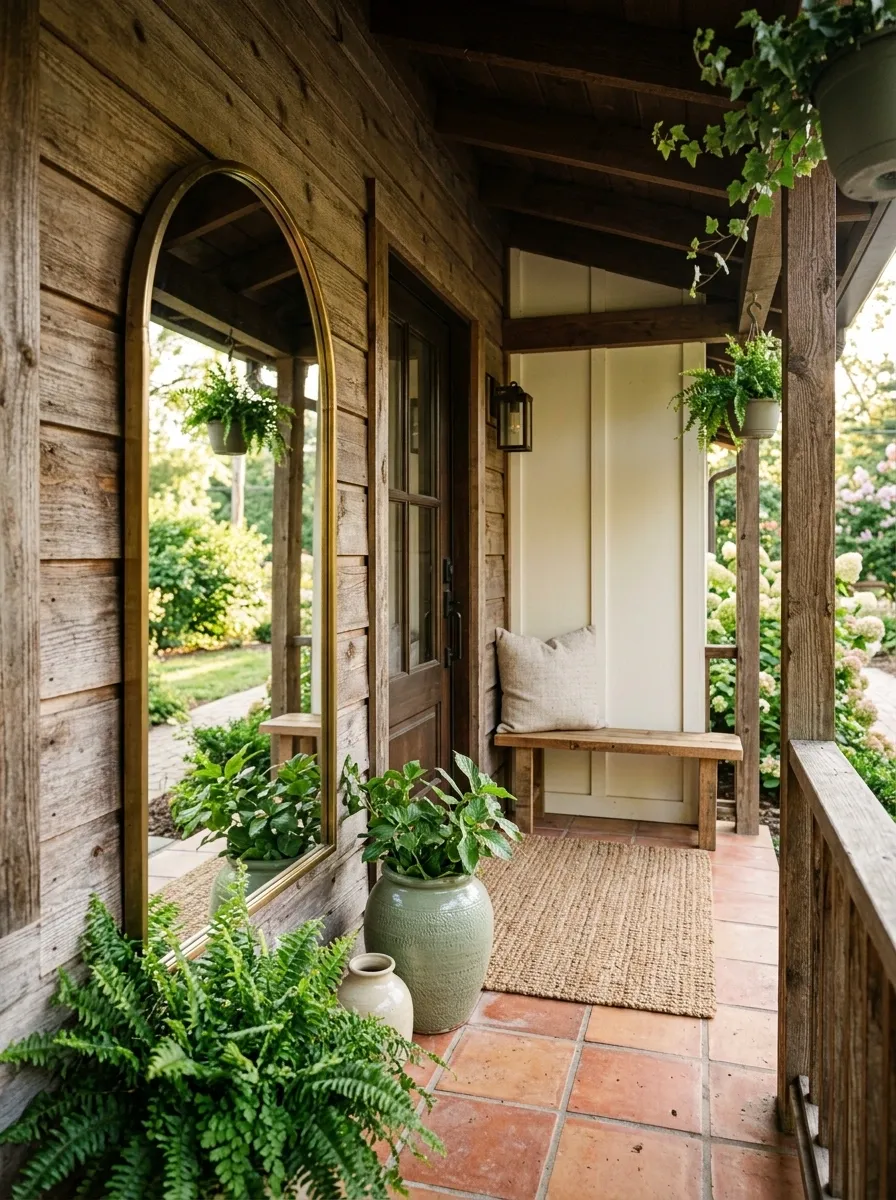
A mirror can bounce light and make a small covered porch feel less closed in, but location matters more than the mirror itself.
Place it on a side wall where it reflects greenery, daylight, or an attractive section of the porch. Don’t hang one opposite a blank wall and expect it to create depth.
Use an outdoor-rated mirror or a protected location. A mirror shouldn’t become another maintenance problem.
Style the Porch Around One Useful Everyday Item
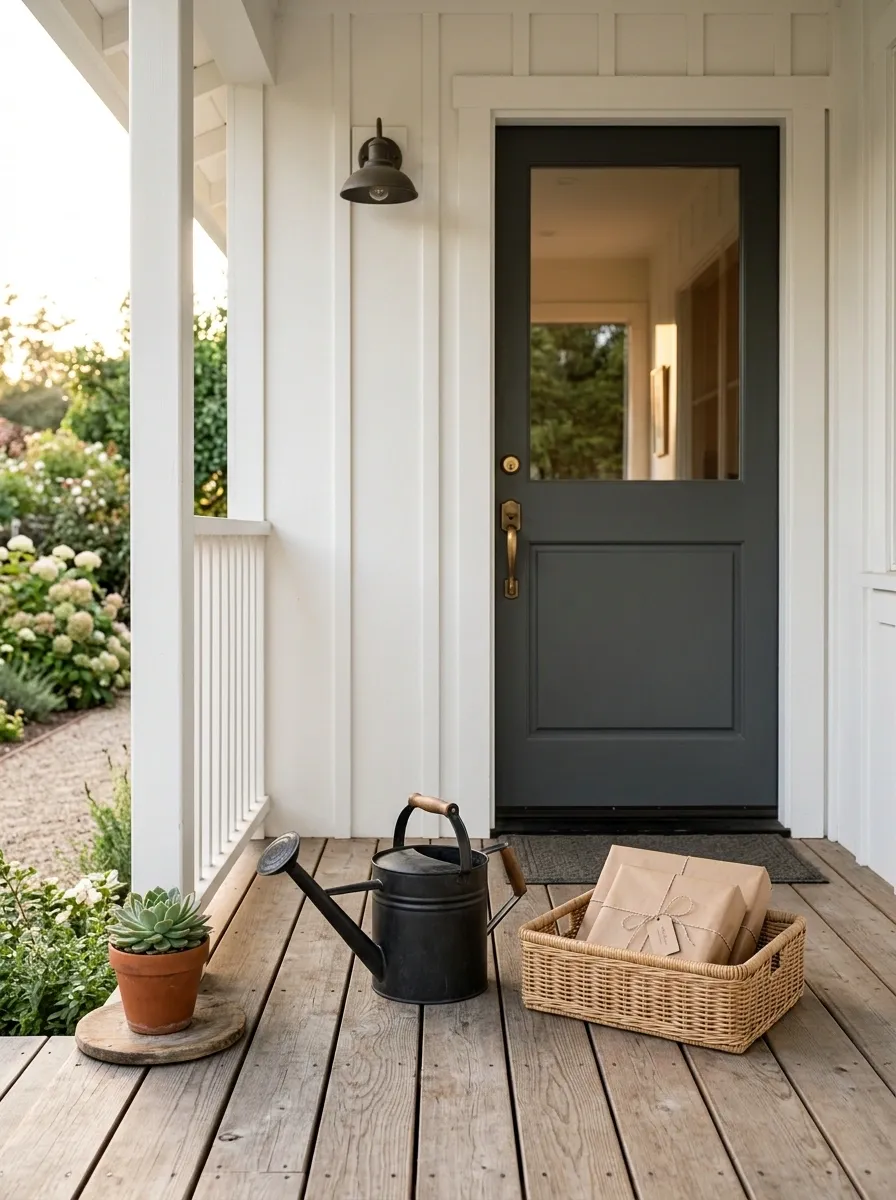
The best porch decor often starts with something you already need.
A watering can, shoe bench, lantern, package basket, or small chair can become the anchor. Style around that piece instead of buying decorative objects first.
Use this sequence:
- Pick the item you already use.
- Give it a clear home.
- Add one supporting piece.
- Stop before the area looks crowded.
This approach keeps the porch useful instead of turning it into a display that needs constant rearranging.
Finish With One Seasonal Detail Instead of Ten Tiny Ones
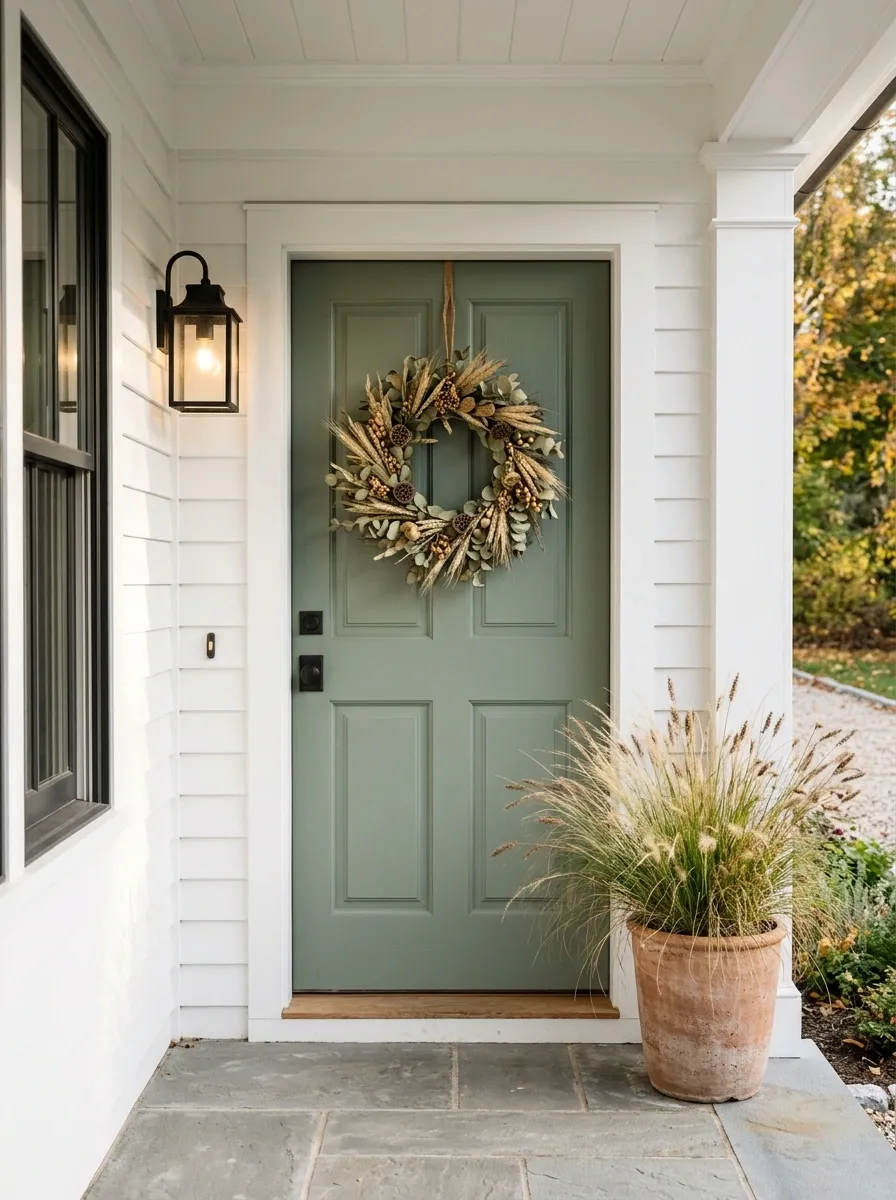
The final mistake is adding more because the porch still doesn’t feel finished.
Usually, it needs one final detail, not ten. A seasonal wreath, a small planter, a lantern, or a simple doorway accent can be enough.
That’s the rule worth remembering. A small porch has limited visual space, so every extra object has a bigger effect. Remove the piece that doesn’t earn its spot, then stop decorating.
The Best Small Porch Makeovers Start With One Decision
A tiny porch doesn’t need a shopping spree. It needs a clear priority.
Maybe the door looks tired. Maybe the entry is dark. Maybe the floor feels empty, or maybe you’ve already bought enough decor and simply need to rearrange what’s there. Start with the problem you notice from the street, fix that one thing, then step back before adding anything else.
That’s where a tight budget becomes an advantage. You can’t hide weak choices behind piles of accessories, so you’re forced to make the visible pieces count.
Use the ideas here as a menu, not a checklist. Pick the few that solve your actual porch problem, leave some space untouched, and let the doorway breathe.
Save this list for the next time your front porch needs a fresh look without turning into another expensive project.