
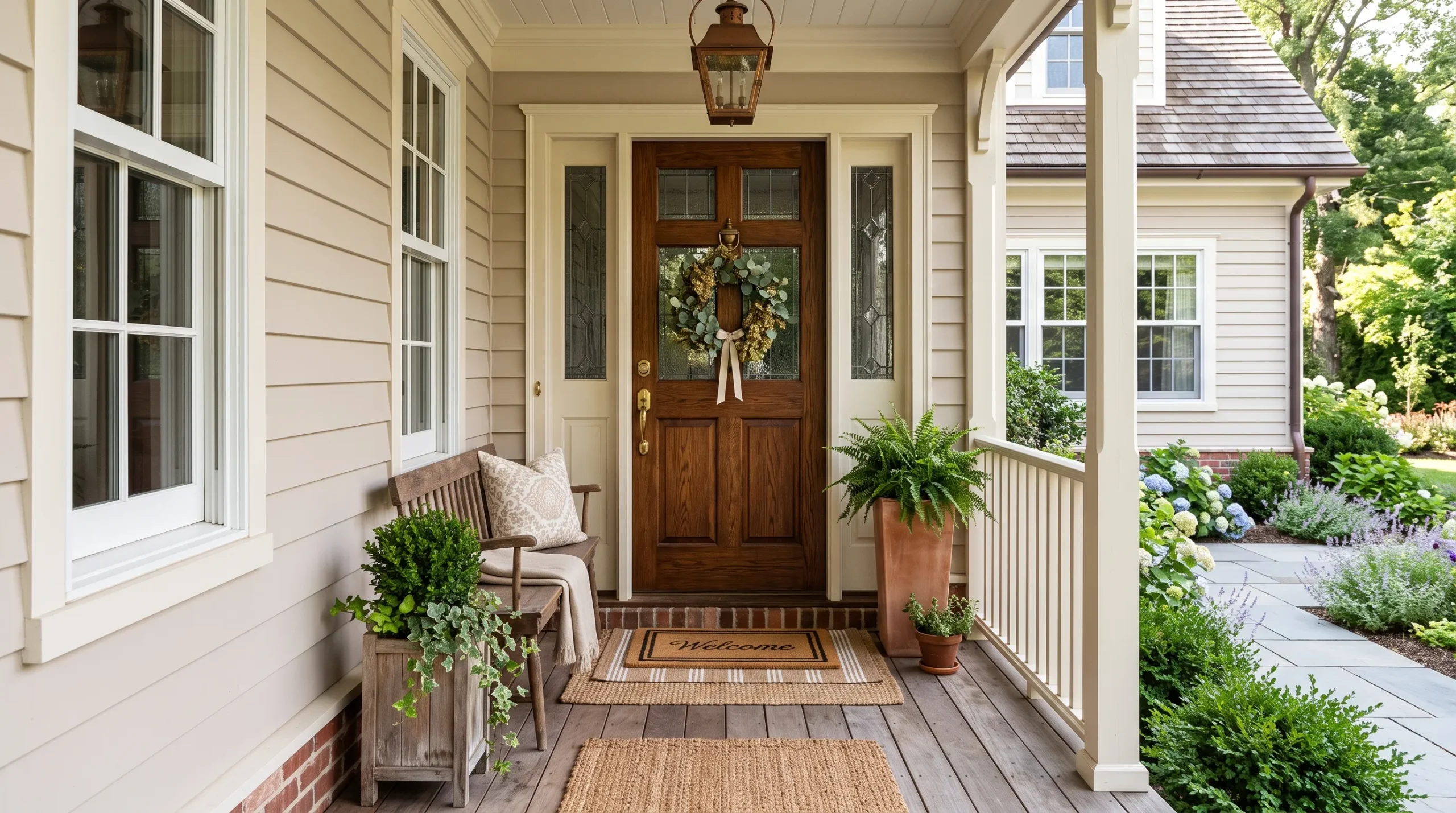
If you have a skinny entry, you already know the struggle: standard patio furniture turns your walkway into an obstacle course, and oversized planters force you to sidestep just to unlock your own front door. You cannot force deep, sprawling lounge sets onto a shallow footprint and expect it to look good.
But having tight square footage doesn’t mean you have to leave it entirely bare. You just need to stop decorating it like a backyard deck and start treating it like an exterior hallway.
These narrow front porch ideas fix the layout problem permanently. We are completely tossing out the bulky rocking chairs and the massive floor planters. Instead, we are utilizing vertical space, optical illusions, and low-profile pieces that actually fit the geometry of your house. If you are tired of squeezing past your own outdoor furniture every time you carry groceries inside, here is how to reclaim your space.
Why Most Narrow Porch Layouts Fail (And How to Fix Them)
Before we get to the specific ideas, you need to understand the basic geometry of a small porch. Here is exactly where most layouts go wrong, and the pro approach to fix them.
| The Element | Common Mistake | The Pro Fix |
|---|---|---|
| Seating | Rocking chairs and deep loveseats | Armless cafe chairs and flush benches |
| Greenery | Oversized round terracotta floor pots | Railing planters and vertical wall grids |
| Decor | Bulky side tables and wide welcome mats | Skinny drop-leaf tables and painted runners |
Narrow Front Porch Ideas
Choose low-profile lanterns
Skip the oversized hanging fixtures that steal your headroom. A streamlined exterior light brightens up a narrow entry without making the space feel crowded. It keeps your line of sight completely open so the whole area feels bright and airy.
Positioning a sleek wooden bench against the wall gives you a spot to drop bags without hogging the walkway. Keep it shallow so foot traffic flows smoothly right up to the door. Add a single pastel throw pillow to introduce color without creating bulk.
Frame your doorway with vertical elements like a tall welcome sign or slender potted greenery. These vertical accents draw the eye upward and outward, playing up the height of your porch. It transforms a tight entryway into a welcoming statement piece.
Skip the standard seating
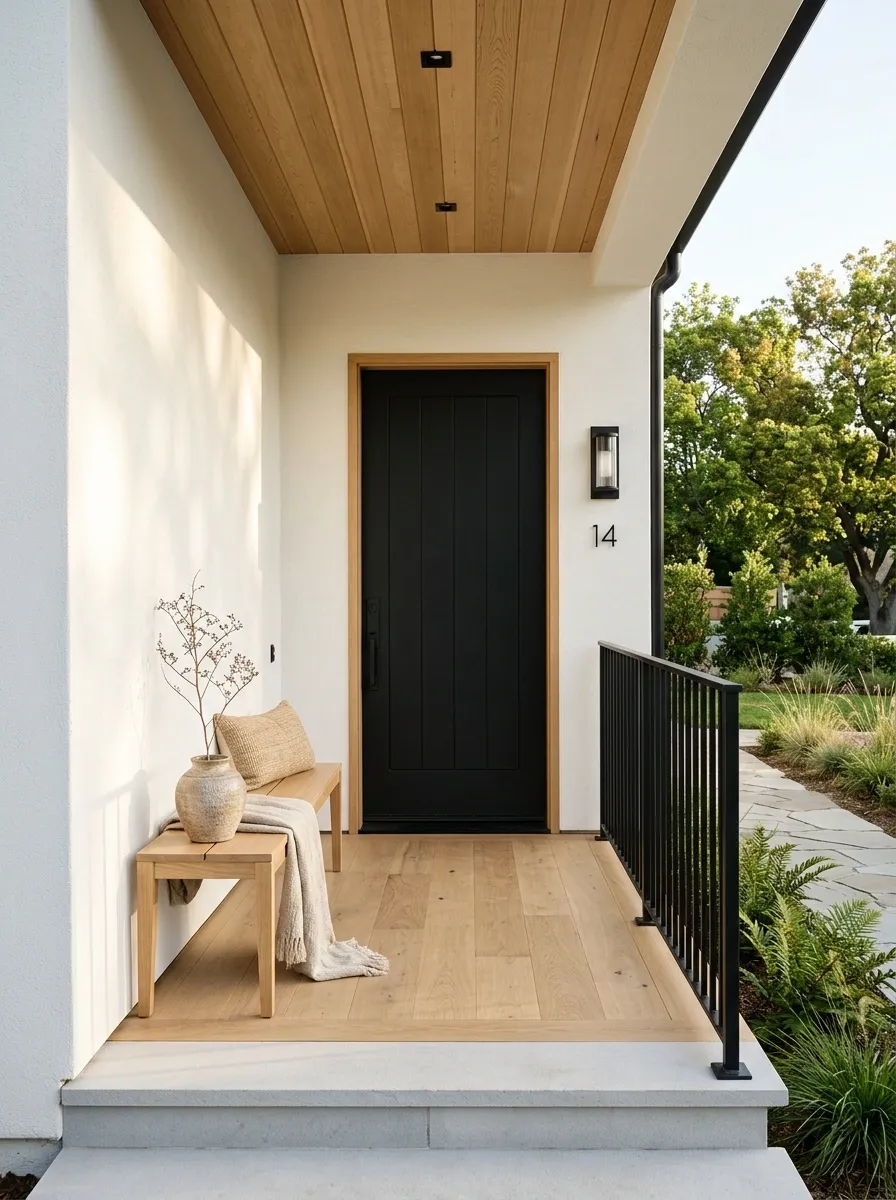
Ditch the classic rocking chairs. They need at least three feet of clearance just to rock back and forth, which immediately blocks your walkway. Standard patio sets are built for sprawling decks, not skinny concrete slabs. If your porch is under six feet deep, do not buy standard outdoor lounge chairs. Opt for metal cafe chairs, folding bistro sets, or backless benches instead. You’ll gain back your walkway instantly.
Always leave a minimum of 36 inches of clear walking space from the stairs to your front door. If a chair crosses that invisible line, it doesn’t belong on your porch.
Embrace compact wicker seating
Swap bulky outdoor sofas for slim wicker armchairs that fit snugly against the glass. These chairs offer plush comfort without dominating the entire floor plan. They keep the space open and airy while still inviting you to sit back and enjoy the view.
Ground the seating area with a patterned outdoor rug to pull the whole look together. A tight geometric print adds personality and warmth underfoot without catching on the door swing. It defines the lounge zone instantly.
Tuck a small drum table right between your chairs to hold drinks or books. Its rounded shape softens the linear lines of the windows and frames while taking up minimal square footage. It is the ultimate space-saving surface for a narrow sunroom.
Mount planters to the railing
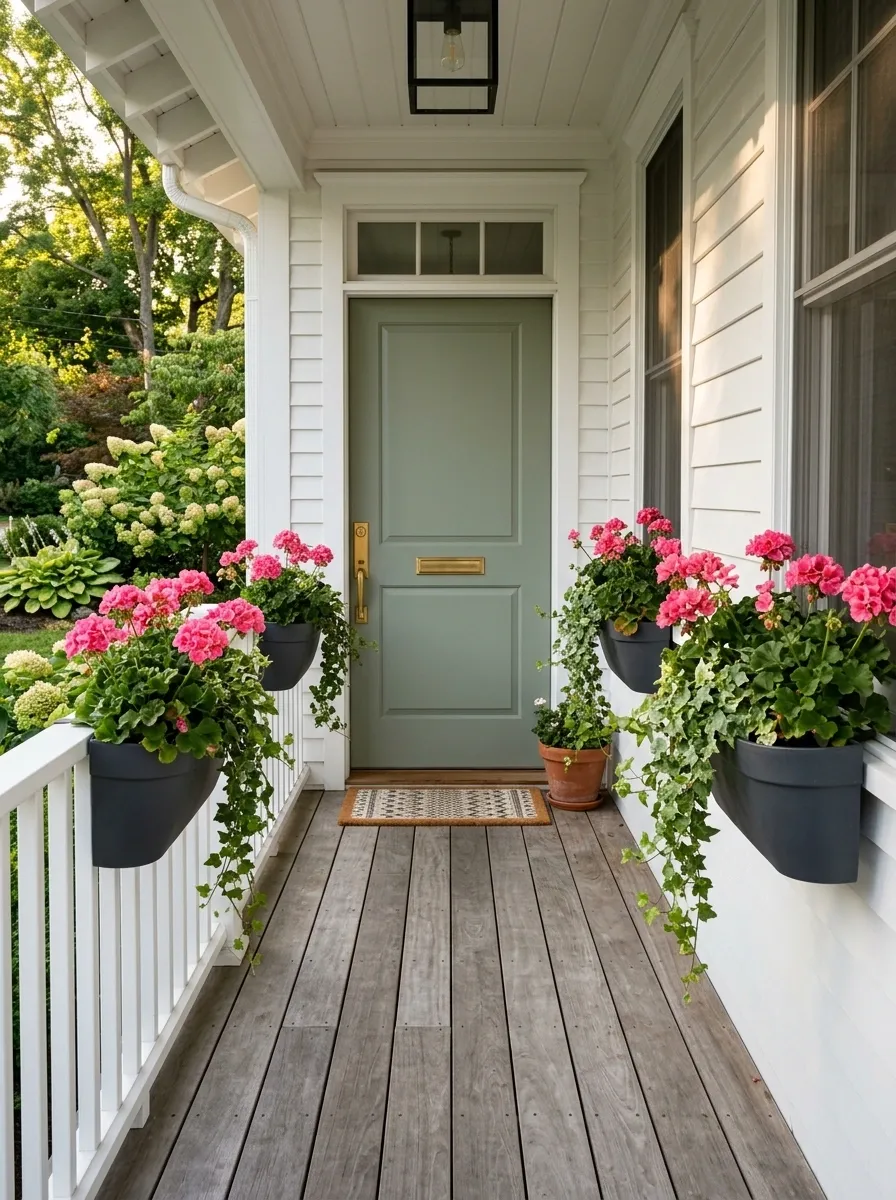
Giant terracotta pots eat up your floor plan fast. When you only have a few feet of depth, sacrificing two of them to a fern makes zero sense. Get those plants off the ground. Saddle planters sit directly over the top rail, keeping your deck completely clear. You still get the curb appeal of bright flowers, but you keep your walking path entirely open.
Why Floor Pots Fail Here
Go vertical with planters
Skip the bulky floor pots that create a tripping hazard in tight spaces. Elevating your greenery in large, sleek black urns keeps the walkway completely clear. You get all the lush curb appeal of a garden without losing a single inch of your path.
Anchor your seating with lightweight wicker rocking chairs that actually fit the dimensions of your deck. Pairing them with a neutral throw blanket softens the aesthetic while maintaining a breezy footprint. It gives you that classic porch feel without the claustrophobia.
Hang a statement lantern overhead to cast a warm, inviting glow after sunset. A classic brass fixture draws the eye upward, making the porch feel taller and much more expansive. It finishes off the space with timeless charm and zero clutter.
Paint a faux runner
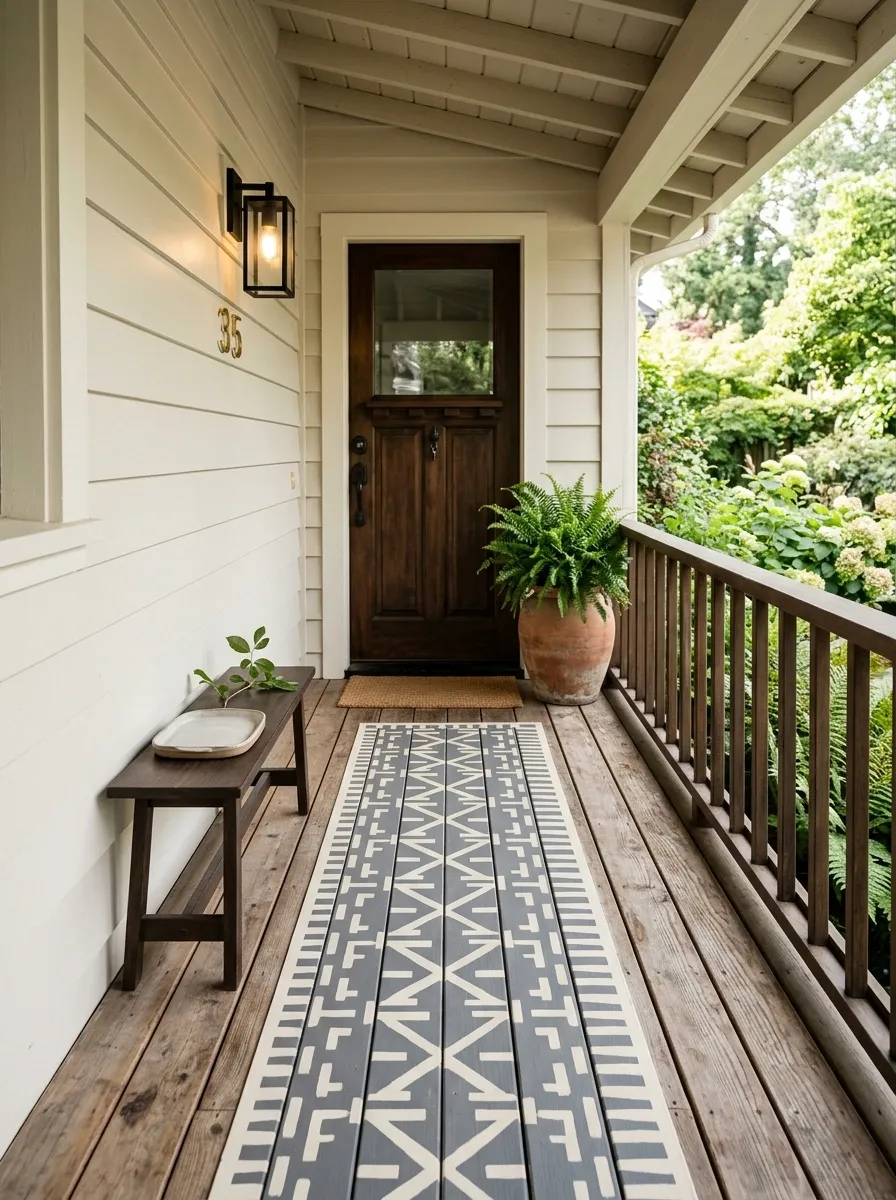
A painted rug anchors the space without tripping you up. Real outdoor rugs are fine, but on a tight porch, the thick edges constantly catch the bottom of the door or curl up under heavy foot traffic. Grab some exterior porch paint and stencil a geometric runner directly onto the floorboards. It draws the eye down the length of the porch, making it look much deeper than it really is. Plus, you never have to drag a wet rug to the driveway to pressure wash it.
Install flush-mount lighting
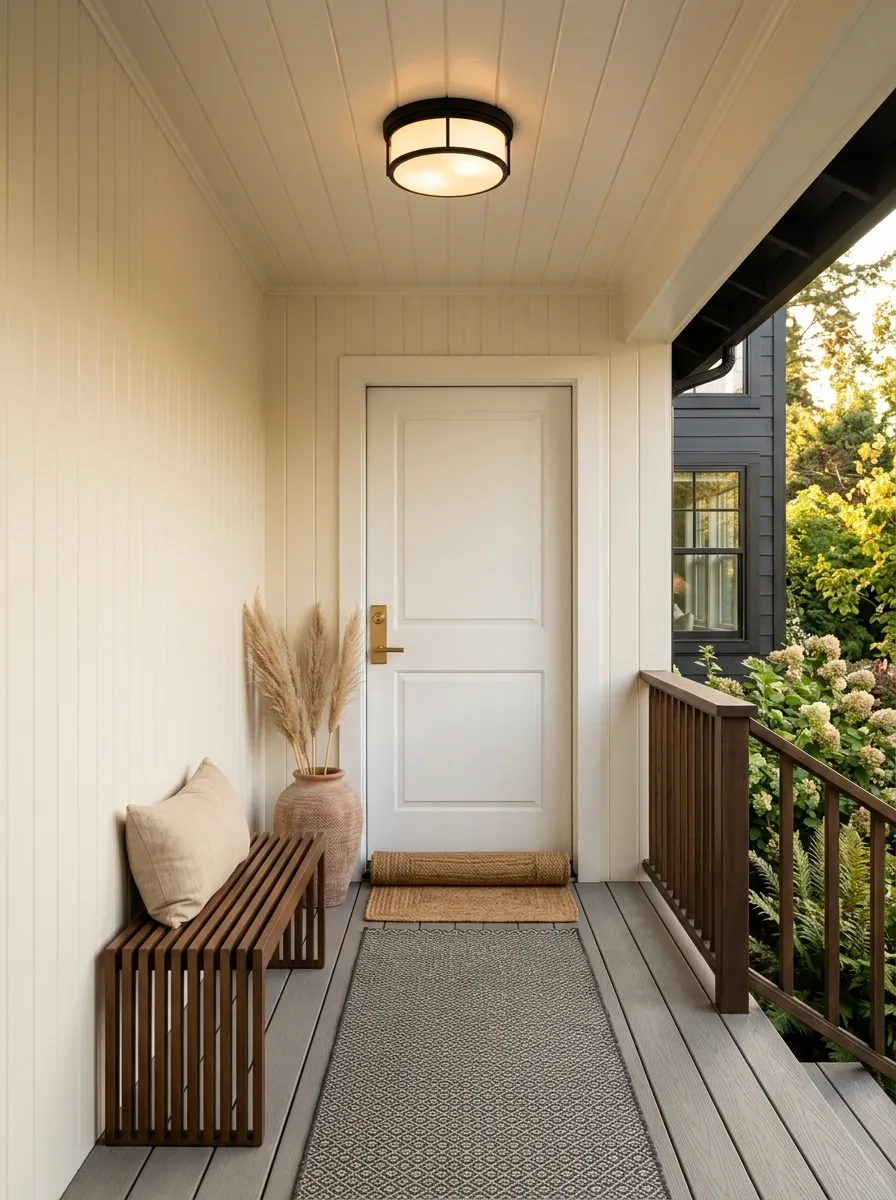
Hanging pendants ruin your headroom. People love the look of a big metal farmhouse lantern, but on a narrow porch, it makes the space feel cramped and claustrophobic. You want the eye to go up and stay up. A sleek, low-profile flush mount brightens the space without dangling down into your line of sight. It’s a tiny hardware swap that completely changes how tall your ceiling feels.
The 84-Inch Minimum
Never hang a light fixture lower than 84 inches from the porch floor. If your porch ceiling is 8 feet (96 inches) or lower, a flush mount is mandatory.
Swap to a skinny console table
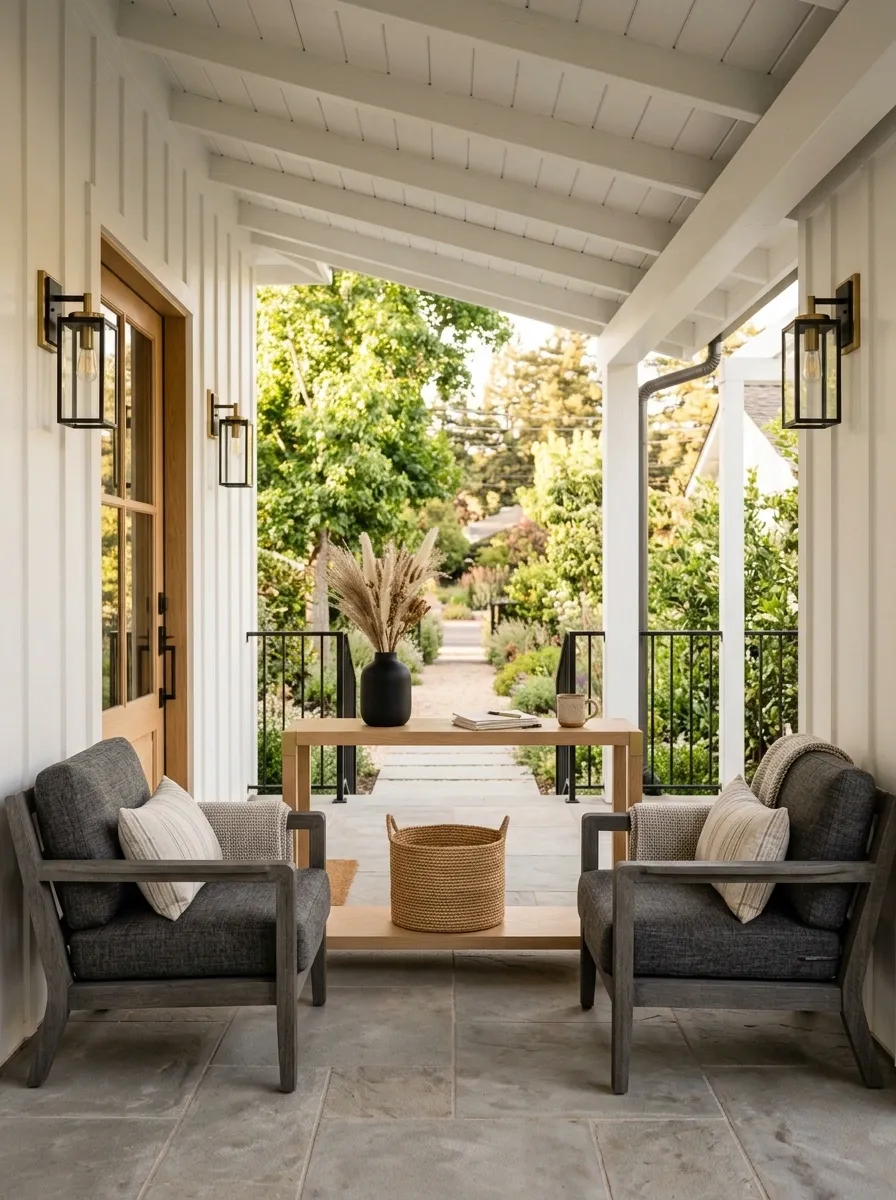
A bulky side table placed between two chairs wastes too much room. You need a drop zone for mail, a coffee mug, or packages, but a round patio table eats up valuable square footage right where you need to walk. Swap it for a slender, six-inch deep console table pushed flush against the exterior siding. It gives you the exact same function with zero footprint penalty. You get the surface area you need without creating a bottleneck right at the front door.
| Round Side Table | Skinny Console |
|---|---|
| Steals 18+ inches of walkway | Sits flush, taking only 6 inches |
| Creates an awkward corner dead zone | Blends smoothly into the wall |
Hang a slender swing
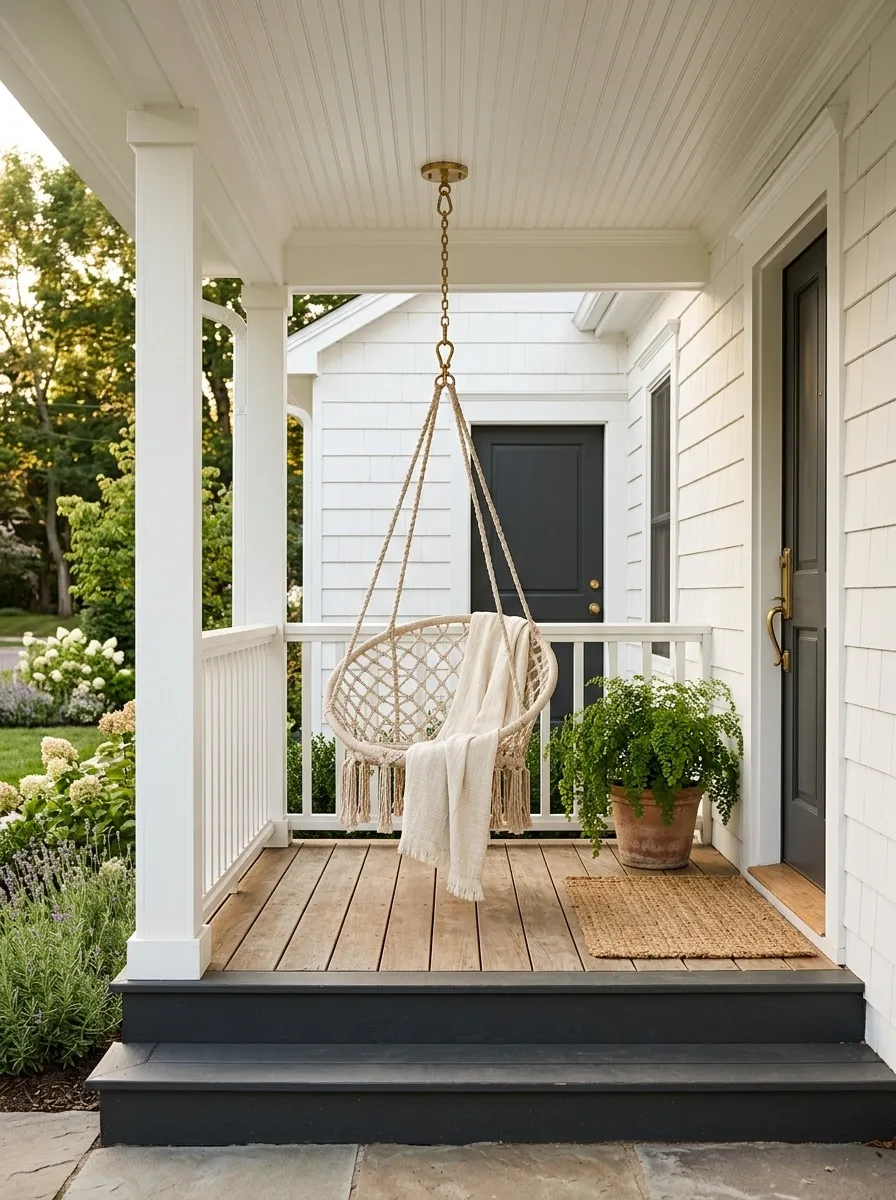
A traditional porch swing needs arc clearance. If your porch is five feet deep, you’ll smash your knees into the siding every time you push off. That doesn’t mean you can’t have a swing, but you have to respect the geometry.
Swap the bulky three-seater for a slender, single-seater rope chair or a narrow wooden hanging seat.
- They require a fraction of the swing arc.
- They rotate in place.
- They tuck perfectly into a dead corner without blocking the front window.
Standard Swing
Requires 4+ feet of swing arc clearance to function.
Slender Rope Chair
Rotates in place and only needs 2 feet of clearance.
Use oversized house numbers
Tiny, hard-to-read house numbers are a massive missed opportunity on a small porch. When you lack floor space for heavy decor, you must use your walls.
Go big. We’re talking six to eight-inch floating metal numbers stacked vertically right beside the door. It gives the front entry a high-end, custom look while keeping the ground totally clear of clutter. It immediately commands attention without stealing a single square inch of walkway.
Stick to a monochromatic palette
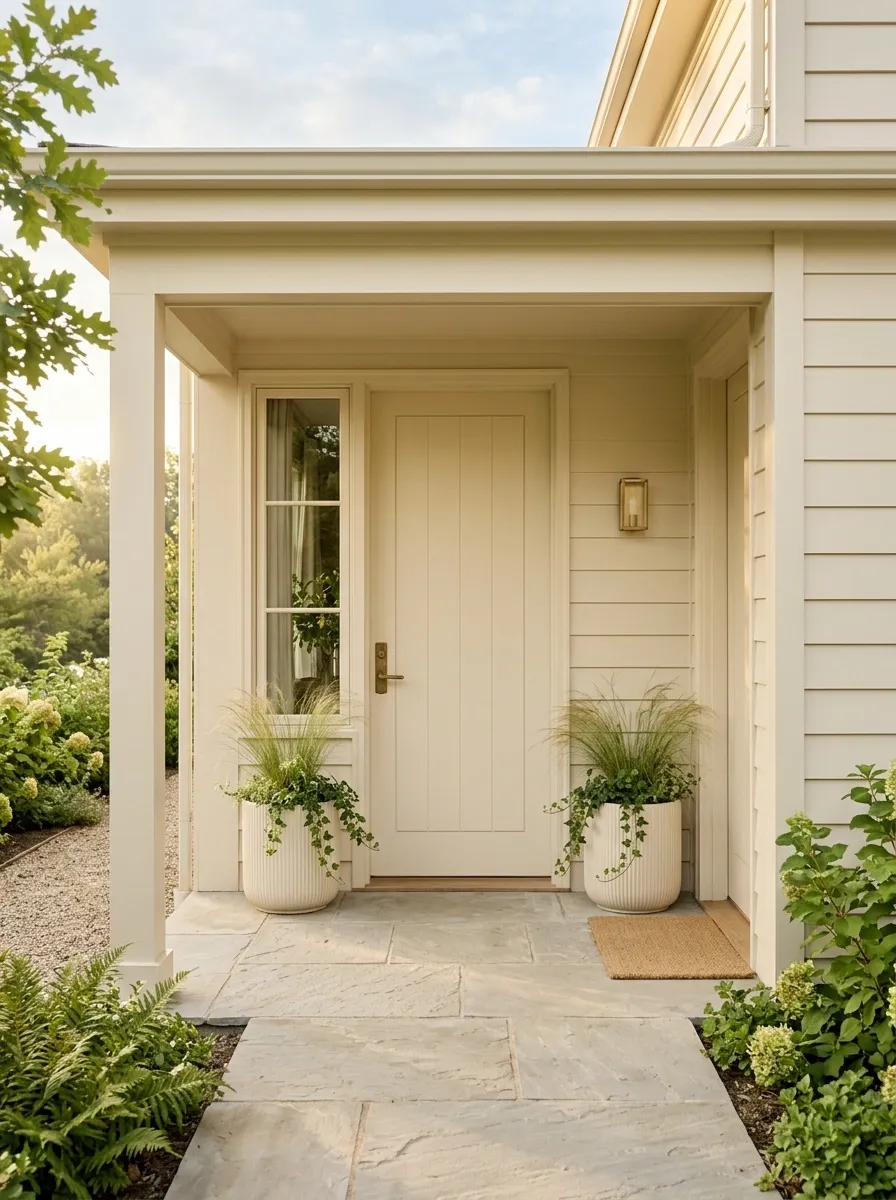
High-contrast colors chop a small space into tiny, visually messy blocks. If your siding is white, your trim is black, your planters are red, and your door is bright blue, a skinny porch feels instantly chaotic.
Instead, color-drench the area.
Match your planters to your siding. Paint the trim the exact same shade. When the eye doesn’t hit harsh color breaks, the porch visually expands. It’s a simple optical illusion that costs nothing but a gallon of paint.
Color Drenching
Matching your hard goods directly to your siding removes harsh visual boundaries, expanding the space.
Layer ultra-thin rugs
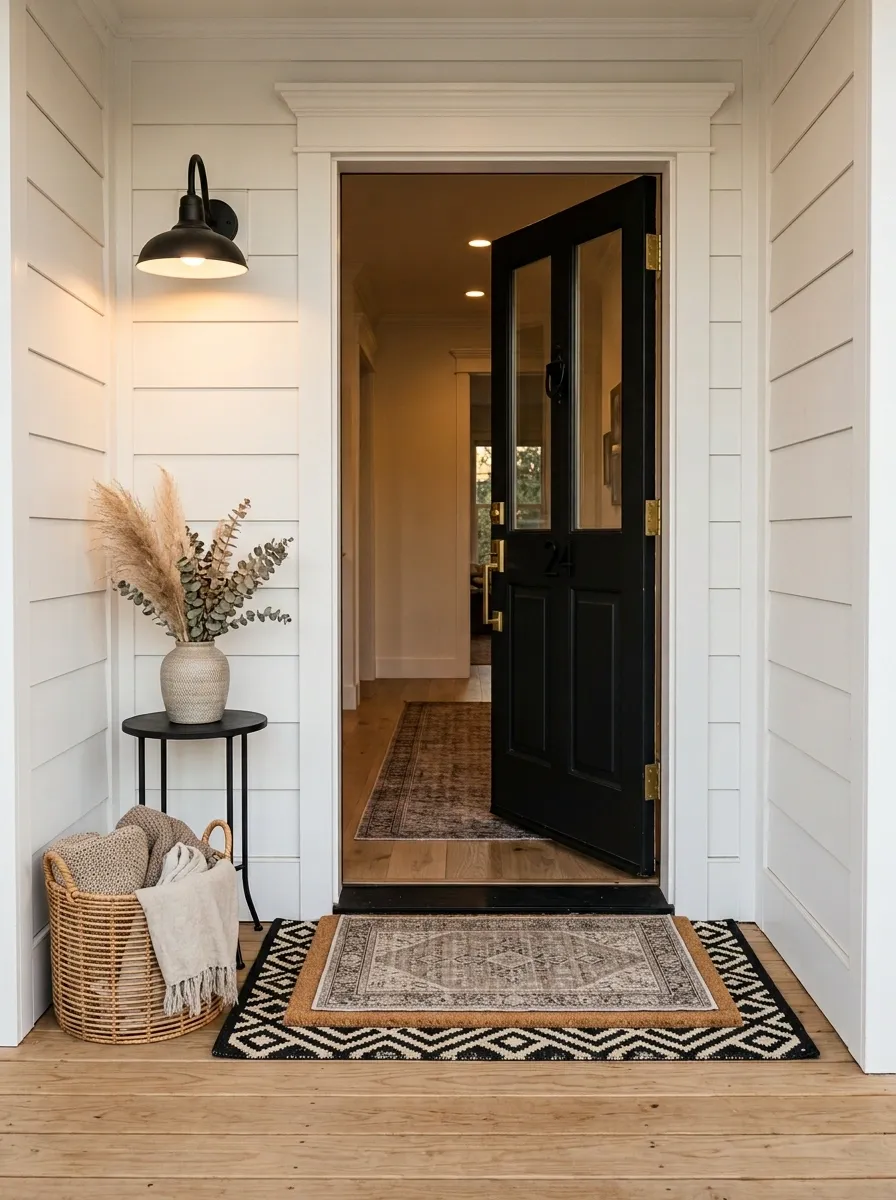
Never buy a rug you can trip over. Thick coir welcome mats look terrible the second they start shedding, and they constantly catch the bottom of your screen door.
If you want texture, use a flat-weave indoor/outdoor mat. You get the warmth of textiles without the annoying clearance issues. Layering a flat 2×3 mat over a slightly larger 3×5 painted stencil anchors the entry perfectly. Your door glides right over it, and nobody stubs a toe.
Don’t: Buy a standard 1.5-inch thick coconut coir mat that blocks door swings.
Do: Use a washable flat-weave rug under 0.25 inches thick.
Anchor with tall, skinny planters
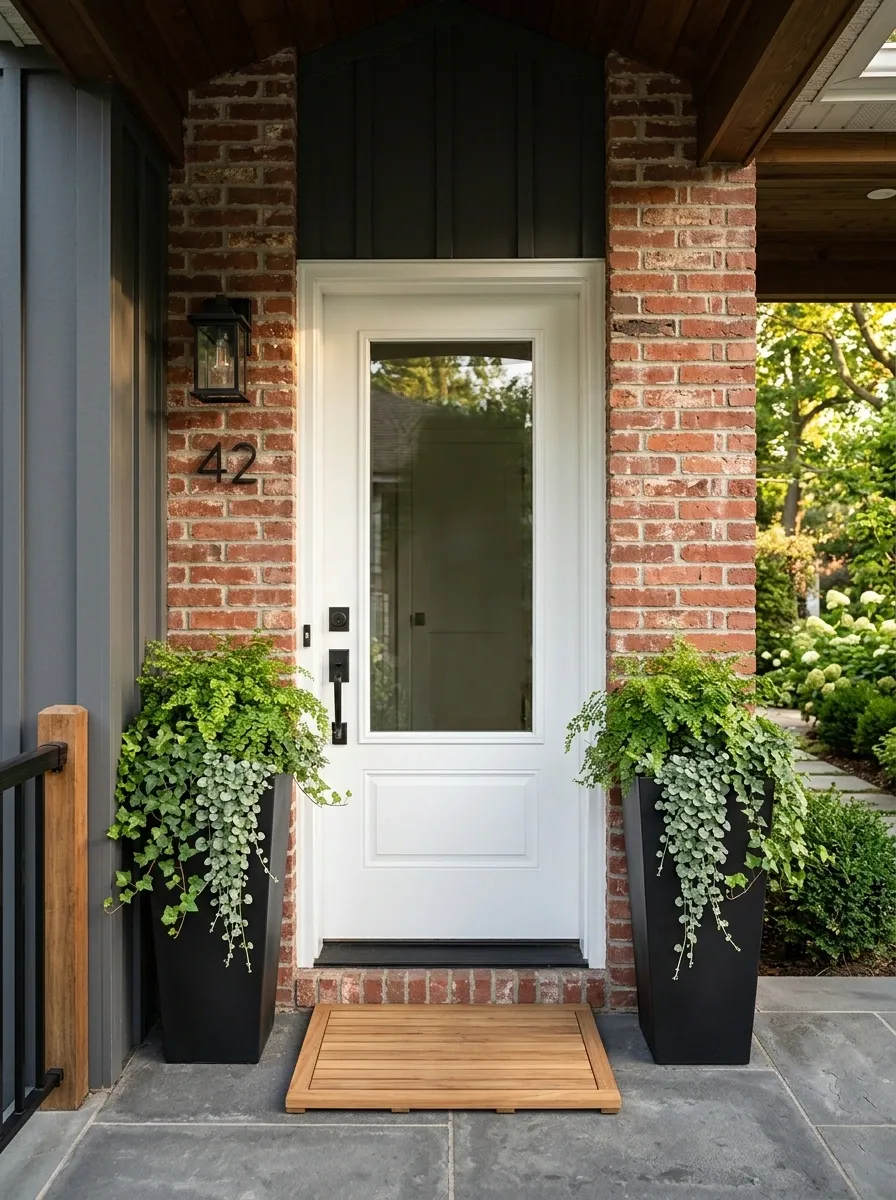
Look at the corners of your porch. If you have a bowl-shaped planter sitting directly on the ground, you are wasting three feet of vertical real estate.
Skinny, architectural planters that stand at least 30 inches tall change the entire scale of the entry. They draw the eye up toward the door frame. Buy square, tapered metal or fiberglass planters. They sit completely flush against the brick, stealing zero walkway space while holding impressive, trailing greenery.
Height: 30 to 36 inches minimum
Width: 12 to 14 inches maximum
Shape: Square (to sit flush against siding)
Mount a folding drop-leaf table
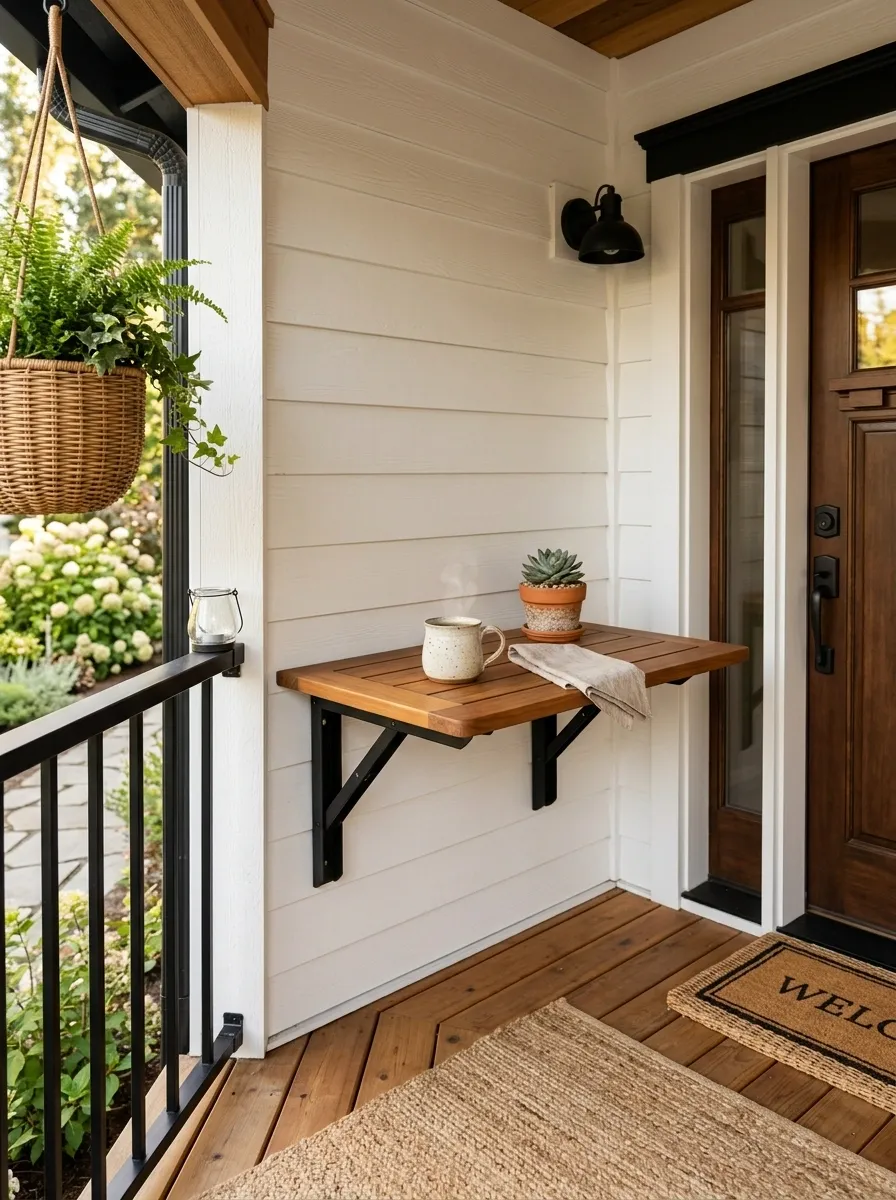
A full bistro set is a pipe dream on a four-foot porch. But you still want a place to set your morning coffee or rest a package while you unlock the door. The answer isn’t a smaller table. It’s a vanishing one.
Install a heavy-duty outdoor drop-leaf table directly onto the siding or railing.
When you need it, snap it up and lock the hinges. When you don’t, drop it completely flat against the wall. You get 100% of your walkway back instantly.
Hang outdoor curtains
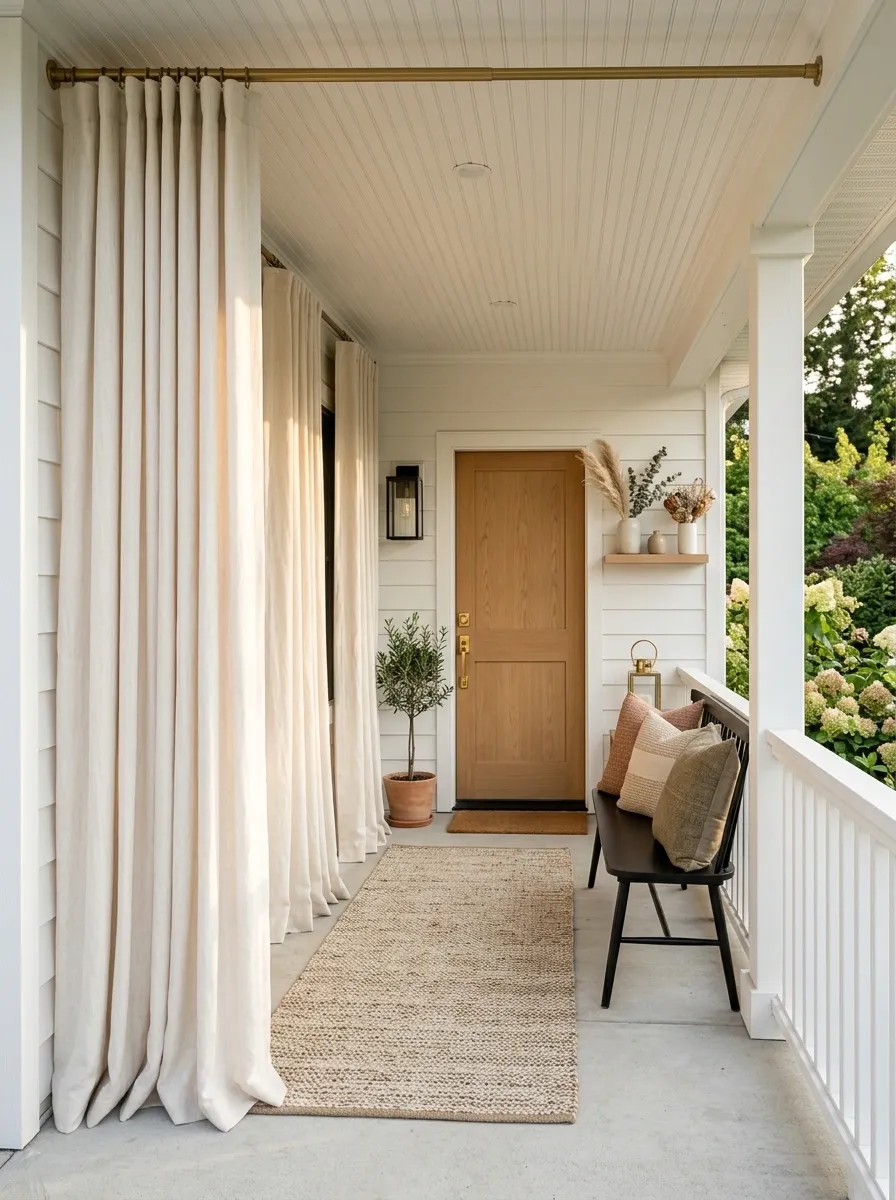
Narrow porches usually feel exposed to the street. Adding bulky privacy screens or large potted shrubs just suffocates the tight floor plan. You need vertical height, not floor blocks.
Hang outdoor curtains instead.
They deliver massive visual drama, add total privacy, and draw the eye straight up to the ceiling. The fabric softens the harsh lines of a concrete slab without stealing a single square inch of walkable space. Mount the tension rod as close to the ceiling as possible to make the porch feel twice as tall.
The Vertical Trick
Outdoor curtains draw the eye upward, faking higher ceilings while providing zero-footprint privacy from street-level neighbors.
Pick armless chairs
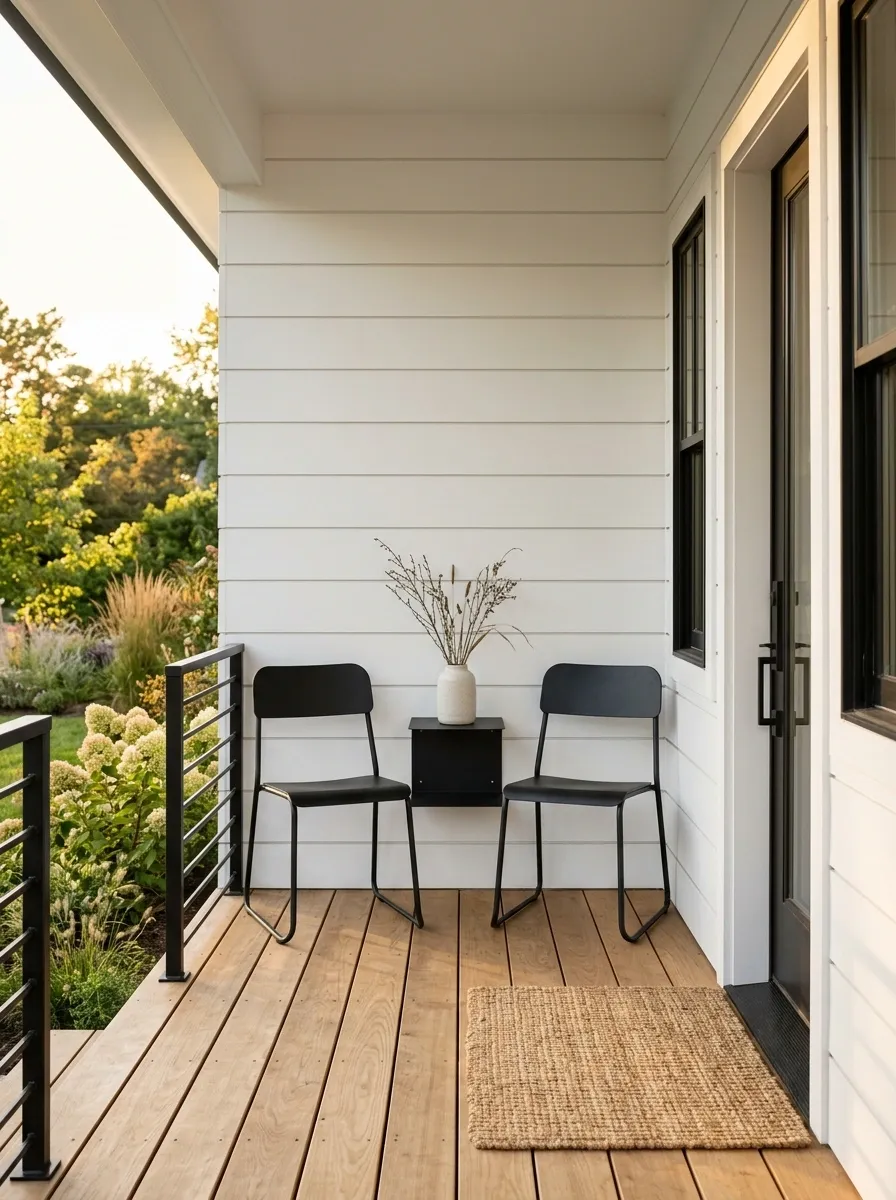
Look at the armrests on a standard outdoor lounge chair. They easily add eight to twelve inches of useless width. When you only have 48 inches of depth to work with, giving up a foot of it to armrests is awful design.
Stick exclusively to armless seating.
It keeps the sightlines wide open and allows people to slide into the chair from the side instead of awkwardly backing into it. A pair of armless metal cafe chairs looks intentional and sleek, whereas stuffed armchairs look like a mistake.
Never buy Adirondack chairs for a narrow porch. Their angled, sprawling armrests require at least 32 inches of width per chair, immediately killing your layout.
Use symmetrical door framing
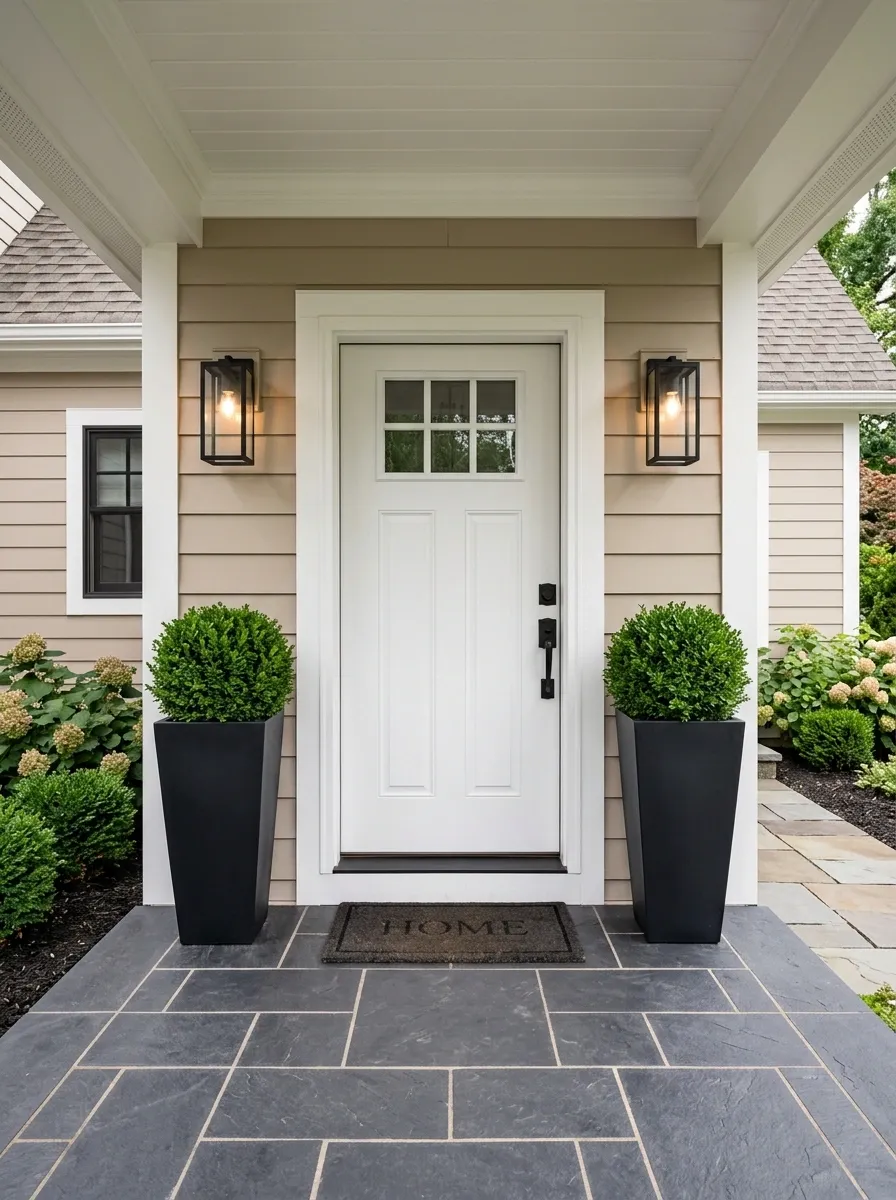
When space is tight, asymmetry just looks like a pile of random clutter. Don’t put a chair on the left side and a random cluster of pots on the right side. It throws the whole porch off balance.
Frame the door perfectly.
Place one tall skinny planter on the left, and the exact same planter on the right. Install one black sconce on the left, and the exact same sconce on the right. This strict architectural symmetry forces visual order, making a cramped porch look expensive and highly planned.
36″ Black Tapered Planter
36″ Black Tapered Planter
Opt for a backless bench
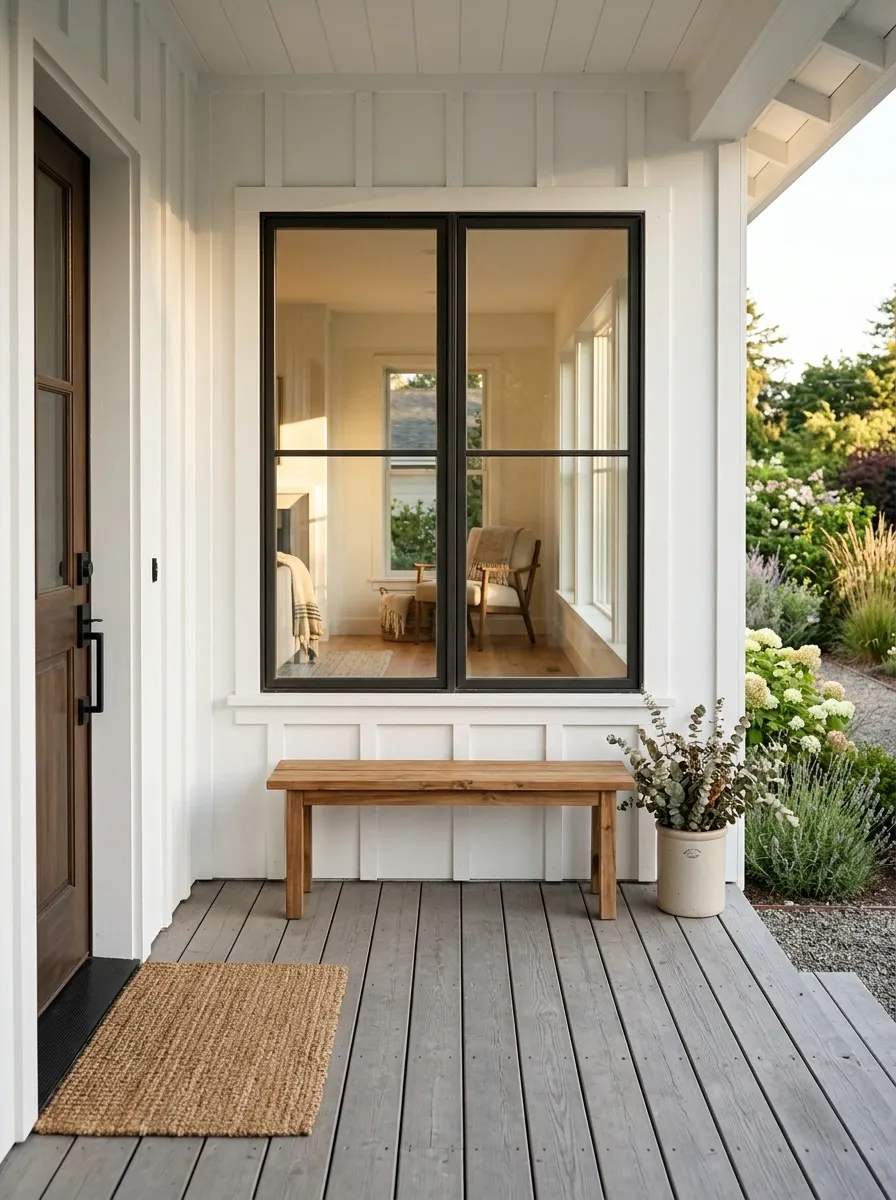
If your porch sits directly in front of a low living room window, a standard bench back ruins your view from inside the house. You end up staring at the wooden slats of a chair all day.
Slide a backless teak or metal bench flush against the siding.
It completely disappears beneath the window sill. It gives you immediate seating for pulling on boots or resting heavy grocery bags, but it never breaks the sightline of your front windows.
| Requirement | Target Spec |
|---|---|
| Maximum Depth | 12 to 15 inches |
| Height Profile | Must sit below window ledge |
Install a low-profile ceiling fan
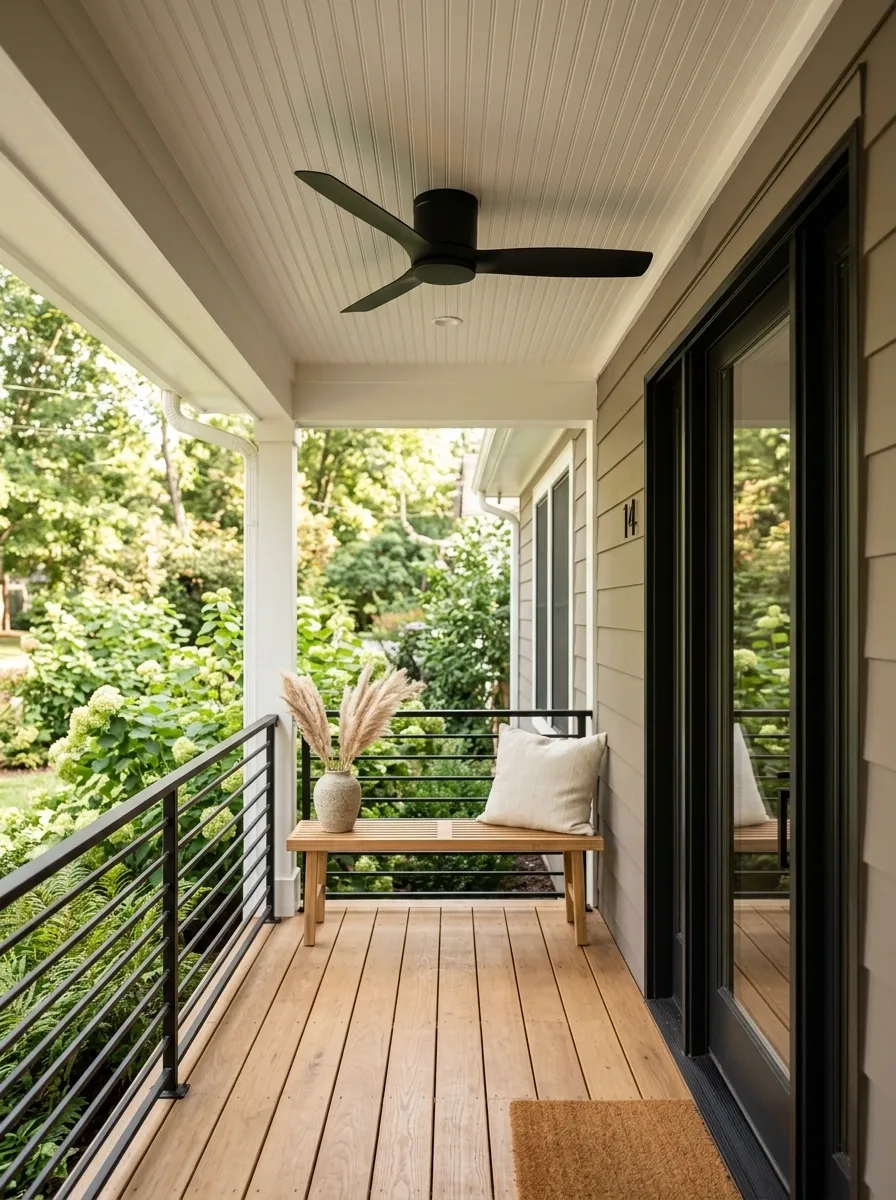
Don’t buy a standard ceiling fan on a downrod. If your porch ceiling is under nine feet, a hanging fan chops off your sightlines and creates a serious safety hazard.
Install a hugger-style ceiling fan instead.
It mounts completely flush against the ceiling joists. You get the airflow you need for muggy summer afternoons without turning the ceiling into an obstacle course. Choose a sleek three-blade design in matte black or white to keep the visual weight as light as possible.
The “Hugger” Spec
Ensure the box explicitly says “flush mount” or “hugger.” The fan blades must sit less than 12 inches from the ceiling drywall.
Place a corner plant stand
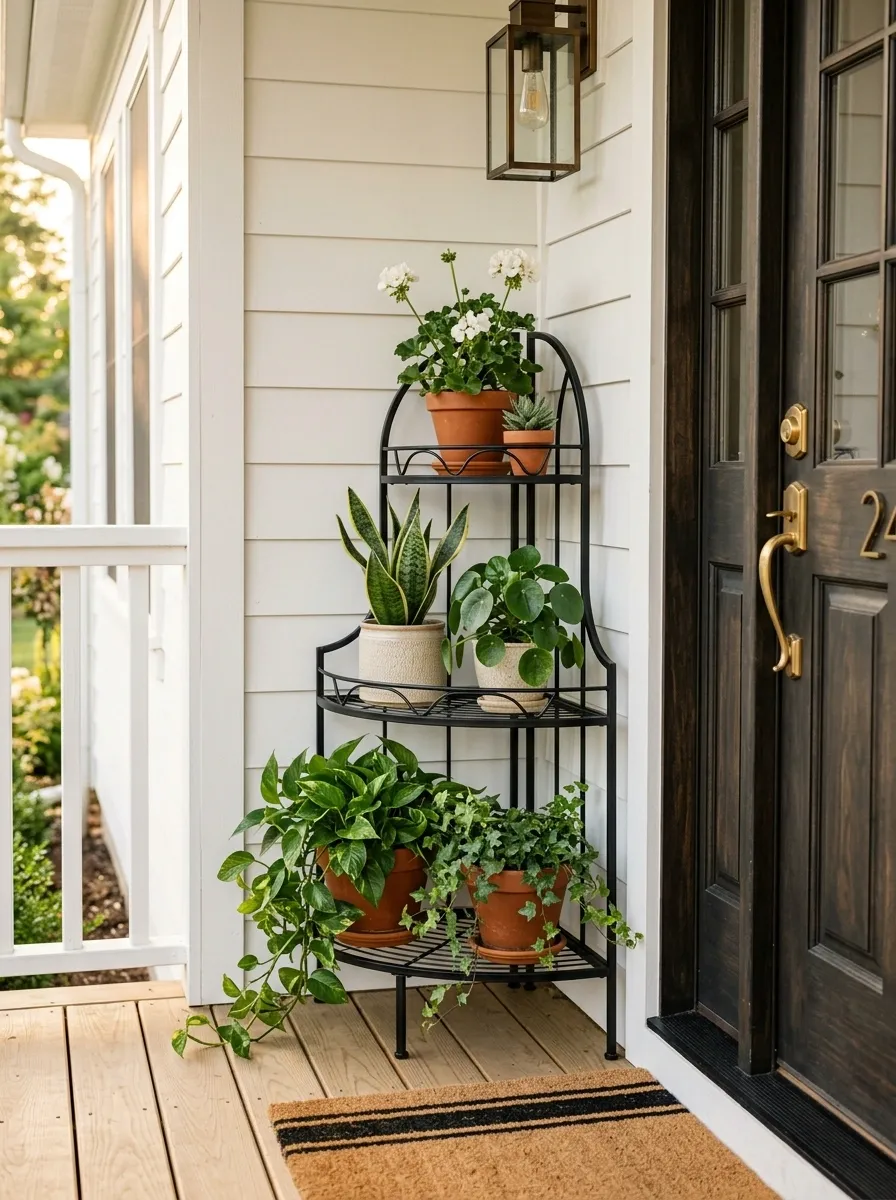
Look at the corners near your front door. People usually shove a single wide pot there and call it done. That wastes prime vertical real estate on a tight footprint.
Buy a tiered, quarter-circle plant stand.
It fits perfectly into a 90-degree corner, letting you stack three or four plants vertically. You get a lush, layered look while keeping the walking path completely empty.
Lean a tall floor mirror
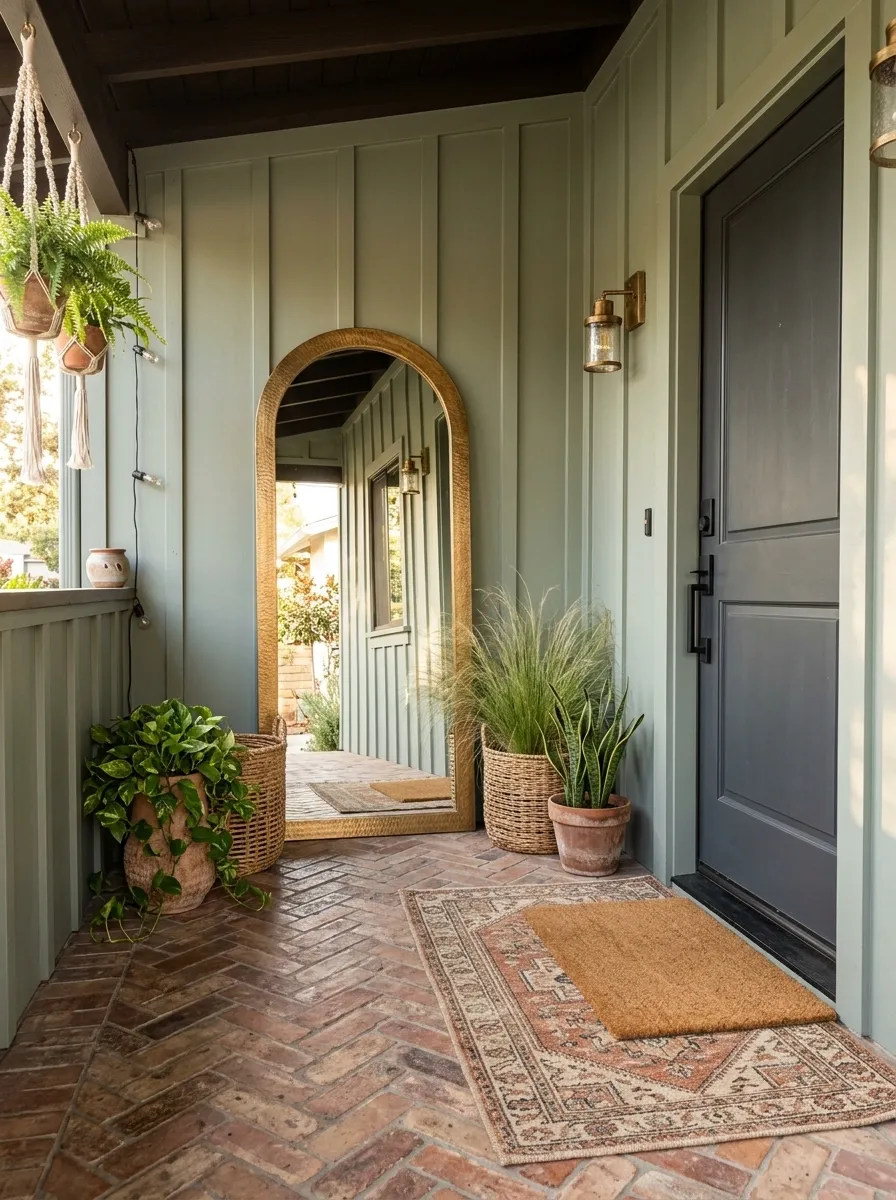
Mirrors trick the eye into seeing double the space. If your porch is heavily covered and protected from rain, placing a mirror outside breaks all the standard rules in the best way possible.
Lean a tall, framed floor mirror against the far short wall.
It instantly fakes the illusion of a deeper porch. It also bounces natural sunlight into the dark, shadowed corners of the entry. Secure the top tightly to the siding with heavy-duty anchors so the wind won’t catch it.
Use a half-umbrella
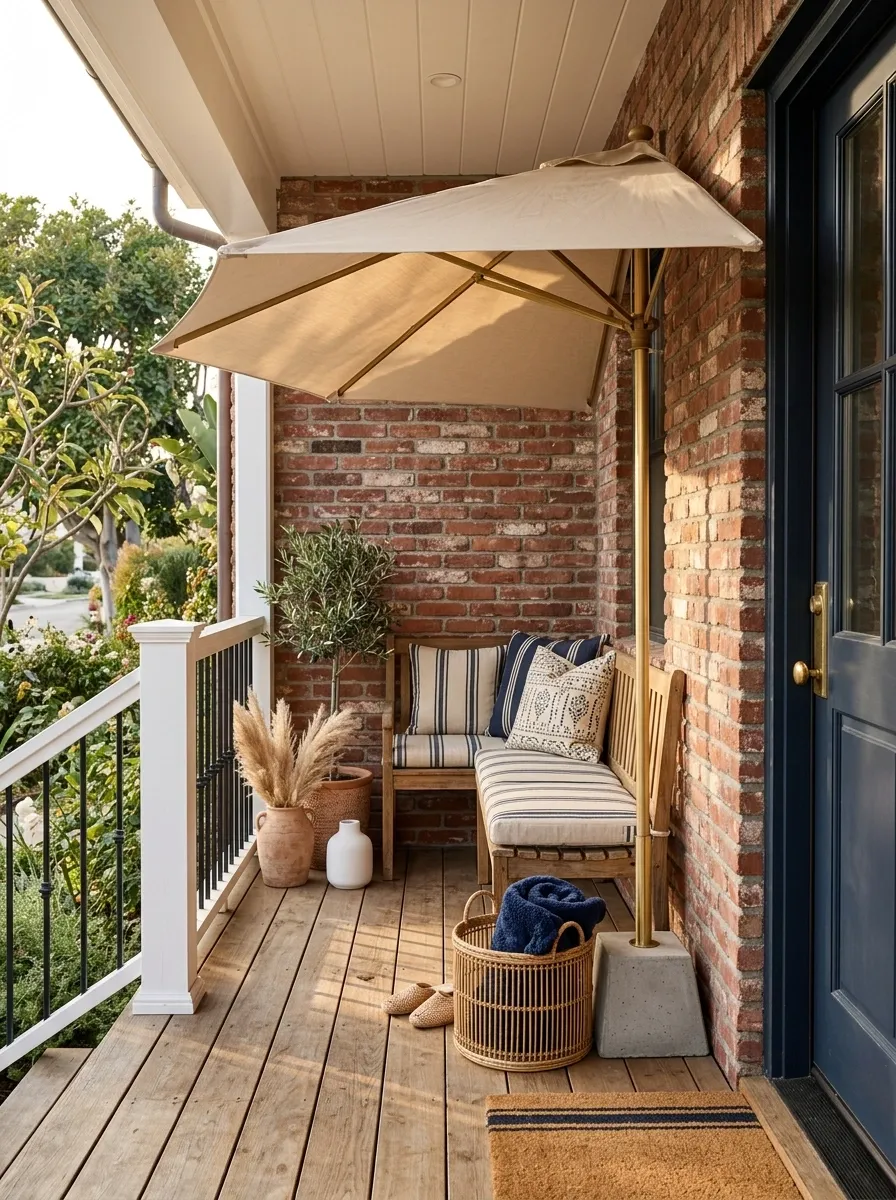
If the afternoon sun bakes your porch, you need shade. A full patio umbrella is impossible here. The canopy will smash right into the house siding or rub against the gutters.
You need a half-umbrella.
These clever designs are completely flat on one side, allowing you to push the base and the pole flush against the exterior brick. You get all the shade of a standard canopy but with half the footprint.
The Wall-Hugger Profile
Designed with a 90-degree flat rear edge. Requires zero rear clearance. Base sits tightly against the baseboard.
Add hidden storage boxes
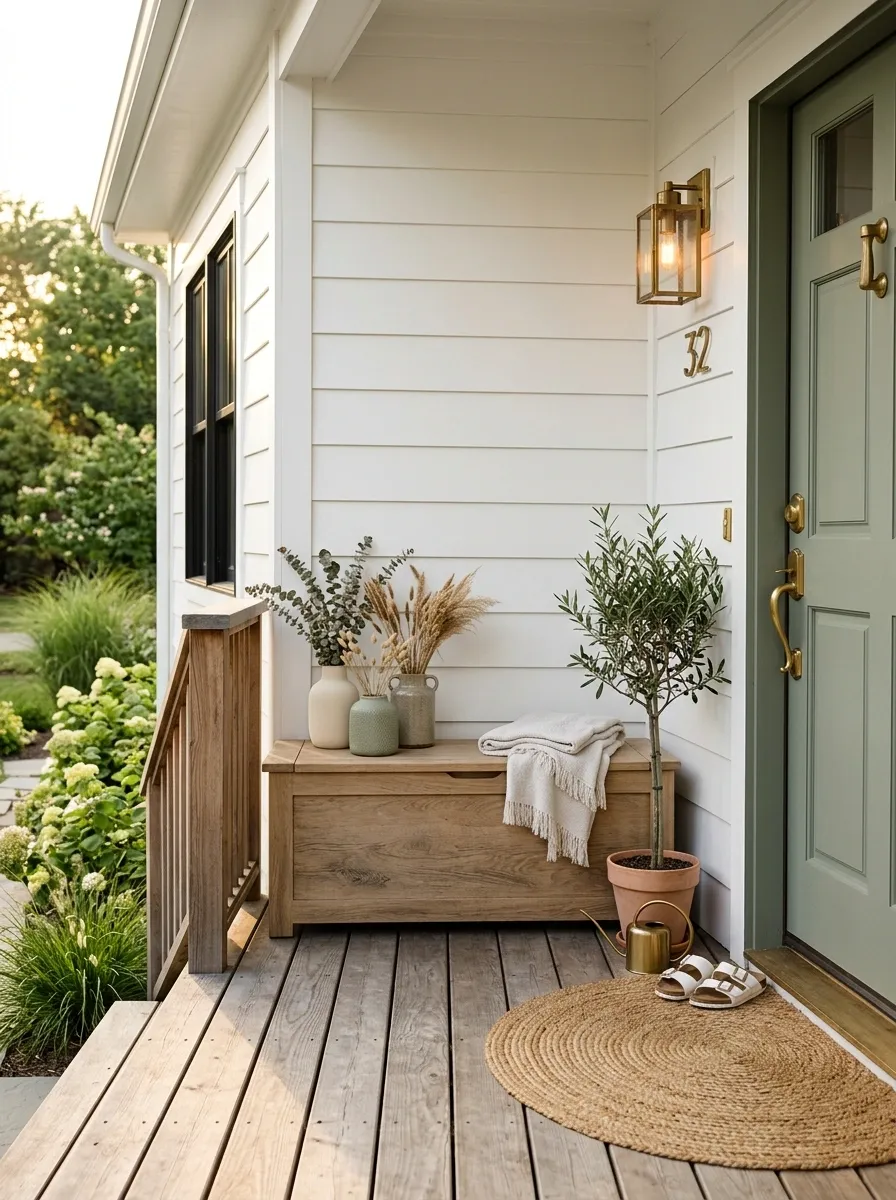
You need a spot for muddy boots, dog leashes, and Amazon packages so they don’t block the door. Leaving them piled on a narrow porch guarantees you’ll trip over them.
Buy a dual-purpose wooden bench with a flip-top lid.
It gives you a place to sit while swallowing the daily mess. Push it flush against the siding. A bench that doubles as a storage trunk keeps the visual clutter at zero while handling all the ugly logistics of an entryway.
Install floating shelves
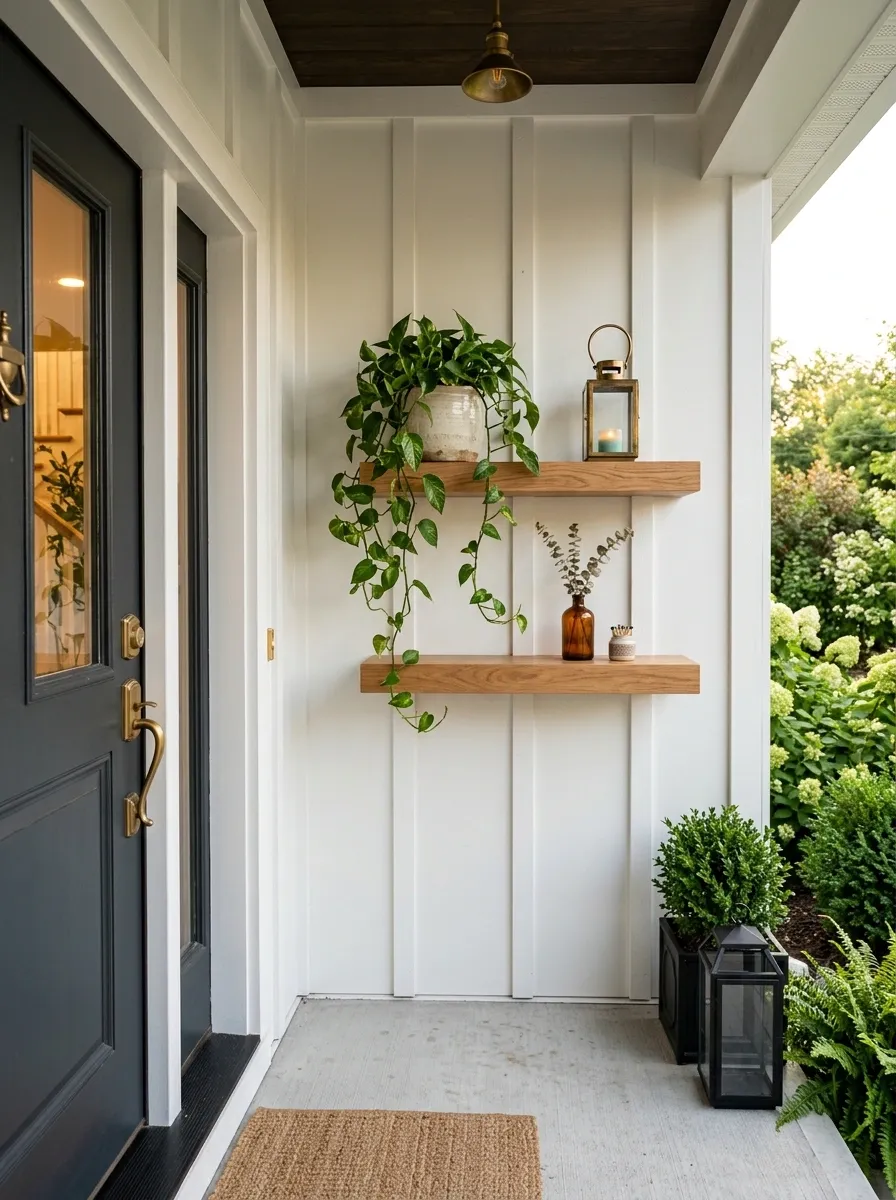
You walk up to the door and immediately dodge a cluster of tiny terracotta pots scattered across the concrete. Get them off the ground. When your floor plan is this tight, you have to utilize the vertical space beside the doorframe.
Mount floating exterior shelves.
Using sturdy, hidden bracket hardware, hang two or three short wooden shelves on the siding. They give you the perfect platform for trailing plants and small lanterns, bringing the decor right up to eye level without touching the walkway.
Anything deeper than 6 inches creates a shoulder-bumping hazard when carrying groceries. Keep them shallow.
Swap out bulky hardware
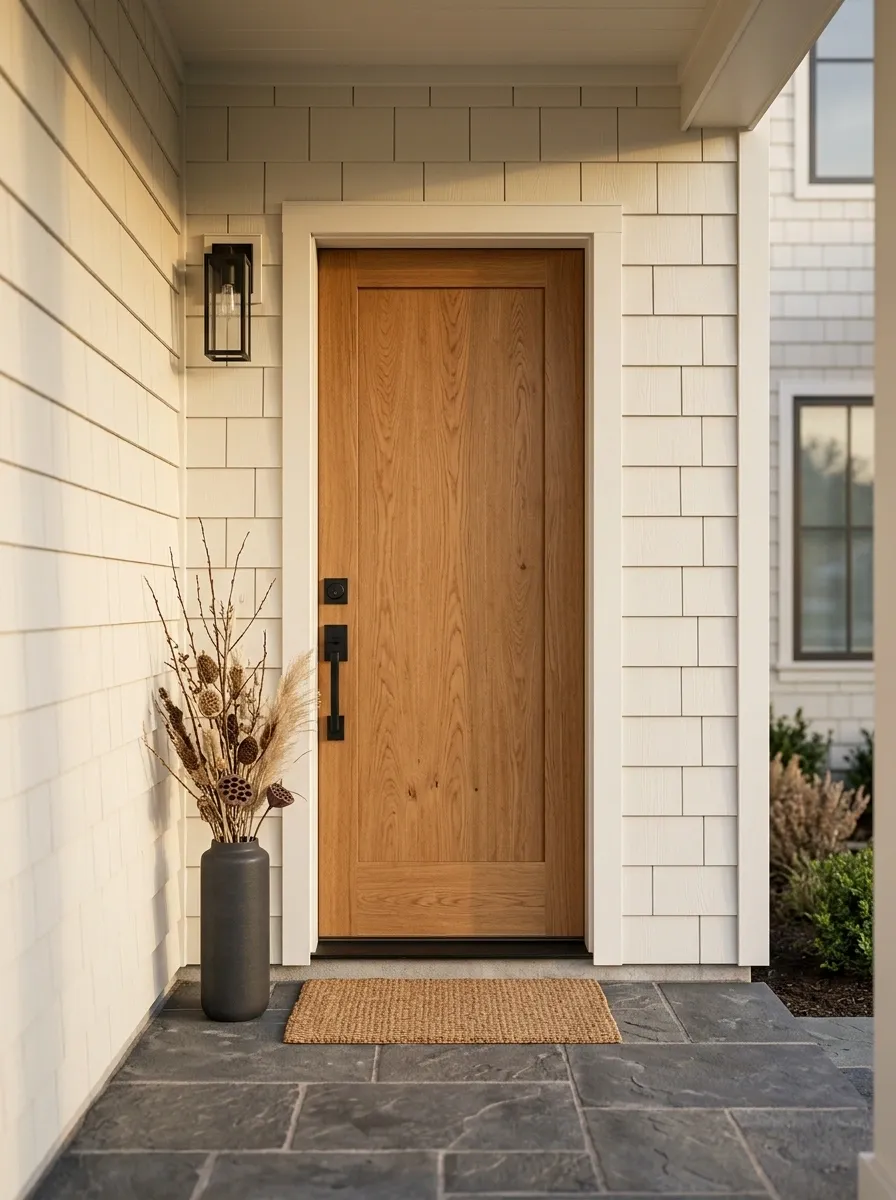
Huge, ornate Victorian door handles and heavy brass knockers look completely absurd on a tight porch. Oversized hardware draws the eye immediately, making the surrounding space feel miniature by comparison.
Swap it all out.
Install sleek, matte black, low-profile modern hardware instead. A slim handle set and a minimalist lockbox trim visual fat off the front door. It forces the geometry of the entry to look taller and leaner.
| Old Hardware | The Swap |
|---|---|
| Bulky backplates | Minimalist rosettes |
| Wide lever handles | Slim vertical grip sets |
Drape string lights vertically
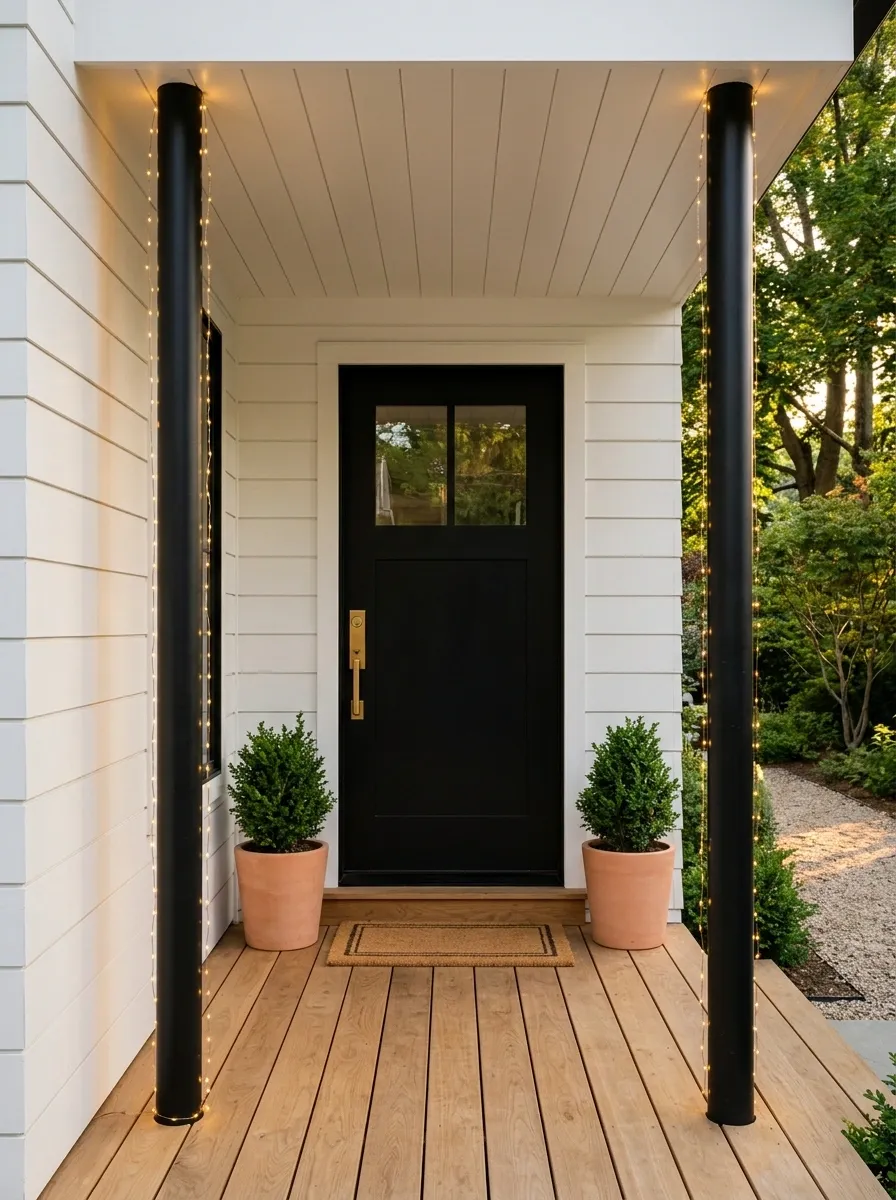
Stop crisscrossing heavy bistro lights back and forth across a small ceiling. Doing that just creates a visual net that artificially lowers the roofline and makes the entryway feel like a cave.
Hang them straight down the vertical corner posts instead.
Draping lights vertically down the structural columns highlights the tallest part of the porch. It pulls the eye straight up from the floorboards to the roof, immediately fixing the cramped horizontal proportions.
The Column Method
Start at the top corner under the eaves. Run the wire tightly down the back edge of the support post, securing it with black zip ties every two feet.
Choose a bold front door color
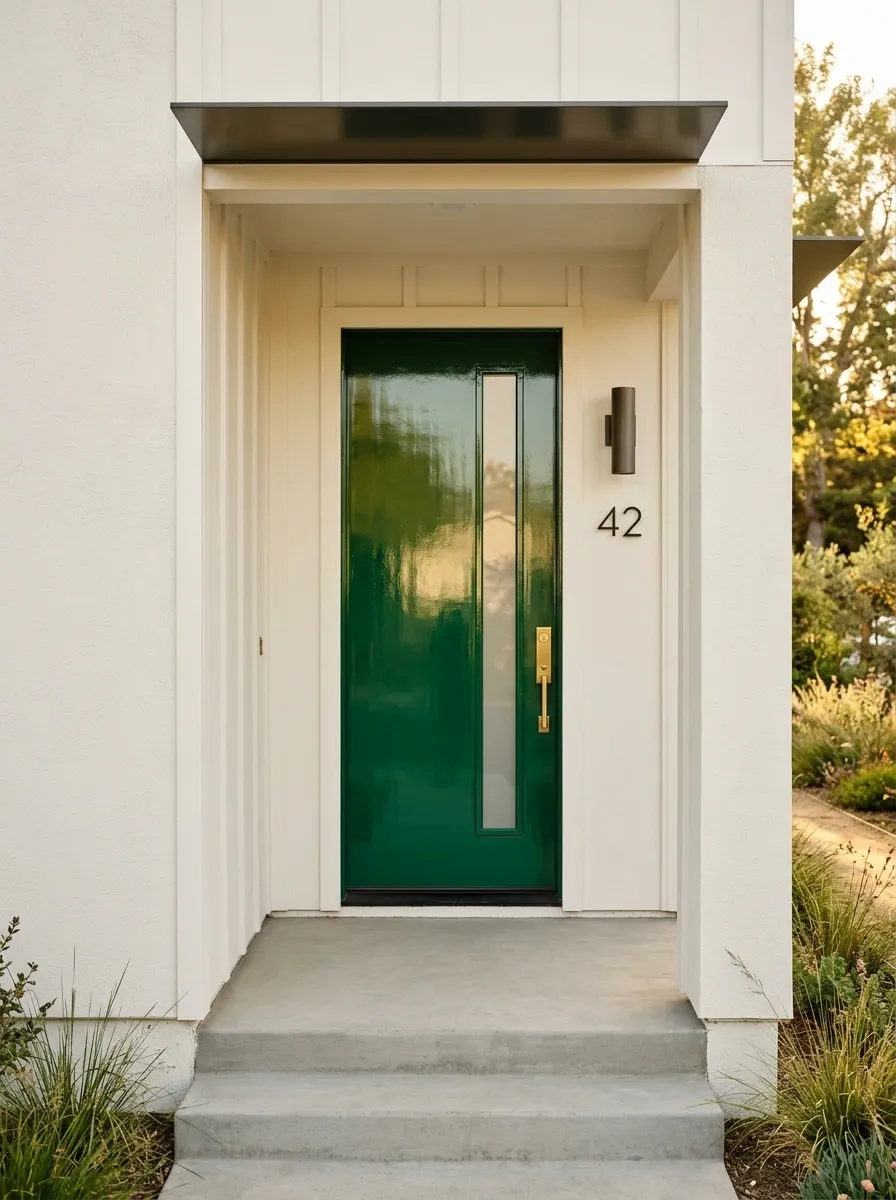
A bright yellow or deep emerald door pulls the focus completely away from the lack of floor space. When the central focal point is impossibly strong, the brain simply ignores the narrow footprint.
Paint the door, and skip the floor decor.
If you commit to a high-impact color, you don’t need three layers of doormats, heavy planters, or wooden signs taking up space. The door does all the heavy lifting for your curb appeal.
Always use a high-gloss exterior enamel for a bold door. The glossy finish bounces sunlight around the shaded porch interior, making it feel brighter and less boxed-in.
A tight footprint is only a problem if you fight the geometry. Stop trying to force a sprawling veranda aesthetic onto a concrete strip that was only built for foot traffic. When you clear the floorboards, utilize your wall space, and stick to strict low-profile dimensions, the entire entryway breathes. You get the function you actually need without the daily frustration of dodging your own furniture. Fix the scale, and the curb appeal handles itself. Save this list to your favorite outdoor living Pinterest board so you have the exact clearance specs ready before you buy anything new.