
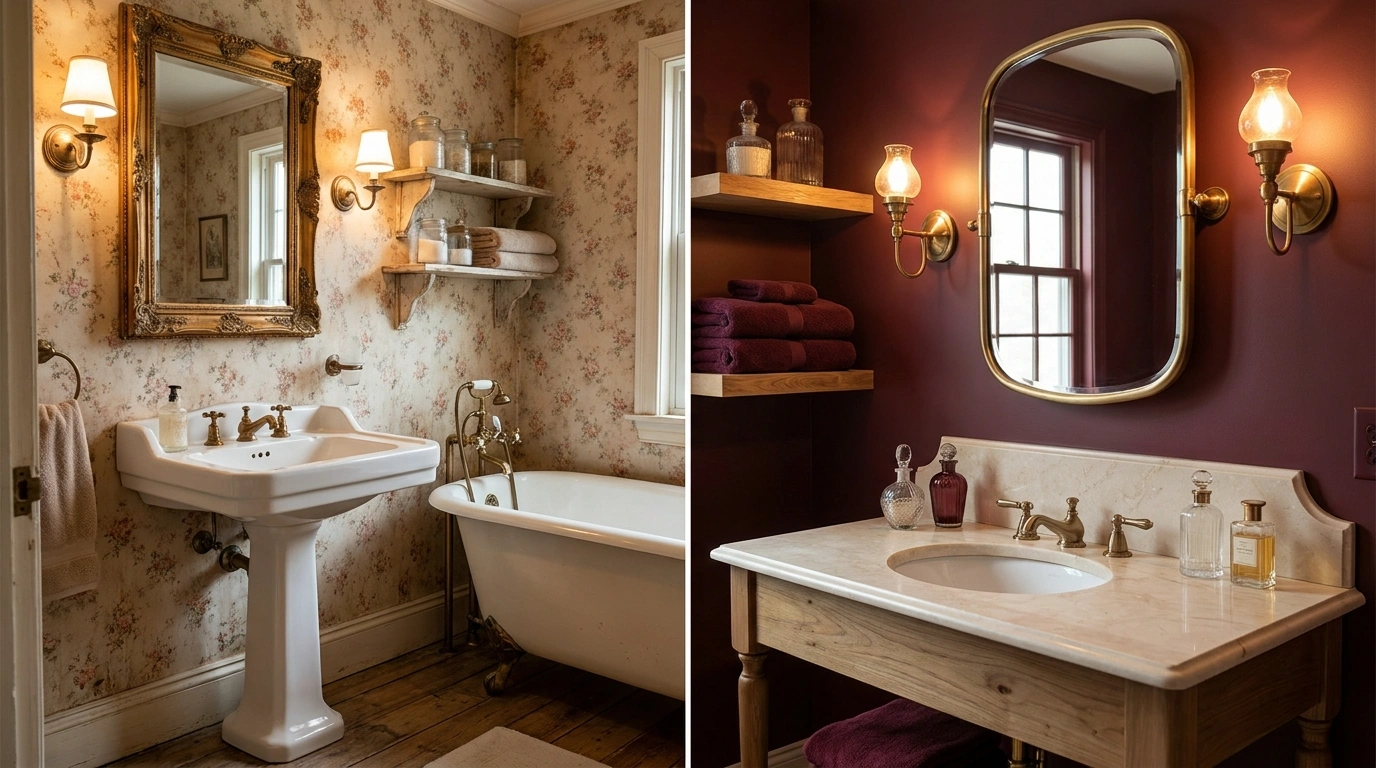
Some bathrooms try so hard to look vintage that they end up looking like a costume shop. A clawfoot tub gets paired with fake antique signs, distressed wood, random brass accessories, and enough decorative clutter to make the sink impossible to use. That’s not vintage. That’s a theme.
A convincing vintage bathroom feels different. You notice the shape of the sink before the accessories. The tile has some restraint. The mirror looks substantial. The lighting feels like it belongs there. Even the smallest details, from the faucet handles to the towel fabric, seem to speak the same visual language.
That’s the part people usually miss. Vintage bathroom ideas aren’t really about buying old-looking stuff. They’re about choosing materials, silhouettes, finishes, and proportions that create a believable sense of age.
Vintage Bathroom Ideas Worth Stealing
Embrace Bold Retro Waves
A bathroom covered from floor to ceiling in dynamic patterned tile immediately tells a story. When you commit to a bold graphic, you don’t need to add clutter to make the room memorable.
Anchor the visual energy by pairing busy walls with matching rich-toned porcelain fixtures. A deep burgundy sink and tub ground the space while playing off the warm terracotta and mustard hues in the tile.
Balance the look with: clean white penny floors, a minimalist frameless mirror, and understated globe sconces that let the statement walls take center stage.
Pair a Clawfoot Tub With Old-Fashioned Wall Tile
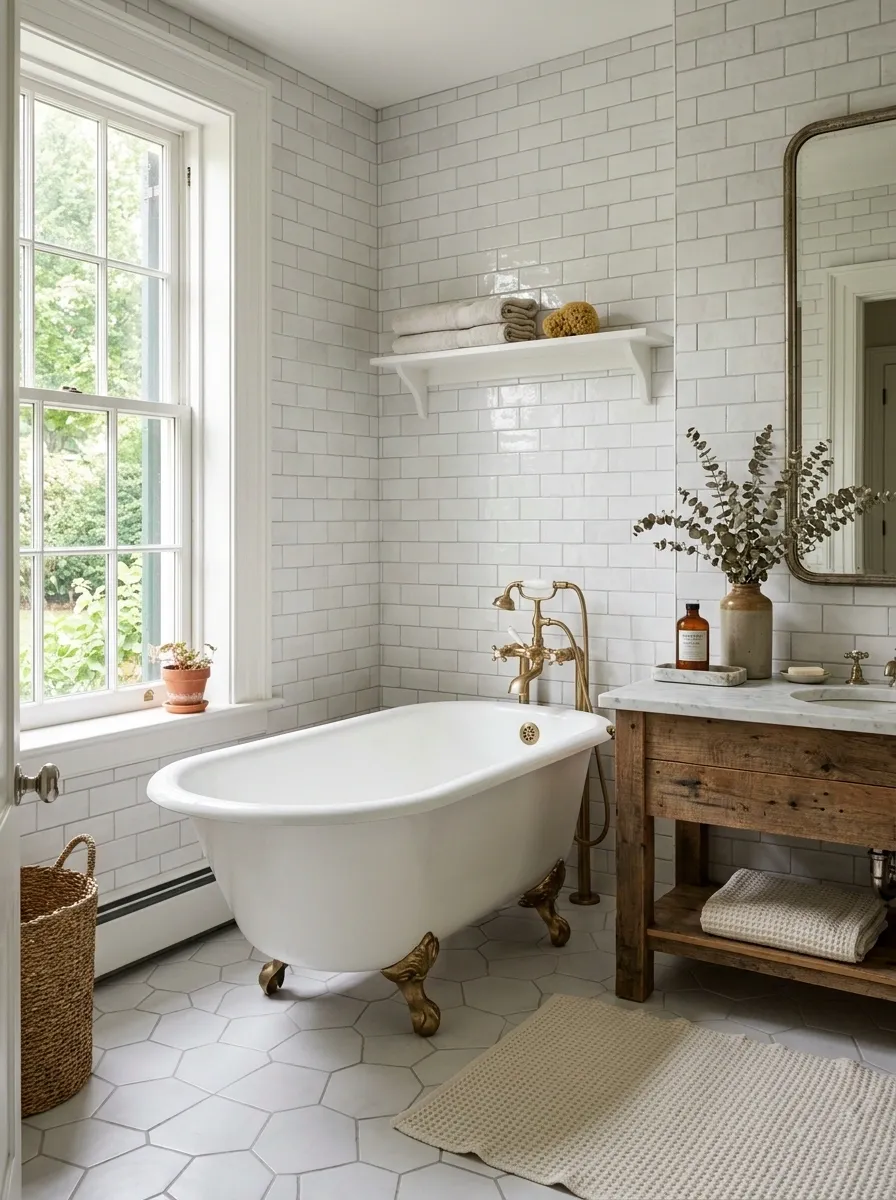
A clawfoot tub already has enough personality to anchor the room. Don’t surround it with equally loud finishes.
Use a quiet wall tile so the tub gets the attention it deserves. White subway tile, narrow rectangular tile, or a simple glazed ceramic works especially well.
Build the look with:
- Freestanding clawfoot tub
- Soft white or cream wall tile
- Traditional floor-mounted tub filler
- Simple folded linen towels
Carve Out Dramatic Dressing
Small architectural alcoves present the perfect opportunity to lean into deep, moody drama. Instead of fighting the lack of natural light, amplify it with floor-to-ceiling jewel-toned tiles.
Incorporate a freestanding vintage vanity within the curved nook to create a dedicated dressing space that feels entirely bespoke. The butter-yellow finish provides a stunning contrast against the dark burgundy surround.
Layer in character with: a plush velvet vanity stool, vintage-inspired pink glass flush mounts, and delicate brass wall sconces flanking the mirror.
Frame the Sink With a Dark Wood Vintage Vanity
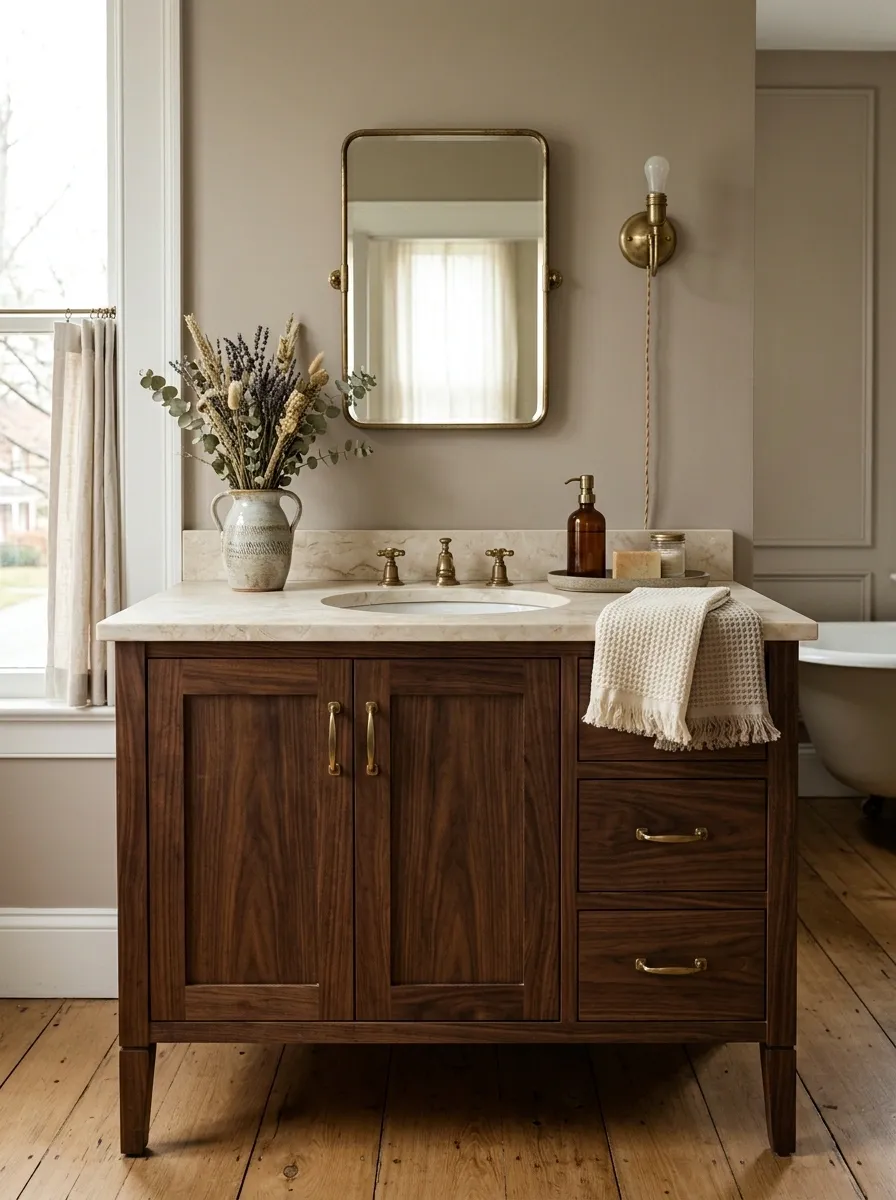
The fastest way to make a bathroom feel sterile is to install a glossy white vanity with nowhere for the eye to land. Dark wood fixes that problem immediately.
Choose a vanity with visible grain, simple doors, and feet or furniture-style legs. Keep the counter light so the wood reads as furniture rather than heavy cabinetry.
Best pairing: dark walnut tones, creamy stone, aged brass or polished nickel, and a small framed mirror.
Layer Traditional Floral Wallpaper
Traditional wallpaper with delicate botanical patterns instantly warms up a utilitarian bathroom. It bridges the gap between old-house charm and polished elegance without feeling fussy.
Keep the lower half of the room simple by installing crisp white beadboard or wainscoting. This architectural divide stops the patterned walls from feeling overwhelming in a compact space.
Complete the atmosphere with: an ornate gilded mirror, polished brass hardware, a classic pedestal sink, and a woven basket for effortless texture.
Use Checkerboard Flooring for Instant Old-House Character
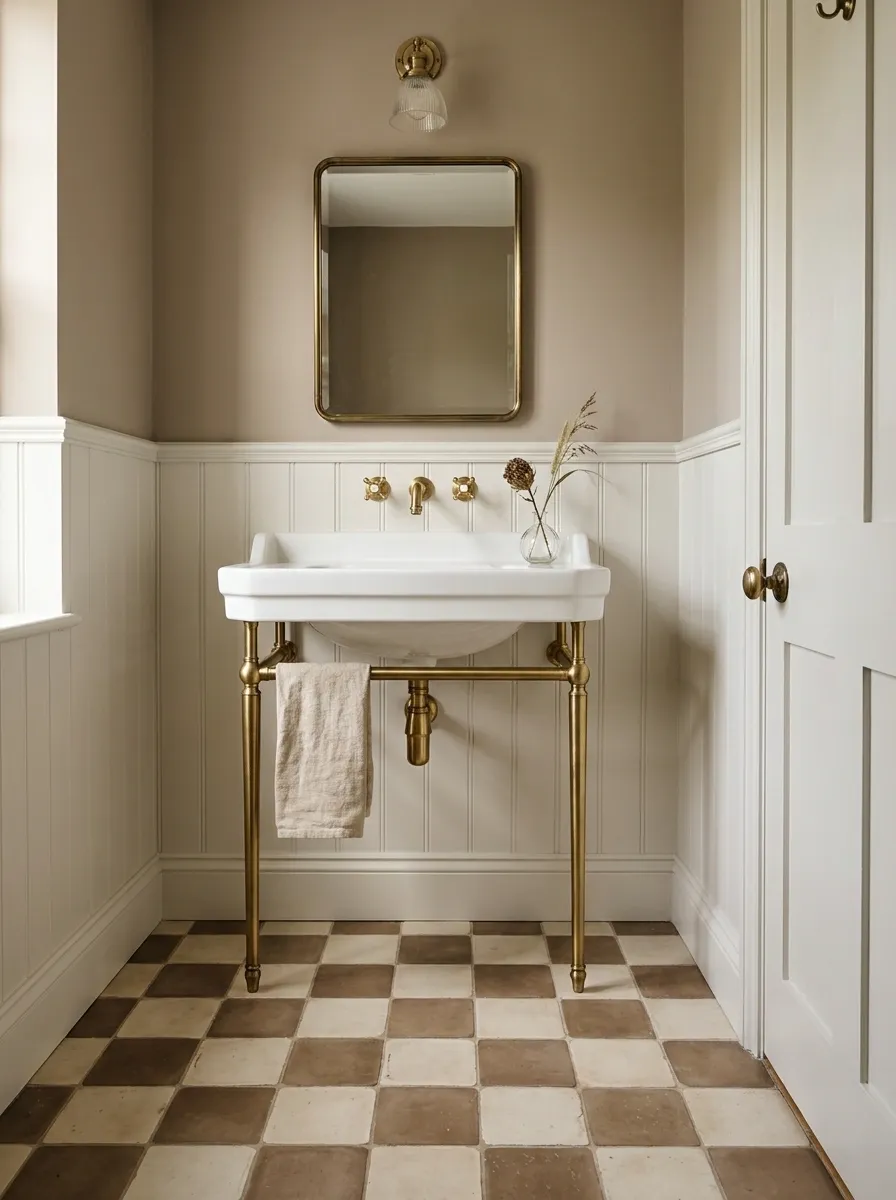
Small bathrooms benefit from a strong floor because there’s usually less surface area for architectural detail.
Classic checkerboard tile does the job without needing a pile of accessories. Stick with two restrained tones rather than introducing several competing colors.
Keep the pattern grounded:
- Use medium-scale squares rather than tiny mosaics.
- Repeat one floor color elsewhere in the room.
- Let the walls stay calmer.
Mix Gothic Moody Wallpaper
Dark, moody wallpaper featuring intricate vintage motifs brings an undeniable layer of history to a powder room. It makes the space feel collected over decades rather than decorated in a weekend.
Pair the dramatic walls with crisp white subway tile on the lower walls to keep the room feeling bright and clean. A narrow vintage display shelf adds both function and old-world charm.
Anchor the space using: classic mosaic tile flooring with a subtle geometric pattern, a timeless pedestal sink, and warm brass fixtures.
Swap Modern Fixtures for Polished Nickel Hardware
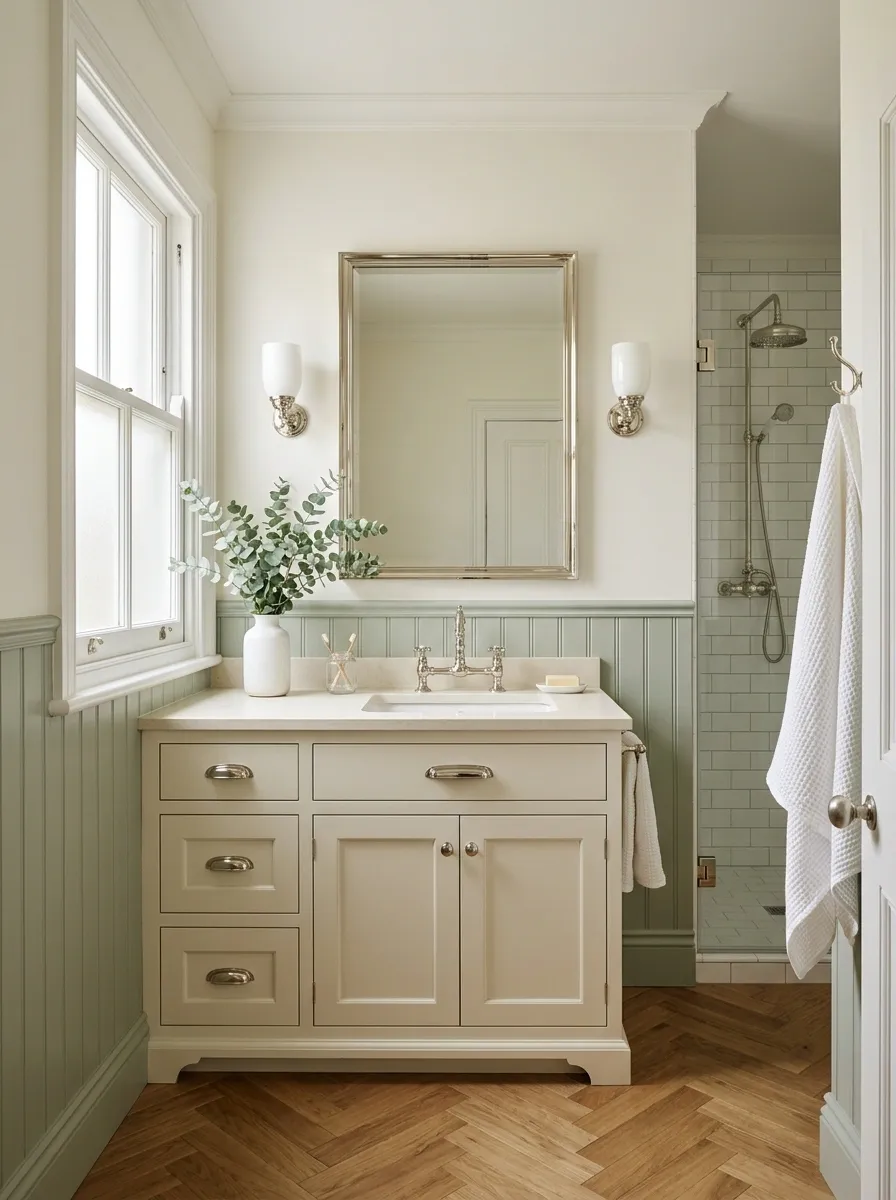
Tiny fixture choices can make a bathroom feel ten years old or a hundred years old. Ultra-sleek black hardware tends to push the room in a newer direction.
Polished nickel has the right reflective quality for a traditional bathroom without looking overly ornate. Use it on the faucet, shower hardware, cabinet pulls, and towel hooks so the finish feels intentional.
The simplest rule: repeat the metal instead of collecting several unrelated finishes.
Designer tip: Choose hardware with real weight and a classic shape. Thin, minimalist pieces don’t carry the same visual authority.
Saturate in Plum and Coral
Monochromatic color blocking in unexpected shades like plum and coral gives a nod to vintage maximalism. Wrapping the upper walls in botanical wallpaper while painting the woodwork a fiery red creates an immersive jewel-box effect.
Match your plumbing fixtures to the deepest tone in the room for a cohesive, intentional finish. A rich plum toilet and console sink disappear into the color story while adding unique vintage shape.
Finish the space with: a simple art deco mirror, matching plum trim, and a single statement wall sconce that casts a warm, inviting glow.
Hang an Ornate Mirror Above a Simple Sink
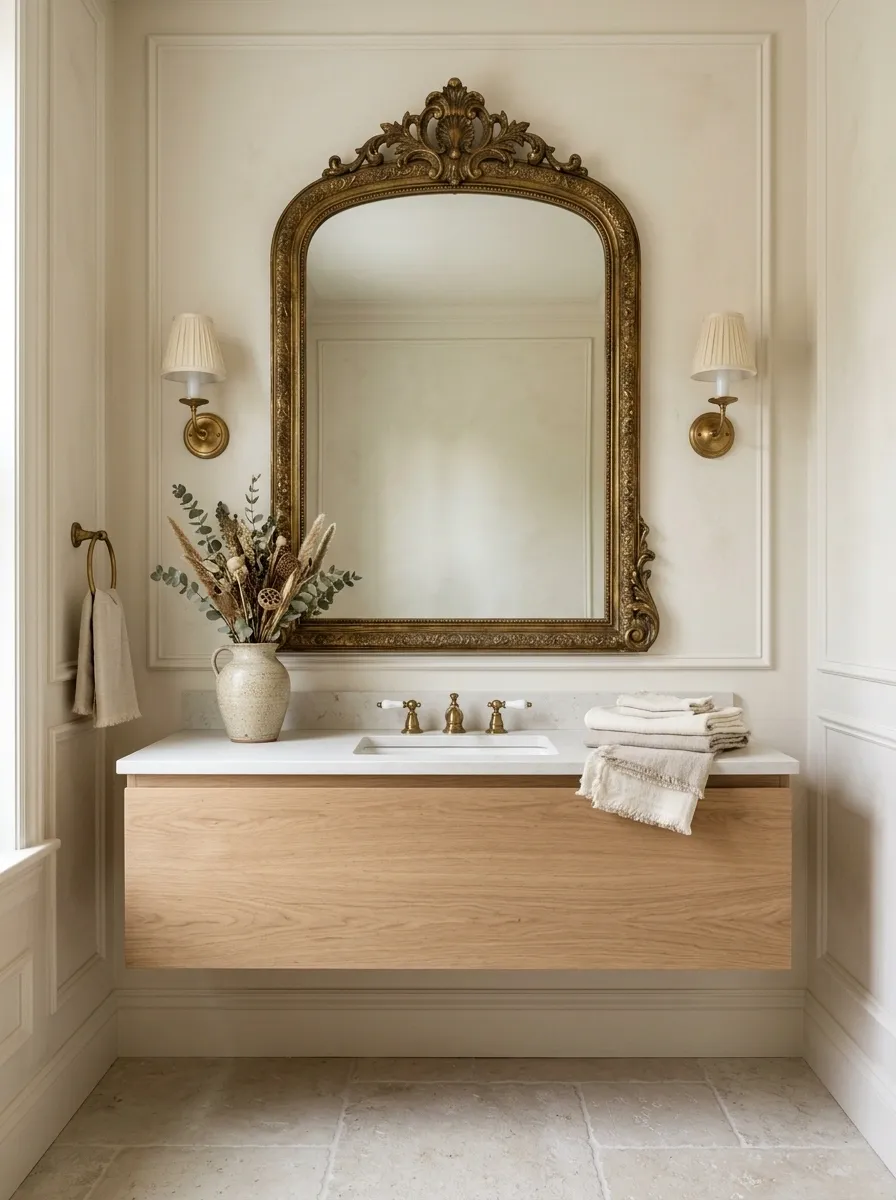
A plain sink can look surprisingly special with the right mirror above it. That’s the point.
Choose an arched, carved, or gently gilded frame, then keep the sink and counter visually restrained. The contrast gives you character without turning the room into an antique shop.
Use this formula:
- Simple sink
- Decorative mirror
- Quiet wall finish
- One small vintage accessory nearby
Choose a Console Sink for a True Period Feel
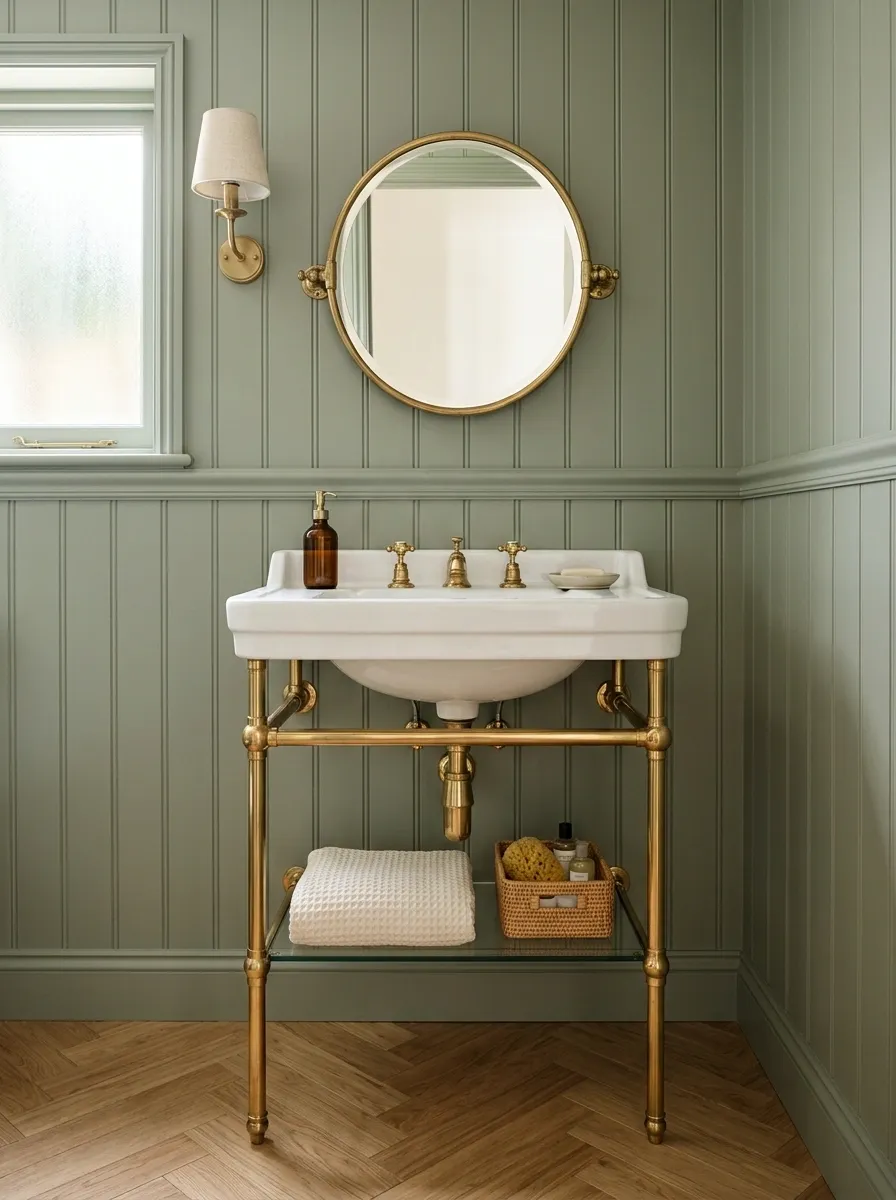
A bulky vanity can swallow a small bathroom. A console sink does the opposite.
Its open frame keeps the floor visible, which makes the room feel lighter while still giving you that unmistakable traditional silhouette. Look for a sink with exposed legs, a simple porcelain basin, and substantial cross-handle fittings.
Underneath, keep storage minimal. A folded towel or one small basket is enough.
Add a Small Vintage Stool Beside the Tub
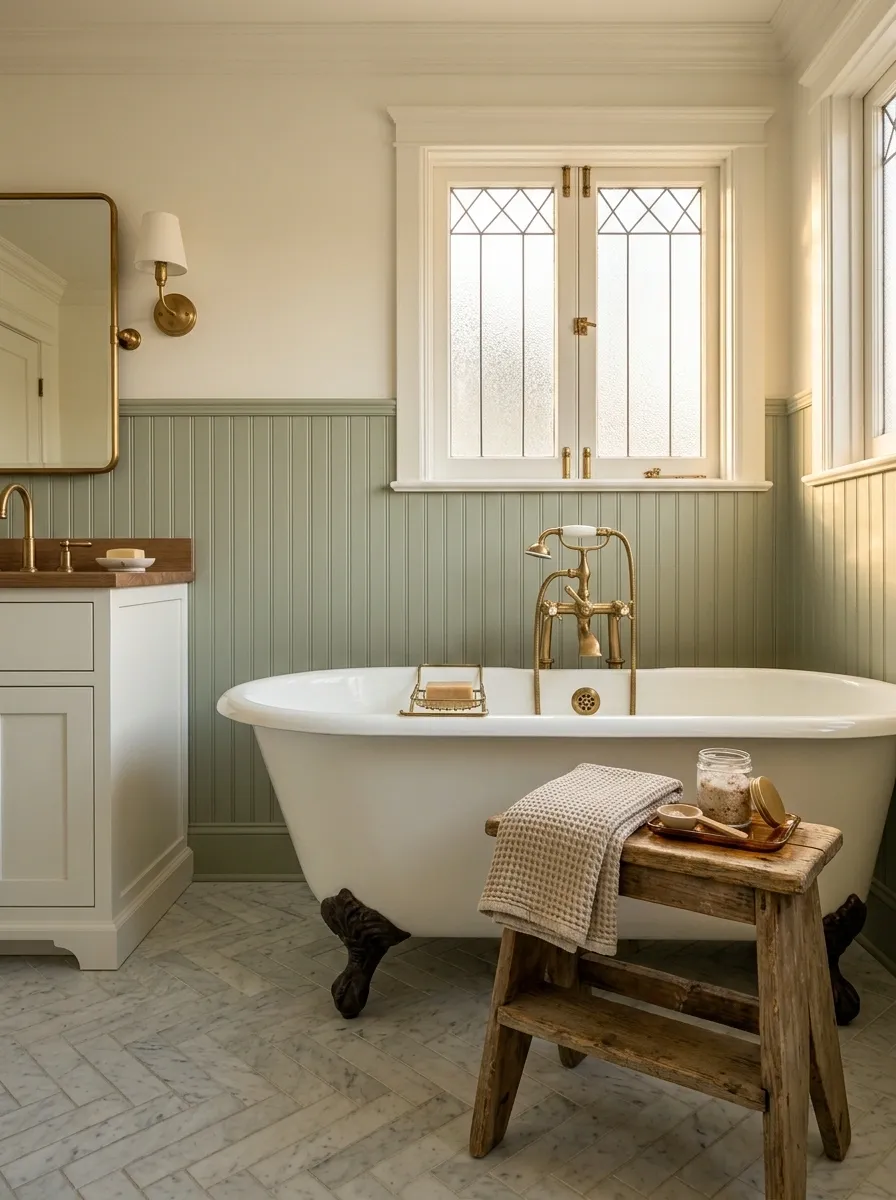
That empty spot beside the tub isn’t asking for a giant storage tower.
A little wooden stool gives the bathroom a practical, lived-in detail without adding bulk. Use it for a folded hand towel, a book, or a small tray with bath essentials. The trick is keeping the object useful.
Look for:
- Warm wood
- Turned or tapered legs
- A simple aged finish
- A compact footprint
Use Floral Wallpaper Above Classic Wainscoting
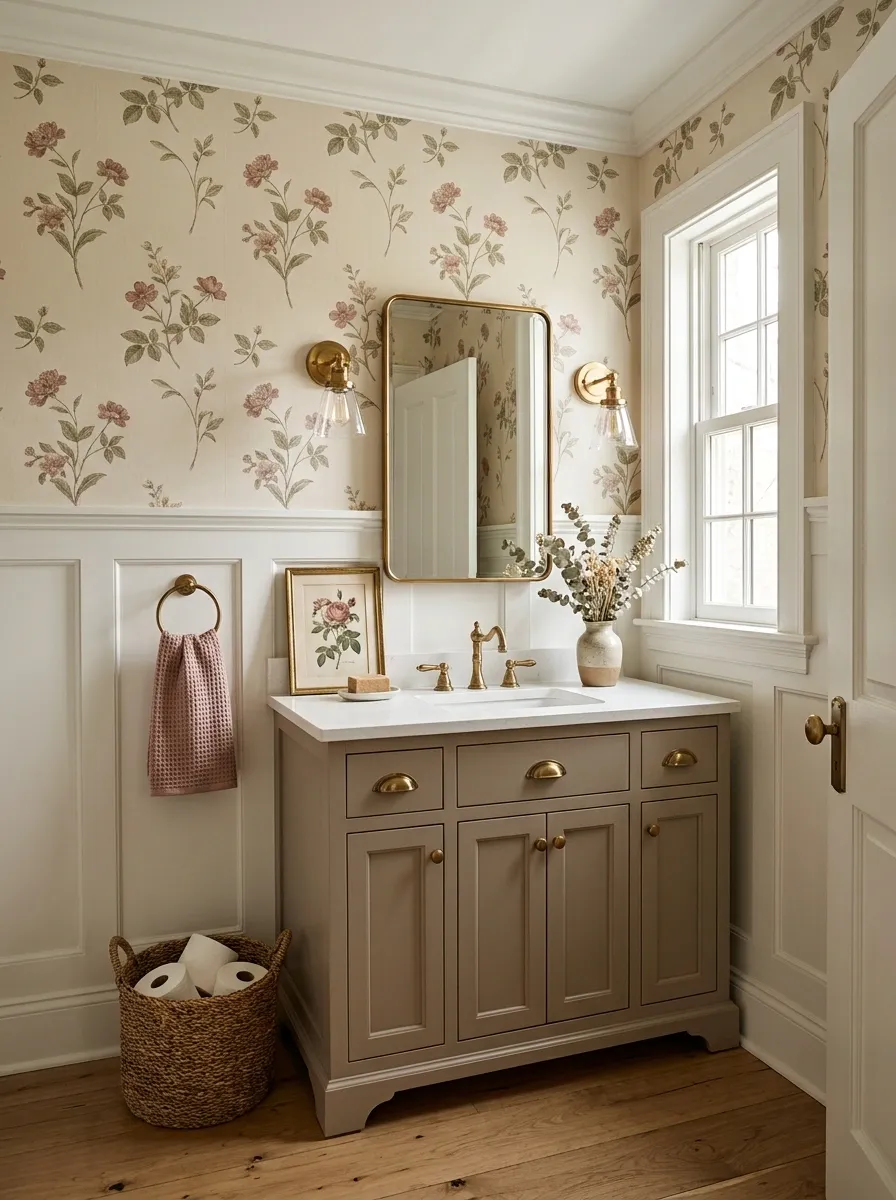
Floral wallpaper works beautifully in a vintage bathroom when it has something solid underneath it.
Install classic wainscoting or painted paneling on the lower wall, then let a restrained floral print handle the upper section. The hard lower surface protects the room from feeling too sweet, while the wallpaper supplies the old-house personality.
Choose a pattern with muted flowers and a warm background. Tiny high-contrast prints are much harder to live with.
Style Open Shelves With Practical Bathroom Pieces
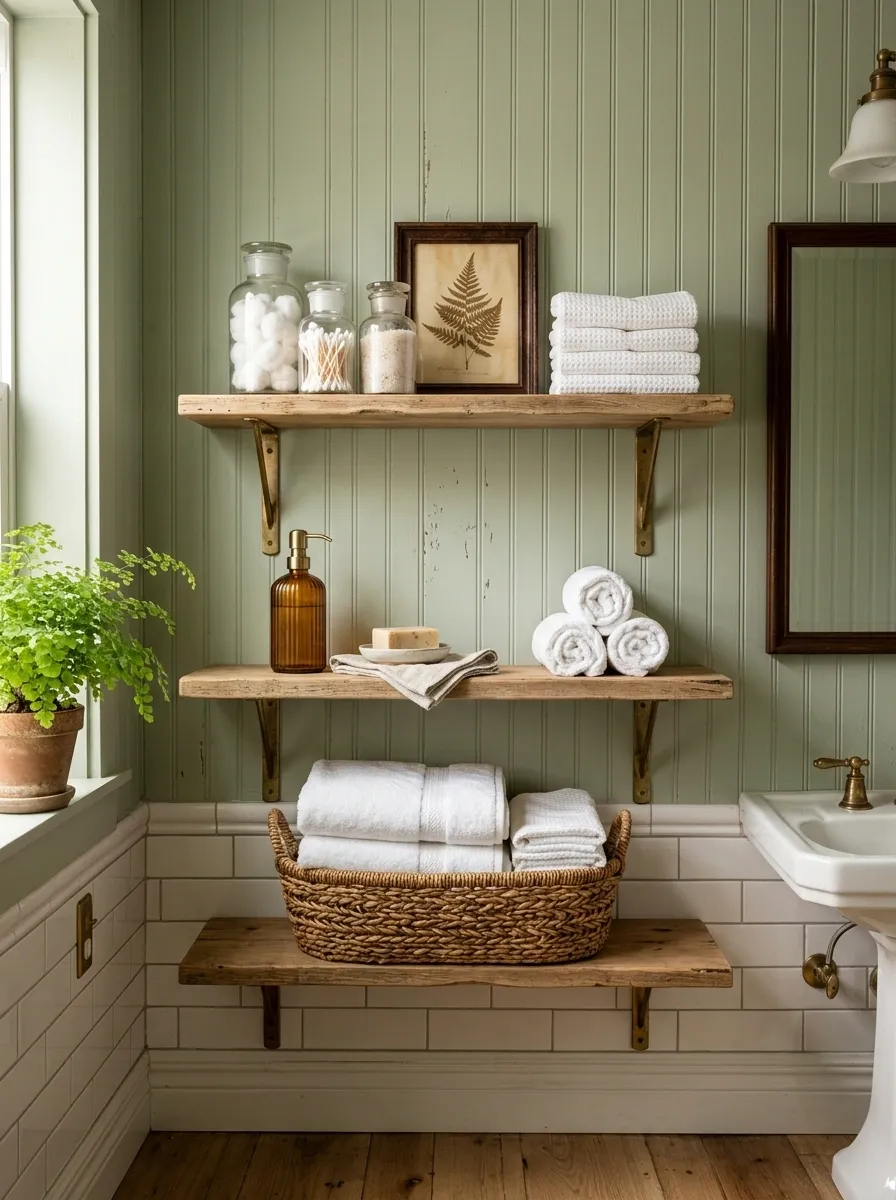
Open shelving looks vintage when it actually behaves like storage.
Use two or three shelves to hold folded towels, glass jars, soap, and a few useful objects. Don’t fill every inch. The little gaps are what make the setup feel like a real bathroom rather than a display shelf.
Wood shelves look especially convincing against painted walls or classic tile.
Use Aged Brass Where Modern Chrome Feels Too Sharp
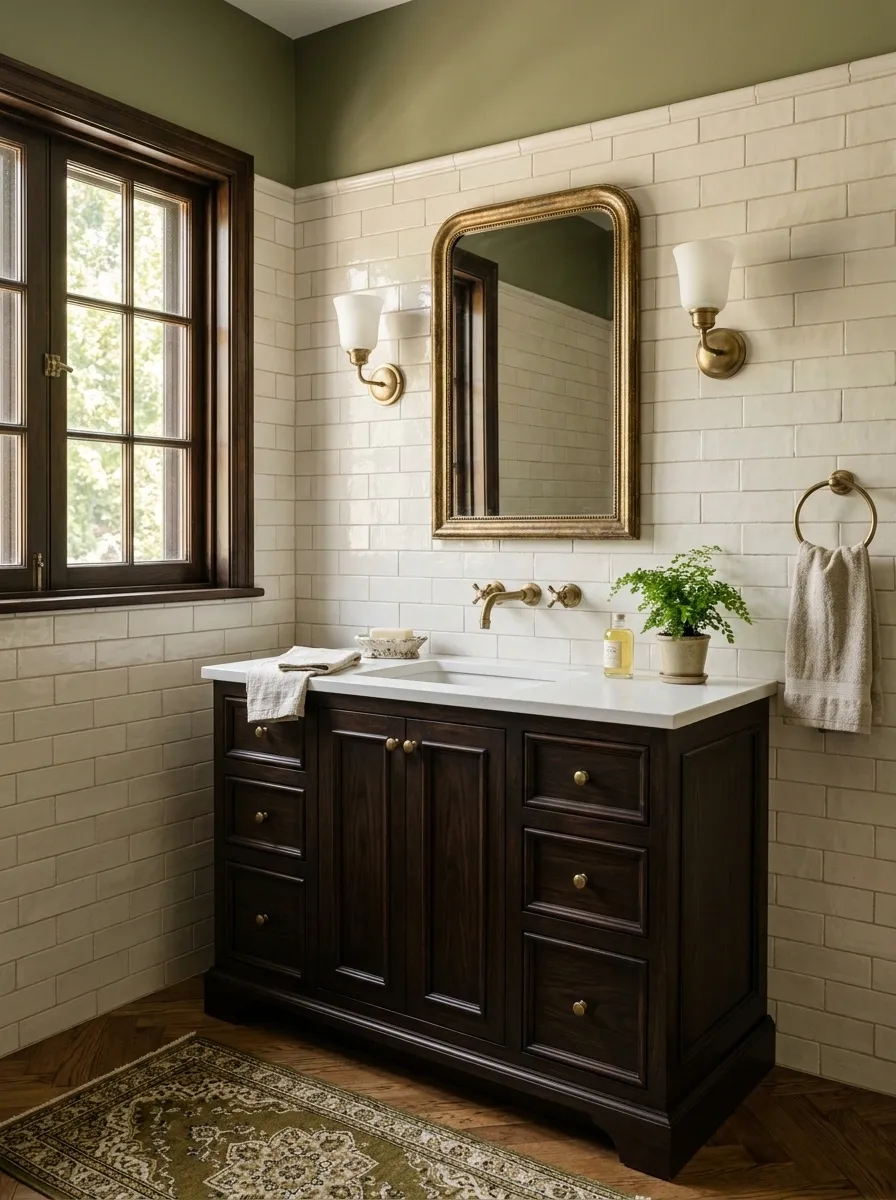
A bathroom can have traditional plumbing shapes and still look strangely new when every metal surface is bright chrome.
Aged brass softens the room and works particularly well with cream tile, dark wood, and muted paint. Use it selectively rather than turning every surface into yellow metal.
Use it on the pieces your eye lands on most:
- Faucet
- Mirror frame
- Sconce details
- Cabinet pulls
- Towel hooks
Bring In a Ribbed Glass Globe Light Fixture
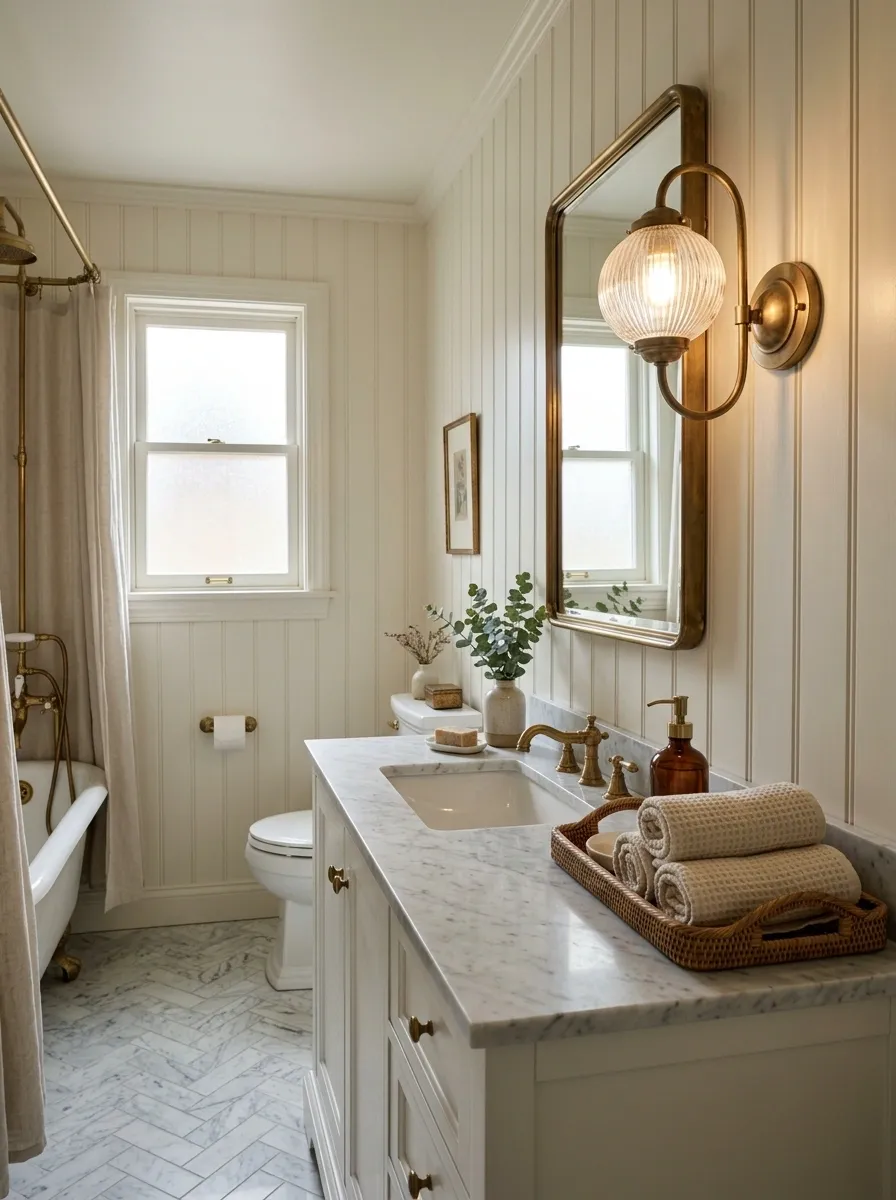
Lighting is often where vintage bathrooms lose the plot. A flat LED mirror and sleek bar fixture can make even beautiful tile feel contemporary.
A ribbed glass globe brings back the softer visual language you’re after. Choose a fixture with a simple arm, traditional mounting plate, or aged metal detail.
Place it beside the mirror when the layout allows it. That gives the sink area depth instead of turning the light into one bright strip above your head.
Choose Marble With Soft Veining Instead of Busy Patterns
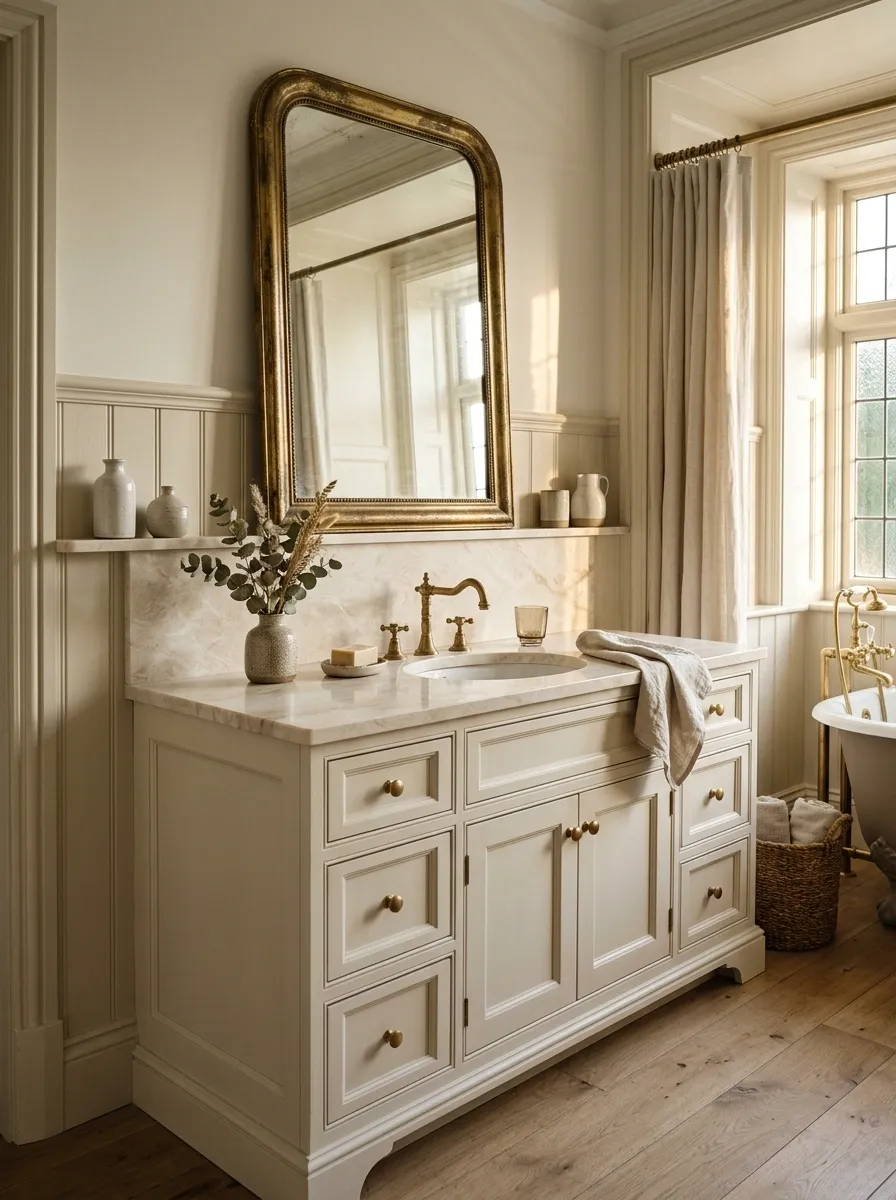
Vintage doesn’t mean covering every surface in dramatic marble.
Softly veined marble works because it adds age and material depth without competing with your tile, mirror, or fixtures. Look for gentle movement and creamy undertones instead of sharp, high-contrast veining.
Use it for the vanity top, a small ledge, or a shower niche. You don’t need much.
| Look | Works With Vintage? | Why |
|---|---|---|
| Soft cream veining | Yes | Keeps the room warm and understated. |
| Strong high-contrast veins | Use carefully | Can pull the room toward a newer luxury look. |
| Warm aged stone | Yes | Pairs naturally with wood and traditional metals. |
Build a Vintage Look Around a Freestanding Bathtub
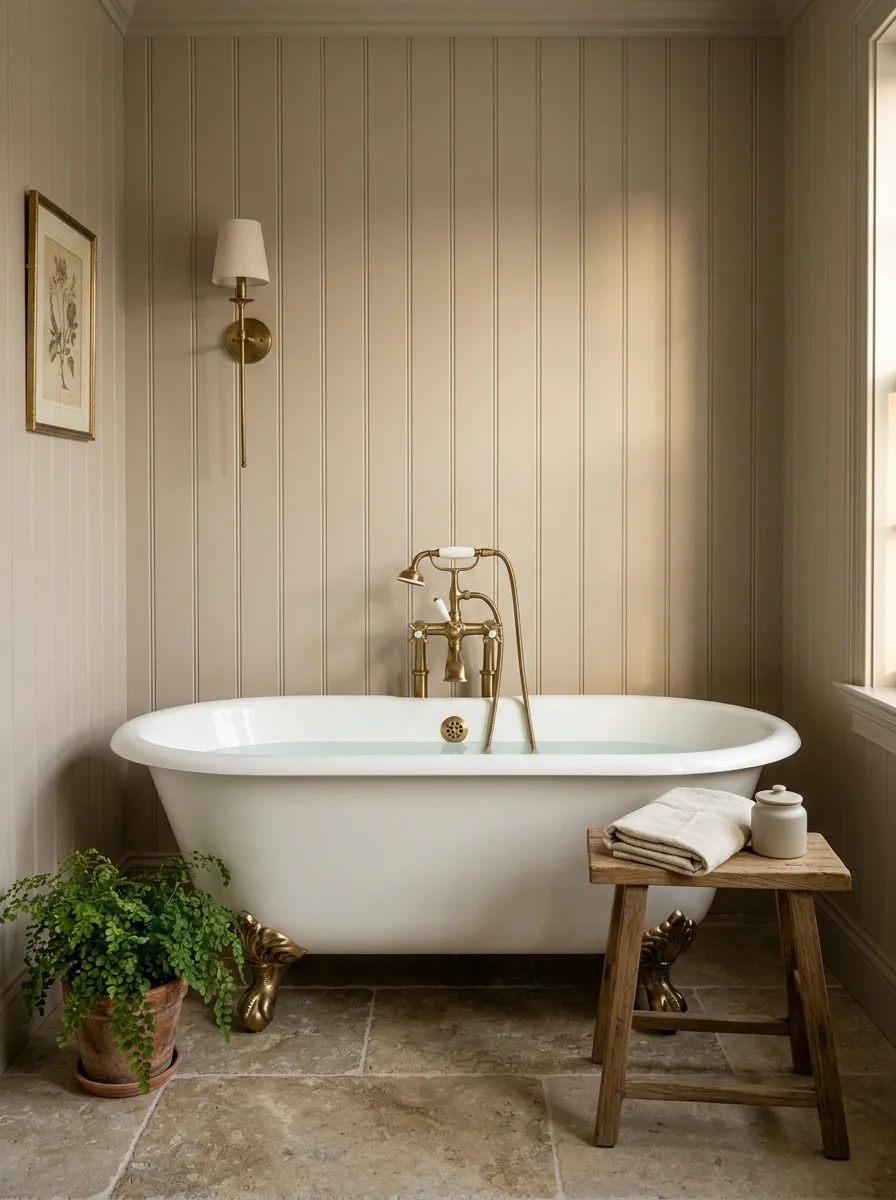
A freestanding tub should feel like part of the room’s architecture, not a giant object dropped into an empty corner.
Give it breathing space and surround it with finishes that support its shape. A painted wall, warm tile, vintage floor lamp-style sconce, or narrow stool can make the tub feel established.
The biggest mistake is crowding it with accessories. Leave some empty floor around the base so its silhouette stays clear.
Use Small Hex Tile for a Classic Floor Pattern
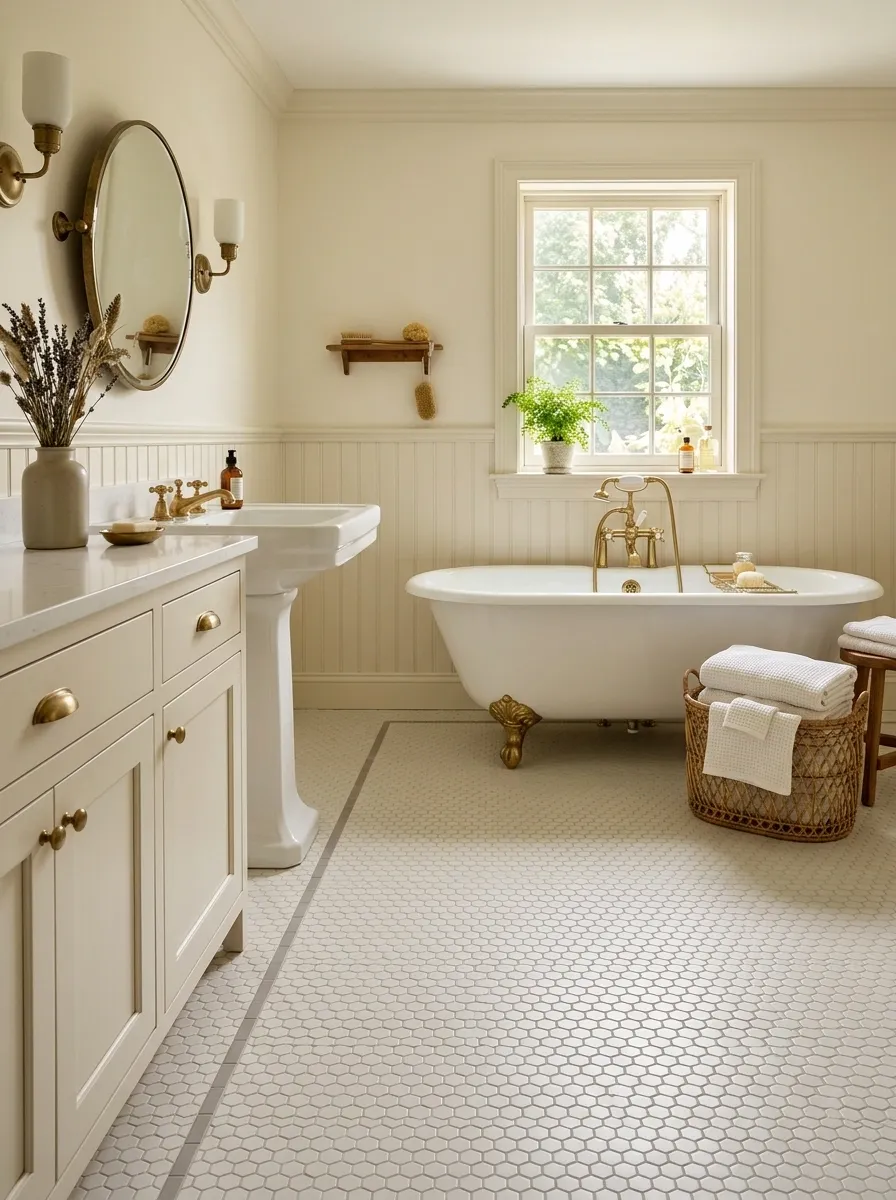
Small hex tile has been doing serious work in traditional bathrooms for a very long time. Its shape brings detail to the floor without demanding the attention of a bold checkerboard.
For the most believable vintage look, stick with porcelain or ceramic in cream, white, soft gray, or another muted tone. A simple border can make the floor feel even more established.
Don’t overcomplicate it. The pattern already gives you plenty of visual texture.
Hang Linen Curtains Instead of Leaving Windows Bare
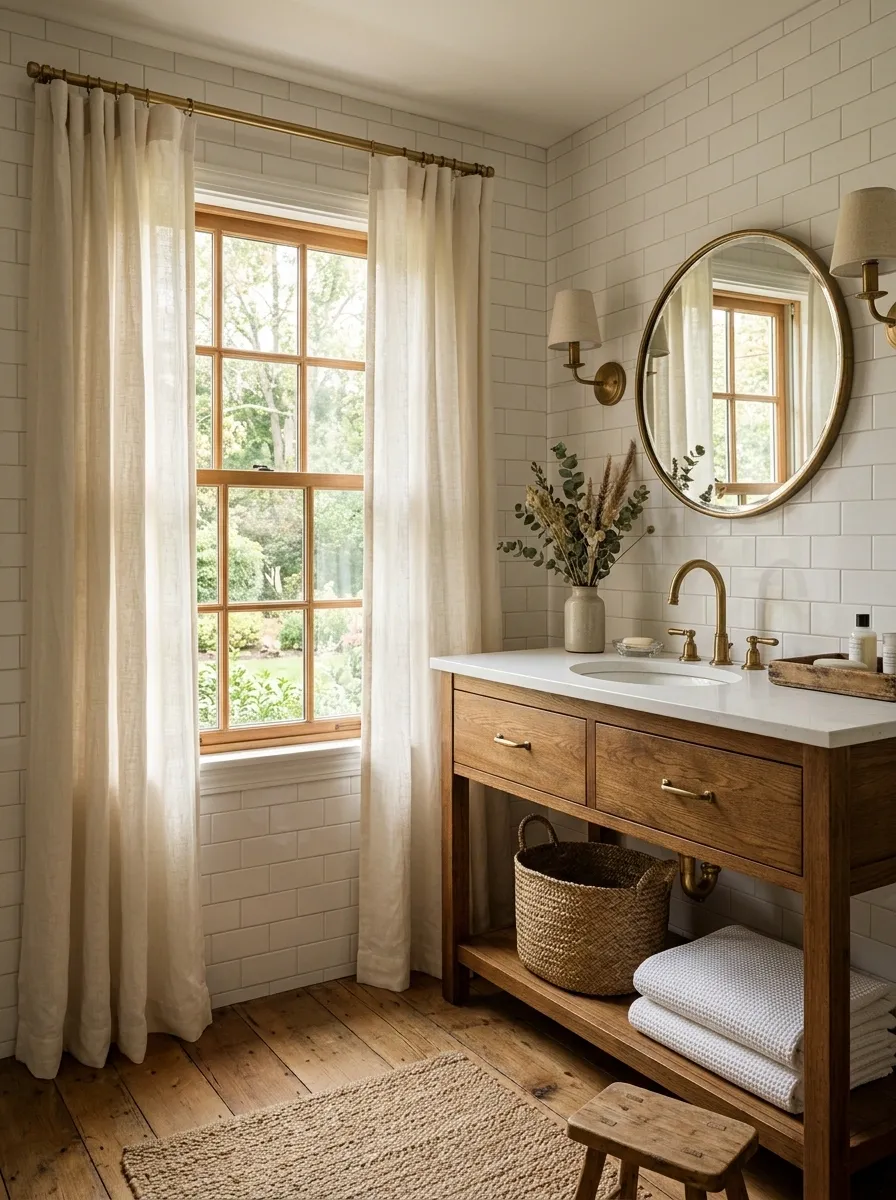
A little fabric can change the entire temperature of a bathroom.
Bare windows often make an older-style bathroom feel unfinished, especially when the rest of the room has warm wood, traditional fixtures, and aged finishes. A simple linen curtain softens the glass and introduces that relaxed, lived-in quality vintage bathrooms need.
Choose an ivory, flax, or muted natural shade. Keep the rod simple, then let the fabric hang naturally rather than creating a stiff, formal treatment.
Add an Antique-Style Apothecary Cabinet for Storage
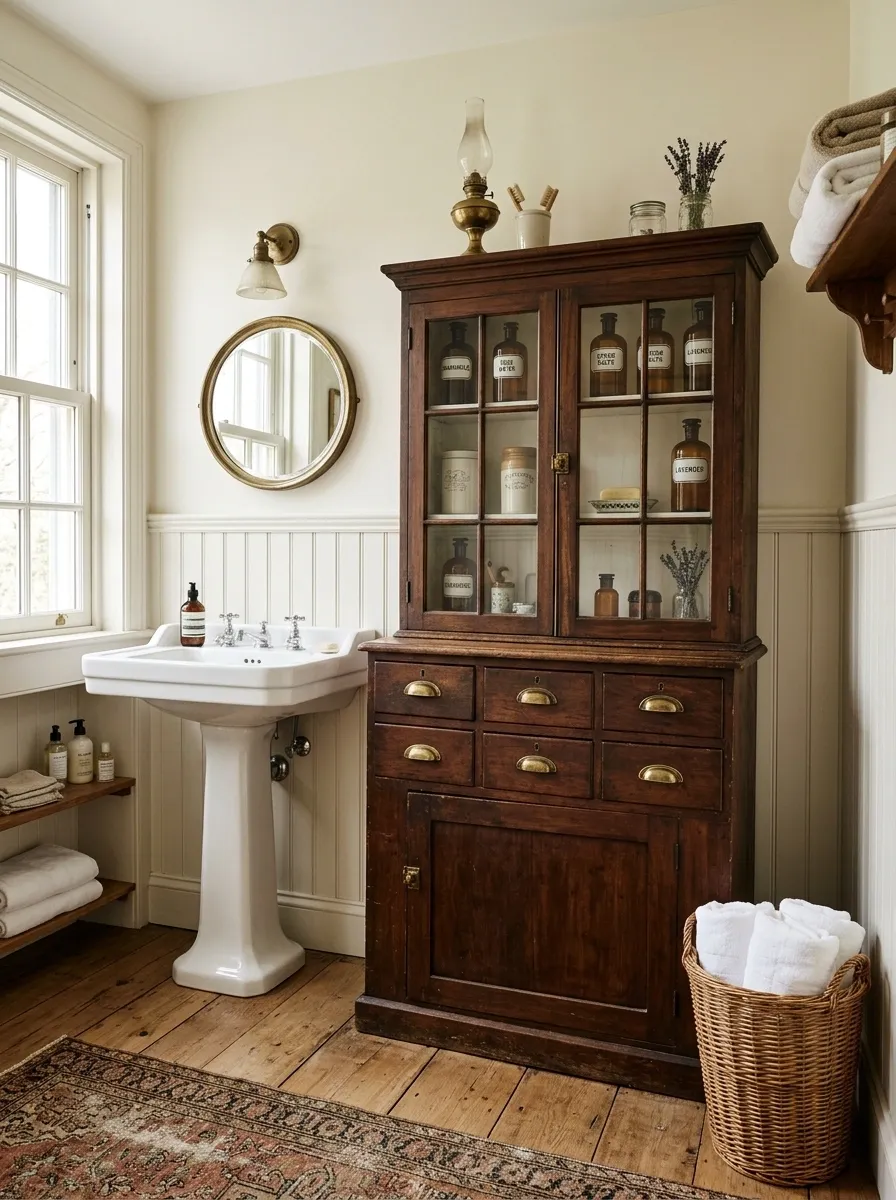
Storage doesn’t have to disappear behind glossy doors.
An apothecary-style cabinet gives you useful bathroom storage while contributing to the vintage story. Look for shallow drawers, glass fronts, aged wood, or a slightly worn finish. It should feel like furniture first and storage second.
Place it where you naturally reach for smaller items, such as beside the vanity or on an open wall near the sink.
Practical rule: Don’t use an oversized cabinet just because it looks interesting. Vintage storage should fit the room’s proportions.
Mix Cream, Brown, and Muted Sage for a Warm Palette
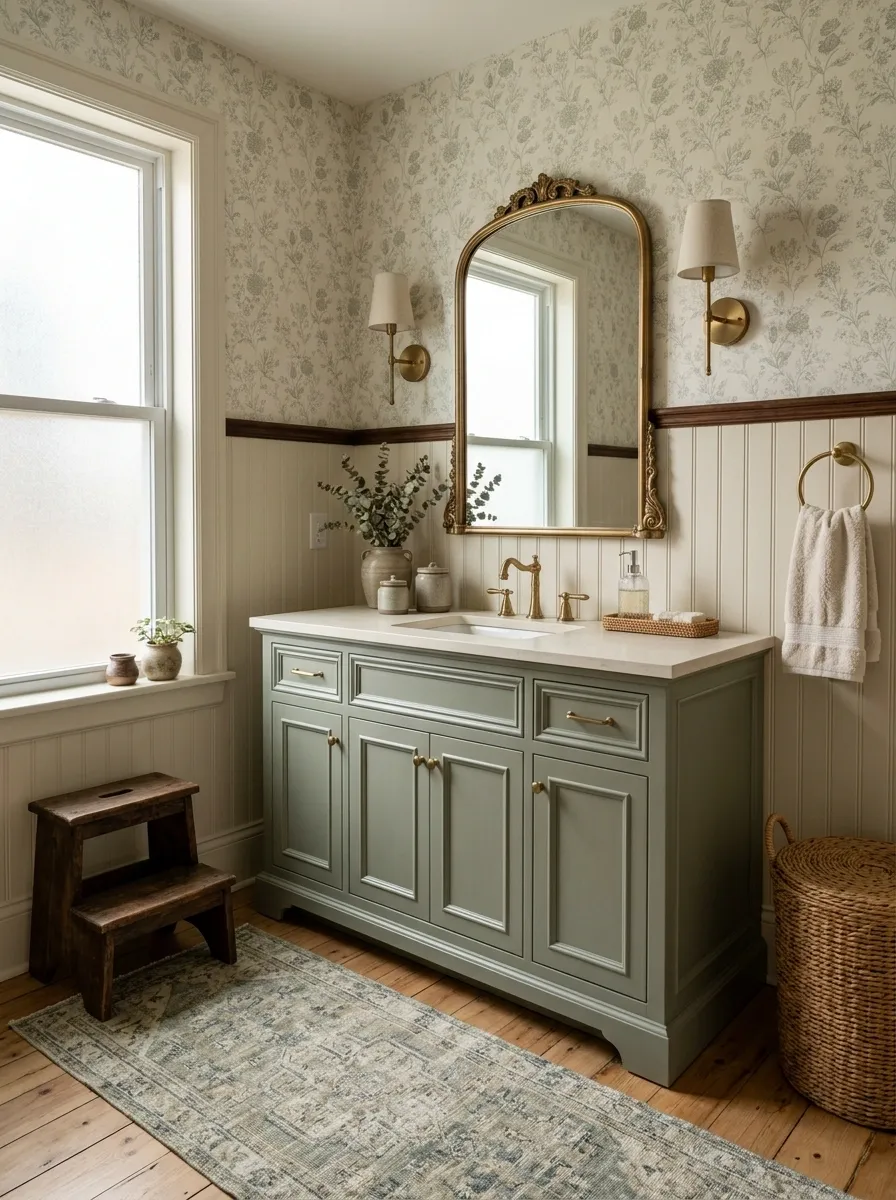
Vintage rooms rarely look good when every surface is the exact same neutral.
Cream creates the base, brown supplies weight, and muted sage keeps the palette from becoming flat. Together, those three tones make even a simple bathroom feel layered and established.
Use cream for the major surfaces, brown on wood and smaller furniture pieces, and sage on tile, paint, towels, or wallpaper details.
Use Framed Botanical Prints Instead of Generic Bathroom Art
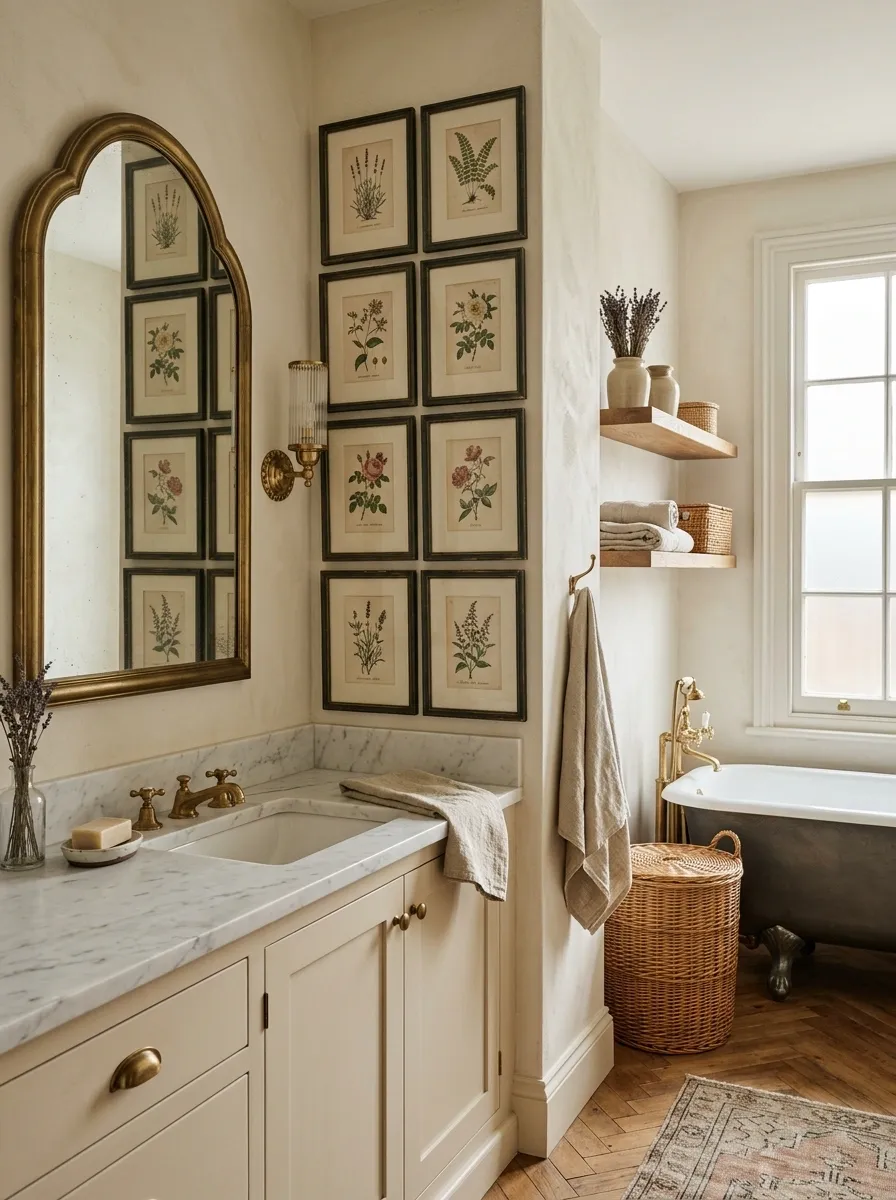
The bathroom doesn’t need a sign telling everyone to relax.
Framed botanical drawings feel far more natural in a vintage room because they echo the collected quality of older homes. Choose simple prints with cream mats and traditional frames. Hang two or three together rather than scattering tiny pictures across every wall.
A narrow wall beside the mirror, tub, or doorway is often the best spot.
A good gallery has:
- Similar frame finishes
- Different but related plant subjects
- Plenty of wall space around the arrangement
- One consistent mat color
Choose a High Tank or Traditional-Profile Toilet
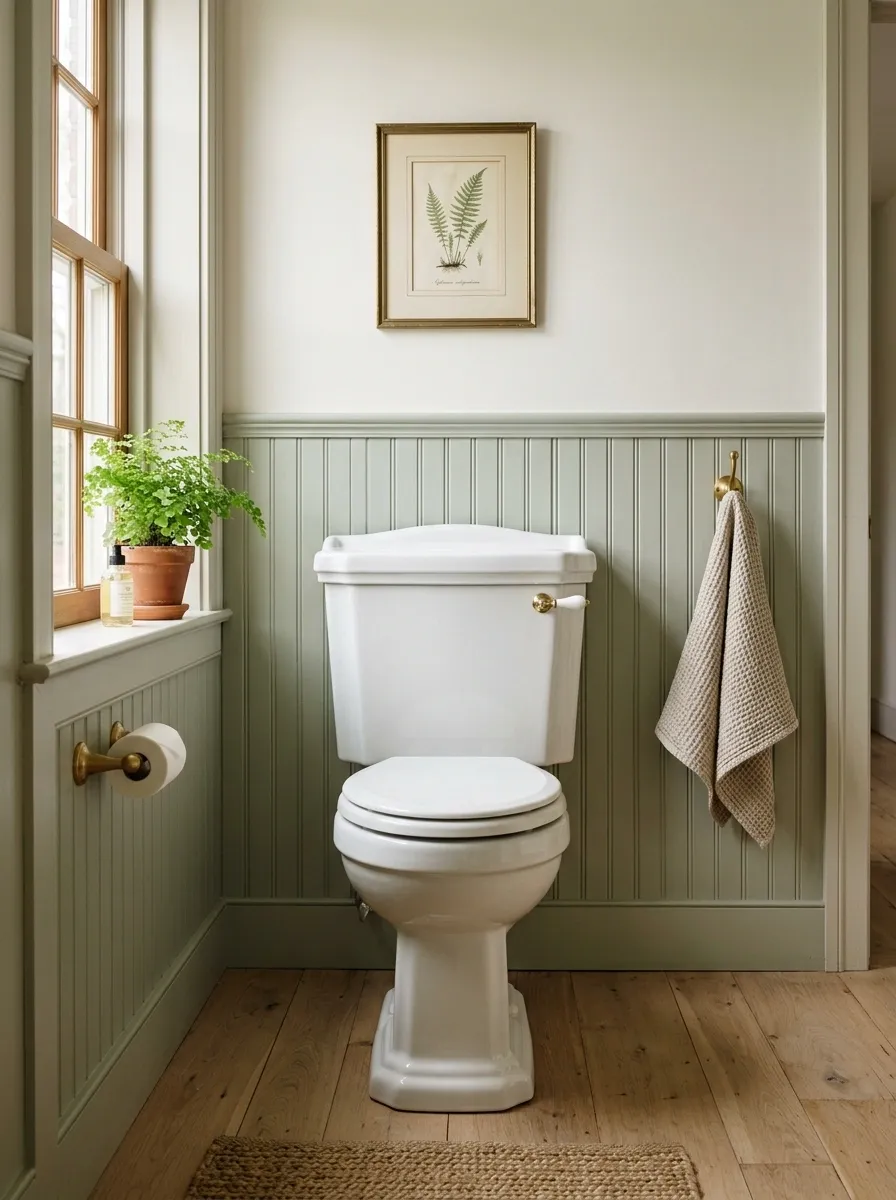
Not every vintage detail has to be decorative. Sometimes the plumbing fixtures themselves should carry the period character.
A high-tank toilet creates a strong old-house reference, while a more practical traditional-profile toilet still works when a high tank isn’t suitable for your bathroom. Choose a substantial porcelain shape with classic lines rather than an ultra-streamlined modern silhouette.
Keep the rest of the toilet area quiet. A small framed print or simple towel hook is enough.
Turn a Narrow Wall Into a Vintage Towel Station
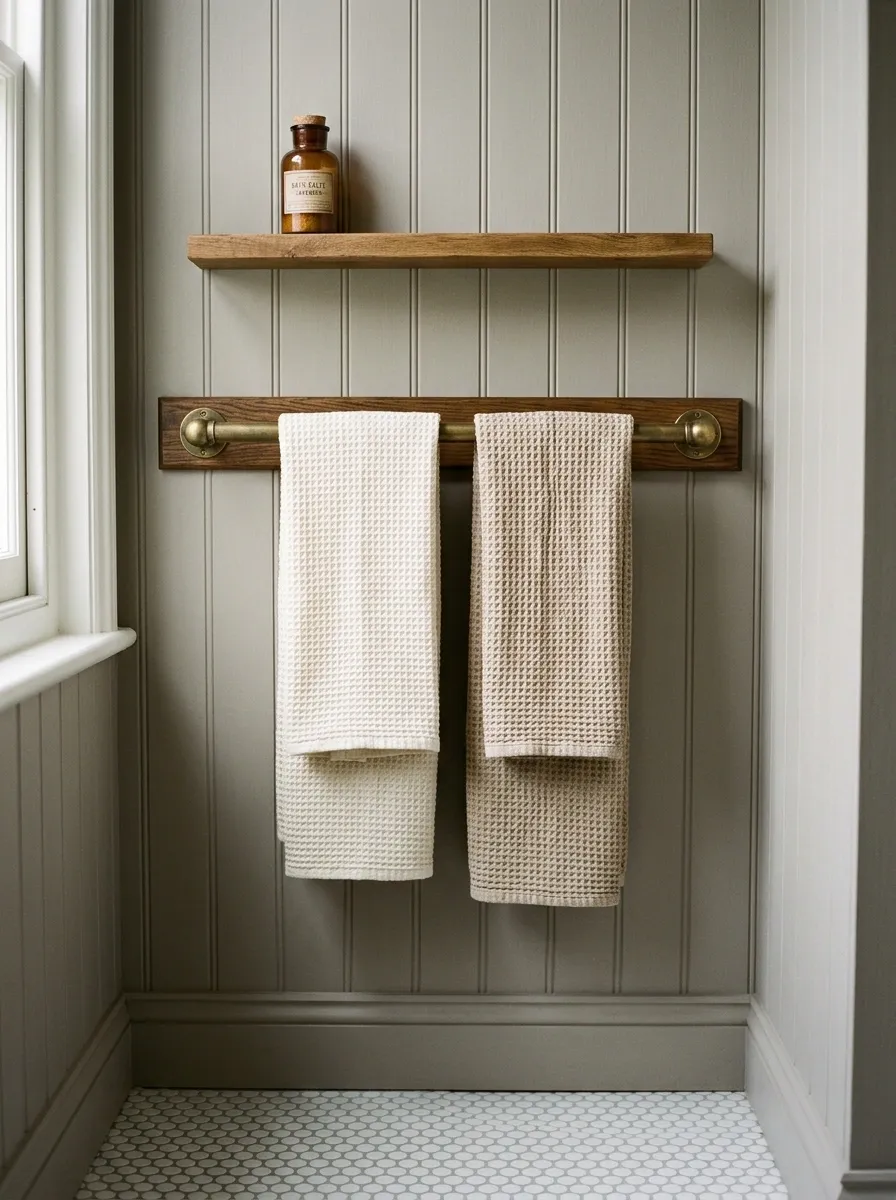
A narrow strip of wall doesn’t need to sit empty. It can become one of the most useful details in the bathroom.
Install a row of traditional hooks or a simple rail, then hang a few folded or draped towels beneath a small shelf. Wood, aged metal, and linen work together especially well here.
This setup is particularly smart near the shower or tub, where towels actually need to live.
Choose Cross-Handle Faucets With a Strong Silhouette
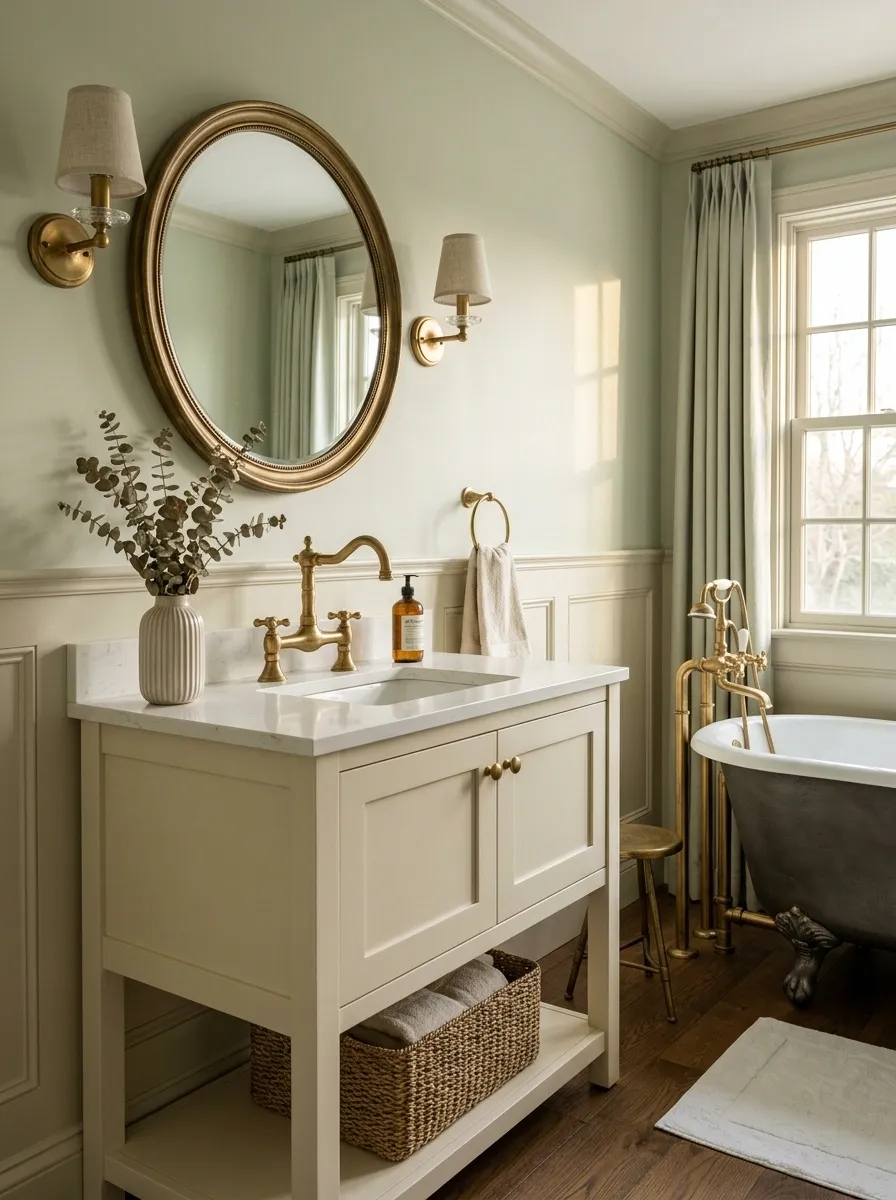
The faucet is one of the smallest fixtures in the bathroom, yet you see it every time you wash your hands. A generic single lever can instantly make a traditional room feel newer.
Cross-handle faucets have the visual weight you’re after. Choose a profile with clear curves, a defined spout, and substantial handles. Then repeat that traditional language at the shower and tub.
Don’t choose fixtures in isolation. They need to look like they came from the same bathroom.
Create a Full Old-House Bathroom With Layered Finishes
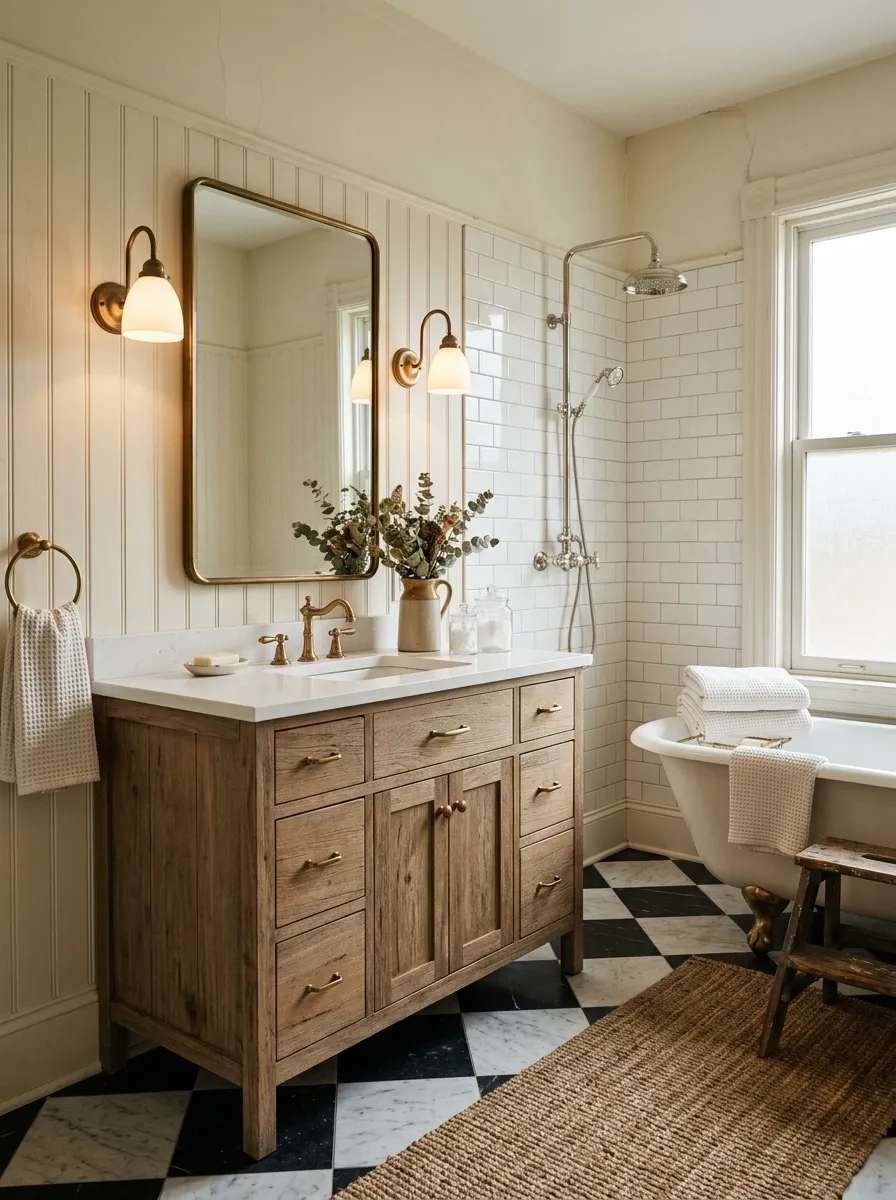
The strongest vintage bathrooms don’t depend on one magic item. They get several small decisions right at the same time.
Start with a classic floor. Add traditional wall tile or paneling. Choose a furniture-style vanity or pedestal sink. Bring in a substantial mirror, period-inspired lighting, and one consistent metal finish. Then soften everything with linen and a few useful objects.
That’s the formula. The room should feel like it has been there for years, even when every fixture is brand new.
Final Thoughts
A vintage bathroom doesn’t need to prove that it’s vintage. That’s the first thing to remember.
The strongest rooms have a quiet confidence to them. A substantial mirror sits above a simple sink. A worn-looking wood stool waits beside the tub. The floor has a classic pattern, the faucet has some weight, and the towels are soft enough to make the space feel used rather than staged.
Start with the pieces that are hardest to change, then layer in texture and personality. Don’t chase every antique-looking accessory you see. A handful of thoughtful choices will always beat a bathroom packed with props.
Save these ideas before your next bathroom update. The right vintage look comes together one good decision at a time.