
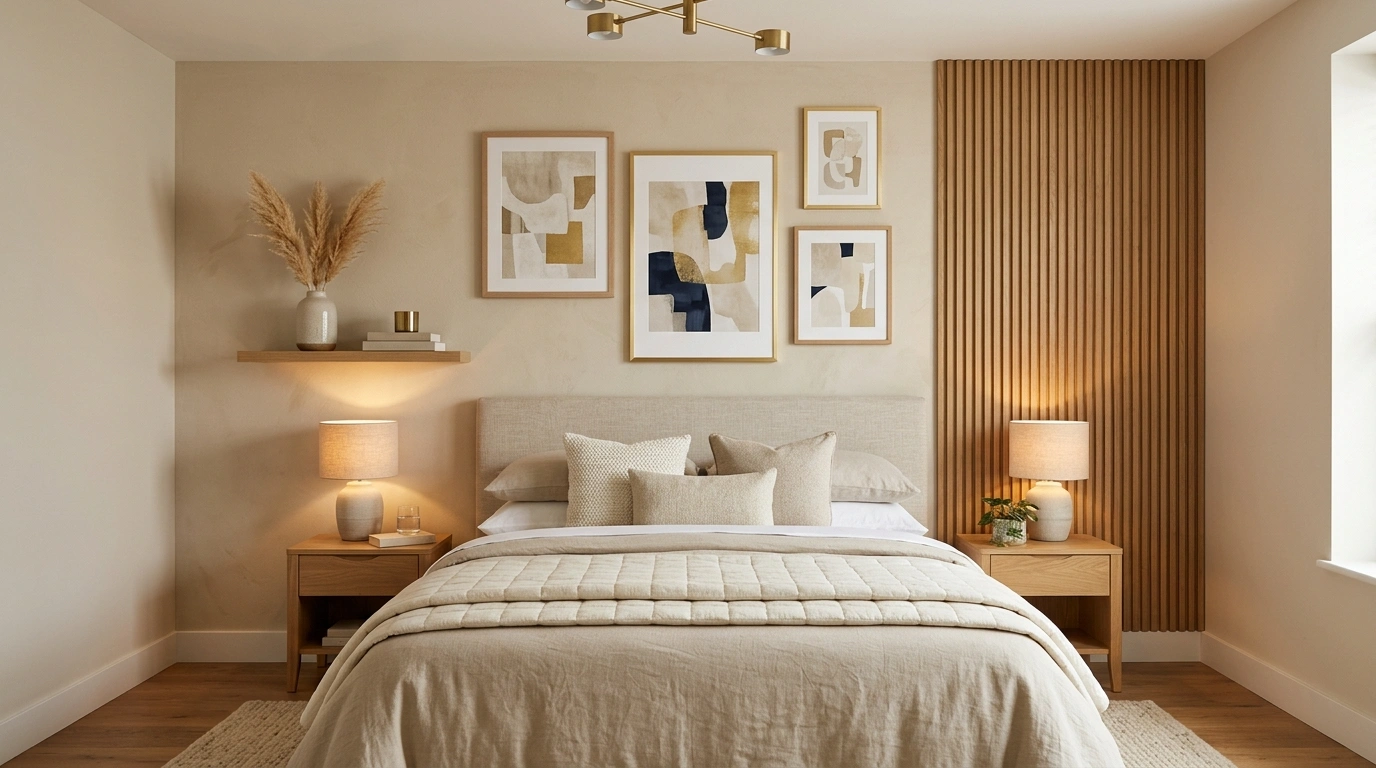
A bedroom can have great furniture, beautiful bedding, and carefully chosen lighting, yet the wall behind the bed can still make the entire room feel unfinished. The problem usually isn’t a lack of decoration. It’s that the wall has been treated as an afterthought instead of as part of the room’s composition.
The strongest bedroom wall decor ideas connect the wall to everything around it. Artwork needs the right scale. A painted feature wall needs furniture that supports it. Architectural details need enough breathing room to remain visible. Even an empty section of wall can look intentional when its proportions relate to the bed, windows, lighting, and surrounding furniture.
not empty surfaces.
Bedroom Wall Decor Ideas
Whimsical Soda Can Wall Vases
A playful wall of colorful aluminum cans transforms ordinary recyclables into a surprisingly charming vertical garden. Instead of traditional planters, bright beverage tins are mounted directly onto a crisp white wall, each holding delicate sprigs of fresh flowers and lush greenery.
The arrangement feels wonderfully relaxed and spontaneous, with varied color pops and playful wall decor items like a tiny checkered plate breaking up the grid. The nearby wavy mirror with warm edge lighting adds an inviting glow that highlights the cheerful display.
The brilliant detail is the mix of botanical heights and textures sprouting from each can. This creative approach turns everyday items into a vibrant, personal statement without taking up any floor space.
Oversized Landscape Artwork Above a Soft Linen Bed
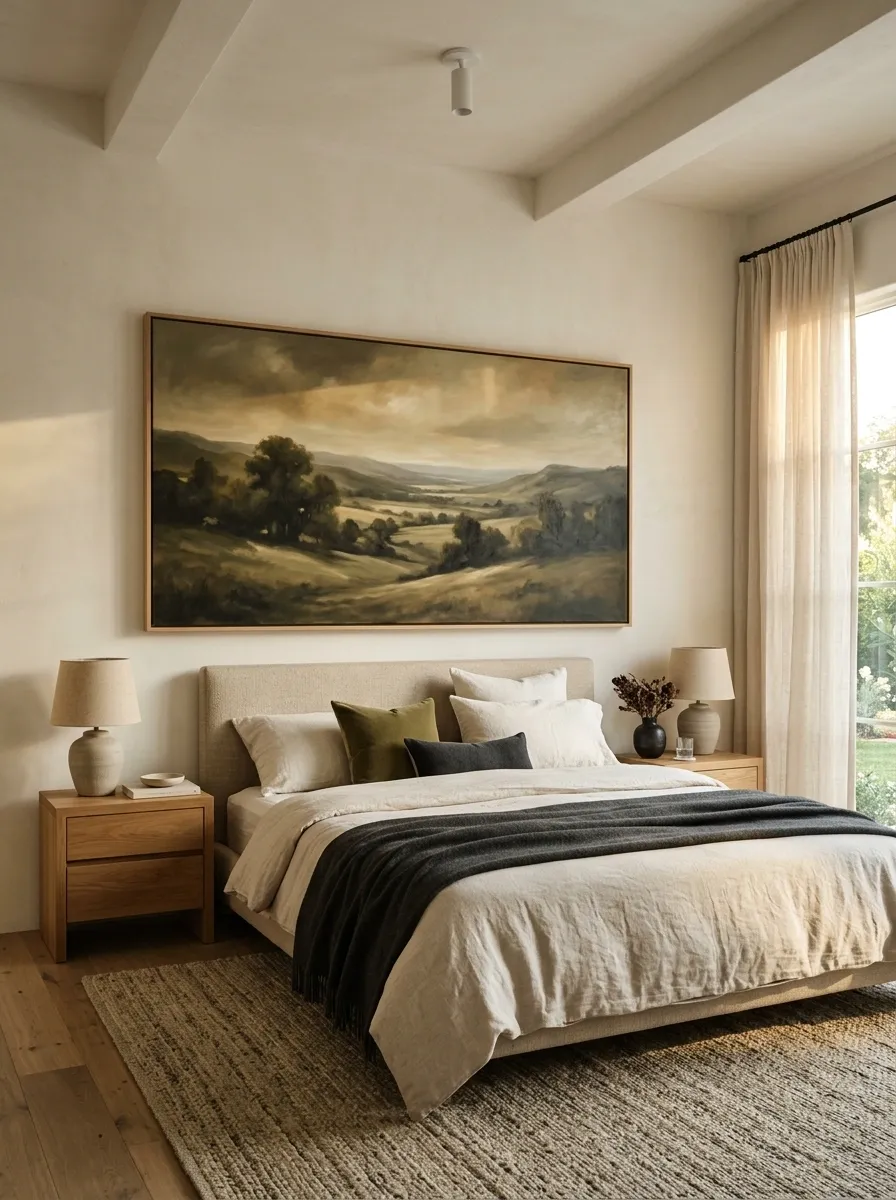
A single large landscape painting gives this bedroom its direction immediately. Instead of several small pieces competing for attention, one horizontal artwork stretches across much of the visual width above a low upholstered bed. Muted olive, sand, cream, and charcoal in the painting connect naturally with the oatmeal linen bedding and warm oak nightstands.
The wall stays quiet around the artwork, which is important. Too many accessories would weaken the scale of the main piece. Soft lamps, slightly rumpled bedding, and warm daylight keep the room from feeling formal or staged.
The key relationship is artwork width to bed width. The composition feels deliberate because the wall art is substantial enough to anchor the furniture beneath it.
Boho Woven Wall Discs
A dramatic black accent wall provides a striking backdrop for a cluster of natural woven wall baskets above the bed. Instead of standard framed art, an organic collection of textured straw and rattan discs creates a stunning focal point that stretches gracefully across the upper headboard area.
The styling works beautifully because the warm wood tones of the bed frame and nightstands bridge the gap between the dark wall and the light natural fibers. Cozy patterned bedding in earthy mustard and cream keeps the room feeling grounded and cozy.
The key to this arrangement is varying the scale and depth of the woven pieces. Allowing them to overlap slightly makes the entire display feel cohesive and naturally collected rather than rigidly placed.
Full-Wall Taupe Panels With Floating Walnut Nightstands
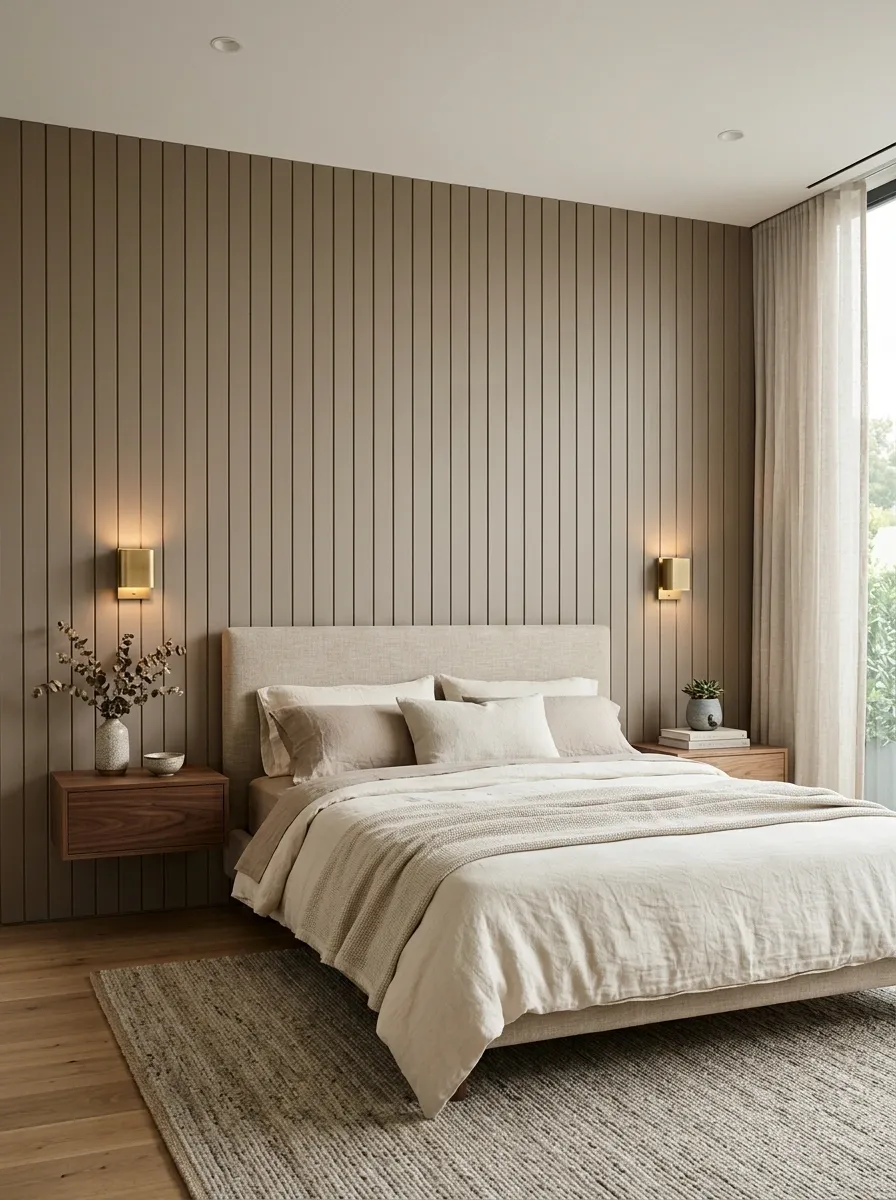
Here the wall carries more architectural weight than the decoration. Narrow vertical panels in a warm taupe shade run behind a low upholstered bed, giving the room height and a subtle sense of structure. Floating walnut nightstands sit neatly within the composition, while compact wall sconces replace bulky bedside lamps.
The combination feels polished because the materials are warm but restrained. The timber adds depth, the upholstered bed softens the vertical lines, and the lighting breaks the wall rhythm without creating clutter.
This approach works especially well when the bedroom needs character without a large collection of artwork. The wall treatment itself becomes the visual statement.
The important detail is consistency. Panel proportions, nightstand placement, and lighting should all feel aligned rather than independently added.
quiet furniture.
Metallic Leaf Wall Sculpture
A sweeping botanical metal sculpture brings organic elegance and a touch of color directly above a neutral upholstered bed. Instead of a traditional painting, an array of overlapping green and gold leaf-shaped discs creates a horizontal masterpiece that anchors the entire sleeping space.
The neutral cream walls and soft lighting allow the metallic and sage tones of the sculpture to truly shine without overwhelming the room. Simple matching nightstands with sleek bedside lamps complete the balanced, calm atmosphere.
The most important design choice here is the symmetry and scale of the wall art relative to the headboard. It effortlessly pulls the color palette of the accent pillows together while adding sophisticated texture to a blank wall.
Layered Vintage Gallery Wall Around an Antique Brass Bed
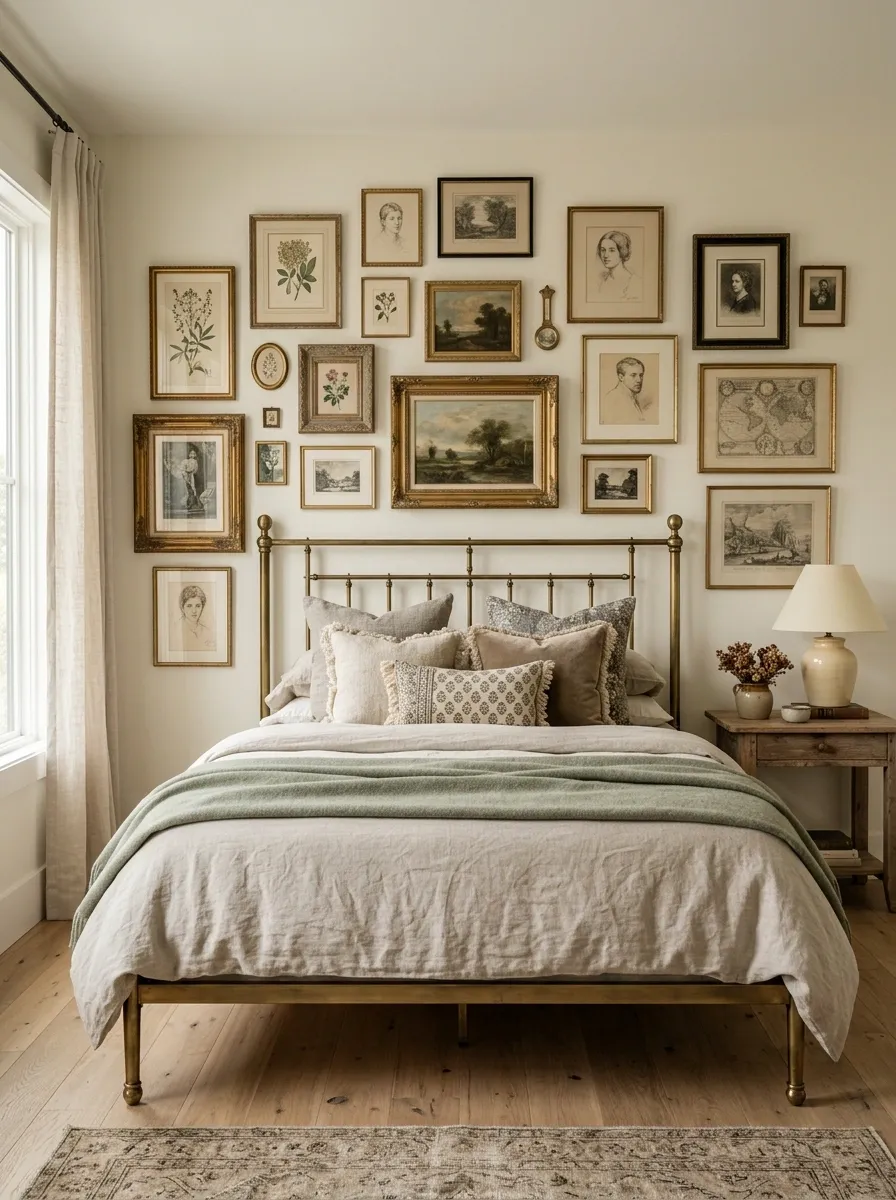
A vintage-inspired gallery wall brings a completely different energy. Instead of relying on one commanding artwork, this bedroom builds a loose arrangement of botanical prints, portrait sketches, faded landscapes, and small antique-style frames around a slim brass bed.
The arrangement feels collected rather than overly arranged because the frames vary in size and the spacing isn’t perfectly mechanical. Cream walls and washed linen keep the room light enough for the darker artwork and brass details to stand out.
The bed remains part of the wall composition rather than sitting beneath a separate display. That is what makes this concept feel complete.
Avoid filling every patch of wall. The charm comes from the contrast between dense clusters and small pockets of breathing room.
Illuminated Wood Panels And Art
Rich vertical wood slat paneling combined with integrated warm backlighting elevates the headboard wall into a true architectural feature. Above the panels, a floating wooden ledge holds a curated gallery of minimalist black and framed artwork that introduces understated sophistication.
The dark charcoal upholstered bed blends seamlessly into the woodwork, while the soft vertical glow from the backlighting accentuates the clean lines of the slats. A round wooden side table and sculptural black vase enhance the moody, refined aesthetic.
The secret to this polished look is the restraint in the styling and lighting choices. Every element works together to create a high-end, boutique hotel feel right in your own bedroom.
Moody Charcoal Bedroom With One Oversized Abstract Canvas
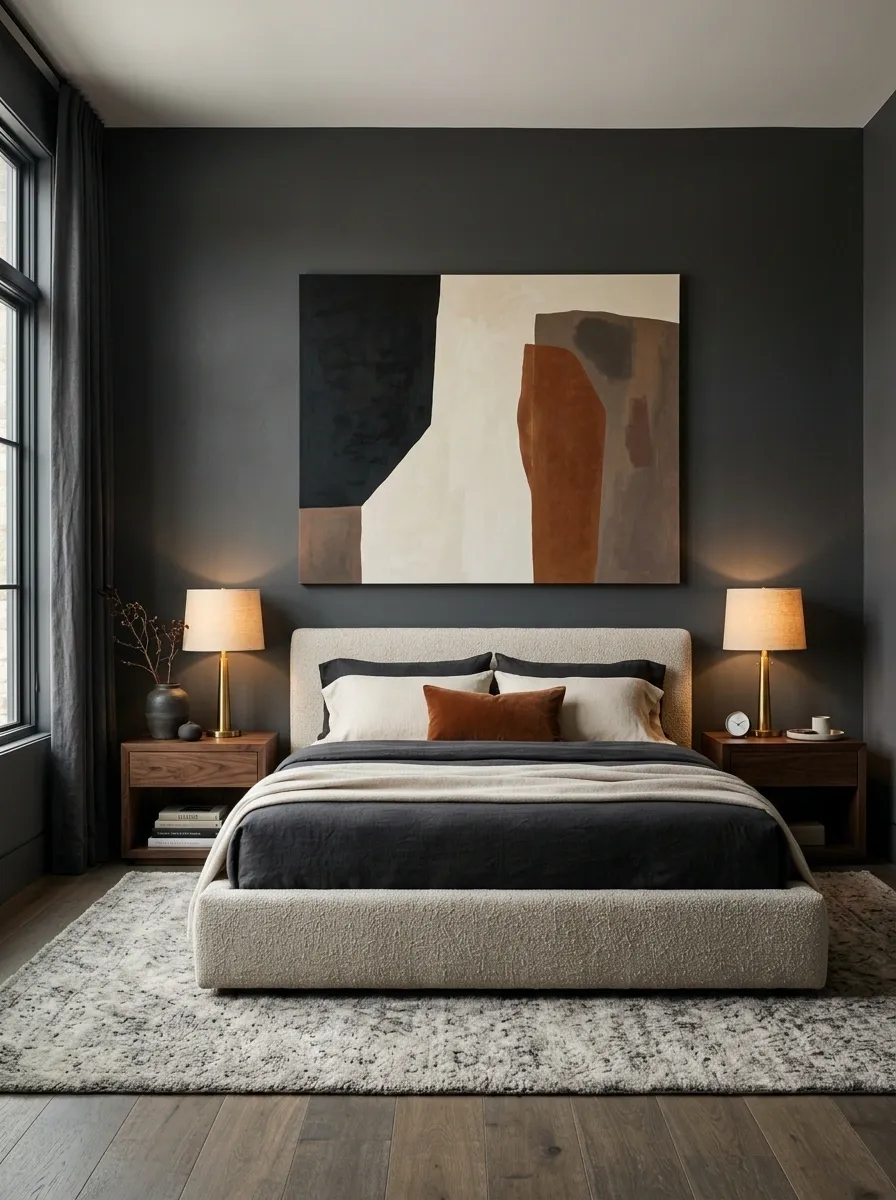
This bedroom takes the opposite approach from the gallery wall. Deep charcoal walls create a dark architectural backdrop for one oversized abstract canvas in black, ivory, rust, and muted brown. The artwork is broad, quiet in shape, and strong enough to hold the wall without additional decoration.
A chunky upholstered bed sits low against the wall, while dark walnut furniture and warm lamps keep the room rich rather than flat. The rust tones in the artwork provide just enough contrast to stop the room from becoming a solid block of dark neutrals.
The strongest part of the composition is the restraint. There is no need to fill the surrounding wall. The empty space gives the oversized artwork room to breathe.
Use softer lighting here. Bright overhead illumination would flatten the depth created by the dark wall and layered textures.
Built-In Shelving Wall With Books, Ceramics, and Framed Art
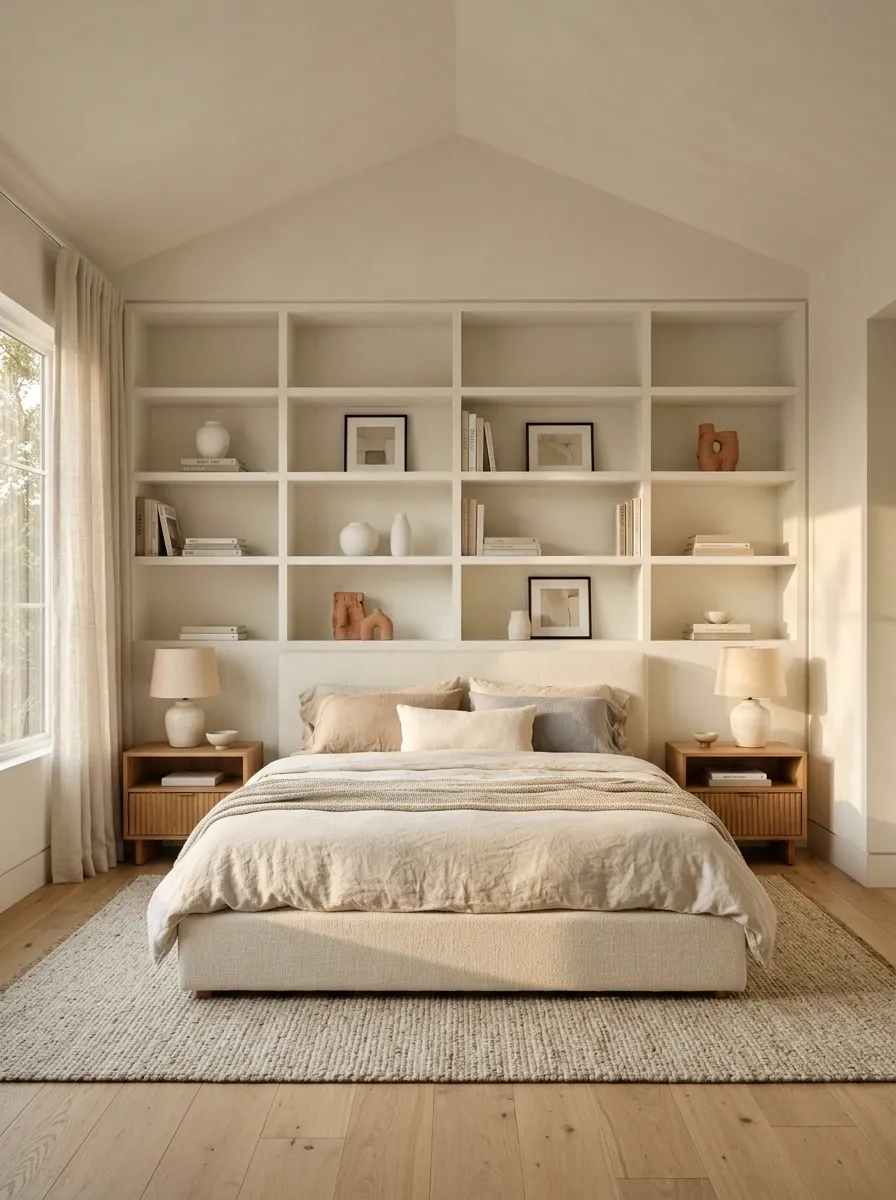
A built-in shelving wall turns the space behind the bed into architecture and display at the same time. Shallow warm-white shelves frame books, ceramics, small framed pieces, and sculptural objects, but the arrangement leaves several compartments deliberately empty.
The bed sits slightly forward from the shelving, which helps the wall read as part of the room’s structure rather than ordinary storage. Warm oak accents echo the bedside furniture and introduce enough contrast against the pale shelving.
The visual trick is selective filling. Every opening doesn’t need an object. Empty compartments create pauses that let the more interesting pieces stand out.
This concept suits bedrooms where storage and display need to share the same wall, but the finished result should still feel calm and architectural.
Soft Plaster Wall With an Off-Center Sculptural Mirror
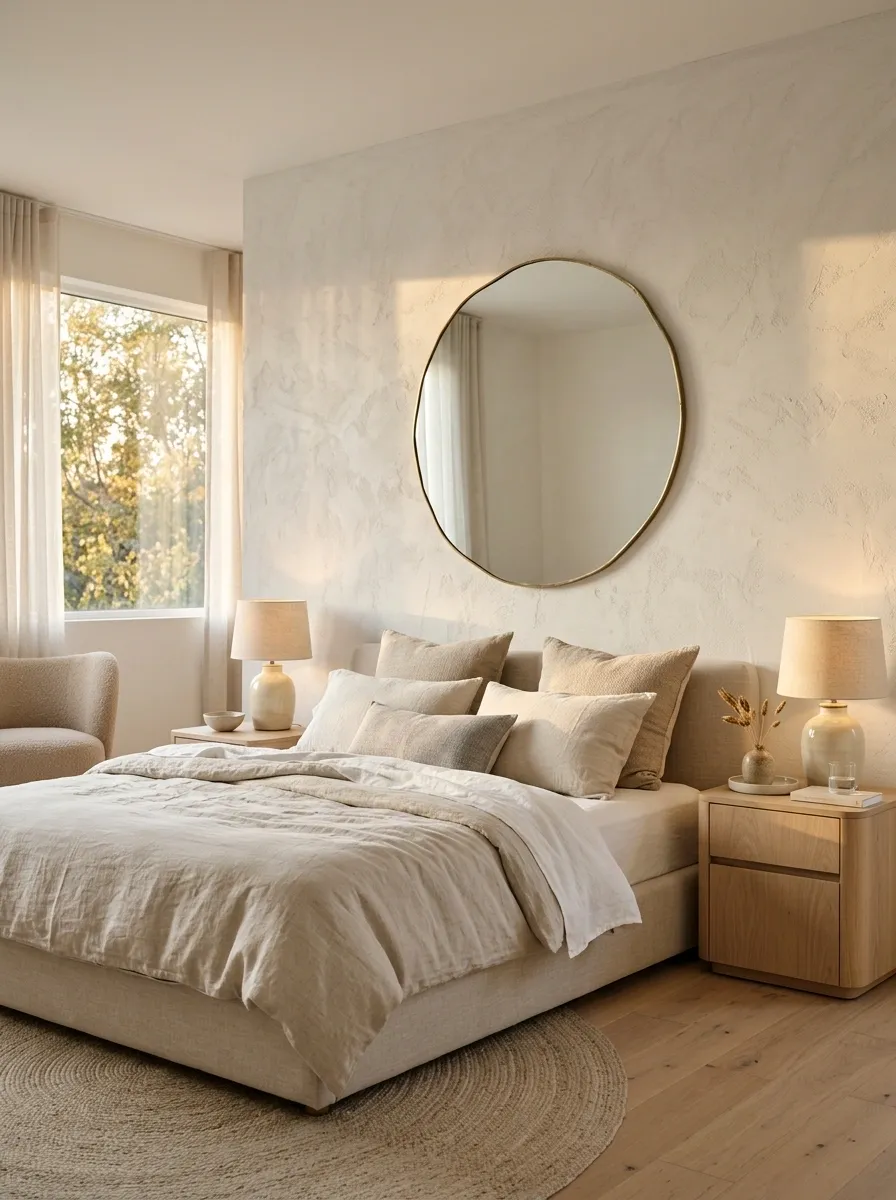
A soft mineral-plaster wall gives this bedroom enough texture that very little extra decoration is needed. A large imperfect circular mirror sits slightly off center above a low upholstered bed, creating a relaxed focal point instead of the usual perfectly centered arrangement. Pale oak nightstands, rounded ceramic lamps, and oatmeal linen bedding continue the soft, organic shapes.
The off-center mirror is important here. It makes the composition feel less formal while the low furniture keeps the visual weight close to the floor. Warm daylight exaggerates the gentle texture of the plaster without making the wall look busy.
Keep the surrounding decor restrained. Too many sharp-edged accessories would fight the rounded forms that make this bedroom distinctive.
Keep the hard edges quiet so the curved elements carry the composition.
Floor-to-Ceiling Linen Curtains Behind the Bed
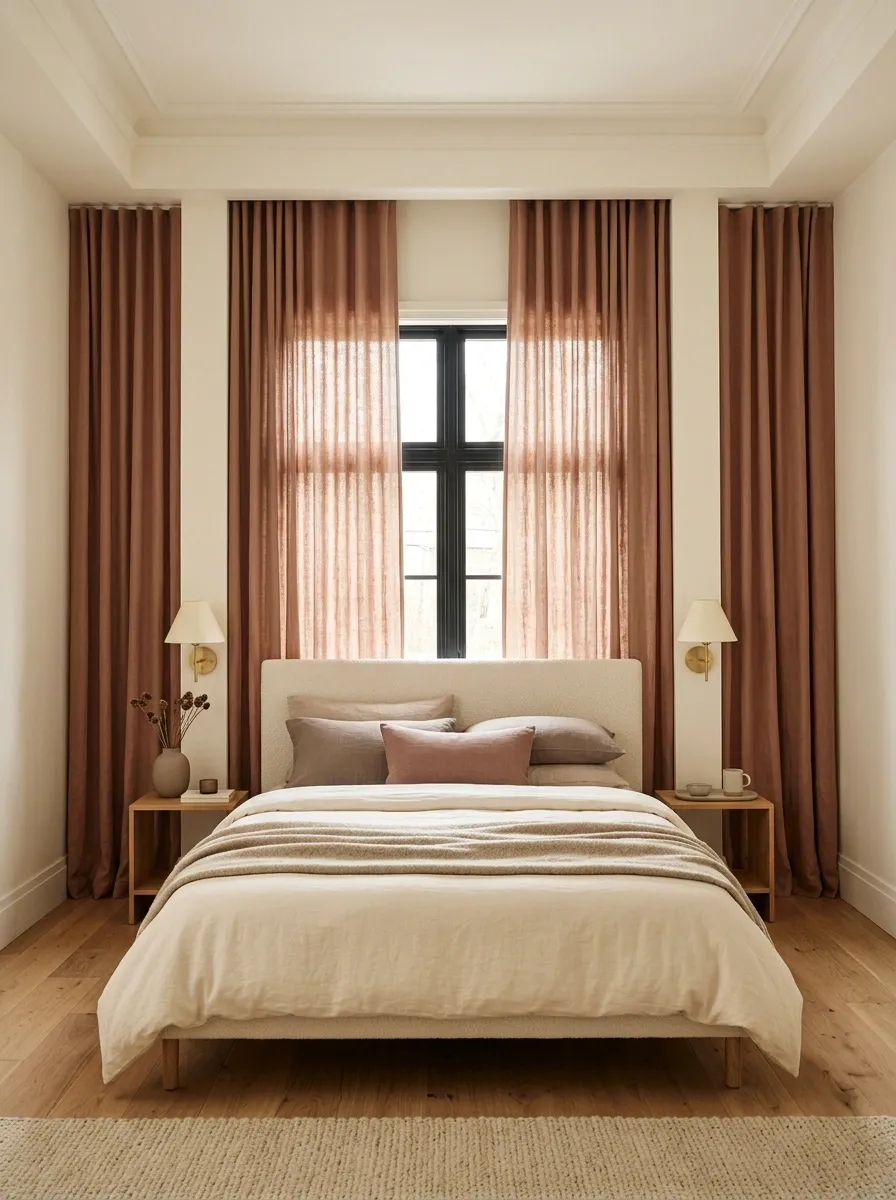
A full wall of linen curtains turns the background into a soft architectural element. The fabric runs from ceiling to floor behind a simple upholstered bed, with a narrow console and slim lamps almost disappearing into the composition. Dusty clay or muted rose curtains provide warmth without the visual weight of painted accent walls.
The folds create subtle vertical movement and make the ceiling feel taller. Because the entire wall is treated as one surface, the bedroom feels intentionally designed rather than decorated piece by piece.
This works best with uncomplicated furniture. Ornate bedside tables or heavily patterned bedding would compete with the texture of the fabric.
The finish comes from the contrast between the flowing textile and the crisp geometry of the bed.
Forest Green Bedroom With Black-and-White Photography
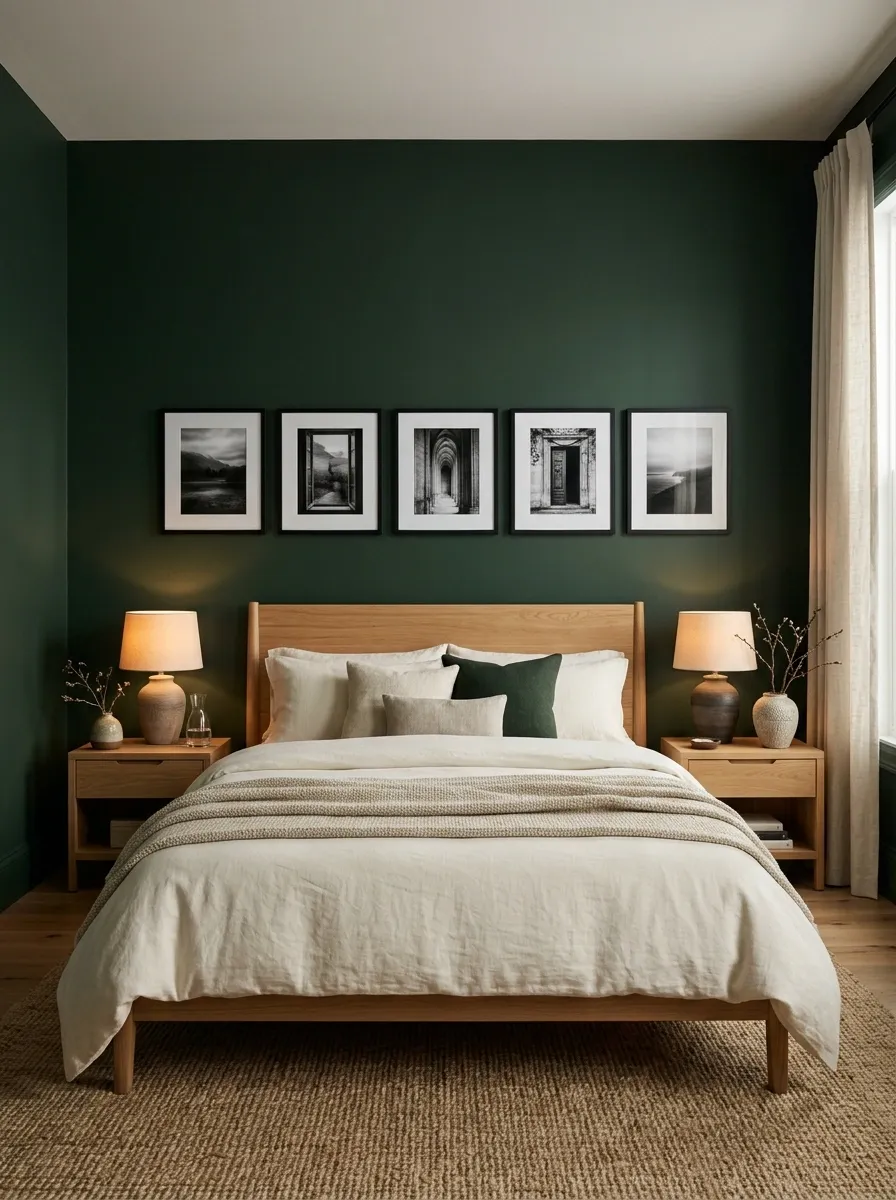
Deep forest green paint creates a rich backdrop for a row of black-and-white photographs above a natural oak bed. The photographs bring sharper contrast to the room, while cream bedding and woven textures prevent the dark wall from feeling heavy.
Rather than covering the whole wall, the artwork is kept within the width of the bed so the green remains visible around it. That breathing room is what gives the arrangement a polished quality.
Warm oak is especially useful here because it breaks up the cool depth of the green. Soft bedside lighting adds another layer and keeps the room from looking flat after dark.
The strongest version uses photographs with related tones or subject matter. A completely random collection would weaken the calm visual rhythm.
Sculptural Plaster Arches Framing a Low Upholstered Bed
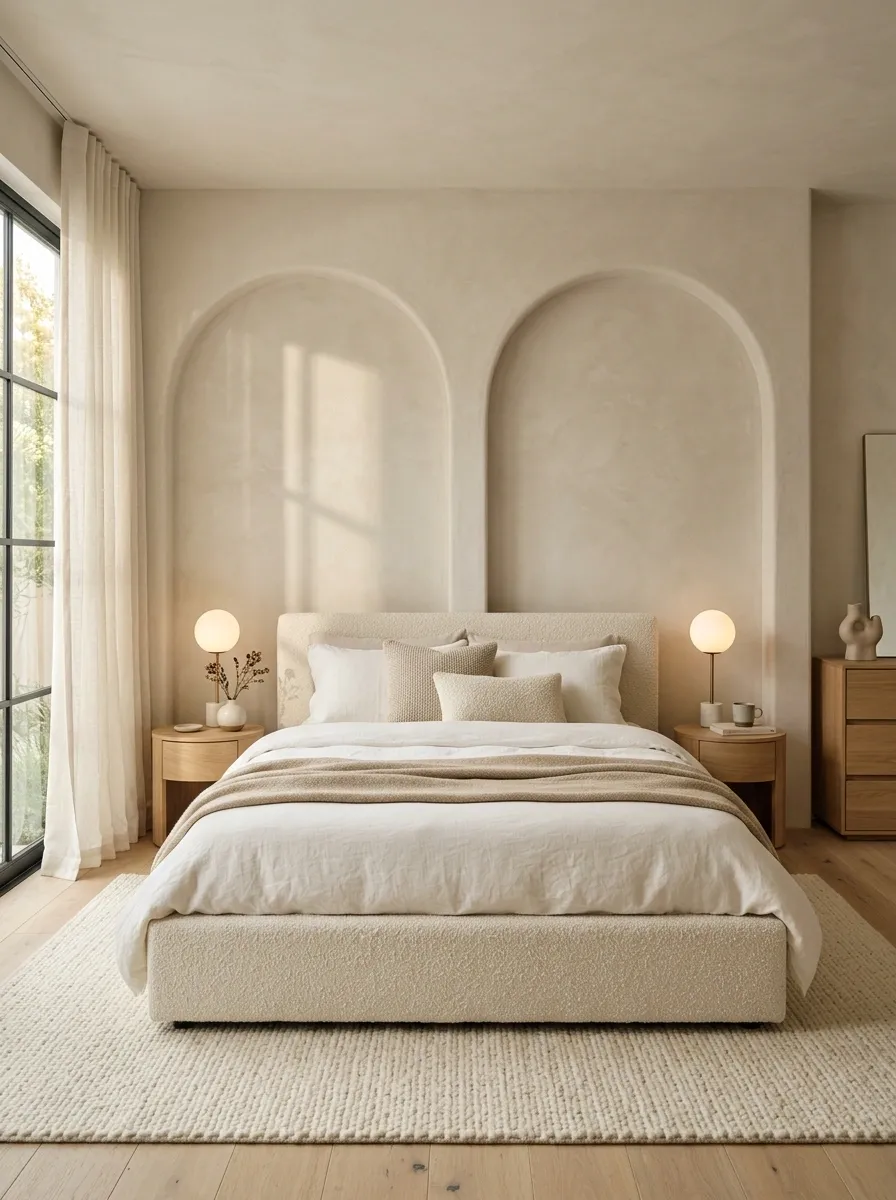
Two shallow plaster arches rise behind the bed and give the room a built-in architectural focal point. The surrounding palette stays warm and mineral-based, with ivory walls, pale stone surfaces, rounded bedside tables, and softly glowing globe lights.
There is no need for a busy gallery wall here. The arches already establish a strong shape, and adding too many small pieces would make the architecture harder to read.
The low bed reinforces the horizontal line beneath the arches, creating a pleasing contrast between the broad bed and the taller curved forms above it. The result feels architectural without becoming ornate.
This is especially effective in bedrooms with enough clear wall width for the arches to read as one connected feature.
Eclectic Botanical Wallpaper With a Dedicated Reading Corner
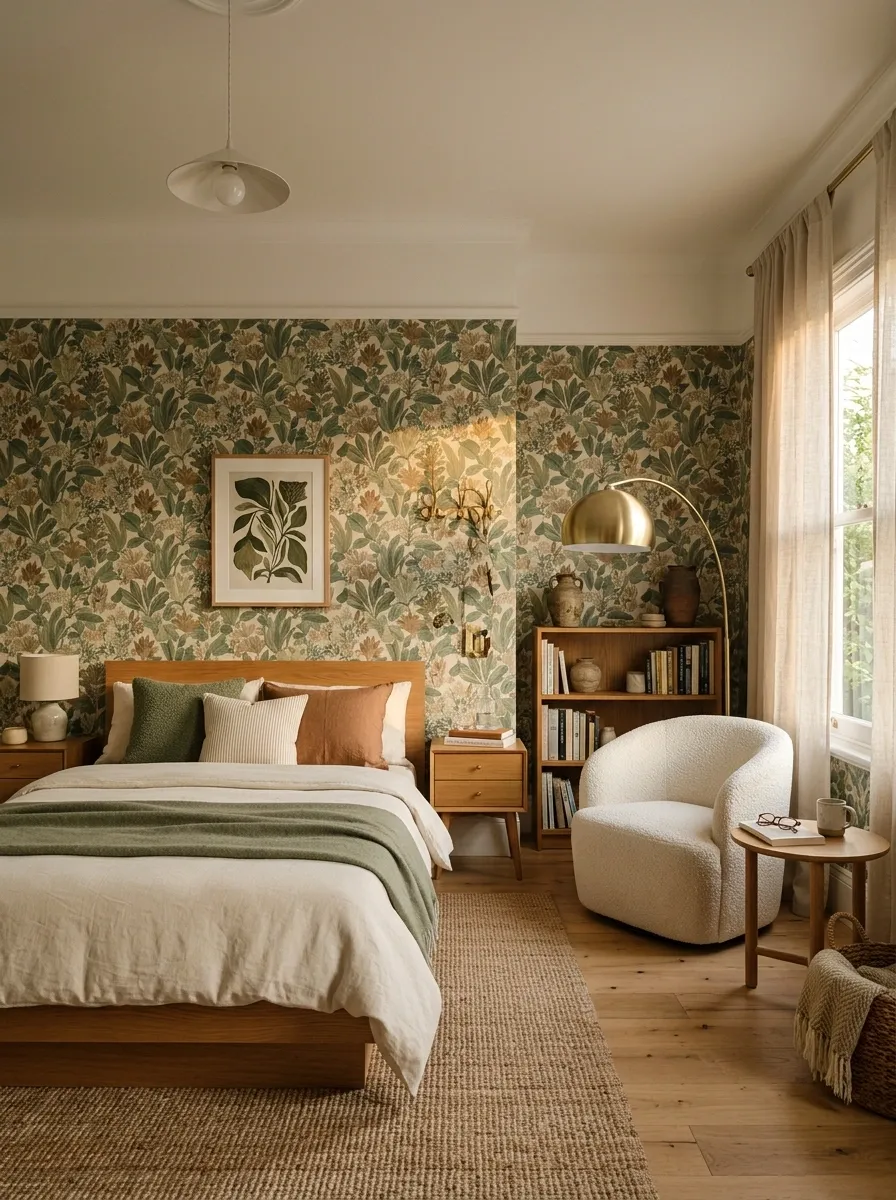
This bedroom treats the wall as a continuous backdrop rather than limiting decoration to the area above the bed. Rich botanical wallpaper stretches behind the bed and continues into a small reading corner, tying two functional areas together.
A curved chair sits beneath a floor lamp near a compact bookcase, while the bedding uses solid cream and muted green tones pulled directly from the wallpaper. Warm timber furniture prevents the pattern from becoming too polished or formal.
The layout works because the pattern remains consistent while the furniture changes. The bedroom and reading nook feel like parts of one composition instead of two unrelated zones.
Keep the largest furniture pieces relatively quiet. The wallpaper needs visual room to breathe.
quiet solids
soft curve + lamp
Minimal White Bedroom With One Oversized Textured Canvas
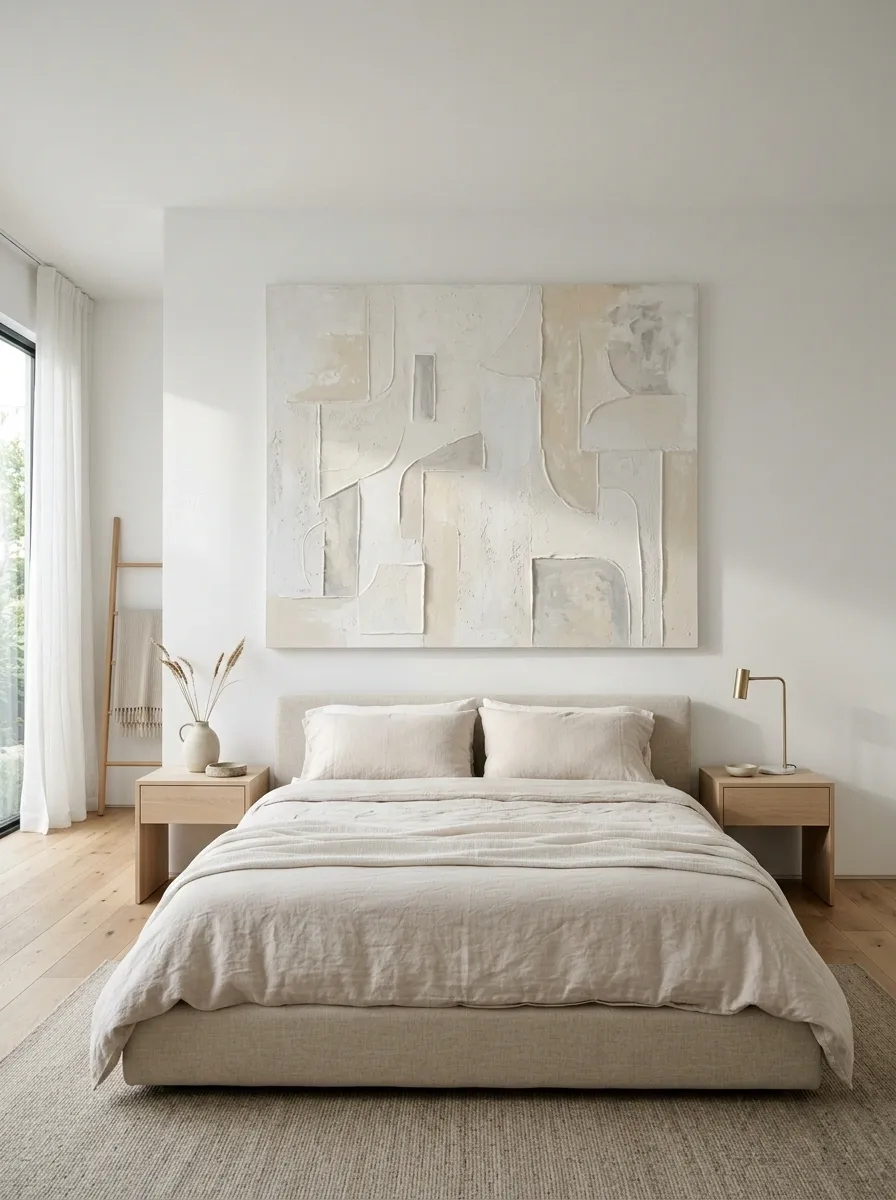
A nearly all-white bedroom can feel flat when every surface has the same visual weight. This version solves that problem with one oversized textured canvas above the bed. The artwork stays within a palette of chalk, cream, pale beige, and soft gray, so it adds depth without introducing a strong color break.
A low upholstered bed, pale oak furniture, and softly folded linen bedding reinforce the quiet palette. The canvas is large enough to make the wall feel finished, but the composition remains intentionally spare.
The texture matters more than the artwork’s subject. Subtle raised forms catch daylight and create changing shadows throughout the room.
Keep accessories low and simple. Too many small decorative pieces would undermine the reason this design works.
Visible texture.
Walnut Slat Wall With Integrated Bedside Lighting
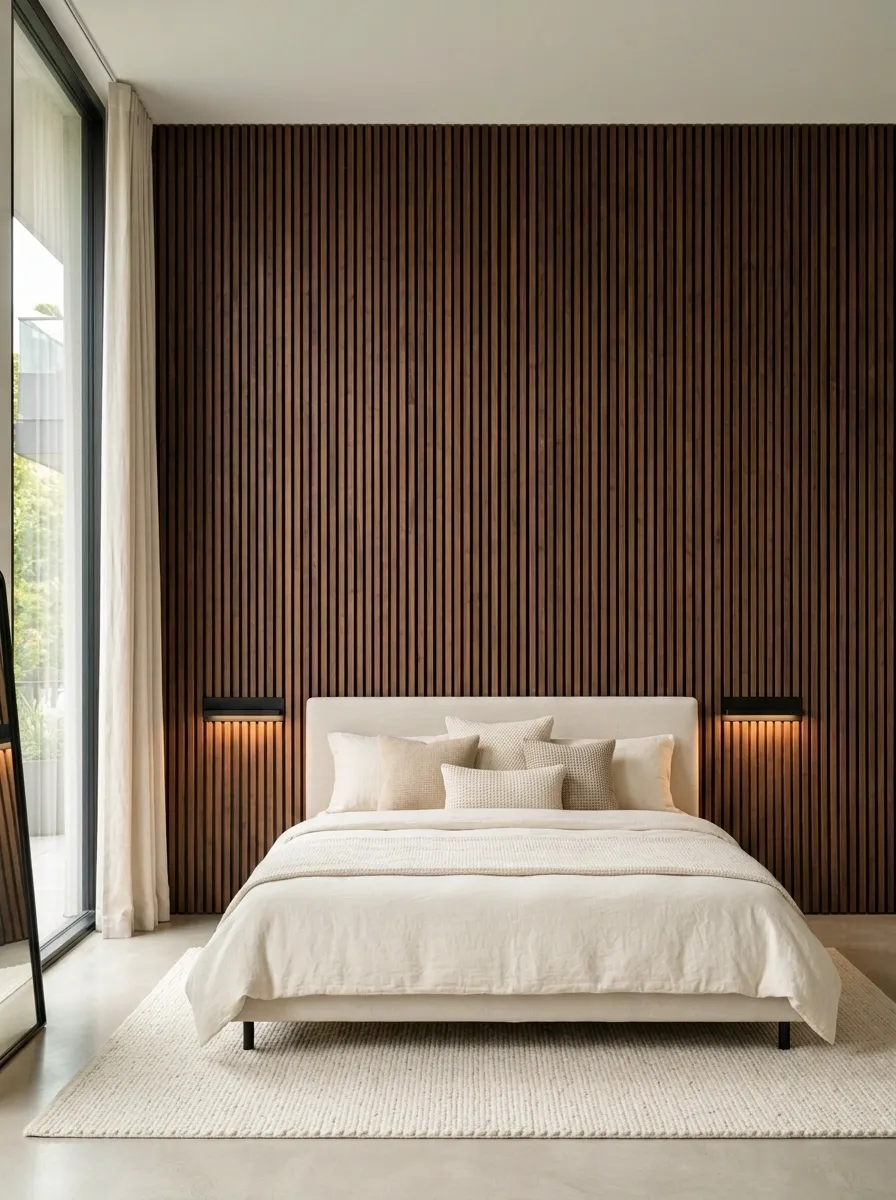
A warm walnut slat wall gives this bedroom a highly finished architectural backdrop. The timber runs across the full width behind a low upholstered bed, while narrow vertical gaps create a steady rhythm from floor to ceiling.
Instead of placing lamps on bulky nightstands, compact lights are integrated into the composition on either side of the bed. The result is cleaner and more custom-looking, with illumination becoming part of the wall rather than another object sitting in front of it.
Cream bedding softens the walnut’s richness, while small matte-black details keep the palette from drifting too warm.
The slats should remain the hero. Limit additional wall art so the timber pattern isn’t interrupted unnecessarily.
Pale Blue Bedroom With a Full Botanical Mural
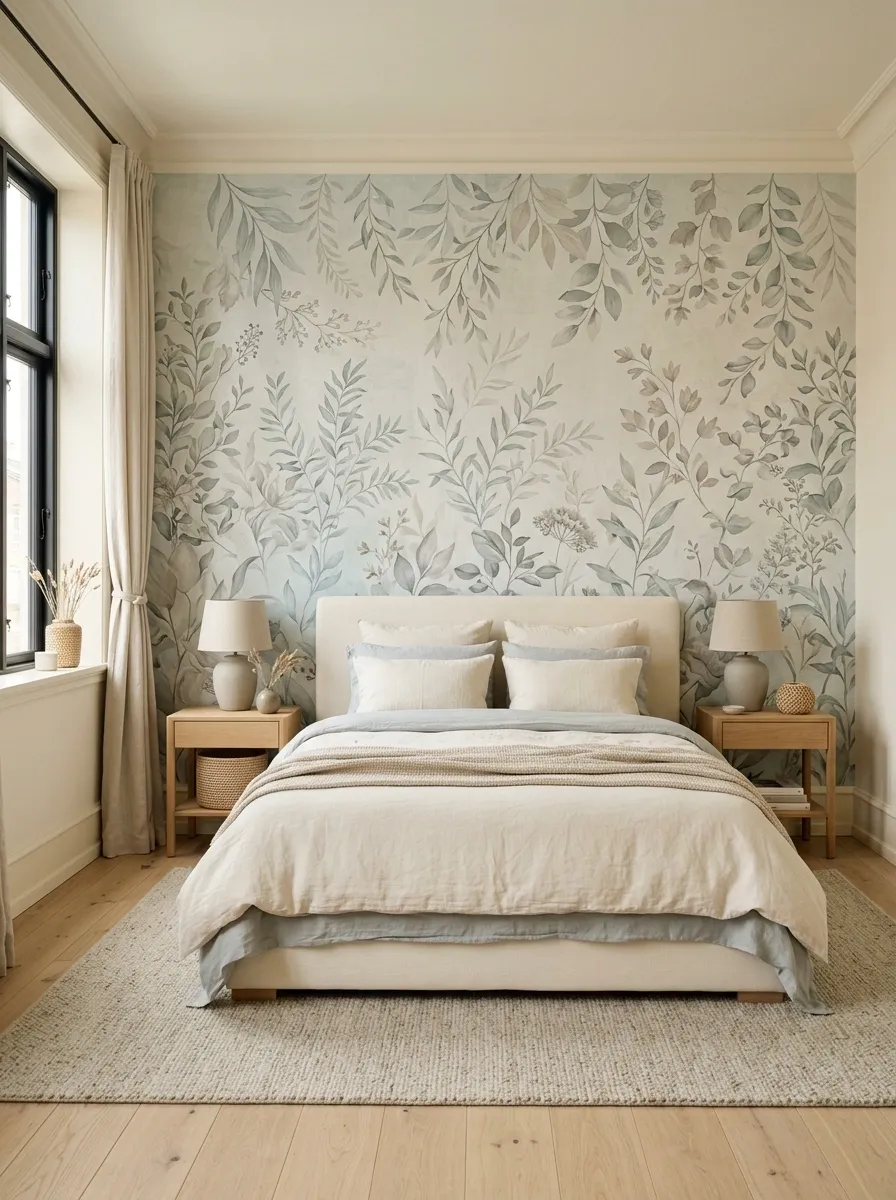
A soft blue botanical mural covers the main bedroom wall, creating a gentle sense of movement behind an otherwise restrained room. The foliage is detailed enough to feel immersive but stays within pale blue-green, cream, and muted gray rather than introducing a crowded range of colors.
A cream upholstered bed sits in front of the mural, joined by light oak nightstands, woven accents, and simple ceramic lamps. The furniture acts almost like a quiet foreground layer, allowing the wall to carry most of the personality.
The mural works because the pattern has room to breathe. The remaining surfaces are intentionally simple.
Choose bedding in one or two tones already present in the mural. Introducing another strong pattern would blur the hierarchy.
Twin Oversized Artworks With Sculptural Bedside Lamps
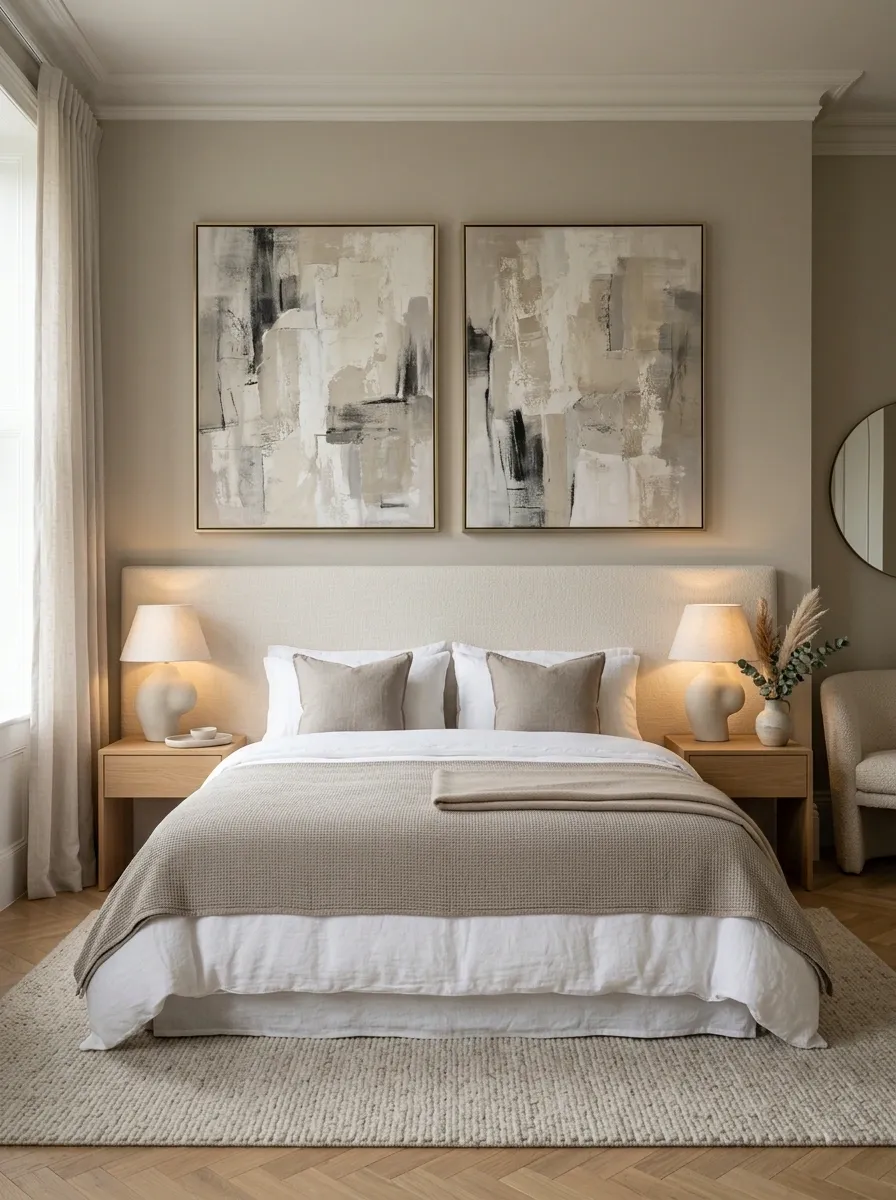
Two large artworks create a symmetrical bedroom wall without relying on a conventional single picture centered above the bed. The pieces share a restrained palette but aren’t identical, giving the arrangement balance without making it feel overly formal.
Matching sculptural lamps sit on either side of the bed, reinforcing the central axis. A warm upholstered headboard, muted bedding, and simple nightstands keep the rest of the room quiet enough for the paired artworks to dominate.
This design is strongest when the two artworks have similar visual weight. They don’t need to match exactly, but one shouldn’t be dramatically busier or darker than the other.
The symmetry makes the concept especially useful for bedrooms where the architecture already feels orderly.
Terracotta Accent Wall With Oversized Woven Wall Art
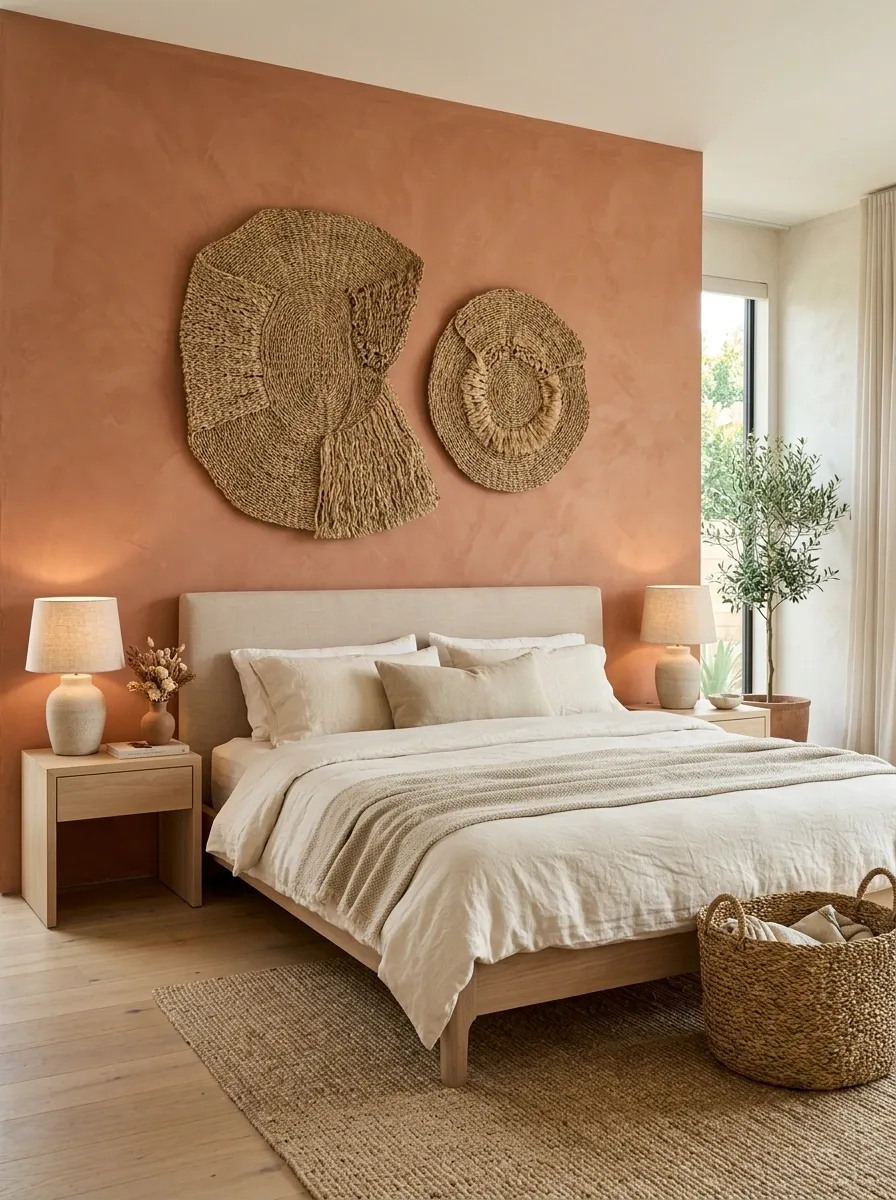
A warm terracotta wall gives this bedroom an earthy, sun-washed foundation. Instead of several small decorative objects, two oversized woven pieces sit above the bed, introducing irregular texture and handmade character.
The rest of the composition is deliberately natural. Cream linen bedding, pale oak, woven baskets, and softly shaped ceramics echo the wall art without competing with it. The terracotta becomes the strongest color in the room, while the neutral materials keep the result grounded.
The woven pieces should have noticeably different scale or shape so they read as a connected composition rather than matching decorations bought as a set.
Keep metallic accents limited. Warm wood and natural fibers already provide enough richness.
Traditional Bedroom With Decorative Picture Molding
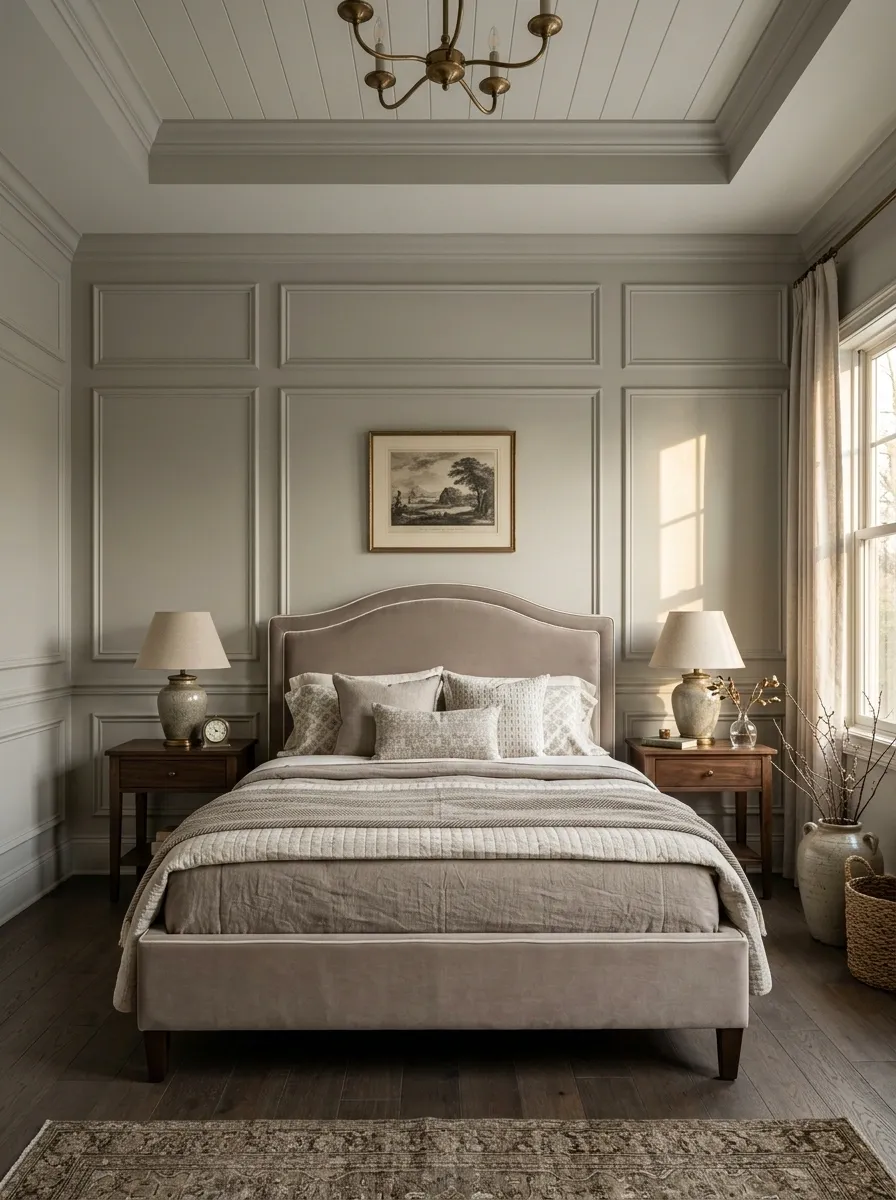
Traditional bedroom design can feel richly finished without covering every wall in artwork. Here, decorative picture molding creates a series of clean rectangular panels around a painted upholstered bed. The wall itself becomes the visual framework, while antique-style lamps, aged brass accents, and softly patterned bedding bring warmth into the composition.
A muted warm gray or dusty taupe keeps the molding visible without making the bedroom feel overly formal. The furniture stays fairly simple so the architecture remains easy to read.
The strongest detail is the relationship between the molding and the bed. The central panel should visually frame the headboard rather than stopping awkwardly behind it.
There is no need to add a busy gallery arrangement on top of this wall. The architectural detail already provides enough structure.
Black Accent Wall With a Floating Oak Headboard
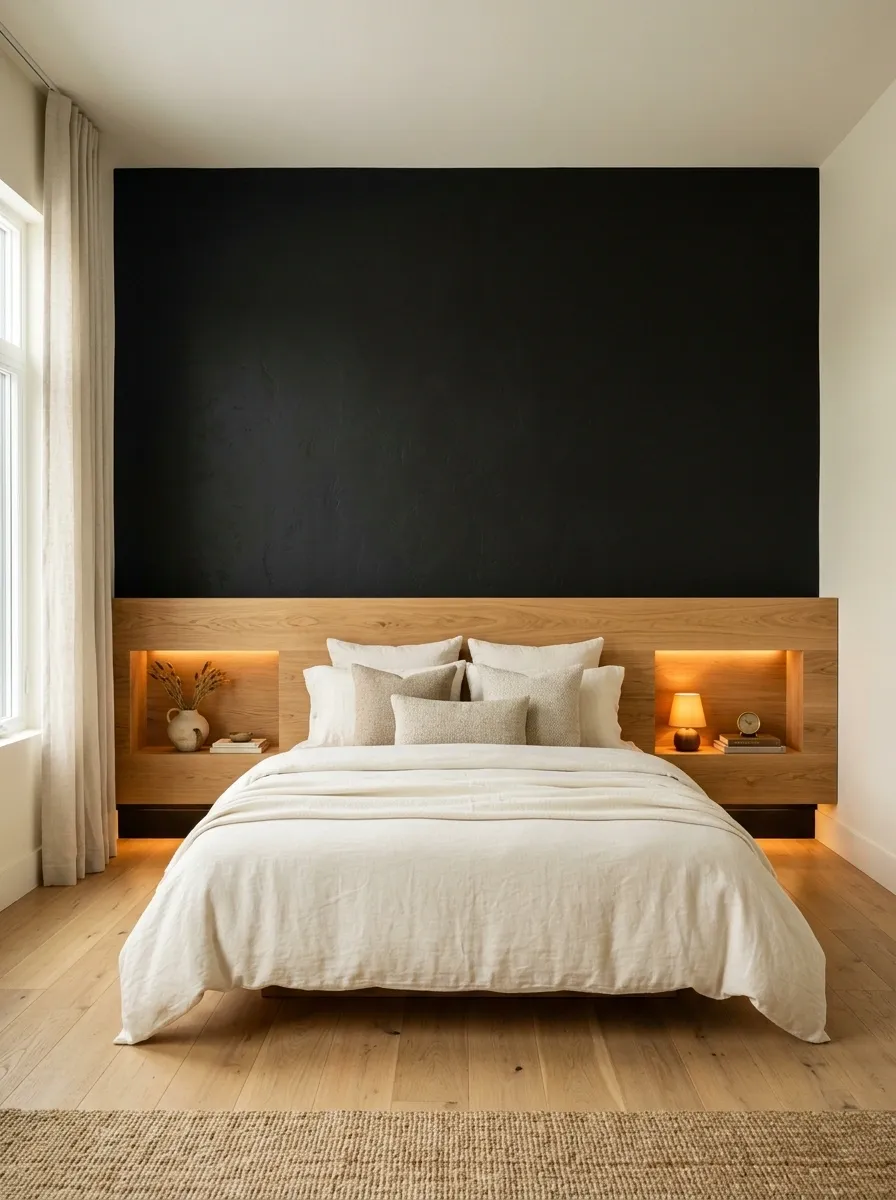
A matte-black wall gives this bedroom a dramatic starting point, but the broad floating oak headboard prevents the result from feeling severe. The timber extends beyond the mattress on both sides, creating a strong horizontal line against the dark background.
Small integrated bedside niches keep the wall unusually clean. Cream bedding and soft amber lighting add warmth, while the dark wall remains visible above the headboard instead of being covered with artwork.
This is a strong solution when the room already has clean architecture and needs one decisive focal wall.
Don’t overload it with decorative pieces. The contrast between black and warm oak is what gives the composition its character.
Dusty Blush Bedroom With Framed Textile Artwork
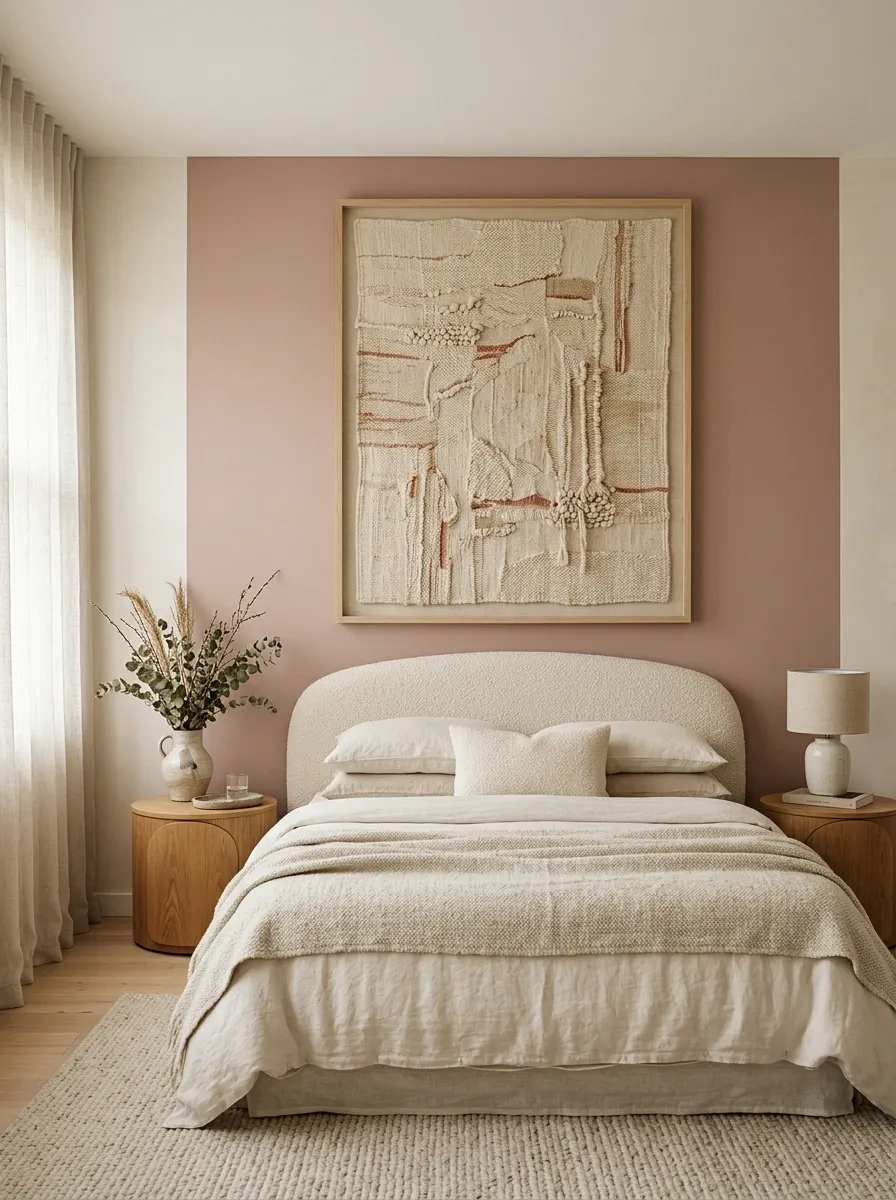
A dusty blush wall gives this bedroom a soft foundation, but the design avoids becoming overly sweet by relying on texture and curved furniture rather than decorative excess. A large framed textile artwork sits above the bed, bringing visible woven texture into the center of the composition.
Boucle upholstery, pale oak, cream bedding, and rounded bedside pieces continue the tactile language. The colors stay muted, which keeps the room mature and calm.
The textile artwork needs enough scale to anchor the bed. A small framed piece would disappear against the wall and leave the room feeling unfinished.
Use darker accents sparingly. The warmer wood and muted blush already create enough depth.
Loft Bedroom With an Oversized Graphic Artwork Wall
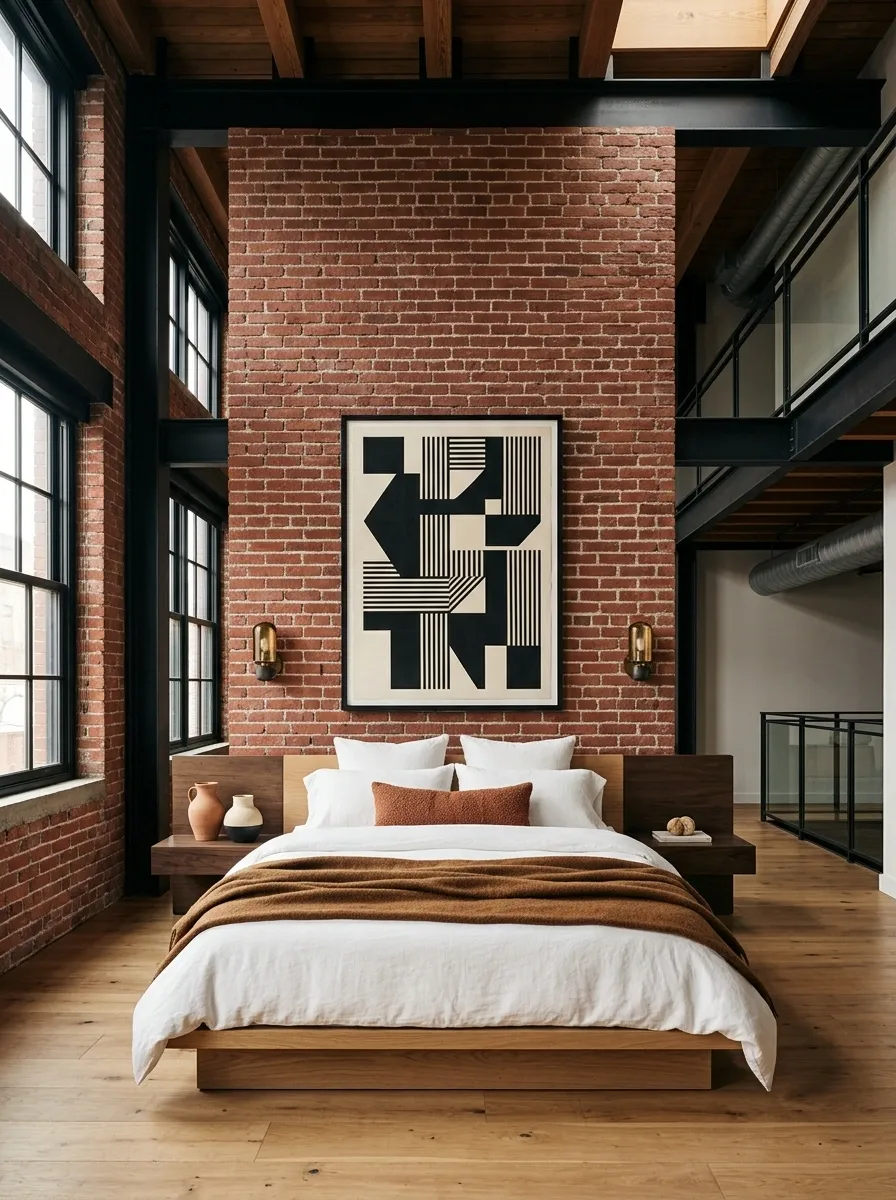
A high-ceilinged loft can handle a much stronger wall treatment. This bedroom uses one oversized graphic artwork above the bed, supported by exposed brick, dark steel, warm timber, and vintage-inspired lighting.
The artwork isn’t treated as an accessory. It is scaled to compete with the height and texture of the architecture around it. A low bed and simple bedding keep the foreground calm so the wall remains the focal point.
The contrast between rough brick and crisp graphic art gives the bedroom its identity. Black, cream, and warm brown connect the harder architectural materials with the softer furnishings.
Avoid filling the remaining exposed brick with small decorations. The oversized artwork already gives the wall enough visual density.
Quiet Japandi Bedroom With a Long Floating Picture Rail
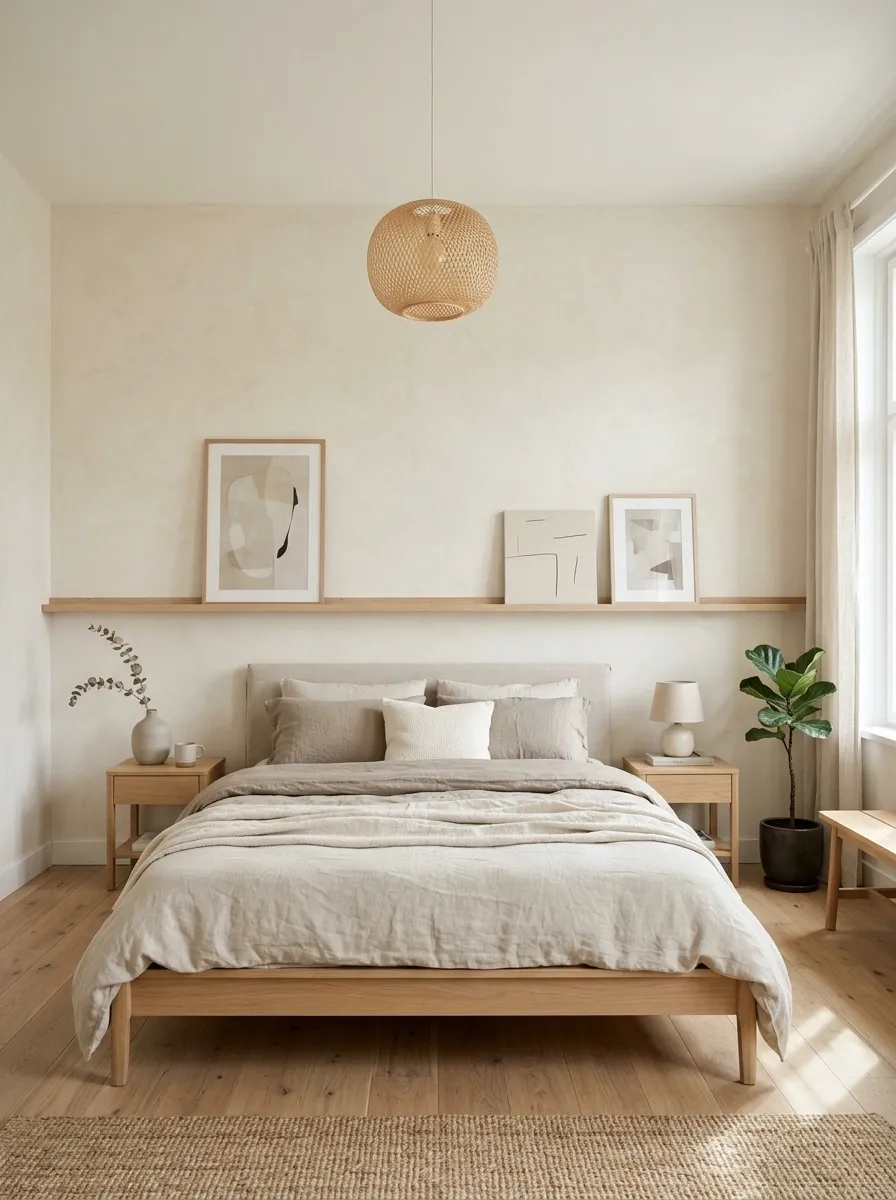
A long picture rail creates a subtle horizontal line across this pale bedroom without filling the wall with visual noise. A few neutral artworks rest against the rail rather than being tightly arranged, allowing the display to feel relaxed and changeable.
The bed sits low on the floor, with pale oak framing, washed linen, woven lighting, and almost no unnecessary furniture. The wall treatment works because the entire room follows the same restrained visual language.
The picture rail should remain visually light. Heavy frames or too many objects would destroy the airy quality that makes the composition work.
This design is especially convincing when the bedroom architecture is simple enough to let proportion and negative space become the decoration.
Two-Tone Color-Blocked Wall With a Padded Headboard
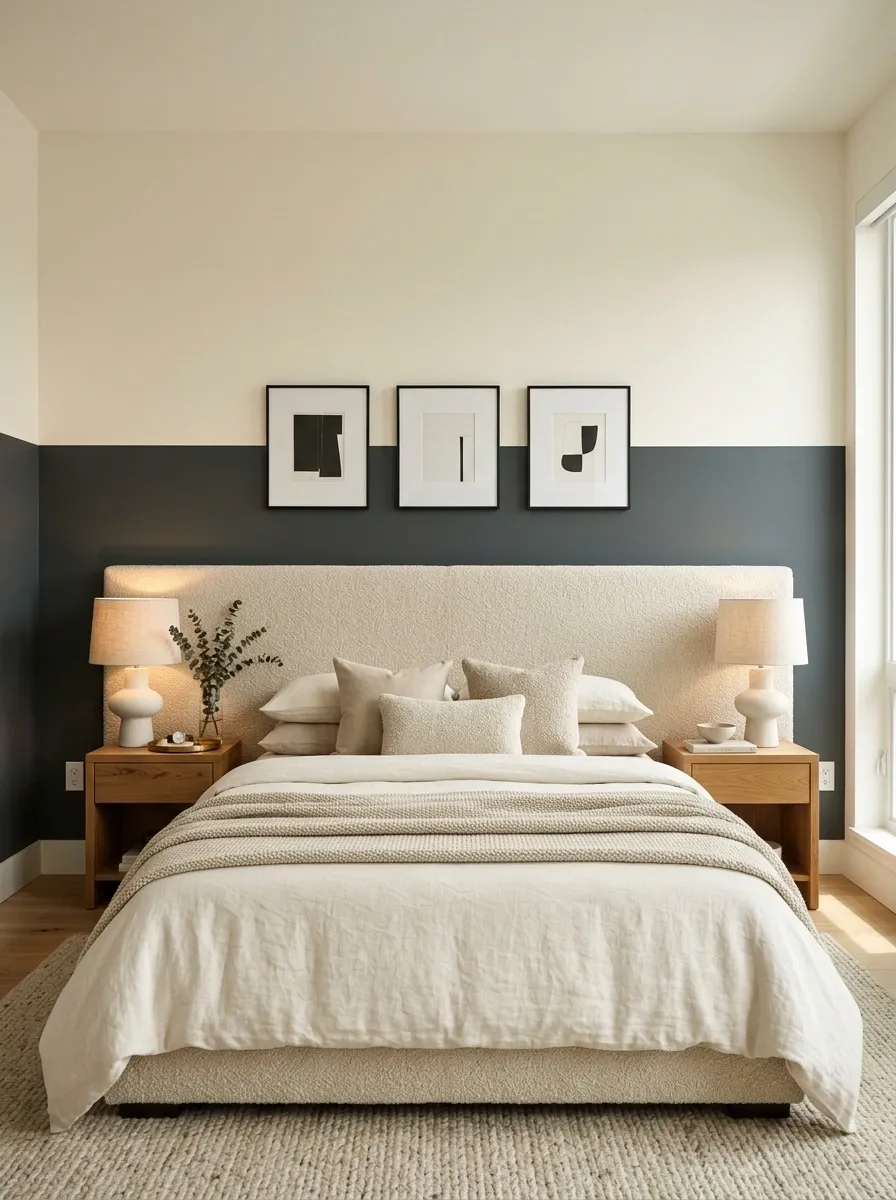
A two-tone wall creates a strong visual change without requiring artwork at all. The lower portion is painted a deeper muted shade, while the upper section stays lighter. A broad upholstered headboard crosses the transition line, visually stitching the two colors together.
Simple framed pieces sit slightly above the bed, but they remain secondary to the wall treatment. Warm timber furniture, cream bedding, and sculptural lamps add enough material variation to keep the design from feeling flat.
The horizontal break is the feature. The cleaner the division, the more intentional the room looks.
This concept works particularly well in bedrooms where the ceiling feels high and the wall needs a strong horizontal anchor.
Maximalist Floral Bedroom With a Layered Salon Wall
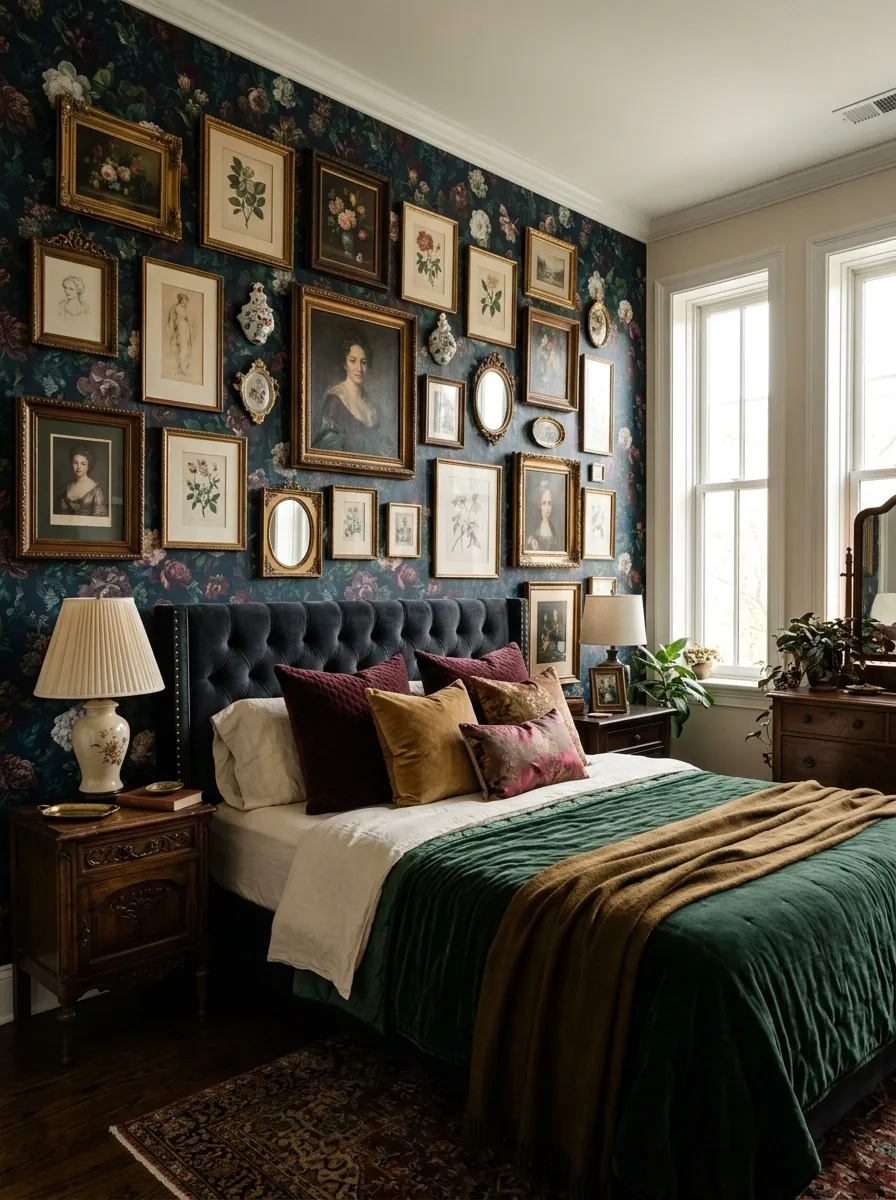
This bedroom embraces pattern instead of trying to quiet it. Rich floral wallpaper covers the wall behind the bed, while a layered grouping of framed paintings, small mirrors, and decorative pieces builds a dense salon-style arrangement.
The composition stays controlled because the bedding uses a few solid colors pulled directly from the wallpaper. Warm wood frames and antique-inspired furniture add depth without introducing another unrelated palette.
The wall should feel collected, not perfectly measured. Some frames can sit closer together while others create small breathing spaces.
This approach works when the room has enough visual space to support strong pattern and layered artwork. In a smaller bedroom, reducing the frame count can preserve the same character without overwhelming the room.
Coastal Bedroom With Three Weathered Wood Panels
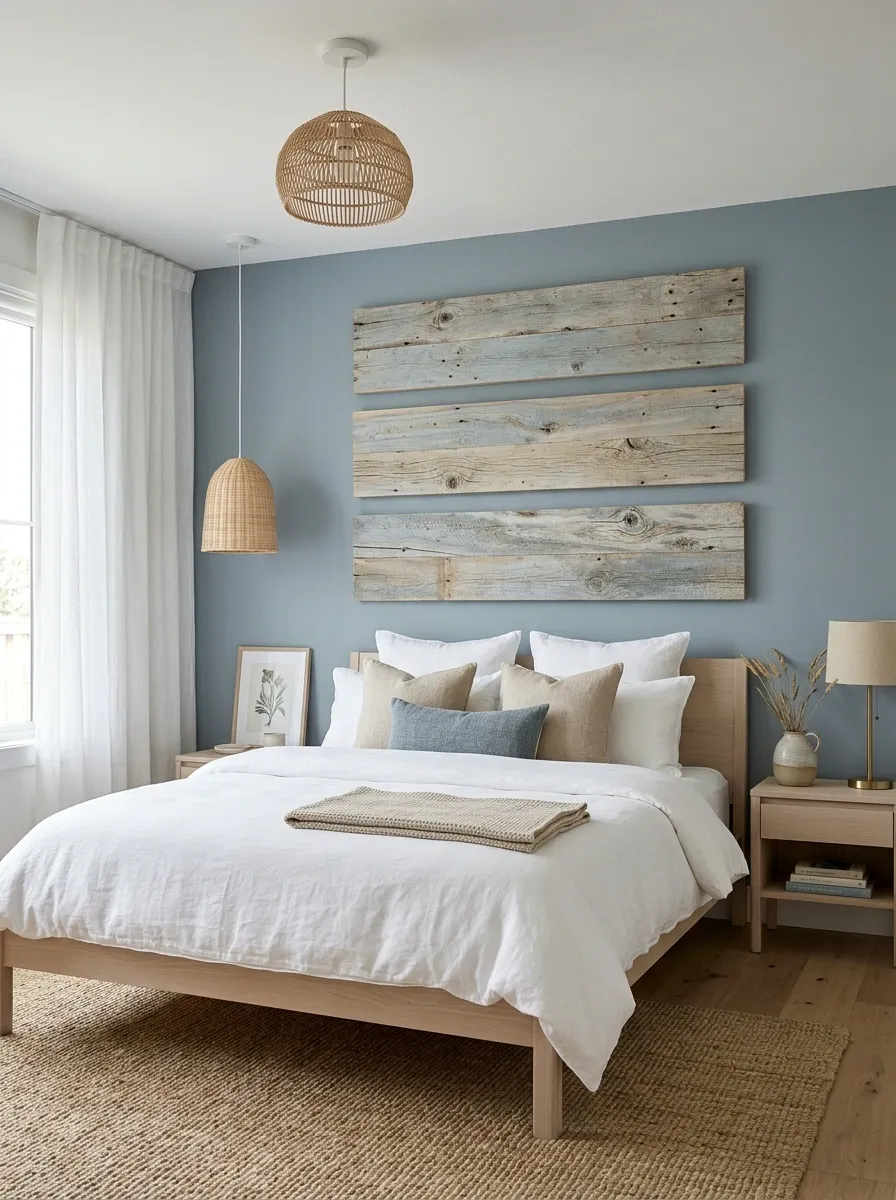
Instead of a typical framed print, three elongated pieces of weathered wood create a horizontal artwork above this coastal bedroom. Their washed surfaces introduce natural variation while a blue-gray wall, white linen, woven lighting, and sandy neutral accents build the surrounding palette.
The three pieces don’t need to be identical. Slight differences in grain, tone, and shape make them feel more authentic and give the wall a relaxed quality.
The rest of the room stays simple enough that the wood can act as the focal point. Pale timber furniture continues the natural-material story without competing with the darker texture above the bed.
Avoid adding several other nautical decorations. The restrained palette is what keeps the room contemporary.
Compact Bedroom With an Aged Mirror Wall
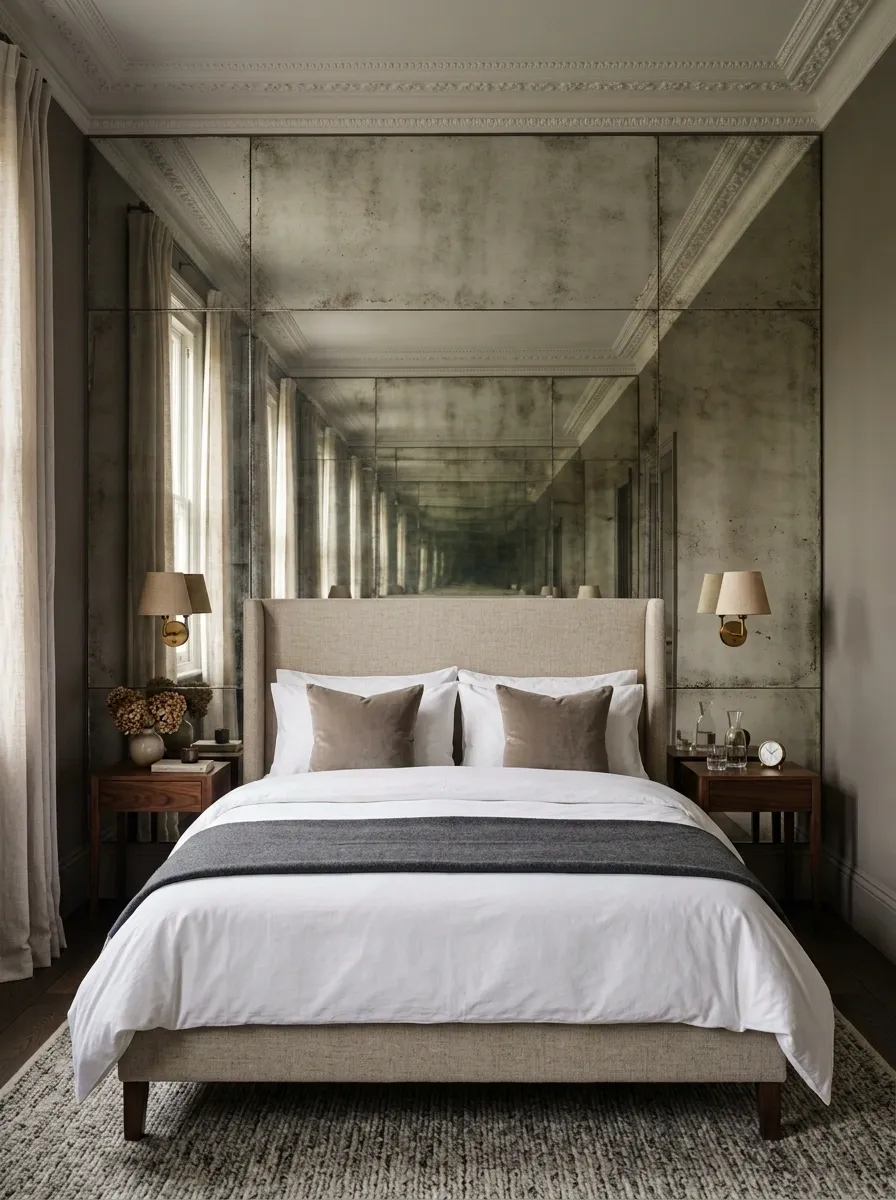
A smaller bedroom can gain visual depth from an aged mirror placed across most of the wall behind the bed. Instead of creating a bright modern reflection, the softened mirror finish adds atmosphere while making the room feel less enclosed.
A slim upholstered bed, narrow nightstands, and small sconces keep the furniture footprint controlled. The reflected bedding and warm lighting become part of the wall treatment, creating visual layering without adding more physical objects.
The aged finish is important. A perfectly clear mirror would push the room toward a different, more contemporary direction.
Keep the reflected area tidy. In a compact room, visual clutter becomes much more noticeable once it appears twice.
Earthy Stone-Look Feature Wall With a Low Platform Bed
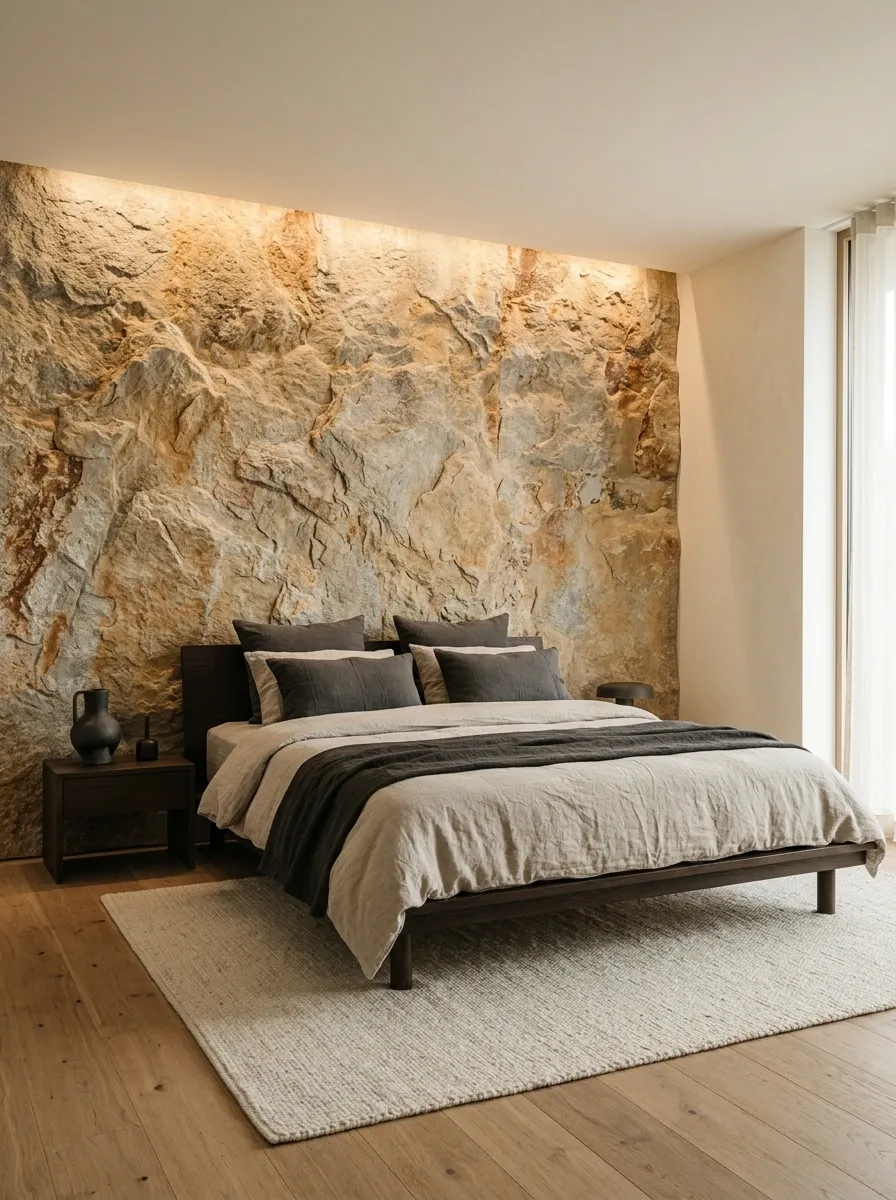
The final concept lets the wall material carry almost all of the decoration. A stone-look feature surface in warm mineral tones stretches behind a low platform bed dressed in oatmeal linen. Dark timber, sculptural ceramics, and directional lighting add smaller layers without competing with the textured wall.
The bed sits close to the floor, which makes the wall feel taller and gives the composition a grounded appearance. Soft light grazing across the surface reveals subtle texture and creates movement after sunset.
There is little reason to add artwork here. A heavily decorated wall would compete with the material that makes the bedroom distinctive in the first place.
The best version keeps the surrounding palette narrow, with warm stone, timber, cream, and muted charcoal doing most of the visual work.
Making the Wall Feel Like Part of the Bedroom
A finished wall doesn’t always need more decoration. Sometimes the strongest result comes from treating the wall as architecture, while other rooms benefit from artwork, pattern, fabric, or reflection.
The deciding factor is the relationship between the wall and the rest of the room. A large artwork needs enough surrounding quiet to feel substantial. A busy wallpaper needs calmer furniture. A dark wall benefits from warm timber or lighter textiles. A textured surface can often stand alone.
The goal is visual agreement. Every major element should look as though it belongs in the same room, not as though it was selected from separate shopping lists.
Choosing a Direction That Fits the Whole Room
A bedroom wall can set the mood, strengthen architecture, solve a blank surface, or create a focal point. The right concept depends on what the rest of the room already needs.
A plain room may benefit from strong wall texture or oversized art. A highly detailed room may need a quieter treatment. A narrow bedroom can gain depth from reflection or carefully controlled horizontal lines, while a high-ceilinged room can handle vertical panels, curtains, or oversized artwork.
The most convincing results come from choosing one clear visual language and carrying it through the bed, lighting, furniture, and surrounding finishes.
Keep the Focal Point Strong
The wall behind the bed naturally attracts attention, so competing elements should be chosen carefully.
When the wall has strong architecture, decorative objects can become unnecessary. When the wall is quiet, one large artwork may create more impact than a collection of small pieces. When the design relies on pattern, solid bedding and understated furniture can keep the composition readable.
Scale matters just as much as style.
A beautifully chosen piece can still look wrong when it is too small for the wall or too weak against the furniture beneath it.
Let Material Do Some of the Decorating
Paint is only one option. Timber slats, picture molding, plaster, curtains, woven pieces, stone-look surfaces, wallpaper, and aged mirrors can all give a bedroom wall depth without relying on conventional artwork.
Material is especially useful when the room needs texture more than color.
That is why some of the strongest concepts in this collection contain very little traditional wall decor at all. The wall itself becomes the feature, and the rest of the bedroom supports it through scale, lighting, and quieter finishes.