
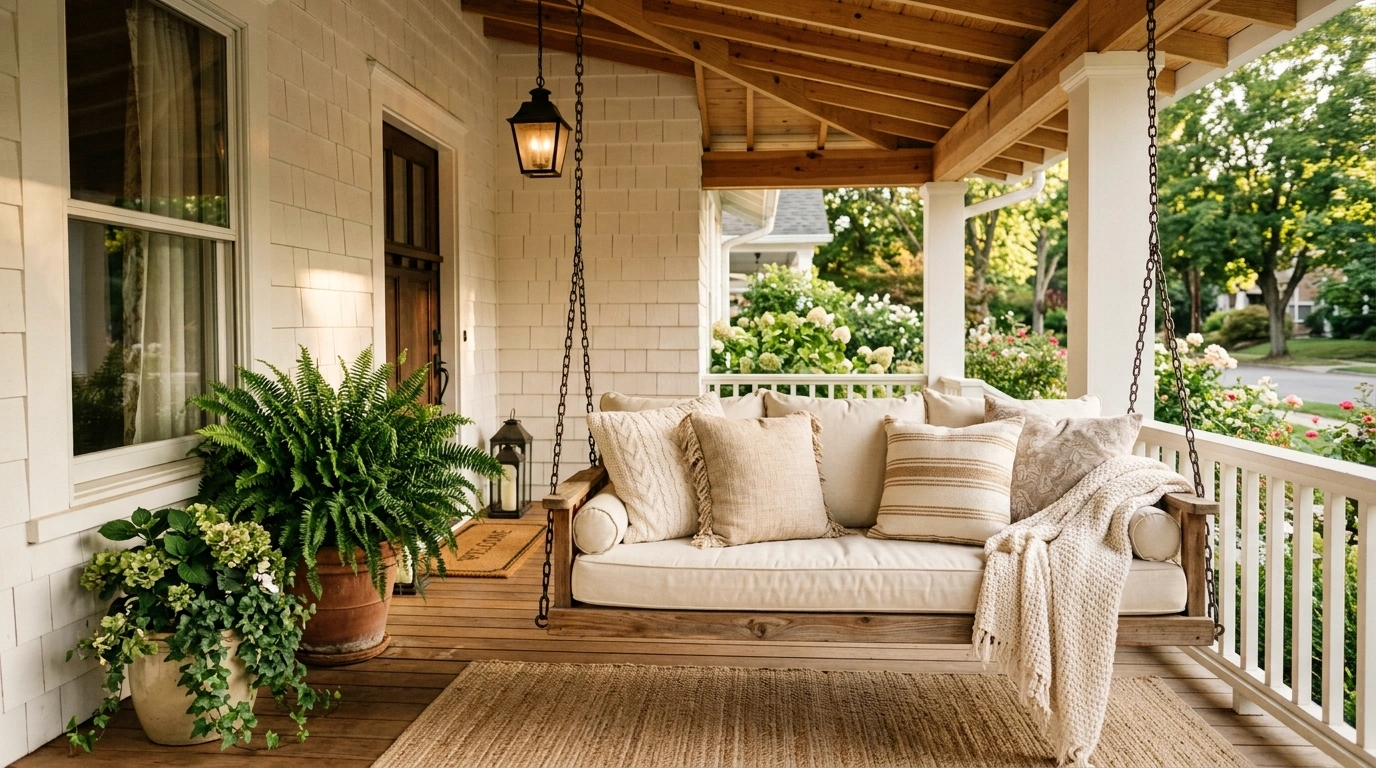
A porch swing can be the feature that makes a porch feel inviting, or the piece that makes the whole setting look strangely unfinished. The difference usually isn’t the swing itself. It’s the way the swing relates to everything around it.
A large timber swing can feel right beneath substantial columns but look too heavy on a narrow porch. A delicate hanging seat can disappear against a busy facade. Even a great cushion fabric can feel out of place when the flooring, exterior color, lighting, and landscaping are pulling in another direction.
The most useful porch swing ideas are therefore complete design directions. Instead of looking at a swing as a standalone object, look at the finished porch around it. Think about the architecture, the floor, the light, the planting, the textiles, and the amount of open space left for people to move.
What Makes a Porch Swing Design Feel Finished?
A swing rarely looks intentional on its own. The strongest porches connect the swing to the architecture, establish enough open floor around it, and repeat a few materials or colors elsewhere in the setting.
Start With the Porch’s Architecture
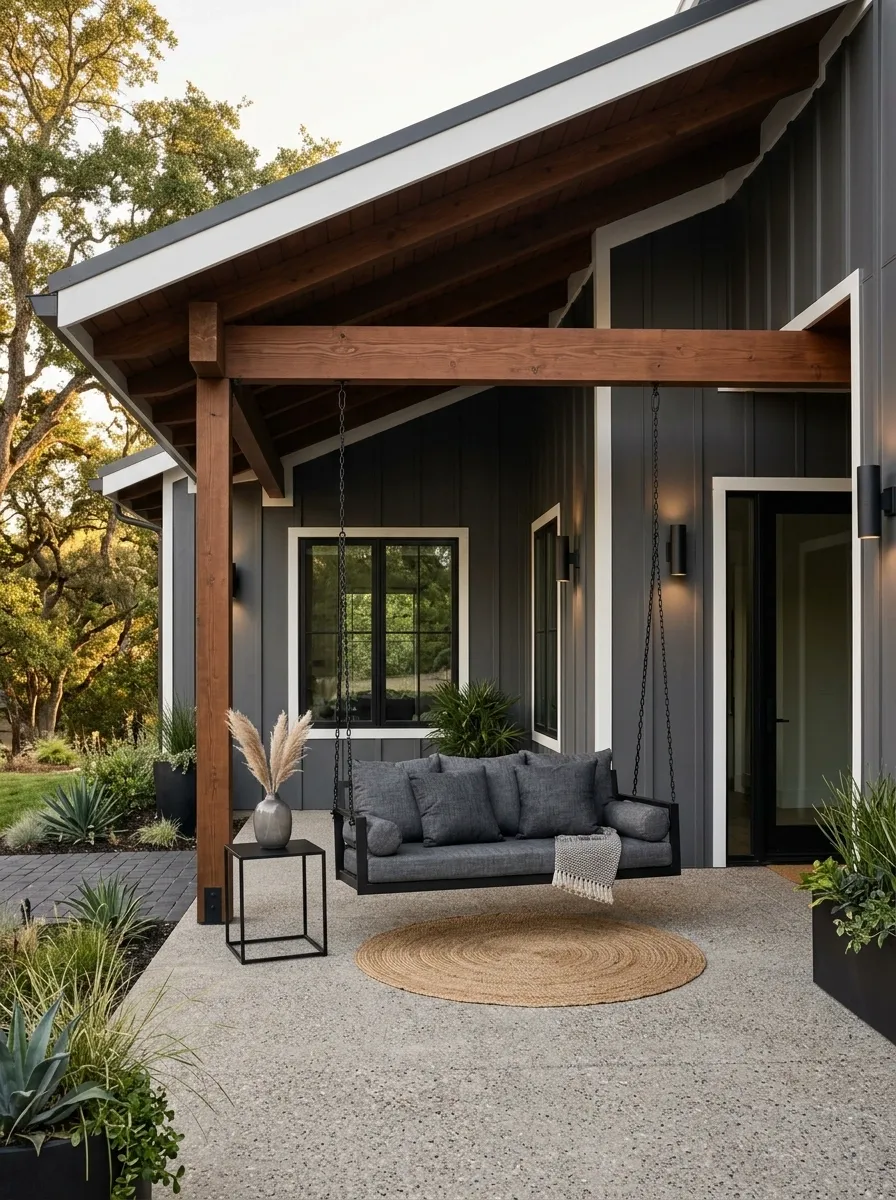
A substantial timber swing makes sense beneath heavy Craftsman posts. A slim black design feels more natural beneath a modern roofline. Let the home’s existing structure set the visual weight.
Build the Composition Around Scale
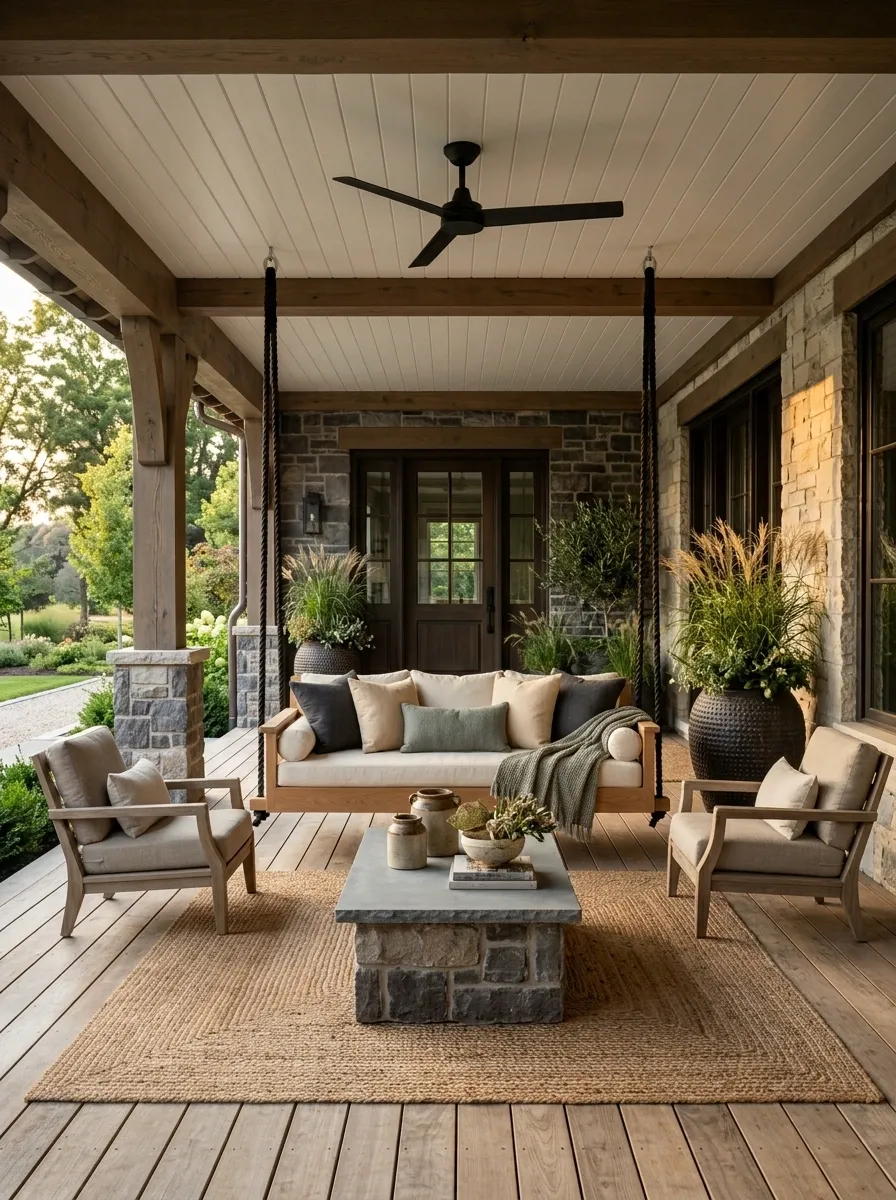
Measure the usable space before choosing the swing. Think about the walkway beside it, the depth of the porch, nearby doors, and how much room the swing visually needs to breathe.
Choose a Material Story
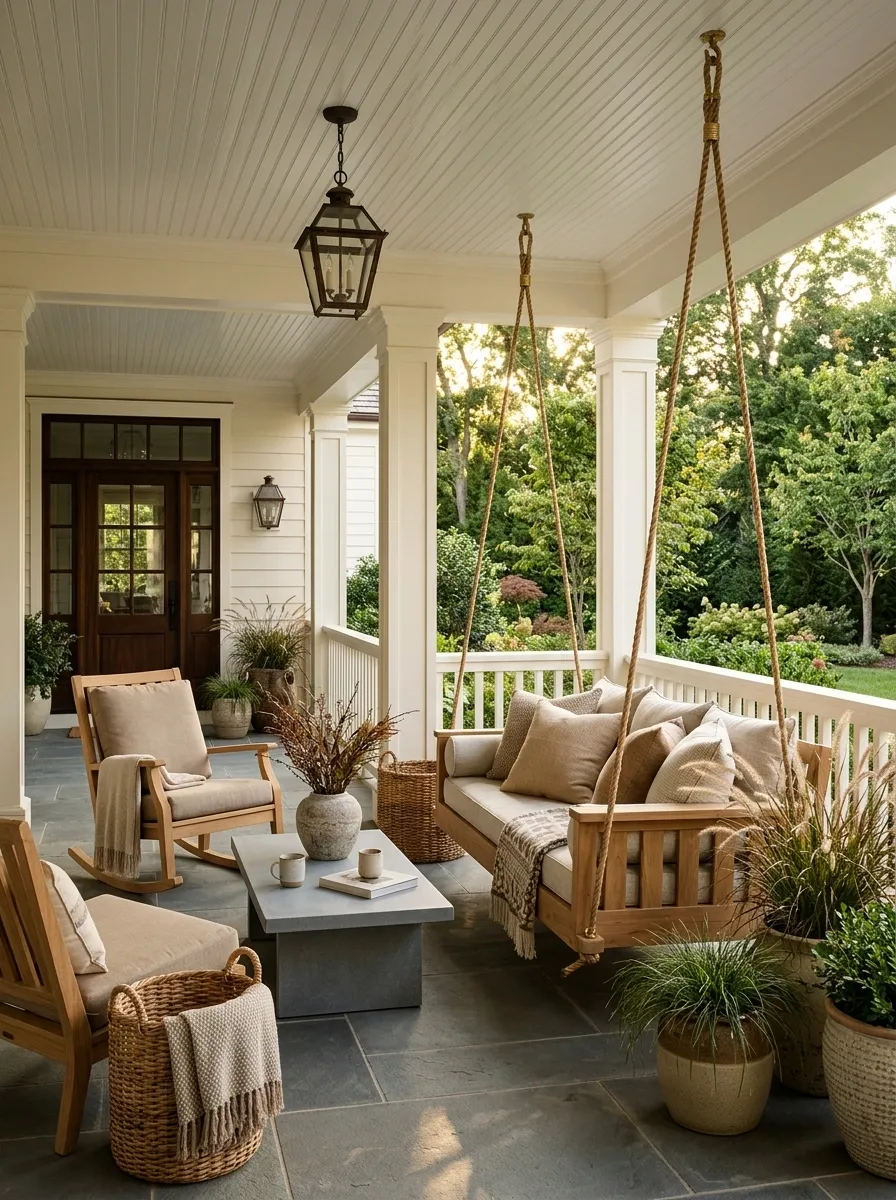
Wood, stone, painted finishes, wicker, metal, and outdoor textiles should feel related. Repeating one or two materials around the porch is often enough to make the whole arrangement feel deliberate.
Complete Porch Swing Ideas
Classic White Porch With Striped Cushions and Ferns
This welcoming white porch centers around a bright, sturdy swing piled high with soft striped cushions and a casual serving tray. The crisp architecture and hanging greenery create a timeless, inviting frame.
Keep the surrounding decor effortless by adding a textured jute rug and potted ferns that soften the edges without blocking the view. The balance relies on maintaining plenty of open space around the seating.
The most important choice here is restraint. Avoid cluttering the porch with too many side tables or decorative accents, letting the classic swing remain the true star of the setting.
Autumn Porch With Rust Cushions and Striped Blanket
This cozy fall-inspired porch leans into rich seasonal tones with deep rust and teal cushions piled onto a classic wooden swing. A thick striped blanket draped casually across the seat adds an extra layer of warmth and texture.
Arrange miniature pumpkins, potted chrysanthemums, and glowing lanterns around the floor and side tables to anchor the seasonal theme. Warm lighting brings out the earthy colors as the sun begins to set.
The secret here is mixing textures rather than overloading on holiday trinkets. Keep the color palette tight with no more than three primary accent shades to keep the autumnal styling feeling grounded rather than chaotic.
Dark Charcoal Porch With Cedar Swing and Warm Lighting
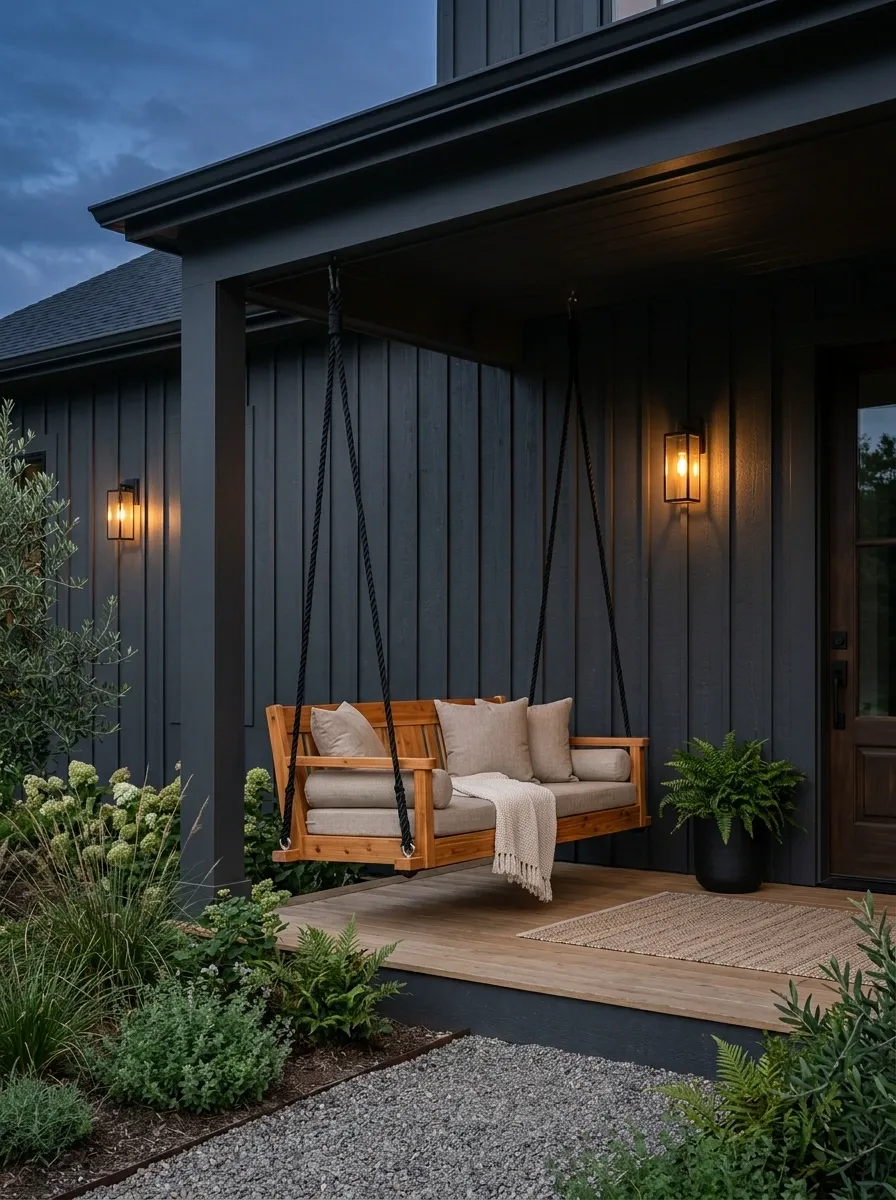
This porch takes a completely different route. Charcoal siding creates a deep backdrop for a honey-toned cedar swing, allowing the wood to stand out without needing bright upholstery.
Warm exterior lights bring out the cedar after sunset. Keep the cushions in oatmeal or muted beige rather than adding another strong color. That decision lets the wood remain the visual focus.
The balance comes from contrast. Dark architecture provides weight, the swing introduces warmth, and soft textiles prevent the setting from looking severe. This approach works particularly well on a porch with clean lines and enough wall area to support the darker exterior.
Visual direction: Moody early-evening editorial photograph, vertical 2:3, angled view from the front yard, charcoal-clad house, warm cedar swing, glowing wall sconces, muted beige cushions, subtle planting, realistic porch depth and lighting.
Clean Minimalist Porch With Dark Swing and Greenery
This modern minimalist porch features a sleek dark-framed swing accented with neutral gray pillows and crisp white cushions. Flanked by lush potted plants, the space feels calm, curated, and intentionally uncluttered.
Keep the flooring simple with a textured neutral area rug and use oversized ceramic planters to anchor the greenery. The clean lines of the architecture do most of the heavy lifting.
The key to this look is editing out anything unnecessary. Stick to a monochromatic or neutral color palette so the natural textures of the plants and wood take center stage without visual distraction.
Southern Porch With Deep Green Swing and Classic Columns
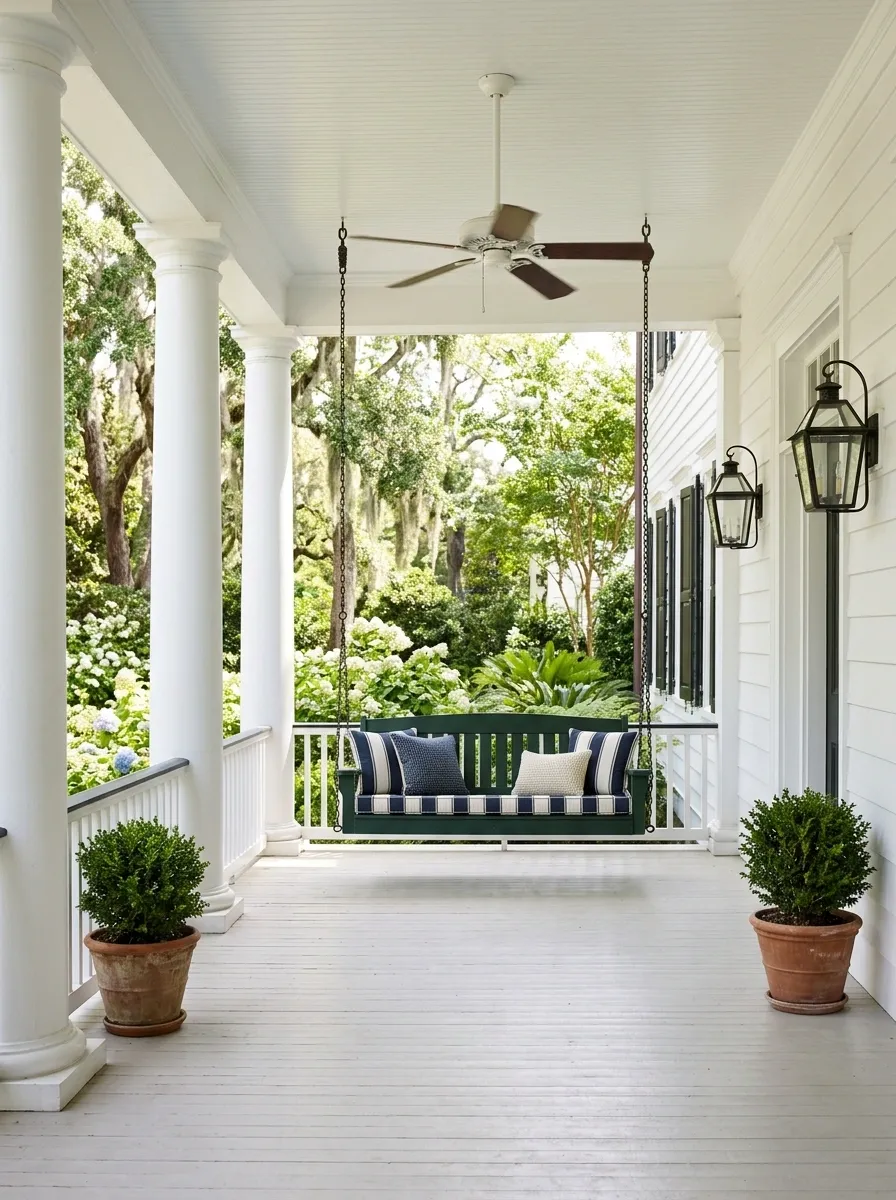
Here, the architecture does much of the work. Tall white columns create a generous frame around a deep forest-green swing, while pale flooring keeps the large porch from feeling heavy.
Simple striped cushions introduce a traditional pattern without competing with the columns. A ceiling fan, understated lanterns, and restrained planting finish the setting.
This composition needs breathing room. Don’t fill the floor around a generously sized swing with extra chairs simply because there is space. The wide gaps between the major elements are part of what makes this porch feel gracious.
Visual direction: Bright daytime photograph from a slightly lower camera angle, full-width Southern-style covered porch, tall white columns, dark green swing, pale floor, striped cushions, ceiling fan, understated lanterns, realistic landscaping and architectural proportions.
Modern Farmhouse Porch With Black-Framed Swing and Oak
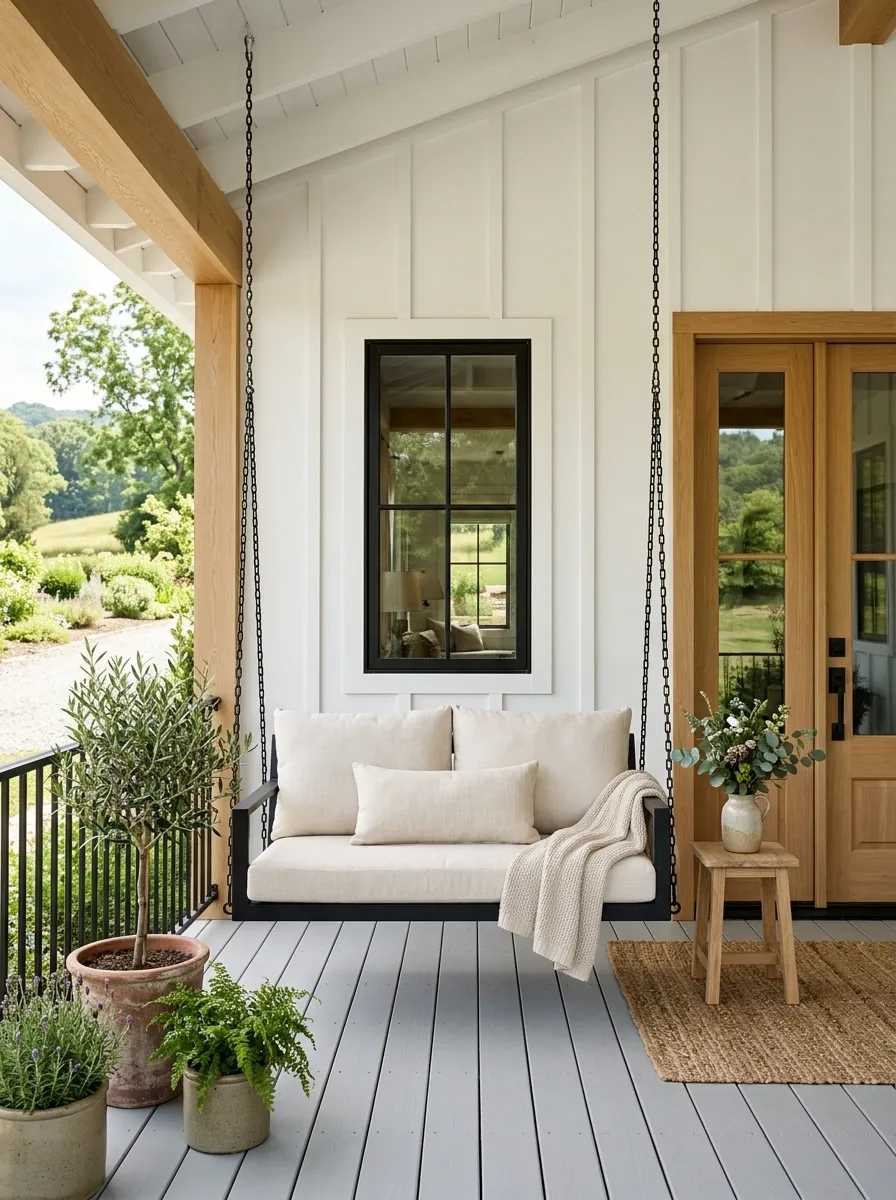
This modern farmhouse composition strips away much of the usual rustic clutter. A clean black swing frame anchors a porch with pale gray flooring, creamy cushions, warm oak accents, and a restrained amount of greenery.
The black frame gives the furniture definition against a light facade. Oak keeps that contrast from becoming cold, while cream textiles bridge the two finishes.
I’d avoid piling on galvanized metal, distressed signs, and additional dark furniture here. The cleaner palette is what makes this farmhouse interpretation feel current.
Visual direction: Crisp late-morning editorial photograph, vertical composition, modern farmhouse facade, slim black swing frame, warm oak details, creamy cushions, pale gray porch floor, asymmetrical planting, uncluttered styling, realistic scale.
Coastal Porch With White Rope Swing and Washed Blue Textiles
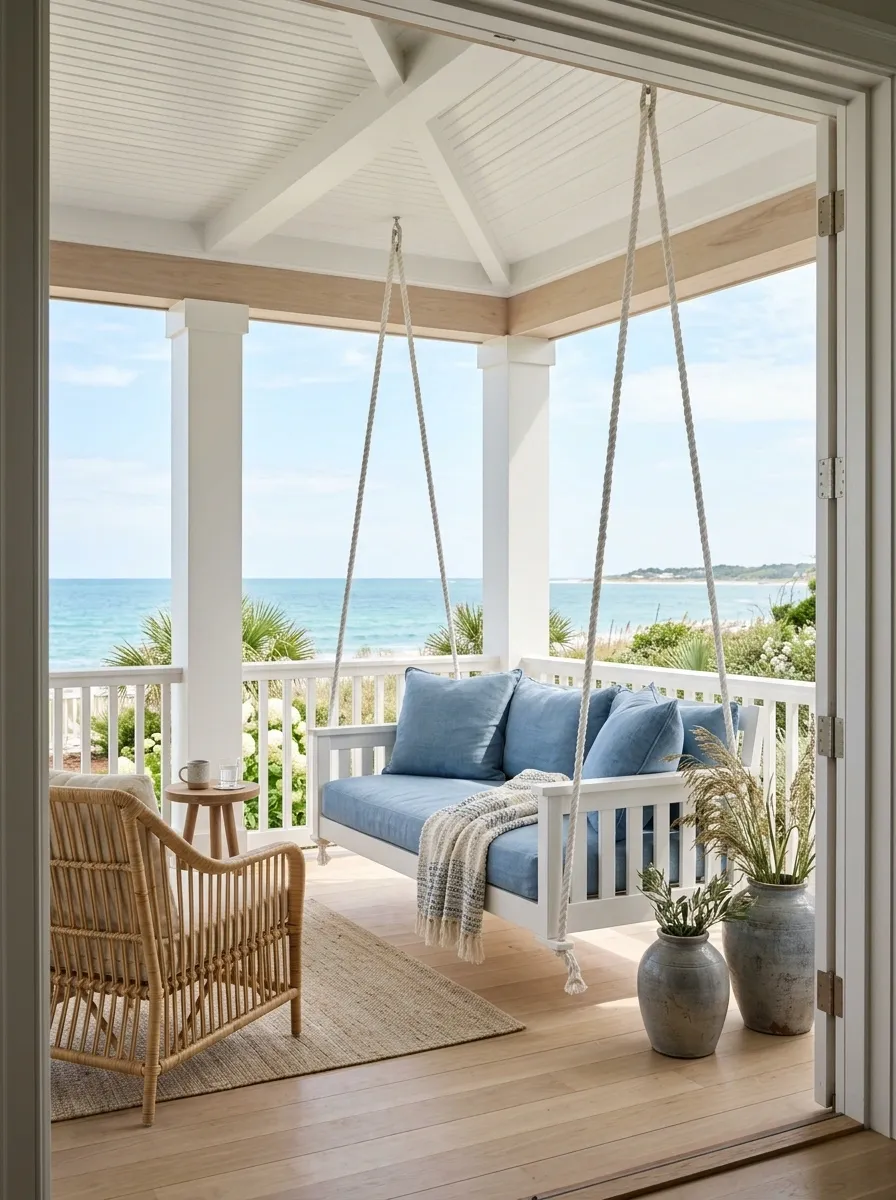
A coastal porch doesn’t need anchors, seashells, or obvious nautical decorations. This version gets its character from pale materials, natural rope, soft blue textiles, and plenty of daylight.
The white swing feels light against the architecture, while faded blue cushions add just enough color to establish the coastal direction. Woven accents and pale timber keep the setting tactile rather than sterile.
The strongest choice here is what gets left out. Avoid too many matching blue accessories. One restrained textile color is enough when the rest of the composition already carries the coastal message through material and light.
Visual direction: Bright sunlit coastal porch photographed from inside looking outward, vertical 2:3, white rope-hung swing, pale timber, washed blue cushions, natural woven details, light flooring, airy landscaping, glimpses of sky, complete architectural context, photorealistic.
architecture + swing
cushions + one textile layer
flooring + woven accents
secondary details
Covered Porch With Built-In Daybed Swing and Library Shelves
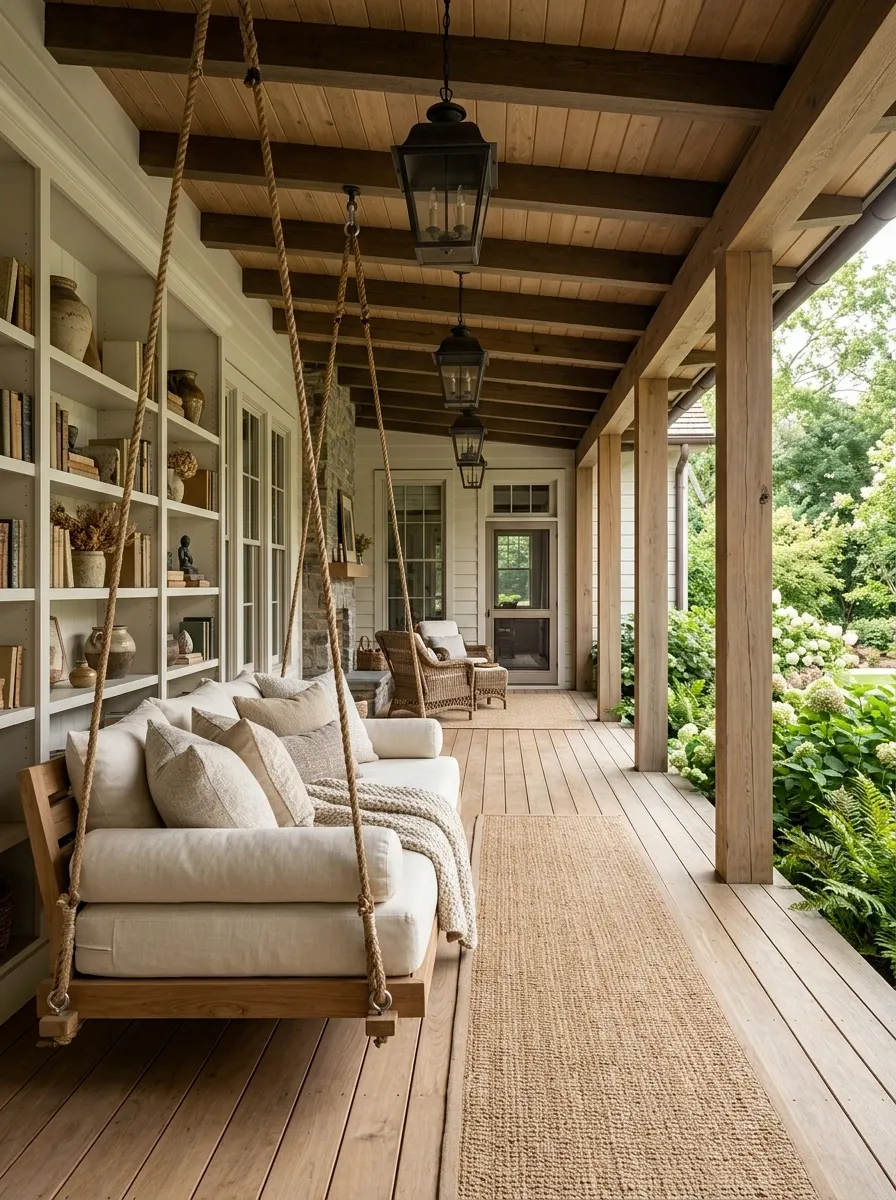
This porch is designed more like an outdoor living room than a passing-through space. A broad suspended daybed takes up the center, backed by built-in shelves filled with a few books, pottery, and useful outdoor pieces.
The surrounding palette stays quiet: warm timber, soft cream upholstery, pale walls, and dark metal lighting. A narrow floor area remains open in front so the swing doesn’t block movement.
The built-ins are what make this concept distinctive. They give the porch a purpose beyond seating and create a strong architectural backdrop. Keep the shelves edited. Too many decorative objects would compete with the swing.
Visual direction: Long covered porch photographed from one end, full architectural depth visible, broad suspended daybed swing, integrated shelving behind it, warm timber, cream cushions, lantern lighting, subtle books and pottery, realistic circulation space, polished editorial photography.
deep seating
edited shelving
open floor
Rustic Timber Porch With Chunky Handmade Swing
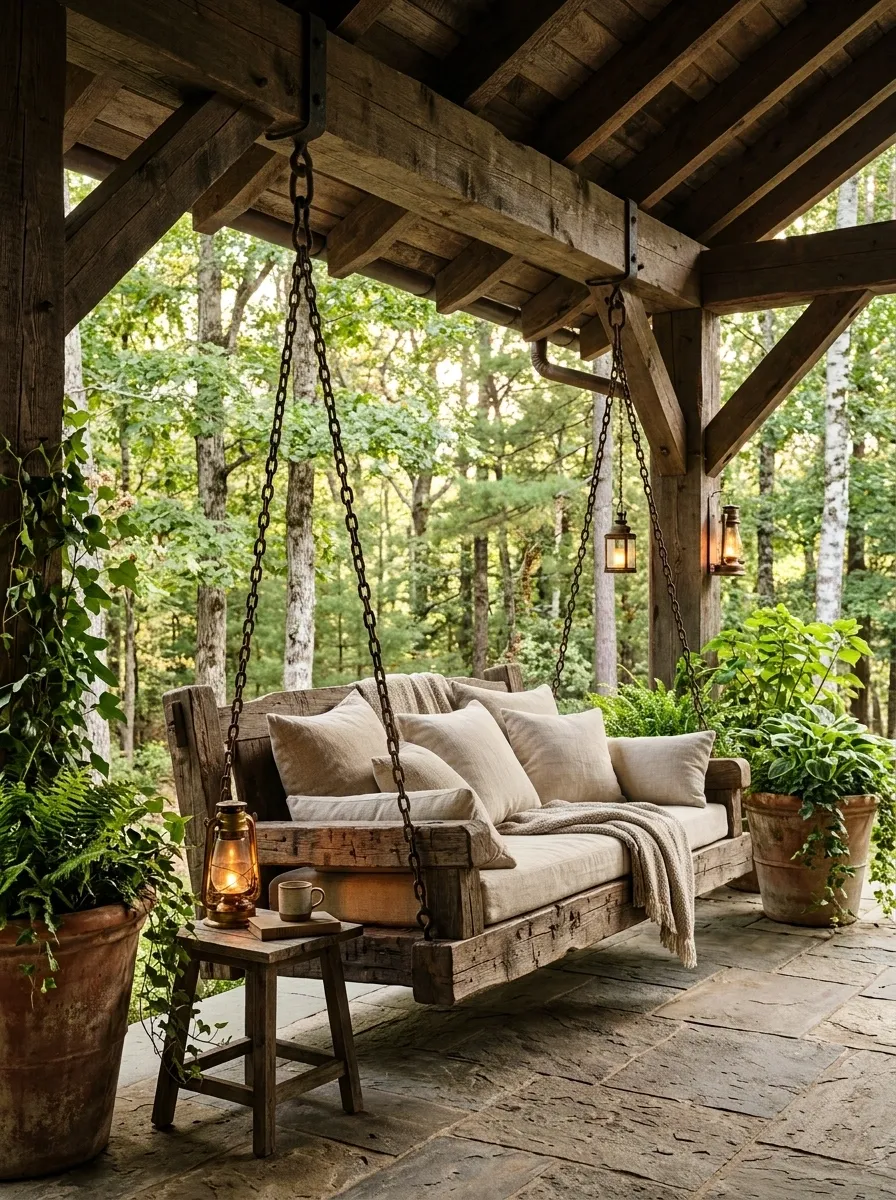
Heavy timber posts, natural stone underfoot, and a thick wooden swing give this porch a strong handcrafted character. The furniture doesn’t need much decoration because the materials already provide texture.
Simple neutral cushions soften the hard surfaces, while oversized planters sit toward the edges of the composition. Aged dark hardware reinforces the rustic direction without making the porch look themed.
The key is material weight. A delicate swing would disappear against this architecture. Choose furniture with enough visual mass to hold its own beside substantial timber and stone.
Visual direction: Rustic timber porch photographed at eye level from an angled corner, chunky handcrafted wood swing, exposed timber posts, natural stone flooring, neutral cushions, large planters, warm lanterns, mountain or woodland setting, realistic construction and proportions.
Small City Porch With Compact Black Swing and Vertical Planting
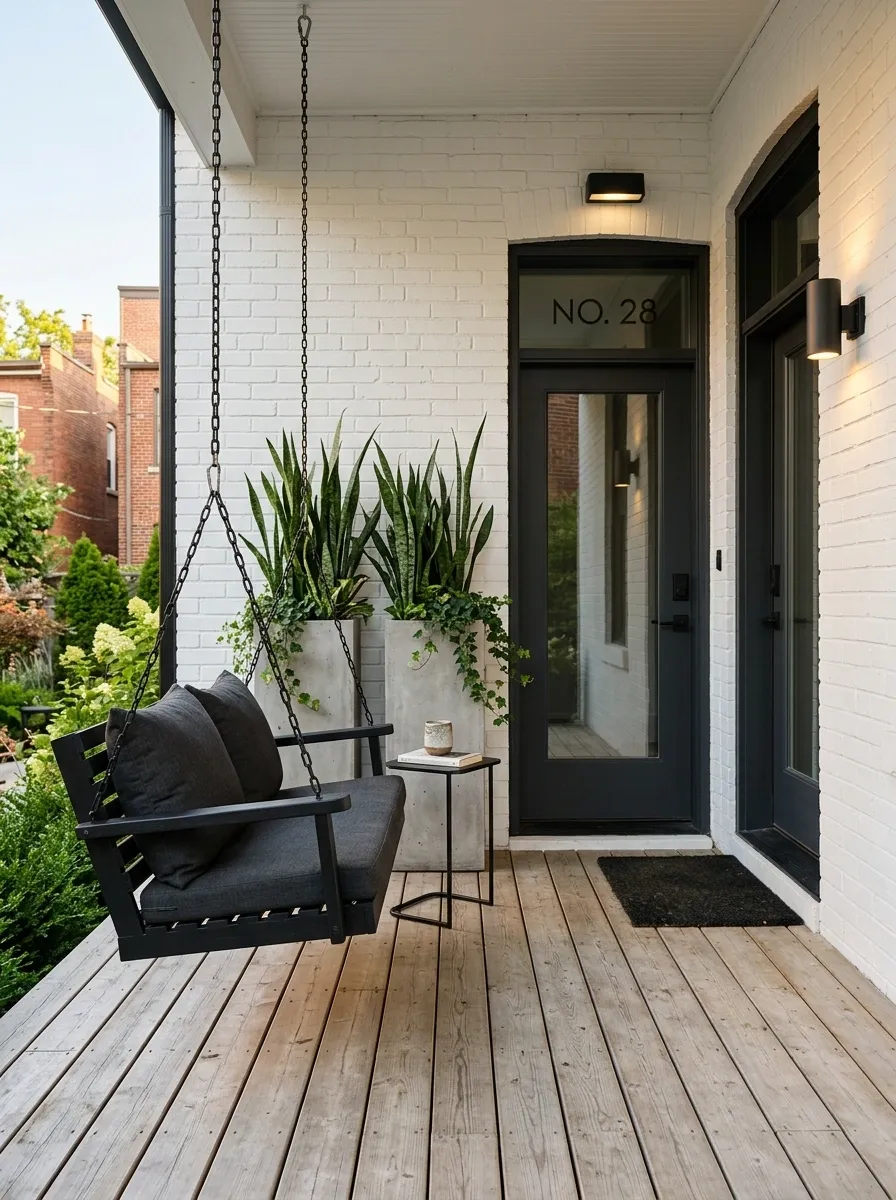
Small porches benefit from editing rather than simply buying smaller versions of everything. Here, a compact black swing sits against a clean facade, while tall planters use vertical space instead of consuming the limited floor area.
The cushions stay simple, and a narrow side table provides enough surface for a drink without widening the furniture footprint. Wall-mounted lighting keeps the floor clear.
The walkway is part of the design. Don’t let the swing or planter arrangement squeeze the path. A small porch looks considerably more polished when one clear route remains open.
Visual direction: Narrow urban front porch photographed from the street at a slight angle, compact black swing, vertical planters, slim side table, wall lighting, modern facade, visible clear walking path, realistic proportions, complete small-space composition.
compact footprint
go vertical
stay clear
Terracotta Mediterranean Porch With Wood Swing and Stone
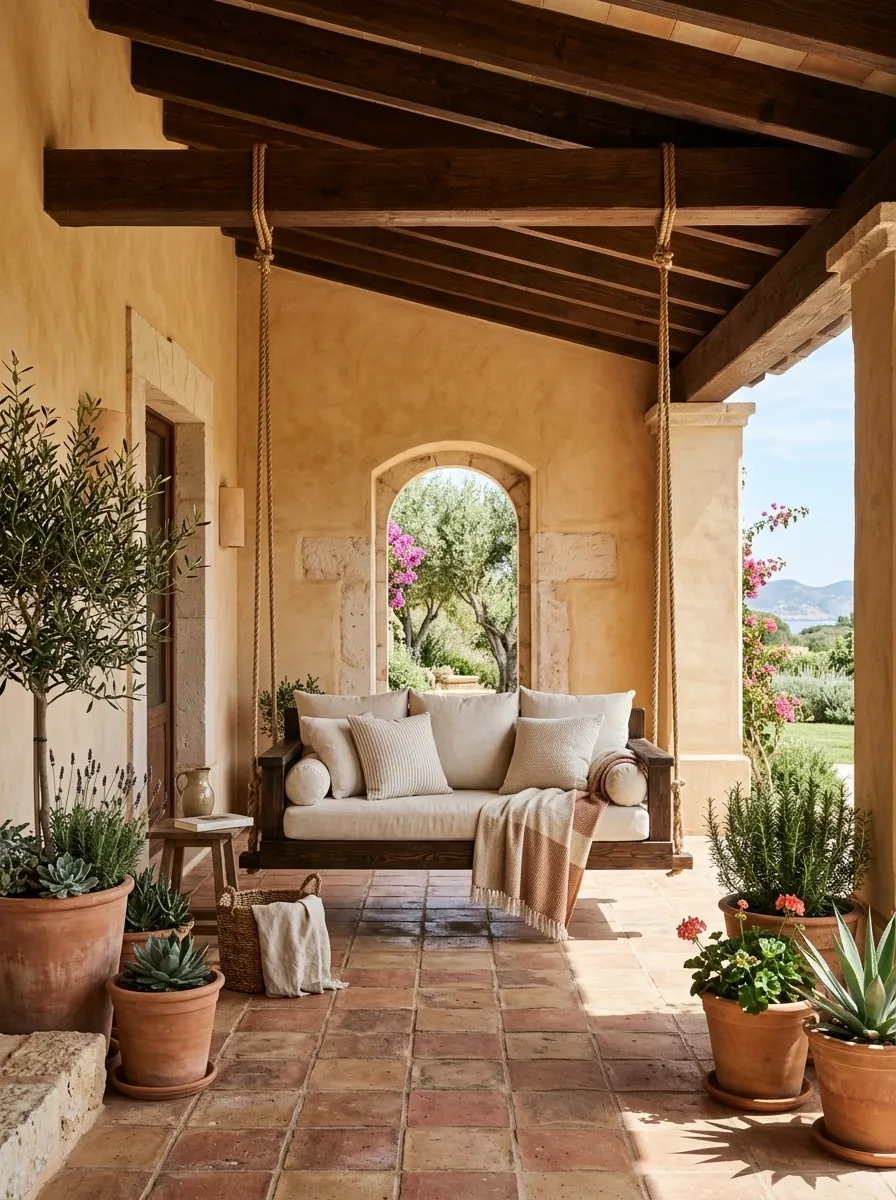
Warm plaster, terracotta tile, dark timber, and pale natural stone give this porch its Mediterranean character. The swing sits beneath a shaded roofline, with pottery and drought-tolerant planting placed where they frame the seating rather than surround it.
The strongest visual relationship is between the warm tile and dark wood. Cream cushions provide relief without introducing a competing color family.
This design works because the palette is naturally connected to the architecture. Don’t add lots of blue coastal accents here. They would pull the composition toward a completely different visual language.
Visual direction: Sun-drenched Mediterranean porch, vertical editorial photograph, terracotta tile flooring, warm plaster walls, dark timber swing, stone details, clay pots, restrained architectural planting, deep shade beneath roof, realistic material texture.
Scandinavian Porch With Pale Wood Swing and Soft Gray Layers
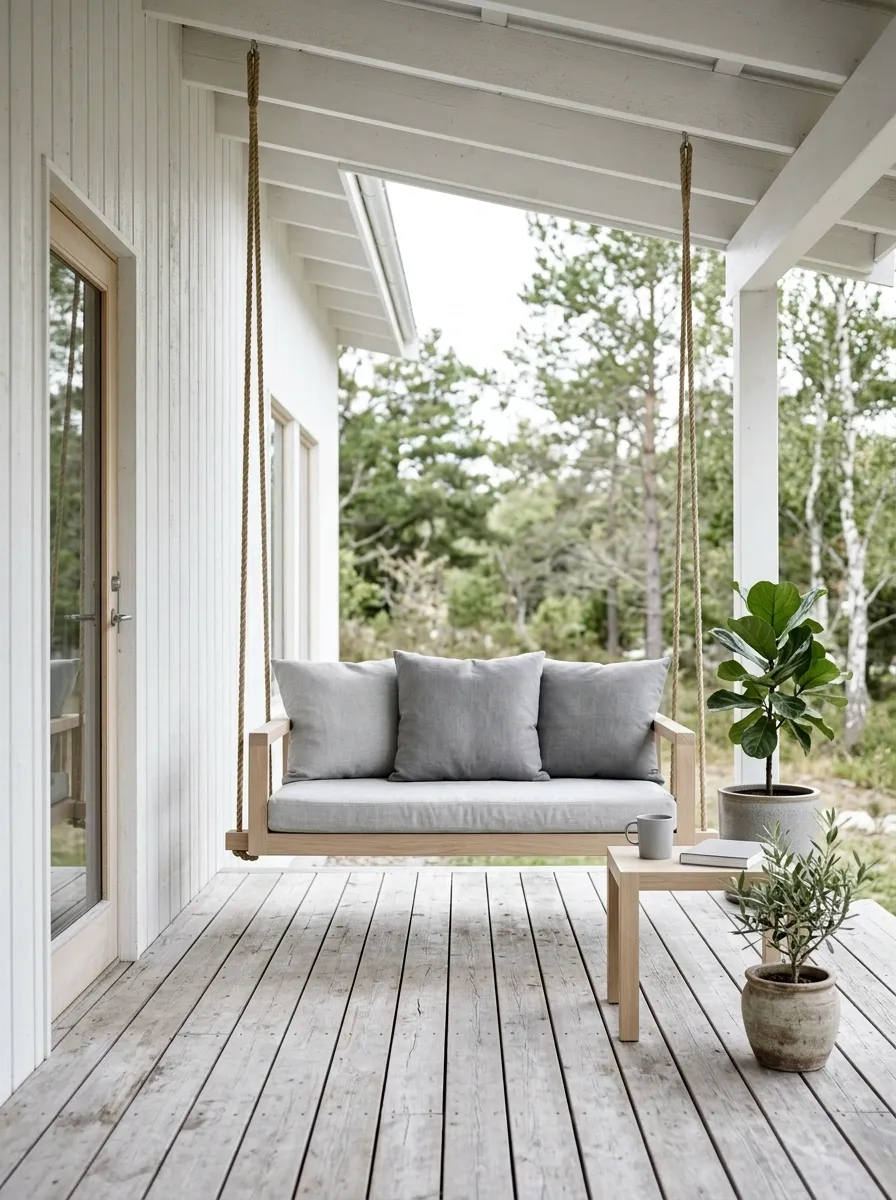
This porch depends on proportion, light, and restraint. Pale wood, soft gray upholstery, white architecture, and a lightly weathered floor create a quiet setting where every object has room around it.
A few plants provide the only strong organic shapes. The swing itself has simple lines rather than decorative detailing.
The composition is especially effective when the porch receives plenty of natural light. Keep the surrounding furniture low and uncomplicated. Adding lots of patterned cushions would undo the visual calm that gives this design its identity.
Visual direction: Soft overcast Scandinavian-inspired porch, vertical 2:3 photograph, pale timber swing, white walls, light gray cushions, weathered pale flooring, sparse greenery, low side table, abundant negative space, asymmetrical editorial framing, photorealistic.
Traditional Porch With Navy Swing and Striped Cushions
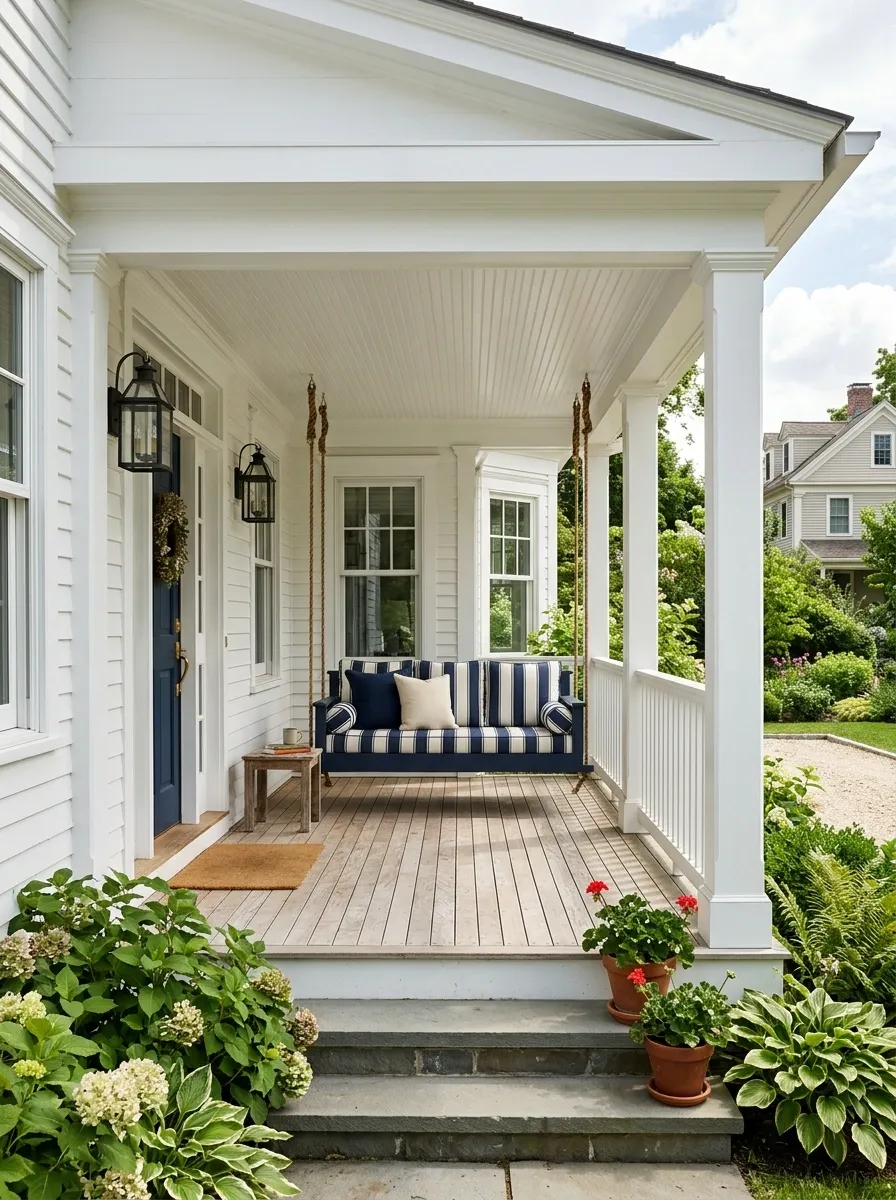
Crisp white trim gives this porch a classic frame for a deep navy swing. Tailored striped cushions echo the traditional architecture, while pale flooring keeps the dark seating from becoming too heavy.
Paired lanterns reinforce the home’s symmetry, but the planting stays slightly loose so the porch doesn’t feel overly formal. A small table on each side would make the arrangement too rigid, so I’d use just one practical surface.
The navy works because it repeats the darker details in the architecture. Keep the rest of the palette quiet and let that connection carry the design.
Visual direction: Straight-on three-quarter architectural photograph, traditional white porch, deep navy swing, tailored striped cushions, symmetrical lanterns, pale floorboards, restrained green planting, complete facade visible, bright afternoon light, realistic residential proportions.
Bohemian Porch Swing With Layered Textiles and Plants
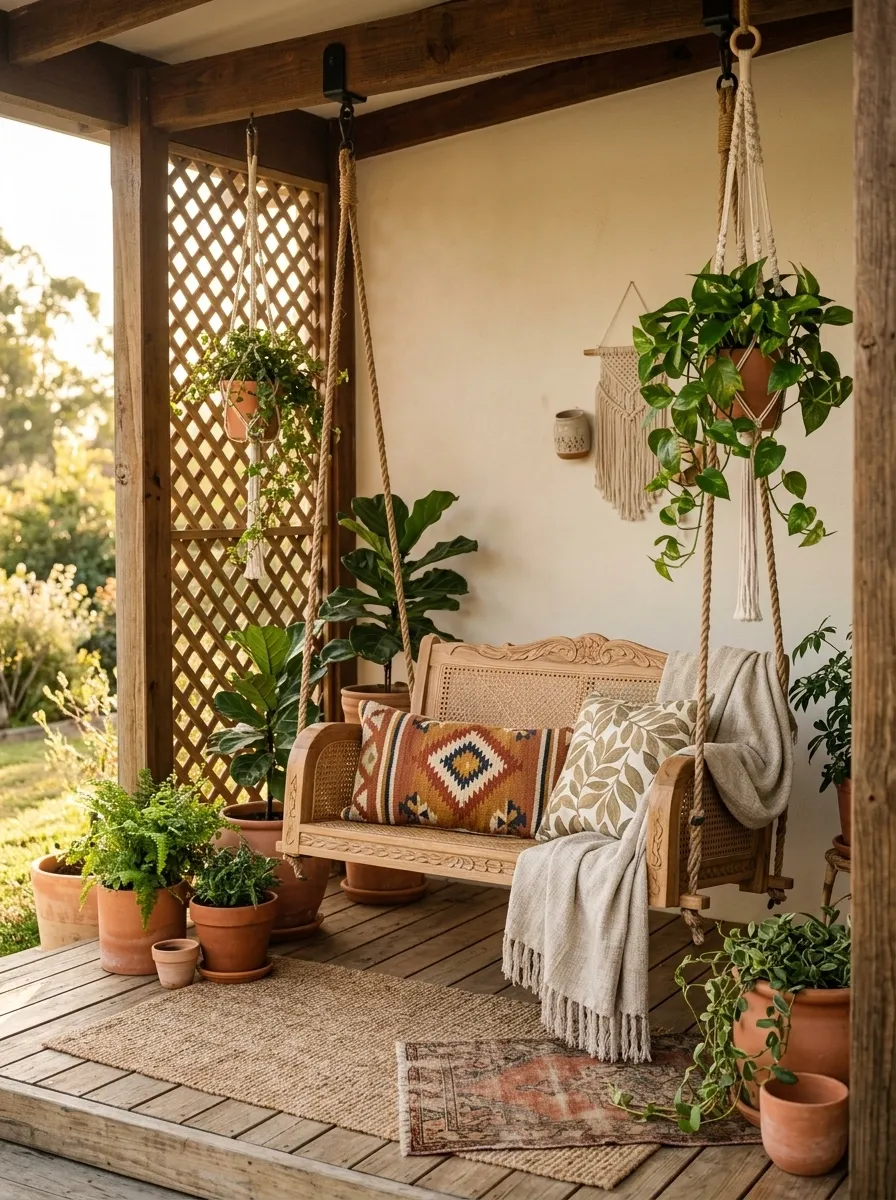
A woven or carved swing anchors this more expressive porch, surrounded by patterned cushions, soft throws, clay planters, and hanging greenery. The colors stay in an earthy range of rust, cream, muted green, and natural tan.
Instead of giving every surface a pattern, the floor and walls remain relatively quiet. That contrast lets the textile layers feel intentional rather than chaotic.
The trick is editing. Two or three strong textile patterns are enough. Add too many, and the swing loses its role as the visual center.
Visual direction: Warm late-afternoon porch photographed from an intimate corner angle while still showing the complete seating composition, woven swing, patterned cushions, textured throws, clay pots, hanging greenery, natural wood, earthy palette, realistic styling.
Black-and-White Contemporary Porch With Sculptural Swing
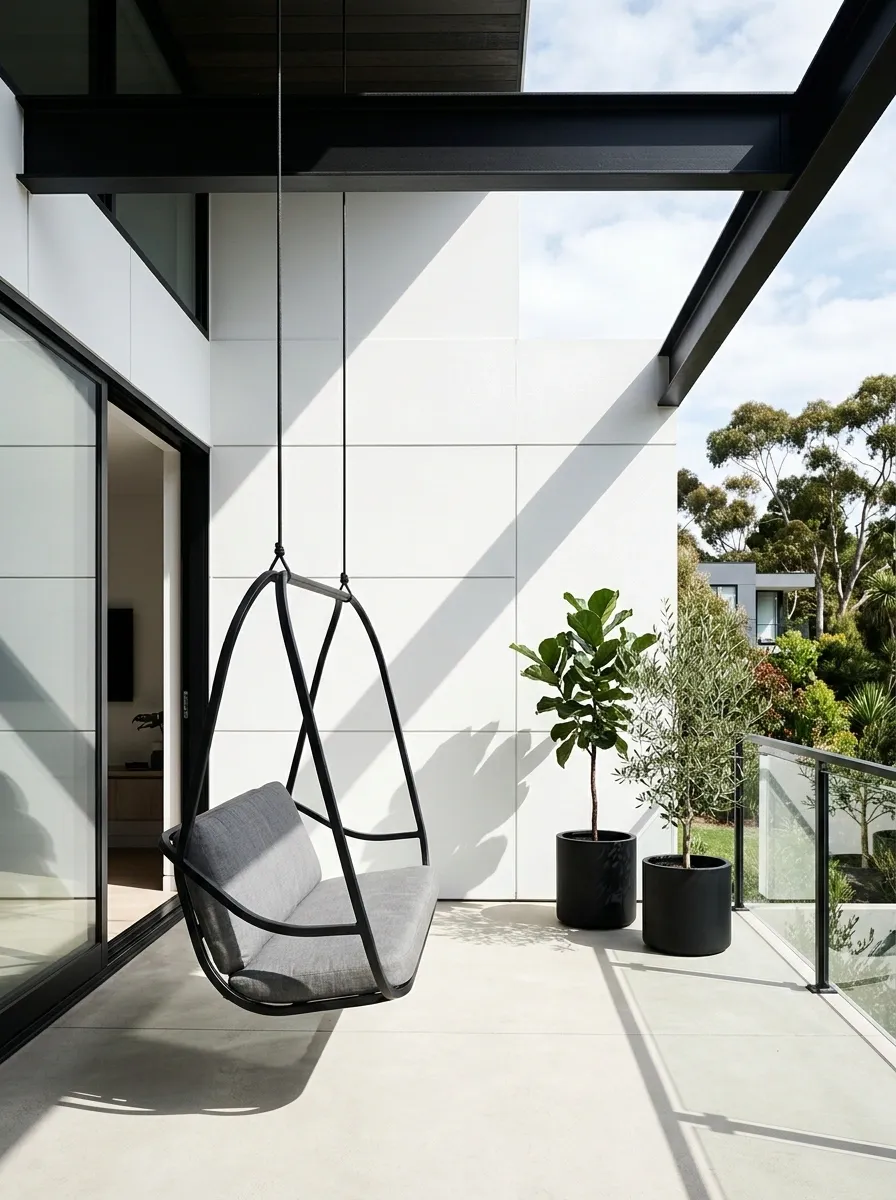
This contemporary porch treats the swing almost like architecture. A sculptural black design sits against a bright white exterior, with pale concrete or stone flooring and a few architectural plants providing organic contrast.
The composition has very little decoration. Its character comes from silhouette, geometry, and the contrast between hard surfaces and rounded planting.
That restraint makes every proportion visible. The swing needs to be visually interesting enough to stand alone, while the landscaping should remain simple enough to support its shape rather than compete with it.
Visual direction: High-contrast daytime editorial photograph, modern white architecture, sculptural black swing, pale concrete floor, geometric facade, sparse architectural planting, asymmetrical framing, full porch context, sharp but natural sunlight.
Garden-Facing Porch With Woven Swing and Dense Greenery
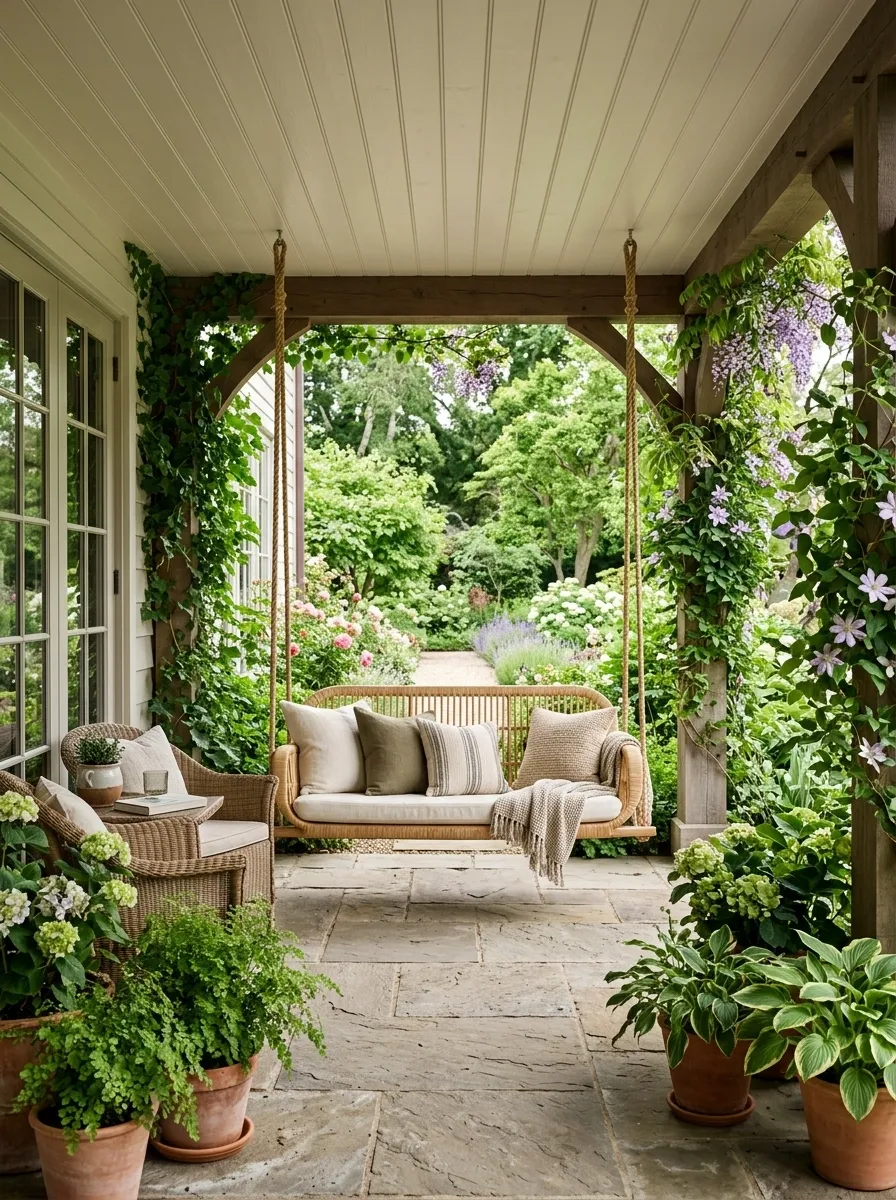
Instead of treating the garden as scenery beyond the porch, this design pulls the landscape into the composition. A woven swing sits beneath a covered structure, with layered greenery framing the edges and natural stone grounding the floor.
Low plants sit closest to the seating, taller greenery fills the middle layer, and climbing growth adds height without blocking the swing.
The porch remains readable because the planting frames rather than surrounds it completely. Leave enough open space around the seating for the architecture to remain visible.
Visual direction: Wide garden-facing porch photograph, woven swing framed by layered greenery, natural stone flooring, climbing plants, low planting at the seating edge, mature garden beyond, soft daylight, complete house and landscape context.
Victorian-Inspired Porch With Painted Swing and Ornamental Details
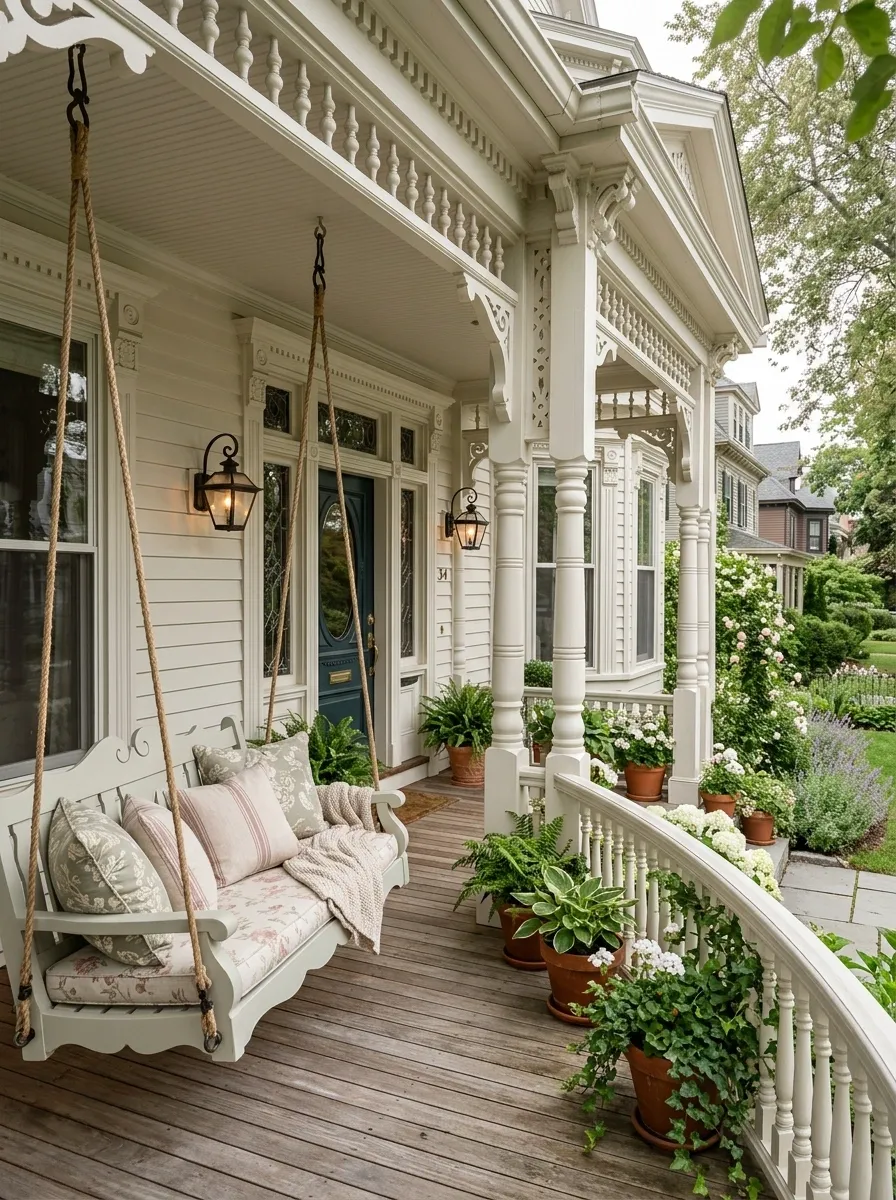
This porch leans into period character with turned columns, decorative trim, traditional lanterns, and a painted wooden swing with gently detailed edges. Patterned cushions add softness without introducing a modern pattern language.
The architecture carries the ornament, so the furniture doesn’t need to compete. Repeating one paint color across the columns, trim, and swing helps all those details read as one design.
A restrained planting scheme keeps the porch from tipping into theatrical territory. The goal is old-house character, not a museum set.
Visual direction: Elegant Victorian-inspired front porch photographed from a three-quarter angle, decorative columns and trim, painted detailed swing, traditional lanterns, patterned cushions, subdued flowering plants, full facade visible, warm natural daylight.
Minimal Covered Porch With Floating-Look Wood Swing
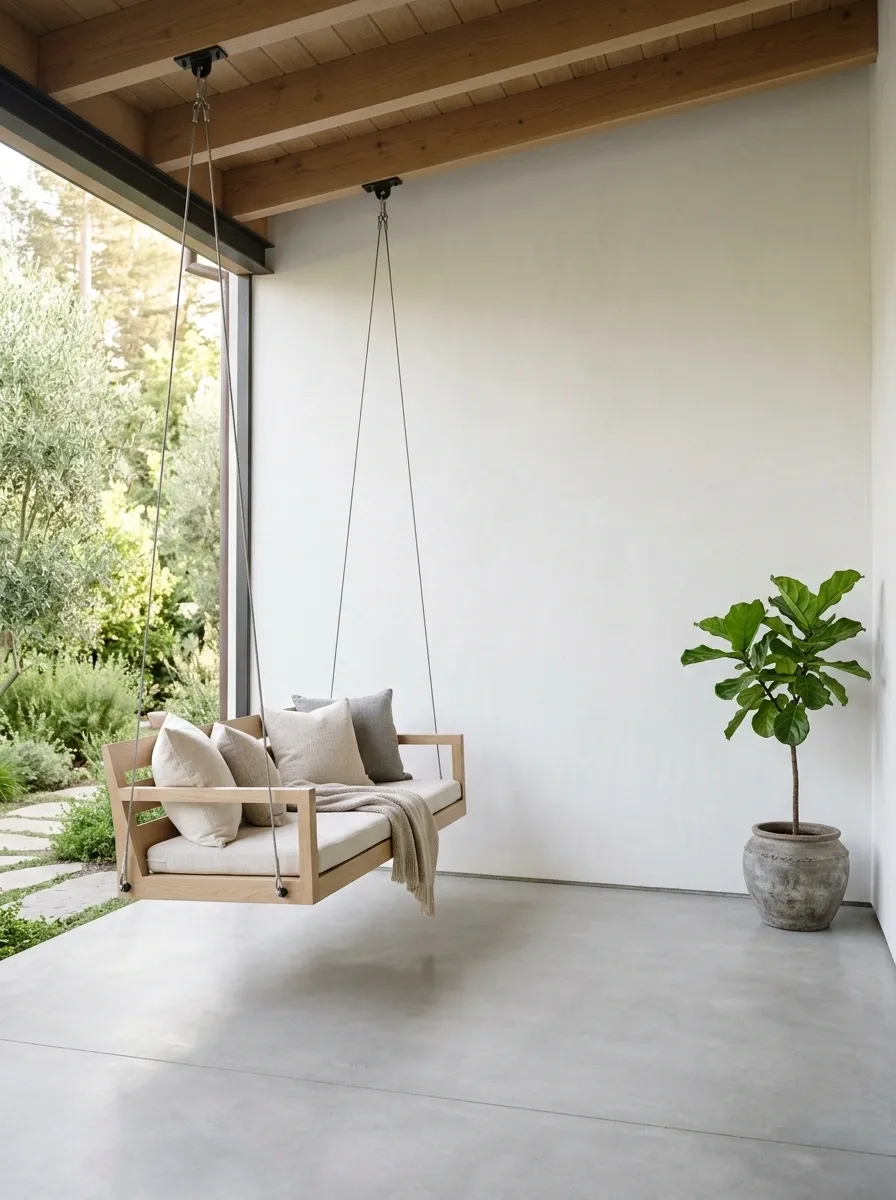
A pale wood swing seems almost suspended against a quiet wall in this minimalist porch. Concrete flooring, slim hardware, neutral cushions, and one carefully placed plant keep the setting deliberately sparse.
The visual interest comes from the relationship between the swing’s horizontal shape and the empty wall behind it. There’s no need for a large collection of accessories.
This design depends on discipline. Keep the floor clear, use low furniture nearby, and resist filling the empty areas simply because they look available.
Visual direction: Minimal covered porch photographed from a wide asymmetrical angle, pale wood suspended swing, soft neutral cushions, light concrete floor, white plaster walls, one sculptural plant, generous negative space, natural filtered daylight.
Craftsman Porch With Deep-Stained Swing and Stone Columns
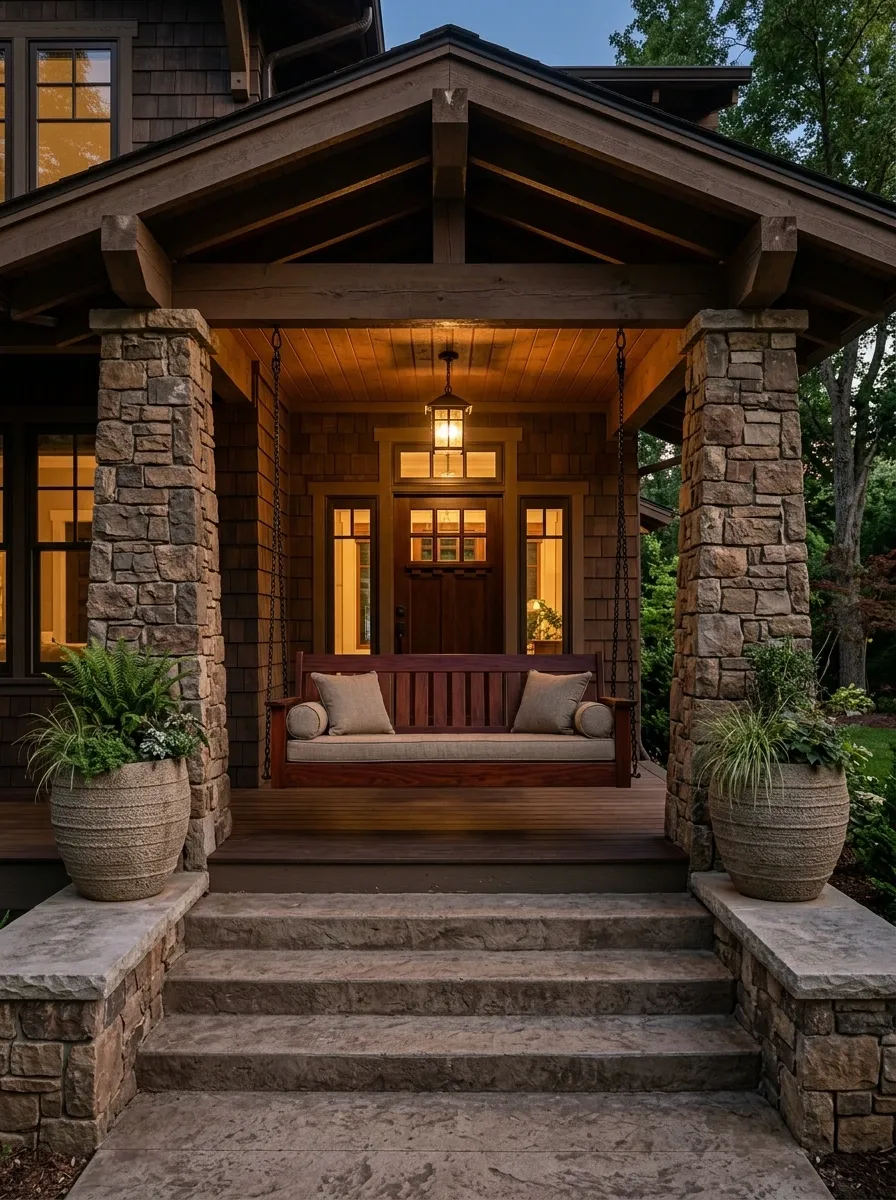
A Craftsman-inspired porch needs furniture with comparable visual weight. Here, a deep-stained wood swing sits between substantial stone columns, while warm lighting picks up the grain after dark.
Muted cushions soften the wood but remain close to the natural palette. A few substantial planters reinforce the scale without making the porch crowded.
The stone and timber should feel like the permanent backbone of the design. Accessories come second. That’s what gives this arrangement its grounded architectural quality.
Visual direction: Rich evening editorial photograph, Craftsman porch with stone columns and dark stained wood swing, warm integrated lighting, muted neutral cushions, broad steps, substantial planters, visible facade and realistic construction.
Soft Pink Cottage Porch With Natural Wicker Swing
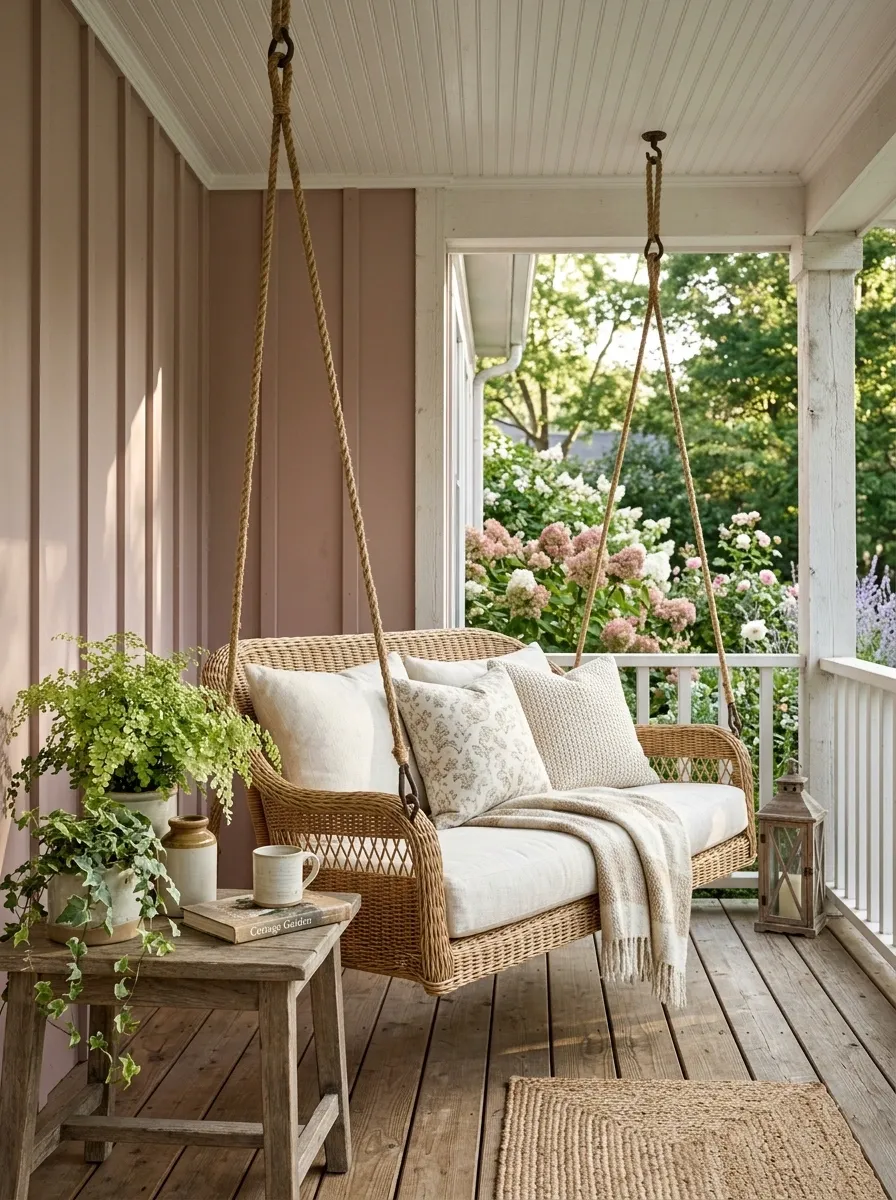
A muted blush exterior gives this cottage porch a gentle identity, while a natural wicker swing adds texture and keeps the color palette grounded. Ivory cushions, pale green foliage, and warm timber details complete the setting.
The pink works because it’s dusty rather than sugary. Natural materials keep it from becoming overly decorative, while green provides a cool counterpoint.
I’d avoid matching every accessory to the wall color. The porch feels more mature when pink is treated as an architectural background rather than the theme of every object.
Visual direction: Bright cottage porch photographed in soft morning light, muted blush exterior, natural wicker swing, ivory cushions, pale green plants, warm timber accents, flowering garden, slightly asymmetrical framing, realistic residential scene.
Mountain Porch With Leather-Cushioned Swing and Stone Fireplace
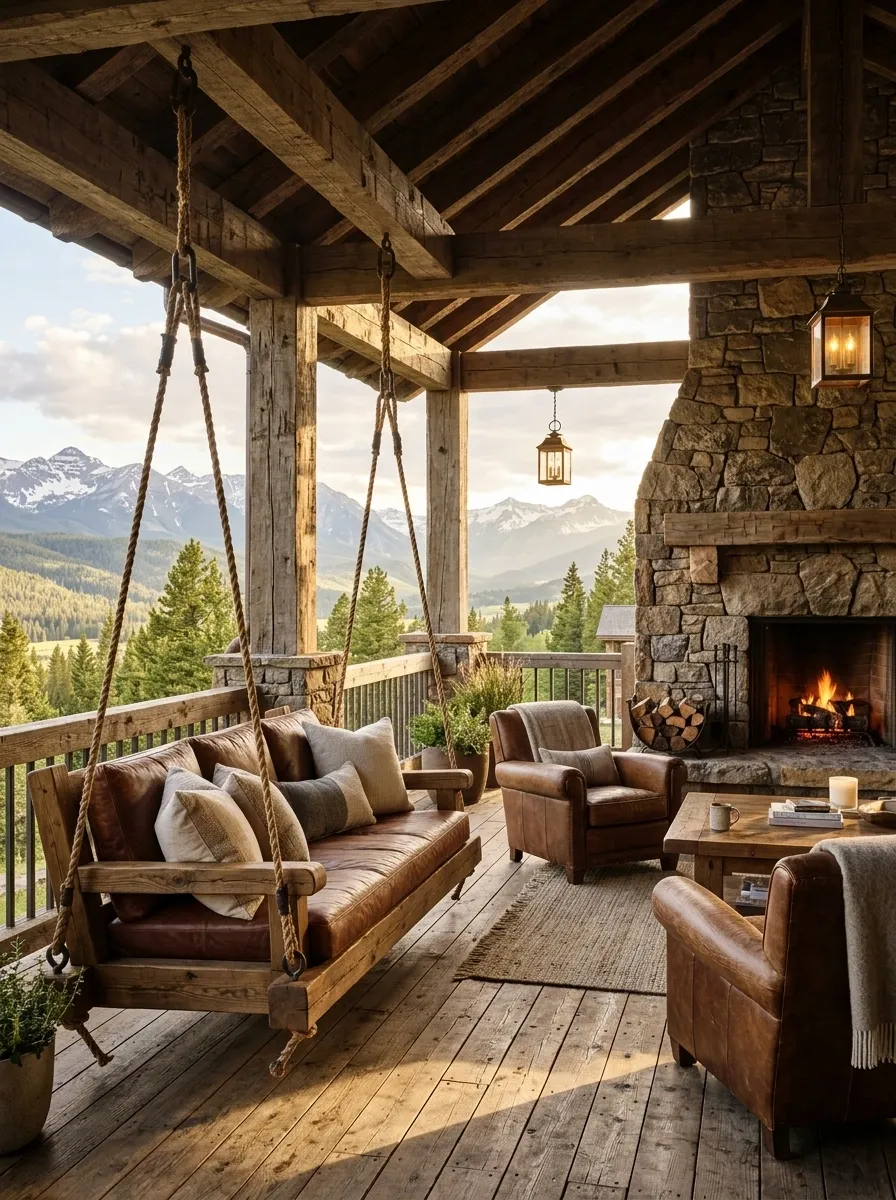
This substantial mountain porch combines a deep timber swing with a stone fireplace, heavy wood, warm lanterns, and a view toward the surrounding landscape. The swing and fireplace act as two connected anchors in the room.
Neutral cushions and warm brown upholstery fit naturally into the timber-and-stone setting. The fireplace sits slightly off axis, keeping the porch from becoming too symmetrical.
The scale matters here. Small delicate furniture would look lost beside the fireplace. Choose substantial pieces and allow the landscape to provide much of the decoration.
Visual direction: Wide mountain lodge porch, full outdoor living area visible, heavy timber swing with deep brown leather-look cushions, large natural stone fireplace, warm lanterns, forest or mountain vista beyond, late-afternoon light, realistic proportions.
fireplace
swing
Compact Apartment Balcony With Hanging Swing Chair Composition
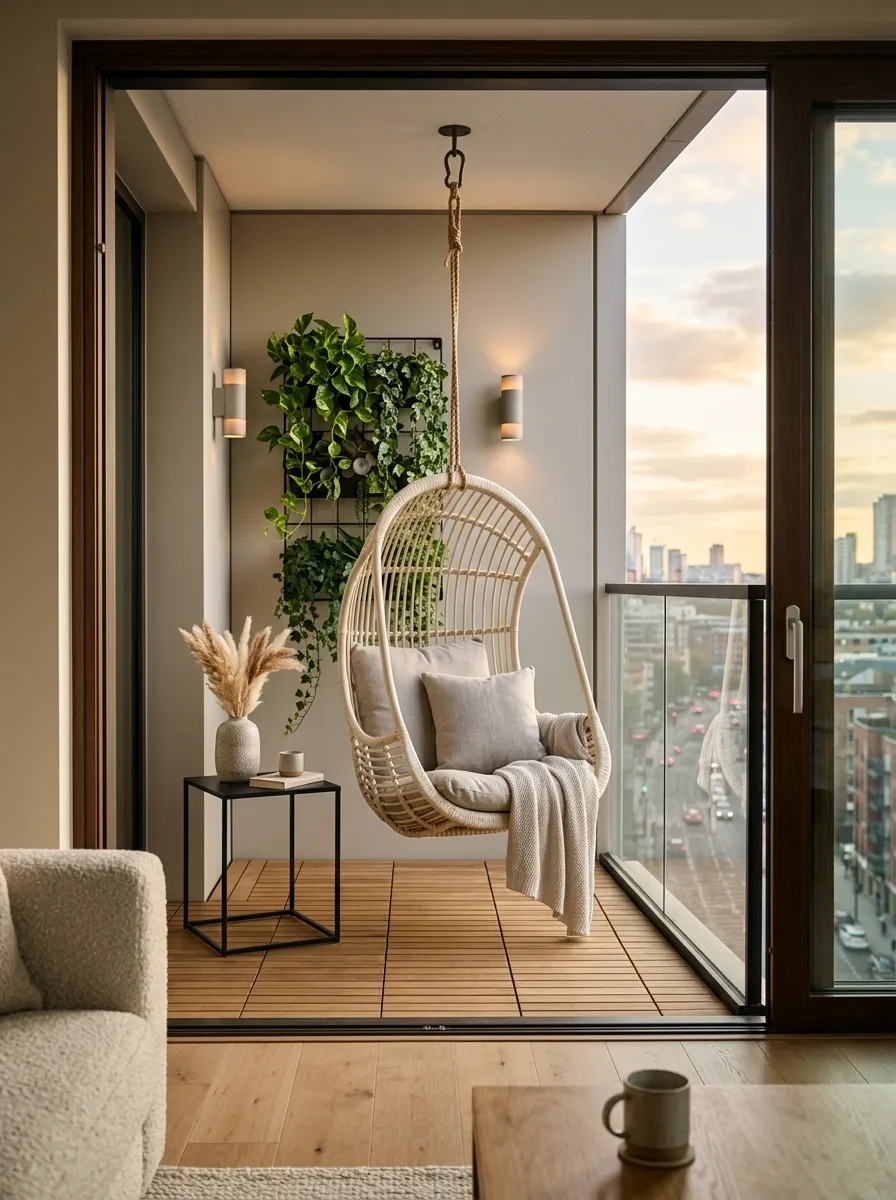
For a small apartment balcony, a full porch swing may be the wrong scale. This version uses a single hanging swing chair, compact decking, vertical greenery, wall-mounted lighting, and furniture that can move or fold away.
The city view becomes part of the composition, so the railing and surrounding architecture stay visually quiet. A small side surface provides function without creating another bulky object.
The important idea is scale. The finished space feels intentional because every piece fits the footprint rather than trying to imitate a large suburban porch.
Visual direction: Elevated apartment balcony photographed from inside the adjacent room, hanging swing chair, compact decking, vertical plants, slim side table, soft outdoor light, city skyline beyond, complete balcony footprint visible, realistic urban proportions.
English-Country Porch With Painted Green Swing and Climbing Roses
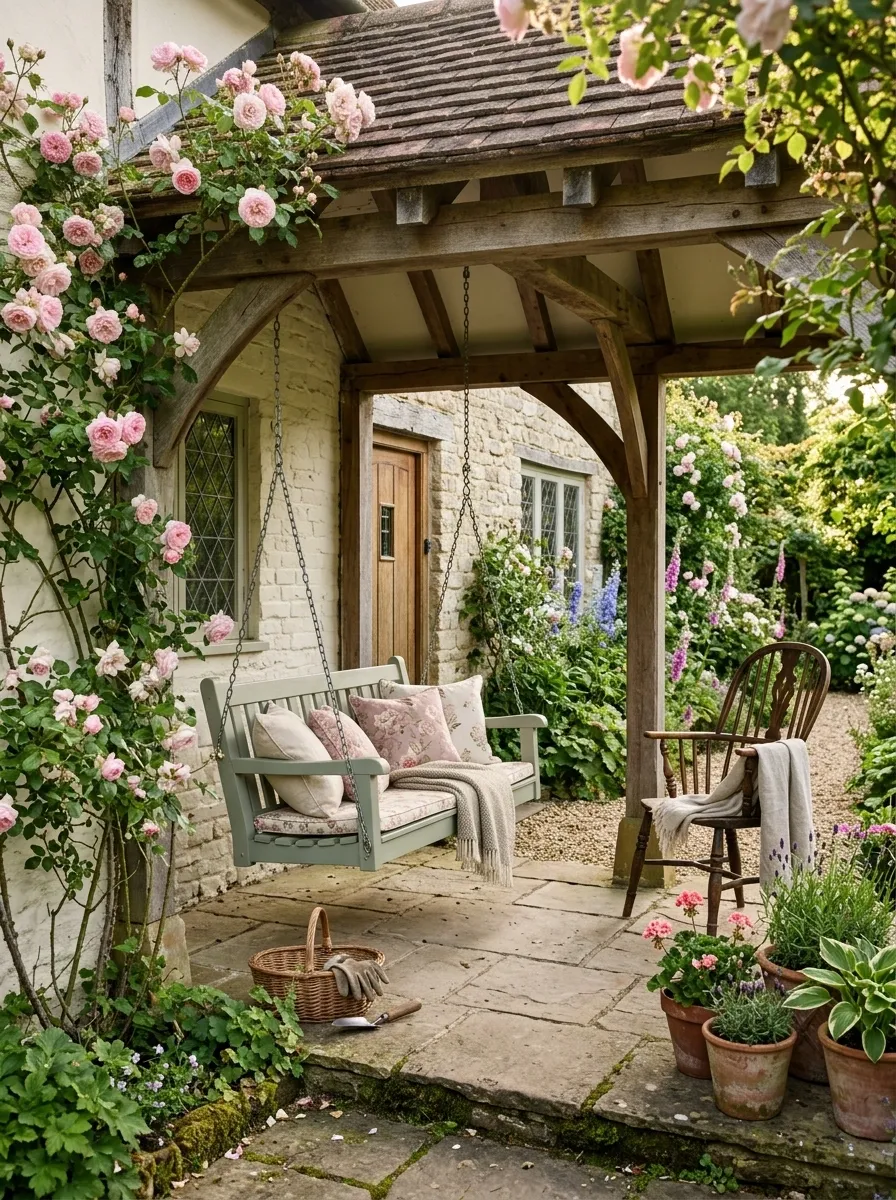
A muted green swing sits beneath a pale cottage porch while climbing roses soften one side of the architecture. Traditional cushions, stone flooring, and simple garden furniture create a relaxed English-country feeling without turning the porch into a floral display.
The roses provide height and movement, but they’re deliberately kept to one side. That asymmetry makes the scene feel established rather than arranged with a ruler.
Use the architecture as the quiet backdrop. The flowers and painted swing should provide the character.
Visual direction: Romantic but realistic country cottage porch, muted green painted swing, pale walls, climbing roses along one side, stone paving, traditional cushions, simple garden chair, soft afternoon garden light, complete landscape context.
main weight
quiet backdrop
vertical edge
Desert Modern Porch With Oak Swing and Sculptural Planting
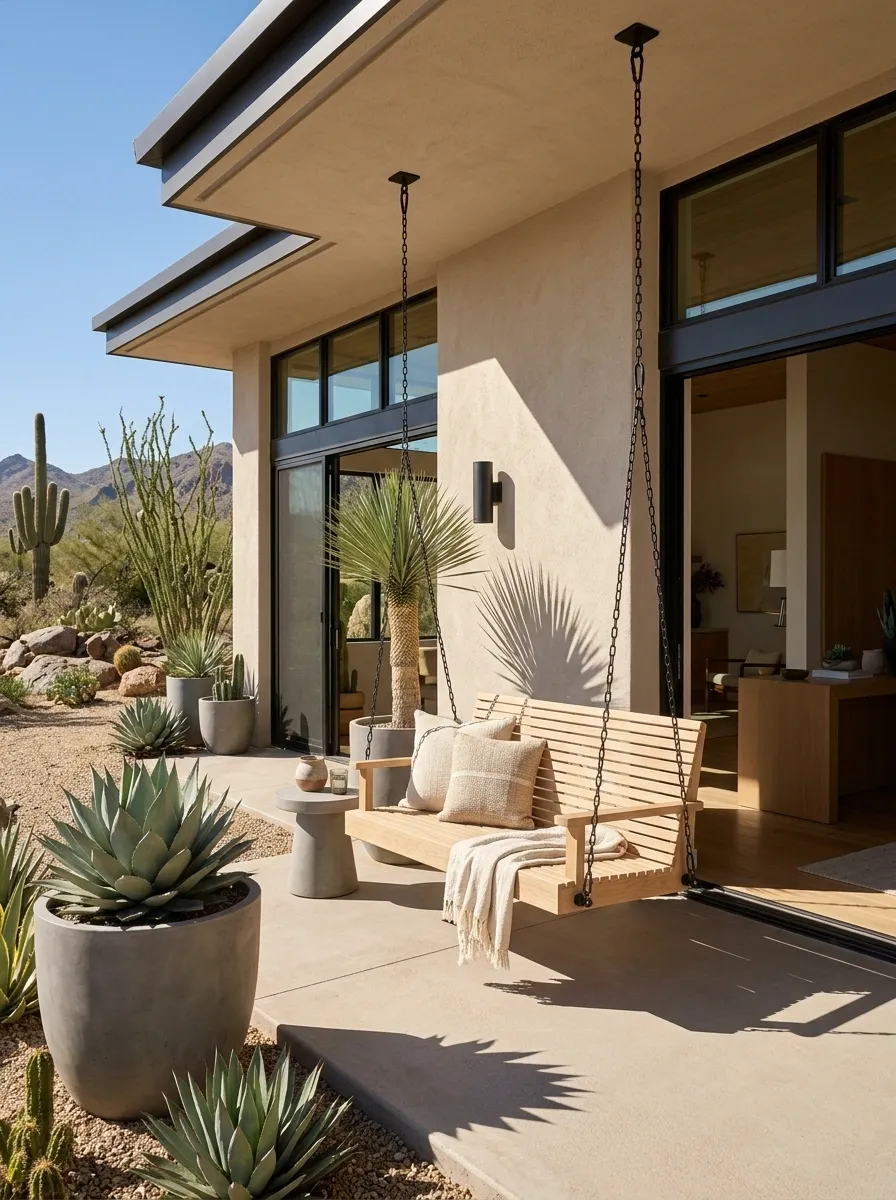
Light stucco, pale oak, concrete, woven upholstery, and architectural plants create a desert-modern setting that feels warm without relying on lots of accessories.
The swing introduces the main natural material against the hard architecture. Agave-like forms and other sculptural plants create shape instead of leafy clutter, while strong sunlight makes the surfaces part of the visual story.
This design needs texture more than decoration. Let the changing shadows, warm timber grain, and planting silhouettes carry the interest.
Visual direction: Bright high-sun desert-modern porch, pale stucco, light oak swing, concrete flooring, sculptural drought-tolerant plants, woven neutral cushions, strong architectural shadows, full facade and landscape visible, editorial real-estate-magazine realism.
stucco + concrete
oak + sun
sculptural plants
woven upholstery
Cozy Rainy-Climate Porch With Deep-Cushion Swing and Enclosed Screens
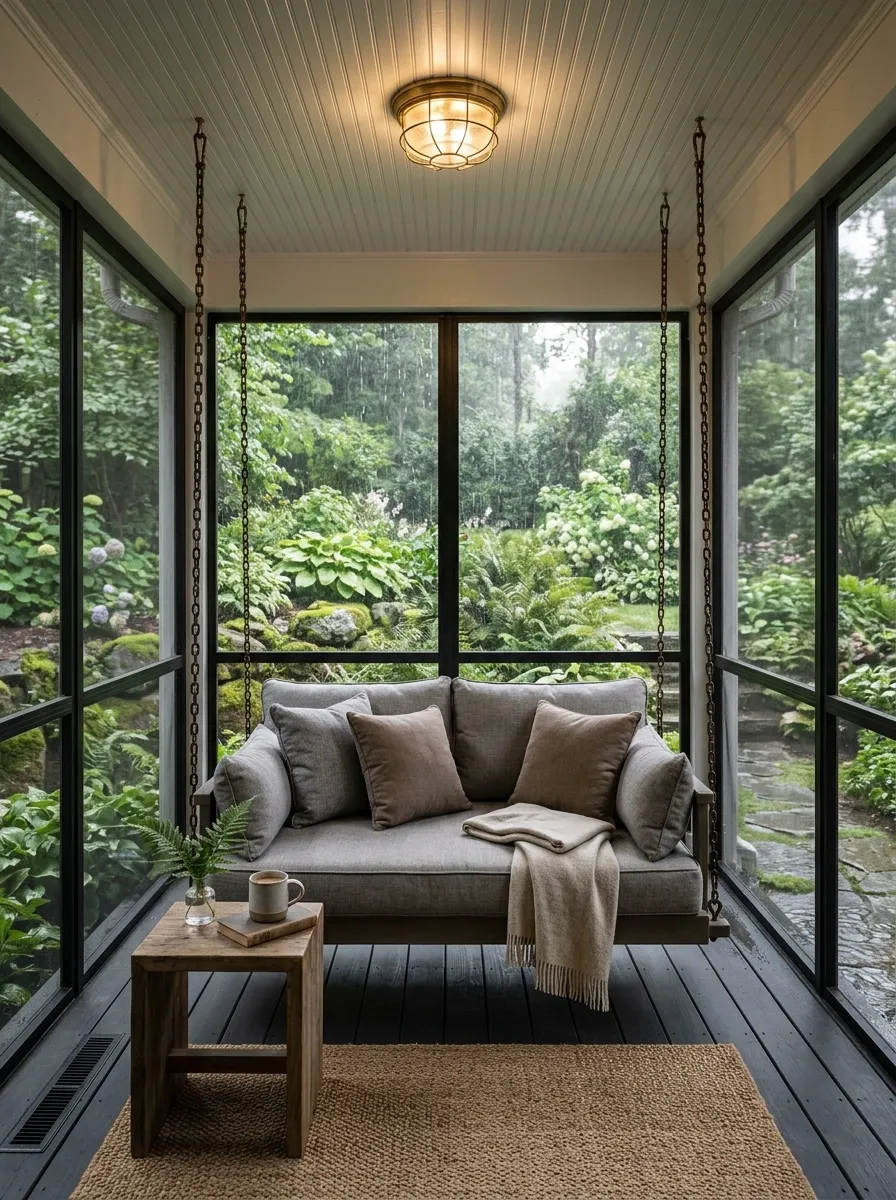
This porch is designed around shelter. A deep-cushion swing sits behind screened openings, with darker flooring, protected lighting, weather-conscious textiles, and lush greenery visible outside.
The result feels comfortable without relying on piles of soft accessories. The enclosure does much of the visual and practical work.
This is a useful direction for homes where outdoor furniture has to cope with frequent moisture. Keep upholstery protected whenever possible, and give wet areas enough opportunity to drain and dry.
Visual direction: Covered screened porch during a gentle rain, deep-cushion swing, realistic weather-resistant upholstery, darker flooring, warm protected lighting, lush wet garden visible beyond screens, complete architectural enclosure, natural overcast light.
Vintage Porch With Reclaimed Swing and Mismatched Garden Furniture
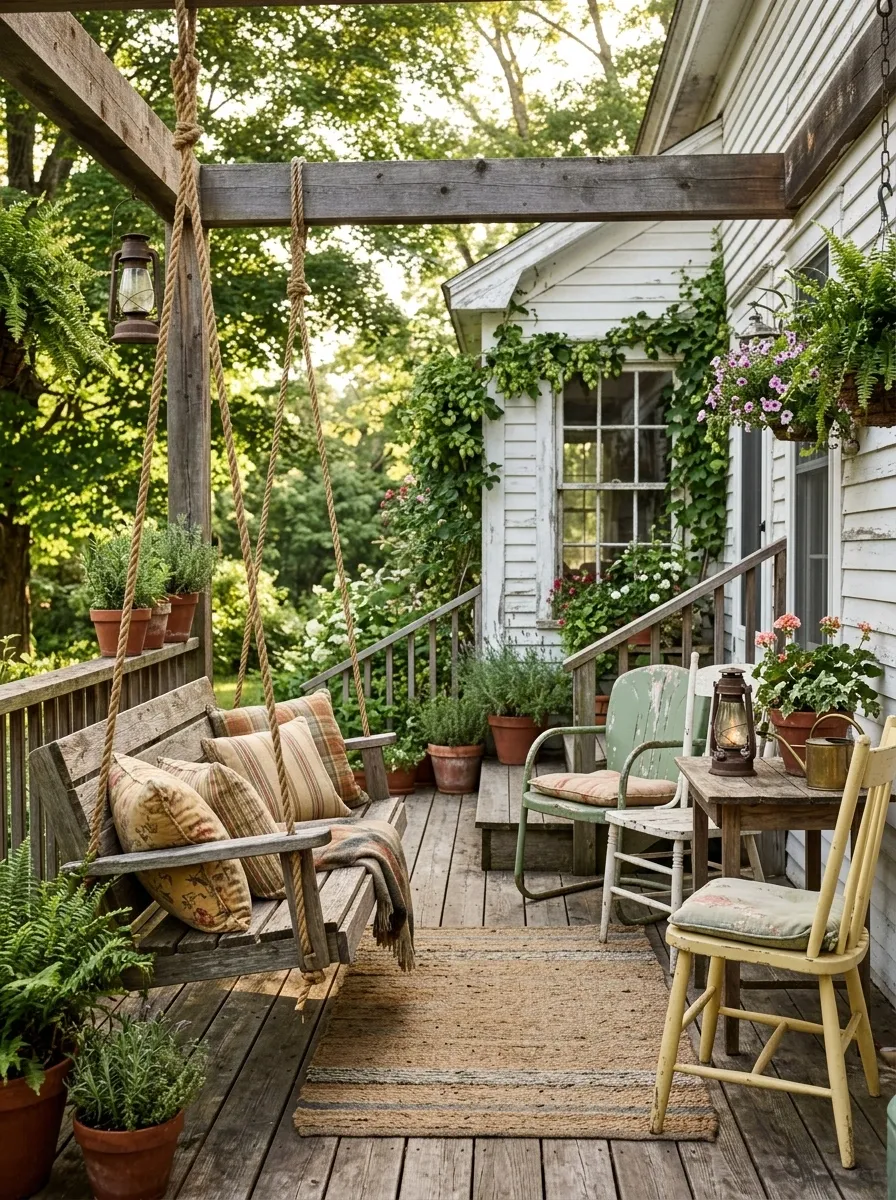
A reclaimed timber swing gives this porch its history, while painted garden chairs, old-fashioned cushions, aged flooring, and vintage lanterns create a deliberately collected look.
The furniture doesn’t match, but the colors share warm, muted undertones. That common thread makes the mix feel intentional instead of random.
This is a setting where small imperfections help. Don’t try to make every finish look new. The character depends on visible age, varied surfaces, and furniture that seems to have accumulated naturally.
Visual direction: Warm documentary-style porch photograph, reclaimed timber swing, mismatched painted garden chairs, vintage lanterns, aged wood floor, faded cushions, collected planters, asymmetrical arrangement, realistic lived-in details.
Refined Transitional Porch With Linen Swing and Layered Landscaping
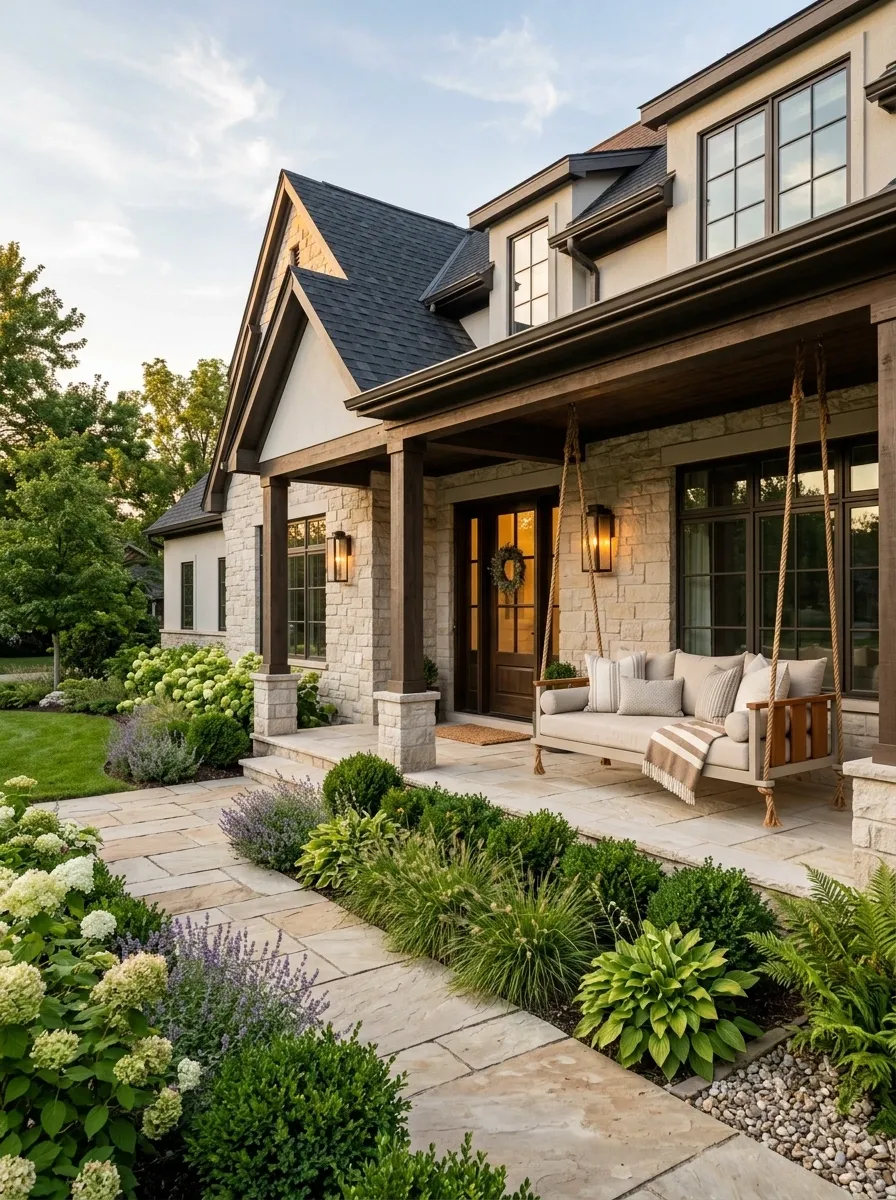
The final design brings together the most versatile elements of the collection: a substantial neutral swing, tailored linen-look cushions, warm wood, pale stone, understated lighting, and planting that frames the architecture without taking it over.
The house remains visible through the landscaping. A warm timber accent near the seating ties the furniture back to the architecture, while the neutral upholstery keeps the entire composition easy to live with.
This approach is less about a single dramatic feature and more about getting every relationship right. That’s what makes it such a dependable starting point for a finished porch.
Visual direction: Refined transitional home photographed in late-afternoon light, complete front porch and facade visible, substantial neutral linen-look swing, warm wood details, pale stone flooring, layered landscaping, understated sconces, elegant but realistic styling, vertical Pinterest editorial composition.
Find the Complete Look Before You Choose the Swing
A porch feels polished when the major decisions support one another. The swing should relate to the architecture, the surrounding materials should share a visual language, and the furniture should leave enough room for the porch to function comfortably.
That’s why these porch swing ideas work better as complete references than as isolated shopping suggestions. A green swing looks very different beneath white Southern columns than it does against a Mediterranean plaster wall or dark contemporary siding.
Start with the setting you already have. Look at the house color, floor material, available width, natural light, and landscape. Then choose the design direction that fits those existing conditions instead of forcing the porch into a style it can’t comfortably support.
Before buying anything, save the designs that most closely match your home’s architecture and make a small reference board with the materials, colors, and proportions you want to repeat. That one step makes it much easier to keep the finished porch cohesive.
Save the designs that feel closest to your home now, then come back to them when you’re ready to plan the swing, cushions, lighting, and surrounding space.