
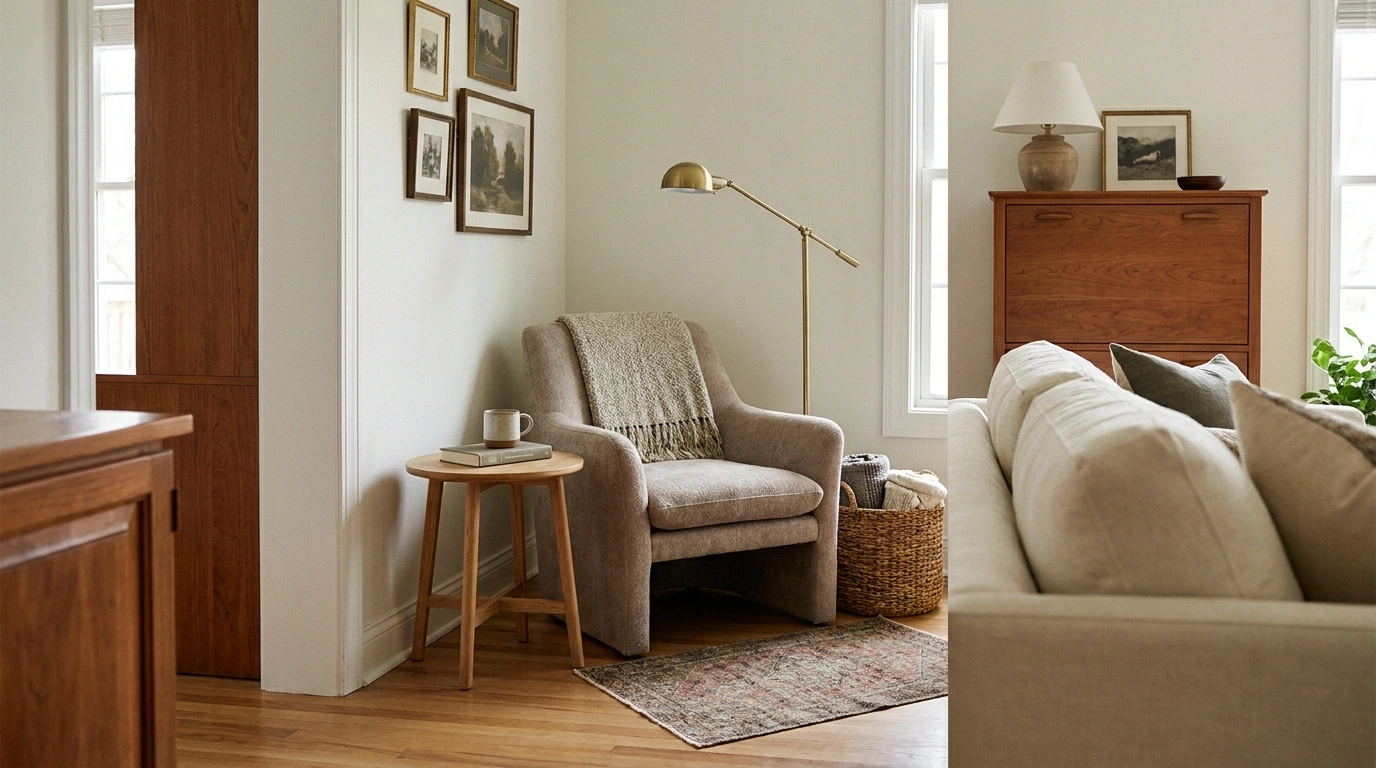
An empty living room corner can make an otherwise finished room feel strangely unresolved. There may be a sofa, rug, coffee table, artwork, and lighting in place, yet one untouched corner keeps catching the eye for the wrong reason.
The usual mistake is treating that space as a leftover area and filling it with whatever piece happens to fit.
A better approach starts with the finished composition. The chair, cabinet, plant, lamp, artwork, or bench has to make sense beside the furniture already in the room.
Scale matters. So does the amount of open floor, the direction of natural light, the walking path, and the visual weight of nearby walls.
Give the Corner a Role
Living Room Corner Designs
A-Frame Corner Shelf With Integrated Lighting
An awkward living room corner can instantly become an architectural focal point with a tapered A-frame shelving unit. This striking piece draws the eye upward while maximizing vertical display space without feeling bulky or imposing.
Warm integrated lighting strips hidden beneath each shelf cast a gentle glow against the wall, creating a cozy ambiance after dark. The soft illumination transforms ordinary display niches into dramatic shadow boxes for your favorite decorative objects.
Style the shelves with restrained groupings of ceramics, stacked books, and natural woven bowls to maintain a curated look. Keeping accessories minimal lets the unique structural silhouette and warm glow of the shelving take center stage.
Low Reading Chair With Floor Lamp and Curved Side Table
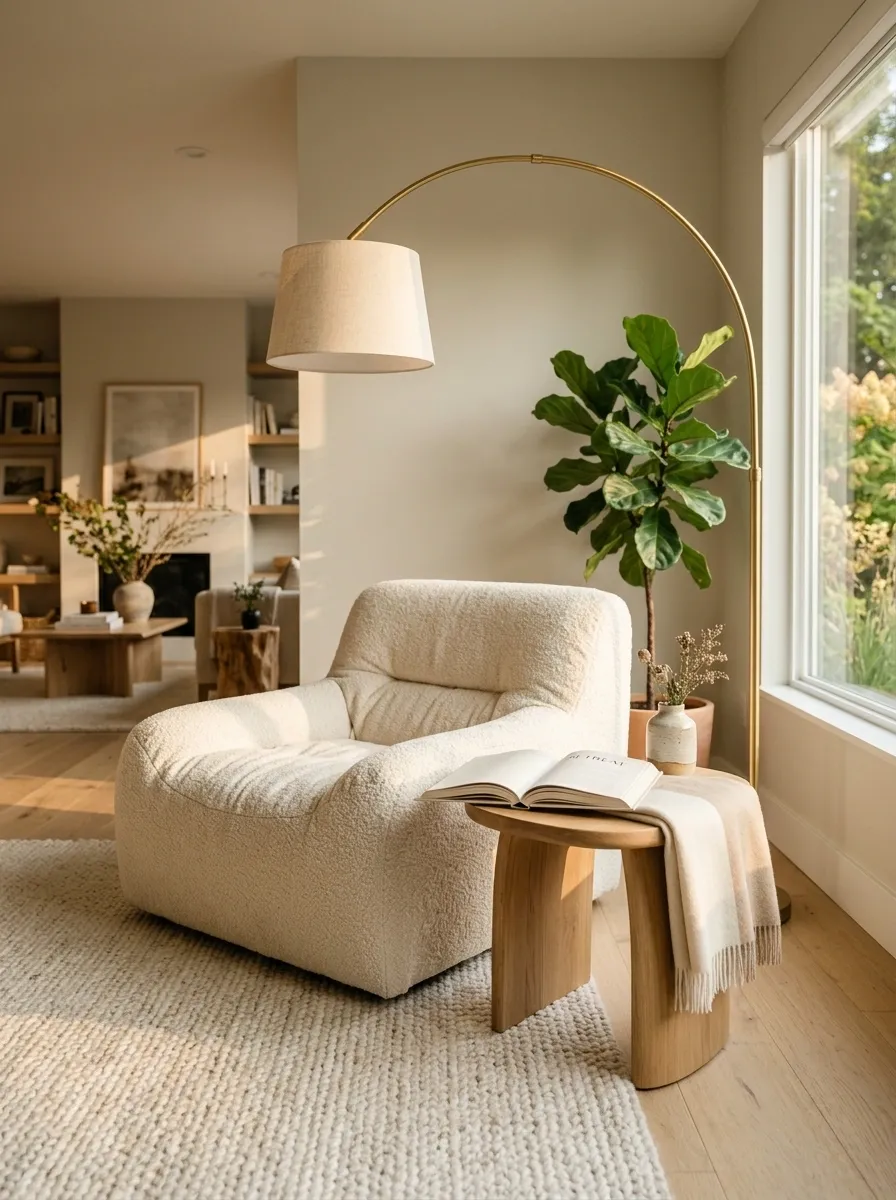
A low lounge chair can turn a forgotten corner into a genuine destination without making the room feel crowded. This composition pairs a generously upholstered chair with an arched floor lamp, a compact curved wood table, and a softly textured rug. The pieces sit just outside the main sofa arrangement, creating a separate reading spot while keeping the walking route open.
Warm ivory upholstery, natural oak, and a soft neutral wall keep the corner connected to the rest of the room. The lamp provides the vertical element the chair needs, while the rounder table shape prevents the arrangement from feeling too rigid. Keep accessories restrained here. A book, small vessel, and folded throw are enough.
Cozy Corner Lounge With Textured Layers
A plush boucle armchair can transform an unused corner into an inviting retreat that feels like a natural extension of your main seating layout. Pairing the chair with a slender brass floor lamp adds height and a soft pool of evening light.
Layering a round wooden side table with a scented candle and a small vase of dried botanicals brings organic warmth to the arrangement. A draped throw blanket and a coordinating accent pillow add tactile comfort and make the spot instantly irresistible.
Anchor the entire vignette with a softly textured neutral rug and a simple minimalist art print on the adjacent wall. This creates a cohesive, finished look that turns a blank corner into a dedicated destination for relaxation.
Tall Olive Tree With Sculptural Pot and Narrow Wood Bench

A tall olive tree gives an awkward corner immediate vertical presence, especially when the surrounding furniture sits relatively low. The composition becomes more deliberate with a narrow oak bench beneath it and a single folded textile or ceramic piece rather than a collection of small decorations.
The contrast between the organic foliage and clean furniture keeps the corner interesting without making it busy. A large matte pot gives the tree enough visual weight to hold its position beside a sofa. Leave some floor visible around the arrangement. That negative space helps the planting feel architectural rather than crowded.
olive canopy
wood bench
Arched Rattan Corner Bookcase
An arched corner shelving unit featuring woven rattan backing introduces beautiful texture and organic charm to a forgotten living room space. The dramatic curved silhouette softens hard architectural angles and brings architectural interest to bare walls.
Styled with simple white ceramic vases and delicate green botanicals, the shelves maintain an airy, uncluttered feel. The contrast between the rich dark wood frame and the light cane webbing adds depth without overwhelming the surrounding decor.
Position the bookcase just out of the main pathway to create a subtle yet stunning backdrop for your favorite collected objects. The natural materials seamlessly connect the corner to the rest of a warm, thoughtfully designed living area.
Built-In Shelving Around a Narrow Window
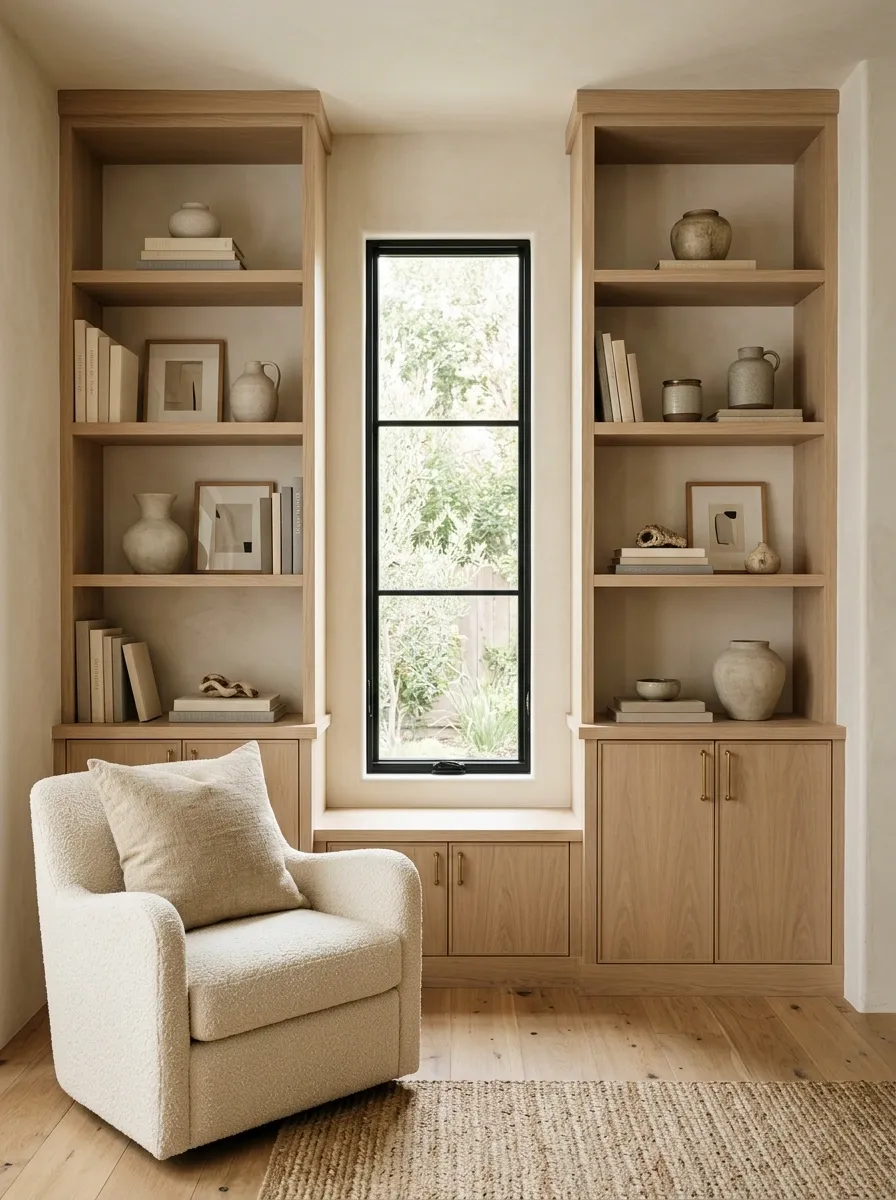
A small window in the corner doesn’t need to disappear behind furniture. Shallow built-in shelving can frame it instead, creating a complete wall composition with books, ceramics, framed pieces, and concealed storage below.
The key is to keep the shelving visually lighter than a standard floor-to-ceiling bookcase. Pale oak against a warm white wall maintains the sense of daylight, while uneven groupings of books and objects stop the shelving from looking overly formal. The window remains the visual center, and the surrounding shelves simply give it a stronger architectural frame.
+ small objects
+ framed art
Wavy Wood Corner Display Tower
A sculptural wooden corner shelf with organic, undulating edges brings playful movement and sophisticated craftsmanship to a blank wall. This narrow tower makes brilliant use of tight square footage while serving as a work of art on its own.
Warm wood tones paired with a soft green wainscoting backdrop create a harmonious, nature-inspired palette that grounds the entire living space. The tiered shelving provides ample opportunity to display cherished books, framed photographs, and artisanal ceramics.
Keep the styling balanced by mixing vertical elements like stacked books with low decorative bowls and woven storage baskets. A small potted plant nearby ties the organic theme together, ensuring the corner feels lively and completely finished.
Oversized Floor Lamp Beside a Compact Sofa
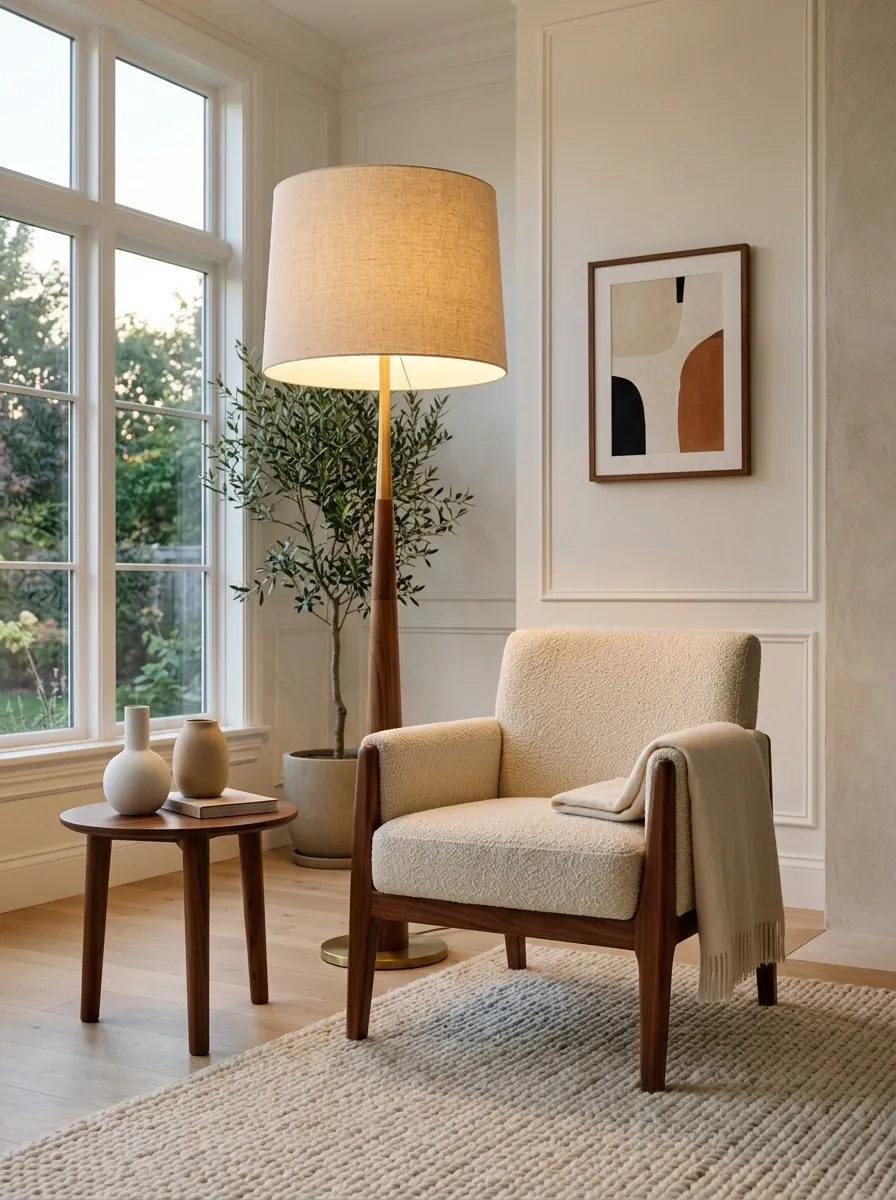
A corner doesn’t always need another substantial piece of furniture. In a room that already has enough seating, a tall sculptural floor lamp can provide the vertical emphasis the empty area is missing while a compact accent chair completes the arrangement.
The strongest version uses a simple lamp silhouette with a generous arc or oversized shade, positioned behind the chair so the light rises above the furniture line. Walnut details and warm ivory upholstery keep the look grounded. The lighting becomes especially effective after sunset, when the corner shifts from a blank edge of the room into a secondary focal point.
Low seating
Focused glow
Tall silhouette
Full-Length Mirror With Natural Textures
A sleek full-length floor mirror leans effortlessly into an empty corner, instantly bouncing natural light around the room and making the entire space feel larger. The reflective surface adds incredible depth while filling a blank vertical expanse with ease.
Ground the mirror with a cozy woven jute rug, a textured wooden side table, and a sculptural ceramic vessel. These earthy elements soften the modern lines of the glass and introduce a wonderful layer of tactile warmth to the vignette.
A large woven basket overflowing with tall pampas grass completes the composition, bringing height and gorgeous organic movement to the corner. This effortless arrangement proves that simple, intentional pieces can make a room feel completely curated and complete.
Vintage Cabinet With Art Above and Collected Objects
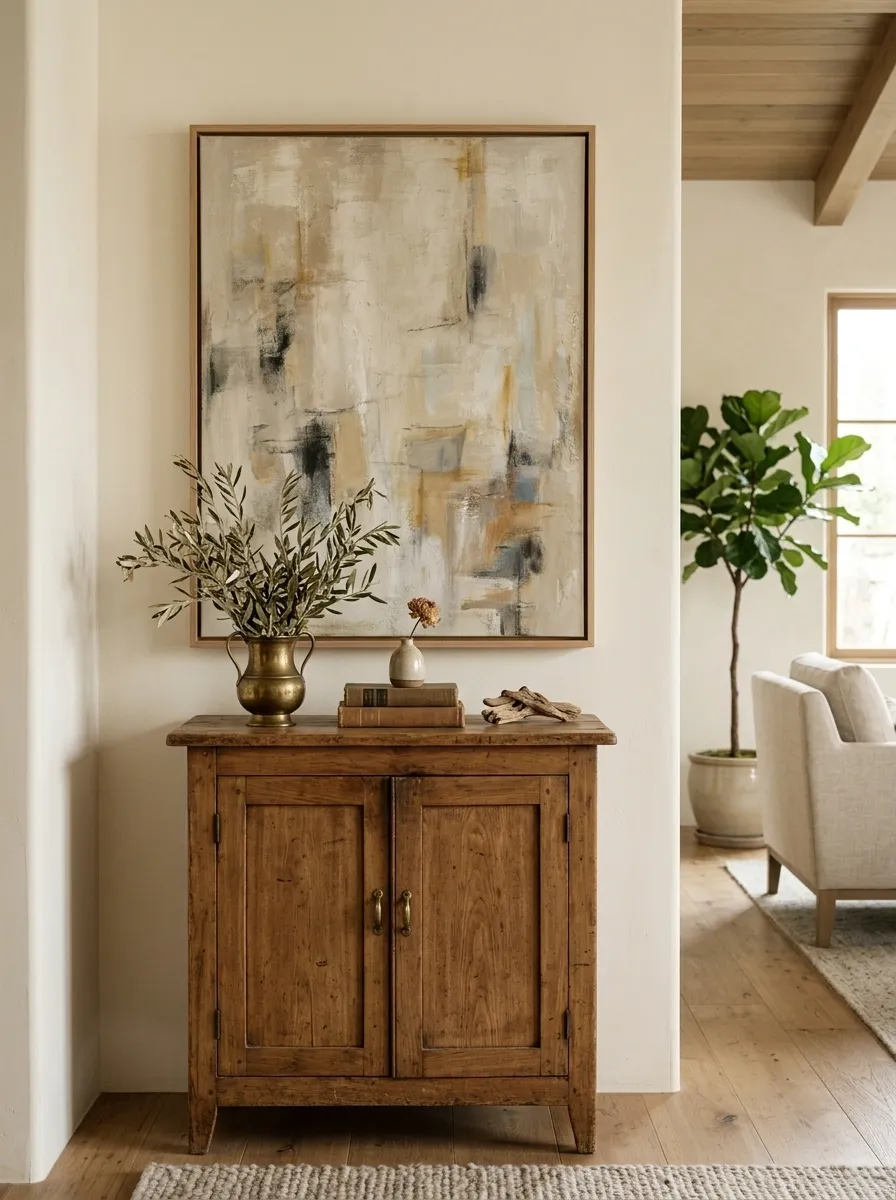
A narrow vintage cabinet brings more character to an empty corner than a collection of small decorative pieces scattered across the floor. A substantial framed artwork above it gives the composition height, while the cabinet provides closed storage and a surface for only a few collected objects.
The combination works particularly well when the rest of the living room already contains modern upholstery or clean-lined furniture. Aged wood adds warmth, the artwork introduces color, and a small brass lamp or vessel provides a subtle reflective note. Keep the cabinet top edited. Too many objects will compete with the artwork and erase the calmness of the composition.
strongest focal point
Two Slim Accent Chairs Creating a Conversation Pocket
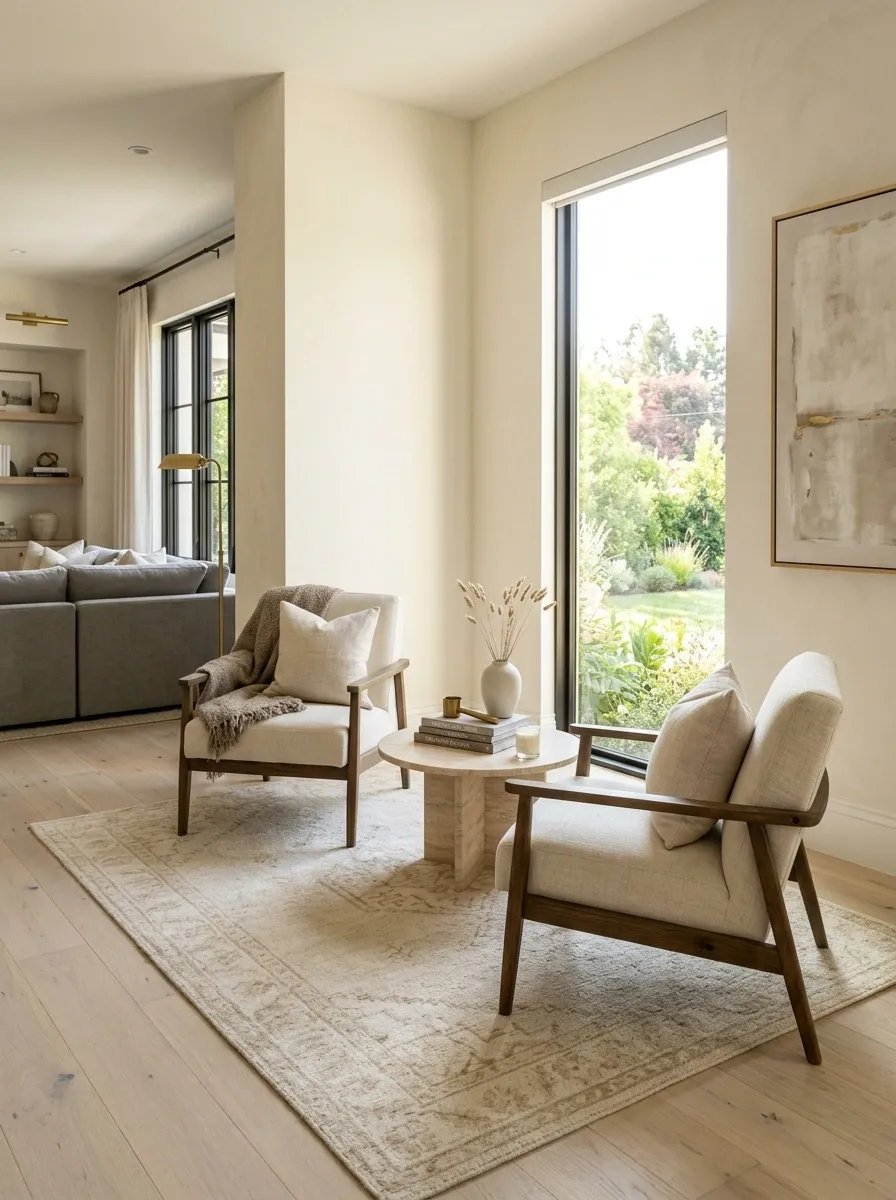
Two lightweight chairs can make a large empty corner feel purposeful without creating the visual weight of another sofa. Position them at a relaxed angle around a small round table, with enough space behind each chair for comfortable movement. A broad rug can visually connect the pair to the main seating area.
Light upholstery with dark or natural wood frames gives the arrangement definition while keeping the corner open. The round table softens the straight lines of the room. This layout works especially well when the main sofa faces a television or fireplace and a second seating direction would make conversation more flexible.
Floor-to-Ceiling Curtains With a Small Bench Beneath
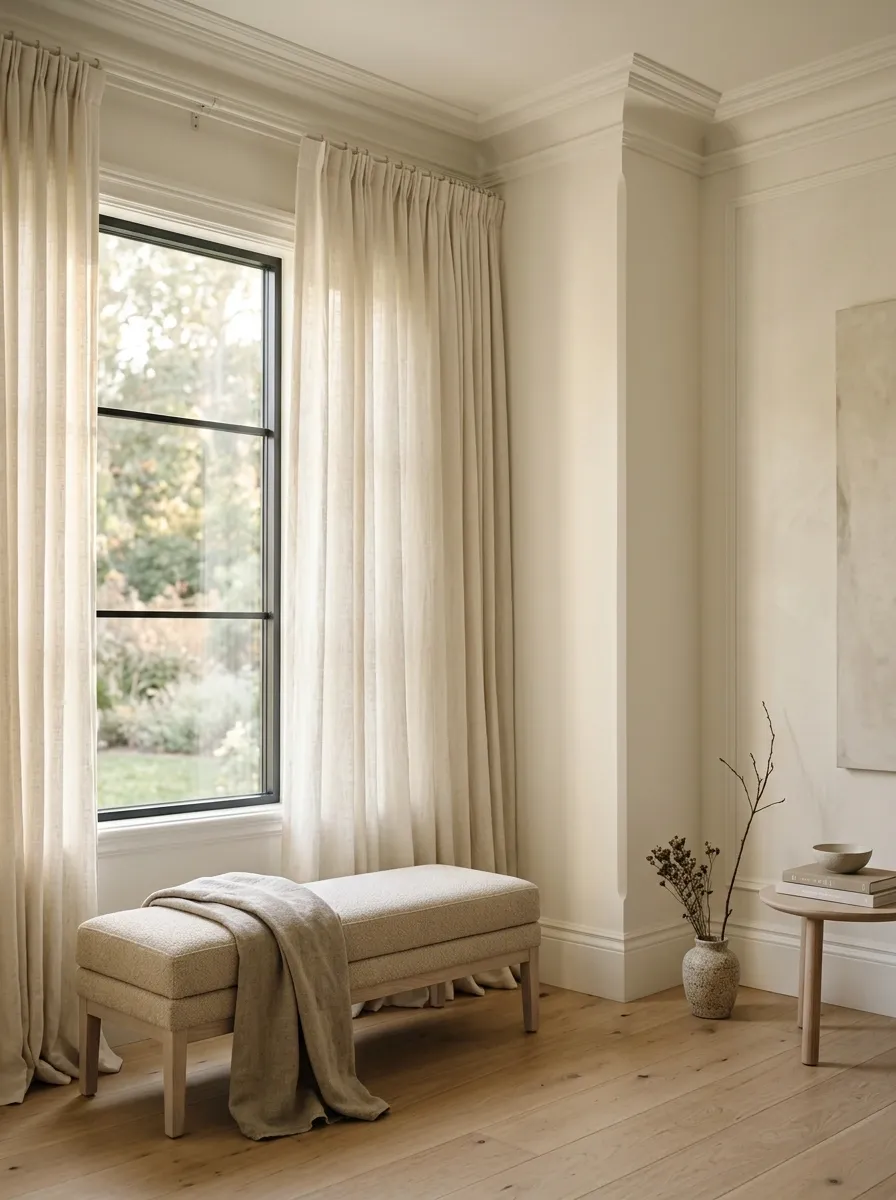
A corner beside a window can become much more elegant when the treatment emphasizes height instead of adding more furniture. Full-length linen curtains draw the eye upward, while a compact upholstered bench gives the lower portion of the corner a clear purpose.
The bench should stay visually simple because the curtains provide most of the drama. Warm ivory, oatmeal, and pale wood create a soft transition between the architecture and the rest of the room. A single cushion or folded throw is enough. Keep the fabric generous and let it fall naturally to the floor rather than stopping at the window sill.
Dark Wood Storage Wall With One Statement Chair
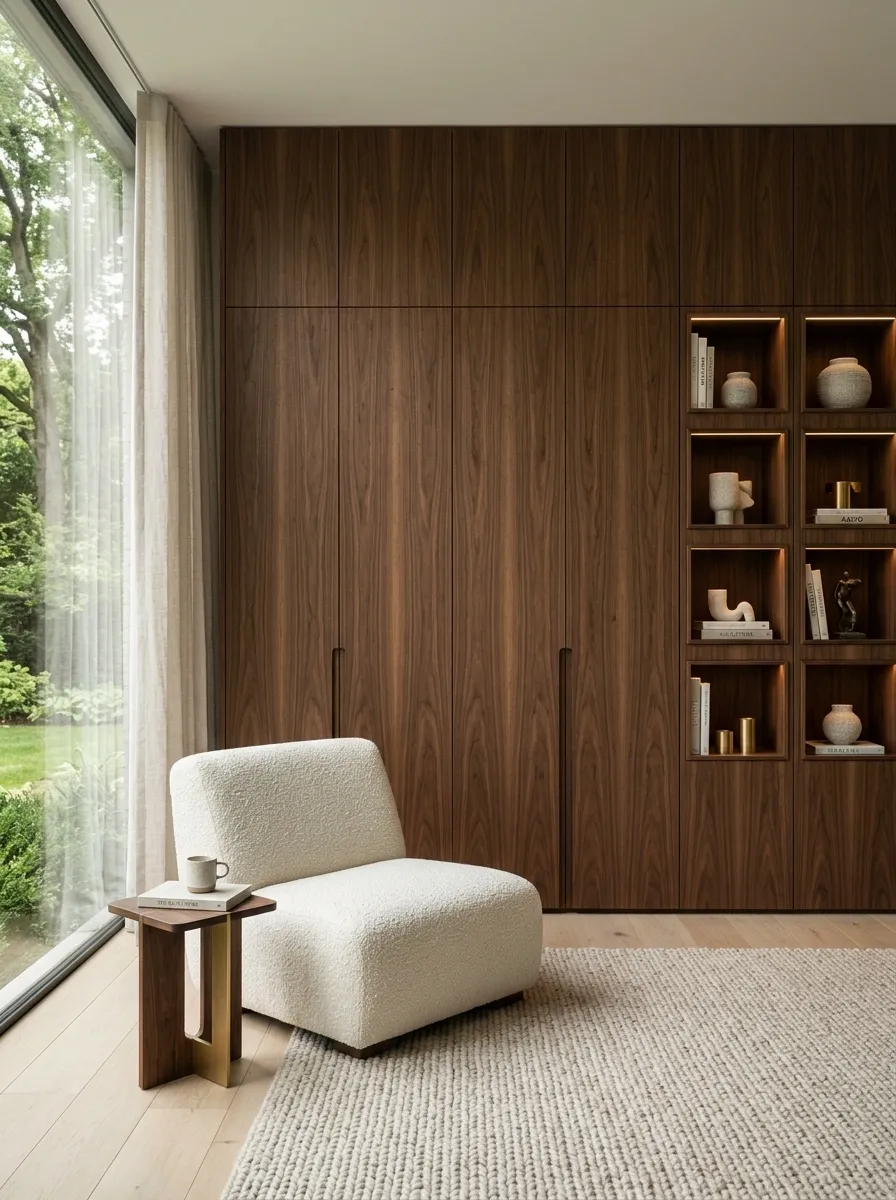
A generous empty corner can support a much stronger architectural gesture. A full-height walnut storage wall gives the space substance, while one light upholstered chair prevents the composition from becoming visually heavy.
Closed cabinetry is particularly effective here because it creates a calm uninterrupted surface. Small open niches can hold a few books or objects, but most of the storage should remain concealed. A warm white chair, textured rug, and soft lighting create contrast against the deep timber. The result feels substantial without requiring a collection of separate furniture pieces.
Fireplace Corner With Built-In Bench and Firewood Storage
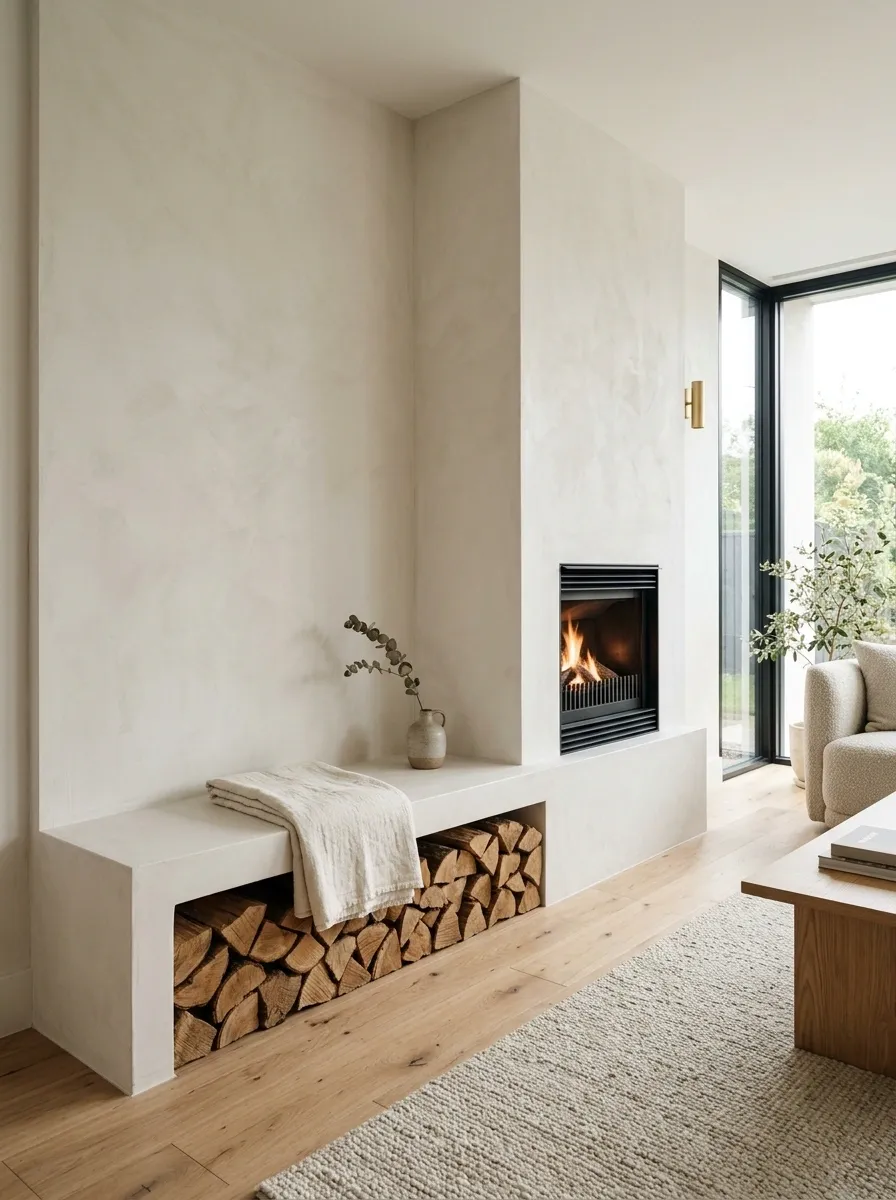
When a living room already has a fireplace or masonry feature, an empty corner beside it can become part of the architecture rather than a separate decorating zone. A low built-in bench extends the fireplace visually, while a recessed firewood area adds useful storage beneath.
Pale plaster, natural stone, and warm oak keep the composition grounded and tactile. The bench can hold a cushion or folded blanket, but the surrounding wall should remain quiet. This approach is strongest when the architectural lines stay simple and the firewood is neatly contained rather than treated as decoration.
Compact Home Office Tucked Behind the Main Seating Area
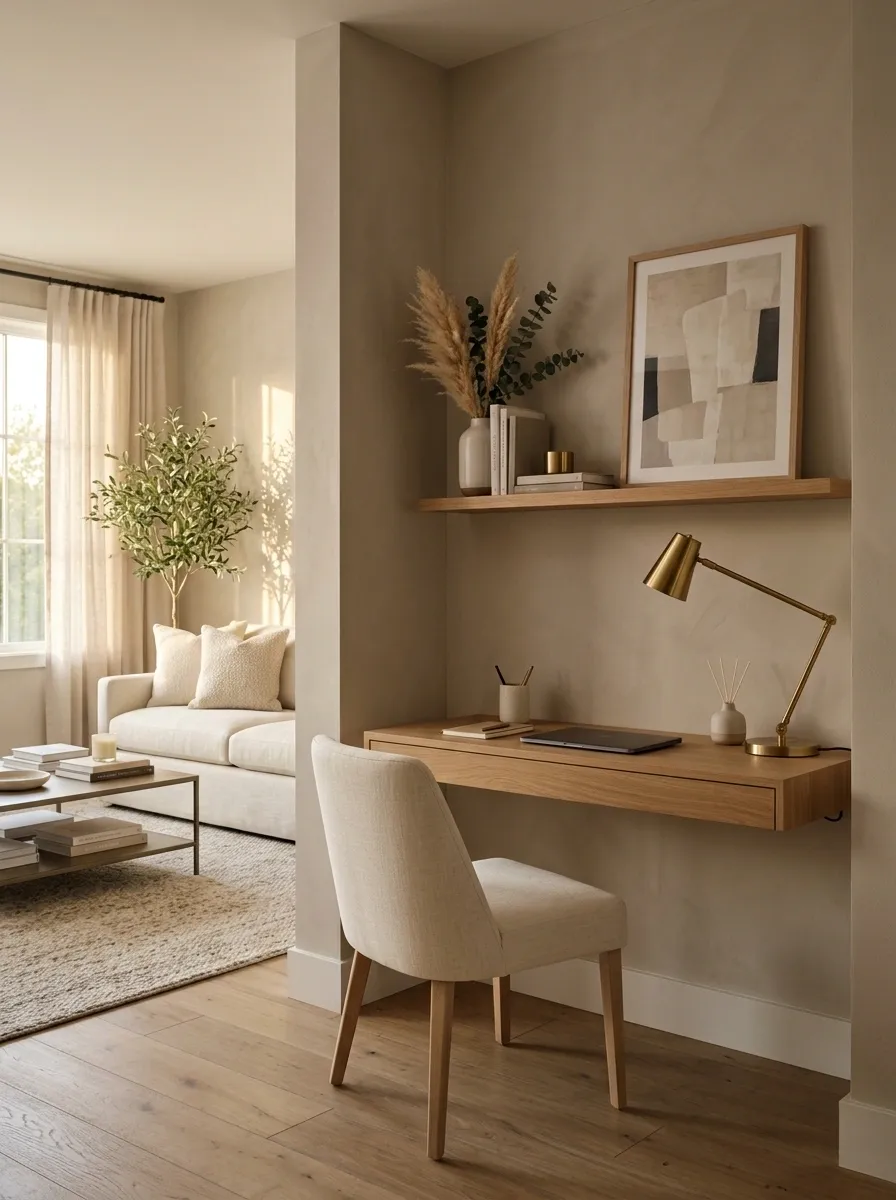
A living room corner can accommodate a genuine work zone without looking like a second office. A slim oak desk, upholstered chair, narrow wall shelf, and focused task lamp create a complete workstation that stays visually quiet behind the main seating area.
Choose a desk with minimal visual bulk and keep accessories limited to the essentials. Concealed cable management matters here because loose cords can make a small corner look unfinished quickly. A piece of artwork or a softly colored wall behind the desk helps the workspace feel connected to the room rather than temporarily installed.
Oversized Artwork Leaning Above a Low Console
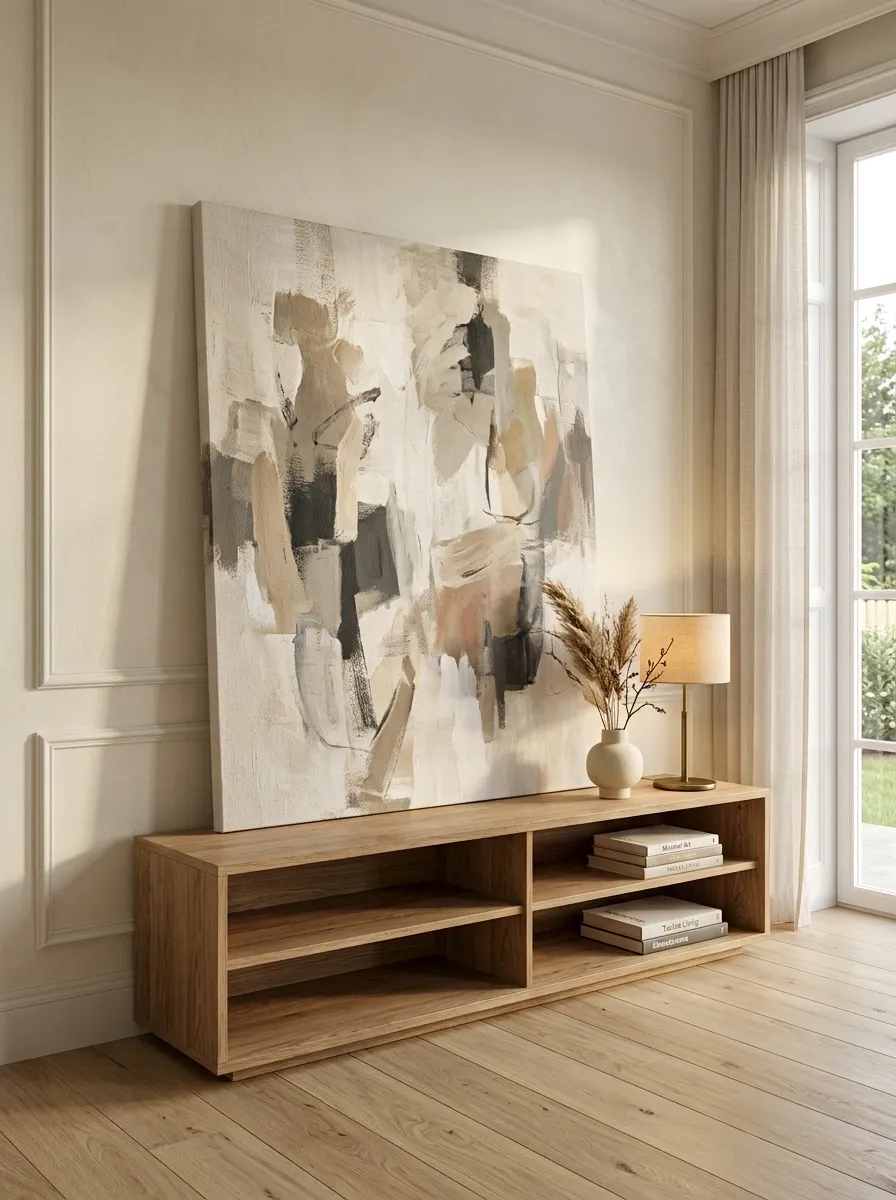
A broad piece of artwork can give an empty corner enough visual weight without filling the floor with furniture. Place a low walnut or oak console beneath it, keeping the styling sparse so the artwork remains the dominant element.
The strongest composition uses a generous gap around the furniture instead of pushing the console tightly into the corner. A ceramic vessel, small lamp, or single stack of books is enough to connect the console to the rest of the room. The large artwork supplies height, while the low console keeps the overall arrangement calm and horizontal.
Arched Bookcase With a Deep Lounge Chair
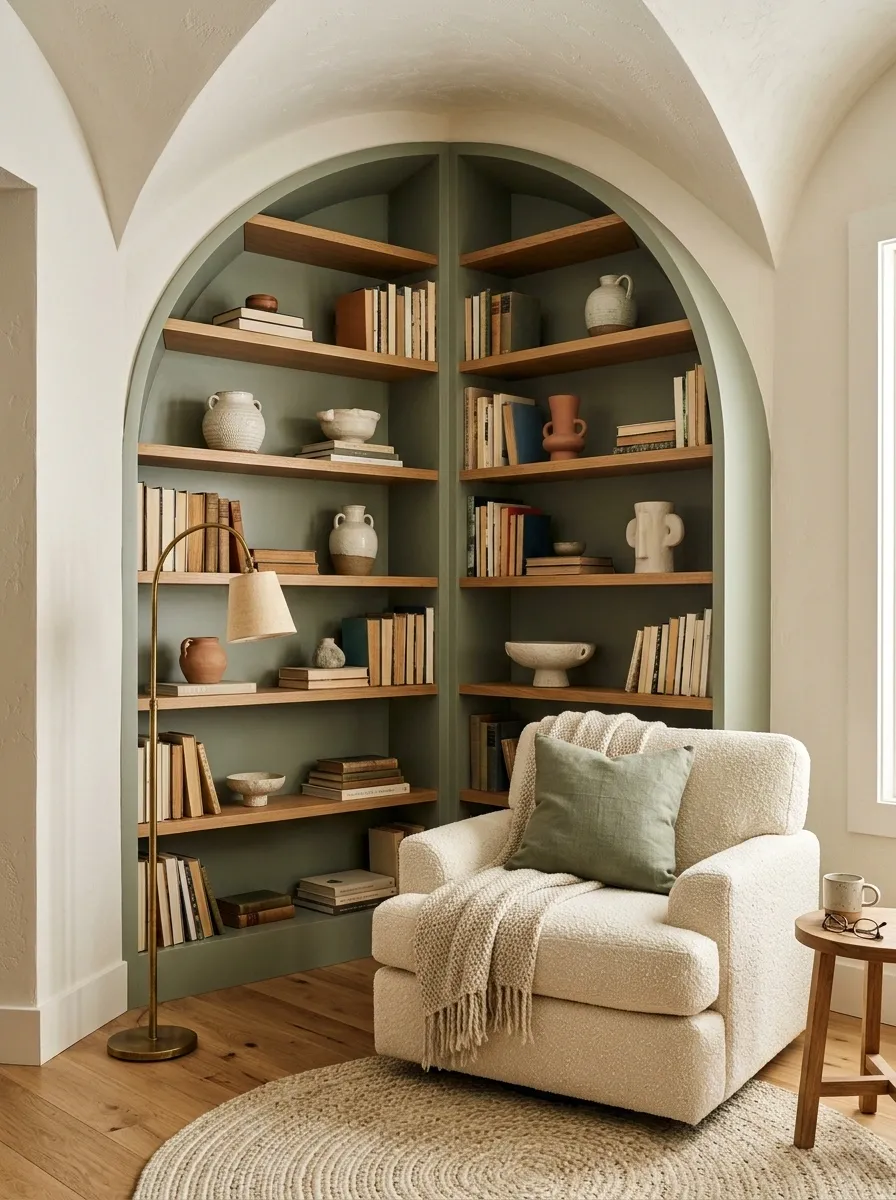
An arched bookcase gives a blank corner architectural character while also creating a natural backdrop for a comfortable chair. Place the chair slightly forward of the shelving so the books remain visible around it rather than disappearing behind the furniture.
A muted painted finish, warm timber shelves, mixed-height books, and a few handmade-looking objects create depth without making every shelf equally full. A small reading lamp can sit just outside the chair’s silhouette. The curved opening is the memorable feature, so the styling should support its shape rather than compete with it.
Sculptural Pedestal Table With Large Ceramic Vessel
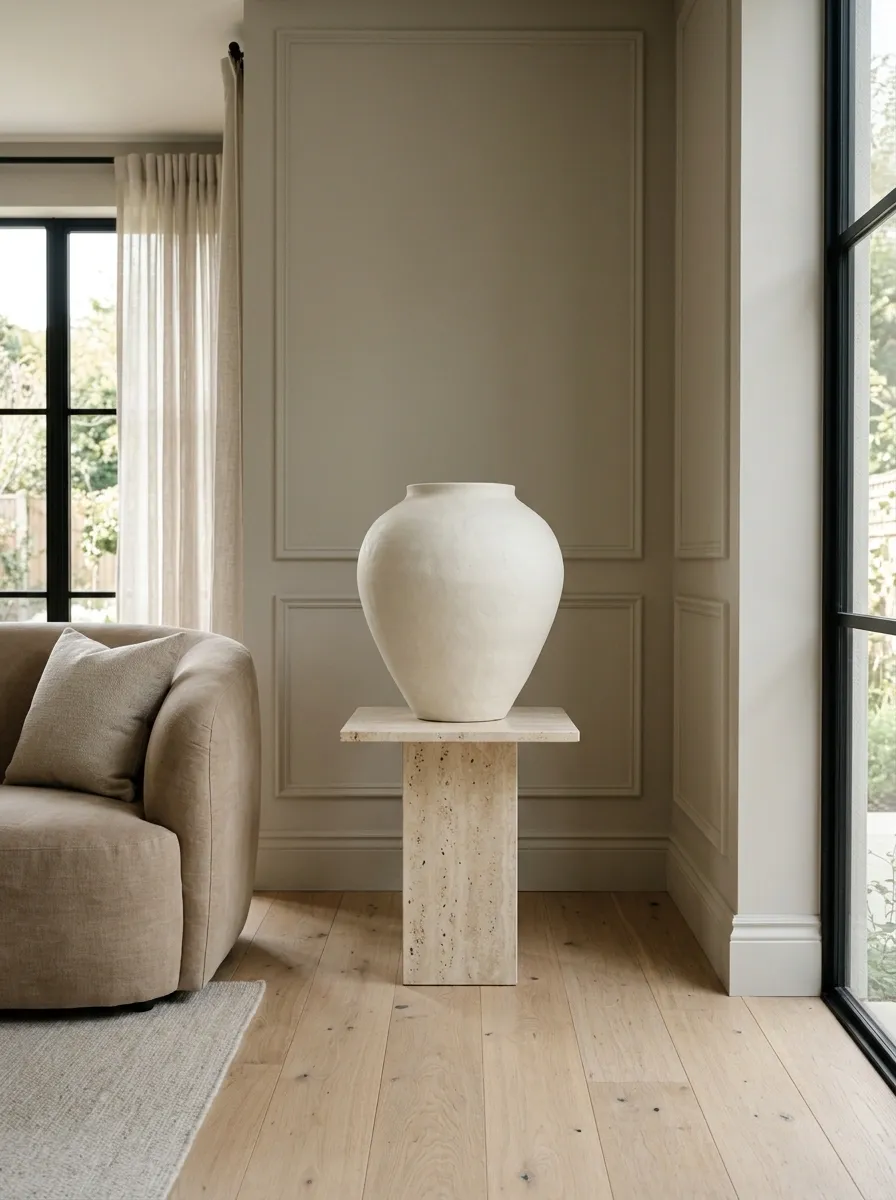
Some corners need almost nothing. A pedestal table paired with one oversized ceramic vessel can create a deliberate focal point while preserving a generous amount of open floor.
This composition suits rooms where the sofa, rug, or artwork already provides plenty of visual information. Choose a vessel with a substantial silhouette rather than several small accessories. Stone, plaster, oak, and warm ivory finishes keep the arrangement understated. The empty space around the table is important because it allows the object to read as a sculptural feature instead of another piece of clutter.
Low Cane Cabinet With Layered Wall Art
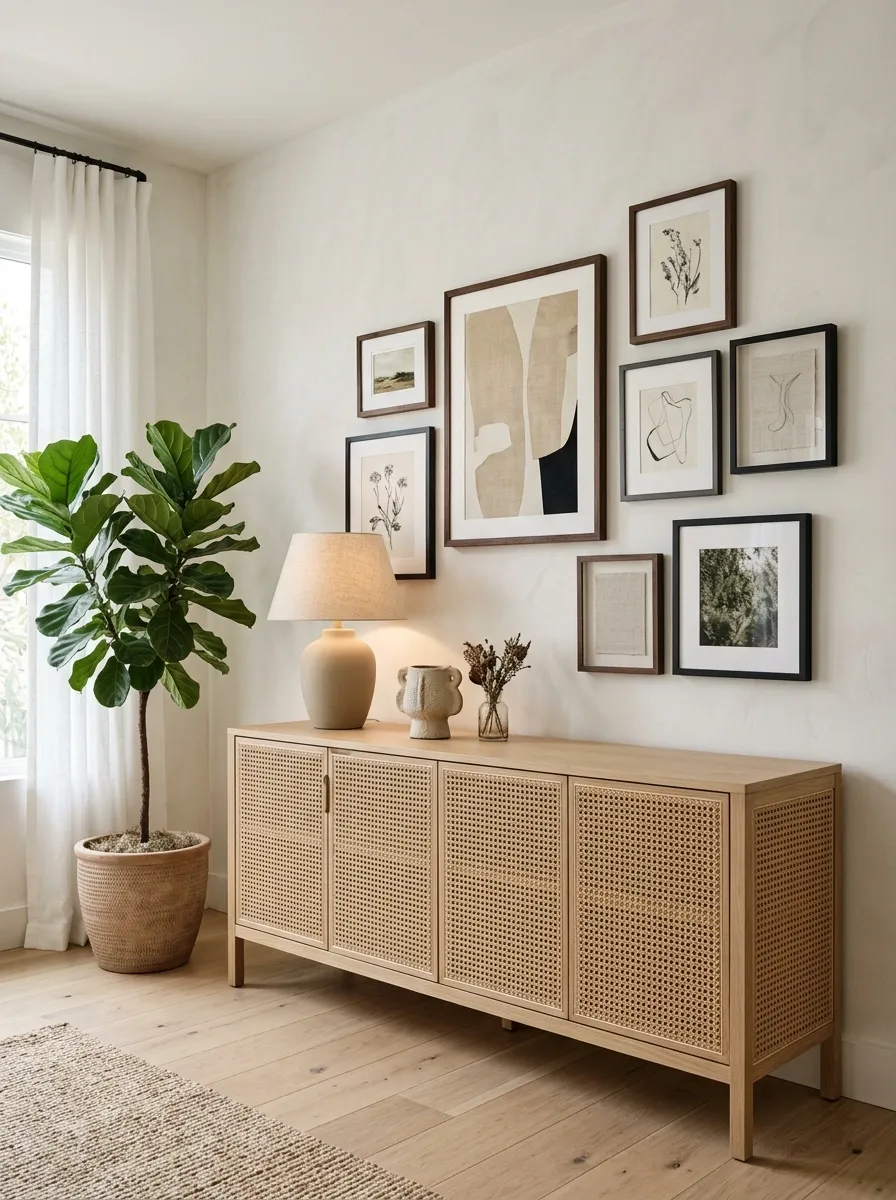
A woven-front cabinet brings texture to a corner without the visual heaviness of a large bookcase. Above it, two or three pieces of artwork can create a relaxed vertical arrangement, with the largest frame anchoring the composition.
Natural cane, pale oak, soft white walls, and a darker frame finish create enough contrast for the corner to stand out. Keep the artwork loosely grouped rather than lining every frame up with mathematical precision. A small lamp and one ceramic object can occupy the cabinet surface, leaving the woven doors visible as part of the design.
Window-Side Conversation Chair With Ottoman
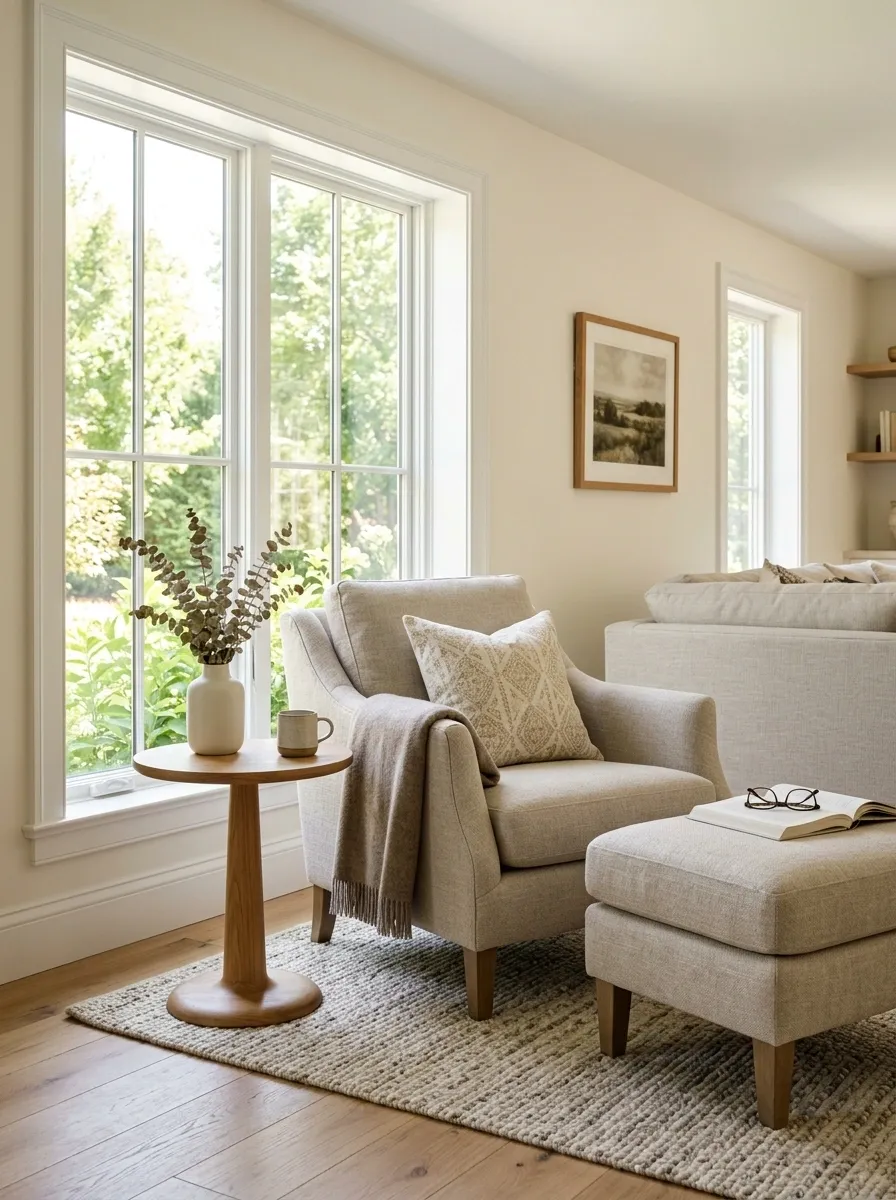
A bright corner beside a window can become one of the most inviting parts of the room with a substantial upholstered chair, matching ottoman, and small pedestal table. The arrangement should face partly toward the room rather than directly toward the window, keeping the corner connected to the main seating area.
Soft linen, warm wood, and a textured neutral rug suit the abundant daylight. The ottoman gives the chair enough visual substance to anchor the corner without requiring another large table. Keep the window area free from excessive decoration so the natural light remains part of the composition.
+ daylight
Floating Console With Large Mirror and Sculptural Lighting
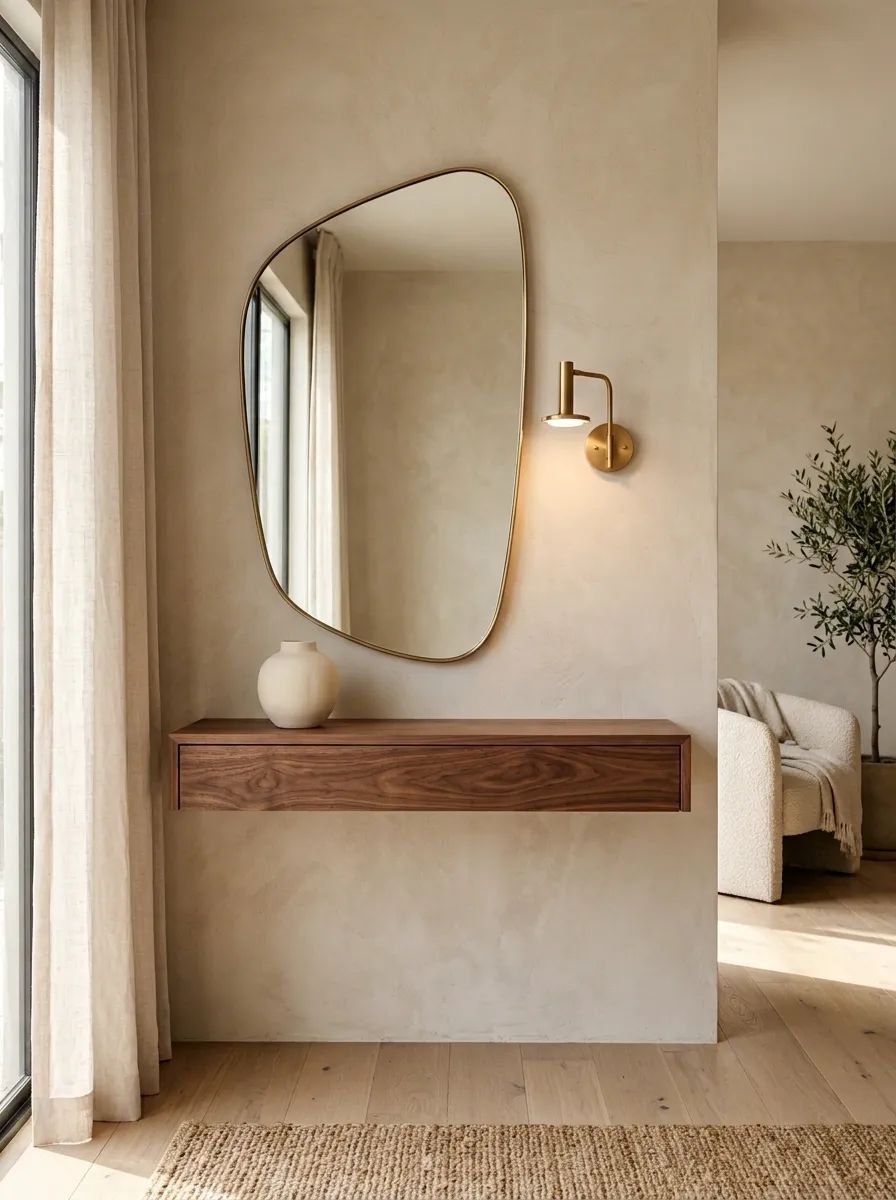
A floating console keeps an awkward corner visually open while giving the wall a clear focal point. Pair a slim walnut console with an oversized organic-shaped mirror and a compact wall light or very narrow lamp. The arrangement draws attention upward without filling the floor with furniture.
The mirror introduces a softer shape against the room’s architectural lines, while the warm timber keeps the composition grounded. A single ceramic vessel is enough for the console surface. The floor beneath should remain mostly clear, which makes this approach especially effective in tighter living rooms where bulky furniture would interfere with circulation.
mirror
light
Moody Green Corner With Leather Chair and Brass Lamp

A deeper color can make an otherwise forgettable corner feel intentional. Paint the wall in a muted botanical green, then layer in one cognac leather chair, a small dark wood table, and an aged brass floor lamp. The result creates a distinct color pocket without requiring the entire living room to become dark.
Keep the surrounding furnishings lighter so the corner has somewhere to visually land. Cream upholstery, warm timber, and natural textiles provide enough contrast against the green backdrop. The brass should remain subdued rather than shiny, giving the composition a collected quality instead of a showroom finish.
background
leather
brass
Large Round Mirror Over a Compact Console
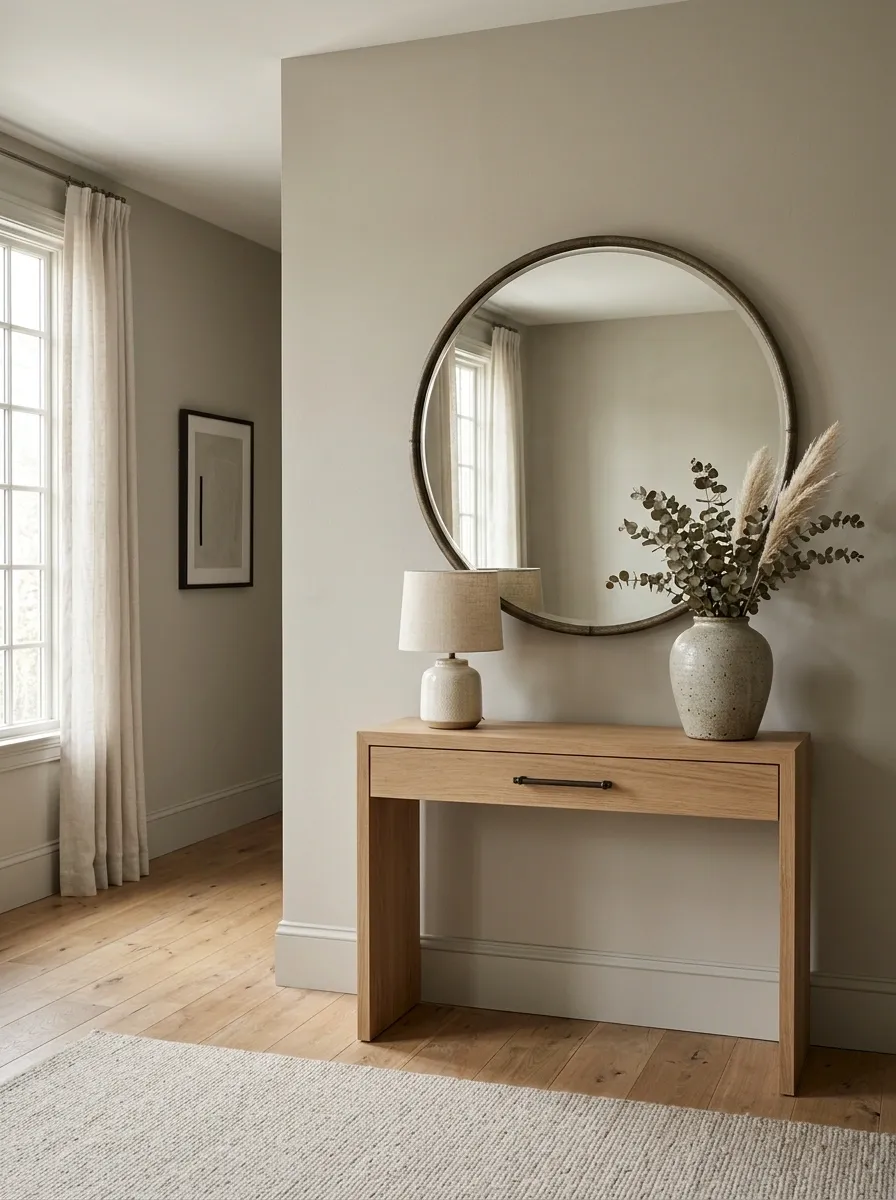
A round mirror can soften a corner dominated by straight architectural lines. Place an oversized circular or gently organic mirror above a narrow console, then add one small lamp and a substantial ceramic piece rather than a crowded collection of accessories.
Warm greige walls, oak, linen, and black or aged-metal details create a balanced transitional look. The mirror should be large enough to hold its own against the surrounding furniture. A console that is too wide or too deep will overwhelm the composition and take away the lightness that makes this arrangement work.
Slim Ladder-Style Display With Floor Basket
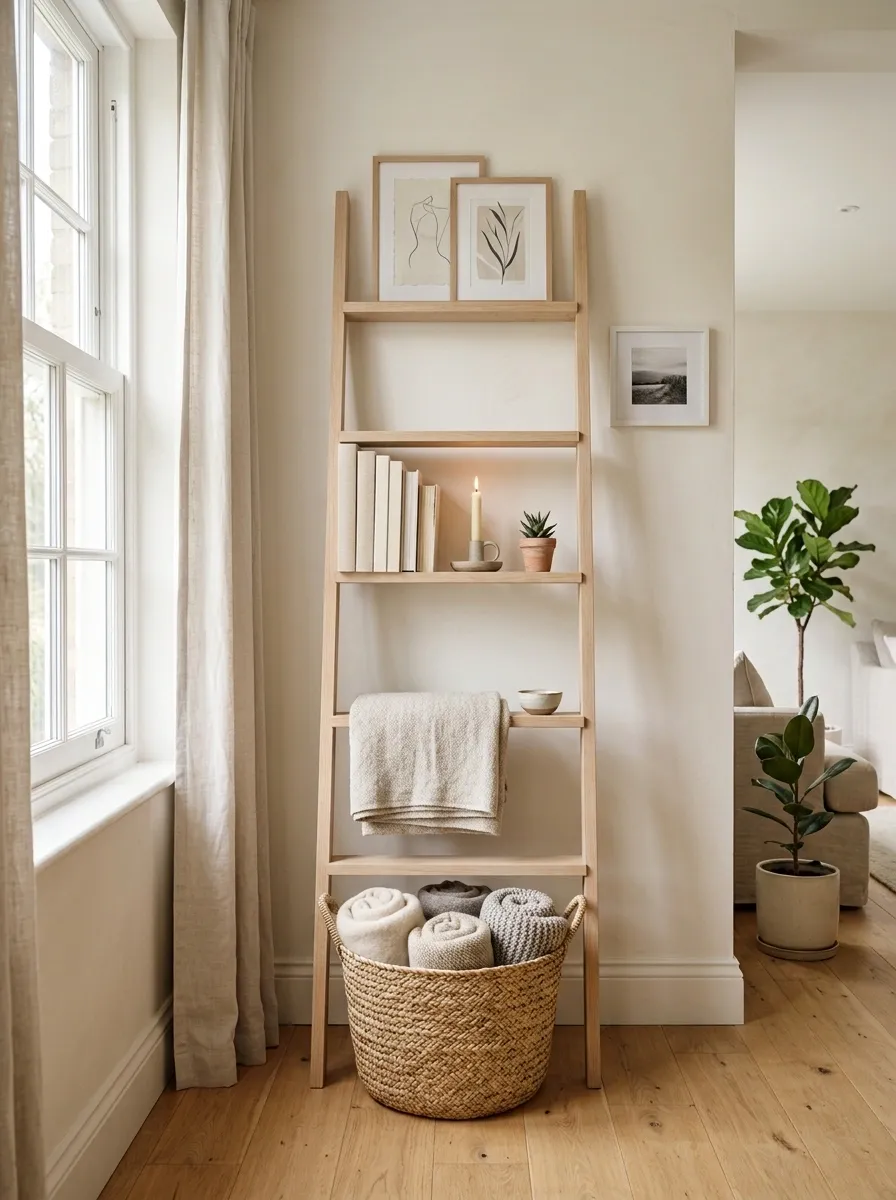
A tall ladder-style display can occupy a narrow corner without visually enclosing it. Use a lightweight timber frame for a few folded throws, books, or framed pieces, then anchor the bottom with a large woven basket for blankets or everyday storage.
The composition works because its elements occupy different heights without creating a large solid block. Pale timber, soft textiles, and a neutral wall keep it visually light. Avoid filling every rung. The empty spaces between objects are what allow the ladder structure to remain part of the room rather than becoming another dense storage unit.
low weight.
Statement Plant Group With Built-In Pebble Tray
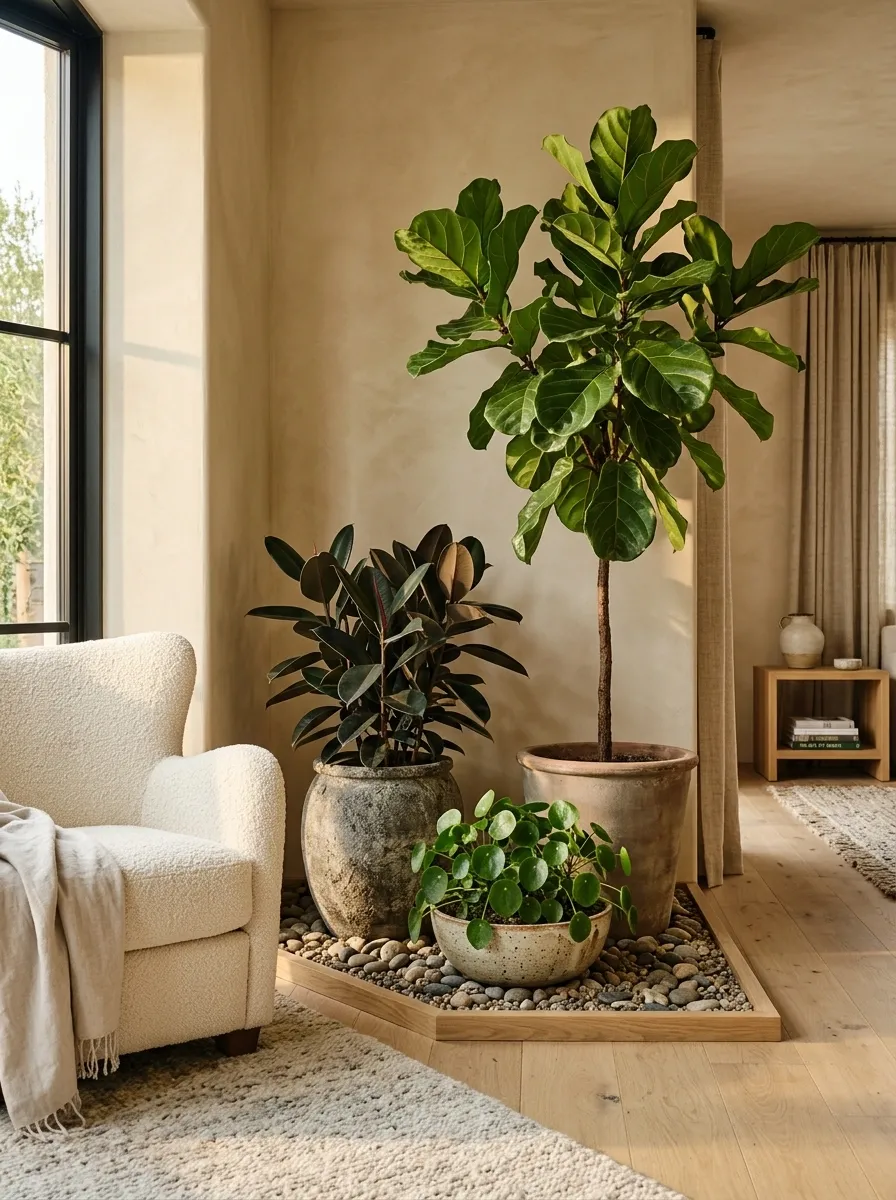
A plant grouping can turn a large corner into a small indoor landscape when the heights and containers are intentionally composed. Use one tall plant, a medium companion, and a low vessel or pebble tray rather than clustering several similarly sized pots.
Natural foliage works especially well against warm plaster or light walls. Terracotta, stone, and muted ceramic containers give the greenery enough variation without competing with it. The lowest element should spread visually toward the floor, helping the group transition naturally into the surrounding furniture and rug.
foliage
plant
Narrow Fireplace Mantel With Oversized Mirror
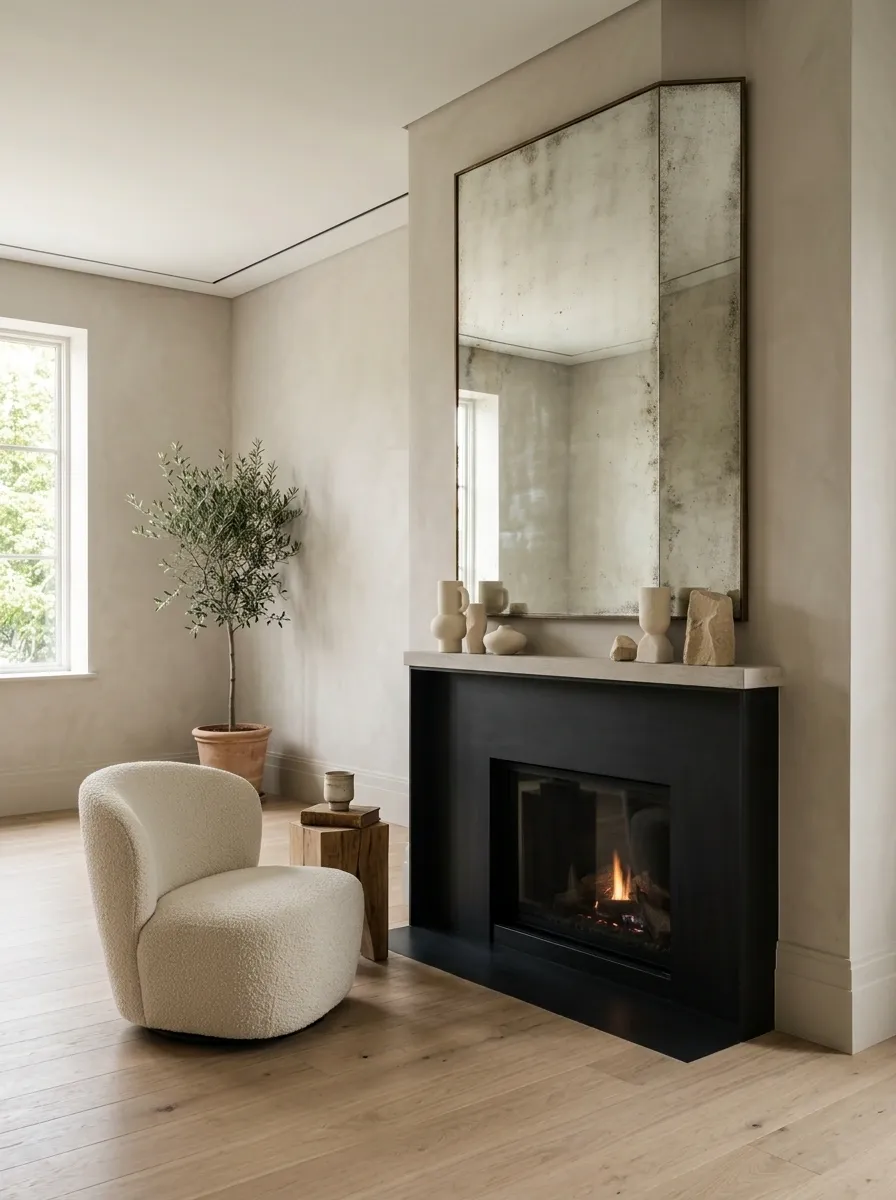
A compact fireplace or mantel can turn a corner into the room’s architectural focal point with very little additional furniture. Place an oversized aged mirror above the mantel and keep the surface below it intentionally sparse, using only a few low ceramic or stone forms.
The mirror should dominate the vertical plane while the mantel establishes the horizontal base. Modern upholstery and simple flooring keep the architecture from feeling overly traditional. The result is strongest when the fireplace has room around it, allowing the material and proportions to remain visible rather than surrounding the feature with decoration.
Curved Sofa Extension With Round Side Table
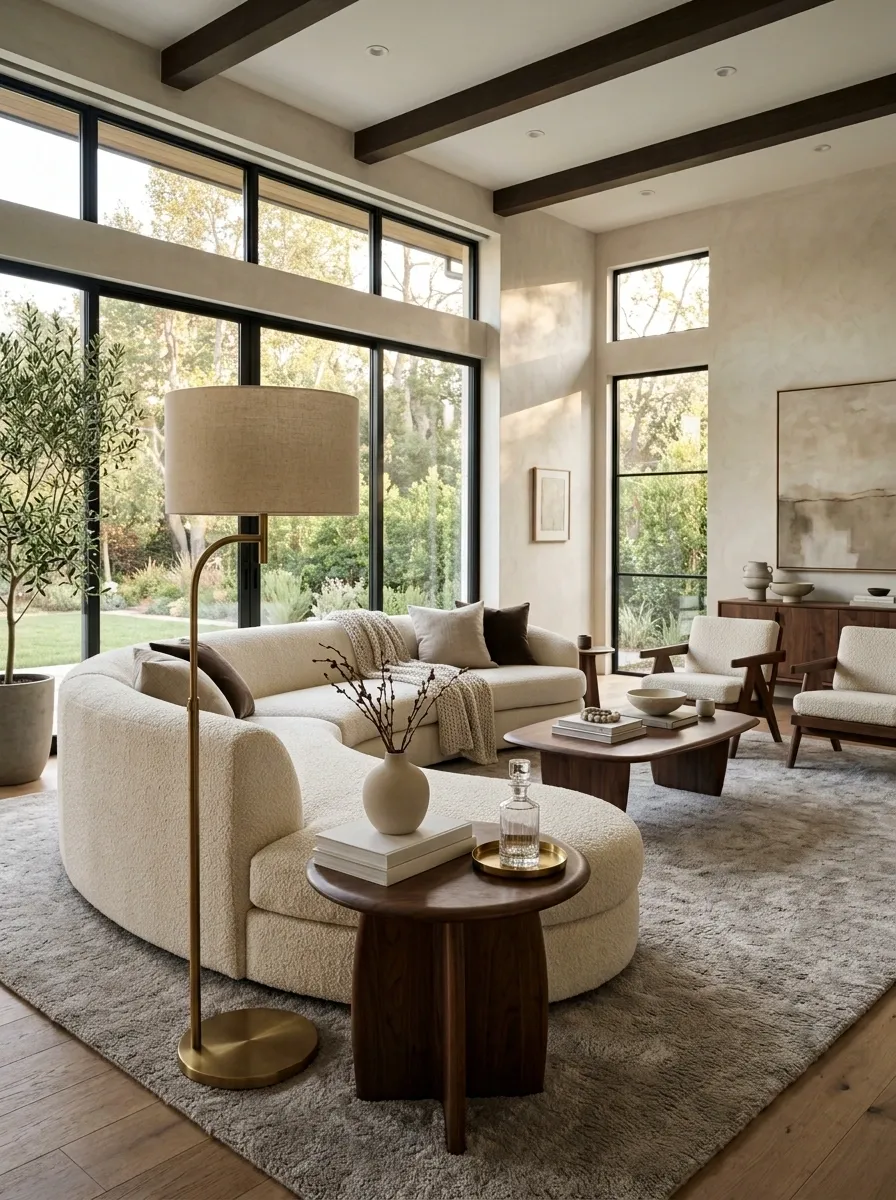
A particularly large empty corner can sometimes be solved by extending the main seating composition rather than treating the corner as a separate zone. A curved sectional edge, round side table, sculptural floor lamp, and broad rug can pull the unused area into the furniture plan.
This works best in spacious living rooms where a small chair would look undersized. Keep the sofa’s curve generous and allow the rug to extend beyond the seating footprint. Walnut or dark wood accents provide definition against a lighter sofa. The goal is a continuous seating landscape rather than a collection of disconnected furniture pieces.
Sculptural Corner Bench With Oversized Textile Art
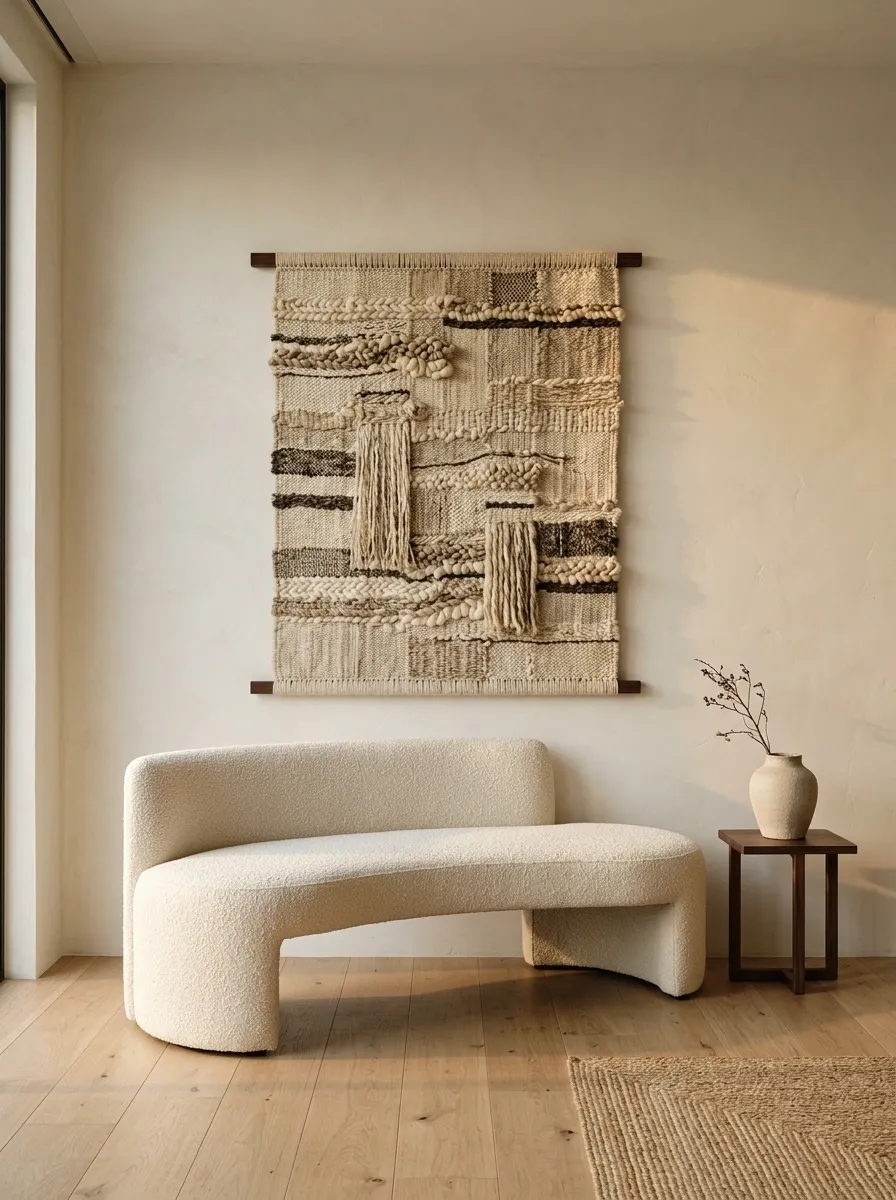
A curved bench beneath a large woven or textile artwork gives an empty corner a distinctly architectural finish. The low seating keeps the composition grounded while the oversized artwork carries the height and texture.
Warm oak, textured plaster, natural fibers, and soft ivory upholstery create a restrained palette with plenty of tactile variation. A tiny side table is enough to complete the seating area. Leave generous wall and floor space around the main elements. This approach works because the empty space isn’t treated as something to fill. It becomes part of the composition itself.
Let the Empty Space Work for You
The most convincing living room corners don’t necessarily contain the most furniture. A corner can feel complete because of its height, its relationship to natural light, a single strong material, a carefully chosen piece of storage, or the way a piece of artwork balances the room.
Start by standing in the main seating area and looking at the empty space as part of the whole room. Notice where the eye naturally lands, where people walk, which walls already carry visual weight, and where another large object would simply make things tighter.
Then choose one clear direction and build the composition around it. A reading corner should feel like a place to sit. A storage corner should feel architectural. A plant corner should have height and breathing room. A decorative corner may need almost nothing at all.
The strongest result is rarely the corner with the most things in it. It is the one that looks as though every element belongs there.
Save your favorite living room corner arrangements now so the right composition is easy to return to when the room is ready for its next change.