
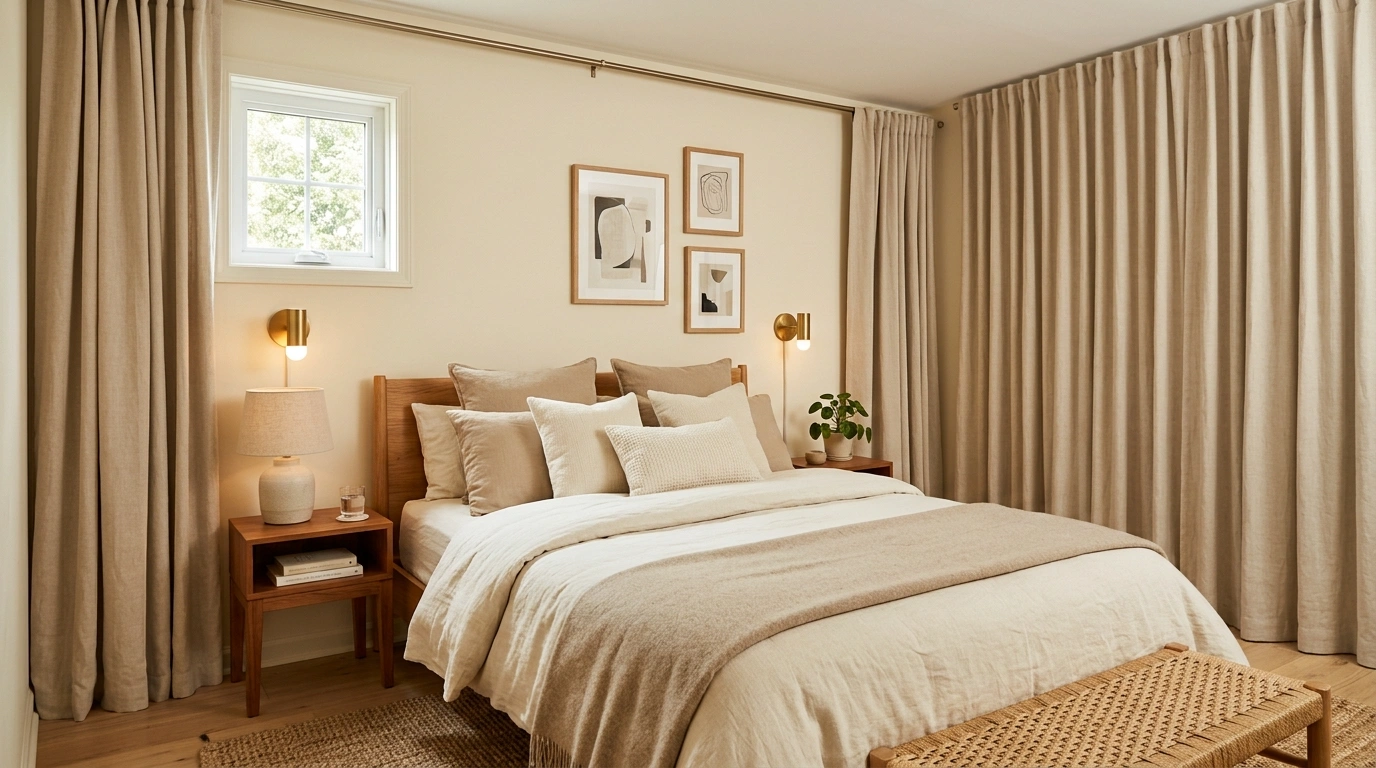
An oddly positioned window can make a bedroom feel wrong before any furniture has even been moved in. The bed seems to belong somewhere else, one side of the wall looks heavier than the other, and every attempt to create symmetry draws attention to the fact that the architecture isn’t symmetrical in the first place.
The answer isn’t always to disguise the window. Some of the most convincing bedrooms let the irregular opening remain visible and build a stronger composition around it.
A substantial headboard can establish a new center. A reading chair can give the window its own purpose. Curtains can turn a narrow opening into a full-height architectural frame.
Even a completely separate focal point can make the window feel like a natural part of the room.
Ideas for Awkwardly Placed Windows
Cozy Window Valance and Gingham Bedding
An offset or awkwardly positioned window can completely derail a standard bedroom layout unless you embrace the architecture with confidence. Here, a custom gingham valance frames both the small window and the headboard area below, transforming a disjointed opening into a cohesive design feature. A small circular mirror hung directly in front of the glass adds an unexpected layer of reflection without blocking the outdoor view completely.
The sage green walls and matching patterned textiles create an enveloping, cocoon-like atmosphere that makes the room feel intentional and snug. Paired with crisp white linens and a simple wooden nightstand holding a classic reading lamp, the space balances pattern and calm effortlessly. The dark wood furniture anchors the lower half of the room while the soft green tones unify the walls and window treatment into one continuous visual envelope.
This approach proves that awkward windows do not need to be hidden behind heavy, standard blinds or ignored altogether. By building a custom fabric frame that encompasses both the window and the bed, you create a bespoke focal point that feels straight out of a boutique countryside inn. It turns a potentially frustrating architectural quirk into the most charming feature in the entire house.
Window-Framed Bed With an Off-Center Linen Headboard
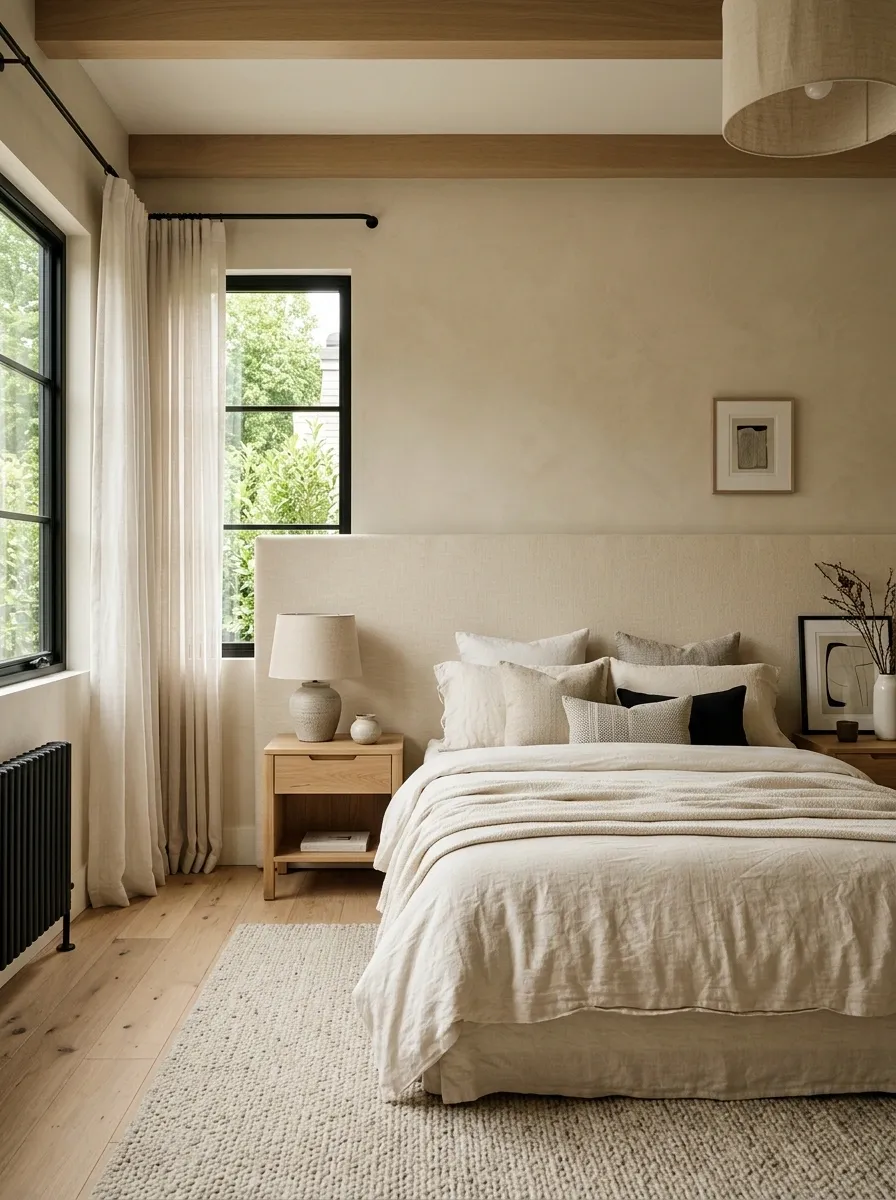
An off-center window becomes much less disruptive when the bed has a stronger visual width than the opening behind it. A generously sized upholstered headboard stretches beyond the mattress, creating a horizontal anchor across the wall. Warm ivory bedding, natural oak nightstands, and soft ceramic lamps keep the palette quiet, while one side can hold a slightly taller accent piece to balance the offset window.
The important detail is the headboard’s scale. It gives the wall a new organizing line, so the eye reads the bed as the center of the composition rather than searching for a perfectly centered window. The result feels relaxed, architectural, and deliberately asymmetrical.
Arch Window Daybed With Dramatic Drapes
A high, arched window floating above a bed space can easily feel disconnected from the rest of the room. Floor-to-ceiling drapes featuring a striking geometric print solve this problem instantly by framing the entire alcove like a grand stage. The curtains run along a high track, visually pulling the ceiling down and turning the awkward window into a dramatic architectural backdrop.
Tucked beneath the window arch, a cozy daybed dressed in rich blue blankets and layered pillows transforms the niche into an inviting reading nook or guest sleeping spot. Warm wooden flooring and a classic chest of drawers on the side bring grounded texture to the space, balancing the bold pattern of the drapery. The rustic wooden accents and soft textiles prevent the tall curtains from feeling overpowering.
When working with unusual window placements, framing the entire zone with patterned fabric creates a sense of purpose and enclosure. It allows the natural light to filter through while establishing a cozy, defined perimeter around the bed. The result is a moody, romantic retreat that makes the most of unconventional room proportions.
Floor-to-Ceiling Curtains That Recenter a Narrow Window
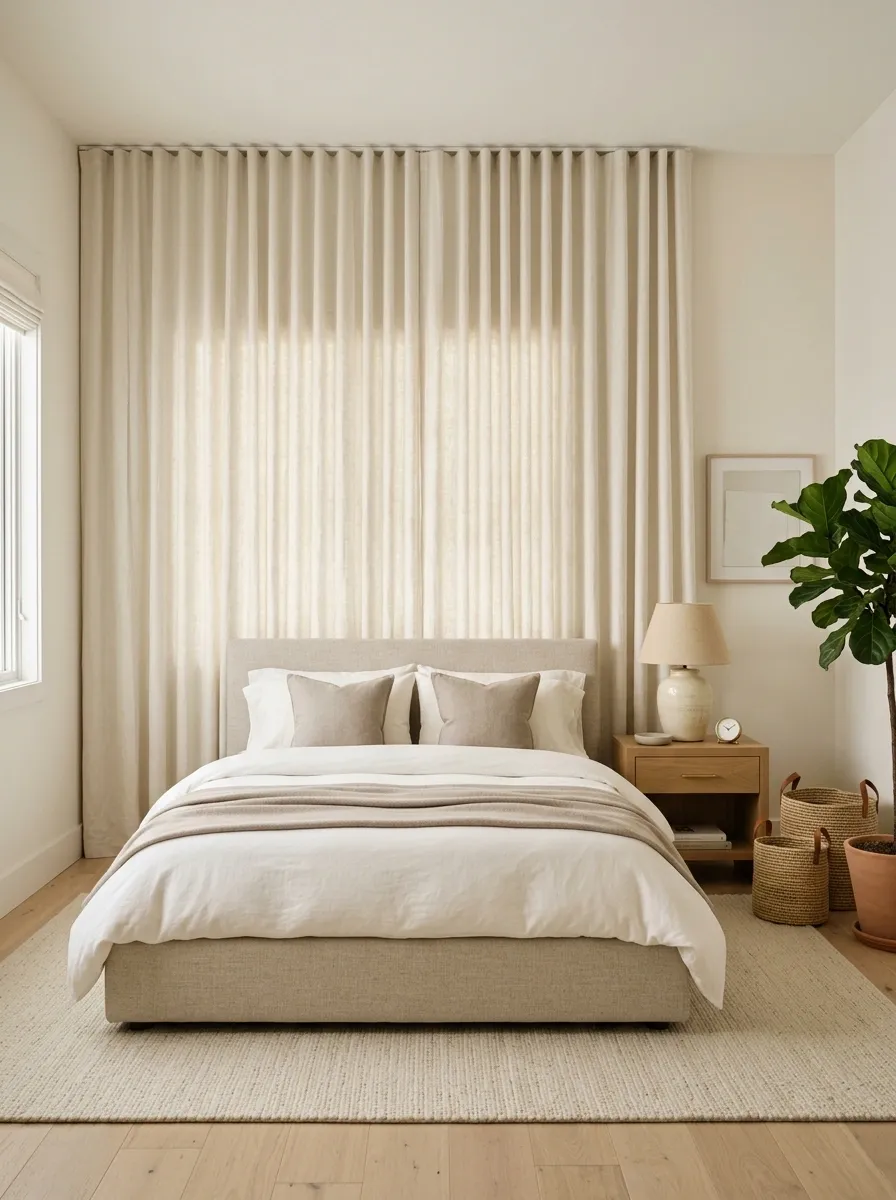
A narrow window pushed toward one side of the bedroom can make a centered bed look strangely disconnected from the wall. Full-height curtains solve that visual tension by enlarging the perceived window zone. The fabric runs from near ceiling height to the floor and extends beyond the actual opening, creating a broad, soft frame behind the bed.
The rest of the room works best when it remains relatively restrained. A low upholstered bed, warm timber, pale bedding, and one substantial bedside lamp provide enough structure without competing with the curtains. The key is using the drapery as part of the room’s architecture rather than treating it as a small covering attached to the window.
The curtain span becomes wider than the actual window, giving the bed a more convincing backdrop.
Nested Bed Nook Within Arched Walls
An arched window recessed deeply into a thick, curved wall creates a built-in architectural alcove that practically begs for a cozy daybed arrangement. Rather than fighting the curves of the room, this design leans into the cave-like coziness by placing a striped daybed right inside the arched niche. The surrounding sage green walls wrap around the nook, creating a seamless transition from the main sleeping area to the windowed enclave.
Gallery-style artwork hangs along the curved wall, drawing the eye naturally toward the bright window at the end of the room. A low-slung bed with dark brown bedding grounds the primary sleeping zone, while a mix of warm wood tones and vintage textures keeps the space feeling curated and lived-in. The subtle contrast between the soft green plaster and the dark wooden furniture adds depth to the unusual room layout.
This setup demonstrates how to maximize awkward bedroom architecture by turning a recessed window into a dedicated lounging zone. By keeping the color palette muted and cohesive, the various alcoves and angles feel harmonious rather than disjointed. It is a masterclass in making quirky, sloped-ceiling spaces feel intentional and exceptionally cozy.
Low Platform Bed Beneath a High Awkward Window
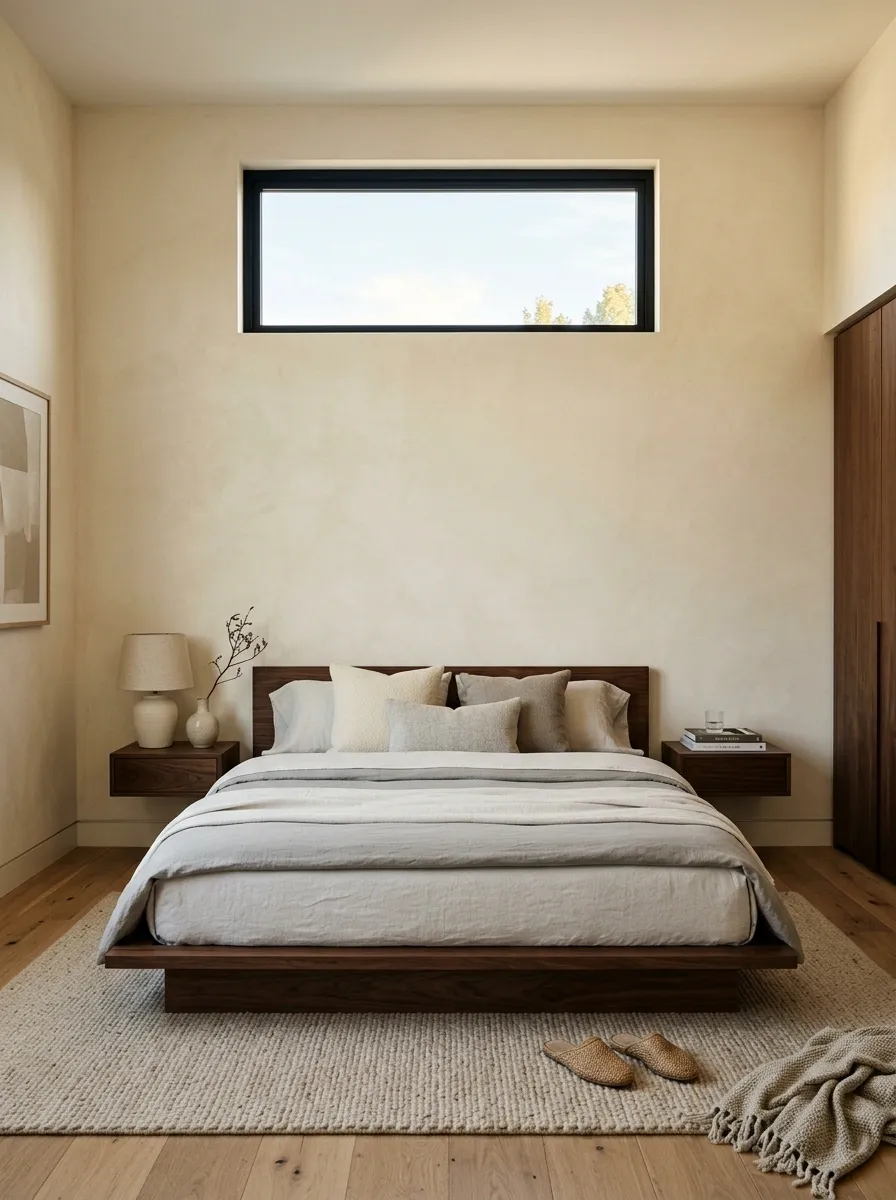
A high-set window creates an opportunity to use a deliberately low bedroom composition. A walnut platform bed sits close to the floor, paired with slim bedding, a simple textured rug, and compact nightstands. Rather than filling the vertical wall with additional decoration, the upper portion stays open so the window can read as a clean architectural opening.
The contrast between the low furniture and higher window gives the room an airy quality. Dark walnut grounds the lower half, while creamy walls and pale textiles keep the upper half visually light. This approach works particularly well when the window provides attractive natural light but sits too high to function as a conventional focal point.
Built-In Window Seat and Bookcases
A large central window flanked by blank walls can sometimes feel like a missed opportunity for functionality. Building a custom window seat directly beneath the glass, bordered by floor-to-ceiling bookshelves, turns that expanse into the ultimate multifunctional focal point. The crisp white cabinetry and soft gray cushions create a bright, inviting reading spot that anchors the entire room.
A matching bed draped in cool blue linens sits just across the plush area rug, echoing the calming tones of the window nook. Built-in drawers beneath the window seat provide hidden storage, proving that awkward structural elements can be harnessed to maximize utility. Warm wooden floors and a textured ottoman complete the balanced, airy composition.
This layout works brilliantly because the custom millwork unifies the window with the surrounding storage, eliminating any awkward dead space. The integrated bookshelves frame the natural light beautifully while keeping books and decor neatly organized. It transforms a standard bedroom into a peaceful sanctuary with dedicated zones for sleeping, reading, and relaxing.
Symmetrical Bed With Intentional Asymmetry Around the Window
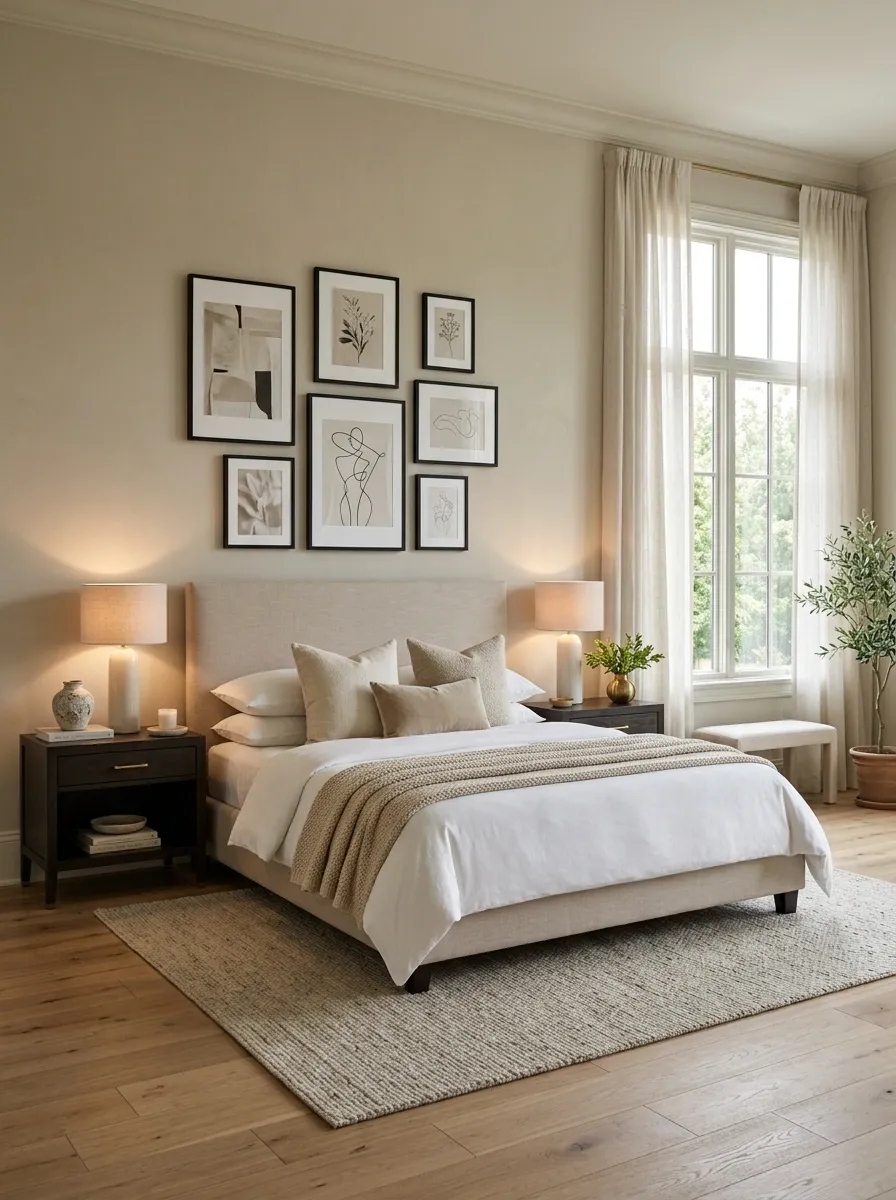
A bedroom does not need architectural symmetry to feel balanced. Here, the bed, nightstands, lamps, and artwork create a strong centered arrangement while the window sits noticeably off to one side. Matching furniture establishes order, giving the architecture permission to remain imperfect.
The restrained composition works because there are two different kinds of balance at play. The furniture provides visual symmetry, while the window contributes asymmetry and character. Soft beige upholstery, dark wood, and muted wall color keep the contrast sophisticated rather than stark. The result suits rooms where the window cannot be moved but the furniture can be arranged with confidence.
Corner Window Pairing With Tufted Armchair
When two windows meet close to a corner, arranging furniture can quickly become an awkward puzzle. Placing a classic tufted armchair right between the adjacent window frames creates a sophisticated reading corner that makes sense of the intersecting sightlines. Matching neutral curtains hung high and wide on both walls unify the corner and soften the hard architectural edges.
A rustic wooden crate serving as a side table holds a warm ceramic lamp, casting a gentle glow against the soft gray walls and botanical artwork. The neutral color palette keeps the busy corner feeling calm and uncluttered, allowing the natural light from both windows to bounce freely around the room. The tailored upholstery adds a touch of timeless elegance to the bright space.
This setup proves that corner windows do not have to disrupt your furniture placement. By anchoring the space with a comfortable armchair and cohesive window treatments, the corner transforms from a dead zone into a favorite spot to unwind. It is a seamless way to bring balance and charm to a tricky intersection of walls.
Built-In Wardrobe That Absorbs the Misplaced Window
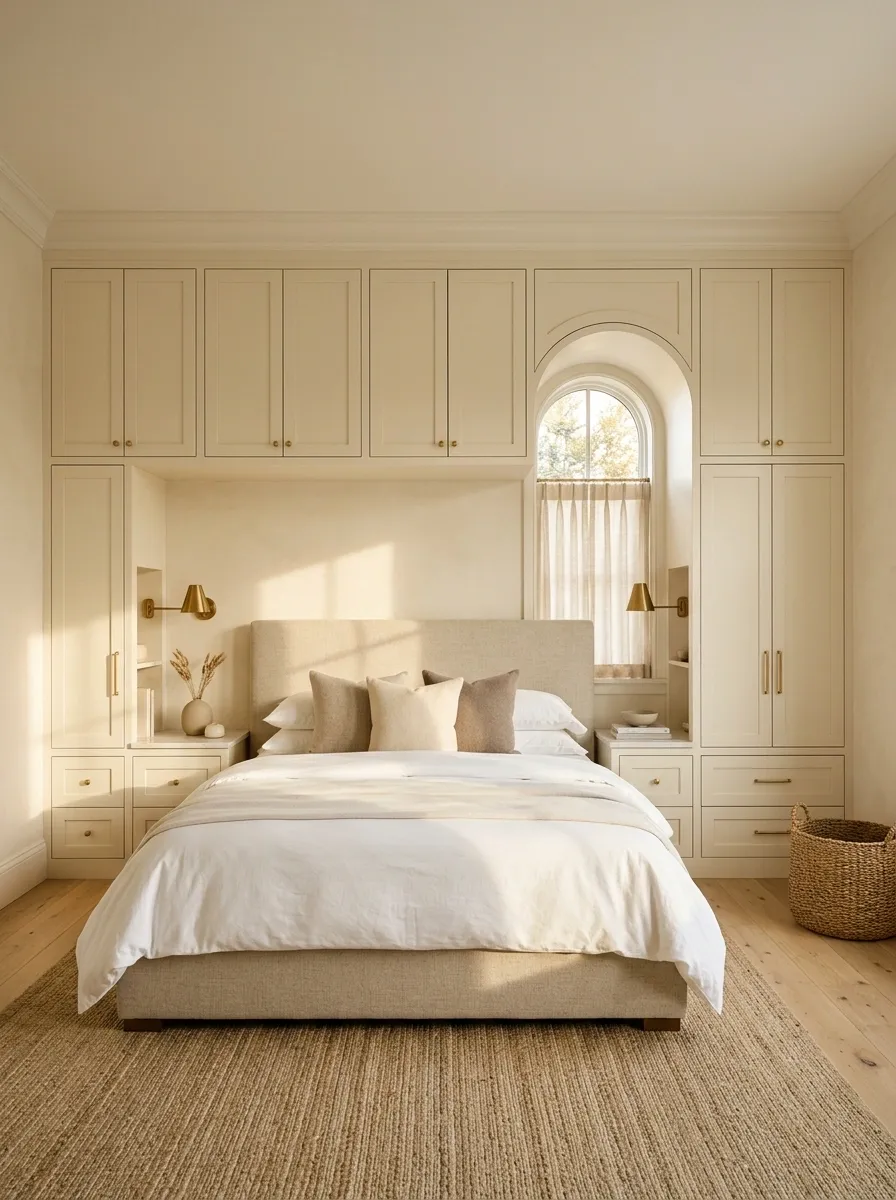
A wall interrupted by an awkward window can become one of the strongest parts of a bedroom when cabinetry is designed around it. Floor-to-ceiling wardrobes occupy the larger wall area, while the window sits naturally within the built-in composition rather than appearing stranded between unrelated pieces.
Warm painted cabinetry, integrated bedside storage, and a substantial upholstered bed make the room feel tailored without becoming overly formal. The built-ins should share one continuous finish so the wall reads as a single architectural element. That continuity is what makes the window feel incorporated rather than corrected.
Cozy Reading Corner Beside a Low-Sill Window
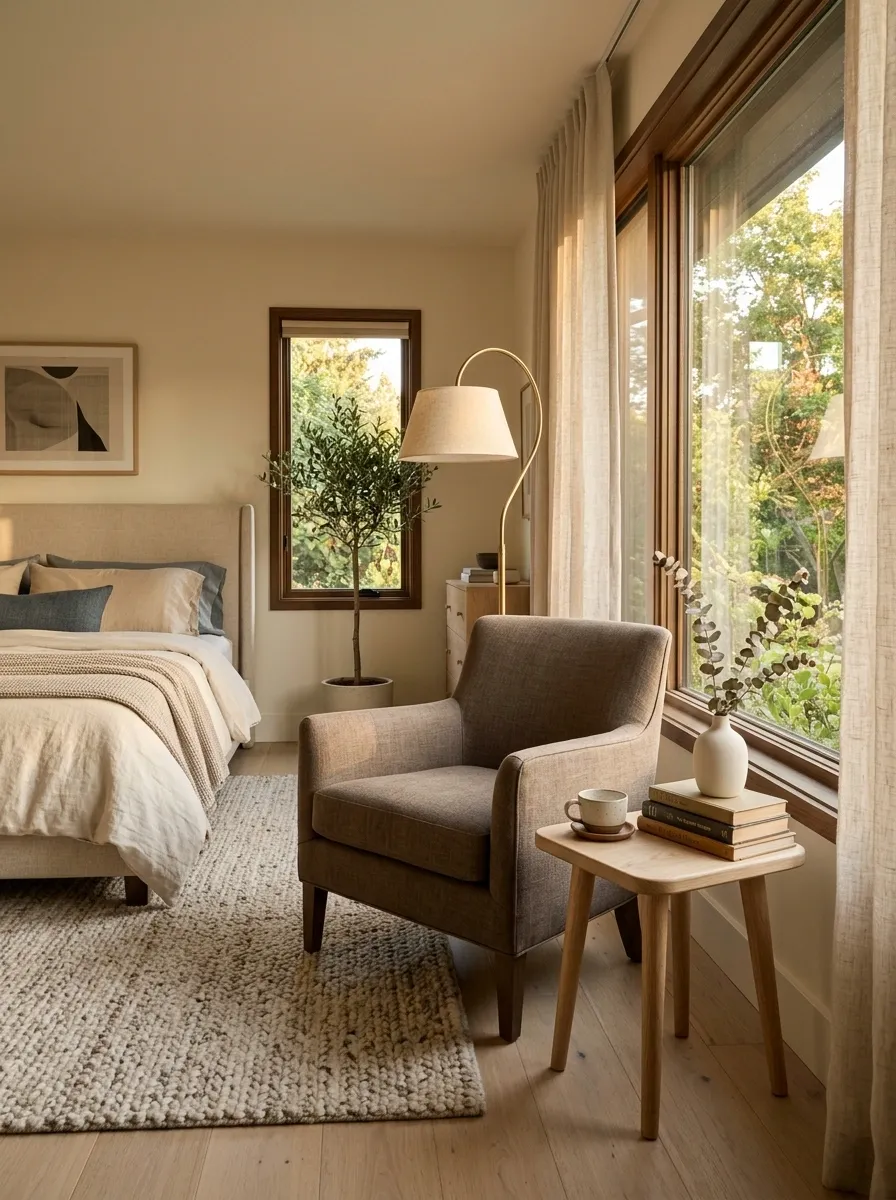
A low-sill window can become the most inviting part of the bedroom when it is given its own purpose. Instead of forcing the bed toward the opening, the layout places a compact upholstered chair, small wooden table, and sculptural floor lamp beside it. The bed stays on the room’s strongest uninterrupted wall, with a textured rug visually connecting the two areas.
Warm cream walls, pale oak, and muted brown textiles keep the reading corner integrated with the sleeping area. The window supplies the light, while the furniture gives that light a destination. The finished room feels layered without needing extra decoration on the window wall.
Four-Poster Bed That Deliberately Ignores the Window
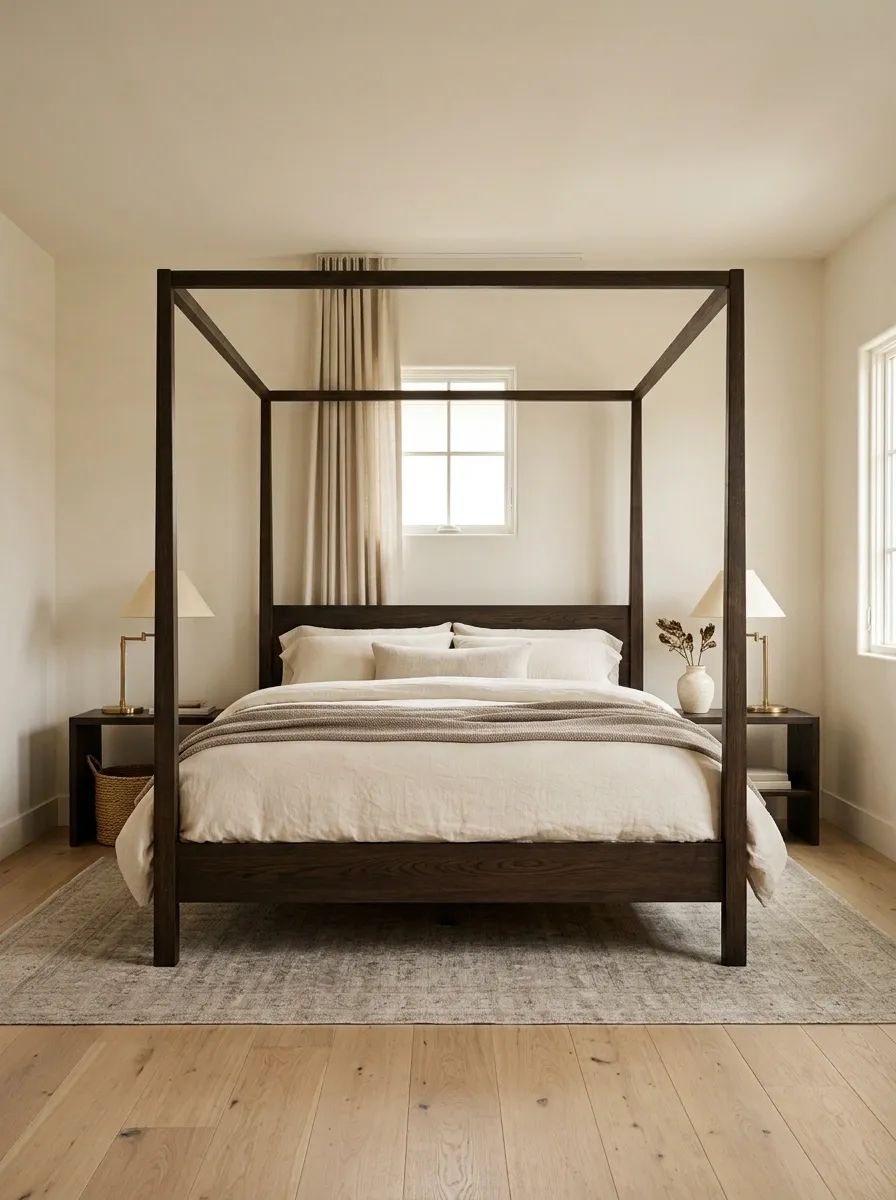
Some windows are better left outside the main furniture composition. A substantial four-poster bed gives this bedroom such a strong architectural center that the oddly positioned window becomes secondary. The dark wood frame rises above soft linen bedding, while two low nightstands and warm bedside lighting reinforce the bed’s visual authority.
The remaining architecture stays relatively quiet. Cream plaster walls, a muted rug, and restrained curtains prevent the room from becoming visually crowded. Rather than correcting the window’s position, the design establishes a stronger focal point elsewhere. That makes the room feel purposeful rather than compromised.
light
window
Soft Scandi Bedroom With a Side-Aligned Window
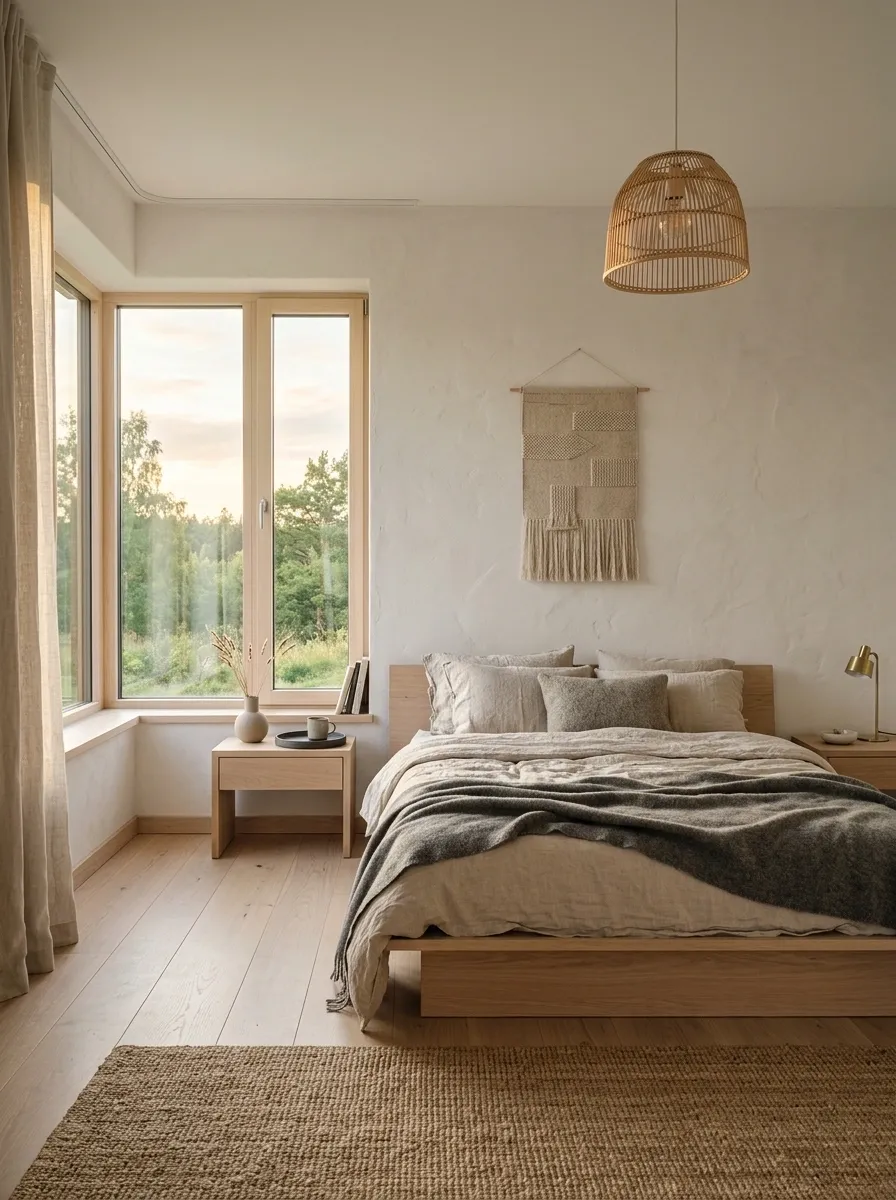
A Scandinavian-inspired bedroom can make an off-center window feel almost effortless through simplicity and proportion. Pale oak furniture, chalky walls, oatmeal bedding, and a charcoal accent create a restrained palette, while the bed sits on the most practical wall rather than chasing the window.
The room deliberately avoids filling every surface. A simple pendant, woven textile, and low bedside tables provide enough warmth and texture to keep the pale palette from feeling flat. Because the furniture is visually light, the offset opening becomes part of the room’s relaxed asymmetry instead of looking like a mistake.
Dark Moody Bedroom With a Window Used as Contrast
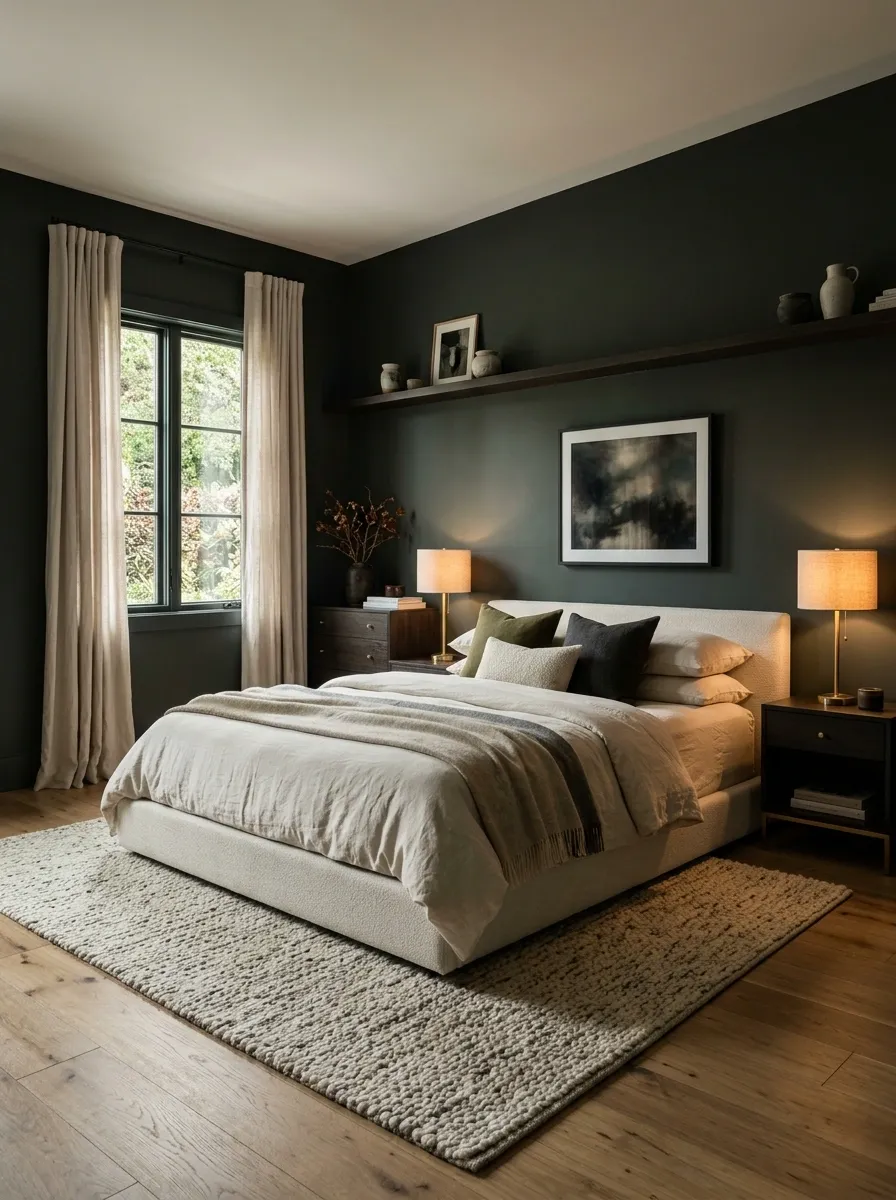
A misplaced window can become far more intentional against a deep wall color. This bedroom uses charcoal-green walls as a continuous backdrop, with a pale upholstered bed, ivory bedding, dark timber, and soft linen curtains. The window becomes a controlled source of brightness inside an otherwise enveloping palette.
Warm bedside lamps prevent the dark walls from feeling severe. A textured rug and slightly rumpled bedding add softness, while the furniture remains clean-lined. The contrast is what gives the awkward opening purpose. Instead of asking the architecture to disappear, the room uses it to introduce a carefully framed break in the darker wall.
Bedroom With a Long Upholstered Headboard Across the Wall
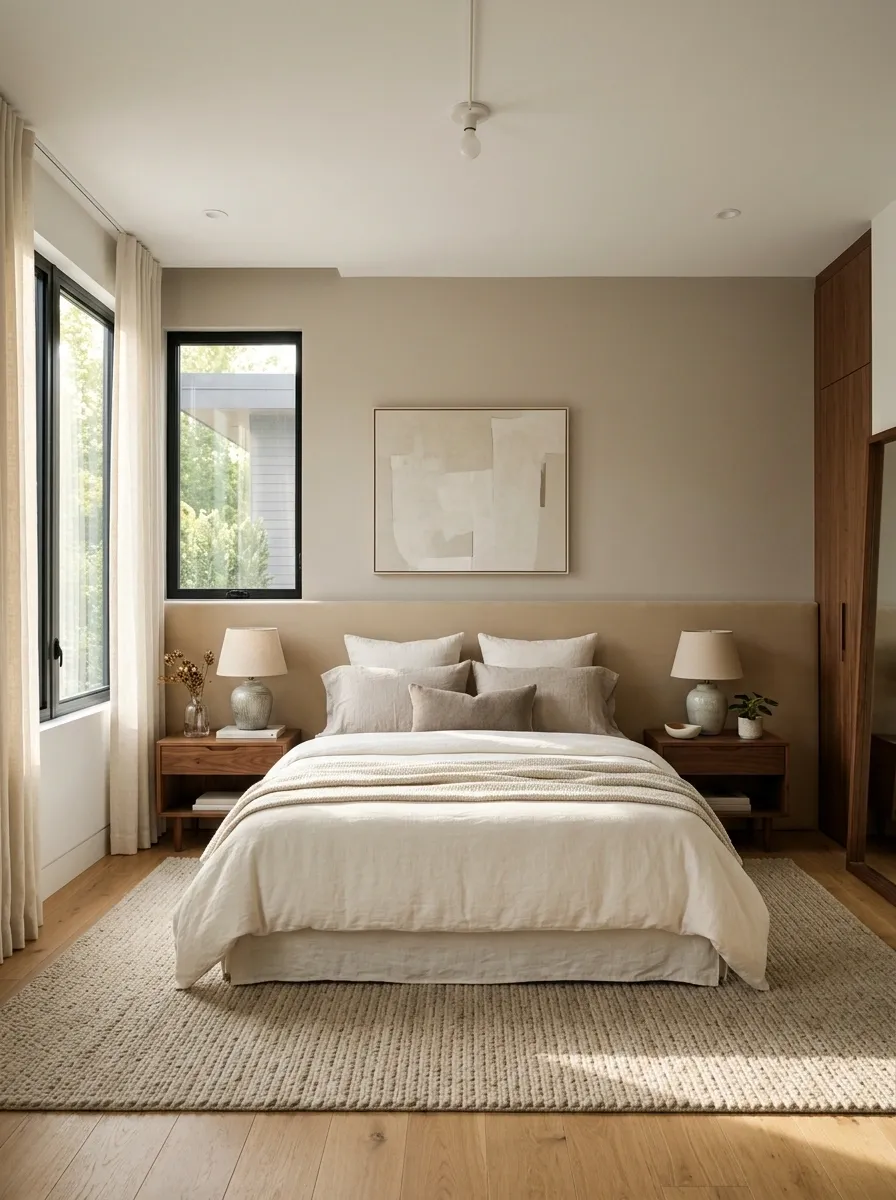
A long upholstered headboard gives an awkward window less visual authority by introducing a stronger horizontal element across the bedroom. The headboard extends well beyond the mattress, while low walnut nightstands, softly shaded lamps, and layered cream bedding reinforce the room’s width. A textured rug sits beneath the bed to create another broad visual plane.
The window remains visible, but it no longer has to establish the room’s center. Warm beige upholstery and dark wood create enough contrast to define the bed without making the wall feel heavy. This composition works especially well when the window is slightly offset but the wall itself has generous width.
Window Behind a Draped Canopy Bed
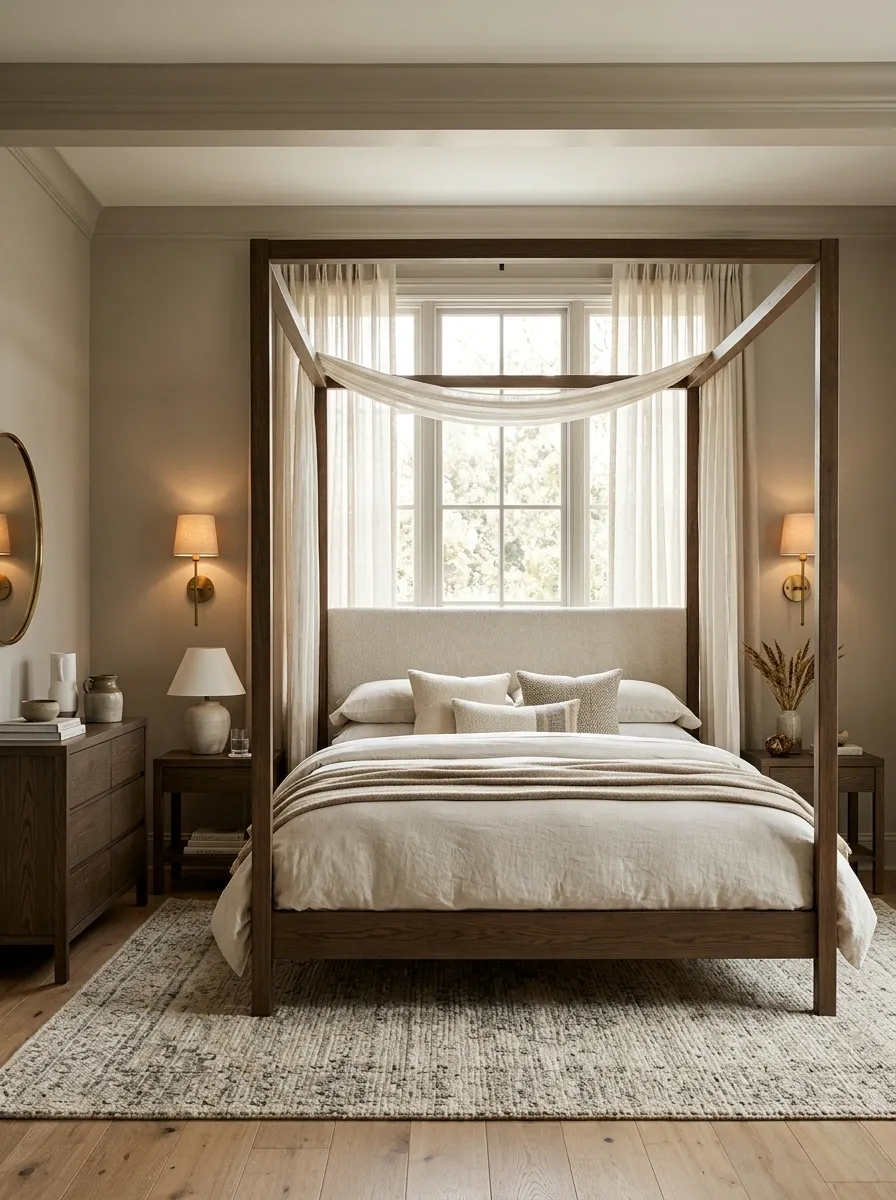
A canopy bed gives the bedroom its own architectural framework, which makes an awkward window easier to integrate. A dark or medium-toned timber canopy rises around a softly upholstered bed, while relaxed linen curtains hang behind and around the structure. The window becomes part of the layered backdrop rather than the room’s defining axis.
Muted cream bedding, aged brass lighting, and a warm textured rug keep the arrangement from feeling theatrical. The canopy provides enough structure to balance the irregular opening, while the soft fabric prevents that structure from becoming visually rigid.
Modern Bedroom With a Floating Bed Placement
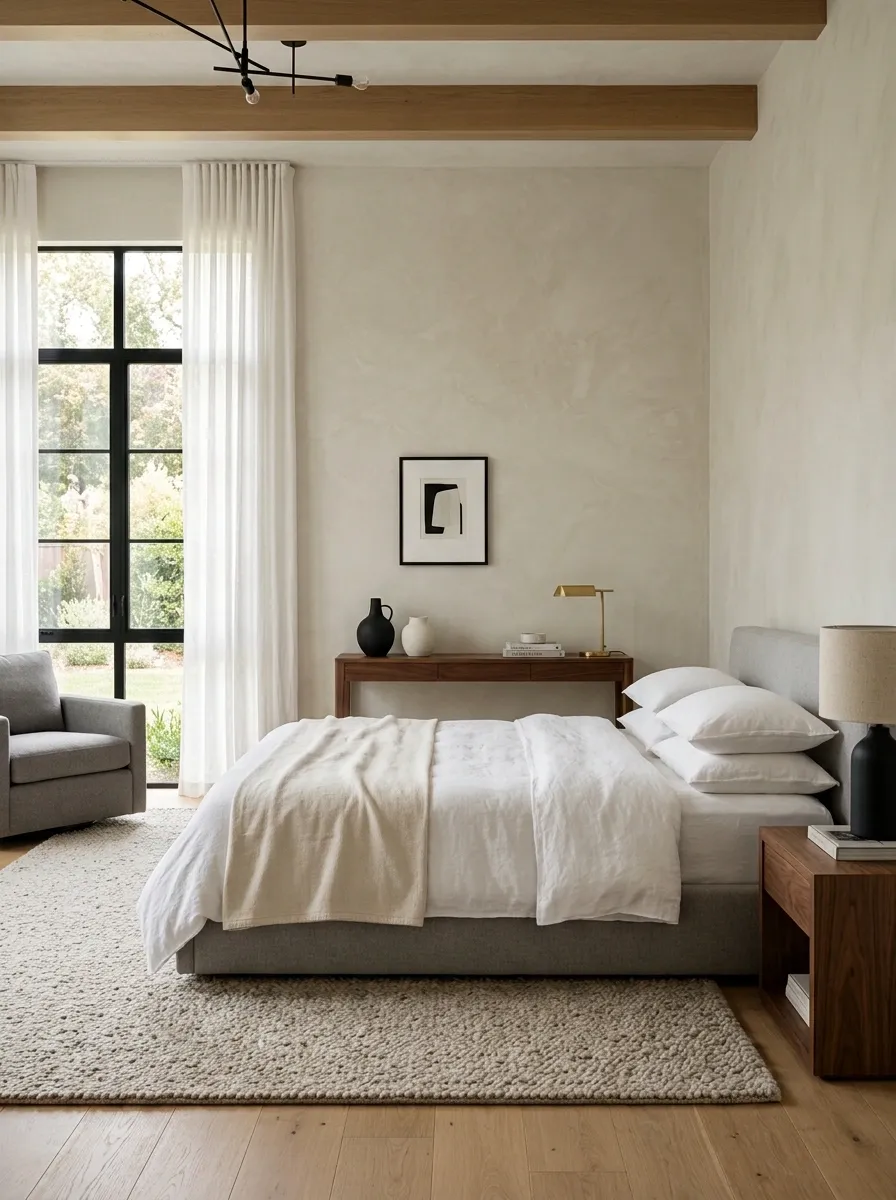
A contemporary bedroom doesn’t need to place the bed against the window wall. Here, the bed is pulled forward into the room, leaving a deliberate strip of space behind it. A slim console occupies part of that zone, while a large rug visually gathers the bed and surrounding furniture into one composition.
The unusual placement becomes part of the room’s modern character. Pale plaster-toned walls, walnut, soft gray upholstery, and restrained black details create a calm architectural palette. Keeping the furniture visually streamlined prevents the area behind the bed from looking accidental or overcrowded.
Warm Transitional Bedroom With Matching Window Trim
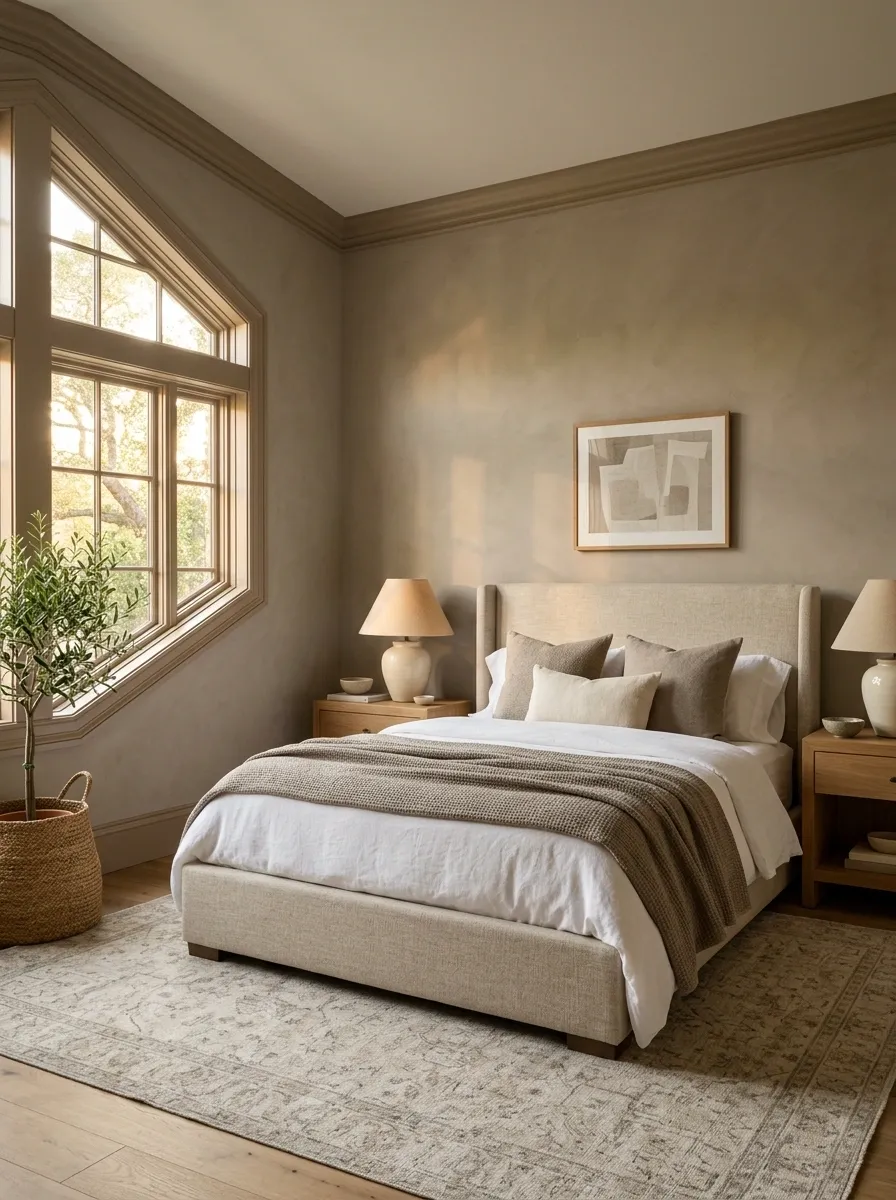
A window with awkward proportions can feel more integrated when its trim echoes architectural details elsewhere in the bedroom. This transitional composition uses warm painted trim, an upholstered bed, medium-toned wood nightstands, and classic lamps with softly shaped shades. The window belongs to the same visual language as the rest of the room.
Muted taupe walls create enough contrast for the trim to remain visible without becoming overly decorative. A patterned rug introduces subtle movement beneath the furniture, while the bedding stays mostly solid. The overall effect is polished and balanced without relying on perfect symmetry.
Small Bedroom With a Window Above the Headboard
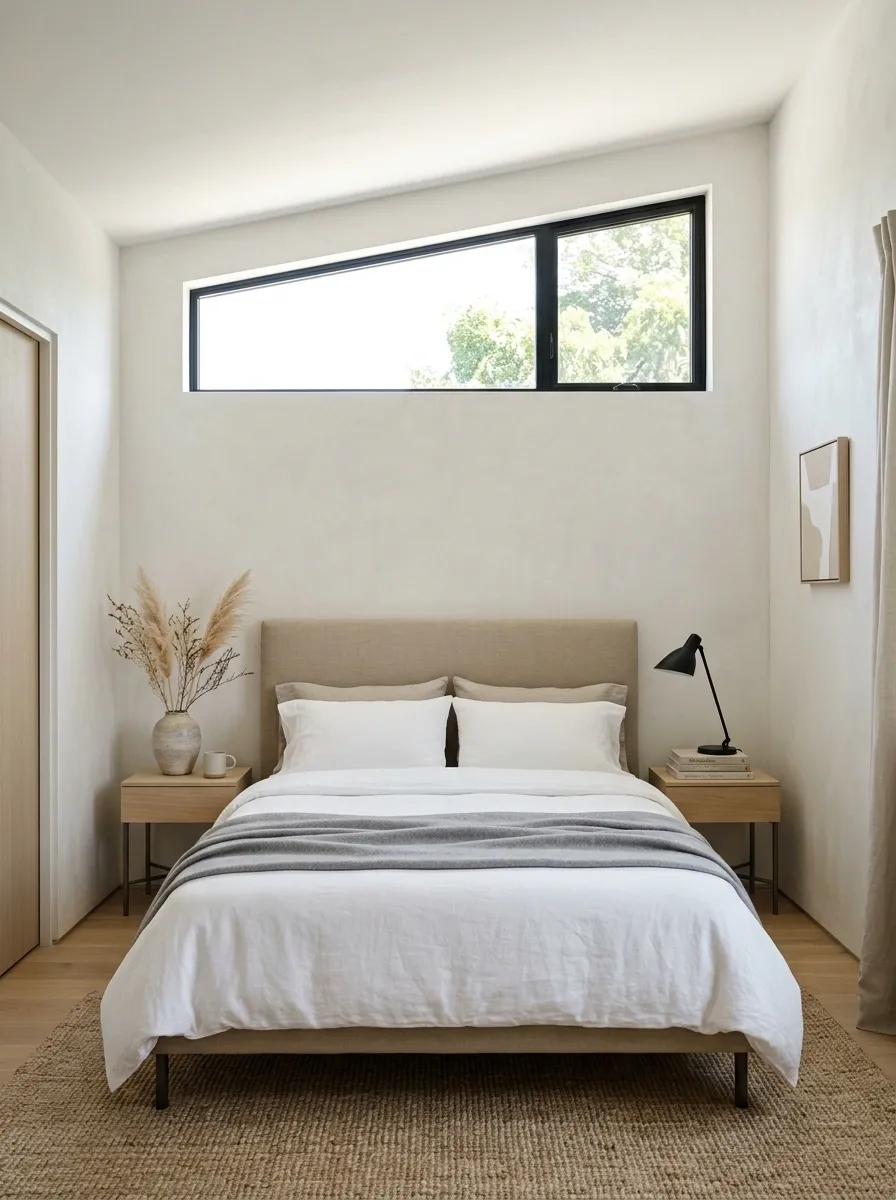
A window positioned high above the headboard can actually give a compact bedroom a clean, uncluttered focal wall. The bed uses a low upholstered headboard, allowing the opening to remain fully visible above it. Pale walls, simple bedding, and narrow bedside furniture preserve the limited visual space.
Nothing needs to compete with the window. The lower half of the wall belongs to the bed, while the upper half remains open and light. A single pendant or pair of compact sconces supplies enough character without crowding the composition. The finished room feels taller because the furniture and architecture occupy clearly different vertical zones.
Bedroom With a Bench That Connects the Window and Bed
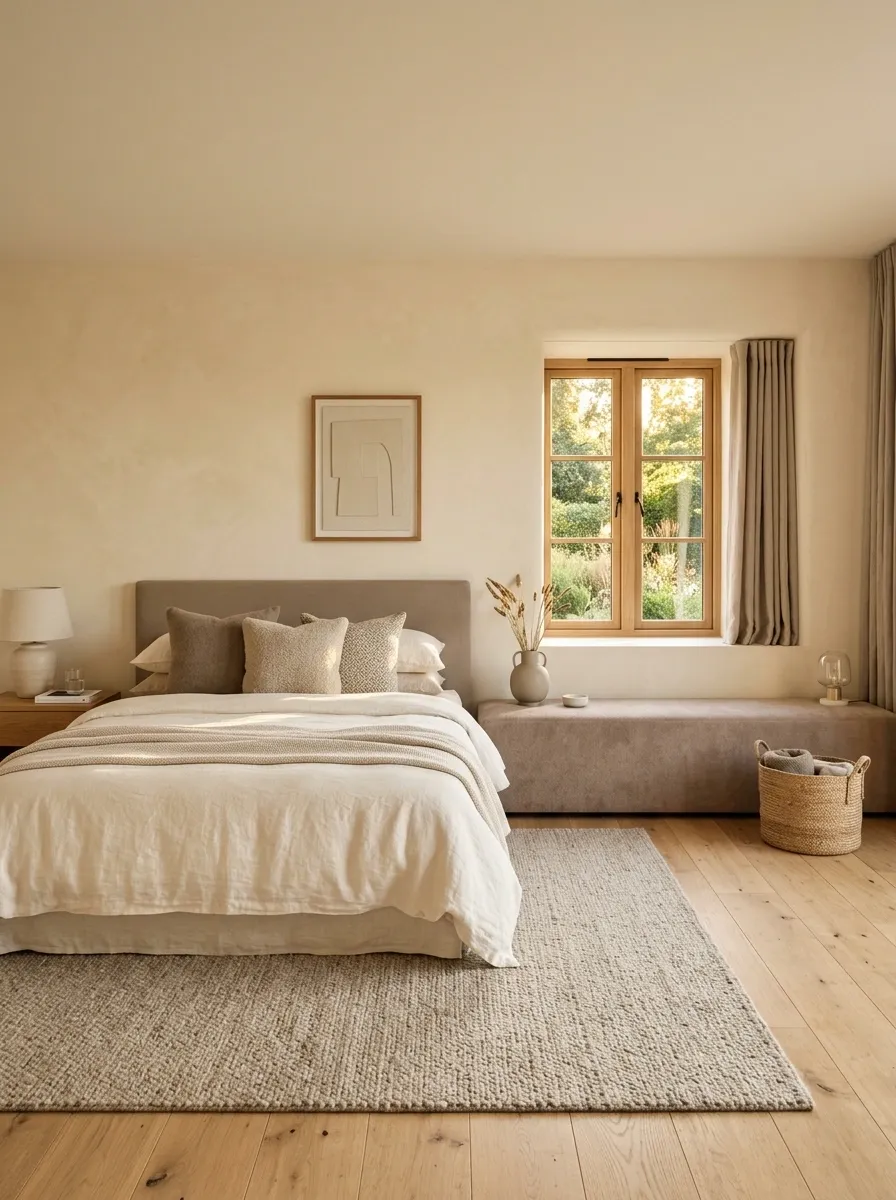
A window positioned awkwardly close to the bed can become part of a more cohesive arrangement when a long upholstered bench bridges the two areas. The bench sits beneath or near the opening, giving the wall a continuous visual rhythm while the bed remains centered on its own axis. A large rug extends beyond both zones, making the furniture feel like one composition.
Soft taupe upholstery, warm oak, and cream bedding keep the arrangement understated. The bench adds useful visual weight without introducing another dominant shape. Instead of fighting the window’s position, the room uses a low horizontal element to connect it naturally with the sleeping area.
Cottage Bedroom With Layered Window Treatments
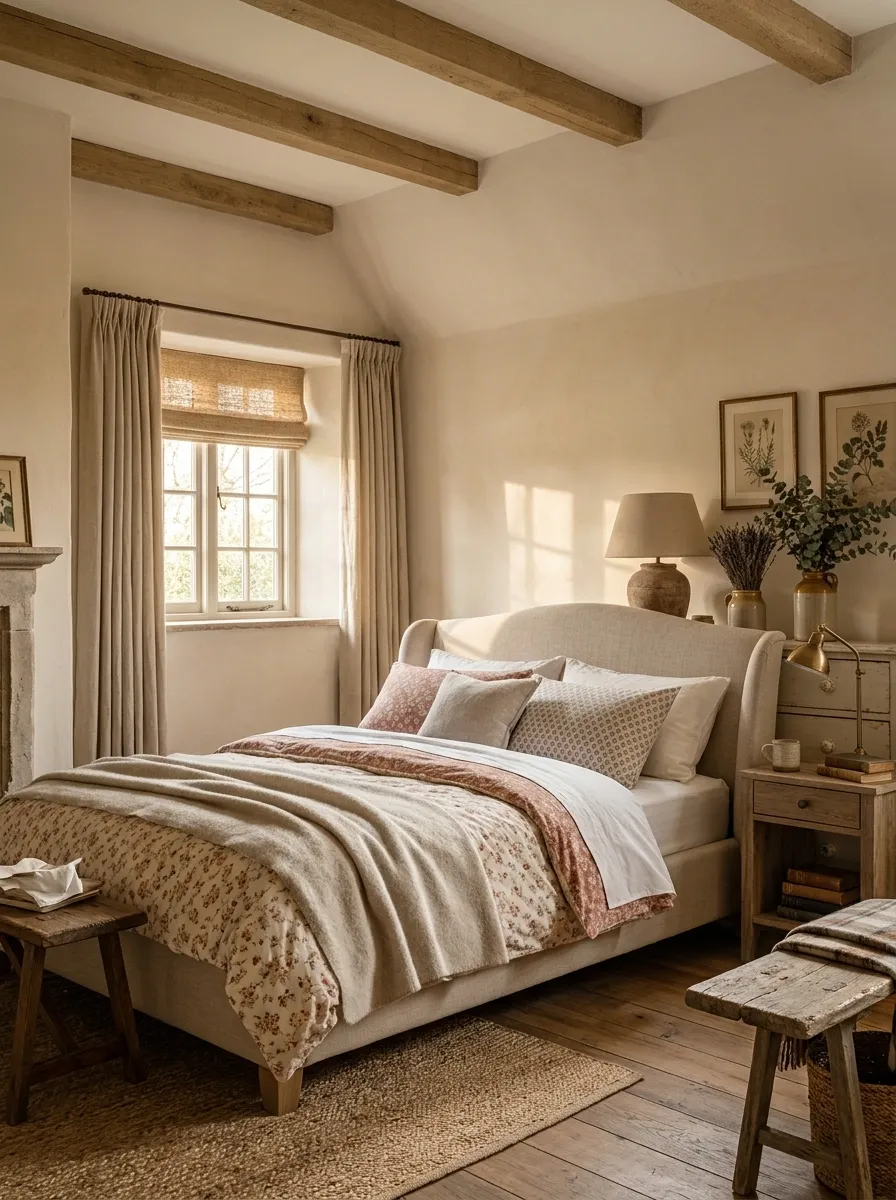
A cottage bedroom has enough softness and visual character to accommodate an imperfect window without making it feel like something that needs correcting. Painted furniture, a curved upholstered bed, relaxed linen curtains, and subtly patterned bedding create a layered composition around the opening. A woven Roman shade can add another texture without making the window excessively prominent.
The palette stays within warm cream, faded beige, dusty terracotta, and natural wood. Nothing looks overly matched. That slight variation is what allows an oddly positioned window to feel like part of the room’s character. The composition benefits from a little imperfection rather than strict symmetry.
Japandi Bedroom With a Quiet Window Wall
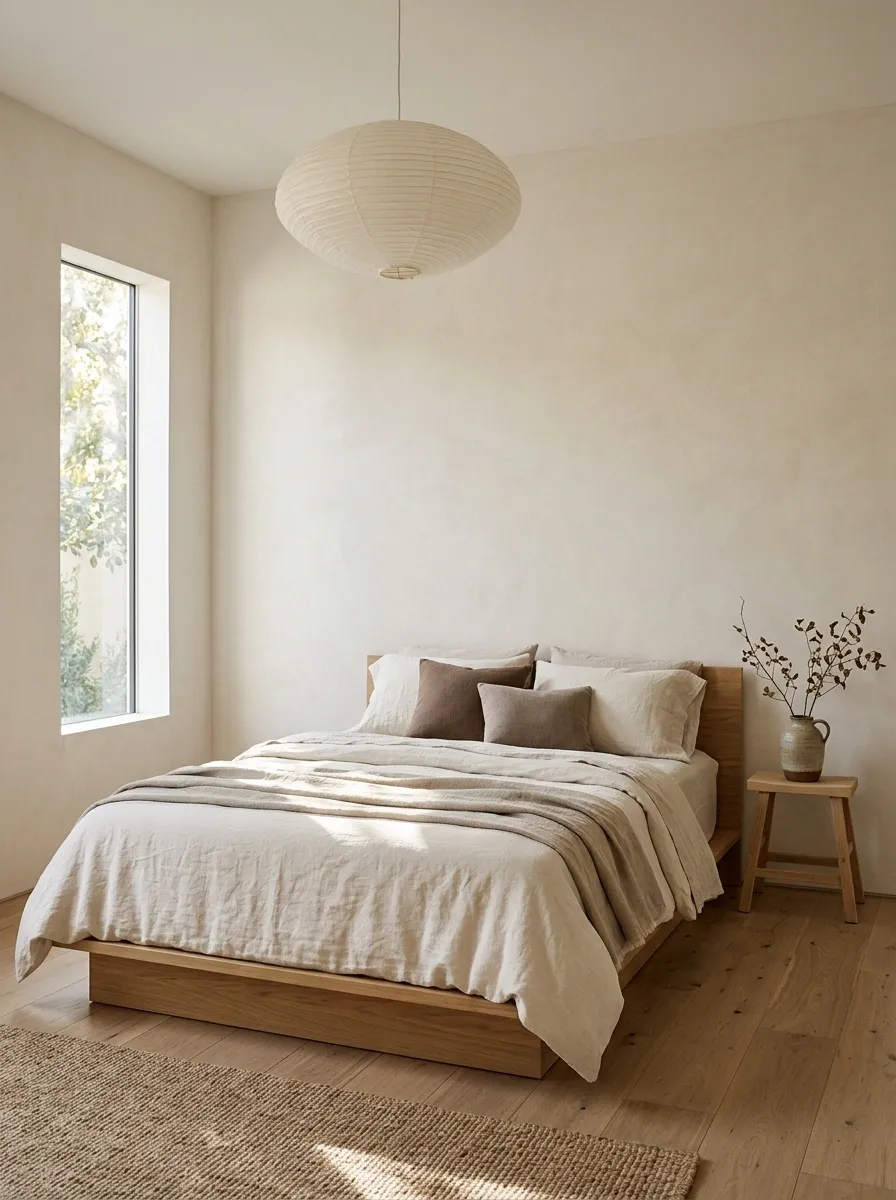
A Japandi-inspired bedroom benefits from leaving an awkward window largely alone. The room uses a low oak bed, pale plaster-like walls, natural linen, one sculptural pendant, and a small amount of organic texture. With so little competing visually, the window becomes a calm part of the architecture rather than an interruption.
The furniture sits low and leaves generous open wall space above it. Warm oak brings enough color to prevent the room from becoming cold, while stone, cream, and muted brown maintain the restrained palette. The beauty of this arrangement comes from what has been left out as much as what has been included.
warmer wood
more open wall
Bedroom With a Corner Window Turned Into a Feature
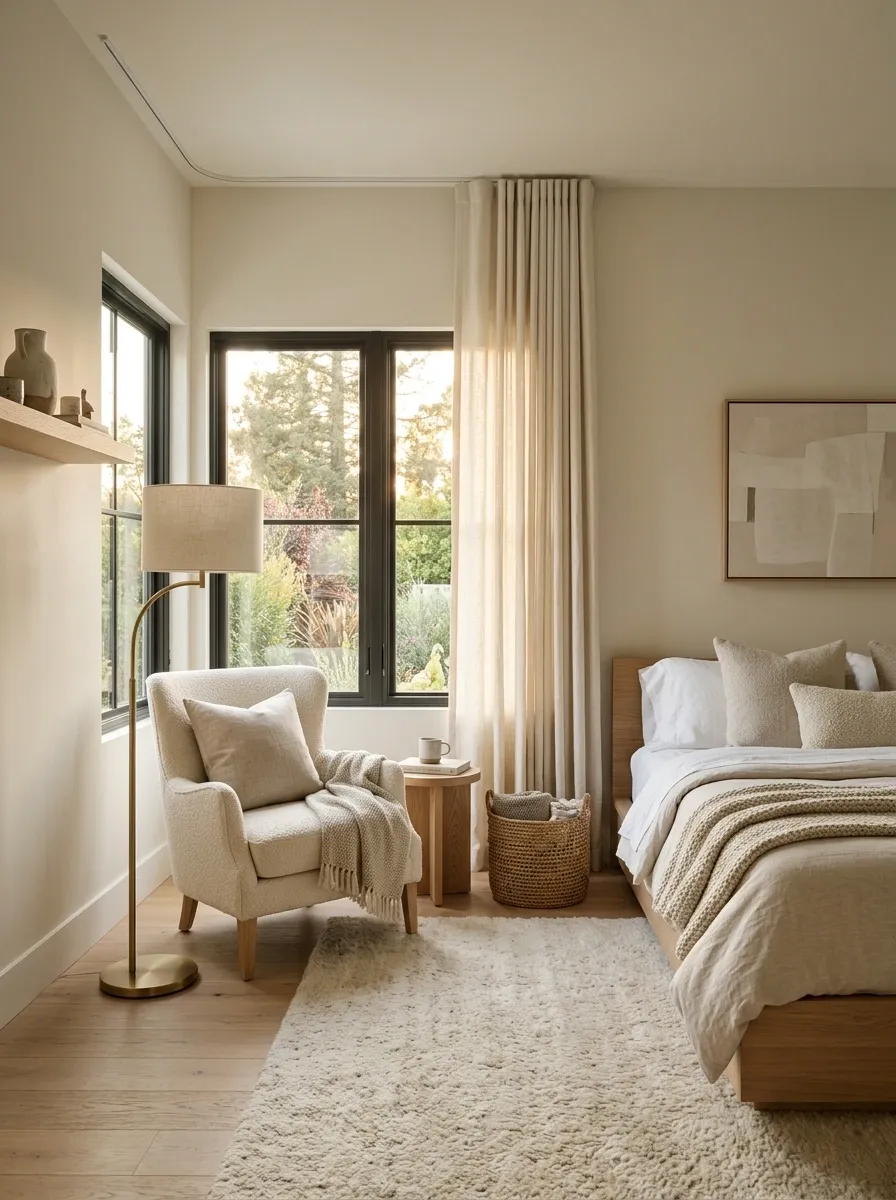
A window placed close to the corner can become an intentional destination rather than an awkward interruption. This bedroom gives the corner its own identity with a small upholstered chair, sculptural floor lamp, textured cushion, and relaxed curtain panel. The bed occupies the adjacent wall, leaving the corner visually distinct.
The arrangement works because the room does not try to make every element line up. A soft area rug connects the bed and seating area, while warm timber and creamy upholstery create continuity between the two. The corner becomes a small architectural vignette, giving the unusual window a reason to exist within the finished room.
Classic Bedroom With Curtains Framing the Entire Wall
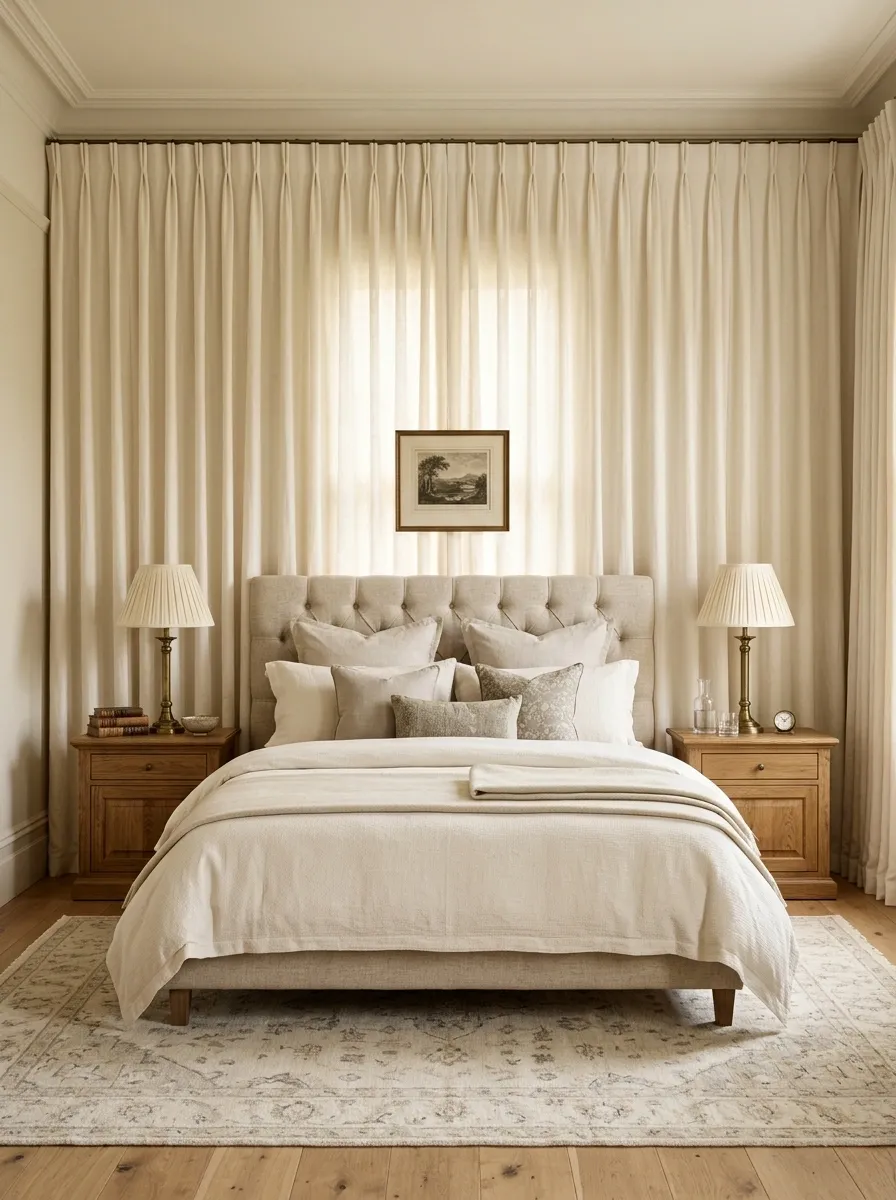
A traditional bedroom can make several awkward window proportions disappear into one generous curtain composition. Full-height fabric spans the wall, surrounding the window with soft folds while a classic upholstered bed sits in front of the larger architectural frame. Matching lamps and substantial bedside tables establish a centered focal point.
The curtains should remain close in tone to the walls rather than becoming a contrasting feature. That keeps the entire wall visually connected. Warm wood, aged brass, and muted cream textiles provide enough traditional detail without turning the bedroom into a period set.
Bedroom With a Desk Beneath the Awkward Window
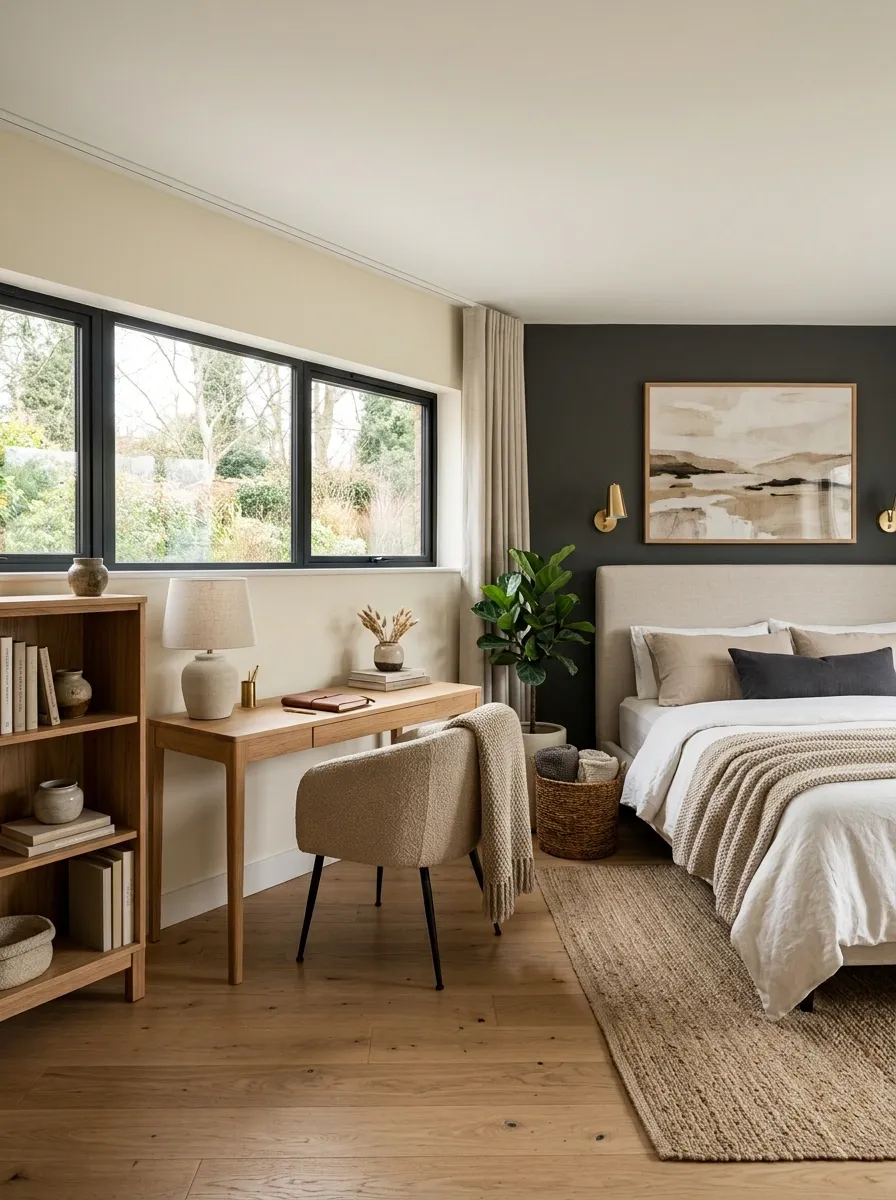
A window that interrupts the bed wall can become much easier to work with when it serves a completely different function. This bedroom places a slim writing desk directly beneath the opening, turning the natural light into an asset. The bed moves to the adjacent wall, while a narrow bookcase and upholstered chair complete the compact work area.
Warm oak, cream walls, linen bedding, and a single dark accent create continuity between the sleeping and working zones. The desk remains visually light, so it doesn’t compete with the window or make the room feel cramped. The result is especially effective in bedrooms where every section of wall needs a purpose.
Work there.
Earth-Toned Bedroom With a Window as the Light Source
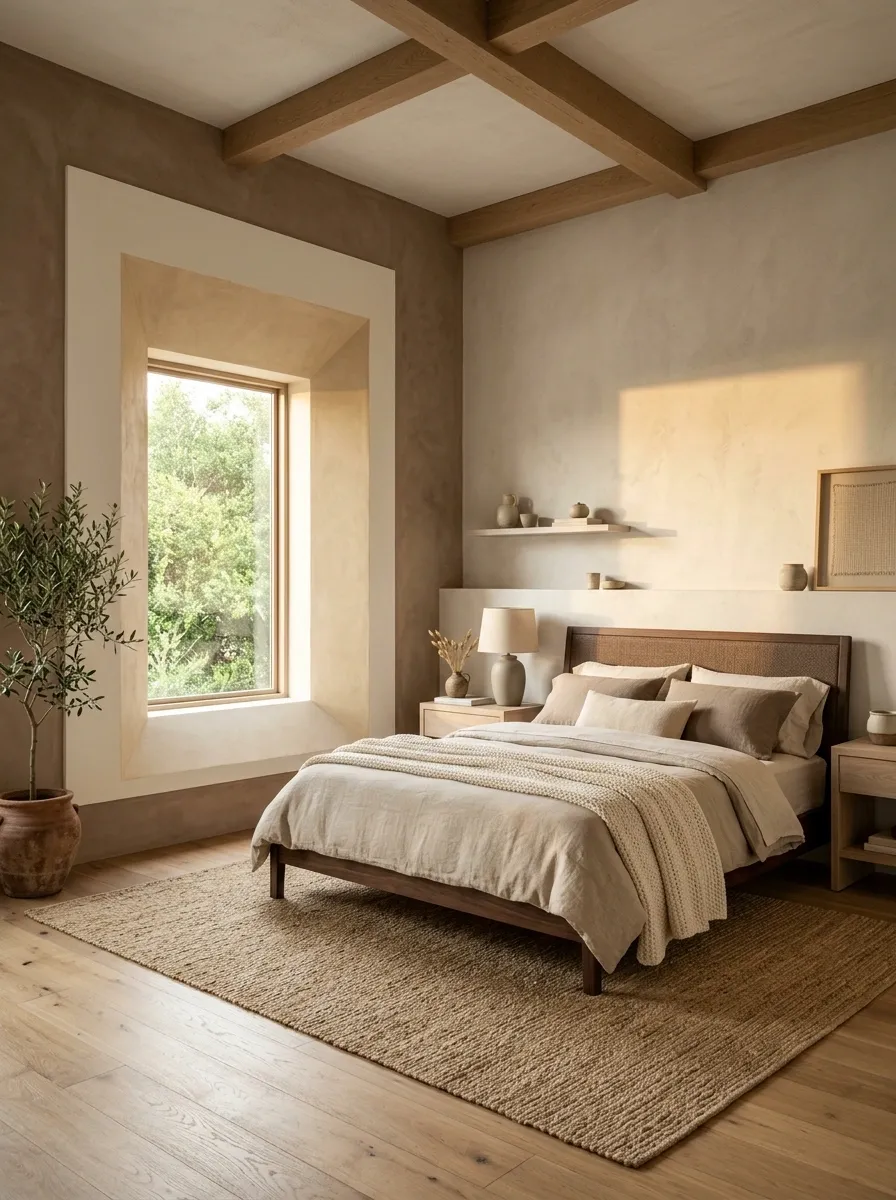
An awkward window can become the brightest point in a rich earth-toned bedroom. Clay, sand, walnut, cream, and muted brown surround the opening, while lighter linen curtains and bedding draw attention toward the natural light. The bed stays on a separate wall, creating a composition that feels warm and enveloping rather than window-centered.
The darker tones should remain concentrated around furniture and lower surfaces. Keeping the ceiling, curtains, and bedding lighter gives daylight room to travel through the space. A woven rug, chunky throw, and softly finished timber add texture without introducing too many competing patterns.
Minimal Bedroom With One Oversized Artwork Piece
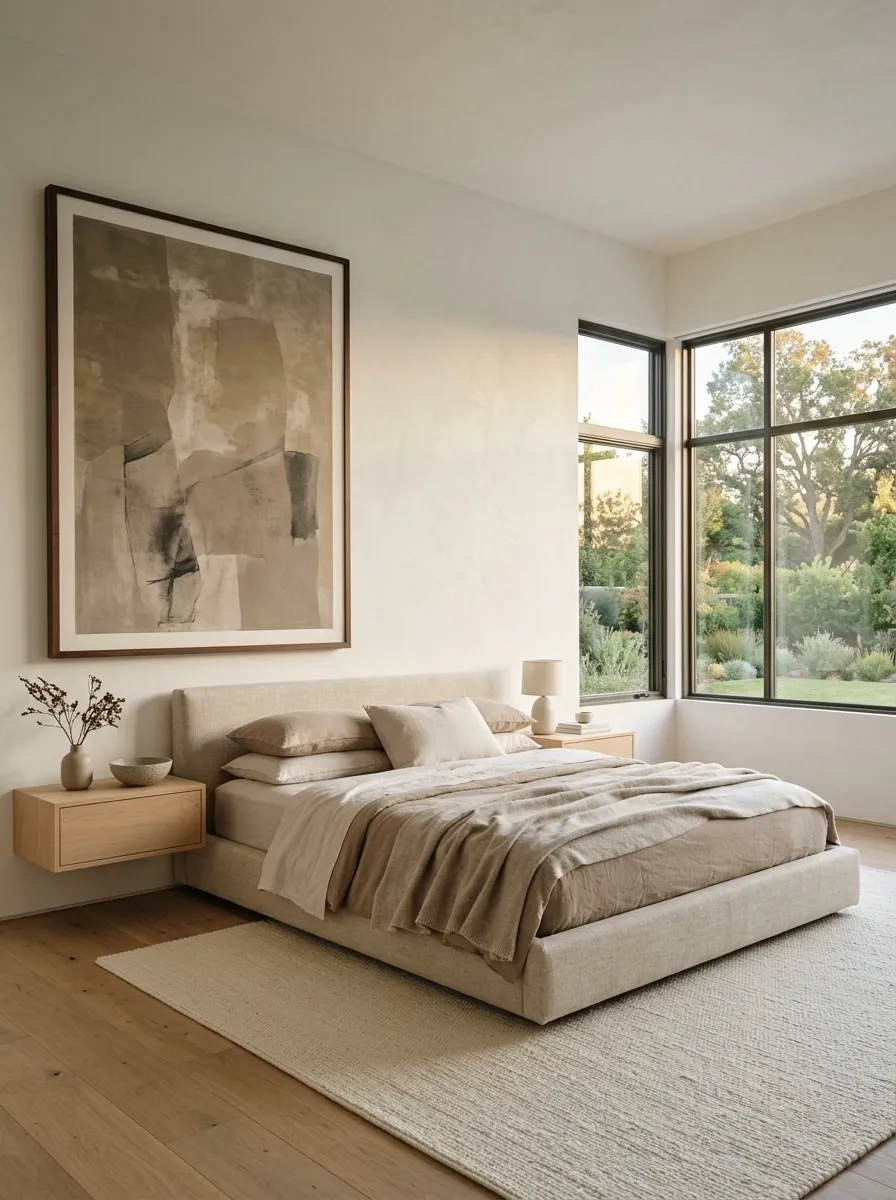
When an offset window leaves too much empty wall beside the bed, one large artwork piece can establish a stronger counterweight than a collection of small decorations. This bedroom uses a low upholstered bed, warm white walls, pale oak, and one oversized framed composition positioned on the larger uninterrupted wall.
The artwork introduces a controlled focal point without making the room feel busy. Its scale is more important than the number of pieces. A muted palette that echoes the bedding and furniture allows the artwork to feel connected to the bedroom rather than placed there as an afterthought.
Luxe Bedroom With an Off-Center Window and Sculptural Lighting
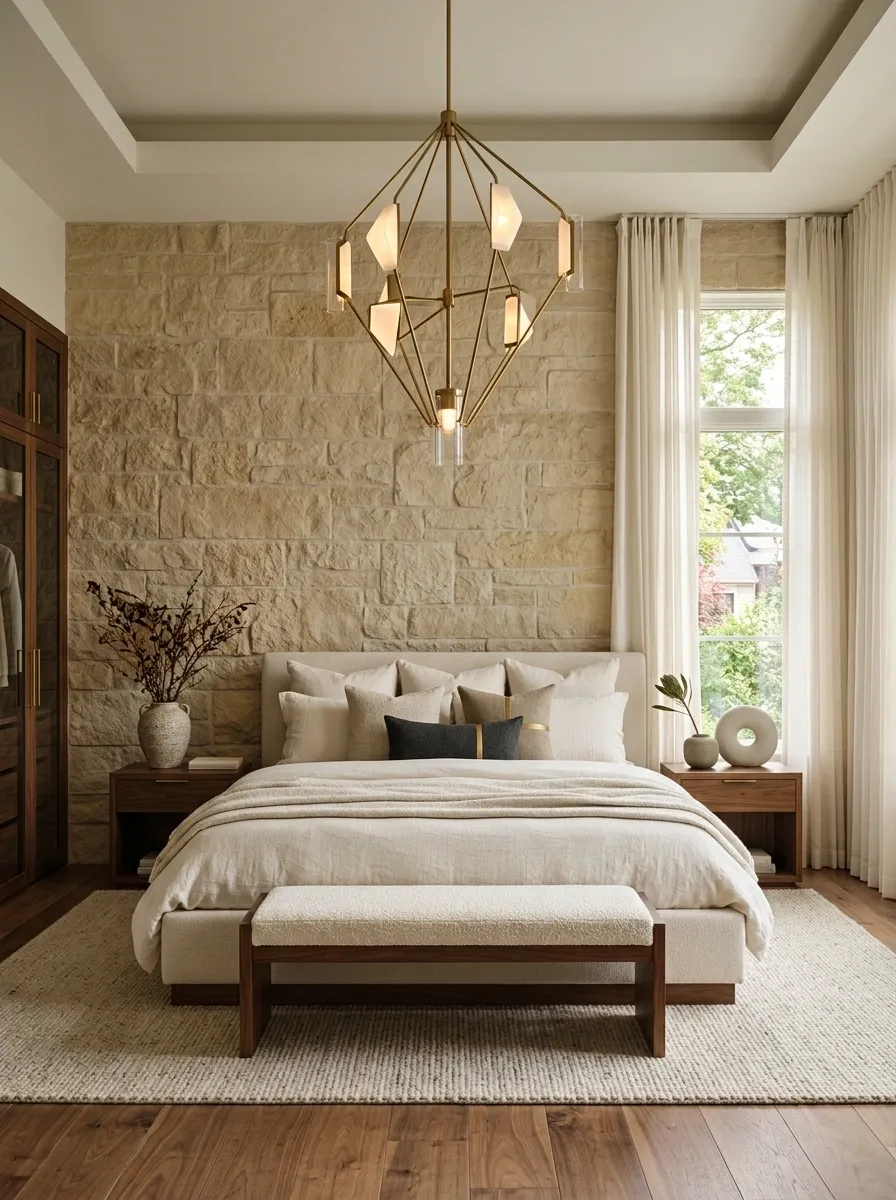
A sculptural pendant or chandelier can pull the eye toward the center of a bedroom when the architecture refuses to cooperate. Here, a generously upholstered bed anchors the lower part of the composition while a large sculptural light creates the dominant visual point above it. The off-center window becomes part of the background rather than the focal point.
Warm stone tones, walnut, brushed metal, and plush ivory textiles create a sophisticated layered palette. The furniture remains relatively quiet in shape so the lighting fixture can carry the visual drama. This approach is particularly effective when the ceiling offers enough height for a substantial statement piece.
Narrow Bedroom With the Bed Turned Sideways
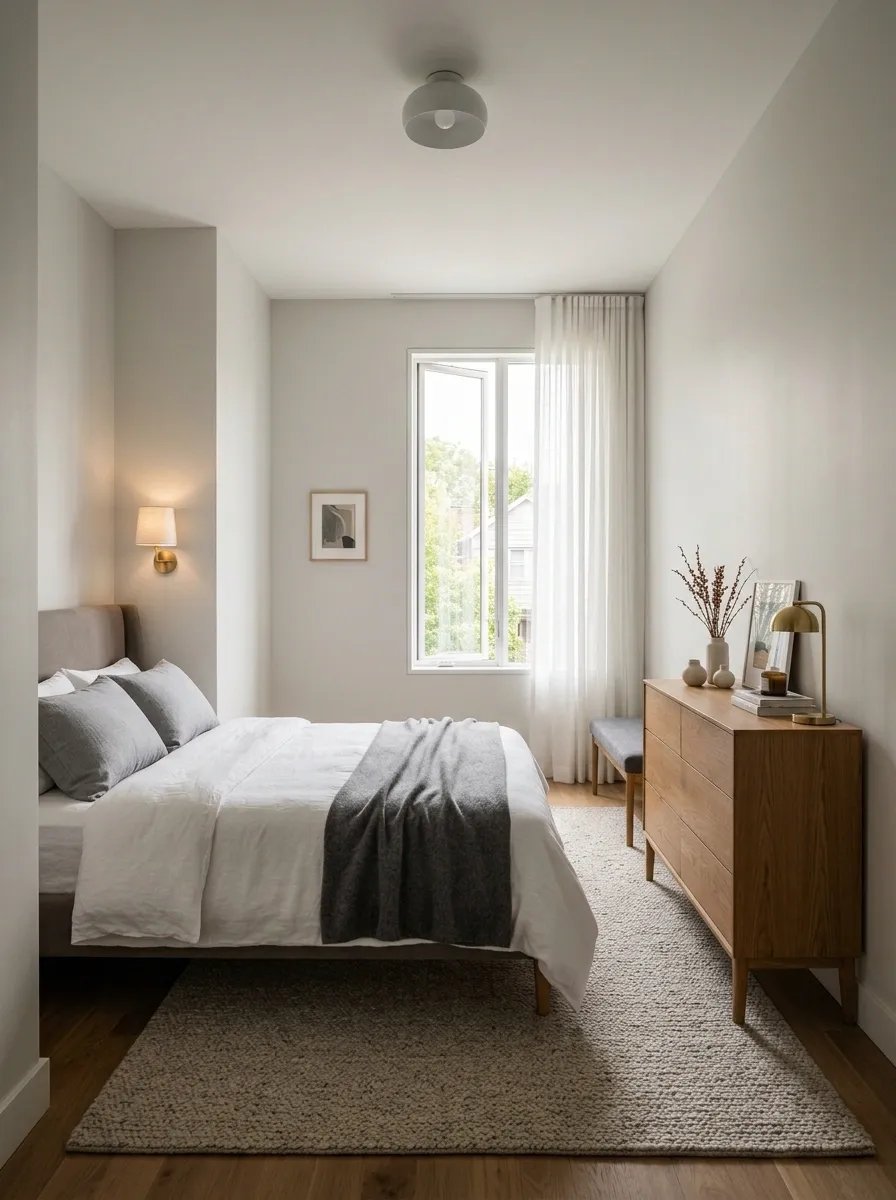
A narrow bedroom often becomes harder to furnish when the only obvious bed wall contains an awkward window. Turning the bed sideways can create a more convincing layout, leaving the window wall open while a slim dresser and narrow bench complete the opposite side. A continuous rug helps unify the long rectangular room.
The orientation makes the bedroom feel intentional rather than constrained. Pale walls, medium oak, warm gray upholstery, and simple lighting keep the visual field quiet enough for the unusual floor plan to make sense. The strongest feature of this design is the circulation path created around the furniture.