

The farmhouse pieces that work hardest in winter usually have an ordinary job. A quilt warms the sofa. A basket holds spare blankets. A lamp makes the corner chair useful after the daylight disappears. The decorative rooster remains available for comment, but it hasn’t contributed much.
Start there.
Winter farmhouse decor feels convincing when practical materials do most of the work: woven fabric, wood with visible grain, substantial ceramics, and simple lighting. You can add seasonal greenery or a patterned cushion without turning every surface into a themed display.
Keep the house’s existing character in view. A country kitchen, a suburban living room, and a compact apartment won’t need the same furniture, but they can share the same comfortable approach. Choose the ideas that suit the rooms you use, repeat a few colors and textures, and leave useful space around them.
The aim is a home that looks ready for cold mornings and long evenings. It should still be easy to find the remote, make breakfast, and put your feet somewhere.
Give the Farmhouse Look a Winter Setting
Let Useful Materials Carry the Style
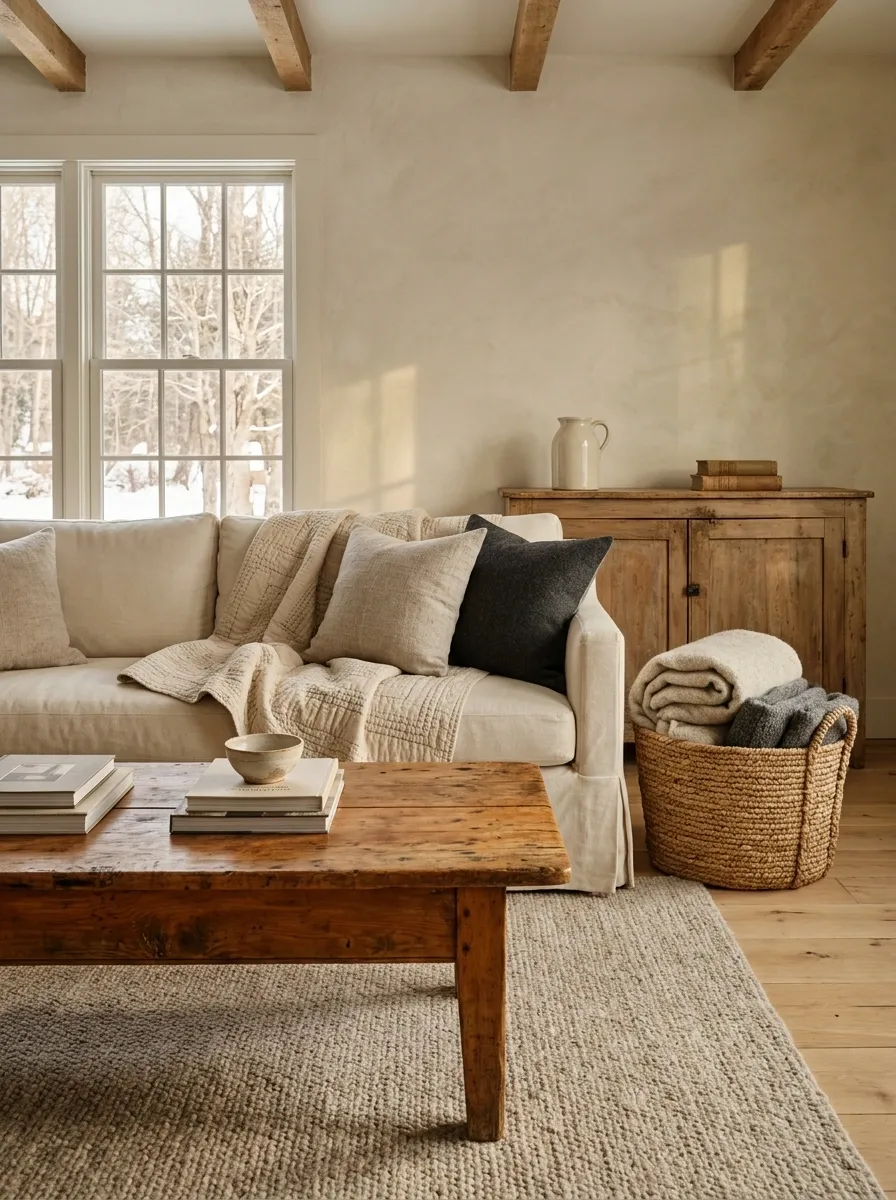
Look at what you already own before choosing seasonal accessories. A wood table, a woven basket, a cotton quilt, or a plain ceramic jug can all contribute without being labeled winter decor.
Bring those materials into the places where they’re useful. Texture has more presence when it isn’t buried beneath lots of little objects. Keep finishes and colors related across the room, then allow differences in age, grain, and weave to make the arrangement interesting. The house can feel collected without every piece pretending to be an antique.
Choose Warmth With Enough Contrast to Stay Interesting

Cream and wood make a useful starting point, but a room can become flat if every surface has the same pale tone. Bring in a darker frame, muted checked fabric, or a deeper accent color where it helps define the arrangement.
Use the fixed finishes as your guide. Existing flooring and upholstery deserve more influence than a new decorative bowl. Test the room under evening lighting too. Winter styling spends plenty of time after dark, and that’s when the materials and colors need to work together.
Winter Farmhouse Decor Ideas for Comfortable Everyday Rooms
Let a Wood Table Provide the Room’s Warmth

A table with visible grain can anchor a winter room without an elaborate display on top.
Use an existing coffee table, side table, or dining piece where its proportions suit the space. Clean and care for the finish appropriately, then let some of the surface remain visible. The wood can do its own decorating.
Pair it with softer nearby fabric rather than covering every section with a runner. Keep drinks and daily use practical. A piece that looks comfortable to live with contributes more to farmhouse character than one everyone has to circle nervously.
Keep part of the grain visible.
Let softer fabric provide contrast.
Protect the finish without making the table untouchable.
Bring Out a Quilt That’s Comfortable Enough to Use
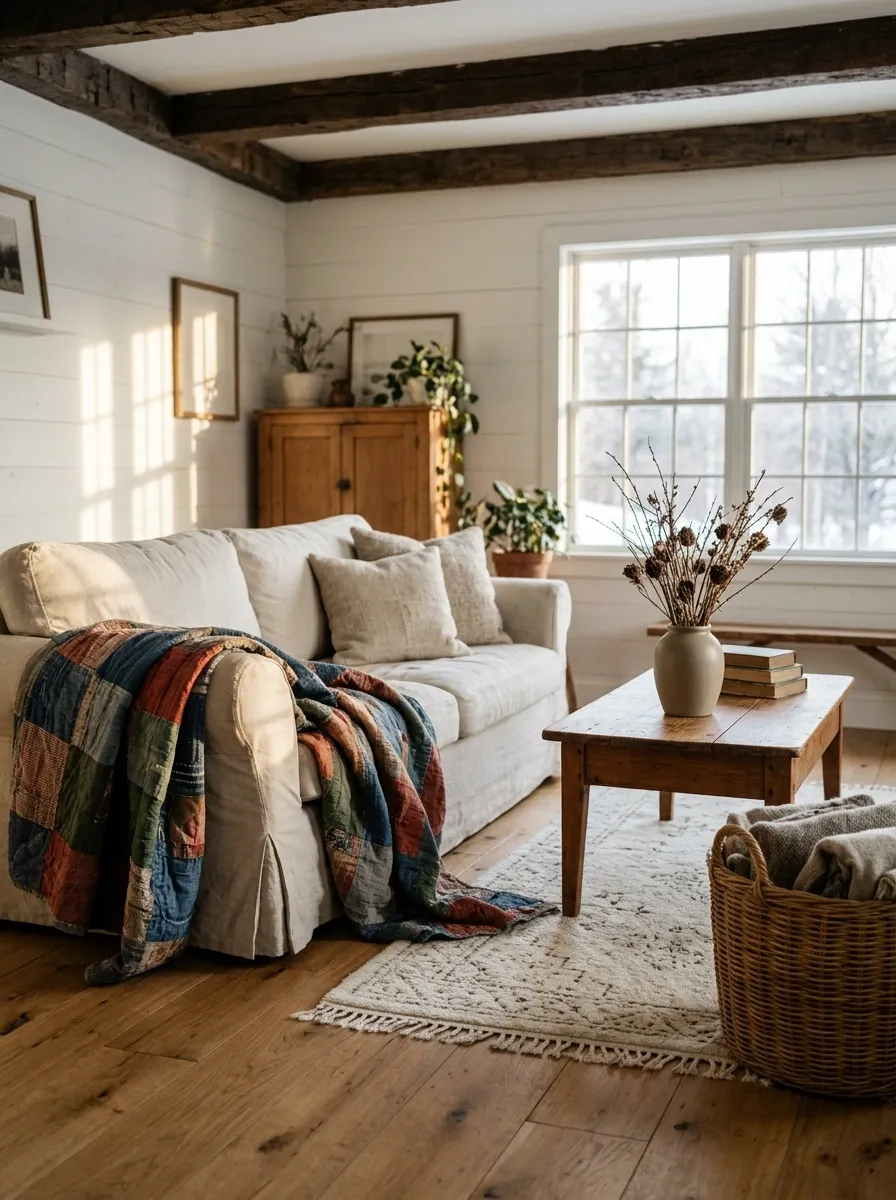
A quilt gives you pattern and warmth in one useful layer.
Fold it over the sofa arm or keep it beside the chair where someone reaches for a blanket. Choose a weight suited to the room and care instructions you can manage. Existing bedding may offer a better option than another seasonal purchase.
Keep the arrangement simple enough to reset after an evening. Don’t tuck the quilt into a complicated display that discourages use. Farmhouse decorating looks more natural when the textiles have a real purpose, including the slightly untidy moment when someone is actually sitting beneath them.
Comfort, manageable washing, and easy access matter more than a decorative fold. Keep delicate or valuable textiles in a setting suited to their care.
Use a Restrained Check on One Visible Textile

A checked cushion, throw, or curtain can give the room a clear farmhouse note.
Choose colors that already relate to the upholstery and wood tones. Let the check sit beside simpler fabric so its pattern remains readable. You don’t need matching checks on every soft surface.
Look at the scale from the doorway as well as close up. A small pattern can read quite differently across the room. Keep the cushion comfortable and the curtain practical. The fabric should feel like part of the room’s normal life, rather than evidence that the seasonal collection arrived all at once.
Choose the scale and colors deliberately.
Repeat a quieter color with a different texture.
Put a Basket Beside the Seat That Needs Spare Layers
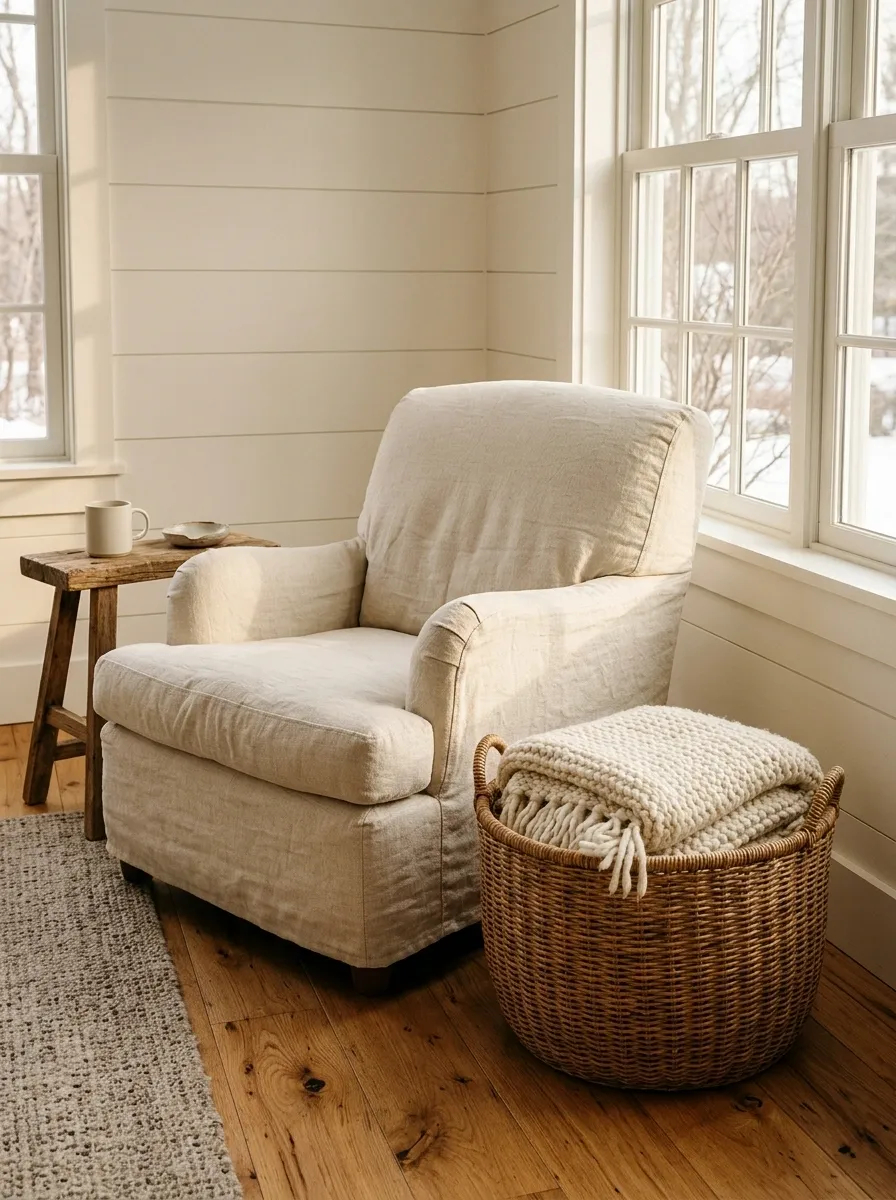
A basket earns its place when it contains something useful.
Choose a suitable size for the blanket or quilt you actually use, and keep it close to the seating without narrowing the route. Check the inside for rough edges that might catch fabric.
Avoid overfilling it or adding several smaller baskets around the same chair. One clear storage job is enough. Fold the contents simply and return them when dry and ready for storage. This gives the room a practical farmhouse detail that remains useful after the seasonal decorating mood has passed.
The blanket fits without constant stuffing.
Reachable from the seat and clear of traffic.
Clean storage for dry, ready-to-use fabric.
Keep the Mantel Low and Loosely Arranged

Farmhouse styling benefits from a mantel that lets the materials remain visible.
Start with an existing mirror or artwork, then choose a small supporting arrangement. A substantial ceramic piece or suitable seasonal stems may be enough. Avoid covering the whole ledge with little objects.
Check the view from the main seats and keep working fireplaces and appliances appropriately clear according to their requirements. The display should fit the feature’s operation. A room feels more settled when you can use the fireplace without first relocating a decorative woodland and a committee of miniature houses.
Mirror, artwork, or the surround itself.
A limited group with a clear outline.
Visible surface and appropriate clearances.
Give a Plain Ceramic Jug One Seasonal Arrangement
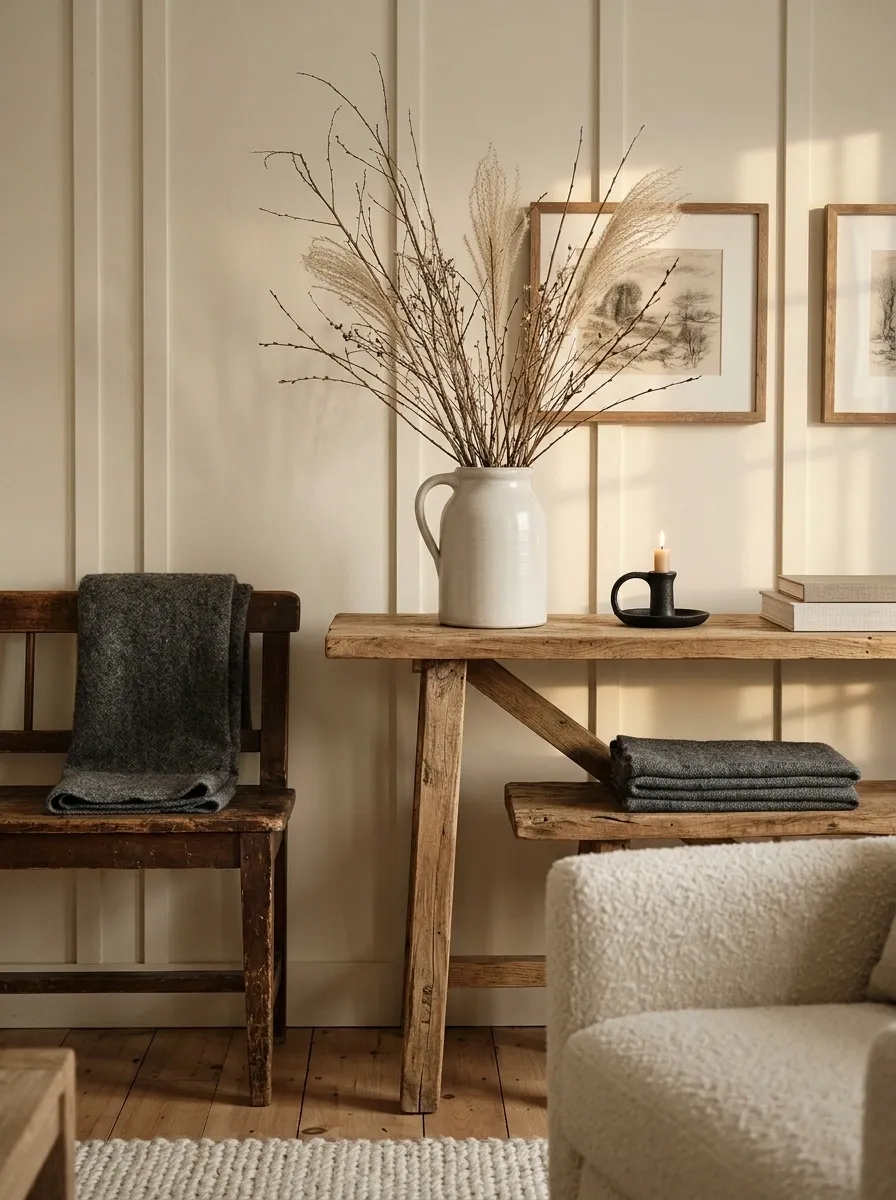
A sturdy jug can provide enough farmhouse character without additional wording on its side.
Choose suitable fresh, dried, or artificial stems for the location and care you can provide. Keep the arrangement’s size related to the furniture beneath it. Protect the surface and check plant material for suitability around your household.
Let the jug and stems remain the main event. You don’t need to surround them with matching small pots. Place the arrangement where it won’t block conversation or daily reach, and remove deteriorating material promptly so the seasonal update stays pleasant to live with.
Keep dining-table arrangements comfortable to see across. A console may suit a taller outline, provided it leaves nearby artwork and movement clear.
Let Everyday Pottery Form a Small Shelf Collection

Bowls, jugs, and plates you use can make a shelf feel more convincing than themed filler.
Group pieces with some shared material or color, then leave enough access to retrieve them. Keep heavier objects appropriately supported and follow the shelving’s load and installation requirements.
Vary the outlines without filling every gap. A stack of useful bowls and a single taller piece may give the shelf enough structure. Choose a position where the collection won’t collect cooking residue unnecessarily. The arrangement should be easy to clean and useful when someone needs the serving bowl at dinner.
Frequently used pieces stay accessible.
Weight and placement suit the shelf.
Objects can be lifted out without dismantling the group.
Give Artwork a Quiet Winter Role

Choose a landscape, study, or personal photograph whose colors sit comfortably with the room.
It doesn’t need falling snow to belong in a winter arrangement. A muted palette or simple composition can give the eye a rest beside checks, woven fabric, and wood grain.
Use an existing frame where the fit is suitable, and check placement from the doorway and main seats. Keep the work’s condition and care needs in mind. One piece given a clear setting can contribute more than a cluster of seasonal signs explaining the temperature outside.
Look for a relationship with the textiles and finishes you’re keeping. The subject doesn’t need to announce the season.
Leave Some of the Dining Table’s Wood Visible
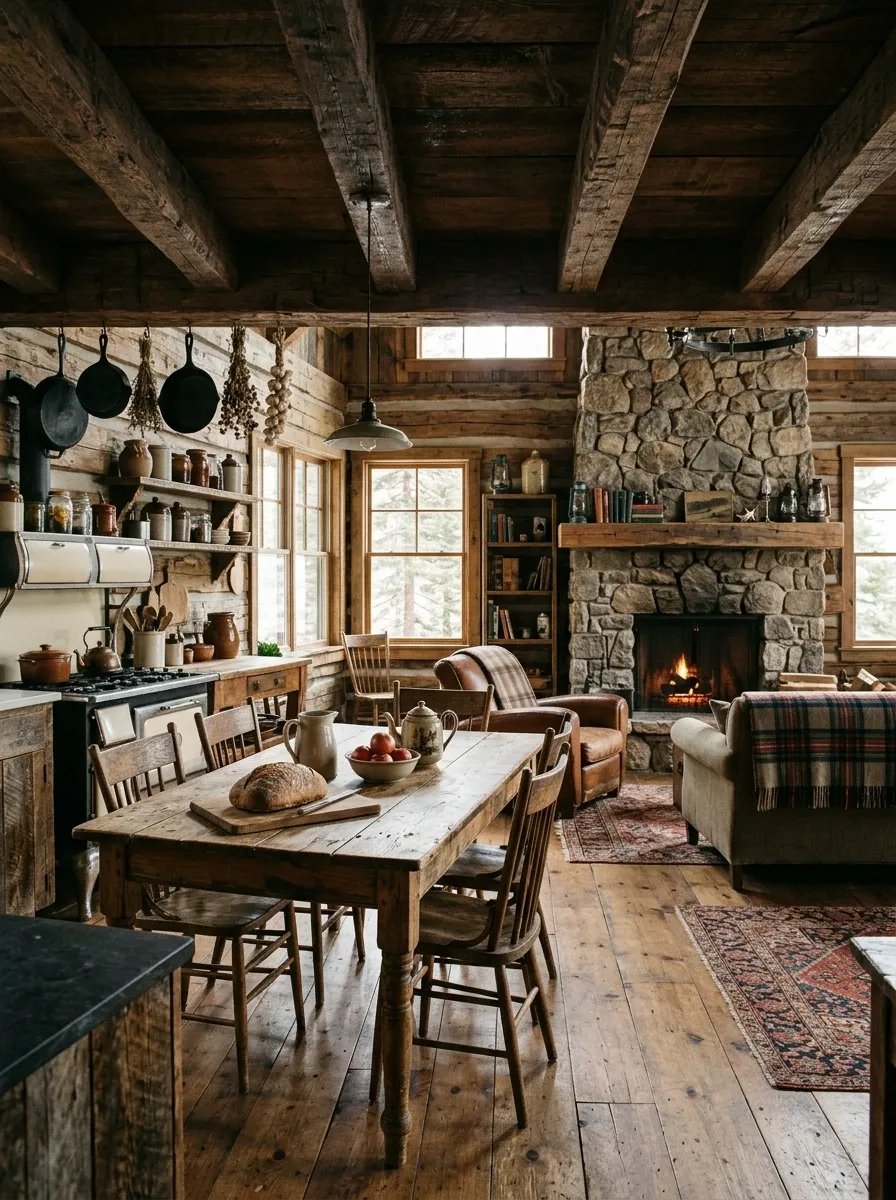
A farmhouse table already has something to contribute before the centerpiece arrives.
Use placemats or a narrow runner where practical, and leave part of the surface visible. Choose washable textiles suited to how you serve meals. Keep enough space for plates, glasses, and shared dishes.
Add a manageable arrangement if you enjoy one, then test the table with people seated. The display should move easily for cleaning. A useful table that looks welcoming at an ordinary dinner feels more authentic than one permanently arranged for a gathering that never gets permission to begin.
Let the wood remain part of the composition.
Use practical fabric where it helps.
Keep the scale compatible with a real meal.
Use a Simple Stripe on Kitchen Linens
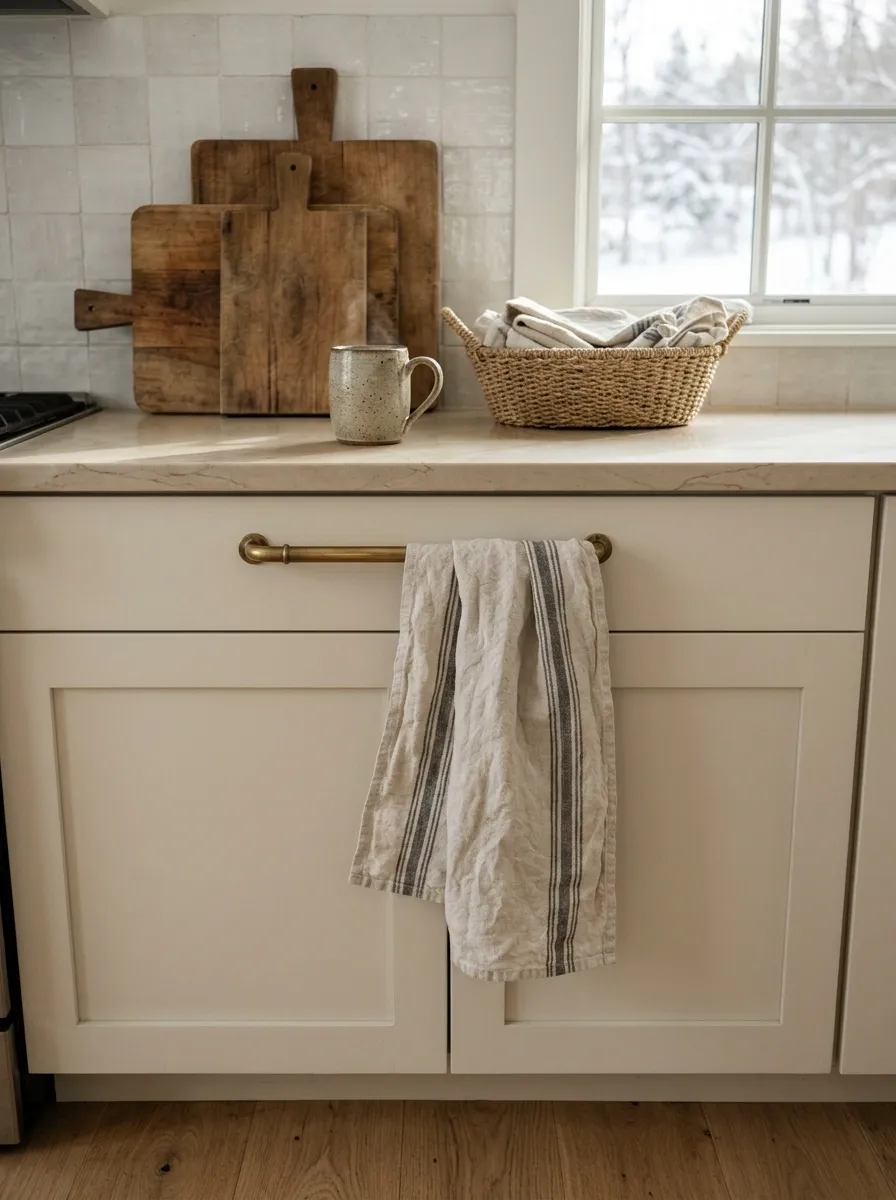
A restrained stripe brings detail without asking the whole kitchen to change color.
Choose towels that work with the cabinets and fixed finishes, and make absorbency and care part of the decision. Use clean linens from your existing supply before shopping for a seasonal set.
Give damp towels somewhere suitable to dry and keep fabric appropriately clear of cooking heat. Store spares where they’re easy to retrieve. This small change can connect the kitchen to the house’s winter palette while preserving the counter space needed for breakfast, which remains a fairly important kitchen activity.
- Absorbent fabric.
- Manageable laundering.
- A color relationship with the room.
- A suitable place to hang and dry.
Keep Useful Wood Boards Accessible in the Kitchen
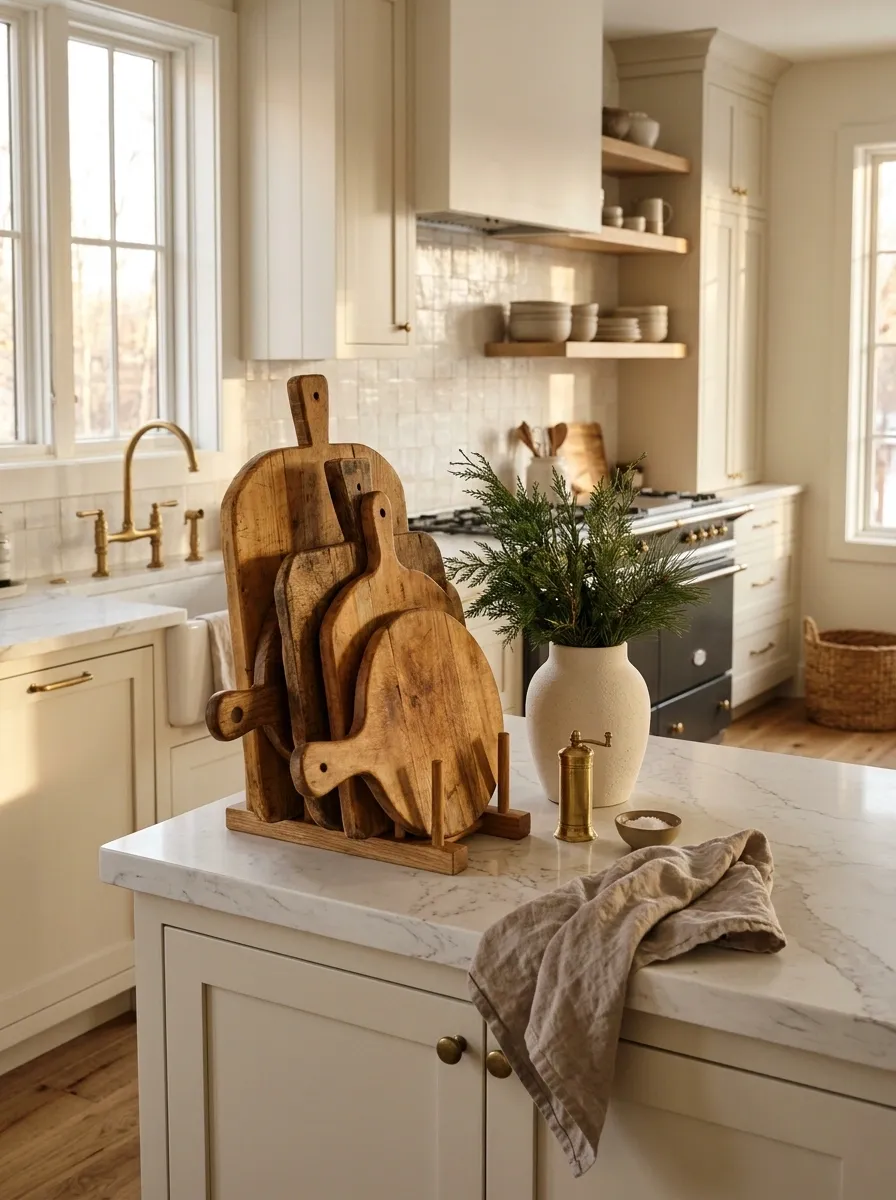
A sound wood board can bring warmth to the room while remaining part of food preparation.
Store it appropriately for its care requirements, with suitable drying and access. Keep it clear of heat and places where it obstructs work. Don’t build a layered board display that makes retrieving one a minor construction job.
Use the boards you actually need and maintain them according to their material and use. The kitchen gains character from practical objects handled well. It doesn’t require a large collection bought solely to lean against the backsplash in descending order of decorative ambition.
Choose the position for care and access first.
Keep working surfaces, heat clearances, and cleaning access practical.
Make a Breakfast Corner Feel Ready for a Slow Morning
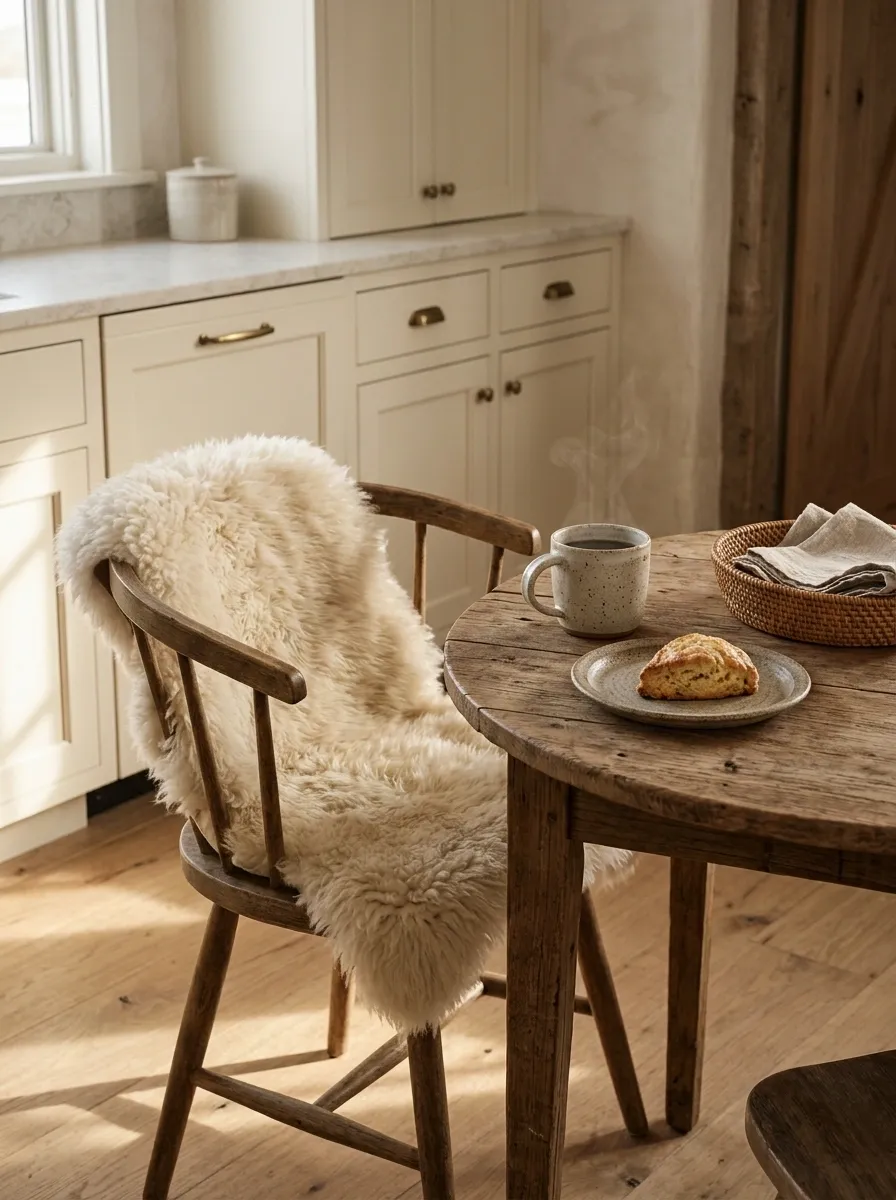
A mug, a comfortable seat, and useful light can create a stronger winter feeling than another kitchen ornament.
Choose the spot you actually use and clear the surface around it. Keep daily supplies convenient without filling the entire counter. A suitable textile on the seat can add comfort if it’s practical to maintain.
Check the morning conditions before adding anything else. Glare, awkward reach, or a chair blocking the room will discourage use. Let the arrangement support breakfast first. The farmhouse character can come through the existing wood, ceramics, and fabric around that ordinary routine.
Comfortable enough to linger.
Room for the meal and cup.
Daily supplies remain straightforward to retrieve.
Give the Entry Bench a Clear Winter Job
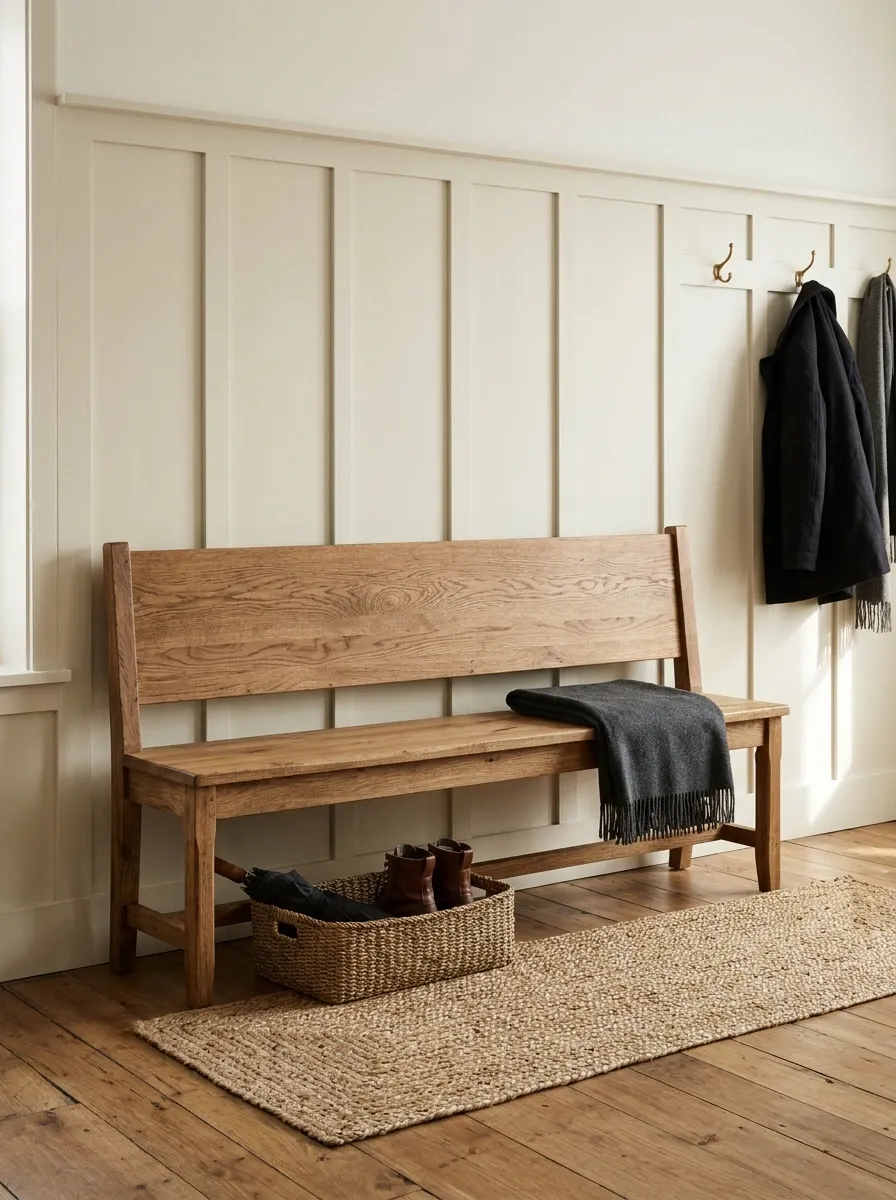
A bench is useful when there’s room to sit and somewhere appropriate for the belongings around it.
Clear the seat, then choose a small amount of suitable textile if it improves comfort. Keep wet outerwear and shoes in arrangements that allow proper drying. Protect the flooring appropriately.
Use storage beneath or nearby only where it remains accessible and doesn’t narrow the entrance. The bench can provide farmhouse character through its shape and material. It doesn’t need a permanent stack of seasonal cushions occupying the place where someone is trying to remove a boot.
Check the arrangement while carrying a bag and wearing outdoor clothing. Winter entrances need to work when people arrive with their hands full.
Use a Peg Rail for the Things That Belong There
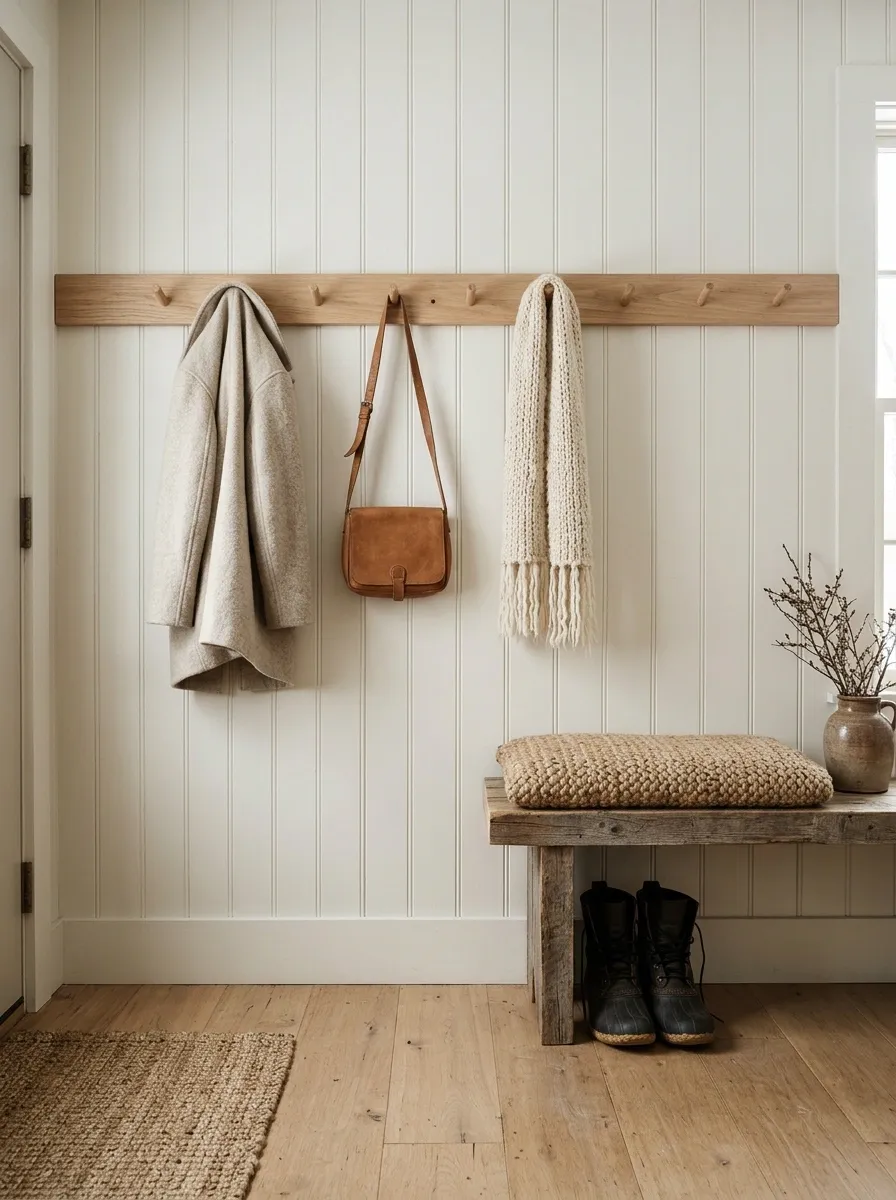
A simple peg rail can bring a useful farmhouse detail to an entrance or suitable utility area.
Install it appropriately for the wall and expected load, and keep concealed services in mind. Choose the height for the household and the objects it holds. Leave enough space around hanging items.
Avoid treating every peg as a decorative assignment. Keep daily coats, bags, or other relevant belongings in a manageable arrangement, with suitable drying conditions. The rail looks better when its purpose is clear and the wall below hasn’t become an expanding exhibition of everything that entered the house.
Suitable wall fixings and load expectations.
Height suited to the intended users.
Hanging belongings don’t block movement.
Choose a Door Mat That Handles the Season
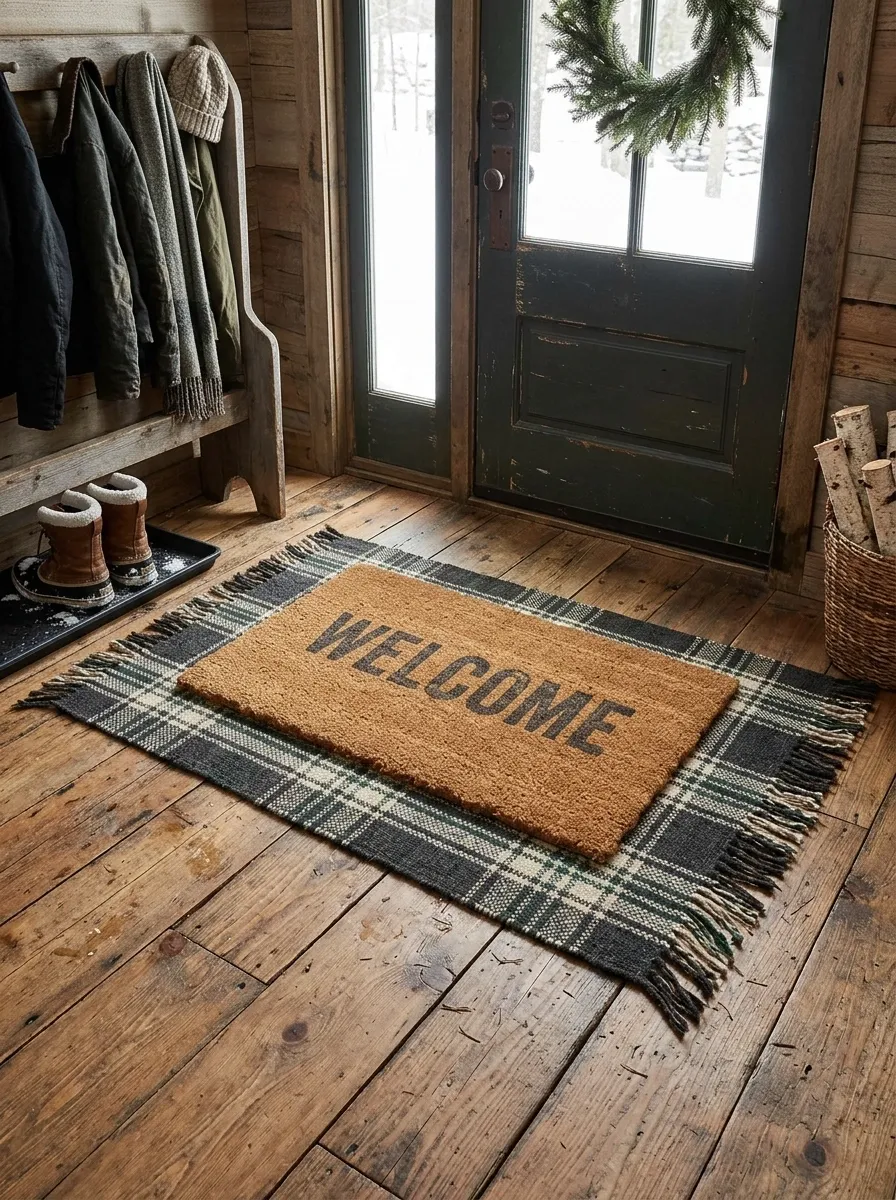
A winter entrance needs a mat that works with the threshold and weather.
Choose a suitable material and size, check secure placement, and make sure the door opens normally. Keep edges flat and clean the mat according to its requirements. A worn, curling mat deserves replacement before decorative layering.
Let texture provide the farmhouse note. You don’t need a slogan to make the doorway welcoming. Keep the surrounding area simple enough to use and maintain. The entrance feels more comfortable when its practical objects are properly chosen, especially during the days when everyone brings the weather indoors.
| Check | Useful result |
|---|---|
| Door movement | No catching or bunching. |
| Edges and care | Flat, secure, and manageable to clean. |
Finish the Bed With a Quilt or Coverlet
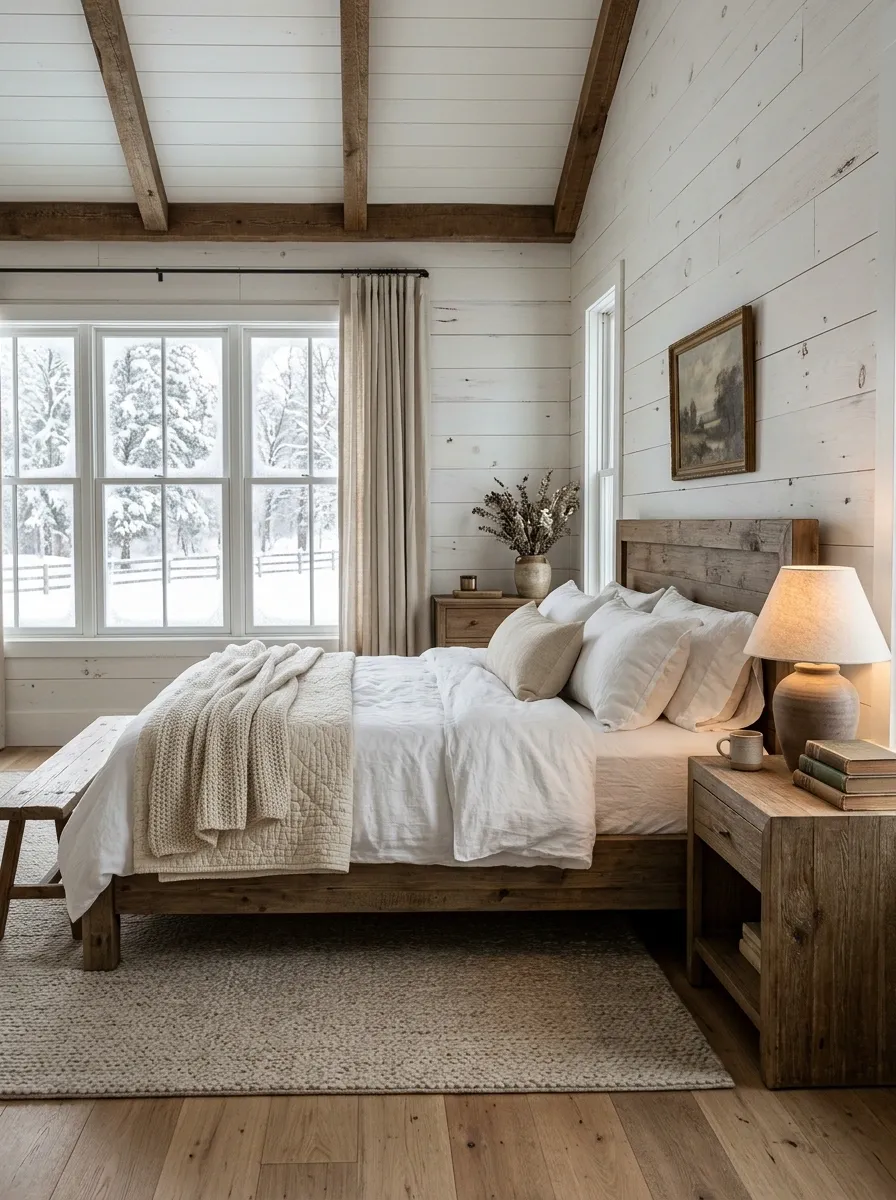
A visible stitched layer can give the bedroom farmhouse character without replacing the whole bedding setup.
Choose a piece that suits the room’s temperature and your comfort needs. Coordinate its color or pattern with the walls and curtains, leaving quieter layers around it. Keep laundering and drying practical.
Fold or arrange it so you can adjust warmth at night. Don’t add bulk purely to create a taller stack in a photograph. The bed should remain easy to make and pleasant to sleep in. Its winter appeal comes from usable comfort as much as appearance.
Relate it to existing colors without matching every textile.
Keep the layers adjustable for the sleeper.
Choose a routine the household can sustain.
Try Brushed Bedding Only If You Enjoy Its Feel

Winter sheets should suit the person sleeping in them.
If you enjoy a softer brushed surface, compare suitable bedding by feel, care, and fit. Keep the room’s actual temperature in mind. A fabric that one person finds comforting may feel too warm to someone else.
Choose a plain or restrained pattern that works with the visible quilt and other textiles. You don’t need every layer to announce farmhouse style. The useful decision happens beneath the decorative cover, where comfort matters more than the finished arrangement’s appearance at the bedroom door.
Compare texture, warmth, mattress fit, and care instructions. Seasonal styling shouldn’t overrule comfortable sleep.
Use a Bedside Lamp With a Substantial Base
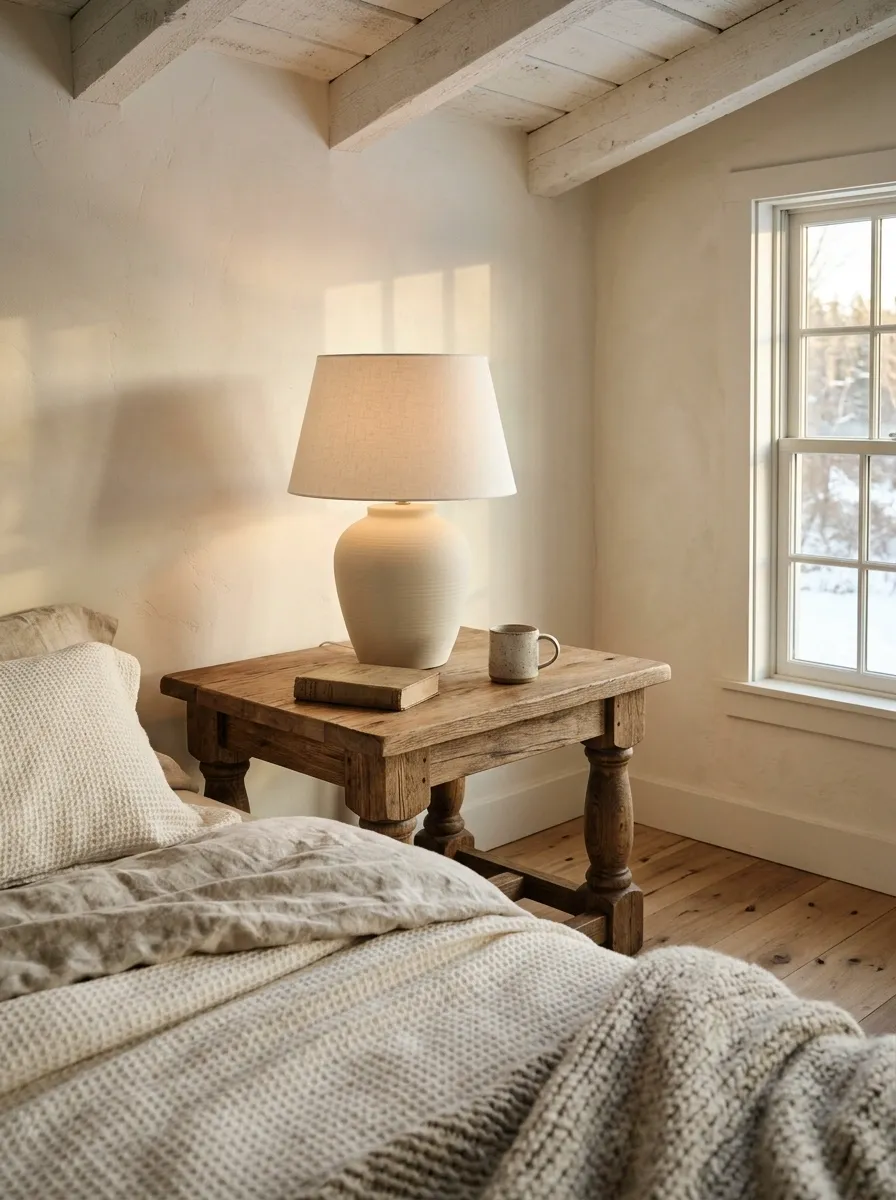
A simple ceramic or wood lamp can give the bedroom a grounded detail.
Choose the complete lamp for the table and the bed beside it. Check the shade from the pillow and make sure the switch is accessible. The light should help with reading or settling in.
Keep enough clear surface for ordinary nighttime belongings. A broad lamp that occupies the entire table defeats its own welcoming effect. Relate the base to the room’s materials, then let the useful light provide the winter atmosphere. No decorative instruction to “rest” is required beside it.
Useful without harsh glare.
A switch that’s comfortable to reach.
Room remains for the things used at night.
Bring Texture Into the Bathroom With Practical Towels
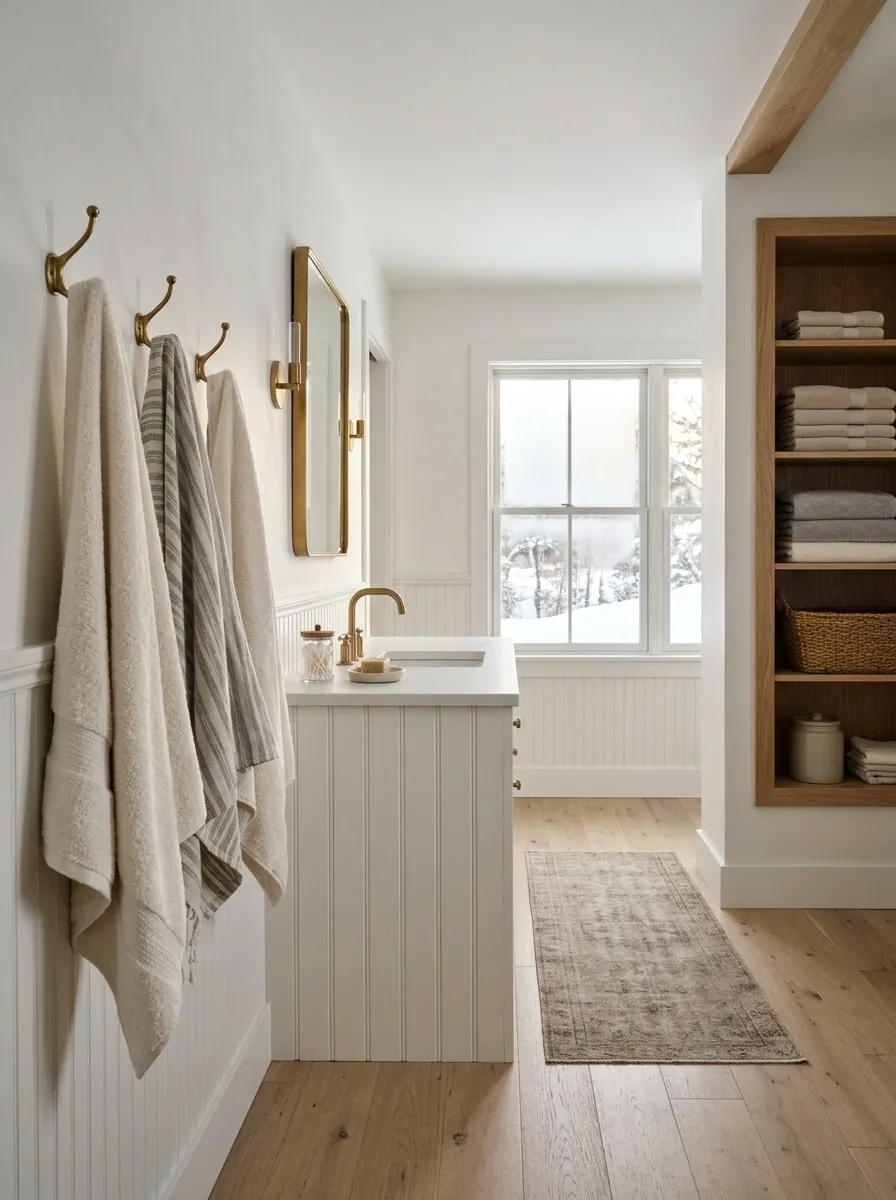
Choose towels for comfort, drying, and care before their decorative potential.
A coordinated group in cream, muted color, or a restrained stripe can relate to the house’s farmhouse palette. Hang them with enough space to dry and keep clean spares away from splashes.
Use suitable washable accessories where they help, and leave the basin’s useful dry area clear. The bathroom doesn’t need a collection of rustic objects around the tap. It feels more welcoming when the towels are fresh, the floor arrangement is secure, and the room is easy to use on a cold morning.
- Comfortable absorbent fabric.
- A manageable laundry routine.
- Enough hanging room.
- Dry storage for clean spares.
Give a Window Seat a Winter Layer

An existing window seat or suitable bench can become a favorite winter spot.
Choose a comfortable cushion or removable layer suited to the seat and conditions. Keep the window’s operation, heating, and access clear. Add useful reading light where needed as daylight fades.
Test the seat before arranging the textiles. A narrow perch doesn’t become comfortable merely because it has a large cushion. Keep nearby storage accessible and leave room to sit normally. This works best as a usable corner where the view and warmth matter, rather than another place to stack decorative pillows.
Comfortable sitting without balancing on the edge.
Windows and nearby controls remain usable.
The corner works beyond the bright part of the day.
Use Porch Planters With a Clear Winter Shape

Keep the containers that suit your exterior and reassess their seasonal contents.
Check their condition, drainage, and suitability for the local weather. Choose live plants appropriate to your climate and exposure, or suitable decorative material arranged securely. Keep the entrance route comfortable.
Let the outline read from the path. A clear shape can provide more presence than many tiny additions. Relate the containers to the door and house materials without insisting on a matching set. The porch should feel cared for and welcoming while remaining easy to approach with bags and outdoor clothing.
Account for local winter temperatures, sun, wind, and shelter. A plant’s appearance alone doesn’t establish whether it belongs in the container.
Finish With the Things You Use Throughout Winter
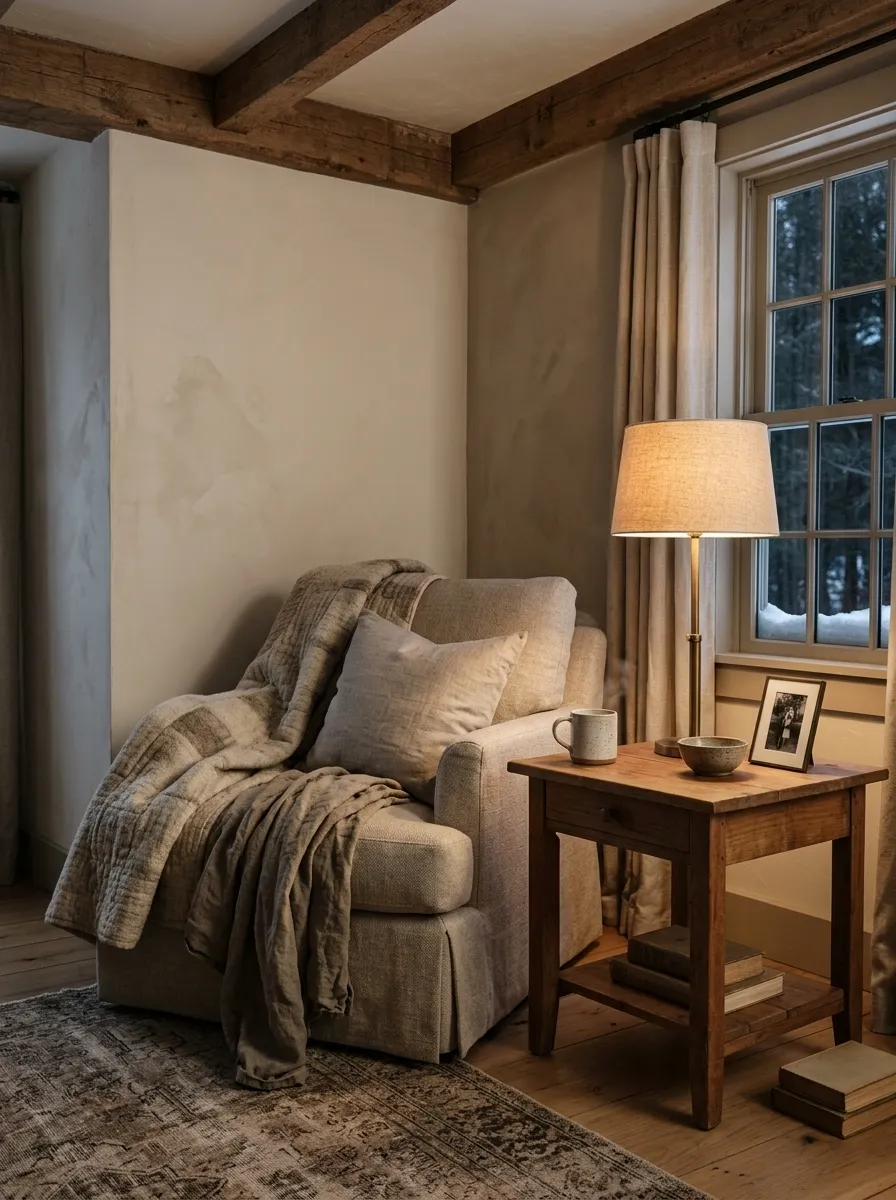
Make the last pass through the house during an ordinary evening.
Check the chair, blanket, lamp, mug, and table arrangements. Put away anything that exists only to fill a seasonal gap. Keep the objects that help the house feel comfortable and familiar.
A personal photograph or well-used bowl can sit naturally beside the winter textiles. You don’t need to replace normal life with a themed collection. Farmhouse character feels strongest when the materials and belongings have a reason to be there, with enough room left to enjoy them.
Textiles and seating people choose.
Useful light, surfaces, and storage.
Belongings that mean something beyond the season.
Keep the Quilt, Clear the Chair, Put the Kettle On
A room feels ready for winter when you can settle into it easily. The blanket is close, the light works, and the table can hold a cup without a decorative rearrangement.
Let winter farmhouse decor support that kind of evening. Keep the warm wood and practical ceramics, use textiles you enjoy touching, and leave enough space around the details. The style doesn’t need constant explanation from signs or seasonal ornaments.
Save the ideas you’ll use on Pinterest, then start with the seat you choose most often. Make that corner better before decorating the one nobody visits.