
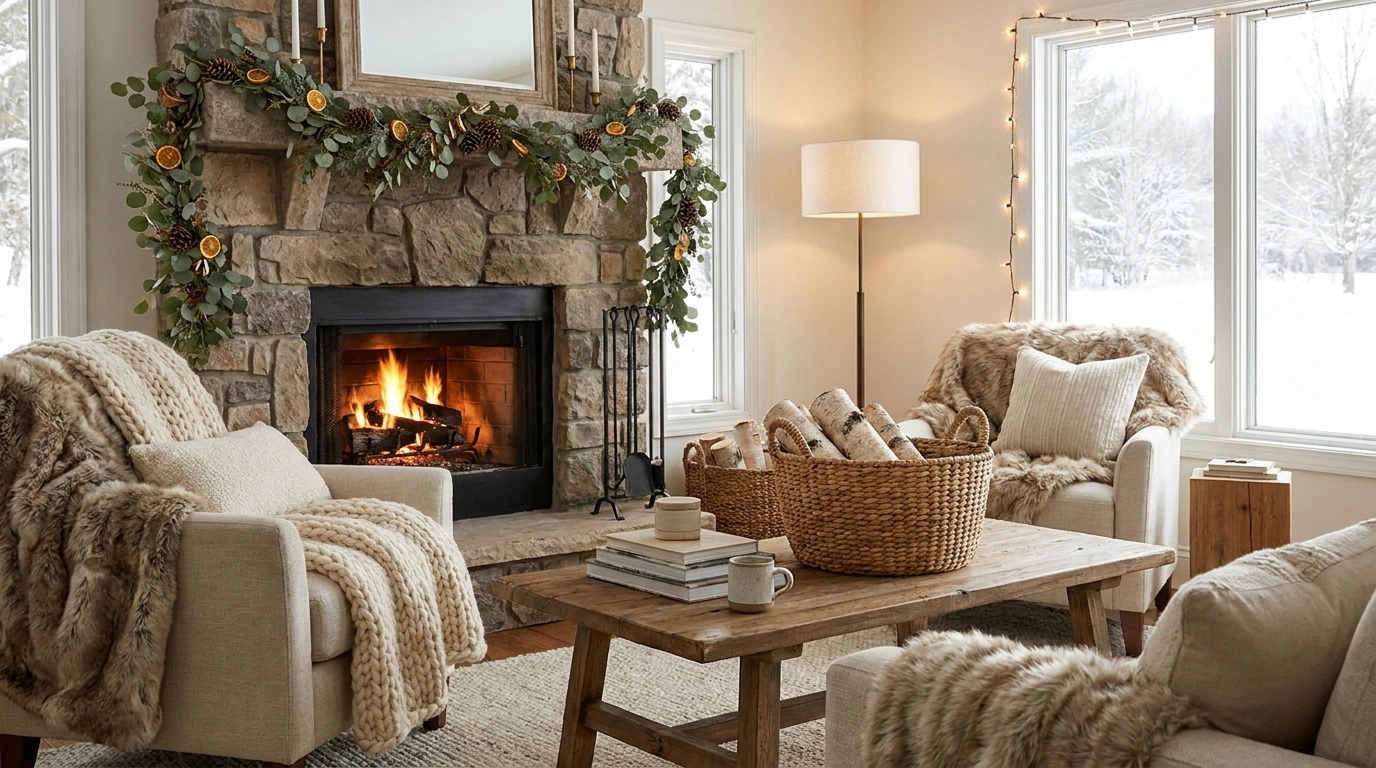
January has its own light, its own colors, and quite enough personality without borrowing December’s decorations.
You can make a home feel seasonal through softer lighting, deeper texture, quieter artwork, and a few changes in how the rooms work after dark. The result can be rich, minimal, colorful, or restrained. It doesn’t have to involve a tree, a festive character, or a garland with employment extended indefinitely.
Winter home decor without looking like Christmas starts with choosing what you want the season to feel like indoors. Perhaps it’s a calmer bedroom, a brighter reading corner, or a dining room that invites longer evenings at the table.
Build around that experience. Keep useful layers, choose a palette that belongs to the room, and let the materials carry the seasonal shift. You can use branches or a lantern if you enjoy them, but neither is compulsory. Winter is a long season. Your home deserves an arrangement you’ll still want to live with after the novelty has worn off.
Give Winter Its Own Visual Language
Choose a Mood Before Choosing Seasonal Objects
Decide whether you want the room to feel quieter, warmer, more dramatic, or more comfortable after dark. Those intentions lead to different choices.
A quieter room may need fewer competing objects and a more connected palette. A dramatic room may suit deeper color and substantial textiles. Keep the existing furniture and finishes in the decision. A clear mood gives each addition a purpose, while a shopping search for winter accessories can produce a collection of unrelated objects that happen to share a season.
Use Texture and Light Before Literal Symbols
Fabric, wood, stone, paper, metal, and glass can change the room without depicting anything seasonal. Their surface and relationship to light provide plenty to work with.
Look at where a richer texture or softer light would improve daily use. Keep the balance varied: a textured cushion against smooth upholstery, a substantial bowl on a plain table, or a shaded lamp beside a reading seat. These choices remain useful through winter and give you more flexibility than a collection of date-specific decorations.
Winter Decorating Ideas That Can Stay After the Holidays
Hang Soft Textured Ornaments
Winter decor relies on tactile elements that bring a sense of warmth without leaning into holiday motifs.
Suspend fluffy pom-poms and natural pinecones from a rustic branch to create an organic focal point above a window or seating area.
Let the varying heights and soft materials catch the natural daylight while keeping the surrounding view open and uncluttered.
Build a Quiet Palette With One Dark Anchor
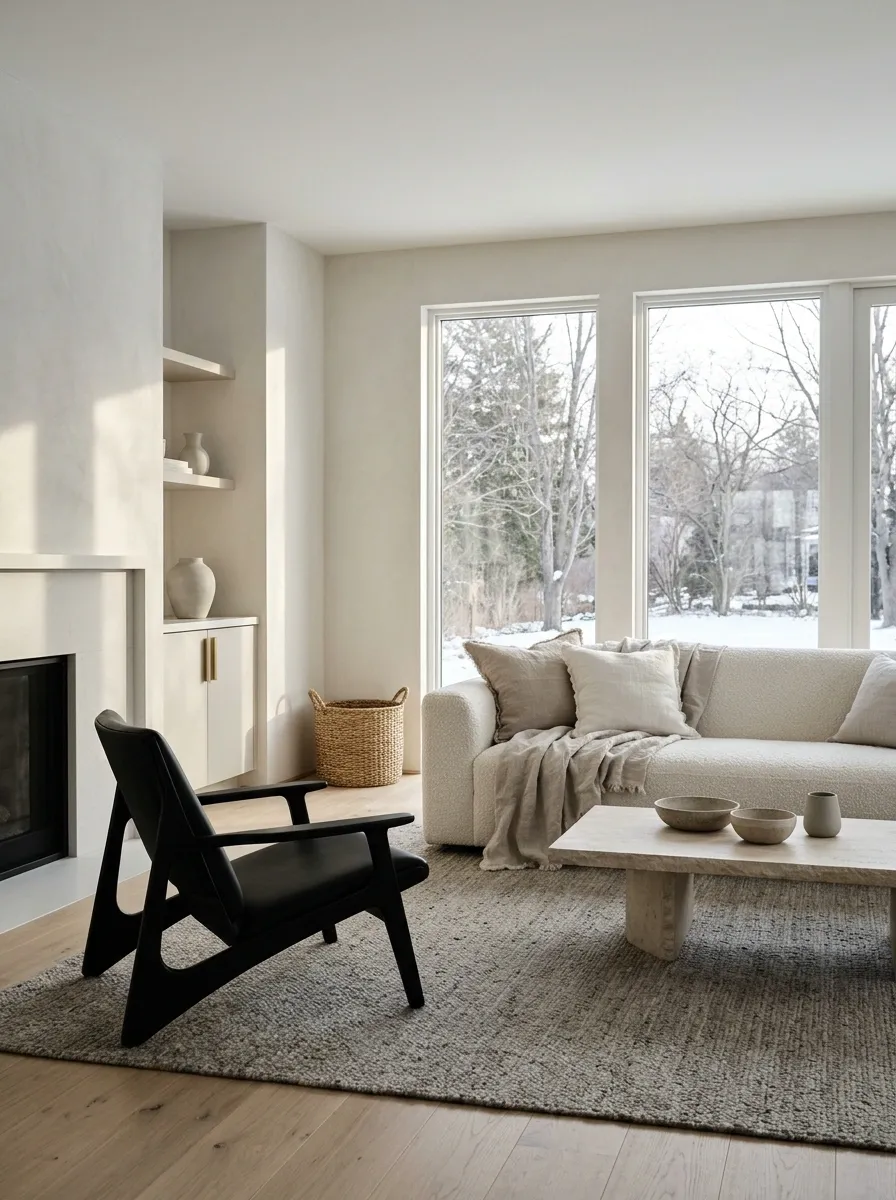
A pale room can feel more defined when a darker element gives it structure.
Use an existing frame, chair, lamp, or textile as the anchor, then connect the surrounding colors. Warm white, stone, muted gray, and a deeper neutral can work together when their undertones cooperate.
Test the group in the room rather than choosing from names alone. Keep enough variation in material that the palette doesn’t become flat. A quieter color story can feel distinctly suited to winter without requiring a snowflake to explain the intention.
Connected light colors suited to the fixed finishes.
A deeper element with a clear place in the room.
Different surfaces keep the restrained palette interesting.
Create a Cozy Sunroom Retreat
Transform a bright corner into a dedicated sanctuary for slow winter afternoons and quiet reading.
Layer a plush floor cushion with textured rust-colored pillows and a thick sheepskin rug to anchor the space with natural warmth.
Surround the seating area with leafy green plants and simple string lights to maintain a lively, inviting atmosphere throughout the colder months.
Use a Rich Color Pairing That Has No Holiday Association
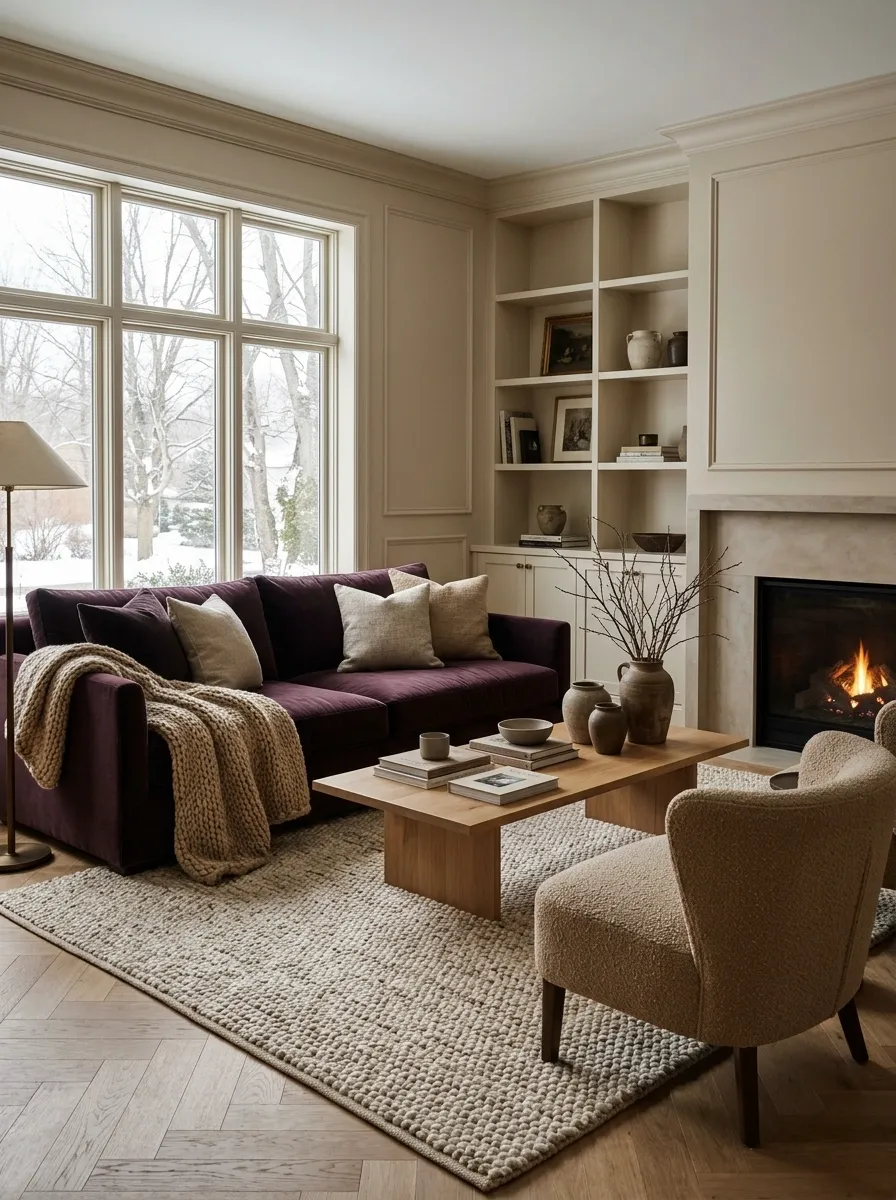
Winter doesn’t require neutral rooms.
Try a pairing that relates to your existing furniture, such as plum with warm beige or muted blue with rust. Use one color more broadly and the other in smaller supporting areas. Let the room’s light and fixed finishes guide the exact shades.
Start with movable textiles if you’re testing the relationship. Check the arrangement from the doorway and under evening lamps. The colors should feel connected across the room, rather than appear as a new purchase on every surface. Depth can provide the seasonal mood without any themed objects.
Give the stronger color a clear role, then repeat its companion selectively. Keep the room’s existing large surfaces in view while testing.
Style a Dramatic Evergreen Mantel
A grand fireplace deserves a lush arrangement of cascading winter greenery and deep velvet ribbons for effortless drama.
Weave textured pine branches, delicate berries, and tall pillar candles inside lanterns to build a layered focal point that feels intentional and rich.
Keep the hearth balanced by pairing the dark foliage with a simple woven basket for firewood, creating a timeless seasonal display.
Put Velvet Against a Simpler Fabric
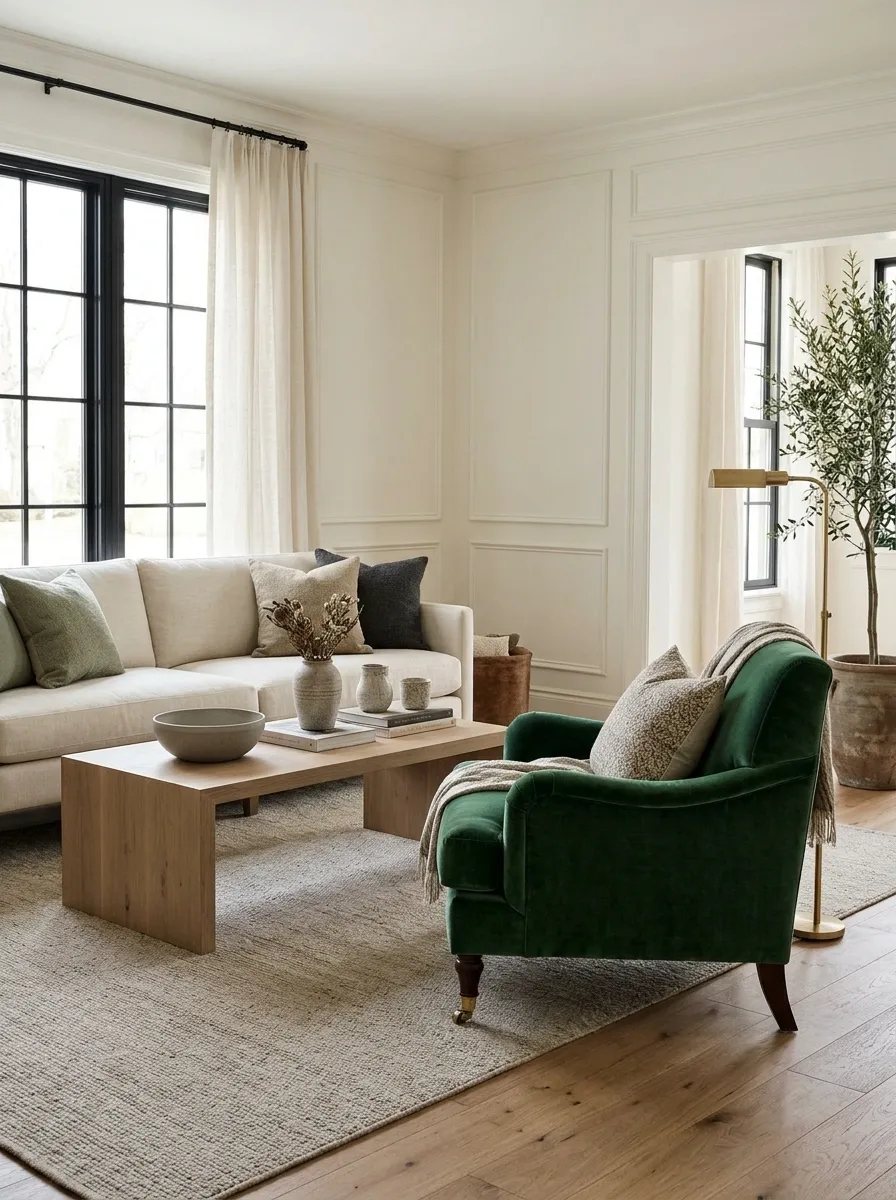
Velvet gives a room visible depth without needing a seasonal print.
Use it on a suitable chair, cushion, or other textile where the surface can register. Pair it with a simpler weave or smoother upholstery so the textures remain distinct. Compare the fabric in different directions and light.
Choose care and durability appropriate to the use. You don’t need to cover the room in the same material. A small amount can shift the mood when its color relates to the palette and the surrounding arrangement stays clear enough to notice it.
A fabric with visible depth and a deliberate color.
A neighboring surface that lets the texture show.
Bring in a Substantial Stone or Ceramic Object
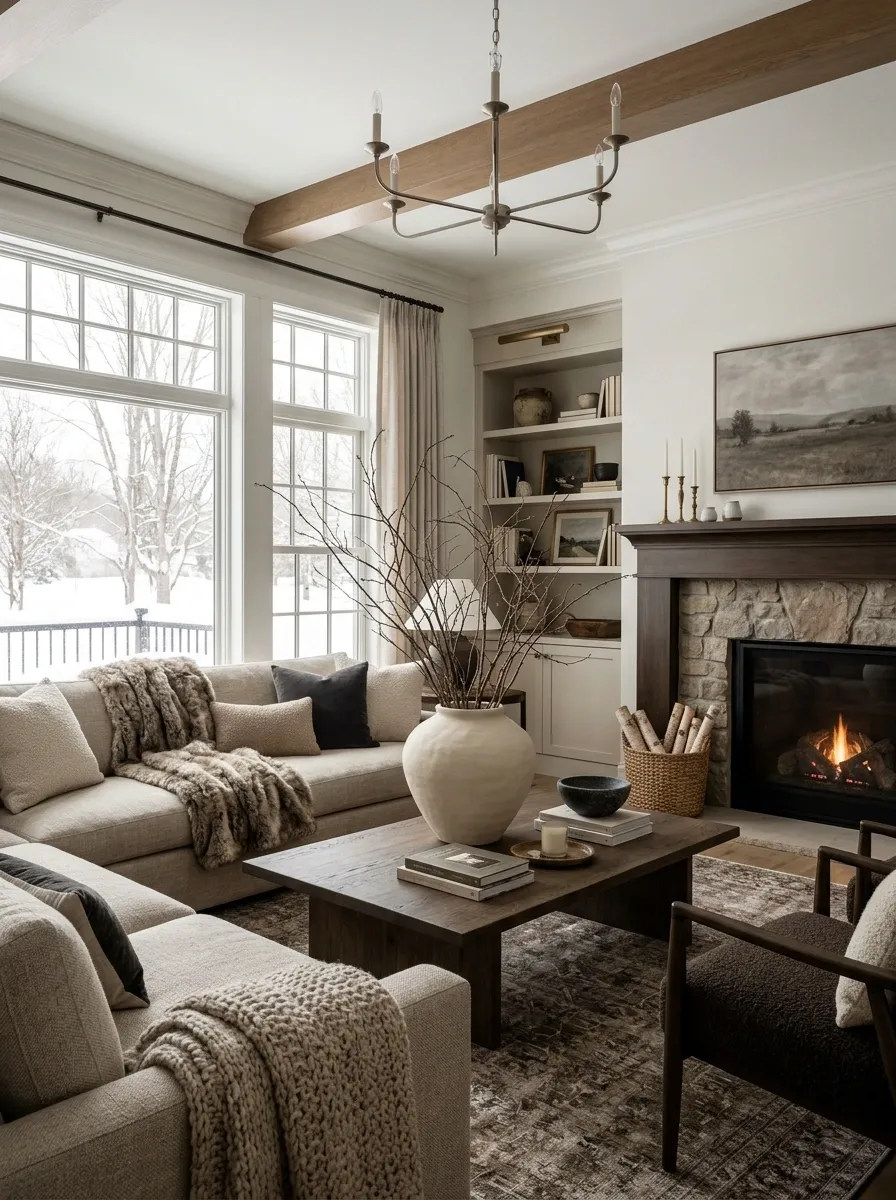
A bowl, vase, or other useful vessel can give a surface more presence.
Choose a size related to the furniture beneath it. A single substantial shape may read more clearly than several small accessories. Let its finish sit beside a different material, such as wood or fabric.
Keep the object stable and the surface practical. If it has a useful role, allow it to do that job. The room gains a quieter kind of detail when the piece has weight and shape without a seasonal message printed across it.
Choose a piece whose shape registers at normal viewing distance. Remove nearby filler before deciding another object is needed.
Let Wood Grain Replace Some Decorative Clutter
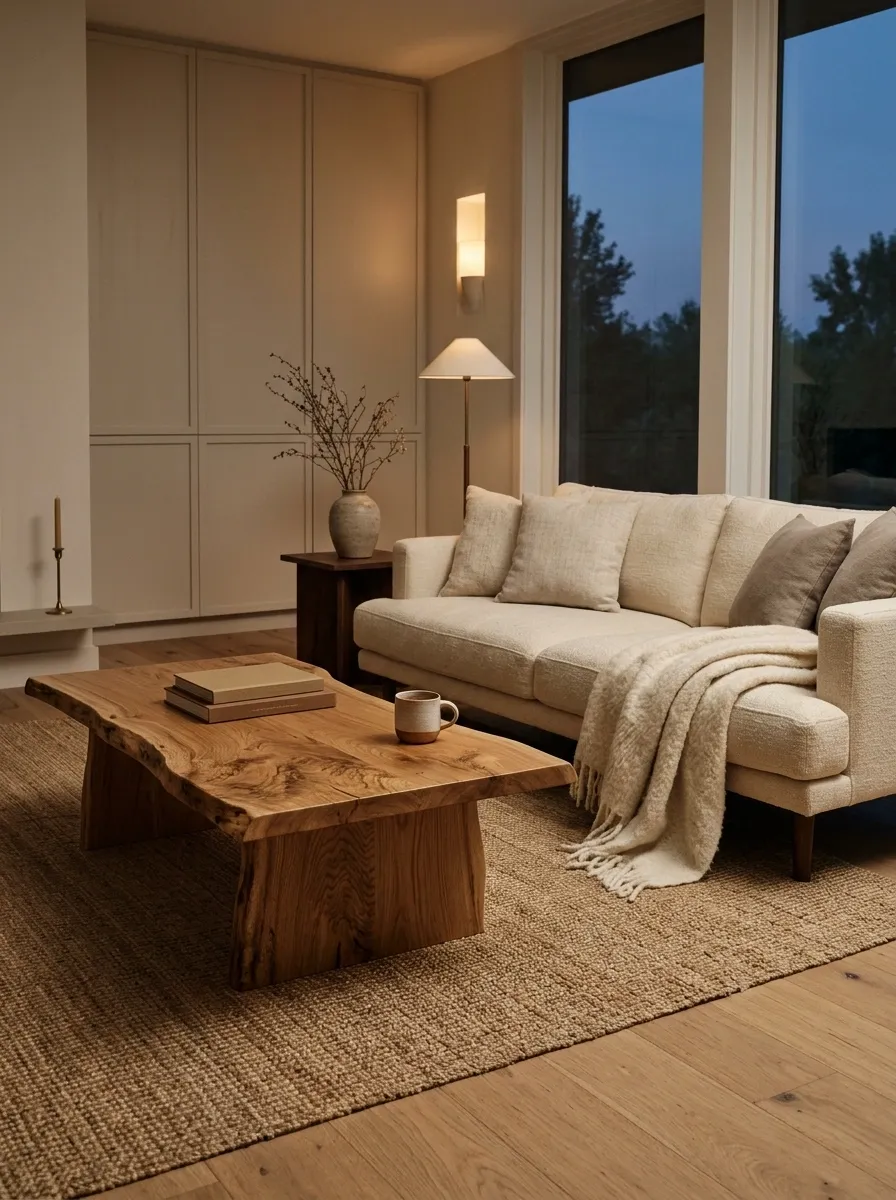
A good surface can contribute enough detail on its own.
Clear part of a wood table, cabinet, or shelf and look at the room again. Care for the finish appropriately, then return only what the surface needs for use or a deliberate arrangement.
Pair the visible grain with a softer nearby textile if the room needs more winter comfort. Don’t add another layer automatically. Natural variation in the material can provide warmth and interest while leaving room for a book, a drink, or the ordinary belongings that make the space useful.
Expose some of the material.
Clean and protect the finish appropriately.
Keep the useful or meaningful pieces.
Give the Main Seat Its Own Useful Light
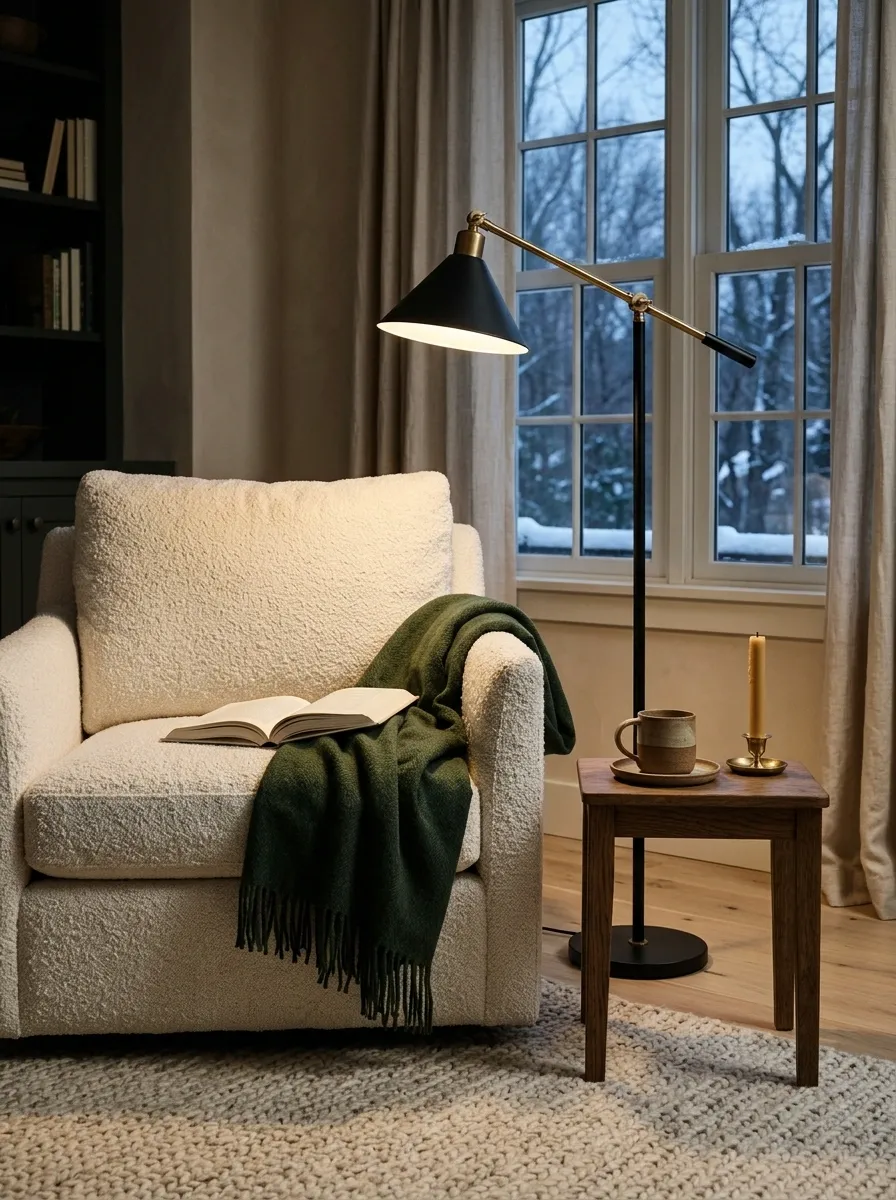
A favorite chair becomes more inviting when you can read comfortably after daylight fades.
Move a suitable lamp beside it and check glare from the sitting position. Let the light reach the activity without forcing an awkward posture. Keep the switch and nearby drink surface easy to reach.
Use compatible equipment and route the lead clear of movement. Test the arrangement during an ordinary evening before buying more lighting. This is a seasonal change with a daily payoff, and it works equally well in a colorful room or a restrained one.
Check the page or activity, the bulb’s visibility, and access to the switch. A lamp’s appearance alone doesn’t tell you whether the position works.
Change a Lampshade Where the Light Feels Harsh
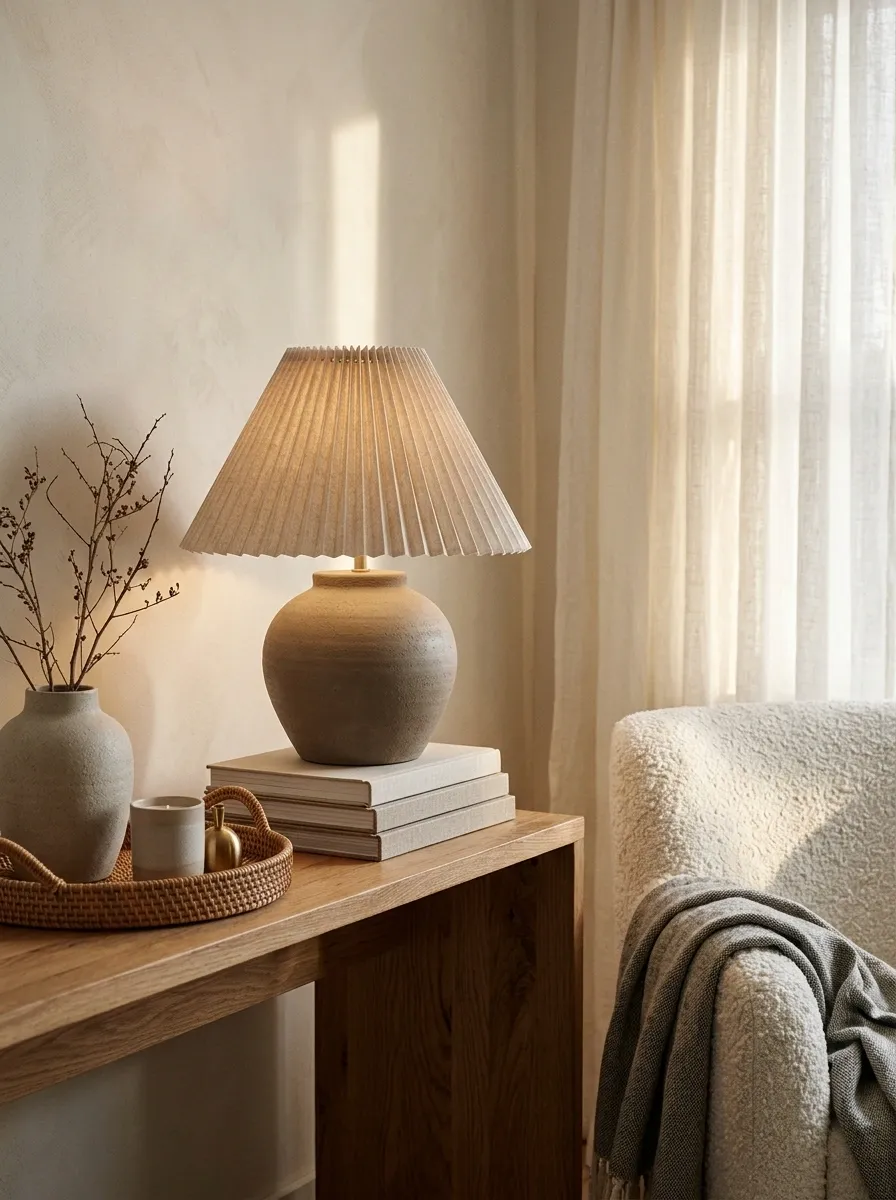
A suitable shade can alter both the lamp’s appearance and the way its light behaves.
Check the fitting requirements and proportions before choosing a replacement. Compare how different shade materials direct and diffuse light. Keep compatible bulbs and the manufacturer’s requirements in mind.
Choose a surface that relates to the room without introducing another busy pattern unnecessarily. Test it switched on, especially from nearby seats. The useful result is a comfortable pool of light and a lamp that feels resolved, rather than a decorative shade sitting above the same glare problem.
Compatible dimensions and attachment.
Useful direction and comfortable brightness.
A balanced relationship with the base and table.
Use a Lantern as a Light Source Rather Than a Seasonal Container
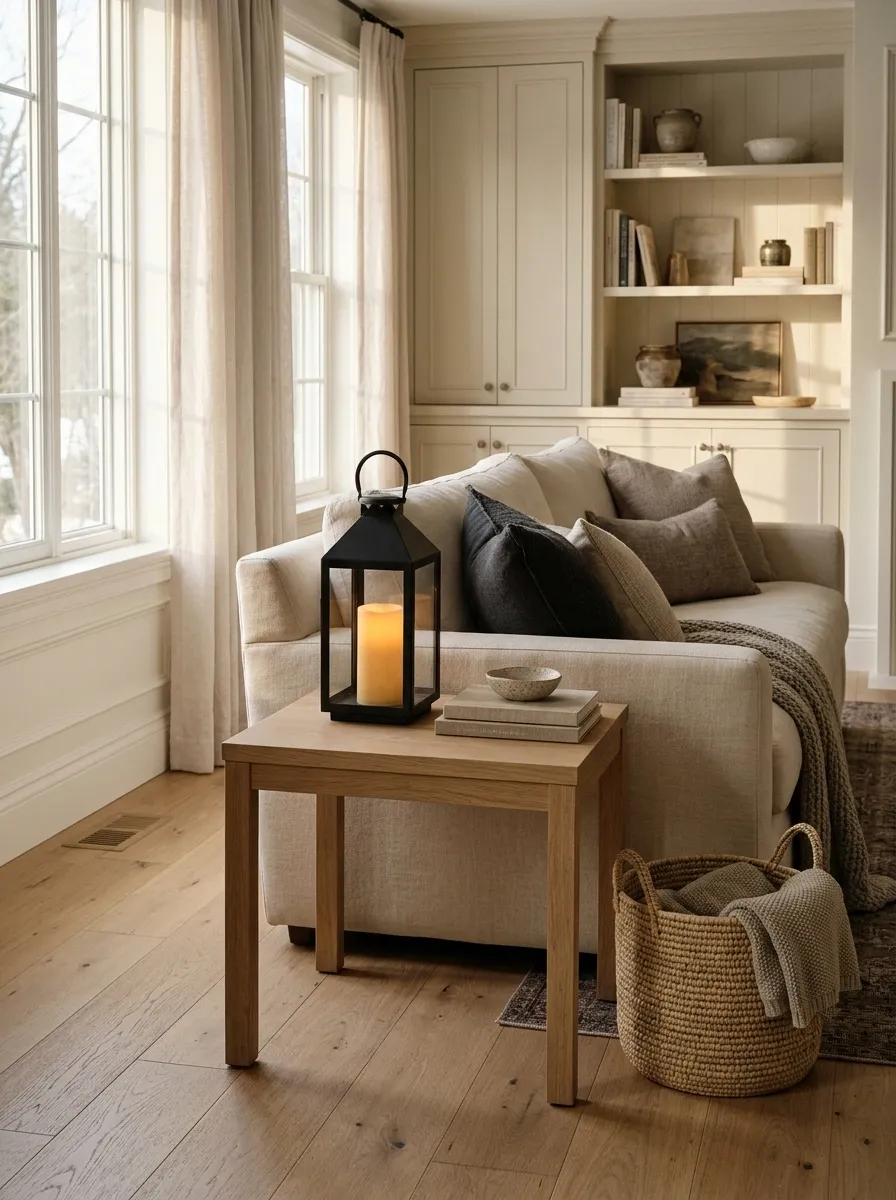
A plain lantern can remain useful beyond any holiday.
Choose a suitable light and location, following the product’s instructions. A compatible flameless option can provide atmosphere without building an arrangement around an open flame. Keep the lantern stable and clear of walking routes.
Resist filling it with assorted seasonal objects. Let the shape and light provide the detail. Check the effect from the sofa or dining seat, and keep nearby surfaces available. One deliberate light source often contributes more than several decorative lanterns occupying every place someone might put a cup.
Choose a suitable surface and preserve reach, cleaning access, and movement around the arrangement.
Give Glass Objects a Clear Place Near Existing Light
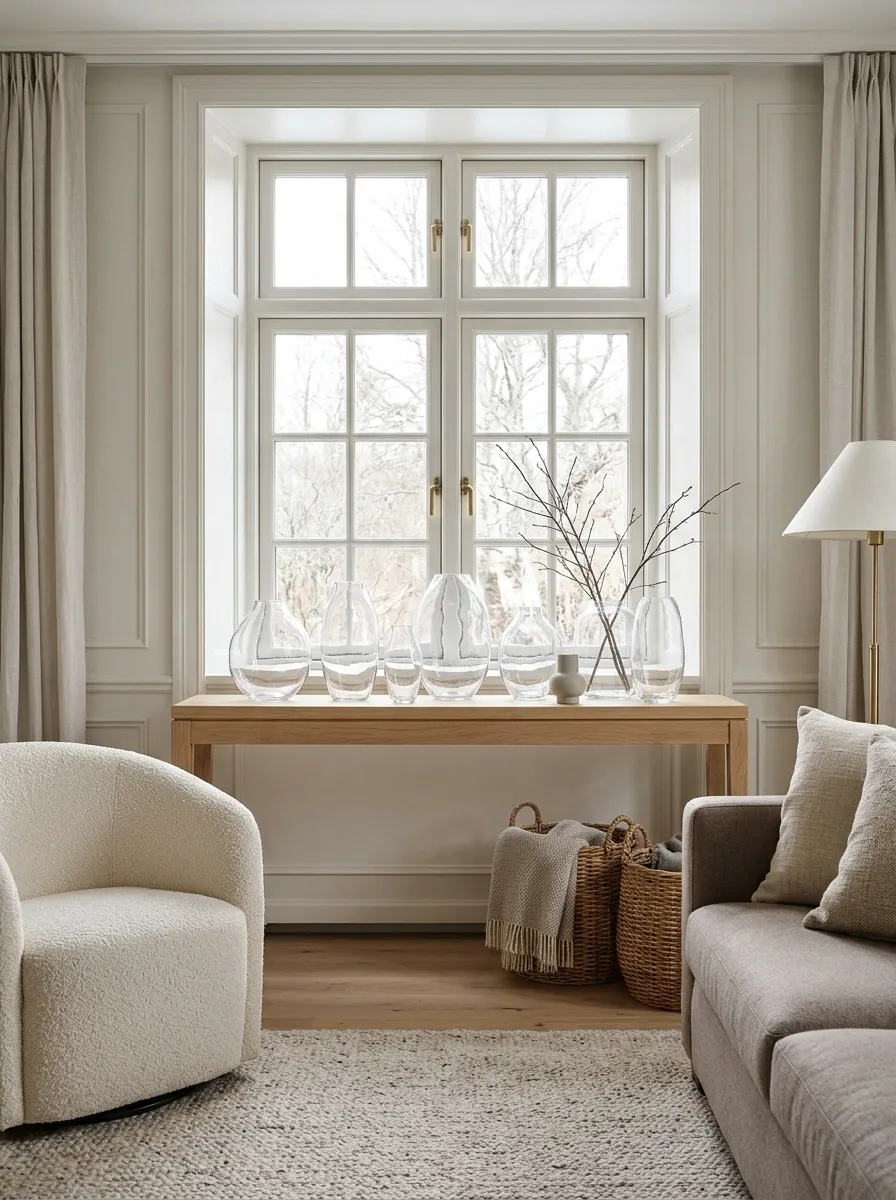
Glass can introduce a little reflection without turning the room glittery.
Choose a useful vessel or a small group with related shapes. Place it where the existing light makes the form visible, then check for glare and stability. Leave enough space around the pieces to appreciate their outlines.
Keep fragile objects away from habitual reach and busy routes. Don’t scatter tiny reflective pieces across every surface. A controlled arrangement can give the room a lighter detail beside heavier winter fabric, while leaving the rest of the composition calm.
Check the arrangement from the main seats. Keep the effect comfortable and the pieces out of accidental contact.
Arrange the Mantel Without a Garland
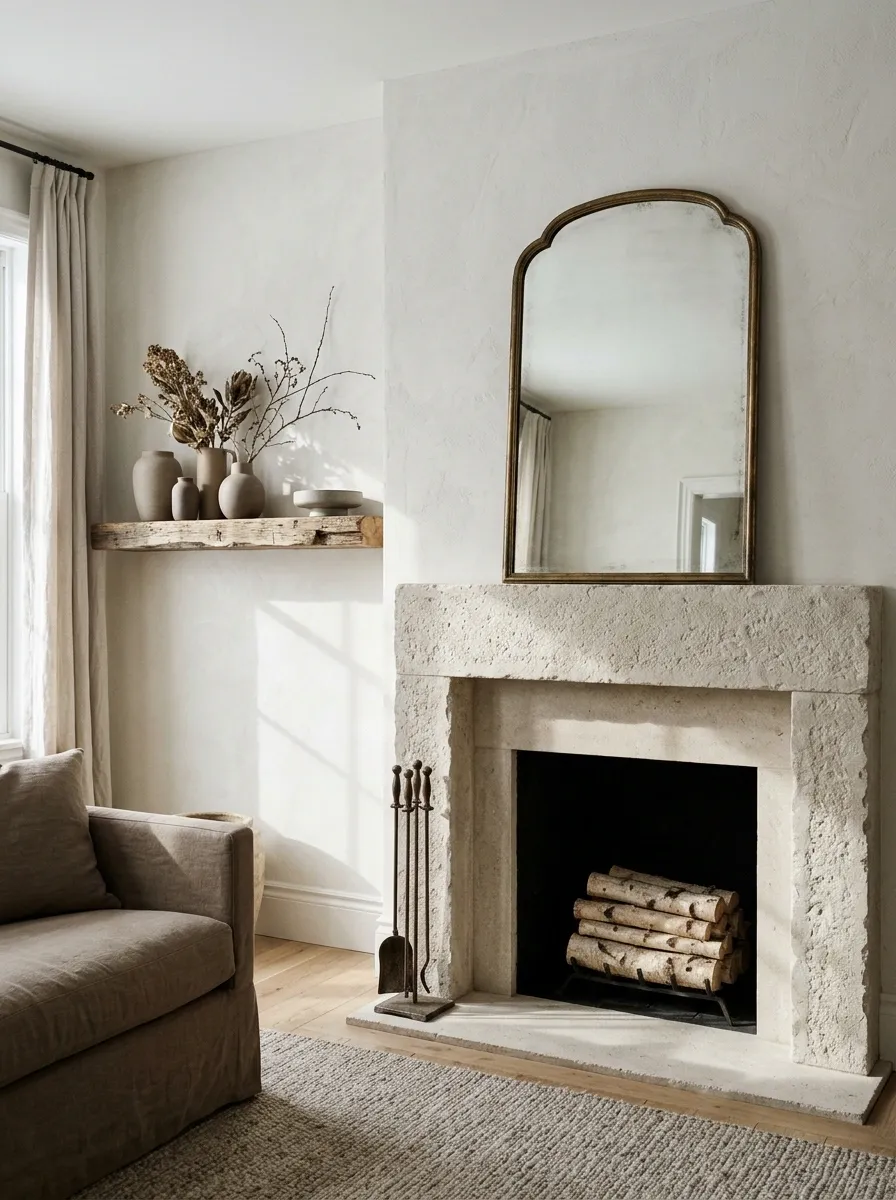
The mantel can feel finished through shape and spacing.
Start with the mirror, artwork, or surround already providing the main feature. Add a suitable object or small group where it improves the balance. Let the material of the mantel remain visible.
Keep any working fireplace or appliance’s requirements in the plan. The arrangement should stay appropriate when the feature is used. A clear, asymmetrical composition can feel seasonal through texture and color alone. You don’t need to replace the holiday garland with another long object merely to avoid seeing the ledge.
An open section of mantel helps the stronger objects register. Check the composition from the seats before adding more.
Choose Artwork With a Quieter Winter Palette
A landscape, abstract work, or photograph can shift the room’s mood through color.
Look for a relationship with the textiles and furniture you’re keeping. A muted image or a simpler composition may provide relief beside richer fabrics. It doesn’t need to depict a specific season.
Use a suitable existing frame where possible and test placement before making new holes. Consider the full dimensions, including the mount and frame. A single piece given enough space can change the wall’s character more effectively than a collection of small seasonal prints competing for attention.
Relate colors to existing large surfaces.
Include the full frame in the decision.
Give the piece room to be seen.
Use Simple Window Decoration Where Privacy and Light Allow
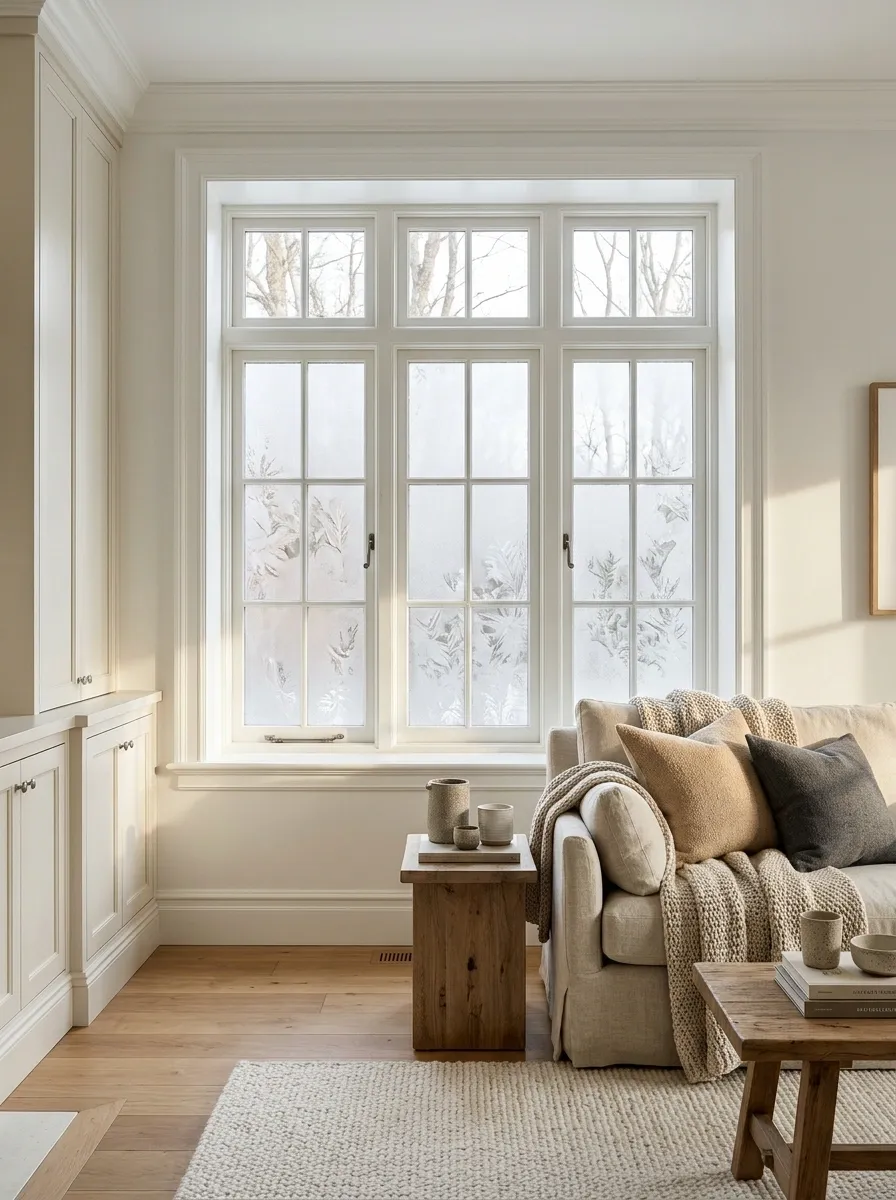
A restrained removable window detail can acknowledge winter without becoming a holiday display.
Choose a product compatible with the glazing and follow its application and removal guidance. Keep the arrangement limited to a suitable area so the daylight and view remain useful. A simple geometric or frosted effect can provide enough change.
Check the result from both sides and preserve handles and normal operation. Avoid adding more motifs just because there’s glass left. The window already has a practical job, and its seasonal detail should fit around that rather than slowly claim the entire opening.
- Compatibility with the glazing.
- Application and removal instructions.
- Daylight and privacy needs.
- Window movement and access.
Give Branches an Architectural Shape
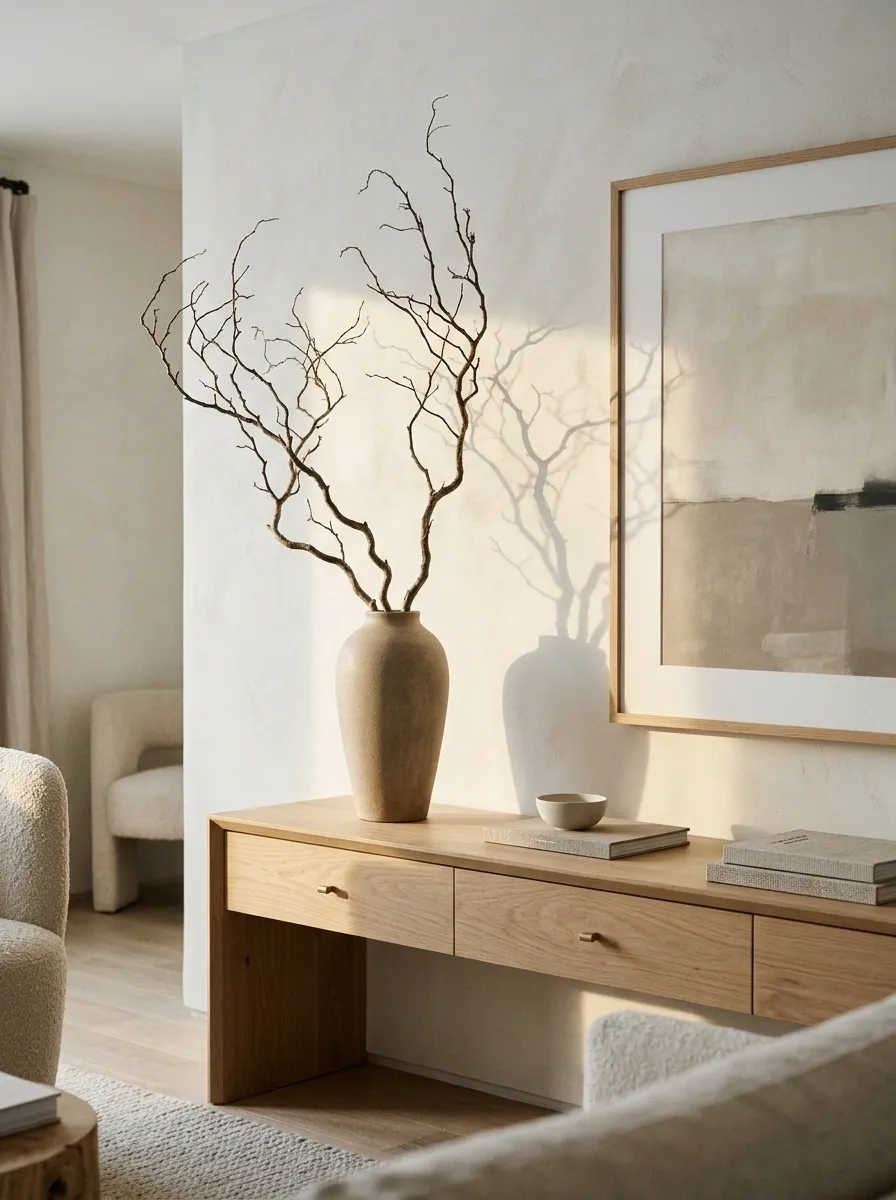
A few suitable stems can provide a clear outline against a plain wall.
Choose material you can use responsibly and maintain appropriately. Keep the vessel stable, protect the surface, and consider suitability around children and pets. Position the arrangement clear of heat and everyday movement.
Let the line of the stems be the point. You don’t need hanging ornaments to complete it. Check the height beside nearby artwork and the view across the room. A restrained branch arrangement works when its shape has space, rather than when it fills the last gap on an already crowded console.
A quieter surface lets the outline register.
Stable support suited to the material.
No interference with movement or nearby objects.
Bring in Flowers Chosen for Color Rather Than a Theme
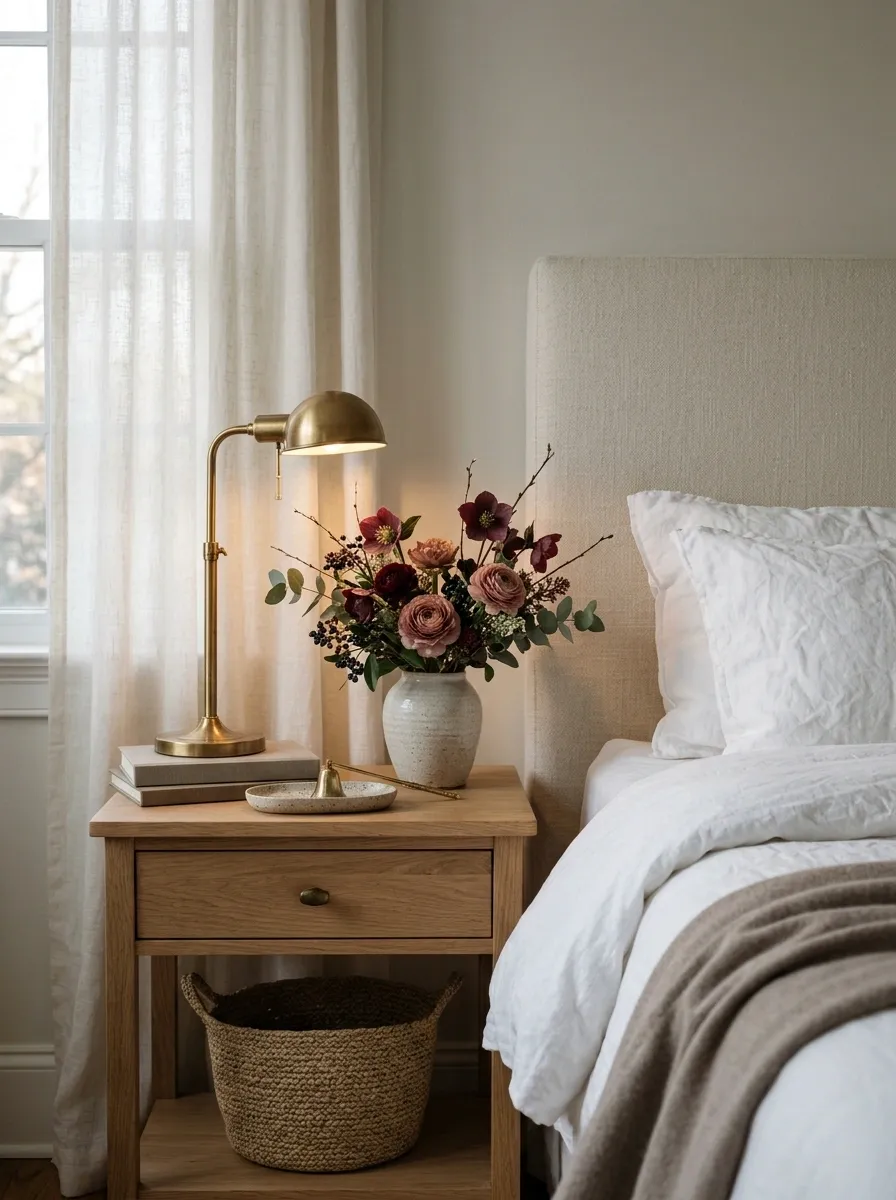
Flowers can give a winter room life without a holiday arrangement.
Choose a manageable quantity suited to the vessel and your care routine. Relate the color to the room or let it provide one deliberate accent. Keep the shape clear enough that the flowers can be appreciated individually.
Follow suitable care guidance and check plant material for compatibility with your household. A small fresh arrangement can be enough for a bedside table or dining area. Don’t feel obliged to build a large centerpiece when the room mainly needs a modest detail beside a useful lamp.
Use a suitable vessel, protect the surface, and remove deteriorating material promptly. The arrangement should remain pleasant between refreshes.
Use a Bowl of Citrus as an Everyday Color Accent
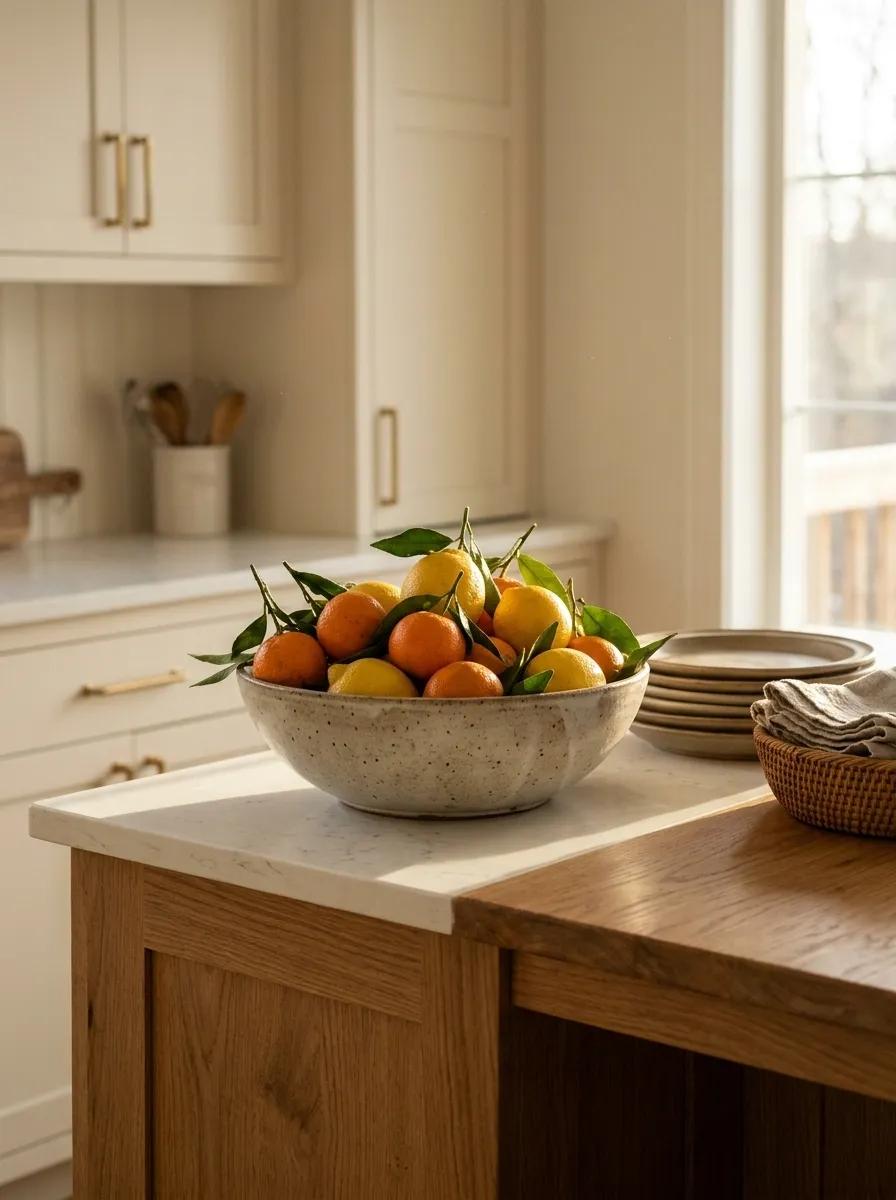
A simple fruit bowl can introduce warmth through color and shape.
Choose a container and location appropriate for the fruit’s storage needs. Keep the contents visible and check them regularly. The arrangement should fit your household’s eating habits rather than become a permanent decorative obligation.
Place it where the color contributes to the room without taking over a working surface. A substantial bowl beside quieter materials can be enough. Let the display change as the fruit is used. There’s no need to preserve a perfect composition at the expense of eating what you bought.
Suitable and easy to access.
Appropriate storage conditions and a clear surface.
Check, eat, and replenish as needed.
Add a Removable Layer to the Bed
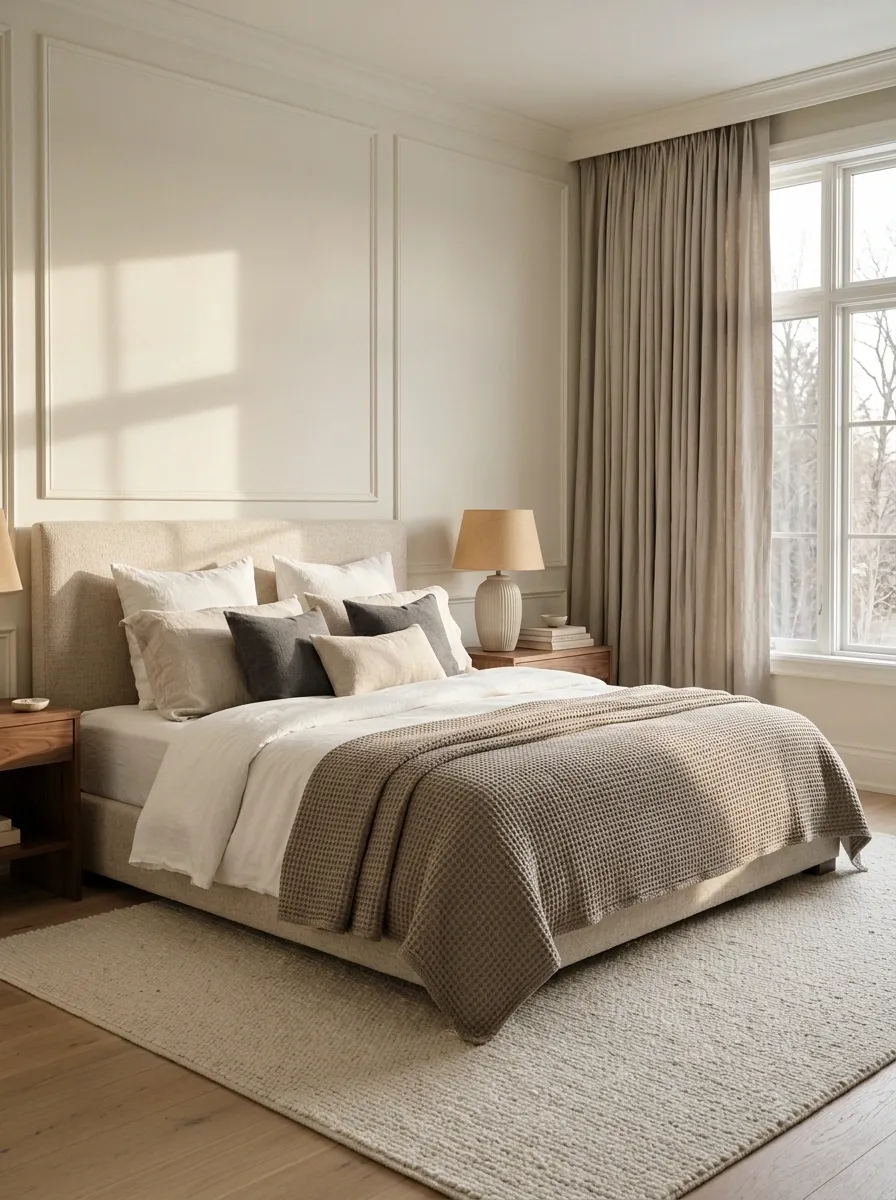
A winter bedroom needs adjustable comfort more than decorative bulk.
Choose an extra blanket or cover that suits the room’s temperature and the sleeper. Keep it easy to reach and remove. Coordinate it with the existing bedding through color or texture rather than a seasonal print.
Check the care requirements and your drying capacity before choosing a very heavy piece. The bed should remain straightforward to make and comfortable through changing nights. A useful layer can provide all the seasonal change the room needs, especially when the surrounding arrangement is already calm.
Choose for the bedroom and the individual sleeper. A decorative stack shouldn’t make ordinary temperature changes difficult.
Make Curtains Part of the Evening Routine
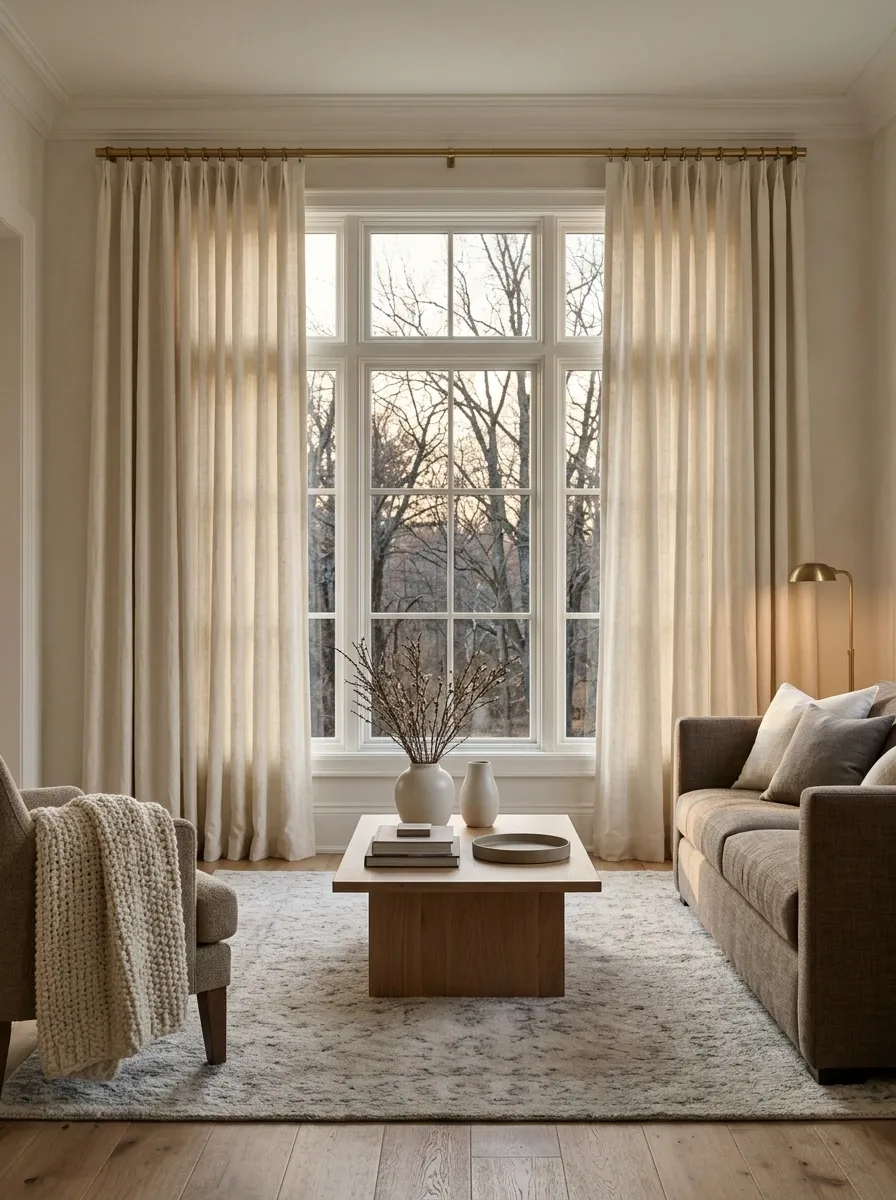
Curtains contribute more when they’re easy to use daily.
Check the pole, rings, panel position, and finished length. Clear objects that catch the fabric or block access. Open them for the daylight you want and close them when privacy or the room’s evening setting calls for it.
If considering a different treatment, assess the window and surrounding furniture first. Keep required heating clearances and normal operation intact. A well-fitted plain curtain can give a winter room a softer outline without adding another pattern or any seasonal symbol to the space.
Useful glass remains visible and accessible.
Panels hang neatly and provide the intended coverage.
Put a Suitable Rug Where the Room Feels Bare
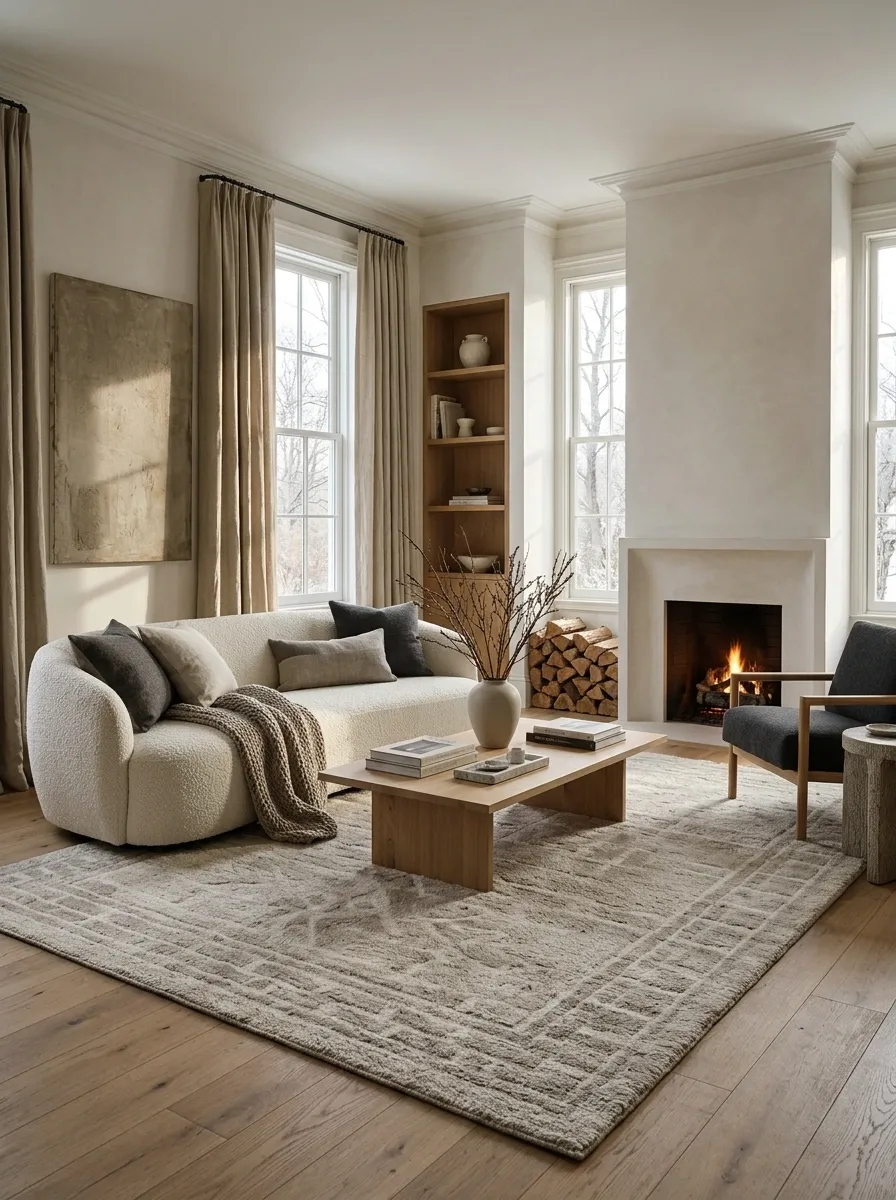
A rug can give a seating area or bedroom a clearer, softer footprint.
Choose its dimensions around the furniture and the way people move. Use an appropriate pad for the surface, keep edges flat, and check nearby doors. The care routine should suit the household.
Let color and texture connect the rug to the room. A plain rug can support strong upholstery, while a restrained pattern can add interest to quieter furniture. Position it deliberately before deciding you need another layer. The improvement should make the arrangement more comfortable to use as well as look at.
| Area | Check |
|---|---|
| Seating | The rug connects the furniture group. |
| Bedroom | Placement supports bed access and normal movement. |
Give the Bathroom Fresh Texture and Clear Surfaces
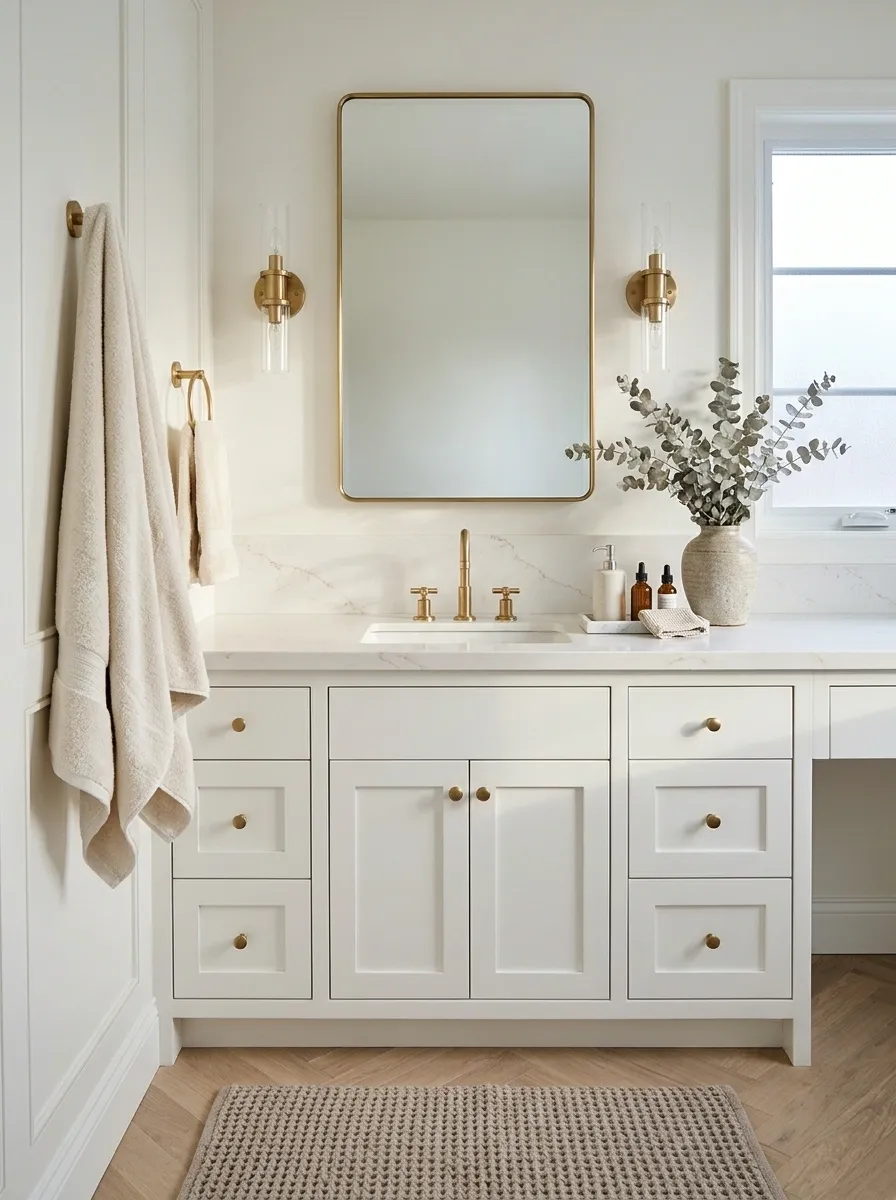
A bathroom can feel ready for winter without a single decorative snow scene.
Choose clean towels and a suitable mat that fit the room’s drying conditions. Coordinate their color with the existing finishes and leave enough space for them to work properly. Keep the basin area convenient.
Put away occasional products and preserve a dry landing spot. A comfortable room comes from the things used on an ordinary morning being ready and accessible. Decorative accessories can remain limited, especially where moisture and cleaning make elaborate arrangements more trouble than they’re worth.
Fresh, comfortable, and able to dry.
A secure mat suited to its position.
Daily items accessible with some dry space left.
Set the Dining Table With Plain Linens and a Clear Center
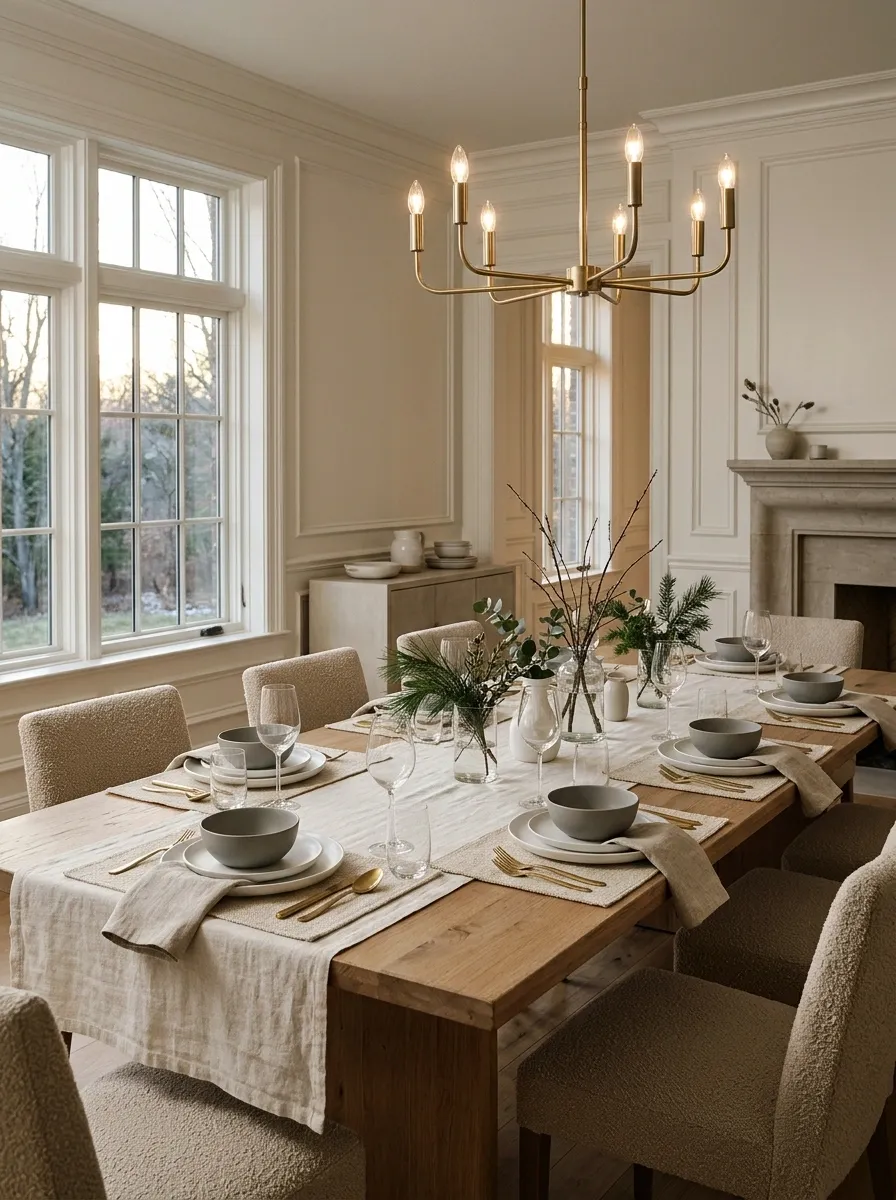
Winter dining can feel inviting without a themed centerpiece.
Use a runner, placemats, or tablecloth suited to the way you eat and clean. Let the fabric’s color and texture connect to the room. Keep the central arrangement low and manageable if you use one.
Check the table with plates and serving dishes in position. Leave people room to see and speak comfortably. The best seasonal detail may be a cloth you enjoy using and a surface ready for dinner. You don’t need to replace the absent holiday display with an equally demanding winter installation.
Test serving space and sightlines before finishing the display. Keep the arrangement easy to move for cleaning or another use.
Give the Entrance a Calm Place for Winter Belongings
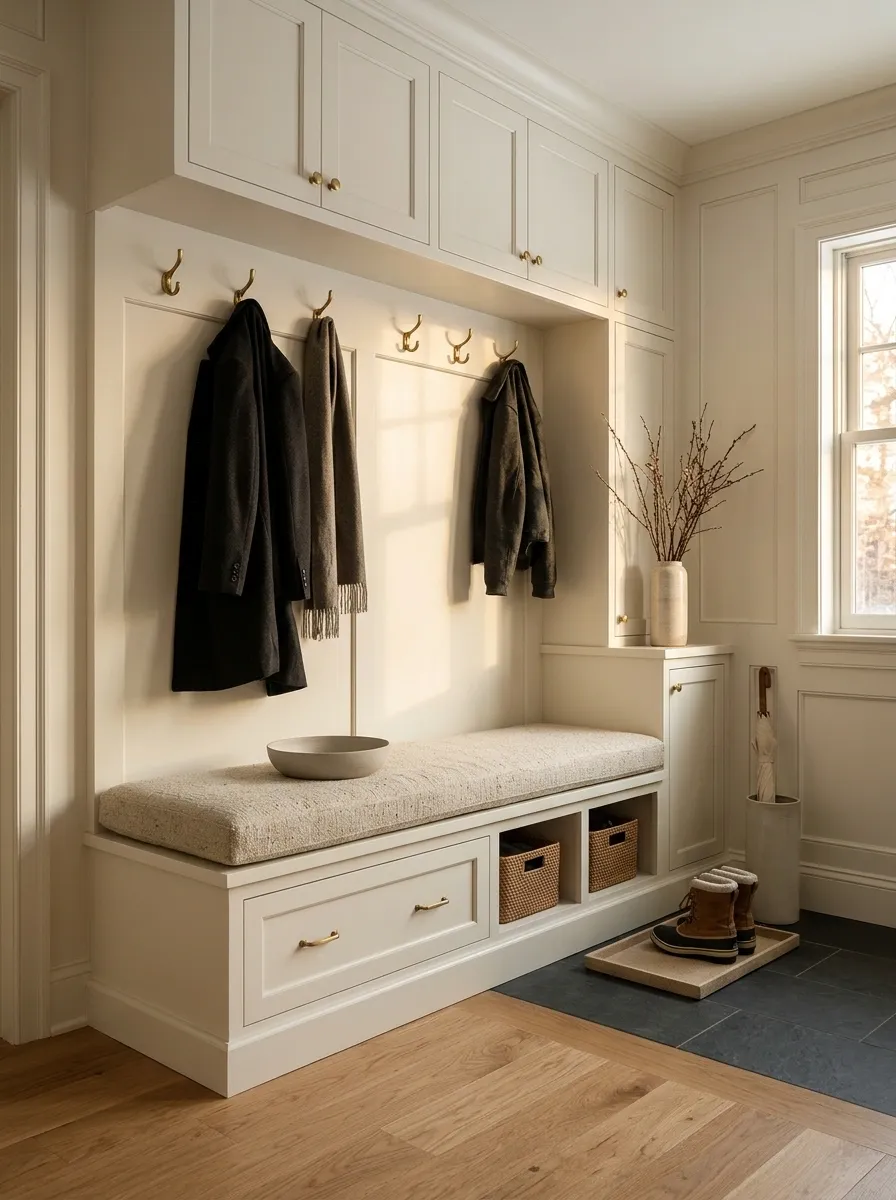
The entrance can acknowledge the season by handling what people bring indoors.
Clear out items no longer used daily and give current shoes, coats, and small accessories suitable places. Keep wet belongings able to dry and protect the floor appropriately. Leave the door and route comfortable.
Choose a restrained storage arrangement rather than adding baskets around every edge. The house feels more welcoming when arriving is straightforward, including with cold hands and shopping bags. Practical order provides a winter update that remains useful long after decorative enthusiasm has run out.
A clear door swing and walking route.
A suitable place for everyday belongings.
An appropriate arrangement for wet items.
Create a Reading Corner for the Longer Evenings
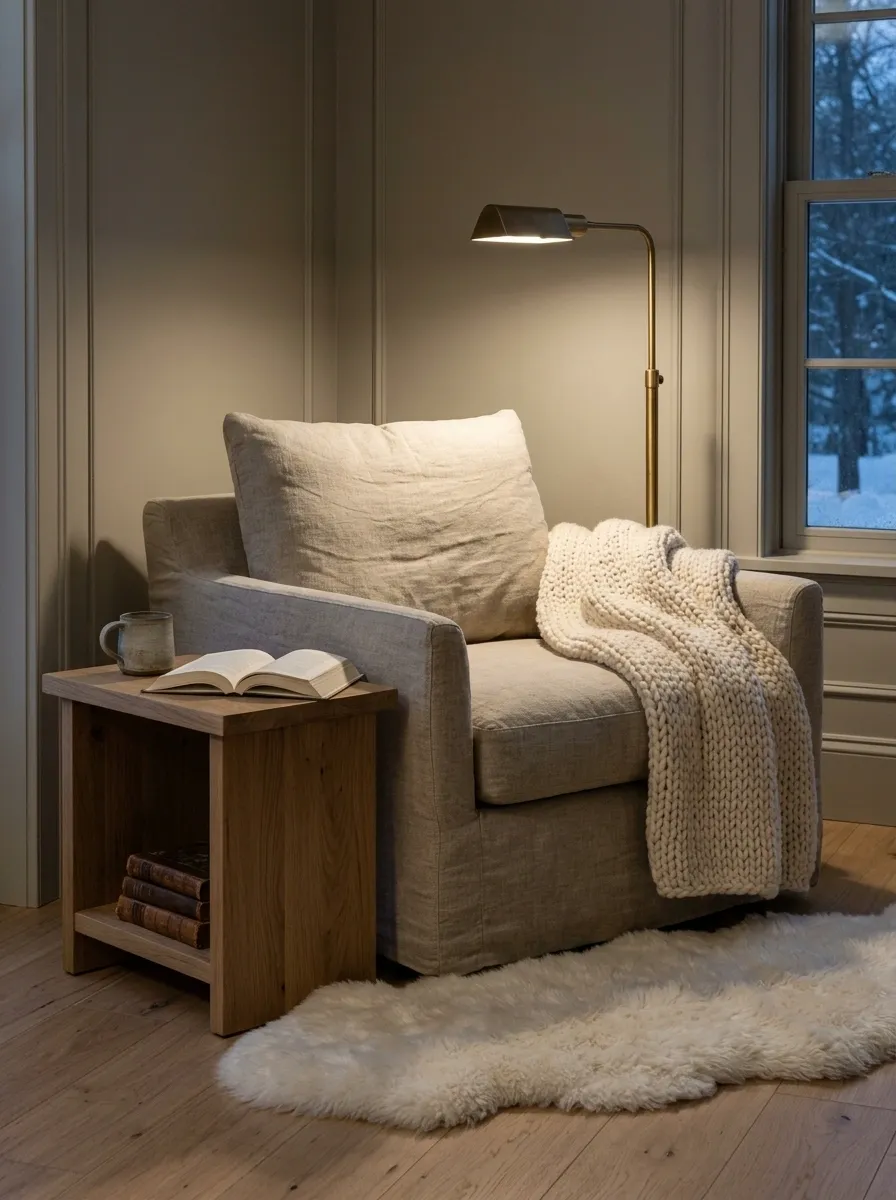
Choose the seat you actually enjoy and make its surroundings more useful.
Add appropriate light, a stable landing surface, and a reachable blanket if you use one. Keep the route and nearby storage accessible. You may be able to assemble the corner entirely from things already in the house.
Check the setup after dark and stay seated long enough to notice what’s awkward. A good reading corner earns its place through comfort. Its winter character comes from supporting a slower evening, rather than needing a decorative label or a new piece of furniture bought for the photograph.
Notice reach, light, support, and temperature. Fix the practical irritation before adding another accessory.
Organize a Warm-Drink Routine Without Building a Display
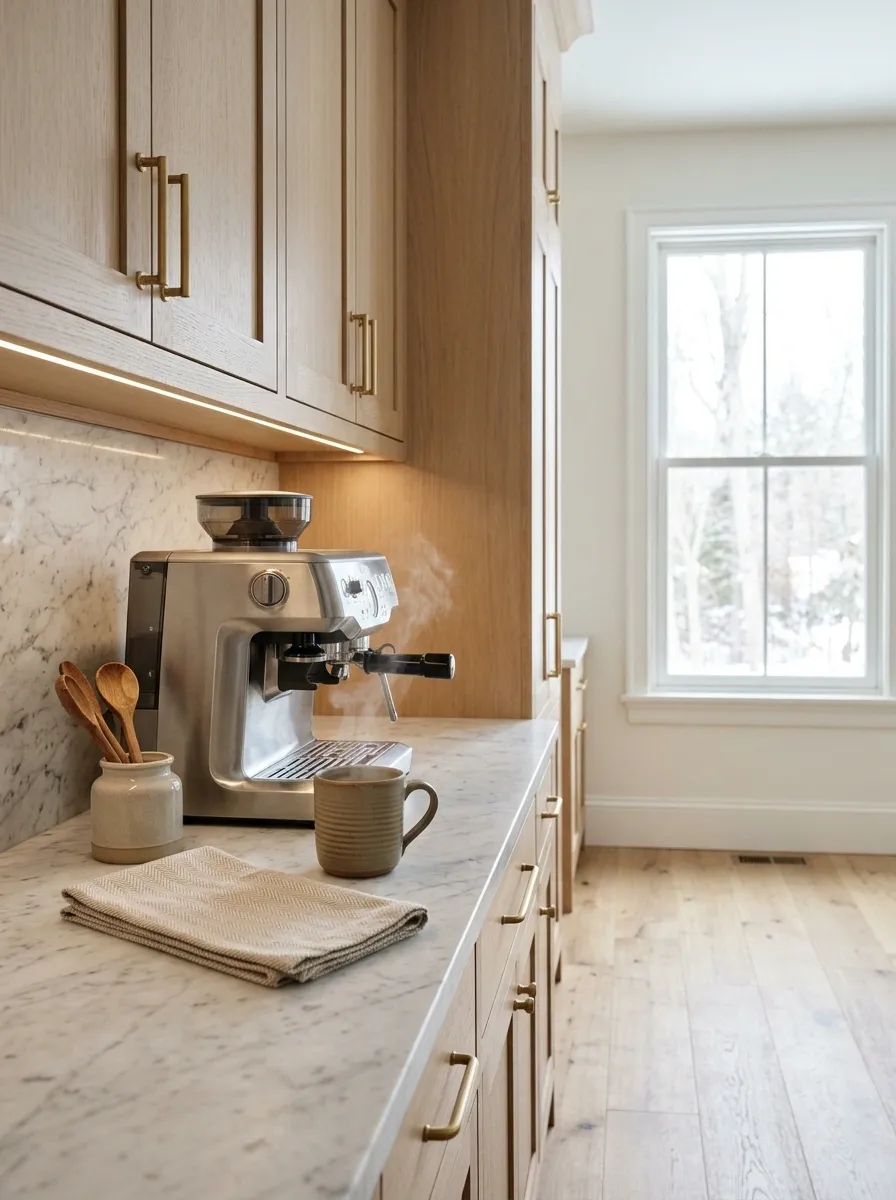
A convenient place to make tea or coffee can make winter mornings feel more settled.
Group daily supplies where they’re used, leaving appliances the space and conditions their instructions require. Keep working surfaces clear and retain useful product information. Use existing storage before buying matching containers.
Choose a mug or cup you enjoy, then let the routine provide the seasonal feeling. There’s no need for a permanent collection of decorative ingredients around the kettle. The useful result is a simpler morning with less searching and a counter that can still handle breakfast.
Cups and daily supplies are convenient.
Equipment and surfaces remain practical.
Everything has an obvious place to return.
Give the Porch a Simple, Climate-Appropriate Winter Detail

A clear container arrangement or restrained door decoration can carry the exterior through winter.
Choose material suited to the weather and exposure. For live planting, use appropriate local growing guidance. Keep the entrance accessible and the arrangement secure, with the door’s normal operation preserved.
Look at the outline from the path rather than adding detail only visible close up. The exterior can feel seasonal through shape, texture, and care. It doesn’t need a holiday character or a row of themed objects occupying the space where visitors stand while waiting for the door to open.
Choose a deliberate shape, suitable materials, and a position that leaves the doorstep useful in the actual weather.
Let January Look Like January
Some of the most satisfying winter changes are barely recognizable as decorating: a better lamp, a softer place to sit, a table ready for dinner. They change how the room feels because they improve the hours you spend there.
Winter home decor without looking like Christmas gives you permission to keep that quieter approach. Choose color and texture you enjoy, leave room around the details, and let the seasonal mood come from the house’s evening life.
Save your favorite ideas on Pinterest, then keep the one clear surface clear for a little longer. It may be exactly what the room needed.