
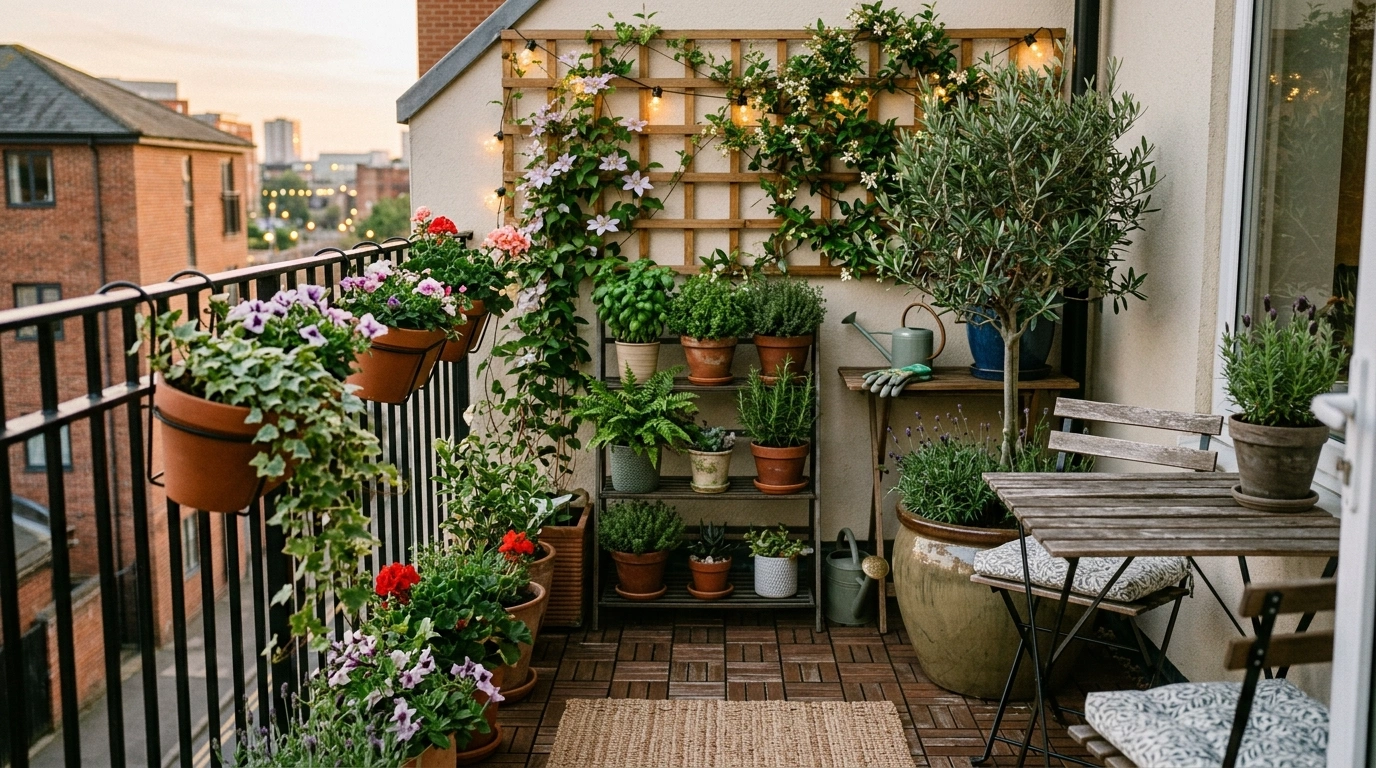
A balcony can have plenty of plants and still look like a forgotten corner of the building. Three plastic pots, one sad chair, and a random watering can do not magically become a garden just because something is green.
What usually goes wrong is the lack of a complete visual direction. The furniture belongs to one style, the pots belong to another, the railing is doing its own thing, and the plants have apparently been invited without consulting anyone else.
Small balconies make this even more obvious because there is nowhere for awkward choices to hide.
Balcony Garden Ideas
Cozy Balcony With Living Wall and Rattan Seating
A brilliant wooden living wall completely transforms this compact balcony, turning an ordinary brick backdrop into a lush, multi-tiered botanical display. Instead of cluttering the precious floor area with dozens of individual containers, the vertical planting keeps the walking space entirely clear while maximizing greenery.
A comfortable rattan armchair draped with a soft, patterned throw invites you to actually sit and enjoy the view rather than just admire the plants from indoors. A diminutive wooden side table and a tactile patterned rug complete the lounging zone, making the compact footprint feel wonderfully intentional and inviting.
The thoughtful mix of terracotta pots, trailing ferns, and blooming annuals creates effortless texture against the urban backdrop. Keeping the color palette anchored in warm wood tones and vibrant green leaves ensures the space feels like a secluded garden retreat high above the city.
Lush Mediterranean Balcony With Terracotta Pots and a Bistro Table
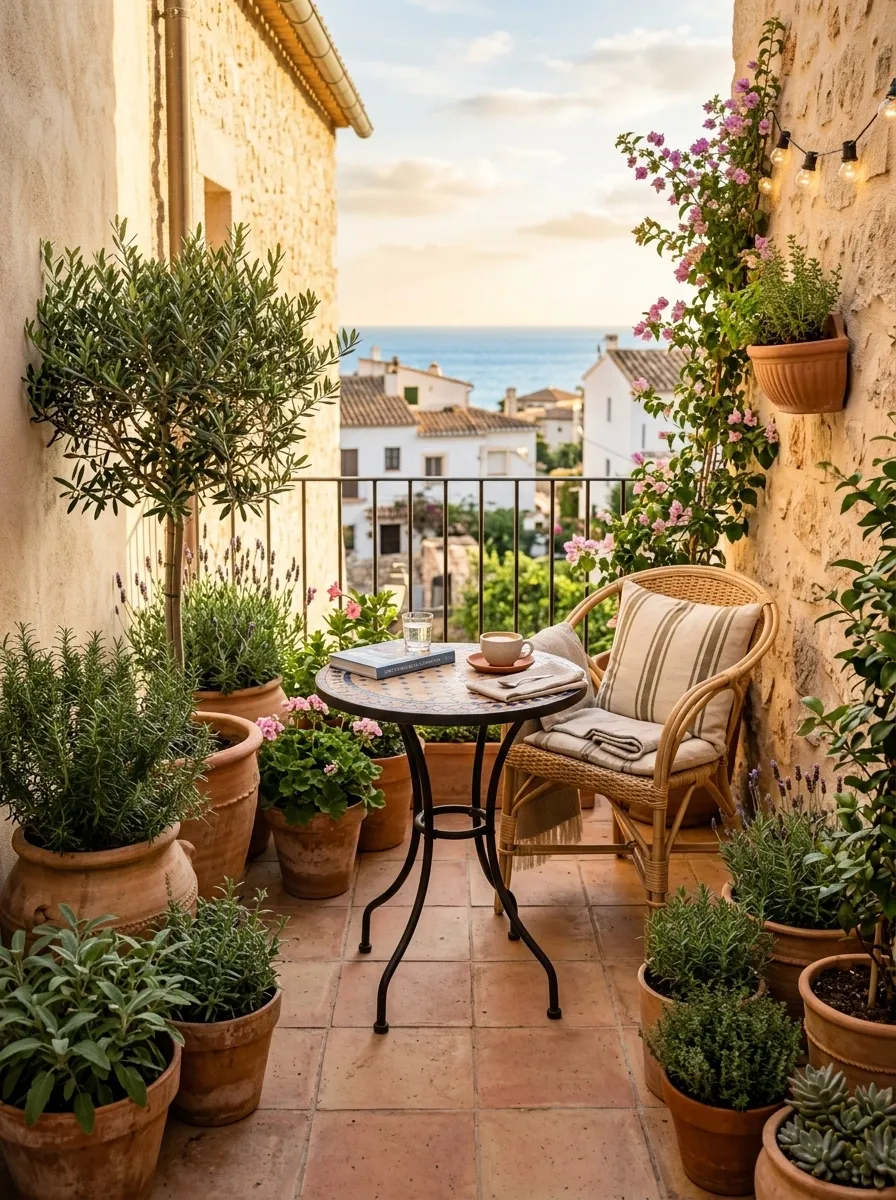
Warm terracotta, dusty green foliage, pale walls, and a tiny café table give this balcony its strongest visual identity. The planting is layered rather than scattered, with larger pots toward the corners and smaller containers filling the gaps around the seating area.
A compact round table keeps the center usable, while a woven bistro chair adds texture without making the balcony feel heavy. Terracotta works particularly well here because it repeats the warmth of the surrounding wood and masonry instead of introducing yet another unrelated finish.
The important detail is restraint. The greenery can be generous, but the furniture stays simple. Otherwise the balcony quickly crosses the line from Mediterranean garden to plant shop after closing time.
Earthy Evening Balcony With Warm Lighting and Orange Seating
As dusk settles, this balcony proves that lighting is just as important as the plants themselves. A stunning patterned ceiling fixture casts a warm, ambient glow across the space, complemented by delicate string lights tracing the railing.
An inviting orange floor cushion paired with a delicate lace-covered table creates an intimate, bohemian lounge area that begs you to unwind with a book as the sun goes down. Lush potted hydrangeas and blooming perennials frame the seating zone, bringing an explosion of vibrant color right to the edge of the balcony.
The arrangement embraces generous planting without feeling cramped, balancing taller floral arrangements with trailing greens along the floor. It is a masterclass in turning a standard apartment balcony into a magical, glowing sanctuary for warm evening relaxation.
Tiny Balcony With a Vertical Herb Wall and Fold-Down Dining Table
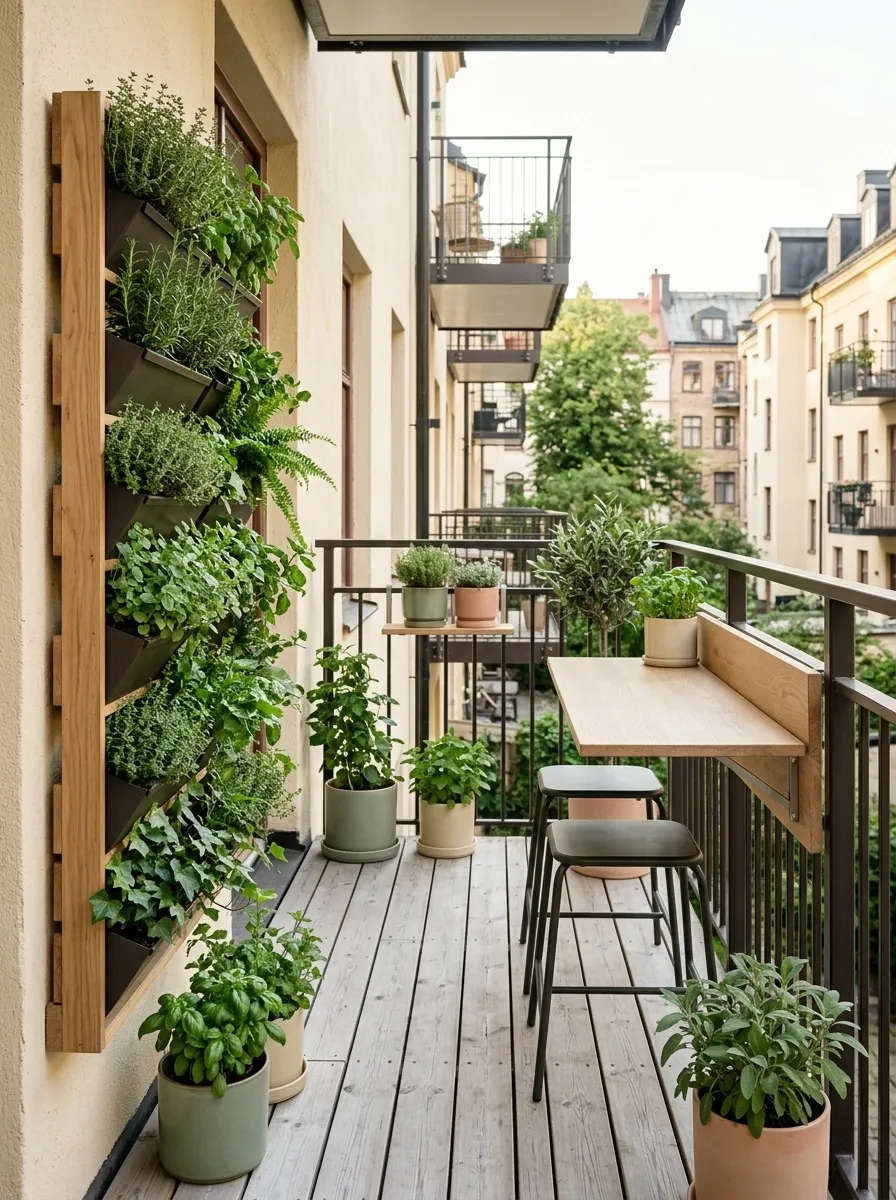
A very small balcony doesn’t have enough floor space for furniture to lounge around like it pays rent. This design sends the garden upward instead.
A slim vertical planting wall occupies the least valuable space, while a narrow fold-down table creates a proper dining surface only when needed. Two lightweight stools tuck underneath, keeping the central walking path open. Herbs and leafy plants fill the wall in repeated heights, giving the greenery a deliberate rhythm instead of the usual scattered-pot look.
The palette stays simple with pale wood, muted green, and warm ceramic. That matters because a cramped balcony already has plenty of visual information from railings, windows, and neighboring buildings. The design works by making the planting feel tall and organized rather than merely abundant.
Urban Jungle Balcony With Hanging Pots and Textural Foliage
This balcony takes the concept of an urban jungle and runs with it, using clever suspension to pack an astonishing amount of greenery into a narrow footprint. Hanging pots suspended in macrame rope draw the eye upward, while a dense green wall creates an immersive canopy effect.
A simple wooden bistro set tucked away at the end provides a quiet spot to sip morning coffee surrounded by cascading monsteras and delicate ferns. The layout makes brilliant use of every available inch, utilizing both vertical space and the railing to host a thriving collection of vibrant houseplants.
The secret to this overflowing oasis is keeping the accessories minimal and letting the diverse leaf shapes do all the heavy lifting. By varying the heights of the plants, the space feels like a wild woodland escape rather than just a collection of potted houseplants.
Modern Black Balcony With Sculptural Greenery and Oak Furniture
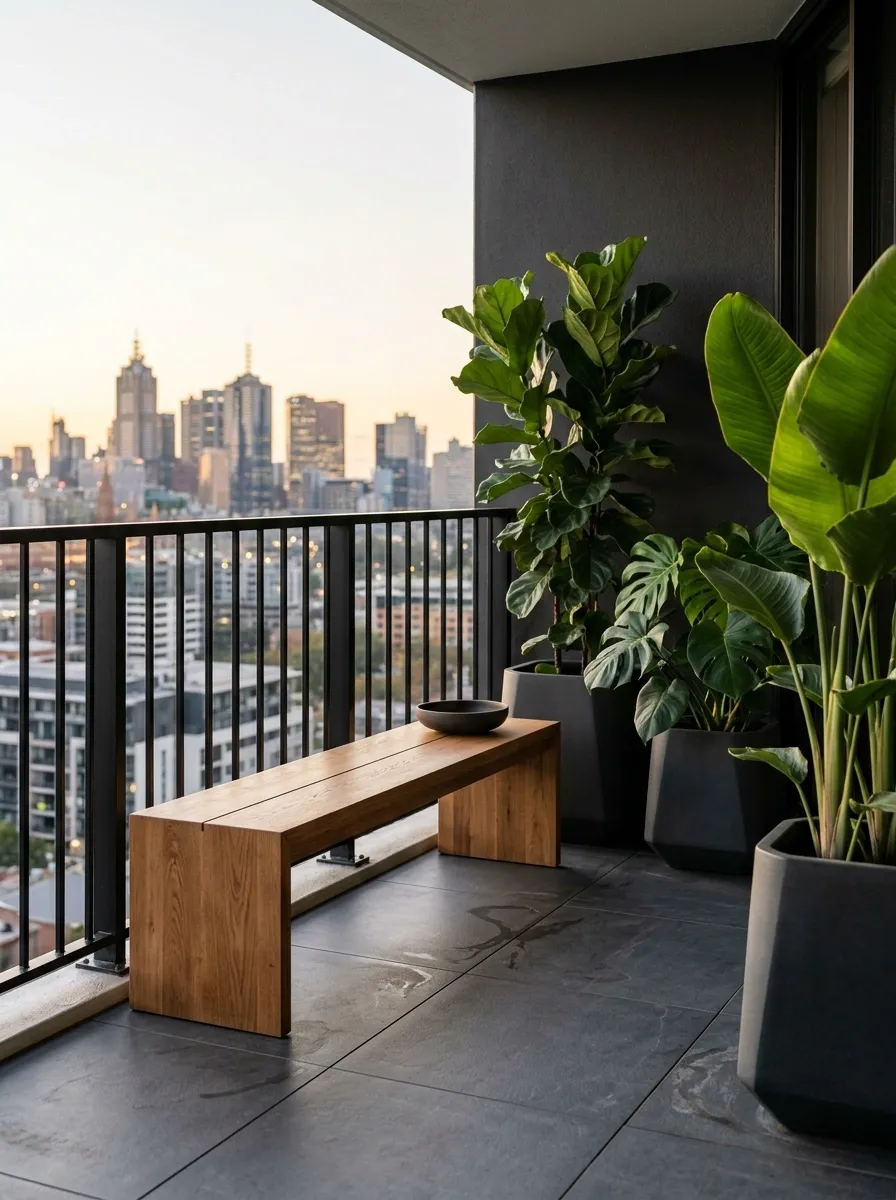
This balcony takes a completely different route. Instead of trying to make the space disappear into greenery, it gives the architecture a stronger voice with a matte black railing, charcoal planters, and clean-lined oak furniture.
Large foliage plants provide the softness. Their broad leaves stand out against the darker background, while the warm timber prevents the composition from becoming cold or overly industrial. A low oak bench works especially well because its horizontal shape counterbalances the height of the plants.
There is no need for a dozen decorative accessories here. The black structure, organic foliage, and warm wood already create enough contrast. Adding five more textures would only muddy the composition.
+ GREEN FOLIAGE
+ WARM OAK
Sunset Bohemian Balcony With Ladder Shelving and Trailing Vines
Bathed in the warm glow of late afternoon light, this balcony relies on clever vertical shelving and tumbling vines to create an atmosphere of effortless serenity. A lean wooden ladder shelf maximizes storage without eating into the floor space, holding trailing plants and decorative lanterns.
A classic jute rug adds instant texture beneath your feet, anchoring the composition alongside a soft, neutral color palette. Potted plants of varying heights are strategically positioned to soften the metal railing and frame the stunning view of the surrounding neighborhood.
The key to this relaxed bohemian look is letting the plants cascade naturally rather than forcing them into rigid shapes. Paired with warm timber finishes and soft textiles, the entire setup feels wonderfully collected and deeply inviting.
Romantic Cottage Balcony With Soft Flowers and Weathered Wood
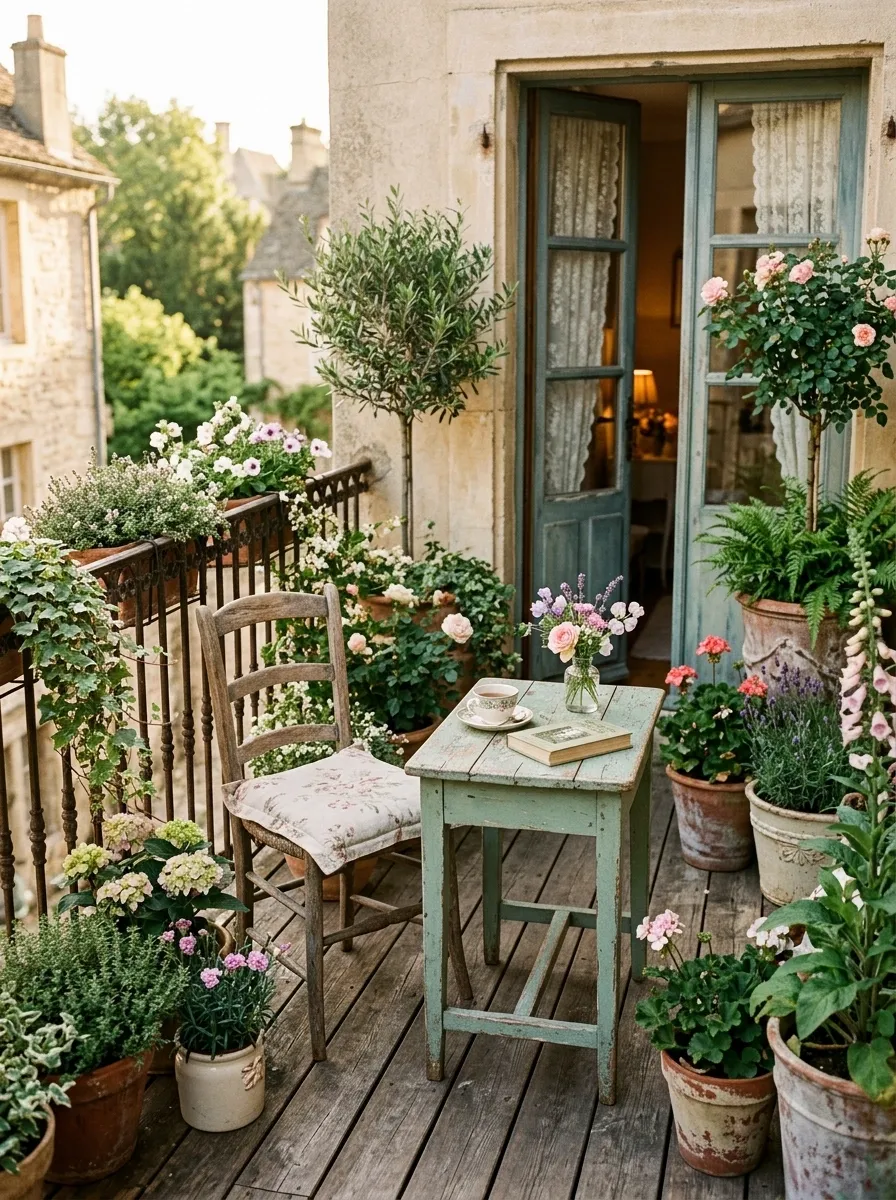
Soft flowering plants spill from pale containers while weathered timber furniture gives the balcony a slightly collected, cottage-garden character. The arrangement feels relaxed, but there is still a clear composition.
A small painted table sits near the center, with a compact chair positioned so the flowers remain visible rather than blocking the view. Trailing plants soften the railing, while medium-height pots frame the seating zone. The colors stay gentle, with faded greens, creamy whites, muted pinks, and natural wood.
The weathered finishes are doing useful work here. New, glossy furniture would make the flowers feel decorative rather than integrated. A little age in the timber makes the whole balcony feel more convincing.
Symmetrical Wall-Mounted Balcony With Clean White Planters
Clean lines and perfect symmetry take center stage on this minimalist balcony, proving that small spaces thrive on structure. Two matching hanging baskets mounted on heavy black brackets anchor the upper wall, spilling vibrant green foliage toward the floor.
Below, a pair of pristine white ceramic pots house structured houseplants that mirror the balance of the hanging display above. A compact patch of artificial turf adds a punch of vibrant green underfoot, tying the entire botanical arrangement together without requiring high maintenance.
By keeping the decor strictly restrained to just these four focal planters, the balcony avoids visual clutter and feels remarkably airy. It is a polished, modern approach to container gardening that lets each carefully chosen plant truly shine against the pale wall.
Minimal Japandi Balcony With Gravel, Bamboo, and Low Seating
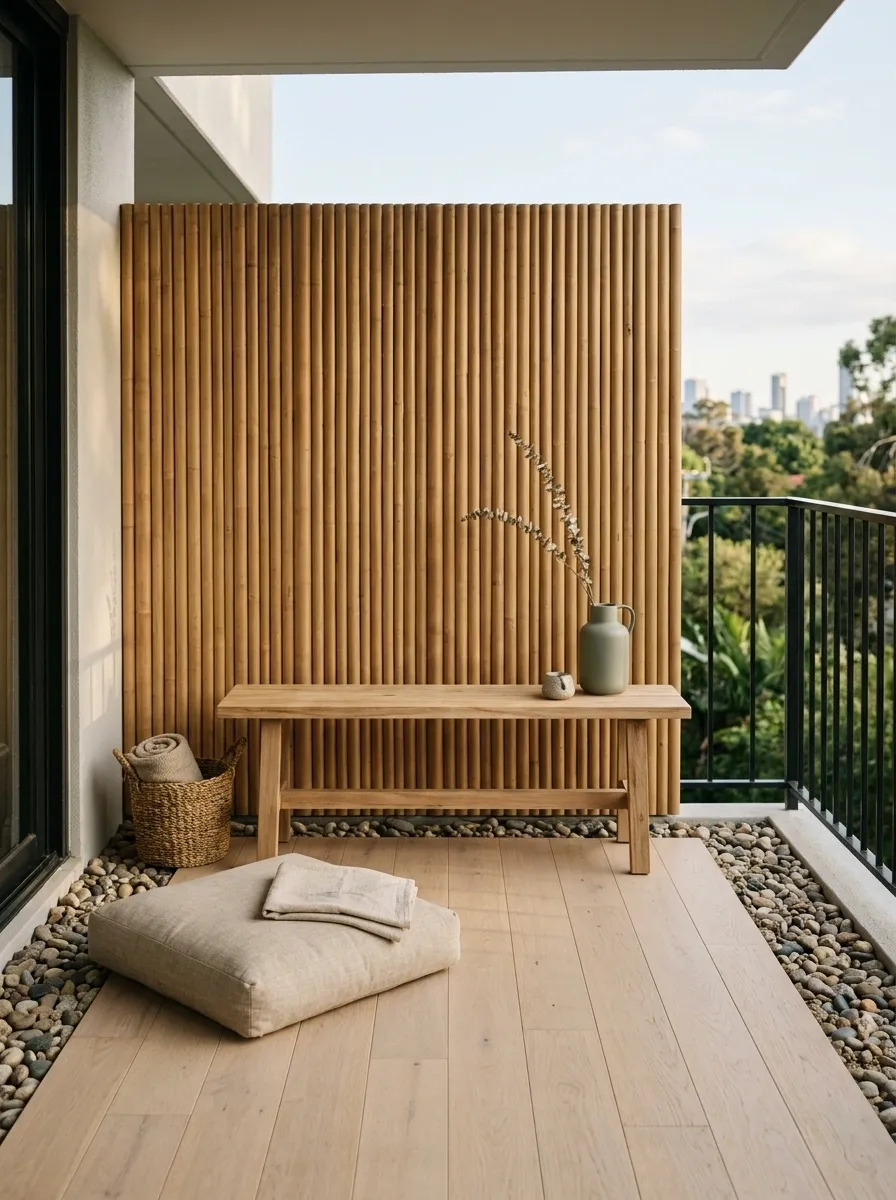
Nothing on this balcony is trying desperately to be interesting, which is exactly why it works. A low timber bench sits against a warm bamboo privacy screen, while a restrained selection of plants occupies shallow gravel-filled zones along the edges.
The architecture stays visible. Beige, pale oak, muted green, and natural bamboo form a quiet palette that makes the balcony feel larger and calmer. Instead of filling every corner with greenery, the design deliberately leaves portions of the floor empty.
That negative space is part of the look, not unfinished business. The biggest mistake here would be adding decorative clutter because the balcony “looks too empty.” It doesn’t. The empty areas are carrying the composition.
IS PART OF THE DESIGN.
Narrow Urban Balcony With Built-In Bench and Raised Planters
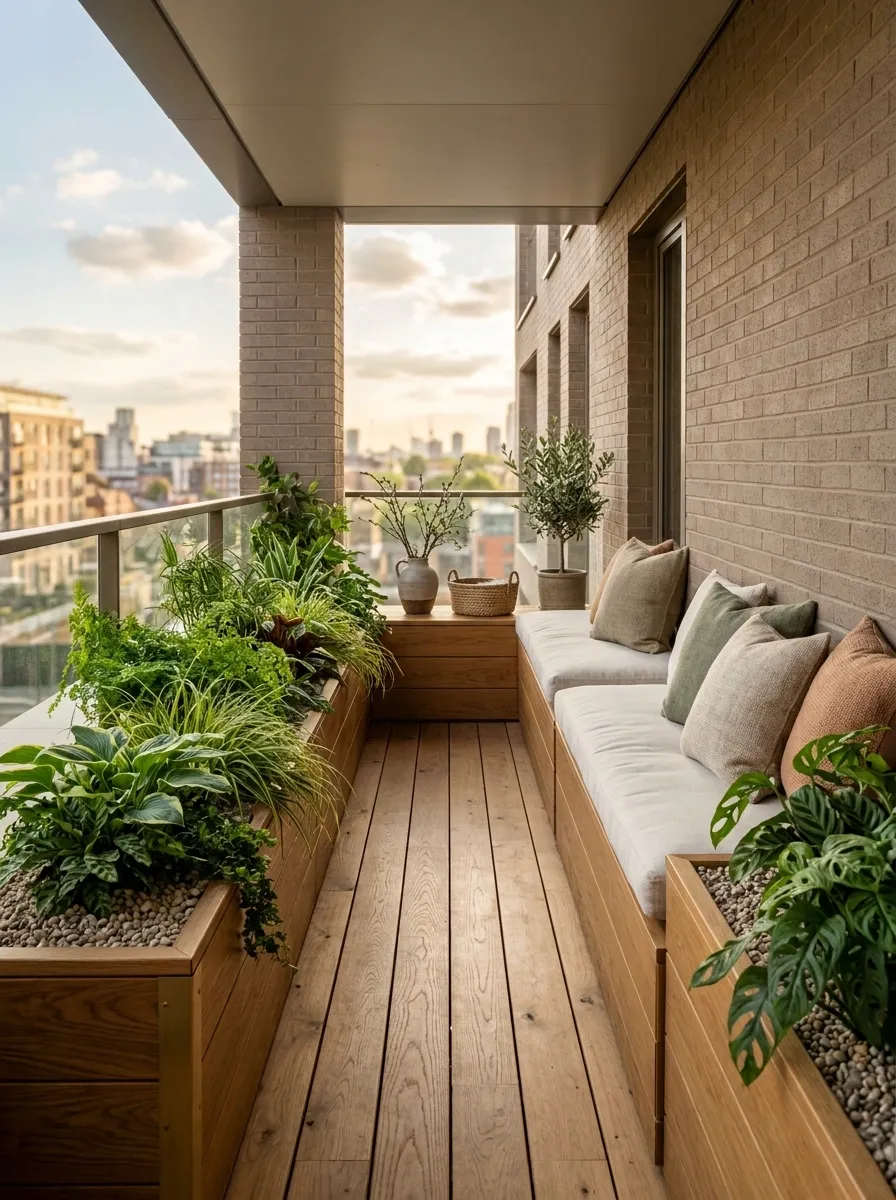
Long balconies often have one annoying talent: making perfectly good furniture look like it has been parked in a hallway. This design fixes that by treating the entire length as one composition.
A built-in style bench runs along the back wall, while raised planters follow the outer edge in a continuous line. The arrangement creates a clear visual border without chopping the balcony into little unrelated zones. Warm timber keeps the structure welcoming, while leafy plants soften the harder architectural lines.
The center remains open enough for comfortable movement, which is crucial on a narrow balcony. The design feels finished because the seating and planting belong to the same architectural rhythm rather than competing for attention.
Boho Balcony Garden With Layered Textures and Hanging Plants
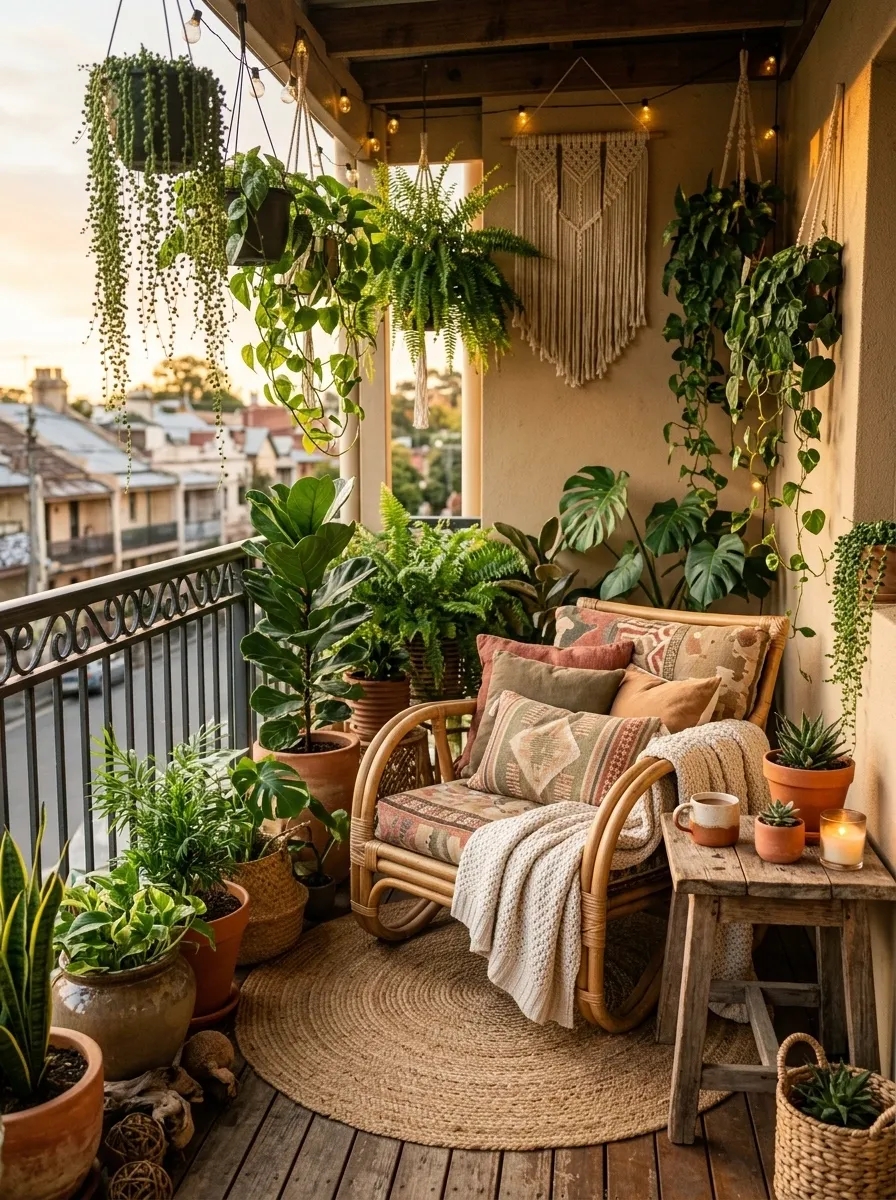
This balcony leans into texture rather than trying to make every plant and accessory match. A low woven lounge chair sits beside a timber side table, while ceramic pots, woven baskets, patterned cushions, and hanging greenery create several layers around the seating area.
The planting rises from floor level to overhead, which gives a small balcony more visual depth without filling the entire floor. Warm natural materials keep the composition grounded, while a few muted patterns stop the space from looking suspiciously beige.
The key is coordination rather than matching. Similar earthy tones tie the different materials together, while the plants provide the irregular shapes that make the arrangement feel alive. Going overboard would ruin it fast. Boho is supposed to look collected, not like the entire craft aisle exploded.
Contemporary Balcony With Large Planters and One Statement Tree
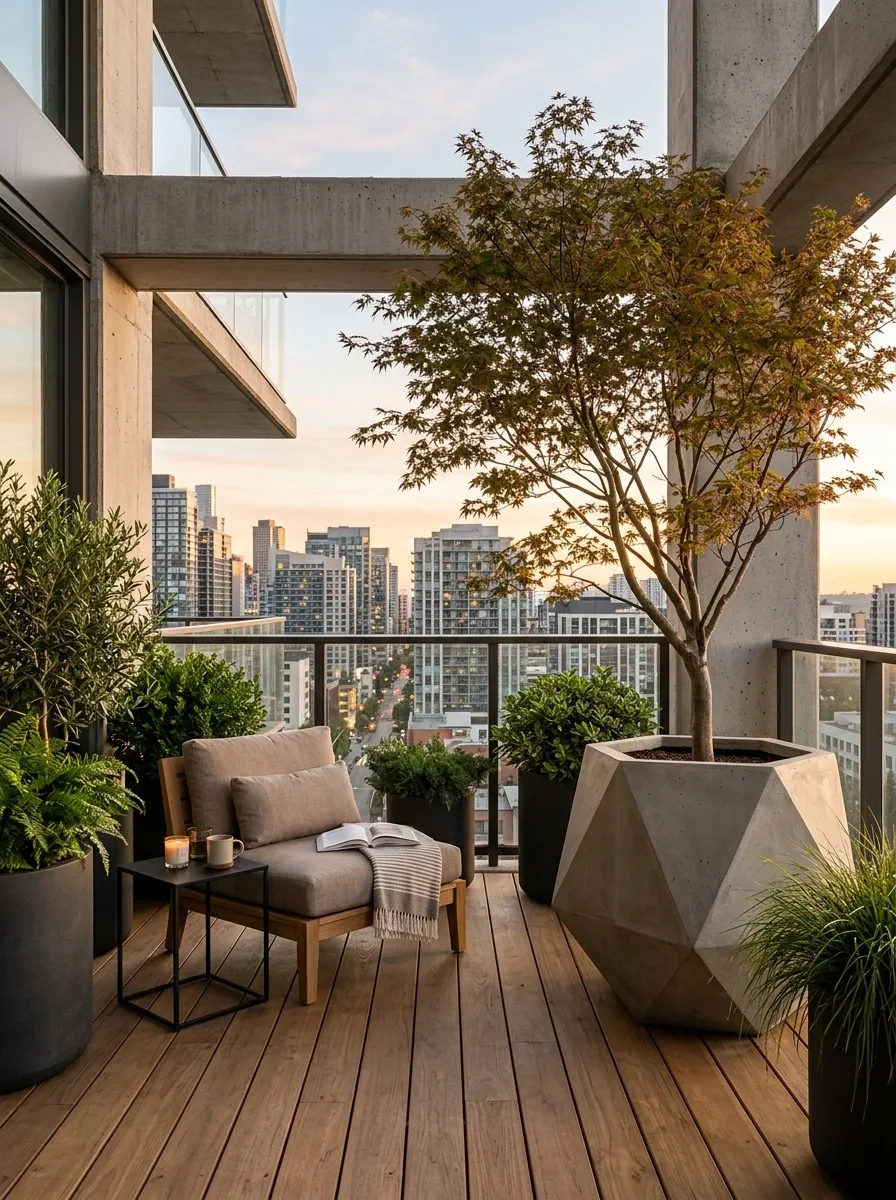
Sometimes the smartest garden design is the one that stops trying to fill every square inch. This contemporary balcony uses just a few substantial planting moments, including one small statement tree that immediately establishes the focal point.
Oversized planters sit against the perimeter, leaving the center visually open. A clean-lined lounge chair and small table occupy the remaining space without competing with the tree’s sculptural form. Neutral architecture keeps attention on the contrast between the geometric containers and the softer foliage.
Scale is what makes the design memorable. Tiny pots would weaken the composition and create visual noise. Large forms give the balcony confidence without requiring dozens of plants. More is not automatically better. Sometimes more is just more stuff.
STRONGER FORMS.
French-Inspired Balcony With Iron Furniture and Window Boxes
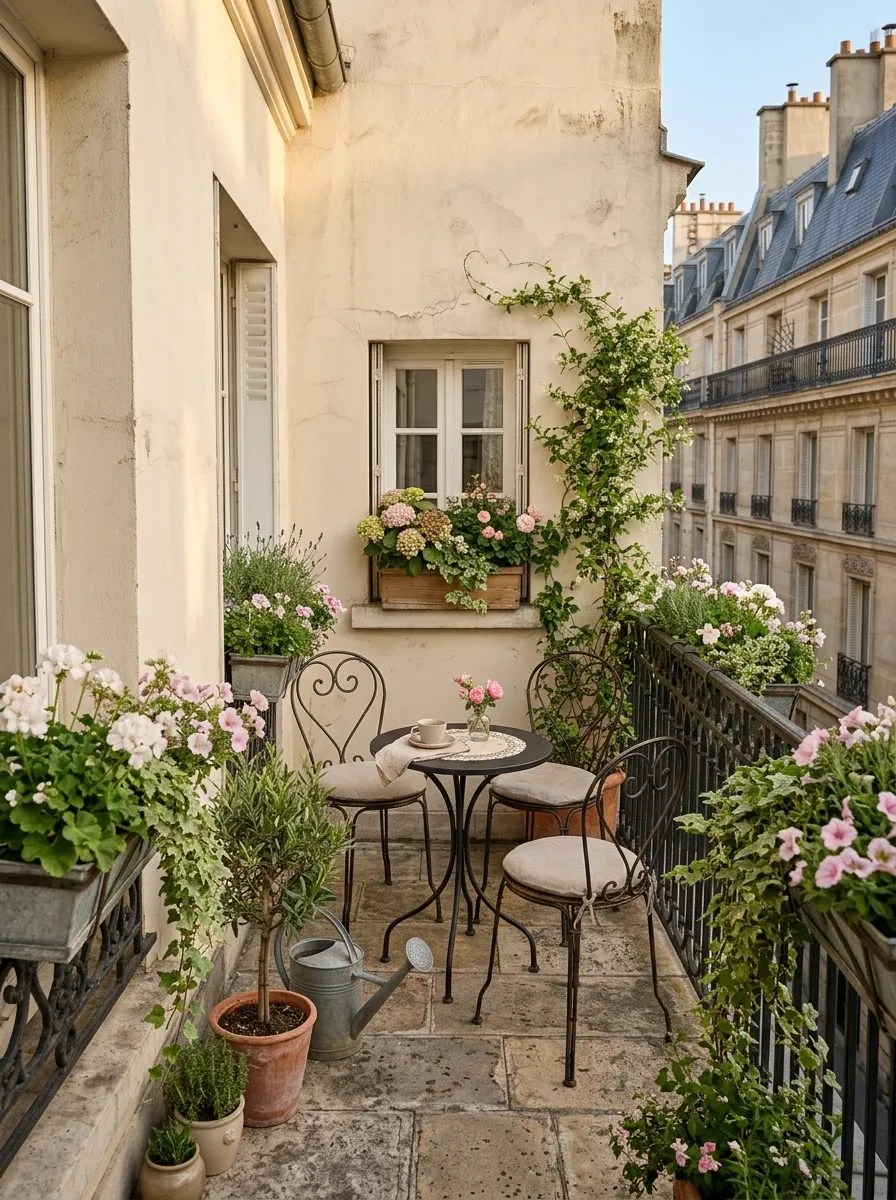
This composition borrows the visual language of a classic European balcony without turning the space into a theatrical theme set. Slim black iron furniture sits close to the building, while flowering window boxes and railing planters provide the main burst of greenery.
Pale walls and simple flooring create a quiet backdrop for the dark metalwork. The flowers are allowed to soften the hard lines rather than becoming a sea of competing colors. A tiny café table completes the scene and gives the balcony an obvious purpose.
Repetition is doing most of the design work here. The same dark metal appears across the furniture and railing, while the plants repeat at different heights. That consistency makes a very small balcony look surprisingly polished.
Small Balcony Garden With a Corner Reading Nook and Dense Foliage
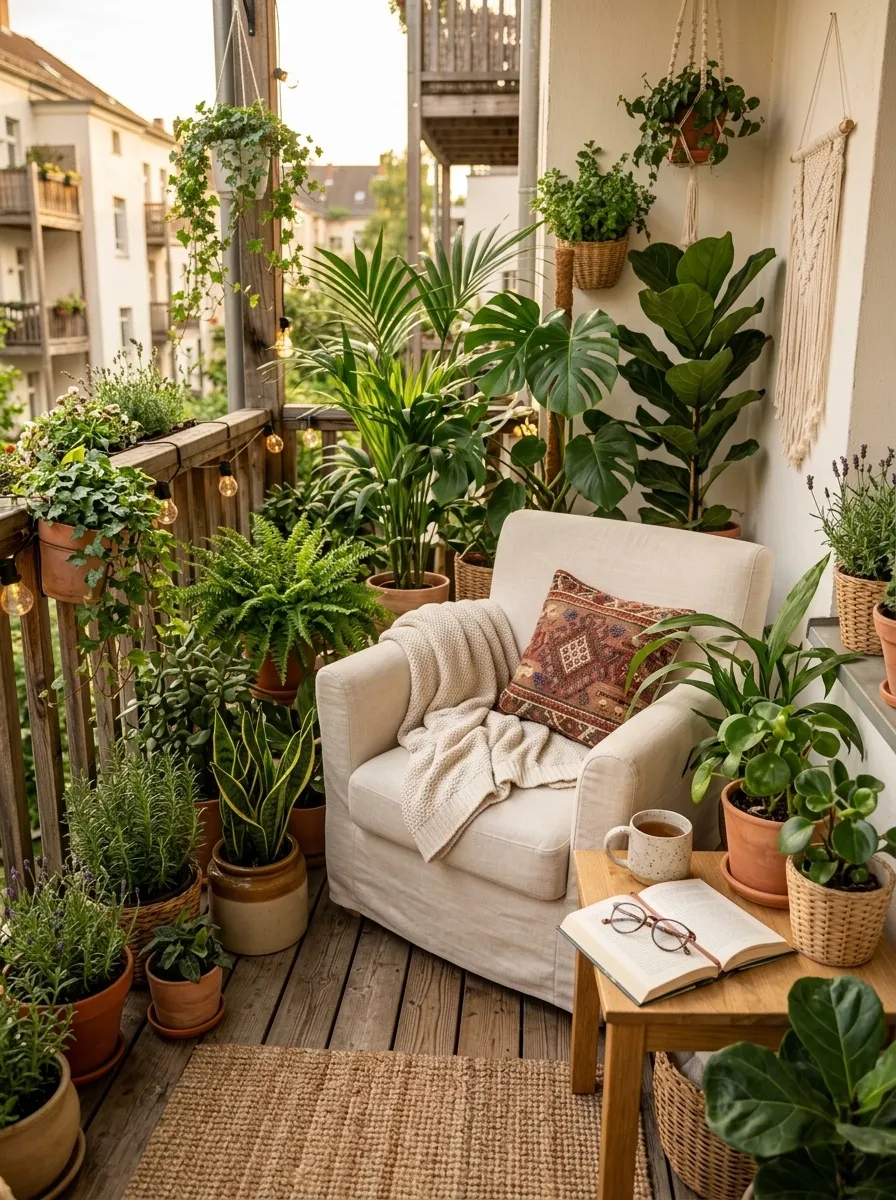
A single comfortable chair becomes the destination on this compact balcony, pushed into the quietest corner and surrounded by greenery. Instead of distributing plants evenly around the perimeter, the planting is deliberately concentrated around the reading zone.
Tall foliage rises behind the chair, medium plants frame the sides, and a few lower containers soften the floor line. A tiny side table leaves enough room for a book or coffee without turning the nook into a furniture showroom.
The concentrated arrangement gives the balcony a stronger focal point than evenly spacing pots around the railings. The rest of the floor stays comparatively open, making the little retreat feel larger than it actually is.
FIRST.
Coastal Balcony Garden With Whitewashed Wood and Blue-Green Plants
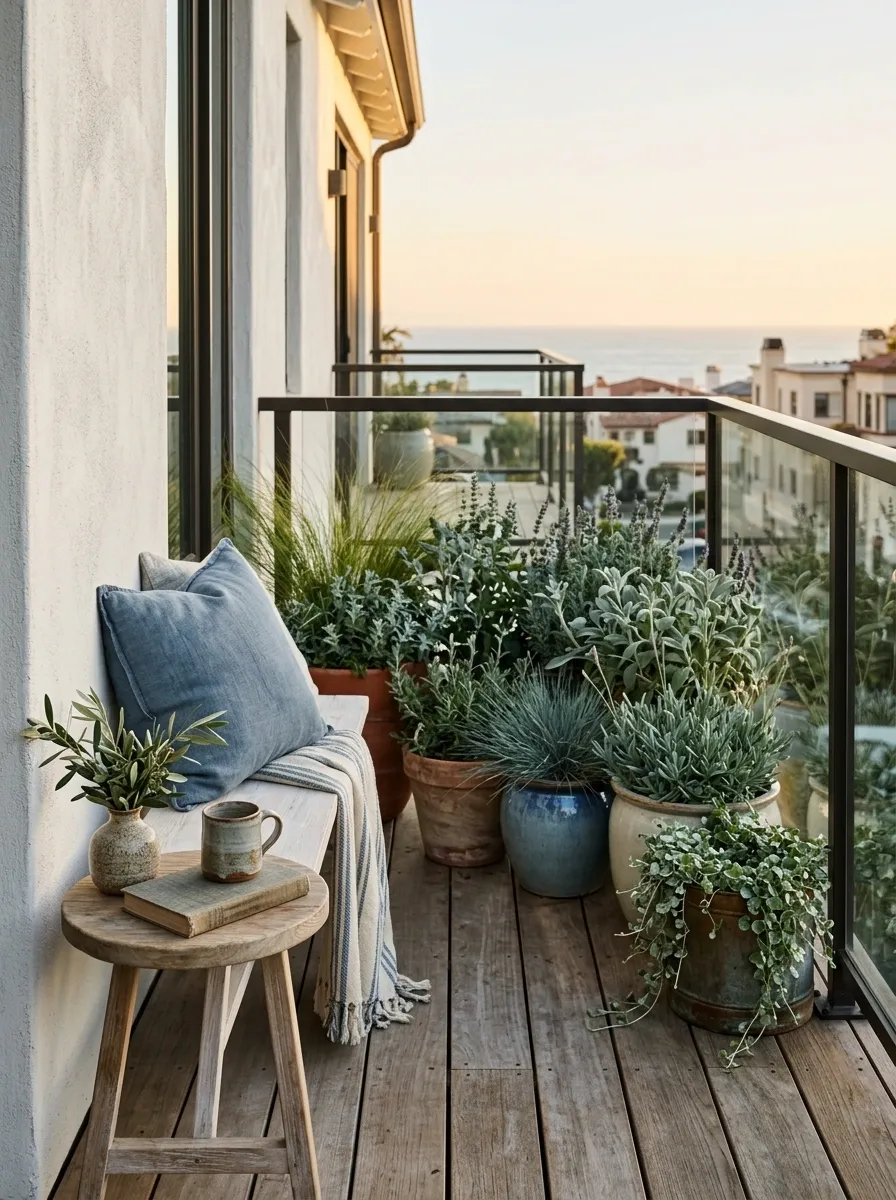
Pale wood, muted blue textiles, silvery foliage, and soft grasses give this balcony a coastal character without resorting to seashells everywhere. The architecture stays light and simple, allowing the greenery to become the strongest organic element.
A narrow wooden bench sits against the wall, paired with a small side table and loose linen cushion. Blue-green planters repeat the cooler tones while pale wood keeps the overall composition warm enough to avoid looking clinical.
The coastal feeling comes from the palette and texture, not beach-themed clutter. There is no need for anchors, rope, or a decorative lighthouse auditioning for attention. Keep the finishes weathered and understated, and the garden does the rest.
Balcony Jungle With Large Tropical Leaves and Dark Green Walls
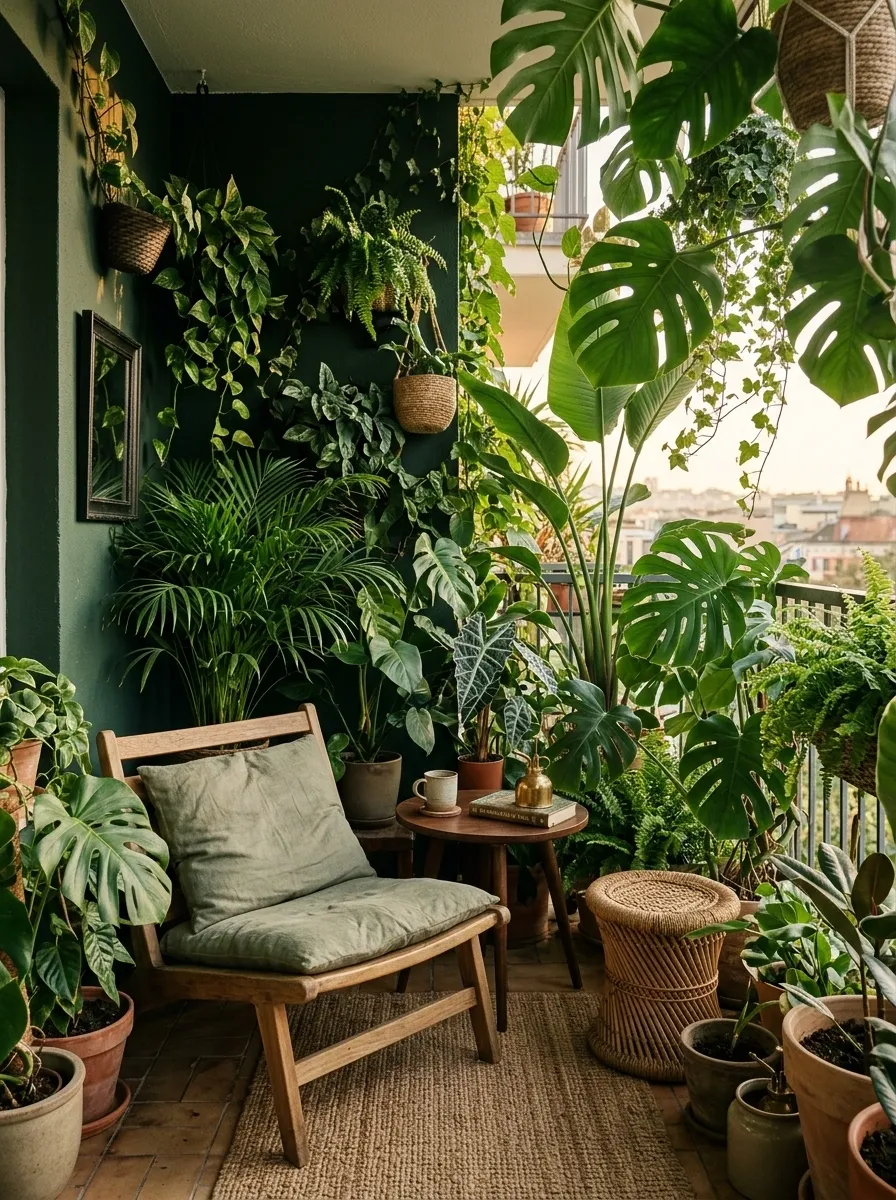
This is the balcony for anyone who thinks one houseplant counts as restraint. Large tropical leaves fill the space at several heights, creating a dense green backdrop against deep green walls or screening.
The furniture is deliberately simple: a low timber chair, a small round table, and perhaps one woven seat. That simplicity keeps the foliage in control of the composition. Larger plants occupy the corners and rear edge, while smaller leaves fill the lower foreground.
Dark walls make the greenery look richer and more dramatic, especially when natural light moves across the leaves. The trick is keeping furniture visually quiet. A jungle already has plenty of personality. The chair doesn’t need to audition for a leading role.
Scandinavian Balcony With Pale Wood, Grasses, and Simple Planters
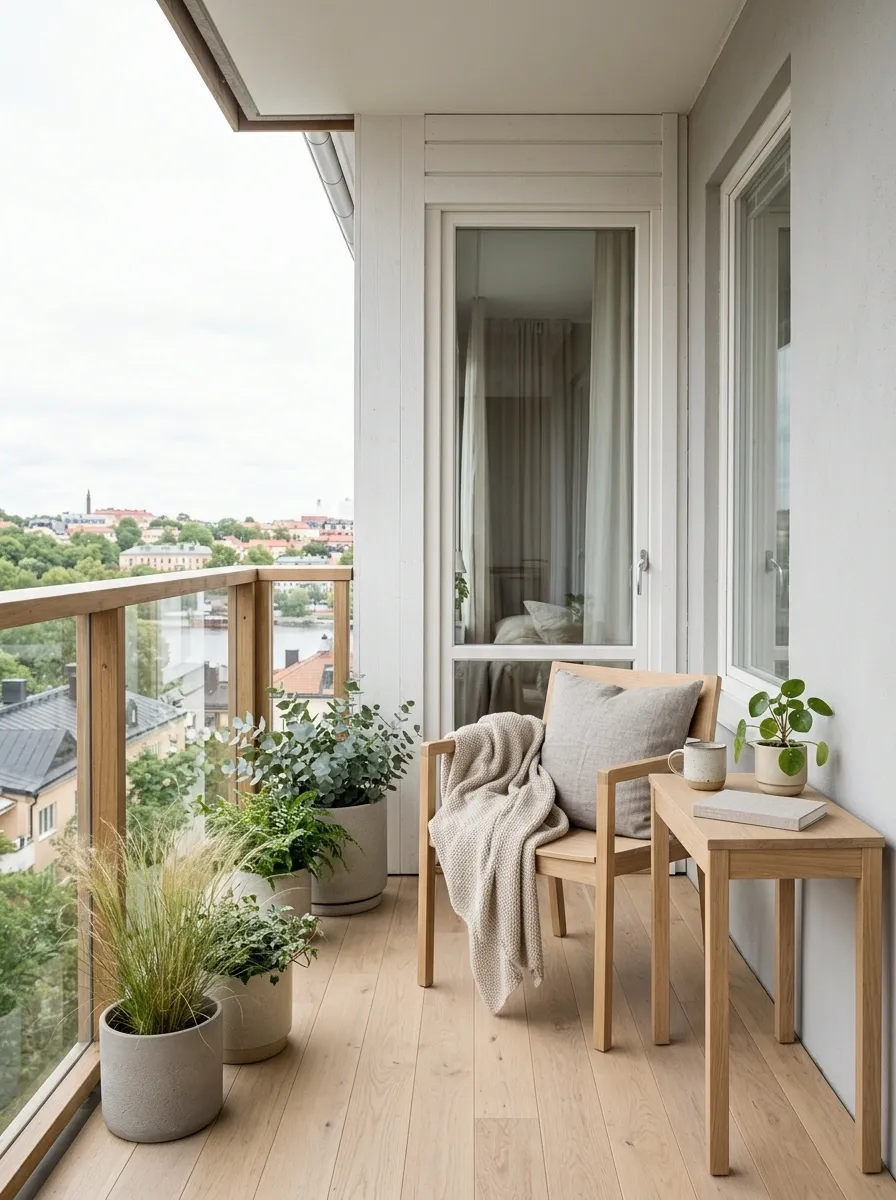
Light timber, soft gray-beige textiles, pale containers, and delicate grasses create a Scandinavian balcony that feels airy rather than empty. The furniture stays compact, with a simple wooden chair and narrow table positioned along one side.
Instead of dense greenery, the planting relies on repeated grasses and a few soft-edged leafy plants. Their fine shapes contrast nicely with the straight furniture without making the balcony visually busy.
The pale palette is particularly effective on balconies that already receive plenty of daylight. Light surfaces bounce that brightness around the space, while the warm wood prevents the composition from becoming stark. No oversized collection of accessories is needed here. Scandinavian design has survived quite happily without twenty-seven cushions.
keep the structure visually light
adds movement without visual bulk
Budget-Friendly Balcony Garden Built Around Crates and Repurposed Containers
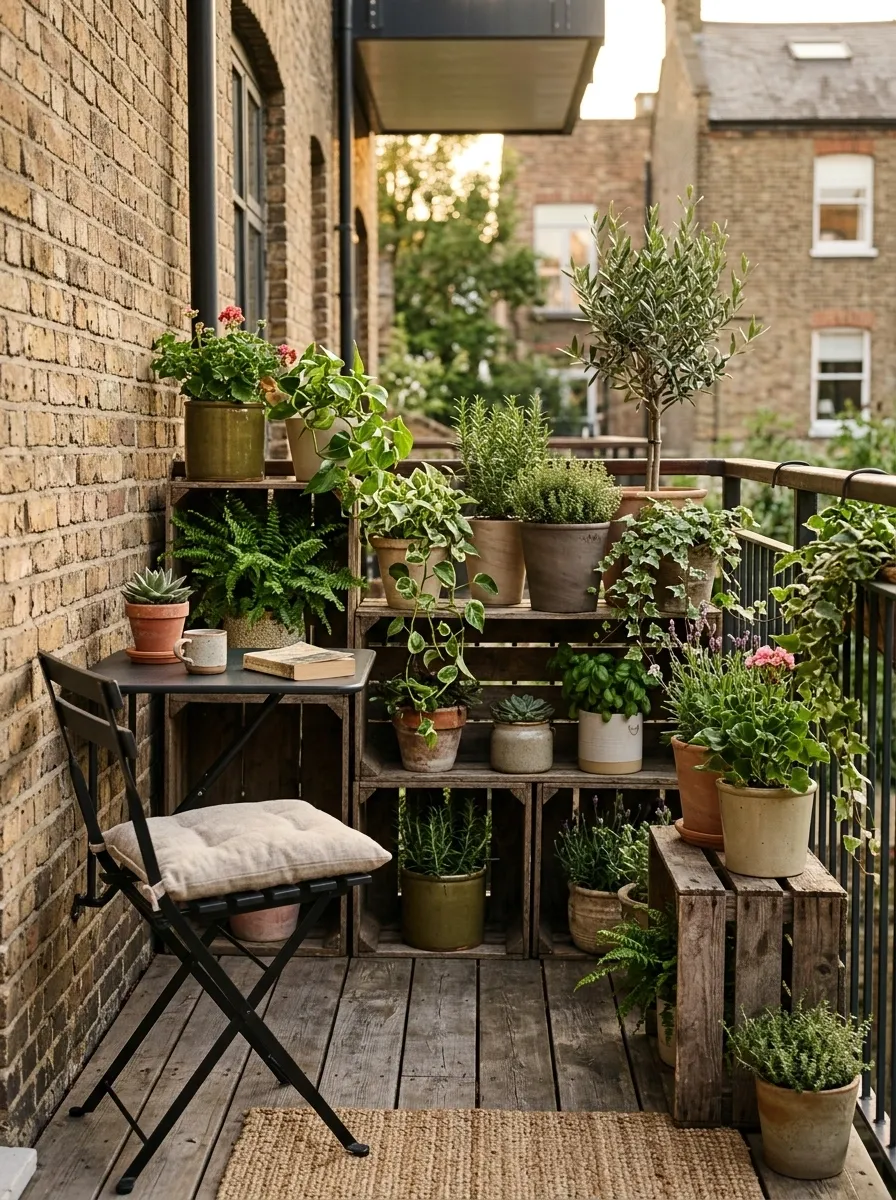
This design proves a balcony garden doesn’t need a warehouse full of matching planters to look intentional. Reclaimed timber crates become low plant stands, while a small collection of mismatched containers is grouped by color and shape rather than scattered randomly.
A simple folding chair and narrow table complete the usable portion of the balcony. Hardy greenery fills the crates and perimeter, giving the space a relaxed garden character without making the setup feel temporary.
The important part is coordination. Reused materials look far better when a limited palette ties them together. Choose a few earthy tones and repeat them across the containers, textiles, and timber. “Thrifted” should look considered, not like the balcony has been assigned a second life as a storage unit.
TIMBER
CONTAINERS
SEATING
Long Balcony Dining Garden With Repeated Planters Along the Edge
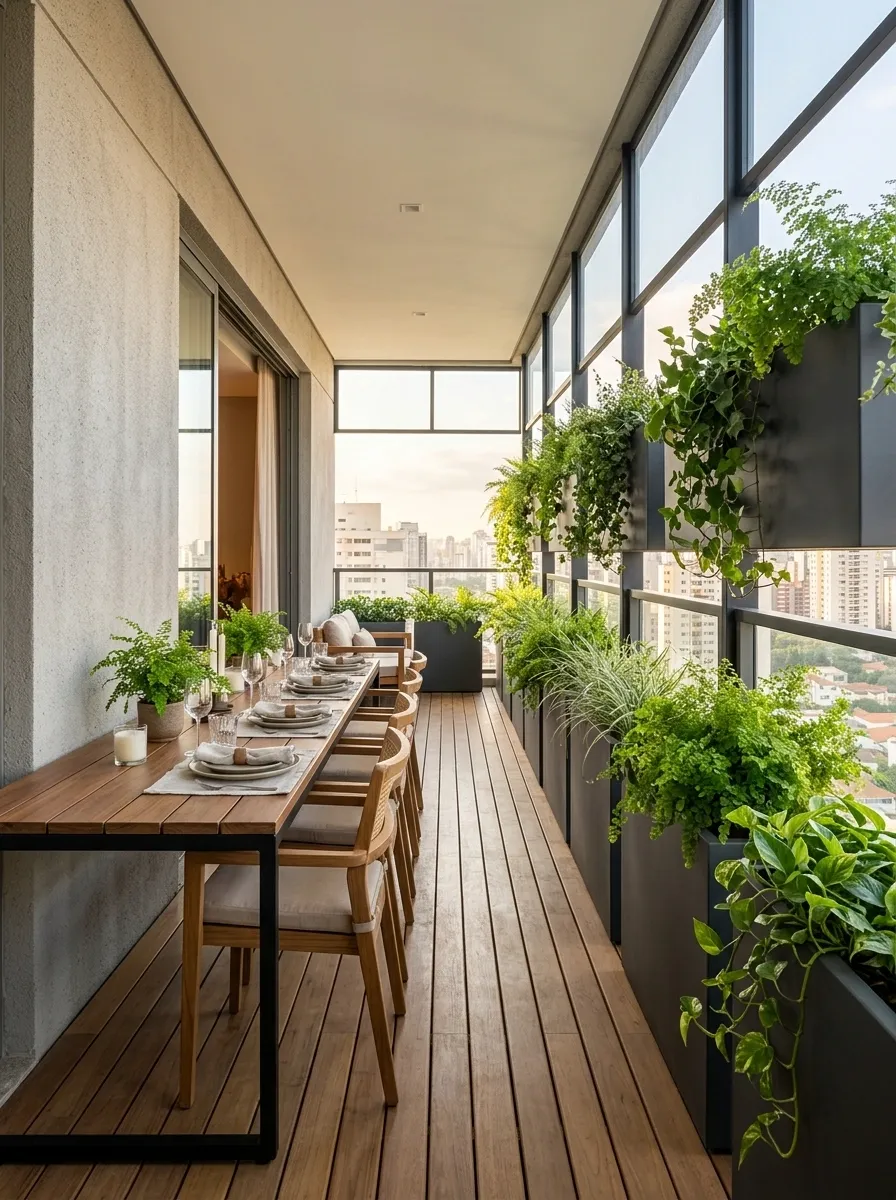
This layout treats a long balcony almost like an outdoor dining room. A narrow table runs lengthwise, with compact chairs tucked neatly beneath it. Along the outer edge, repeated planters create a green boundary that visually stretches the balcony even farther.
The containers share a similar shape and finish, while the plants vary enough to keep the line from looking sterile. The repetition provides structure, and the varied foliage keeps it from becoming monotonous.
A long balcony benefits from repetition because scattered furniture can make the space feel awkwardly segmented. Here, the eye follows the dining table and planting line together, creating one clear direction. Suddenly that skinny balcony stops looking like an architectural afterthought.
One strong horizontal anchor. Planting rhythm
Repeated containers carry the eye outward.
Apartment Balcony With Privacy Screen and Layered Greenery
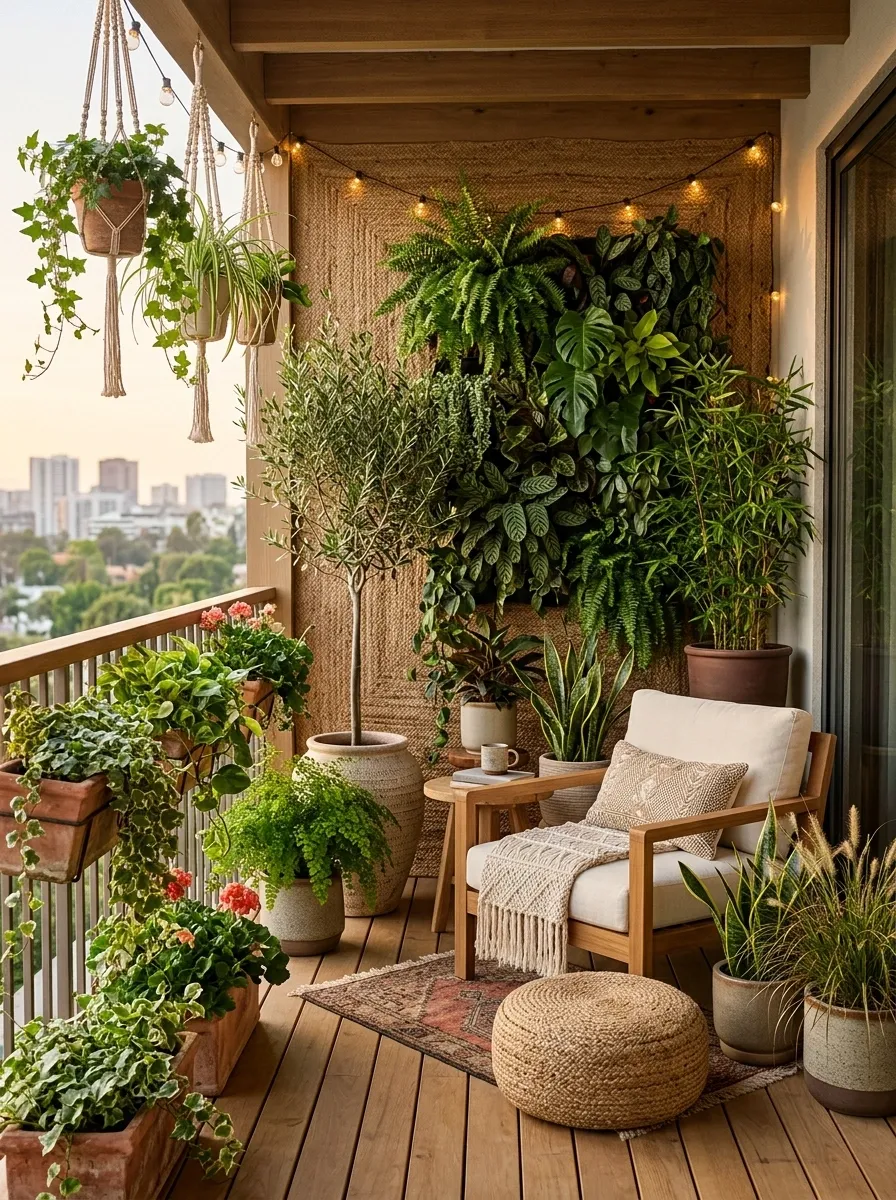
Privacy screens can easily make a balcony feel like a boxed-in cubicle. This design avoids that by turning the screen into the backdrop for a layered garden.
A warm timber or natural-fiber screen covers the rear wall, with taller plants placed directly in front of it. Medium-height foliage surrounds the seating, while lower planters sit along the balcony edge. The result creates three distinct visual depths without making the floor feel packed.
A compact lounge chair sits slightly off-center, leaving a clear route from the doorway. The greenery also breaks up the hard vertical lines of the screen, so the privacy solution becomes part of the garden instead of an obvious afterthought.
Warm Evening Balcony With Lantern Lighting and Olive Trees
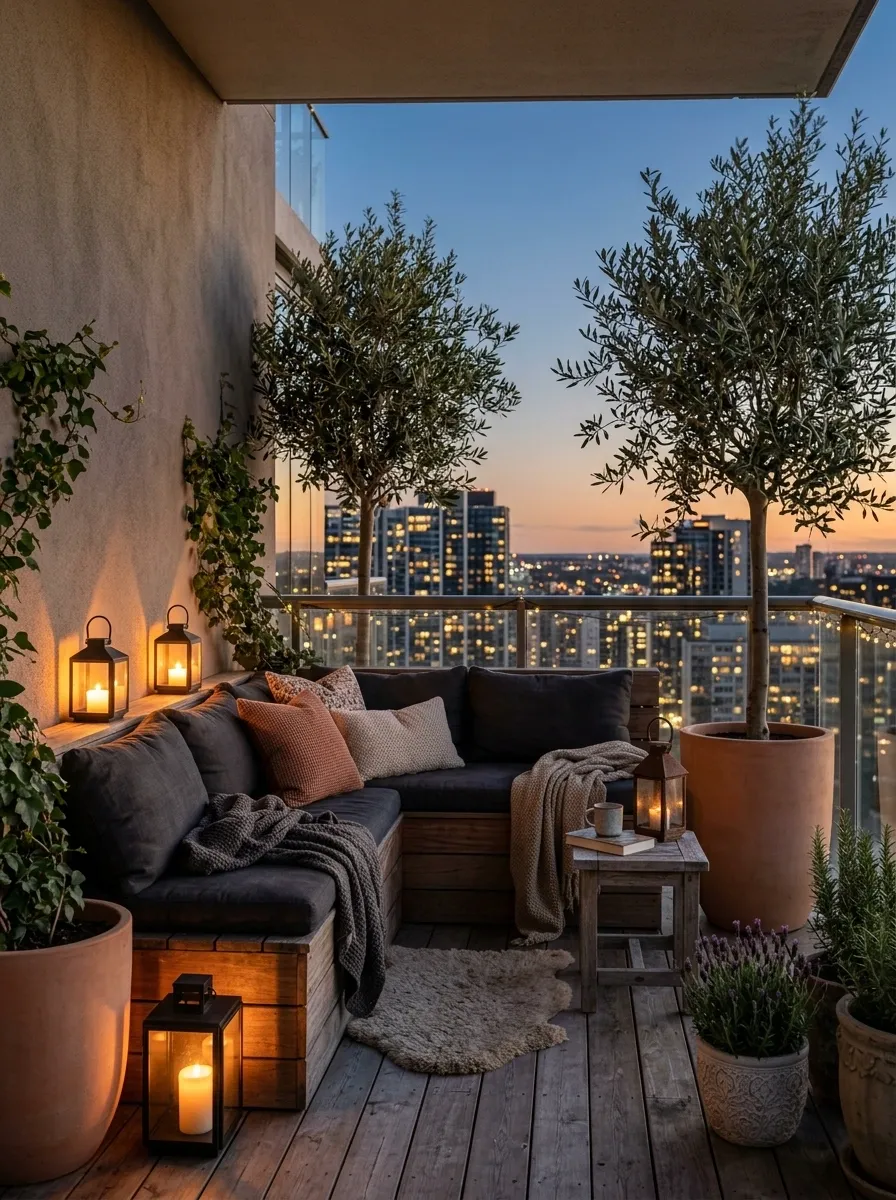
This balcony changes character after sunset. Small olive trees rise from substantial pots beside a warm timber bench, while lanterns cast soft pools of light across the seating area.
The planting is deliberately calmer than the lush garden concepts earlier in the collection. Sculptural branches and silvery leaves provide shape without creating a wall of foliage. Darker textiles and natural wood absorb the evening light, making the balcony feel intimate without turning it into a collection of glowing gadgets.
The lighting stays low and directional. A few warm sources are enough to define the seating and planting. Flooding the entire balcony with bright white light would erase the atmosphere instantly. Nobody needs interrogation-room lighting for an evening cup of tea.
→ SEATING
→ FOLIAGE
Tiny Balcony Garden With a Built-In Planter Bench Combination
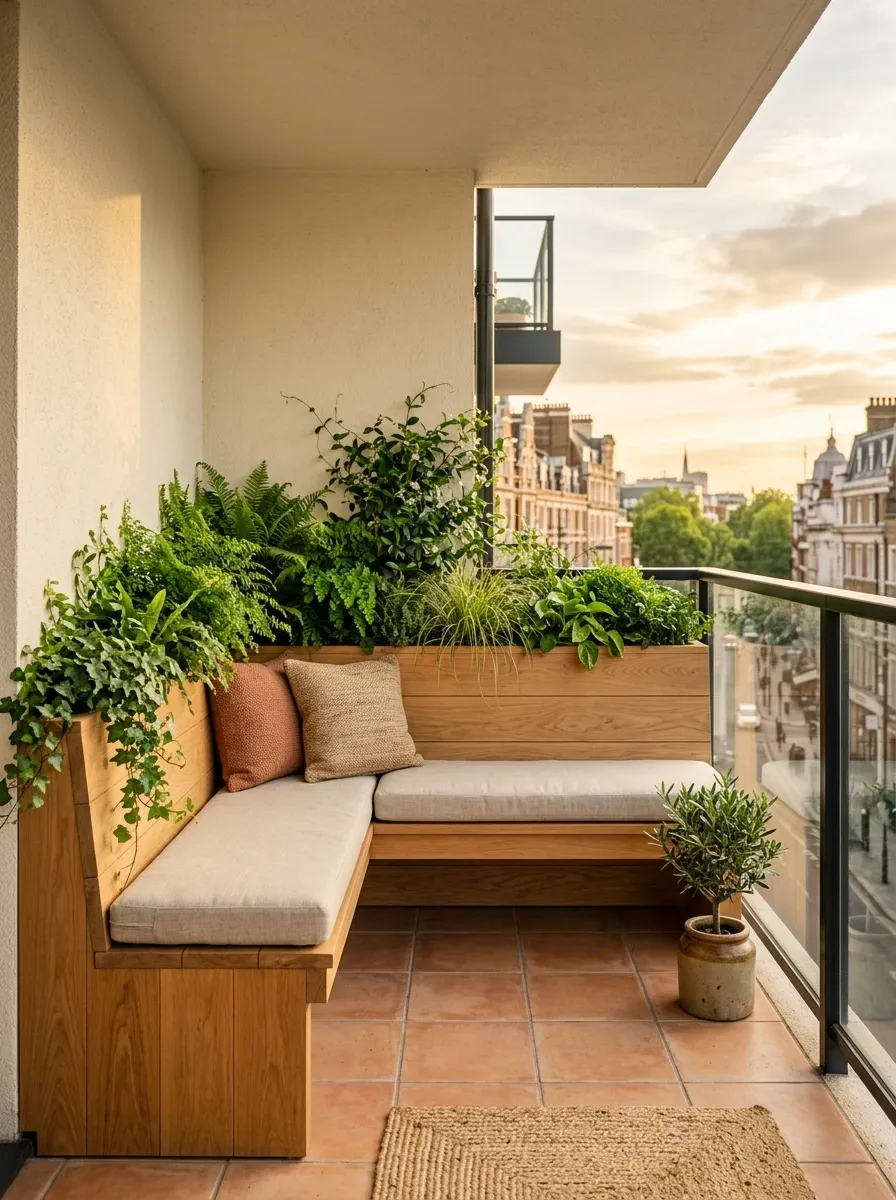
This compact balcony makes the furniture and garden perform double duty. A bench runs along one wall, with deep planting space integrated behind or beside the seating so greenery and furniture read as one structure.
The arrangement keeps the center of the balcony free, which makes the usable floor area feel much larger. The bench offers enough visual weight to anchor the design, while the plants rising behind it soften the hard edges and provide a natural backdrop.
Warm timber works particularly well against pale walls and simple flooring. The finished effect is almost architectural, as though the garden was planned with the balcony instead of squeezed into it later.
Colorful Flower Balcony With Saturated Pots and Green Foliage
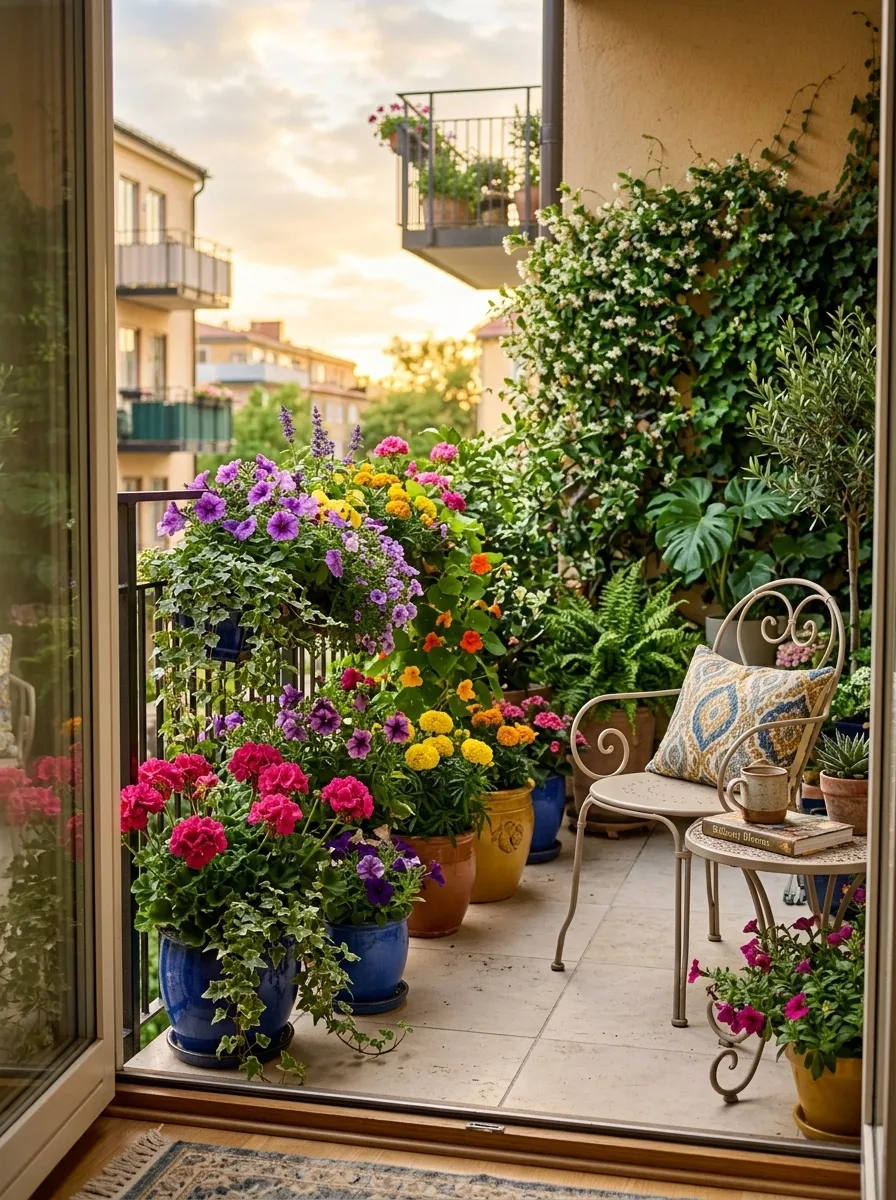
This balcony does not apologize for color. Rich flowering plants fill saturated ceramic containers, while deep green foliage creates enough visual calm to keep the whole arrangement from becoming chaotic.
The strongest colors are repeated rather than scattered randomly. A few pots share related shades, and the flowers echo those tones at different heights. A simple neutral chair and pale flooring provide breathing room underneath all that color.
The composition succeeds because the greenery acts as the background rather than another competing color block. That distinction matters. Without a strong green base, bright flowers can quickly start looking like a seasonal garden center display that escaped containment.
visual foundation Flower color
main accent Neutral tones
visual rest
Rustic Balcony Garden With Stone Planters and Reclaimed Timber
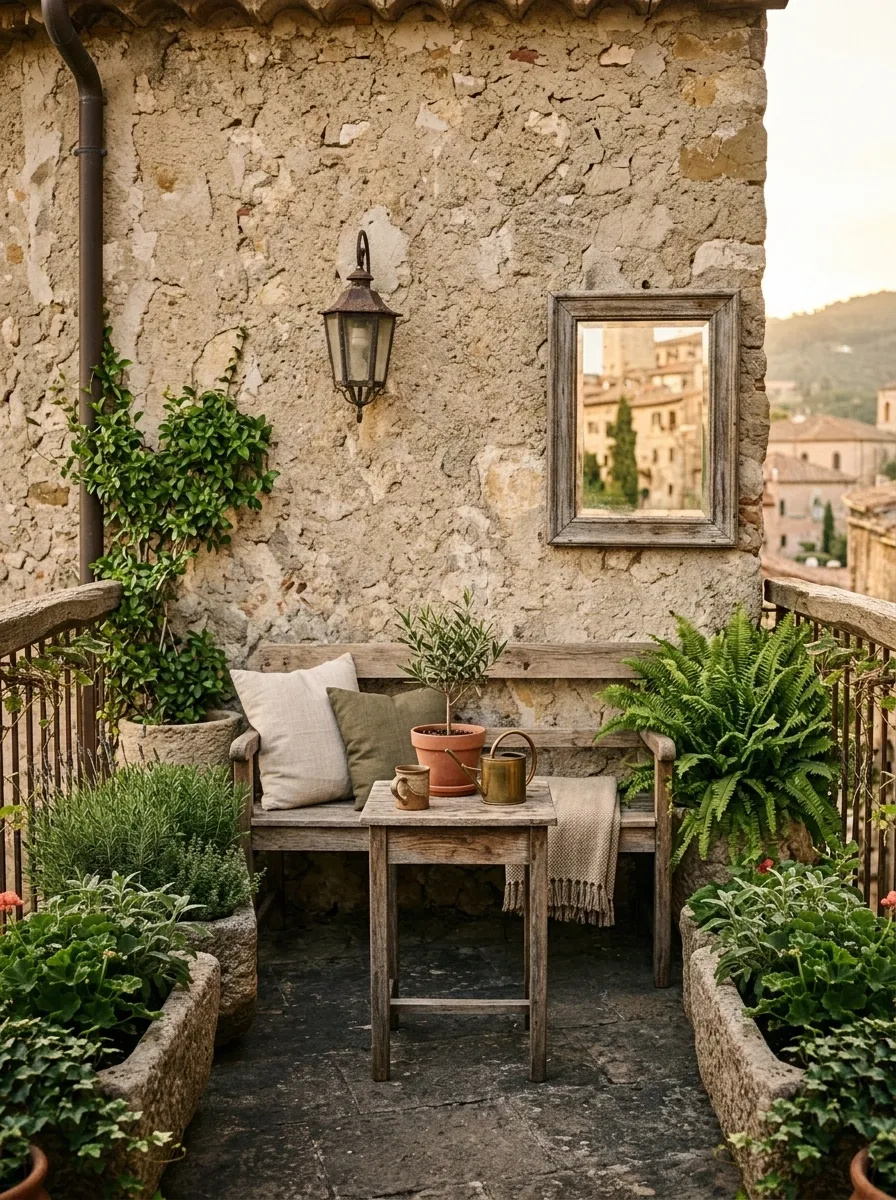
Rough stone and weathered timber give this balcony a grounded, almost old-world garden character. Large stone-look planters hold herbs and leafy plants, while reclaimed boards form a simple bench and narrow side table.
The materials are intentionally imperfect. Visible grain, slightly uneven timber, and natural stone textures keep the setting from feeling overly polished. The planting adds softer shapes around those rough surfaces, creating the contrast that gives the composition its personality.
The furniture remains sparse because the materials already have plenty to say. Add too many accessories and the rustic character becomes clutter surprisingly quickly. The goal is a convincing garden retreat, not an outdoor antiques warehouse.
Modern Small Balcony With Built-In Storage and Linear Planters
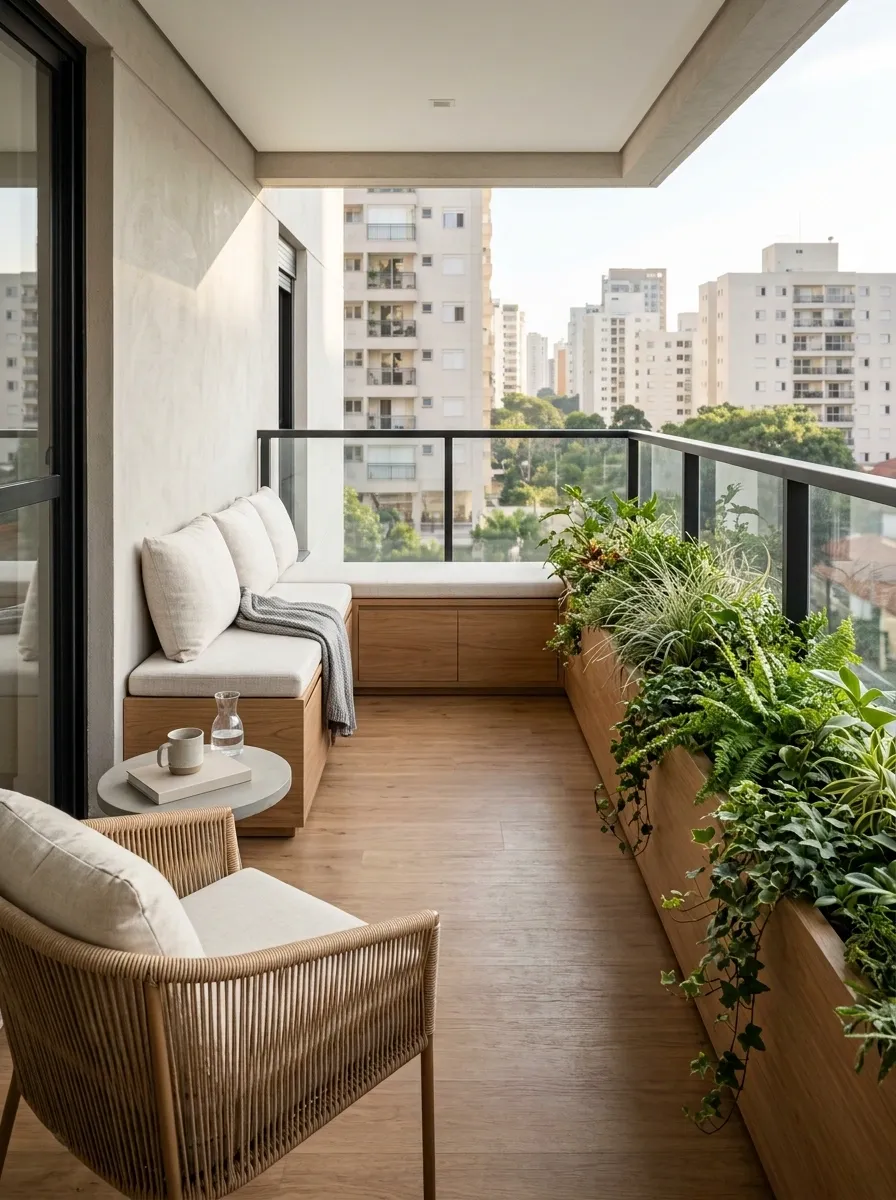
This balcony solves several problems with one clean architectural gesture. A built-in bench runs along the back wall, with concealed storage underneath, while a long planter follows the same horizontal line beside it.
The arrangement creates a strong visual axis from one end of the balcony to the other. Pale walls, warm timber, and deep green foliage keep the palette restrained, while the planting breaks up the straight geometry.
Nothing feels squeezed in. The storage disappears beneath the seating, the planter uses the perimeter, and the center remains available for movement. It is a smart example of a balcony doing more without looking like it is trying desperately to do more.
Balcony Garden With a Hanging Planter Canopy and Compact Lounge Chair
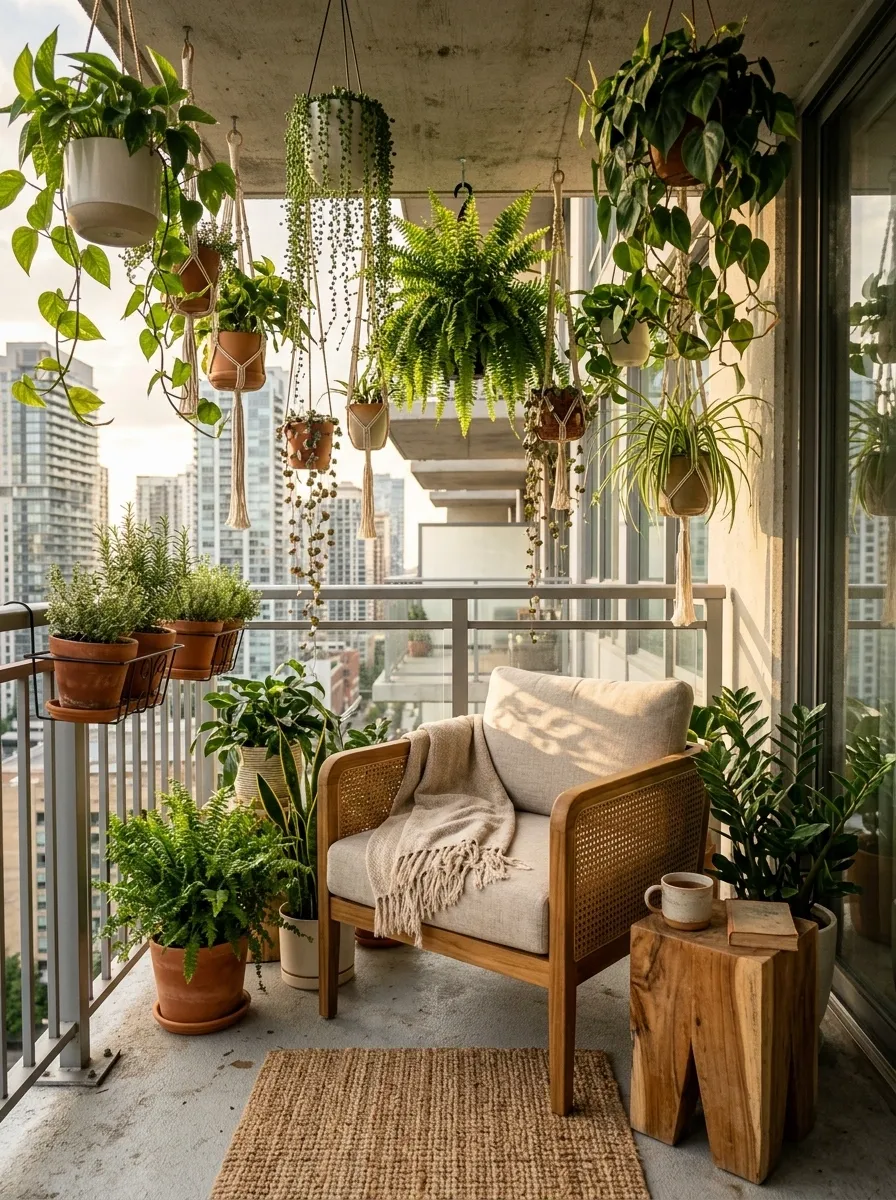
The floor stays surprisingly open in this design because much of the garden lives above it. Hanging planters descend at different heights around a compact lounge chair, creating a loose canopy of greenery without filling the walking area.
A simple chair in warm timber or woven material anchors the lower half of the composition. The plants provide the movement overhead, while a few floor-level containers connect the upper greenery back to the balcony surface.
This approach works especially well when floor space is limited but the balcony has usable overhead structure. The varying heights also create depth that a row of identical floor pots simply cannot provide. The ceiling has been there the whole time, after all. It may as well earn its keep.
Soft Neutral Balcony With Linen Seating and Pale Ceramic Pots
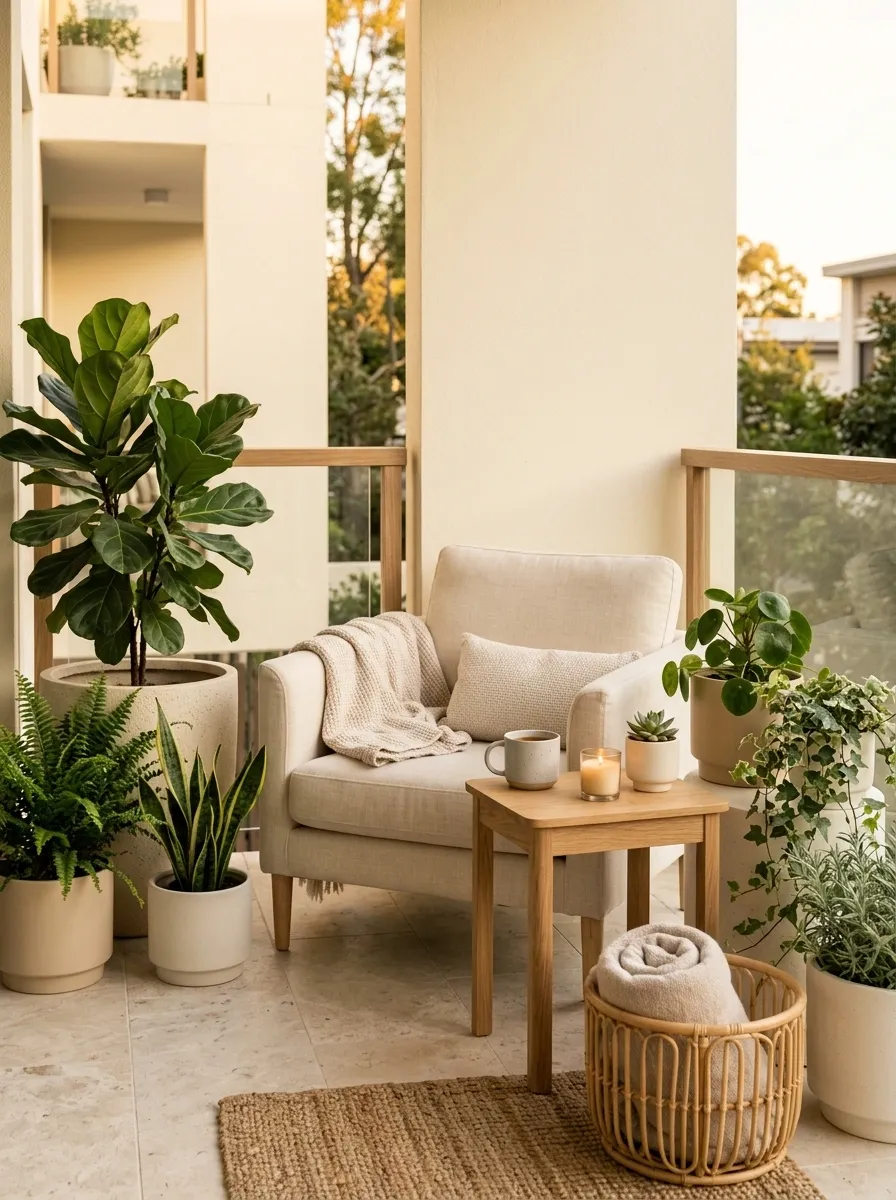
For a balcony that needs to feel calm rather than crowded, this composition keeps the color range deliberately narrow. Pale ceramic pots sit among soft green foliage, while a linen-covered chair and small timber table create a comfortable seating corner.
The visual interest comes from texture instead of strong color contrast. Matte ceramic, woven fabric, natural wood, and slightly varied leaf shapes prevent the pale palette from looking flat.
The clean background matters too. A warm ivory wall or pale flooring lets the greenery stand out without introducing another competing color. This is the sort of design that proves neutral doesn’t have to mean boring. It just needs texture and enough contrast to stop the whole thing becoming one large bowl of oatmeal.
Balcony Vegetable Garden With Raised Edible Planters and Compact Seating
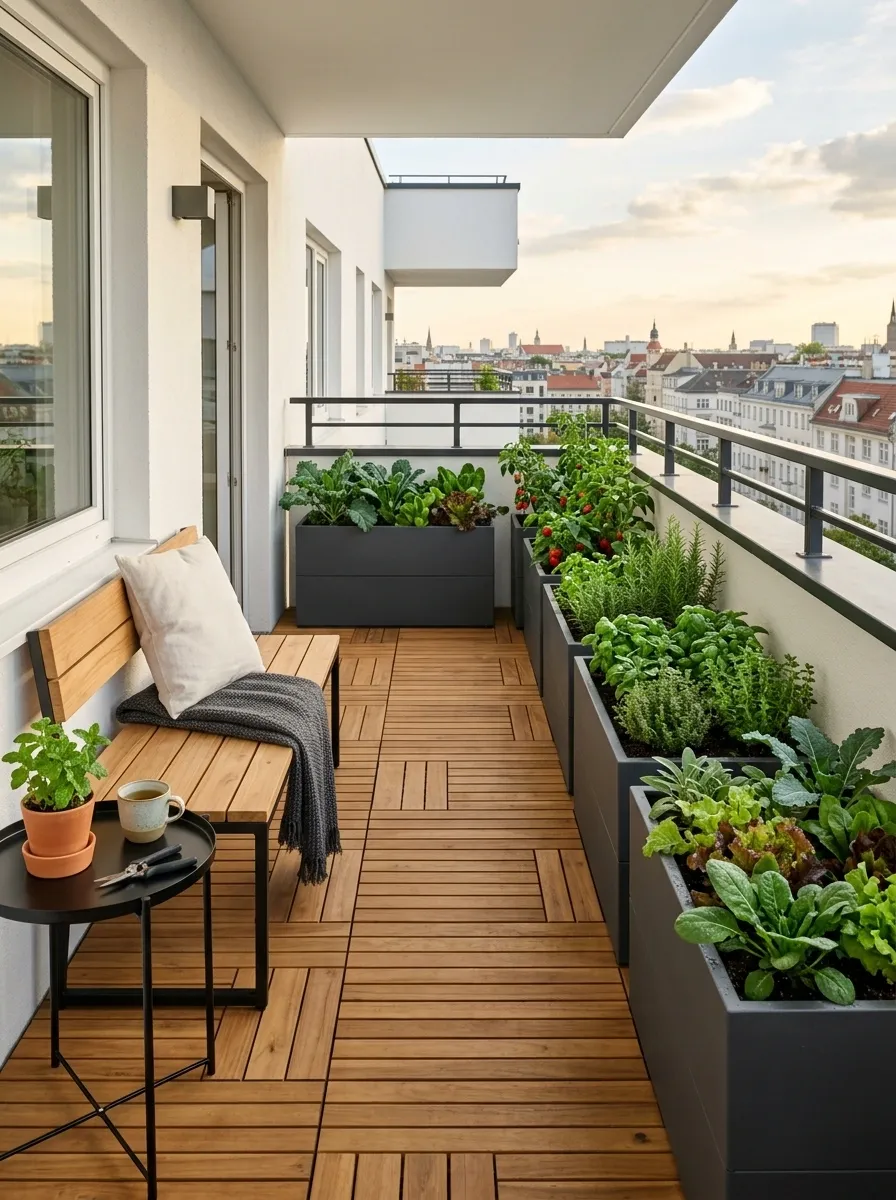
This balcony treats food growing as part of the design rather than an excuse to turn the entire space into a miniature farm. Raised edible planters line one side, holding herbs and vegetables in a neat, organized arrangement.
A compact bench or pair of lightweight chairs occupies the opposite side, leaving the middle open for access. The planting containers share a common finish, which makes the productive part of the garden feel intentional instead of purely functional.
Leafy greens, herbs, and edible plants provide plenty of texture without needing colorful flowers. The result still reads as an outdoor room first, garden second. That balance matters. A balcony covered entirely in grow boxes may be productive, but relaxing beside 40 vegetables is a rather specific lifestyle choice.
Industrial Balcony Garden With Steel, Concrete, and Oversized Foliage
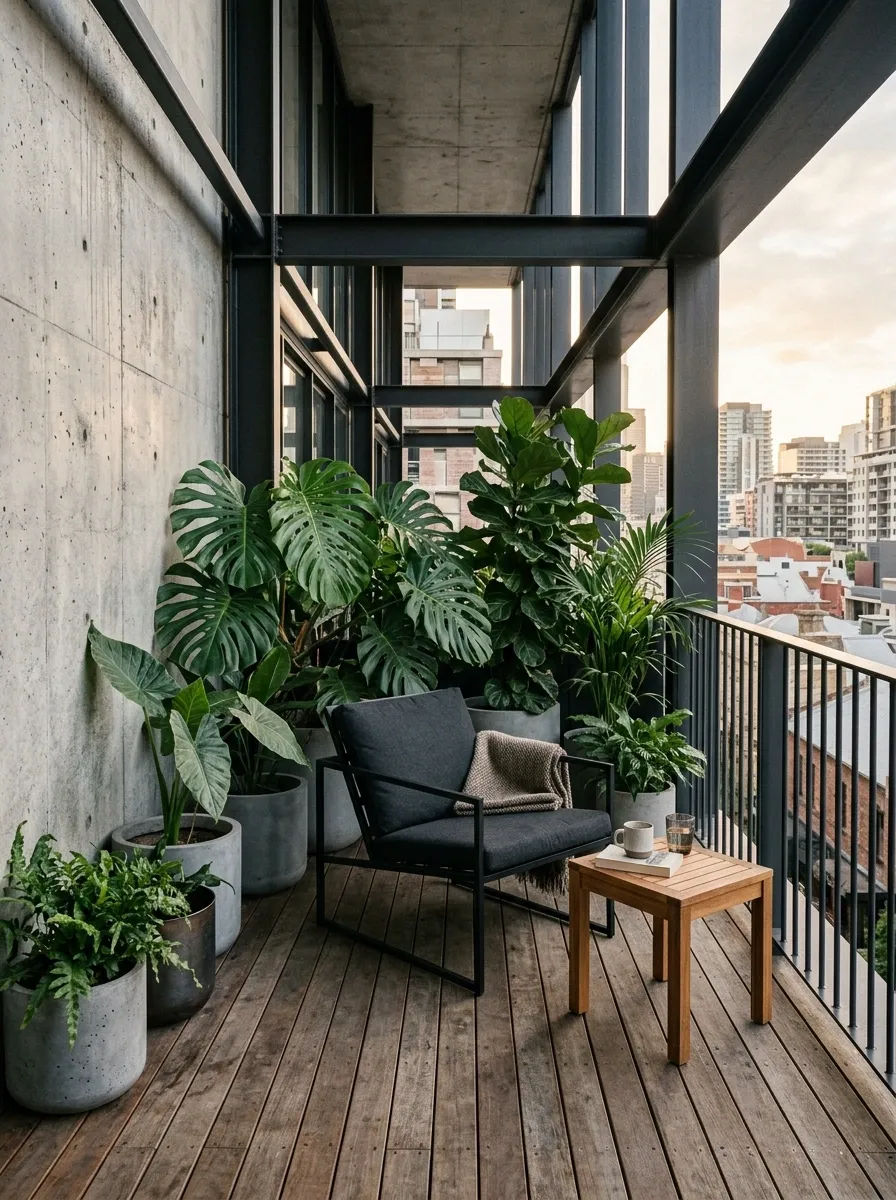
Raw concrete, dark steel, and large green leaves create a balcony that feels urban without becoming aggressively masculine. The architecture stays exposed, while oversized plants introduce the softness missing from the harder materials.
A simple black-framed lounge chair sits near the center with warm timber underfoot or on the side table. The foliage is broad and sculptural, chosen for shape rather than sheer quantity. That contrast makes each plant feel more like part of the architecture.
The materials needn’t be polished. Slightly rough concrete and visible metal work better here than glossy finishes. The greenery becomes the counterpoint, softening the structure while keeping the balcony unmistakably contemporary.
×
STEEL
×
OVERSIZED GREENERY
Small Balcony With an Arched Planting Screen and Curved Furniture
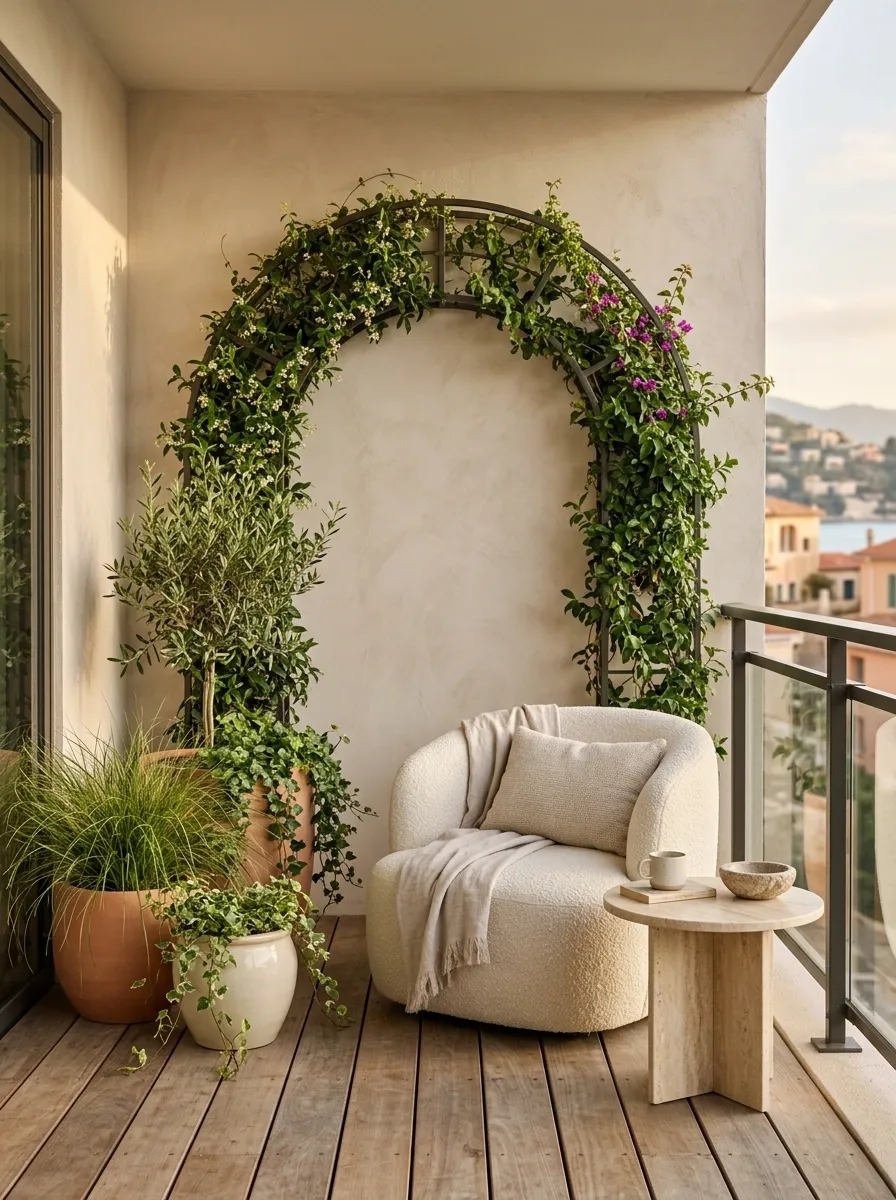
Straight lines can make a narrow balcony feel even narrower. This design deliberately introduces curves, using an arched planting screen as the backdrop for a compact rounded chair and circular side table.
The greenery follows the curved structure, creating a soft frame around the seating area. Rounded planters repeat that shape at floor level, while pale plaster or warm neutral walls keep the composition from becoming visually heavy.
The repeated curves give the balcony a distinct identity without relying on excessive decoration. Everything points toward the same shape language, which makes the space feel considered. A collection of random rectangular planters would kill the effect almost immediately.
frames the space Furniture
repeats the curve Planters
echo the shape
Mediterranean Night Garden With Citrus Trees and Built-In Bench Seating
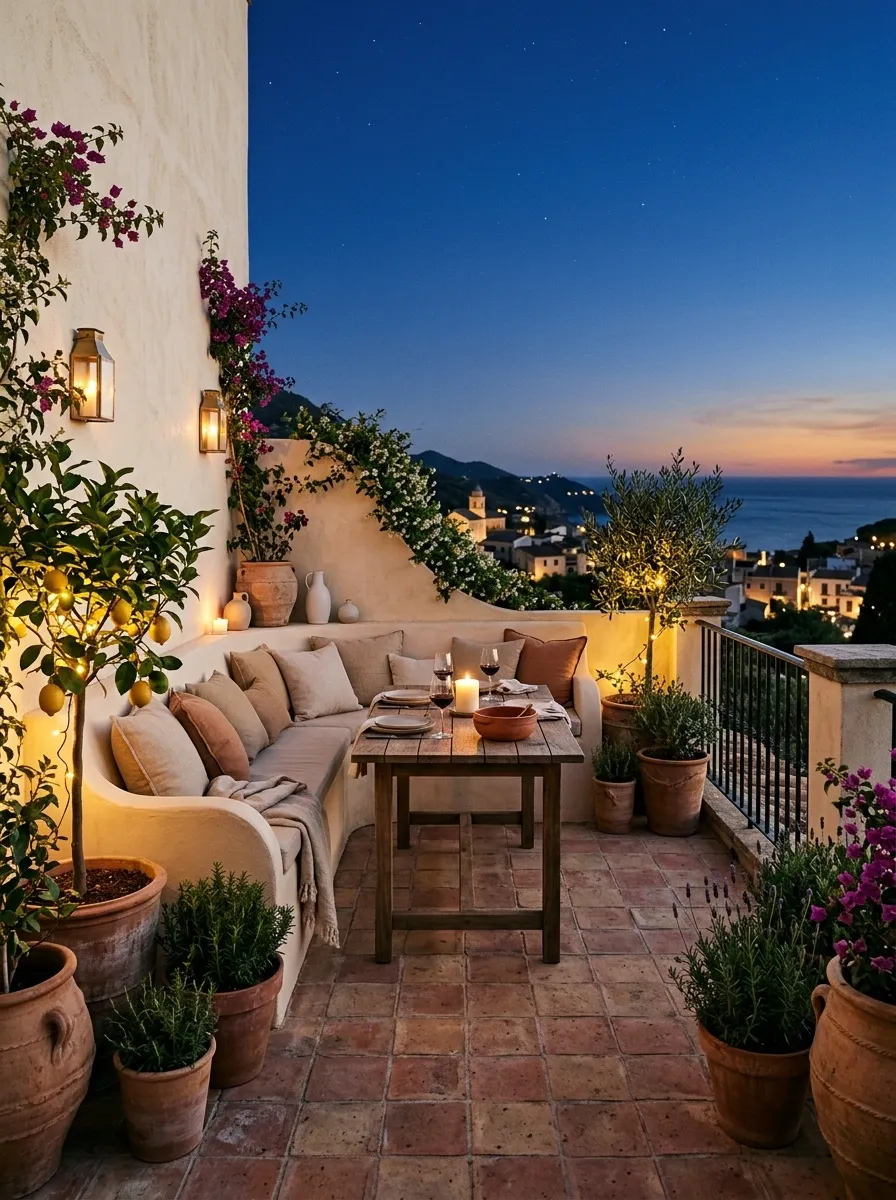
This balcony feels made for late dinners rather than hurried daytime watering. Small citrus trees rise from warm terracotta planters beside a built-in bench, while pale rendered walls reflect the soft glow from warm outdoor lighting.
The seating stays close to the wall, leaving the middle open for movement and a compact dining table. The citrus trees provide height and structure without becoming a solid green wall, while terracotta connects the plants to the warm architectural palette.
The evening lighting is intentionally subtle, emphasizing the edges of the bench, the foliage, and the dining area. The result feels intimate without looking theatrical. There is a fine line between Mediterranean atmosphere and a restaurant trying very hard to impress tourists. This design stays on the right side of it.
Balcony Garden With Flowering Vines and Bistro Dining for Two
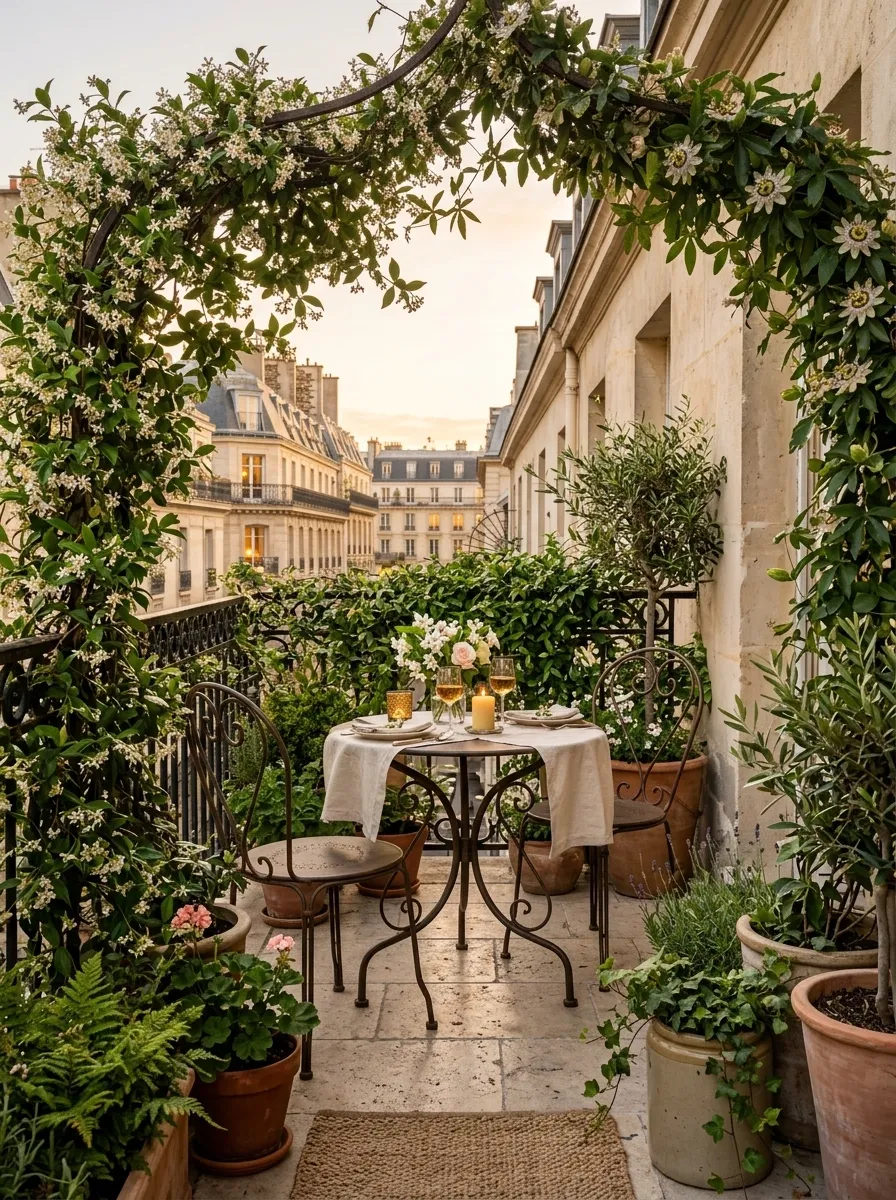
Here, the garden grows around the architecture rather than simply sitting on the floor. Flowering vines climb along the upper edge and sides of the balcony, creating a living frame around a tiny bistro table and two chairs.
The floor remains mostly open, which gives the dining area a surprisingly spacious feel. Small containers sit near the base of the climbing plants, visually connecting the vertical garden to the ground.
The strongest feature is the frame itself. The vines create a soft boundary that draws attention toward the table while also breaking up views of neighboring buildings. The effect feels romantic without covering every available surface in flowers. The balcony is a garden, not a floral hostage situation.
Moody Green Balcony Retreat With Dark Wood and Dense Potted Plants
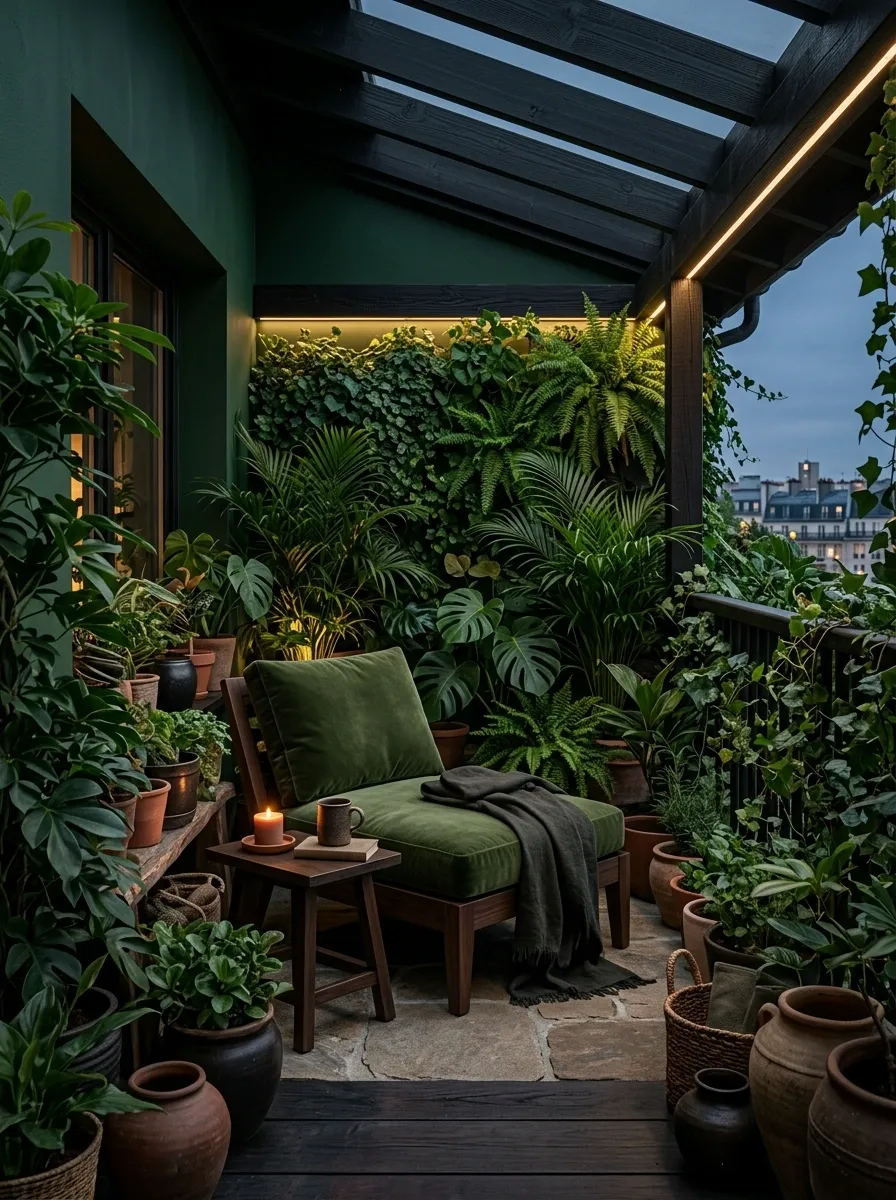
Deep green walls, dark timber, low furniture, and dense foliage give this balcony a cocooned feeling that is completely different from the bright Mediterranean designs.
Plants cluster around the edges, with taller foliage against the back wall and lower containers near the seating area. A dark wood lounge chair and small table sit within the greenery rather than standing out against it. Warm lighting adds just enough contrast after sunset.
The secret is controlling the density. The garden can be lush, but the seating zone needs breathing room. That little pocket of emptiness makes the balcony feel intentional rather than overgrown. Dense does not mean every surface needs to disappear under a plant.
Elegant Balcony Garden With Sculptural Planters and Comfortable Lounge Seating
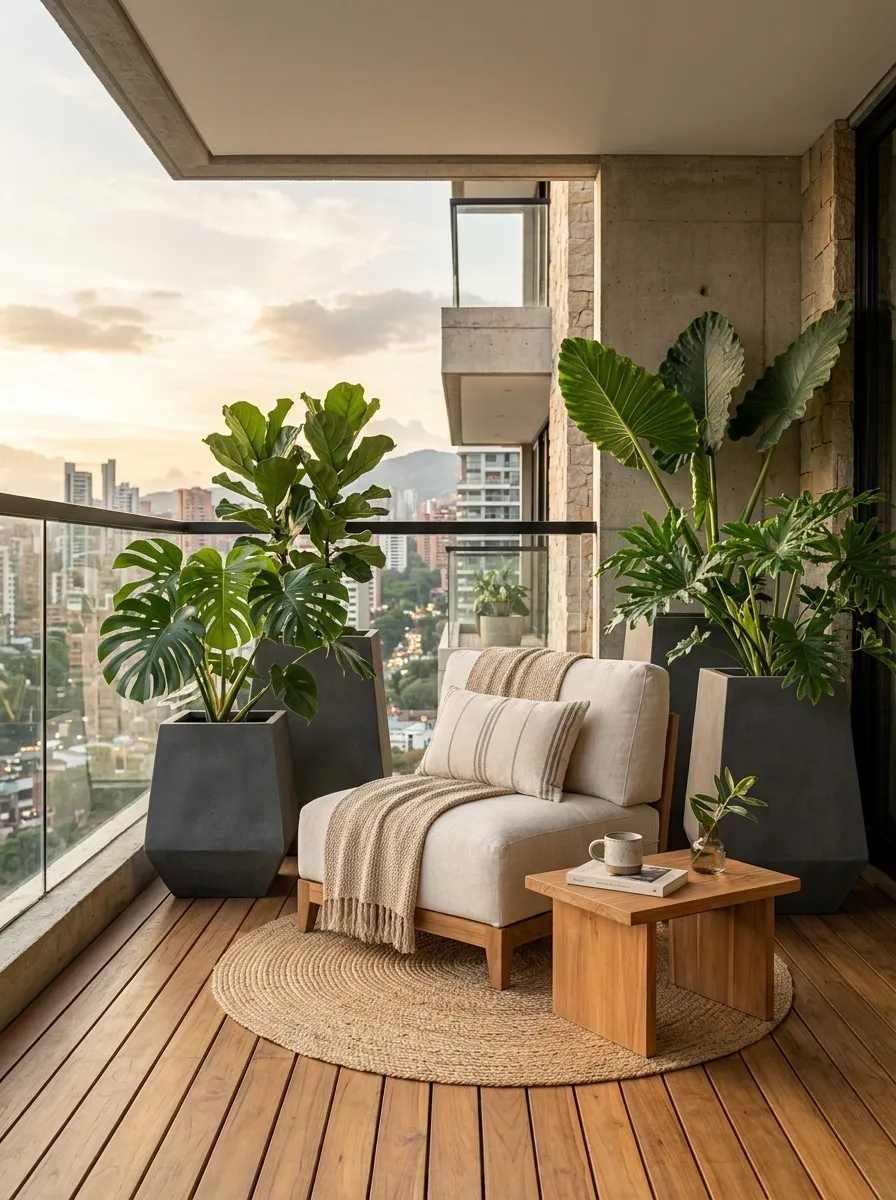
The final design takes a more refined approach, using large sculptural planters as architectural objects rather than filling the balcony with dozens of small containers. Their strong forms frame a comfortable lounge chair and low table, creating a polished outdoor room.
Foliage is intentionally restrained, with plants selected for clean silhouettes and strong leaf shapes. Warm timber and soft neutral upholstery prevent the containers from feeling too severe, while the surrounding architecture stays quiet.
The composition has plenty of breathing room, which makes the balcony feel more spacious and considered. The planters provide the drama. Everything else knows when to sit down and behave.
Make the Balcony Look Designed, Not Decorated
A balcony garden starts looking convincing when the choices stop behaving like separate purchases.
The railing, floor, walls, furniture, containers, plants, and lighting don’t need to match perfectly. They do need to share some visual logic. Maybe that comes from warm wood repeated in the seating and planters. Maybe it is a restrained palette of stone, green, and terracotta. Maybe the entire composition relies on one strong architectural shape.
Size matters just as much. A narrow balcony usually benefits from a linear or vertical arrangement, while a wider one can support a more relaxed lounge or dining composition. Privacy can become part of the planting. Storage can disappear under seating. A blank wall can become the garden’s tallest layer.
The goal isn’t to fit the greatest possible number of objects into the space. It is to make the balcony feel complete.
Because there is a difference between having plants and having a garden.
The first is shopping.
The second is design.