
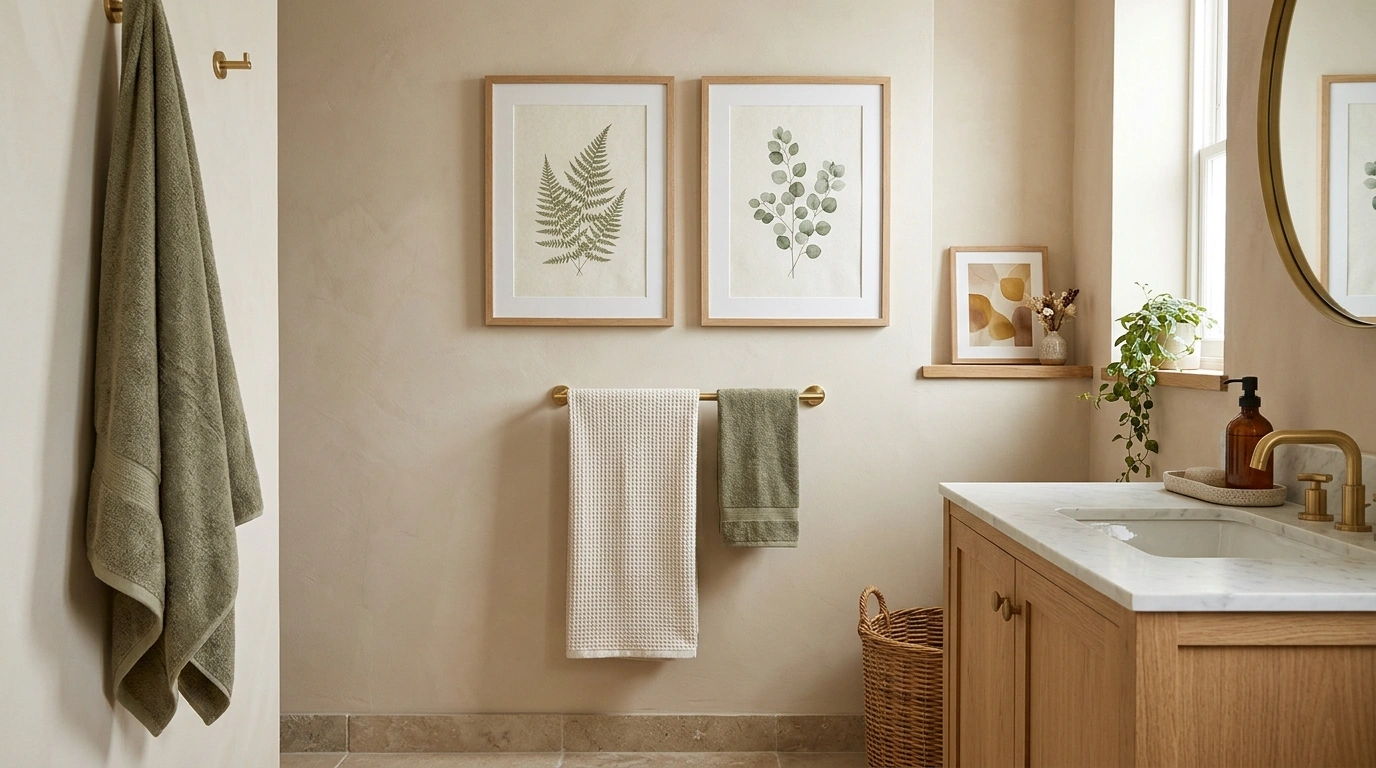
The bathroom does not need another sign explaining what people should do in it. Most visitors have encountered a bathroom before.
Give the walls something you actually enjoy: a landscape, a bold abstract, a small ceramic detail, or a photograph with a reason to be there. The art can connect the room to the rest of your home rather than announcing a separate bathroom-themed universe.
Choose a dry location and materials appropriate to the conditions. Framing does not automatically make artwork moisture-proof, so keep valuable or sensitive pieces elsewhere if the room is unsuitable. Address persistent moisture and ventilation problems rather than covering them with decoration. (Health Canada moisture guidance)
Wall Art Ideas
Playful Typography and Color
A statement graphic brings an unexpected burst of personality to a textured tile feature wall.
Choose framed prints with fun text or simple icons that complement the existing color story of your sink and hardware.
Keep frames sleek and gold-toned to echo the plumbing fixtures while letting the cheerful green backdrop pop.
One Generous Landscape on a Dry Wall
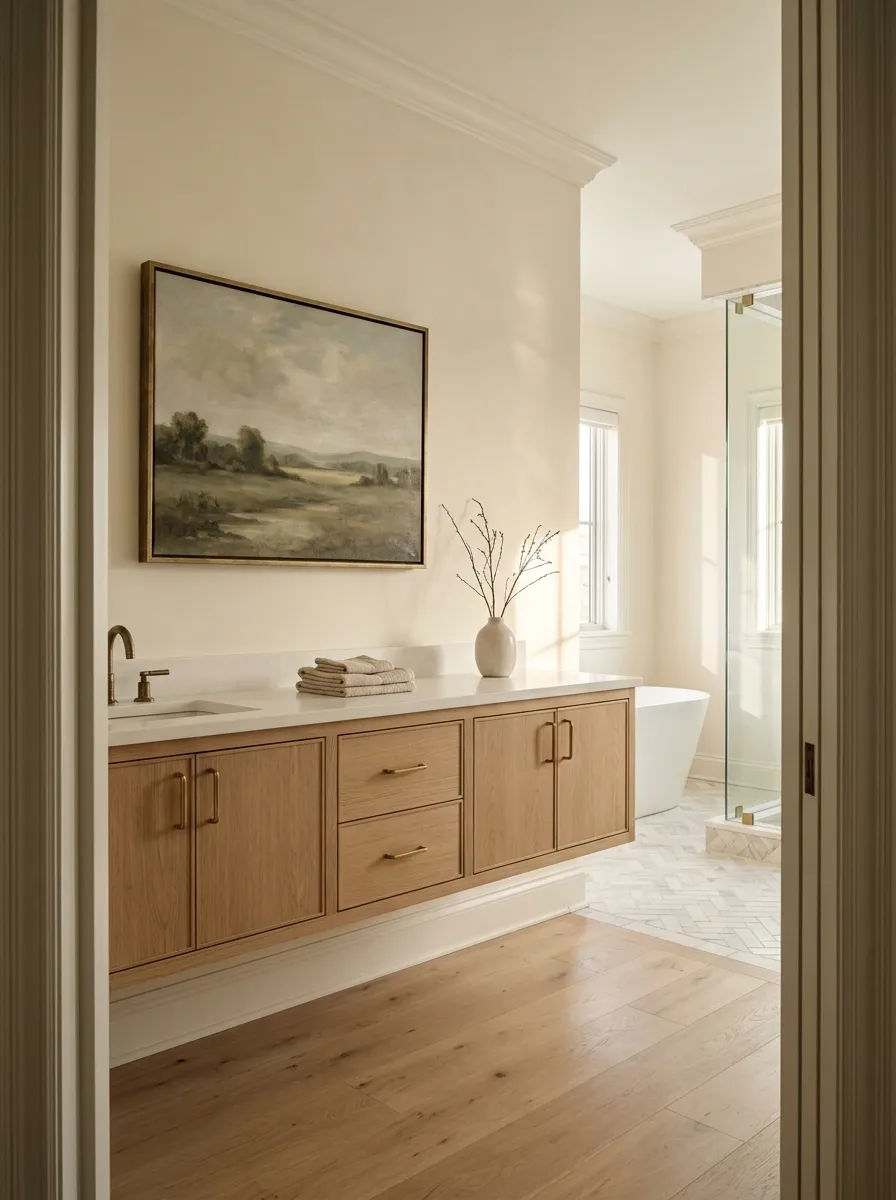
A larger landscape can give a plain bathroom a clear destination for the eye.
Choose a composition that reads from the doorway and mount it appropriately outside splash-prone areas. Leave visible wall around the frame so it feels placed rather than squeezed in. A calm image can work especially well where tile and fittings already introduce plenty of detail.
A single piece with breathing room
Use a suitable dry location and secure mounting.
Humorous Wildlife Art Print
Whimsical animal art adds a touch of lighthearted charm to an otherwise serene neutral bathroom.
Select illustrations that bring a smile without cluttering the visual space around your shelves and vanity essentials.
Mount the piece centrally so it acts as a delightful focal point for anyone stepping up to the washbasin.
A Bold Abstract With a Limited Palette
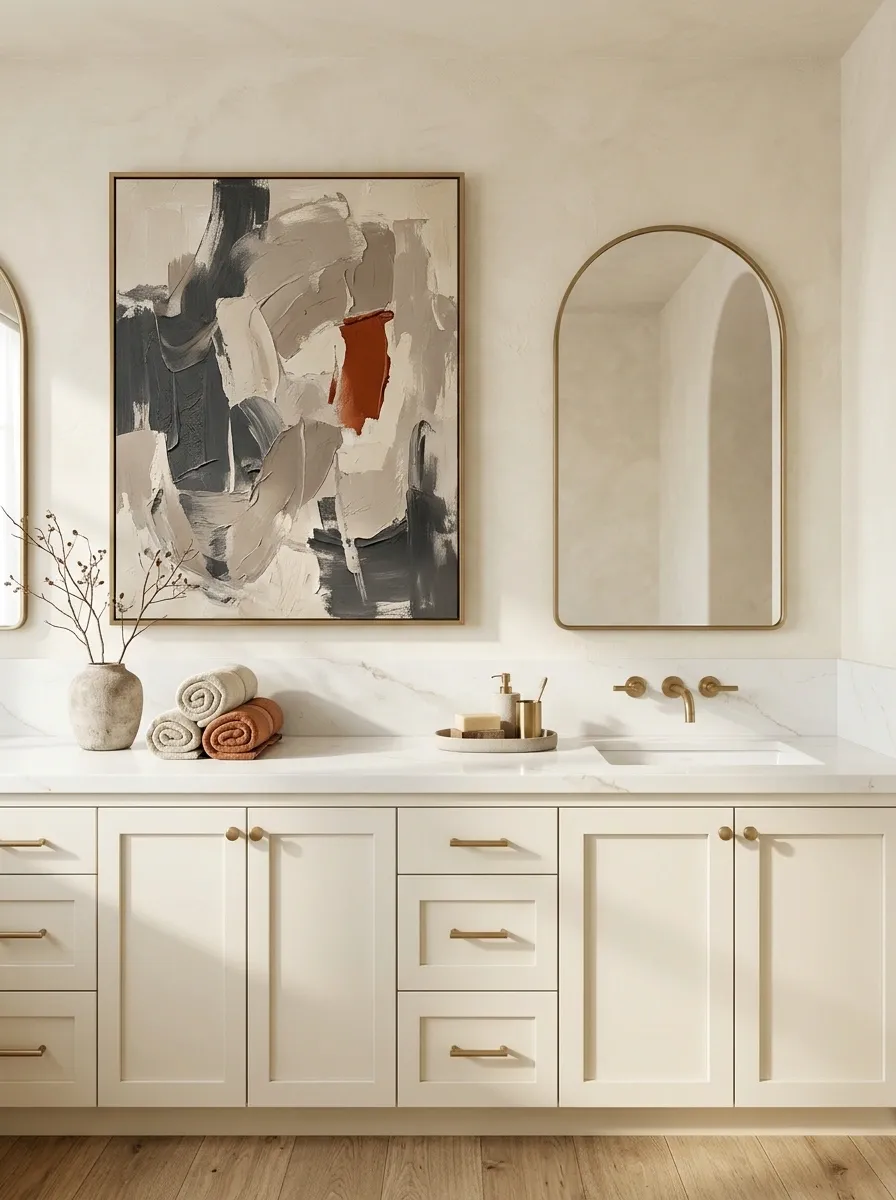
An abstract can bring color to a neutral bathroom without introducing a literal subject.
Choose a few clear shapes or a broad color field rather than tiny detail. Repeat one tone in a towel or suitable accessory if it helps the room feel connected. The art should still work on its own; it does not need every bottle and toothbrush cup to prove the palette.
| Art supplies | Keep quieter |
|---|---|
| Color and shape | Nearby small accessories |
| A focal point | Competing patterns |
Classic Art With a Twist
A clever spin on traditional masterpiece imagery brings wit and modern relevance to minimalist dark interiors.
Opt for a reproduction that plays with unexpected motifs while maintaining the dignified composition of historical art.
Position the frame directly above the commode to create an intentional focal point in an atmospheric, moody powder room.
Botanical Prints With a Less Predictable Subject
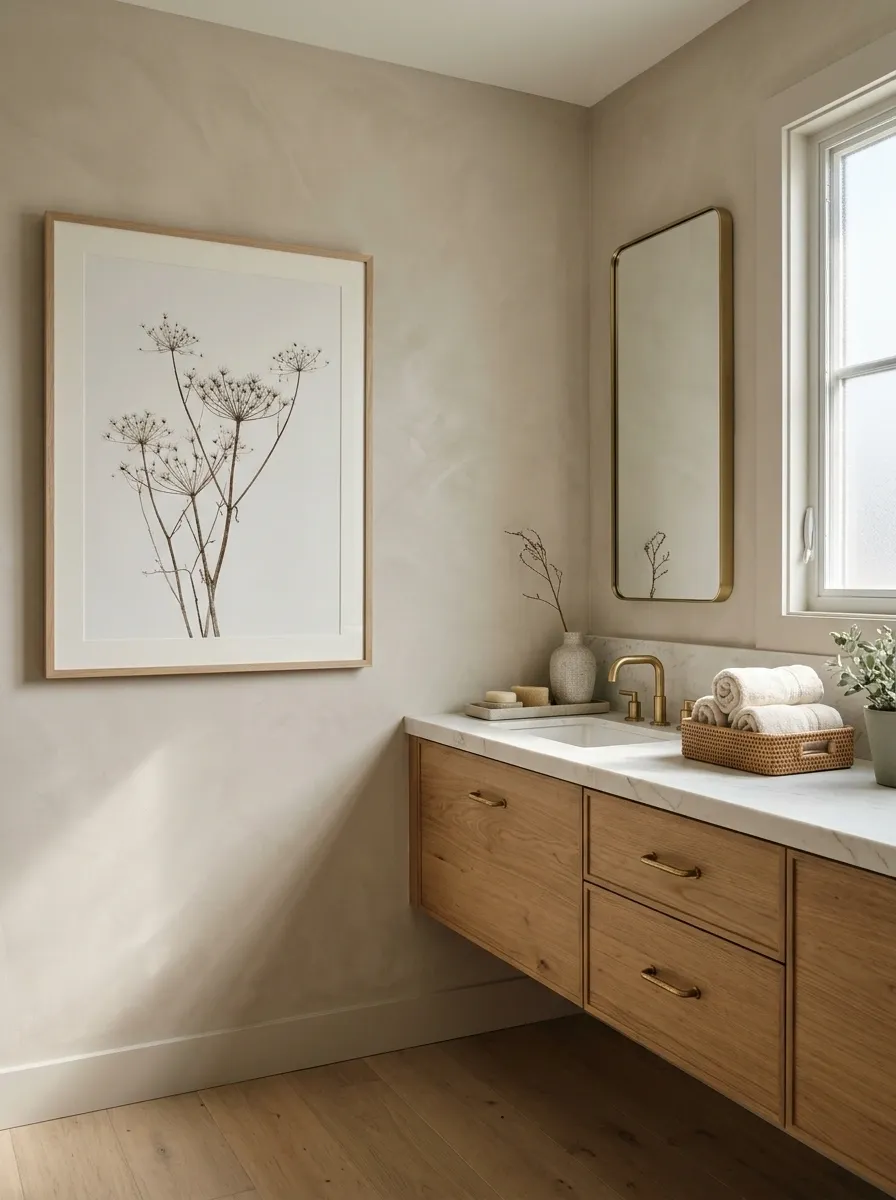
Botanical art can feel more personal when you choose a plant form you genuinely like rather than the first generic leaf print available.
Try seed heads, branching stems, or a detailed study with plenty of blank ground. Keep the frame related to the mirror or cabinet without matching every finish exactly. The subject can be natural without requiring actual plants on every surface.
Useful edit: one interesting botanical is often stronger than a wall covered in nearly identical leaves.
Rich Monochromatic Typography
Embossed lettering set against a deep crimson wall creates a moody, gallery-like atmosphere in a powder room.
Choose textured word art that introduces subtle dimension without relying on complex imagery or bright accent colors.
Frame the piece simply to let the rich tones of the wall paneling and patterned floor tiles shine.
A Vintage-Style Scientific Illustration
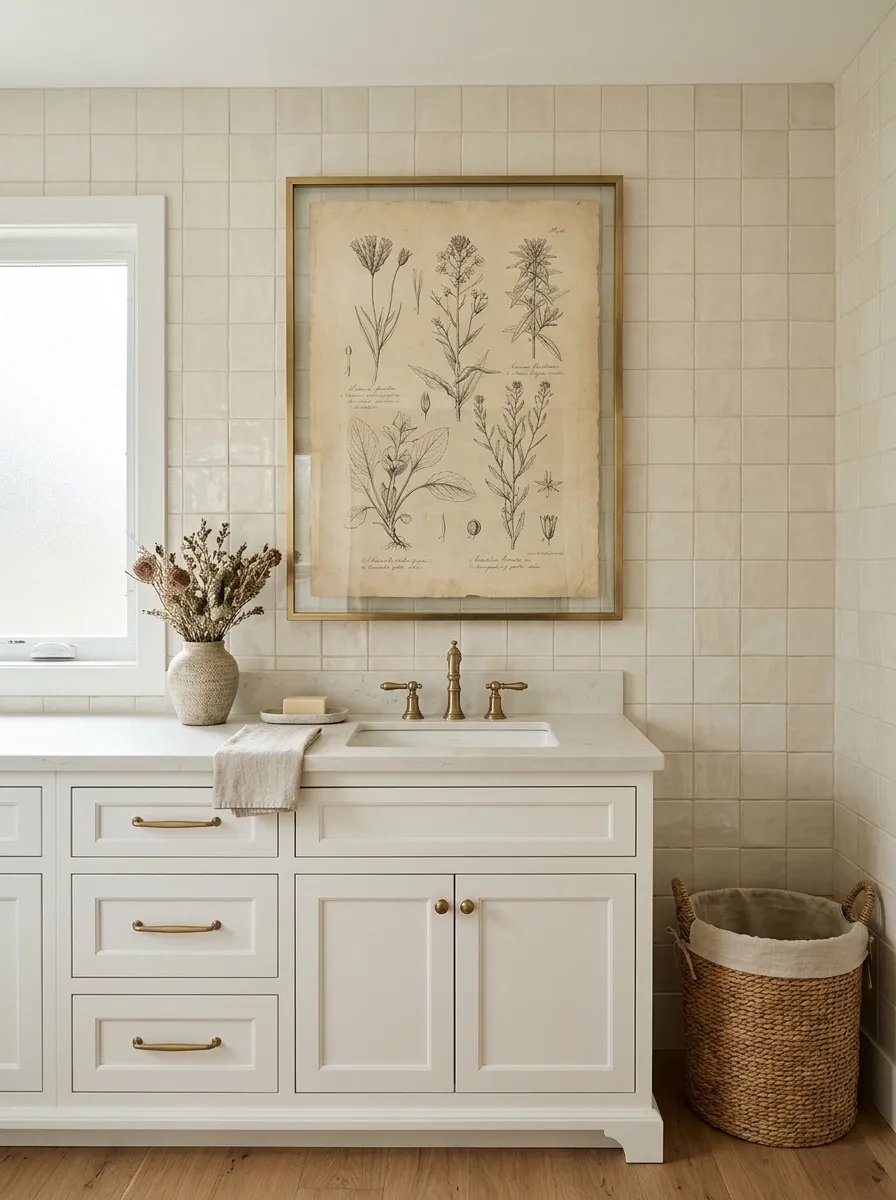
A botanical, geological, or architectural study can give the bathroom a collected quality.
Use an appropriate reproduction rather than exposing a fragile original to uncertain conditions. Choose a subject with enough visual structure to read at the room’s scale. The paper tone can connect beautifully with cream tile or warm wood, provided it does not clash with the existing whites.
Use the illustration's background as part of the palette
A reproduction is the practical choice where conditions are uncertain.
Monochromatic Shower Art
A vibrant pink shower illustration sets a joyful tone that instantly brightens up a morning routine.
Select playful graphics that celebrate daily rituals while tying in seamlessly with a matching pink vanity or towel.
Hang the oversized frame on a clean white wall to maximize the visual impact and keep the space feeling open.
Architectural Line Art
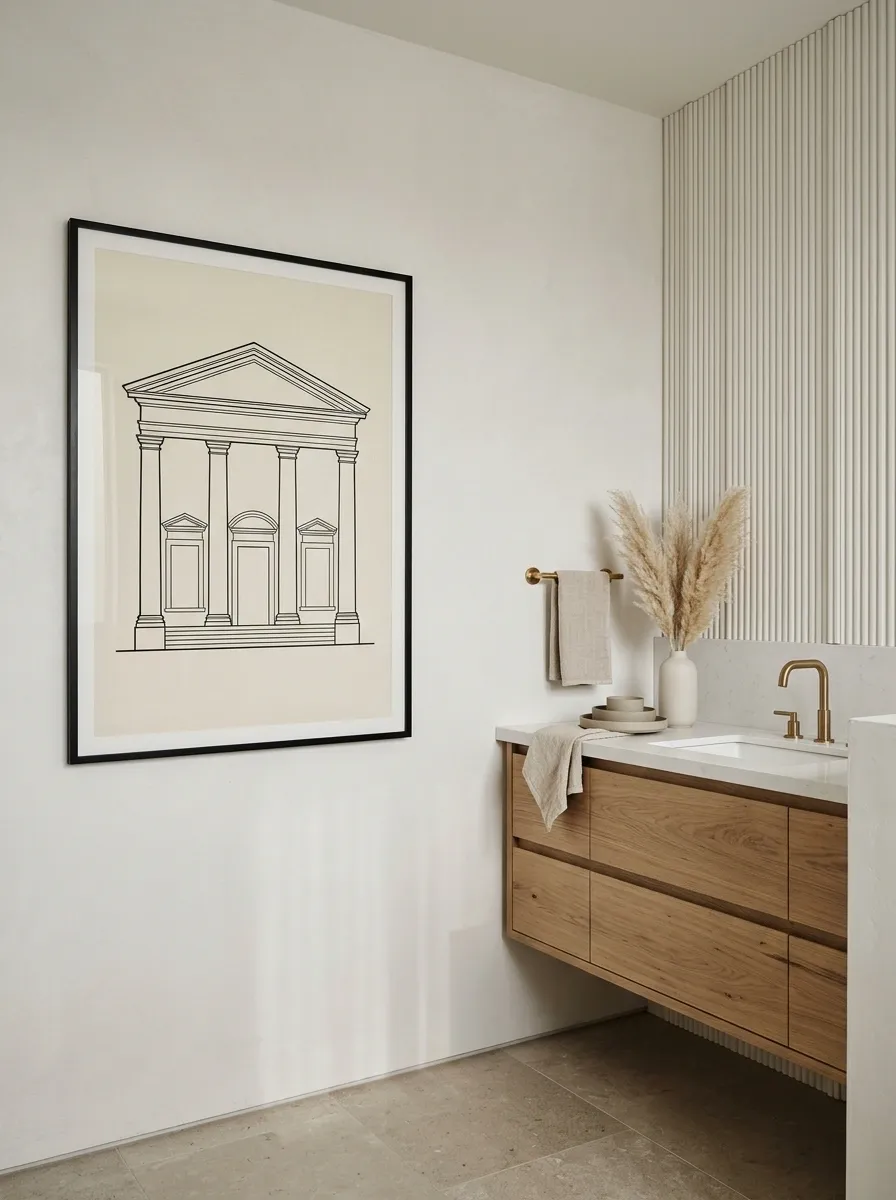
Simple architectural drawing can look crisp beside a bathroom’s existing geometry.
Choose an image with a strong outline: an arch, staircase, facade, or window. Keep enough contrast between drawing and background that the subject does not disappear from the doorway. This works particularly well when you want a graphic note without adding another saturated color.
Pair with: straightforward frames and a relatively quiet surrounding wall.
A Small Framed Textile in a Suitable Dry Position
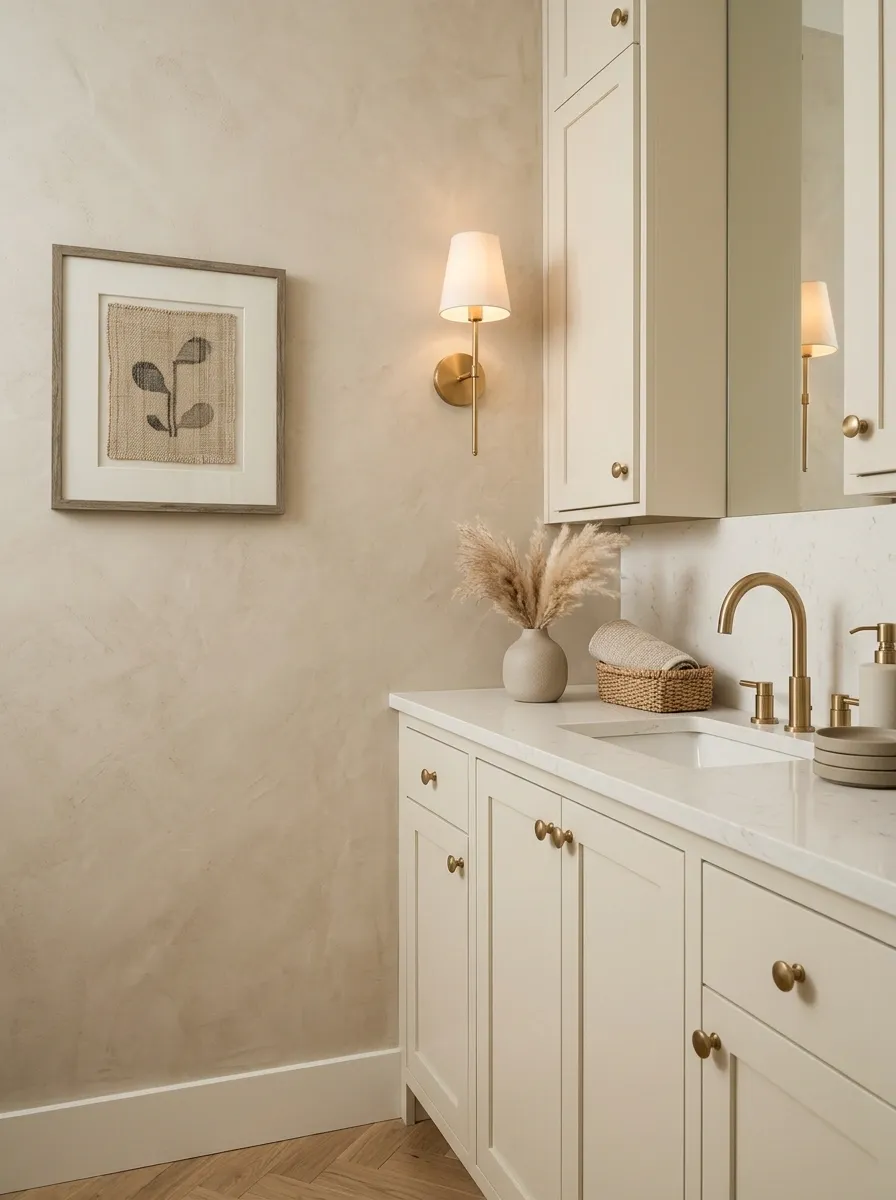
A textile can add a different surface character to a room full of tile and glass.
Use an appropriate mounting and framing approach, but do not assume the frame eliminates moisture risk. Choose a dry, well-managed location and a piece you can reasonably maintain. A broad weave or simple motif reads more clearly than intricate stitching placed too high or too far away.
A Product-Suitable Printed Panel
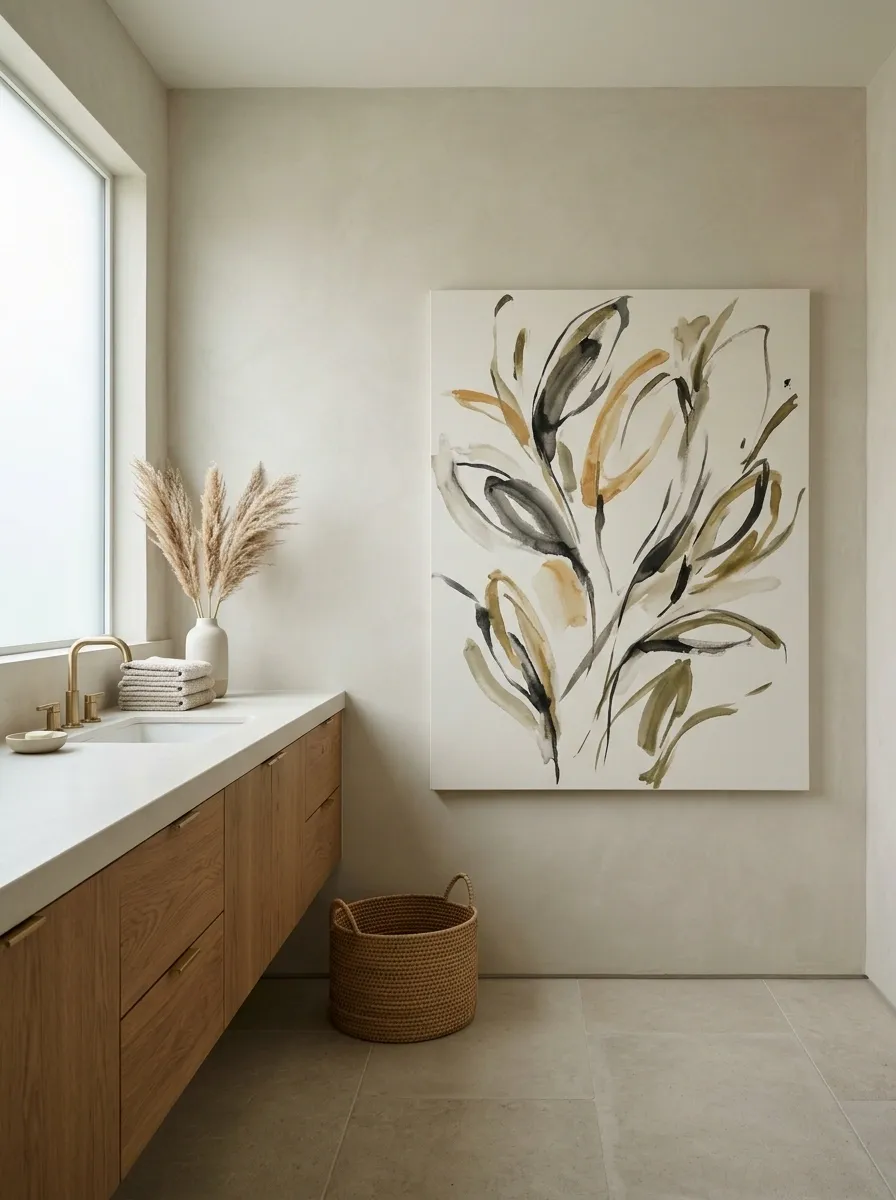
A printed panel can provide a clean, frameless look when the particular product is suitable for the intended location.
Check the manufacturer’s use and care guidance, including the backing and mounting system. Do not rely only on descriptions such as bathroom art. The image can be expressive while the installation remains simple and correctly specified.
| Check the whole product |
|---|
| Printed face |
| Edges and backing |
| Mounting method |
| Location and cleaning guidance |
A Secure Ceramic Wall Panel
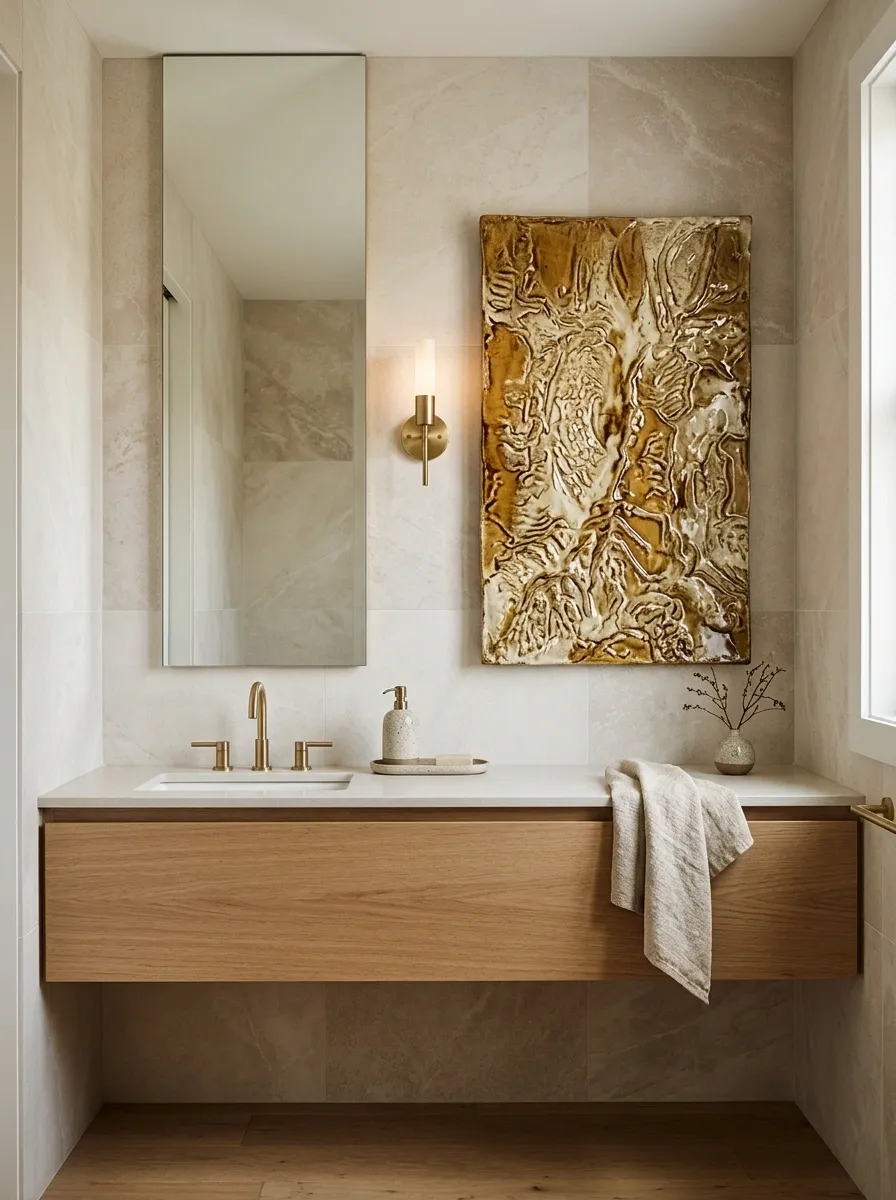
A ceramic artwork can bring relief, glaze, and shadow into the room without another framed print.
Choose appropriate support and fixing for its weight and location. Keep the surrounding tile pattern restrained if the panel is detailed. A single interesting shape can have more presence than several small pieces scattered around the mirror.
A different surface rather than another picture
Specify the fixing for the actual wall and loaded weight.
A Mosaic Feature Treated as Artwork
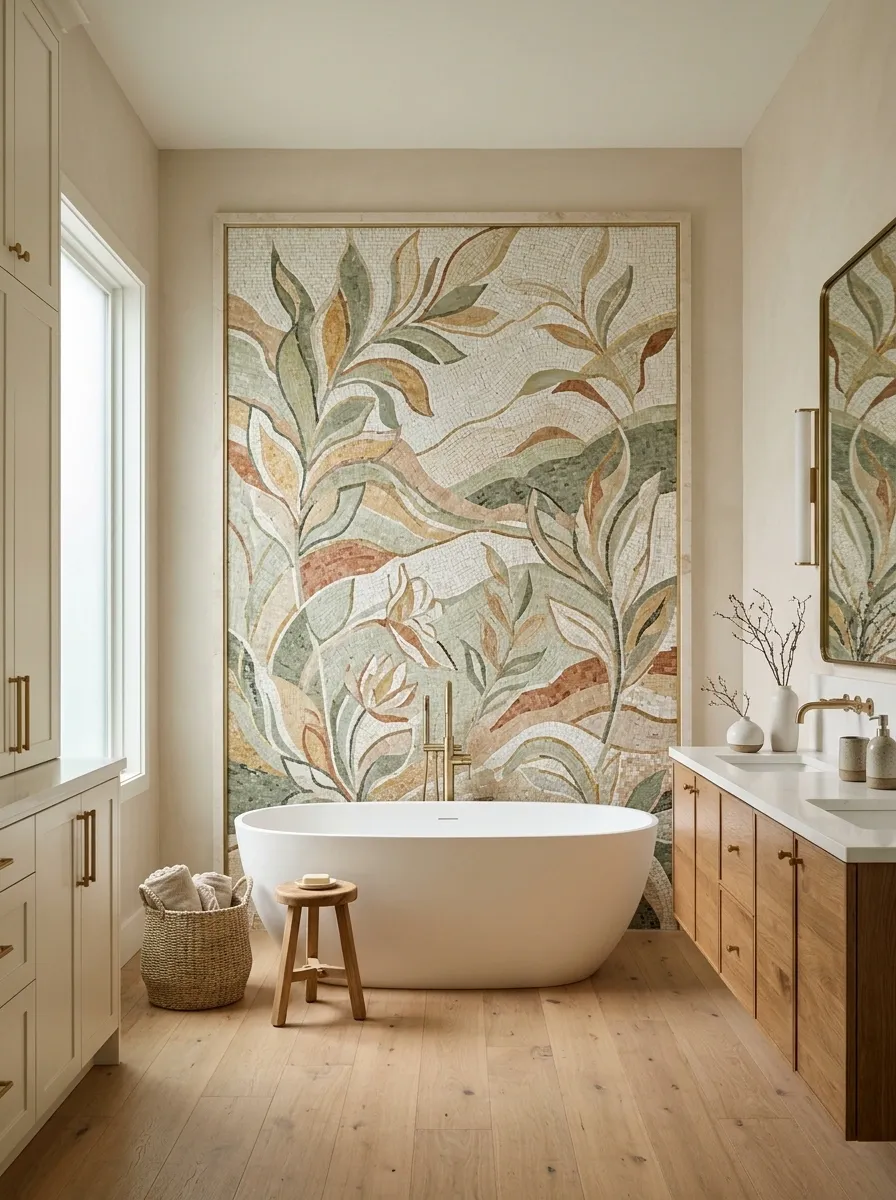
A carefully planned mosaic can create a defined visual feature within a suitable wall assembly.
Have the materials, backing, edges, and installation specified for the location. This is particularly important in wet areas, where decoration cannot replace waterproofing. Keep the motif clear enough to read as one composition rather than a collection of small competing patterns.
Design the complete panel: its border and relationship to the fixtures matter as much as the individual pieces.
A Painted Mural on an Appropriate Surface
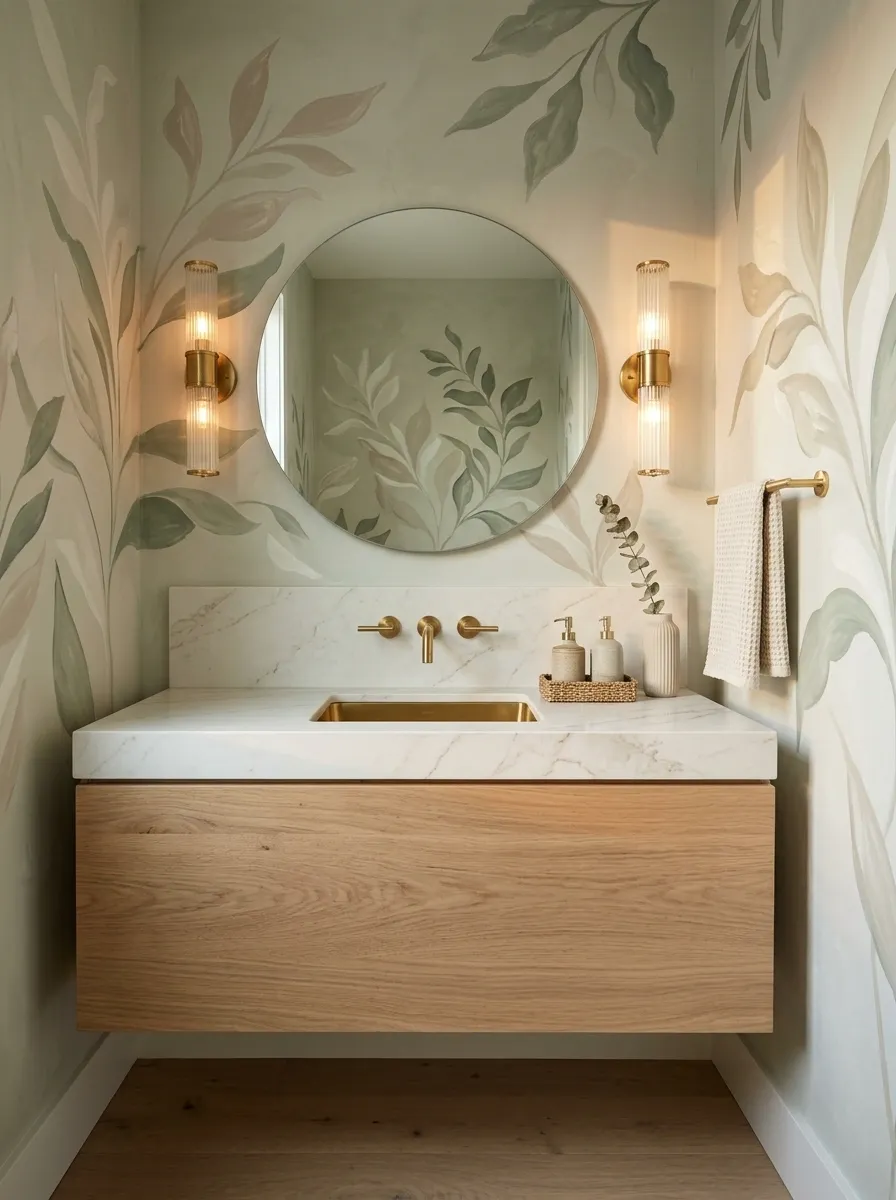
A mural can make the room feel personal without adding frame depth.
Use a suitable paint system and location, with the surface prepared appropriately. A loose landscape, broad botanical shape, or simple abstract can work well. Plan around the actual mirror, lights, and furniture so the main part of the design is not hidden behind the towel bar.
A Framed Wallpaper Fragment
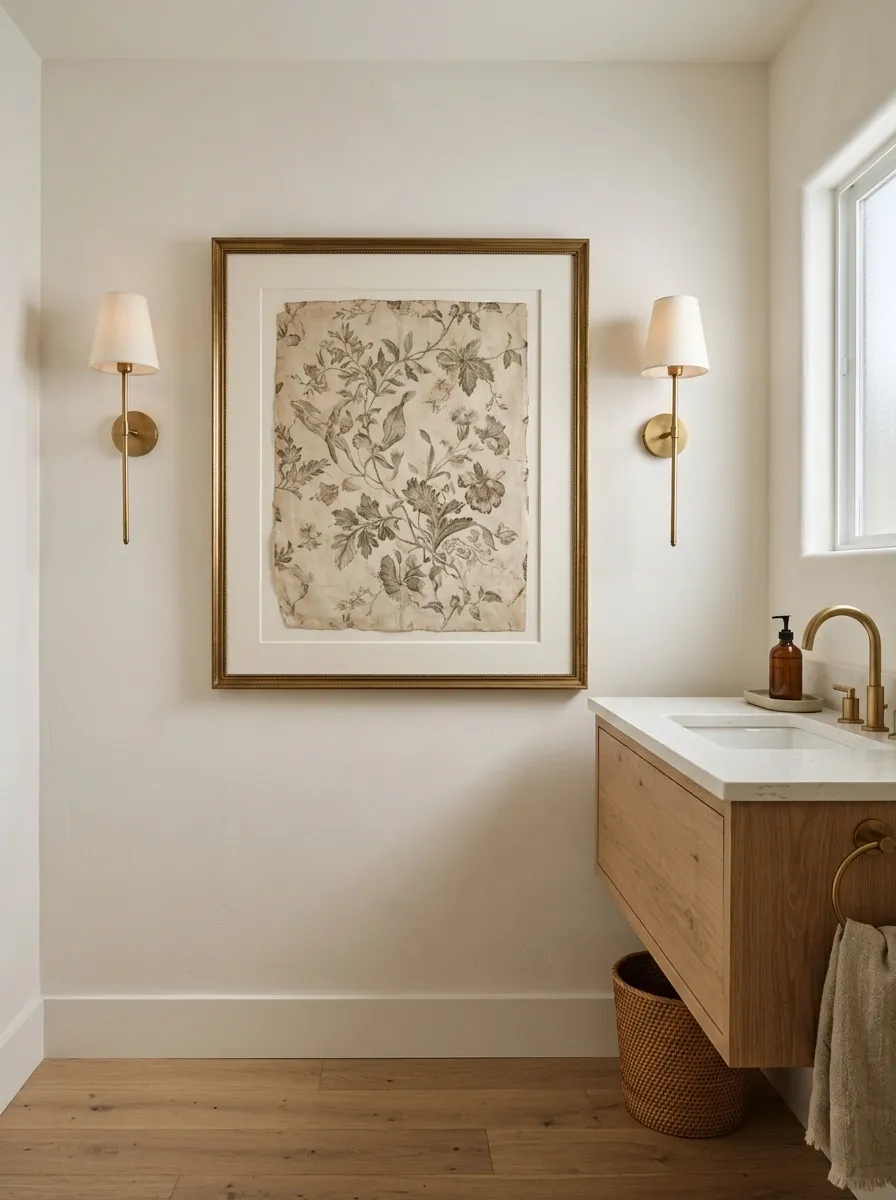
A wallpaper offcut or sample can become a substantial pattern panel rather than a leftover piece in a drawer.
Choose a crop that looks complete and a mounting approach suited to the room. Keep sensitive paper in a suitable dry location. The pattern can connect with another part of the house without requiring the whole bathroom to wear the same wallpaper.
Choose the crop deliberately: a motif cut awkwardly at every edge will still look like an offcut.
A Modest Picture Ledge in a Dry Area
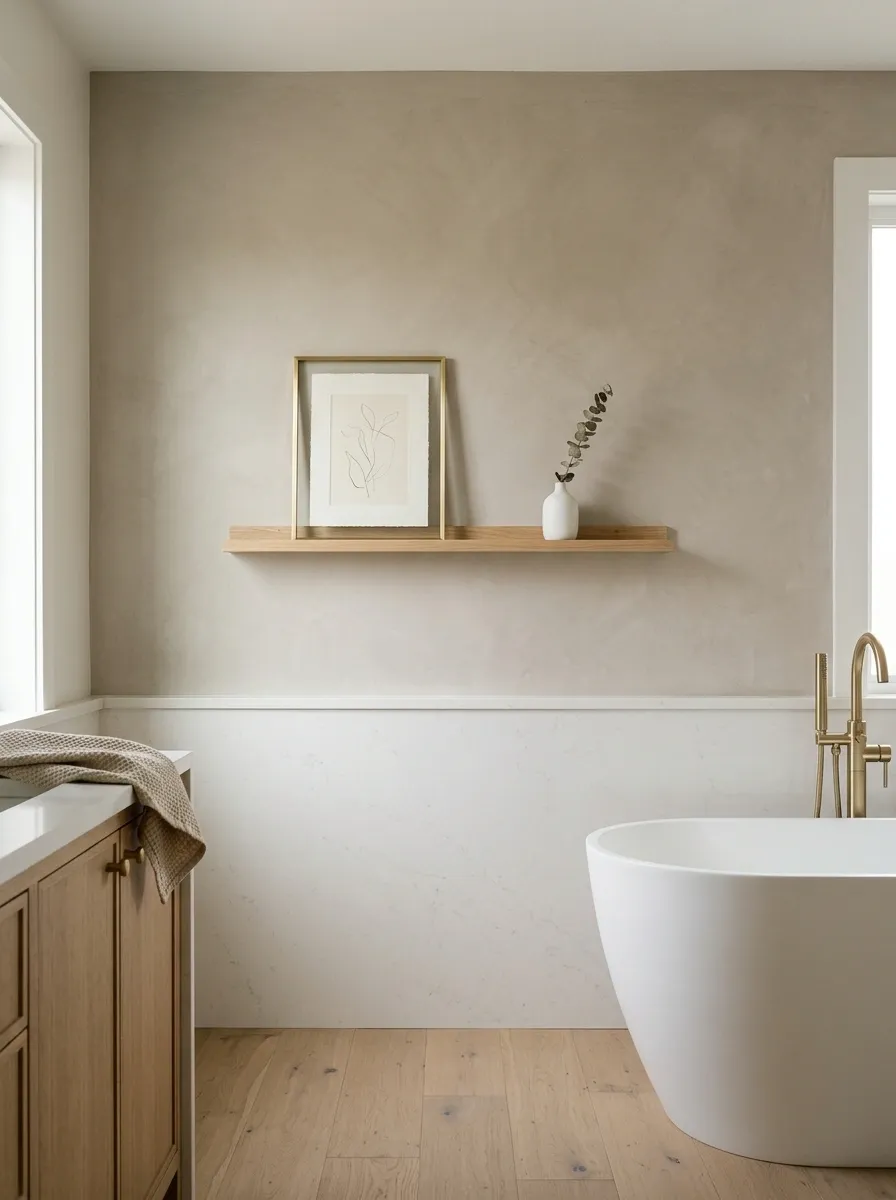
A properly installed ledge can allow a small, lightweight display where the location is suitable.
Keep the contents secure, restrained, and away from places where falling objects could strike someone. Avoid a crowded shelf over the bath or a narrow passage. The benefit is flexibility, not an invitation to balance several heavy frames and a vase above the basin.
A Vertical Arrangement on a Narrow Wall
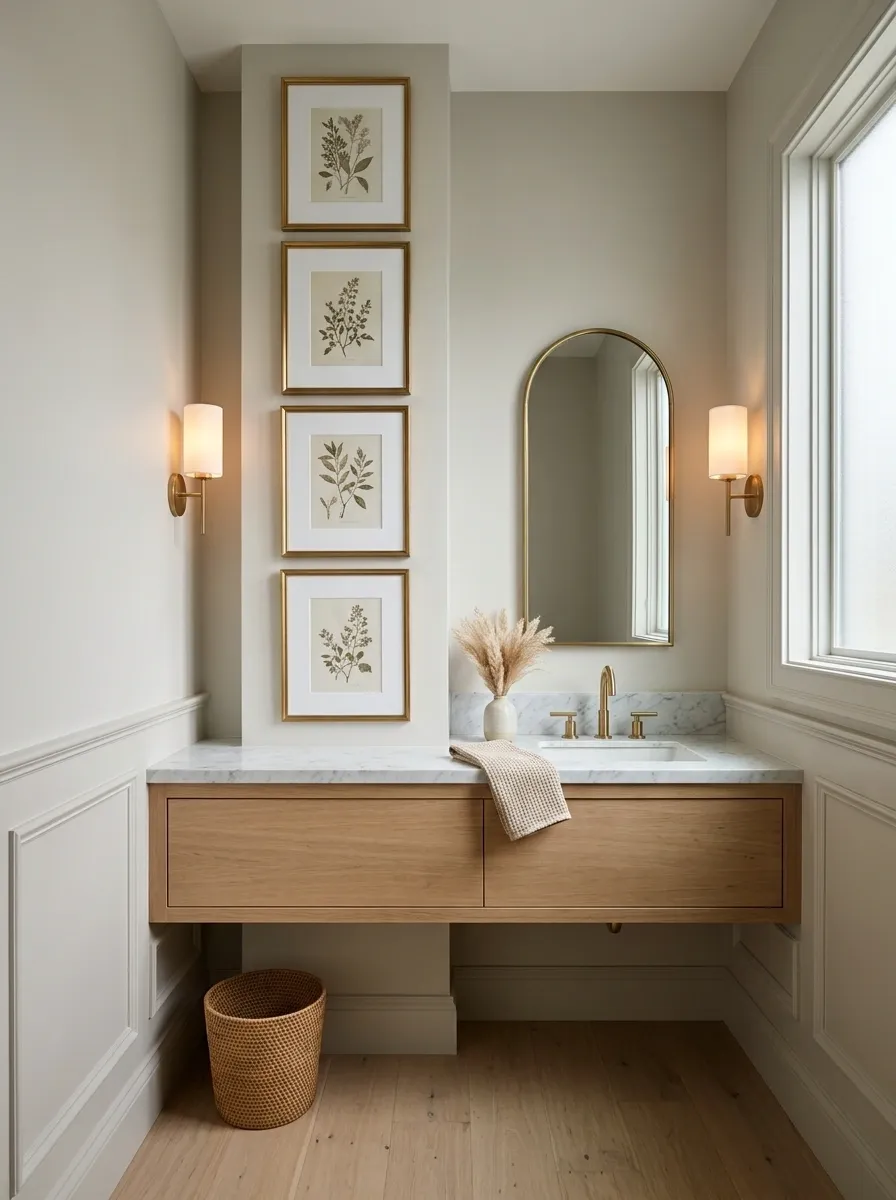
A narrow wall can become a defined art spot without needing a large picture.
Plan the group as one shape:
- Keep a deliberate outer alignment.
- Relate the subjects, colors, or frames.
- Leave useful space around fixtures.
Then stand at the normal approach. The arrangement should read from there, not only while you are directly in front of it.
| Connect the group through | Keep consistent |
|---|---|
| Subject or palette | The intended spacing |
| Related frame character | The outer visual alignment |
A Small Artwork Beside a Large Mirror
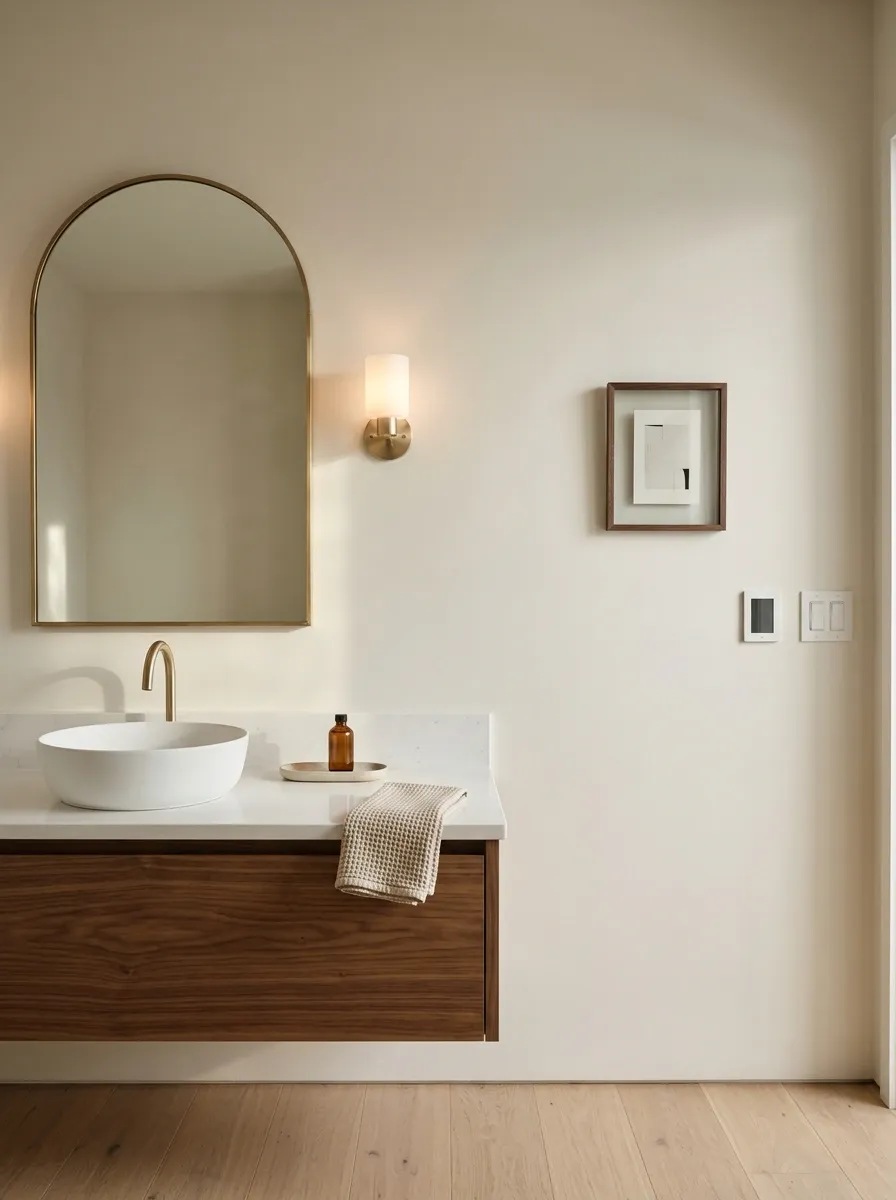
A small piece can feel intentional next to a larger mirror if it has enough wall around it.
Keep the art outside splash-prone positions and check the relationship with lights and switches. It does not have to match the mirror’s height. A little asymmetry can be more appealing than forcing every object into an identical grid.
Let the smaller piece have its own space
Check the complete wall, including lights and switches.
A Panoramic Piece Over a Broad Dry Wall
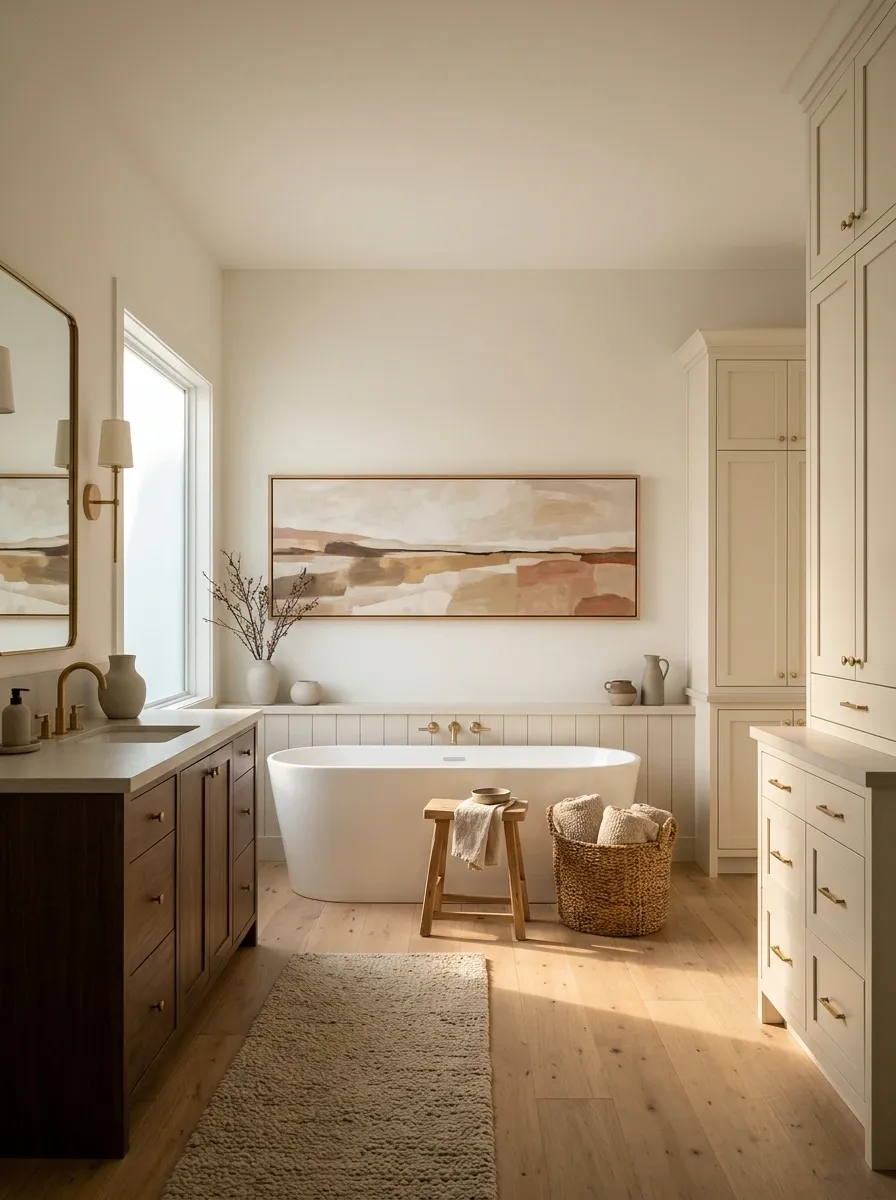
A wide artwork can suit the horizontal proportions of a larger bathroom wall.
Keep it related to the furniture or architectural feature below rather than centering it automatically on the entire wall. Choose a simple image with a strong horizon or broad shapes. Fine details often disappear in a high, wide placement.
Check from the doorway: the main composition should still be readable at a glance.
A Timber Relief With a Clear Silhouette
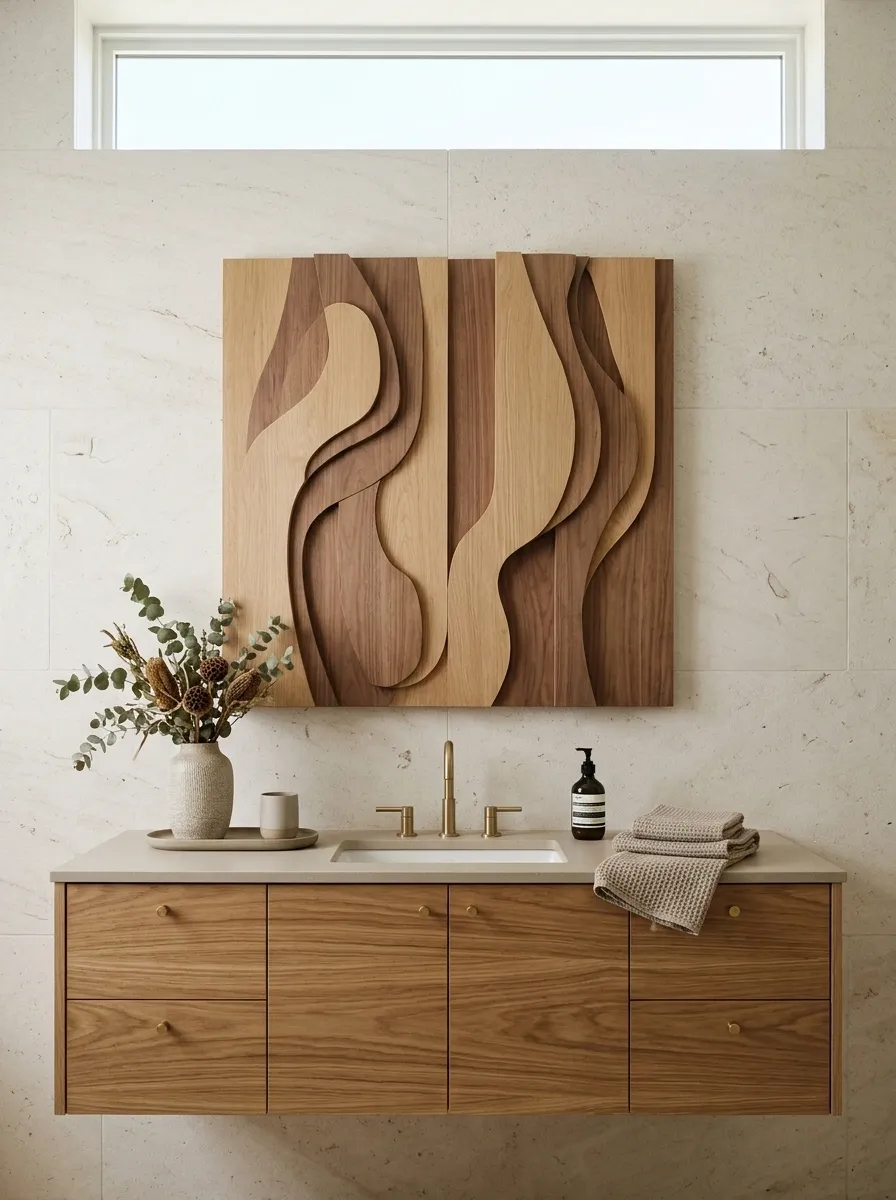
A suitable wooden relief can add warmth and shadow where a flat print feels too slight.
Choose the material, finish, and location for the bathroom conditions, with proper secure mounting. Keep it dry and easy to inspect. The shape should be strong enough that you do not need several additional wooden accessories to justify it.
Warmth through one substantial shape
Keep the piece in an appropriate dry position.
Metal Wall Art With an Appropriate Finish
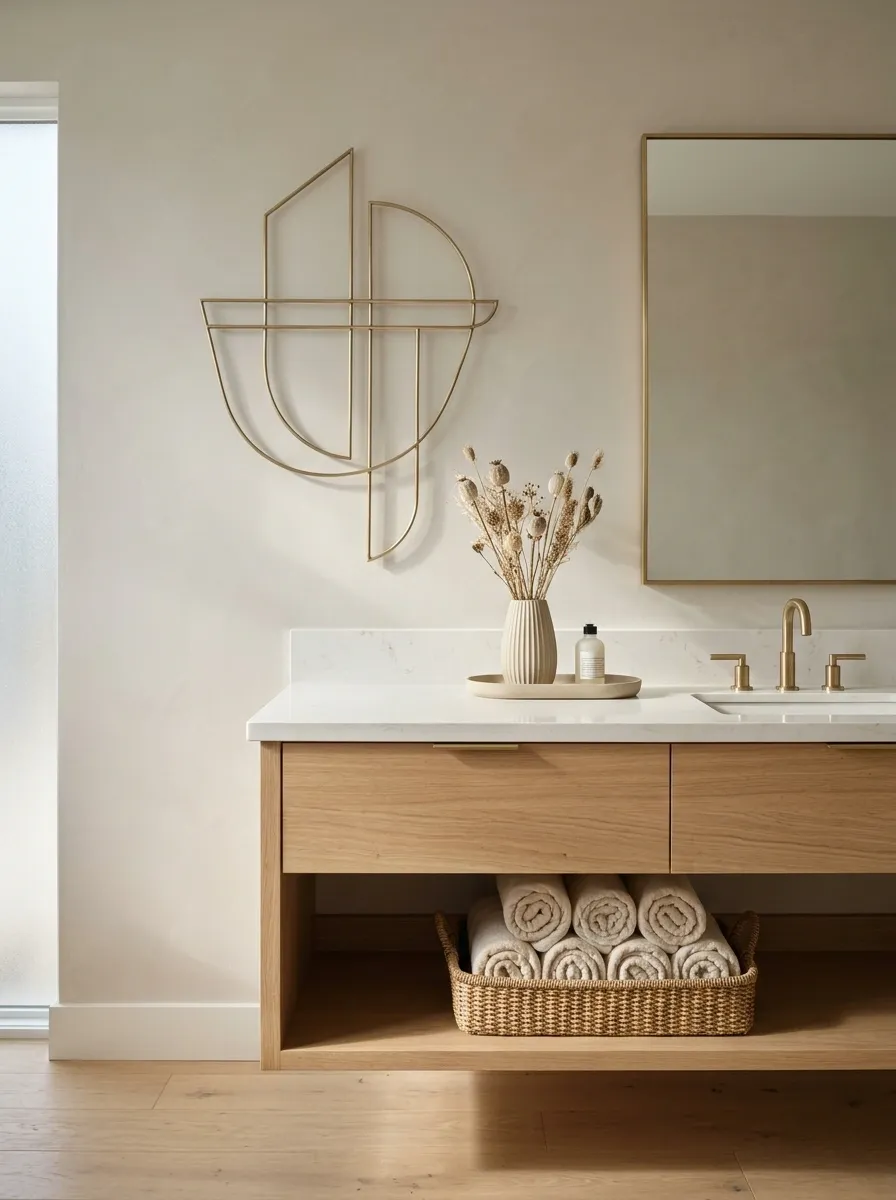
A metal artwork can introduce a sharper line or a delicate open shape.
Check its suitability for the environment and maintain it according to the maker’s guidance. Avoid assuming every finish will behave well in humidity. Relate the metal to the room’s hardware loosely; an exact match is less important than a coherent visual weight.
| A useful visual choice | A useful practical check |
|---|---|
| Open shape against a plain wall | Suitable finish and backing |
| Restrained scale | Secure mounting |
A Color Study That Echoes the Vanity
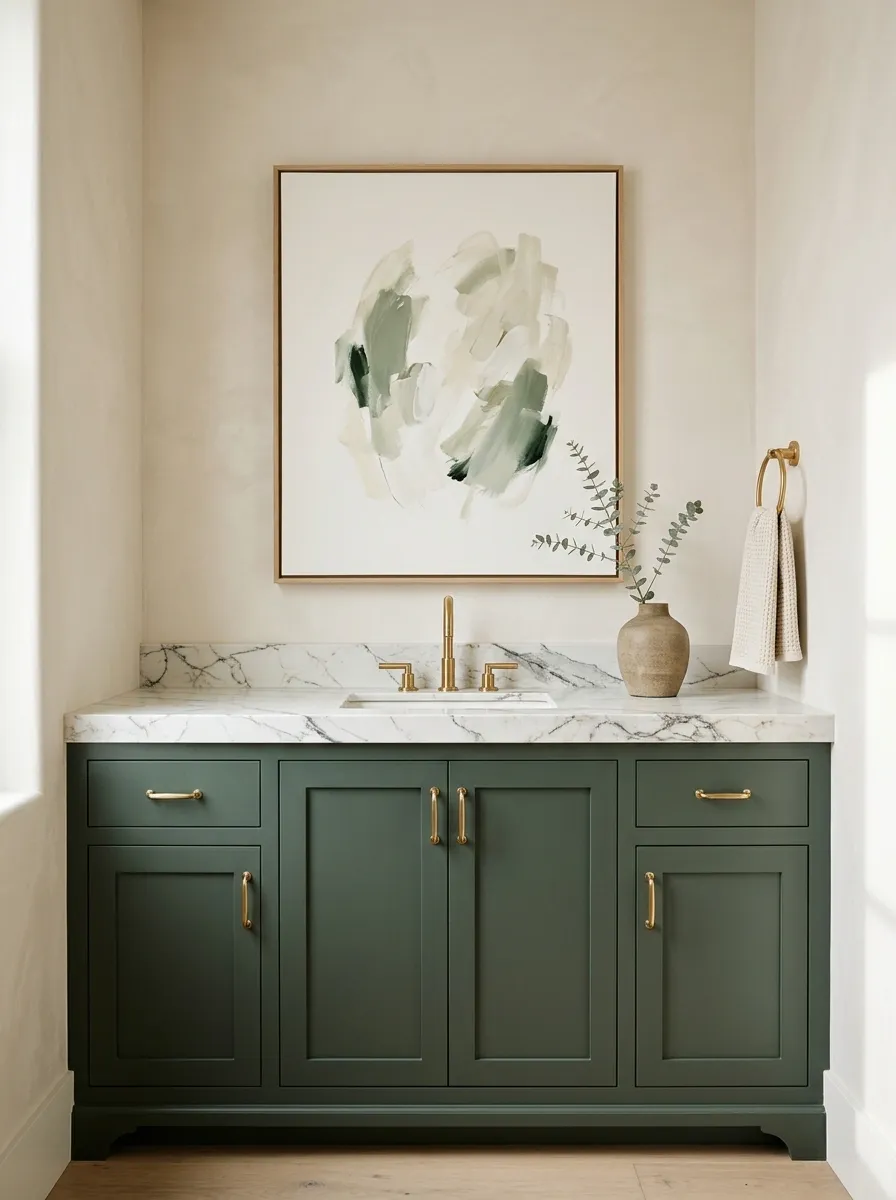
An abstract color study can connect a strongly colored vanity with the rest of the room.
Use a related tone in the art without demanding a perfect match. Let the image include quiet space so the color can register. The wall piece can help the cabinet feel integrated rather than look like a sample chart hung as evidence.
Personal Photographs as Thoughtful Reproductions
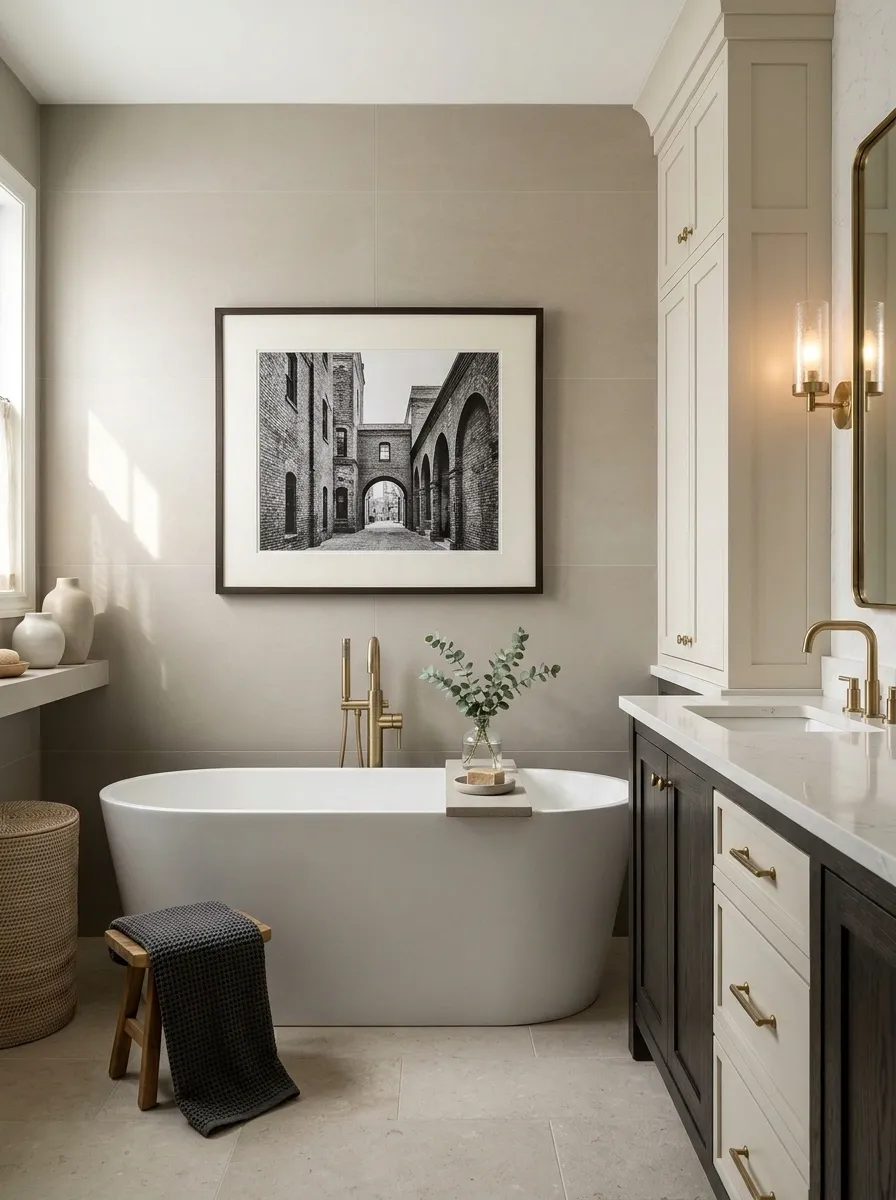
A photograph from a trip or a place you know can make the room feel connected to your life.
Use a suitable reproduction and keep the original or important file safely elsewhere. Choose an image whose composition works at the available size. A meaningful landscape or architectural detail can be more satisfying than buying a generic print solely because the colors match the towels.
Choose for meaning and composition, then let the frame connect it to the room.
Typography Without the Bathroom Joke
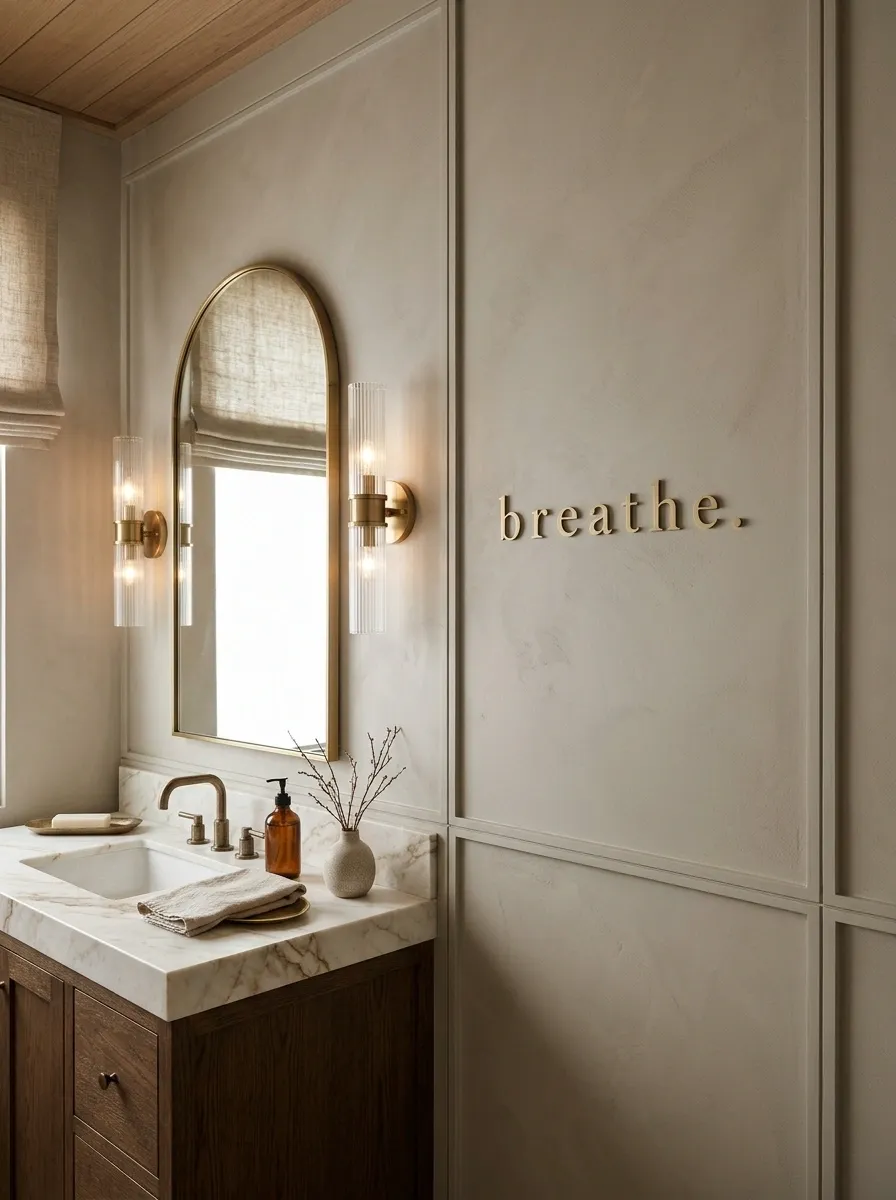
Lettering can work if the words matter to you and the design is strong.
Keep the text brief enough to read and choose a tone that suits the home. The room does not need instructions about washing, bathing, or breathing. A favorite place name, a meaningful line, or an interesting typographic composition can be a less predictable choice.
Let the lettering be a design choice
Use readable scale rather than a paragraph of decorative text.
An Asymmetrical Pair With One Shared Link
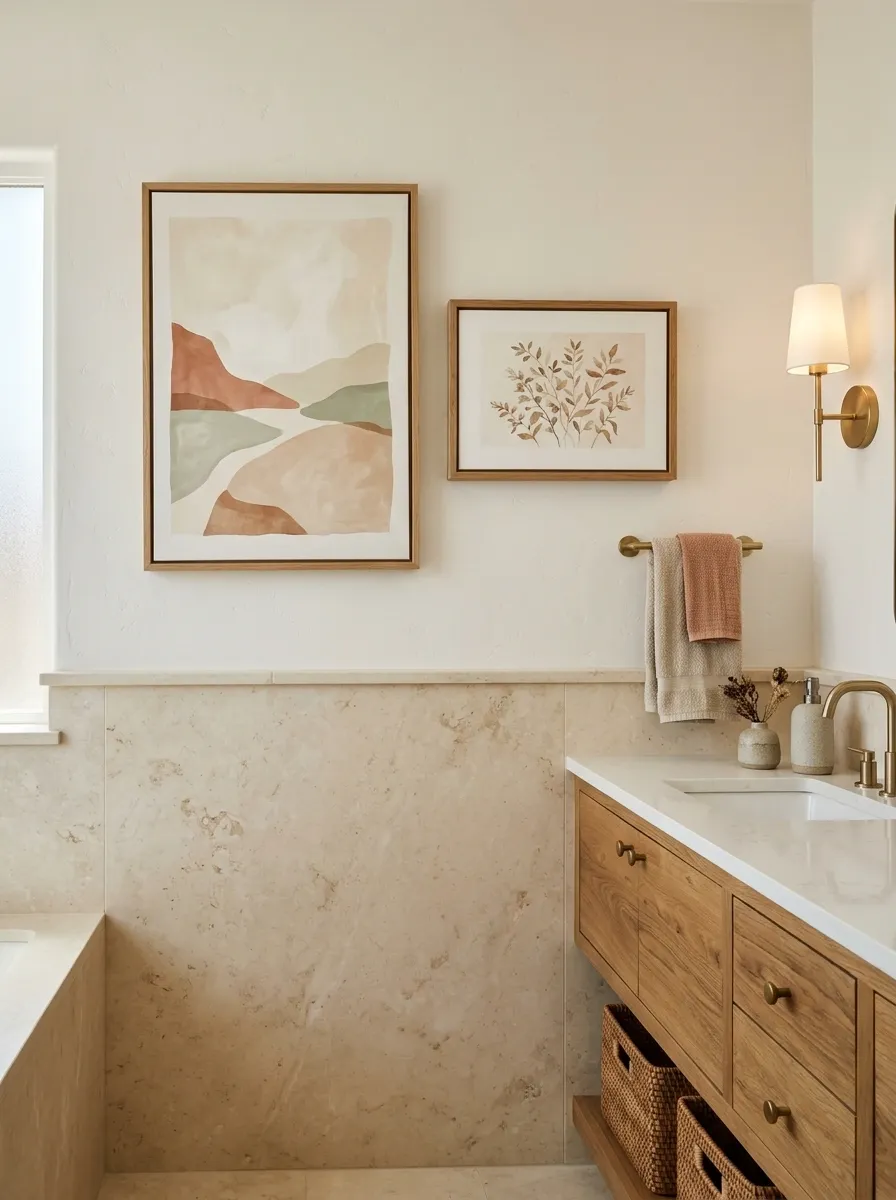
Two artworks can differ in size while sharing a palette, subject, or frame character.
Plan the pair with paper templates so the overall group feels intentional. Keep enough space around nearby fixtures. The arrangement does not need to mirror the basin or towel bar exactly; the room can tolerate a little personality without losing its order.
| Share one thing | Allow another to differ |
|---|---|
| Palette or subject | Size |
| Frame character | Orientation |
An Artwork Chosen for Its Mirror Reflection
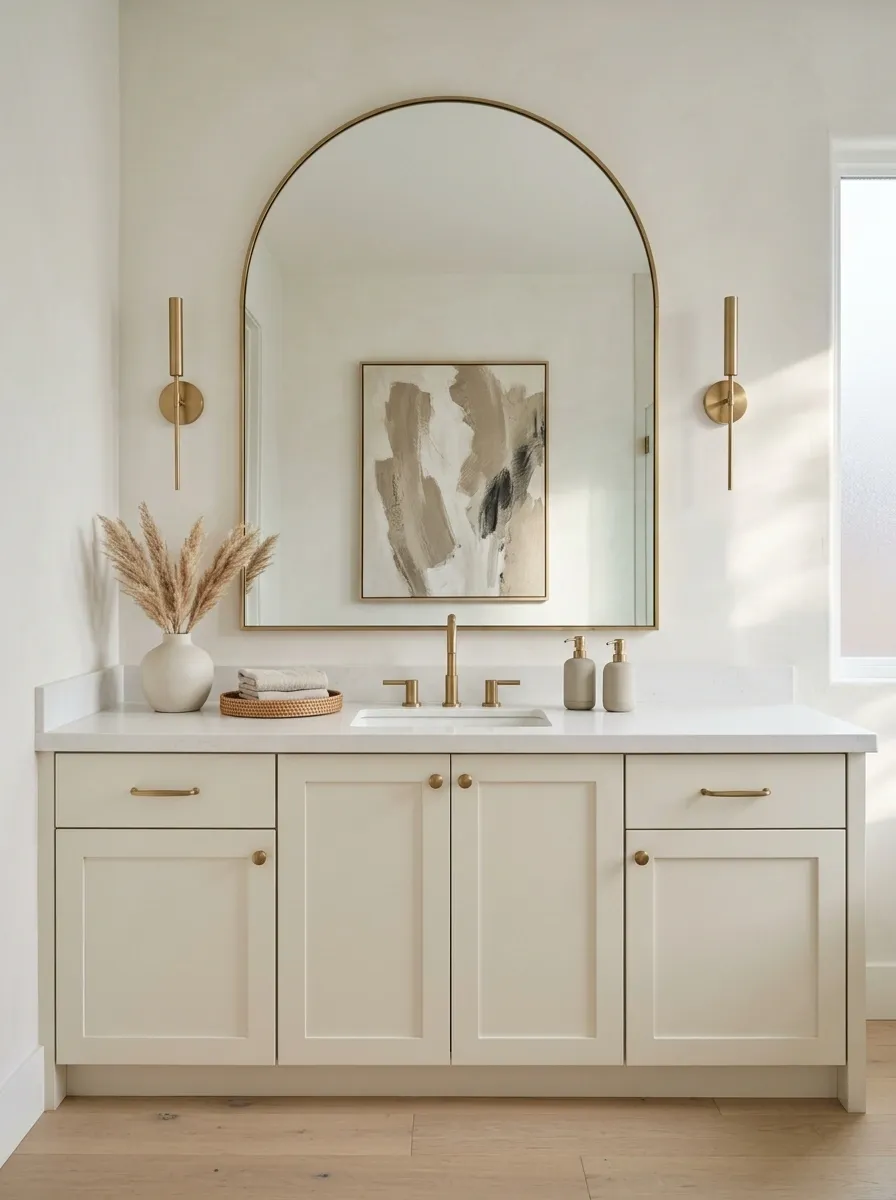
A piece on the opposite dry wall may be visible in the mirror as well as directly.
Check both views before mounting. Avoid glare, awkward cropping, or a reflected position that makes the wall feel busier. This can give one artwork more presence without adding another object beside the basin.
A Local Map or Place-Based Drawing
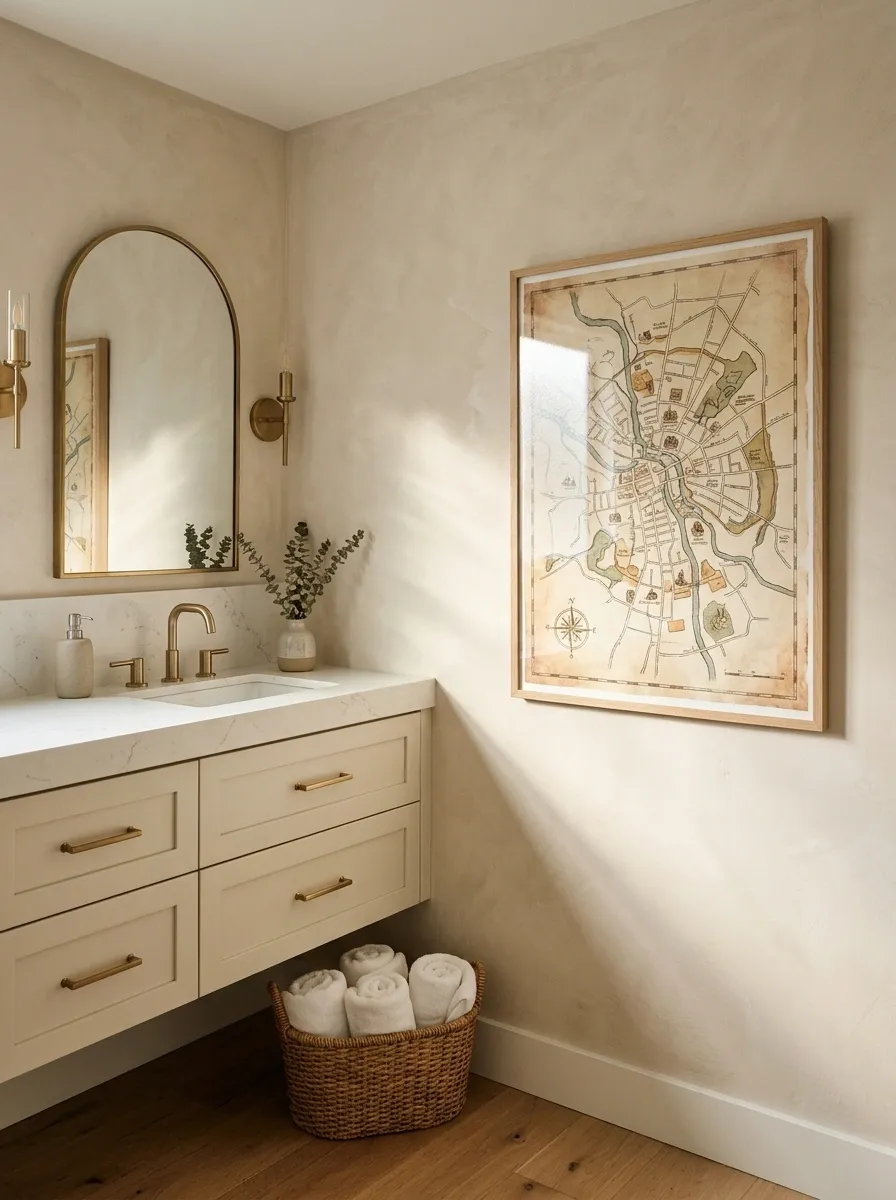
A map, street drawing, or illustration of a familiar place can make the bathroom feel less generic.
Choose a readable level of detail and suitable reproduction. A very dense map placed high on the wall may become a beige rectangle rather than a meaningful image. Keep the scale and viewing distance in mind, then let the subject provide the personal connection.
Good starting point: a place you actually know, not a destination chosen only for its fashionable typography.
A Sculptural Mirror as the Main Wall Piece

If the bathroom needs a mirror anyway, a distinctive but suitable shape can do some of the decorative work.
Choose it around practical visibility, scale, support, and the room’s conditions. Keep lighting and surrounding art restrained so the shape remains clear. You may find the wall needs fewer separate decorations once the mirror has a convincing presence.
The useful object can carry the visual interest
Choose shape without sacrificing everyday visibility.
A Small Rotating Art Spot
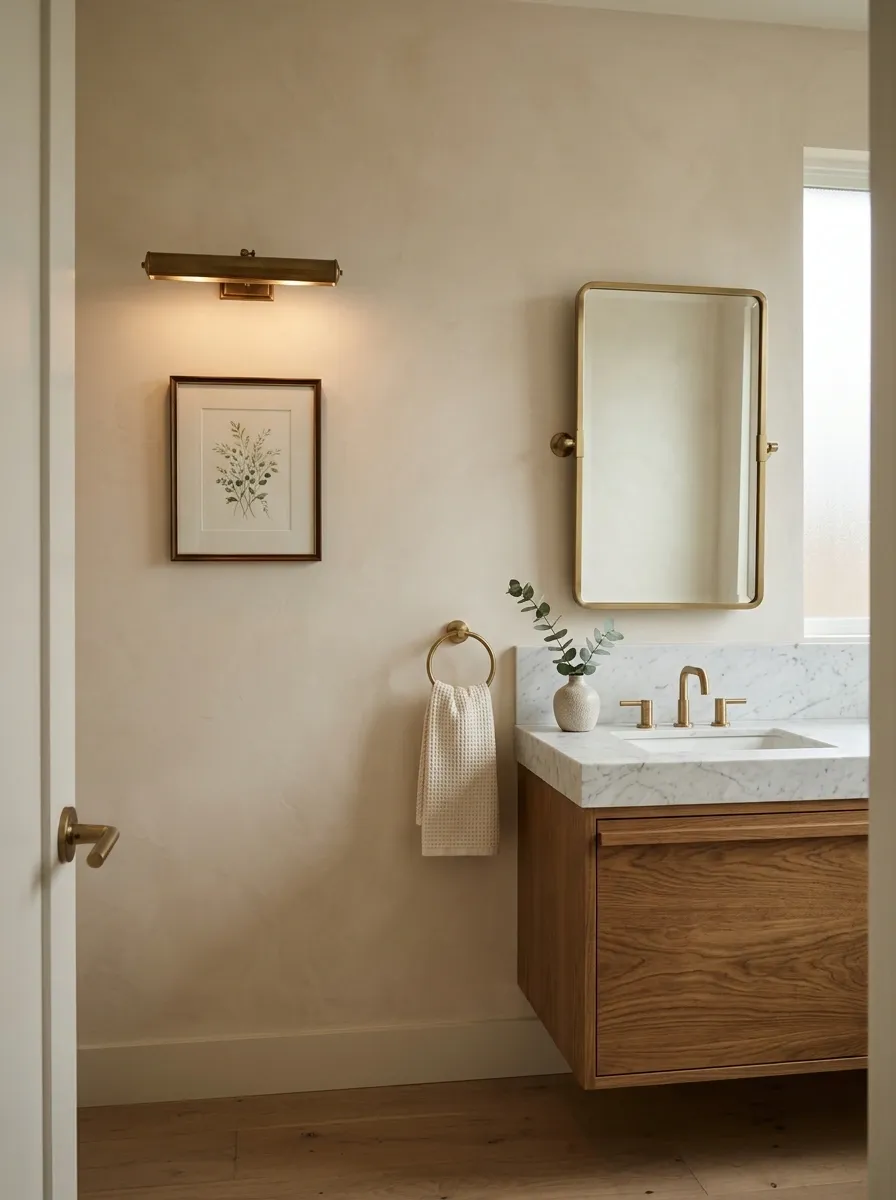
Designate one suitable dry location for changing an inexpensive, appropriately protected piece occasionally.
Keep the mounting secure and the process simple. You can refresh the room through a different color, subject, or personal photograph without changing the fixed finishes. The point is flexibility, not keeping a permanent supply of art objects stacked beside the toilet.
Stop while the wall is clear: one well-chosen piece can make the room feel finished.
Sit, stand at the mirror, and look from the doorway. Those ordinary viewpoints tell you more than arranging the wall from directly in front of it. Let the art belong to the room people actually use.