
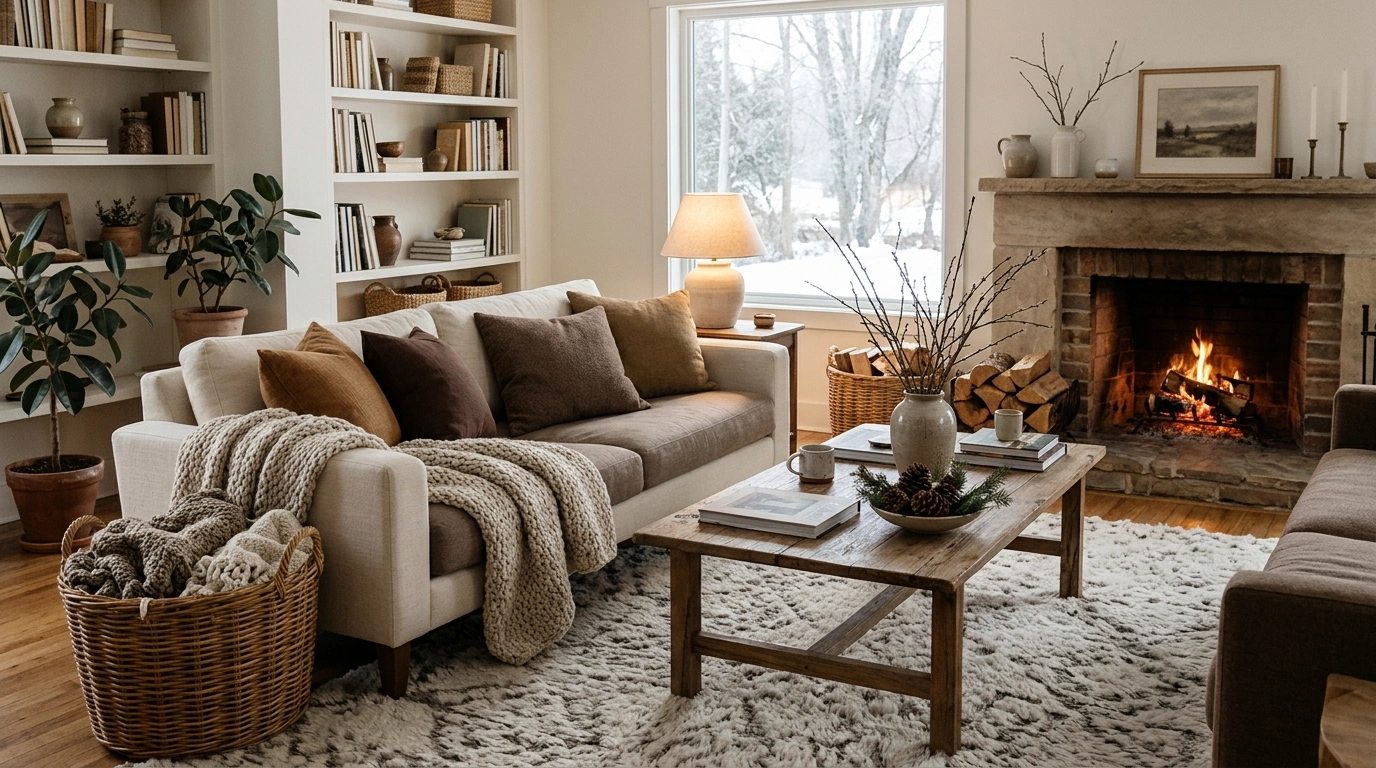
Move the lamp closer. Give the person at the end of the sofa somewhere to put a cup. Put a blanket where someone can actually reach it.
A winter living room becomes inviting through those small conveniences as much as through fabric and color. The room should support reading, talking, watching something, or doing very little with admirable commitment.
Work with the furniture you have before buying a seasonal collection. Keep heating, ventilation, doors, and walking routes clear, and use lighting and electrical equipment according to their requirements. Warm-looking decor cannot substitute for a room that functions comfortably.
Winter Living Room Ideas
Embrace the Snowy View
Position your seating to make the absolute most of a breathtaking winter landscape outside your window.
Flank a glowing modern fireplace with a cozy sofa and a plush pouf to create an irresistible invitation for long, freezing evenings.
Keep a soft throw casually tossed across cushions so you can instantly bundle up while watching the snow fall.
Give One End of the Sofa a Proper Reading Setup
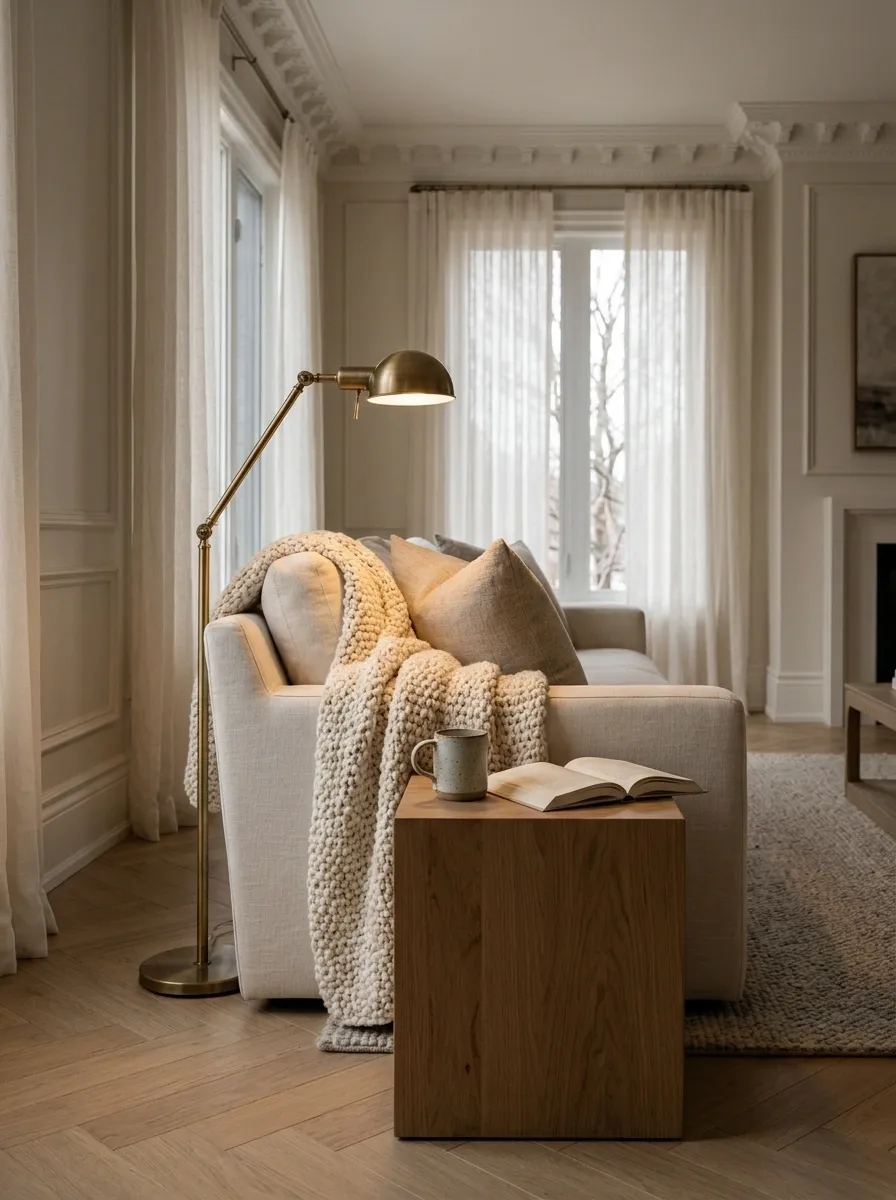
A sofa corner becomes more useful with a reachable light and a stable surface for a book or drink.
Test the setup while seated. The lamp control should be easy to reach and the light comfortable on the page. A table that looks perfectly placed from the doorway may be just far enough away to make every cup retrieval an abdominal exercise.
Lean Into Moody Elegance
Dark, moody wall panels instantly transform a spacious living room into a sophisticated winter sanctuary.
Layer warm ambient lighting through chic chandeliers and glowing candles to make rich, dark interiors feel remarkably welcoming.
Anchor the seating arrangement around a crackling fireplace and let textured throws add tactile warmth to deep-toned armchairs.
Use the Best Daylight for a Small Sitting Place
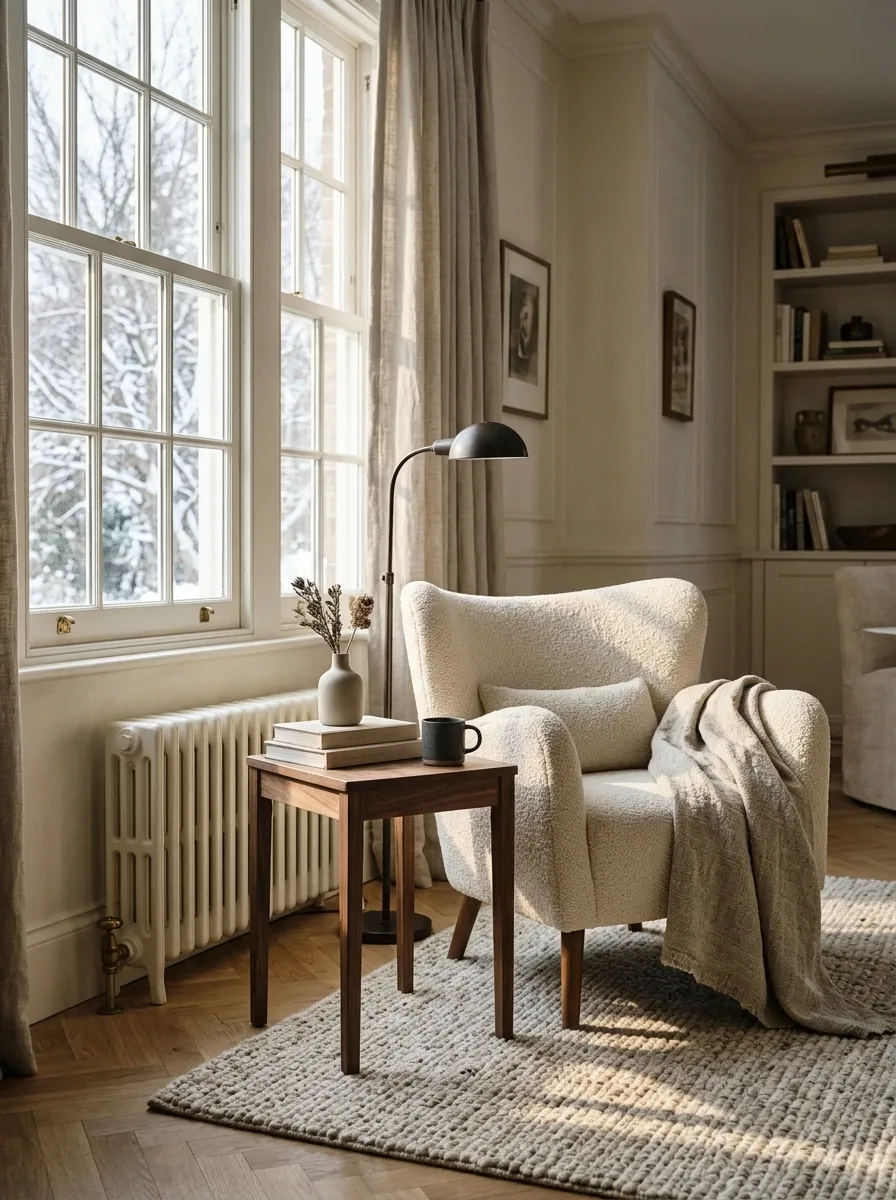
If winter days bring a useful patch of light, arrange a suitable chair where you can enjoy it.
Check glare, window operation, heat sources, and the route through the room. The chair does not have to face the television. A small daytime seat can give the living room another purpose without changing the main arrangement.
| Check during the day | Check after dark |
|---|---|
| Useful light and view | Privacy and reflections |
| Comfortable position | Nearby lighting |
Anchor a Cozy Hearth
A minimalist black fireplace commands attention and sets a wonderfully cozy tone for the entire room.
Cluster glowing pillar candles and textured botanical stems on a dark coffee table to enhance the fireside ambiance.
Pair a plush textured rug with warm-toned seating to make long winter nights by the fire completely effortless and inviting.
Add a Suitable Removable Sofa Cover
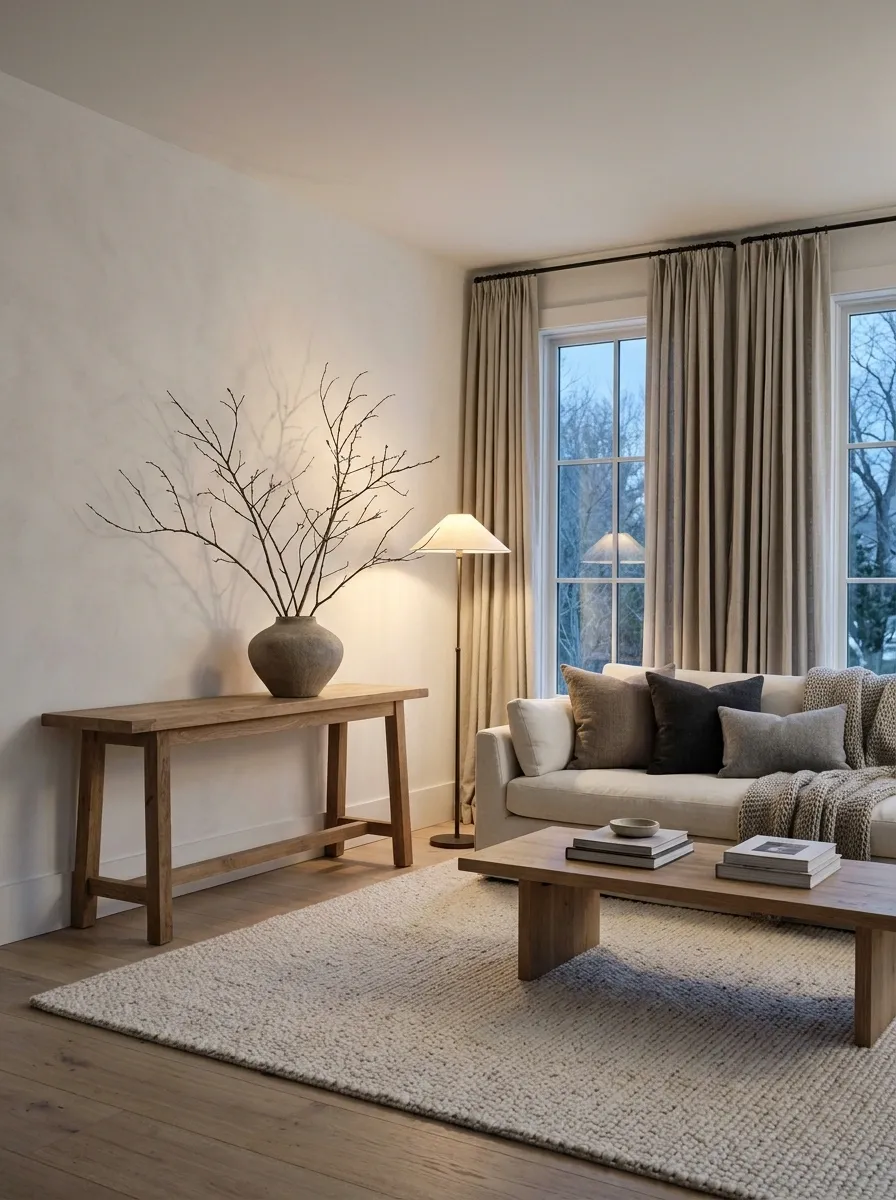
A well-fitted cover can change the visual texture of a suitable sofa without replacing it.
Choose it around fit, care, and the furniture’s construction. Keep it secure and avoid fabric trailing into the walking route. A textured warm neutral can soften the room, but a loose sheet that needs rearranging whenever someone sits down is more chore than winter upgrade.
Use the cover for a real purpose: protecting or refreshing suitable upholstery, not disguising a sofa that needs repair.
Play With Rich Tones
Deep burgundy walls bring an unexpected yet stunning richness to a modern living room space.
Ground the colorful backdrop with a natural wood media console and a statement tripod floor lamp for balanced illumination.
Layer a patterned red rug beneath a sleek black coffee table to tie the warm, welcoming color palette together.
Keep One Generous Throw Within Reach
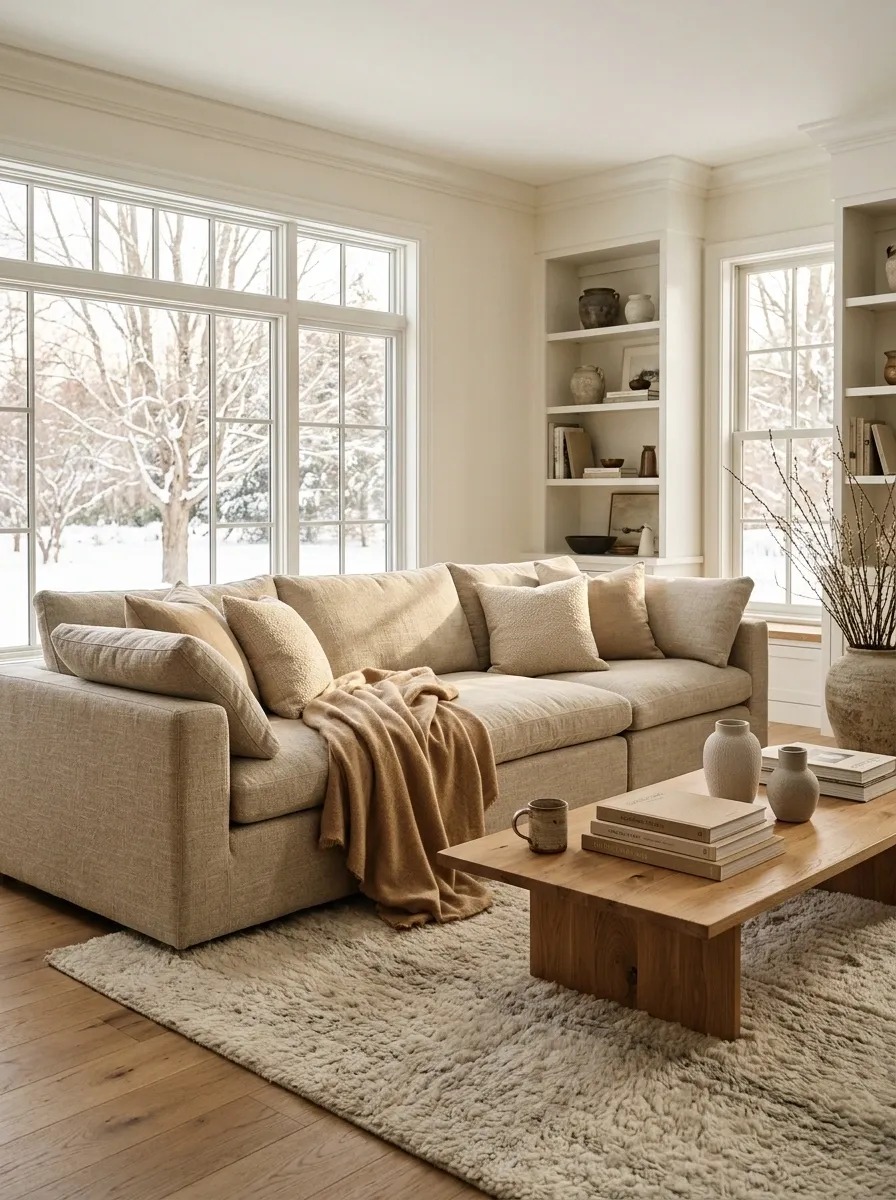
A useful throw should be large enough for how you use it and simple enough to care for.
Choose the material around comfort and household needs, then give it a clear place on the sofa or nearby storage. It does not have to be draped with mathematical precision. A blanket allowed to perform its actual job tends to make the room feel more inviting than an untouched decorative arrangement.
Reduce the Cushion Crowd
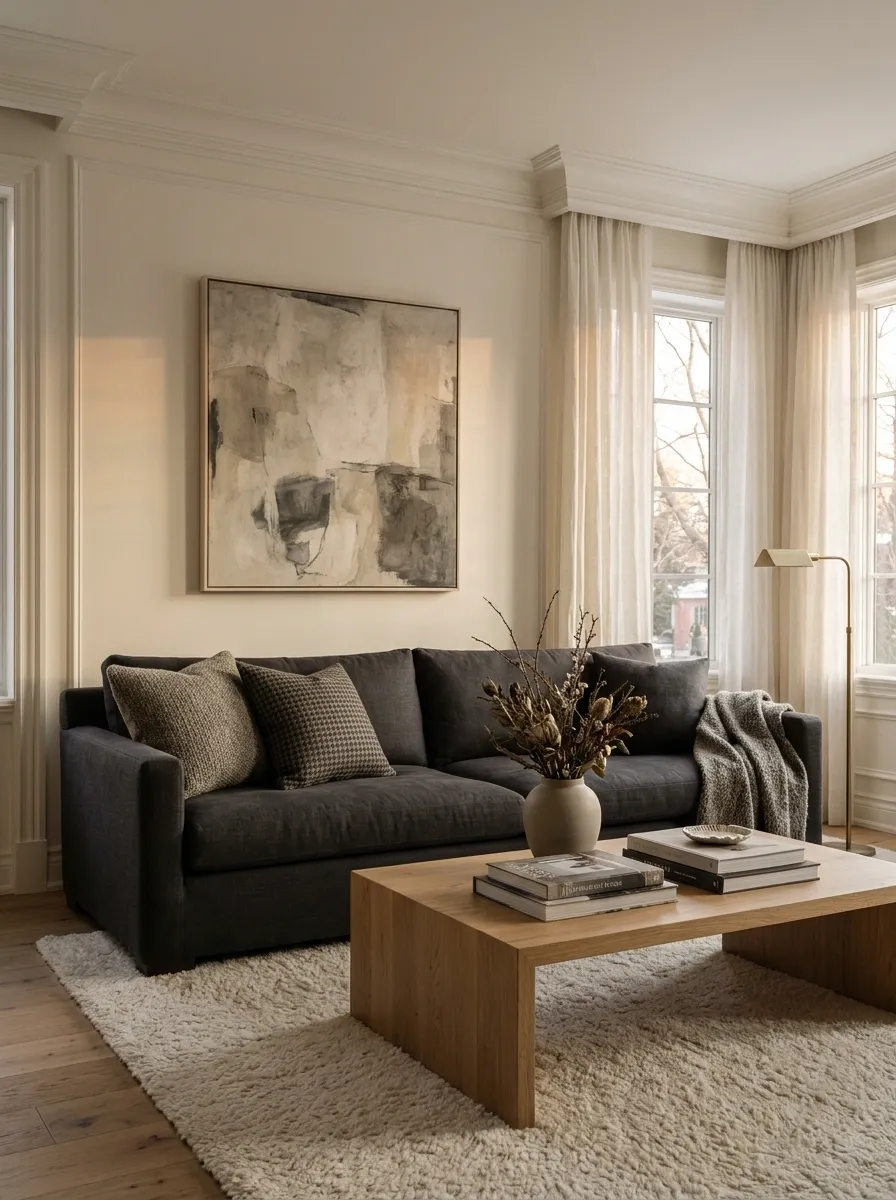
Sit down before adding another cushion.
Which ones improve the seat? Keep those and store the extras. Winter texture can come from a few substantial pieces: smooth fabric, a visible weave, perhaps a restrained pattern.
Leave room for a person. The styling should not need relocating to the floor before every conversation.
Comfort test: sit down normally, with the cushions in place, before deciding the arrangement is finished.
Give Existing Curtains More Presence

A suitable lining or a more substantial fabric treatment can change the window’s visual weight where the room needs it.
Plan privacy, operation, and the available space. Keep fabric clear of heaters and required airflow. The color can stay light if the texture supplies enough depth; winter does not require every window to become a dark fabric wall.
Use Artwork With a Deeper Seasonal Palette
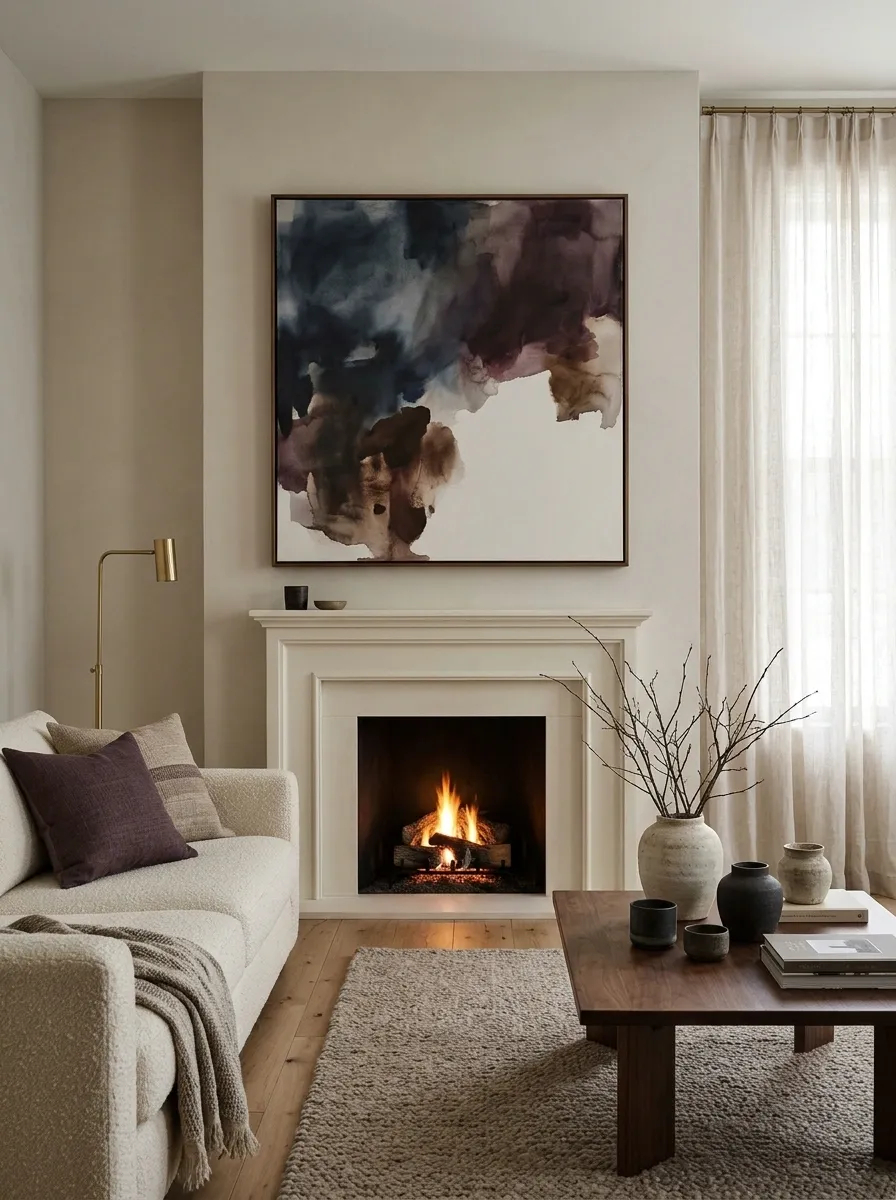
A piece with brown, muted green, plum, or smoky blue can shift the room’s mood without depicting winter literally.
Choose art you enjoy beyond the season and connect one tone to an existing fabric or object. Keep the relationship loose enough that the room still feels personal. You do not need to replace everything on the wall whenever the weather changes.
| Let the art add | Keep around it |
|---|---|
| Depth and a personal subject | Enough quiet wall |
| A link to the textiles | A restrained accessory group |
Build an Evening Lighting Arrangement
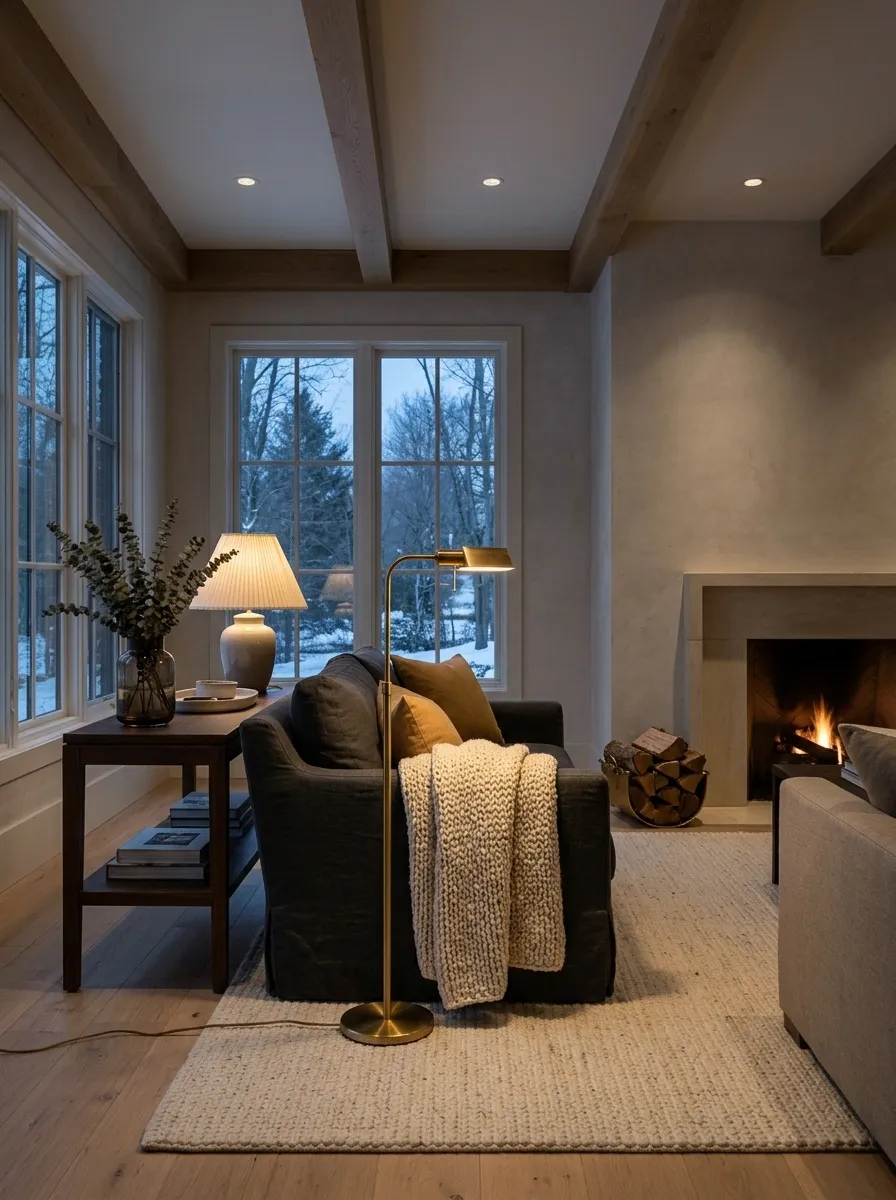
Use appropriate lighting for different jobs: general visibility, reading, and a softer room atmosphere.
Where compatible controls allow, make the layers easy to operate separately. Check the light from the seats rather than only while standing. A room lit entirely from one overhead source may feel less flexible than one with a useful lamp in the place someone wants to sit.
Remove Glare From the Television View
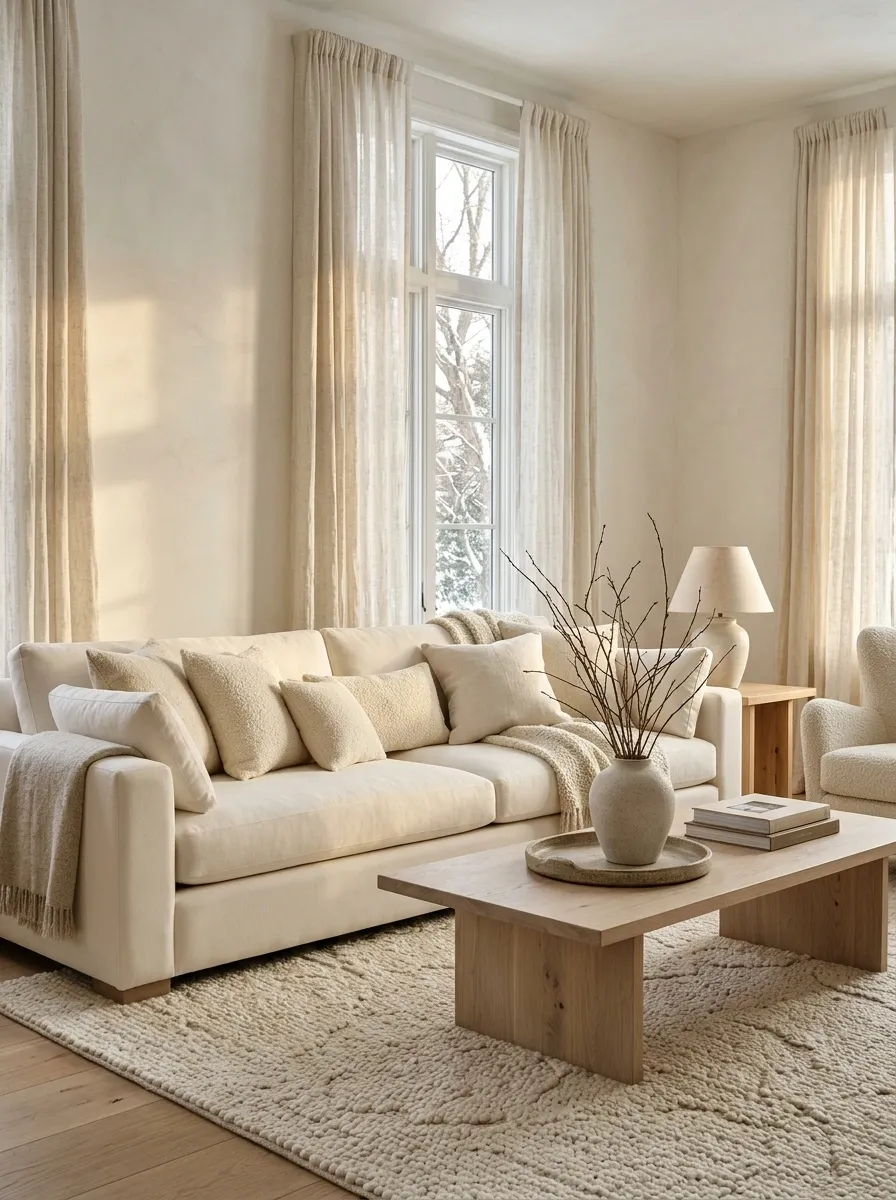
Look at the screen from the usual seats with the evening lights on.
Move suitable lamps or adjust the arrangement so reflections do not dominate the view. Keep adequate light for movement and avoid creating trailing cords during the change. The goal is a more comfortable setup, not turning the room into a dark theater with an unexpectedly located coffee table.
Check every regular seat: the reflection irritating one person may be invisible from the other end of the sofa.
Add a Footstool Only Where It Fits the Route
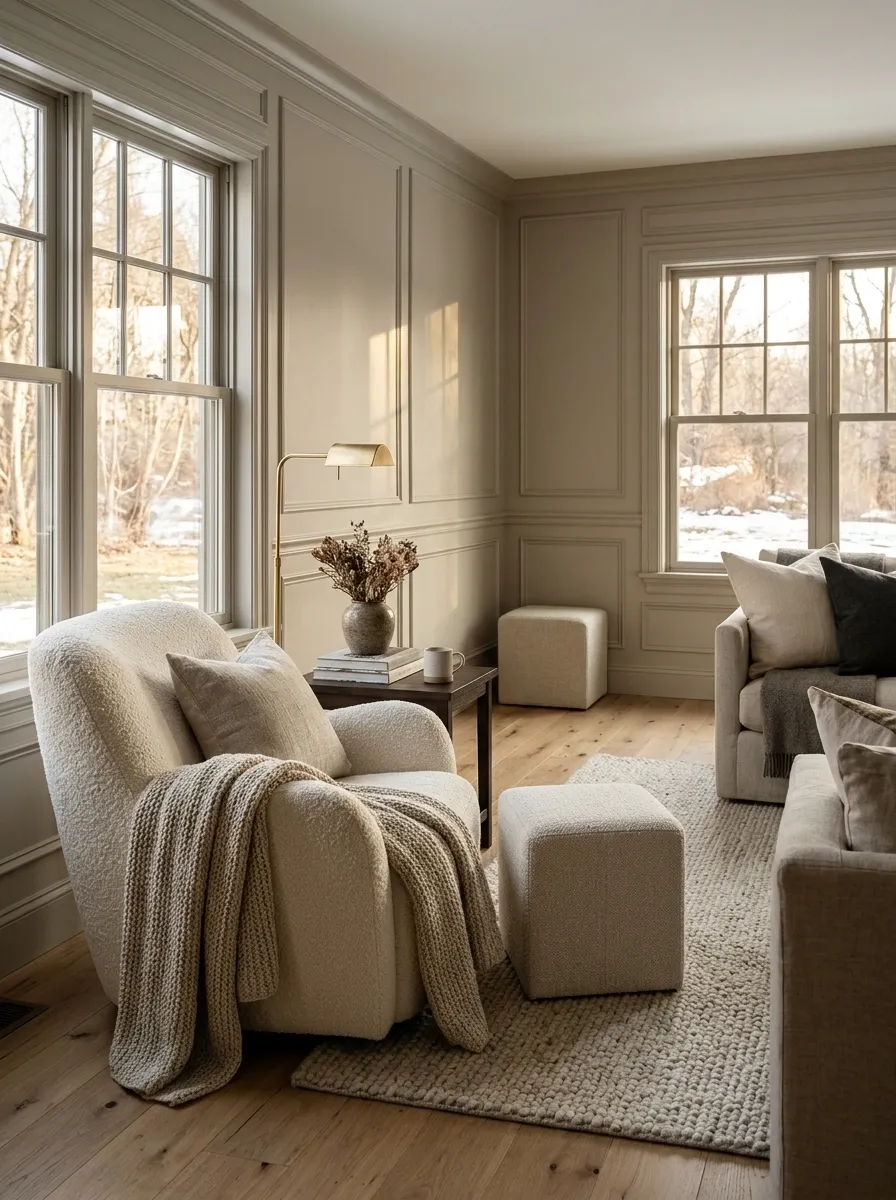
A suitable footstool can make an existing chair more comfortable.
Choose a stable piece with a manageable footprint and check how it works when the seat is occupied. Do not place it in the main passage just because it looks balanced in front of the chair. If it needs to move, give it a proper resting position elsewhere.
Give a Soft Ottoman a Practical Tray
A suitable stable tray can provide a useful landing surface on an ottoman when the furniture and setup allow it.
Keep the tray manageable and avoid balancing hot drinks on an unstable cushion. Leave the ottoman’s intended use clear; it should not become permanently unavailable beneath a collection of ornaments. The practical improvement is somewhere reliable to put things, not another arrangement to protect.
Test stability before use, especially where children or pets may disturb the surface.
Make a Small Winter Drinks Spot
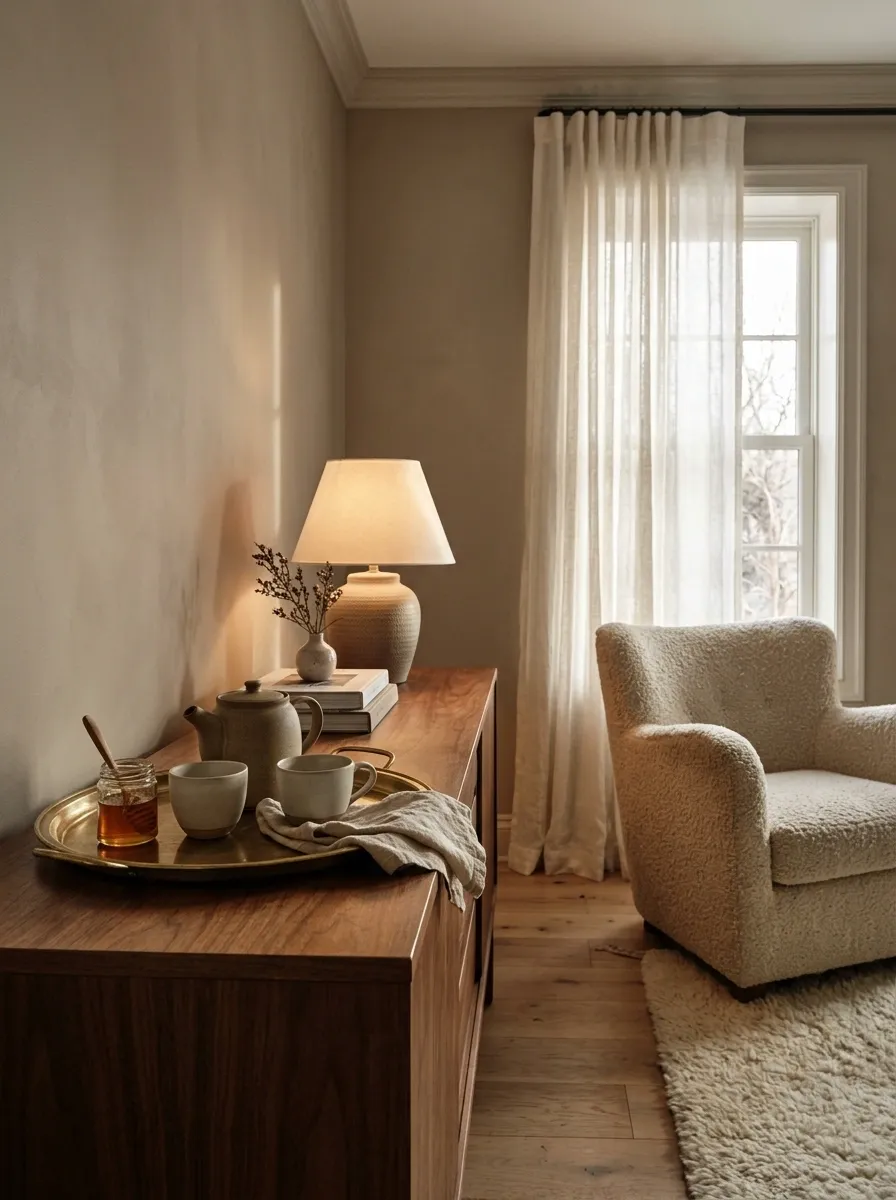
A sideboard or suitable table can hold the cups and supplies used for an evening drink.
Keep the arrangement compact and safe, with appliances used only where appropriate. You may simply need a clear tray that comes out when wanted. The room does not need a permanent cafe counter to make a cup of tea feel considered.
Store Blankets Near the People Who Use Them
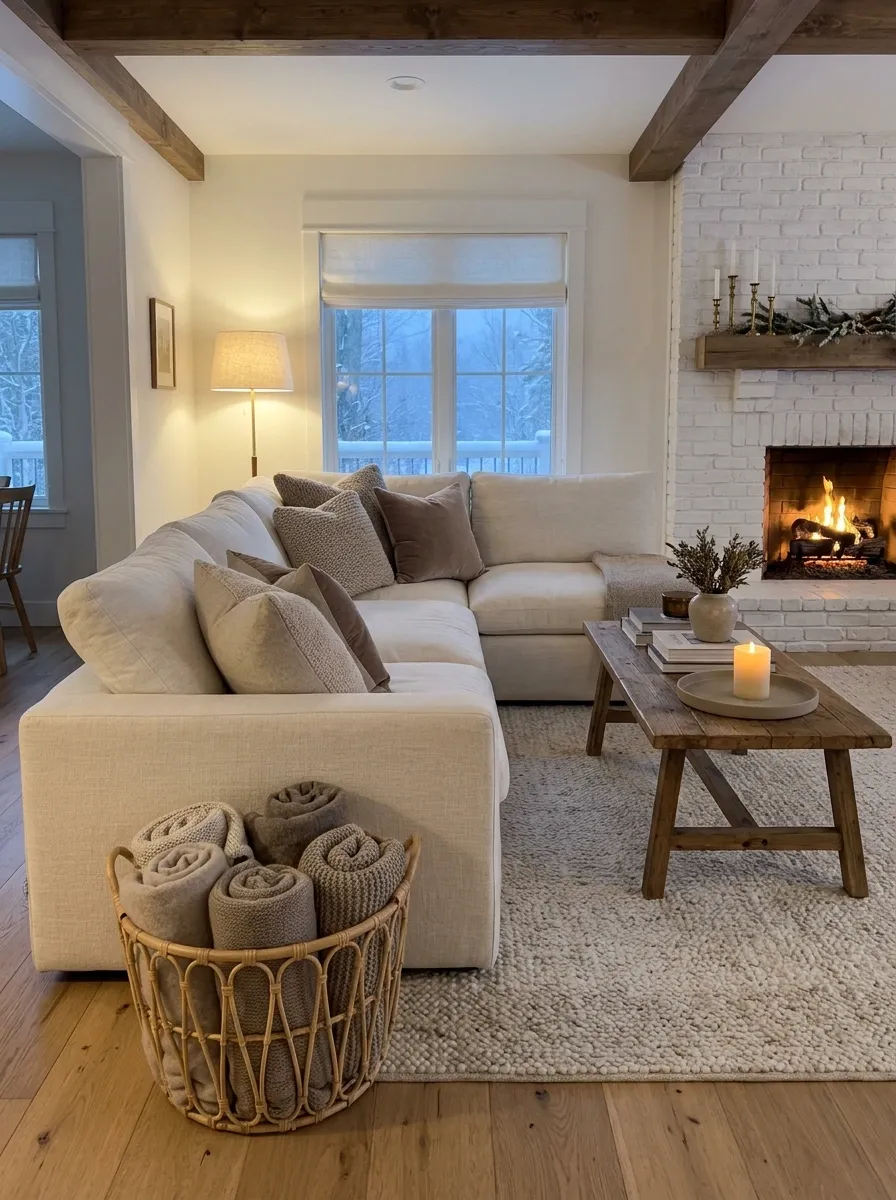
A suitable basket, cabinet, or storage stool can hold clean, dry throws close to the seating.
Choose storage that is easy to use and does not block the room. Avoid packing damp textiles into closed furniture. If everyone leaves blankets on the sofa, a more convenient storage position may work better than a more decorative basket across the room.
| Storage should make it easy to |
|---|
| Reach a blanket from the seating area |
| Return it without moving furniture |
| Keep textiles clean and dry |
Give Current Books a Defined Place
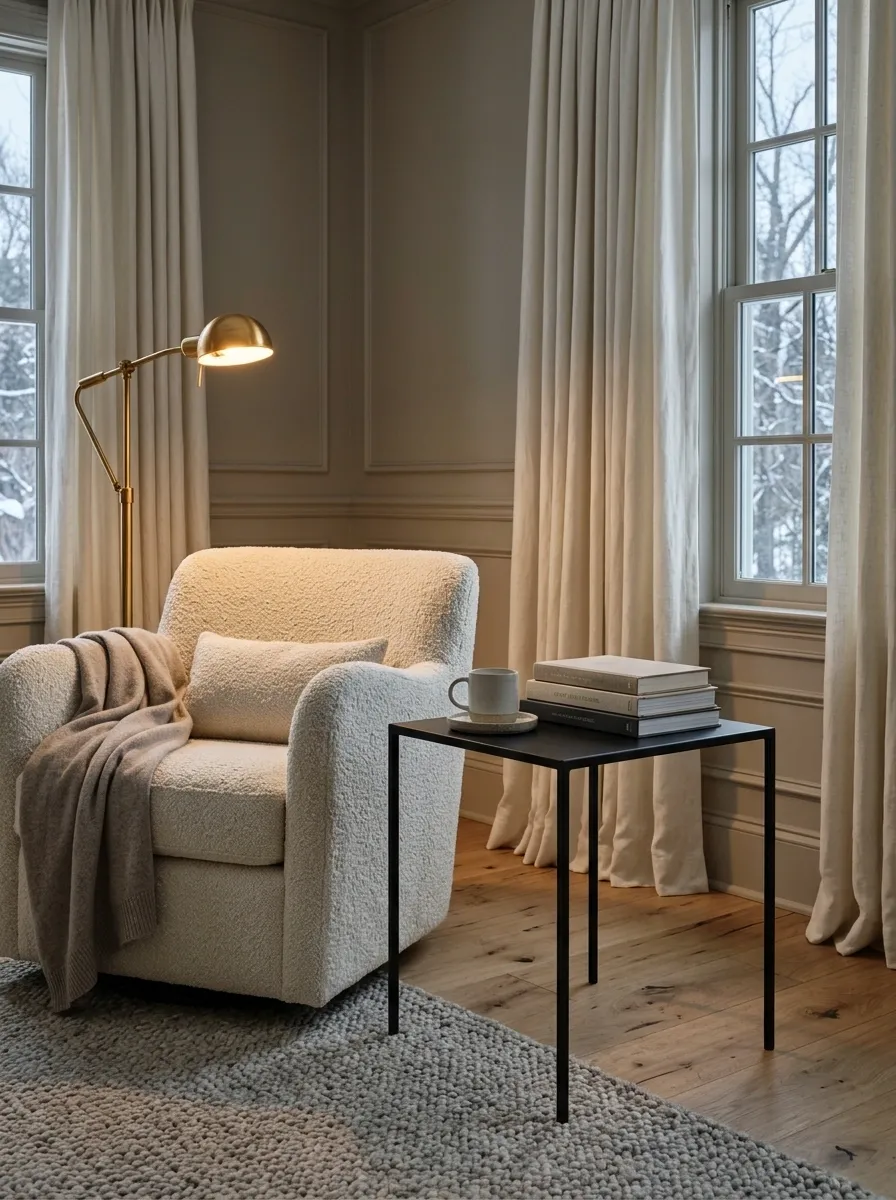
A small book stack or suitable shelf near the reading seat can make the room feel lived in.
Keep only the current selection in the immediate seating area and store the rest appropriately. A few books add character; a tall unstable pile on the side table mainly makes putting down a cup more interesting than necessary.
Choose One Rug That Supports the Furniture Group
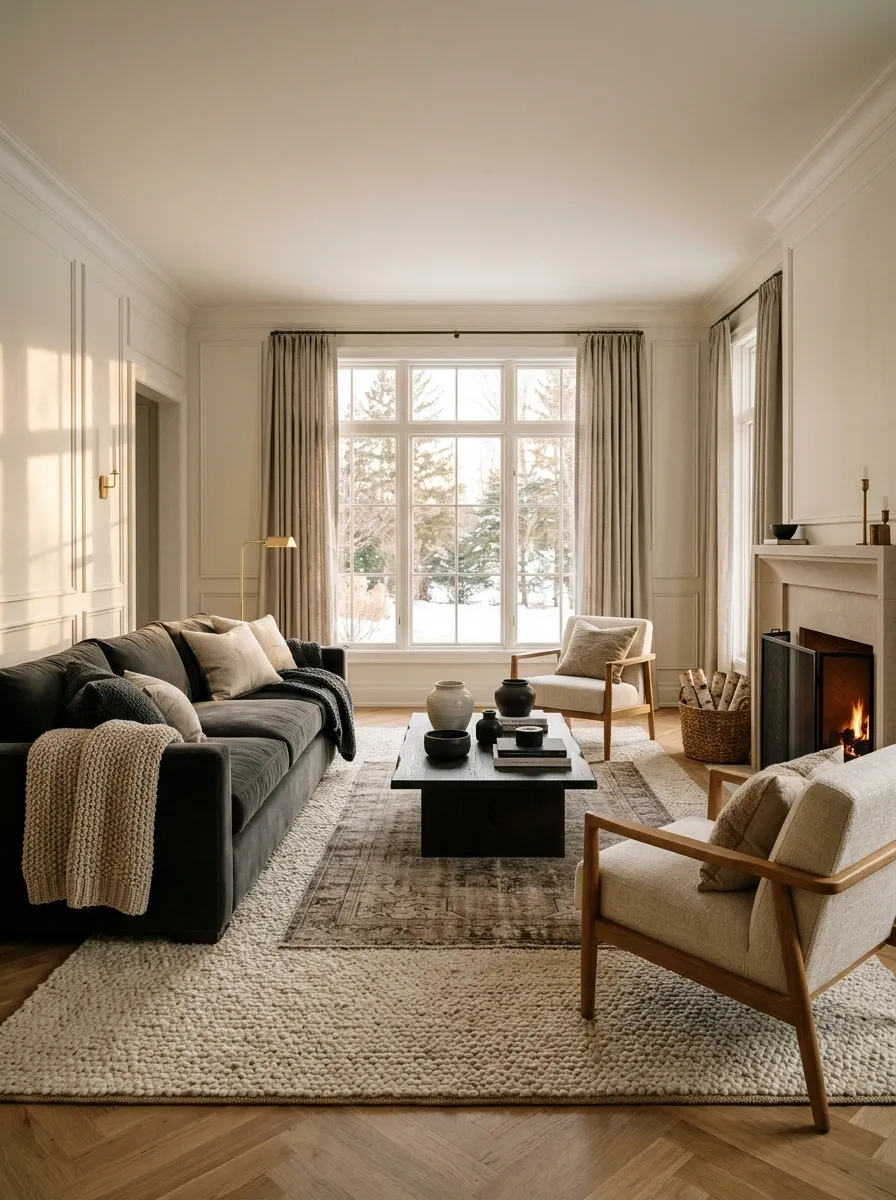
One suitable rug can supply plenty of winter texture.
Check the parts that matter in use:
- The seating footprint.
- Stable edges and practical transitions.
- Cleaning requirements.
- Compatibility with the floor beneath.
Several overlapping rugs are optional. A surface that stays where it belongs is usually more useful than one that rearranges itself with the chair.
See the rug with the furniture in use, not only with every seat pushed into its neatest position.
Make the Media Area Visually Quieter
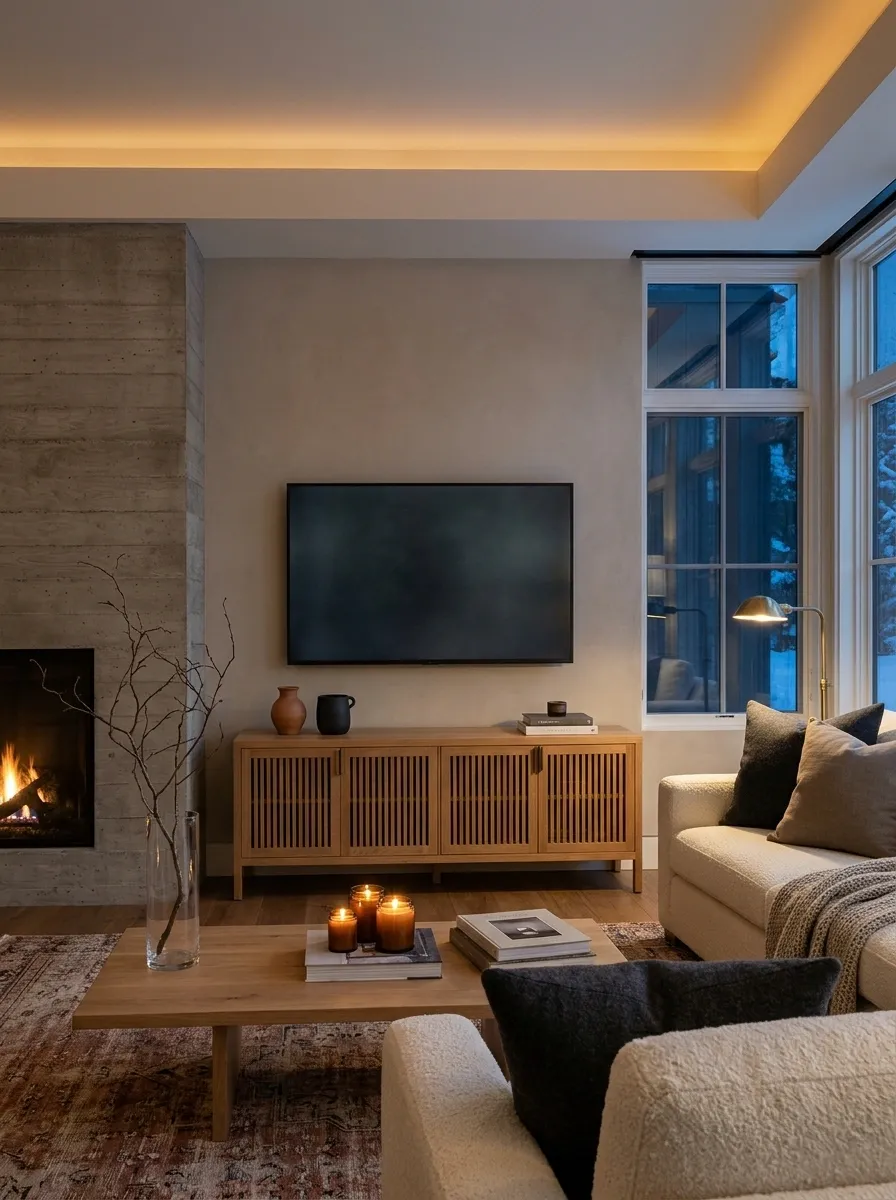
Store the loose equipment, packaging, and cables that make the television area feel busy.
Use suitable furniture while preserving equipment ventilation and access. A calmer media wall can make textured fabrics and softer lighting more noticeable elsewhere. The upgrade may be organization rather than an entirely new cabinet.
Let Existing Wood Supply Some Warmth
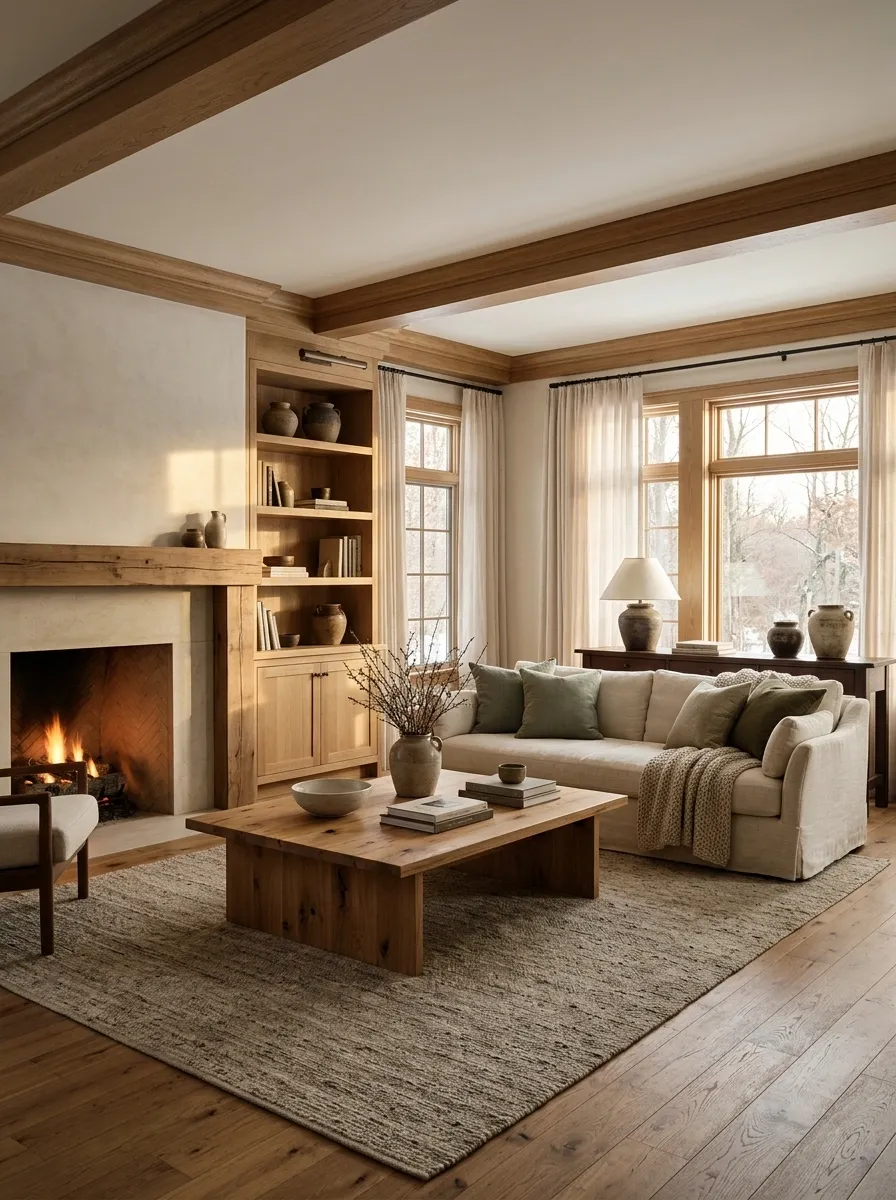
Before adding another winter color, look at the wood already in the room.
A table, floor, or cabinet can supply the warm side of the palette. Pair it with cream, muted green, or a deeper textile and let the grain remain visible. Covering every surface with cloth can hide the very material that would make the room feel grounded.
| Existing material | Useful companion |
|---|---|
| Warm timber | Cream texture |
| Deeper brown wood | A softer green or pale fabric |
Try Winter White Through Different Textures
A predominantly light room can feel substantial when the surfaces differ.
Use a combination such as smooth upholstery, a nubby cushion, and a visibly woven curtain. Keep the whites related without demanding an exact match. The interest comes from the light meeting each material differently, not from adding more pale objects simply because they belong to the same color family.
Add Olive and Burgundy in Unequal Roles
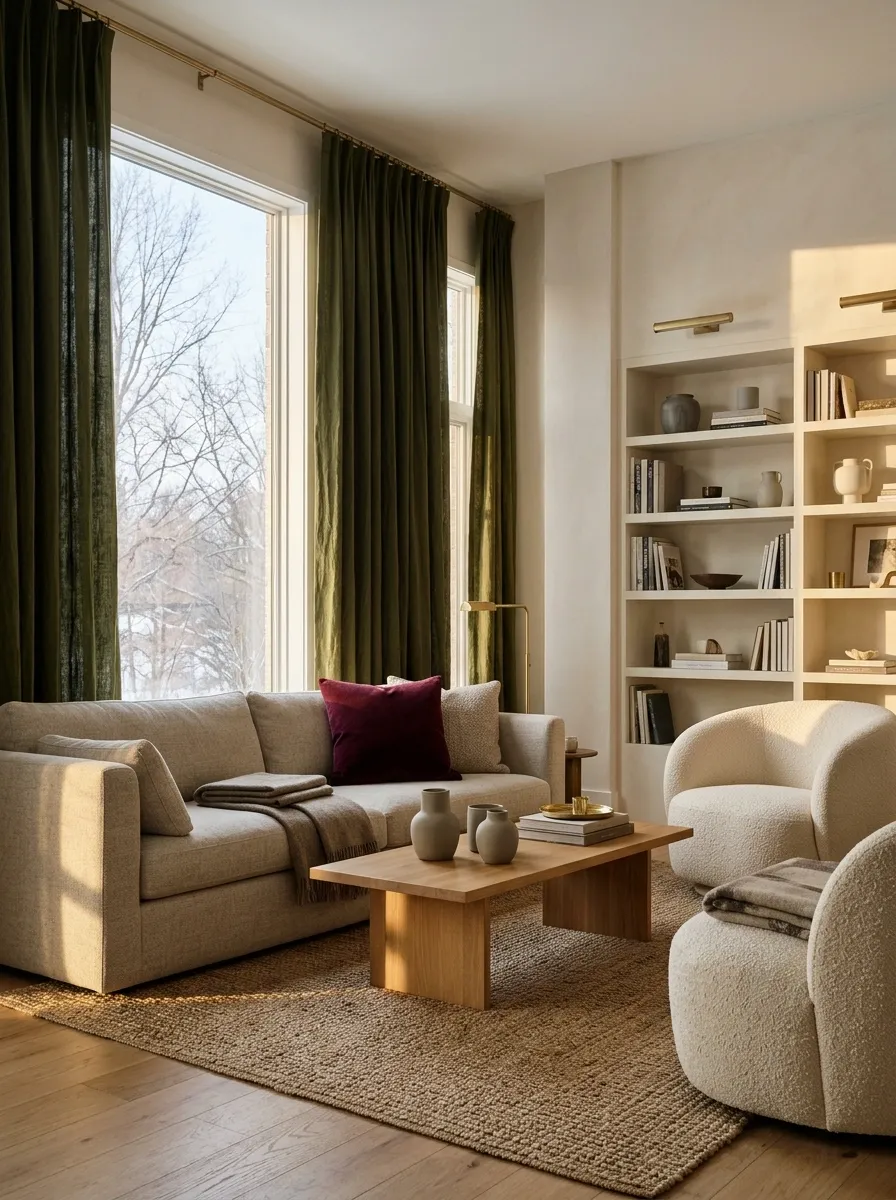
Olive and burgundy can bring depth to a winter room without seasonal motifs.
Let one occupy a larger textile and use the other in a smaller but clear shape. A green curtain with a burgundy cushion or artwork is enough to establish the relationship. Keep the background calm so the pairing remains readable.
Avoid compulsory matching: the colors can connect without appearing in every corner.
Pair Smoky Blue With Warm Brown
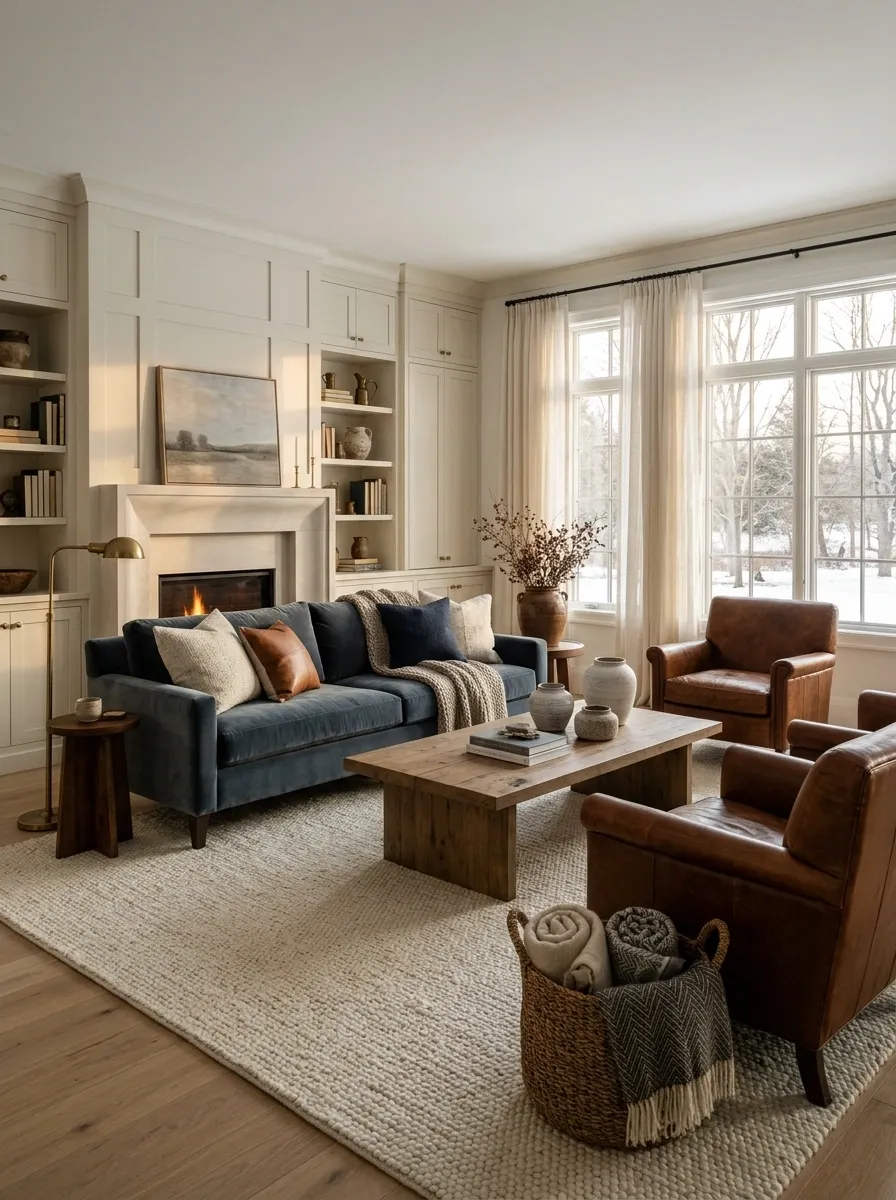
Smoky blue can feel comfortable beside brown upholstery, timber, or a warm woven material.
Use the blue in a substantial fabric and let the brown come from what you already own. Keep the surrounding pale tones warm enough to connect them. This is useful when the room needs seasonal depth but a red or green palette would feel unrelated to the existing furniture.
Use Bare Branches as One Clear Shape
A stable vase of suitable branches can add a winter silhouette without filling the room with greenery.
Keep the arrangement clear of lights, heat, walking routes, and places where it could be knocked over. Choose materials appropriate to the household. The branches should read as a restrained form, not a tall obstacle beside the person trying to watch television.
Put height where it has room: a sideboard is often easier to manage than a crowded coffee table.
Group Matte Ceramics on a Single Surface
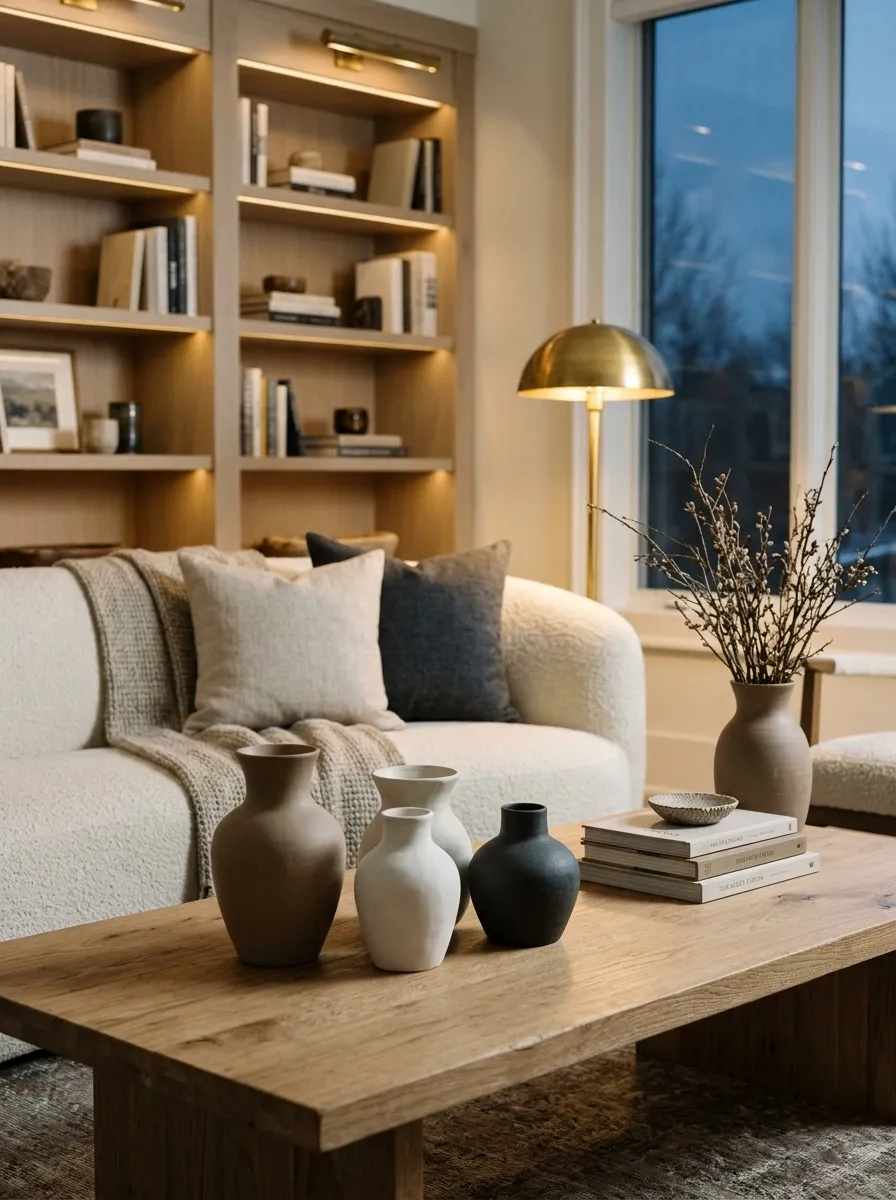
A small ceramic group can add texture and tone without another textile.
Choose a shared material character and vary the shapes modestly. Keep the rest of the surface useful. The group feels more intentional when it has a clear boundary rather than spreading across the room one vessel at a time.
| Give the group | Leave around it |
|---|---|
| Related finishes | Visible empty surface |
| A clear position | Room for practical use |
Make a Table Available for Games or Puzzles
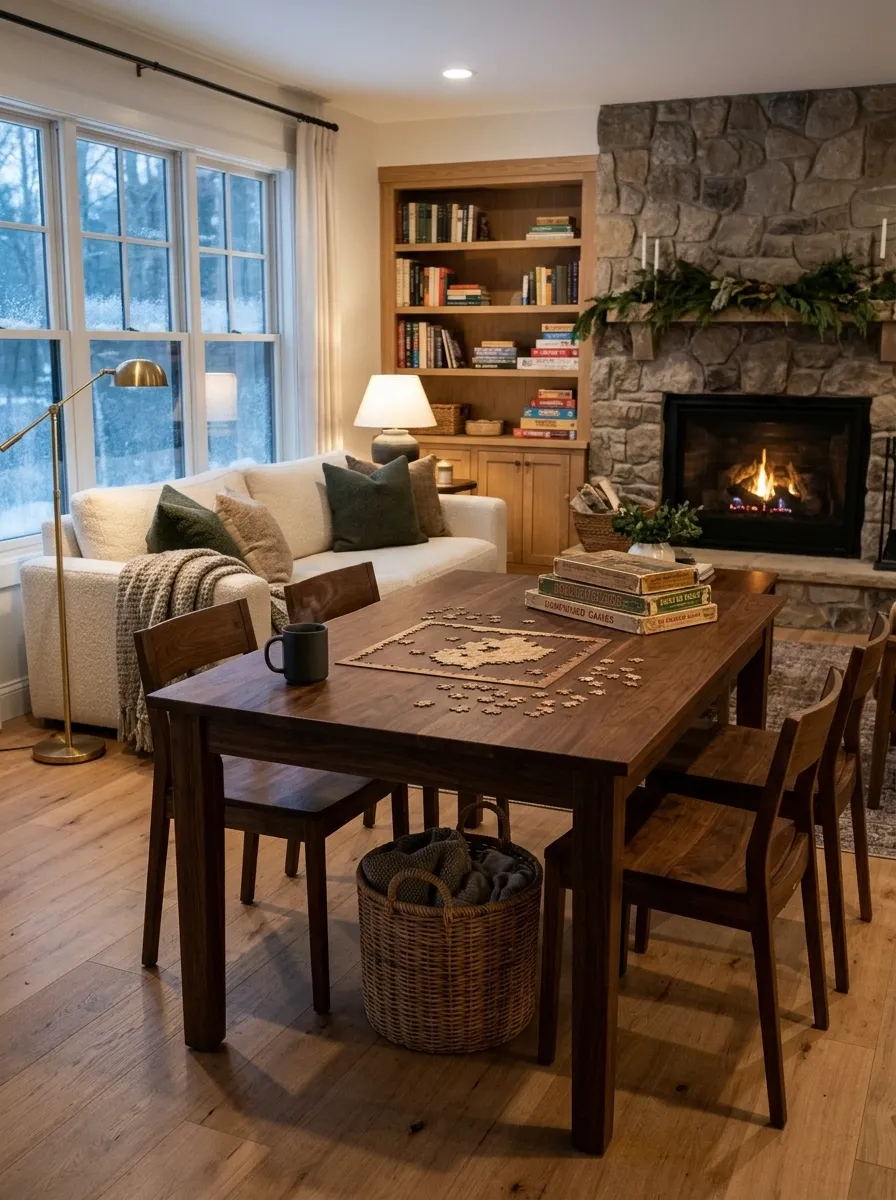
Winter evenings can give a living-room table another useful role.
Choose a suitable surface and nearby storage so the activity can be set up and cleared without a major furniture move. Keep the main route open. The room becomes more inviting when it supports something you enjoy doing, rather than only looking as though someone might eventually sit there.
Keep Winter Coats and Shoes Out of the Seating Footprint
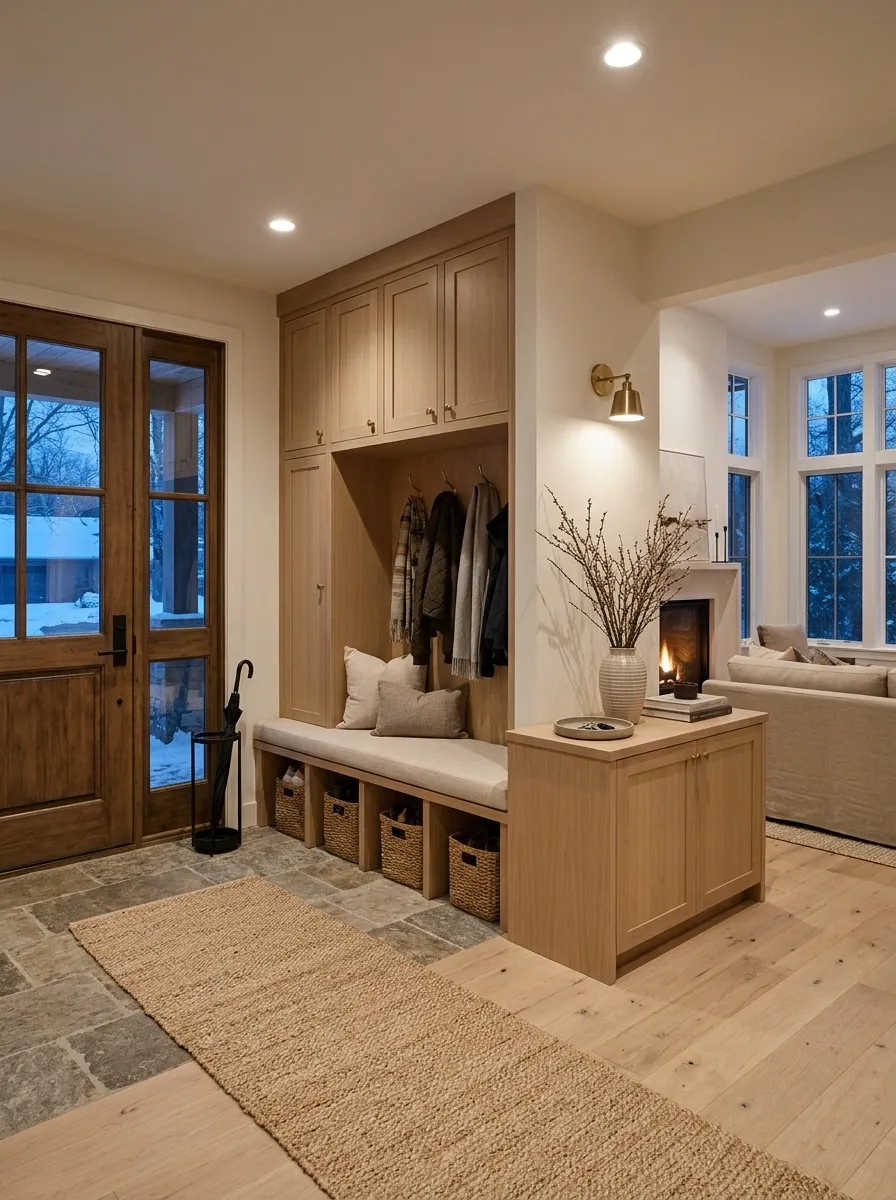
Give outerwear a practical landing area near the entrance so it does not occupy chairs and floor space in the living room.
The storage does not need to be elaborate. It needs to be obvious and usable. A room can feel calmer immediately when every seat is available and the path to the sofa is not a negotiation with boots.
Prepare for the real arrival: bags, coats, and shoes all need somewhere to go.
Reset the Layout Around Heating and Clear Movement
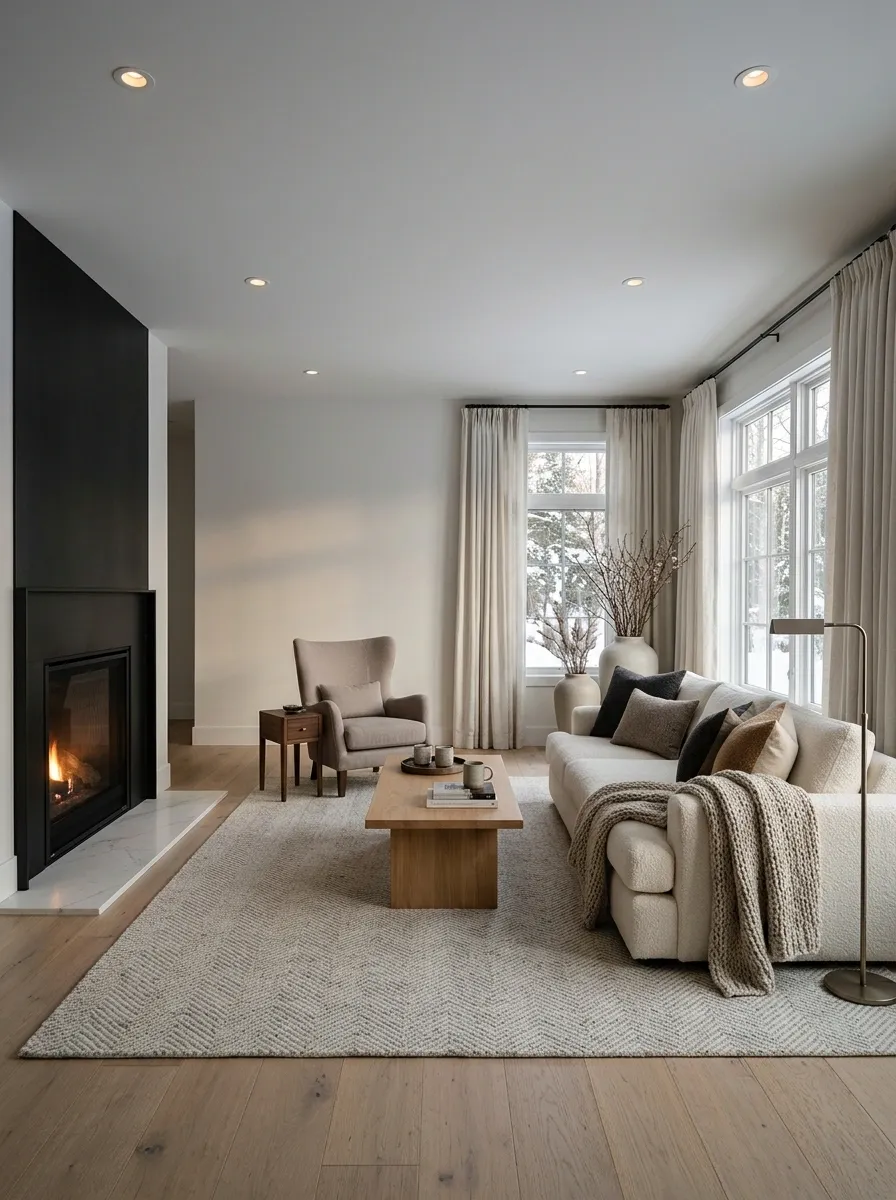
Review where furniture and fabric sit in relation to heating, ventilation, doors, and the route through the room.
Follow equipment clearances and keep required airflow unobstructed. Move unnecessary pieces rather than pushing everything closer together for a cozy effect. A comfortable winter layout leaves room for people and for the house to work properly.
Turn on the lights you use in the evening and sit down. The room is ready when reaching, reading, resting, and moving around it feel easy. The carefully folded throw is allowed to become an ordinary blanket now.