
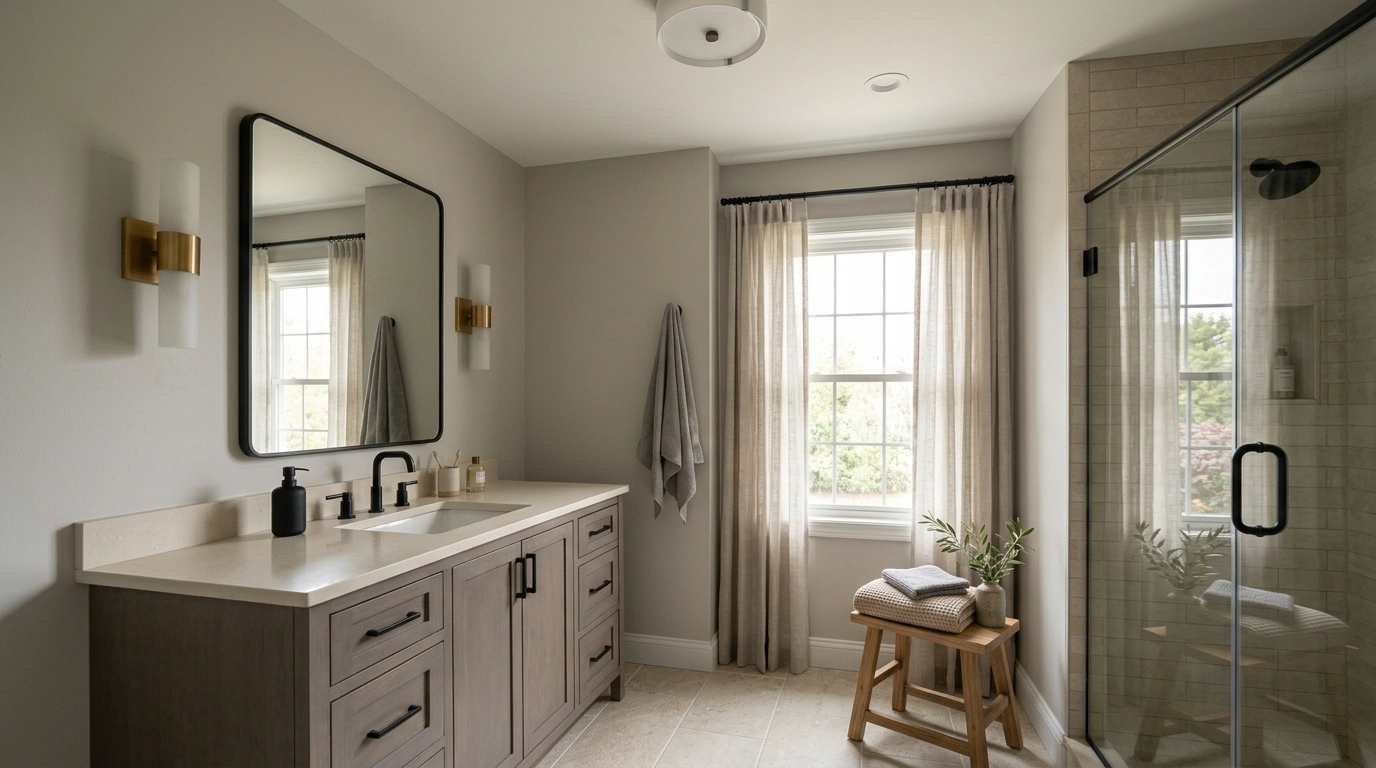
Grey and beige should be an easy bathroom combination. Then the wrong grey walks into a warm beige room and suddenly the whole space looks like two renovation plans accidentally got merged.
The problem is rarely the colors themselves. It is what surrounds them. Warm stone beside cool tile behaves differently from beige beside oak, plaster, marble, or charcoal cabinetry. A bathroom can have technically neutral finishes everywhere and still feel disconnected because the undertones, textures, proportions, and lighting are pulling in different directions.
The finished composition tells the real story. That means looking at the bathroom as a whole instead of collecting random pieces one at a time. A vanity, floor, shower, mirror, wall finish, lighting scheme, and material palette should make sense together before the accessories even enter the conversation.
“Okay, now they’re getting along.”
“This relationship is not surviving the renovation.”
“Finally, a group project where everyone did their part.”
Grey and Beige Bathroom Ideas
Warm Beige Bathroom With Soft Grey Limestone
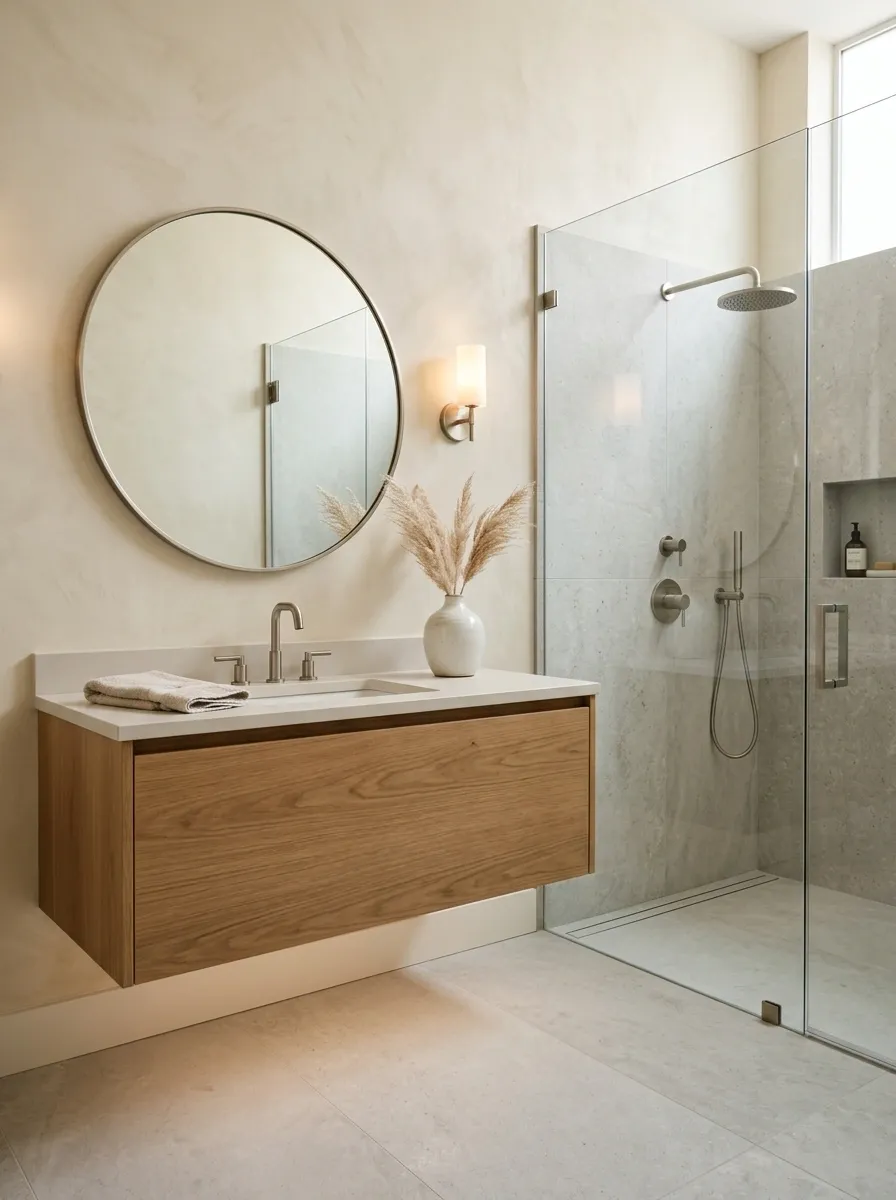
This bathroom gets the balance right by letting warm beige lead while soft grey plays the supporting role. Creamy beige walls surround a pale grey limestone-look floor, and a floating oak vanity brings in another warm note without making the room feel yellow.
The shower stays simple with clear glass and restrained brushed nickel fixtures. That matters here. Too many competing finishes would turn the calm palette into a showroom bingo card.
Natural daylight keeps the grey looking gentle rather than icy. The strongest part of the composition is the relationship between the warm wall tone and cooler floor, so the rest of the room stays quiet.
Visual lead
Cool counterpoint
Warm bridge
Grey Stone Bathroom With Natural Beige Oak Vanity
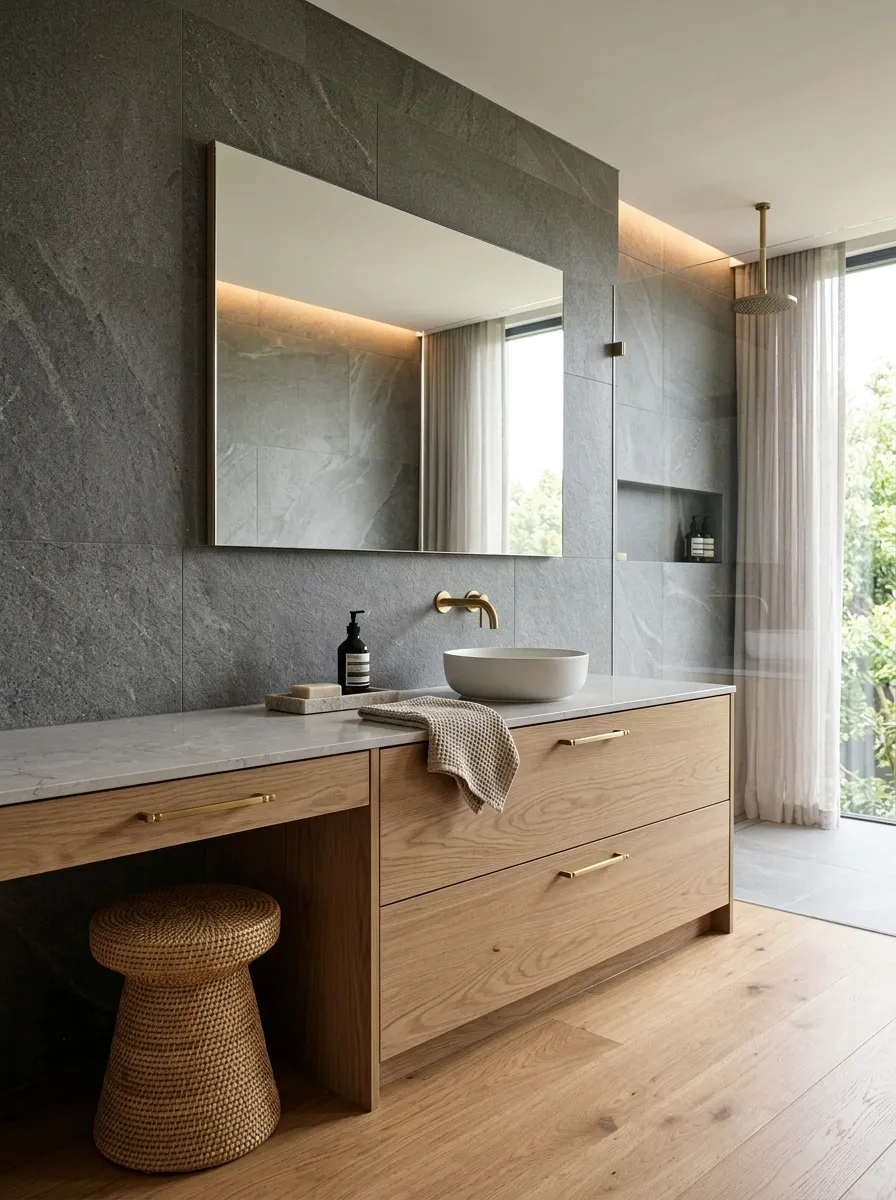
Grey takes the architectural lead in this bathroom, with stone-look walls and flooring creating a solid, slightly dramatic shell. Then the beige oak vanity walks in and immediately says, “Relax, nobody asked for a hotel lobby.”
A broad mirror stretches the composition and keeps the darker stone from feeling heavy. The vanity has enough visual warmth to soften the grey without breaking the modern look. A woven stool and warm lighting add a small amount of texture, but there’s no need for a pile of accessories.
The key is contrast without chaos. The grey gives the room structure. Oak brings the warmth. The mirror keeps the whole thing visually open.
Oak breaks up the cooler surfaces.
Mirror keeps the composition from feeling boxed in.
Soft Transitional Bathroom With Beige Marble and Greige Cabinetry
Some bathrooms want to look modern. Others want to keep a little old-school charm without bringing back the entire 1990s bathroom aisle.
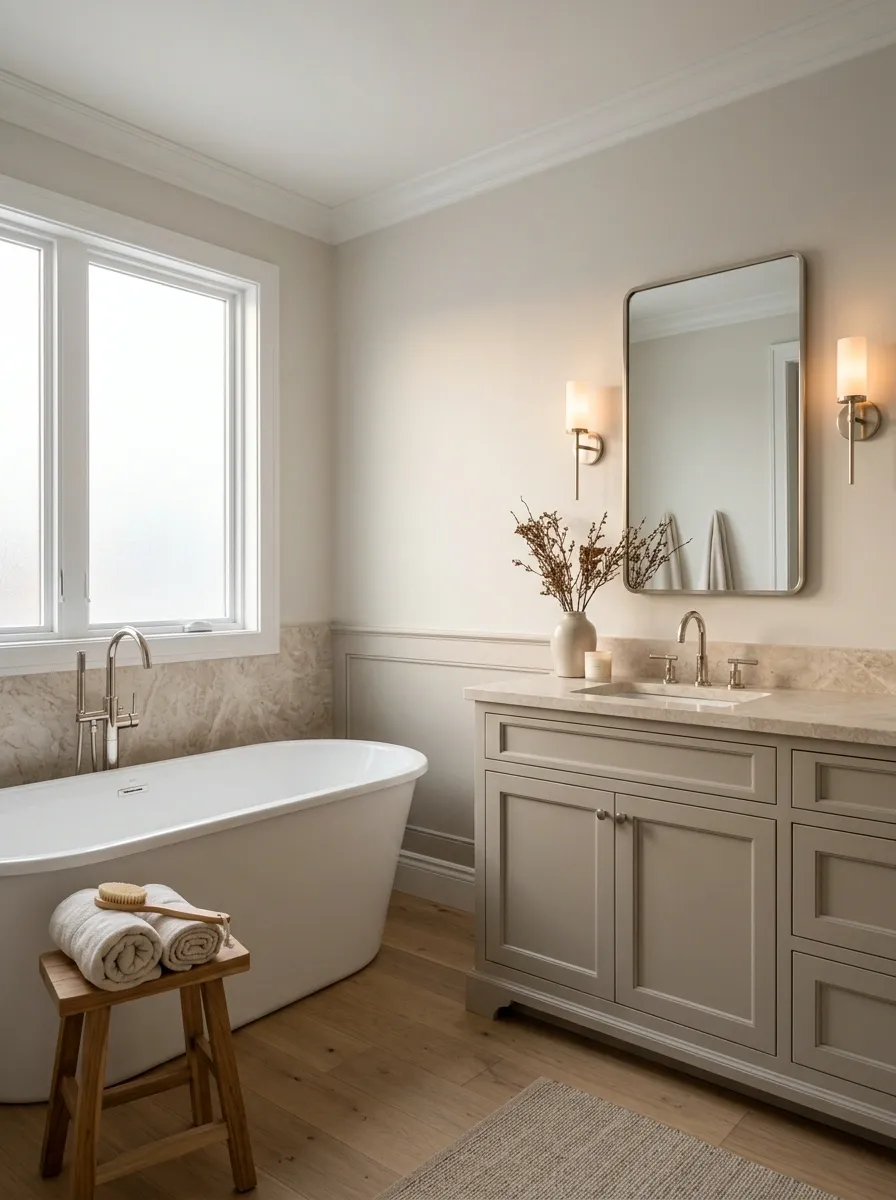
This one lands in the middle. Beige marble gives the walls a classic foundation, while muted greige cabinetry adds softness without becoming overly traditional. Paneled vanity fronts, a marble countertop, polished nickel fixtures, and a framed mirror bring enough detail to make the room feel finished.
The freestanding tub keeps the composition elegant, but the clean lines stop it from becoming fussy. That balance is the whole point. Traditional details should add character, not turn every surface into a decorative event.
Framed mirror
Beige marble
Minimal hardware
Open floor space
Small Grey and Beige Bathroom With Walk-In Shower
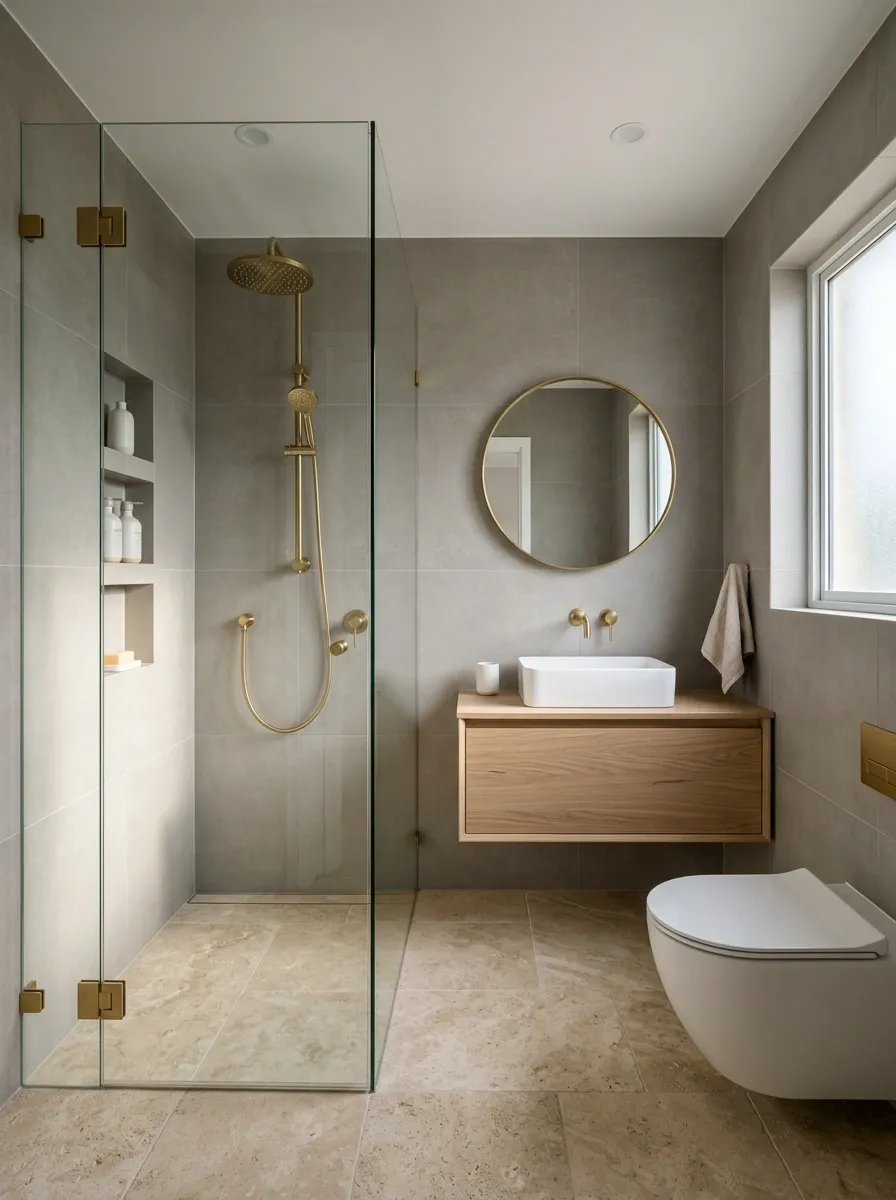
Small bathrooms have one job that large bathrooms can sometimes avoid: every single surface is suddenly in everybody’s face.
This layout keeps the room visually quiet with large warm-grey wall tiles, beige floor tile, a slim floating vanity, recessed storage, and a clear glass shower. There’s less grout pattern, less visual interruption, and no bulky vanity swallowing the walkway.
The grey walls give the room a clean architectural backdrop, while beige on the floor brings enough warmth to stop the space from feeling clinical. Recessed storage handles the practical mess, because bottles multiplying around the sink is not a design style.
SHOWER
VANITY
keeps the vanity clear
Spa Bathroom With Travertine, Warm Grey, and Oak
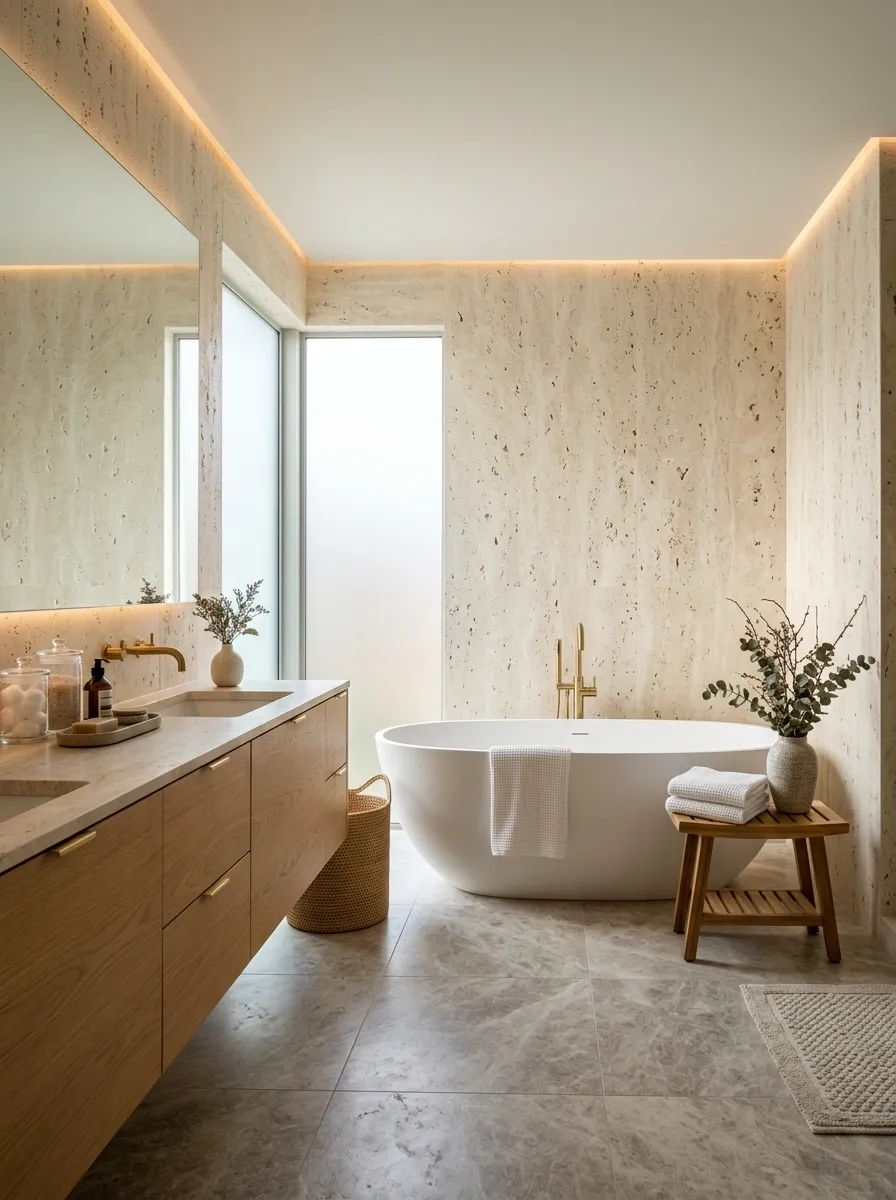
This bathroom leans into natural texture instead of trying to make every surface match. Creamy travertine covers the walls, softly mottled grey flooring gives the room a cooler base, and a long oak vanity adds warmth across the center.
A deep soaking tub sits within the same material story, while linen textiles and warm indirect lighting soften the stone. Nothing feels overly polished, which is exactly why the room feels relaxing.
The important detail is the texture mix. Travertine, oak, linen, and soft light each bring a different surface quality. That keeps the neutral palette from becoming one giant block of beige and grey.
Dark Grey Vanity Bathroom With Sandy Beige Walls
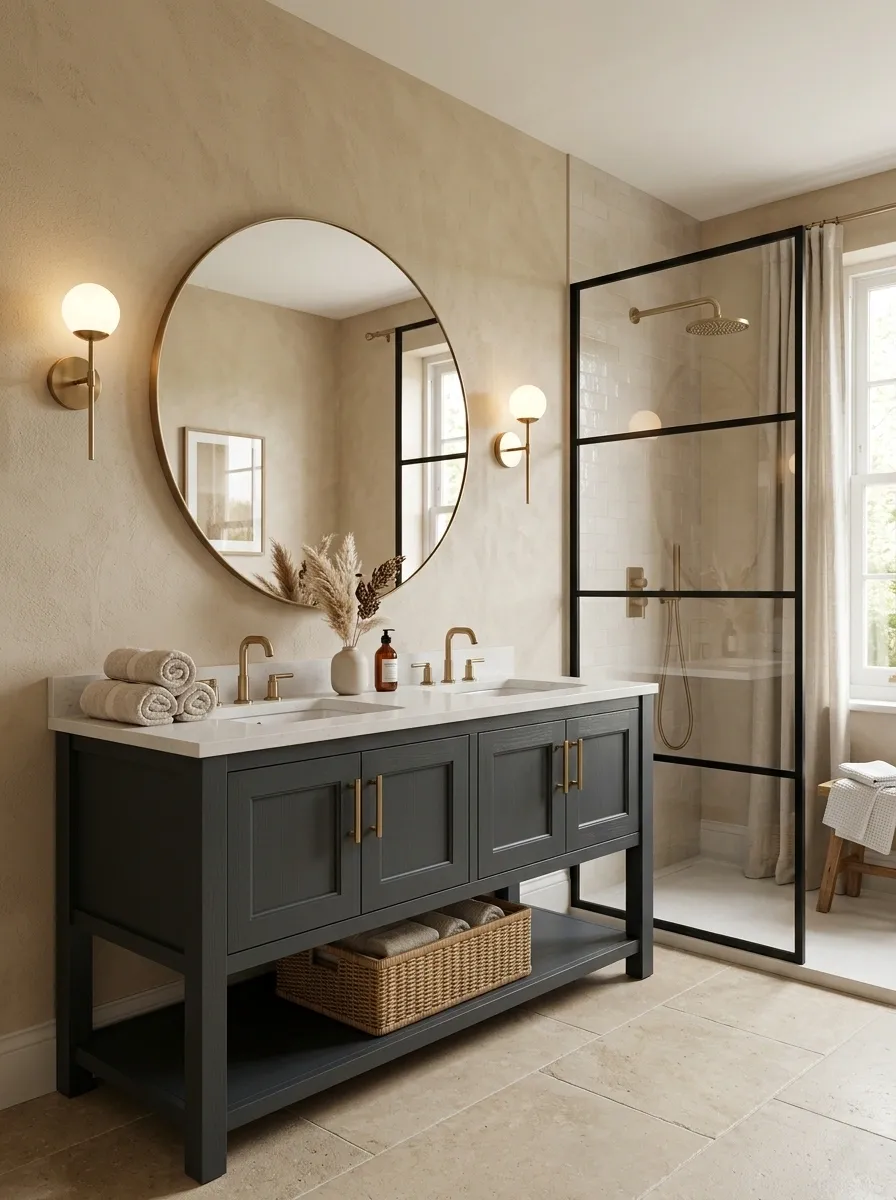
The easiest way to make a neutral bathroom feel flat is to give everything the same visual weight. This design does the opposite.
Sandy beige plaster-style walls create a warm backdrop for a deep charcoal-grey vanity, pale stone countertop, and large round mirror. A black-framed shower enclosure repeats the darker tone without letting it take over the room. Warm lighting keeps the beige from turning yellow and gives the charcoal cabinetry a softer edge.
The vanity acts as the anchor, so the rest of the room doesn’t need much decoration. That’s the trick. Once one element is doing the heavy lifting, the accessories can sit this one out.
background
anchor
bridge
Beige Zellige-Style Walls With Cool Grey Floor
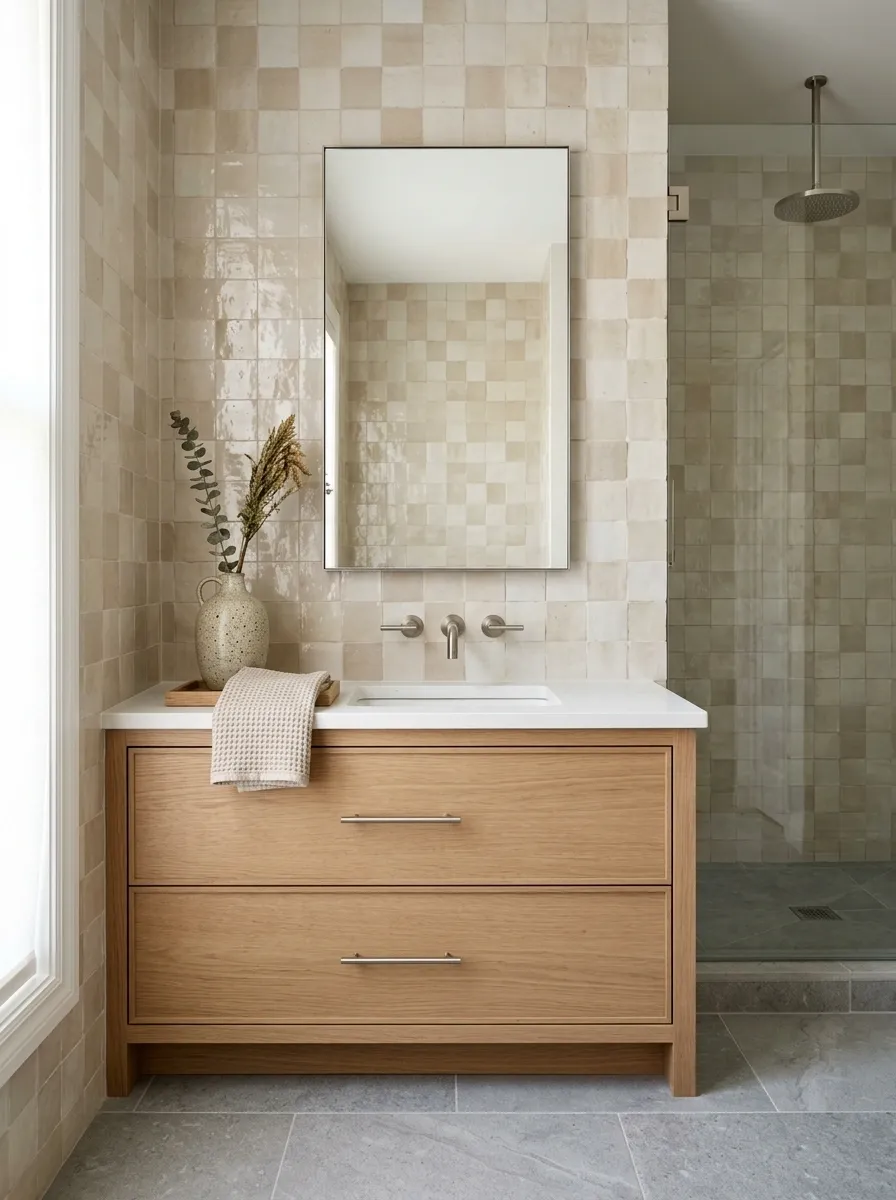
This bathroom gets its character from the walls. Beige handmade-look tiles create subtle variation around the vanity and shower, while a cool grey floor gives all that movement somewhere calm to land.
The vanity stays relatively simple, using natural wood to connect the warm wall tile with the cooler flooring. Nickel fixtures add another quiet reflective surface without introducing a dramatic new color.
The composition works because the pattern isn’t competing across the whole room. The walls have personality. The floor provides structure. The vanity fills the gap between them.
And that’s enough. The bathroom doesn’t need six different finishes trying to become the main character.
Main visual movement
Warm transition
Visual grounding
Modern Grey Concrete Bathroom With Beige Textiles
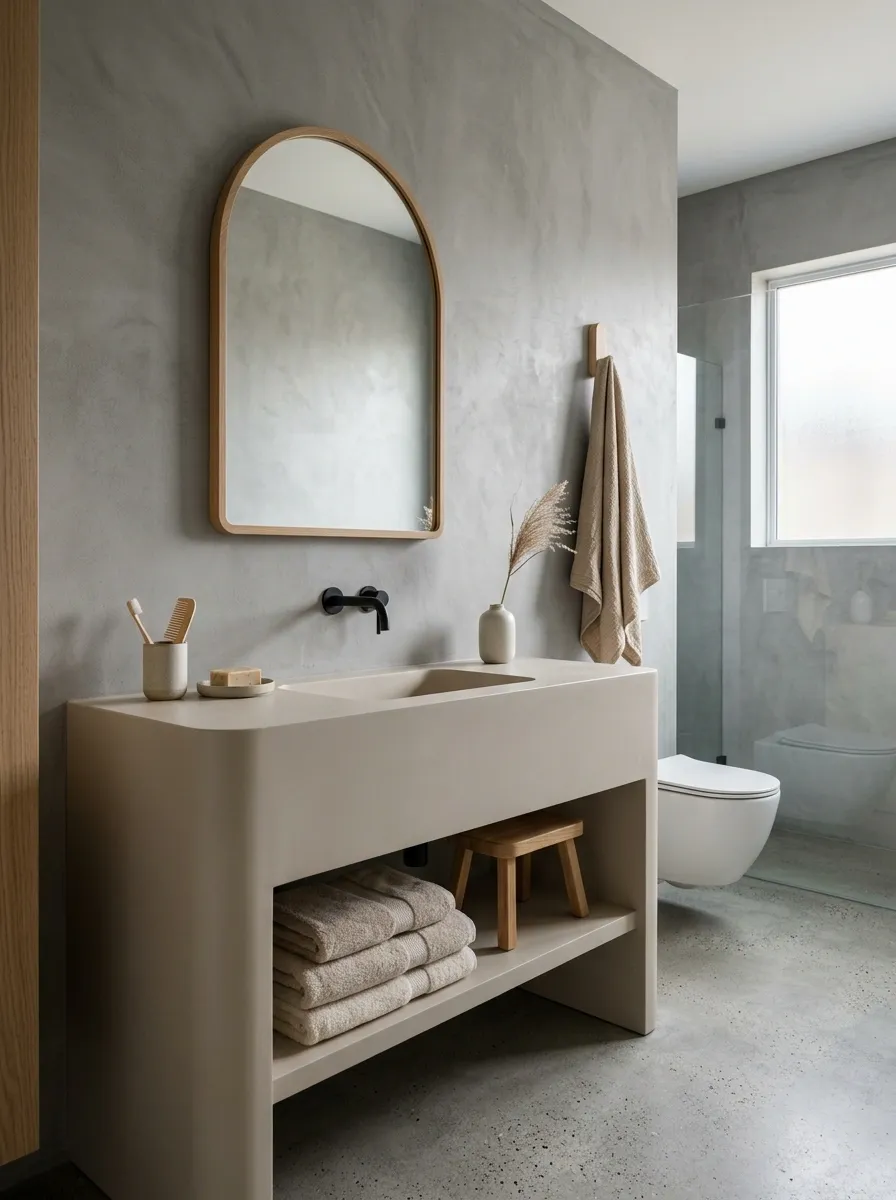
Grey concrete-inspired finishes can look fantastic right up until the bathroom starts feeling like a parking garage with plumbing.
This version softens the hard architectural shell with a sculptural beige vanity, warm towels, pale oak accessories, and a softly curved mirror. The walls and floor stay within a restrained grey range, giving the room a seamless, modern foundation.
The softer elements are important because they change the visual temperature without destroying the minimalist look. There are no busy patterns fighting the concrete effect. Instead, warmth comes from texture, shape, and natural material.
The result feels modern without becoming aggressively modern. A surprisingly important distinction.
Beige Bathroom With Grey Arched Shower Niche
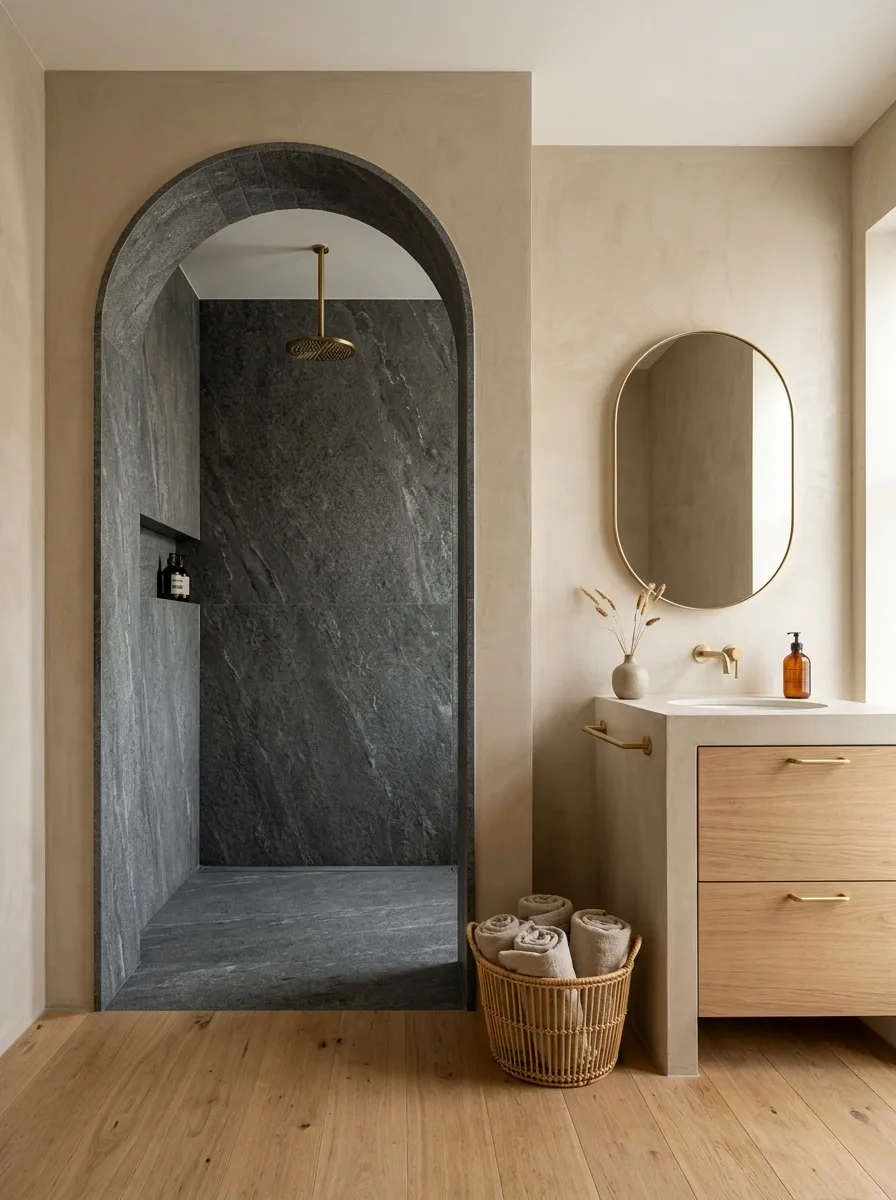
Here, the interesting part isn’t another fancy faucet or a suspiciously enormous freestanding tub. It’s the architecture.
Warm beige covers most of the bathroom, creating a quiet backdrop for a grey stone-look shower opening with a rounded arch. The same darker grey continues inside the shower so the architectural feature feels intentional rather than randomly outlined.
The vanity stays simple and slightly lighter, allowing the arch to remain the visual focal point. Rounded details elsewhere, such as the mirror, subtly echo the opening without making the room look themed.
This design works especially well when the architecture itself can provide the drama. One strong shape beats a pile of decorative objects every time.
Contemporary Bathroom With Grey Terrazzo and Beige Plaster Walls
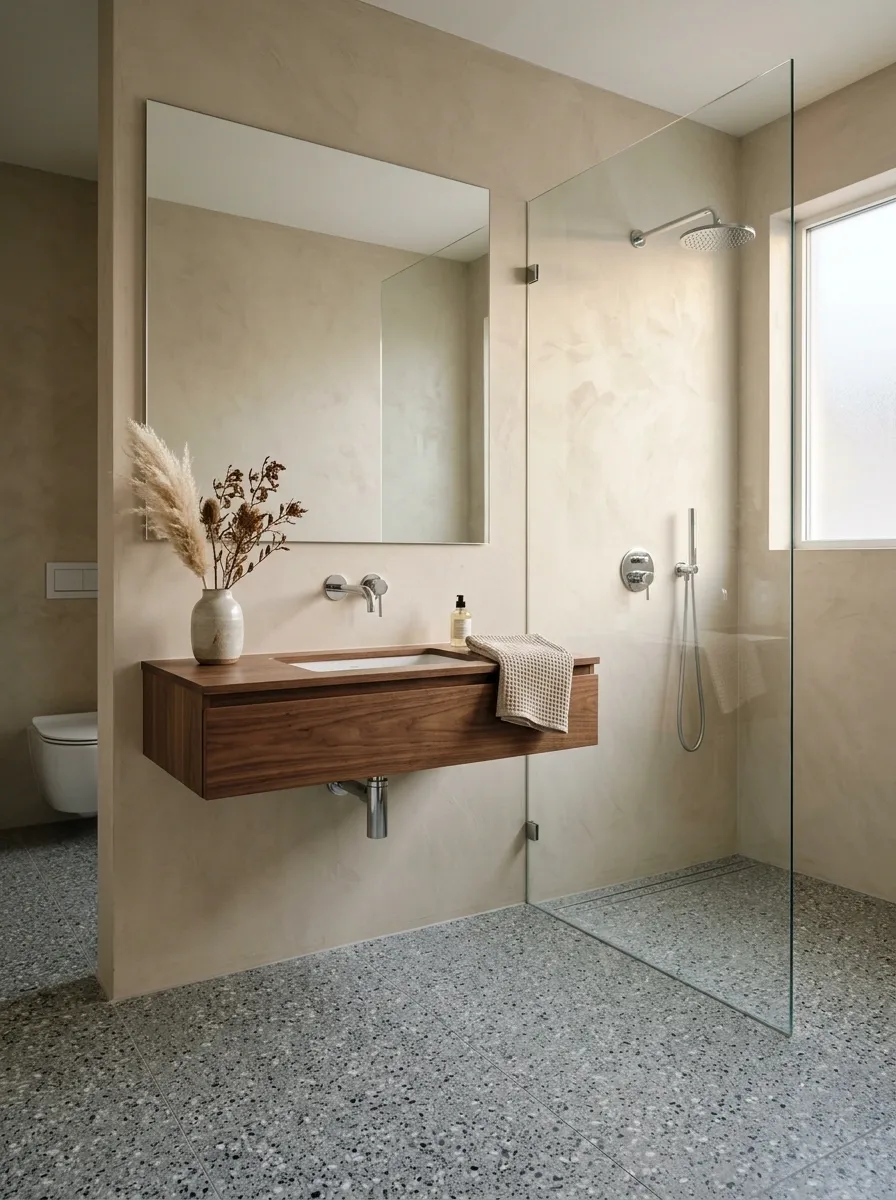
Terrazzo already knows how to attract attention, so giving every other surface a pattern would be a little excessive. This bathroom keeps the floors and shower surfaces in a speckled grey terrazzo while smooth beige plaster-style walls provide the visual reset.
A slim walnut vanity adds warmth between the two neutral families, while a large mirror and understated chrome fixtures leave the terrazzo room to breathe. The pattern is noticeable without taking over.
The smartest move here is restraint. Let the floor have its moment. Beige walls don’t need to compete with it, and the vanity doesn’t need decorative hardware doing jazz hands in the background.
Main movement
Quiet field
Warm anchor
Classic Beige Tile Bathroom With Soft Grey Vanity
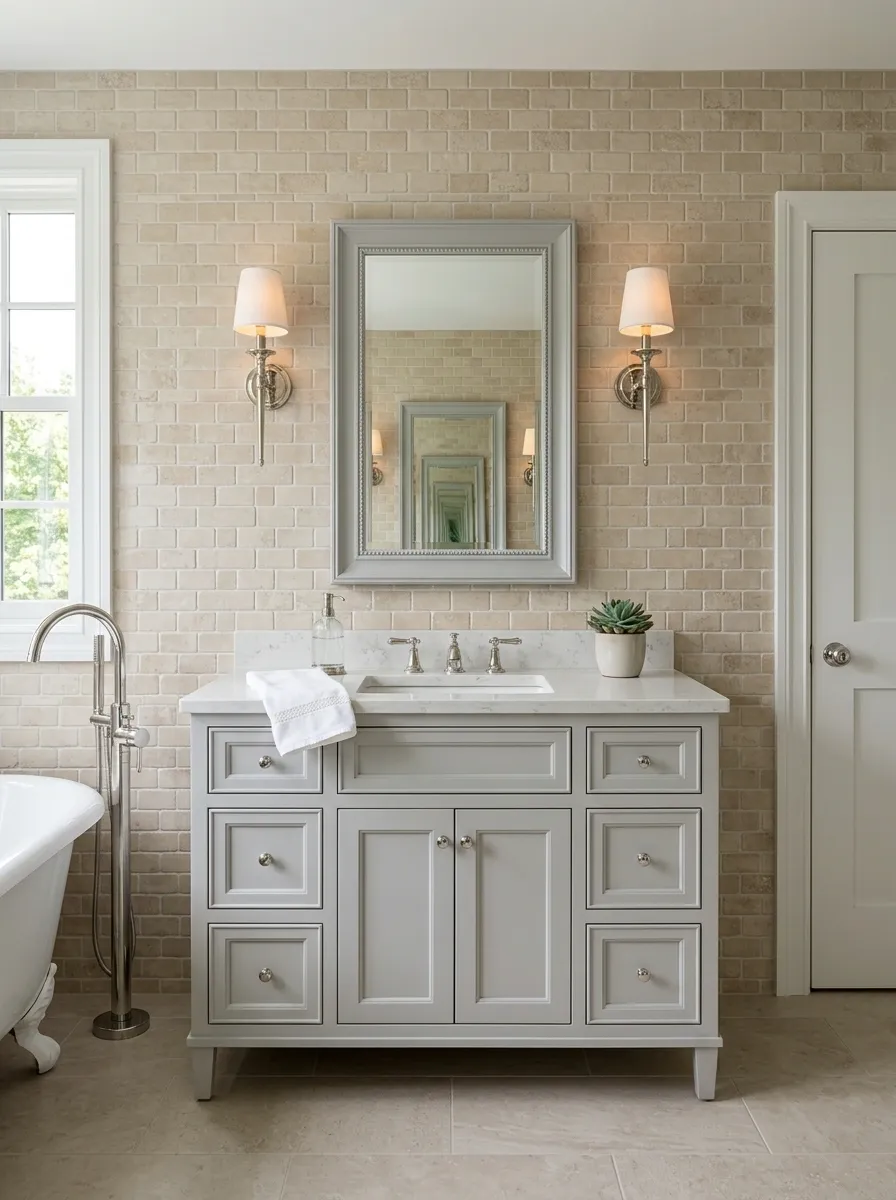
Small beige wall tiles give this bathroom a familiar, almost timeless backdrop, but the pale grey vanity keeps it from feeling like a replay of every traditional bathroom ever posted online.
The vanity has a furniture-style profile with a light countertop, while a framed mirror and simple sconces bring in just enough classic detail. The floor stays quieter so the walls and cabinetry can carry the visual interest. Polished metal fixtures add a little reflection without becoming the star of the room.
The balance works because the traditional pieces have breathing room. Nothing is competing for attention. It feels established rather than overly decorated.
And thankfully, there isn’t a decorative sign telling everyone to “relax.” The bathroom has already understood the assignment.
Creates the classic base
Adds cooler contrast
Keeps the style grounded
Grey Marble Bathroom With Creamy Beige Freestanding Tub
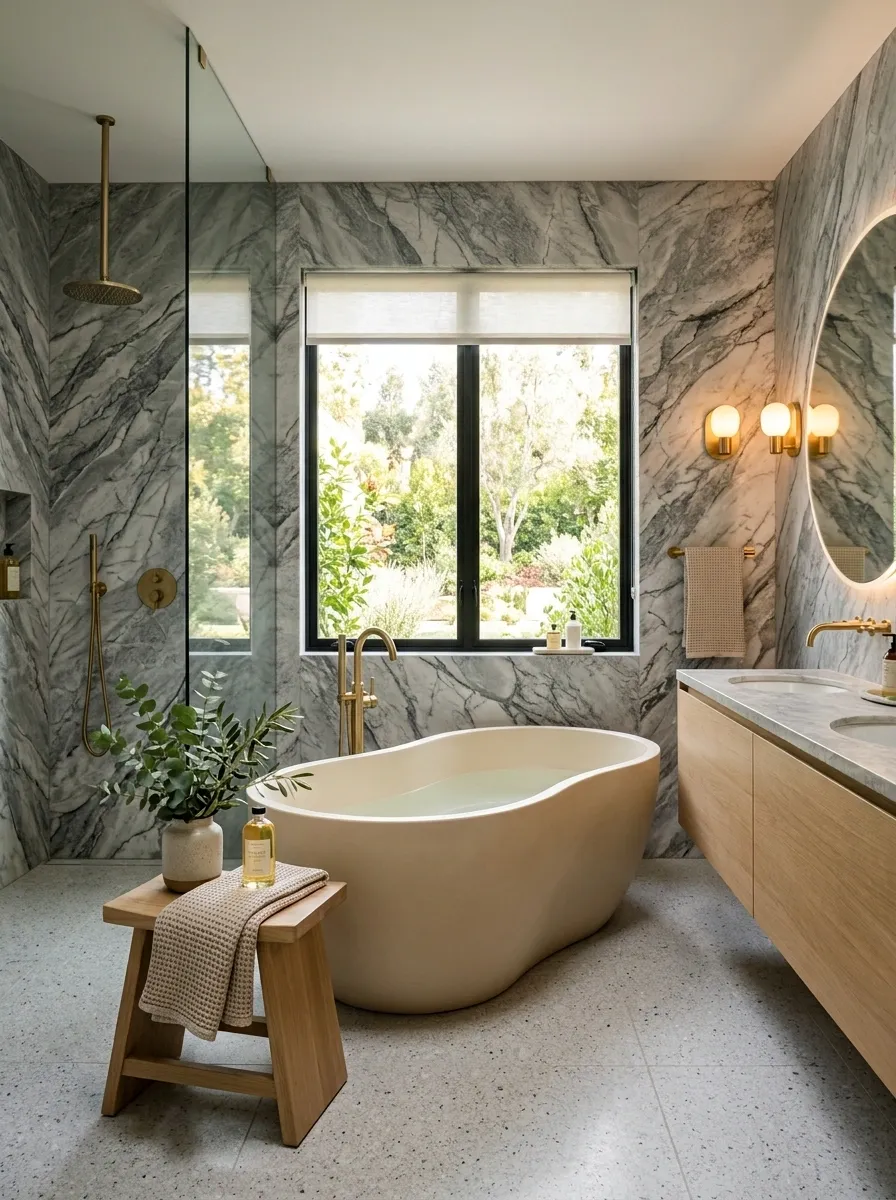
The marble gets the dramatic role here, and it knows it. Grey stone with expressive veining wraps the room, creating a strong architectural backdrop around the shower and vanity.
A creamy beige freestanding tub interrupts all that grey with a warmer, softer shape. Light oak appears in a small stool or storage piece, while warm wall lighting keeps the stone from feeling cold under evening light. The fixtures remain simple so they don’t fight the marble.
This composition works because the strongest material isn’t repeated everywhere. The grey stone creates drama, then beige and oak step in to make the room livable.
Otherwise the bathroom starts giving luxury hotel lobby, and nobody needs a checkout time for their own shower.
Softens the stone
Adds natural warmth
Changes the evening mood
Beige and Grey Mediterranean-Inspired Bathroom
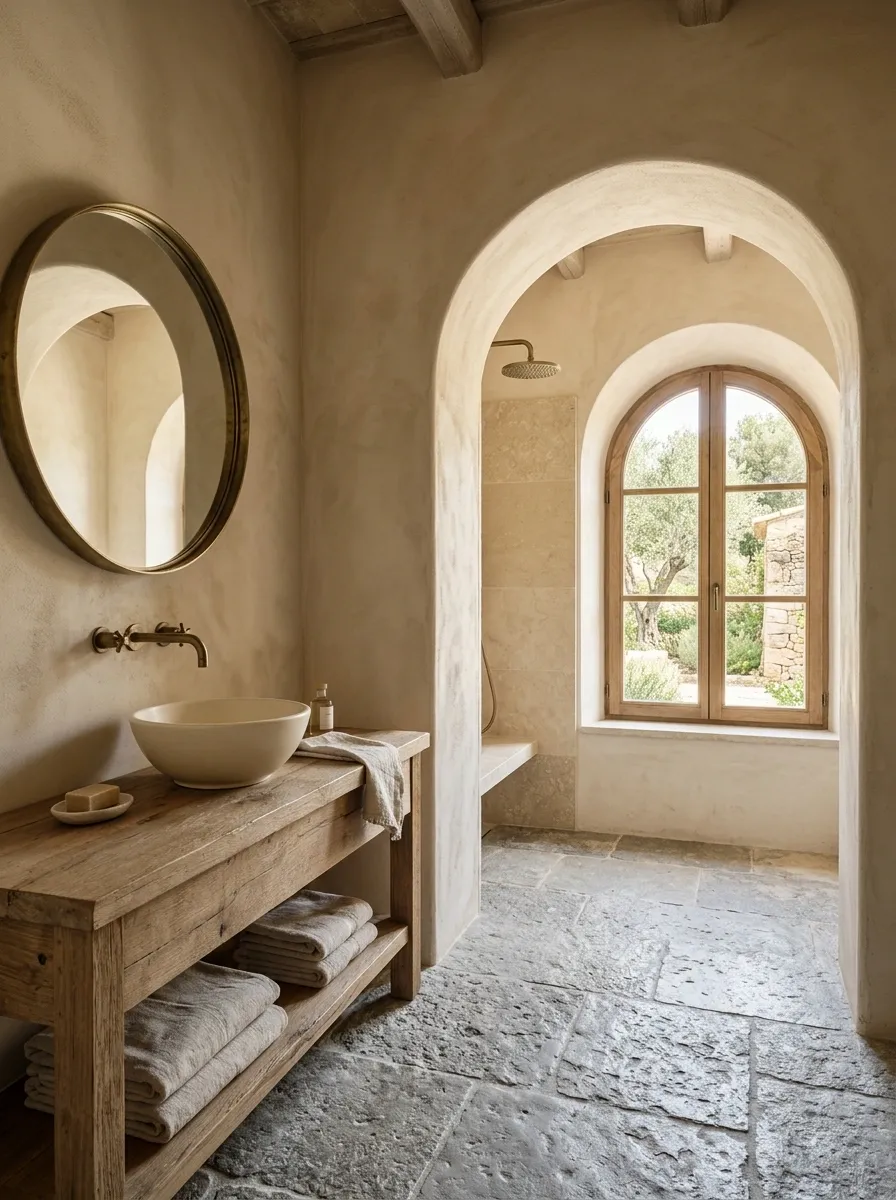
Warm plaster-style beige walls, uneven grey stone flooring, rounded openings, and aged-looking wood give this bathroom a Mediterranean character without turning it into a theme park.
The walls stay softly textured and warm, while the floor provides irregular grey variation underfoot. An understated vanity with natural wood and a simple vessel sink keeps the room feeling relaxed. Small brass details bring a muted glow, but they stay secondary to the stone and plaster.
The rounded architecture is what makes the concept memorable. Repeating a little of that softness through the mirror or vanity shape keeps everything connected.
The important part is restraint. Mediterranean style doesn’t require fifteen terracotta accessories and a fake olive branch having an identity crisis.
Narrow Bathroom With Vertical Grey Tile and Beige Vanity
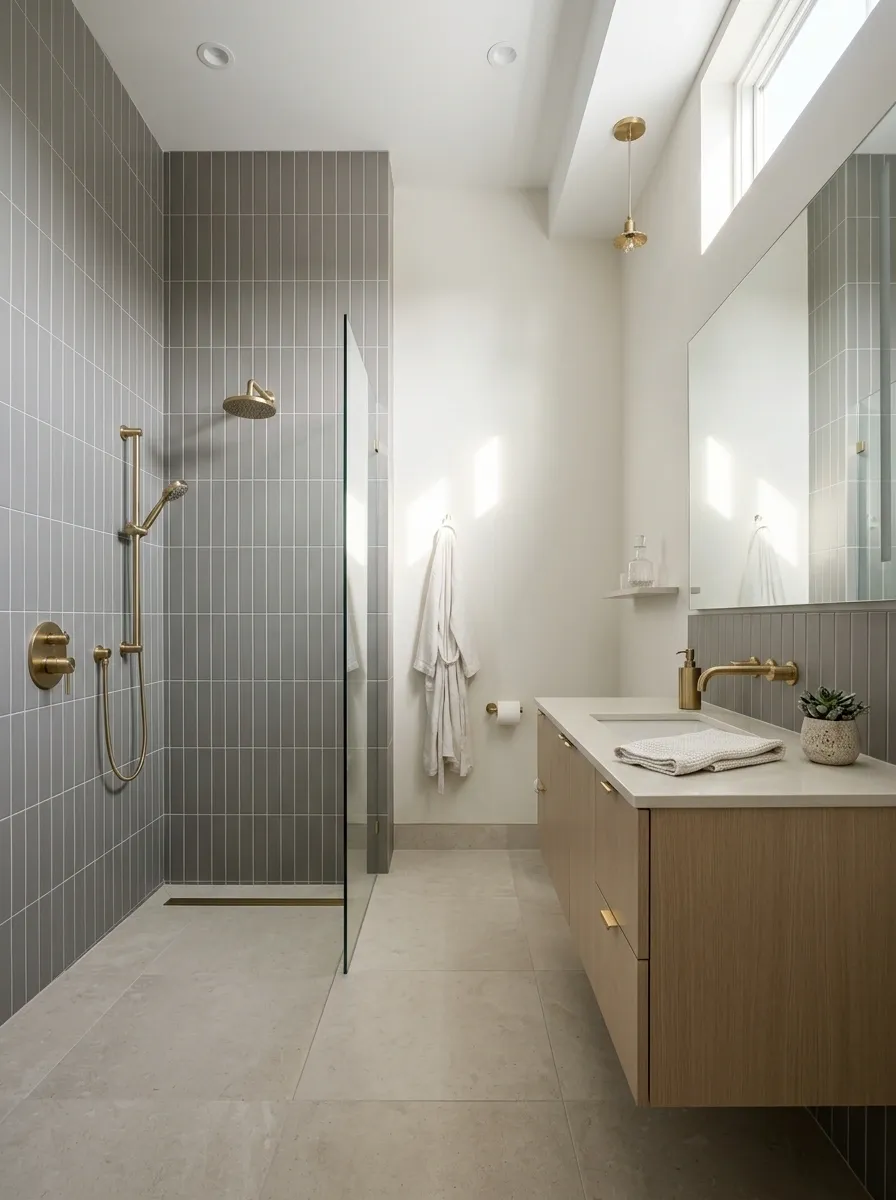
Long bathrooms can become one very expensive corridor if every finish emphasizes the length.
This design shifts the visual focus upward instead. Vertical grey tile runs through the shower and selected wall surfaces, drawing the eye toward the ceiling. A warm beige floating vanity occupies the opposite side, creating a clear contrast without making the room feel divided into tiny zones.
A broad mirror above the vanity reflects light back into the space, while wall-mounted fixtures keep the floor area open. The flooring stays understated so the vertical tile can do its job.
The composition isn’t trying to make the room magically wider. It simply gives the eye somewhere better to go than straight down the hallway.
Organic Modern Bathroom With Beige Stone and Mushroom Grey Cabinetry
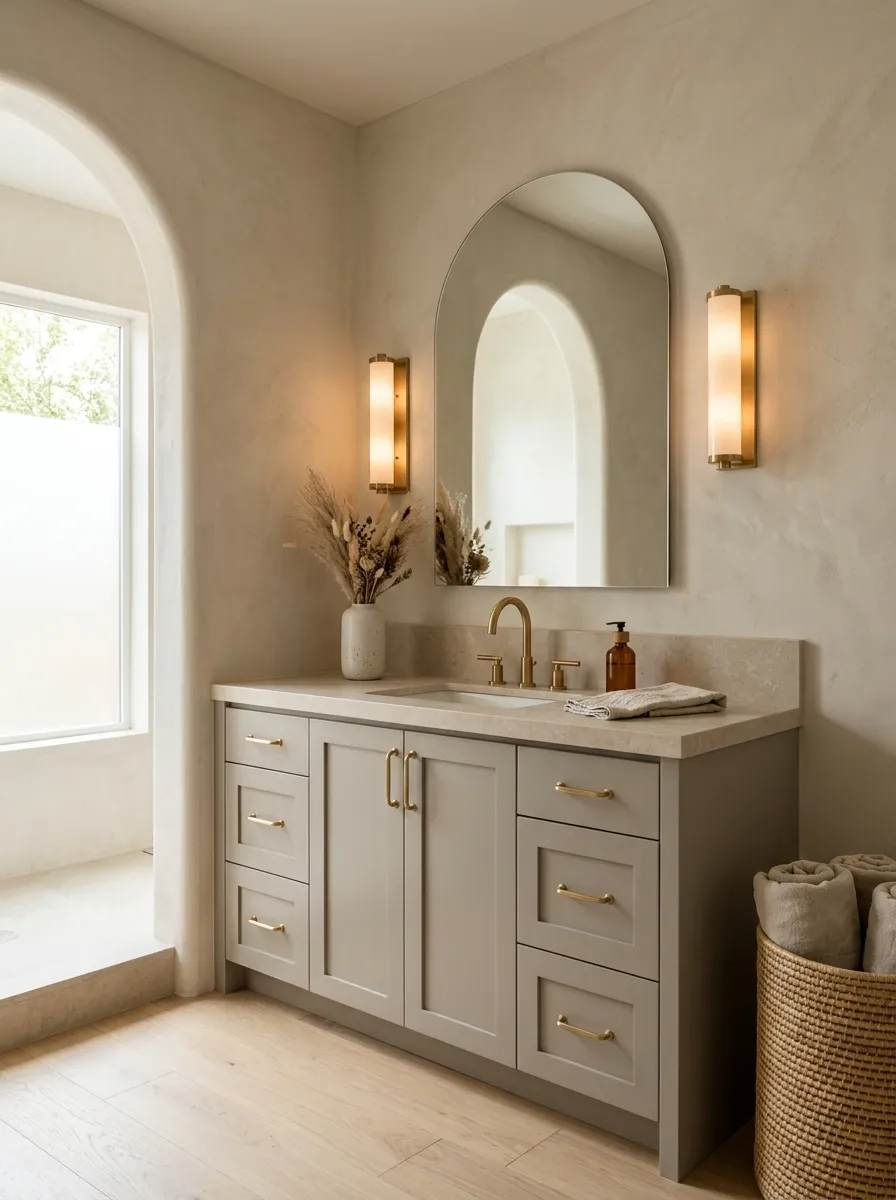
Hard edges are not mandatory for a modern bathroom. This design uses soft curves and muted materials to create a room that feels contemporary without looking overly sharp.
Beige stone forms the main backdrop, while mushroom-grey cabinetry gives the vanity area a slightly deeper tone. Pale oak, rounded mirrors, and softly curved accessories repeat the organic shapes across the room. The lighting remains warm and diffused, avoiding harsh pools of brightness.
The strongest feature is the consistency of the shapes. The curved vanity, mirror, and selected architectural details speak the same visual language, so the bathroom feels designed as one piece rather than assembled one shopping trip at a time.
That is doing a lot of work with very little drama.
Soft profile
Rounded echo
Gentle curve
Grey Subway Tile Bathroom With Warm Beige Wood Ceiling
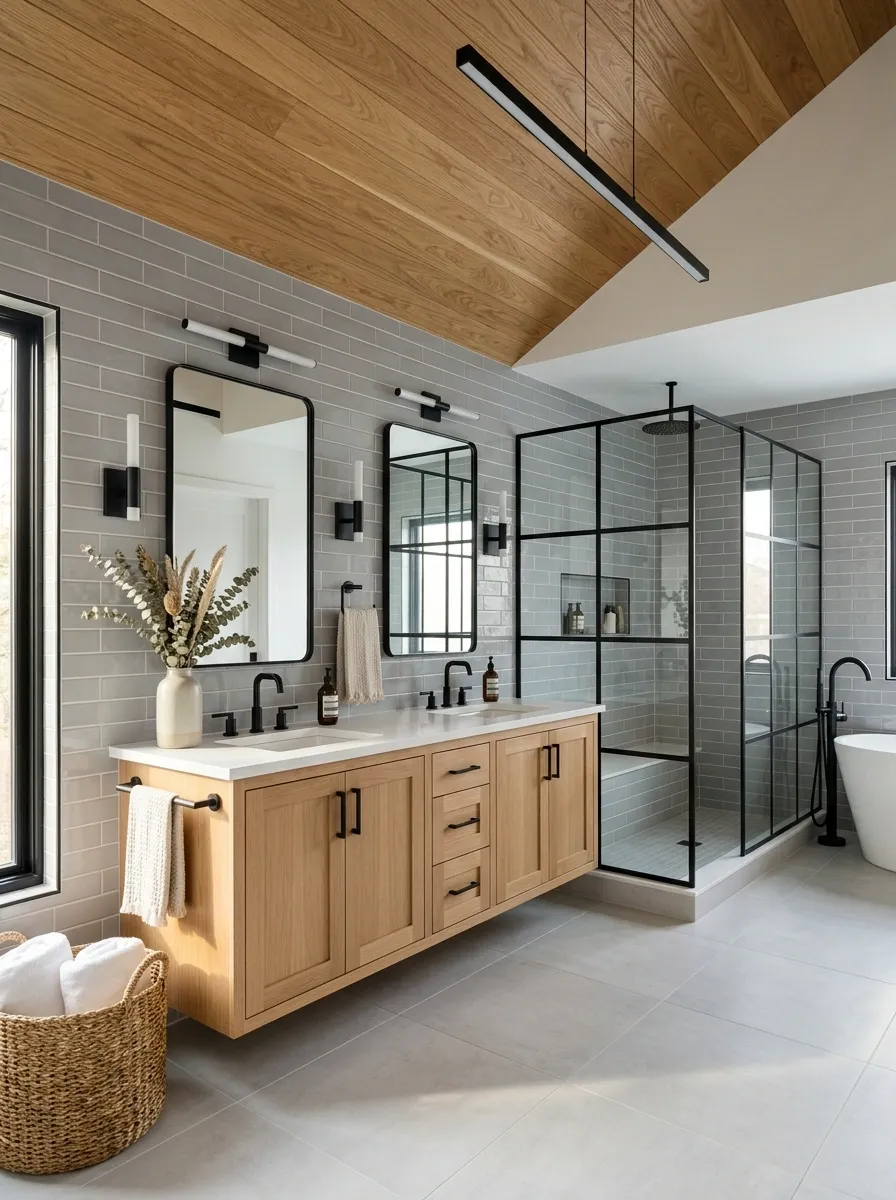
Grey subway tile gives this bathroom a crisp, familiar backdrop, but the warm beige wood ceiling changes the whole mood. Instead of letting the grey dominate from floor to ceiling, the wood pulls warmth into the upper part of the room and keeps the space from feeling overly cool.
An oak vanity continues that warmth below, creating a visual connection between ceiling and cabinetry. Matte black fixtures add definition around the shower and vanity without introducing another major color. The floor stays simple so the vertical wall tile remains easy to read.
It’s a classic combination with one clever interruption. Basically, the grey bathroom went upstairs, found some wood, and came back with a personality.
Beige Terrazzo Bathroom With Grey Floating Vanity
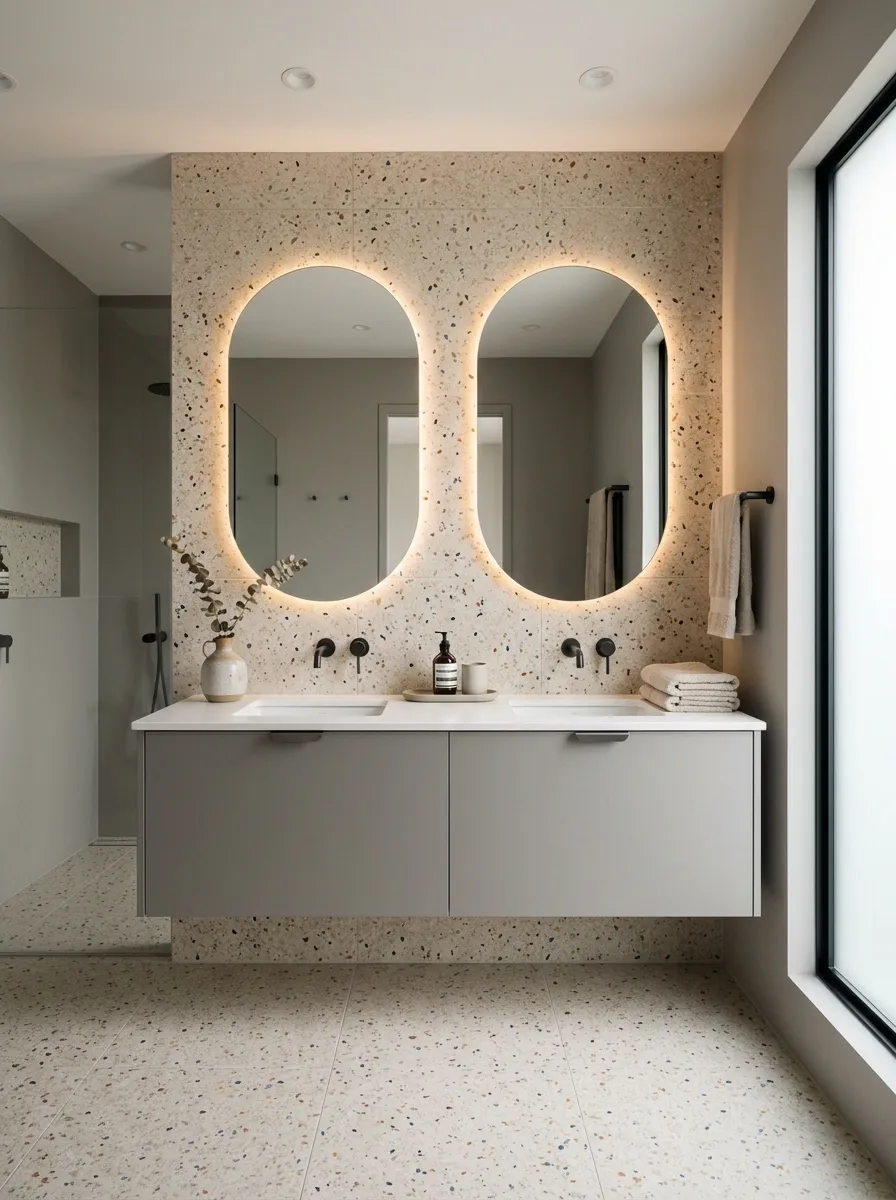
This bathroom lets beige terrazzo bring the personality while the grey vanity keeps the composition from becoming too warm. The terrazzo runs across the floor and selected wall areas, creating a continuous pattern that feels playful without becoming chaotic.
A smooth grey floating vanity sits against that busier surface and acts as the visual reset. Rounded mirrors soften the cabinet lines, while integrated lighting keeps the vanity area clean and modern. Hardware remains understated because the terrazzo already brought enough gossip to the room.
The best part is the contrast between patterned and solid surfaces. One has movement. The other knows when to be quiet.
A very useful skill in bathroom design, frankly.
Pattern lives here
Solid visual pause
Moody Grey and Beige Bathroom With Walnut
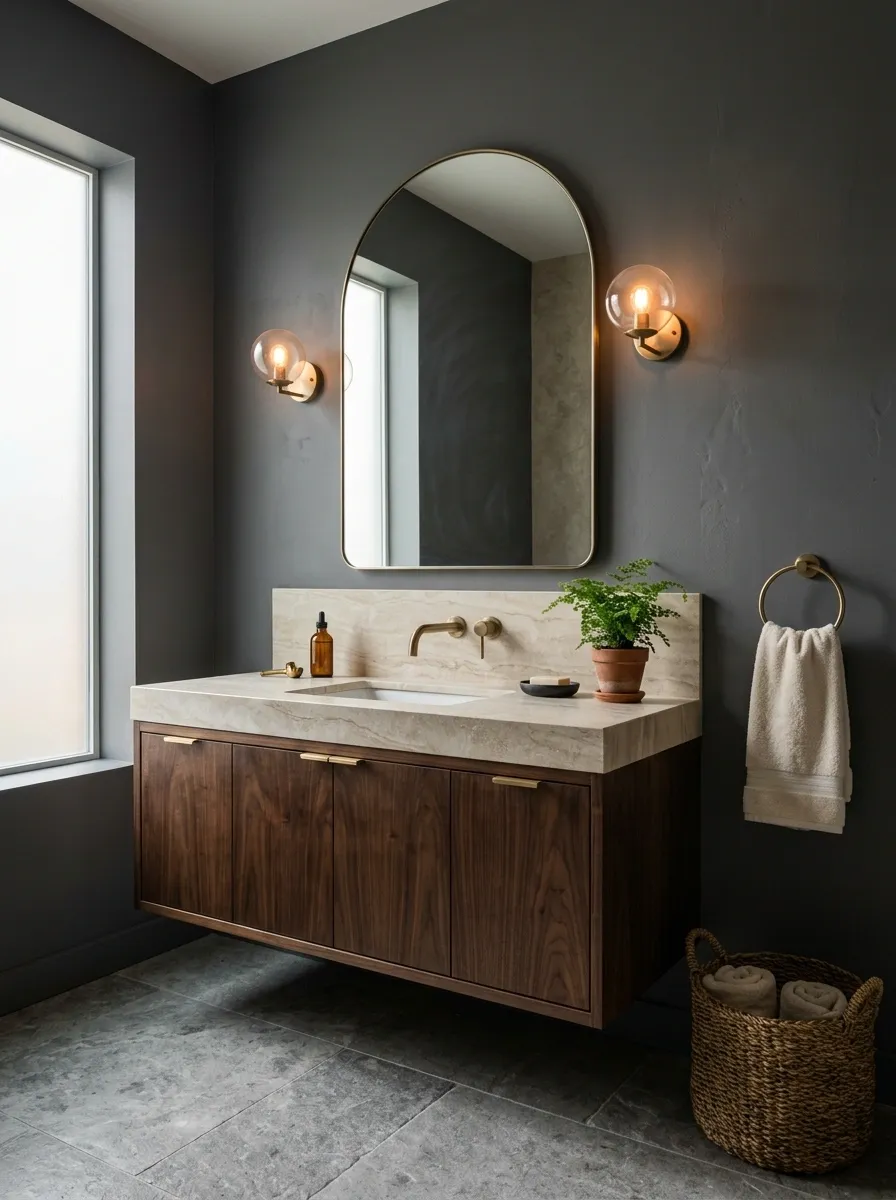
Dark bathrooms can feel rich without becoming gloomy, especially when the darker surfaces are balanced with warm wood and creamy stone.
This design uses deep grey walls and stone flooring as the architectural foundation. A walnut vanity brings substantial warmth into the center of the room, while a beige stone countertop and cream textiles stop the darker palette from swallowing everything. Warm sconces create a softer evening layer and keep the room from relying entirely on overhead lighting.
The palette has depth because the neutrals aren’t sitting at one brightness level. There’s dark grey, warm brown, creamy beige, and soft light working together.
Basically, the bathroom has range. Unlike the person who chose six shades of grey and called it a personality.
Airy Grey and Beige Bathroom With Large Windows
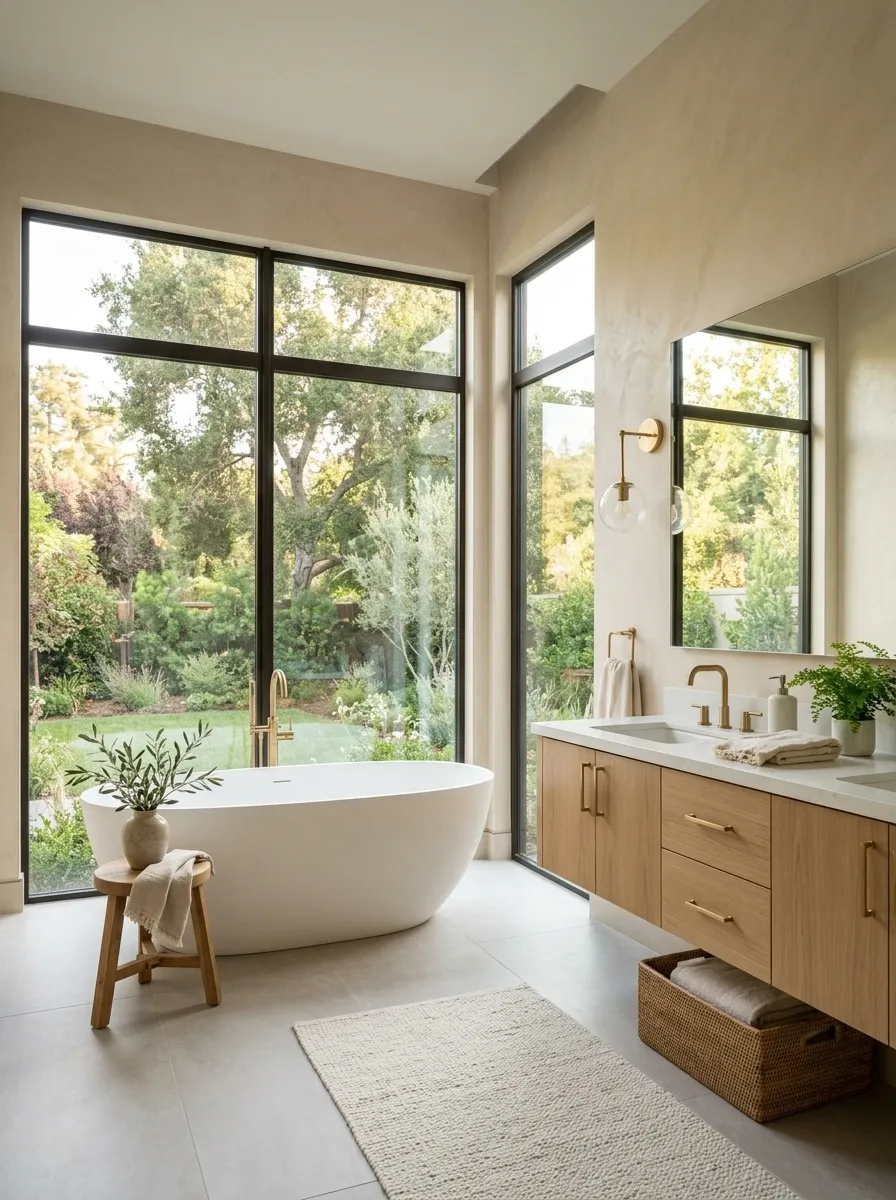
Here the natural light is part of the design, not just something happening outside the bathroom.
Large windows brighten pale grey flooring, while warm beige walls give the daylight a softer background. A light oak vanity sits beneath a broad mirror, and a freestanding tub takes advantage of the open view without crowding the center of the room. Cream upholstery and restrained fixtures keep the entire composition light.
The room works because the finishes don’t fight the natural brightness. Dark grey would shift the mood significantly, while too much beige could flatten the architecture. Soft grey provides definition without closing the room in.
Sunlight did most of the decorating. The rest simply had the good sense not to argue.
Compact Apartment Bathroom With Beige Microcement and Grey Stone
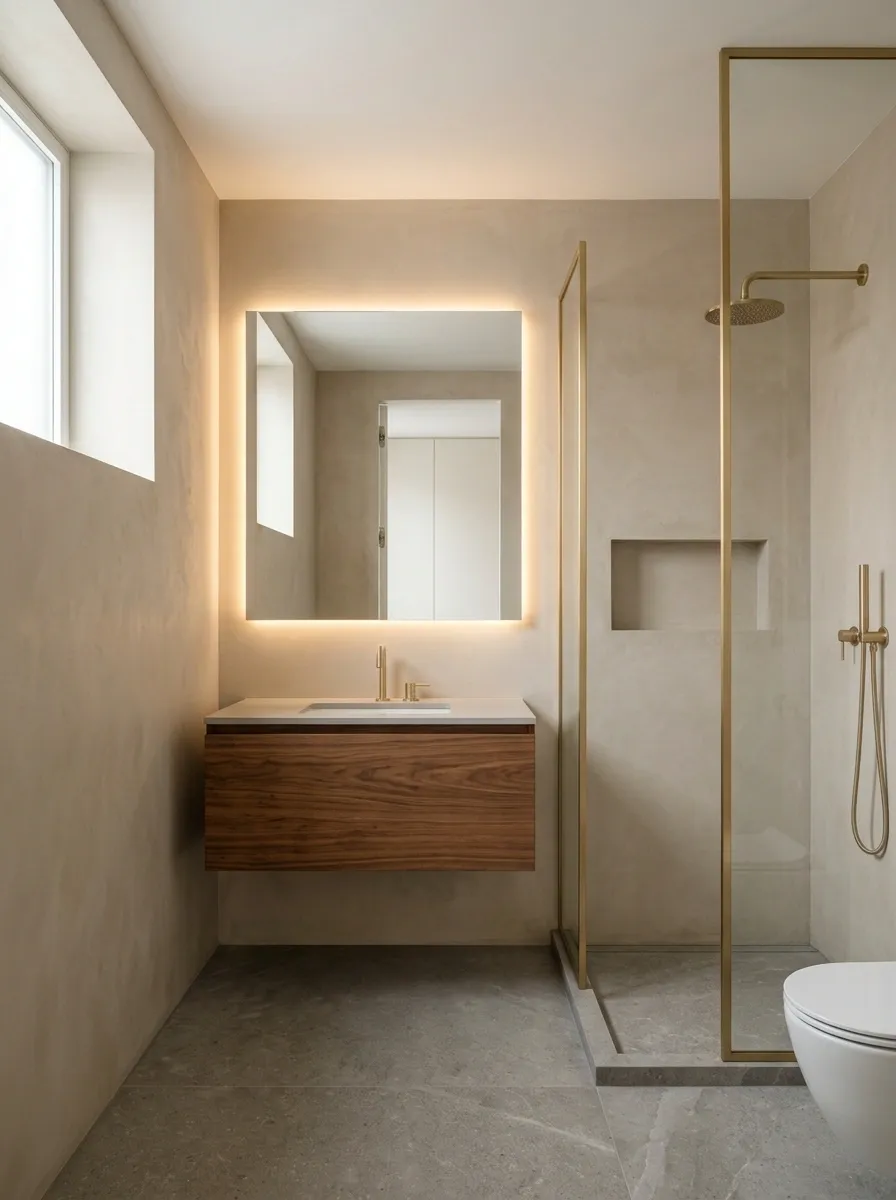
This compact bathroom uses continuity to make a small footprint feel calmer. Beige microcement-style walls create a nearly uninterrupted surface, while grey stone-look flooring clearly defines the wet zone.
A narrow walnut vanity keeps the floor open, and integrated mirror lighting eliminates the need for bulky fixtures around the sink. Storage is built into the architecture where possible, so the countertop doesn’t become a permanent display shelf for seventeen bottles that apparently all have important careers.
The strength of the design comes from restraint. Beige creates visual continuity across the walls. Grey adds a clear grounding element underfoot. Wood brings warmth without needing another decorative layer.
Small does not require boring. It just requires better editing.
Traditional Grey Vanity With Beige Limestone Walls
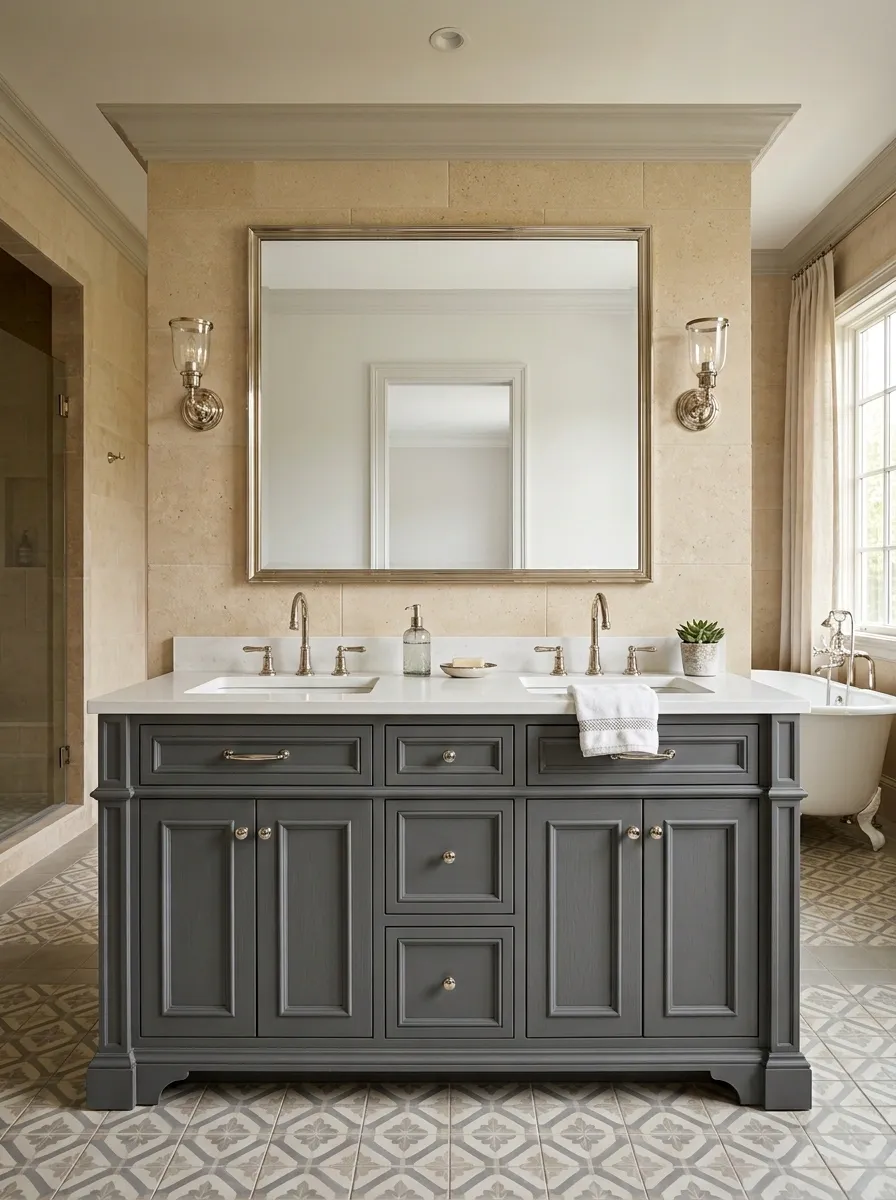
This bathroom keeps the classic look polished rather than overly formal. A substantial grey vanity sits against warm beige limestone-look walls, giving the room a strong architectural backdrop without making it feel dark.
A framed rectangular mirror sits above the vanity, flanked by simple sconces that echo the traditional shape without adding unnecessary ornament. The countertop stays light, while polished nickel fixtures introduce a little reflection. A restrained floor pattern keeps the lower half of the room visually calm.
The vanity carries most of the traditional character, which means the rest can breathe. That is what keeps the design from becoming visually fussy. Basically, the bathroom has manners. It doesn’t need to announce every decorative decision out loud.
Japandi Bathroom With Warm Grey Tile and Beige Oak
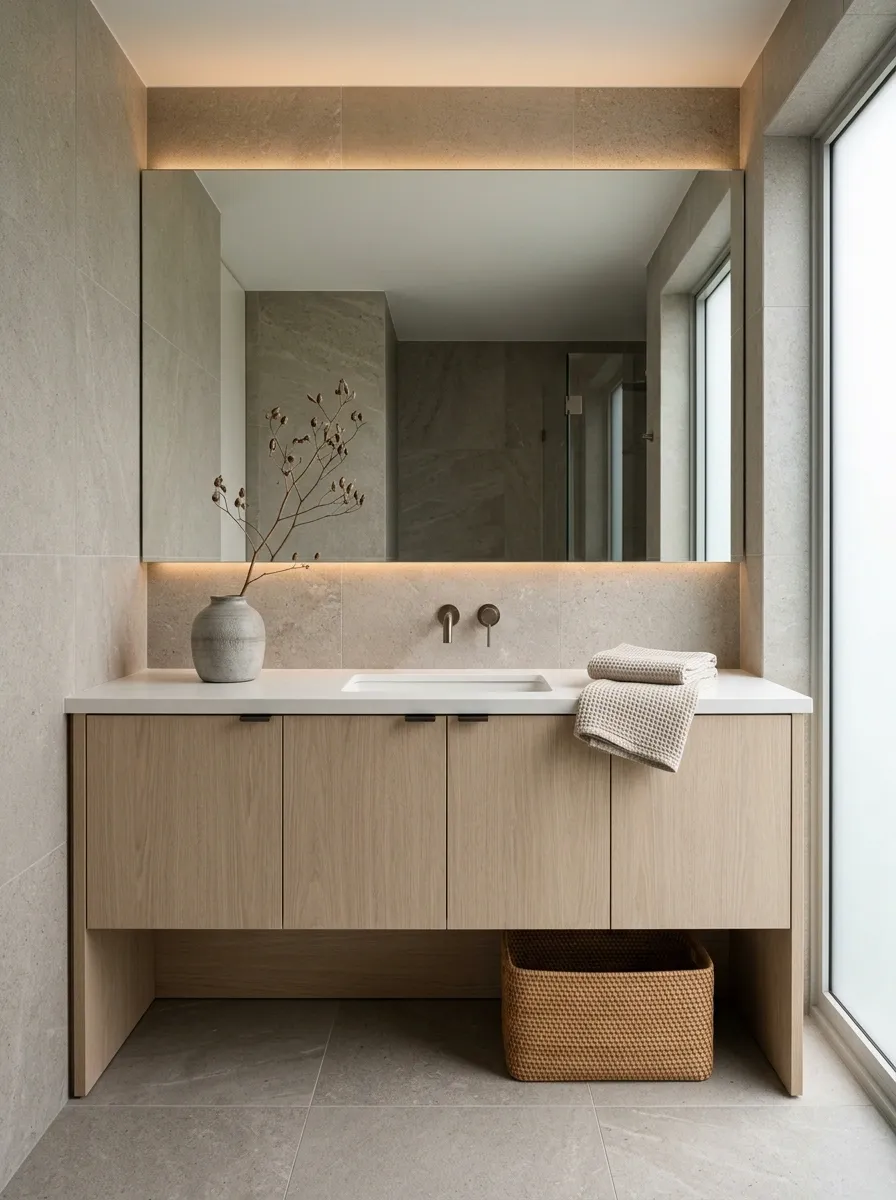
This bathroom takes the grey and beige palette in a quieter direction. Large warm-grey tiles create a simple architectural shell, while pale beige oak brings natural warmth through the vanity and storage.
The furniture stays low-profile, with clean fronts and very little visible hardware. A broad mirror, soft lighting, and a few handmade-looking accessories add texture without breaking the calm composition. Nothing is overly glossy, bright, or decorative.
The important part is the contrast between the orderly architecture and the natural materials. The grey keeps the room structured. The oak makes it feel human.
And yes, the room can be minimal without becoming a beige empty box with one sad branch in a vase.
Grey Herringbone Floor With Beige Wall Plaster
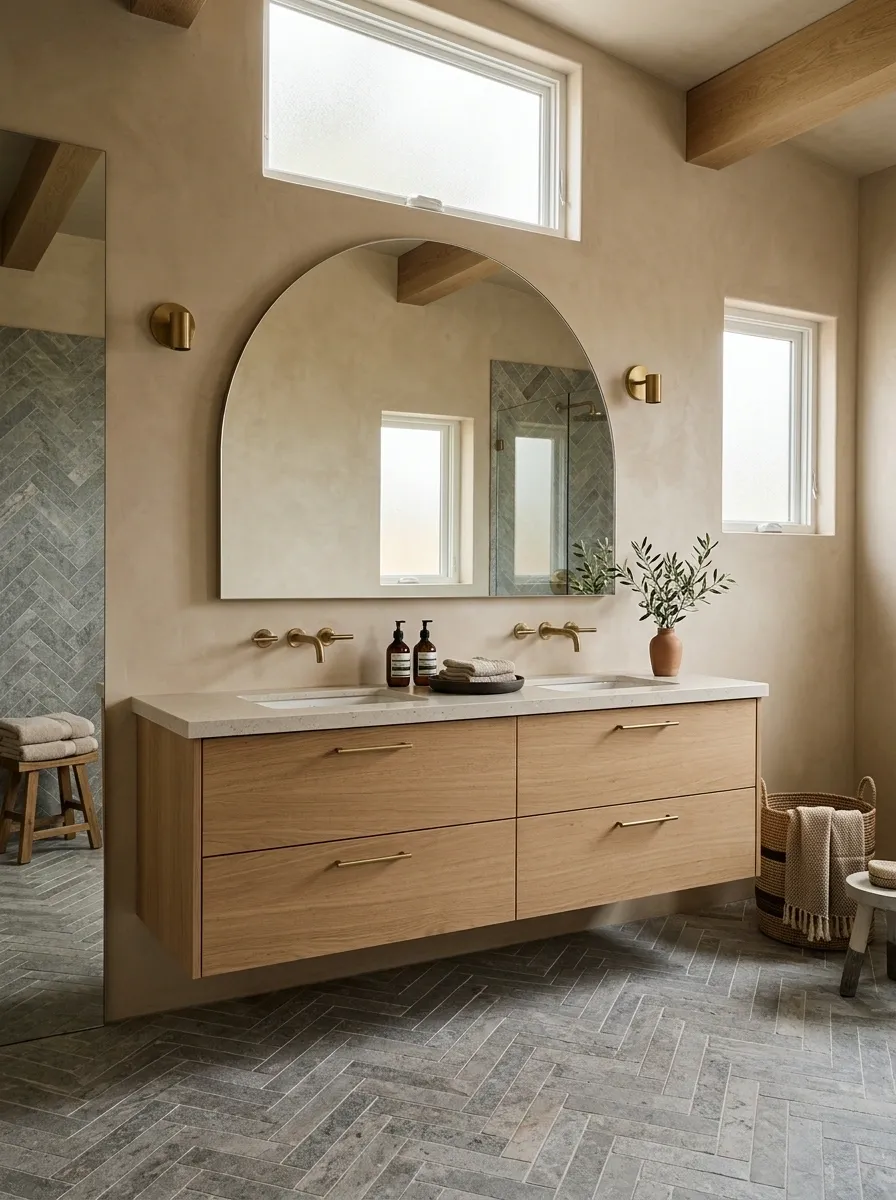
The floor becomes the memorable part of this bathroom through grey herringbone tile, while the walls remain intentionally soft with a warm beige plaster-style finish.
That contrast makes the room feel layered without requiring a busy shower wall or heavily detailed cabinetry. The vanity uses natural oak with a pale stone top, creating a warm bridge between the cooler floor and beige walls. A simple mirror keeps the upper half of the room visually open.
The herringbone pattern brings movement, but because it stays low in the room, the eye still gets a calm wall surface above it.
It’s a good example of giving one plane permission to be interesting while the others mind their business.
Beige Vanity Wall With Grey Slab Shower Surround
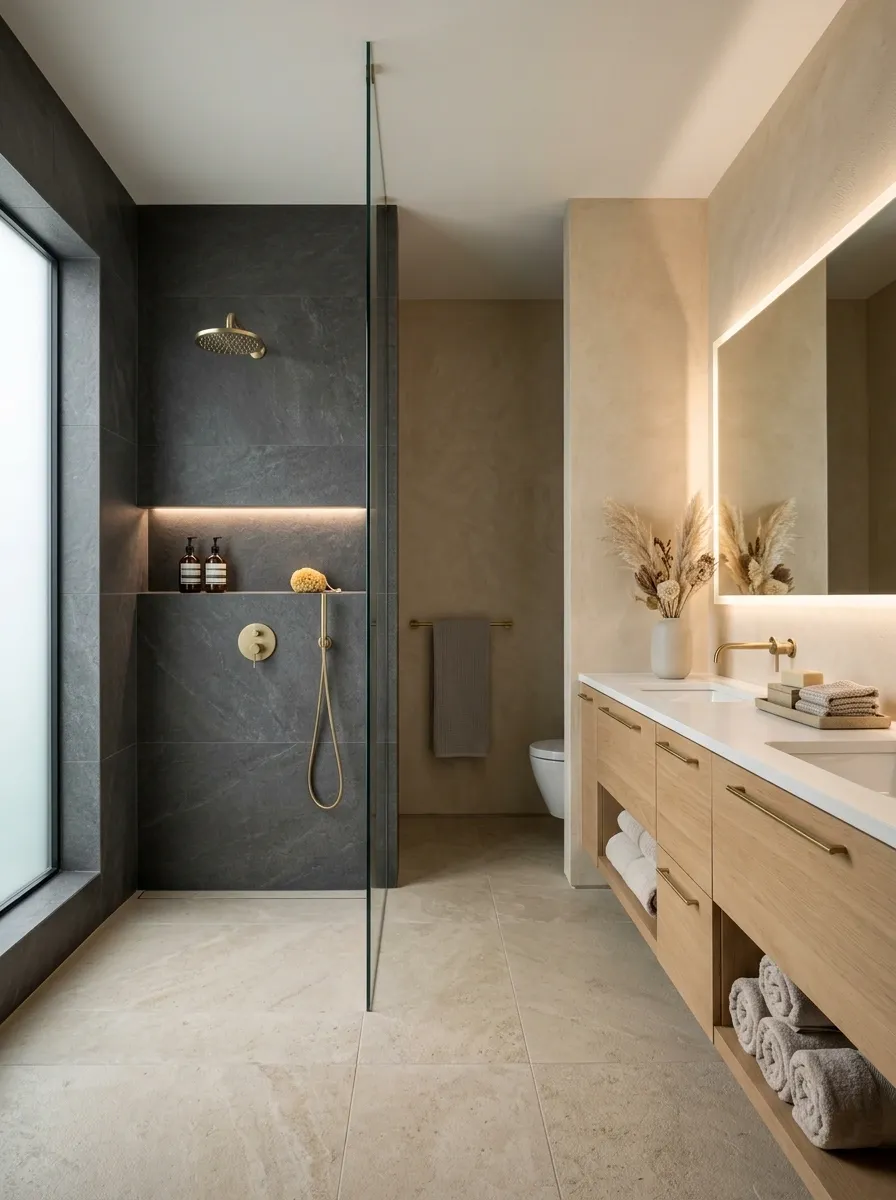
This bathroom separates the warm and cool neutrals by giving them different jobs. The vanity wall is fully beige, creating a warm dry-zone backdrop, while the shower is wrapped in large grey slab surfaces that feel smooth and architectural.
A narrow strip of clear glass keeps the transition between the two zones visually open. The vanity uses simple cabinetry with integrated storage, and the mirror is wide enough to reinforce the horizontal line of the room.
Because the materials are assigned to different zones, the contrast feels deliberate. Beige isn’t randomly appearing beside grey. Each one has a territory.
A surprisingly mature arrangement for two colors that can otherwise behave like strangers at a dinner party.
Mirror + storage
Slab-style surface
Soft Grey Bathroom With Sandy Beige Curved Vanity
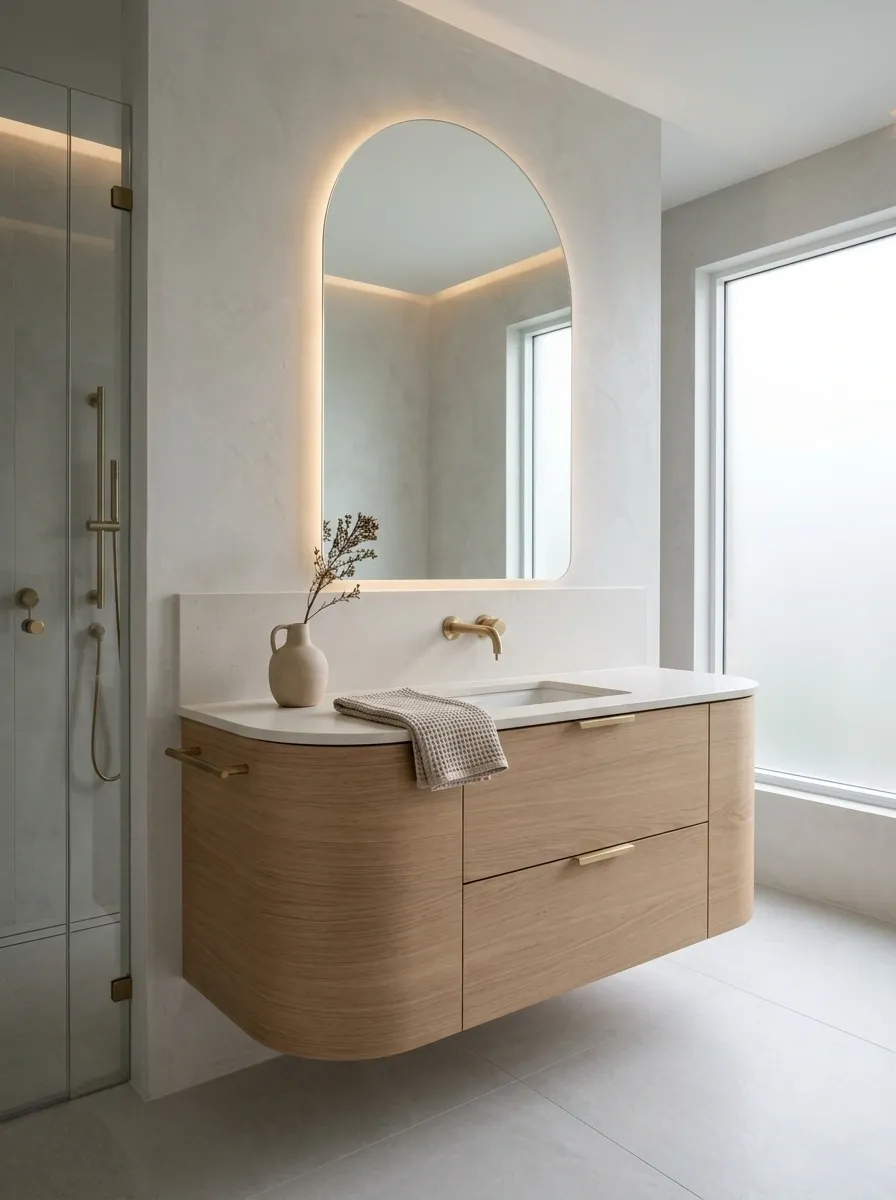
The vanity becomes the sculptural feature here, with a sandy beige curved form standing against pale grey walls and flooring. Everything around it is deliberately restrained so the shape can read clearly.
The mirror repeats the rounded language without copying it exactly, while concealed storage keeps the vanity wall uncluttered. Soft lighting follows the curves rather than creating a harsh rectangle of brightness across the room.
The color palette stays simple, but the shape adds the personality. That makes the room feel contemporary without relying on loud materials or dramatic contrast.
The lesson is almost annoyingly simple: when the furniture has a strong silhouette, stop decorating over it.
Main curve
Visual echo
Softens the room
Farmhouse-Inspired Grey and Beige Bathroom
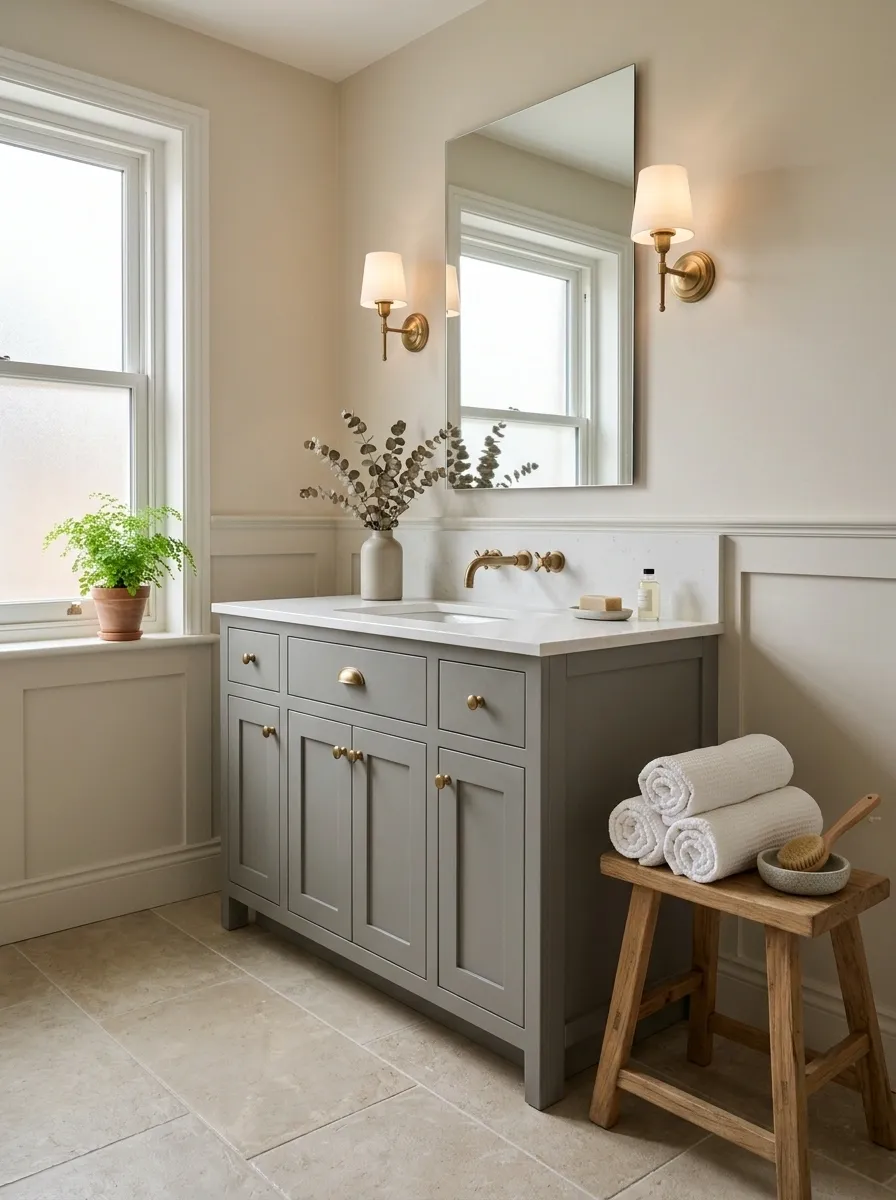
This bathroom borrows the relaxed side of farmhouse style without filling the room with distressed signs, mason jars, and enough faux-rustic accessories to open a gift shop.
Warm beige painted walls create the softer backdrop, while muted grey cabinetry anchors the vanity. Limestone-look flooring adds a natural foundation, and an oak stool brings another warm material into the mix. Traditional sconces and understated hardware give the room just enough old-house character without making the whole thing feel overly themed.
The best part is the balance between traditional and clean-lined pieces. The materials feel familiar, but the composition stays edited.
Basically, farmhouse style can whisper. It does not need to arrive in a pickup truck.
Luxury Grey Stone Bathroom With Beige Upholstered Details
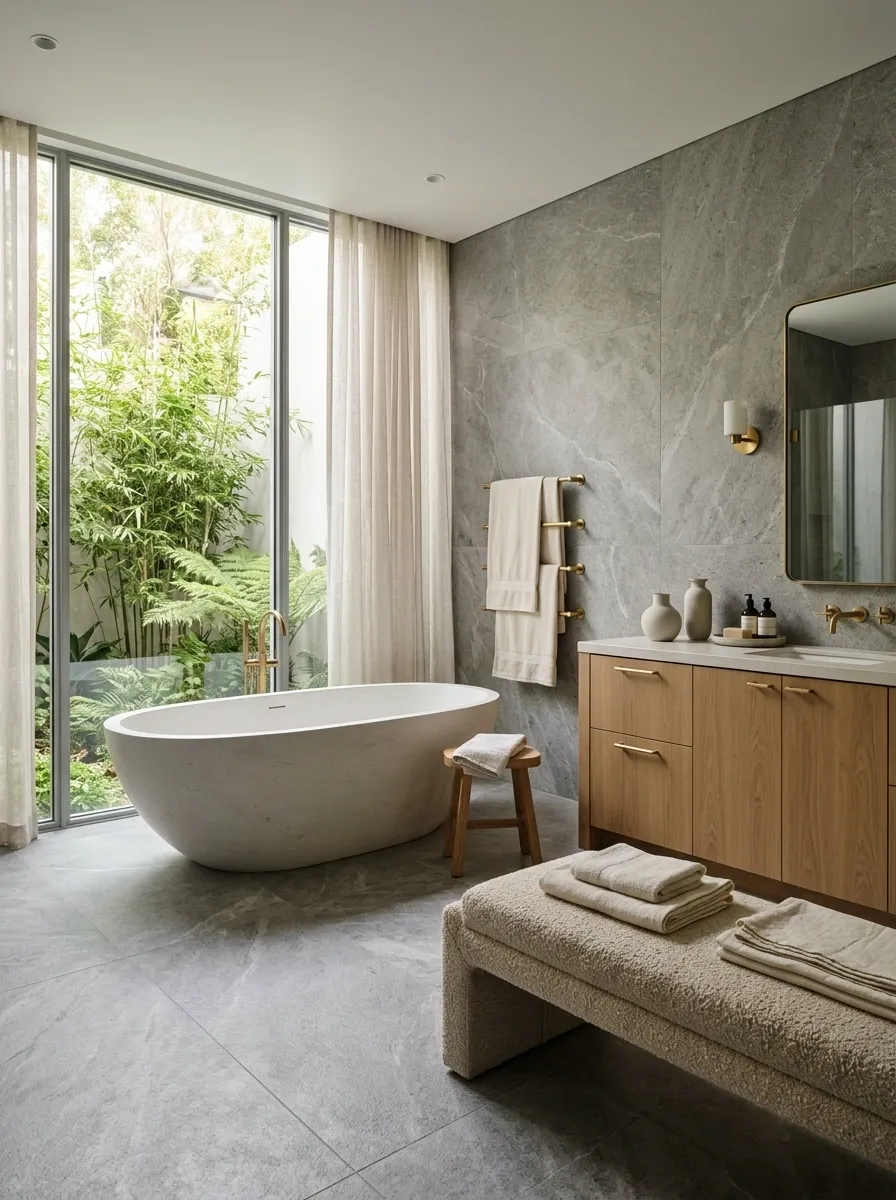
This bathroom goes in a more architectural direction, using large grey stone surfaces across the walls and floor to create a strong, seamless backdrop. Instead of adding more hard finishes, the room introduces softness through a beige upholstered bench, warm oak cabinetry, and layered lighting.
A sculptural tub sits within the stone setting and becomes the focal point, while the vanity remains substantial but visually simple. Cream textiles repeat the upholstery tone and keep the room from feeling too severe.
The contrast between hard and soft materials is what makes this design work. Stone gives the room structure. Upholstery makes it feel comfortable rather than ceremonial.
Because apparently luxury is allowed to have somewhere soft to sit now.
Hard architectural base
Natural warmth
Visual softness
Grey and Beige Bathroom With Fluted Oak Vanity
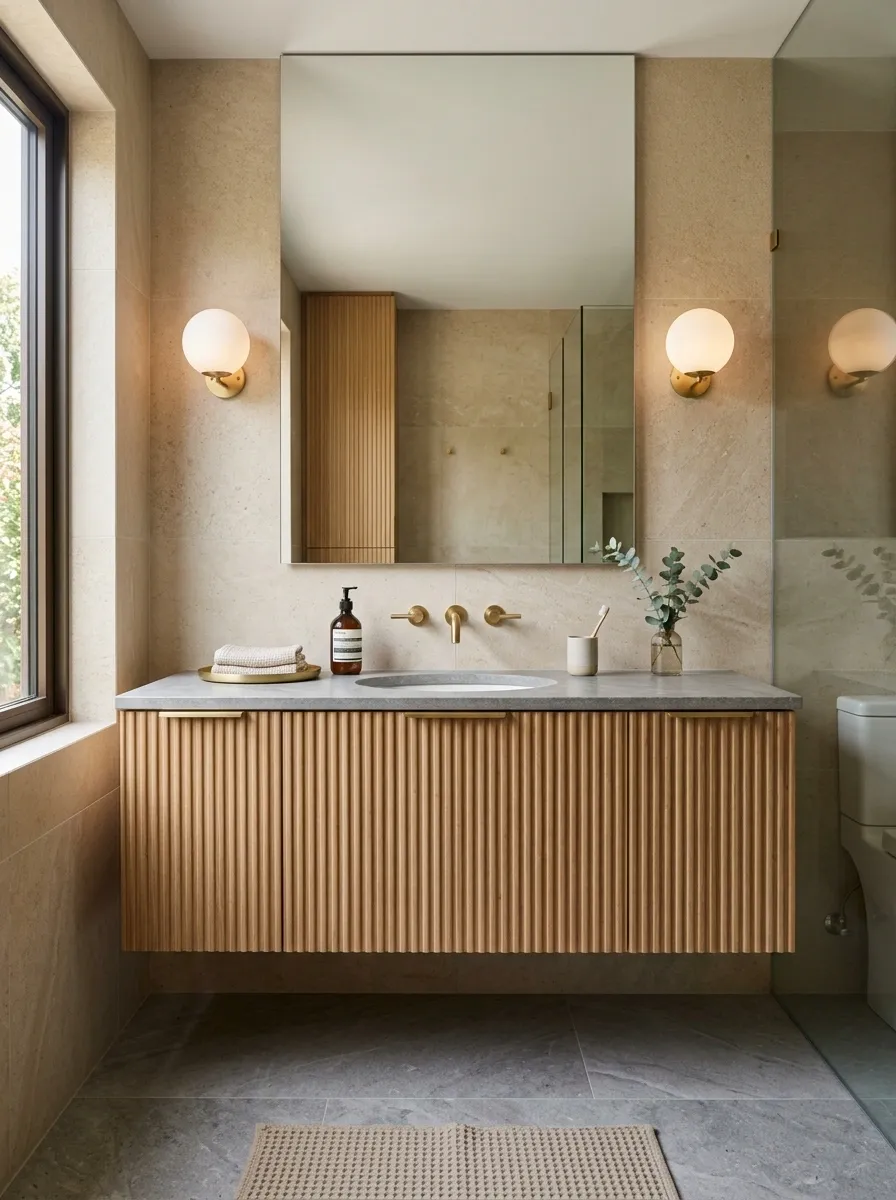
This bathroom keeps the palette restrained but gives the vanity enough texture to become the defining feature. Warm beige wall tile creates a calm backdrop, while a substantial fluted oak vanity introduces vertical rhythm through its ribbed front.
Grey flooring adds cooler contrast beneath the warmer cabinetry, and a grey stone countertop ties the two neutral families together. A large mirror keeps the vanity wall feeling open, while soft globe lighting adds a rounded counterpoint to the vertical fluting.
The texture is doing the decorating here. There’s no need to cover the room in accessories when the furniture already has a strong surface story.
One fluted vanity understood the assignment and declined to bring twelve decorative baskets with it.
Beige tile keeps the backdrop quiet.
Grey stone gives the vanity a cooler counterpoint.
Minimal Grey and Beige Guest Bathroom
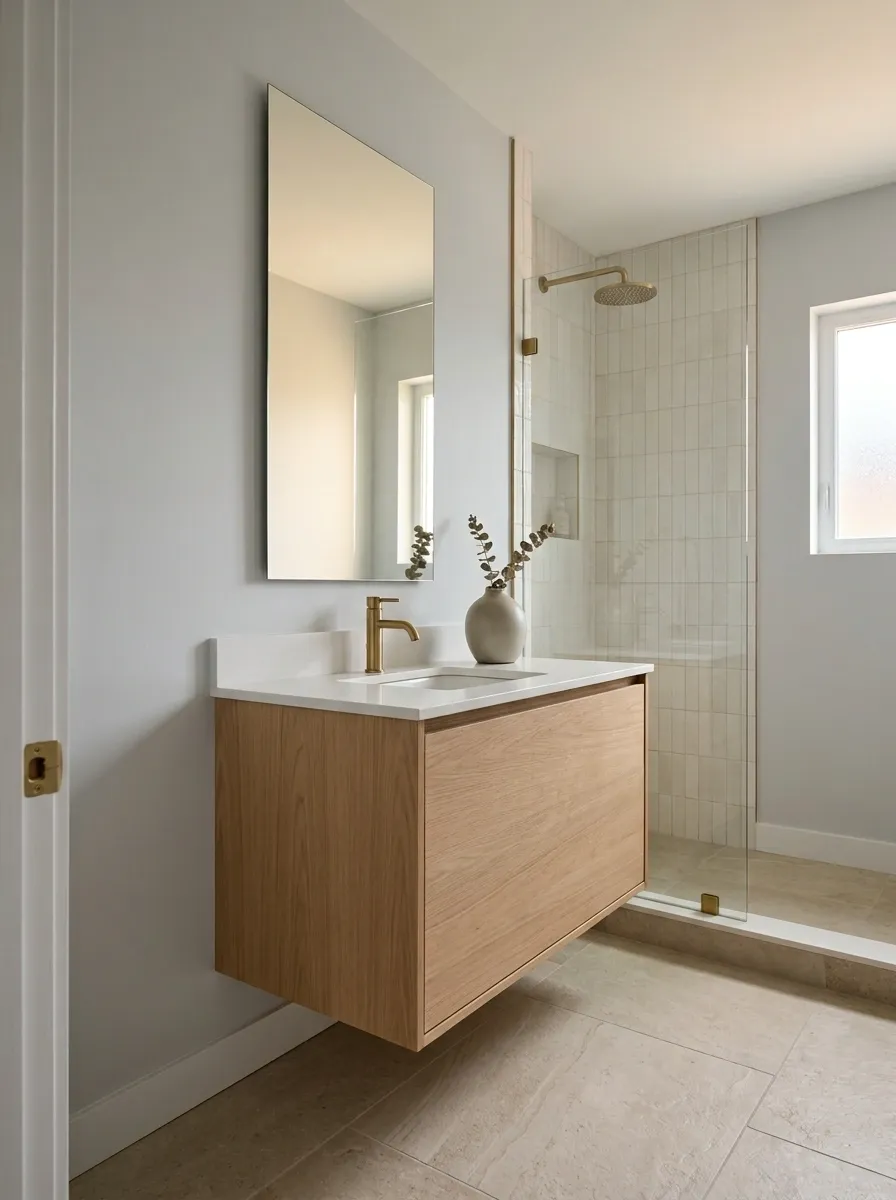
A guest bathroom doesn’t need to become a miniature luxury hotel to feel finished. This design keeps everything compact, calm, and easy to use.
Pale grey walls create the main backdrop, while beige limestone-look floor tile brings warmth underfoot. A small oak vanity provides storage without dominating the room, and a slim mirror keeps the upper wall open. Concealed storage handles the practical clutter, leaving room for one carefully chosen decorative element rather than a collection of tiny objects competing for countertop space.
The composition is deliberately quiet because guest bathrooms are often small and frequently viewed from the doorway. A clean sightline matters.
The room says “welcome” without putting the word on a wooden sign.
Statement Grey and Beige Bathroom With Mixed Natural Stone
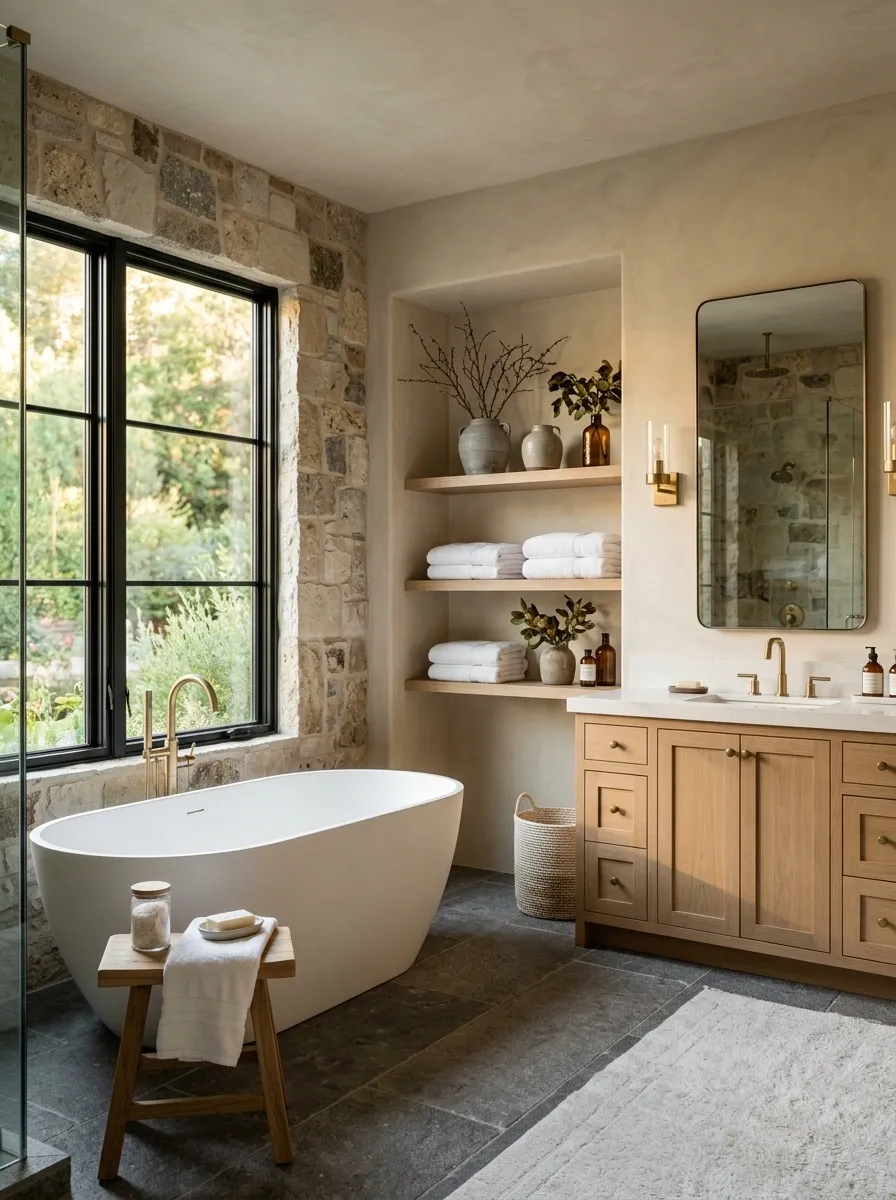
The final concept brings the palette together without making everything match too perfectly. Different natural stone surfaces create variation across the walls and floor, while warm beige walls soften the architecture. Charcoal-grey flooring provides a deeper foundation, and oak cabinetry introduces a natural transition between the cooler stone and warmer finishes.
A sculptural tub gives the room its strongest focal point, while restrained brass fixtures add a muted metallic note rather than another loud contrast. The result feels layered because the grey and beige appear in different materials and tonal depths instead of as two flat blocks of color.
This is the kind of bathroom where every finish has a job. Nothing is there simply because there was an empty shopping cart.
Natural transition
Material variation
Small reflective note