
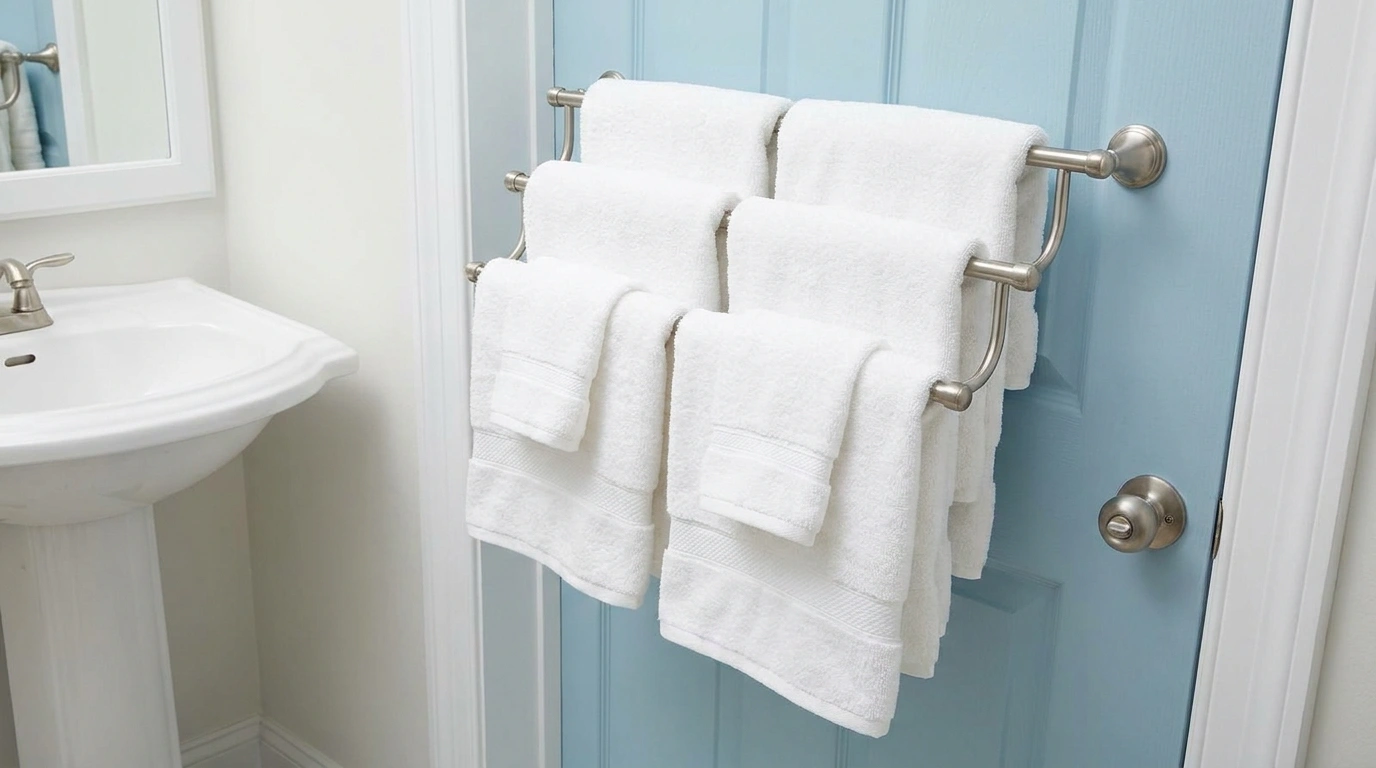
Bathrooms have a funny habit of exposing every questionable storage decision.
The tile can be gorgeous. The vanity can look expensive. The lighting can finally stop making everyone look like they have not slept since 2017. Then the towels arrive, and suddenly there is one hanging over the shower door, another thrown across the vanity, and three more stacked somewhere they absolutely should not be.
Good bathroom towel storage is not simply about finding somewhere to put fabric. It should make sense with the room’s layout, materials, proportions, and daily routine.
A recessed niche can become part of the architecture. A wood shelf can warm up a room full of stone. A slim cabinet can turn an awkward empty wall into useful storage without making a small bathroom feel even smaller.
The Storage Decision That Changes the Whole Bathroom
Bathroom Towel Storage Designs
Warm Oak Vanity With an Integrated Open Towel Shelf
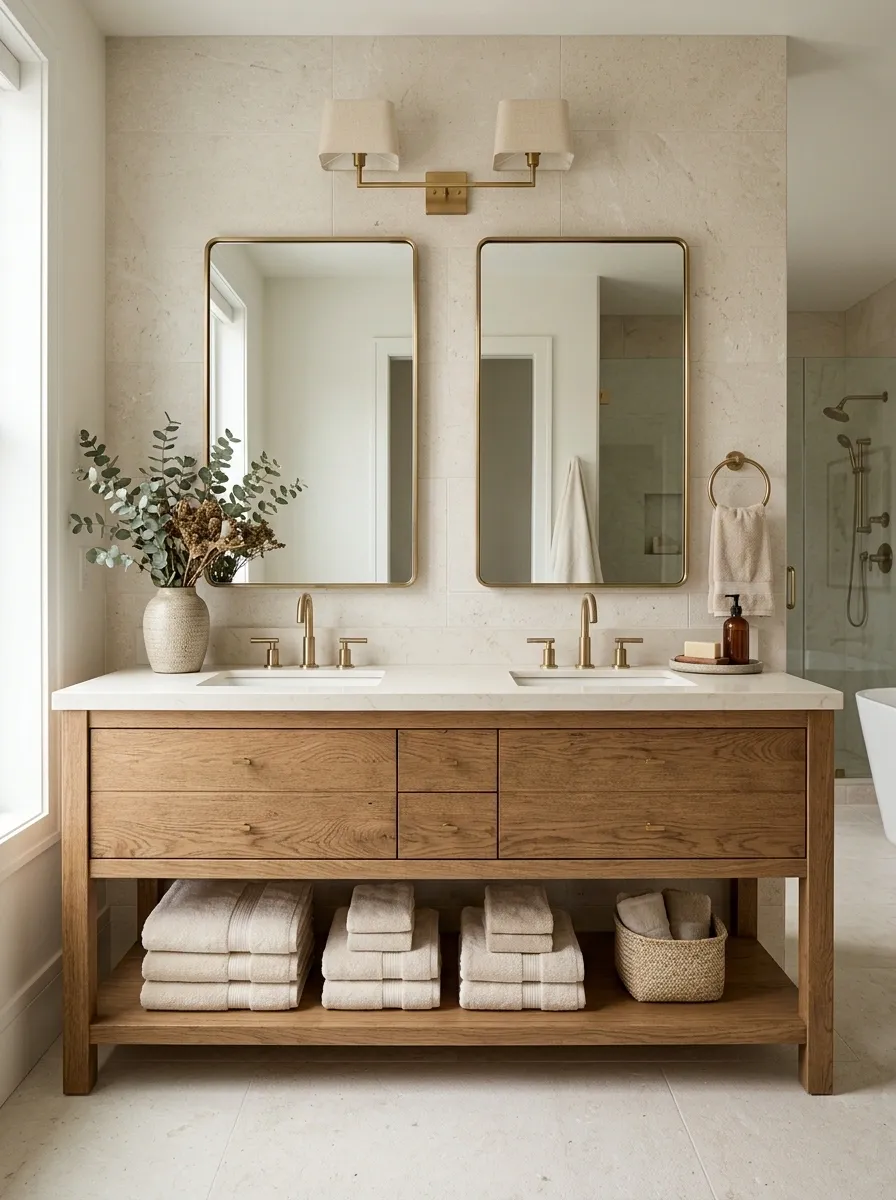
A warm oak vanity becomes the anchor of this bathroom, with an open shelf running through its lower section for neatly folded towels. Soft limestone walls, pale flooring, brushed metal fixtures, and creamy textiles keep the room warm without turning it into beige-on-beige territory.
The open shelf works because it is part of the vanity’s architecture rather than an extra piece attached afterward. Towels introduce soft texture against the hard surfaces, while the oak gives the entire arrangement a warmer visual base. Keep the shelf relatively edited and let the towels create subtle color variation. If every folded towel is a different shade, the carefully controlled bathroom palette will disappear faster than a white towel after one toddler bath.
Warm structure
Soft visual texture
Cooler visual balance
Floor-to-Ceiling Cabinet With a Dedicated Towel Zone
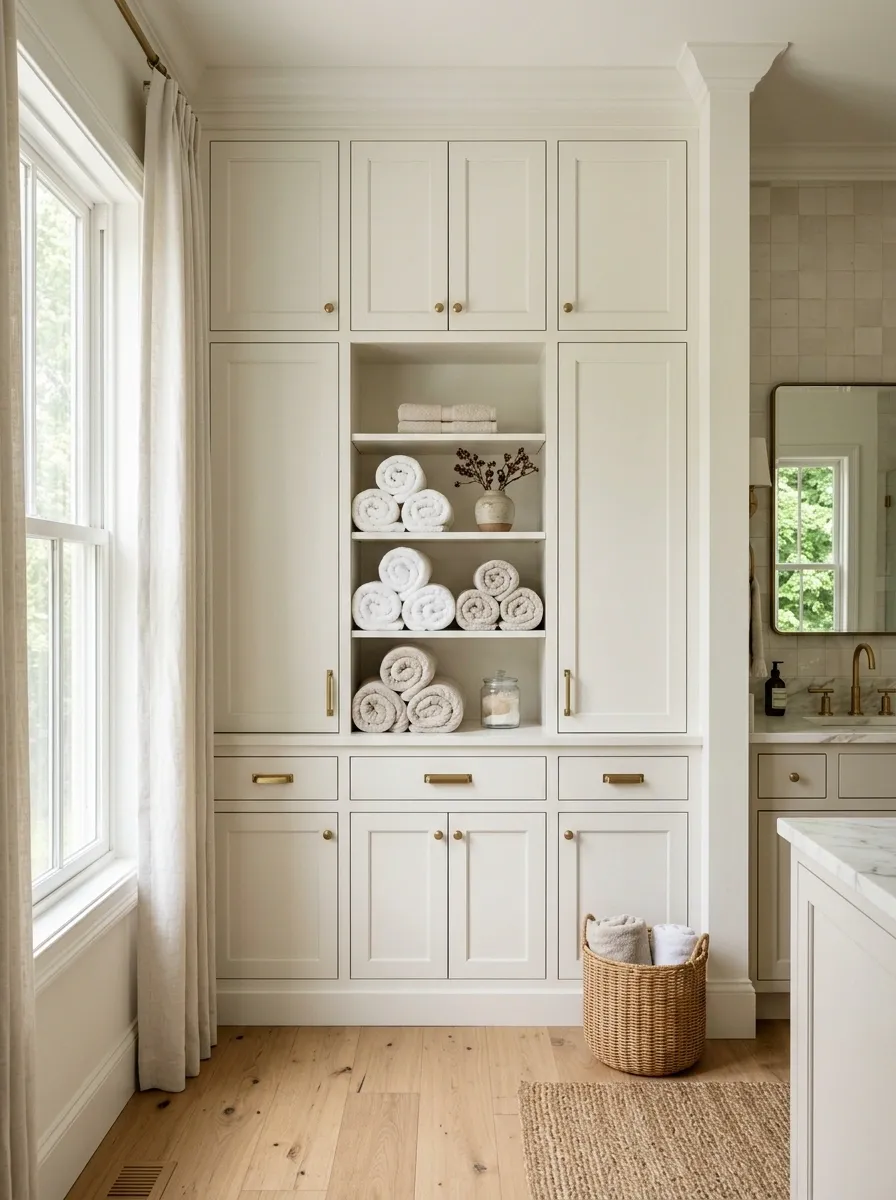
A tall cabinet makes use of vertical wall space in this bright transitional bathroom. Instead of dividing the cabinet into identical shelves, one central section remains open for towels while the surrounding compartments stay behind painted doors.
That distinction keeps the storage visually interesting while giving everyday towels a convenient home. The closed sections handle less attractive bathroom supplies, so the open shelf doesn’t become a display of cleaning products and backup toilet paper. A warm white cabinet paired with light stone and natural wood keeps the tall piece from feeling heavy.
The strongest part of this arrangement is the vertical proportion. When floor space is limited, going upward can create substantial storage without pushing another bulky cabinet into the walking path.
Cleaning supplies
Everyday towels
Spare linens
Soft Minimal Bathroom With Limestone and Floating Towel Storage
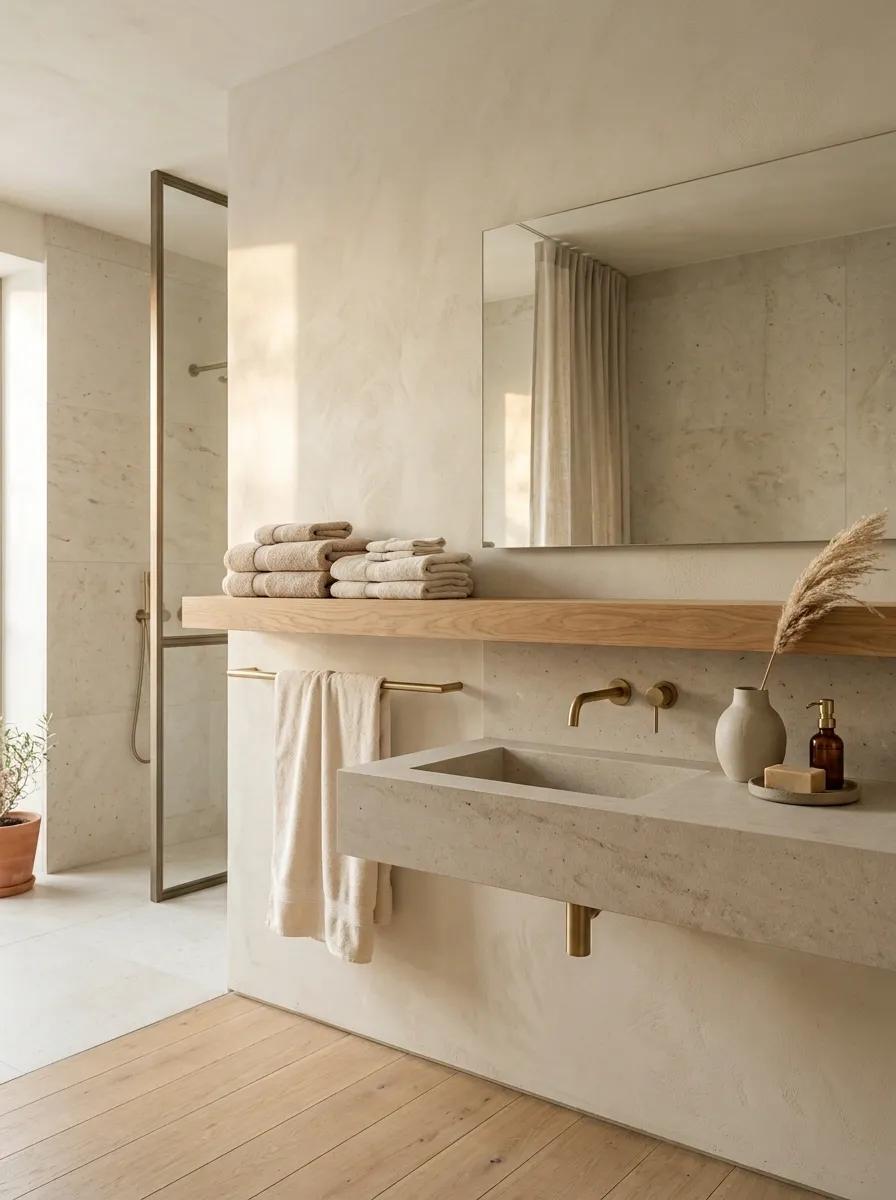
A pale limestone bathroom keeps the architecture quiet while a floating wood shelf creates a warm horizontal line beneath the vanity mirror. Soft beige stone, creamy walls, and simple fixtures prevent the room from feeling sterile.
The floating shelf holds folded towels while a slim rail beneath it handles the towel currently in use. That separation keeps the arrangement neat without pretending daily life does not involve wet towels.
The design is especially useful in smaller bathrooms where bulky floor-standing furniture would make the room feel cramped. Minimal does not mean owning three towels and pretending that’s a lifestyle. It means giving everything a clear visual home and leaving enough breathing room around it.
Vintage Bathroom With a Painted Linen Cabinet
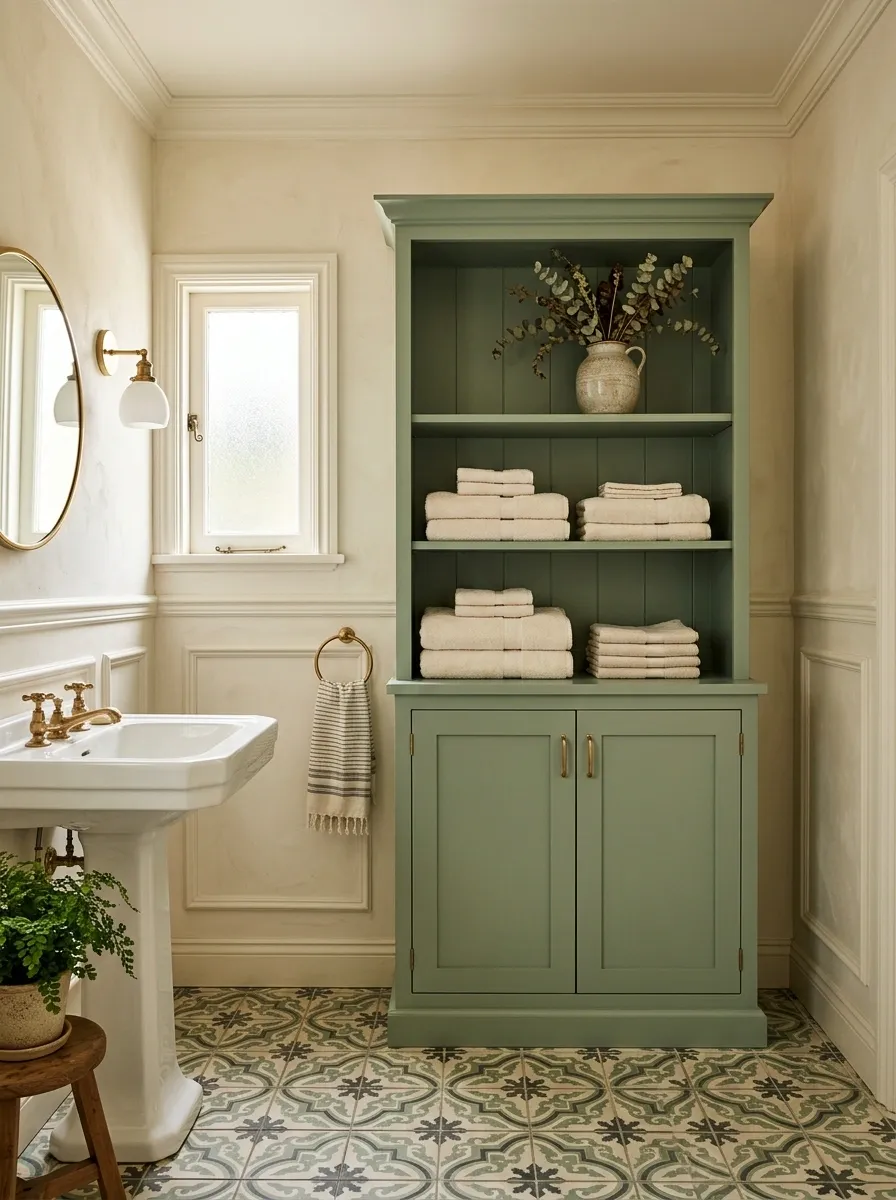
A muted sage linen cabinet gives this vintage-inspired bathroom a strong piece of furniture without making the room feel like a museum set. The cabinet has framed doors, small brass pulls, and a few open shelves where folded towels remain visible. Patterned floor tile, creamy walls, and warm metal fixtures reinforce the old-house character.
The cabinet works because its painted finish connects with the bathroom’s softer palette while its traditional detailing adds depth. Open shelves should hold towels and perhaps one or two quiet accessories. Vintage bathrooms already have enough personality without every available surface becoming a thrift-store reunion.
Keep the cabinet slightly darker or more saturated than the walls so it reads as intentional furniture. That contrast gives the storage visual weight without requiring a giant piece.
Cabinet anchor
Wall softness
Small repeated detail
Compact Bathroom With a Full-Width Recessed Towel Niche
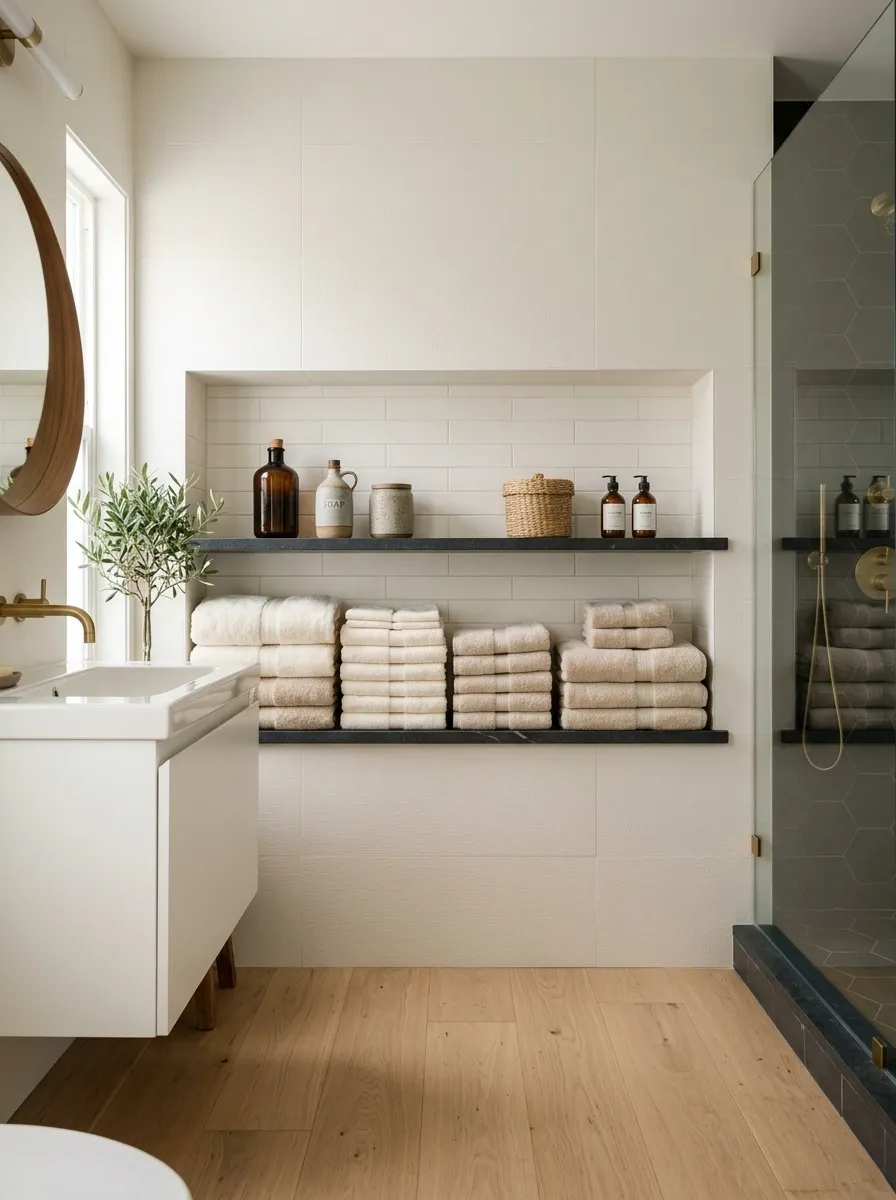
A long recessed niche stretches across one section of this compact bathroom wall, creating a dedicated towel zone without adding furniture to the floor. Warm white tile continues through the niche while a darker stone shelf gives the opening definition.
The full-width approach makes the niche feel architectural rather than like a little storage hole. Folded towels occupy the lower portion, while a smaller upper section can hold everyday bath items. Because the niche follows the width of the wall, it also creates a strong horizontal line that visually counteracts the room’s limited depth.
The key is keeping the niche shallow enough to remain practical without stealing unnecessary wall depth. Storage should solve the problem, not create an entirely new construction saga.
Black-and-White Bathroom With Graphic Towel Shelving
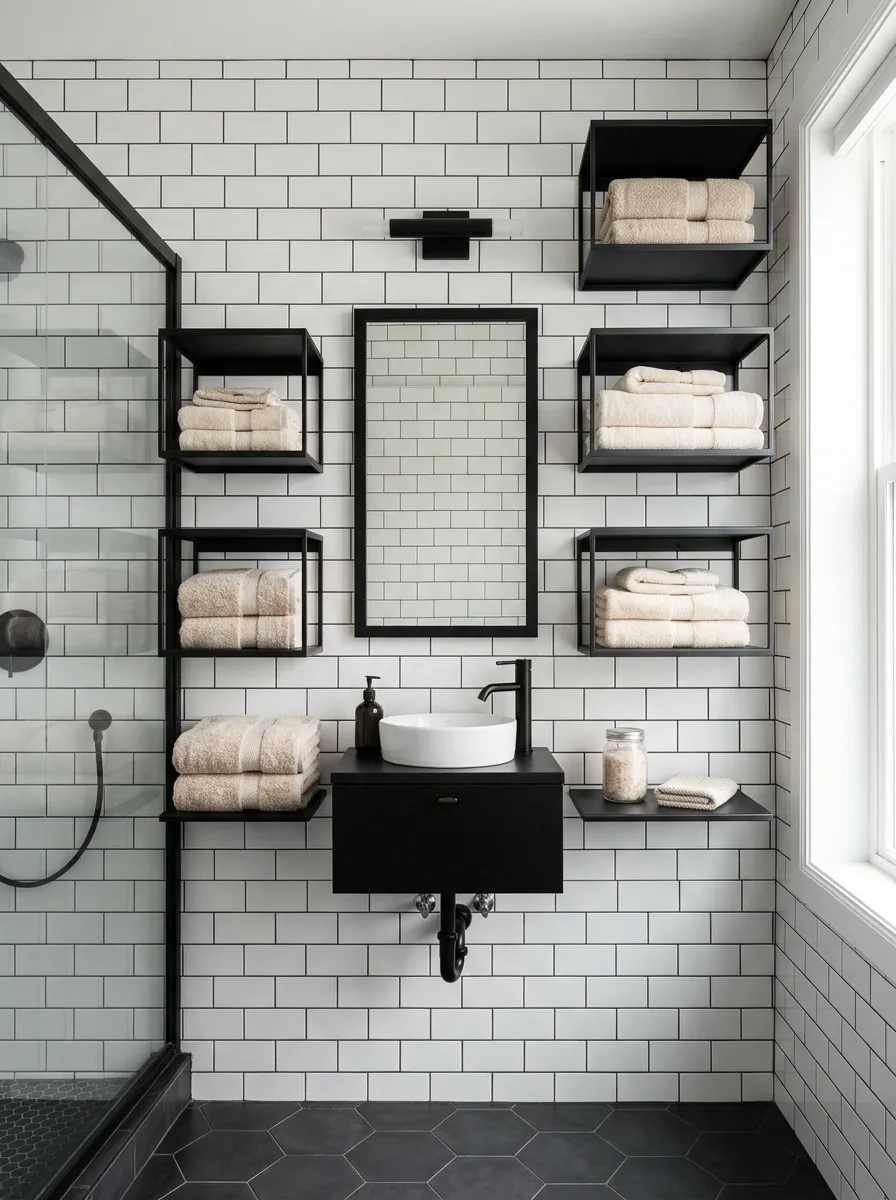
This high-contrast bathroom uses black metal shelving against white tile to create a crisp graphic backdrop for thick neutral towels. A black-framed mirror, dark hardware, and simple vanity repeat the shelving’s visual weight, while warm towels prevent the room from feeling too stark.
The shelves are deliberately open, so the towels become part of the composition. The trick is to keep the contents consistent in color and fold them cleanly enough that the shelving reads as intentional storage rather than an exposed closet.
The strongest version uses several horizontal shelves at different heights rather than one giant unit. That gives the wall rhythm and lets the towels create soft blocks against the harder black-and-white architecture.
Warm Modern Bathroom With a Floating Walnut Towel Tower
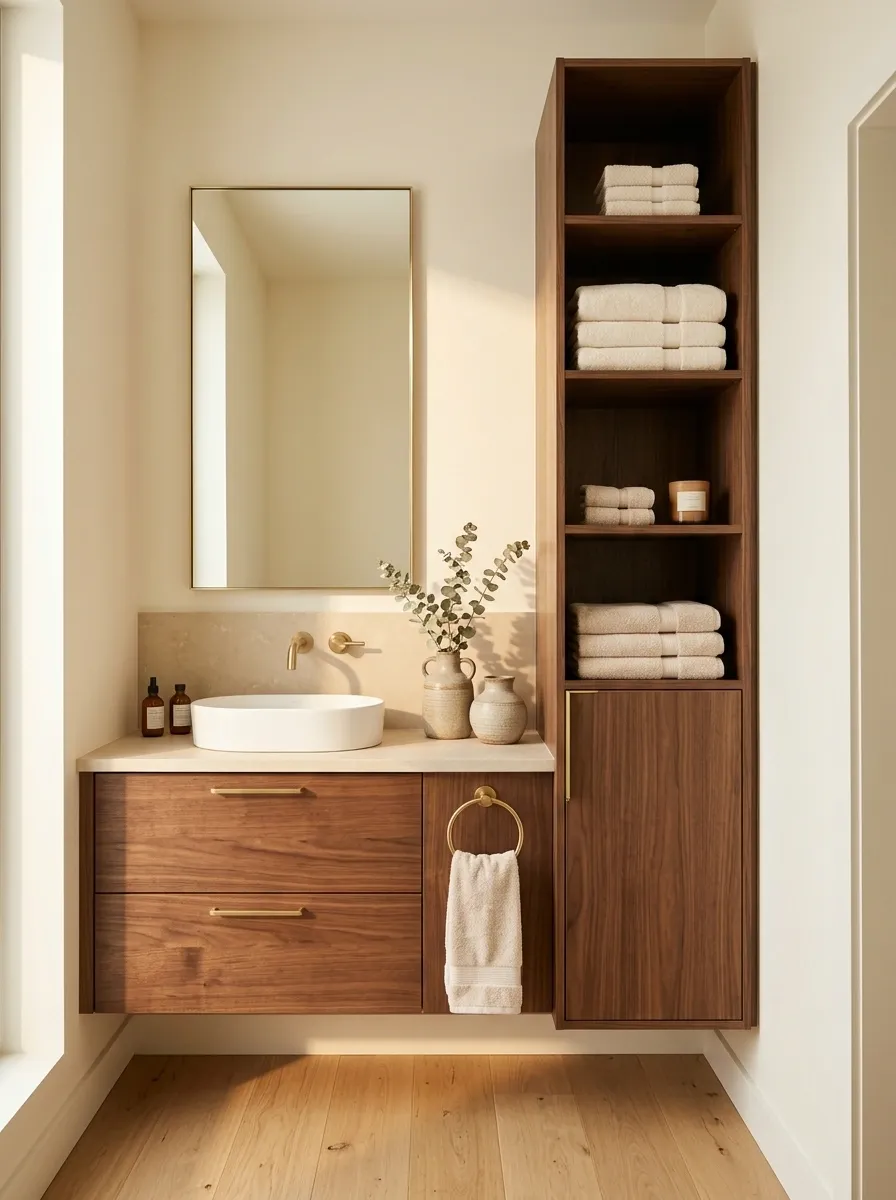
A slim walnut storage tower rises beside the vanity in this warm modern bathroom, creating a strong vertical feature without filling the room with cabinetry. Open shelves hold folded towels, while a closed lower compartment keeps less attractive supplies hidden.
The dark walnut gives the otherwise pale bathroom a visual anchor. Soft beige stone, creamy walls, and brushed fixtures keep the contrast controlled rather than dramatic. The tower also makes good use of a narrow leftover section beside the vanity that might otherwise become dead space.
The design works especially well when the vanity itself uses a related wood tone. Repeating the same material makes the pieces feel connected instead of looking like two unrelated furniture purchases that met for the first time in the bathroom.
Everyday towels
Less attractive supplies
Moody Charcoal Bathroom With a Brass-Trimmed Towel Niche
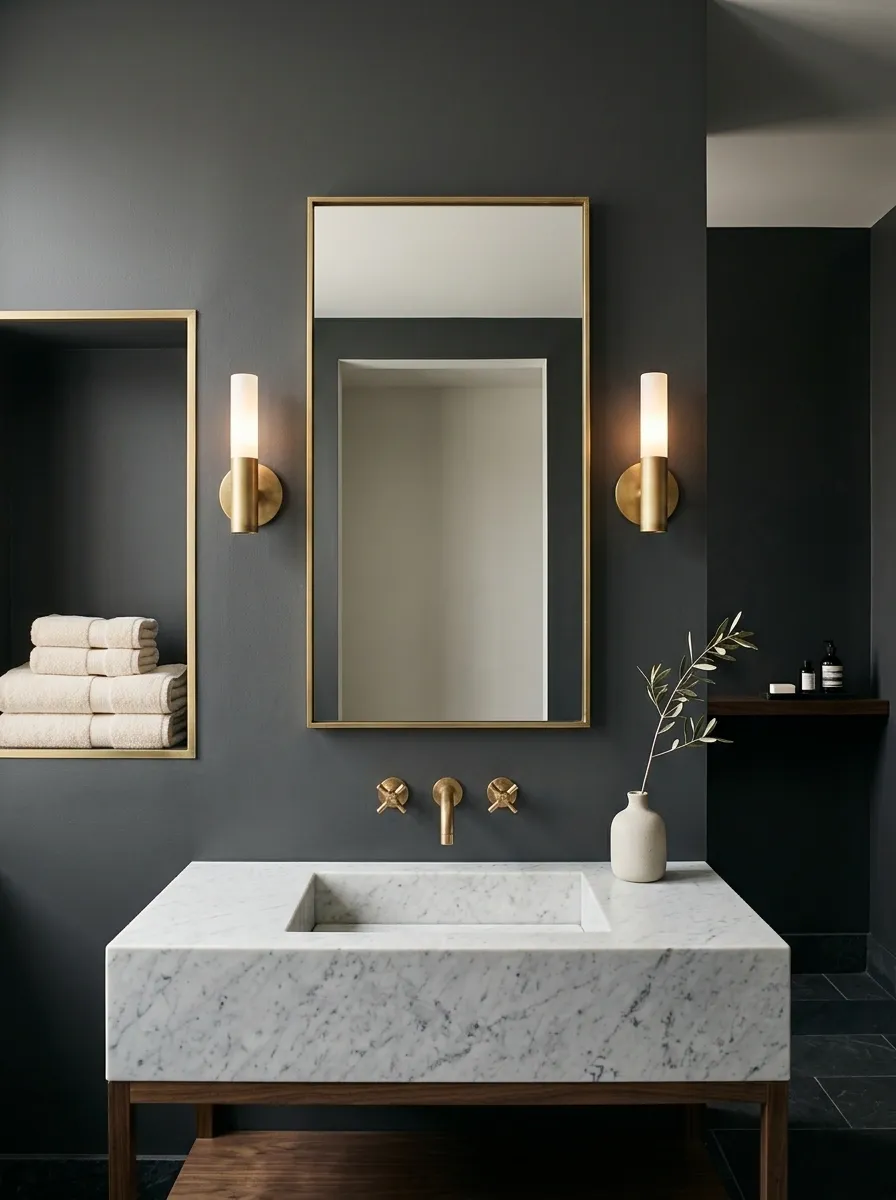
Deep charcoal walls give this bathroom a moody, boutique-hotel character, while a recessed towel niche breaks up the dark surface with warm brass trim. A pale stone vanity, aged brass fixtures, and soft cream towels create enough contrast to keep the room from becoming visually heavy.
The niche feels intentional because its finish connects with the faucets, mirror frame, and lighting. Meanwhile, the light towels become a practical bright spot against the darker wall. This is storage becoming part of the color scheme instead of hiding from it.
Keep the niche relatively edited. A dark bathroom with a dozen colorful bottles lined up inside the wall is no longer moody. It is simply having a very public bathroom-counter meltdown.
Warm metal.
Light towels.
Architectural backdrop
Repeated warm detail
Towel contrast
Organic Modern Bathroom With Curved Plaster Storage
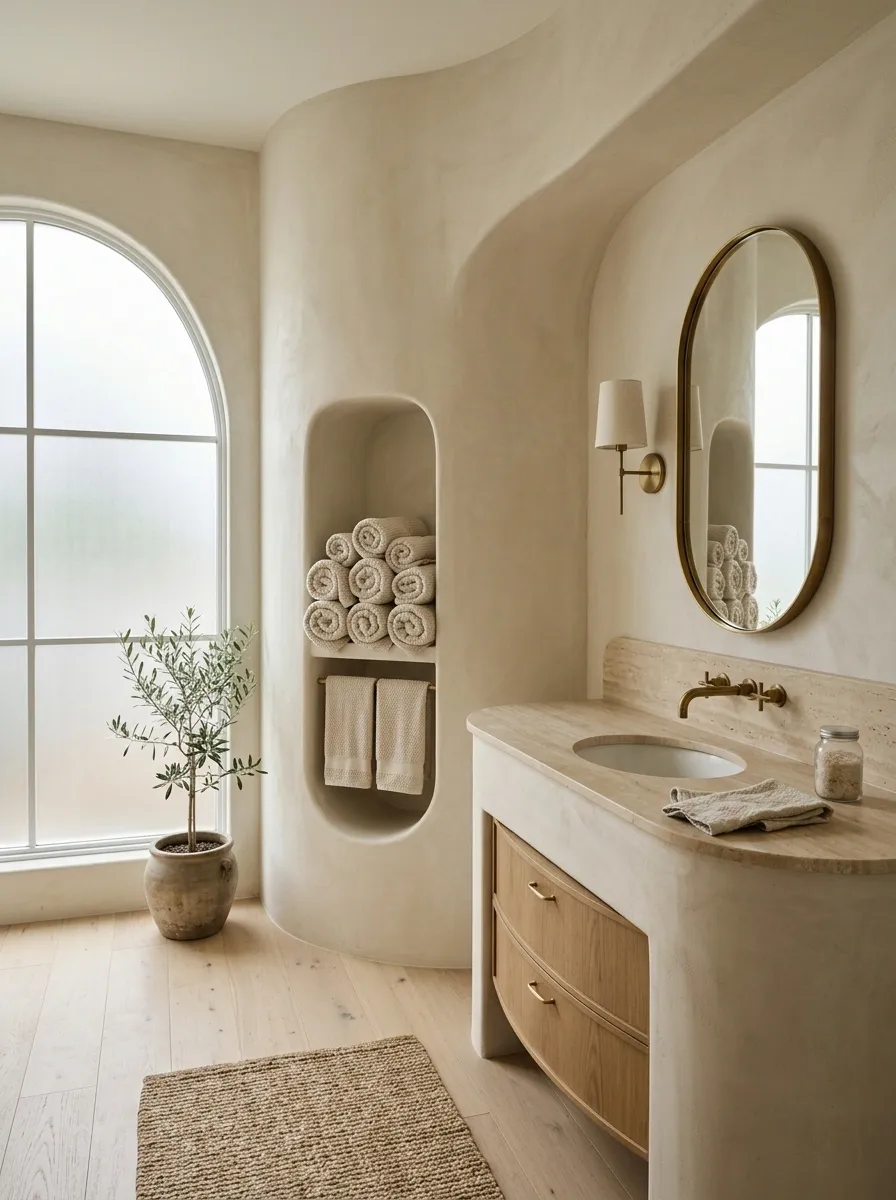
Soft curves shape almost every part of this organic modern bathroom. A rounded vanity, curved plaster wall, travertine surfaces, pale oak, and woven textiles create a gentle composition, with towel storage tucked into a softly curved built-in section beside the vanity.
The storage follows the architecture instead of introducing a sharp rectangular interruption. That detail makes the room feel more considered, especially when several other elements already have rounded edges. Rolled towels bring another soft shape into the composition and reinforce the organic character.
The palette stays deliberately narrow so the curves remain noticeable. There is no need to add decorative drama when the walls are already doing all the talking.
Travertine + pale oak + cream textiles let the shape provide the visual interest.
Rental-Friendly Bathroom With a Freestanding Linen Console
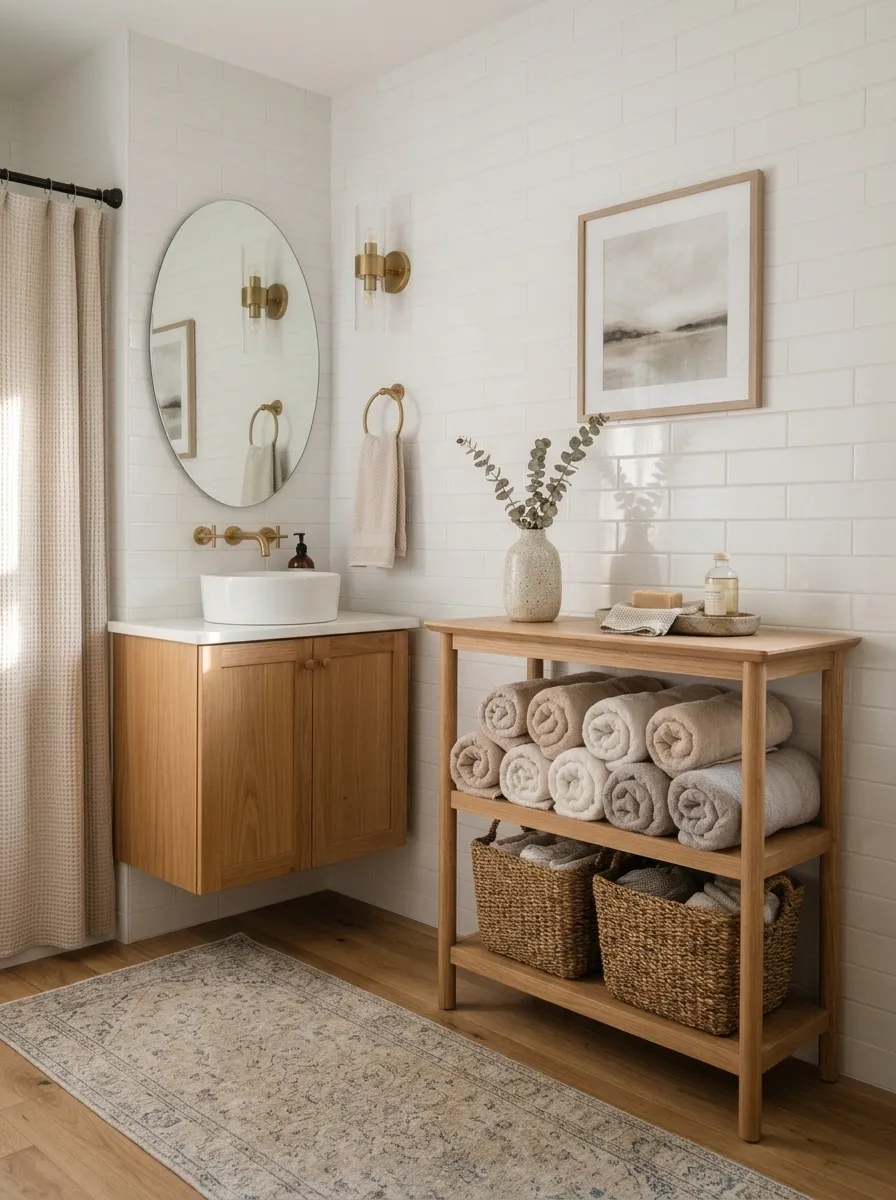
A rental bathroom gets a furniture-based solution instead of a drill-heavy renovation. A slim linen console sits beside the vanity, with open towel storage below, a compact surface above, and woven baskets tucked into the lower section. Existing white tile stays untouched while warm wood and neutral textiles add character.
The beauty here is flexibility. The console creates a dedicated towel zone while remaining independent from the wall, so it can move with the room rather than becoming a permanent commitment. Its furniture-like shape also helps the bathroom feel intentional despite fixed finishes that cannot be changed.
Measure around the vanity, toilet, and door swing before bringing one home. “It fit in the shopping cart” is not a valid floor-plan strategy.
Recessed Linen Closet Hidden Behind Flush Doors
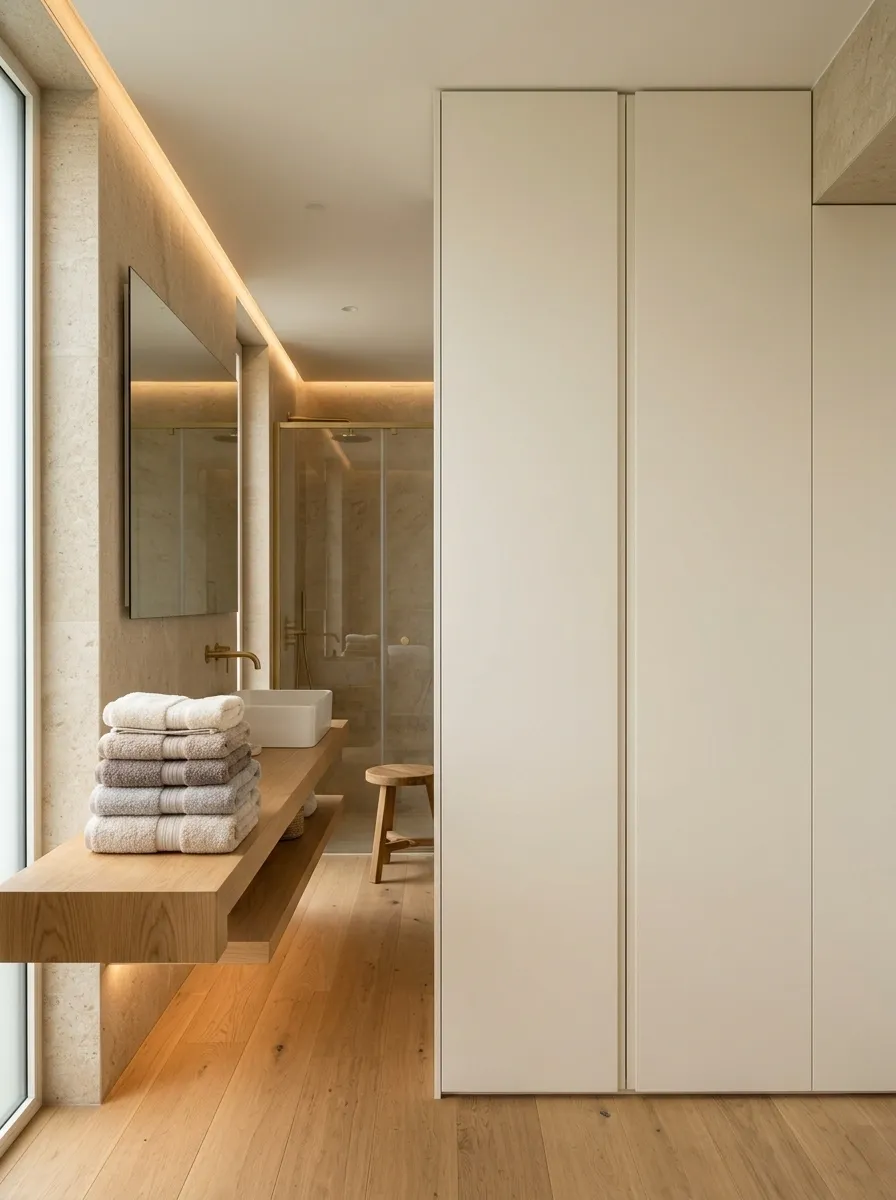
Clean-lined bathrooms benefit from storage that knows when to disappear. This modern design places a shallow linen closet inside the wall behind flush doors, keeping spare towels completely concealed. A single open shelf near the vanity displays the towels used most often, while warm stone tile, a simple oak vanity, and understated lighting keep the room serene.
The contrast between the hidden cabinet and the small open shelf gives the storage a clear hierarchy. Most of the clutter is handled privately, while one carefully styled zone adds texture and softness to the bathroom.
Flush doors are especially effective when the goal is a quiet wall plane with minimal visual interruption. The trick is resisting the urge to turn every hidden cabinet into an excuse to buy more towels.
Just enough stays visible.
Soft Transitional Bathroom With a Furniture-Style Linen Hutch
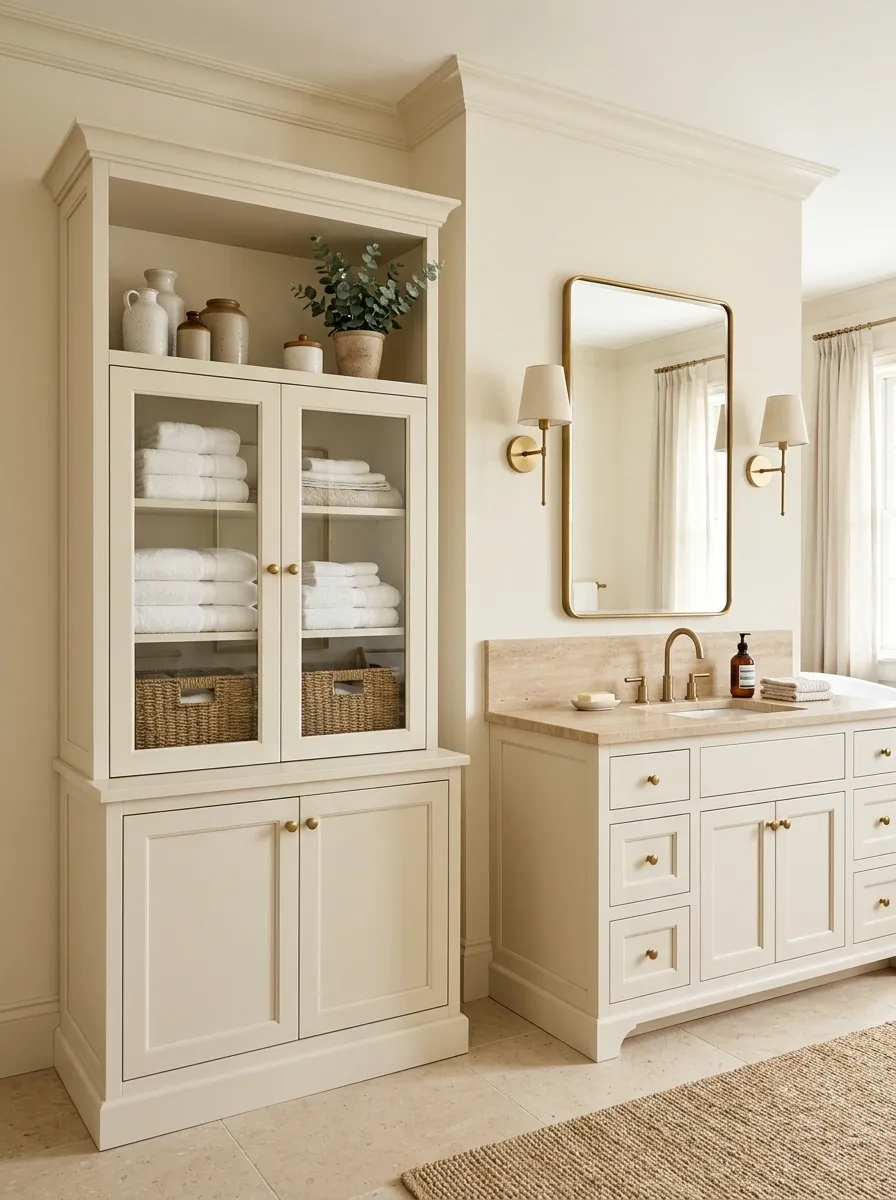
A substantial linen hutch gives this soft transitional bathroom the presence of a proper piece of furniture. Painted cabinetry sits beside a classic vanity, with framed doors below, a central glass section, and open shelving above for neatly folded towels. Cream walls, warm stone, and understated metal fixtures keep the room elegant without making it feel formal.
The hutch works because its vertical proportions balance the vanity instead of competing with it. Glass breaks up the solid cabinetry, while the open shelves provide a place for towels to become part of the room’s styling.
The finish should stay close to the vanity so the two pieces feel related. This is storage with main-character energy, but fortunately the tasteful kind.
Less attractive necessities
Folded towels + linens
Quiet decorative layer
Accessible Bathroom With Easy-Reach Towel Storage
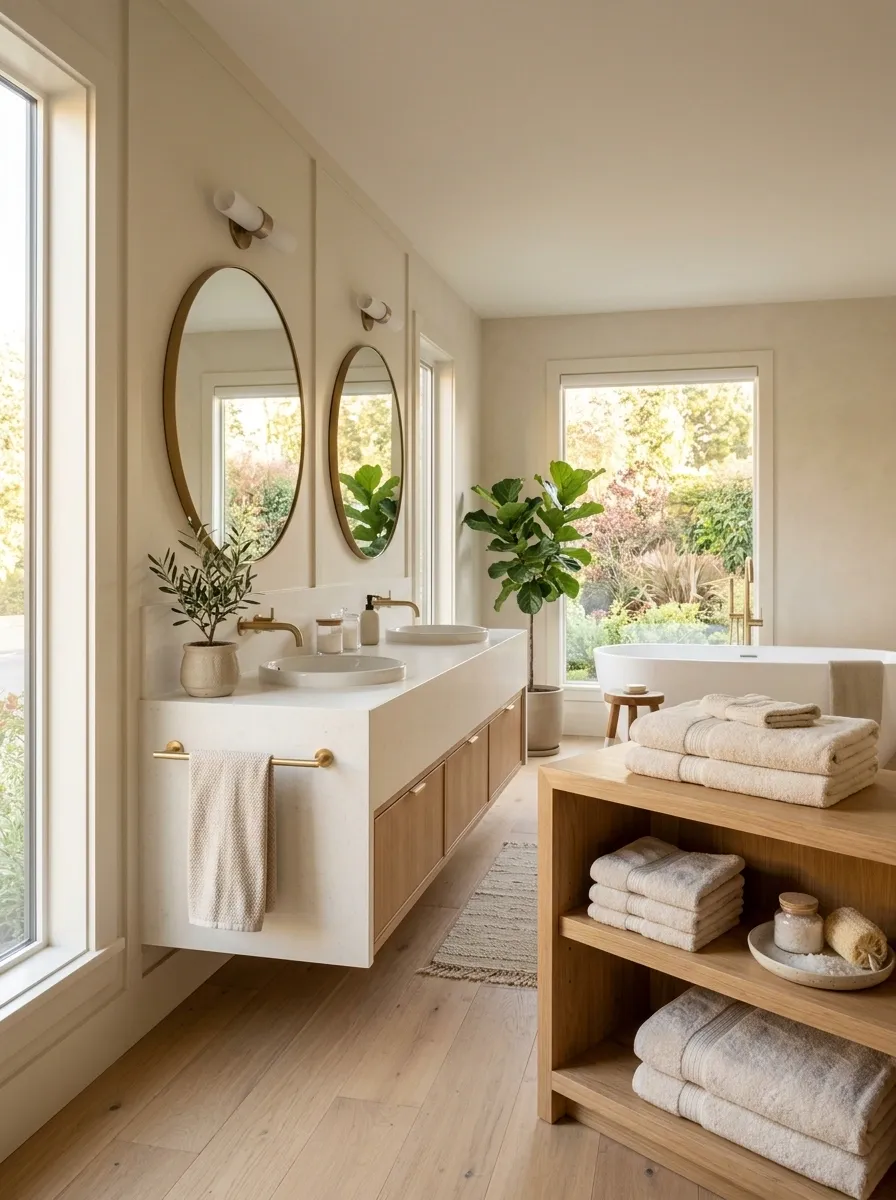
This spacious bathroom places frequently used towels where they can be reached without awkward stretching or unnecessary movement. Open shelving beside the vanity holds folded towels, while a nearby rail handles towels in use. Wide circulation space, a simple floating vanity, warm wood, and soft stone finishes make the room feel residential and polished rather than clinical.
The storage layout is built around movement. Towels belong close to the places where they are needed, while backup linens can stay farther away in enclosed cabinetry. That makes the room easier to use while preserving a clean visual flow through the space.
The open shelves also make the towel supply immediately visible, which is useful in a shared bathroom. Storage should solve problems quietly. It shouldn’t create a new one every time someone needs a clean towel.
Step out
Reach easily
Continue normally
Hotel-Inspired Bathroom With an Open Oak Towel Cubby
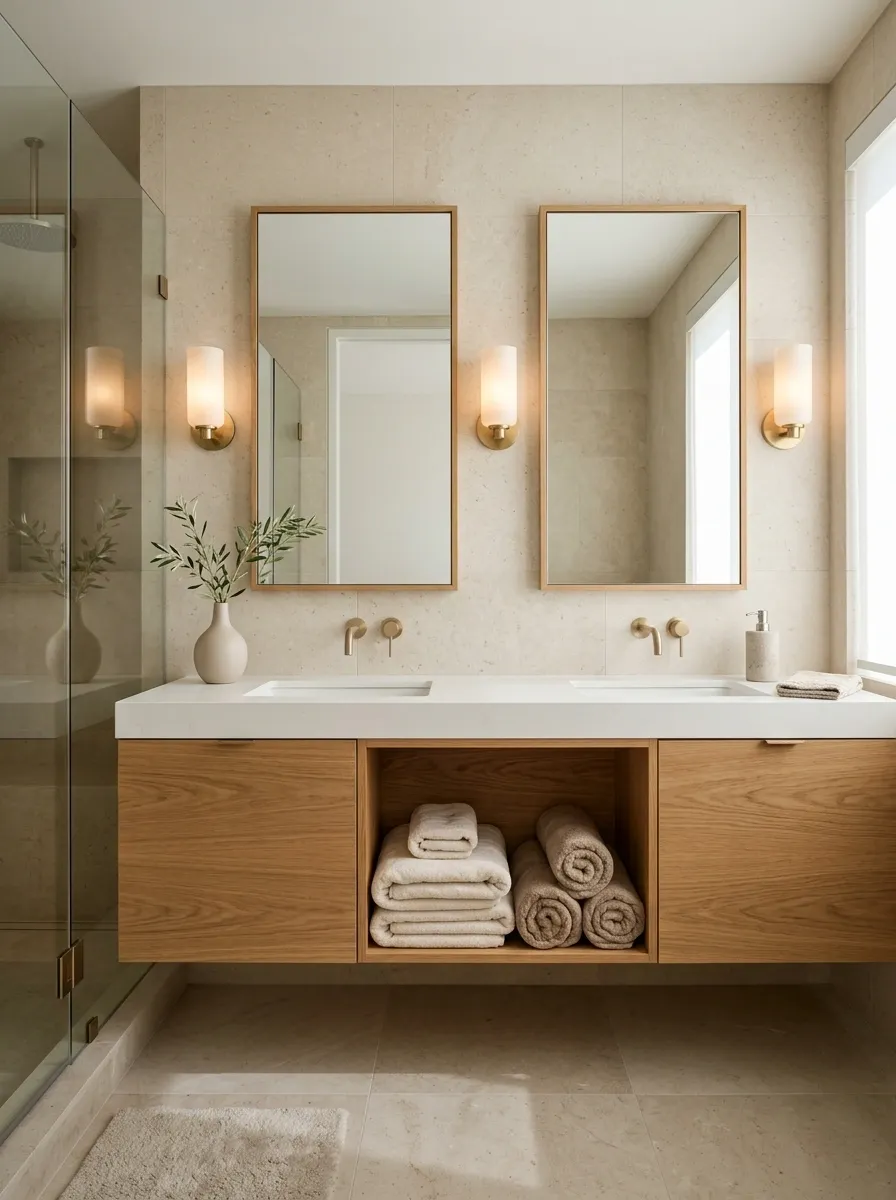
This bathroom borrows the calm, edited feeling of a well-designed hotel. A long oak vanity includes a dedicated open cubby beneath the countertop, where thick towels are folded and a few are rolled to create subtle variation. Large stone surfaces, soft wall lighting, and restrained accessories keep the rest of the room exceptionally quiet.
The cubby works because it was designed into the vanity rather than attached afterward. Its warm wood interior also creates a natural frame around the towels, turning a practical storage area into part of the room’s visual composition.
The styling should remain limited to a few coordinated textiles. The moment every possible towel shape is crammed into the opening, the boutique-hotel fantasy ends and the linen closet starts having a public appearance.
Attic Bathroom With Towel Storage Built Into the Eaves
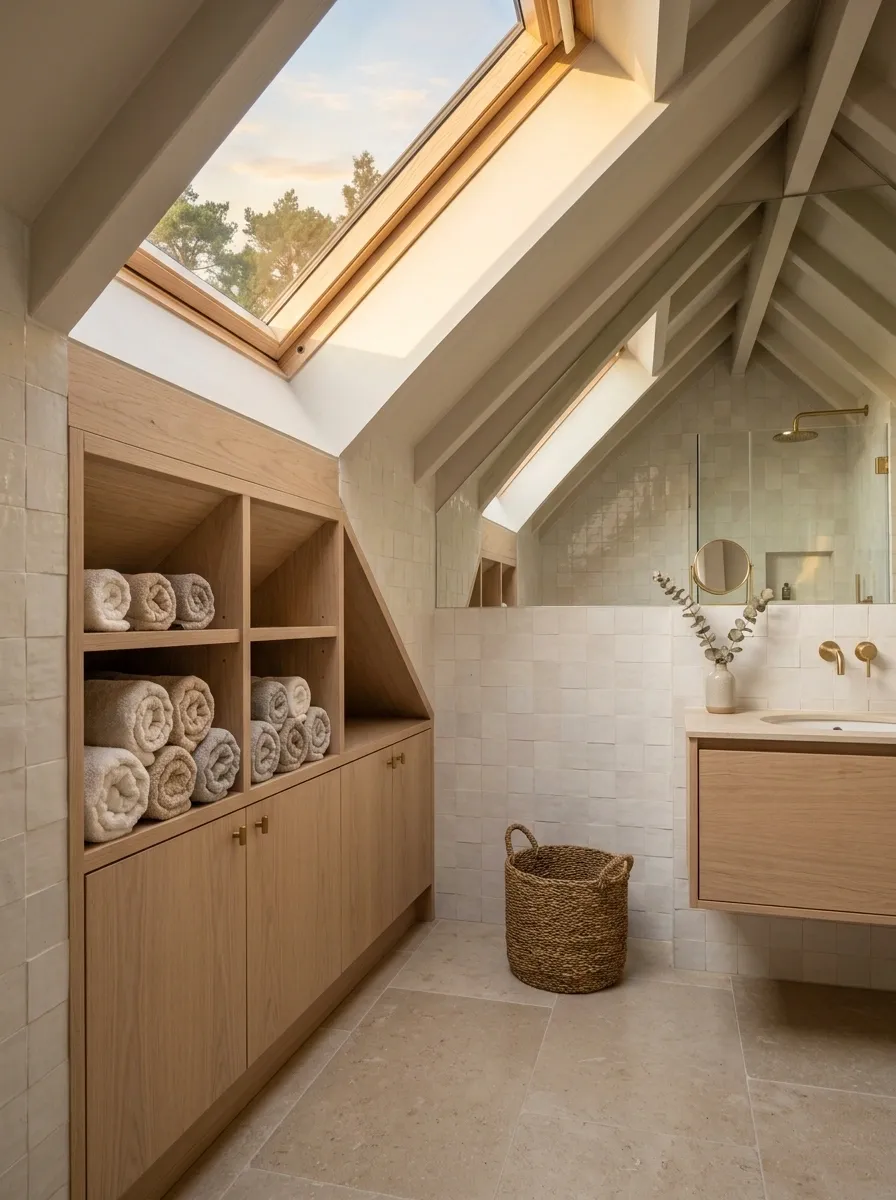
The sloped ceiling is the star of this attic bathroom, and the towel storage follows it instead of pretending the awkward angles don’t exist. Low built-in cabinets tuck beneath the eaves near the shower and vanity, with open sections reserved for folded towels. Pale wood, warm white tile, and soft beige stone keep the unusual architecture bright.
This approach turns low ceiling space into useful storage while preserving the main walking area. The cabinets do not need to be tall to be valuable. In fact, their lower profile makes them feel naturally connected to the roofline.
Open sections should stay focused on towels because the sloped architecture already gives the room enough visual interest. There is no need to decorate every inch. The ceiling has already arrived with a dramatic entrance.
Backup linens
Everyday towels
Compact Blue-Green Bathroom With a Built-In Window Seat Towel Bench
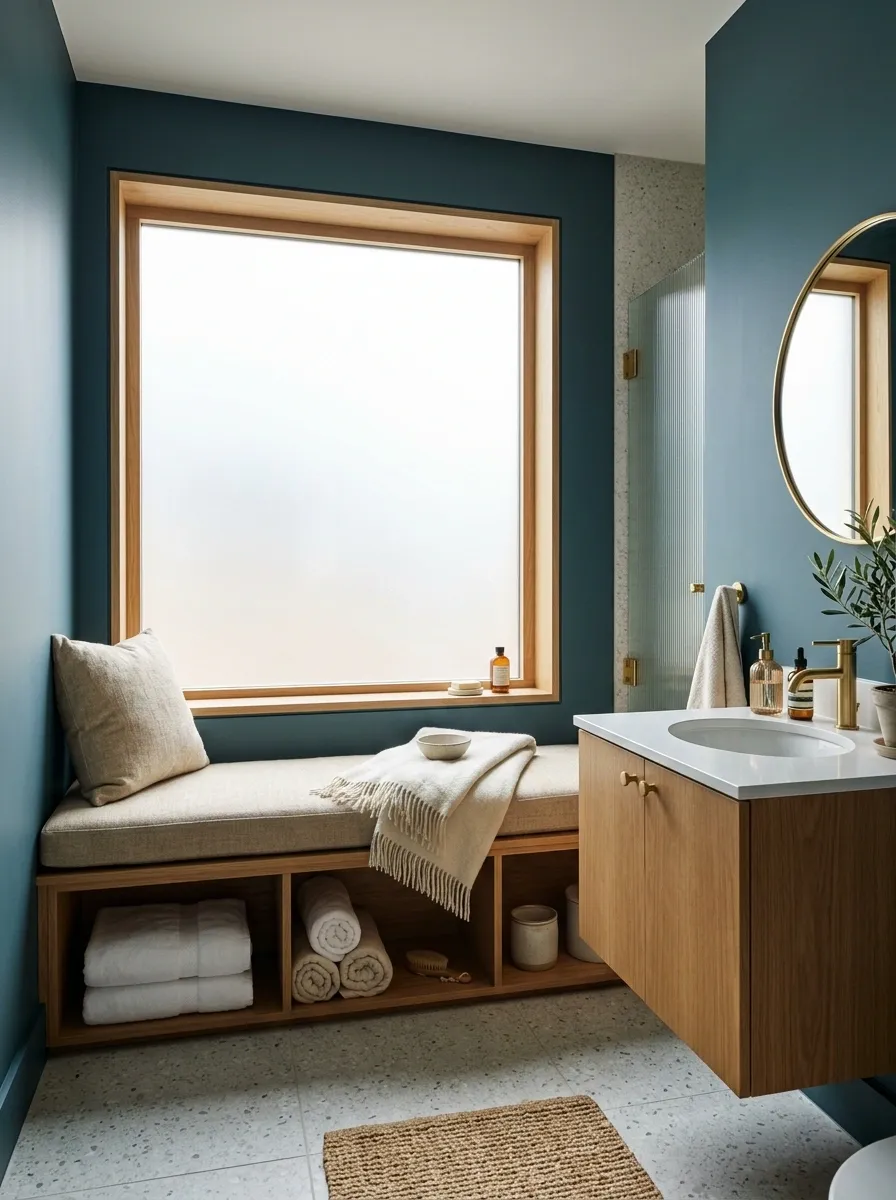
A deep blue-green bathroom uses the space beneath a wide window for something more useful than an awkward empty strip. A built-in bench runs beneath the window, with open towel cubbies underneath and a cushioned top that doubles as a practical perch. A compact vanity, pale terrazzo floor, and brushed metal fixtures balance the richer wall color.
The bench gives the room one continuous architectural element while solving two problems at once: seating and towel storage. Folded towels occupy the lower cubbies, keeping the upper surface visually clean and preserving the window as the focal point.
The darker wall color also makes the light towels stand out beautifully. Keep the bench proportionate to the window and surrounding fixtures. Otherwise it starts looking less like a thoughtful built-in and more like somebody parked a very confident sofa in the bathroom.
than it looks.
Towels
Linens
Let the window lead
Slim Black Towel Ladder Beside a Freestanding Tub
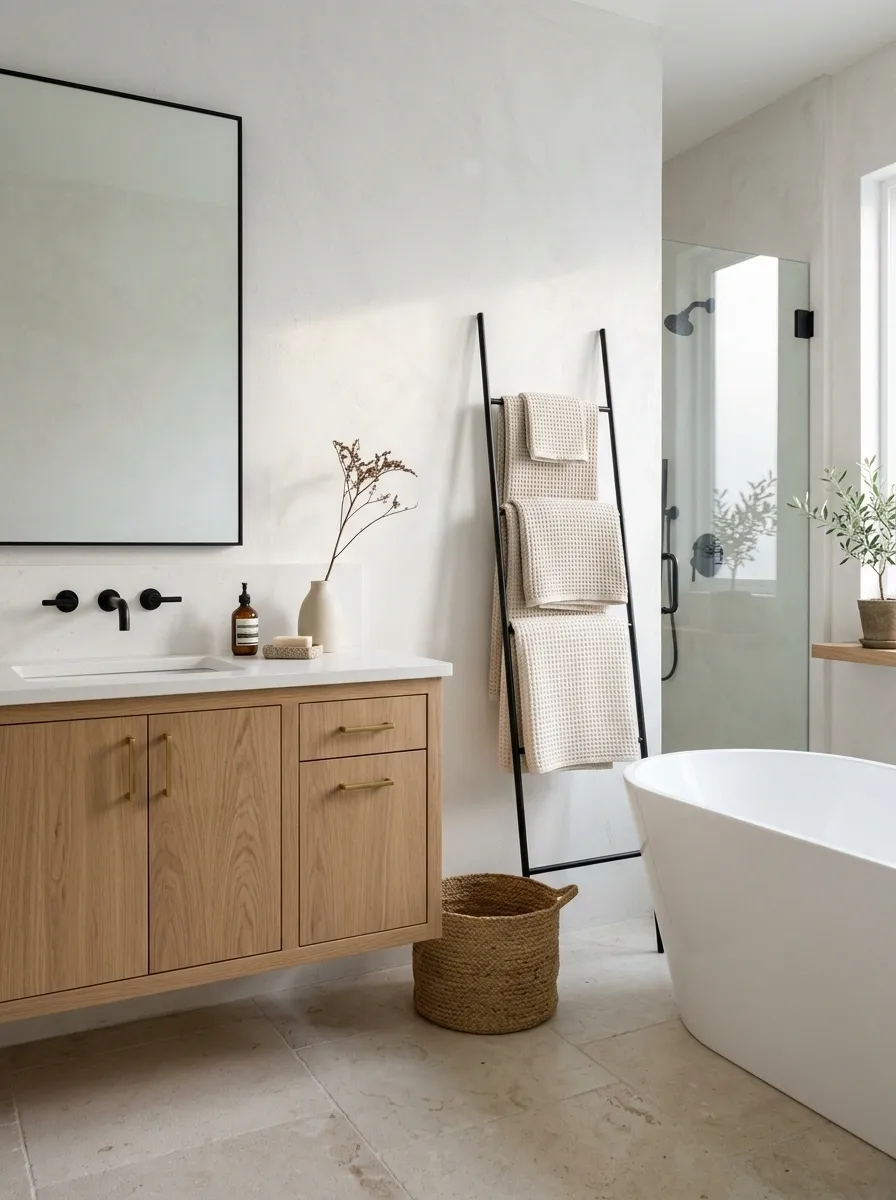
A slim black towel ladder leans beside a freestanding tub in this airy bathroom, giving towels a vertical place to hang without adding a bulky cabinet. White plaster walls, pale stone flooring, a soft oak vanity, and black fixtures create a restrained palette that lets the ladder feel like part of the overall design.
The ladder works best when it holds only a few towels. Its open structure is supposed to create visual lightness, so covering every rung defeats the entire point. Use it for towels currently in rotation while storing extras elsewhere.
And yes, the ladder can look stylish. Just don’t let it become a six-foot towel mountain. The ladder has limits. So does the bathroom.
Towels in rotation
Not for:
Every towel owned by the household
Coastal Bathroom With Woven Towel Baskets Under a Floating Vanity
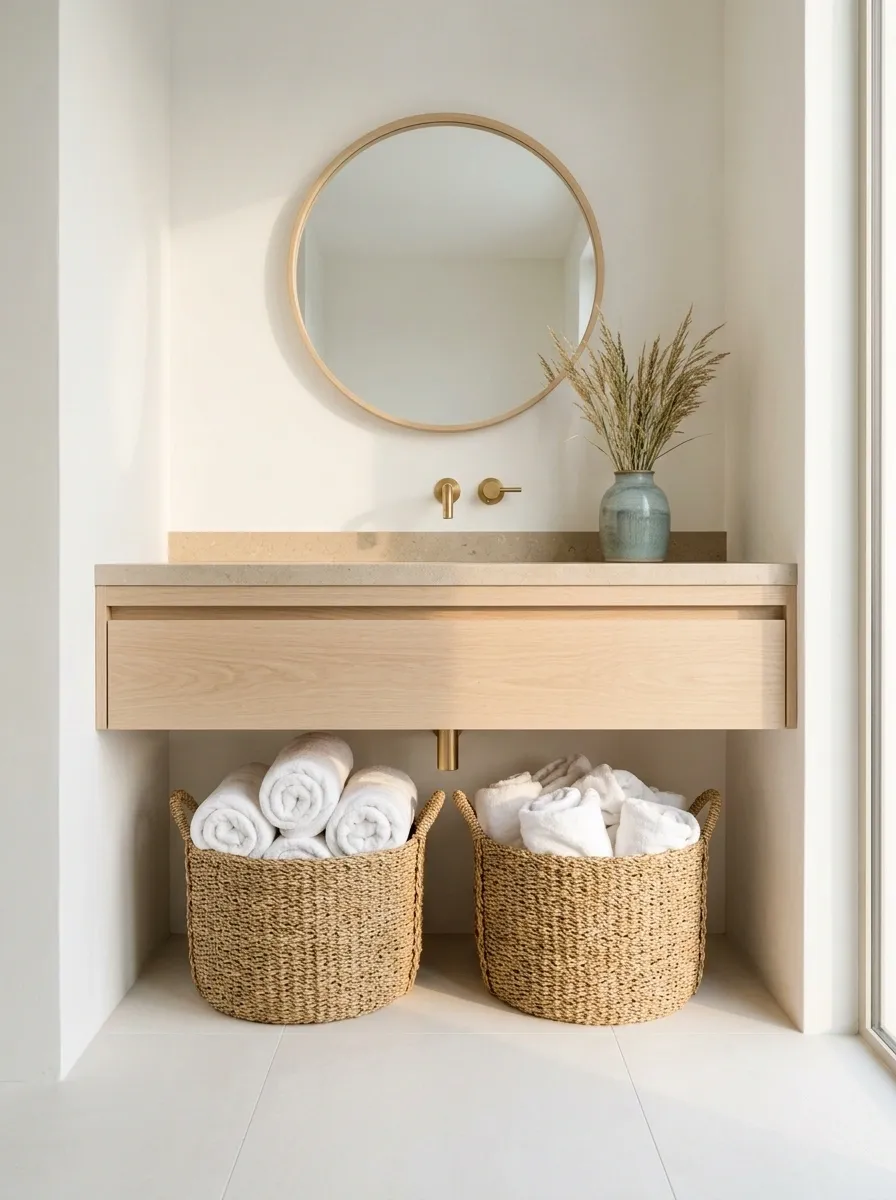
A pale coastal bathroom keeps towel storage low and relaxed with two woven baskets tucked beneath a floating vanity. Light oak, sandy stone, soft white walls, and subtle blue-green accents create a natural palette without turning the room into a seashell souvenir shop.
The baskets work because the vanity floats above them, leaving enough visual space around the storage. Towels can be rolled or loosely folded inside, which makes the arrangement practical for everyday use. Matching baskets create repetition, while their woven texture adds warmth against smooth tile and stone.
The lower storage also keeps the upper half of the bathroom open. That matters in compact rooms where visual breathing space can make the whole layout feel less crowded.
Folded towels
Spare towels
Modern Bathroom With a Long Wall-Mounted Towel Rail and Shelf
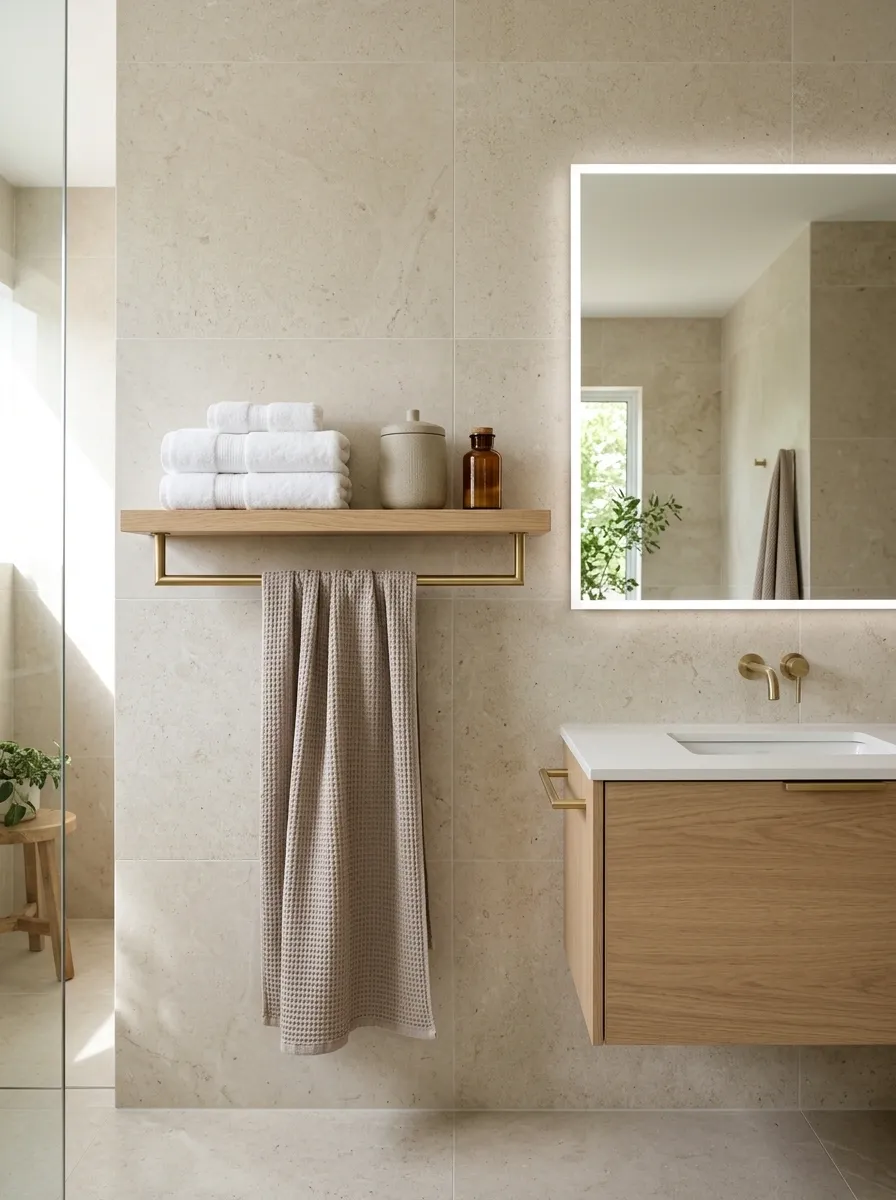
A long horizontal shelf stretches across one wall above a matching towel rail, creating a simple two-level storage arrangement. Large-format stone tile, a floating vanity, and a frameless mirror keep the room modern and uncluttered.
The shelf holds folded towels and a few carefully chosen bath items, while the rail below handles towels currently being used. Because both elements extend horizontally, they visually widen the wall and make the bathroom feel more balanced.
This arrangement is especially useful when there is not enough room for a full cabinet. A long shelf can provide meaningful storage while maintaining a light appearance. The important part is leaving enough empty wall around it. Storage needs breathing room too. Yes, even storage has boundaries.
Keep the two levels visually aligned
Small Bathroom With Over-Toilet Open Towel Shelving
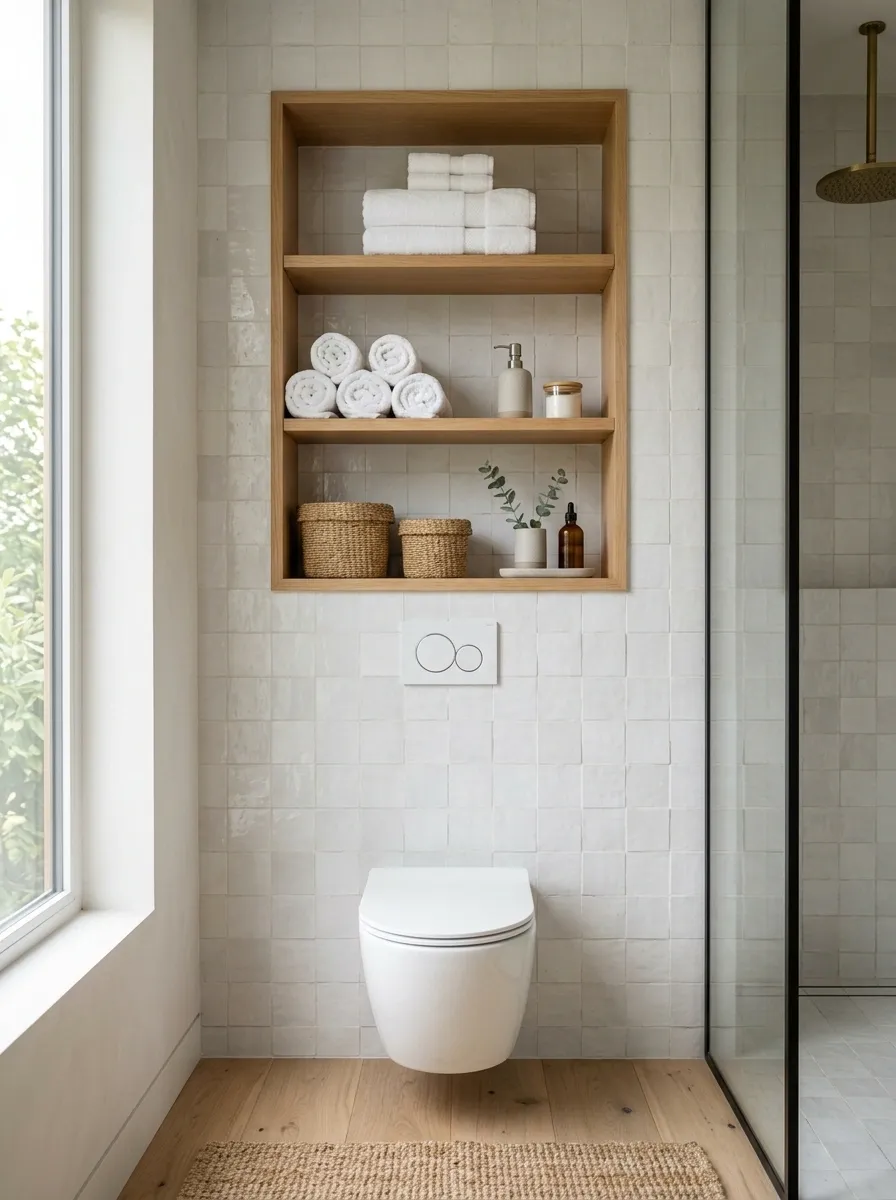
The wall above the toilet becomes useful storage in this compact bathroom through a slim set of open shelves. Warm wood shelves sit against soft white tile, with folded towels, small baskets, and a restrained collection of everyday items arranged across the levels.
The shelves make use of otherwise wasted vertical space without requiring another cabinet on the floor. Keeping the shelves visually light is important because the toilet already occupies a strong central position on the wall.
Use matching baskets for less attractive items and leave portions of each shelf open. If every square inch is filled, the eye reads the entire unit as clutter. The goal is storage that looks calm even while doing serious organizational work behind the scenes.
Spare towels
Everyday towels
Small baskets
Dark Green Bathroom With Brass Hooks and a Linen Cabinet
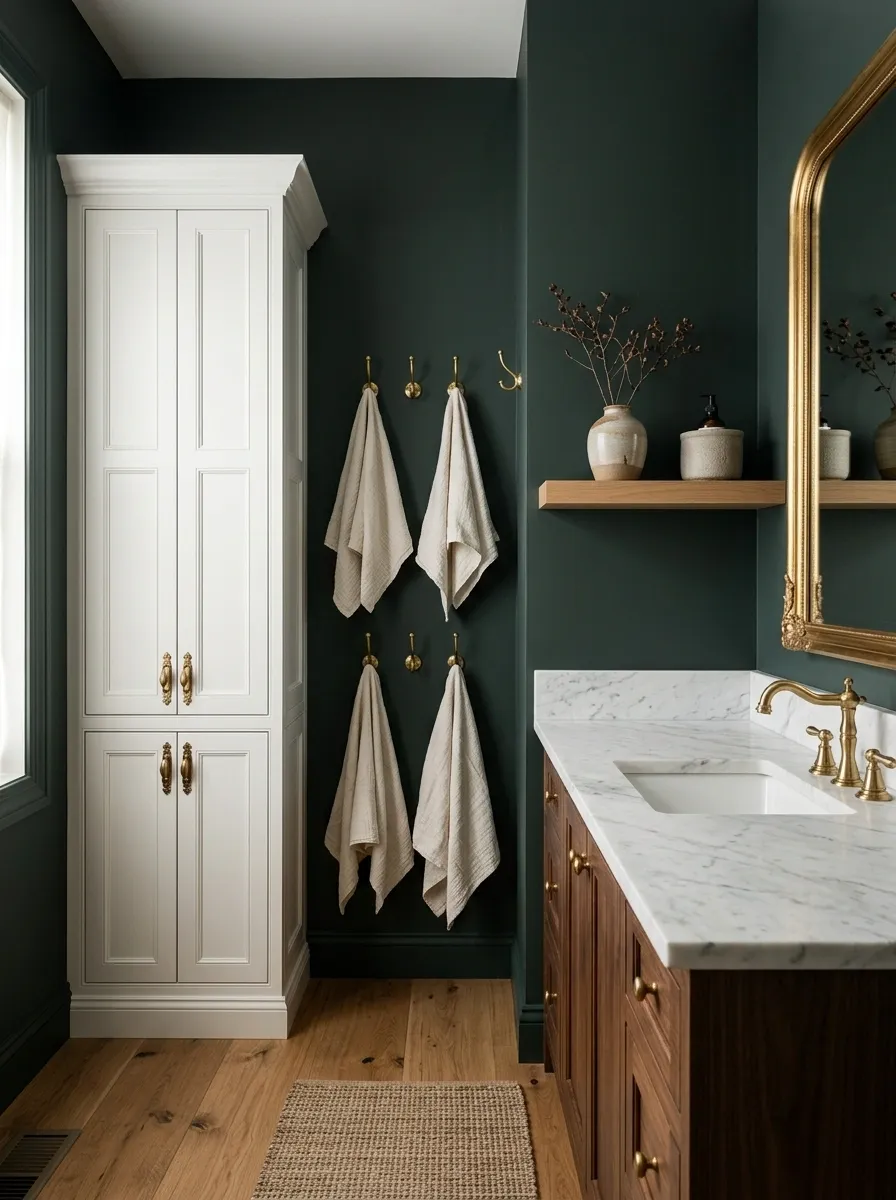
Deep green walls create a rich backdrop for a traditional linen cabinet with brass hardware. Instead of using the cabinet for every towel, a row of brass hooks sits beside it for towels currently in use. Cream towels provide contrast while natural wood and warm stone prevent the room from feeling too dark.
The combination of hooks and cabinet creates a useful division. Wet or frequently used towels stay accessible, while clean towels and spare linens remain folded behind the doors. This makes the room easier to maintain while also creating a layered wall composition.
The brass should repeat elsewhere, perhaps through the mirror frame or lighting, so it feels like a deliberate material choice rather than three shiny hooks having a personal adventure.
Rustic Bathroom With Reclaimed Wood Towel Cubbies
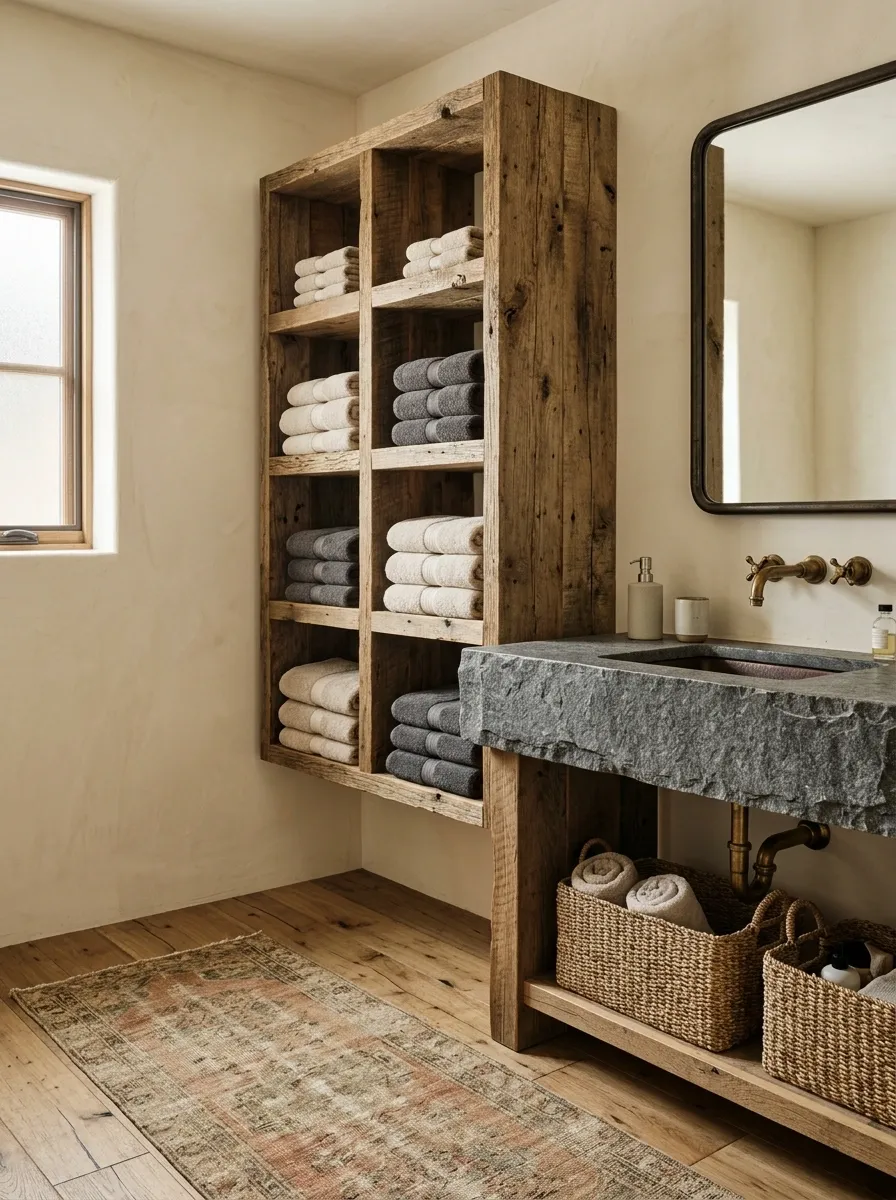
A rustic bathroom uses reclaimed wood cubbies to create open towel storage beside a stone vanity. Cream plaster walls, aged metal fixtures, a textured runner, and natural baskets give the room warmth without turning it into a themed cabin.
Each cubby holds a small stack of towels, allowing the natural variation in the wood to become part of the design. The irregular grain adds character against the softer textiles, while the open structure keeps the storage from feeling heavy.
This arrangement works especially well when the bathroom already includes natural materials. Repeat the wood somewhere else, even if only through a stool or vanity detail, so the cubbies feel connected to the room. Rustic storage should look collected, not like someone dismantled a barn during lunch.
Adds age and grain
Softens the timber
Adds visual weight
Tiny Powder Room With a Decorative Towel Niche
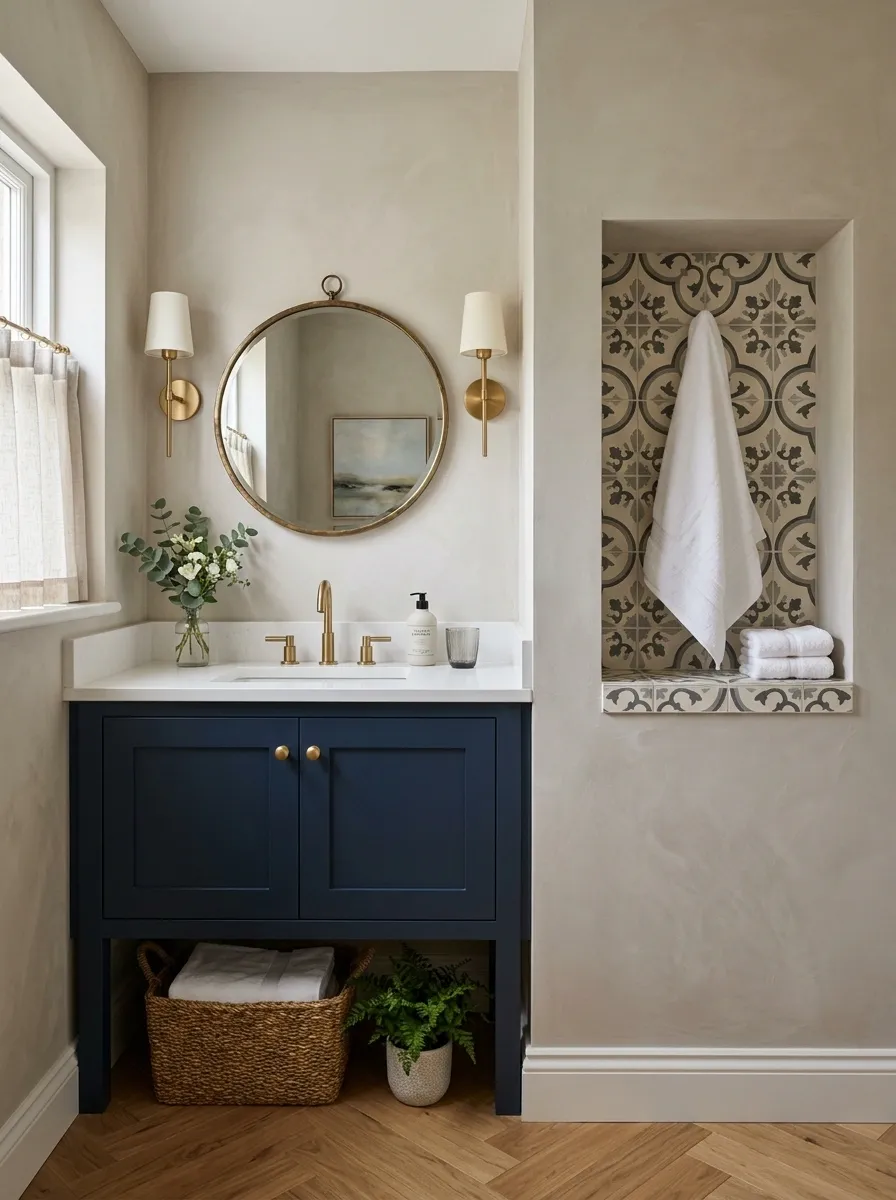
A small powder room does not need a full linen cabinet. Instead, a compact recessed niche sits beside the vanity, holding a neatly folded hand towel and a small stack of spare guest towels. Soft patterned tile, a painted vanity, and a decorative mirror give the tiny room plenty of personality.
Because powder rooms often have limited storage needs, the niche can be treated almost like a piece of wall decor. A contrasting tile inside the recess gives the towel area its own visual frame, while the surrounding wall remains clean.
The trick is keeping the niche small enough to match the room. A giant storage wall in a powder room would be like bringing a suitcase to a coffee date. Technically possible. Completely unnecessary.
Japandi Bathroom With a Low Oak Bench and Towel Stack
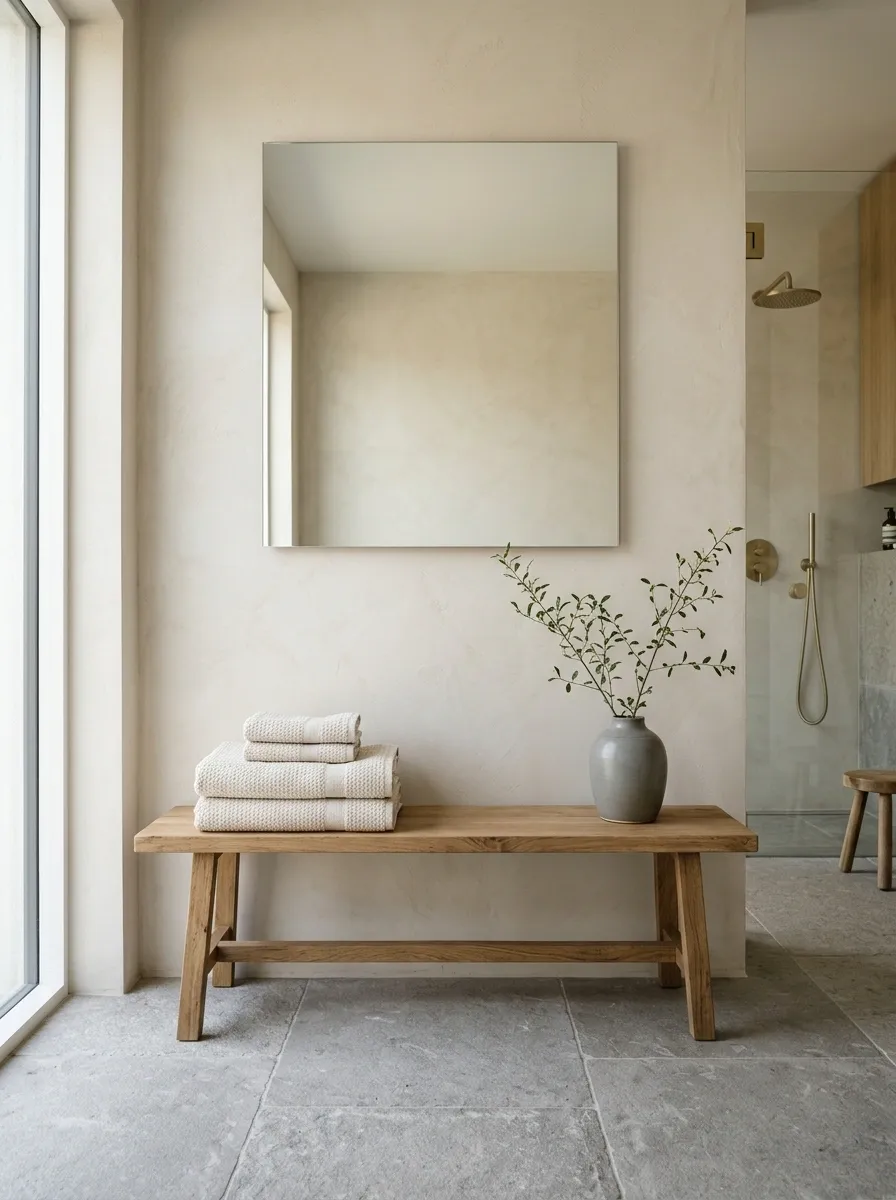
A low oak bench sits beneath a large mirror in this Japandi-inspired bathroom, with folded towels stored on one end and a small section left open for seating. Pale plaster walls, warm oak, textured stone, and minimal fixtures create a quiet composition.
The bench keeps storage low, which helps preserve the open feeling that makes Japandi interiors work. Towels add softness without introducing unnecessary color or decoration. A single ceramic vessel or small plant can sit nearby, but the bench should not become a staging area for every bathroom object ever purchased.
The strongest detail is the relationship between the low furniture and the large empty wall above it. Storage does not always need to reach the ceiling to be useful.
Keep clear
Warm texture
Double Vanity With Symmetrical Side Towel Towers
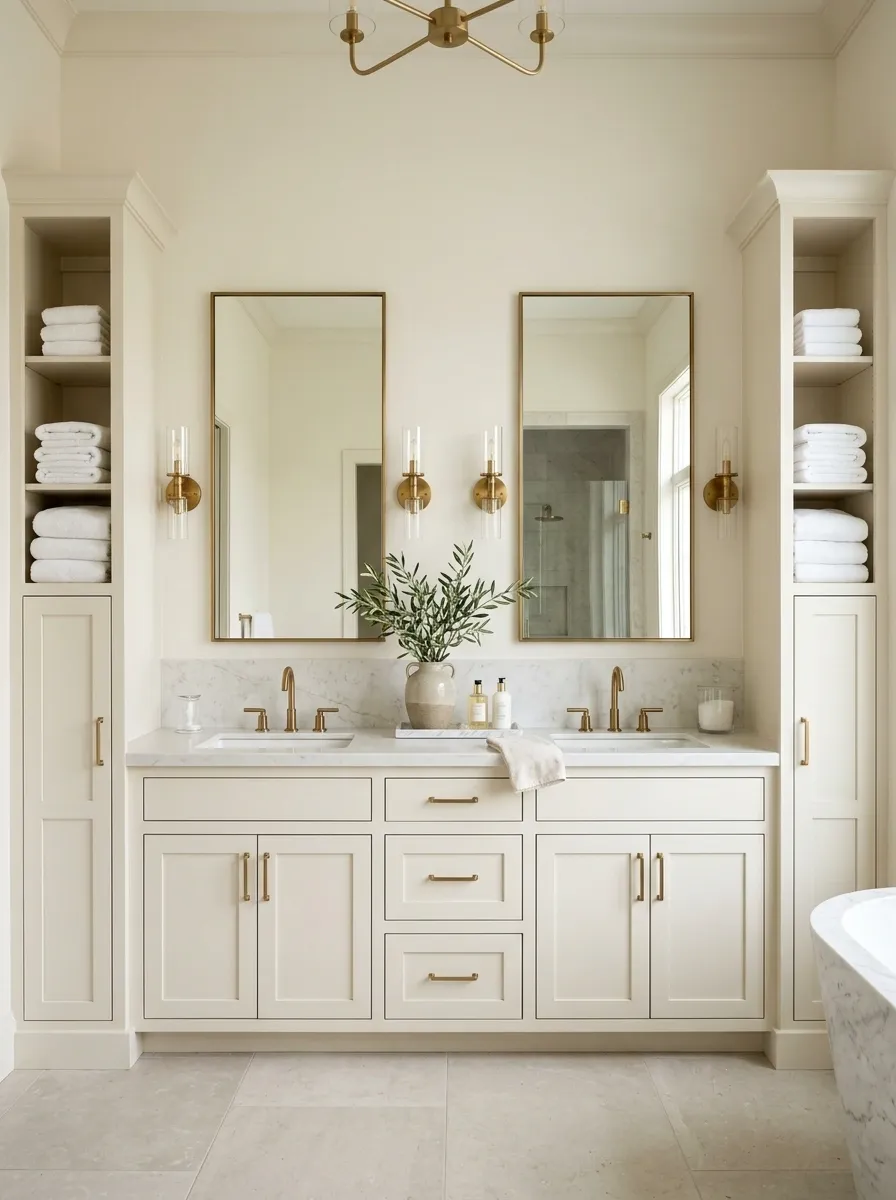
A double vanity gets a balanced storage solution with matching narrow towel towers on each side. Each tower includes open shelves for folded towels and closed compartments for extra linens. Cream cabinetry, pale stone countertops, and warm metal fixtures keep the symmetry elegant rather than overly formal.
The paired towers frame the vanity and create a strong visual rhythm. Towels become part of that symmetry, with similar stacks on each side rather than random piles scattered across the room.
This approach works particularly well in larger bathrooms because the side towers fill vertical space without interrupting the broad countertop. Symmetry is doing some serious heavy lifting here. Fortunately, it knows how to dress.
Folded towels
Main visual anchor
Folded towels
Family Bathroom With Individual Towel Cubbies
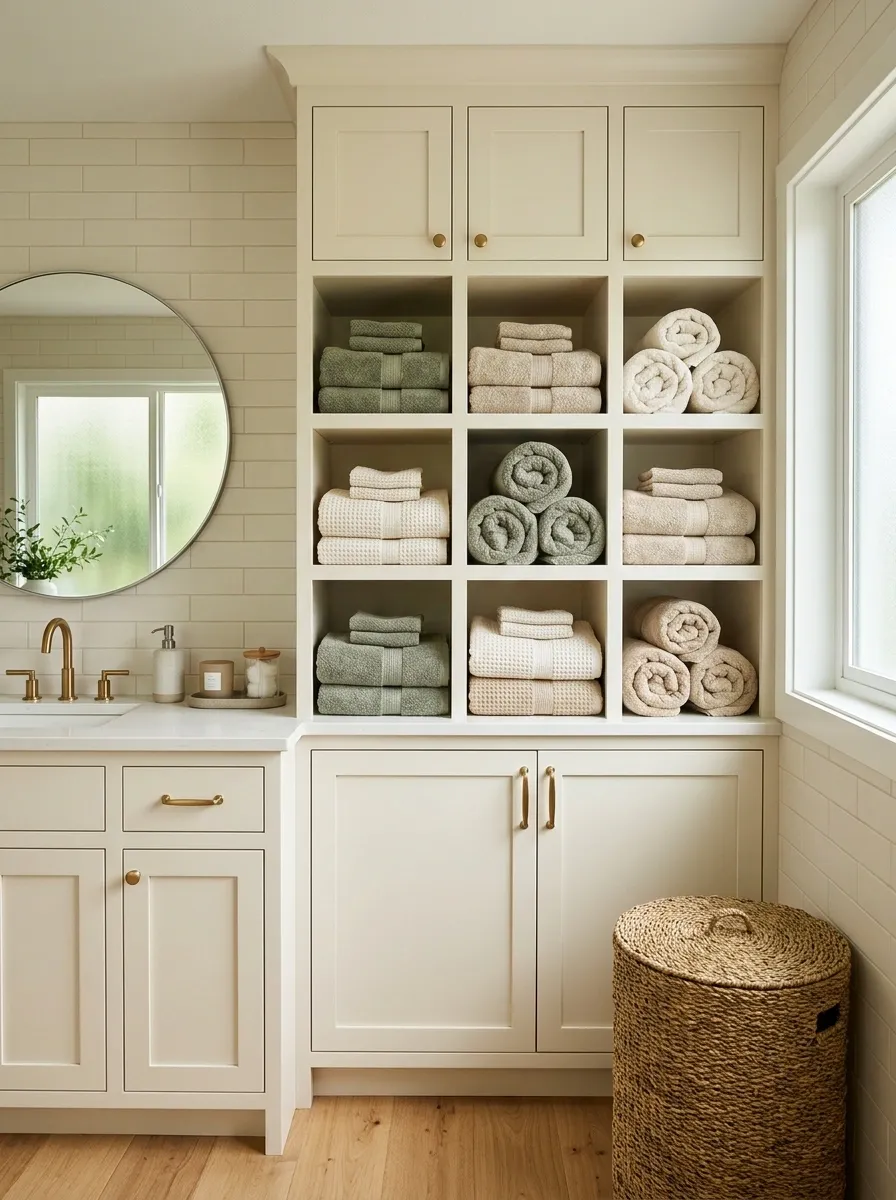
A busy family bathroom benefits from individual towel cubbies built into a wide cabinet near the vanity. Each open section has room for a separate stack, while larger closed compartments keep backup linens and bathroom supplies hidden.
The cubbies make the system easy to understand without covering the bathroom in labels. Each person gets a clear visual zone, and the different towel colors can add subtle personality while remaining within the room’s overall palette.
A durable countertop, easy-clean tile, and warm wood keep the space practical without making it feel utilitarian. Family bathrooms need storage that survives real life. A towel system that requires everyone to fold like a luxury hotel guest has already lost the plot.
Daily towels
Daily towels
Daily towels
Backup linens
Apartment Bathroom With a Door-Mounted Towel Rack
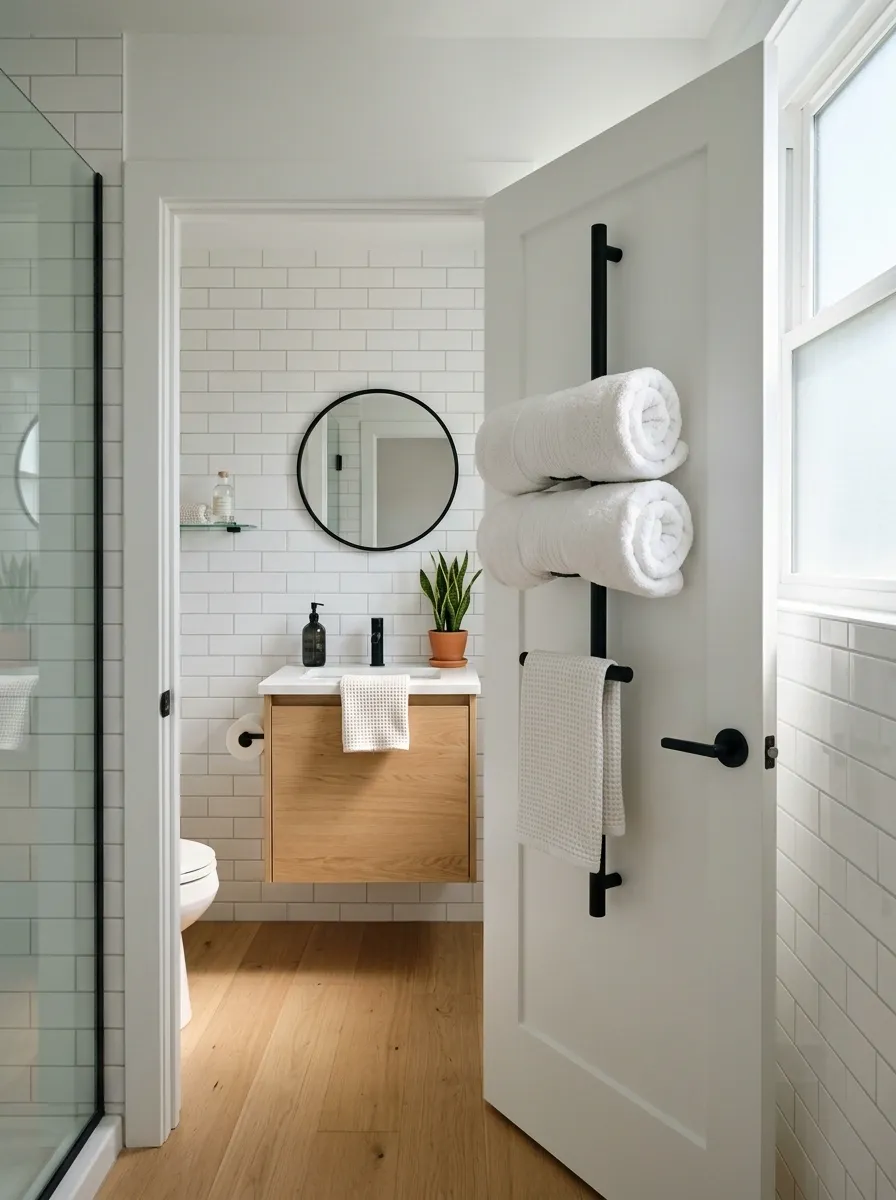
A narrow apartment bathroom uses the back of the door as an overlooked towel-storage zone. A slim mounted rack holds several folded or hanging towels without consuming wall space around the vanity, toilet, or shower.
The rest of the room stays simple: white tile, a compact oak vanity, black fixtures, and a small mirror create a clean backdrop. Because the rack is visually contained on the door, the main walls remain available for mirrors, artwork, or other necessary fixtures.
This is particularly useful in bathrooms where every wall already has a job. The storage exists, does its job, and stays out of the way. Honestly, the door has been standing there doing nothing for years. About time it got promoted.
Uses vertical space without taking wall space
Contemporary Bathroom With Vertical Slatted Towel Storage
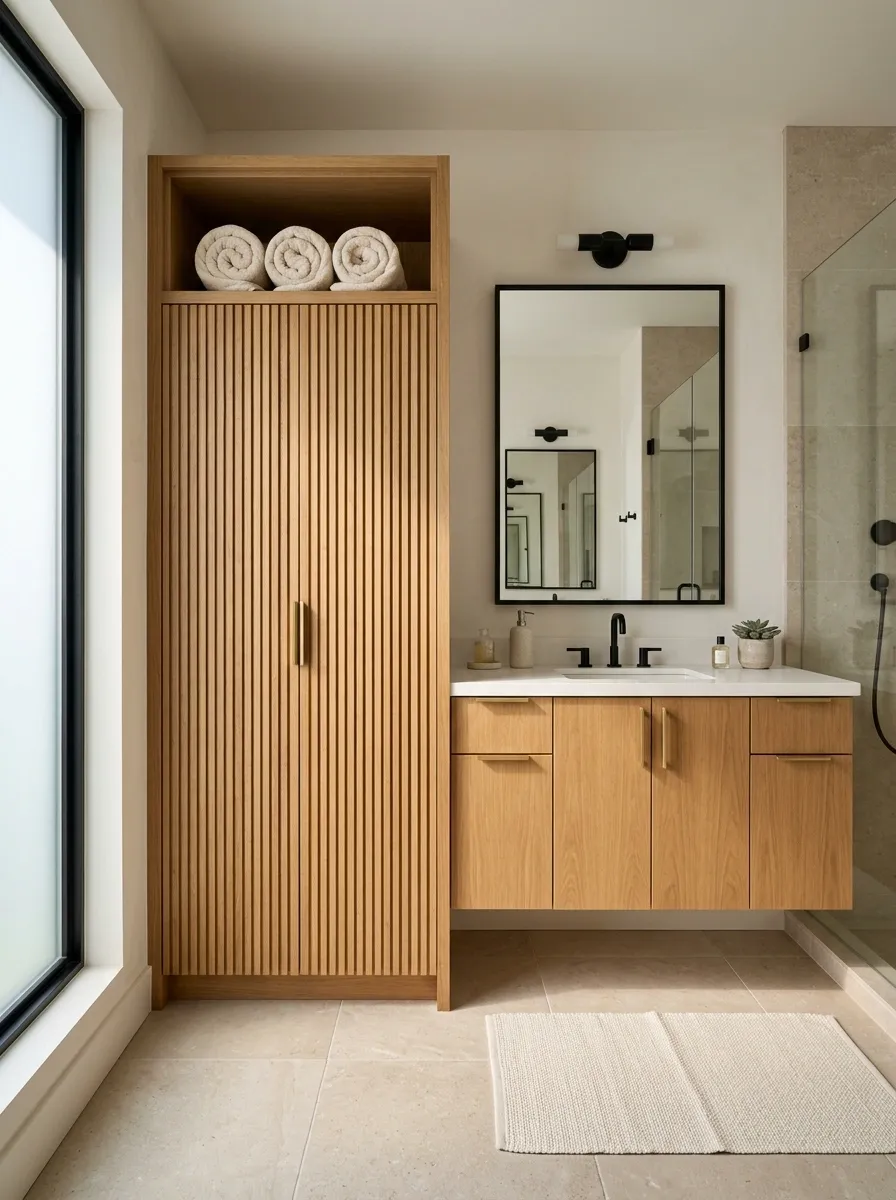
A vertical slatted cabinet adds architectural texture beside the vanity while concealing most of the towel collection. Narrow timber slats cover the doors, allowing the cabinet to blend with a warm oak vanity and wood accents throughout the room.
A small open compartment breaks up the cabinet and gives everyday towels a visible home. Everything else stays behind the slatted doors. Large-format stone tile, soft plaster, and minimal fixtures keep the room contemporary and calm.
The slats are doing more than adding decoration. Their vertical direction makes the storage feel taller and slimmer, which can be useful beside a wide vanity. The result is storage that almost disappears into the material palette while still adding a strong architectural detail.
Terracotta Bathroom With a Freestanding Painted Linen Hutch
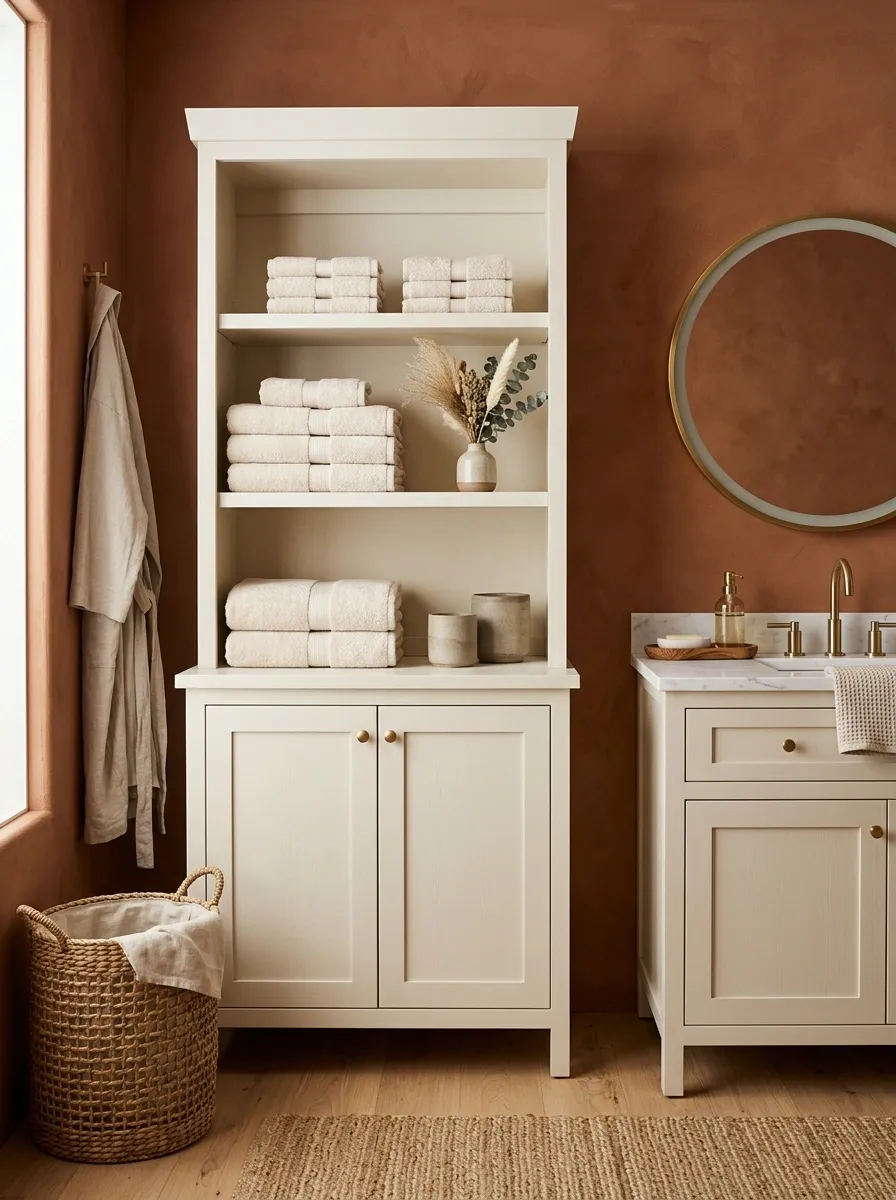
A warm terracotta bathroom gets a freestanding painted linen hutch in a soft cream finish. The cabinet sits beside a compact vanity and creates a furniture-like storage moment against the richer wall color. Open shelving holds folded towels, while doors below hide larger supplies.
The contrast between terracotta and cream makes the hutch visually noticeable without requiring ornate detailing. Natural wood accessories and brushed metal fixtures bridge the two colors and keep the room cohesive.
This style works especially well when the bathroom needs personality without a major renovation. Paint, furniture, and textiles can create a strong composition even when the original tile and plumbing stay exactly where they are. The bathroom gets character. The demolition crew gets absolutely nothing.
Bathroom-Laundry Combo With an Open Linen Wall
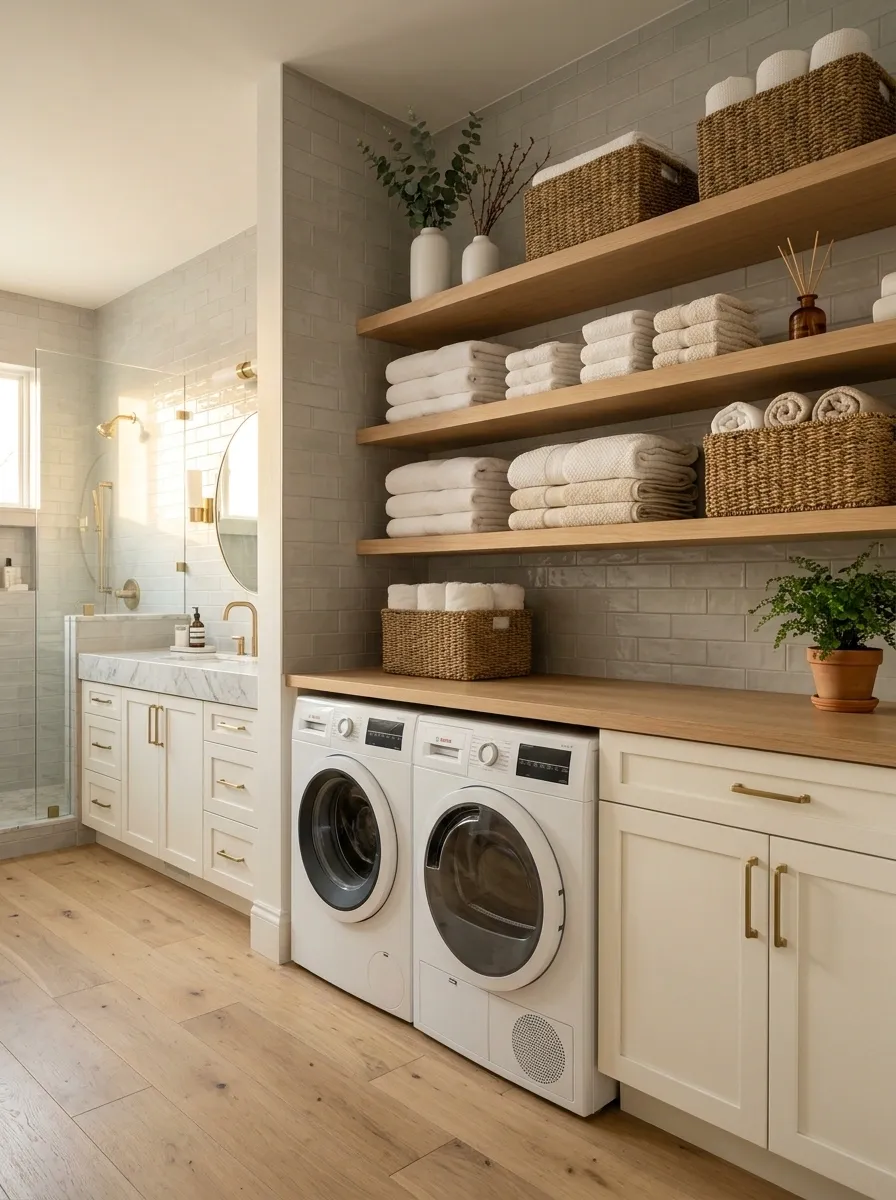
A bathroom that shares space with laundry appliances benefits from a dedicated linen wall that separates the soft bathroom elements from the practical laundry zone. Open shelves above the washer and dryer hold folded towels, while lower cabinets hide cleaning products and extra supplies.
Warm white cabinetry, pale wood shelving, and soft gray tile prevent the utility area from feeling purely functional. Towels provide texture and make the storage wall feel connected to the bathroom rather than the laundry equipment.
Keeping the open shelves visually tidy matters even more in a combined room because everything is visible at once. The washing machine can stay unapologetically appliance-shaped. The shelves do the job of making the surrounding space look intentional.
Folded towels + clean textiles
Appliances
Cleaning supplies
White Subway Tile Bathroom With a Recessed Oak Towel Shelf
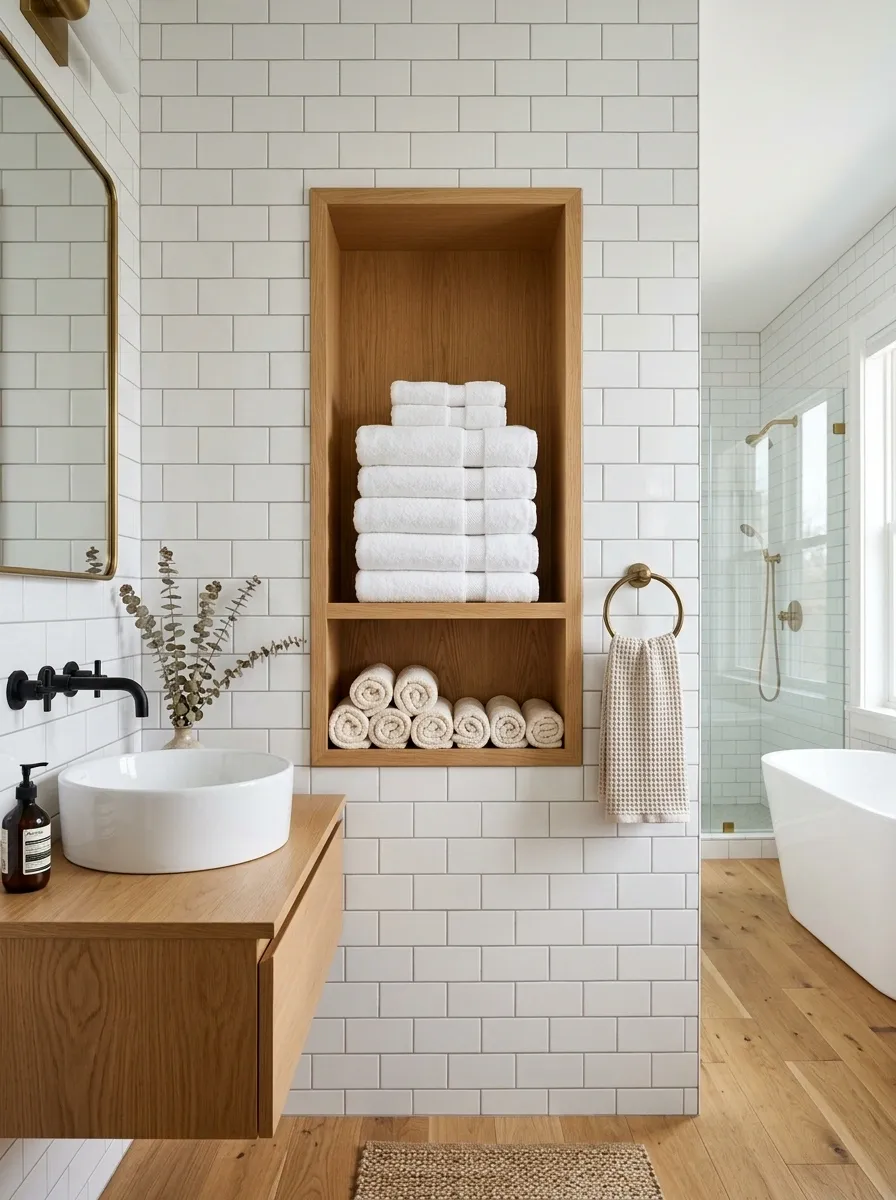
Classic white subway tile gets a warmer treatment through a recessed oak shelf built into the wall near the vanity. The oak insert creates contrast against the white tile while folded towels introduce soft texture. Black or aged brass fixtures can repeat the darker details elsewhere in the room.
The shelf is large enough to hold everyday towels but not so deep that it becomes a general dumping zone. A small lower ledge can hold rolled washcloths, while the main section stays dedicated to larger towels.
This design works because the wood interrupts the repeating tile pattern at exactly one intentional point. Too many contrasting niches would weaken the effect. One good interruption can do more than a wall full of decorative decisions.
Minimal Bathroom With a Hidden Pull-Out Towel Drawer
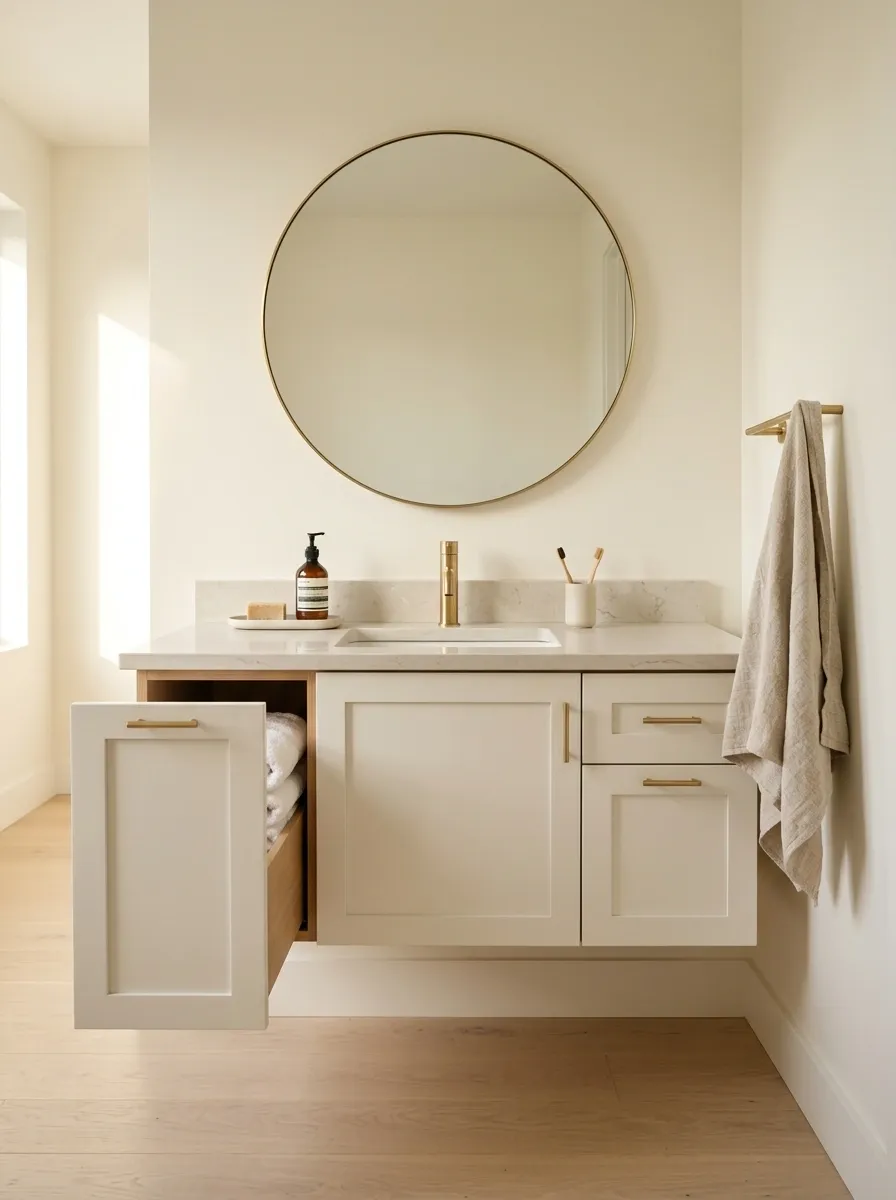
A floating vanity hides a deep pull-out towel drawer beneath the countertop, keeping folded towels completely out of sight while preserving the clean lines of the bathroom. Pale stone, warm white cabinetry, and a simple mirror create a quiet backdrop.
The drawer opens toward the user, making the towels easy to access without requiring a tall cabinet or exposed shelving. A small open rail beside the vanity handles the towel currently in use, creating a useful separation between daily and stored textiles.
This arrangement suits bathrooms where visual simplicity matters more than displaying accessories. Nothing is fighting for attention. The towels are there. They are simply minding their business behind a very good cabinet door.
Clean folded towels stay concealed
Warm Beige Bathroom With a Wall-to-Wall Towel Shelf
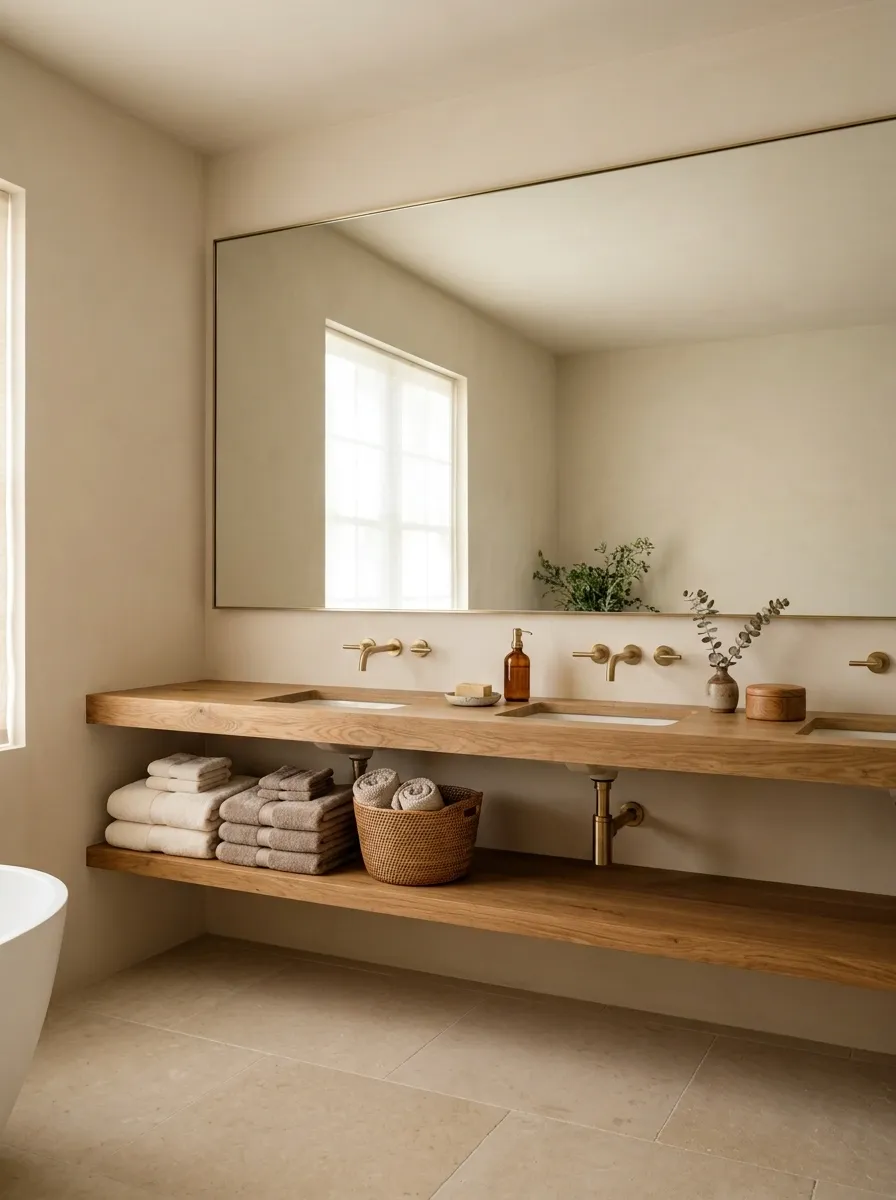
A long wall-to-wall shelf runs beneath a large mirror in this warm beige bathroom, creating one continuous storage line across the vanity area. The shelf uses the same stone or wood tone as another feature in the room, so it feels built into the architecture.
Folded towels occupy one section, baskets handle smaller textiles, and the remaining space stays open. That open area is important because the shelf’s length already gives the wall plenty of visual presence.
The result feels generous without requiring a large cabinet. It is also easy to maintain because everything is visible at a glance. The shelf basically says, “Yes, there is storage here,” without screaming it from across the hallway.
Small Scandinavian Bathroom With a Peg Rail and Towel Baskets
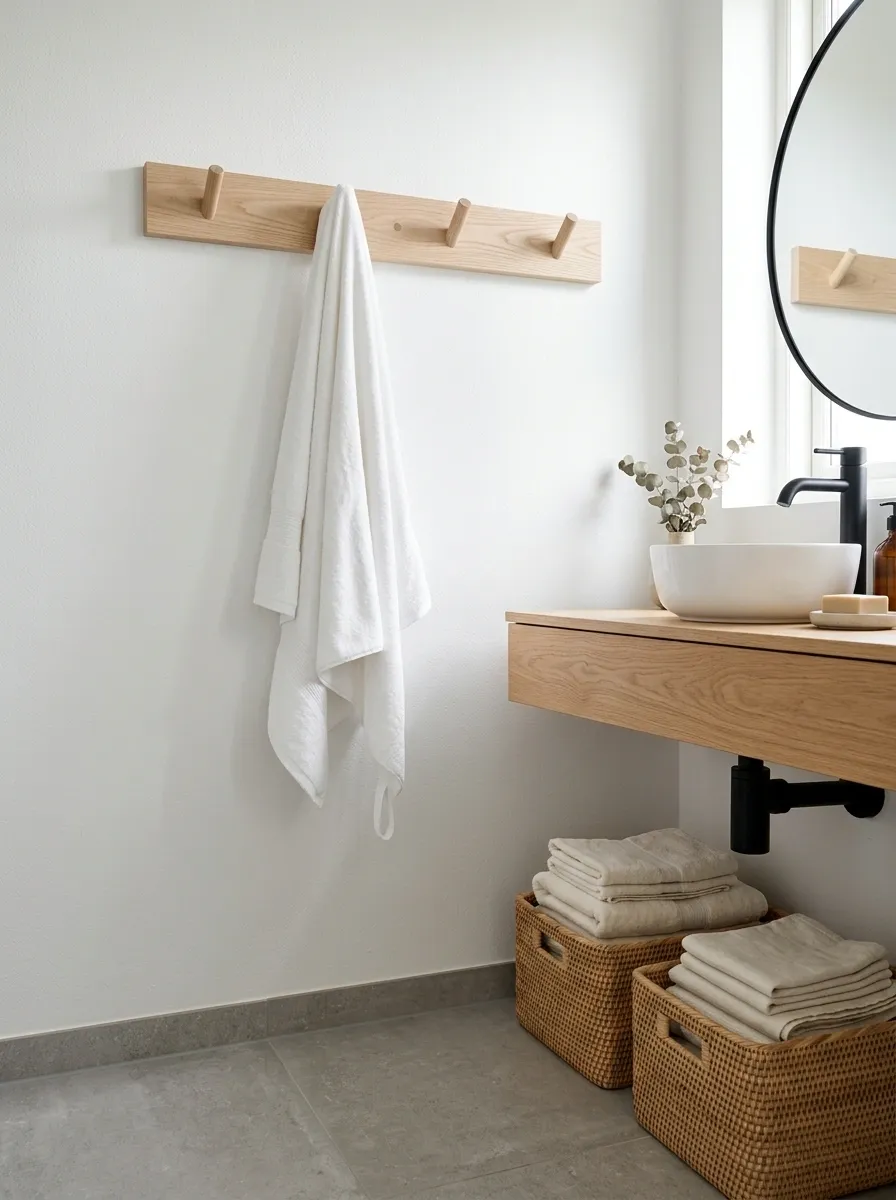
A simple Scandinavian bathroom combines a pale wood peg rail with low woven baskets beneath a floating vanity. The rail handles towels in use, while the baskets store clean folded towels and extra textiles. White walls, light oak, soft gray tile, and minimal black fixtures keep the room bright.
The combination creates storage at two different heights without adding a large cabinet. The peg rail also gives the wall a lighter appearance than a full towel rack, while the baskets add texture near the floor.
Keep the peg rail visually sparse. Four hooks do not need twelve things hanging from them. The empty hooks are part of the design. Yes, empty space is allowed to exist.
Clean towels
Extra linens
Luxury Bathroom With a Heated Towel Rail as the Main Feature
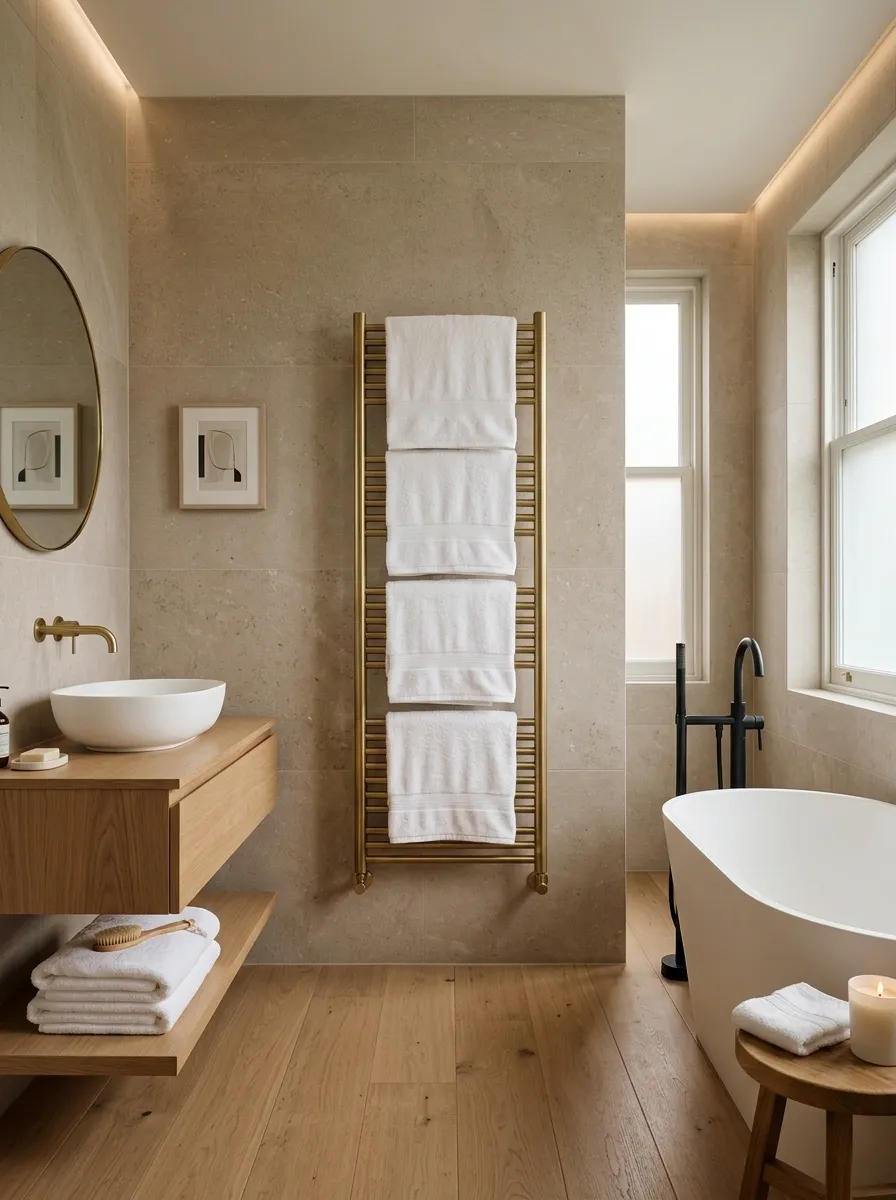
A tall heated towel rail becomes the main vertical storage element in this refined bathroom. Large-format stone walls, a freestanding tub, warm lighting, and a floating vanity create a quiet spa atmosphere while the rail provides both function and a strong vertical line.
Because the rail itself is visually substantial, additional towel storage remains minimal. A shallow shelf beneath the vanity handles folded spare towels, while the heated rail handles towels currently in use.
This prevents the bathroom from needing a separate tower or cabinet while keeping towels close to the tub and shower. The rail should remain visually clean so it reads as part of the architecture rather than a metal jungle covered in every towel in circulation.
Main towel zone
Keep the surrounding wall quiet.
Narrow Bathroom With a Continuous Towel Rail Beneath the Mirror
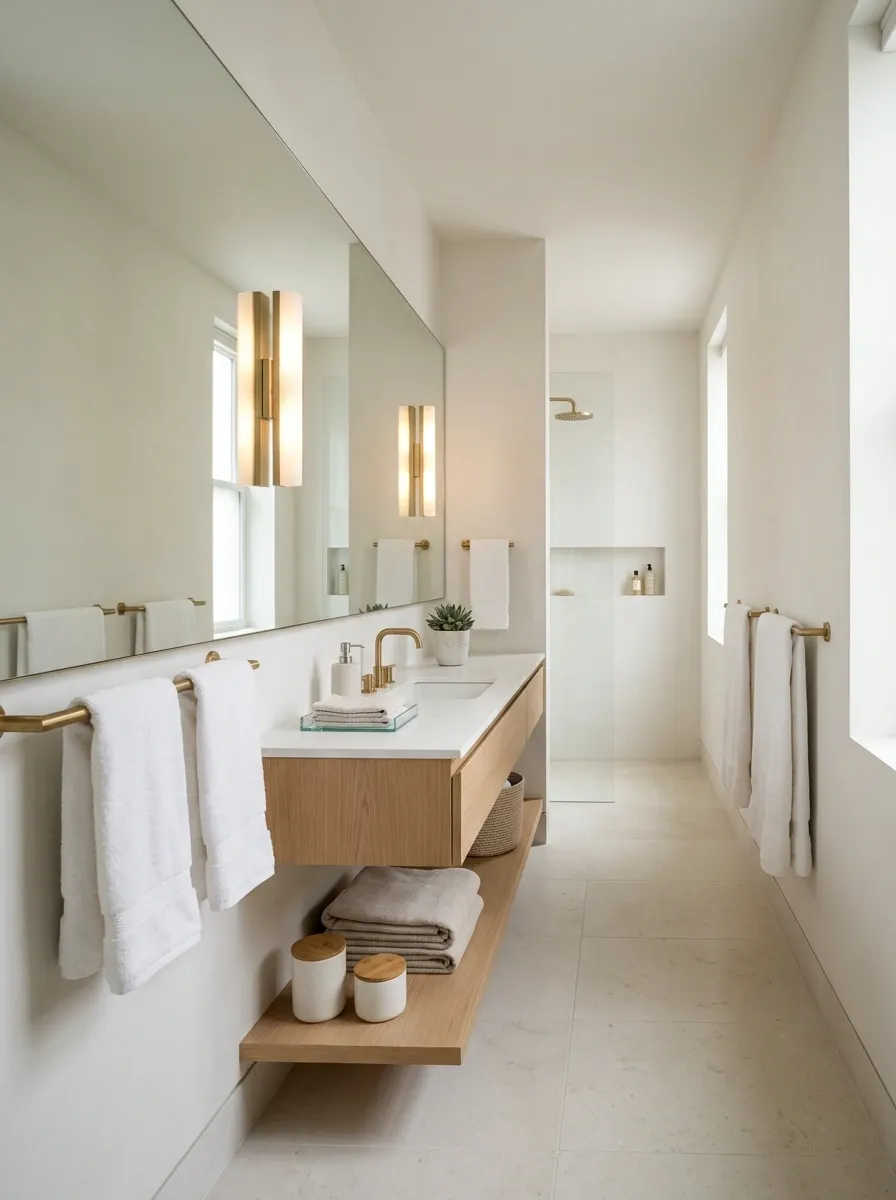
A long mirror stretches above a narrow vanity, with a continuous towel rail running beneath it. The rail becomes a strong horizontal line while the mirror visually expands the wall above. Pale tile, a slim wood vanity, and simple lighting keep the narrow room feeling open.
The rail provides enough hanging space for several towels without requiring hooks scattered across different walls. A shallow shelf beneath the vanity handles folded extras, keeping the main wall focused on the mirror and rail.
This works especially well in long bathrooms where horizontal storage complements the shape of the room. Instead of fighting the narrow footprint, the storage reinforces it in a clean and deliberate way.
Guest Bathroom With a Hotel-Style Rolled Towel Shelf
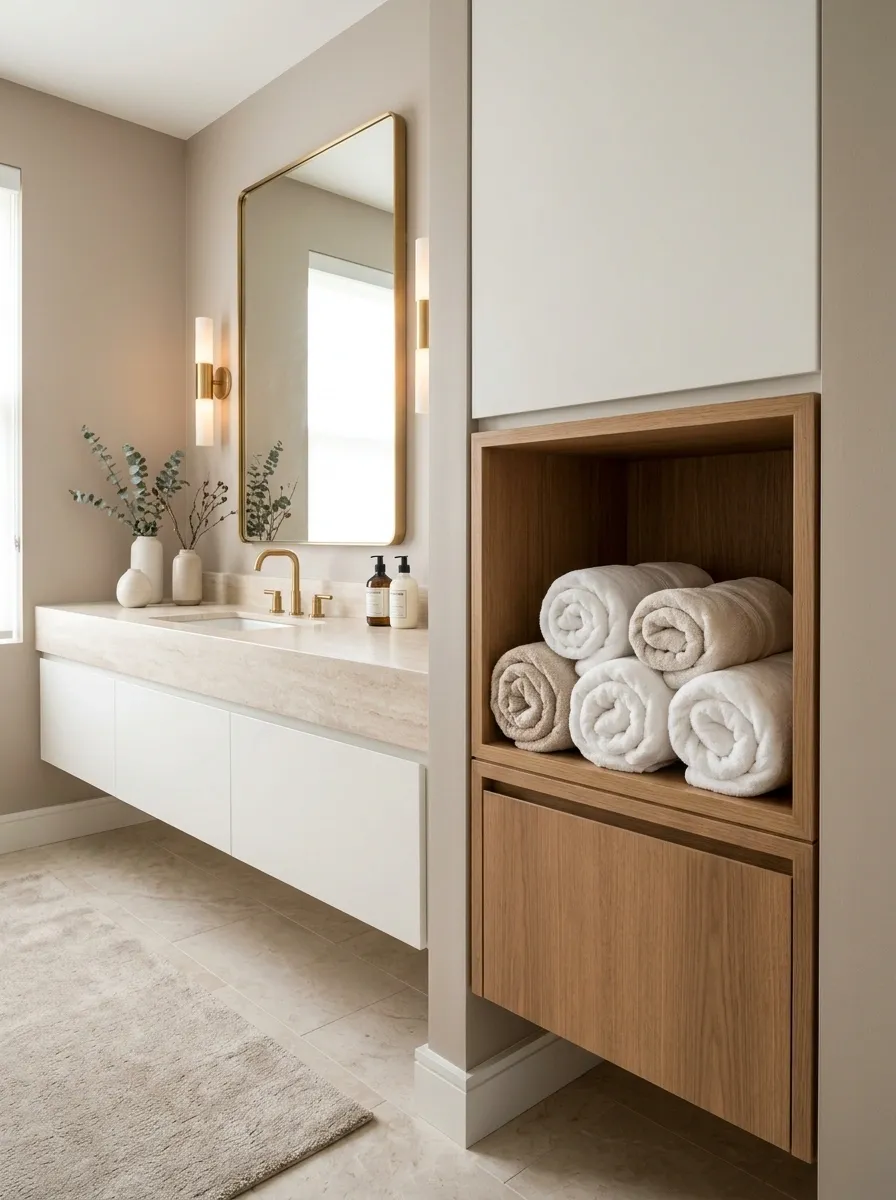
A guest bathroom uses a small open shelf beside the vanity to create a welcoming hotel-style towel display. Thick white and neutral towels are rolled and stacked in a warm wood cubby, while a lower closed compartment keeps spare linens tucked away.
Soft wall paint, stone surfaces, a framed mirror, and warm lighting make the room feel polished without becoming overly formal. The towels become part of the guest experience because they are visible, clean, and easy to reach.
The open shelf should remain intentionally simple. Guests do not need to see twelve backup towels, three hair products, and the emergency plumbing supplies. That is the cabinet’s secret.
Small Rental Bathroom With a Narrow Rolling Towel Cart
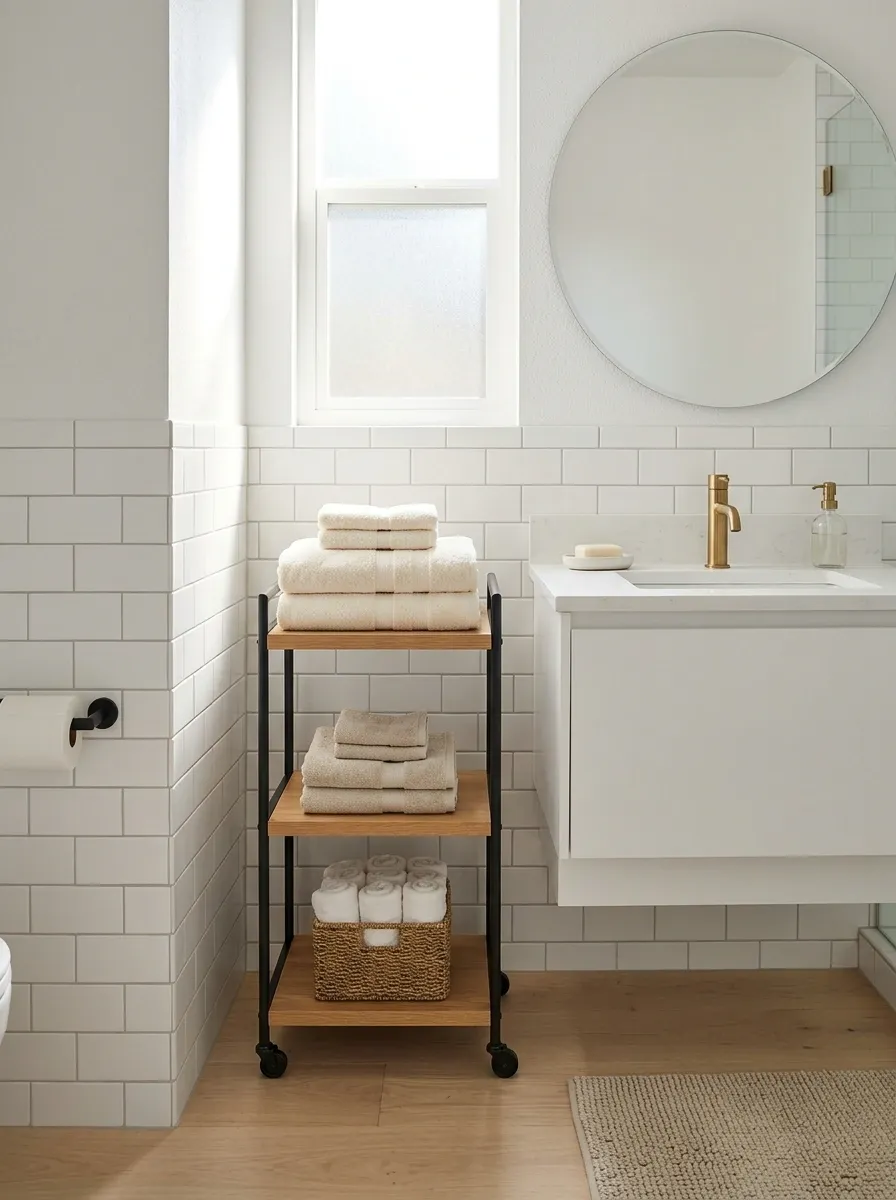
A slim rolling cart turns a tiny unused gap beside the vanity into flexible towel storage. The cart has two or three levels, with folded towels on the upper shelf, spare linens below, and a small basket for washcloths.
Because it is mobile, the cart can be moved when cleaning or when the bathroom layout changes. Warm wood or matte metal keeps the piece looking like furniture rather than a utility trolley.
This is a particularly useful approach for renters who cannot add built-in shelving. The cart should remain narrow enough to preserve circulation. A storage cart that requires people to walk sideways past it has officially become part of the problem.
Daily towels
Extra linens
Small textiles
Stone Bathroom With a Built-In Shower Drying Ledge
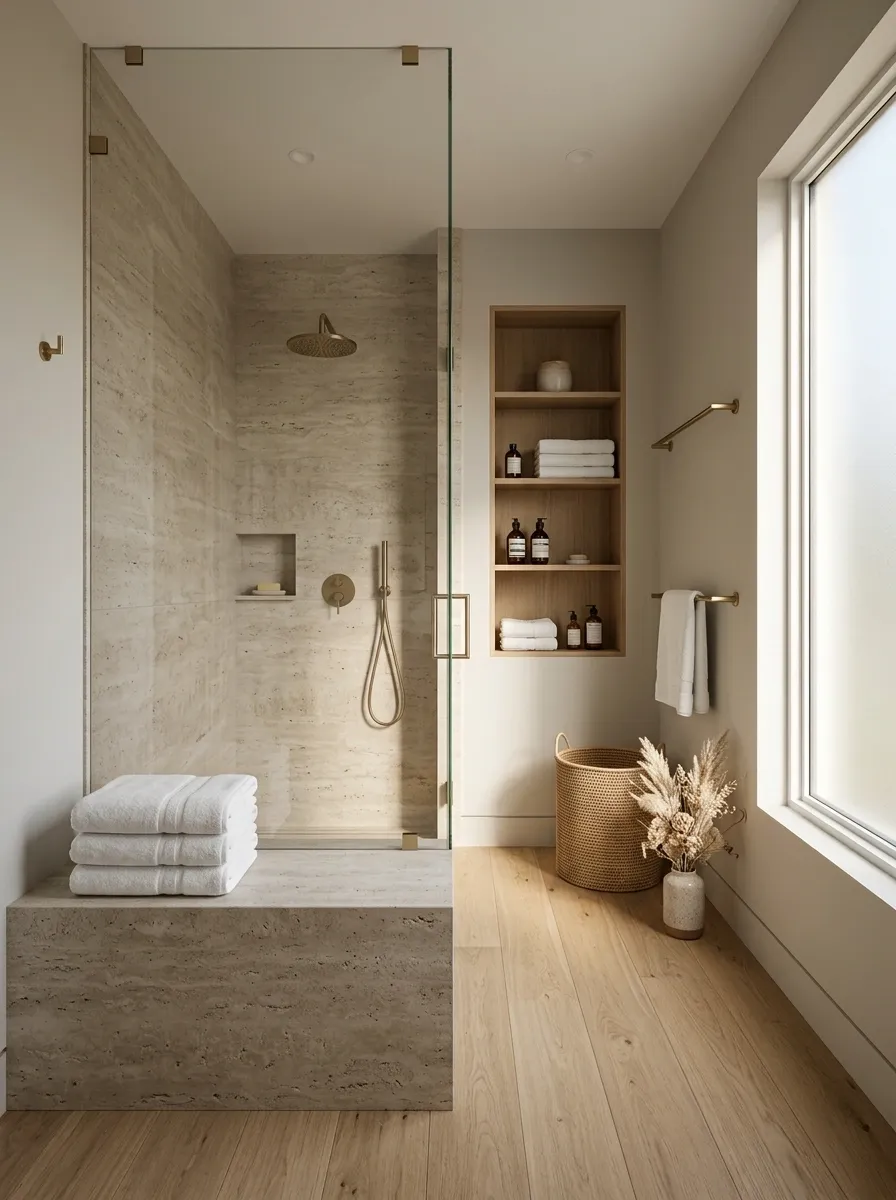
A generous shower includes a built-in ledge outside the main wet zone where clean towels can be temporarily placed before use. Nearby wall storage holds folded spare towels, keeping the rest of the bathroom uncluttered.
The ledge is finished in the same stone as the shower walls, making it look architectural rather than like an accessory. A slim towel rail nearby provides the permanent hanging zone, while the ledge handles the moment immediately after stepping out.
This arrangement is especially useful in larger walk-in showers where a little built-in ledge can serve more than one purpose. The key is keeping clean towels outside the direct spray path. A soaked “clean towel” is not storage. It is a plot twist.
Clean towel
Ready to use
Towel in use
Warm White Bathroom With a Built-In Linen Drawer Under the Tub
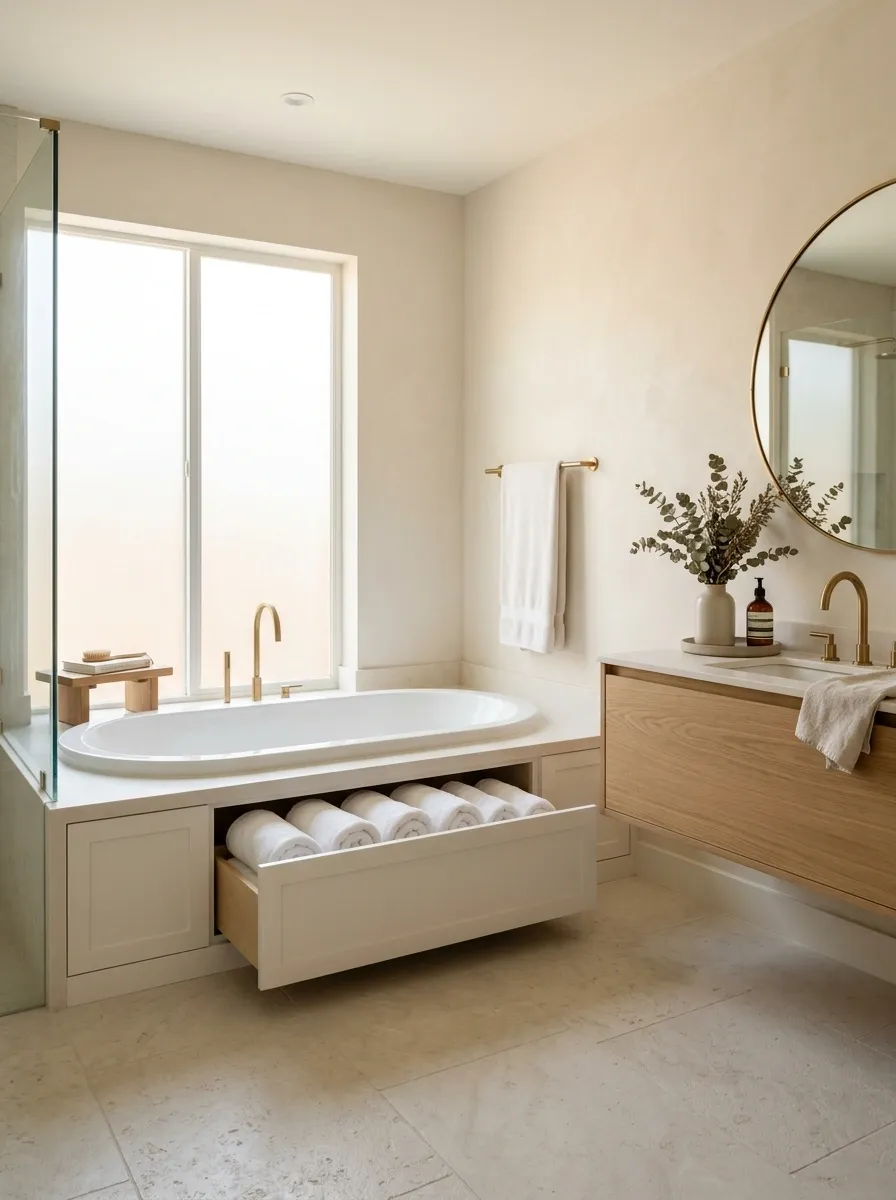
A built-in drawer beneath a freestanding tub provides a surprisingly discreet towel-storage zone. The tub platform uses warm white cabinetry, with one long drawer dedicated to clean towels. Pale stone, soft plaster, and natural wood details create a calm, cohesive palette.
The drawer is especially useful for spare towels because it keeps them close to the bathing area without adding another cabinet to the room. A separate rail near the vanity handles the towel currently in use.
The cabinetry beneath the tub also makes use of space that could otherwise become decorative dead space. If the tub already sits on a built platform, that volume might as well earn its rent.
Clean towels hidden below
Modern Black Bathroom With a Floating Towel Shelf
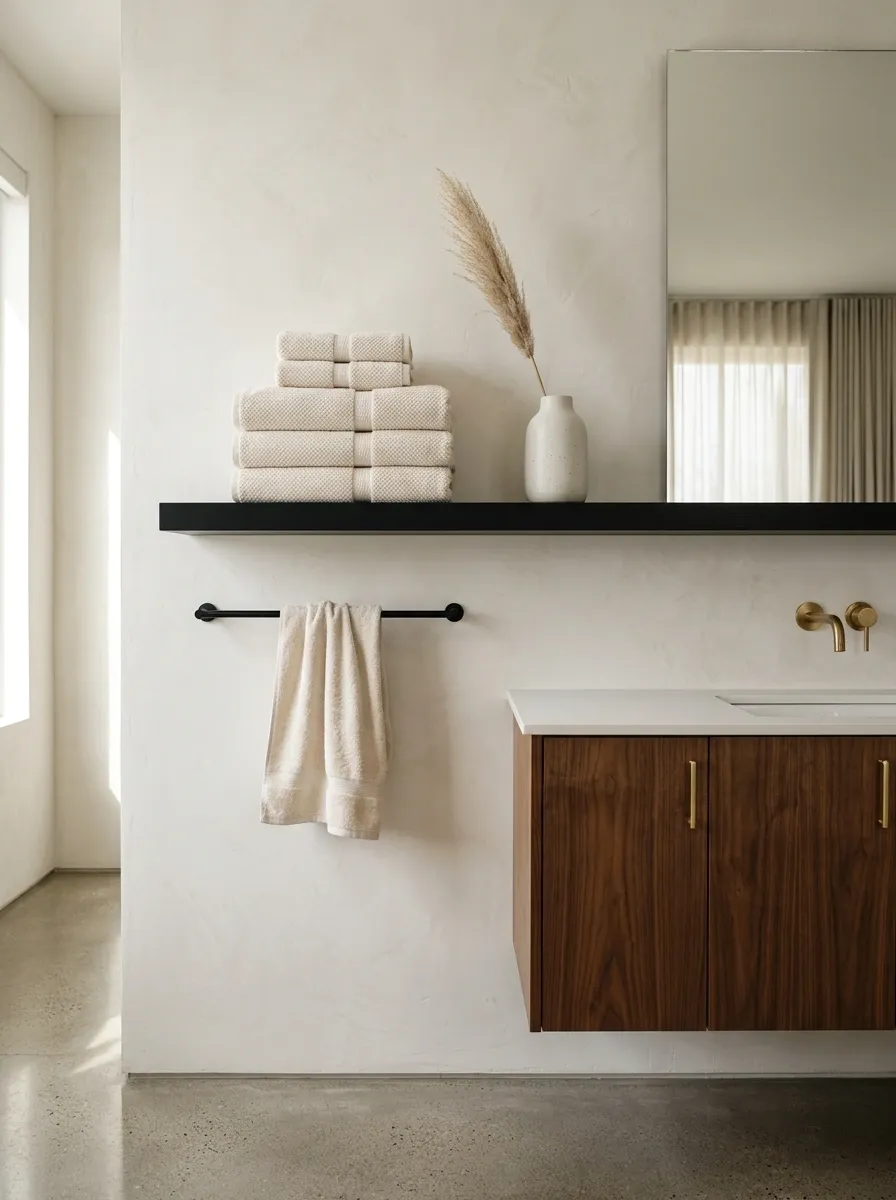
A floating black shelf creates a sharp horizontal line against warm white plaster in this modern bathroom. Thick cream towels soften the contrast, while a walnut vanity introduces enough warmth to keep the room from feeling stark.
The shelf sits at a convenient height beside the vanity, with folded towels arranged in a restrained stack. A lower rail can handle towels currently in use, keeping the shelf dry and visually neat.
This combination of black, cream, and walnut gives the bathroom a strong graphic quality without relying on excessive decoration. The shelf itself becomes a design feature. The towels simply get to look good while doing their actual job.
Graphic line
Warm anchor
Soft contrast
Soft Pink Bathroom With a Vintage Towel Cabinet
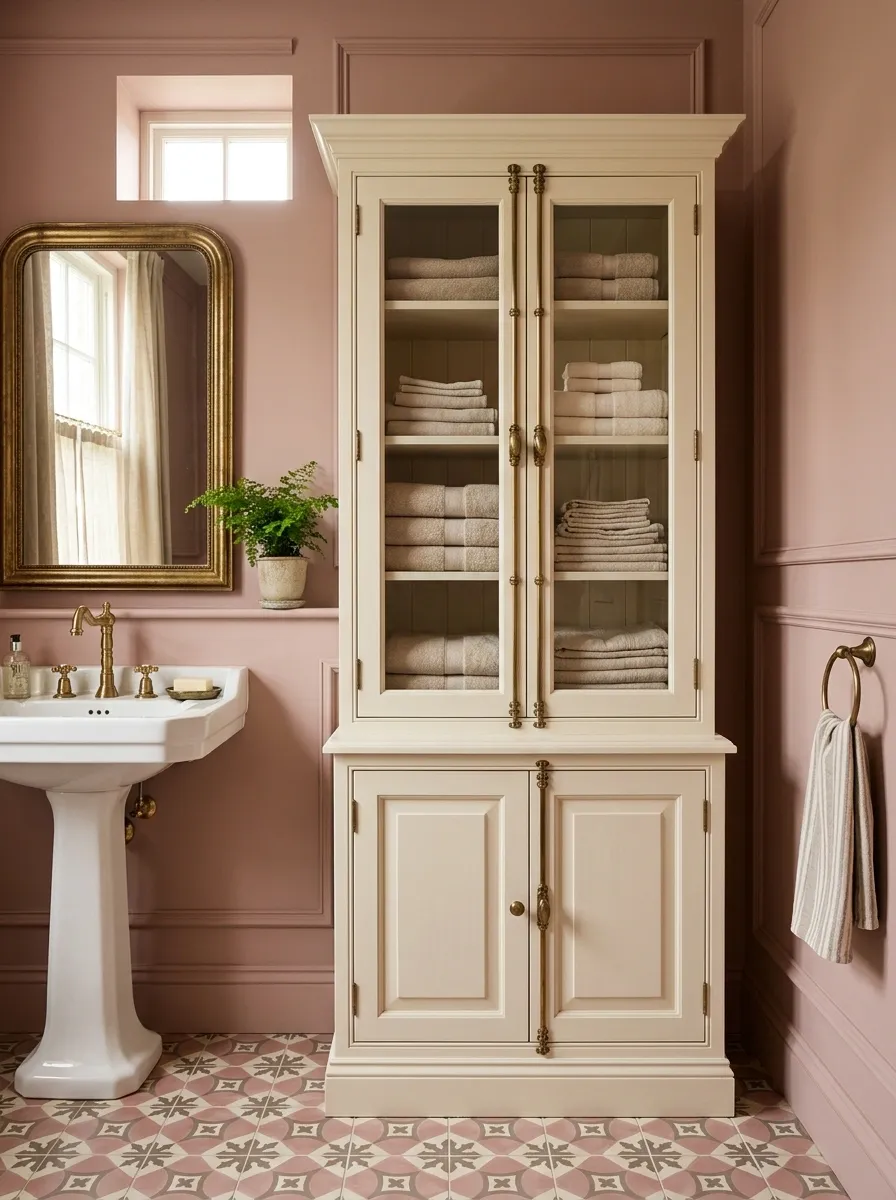
A dusty pink bathroom pairs with a small vintage-style towel cabinet painted in warm ivory. Glass-front doors reveal neatly folded towels, while a lower compartment conceals backup linens. Brass pulls, a classic mirror, and patterned flooring add old-fashioned character without making the room feel overly sweet.
The ivory cabinet breaks up the pink wall while keeping the palette soft. Towels remain mostly neutral so the cabinet contents do not compete with the wall color.
The design works because the storage is treated as furniture. It has proportion, detailing, and a finish that belongs in the room. Basically, the cabinet is allowed to have a personality. The towels are not allowed to start a rebellion.
Wall color
Cabinet + towels
Hardware + mirror detail
Narrow Galley Bathroom With a Continuous Wall Shelf and Rail
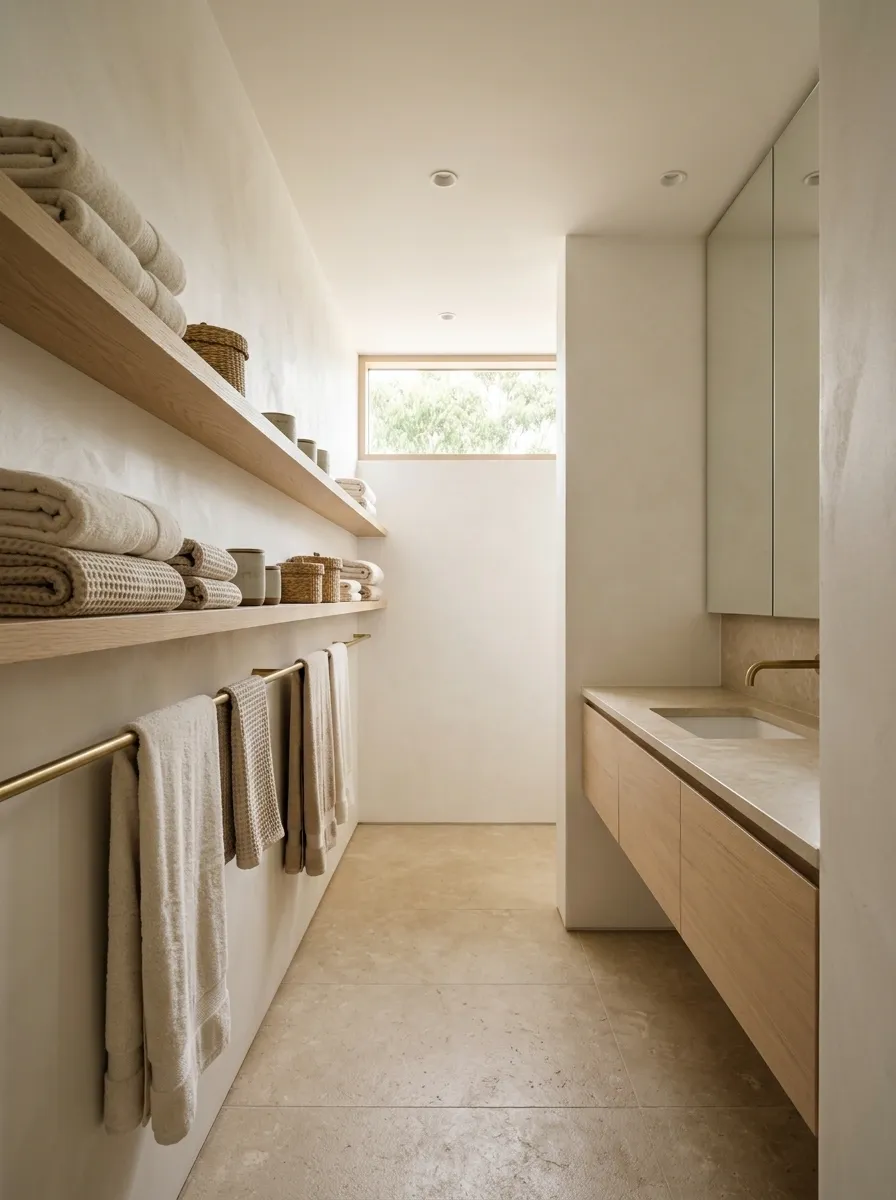
A narrow galley bathroom uses one long wall as a dedicated towel-storage zone. A shallow shelf runs above a slim rail, while the opposite side remains mostly clear for the vanity and shower. Warm white walls, pale wood, and simple stone surfaces keep the room visually open.
The continuous shelf holds folded towels and small baskets, while the rail beneath handles towels in use. Because both pieces follow the length of the room, they reinforce the bathroom’s proportions instead of fighting them.
This is a useful solution when there is no practical location for a large cabinet. It also makes towel storage easy to understand: clean towels above, towels in use below. No scavenger hunt required.
Making Towel Storage Look Like Part of the Design
The strongest bathroom towel storage ideas do not treat storage as something that gets added after all the pretty decisions are finished.
The cabinet, niche, shelf, bench, rail, or console becomes part of the architecture and color story.
A towel shelf can look intentional because it repeats the wood from the vanity. A recessed niche can feel architectural because its trim matches the plumbing fixtures. A freestanding cabinet can look like proper furniture because its proportions relate to the vanity instead of resembling a storage appliance that wandered into the room.
The goal is not to hide every towel. It is to decide which towels deserve to be seen and which bathroom realities can stay behind a door.
That distinction makes a huge difference. Displayed towels should contribute softness, texture, and color. Stored towels should be easy to reach without making the bathroom look like a warehouse. And towels currently in use should have their own place, because apparently throwing one over the shower door is a tradition humanity refuses to retire.
The best design is the one that works with the actual room. A tiny bathroom may need vertical storage. A rental may need movable furniture. A large bathroom may benefit from built-in cabinetry. A beautiful freestanding tub may need a nearby rail. There is no prize for forcing the same storage solution into every floor plan.
Choose the idea that matches the architecture, repeat materials where possible, leave some empty space around visible storage, and let the towels become part of the room rather than the thing the room is constantly trying to hide.