
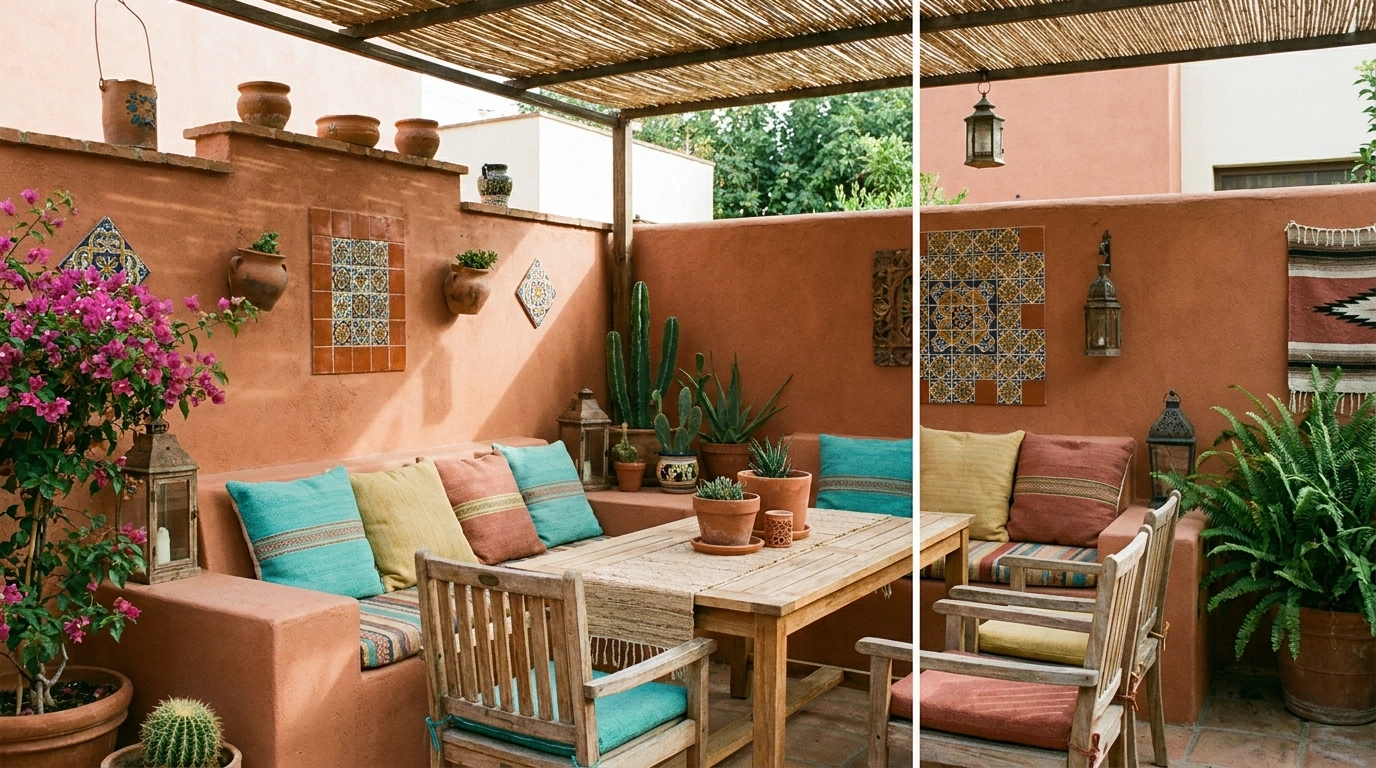
A backyard can have terracotta, colorful tile, bougainvillea, plaster walls, woven furniture, and enough plants to make a garden center nervous, yet somehow still look unfinished.
The trick with Mexican-inspired outdoor spaces is not throwing every recognizable detail into the same patio and hoping the vibes sort themselves out. The most beautiful spaces have a clear composition.
Warm architecture creates the foundation, planting adds movement, furniture establishes how the yard is actually used, and color appears where it can make the biggest visual impact.
The Mexican Backyard Mood, Without the Tourist-Souvenir Energy
Mexican style is not “add a bright pot and call it done.”
Mexican Backyard Ideas
Outdoor Kitchen With Brick Oven
An open-air kitchen instantly becomes the anchor of a Mexican backyard when built with heavy red brick and warm stucco. A tall brick barbecue structure pairs naturally with a concrete countertop, integrated sink, and open wooden shelving holding everyday spices and earthenware. The arrangement turns cooking outside from a backyard chore into a daily ritual.
The secret is balancing the raw masonry with soft, functional details. Patterned tile backsplashes bring subtle character without overwhelming the cooking space, while hanging greenery softens the hard edges of the brickwork. Keep the accessories practical—jars, cutting boards, and fresh herbs—so the kitchen feels genuinely used rather than staged for a magazine shoot.
Positioning the cooking station alongside a covered patio ensures it remains functional through every season. By combining durable clay materials with modern plumbing and prep space, the outdoor kitchen bridges the gap between traditional craftsmanship and contemporary convenience effortlessly.
Colorful Mexican Courtyard With Talavera-Style Ceramics
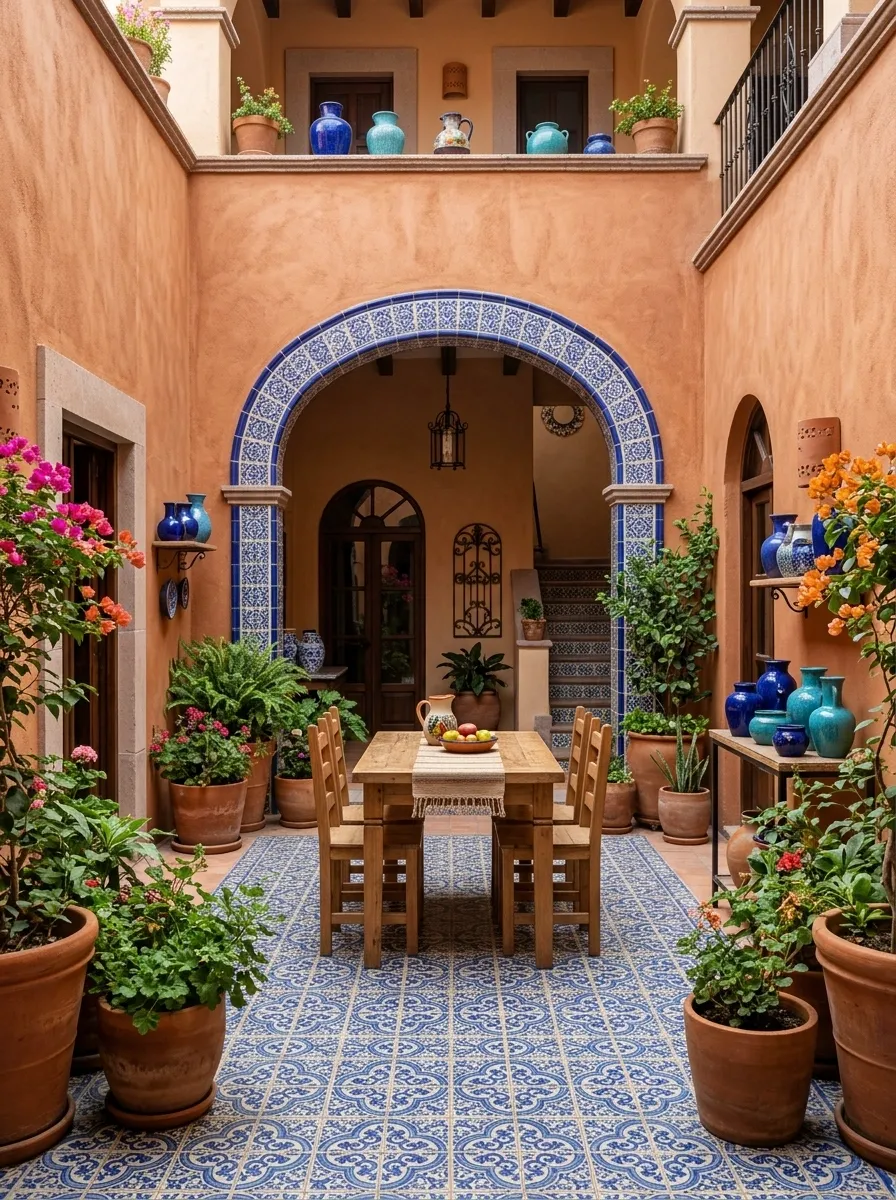
A traditional courtyard can feel incredibly lively without becoming visually chaotic. Warm stucco walls create the backdrop, while patterned ceramic tile brings color underfoot and around selected architectural details. Terracotta pots hold leafy plants along the edges, with a compact wood dining table giving the middle of the courtyard a practical purpose.
The important part is concentration. Let the strongest pattern live on the floor or one architectural surface, then allow the surrounding walls and furniture to calm things down. A few turquoise and cobalt ceramic pieces can echo the tile without turning every available surface into a souvenir display. The result feels collected and residential rather than themed.
Vibrant Tiled Courtyard Floor
A patio floor can single-handedly carry the visual weight of an entire backyard when patterned cement tiles take center stage. Alternating geometric designs in terracotta, cream, and deep teal create a dynamic carpet of color underneath an open sky. Simple stucco walls and understated furniture then allow the floor to remain the undeniable star of the design.
The beauty of an intricate tile layout is that it minimizes the need for extra decorations. A few potted olive trees and minimalist dining chairs are all it takes to complete the space because the ground itself is doing the heavy lifting. The arrangement feels expansive and grounded, transforming a standard side yard into an architectural destination.
String lights overhead and warm wall sconces ensure the tiled pattern looks just as striking after sunset. By keeping the surrounding boundaries neutral, the intricate floor design feels intentional, cohesive, and remarkably easy to live with day in and day out.
Modern Mexican Backyard With Warm Plaster Walls
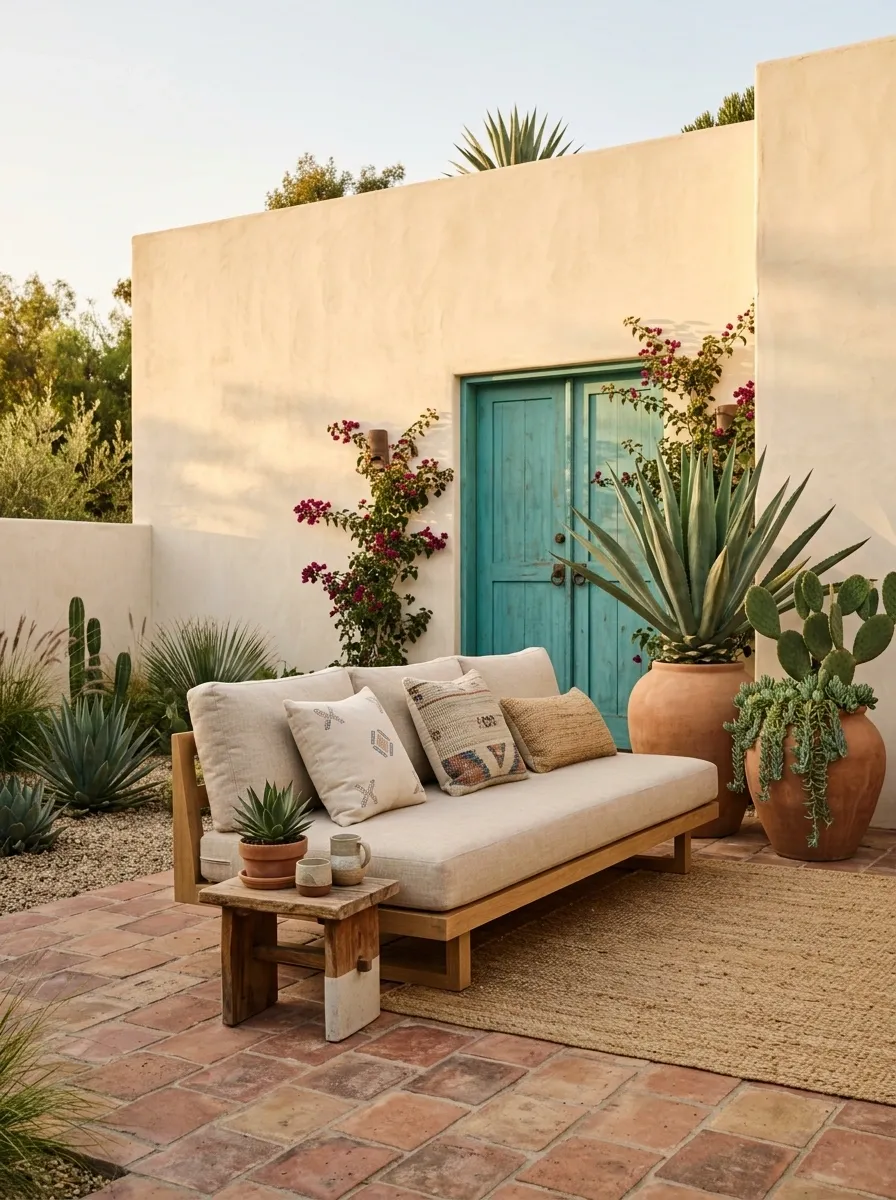
Modern architecture pairs beautifully with Mexican materials when the palette stays warm. Imagine smooth cream plaster walls, a broad terracotta patio, low-profile wood furniture, and large sculptural planters filled with greenery. The furniture remains simple so the architecture can do most of the visual work.
Instead of relying on decorative color everywhere, introduce warmth through clay, wood, woven textures, and subtle patterned textiles. A single turquoise door or ceramic accent can then become surprisingly powerful. This direction is especially effective when the home itself has clean lines because the natural materials soften the geometry without fighting it.
Terracotta Patio With Arched Grill
Classic terracotta tiles set in a simple grid pattern bring immediate warmth and a timeless sense of place to any outdoor living zone. Paired with a cream-plastered archway and a traditional outdoor grill station, the space evokes the quiet charm of a historic rural estate. Every element works together to create a calm, earthy environment.
Overhead, a dark timber pergola with Spanish tiles provides essential shade while framing the sky above. Iron lanterns hang at varying heights to cast a warm glow across the clay flooring during evening gatherings. Potted greenery and climbing plants soften the transition between the crisp white walls and the rich red tones of the floor.
This layout thrives on restraint and authentic textures. Rather than crowding the perimeter, let the architecture speak for itself by using durable materials that age gracefully over time. The result is an inviting, low-maintenance courtyard designed for unhurried afternoons and long, comfortable evenings.
Rustic Hacienda Backyard With Heavy Timber and Clay
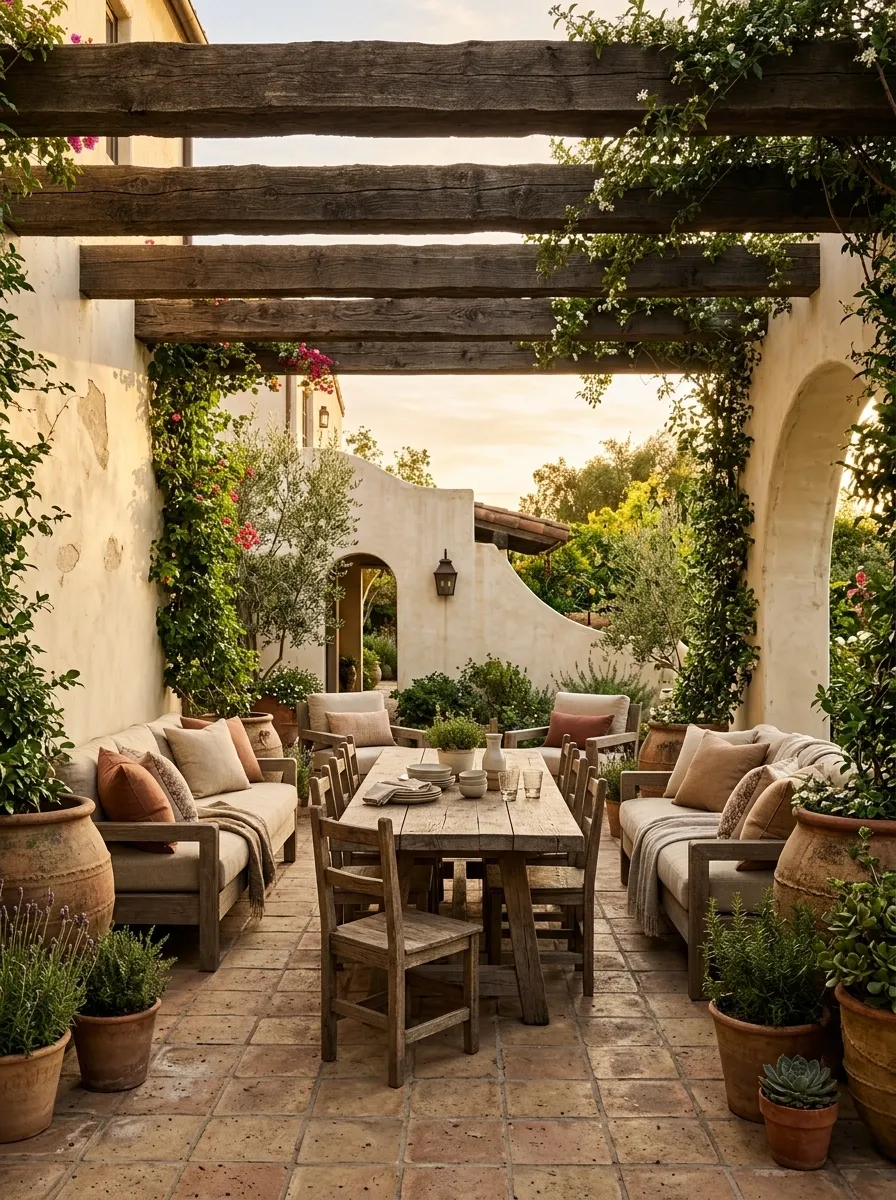
A hacienda-inspired backyard feels grounded because its materials have visible weight. Thick stucco walls, substantial timber beams, aged clay flooring, oversized terracotta pots, and sturdy wood furniture create a composition that feels connected to the architecture.
Keep the furniture substantial but not excessive. A long timber table or deep lounge sofa can anchor the yard, while climbing greenery softens the heavier construction. The palette works best when the finishes are slightly imperfect rather than overly polished. Weathered wood beside handmade clay has much more character than a collection of perfectly matching outdoor furniture.
↓
Timber adds structural warmth
↓
Clay grounds the composition
Bougainvillea Pergola With Cozy Seating
A wooden pergola bursting with cascading magenta bougainvillea creates the ultimate shaded outdoor living room. Beneath the vibrant floral canopy, a deep sectional sofa draped in neutral cushions invites lingering conversations late into the evening. A chunky stone coffee table sits at the center, offering a sturdy surface for drinks and collected pottery.
Lighting plays a crucial role in making this lush corner feel magical after dark. Woven pendant lamps hang directly from the timber beams, casting a warm, textured glow over the seating area. Terracotta pots filled with smaller greens and trailing vines reinforce the natural, overgrown aesthetic without crowding the floor space.
The key to pulling off this look is letting the plants do what they do best while keeping the furniture comfortable and understated. By blending rich textiles, natural stone, and overflowing blooms, the patio transforms into a private sanctuary that feels both luxurious and completely lived-in.
Mexican Fountain Garden With Layered Planting
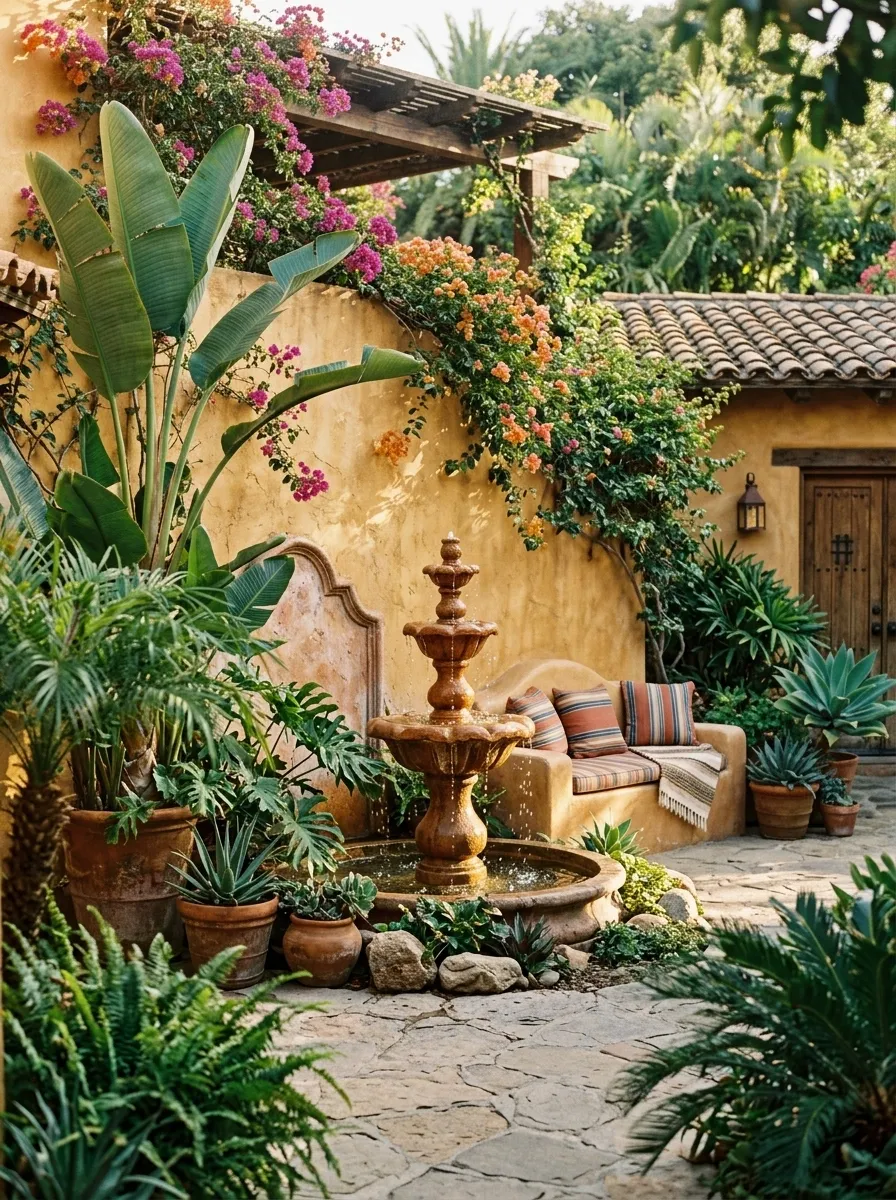
A small fountain can become the visual heart of a courtyard when the rest of the garden supports it rather than competing with it. A tiled or plastered fountain sits against a warm stucco wall, surrounded by large clay pots, leafy plants, and a narrow sitting area.
The water introduces movement and sound while the surrounding greenery keeps the hard architecture from feeling too formal. Place the fountain where it can be seen from the main seating area or doorway. There is little benefit in creating a beautiful focal point and then hiding it behind a heroic amount of foliage. The garden should frame the fountain, not conduct a witness-protection program for it.
Secluded Courtyard Under Olive Trees
A mature olive tree can instantly transform a simple courtyard into an architectural masterpiece by providing sculptural height and soft, dappled shade. Surrounded by warm plaster walls and neutral stone paving, the tree acts as living art. Comfortable woven armchairs and a low wooden coffee table arranged beneath its branches invite quiet moments of reflection.
This setup proves that simplicity often yields the most sophisticated results. Instead of relying on bright colors, the palette depends entirely on natural tones—sage green leaves, sandy plaster, and warm terracotta. A fully equipped outdoor kitchen tucked under a neighboring alcove ensures the space transitions seamlessly from daytime lounging to evening hosting.
Layering in texture through woven baskets, ceramic planters, and soft cushions keeps the minimalist architecture from feeling cold. The resulting courtyard feels established, serene, and deeply connected to the natural environment surrounding it.
Compact Urban Mexican Backyard With a Built-In Bench
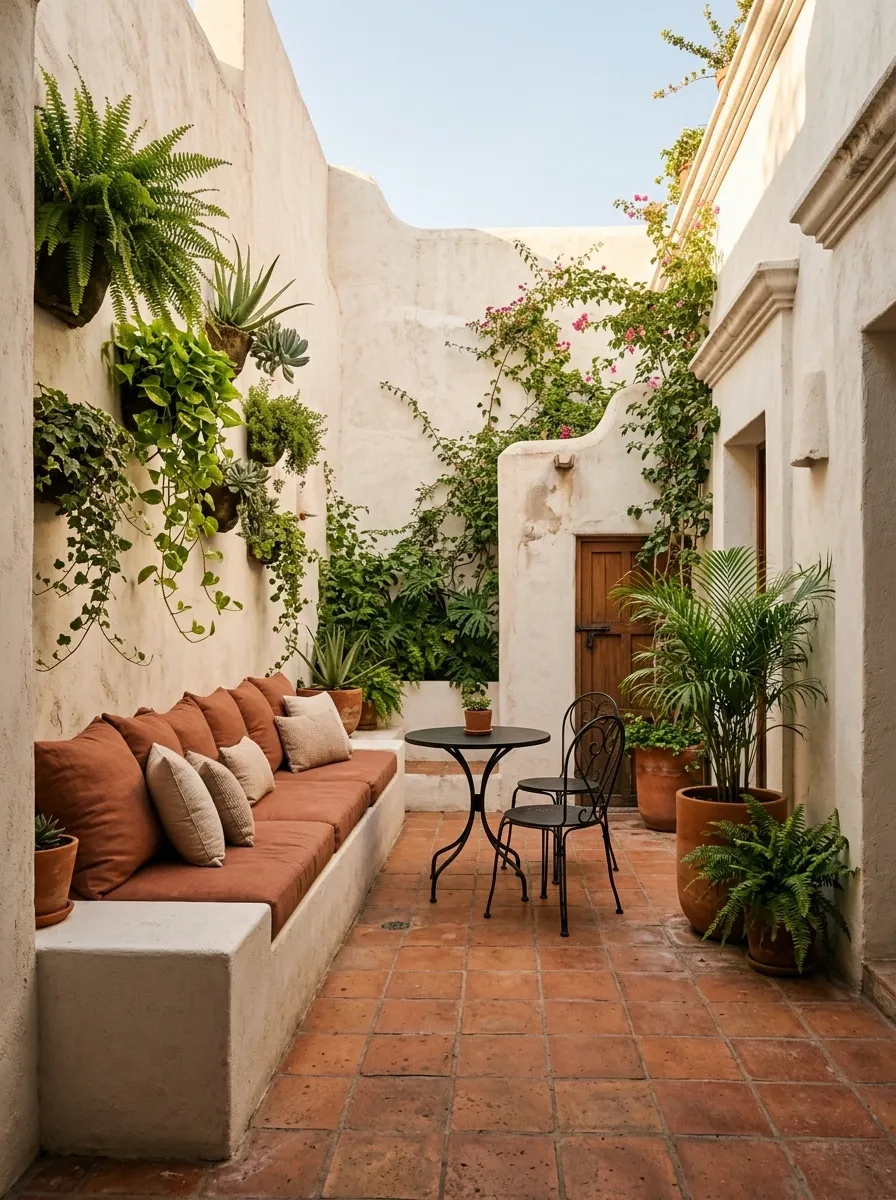
A small urban backyard can still carry plenty of Mexican character when the architecture works harder than the accessories. A plaster wall wraps around a compact patio, with a built-in masonry bench along one side and a small round table occupying the remaining floor area.
Terracotta tile adds warmth underfoot, while vertical planting makes use of wall height rather than stealing valuable walking space. Keep furniture visually simple and let the built-in elements establish the identity of the space. In a small yard, every object needs a job. Otherwise the patio quickly turns into an outdoor storage unit with better lighting.
Desert-Inspired Mexican Backyard With Agave and Gravel
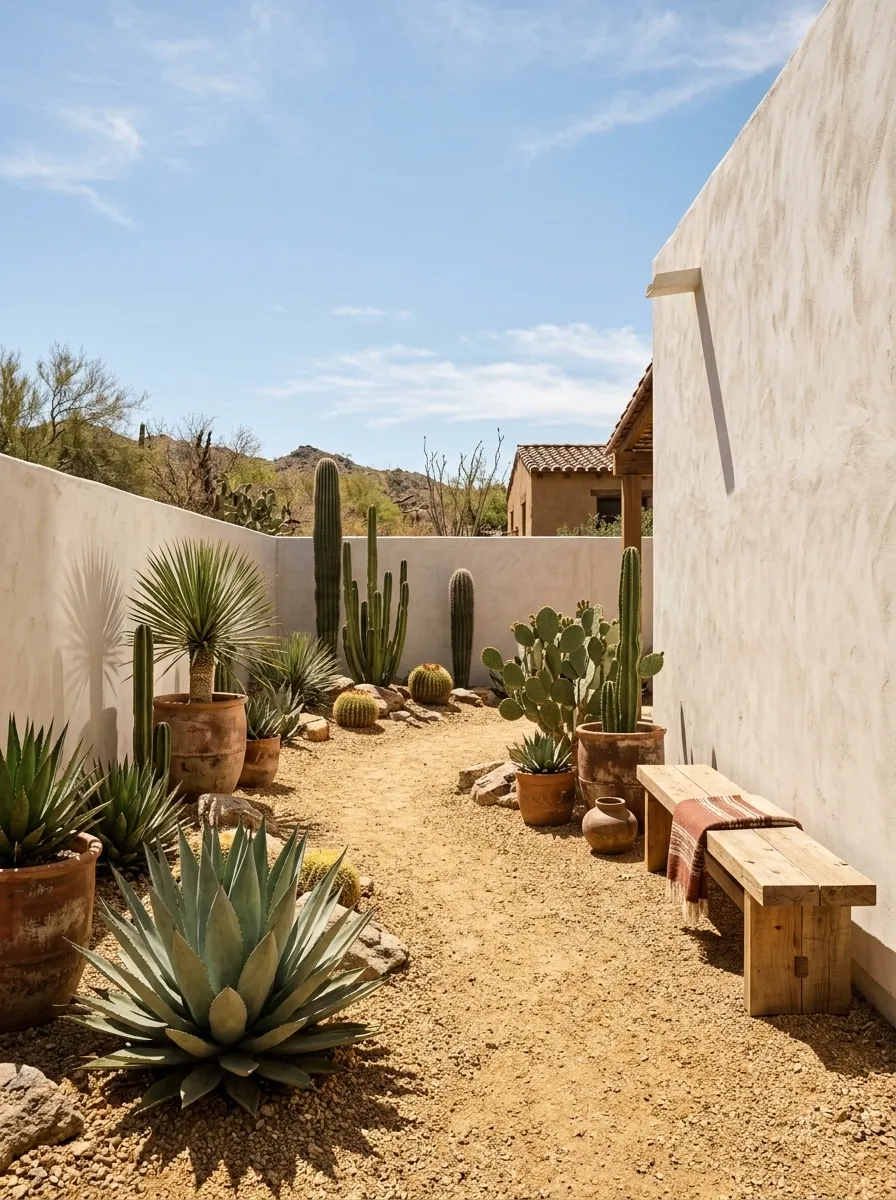
This version strips the backyard down to its strongest materials. Pale stucco walls, warm gravel, large terracotta planters, agave, sculptural cacti, and a simple wood seating area create a dry-climate garden with a distinctly Mexican character.
The beauty comes from the contrast between rigid architectural forms and organic plant shapes. Use different gravel tones or a narrow stone path to create movement through the space without introducing unnecessary decoration. A few large plants will always make more impact than dozens of tiny containers scattered around the perimeter. The garden should look intentional from across the yard, not like every plant bought at a different emotional stage.
Mexican Outdoor Kitchen With a Plaster Cooking Wall
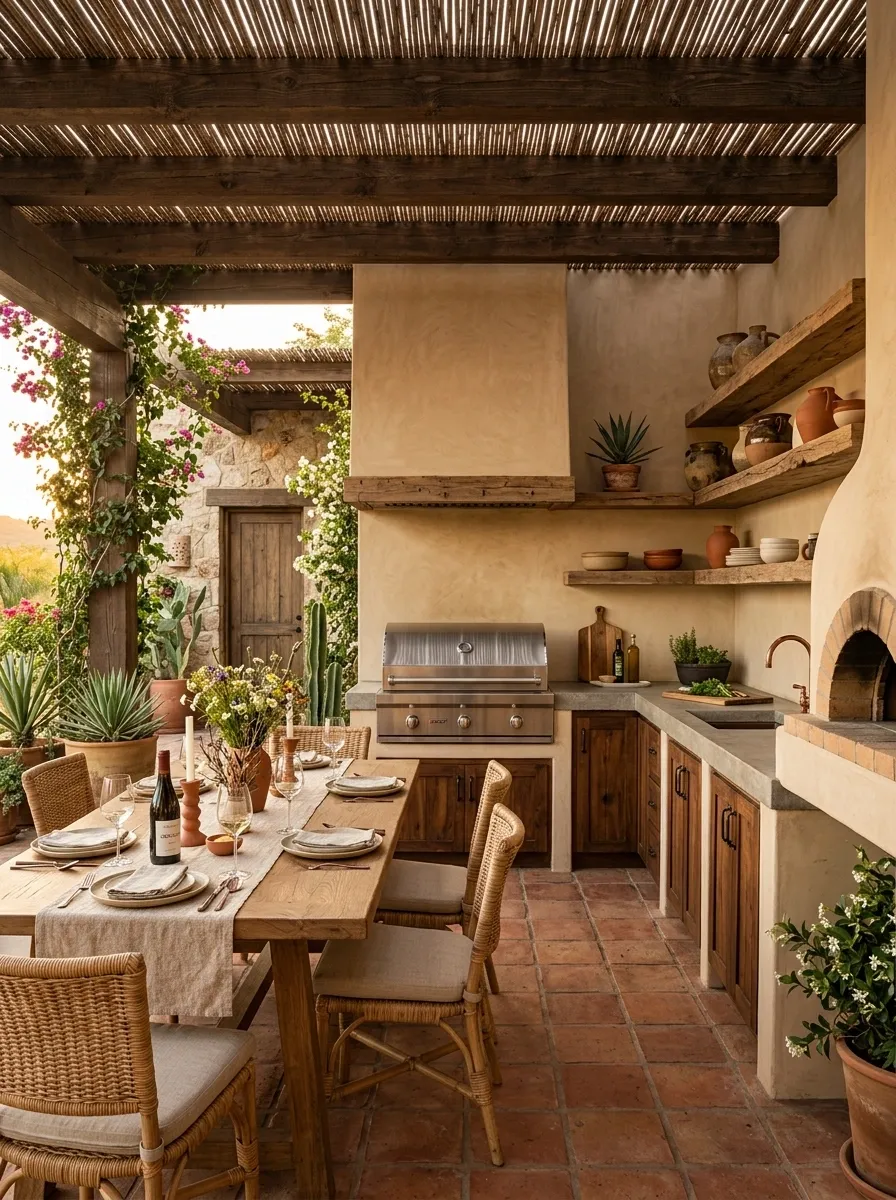
An outdoor kitchen becomes much more architectural when the cooking zone is built into a plastered wall rather than assembled from unrelated pieces of outdoor furniture. Warm plaster, terracotta flooring, wood cabinetry, open shelving, and a substantial counter create a practical entertaining zone.
Keep the dining area close enough to the kitchen that serving feels natural, but leave a clear route between the cooking zone and the rest of the backyard. A few clay vessels or ceramic accents can reinforce the character without cluttering the counter. The kitchen should look ready for dinner, not like a museum exhibit dedicated to extremely attractive cookware.
Mexican Poolside Backyard With Terracotta and Tropical Greenery
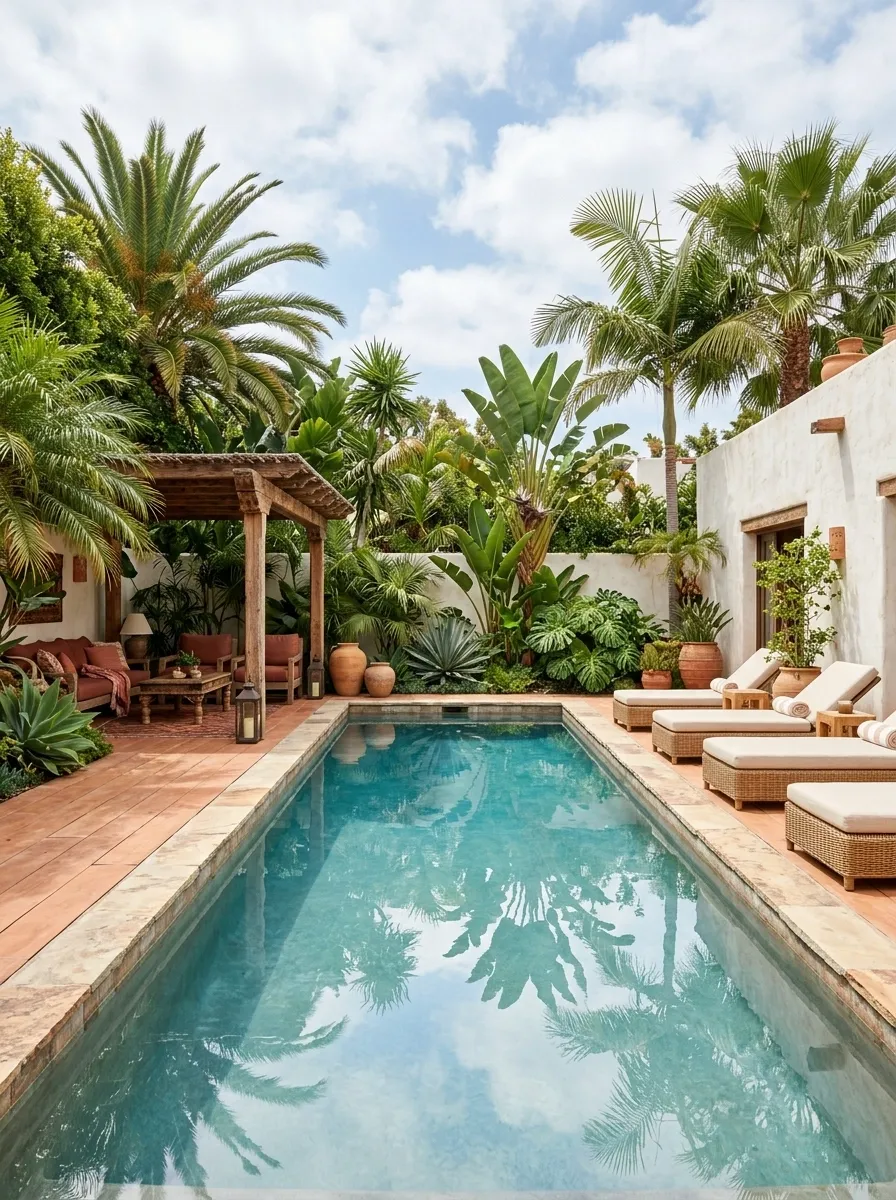
A rectangular pool provides the clean geometry, while terracotta, plaster, woven furniture, and lush planting supply the warmth. Keep the pool edge visually simple, then concentrate greenery around one or two sides so the yard feels tropical without becoming difficult to navigate.
Low loungers work well along the water, while a shaded seating area creates a destination away from direct sun. Warm clay pots can bridge the architecture and planting, especially where a plaster wall meets dense greenery. The strongest poolside spaces feel relaxed because the circulation is obvious. Beautiful furniture is considerably less useful when everyone has to perform a small obstacle course to reach it.
clear geometry
soft retreat
layered edge
Evening Mexican Patio With Layered Lantern Lighting
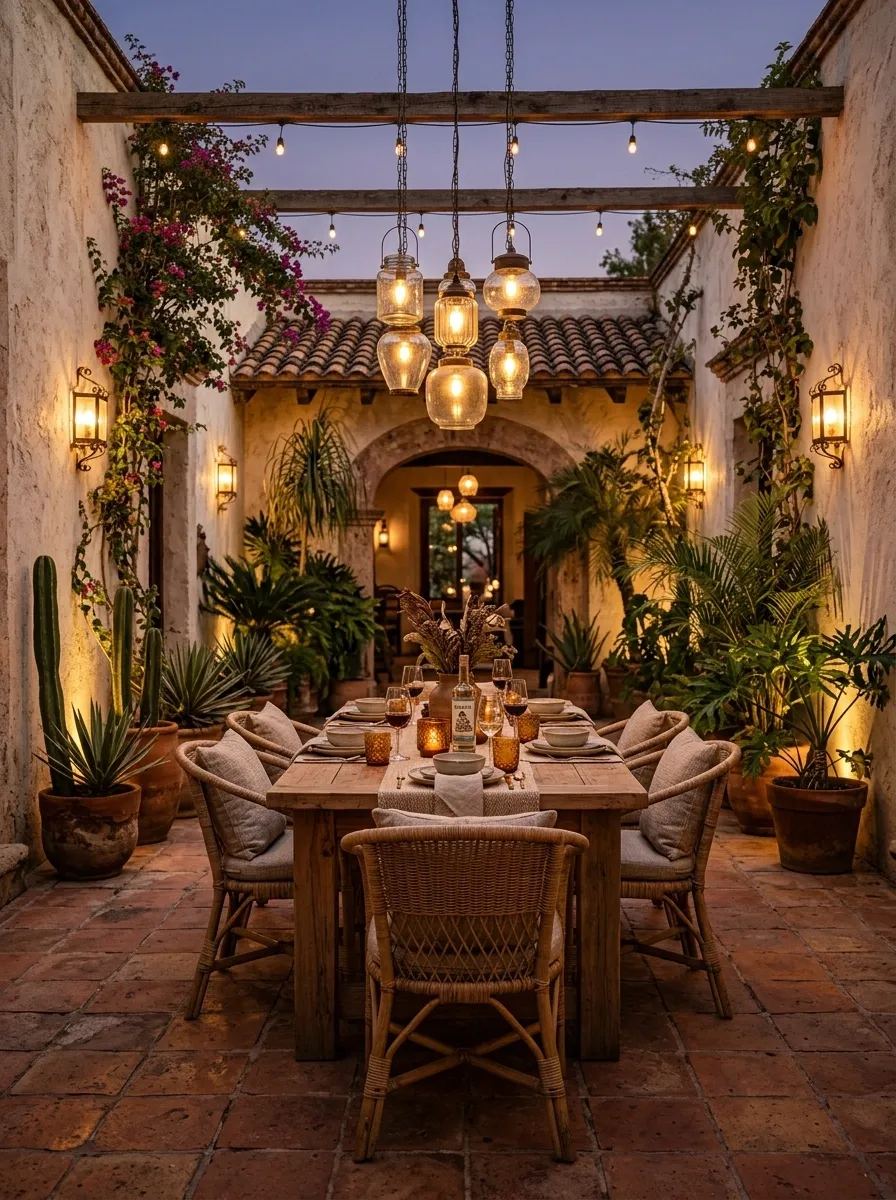
The evening version of a Mexican backyard depends heavily on lighting. Warm wall sconces, lanterns, low table lights, and subtle illumination around planting can transform a simple plaster patio after sunset. A timber dining table and woven chairs provide the central gathering point, while terracotta flooring absorbs and reflects the warm tones.
Avoid illuminating every corner equally. The most atmospheric spaces have brighter functional zones and softer peripheral lighting. Let the walls catch some of the glow, especially textured plaster surfaces. This creates depth without turning the entire backyard into a parking lot. Nobody needs stadium lighting to eat dinner.
table glow
seating light
wall glow
Mexican Breakfast Courtyard With a Small Round Table
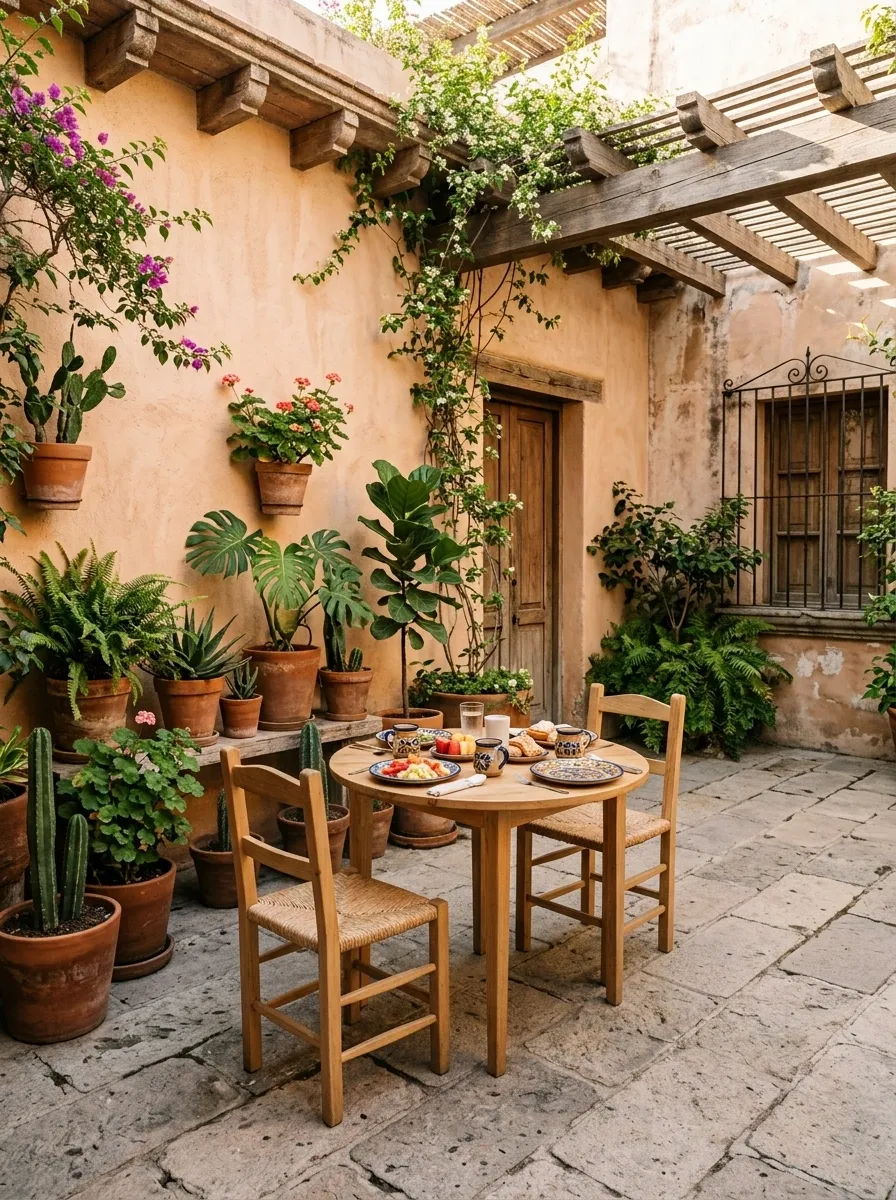
A breakfast courtyard works best when it feels effortless. A small round wood table sits close to the house beneath filtered morning light, surrounded by simple chairs, terracotta pots, leafy plants, and a warm plaster wall.
The compact furniture arrangement leaves enough open floor around the table to keep the space visually airy. A patterned tile border or ceramic tabletop can introduce a small amount of color without overwhelming the quiet morning palette. This is especially effective in narrow courtyards where a rectangular dining set would feel too formal. The whole composition should suggest coffee, sunlight, and absolutely no reason to rush.
TABLE
Arched Mexican Garden Nook With Built-In Seating
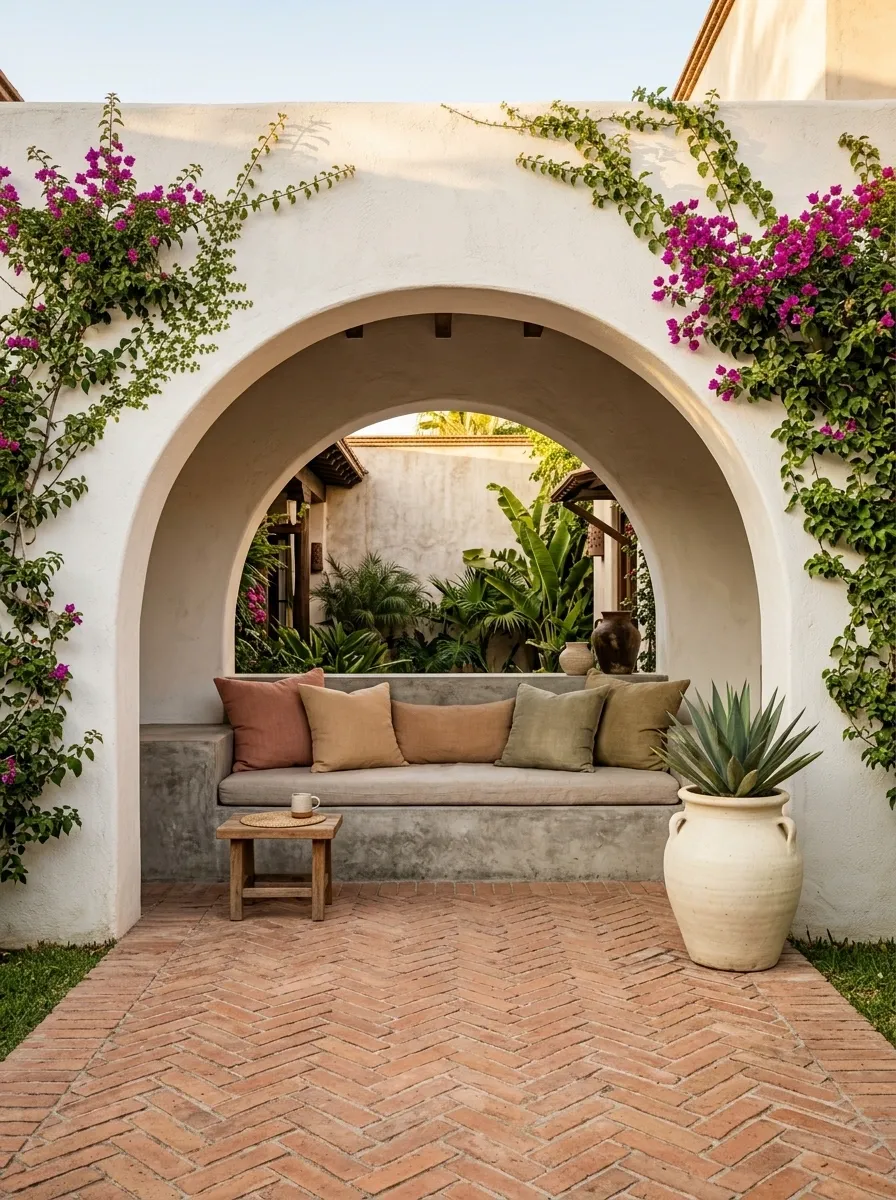
An arched opening can turn an ordinary backyard corner into something that feels architectural and intentional. A curved plaster wall frames a built-in bench, while terracotta flooring, cushions in muted warm colors, and climbing greenery soften the structure.
The arch should remain visible enough to act as a focal point. Don’t cover the entire opening with plants or decorative objects. A single built-in seat can make the nook useful while keeping the floor open. Add a small side table and perhaps one substantial ceramic planter. That’s enough. The arch already showed up prepared to make an entrance.
Warm Minimal Mexican Backyard With Soft Earthy Tones
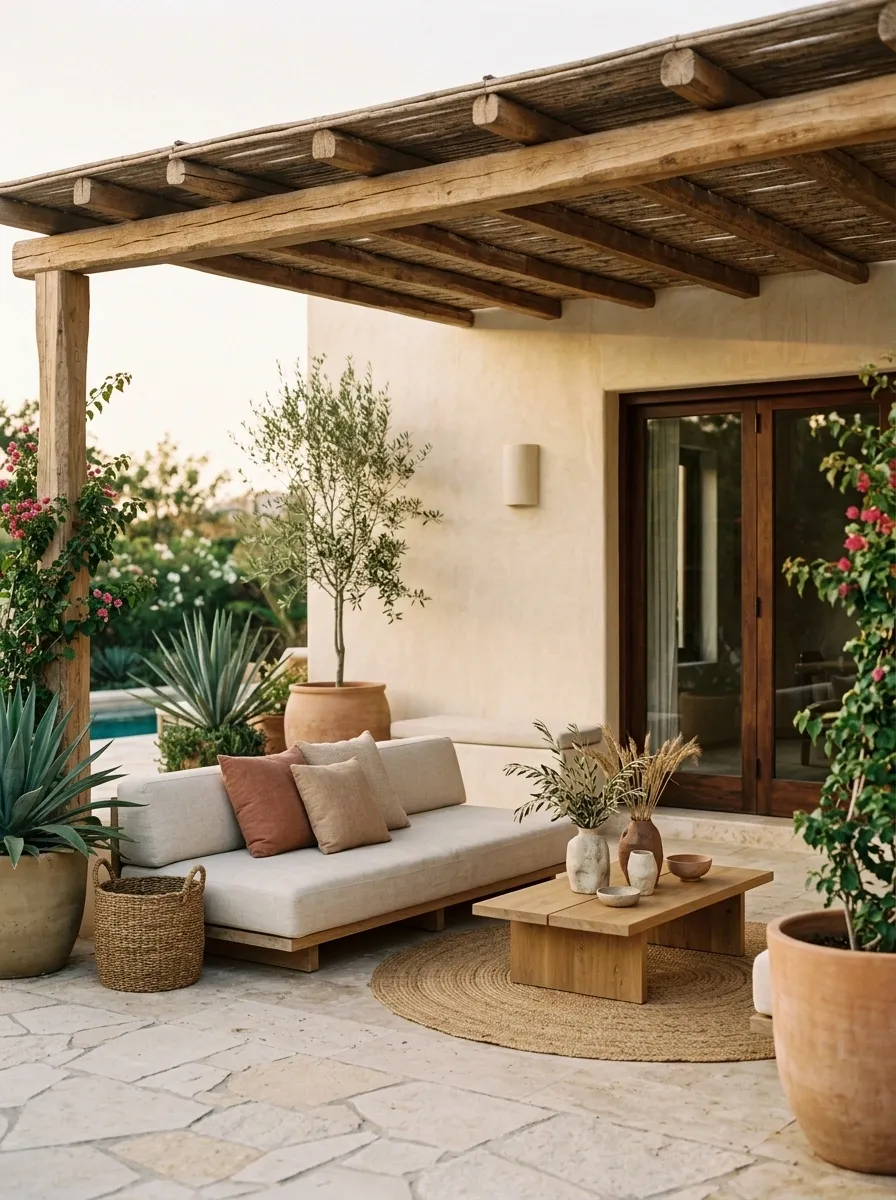
Minimalism does not have to mean a cold white patio with one suspiciously expensive chair. A warmer approach uses cream plaster, pale stone, clay, natural wood, woven textures, and carefully selected greenery.
The furniture remains low and uncomplicated, while the materials create enough variation to keep the yard interesting. Instead of relying on colorful accessories, introduce depth through texture and subtle tonal differences. This works beautifully with modern homes because it bridges contemporary architecture and traditional Mexican material language without becoming overly rustic.
Mexican Fire Pit Courtyard With Low Lounge Seating
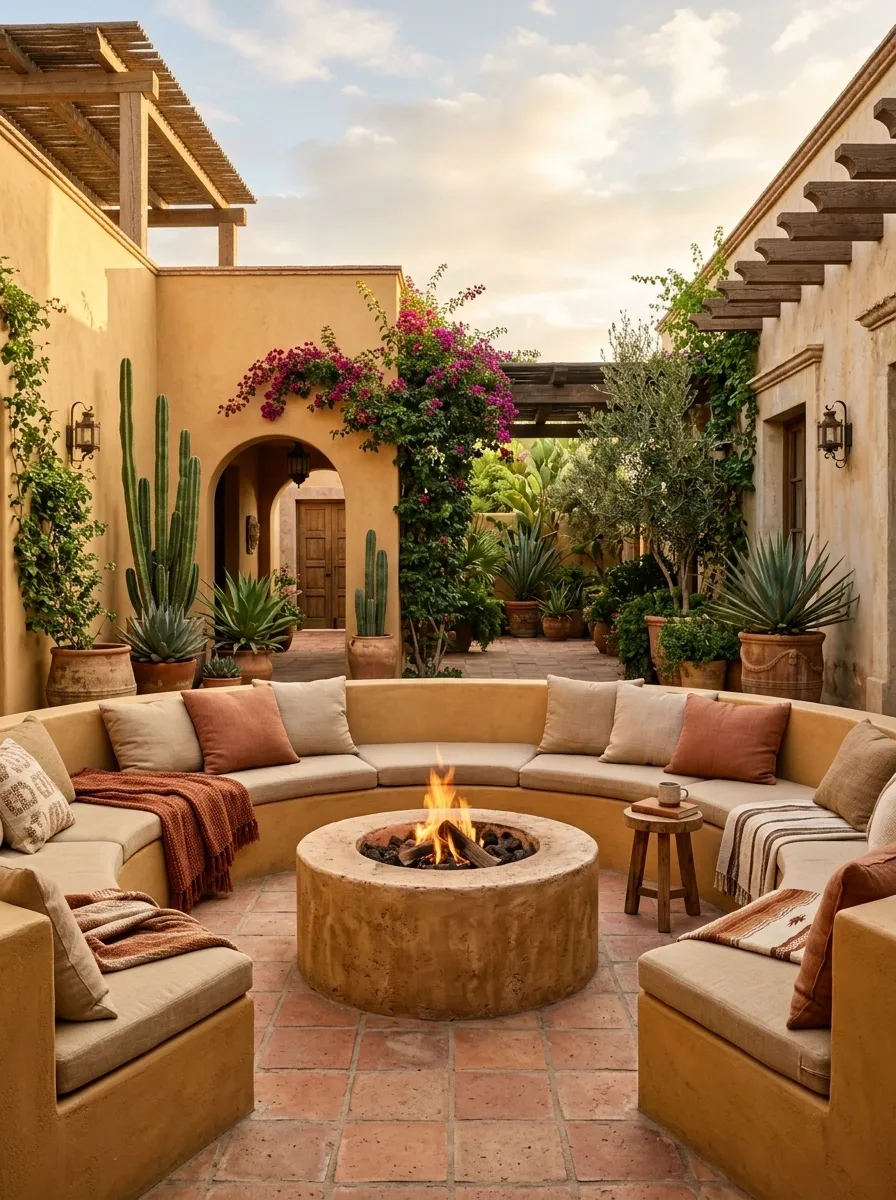
A fire pit gives a courtyard an obvious social center. Arrange low wood or masonry seating around a simple central fire feature, then surround the area with warm plaster walls, terracotta flooring, clay vessels, and layered greenery.
Keep the seating arrangement open enough that the fire remains visible from multiple directions. The best compositions feel circular even when the furniture is rectangular. Warm blankets and cushions can add softness without changing the architectural character. Keep the surrounding floor relatively clear because fire pits already have enough drama. There is no need for seventeen decorative objects auditioning for attention beside them.
Family-Friendly Mexican Backyard With Open Lawn and Shaded Seating
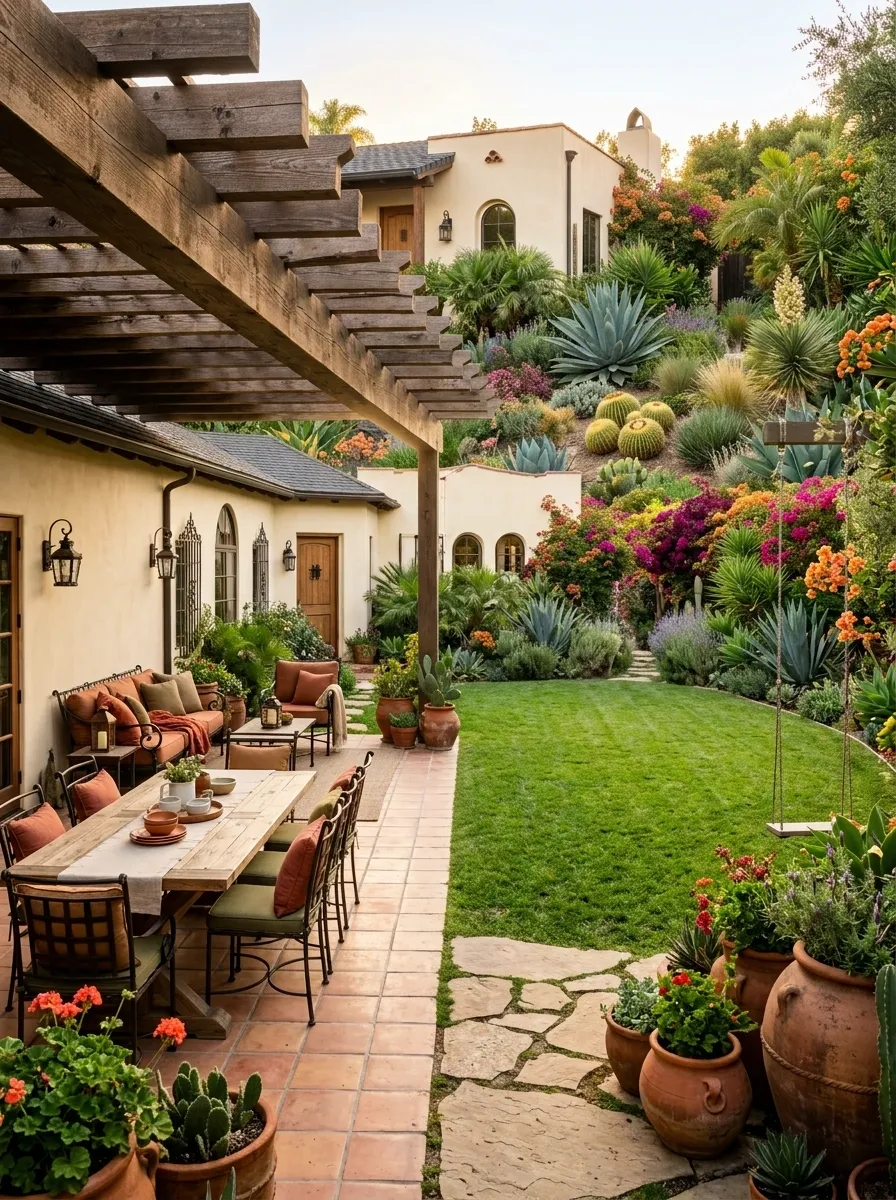
A family backyard needs to look beautiful without making everyone afraid to touch something. Keep a generous open lawn or flexible play zone in the middle, then push the more decorative planting and furniture toward the perimeter.
A shaded dining or lounge area can sit against the house, while terracotta pots and low greenery define the edges. Choose durable finishes and furniture with enough visual weight to stay comfortable around everyday use. The design should have character without creating a maze of fragile accessories. A backyard is supposed to be lived in. Revolutionary concept, apparently.
LAWN
+ SEATING
Mexican Pergola Dining Garden With Climbing Bougainvillea
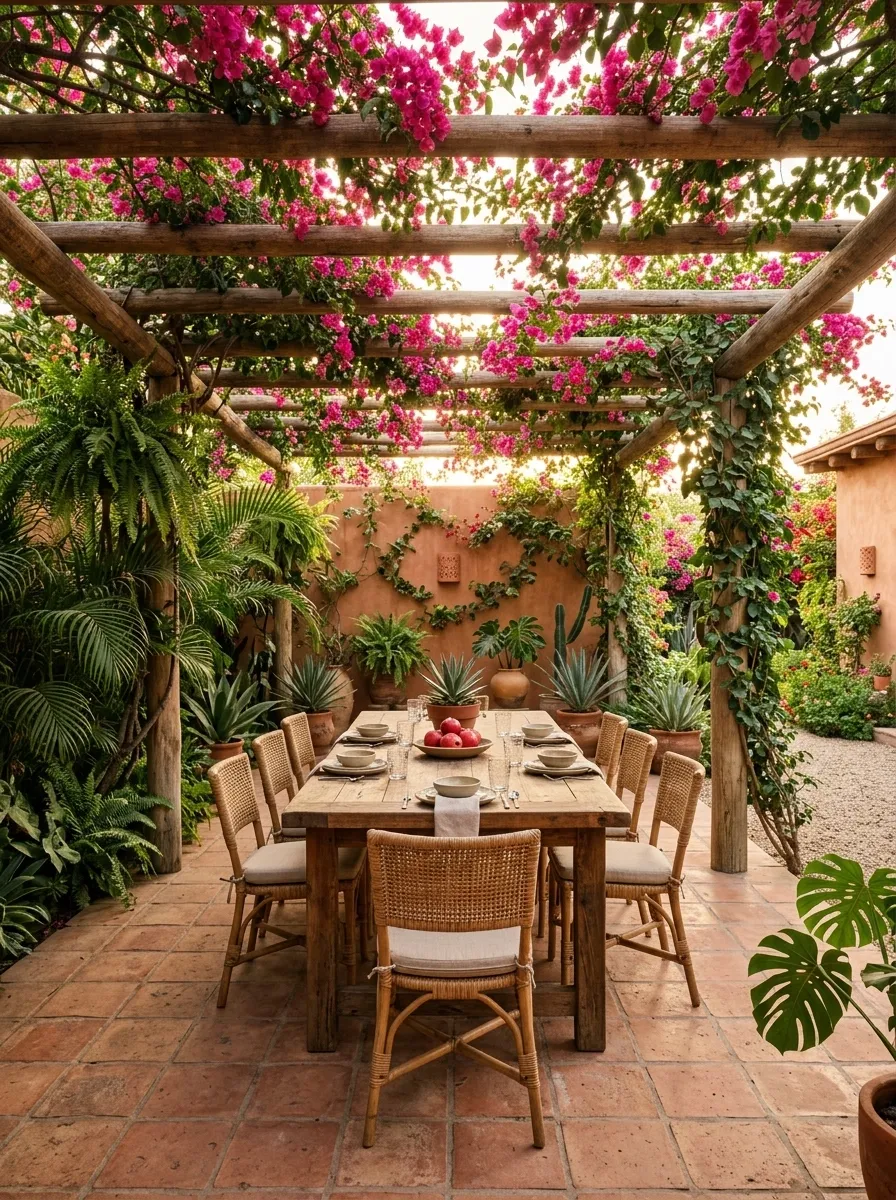
A long timber pergola gives this backyard its strongest architectural line, with climbing bougainvillea winding through the overhead structure and softening its edges. Beneath it sits a generous wood dining table surrounded by simple woven chairs. Warm plaster walls, terracotta flooring, and leafy planting complete the setting, while the open end of the pergola keeps the garden connected to the rest of the yard.
The vertical planting matters as much as the floor and furniture. It draws the eye upward and gives the dining area a sense of enclosure without building another wall. Keep the planting concentrated around the pergola rather than scattering vines across every available surface. The goal is a shaded garden room, not a botanical takeover with a suspicious agenda.
Climbing greenery creates filtered shade overhead.
Timber furniture gives the middle of the composition visual warmth.
Terracotta flooring visually ties the whole structure together.
Earthy Stone and Stucco Backyard With a Sunken Lounge
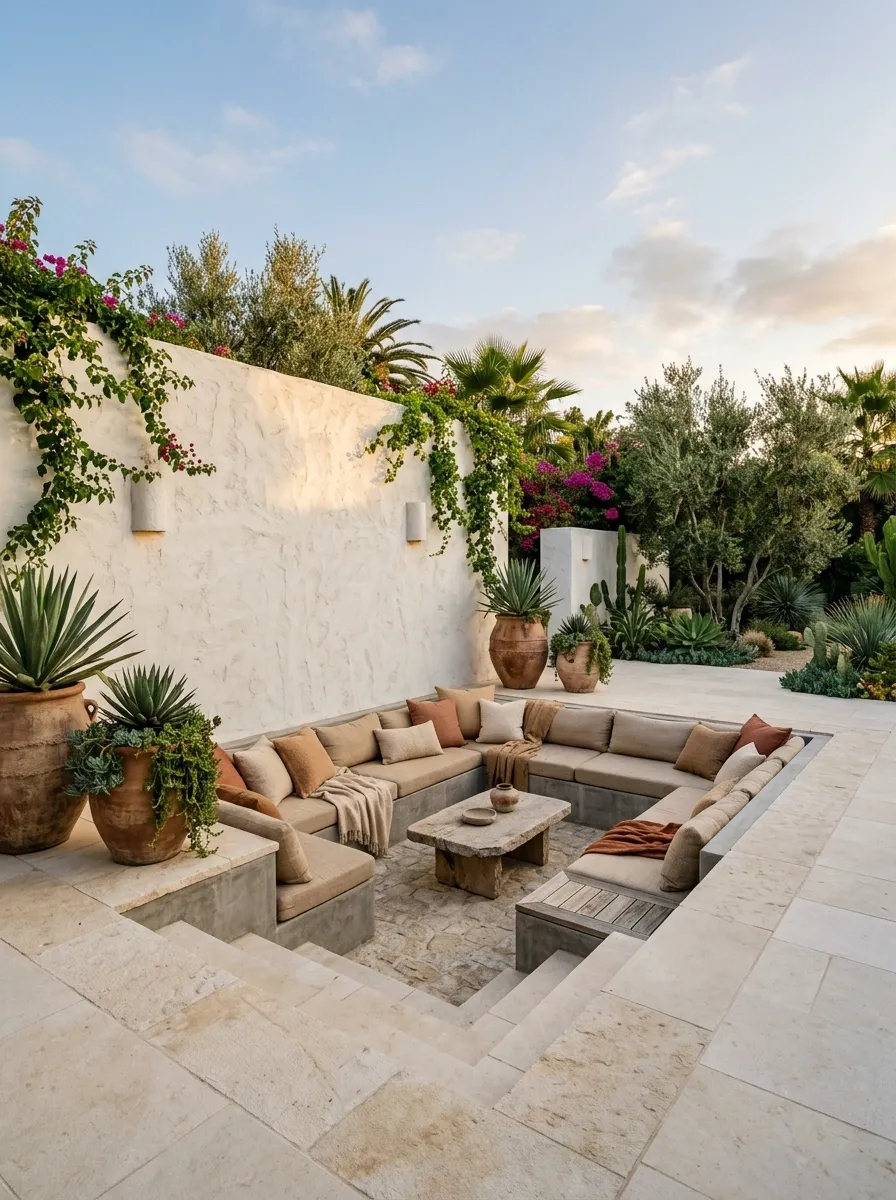
Thick stucco walls, pale natural stone, warm clay accents, and a slightly lowered lounge create a backyard with more depth than a standard flat patio. The sunken seating area sits below the surrounding walking level, with low furniture arranged around a central table. A few large clay planters and soft neutral cushions keep the architecture from feeling too severe.
The change in level does most of the dividing work. There is no need for another visual wall between lounging and circulation because the floor itself establishes the boundary. This works especially well in a spacious yard where a single flat surface can feel oddly empty. Just keep the step transition obvious and comfortably wide. A design can be dramatic without requiring guests to suddenly develop mountain-climbing skills.
Traditional Mexican Courtyard With Patterned Tile and Timber Beams
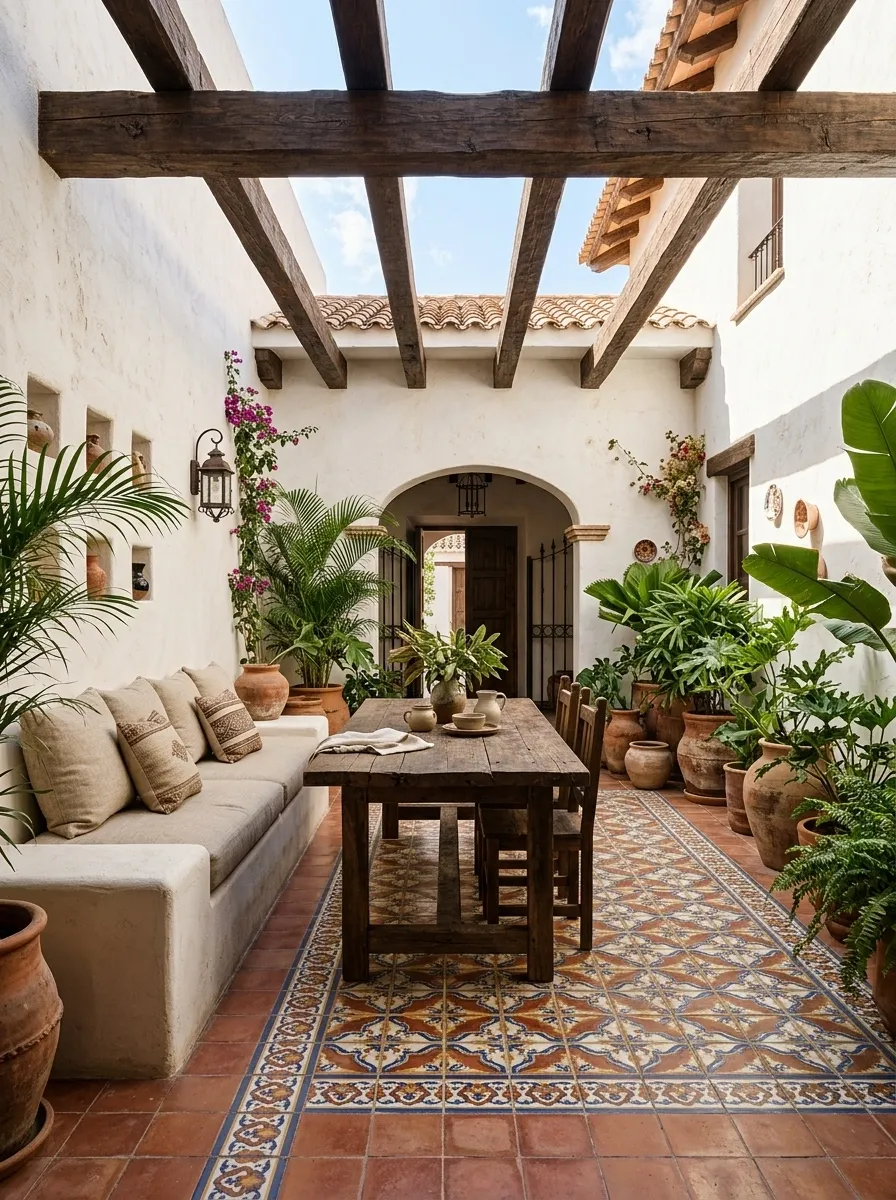
This courtyard leans into traditional architectural character with patterned tile underfoot, thick plaster walls, exposed timber beams, and built-in seating along one side. A substantial dining table occupies the center, while large clay pots bring greenery around the perimeter. The architecture remains visually strong, but the furnishings keep the space comfortable enough for everyday use.
Pattern control is what keeps this from becoming overwhelming. The floor carries the strongest graphic detail, while the beams create a second rhythm above eye level. The walls remain comparatively quiet. That’s a useful trick when the materials themselves already have plenty to say. Adding another loud pattern to every cushion, curtain, and pot would turn the courtyard into a design argument nobody asked for.
Compact Rooftop Mexican Patio With Terracotta and Bougainvillea
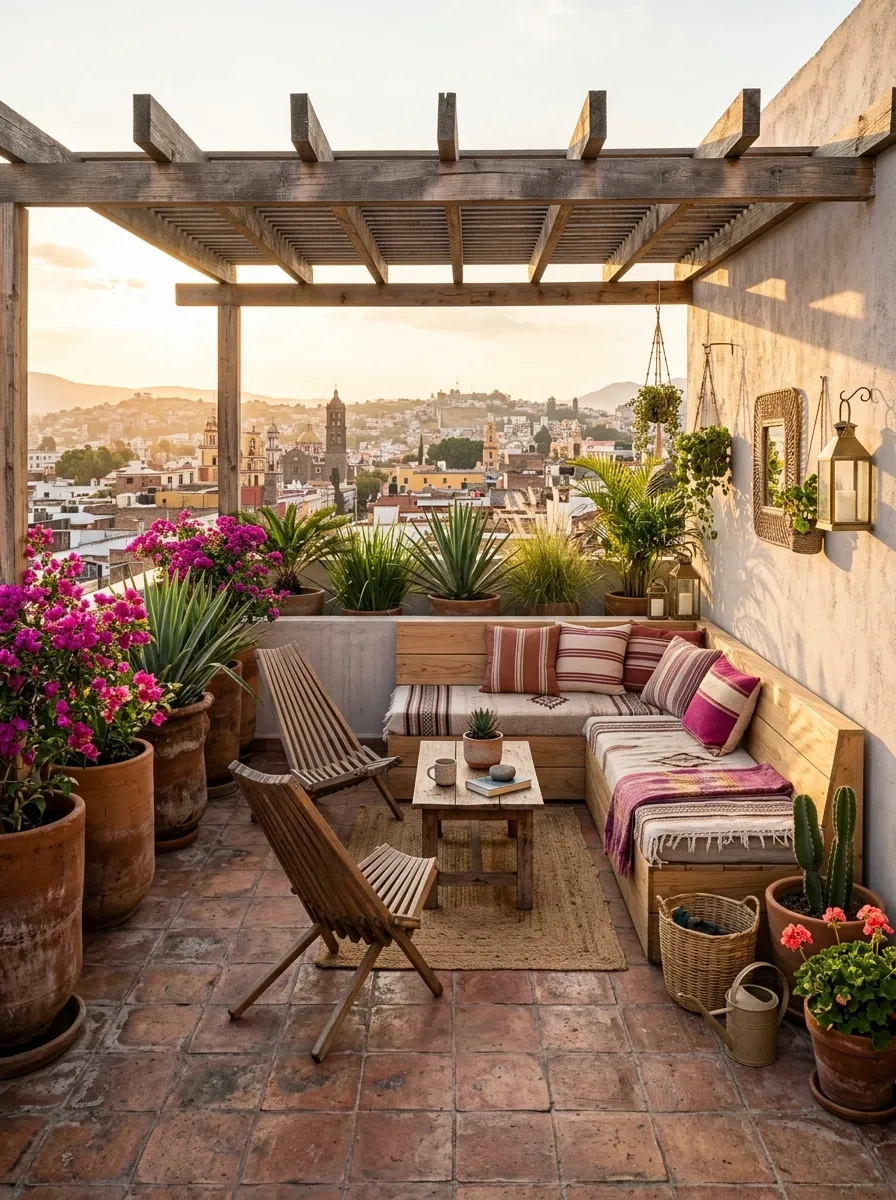
A rooftop becomes a warm outdoor room with terracotta-toned flooring, pale stucco privacy walls, compact wood furniture, and large containers filled with bougainvillea. The seating faces outward toward the view, while taller planting creates a softer perimeter without consuming the limited floor area. A simple overhead shade structure gives one side of the patio a more enclosed feeling.
The biggest design challenge on a rooftop is visual and physical weight. Furniture that looks perfectly reasonable in a ground-level yard can suddenly make a rooftop feel crowded. Keep pieces visually light, use containers strategically, and let the perimeter do the enclosure work. The result should feel like a small private courtyard above the city, not a furniture warehouse that happens to have a view.
Use the edges for enclosure.
Mexican Poolside Lounge With Canopy Beds and Clay Accents
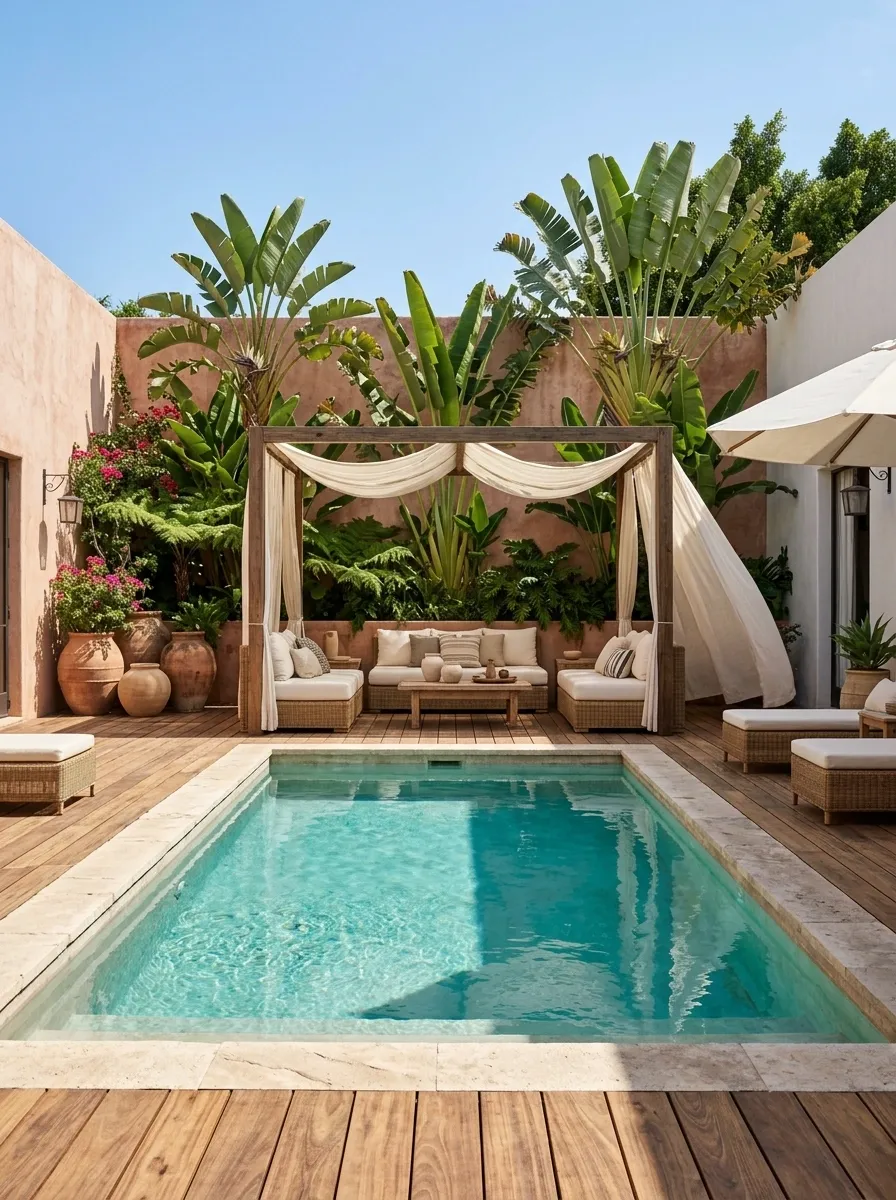
This poolside backyard combines a modest rectangular pool with pale plaster walls, woven loungers, simple fabric canopies, and oversized clay planters. A shaded lounge sits at one end, while the opposite edge remains open around the water. Tropical greenery adds height behind the seating without obstructing the pool’s clean geometry.
The strongest contrast comes from the hard architecture against the soft canopies and planting. The pool stays visually crisp, while the lounge feels relaxed enough for a long afternoon. Keep the clay accents concentrated around the transition between architecture and greenery. Too many pots around the pool edge would make the circulation feel fragmented, and nobody needs to navigate a ceramic obstacle course while carrying a drink.
Black, Terracotta, and Cream Mexican Courtyard
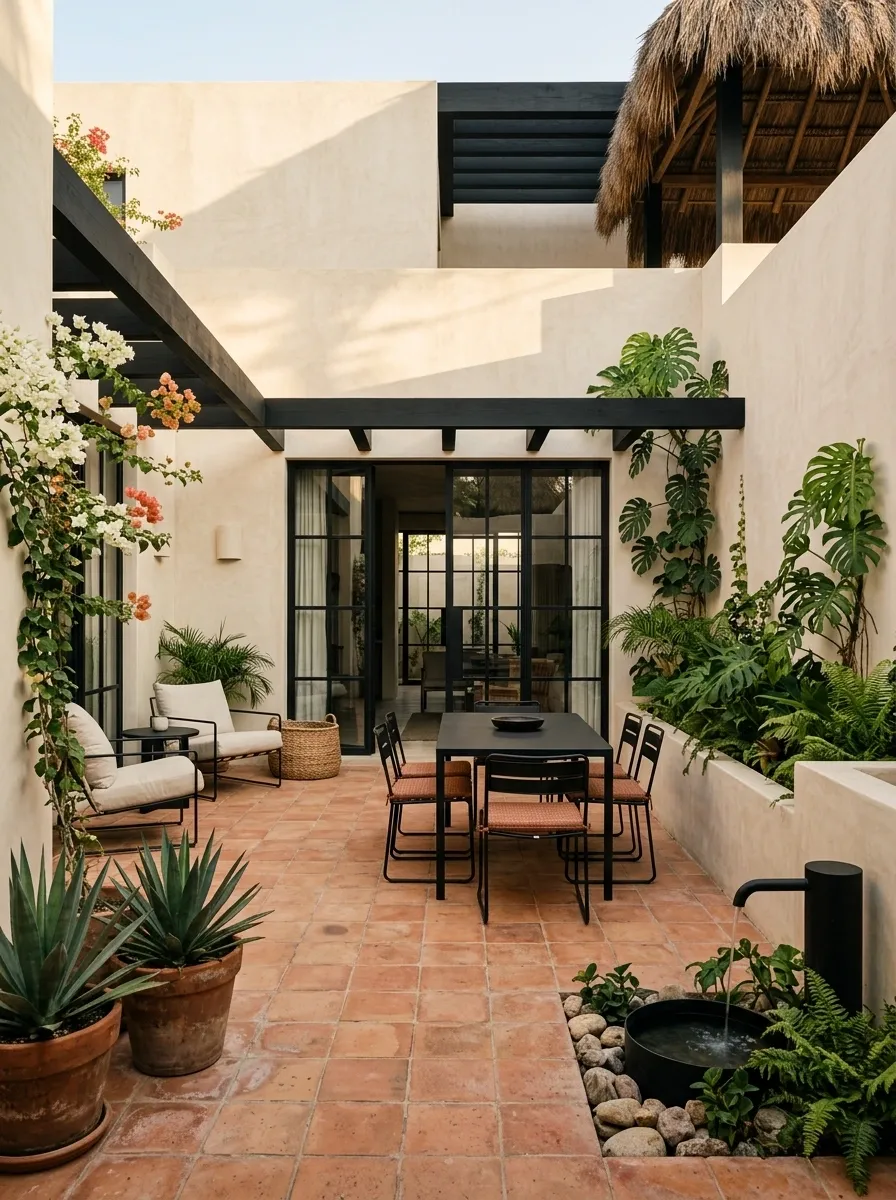
This courtyard uses only a few strong ingredients, and that’s exactly why it works. Cream plaster walls create the calm background, terracotta flooring brings warmth underfoot, and black steel doors and furniture add a crisp architectural outline. Dense but carefully placed greenery softens the edges without interrupting the clean geometry.
Black functions as punctuation here rather than the main event. It defines openings, frames furniture, and gives the warm materials a sharper edge. The terracotta keeps the palette grounded so the darker elements never feel severe. This direction suits a home with simple modern architecture where the courtyard should feel connected to the building. Just don’t start adding black objects to every corner because apparently one dark chair now needs seven friends.
Architectural background
Warm grounding layer
Structural punctuation
Candlelit Mexican Dinner Patio With Long Farmhouse Table
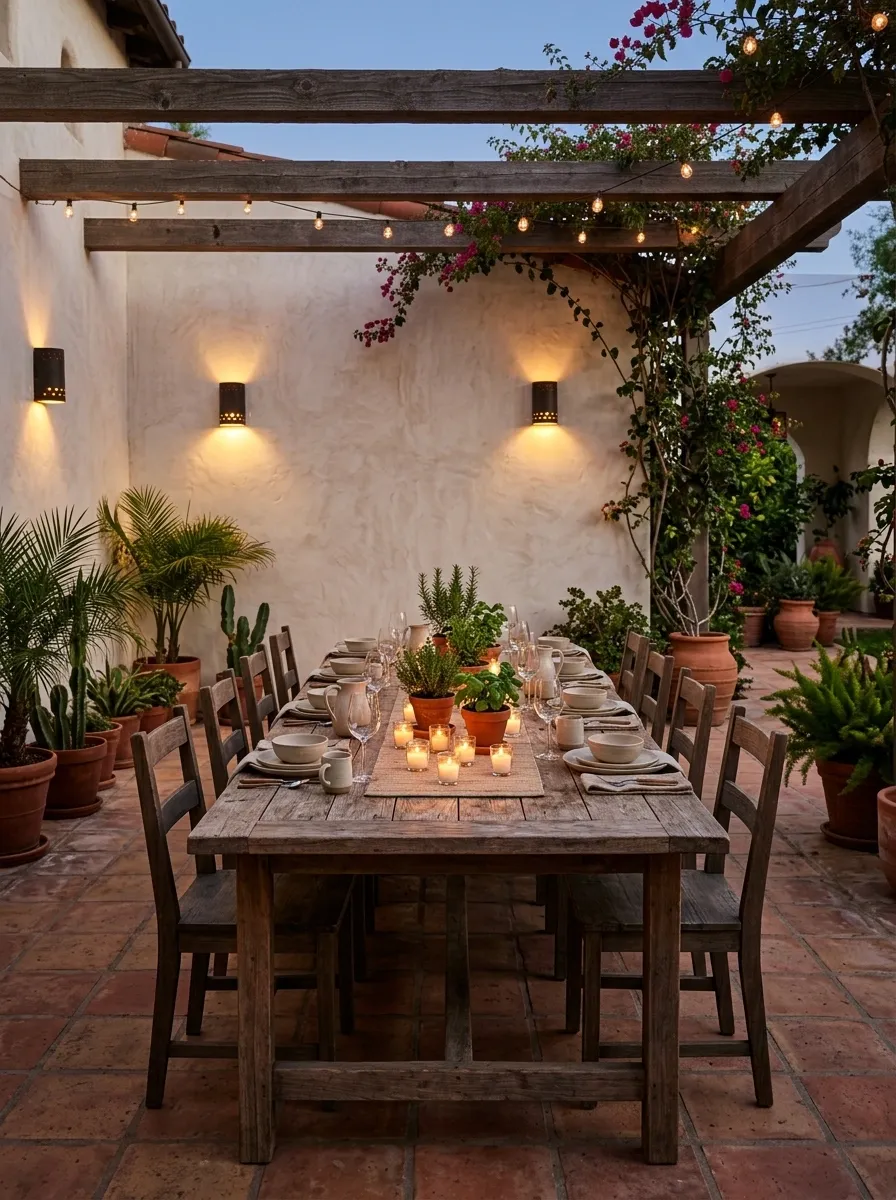
A long wood dining table stretches through this evening patio beneath warm wall lights and a simple overhead structure. Clay tile runs beneath the table, while a textured plaster wall forms the backdrop. Small candles add a lower layer of light, herbs sit nearby, and the furniture stays intentionally uncomplicated so the setting feels inviting rather than formally staged.
The long table gives the backyard a strong horizontal center and works especially well for entertaining. It also makes the space feel generous without requiring oversized furniture everywhere else. Leave clear circulation along the sides, especially near the entrance and serving area. A dinner patio should make it easy to pass a plate without climbing over a chair, which sounds obvious until somebody designs a twelve-seat table in a walkway.
Mexican Cottage Backyard With Wildflower Planting and Rustic Seating
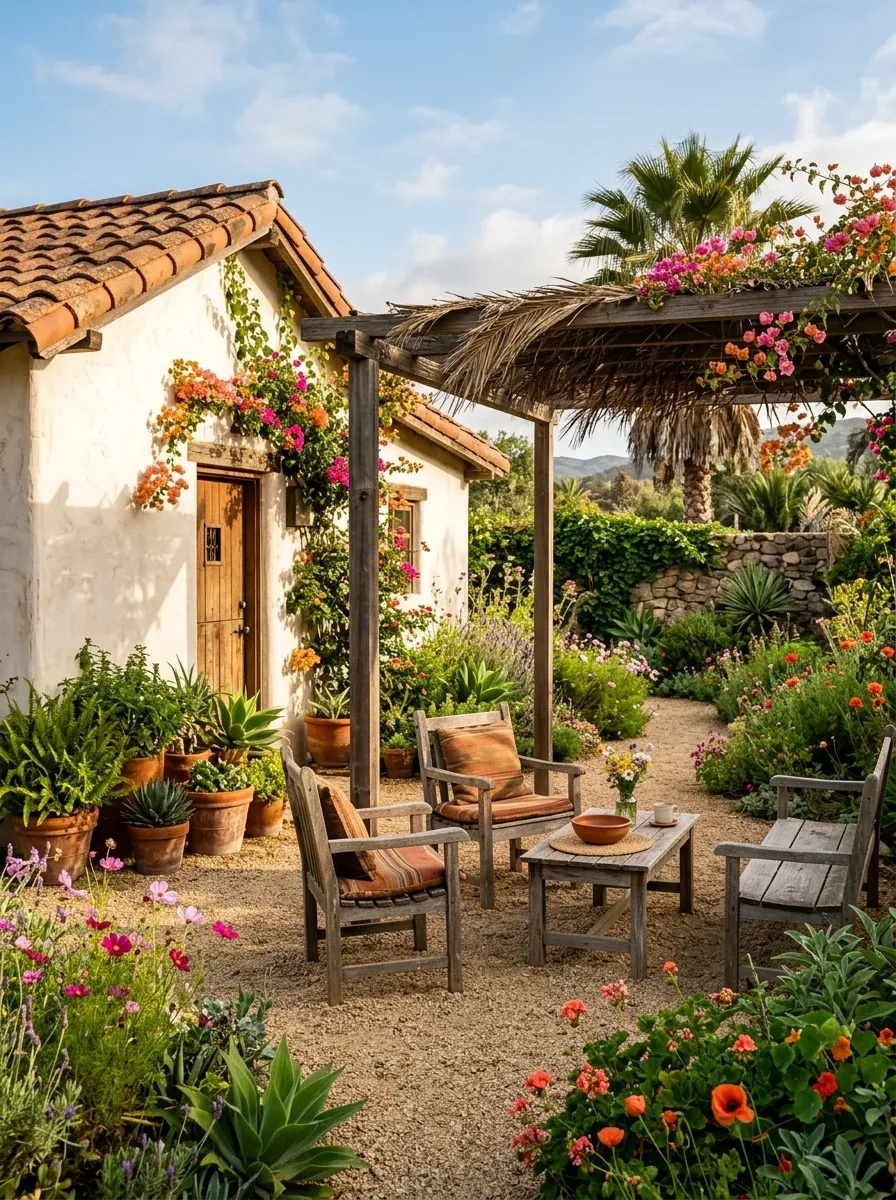
Behind a small stucco cottage, this backyard feels deliberately informal. Loose wildflower planting spills around gravel paths, terracotta containers sit near the house, and weathered timber furniture creates a relaxed seating area beneath a simple shade structure. Instead of a highly manicured lawn, the garden moves between planted pockets and open gravel, giving the whole space a softer, more natural rhythm.
The charm comes from the contrast between the structured cottage and the looser garden. The house provides the clean architectural line, while the planting refuses to behave quite so formally. That’s what keeps the setting from feeling overly precious. Use repetition in the planting so the looseness still feels designed. Randomly dropping plants everywhere isn’t a garden plan. It’s just a very optimistic scavenger hunt.
White Mexican Courtyard With Greenery and Handmade Ceramics
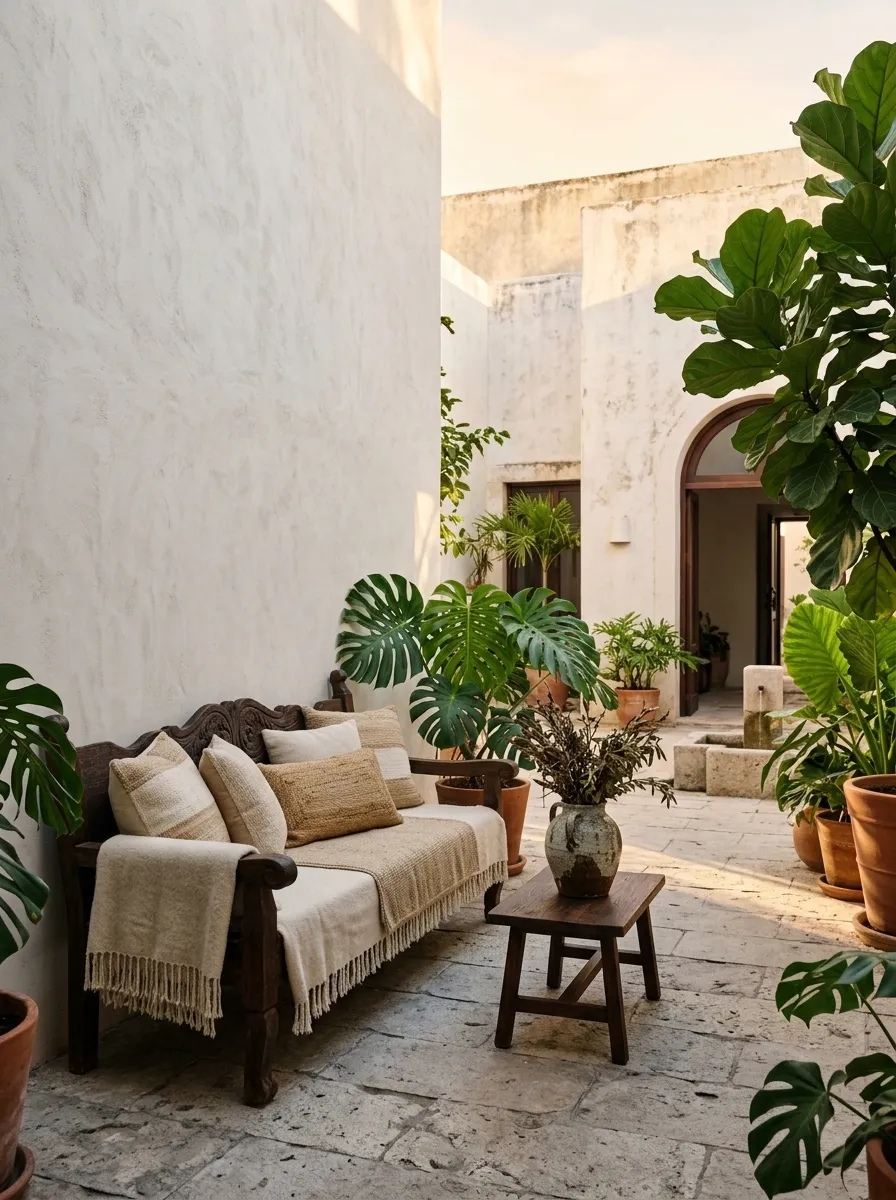
This courtyard keeps the architecture almost entirely white, then lets greenery and handmade ceramic pieces provide the contrast. Pale plaster surrounds dark wood seating and simple stone flooring, while large leafy plants occupy the corners and a few distinctive ceramics sit where the eye naturally lands.
The limited palette makes texture much more important. Rough plaster, smooth stone, woven furniture, glossy leaves, and imperfect ceramic surfaces give the setting plenty of visual depth without relying on strong wall colors. The ceramics work because there are only a few of them. Let each piece have breathing room. Once every shelf, ledge, and planter contains something “special,” nothing is special anymore. That’s just clutter wearing a tiny artisanal hat.
Matte and irregular
Cool and grounded
Organic movement
Small handcrafted focal points
Warm Modern Backyard With a Plaster Fireplace and Built-In Bar
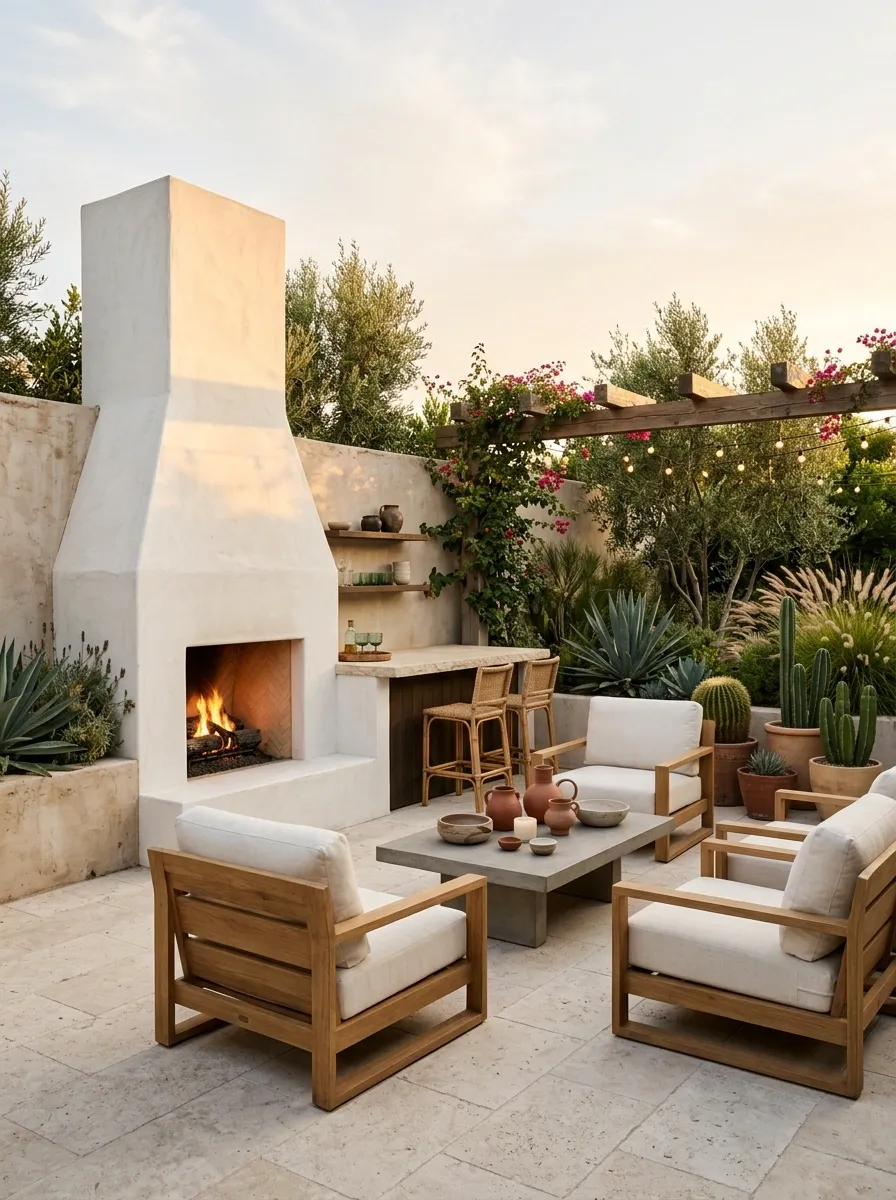
This outdoor room is built for entertaining, with a large plaster fireplace anchoring one end and a compact built-in bar positioned nearby. Warm wood furniture forms the lounge, while terracotta details, pale flooring, and structured planting keep the palette earthy. Soft lighting highlights the fireplace wall after dark without making the entire yard equally bright.
The fireplace gives the composition a clear destination. Everything else supports that focal point, from the low seating to the bar and surrounding planting. This makes the yard feel intentional even when several functions share the same space. Keep the television, decorative wall art, and other possible focal points away from the fireplace. One star is plenty. A backyard doesn’t need an entire cast fighting for screen time.
Narrow Mexican Courtyard With a Long Water Feature
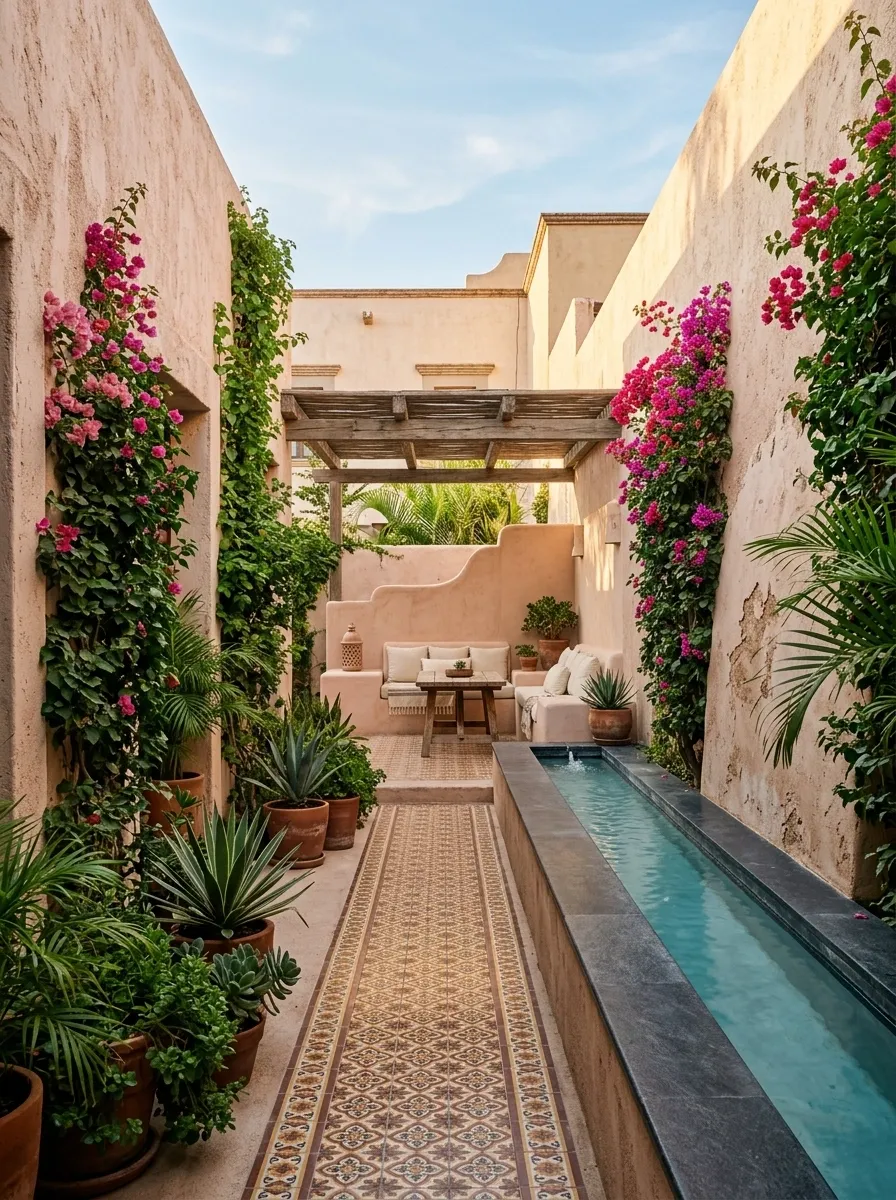
A narrow backyard gains a strong sense of length from a slim linear water feature running along one side of the space. Pale plaster walls frame the courtyard, while a narrow tiled path leads toward built-in seating at the far end. Vertical greenery climbs upward, and a simple shade structure provides relief without interrupting the long sightline.
The water feature works here because it reinforces the geometry instead of fighting it. A round fountain or bulky furniture arrangement would interrupt the narrow proportions. The long horizontal line makes the yard feel more deliberate and visually connected from front to back. Keep the furniture compact and the walkway clear. Narrow spaces reward discipline. Every oversized object becomes the backyard equivalent of someone standing in a doorway refusing to move.
Pulls the eye through the yard.
Preserves movement along the length.
Mexican Garden With Stone Pathways and a Covered Hammock Area
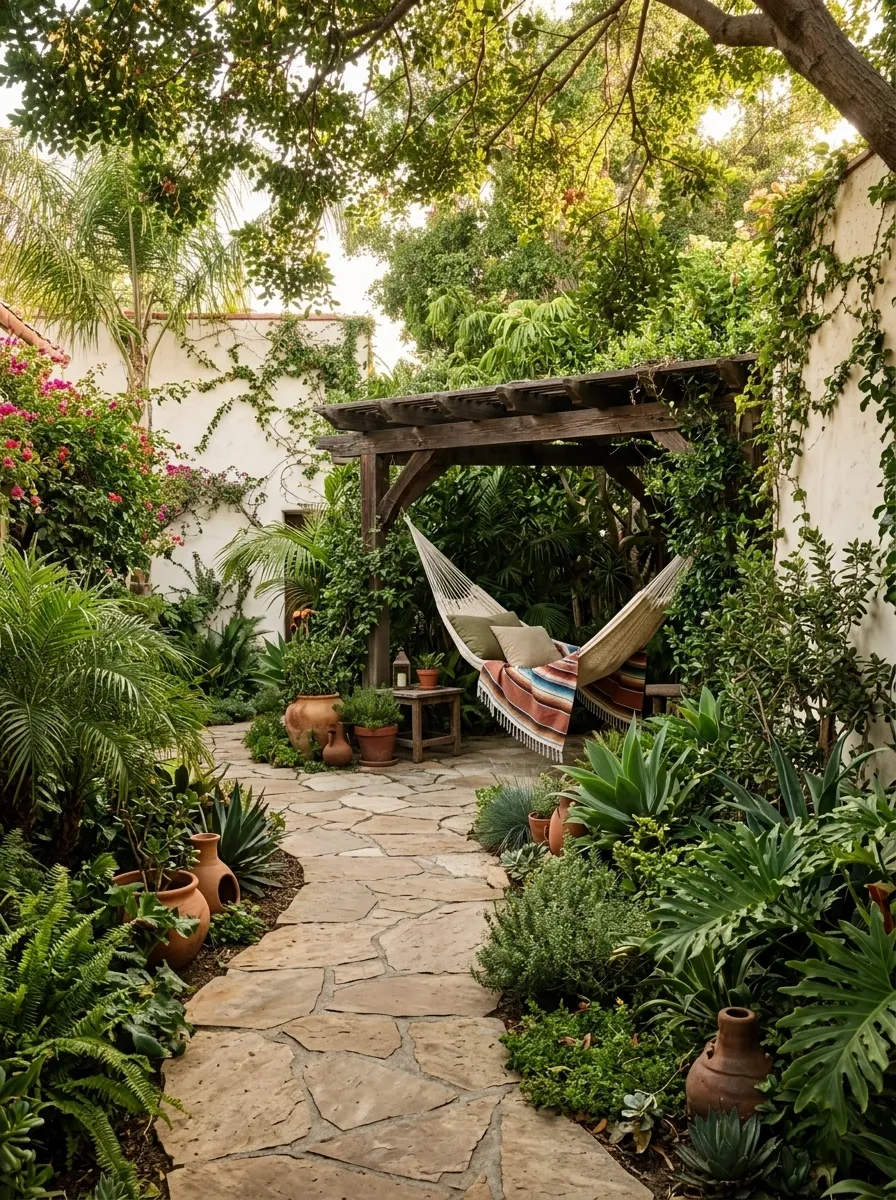
This garden feels less like a patio and more like a small retreat hidden inside the backyard. Irregular stone paths wind through layered planting before reaching a timber-covered hammock area. Plaster walls sit behind mature greenery, while terracotta containers and low clay accents connect the planting back to the house.
The paths are what make the composition feel discovered rather than arranged in a straight line. The garden reveals different zones instead of showing everything at once. Keep the pathway width comfortable and let planting soften the edges without swallowing the route. The hammock area should feel tucked away, but still easy to reach. A hidden retreat is charming. A hammock buried behind a hedge that requires an expedition is just poor customer service.
Color-Washed Mexican Backyard With Turquoise Doors and Terracotta Tile
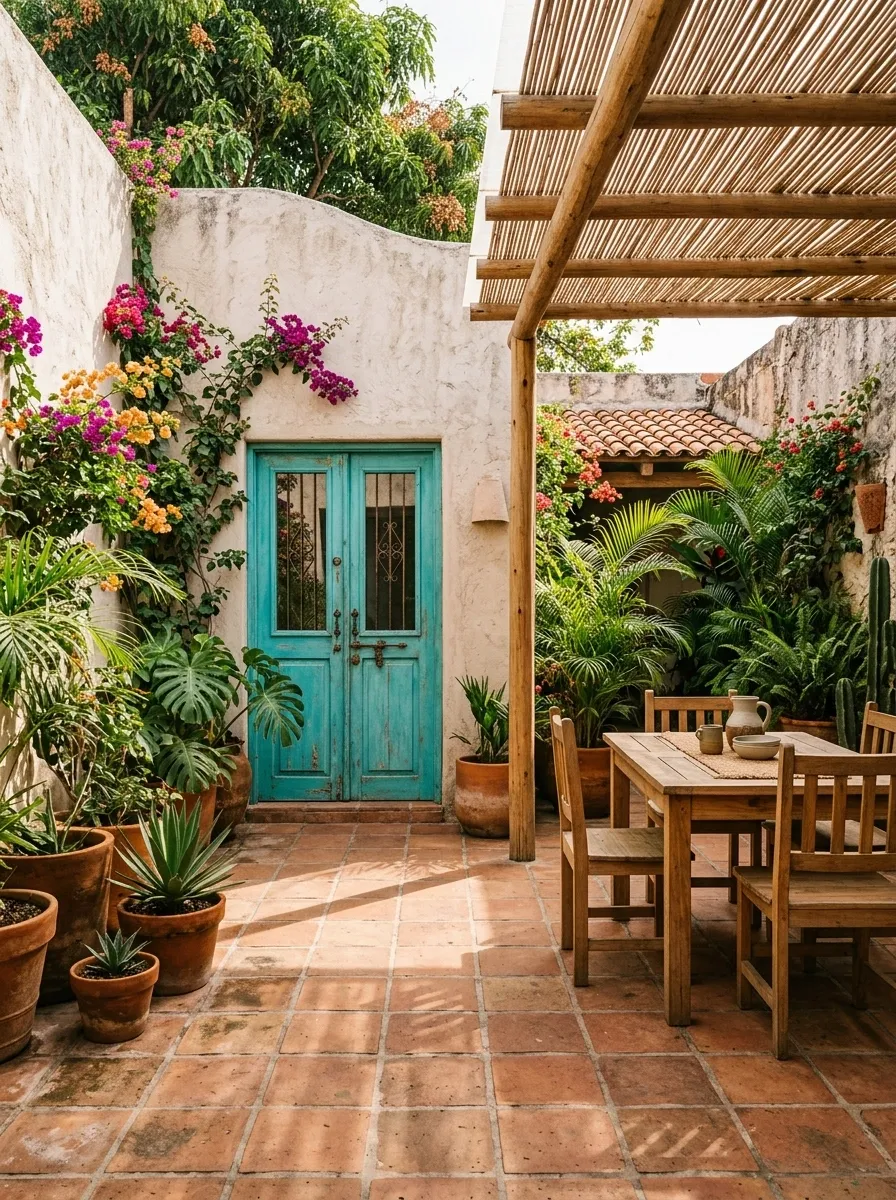
This backyard uses turquoise as a clear architectural accent against warm terracotta flooring and pale plaster. Double turquoise doors open onto the patio, where a simple timber dining set sits beneath a lightweight shade structure. Green planting fills the perimeter, while clay pots repeat the floor’s warm tones and keep the color story connected.
The turquoise works because it belongs to the architecture. It isn’t sprinkled randomly across cushions, pots, chairs, and decorative objects. That makes the accent feel intentional and much easier to live with. Let the doors be the memorable moment, then keep the surrounding furniture quieter. A strong color needs room around it. Otherwise, everyone gets invited to the party and nobody can hear the music.
Elegant Mexican Courtyard With Limestone, Walnut, and Soft Clay Tones
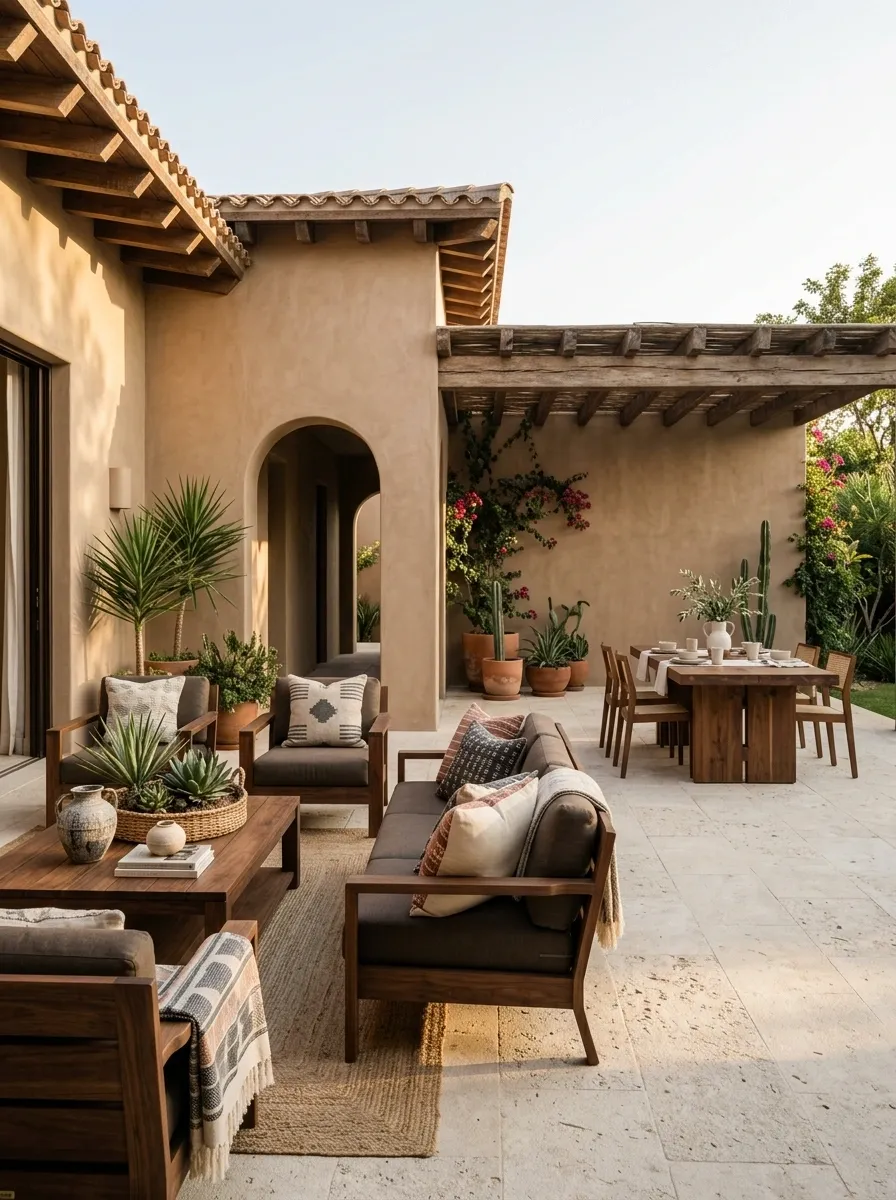
A more refined interpretation of Mexican style comes through in pale limestone, walnut-toned furniture, soft clay plaster, and carefully controlled planting. The courtyard has a generous lounge at one end and a compact dining area at the other, with a continuous stone floor visually joining both spaces. A few muted patterned textiles add handcrafted character without dominating the palette.
The warmth comes from material temperature rather than strong color. Limestone brings a cooler, pale foundation, while walnut and clay tones prevent the courtyard from feeling washed out. This approach works particularly well when the surrounding architecture is contemporary but still needs softness. Keep the finishes tactile rather than glossy. The goal is polished and relaxed, not a luxury hotel lobby that accidentally wandered outdoors.
Deeply Planted Mexican Backyard With a Covered Conversation Pavilion
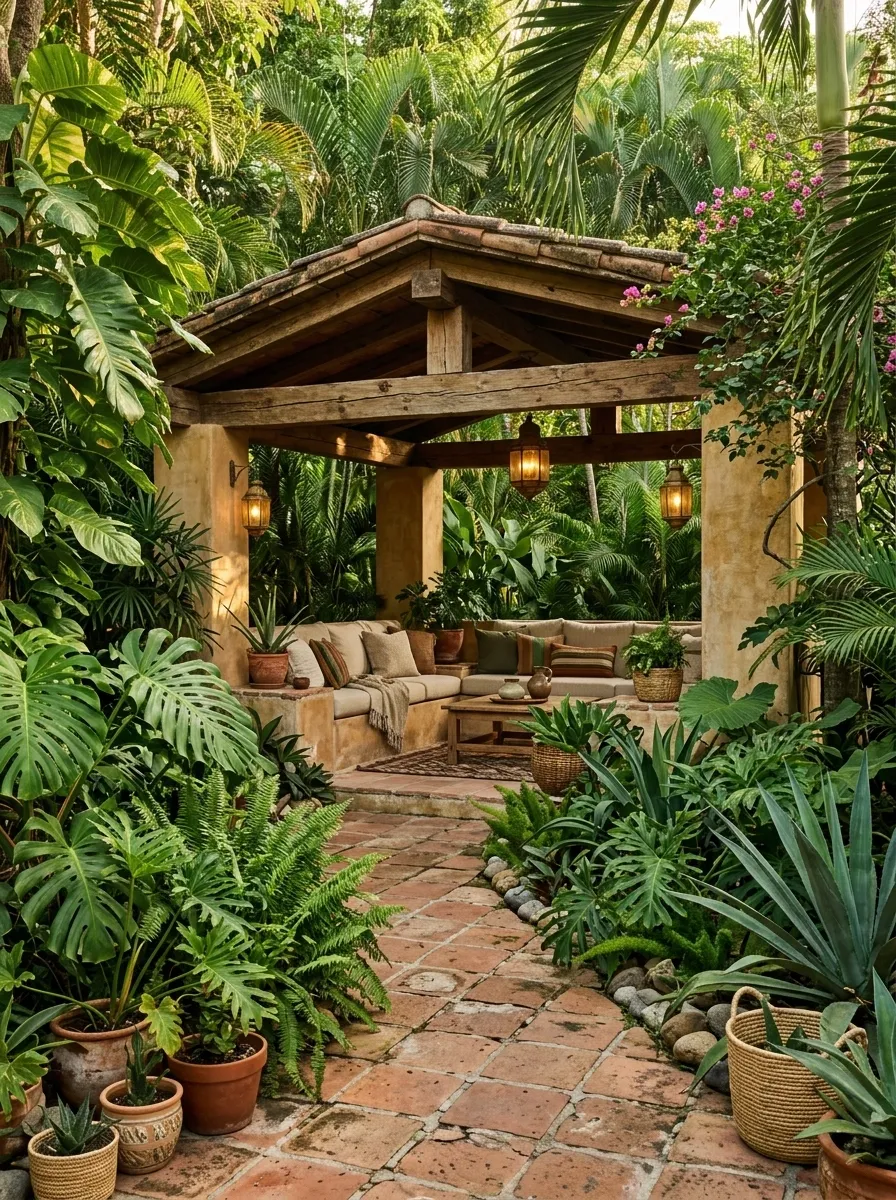
In this garden-first design, the planting gets nearly as much attention as the architecture. A timber-and-masonry pavilion sits within dense greenery, reached by a terracotta path that winds through layered plants. Built-in seating fills the pavilion, while warm lanterns make it usable after sunset. The surrounding yard remains intentionally loose, with mature foliage framing rather than crowding the structure.
The pavilion works because it feels like an island inside the planting. The architecture provides a destination, while the garden creates the journey toward it. Keep the plants varied in height and texture, but repeat a few key forms so the garden still feels connected. The whole point is to create a retreat, not bury a perfectly good pavilion under seventeen species and call it “lush.”
Make the Backyard Feel Designed, Not Decorated
The most convincing Mexican backyard designs usually begin with the parts that are hardest to change: the walls, floor, shade structure, planting zones, built-in seating, water features, and major architectural elements.
Once those pieces have a relationship, furniture and decoration become much easier. Terracotta can echo the floor. Wood can warm pale plaster. Greenery can soften masonry. A turquoise door can provide the memorable moment without forcing turquoise onto every cushion within a five-mile radius.
The goal is not to recreate one exact style. It is to build an outdoor space where the materials make sense together and the layout still works when the backyard is actually being used.