
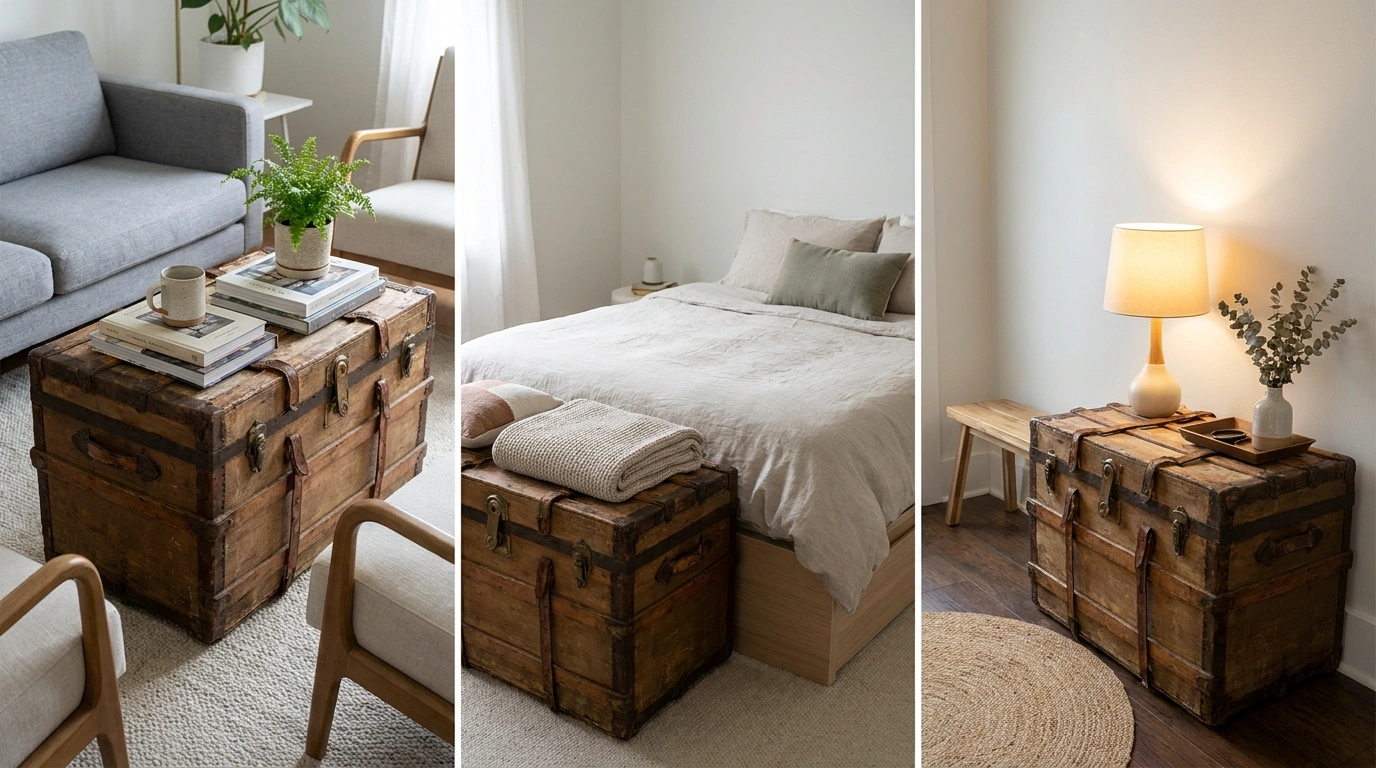
Some furniture arrives flat-packed. A vintage trunk arrives with dents, excellent hardware, and the energy of someone who has seen things.
That character is useful, but it does not automatically make the trunk a seat, a safe toy box, or a suitable home for delicate textiles. Inspect the hinges, handles, base, lining, odor, and finish before choosing a job. Unknown old coatings and damaged materials deserve appropriate assessment before sanding or refinishing.
Keep heavy lids secure with suitable professionally fitted hardware, and never give children a trunk they can climb inside and close. An unusual or valuable piece may deserve conservation advice before alteration. The ideas below let the trunk contribute without demanding a new career it cannot safely manage.
Useful Places and Purposes for a Vintage Trunk
Anchor the Bed Foot
Position a handsome vintage trunk at the foot of the bed to introduce rich texture and grounded warmth into a neutral, calming space. The rich wood tones beautifully complement exposed ceiling beams and warm flooring while creating a polished focal point.
Ensure there is enough clearance between the trunk and surrounding furniture so you can easily navigate the room and access the interior storage whenever needed. It provides a convenient drop zone for decorative pillows or extra layers at night without cluttering the main sleep surface.
Keep the top clean and uncluttered to let the natural grain and antique hardware shine as a stunning decorative element. This simple addition elevates the entire bedroom design by blending practical storage with timeless rustic charm.
Style as a Coffee Table
A rugged wooden trunk makes an exceptional coffee table, bringing organic character and conversation-starting style to the center of your living area. Its weathered finish and classic hardware add depth and narrative to a contemporary seating arrangement.
Top the surface with a couple of carefully chosen decorative books and a ceramic vase filled with fresh botanicals to soften the look. Just be sure to use a tray for any cups or glasses to protect the vintage wood from unexpected moisture rings.
Leave the surrounding area light and airy so the heavy trunk remains the star of the room without overwhelming the layout. It offers both a brilliant visual anchor and a clever hidden compartment for stashing everyday clutter out of sight.
Put a Small Trunk Beside an Armchair

A compact trunk can serve as a side table when its top sits at a convenient height beside the chair. Make sure it is stable and the lid is not accidentally pulled by someone reaching for a drink.
Use a coaster or tray appropriate to the finish. A narrow lamp can work only if it stands securely and the cable does not interfere with opening or walking.
Choose one main function for the top. A small trunk is not obliged to hold a lamp, a plant, a drink, and the full contents of the reading habit.
Height test: Sit in the chair and reach naturally toward a temporary surface at the trunk’s height.
Tuck Beneath a Console Table
Slide a compact vintage trunk neatly underneath a console table to maximize storage potential while creating an effortlessly layered vignette. This clever placement utilizes neglected vertical space and adds an unexpected touch of antique craftsmanship to your hallway or living room.
Let the tabletop above display a curated collection of framed art, a stylish lamp, and a tall vase of greenery that draws the eye upward. The trunk below stays subtly integrated into the display, waiting to house seasonal linens or keepsakes.
Make sure the trunk’s dimensions allow it to slide in and out smoothly without scraping the table legs or the floor below. It is a fantastic way to blend functional storage seamlessly into high-traffic areas while keeping your overall decor looking intentional and refined.
Store Clean Spare Bedding at the Foot of the Bed
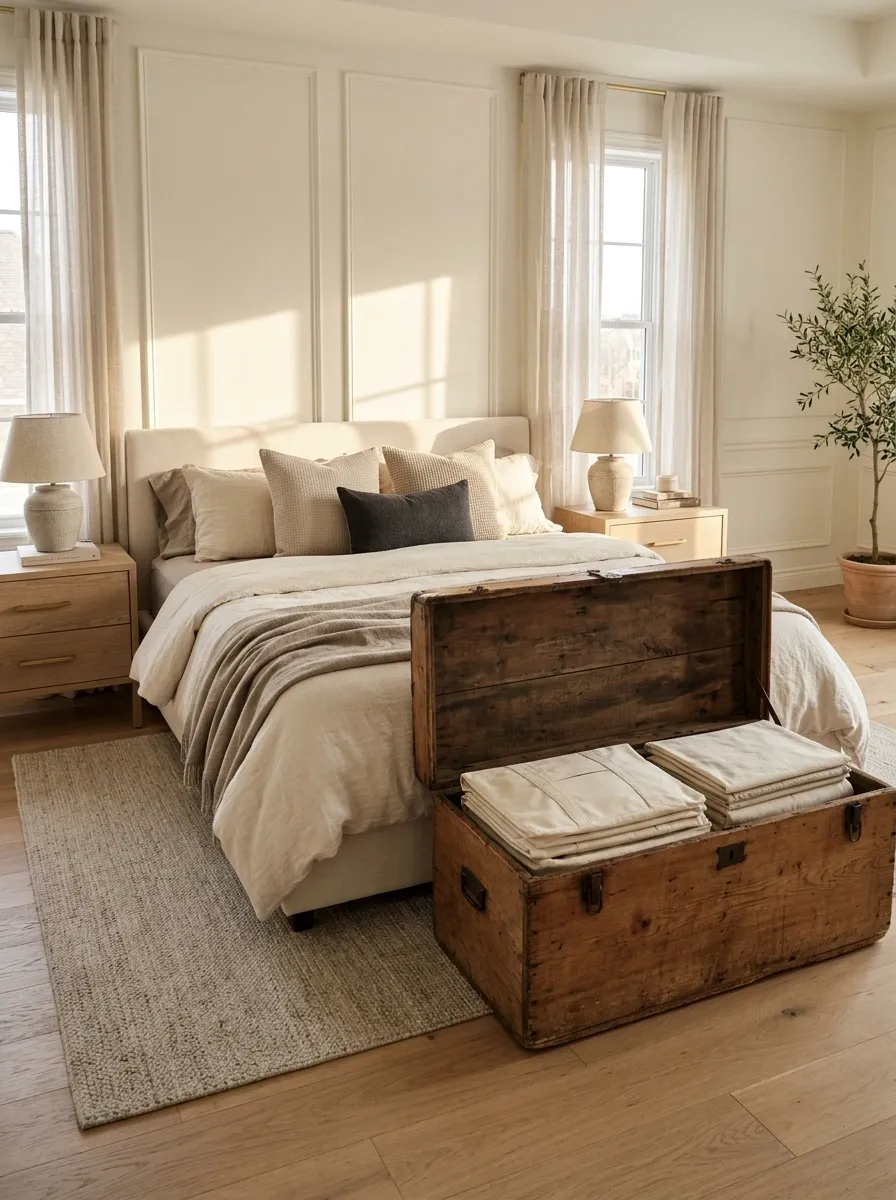
A clean, dry trunk can hold spare bedding if its condition and interior materials suit the contents. Use appropriate removable protective storage inside rather than letting delicate fabric rest against rough timber or old metal.
Measure your folded bedding and the opening before deciding this is its new home. A trunk can be visually generous while offering surprisingly awkward access.
Leave the top mainly clear if you open it often. Keep enough room between the trunk and the bed for dressing, walking, and operating the lid without catching the duvet.
Make It a Bedside Table in a Room With Enough Width
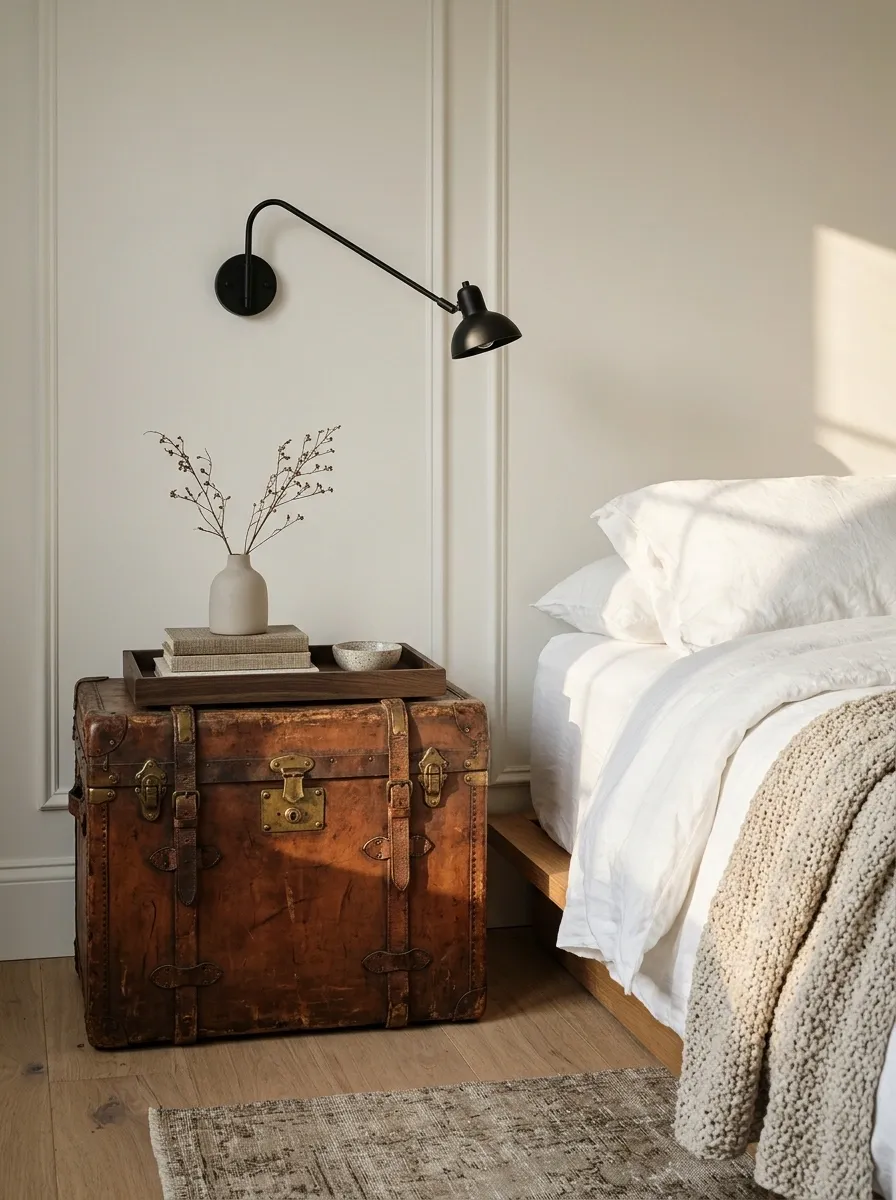
A smaller trunk can bring an interesting material beside a plain bed. Check the height with the finished mattress and place a stable tray on top if the surface is uneven.
Use a separate bedside lamp or wall light if opening the trunk would otherwise move the lighting. Keep charging leads outside and do not charge devices in a closed trunk.
This works best when the interior holds occasional items. Opening heavy luggage nightly to find lip balm is a routine with more ceremony than most people need before sleeping.
| Top | Interior |
|---|---|
| Everyday bedside essentials | Occasional spare linens |
| Stable, protected surface | Organized removable containers |
| Clear charging arrangement | No operating or charging devices |
Create a Low Entryway Landing Spot
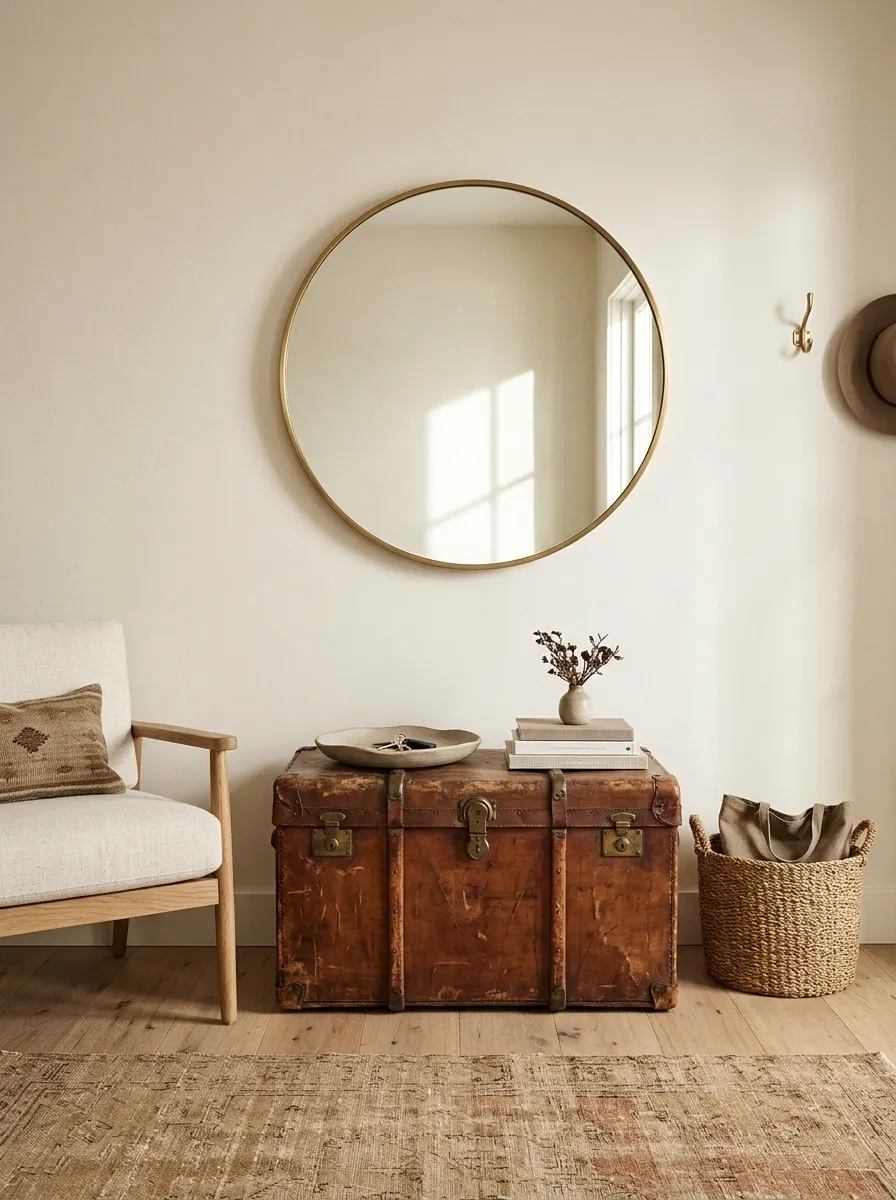
A low trunk can collect a bag or hold a small tray near the entrance, provided it leaves a safe walking route. Check the height before expecting it to function like a conventional console.
Keep keys in a distinct shallow container so they do not slide behind raised hardware. A mirror above can establish the entry zone without crowding the top.
Do not assume the trunk can support somebody sitting to remove shoes. Use a proper seat nearby if needed; antique-looking does not mean engineered for an adult landing on it every evening.
A compact arrival zone
Bags land here; seating needs a rated piece Illustrative arrangement only; inspect condition and do not assume the trunk is rated for seating or heavy loads.
Keep Board Games Together in the Living Room
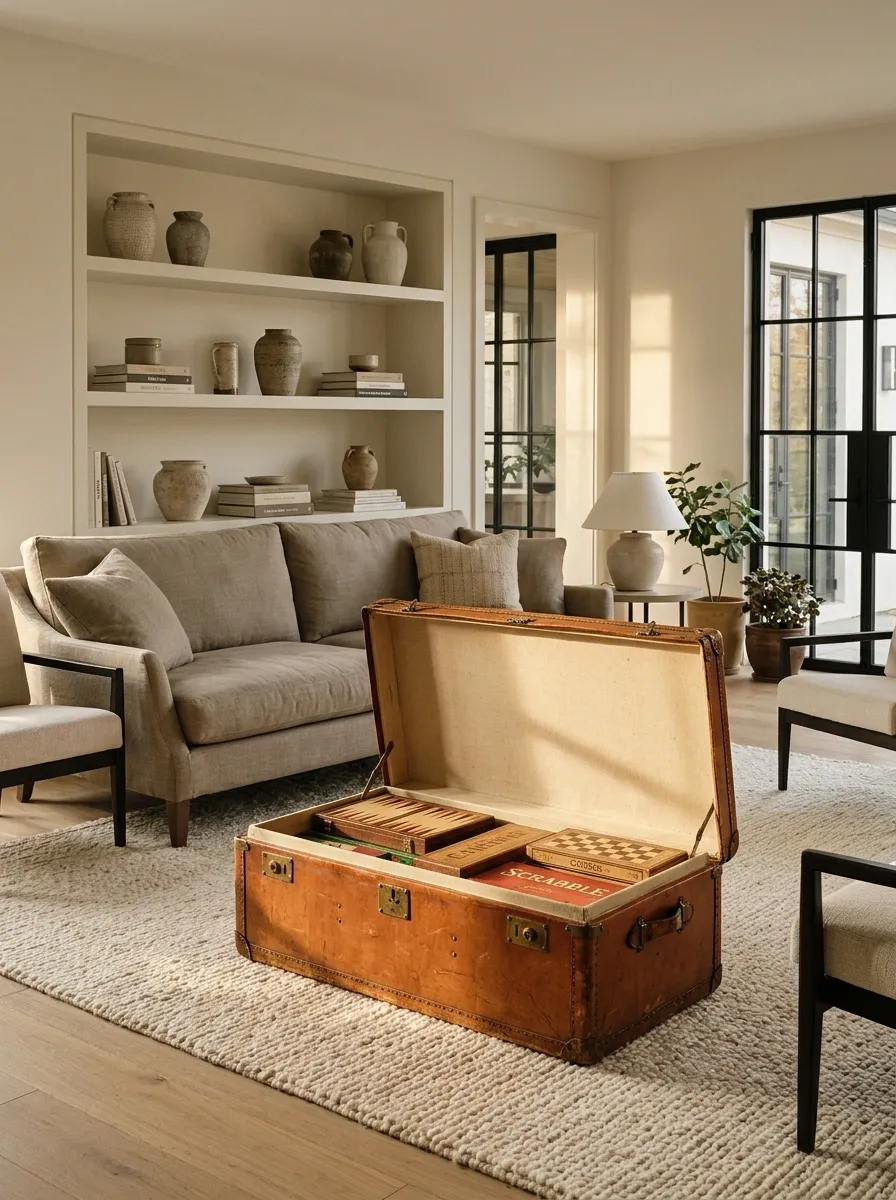
A trunk can store board games in a room where their boxes otherwise form an unstable tower beside the sofa. Check that the interior is clean, dry, and free of snagging hardware.
Arrange the interior around retrieval:
- Frequently used games near the opening.
- Small pieces in labeled removable containers.
- Occasional games farther back or underneath.
You should not need to unpack the full collection to find a pack of cards.
Keep the lid controlled and supervise access around children. It is a storage solution for an adult-managed room, not an invitation to use a heavy-lidded trunk as a children’s activity chest.
Store by use: Frequent games near the opening, occasional games beneath or behind them.
Give a Guest Room a Place for Spare Comforts
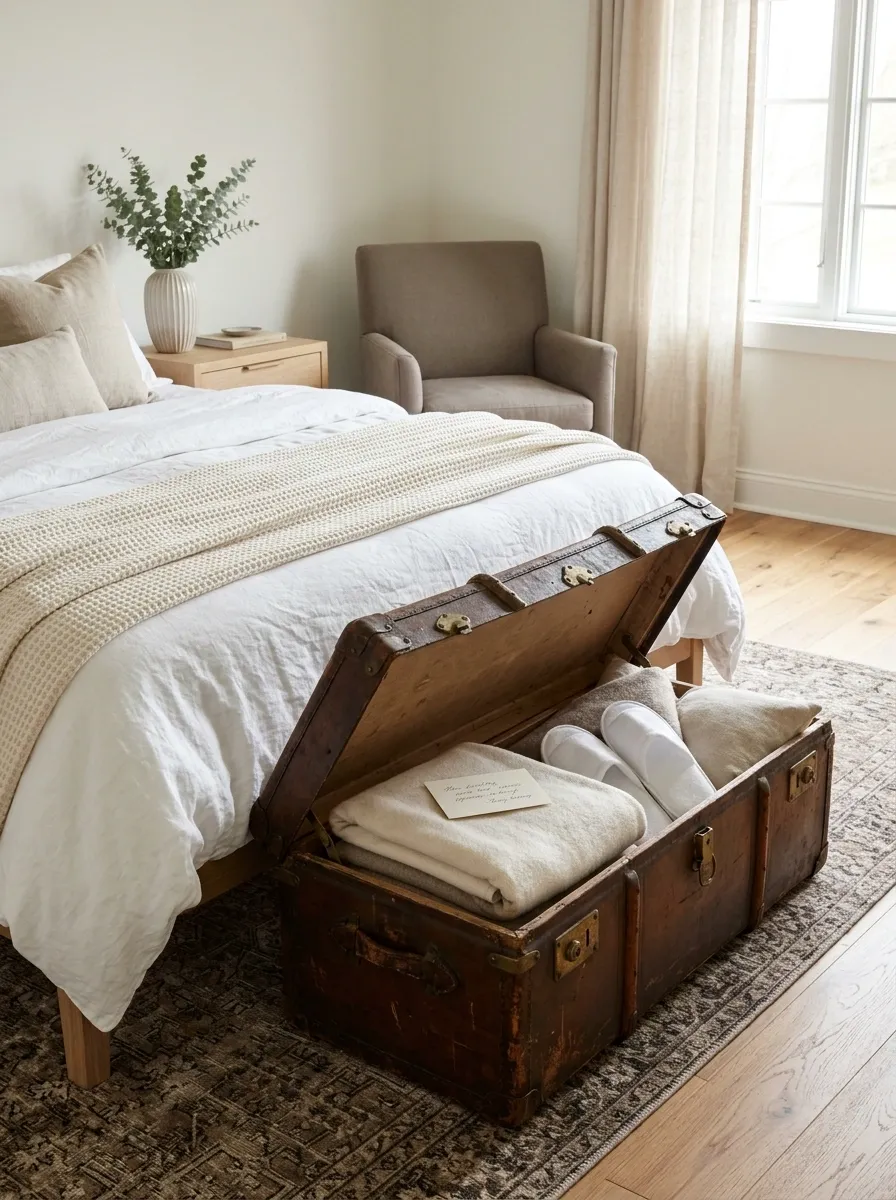
A trunk can hold an extra blanket, clean slippers, or a spare pillow when its interior is suitable. Keep the contents easy to identify so guests do not have to investigate every latch.
Tell them where the extras are, or leave a small card on top. Avoid complicated locks and catches.
If the lid is heavy or awkward, keep the guest items elsewhere and use the trunk decoratively. Hospitality should not include a practical assessment of vintage luggage mechanisms before anyone can find another blanket.
Store Seasonal Decorations Indoors
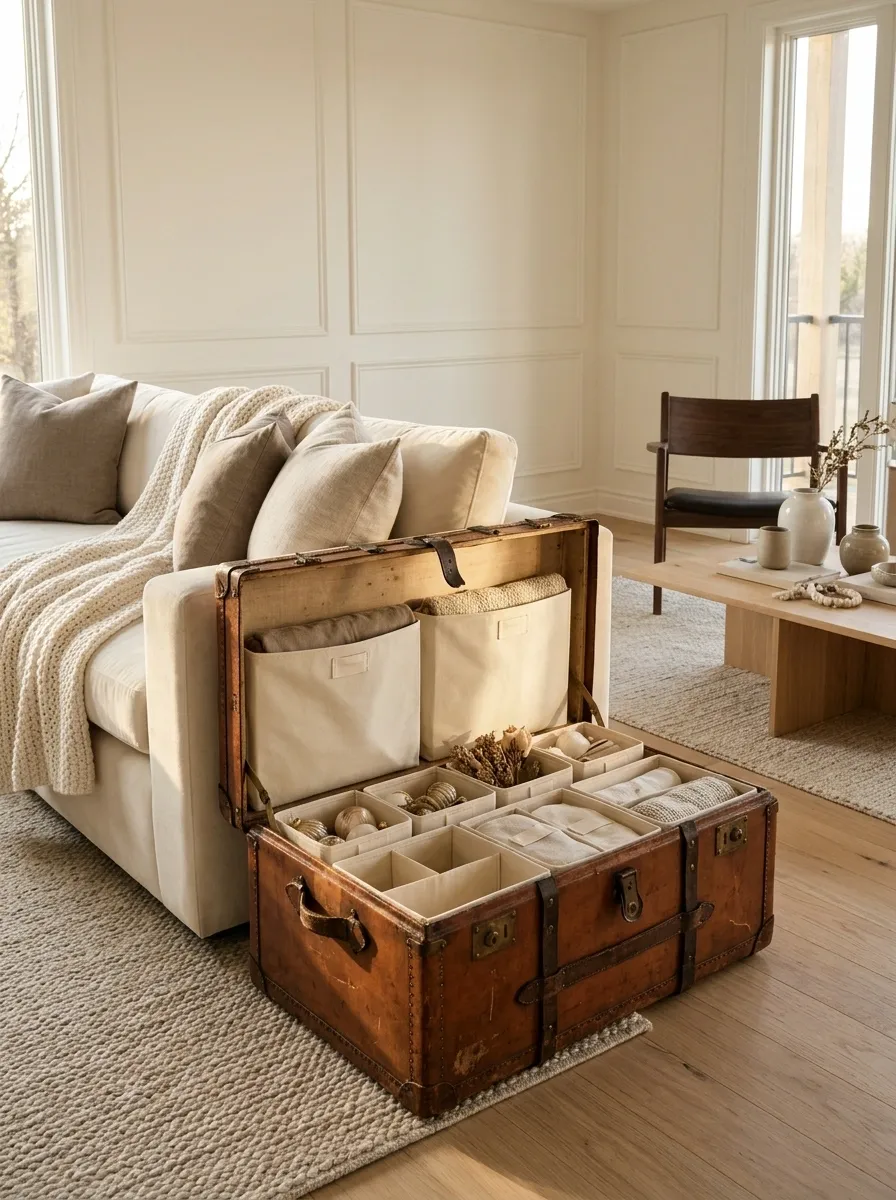
A sound trunk can organize lightweight seasonal decor in a dry interior room. Divide delicate pieces into appropriate smaller containers so they are protected from metal fittings and one another.
Keep the trunk somewhere you can open it fully. A hallway corner that requires moving a coat rack and a chair may be an excellent reason to forget an entire season exists.
Avoid unconditioned or damp locations if the trunk or contents are vulnerable. Its original traveling credentials do not guarantee that it will enjoy your humid garage indefinitely.
| Contents | Better arrangement |
|---|---|
| Fragile ornaments | Separate protective boxes |
| Fabric decorations | Clean, dry removable storage |
| Small accessories | Labeled compartments |
Use One as an Office Side Table
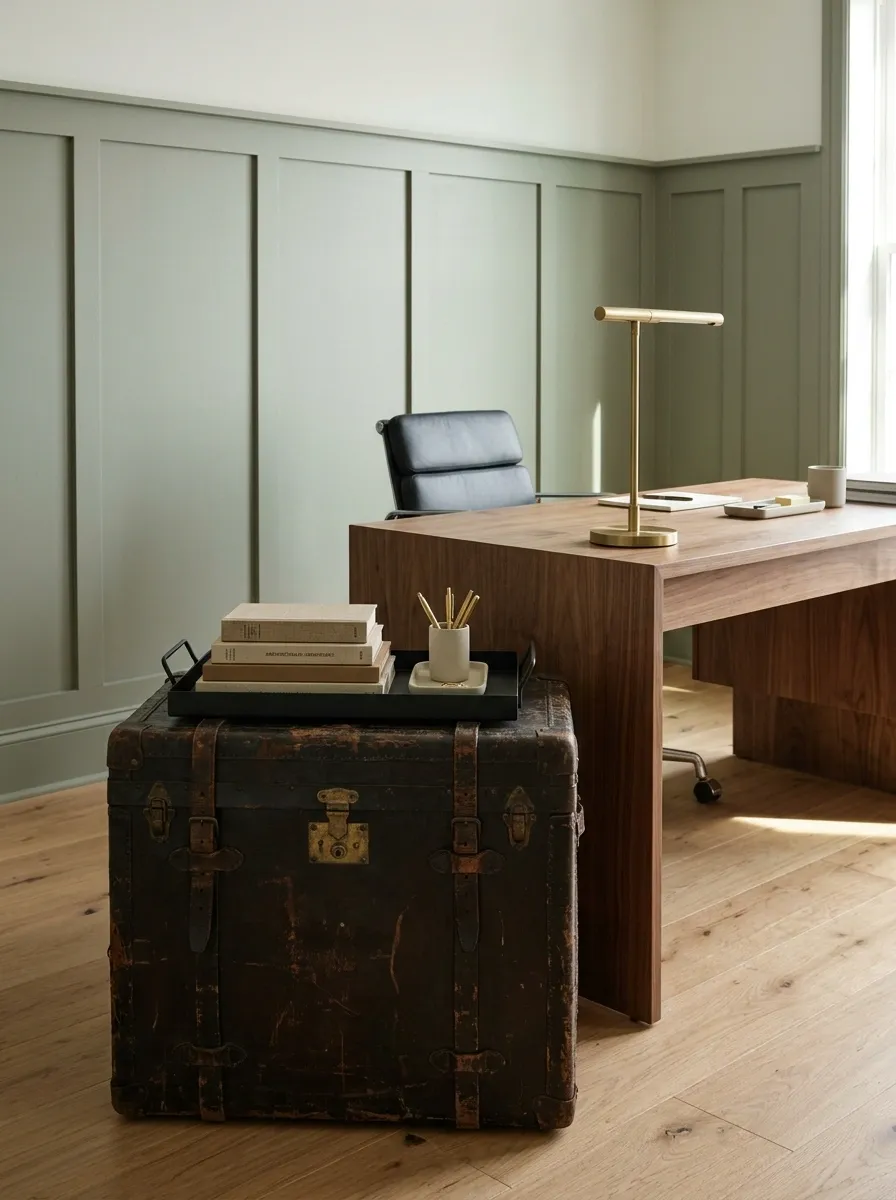
Beside a desk, a trunk can provide a low surface for a stack of current reference books or a tray of stationery. Choose a position that does not interfere with the chair or desk cables.
Keep the top restrained so it remains useful. A vintage object does not need to become a decorative obstacle to be appreciated.
If you use the interior for supplies, choose occasional items. Daily tools belong where you can reach them easily, rather than beneath a laptop stand, a lamp, and the fiction that you will enjoy lifting everything.
Character beside the work zone
Chair movement and cables remain unobstructed Illustrative arrangement only; inspect condition and do not assume the trunk is rated for seating or heavy loads.
Keep Gift-Wrapping Supplies in One Place
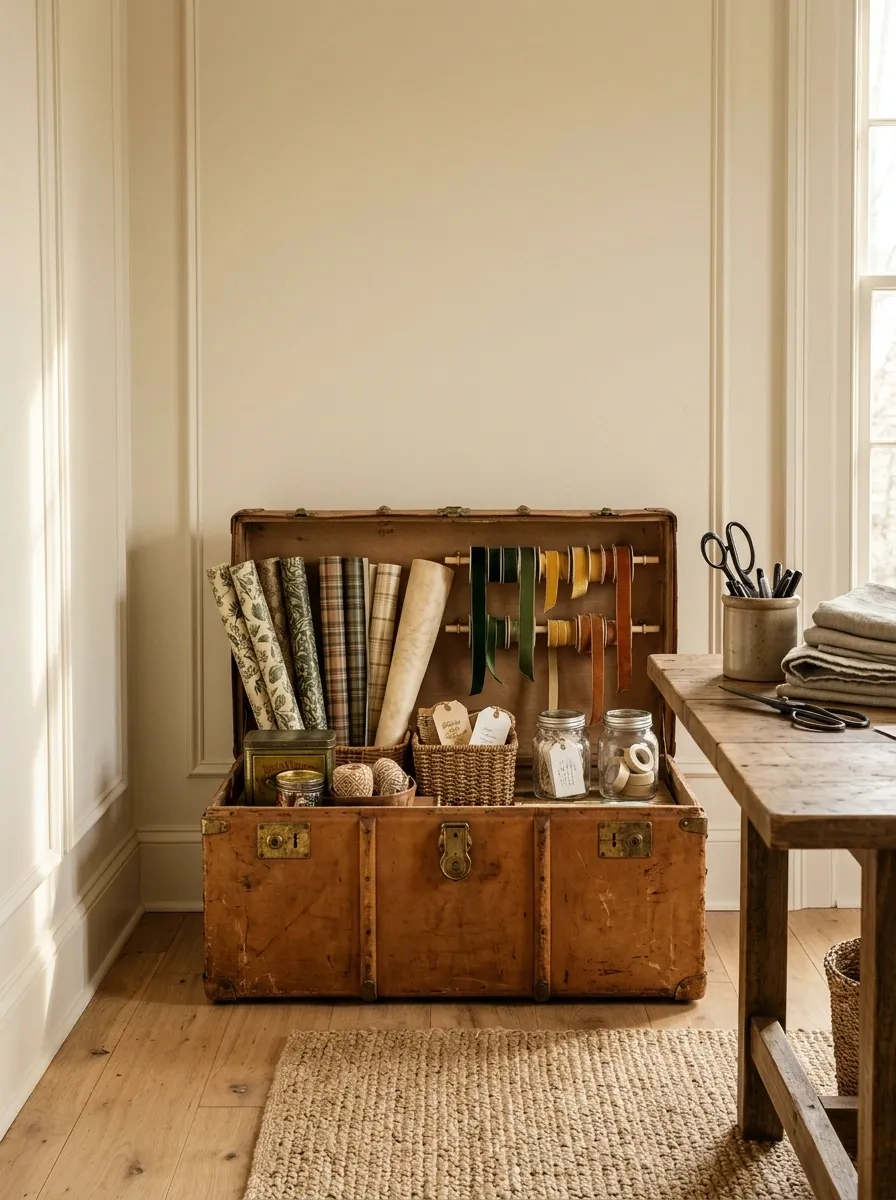
A long trunk may suit wrapping paper, ribbons, tags, and tape. Measure the rolls first and use separate internal containers for small items.
Protect paper from rough surfaces, moisture, and unknown old lining materials. Keep scissors and other sharp tools secured appropriately for the household.
Choose a location where the trunk can open when you need it. Gift wrapping already contains enough opportunities for mild irritation; digging for tape under several unrelated objects is not a meaningful contribution to the festive experience.
Before assigning the job: Check the usable interior length, not just the trunk’s exterior measurements.
Build a Quiet Window-Side Display
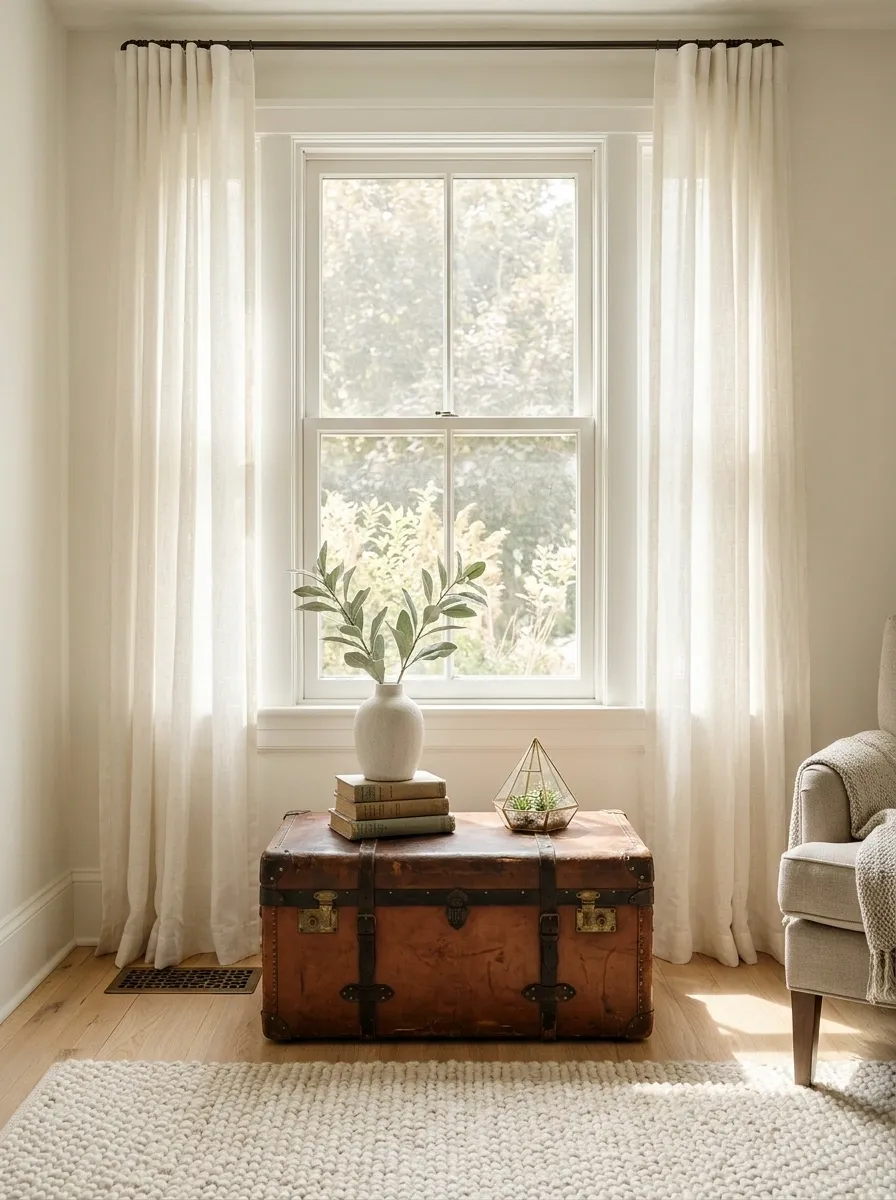
A trunk can anchor the space beneath a window when it does not obstruct heating, ventilation, curtains, or an escape route. Use its top for a few light objects that suit the finish.
Check direct sunlight and condensation exposure. Both the trunk and displayed items may need a different position if the window is harsh or damp.
Keep it a display surface unless seating suitability has been properly confirmed. A cushion on an old lid can suggest a bench without making it one, which is exactly the sort of design misunderstanding worth avoiding.
A low display beneath a suitable window
Keep curtains, heating, ventilation, and escape routes clear Illustrative arrangement only; inspect condition and do not assume the trunk is rated for seating or heavy loads.
Store Sewing Supplies in Removable Organizers
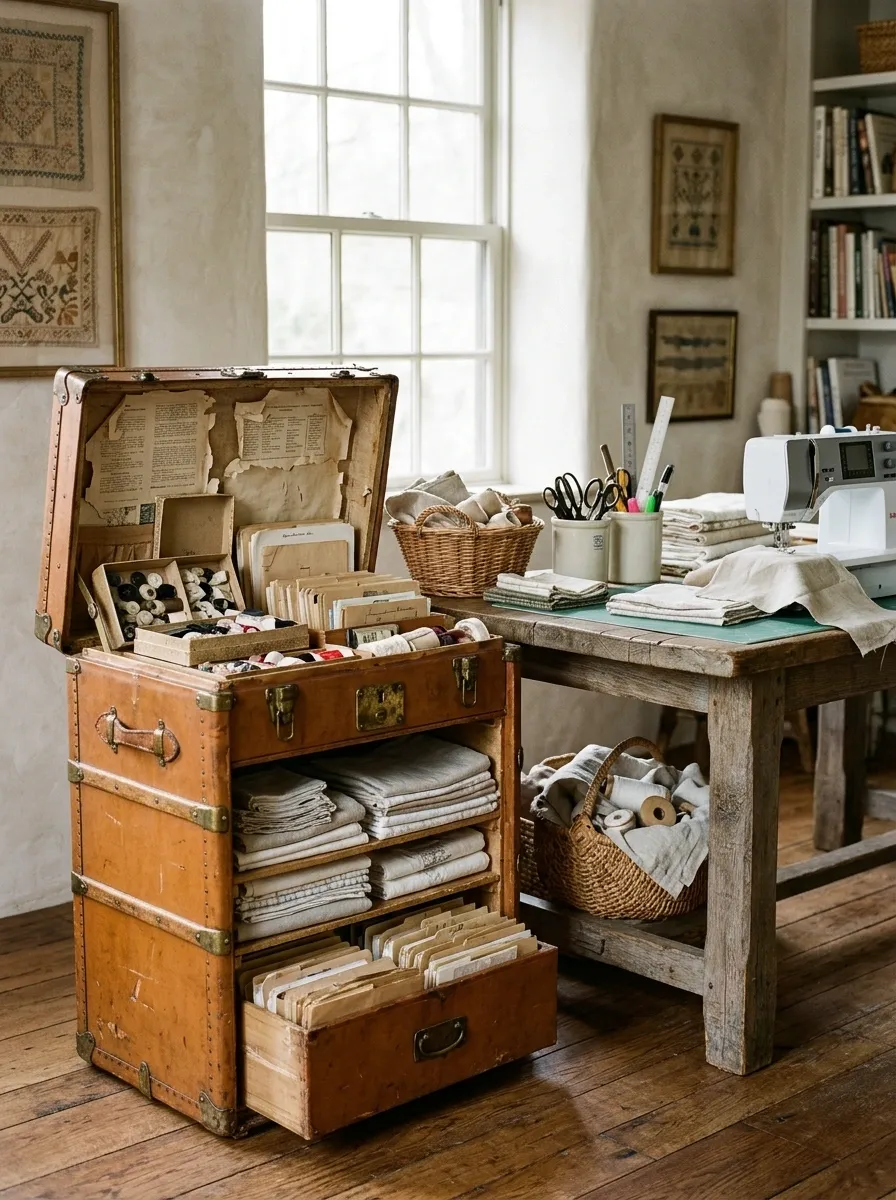
A trunk can keep fabric remnants, patterns, and occasional sewing supplies together in a craft area. Use suitable clean interior boxes to separate materials from old surfaces.
Keep needles, blades, and scissors securely contained. Group supplies by project or type so the trunk opens onto order rather than the textile equivalent of a landslide.
Put the machine itself on a surface designed to support its weight and vibration. A vintage trunk is useful storage; turning it into a sewing workstation requires a different assessment of strength, height, and stability.
| Keep inside | Keep on a proper work surface |
|---|---|
| Protected fabric pieces | Operating sewing machine |
| Boxed notions | Cutting and pressing tasks |
| Pattern folders | Active project layout |
Hold Indoor Picnic and Entertaining Linens
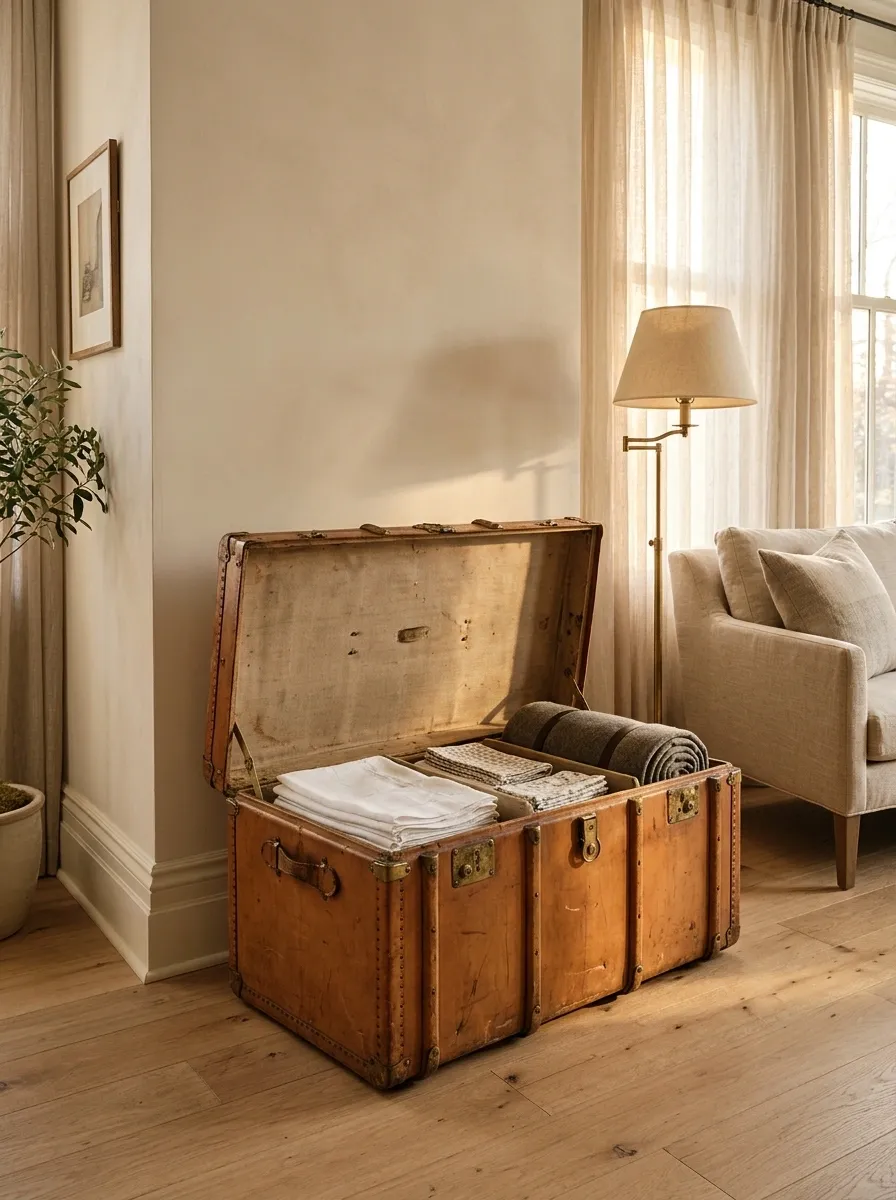
A clean trunk can store washable tablecloths, napkins, and a dry picnic blanket in a dining or living room. Use removable protective containers suited to the material and conditions.
Keep the contents clean and fully dry before putting them away. A faintly damp cloth is a poor foundation for a charming vintage storage arrangement.
Group sets together so preparing for a meal takes one retrieval instead of several searches. The trunk can add character to the room while doing a practical job between gatherings, which is a better deal than purely ornamental bulk.
Create a Dry Bar-Accessory Station

A trunk can hold cocktail books, spare napkins, coasters, and other dry entertaining accessories. Keep liquids on a stable protected surface elsewhere if the trunk’s finish or structure is vulnerable.
If you use a tray on top for serving, check that it sits flat and protect the finish appropriately. Do not overload the lid with bottles based on appearance alone.
A nearby lamp or wall art can establish the corner. The trunk supplies the character; it does not need a permanent arrangement of spillable ingredients to prove it belongs at a gathering.
Good contents: Coasters, folded napkins, bottle openers, recipe cards, and other dry accessories.
Display a Small Collection on a Protected Top
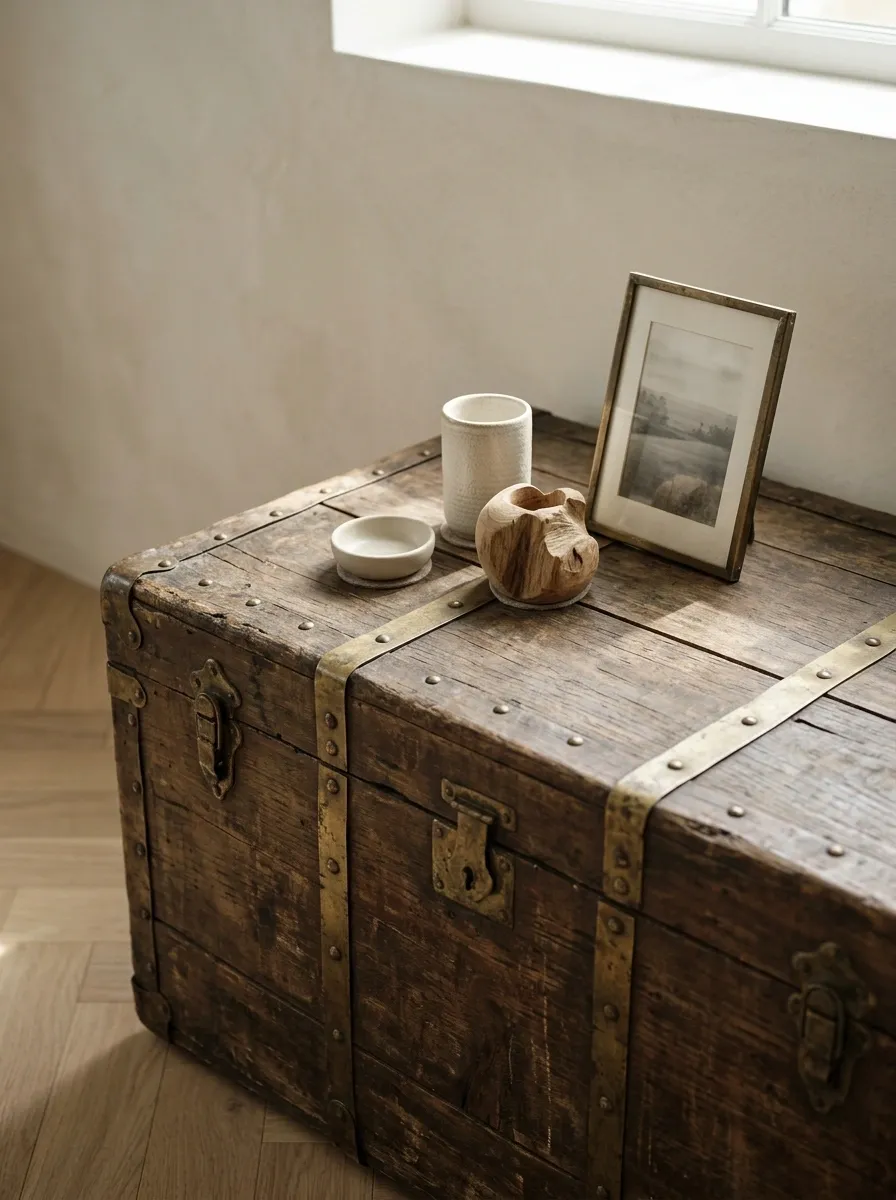
A few ceramics, carved objects, or framed photographs can look especially good against aged timber or metal. Choose a small group with a clear relationship in color, material, or subject.
Use appropriate protection beneath objects and avoid abrasive bases. Keep heavy items off a lid whose strength is unknown.
Give the collection some empty space. Covering every inch of the trunk hides the surface you wanted to enjoy and creates an enthusiastic dusting commitment. A restrained display lets both the objects and the trunk remain visible.
Let the collection and trunk both register
Empty surface is part of the arrangement Illustrative arrangement only; inspect condition and do not assume the trunk is rated for seating or heavy loads.
Store Art Materials Between Projects
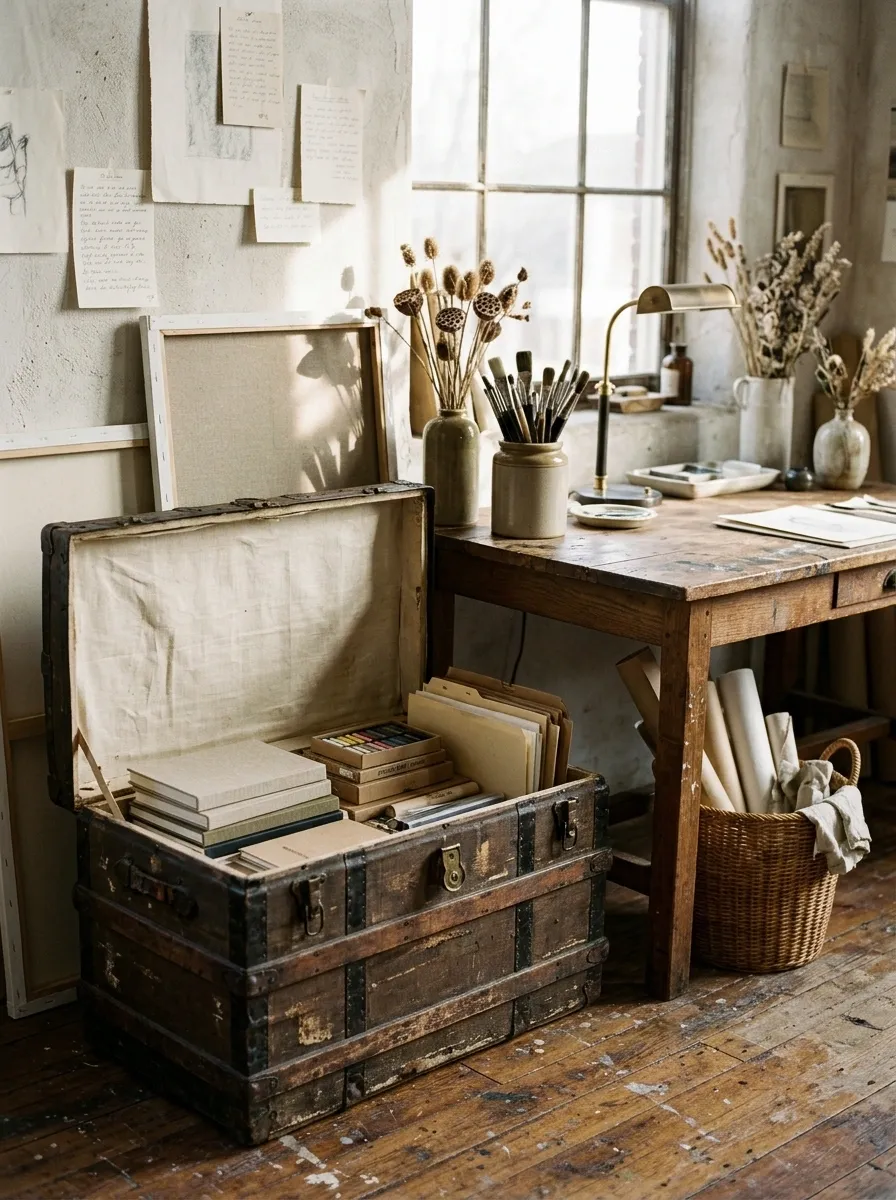
A trunk can contain clean, dry sketchbooks, boxed drawing tools, and paper protected in appropriate folders. Choose storage that isolates the materials from rough or potentially staining interior surfaces.
Keep wet paint, solvent containers, and anything requiring specific ventilation or temperature control in storage intended for those products.
Arrange the trunk near a real worktable so supplies can move easily into use. It should shorten setup time, not turn the start of every project into a full unpacking ceremony with an audience of unhelpful latches.
| Suitable role | Separate storage needed |
|---|---|
| Boxed dry drawing tools | Solvents and flammables |
| Protected sketchbooks | Wet or leaking materials |
| Occasional project supplies | Products with special storage instructions |
Keep Pet Supplies Nearby Without Making a Pet Enclosure
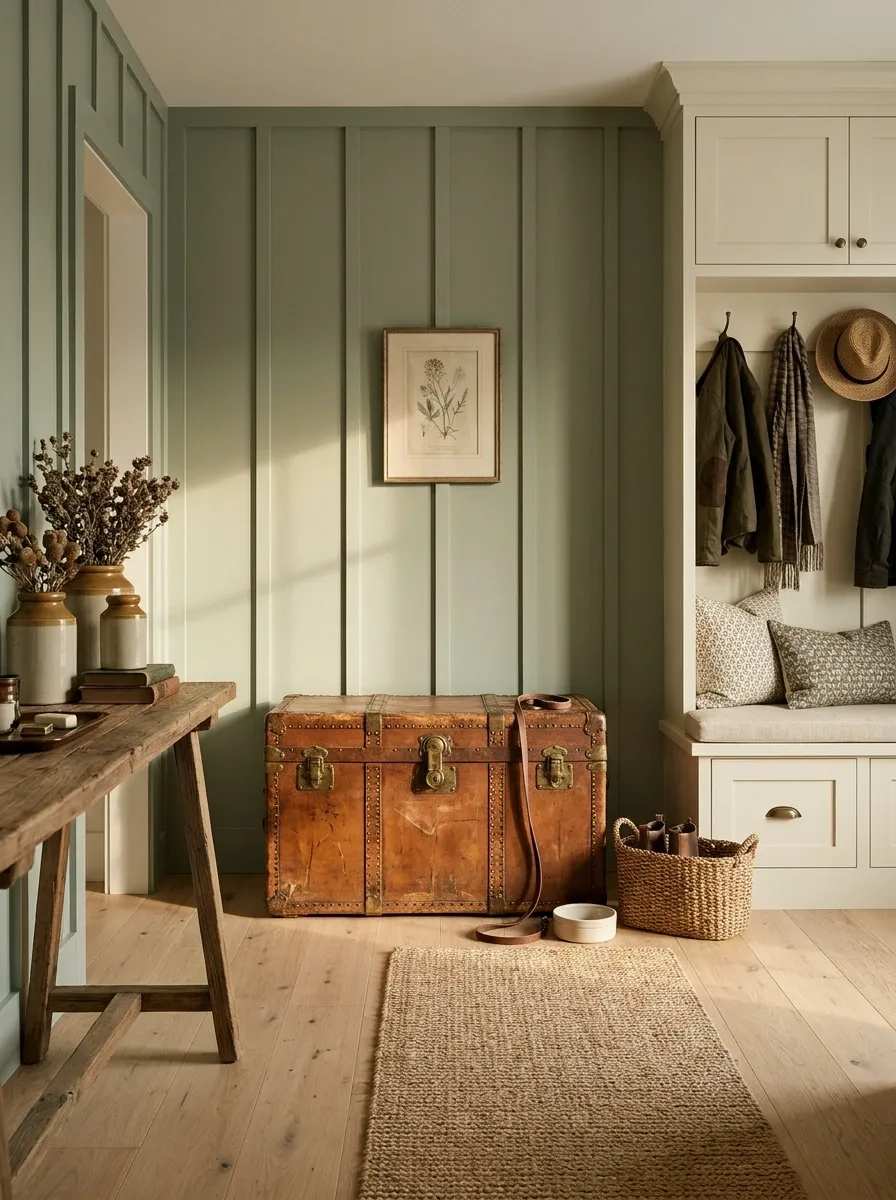
A trunk can store clean spare leads, washable blankets, and packaged supplies in an adult-managed area. Keep medicines and food in storage that meets their instructions and protects them from pets and children.
Use removable organizers so the interior stays clean. Keep the lid secure and the trunk closed when not in use.
Do not turn a closable trunk into a pet hideout. There are purpose-designed beds without heavy lids, catches, and ventilation questions. Vintage character is delightful; being able to leave a bed safely is a stronger selling point.
Give a Wide Landing a Low Focal Point
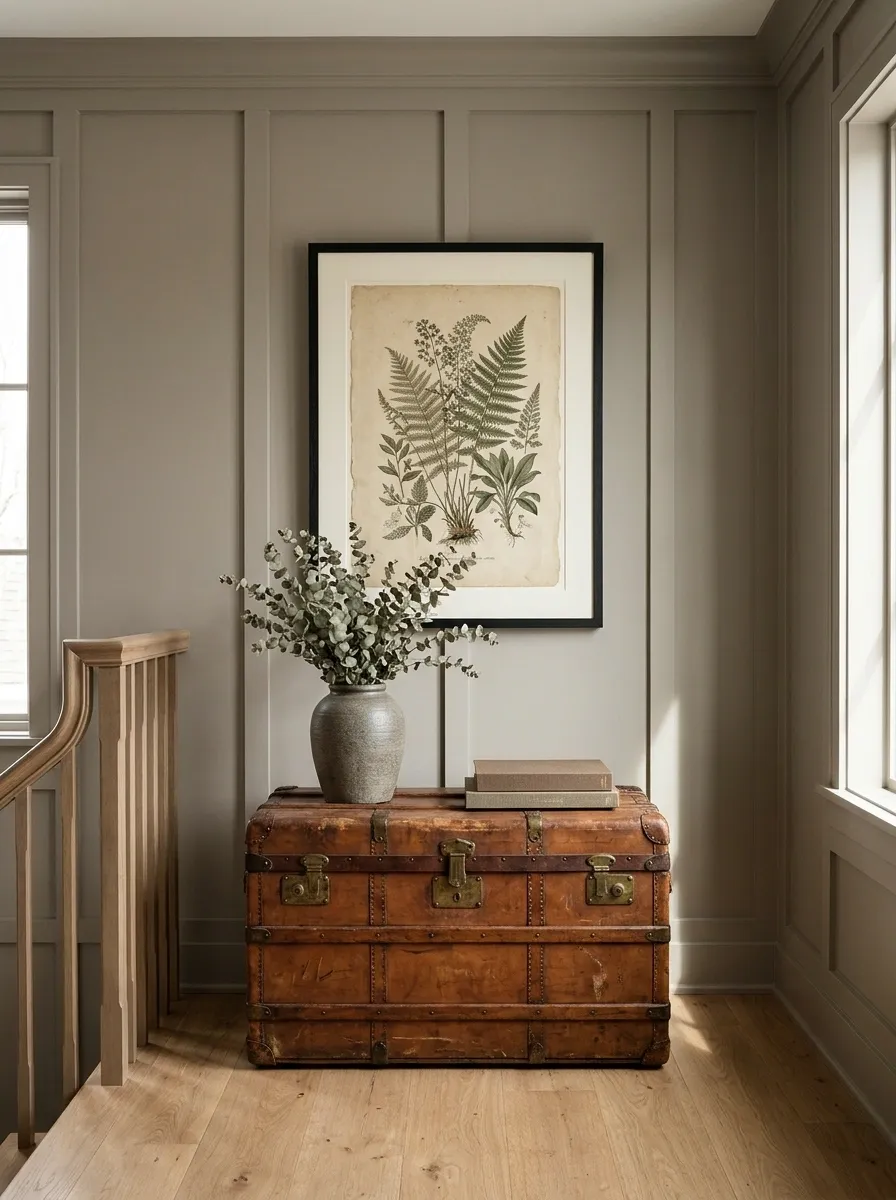
A trunk can anchor a generously sized landing with a picture above it. Keep it well clear of stair approaches, doors, and required circulation or escape routes.
Use the wall display to establish the grouping rather than stacking objects high on the lid. Low furniture can look purposeful without becoming a miniature exhibition stand.
If the landing is narrow, choose another location. A charming piece is not improved by making everybody negotiate its corners while carrying laundry up the stairs. Some architecture is already supplying enough drama.
Landing check: Evaluate the route while carrying something bulky, not just while walking empty-handed.
Store Music Accessories Away From the Floor
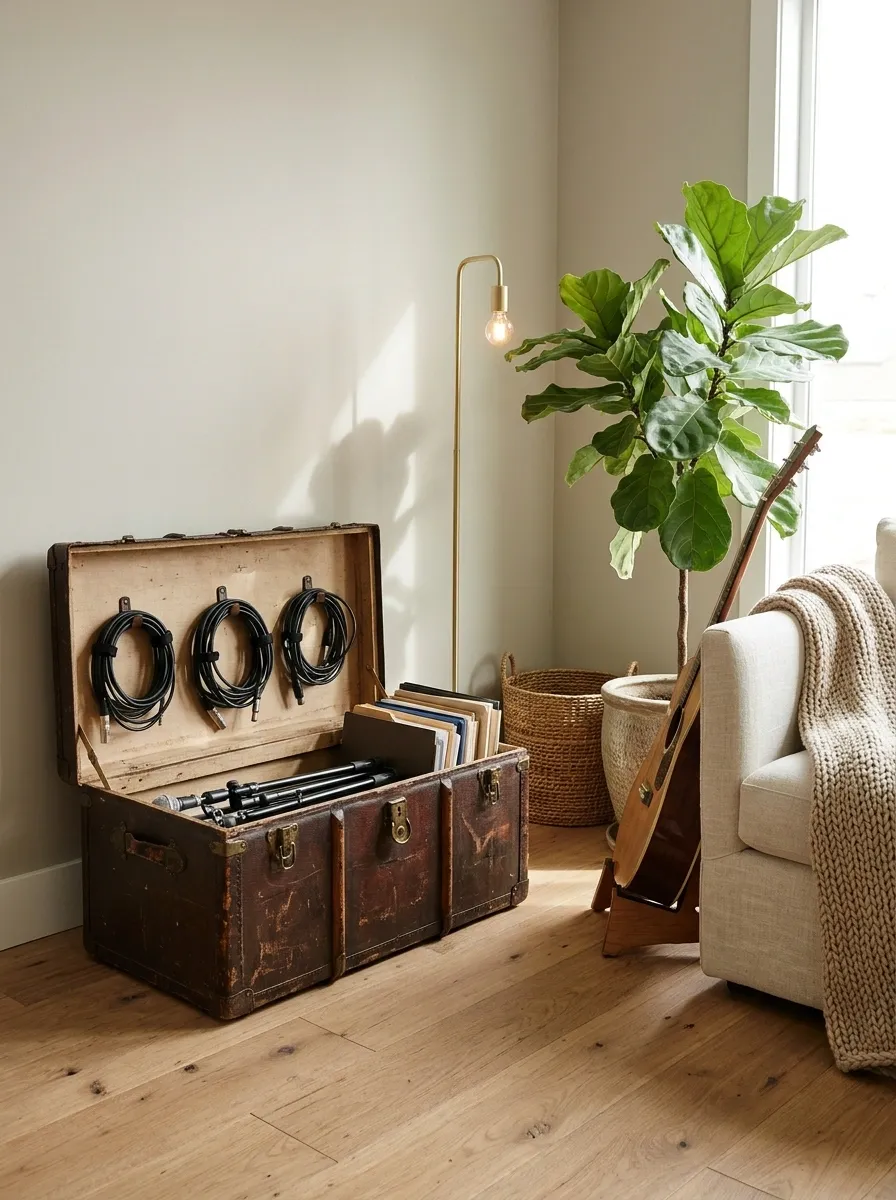
A trunk can organize clean cables, spare stands that fit, sheet music in suitable folders, or other dry accessories. Keep the interior arranged so fragile pieces are not buried under heavy ones.
Follow instrument manufacturers’ storage requirements; a trunk is not automatically a climate-controlled instrument case.
Keep powered equipment and charging devices out of a closed trunk. The useful role is organized storage between sessions, with everything easy to remove. A place for leads can make a music corner feel calmer without pretending every object with a lid is specialist equipment housing.
A calmer music corner
No powered equipment operating in the closed trunk Illustrative arrangement only; inspect condition and do not assume the trunk is rated for seating or heavy loads.
Make a Bedroom Dressing Corner Feel Established
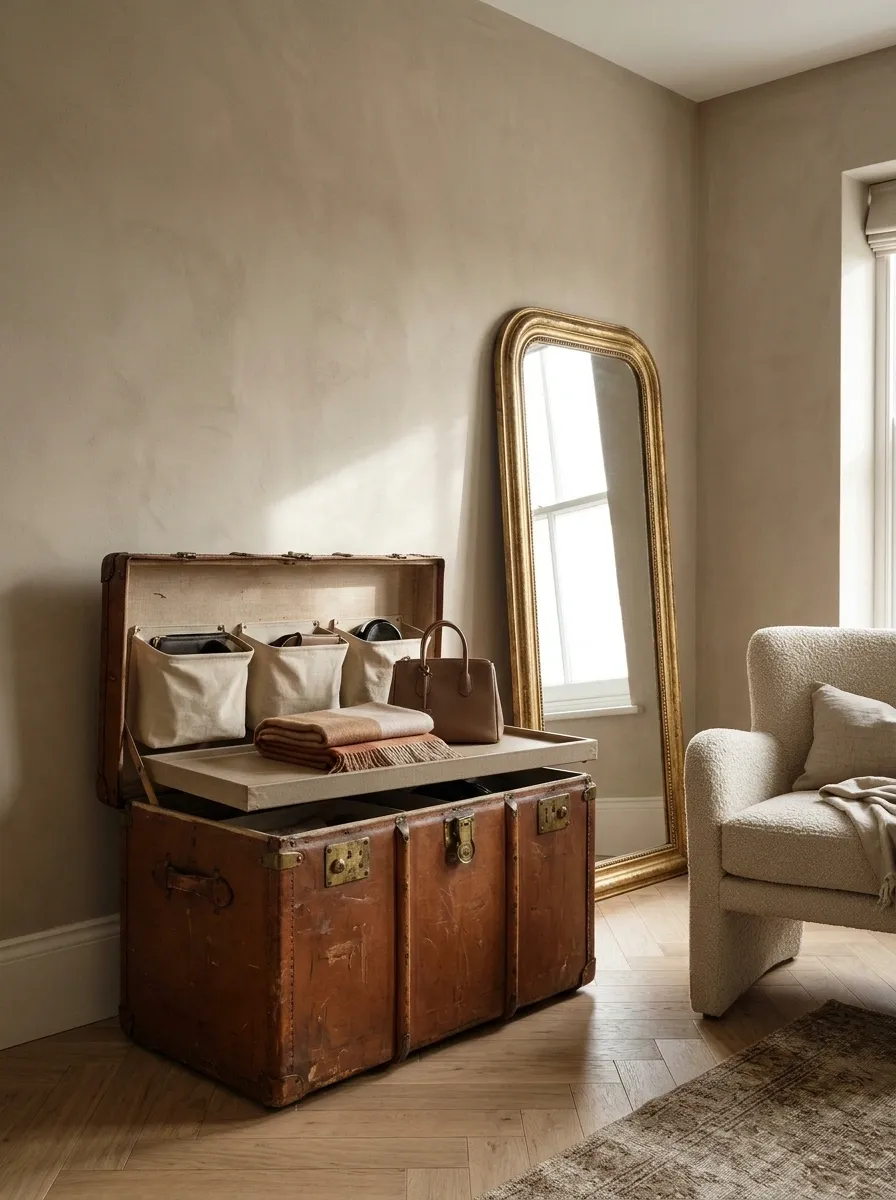
A trunk placed beside a proper full-length mirror can define a dressing area. Keep it out of the standing position needed to use the mirror and secure the mirror appropriately.
Use the trunk for a bag or folded clean scarf if the surface suits. Store occasional accessories inside in suitable containers.
A separate chair can provide reliable seating. The grouping feels collected because the pieces have different jobs, rather than because the trunk has been asked to function as seat, wardrobe, shelf, and emotional support luggage simultaneously.
| Piece | Job |
|---|---|
| Secured mirror | Comfortable full-length view |
| Suitable chair | Dressing seat |
| Vintage trunk | Accessory storage and a protected landing surface |
Keep Travel Keepsakes Together
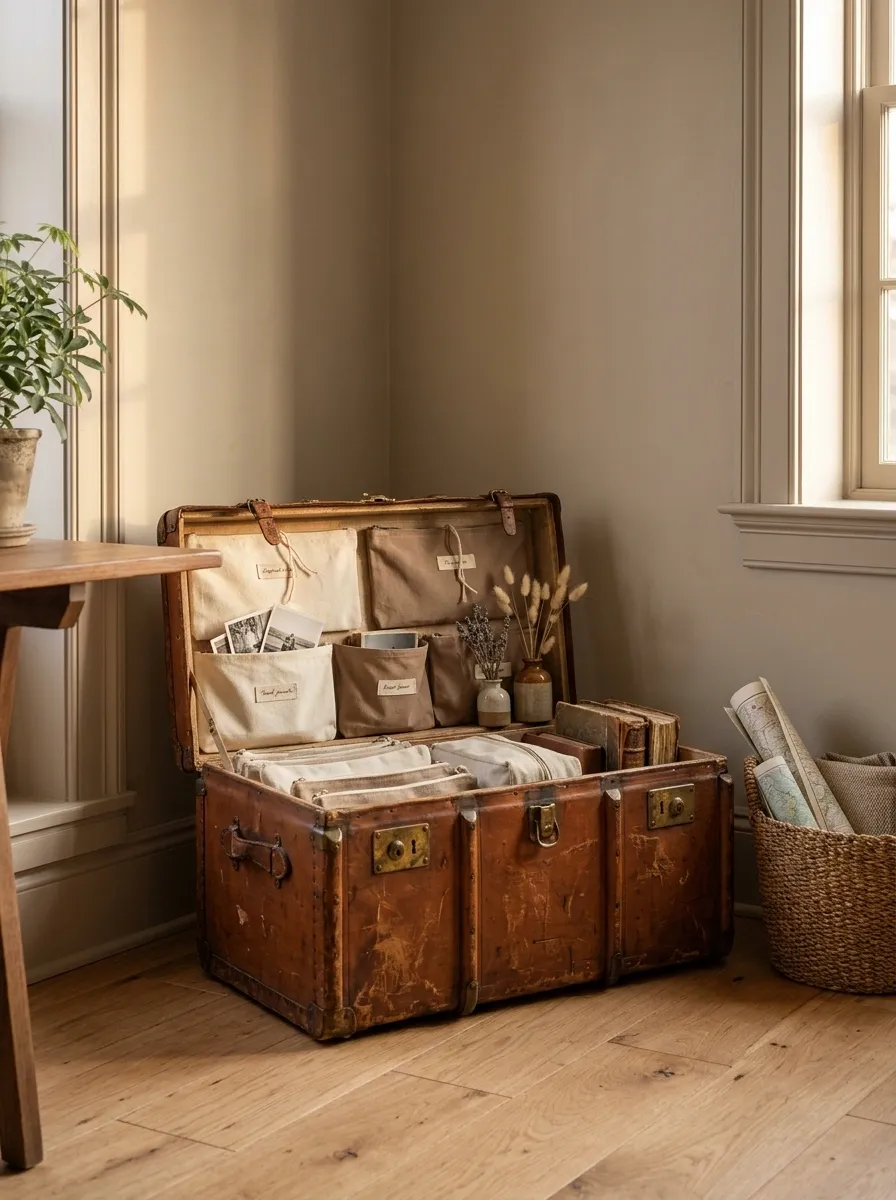
A trunk can be a fitting home for travel journals, duplicate photographs, inexpensive souvenirs, and other robust keepsakes. Use appropriate protective enclosures and keep valuable or fragile originals in storage suited to their conservation needs.
Give the contents a retrievable structure:
- Journals together in suitable protection.
- Robust souvenirs grouped by trip.
- Photographs in appropriate separate enclosures.
A labeled pouch can be more useful than a meticulously arranged top layer hiding chaos underneath.
Avoid locking the collection away in a location you never access. The point is to make memories easy to find, not to create an archaeological excavation for your future relatives.
Use a Curved-Lid Trunk as a Sculptural Accent
Let the lid be curved.
A domed trunk is usually better appreciated for its shape than pressed into service as a table. Place it where the outline can be seen and the walking route stays clear.
Hang art above or beside it instead of balancing objects on the curved lid. The empty top is a feature, not a styling failure.
Use the interior for suitable occasional storage if its condition allows. Not every vintage object needs a flat surface, a tray, and a second job to justify occupying a room you enjoy.
Let the shape win: A curved lid does not need to become level simply because the room contains coffee.
Keep Games and Puzzles in a Dining Nook
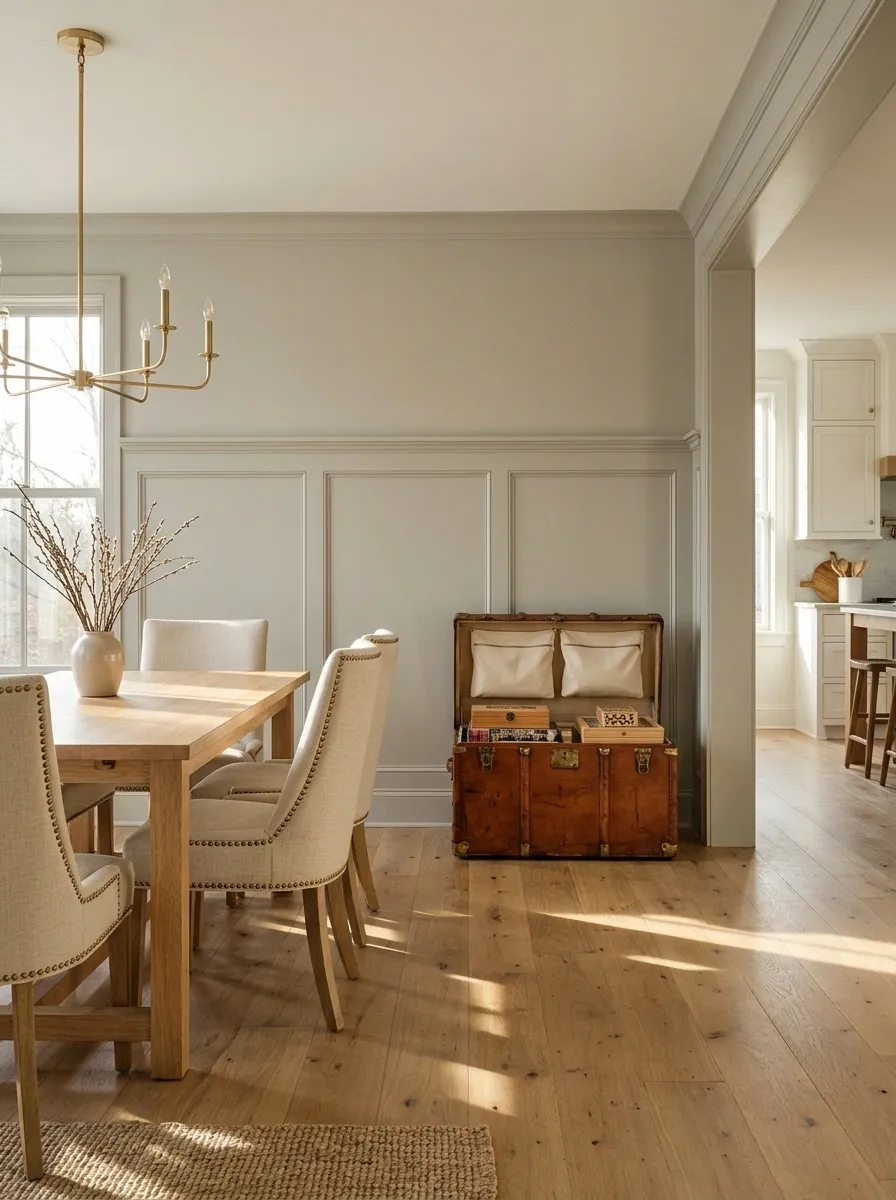
A trunk near a dining table can hold adult-managed games and puzzles used at that table. Choose removable boxes or pouches so pieces do not disappear into damaged lining or gaps.
Keep the trunk outside chair pullout space and the route to the kitchen. Open it without moving seated guests.
This differs from coffee-table storage because it supports a particular activity zone. The dining table stays available for meals, and the games have a nearby home once the evening’s fiercely disputed jigsaw border has been settled.
Create a Movable Seasonal Styling Surface
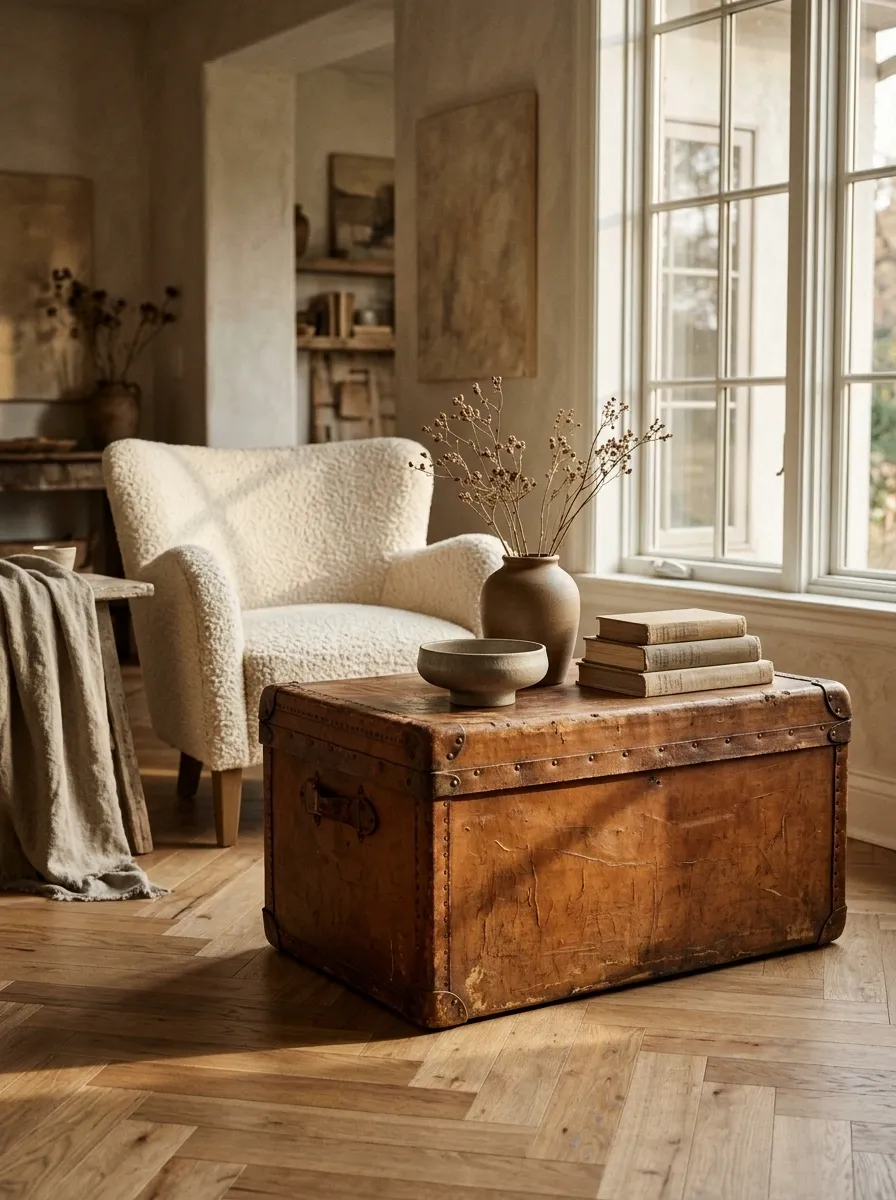
A trunk can support a restrained seasonal display indoors: a dry branch arrangement in a stable protected container, a bowl, or a few books. Keep water, flame, and heat away from vulnerable finishes.
Change the display without altering the trunk itself. A reversible arrangement lets the old piece remain versatile.
Use one main gesture instead of covering it in themed accessories. The aged surface already provides texture and story. A decorative object does not become more convincing because it has been surrounded by every other object associated with the same month.
| Seasonal change | Keep consistent |
|---|---|
| A different textile | Protected finish |
| Dry decorative stems | Stable container |
| A small object swap | Clear, uncluttered surface |
Give a Good Trunk a Simple, Visible Place
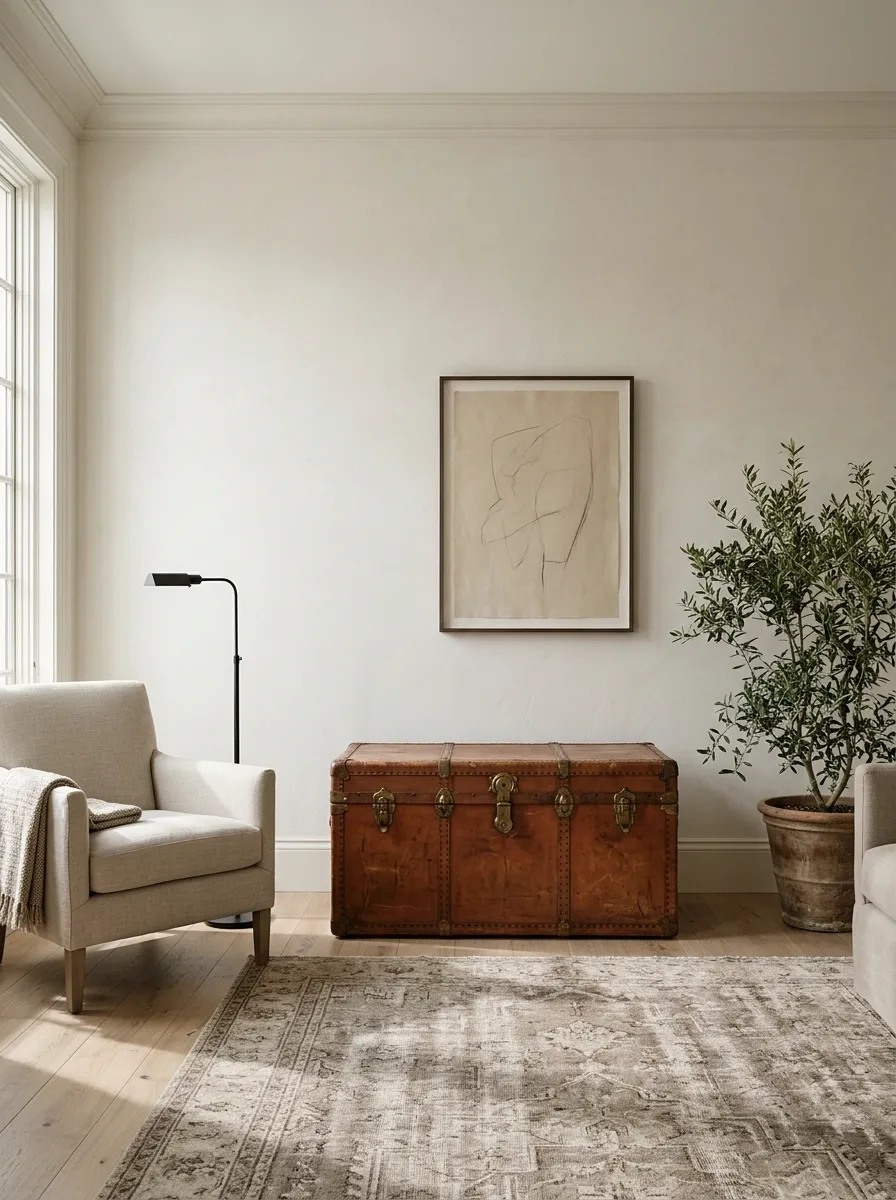
A particularly handsome trunk can sit against a clear wall with no elaborate conversion. Use suitable occasional storage if appropriate, or simply appreciate the object.
Choose a position where its hardware, proportions, and surface are visible. Keep it away from damp, heat, and obstructed routes.
There is no requirement to attach legs, repaint it, or turn it into a media console before it counts as useful decor. Sometimes keeping a well-made old object intact is the more interesting choice, and considerably less work than repairing an ambitious weekend transformation.
Keep the original character visible
No conversion required Illustrative arrangement only; inspect condition and do not assume the trunk is rated for seating or heavy loads.
Before deciding what to put in it, decide how often you want to open it. That single question tends to separate a useful old trunk from a very handsome storage inconvenience.
To pick up a draggable item, press the space bar. While dragging, use the arrow keys to move the item. Press space again to drop the item in its new position, or press escape to cancel.