
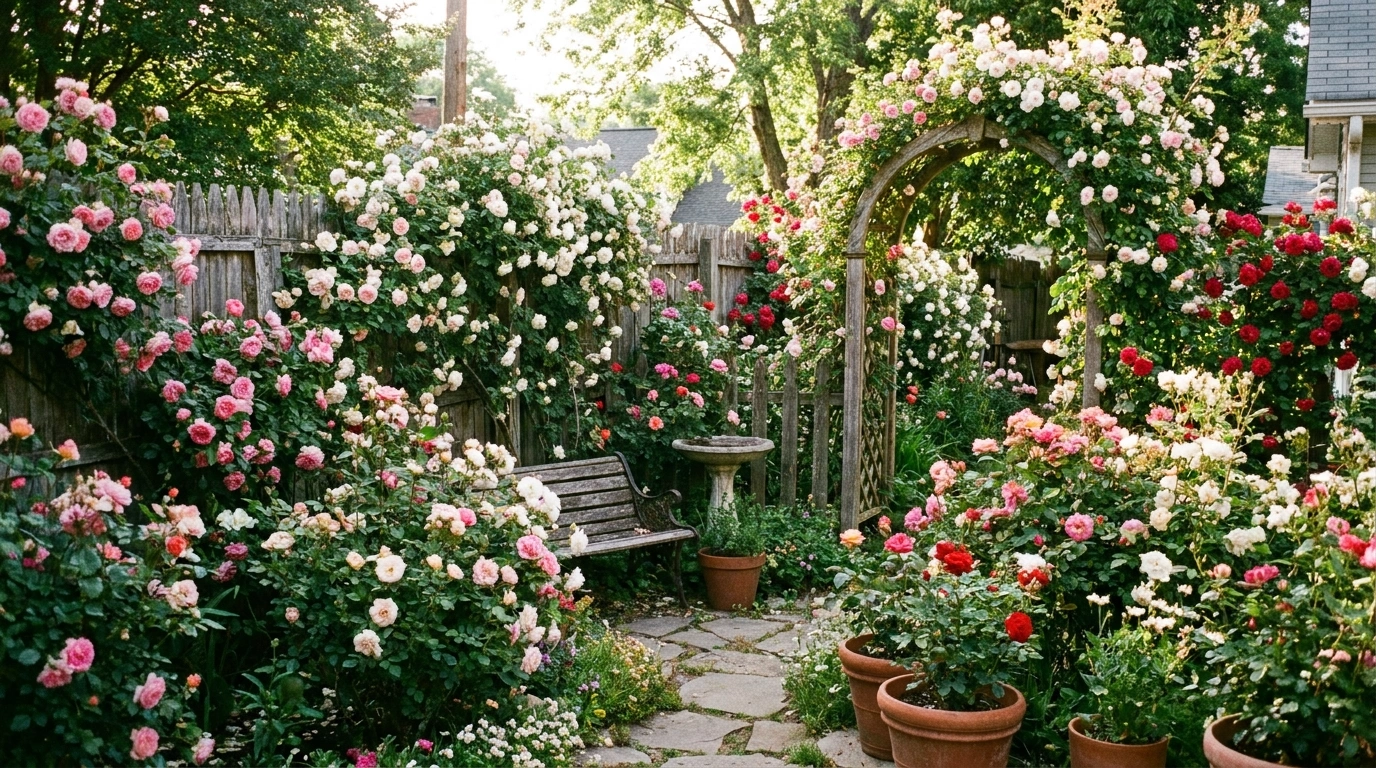
A backyard can have plenty of roses and still look strangely unfinished.
One bush goes beside the fence, another lands near the patio, a chair gets shoved into an empty corner, and suddenly the whole garden has the energy of a project that was abandoned halfway through. The roses aren’t the problem. The composition is.
Good backyard rose garden ideas start with the finished scene in mind. The path, planting beds, seating, lawn, fence, architecture, materials, and lighting need to make sense together before the flower count even enters the conversation.
Before You Plant a Single Rose, Pick Your Garden Personality
Backyard Rose Garden Ideas
Whimsical Rose Arch With Heart Stepping Stones
This fairytale entrance turns a simple pathway into an absolute experience by combining a heavy canopy of pink roses with charming heart-shaped pavers. Pale gravel keeps the ground level looking clean while letting the playful stones steal the spotlight. White fencing in the background adds just enough structure to keep the profusion of blooms from feeling untamed.
The secret here is leaning entirely into the charm without apologizing for it. When your garden path features giant stone hearts framed in cascading roses, subtlety is officially off the table. Commit to the romance and let the rest of the yard follow suit.
Surround the base with low-growing lavender or neat boxwood to ground the whimsical elements. A well-placed lantern or two along the path ensures the magic doesn’t vanish entirely when the sun goes down. After all, dramatic entryways deserve an encore.
Romantic Rose Arch Leading to a Garden Seating Nook
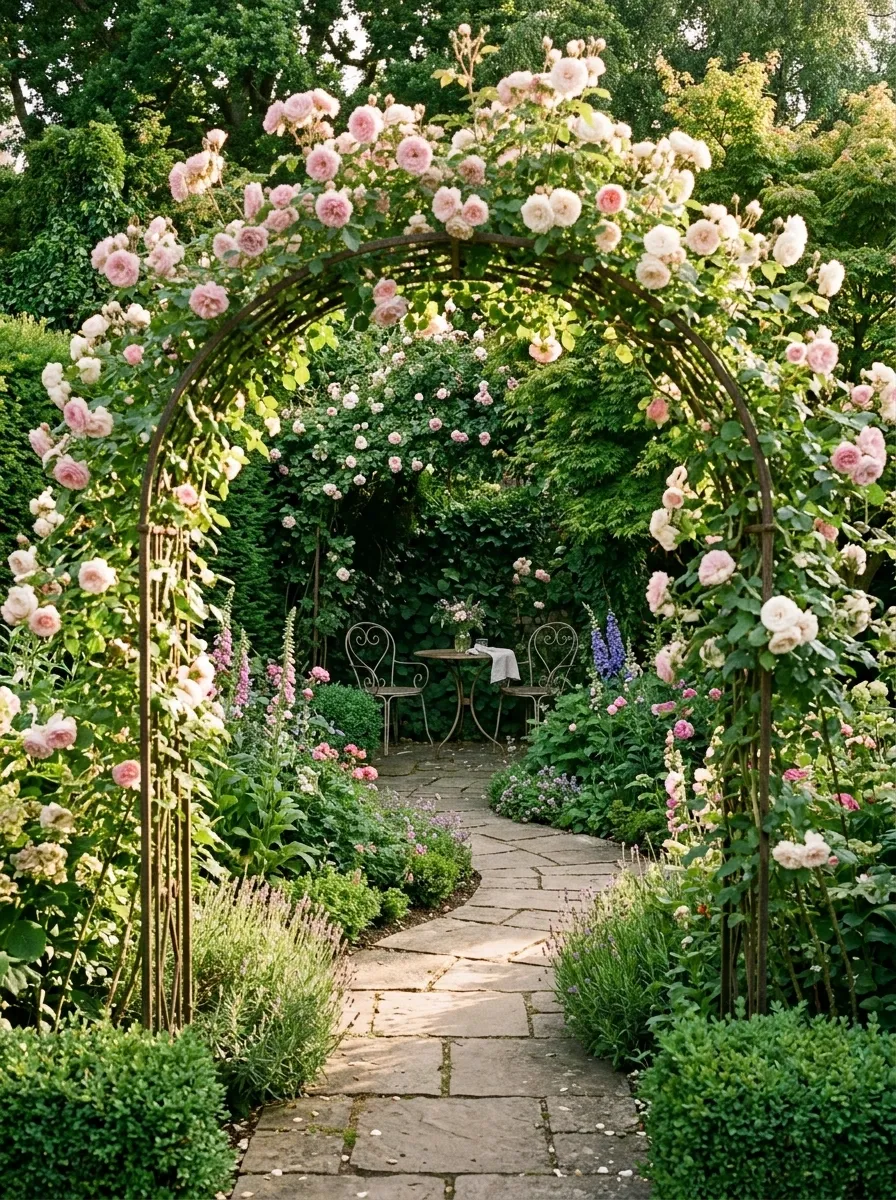
An arched entry gives this backyard an actual destination instead of a pile of flowers along the fence. Climbing roses cover the structure lightly enough to keep its shape visible, while a narrow stone path continues underneath and ends at two simple chairs with a small round table. Low planting stays close to the path, so the route remains clear and the seating feels tucked away rather than swallowed by greenery.
The strongest detail is the reveal. The arch frames the seating area and makes the garden feel deeper than it is. Keep the furniture understated here. The roses already have main-character energy.
Enchanting Cottage Porch Draped in Roses
An arched wooden door gets the ultimate framing treatment with climbing pink roses tumbling effortlessly from the whitewashed walls above. A rustic iron bench paired with an open book creates an inviting spot that looks straight out of a storybook. Cobblestone paving underfoot brings a timeworn texture that ties the entire rustic scene together seamlessly.
The genius of this setup lies in embracing casual comfort over stiff perfection. The scattered petals and slightly overgrown vines do the heavy lifting so you don’t have to stress about stray leaves. Let the flowers creep close to the seating area for an immersive, secret-garden vibe.
Keep the color palette focused on lush pinks and deep greens to let the architecture shine through the foliage. A vintage wall sconce adds a soft glow for evening relaxation. It turns a basic entryway into the best seat in the house.
Cottage Rose Border Around a Small Grass Lawn
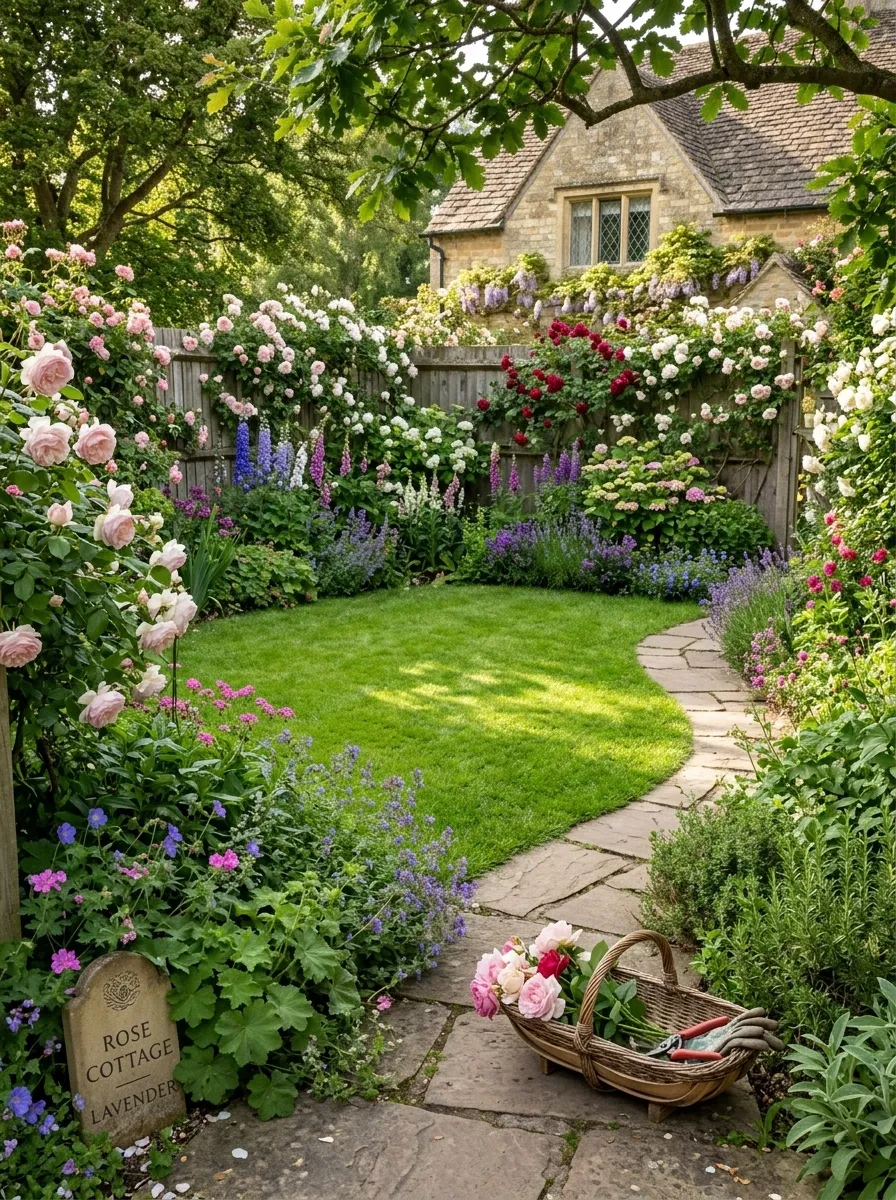
This version keeps the lawn simple and lets the planting do the heavy lifting around its edges. Rounded rose borders soften the perimeter, while a slim walking path separates the flower beds from the grass so the garden still feels usable. Taller roses sit farther back, with lower flowers and foliage toward the path to create a gradual transition instead of a wall of leaves.
The open lawn is what keeps the composition from becoming visually exhausting. A few gaps matter. Without them, even gorgeous roses start looking like they are trying to win an argument.
Pastel Hanging Pots Under a Pergola
Suspended pastel planters create a floating floral ceiling that completely transforms an overhead pergola structure. Thick rope adds a rustic texture while keeping the colorful pots securely in place. Trailing greenery spills dramatically over the edges, creating a lush, layered effect that draws the eye upward immediately.
The layout works because it adds visual interest at eye level without crowding the ground space below. Mixing soft pinks, buttery yellows, and crisp whites in the pots keeps the composition balanced and prevents the arrangement from looking too uniform. Variety is definitely the spice of container gardening.
Hang them in a neat row to establish a clean architectural rhythm across the span of the beam. Make sure to choose trailing plants that complement the bush roses rather than competing with them. It is all about teamwork in the canopy department.
Grand Rose Arch Framing a Garden Gate
A towering metal archway covered in flourishing pink roses frames a rustic metal garden gate, creating a brilliant focal point at the end of the lawn. Potted roses flank the base of the structure, ensuring the blooms continue all the way to the ground. Lush green borders and surrounding foliage give the entire scene an established, secret-garden feel.
The dramatic height of the arch makes the backyard feel instantly larger by drawing the eye toward the sky. Keeping the metal elements simple allows the endless wall of flowers to take center stage without visual clutter. Sometimes letting nature do the talking is the smartest design choice.
Pair the arch with a contrasting background, like dark fencing or dense trees, to make the pink blossoms pop. Regular pruning will keep the shape defined while encouraging even heavier flushes of flowers. Your garden gate has officially been promoted to main character status.
White Roses Against a Dark Garden Fence
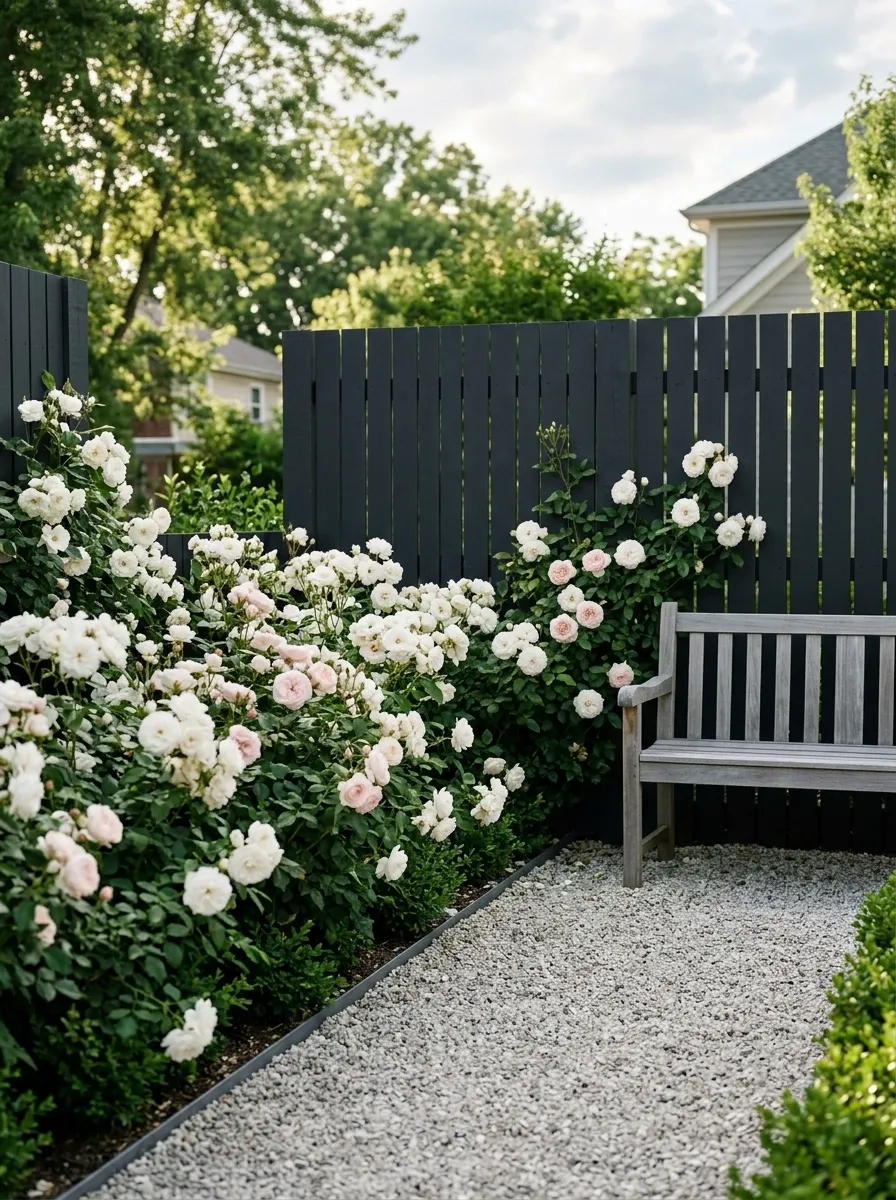
Deep charcoal fencing gives pale roses a crisp backdrop and instantly makes their shape easier to read. The planting stays mostly white, blush, and green, while a gravel surface grounds the scene without competing with the flowers. A simple bench or narrow garden seat can sit against one edge, leaving the center open and uncluttered.
The contrast is doing almost all the visual work. That means the rest of the yard can stay quiet. Choose one strong dark background and let the roses pop against it. Adding several unrelated accent colors would dilute the whole point, and nobody needs that plot twist.
Cottage Window Frame Covered in Climbers
A simple exterior window becomes an absolute masterpiece when surrounded by a dense cascade of pale pink climbing roses. A delicate bistro set sits neatly on the lawn below, creating an intimate spot for morning tea framed entirely by blooms. The soft contrast between the textured blossoms and the clean siding keeps the view interesting from every single angle.
The magic here is all about framing a view from the outside in. By letting the roses engulf the upper half of the wall, the entire structure feels grounded in the landscape. Keep the furniture delicate so it doesn’t distract from the floral masterpiece happening just above it.
Add a scattering of shrub roses in the foreground to create depth and a gradual transition from grass to wall. The result is a dreamy backdrop that makes everyday tea time feel like a royal garden party. Who wouldn’t want to wash dishes with that view?
Old-Fashioned Rose Garden With a Weathered Stone Path
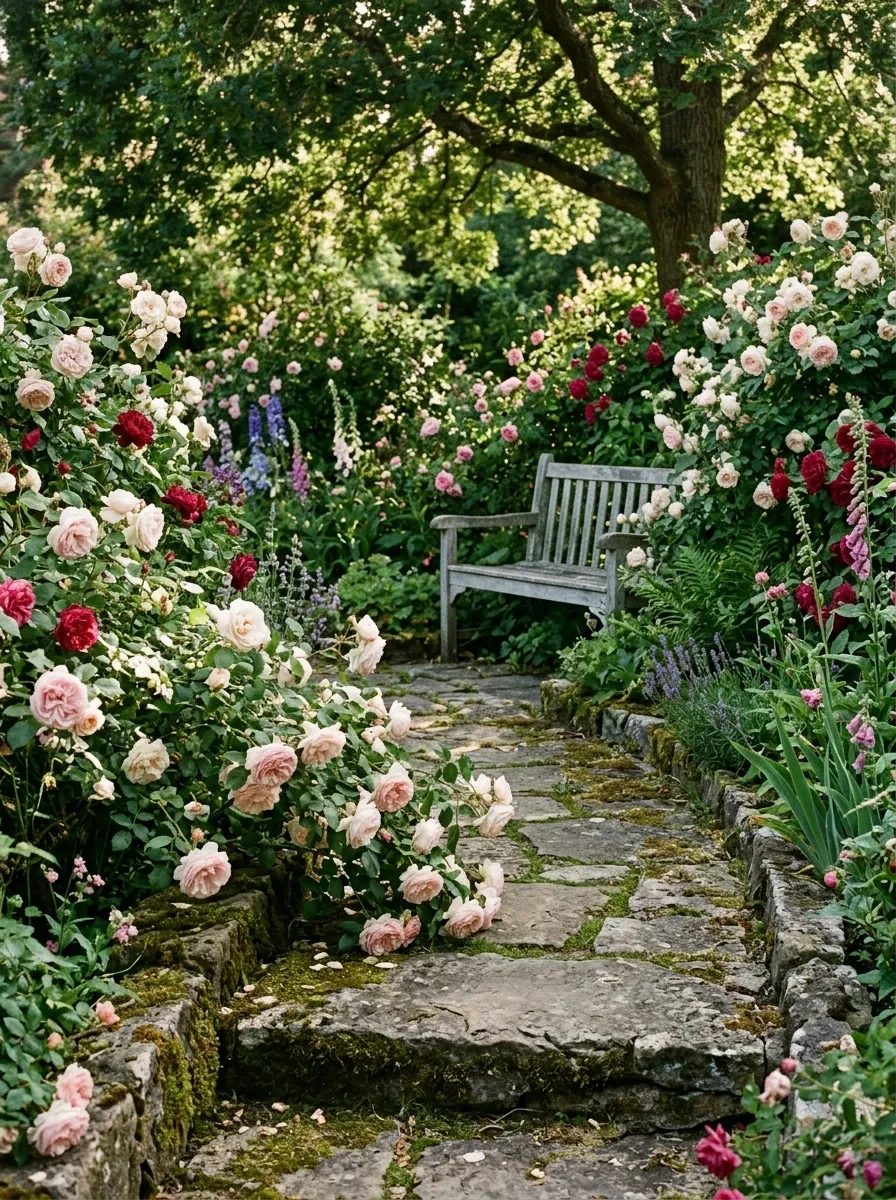
This garden leans into the romance of older landscapes with heritage-style roses, irregular stone paving, and a weathered bench tucked between mature greenery. The path shouldn’t look freshly measured. Slight changes in stone size and edge shape make it feel established, while roses spill gently toward the walkway instead of forming a rigid border.
The charm comes from the mix of softness and age. New-looking paving would fight the mood, as would overly sleek furniture. Let the stone look a little imperfect. Apparently, gardens are one of the few places where looking slightly undone is considered a design achievement.
Charming Cottage Garden With Stepping Stones
An irregular stone pathway winds its way through a lush backyard oasis, leading directly to a classic wooden door framed by stone and brick. A vintage wheelbarrow planter and a cozy bistro set add instant character to the emerald lawn. Cascading roses spill over the fencing, ensuring that every square inch feels thoroughly loved and lived-in.
The charm comes from combining varied textures like weathered wood, rustic stone, and soft petals. A pristine, perfectly measured layout would completely ruin the effortless mood here. Let the garden look wonderfully aged and slightly untamed for maximum impact.
Incorporate a mix of container plants and in-ground blooms to keep the borders looking full and dynamic. The stone path invites exploration without demanding rigid footsteps. It is living proof that a slightly undone garden is the ultimate design flex.
Modern Backyard Rose Garden With Straight Gravel Paths
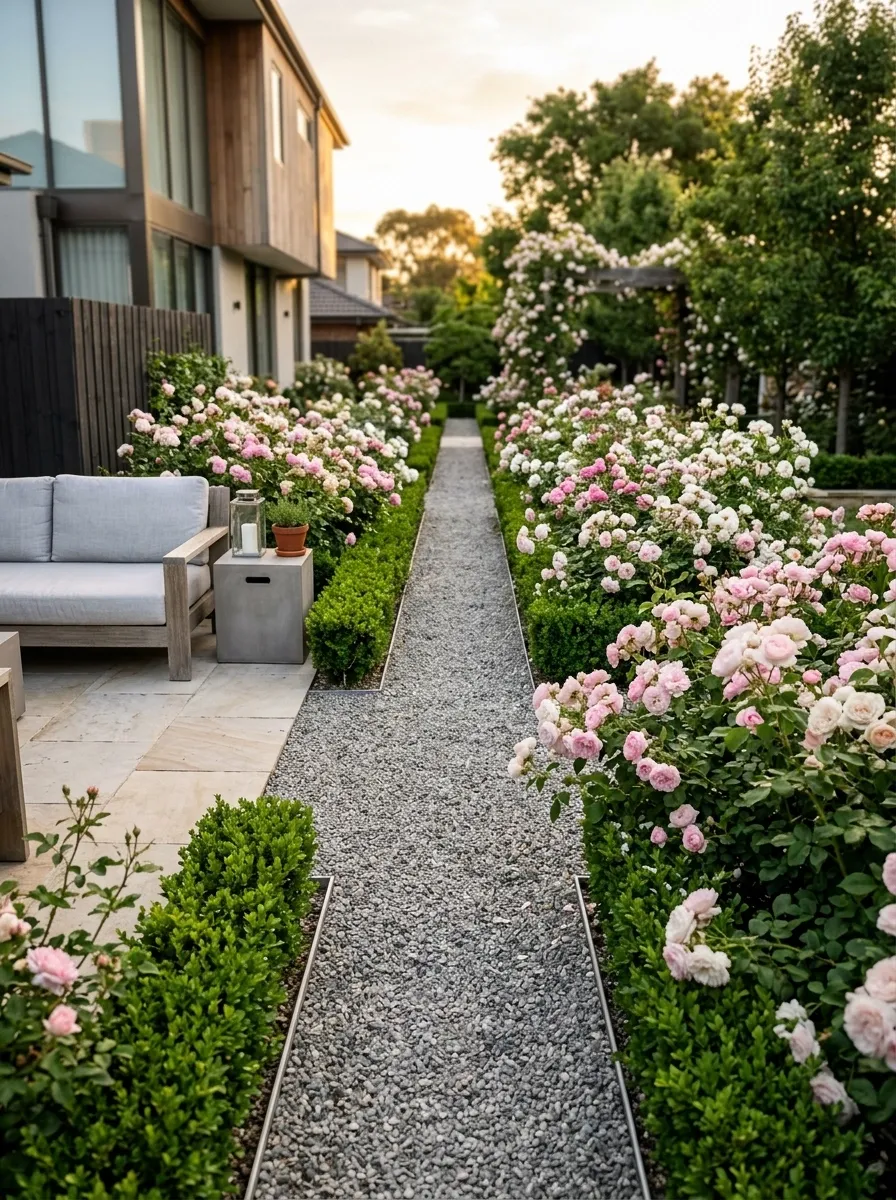
This version gives roses a much cleaner architectural setting. Long planting beds run beside straight gravel paths, with roses grouped in broad masses rather than scattered everywhere. A simple concrete bench or low outdoor sofa anchors one side, while clipped greenery and pale stone keep the palette controlled. The result feels modern without trying to make roses behave like minimalist furniture.
The straight paths matter here. They create enough order for the softer planting to look intentional. Let the flowers stay slightly loose at the edges, but keep the hardscape precise. One side can be a little wild. The path should know what’s going on.
Raised Rose Beds Around a Compact Patio
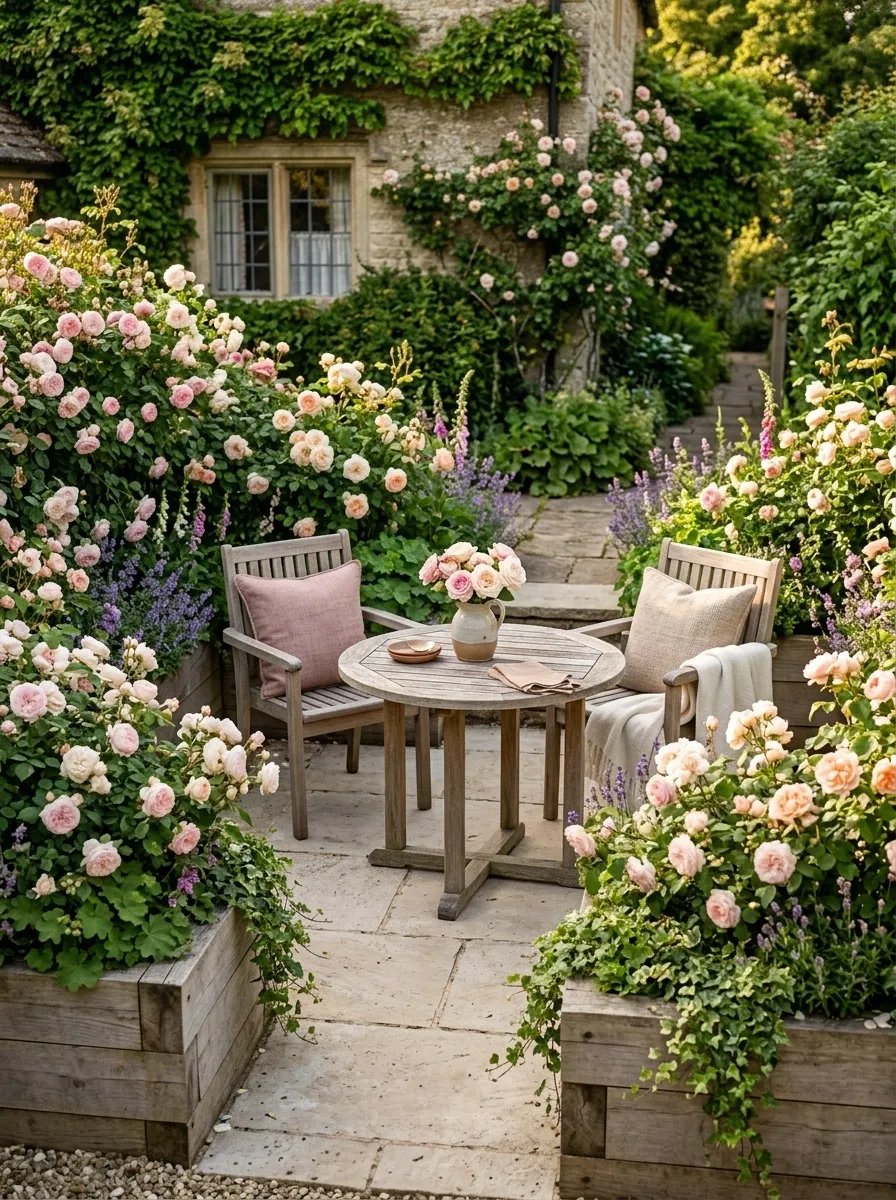
A small paved patio becomes the center of the garden when raised rose beds wrap around its edges. The beds bring the flowers closer to eye level, while a clear gap around the table and chairs keeps the seating comfortable. Pale paving, natural timber, and soft-colored roses create a relaxed outdoor room without requiring a huge lawn.
The height of the planting is what makes this layout feel special. Roses don’t disappear into the background. They surround the patio and create a garden view from the furniture itself. Just leave enough room between the raised beds and seating. Romantic is nice. Getting poked every time someone stands up is less charming.
Rose Bed
Rose Bed
Rose-Filled Courtyard Behind a Garden Wall
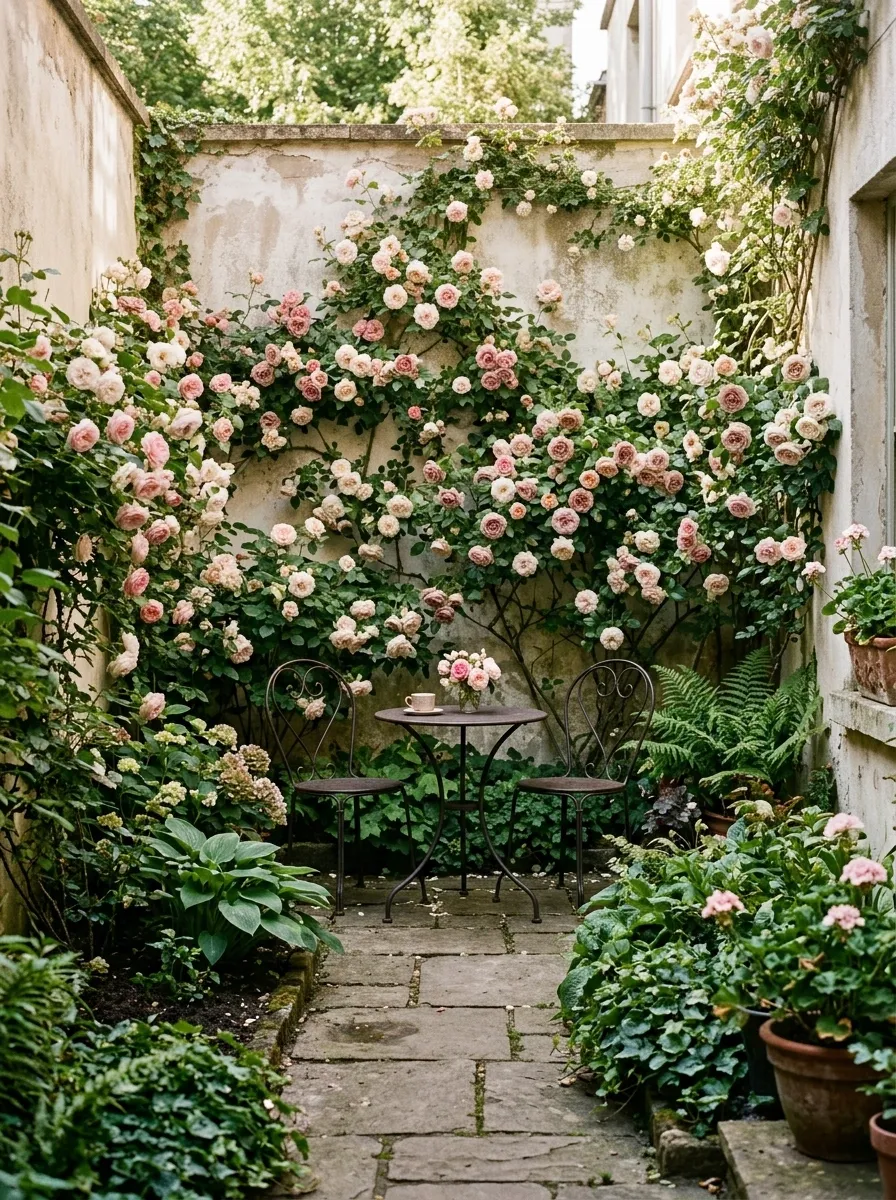
A pale garden wall gives this compact backyard its strongest architectural feature, while climbing and shrub roses soften the enclosure from floor to eye level. A small bistro table sits toward the middle, with a narrow paved path and a few large leafy plants filling the spaces between. The flowers feel abundant, but the clean wall prevents the whole courtyard from becoming visually chaotic.
Enclosed gardens benefit from restraint because every surface is visible at once. Keep the furniture simple and let one wall carry the strongest floral display. Otherwise the garden starts competing with itself, which is a surprisingly easy thing for a bunch of roses to do.
Climbing Roses Draped Along a Pergola
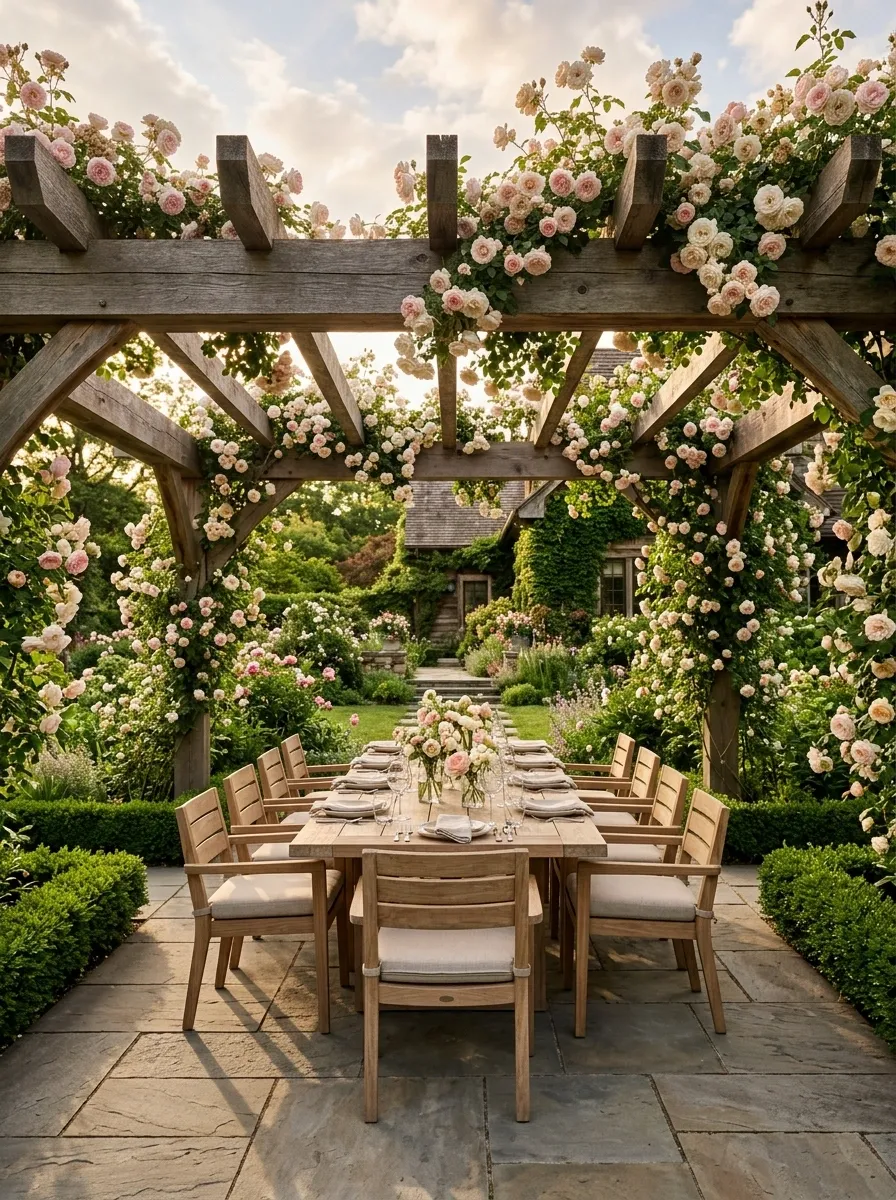
A timber pergola turns the rose garden into an outdoor dining room. Climbing roses spread across the overhead beams and spill down selected sides, while a long dining table underneath gives the structure a practical reason to exist. The ground planting stays relatively simple so the eye moves upward toward the flowering canopy.
This works especially well when the backyard needs a focal point rather than more scattered planting. The pergola establishes the architecture first, then the roses soften it. Keep the upper growth generous, but avoid covering every beam immediately. Some structure should still show through. Otherwise the pergola disappears and everyone gets confused about where the building ended and the jungle began.
Terracotta-and-Rose Mediterranean Backyard
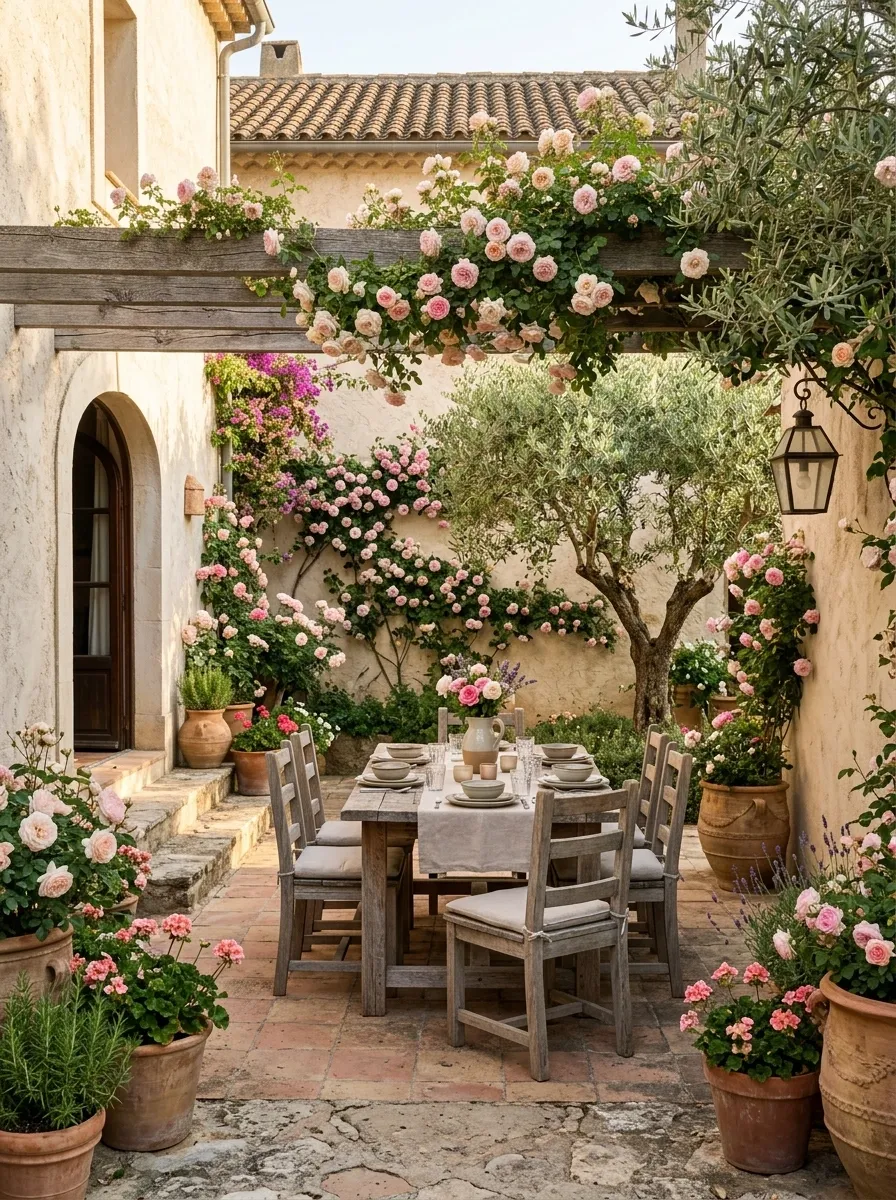
Warm terracotta paving sets the tone here, with pale stucco walls, climbing roses, weathered timber, and silvery-green foliage surrounding a compact outdoor dining area. The roses bring softness to the hard surfaces while the warm paving keeps the garden from feeling overly delicate. A few large pots can reinforce the Mediterranean character without filling every corner.
Sunlight becomes part of the composition in this style. The strongest surfaces should have enough room around them to catch natural light, while the planting creates pockets of shade. The result feels relaxed rather than overly manicured. Think holiday courtyard, not garden center aisle.
Rose Garden Wrapped Around a Fire Pit
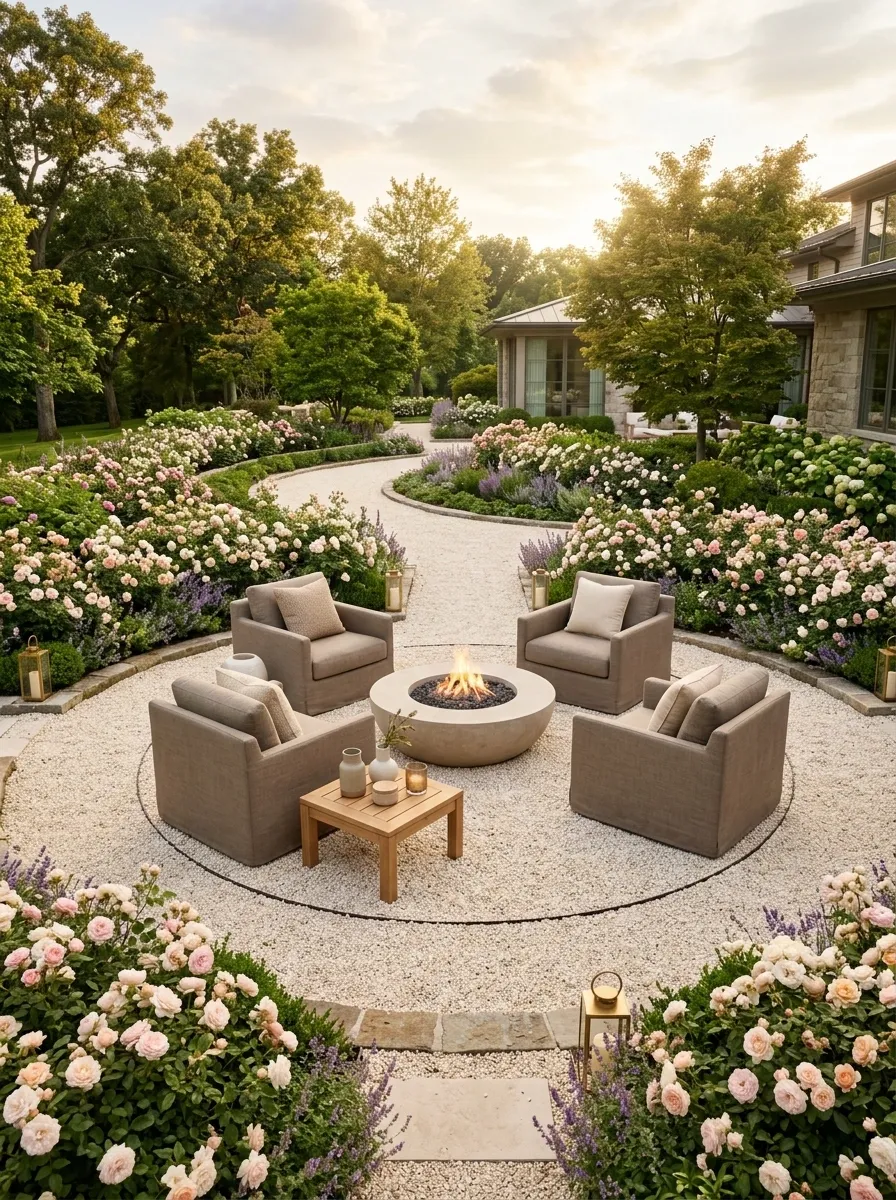
This layout keeps the social area firmly in the middle. A circular gravel zone contains a low fire pit and comfortable outdoor seating, while rose planting forms a broad perimeter around it. The flowers stay outside the main circulation ring, creating a clear boundary between the lounging area and the garden.
That separation makes the garden feel lush without making the fire-pit area feel cramped. Keep low branches and crowded containers away from the seating path, especially where people will move around after dark. Gorgeous is great. Accidentally brushing against a rose thorn while carrying a drink is an entirely different genre.
+ seating
Social zone
Clear circulation
Rose planting
Narrow Side-Yard Rose Garden With Stepping Stones
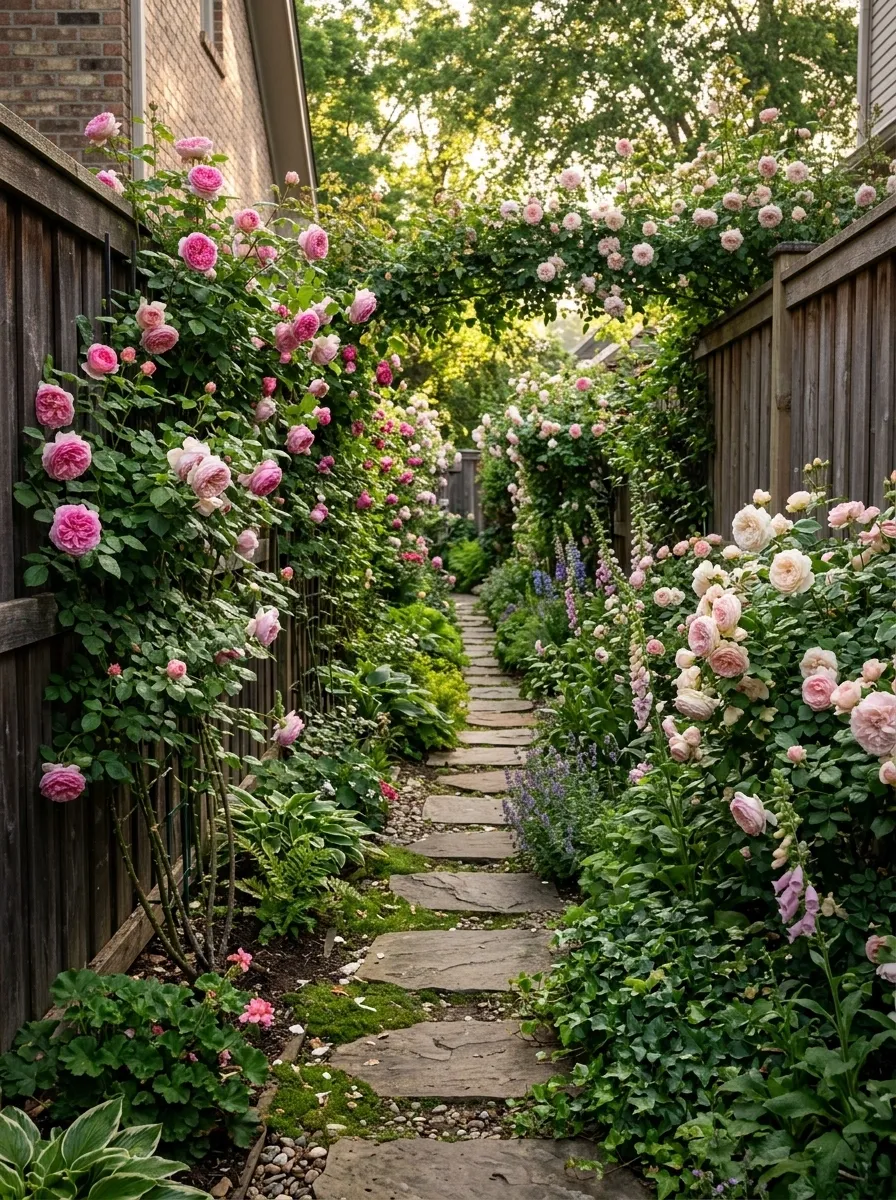
A narrow side yard doesn’t need to become a sad strip of concrete nobody visits. Here, climbing roses grow vertically along one fence while compact roses and leafy plants occupy the opposite edge. Flat stepping stones create a clear route through the middle, leaving enough visual breathing room for the planting to feel lush without blocking movement.
The biggest win is shifting some of the garden upward. Trellises and climbing roses use the fence as planting space, preserving valuable ground area. In a narrow yard, every inch has a résumé. It needs to earn its place.
roses
+ foliage
White Cottage Roses Around a Small Garden Shed
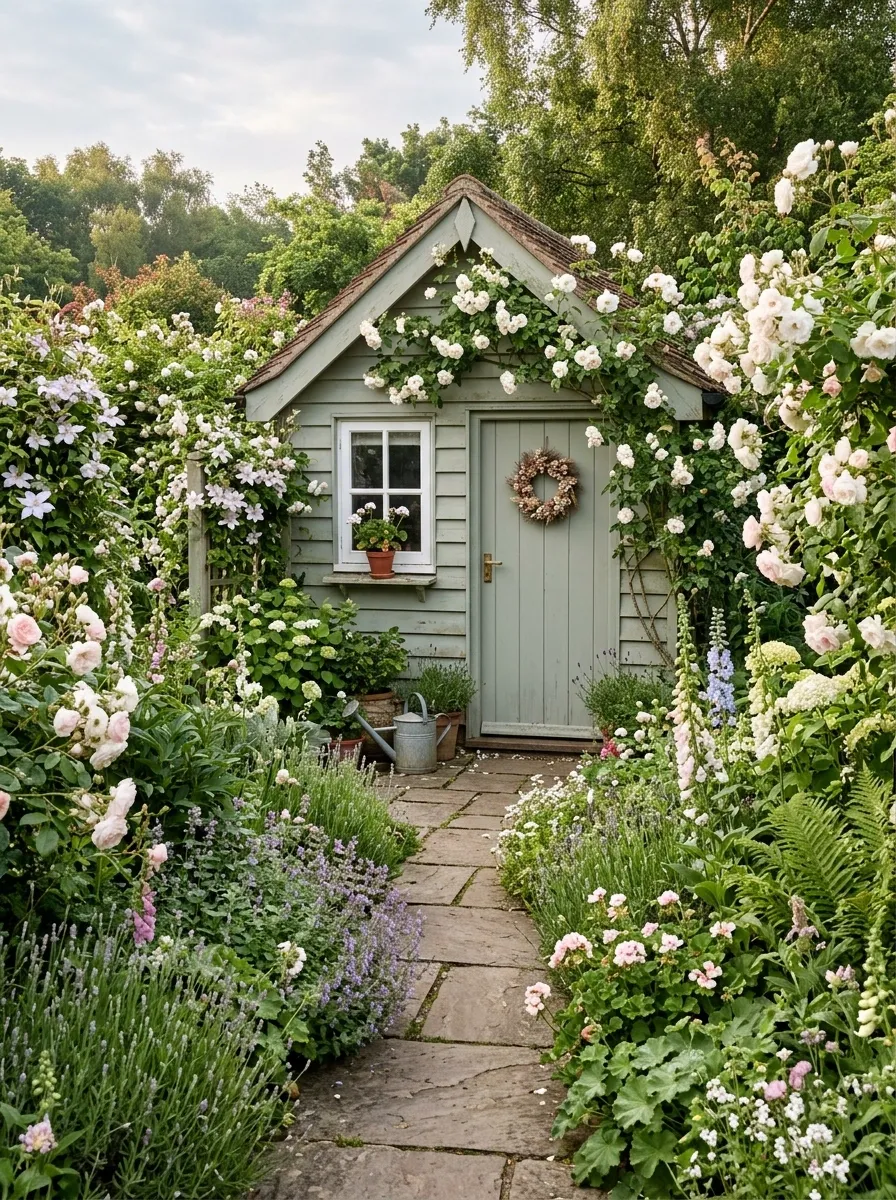
The garden shed becomes part of the composition instead of something hidden behind a hedge. A softly painted exterior sits inside layered white and blush rose planting, with a simple path leading directly toward the door. Low flowers and foliage fill the foreground, while taller roses frame the structure without completely covering it.
Leaving some of the shed visible is important. The building provides a visual anchor and stops the planting from reading as one giant flower mass. A little practical architecture makes the garden feel more believable. Besides, hiding a perfectly good shed under three tons of roses feels a bit dramatic, even by rose-garden standards.
+ low planting
framework
as visual anchor
Long Rose Border Framing an Outdoor Dining Lawn
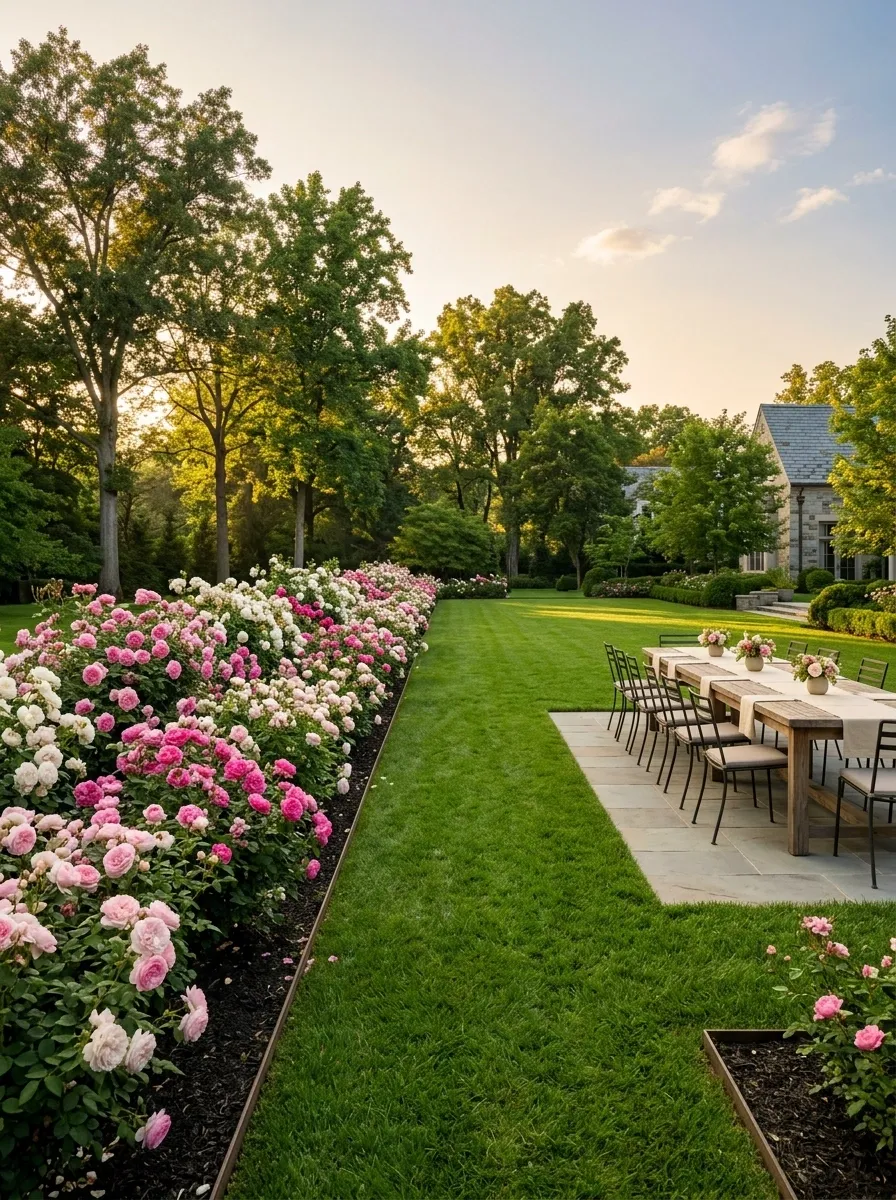
A generous rose border runs along one side of an open lawn, creating a dramatic floral edge without sacrificing the space people actually need to use. A long outdoor dining table sits toward the quieter side of the yard, while the roses provide the backdrop rather than wrapping around every piece of furniture.
That open middle is the secret. The garden feels abundant because one side is visually dense, while the lawn gives the eye somewhere to rest. It also keeps the backyard useful for more than admiring flowers. Because apparently grass still needs a purpose in 2026.
border
zone
Vertical Rose Garden for a Tiny Backyard
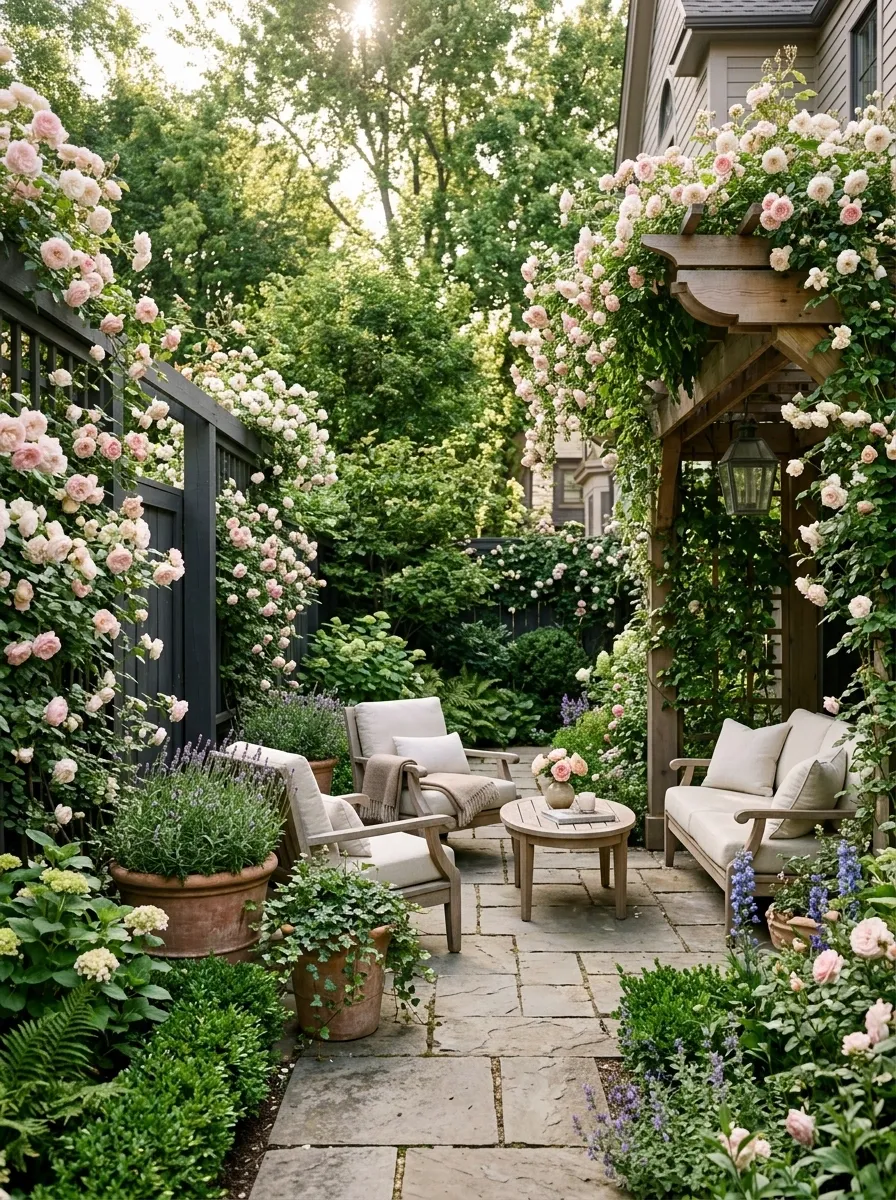
A small backyard gets more garden without giving up most of its floor area by pushing the roses upward. Climbing varieties grow along trellises and fencing, while a compact pergola adds another vertical planting surface. At ground level, just a few containers and low plants frame a small seating area, keeping the center open.
The whole composition works because the greenery occupies the walls instead of trying to fill every square foot of paving. Vertical space is the star here. The ground gets to remain usable, which is generally considered a nice feature when people are expected to walk on it.
Deep Red Roses Around a Dark Wood Patio
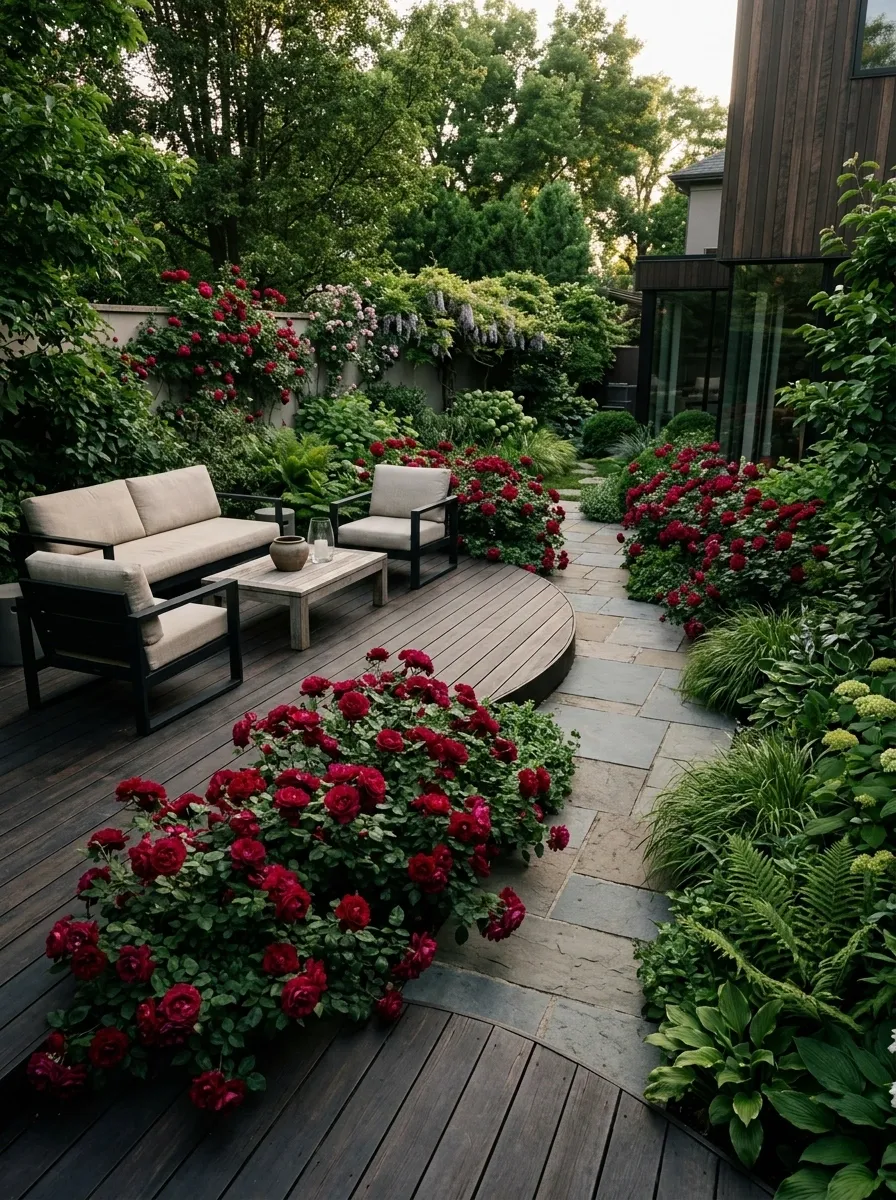
Deep red roses create the drama in this backyard, but the surrounding materials keep the scene sophisticated rather than visually heavy. A rich timber patio anchors the composition, muted stone creates a transition between the deck and garden, and dense green foliage fills the gaps around the saturated flowers. The seating stays simple with natural fabrics and uncomplicated silhouettes.
The secret is limiting how many other elements compete with the roses. Red flowers already arrive with opinions. Let them dominate one visual layer while the wood, stone, and greenery provide the quieter structure underneath. Otherwise the garden starts looking like every color in the garden center got invited to the same dinner.
Romantic Rose Garden With a Small Garden Bench Under Trees
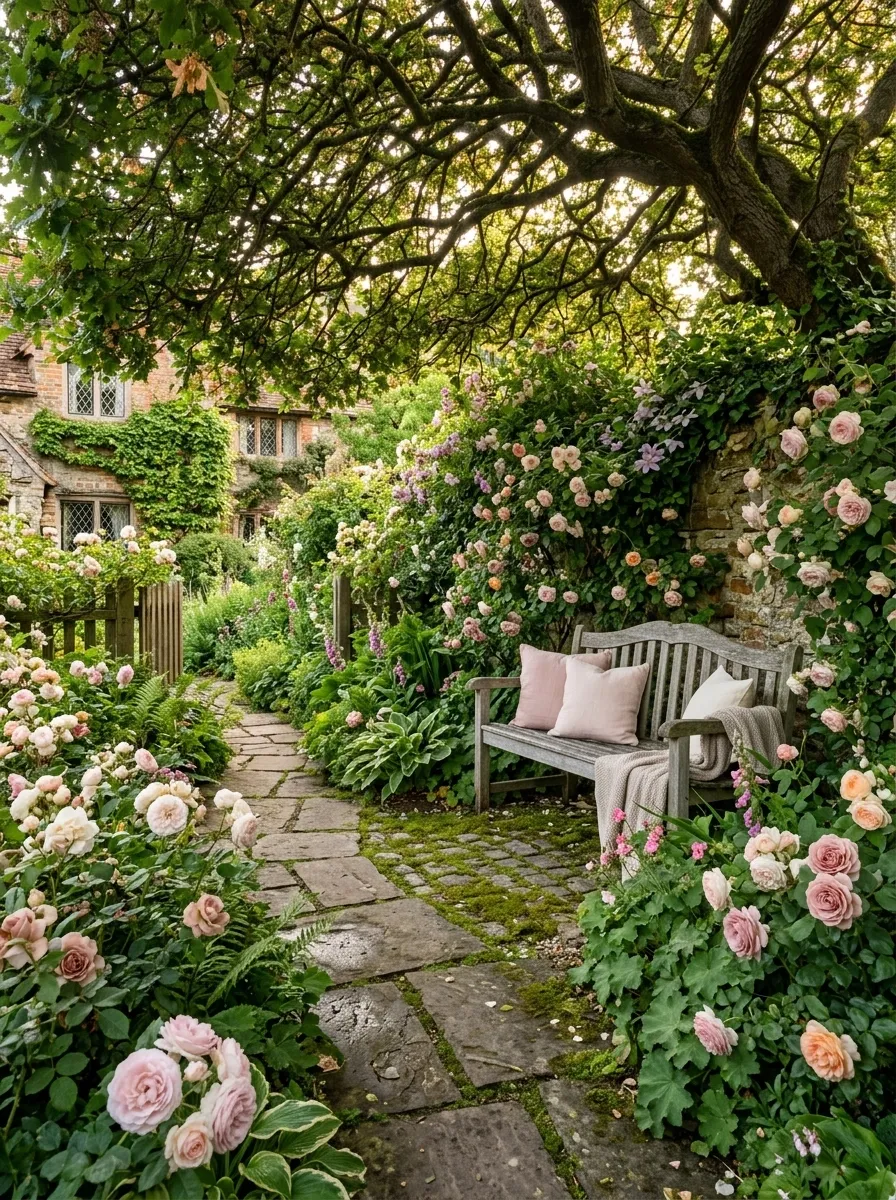
A mature tree canopy gives this backyard its ceiling, while low roses and layered greenery fill the space beneath. A winding stone path curves toward a simple weathered bench positioned under the trees, creating a destination that feels tucked away from the rest of the yard. The roses are concentrated along the route and around the bench rather than scattered across the entire lawn.
The hidden seating area is what makes the design memorable. The path controls the reveal, and the trees provide enough visual weight above the flowers to keep the garden from feeling overly sweet. It has that quiet, slightly secret quality every garden seems to want. Finally, a backyard with somewhere to disappear for ten minutes.
Contemporary Rose Garden With Concrete Edging and Lawn
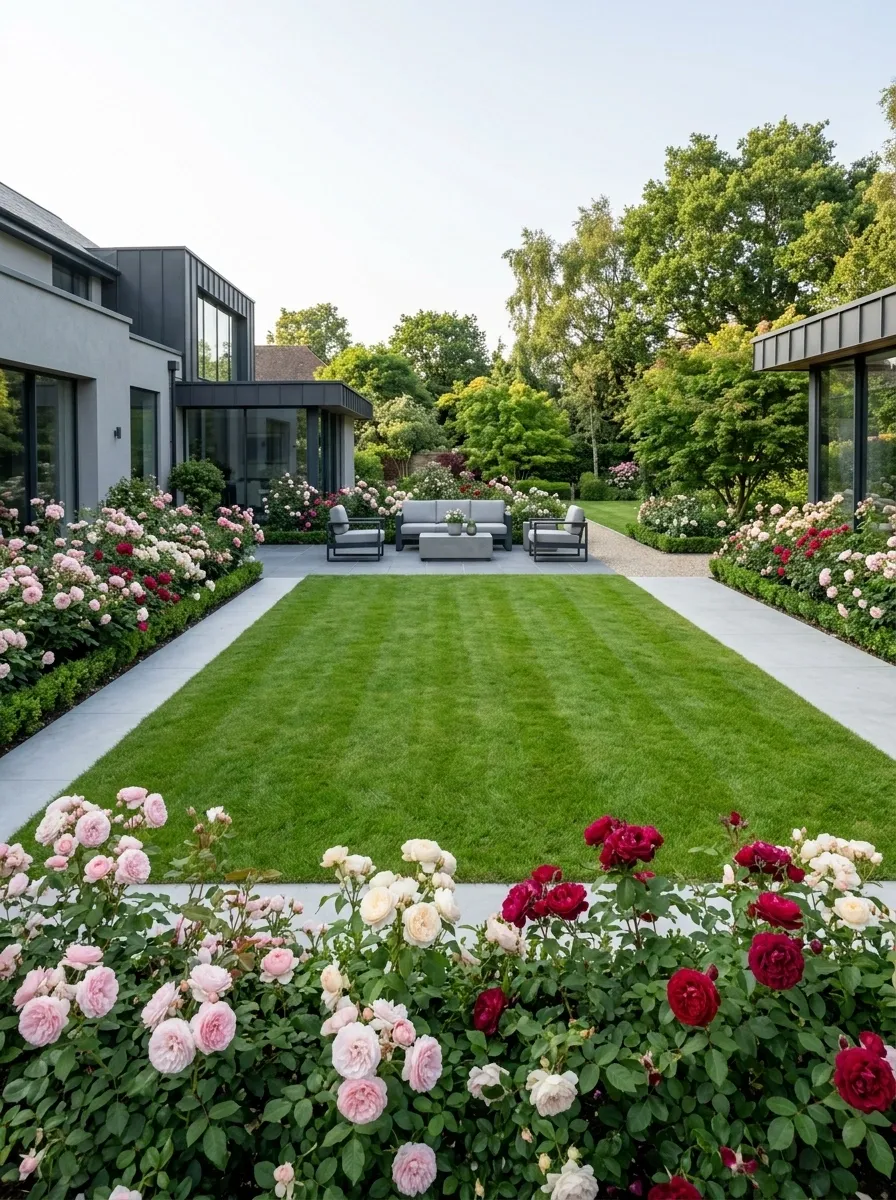
This design puts traditional roses inside a much cleaner framework. Narrow rose beds sit behind crisp concrete edging, with a broad lawn occupying most of the center and a simple paved terrace at one end. Roses can still be loose and full, but the hard boundaries give them a contemporary setting that feels deliberate.
The contrast between soft flowers and precise edges carries the entire concept. Keep the lawn smooth, the paths uncluttered, and the furniture restrained. There’s no need for five kinds of edging, three decorative urns, and a tiny fountain auditioning for attention. The roses already have enough personality.
bed
bed
Rose-Covered Fence With a Long Built-In Bench
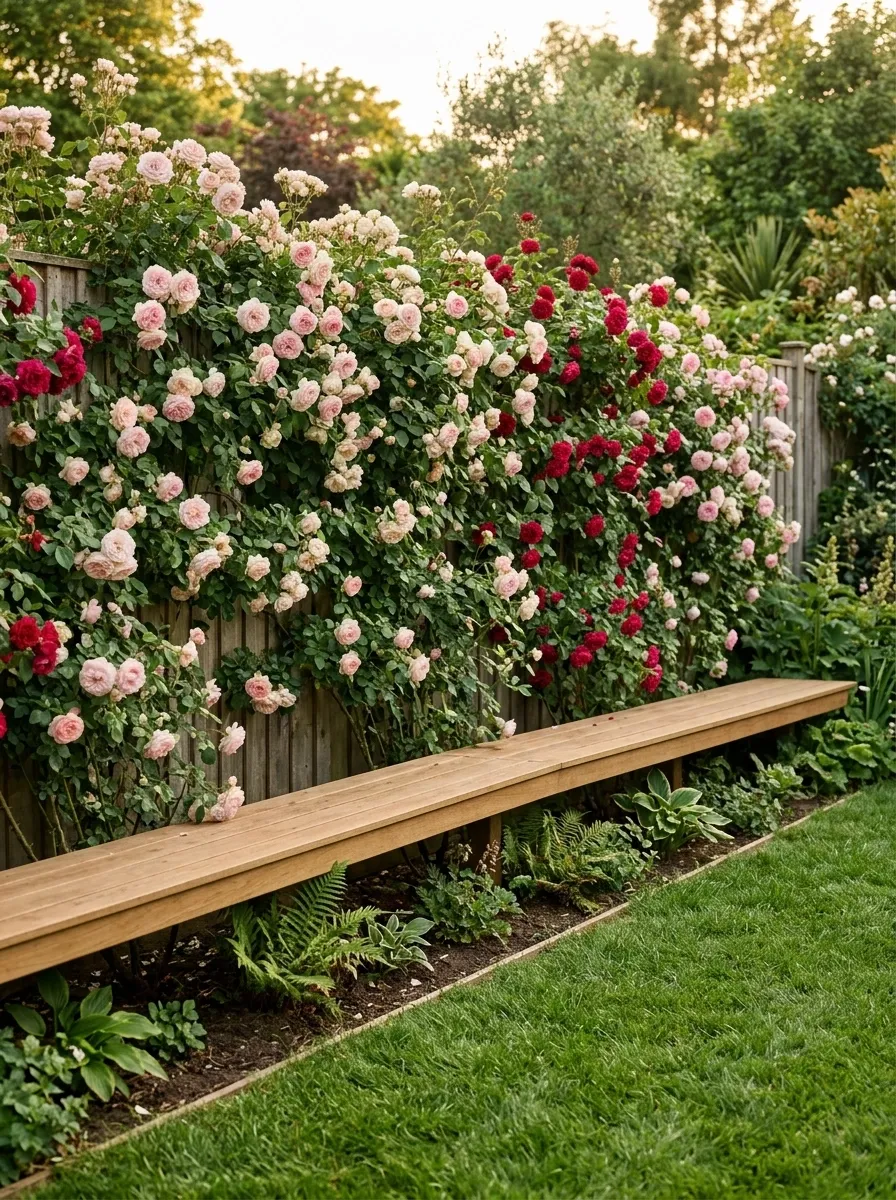
Here, the backyard boundary becomes the main garden feature. A long planting strip runs beneath a fence covered with climbing roses, while a continuous timber bench sits in front of it. The bench gives the otherwise vertical planting a functional layer and creates one long place to sit, read, chat, or simply stare at the flowers like they personally solved every problem.
Keeping the bench simple is important because the fence already has a strong visual presence. Let the roses climb at different heights instead of creating a perfectly even floral wall. A little irregularity keeps the scene believable and prevents the whole thing from looking digitally copy-pasted.
Peach and Apricot Rose Garden Around a Stone Patio
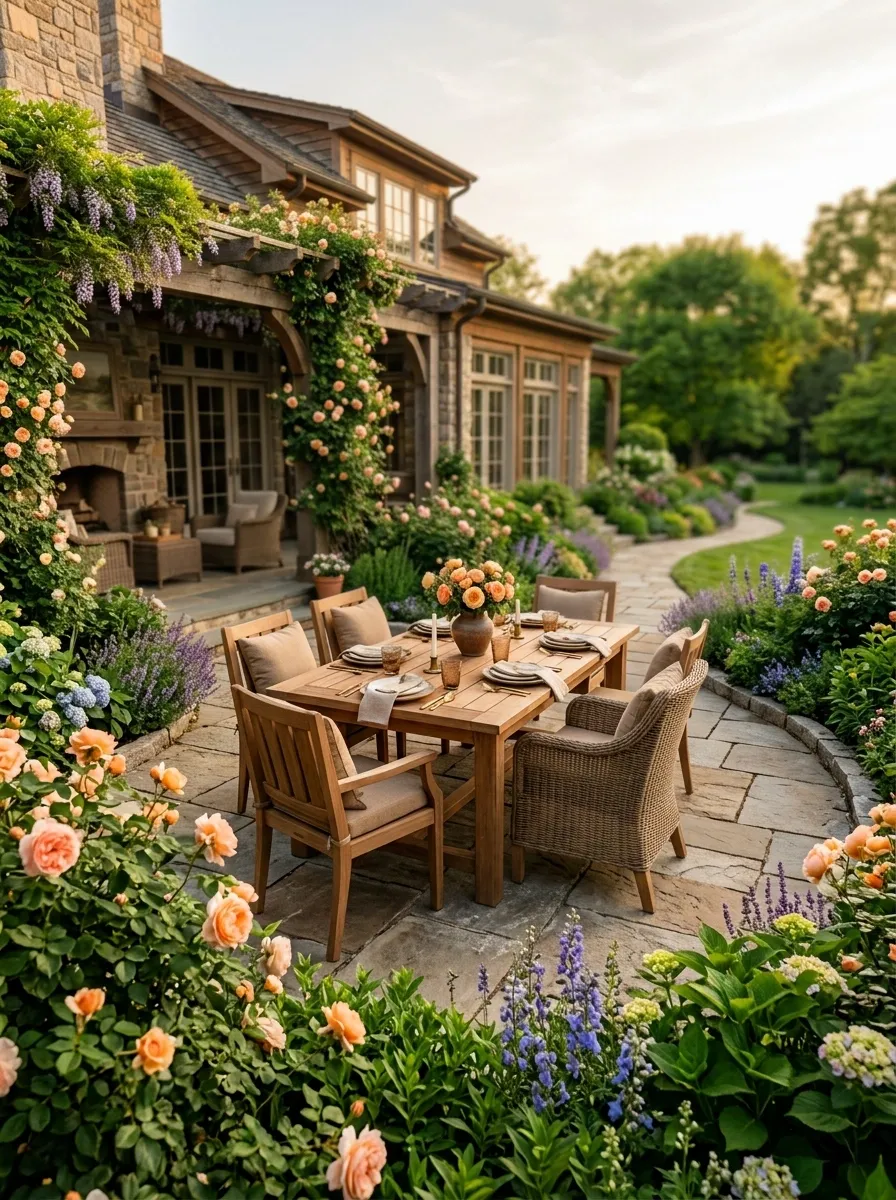
Warm peach and apricot roses soften the edges of a natural stone patio in this relaxed backyard composition. The patio holds a simple outdoor dining set, while roses and leafy plants gather around its perimeter in loose groups. Timber accents and warm neutral fabrics keep the seating area connected to the flower colors without trying to match them exactly.
This palette feels especially cohesive because the materials sit in the same warm family. The stone provides texture, the timber adds depth, and the roses bring the strongest color. Keep the surrounding foliage fairly quiet so the peach tones stay visible. Otherwise the whole backyard starts arguing over which shade of beige gets to be the star.
roses
stone
timber
fabric
Small Urban Backyard With Roses in Large Containers
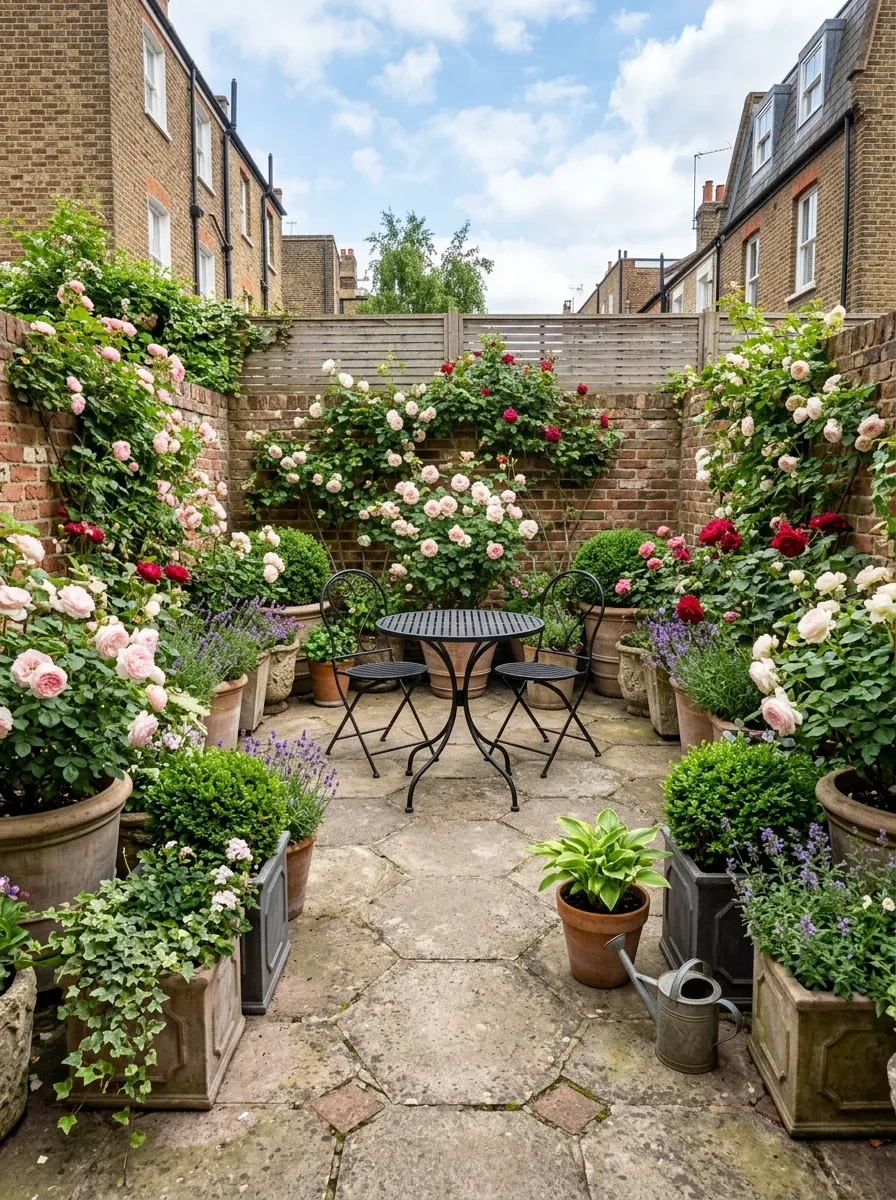
Instead of digging up an entire paved backyard, this compact design uses oversized containers to build a rose garden along the perimeter. Large planters hold roses and supporting greenery, while a small bistro table sits in the open center. The containers vary slightly in shape but stay within one material family, giving the garden enough character without creating visual clutter.
This approach works because the planting establishes the edges while preserving the middle for actual life. It also gives the backyard a finished look without pretending there’s a giant landscape hiding under six square meters of paving. Small space, big floral ambition.
for seating
Layered Rose Garden Around a Gentle Garden Path
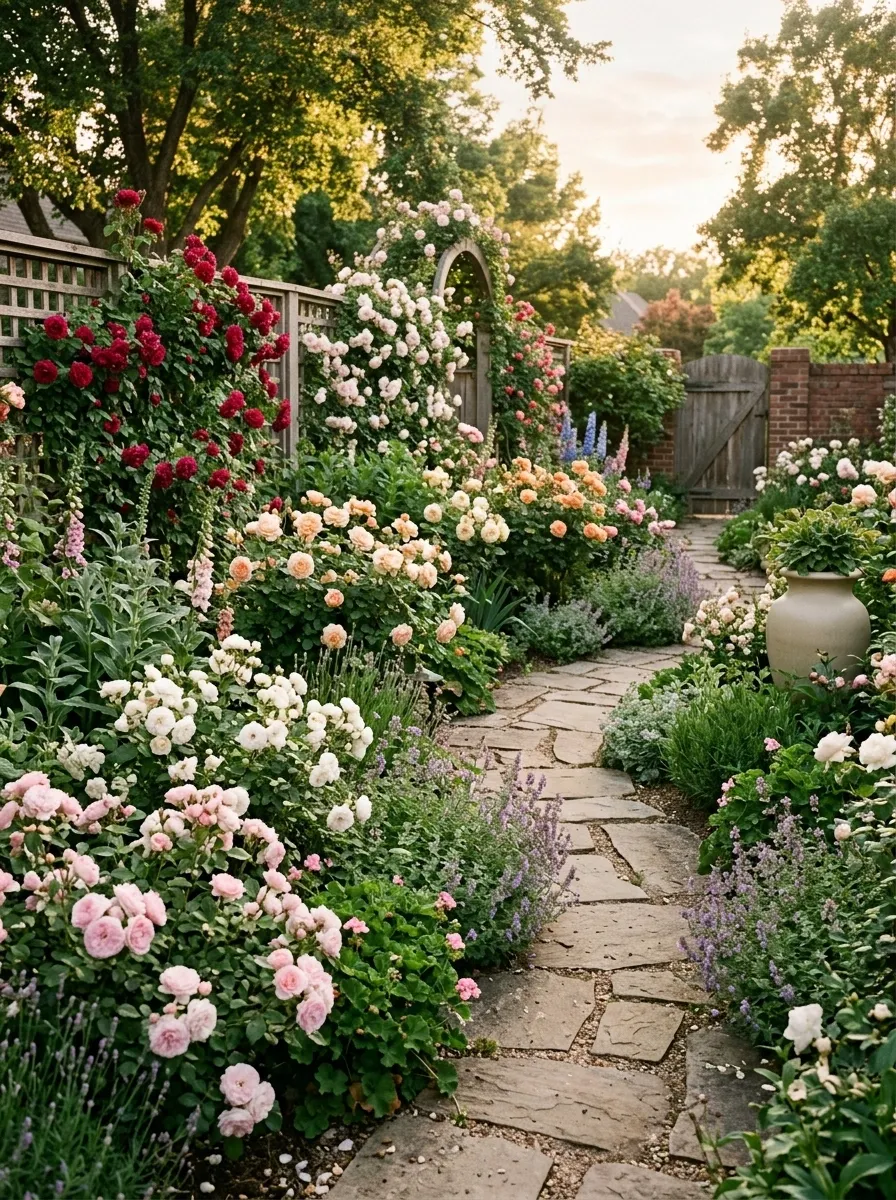
This backyard uses planting height to create depth instead of relying on a huge number of flowers. Low roses sit closest to a gently curving path, medium-height shrubs fill the middle, and taller roses or climbers rise along the back boundary. From the entrance, the planting appears to unfold in stages rather than presenting the entire garden at once.
That layered view keeps a smaller yard visually interesting because there is always another planting level behind the first. The path should remain readable from end to end, though. A garden route that disappears completely under foliage stops feeling romantic and starts feeling like a scavenger hunt nobody agreed to join.
Black-and-White Rose Garden With Structured Boxwood
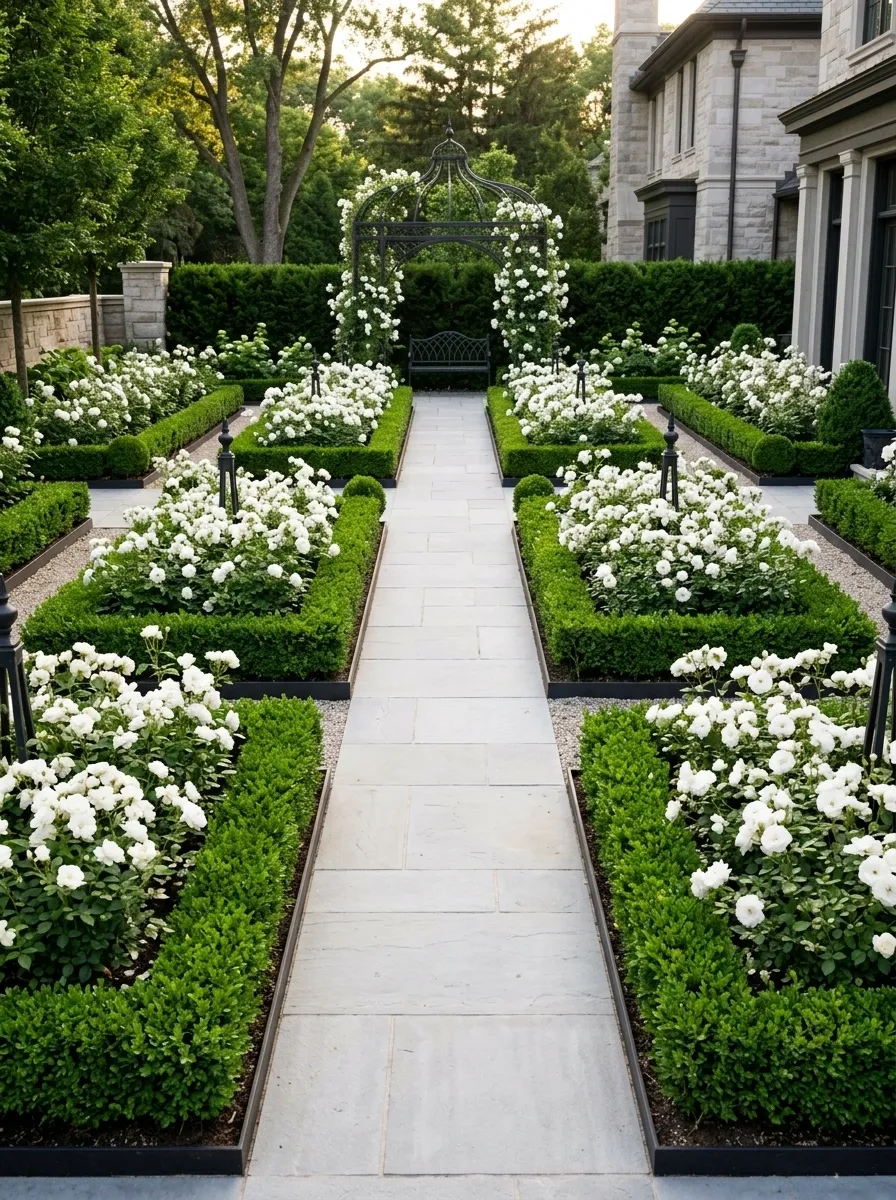
This formal garden pairs white roses with clipped boxwood, dark edging, and pale stone paving for a strong black-and-white visual rhythm. The roses sit inside clearly defined beds, while the greenery provides geometric structure around the softer blooms. A straight path runs through the center, giving the composition a strong axis from the entrance to the far end of the yard.
The contrast works because the palette is restrained. White flowers become the brightest layer, dark edging provides definition, and green foliage fills the middle. Keep the decorative elements scarce. Once the geometry is this good, adding random accessories is basically putting a sticker on a finished painting.
focal layer
structure
Rose Garden With a Small Pergola and Evening Lighting
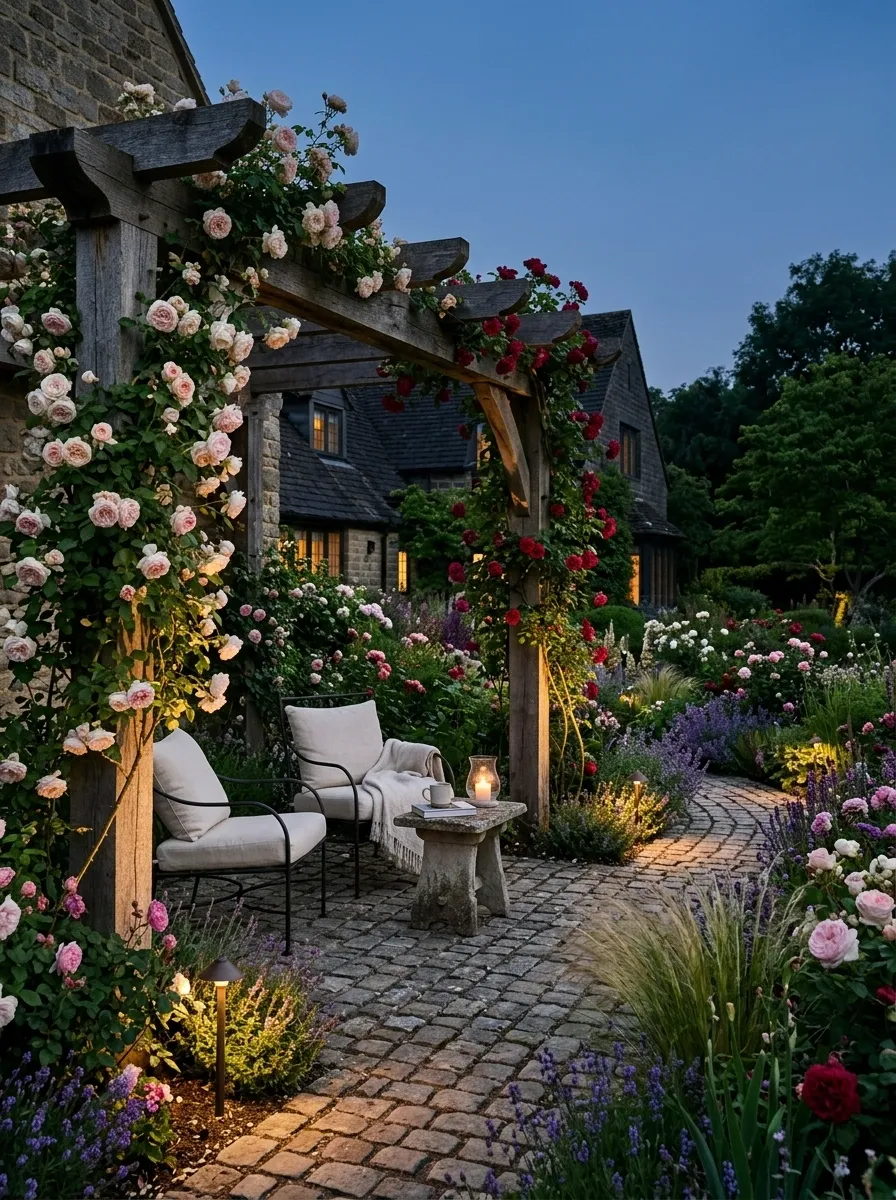
A compact pergola anchors one side of this backyard, with climbing roses spreading across the upper structure and a small seating area beneath it. Low garden lights trace the path and softly illuminate the planting after sunset, while the rest of the yard stays comparatively dark. During daylight, the roses and timber provide the main focus. At night, the lighting creates a second version of the same garden.
The best part is the restraint. Light the path, pergola, and a few important planting areas rather than flooding everything. A rose garden doesn’t need stadium lighting. Nobody is hosting the World Cup back there.
Choose the Rose Garden Before Choosing the Roses
A memorable backyard doesn’t happen because every flower bed is packed to the edges. It happens when the entire yard has a clear visual direction. Romantic paths, formal geometry, dark fencing, warm stone, compact courtyards, vertical planting, outdoor dining, hidden seating, and evening lighting all create very different experiences, even when roses remain the common thread.
Start with the scene that feels most like the finished backyard that belongs there. Then work backward through the planting, hardscape, furniture, boundaries, and materials.
The best garden usually isn’t the one with the most going on. It’s the one where everything seems to know why it is there.
Save your favorite designs now so the reference board is ready when the backyard project gets real.