
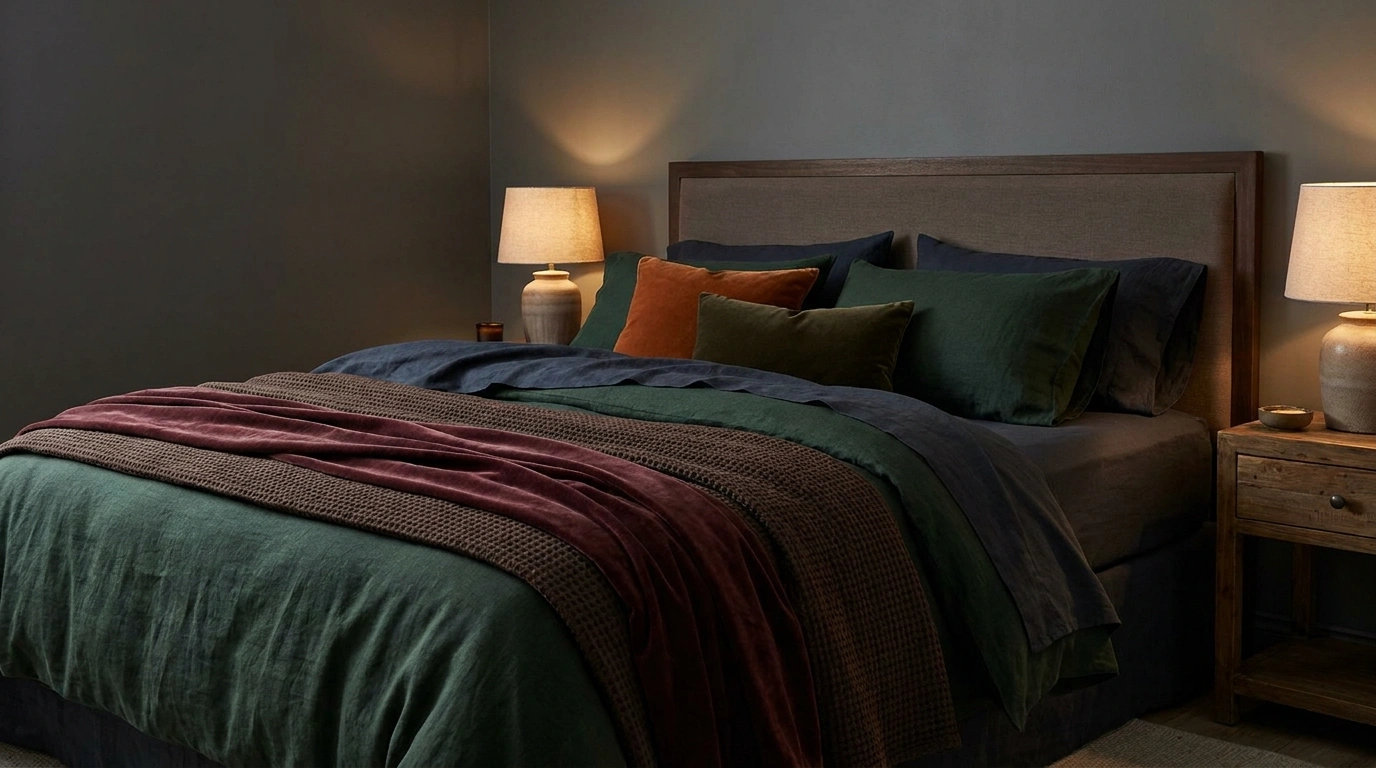
Dark bedding has a funny way of looking luxurious in a bedroom photo and slightly questionable in real life. The charcoal duvet arrives, the room suddenly feels smaller, and the gorgeous chocolate-brown sheets look suspiciously like a giant tortilla.
Somewhere between the Pinterest inspiration and the actual bed, the plot has been lost.
The fix isn’t necessarily buying lighter bedding. It’s understanding how the bed relates to everything around it. Deep wine looks different beside walnut than it does beside black furniture.
Charcoal linen needs a different treatment from velvet plum, and even the darkest duvet can feel inviting when the surrounding textures and lighting give it some depth.
A tiny bedroom intervention
Dark bedding isn’t the problem. The lack of contrast is.
Texture
Velvet, linen, cotton and chunky weaves stop dark colors from looking like one enormous flat sheet.
Contrast
A lighter pillowcase, warm wood or muted wall color gives the eye somewhere to rest.
Lighting
Warm, well-placed lamps reveal fabric and furniture. One sad overhead bulb does neither.
The bedroom rule: If every surface is equally dark, smooth and visually heavy, the room loses depth. Give the bed contrast, give the fabrics texture, and let at least one finish break up the darkness.
Moody Bedding Set Ideas
Botanical Velvet Layers With Dark Green Walls
Rich forest green walls set an intensely dramatic backdrop for a bed layered in patterned botanical quilts and sumptuous jewel-toned velvets. Pair a floral duvet with deep plum throws and contrasting bolster pillows to create an inviting, English country house aesthetic without feeling dated. Dark wood furniture and antique gold accents anchor the space with a sense of timeless history.
The secret here is mixing patterns with heavy textures so the overall composition feels collected rather than chaotic. Keep the window treatments simple and let the climbing natural foliage frame the view with effortless organic charm. A traditional rug underneath completes the moody narrative.
This look proves that maximalism can feel deeply comforting when anchored by a cohesive, nature-inspired color palette. It is maximalist storytelling at its finest, offering a cozy retreat that demands to be admired.
Oxblood Velvet Bedding With Warm Walnut Furniture
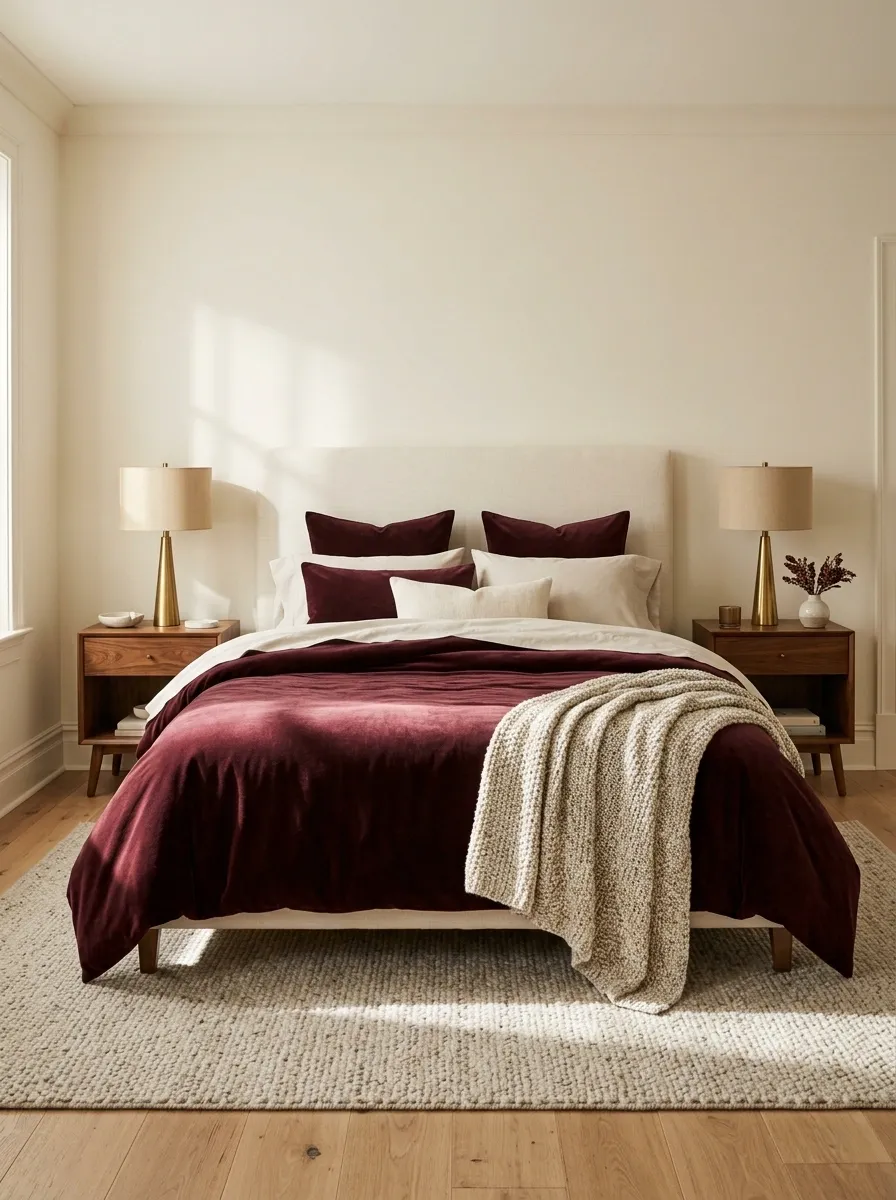
- A rich, romantic bedroom with deep wine tones and warm wood.
Oxblood bedding brings serious character to a bedroom, especially when velvet catches the light against matte cotton sheets. Pair a deep wine duvet with a softly upholstered headboard, walnut nightstands, and warm brass bedside lamps. Creamy walls keep the palette from feeling too dense, while a textured neutral throw breaks up the solid color across the foot of the bed.
The walnut matters here. Without the warmth of natural wood, the velvet could make the room feel overly formal. Keep decorative pillows restrained and let the fabric do the talking. Nobody needs twelve cushions just to prove the bed has a personality.
The material balance
Wine velvet needs something grounded.
Chocolate Velvet Bedding With Burlwood Nightstands
Monochromatic chocolate tones envelop this bedroom in an embrace of pure tactile luxury, led by rich velvet bedding and an upholstered camel headboard. Layer deep brown linens with a textured bolster pillow and a plush faux-fur throw for subtle dimension. Burlwood nightstands introduce a striking, organic grain pattern that warms up the deeper chocolate hues.
Warm brass task lamps cast a soft glow against the dark paneled walls, highlighting the subtle variations in fabric texture across the bed. Keep accessories intentionally minimal to let the rich materials do all the heavy lifting. A large botanical art piece overhead ties the earthy color scheme together effortlessly.
The result is a sophisticated, cocoon-like atmosphere that redefines neutral styling with absolute confidence. It is a masterclass in tonal dressing, proving brown is anything but boring.
Charcoal Linen Bedding in a Quiet Minimalist Bedroom
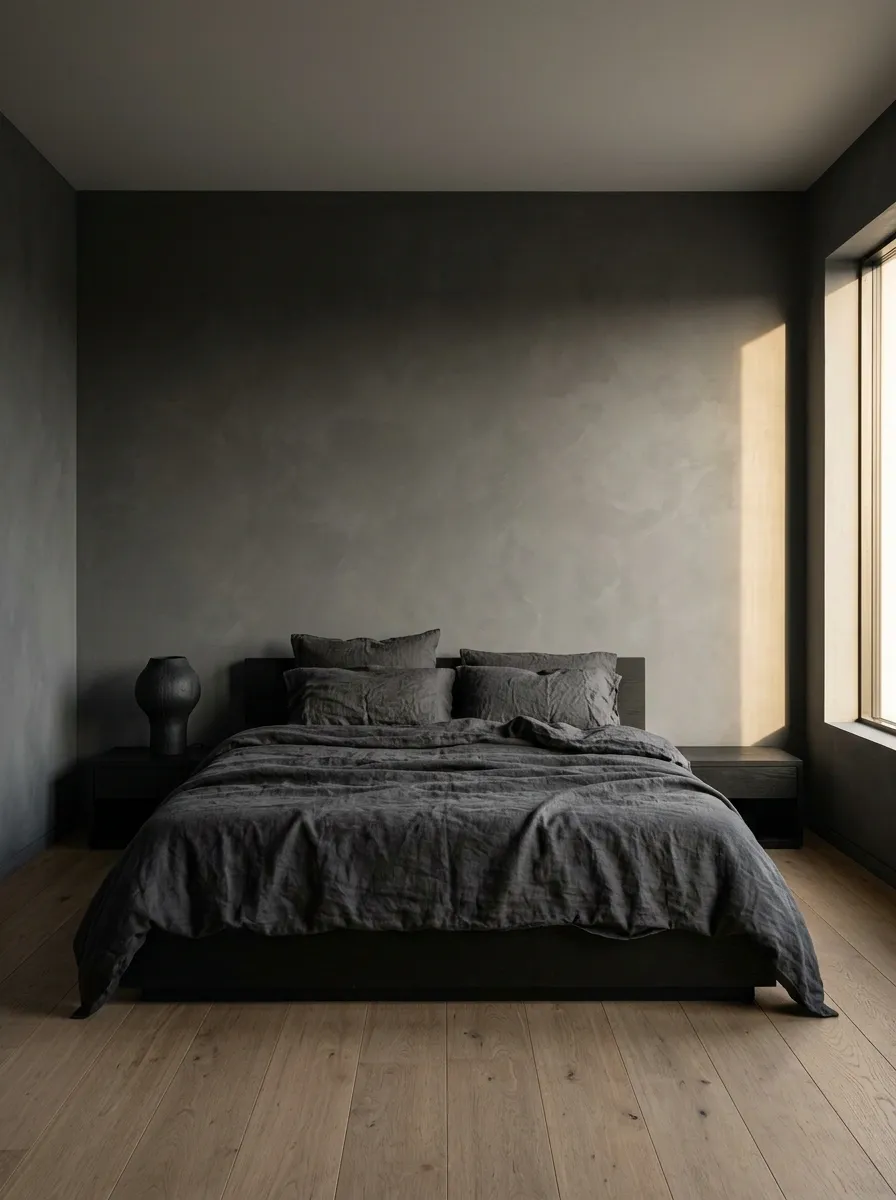
- Understated, architectural, and deliberately uncluttered.
Charcoal linen gives a minimalist bedroom more character than a perfectly smooth black duvet ever could. The natural wrinkles soften the bed’s shape, while smoky grey walls and a low dark-wood platform create a quiet, almost architectural setting. Keep the headboard simple, the bedside furniture low, and the floor around the bed relatively open.
A single sculptural lamp adds shape without introducing another competing finish. This composition works especially well in rooms with generous daylight, because shifting light reveals the folds and changes in the linen. In a darker room, lighter pillowcases or a mid-grey wall can keep the whole thing from becoming one large shadow.
The appeal is restraint, not an empty room desperately waiting for its shopping delivery.
A study in near-blacks
Same color family, different surfaces. That’s the difference between quiet minimalism and a room where the bed has simply disappeared.
Soft Blue Paisley Bedding With Cottage Panelling
Delicate blue paisley bedding brings an airy, serene elegance to a bedroom anchored by cream-toned wood wall panelling and subtle floral wallpaper. Layer crisp patterned sheets with a textured cable-knit throw to add cozy tactile appeal across the foot of the bed. A charming white nightstand with woven basket storage keeps the cottage-inspired aesthetic grounded and functional.
Fresh white hydrangeas in a rustic pitcher reinforce the gentle, welcoming atmosphere while tying the natural elements together. Keep the surrounding decor light and airy to let the patterned textiles remain the focal point of the space. Fluffy slippers waiting nearby add an instantly lived-in, hospitable touch.
This combination works wonders for brightening up a room while maintaining a thoroughly intentional, layered look. It effortlessly balances classic country charm with modern comfort.
Deep Berry Paisley With Mustard Velvet Accents
Deep berry paisley bedding creates an unabashedly rich focal point, especially when paired with a vibrant mustard yellow velvet pillow that instantly pops against the dark patterns. Set this dynamic textile mix against a simple wooden headboard and a clean oak nightstand to keep the boldness grounded. A sleek tapered lamp and a vase of fresh greenery complete the bedside vignette.
A half-open book and an inviting mug set an intimate, lived-in scene that makes the bed look genuinely irresistible. Keep surrounding walls neutral to allow the rich jewel tones to command the space with effortless style. This look proves that mixing unexpected colors brings out the best in each individual piece.
The final effect is cozy, colorful, and utterly sophisticated without a single fussy detail in sight. It is proof that thoughtful color pairing can transform a simple guest room into a luxury suite.
Midnight Navy Bedding With Camel Leather Accents
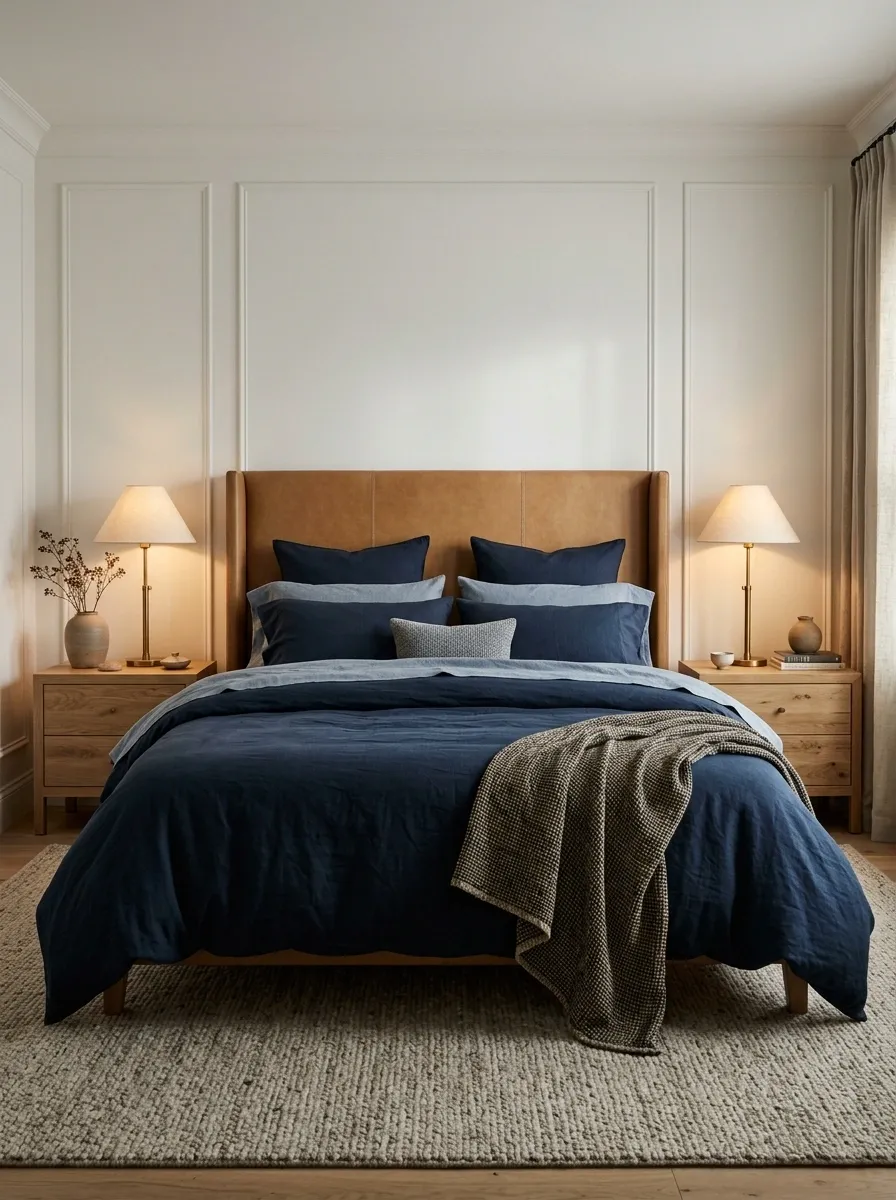
- Cool blue meets warm caramel in a tailored contemporary bedroom.
Midnight navy bedding can feel sharp and sophisticated without making the bedroom look cold. A camel leather headboard introduces a warm counterpoint, while oak nightstands and off-white walls keep the composition grounded. Layer navy cotton with a slightly lighter blue-grey sheet, and add a restrained textured throw instead of piling on decorative cushions.
The contrast works because the leather and wood have different visual temperatures from the bedding. That separation gives each material a clear role. Keep the lighting warm and the surrounding accessories simple, especially if the room has dark floors. The result feels tailored and substantial, with enough softness to remain a bedroom rather than an impeccably dressed executive office.
The warm-cool equation
Navy carries the weight. Camel warms it up.
Navy
Large bedding surfaces and depth.
Camel
Headboard and warm material contrast.
The bridge between them is natural oak, not another strong accent color.
Styling note: Leave enough off-white wall space around the bed. Navy already knows how to get attention.
Deep Plum Velvet Bedding With Soft Romantic Layers
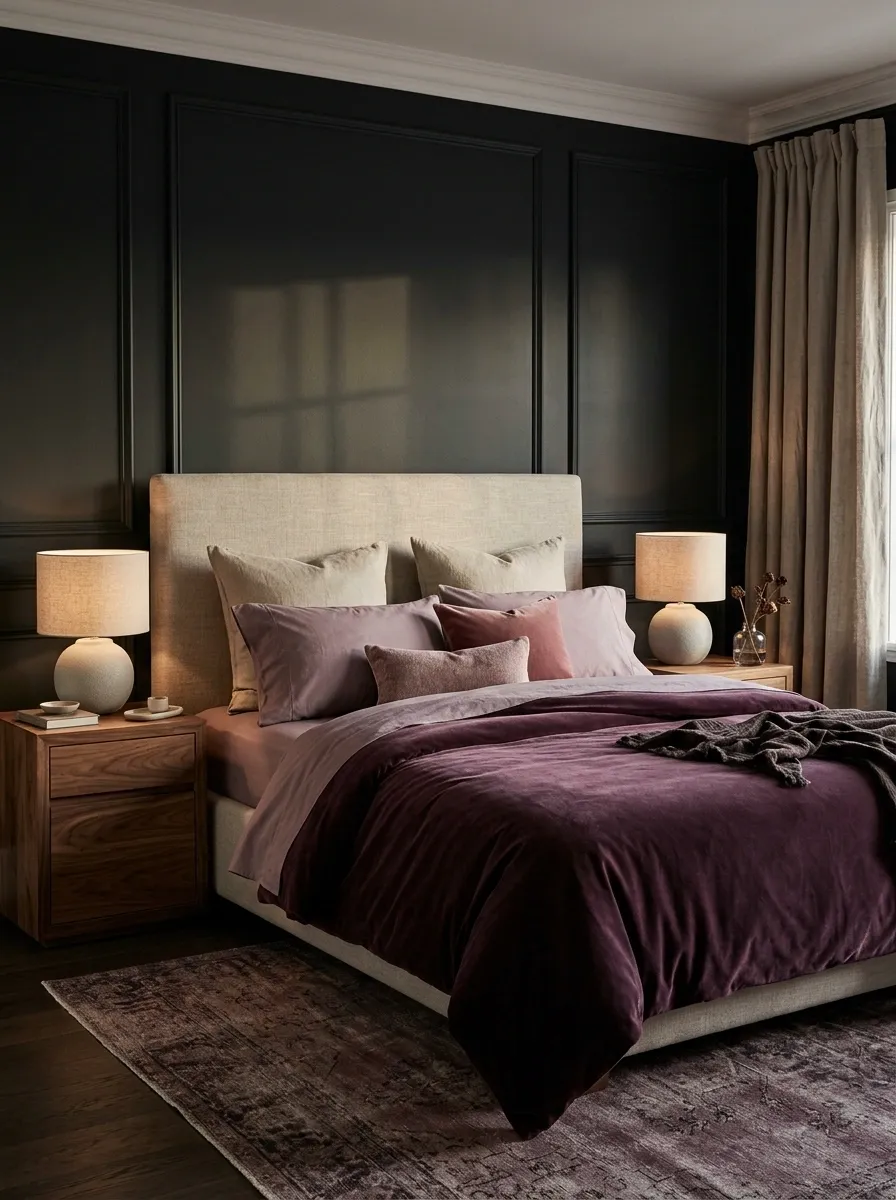
- A romantic bedroom with moody color and softer, layered fabrics.
Deep plum bedding creates a more unusual romantic look than predictable blush pink. Pair velvet or brushed cotton in a dark plum shade with dusty mauve sheets and a high upholstered headboard. Muted rose accents soften the darker tones, while walnut bedside tables and rounded lamps add enough visual weight to stop the room feeling overly delicate.
A tonal palette works best when the shades remain distinct. The duvet can be rich and dark, the sheet lighter and dustier, and the decorative pillows somewhere between the two. Keep shiny finishes limited so the velvet remains the main source of richness. The final effect is intimate and layered, with character that doesn’t depend on a mountain of frills.
Read the layers from dark to soft
Deep plum
The duvet supplies the drama and the deepest color.
Dusty mauve
Sheets and smaller layers soften the transition.
Muted rose
A restrained accent that keeps the palette from feeling severe.
The trick is tonal separation. Three related shades look layered; three identical purples look like a bedding set that never met a second color.
Chocolate Brown Bedding With Espresso Wood
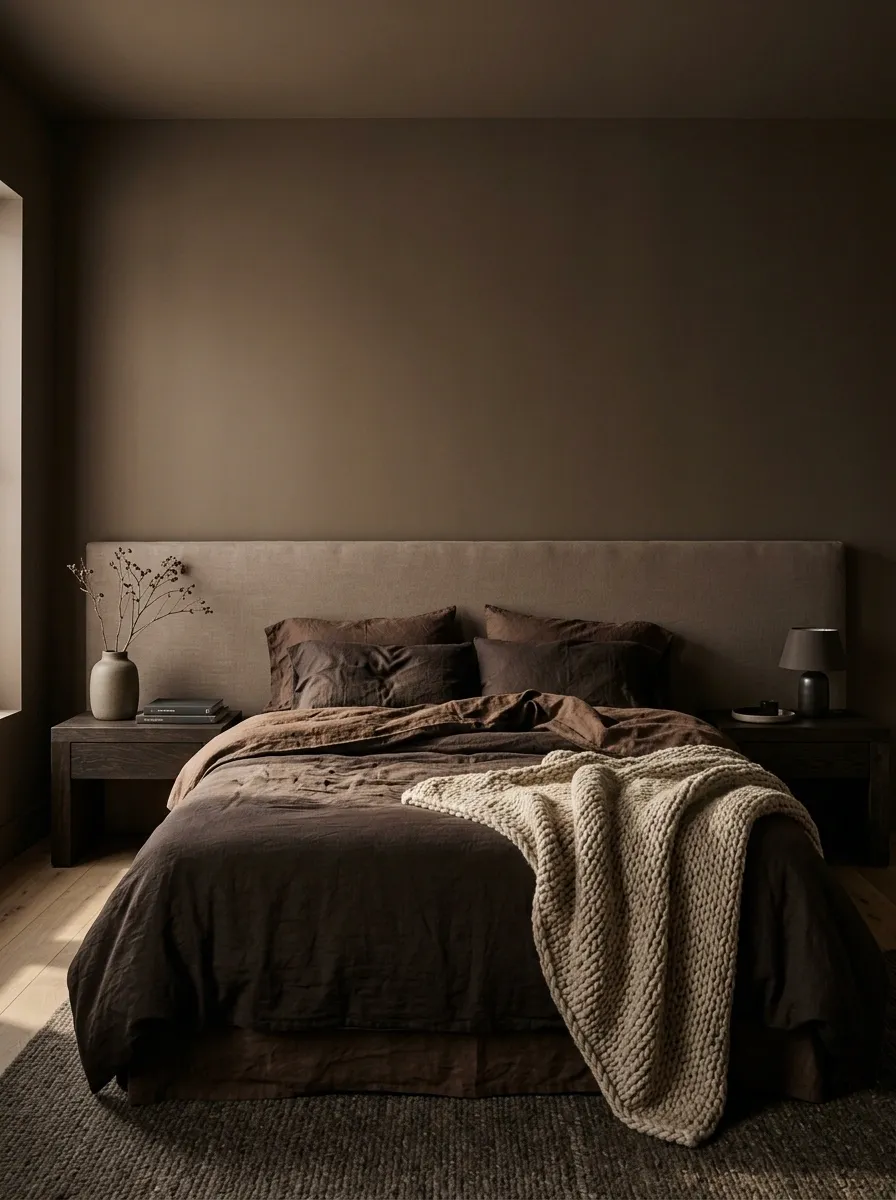
- A rich, tonal bedroom built around deep brown fabrics and substantial wood furniture.
Chocolate brown bedding gives a bedroom a grounded, enveloping look, especially when paired with espresso furniture and warm, muted walls. Layer a cocoa duvet over darker brown sheets, then add an oatmeal-colored throw with a chunky weave. A low upholstered headboard keeps the arrangement soft, while dark wood nightstands give the whole composition a solid architectural base.
The secret is to avoid making every surface equally smooth. Matte cotton, textured wool, and visible wood grain create subtle differences that stop the room from looking flat. Keep the decorative accessories quiet and let the materials carry the design. Brown-on-brown can look incredibly sophisticated, but only when the fabrics actually have something to say.
The monochrome test
Same family. Different surfaces.
Soft
Matte cotton and brushed bedding absorb light and soften the bed’s outline.
Textured
A woven throw gives the smooth duvet a more tactile companion.
Structured
Espresso furniture adds firm lines and visual weight around the bed.
The payoff: A tonal room with depth. The goal isn’t to match every brown, it’s to give each material a reason to be there.
Black and Ivory Bedding With Graphic Contrast
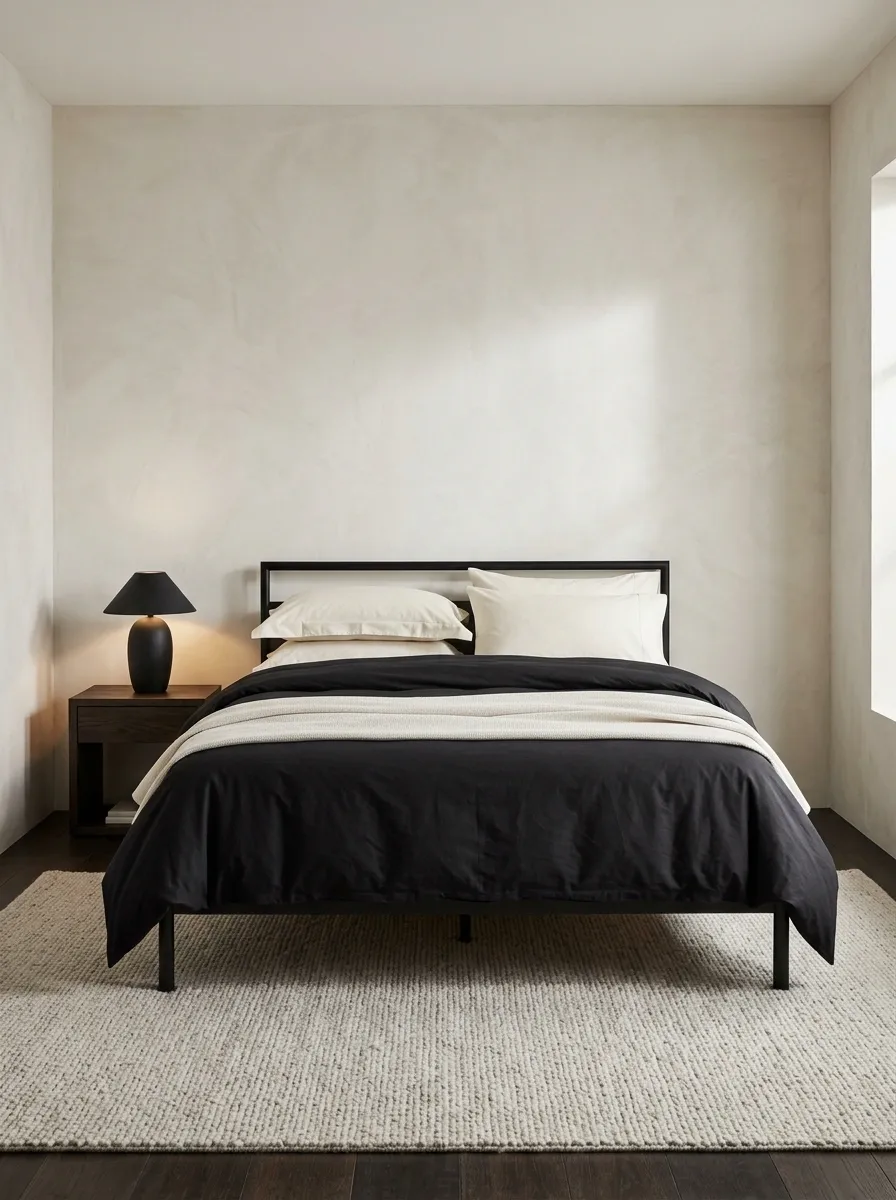
- A sharp, contemporary bedroom that uses contrast instead of clutter.
Black bedding and crisp ivory layers create a striking bed against pale plaster walls and dark architectural furniture. The strongest version keeps the duvet mostly black, with ivory pillowcases and a folded light coverlet breaking up the surface. A simple black bed frame and one sculptural bedside lamp finish the composition without distracting from the bed.
This look relies on clear boundaries between light and dark, so complicated prints and too many accent colors aren’t doing it any favors. A pale rug can soften the transition between the bed and the floor, especially in a room with dark timber flooring. The result feels graphic and deliberate, not like someone accidentally washed all the colored bedding together.
A contrast study
Keep the wall treatment quiet so the bed remains the focal point. Strong contrast looks intentional when the surrounding room isn’t competing for attention.
Stormy Blue Bedding With Weathered Oak
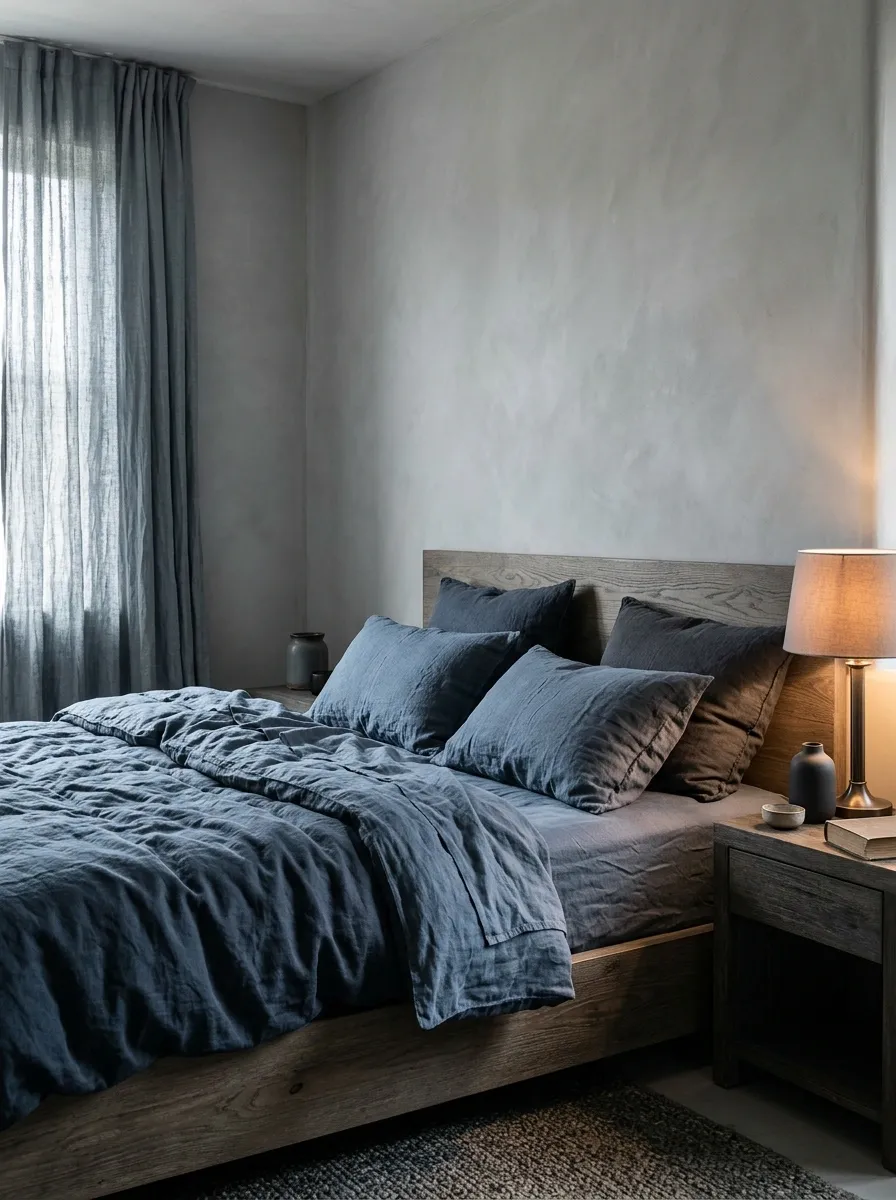
- Soft blue-grey layers in a calm bedroom with natural materials.
Stormy blue bedding offers a cooler, quieter take on dark bedroom styling. A slate-blue duvet, blue-grey sheets, and a weathered oak bed create enough tonal variation to feel layered without bringing in a strong contrasting color. Soft grey walls and natural linen curtains keep the room restrained, while brushed metal or dark wood lighting adds a little definition.
Diffused daylight is especially useful here because it reveals the differences between the fabrics. In a room with limited natural light, keep the wall color a little lighter than the bedding and use focused bedside lamps. The effect should feel calm and atmospheric, not cold enough to make the bedroom resemble an office waiting room.
Where the light lands
Cool bedding needs texture, not a spotlight.
Daylight
Reveals wrinkles in linen, the grain of oak, and subtle shifts between blue and grey.
Bedside lighting
Adds a local pool of light so the bed doesn’t disappear after sunset.
Pale surroundings
Soft grey walls and natural curtains preserve contrast without breaking the quiet mood.
A moody room still needs the details to be visible. Darkness is a color story, not a reason to lose the entire bed.
Rust and Burnt Terracotta Bedding With Earthy Textures
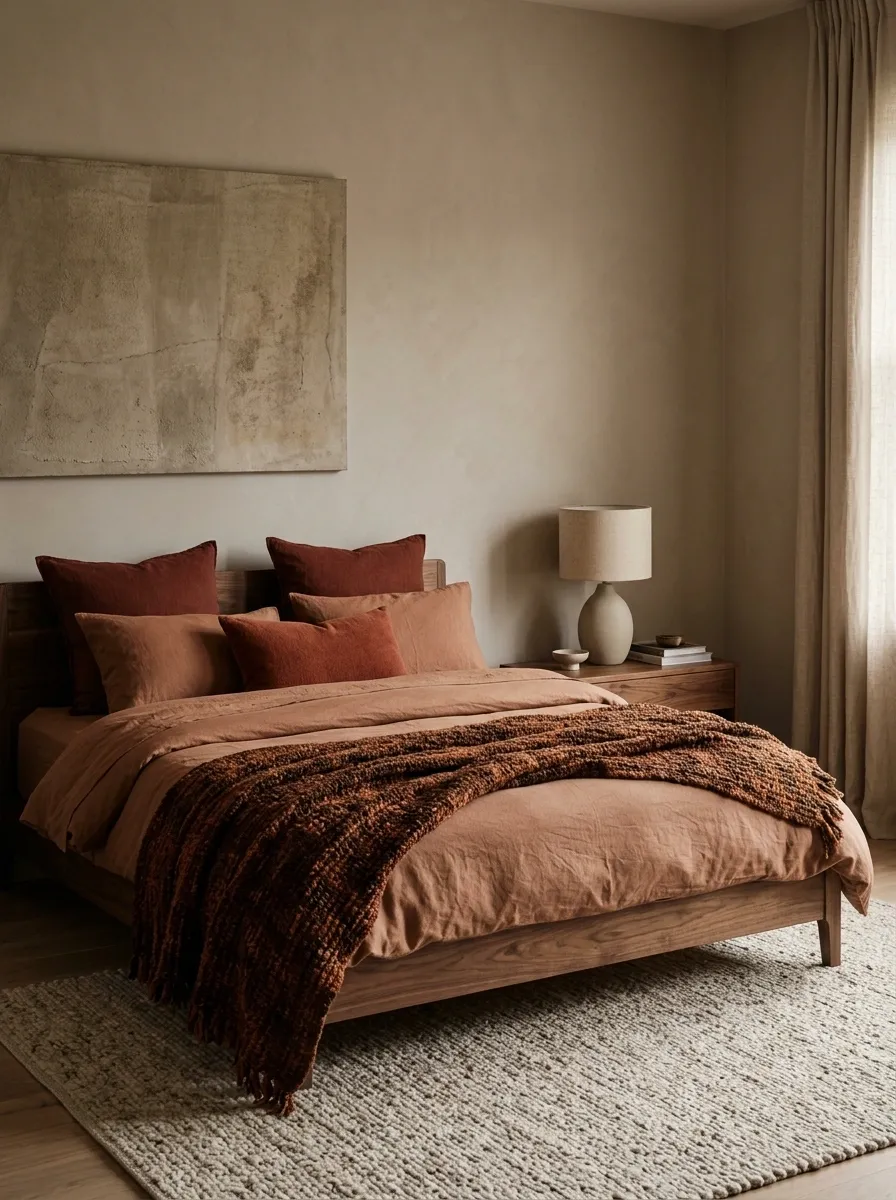
- Warm, earthy bedding with a stronger personality than beige ever asked for.
Rust and burnt terracotta bedding bring warmth into a moody bedroom while staying grounded and mature. Pair a clay-colored duvet with deeper rust pillow covers, walnut furniture, and a thick woven cover at the foot of the bed. Walls in a muted clay or warm neutral shade connect the bedding to the rest of the room, and simple lamps keep the arrangement from drifting into a themed desert retreat.
The different textures are what make this look work. A smooth duvet, a slightly rough woven throw, and visible timber grain provide enough variety without requiring elaborate patterns. Avoid adding every terracotta accessory available on the internet. A few deliberate repetitions of the color will feel connected; covering every surface in orange will feel like a very specific accident.
A warm palette with breathing room
Repeat the warmth. Vary the materials.
Main bedding
A deep, muted warm tone creates the focal point.
Textured neutral
A chunky throw or lighter sheet creates a visual pause.
Deep grounding tone
Darker accents and substantial furniture anchor the warmth.
The balance: Mix smooth, rough, light, and dark surfaces. Matching every object isn’t the goal.
Dusty Mauve Bedding With Charcoal and Walnut
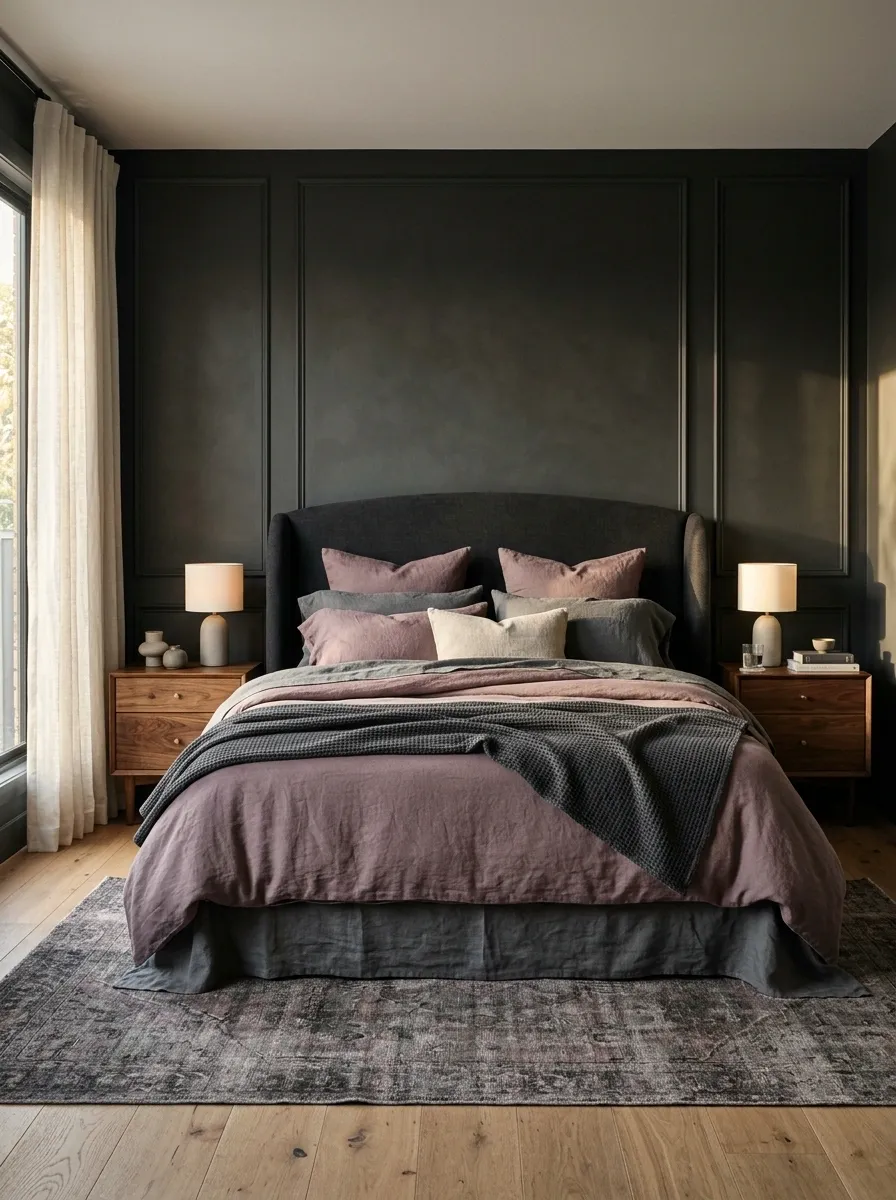
- Muted color, dark furniture, and a softer alternative to an all-grey bedroom.
Dusty mauve bedding brings a subtle warmth to a bedroom built around charcoal walls and walnut furniture. A muted mauve duvet, smoky grey sheets, and a curved upholstered headboard create a layered composition without relying on bright colors. Walnut nightstands add warmth, while simple bedside lamps keep the room from looking too formal.
The trick is keeping the mauve dusty rather than sugary. A greyish undertone helps it sit comfortably beside charcoal, and the walnut stops the palette from feeling cold. Choose fabrics with different textures so the bed doesn’t look like one enormous block of matching material. This is a good direction for anyone who wants a moody bedroom without committing to black, navy, or deep burgundy.
Color relationship
Mauve softens the room. Walnut warms it. Charcoal keeps it grounded.
Dusty mauve
Keep it on the duvet and softer bedding layers, where the muted color can lead.
Charcoal
Use it in the wall, headboard, or selected bedding layers for depth.
Walnut
Bring in natural wood grain to warm up the cooler colors without introducing another accent.
Dark Academia Bedding With Subtle Pinstripes and Walnut
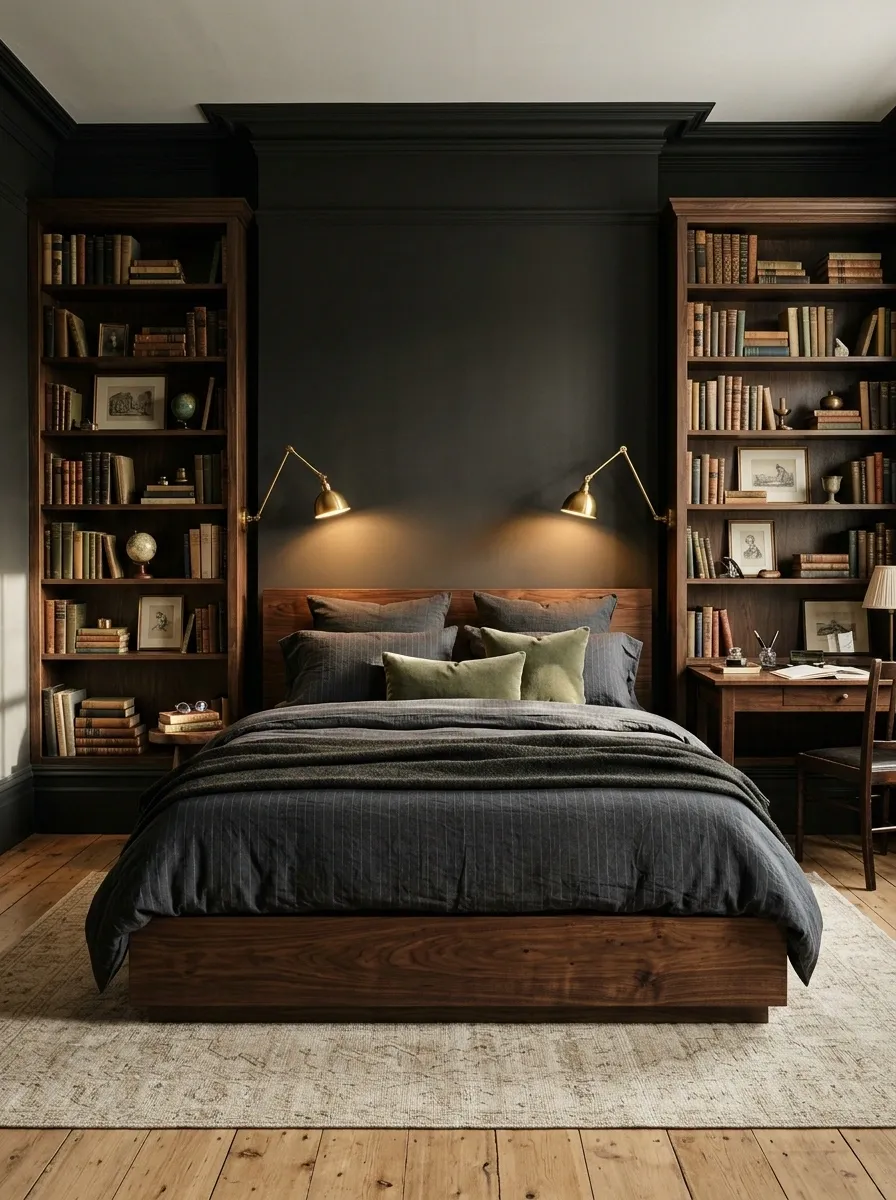
- Tailored bedding, old-fashioned woodwork, and the kind of bedroom that takes its books seriously.
Charcoal bedding with fine pinstripes gives a dark academia bedroom a more tailored look than a plain dark duvet. Pair it with olive accents, a substantial walnut bed, and traditional bookshelves or a dark timber desk. Warm brass reading lamps add a softer glow, while a textured rug breaks up the heavier furniture and keeps the floor from feeling forgotten.
The pinstripes should remain subtle. Bold stripes, elaborate wallpaper, crowded bookshelves, and patterned bedding can easily turn the room into a costume drama. Let the timber and architecture provide most of the character, then use the bedding to pull the charcoal and olive tones together. The result feels scholarly and lived-in without requiring every surface to look a century old.
A tailored bedroom, decoded
Fine stripes
A controlled pattern gives the bedding its tailored character. Keep surrounding textiles quieter.
Olive accents
Connect the bed to traditional finishes and muted greenery.
Dark walnut
Adds visual weight through the bed, desk, or shelving.
The book collection can have its moment. The bedding doesn’t need to arrive with a competing speech.
Olive Bedding With Tobacco Brown and Antique Timber
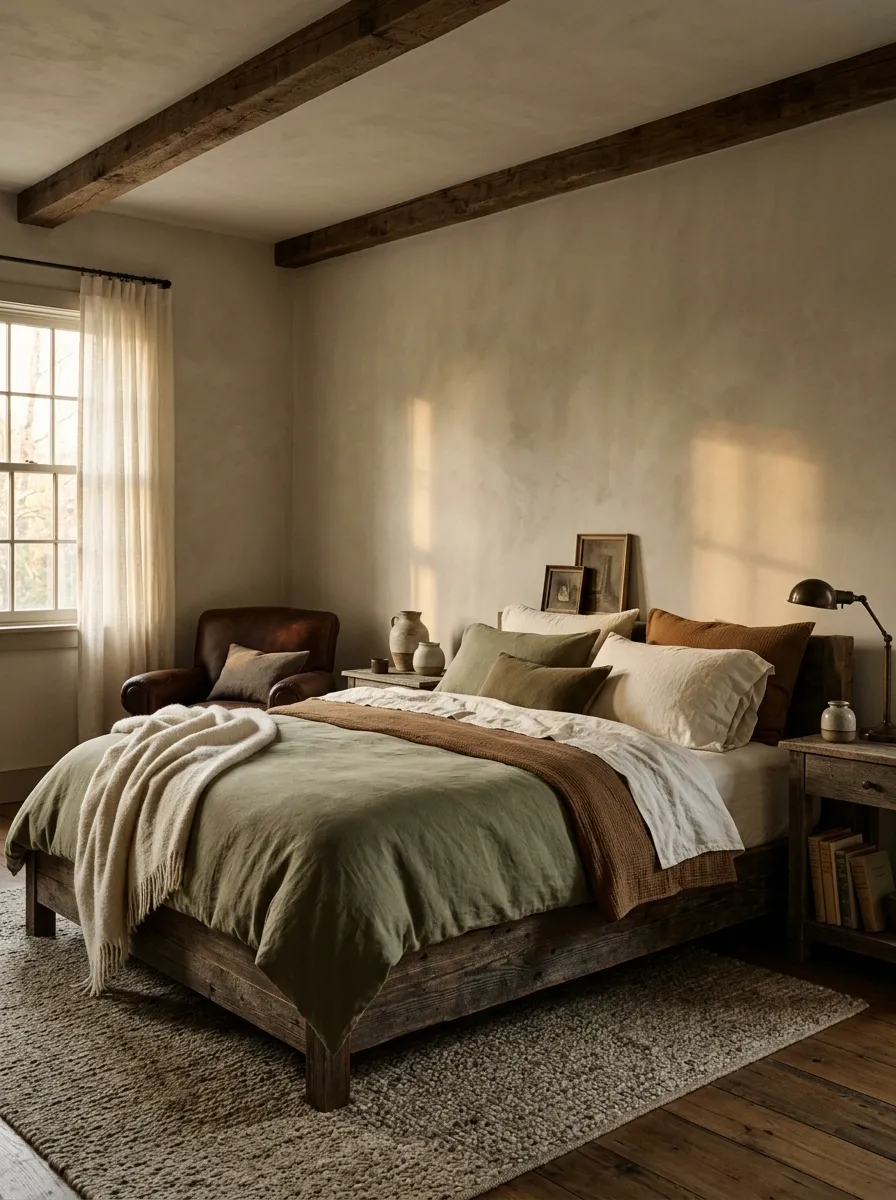
- Earthy, collected, and more refined than a room full of matching rustic accessories.
Olive bedding, tobacco-brown accents, and antique timber create a bedroom with a grounded, countryside character. Use muted olive for the duvet, a deeper brown for a folded coverlet, and softer cream sheets to separate the layers. An old wooden bed or weathered nightstands bring natural variation into the room, while a leather chair or aged brass lamp adds a small amount of contrast.
The best versions feel collected rather than coordinated down to the last cushion. Keep the walls in a warm neutral or muted green, and allow the timber grain to remain visible. Too many distressed finishes can make the room feel artificially aged. A few worn pieces beside clean bedding create a better balance than an entire bedroom pretending to have survived several generations.
A room that feels collected
Mix the age of the finishes, not just the colors.
Where the contrast comes from
Choose one or two aged timber pieces, then balance them with cleaner textiles and a quieter wall finish. The difference in surface and age gives the room its character.
Keep it believable: A little wear tells a story. Fake wear on every single object tells a different one.
Slate Bedding in an Industrial Loft Bedroom
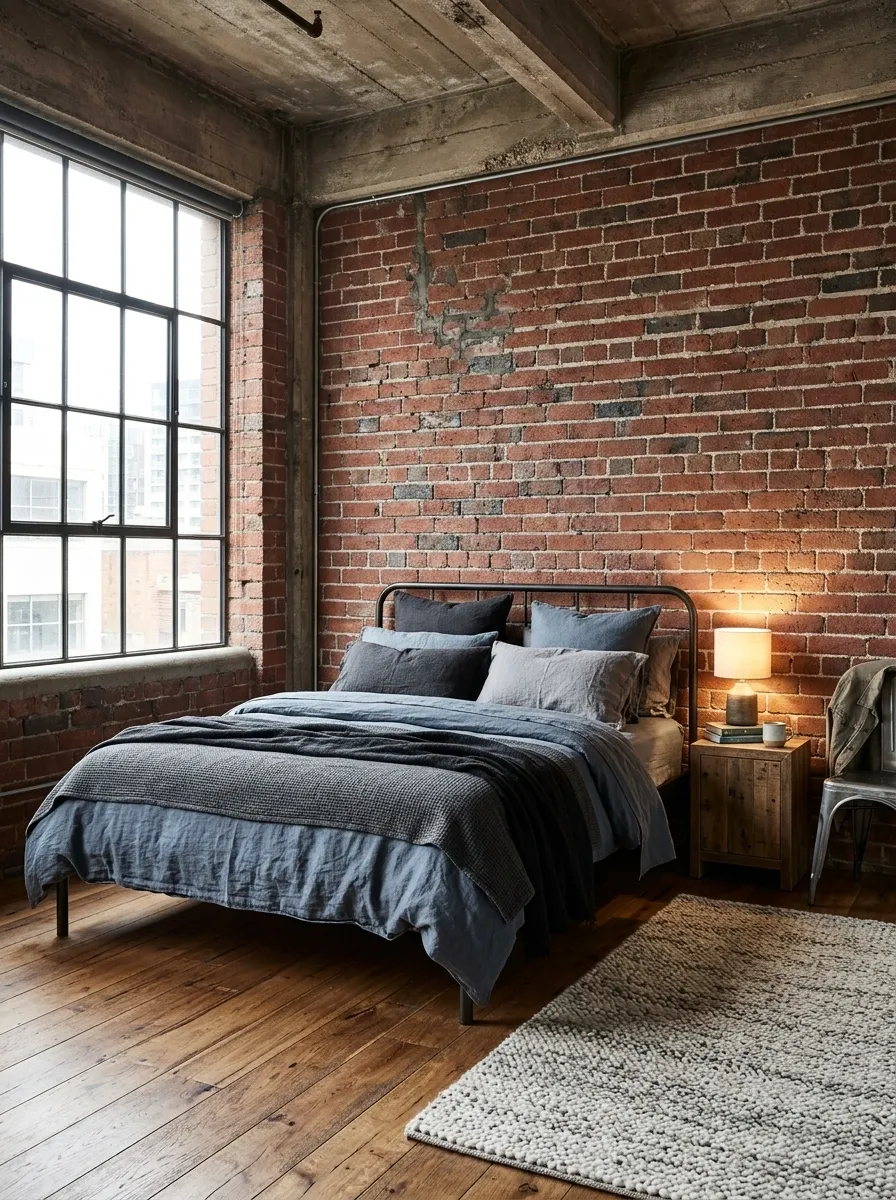
- Soft bedding against exposed brick, dark steel, and reclaimed wood.
Slate-blue and charcoal bedding bring a softer element to an industrial bedroom dominated by exposed brick, steel-framed windows, and reclaimed timber. A simple dark metal bed frame suits the architecture, while a layered duvet and textured coverlet stop the room from feeling too hard. Keep the bedside furniture practical, with a reclaimed wood table or compact metal cabinet that doesn’t eat into the walking space.
The contrast between rough architecture and soft textiles is the whole point. There’s no need to add industrial signs, exposed bulbs everywhere, or more metal just to make the theme obvious. Warm bedside lighting and a rug beside the bed create a more comfortable landing against the harder finishes. The room should look like a real loft, not a restaurant trying very hard to look like one.
The loft material mix
Hard architecture. Soft landing.
Slate bedding
Softens the industrial structure and establishes the bed’s main color.
Brick and reclaimed wood
Provide rough, irregular surfaces against the smoother linens.
Warm light
Makes the sleeping area feel comfortable against steel and masonry.
The balance matters more than the theme. If every surface is hard, the room stops feeling like somewhere to sleep.
Deep Teal Bedding in an Art Deco Inspired Bedroom
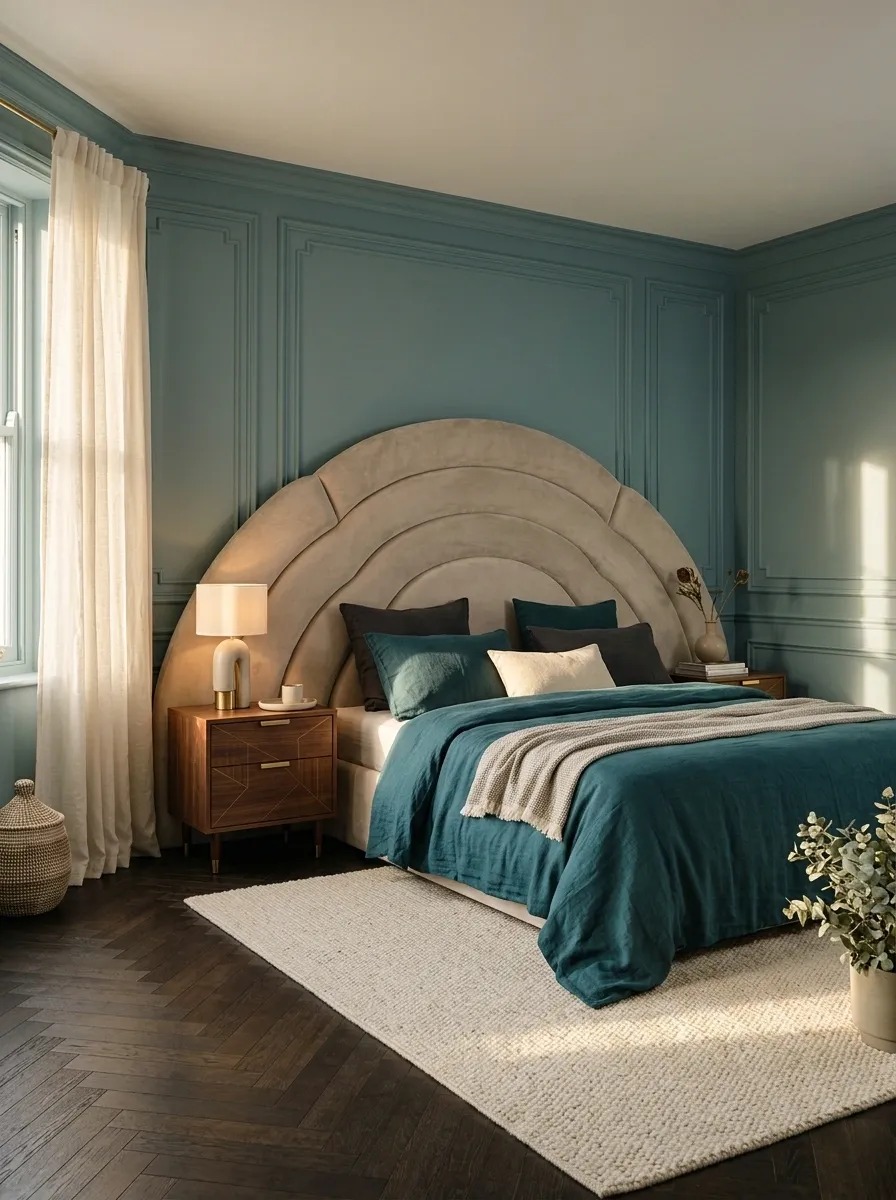
- Jewel-toned bedding, curved furniture, and restrained metallic details.
Deep teal bedding gives an Art Deco inspired bedroom a rich focal point without relying on the predictable combination of black and gold. A curved upholstered headboard, walnut furniture, and a few brushed brass details create the right sense of polish. Dark green or muted teal walls can deepen the palette, while a lighter rug keeps the bed visually distinct from the floor.
The furniture shapes should do as much work as the colors. Rounded edges, a little geometric detailing, and a sculptural lamp are enough to suggest the period without turning the bedroom into a themed hotel suite. Keep the duvet relatively simple so the headboard and furniture lines remain visible. Deep teal already has plenty of presence. It doesn’t need every accessory joining the performance.
Art Deco, without the costume
Let shape carry the glamour.
Curved headboard
The rounded silhouette supplies the decorative character without another busy pattern.
Restrained brass
Use it in one or two light fixtures or furniture details. A little metallic contrast goes a long way.
Burgundy Bedding With a Strong Architectural Headboard
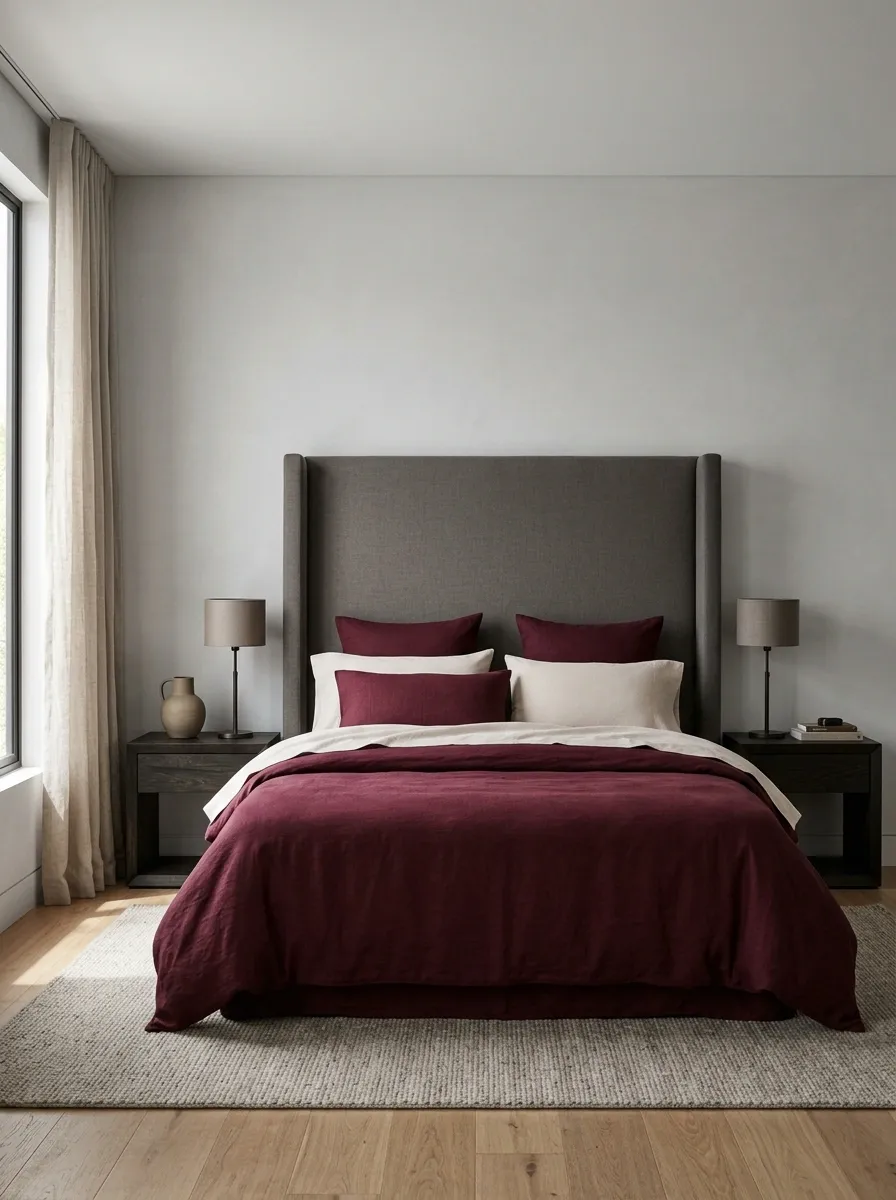
- Bold wine-colored bedding with clean geometry and a more contemporary finish.
Burgundy bedding looks particularly striking against a tall, clean-lined headboard and a carefully chosen wall finish. Use a rich wine-colored duvet with slightly lighter sheets, then frame the bed with a substantial upholstered headboard or a simple timber panel. Dark bedside furniture reinforces the shape, while pale flooring or lighter side walls prevent the bed from becoming one uninterrupted block of color.
Unlike the romantic velvet bedroom, this version depends on strong lines and clear proportions. Keep the bedding relatively simple, with few decorative pillows and no competing prints. The architecture should carry the drama, while the burgundy supplies the color. It’s a convincing option for modern bedrooms that need depth without elaborate furniture or a collection of decorative objects that all want their own close-up.
Follow the architectural lines
Let the bed look deliberate, not bulky.
A simple representation of the hierarchy: structured headboard, deep bedding, lighter surrounding space.
Where to create contrast
Keep burgundy concentrated around the bed, then use lighter flooring, a quieter wall, or pale sheets to distinguish its outline.
Mushroom and Taupe Bedding With Layered Textures
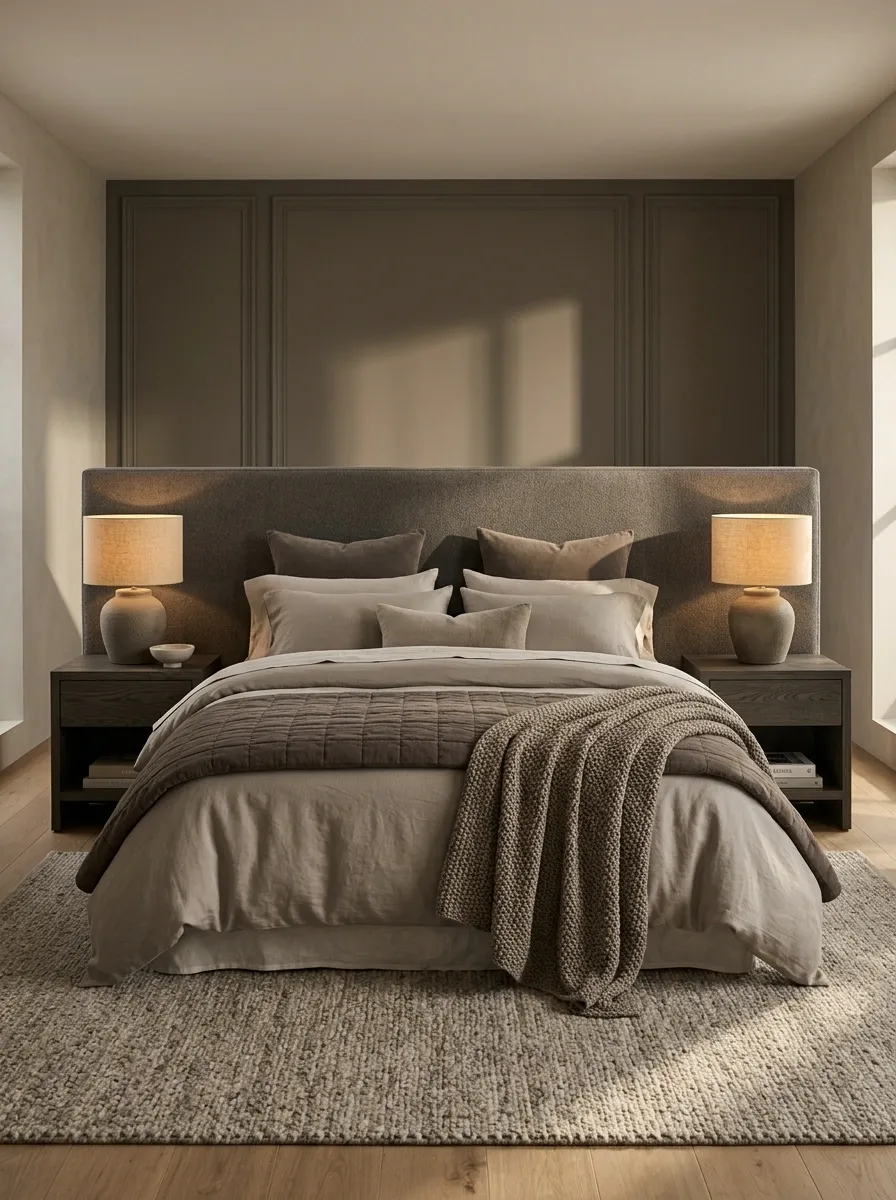
- Understated neutral bedding with enough depth to avoid the dreaded beige blur.
Mushroom, putty, and deep taupe create a quieter version of moody bedding, where the richness comes from texture rather than a bold color. A mushroom duvet, darker taupe coverlet, and softly contrasting sheets sit against an upholstered headboard and smoked oak nightstands. A woven throw adds a visible change in texture, while gently shaded lamps keep the overall palette warm.
This bedroom depends on subtle differences, so the fabric choices matter more than decorative accents. Look for a mix of woven, brushed, quilted, and smooth surfaces. Avoid matching every shade too closely, because near-identical neutrals can disappear into each other. A slightly darker headboard or a deeper coverlet gives the bed a clear outline without breaking the softness of the room.
Look closer, not brighter
The neutral palette works through touch.
Give each layer a different job. The smooth duvet establishes the bed, the woven throw adds texture, and the darker coverlet adds definition.
One useful distinction: Similar colors can work together, but similar colors in identical fabrics often look flat. Texture is doing the heavy lifting here.
Midnight Coastal Bedding With Weathered Wood
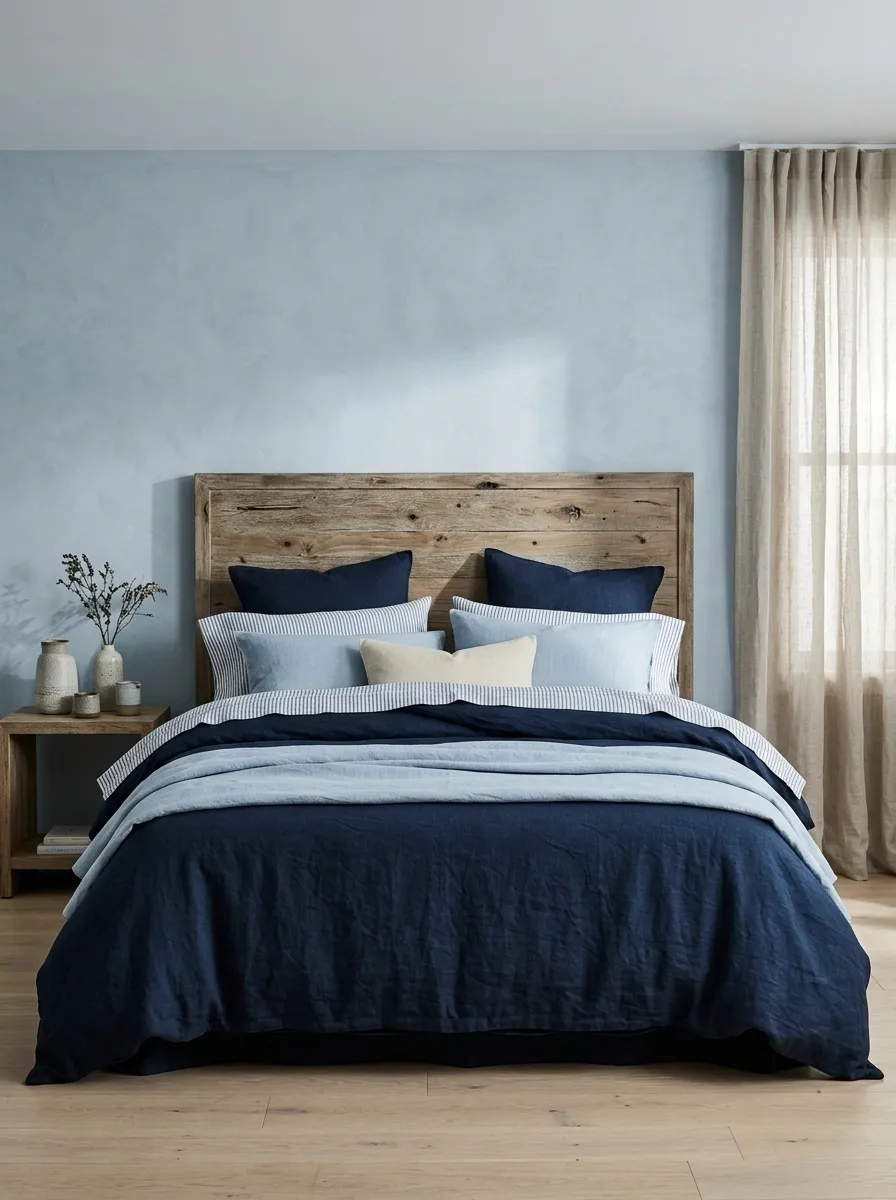
- A darker take on coastal style, with navy layers and weathered timber instead of beach-themed accessories.
Midnight navy bedding gives coastal bedrooms a more grounded, less predictable look. Pair a navy duvet with fine striped sheets, a weathered oak headboard, and washed blue walls. Natural linen curtains soften the windows, while pale flooring and a simple bedside table keep the bed from feeling too heavy. A folded coverlet in a lighter blue brings out the stripe without taking over the composition.
The coastal reference should come from materials and color, not a pile of decorative shells. Weathered wood, softened blue, and uncomplicated fabrics are enough to establish the mood. Keep the stripes relatively fine and the remaining bedding mostly solid. That balance makes the room feel relaxed and connected to the landscape without turning it into a souvenir shop with a mattress.
Coastal, minus the clichés
Use the landscape, not the souvenir aisle.
Midnight navy
The deep base that makes this version feel moody rather than beach-bright.
Washed blue
Softens the navy and echoes the weathered palette.
Weathered oak
Adds natural warmth and a grounded finish.
Fine stripes and natural fabrics suggest coastal style more convincingly than novelty anchors, ropes, or enough seashells to require their own shipping container.
Dark Japandi Bedding With Low Blackened-Wood Furniture
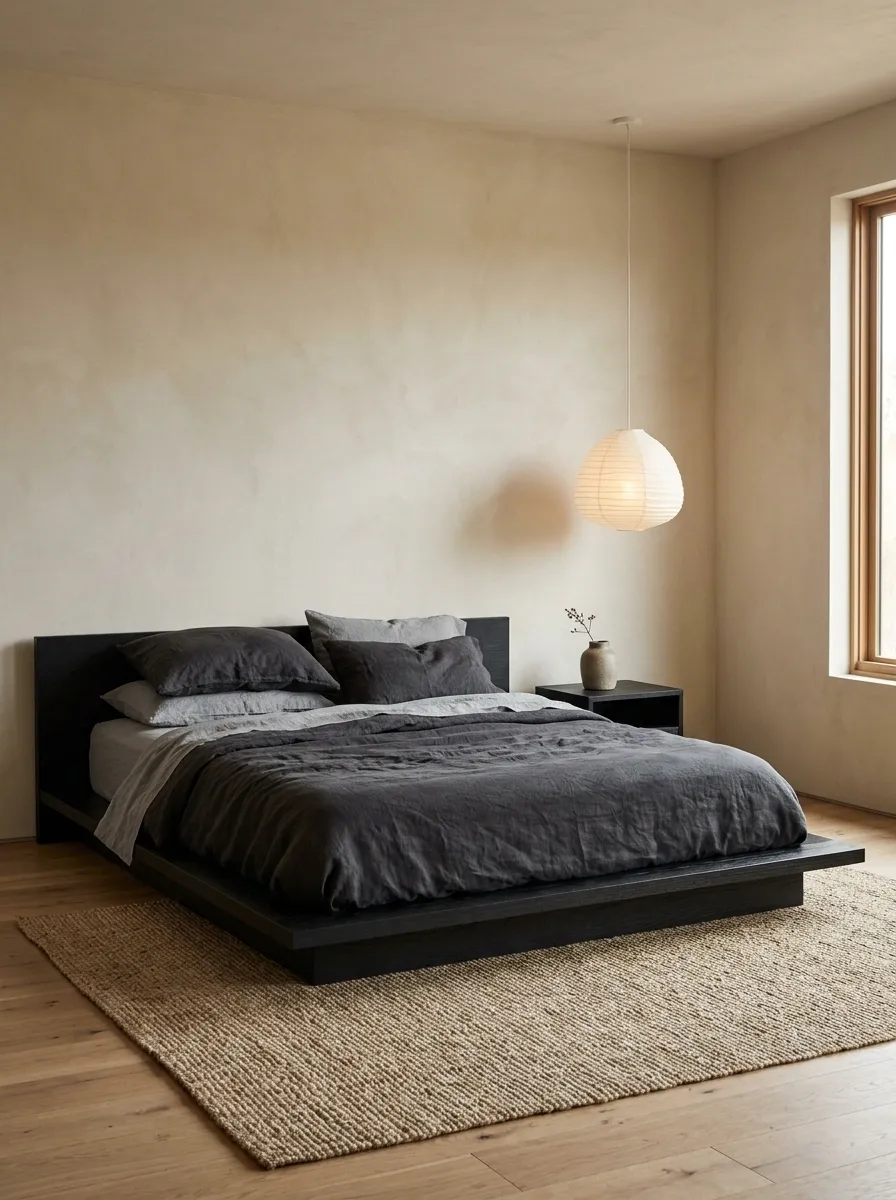
- Quiet, architectural, and built around natural materials rather than decorative clutter.
Charcoal linen bedding and a low blackened-wood platform bed give a Japandi-inspired bedroom a grounded, understated character. Warm plaster walls soften the darker furniture, while a simple paper pendant and a compact bedside table keep the composition open. Layer a charcoal duvet over lighter smoke-grey sheets, with just enough rumpling to make the bed feel comfortable rather than staged within an inch of its life.
The room’s proportions matter as much as its colors. Low furniture, clear floor space, and uncomplicated surfaces give the bed room to breathe. Introduce natural wood or a woven floor covering to stop the darker finishes from feeling severe. This design suits bedrooms where visual calm matters more than decorative display, and where every object needs a reason to occupy space.
The low-profile bedroom
Less visual height. More breathing room.
Low bed, open floor
A lower visual profile prevents the dark furniture from overwhelming a compact room.
Soft linen, warm plaster
Textured fabric and gently warm walls soften the harder lines of the platform.
Keep in mind: Open space is part of this design. Filling every empty corner would rather defeat the point.
Moody Bohemian Bedding With Rust, Umber, and Woven Textiles
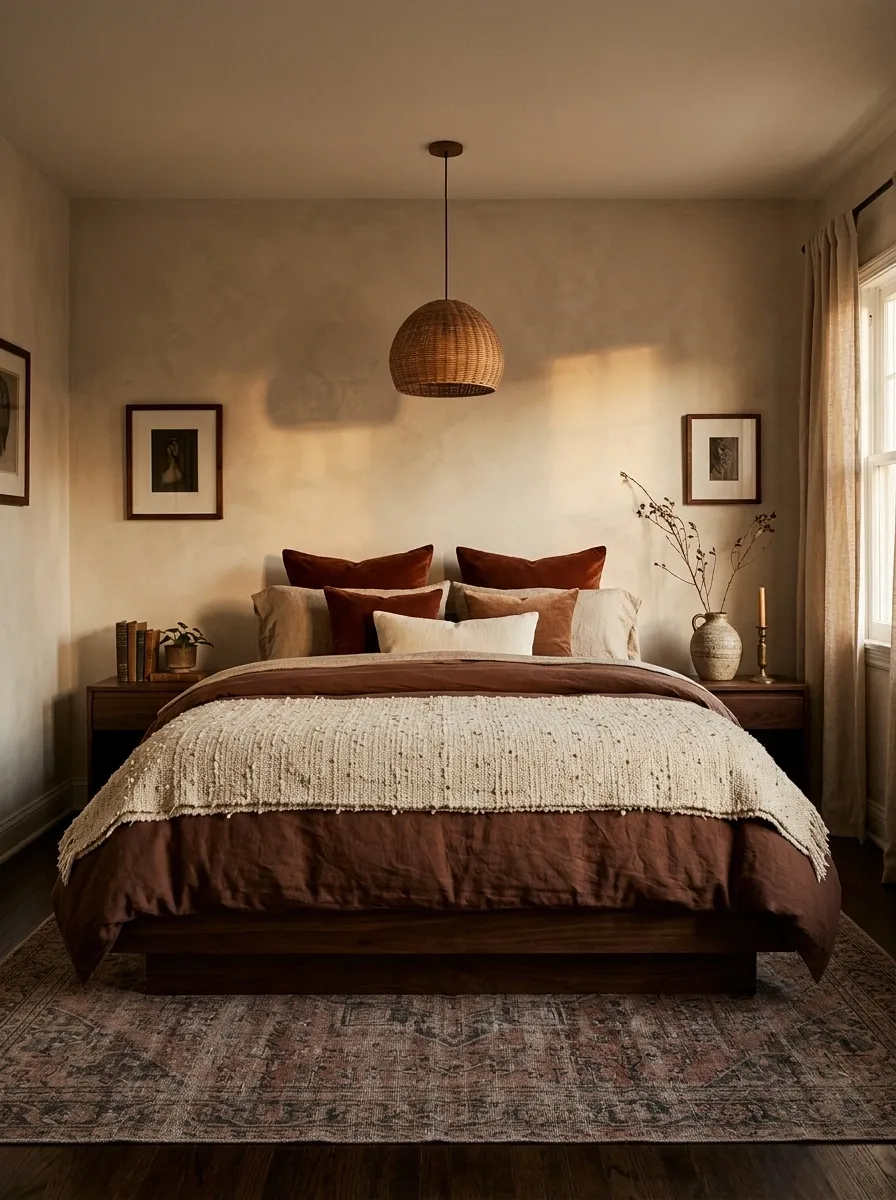
- Layered earthy fabrics, vintage character, and a bedroom that doesn’t look like it came as a matching set.
Umber bedding, rust-colored cushions, and a textured coverlet give this bohemian bedroom a rich, relaxed foundation. A low wooden bed sits over a faded patterned rug, while woven lighting and a few carefully chosen vintage pieces introduce irregular shapes and natural texture. Keep the largest bedding surface relatively plain so smaller patterns have room to show up.
The layered look works because each fabric contributes something different. Smooth cotton creates the base, a woven throw adds texture, and a restrained rug brings in pattern. Darker wood anchors all those details without making the room feel overly polished. The trick is knowing when to stop. Bohemian doesn’t mean every cushion, blanket, basket, and souvenir needs to be on the bed at the same time.
Build the layers in order
The bed needs texture, not a fabric avalanche.
The solid foundation
Umber or deep brown bedding establishes the main color and gives the eye somewhere to settle.
The tactile layer
A woven coverlet adds dimension and creates a noticeable change in surface.
The patterned finish
A faded rug or a small patterned accent brings character without competing with the duvet.
Each layer should add something different. Three blankets doing the exact same job are just laundry with excellent marketing.
Ink-Black Bedding in a Restrained Architectural Bedroom
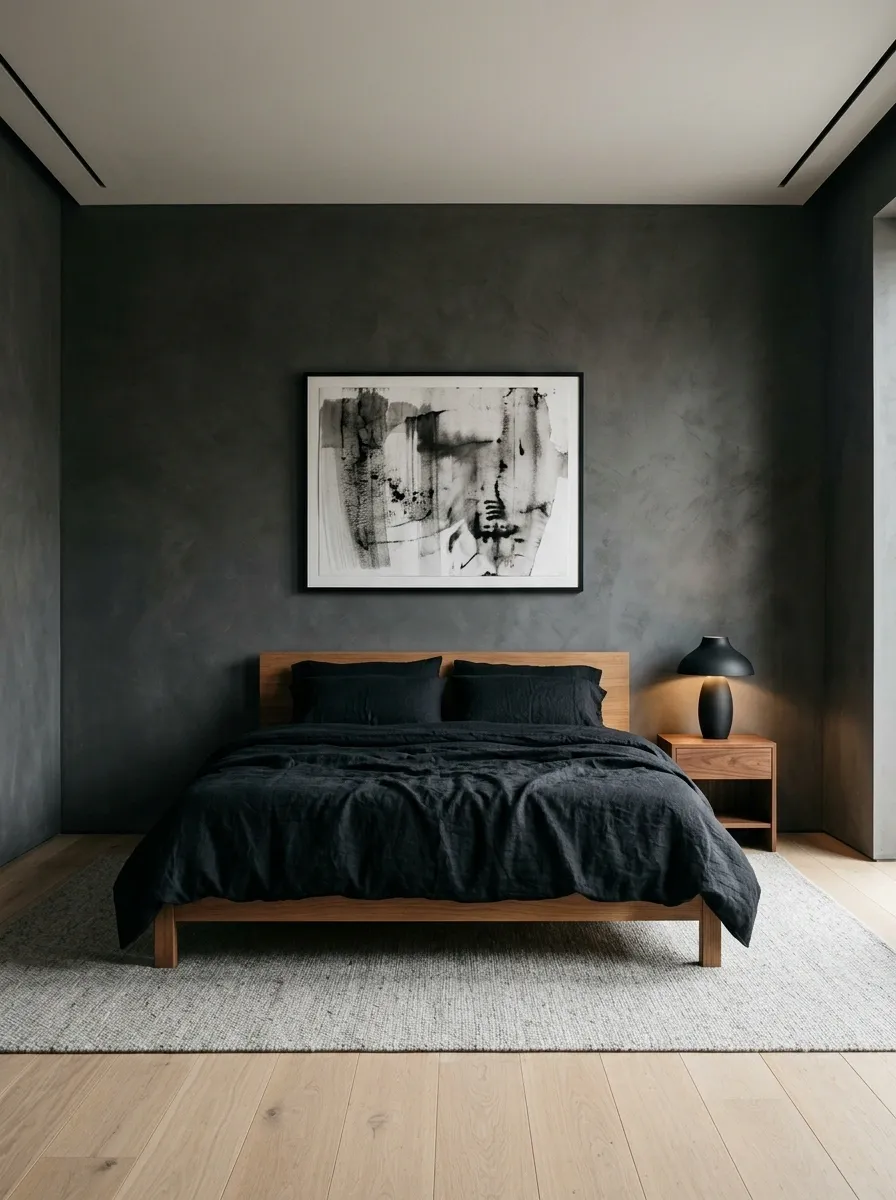
- Nearly black textiles, sculptural furniture, and the confidence to leave things out.
An ink-black duvet against charcoal plaster walls creates an unusually restrained bedroom, where the silhouette of the bed matters more than decorative detail. A simple platform frame, one sculptural bedside lamp, and a carefully placed piece of artwork provide enough structure without distracting from the tonal composition. Subtle differences between matte cotton, textured linen, and the wall finish keep the room from collapsing into a single dark shape.
This look needs deliberate negative space. Pale flooring or a lighter rug can distinguish the bed from its surroundings, while a small area of warm wood prevents the palette from feeling cold. Avoid filling the room simply because an empty corner feels unfinished. Here, restraint is the design decision. Adding six accessories to make the room feel complete is how minimalism gets sent to the group chat for help.
The negative-space principle
Not every empty corner needs a side table.
A tonal composition needs visible differences, even when the colors stay close.
Keep the silhouette clear
Choose a simple bed frame and let the duvet’s outline remain visible against the floor or wall.
Make texture do the decorating
Mix smooth cotton, textured linen, and different wall finishes rather than adding more objects.
The final edit: Keep the few objects that contribute to the composition. Let the rest enjoy their retirement in a drawer.
Clay and Cocoa Bedding in a Seventies-Inspired Bedroom
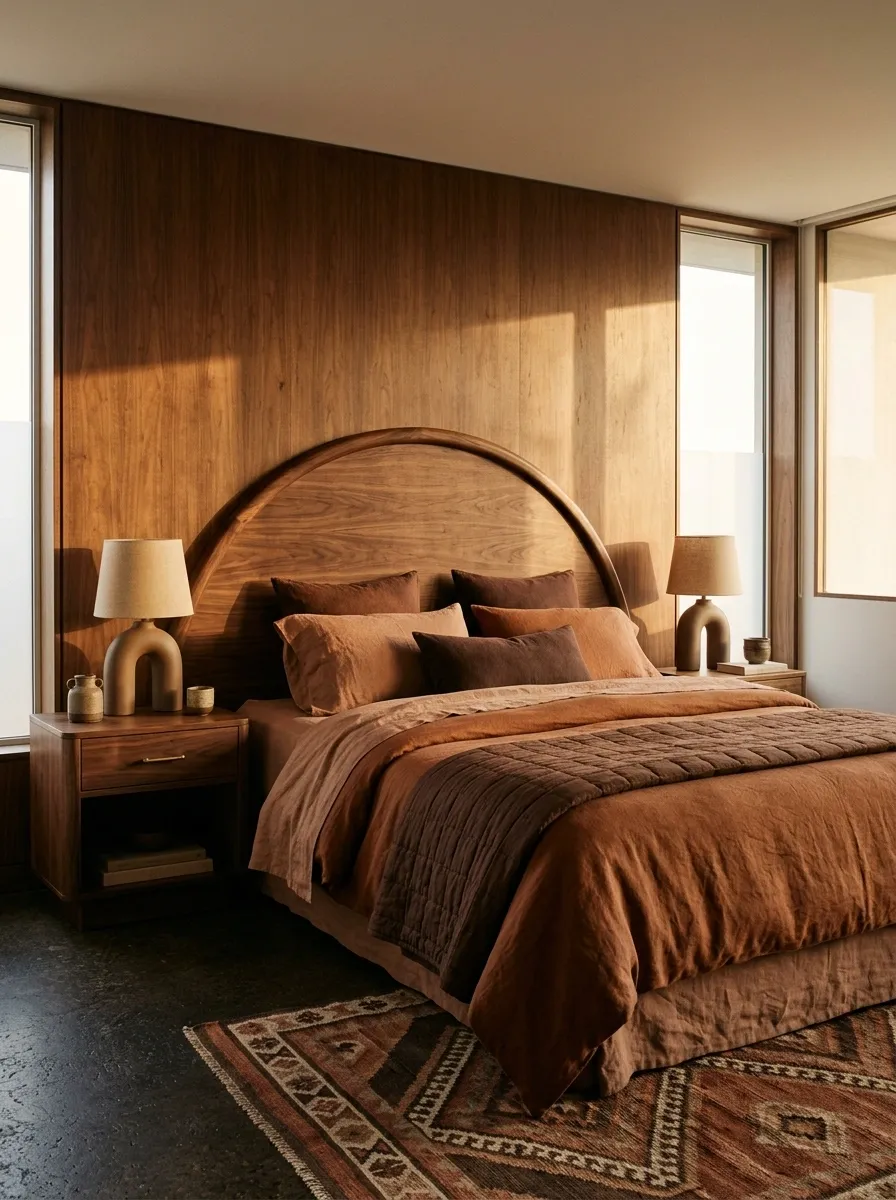
- Warm retro color, rounded furniture, and deep earthy tones without the dated showroom effect.
Clay-colored bedding, cocoa accents, and walnut furniture create a seventies-inspired bedroom with warmth and character. A rounded headboard, curved bedside lamps, and wood paneling establish the period influence, while a rust-toned duvet and darker brown coverlet connect the different finishes. Keep the sheets in a quieter earthy neutral so the bedding layers don’t compete with the furniture shapes.
The trick is to borrow the decade’s palette and silhouettes without reproducing every detail at once. Walnut and rounded forms already carry a strong retro signal, so the rest of the room can stay relatively simple. A small patterned rug or one vintage-inspired lamp supplies enough extra character. The result feels nostalgic and tactile rather than like a time capsule that missed several decades of interior design.
The retro formula
Earthy colors. Rounded shapes. Actual restraint.
Repeat the curves
A rounded headboard and curved lighting create a consistent silhouette without requiring matching furniture.
Leave the wood visible
Walnut grain supplies texture and period character, so the bedding can remain largely solid.
Black Canopy Bed With Cream Linen and Olive Accents
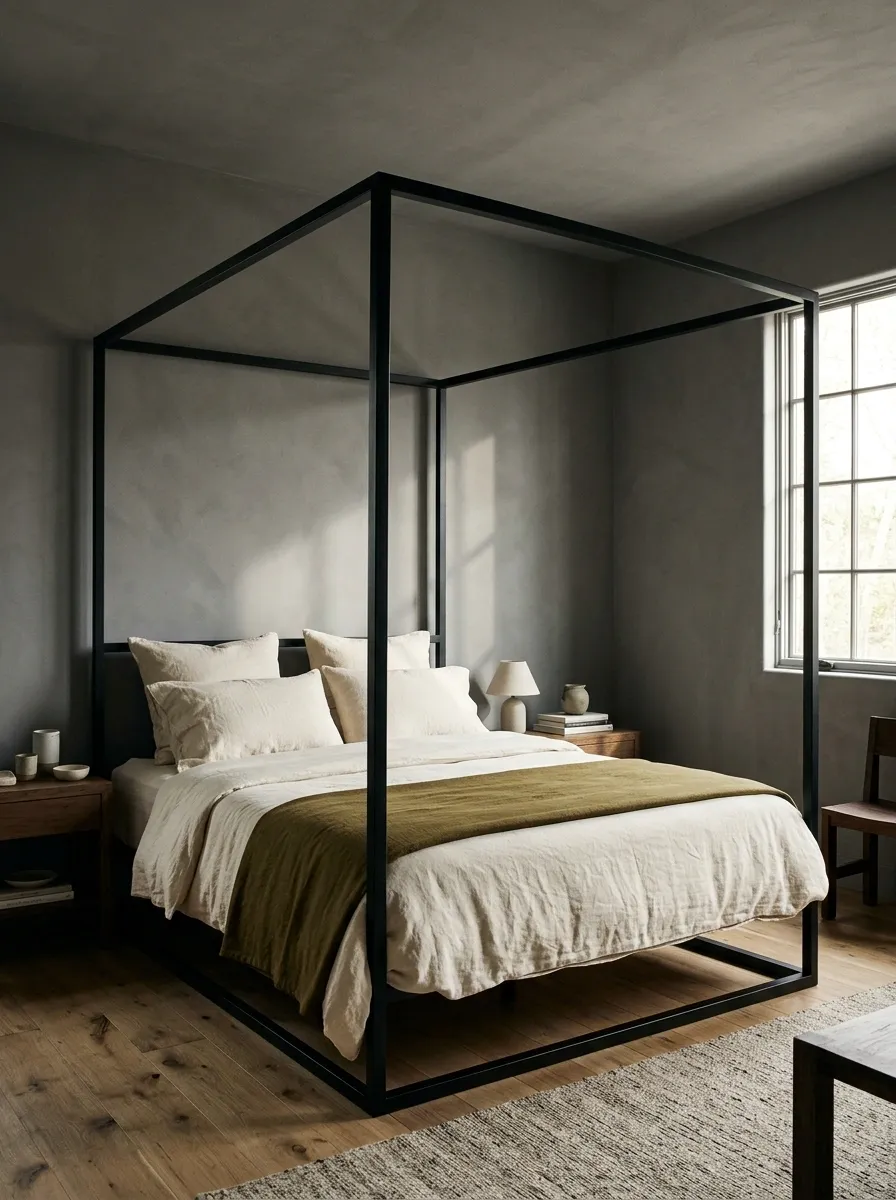
- Dramatic dark architecture balanced by relaxed, lighter bedding.
A black canopy bed creates a strong outline around cream linen bedding, making the entire bedroom feel architectural without relying on dark sheets. Layer soft ivory linen over a simple mattress, then fold an olive coverlet across the foot of the bed. Dark timber furniture and muted walls reinforce the mood, while the lighter bedding keeps the canopy from overwhelming the room.
The contrast between the frame and the textiles is what makes this composition memorable. Relaxed linen also softens the canopy’s straight lines, so the room doesn’t feel overly formal. Keep the furniture simple and let the frame do most of the visual work. The result has plenty of drama without making the bed look like it requires a royal appointment to get into.
Structure meets softness
The frame brings the drama. The linen keeps it livable.
Black canopy
Defines the bed’s silhouette and provides the strong architectural element.
Cream linen and olive
Relaxed textures soften the frame, while olive introduces depth without making the bed entirely dark.
Tailored Pinstripe Bedding With Charcoal and Cognac
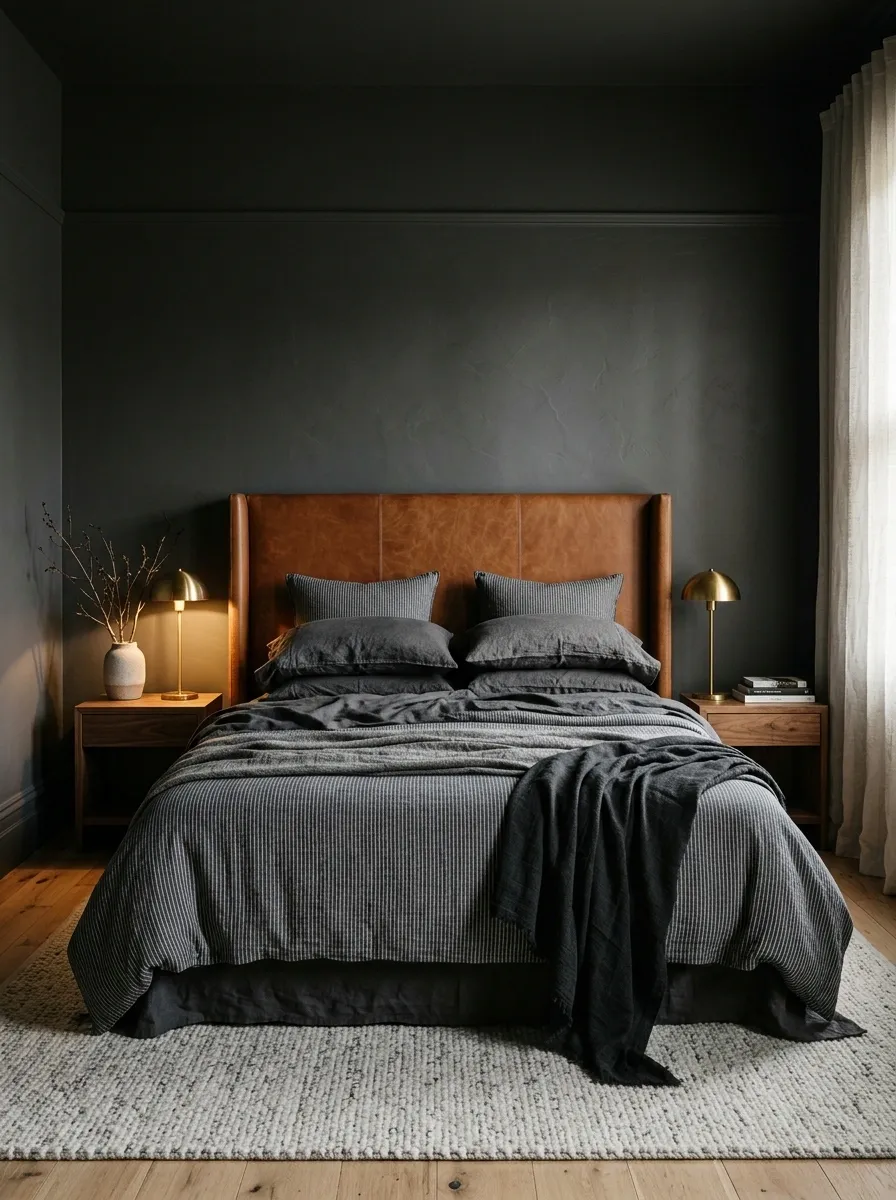
- A polished bedroom where fine stripes meet warm leather and dark wood.
Fine pinstripe bedding gives a charcoal bedroom a tailored appearance without introducing a bold pattern. Pair a striped duvet with solid charcoal sheets, a cognac leather headboard, and walnut nightstands. Warm lighting brings out the leather’s tone, while a restrained rug softens the floor around the bed. The furniture should have clean lines, with enough natural grain to stop the composition from feeling rigid.
The best part of this combination is its balance between precision and warmth. The stripes establish order, while cognac leather introduces a softer, richer material. Keep the stripes narrow and limit additional patterns. Otherwise, the bedroom starts looking like a business suit that accidentally wandered into a furniture showroom.
The tailored finish
Fine charcoal stripes
Create order across the bedding without introducing a large graphic motif.
Cognac leather
Breaks up the cool charcoal palette with a warm, substantial finish.
Walnut furniture
Adds natural grain so the room doesn’t become a collection of smooth, flat surfaces.
Forest Green Plaid Bedding in a Winter Cabin Bedroom
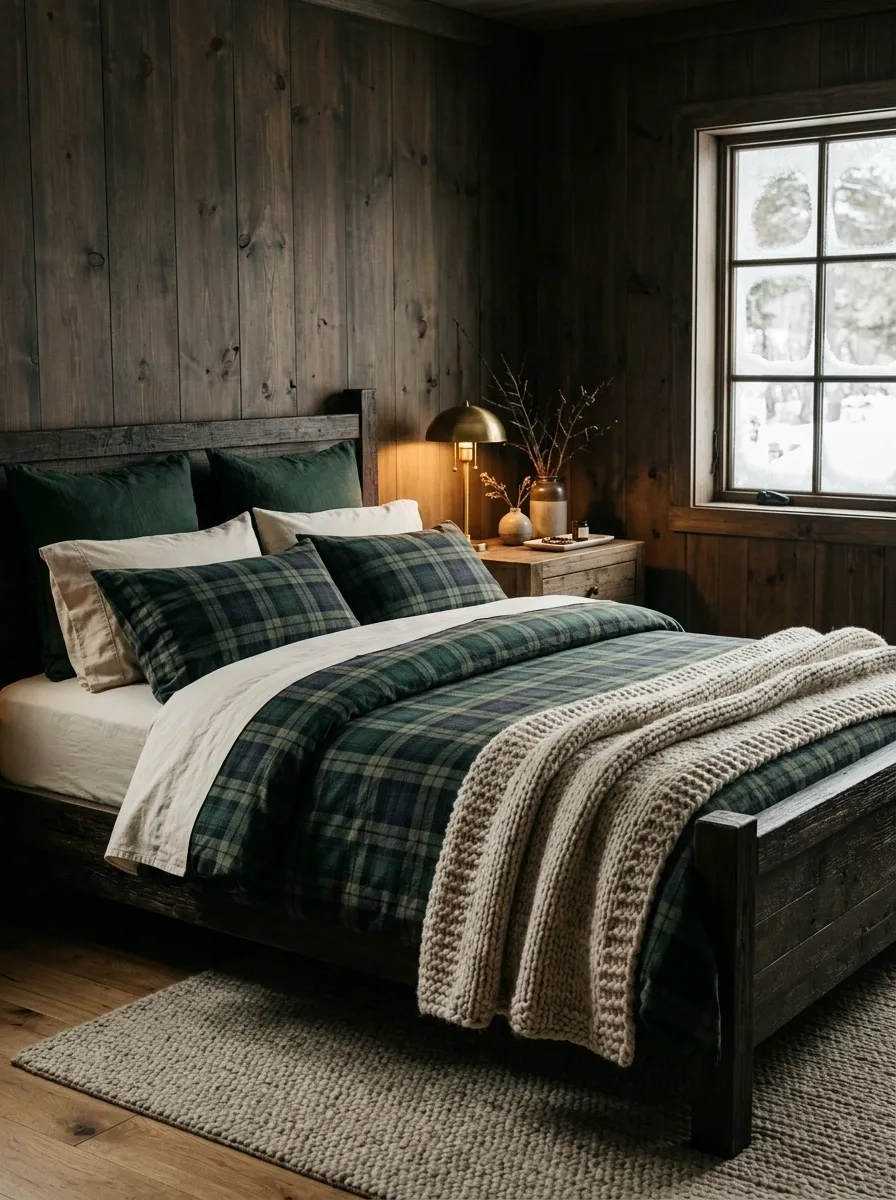
- Deep green checks, substantial wool blankets, and the warmth of dark timber.
Forest-green plaid bedding creates a classic cabin bedroom when paired with dark timber walls and a sturdy wooden bed. A checked duvet can anchor the composition, while solid green pillowcases and a thick wool blanket introduce quieter layers. Warm bedside lighting reveals the fabric’s texture, and a simple rug softens the floor around the bed. The room feels especially convincing when the wood grain remains visible rather than hidden beneath matching finishes.
Plaid should be the main pattern, not one of several competing statements. Keep the sheets plain and introduce cream or muted grey only where the bed needs a visual break. This gives the bedroom its seasonal character without turning it into a holiday display that forgot to pack itself away in January.
The cabin fabric mix
Let the plaid be the loudest thing in the room.
MAIN PATTERN
Forest plaid
Solid green
Quiet bedding layer
Warm cream
Visual breathing room
Bring the texture from elsewhere
Use wool for the blanket and visible grain for the furniture. The plaid supplies the pattern, so the other materials should contribute texture instead of more checks.
Smoked Rose Bedding With Cocoa Brown Accents
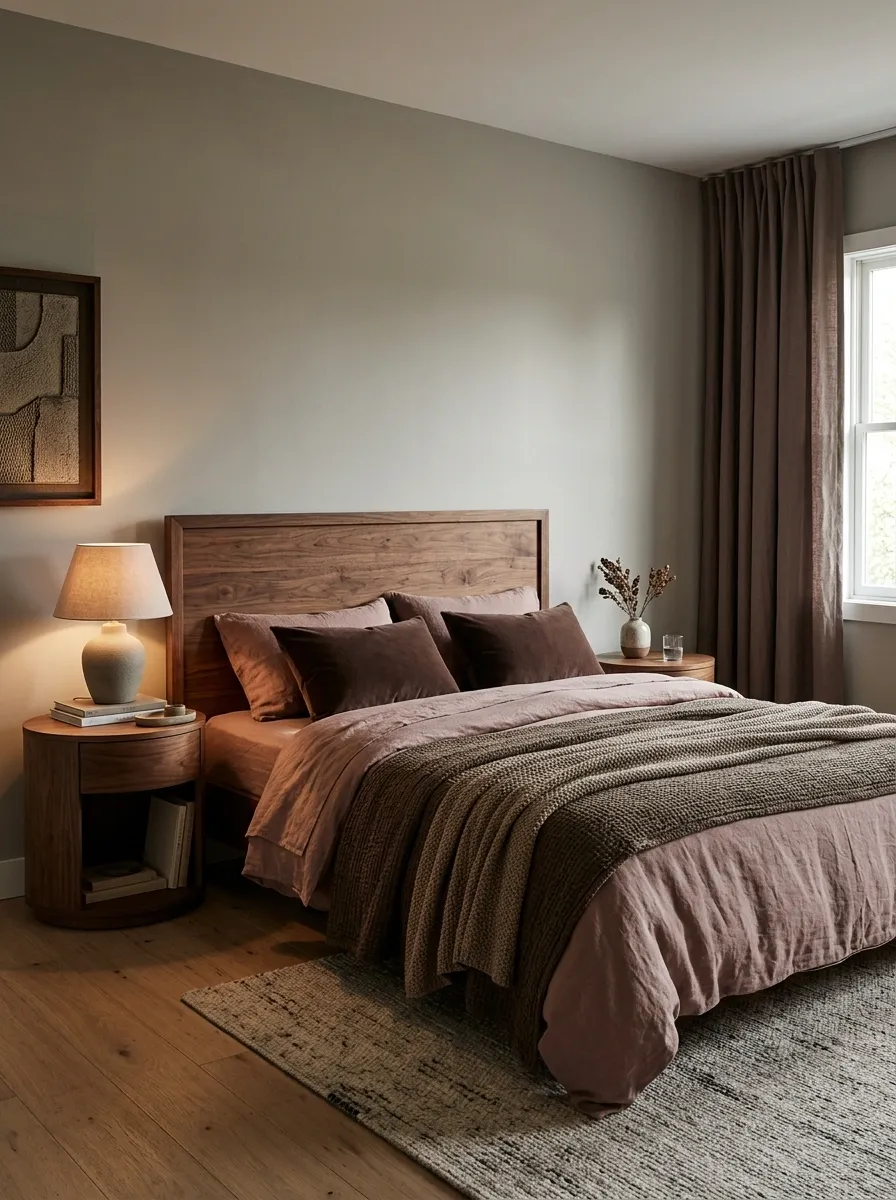
- Dusty rose, deep brown, and retro-inspired curves in a moody bedroom.
Smoked rose bedding gives a bedroom a softer character while cocoa-brown layers keep the palette grounded. A dusty rose duvet paired with darker brown cushions and a walnut headboard feels warm without drifting into sugary pink territory. Rounded bedside furniture and a softly shaded lamp reinforce the retro character, while deeper brown curtains or a muted wall color connect the entire room.
This composition works because the pink is subdued rather than pastel. The cocoa tones add visual weight, and the walnut gives the bed a clear architectural frame. Choose fabrics with different textures to create depth without introducing another strong color. The room should feel warm and mature, not like a box of pink accessories has been tipped onto the mattress.
The rose and cocoa balance
Soft color needs a deeper anchor.
Keep rose muted
A dusty undertone helps the bedding sit comfortably beside dark brown furniture and charcoal accents.
Repeat brown selectively
Use cocoa on a coverlet, cushions, or curtains, then let walnut furniture carry the remaining warmth.
Moody Plum Bedding in a Compact Attic Bedroom
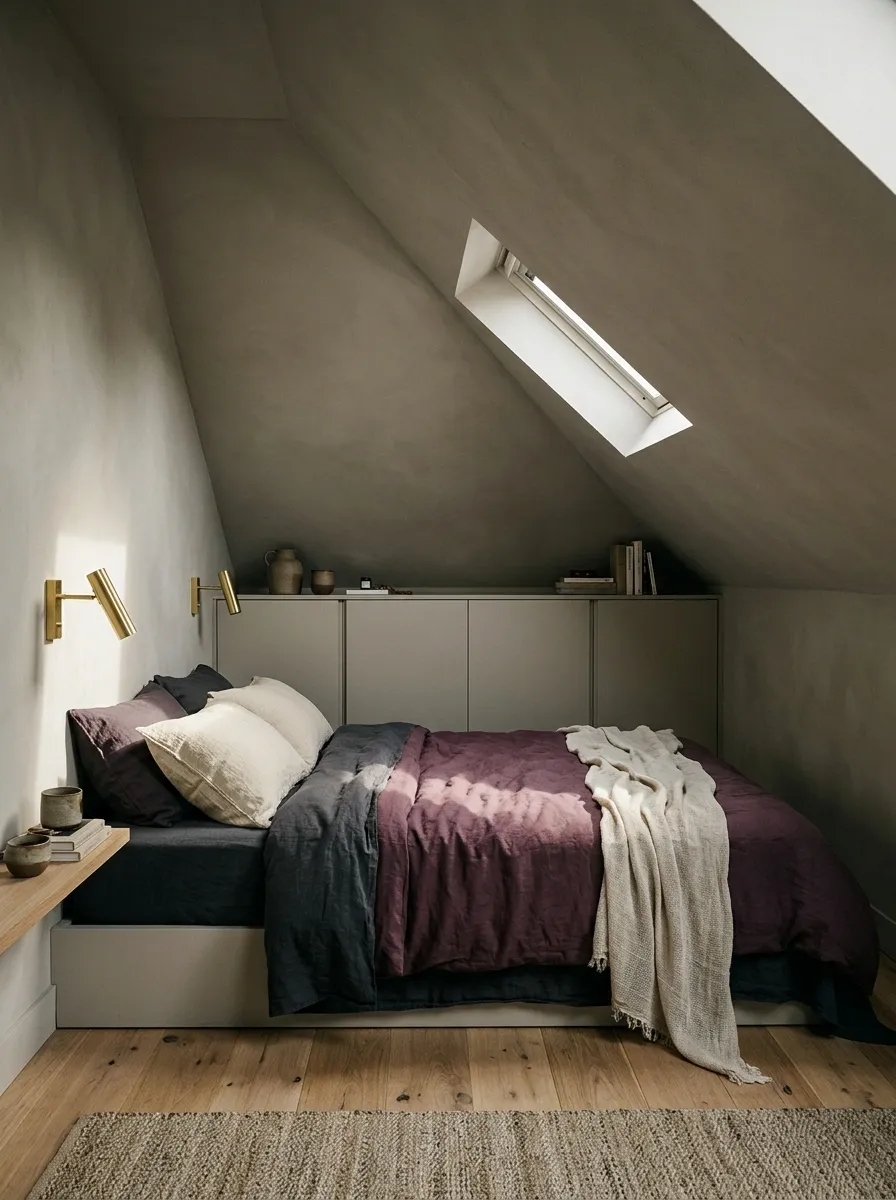
- Rich color and clever proportions in a bedroom shaped by sloping ceilings.
Plum and charcoal bedding can give a compact attic bedroom a distinctive focal point without relying on extra furniture. A low bed sits beneath the sloped ceiling, with built-in storage tucked into the lower wall and compact bedside lighting freeing up the limited floor space. Layer a deep plum duvet over charcoal sheets, then introduce a lighter pillowcase or textured throw to keep the bed’s outline visible.
The room’s shape should guide the layout. A tall headboard may compete with the roofline, while bulky nightstands can make the narrow walking route frustrating. Keep the furniture scaled to the available space and use the bedding for the richer color statement. The result feels intentional and atmospheric, rather than a dark bedroom where every useful surface has been sacrificed for another piece of furniture.
Working with an attic roofline
Let the room shape the layout.
Low-profile bed
Keeps the sleeping area beneath the sloped roof from feeling cramped by tall furniture.
Compact bedside lighting
Wall-mounted or carefully positioned fixtures free up valuable surface space.
Built-in lower storage
Uses low sections of the attic efficiently without filling the walking route with extra cabinets.
The planning priority: Protect the walking space first. Rich bedding can create the mood without taking up another inch of floor.
Choosing Moody Bedding That Works Beyond the Photograph
A moody bedroom doesn’t need black walls, dramatic lighting, or a completely new furniture set. Deep colors can work in a compact attic, an older cottage, a modern apartment, or a spacious room with a canopy bed. The difference is how the bedding relates to the room’s proportions, materials, and light.
Start by deciding which part of the bed should draw attention. Then choose supporting fabrics and finishes that add either contrast or texture without competing for the spotlight. A darker duvet can work with pale sheets, a busy floral print needs quieter surroundings, and a mostly neutral bed can still feel rich when its fabrics have different textures.
Before buying anything, save a few complete bedroom references and compare what they have in common. Look beyond the duvet to the headboard, floor, walls, furniture, and lighting. A bedroom that feels connected from one end to the other will always look more convincing than a collection of expensive pieces that never agreed to be in the same room.