
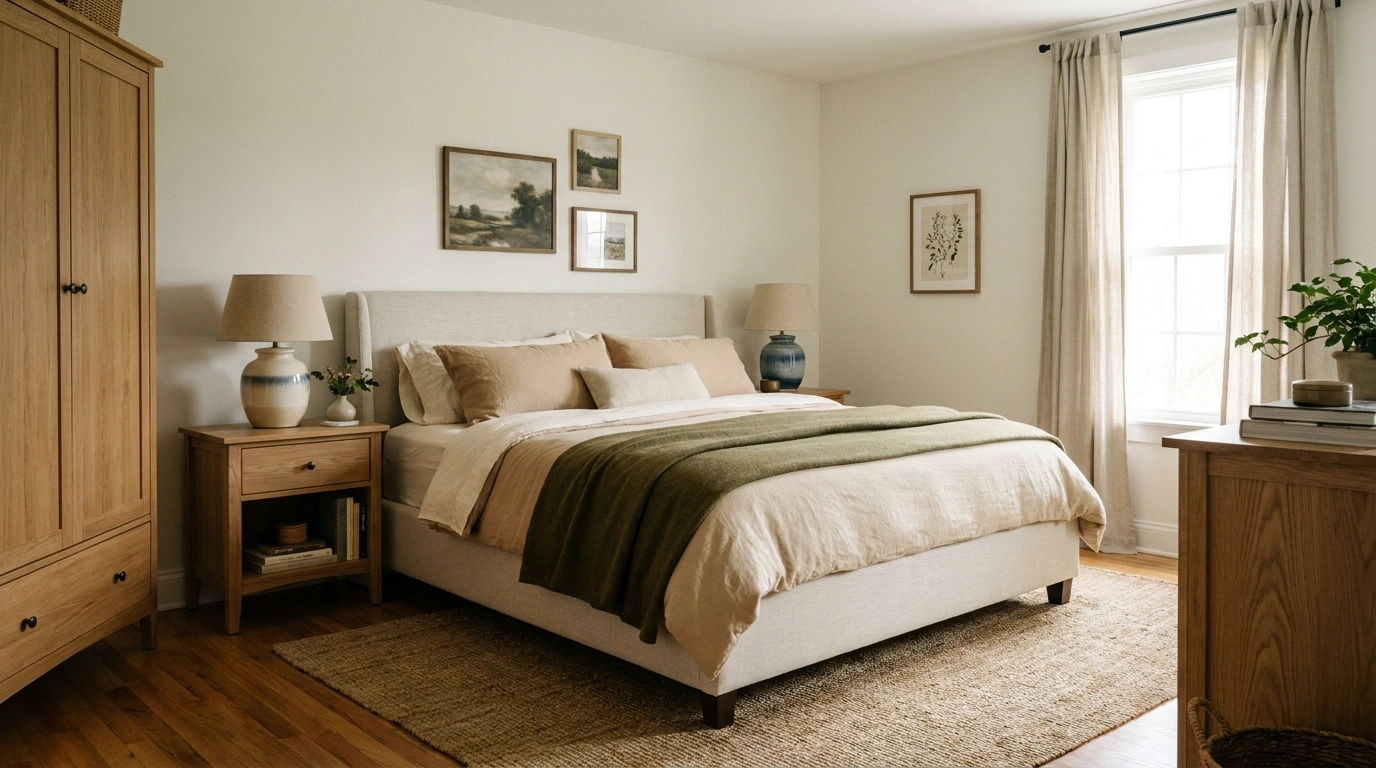
Sharing a bedroom is easy until two people have completely different opinions about what belongs in it. One wants dark walls and heavy curtains. The other wants sunlight, soft bedding, and approximately seventeen decorative pillows.
Meanwhile, the nightstands are cluttered, the laundry chair has become a permanent resident, and the bedroom that looked gorgeous online feels awkward in real life.
The Shared Bedroom Peace Treaty
The Shared Bedroom Series
The Bedroom Peace Treaty
Two adults. One bedroom. A suspicious number of pillow-related opinions.
A shared room shouldn’t feel like one person won the decorating argument and the other just lives there now.
01 / THE LIGHTING WAR
One reads. One wants a cave.
A bright ceiling light at bedtime is how peaceful evenings become a formal complaint.
THE FIX: Separate bedside lights with independent switches.
02 / THE DUVET DISPUTE
A blanket. Two competing agendas.
Different temperature preferences don’t need to become a nightly tug-of-war.
THE FIX: Layered bedding or individual covers in coordinating colors.
03 / THE STORAGE SCANDAL
The chair is now a wardrobe.
Laundry doesn’t become furniture just because it has occupied the same spot for three days.
THE FIX: Give each partner personal storage and agree on one shared clutter rule.
THE DESIGN RULE WORTH KEEPING
Different needs. One cohesive room.
Keep the main colors and materials connected. Let lighting, storage, and comfort choices meet individual needs. The bedroom doesn’t need a committee meeting every time someone buys a cushion.
Husband and Wife Bedroom Ideas
Create a Balanced Bedroom With Matching Bedside Tables
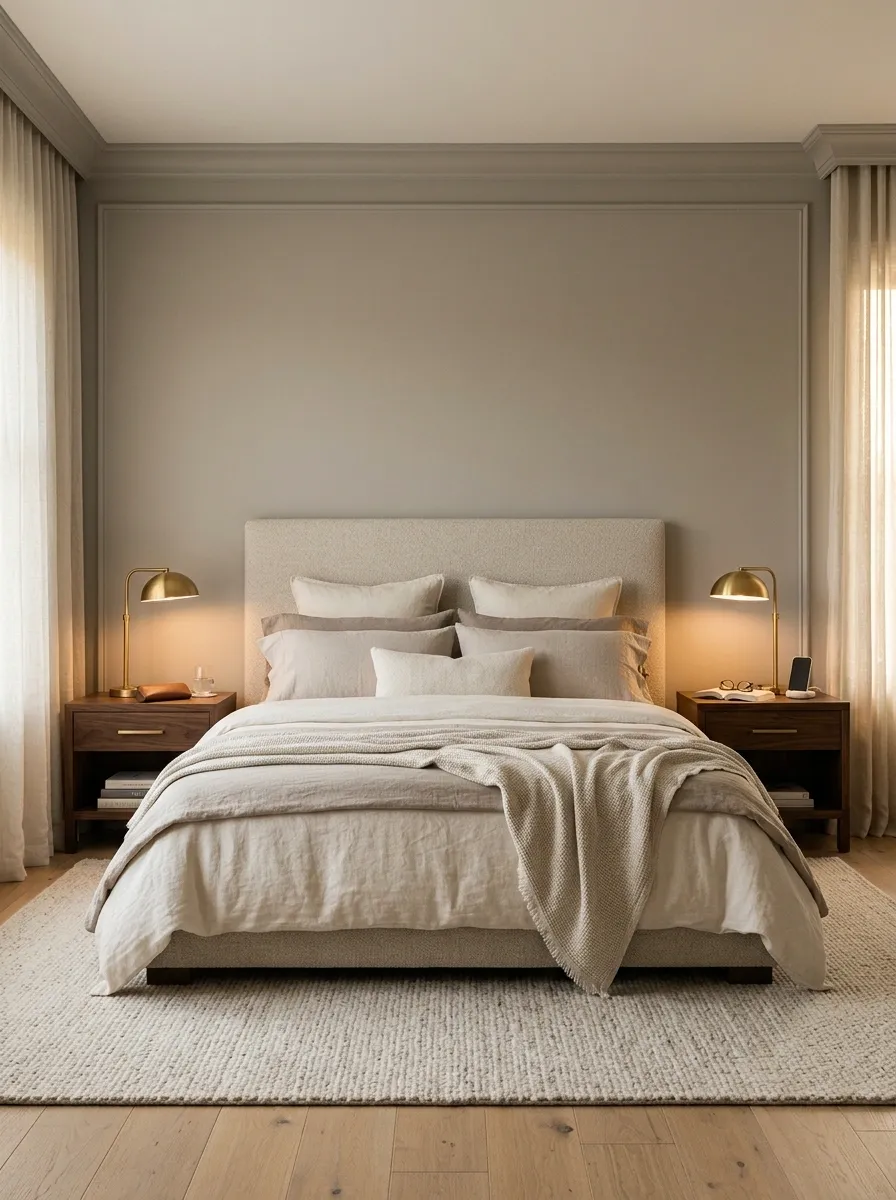
A bedroom instantly feels more organized when the two sides of the bed have a visual connection. Matching nightstands are an easy starting point, especially when one side currently has a proper table and the other has a stack of books doing unpaid furniture work.
Keep the shapes and finishes consistent, then let each side reflect individual habits. One person can keep a book and reading glasses nearby, while the other needs room for a charger and a glass of water.
The trick is matching the framework, not every tiny object. A coordinated bedroom looks intentional without looking like someone purchased the entire showroom display.
THE SYMMETRY FORMULA
Same foundation.
Individual details.
SIDE A
Everyday essentials
Reading book, water glass, small tray and a warm task lamp.
SIDE B
Different essentials
Phone charger, glasses case, favorite book and its own lamp.
THE SHARED THREAD
Repeat two or three finishes
Use matching table finishes, related lamp shapes and similar hardware. Personal objects can vary without making the room look divided.
Combine Warm Wood With Soft, Upholstered Finishes
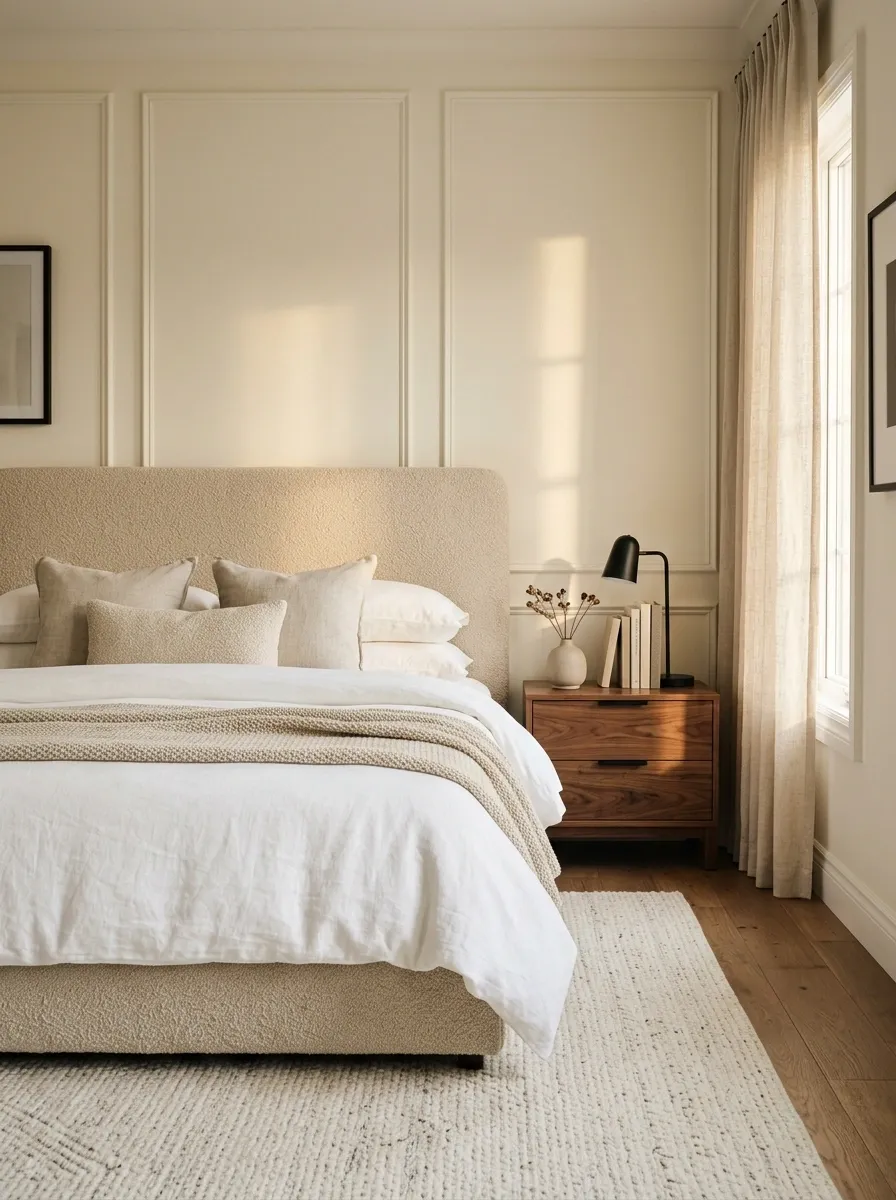
Warm wood and upholstered furniture make a bedroom feel inviting without relying on piles of decorative cushions to do all the work. A walnut nightstand beside a beige fabric bed creates contrast while keeping the overall look calm.
This pairing also prevents a common decorating problem: too many hard surfaces competing for attention. Wood supplies visual weight, while fabric softens the edges.
Keep the finishes deliberate. A wood bed frame, matching bedside tables and a textured upholstered headboard can work beautifully together, but five unrelated wood tones will make the room look like the furniture arrived through separate emergency purchases.
Use this quick material checklist before buying anything:
MATERIAL PAIRING CHECKLIST
Three finishes. Zero furniture identity crisis.
✓
Warm wood
Walnut, oak or a consistent medium brown finish.
✓
Soft upholstery
Linen-look fabric, boucle or a smooth woven headboard.
✓
One metal finish
Repeat black, brushed brass or another finish in small details.
Keep one material dominant and use the others as supporting details.
Choose a Shared Color Palette With Individual Accent Colors
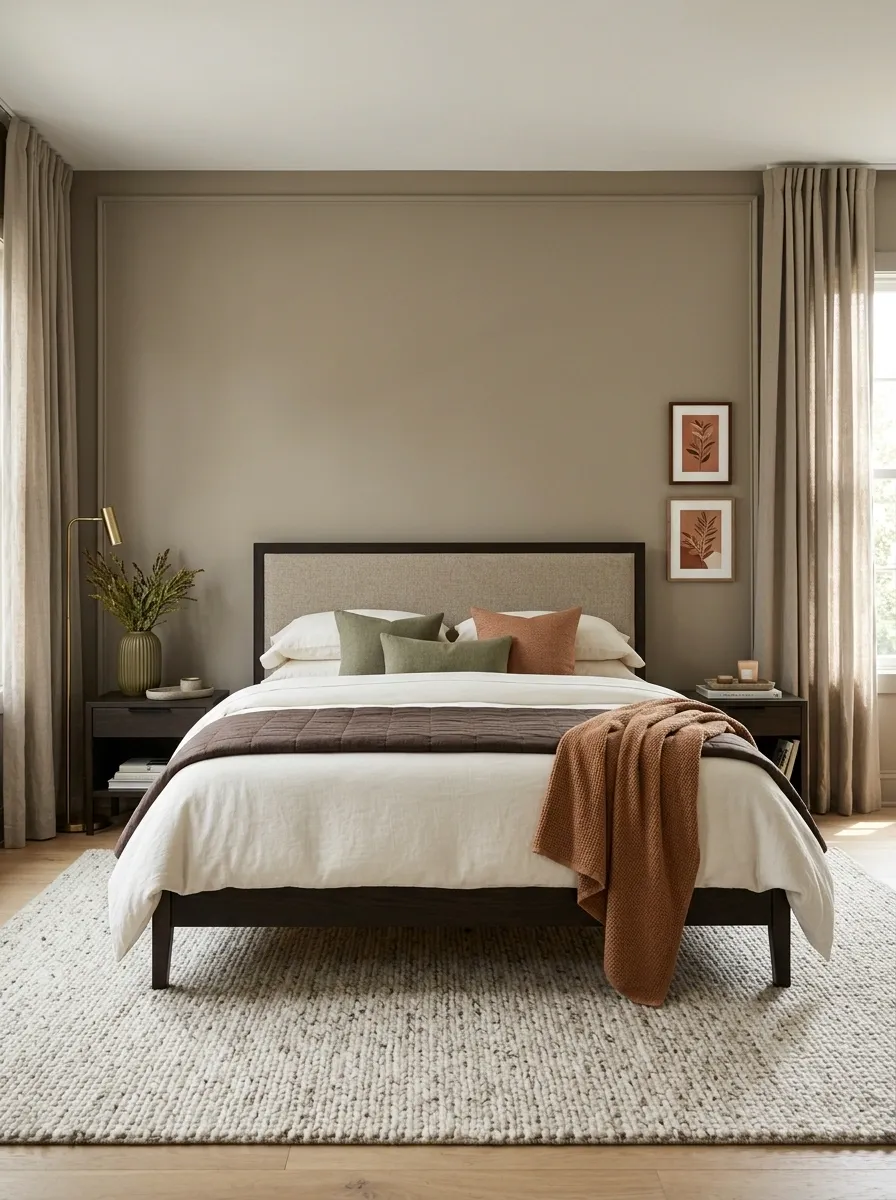
Pick one main color family that both partners can live with, then introduce smaller accents that add personality. This is more reliable than trying to negotiate every cushion, curtain and lampshade as a separate decorating crisis.
A warm neutral bedroom can handle olive green on one side and muted terracotta on the other. A charcoal bedroom can pair with dusty blue and warm caramel. The common background keeps everything connected.
Build the palette in this order: a main wall or bedding color, a supporting neutral, a darker grounding shade, and one or two accent colors.
That last part matters. The bedroom needs a common thread, not a color wheel having a public meltdown.
BUILD A PALETTE TOGETHER
One shared base. Two personal accents.
SHARED BASE
Warm taupe
Walls, curtains or large bedding pieces.
PERSONAL ACCENTS
Olive + terracotta
Cushions, throws, art and small accessories.
GROUNDING COLORS
Espresso + ivory
Furniture, frames, lamps and bedding layers.
Palette rule: Repeat each accent at least once elsewhere so it feels intentional instead of looking like an unrelated shopping decision.
Make an Upholstered Headboard the Room’s Main Feature
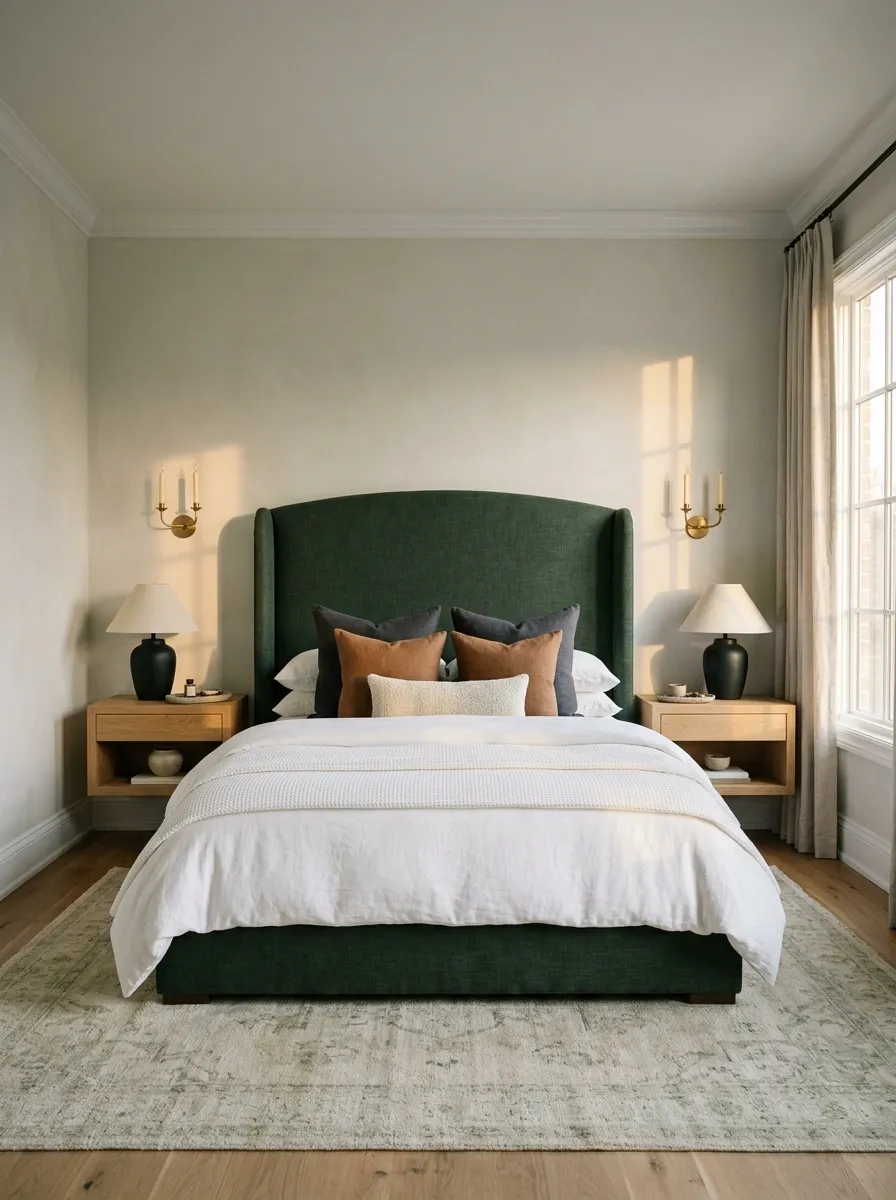
A large upholstered headboard gives the bed a finished look before a single decorative pillow enters the chat. It also softens a room full of wood, glass, metal or sharp furniture edges.
Choose a shape that suits the room. A wide, low headboard works well in a modern bedroom, while a tall, gently curved design creates a softer focal point. Neutral fabric keeps the bed flexible, but deep green, rust or navy can make the entire room feel more considered.
Don’t choose a headboard that’s too narrow for the bed or so oversized that it swallows the nightstands. The goal is a strong focal point, not a padded wall auditioning for the main role.
HEADBOARD FIELD NOTES
Choose the shape before the fabric.
▰
Straight and wide
Best for clean, contemporary rooms with simple furniture.
◠
Curved and soft
Best for relaxed bedrooms with rounded furniture and layered fabrics.
THE PRACTICAL CHECK
Measure the bed, wall and nearby nightstands together. Leave room for switches, outlets and lamps before ordering a tall or extra-wide design.
Give Each Partner Their Own Bedside Lighting
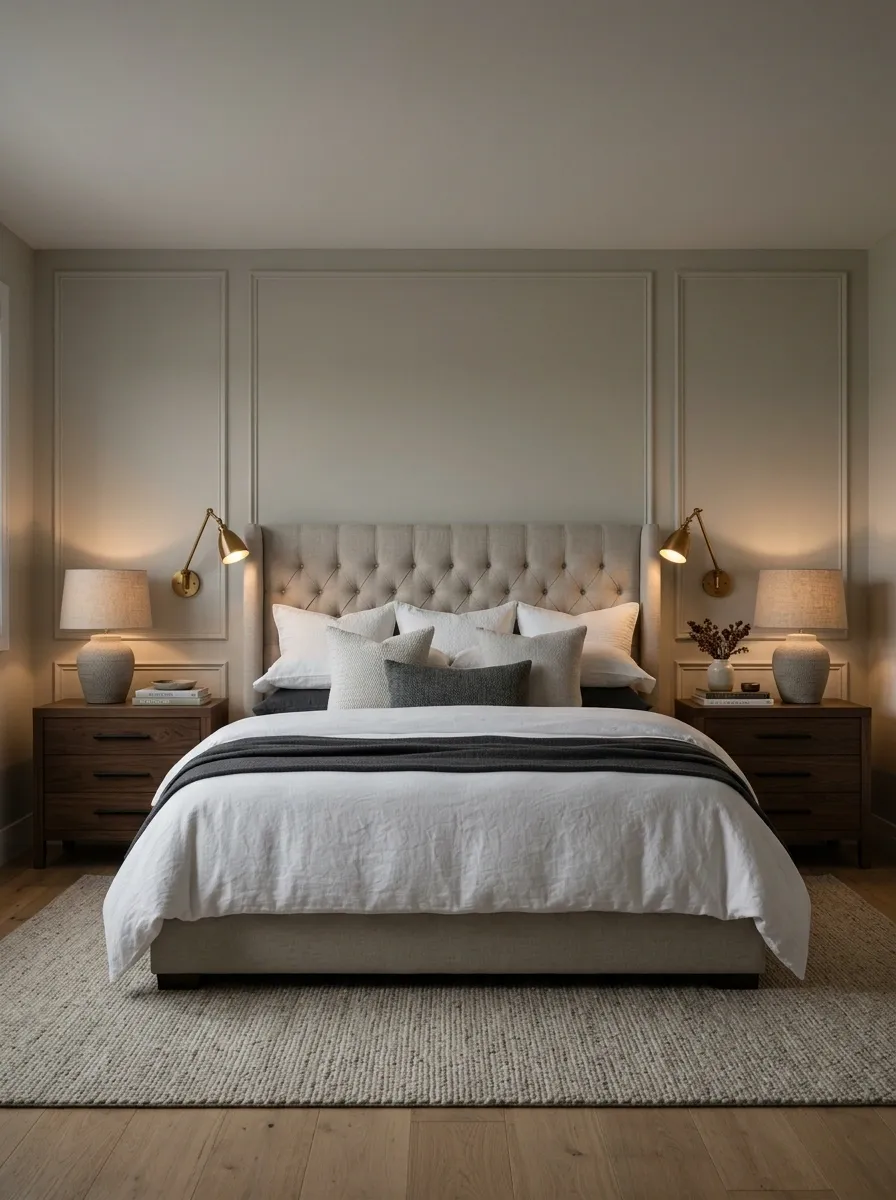
One central ceiling light is doing far too much work. It has to handle getting dressed, finding a dropped earring, reading before bed, and switching the room from daytime chaos to nighttime calm.
Give each side of the bed its own lamp and independent control. A focused reading lamp keeps light directed toward the page, while a warm ambient source makes the room feel softer when the day is done. Dimmable bulbs provide even more control.
Matching lamps can keep the room symmetrical, but they don’t have to be identical if the overall shapes and finishes work together.
The rule is simple: nobody should need permission to turn on a light to find their phone.
A BETTER BEDTIME LIGHTING PLAN
Three light sources.
Fewer bedtime complaints.
◉
Personal task light
A focused bedside lamp or adjustable wall light for reading without lighting up the whole room.
✦
Soft ambient light
A shaded lamp or dimmable ceiling fixture for winding down without harsh overhead glare.
⌁
Low-level night light
A subtle floor-level light near the path to the door, bathroom or wardrobe.
THE FINAL DETAIL
Keep each bedside control easy to reach. Choose compatible bulbs and fixtures, then check that the light doesn’t shine directly into the other person’s eyes.
Layer Bedding in Colors That Complement Each Other
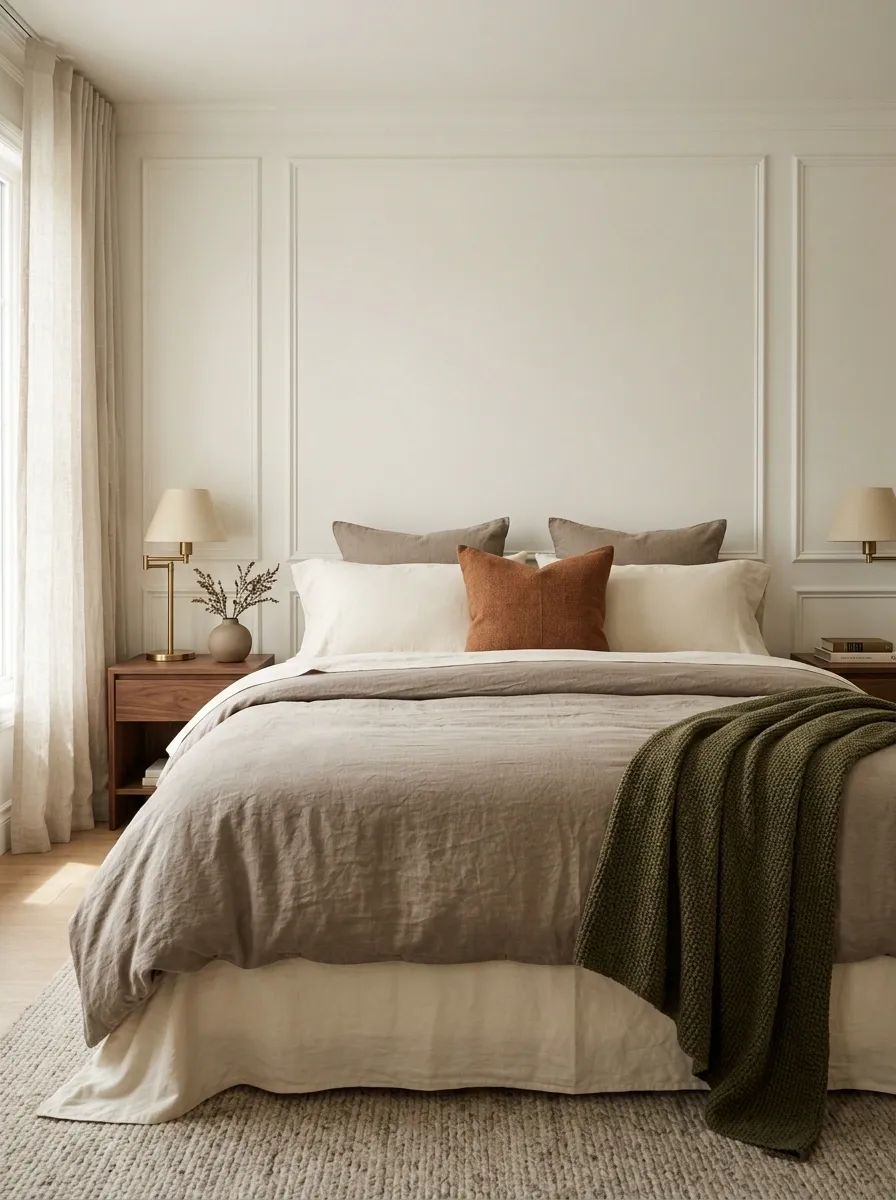
A shared bed doesn’t need matching everything. In fact, identical pillows, identical throws, identical cushions, and identical bedside styling can make the room feel like a furniture showroom with strict visitor rules.
Start with one shared bedding color, then layer in different textures and smaller accent colors. Think warm ivory sheets, a taupe duvet, a deep olive throw on one side, and a rust-colored cushion that picks up the same tones elsewhere in the room.
The bed stays cohesive without looking painfully coordinated.
The easiest formula is one base color, one supporting shade, and one accent. Keep the largest pieces calm, then use smaller layers to introduce personality.
THE BEDDING FORMULA
Mix the layers, not the entire paint aisle.
Base layer
Ivory or warm white sheets for a clean foundation.
Main layer
Taupe, muted gray, or a warm earthy duvet cover.
Accent layer
Olive, rust, navy, or another shade that connects with the room.
Texture does the heavy lifting. Combine smooth cotton, a softly woven blanket, and one textured cushion instead of piling on decorative extras.
Add a Small Seating Corner for Quiet Time Together
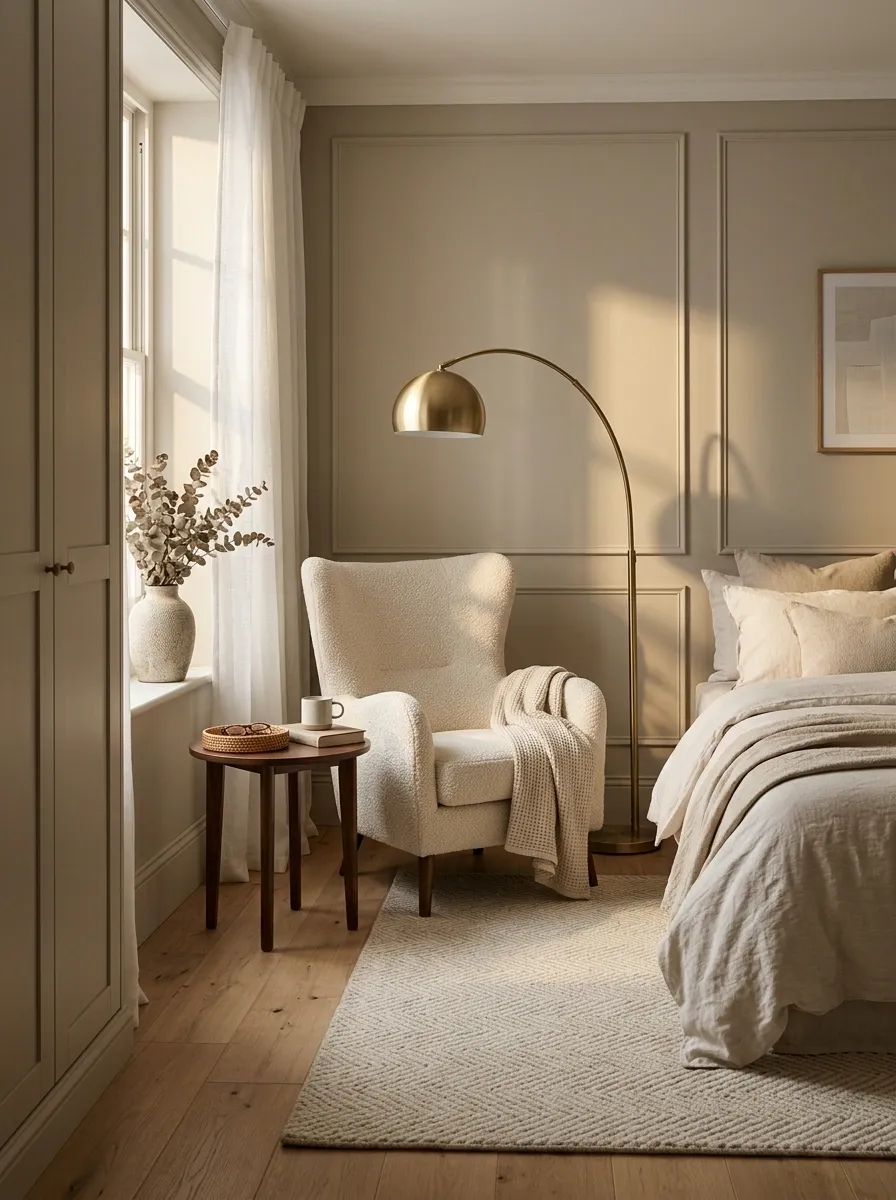
A bedroom seating corner gives the room another purpose beyond sleeping and wondering where the clean laundry went. Even a single comfortable chair beside a window can make the space feel more finished.
In a larger bedroom, use two compact chairs and a small round table. In a smaller room, choose one accent chair with a floor lamp and a narrow side table. Keep the arrangement away from wardrobe doors and the walking route around the bed.
The seating should look inviting, not like an obstacle course created by someone who has never carried a laundry basket.
Measure the clear floor space first. The room needs to function before the furniture gets its own photoshoot.
THE QUIET CORNER BLUEPRINT
A little space to sit. A lot less wasted floor.
The seat
Choose a chair with a comfortable back and a footprint that fits without blocking the window or wardrobe.
The table
Add a compact surface for a book, tea mug, or phone. A large coffee table isn’t required for one chair.
The lighting
Use a floor lamp or wall light so the corner works for reading without switching on every light in the room.
BEFORE BUYING
Mark the proposed furniture footprint with masking tape. Walk past it, open nearby doors, and check the route around the bed. If moving through the room feels awkward, the seating is too big.
Style the Bed Wall With Coordinated Artwork
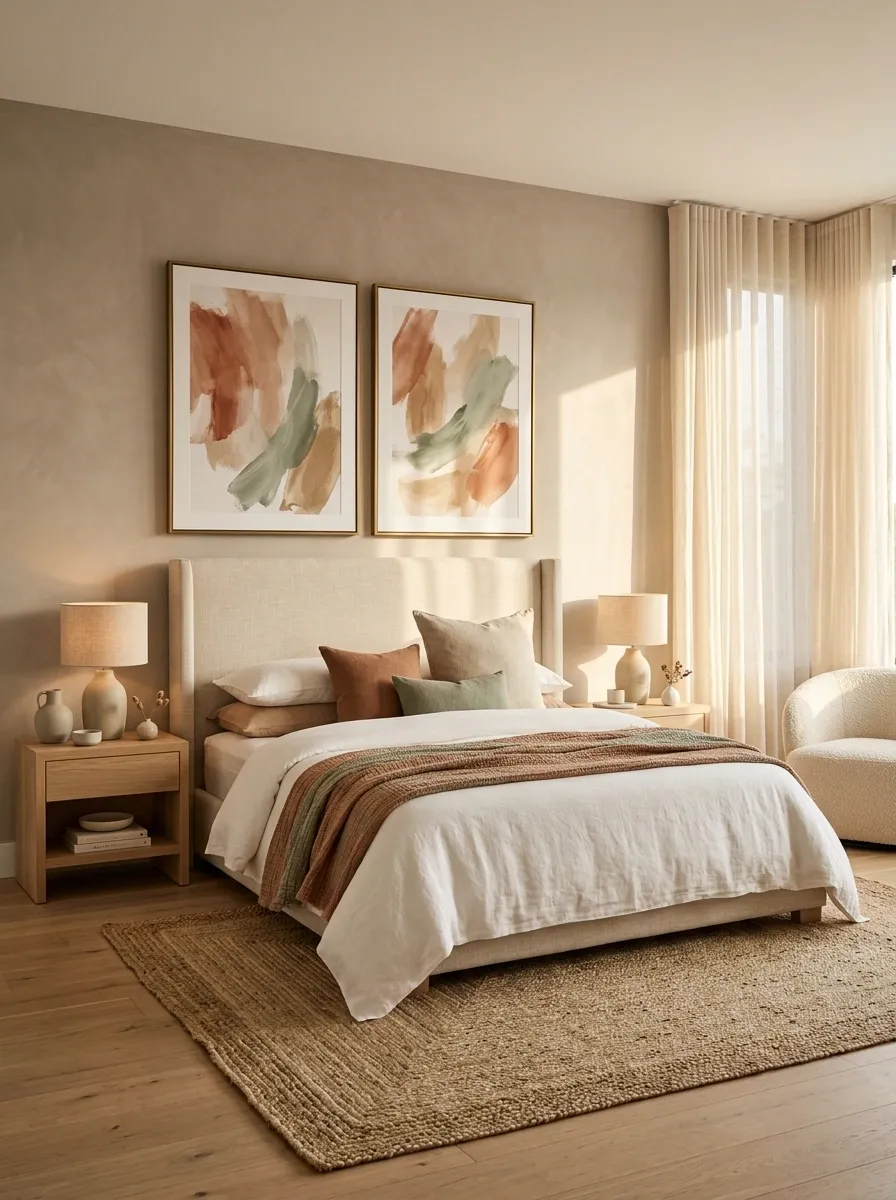
The wall above the bed has a big job. It anchors the room visually, fills the largest empty area, and can make even simple furniture look considered. Leaving it completely bare isn’t always minimalism. Sometimes it’s just a wall waiting for a decision.
Choose one large artwork, a pair of coordinated prints, or a clean arrangement of three pieces. Keep the artwork connected through color, subject, or frame finish rather than buying several unrelated prints because they were on sale.
Hang the artwork at a comfortable viewing height, with enough space above the headboard to avoid a cramped appearance.
Skip the random assortment of tiny frames. A bedroom needs a clear focal point, not a gallery wall having an identity crisis.
BED WALL CHECKLIST
Make the wall look intentional.
□ Choose the scale
Use one substantial piece or a balanced group that relates to the bed’s width.
□ Repeat a color
Pick a shade already present in the bedding, curtains, rug, or accent furniture.
□ Check the frames
Coordinate the frame finish or keep the artwork visually related through tone and style.
□ Test the placement
Use paper cutouts to preview the arrangement before making holes in the wall.
Artwork should relate to the bed, not compete with it. Let one feature lead and keep the surrounding decor quieter.
Use Built-In Bedside Storage to Reduce Clutter
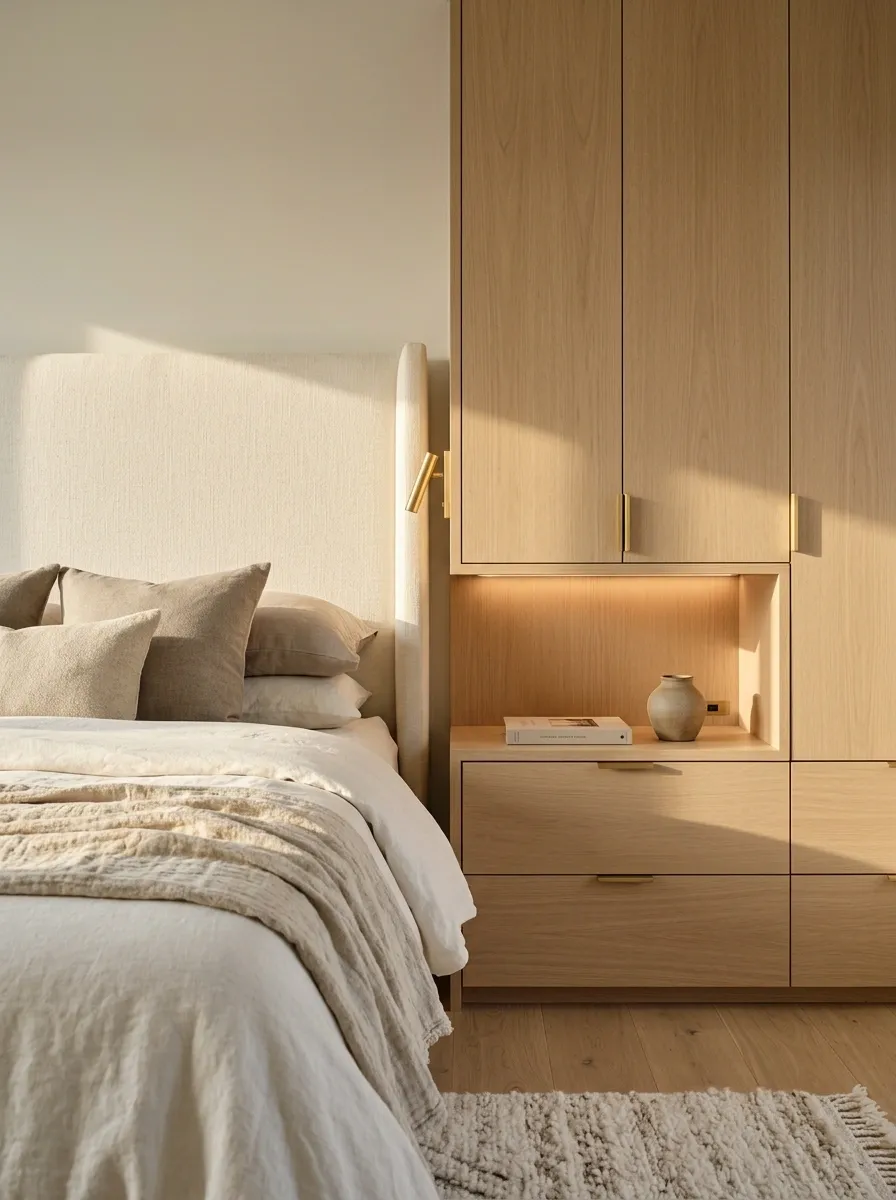
Built-in bedside storage earns its place by hiding everyday mess without sacrificing the clean lines of the bedroom. It’s especially useful when both partners have their own collection of chargers, books, skincare, glasses, and items that somehow multiply overnight.
Combine closed drawers for personal belongings with one open niche for a book or a small decorative object. Add discreet cable access if phones and other devices charge beside the bed. Integrated storage also helps when narrow walkways leave little room for bulky freestanding nightstands.
Don’t build shelves simply because empty wall space exists. Every compartment should have a clear job.
The winning combination is hidden storage for clutter and open space for the few things worth seeing.
INSIDE A SMART BEDSIDE UNIT
Everything has a home. The top stays calm.
ZONE A
The drawer
Hide chargers, medication, glasses cases, personal care items, and loose accessories.
BEST FOR: Visual calm
ZONE B
The open niche
Keep one current book, a small basket, or an item needed every night.
BEST FOR: Easy access
ZONE C
The cable route
Plan outlet access and discreet cable openings so wires don’t drape across the floor.
BEST FOR: Daily charging
Design note: Give each partner separate drawers or clearly divided compartments. Shared furniture doesn’t mean every personal item needs joint custody.
Bring Depth Into the Room With a Textured Accent Wall
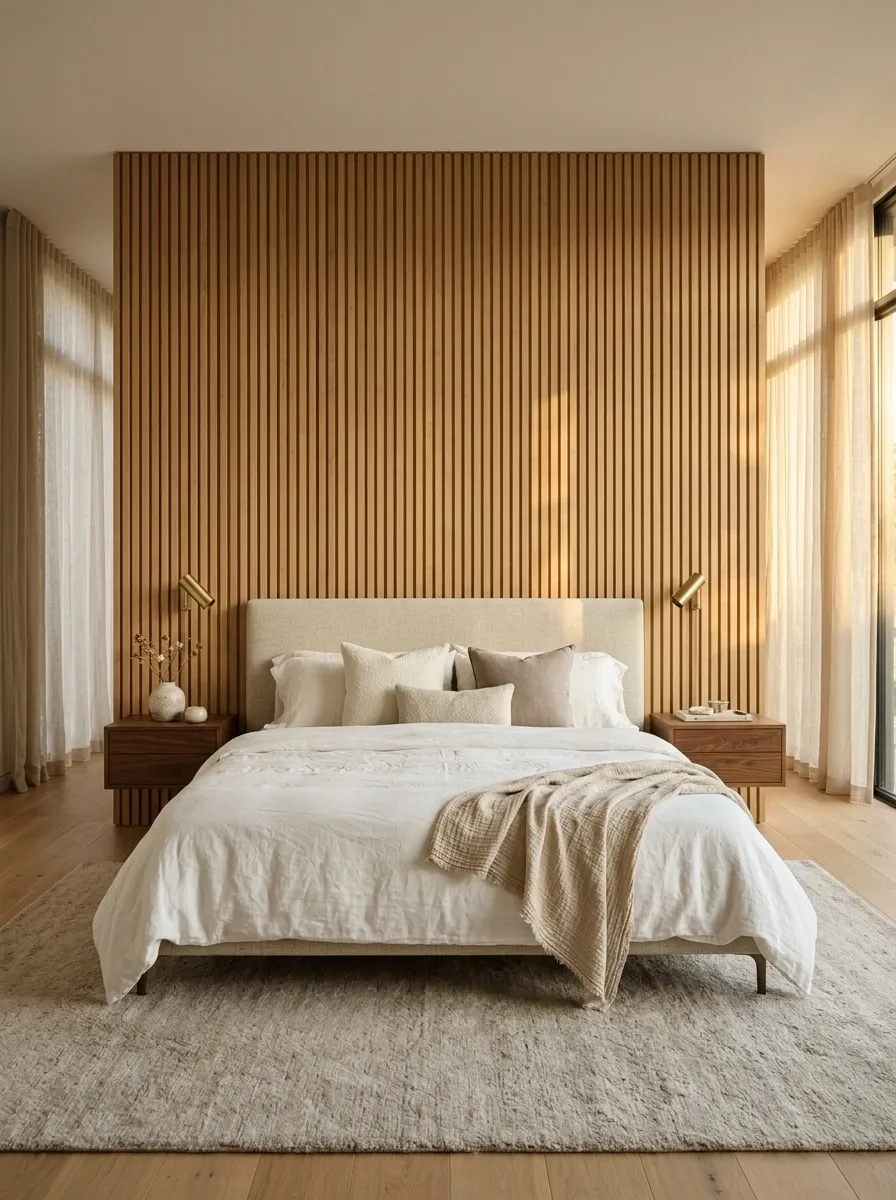
Paint alone can make a bedroom feel finished, but texture adds another layer without filling the floor with extra furniture. Consider vertical wood slats, subtle limewash, upholstered wall panels, or wallpaper with a quiet woven pattern.
Choose the finish according to the room’s existing furniture. Wood slats add structure to a plain bed wall, while limewash creates gentle variation that works well with natural fabrics. Upholstered panels bring softness, particularly in a contemporary bedroom with many smooth surfaces.
Don’t combine several dramatic wall finishes in one small room. The bed wall should support the bedroom’s design, not start competing with the headboard, artwork, curtains, and every other thing trying to be the main character.
Compare the finishes before committing:
ACCENT WALL MATERIAL GUIDE
Choose texture that suits the room.
Wood slats
Adds vertical lines and architectural structure.
WORKS WELL WITH: Plain bedding and simple furniture
Limewash paint
Creates soft, cloudy variation without a bold pattern.
WORKS WELL WITH: Linen and natural wood
Upholstered panels
Introduces softness and a tailored, padded finish.
WORKS WELL WITH: Modern and softly layered rooms
Textured wallpaper
Adds pattern or a tactile effect with less construction.
WORKS WELL WITH: Restrained furniture and accessories
Before buying: Test a sample against the headboard and bedding in daylight and at night. Texture and undertones can look very different under warm bedside bulbs.
Frame the Bed With Floor-Length Curtains
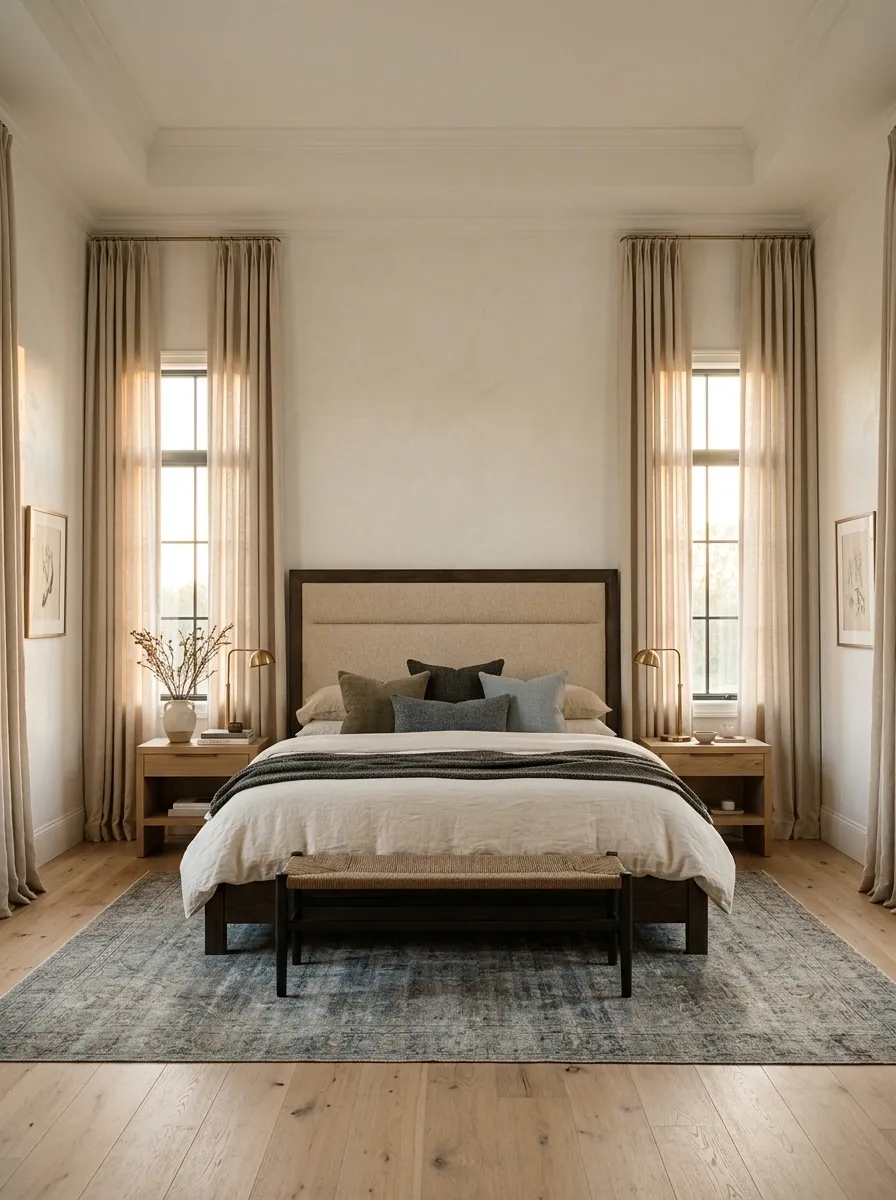
Floor-length curtains can make the bedroom feel taller, softer, and more finished without adding another piece of furniture. They also help create a calmer backdrop around the bed, especially when the windows sit close to the headboard or bedside tables.
Choose curtains that relate to the bedding rather than matching every fabric in the room. Warm ivory works with wood and earthy colors, while deep olive, charcoal, or muted blue can give a neutral bedroom more depth. Hang the curtain rod higher than the top of the window when the wall allows, and extend it beyond the window edges so the panels don’t block too much daylight when open.
The biggest mistake? Curtains that stop awkwardly above the floor. They look like they arrived before the measuring tape did.
WINDOW TREATMENT FIELD GUIDE
Good curtains do more than cover glass.
Light-filtering linen
Softens incoming daylight while keeping the room bright.
BEST FOR: Airy, relaxed bedrooms
Blackout curtains
Help reduce incoming light for people who sleep better in a darker room.
BEST FOR: Light-sensitive sleepers
Layered curtains
Combine a sheer layer with a heavier outer curtain for flexible privacy and light control.
BEST FOR: Shared bedrooms with changing needs
BEFORE YOU ORDER
Measure the rod height, window width, and finished curtain length. Check radiator clearance, nearby furniture, and whether the panels can open fully without covering the glass.
Add a Bench at the Foot of the Bed
A bedroom bench gives you somewhere to sit while putting on shoes, laying out tomorrow’s clothes, or folding a blanket that has somehow migrated to the opposite side of the room. It’s useful, provided it doesn’t turn the route around the bed into an obstacle course.
Choose an upholstered bench for a soft, coordinated look, a wood bench for a more natural style, or a storage bench when the room needs another place to hide spare linens. A narrow design is usually easier to fit at the foot of the bed than a deep, bulky piece.
Measure the walking space first. Decorative furniture stops being decorative when everyone has to shuffle sideways to get past it.
THE BEDROOM BENCH TEST
Useful seat or expensive trip hazard?
OPTION A
Upholstered bench
Adds a soft texture and a comfortable place to sit. Best when the room has enough clear floor space.
OPTION B
Storage bench
Holds extra bedding or spare pillows, making it useful in bedrooms with limited closet space.
OPTION C
Slim wood bench
Keeps the look lighter and introduces a natural finish without bulky upholstery.
THE NON-NEGOTIABLE CHECK
Open drawers, walk around the bed, and check access to nearby doors before choosing the size. If the bench interrupts the natural walking route, skip it.
Mix Black, Brass, and Wood for a Modern Couple’s Bedroom
Black, brass, and wood create a strong bedroom palette because each material does a different job. Black adds definition, brass introduces warmth, and wood keeps the room from feeling too sharp or formal.
The trick is proportion. Use black on a bed frame, drawer handles, or lamp bases. Bring in brushed brass through a mirror frame, wall light, or small decorative detail. Let wood remain the main grounding material through the nightstands, dresser, or flooring.
Avoid giving every finish the same amount of attention. A bedroom with black furniture, shiny gold trim, and several competing wood tones can look more like a collection of separate purchases than a considered design.
Choose one dominant material, one supporting finish, and one accent. That’s enough to make the room feel layered without turning the hardware into a competition.
THE MODERN MATERIAL MIX
Three finishes. One deliberate plan.
Matte black
Use for bed frames, lamp bases, handles, and slender furniture legs.
ROLE: DEFINITION
Brushed brass
Use sparingly on lighting, mirror frames, or small hardware details.
ROLE: WARMTH
Natural wood
Use for large furniture pieces and other surfaces that anchor the room.
ROLE: BALANCE
THE FINISHING RULE
Repeat each metal finish in at least two small places, and keep the wood undertones related. You don’t need an exact match, but the finishes should look like they belong in the same room.
Create a Shared Vanity or Dressing Zone
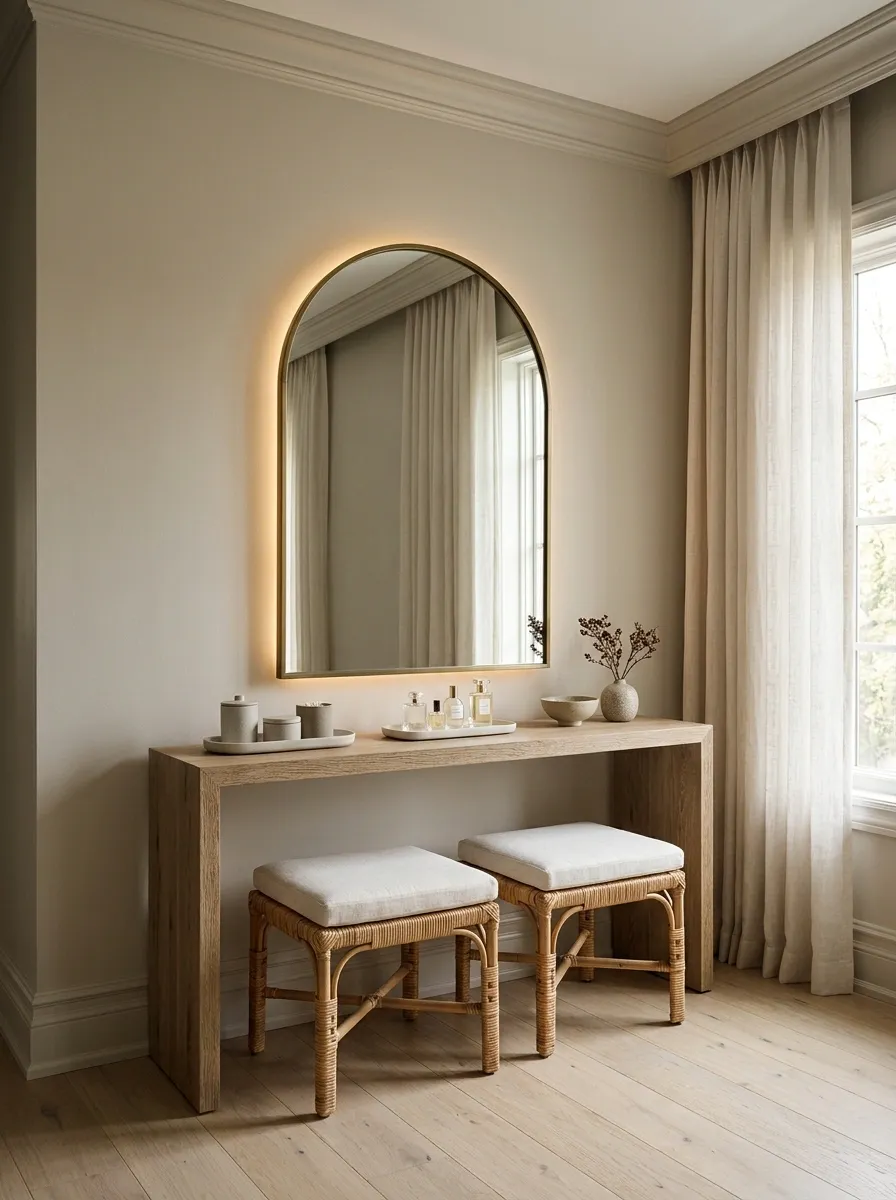
A shared bedroom gets frustrating quickly when getting dressed means searching for a missing belt while someone else needs the mirror. A dedicated vanity or dressing area gives everyday routines a home and keeps personal items from spreading across the bedside tables.
In a larger room, a slim vanity with drawers and a well-lit mirror can sit against an unused wall. In a compact bedroom, use a narrow console, a wall-mounted shelf, or a dresser with a mirror above it. Include storage for grooming supplies, jewelry, accessories, and the small items that otherwise gather beside the bed.
Keep frequently used items within easy reach and reserve closed drawers for less attractive essentials. The goal isn’t creating a salon inside the bedroom. It’s making mornings less chaotic.
Plan the routine before choosing the furniture. Storage that doesn’t fit the way both people get ready is just clutter wearing a nicer outfit.
THE SHARED DRESSING STATION
Give the morning routine some structure.
ZONE 01
The mirror
Use a mirror with suitable lighting. Keep it clear of items that don’t belong to the dressing routine.
ZONE 02
Personal storage
Divide drawers or organizers for grooming tools, skincare, jewelry, watches, and accessories.
ZONE 03
Daily essentials
Keep the items used every morning accessible. Store occasional-use products out of sight.
SMALL ROOM SOLUTION
Mount a mirror above a narrow dresser or floating shelf instead of adding a separate vanity table. Check drawer clearance and walking space before installing the shelf.
Choose Bedding That Meets Different Sleep Preferences
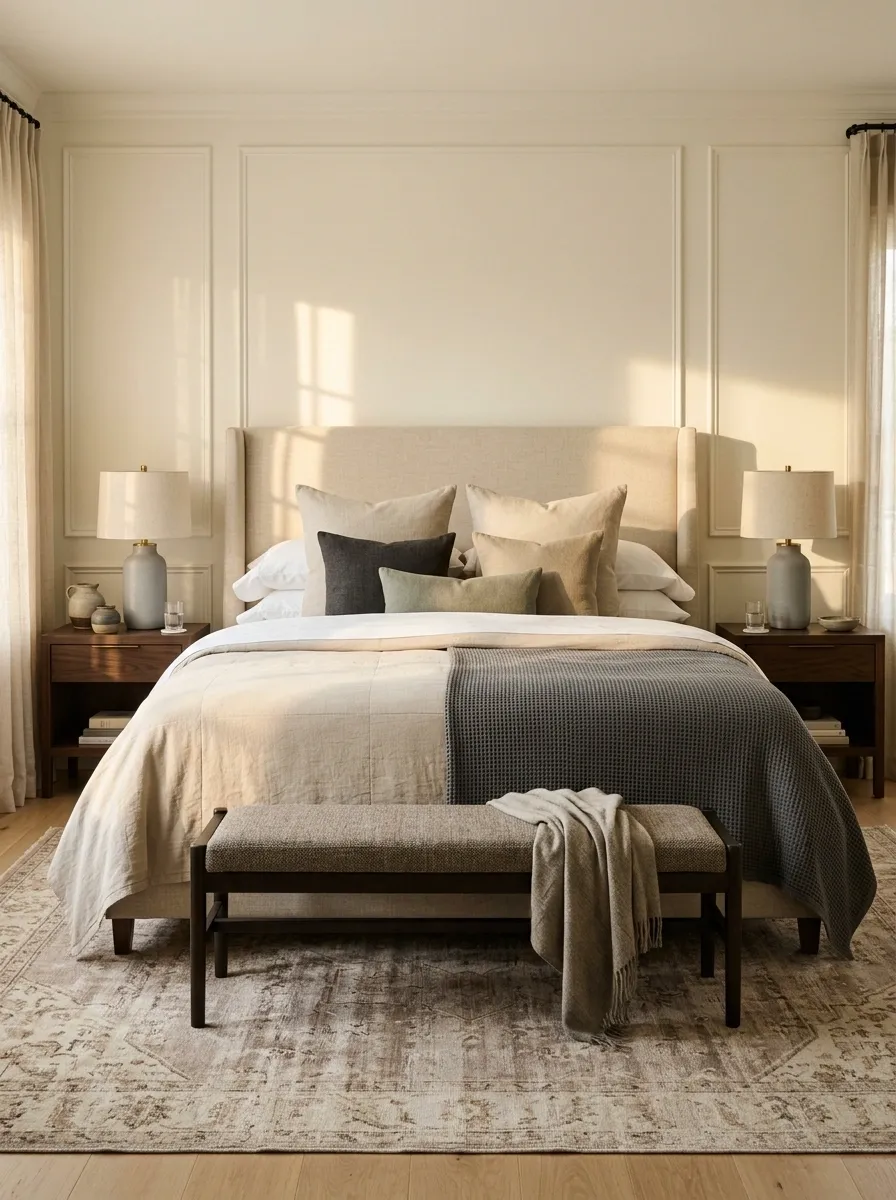
Two people sharing a bed don’t automatically share the same idea of comfortable bedding. One likes a light cotton cover, the other wants something heavier. One gets warm at night, while the other keeps reaching for another layer.
The solution isn’t buying increasingly expensive bedding and hoping everyone adjusts. Start with breathable sheets that feel comfortable to both people, then make the top layers flexible. A lighter duvet with a separate blanket, or two individual covers in coordinating colors, can handle different temperature preferences without making the bed look mismatched.
Pillow firmness matters, too. Decorative pillows can coordinate with the room, but the pillows used for sleeping should suit each person’s comfort needs.
Shared style doesn’t require shared sleep settings. Nobody needs to lose the blanket negotiations for the sake of a coordinated photograph.
THE TWO-SLEEPER BEDDING PLAN
One coordinated bed. Different comfort settings.
SLEEPER A
Prefers lighter bedding
Choose breathable sheets and keep a lightweight cover easy to reach.
PERSONAL DETAIL
A thinner blanket or lighter duvet insert.
SLEEPER B
Prefers extra warmth
Layer a blanket over the shared bedding or use a separate cover for more control.
PERSONAL DETAIL
A warmer top layer that can be removed separately.
KEEP THE BED VISUALLY CONNECTED
Choose covers from the same color family, repeat one fabric texture, and fold extra layers neatly at the foot of the bed when they’re not in use. Different bedding needs don’t have to create a visual mess.
Use Layered Lighting Instead of One Bright Ceiling Light
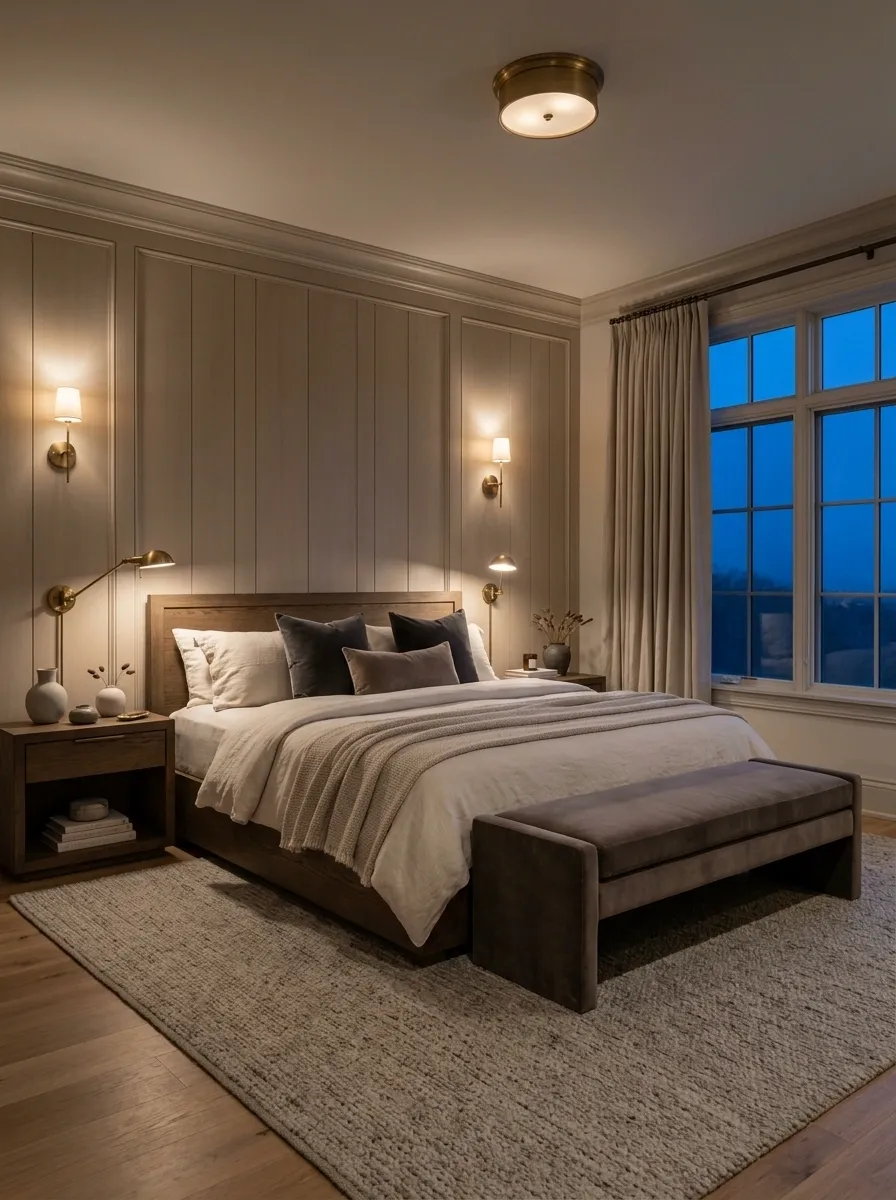
A single ceiling light trying to handle every bedroom activity is doing too much. It can make a beautifully decorated room feel flat, especially when the bedding, wood finishes, and wall colors lose their depth under harsh overhead light.
Use three levels instead: ambient lighting for the whole room, task lighting for reading or getting dressed, and softer accent lighting for evenings. A dimmable ceiling fixture, bedside lamps, and a subtle wall light can create different moods without changing a single piece of furniture.
And please, stop relying on decorative fairy lights to solve every lighting problem. They’re not a substitute for fixtures that actually help people see.
The practical rule: Install or position lights according to what happens in each part of the bedroom.
LIGHTING PLACEMENT GUIDE
Give every light a real job.
01 / AMBIENT
Ceiling fixture
Provides overall illumination for getting dressed, cleaning, and moving around.
02 / TASK
Bedside or wall lamp
Directs light toward reading or another specific activity without lighting the whole room.
03 / ACCENT
Wall or low-level light
Creates softer pools of light near architectural details or the path through the room.
Couple-friendly detail: Give each bedside light its own switch, and use compatible dimmable bulbs where the fixtures support them.
Divide Shared Dresser Storage Into Clear Personal Zones
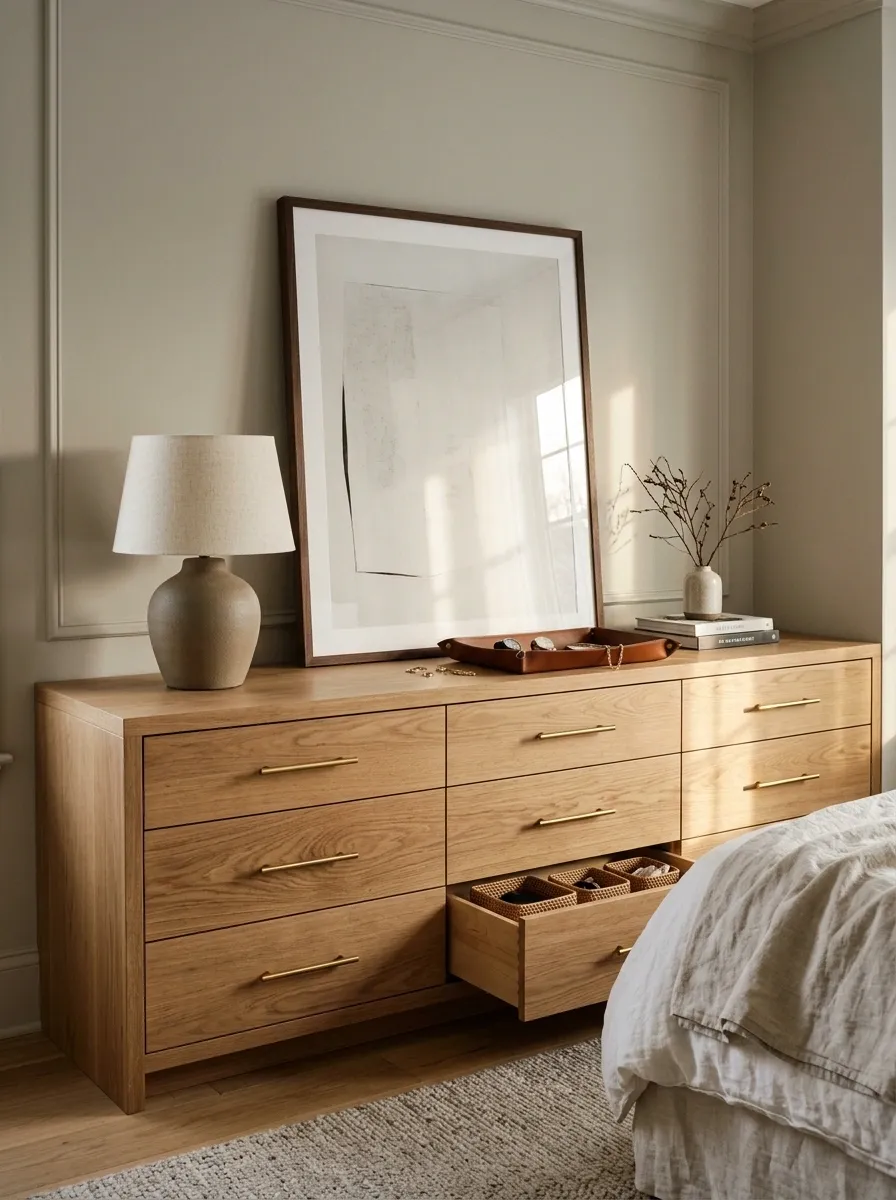
A shared dresser doesn’t need to become a daily archaeological expedition. Give each partner dedicated drawers or clearly divided sections, then keep common items in a separate spot.
Store everyday clothing at an easy-to-reach height, use small organizers for socks and accessories, and reserve deeper drawers for bulkier pieces. A shallow tray on top can hold watches, jewelry, or other items used every day, while the remaining surface stays mostly clear.
The goal isn’t creating an elaborate organization system that requires a weekly staff meeting. It’s making sure both people can find what they need without moving the entire contents of someone else’s drawer.
Build the storage around actual habits, not an aspirational version of how tidy everyone will be next Monday.
THE SHARED DRESSER PLAN
Separate spaces. Less drawer drama.
PERSONAL ZONE A
Daily clothing
Keep frequently worn clothes in the easiest drawers to access.
ORGANIZE WITH: Drawer dividers
PERSONAL ZONE B
Accessories
Separate smaller items so belts, socks, watches, and jewelry don’t become one tangled collection.
ORGANIZE WITH: Small compartments
SHARED ZONE
Common essentials
Reserve one designated area for shared items that both people reach for regularly.
ORGANIZE WITH: A labeled tray or basket
THE COUNTERTOP RULE
Keep the dresser top to a small group of useful objects, such as a lamp, catchall tray, and framed artwork. More available surface doesn’t mean every item needs to live there permanently.
Install a Canopy Bed for a Softer, More Intimate Look
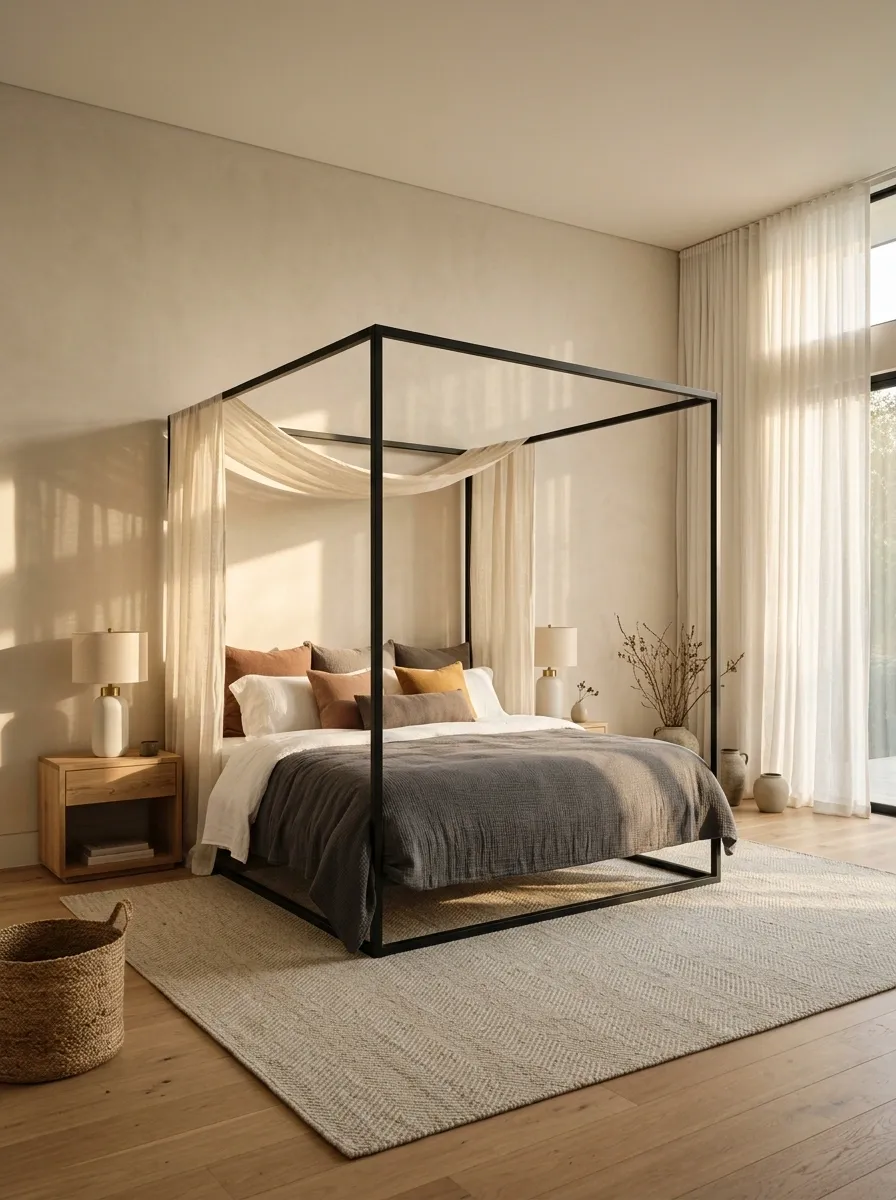
A canopy bed creates a strong focal point without relying on an elaborate headboard or a wall full of decorative panels. Its frame adds height and structure, making the sleeping area feel defined even in a relatively open bedroom.
For a modern room, choose a slim black or dark bronze frame with clean lines. Natural wood creates a warmer look, while light fabric draped sparingly across the top gives the bed a softer finish. Heavy fabric on every side can make an average-sized room feel crowded, so keep the treatment proportionate to the space.
Measure ceiling height and check the frame’s overall dimensions before ordering. A canopy bed should look architectural, not like it barely escaped getting stuck under the ceiling fan.
Choose the frame first, then decide how much fabric the room can handle.
CANOPY BED STYLE CHECK
Pick the frame that suits the room.
MODERN
Slim metal frame
Keeps the structure visually light and works well with simple bedding.
PAIR WITH: Matte black accents
NATURAL
Wooden frame
Adds warmth and a substantial architectural feature around the bed.
PAIR WITH: Linen and earthy colors
SOFT AND ROMANTIC
Light fabric accents
Adds movement and softness without requiring a heavy frame treatment.
PAIR WITH: Restrained decorative layers
Measure before buying: Account for ceiling height, fan clearance, window placement, and curtains. Check whether any fabric will interfere with bedside lighting or airflow.
Arrange a Small Bedroom Around the Bed First
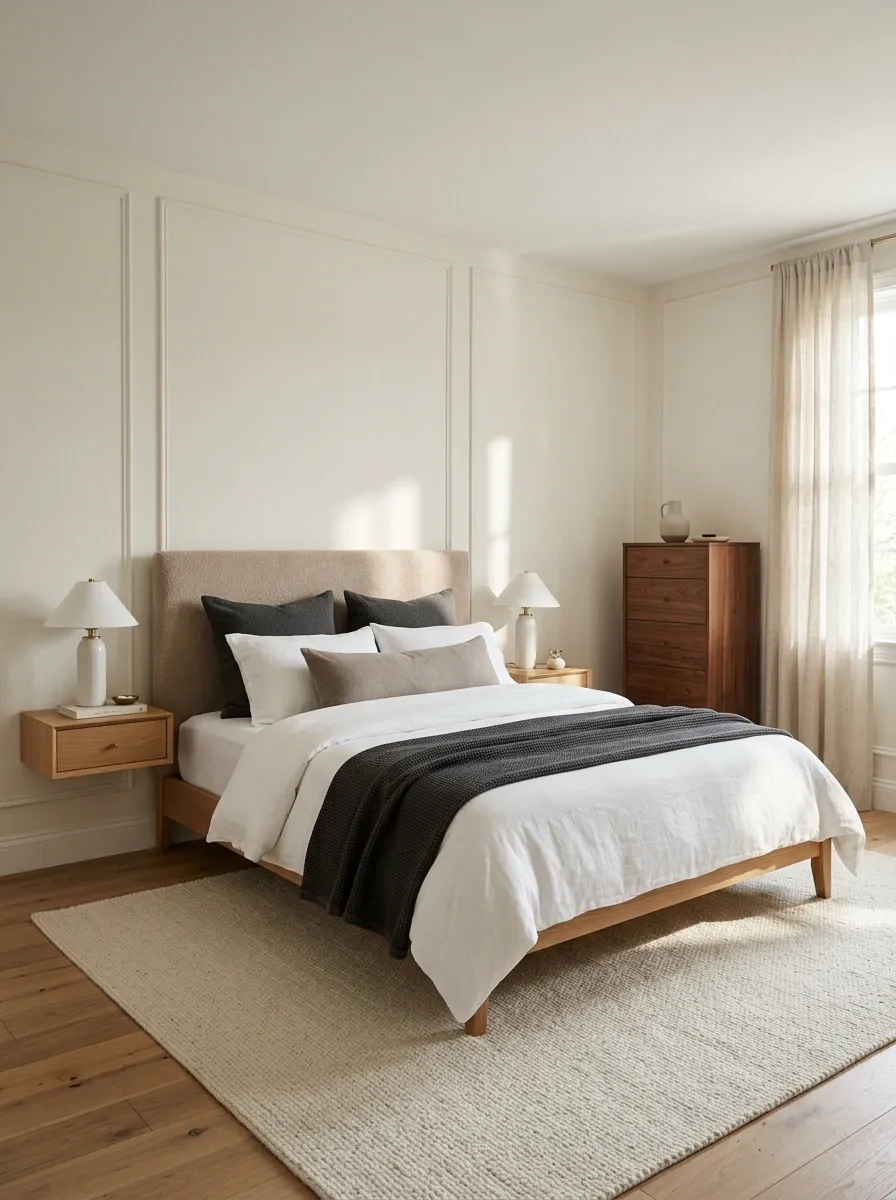
Small bedrooms become cramped when every furniture purchase gets squeezed into the available space without a plan. The bed is usually the largest item, so position it first and build everything else around its footprint.
Start by checking the main walking route, wardrobe access, window placement, and door swing. Compact nightstands or wall-mounted shelves can replace bulky bedside tables, while a dresser can double as a surface for getting ready. Storage underneath the bed helps when closet space is limited.
Don’t buy a chair, bench, and oversized dresser simply because they look good individually. In a tight room, every piece needs to justify its floor space.
Layout beats square footage when the furniture actually fits the way people move.
SMALL BEDROOM LAYOUT SEQUENCE
Place the essentials before the extras.
Place the bed
Test the most practical position against doors, windows, outlets, and the usable floor area.
Protect circulation
Keep the natural routes around the bed usable and confirm wardrobe doors or drawers can open.
Add compact storage
Use wall shelves, narrow nightstands, under-bed drawers, or a taller dresser that fits the available footprint.
Add only what fits
Bring in a bench or chair only after checking the room with all essential furniture in place.
THE EMPTY-FLOOR TEST
Mark furniture dimensions with masking tape before buying anything. If the proposed layout leaves awkward bottlenecks, revise it on paper rather than after delivery day.
Design a Moody Bedroom With Deep, Relaxing Colors
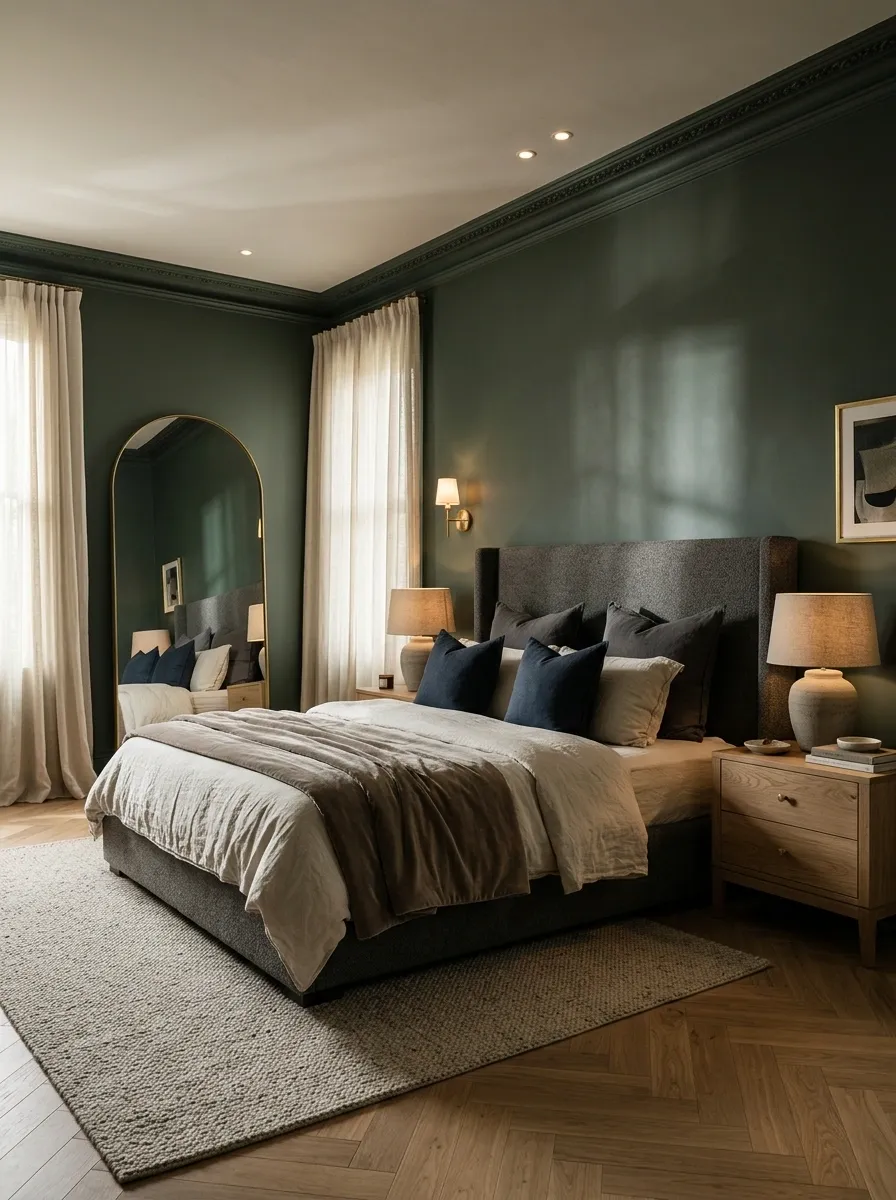
A dark bedroom can feel rich and comfortable without looking gloomy or swallowing every detail. Deep forest green, ink blue, charcoal, and warm burgundy create strong backdrops for layered fabrics, wood furniture, and softer lighting.
The important part is contrast. Pair dark walls with tactile bedding, use lighter curtains or sheets to break up large areas, and introduce a few reflective details through mirrors or brushed metal. A dark room still needs visible texture and well-placed light, otherwise the furniture and bedding can merge into one enormous shadow.
There’s no rule that every bedroom must be beige to look expensive. Beige has had a long career. It can take a night off.
Start with one deep color and build contrast around it rather than painting every surface dark without a plan.
MOODY BEDROOM COLOR PAIRINGS
Deep colors need texture and contrast.
Forest green + taupe
Use green on the wall or bedding, taupe in the textiles, and wood to ground the palette.
Ink blue + ivory
Combine a deep blue foundation with ivory bedding and warm neutral upholstery.
Charcoal + warm wood
Balance dark surfaces with natural wood grain, soft textiles, and layered lighting.
THE MOODY ROOM CHECKLIST
✓ Add a lighter textile to break up dark surfaces.
✓ Use more than one source of light.
✓ Let wood grain or fabric texture remain visible.
✓ Test paint samples under the actual bedroom lighting.
Pair Modern Furniture With Natural Wood Details
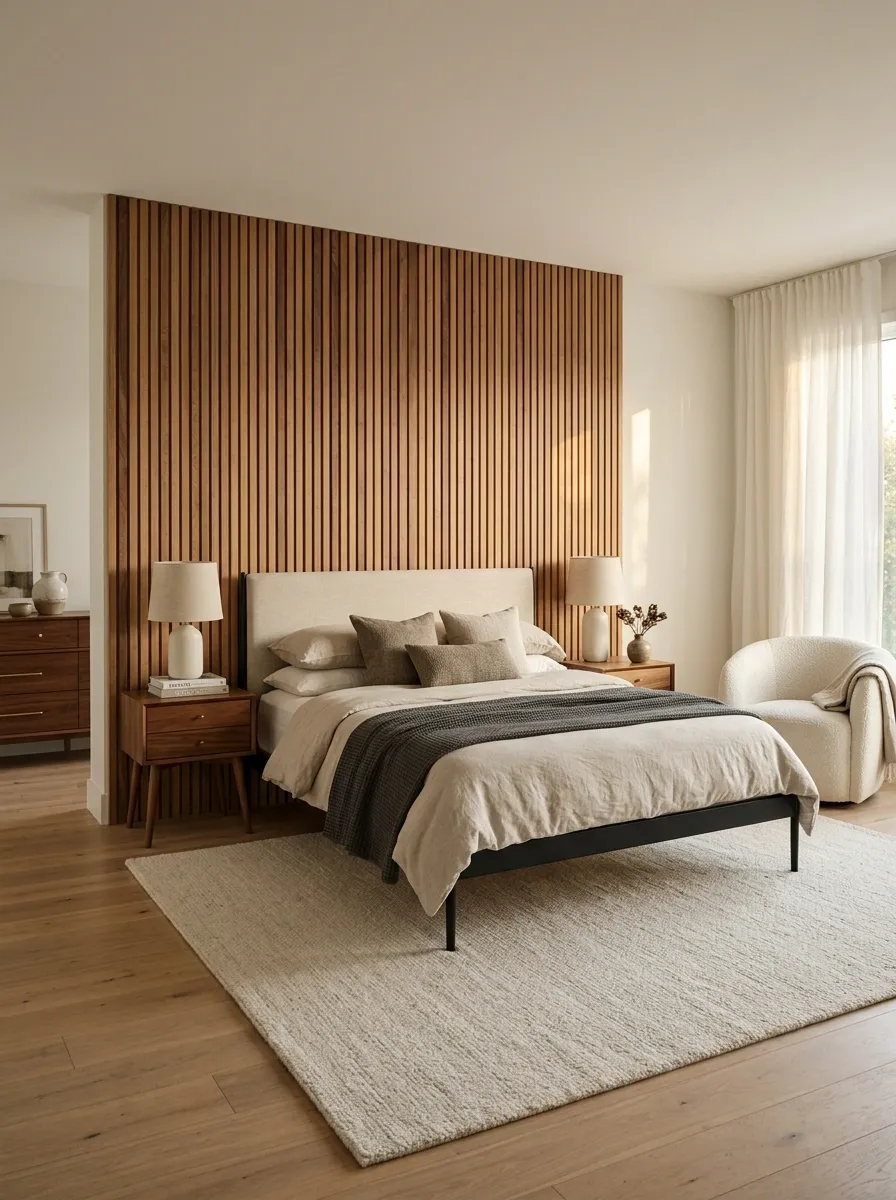
Modern furniture can look sleek without making the bedroom feel like a furniture showroom waiting for its first human visitor. Natural wood brings warmth to clean-lined beds, simple dressers, and streamlined nightstands.
Pair a black metal bed frame with walnut bedside tables, or use a simple upholstered bed against a wood-paneled wall. Keep the furniture shapes relatively clean, then let grain, fabric, and a few darker details add depth.
The important part is choosing wood finishes that look related, even if they aren’t identical. Mixing every possible wood tone just because they’re technically natural is how a bedroom starts looking like a furniture store’s clearance section.
Use this quick finish check before adding another piece.
THE MODERN WOOD CHECK
Clean lines. Warmer materials. Less visual chaos.
KEEP
Related wood undertones
Repeat a warm or cool wood direction across the main furniture pieces.
BALANCE
Hard and soft finishes
Combine wood and metal with upholstered furniture, bedding, or textured curtains.
SKIP
Too many competing finishes
Don’t introduce another wood tone unless it connects with the wider palette.
Designer trick: Repeat a wood tone at least twice so it looks intentional rather than accidentally acquired.
Dress the Bed With Hotel-Inspired Layers Without Overdoing It
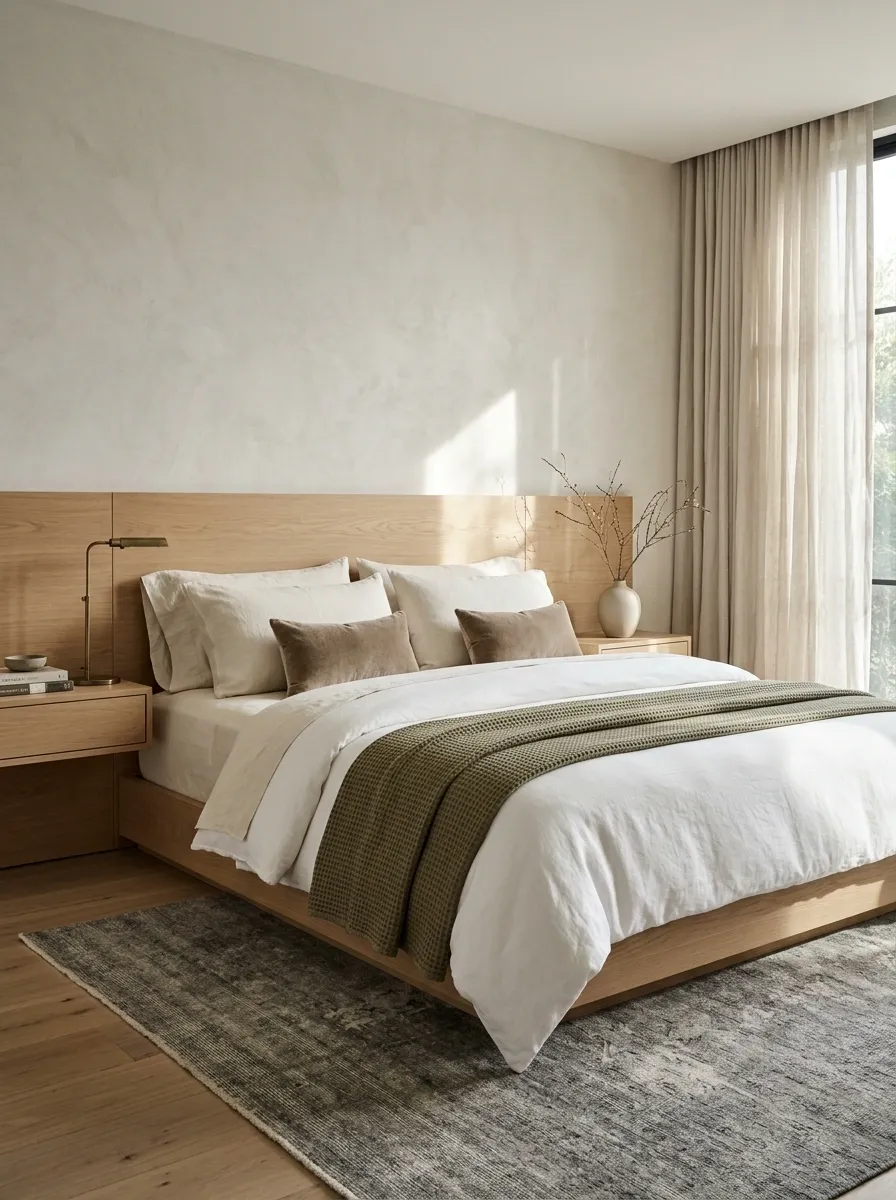
Hotel-inspired bedding looks luxurious because the layers are clean, the proportions are right, and the bed isn’t buried under enough cushions to require a search party.
Start with crisp sheets, add a well-fitted duvet, then fold a textured blanket neatly across the foot of the bed. Two or four sleeping pillows can provide a tidy foundation, with a small number of decorative cushions added for depth.
Choose the layers according to the room’s colors rather than buying a matching bedding bundle by default. Ivory, charcoal, olive, muted blue, and warm taupe all work beautifully with the right supporting textures.
The real luxury is waking up without having to remove twelve decorative objects before getting comfortable.
THE HOTEL-STYLE BED FORMULA
Build the bed from the bottom up.
THE EXPENSIVE-LOOKING DETAIL
Keep the layers coordinated, the duvet cover properly fitted, and the folded throw neat. Expensive bedding isn’t required for a polished result.
Make Room for Both Partners’ Hobbies and Personal Interests
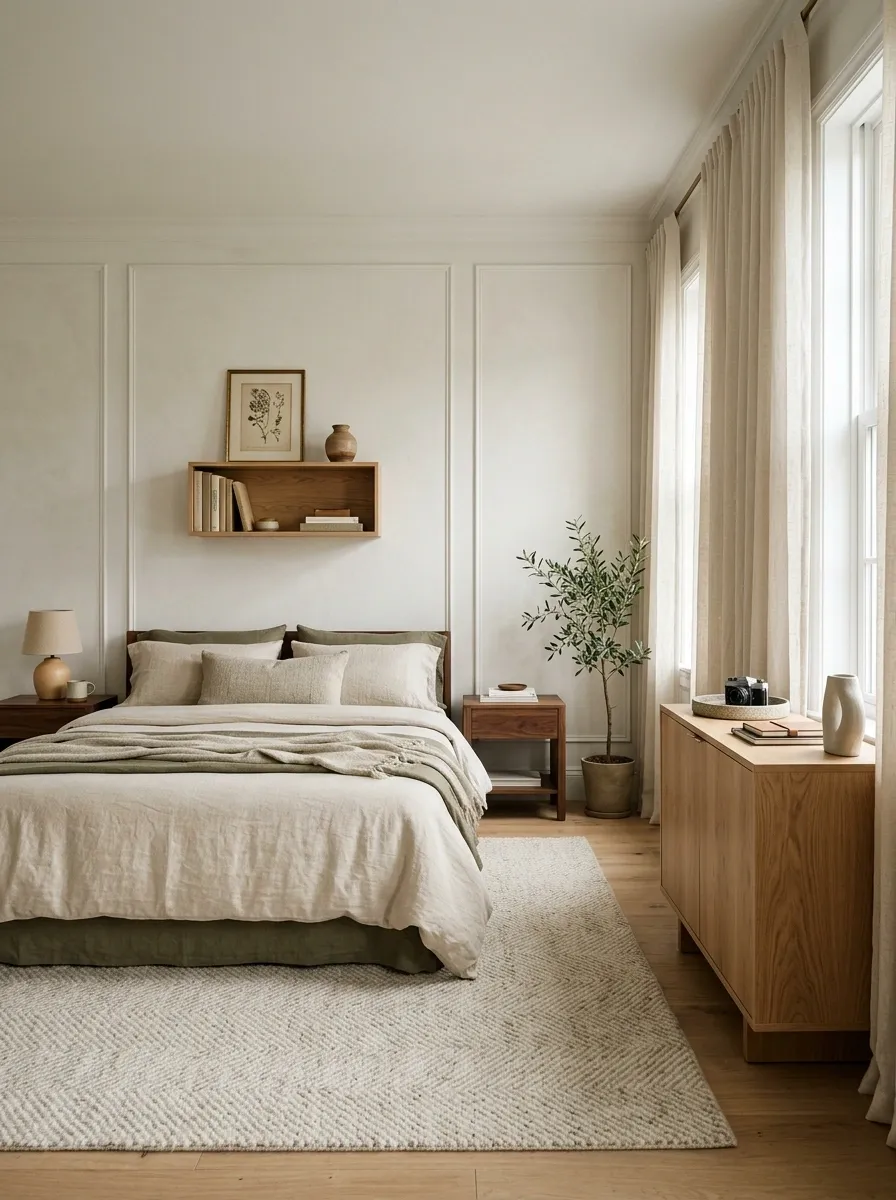
A shared bedroom shouldn’t erase the things each person enjoys. Books, music, gaming, journaling, photography, or a small collection can all find a place without turning the room into two unrelated decorating projects.
Give personal interests a defined area. A compact bookshelf can hold favorite reads, a framed print can reference a hobby, or a small display shelf can keep a collection organized. Repeat the room’s main colors in the accessories so individual details feel connected to the overall design.
The trick is editing, not hiding everything. A few meaningful objects say something about the people living there. Twenty-seven objects competing for one shelf say the shelf needs professional intervention.
Let each person choose a few items worth displaying, then give everything else proper storage.
THE PERSONALITY CHECKLIST
Make space for the people, not the clutter.
□ Choose personal highlights
Display a favorite book, a meaningful object, a framed print, or a small collection.
□ Give hobbies a home
Use a compact shelf, drawer, or box for supplies that need to remain accessible.
□ Repeat a common color
Connect the personal items to the bedding, artwork, furniture, or rug.
□ Protect clear surfaces
Keep nightstands and the dresser top usable instead of filling every open spot.
The shared-room rule: Personal touches can differ. Display height, spacing, and a repeated color help the collection feel intentional rather than scattered.
Improve Sleep Comfort With Softer Floors and Better Sound Control
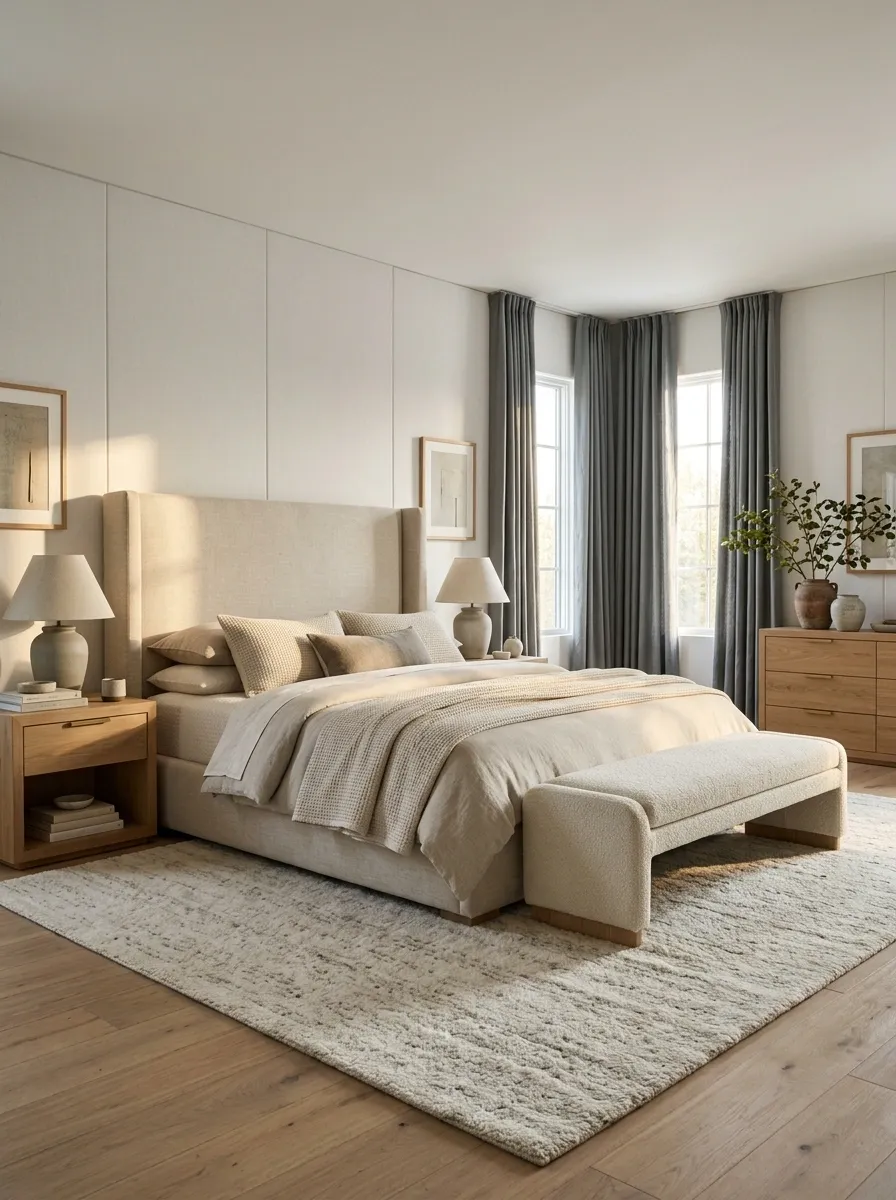
Bedroom comfort isn’t just about the mattress. Hard flooring can feel cold underfoot, while echoes, hallway noise, and rattling furniture can make the room feel less restful than its photos suggest.
A properly sized rug adds softness beside the bed and helps anchor the furniture. Curtains, upholstered pieces, and fabric bedding can also reduce some reflected sound, although they won’t soundproof a noisy room. Add felt pads beneath furniture legs and secure loose fixtures if they rattle when someone walks past.
Choose solutions based on the actual nuisance. A thick rug won’t fix a noisy door, and decorative wall panels won’t solve every sound problem.
Fix the irritating detail first instead of buying six decorative objects that do absolutely nothing about it.
THE BEDROOM COMFORT MAP
Soften the floor. Quiet the annoying details.
ZONE 01 / FLOOR
Comfort underfoot
Use a rug that extends beyond the sides of the bed or place soft runners where feet land in the morning.
CHECK: Rug placement and slip resistance
ZONE 02 / WINDOWS
Softer sound
Consider lined curtains and check window seals if outside noise is a problem.
CHECK: Gaps and rattling hardware
ZONE 03 / FURNITURE
Less rattling
Fit suitable felt pads to furniture feet and tighten loose hardware on the bed frame and dresser.
CHECK: Loose joints and hard contact points
KEEP EXPECTATIONS REALISTIC
Soft furnishings can help reduce echoes and absorb some sound, but major outside noise may require better seals or more substantial acoustic work. Treat the source rather than expecting a rug to perform miracles.
Use Mirrored Wardrobes to Make a Compact Bedroom Feel Larger
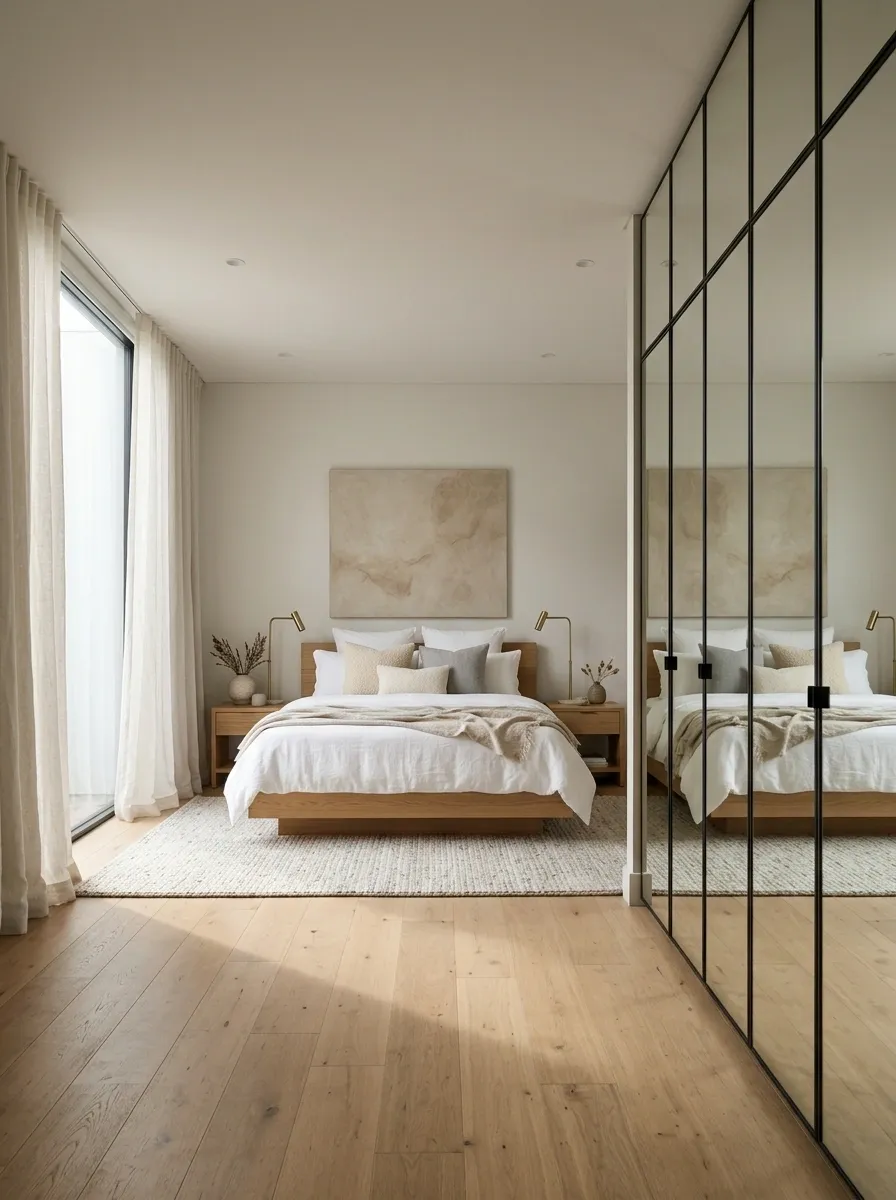
Mirrored wardrobe doors reflect light and give a compact bedroom more visual depth without taking up extra floor space. They’re especially useful opposite a window or where the room needs a full-length mirror but has no convenient wall available.
Choose full-height mirror panels with slim frames for a clean modern look, or use mirrors on selected wardrobe sections if a wall of reflections feels overwhelming. Keep the surrounding furniture simple so the reflections don’t multiply visual clutter.
Mirrored doors aren’t magical square-footage generators, though. They still reflect laundry piles, tangled cables, and that chair everyone pretends isn’t a wardrobe. Keep the view in front of them reasonably tidy.
Position mirrors where they reflect light or an attractive part of the room, not the messiest corner.
MIRRORED WARDROBE DECISION GUIDE
More reflected light. Less visual bulk.
Full mirrored doors
Best when the room needs a full-length mirror and a visually lighter wardrobe front.
PAIR WITH: Simple furniture and tidy sightlines
Partial mirror panels
Best when you want reflected light without making the entire wardrobe reflective.
PAIR WITH: Wood or matte-finish doors
THREE THINGS TO CHECK
□ Reflect a window or a well-lit section of the room.
□ Make sure wardrobe doors open without hitting the bed or bedside furniture.
□ Keep the mirror surface and its reflected view reasonably uncluttered.
Bring Nature Into the Bedroom With Plants and Earthy Textures
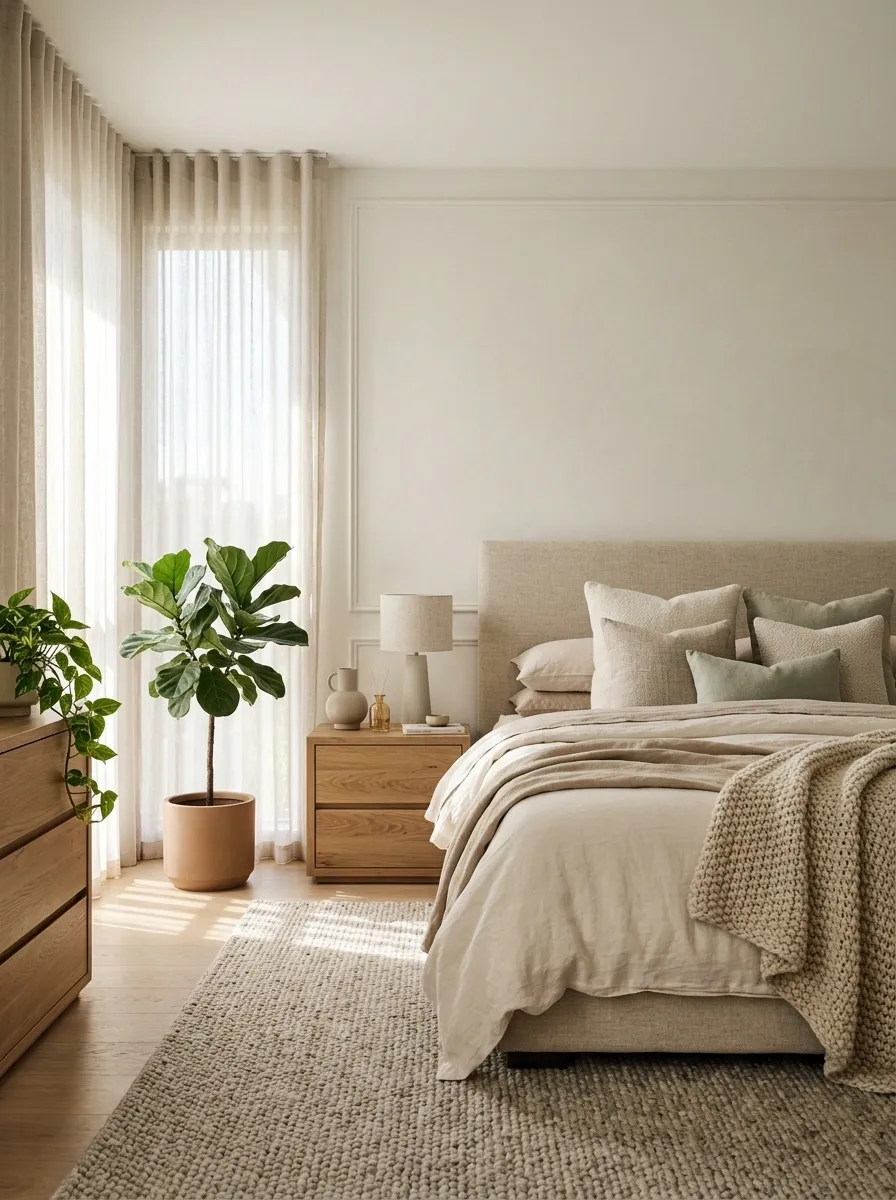
Natural textures make a shared bedroom feel warmer without adding another pile of decorative objects. Wood grain, linen, woven baskets, and a few well-placed plants create depth while keeping the room relaxed.
Choose greenery according to the available daylight and how much care the plants need. A medium-sized plant beside a bright window can soften an empty corner, while a small plant on a dresser adds life without occupying valuable bedside space. If sunlight is limited, choose suitable low-light plants or use botanical artwork instead.
Keep the containers coordinated with the furniture and bedding. There’s no need to turn the bedroom into a jungle just because three plant accounts suggested buying another monstera.
Use nature as a finishing layer, not an excuse to fill every empty surface.
NATURAL BEDROOM STYLING
Bring in nature without starting a greenhouse.
Greenery
Place a suitable plant beside a bright window or in an unused corner with enough light.
Natural wood
Use a bedside table, picture frame, or small stool to introduce grain and warmth.
Tactile fabrics
Add a woven throw, linen-look curtains, or a textured cushion in a coordinating shade.
THE EDITING RULE
Choose a few natural elements and repeat their colors or textures. Check plant care requirements and keep leaves, watering, and drainage away from electrical equipment and delicate furnishings.
Make a Small Apartment Bedroom Feel Thoughtfully Shared
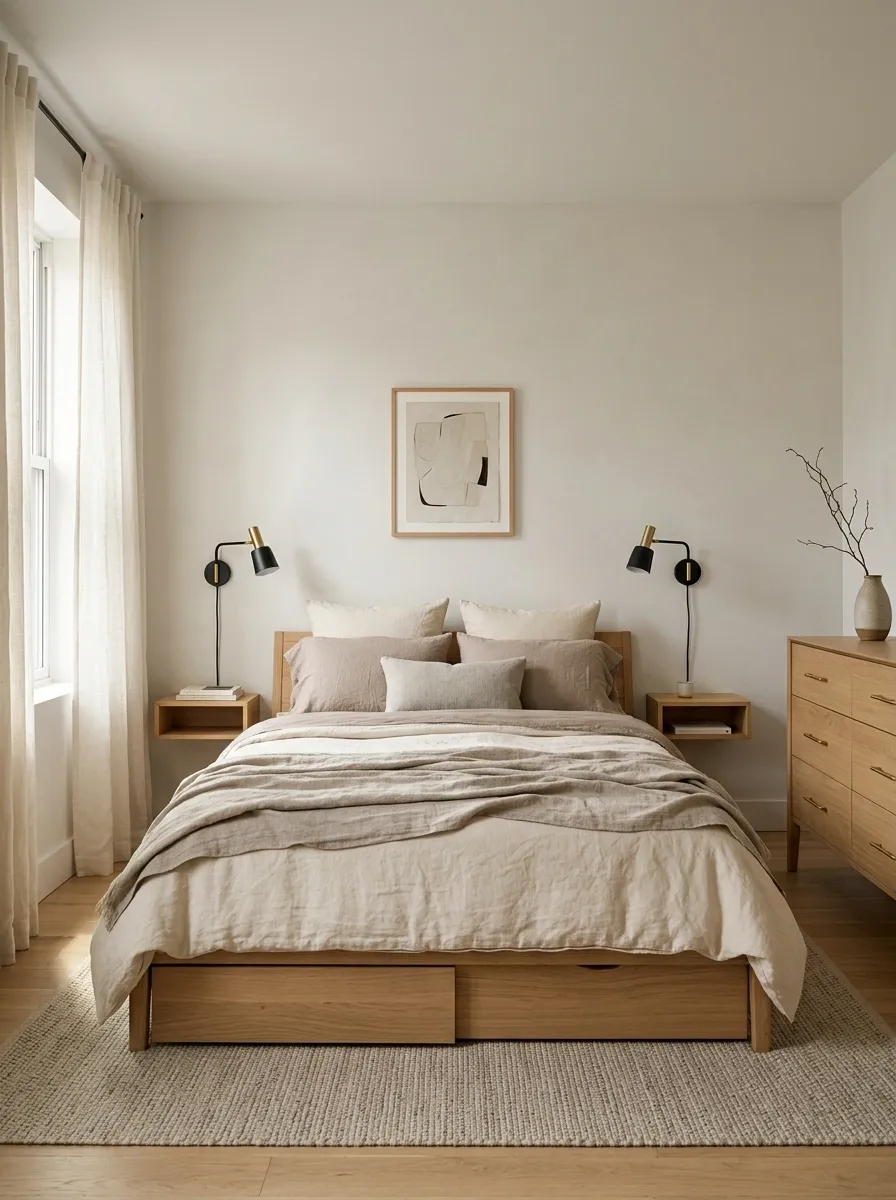
A small apartment bedroom can work beautifully for two people, but only when the furniture earns its place. Oversized nightstands, decorative benches, and a chair that blocks half the wardrobe aren’t signs of luxury. They’re signs that the floor plan lost an argument.
Start with a comfortable bed and practical storage. Replace bulky bedside tables with wall-mounted shelves, use under-bed drawers for spare bedding, and choose a dresser that can also serve as a dressing surface. Wall lights free up tabletop space, while a shared color palette prevents the room from feeling visually crowded.
The goal isn’t squeezing an entire furniture catalog into one room. It’s making the essentials work harder.
Leave enough clear floor space to walk around without performing an obstacle course before breakfast.
THE SMALL APARTMENT PLAN
Less furniture. Better decisions.
THE CENTERPIECE
A well-positioned bed
Place the bed first, then check the route to doors, wardrobes, windows, and both sides of the mattress.
THE STORAGE
Vertical and hidden
Use wall shelves, under-bed drawers, and a taller dresser instead of several bulky low cabinets.
THE FINISH
Light visual layers
Connect the room with a coordinated palette, wall-mounted lighting, and a few meaningful accessories.
BUYING RULE
Measure the room and mark furniture footprints before shopping. Check drawer openings, door swings, and walking routes. A compact piece that fits properly beats an oversized statement piece that makes everyday life awkward.
Set Up Shared Charging Without Bedside Cable Clutter
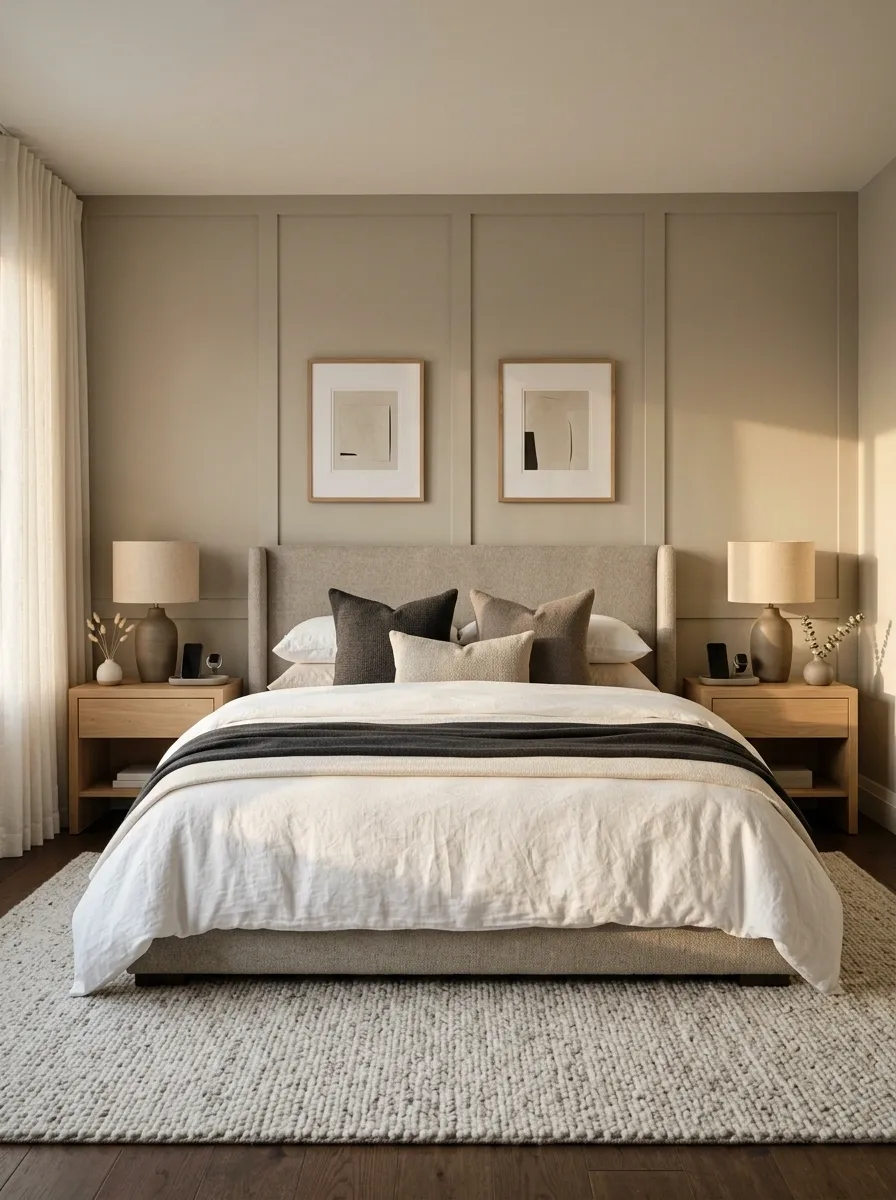
Phone chargers, watch cables, earbuds, and bedside lamps can turn a tidy nightstand into the electronics department of a small store. The mess gets worse when both people need outlets but the room was designed as if phones don’t exist.
Plan the charging setup around the actual furniture. Use a suitable charging station or cable organizer, secure excess cable length, and keep chargers away from bedding and areas where liquids could spill. A nightstand with a discreet cable opening helps keep wires out of sight, while a wall-mounted shelf can free up a crowded tabletop.
Don’t sacrifice safe access to power outlets just to hide every cable. Neat and accessible beats invisible but impractical.
Keep charging equipment organized, ventilated, and away from bedding that could cover it.
THE CLUTTER-FREE CHARGING CHECKLIST
Keep the nightstand useful, not electrically confusing.
□ Give each person a charging spot
Use separate designated positions or a shared organizer with enough capacity for both people’s devices.
□ Route excess cable length
Secure loose cables along the back of furniture with suitable clips rather than letting them trail across the floor.
□ Keep the surface clear
Remove unused adapters and old cables. Store occasional-use accessories in a drawer.
□ Check electrical safety
Use compatible, undamaged charging equipment and keep it uncovered, dry, and away from soft bedding.
The easiest upgrade: Choose a nightstand with a rear cable opening or add a discreet organizer behind the furniture. The front stays tidy while the devices remain easy to reach.
Blend Masculine and Feminine Details Without Rigid Rules
A bedroom doesn’t need to follow a rigid masculine-versus-feminine decorating checklist. Dark colors aren’t automatically masculine, pink isn’t reserved for one person, and nobody needs to surrender their favorite style because a room is shared.
Instead, balance different shapes, materials, and colors. Pair a structured black bed frame with soft linen bedding, combine rounded bedside lamps with clean-lined furniture, or mix deep green walls with warm wood and muted rose accents. Each element contributes something different without making the room feel divided.
The secret is choosing pieces that relate through color, scale, or finish. A common palette gives the room structure while different textures and silhouettes keep it personal.
Good design doesn’t assign furniture a gender. It makes the pieces work together.
THE STYLE-BLENDING FORMULA
Contrast the details. Connect the palette.
STRUCTURE
Clean lines
A simple bed frame, streamlined dresser, or matte black lamp gives the room definition.
SOFTNESS
Tactile layers
Linen bedding, upholstered furniture, rounded shapes, or a soft rug counterbalance harder lines.
CONNECTION
Repeated colors
Repeat shades from the bedding, artwork, and accessories so contrasting styles still feel coordinated.
A SAMPLE COMBINATION
Black bed frame + warm wood nightstands + ivory bedding + muted rose cushions.
The structure, warmth, and softer accents balance one another without forcing either person into a decorating stereotype.
Refresh the Bedroom With High-Impact Changes on a Budget
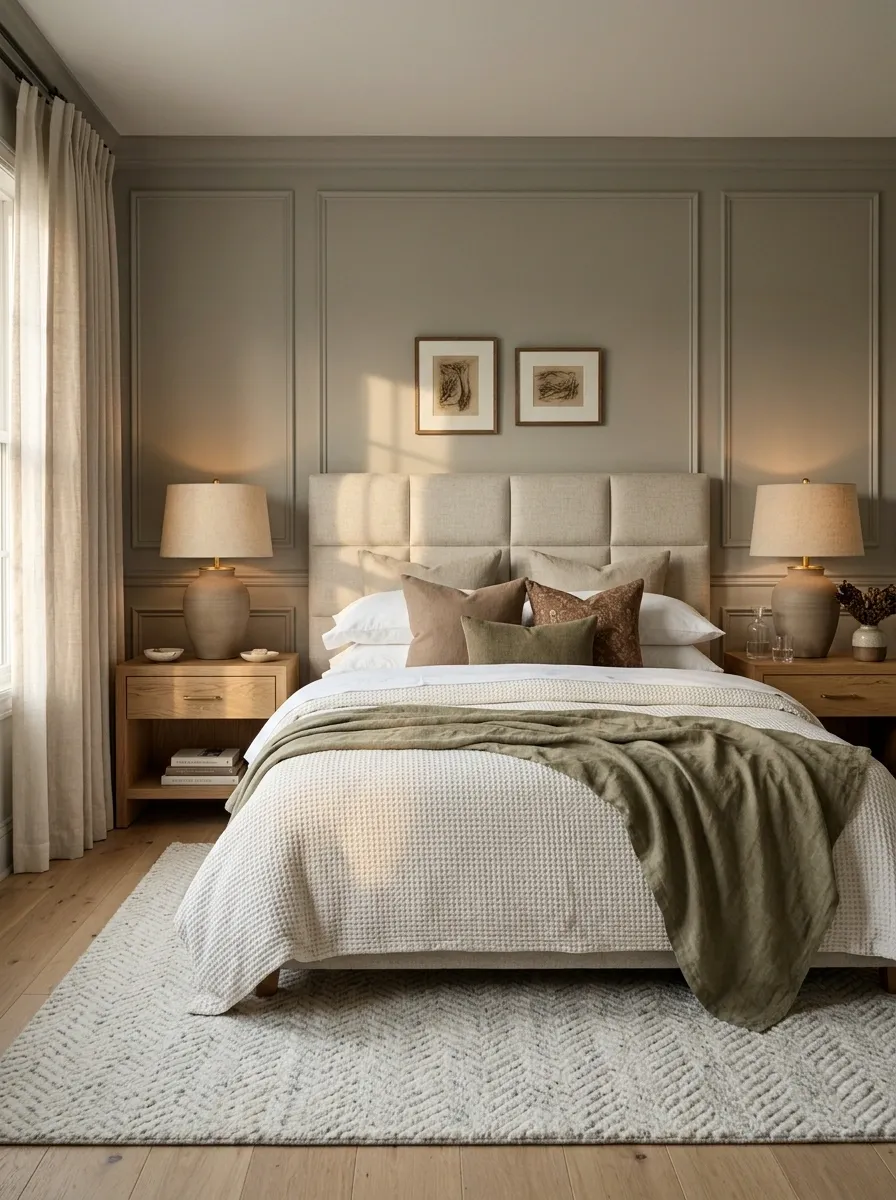
A bedroom refresh doesn’t require replacing every piece of furniture. In many rooms, the biggest improvement comes from fixing the details that make the space feel unfinished: tired bedding, poor lighting, cluttered surfaces, or a bed wall with no clear focal point.
Start with what already works. Rearrange the furniture, clear unnecessary items, switch to coordinated bedding, and improve the lighting before shopping for new decor. Then spend on one or two changes that will make a visible difference, such as curtains, a rug, updated bedside lamps, or fresh paint.
Buying everything at once is not a decorating strategy. It’s an invoice with commitment issues.
Set a spending limit first, then work through the upgrades in order of impact.
THE BEDROOM REFRESH PRIORITY LIST
Spend where the room will actually improve.
FIRST / NO-COST CHANGES
Reset the room
Rearrange furniture, clear clutter, edit the decor, and restyle existing bedding.
COST: NONE IF USING WHAT YOU OWN
NEXT / SMALL UPGRADES
Improve the details
Replace worn pillow covers, add suitable bulbs, organize cables, or update a bedside accessory.
COST: BASED ON YOUR BUDGET
LAST / LARGER CHANGES
Choose one focal upgrade
Consider a new headboard, rug, curtain set, paint treatment, or storage piece if the room genuinely needs it.
COST: PRICE AND MEASURE FIRST
THE SPENDING CHECK
□ Set a firm total budget.
□ List the three problems that bother you most.
□ Price those fixes before shopping for extras.
□ Keep a portion of the budget for delivery, installation, and necessary hardware.
Make Your Shared Bedroom Feel Like Both of You
The best shared bedrooms don’t depend on identical tastes, expensive furniture, or a suspicious number of decorative pillows. They work because the layout makes sense, the colors connect, the lighting suits real routines, and both people have room for their own belongings.
Start with the changes that make daily life easier, then build the visual details around them. A well-chosen headboard, coordinated bedding, sensible storage, and thoughtful lighting can make a room feel polished without turning the project into a full renovation.
A bedroom should feel like a place both people belong, not a decorating compromise nobody particularly likes. Keep what suits the room, skip what doesn’t, and make every purchase earn its place.