
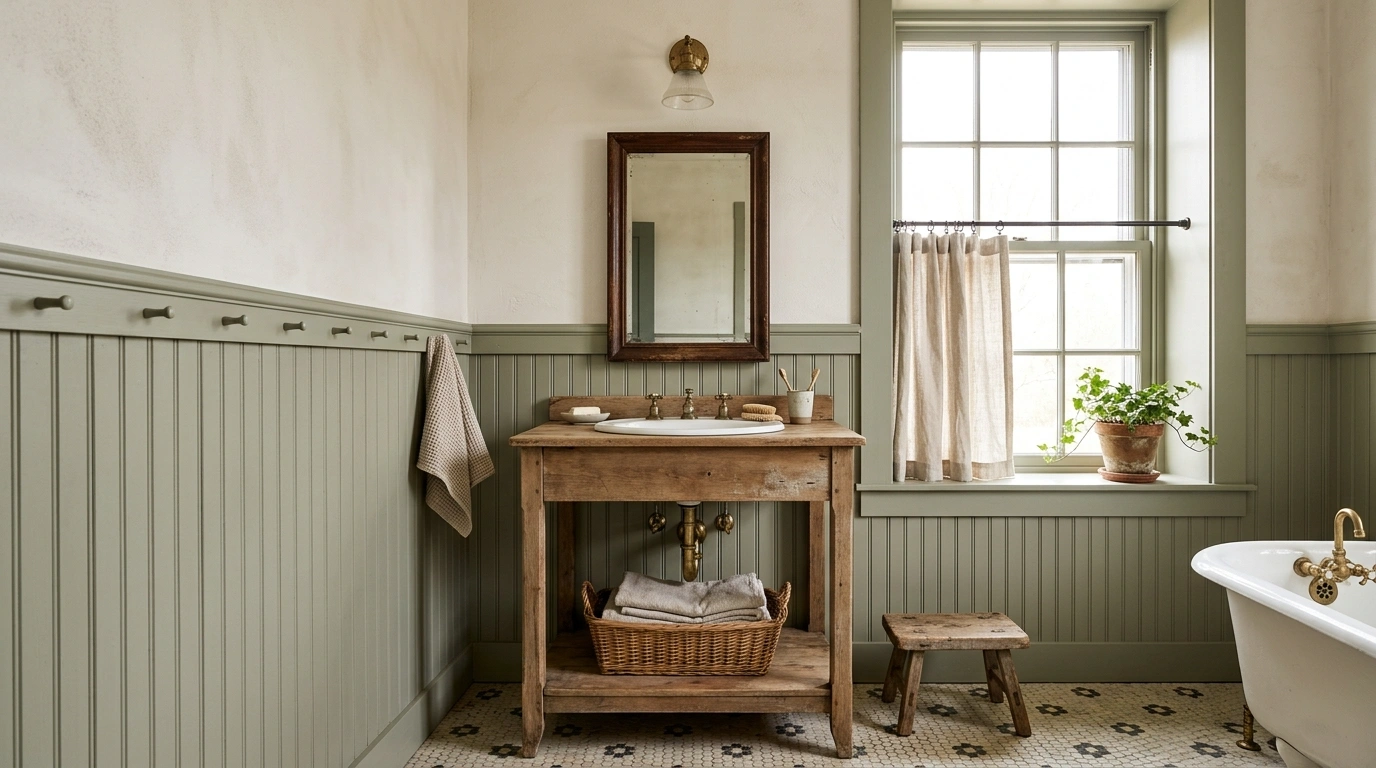
Some bathrooms have all the right ingredients and still feel oddly lifeless. The vanity is new, the tile is fresh, and the fixtures match, but the room has lost the character that makes an older home memorable.
Vintage farmhouse style works best when the finishes feel as though they belong together without looking like they came from one matching set. Weathered oak, traditional porcelain, botanical wallpaper, patterned floors, and aged metal can create very different results depending on how they’re combined.
The secret is to start with the overall room, not a collection of rustic accessories. A clawfoot tub needs a different supporting palette from a dark timber vanity, and a patterned cottage bathroom calls for a different balance from a clean-lined farmhouse shower.
What Makes a Farmhouse Bathroom Feel Genuinely Vintage?
Let One Original-Looking Feature Set the Tone
A clawfoot tub, pedestal sink, traditional floor pattern, or antique-style vanity gives the room a recognizable starting point. Build around that feature instead of filling every corner with distressed wood and vintage accessories.
Mix Aged Materials With Clean, Practical Finishes
Natural wood, traditional tile, linen, and aged metal finishes bring warmth and texture. Straightforward shower enclosures, well-planned storage, and durable surfaces keep the bathroom useful without stripping away its old-house personality.
Keep Rustic Details From Overwhelming the Room
Aged finishes need contrast. Pair dark wood with pale walls, patterned wallpaper with simpler flooring, or decorative tile with understated fixtures.
Leaving some surfaces quiet makes the character pieces easier to appreciate.
Vintage Farmhouse Bathroom Designs
Soft Blue Beadboard and Crystal Chandelier
Pale blue vertical paneling pairs with a classic clawfoot tub to create an inviting, romantic atmosphere. Framed botanical prints mounted directly onto the beadboard keep the upper wall feeling dressed without overwhelming the space.
A crystal chandelier overhead and aged brass plumbing fixtures introduce a layer of timeless elegance that elevates the vintage aesthetic. Soft white tie-up window treatments filter the natural light, casting a gentle glow over the entire setup.
The charm lies in blending refined accents like the chandelier with humble country architectural elements. Keeping the surrounding decor restrained allows the statement tub and distinctive wall color to remain the true focal points.
Sage Beadboard Bathroom With a Classic Clawfoot Tub
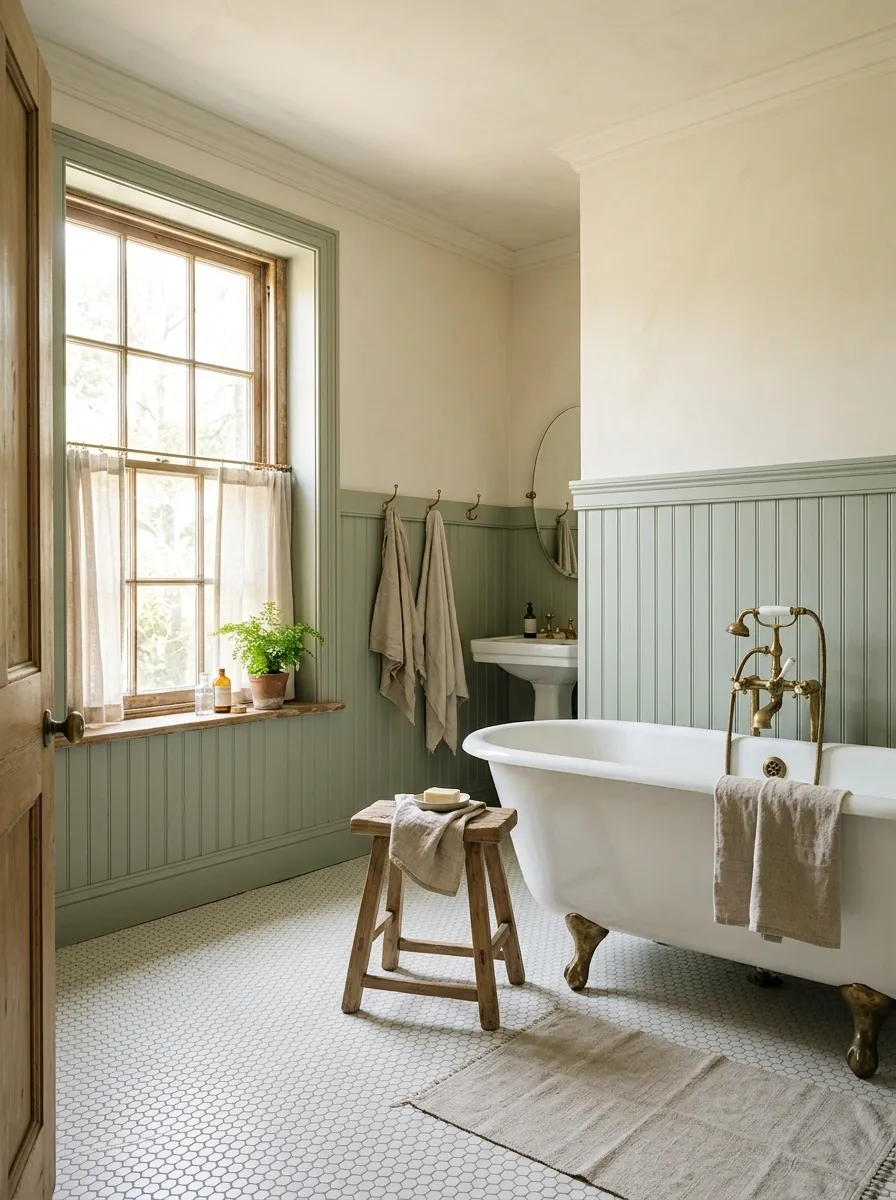
Soft sage paneling and a traditional white clawfoot tub establish the country-house character here. Warm ivory walls continue above the beadboard, while small white floor tiles keep the lower half of the room from competing with the tub.
Aged-brass plumbing, natural linen, and a simple wooden stool complete the scene.
The appeal comes from the relationship between the cool green and the warmer natural finishes. Neither color feels too strong, and the tub has enough visual space around it to stand out.
I’d keep the accessories simple rather than adding signs, baskets, and distressed decorations to every surface. This direction works especially well in a bathroom with traditional architectural details or enough wall space to show off the paneling.
The color relationship
The green should ground the room, not dominate it. Warm white provides breathing room, while wood and brass bring the smaller details together.
Reclaimed Wood Vanity and Vessel Sink
A weathered wooden multi-drawer vanity anchors this farmhouse bathroom with genuine rustic texture and warmth. Set against a backdrop of horizontal wood planks and crisp white subway tile, the dark wood stands out as a stunning statement piece.
A sleek modern vessel sink rests atop the marble countertop, bridging the gap between old-house character and contemporary functionality. Industrial-style sconces flank the framed mirror, casting warm illumination over the natural greenery styled around the basin.
Balance the heavily textured wood surfaces with clean white walls or tile to keep the room from feeling dark. Allowing each material to retain its unique grain and finish gives the space a collected, authentic feel.
Antique Oak Vanity With Marble and Patterned Floor Tile
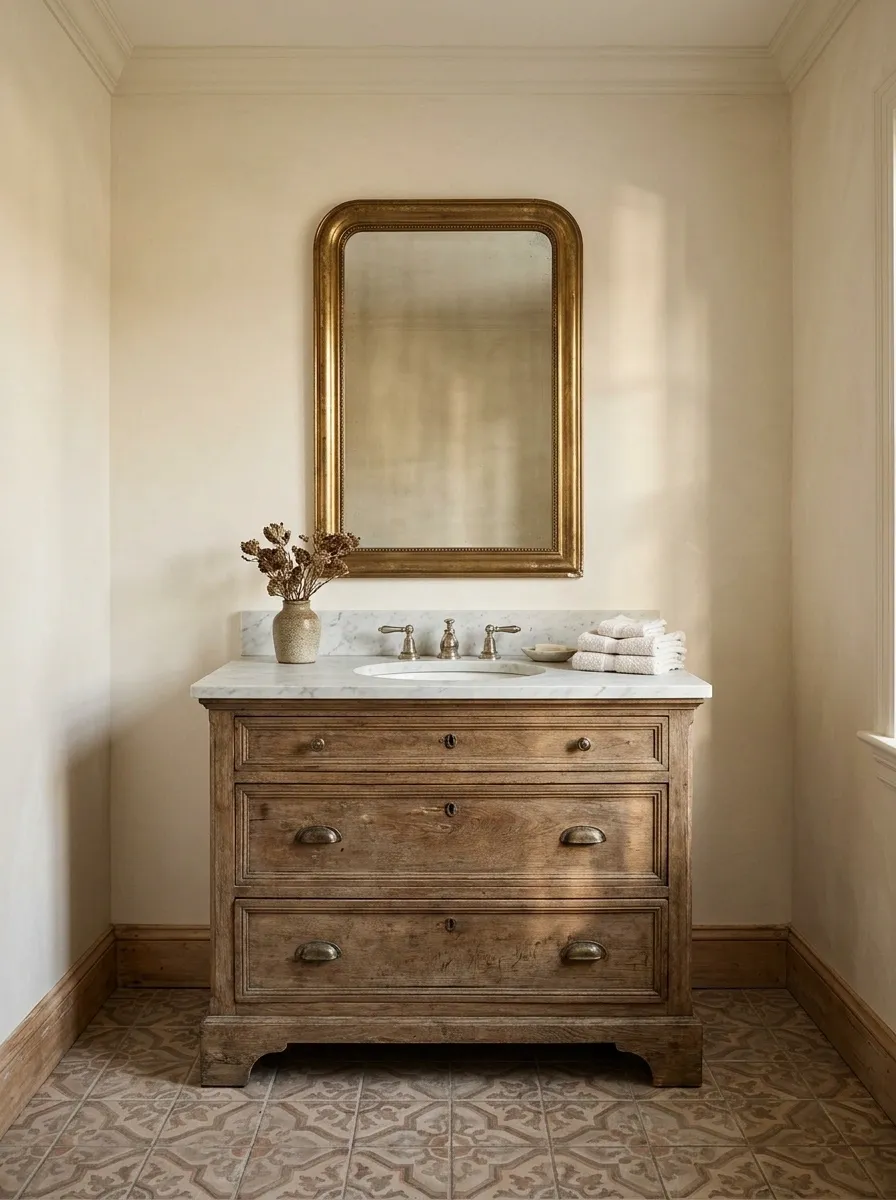
A substantial oak vanity gives this bathroom its old-house foundation. The wood has visible grain and a softly aged finish, set against a pale marble counter, traditional basin, and an antique-style mirror.
Patterned floor tile adds a decorative layer beneath the furniture, while creamy walls keep the room from feeling too formal.
The combination works because each material has a different job. Oak supplies warmth, marble lightens the main work surface, and the floor introduces pattern at a lower visual level.
The mirror connects the vanity to the traditional details of the room. Choose flooring with colors already present in the oak or marble. A completely unrelated pattern can make the composition feel pieced together instead of collected over time.
How the materials work together
The vanity provides the visual weight. Marble breaks up the wood, and the patterned floor gives the eye a reason to travel around the room.
Floral Wallpaper and Classic Pedestal Sink
All-over botanical wallpaper brings traditional cottage charm to this compact powder room, pairing seamlessly with pale blue lower paneling. A classic pedestal sink keeps the floor unobstructed, maintaining an open and airy feel in a small footprint.
Traditional wall sconces provide a soft, welcoming glow that highlights the intricate details of the floral pattern. A simple arched mirror centered above the basin adds functional elegance without competing with the busy walls.
Embrace patterned wallpaper in small spaces by anchoring the lower half of the walls with solid beadboard or wainscoting. This division creates a balanced visual rhythm and protects high-traffic zones from everyday wear.
Botanical Wallpaper and Pedestal Sink in a Cottage Powder Room
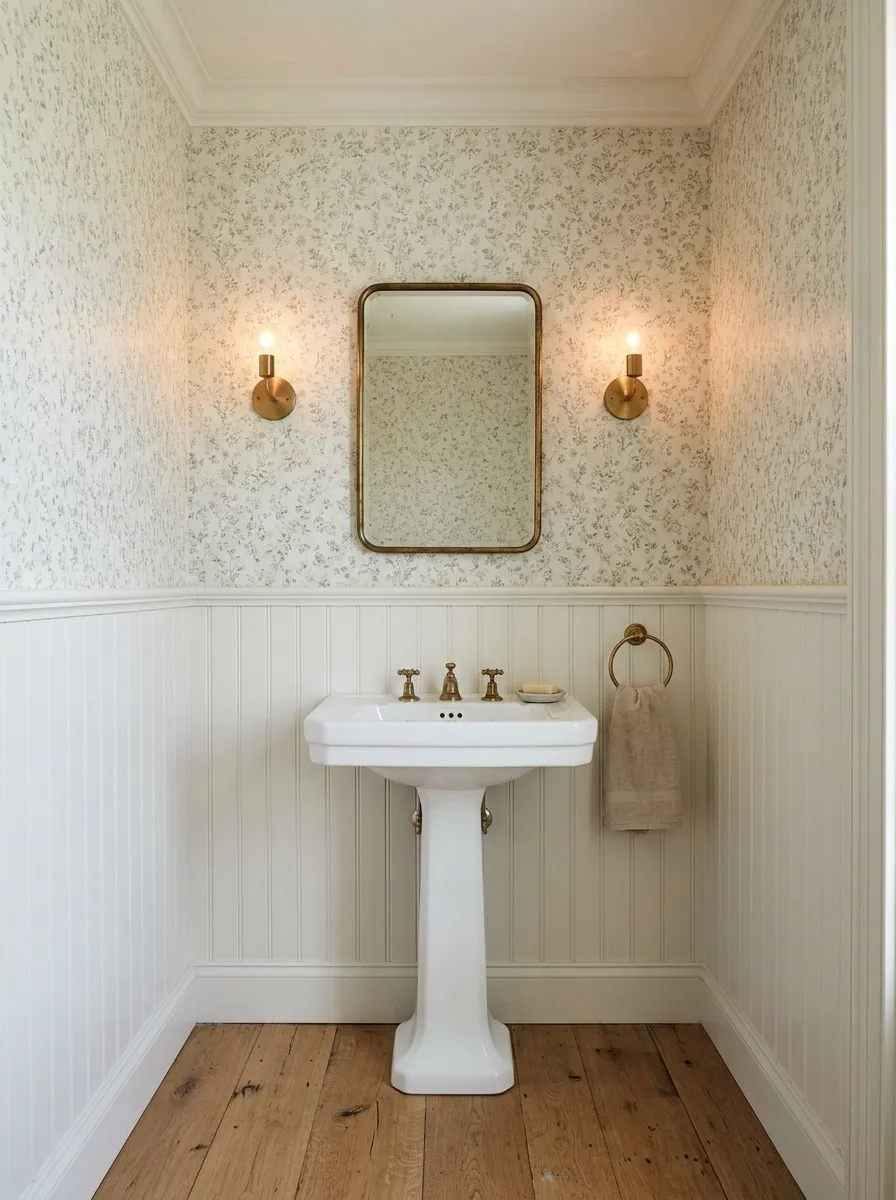
Delicate botanical wallpaper gives this small farmhouse powder room most of its character. A traditional white pedestal sink sits beneath an aged mirror, with painted beadboard covering the lower walls.
Simple wall sconces cast warm light across the pattern without introducing another strong decorative feature.
The pedestal sink keeps the floor visible, which helps the compact room feel less crowded than it might with a deep vanity. Beadboard also gives the wallpaper a clear stopping point and protects the lower walls from becoming visually busy.
Pay attention to the scale of the print. Tiny flowers can produce a soft, traditional look, while oversized leaves may make a narrow room feel crowded.
Where the pattern belongs
The room has three visual zones. Keeping each one distinct is what makes the small space feel considered instead of cluttered.
Stained Glass Window and Patterned Mosaic Floor
An exquisite stained glass window introduces warm amber tones and historic character to this thoughtfully designed farmhouse bathroom. Intricate mosaic floor tiles feature a geometric pattern that adds vintage flair underfoot while harmonizing with the traditional white subway wainscoting.
A pedestal-style basin sink and a classic freestanding tub maintain the timeless aesthetic, accompanied by a wooden chair that adds a touch of organic warmth. The dark wallpaper above the beadboard grounds the space with dramatic contrast.
Let statement architectural features like stained glass or patterned tile shine by keeping surrounding fixtures simple and understated. A cohesive color palette ensures that multiple decorative elements work together rather than competing for attention.
Black-and-White Farmhouse Bathroom With Checkerboard Flooring
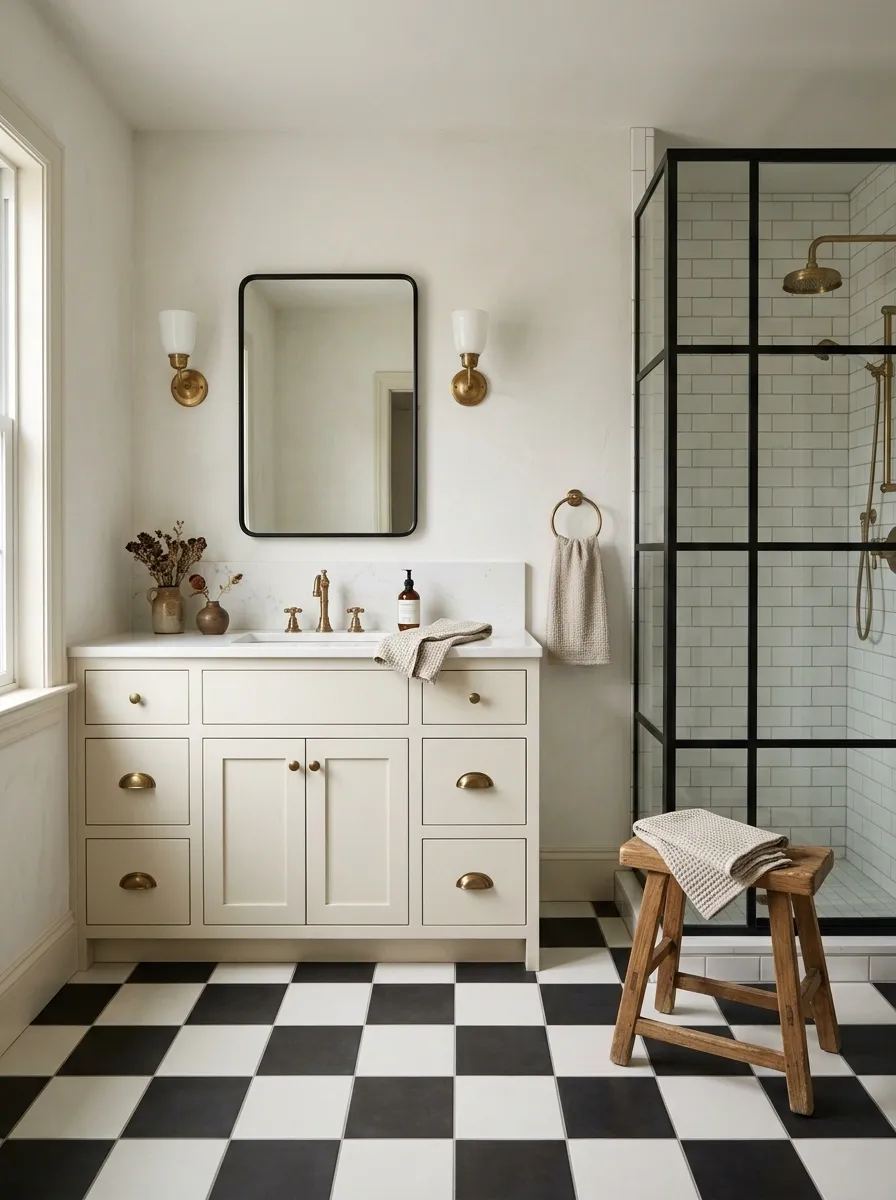
The checkerboard floor gives this bathroom an unmistakable vintage foundation. White subway tile covers the shower walls, while a cream-painted vanity softens the sharp black-and-white contrast.
Dark shower framing and small black accents repeat the floor color, and a few warm wood or brass details keep the room from feeling cold.
The key is to let the floor do most of the graphic work. If the walls, vanity, fittings, and accessories all compete for attention, the room can look harsh rather than timeless.
Keep the larger wall surfaces light and choose a straightforward mirror shape to balance the strong geometry beneath it. This design has a more tailored feel than a heavily rustic farmhouse bathroom.
Control the contrast
Dark elements should appear deliberately throughout the space, rather than being scattered randomly across every surface.
White Farmhouse Bathroom With Exposed Timber and a Handmade-Tile Shower
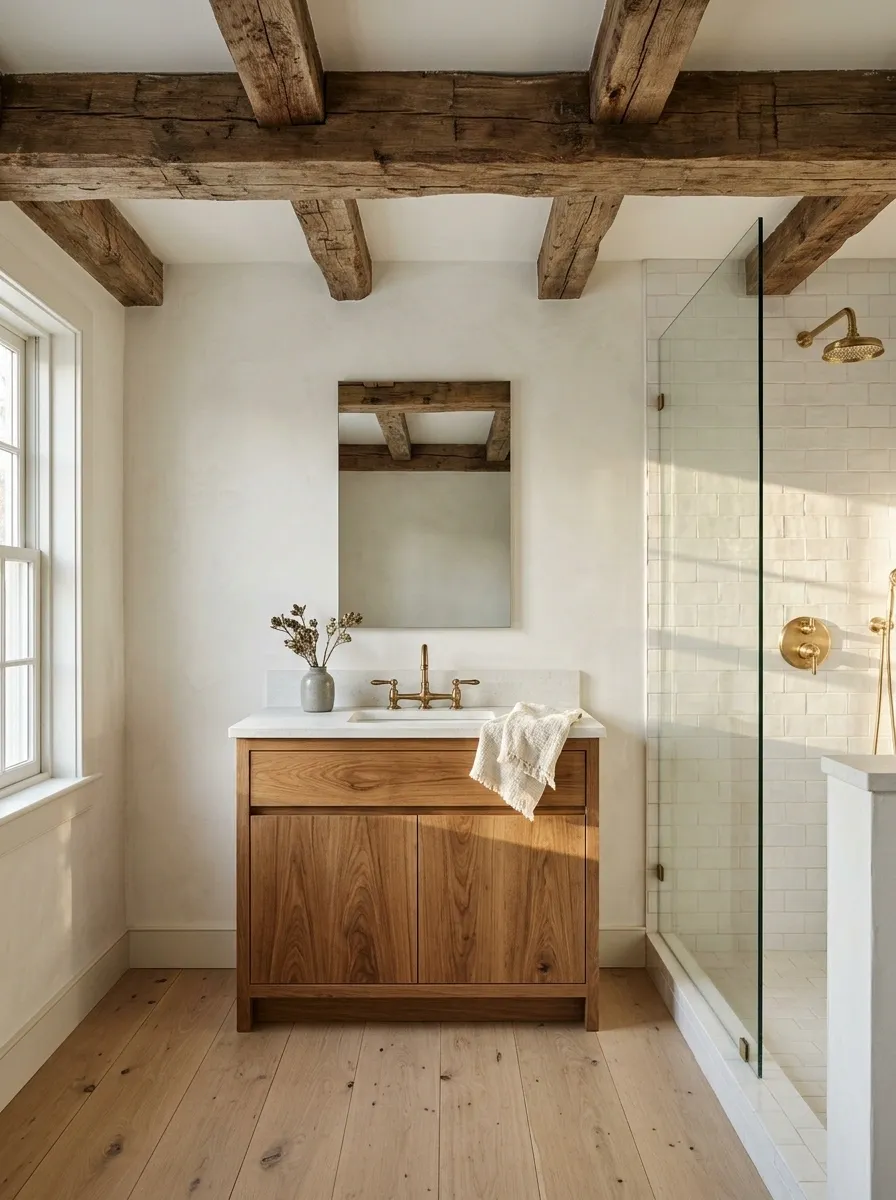
Exposed timber beams bring the architecture into focus in this bright farmhouse bathroom. The shower is finished in white tile with subtle surface variation, while an oak vanity and pale walls add warmth without competing with the ceiling.
Traditional plumbing fittings keep the room connected to its farmhouse roots.
The design feels more convincing when the wood looks appropriate to the house rather than like a decorative beam added for effect. Handmade-look tile introduces texture at eye level, and the vanity repeats the wood tone lower in the room.
Keep the floor comparatively quiet. A strong pattern beneath textured shower tile and prominent beams would give the eye too many places to land.
A restrained mix of finishes
The visual interest comes from three different textures, not from adding more decoration.
Forest Green Vanity With Vintage Floral Wallpaper
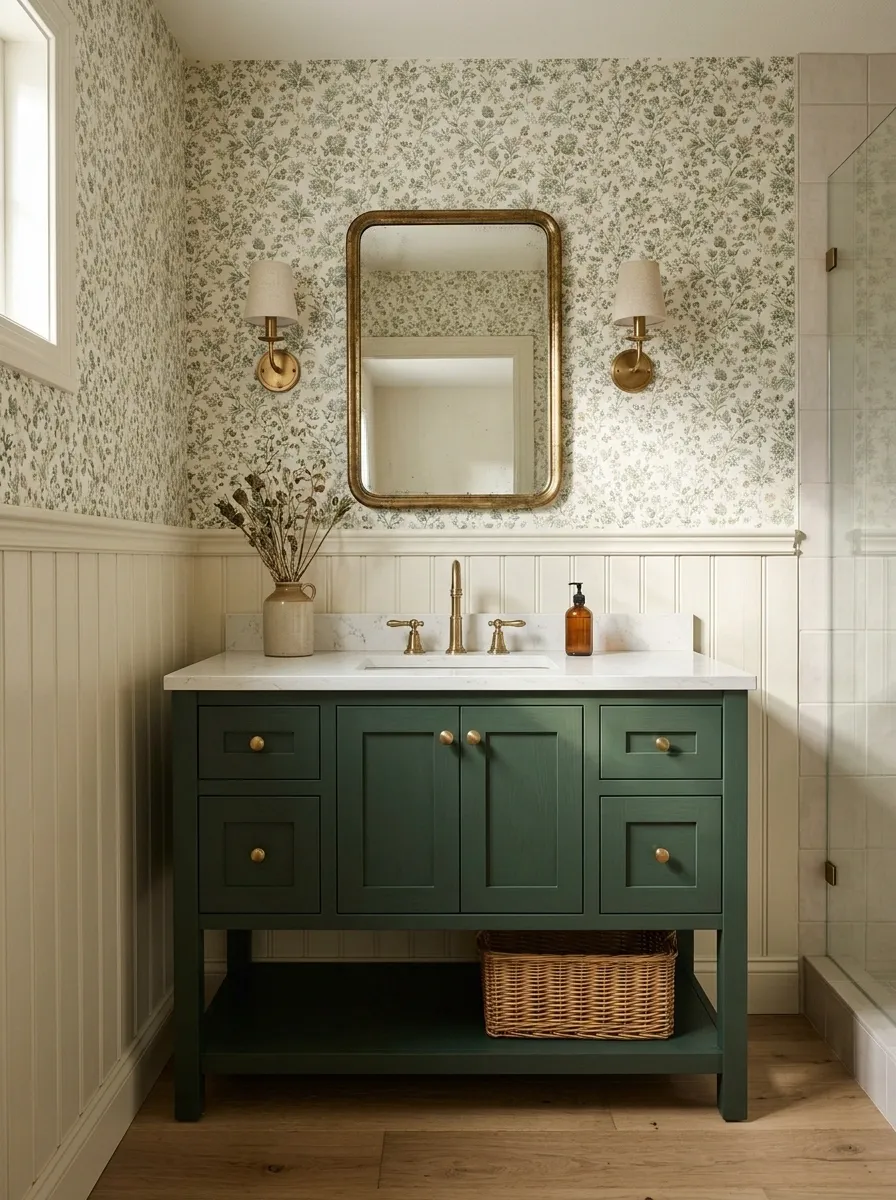
Deep forest-green cabinetry gives this farmhouse bathroom a stronger personality, while vintage floral wallpaper brings in the softer side of country-house style. The vanity is paired with a traditional white countertop, an aged mirror, and warm brass fittings.
Pale shower tile and cream wall details keep the darker colors from making the room feel cramped.
The secret is controlling the relationship between the green and the pattern. Choose wallpaper that includes a hint of the vanity color, then let the remaining surfaces stay relatively quiet.
A small floral repeat feels more traditional than a large tropical print, especially alongside classic plumbing fixtures. I’d avoid adding several different wood tones here. The green cabinetry and wallpaper already provide enough visual interest.
The color connection
The wallpaper should link the dark vanity to the lighter parts of the bathroom instead of introducing an unrelated color scheme.
Repurposed Antique Dresser With a Double-Sink Vanity
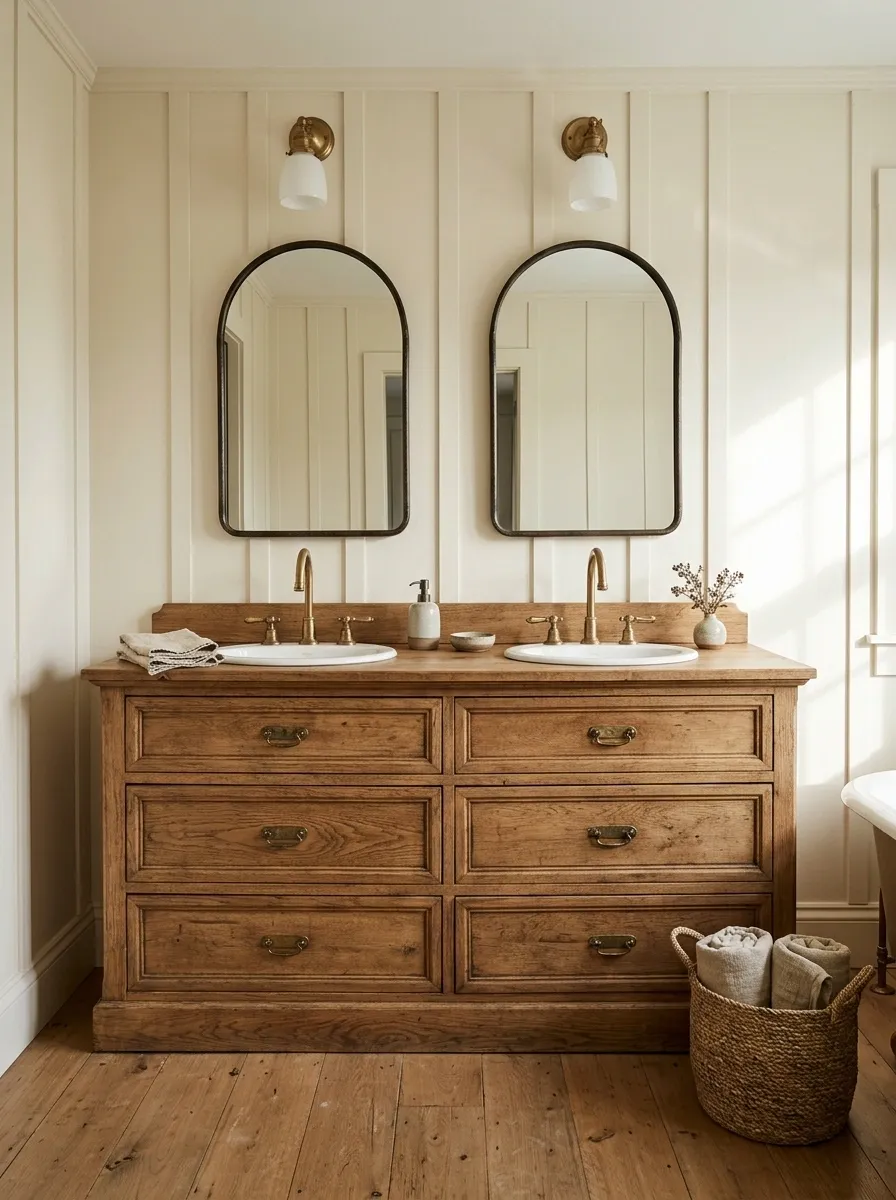
A substantial antique dresser turns this shared farmhouse bathroom into something more personal than a standard fitted vanity. Its visible wood grain, original-looking drawer fronts, and traditional proportions give the room an old-house foundation.
Two white basins sit along the counter, with separate mirrors and wall lights helping each sink feel like its own station.
The design works best when the furniture is deep and wide enough for the sinks without sacrificing useful counter space. The drawers may need internal changes to accommodate plumbing, and the top must be suitable for a bathroom environment.
Those practical details matter more than finding the most distressed-looking piece of furniture. Keep the surrounding finishes light and simple. The dresser should be the main event.
Before choosing the dresser
A piece that looks right in a bedroom still needs to work as a bathroom fixture. Check the usable dimensions before committing to the design.
Narrow Farmhouse Bathroom With Vertical Beadboard
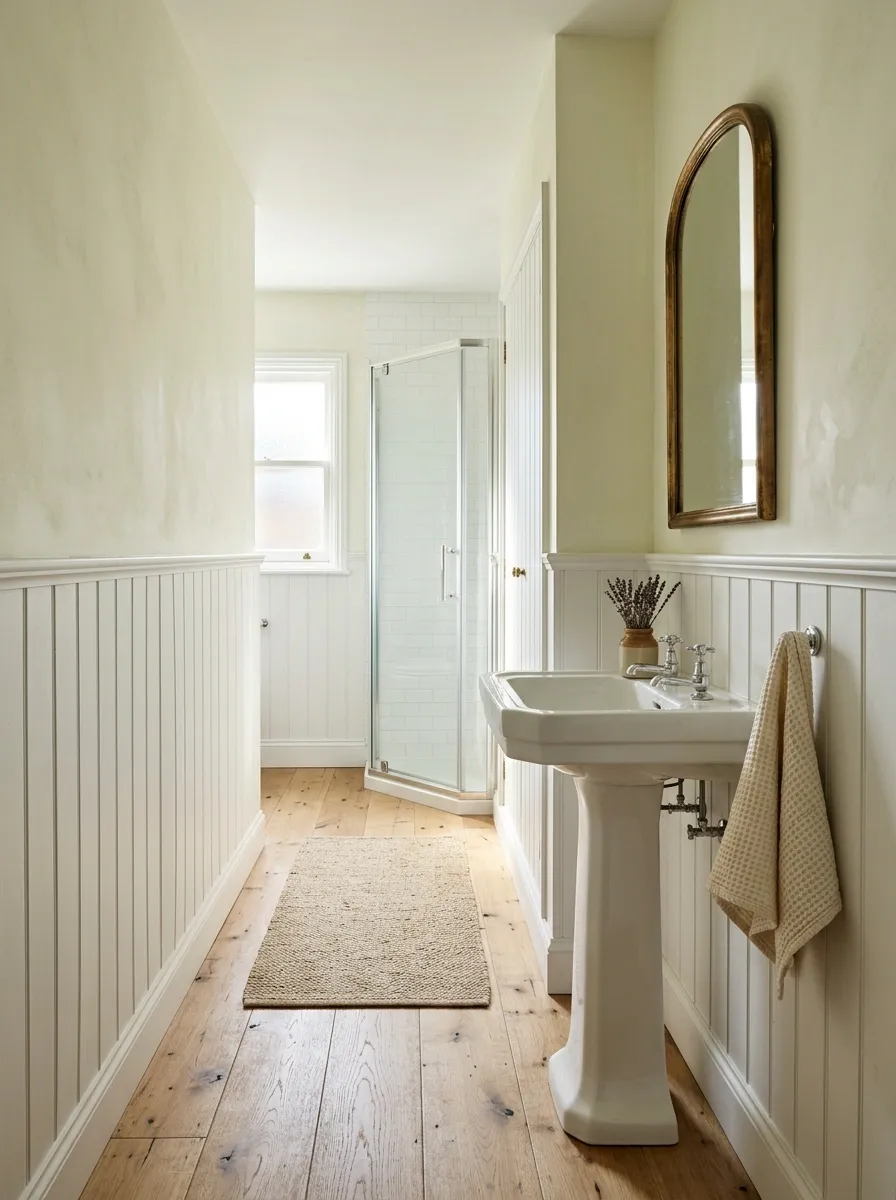
Long, narrow bathrooms can feel awkward when the vanity, shower, and storage all compete for space. This design takes a quieter approach, using vertical beadboard, a slim pedestal sink, a tall mirror, and a compact shower enclosure.
Pale finishes draw the eye along the room instead of dividing it into several heavy-looking sections.
The beadboard gives the walls a traditional farmhouse detail without taking up floor space. A tall mirror adds useful reflection above the sink, while a recessed or narrow storage cabinet can provide room for toiletries without intruding into the walking path.
Keep bulky baskets and freestanding cabinets out of the main route, and check the door swing before settling on the fixture positions.
Plan the walking route first
A narrow bathroom should feel straightforward to move through. The sink, shower, and door all need room to function without constant obstruction.
Blue-Gray Wainscoting With a Traditional Freestanding Tub
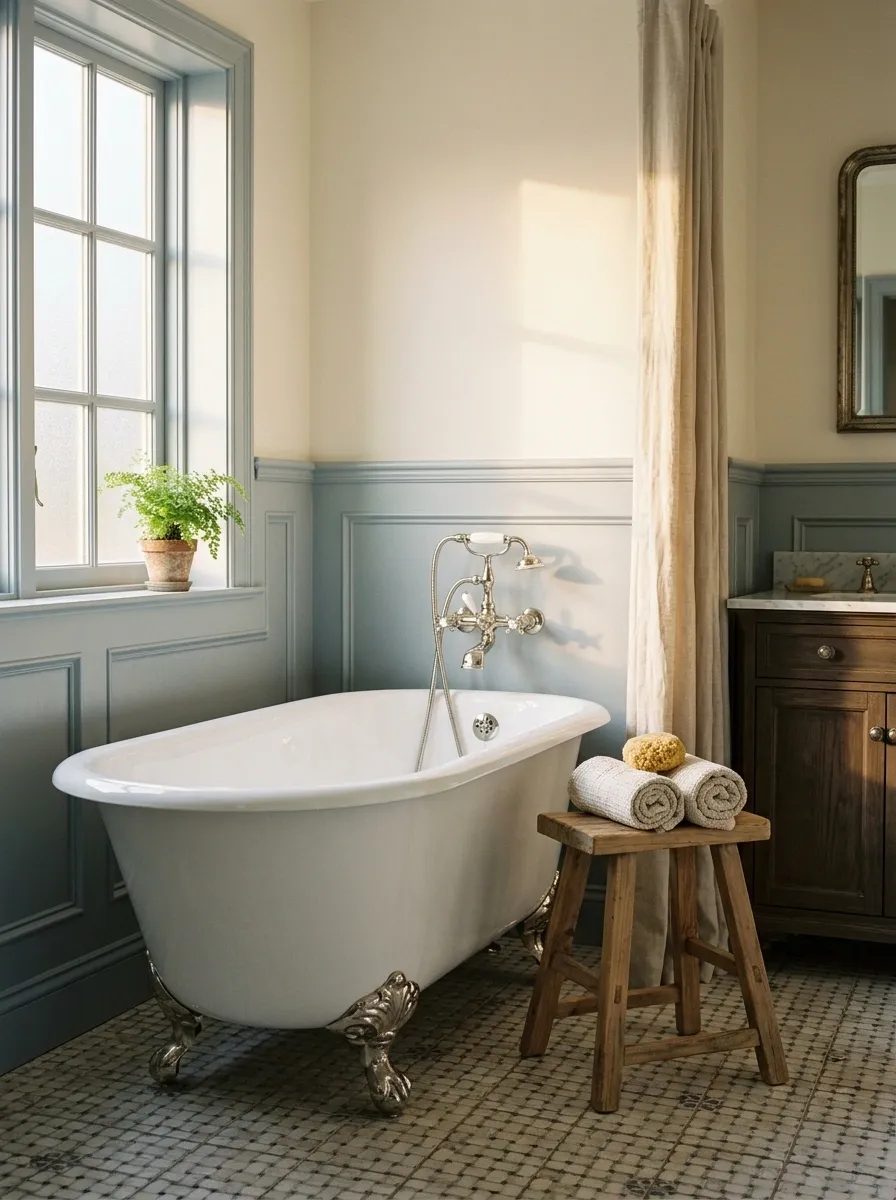
Muted blue-gray paneling gives this bathroom a cooler, more reserved farmhouse character. Above it, warm ivory walls soften the overall palette, while a traditional freestanding tub and nickel fittings keep the room connected to older interiors.
A small patterned floor and a simple wooden stool add detail without introducing another major color.
The important choice is the undertone of the paint. A blue-gray that leans too icy can look disconnected from cream porcelain and warm flooring.
Choose a shade with enough softness to sit comfortably beside the ivory surfaces, then repeat that warmth in towels or a wood accent. This design suits people who prefer traditional details but don’t want the familiar sage-and-white palette.
Choose the undertone carefully
The relationship between wall colors changes how the tub, tile, and metal finishes read. Test paint samples beside the fixed materials, not in isolation.
French Country Farmhouse Bathroom With a Carved Vintage Vanity
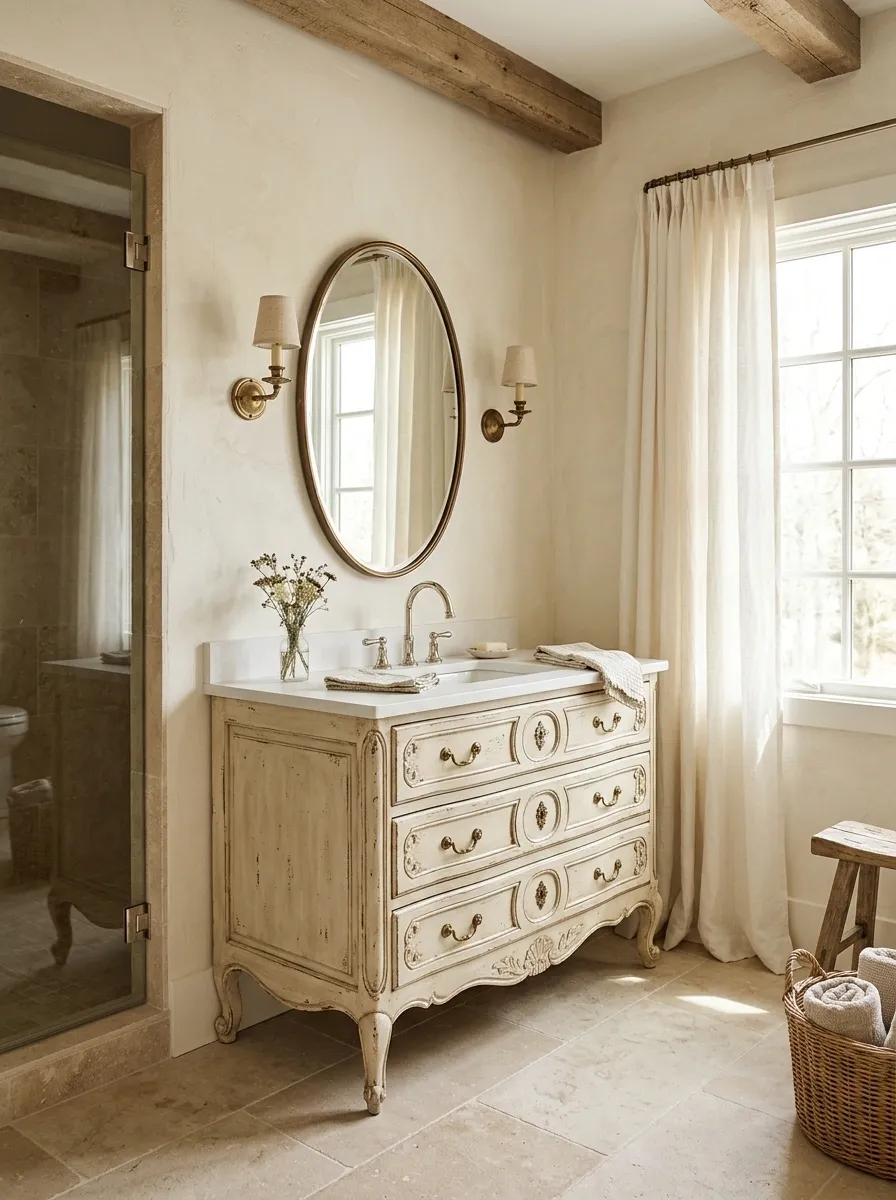
A carved, gently distressed vanity sets this bathroom apart from the rougher side of farmhouse design. Creamy walls, limestone-look flooring, an oval mirror, and soft linen details create a French-country direction that feels more graceful than rugged.
Traditional fittings bring a sense of age without turning the room into a museum.
The balance comes from mixing one ornate element with simpler surrounding finishes. The vanity can have curved legs or decorative drawer fronts, but the counter, tile, and shower enclosure should stay relatively understated.
Linen curtains or a restrained floral textile add softness without competing with the furniture. Choose a finish that looks naturally aged rather than heavily distressed. Too many artificial marks can make an otherwise refined composition feel contrived.
The French-country material mix
Soft stone, painted furniture, and natural textiles should share a warm undertone, while the mirror and fittings provide a little definition.
Weathered Brick and Dark Walnut in a Rustic Farmhouse Bathroom
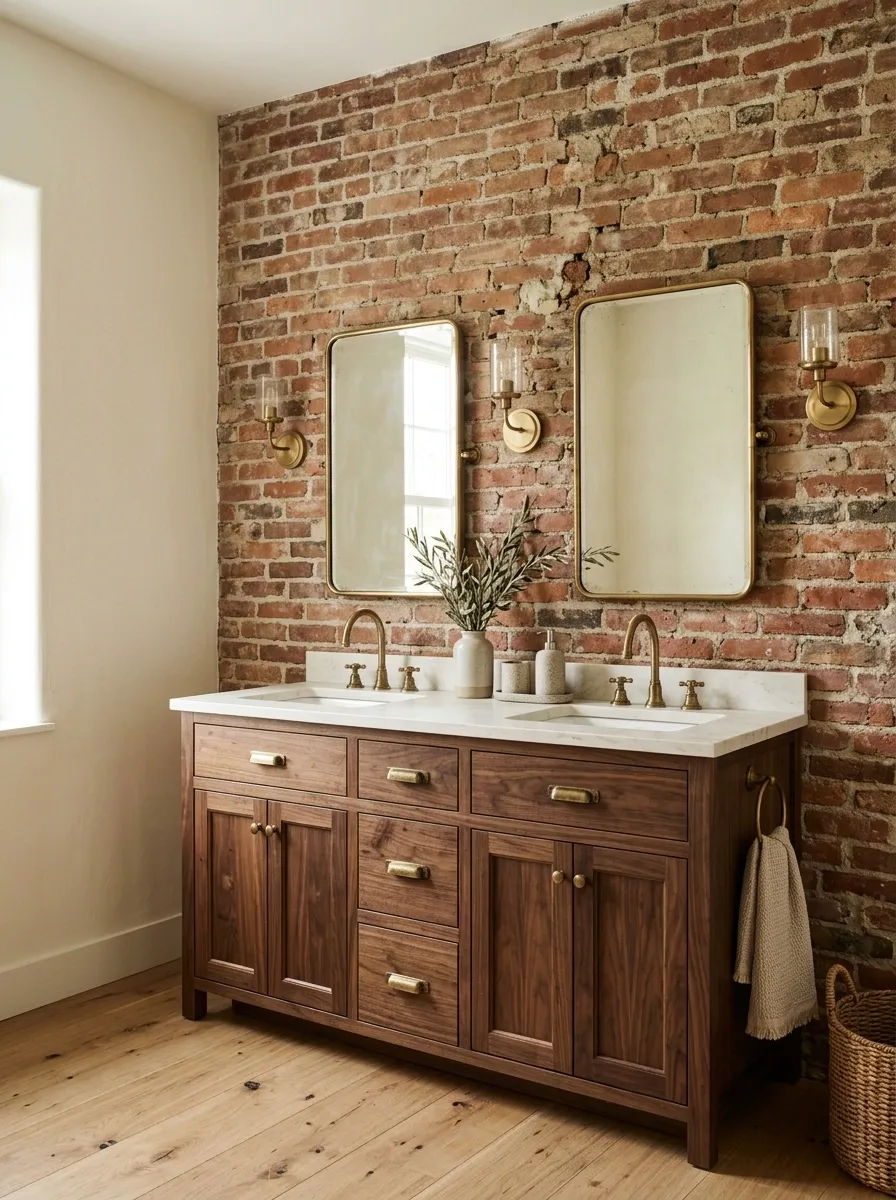
Exposed brick and dark walnut give this bathroom a more rugged personality than the usual pale farmhouse interior. The brick forms one architectural accent, while a deep walnut vanity, traditional porcelain fixtures, and warm lighting make the room feel connected to an older house.
Cream walls and a lighter floor keep the darker materials from swallowing the space.
The best version uses brick that looks naturally aged, with variation in tone rather than a perfectly uniform red surface. If the room already has exposed masonry, let it become the focal point instead of covering the other walls in additional rustic finishes.
Moisture matters here, especially around exposed masonry and timber. Use finishes suited to bathroom conditions and make sure the wall assembly is appropriate for the location.
Balance the heavy materials with lighter surfaces.
Attic Farmhouse Bathroom With a Tub Beneath the Sloped Ceiling
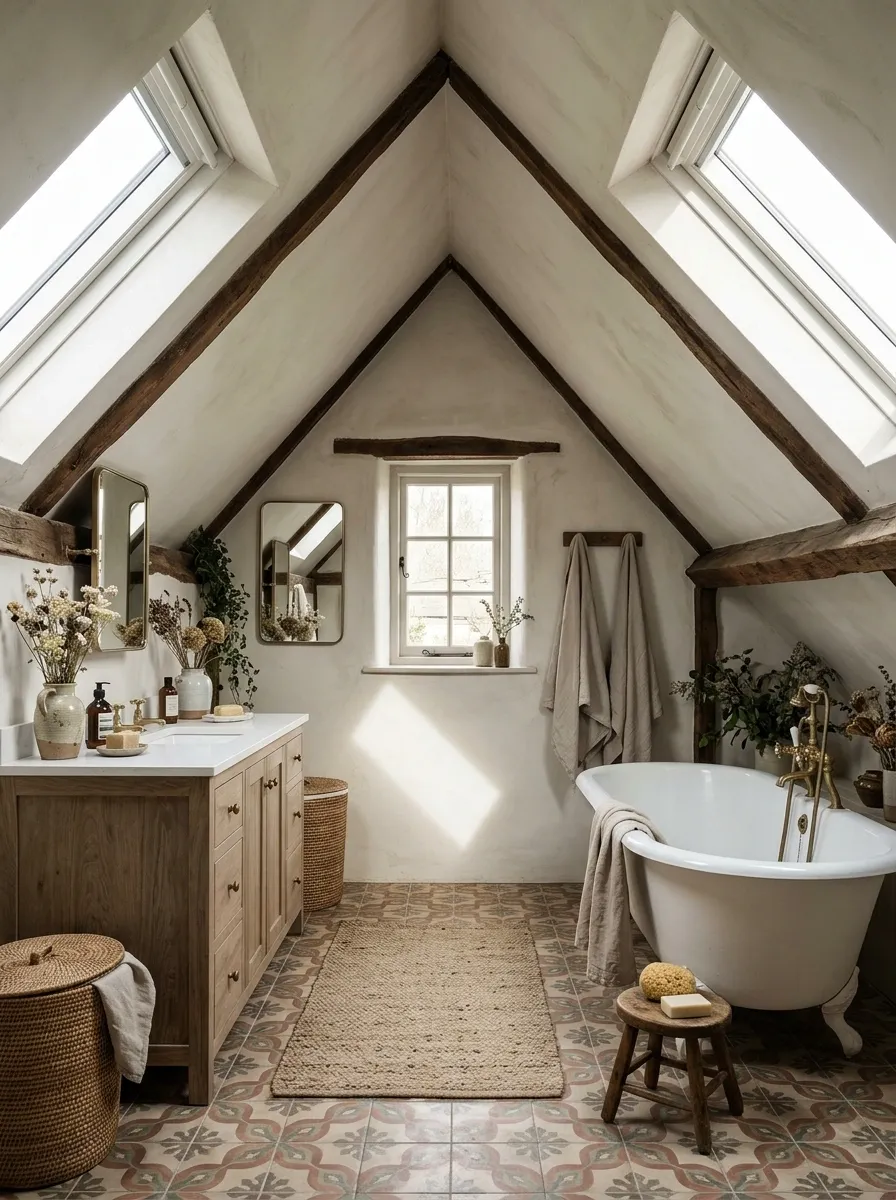
A sloping ceiling gives this attic bathroom its character before any decoration is added. The freestanding tub sits beneath the lower part of the roof, while the vanity occupies a section with enough headroom for comfortable everyday use.
Exposed timber, pale walls, and traditional floor tile bring the different parts of the room together.
The layout should follow the roof rather than fight it. Position the tub where the ceiling height suits bathing, but reserve adequate standing room around it.
The vanity, mirror, and lighting need careful placement too, especially where a roof window or beam limits the available wall space. Keep the finishes lighter if the room has small windows.
Let the roof shape determine the layout.
Modern Farmhouse Bathroom With Vintage Furniture and a Clean Glass Shower
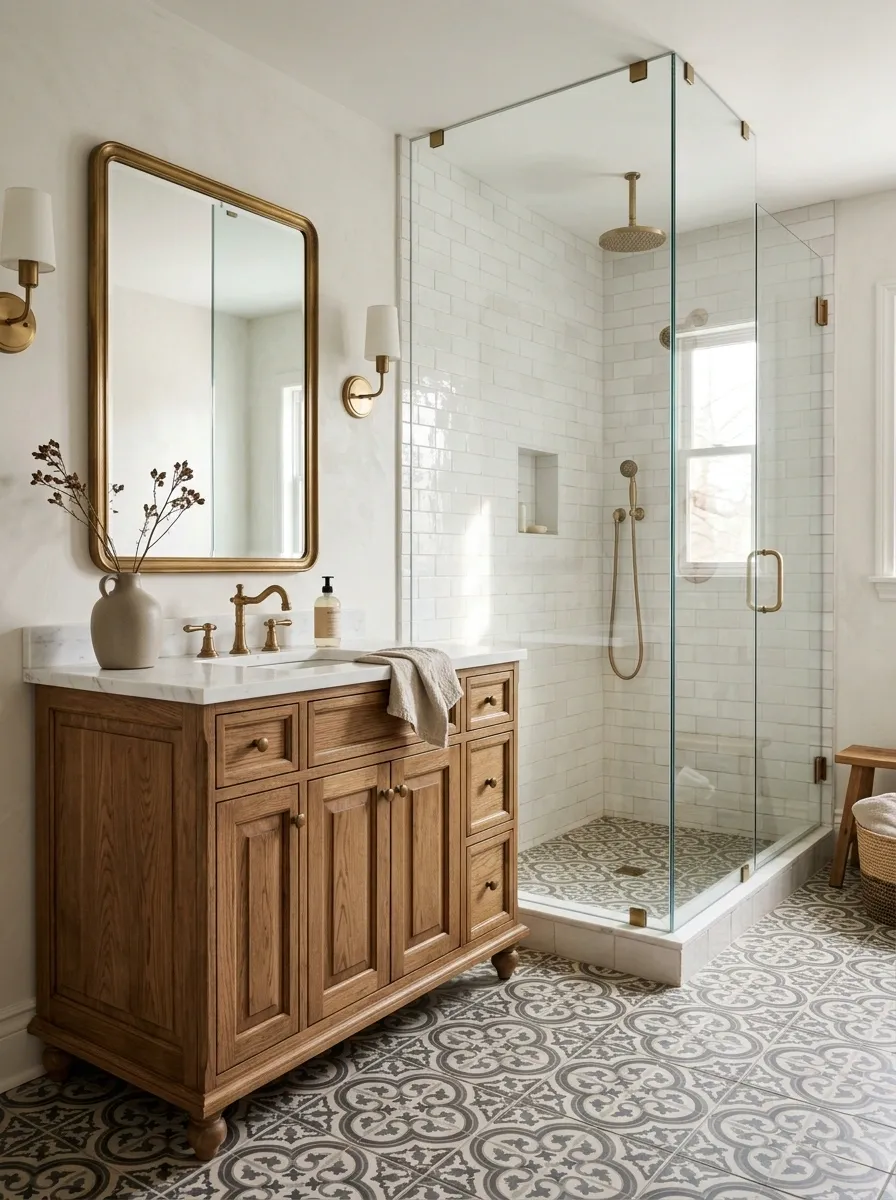
This bathroom combines the character of an older home with a more open, contemporary layout. An antique-style oak vanity and heritage floor tile supply the vintage details, while a clear glass shower enclosure keeps the room visually connected.
White handmade-look shower tile and simple brass fixtures provide a link between the two styles.
The glass enclosure works because the shower finish is attractive enough to remain visible. A busy tile pattern inside the shower would compete with the floor and vanity, so use one clear decorative direction and keep the remaining surfaces restrained.
This composition is useful when the bathroom needs a proper enclosed shower but still deserves traditional character. Choose shower glass and hardware that are easy to clean, and plan the door opening around the available floor space.
Separate the traditional elements from the modern ones without making them feel disconnected.
Heritage Green Paneling With a Built-In Linen Cabinet
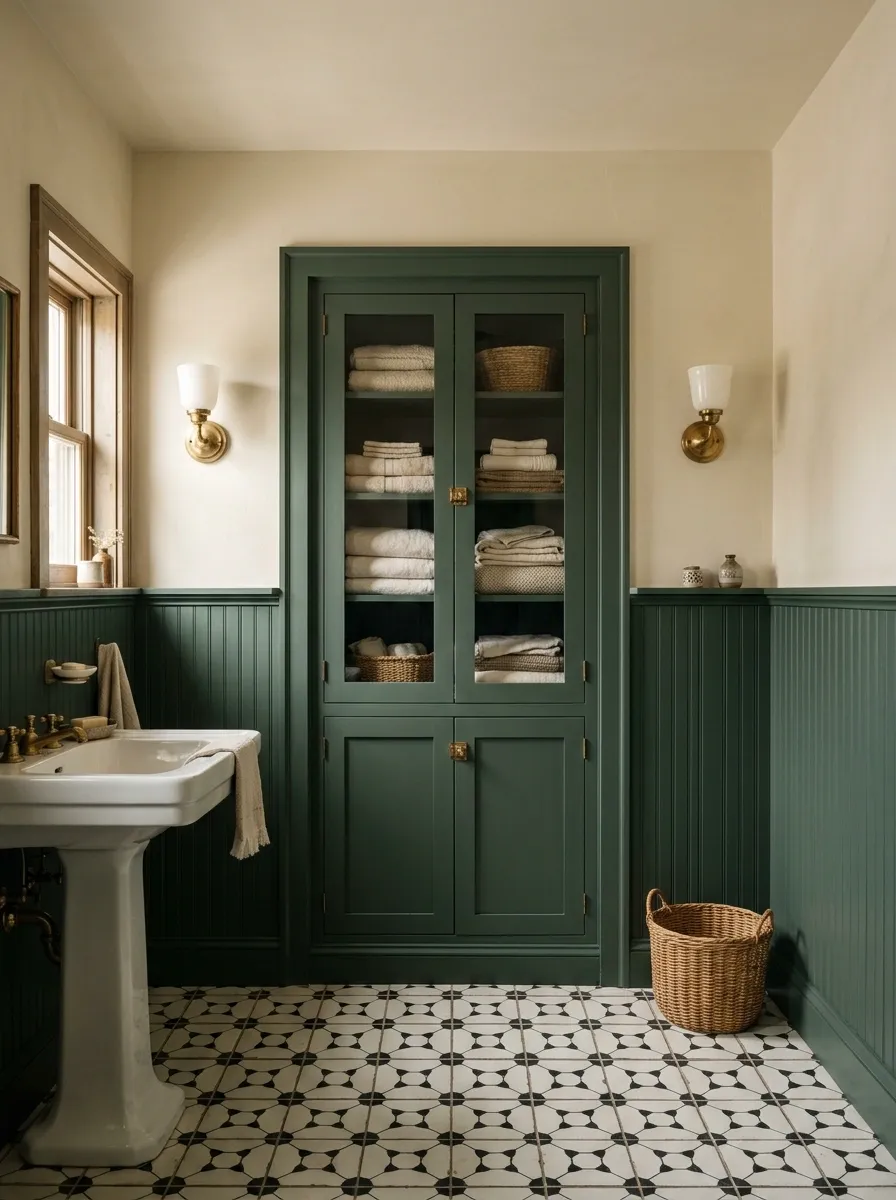
Deep heritage-green paneling gives this bathroom a grounded, traditional look, especially when paired with cream upper walls and a simple black-and-white floor. A tall built-in linen cabinet provides storage without adding another freestanding piece of furniture.
Classic wall lights and restrained metal finishes reinforce the older-house character.
The tall cabinet is more than a decorative feature. It keeps towels and toiletries off the vanity, helping the room look composed even when it’s used every day.
If the bathroom is narrow, a cabinet that sits neatly within an existing recess can be more practical than a deep standalone cupboard. Carrying the green across every surface could make the design feel heavy, so let the lighter upper wall and floor create separation.
Use the cabinetry as part of the architecture.
Reclaimed Oak Vanity With Warm Limestone Finishes
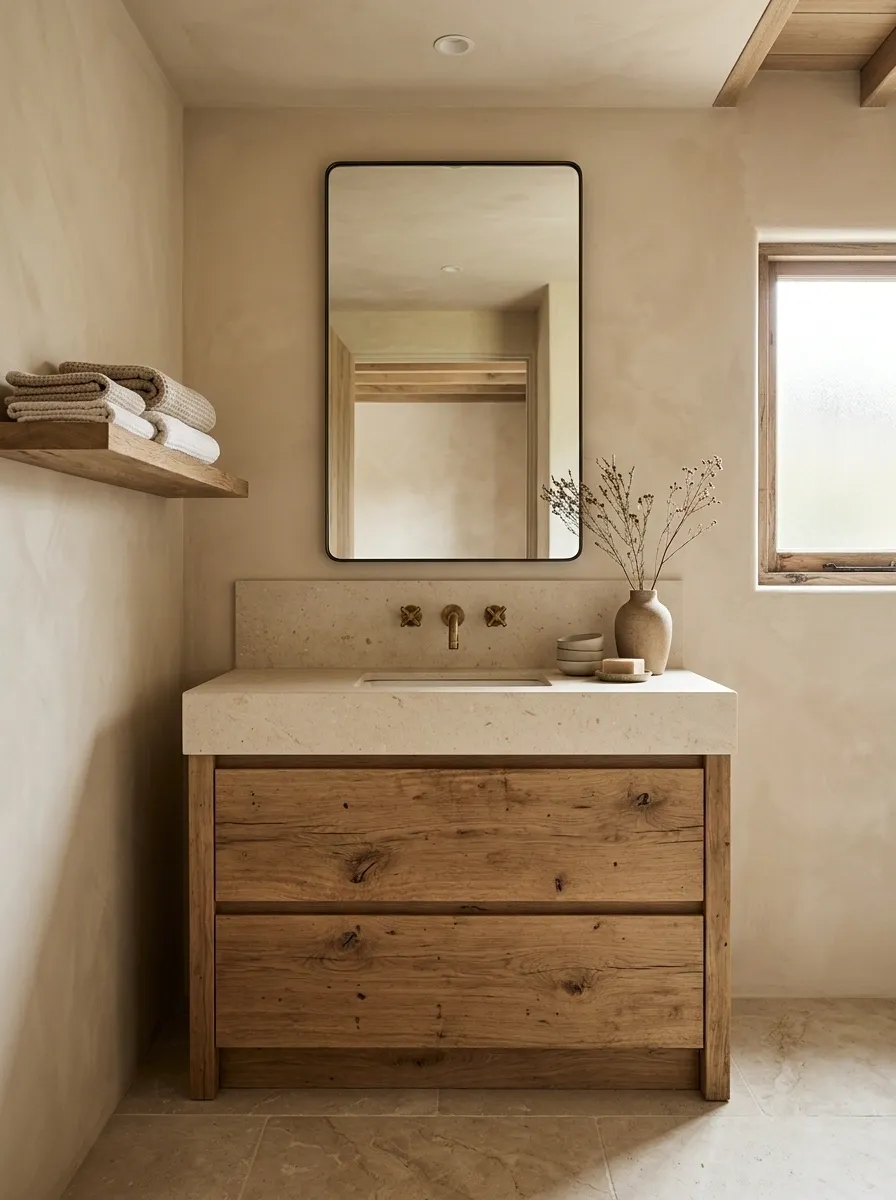
Reclaimed oak brings a natural, irregular texture to this farmhouse bathroom, while limestone-look flooring and warm neutral walls create a calmer backdrop. The vanity’s grain becomes the main feature, complemented by a simple basin, aged-metal fittings, and a mirror with a restrained frame.
The design feels different from a rustic brick bathroom because the materials are softer and more muted. There is no need for bold patterns or heavy decorative pieces.
Let the variation in the oak carry the character, and use the floor and wall finishes to connect the warm wood to the rest of the room.
Real reclaimed timber needs suitable preparation and protection in a bathroom. Keep water from sitting on the surface, protect exposed edges, and choose a counter that can handle regular contact with moisture.
Choose materials according to where they’ll be used.
Terracotta Flooring With White Beadboard and Natural Wood
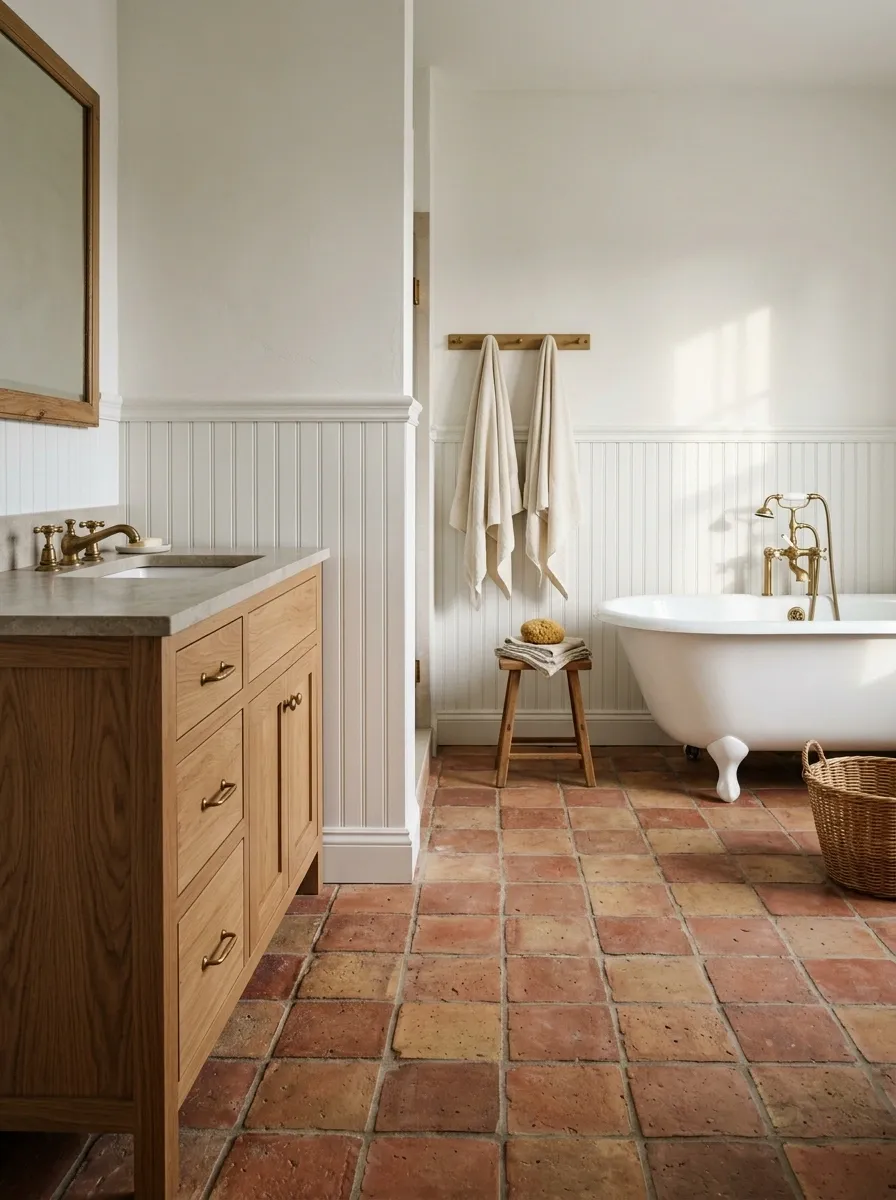
Terracotta gives this farmhouse bathroom a warmer, earthier foundation than traditional black-and-white tile. The reddish clay tones sit beneath white beadboard, a natural wood vanity, and a classic white bathtub.
Cream towels and understated metal fixtures bring the different finishes together without introducing another strong color.
The floor is the defining feature, so the rest of the room should support it. Choose terracotta tiles with natural variation rather than a uniform orange finish, and repeat their warmth through the vanity or a small wooden stool.
White paneling keeps the overall composition light, while the wood makes it feel less formal. Pay attention to grout color and floor texture. Both affect the finished look, and bathroom flooring must provide suitable slip resistance.
Build the room upward from the floor.
Toile Wallpaper With Cream Wainscoting and Traditional Fixtures
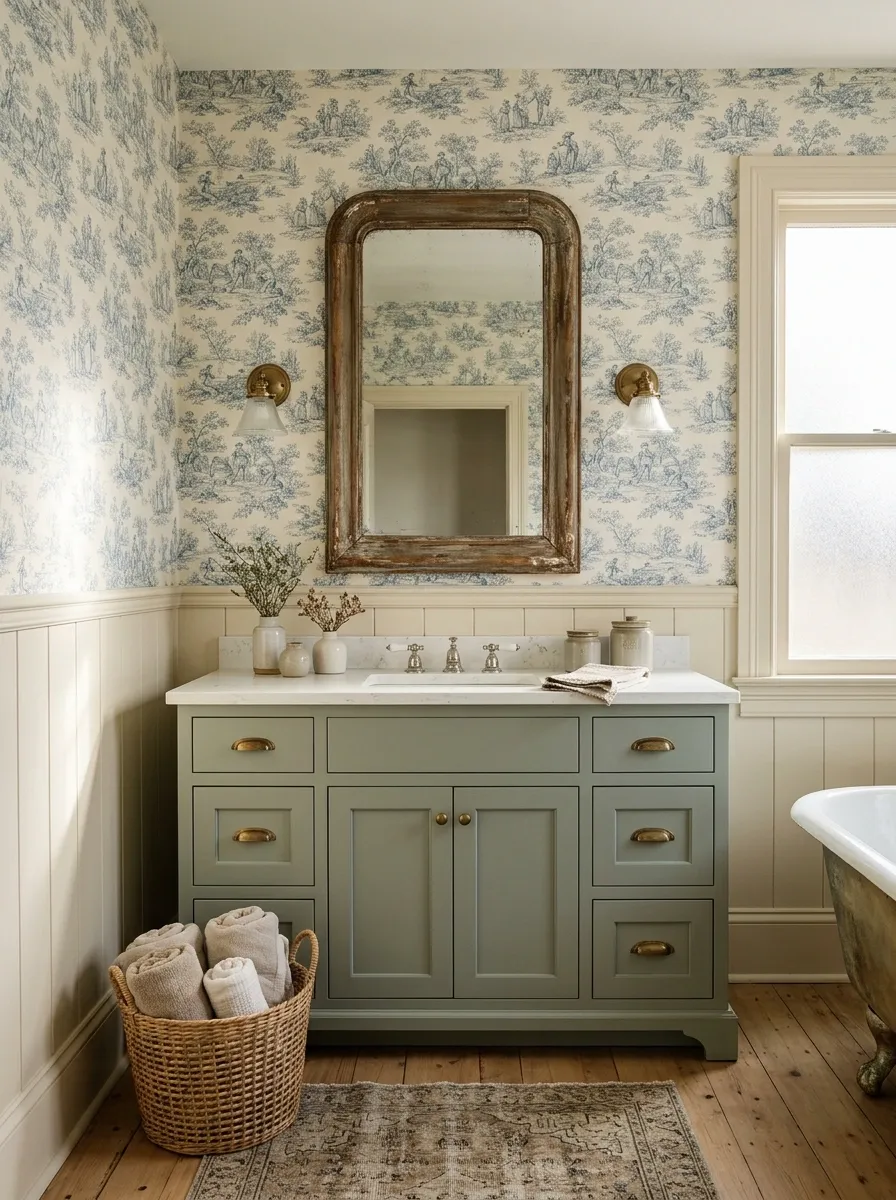
A toile wallpaper gives this farmhouse bathroom the character of a traditional country house. Delicate illustrated scenes cover the upper walls, while cream wainscoting creates a clean boundary below.
A painted vanity, a framed antique-style mirror, and classic metal fixtures complete the composition without competing with the detailed print.
The pattern looks most convincing when its colors relate to the rest of the room. Blue-and-ivory toile can feel crisp and traditional, while a muted brown or sage version creates a softer, older-world atmosphere.
Keep the floor simple, especially when the wallpaper covers a large area. Bathroom humidity needs consideration before choosing this finish. Use wallpaper rated for the intended environment, provide suitable ventilation, and avoid placing vulnerable paper in direct splash zones.
Choose the print and lower-wall finish as one decision.
Preserved Vintage Pink Tile With Warm Wood and Porcelain
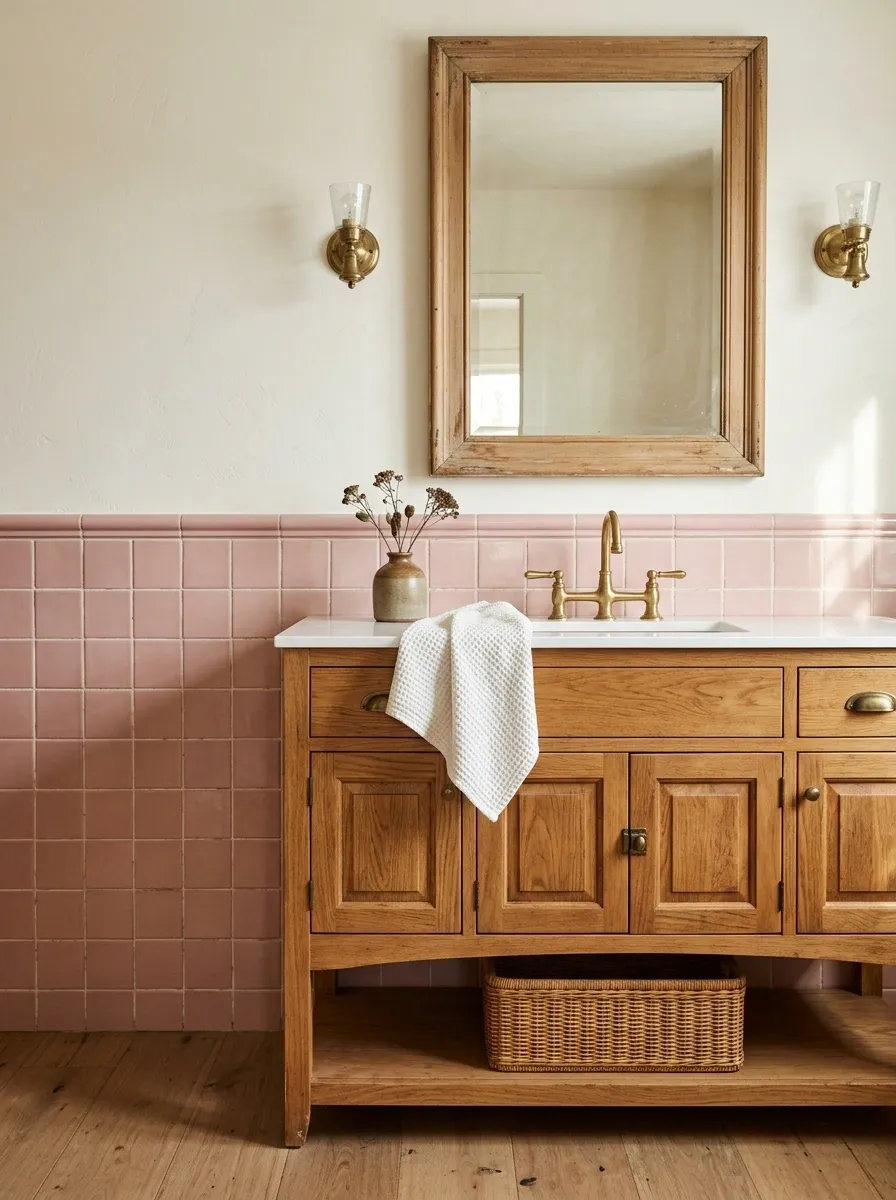
Instead of removing original pink tile, this bathroom makes it the foundation of the design. Dusty pink ceramic walls or a preserved pink tiled section sit alongside a warm wood vanity, white porcelain fixtures, and creamy paint.
An antique-style mirror adds a traditional detail without introducing another competing pattern.
The result feels more personal than a newly installed all-white bathroom because the existing color becomes part of the room’s identity. Warm wood helps the pink feel intentional rather than dated, while white fixtures give the eye somewhere to rest.
The condition of the original tile matters. Inspect the grout, loose tiles, and areas exposed to water before planning around them. If the tile is sound, matching new materials to its undertones is often a better starting point than trying to hide it.
Let the original tile guide the new finishes.
Historic Mosaic Flooring With Dark Timber Cabinetry
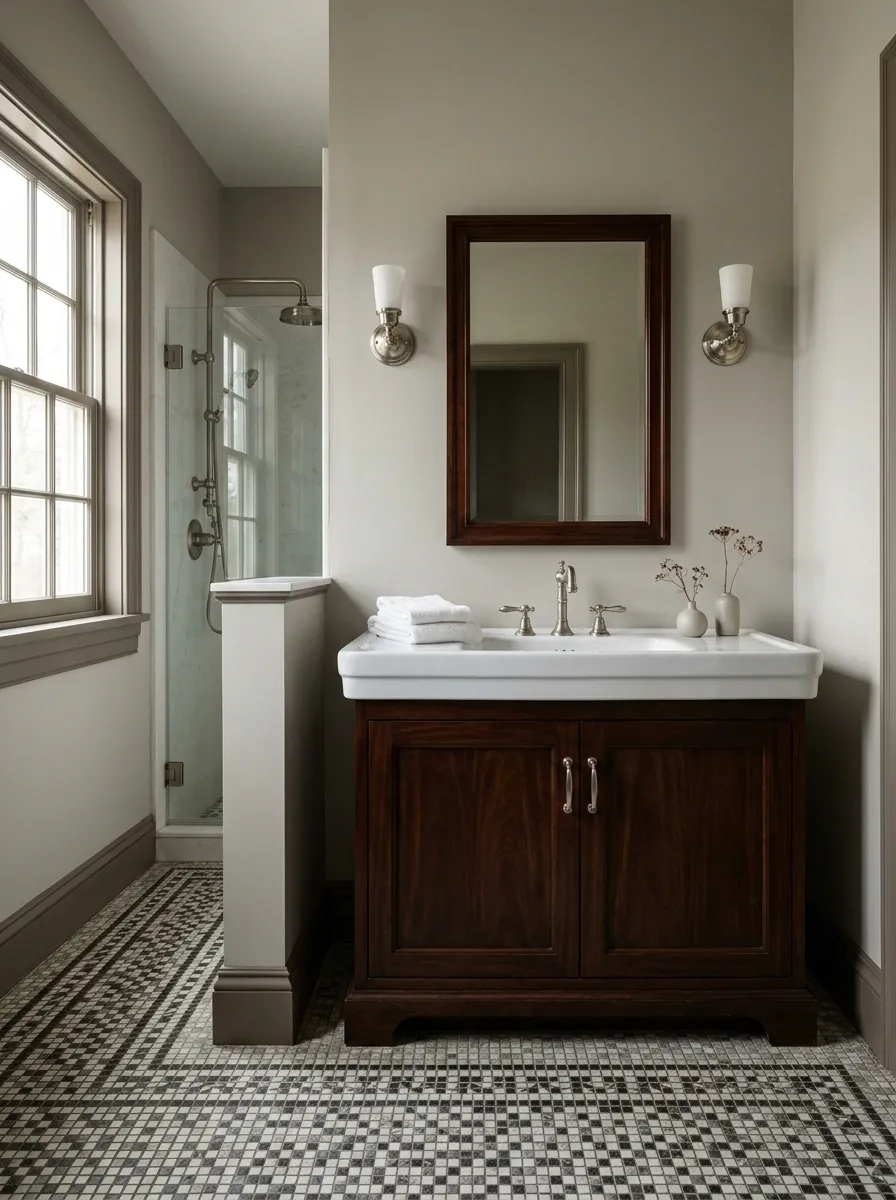
Small-format mosaic flooring gives this farmhouse bathroom an authentic period feel. A dark mahogany or walnut vanity adds visual weight, while white porcelain fixtures and restrained wall finishes prevent the room from looking overly dark.
An antique-style mirror and traditional shower fittings complete the look without requiring decorative details on every surface.
The mosaic provides the fine pattern here, so the vanity should have a relatively simple shape. Dark wood looks especially grounded when repeated in a mirror frame or a small accessory, but matching every object can make the room feel staged.
The floor also needs practical consideration. Mosaic grout creates a detailed surface, which means grout selection, sealing requirements, and cleaning routines deserve attention before installation.
Preserve the floor’s detail by simplifying everything around it.
Refined Farmhouse Bathroom With Cream Marble and Antique Silver
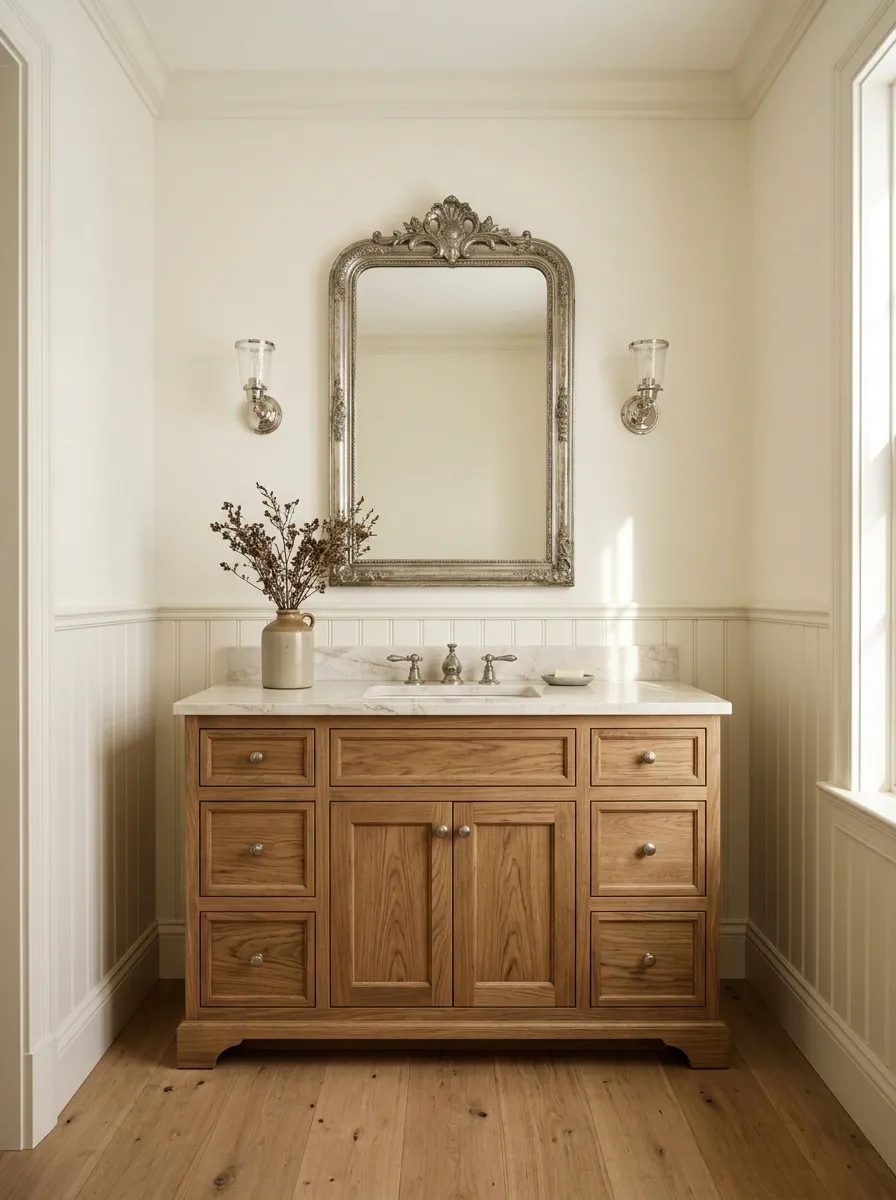
Cream marble, a traditional oak vanity, and an antique silver-toned mirror create a more polished interpretation of farmhouse style. The room feels graceful rather than rustic, with subtle stone veining providing texture and classic fixtures keeping the design connected to an older home.
Soft ivory walls allow the marble and furniture to remain distinct.
The contrast between warm wood and cooler silver is what keeps this composition interesting. The stone acts as a bridge because its creamy base relates to the walls, while its natural variation links the wood and metal finishes.
Avoid layering on ornate accessories or several different stone patterns. The room benefits from a more restrained hand. Confirm that the chosen marble finish suits each application and understand its sealing and maintenance requirements before committing.
Use the marble as the connection between warm and cool finishes.
Black Clawfoot Tub Against Cream Beadboard Walls
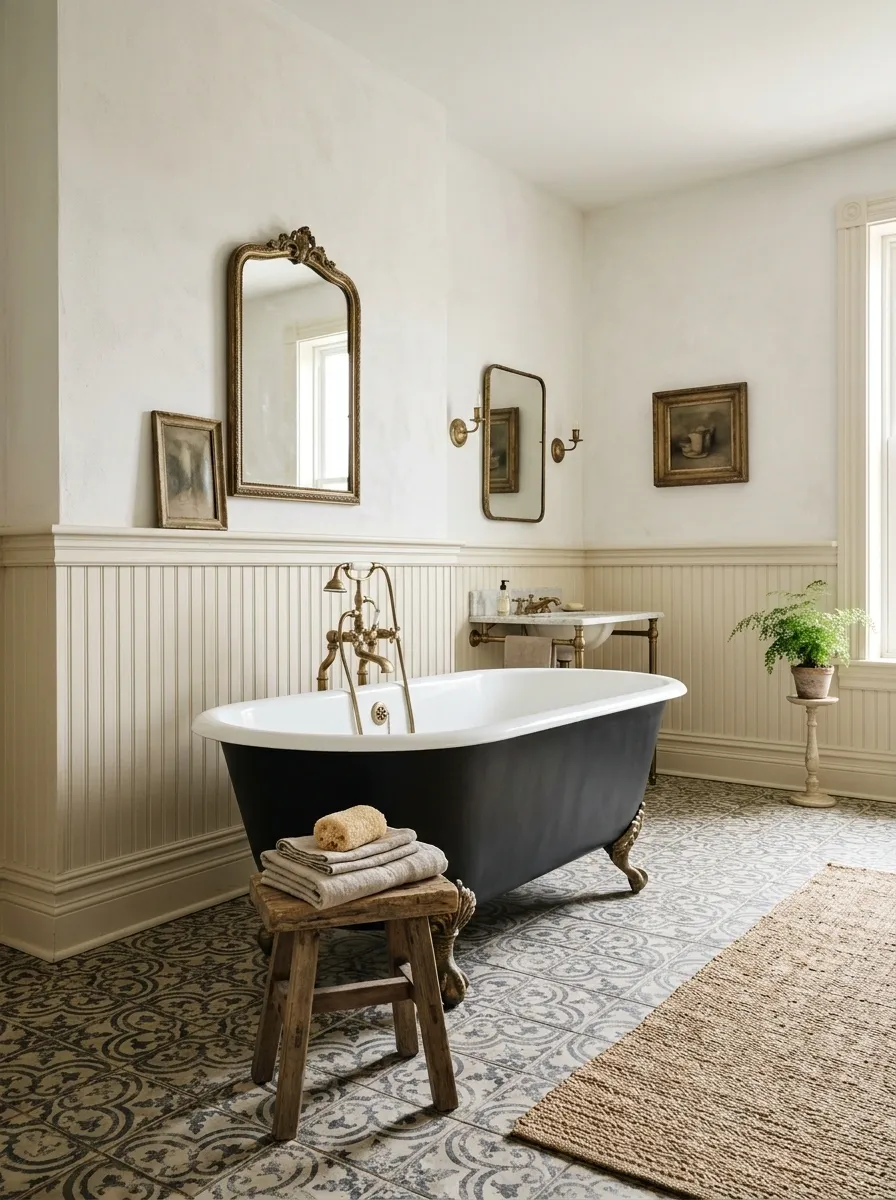
A black clawfoot tub becomes the dramatic centerpiece of this vintage farmhouse bathroom. Cream beadboard wraps the lower walls, while traditional floor tile, warm brass plumbing, and an antique-style mirror soften the contrast.
A small wooden stool beside the tub adds a natural note without distracting from its distinctive silhouette.
The key is giving the black tub enough space to stand apart. Keep the surrounding surfaces light and avoid repeating black on every fixture, frame, and accessory. A few carefully placed dark details can connect the composition without making the room feel overly graphic.
This design suits a bathroom with enough floor area to accommodate a freestanding tub and leave comfortable room around it. Check the tub’s weight, floor support, plumbing access, and cleaning clearance before choosing its final position.
Build the room around one strong focal point.
Farmhouse Bathroom With a Vintage Pine Linen Cupboard
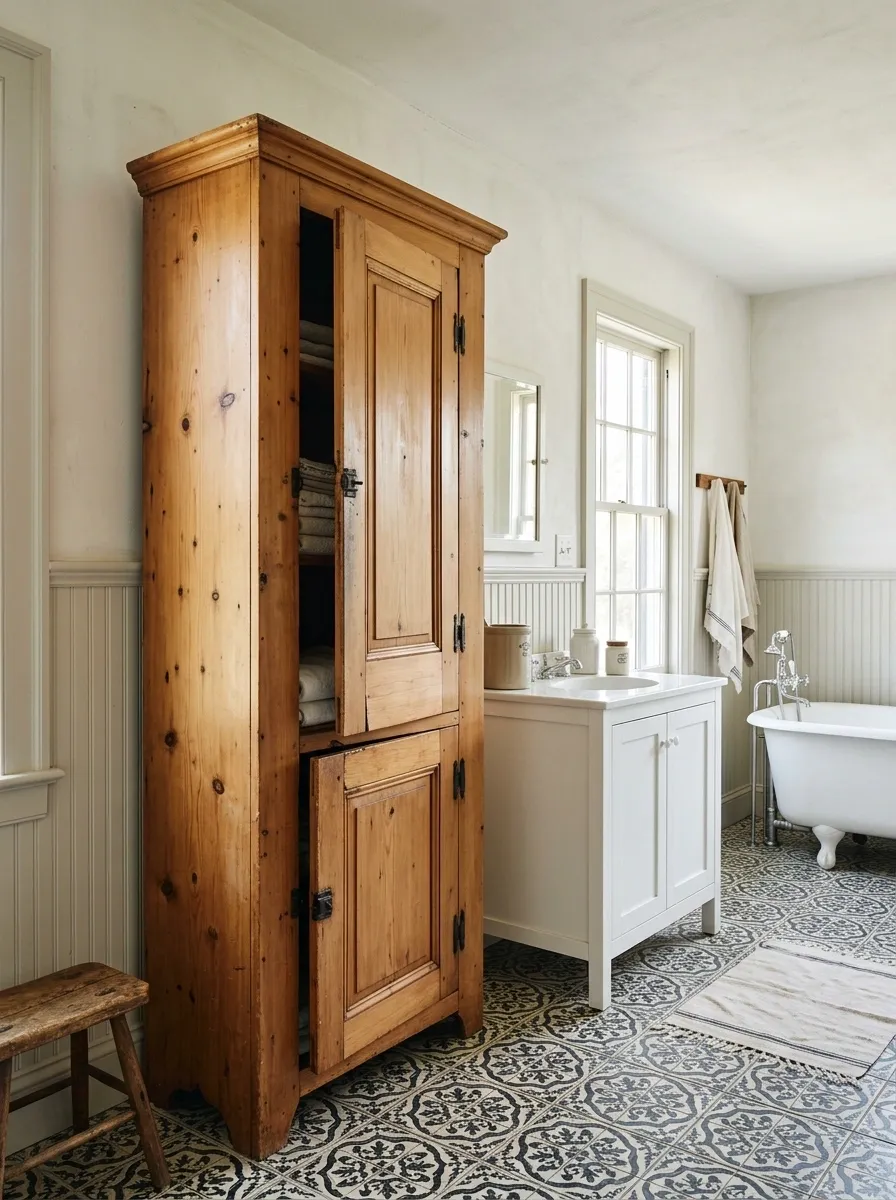
A freestanding pine cupboard brings the feeling of an old country house into this bathroom. Its warm wood grain and traditional doors contrast with pale beadboard, a classic white bathtub, and a restrained patterned floor.
The vanity can remain relatively simple, allowing the cupboard to provide both storage and architectural character.
This design is especially useful when built-in cabinets aren’t practical or the bathroom lacks a proper linen closet. Towels, spare toiletries, and everyday supplies stay enclosed, while the furniture gives the room a more collected appearance than a row of matching fitted cabinets.
Choose a cupboard with proportions suited to the space. A tall, narrow piece often works better than a bulky dresser in a smaller bathroom, but it still needs stable placement, suitable moisture protection, and enough clearance for doors to open fully.
Traditional furniture can solve a real storage problem.
Reclaimed Sliding Door and a Traditional Farmhouse Vanity
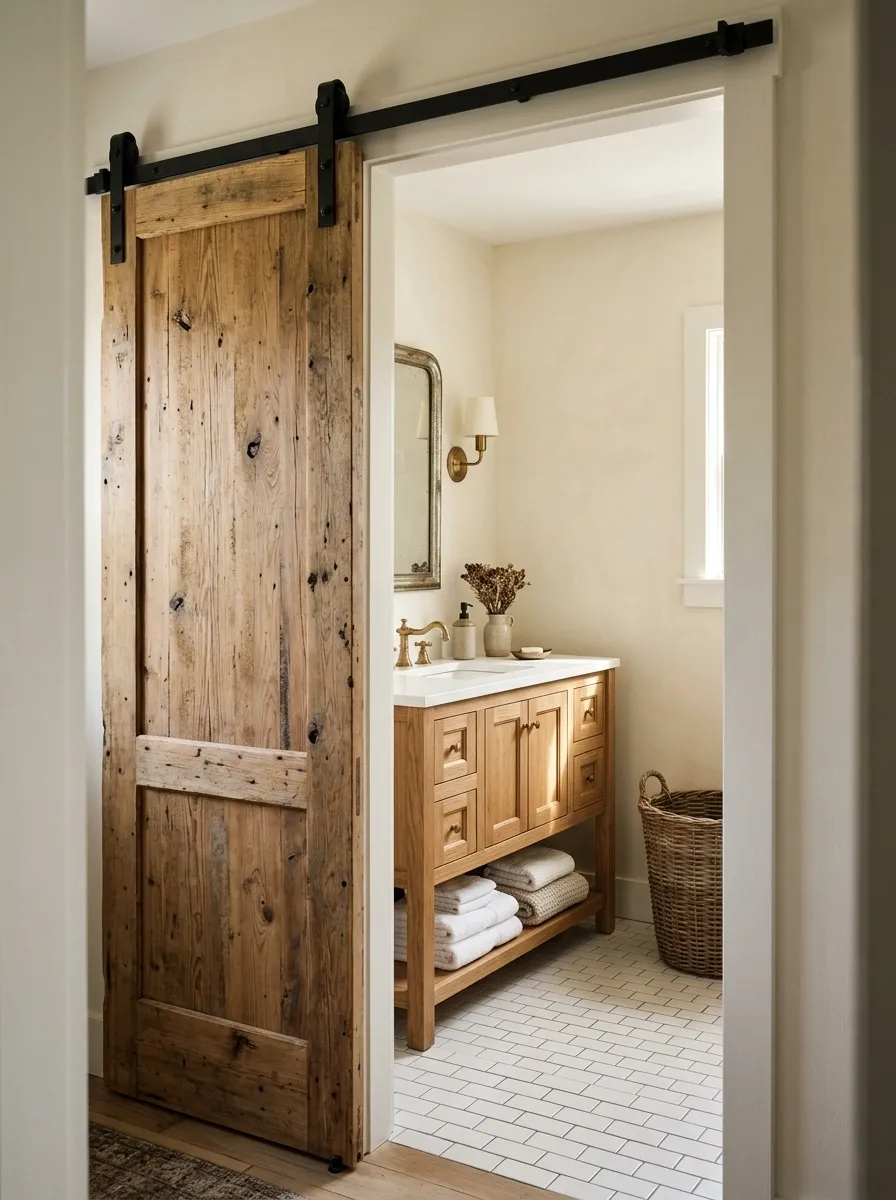
A reclaimed timber sliding door adds architectural character to this farmhouse bathroom before you even reach the vanity. Inside, pale walls, a traditional oak cabinet, classic tile, and warm metal fittings keep the room connected to the same old-house style.
The door provides the strongest rustic element, so the other finishes can remain relatively understated.
The sliding design can help when a conventional hinged door interferes with a vanity or narrow walkway. It still needs a clear wall to travel along, and a suitable privacy solution for the bathroom.
Choose a door with a finish that complements the vanity rather than trying to match every wood surface exactly. Avoid adding several other barn-style features, which can make the room feel themed instead of lived-in.
Check the wall and door movement before choosing the finish.
Family Farmhouse Bathroom With a Long Double Vanity
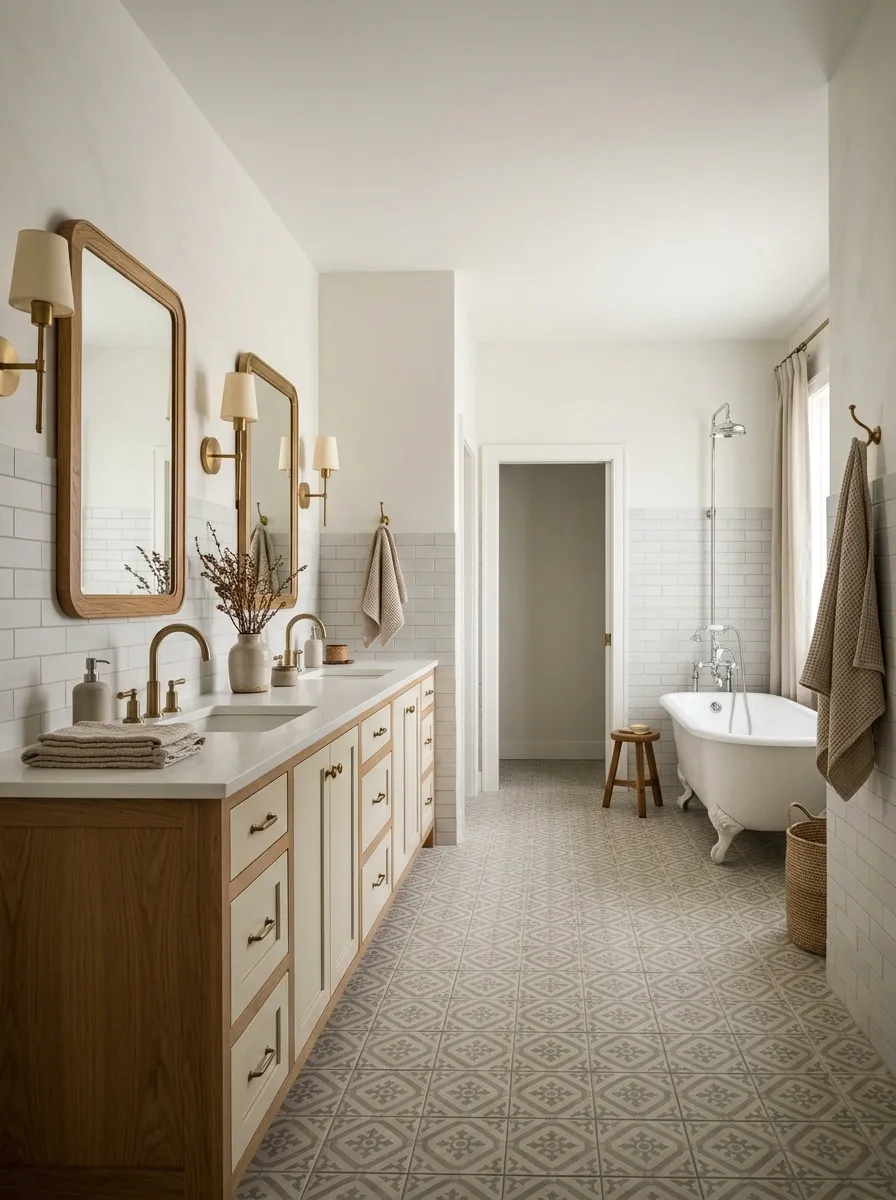
This family bathroom combines the warmth of an oak vanity with a practical layout built around two sinks. Separate mirrors and wall lights establish individual stations, while a traditional bathtub and shower serve the rest of the room.
Pale subway tile and a restrained floor pattern keep the larger composition from becoming visually busy.
The long vanity should have useful storage beneath both basins, not just a broad countertop. Drawers or cabinets can keep daily essentials separated, while towel hooks and reachable storage prevent the shared space from becoming cluttered.
A clear route between the sinks, tub, and door is just as important as the styling. Choose a mirror arrangement that suits the actual spacing of the basins.
Make shared use part of the design from the beginning.
Accessible Farmhouse Bathroom With a Step-Free Shower
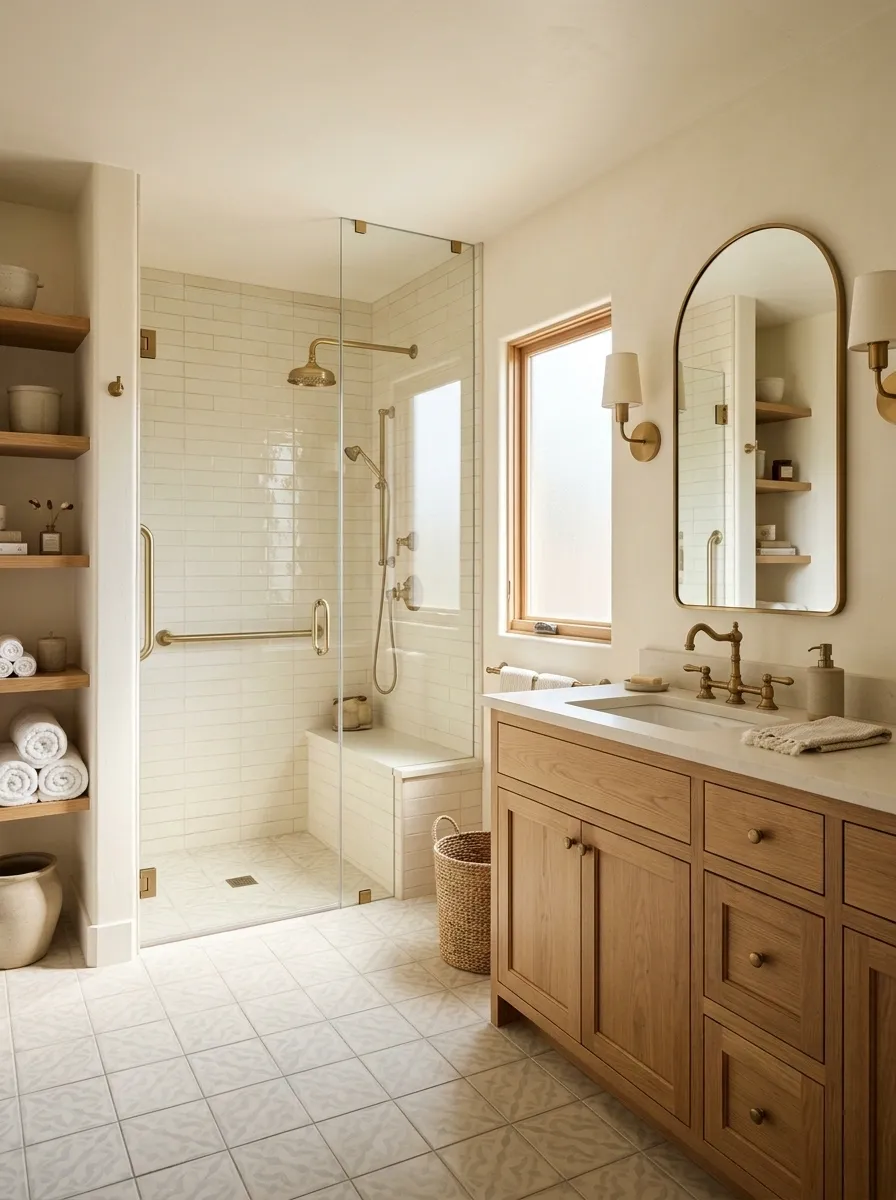
A step-free shower can sit comfortably within a vintage farmhouse design when its finishes relate to the rest of the room. Cream wall tile, a natural oak vanity, traditional metal fittings, and a simple patterned floor bring warmth to a layout that prioritizes easy access.
Discreet support bars and a handheld shower can complement the design when selected and positioned for the people using the space.
The most important decision is the layout, not the decorative finish. Shower entry, turning space, controls, seating where needed, and access to towels should all be considered together.
A level-entry shower also requires careful planning for waterproofing and drainage. Choosing accessibility features early makes it easier to coordinate the tile, wall reinforcement, plumbing, and storage while keeping the final room cohesive.
Comfort and access should shape the floor plan.
Utility-Inspired Farmhouse Bathroom With Brick Flooring
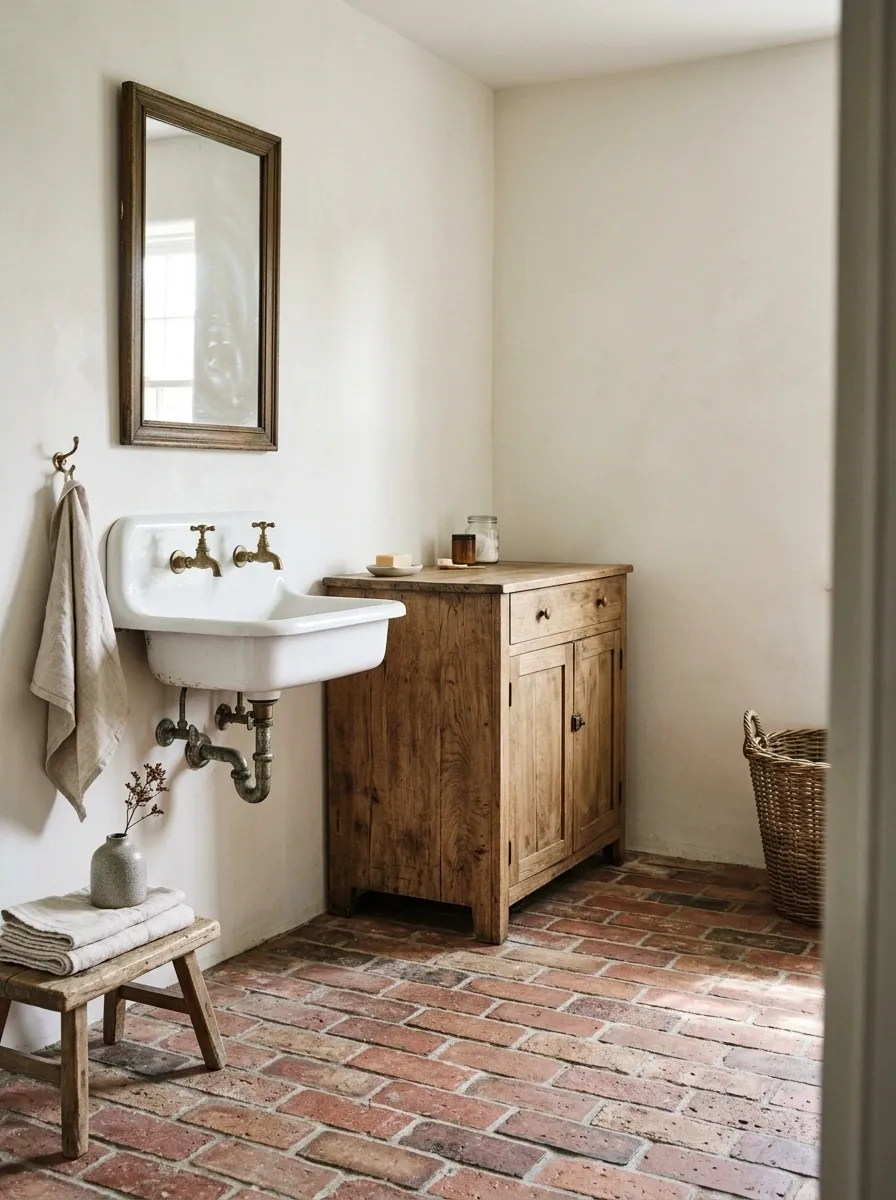
Brick flooring gives this farmhouse bathroom the practical, hardworking character of an old utility room. A simple porcelain sink, a natural wood vanity, pale painted walls, and a traditional mirror soften the floor’s earthy color.
Instead of leaning into heavy industrial details, the design keeps the fixtures familiar and the furniture straightforward.
The look works best when the brick tones vary naturally and the rest of the room stays relatively restrained. If real brick feels too porous or difficult to maintain, choose a bathroom-rated brick-look tile with suitable slip resistance.
Moisture protection matters around timber furniture and masonry. I’d keep exposed wood away from persistent splashes and choose wall finishes suited to the room’s ventilation and humidity.
A hardworking material deserves a practical supporting palette.
Rental-Friendly Farmhouse Bathroom With Reversible Details
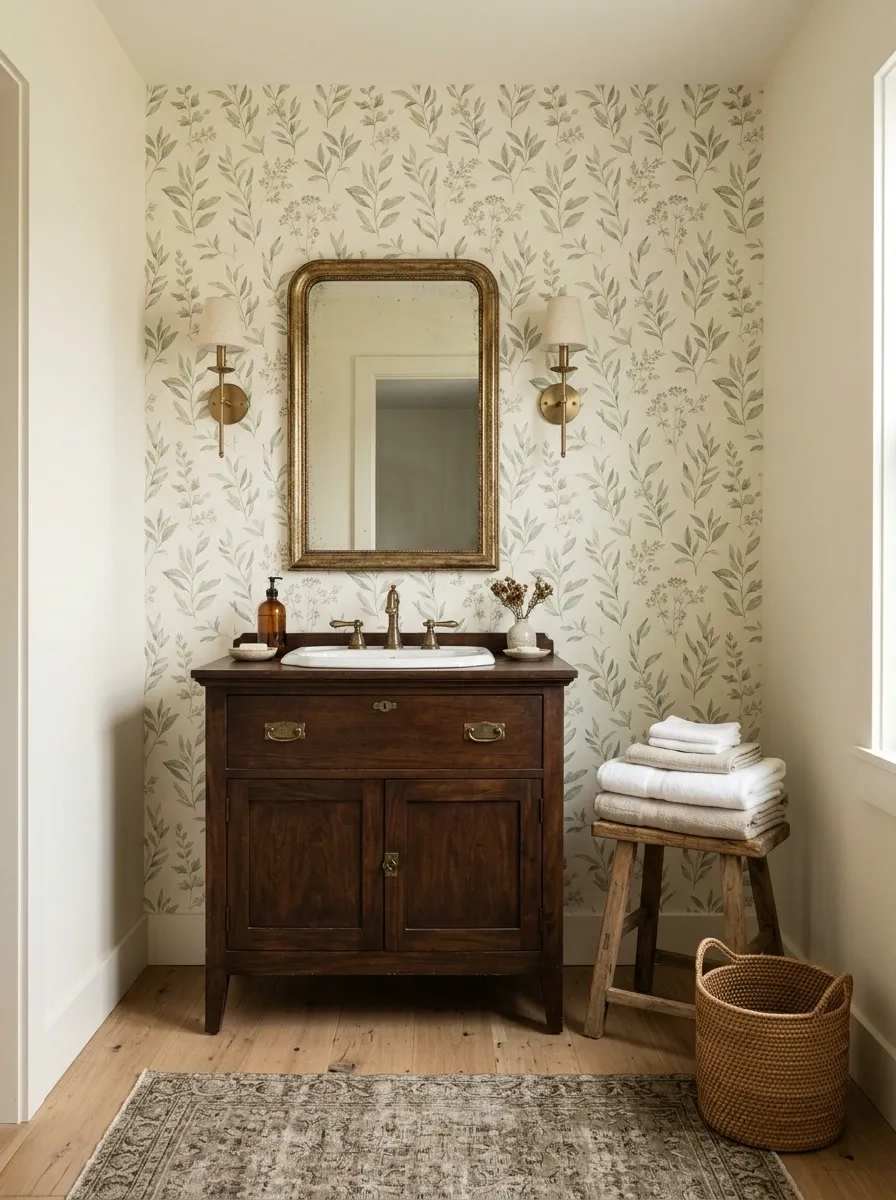
A furniture-style vanity, botanical wallpaper, a framed mirror, and warm metal accessories bring vintage farmhouse character to a rental bathroom without requiring a complete renovation. Existing tile and plumbing remain in place, while removable or easily replaced details provide the decorative changes.
Soft cream tones and natural wood make the room feel collected rather than temporary.
The most important decision is knowing which surfaces can be changed safely. Removable wallpaper needs a suitable surface and must be appropriate for humid rooms. Freestanding furniture also needs enough clearance for doors, drawers, and plumbing access.
I’d avoid covering original fixtures simply because they aren’t your preferred style. A traditional sink can become part of the design when the mirror, lighting, textiles, and wood tones relate to one another.
Separate reversible updates from changes that need permission.
Compact Farmhouse Bathroom With a Corner Shower
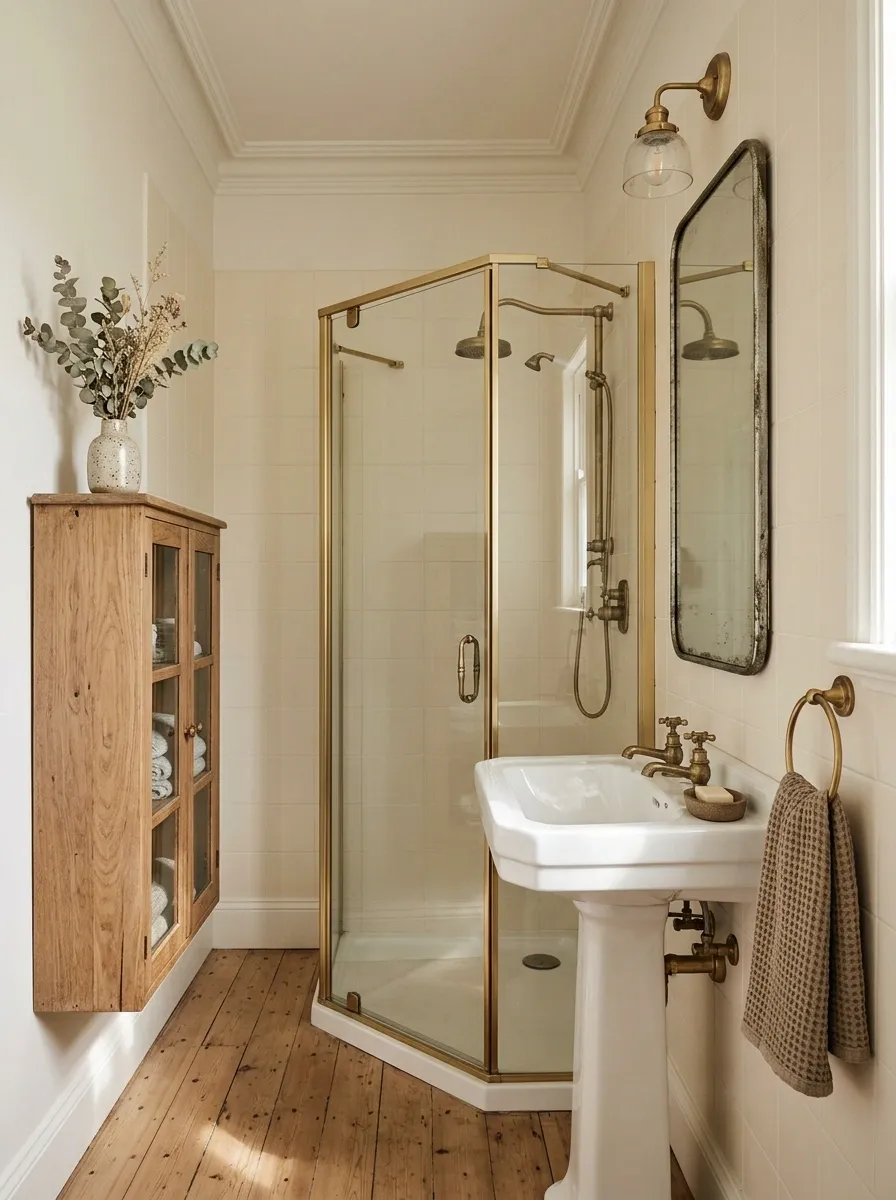
A corner shower helps organize this small farmhouse bathroom without making every fixture feel squeezed together. A compact pedestal sink leaves more floor visible, a tall mirror draws attention upward, and a slim wall cabinet provides room for everyday essentials.
Cream tile, subtle traditional details, and warm metal fittings preserve the vintage character.
The design depends on careful placement rather than extra decoration. Check the shower door’s movement, the sink’s depth, and the bathroom entrance before deciding where each feature belongs.
A corner shower won’t automatically solve a cramped layout if its enclosure blocks the natural walking route. Use one main tile finish and a small number of farmhouse details.
The layout has to work before the styling can work.
Moody Charcoal Farmhouse Bathroom With Aged Brass
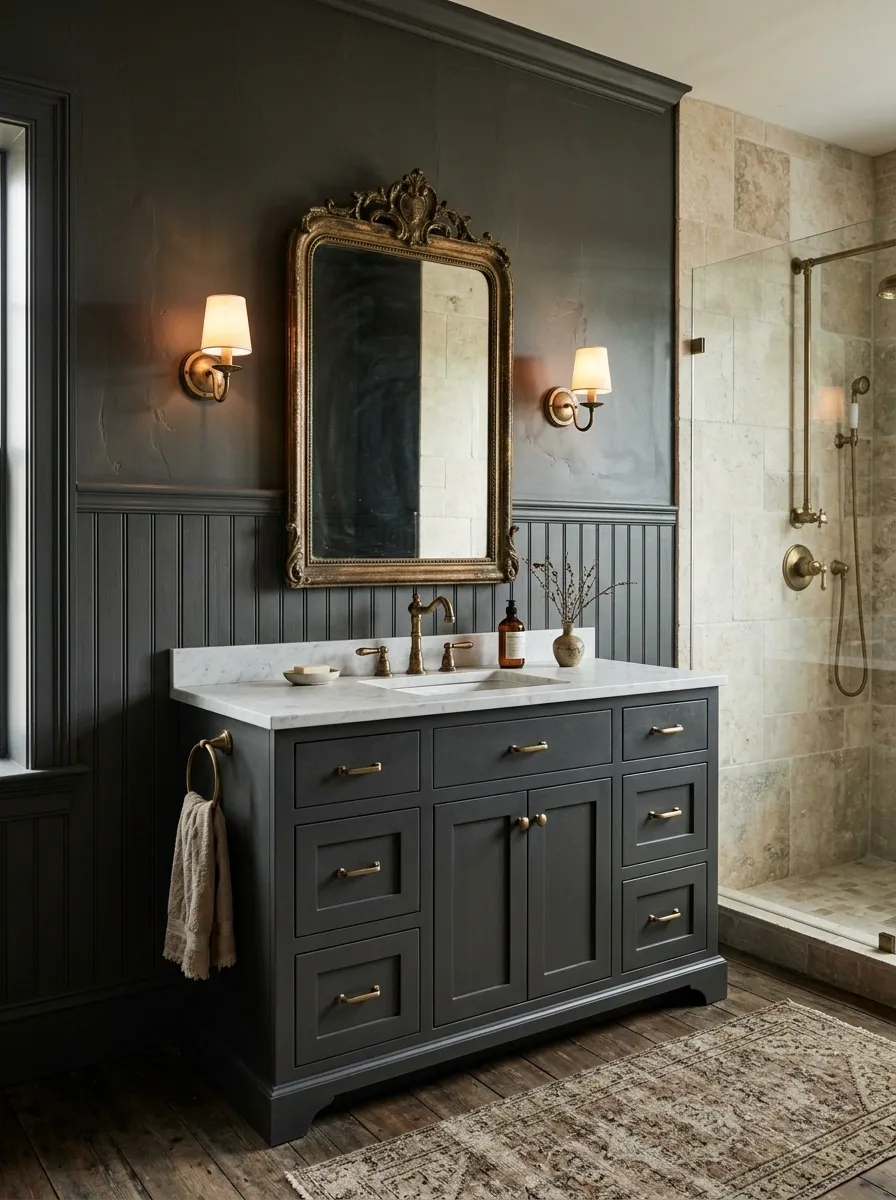
Charcoal cabinetry and smoky wall colors give this vintage farmhouse bathroom a more dramatic identity. An antique-style mirror, traditional basin, and aged-brass fittings stand out against the darker background, while lighter tile around the shower keeps the functional areas visually clear.
The combination feels historic and atmospheric without relying on exposed barnwood or distressed accessories.
Dark colors work best when the lighting plan is settled early. Wall sconces near the mirror, useful task lighting, and pale surfaces in key areas help the fixtures remain visible.
If the bathroom has limited natural light, use charcoal on the vanity or a selected wall rather than automatically carrying it across every surface. Choose one metal finish and repeat it through the faucets, lighting, and cabinet details.
Make the light part of the design, not an afterthought.
Butter-Yellow Farmhouse Bathroom With Warm White Fixtures
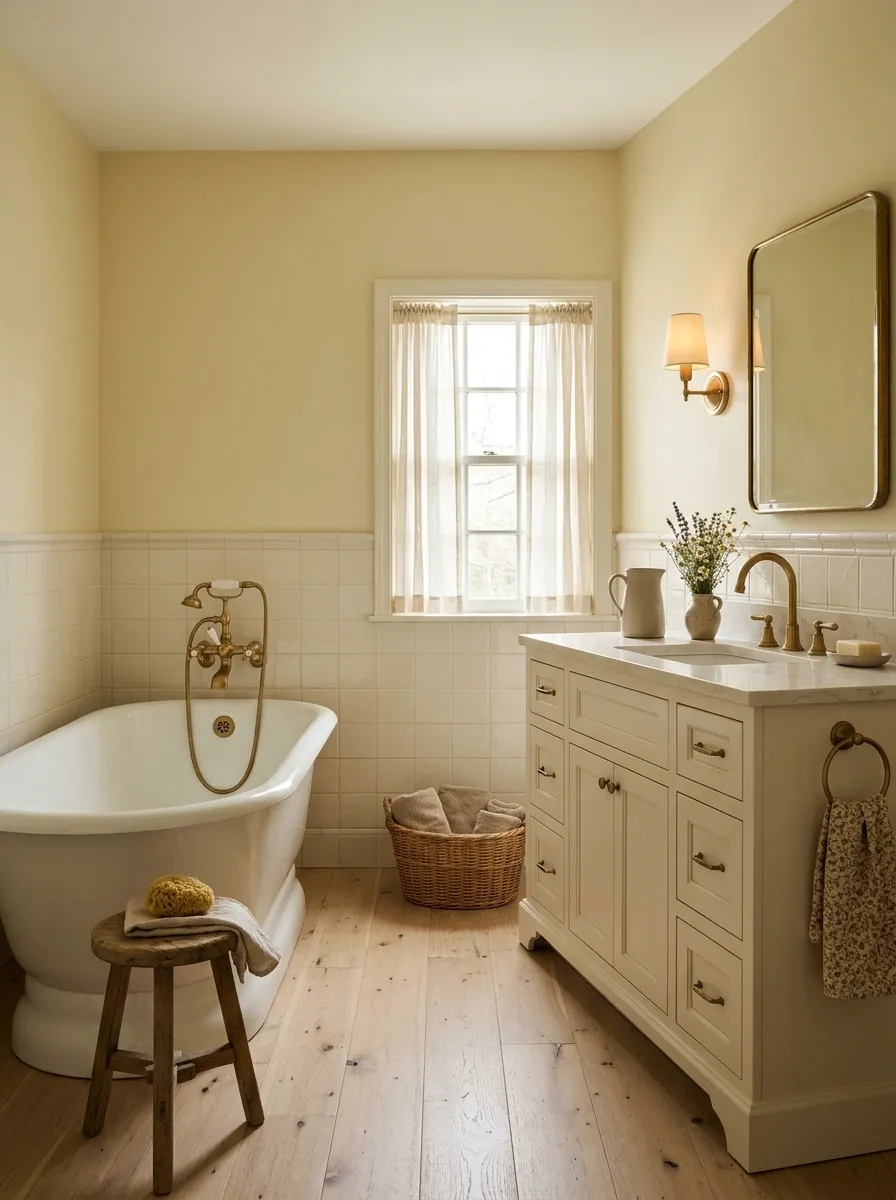
Butter-yellow walls give this farmhouse bathroom a cheerful, old-cottage character without relying on strong wallpaper or elaborate furniture. A traditional white bathtub and vanity keep the larger fixtures light, while pale oak details and a small floral textile provide the familiar country-house warmth.
Cream tile connects the yellow walls to the porcelain.
The yellow should feel soft and slightly muted rather than bright or acidic. It works especially well alongside warm whites, natural wood, and modest patterns that echo the same gentle palette.
A few traditional fittings establish the vintage direction without turning the room into a themed country set. Test paint samples in both daylight and artificial light before committing, because yellow can change noticeably depending on the surrounding surfaces.
Keep the yellow soft, and let the porcelain create contrast.
Choosing the Right Vintage Farmhouse Bathroom Style
The strongest farmhouse bathrooms don’t rely on a fixed set of rustic features. They have a clear direction, whether that means preserving original pink tile, building a palette around a black clawfoot tub, or letting botanical wallpaper define a cottage powder room.
Start with the feature that matters most to you, then select materials that support it. Check the room’s natural light, available storage, ventilation, and fixture clearances before committing to finishes. These decisions shape the finished result just as much as the decorative details.
You don’t need to recreate an entire old house to get the character right. Often, one thoughtful combination of traditional materials and practical modern choices is enough.