
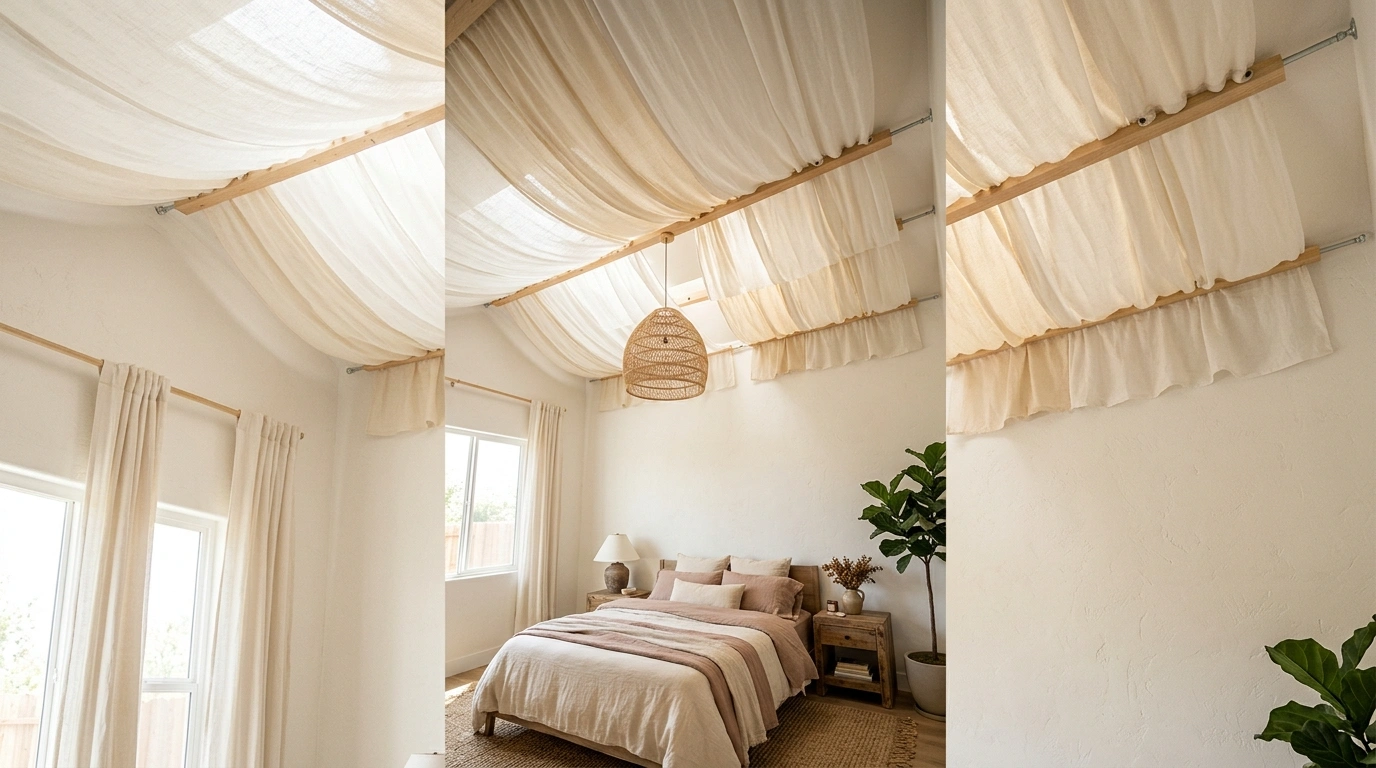
A plain ceiling can make an otherwise lovely room feel unfinished. But hang a few lengths of fabric without considering the furniture, lighting, or ceiling height, and suddenly the bedroom looks like a wedding venue forgot to pack up.
The difference between elegant ceiling draping and an awkward DIY experiment comes down to the entire composition. Fabric needs to work with the walls, floor, furniture, and natural light. Even the direction of a fold can change how the room feels.
Some interiors call for soft white linen, while others suit dramatic charcoal, dusty rose, patterned cotton, or structured fabric panels. The best choice depends on the mood and architecture of the room, not whatever looks pretty in a tiny inspiration photo.
These designs explore complete interiors, with practical styling notes and visual planning ideas to help you choose a direction that actually works.
The ceiling intervention
THE CEILING INTERVENTION / DESIGN REALITY CHECK
Your ceiling called.
It’s tired of being ignored.
Fabric draping can look like a boutique hotel. Or like a bedsheet lost a fight with the ceiling fan. The difference? A little planning.
Check the height before the drama.
Low ceiling? Enormous hanging swags can make the room feel shorter. Keep the folds shallow and let the space breathe.
The lights are not part of the fabric budget.
Keep textiles clear of hot fixtures. Appropriate fabric, secure mounting, and proper clearances are non-negotiable. Fire hazards are not a decorating style.
One main character per room, please.
Dramatic ceiling fabric pairs best with calmer walls and furniture. Every surface competing for attention is how a room ends up looking like a group chat argument.
The assignment: make the whole room make sense.
Save the drama for the draping, not the installation.
Fabric ceiling designs
Soft White Fabric Ceiling in a Warm Neutral Bedroom
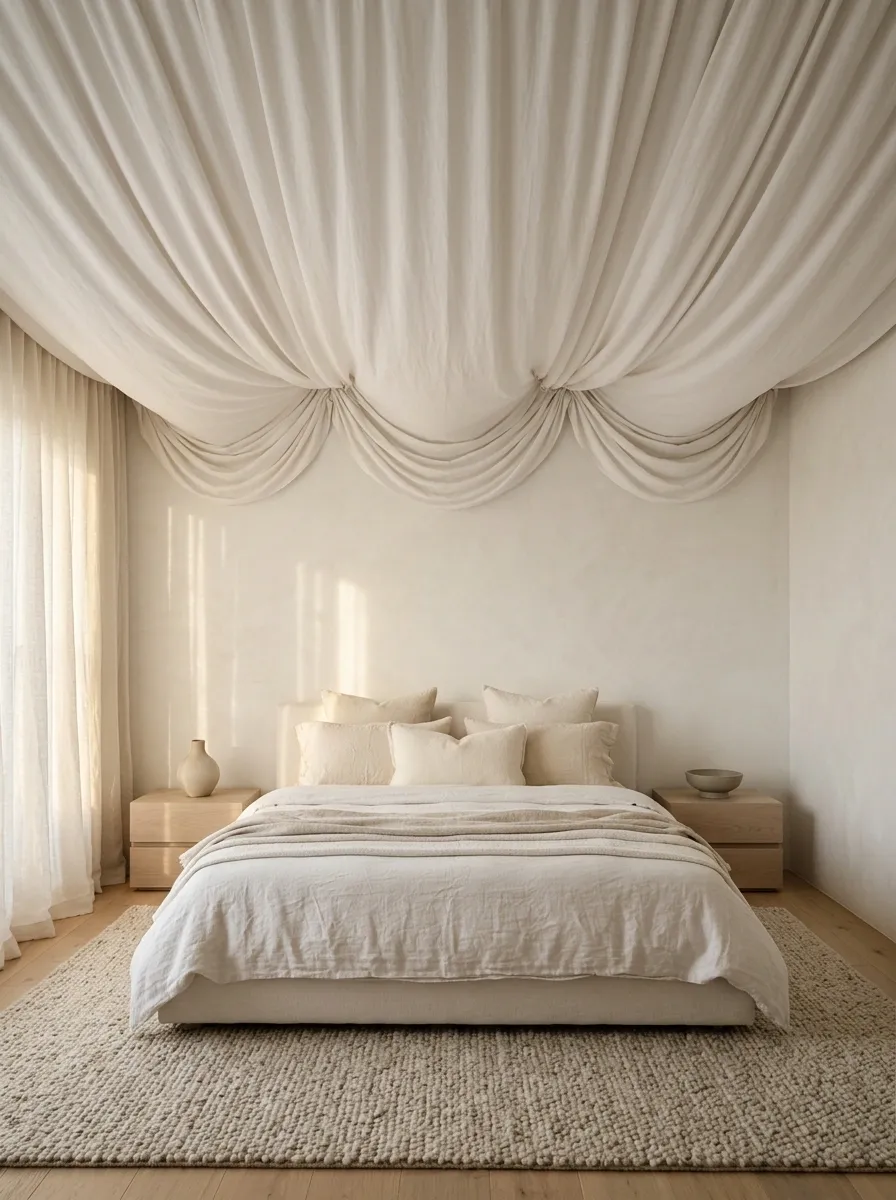
Broad ivory folds sweep toward the headboard above a low upholstered bed, crisp linen bedding, and pale oak nightstands. Warm white walls and a textured rug complete the room without competing with the ceiling.
The trick is to align the folds with the bed rather than sending fabric in every possible direction. That simple relationship makes the treatment feel architectural.
Keep accessories restrained. The room needs texture and contrast, not seventeen shades of beige auditioning for the same role.
The color relationship
A QUIET PALETTE
Let texture do the talking.
Keep the ceiling and bedding close in tone. Let the oak provide contrast instead of introducing another competing accent color.
Romantic Bedroom With Blush Ceiling Draping
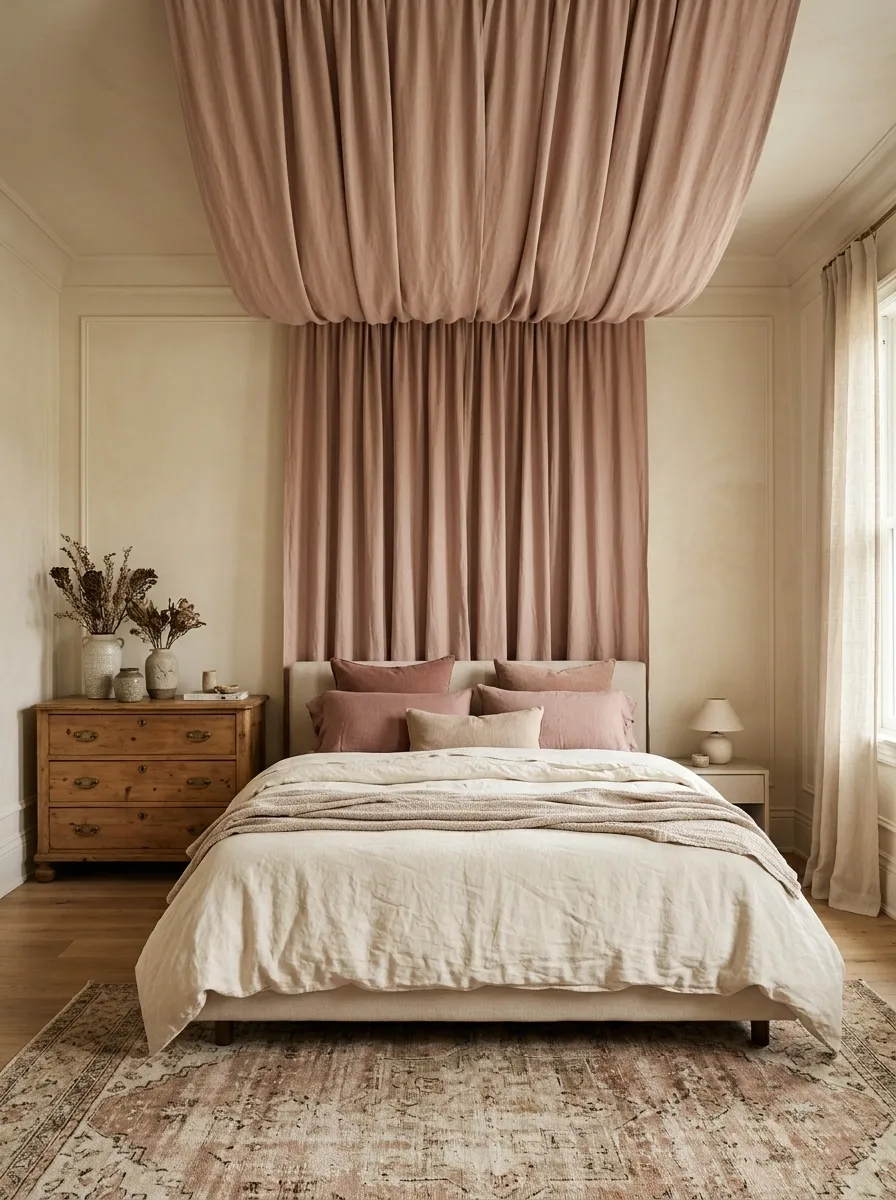
Dusty blush fabric creates a soft canopy above an upholstered bed, paired with creamy bedding, antique wood furniture, and muted rose accents. The draping can sweep from a central ceiling point or frame the sleeping area with relaxed folds.
The palette should feel warm and grown-up rather than excessively sugary. Cream walls create breathing room, while aged wood gives the pink somewhere to land.
Choose matte fabric and repeat the rose color sparingly. A few coordinated details are enough. The entire room does not need to look like a cupcake frosting convention.
The blush color hierarchy
COLOR DIRECTION
THE OVERHEAD STATEMENT
Dusty blush
THE BACKDROP
Warm cream
THE GROUNDING NOTE
Aged wood
THE SMALL ACCENT
Muted rose
Use the strongest pink in a few deliberate places. A restrained palette feels more considered than repeating one color on every surface.
Modern Living Room With Sculptural Ivory Ceiling Drapes
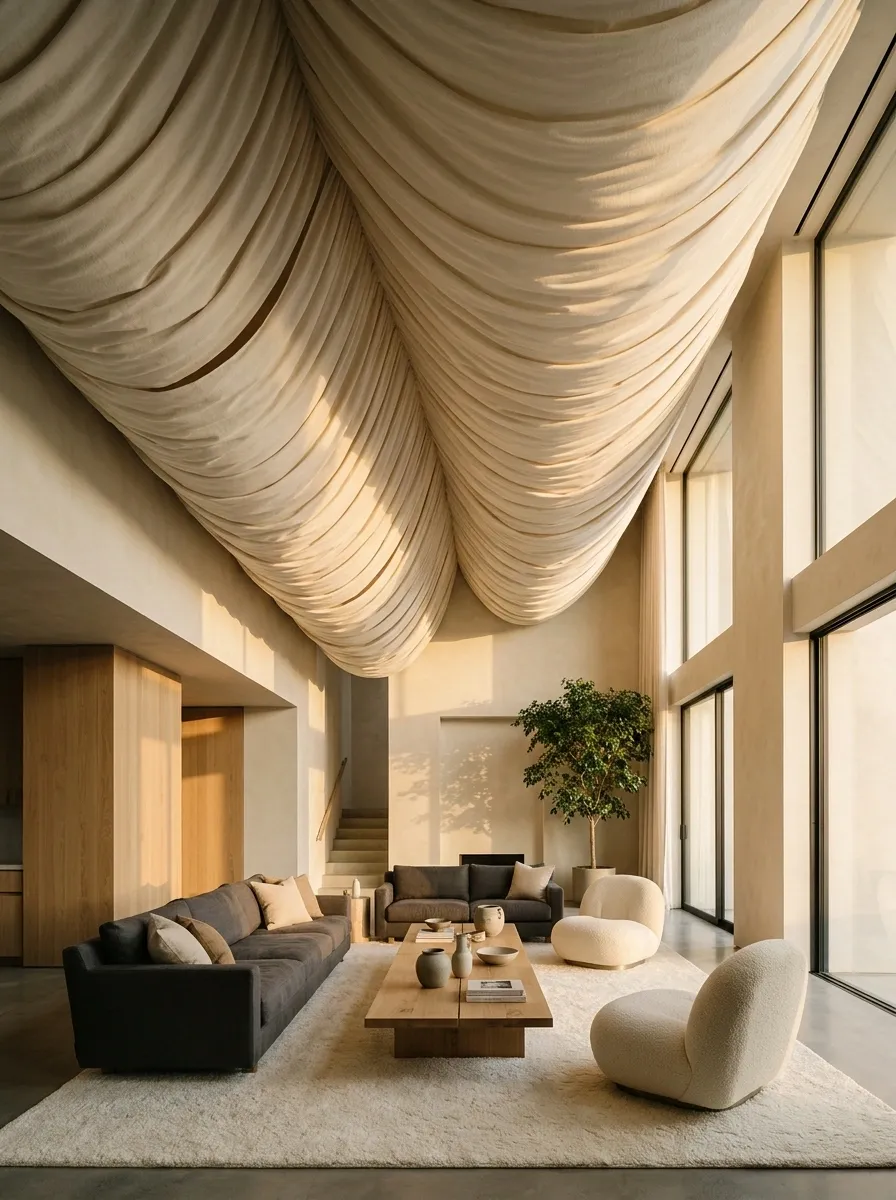
Oversized ivory fabric curves create a sculptural overhead feature above a charcoal sofa, rounded cream chairs, and a simple oak coffee table. The folds soften the modern architecture, while the darker upholstery keeps the pale surfaces from feeling flat.
The seating arrangement should follow the direction of the draping. Keep a clear walking route and avoid introducing several competing statement fixtures.
If the ceiling is low, reduce the depth of the folds. No amount of gorgeous fabric can negotiate with gravity or make a cramped room magically taller.
The seating relationship
ROOM COMPOSITION
Keep the furniture under the sweep.
A simplified plan, viewed from above.
Follow the room’s long axis
Align the major furniture pieces with the ceiling treatment, but preserve comfortable circulation through the room.
Organic Modern Bedroom With Sand-Colored Linen Ceiling Fabric
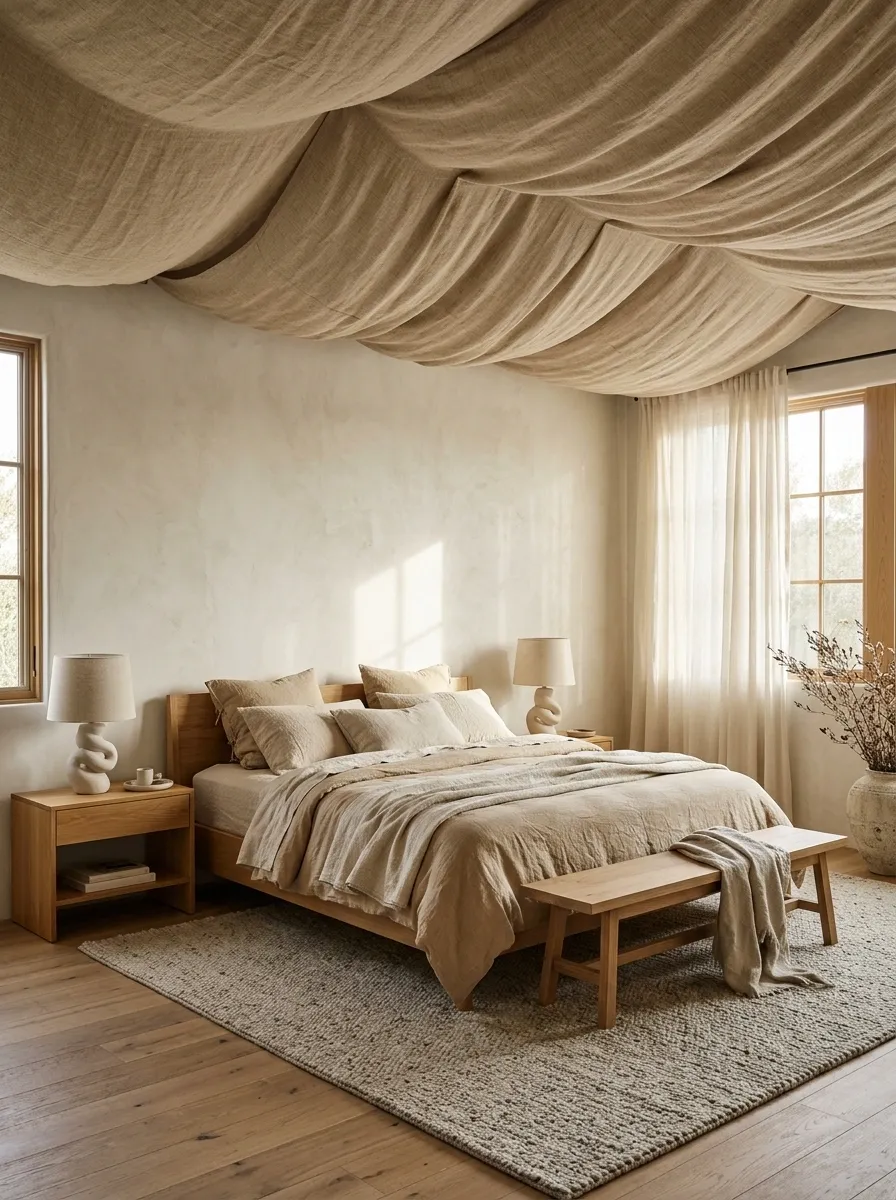
Sand-colored linen softens pale plaster walls, a natural oak bed, textured bedding, and sculptural ceramic lamps. Rather than relying on deep swags, this look uses relaxed folds and tactile materials to create a calm, grounded atmosphere.
Keep the linen slightly different in tone from the walls so its texture remains visible. Oak adds definition, while simple bedding stops the palette from becoming one endless stretch of beige.
The fabric should be suitable for its location and easy to maintain. Organic modern interiors are about natural materials and thoughtful proportions, not collecting every neutral accessory ever manufactured.
The material relationship
MATERIAL STUDY
Quiet colors. Different textures.
OVERHEAD
Natural linen
Visible weave and soft folds.
WALLS
Matte plaster
FURNITURE
Warm oak
Balance: Keep the bedding simple, let the textures vary, and resist adding another statement finish just because an empty surface exists.
Dramatic Charcoal Bedroom With a Dark Fabric Ceiling
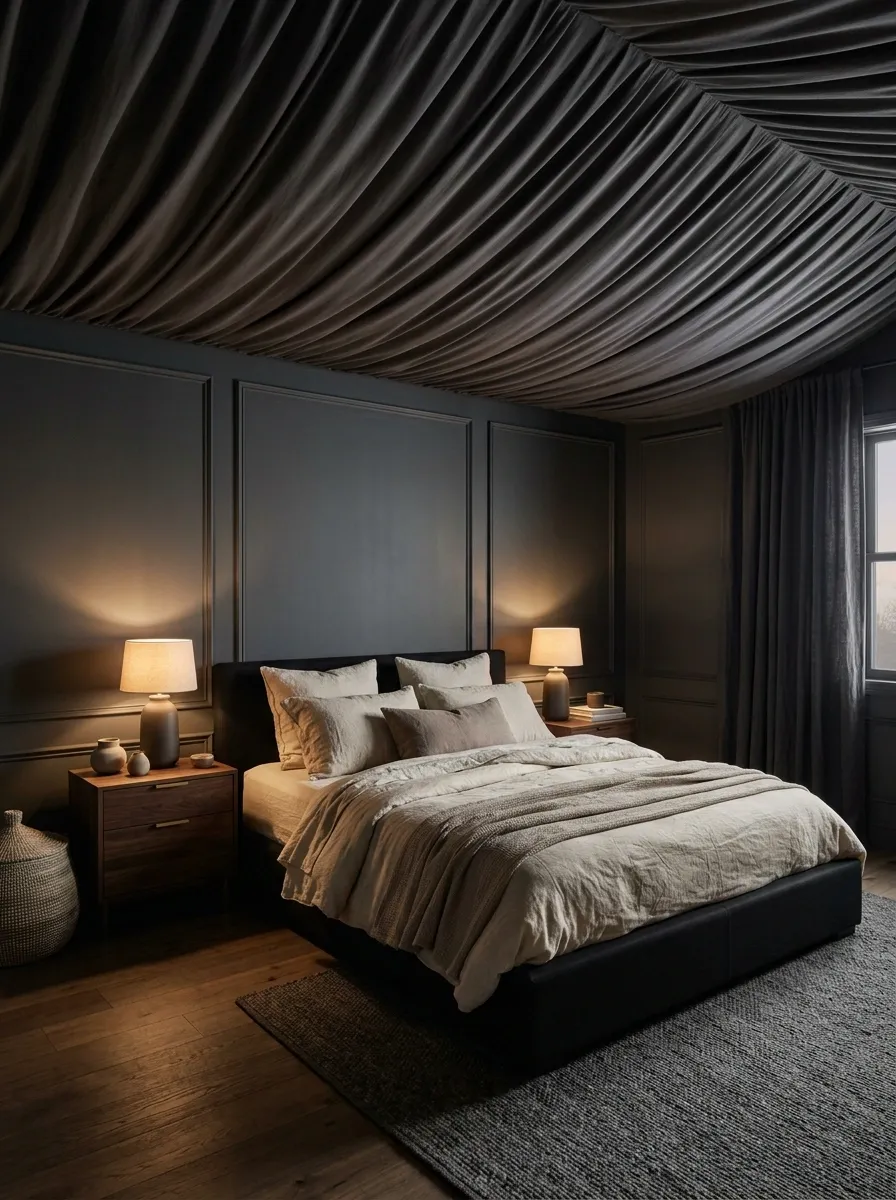
Charcoal fabric and deep gray walls create an intimate bedroom around a black upholstered bed and dark walnut nightstands. Cream or mushroom bedding breaks up the darker surfaces, while warm bedside lamps give the composition enough contrast to remain inviting.
Keep the folds broad and controlled. Too much gathering adds visual clutter, especially when the walls and furniture are already dark.
Use lighter finishes where you need visibility, and keep textiles safely separated from fixtures. Moody is a design choice. An accidentally invisible bedroom is a maintenance issue.
Where the light belongs
LIGHTING PLAN
Dark does not mean invisible.
Build contrast around the areas where the room needs to function.
OVERHEAD
Charcoal fabric
BEDSIDE LIGHT
Warm glow
Useful light for reading.
BEDDING
Soft contrast
Cream and mushroom tones.
Layer the room lighting and check all fabric clearances. Dark finishes need a deliberate lighting plan, not one blinding ceiling bulb.
Airy Coastal Bedroom With Pale Blue Ceiling Draping
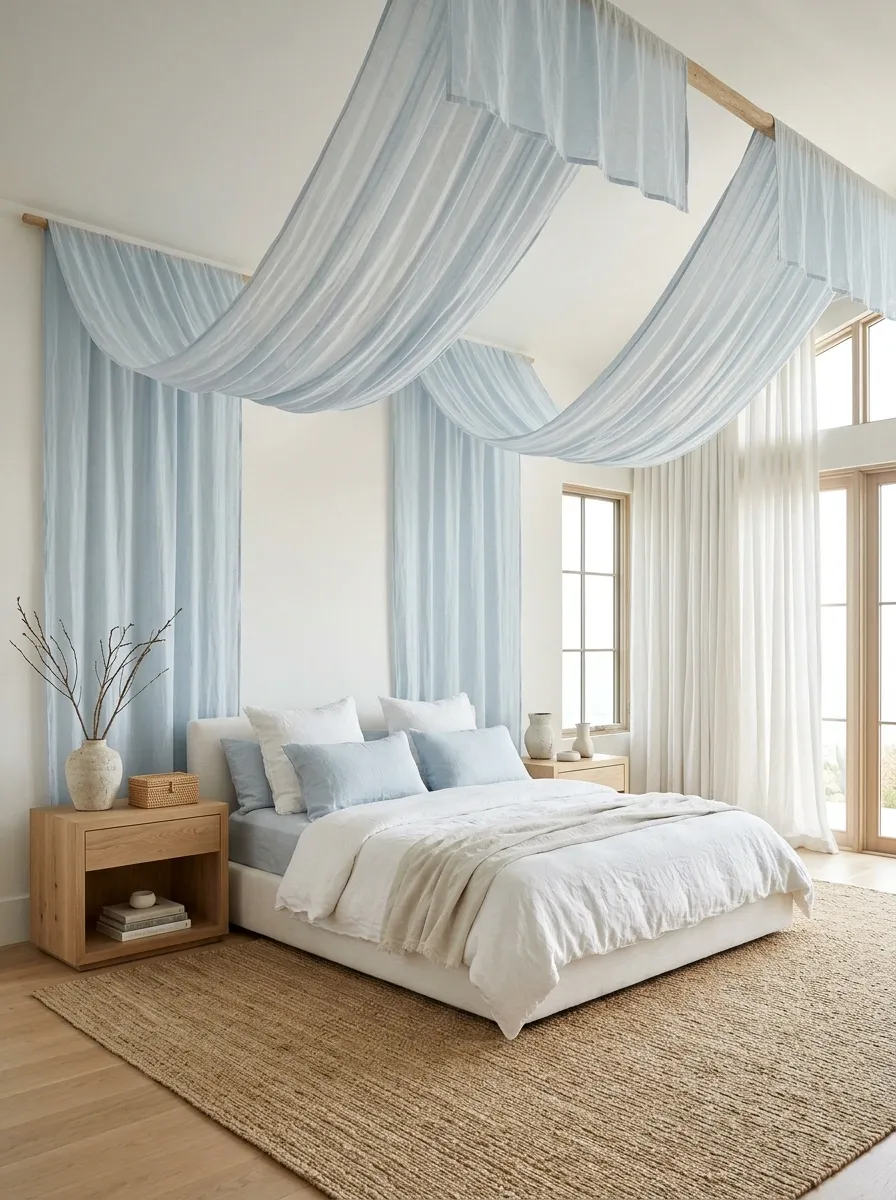
Pale blue fabric brings a relaxed coastal character to white bedding, light oak furniture, and woven textures. Large windows supply natural light, while the rest of the room remains mostly white to keep the treatment feeling fresh.
Long, relaxed folds work better here than thick, theatrical swags. Add warmth through a jute rug or natural wood rather than filling the room with nautical decorations.
The goal is a breezy bedroom, not a souvenir shop that happens to contain a bed.
The coastal color balance
COLOR STORY
Coastal, not a costume party.
A few materials establish the mood without turning the room into a theme.
THE MAIN ACCENT
Pale blue
Ceiling fabric
BASE
Soft white
WARMTH
Natural oak
TEXTURE
Woven tan
Use blue as the main accent, white as breathing room, and natural textures for warmth. No decorative lighthouse required.
Contemporary Dining Nook With a Fabric Ceiling Feature
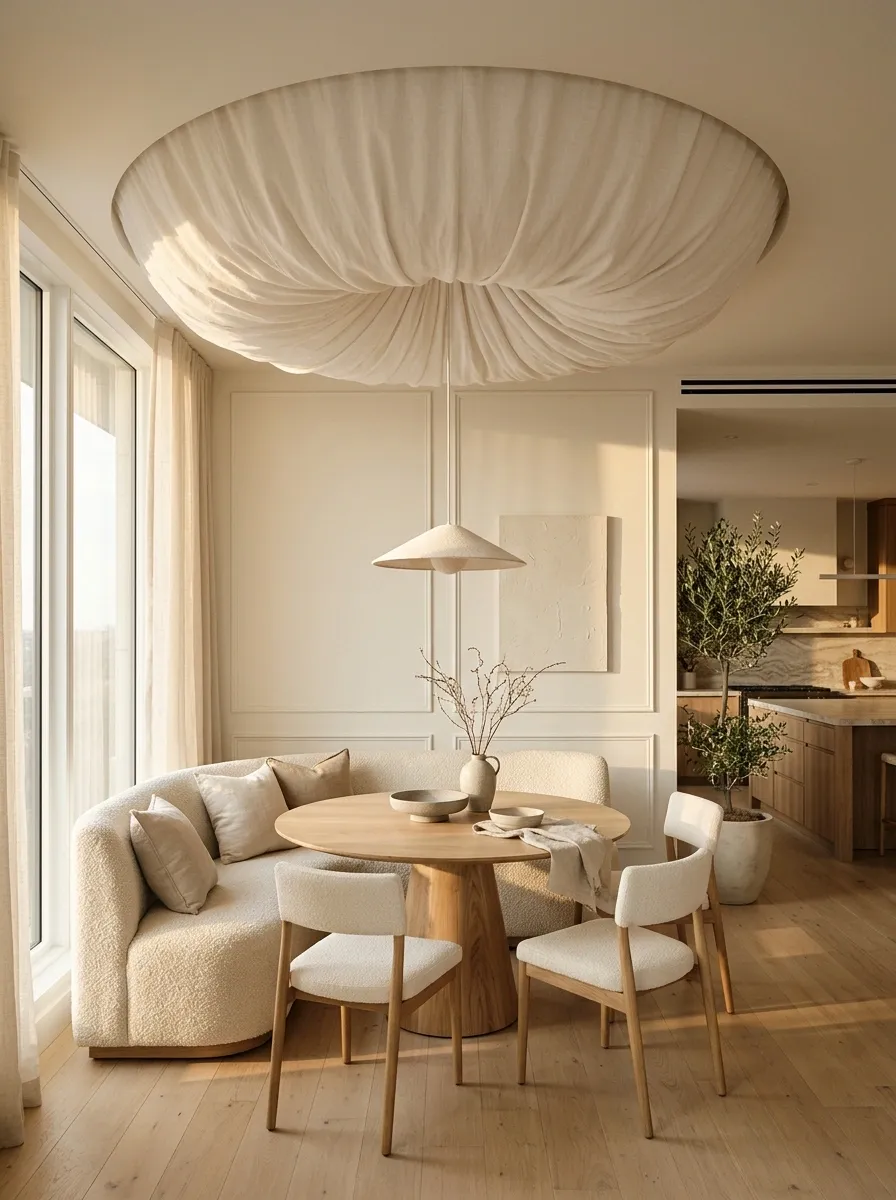
A localized fabric treatment defines a small dining area without covering the ceiling of the adjoining kitchen. A round oak table, curved upholstered banquette, and generous window create a complete nook that feels distinct from the rest of the room.
Keep the draping inside the dining zone, with folds that echo the table’s shape or the length of the bench. Leave the main walkway open and check door swings, ventilation, and light clearances before installation.
The room should invite people to sit down, not make them navigate a textile obstacle course to reach the fridge.
A compact room plan
SMALL-SPACE STUDY
Give the nook its own moment.
LOCALIZED FABRIC FEATURE
Only above the dining zone
DINING
Round table
Bench and chairs
CIRCULATION
Keep clear
Kitchen and door access
Define the dining zone without claiming every inch of ceiling. Small rooms have limits, and physics remains annoyingly committed to its job.
Classic Bedroom With Traditional Boxed Draping
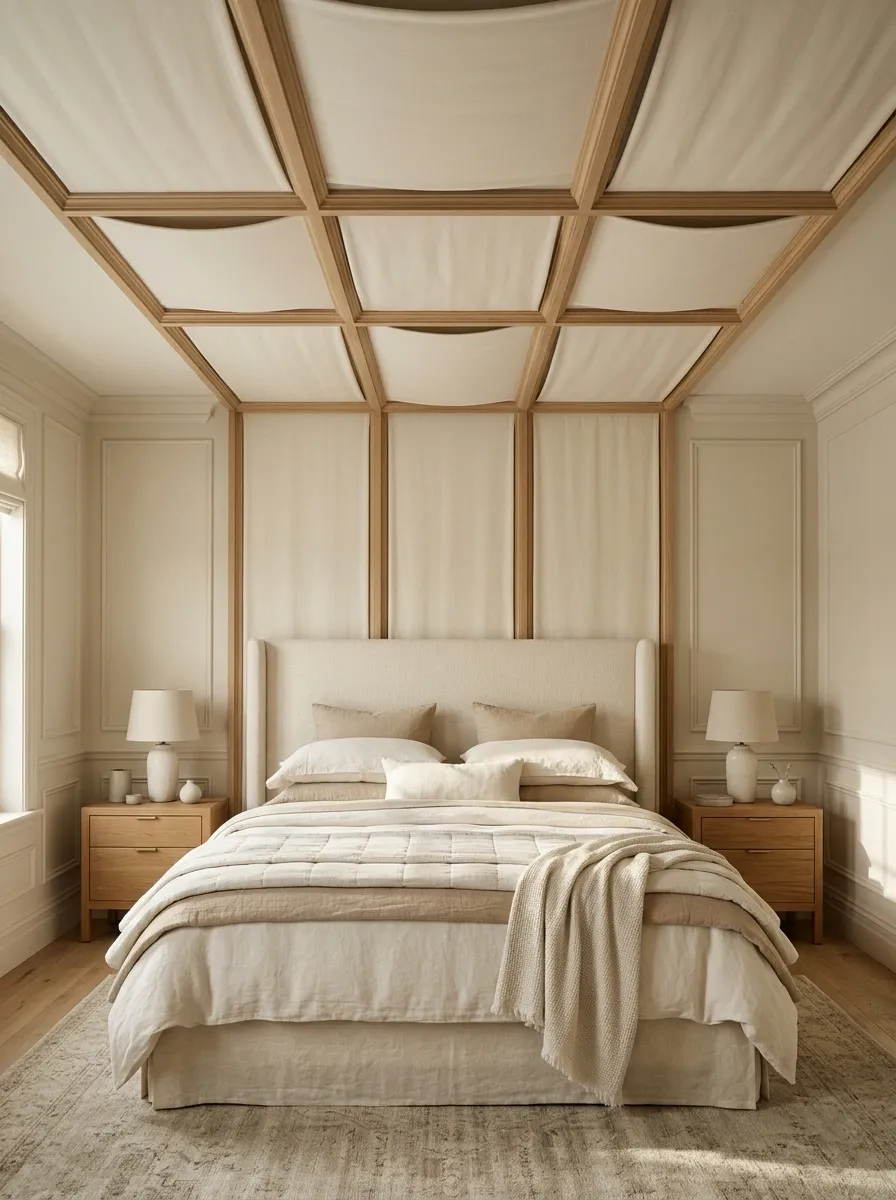
Tailored rectangular fabric panels create a structured ceiling above a centered bed, matching nightstands, and traditional wall molding. Cream fabrics and warm wood give the room its character without needing elaborate ornament on every surface.
The ceiling divisions should align with the bed and furniture below. This geometry is what separates the look from a loosely draped romantic canopy.
Keep the fabric matte and the floor relatively quiet. Traditional style doesn’t mean every decorative idea from the last century has to attend the same party.
The symmetry check
COMPOSITION STUDY
The centerline does the heavy lifting.
CEILING PANELS
Balanced around the room’s center
Left
Nightstand
CENTER
Bed
Right
Nightstand
Repeat the room’s main alignment in the ceiling panels and bedding. Symmetry brings order; it doesn’t require buying two of everything in the house.
Scandinavian Bedroom With Minimal Ceiling Draping
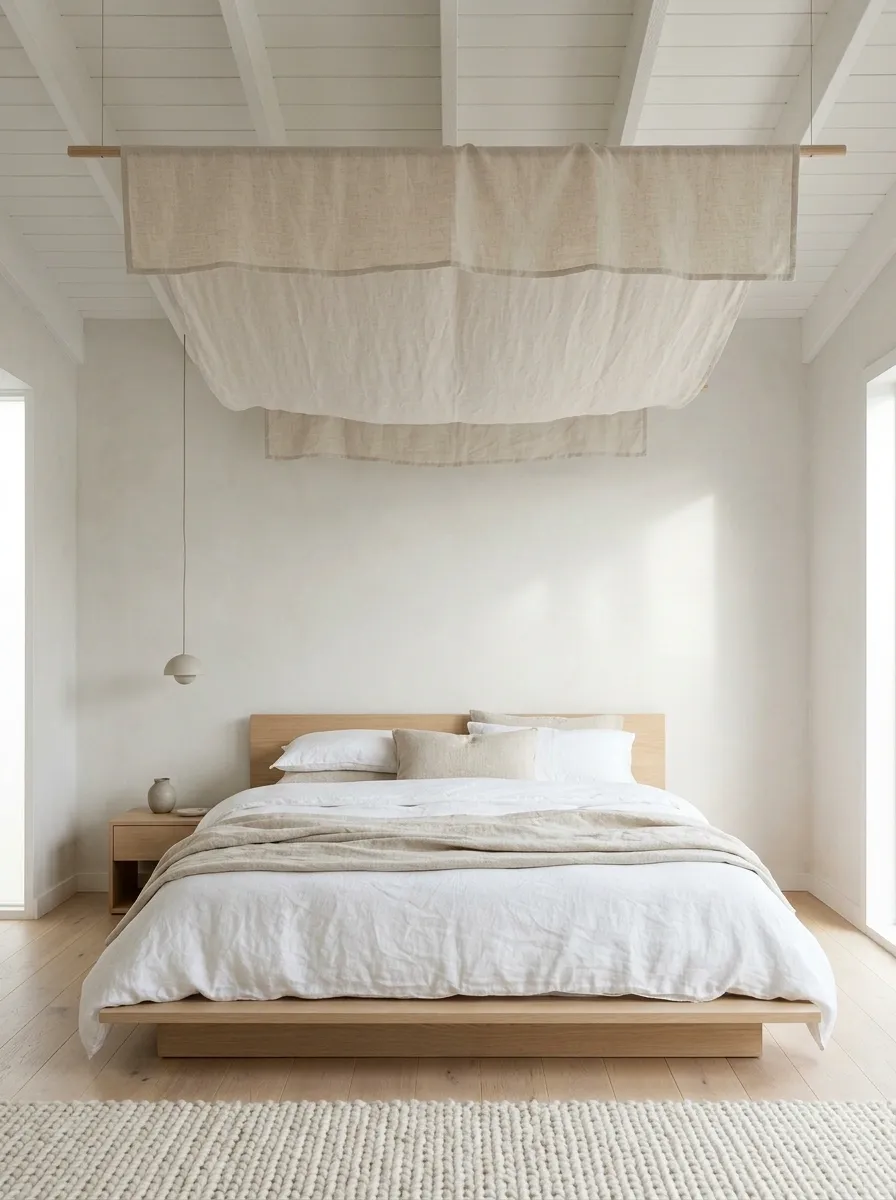
A single broad panel of white or pale natural fabric softens a blonde oak platform bed, plain bedding, and pale walls. A simple pendant and textured rug bring enough detail to keep the room from feeling sterile.
The exposed ceiling matters as much as the fabric. Leaving broad areas uncovered preserves the proportions and keeps the treatment from dominating the space.
Choose subtle woven texture rather than shiny satin or elaborate ruffles. Minimalism isn’t an empty room waiting for accessories. It’s a room where the visible things have a job.
Negative space is part of the design
LESS, ON PURPOSE
The empty space is doing its job.
Fabric needs a defined place, not ownership of the entire ceiling.
EXPOSED CEILING
Leave generous areas plain.
ONE RESTRAINED FEATURE
FABRIC PANEL
Soft texture
Aligned with the bed
NATURAL WOOD + WHITE LINEN
Simple forms, visible texture.
Use one clear ceiling feature, then stop. Negative space is a design choice, not an unfinished shopping list.
Terracotta Bedroom With Warm Clay Ceiling Fabric
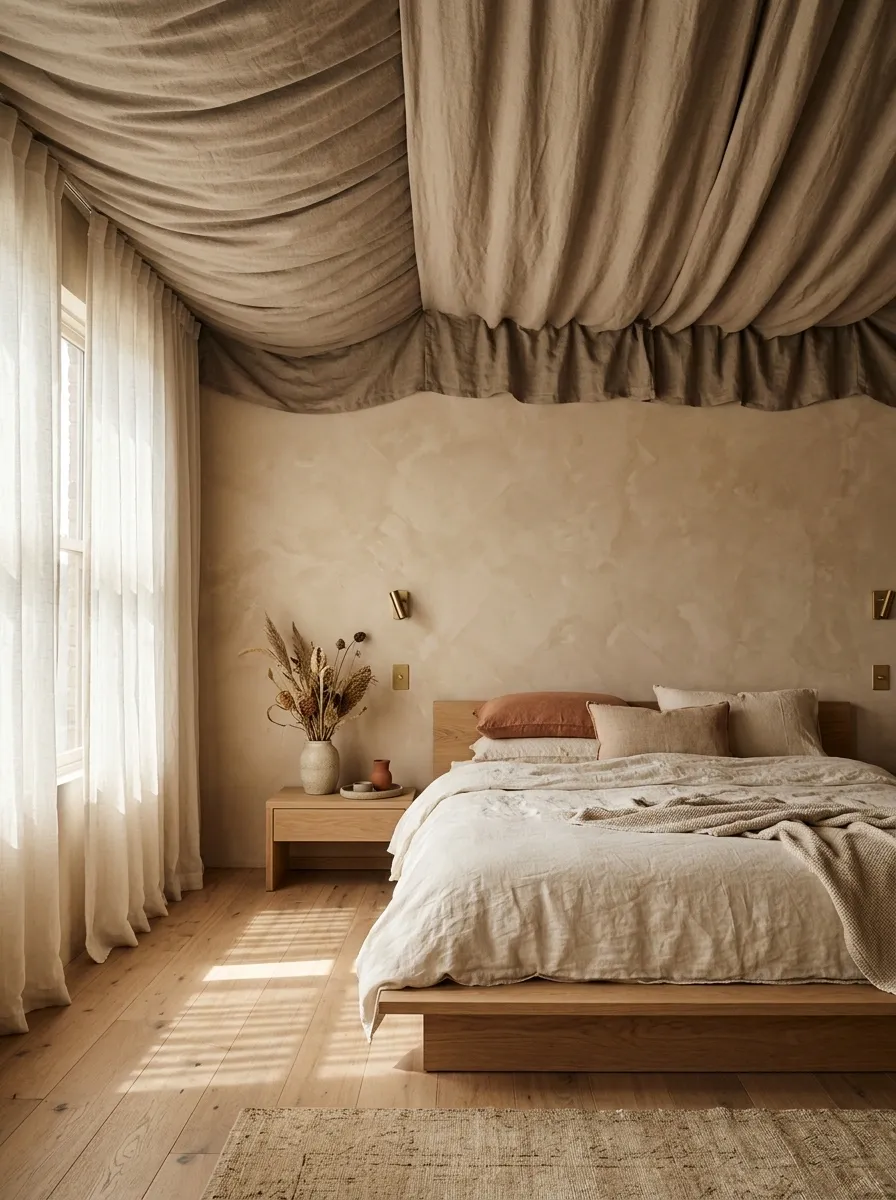
Clay-colored fabric connects textured plaster walls, a natural oak bed, creamy bedding, and terracotta accessories. The room feels earthy and collected, with the ceiling linking the palette instead of introducing an unrelated accent.
Choose muted clay rather than an aggressive orange. Cream bedding creates a visual break, and oak furniture makes the transition between the warmer and lighter surfaces feel natural.
Keep patterned accessories limited. The ceiling already has a job, and it doesn’t need five competing assistants.
The warm-to-light palette
WARM COLOR STUDY
Warmth, without the orange overload.
CEILING
Muted clay
WALLS
Warm plaster
BEDDING
Soft cream
THE NATURAL BRIDGE
Oak and warm wood
Connect the clay ceiling to the lighter finishes below.
The palette works because the warmest color has lighter companions. Painting every object terracotta is not a requirement.
Jewel-Toned Bedroom With Emerald Ceiling Drapes
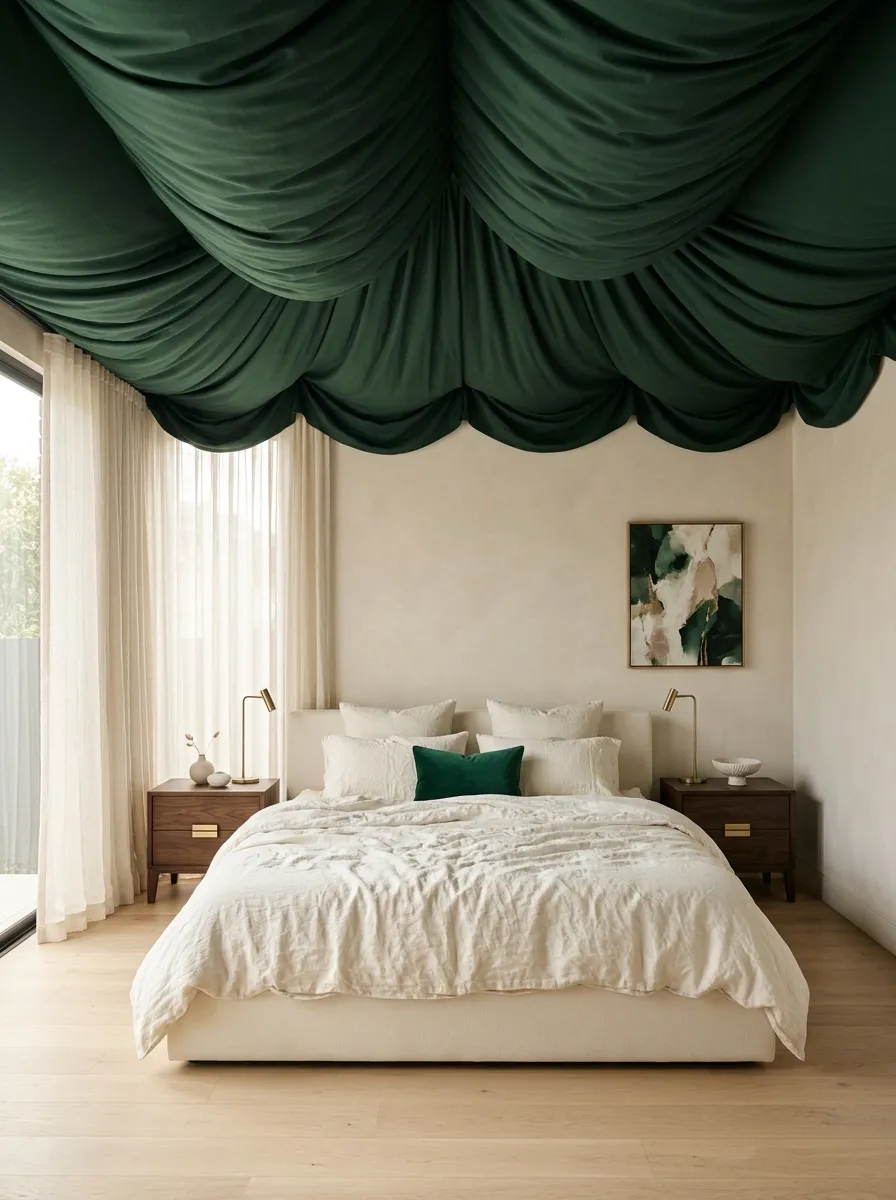
Deep emerald fabric becomes the main event above a cream upholstered bed, dark walnut nightstands, and ivory bedding. Restrained brass details bring warmth, while pale surfaces keep the saturated green from overwhelming the room.
Let the fabric carry most of the green. Repeat it in a cushion or artwork, but keep the rest of the palette controlled.
Matte or softly textured fabric works well with the richness of the color. The brass should stay in the supporting cast. Every object does not need a standing ovation.
A hierarchy for jewel tones
COLOR HIERARCHY
Emerald gets the spotlight.
THE DOMINANT COLOR
Deep emerald
Ceiling fabric and small repeated accents.
VISUAL RELIEF
Ivory
DEPTH
Walnut
ACCENT
Brass
Give each color a clear role. Ivory creates breathing room, walnut grounds the furnishings, and brass provides a restrained highlight.
Japandi Bedroom With Natural Fabric Panels
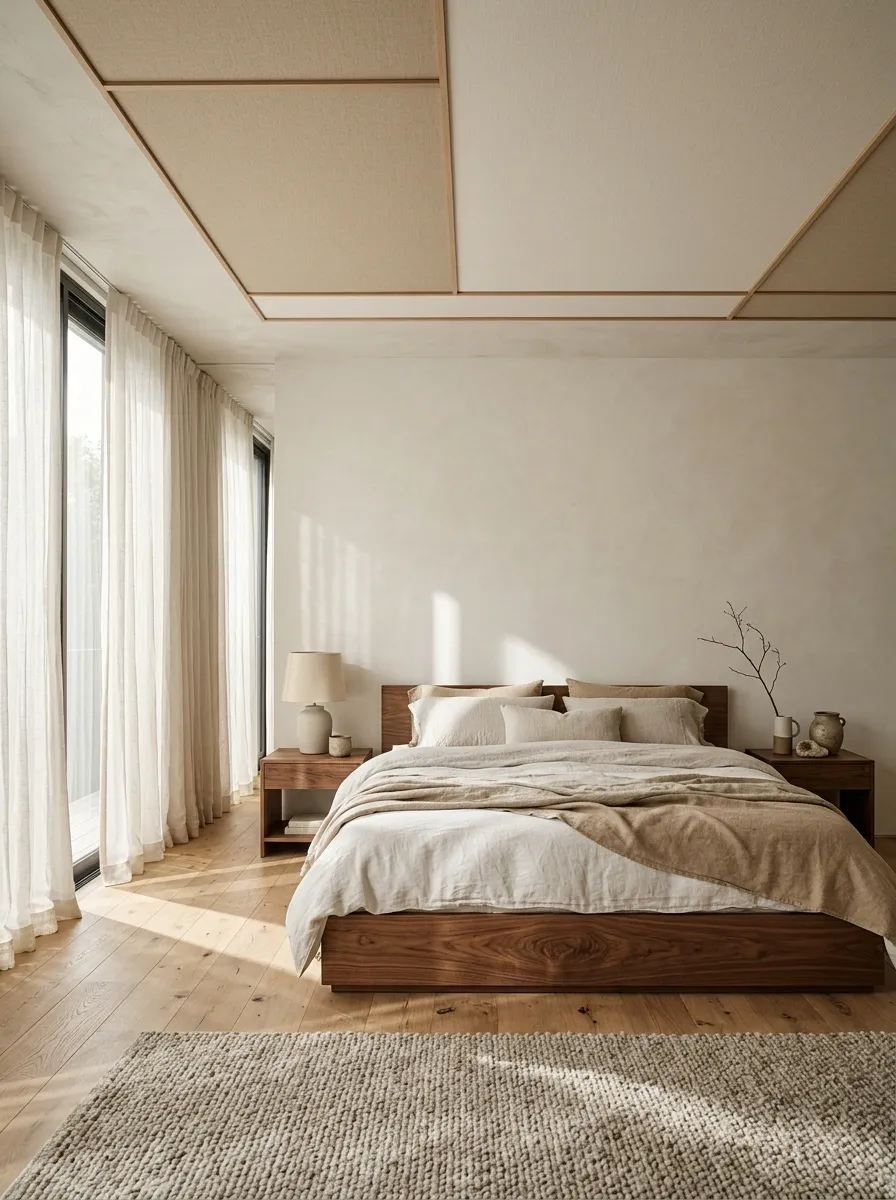
Straight-edged natural fabric panels echo the calm geometry of a low walnut bed, pale plaster walls, and simple ceramic lamps. The overhead treatment feels integrated into the room’s architecture instead of being added for decoration alone.
Use warm beige, off-white, and walnut as the main palette. Leave enough ceiling uncovered to preserve the proportions, especially where headroom is limited.
The appeal comes from texture, proportion, and restraint. Adding decorative objects to every empty surface would defeat the entire point rather spectacularly.
The geometry behind the calm
SPATIAL COMPOSITION
Straight lines. Soft materials.
A simple overhead composition connects the ceiling to the furniture.
CEILING VIEW
Even panel rhythm, restrained contrast, generous plain space.
LOW FURNITURE
Walnut platform bed
Combine linear ceiling panels with rounded ceramics and visible wood grain. Geometry provides order; texture stops the room feeling clinical.
Vintage-Inspired Bedroom With Floral Fabric Ceiling Draping
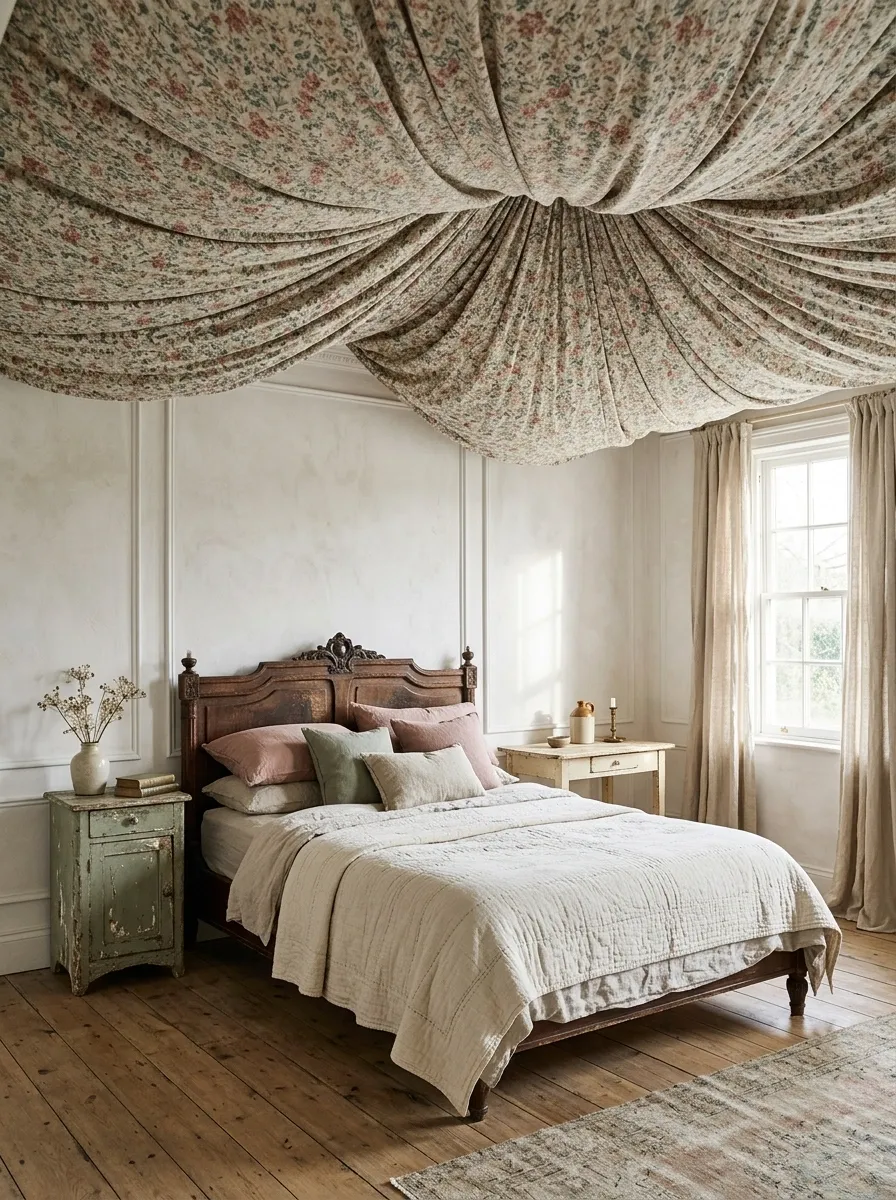
Delicate floral fabric brings a cottage-house feeling to an antique wood bed, cream quilt, faded curtains, and painted bedside furniture. The room feels collected rather than bought as one matching set.
Pattern scale determines whether the combination looks charming or chaotic. Small botanical prints sit comfortably beside plain bedding, while oversized florals across every surface can crowd the room.
Use muted rose, sage, cream, or dusty blue in the fabric, then repeat only a couple of those colors elsewhere. Vintage does not mean every accessory needs to look as if it has survived three family feuds.
The pattern-scale test
PRINT AND TEXTURE
Let the florals breathe.
Give the main pattern a clear role, then let the remaining surfaces settle down.
THE FEATURE PRINT
Ceiling florals
THE VISUAL PAUSE
Plain bedding
The supporting cast: Antique wood, muted paint, and textured curtains add depth without demanding another print.
Bohemian Bedroom With Layered Natural Fabric Drapes
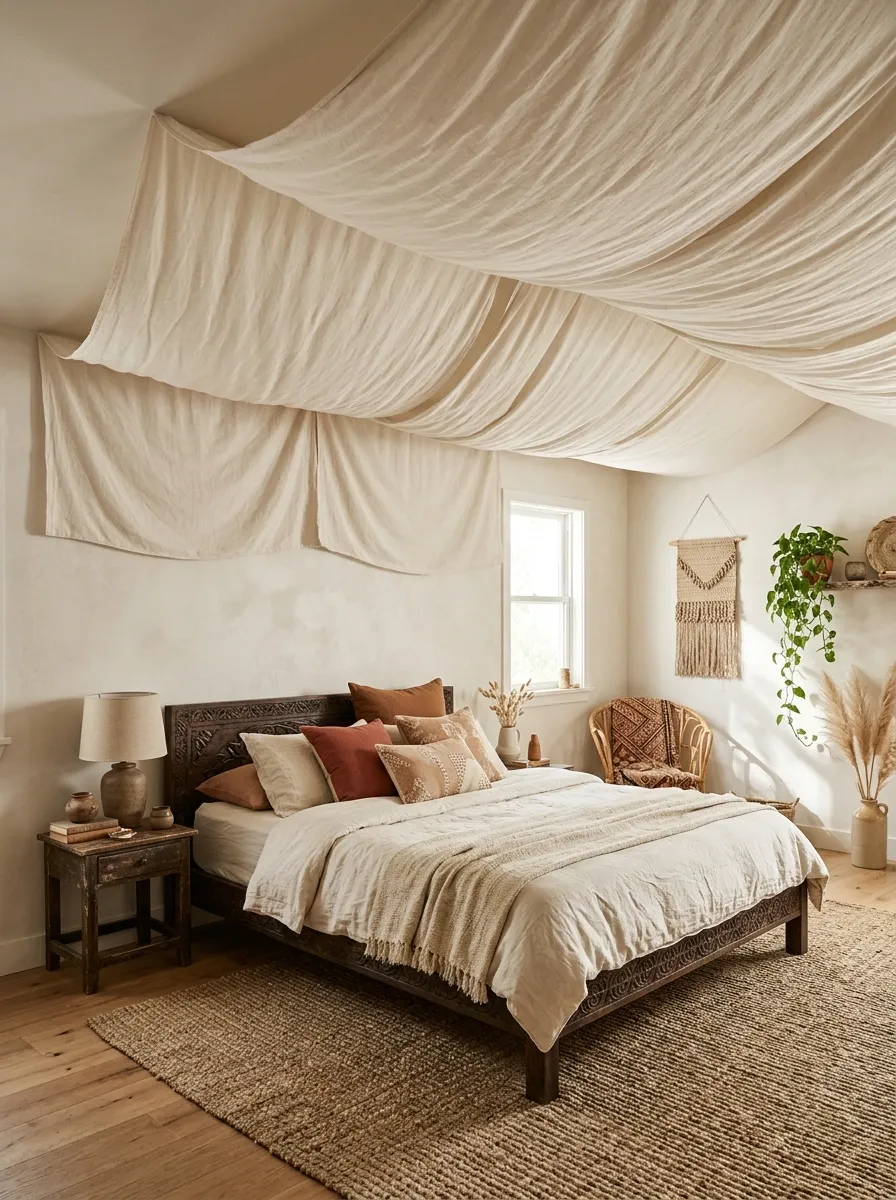
Relaxed cotton folds, a low carved wood bed, cream bedding, rust-colored cushions, and a substantial jute rug establish a collected bohemian interior. The ceiling fabric should feel informal rather than perfectly tailored, supporting the mix of natural textures below.
Keep the palette controlled. Cream and sand provide the base, while rust and dark wood bring richness. The bedding can remain relatively simple so the fabric and layered materials have room to breathe.
Layering is not the same as covering every surface in baskets and cushions. Even bohemian bedrooms need boundaries.
The texture hierarchy
TEXTURE STUDY
Layer the materials, not the chaos.
THE SOFT OVERHEAD LAYER
Natural cotton
Loose folds create movement without a glossy finish.
COLOR
Rust textiles
GROUNDING
Jute and wood
THE PAUSE
Plain cream bedding
A quieter surface that stops the textures from competing.
Luxury Hotel-Inspired Bedroom With Full Ceiling Canopy Draping
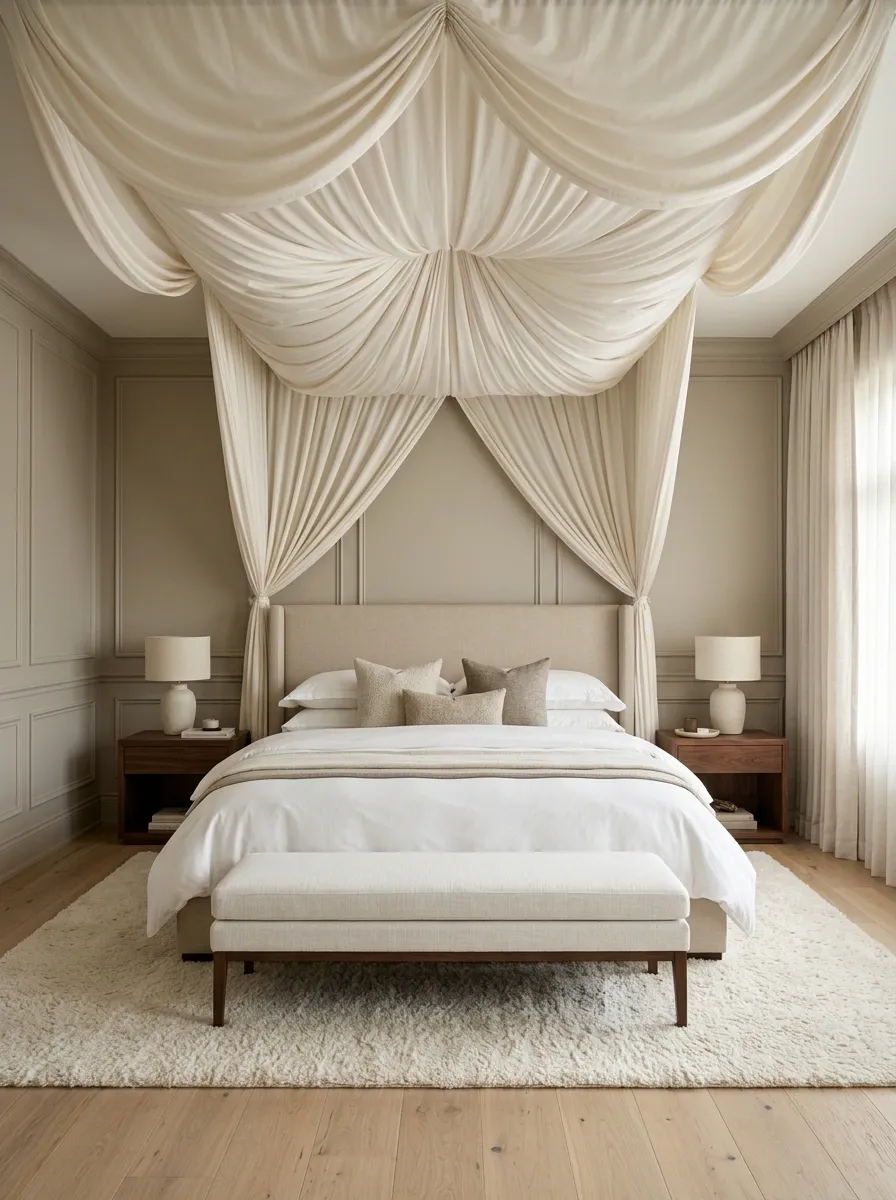
Generous ivory fabric sweeps above a large upholstered bed, framed by symmetrical walnut nightstands, layered bedding, tailored wall panels, and a plush neutral rug. The canopy is the main feature, so the other finishes need to know their place.
Center the draping around the bed and choose fabric that creates smooth, controlled folds. A properly planned support system is essential for a larger installation.
Keep lights safely separated from the fabric, and leave enough visual space around the canopy. Luxury should feel relaxing, not like sleeping beneath a suspicious ceiling.
How much ceiling should the canopy cover?
CANOPY PLANNING
Let the bed set the boundaries.
SIMPLIFIED PLAN VIEW
CANOPY FOOTPRINT
Upholstered bed
Centered underneath
THE EDGES
Balance the coverage around the bed.
THE SUPPORT
Use fixings suited to the installation.
A full canopy can extend beyond the bed, but the footprint should be planned. Secure mounting matters more than a dramatic photograph.
Small Apartment Bedroom With a Corner Fabric Ceiling Feature
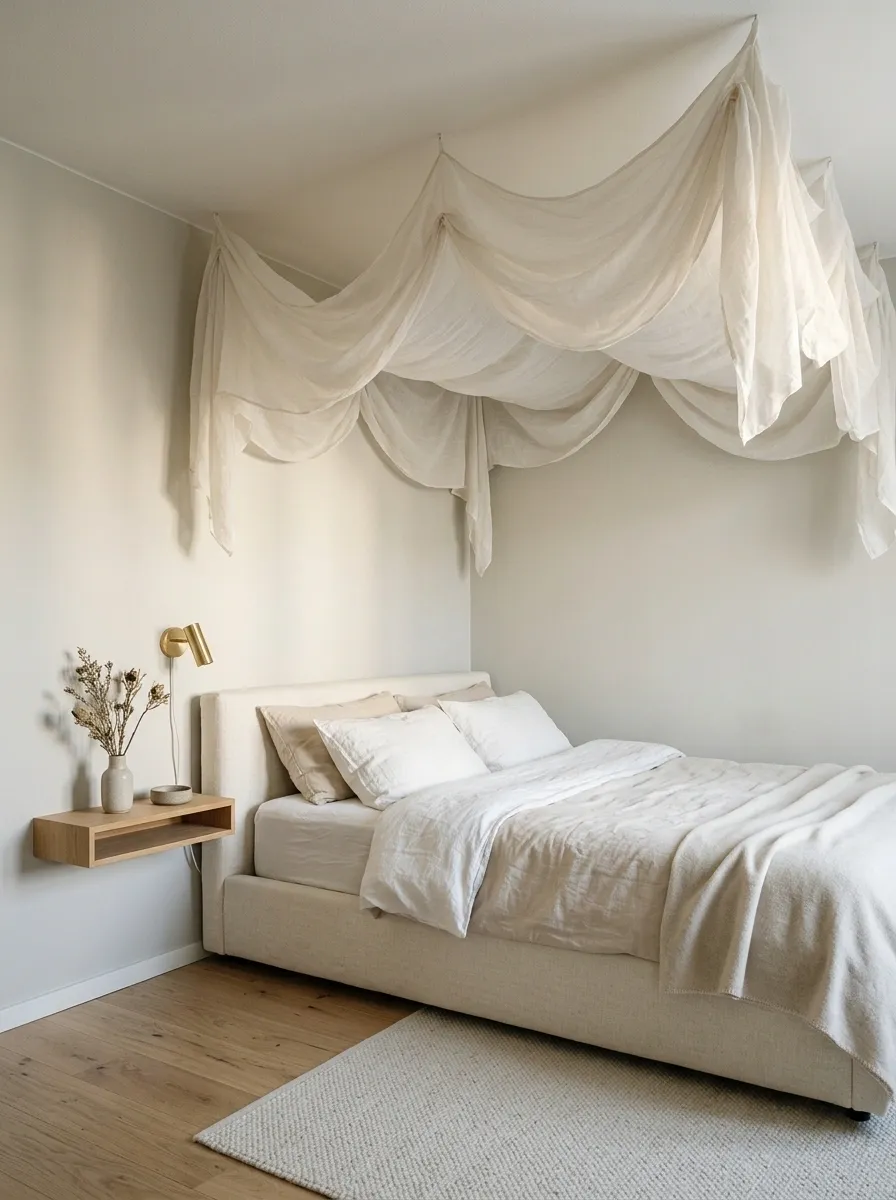
A corner-focused fabric feature defines the sleeping area while leaving most of the ceiling exposed. Pale walls, a low bed, slim bedside storage, and light bedding make the room feel more open than a full canopy would.
Keep the fabric away from doors, windows, ventilation, and everyday walking routes. Floating shelves can replace bulky nightstands, while storage beneath the bed keeps the remaining furniture minimal.
A compact bedroom benefits from one clear focal point. Nobody needs a decorative obstacle course just to reach the other side of the bed.
The small-room layout
SMALL ROOM STRATEGY
Decorate the bed zone, not every inch.
CORNER CEILING DRAPE
Keep the feature over the sleeping zone.
SLEEPING ZONE
Low bed
Slim shelf instead of bulky tables
KEEP OPEN
Walkway
Unblocked access
Plan the bed, storage, and walking route first. Fit the fabric around them, not the other way around.
Attic Bedroom With Draped Fabric Between Roof Lines
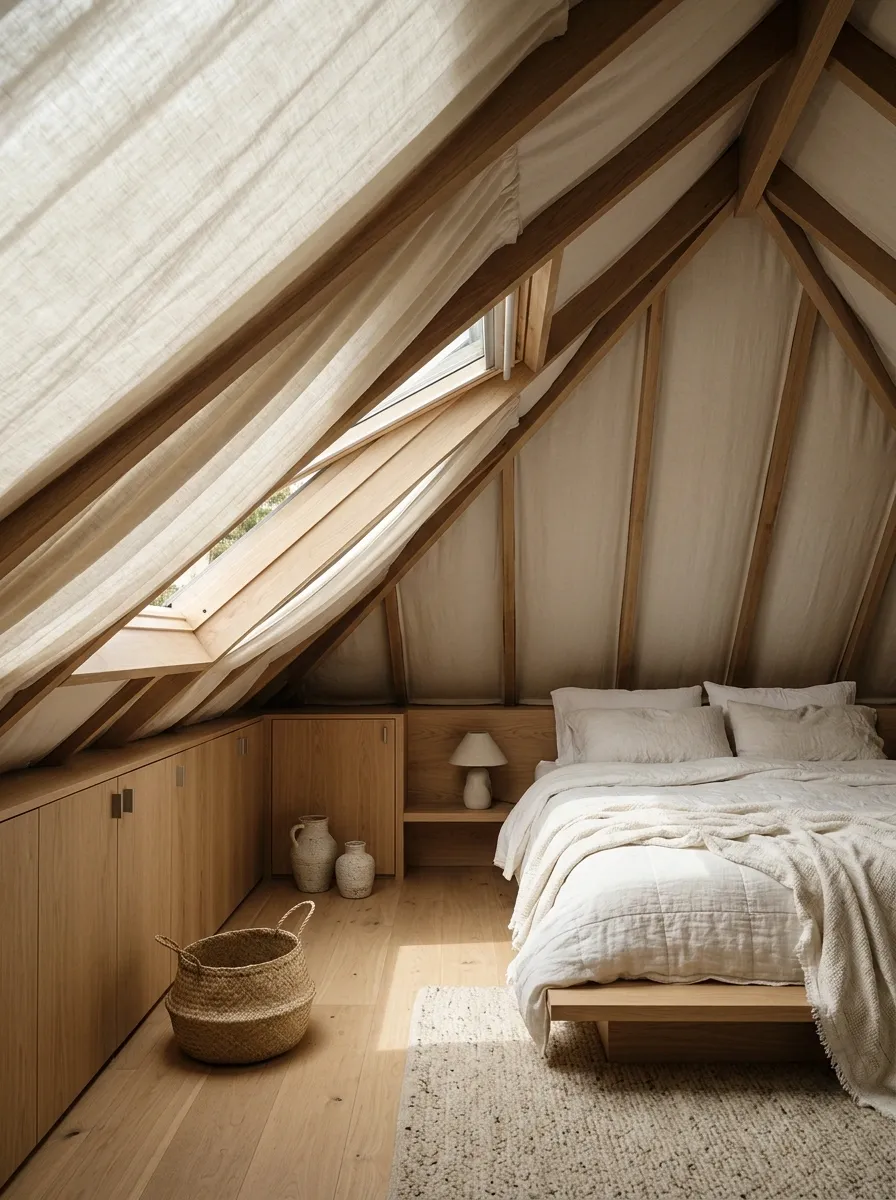
Pale linen follows the sloped roof above a low platform bed, while fitted wood storage and a skylight make the most of the attic’s architecture. The treatment softens sharp angles without pretending the roof is flat.
Position tall furniture and frequently used walking areas where headroom permits. The fabric should follow the actual roof shape and remain clear of ventilation, electrical equipment, and access panels.
An attic bedroom has character built into its structure. There is no need to manufacture extra drama while ducking under every beam.
The roof section and usable headroom
ATTIC PLANNING
Follow the roof. Respect the headroom.
Schematic only, not a construction drawing.
FABRIC
Follow the roof pitch with secure fixings.
FURNITURE
Reserve comfortable headroom for movement.
Nursery With Gentle Sage and Ivory Ceiling Drapes
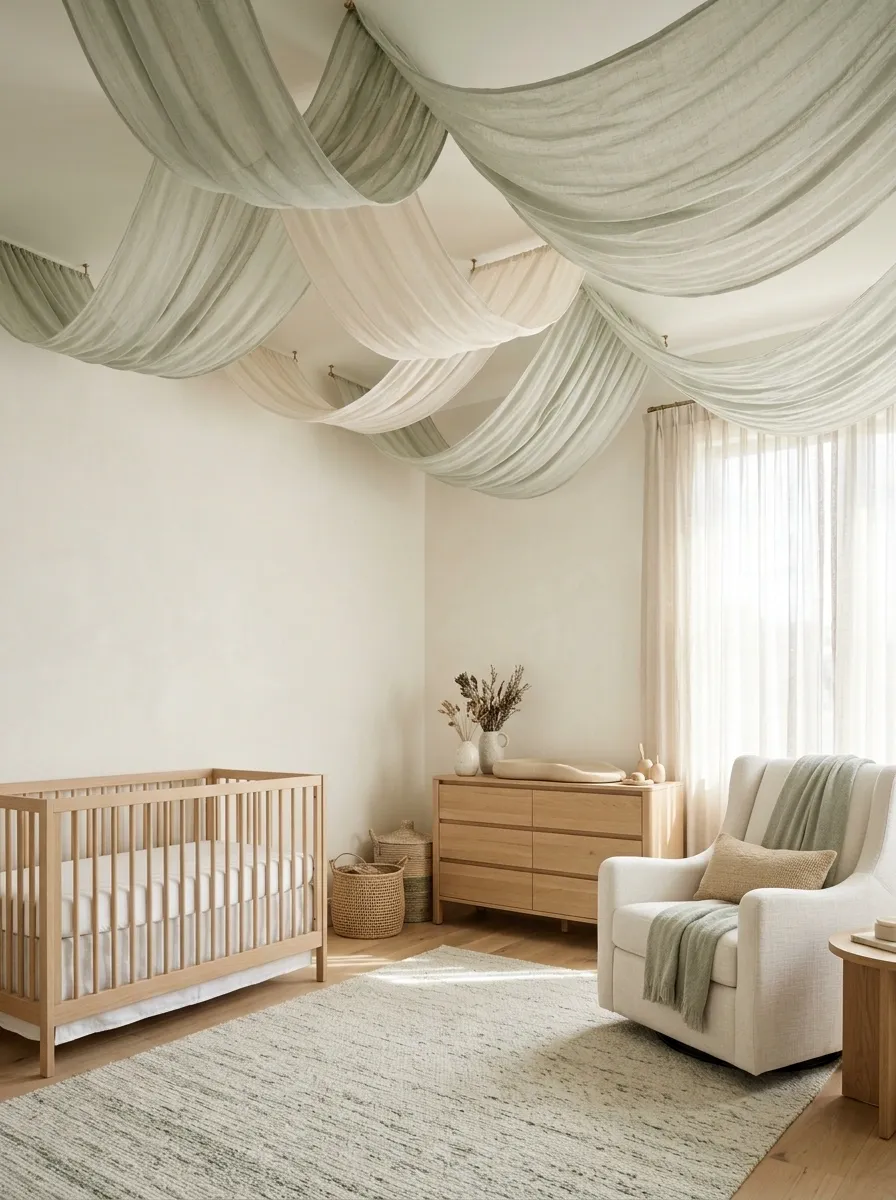
Sage and ivory fabrics soften this nursery, complemented by pale walls, natural wood furniture, and a muted rug. The design feels calm without becoming overly precious or dependent on a collection of matching accessories.
Keep the decorative ceiling treatment separate from the cot and its immediate surroundings. Do not hang loose canopy fabric over an infant’s sleep space, and ensure any overhead textile is securely mounted and safely clear of fixtures.
Use sage sparingly below the ceiling so the nursery retains a light, open look. The furniture and safe sleeping environment matter more than matching every object to the palette.
A nursery styling and safety map
NURSERY DESIGN
Gentle styling. Clear boundaries.
DECORATIVE CEILING ZONE
Secure fabric away from lights and fans.
Keep the cot area free of loose fabric and hanging decorations.
BASE
Warm ivory
ACCENT
Muted sage
MATERIAL
Natural oak
Follow safe-sleep guidance, keep the cot clear, and secure every overhead textile appropriately. No decorative detail outranks a baby’s safety.
Home Office With a Structured Fabric Ceiling
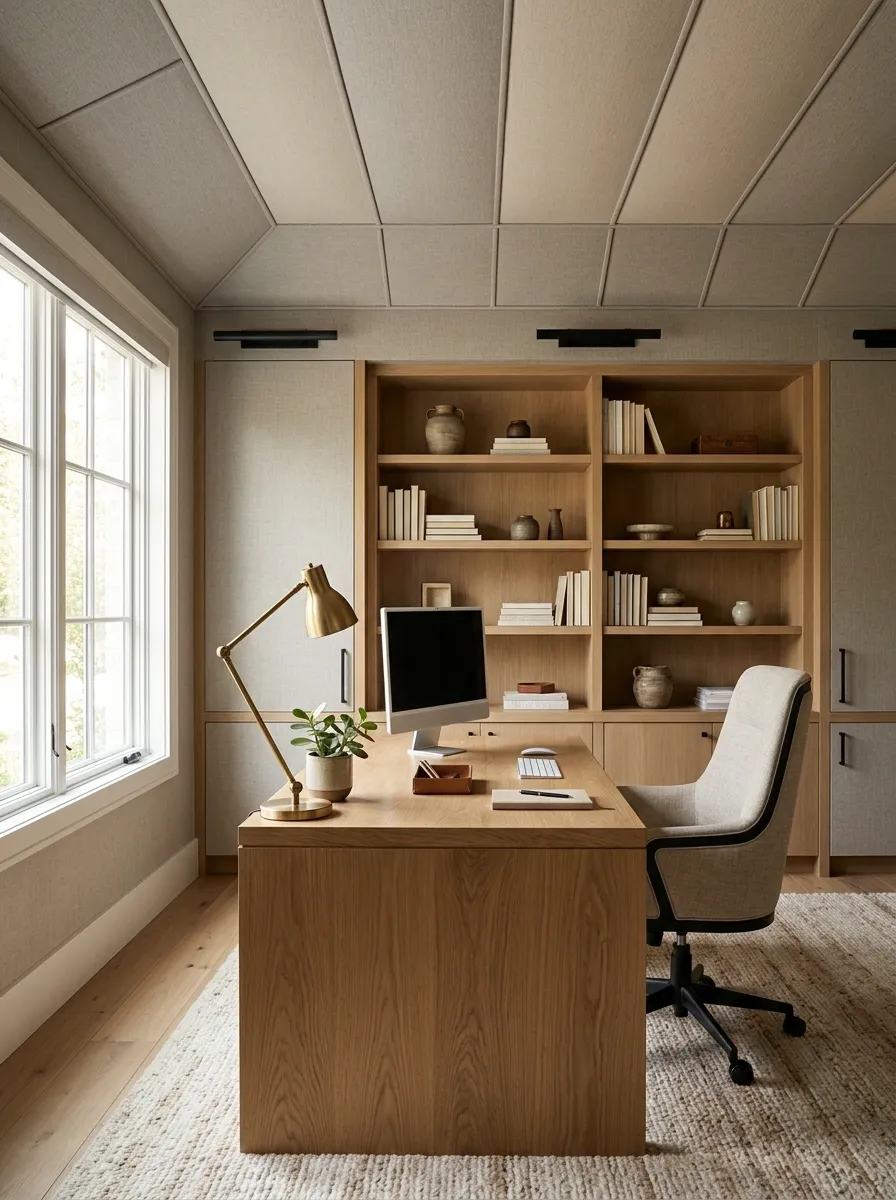
Structured neutral fabric panels soften a practical home office with an oak desk, ergonomic chair, useful shelving, and an adjustable task lamp. Straight lines keep the overhead feature professional rather than theatrical.
The desk needs comfortable screen placement, useful working space, and accessible storage. Fabric alone does not guarantee meaningful sound absorption; that depends on the complete acoustic assembly.
Keep the installation secure and away from electrical equipment, lighting, and ventilation. Deadline stress is quite enough drama for one office.
The workspace relationship
WORKSPACE STUDY
Make the ceiling quiet. Keep the desk functional.
OVERHEAD FABRIC PANELS
Structured and securely installed
PRIMARY WORK ZONE
Oak desk
Screen, task light, and work surface.
SUPPORT
Storage
Books and supplies within reach.
Test task lighting and ergonomics separately. A pretty ceiling cannot fix a badly positioned monitor.
Reading Corner With a Draped Fabric Ceiling Alcove
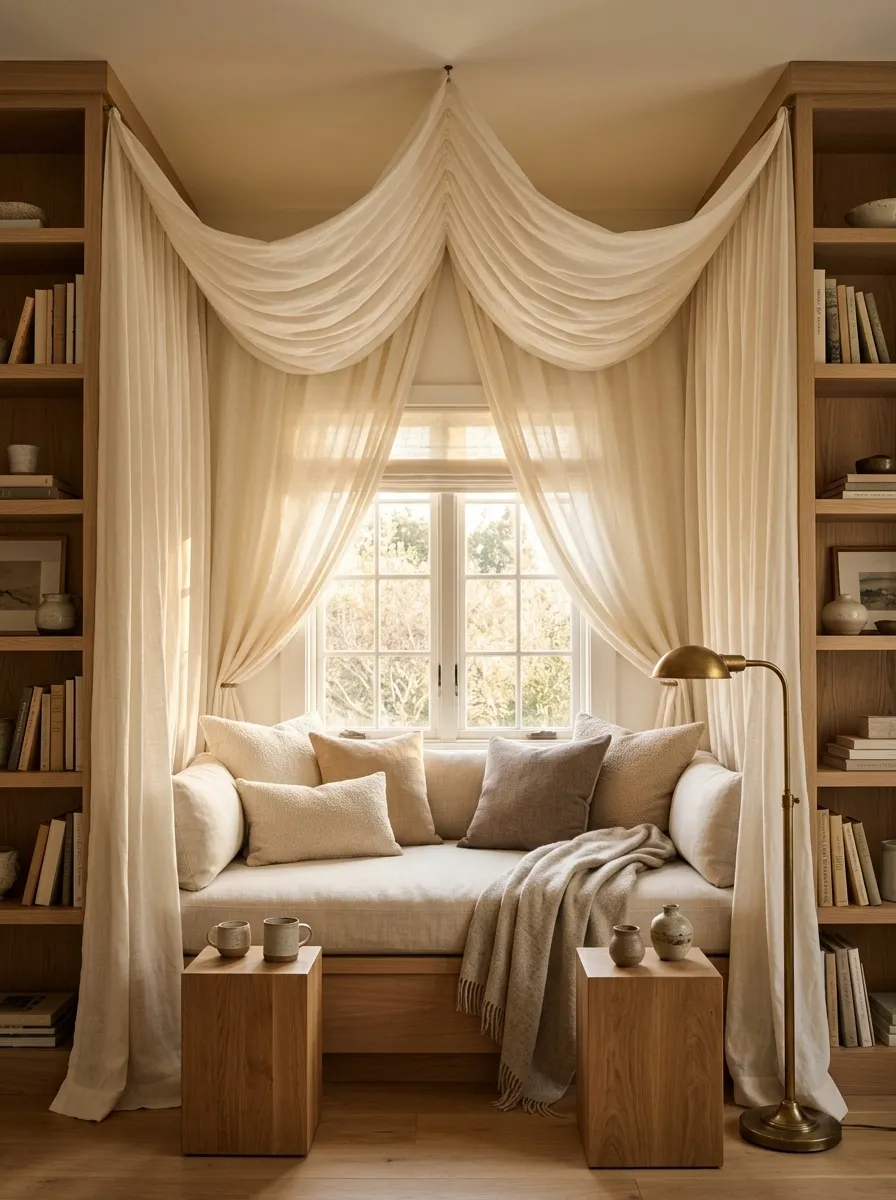
A localized fabric canopy frames a built-in bench or reading chair, with reachable bookshelves, a compact side table, and a dedicated lamp. The treatment creates a small retreat without taking over the surrounding room.
Keep the seating comfortable and the lighting useful. The side table should be reachable without balancing a mug on a stack of novels.
The fabric must remain clear of the lamp and any electrical components. The only thing competing for attention should be the book, not a canopy demanding its own literary award.
The anatomy of a reading retreat
READING NOOK
A small corner with a very clear job.
OVERHEAD
Soft fabric alcove
THE SEAT
Upholstered bench
Comfortable enough to stay awhile.
WITHIN REACH
Books
Nearby shelves and a side table.
Finish with a dedicated reading light.
Keep the fixture safely separated from fabric and easy to use from the seat.
Covered Veranda With a Light Fabric Ceiling Treatment

Light fabric softens the overhead structure of a sheltered veranda, while wicker seating, warm timber flooring, and large potted plants connect the space to the garden. The furnishings should feel relaxed rather than formal.
Outdoor installations need different materials and fixings from bedroom draping. Choose fabrics suited to actual moisture, sunlight, temperature, and wind exposure, and make sure loose fabric cannot blow into heaters, lighting, or walkways.
A breezy veranda is lovely. A fabric sail attached to the house during a surprise weather event is another matter.
Is the veranda suitable for fabric?
OUTDOOR DESIGN CHECK
The forecast gets a vote.
Choose the fabric and mounting method for the real environment, not just the photograph.
FIRST: CHECK THE SHELTER
Roof exposure, airflow, rain paths, and likely wind conditions.
THEN CHOOSE
Weather-appropriate fabric
FIXINGS
Suitable for the structure and expected loads.
MAINTENANCE
Allow for cleaning, moisture, fading, and removal.
Outdoor fabric must suit its environment. A pretty drape is not a substitute for wind-resistant installation.
Sunroom With Translucent Fabric Overhead
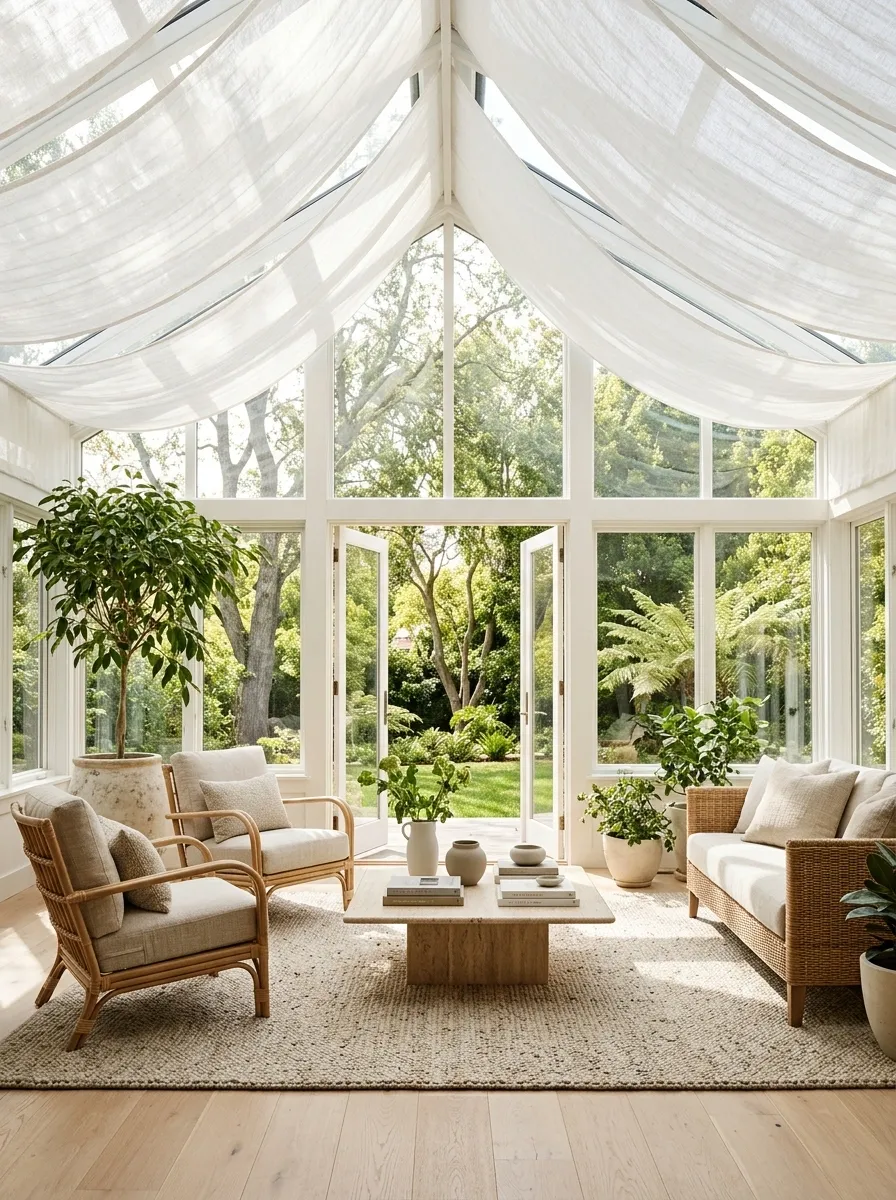
Translucent fabric panels soften the high ceiling of a sunroom while tall windows, rattan chairs, pale wood, and garden views maintain the connection to the outdoors. The fabric provides a gentle overhead layer without making the room feel enclosed.
Choose its opacity according to the room’s sunlight and intended use. Window orientation, heat buildup, fading, and maintenance all matter.
Keep windows operable and ventilation unobstructed. The aim is softer light, not a darker room with a very expensive ceiling accessory.
How the light travels through the room
DAYLIGHT STUDY
Soften the light. Keep the view.
DAYLIGHT FROM THE WINDOWS
Keep glazing clear and windows accessible.
↓ ↓ ↓
TRANSLUCENT FABRIC
Filtered overhead light
Actual light transmission depends on the fabric and its construction.
↓ ↓ ↓
SEATING
Rattan and linen
Keep garden views open.
FLOOR
Pale wood
Adds warmth without visual heaviness.
Formal Sitting Room With Symmetrical Ceiling Draping
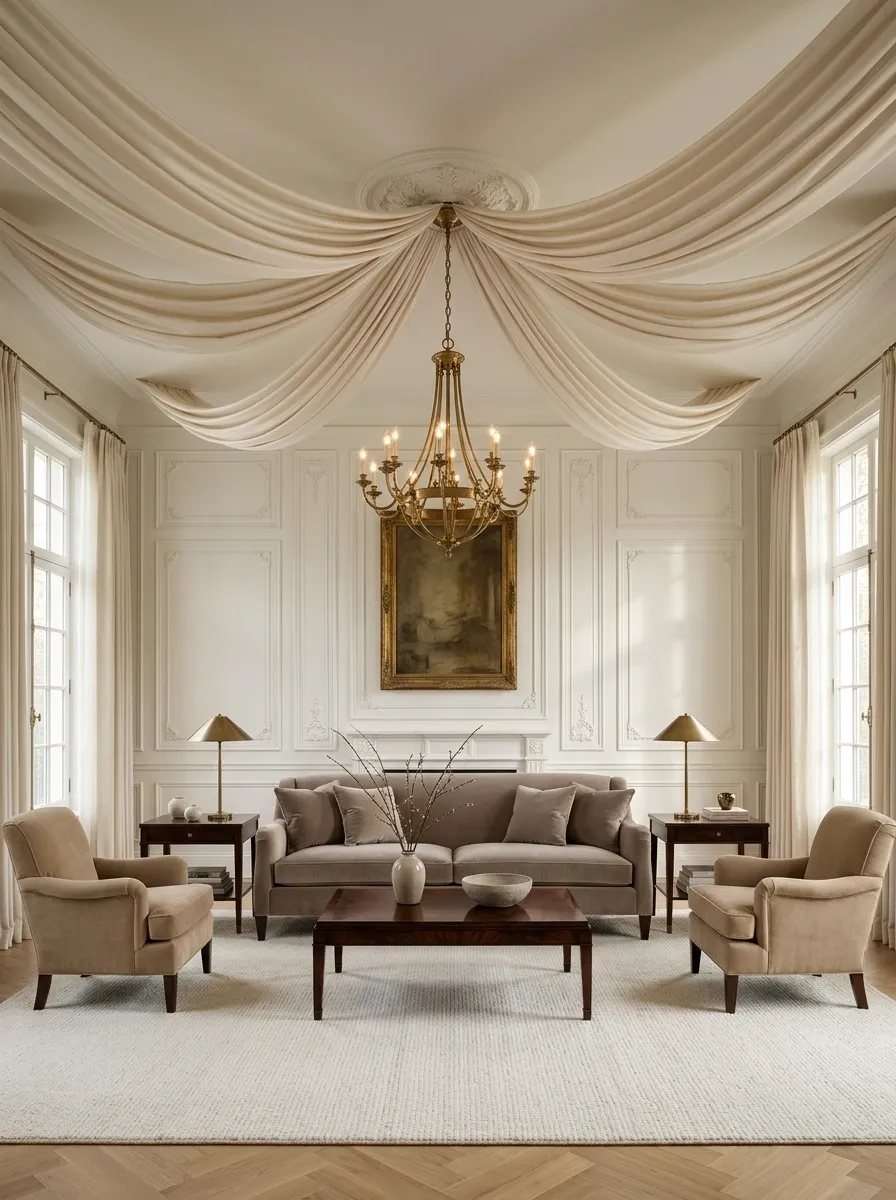
Symmetrical fabric folds reinforce the layout of a formal sitting room with balanced armchairs, a traditional sofa, classic wall panels, and a central lighting feature. The ceiling brings the architecture together rather than competing with the furniture.
Repeat the symmetry in the main seating arrangement and keep smaller accessories restrained. If the walls already feature decorative molding, avoid adding a second competing pattern overhead.
The result feels polished because the room has a clear center. Even the most traditional interior benefits from knowing where to look first.
The symmetry relationship
SITTING ROOM COMPOSITION
Balance overhead and below.
CEILING DRAPING
Fold arrangement centered on the room
Chair
Left side
Sofa
Central seating
Chair
Right side
Use matching visual weight on either side of the center. Symmetry creates order without requiring every accessory to be identical.
Monochrome Interior With White-on-White Draping
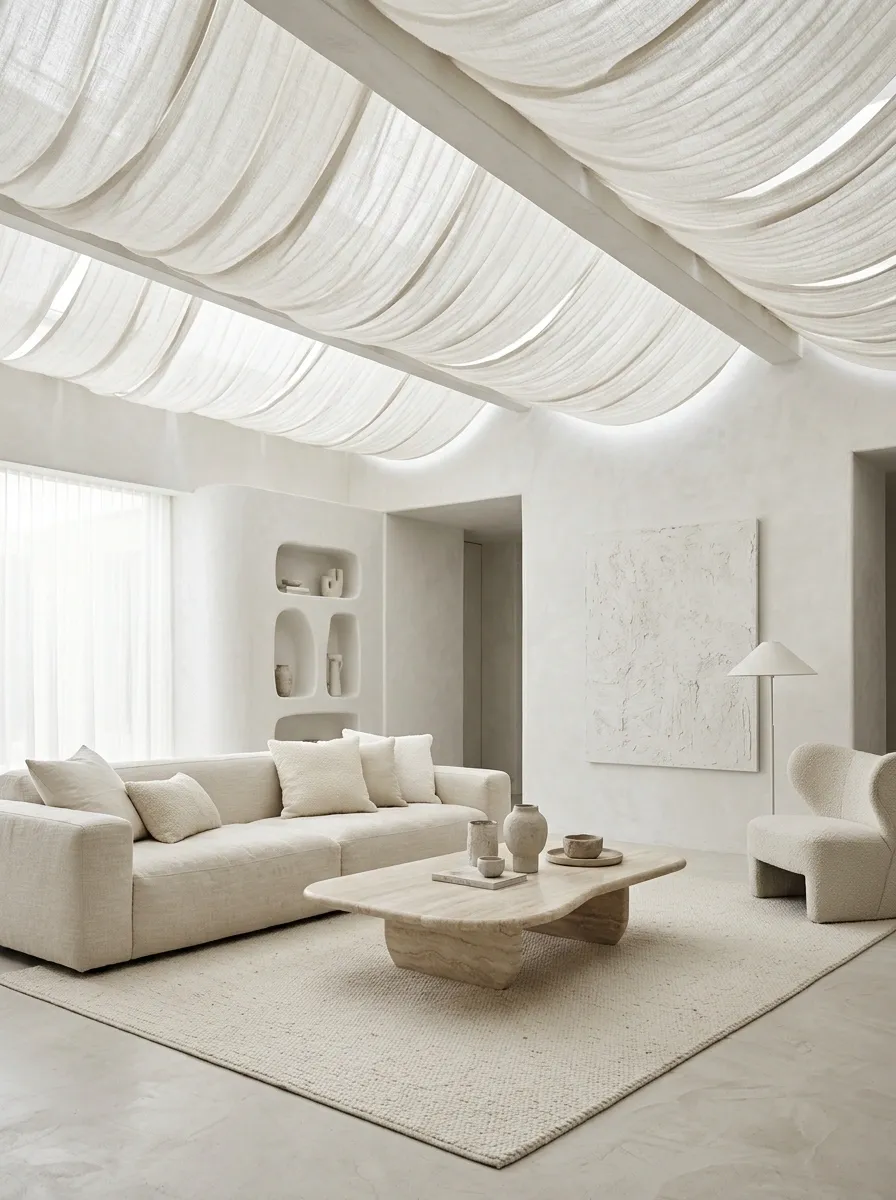
White fabric introduces depth through folds and shadows in a living room with white plaster walls, a pale sofa, and a stone coffee table. The composition relies on texture rather than strong color contrasts.
Choose materials that look visibly different despite sharing a similar tone. Smooth plaster, woven fabric, upholstery, and stone each contribute a distinct surface.
Keep the ceiling treatment restrained so the room remains architectural rather than overdecorated. White-on-white works when the textures do the talking. If they all look exactly the same, the room risks becoming an empty photo studio.
A tonal texture study
WHITE-ON-WHITE
Same family. Different textures.
OVERHEAD
Woven fabric
Soft folds and visible texture.
WALLS
Matte plaster
SEATING
Textured upholstery
TABLE
Pale stone
Use small shifts in texture and tone to create dimension. Monochrome doesn’t mean every surface has to be indistinguishable.
Contemporary Four-Poster Bedroom With a Tailored Fabric Ceiling
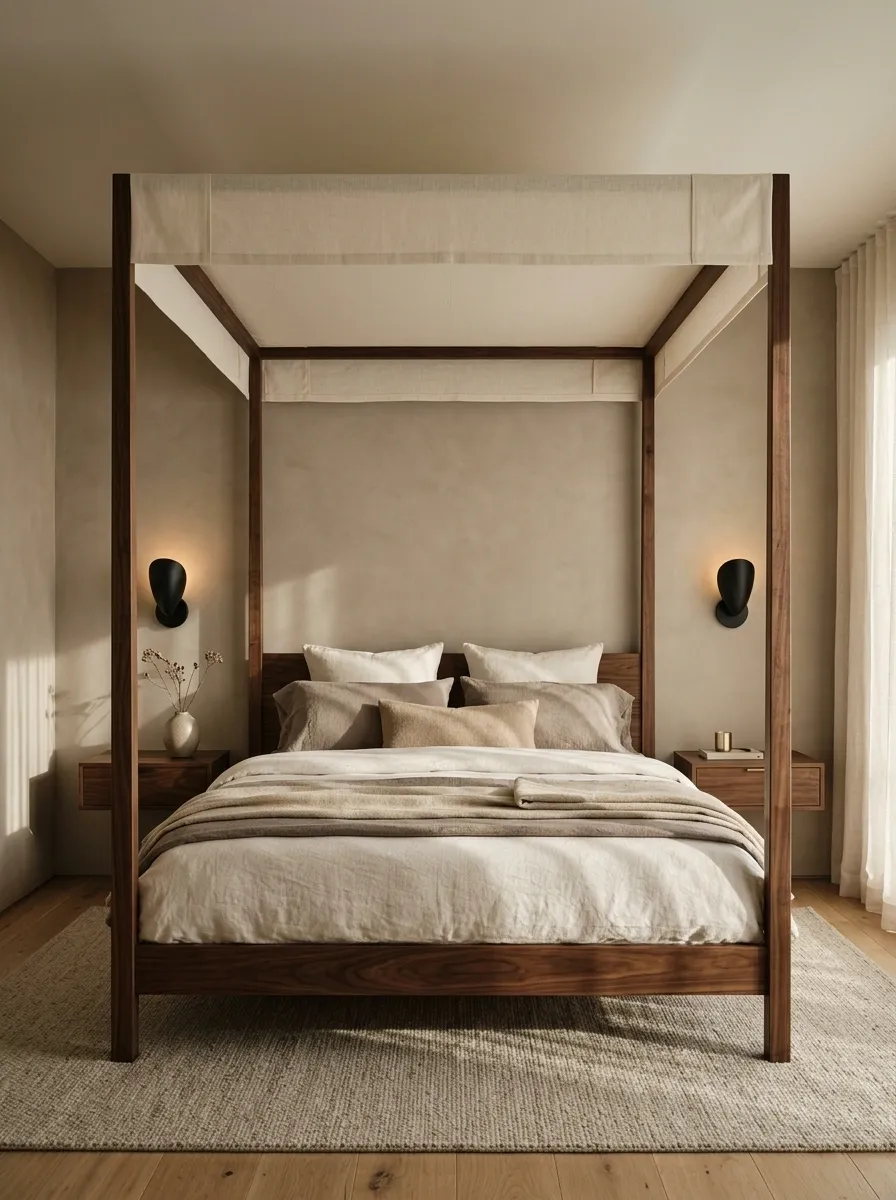
A tailored fabric canopy integrates with the posts of a contemporary four-poster bed, defining the sleeping zone without covering the entire ceiling. Dark walnut posts, ivory fabric, simple wall finishes, and sculptural bedside lighting create a clean, architectural look.
Unlike a room-wide suspended treatment, the fabric is supported by the bed structure. That changes the installation requirements and how the canopy relates to the ceiling.
Keep the fabric clear of lights and fans, and make sure the bed frame is designed to support the arrangement. The result should feel tailored, not like a bedsheet got caught on an oversized bed frame.
The canopy construction relationship
CANOPY STRUCTURE
Bed-supported, not room-wide.
BED FRAME SUPPORTS
Tailored fabric canopy
POST
Left support
POST
Right support
The fabric footprint follows the bed frame. It does not need to extend across the whole ceiling.
Confirm that the frame is designed for the canopy, and plan fabric clearance from all fixtures. The installation method determines the support requirements.
Choosing a Fabric Ceiling Style That Works in Real Life
The best ceiling treatment is the one that belongs in the room, not merely the one that photographs well. A relaxed linen canopy, a structured panel arrangement, and a richly colored drape create very different results, even when the fabric covers a similar area.
Start with the room’s strongest existing feature. It might be a low walnut bed, a generous window, exposed beams, or a seating arrangement that needs a clearer focal point. Choose fabric that supports that feature rather than competing with it.
Before installation, check ceiling height, fixing points, fabric weight, cleaning requirements, and safe distances from lights and electrical equipment. Outdoor and nursery installations need additional care suited to their particular environment.
Then step back and look at the whole composition. If the ceiling works with the furniture, walls, lighting, and floor, the room will feel considered rather than decorated for a photograph.