
A television can be the most practical thing in a living room and the one thing that makes the room feel unfinished. The screen looks disconnected from the furniture, the wall feels too empty, or the decorations surrounding it seem more like an afterthought than part of the design.
The solution isn’t always a bigger cabinet or another shelf. Sometimes the wall needs warmth from natural wood. Sometimes built-in storage, painted paneling, or a carefully arranged collection of artwork gives the television a proper place in the room.
Before You Decorate the Wall Around Your TV
A well-designed TV wall doesn’t need to be elaborate. It needs the right proportions, a clear focal point, and finishes that make sense with the rest of the room.
Get the TV, Console, and Wall Proportions Right
Start with the television’s position and the furniture beneath it. A narrow console can look lost under a large screen, while crowded shelving can make the wall feel top-heavy.
Consider the entire composition, including cabinetry, artwork, and architectural details. Viewing comfort matters just as much as appearance, so avoid a design that forces you to look uncomfortably high.
Choose a Wall Treatment That Suits the Room
Wood paneling adds warmth, painted molding brings a traditional feel, and plaster creates a quieter backdrop. Wallpaper and artwork introduce pattern, while built-in cabinetry combines decoration with practical storage.
Choose a treatment that works with the flooring, furniture, and natural light rather than treating the television wall as a separate project.
Keep Style and Everyday Use in Balance
Think about cables, streaming devices, remotes, gaming equipment, and the clutter that collects in a family living room. Closed storage keeps everyday items out of sight, while open shelves provide room for books and a few decorative pieces.
Before installation, check mounting requirements, ventilation, glare, and furniture clearance. The finished wall should look good and remain easy to use.
TV Wall Decorating Ideas for Every Style and Space
Botanical Floating Shelves TV Wall
A television wall comes alive when natural greenery and rich timber elements frame the screen. Suspend a thick oak shelf directly above the television to hold trailing ivy, potted plants, and carefully curated framed botanical prints.
A matching long media console underneath extends the wood finish across the floor, while woven storage baskets soften the structured cabinetry. This setup balances technology with organic textures, making the black screen feel naturally integrated into a lush living space.
Keep the arrangement balanced by allowing trailing vines to cascade down the sides without blocking the view of the screen. Pair with woven pendant lighting and neutral curtains to complete this warm, earth-toned sanctuary.
Arched Floral Wallpaper TV Backdrop
An arched architectural alcove lined with vintage floral wallpaper instantly turns a television into a stunning statement piece. Frame the patterned fabric with a warm wood trim and integrated lighting to create a glowing focal point in the room.
A sleek floating console underneath matches the timber arch, providing a clean surface for a soundbar and minimal decorative objects. The continuous wood tones tie the overhead arch and lower cabinetry together harmoniously.
This design transforms an ordinary screen into a deliberate piece of art by softening the harsh black edges with intricate patterns and warm illumination. Ensure the wallpaper scale complements the size of the television for a perfectly proportioned finish.
Floor-to-Ceiling Built-In Shelves Framing the Television
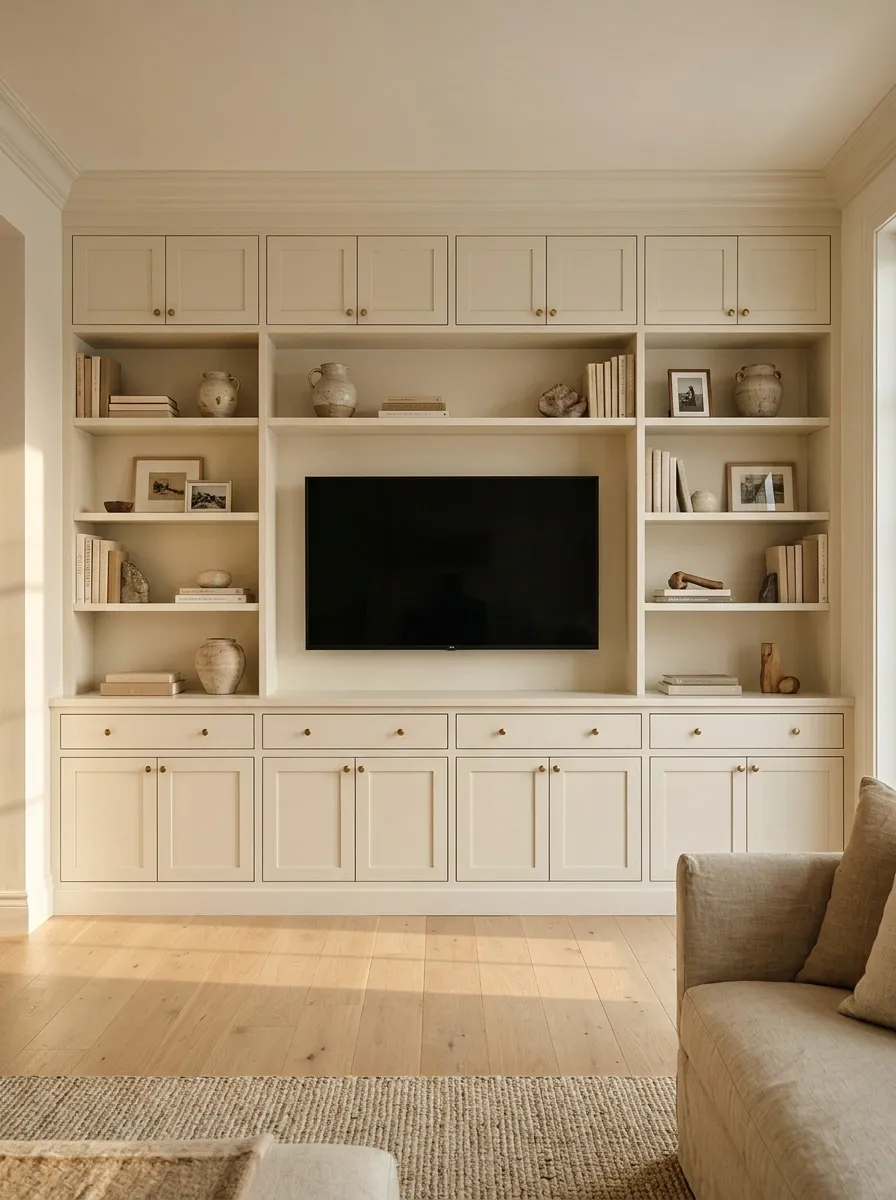
Floor-to-ceiling bookcases give a television wall the presence of a custom architectural feature. Place the screen in the central section, frame it with shelving on both sides, and use lower cabinets to conceal routers, controllers, cables, and other everyday equipment.
A continuous cabinet base helps the entire arrangement read as one design. Books, ceramics, framed photographs, and a few sculptural objects bring personality to the shelves.
Vary the groupings instead of filling every opening. Leave some sections relatively empty so the display has breathing room around the black screen.
This design is especially useful when the living room needs substantial storage as well as a focal point. Plan shelf depths and equipment access before building, and make sure the TV remains comfortable to view from the main seating area.
A wall that works harder
LEFT
Books
Selected objects
Closed storage
CENTER
TV and media
Clear viewing zone
RIGHT
Books
Art and ceramics
Closed storage
Separate display areas from practical storage. Balanced sides create visual order, but their contents don’t need to match exactly.
Neoclassical Molded Panel TV Wall
Classic architectural molding gives a television wall the timeless elegance of a formal parlor. Surround the central screen with ornate decorative paneling and antique-style wall sconces that cast a soft, sophisticated glow across the neutral surface.
A matching off-white media console echoes the intricate wall details while concealing everyday electronics out of sight. The symmetry of the sconces and framing creates an exceptionally balanced and refined composition.
This approach proves that electronics can coexist with traditional interior design when given proper architectural framing. Keep surrounding furnishings classic and neutral to let the detailed millwork remain the star of the room.
Minimalist Plaster TV Wall With Sculptural Furniture
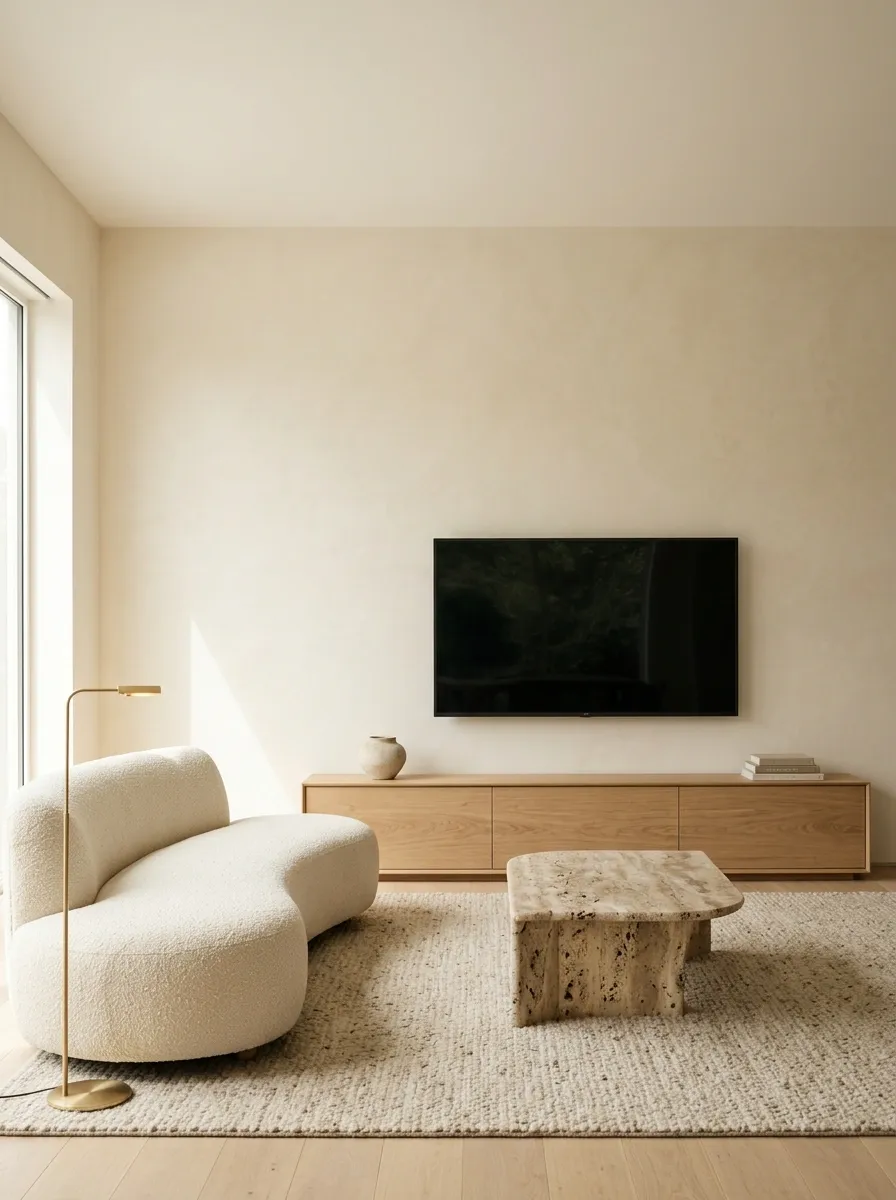
A smooth, warm ivory plaster wall creates a calm backdrop for a television without relying on extra decoration. Place the screen above a low oak cabinet, then introduce contrast through furniture rather than the wall itself.
A curved sofa, a sculptural stone coffee table, and a simple floor lamp provide enough shape to keep the room interesting. Keep accessories selective. One ceramic vessel or a small stack of books can be enough for the console.
A heavily decorated shelf would distract from the simplicity that makes this concept distinctive. Let the materials do the work instead.
This direction suits a room where natural light, texture, and furniture shapes provide most of the visual interest. The plaster should have a finish that can tolerate everyday use, and the console needs enough space for equipment without overwhelming the wall.
Material notes
A quiet wall, richer textures
Plaster
Soft, subtle surface
Oak
Warm visual anchor
Stone
Weight and texture
Let the materials contrast through texture, not competing patterns. A matte wall, visible wood grain, and a tactile stone surface can create depth while keeping the overall palette restrained.
Curved Backlit Wood Panel TV Wall
A sweeping curved light channel cut into warm concrete panels creates a dramatic, futuristic frame for a modern television. Pair this striking architectural feature with asymmetrical floating shelves illuminated by hidden LED strips to display your favorite decor.
A sleek two-tone media console stretches beneath the screen, featuring under-cabinet lighting that makes the entire heavy structure appear to float effortlessly. The circular geometry softens the harsh lines of the television while adding incredible depth to the wall.
This sophisticated layout relies heavily on layered lighting and mixed textures like dark wood and smooth plaster to create a high-end designer look. Plan the electrical wiring carefully before installation to ensure all the glowing accent strips shine seamlessly.
Dark Moody TV Wall With Integrated Cabinetry
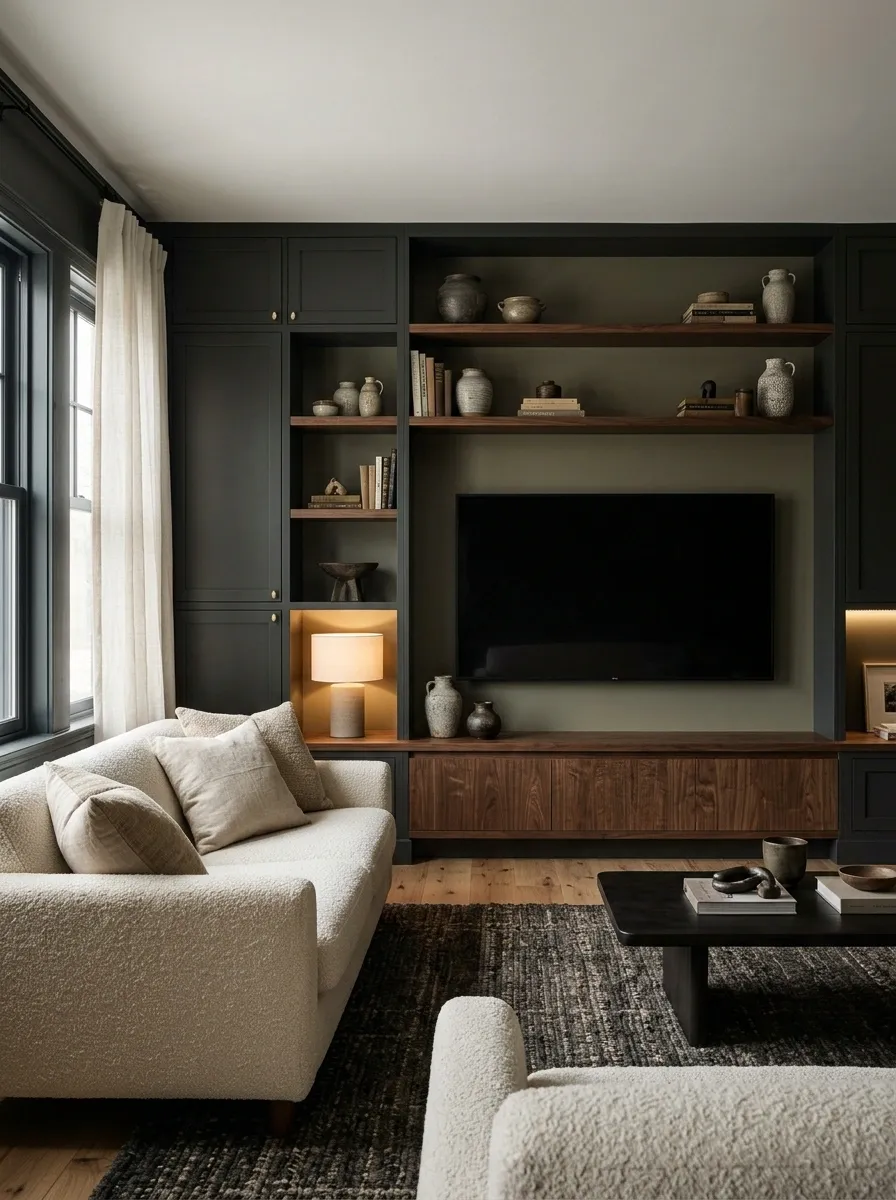
A deep charcoal, brown, or muted olive TV wall can make the screen less conspicuous when it is switched off. Continue the dark finish onto the media cabinetry or nearby shelves to create a unified composition.
Walnut accents and tactile upholstery introduce warmth, while table lamps and carefully placed ambient lighting stop the room from feeling flat. This design looks strongest when dark surfaces appear in more than one place.
A black television against a charcoal wall, for example, can feel connected to dark window frames or a deep-toned rug. Keep the largest surrounding surfaces consistent and use lighter cushions, curtains, or artwork selectively.
Before committing to a dark finish, consider the room’s natural light and evening lighting. The goal is a layered space with clear shapes, not a wall so dim that cabinetry and architectural details disappear.
Make a dark wall feel layered
Wall
Dark paint and screen
Furniture
Warm wood accents
Soft details
Lighter textiles
Use more than one light source. General lighting keeps the room usable, while a floor lamp or indirect accent light reveals the finishes without shining directly into the screen.
Floor-to-Ceiling Vertical Wood Slats Behind the TV
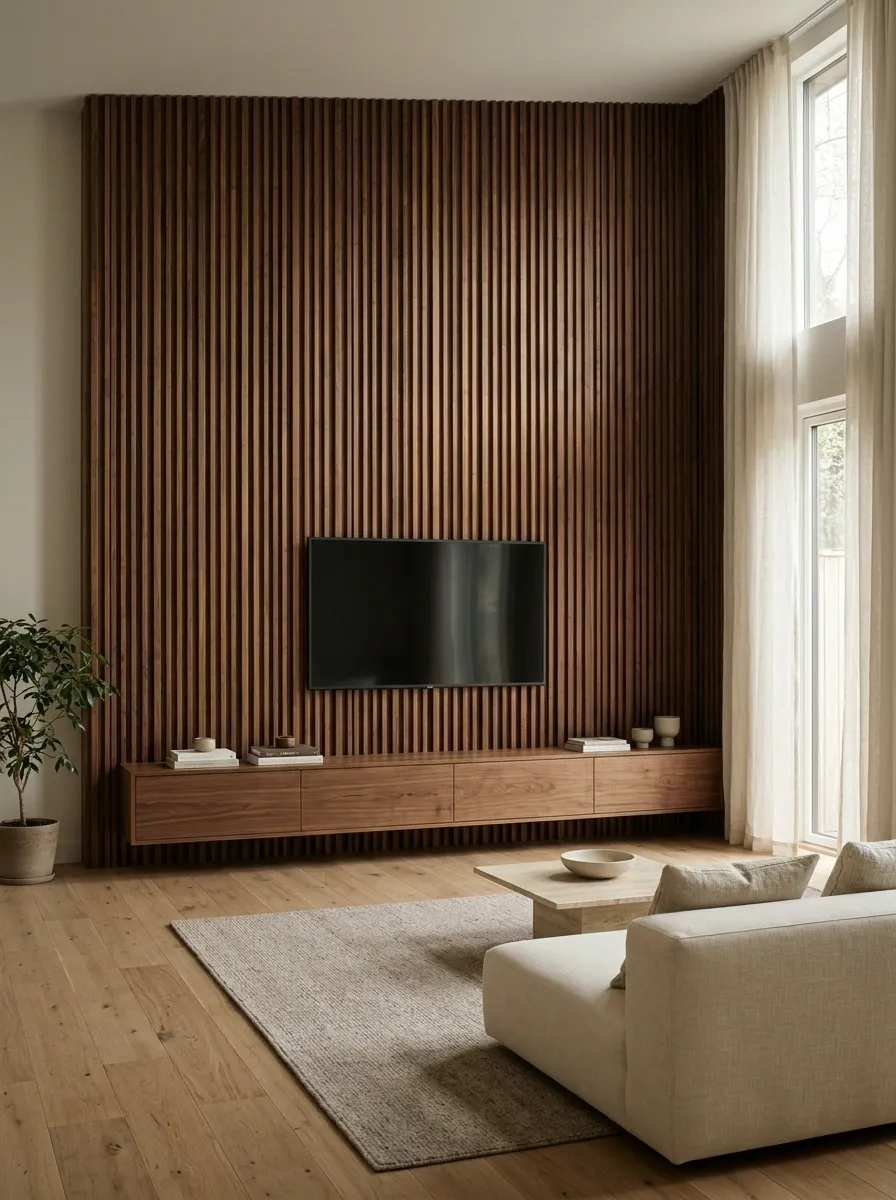
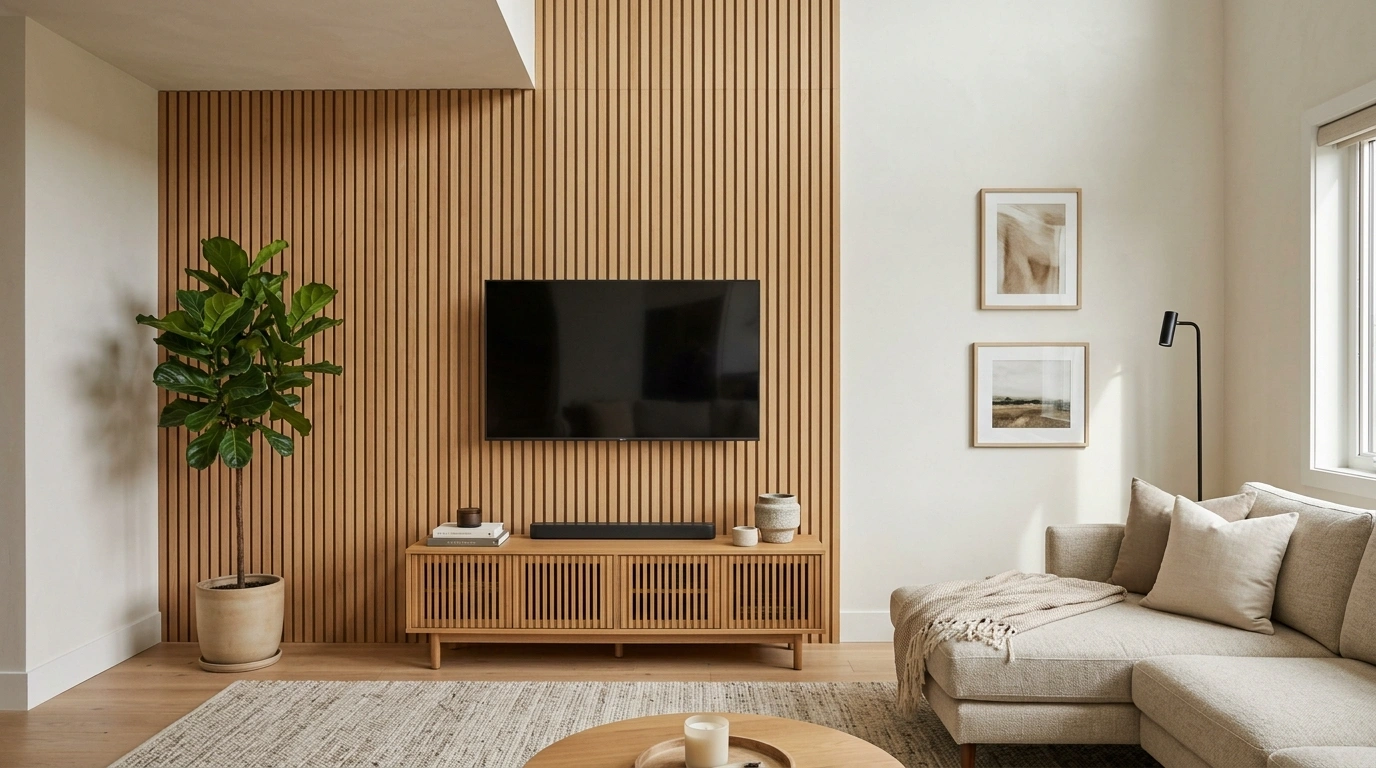
Vertical wood slats give a television wall strong architectural lines without requiring a busy pattern or a collection of decorations. Run the slats from the top of the console toward the ceiling, allowing the wood to extend beyond the screen on both sides.
A long floating cabinet creates a horizontal counterpoint, while cream upholstery and a muted rug soften the repeated lines. Walnut brings a richer, more dramatic finish, while pale oak gives the same idea a lighter Scandinavian feel.
Keep nearby furniture relatively simple so the wall remains the main feature. Pay attention to slat spacing and the transitions around outlets, corners, and the ceiling.
If you’re using decorative acoustic panels, check their construction and installation requirements rather than assuming every slatted product provides meaningful sound treatment.
Composition study
Vertical rhythm, horizontal anchor
The repeated slats emphasize height. The longer cabinet visually steadies the composition. Leave enough uninterrupted wood around the screen to make the material part of the design.
Traditional Living Room With Painted Wall Paneling
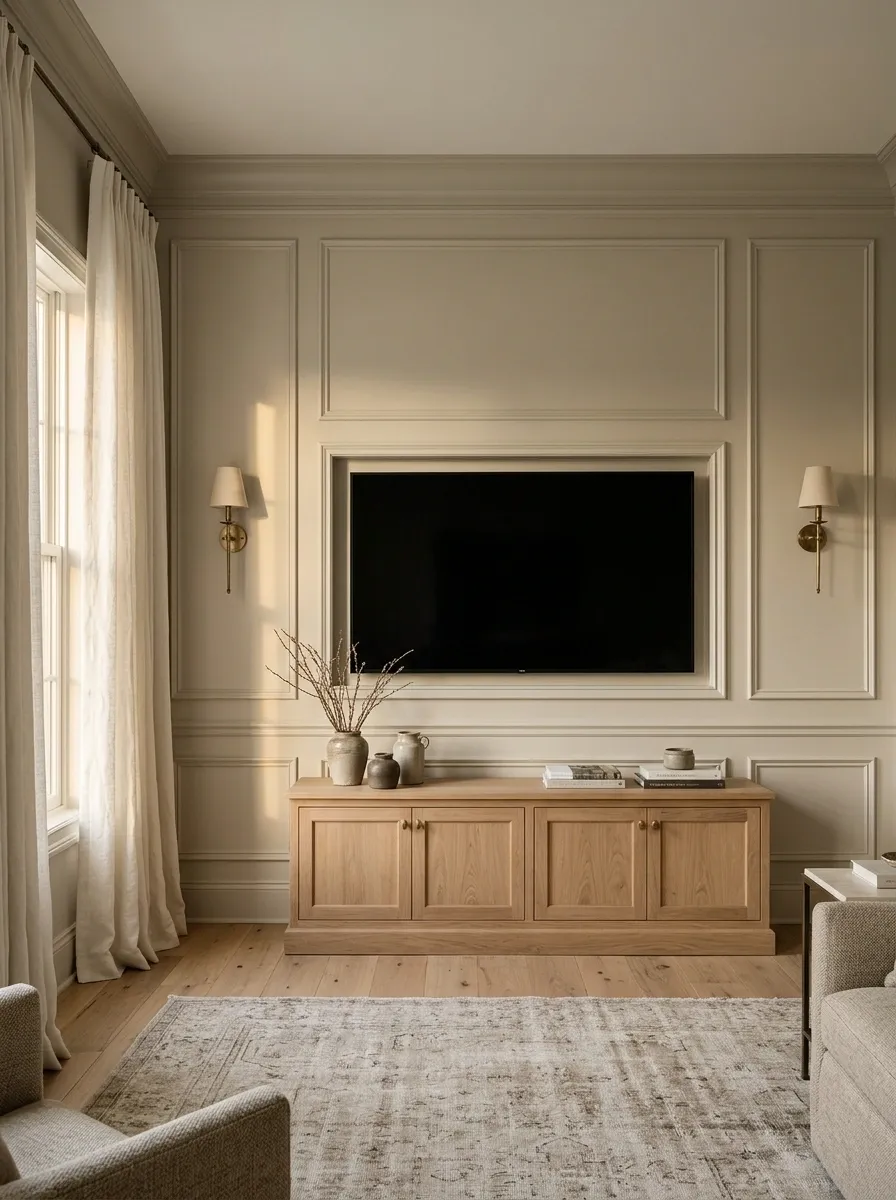
Painted wall molding makes a television wall feel like a natural part of a traditional home. Rectangular panels create an architectural framework around the screen, while a classic console, tailored curtains, and softly patterned upholstery complete the room.
Warm greige, putty, or muted cream keeps the wall from feeling overly formal. The key is to plan the molding around the television’s actual position. The screen should sit comfortably within the larger arrangement rather than cutting awkwardly across several narrow panels.
A simple cabinet beneath it provides a visual base without introducing a competing design. This treatment works particularly well with traditional, transitional, and French-inspired interiors.
Keep the decorative profiles restrained if the room already has detailed trim, patterned rugs, or ornate furniture. The wall should add structure, not another layer of competing decoration.
Let the architecture frame the screen
Plan around the screen
Mark the TV’s full outline before deciding where each molding panel begins and ends.
Keep the base simple
Use a console with enough visual weight to support the paneled wall without competing with it.
Contemporary Stone Feature Wall With a Floating Console
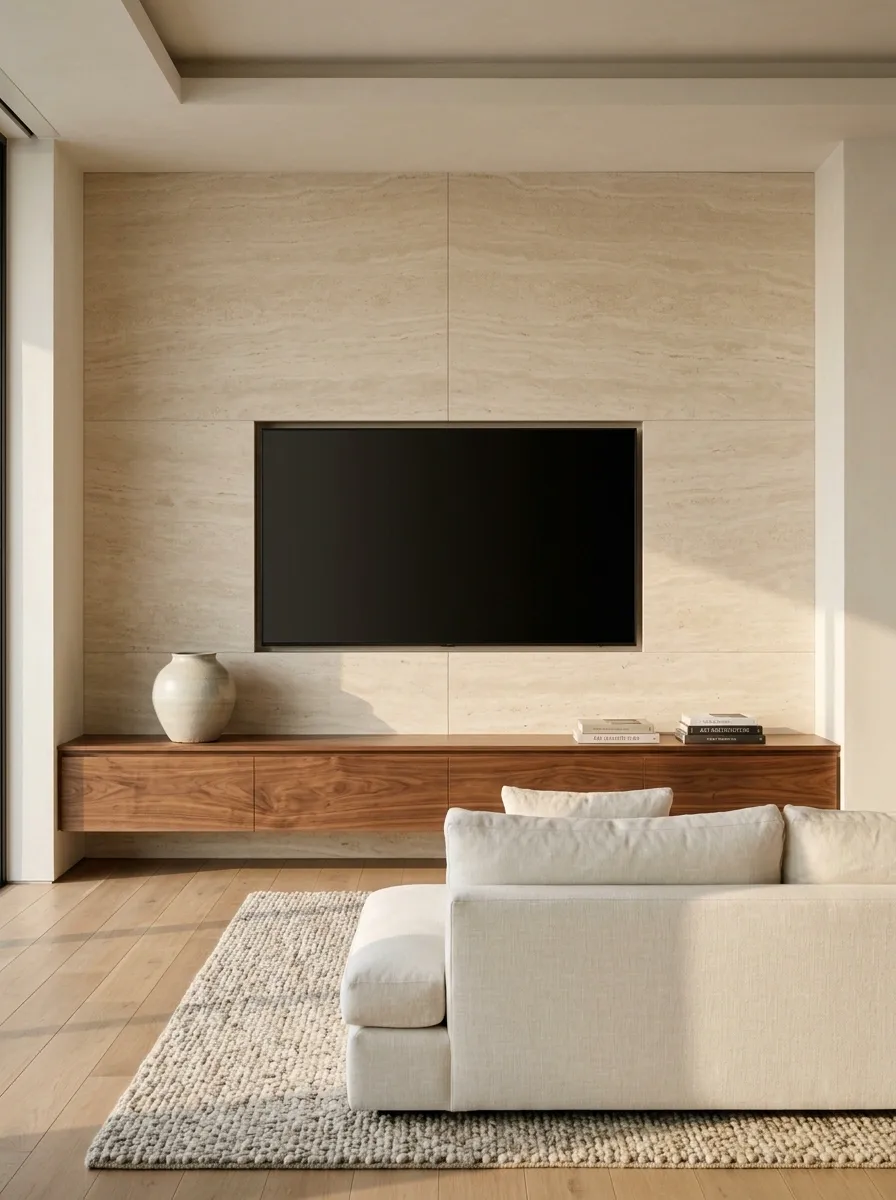
A stone feature wall gives the television a substantial architectural backdrop. Large-format travertine, limestone, or a suitable stone-look porcelain finish creates broad, natural-looking surfaces with fewer distracting lines than small tiles.
A floating walnut console beneath the screen introduces warmth, while understated furniture lets the stone remain the focal point. Pay attention to the stone’s color variation and the direction of its veining.
A relatively calm finish works well when the room already contains patterned rugs or expressive furniture. More dramatic veining needs a simpler supporting palette, otherwise the wall can dominate the room.
Material choice matters as much as appearance. Natural stone, porcelain, and decorative stone-look panels differ in weight, installation needs, cost, and maintenance. Confirm that the wall construction and TV mounting system can support the chosen finish and equipment before installation.
Choose stone for both its look and its demands
Natural stone
Distinctive natural variation. Check weight, sealing needs, and specialist installation requirements.
Porcelain slabs
A controlled stone-inspired appearance. Confirm slab handling, substrate suitability, and installation details.
Decorative wall panels
Can reduce the visual and installation complexity of a stone-like finish, depending on the product.
Confirm mounting and load requirements with qualified installers. A finish that looks substantial isn’t automatically strong enough to support a television bracket.
Japandi TV Wall With Low Timber Storage
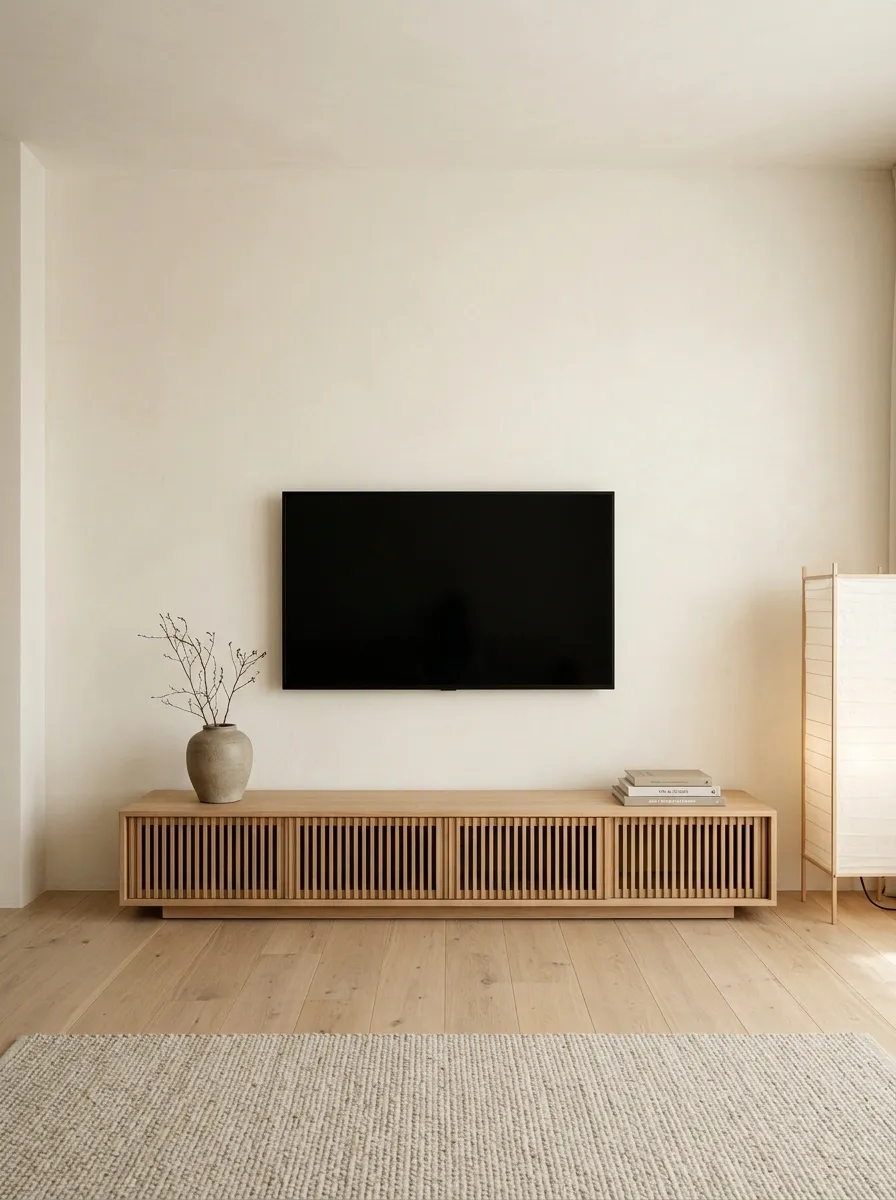
Japandi styling works because it gives every major element room to breathe. A low oak cabinet anchors the television, while warm ivory walls, natural textiles, and a few handmade accessories create a restrained composition.
The furniture sits close to the visual center of the room, leaving generous open space around the screen instead of filling every part of the wall. Choose one or two pieces with an interesting shape, such as a sculptural ceramic vessel or a paper floor lamp.
Keep the remaining accessories simple, and repeat the timber tone elsewhere through a coffee table or occasional chair. That repetition connects the TV wall to the rest of the living room.
This design is particularly effective in rooms where clutter quickly becomes noticeable. Give remotes and electronics a concealed home, and choose storage that accommodates their ventilation needs. The room should feel calm because it is well organized, not because everything practical has been removed.
The Japandi editing test
Give each element a clear purpose
Natural timber
Provides warmth and anchors the television.
Quiet surfaces
Keep attention on the room’s shapes and textures.
A few chosen objects
Add personality without crowding the console.
Before adding another accessory, ask whether it provides a useful function, an important texture, or a distinctive shape. If it does none of these, leave the space open.
Color-Drenched Living Room With a Matching TV Wall
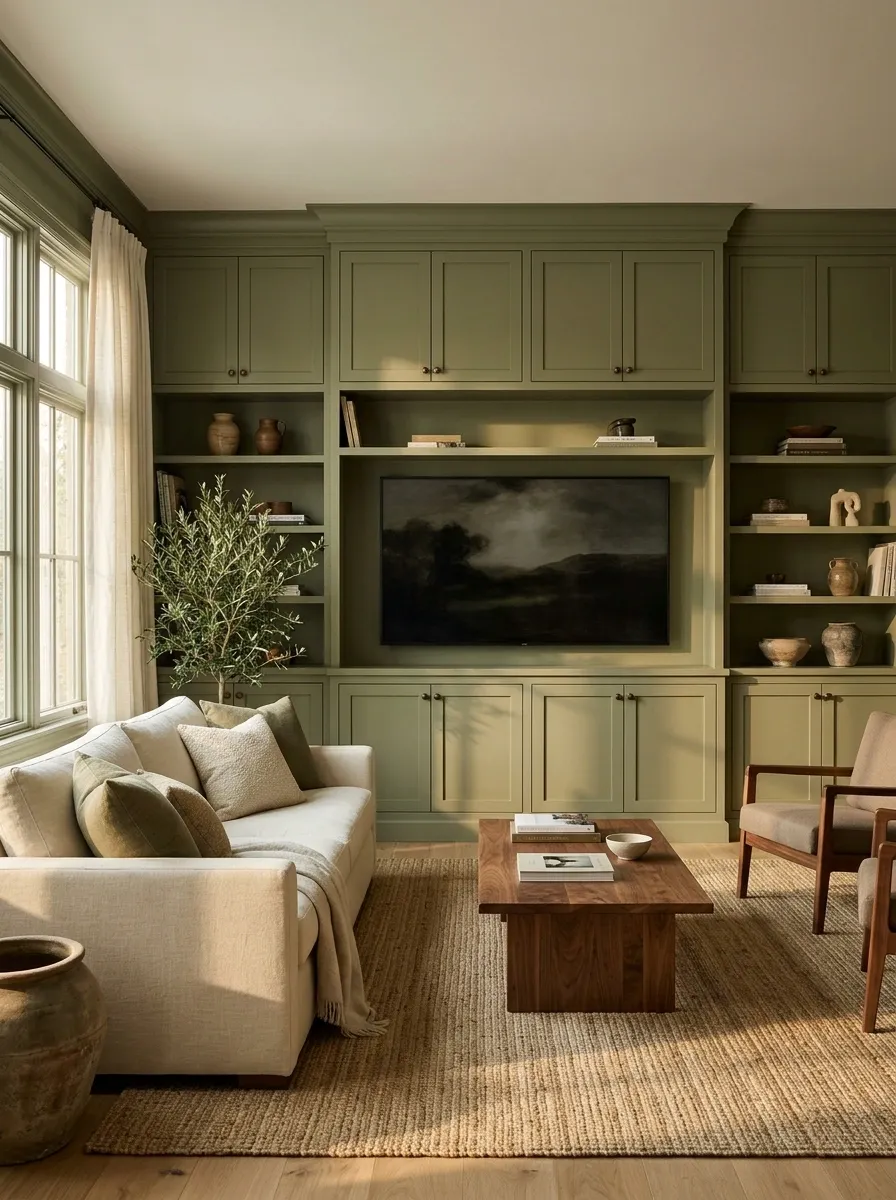
A color-drenched TV wall makes the screen feel like part of the room’s architecture. Paint the walls and built-in media cabinetry in the same muted olive, deep blue, or warm clay shade.
The television’s dark screen naturally contrasts with the painted surface, while matching cabinetry creates a continuous backdrop. Bring in a different material to break up the color, such as walnut furniture, a cream sofa, or a natural woven rug.
Repeat the wall color in a few cushions or artwork so the palette feels connected across the space. The finish matters, too. A matte or low-sheen wall generally gives the composition a softer appearance than highly reflective paint.
Test a sample in daylight and under evening lighting before committing to the entire wall.
Color composition
One dominant color, two supporting notes
Let the wall and cabinetry establish the main color story. Natural wood and light upholstery create contrast without introducing a competing palette.
Small Apartment TV Wall With Space-Saving Storage
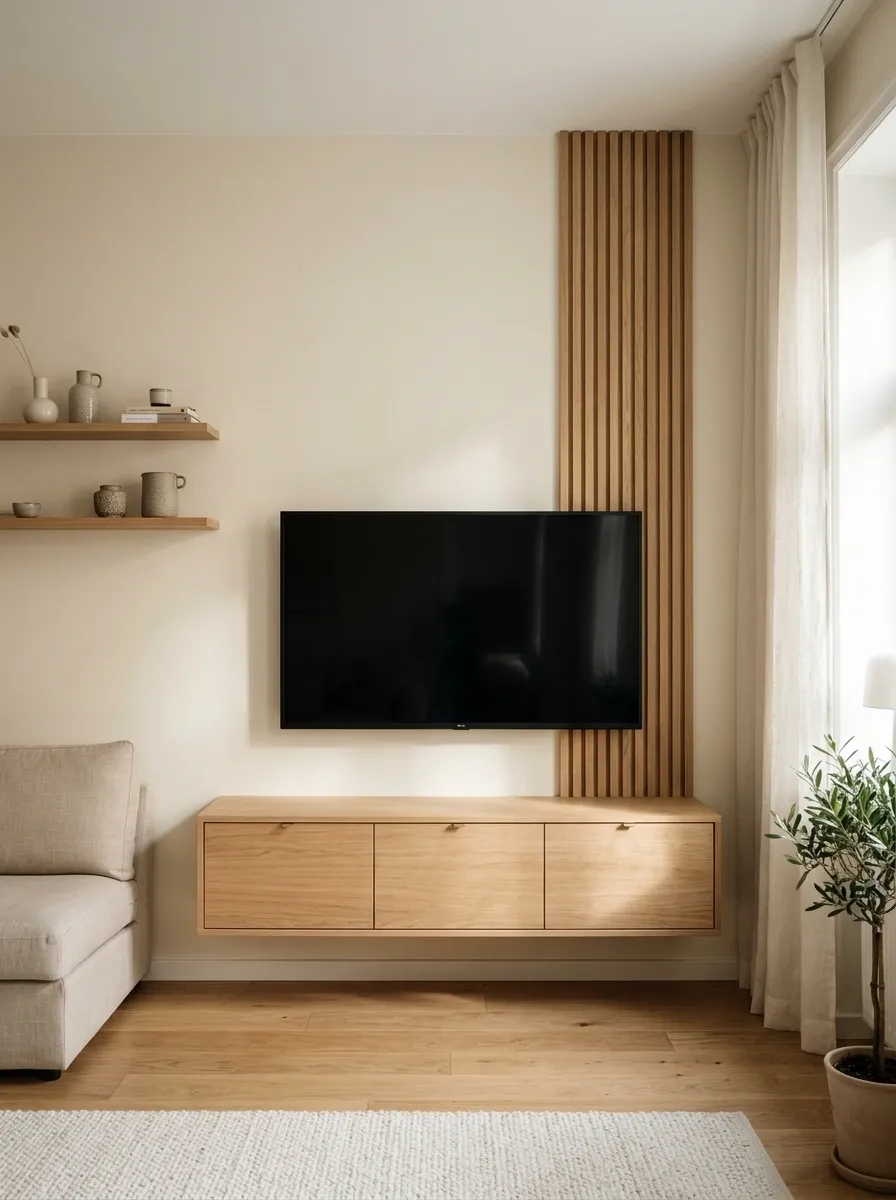
In a small apartment, the television wall needs to make the room feel organized without taking up more floor space. A wall-mounted screen and a shallow floating console keep the floor visible beneath the furniture, giving the room a lighter appearance.
Choose a console with drawers or closed compartments so remotes, cables, and small electronics don’t end up scattered across the top. Keep the wall treatment simple. Warm neutral paint, one narrow wood accent, or a small amount of carefully placed shelving is usually enough.
Too many projecting shelves can make a tight room feel even smaller. Before buying furniture, measure the walking route between the seating, TV wall, doorway, and nearby windows.
A visually attractive console isn’t a good solution if it makes everyday movement awkward. In this design, clear floor space matters as much as the decoration.
Small-room planning
Preserve the space you walk through
Treat the clear route as part of the design. Measure the furniture depth and walking space before selecting a console or adding shelves.
TV Above a Fireplace With a Balanced Stone Surround
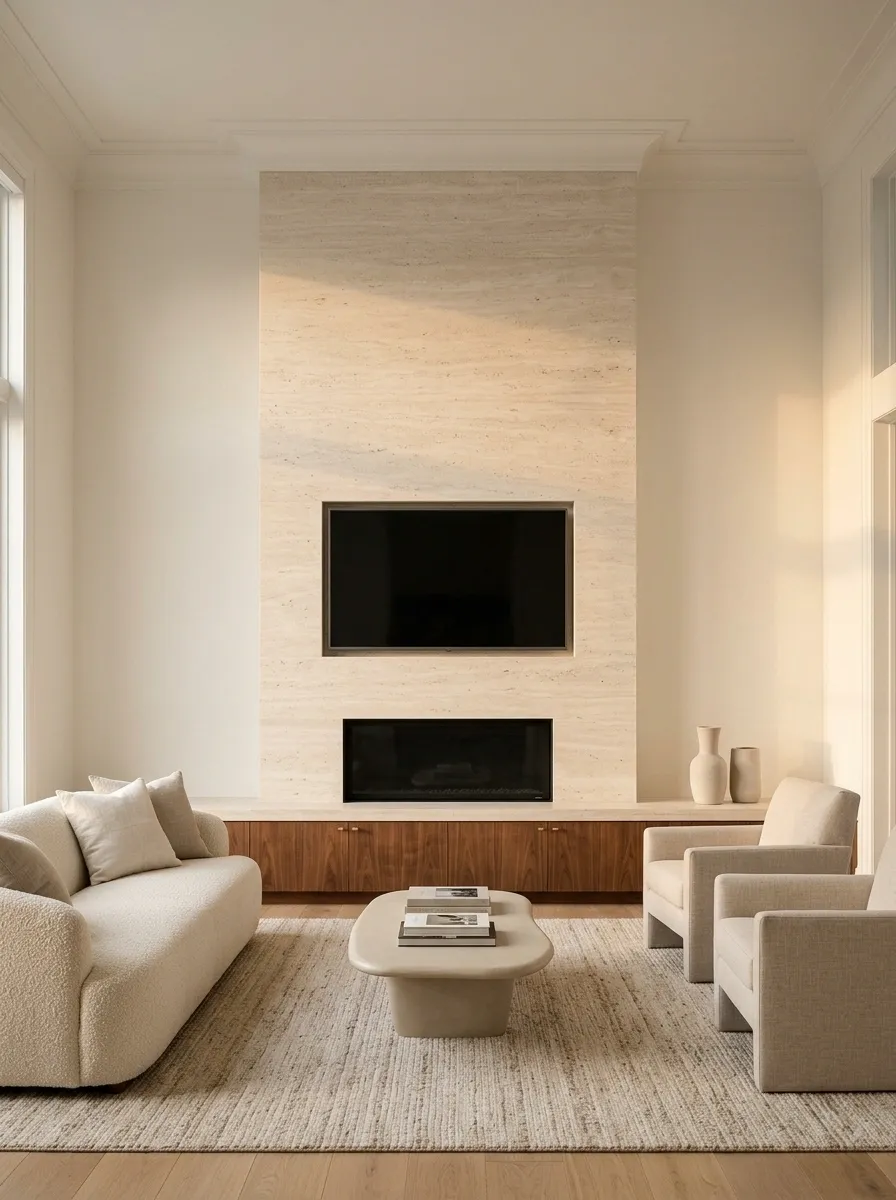
A fireplace and television can share a wall without making the room feel overcrowded, but the proportions need careful planning. A broad stone surround creates one architectural feature, with the screen positioned above the fireplace and low cabinetry or simple wall finishes connecting the composition to the rest of the room.
Pale limestone, travertine, or a suitable stone-look finish keeps the wall grounded, while a walnut shelf or low cabinet adds warmth. Use restrained furniture and avoid piling decorative objects onto the hearth. The television and fireplace already provide two strong focal points.
Comfort comes before appearance here. Mounting a television too high can make viewing uncomfortable, particularly when the fireplace requires a tall surround.
Check the fireplace manufacturer’s heat-clearance requirements, the TV manufacturer’s mounting guidance, and the available viewing angles before finalizing the layout. When those requirements conflict with comfortable viewing, separate the television from the fireplace.
Before installation
Three decisions come before the stone
Viewing comfort
Check the screen’s position from your normal seating, not just while standing in front of the wall.
Heat clearance
Follow the fireplace and television manufacturers’ requirements for heat exposure and mounting.
Structural support
Confirm how the finish, bracket, and television will be supported by the wall construction.
TV Framed by Arched Built-In Niches
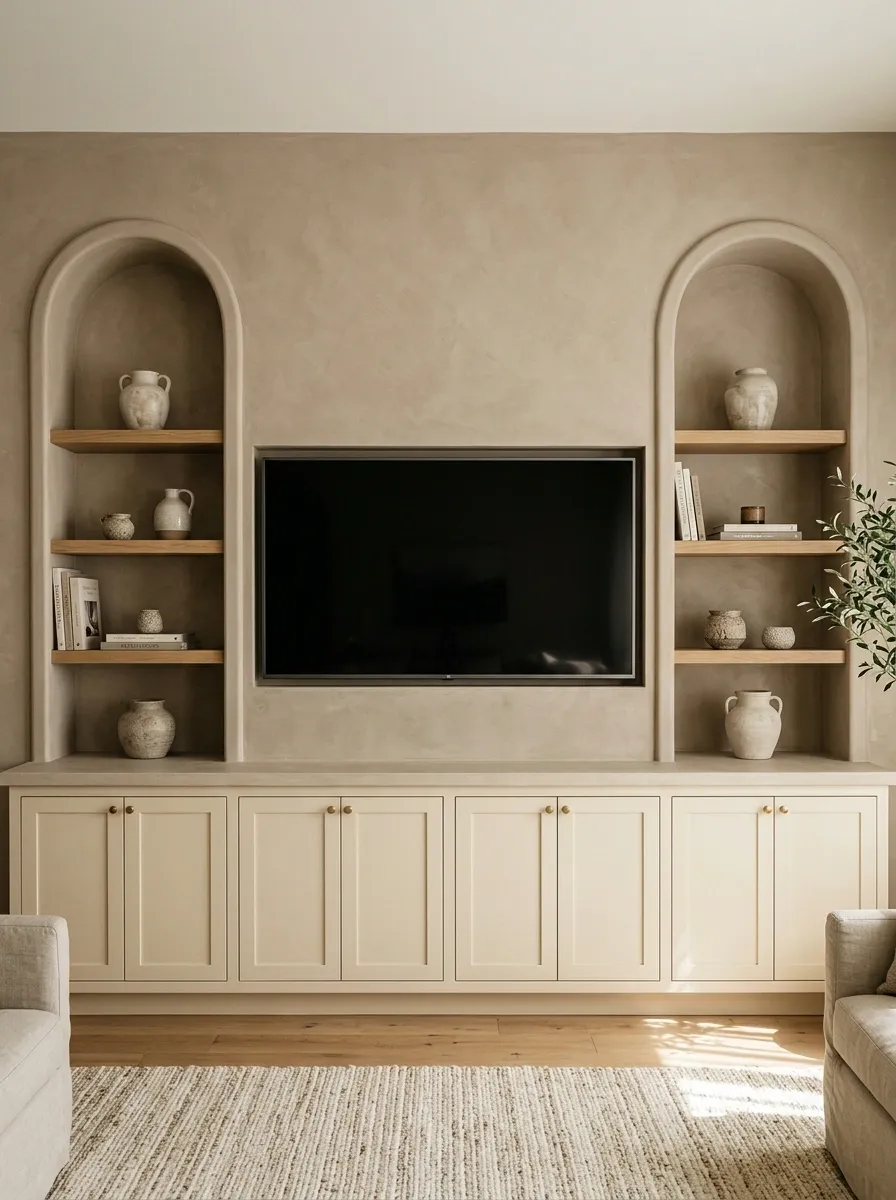
Arched niches give a television wall a softer silhouette than a row of ordinary rectangular shelves. Place the screen in the central section, with one tall curved niche on either side.
A continuous base cabinet ties the arrangement together, while oak shelves, ceramics, and a few carefully chosen books provide subtle detail. The contrast between the arches and the rectangular television is what gives this design its character.
Keep the central section relatively quiet and let the niches carry most of the decoration. Matching paint across the wall and cabinetry makes the architecture feel integrated, while timber shelves introduce warmth.
This style suits traditional, Mediterranean-inspired, and contemporary interiors. Before construction, confirm that the niches won’t compete with windows or doors and that their proportions suit the wall’s height.
For an existing room, shallow decorative niches or freestanding arched cabinets can suggest a similar look without requiring a major renovation.
Balance curved forms with clean lines
DISPLAY
TELEVISION
Keep this area visually quiet
DISPLAY
The arches soften the wall, the central screen establishes a clear focal point, and the shared cabinet base makes the three sections read as one composition.
Coastal TV Wall With Pale Wood and Linen Textures
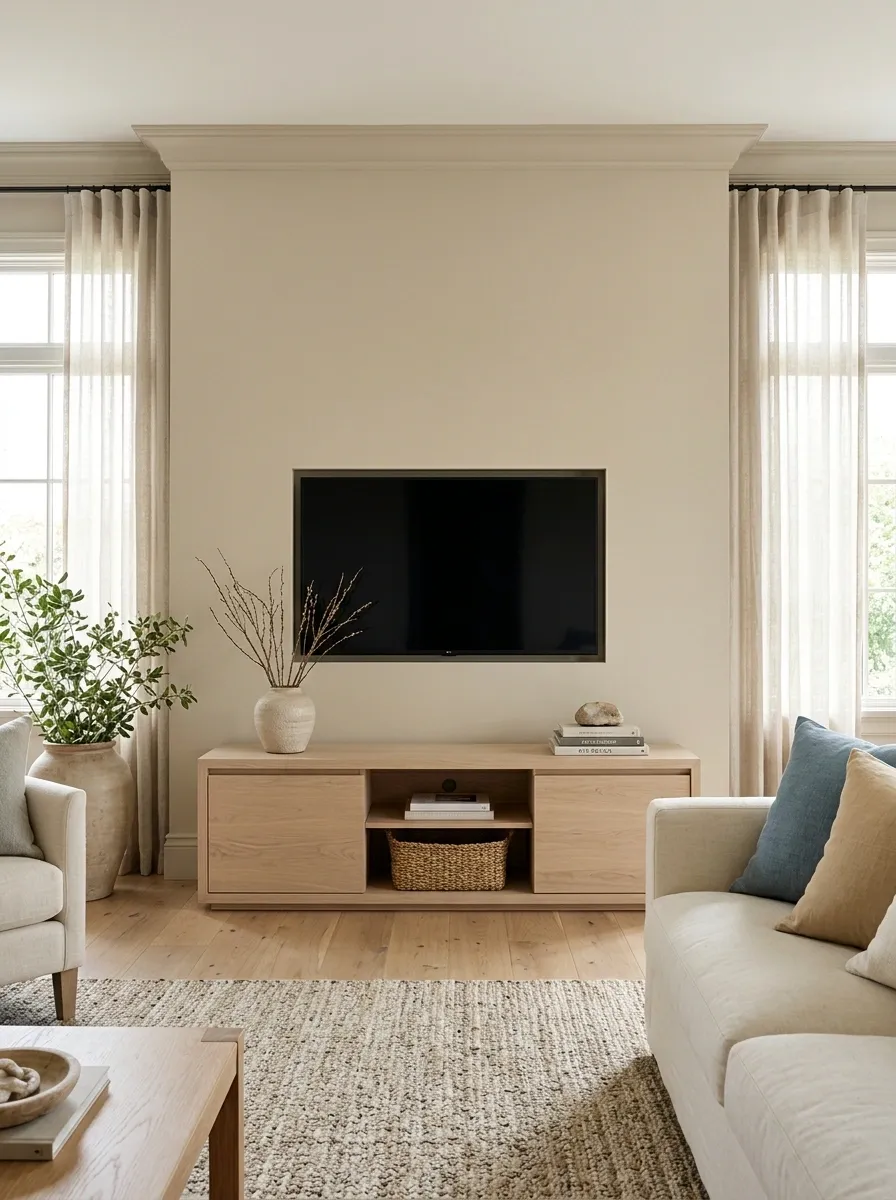
A coastal TV wall looks best when it borrows colors and materials from the shoreline without relying on obvious nautical decorations. Pair pale oak furniture with sandy beige walls, creamy linen upholstery, and a restrained blue accent.
The television can sit on a simple wall above a low console, allowing natural materials to give the composition its character. A woven basket, textured rug, or lightly patterned cushion adds enough detail to prevent the room from feeling plain.
Keep the accessories functional and avoid filling the console with shells, anchors, and other themed ornaments. The room should feel connected to the coast through its palette and relaxed textures, not through a collection of souvenirs.
Natural light helps bring out the pale finishes, but warm lighting keeps the room comfortable after sunset. Choose washable upholstery where practical and consider how woven materials will stand up to daily use, especially in a busy family living room.
Coastal palette
Keep the colors sun-washed and natural
Sand
Walls and rugs
Oak
Media console
Soft white
Upholstery
Muted blue
Small accents
Repeat the pale wood and neutral tones elsewhere in the room. Let blue appear in a few supporting details rather than covering every surface.
Mid-Century Modern TV Wall With a Long Walnut Credenza
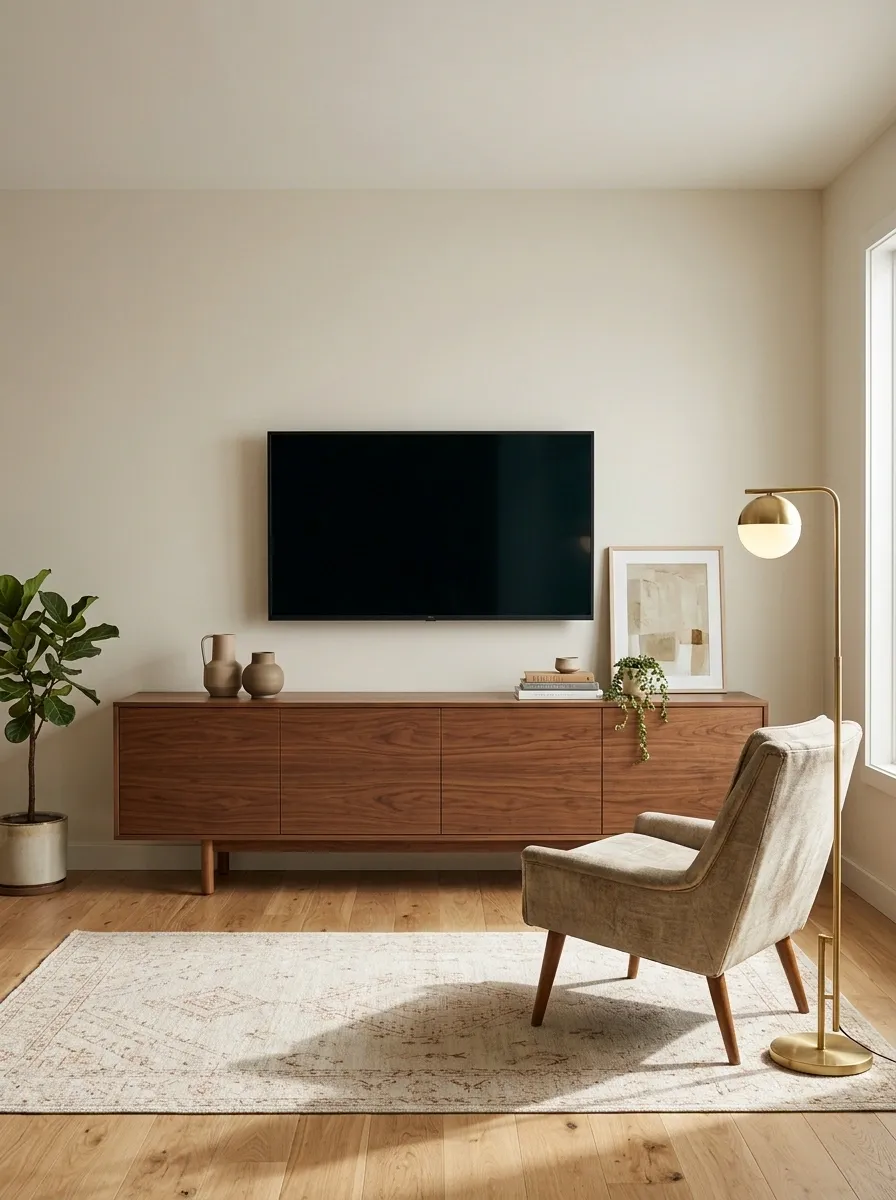
A long walnut credenza gives a mid-century modern TV wall its defining shape. Mount the television above it, then bring in tapered furniture legs, a vintage-inspired lounge chair, and a globe floor lamp.
The warm wood, simple geometry, and sculptural furniture create a room with character without needing an elaborate feature wall. Keep the wall itself relatively quiet.
Warm white, pale beige, or muted gray allows the walnut grain to stand out, while one abstract artwork or a carefully placed lamp connects the arrangement to the rest of the room. A patterned rug can introduce color without competing with the furniture silhouettes.
The credenza should have enough width to anchor the screen visually and enough internal storage for everyday equipment. Avoid filling its entire top with accessories. The furniture is the main event here, and its clean horizontal line makes the composition work.
Mid-century proportions
Strong horizontal lines, lighter forms
Keep the console long
The broad wood surface anchors the screen and gives the wall a deliberate horizontal line.
Choose sculptural accents
A distinctive chair or lamp adds character without filling the wall with decoration.
Industrial TV Wall With Concrete Texture and Black Steel
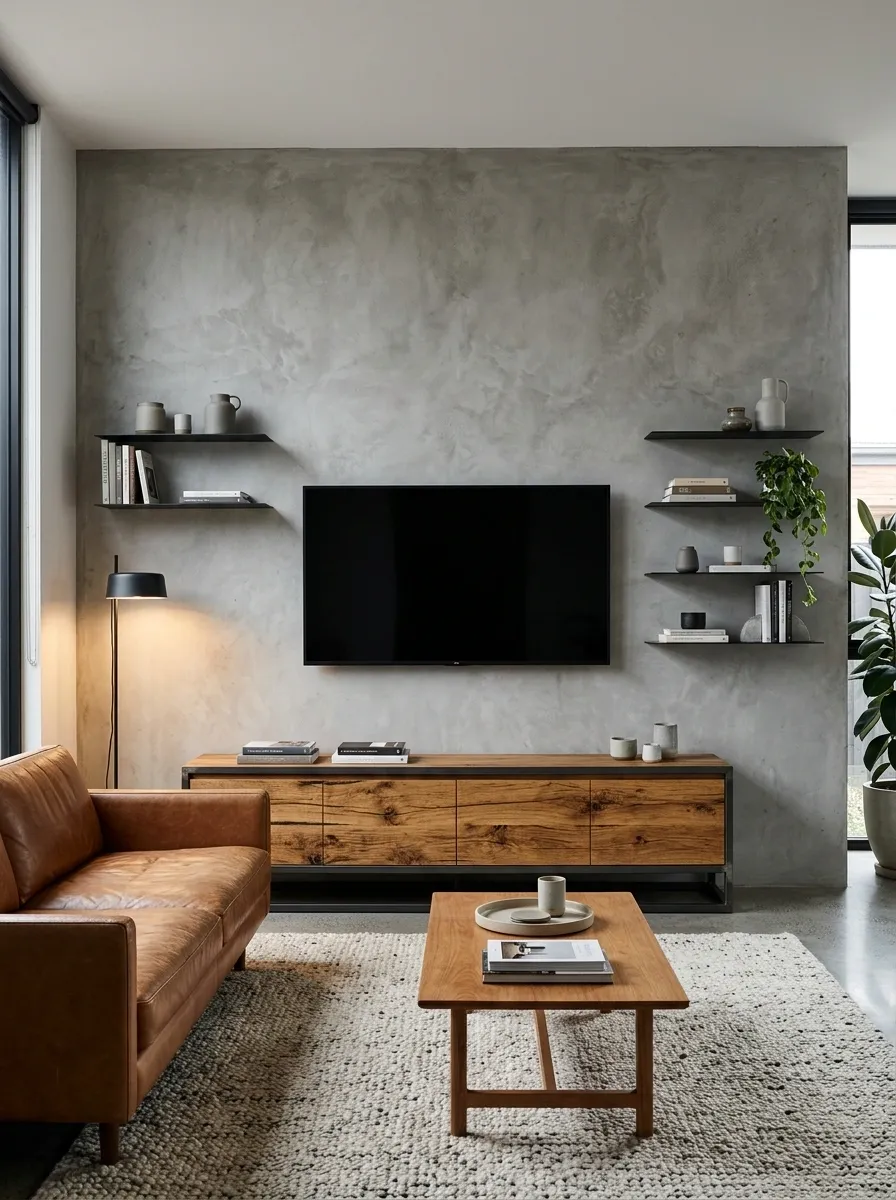
Concrete textures and black steel create a TV wall with a stronger architectural edge. A concrete-look finish establishes the backdrop, while a reclaimed timber console brings visible grain and warmth beneath the screen.
Slim metal shelving adds a place for books and a few objects without making the wall feel heavy. The surrounding furniture should support the industrial materials rather than turn the entire room cold.
A cognac leather sofa, warm wood coffee table, and soft lighting create contrast against the gray wall and dark metal. Keep the exposed-looking elements selective. Too many metal frames, pipes, and rough finishes can make a residential living room feel like a commercial space.
You don’t need actual concrete or structural steel to get the look. Suitable decorative finishes and furniture can create a similar effect with fewer installation demands. Prioritize secure mounting and practical cable concealment, especially when using open shelving around electrical equipment.
Industrial material balance
Rough surfaces need warm counterpoints
Concrete
A muted, textured backdrop.
Steel
Sharp, slim details.
Timber
Warmth and visible grain.
Use the concrete effect as the broad surface, steel for finer outlines, and timber for warmth. That difference in visual weight keeps the materials from competing.
Modern Farmhouse TV Wall With Built-In Shiplap
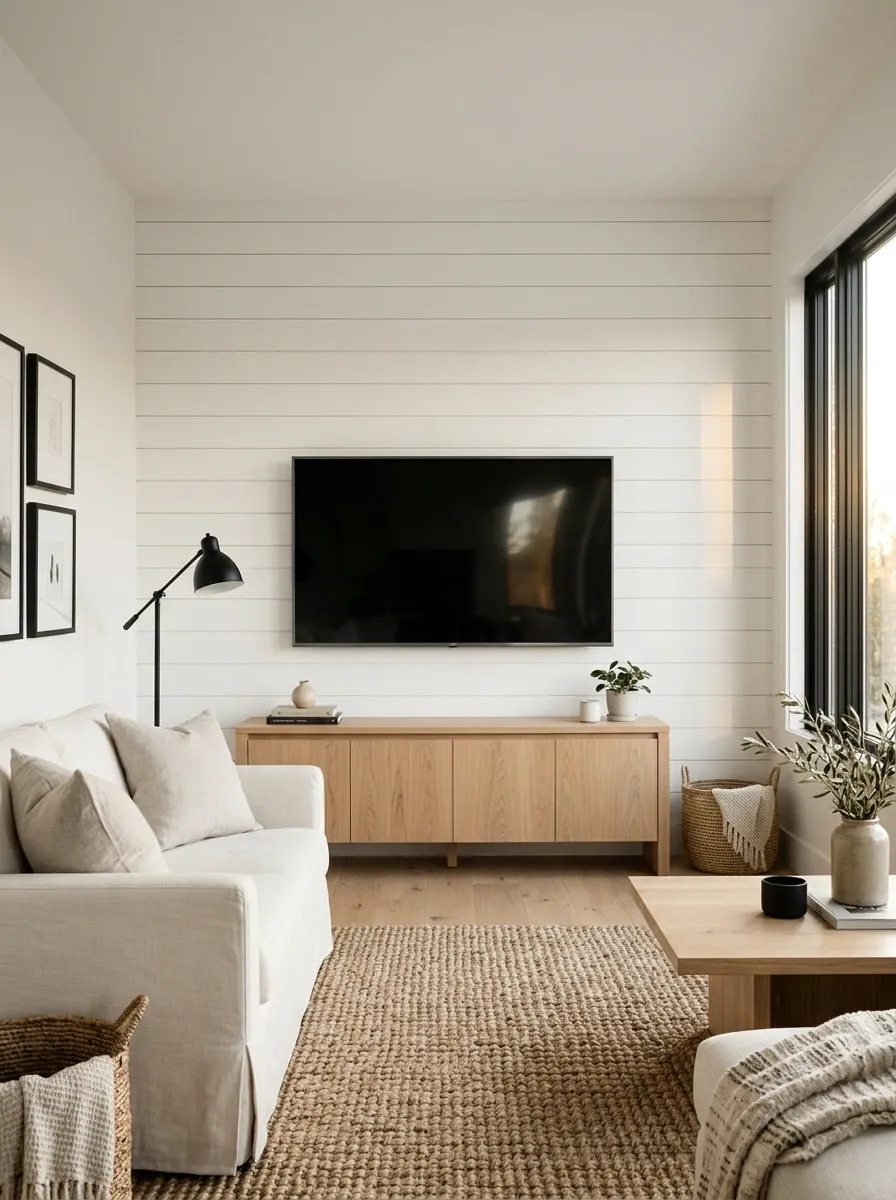
Horizontal shiplap gives a modern farmhouse TV wall a recognizable pattern without the cost or complexity of full built-in cabinetry. Run the boards across the wall behind the television, then add a simple white or natural oak console.
Black accents in a lamp, picture frame, or window trim provide contrast against the lighter finishes. The rest of the room should feel relaxed rather than overly rustic.
A comfortable slipcovered sofa, a textured rug, and natural wood furniture provide enough character without relying on rows of decorative signs or distressed accessories. For a more contemporary farmhouse look, keep the board profile subtle and choose furniture with cleaner lines.
Before installing shiplap, consider the additional wall thickness, outlet positions, and TV bracket requirements. Painting the boards and adjacent trim in compatible whites can help the finish look integrated rather than added after the room was decorated.
Farmhouse wall rhythm
Repeat the lines, then soften the room
The boards create a consistent horizontal pattern. The screen interrupts that pattern, and the wood console restores the horizontal foundation at the bottom. Soft textiles keep the overall room from feeling too rigid.
Bohemian TV Wall With Collected Natural Materials
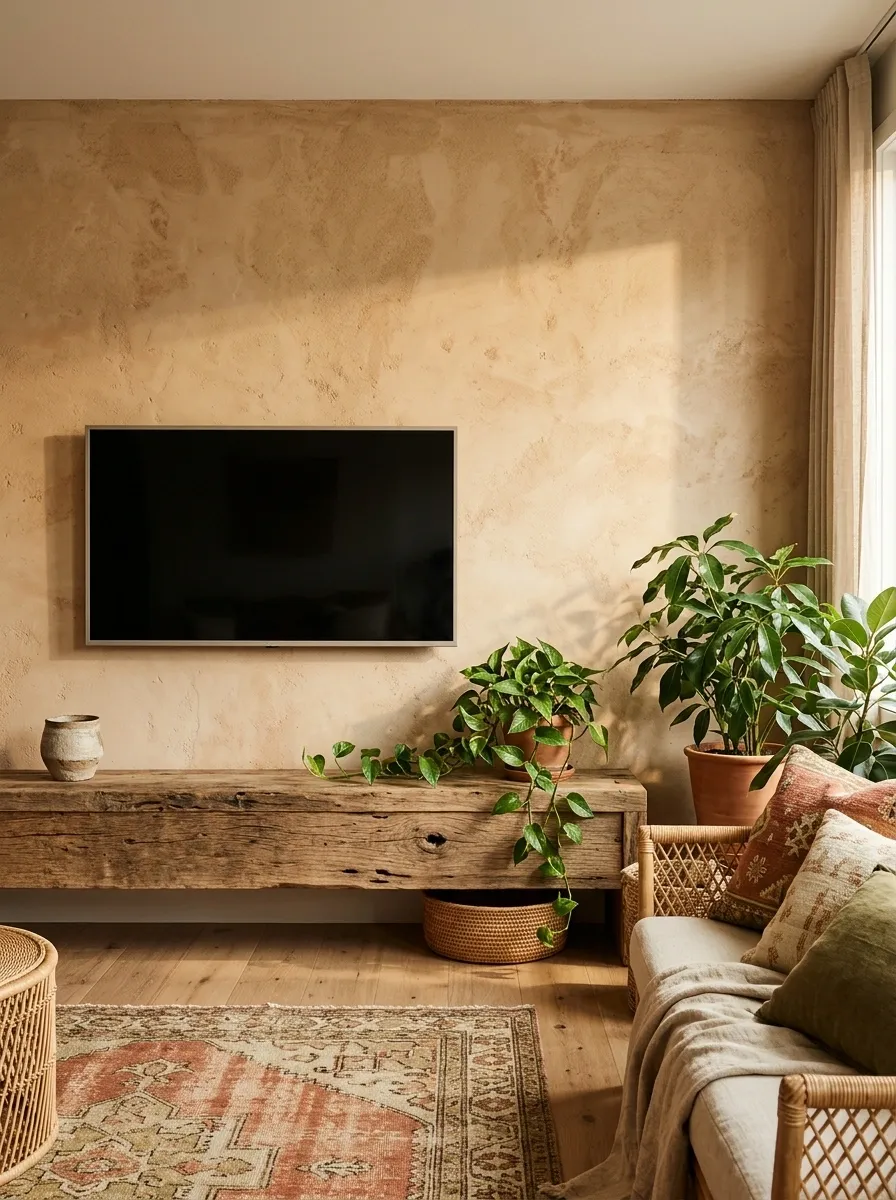
A bohemian TV wall feels most convincing when its materials look collected rather than purchased as a matching set. Start with a warm terracotta, clay, or sandy wall finish and a low timber console.
Add woven textures, a patterned vintage-style rug, a few plants, and cushions that pick up colors from the wall. The television should remain on the calmer part of the composition.
If the wall is already warm and textured, place most of the pattern and greenery around the seating area instead of crowding the screen with shelves and objects. A single woven lamp or ceramic vessel can connect the TV wall to the room without making it visually busy.
Keep plants away from hot equipment and secure heavier wall decorations properly. The room should feel personal and abundant, but the space immediately around the television still needs a little restraint.
Collected, not crowded
Give each texture its own place
Wall
Earthy clay
Furniture
Reclaimed timber
Textiles
Woven and patterned
Accents
Greenery and ceramics
Repeat a few colors throughout the room, but vary the textures. Keep the screen’s immediate surroundings quieter than the rest of the bohemian composition.
Maximalist TV Wall With Colorful Books and Collected Art
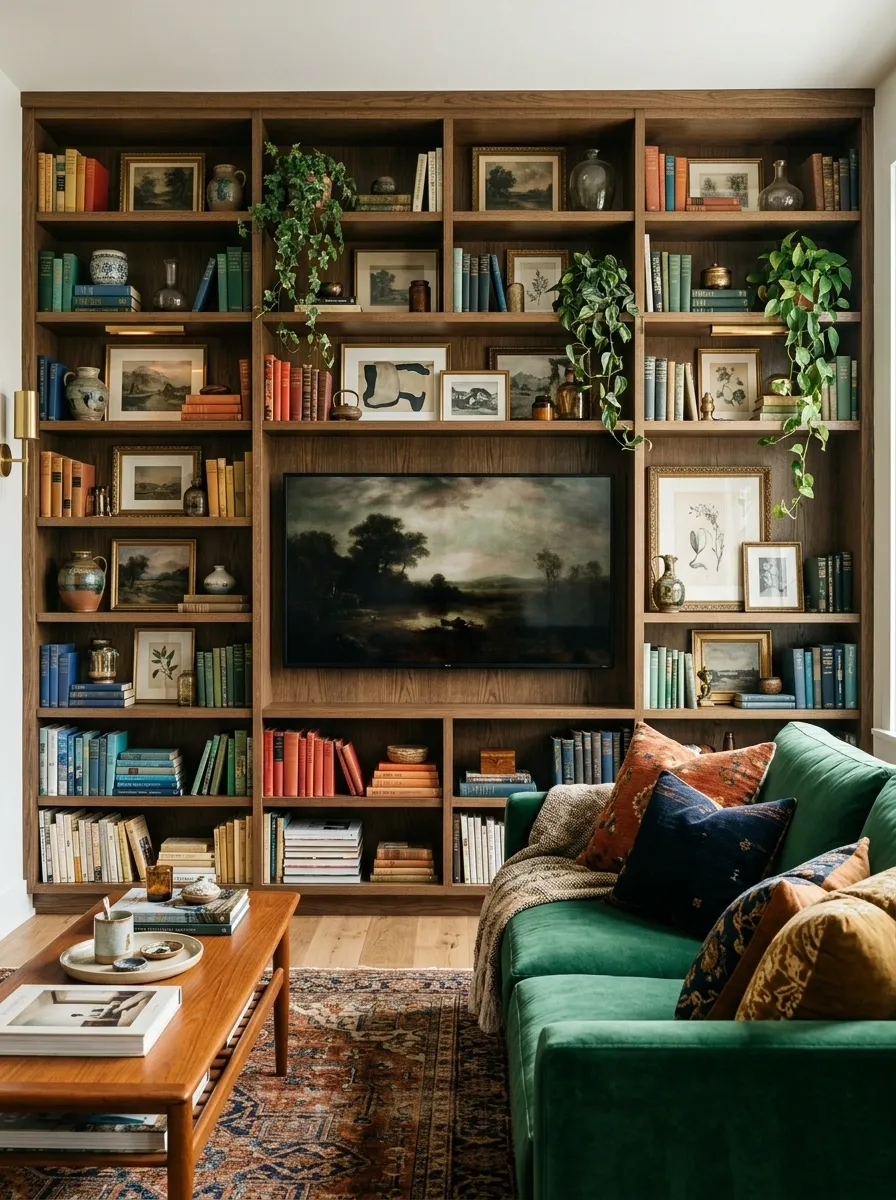
A maximalist television wall embraces color, artwork, books, and collected objects instead of trying to hide every sign of personality. Shelves surround the television, with framed prints, ceramics, and books creating a layered display.
A velvet sofa, patterned rug, and warm wood furniture connect the wall to the rest of the room. The secret is repetition. Choose a handful of colors that appear in the artwork, upholstery, and decorative objects.
You can mix different frame styles and display pieces, but repeating those colors gives the room a sense of direction. Leave the screen itself relatively clear, and avoid stacking objects so close to the television that the arrangement becomes difficult to read.
This design works especially well for people who enjoy collecting books, art, and objects with personal meaning. Plan the shelves around real storage needs, secure tall bookcases, and leave enough room for equipment ventilation.
A colorful wall with structure
Let repeated colors connect unrelated objects
Repeat colors across different materials rather than matching every object. Keep a clearer zone around the screen, and let the shelves carry most of the visual detail.
Gallery-Led TV Wall With Large-Scale Abstract Art
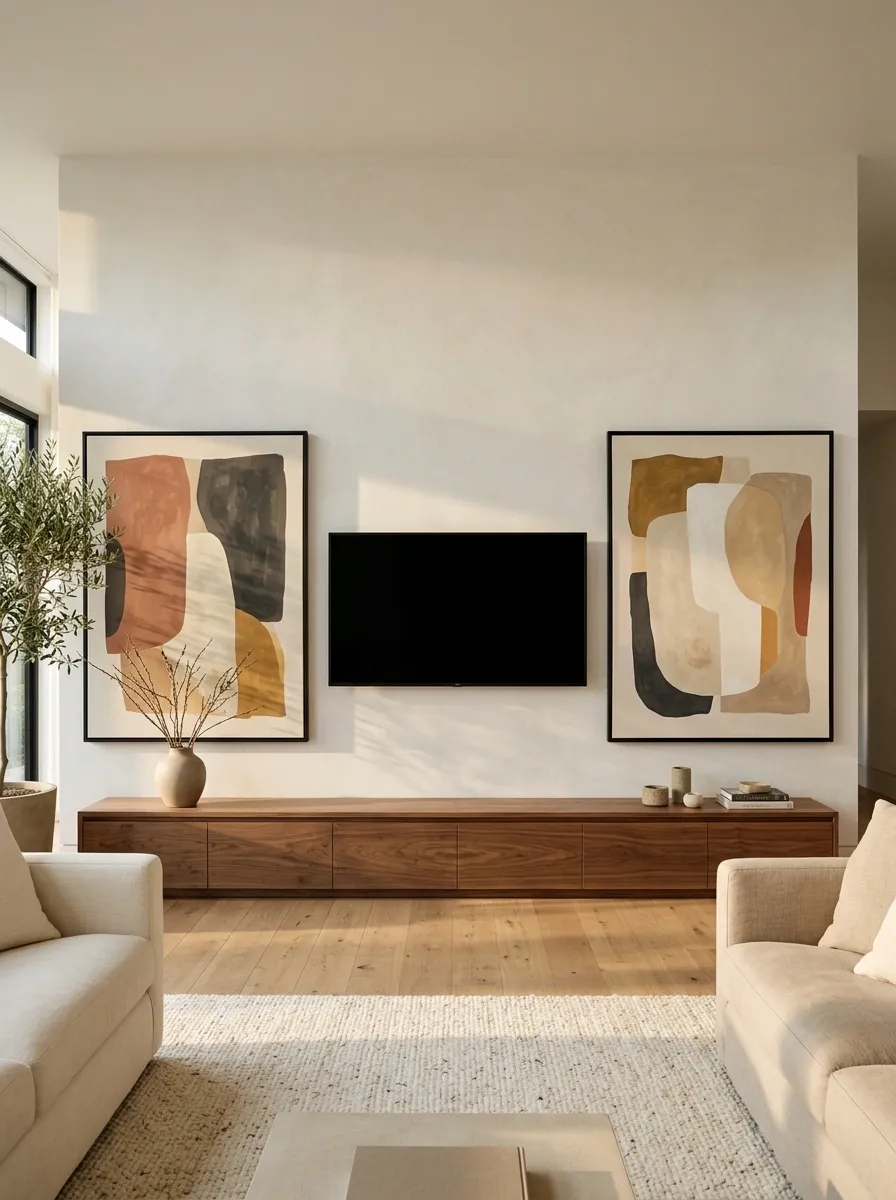
Large-scale artwork gives a television wall an artistic presence without filling every inch with small frames. Arrange two or three substantial paintings around the screen, choosing pieces that share a few colors with the furniture and rug.
A long walnut console connects the artwork to the lower part of the wall, while a neutral sofa keeps the arrangement from becoming visually crowded. Abstract art works particularly well because it can complement the room without introducing too many competing details.
Choose pieces with strong compositions and enough visual weight to hold their own beside the television. Keep frame finishes reasonably consistent, even when the artwork varies.
This approach suits contemporary and eclectic living rooms where artwork deserves as much attention as the electronics. Lay out the frames with paper templates before hanging them, and consider the screen’s reflections when deciding where to place glass-fronted pieces.
Artwork scale study
Fewer pieces, stronger visual presence
Oversized art can balance the visual weight of a television. Coordinate the main colors, vary the artwork’s composition, and leave enough space between the pieces to distinguish each one.
TV Wall With Tall Storage Towers and a Central Screen
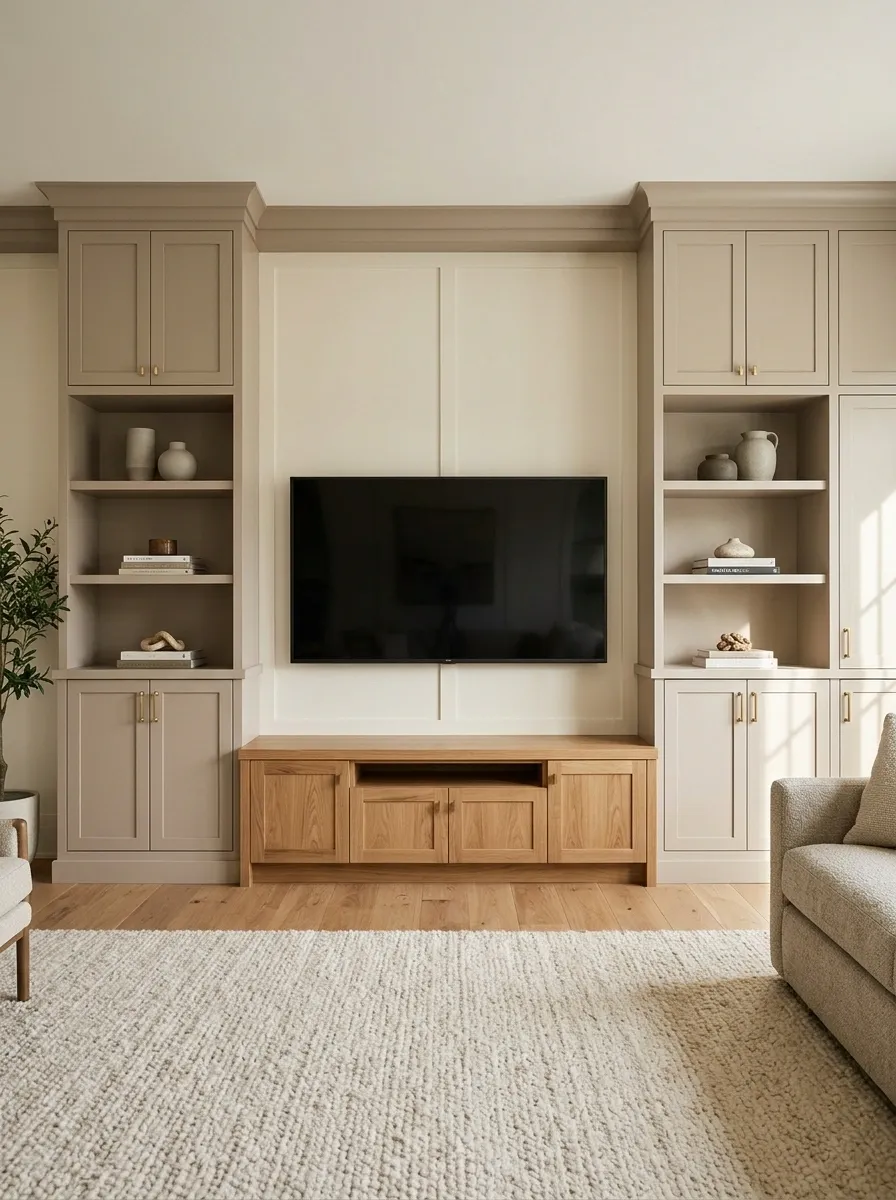
Tall storage towers turn an ordinary television wall into a practical built-in arrangement. Place the screen in the middle, with full-height cupboards on either side and a low media cabinet beneath it.
Matching finishes connect all three sections, making the wall appear planned rather than assembled from separate pieces of furniture. This layout is especially useful in family rooms where books, board games, electronics, chargers, and household items need a home.
Keep most storage behind closed doors and reserve a small section for a few display pieces. A combination of warm oak and painted cabinetry gives the composition depth without introducing too many materials.
Plan the internal storage before deciding on the exterior. Measure the equipment, check ventilation needs, and make sure cabinet doors and drawers can open without obstructing the main walkway. Tall units should also be securely fixed according to their installation requirements.
Storage planning
Put everyday clutter behind closed doors
STORAGE
MEDIA EQUIPMENT
STORAGE
Use the taller side sections for items you don’t need to display. Keep the center accessible for electronics, cable routing, and ventilation.
TV Wall With Fluted Cabinetry and Soft Indirect Light
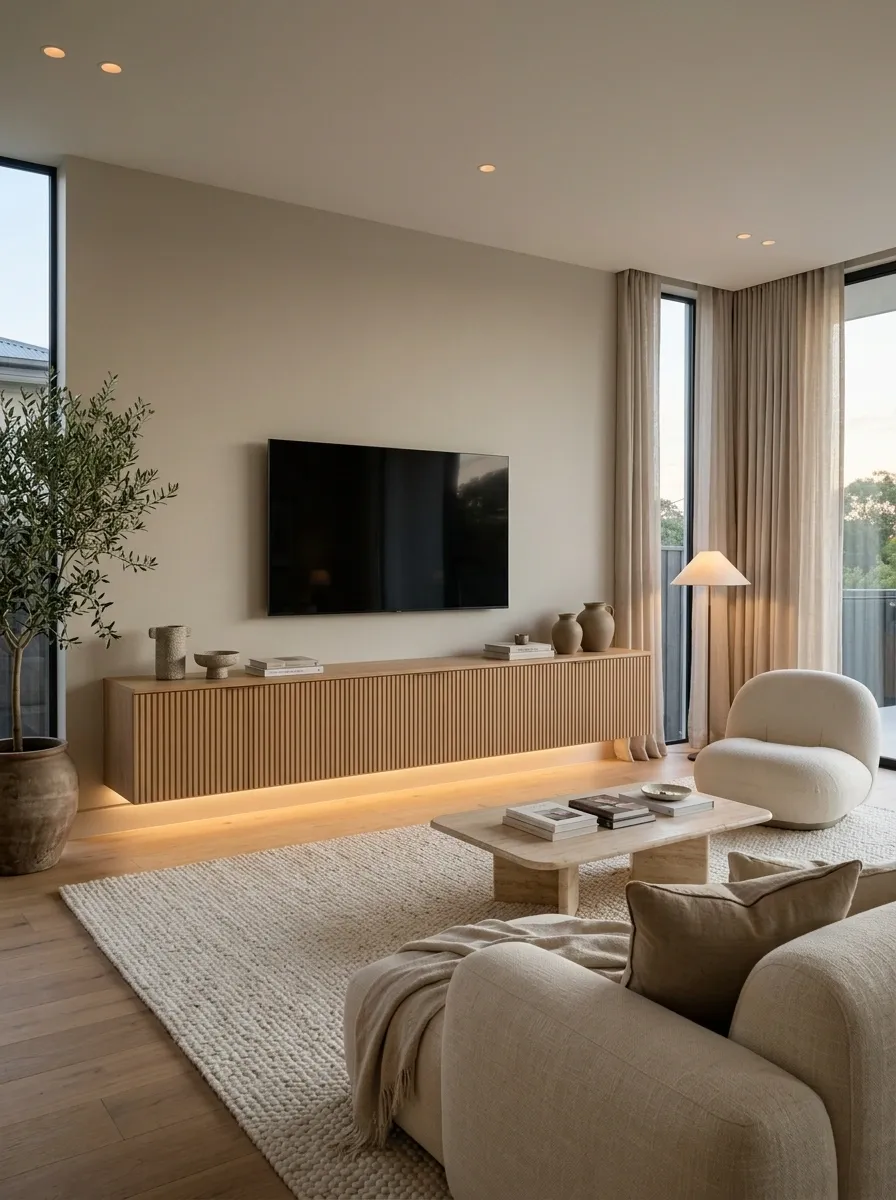
Fluted cabinetry adds a subtle pattern to the television wall without relying on wallpaper or decorative artwork. A long ribbed oak cabinet beneath the screen creates vertical texture, while a smooth painted wall keeps the overall composition calm.
Soft indirect lighting can highlight the cabinet’s grooves and create depth after dark. The best version keeps the lighting discreet. An LED strip concealed beneath the cabinet or within a properly designed recess can provide a gentle glow without making the room look like an entertainment showroom.
Pair the wood with warm neutrals, rounded furniture, and a stone coffee table to balance the repeated lines. Plan the electrical connections and lighting controls before installing the cabinetry.
Choose a cabinet with enough storage for your equipment, and make sure enclosed devices have the ventilation they need. The finish should be attractive in daylight as well as in the evening.
Lighting layers
Light the room, not just the cabinet
General room lighting
Provides comfortable visibility for everyday use.
Cabinet accent lighting
Reveals the fluted texture and adds a gentle visual layer.
Screen-friendly placement
Prevent visible light sources and reflections from distracting viewers.
Vintage TV Wall With a Collected Sideboard
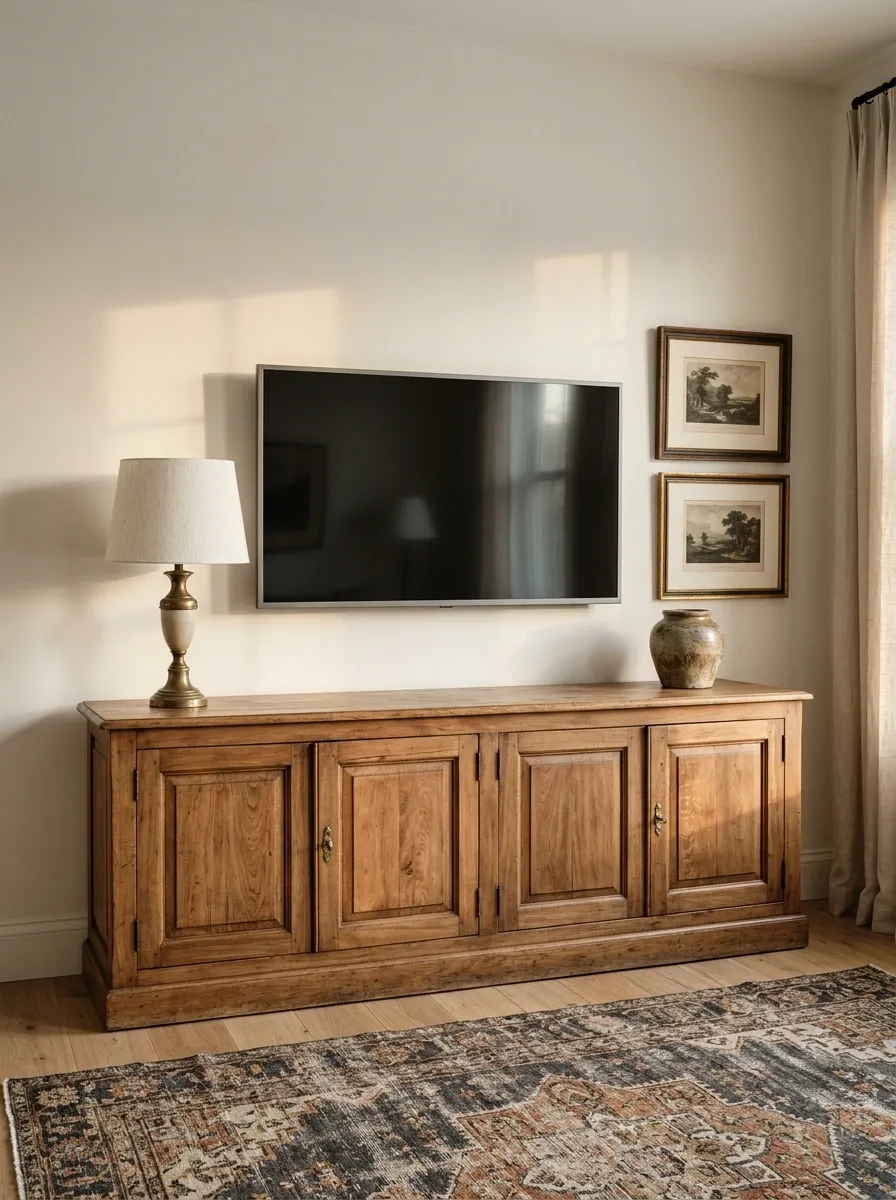
A vintage sideboard beneath the television brings character into a living room that would otherwise feel too new or too uniform. Choose a piece with visible wood grain, distinctive handles, or gently aged details, then pair it with a simple wall color and a screen mounted at a comfortable height.
Traditional lamps, framed artwork, and a patterned rug help connect the older furniture to the rest of the room. The contrast between the contemporary television and the vintage cabinet is intentional.
Keep the top of the sideboard relatively clear. A lamp or ceramic vessel can soften the composition, but avoid lining the entire surface with objects that compete with the screen.
This arrangement suits eclectic, traditional, and collected interiors. Check that the cabinet is deep and sturdy enough for the equipment it needs to hold, and plan safe cable routing instead of letting wires trail behind the furniture.
Mixing old and new
Let the vintage piece provide the character
Vintage sideboard
Adds history, grain, and a distinctive furniture silhouette.
Modern screen
Provides a clean contemporary shape against the older piece.
Connect old and new with repeated wood tones, compatible metal finishes, and a shared color palette. A little contrast keeps the room from looking like a matching furniture set.
TV Wall With an Oversized Mirror and Reflective Accents
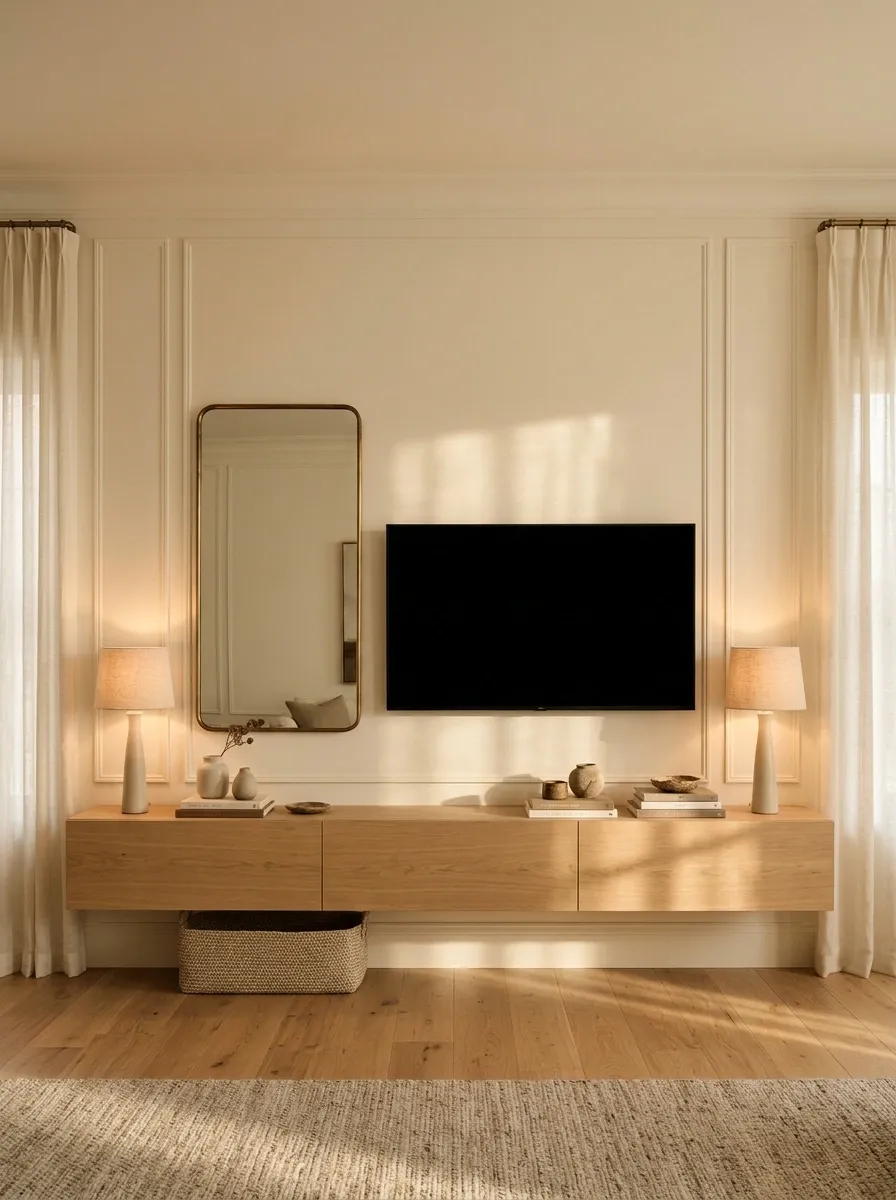
A tall mirror beside the television can make a living room feel more open while giving the wall a second vertical feature. Pair the mirror with a slim media console, warm lamps, and a restrained palette so the reflective surface connects naturally to the rest of the room.
Choose a frame that suits the furniture. A dark frame creates a sharper contemporary look, while aged brass or natural wood can soften a traditional or eclectic interior.
The mirror should support the arrangement rather than compete with the screen. Avoid positioning it where windows, bright lamps, or other strong light sources will reflect directly into the television or distract people while watching.
This idea is useful in compact rooms that need a little more visual depth. Check the mirror’s dimensions, secure mounting method, and placement before hanging it near the screen.
Reflective balance
Use the mirror as a companion, not a distraction
Mirrors can increase the sense of visual depth, but placement matters. Check what the mirror reflects from the sofa and whether daylight or lamps will create distracting screen glare.
Rental-Friendly TV Wall With Freestanding Furniture
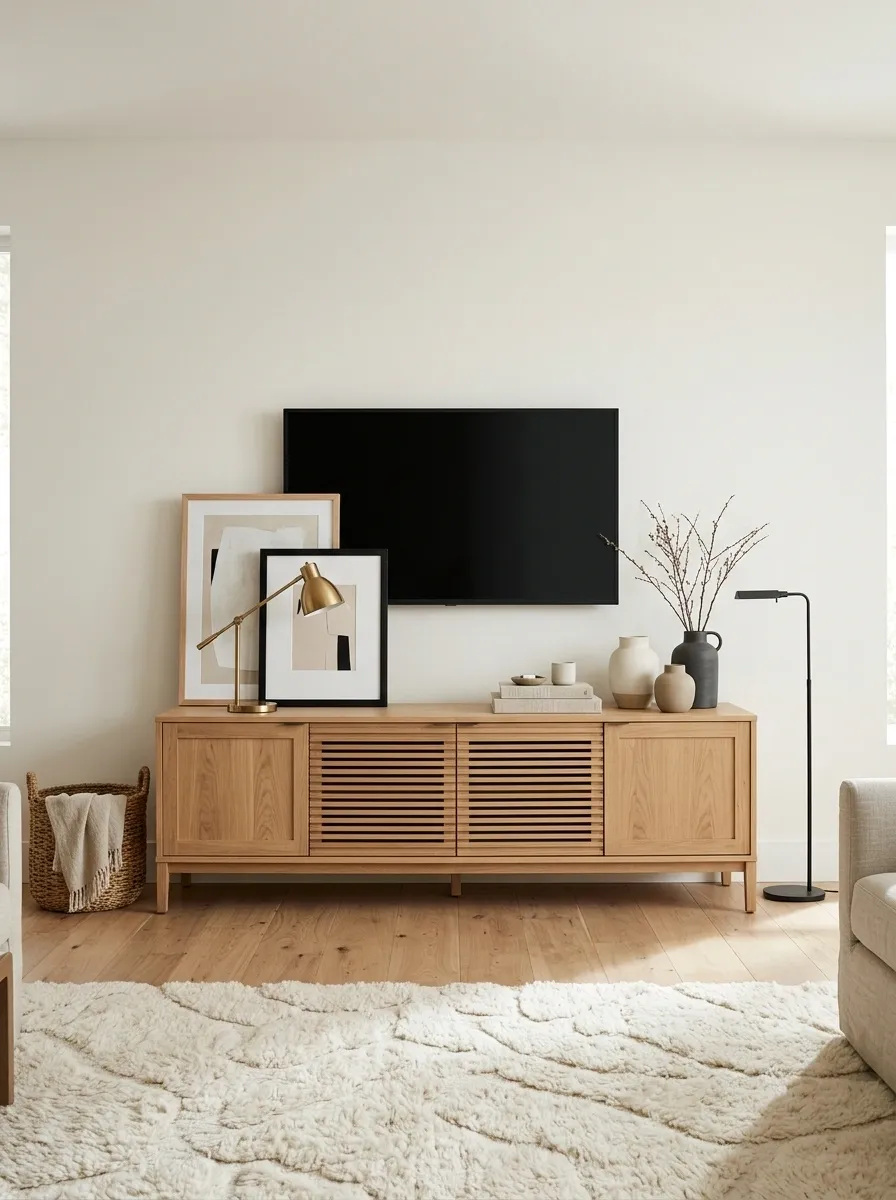
A rented home can have a thoughtfully decorated TV wall without permanent cabinetry or major changes to the property. A freestanding credenza, floor lamps, leaning artwork, and movable furnishings add personality while working around the existing wall.
Choose a console with enough storage to keep cables and electronics organized. Lean framed artwork on a stable surface or use approved hanging methods where permitted. If the room’s existing wall color feels plain, introduce character through textiles, portable lamps, and furniture finishes.
The advantage is flexibility. You can rearrange the room, take the furniture with you, or change the look without committing to a renovation.
Before mounting anything, check your lease and property rules. Removable products also need to be suitable for the wall finish and weight of the object, so don’t assume every adhesive strip is safe for every surface.
Flexible decorating
Build a look you can take with you
Choose portable pieces
Use freestanding storage, movable lighting, and stable leaning art to create a finished wall without assuming permanent changes are allowed.
Corner TV Arrangement for an Awkward Living Room Layout
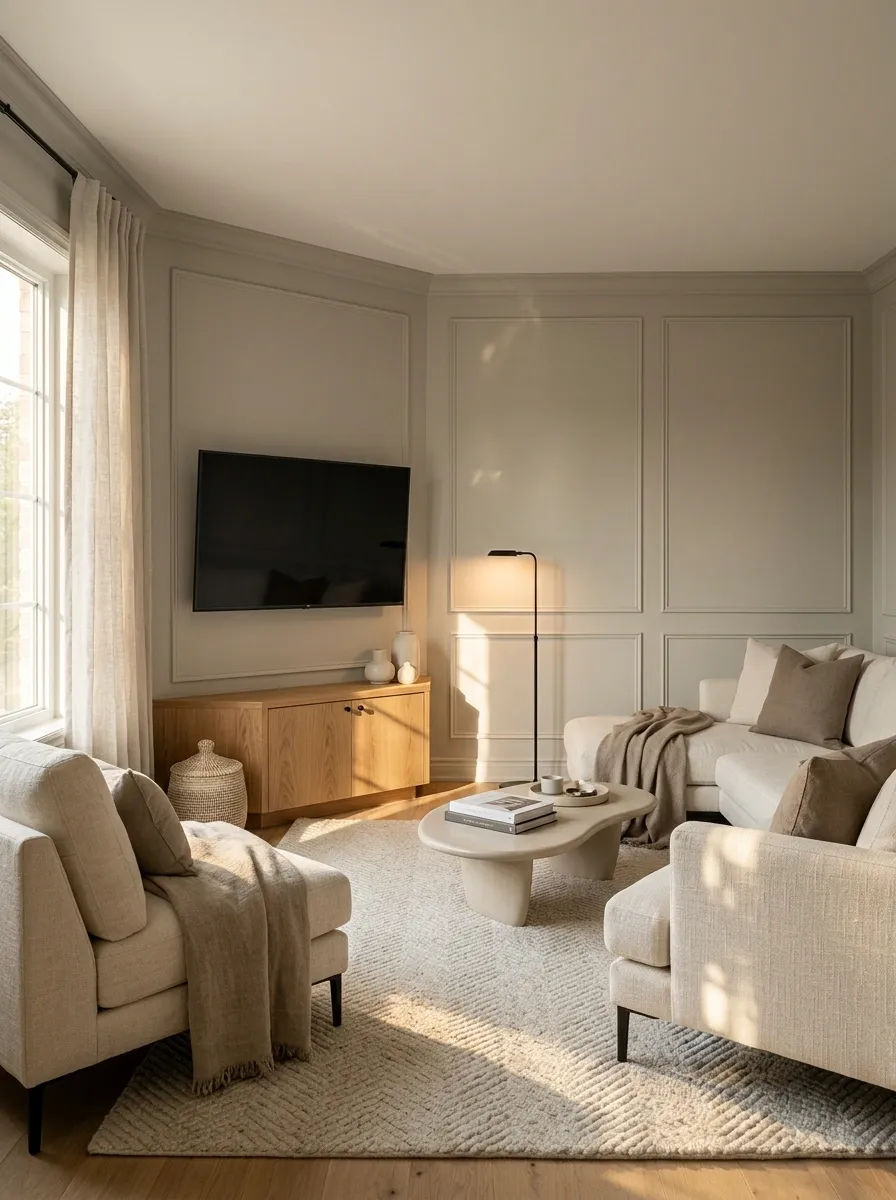
A corner television arrangement can solve a difficult living room layout when a conventional feature wall would obstruct a doorway, window, or main walkway. Place the screen on a suitable corner mount or compact corner cabinet, then angle the seating toward it.
Keep the surrounding wall relatively simple. A small console, a floor lamp, and a rug that connects the seating area can make the arrangement feel intentional rather than improvised.
The key is to organize the entire room around comfortable sightlines. Check what happens when doors open, how people walk between seating and other rooms, and whether the screen can be viewed without twisting uncomfortably.
Measure the corner and select furniture that fits its actual dimensions. Secure the television correctly, and avoid placing it where it can be knocked by passing furniture or people.
Awkward-room planning
Let the viewing angle guide the layout
Check sightlines from every main seat and preserve access to doorways. A corner solution succeeds when the whole room works, not just the TV placement.
Statement Wallpaper TV Wall With Coordinated Furniture
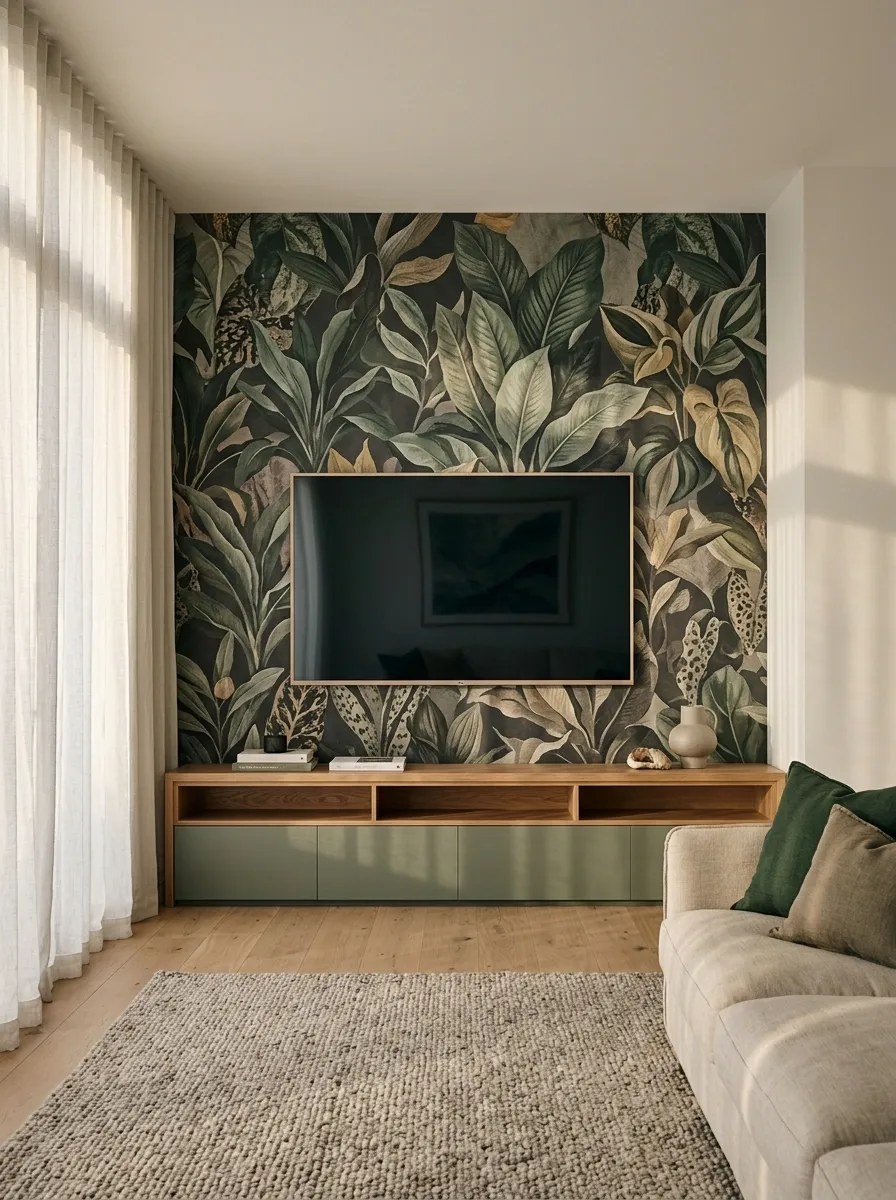
Bold wallpaper can turn a plain television wall into the focal point of a living room. Choose a large botanical print, a geometric pattern, or an expressive design with colors that can be repeated in the console, cushions, or rug.
The screen will stand out against the pattern, so choose the surrounding finishes carefully. A muted green cabinet, warm timber console, or simple neutral furniture helps keep the wallpaper from competing with every other element in the room.
If the print is especially dramatic, allow it to carry most of the visual interest. Avoid stacking numerous shelves, small artworks, and decorative objects around the television. The wall already has a strong visual language.
Test a wallpaper sample in both daylight and evening light, and plan seams and outlet positions before installation. A pattern that looks attractive in a small sample can feel much busier when it covers the full wall.
Statement wall coordination
Choose furniture from the wallpaper palette
Let the print lead. Repeat its colors in a few places, keep nearby furniture relatively simple, and make sure the pattern remains comfortable to look at behind the screen.
Bringing Your TV Wall Together
The best television wall is the one that looks connected to your home rather than like a separate decorating project. Start with the room’s existing materials, furniture proportions, lighting, and storage needs.
Choose one clear design direction, whether that’s warm wood, architectural paneling, colorful artwork, or built-in cabinetry. Then repeat a small number of finishes to connect the wall to the rest of the living room.
Before buying materials or arranging decorations, mark the television’s position and test the furniture layout. That simple step can help you avoid shelves that feel crowded, consoles that look too small, and decorative details that interfere with comfortable viewing.
Save the ideas that suit your home’s architecture and the way you live. A thoughtful TV wall doesn’t need the most expensive materials or the most decoration. It needs a composition that feels right for the room.