
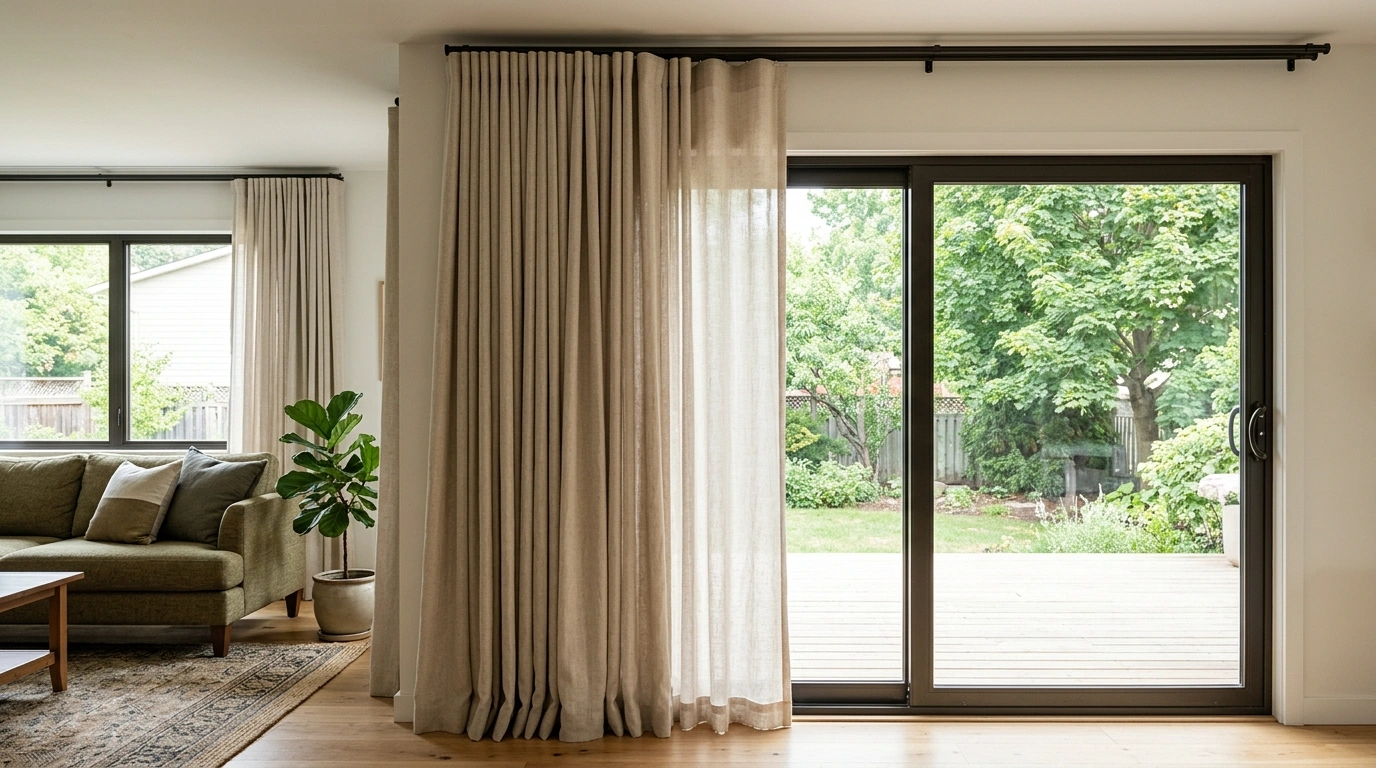
Sliding glass doors are supposed to make a room feel brighter and more connected to the outdoors. Then comes the window treatment, and suddenly the curtains are swallowing the glass, the blinds look like office leftovers, or the entire doorway is exposed to anyone who happens to walk past.
Apparently, covering a window without creating three new problems is a complicated profession.
The trick is choosing a treatment that works with the whole room. Curtain fullness, mounting height, color, privacy, sunlight, furniture clearance, and the space available beside the door all affect the finished result. A gorgeous fabric means very little if opening the patio door requires a full-body workout.
Some interiors benefit from soft linen layers, while others look sharper with tailored shades, woven panels, architectural shutters, or decorative glass. There are also clever solutions for compact apartments, sun-exposed living rooms, and homes where privacy matters more than decorative drama.
Sliding Door Window Treatments
Warm Linen Ripple-Fold Curtains on a Ceiling Track
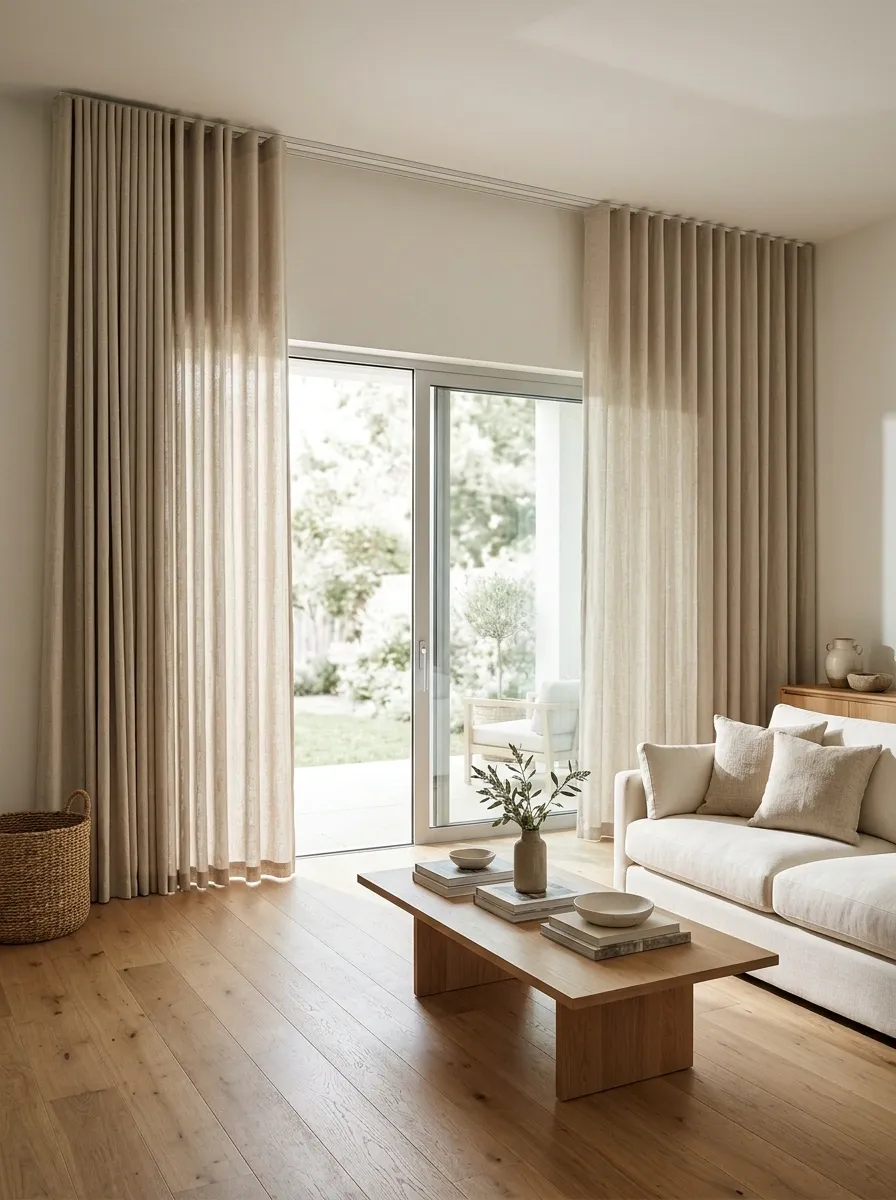
Full-height oatmeal linen curtains soften a broad sliding glass door without making the room feel smaller. A ceiling-mounted track draws the eye upward, while evenly spaced ripple folds create a clean, continuous rhythm across the fabric. Warm oak furniture, ivory upholstery, and soft walls keep the palette from looking flat.
The real advantage is the way the curtains frame the glass when open. Their gathered fabric sits along the sides instead of spilling onto the floor like it has given up on life.
Give the panels enough width to form generous folds, and check how much wall space is available for them to stack. A beautiful curtain that covers half the glass when open is an expensive way to lose daylight.
visually open
Mount near the ceiling when the room and hardware allow it.
Choose enough width for soft folds, not a stretched sheet.
Leave room at the sides so the glass stays usable.
Double-Track Sheers and Blackout Drapes
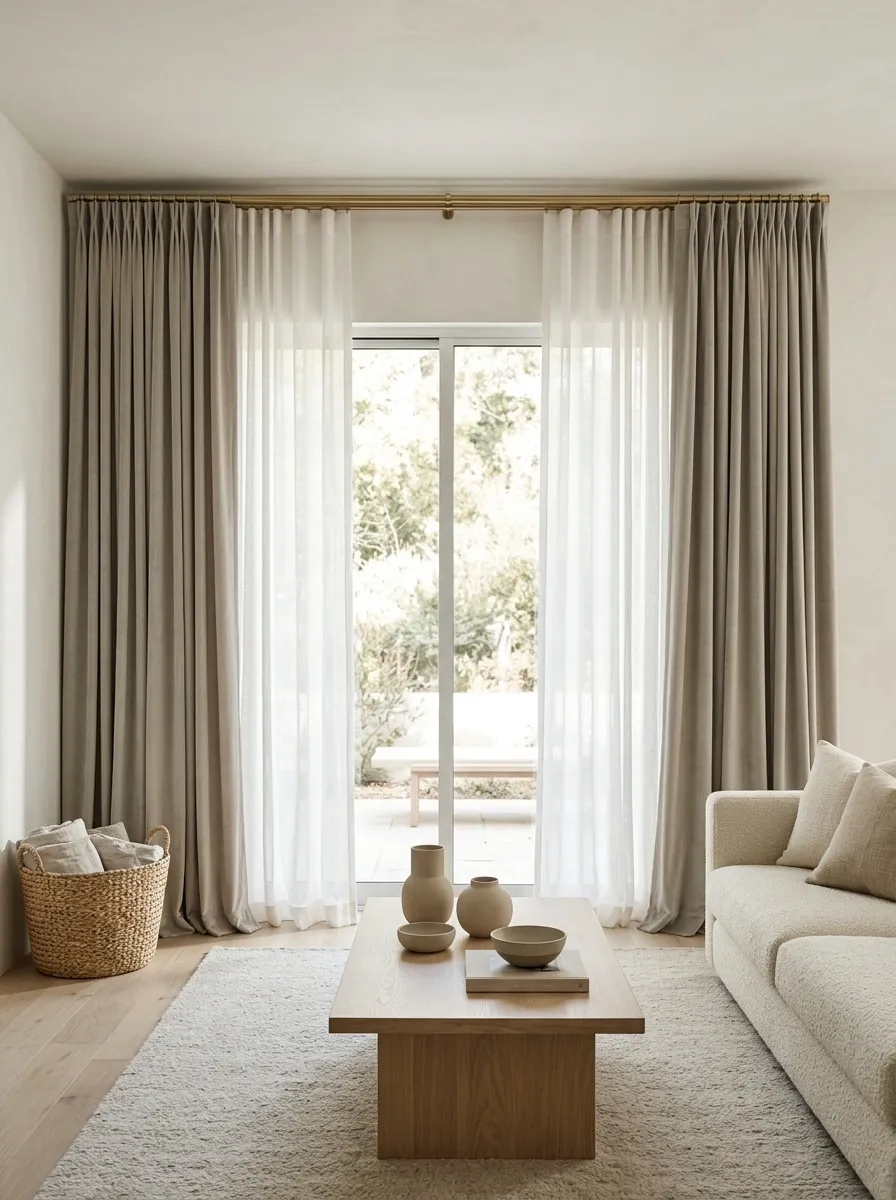
Two curtain layers make sense when the room needs more than one level of privacy. Lightweight white sheers sit closest to the sliding glass door, filtering daylight and softening the outdoor view. Heavier greige drapes run along a second track, ready to close when darkness or privacy matters more.
This combination feels especially cohesive in a bedroom or a living room with a calm, neutral palette. Upholstered furniture and natural wood prevent the two layers from becoming a wall of fabric.
There is one practical catch: both tracks need space, and the heavier curtains need enough room to gather outside the glass. Measure the complete opening before choosing the hardware. The dream is graceful layers, not a textile traffic jam.
Textured Roller Shades Framed by Soft Side Curtains
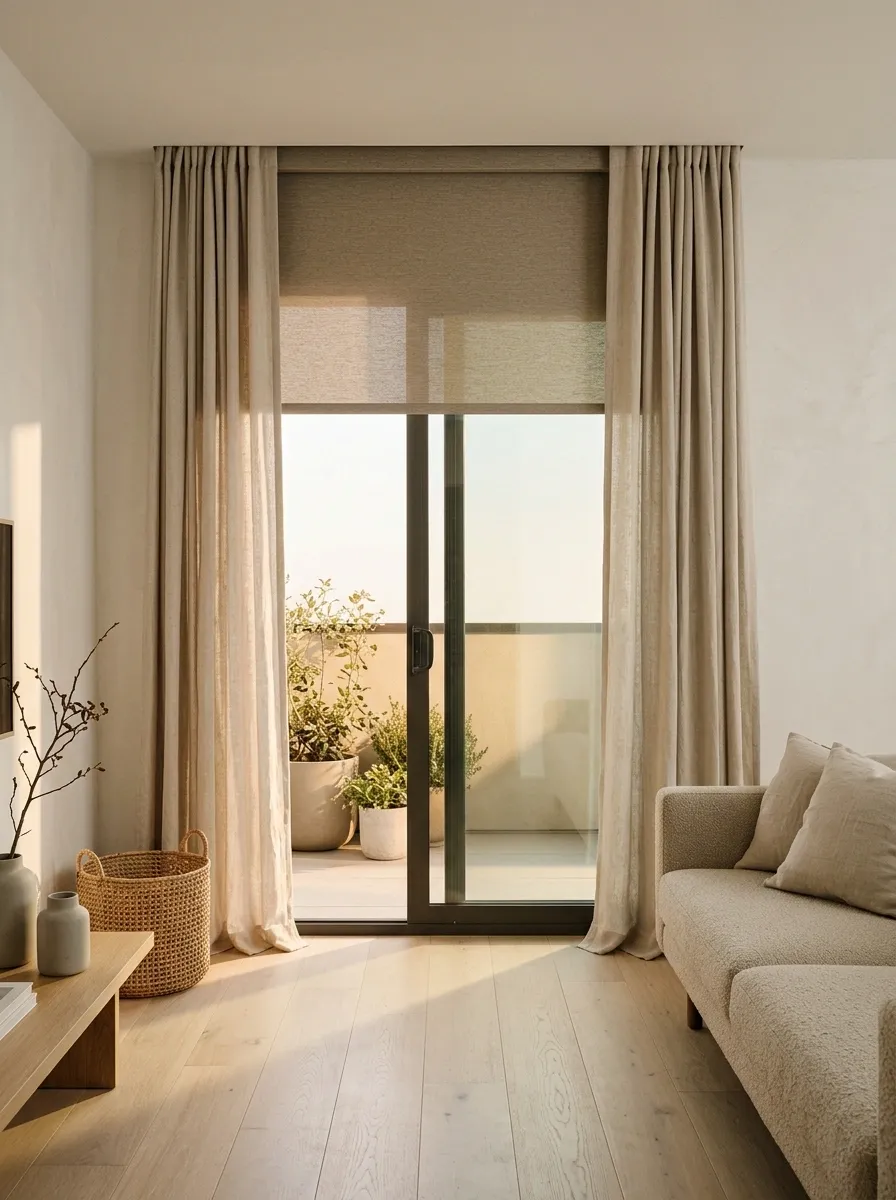
A textured roller shade handles everyday light control, while stationary linen curtain panels give the sliding door a softer, more finished frame. The shade sits neatly above the glass, and the side panels introduce warmth without requiring a huge amount of fabric.
This arrangement makes particular sense in a smaller apartment where full curtains would eat into valuable wall space. Pair a warm stone shade with flax-colored panels, pale wood, and a simple sofa. The different textures keep a neutral room from looking like every piece of furniture came from the same suspiciously coordinated showroom.
The key is choosing the right shade position and leaving the door handle accessible. Also, make sure the side curtains don’t become expensive decorative obstacles. The roller shade should do the actual work.
One finishes the room.
Woven Wood Panel-Track Shades in an Organic Modern Room
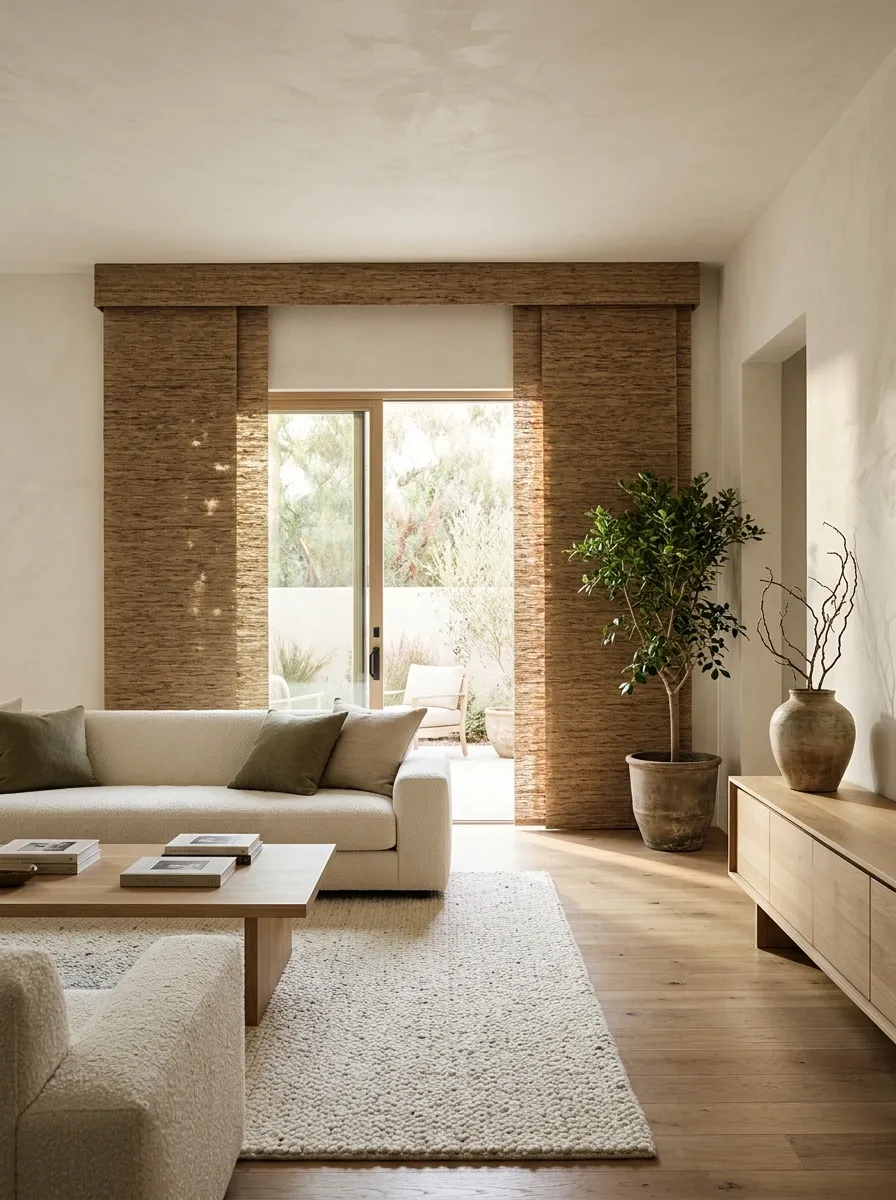
Broad woven panels bring the texture of natural fibers into a room without the bulk of traditional drapes. Mounted on a sliding track, they move across the glass in wide, deliberate sections. Oak furniture, textured ivory upholstery, and muted olive accents complement the woven surface without competing with it.
The wide panels give the door a more architectural appearance than small individual blinds. Their natural variations also keep the room from feeling overly polished. Not every surface needs to be smooth and shiny. Sometimes the room needs a little texture and significantly fewer decorative objects.
Check the weave’s privacy and light-filtering properties before choosing a finish. Natural materials can vary in opacity, and the panels still need enough clearance to stack neatly when the door is open.
Soft Vertical Cellular Shades in a Contemporary Family Room
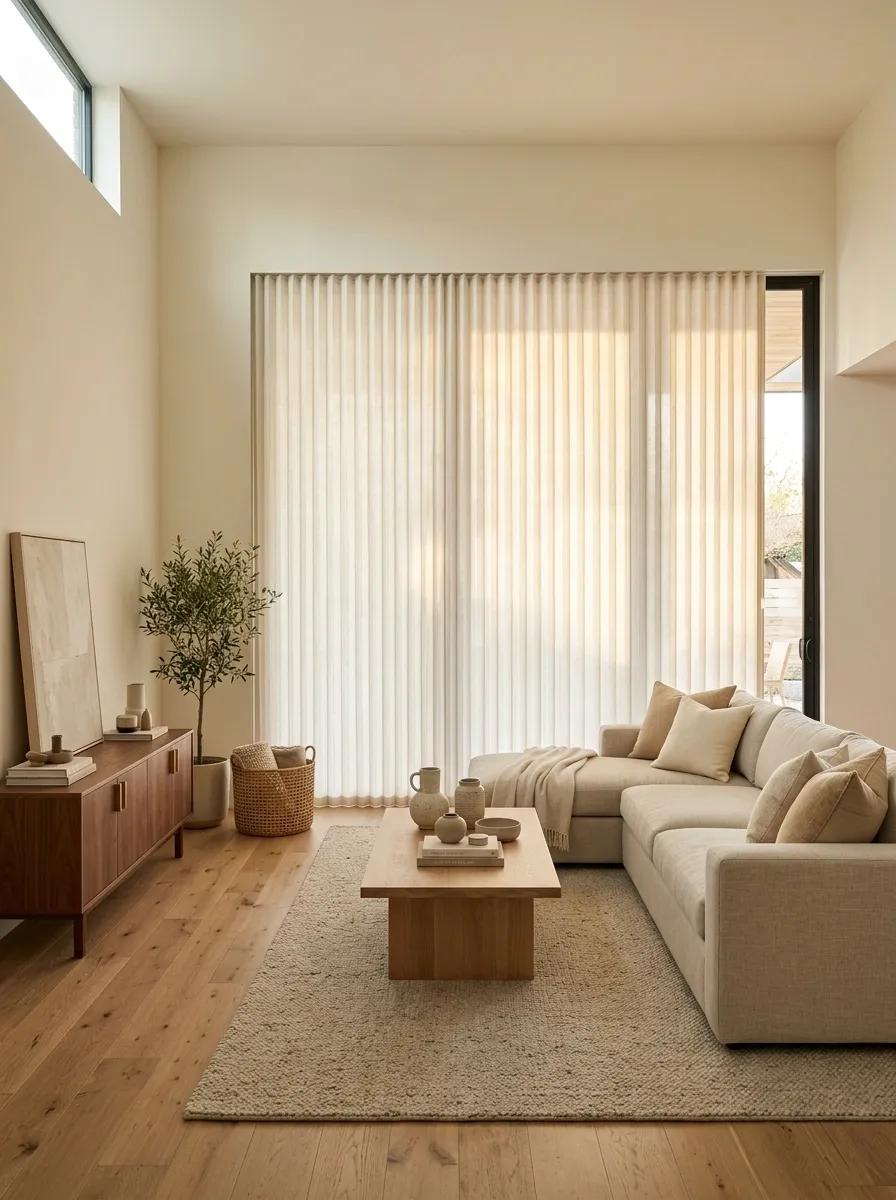
Soft vertical cellular shades offer a streamlined alternative to bulky curtains in a family room that gets used all day. Their structured folds create a subtle texture across the glass, while pale sand or warm ivory keeps the treatment from dominating the room. A comfortable sectional, warm flooring, and simple furniture make the overall setting feel relaxed rather than clinical.
The design has a clear advantage when fabric panels would interfere with furniture or a busy walkway. The treatment follows the door’s broad proportions instead of introducing more material at floor level.
Measure the opening and check the product’s stacking depth, headrail requirements, and compatibility with the sliding door. Also confirm the actual privacy and insulation claims for the model being considered. A product description is not a magical force field against every ray of sunlight.
S-Fold Sheer Shadings for Filtered Daylight
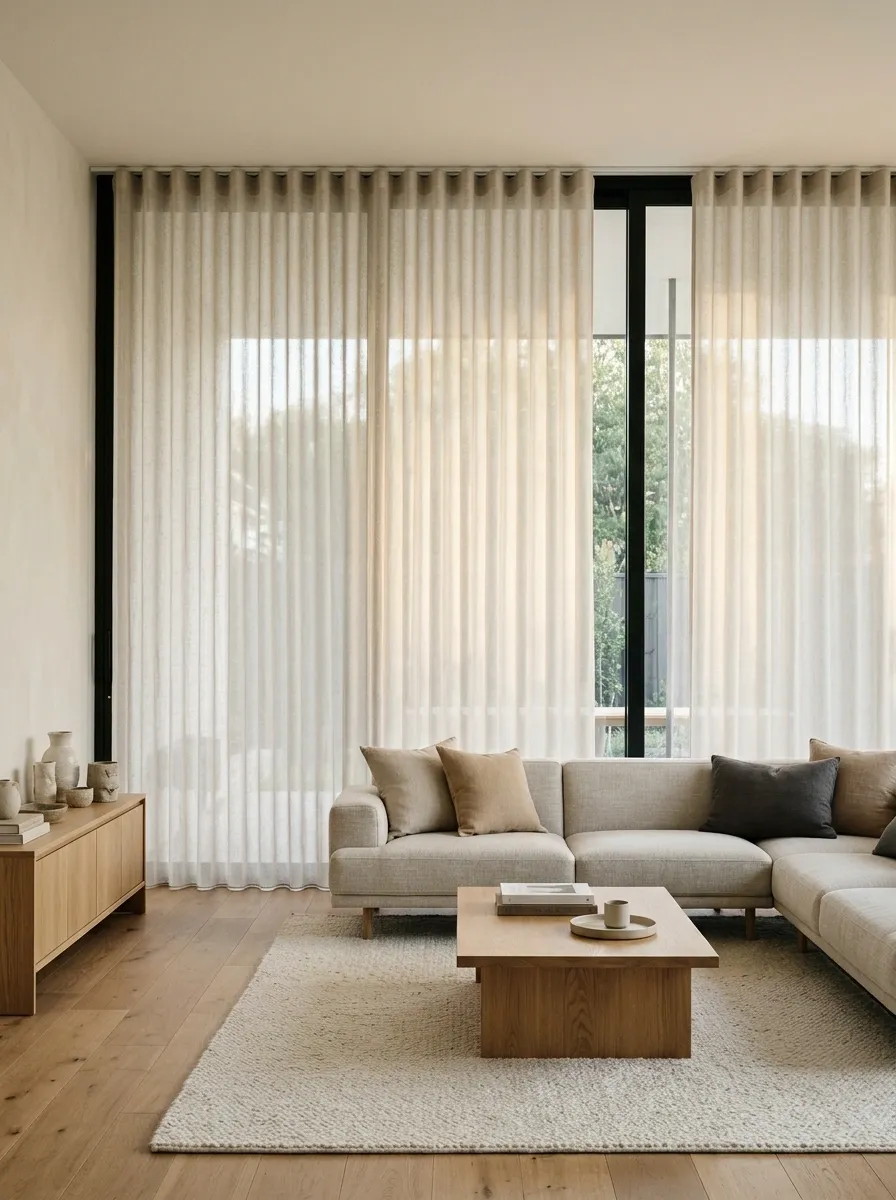
S-fold sheer shadings give sliding glass doors a gentle vertical rhythm without the heavy appearance of traditional drapes. The fabric falls in smooth, repeating curves, creating a softer finish against dark window frames and clean-lined furniture. A pale stone sofa, muted cushions, and warm wood accents keep the rest of the room understated.
The secret is the way the folds catch daylight. Their repeating curves add movement without introducing a busy pattern, which makes the treatment especially appealing in contemporary living rooms where straight lines dominate.
Choose a fabric with the privacy level the room actually needs. Sheer materials can soften the view during the day, but they won’t necessarily protect nighttime privacy with the lights on. Glass doors are windows, not one-way observation equipment. The same rule applies here.
Sliding Plantation Shutters in a Transitional Sunroom
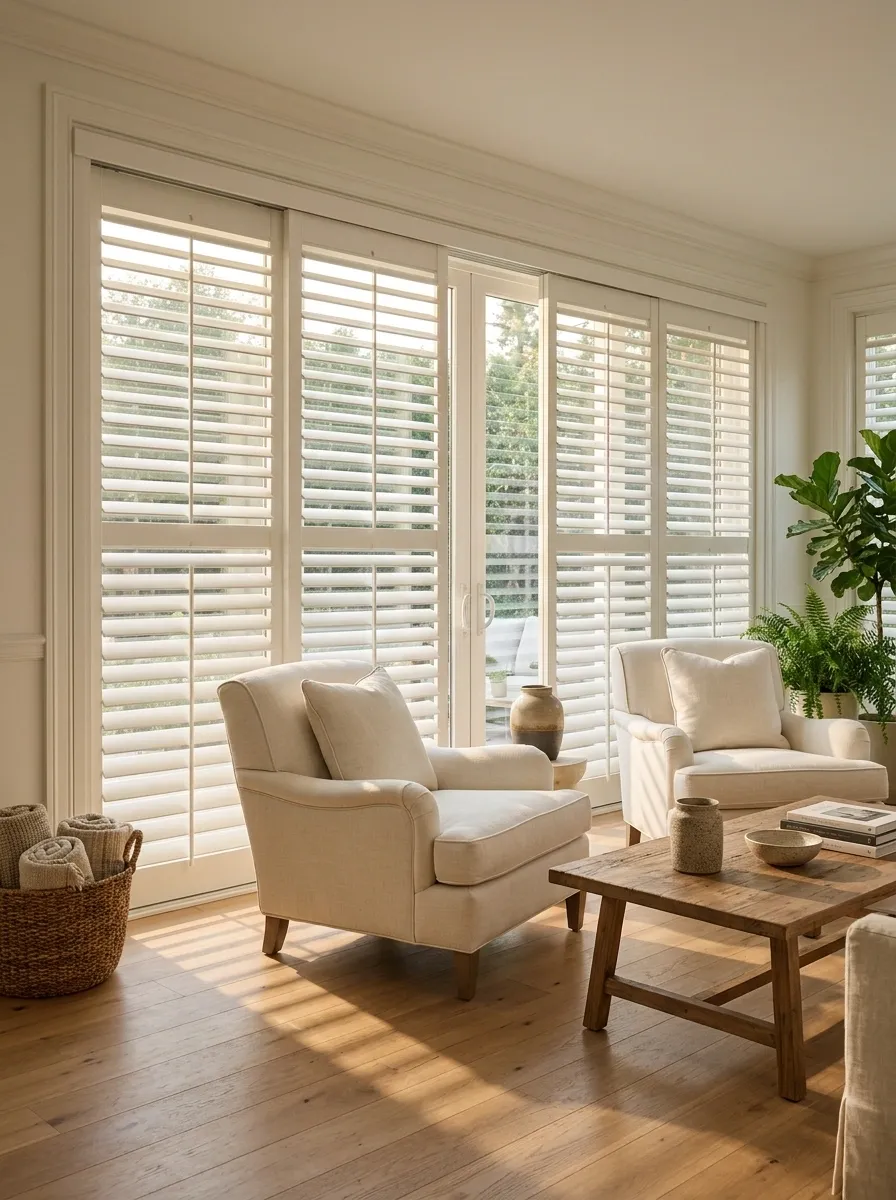
Full-height plantation shutters give sliding glass doors a substantial, built-in appearance. White frames and adjustable louvers brighten the room, while wide bypass panels slide across one another instead of swinging into the furniture. Warm hardwood floors, traditional upholstery, and a simple wooden coffee table keep the sunroom from feeling too formal.
Unlike ordinary hinged shutters, sliding panels can work across broad openings without demanding extra floor space for a swinging door. The horizontal louvers also bring a strong architectural pattern to an otherwise plain wall of glass.
The trade-off is visual weight. Shutters have frames, rails, and overlapping panels, so they won’t disappear like lightweight sheers. Check the panel configuration and handle clearance before committing. There’s nothing charming about paying for an architectural upgrade that blocks the door you use every morning.
visible
Tailored Fabric Vertical Blinds in a Modern Neutral Interior
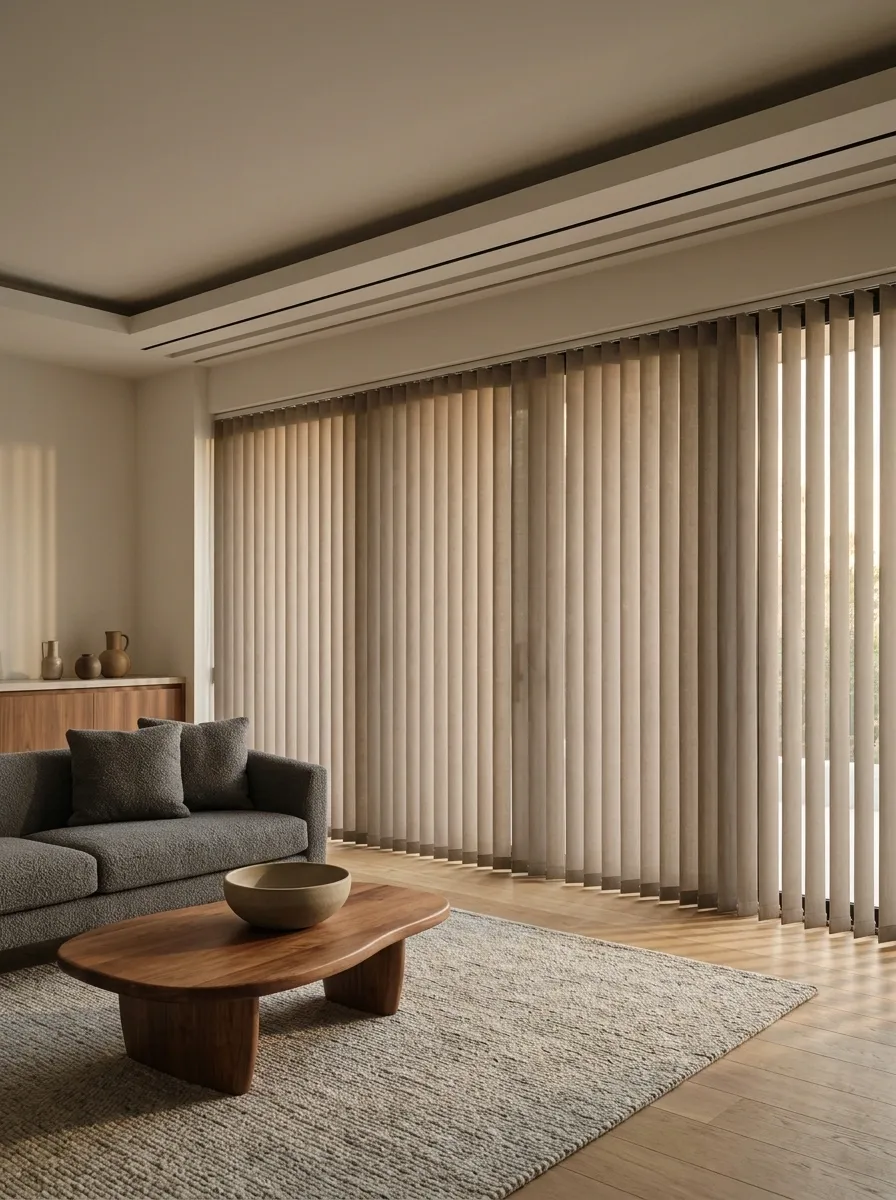
Vertical blinds get unfairly blamed for every office waiting room of the past, but modern fabric vanes can look much more considered. Warm taupe or soft greige panels give a sliding door a continuous surface, while slim black frames, a textured rug, and understated furniture keep the room contemporary.
The long vertical lines work naturally with a wide glass opening. They also offer adjustable light control and can move aside without creating a heap of fabric at the edges. That makes them worth considering when floor-length curtains would clash with nearby furniture.
Choose fabric with a finish that suits the rest of the room. A matte, linen-like texture usually looks more residential than a shiny synthetic surface. Keep the vane widths and spacing consistent, too. Uneven, crooked blinds have a special talent for making an otherwise expensive room look like it gave up halfway through decorating.
Solar Roller Shades for a Sunlit Media Room
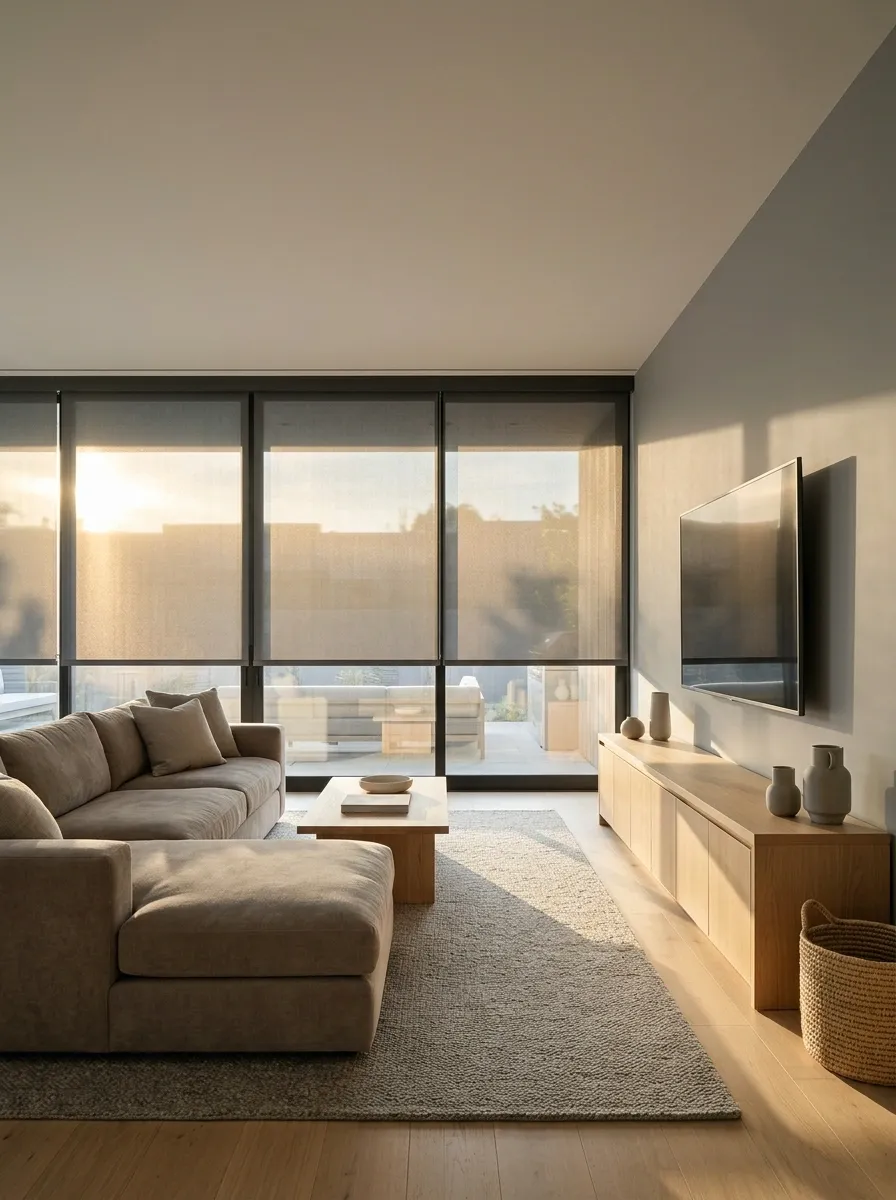
A media room with a large sliding glass door needs a different approach from a living room designed around soft morning light. Solar roller shades reduce the intensity of sunlight entering through the glass while keeping the treatment visually slim. Charcoal or warm gray shades pair well with a low-profile sectional, quiet wall colors, and restrained wood finishes.
The advantage is the uncluttered appearance. When raised, the shades largely disappear above the door. When lowered, they create a consistent surface without bulky folds or fabric gathering near the floor.
Pay attention to the fabric’s openness factor and the product’s stated performance. Solar shades can reduce glare, but they don’t necessarily provide nighttime privacy. A room that needs both glare management and darkness may benefit from an additional blackout layer. The television deserves better than a permanent staring contest with the sun.
outdoor view
daylight
Relaxed Roman Shades With Matching Side Panels
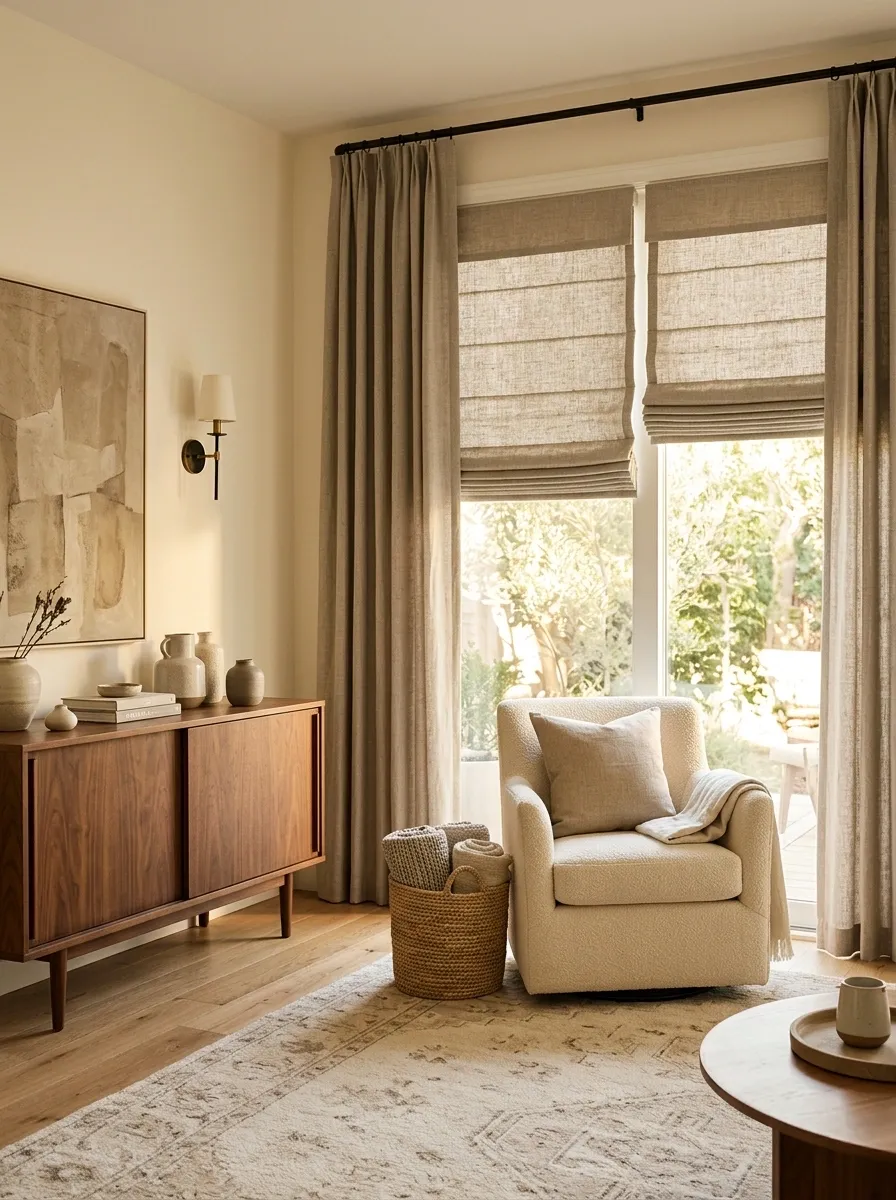
A tailored Roman shade adds soft horizontal folds above the sliding door, while matching side panels make the entire opening feel framed. This treatment suits transitional rooms that mix modern furniture with traditional materials. Walnut furniture, warm ivory upholstery, and a restrained pattern on the rug keep the scene from looking overly formal.
The shade’s fabric can introduce subtle color or texture without covering the whole wall in drapery. When raised, the folds collect at the top, leaving more of the glass exposed. The stationary side panels then provide the visual softness that a bare roller shade would lack.
There is a practical detail worth planning around: the raised shade needs enough clearance above the opening, and the side panels mustn’t obstruct the door. Measure both positions, not just the pretty closed version. Window treatments look significantly less impressive when opening the patio door requires a small demolition ritual.
Brings texture and structure to the top of the door.
Frame the opening and soften the surrounding walls.
Blackout Curtains in a Calm, Layered Bedroom
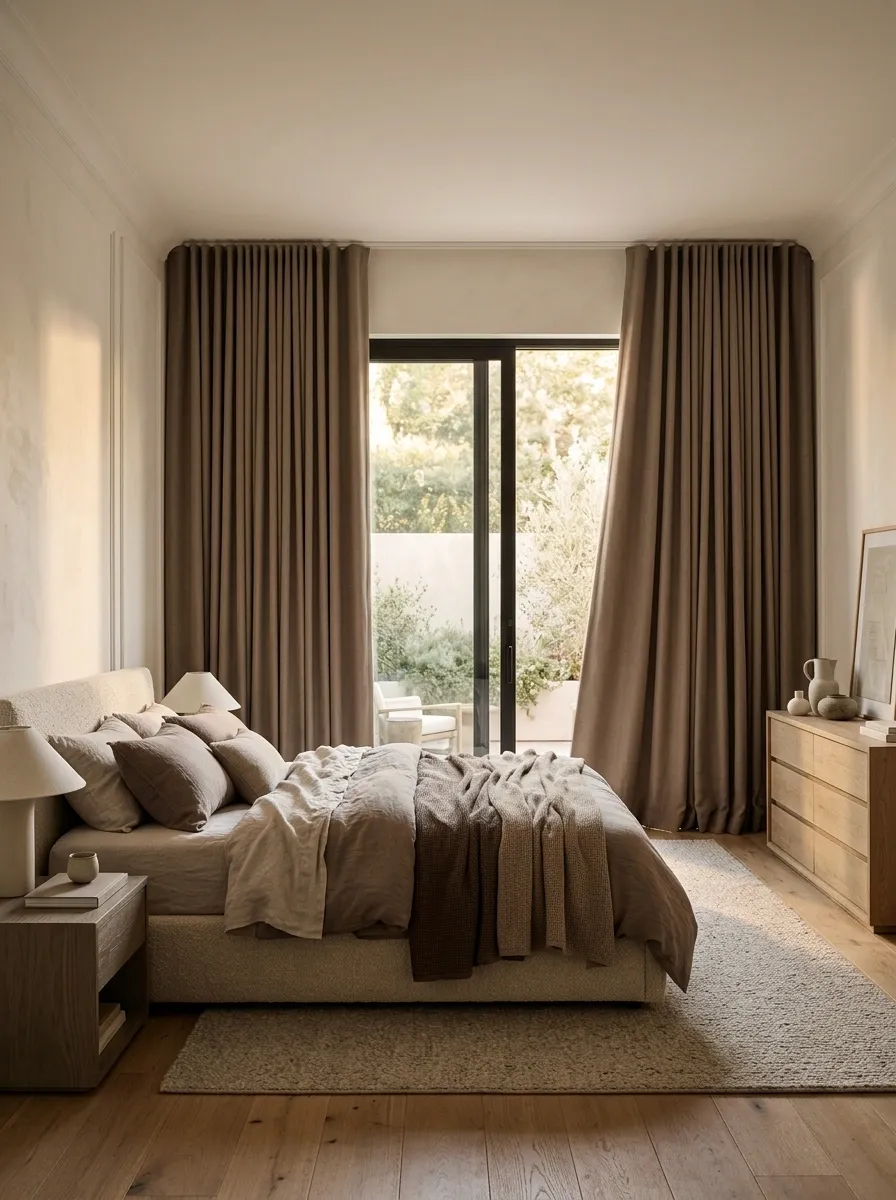
Full-length blackout curtains in warm mushroom brown create a quieter backdrop for a bedroom with sliding patio doors. The fabric frames the glass in broad, generous folds, while layered bedding, a low upholstered bed, and muted wood finishes keep the room from feeling heavy.
This look works especially well when early sunlight disrupts sleep or neighboring homes overlook the bedroom. Choose lined curtains with enough width to cover the glass and extend beyond the edges when closed. A ceiling-mounted track can make the whole arrangement look taller and more intentional.
The lining matters as much as the color. Check the actual light-blocking performance, because decorative curtains labeled blackout can still allow light through gaps around the edges. Apparently, even darkness comes with fine print.
Deep Olive Velvet Curtains in a Rich Contemporary Living Room
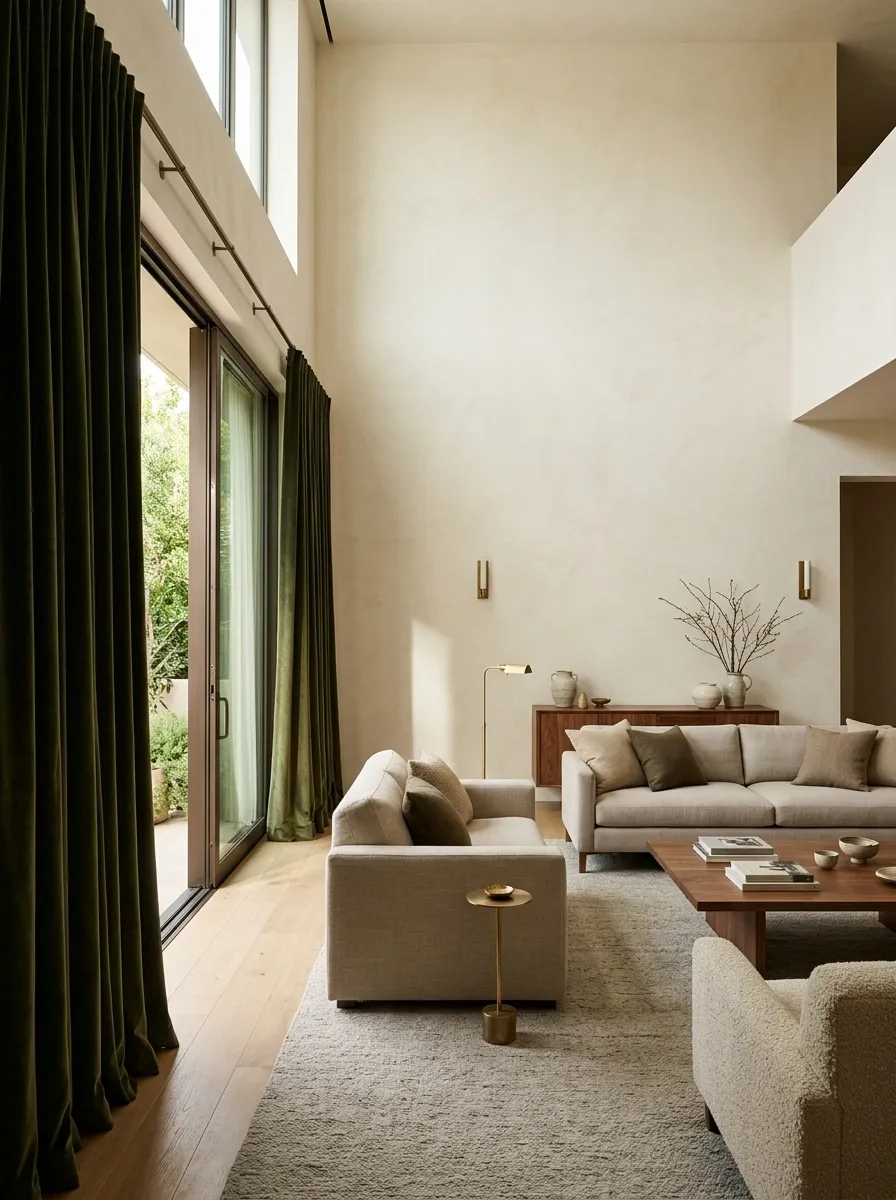
Deep olive velvet gives a sliding glass door real presence. The rich fabric catches light along its folds, creating subtle changes in color rather than one flat green surface. Cream walls, walnut furniture, and restrained aged-brass accents keep the composition warm and sophisticated.
The strongest version uses the curtains as the main color statement. A muted rug and simple upholstery give the eye somewhere to rest, so the room feels rich rather than crowded. Velvet also adds a sense of weight that works well in rooms with high ceilings or generous wall space.
The downside is bulk. Velvet curtains need room to stack and can feel overwhelming in a small, dark living room. Measure the side clearance before falling in love with the fabric. Gorgeous curtains that permanently cover the view are a very expensive commitment issue.
Two-Tone Color-Block Curtains in a Contemporary Apartment
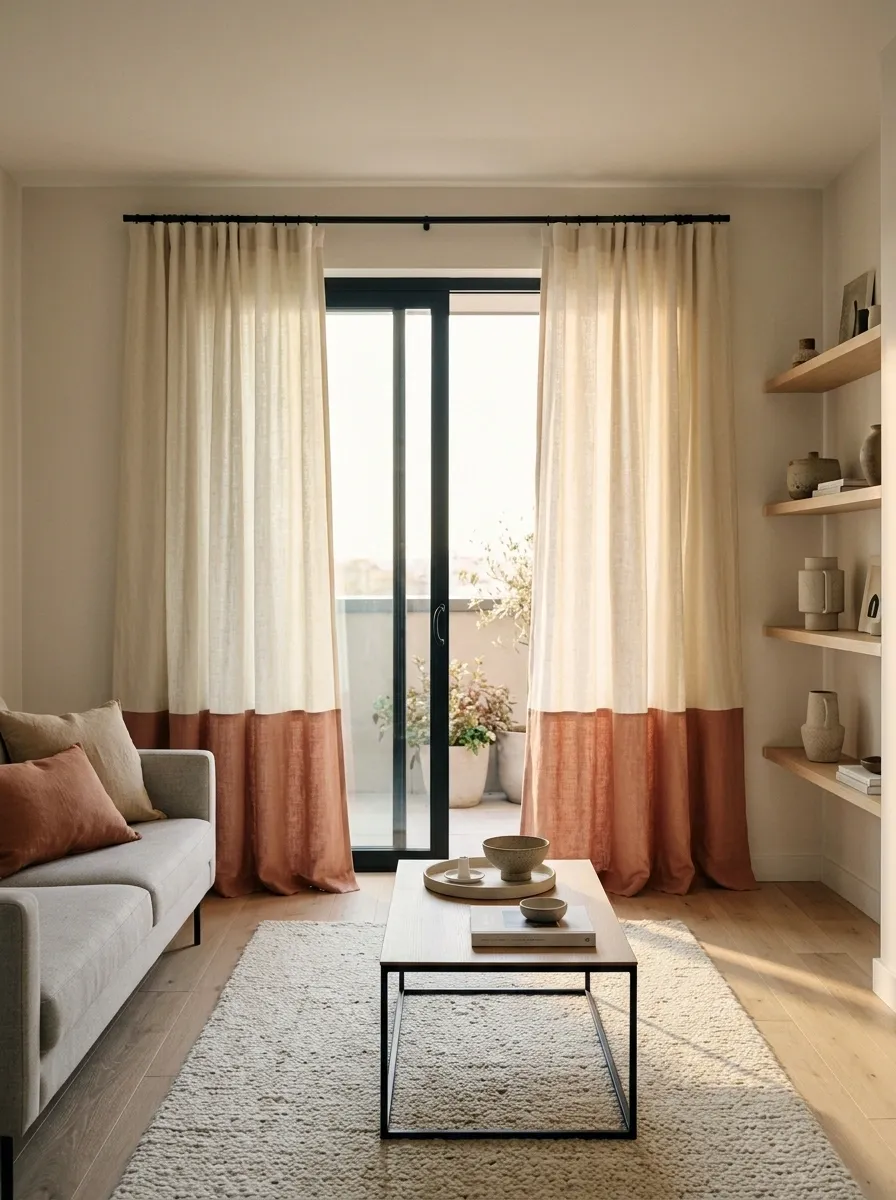
Color-block curtains give a plain sliding door a stronger visual identity without relying on an elaborate print. Imagine warm ivory fabric across the upper section and muted terracotta below, with a clear horizontal division that relates to the furniture and wall colors around it.
This design suits contemporary apartments where the room needs a little more personality but oversized patterns would make the space feel busy. Pale oak, simple upholstered seating, and a few dark accents help the curtain’s geometry stand out.
Pay attention to the placement of the color division. A lower section that is too dark or too wide can make the fabric appear visually heavy. The best proportions feel connected to the room rather than chosen by a random-number generator with access to a fabric store.
Large Botanical Print Curtains in a Natural Living Room
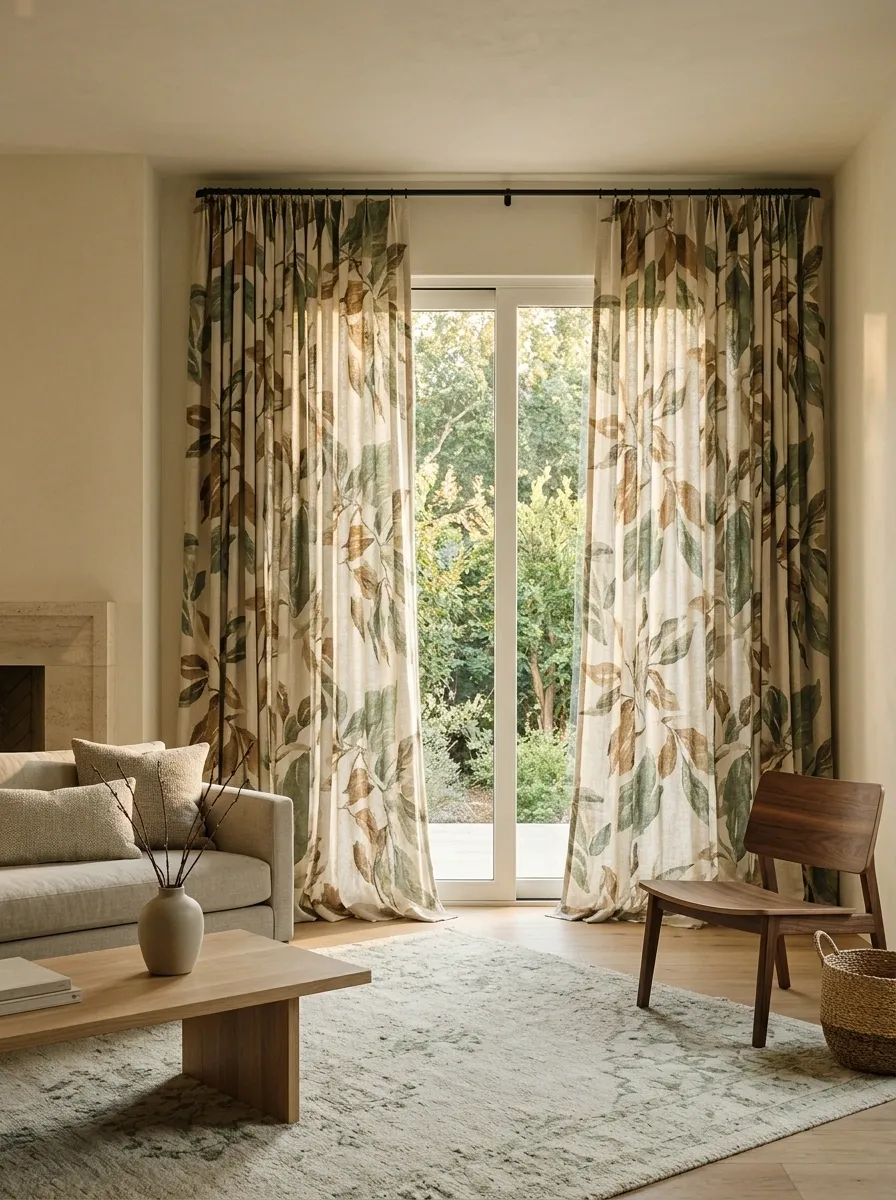
Large botanical curtains can bring the garden into a living room even when the actual garden is mostly a fence and the neighbor’s recycling bins. Choose a print with generous leaves or loose branches in muted green, tobacco, and cream. Let the fabric provide the movement while natural wood, quiet upholstery, and simple accessories keep the space from looking crowded.
A larger repeat usually reads more like a deliberate design statement than a tiny, busy pattern scattered across the entire opening. The curtain should relate to the room’s scale, and its colors should appear elsewhere in small doses, perhaps in a cushion or the rug.
Give the print enough wall space to register. Too many competing patterns can turn the room into a botanical research assignment. Keep the surrounding finishes relatively calm and let the curtains do their job.
Coastal Ticking-Stripe Curtains With Natural Wood
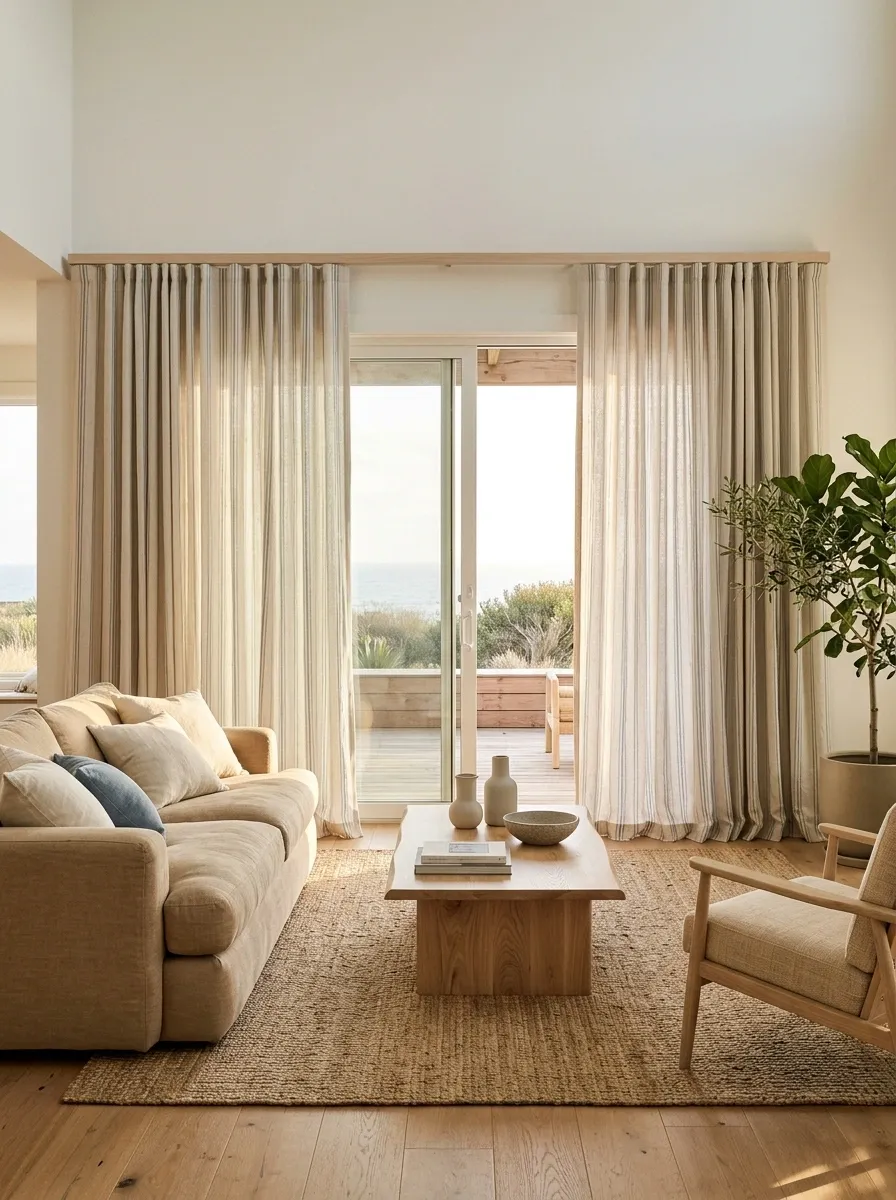
Narrow faded-blue stripes on soft linen give sliding doors an easy coastal character. The room pairs them with pale oak, sandy upholstery, and a few restrained blue accents. The overall effect feels light and relaxed without relying on anchors, rope decor, or enough seashells to open a small aquarium.
Vertical stripes naturally emphasize the curtain’s height, while the gentle contrast keeps the pattern from overpowering the room. Choose a fabric with a relaxed drape rather than a stiff finish, especially when the furniture has soft, rounded shapes.
This design suits bright living rooms, dining spaces, and casual sunrooms. Keep the rest of the palette quiet, and make sure the stripe scale works with the room’s proportions. A huge stripe can dominate a compact room, while a very fine stripe may disappear from a distance. Even the ocean has better things to do than resolve a pattern dispute.
Small-Scale Gingham Curtains in an Updated Farmhouse Interior
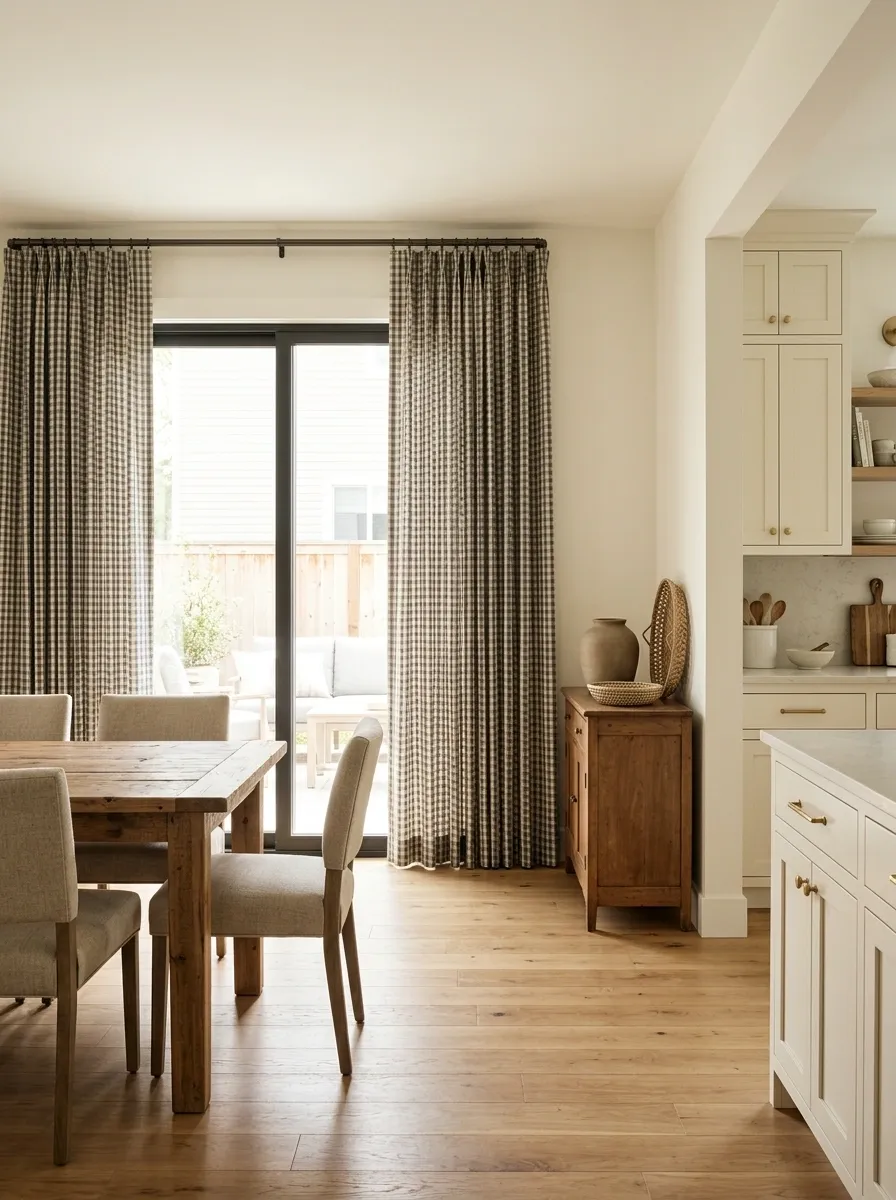
Small-scale gingham curtains introduce a familiar farmhouse pattern without turning the entire room into a picnic blanket. Cream and muted charcoal checks frame a sliding kitchen or dining-area door, while warm wood, painted cabinetry, and simple upholstery keep the composition grounded.
The secret is controlling contrast. A softer check feels more relaxed than a stark black-and-white pattern, and a modest repeat is easier to live with across a broad expanse of glass. Pair the fabric with solid-colored furniture and keep other prints to a minimum.
This design works well in casual homes where the window treatment should feel personal rather than formal. Choose fabric that hangs neatly, and make sure the pattern aligns across adjoining panels. Crooked checks can make even the nicest kitchen look like its curtains were installed during a power outage.
Classic Pinch-Pleat Drapes With a Polished Brass Rod
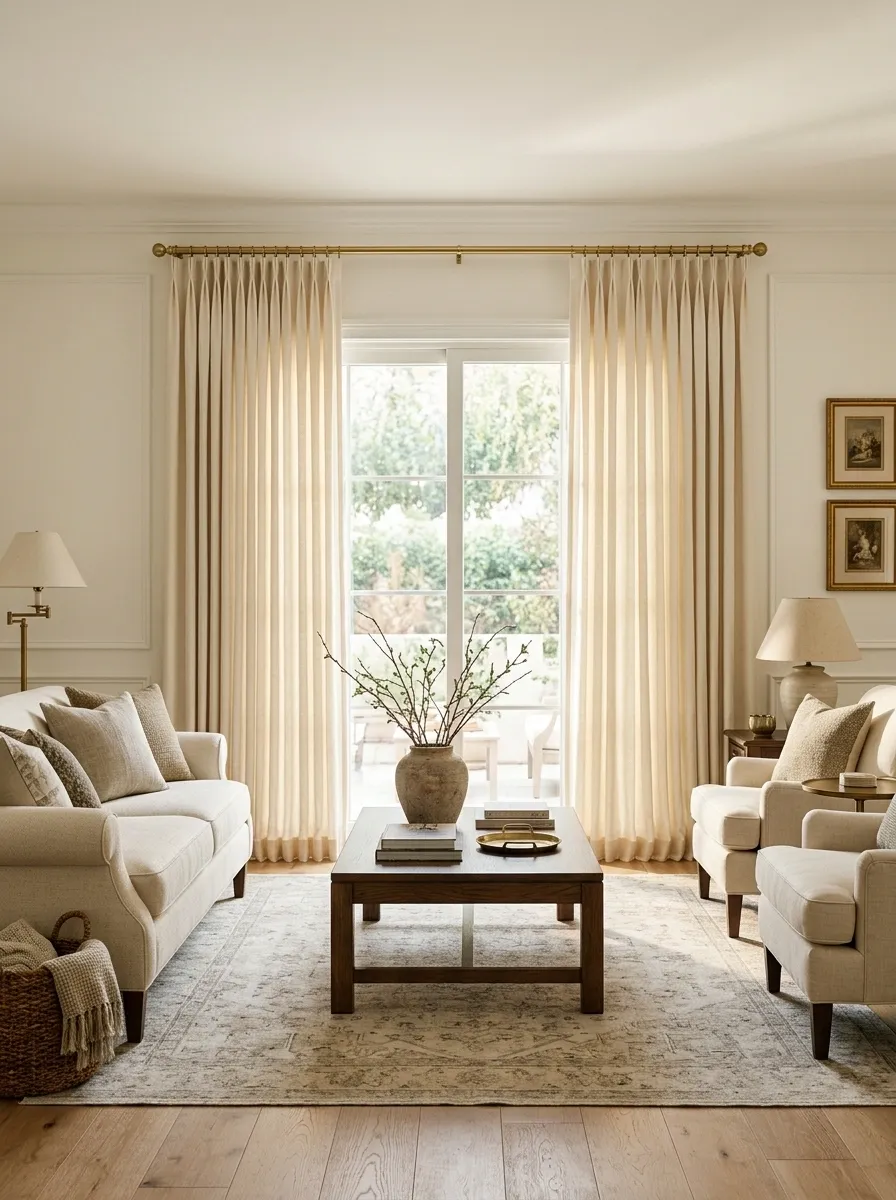
Pinch-pleat drapes bring a more structured finish to sliding doors. The gathered pleats create even columns of fabric, while a polished brass rod introduces a subtle highlight against warm ivory curtains. Crown molding, hardwood floors, and classic upholstered furniture reinforce the room’s traditional character without making it feel stuck in another decade.
Unlike casual curtain tops, pinch pleats have a defined shape that stays visually consistent along the track or rod. That structure works particularly well in formal living rooms and dining areas where a loose, informal drape would feel out of place.
Choose enough fabric for the pleats to remain full when closed, and mount the hardware high enough to give the room a balanced appearance. Brass can be a beautiful finish, but it doesn’t need five competing gold accessories to justify its existence.
in the center
Wall-Matching Sheers on a Recessed Ceiling Track
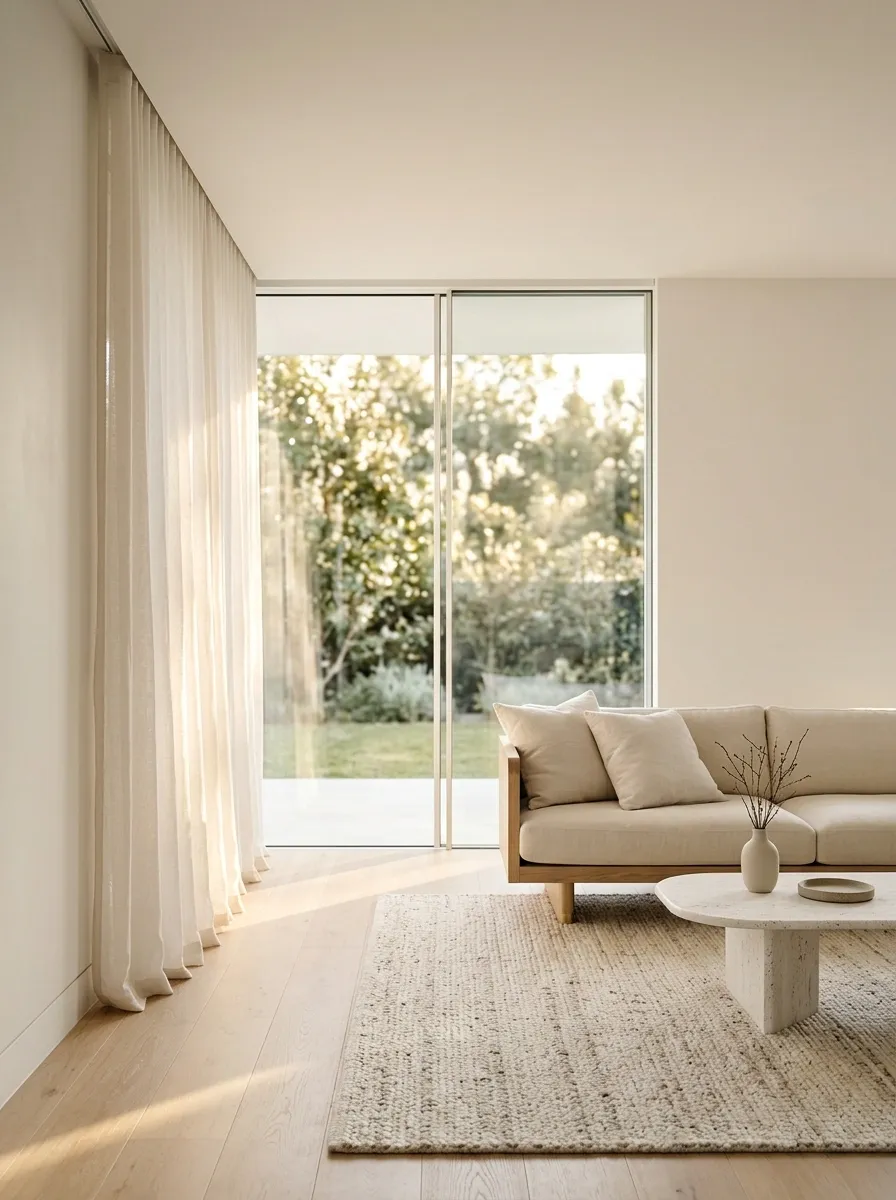
When a room already has strong architecture or a beautiful outdoor view, the window treatment doesn’t need to audition for the lead role. Sheer curtains that closely match the wall color create a continuous, quiet surface around the sliding door. A recessed ceiling track keeps the hardware out of sight, making the fabric look as though it descends directly from the ceiling.
Pale walls, restrained furniture, and simple natural finishes help this treatment work as part of the architecture rather than as a decorative statement. It suits contemporary apartments and living rooms where visual clutter is already a concern.
This restrained look depends on careful installation. The track needs a suitable recess, and the curtains still need enough room to stack outside the glass. Also, matching the walls won’t magically solve privacy. Sheers remain sheers, no matter how minimalist the room gets.
the visual focus
Architectural Cornice With Full-Length Drapery
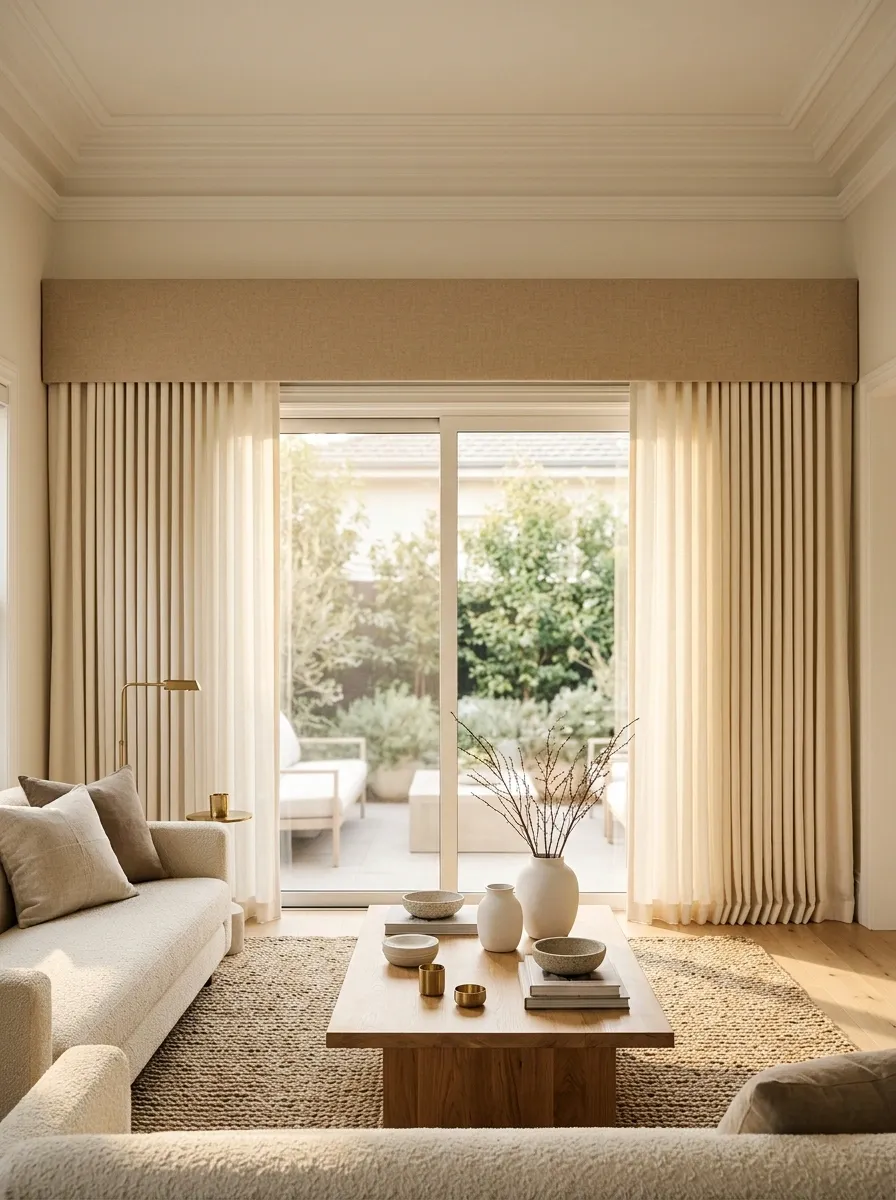
An architectural cornice conceals the curtain hardware behind a substantial horizontal element above the sliding door. It can be upholstered in fabric, painted to match the walls, or finished in a complementary tone. Full-length neutral drapes fall beneath it, creating a strong, uninterrupted line across the top of the opening.
This arrangement suits rooms that need a little more architectural structure, especially where exposed curtain hardware would look out of place. A cornice can also create a visual connection between the window treatment, ceiling line, and surrounding trim.
Proportion is everything. A deep, heavy cornice can overwhelm a compact room, while one that is too small may look like an afterthought. Coordinate its width with the opening and check the track depth before construction. Concealing hardware is clever. Accidentally building an enormous decorative shelf over the window is another story.
Allow enough room for the track and curtain movement without making the projection feel bulky.
Relate the cornice width and finish to the door opening, ceiling, and nearby trim.
Black French-Return Rods With Flax-Colored Curtains
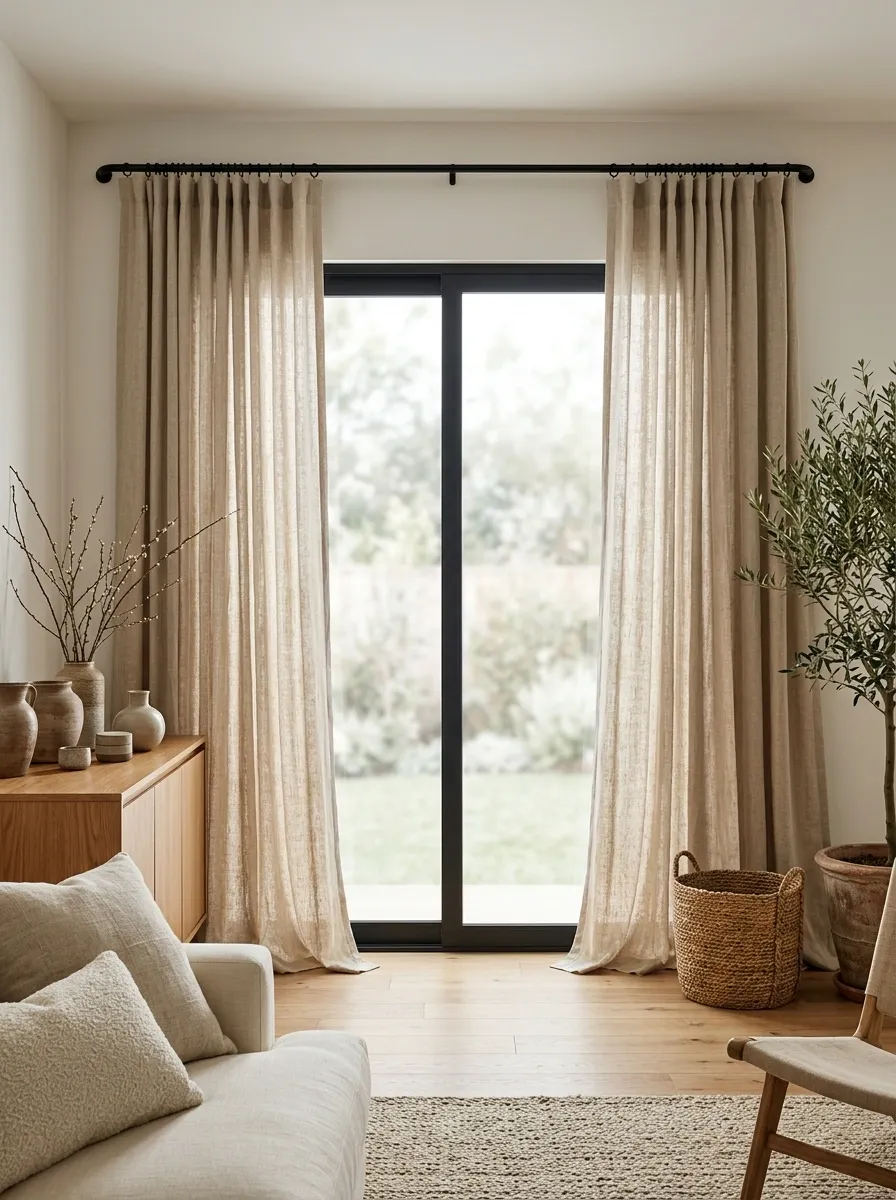
A slim matte-black French-return rod gives flax-colored curtains a defined architectural edge. The rod curves back toward the wall at each end, allowing the curtain to wrap closer to the sides instead of leaving a prominent decorative finial sticking out like it has something to prove.
Pair the hardware with warm timber, neutral upholstery, and a dark-framed sliding door. The contrast is deliberate, but the natural curtain fabric keeps the room from feeling severe. This treatment works well in contemporary homes that already use black window frames, handles, or lighting details.
Check the rod’s projection and the depth of the curtain folds before choosing the hardware. The fabric needs enough room to move freely, especially near the handle. Matching every metal finish in a room isn’t mandatory, but matching the hardware to the actual opening is a pretty good start.
Renter-Friendly Cordless Shades With Minimal Hardware
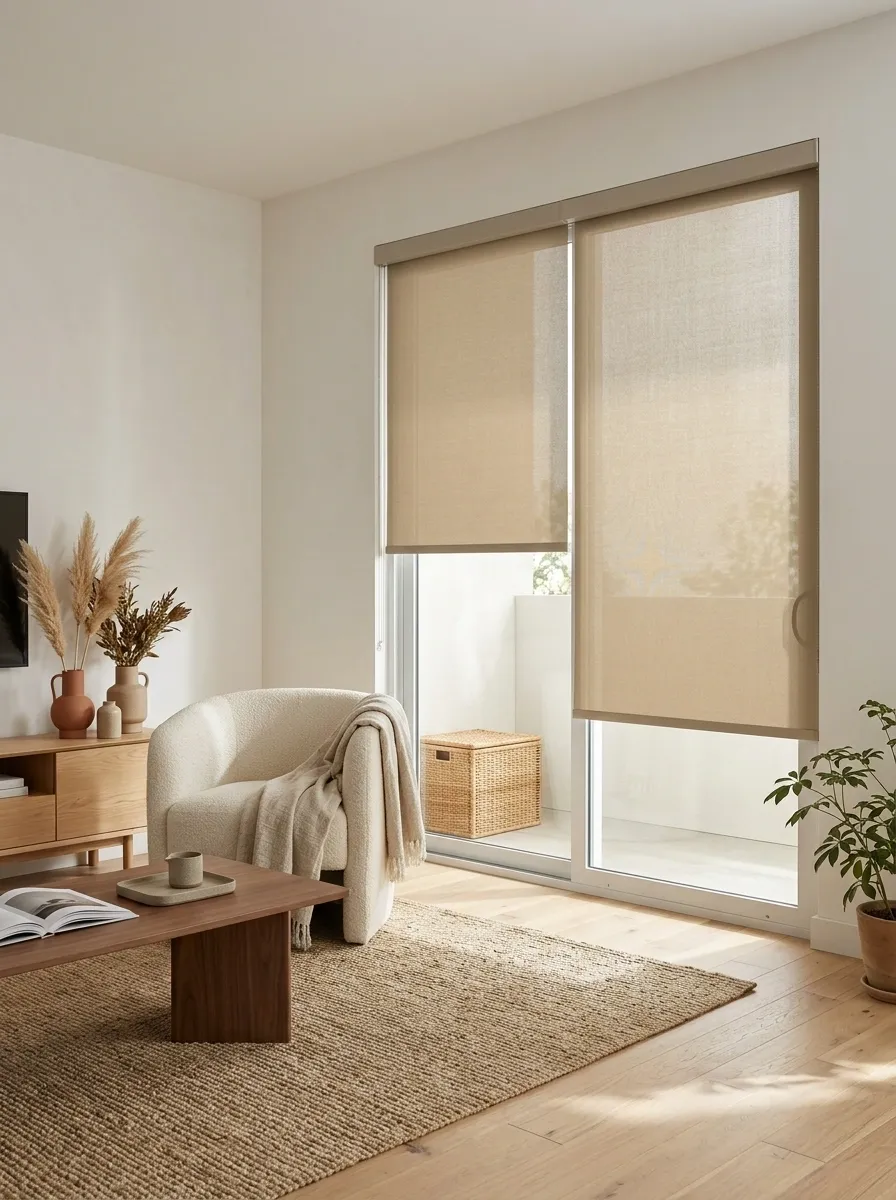
A rental doesn’t need permanent alterations to look considered. Cordless shades in a warm neutral tone keep the sliding door tidy, while freestanding furniture and a few natural finishes make the room feel intentional rather than temporary. The slim profile works well in smaller apartments where heavy curtains would compete with the furniture.
The cordless design also removes dangling operating cords from the visual picture. Depending on the product, the shade may fit inside the frame or mount above it, so compatibility needs checking before purchase.
Be careful with the phrase no-drill. Some shades require precise mounting surfaces or hardware that adhesive alone can’t support. Check the manufacturer’s installation instructions, the landlord’s rules, and the door frame’s construction. A refundable security deposit is not a decorating budget.
One-Way Draw Curtains That Keep the Walkway Clear
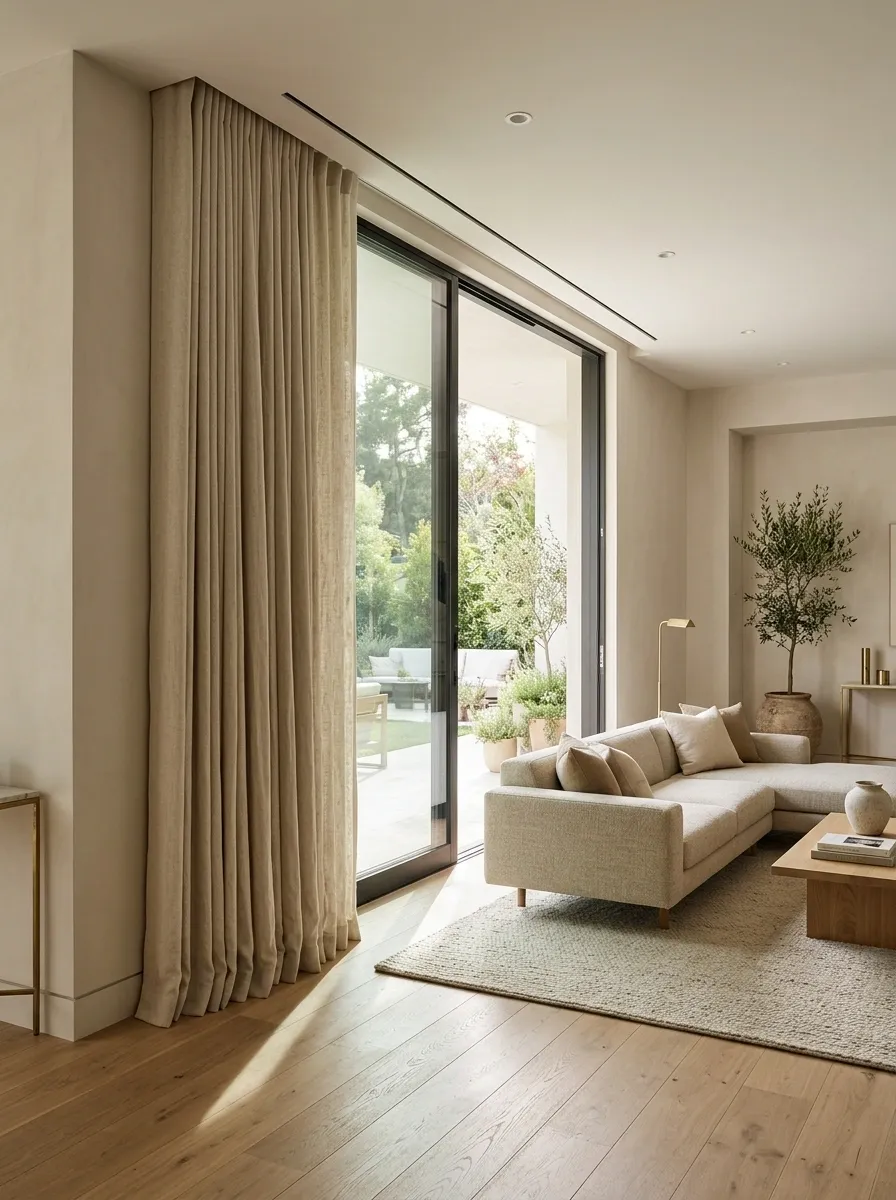
Sometimes the best curtain arrangement isn’t symmetrical. When a sliding door sits close to a corner or furniture limits space on one side, one-way draw curtains can gather entirely at the more convenient end. The fabric still frames the room, but the operation follows the layout instead of pretending both sides have equal space.
Choose a full-length fabric in a color that relates to the surrounding walls or upholstery. A simple track and relaxed linen keep the look intentional, while a low-profile sofa or dining table stays clear of the curtain stack.
The important part is deciding which side has room to hold the entire panel when open. Check the handle position and the main walking route, too. A curtain that gathers neatly but blocks the door you need every day has successfully solved a problem nobody had.
Split-Draw Curtains With Generous Stackback
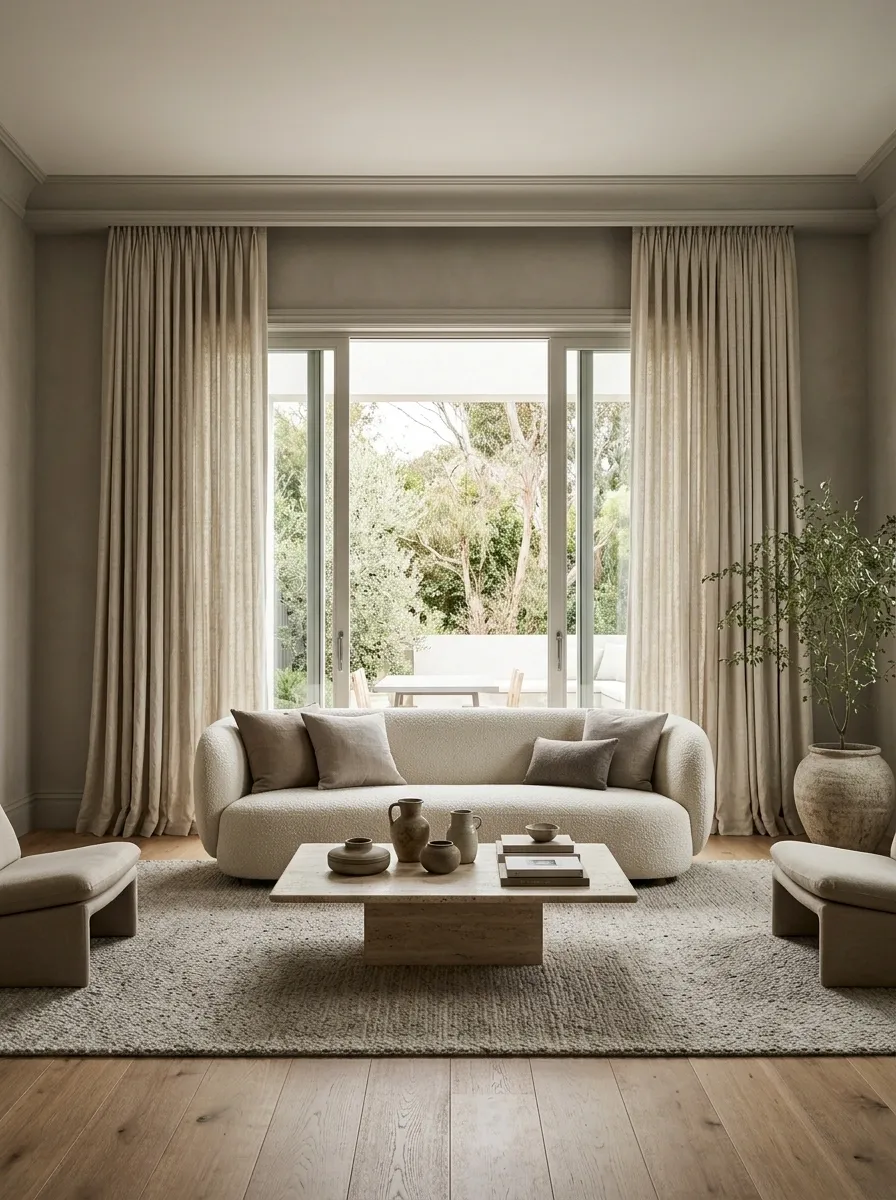
Split-draw curtains open from the middle and gather at both ends of the sliding door. This classic arrangement gives a broad glass opening a balanced frame, particularly in living rooms where the furniture is arranged symmetrically or the window is the main architectural feature.
Full-length linen or softly textured curtains work well here. When closed, the panels create a continuous fabric surface. When open, they expose the center of the glass and leave the outdoor view as the focal point. A neutral palette helps the substantial fabric feel calm rather than bulky.
This layout needs enough room at both sides to hold the gathered panels. If the door sits between a wall and a large cabinet, the symmetry can become a daily inconvenience. Check the stackback before selecting the track. Symmetry is lovely, but not when it comes at the expense of actually opening the door.
Curved Track Curtains Around a Corner Glass Opening
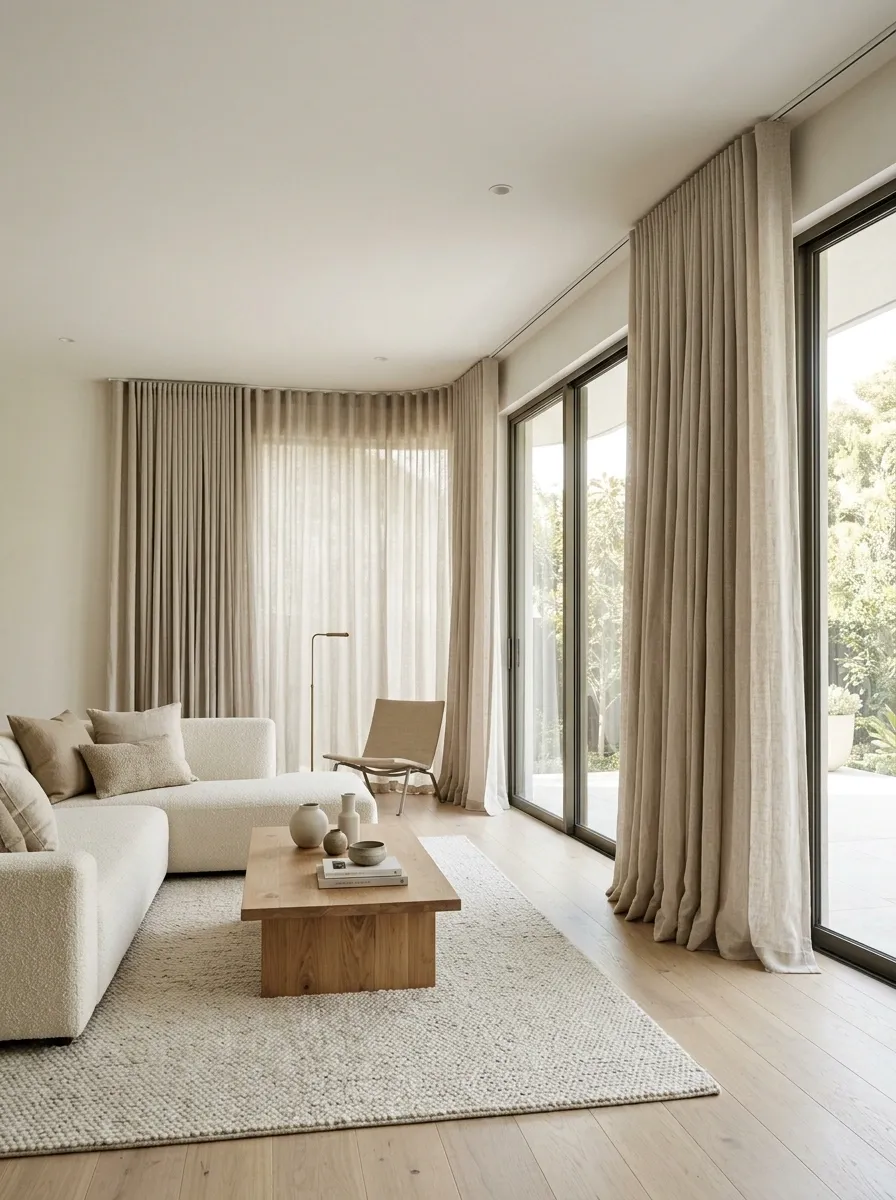
When sliding glass doors meet another glazed wall at a corner, an ordinary straight curtain rod can leave the two openings feeling disconnected. A properly designed curved or corner track lets the fabric turn with the architecture, creating a more continuous treatment across both sections of glass.
Soft neutral curtains work particularly well because they connect the two openings without introducing a strong visual break. In a modern living room, restrained furniture and pale natural finishes allow the corner glazing to remain the focal point.
This solution needs precise planning. The track must suit the corner geometry, the panels need room to travel around the turn, and the door handles must remain accessible. Not every standard track can make a tight corner, so confirm the hardware specifications before ordering. Geometry rarely accepts “it’ll probably fit” as a binding contract.
Confirm the actual track geometry with the manufacturer.
Monochrome Curtains With Contrasting Piping
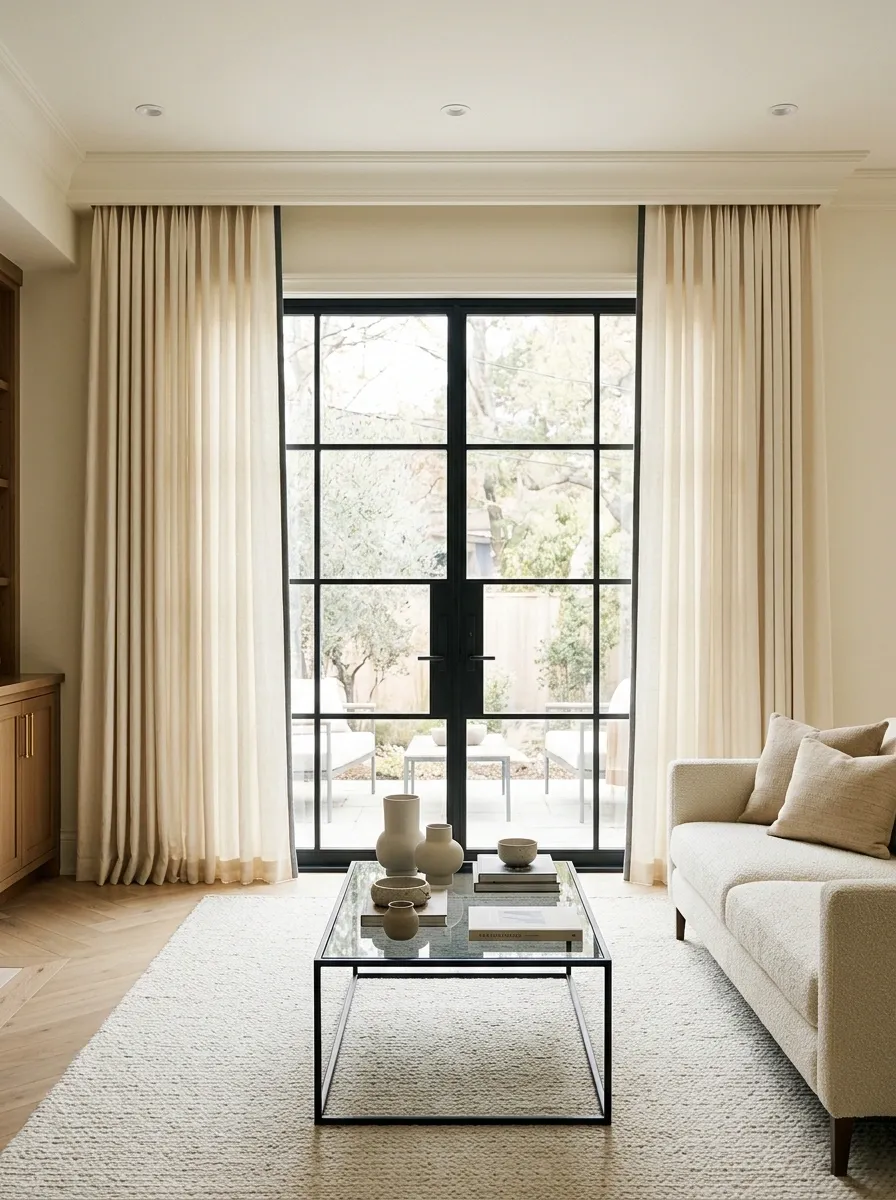
Sometimes a curtain needs one thoughtful detail rather than another complicated print. Warm ivory panels with slim charcoal piping along the edges create a crisp outline around the sliding glass door. The main fabric remains quiet, while the dark border echoes black window frames, lighting, or furniture legs elsewhere in the room.
This approach is useful when the interior already has a restrained palette and a large pattern would feel like too much. It gives plain curtains a more finished appearance without making them compete with the rest of the room.
The piping should remain narrow enough to accent the fabric rather than dominate it. A dramatic border can work in a larger room, but a heavy outline may visually shrink a compact opening. The goal is a clean finish, not curtains that look like they came dressed for a formal debate.
at center
Earthy Terracotta Curtains With Cream and Oak
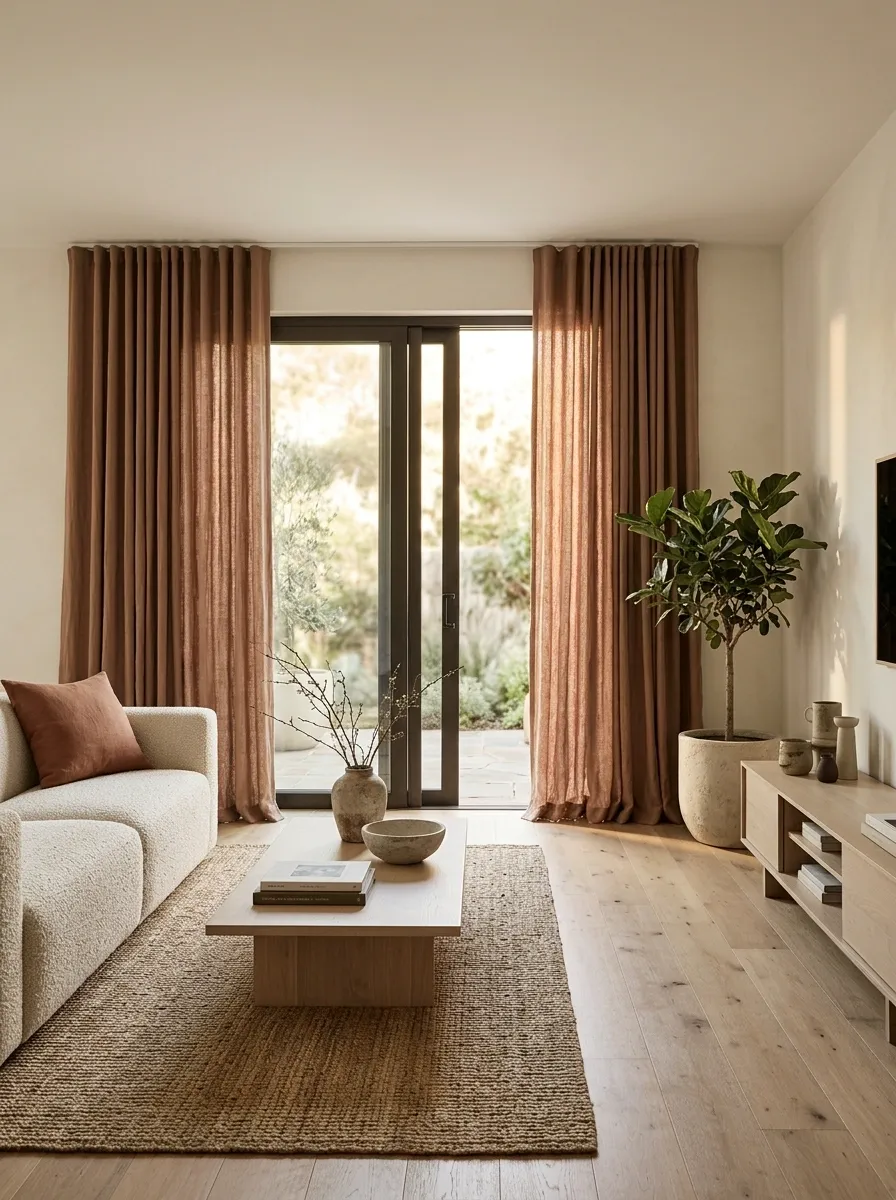
Muted terracotta curtains bring warmth to a sliding glass door without requiring the entire room to turn orange. The earthy fabric looks especially good against creamy walls, pale oak furniture, and natural-texture upholstery. Daylight from the glass keeps the palette lively, while the curtain color creates a clear focal point.
This combination suits living rooms that feel a little too neutral but don’t need another dramatic black accent. The clay tone has enough depth to stand out, yet it remains easy to coordinate with warm woods and understated accessories.
Pay attention to the undertone. A muted, brown-based terracotta usually feels more grounded than a bright orange-red. Repeat the color in a small cushion or artwork detail, then leave the rest of the room alone. Not every color needs a supporting cast of seventeen accessories.
Dusty Navy Curtains Against Light Oak and Warm White
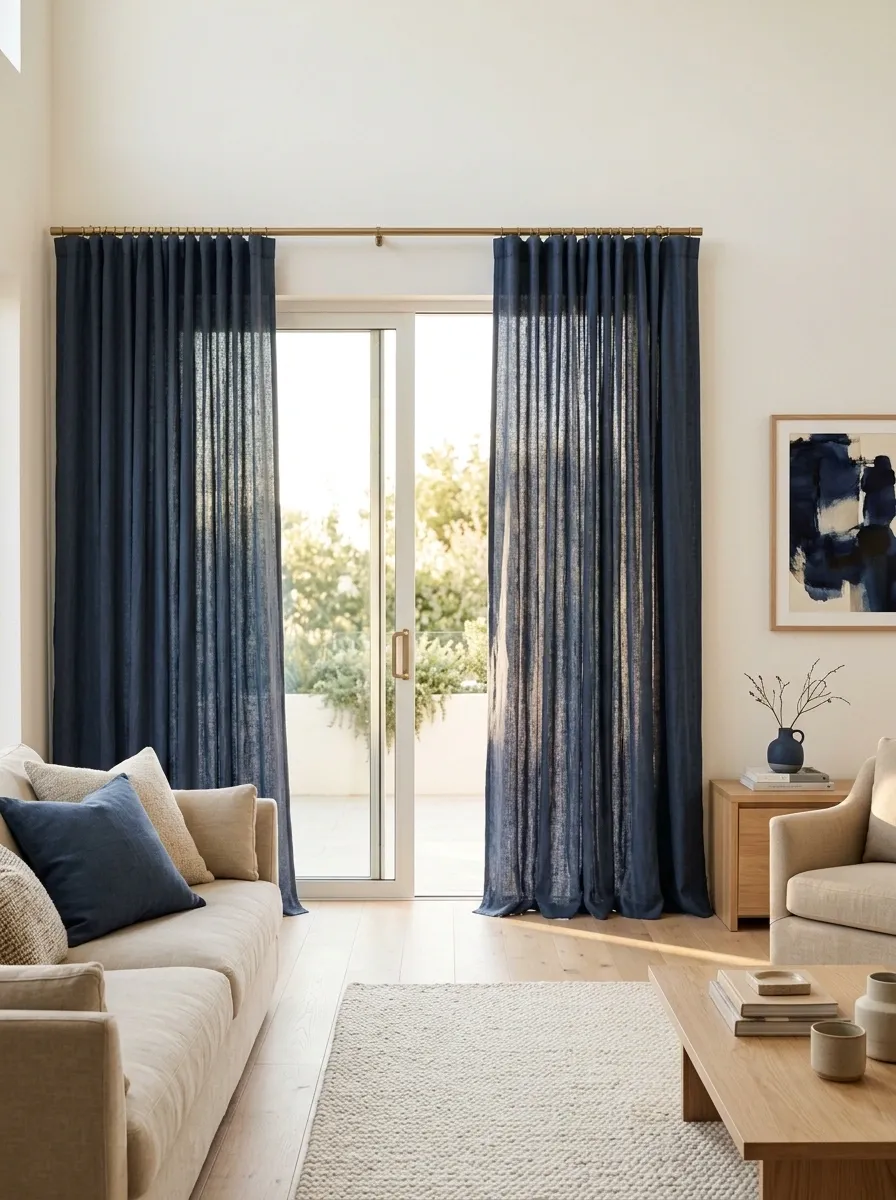
Dusty navy curtains give a bright living room a stronger outline without the harshness of black. Against warm white walls and pale oak flooring, the deeper blue adds contrast while preserving the airy quality of the space. Beige seating and textured accessories soften the transition between the dark fabric and lighter surroundings.
The color works especially well in rooms that already feel bright but lack a clear focal point. Full-length curtains create a vertical frame, making the glass opening feel intentional rather than like a bare gap in the wall.
Choose a blue that looks slightly muted rather than intensely saturated if the goal is a relaxed, residential finish. Repeat it sparingly in a cushion, artwork, or small accessory. Three subtle references look thoughtful. Turning every surface navy is a different commitment entirely.
and warm daylight
Bamboo Roll-Up Shades With Unlined Linen Curtains
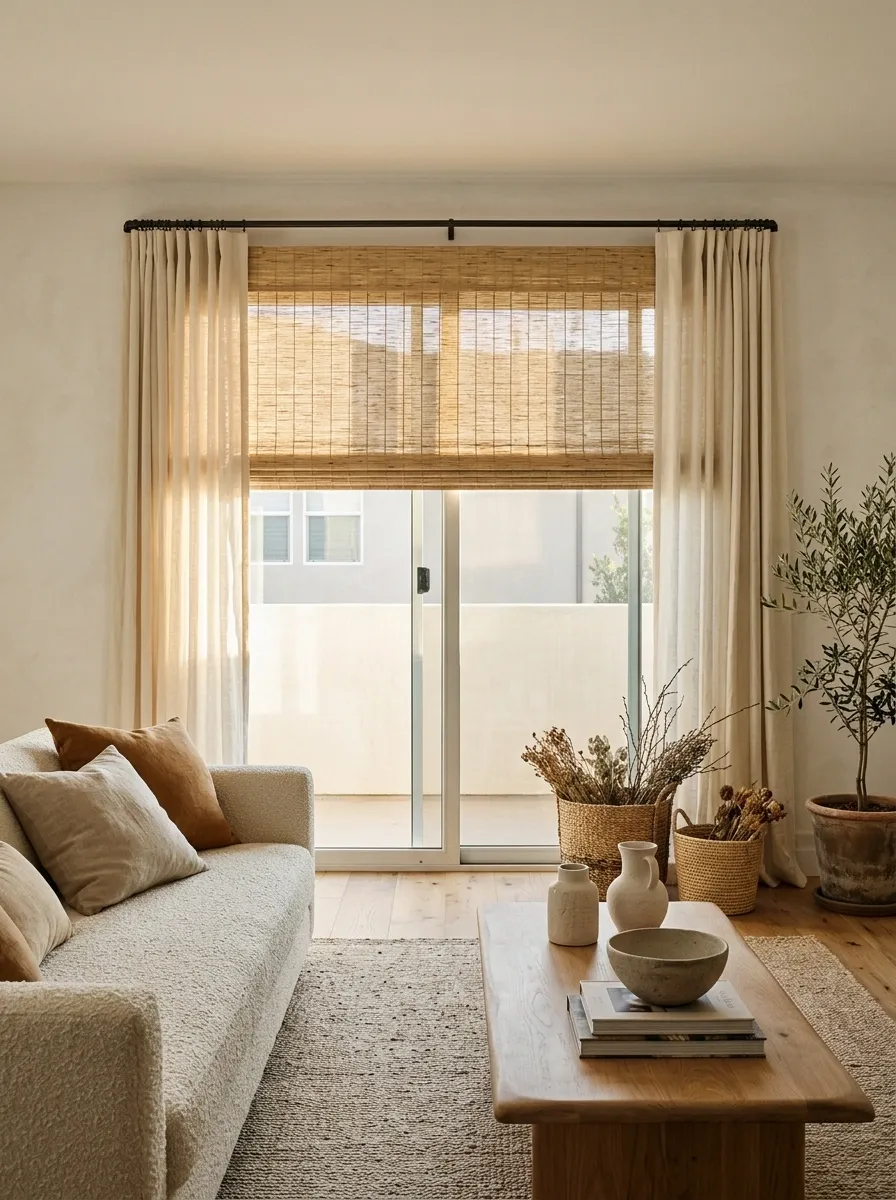
Natural bamboo shades and unlined linen curtains give a sliding door two distinct textures without making the surrounding room feel overdecorated. The bamboo filters daylight through its woven surface, while the relaxed linen softens the sides of the glass. A wooden coffee table, tactile upholstery, and a restrained palette complete the organic modern look.
This combination works particularly well when the room needs warmth but heavy drapes would feel excessive. The shade offers a more structured surface, and the curtains bring movement and softness. Each material has a separate role, which is exactly why the pairing looks intentional.
Check the bamboo shade’s opacity and the linen’s nighttime privacy before choosing either. Natural texture doesn’t guarantee privacy, and decorative layering doesn’t automatically improve light control. The room may look ready for a design magazine, but the neighbors still have functioning eyeballs.
Seamless Wall-Color Curtains in a Minimal Living Room
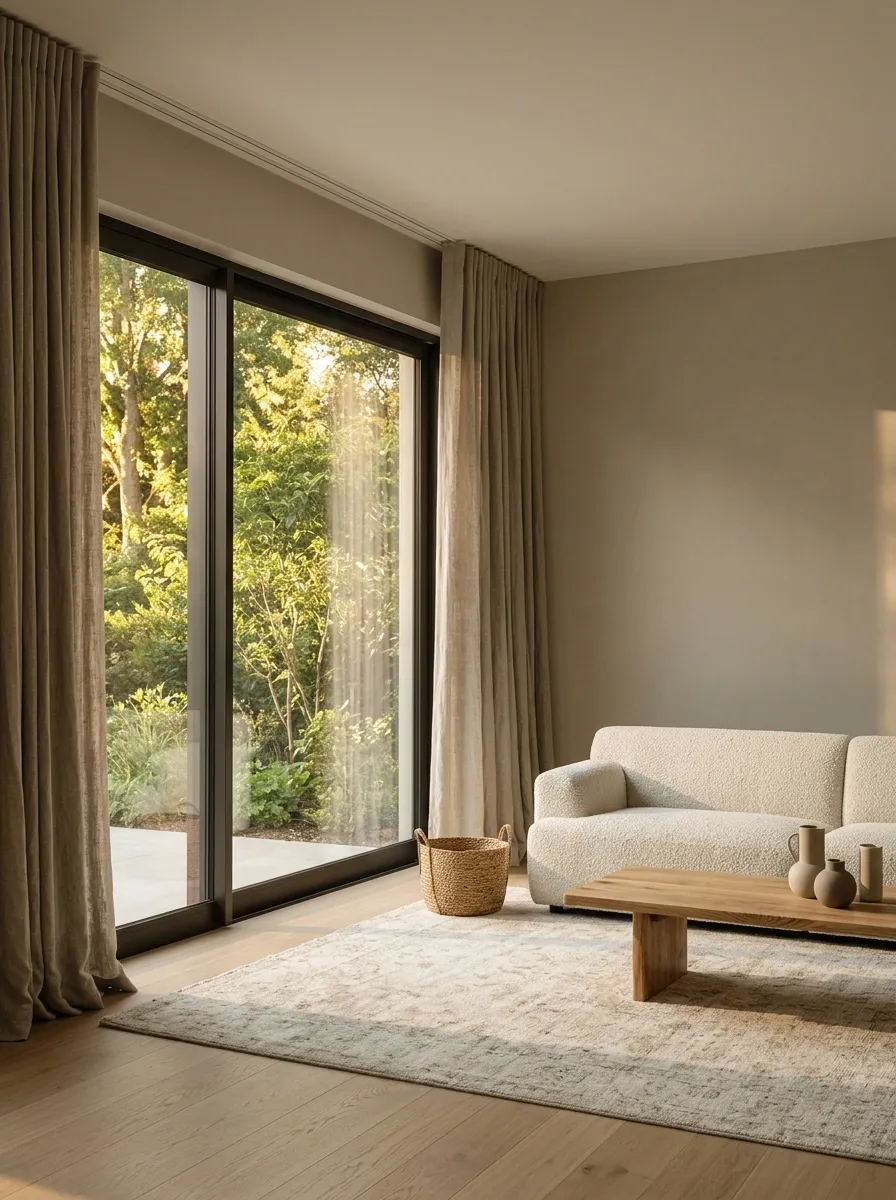
Matching the curtains to the wall color makes a sliding glass door feel integrated into the room rather than framed by a separate block of fabric. Warm greige walls with matching floor-length curtains create a continuous surface, while a discreet track and restrained furniture keep attention on the architecture and outdoor view.
This approach works especially well in minimalist interiors where a contrasting curtain color would interrupt the calm palette. Textured upholstery, natural wood, and a softly patterned rug can introduce variation without breaking the overall visual flow.
The match doesn’t need to be exact to the last shade of beige. In fact, a small difference in texture can stop the treatment from disappearing into a flat wall. Just check the fabric beside the actual paint color in different lighting. Beige has enough personalities already, and most of them show up after the paint dries.
the focal point
Creates the continuous background.
Adds subtle depth without introducing a new color block.
Introduces contrast where the room needs it.
Two-Tone Sliding Fabric Panels in a Contemporary Interior
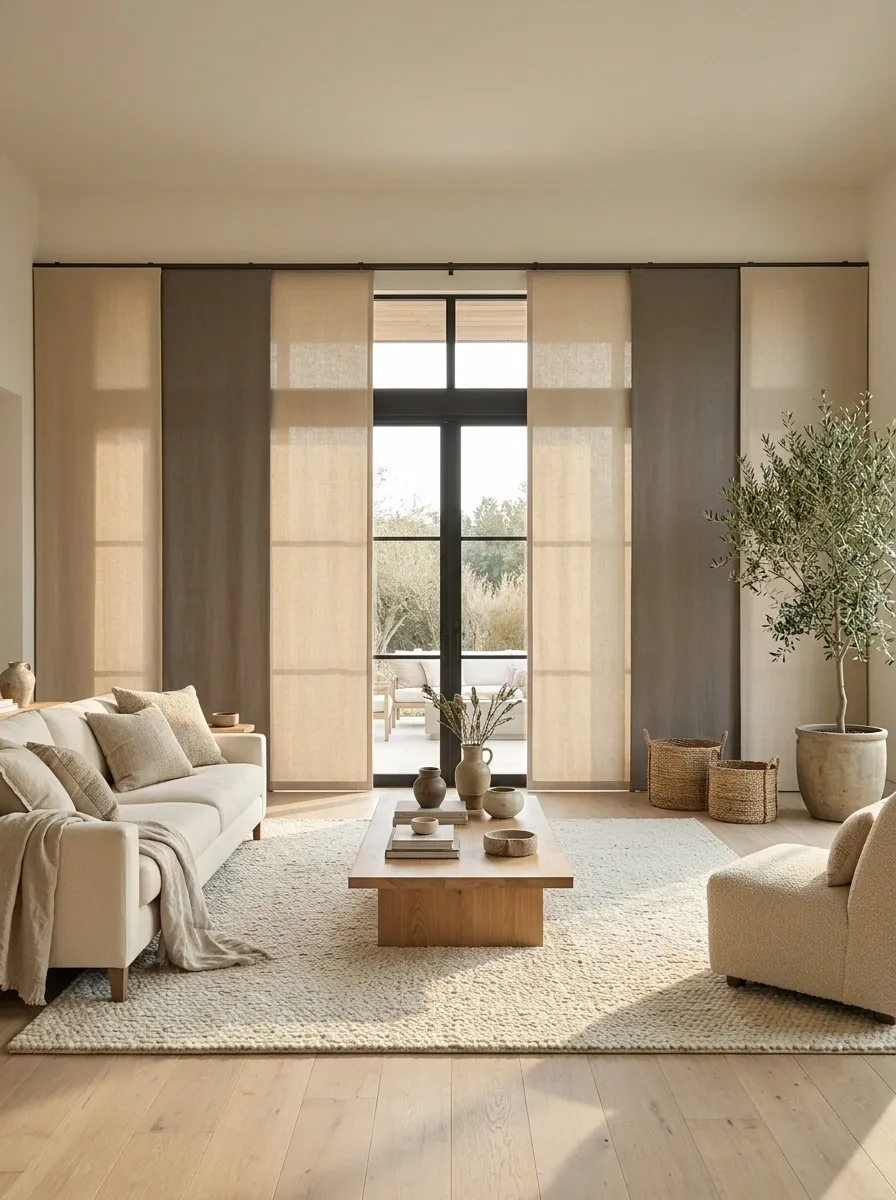
Wide sliding fabric panels in two related neutral shades create a measured rhythm across a large glass opening. Warm sand and deeper stone, for instance, can alternate without introducing a busy print. The room stays contemporary through simple furniture, pale flooring, and natural accents that echo the fabric tones.
This treatment is a good fit when conventional curtains feel too soft and roller shades seem too plain. The broad panels introduce a more architectural quality, while the color sequence adds interest across the width of the glass. Their sliding movement also suits rooms where floor-level fabric would interfere with furniture.
The panel sequence should be planned against the width of the opening. Too many narrow sections can look fussy, while oversized panels may be difficult to handle or stack. Check the track system’s specifications before ordering. Minimalism still requires measurements, unfortunately.
Ombre Curtains That Fade From Warm Ivory to Muted Sage
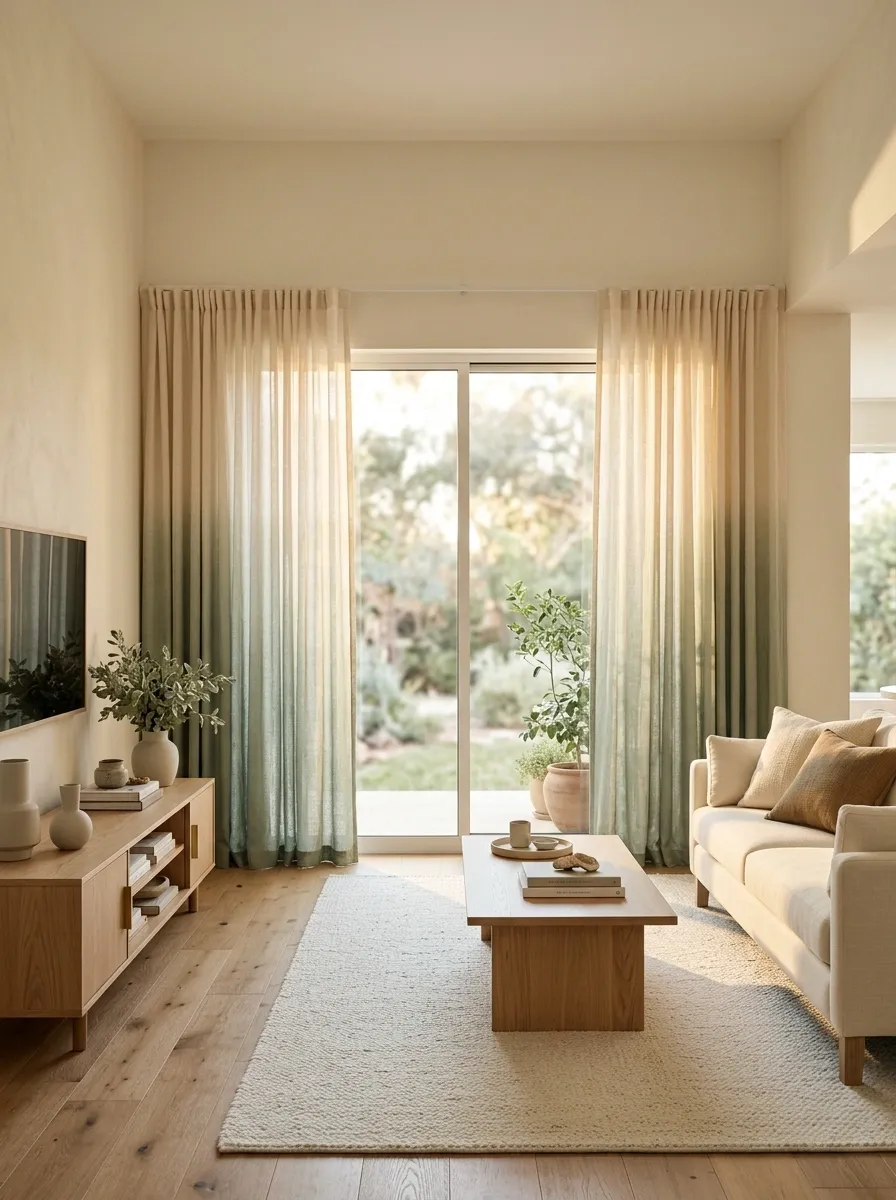
Ombre curtains bring color to a sliding glass door without creating a hard visual block. Fabric that fades from warm ivory into muted sage adds depth while keeping the upper portion light and airy. Natural oak furniture, cream upholstery, and restrained greenery help the gradient feel connected to the rest of the room.
This design suits contemporary interiors that need more personality than plain neutral panels but don’t need a bold print competing with the furniture. The gradual color transition also creates a softer effect than a sharp color-block division.
Keep the gradient subtle, particularly in a smaller room. Strong transitions can dominate the opening, especially when the panels are fully closed. Check the fabric’s actual color placement before ordering, because the gradient needs to fall correctly when the curtains hang. Even ombre fabric has a placement issue, apparently.
Abstract Geometric Curtains in a Mid-Century Living Room
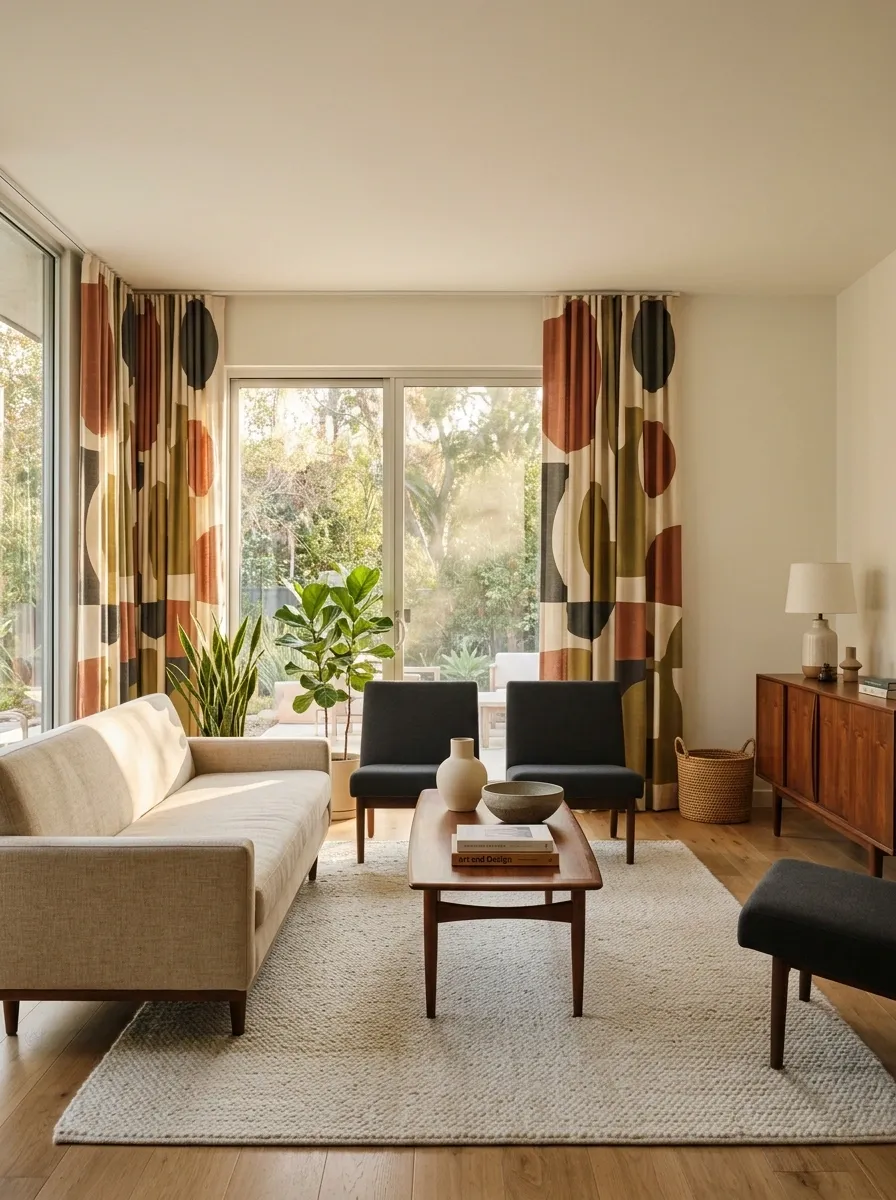
Large geometric shapes in muted rust, olive, cream, and charcoal give sliding glass doors a distinctly mid-century character. The curtains become a feature in their own right, balanced by walnut furniture, tapered legs, and simple upholstery.
Unlike a tiny repeating print, oversized geometric shapes read clearly across broad panels. They work best when the room already has a relatively simple foundation, allowing the pattern to provide the visual interest without competing with several other decorative elements.
Keep the furniture silhouettes clean and limit additional patterns to one restrained accent. The goal is a confident graphic composition, not a room where every cushion is trying to win the same argument. Before ordering, inspect the pattern repeat and how the shapes align across the curtain panels.
Frosted Gradient Privacy Film With Minimal Side Panels
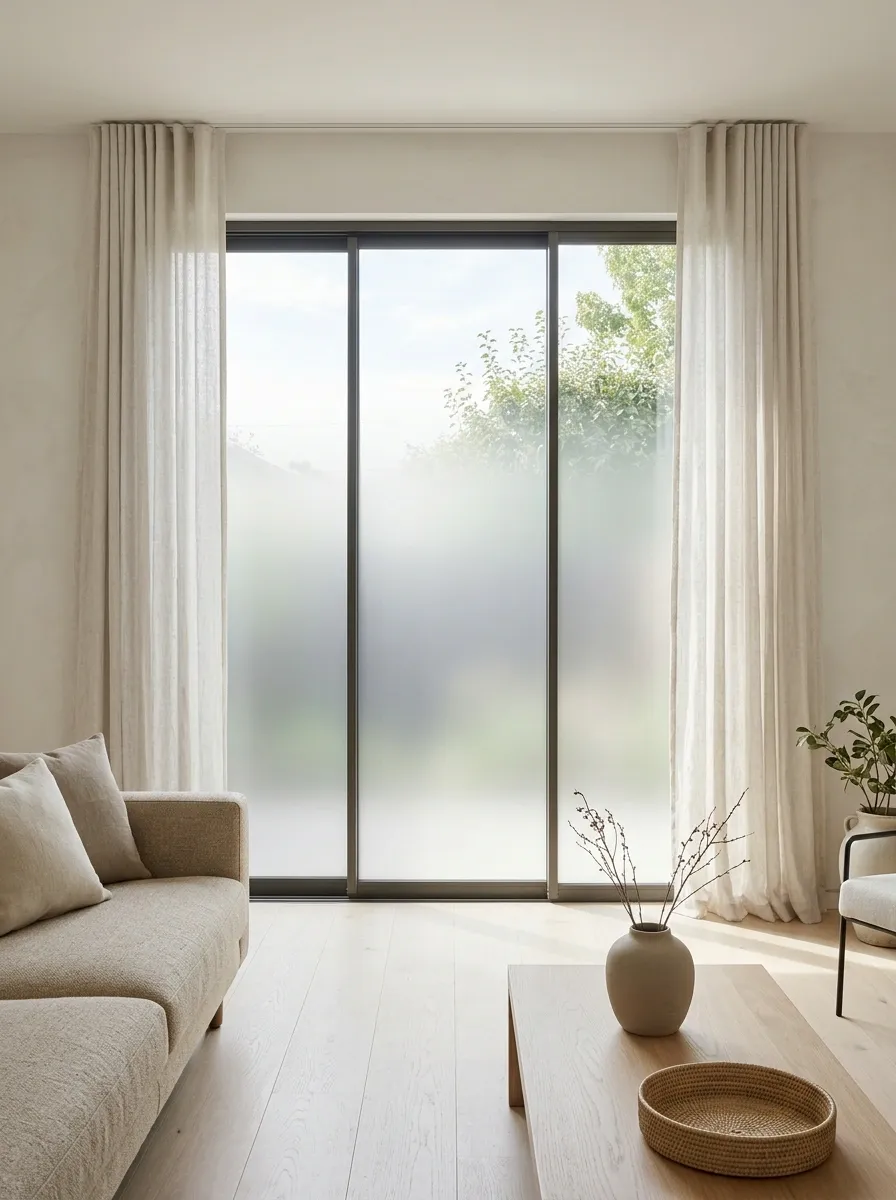
Frosted privacy film can provide coverage without adding fabric or bulky hardware to a sliding glass door. A gradient treatment, frosted across the lower portion and clearer toward the top, maintains more of the outdoor view while obscuring some direct sightlines into the room.
Slim linen side panels soften the edges, while pale flooring, simple furniture, and warm neutral finishes keep the interior looking considered. This arrangement suits bathrooms, ground-floor living spaces, and rooms where privacy matters more than full blackout coverage.
The important distinction is that film doesn’t move out of the way like curtains or shades. It also won’t provide the same kind of light blocking as a blackout treatment. Check the product’s visibility, adhesive compatibility, and installation instructions before applying it to the glass. Privacy film can be useful, but it isn’t an invisibility cloak.
Exterior Solar Screens for a Sun-Exposed Patio Door
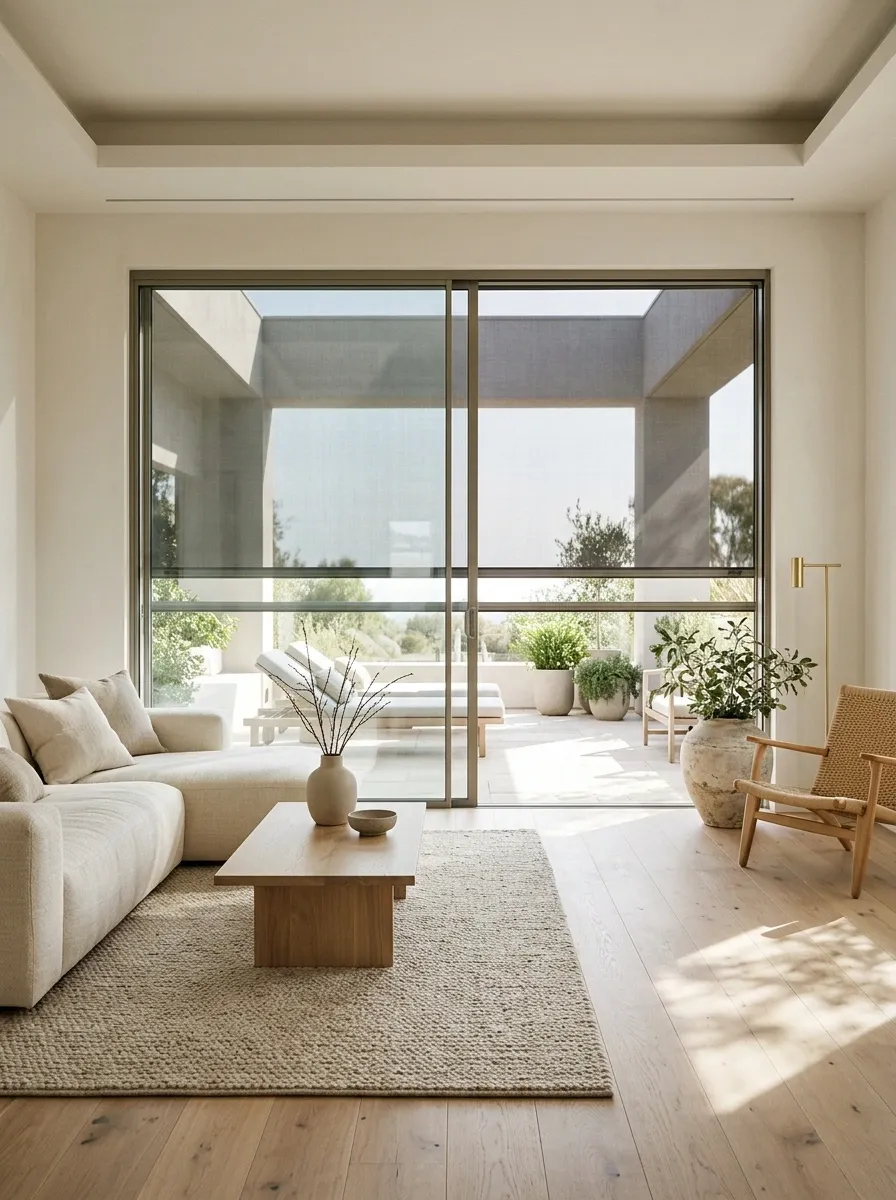
A sliding door that receives strong direct sun may benefit from a retractable exterior solar screen. Mounted outside the glass, the screen intercepts sunlight before it reaches the interior, while the room itself can stay simple and uncluttered. Neutral indoor curtains or minimal shades can complete the look without becoming the main light-control system.
This arrangement is especially useful for sun-exposed living rooms and enclosed patios where glare and heat gain are persistent concerns. The exterior screen also keeps the visual focus on the interior furniture and the glass rather than a large mass of drapery.
Choose a system specifically designed for outdoor exposure, and check its wind limits, mounting requirements, and operation around the sliding door. Exterior screens aren’t interchangeable with indoor blinds, and access matters. A sun-control solution should improve the patio door, not turn it into a complicated obstacle course.
and clear view
Motorized Ceiling-Track Curtains for Extra-Wide Sliding Doors
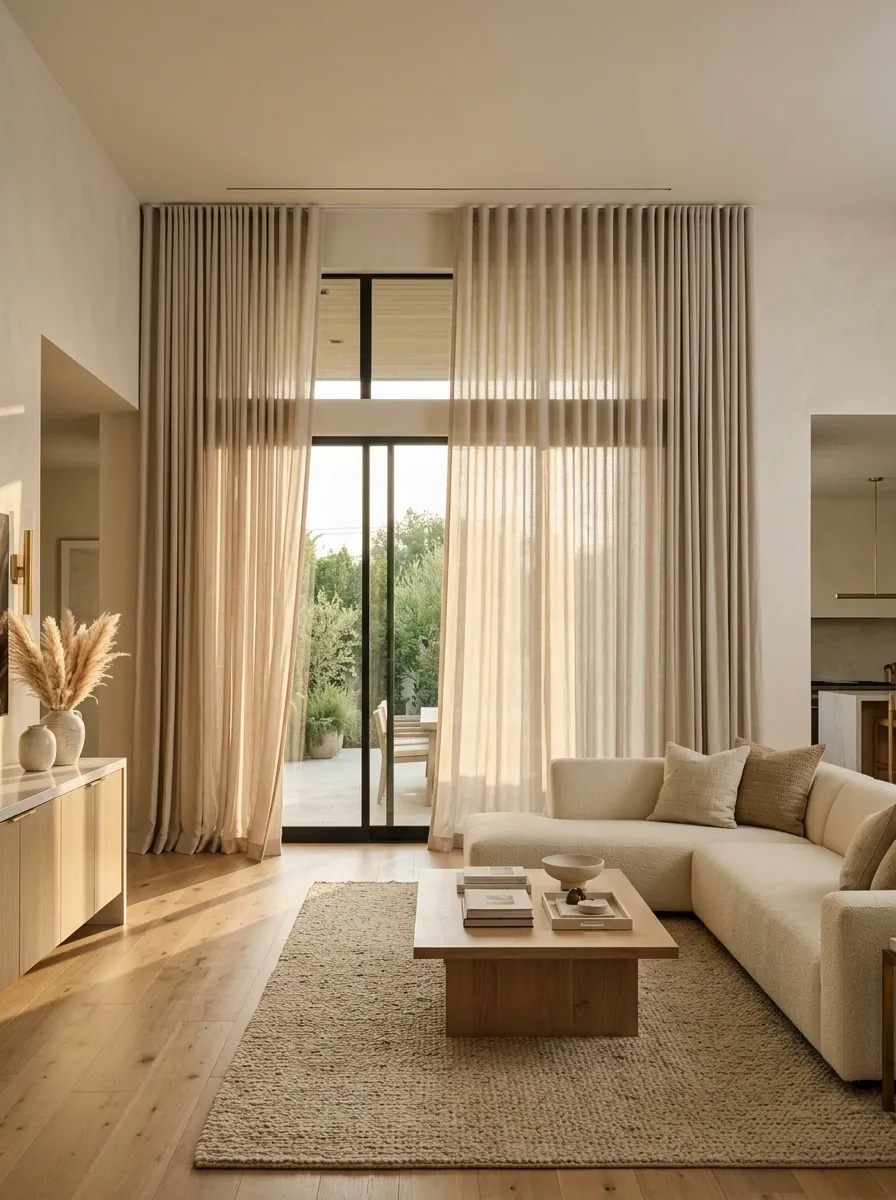
For an extra-wide sliding glass door, motorized curtains can make a large expanse of fabric easier to operate without changing the room’s overall style. Full-height linen panels on a ceiling-mounted track create a clean architectural frame, while concealed or discreet controls keep the hardware from dominating the design.
This solution makes sense in open-plan living rooms, rooms with very wide glazing, or spaces where the curtains are opened and closed frequently. Choose a neutral fabric that complements the architecture rather than making the motorized system itself the visual focus.
The practical details need attention. The track requires suitable mounting support, the motor needs a compatible power source or charging arrangement, and the controls must suit the chosen system. Check manual operation during a power outage if that feature matters. Technology is great until the curtains decide they’re on strike halfway through movie night.
Embroidered Sheer Curtains With a Tonal Botanical Motif
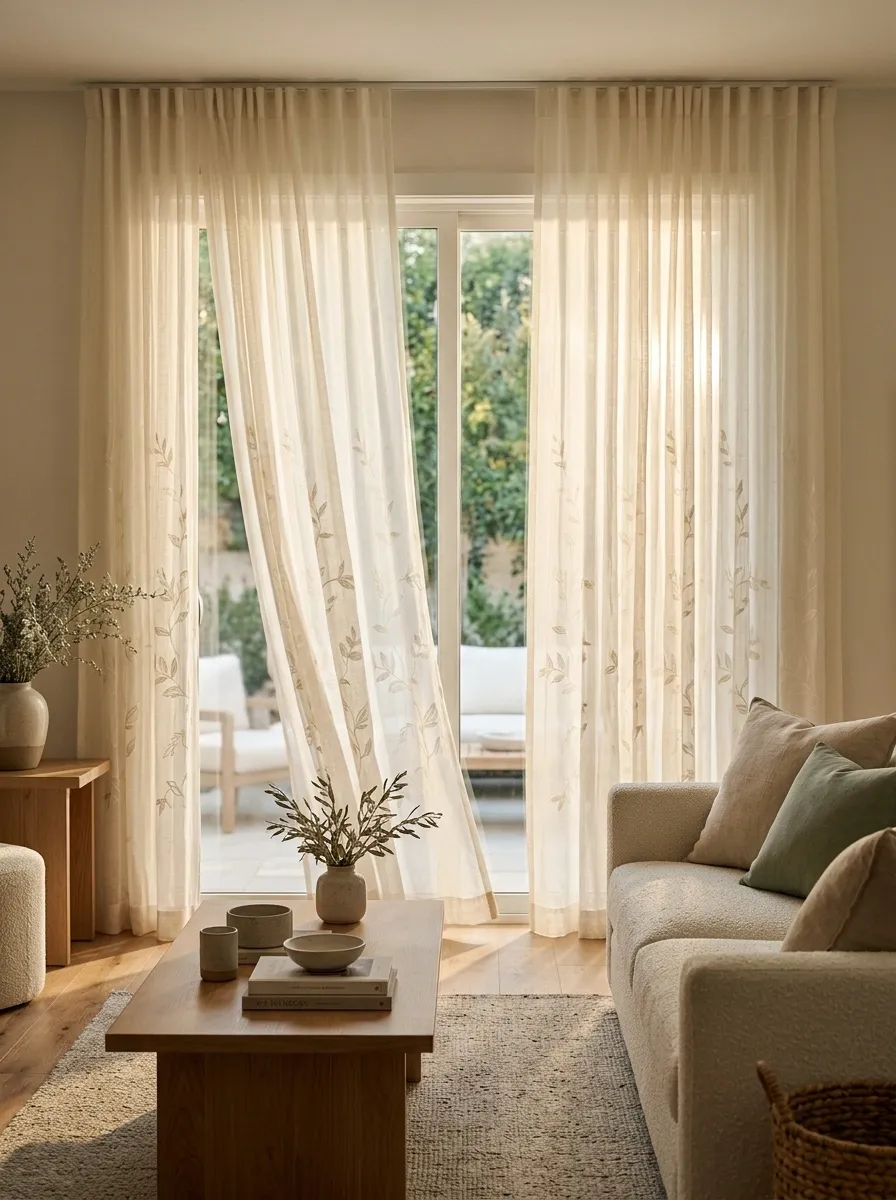
Plain sheers are lovely, but they can also make a room feel a little unfinished when the rest of the interior has more character. Tonal embroidery solves that problem without introducing a loud print. Soft ivory curtains with a subtle leaf motif filter daylight across the sliding glass door, while warm oak furniture, textured upholstery, and muted greenery reinforce the natural palette.
The embroidery should remain understated enough to be noticed up close without dominating the entire room. This treatment works particularly well in transitional living rooms, relaxed bedrooms with patio access, and spaces where heavy patterns would compete with the furniture.
Keep the fabric lightweight and check how the embroidery hangs when the panels are gathered. A delicate motif deserves a graceful drape, not a stiff curtain behaving like it has an office job.
Reeded-Glass Privacy Film With Minimal Linen Drapes
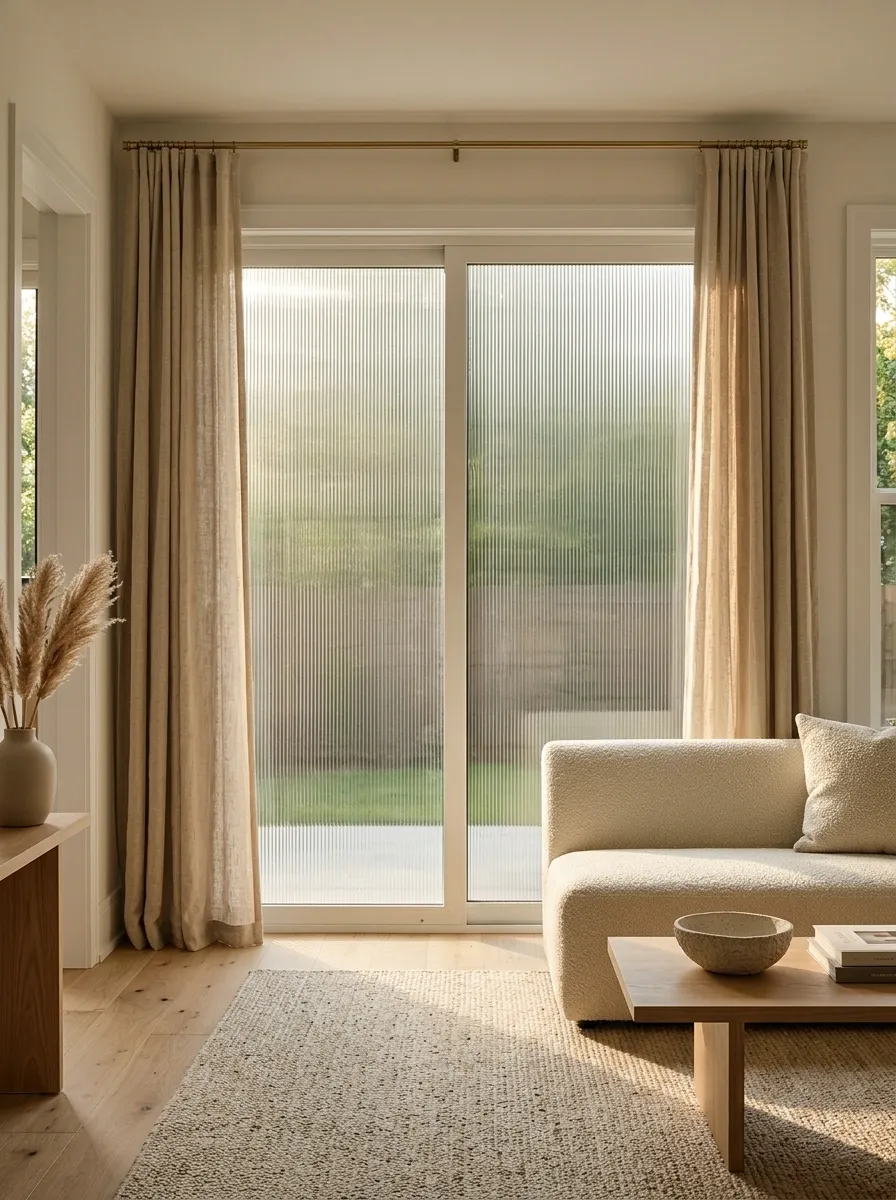
Reeded-glass film gives a sliding door the appearance of textured glass without replacing the existing panels. Its narrow vertical lines soften the view through the glazing, adding an architectural finish that feels more deliberate than ordinary frosted film. Slim flax-colored curtains at the sides introduce warmth and make the complete doorway feel finished.
This pairing suits bathrooms with patio access, ground-floor living spaces, and modern homes where privacy matters but bulky window coverings aren’t desirable. The vertical texture also works naturally with tall doors and clean-lined furniture.
The trade-off is that the film remains in place. Unlike curtains, it can’t be pulled aside to restore a completely clear view. Check compatibility with the specific glass, the film’s privacy performance from both sides, and the manufacturer’s application instructions before committing to the full opening.
softens the view
Adjustable Exterior Timber-Look Louvers
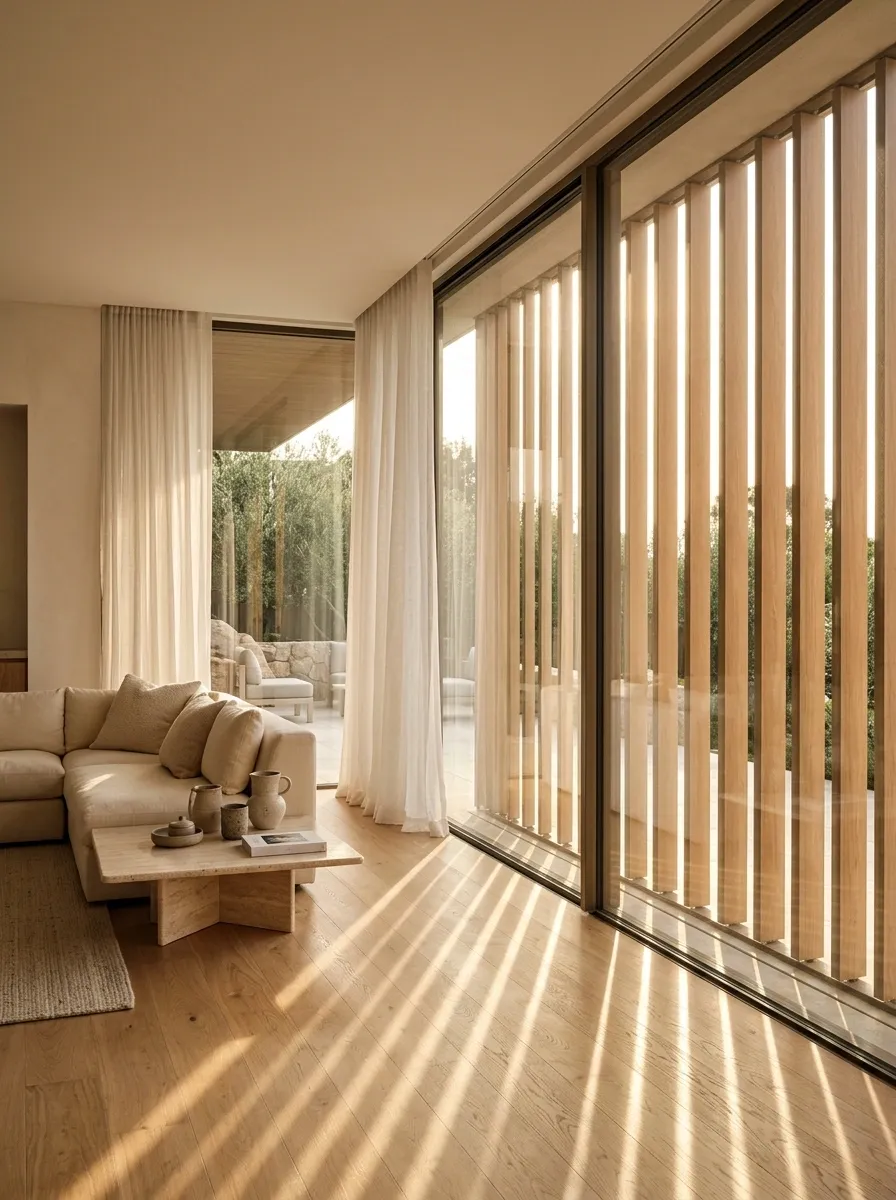
Adjustable exterior louvers create a more architectural approach to sliding door window treatments. A timber-look screen mounted outside the glass adds a layer of vertical or horizontal rhythm, while adjustable slats let the design respond to changing sunlight and sightlines. Inside, neutral furnishings and simple curtains maintain a relaxed, uncluttered appearance.
This design suits modern homes with exposed patios or large glazed openings that receive strong afternoon sun. The exterior screen becomes part of the facade, rather than just another piece of hardware attached to the interior.
Choose a system built for outdoor conditions, with suitable fixings and a clear operating path. The slats mustn’t interfere with door movement, drainage, or access to the glass for cleaning. A handsome facade is great. A handsome facade that prevents anyone from cleaning the windows is a maintenance subscription nobody requested.
the outer screen
Double-Sided Drapes for an Open-Plan Living and Dining Area
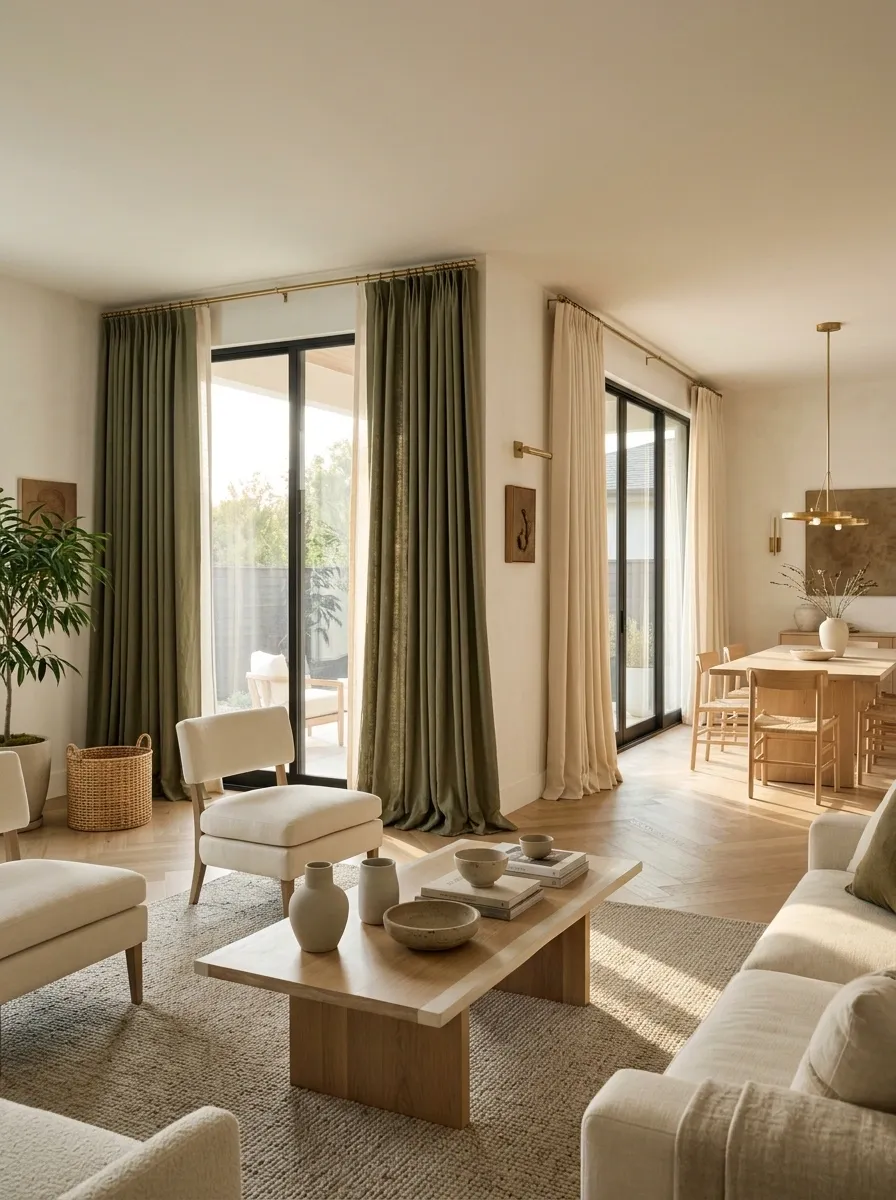
In an open-plan home, sliding doors may be visible from both the living room and dining area. Double-sided drapes address that detail by using a decorative face fabric on one side and a complementary lining or contrasting fabric on the other. The curtain looks finished from both directions instead of revealing an entirely different color when viewed across the room.
A muted olive living-room face with a warm neutral reverse can create a subtle connection between two adjoining zones. Repeat a few related materials, such as oak, cream upholstery, and restrained brass details, to keep the shared space visually connected.
The construction matters. A reversible curtain should be made with appropriate fabric weights and seams so it hangs cleanly from both sides. Discuss the finish with a workroom or curtain maker before ordering. The reverse side is still part of the interior, even if it doesn’t get photographed as often.
Acoustic-Lined Drapes in a Busy Open-Plan Living Room
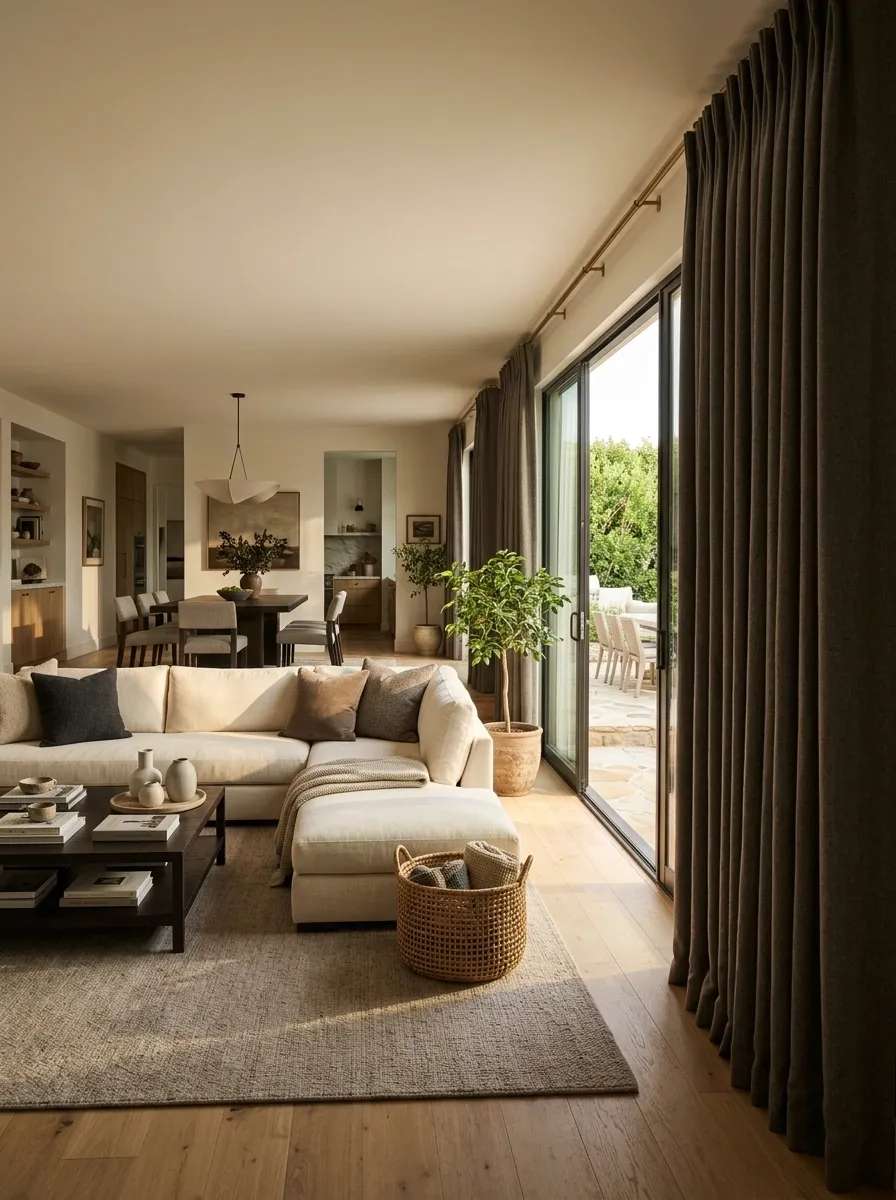
Open-plan living rooms can sound lively in ways nobody asked for. Hard floors, broad glass doors, and large uninterrupted walls leave sound bouncing around the room. Heavier lined drapes introduce a generous fabric surface that can help soften some indoor reflections, while also making a large sliding door feel visually finished.
Choose warm taupe, deep mushroom, or textured charcoal fabric to suit the room’s existing palette. A substantial sofa, a large rug, and upholstered dining chairs can support the softer acoustic character without making the space feel cluttered.
The important distinction is that curtains won’t soundproof a room. They can absorb some sound within the space, depending on the material and coverage, but they won’t replace proper acoustic insulation or construction. Choose the lining for its documented properties, then make sure the curtains still stack clear of the door. Peace and quiet are lovely. Losing access to the patio isn’t.
Stained-Glass Effect Film With Jewel-Toned Accents
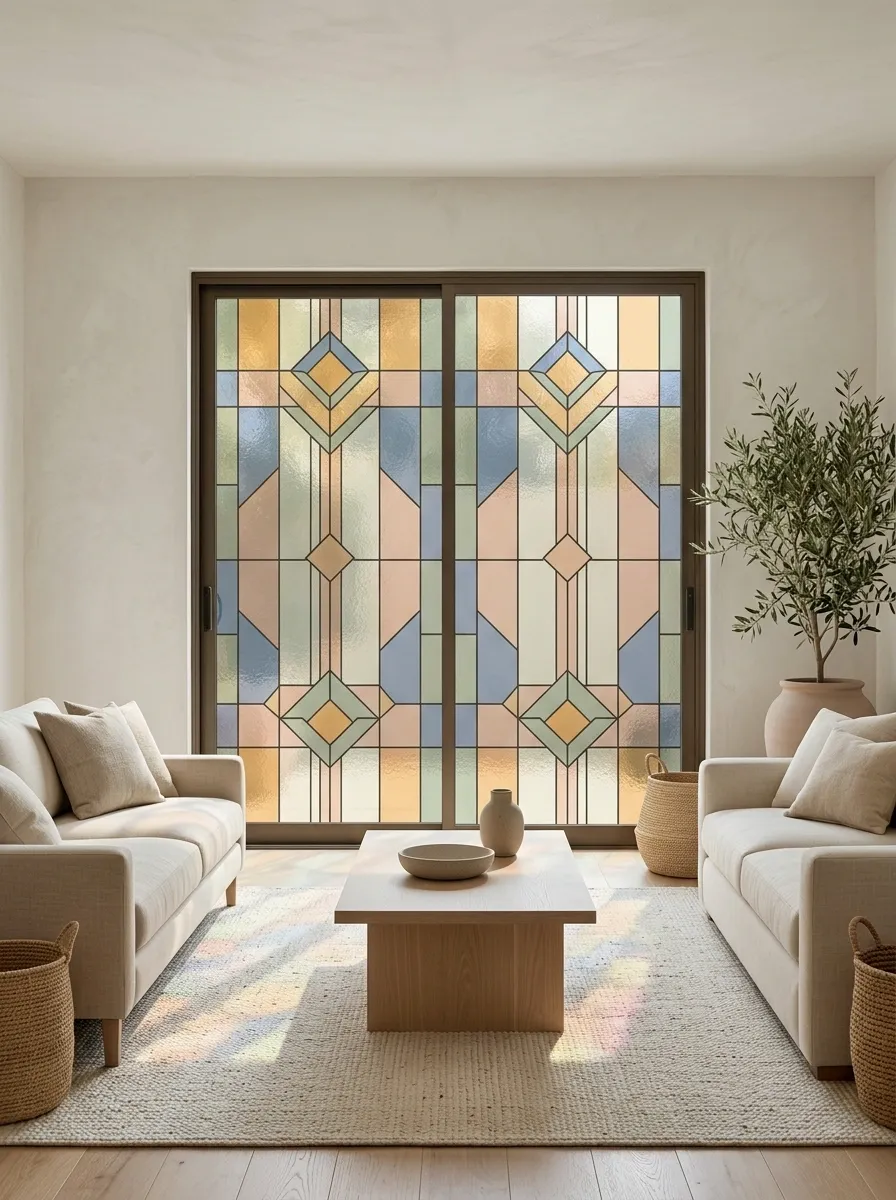
A sliding glass door doesn’t have to disappear behind curtains to look finished. Decorative stained-glass effect film introduces translucent color and pattern directly onto the glazing, creating a focal point that changes character as daylight moves through the room. Muted amber, dusty blue, soft green, and warm blush can bring an artistic quality to a contemporary interior.
Keep the surrounding room relatively simple. Solid upholstery, natural wood, and restrained accessories allow the colored glass to stand out without making the entire space feel visually noisy. This treatment works especially well when privacy and decorative interest matter more than maintaining a completely unobstructed view.
Choose a film designed for the specific type of glass, and check how the colors look from indoors and outdoors. Decorative film isn’t necessarily suitable for every insulated or treated glass panel. The goal is a beautiful filtered view, not an expensive surprise involving incompatible materials.
Hidden Pocket Curtains That Disappear When Open
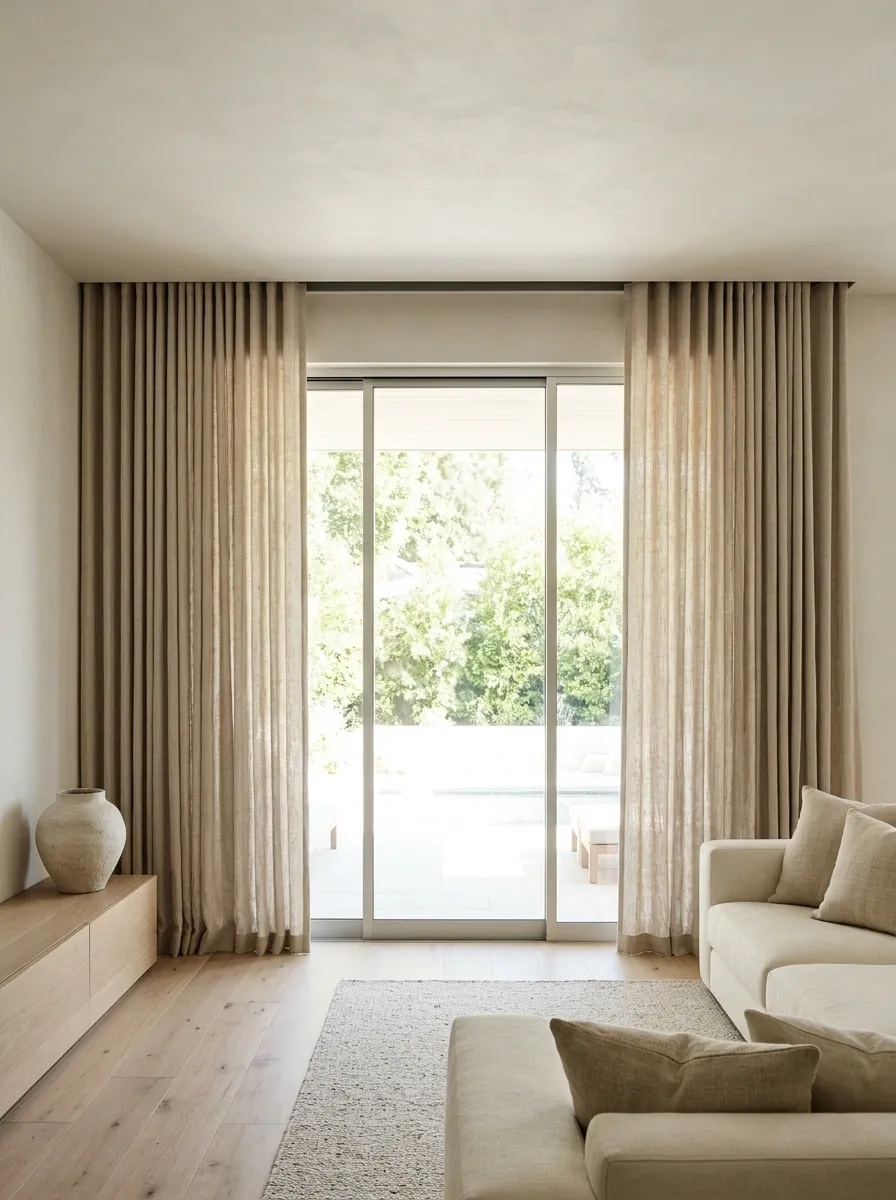
For a renovation or new build, a recessed curtain pocket can conceal the entire track and gathered fabric when the curtains are open. Instead of leaving a visible rod or stack along the wall, the treatment disappears into a carefully planned ceiling recess. When closed, full-length linen panels create a soft frame around the sliding glass door.
This approach works particularly well in contemporary homes with clean ceiling lines and large glazed openings. Warm neutral fabric maintains a calm finish, while understated furniture lets the architecture remain the focus.
The pocket needs enough depth and length to accommodate the track, curtain heading, and fabric stack. That planning usually belongs in the construction or renovation stage, not after the ceiling has been finished. Adding a hidden curtain pocket later can be much more complicated than ordering a pretty pair of panels. The word recessed does not mean effortless.
glass opening
Shoji-Inspired Sliding Screens With Pale Timber Frames
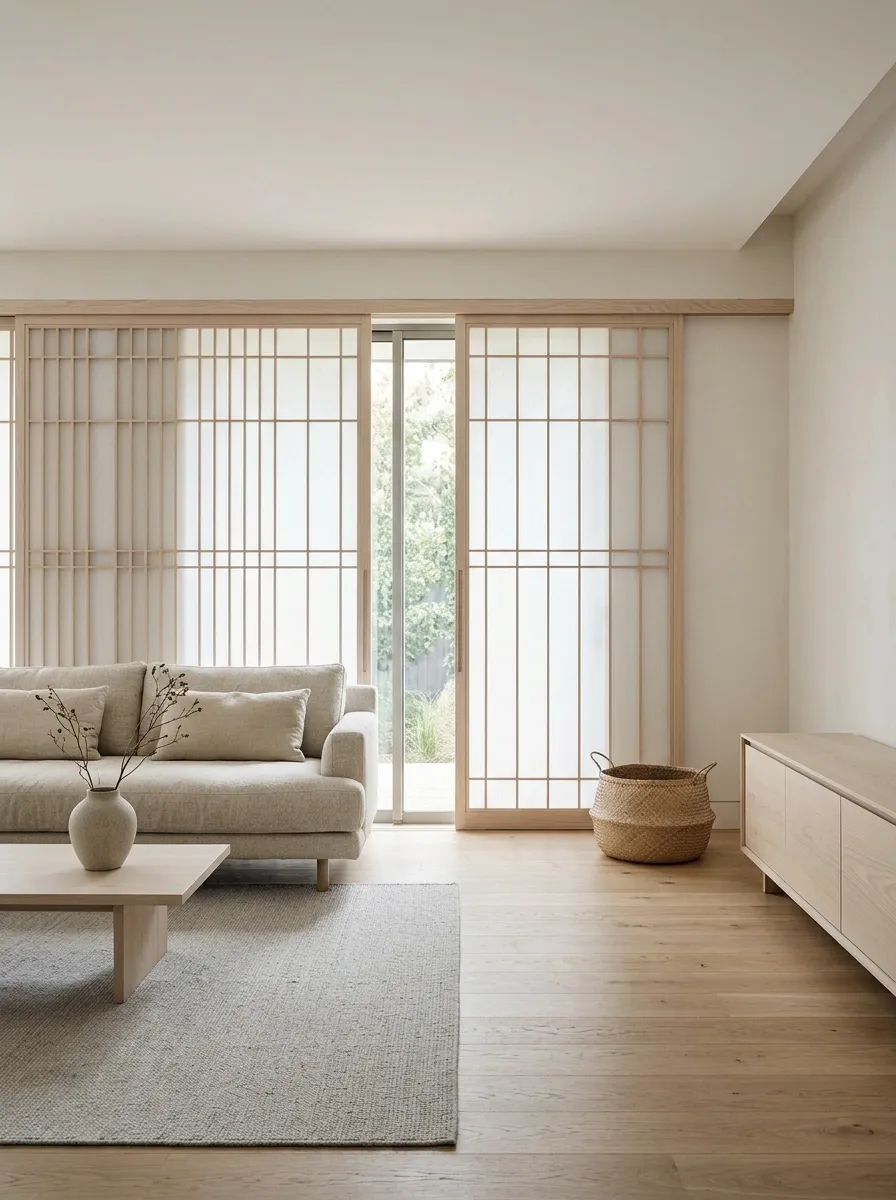
Pale timber frames and translucent panels give sliding glass doors a distinctly architectural finish. Shoji-inspired screens introduce a fine grid that contrasts with the broad proportions of the glass, while light wood and softly filtered daylight keep the room from feeling heavy. Low-profile furniture, textured neutral upholstery, and a restrained palette help the complete design feel calm without becoming a themed set.
This direction suits contemporary interiors that favor natural materials and clean geometry. The framed screens also create a stronger visual element than ordinary curtains, which can be useful when the glass opening feels too bare.
The details matter. Traditional paper screens aren’t automatically suitable for a damp or high-traffic area, so choose materials and a sliding system designed for the actual conditions. Make sure the added screen doesn’t interfere with the glass door or its handle. Minimalism is lovely, but it still needs to survive everyday life.
view
Drapes With Sculptural Wall-Mounted Tiebacks
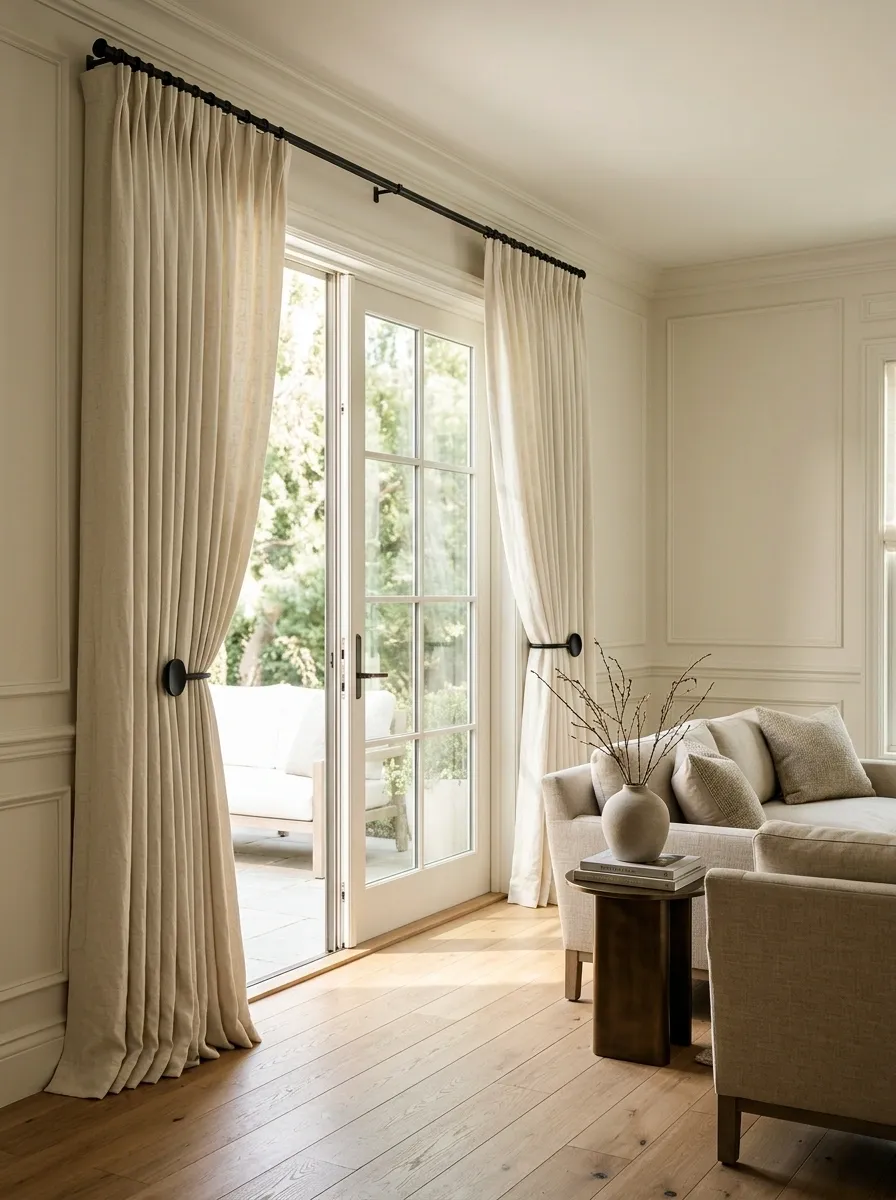
Full-length curtains secured with sculptural wall-mounted tiebacks create a more tailored look than simply pushing the panels aside. Brushed brass, dark bronze, or matte-black holders introduce a small architectural detail, while softly gathered linen or velvet gives the sliding door a generous frame.
The arrangement works well in traditional living rooms, formal dining areas, and transitional interiors with decorative trim or classic furniture. The tiebacks also keep fabric away from the opening when the curtains are gathered, provided they are positioned correctly.
This is a styling choice that depends heavily on placement. Tiebacks mounted too low can make the fabric look awkward, while tight gathers can distort the curtain’s shape. Check the position against the door handle and the actual path of the panels. Decorative hardware is meant to hold curtains, not start a long-running feud with them.
door opening
Outdoor Curtain Panels Beneath a Covered Patio
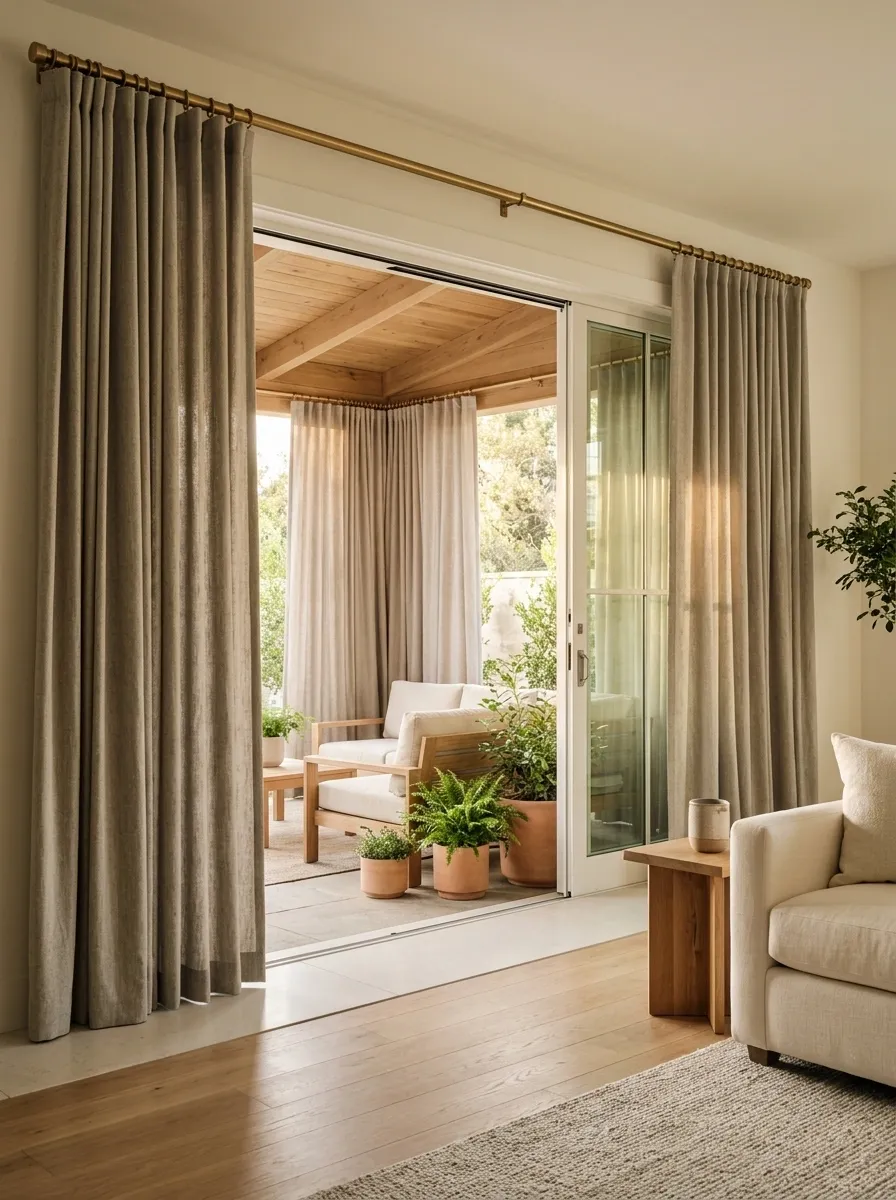
A covered patio can feel like a natural extension of the living room when outdoor-rated curtain panels frame the sliding glass door and the seating area beyond it. Weather-resistant fabric in warm sand or muted stone softens the hard lines of the patio, while timber furniture, neutral cushions, and simple planters create a connected indoor-outdoor palette.
This idea is particularly effective when the interior already uses linen, oak, or earthy neutral tones. Repeating similar colors outside makes the doorway feel like a transition between two related spaces rather than a boundary between unrelated decorating schemes.
Use hardware and textiles rated for the patio’s actual weather exposure. Outdoor curtains won’t replace a proper rain screen or provide reliable wind protection, and they need room to move without catching on furniture or door handles. The finished space should feel relaxed, not like the weather has been given control of the curtain budget.
door
curtain panels
Thermal-Lined Curtains With Insulated Side Seals
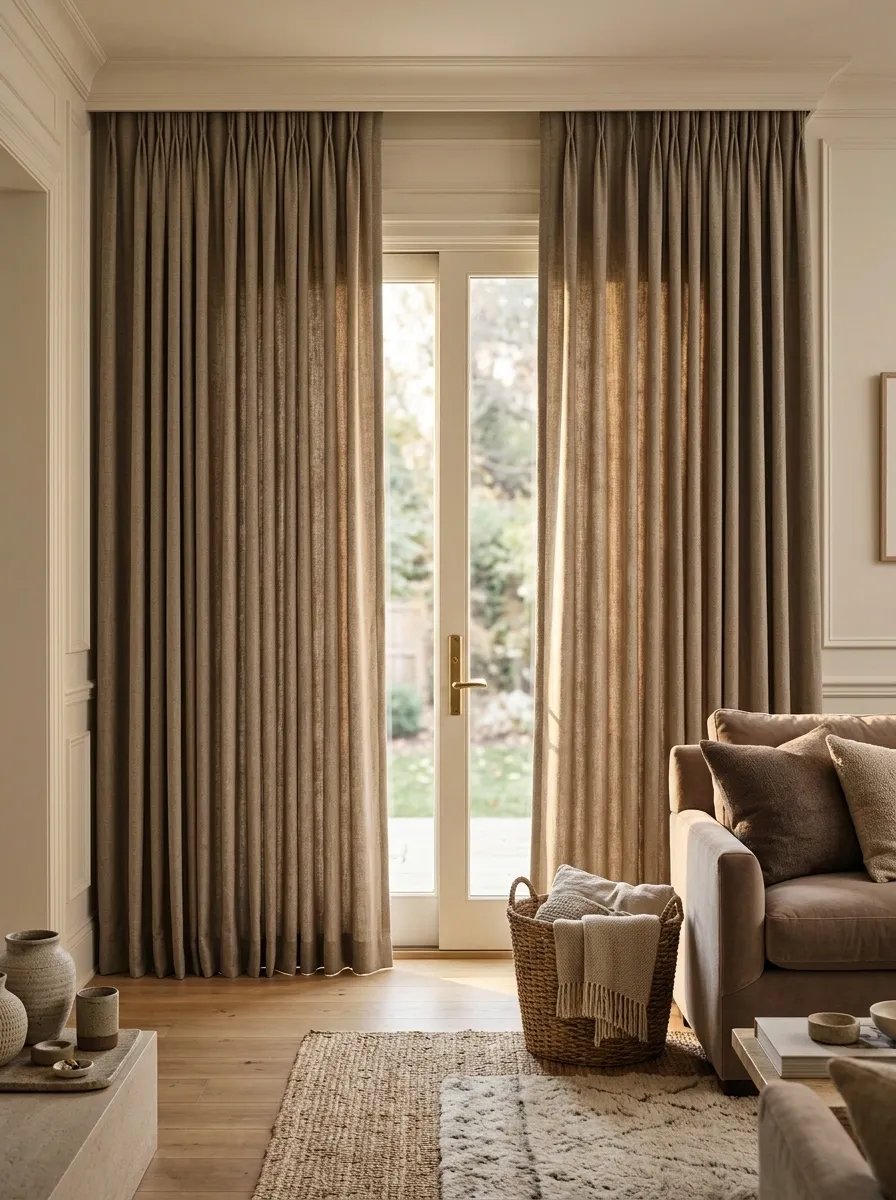
Large sliding glass doors can feel like the coldest spot in a room during winter, especially when the surrounding walls are poorly insulated or the door has noticeable drafts. Thermal-lined curtains add a substantial fabric layer while creating a more finished frame around the glass. Warm mushroom, cocoa, or muted taupe fabrics work well with natural wood, layered rugs, and soft neutral upholstery.
The functional detail is the fit around the edges. Properly designed side returns or compatible sealing arrangements can reduce gaps around the curtain, although the result depends on the product, installation, and the actual source of heat loss. Curtains won’t fix a poorly sealed door, and no amount of beige fabric can negotiate with a structural problem.
Choose a lining based on its documented properties, then confirm the curtains can clear the sliding door when open. Comfort is the assignment. Building an upholstered barricade across the patio entrance is not.
opening
Alternating Sheer and Opaque Sliding Panels
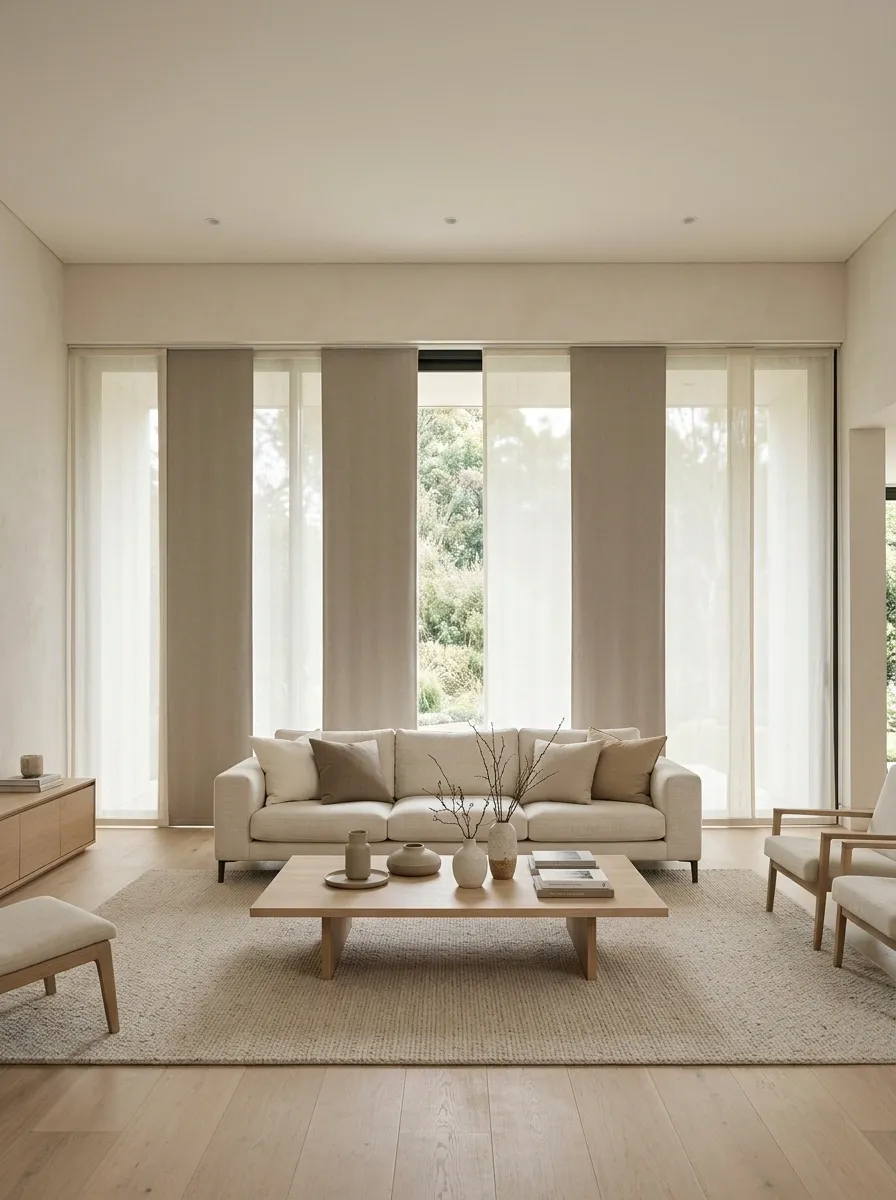
Alternating translucent and opaque panels give a wide sliding glass door a more architectural appearance than ordinary vertical blinds. Pale sheer sections soften the view, while solid fabric panels create stronger privacy bands. Sliding the panels across one another changes the balance between daylight and coverage without filling the floor with heavy curtain fabric.
A combination of soft ivory and warm stone works particularly well in contemporary living rooms with simple furniture and clean architectural lines. The vertical divisions also create a subtle rhythm across a broad opening, making the treatment feel like part of the room’s design rather than an accessory added afterward.
The key is choosing panels that belong to the same visual family. Keep their textures and colors coordinated, and check how the track operates when several panels overlap. Too many contrasting sections can make the window busy, and the whole point is to control the view, not give it a complicated dress code.
Retractable Patio Awning Above a Sliding Glass Door
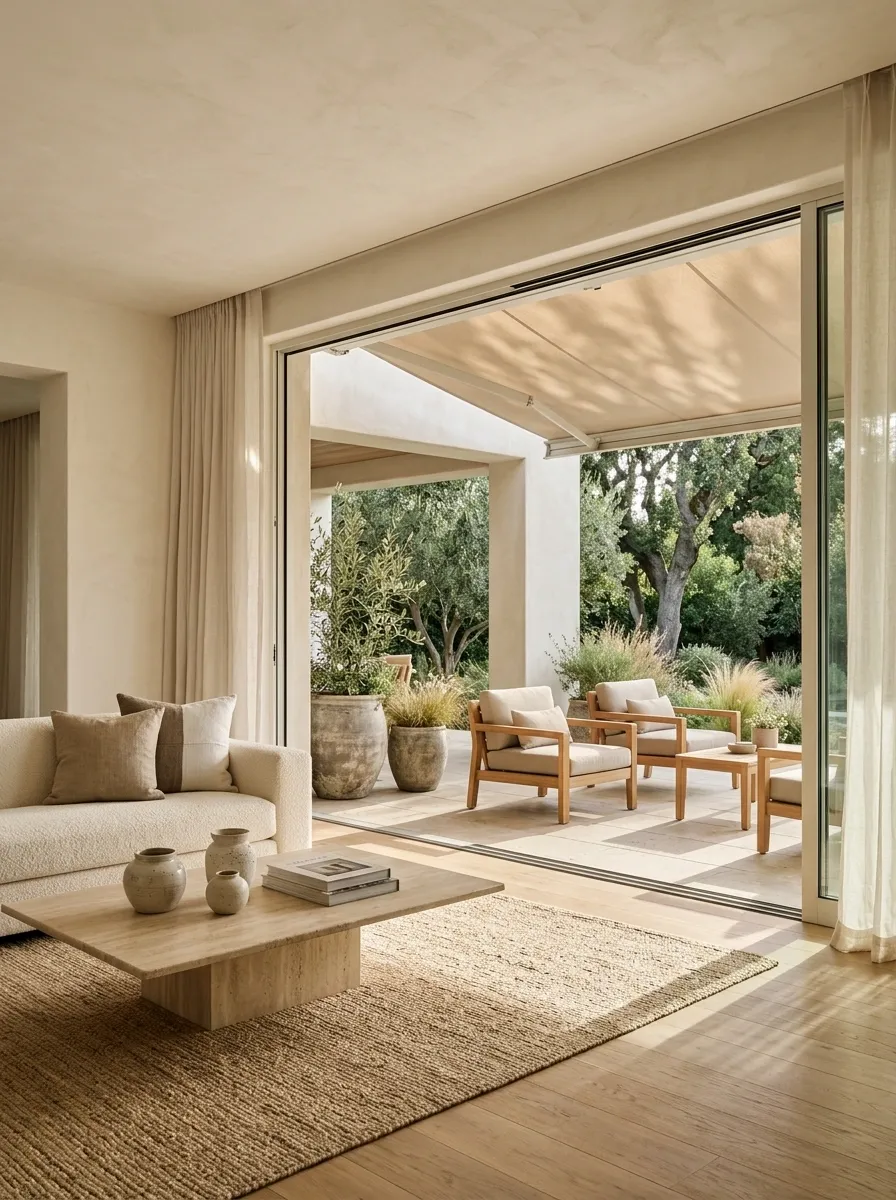
Sometimes the best window treatment starts outside. A retractable awning above a sliding glass door introduces shade before direct sunlight reaches the glazing, while keeping the interior free of bulky coverings. The patio becomes part of the overall design, with warm timber furniture, neutral outdoor cushions, and clean-lined architectural details.
This setup makes sense for sun-exposed living rooms and homes with a usable patio or terrace. When extended, the awning provides overhead shade. When retracted, it leaves the view of the sky and surrounding architecture open.
Choose a system rated for the local wind and weather conditions, and make sure the mounting structure can support it. An awning also needs enough clearance above the door and a suitable projection beyond the glass. The goal is afternoon shade, not a dramatic new sail every time the weather forecast gets interesting.
door
patio
Switchable Privacy Glass for a Minimalist Sliding Door
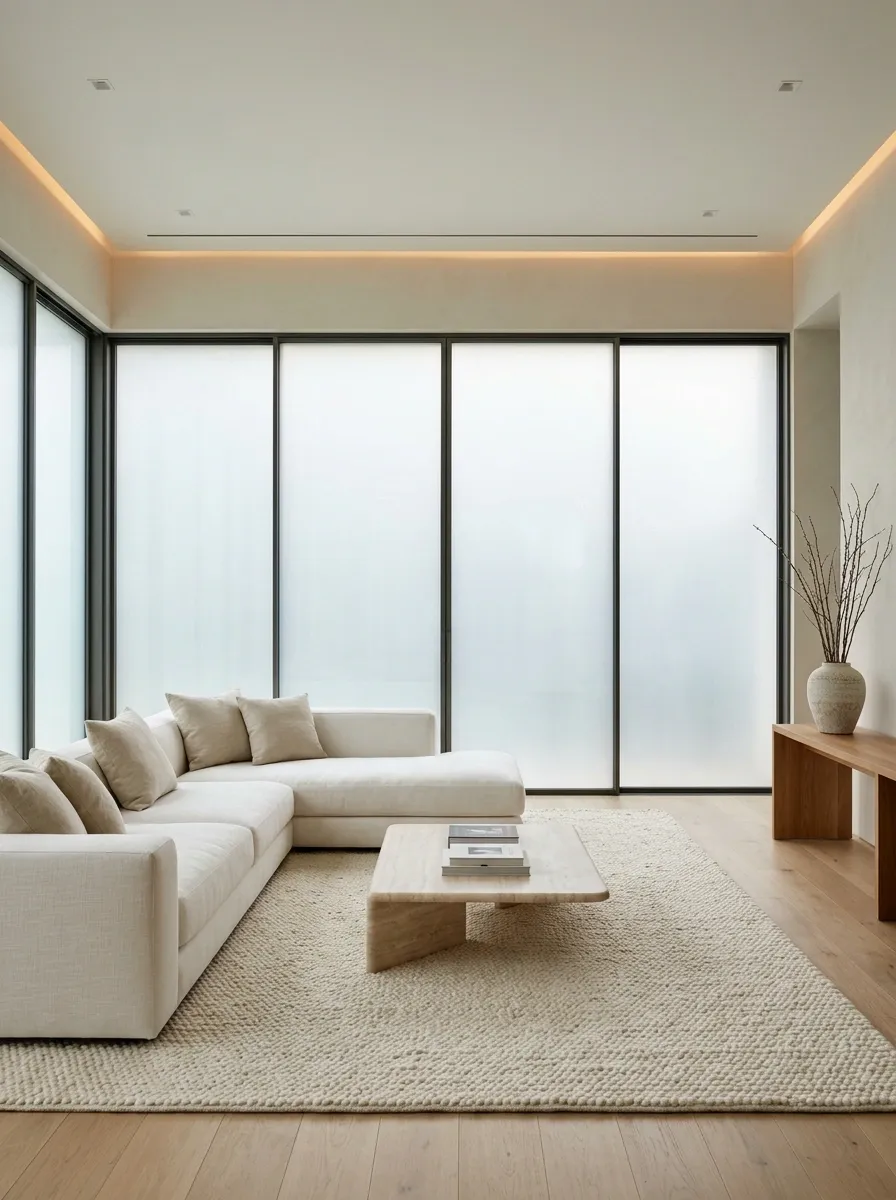
Switchable privacy glass changes between a clearer state and a more opaque appearance using an electrical control system. It offers a completely different approach to sliding door window treatments because there’s no fabric to gather, no rod to mount, and no stack of panels occupying the sides of the opening.
In a contemporary living room, the clean glass surface works with minimalist furniture, pale stone, warm timber, and discreet lighting. The architecture remains the focus, and the privacy setting can change without physically moving a covering.
The important catch is cost and compatibility. Switchable glazing and retrofit films aren’t interchangeable, and performance varies by system. Some provide privacy rather than complete blackout, and electrical installation needs proper planning. Check the specific product’s transparency, wiring, glass compatibility, and failure behavior before designing the entire room around it. Futuristic is lovely, but the technical specifications still get a vote.
to the outdoors
and greater concealment
Decorative Perforated Metal Sliding Screens
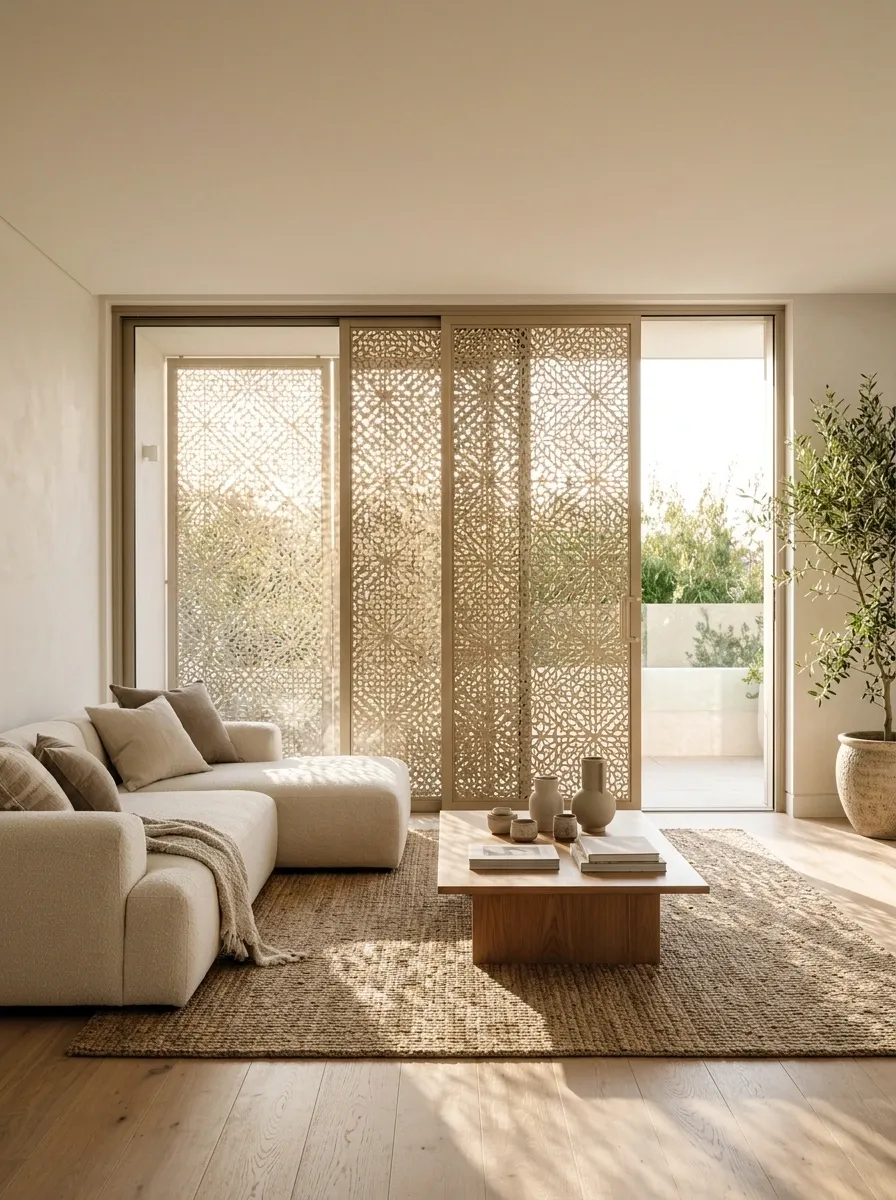
Decorative metal screens introduce pattern and filtered light without relying on curtains. Slim sliding panels in matte bronze, charcoal, or a warm champagne finish can sit in front of a glass door, creating a second layer with geometric cutouts or a restrained repeating motif.
This treatment works best in contemporary homes where strong architectural details already play a role. The screen becomes a feature in its own right, while simple furniture and a restrained material palette keep the room from looking overly industrial. Warm timber and soft upholstery are especially effective at balancing the metal’s harder visual character.
The pattern affects both the appearance and the light that passes through, so choose the perforation size and density carefully. The panels also need a suitable track, enough space to stack, and a finish appropriate to the environment. Most importantly, ensure the screen doesn’t block the original door’s operation. The decorative layer should be a design asset, not a second door nobody can be bothered to open.
through glass
Choose the Treatment That Works With Your Room
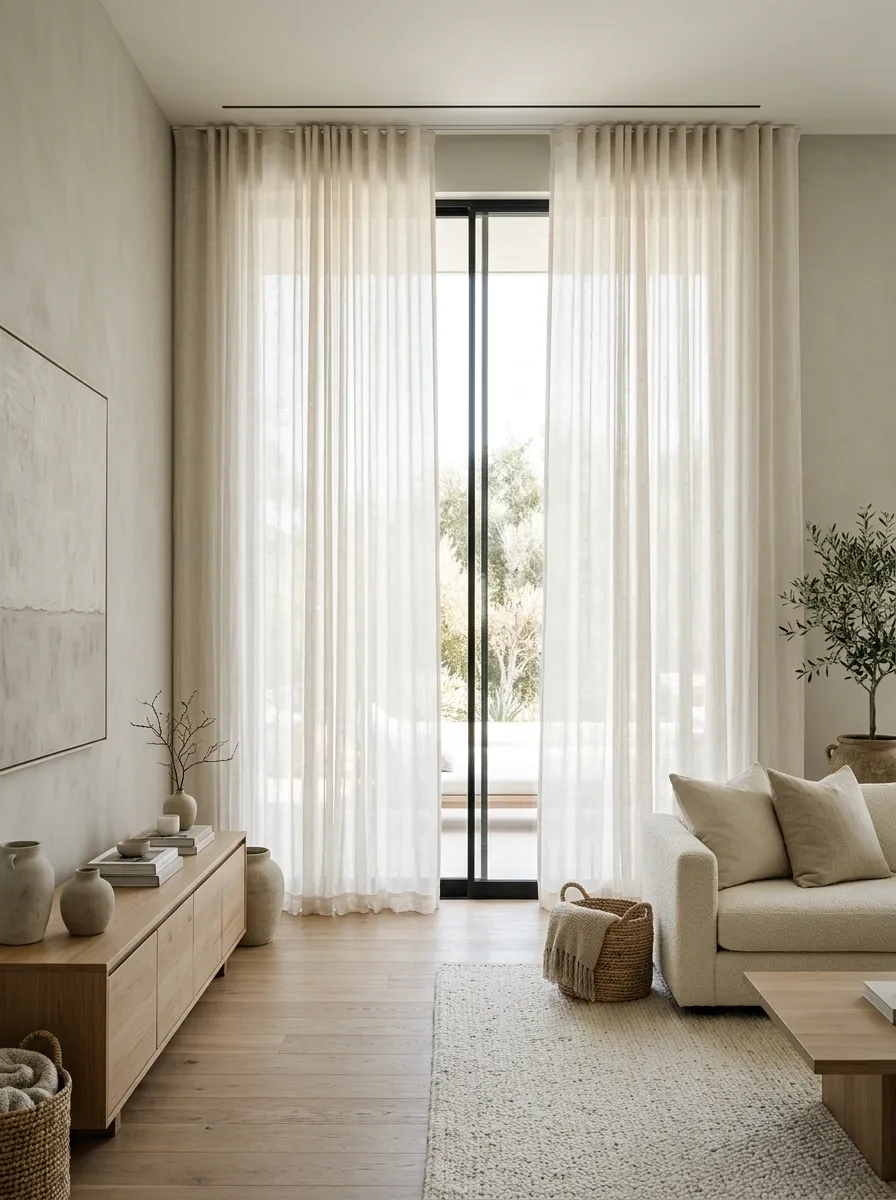
The right sliding door treatment is the one that suits the room’s architecture, the way the door is used, and the amount of light and privacy needed. There isn’t a universal winner. A recessed track and sheer panels can be ideal in a bright minimalist living room, while lined curtains or an exterior solar screen may make more sense where temperature and glare are bigger concerns.
Start with the practical decisions. Measure the opening, check the space available for panels to stack, and decide whether the room needs filtered daylight, privacy, glare control, or several of those things. Then choose the fabric, material, and color that support the finished design.
Don’t buy a treatment based on a beautiful product photograph alone. Check the hardware, mounting requirements, material performance, and actual operating clearance. The best design is the one that still looks right after the door has been opened a thousand times.