
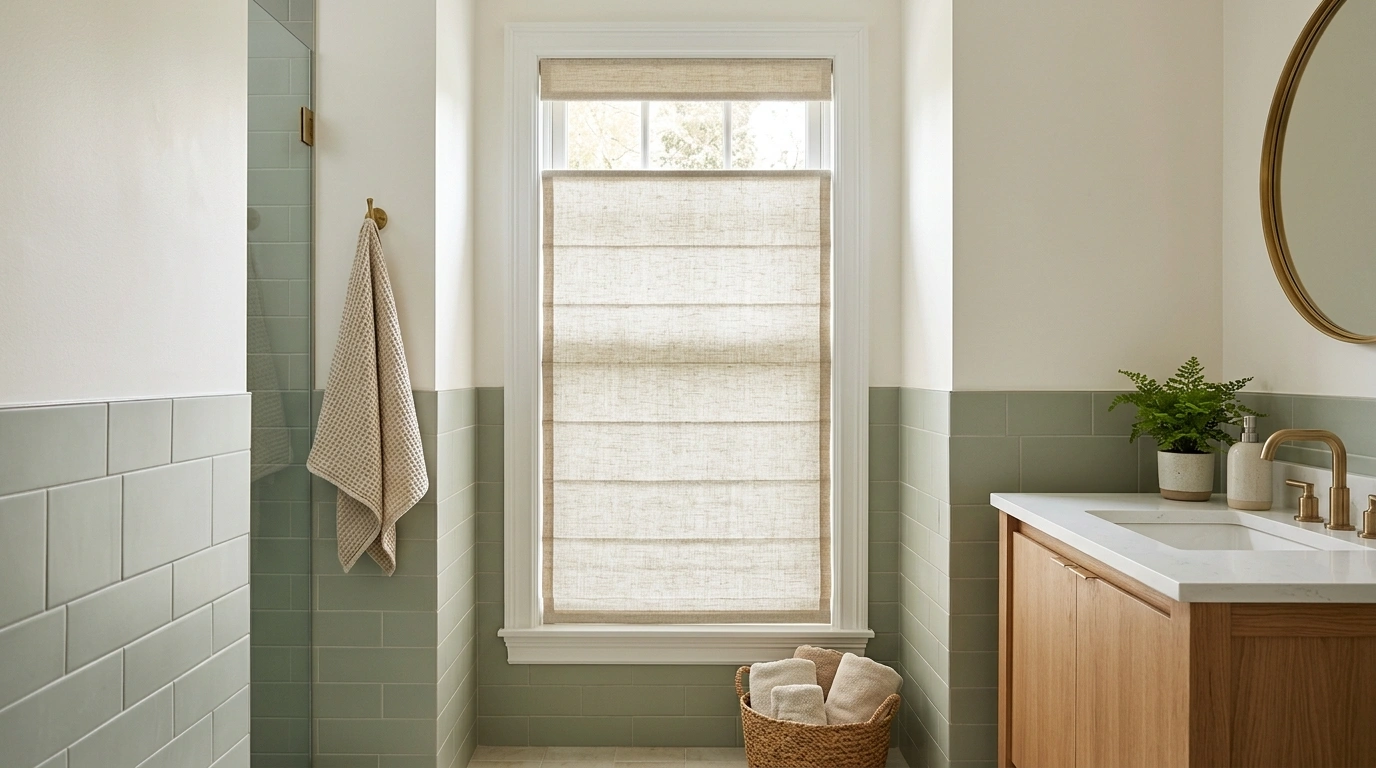
A bathroom can have gorgeous tile, an expensive-looking vanity, and carefully chosen fixtures, yet one badly dressed window can make the entire room feel unfinished.
Heavy curtains swallow the daylight, cheap-looking blinds undermine the finishes, and a window facing the neighbors creates a privacy problem that no amount of decorative soap can fix.
The secret is to treat the window as part of the room’s overall design. A Roman shade can soften a modern bathroom, woven blinds can warm up pale stone, and textured glass can provide privacy without adding another layer of fabric.
The right choice depends on the window’s shape, the surrounding materials, the amount of daylight, and how much privacy the room actually needs.
Some bathrooms benefit from a tailored fabric treatment. Others look better with discreet roller shades, architectural shutters, or no separate covering at all. Each approach creates a different finished result, and seeing the entire room makes the decision much easier.
Humidity, cleaning, and splash exposure matter too. A gorgeous fabric that struggles in a damp bathroom isn’t a design victory. It’s a future maintenance complaint waiting to happen.
The Bathroom Window Treatment Group Chat
Bathroom Window Treatment Ideas
Woven Wood Shade Above the Tub
A textured woven wood shade brings organic warmth to a bathroom lined in cool gray tile. Paired with a freestanding tub, brass fixtures, and a sculptural pendant light, the natural weave adds depth and softens the hard stone surfaces without feeling heavy.
The tactile variation of the shade provides an immediate focal point, drawing the eye upward while filtering the daylight just enough. Keeping the surrounding palette restrained allows the natural fibers and subtle tile variations to shine without visual clutter.
Humidity considerations are key when placing a natural shade near a bathtub. Ensure the material is treated for moisture resistance so it handles steam gracefully while maintaining its relaxed, resort-like appeal over time.
Soft Roman Shades in a Warm Neutral Bathroom
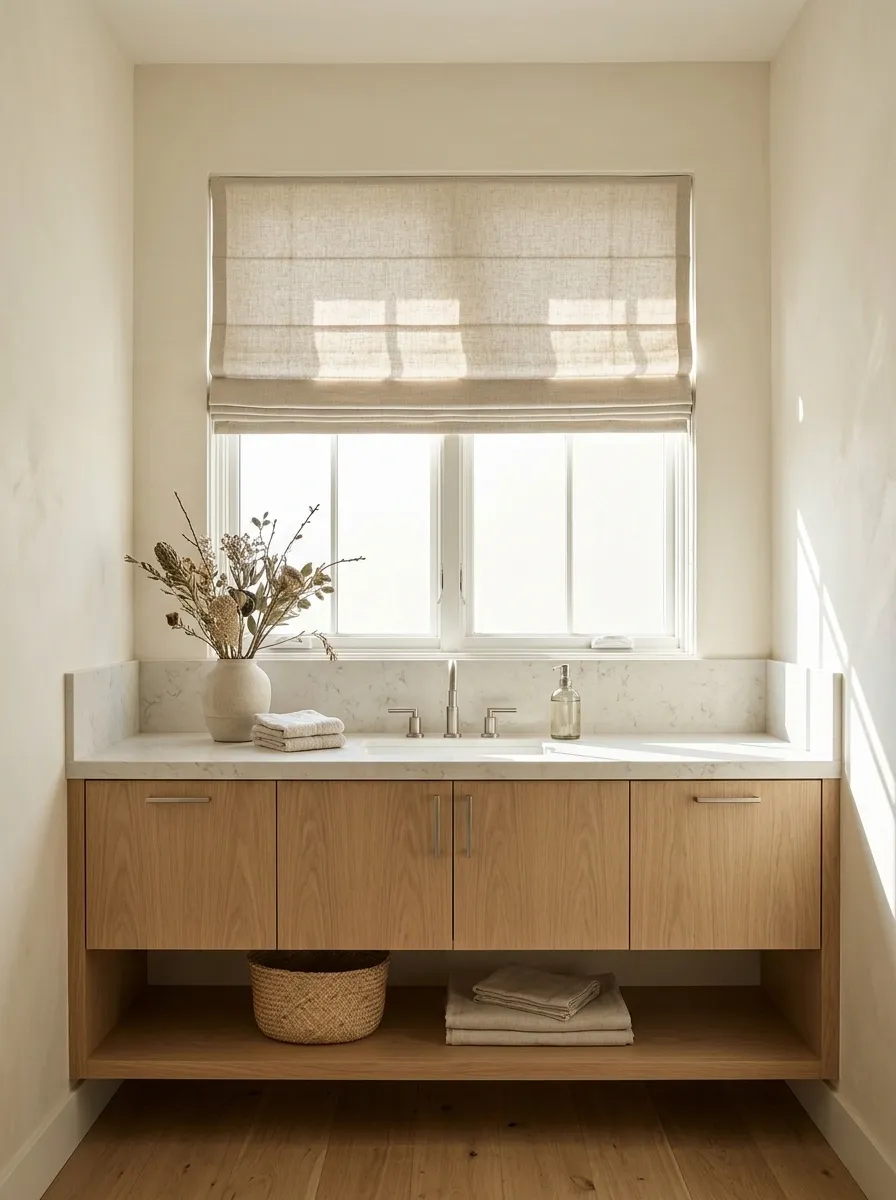
Oatmeal Roman shades work beautifully with cream walls, a light oak vanity, pale stone countertops, and brushed nickel fixtures. The fabric introduces softness against all those hard bathroom surfaces, while the neat folds give the window a more tailored appearance than a basic roller shade.
Keep the fabric relatively simple if the room already has veined stone or patterned tile. Too many competing details can make a small bathroom look like every finish had its own separate design meeting.
The practical detail matters here. Choose a material suited to the room’s humidity, and avoid placing fabric where it receives regular shower spray. The finished look should feel relaxed, not like a damp laundry experiment.
Layered Roman Shade and Café Curtain
Combining a patterned top-fold Roman shade with a crisp lower café curtain creates a charming, multi-layered look for a traditional bathroom window. The patterned fabric on top introduces subtle color and personality, while the airy white lower tier secures privacy below.
This double treatment lets you customize light and privacy levels throughout the day without sacrificing architectural character. Coordinating the sconce shade with the window fabric ties the entire vignette together for a cohesive, custom-tailored finish.
Make sure the proportions are balanced so the window doesn’t feel overly congested with textiles. Lightweight fabrics keep the overall composition feeling breezy and intentional rather than heavy-handed.
Natural Woven Shades With Pale Stone and Oak
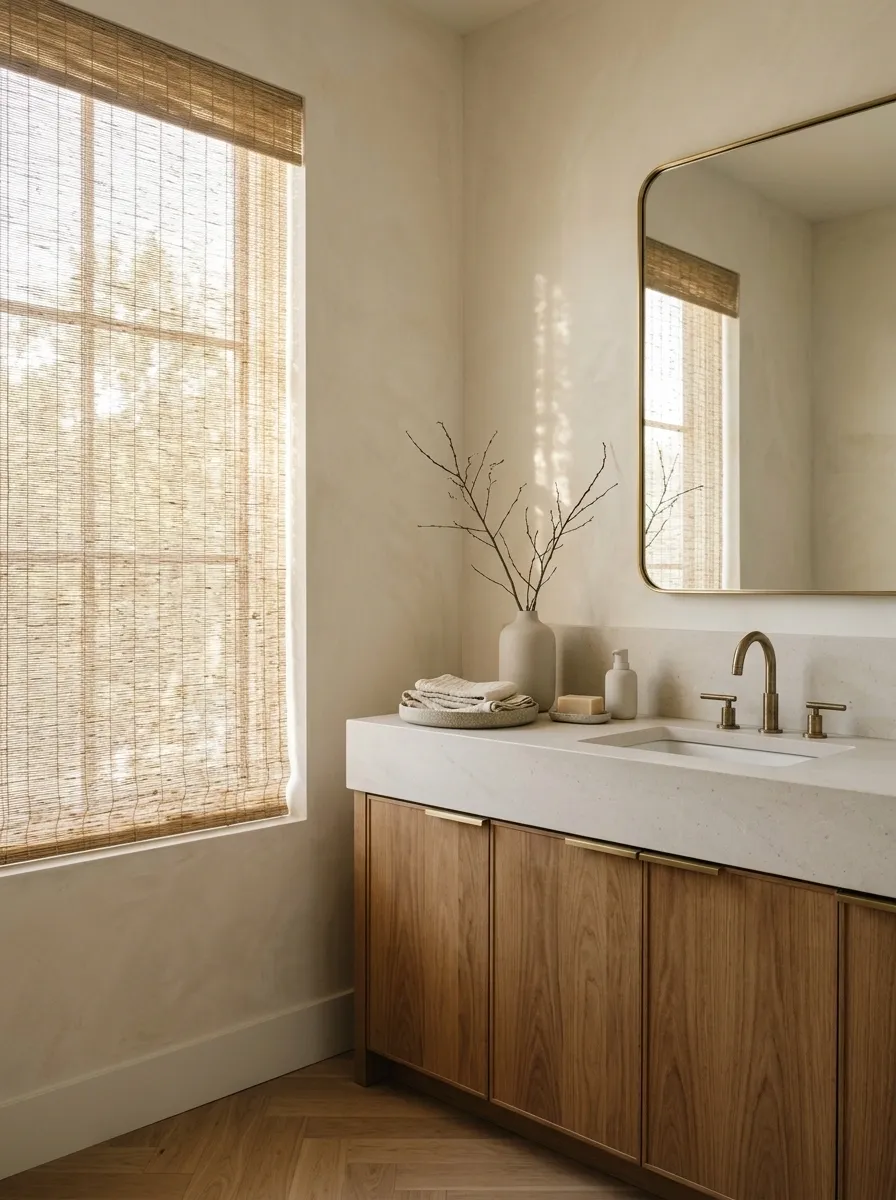
Natural woven shades bring visible texture to a bathroom dominated by smooth surfaces. Pair them with pale stone, warm wood cabinetry, and simple fixtures for a grounded, relaxed composition. Filtered daylight picks up the weave, giving the window more depth than a plain white covering.
The contrast is what makes this combination work. The shade has an irregular, tactile surface, while the vanity and countertop keep the room looking crisp. Cream or warm-white walls help connect everything without introducing another strong pattern.
For a real bathroom, check the material’s moisture suitability and keep the shade away from direct splashes. A woven look doesn’t automatically mean the material is suitable for every humid window. Pretty texture still has to pass the bathroom test.
Grounds the room
Calms the texture
Keeps focus balanced
Clean White Blinds in Modern Gray
Clean white horizontal blinds offer a streamlined, architectural approach to a contemporary bathroom with soft gray walls. Set above a deep soaking tub and beside a minimalist vanity, the simple lines keep the focus on the serene, monochromatic color scheme.
Adjustable slats give you complete control over sunlight and sightlines, making them as practical as they are understated. The crisp white finish contrasts gently against the warm gray surroundings, adding a crisp edge to the room’s soft textures.
Moisture-resistant materials are essential here, especially when installed directly above a tub or near a shower zone. Durable faux-wood or aluminum blinds ensure you get that sleek, minimalist look without worrying about warping from daily steam.
White Linen Café Curtains in a Cottage Bathroom
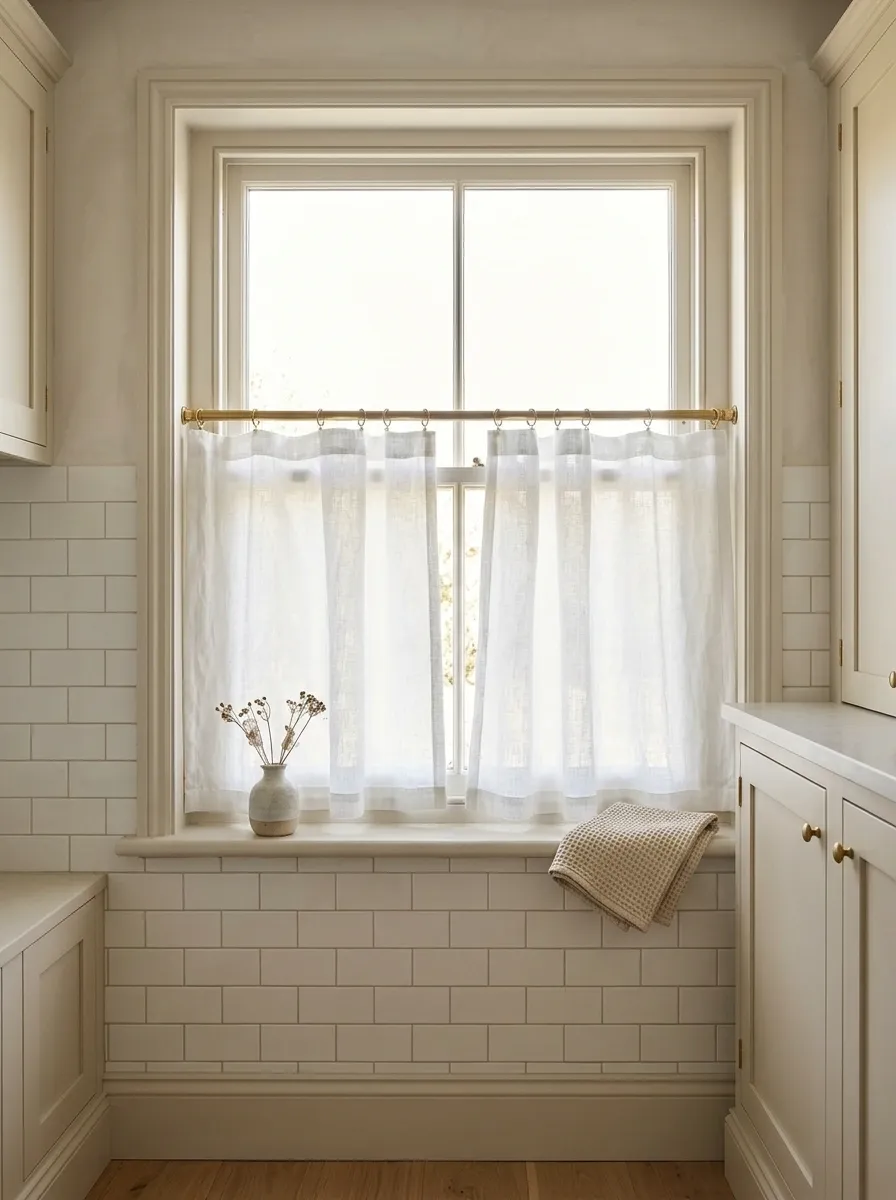
White or ivory café curtains cover the lower portion of a bathroom window while leaving the upper glass uncovered. That split gives the room a softer, more traditional look without automatically blocking every bit of daylight. Painted cabinetry, classic tile, and a simple sill help the curtains look connected to the room rather than borrowed from a kitchen.
Lightweight linen or a linen-look fabric keeps the folds relaxed. A slim rod and modest curtain fullness suit the informal style better than ornate hardware or thick, heavy panels.
The privacy catch is important. Café curtains won’t cover the entire window, so the exposed upper glass must be checked from nearby homes and streets. If the sightlines don’t cooperate, the charming cottage look needs a different privacy plan. Neighbors are persistent supporting characters.
Daylight, if sightlines allow
Covered for privacy
Floor-Length Curtains Framing a Large Bathroom Window
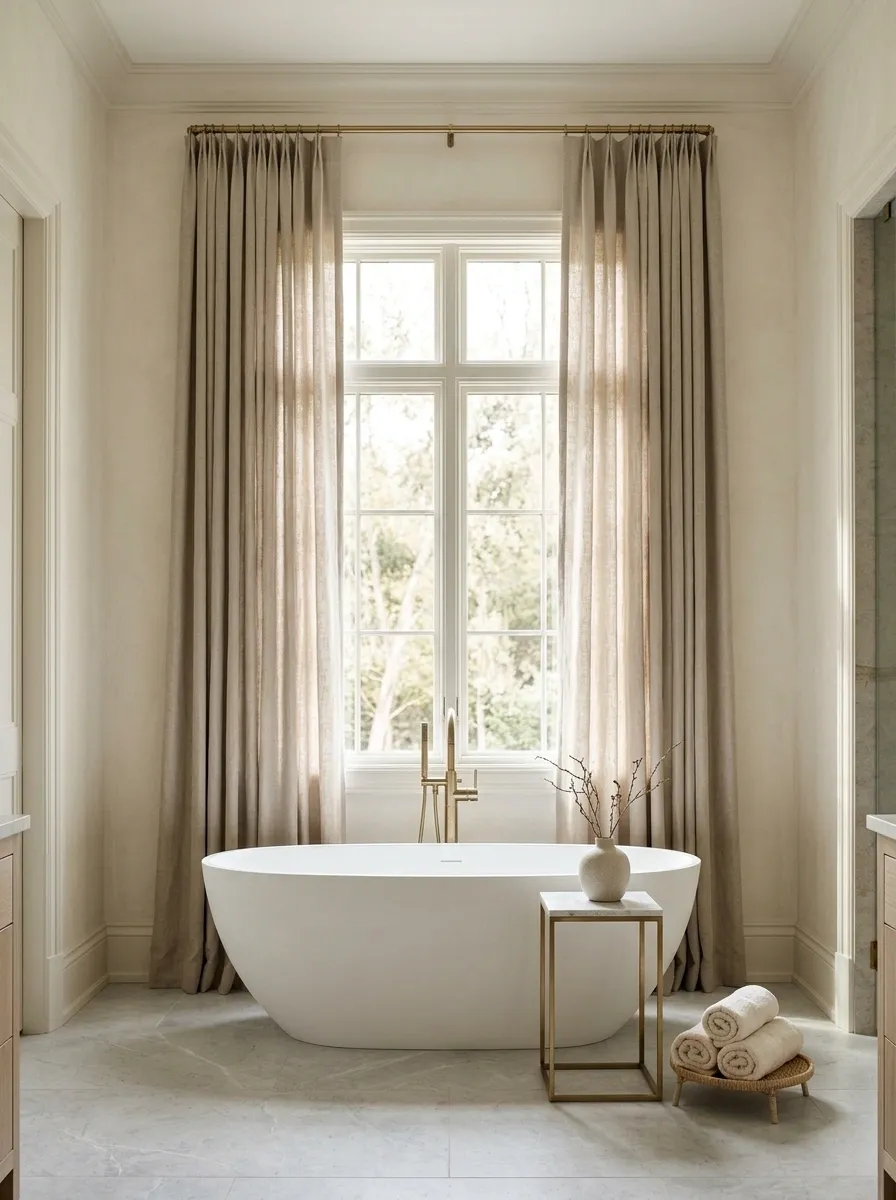
Full-length curtains give a large bathroom window a more finished, almost bedroom-like presence. Warm ivory or soft taupe panels frame a generously sized window, while a freestanding bathtub, pale stone flooring, and understated metal fixtures keep the composition sophisticated rather than fussy.
The key is letting the curtains frame the window instead of swallowing it. Hang the rod high enough to emphasize the wall height, and choose panels with enough fullness to fall naturally. A slim track or understated rod keeps the hardware from competing with the fabric.
This treatment needs room to breathe. It suits a spacious bathroom with enough wall area for the panels to sit beside the window, ideally away from direct shower spray and other wet zones. A cramped window surrounded by bulky furniture doesn’t need a theatrical curtain entrance.
Bamboo Shades in a Warm Modern Bathroom
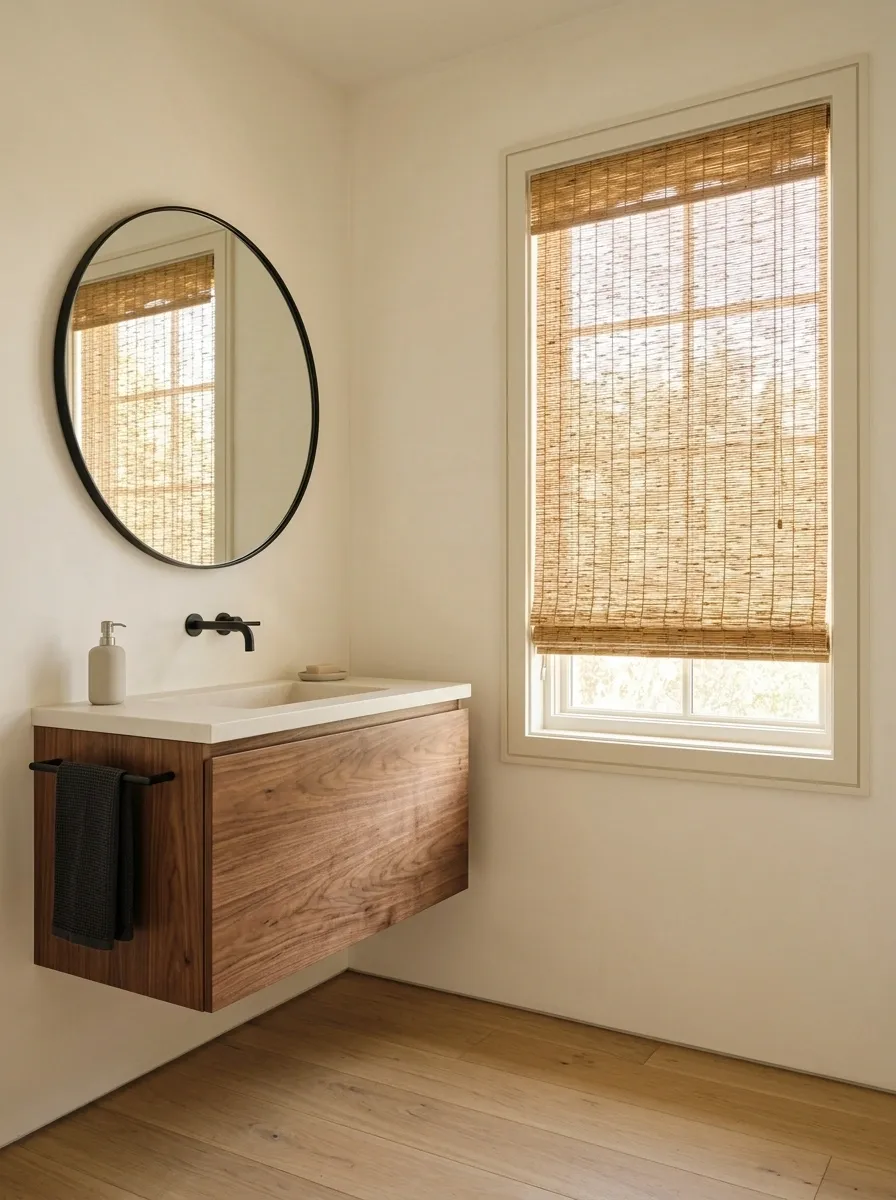
Bamboo shades bring warmth to a bathroom filled with smooth tile, glass, and metal. Pair them with walnut cabinetry, creamy wall finishes, and understated bronze or matte-black fixtures. The mix feels contemporary without becoming cold or overly polished.
A bamboo shade also gives the window a stronger visual presence than a plain white blind. Its natural variation adds texture, while the straight edges of a modern vanity and simple mirror keep the design structured.
Keep the rest of the palette controlled. Skip the collection of wicker baskets, wooden stools, and leafy decorations unless they serve a real purpose. Otherwise, the bathroom starts auditioning for a jungle-themed café.
Choose a shade suitable for the room’s humidity, and check whether its operating mechanism allows convenient cleaning and adjustment. Natural-looking materials still need to work in the space where they’re installed.
Flat Roller Shades in a Minimalist Bathroom
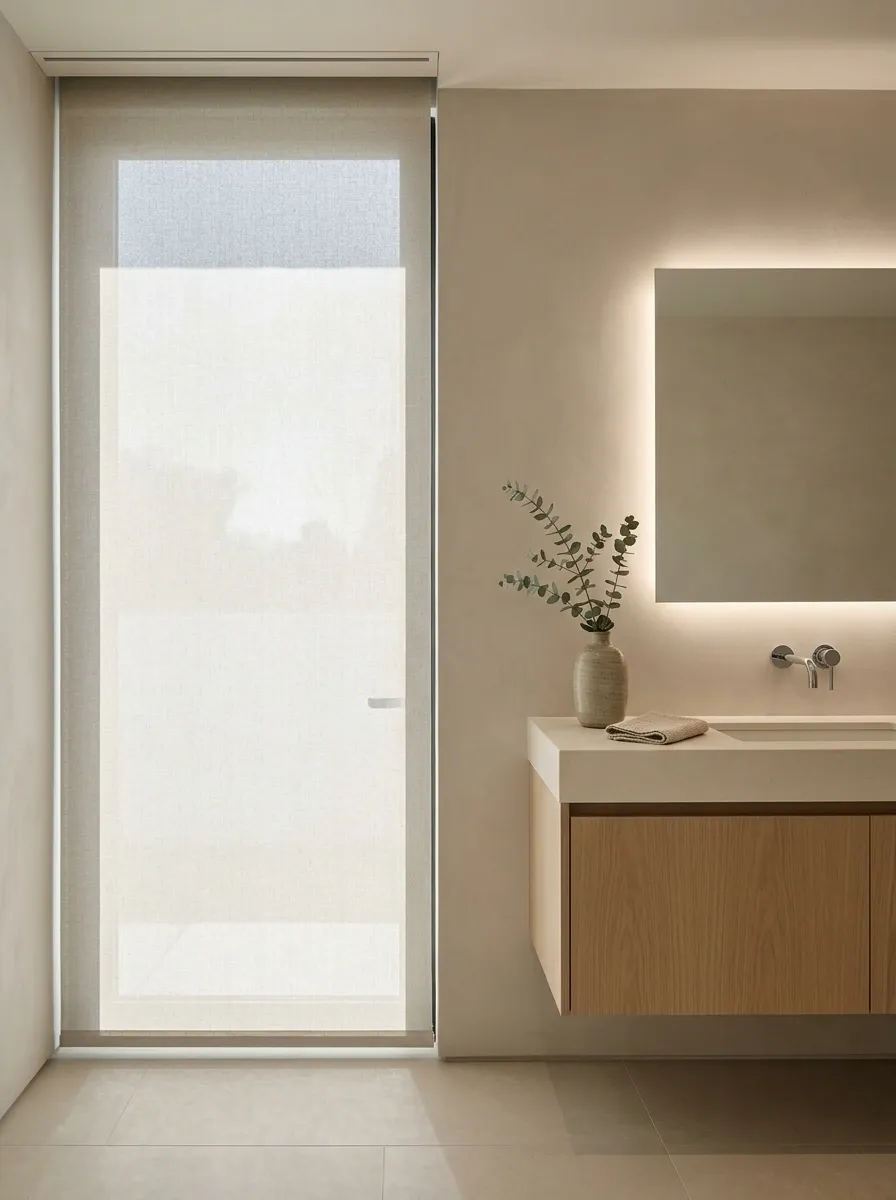
Flat roller shades suit bathrooms where clean lines matter more than decorative details. A warm-white or light greige shade pairs with smooth walls, a floating vanity, large-format tile, and simple fixtures. When raised, the fabric rolls away neatly, leaving the window open and the surrounding architecture uninterrupted.
The shade should relate to the room’s other finishes. Warm neutrals work with oak and creamy stone, while cooler gray tones complement concrete-look surfaces and polished chrome. Concealed or discreet mounting hardware keeps the window looking intentional.
This treatment is especially useful when wall space is limited. There’s no fabric pooling beside the vanity or curtain panel competing with the mirror. Just check the privacy requirements before choosing a light-filtering fabric. Minimalism is great, but becoming the neighborhood’s free livestream isn’t part of the design brief.
Black Roller Shades Against Pale Stone
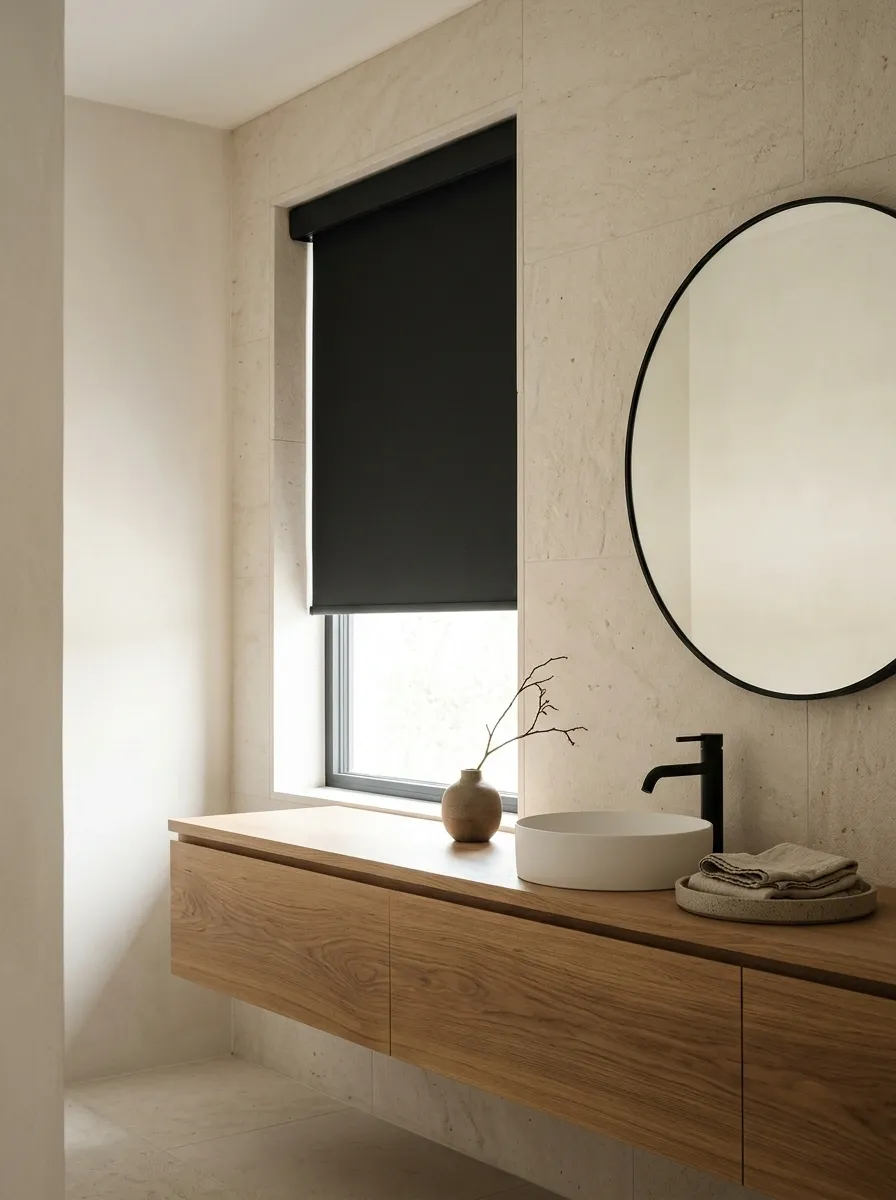
Charcoal or black roller shades create a strong outline against pale limestone, warm-white walls, and a streamlined vanity. Matching the shade with dark faucets or a thin black mirror frame makes the contrast feel deliberate rather than like a last-minute purchase made during a midnight scroll.
This design looks especially effective when the room already has a clear architectural structure. Large tiles, simple cabinetry, and restrained accessories give the dark window covering enough visual weight without making the bathroom feel heavy.
Keep the rest of the palette controlled. Too many black accents can flatten the room, especially in a small bathroom with limited daylight. A little warm wood or creamy stone softens the effect.
Also, check how much light the fabric blocks before committing. Dramatic contrast looks excellent in photos, but nobody needs a bathroom that requires a flashlight at 10 a.m.
Top-Down, Bottom-Up Cellular Shades
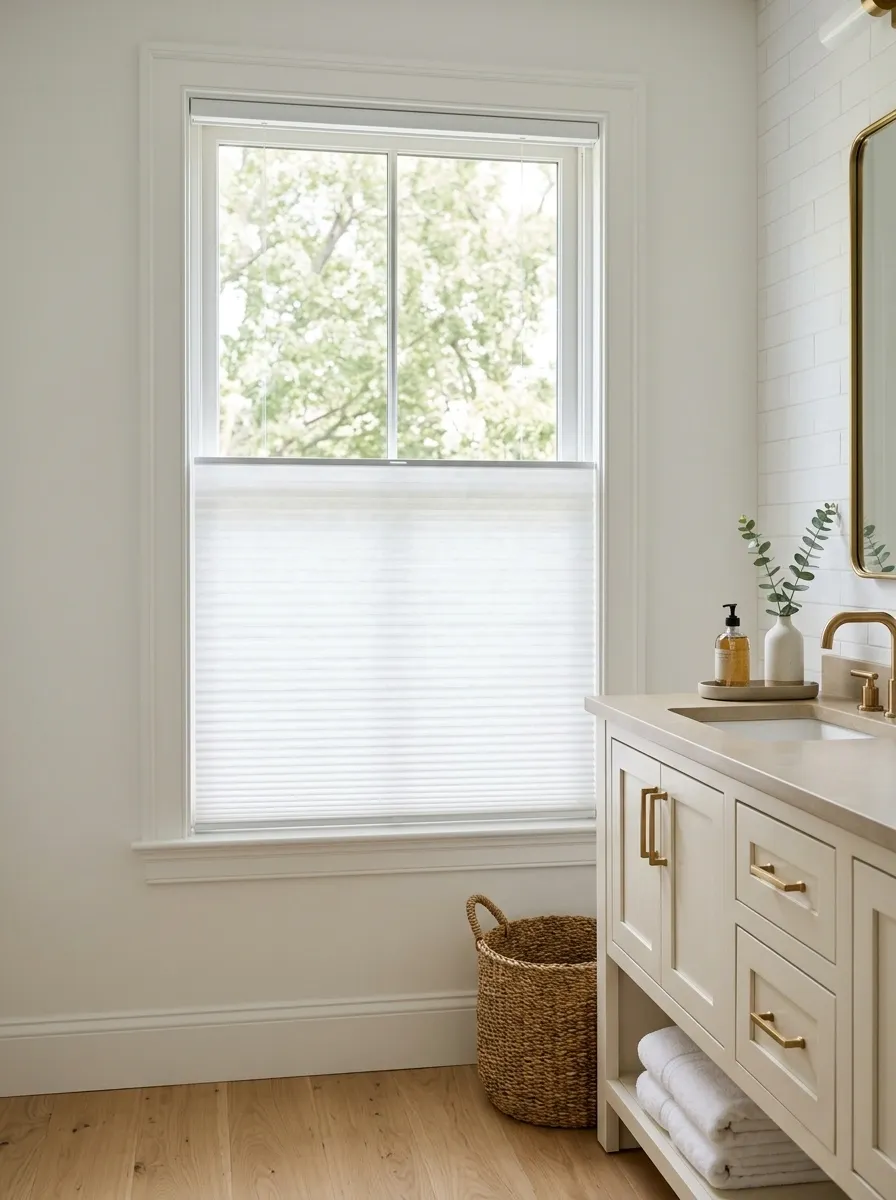
Top-down, bottom-up cellular shades offer a useful solution when a bathroom needs privacy without sacrificing every bit of natural light. The shade can cover the lower portion of the window while leaving the upper section open, or it can be adjusted from the top and bottom to suit changing conditions.
The honeycomb-like fabric adds a subtle texture that works with modern, transitional, and simple family bathrooms. Pale shades complement white tile and light cabinetry, while warmer beige tones pair well with oak and cream stone. The compact profile also keeps the window area visually tidy.
The big advantage is flexibility. A ground-floor bathroom may need more coverage than an upstairs room, and neighboring windows can change the privacy picture completely. This design allows more control than a fixed covering, although the final positioning still needs to account for actual sightlines.
Frosted Glass With a Bare, Uncovered Window
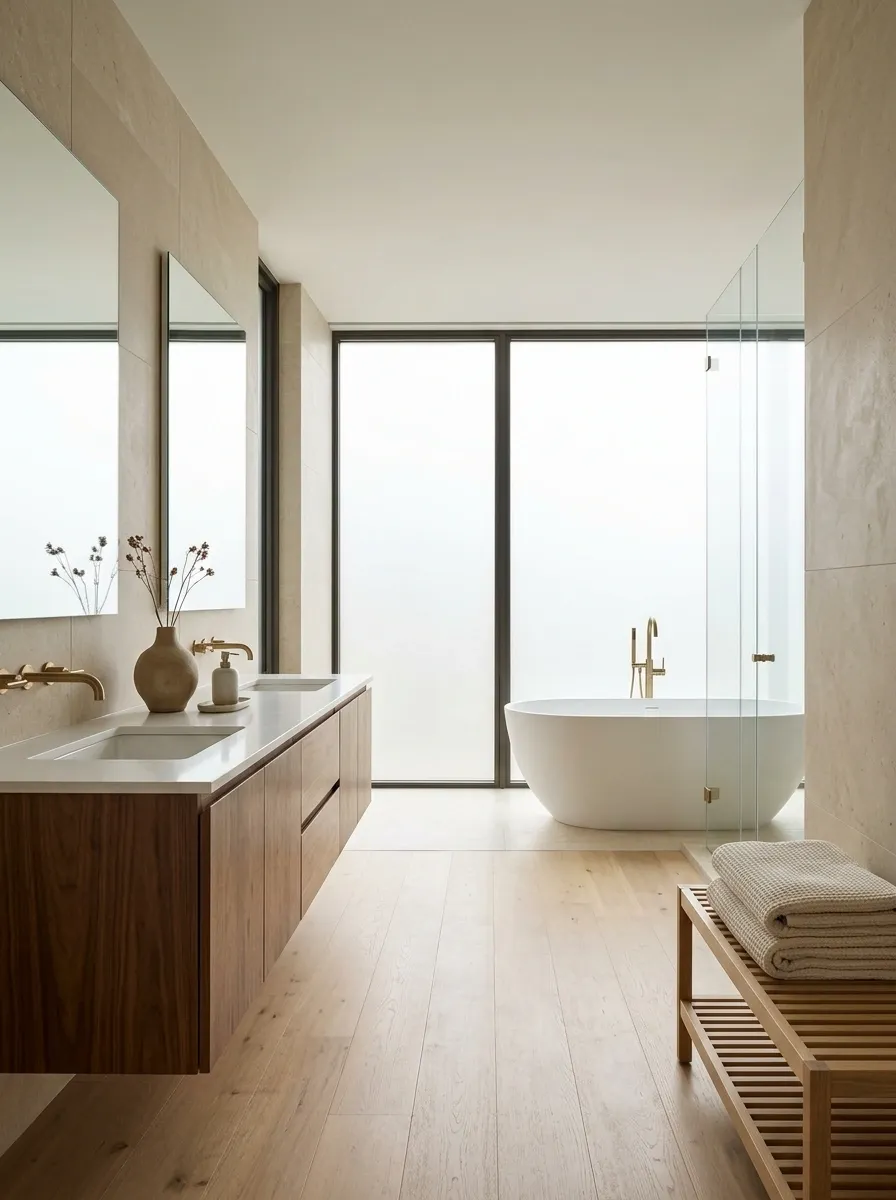
Sometimes the cleanest bathroom window treatment is no separate treatment at all. Frosted or obscured glazing provides privacy while allowing daylight into the room, leaving the window free of curtains, cords, and bulky hardware.
This approach works particularly well with contemporary bathrooms featuring large-format tiles, floating vanities, frameless shower screens, and restrained finishes. Without fabric around the opening, the room feels more architectural, and the natural light becomes part of the design.
The glazing needs to be selected carefully. Different types of obscured glass provide different levels of privacy, and visibility can change depending on lighting conditions. A window that seems private in daylight may reveal more silhouettes at night when interior lights are switched on.
For existing clear glass, suitable privacy film may be an alternative, depending on the glass and installation conditions. The goal is an uncluttered window, not an expensive lesson in overlooked sightlines.
Interior Shutters in a Transitional Bathroom
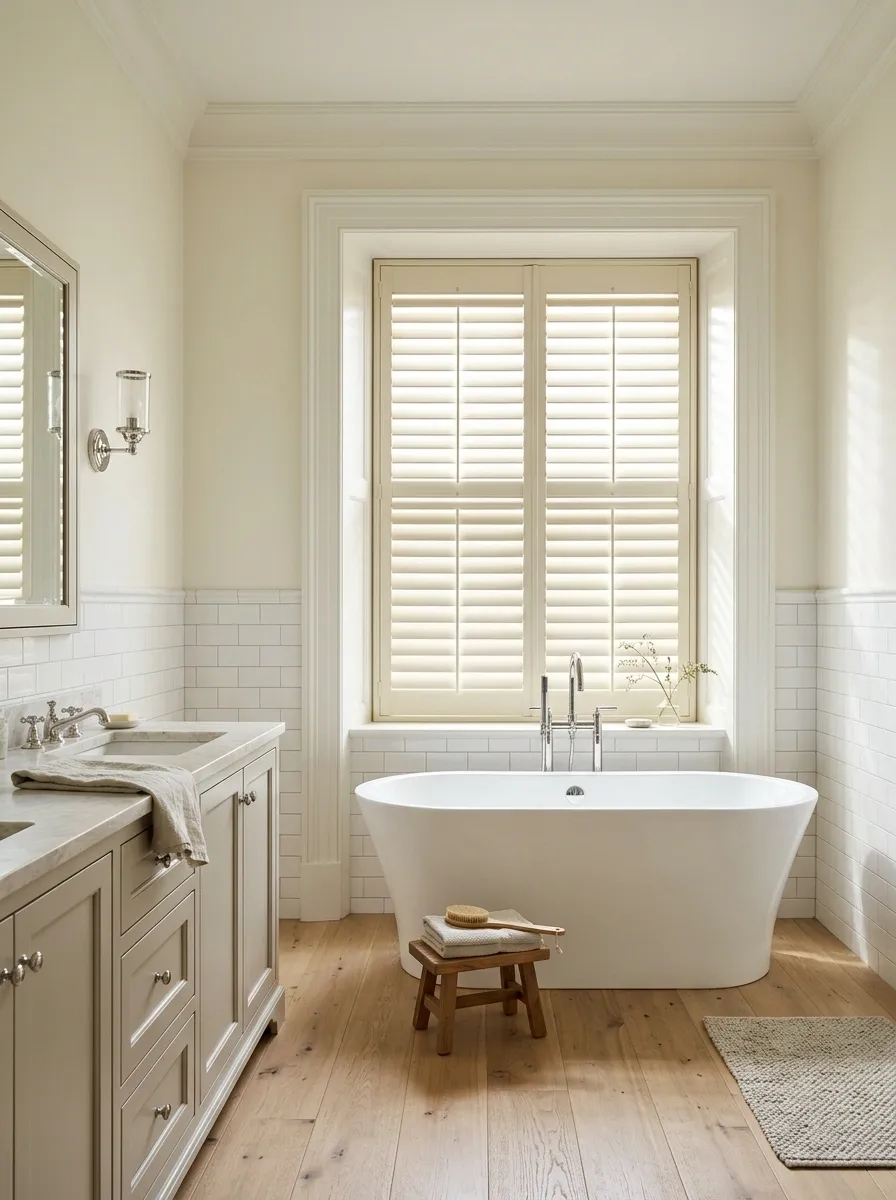
Painted interior shutters work with traditional and transitional bathrooms where the window deserves a stronger architectural frame. Soft white or warm ivory shutters pair naturally with classic tile, furniture-style vanities, pale stone countertops, and polished chrome or brushed nickel fixtures.
The adjustable louvers allow daylight to be directed while providing some control over visibility. Their defined panels also introduce more structure than a fabric shade, making them a strong choice for bathrooms with traditional trim or symmetrical architectural details.
The key is proportion. Shutters should fit the window properly without awkward gaps or bulky frames that crowd a small opening. They also need room to open and remain accessible for cleaning.
Material selection matters in humid conditions, especially near tubs and showers. Choose a shutter material and finish suited to the exposure rather than assuming every painted product can handle bathroom moisture. A charming window shouldn’t develop a peeling-paint storyline six months later.
Café Shutters for a Street-Facing Bathroom
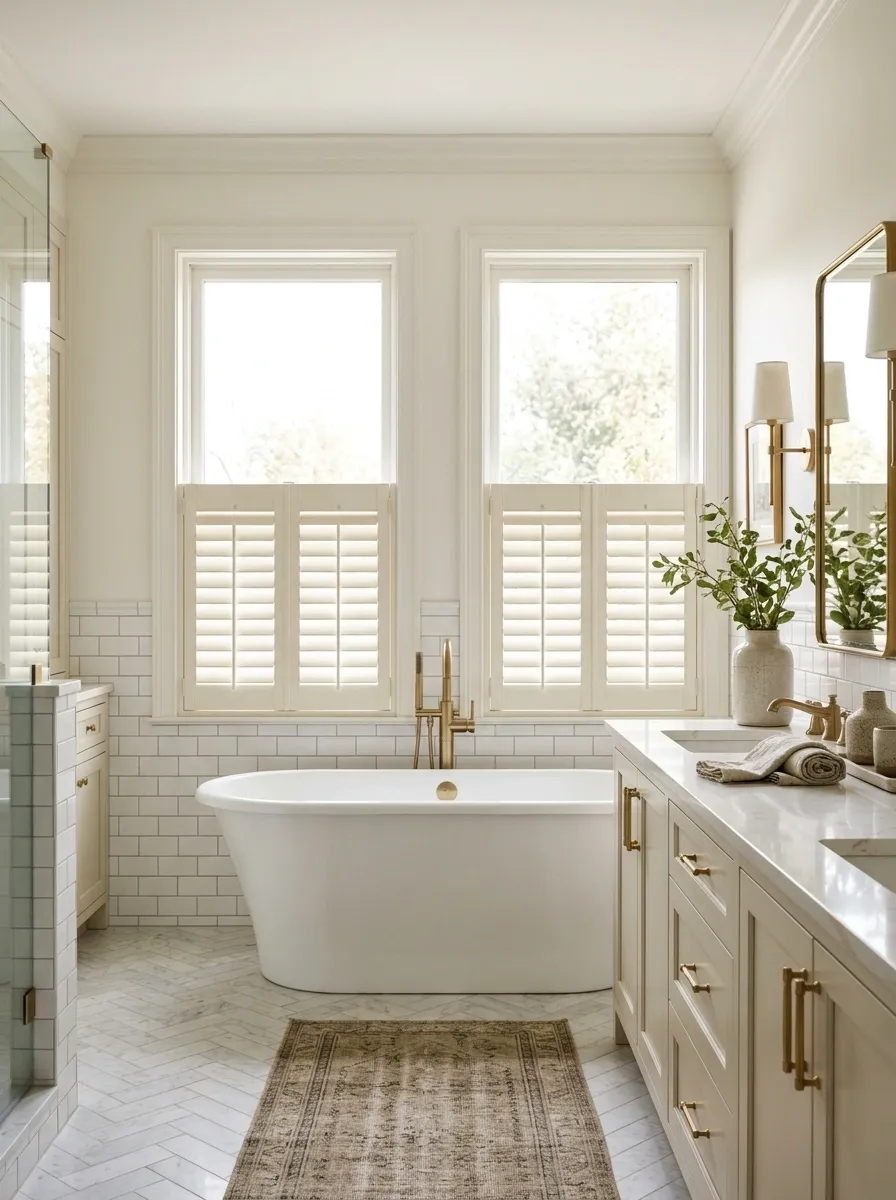
Café shutters cover the lower part of a bathroom window while leaving the upper portion open for daylight. They’re a natural fit for traditional homes, cottage bathrooms, and transitional interiors with painted cabinetry, classic tile, and understated metal fixtures.
White or warm ivory shutters keep the composition light, while a deeper paint color can connect the window to a vanity or accent wall. Their solid lower panels provide more substantial visual coverage than sheer fabric, and adjustable louvers can help regulate light above the covered section.
The catch is obvious but worth mentioning. An open upper window isn’t automatically private, particularly in a two-story neighborhood or an apartment facing another building. Check the actual sightlines before celebrating the savings on full-window coverage. The neighbors have unfortunately not agreed to respect the aesthetic.
Frosted Lower Glass With Clear Upper Panes
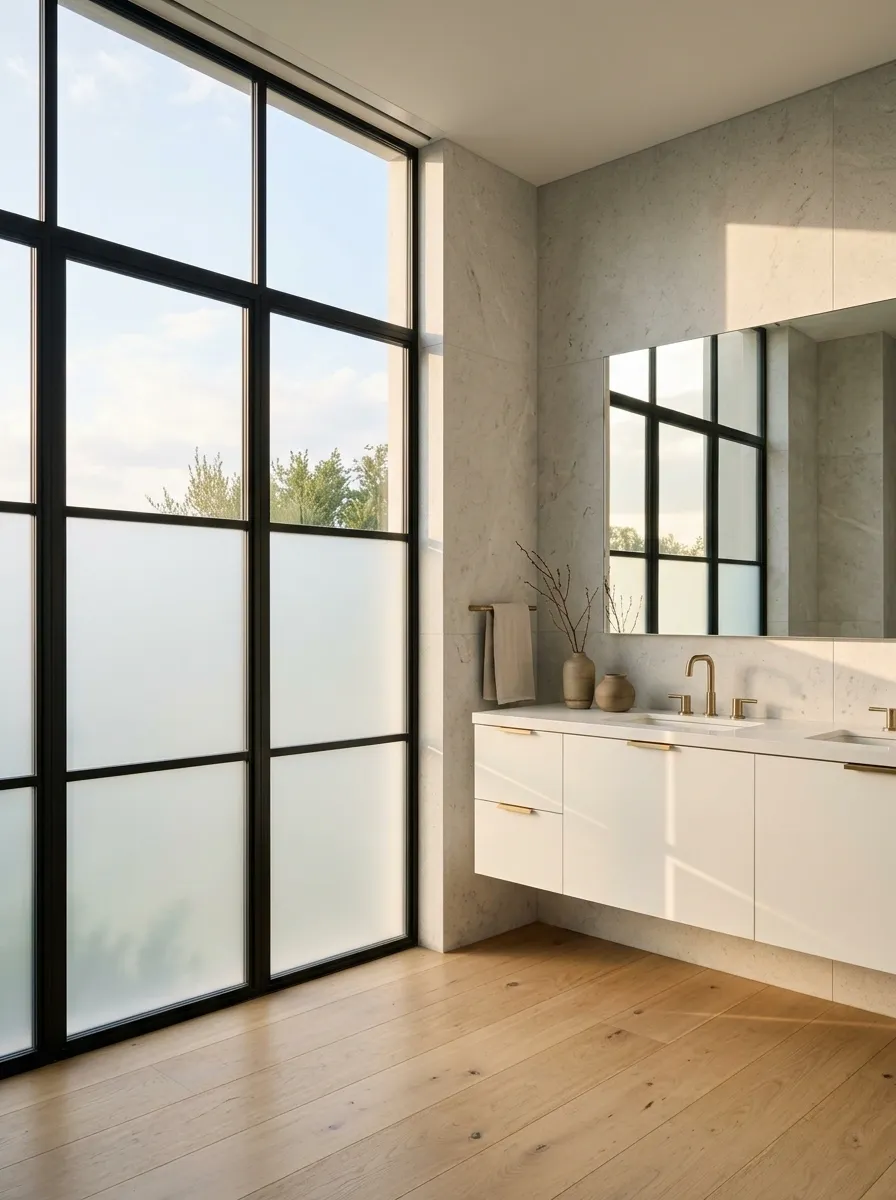
Divided glazing with frosted lower panes and clear upper glass offers a clean solution for bathrooms that need privacy at standing height. The lower portion screens direct views, while the transparent upper section retains a connection to daylight and the outdoors.
This arrangement looks especially good in contemporary bathrooms with slim window frames, simple stone finishes, and restrained hardware. The glazing itself creates the main visual feature, so the surrounding finishes can stay quiet. A frameless mirror and uncluttered vanity keep the lines consistent.
The treatment works best when the division between clear and obscured glass aligns with the window’s actual structure. A random horizontal break can look more accidental than architectural. Also, confirm privacy after dark, because interior lighting can change what is visible through clear panes.
Layered Sheer Curtains With an Opaque Privacy Liner
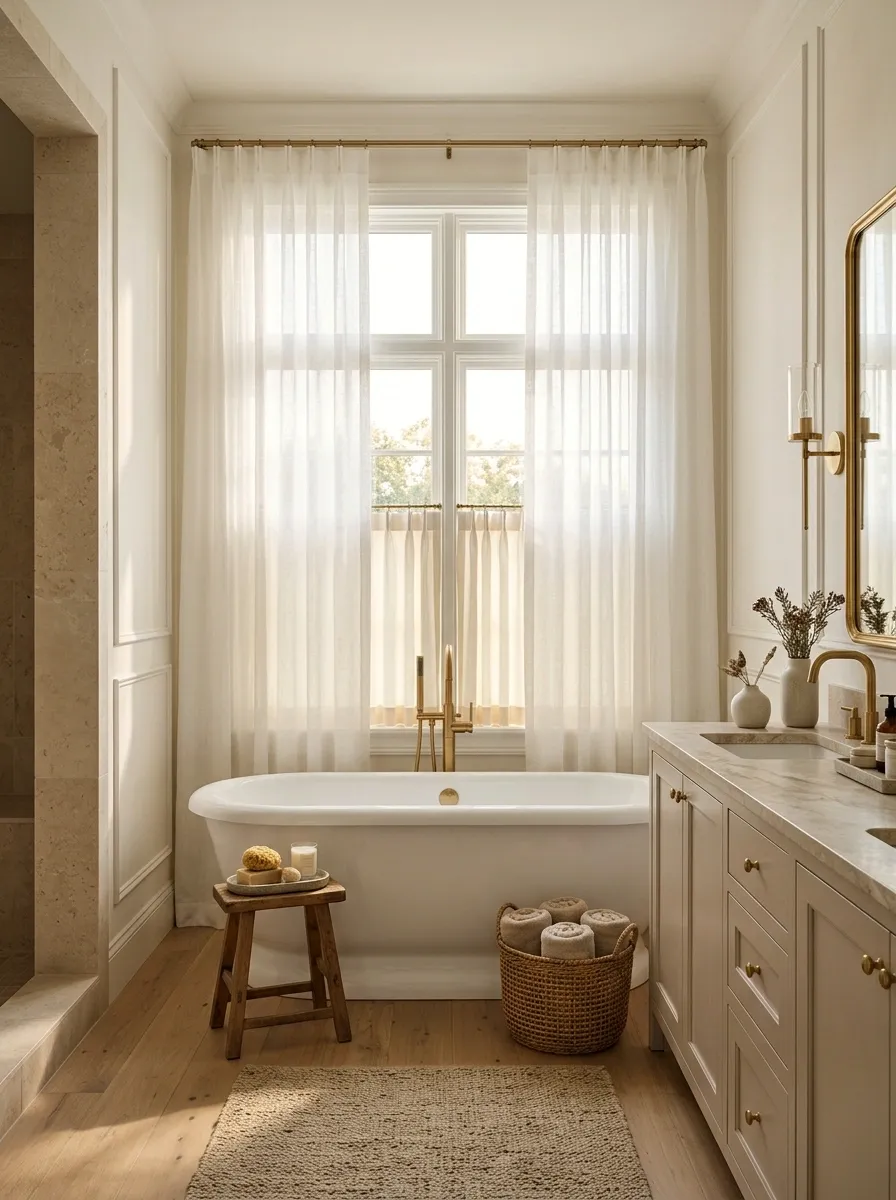
Layered curtains bring a gentler character to bathrooms with large windows, freestanding tubs, or traditional detailing. A sheer front layer softens daylight, while a separate opaque lining or privacy panel provides coverage when needed. Warm ivory, flax, and pale taupe work nicely with natural stone, painted cabinetry, and understated metal finishes.
The secret is keeping the layers visually light. Choose fabrics with compatible undertones and use a neat track or rod that doesn’t compete with the window. The sheer layer should filter the view rather than become a heavy decorative feature.
Privacy depends on the backing layer and how it closes across the glass. The sheer alone won’t necessarily obscure silhouettes at night. Keep both layers clear of regular splash zones, and select washable materials suited to the room’s humidity. Otherwise, the elegant fabric situation can quickly become a very damp character arc.
Decorative Privacy Film in a Small Modern Bathroom
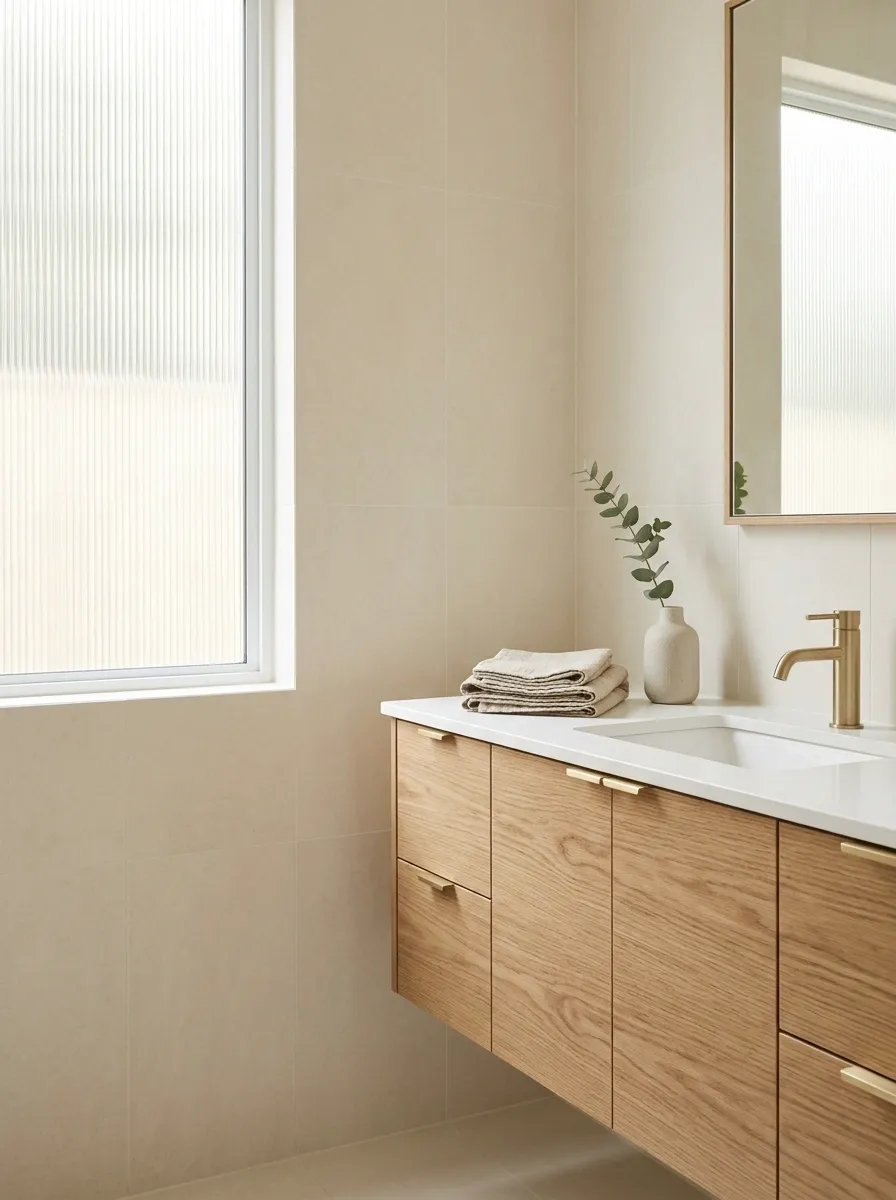
Decorative privacy film adds visual interest to a bathroom window without requiring curtains, blinds, or a projecting rod. Fine geometric patterns, subtle ribbed effects, or restrained botanical motifs work especially well in compact bathrooms where every bit of wall and sill space matters.
Keep the pattern in proportion to the room. A delicate design works with small-format tile and a simple vanity, while a stronger geometric film can become a focal point against plain walls. Repeating a color from the cabinetry or towels helps the window feel connected to the rest of the bathroom.
Film is also worth considering when a rental or renovation doesn’t justify replacing the glazing, provided the product suits the existing glass and the installation conditions. It isn’t automatically suitable for every window type.
Choose the pattern carefully. A tiny bathroom already has enough going on without the window joining a design committee and demanding its own spotlight.
Textured Glass With Minimal Window Dressing
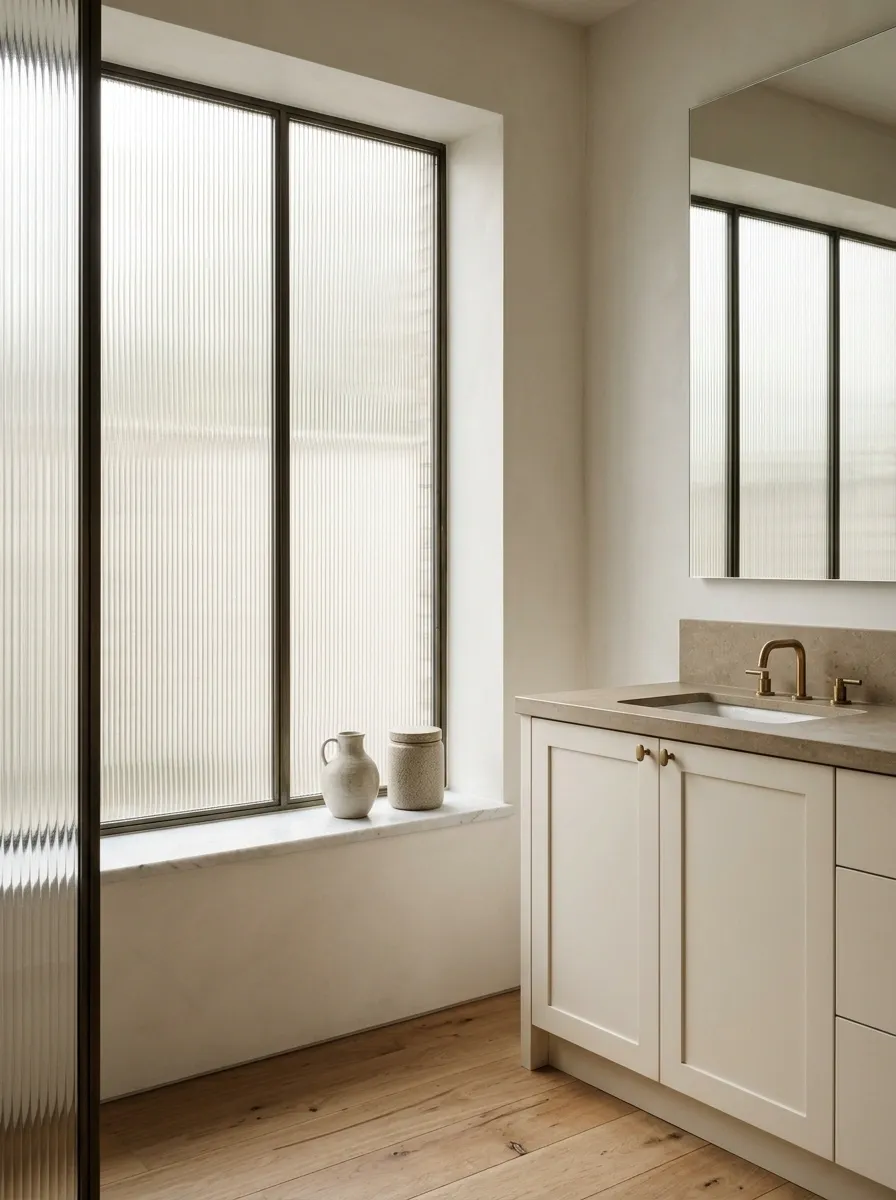
Reeded or obscured textured glass gives a bathroom window character without adding another layer of fabric or hardware. Vertical reeding creates a linear rhythm, while other textured finishes diffuse views and light in different ways. Pair the glass with simple cabinetry, natural stone, and understated fixtures so the surface remains a defining part of the design.
This approach is especially effective in contemporary bathrooms where clean materials do most of the visual work. A slim dark frame can emphasize the texture, while a light frame creates a quieter, more seamless look.
The glazing should be selected for its actual privacy performance, not just its showroom appearance. Texture doesn’t guarantee complete obscurity, especially at night. Check visibility from outside and consider the bathroom’s orientation before deciding that a separate covering is unnecessary.
A good window finish should do its job quietly. No curtain drama, no complicated hardware, no decorative overthinking. For once, a bathroom surface can simply be good at being a bathroom surface.
Botanical Roman Shades in a Garden-Inspired Bathroom
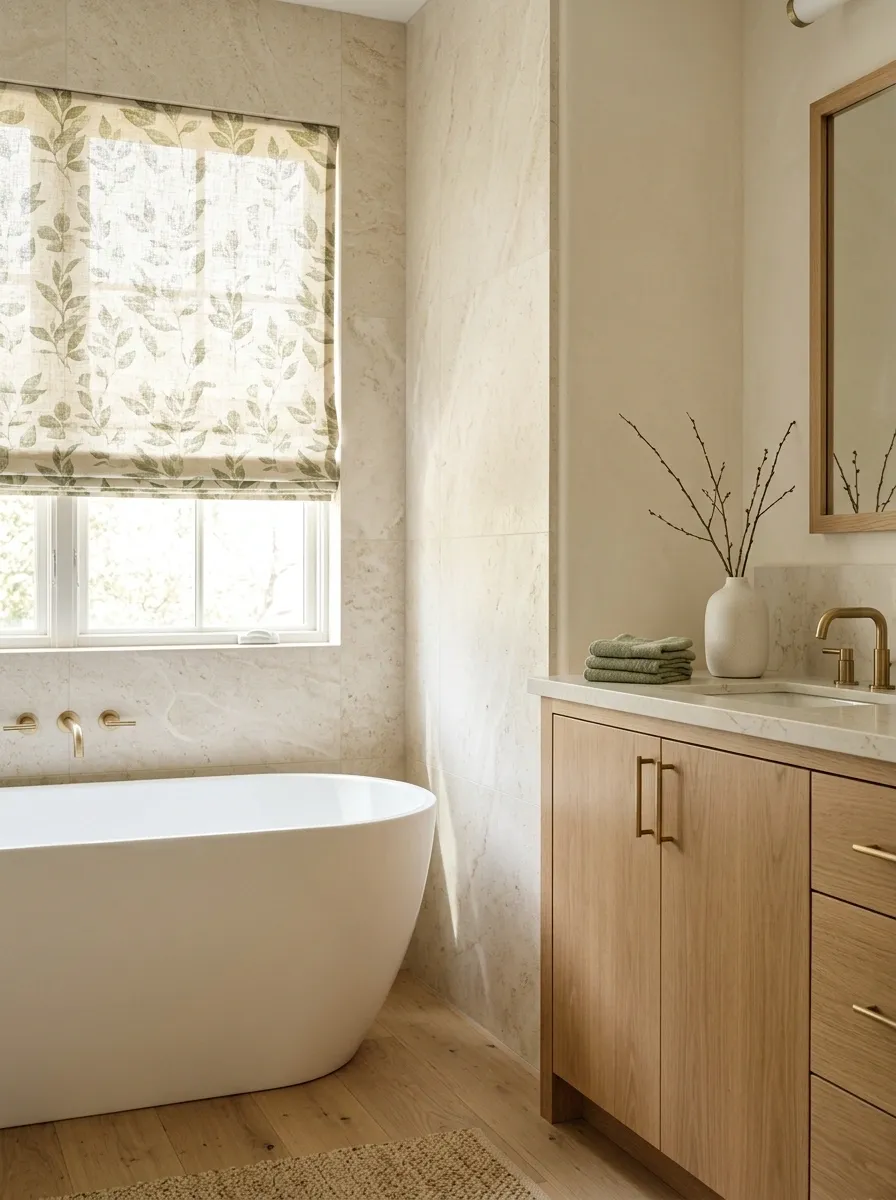
Botanical Roman shades bring color and pattern into a bathroom that might otherwise lean heavily on plain tile and neutral finishes. A muted green print against an ivory background works especially well with natural oak cabinetry, creamy stone, and simple brushed-brass or nickel fixtures.
The trick is keeping the pattern connected to the rest of the room. Pick one color from the fabric and repeat it through a painted vanity, a small accessory, or the towels. The result feels intentional without matching every object like the bathroom has a strict dress code.
This style suits cottage-inspired, transitional, and organic modern bathrooms. Keep the surrounding surfaces relatively simple, especially when the fabric features oversized leaves or detailed flowers. A busy shade paired with patterned tile and elaborate wallpaper is less garden-inspired and more botanical custody battle.
Choose a fabric suitable for the humidity and keep it away from direct splashing. The window should add softness, not become another maintenance project.
Blue-and-White Café Curtains in a Classic Bathroom
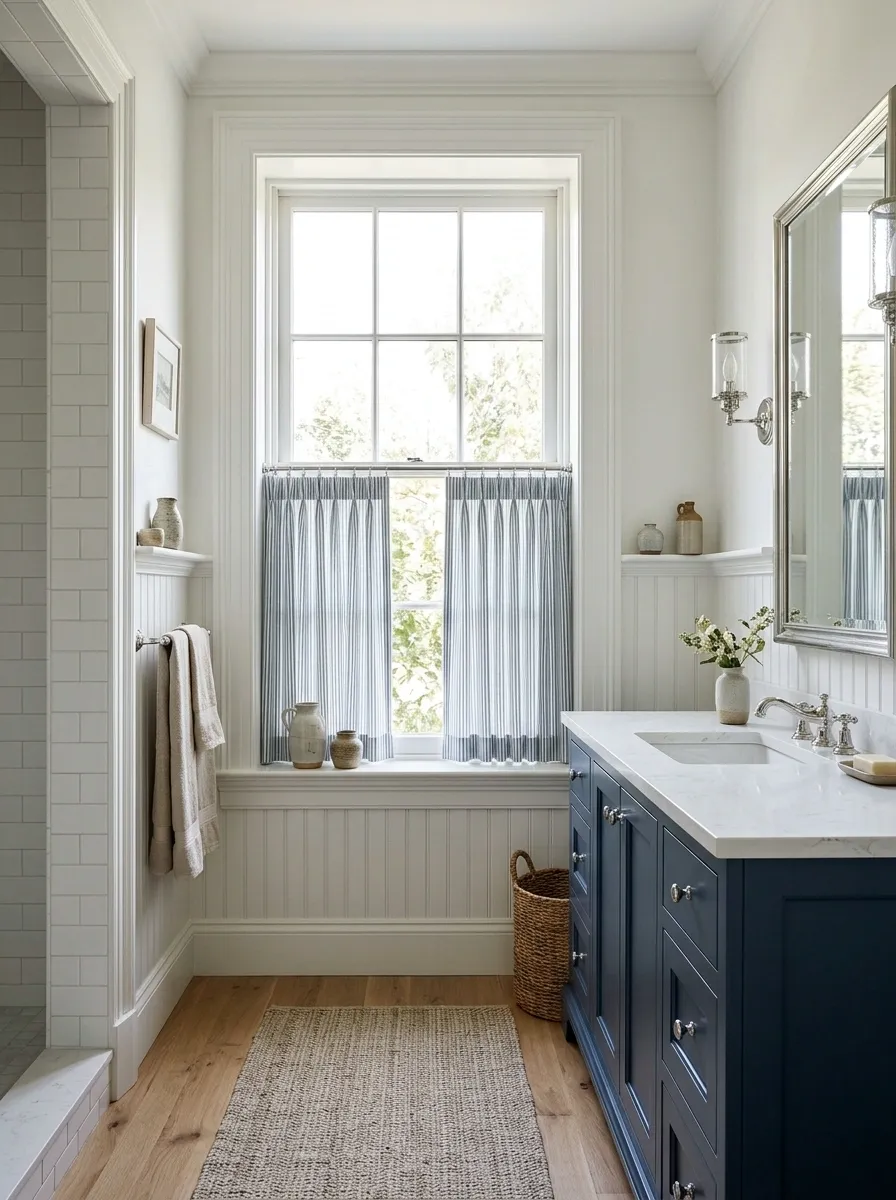
Blue-and-white café curtains give a classic bathroom an easy decorative anchor. Narrow stripes feel fresh and tailored, while small-scale blue patterns introduce a more cottage-inspired character. Pair the fabric with white paneling, traditional tile, a painted vanity, and polished chrome fixtures for a room that feels collected rather than overly formal.
The window covering works best when its pattern has enough contrast to be noticeable without dominating the entire wall. A pale blue stripe can soften an all-white bathroom, while a deeper navy creates a stronger connection with darker cabinetry or a blue accent wall.
A simple curtain rod and modest fabric fullness keep the design relaxed. Avoid repeating the exact same stripe on towels, bath mats, and every visible accessory. Coordinated is good. A bathroom dressed like a marching band is a different commitment.
Café curtains leave the upper portion of the window uncovered, so check privacy from nearby properties before settling on the arrangement.
Pattern and character
Light and breathing room
A softer supporting finish
Deep Green Roman Shades in a Moody Bathroom
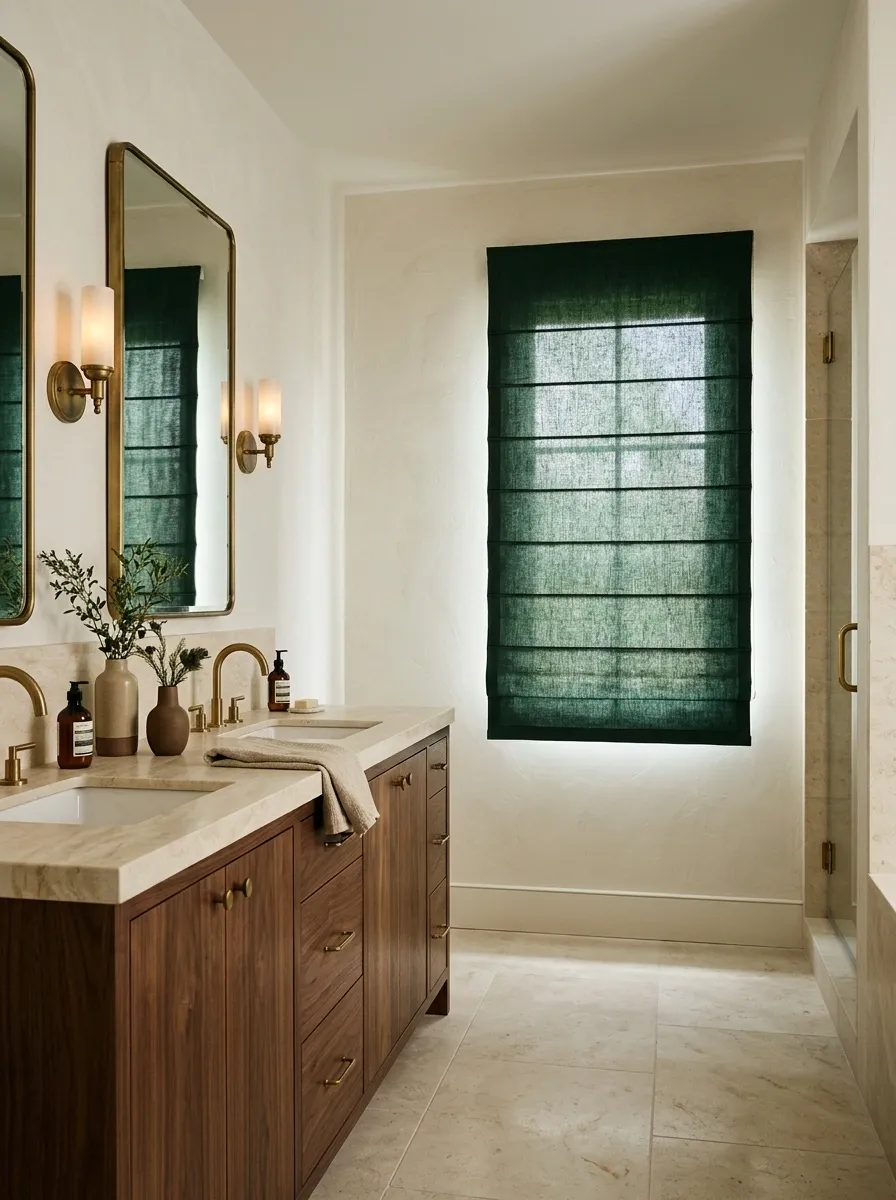
Deep forest-green Roman shades give a bathroom a more dramatic focal point without requiring dark finishes on every surface. Pair them with walnut cabinetry, aged brass hardware, and creamy stone to create contrast that feels rich rather than gloomy. The structured folds of the shade add another layer of texture, keeping the window from becoming a flat rectangle of color.
This combination suits bathrooms with moderate to generous natural light, particularly when the surrounding walls and countertops provide enough visual relief. In a small, darker room, a lighter wall color and a carefully selected shade fabric can preserve a sense of openness.
The supporting finishes deserve restraint. Warm metal can complement the green, but excessive brass on faucets, mirrors, lighting, and accessories can make the room feel overstyled. The goal is rich, not a historical reenactment of a luxury hotel lobby.
Check the shade’s light-filtering properties before buying. Dark fabric may noticeably change the room’s daylight, and privacy requirements still depend on the window itself.
Vintage Lace Curtains in a Restored Bathroom
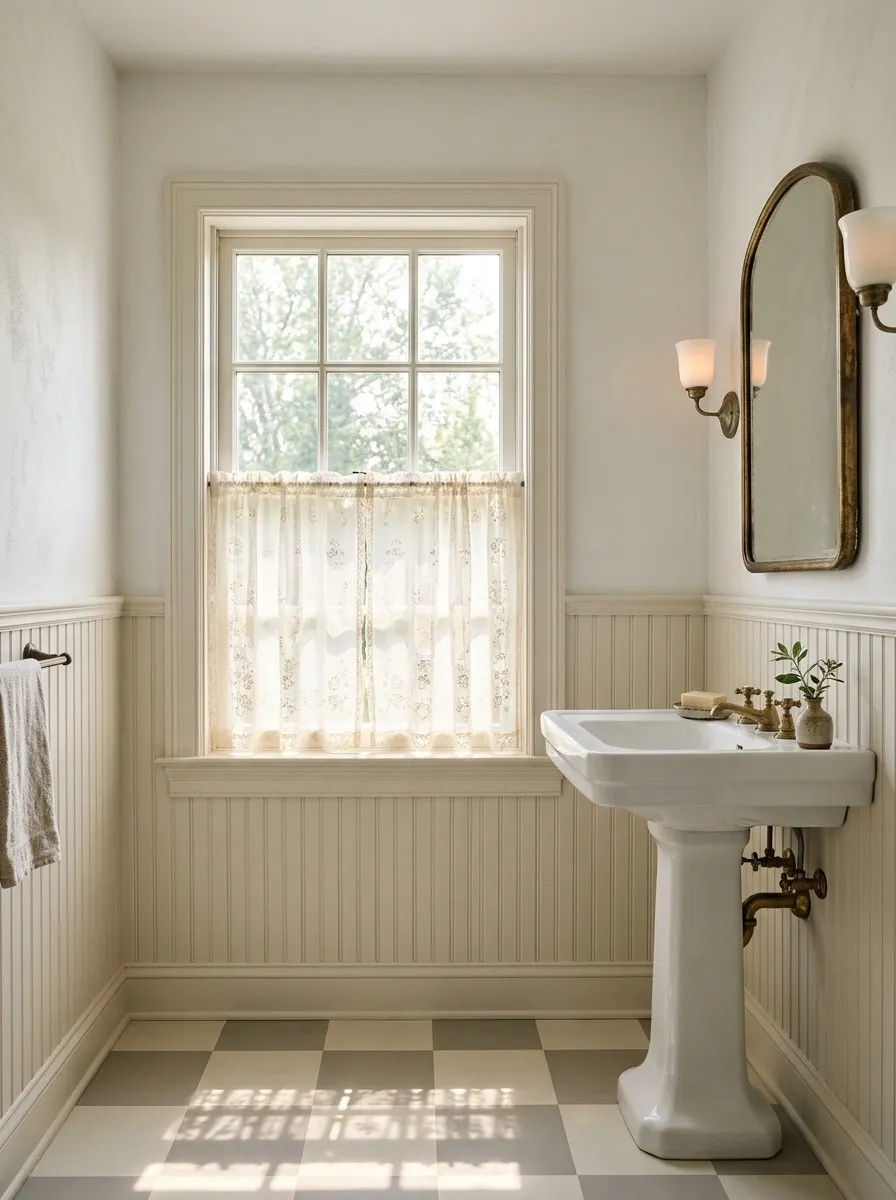
Vintage lace curtains add a layer of detail that works especially well in restored homes, cottage bathrooms, and interiors with traditional fixtures. Delicate embroidery or a restrained floral lace pattern can soften a pedestal sink, painted woodwork, classic floor tile, and an old-fashioned mirror.
The fabric should have a clear relationship with the rest of the bathroom. Ivory lace tends to suit warm white paint, cream tile, and aged metal finishes, while brighter white can create a fresher contrast against cool whites and polished chrome.
Keep the surrounding decor selective. A lace curtain already introduces a fine pattern, so heavily patterned wallpaper and elaborate tile can make the composition feel busy. One traditional detail can carry the room. Every decade of decoration doesn’t need to attend the same meeting.
Consider washable fabrics and a mounting method that makes cleaning easy. Lace is delicate, and bathroom humidity can make unsuitable materials harder to maintain. Also, sheer lace alone should not be relied upon for dependable nighttime privacy.
Color-Blocked Roman Shades in a Playful Bathroom
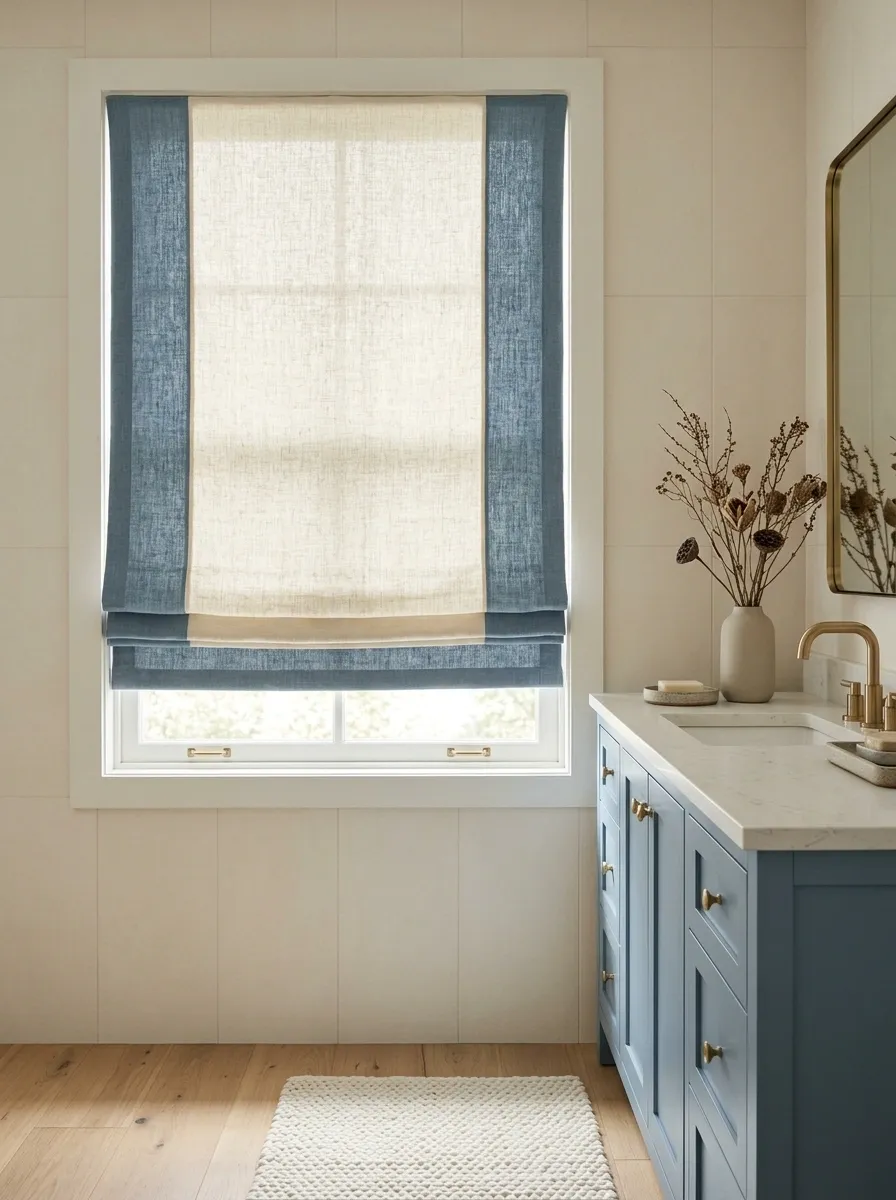
Color-blocked Roman shades offer a way to introduce contrasting colors into a bathroom without committing to bold wallpaper or an entire accent wall. A shade combining dusty blue with warm ivory, terracotta with cream, or olive green with a pale neutral can establish the room’s palette in one clearly defined area.
The most successful versions use two colors that have a reason to coexist. Repeat one shade in a vanity, painted cabinet, bath mat, or small accessory, while allowing the remaining finishes to stay simple. Plain tile and understated hardware give the window covering space to make its point.
The proportions matter. A narrow accent band creates a quieter effect, while two larger blocks produce a stronger graphic statement. The right arrangement depends on the window’s shape and the scale of the bathroom.
Avoid choosing colors in isolation. A swatch that looks lovely on a screen may clash with existing tile undertones or look different under warm bathroom lighting. Test the fabric beside the actual finishes first. The sample is cheaper than the regret.
Inside-Mounted Roller Shades for a Narrow Bathroom Window
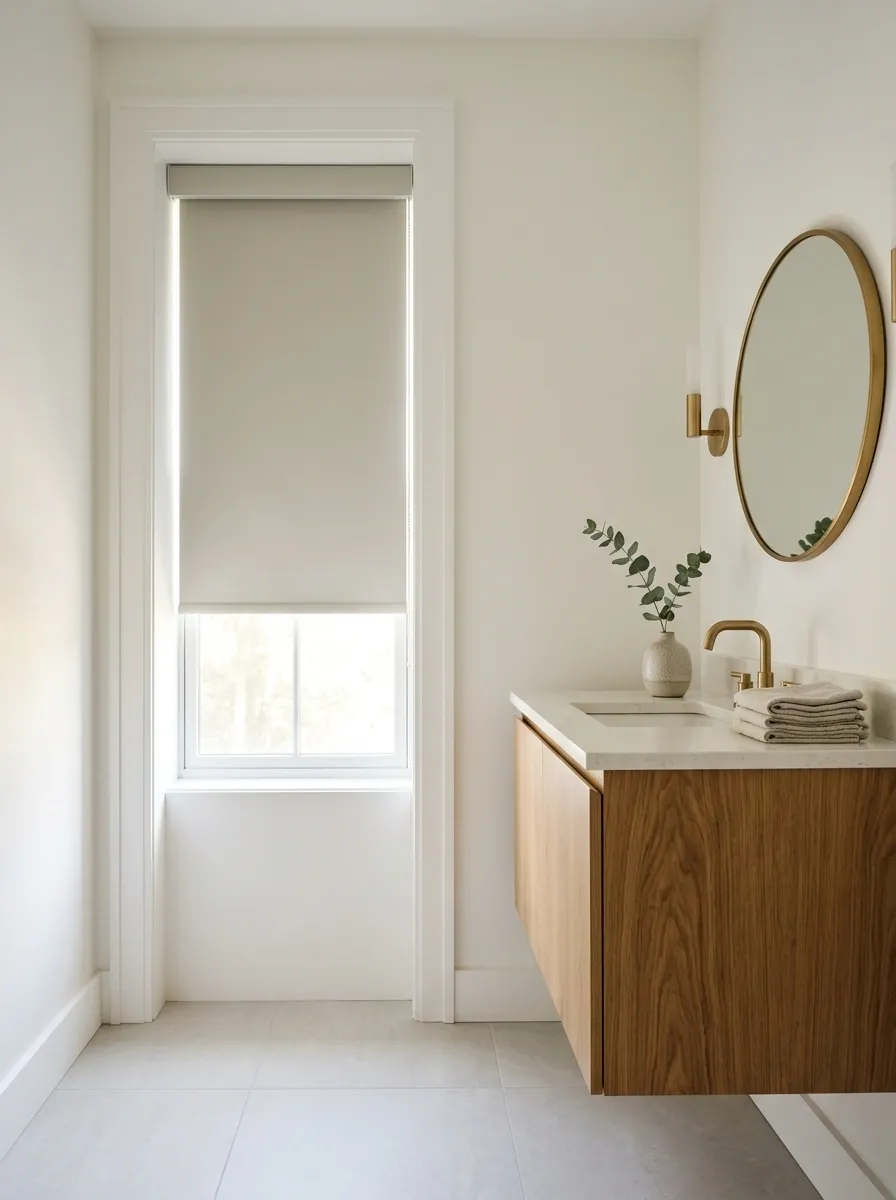
Narrow bathroom windows can be awkward to dress. There often isn’t enough wall space for full curtains, and bulky blinds can make the opening look even smaller. An inside-mounted roller shade solves much of that problem by fitting within the window recess, leaving the surrounding trim and wall visible.
A light greige, warm white, or soft stone shade works with most bathroom palettes. Pair it with a compact vanity, simple tile, and understated fixtures to keep the whole room feeling organized. The shade doesn’t need to become a decorative statement. Its job is to fit neatly and provide the right amount of privacy.
Measure the recess carefully and check the clearance around the frame before ordering. A poorly fitted shade can leave distracting gaps, and privacy matters more than shaving a few millimeters off the profile. Minimalism is about removing clutter, not removing coverage.
Moisture-Conscious Faux-Wood Blinds in a Family Bathroom
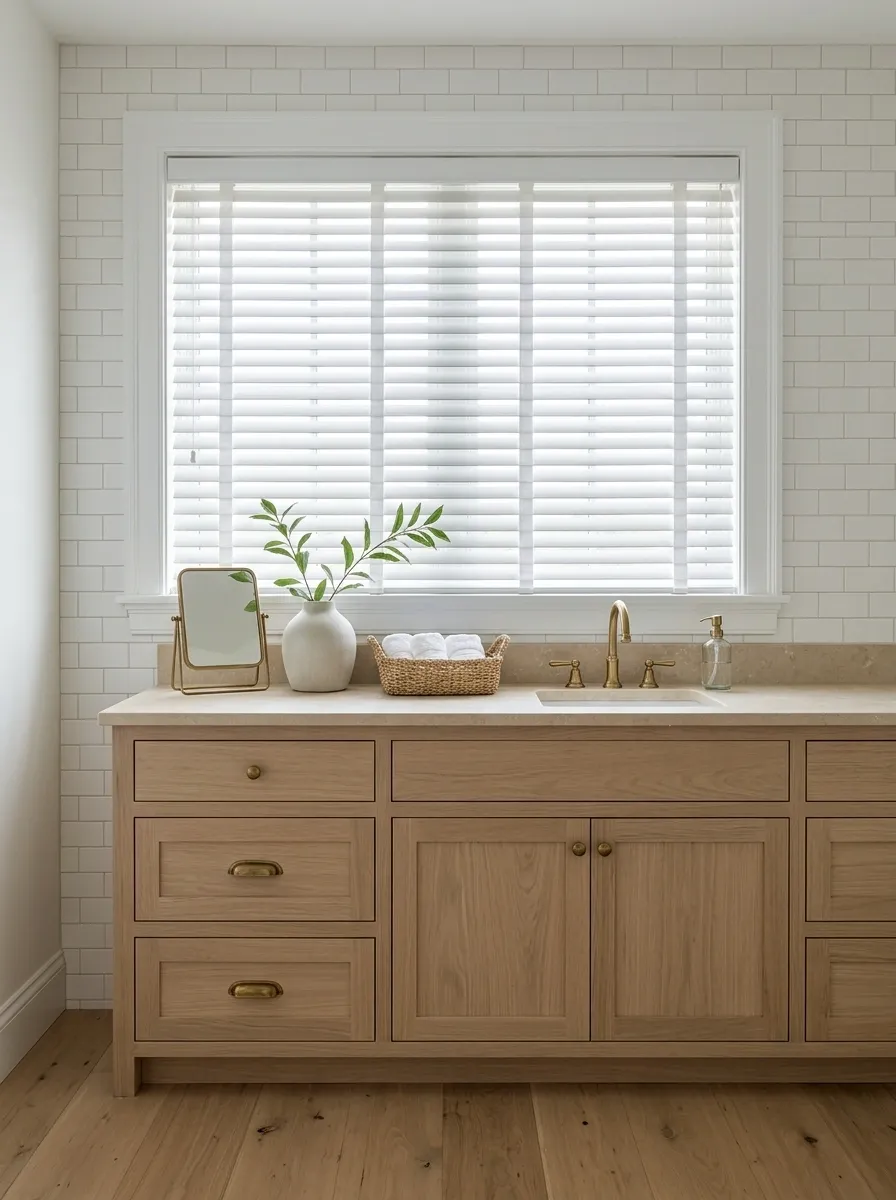
Faux-wood blinds bring the familiar look of painted or timber slats into an everyday family bathroom. White blinds pair easily with traditional tile and a pale vanity, while warm wood-look finishes complement oak cabinetry and beige stone. Tilting the slats lets you adjust the light and view without needing to raise the entire covering.
Their structured appearance suits transitional, traditional, and understated modern bathrooms. They’re also useful when privacy needs change throughout the day, although slat position and outside sightlines still determine how much coverage you get.
Check the manufacturer’s moisture guidance rather than assuming every faux-wood product is waterproof. The material, finish, mechanism, and installation location all matter, particularly near a shower. Horizontal slats also need regular cleaning because bathroom dust and moisture have a habit of forming an alliance.
Choose a finish that complements the vanity instead of trying to match the wood grain perfectly. A coordinated undertone usually looks more natural than a suspiciously exact match.
Cordless Cellular Shades in a Small Apartment Bathroom
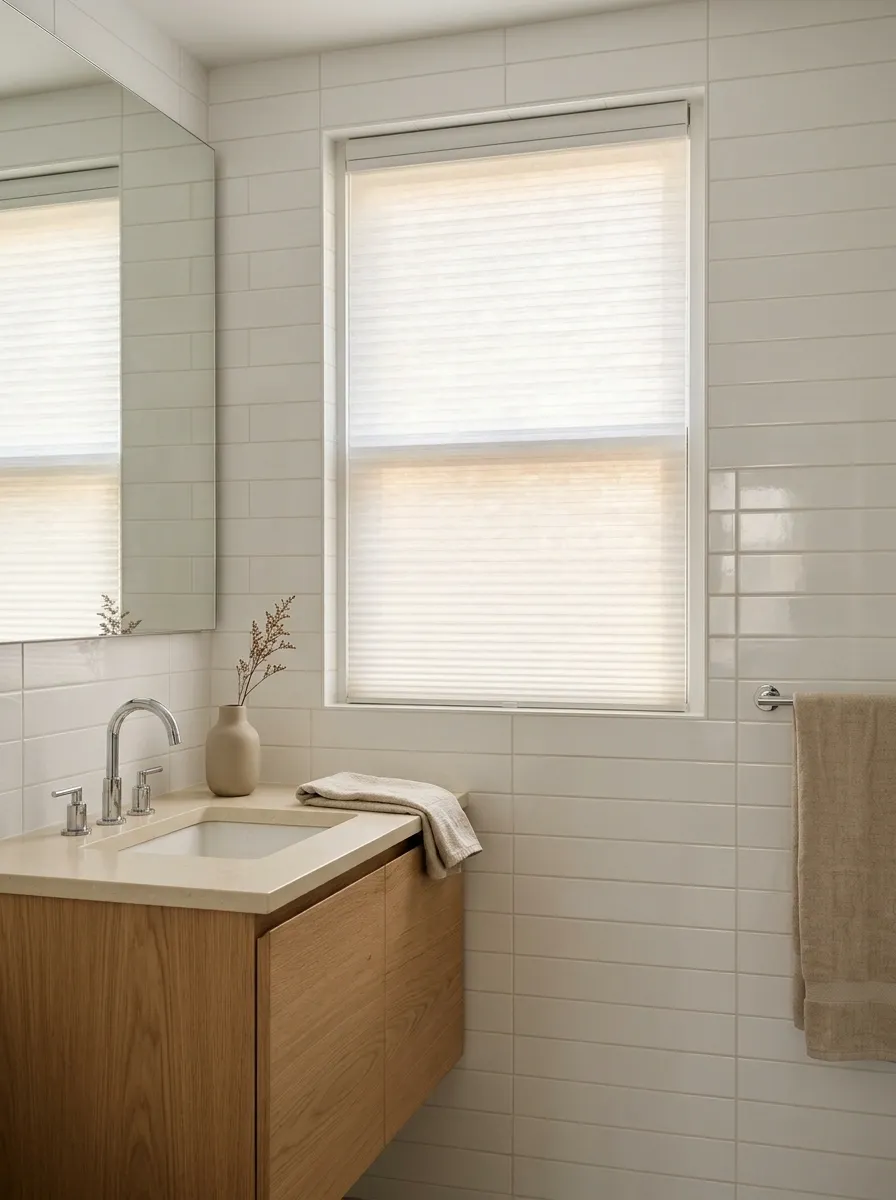
Cordless cellular shades suit compact apartment bathrooms where every window detail affects the overall look. Their honeycomb construction creates a subtle texture, while the close-fitting profile avoids the visual bulk of traditional curtains. Soft white shades work with bright tile and chrome, while warmer beige options complement oak cabinetry and creamy finishes.
The cordless design keeps operating hardware visually simple. It can also be useful in homes where dangling cords would be inconvenient, although product selection and proper installation still matter.
Cellular shades are available in different fabrics and opacities, so decide whether daylight, nighttime privacy, or both should guide the purchase. A translucent shade can soften daylight without necessarily hiding silhouettes after dark. A room facing nearby apartments needs a more deliberate solution than a high window overlooking a private garden.
Keep the walls and fixtures simple, then let the cellular texture provide the detail. The bathroom already has enough functional equipment without the window treatment joining the clutter committee.
A Tension-Mounted Café Curtain for Renters
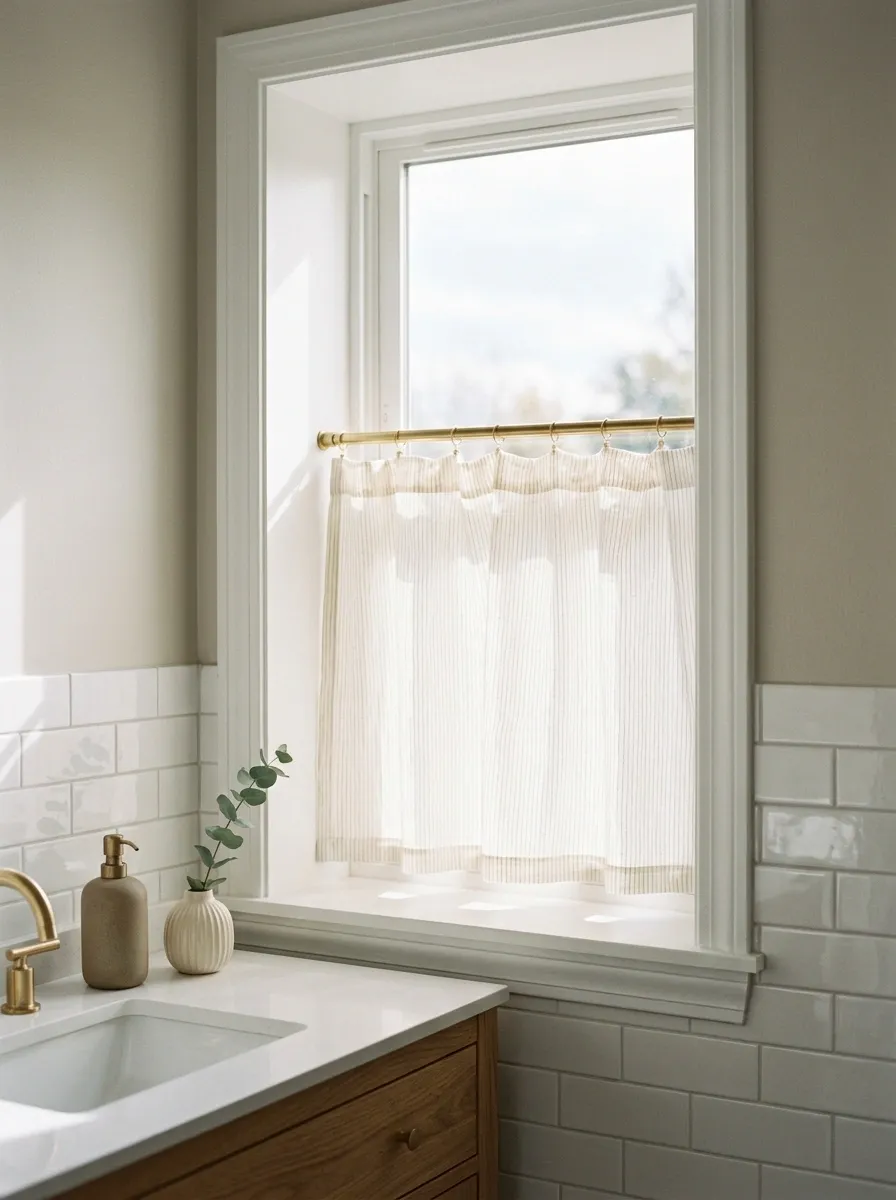
A tension-mounted café curtain brings a little softness to a rental bathroom without the need for drilling into the surrounding trim. A slim adjustable rod holds a short curtain across the lower part of the window, pairing naturally with white tile, a compact vanity, and neutral paint.
Lightweight ivory fabric keeps the window bright, while a fine stripe introduces a more traditional character. Because the curtain covers only part of the glass, the upper section remains visually open. That arrangement can work well in bathrooms where the view and surrounding buildings allow it.
Check the rod’s fit, weight limits, and suitability for the window recess before installing it. Humidity, slippery surfaces, and frequent curtain movement can affect how securely it stays in place. A tension rod should never be treated as a universal solution for every frame.
The rental-friendly part is the lack of permanent holes, not the promise of effortless installation. A crooked rod and a sagging curtain are still capable of ruining the picture.
A Small Window With a Tailored Roman Shade
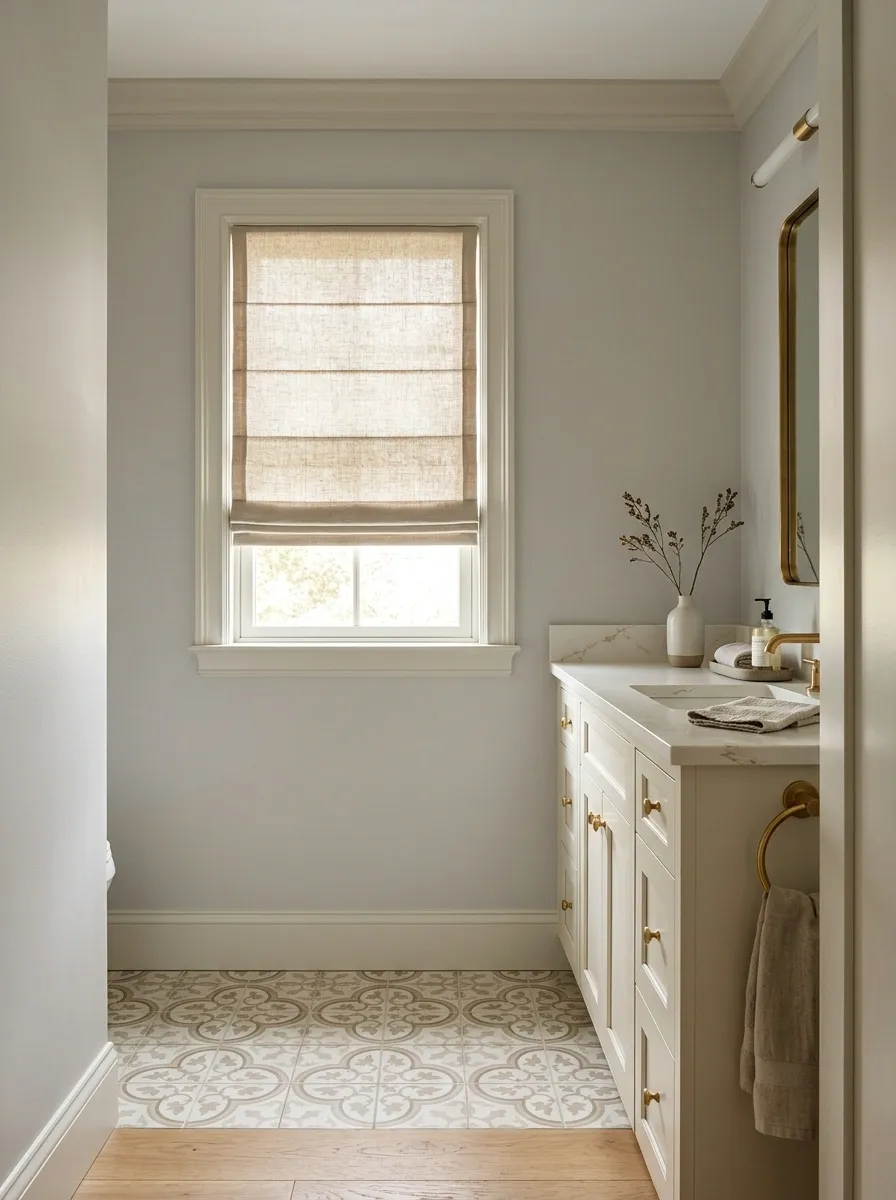
A small bathroom window can look deliberate with a correctly proportioned Roman shade. Choose a warm neutral fabric, keep the folds neat, and coordinate the shade with the vanity and wall finishes. The result feels tailored rather than like a large curtain was awkwardly squeezed onto a tiny opening.
This treatment works well in compact traditional and transitional bathrooms where fabric adds welcome softness. A simple solid shade complements patterned floor tile, while a subtle texture gives plain walls more depth. Keep the shade’s overall scale consistent with the window and avoid excessive decorative trim.
The practical side is worth planning before choosing the fabric. Roman shades fold upward, so check how the stacked fabric affects the amount of exposed glass when raised. Also confirm mounting depth, operating clearance, and privacy coverage.
A small window doesn’t need a dramatic treatment to matter. Good proportions can do more than a pile of bows, tassels, and elaborate hardware ever will.
Arched Bathroom Window With a Custom-Shaped Shade
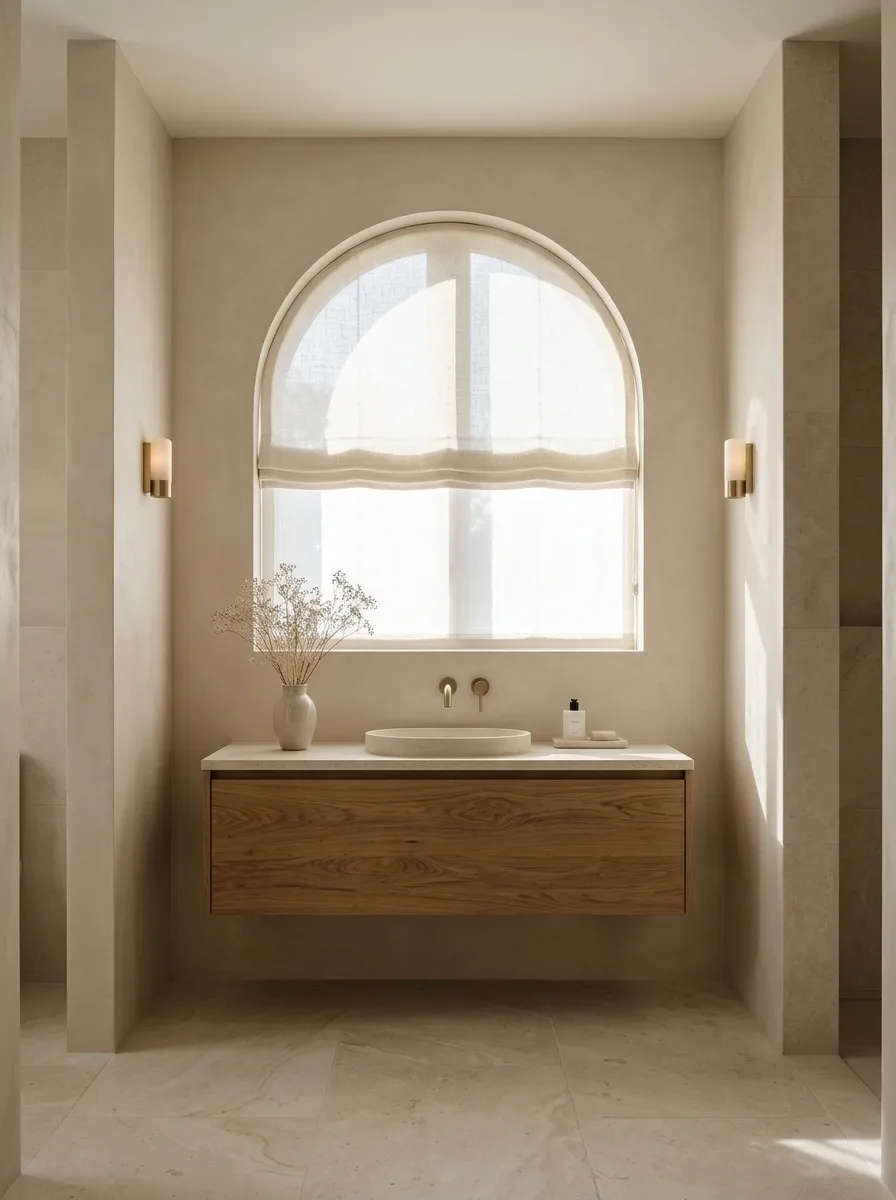
An arched bathroom window already has character, so the treatment should respect its shape instead of flattening it visually. A custom-fitted shade that follows the curve creates a tailored finish, especially alongside pale stone, warm plaster walls, and understated metal fixtures.
The surrounding bathroom should stay relatively simple. A floating oak vanity, subtle wall lighting, and large-format tile let the arch remain the focal point without making the space feel overly formal. Warm white fabric creates a softer effect, while a muted charcoal or green shade gives the window more visual weight.
Custom-shaped treatments need careful measuring and may cost more than standard blinds. Some shades cover only the rectangular lower section, leaving the arch exposed, while others follow the entire curve. Both can work, but the choice changes the finished look.
The one thing to avoid? Buying a standard rectangular shade and pretending the exposed arch was the plan all along.
Stained-Glass Privacy Window in a Traditional Bathroom
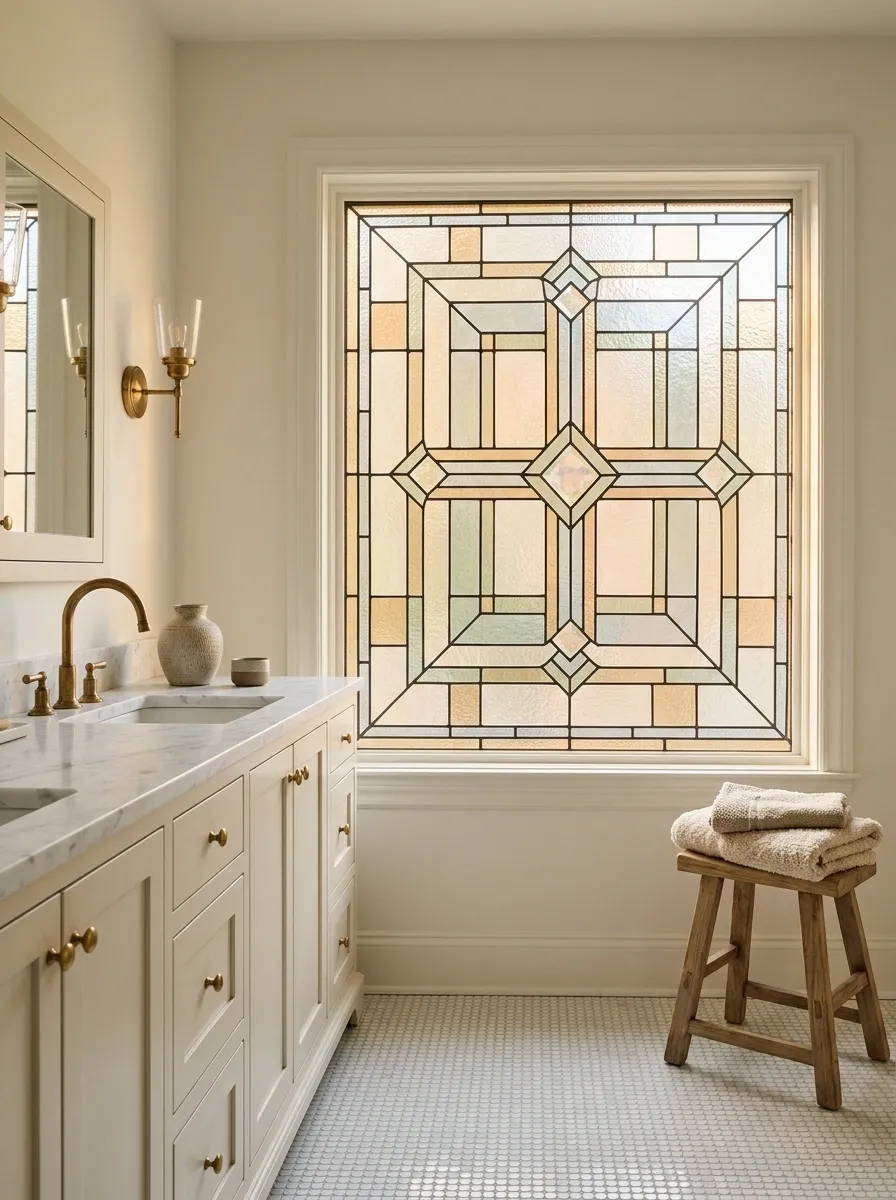
Stained glass can turn a bathroom window into a defining architectural feature. Subtle amber, sage, pale blue, or muted rose tones work well with traditional cabinetry, classic floor tile, and warm metal fixtures. The strongest designs use a restrained pattern that complements the room instead of competing with every other decorative detail.
A geometric leaded pattern suits a more formal interior, while floral motifs feel at home in cottages and period properties. Keep the vanity and surrounding walls relatively quiet so the glass remains the feature worth noticing.
Privacy depends on the glass design and how much detail is visible through it. Decorative glass does not automatically provide complete visual screening, especially at night. Existing clear windows may also require professional assessment before any glazing changes are made.
This approach is especially appealing when the window itself deserves to be celebrated. Curtains aren’t mandatory just because every other bathroom has them.
A Deep Window Niche With Integrated Privacy Screening
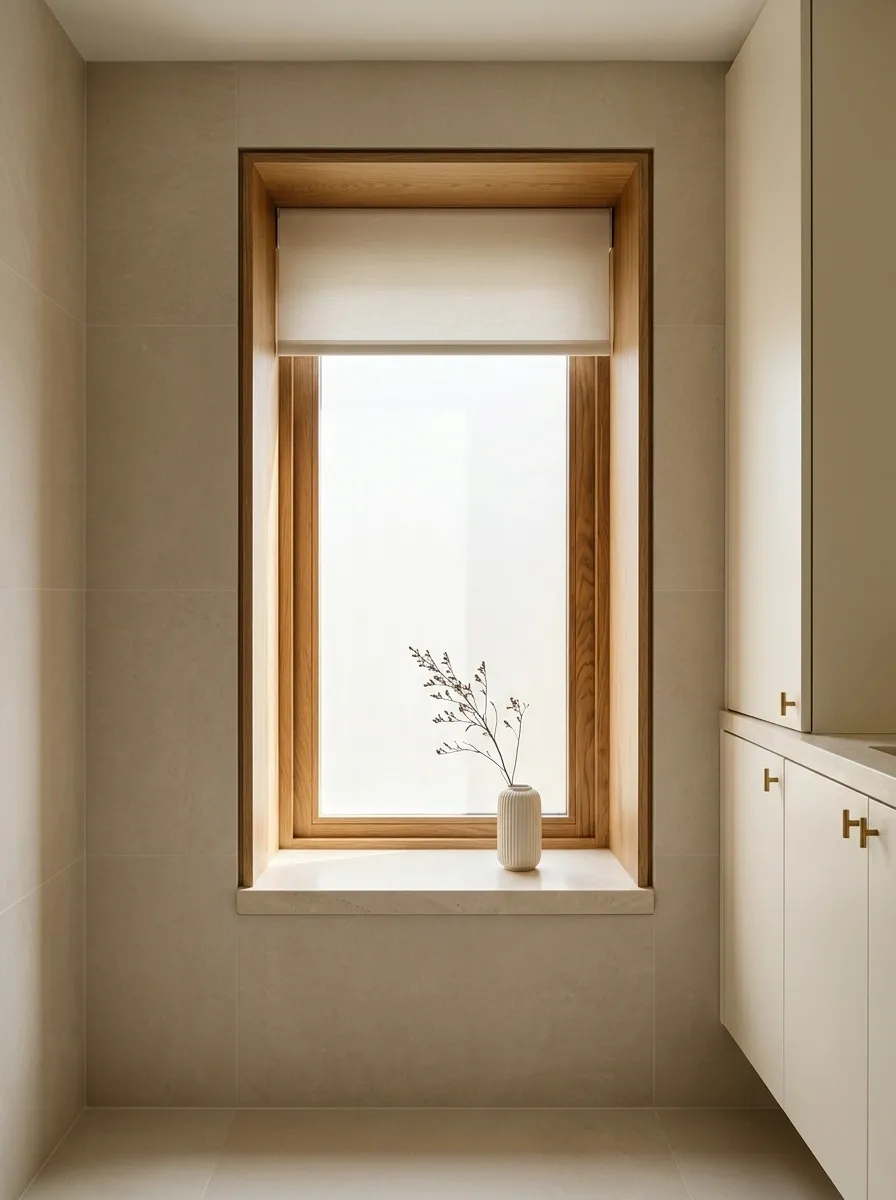
A deep window recess creates room for a more integrated treatment. A discreet roller shade or other fitted screen sits within the opening, leaving the surrounding wall and sill visually uncluttered. The recessed frame can be finished in plaster, tile, or stone to connect it with the rest of the bathroom.
This design suits contemporary spaces where clean lines matter, particularly bathrooms with built-in niches, flush cabinetry, and minimal hardware. A warm oak reveal introduces contrast, while matching the recess to the surrounding tile creates a quieter, more continuous finish.
The important detail is functional clearance. The depth of the niche must accommodate the selected treatment, its mounting hardware, and its movement. Moisture exposure also matters if the opening sits near a shower or bathtub.
A recessed window can look expensive without needing a complicated finish. Good detailing does most of the work, which is more than can be said for a decorative basket nobody uses.
A Window Seat With Roman Shades in a Spacious Bathroom
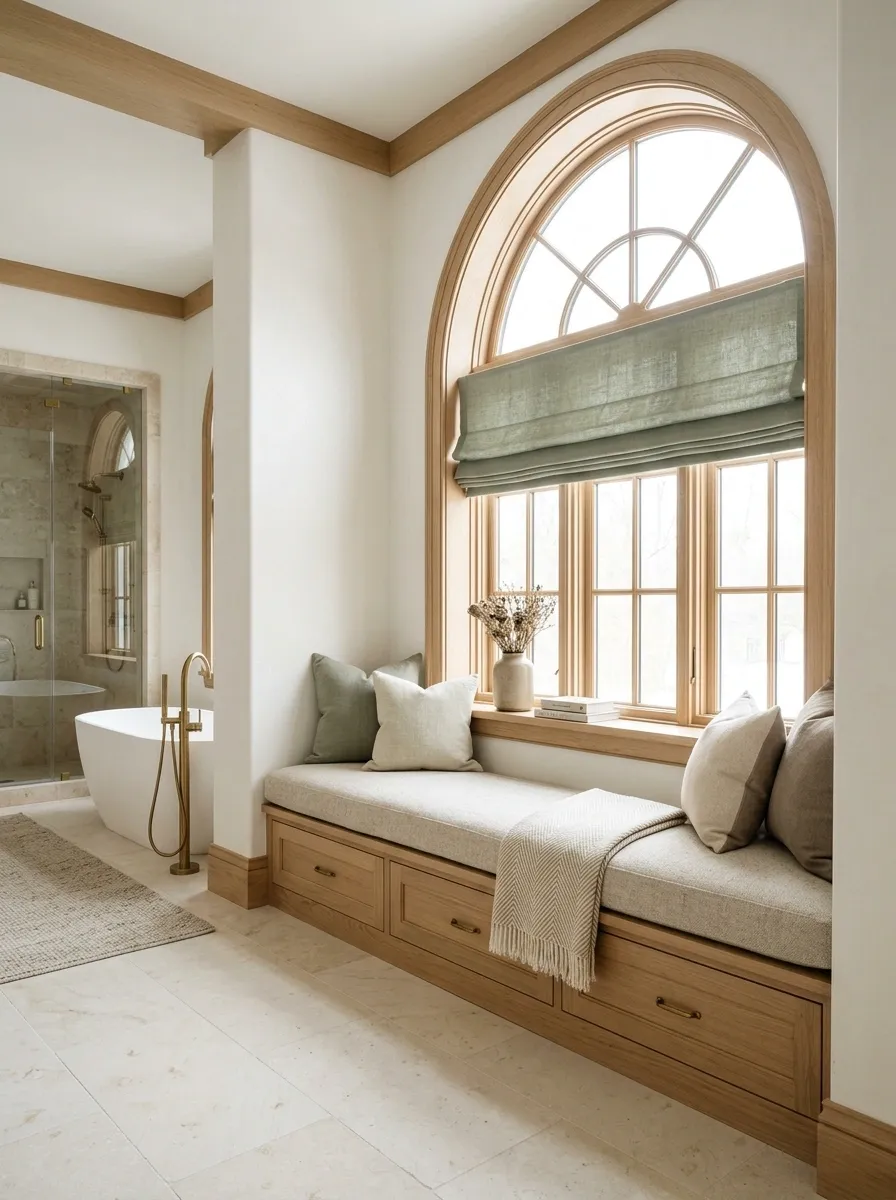
A bathroom window seat can turn an oversized window into a functional part of the room. Tailored Roman shades bring the glazing into the design, while a simple upholstered cushion, warm timber trim, and pale stone finishes create a composed seating nook. The vanity and main circulation path should remain separate so the seat doesn’t become an obstacle.
Choose a fabric that relates to the surrounding finishes without matching everything exactly. A muted green shade can complement cream stone, while flax or oatmeal fabric pairs naturally with oak cabinetry and warm white walls. Storage beneath the seat may be useful when the space and construction allow it.
The dimensions deserve more attention than decorative styling. The seat needs comfortable usable depth, safe construction, and enough clearance from nearby fixtures. Avoid placing upholstery where it will routinely receive water or remain damp.
A window seat is worth considering when the room genuinely has space for one. Squeezing a tiny bench between the tub and vanity just to achieve a photo-worthy moment is not interior design. It’s furniture traffic.
A Corner Bathroom Window With Matching Shade Treatments
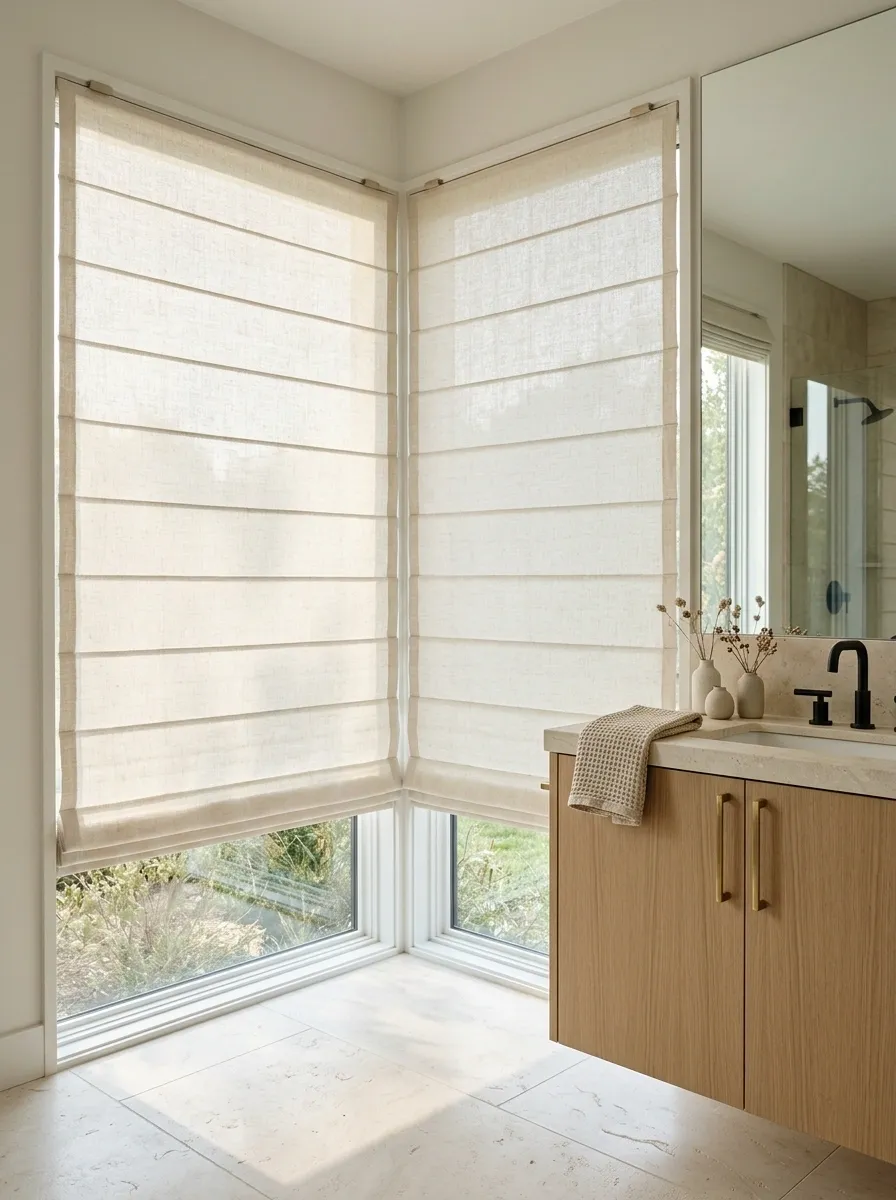
Corner windows bring light into a bathroom from two directions, but inconsistent coverings can make the whole arrangement look disjointed. Matching roller shades or Roman shades establish a common visual line while allowing each window to respond to its own privacy needs.
For a modern bathroom, warm-white shades paired with pale stone, oak cabinetry, and restrained fixtures keep the composition light. A darker fabric can create a more graphic effect when repeated consistently across both windows. The shades don’t need to be identical in opacity if the outside views differ, but their color, mounting height, and overall appearance should relate.
Pay attention to the corner itself. Window frames, shade brackets, and operating mechanisms need enough clearance to work without interfering with each other. Uneven mounting heights can be especially noticeable when the windows meet at a right angle.
The goal is coordination, not identical treatment at any cost. If one window faces a neighbor and the other looks into a private garden, forcing the same privacy setting on both would be a rather expensive way to ignore common sense.
A Dramatic Tub Alcove With Floor-to-Ceiling Window Drapery
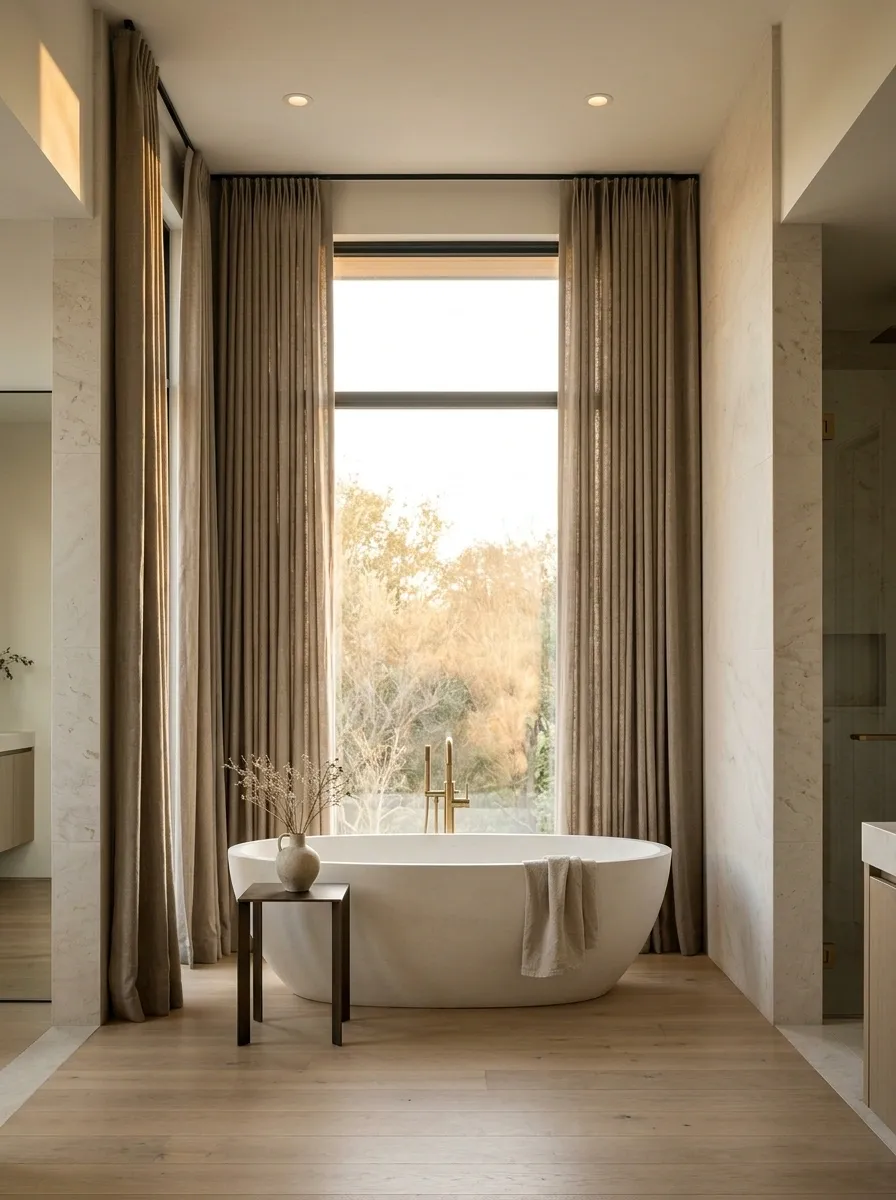
Floor-to-ceiling drapery can make a spacious bathroom feel more architectural, especially when the bathtub sits within a defined window alcove. Long ivory, flax, or warm taupe panels frame the glazing and draw the eye upward, while pale stone, warm lighting, and restrained hardware keep the composition grounded.
The best versions allow the fabric to frame the tub rather than surround it like a stage prop. A freestanding bathtub, a simple side table, and understated wall finishes give the curtains room to make an impact. A dark bronze or black curtain track can add definition, while a discreet ceiling-mounted track creates a cleaner appearance.
Plan the layout carefully. Fabric needs clearance from the bathtub, taps, and wet zones, and it shouldn’t obstruct access to windows that must open. Choose moisture-appropriate, washable materials suited to the room’s conditions.
This look requires generous wall height and enough space for the panels to sit neatly. A tiny bathroom doesn’t need six meters of curtain fabric to prove it has taste.
A Bright Bathroom With Bare Windows and Carefully Chosen Trim
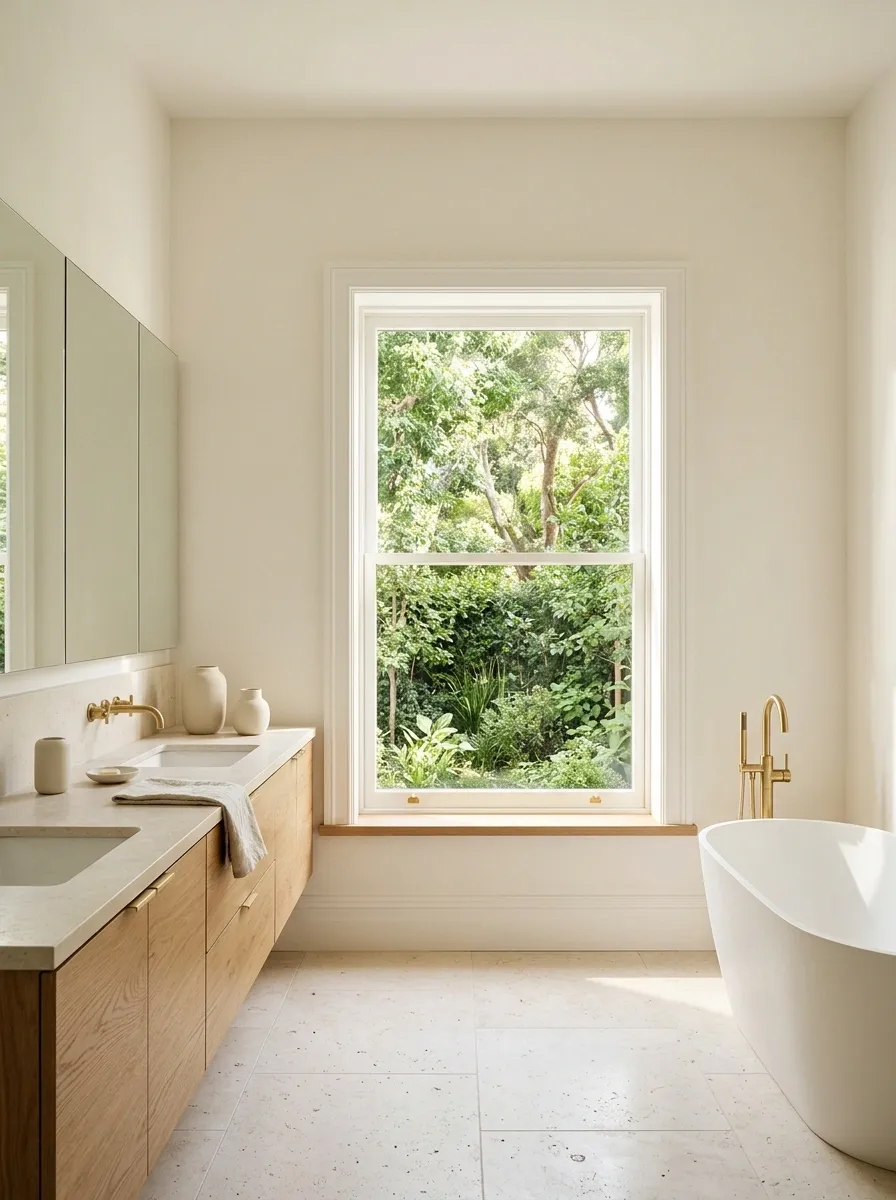
Not every bathroom window needs a separate covering. When the glazing already provides adequate privacy, leaving it uncovered can create a cleaner look and make the window feel like a natural part of the architecture. Carefully finished trim, a neat sill, and a well-chosen wall color help the opening feel intentional rather than unfinished.
This approach works especially well with bright bathrooms featuring simple tile, pale stone, understated fixtures, and a streamlined vanity. Painted white trim produces a crisp finish, while warm oak or natural timber can connect the window to other wood details in the room.
The important distinction is between a deliberately bare window and a window that simply hasn’t been finished. Keep the sill in good condition, coordinate the trim with the surrounding finishes, and make sure the view outside offers sufficient privacy throughout the day and at night.
If neighboring homes have a direct view inside, don’t sacrifice privacy just to achieve a cleaner photograph. Frosted glazing or discreet screening can preserve much of the same visual simplicity. Nobody needs to become a neighborhood spectacle in the name of minimalism.
Choosing a Bathroom Window Treatment That Actually Works
The right bathroom window treatment is the one that makes sense for the space, not simply the one that looks best in a photograph. Start with privacy and daylight, then consider the window’s shape, the materials already in the room, and how much space the covering will occupy. Roman shades and curtains introduce softness, roller shades keep the lines clean, and shutters or textured glass can make the window feel like part of the architecture.
Before ordering anything, check the fabric or material against the actual tile, vanity, and window frame. Look at the room during different lighting conditions, and consider how the treatment will be cleaned and maintained. A beautiful design should still work on an ordinary Tuesday morning.