
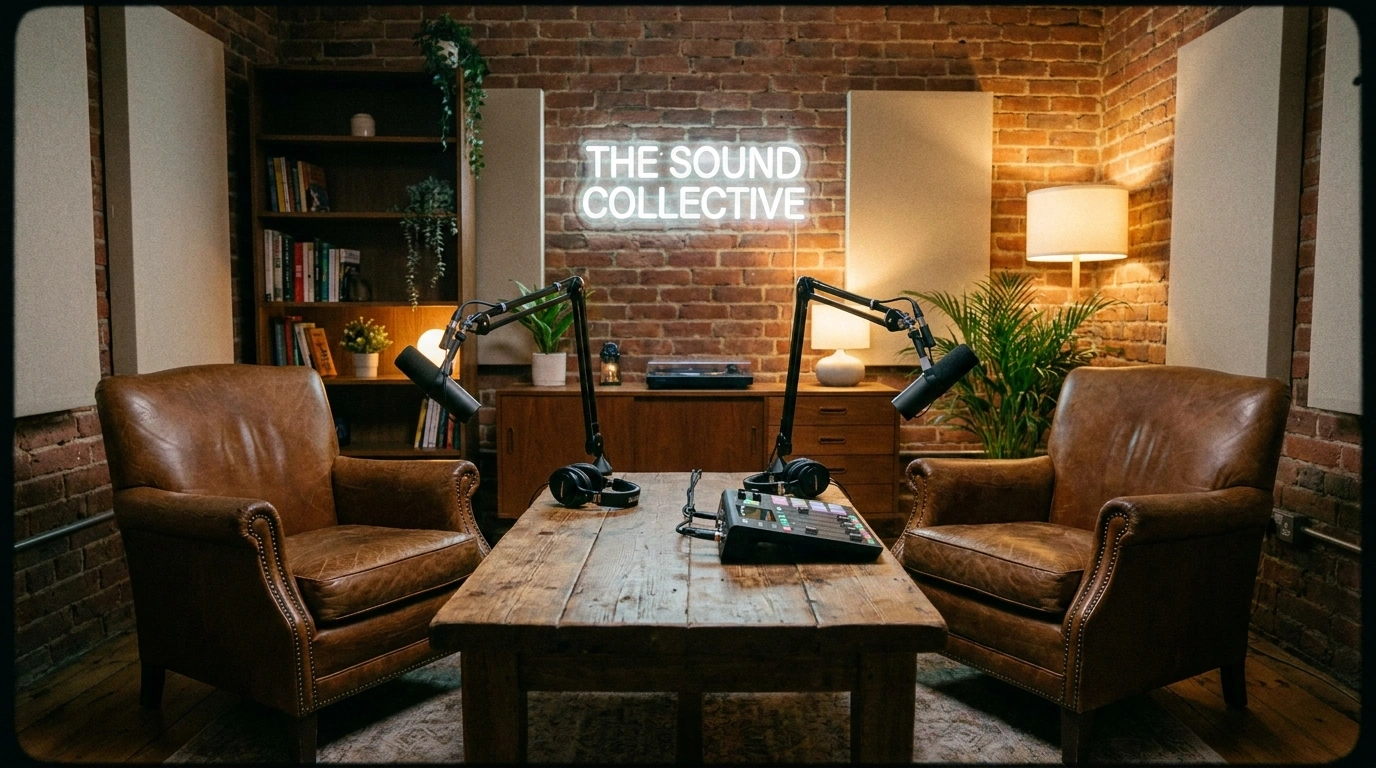
A podcast can have crisp audio, an expensive microphone, and a host who knows exactly what they’re talking about. Then the camera turns on, revealing tangled cables, random furniture, and a background that looks like the room’s original purpose was storing things nobody wanted.
The problem usually isn’t a lack of equipment. It’s a lack of design.
Podcast room ideas work best when the furniture, lighting, acoustics, and camera background feel like parts of the same composition. A dedicated studio isn’t necessary, either. A spare bedroom, a narrow apartment corner, or a converted closet can become a convincing recording space when every element has a clear purpose.
Some creators need a comfortable setup for long conversations. Others want a dramatic background for video podcasts or a compact workstation that disappears when the recording ends. Those are different design problems, and they deserve different solutions.
Studio Reality Check
Before the equipment shopping spree begins, there’s a small matter of what the camera will expose. Spoiler alert: the microphone cannot fix everything.
Three studio problems can make an otherwise decent setup look painfully unfinished. Unfortunately, none can be fixed by buying another gadget you saw in a creator’s gear tour.
Bare walls and hard floors can reflect sound back into the microphone. Use appropriate acoustic treatment, curtains, rugs, and soft furnishings where they make sense.
Random shelves, visible clutter, and tangled cables make the frame look accidental. Choose one focal point, organize the equipment, and leave the background some breathing room.
A harsh ceiling light rarely does the whole job. Add soft, flattering light for the host, then introduce gentle background illumination for depth.
The goal is a recording space that works in real life, not just one that survives a carefully cropped social media photo.
Podcast Room Designs
Rusty Orange Podcast Studio
Rich rust-colored armchairs paired with a textured central panel and vertical ambient lighting instantly pull the eye into the frame. The bold monochromatic palette makes the interview space feel curated rather than improvised, offering a striking backdrop for guest episodes.
Abstract wall art and understated greenery frame the central seating arrangement without cluttering the background. The small dark accent table grounds the setup, giving guests a natural place to rest their hands while keeping the microphone arms accessible.
Keep the lighting balanced to preserve the rich tone of the rust fabric without throwing harsh shadows across the speakers’ faces. This setup proves that committing to a strong accent color pays off brilliantly on camera.
Warm Walnut Podcast Studio With Architectural Wood Slats
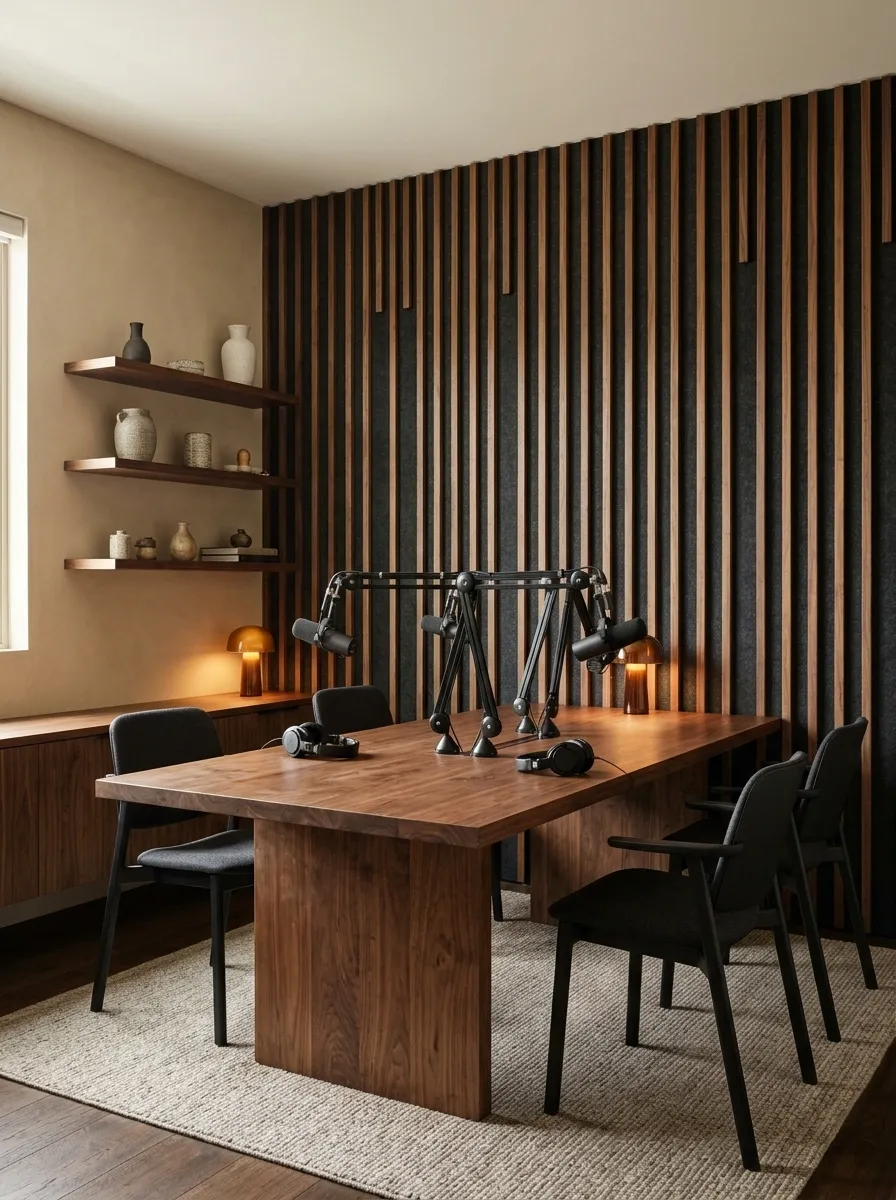
Walnut, charcoal, and warm lighting give this studio the kind of polish that makes a basic desk-and-microphone setup look considerably more intentional. Vertical wood slats create architectural interest behind the recording position, while dark acoustic panels blend into the background instead of shouting, “Someone bought studio foam.”
A walnut desk anchors the room, with black microphone arms, discreet equipment storage, and a few carefully arranged shelves. Amber-toned lamps soften the darker finishes and add depth to the camera frame.
The key is restraint. Too many decorative objects will compete with the wood grain and recording gear. Keep the desk functional, conceal spare cables, and let the materials carry the design.
Custom visual: The material combination
Neutral Boucle and Wood
Plush cream boucle chairs combined with vertical wood slat panels create a tactile, inviting atmosphere that begs for long-form conversations. The soft textures bounce light beautifully, giving the entire studio an airy, high-end feel.
A round wooden coffee table anchored by a patterned area rug defines the conversation zone neatly. Subtle decor like a salt lamp and a small potted plant add life to the background without pulling focus from the hosts.
Let the neutral tones do the heavy lifting by incorporating varied textures like woven rugs, ribbed wood, and soft fabrics. It creates visual depth on camera while keeping the space feeling calm and professional.
Cinematic Podcast Room With Charcoal Walls and Rust Accents
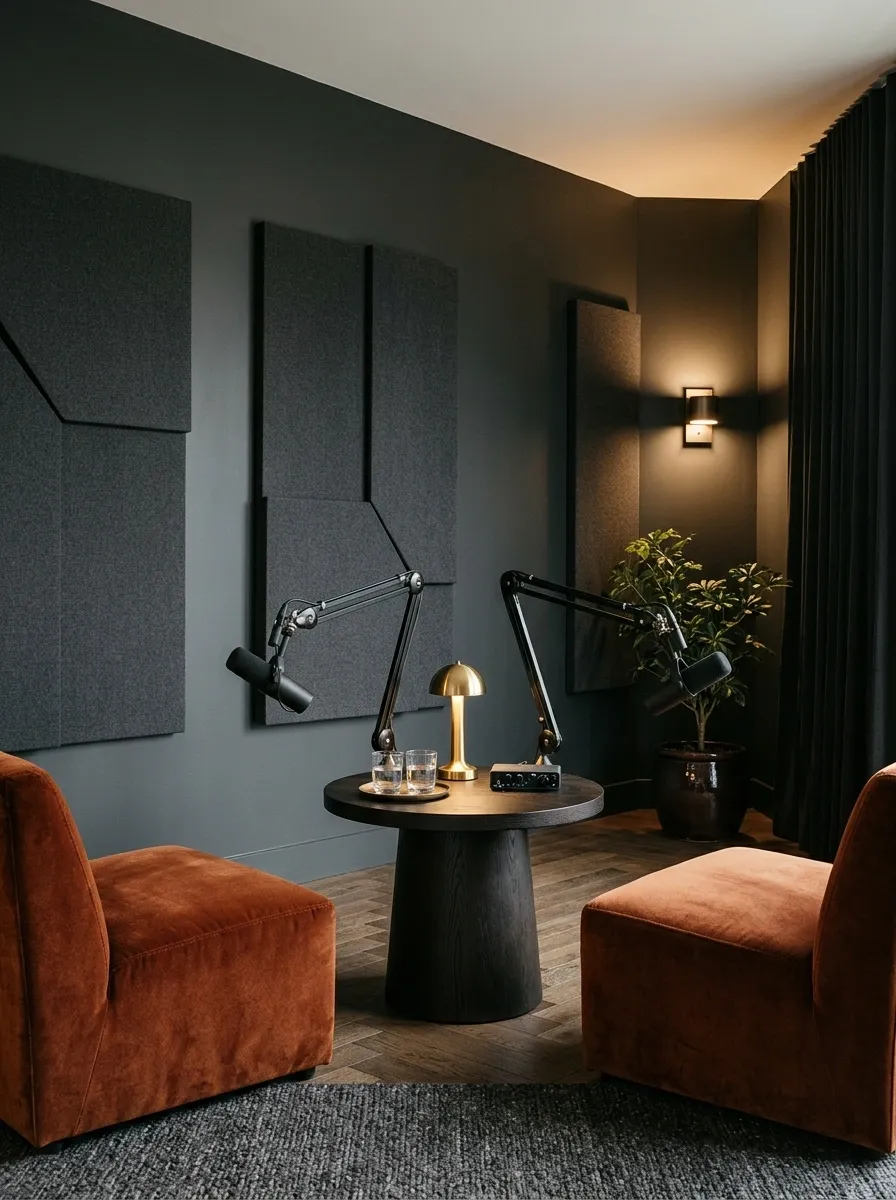
Some podcasts call for a little drama. This room delivers it with charcoal walls, rust-colored lounge chairs, a compact dark table, and warm directional lighting. The result feels more like an intimate interview set than a home office that accidentally acquired microphones.
The furniture should stay low enough to preserve the visual openness of the room, while the chairs create a strong color contrast against the darker background. Acoustic panels can blend into the wall treatment, and a small practical lamp adds another layer of light without turning the scene into a lighting showroom.
The trick is to keep faces clearly lit. A cinematic background should look moody, not make every guest appear as though the power bill is overdue.
Custom visual: Three layers of studio lighting
A soft, diffused source illuminates the host without harsh shadows.
A lamp or restrained wall light creates depth behind the seating.
A small warm light reveals texture without competing with the speaker.
Camera exposure and light placement matter. A dark room still needs enough usable light on the faces.
Full Production Round Table
A spacious round table surrounded by sage green chairs creates a collaborative atmosphere perfect for multi-host shows or panel discussions. Dark wood finishes and professional lighting rigs overhead signal that serious production happens here.
The branded backdrop adds a subtle touch of corporate polish, while carefully placed houseplants soften the studio’s technical gear. Overhead softboxes and warm background lamps ensure every participant looks exceptionally well-lit from every angle.
Balance the heavy equipment footprint with comfortable seating and organic elements like wood and plants. A well-executed multi-person studio makes complex camera angles look effortless and entirely natural.
Minimalist Warmth Interview Corner
Clean lines, mid-century inspired wooden armchairs, and a soft neutral backdrop come together to form an effortlessly chic recording nook. The sunbeam projection on the wall introduces an artistic, organic element that feels both modern and serene.
A petite white coffee table holds simple ceramic mugs and a vibrant green plant, anchoring the chairs in an intimate layout. A sleek floor lamp off to the side adds architectural height and a gentle wash of warm light to the corner.
Embrace minimalism by letting one strong visual feature—like the shadow play or a statement plant—carry the decor. When the backdrop is this clean, every single element in the frame needs to earn its place.
Two-Person Interview Studio With Facing Lounge Chairs
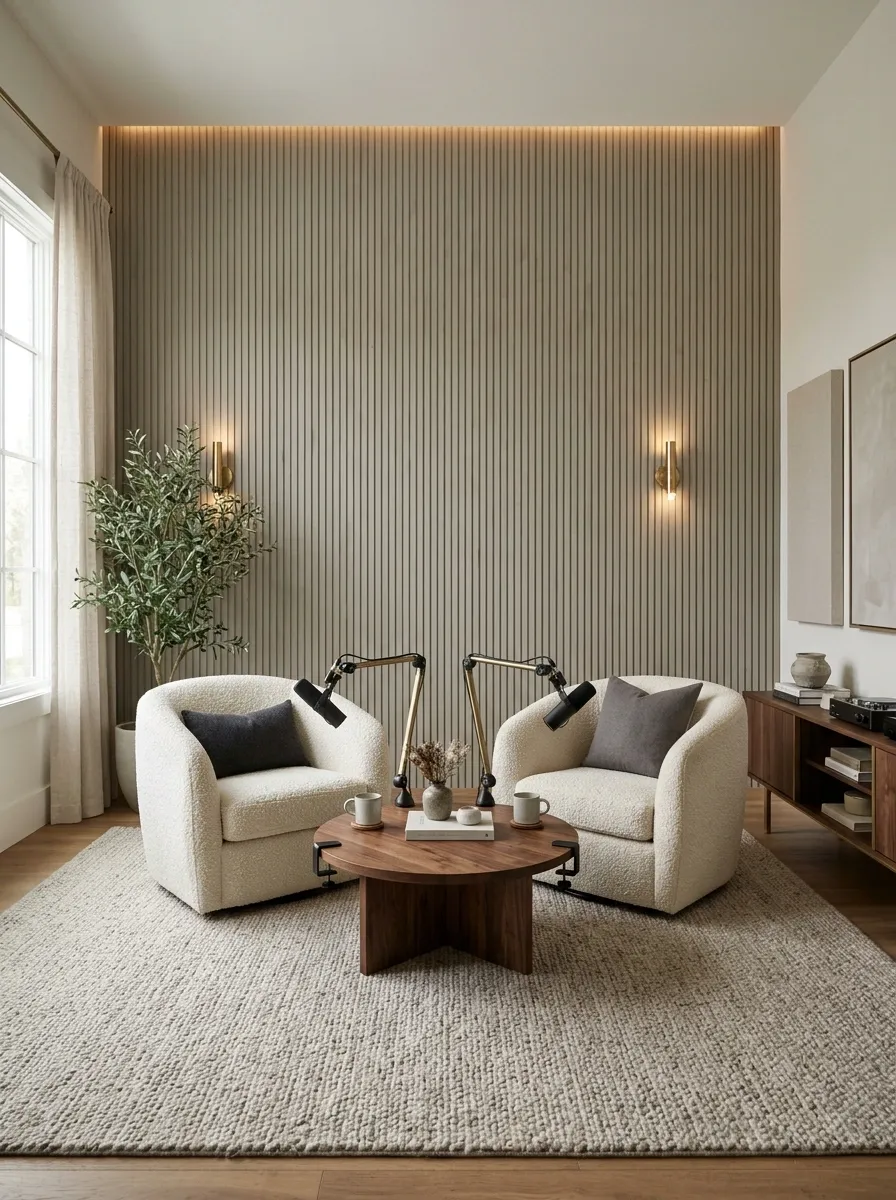
A two-person podcast should feel like a conversation, not a disciplinary hearing with microphones. Facing lounge chairs establish a relaxed arrangement, while a compact round table keeps the central area useful without becoming a physical barrier.
Give each person a dedicated microphone and enough room to adjust their seating naturally. The camera setup needs to account for both speakers, with an additional angle if the production calls for individual close-ups. A calm wall treatment and a few restrained decorative elements provide visual depth without distracting from the conversation.
The furniture matters here because guests need to stay comfortable while speaking. Chairs that look impressive but leave everyone perched on the edge of the seat aren’t doing the studio any favors.
Custom visual: The conversation layout
Before recording: Check that both people can reach their microphones, look toward each other comfortably, and remain inside the intended camera framing.
Vintage Radio-Inspired Podcast Room With Walnut Furniture
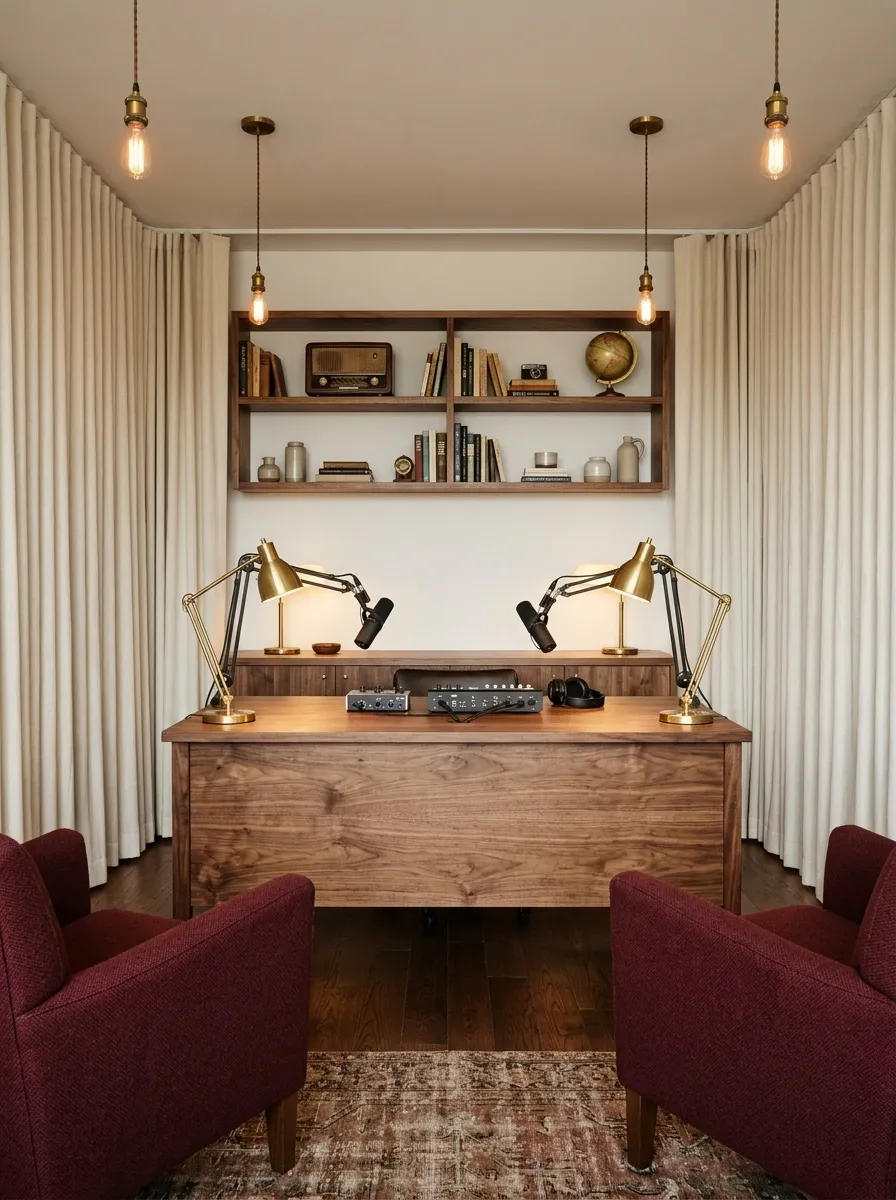
This studio borrows the warmth of an old radio booth without making the room look like an antique shop with a broadcasting license. Walnut cabinetry, burgundy upholstery, brass details, and cream-colored acoustic curtains establish a more traditional character, while contemporary recording equipment keeps everything functional.
A wooden console can conceal spare accessories, and a pair of shelves can display a few carefully chosen books or vintage-inspired objects. Brass task lamps and warm bulbs complement the timber, while upholstered seating softens the room visually.
The important distinction is between a vintage-inspired interior and a room full of random retro props. Choose a consistent era-inspired palette, keep the equipment accessible, and let the furniture provide most of the personality.
Custom visual: The vintage studio material story
Modern recording.
The winning formula is heritage-inspired furniture paired with contemporary equipment. Skip the prop overload. The room is a studio, not a themed restaurant.
Built-In Bookshelf Podcast Studio With a Library Background
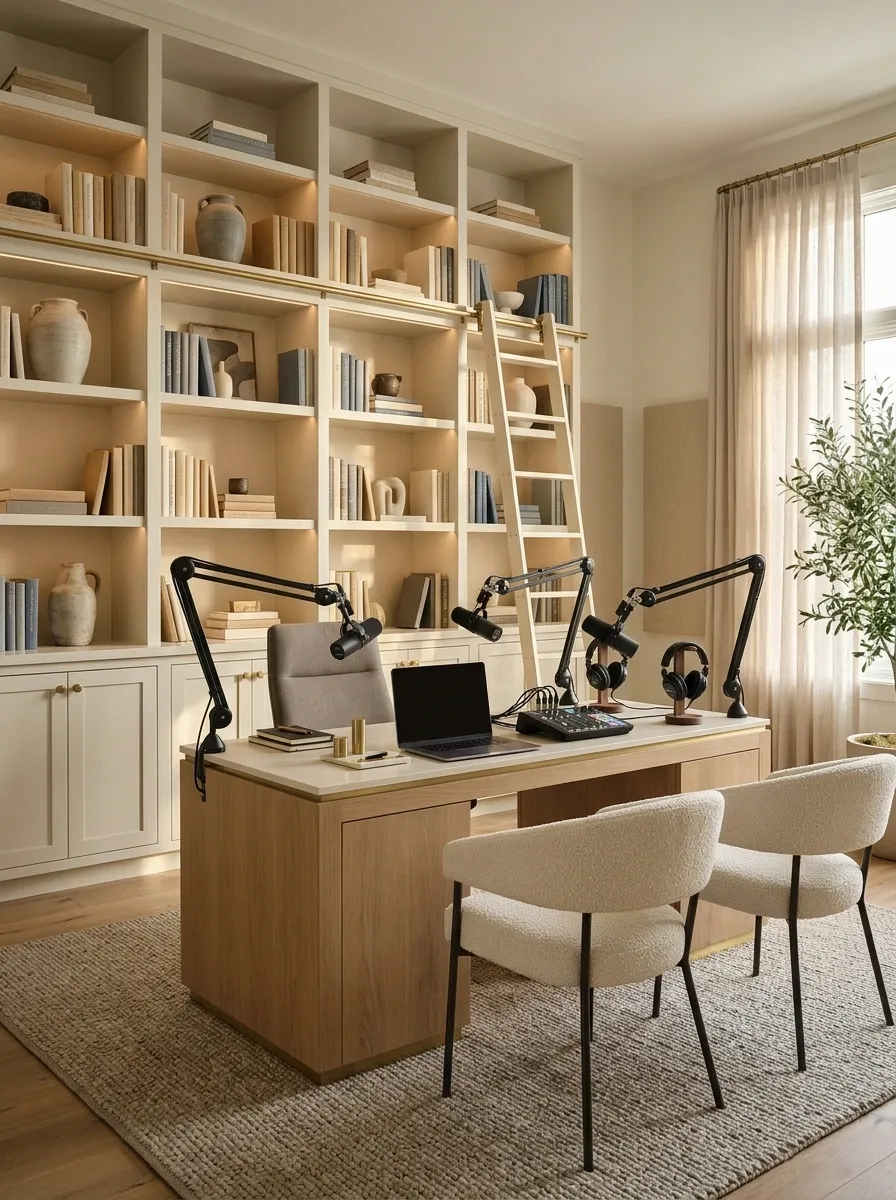
Bookshelves can create an excellent podcast background, but only when they’re styled with some restraint. A wall packed from corner to corner with tiny objects isn’t a personality. It’s a storage problem with good lighting.
A built-in bookcase with closed lower cabinets gives the room a strong architectural anchor. Books can be grouped by height and tone, with a few larger objects and open sections creating visual rhythm. A desk or pair of interview chairs sits forward from the shelves, allowing the background to feel layered rather than flat.
Warm shelf lighting adds depth, but it shouldn’t compete with the light on the host. Keep frequently used equipment in the cabinets, reserve the camera-facing shelves for deliberate styling, and resist the urge to display every souvenir ever acquired.
Custom visual: Style the shelves with a visual hierarchy
Check the shelves from the actual recording angle. An arrangement that looks balanced while standing in front of it can look lopsided through the lens. Move objects, adjust the frame, and stop when the background supports the speaker instead of competing with them.
Geometric Acoustic Wall Studio With Color-Blocked Panels
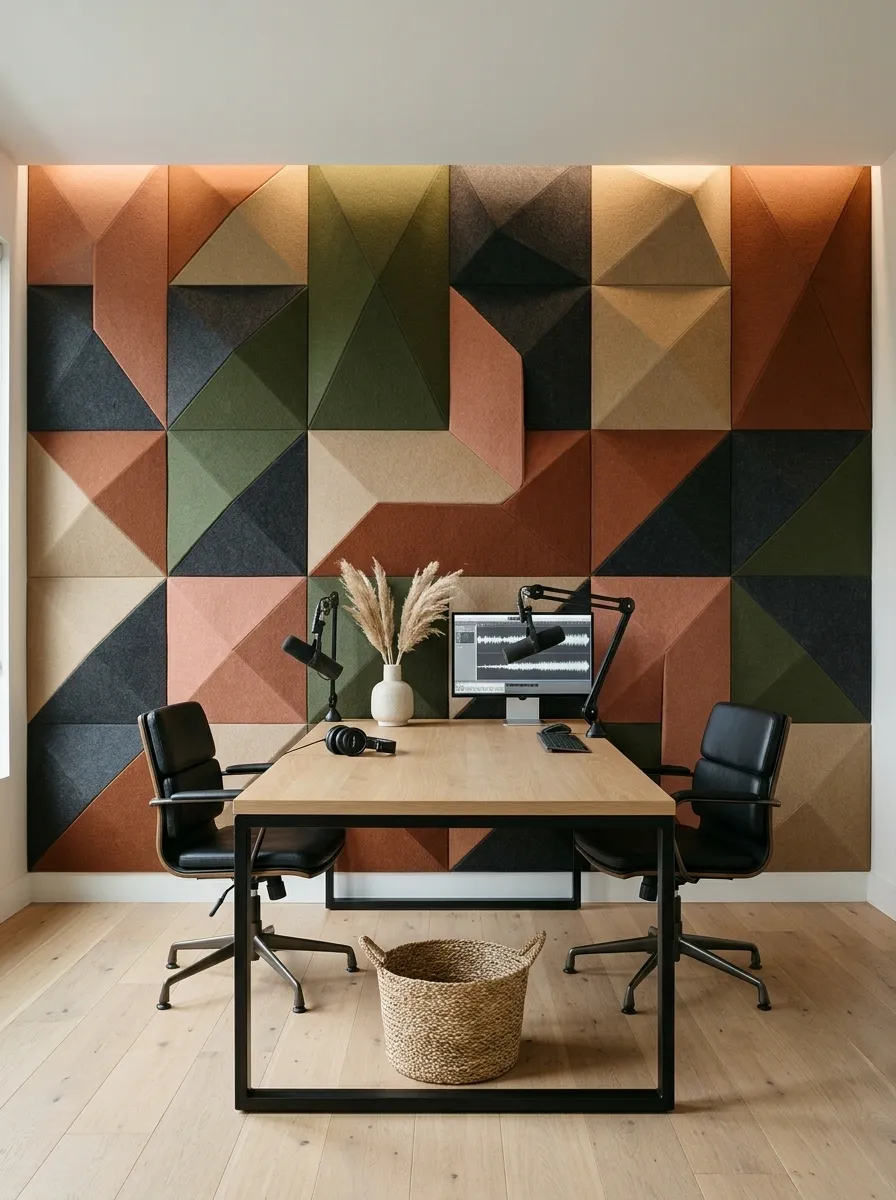
Acoustic treatment doesn’t have to make a podcast room look like a padded shipping box. Geometric felt panels in muted terracotta, olive, and charcoal can create a distinctive feature wall while bringing texture and color to the recording background.
The strongest composition uses a limited number of shapes and repeats them with intention. A simple desk, neutral flooring, and restrained furniture let the wall carry the visual interest. Keep microphones and monitor screens positioned so they don’t obscure the pattern, especially when the camera faces the wall directly.
There is one important distinction: decorative foam and felt panels don’t automatically solve every sound problem. The material, thickness, placement, and room itself all matter. Choose treatment for its actual acoustic purpose, then arrange it to suit the interior rather than buying random panels just because the product photos look attractive.
Custom visual: Build a coherent panel composition
The swatches illustrate a visual direction, not an acoustic treatment specification. Check the product’s intended use before installation.
Three-Person Podcast Studio With a Curved Conversation Table
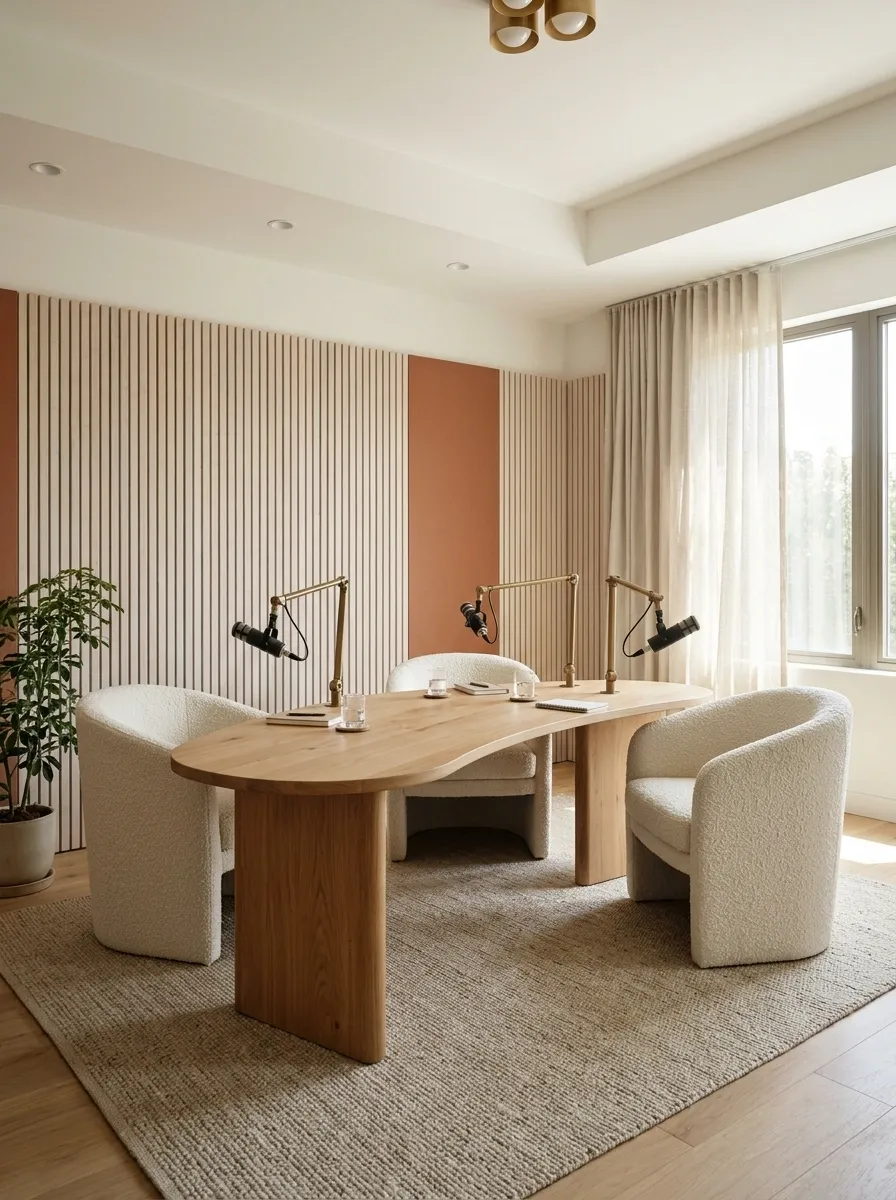
Three people, three microphones, and one table that somehow blocks everyone’s arms. Group podcasts can turn into a furniture geometry exam if the layout isn’t planned around the actual conversation.
A compact curved table gives each participant a clear working position, while three individual seats follow the same gentle arc. Dedicated microphone arms keep equipment within reach, and the host can occupy the central or most visually prominent position depending on the show’s format. A neutral acoustic backdrop with a restrained color accent ties the group together without making the room resemble a corporate conference suite.
Allow enough space for chairs to move and guests to enter and leave comfortably. Microphones should not obstruct faces, and the camera view needs to account for all three speakers. The finished setup should feel lively, not like everyone is waiting for a meeting to end.
Custom visual: Plan the group before buying the table
A planning sketch for a compact group show. Adjust spacing to the room and the furniture dimensions.
Clear reach
Clear reach
Clear reach
This sketch shows the relationship between the host, guests, and table, not a scale floor plan. Check chair clearance, microphone reach, camera framing, and cable paths before choosing the furniture.
Navy and Cognac Podcast Room With a Refined Lounge Feel
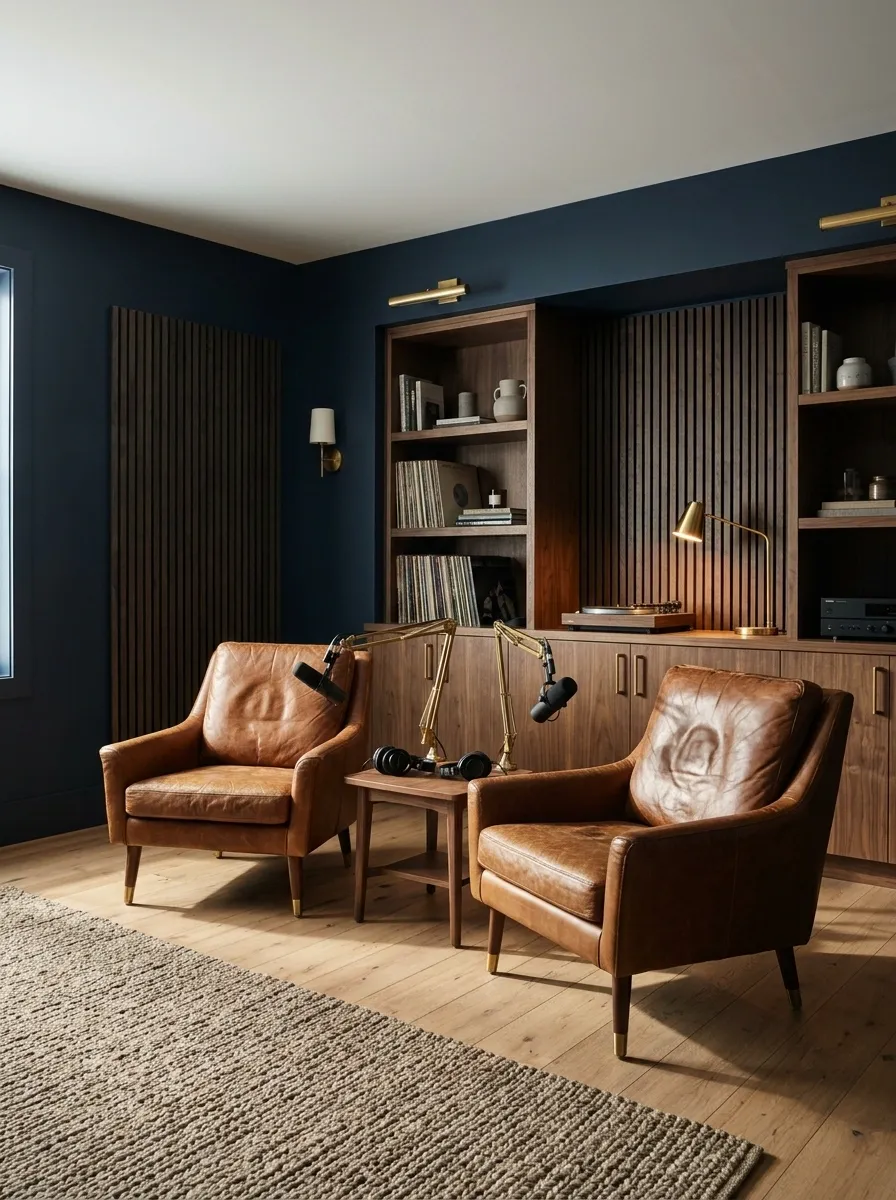
Navy walls and cognac leather give a podcast room a confident, grown-up look without resorting to the usual black-everything studio aesthetic. Walnut furniture adds warmth, while small brass accents bring a little polish. The overall effect is closer to a private listening lounge than a room assembled entirely from electronics packaging.
Two lounge chairs work well for conversational shows, with a small table and separate microphone arms keeping each recording position functional. If the room uses a desk instead, repeat the cognac tone in the chair or accessories so the palette still feels connected. A dark acoustic backdrop provides visual depth, but the host’s face needs enough light to remain clearly visible.
Avoid adding brass details to every available surface. A few considered accents are more convincing than a room trying to win a luxury-hardware sponsorship.
Custom visual: A dark palette that stays warm
Let each finish play a different role instead of competing to be the star.
Use brass on a lamp, cabinet pull, or small fitting. Keep it as a supporting detail rather than spreading metallic finishes across the entire room.
Podcast and Music Production Studio With a Shared Workstation
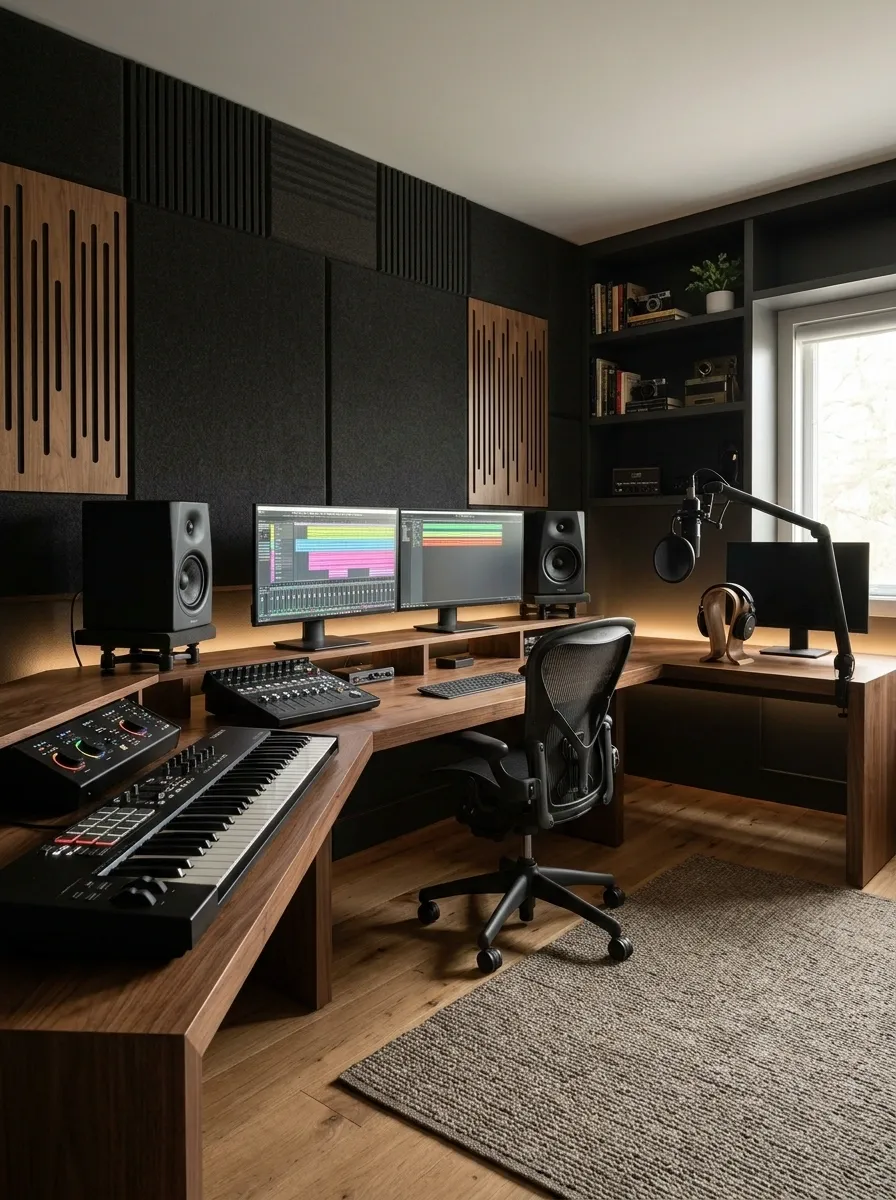
When the podcast desk also houses a MIDI keyboard, studio monitors, an audio interface, and seventeen cables that appear to have formed a union, organization becomes a design decision.
A shared podcast and music studio needs separate working zones without wasting valuable space. A long workstation can accommodate the computer and audio interface, while a microphone arm keeps the speaking position accessible. Studio monitors sit at the appropriate listening positions, and a keyboard or controller occupies a section that doesn’t interfere with recording.
Dark acoustic panels, warm wood, and concealed equipment storage help the room feel like a finished creative workspace rather than an electronics clearance sale. Keep the microphone easy to reach and the cables routed safely. The whole point is to switch between recording and producing without rearranging half the room every time.
Custom visual: Separate the workflow, not the room
Give each task a defined home so the workstation can do more without becoming a permanent equipment puzzle.
Route power and audio cables neatly, keep connections accessible for troubleshooting, and leave enough room to move the microphone arm. Concealed is good. Impossible to reach is how a ten-second fix becomes an afternoon.
Fluted-Wood Podcast Room With a Furniture-Led Backdrop
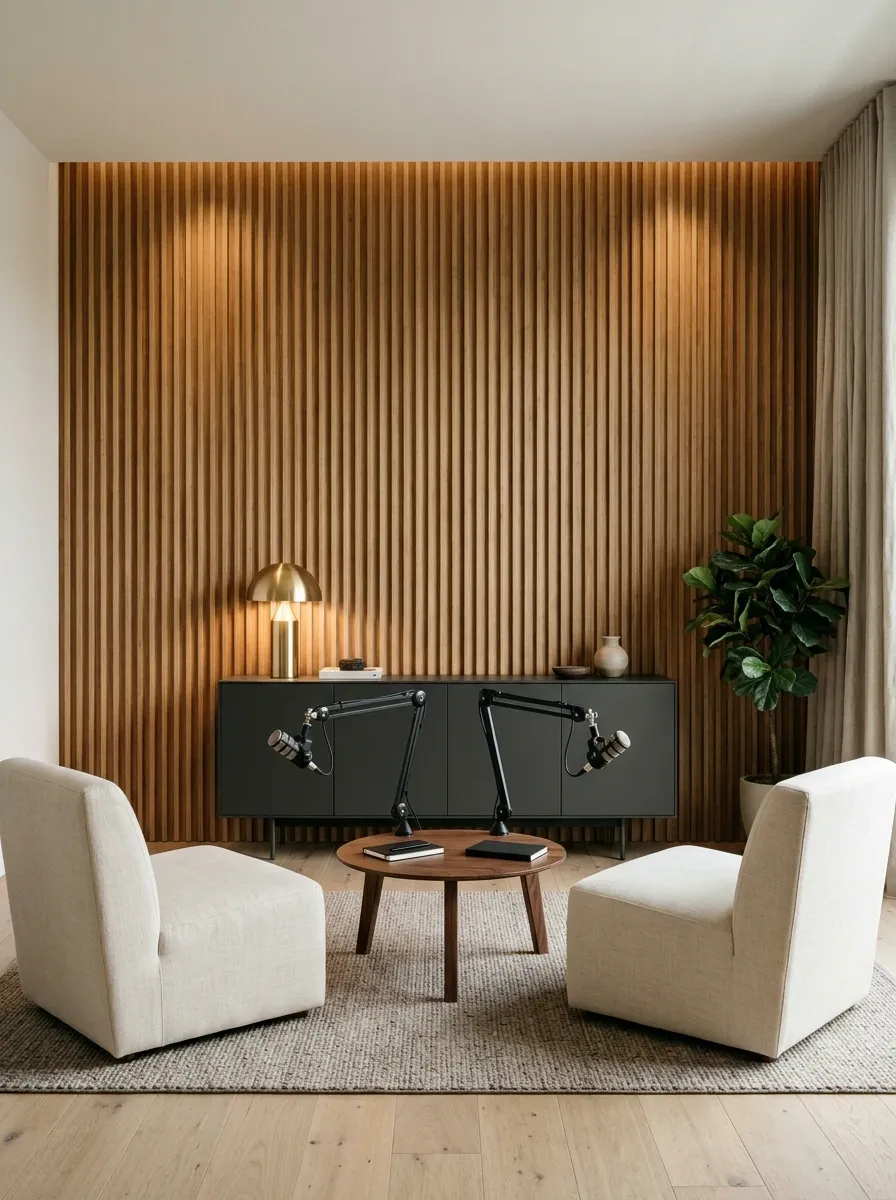
A fluted wood wall adds texture without requiring a collection of neon signs, motivational quotes, and decorative objects fighting for screen time. Pair it with a low credenza, comfortable upholstered chairs, and compact recording equipment for a studio that feels like a finished residential interior.
The wood feature establishes the main visual line, while the furniture gives the wall scale. A pair of microphones and a small central table create an obvious recording arrangement. Subtle wall lighting or a table lamp adds depth, provided it doesn’t create glare on the recording equipment or distract from the host.
Keep the fluting and other textured surfaces selective. If the wall already provides plenty of detail, simpler flooring, quieter furniture, and restrained accessories will help the space feel balanced.
Also distinguish between decorative wall panels and acoustic products. A textured finish may look sophisticated, but its appearance alone tells nothing about how effectively it absorbs sound.
Custom visual: Get the proportions right
Choose furniture that leaves enough of the wall visible to establish its texture. A massive console can hide the feature that justified the entire design, which is an impressively expensive way to decorate behind a cabinet.
Terracotta and Plum Podcast Studio With Soft Color Layering
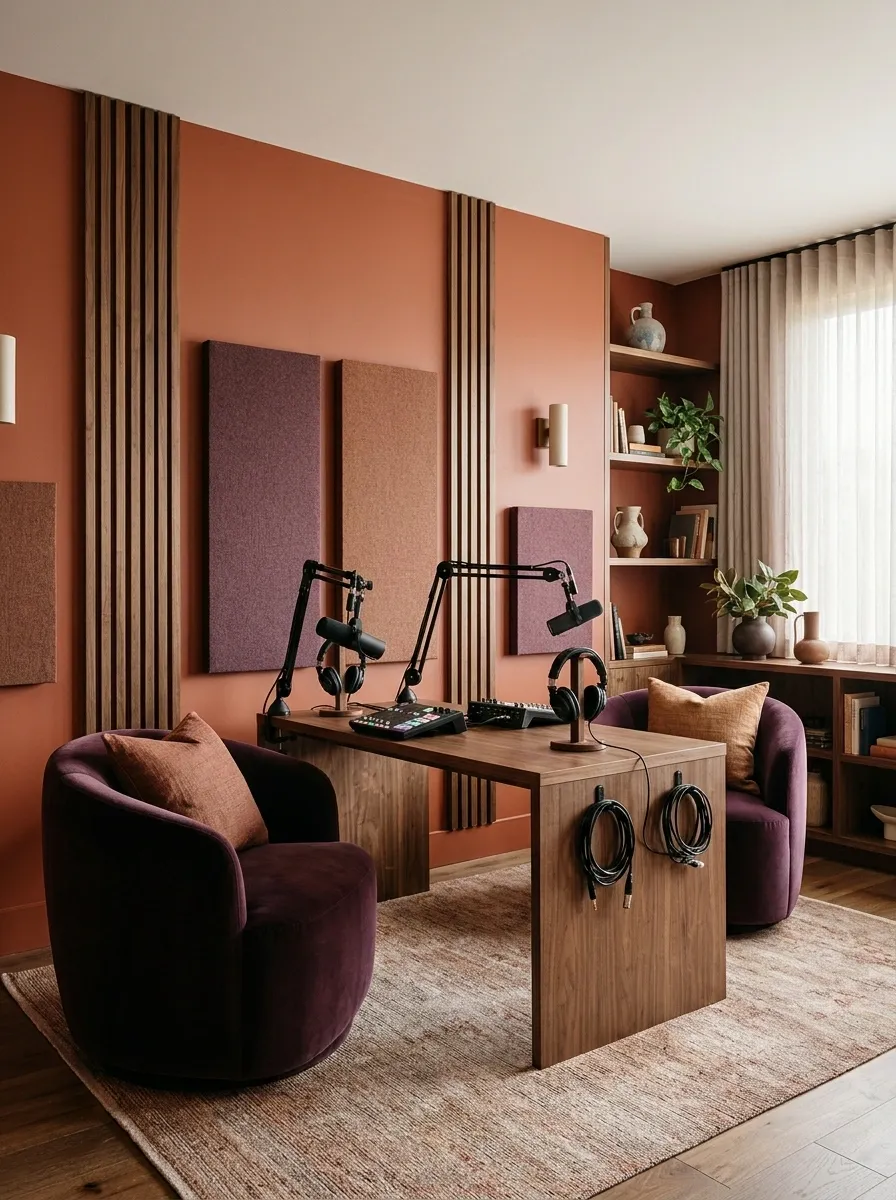
Neutral studios are useful, but not every podcast needs to look like a luxury apartment listing where nobody has ever eaten a snack. Terracotta walls, plum accents, walnut furniture, and dark recording equipment create a richer space with a distinct on-camera identity.
Rounded chairs and soft fabric finishes balance the deeper colors, while a simple recording table keeps the arrangement practical. Use terracotta as the main backdrop and reserve plum for upholstery or a smaller supporting surface. Walnut provides a bridge between the colors, keeping the room from becoming a collection of unrelated paint samples.
Lighting should preserve the richness of the palette without pushing the terracotta toward bright orange or making the plum look nearly black. Test the colors through the camera before settling on the final arrangement.
This look works especially well when the show wants a warm, expressive background without relying on neon branding or a wall of decorative props.
Custom visual: Control the color hierarchy
The visual hierarchy below is a design guide, not a required percentage formula.
Record a short test clip under the planned lighting. Adjust the light and finishes until the terracotta, plum, and wood remain distinct instead of merging into one muddy background.
Glass-Partition Podcast Room Inside a Home Office
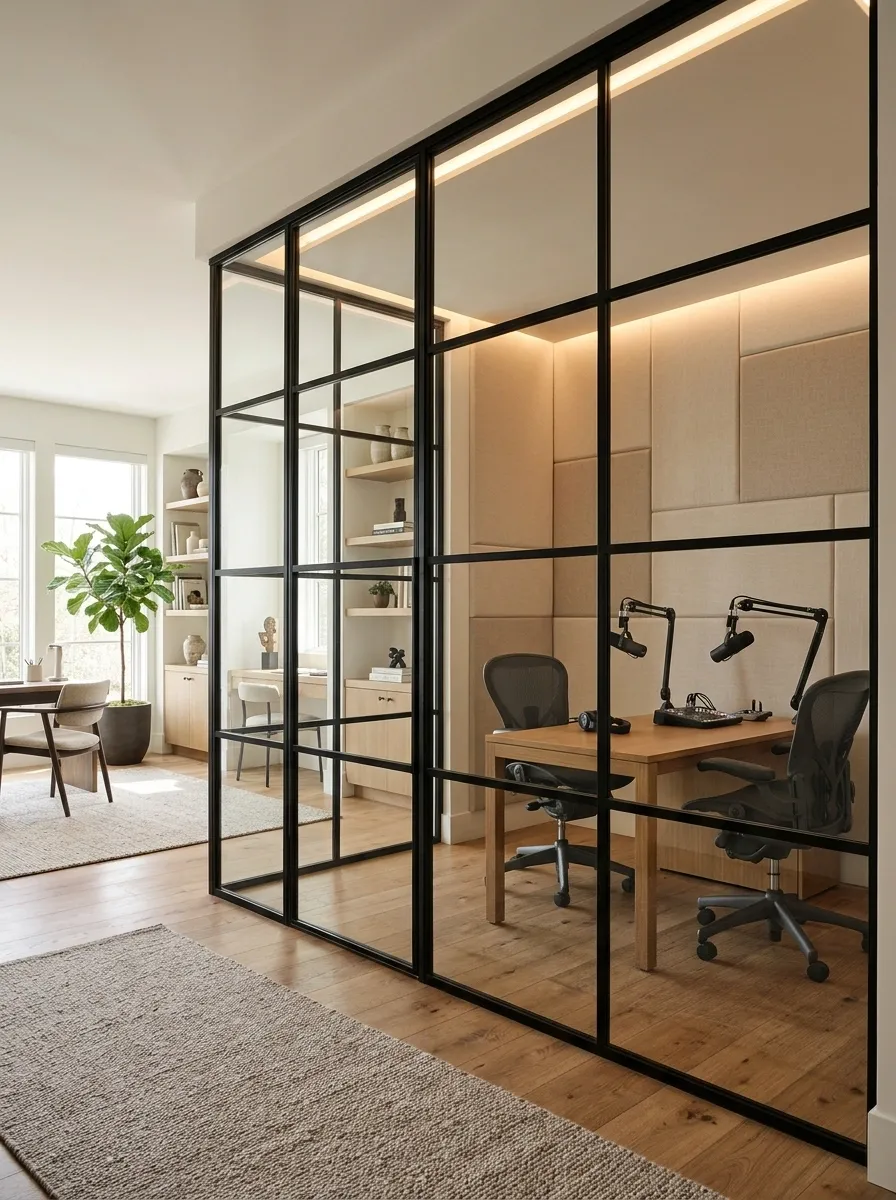
An internal glass partition creates a dedicated podcast room without making the surrounding home office feel cut off. Dark-framed glazing gives the studio a crisp architectural outline, while warm oak furniture, neutral acoustic panels, and carefully placed lighting soften the overall effect.
Inside the recording area, a compact desk or two-chair interview arrangement keeps the equipment organized. The glass adds visual openness, and a simple background allows the host to remain the focal point. Keep reflective surfaces away from the main camera angle when possible, and test for glare before finalizing the lights.
There is an important catch: glass does not automatically provide sound isolation. Effective acoustic separation depends on the complete partition construction, seals, doors, and other sound paths. A stylish glass wall is a design feature, not a promise that nobody outside can hear the recording.
Custom visual: Separate the space without confusing the acoustics
The partition establishes the room boundary. Acoustic treatment manages reflections inside the recording space. Sound isolation requires a suitable construction strategy beyond decorative panels alone.
Choosing a Podcast Room Design That Works
The strongest podcast room isn’t necessarily the largest or the most expensive. It’s the one that suits the show, supports clean recording, and looks intentional from the camera’s point of view.
A compact apartment corner benefits from smart storage and a defined background. An interview studio needs comfortable seating and clear microphone positions. A dedicated room has more freedom to combine built-ins, acoustic treatment, and layered lighting.
Before buying furniture, decide where the camera will sit, identify the room’s sound problems, and measure the space available for the recording position. Those decisions can prevent a surprising amount of expensive rearranging.
Save the designs that match your room and recording style, then use them as references when choosing materials, lighting, furniture, and acoustic treatment. Your future recording setup deserves better than a microphone surrounded by household chaos.